โท The world of Pets: Dogs, cats, birds, reptiles, amphibians
Eastern mud turtle
- Kinosternon subrubrum
Origin: United States
Gender: Kinosternon
Life expectancy: 20 - 30 years
Length: Until 12 cm.
The Eastern mud turtle uses tactile senses and vision when searching for food. They use vision to search for prey and tactile senses to consume it..
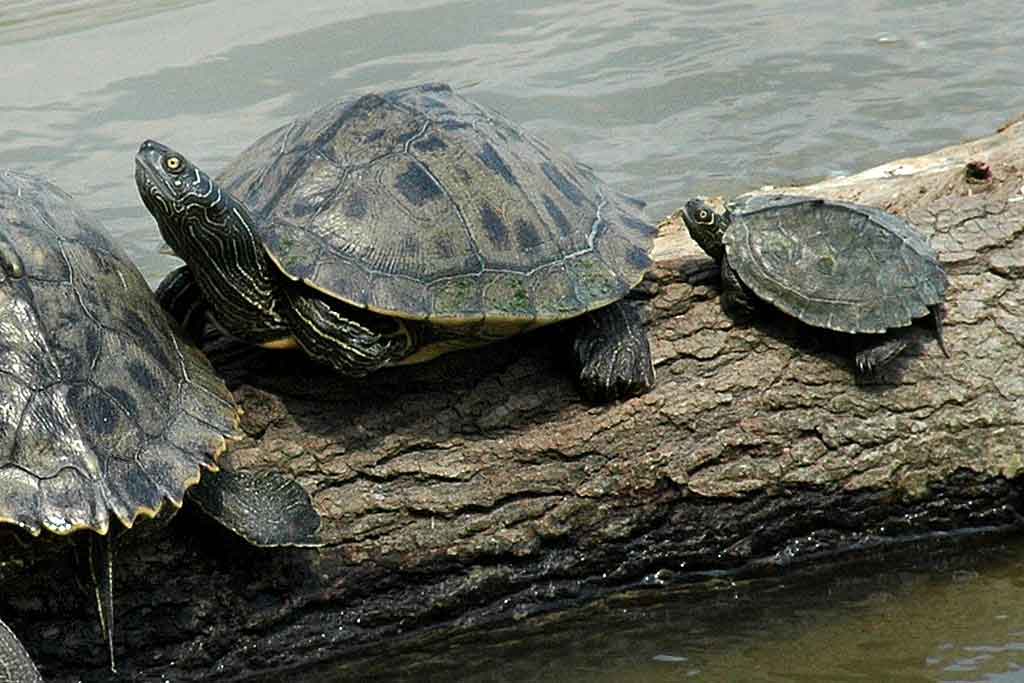
Eastern mud turtle – Kinosternon subrubrum subrubrum – Bombay Hook National Wildlife Refuge, Smyrna, Delaware. He wasn't sure if he wanted to hide or not.. I was glad he didn't totally retreat into the shell. – Judy Gallagher, CC BY 2.0, via Wikimedia Commons
Content
Origin / Distribution
Two subspecies are recognized as valid, including nominate subspecies.
The Eastern mud turtle (Kinosternon subrubrum) found in the US states of Alabama, Arkansas, Delaware, Florida, Georgia, Illinois, Indiana, Kentucky, Louisiana, Maryland, Mississippi, Measure, New Jersey, New York City, North Carolina, Oklahoma, Pennsylvania, South Carolina, Tennessee, Texas y Virginia.
In Indiana, the Eastern mud turtle is listed as an endangered species.
Characteristics / Appearance
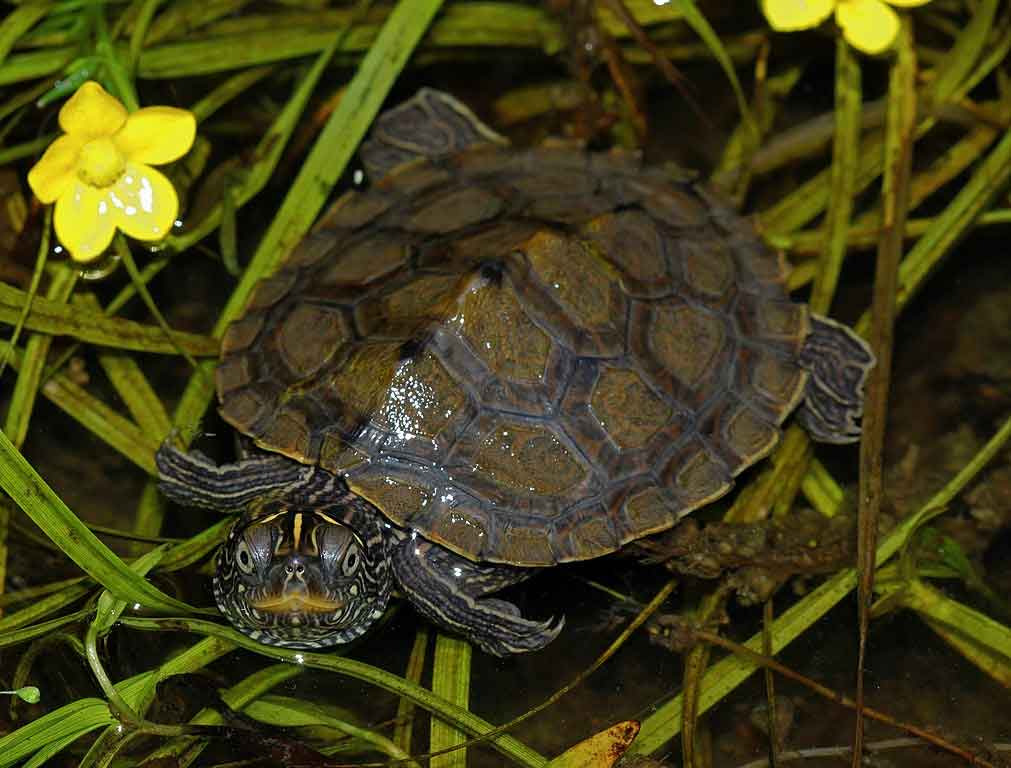
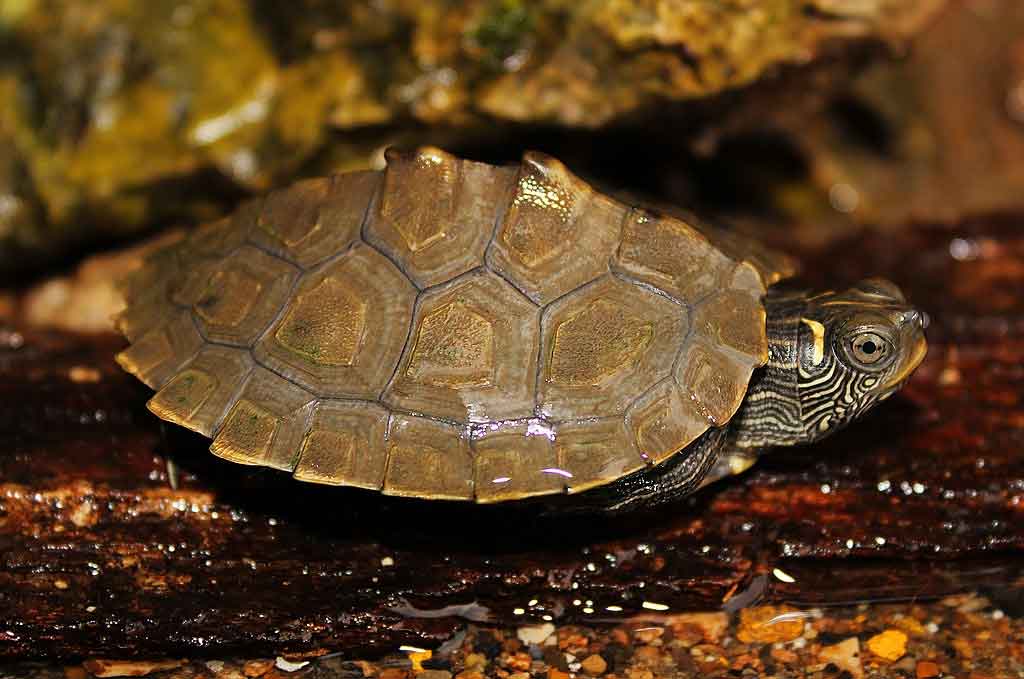
The Eastern mud turtle it is a small species, with a carapace length of 7 to 10 cm for adults. The head is irregularly mottled or streaked with yellow. The shell is convex, yellow to black, and lacks a keel or distinctive pattern. The plastron is yellow to brown in color and may have a variable number of dark markings.. Sometimes they are confused with the Common musk turtle. But, the plastron of the Eastern mud turtle differs from that of Common musk turtle in that it has two hinges and a triangular-shaped pectoral shield. As well, Unlike in the Common musk turtle, he doesn't have two stripes on his face.
The sexes are similar in size. Males have a longer preanal length with the vent posterior to the edge of the carapace.. The youth of the Eastern mud turtle are darker in color, they lack head markings and their plastron is orange to red with a dark center.
Habitat
The Eastern mud turtle it is semi-aquatic and prefers relatively calm and shallow bodies of water. wet meadows, ponds, swamps and drainage ditches are their typical habitats. in coastal areas, eastern mud turtles can tolerate brackish water and are found on the edges of mudflats and offshore islands. Although they do not sunbathe often, They are much more terrestrial than the Common musk turtle and can often be seen on land from spring through fall. They reach maturity between 4 and 8 years of age. Individuals in captivity have lived up to 38 years. The Eastern mud turtle feeds mainly on the bottom of the sea. Their diet consists of a variety of insects, mollusks, Tadpoles, crustaceans, carrion and aquatic vegetation.
Behavior
Eastern mud turtle
The Eastern mud turtle it is swimming and lonely. They hibernate between November and March., but start and end times vary by location. The hibernaculum of these turtles includes shallow burrows at the edge of wetlands. They are crepuscular. Depending on ambient temperature, they spend their time submerged in shallow water or basking on the surface of the water. These tortoises can sunbathe with conspecifics on the same trunk, but this occurs mostly during the mating season.
These turtles are occasionally aggressive and fight each other with head-to-head confrontations.. Such clashes can lead to possible serious injury, such as limb amputation, but the motive for the attack is unknown. The Eastern mud turtle uses color perception to distinguish the sexes, what plays a role in courtship. when they mate, female musk glands release pheromones to signal males to initiate courtship. The females dig their nests and hide them using their front and hind legs., and then they lay their brood.
Food
The Eastern mud turtle it is omnivorous and its diet is very varied. They feed mostly on the bottom., consuming mainly in the water, but sometimes they rise to the surface if the opportunity arises. Its range of consumption includes seeds, small invertebrates like earthworms (family Lumbricidae) and snails (Lymnaea, Physa, Planorbis), small insects like moths and butterflies (orden Lepidoptera ), june beetles (orden Coleoptera, familia Scarabaeidae, Melolonthinae subfamily), as well as arachnids (order Araneae), green algae, crustaceans and carrion. Strecker (1927) reported that these turtles also consumed a small striped snake (Tropidoclonion lineatum).
Mahmound (1967) investigated the diet Eastern mud turtle
Threats to the species
State of conservation โ
Minor Concern โ(UICN)โ
The Eastern mud turtle It is classified as a species of โLeast Concernโ according to the IUCN Red List.. They are not on the US federal list., CITES or listed by the state of Michigan. The Eastern mud turtle are considered endangered at the state level in Indiana, New York and Pennsylvania, and a species of greatest conservation need in Kentucky (Meshaka et al. 2017).
The main threat to these turtles is habitat loss and road mortality., since few turtles manage to cross them. Habitat loss through roads bisecting aquatic habitats, increased urbanization and climate change that raises sea levels harm these mud turtles. The illegal pet trade of this species has also caused damage to its native ecosystem through loss of biodiversity..
Potential conservation efforts to reduce mortality rates include wetland legislation that protects a terrestrial buffer zone around these semi-aquatic habitats. These terrestrial buffer zones are already intact in national parks. Future conservation efforts need a better understanding of population changes over time, as well as their perceived response to general climate change and microhabitat change.
The "Eastern mud turtle" in captivity
Aquaterrarium
The Eastern mud turtle They can reach a maximum carapace length of 12 cm.. So, they need an aquarium with a rim length of at least 80 cm.. For the benefit of Kinosternon subrubrum, the aquarium should have several hiding places and retreats. So, they need an aquarium with a rim length of at least 80 cm.. For the benefit of the Kinosternon subrubrum, the aquarium should have several hiding places and retreats. The roots, dense plantings of tanks and stone or rock structures are suitable for it. There should also be an integrated area for sunbathing
These turtles are solitary animals. Ideally, keep them individually in a species tank. Especially the males tend to be aggressive. In any case, must be stored separately.
The Eastern mud turtle feels very comfortable in water temperatures between 17 and 28 degrees Celsius. But, they need a fixed change between summer and winter. During the winter months you can reduce the lighting time and lower the water temperature to 10 – 17 Celsius degrees.
Food
The Eastern mud turtle they are carnivorous. They prefer live food, frozen food or dried animals. The insects, the molluscs, amphibians or even plants are at the top of the menu.
Reproduction
The Eastern mud turtle (Kinosternon subrubrum) have already been successfully bred in the aquarium.
Buy one "Eastern mud turtle"
The prices of one "Eastern mud turtle" in the exotic animal market ranges from 50 – 100 EUR.
Videos "Eastern mud turtle"
HTTPS://www.YouTube.com/watch?v=U95SSLoQ4dk
HTTPS://youtu.be/xnHl0EZqG9g
Alternative names:
1. Eastern mud turtle, Common mud turtle (English).
2. Cinosterne rougeรขtre (French).
3. Pennsylvania-Klappschildkrรถte, Kinosternon subrubrum, Mississippi-Schlammschildkrรถte, รstliche Klappschildkrรถte (German).
4. Tartaruga de barro comum, Tartaruga de barro orienta (Portuguese).
5. "Tortuga de pantano comรบn", Tortuga de pantano del este (espaรฑol).
โท The world of Pets: Dogs, cats, birds, reptiles, amphibians
Four-horned chameleon
- Trioceros quadricornis
Origin: Cameroon and Nigeria
Gender: Trioceros
Life expectancy: 4 - 6 years
Length: 25 to 35 cm.
The Four-horned chameleon, also known as Cameroon bearded chameleon, it is recognizable not only by its four protruding horns, but also because of his flaky "beard", its large crest and sail-shaped fin.
The Four-horned chameleon (Trioceros quadricornis) only found in some land areas of Cameroon and eastern Nigeria; its range includes the western highlands, the bamboo massif, Mount Manengouba, the oku massif, the Bakossi mountains, including Mount Kupe, and the Obudu Plateau in Nigeria. In particular, the subspecies Trioceros quadricornis eisentrauti is endemic to the Rumpi Hills in Cameroon.
Characteristics / Appearance
Like many other chameleons, the Four-horned chameleon it has a prehensile tail and simple claws on its toes. Usually, has four protruding horns, but sometimes two with up to four adjacent reduced horns are present;adults usually grow to 25 to 35 cm long. The Four-horned chameleon male has a prominent hemipenal bulge and gular beard, while some females have a horn or even two horns at the tip of their snout.
Habitat
In general, the Four-horned chameleon has a presence extension of 13.300 km2 and an inferred occupation area of 1.000 km2. The species is mainly associated with relatively intact montane forests with little human activity, where it has a relatively restricted elevation range (1150 to 2400 m). Research suggests this likely reflects competition with other chameleon species rather than physiological tolerances.. The type locality of the species is Monte Manegouba in Cameroon
Behavior
The species feeds almost exclusively on arthropods..
Reproduction: puts up 14 eggs.
Incubation period between 130-160 days at 18-25ยฐC. Temperatures should not exceed 25ยฐC.
Life expectancy: a few 7 years.
Threats to the species
State of conservation โ
Vulnerable โ(UICN)โ
The main threat to this species is deforestation.. Agricultural development extends to the 1.700 m altitude near the village of Nsoung on Mount Manengouba, and the forest on the southeast slope of the mountain is rapidly disappearing. In 1995, forest degradation on the western slope of Mount Kupe had reached 1.200 m above sea level, due to selective logging for firewood and construction materials. So, future encroachment of human activities on the slope may pose a threat to this chameleon, which depends on a largely pristine forest and, therefore, likely to be at risk from forest degradation or clearing. Deforestation for cultivation and the burning of nearby grasslands to renew pasture for cattle threaten the species in much of its range..
Due to its small and fragmented distribution area and the numerous threats that weigh on the population, the Four-horned chameleon It is classified as vulnerable by the International Union for Conservation of Nature.
Of the three subspecies, T. quadricornis quadricornis, T. quadricornis gracilior and T. quadricornis eisentrauti. The T. q. quadricornis is the most common, but the gracilior not uncommon. The T. quadricornis eisentrauti, on the other hand, not known (far as I know) that is in captive collections. It is even difficult to find images of the subspecies.
It is not a pet suitable for beginners.
The terrarium
terrarium size: individual storage is recommended. It is possible to keep the animals in pairs, but always pay attention to size and furnishings. For single breeding: A terrarium of at least 100 x 60 x 120 cm..
The cages/flexarios they are just as suitable. Chameleons love fresh air..
Temperature
During the day approx.. 20-25ยฐC, local heating up to approx.. 30-32ยฐC. Go down to at least 15ยฐC at night. Better still lower. If a cool cellar is available, you can also spend the night there.
Humidity
The humidity in the terrarium should range between 80-100%. In the morning and evening, spray the terrarium with warm water. But, Please, do not spray the animal.
Lighting and temperature
Daylight fluorescent tubes and/or light bulbs.
To obtain sufficient UV radiation, We use a solar light 75 watts for hobbyists. Get a surrounding heating of about 25-27 ยฐC and local heating up to 32 ยฐC at the highest point of the terrarium. In this case, an additional daylight lamp is not necessary..
Substrate
For us, pine bark and forest leaves have given good results, but it can be terrarium sand… The 30% of the terrarium soil must be kept moist at all times. The leaves of the forest serve as living food. to the piglets, for example, they like to crawl under, the leaves are moved by the animals and the chameleon can naturally search and observe the prey and then hunt it on its own.
Decoration terrarium
Lots of climbing opportunities, branches should not be too thick or slippery and should be easy to grip with feet.
Privacy screen for the rear and side walls. In summer, we take a flexo to the garden.
For planting we use Ficus benjamini and ivy, bamboo and, of course, a trough made by ourselves.
Food
house crickets, mealybugs, cockroaches, two-spotted crickets, zophobas, meal worms, wax worms, etc.
In summer, they go to a secluded meadow armed with a net and collect everything that crawls and flies. But it's better to do without roadside critters. We don't want to poison it!
Regular mineral and vitamin supplements are also indispensable in this case.
They only eat fruits and vegetables to cover their water needs.
The sprayed and dripping leaves are gladly used as a water source.
Buy one "Four-horned chameleon"
These Cameroonian chameleons ultra rare they are highly prized within the reptile community for their incomparable horns, its high dorsal crest, its coloration and scarcity.
Its price in the exotic animal market is around 200 EUR.
Videos "Four-horned chameleon"
Four Horned Chameleon (Trioceros quadricornis) | Zeppelin the Uni-Quad and Eris
1. Four-horned chameleon, Eisentraut’s chameleon (English).
2. Camรฉlรฉon ร quatre cornes, Chamaeleo quadricornis (French).
3. Vierhรถrniges Chamรคleon, Eisentraut-Chamรคleon, Vierhornchamรคleon (German).
4. Camaleรฃo de quatro chifres, Camaleรฃo de Eisentraut (Portuguese).
5. "Camaleรณn de cuatro cuernos", Camaleรณn de Eisentraut, Camaleรณn cuadricorne (espaรฑol).
โท The world of Pets: Dogs, cats, birds, reptiles, amphibians
Boa imperator
- Boa constrictor imperator
Origin: Mexico, Honduras, Nicaragua, Panama and the island of San Andres in Colombia.
Gender: Boa
Life expectancy: 25 years
Length: 1,3 - 2.5 m
The Boa imperator is twilight and nocturnal. During the day it hides in caves, hollow trees or other shelters and only occasionally comes out to sunbathe.
Boa constrictor imperator, observed in the Gandoca Manzanillo Wildlife Refuge in Costa Rica – Lucas Vogel, CC BY-SA 4.0, via Wikimedia Commons
Content
Origin / Distribution
The distribution area of the Boa imperator (Boa constrictor imperator) It is distributed on both coasts to the north of Mexico., throughout Central America (Honduras, Belice, Guatemala, El Salvador, Nicaragua, Costa Rica, Panama) and in South America in the western Andes of Ecuador, Colombia and probably Peru.
It lives from sea level to 1000 m. In Ecuador it has been reported in the provinces of Esmeraldas, Manabi, The rivers, Guayas and El Oro.
Characteristics / Appearance
The Boa imperator (Boa constrictor imperator) It's kind of powerful, with animals that live in both Central America and northern South America, so the appearance of this snake varies greatly depending on the specific locality. As one of the smallest Boa species, They have an average of 1,3 m and 2,5 m in length when fully adult, but it is known that they reach 3,7 m. They usually weigh around 6 kg, although females are significantly larger than males. The life expectancy in nature is about 20-30 years, but in captivity they can exceed 40.
Although the Boa imperator It has almost identical patterns to those of the Boa constrictor, this species usually has a darker tail, usually dark brown or very dark red. But, They are usually as colorful as their counterparts and, like the largest boas, can be bred in a variety of different colors, if the right conditions are given for its reproduction.
In particular, this species is one of only two snakes to have a confirmed XY sex chromosome system.
One population is found in the Cayos Cochinos off the north coast of Honduras.. These are naturally hypomelanistic, which means they have reduced melanin, so they are lighter in color, although they retain the distinctive darker tail that is characteristic of most members of this species. Tail color can vary from salmon pink to orange.
Nicaraguan boa imperator
Another well-known population of Boa imperator is the Nicaraguan. Although not as small as the dwarf populations of the insular islands, adults are still smaller than the largest Boa constrictor constrictor. the size of a boa Nicaraguan mature female is from 1,1 m and 1,9 kg, while the female Boa constrictor constrictor, largest, is not mature until it reaches 1,6 m and 4,5 kg. Nicaraguan individuals typically have a compact saddle pattern on their backs that is often circular in shape. These boas have a reputation for being "biting", and some individuals are quick to bite in self defense.
Continental specimens from Colombia may be among the largest boas, but this subspecies also includes a number of dwarf island populations, like those of several Caribbean islands. These populations represent the smallest members of the species..
Habitat
This snake mainly inhabits rainforests, although it can also be found in semi-arid areas of tropical dry forests, grasslands, semi-desert areas, tropical islands, agricultural land and plantations. It is usually found in open spaces, how clear, forest edges, rivers (both in the water and on beaches) and near human populations.
Behavior
The Boa imperator is twilight and nocturnal. During the day it hides in caves, hollow trees or other shelters and only occasionally comes out to sunbathe. Juveniles spend most of their time on tree branches., while the adults, with increasing age and weight, They live almost exclusively on the ground.. But even here there are exceptions, for example, the Saint Lucian boa lives mainly in trees even as an adult. In general, the Boa imperator shows little need to move. An adult boa equipped with a transmitter in the wild moved only 135 meters in a period of twelve days.
Diet
Except for bugs and spiders, the Boa imperator eats all the animals it can handle in size, even hitting the little alligators. Usually, uses two different hunting methods: Either actively follows the scent trails of prey, or wait for the right moment as a hunter on the prowl. When the snake gets close enough to the prey by one of these methods, launches at lightning speed and then crushes the victim using the bonds of his muscular body. The dam is squeezed so tight that circulatory collapse occurs rather than death by suffocation, as previously thought. Depending on the size of the prey, This process can take up to 16 minutes and represents a considerable effort for the snake. To avoid wasting unnecessary energy, the snake senses the prey's heartbeat and stops the suffocation process as soon as cardiac arrest occurs.
A special hunting method has also been observed in young boas: They wag their tails like a worm and thus actively attract lizards.
Reproduction
Due to lack of field research, we have to draw on the experience gained from keeping these animals in terrariums. The corresponding activities -according to the subspecies- only take place in certain months. During these mating periods, the female secretes sexual attractants, that males actively follow. If the male then meets the female, scratches the flanks of it with its anal spurs until it finally raises its tail and allows penetration of the hemipenis. Courtship can last for weeks, and there are always several mating sessions, that can last several hours.
The Boa imperator gives birth to live young, that at birth are surrounded by a thin skin called the membrane or egg case. Between ovulation and birth there is an average of 120 to 150 days, and the moment of weaning the offspring is usually accompanied by rains. During and after the birth process, the female defends her young, and females have also been observed helping their young out of the egg membrane by nudging them or encouraging them to crawl. After birth, young snakes are fully grown and go foraging on their own.
Threats to the species
State of conservation โ
Minor Concern โ(UICN)โ
Hunting this species for its skins, meat and body parts, combined with active persecution and habitat loss have reduced populations of this species. In recent years, the number of hatcheries for its commercialization has increased..
Conservation status
UICN Red List of Threatened Species: Least concern
This giant non-venomous snake inhabits northern South America, Central America and southern Mexico. The climate there is subtropical to tropical., which is correspondingly warm and offers high humidity. Thus, for the keepers of this species of snake it is important that they reproduce well the climatic conditions of this region.
The Boa imperator is suitable as a beginner snake because it is quite robust against unfavorable weather conditions. But, this also has its limits. If the air in the terrarium is permanently too dry, this can lead to shedding problems. Normally, the snake should have no problem completely shedding its skin. If it happens several times that the remains of the skin stick to the body, then you should definitely check the weather in the terrarium.
The terrarium
Terrarium size requirements depend on the length of the animal. The following applies: length of the snake x 0.75m length and height of the terrarium, and the length of the snake x 0.5m for the width of the terrarium.
As in the natural environment of the Boa imperator there are only two seasons, one warm and humid and one cooler and drier, this should also be taken into account in the maintenance of the terrarium. No need to hibernate Boa imperator, but you can keep the terrarium temperature lower during the winter months and reduce feeding.
The temperature range must be in a range of 27 to 31 ยฐC. The ideal is that the temperature varies within the terrarium. There should be a humidity 65 to the 75%.
A wet box is recommended.
What substrate bark mulch can be used, sand or litter. If it is a young animal, climbing possibilities are very important.
The drinker should be large enough for the boa to lie on it without hindrance..
Behavior
The Boa imperator, has a nocturnal lifestyle. Young boas are very good climbers and spend a lot of time in the trees.. This changes over time and the boa becomes predominantly terrestrial..
In the first years of life, the boa sheds its skin at short intervals and grows quite rapidly.
As far as possible, the snake should not eat any food before molting, as this could cause shedding problems. If the accommodation is too dry, shedding problems can also occur.
The boa usually seems somewhat clumsy and lazy, since she often sits in one place and doesn't move much. But one is surprised at the speed with which he can attack.
From my own experience, I can say that you have to be wary of this animal. If you feel threatened, can also attack unexpectedly. But, if you already have it controlled, it is very easy to handle and seems quite relaxed. Of course, each snake has a different character and this behavior cannot be generalized. But, if the boa is handled often and is used to humans, incidents are very rare.
What to avoid, However, is to approach the snake with your hand in front, because in this case she does not realize that the prey is too big for her. but like i said, once you have it in your hands, he will normally behave peacefully and even enjoy the warmth of your hands.
For someone looking for a calm snake that can be let loose in the living room without trying to hide in a crevice, this species is highly recommended, as it is still "smaller" compared to other boa species!! But, it must be taken into account that the Boa imperator will also reach a certain length.
Final size can also be strongly influenced by feeding., especially in the early years.
Food
The choice of feeder depends on the size of the snake. Basically, it can be said that the food animal should be about the same diameter as the snake at the widest part of the body. If the snake has a diameter greater than that of a mouse, and there is no rat or anything else available, can directly feed two mice one after another. As with all snakes, young animals are more voracious and their metabolism is faster than that of adults, so you can feed them more often than once a week.
Rabbits are quite unsuitable for this snake, depending on the snake and rabbit specimen. Although boas can often eat animals three or four times larger than themselves, don't over do it. Remember that a snake digests against time. Anything that breaks down before being digested is regurgitated. This is not very tasty to see and above all to clean. By increasing the temperature in the terrarium, the decomposition process is correspondingly fast.
In its natural environment, the main diet of the boa consists of rodents and birds. But, also eats other mammals, lizards and frogs. Most of the time it stays in one place and waits for its prey., but if he has caught a scent he will also go hunting.
The Boa imperator kills its prey by strangling it. As such, is tied to the radius of curvature of its own spinal column when wrapped around the food animal. If the animal that serves it for food is smaller than the radius of curvature of its spine, then their prey can only be rendered unconscious. Imagine how heartbreaking it is to hear the snake's food animal begin to screech again.. Not to mention the internal injuries of the snake.
Buy one "Boa imperator"
Central American Boa Constrictor (good emperor), gomez farias, Gomez Farias Municipality, Tamaulipas, Mexico. photographed on 23 in August of 2007 by William L. Farr. – William L. Farr, CC BY-SA 4.0, via Wikimedia Commons
The Boa imperator it is a wild species, a specially protected species, an endangered species and a particularly dangerous animal. The possession of a Boa imperator may be subject to different requirements in different countries and states
In any case, you should obtain reliable information on whether the possession of the snake requires a permit in your municipality and under what conditions, or if there is an obligation to register. Unfortunately, often you have to ask from A to B, since many administration employees do not know where this information can be obtained.
The vet can also be a point of contact.
In case you save yourself the trouble of informing yourself, you run the risk of having the animal confiscated. Most likely, there will be more problems and non-negligible costs.
Purchase costs of a "Boa imperator"
You can rarely buy one. Boa imperator in normal pet stores, but yes in the specialized ones. I don't think it's right that animals are bought by mail, although today it is also offered. You can also find reputable dealers and breeders at reptile shows, which are held from time to time even in small towns. The snake itself costs from a few 150 EUR.
But, the purchase of the terrarium is probably the biggest expense. This includes the terrarium, the heating, lighting, furniture and decoration, the humidification system (can also be a simple spray bottle) and lots of little items. Nor should running costs be swept under the rug.. Electricity costs for heating and lighting must be anticipated during the 24 hours of the day, as well as food expenses and occasional visits to the vet.
1. Boa imperator, Boa constrictor imperator, Common boa, Northern boa, Colombian boa, Common northern boa (English).
2. Boa Constrictor Impรฉrator, Boa imperator (French).
3. Kaiserboa, Abgottschlange, Hog Island Boa (German).
4. Boa imperator, Boa constrictor imperator (Portuguese).
5. "Boa comรบn", Mazacuata, Limacoa, Culebra-venado, Bรฉcquer (espaรฑol).
โท The world of Pets: Dogs, cats, birds, reptiles, amphibians
Rice paddy snake
- Hypsiscopus plumbea
Origin: Myanmar, Thailand, Cambodia, Laos, Malaysia, Indonesian, Viet Nam, South China and Taiwan
Gender: Hypsiscopus
Life expectancy: 15 years
Length: 72 cm.
The Rice paddy snake, mostly nocturnal, comes out at night to hunt fish and amphibians.
Rice paddy snake (Enhydris plumbea); California. 40cm TL. From Karawang, West Java – Wibowo Djatmiko (Wie146), CC BY-SA 3.0, via Wikimedia Commons
Content
Origin / Distribution
The Rice paddy snake (Hypsiscopus plumbea) it is one of the most widespread Asian water snakes. Previously it was called Enhydris plumbea, but the name was changed 2014.
In mainland Southeast Asia, the Rice paddy snake is present in Myanmar, Indochina (Cambodia, Laos, Viet Nam), Thailand and Peninsular Malaysia. out of region, found in parts of India (Islas Andaman) and south China (including Taiwan). In insular Southeast Asia it is present on the islands of Sumatra, Borneo, Java, Bali, Sulawesi and possibly on other islands further east.
Characteristics / Appearance
Gray color on the upper part of his body, although in some populations its upper part can be olive gray, dark brown or green. There may be small dark spots along the vertebral line. Its underside is yellow, sometimes with black spots.
Its body is robust and cylindrical in section., its short head is barely wider than its body and its tail is short. His eyes are located on the top of his head.
Habitat
The species usually inhabits calm or shallow bodies of water, like rice paddies, open swamps, bogs, streams and ditches.
Behavior
The Rice paddy snake, mostly nocturnal, comes out at night to hunt fish and amphibians. They usually remain motionless in shallow stagnant water and also burrow into mud.. They also show a characteristic jump when trying to move quickly to escape.. They are quick to bite, starch, defecating and squirming excessively. They are not considered dangerous to humans.. They are slightly poisonous, but there are no known cases of poisoning or serious reactions in humans.
Threats to the species
No known conservation issues. It is a common species in Thailand, although its population in Taiwan is in danger.
The "Rice paddy snake" in captivity
The Rice paddy snake attacks aggressively when cornered on the ground, but its small size prevents it from causing much damage. Although it's a snake with back fangs and some venom, the poison has a limited effect on humans, being able to cause some swelling in the worst cases.
Buy one "Rice paddy snake"
The price of a "Rice paddy snake" at the exotic animal market, ranges between 80 – 100 EUR.
1. Rice paddy snake, Rice paddy snake, Plumbeous water snake, Boieโs Mud Snake (English).
2. Serpent de riz paddy (French).
3. Reisfeldschlange, Plumbeรถse Wasserschlange (German).
4. Cobra arroz em casca, Serpente de รกgua plumbeous (Portuguese).
5. "Serpiente acuรกtica de vientre amarillo", Serpiente de arroz con cรกscara, Serpiente de agua plomiza, Serpiente del arroz, Serpiente de arrozal (espaรฑol).
โท The world of Pets: Dogs, cats, birds, reptiles, amphibians
African five-lined skink
- Mabuya quinquetaeniata
Origin: Egypt, South Africa, Florida (USA)
Gender: Trachylepis
Life expectancy: ---
Length: 20 cm..
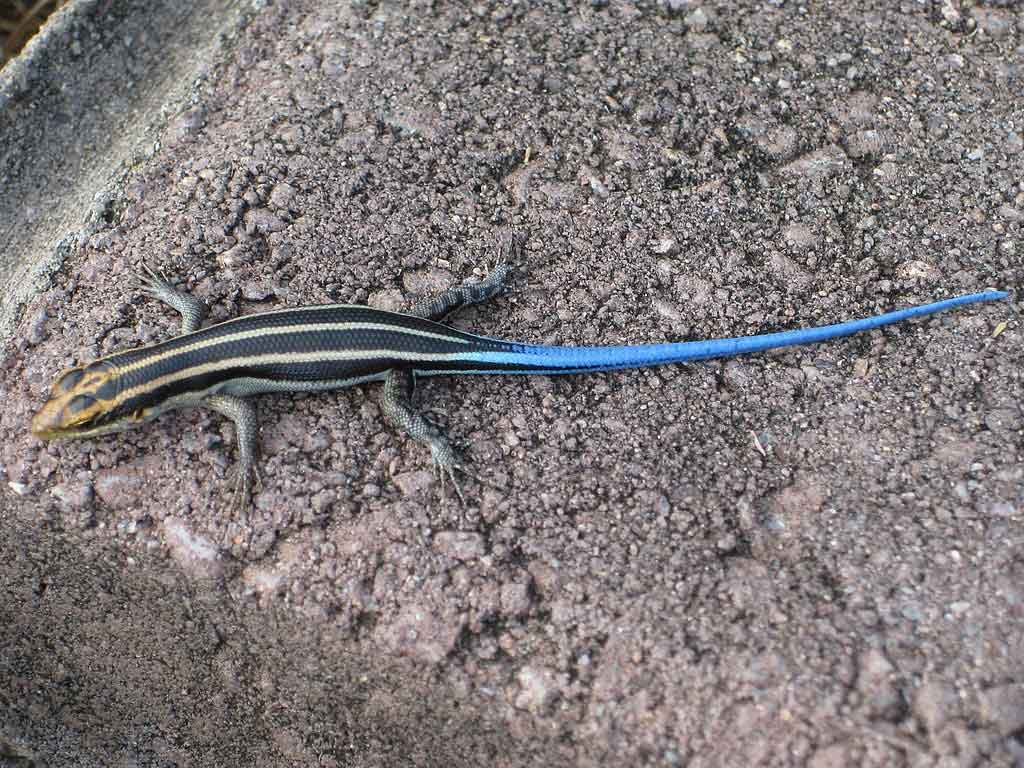
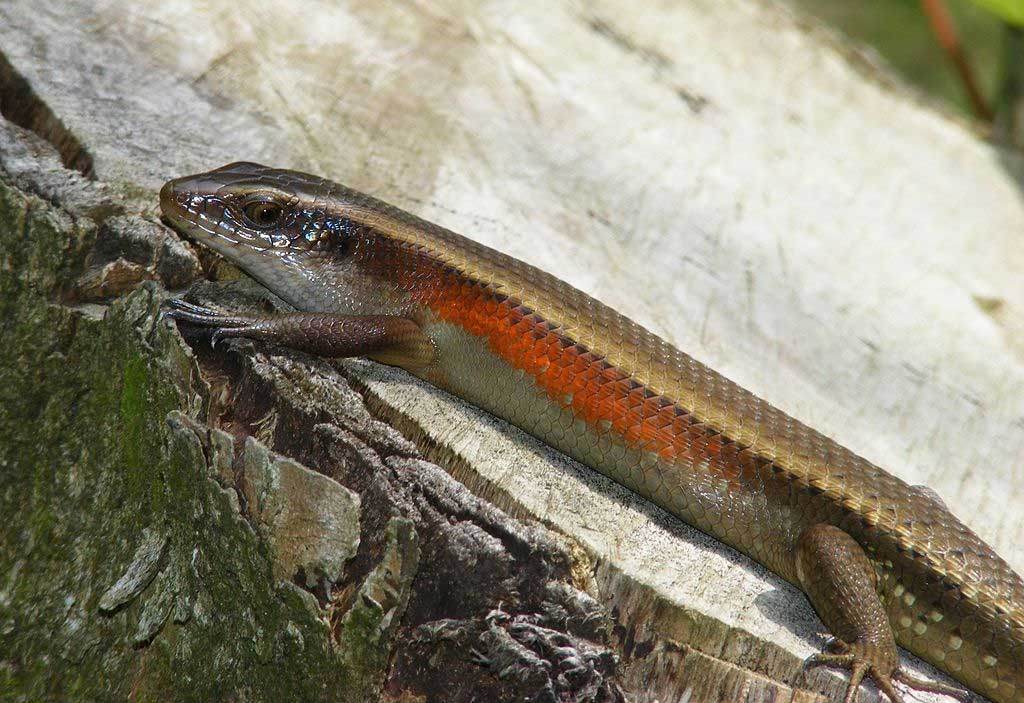
Nice small lizard of the family of the escindidos. As you can see, full of the stripes that give it its name and a beautiful blue tail. They are animals to have in community terrariums because they are not aggressive at all. They feed on insects and eat some fruit as long as it is very ripe..
The Lined gecko is a slender representative of the genus Gekko, which can reach a length of up to 30 cm.. The tail represents just over half. But, numerous individuals are fully developed with a length of about 25 cm..
Due to the slender body and narrow head, the extremities, and especially the fingers and toes, appear larger. The white stripe that runs from the base of the tail to the back of the head, where it divides and reaches the sides of the eyes, It is characteristic and very striking. This strip is responsible for its trivial name. The original queue, on the other hand, has white transverse bands. A regenerated tail no longer shows this transverse band.
Dorsal coloration is usually yellowish-brown, but there are also individuals of slightly greenish yellow or reddish and dark brown color. Specimens with two longitudinal stripes are also known., just a very faint stripe and also without any streaks.
Distribution and habitat
Indonesian, east of Java through numerous islands such as Halmahera, in New Guinea to Oceania.
Way of life
The Lined gecko, of night activity, prefers to live in trees, Palm trees, pandanus and banana plants in his native country, but in many regions it can also be found as a cultural follower in houses and cabins.
The Lined gecko in captivity
The Lined gecko is easy to preserve, provided that one or two important points are taken into account.
The terrarium must be taller than it is wide, since it is an arboreal species. 80 x 50 x 100 cm. (width x depth x height) is enough for a couple of Lined gecko. Walls must be coated, for example, of natural cork. Some cork tubes provide the necessary hiding places. The necessary increase in humidity is achieved by spraying several times a day. One plant (for example, Scindapsus) complete the assembly.
There should also be a large bowl of water, or better a small part of water or a waterfall in the terrarium.
Substrate:
Use a white peat mixture (without fertilizer) and plantation land, of about 10 height cm. To avoid stagnation of water at the bottom of the terrarium, use a layer of clay balls.
Illumination
It is debatable whether ultraviolet light is necessary for the Lined gecko, but it won't do you any harm. Temperatures should be 24-28ยฐC during the day, with sunny spots up to 35ยฐC, and drop to 20-22ยฐC at night. Humidity should oscillate between 70-90% during the day, which can be easily achieved with a daily spray (morning and evening) and through the water section. To check these parameters, use a thermometer and hygrometer.
Diet
The diet of the Lined gecko is based on insects. Easily accepts all kinds of insects: crickets, cockroaches, lobsters, worms, … It is important to vary your diet. This prevents your Gecko get bored, but above all it provides you with all the necessary nutrients.
You should always make sure to give to your Gecko a prey adapted to its size.
Last, from time to time, it is advisable to supplement your diet with calcium and vitamins, to avoid any shortcomings. This is especially important for the growth of Geckos juveniles.
Breeding and reproduction
with a good brood, the reproduction of animals does itself. the female may lay one or two eggs several times a year, that can be left in the terrarium. The pups are born after about 100 to 120 days and can stay in the terrarium up to a size of some 15 cm..
The pups usually look the same as the parents., in some populations they show white spots on the head. Only the tail is slightly darker, so that the transverse white bands appear brighter and thus have a signaling effect. When parents approach, wag their tail to avoid being accidentally eaten by them. Keeping them in a group is only possible with young animals until they reach sexual maturity.. As soon as they are adults, you have to take them out of the terrarium, otherwise they can be attacked by parents.
For sale Lined gecko
The price of a Lined gecko in the exotic animal market ranges from 40 and 50 EUR.
โท The world of Pets: Dogs, cats, birds, reptiles, amphibians
Saharan spiny-tailed lizard
- Uromastyx geyri
Origin: Algeria, Mali and Nigeria
Gender: Uromastyx
Life expectancy: 20 years
Length: 35 cm.
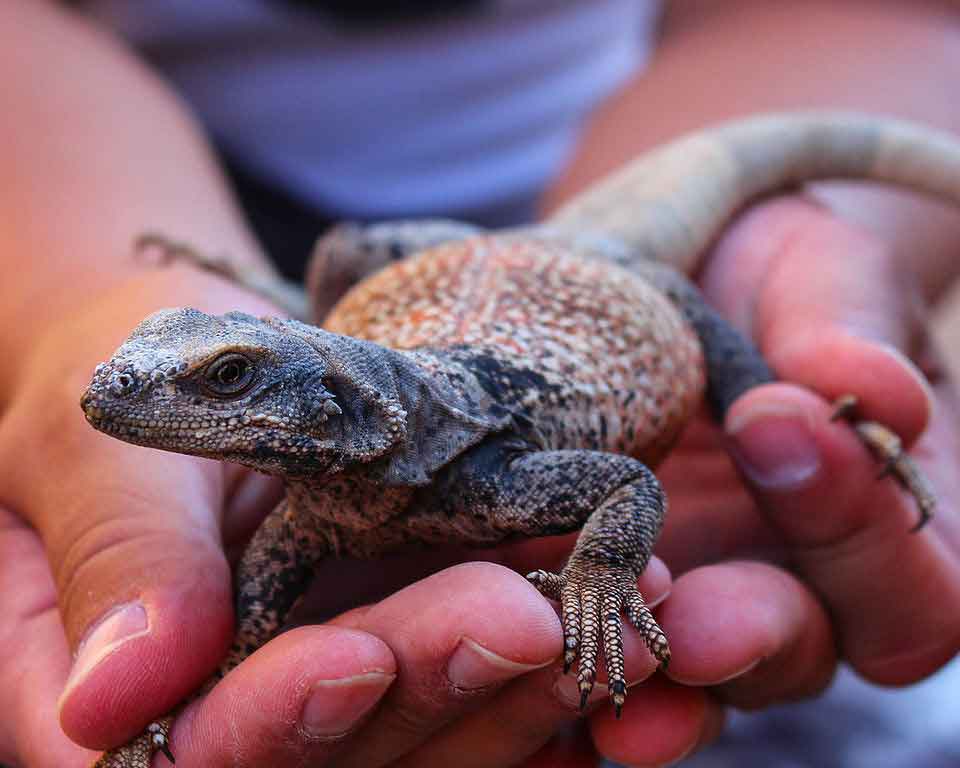
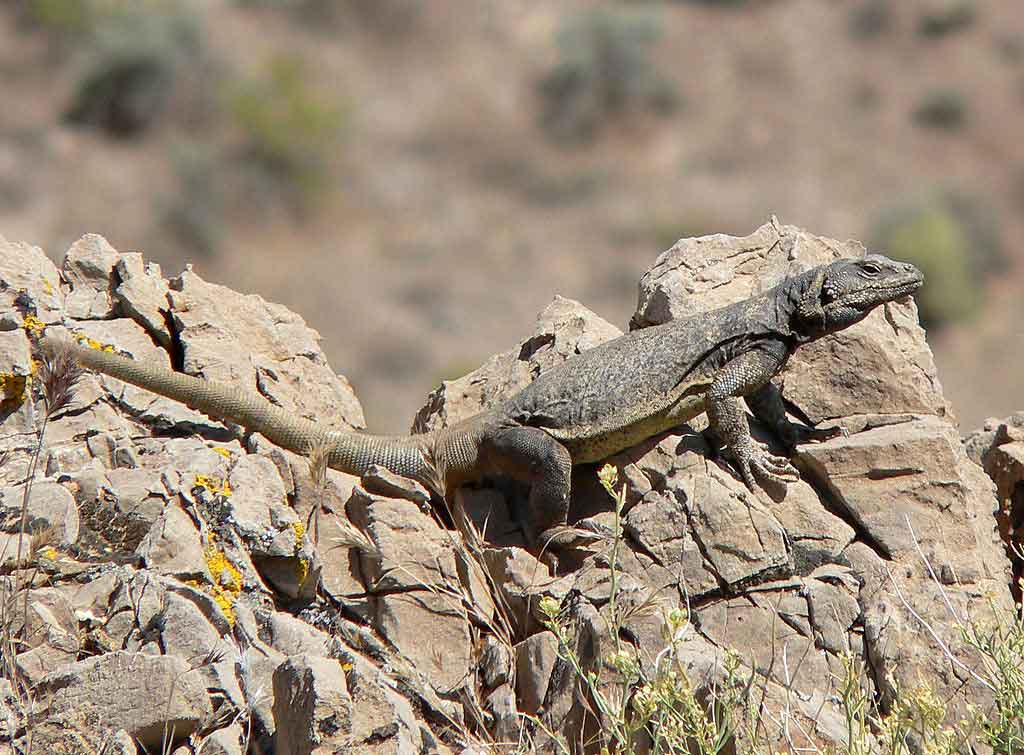
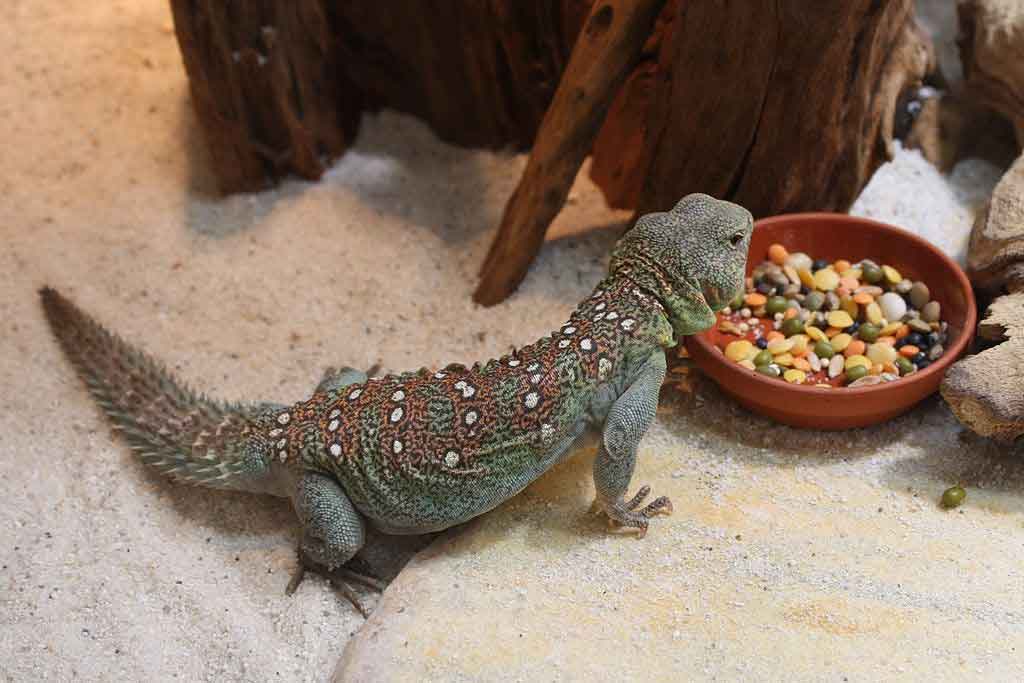
The Saharan spiny-tailed lizard it is a relatively small and slender species for the genus, with an average total length (including the queue) of about 34 cm..
Saharan spiny-tailed lizard, Flower Gardens Hirschstetten in Vienna, Austria.
Content
Origin
The Saharan spiny-tailed lizard (Uromastyx geyri) is a lizard native to the north of Mali, southern Algeria and northern Niger. Two different color shapes are known (red or yellow).
Characteristics
The Saharan spiny-tailed lizard it is a relatively small and slender species for the genus, with an average total length (including the queue) of about 34 cm.. This lizard is usually beige or orange with lighter spots.
It is one of the brightest colored species in the genus. Uromastyx. There are two colors of the Uromastyx geyri, the "red" and "yellow" variety, being the color its only difference.
The variety red it is often reddish in color almost solid to orange neon pumpkin, and the yellow phase is in or near a neon range. Females are a paler color than males, showing more variations of tan coloration and much less coloration in the belly, as well as less vivid patterns, most females have a simple "freckle" on their back.
The Saharan spiny-tailed lizard are medium-sized lizards, many of them with an average of 28-36 cm of total length and a weight of 250 grams or more as adults.
The "Saharan spiny-tailed lizard" in captivity
Terrarium
The Saharan spiny-tailed lizard they are very territorial in nature and keeping one male and several females is only possible in a large terrarium. It is best to keep them in pairs..
temperatures during the day: from 28ยฐ to 35ยฐC (locally approx. 45ยฐC)
Night temperatures: 18-22ยฐC
Humidity: 40-60
Minimum size of the terrarium: starting at 140 x 100 x 120 cm for a couple
The terrarium must be furnished with numerous stones, some climbing possibilities such as thick branches, cork or bark tubes, which also offer many hiding places. To maintain this species properly, the terrarium needs a substrate of at least 20-30 height cm. Spray a little several times a week.
Illumination
For your well-being, good lighting and ultraviolet light are necessary (30% of UVA rays and 10-12% UVB), as well as a place to sunbathe. UV radiation is extremely important and absolutely necessary. In the case of females, it is absolutely necessary to have a suitable place for laying eggs or with several possibilities.
A lighting period of up to 14 hours a day (except during hibernation).
Hibernation
You have to let the animals hibernate for three or four months. As such, the Saharan spiny-tailed lizard they need between 12 y 18ยฐC. Hibernation is very important for animals to regulate their bodily functions and stay healthy. It's also a good way to prevent obesity.
Food
The diet of the Saharan spiny-tailed lizard includes banana, vine leaves, dandelion, margaritas, clover, pamplinas, sometimes kitchen herbs and grains like corn, rice, millet, sunflower seeds and others. Young animals feed up to a 75% of animals. These may include, crickets, grasshopper, cockroaches, sometimes zophobas and other live food. Adults should be fed little or no animal food to prevent fatty degeneration..
no lettuce, iceberg lettuce or similar, since its calcium-phosphorus content is unfavorable. And cabbage or spinach should only be provided rarely because of oxalic acid.…
Fruit should also be provided only in moderation., if it is accepted.
Additional vitamin and mineral supplements are recommended.
For liquid intake, you can place a bowl of water that is cleaned daily.
Reproduction
Winter rest is very important for the young. The "Saharan spiny-tailed lizard" lay eggs. These should not be incubated too wet, otherwise they will easily turn into fungi. Young Uromastyx geyri can be raised together in a group for up to two years, provided they are compatible. It is absolutely necessary to take enough calcium and vitamin supplements.
For sale "Saharan spiny-tailed lizard"
The price of a Saharan spiny-tailed lizard, captive bred, at the exotic animal market, ranges between 100 – 120 EUR.
1. Geyr’s dabb lizard, Geyr’s spiny-tailed lizard, Sahara mastigure, Saharan spiny-tailed lizard, Yellow Niger Uromastyx, Saharan yellow uromastyx. (English).
2. Lรฉzard de Geyr, Lรฉzard ร queue รฉpineuse de Geyr, Mastigure du Sahara, Lรฉzard ร queue รฉpineuse du Sahara, Uromastyx jaune du Niger, Uromastyx jaune du Sahara. (French).
3. Geyr-Krusteneidechse, Geyr-Stacheleidechse, Sahara-Mastigure, Sahara-Stacheleidechse, Gelber Niger-Uromastyx, Sahara-Gelb-Uromastyx (German).
4. Lagarto do Geyr, lagarto de cauda espinhosa do Geyr, mastigure do Sara, lagarto de cauda espinhosa do Sara, Uromastyx amarelo do Nรญger, uromastyx amarelo do Sara (Portuguese).
5. Lagarto de cola espinosa de Geyr, Lagarto de cola espinosa de Geyr, Mastigure del Sahara, Lagarto de cola espinosa del Sahara, Uromastyx amarillo del Nรญger, Uromastyx amarillo del Sahara (espaรฑol).
โท The world of Pets: Dogs, cats, birds, reptiles, amphibians
Leopard tortoise
- Stigmochelys pardalis
Origin: Ethiopia, Angola, Botswana, Djibouti, Kenya, Malawi, Mozambique, Namibia, Zambia, Zimbabwe, Somalia, Sudan, South Africa, South Sudan, Swaziland, Tanzania, Uganda
Gender: Stigmochelys
Life expectancy: 60 years
Length: Until 55 cm.
The Leopard tortoise it is a magnificent representative of African tortoises in terms of shell. Young animals in particular have a fantastic spot pattern, reminiscent of a leopard, that's where its name comes from.
Leopard tortoise (Stigmochelys pardalis) juvenile, Walter Sisulu Botanical Gardens, Roodepoort, South Africa – Charles J. Sharp, CC BY-SA 4.0, via Wikimedia Commons
Content
Origin
The Leopard tortoise has been the subject of several revisions. Different authors have placed it in Geochelone (1957), Stigmochelys (2001), Centrochelys (2002) and Psammobates (2006). More recently, the consensus seems to have been established in Stigmochelys, a monotypic genus. There has been much debate about the existence of two subspecies, Stigmochelys pardalis pardalis and Stigmochelys pardalis babcocki, but recent work does not support this distinction.
Stigmochelys is a combination of Greek words: stigma which means "brand" or "tip" and chelone What does "turtle mean". the specific name pardalis comes from the Latin word pardus, which means ยซleopardยป, and refers to leopard-like spots on the turtle's shell.
The Leopard tortoise is located in the following 17 countries: Ethiopia, Angola, Botswana, Djibouti, Kenya, Malawi, Mozambique, Namibia, Zambia, Zimbabwe, Somalia, Sudan, South Africa, South Sudan, Swaziland, Tanzania, Uganda.
Characteristics / Appearance
The Leopard tortoise adult has a dorsal shell elongated and strongly curved. It is yellowish to light brown and is covered with irregular dark spots or stripes.. This characteristic coloration gave the species its name.. Unlike many other turtles, the Leopard tortoise no shield on the back of its neck. The legs and head are yellowish to light brown. Rarely do individual dark spots appear on them. The Paws they are covered with large scales and each hind leg has a cone-shaped spur. Equipped with powerful claws, the legs are the ideal tool for digging.
In the youth the coloration of the shell is clearly lighter, with dark spots in the center of the shield. These high-contrast patterns can also sometimes be found in abdominal armor.. The size difference is used to differentiate the sexes, just like the size of the queue. Male animals are usually smaller than their female counterparts and have a stretched body with a longer tail., which is also significantly thicker at the root. It also, the male's abdominal breastplate is slightly curved inward. The claws of the hind legs of females are particularly strong.
The life expectancy of these reptiles are around the 50-60 years.
The subspecies
The Leopard tortoise are divided into two subspecies, the Leopard tortoise of East Africa and the Leopard tortoise from South Africa. The clearest distinguishing feature of both species is the coloration of the posterior layer.. In East African species, the basic color is weaker and darker. Juveniles have very few or no dark spots on both the belly and dorsal shell. The South African species has a flatter back and brighter colors.
Habitat
The Leopard tortoise (Stigmochelys pardalis) it is not very demanding in terms of its habitat. Its distribution extends throughout the East African region to South Africa and Namibia.. It is found in warm semi-deserts, dry savannas and rainfed areas. There are even populations more than 2.000 meters above sea level. Only dense forest areas cannot be colonized due to the mass and slowness of reptiles. Daytime temperatures of 28 to 40 degrees centigrade and night temperatures up to 21 degrees Celsius provide optimal living conditions for animals.
Behavior
The Leopard tortoise, like all reptiles, he is a cold blooded animal. They do not have a constant body temperature and adapt to room temperature. Behavior patterns are greatly influenced by this characteristic. According to the corresponding daytime temperatures, animals are forced to look for hiding places in the shade. In dry areas, thorny or grassy shrubs fulfill this function. Otherwise, turtles also look for abandoned animal burrows or rocks. At certain intervals, especially during periods of drought when food is scarce, take longer breaks of their own free will. These periods can last up to several weeks.. Then, food intake is minimized and body temperature may drop below 18 degrees.
Turtles are not nomadic. The only specimen moves in an area of โโabout 400 hectares without forming territories. But, due to its slowness, they only use a part of this surface. The proportion of females and males is practically the same, and males usually use much smaller territories than females. The Leopard tortoise he is a peaceful animal. There are no territorial fights between congeners.
Food
The excellent adaptation to its habitat allows the Leopard tortoise manage your water balance very sparingly. It usually ingests the necessary amounts with its food and has regulatory bodily functions that allow it to store greater amounts of water in its body.. Their diet consists almost exclusively of plants. Prefers grass, thistles, lily plants and prickly pear.
Reproduction
The Leopard tortoise lives in different climatic zones. Mating behavior adapts to the respective climatic conditions, but it usually takes place in the spring or summer months. Males, otherwise peaceful, they now try to scare away their companions who court the females. They do this by ramming the shells of their opponents.. With the same ritual, female turtles are asked to stop and stick their heads and legs in. Next, mating takes place. The loud gasps emitted are characteristic of the mating ritual in many species of turtles..
Reptiles are not dedicated to the care of the young. Females dig a pit with their hind legs in which they lay eggs. The number per clutch varies greatly and is usually between 10 and 20 eggs. Three to six clutches of eggs are laid per year with an average interval of about 25 days. After placement, the pit is carefully closed. The duration from egg laying to hatching of the young is influenced by many factors.. Temperature and humidity influence the length of the incubation period, that can last from 120 to 450 days. Young turtles measure about five centimeters and have a hemispherical dorsal shell..
Threats to the species
State of conservation โ
Minor Concern โ(UICN)โ
The Leopard tortoise Adult has few natural enemies in its habitat. In addition to the hyena and the lion, man is the greatest of them. With its regulatory interventions in the environment, threaten reptile habitat in some areas. Overgrazing, slash-and-burn agriculture, urban expansion and fencing of grazing areas are the main causes of population decline. In some regions the meat of turtles is consumed and body parts are used to produce medicines.. Every year thousands of animals are collected for the international pet trade and shipped all over the world.. Black traders have also discovered this market and try to sell their products through dark channels.. Customs authorities seize large quantities of Leopard tortoise smuggled.
But, the greatest threat is to the clutches of eggs and young. Nests are often raided by small mammals, birds, snakes or even by humans. Young animals also constantly face the dangers of stray dogs and cats., birds of prey, snakes or rats. The Leopard tortoise is not considered endangered in its species and can be acquired in for maintenance in captivity without prior permission. But, according to the European Species Protection Regulation, the acquisition must be notified to the competent authorities. The same provisions of the official notification requirement apply to breeding, delivery, the death and transfer of animals.
The "Leopard tortoise" in captivity
The head of a "leopard turtle" (Stigmochelys pardalis) at Addo Elephant Park, South Africa – Charles J. Sharp, CC BY 3.0, via Wikimedia Commons
Reproduction
Reproduction can begin once animals have reached sexual maturity, that occurs to some 20 – 25 centimeters of carapace length. Mating usually begins in spring with the behavior already described. After a gestation period of several months, females bury their eggs in a warm, moist spot in the ground in late summer. Stress, such as transfers, should be avoided at all costs in pregnant females. after sunset, eggs can be carefully removed from the ground. Half buried in loose sand, now they are placed in the incubator. The temperature should be 30 constant degrees centigrade and the humidity should not drop below 65%. After 150 to 300 days, the first pups are born. In the first weeks, they also need cooler, moister areas than adult animals.
When a Leopard tortoise, one or more individuals should be selected from a breeding stock for health reasons. Specimens caught in the wild are usually carriers of parasites and very susceptible to contracting diseases due to the stress of the long journey.. Deformation and softening of the shell, diseases of the internal organs and respiratory infections are the most common.
The breeding of a Leopard tortoise it's quite expensive. Heating, feeding and the various devices to create an environmental climate suitable for the species at all times of the year, as well as the large space that animals need, place high demands on the owner. But, this species is one of the most beautiful and imposing representatives of turtles and the lover of these animals is compensated daily by its sublime vision.
Maintenance of the "leopard turtle"
The Leopard tortoise is eager to move and run. This guarantees them a digestion that works. For this reason and for its size, only sufficiently sized rooms are adequate to maintain them. In this case, you have to take into account the climatic conditions to which the animals are accustomed. A permanent ambient temperature of 30 degrees and the supply of ultraviolet light in the wave range around 300 nm are prerequisites for keeping animals appropriate to the species. Turtles need ultraviolet light to synthesize vitamin D, that is essential for life. The ideal is to divide the room into several climatic zones so that the animals find a place with the most pleasant ambient temperature.
The Leopard tortoise must be kept in pairs. A mixture of sand and peat is suitable as a substrate. Do not forget the creation of hiding places. Hollow tree trunks or haystacks are useful furniture here. Of course, a bowl of water for drinking and bathing is part of the basic equipment.
Food
When it comes to feeding, pay attention to seasonal peculiarities. Winter corresponds to the dry season in the natural habitat of animals. Consequently, food should consist of dried grass and dried herbs. In summer, wild plants such as hibiscus are recommended, Dandelion, thistles and all wildflowers, from violets to petunias. Cultivated plants, like fruits, lettuce or vegetable leaves, should be the exception in the diet. Under no circumstances should turtles be fed animal products or, for example, with cottage cheese, fruit and pasta.
Reproduction
The breeding of the Leopard tortoise also requires further expansion. If you buy one Leopard tortoise young after hatching, you have some 4 years to think about the later habitat in winter and summer. From then on the animal is already quite large and is already oversized for a very large terrarium in winter. Outer space must have at least 50 m2 and the winter space should not be less than the limit of 10 m2. The Leopard tortoise adult needs more than 100 square meters outdoors. Until then there are some 4 years longer. And don't forget that, no matter how big a room is in winter, it must always be heated to 30 ยฐC.
To be taken into account
The Leopard tortoise has a strong tendency to slouch. Unfortunately, it is not yet possible to say exactly why this is so. Animals are not kept in captivity very often and, if they do, most of the time only by people who have no means to investigate hump formation. Breeders have been observing the phenomenon for years and again and again they manage to breed one Leopard tortoise no hump formation. But, it is not known why, because the animals grew normally like other turtles, which in turn have hump formation.
Completely smooth shells are almost never found in the Leopard tortoise in captivity. On the other hand, in the natural habitat, almost all animals are completely smooth and of great beauty. So that your own animal grows healthy and has a long life, you just have to be very careful with the diet.
Important tips against the formation of humps
The Leopard tortoise young must have a higher humidity and grow in a rather moist soil. Make sure the floor is not misted with moisture more than once a day. Animals should not grow "wet". From the 3 years, animals prefer to grow dry. As in nature. Water must always be available. It is necessary to ensure that the animals do not bathe several times a day. Otherwise, they will absorb too much fluid and develop humps.
In winter, the diet of the Leopard tortoise limited to dry wild grasses that were raised in winter quarters but stopped being watered at some point. Thus, wild herbs dry out in the hot summer, just like in nature. Our winter is the African summer of turtles: do not forget it. There is also straw and plenty of hay in the enclosure. Animals feed on this. Water must always be available, but may run out during the day and should not be refilled. It is only refilled the next day, when everything gets fresh anyway.
The temperature should always be 30 to 33 degrees in the "winter" and 45 degrees (tank surface) under heat sources. If you have the possibility, should reach maximum temperature at noon and cool down again at night. The temperatures of 19 to 22 degrees should be maintained at night. In no case should this temperature be lowered, or surpass it.
In summer, animals eat everything they find outdoors. Unlike many other turtles, to the Leopard tortoise also likes to feed on grass. But, they like to harvest it themselves and don't allow it to be presented to them. So, those who do not let their animals run freely in the garden must plant grass in the enclosure. The grass should be nice and green from April/May to the end of September. Then, the animals usually return to the inner enclosure and then the African summer begins.
The humps of the Leopard tortoise they are not always synonymous with bad breeding. If less or no humps are created it's great. But, if humps develop, no one's heart is broken and animals don't have to be worse off. Unfortunately, there is no exchange of experiences for the Leopard tortoise.
Buy one "Leopard tortoise"
The price of a "Leopard tortoise" at the exotic animal market, ranges between 130 – 200 euros when it is a baby, being able to get to the 500 euros depending on their size and shell.
Images "Leopard tortoise"
Panther turtle in the Kruger National Park, South Africa