▷ The world of Pets: Dogs, cats, birds, reptiles, amphibians
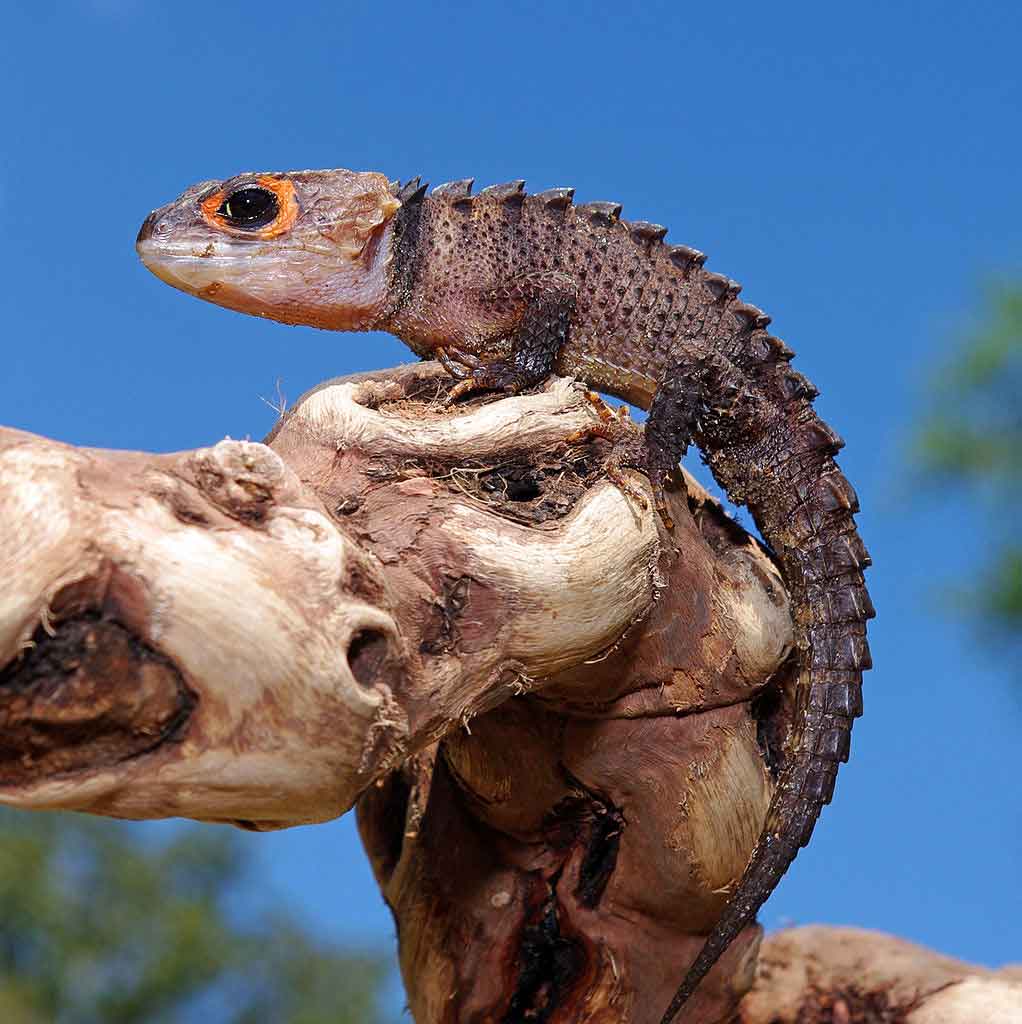
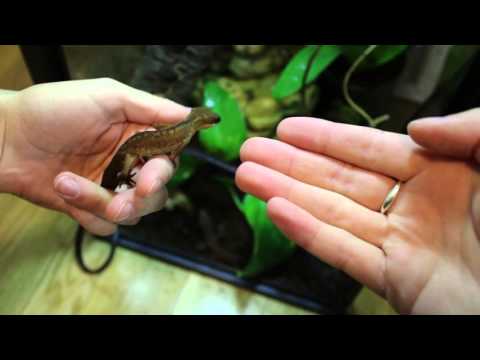
Red-eyed crocodile skink
- Tribolonotus gracilis
Origin: Indonesia and Papua New Guinea
Gender: Tribolonotus
Life expectancy: 10 - 12 years
Length: 17 - 20 cm.
Precious and very rare Indonesian lizard that nowadays is very difficult to find. It likes humid places so we will put a terrarium preferably with moss and a small bathtub in which it can get into, since he likes to even immerse himself completely. Tº aprox. of 27ºC. Insects.
Price ranges from 150 and 250 EUR.
▷ The world of Pets: Dogs, cats, birds, reptiles, amphibians
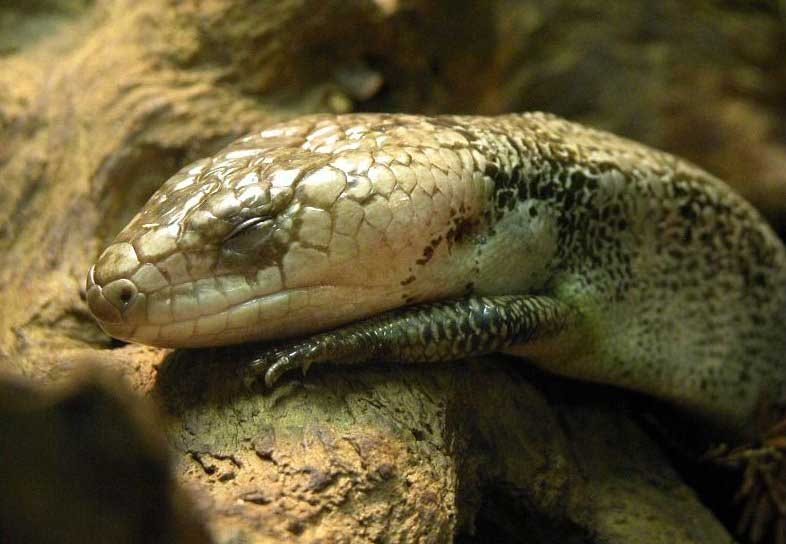
Pink-tongued skink
- Cyclodomorphus gerrardii
Origin: Australia
Gender: Cyclodomorphus
Life expectancy: 8 - 12 years
Length: 45 cm.
The Pink-tongued skink it is a forest animal so in the terrarium we will put some humidity. very easy maintenance.
The Pink-tongued skink reaches more than 45 cm.. The female measures 42 cm long, of which 18 cm correspond to the trunk of the head.
Coloration is grey-brown with a hint of silver, about her until 40 dark brown horizontal stripes, on juveniles strongly contrasting black stripes , that fade in the first year of life after several moults.
Yellow background is not uncommon in young. Adult specimens without transverse stripes have also been seen, raised in the third generation.
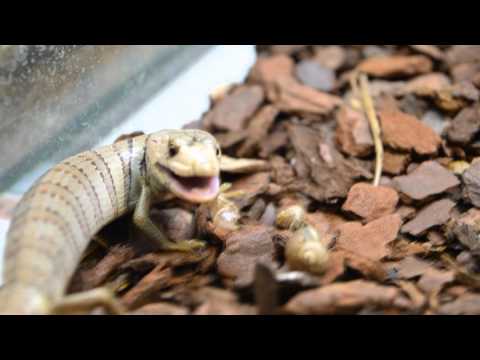
The underside is solid gray to pink.. In the young, the tongue is deep blue and only turns pink after two years, which explains the English name «Pink-Tongued Lizard«. Oral mucosa is bright cobalt blue in young, later fades.
In the lower jaw there is an enlarged molar on the left and one on the right, a functional device for crushing shell snails?.
The claws are rather short, they only allow safe climbing even on smooth bark, because the body is relatively light and the long prehensile tail and the long prehensile tail supports it. Once the tail breaks, it only regenerates 1-2 cm..
The sex of an animal can only be determined with certainty it can only be determined with certainty if comparison animals can be used. As is often the case with skinks, males tend to have thicker and wider heads.
Then compare the root of the tail from the ventral side: the female's tail tapers immediately after the cloaca, in contrast to that of the male.
Pink-tongued skink
Distribution and habitat
The Skinks (Scincidae) they are the most diverse family of lizards on the Australian continent, with 140 species. The genus Cyclodomorphus comprises 10 species, 9 of which are restricted to Australia, with at least one species represented in each state. the tenth species, Cyclodomorphus gerrardii, lives outside of Australia in Indonesia and New Guinea. Cyclodomorphus gerrardii is an active skink like Cyclodomorphus casuarinae, but the only species in the genus with a long prehensile tail.
The females of all species of Cyclodomorphus are viviparous. They have a simple built placenta.
The Pink-tongued skink is located north of sydney, in the Gosford/New South Wales region, to Cape York/Queensland. Lives in the coastal jungle on the ground, but also likes to climb low vegetation. It was found in a banana plantation near Coff's Harbor., as well as in a dry hardwood forest in North Queensland.
Diet
They prefer snails to any other food. Field observations in Australia showed that the usual garden snail (Helix sp.) is their usual prey, even if a second, smaller species (Mitor sp.) is present in the same biotope.
It is important to add fiber, for example, cooked rice or buckwheat flakes, as well as calcium, lime, vitamins and trace elements.
A very elaborate substitute food could be mussel meat after having watered it several times.
The drinking needs of the Pink-tongued skink are easy to satisfy. Or they quench their thirst by licking the water sprayed or from the drinker.
Terrarium
Terrarium
A terrarium with the dimensions 60 x 60 x 80 (Length x width x height) is enough for a couple of Pink-tongued skink, even for a third animal.
It is important that the Pink-tongued skink, as climbing animals, can also use the side walls. Cork or tree fern boards are good for covering. Tested glass containers with a ventilation hole on the side and another on the lid.
At the top there is a separate lamp box in which the electrical system, including lighting, is built-in, inaccessible to animals.
If high humidity is created by spraying, the lamp box also ensures more security.
After some experiments, bark mulch with a ratio of sand and peat in the ratio is preferable 3 : 2 : 1 as a substrate. Various ornamental cork tubes serve as decoration and as climbing and hiding places for animals. The walls are covered on all sides with flat cork boards. You can also integrate plants, like ivy (Scindapsus) or a wax flower (Fleshy hoya).
With a sufficient distance to the plant, you can use an HQL lamp from 80 W as a light source, what benefits animals and plants. High luminous efficacy, a certain amount of UV rays and the heat of the focus and ballast make it stand out. It also, there is a focus of 60 W from above.
HQL lamp ballast heats the terrarium floor from the outside. As such, a small Eternit plate is glued under the glass floor as protection against overheating and the ballast is mounted underneath. Try to maintain a constant relative humidity around the 70 % in the terrarium, as well as an air temperature of 28° C. For the soil, 20°C is enough. For the soil, 20°C is enough.
Manual spray can be replaced, time-consuming, by an automatically controlled spray system.
The Pink-tongued skink they move in their terrarium from the 16:00 until midnight.
Another notable feature is the technique of cracking the shell snails or removing them from it. The small shell snails are swallowed whole by the Pink-tongued skink. If the shell snail is large, the skink they try to break it with their jaws.
For sale Pink-tongued skink
The price of a Pink-tongued skink in the exotic animal market is about 200 EUR.
1. Pink-tongued lizard (English).
2. Scinque mangeur d’escargot (French).
3. Rosazungenskink, Schnecken-Blauzungenskink (German).
4. Lagarto de língua rosa (Portuguese).
5. Escinco gigante de lengua rosa (español).
▷ The world of Pets: Dogs, cats, birds, reptiles, amphibians
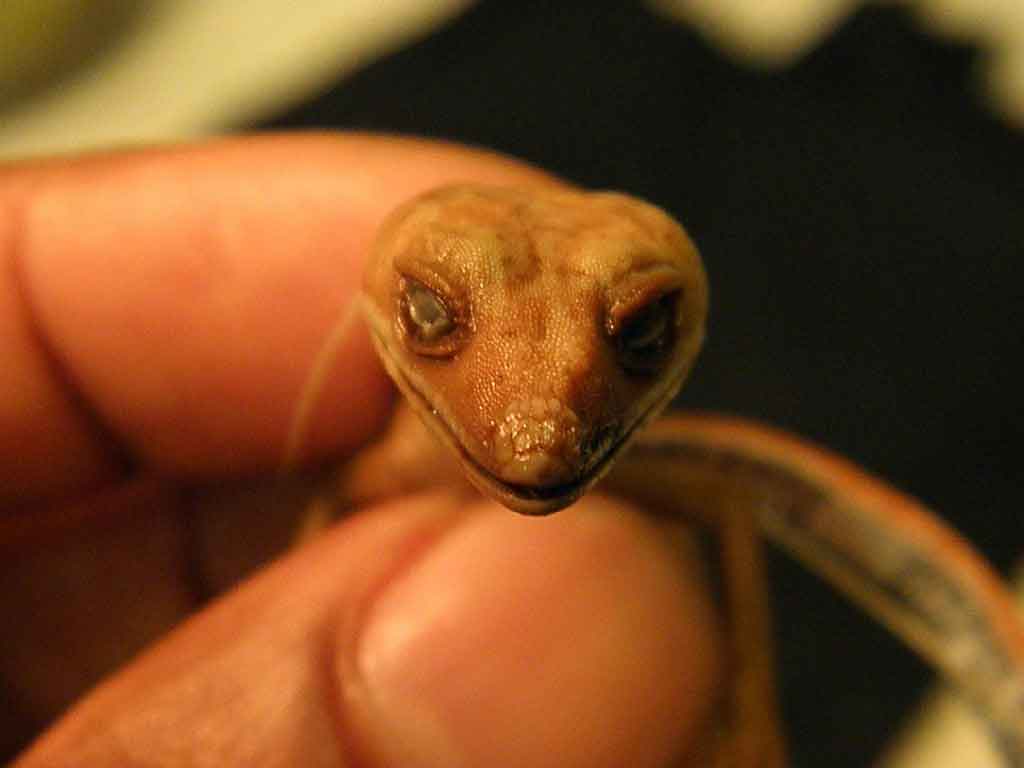
Cat gecko
- Aeluroscalabotes felinus
Origin: Indonesian, Malaysia, Singapore, Cambodia and Thailand
Gender: Aeluroscalabotes
Life expectancy: 10 - 12 years
Length: 18 cm..
The Cat gecko is an elegant gecko highly sought after by gecko collectors. It's relatively easy to create, but can be difficult to find in the market.
The Cat gecko (Aeluroscalabotes felinus) is a tree species of the family Eublepharidae.
They are found in Indonesia, Malaysia, Singapore and Thailand, where they prefer to live in moist and cool jungles with streams or rivers.
These Geckos occasionally enter the terrarium trade as wild-caught specimens, so most individuals die during transport. Thailand has a law that prohibits the capture, trade, the import and export of gekcos.
Its name comes from its habit of sleeping curled up with its tail over the nose and eyes..
The nominal shape A. felinus felinus was described by Günther in 1864, the subspecies A. felinus multituberculatus was first described by Kopstein in 1927.
The Cat gecko can be measured 12 cm., 21 cm if we add the tail. Males are still smaller.
The head is clearly separated from the body, has an elongated muzzle and is wider than the body.
The neck and body they are flattened laterally and are covered with small dorsal scales, flat and almost uniform. A row of small flat tubers are present, although they may be missing; the ventrals are small, smooth and elongated.
Sexually mature males have an angular row of 25-28 enlarged preanal scales, with 10-23 Pores. Thin limbs end in short, clawed fingers.
The hemipenes clearly visible facilitate sex determination.
The original tail is able to grip, the regenerated one is shorter and bulkier.
Dorsal coloration between dark and reddish-brown, 1 or 2 rows of reddish beige spots, yellow or whitish running from the nape of the neck to the back, often framed in dark color.
The head and limbs are unicolored or with brown patterns; the sides of the body may have irregular and partially indistinct light or dark lines or spots.
Lip and chin protections are whitish, eyes are blackish brown.
The throat is reddish beige, the ventral part is reddish-brown and with small irregular dark spots.
Original tail conspicuous and irregularly stained white. Regenerated tails have only indistinct black and brown spots.
The youth are stronger in their overall coloration.
Habitat
The Cat gecko is an inhabitant of the primary forest from sea level to some 800 m above sea level. There it lies close to the ground, especially moving in the branches of the bushes and possibly also in the trees.
It is a Gecko strictly nocturnal, well hidden during the day. Its mode of locomotion is of a chameleon slowness. Climb skillfully on small branches, using its prehensile tail as an aid to climbing.
The "Cat gecko" in captivity
Terrarium
For a mate or a male with a maximum of 3 females, are enough terrariums of 60 x 40 x 40 cm. (width x depth x height). But, a higher height adapts to the need of this species of Geckos.
The substrate consists of garden soil or a mixture of soil and peat, of about 5 height cm. Make sure the soil is always moist. It is essential that there are branches that animals can climb on., as well as plants, as they like to climb them. Pieces of cork or tubes placed on the ground and in branches serve as a hiding place during the day. Despite constant spraying (at least every two days), you should not miss a bowl of water, since animals visit it frequently and also like to defecate on it. Once a week, spray water should be enriched with a mixture of vitamins.
Terrarium lighting
Lighting is provided by fluorescent tubes, temperatures should be a maximum of 27° C during the day (25°C is better) with a reduction to about 23° C at night.
It is advisable to reduce the lighting time and slightly lower the temperatures in winter.
Food
The Cat gecko eat the usual gecko food in the right size, that is to say, crickets, Little grasshoppers, etc. But, tend to prefer smaller foods. Sprinkle regularly 3-4 times a month with a mixture of lime with vitamins.
Reproduction
Females put 2 elongated soft-shelled eggs several times a year in the moist substrate or in the pot.
At 24-26°C during the day, with an overnight setback at 20-22° C, incubation lasts between 70 and 85 days. The babies measure 43-57 mm y have a length of 75-92 mm.
They must be raised individually.
during breeding, regular vitamin supplementation in the form of lime preparations and in spray water must be guaranteed.
For sale "Cat gecko"
The price of a "Cat gecko" at the exotic animal market, captive bred, ranges between 100 – 300 EUR, depending on its size.
GROSSMANN, W. & C. SHEPHERD (2005): Breeding and propagation experiences of the Cat gecko (Aeluroscalabotes felinus) (GÜNTHER, 1864). — SAURIA, berlin, 27 (1): 33-46.
GROSSMANN, W. (in the press): Cat gecko (Aeluroscalabotes felinus). — Münster, species by species, Terrarium Library (Natur und Tier – Verlag GmbH), 64 p.
MANTHEY, U. & W. GROSSMANN (1997): Amphibians & Reptiles of Southeast Asia. – Münster (Natur und Tier – Verlag), 512 p.
▷ The world of Pets: Dogs, cats, birds, reptiles, amphibians
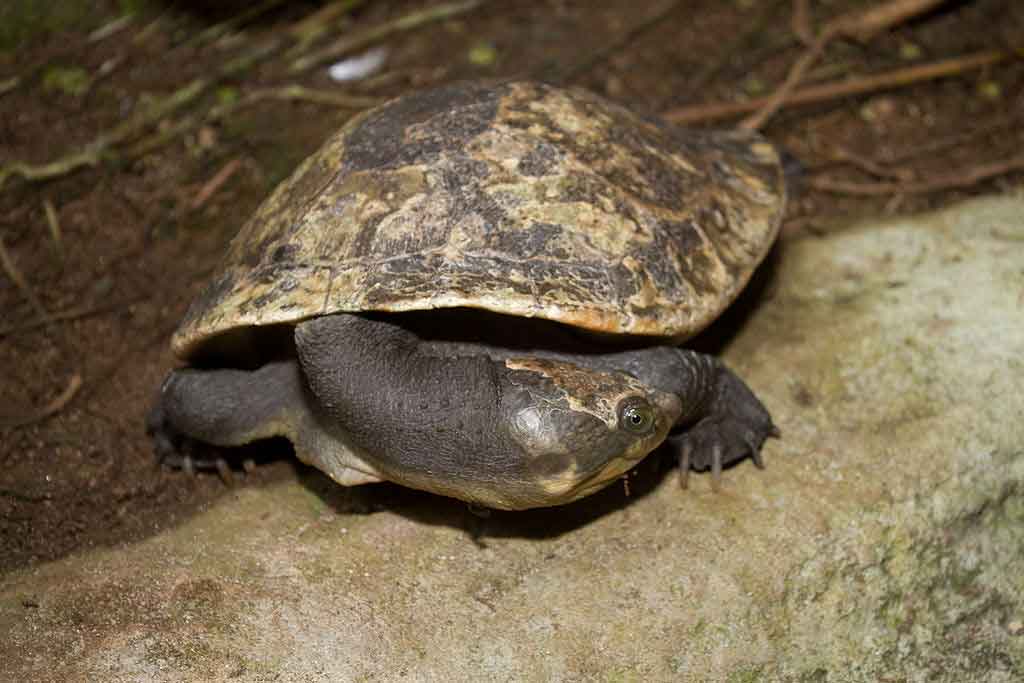
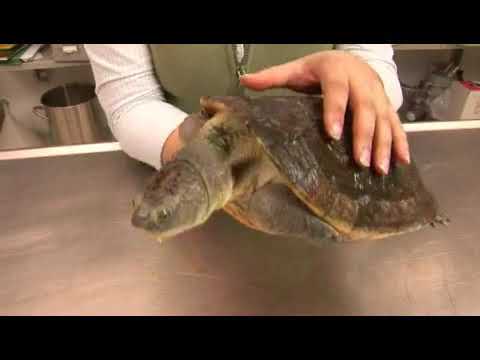
New Guinea snapping turtle
- Elseya novaeguineae
Origin: Australia, West Papua, Indonesian
Gender: Elseya
Life expectancy: 15 to 20 years in captivity.
Length: Until 30 cm..
Like other freshwater turtles, the New Guinea snapping turtle alternate periods in the water with time spent in the sun to raise body temperature.
The New Guinea snapping turtle (Elseya novaeguineae) found on islands and rivers off the coast of Australia and New Guinea, like Fraser Island, the garden river, Daru, cape york, the Stradbroke Islands and the Torres Strait Islands. These turtles are also found in lowland swamps, covering large areas of the tropical and open plains of western Papua New Guinea.
Characteristics / Appearance
The New Guinea snapping turtle has an olive-colored head with a yellow-cream stripe that runs from the tip of the nose to the iris, passing through the eye. They have a prominent upper jaw and two yellow whiskers on their chins.; the same yellow coloration runs along the light-colored jaw line.
The upper neck region is dark gray and the lower, light grey, with red veins that run through it. This same coloration appears on the lower jaw and on the belly of the turtle., although the color may vary between bright orange, yellow or pink. The extremities, the tail, the plastron and abdominal regions are marked with red.
The New Guinea snapping turtle Young usually has brighter marks that fade as it grows., and its red color turns pink over time.
Females have a larger shell, but its tail is shorter. The shells of males oscillate between 13,3 and 17,3 cm., and those of females between 15,2 and 25,5 cm..
The New Guinea snapping turtle is a member of the family of side-necked freshwater turtles, Chelidae. They can be characterized by the way they extend and retract the neck. Place the neck and head on their side, below the top edge of the shell.
Habitat
The preferred habitat of the New Guinea snapping turtle are the rivers, swamps and ponds of Papua New Guinea and Australia. In the lower reaches of the Kikori and Omati rivers they inhabit slow-moving waters, seasonal wetlands and wetlands.
Like other freshwater turtles, the New Guinea snapping turtle alternate periods in the water with sunny time to increase body temperature. Most of their life is spent in the water, where they look for food. If there is a shortage of water in the warmer months, move to flooded areas.
The New Guinea snapping turtle swims and sunbathes to control internal body temperature. During the sunbathing process, tears go down the side of the turtle's head and enter the mouth as it opens and closes, what are known as gular movements.
Wetting the head or limbs, removing limbs from heat exposure and changing breathing patterns are mechanisms that prevent overheating.
The New Guinea snapping turtle, just like other short-necked turtles, snaps and bites when threatened, causing painful wounds. They stick their heads in while tilting their shell toward predators to reduce damage to soft parts of the body..
Reproduction
In many sea turtles, freshwater and terrestrial, the sex of the embryo is influenced by the incubation temperature. But, this is not the case for the Australian turtles studied to date, lacking temperature-dependent sex determination.
Species Elseya novaeguineae mate all year round, with peaks in spring and autumn.
During the breeding season, males communicate with females with a series of signaling postures, including a combination of simultaneous caresses, blinking eyes and swinging of the head. The female may be motionless or swimming; when she stops the encounter and comes to the surface, the male quickly adopts a nose-to-nose position, making nose jets. Males and females continue to bob their heads in an alternating sequence while aligning their bodies.. Once this maneuver is completed, mating begins.
The New Guinea snapping turtle has odor glands in its shell that produce odors used during competition between males during the breeding season.
The gestation period lasts from 2 to 4 months.
Ovulation and nesting begin in early spring. Only female turtles come out of the water at night or first thing in the morning to lay eggs in hollow cavities built into sand or soil.. Females lay eggs in about an hour.
These turtles can produce two to four clutches a year., laying four to eleven eggs each time, with an average of 7 eggs in each clutch.
The eggs hatch and hatch in the next dry season, between July and August. There are many factors that can influence the incubation and hatching period: ambient temperatures, cloudiness, the level and flow of the river, the tides and the phase of the moon. Elevated temperatures favor early hatching and cold temperatures favor late hatching..
After digging a cavity and laying the eggs, the female of New Guinea snapping turtle immediately returns to fresh water, leaving eggs exposed.
The hatchlings make their journey to fresh water without the guidance or protection of their parents..
Food
The New Guinea snapping turtle it is omnivorous and feeds on filamentous algae, perifiton, sponges, aquatic macrophytes, aquatic macroinvertebrates, terrestrial insects falling into the water and carrion. These turtles also rely heavily on mollusc crushing., fish, insects, worms, aquatic plants, plant matter and seeds as part of your daily life.
They depend on their wide jaws, sharp and and their front legs to tear food, and its tongue serves to direct the food towards the gaznate.
Threats to the species
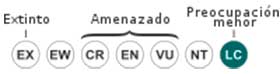
State of conservation ⓘ
Minor Concern ⓘ(UICN)ⓘ
The New Guinea snapping turtle it is listed as a species of least concern by IUCN. But, there may be isolated populations in arid regions throughout their range and have extended times until sexual maturity. This combination leads some to think that a preventative conservation program should be applied.. Growing anthropogenic threats also pose a threat.
Predators include introduced red foxes and domestic cats. Water rats, goannas and crows prey on their nests and the offspring of many species of the genus Elseya.
Human predation includes the taking of eggs and adults as a local food source. The Emydura subglobosa has four scent glands as a defense mechanism against predators. The odor is usually only released when threatened. Although the use of musk is unknown, Recent data suggests that once the powerful smell is released, nearby predators leave the surrounding area.
The "New Guinea snapping turtle" in captivity
Aquaterrarium
The New Guinea snapping turtle can reach a maximum size of 30 cm in the aquarium. For its maintenance and care, an aquarium with an integrated terrestrial part is recommended. This container must have an edge length of at least 150 cm.. The water part should be very large and offer these swimming turtles a lot of free space. Other decorations would only unnecessarily restrict the turtles' swimming space and, Therefore, are not necessary.
These aquatic turtles are peaceful and friendly creatures.. They can be kept in pairs or in a group with several congeners without any problem.. It is also possible to keep them with other turtles of the same size and tranquility.
The New Guinea snapping turtle prefers a water temperature between 22 and 28 degrees centigrade and a pH value between 6,0 and 8,0. A UV lamp must be installed for the turtles to sunbathe. Below this temperature, animals can also enjoy temperatures between 35 and 40 degrees Celsius.
Food
The New Guinea snapping turtle is omnivorous. They can be fed frozen and live food. Especially fish, insects and invertebrates are easily accepted.
Reproduction
The New Guinea snapping turtle (Emydura novaeguineae) has already been successfully bred in the aquarium. They are possible almost 4 put per year.
Buy one "New Guinea snapping turtle"
The price of a "New Guinea snapping turtle" at the exotic animal market, bred in captivity, ranges between 90 – 120 EUR.
1. Western New Guinea stream turtle or New Guinea snapping turtle (English).
2. Tortue de Nouvelle-Guinée (French).
3. Neuguinea-Schnappschildkröte (German).
4. Tartaruga de córrego do oeste da Nova Guiné (Portuguese).
5. Tortuga mordedora de Nueva Guinea, Tortuga del arroyo de Nueva Guinea occidental (español).
Sources:
1 – (Legler y Georges, 1993)
2 – (Adams y Georges, 1996; Georges, 1995; Georges, et to the., 2006; Legler y Georges, 1993; Webb, 1978)
3 – (Georges Guarino and Bito, 2006)
4 – (Legler y Georges, 1993; Ernst y Barbour, 1989)
5 – (Werneburg et al., 2009)
▷ The world of Pets: Dogs, cats, birds, reptiles, amphibians
African helmeted turtle
- Pelomedusa subrufa
Origin: Angola, Botswana, Democratic Republic of the Congo, Malawi, Namibia, South Africa, Madagascar and Tanzania
Gender: Pelomedusa
Life expectancy: 30 - 50 years
Length: Until 30 cm.
The African helmeted turtle is very popular among turtle fans. Animals live both in water and on land.
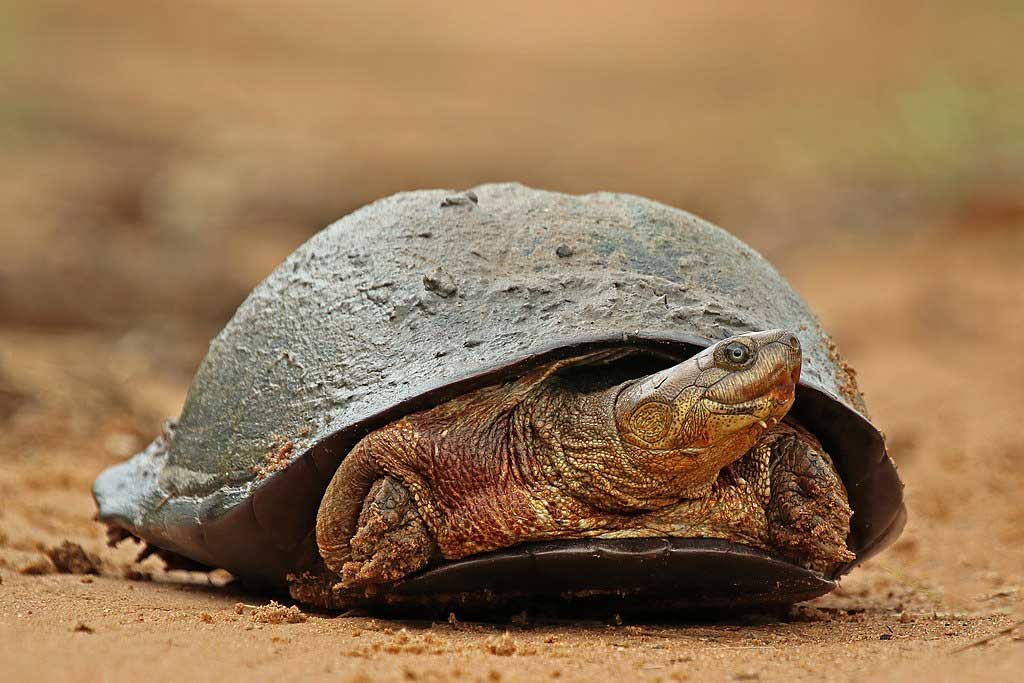
An African helmeted turtle (Pelomedusa subrufa) closes at ground level. – Charles J. Sharp, CC BY-SA 4.0, via Wikimedia Commons
Content
Origin / Distribution
Since 2014 ten species have been distinguished. It also, there are two others that have not yet been fully classified:
The African helmeted turtle, whose scientific name is Pelomedusa subrufa, lives in southern and eastern Africa and in the southwestern Arabian Peninsula. The distribution area extends from Senegal in the west to Madagascar in the east and to South Africa.. So far, it was assumed that it was a single species that inhabited this wide area. But, There are many species, some of which have very small home ranges.
Characteristics / Appearance
The African helmeted turtle has a very round and flat shell. It is dark brown to olive green in color.. The plastron is usually black, but may also have a yellow/horned coloration.
The skin is dark in color on top. Like this, the upper part of the tail is black and the extremities dark gray. The underside of the head is light gray, almost white. The African helmeted turtle he has a round head, short snout and round eyes. they also smile. Sex is recognized by the tail. The tail of the males is longer and thicker than that of the females..
They are called neck spinners. (Pleurodia) and, Therefore, they cannot fit their heads vertically into the S-shaped shell. On the other hand, they put it on its side, horizontal s-shaped, against the body.
Size: The Pelomedusa reach a length of 14 to 30 cm and weighing up to more than 2 kg, depending on the species. The males grow a little more. The Pelemedusa subrufa it is the smallest species, Medusa galeata the largest.
Life expectancy: 30-50 years
Habitat
Preferred habitat is swamps and still waters. It also sometimes temporarily inhabits existing waters and travels considerable distances to reach new habitats.. If accessible waters dry up, is buried until 5 cm deep in the mud. Depending on the exact area of origin, temperatures can vary greatly between day and night.
Behavior
The African helmeted turtle it is a relatively peaceful turtle and predominantly crepuscular or nocturnal. They spend a lot of time on the bottom and also like to burrow in the sand.. In the African winter months, they maintain a dry dormancy and bury themselves in the mud to do so. Dry torpor is followed by the rainy season, during which animals become extremely active.
Threats to the species
No conservation status. But, Saudi Arabia is currently working on conservation measures for the various species that are not as widespread. Until very recently, one of the species was assumed to be distributed throughout Africa. But, there are several and one species is already in serious danger of extinction.
The "African helmeted turtle" in captivity
"African shield turtle" (Pelomedusa subrufa) in the Natural History Museum and Vivarium of Tournai (Belgium) – Vassil, CC0, via Wikimedia Commons
Aquaterrarium
The African helmeted turtle needs a large aquaterrarium (minimum requirement 5×2.5 (LxA) of carapace length, that is to say, 130-150 cm length depending on the species). The water level should be 30-40 cm.. It also, They need a large land area that accounts for approximately 1/3 of the total area. This should be filled especially with moist sand or substrate, for the ones pelomedus can dig during dry break. For dry idle, the water level must drop constantly to simulate the desiccation of the natural habitat. The dry break is followed by the rainy season, during which the water level must be replenished.
Egg laying place: When you have females, an egg-laying place is always necessary. However, these turtles must have a sand pit large enough to rest dry.
Lighting and temperature
They should not miss the sources of ultraviolet light and heat. To the African helmeted turtle likes to sunbathe on land and also needs high temperatures. The water must also be heated (to. 22-30°), as our ambient temperatures are well below African conditions. Heaters that are attached directly to the tank are not recommended, since glass bodies don't necessarily support turtles. A heater built into the filter is more suitable. This heater must work with a timer to guarantee night emission. Spot heaters prevent animals from getting cold when they get out of the hot water. If the temperature of the air is lower than that of the water, pneumonia can occur. Fluorescent tubes provide enough light in the tank. In any case, need a big filter. In the case of aquatic turtles, it is said to always use a filter that can handle one and a half times the actual amount of water, since turtles pollute the water more than fish.
Diet
Turtles Pelomedus have a predominantly carnivorous diet. The right food is earthworms, the snails, mussels and fish. A cuttlefish bone should be available. In the wild it also feeds on frogs and carrion.. It has also been observed that pelomedus they snatch and drown the birds that bathe. Plant food includes aquatic plants, estate, flowers and fruits. But, they also eat them only in the water.
Buy one "African helmeted turtle"
most of the turtles Pelomedusa found in the animal trade in Europe are called 'subrufa" in the shops.
The price for the offspring of the "African helmeted turtle" at the exotic animal market, ranges between 25 – 40 EUR.
The Green iguana (Iguana iguana) belongs to the iguana family (Iguanidae). There are two subspecies, Iguana iguana iguana and Iguana iguana rhinolopha. The latter has two or three horns on the muzzle and thus can be distinguished from the Iguana iguana. A few years ago two other subspecies of the Green iguana: Iguana iguana insularis and Iguana iguana sanctaluciae.
The native range of the Green iguana (Iguana iguana) stretches from southern Mexico to central Brazil, Paraguay and Bolivia and the Caribbean; specifically Grenada, Aruba, Curacao, Trinidad and Tobago, St. Lucia, San Vicente and Útila. They have been introduced in Grand Cayman, Puerto Rico, Hispaniola (in the Dominican Republic), Guadalupe, Texas, Florida, Hawaii and the U.S. Virgin Islands USA. It also, green iguanas colonized the island of Anguilla in 1995 after being swept away by a hurricane. Although the species is not native to Martinique, in the historic Fort of San Luis there is a small wild colony of green iguanas released or escaped.
Characteristics / Appearance
What does a Green iguana?
The Green iguana is a large reptile with a powerful body that can reach a length of almost two meters. But, the average size of a Green iguana is closer to the 1,50 m, much of which is due to its long tail. The body grows to a few 50 cm in males and some 40 cm in females. When fully developed, the Green iguana weighs about ten kilograms. With good care, They can live up to 20 years.
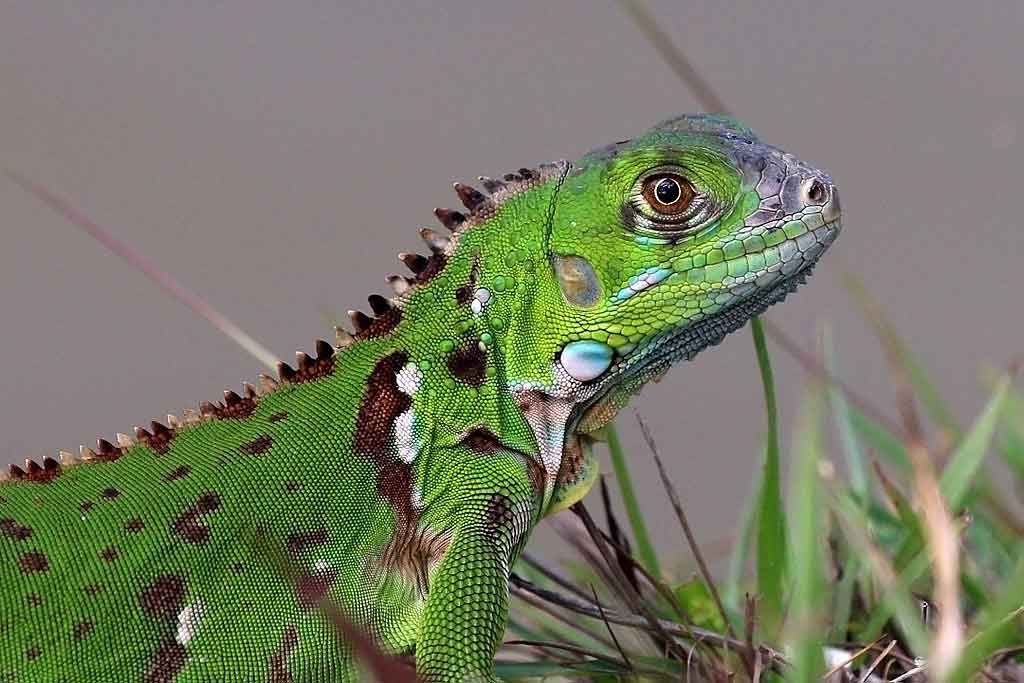
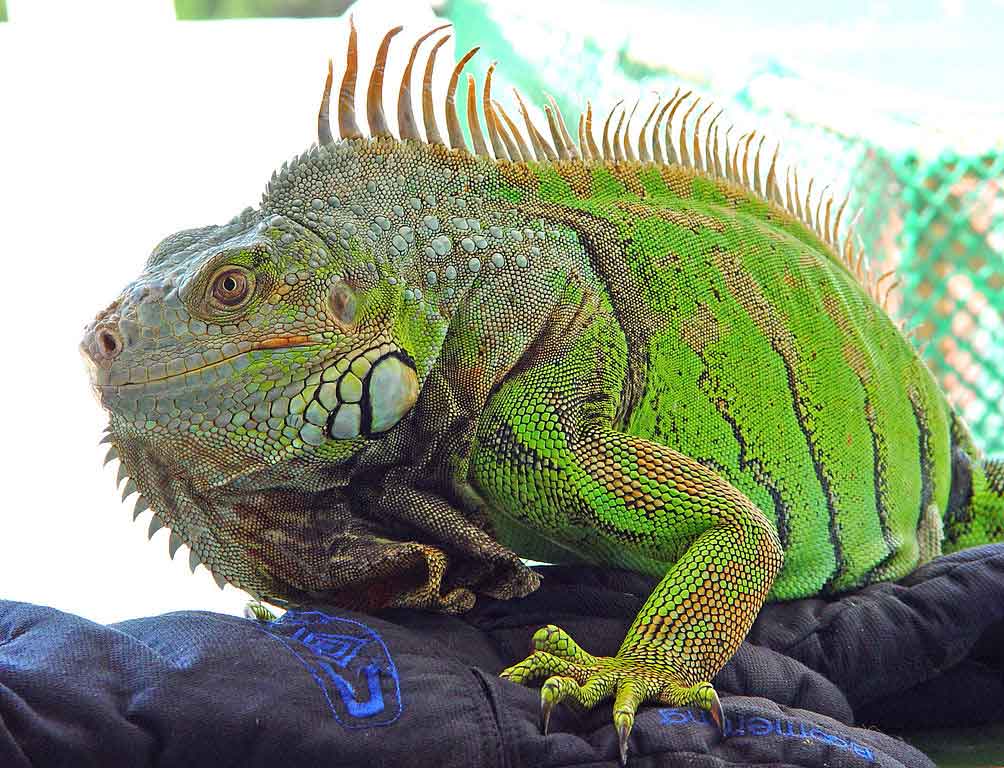
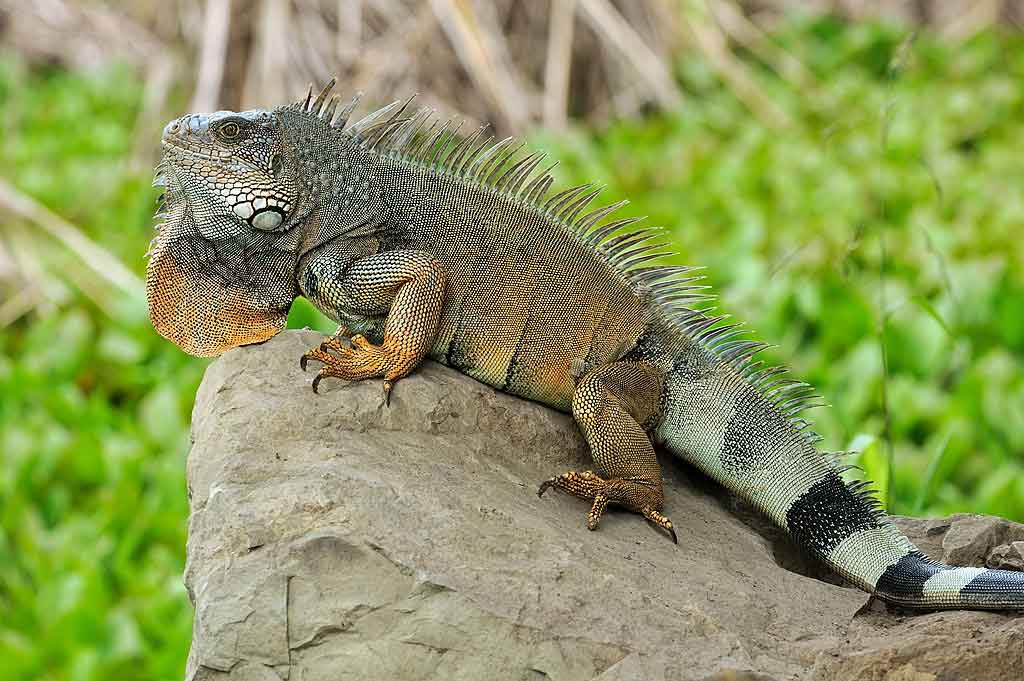
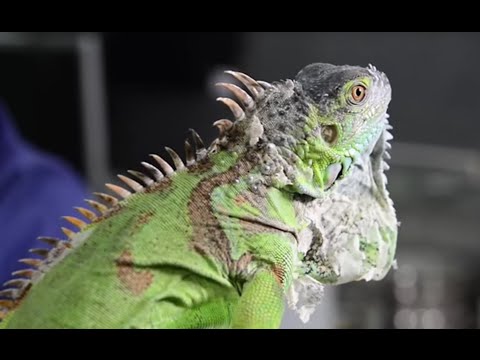
Young iguanas are characterized by a strong green color. With the age, green coloration decreases and becomes darker, sometimes even brown or grayish. They have a crest on the back and tail and usually have dark bands on the body and tail.. The head is characterized by a blunt snout, from which hangs a membranous gular pouch with a large jagged crest.
As inhabitants of the trees, the Green iguana can climb well. Their sharp claws also help them do that.. Diurnal animals can also swim well. As for his character, green iguanas are considered curious, sensitive and relatively confident, although, of course, they are not at all cuddly animals. If the danger threatens, the Green iguana can wag tail like lizards. Then it grows back, but it falls shorter.
Wide variety of colors
Green is not the only color that can be shown by Green iguanas. Its hue is usually bluish and can change throughout your life. Many Green Iguanass become more and more pink, brown, grey or almost black. The Green iguanas are characterized by their scaly and delicate skin. A thorny ridge runs through the back of reptiles; have a double chin under their chin.
Habitat
The natural habitat of the Green iguana are the rainforests of the lowlands, in the vicinity of large bodies of water. Populations in coastal regions with low rainfall are extremely rare.
Behavior
Animals are diurnal and spend most of their time in trees and like to bathe. Although they are considered sociable, there is usually only one adult male in a group. It is important to keep this in mind when keeping them in a terrarium., otherwise fights may occur. A Green iguana can even become meek, which is noticeable in the fact that he greets contact persons by nodding his head..
Threats to the species
State of conservation ⓘ
Minor Concern ⓘ(UICN)ⓘ
The Green iguana is included in Appendix II of the Convention on International Trade in Endangered Species of Wild Fauna and Flora (CITES), which means that international trade is regulated by the CITES permit system. It also, the Green iguana is classified as Least Concern by the IUCN, mentioning that habitat depletion by development is a potential concern for populations of Green iguana in the future. Historically, green iguana meat and eggs have been consumed as a source of protein throughout their range, and are appreciated for their supposed medicinal and aphrodisiac properties. Efforts have been made in the past to breed green iguanas in captivity as a food source in an attempt to encourage more sustainable land use in Panama and Costa Rica..
The "Green iguana" in captivity
The terrarium
Type of terrarium Jungle or tree terrarium
Temperature of 25 to 30 degrees Celsius during the day, 20-25 degrees Celsius at night
Humidity High humidity
Need for sun A sunny place per animal is required with temperatures of approximately 35 – 40 Celsius degrees.
If you want to have a Green iguana, you need a lot of space. Since these animals can reach two meters or more, a medium-sized terrarium is not enough for good conservation. Yes, you Green iguana has to live tight, won't feel comfortable with you. The minimum size of the terrarium for a Green iguana adult should be 300 x 200 x 250 centimeters. Young animals are raised in a smaller terrarium. It is important to have a sufficient height with many climbing branches so that the animals can climb. Animals like to rest on horizontal branches under a spotlight.
If several animals are housed in the same terrarium, they need enough hiding places so they don't look all the time. Thick PVC pipes into which a board or floor is inserted are suitable for this purpose. The ground should be covered with sphagnum, sawdust, linoleum or tiles. Coatings with sharp edges, such as expanded clay or gravel, are absolutely inadequate.
Even with a spacious terrarium, is controversial among terrarium enthusiasts whether the Green iguana must be kept in a terrarium in general. As an alternative, if you have the opportunity, it's a good idea to host the Green iguana in your own reptile room. As long as you can create in it the right weather conditions, this option is preferable to a large terrarium.
Temperature and humidity in the terrarium
Adult green iguana – Cy, CC BY 3.0, via Wikimedia Commons
A rainforest or tree terrarium is suitable for maintaining a Green iguana. It doesn't matter which variant you choose: Temperatures and humidity must be adequate for green iguanas to feel comfortable in them. Temperatures should range from 25 and 35 degrees during the day and at least 20 degrees at night. It also creates a warmer place where the temperature is between 40 and 45 degrees Celsius. If you have several animals in the same terrarium, each of them needs what is called a sun point.
The humidity of the terrarium should be between the 60 and the 80 percent during the day and between 80 and the 95 percent at night. Animals also need UV-B lighting for about twelve hours a day.. To adapt the climate to the natural habitat, animals and terrarium should be sprayed with water daily. During the winter period (December-April), the climate must be maintained 5 cooler and drier degrees Celsius. To avoid bacteria and mold, the terrarium should also be well ventilated.
Tips for decoration
Equip the terrarium or reptile room with enough branches and trunks to climb and rest. Branches for climbing should be at least as thick as the trunk of the lizard. Rocks are also useful, the roots and the cork caves. It is also important to have a water basin with a temperature of about 25 degrees Celsius. It is best to heat it with a bottom heater or a heater in the filter.
You can use real or artificial plants in the terrarium of your iguanas. Real plants are good for the climate, but they can be crushed or eaten. So, real plants must definitely be non-toxic. The substrate must be dry and absorbent.
Care and nutrition
Male Green Iguana (Iguana iguana) of wildlife in the Botanical Garden of Portoviejo, Ecuador – First, CC BY-SA 3.0, via Wikimedia Commons
So that your Green iguana stays well, prudent care is essential. Good care starts with diet. The green iguanas are vegetarian, so animal foods shouldn't be on your menu. Exceptions are young iguanas and pregnant females, whose diet should consist of a 15% of animal feed (insects and eggs).
A varied diet is important to ensure a sufficient supply of nutrients. Leafy greens should make up the main part of the diet, around the 60%. These may include, can be fed with dandelion, Canons, clover, rib or parsley grass. To the green iguanas they also like cabbage. The 40% remaining diet should consist of flowers (30%) and fruits (10%). Papaya, strawberries, mandarins or prickly pear figs are suitable. The foliage of trees is particularly greedily consumed by animals. You can supplement your diet with vitamin and mineral supplements to prevent malnutrition. Animal feed should never exceed the 5%. Its excess can cause kidney problems in animals.
Hygiene also plays an important role in maintaining green iguanas. Infestation with parasites such as mites and worms is relatively common in green iguanas. Thorough hygiene prevents pathogens and, Therefore, diseases. Remove food scraps and droppings every day, change the water daily and clean the entire terrarium regularly. Diseases that are comparatively common in green iguanas include putrefaction of the mouth, tail necrosis and intestinal and respiratory diseases.
How many green iguanas can you keep together?
In the wild, the Green iguana lives in groups consisting of one male and several females. So, you should not maintain a Green iguana individually. You can keep them in pairs or in a small group with a maximum of one male.. The latter option is more relaxed for females, since during the mating season a single female is not too harassed by the male.
It is not recommended to keep several males together. Especially dominant males do not get along with each other. Especially in the season of heat, animals have a marked territorial behavior, which can lead to bloody conflicts between males. In any case, they should only be kept together in very large terrariums with enough hiding places.
Iguanas also get along well with the turtle (Terrapene) of the warmest regions. On the other hand, the Common basilisk (Basiliscus basiliscus) wave Marine iguana (Amblyrhynchus cristatus) should not be kept together with the green iguanas. The similar appearance in terms of physique and color can cause stress in animals.
Are green iguanas suitable for beginners?
It is not the same to have a reptile in the living room of the house than a cat, a dog or rabbit. These exotic inhabitants need adequate climatic conditions and can suffer damage if poorly maintained.. Some species are so demanding that it is desirable or necessary to have previous experience in maintaining terrariums..
The green iguanas fall into this category. They are less forgiving of breeding errors than other reptiles. So, this species of iguana is not the best choice for beginners. Inadequate breeding conditions can lead to illness or premature death of the animal.
Just because of the size of the animals, you should think carefully about whether you can really meet the requirements to have green iguanas. A standard terrarium is usually not enough to keep large reptiles. Don't be dazzled by the small size of very young animals in pet stores. Must be able to offer the animal the space it needs when it has grown.
Buy one "Green iguana"
The green iguanas can be purchased from reputable breeders. Make sure the maintenance conditions are good and the animals look clean, well fed and, in general, healthy. You can also find them at a rescue center or animal shelter.. The pet shop is also a place to go, but here it is not known where the animals come from or under what conditions they have been raised.
For reasons of protection of species and the environment, you should not buy wild-caught animals, especially since they are usually in a worse state of health than the offspring.
The green iguanas cost between 50 and 100 euros per copy. Adult specimens are more expensive, just like the rarest color varieties. The costs of the terrarium and its equipment are much higher than those of the animals themselves. You also have to take into account the costs of food and electricity.
Its natural habitat is in central and central South America., and prefers rainforests and savannah forests with proximity to water. In the news, the iguana is also native to some Caribbean islands and parts of Florida.
What size should a terrarium be for an iguana?
Due to its size, iguanas need very large terrariums with dimensions of approximately 300 x 200 x 250 cm..
How can I distinguish male iguanas from females??
Animals are not easy to distinguish. Male iguanas have a larger throat pouch, larger femoral pores, a thicker tail root and a wider head than females when they are between one and two years old. During the mating season, males have a red color, more intense orange or gold. They are also usually more dominant than females.
How do green iguanas reproduce??
In the wild, animals copulate at the beginning of the dry season, while in captivity they behave differently. In this case, it may be helpful to keep animals apart for a while to stimulate them. If a couple is lying next to each other, sometimes there is a vigorous courtship with head movements that is followed by a mating.
Do iguanas become meek?
If iguanas grow with human contact from an early age, they become tame and you can handle them without leather gloves. Animals that are not used to humans can react aggressively and hit with their tails., scratch with claws and bite. But, with a lot of patience, even the oldest animals can be domesticated by hand.
How are iguanas domesticated??
It is best to feed by hand the green iguanas regularly to get them used to. To feed them, you can also put them on your arm and keep them at eye level while you talk to them.. In this way, you can also show the animals to the veterinarian or move them without problems.
Videos "Green iguana"
IGUANAS - The green iguana as a pet. How is it? What do you need? What do you eat??
1. Green iguana, American iguana, Common green iguana (English).
2. Iguane vert, Iguane commun (French).
3. Grüner Leguan (German).
4. Iguana-verde, Iguana-comum, Iguano, Sinimbu, Cambaleão, Senembi, Senembu, Tijibu (Portuguese).
5. "Iguana verde", Iguana común (español).
▷ The world of Pets: Dogs, cats, birds, reptiles, amphibians
Amazon tree boa
- Corallus hortulanus
Origin: Colombia, Venezuela, Guiana, Suriname, French Guiana, the brazilian amazon, Ecuador, Peru and Bolivia
Gender: Corallus
Life expectancy: 20 years in captivity
Length: 1,5 - 2 m
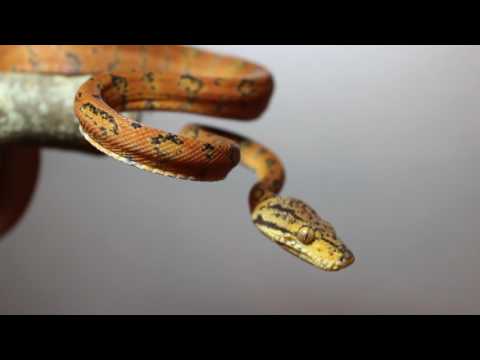
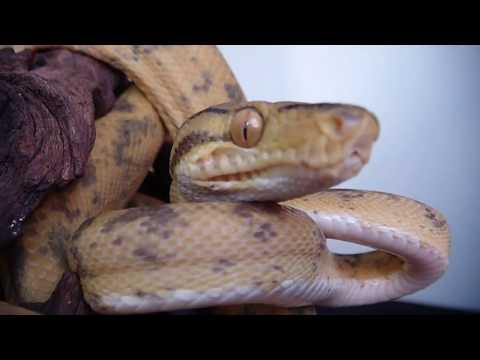
The Amazon tree boa it is a popular pet with snake fanciers and is a fairly common export in the pet trade.
Amazon tree boa – Tambopata, Mother of God, Peru. – Geoff French, CC BY 2.0, via Wikimedia Commons
Content
Origin / Distribution
There are two subspecies of Amazon tree boa. Corallus hortulanus hortulanus is found in the Guianas, the Amazon and southeastern Brazil (to the Tropic of Capricorn). Corallus hortulanus cooki is found in southern Central America, the north of Colombia, the north of Venezuela, Trinidad and Tobago and the southern Windward Islands (San Vicente and the Bank of Granada).
Characteristics / Appearance
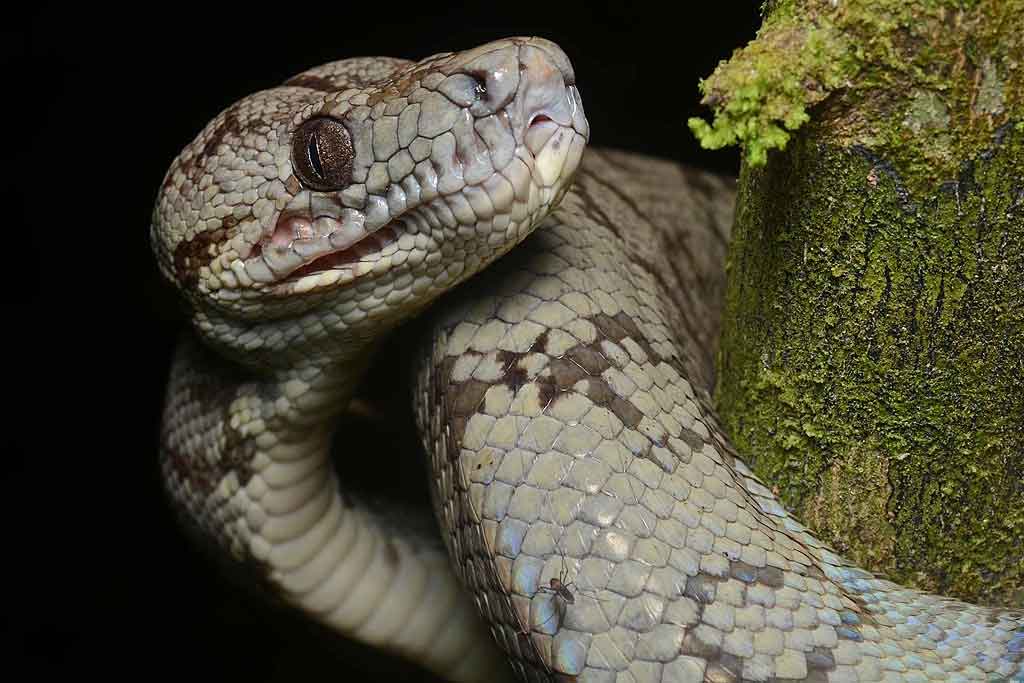
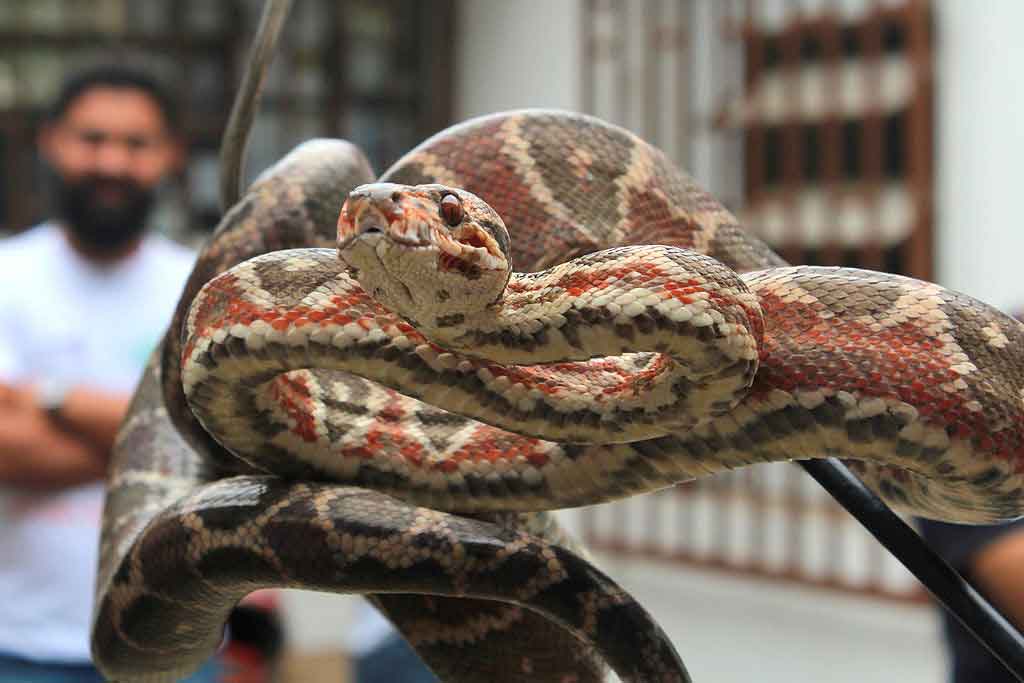
The Amazon tree boa is well known for its highly variable color and patterns. They have small vestigial hind limb remnants in the cloacal region. Its base color varies from pale tan to black., with yellowish and reddish hues. They are marked by a series of spots or bands that are usually wider in the middle of the back.. The head has five dark stripes that extend from the eyes..
The color of the belly is also variable, from cream to reddish brown, and with or without darker markings. Eyes may be yellow, grayish or reddish, and they have a reflective membrane that makes them shine at night. the tongue is black. Males and females are similar in size and markings.. Its length varies between 525 and 1880 mm, usually between 1200 and 1500 mm.
Life expectancy
There are no records of longevity in the literature. The half life of Amazon tree boa in captivity is about 20 years.
Habitat
The Amazon tree boa found in a wide variety of habitats. They are common in arboreal regions with high humidity, especially in the Amazon rainforest. They can also be found in dry areas, such as savannas or dry forests.
Most of the Corallus hortulanus specimens studied are found at 1 or 2 m or more from the ground in trees or other vegetation. They have also been observed active on the ground. The Amazon tree boa also relatively common along rivers.
Behavior
Corallus hortulanus at the João Moojen Zoology Museum (Museum of Zoology João Moojen, MZUFV) at the Federal University of Viçosa (UFV), in Viçosa-MG, Brazil. – Mateus S. Figueiredo, CC BY-SA 4.0, via Wikimedia Commons
The Amazon tree boa it is a notoriously aggressive species. when threatened, bites and curls. when it is handled, can form a ball, contract and twist the body. They are solitary and can be active both at night and during the day..
Reproduction
Courtship behavior consists of “tail wagging” around the enclosure. Once it has started, the male and female introduce themselves and the courtship behavior of the male will induce ovulation in the female. Females are also more receptive to mates if they are introduced soon after a molt.. Between March and April, the couple will have begun to actively copulate. Snakes will copulate several times during this period.
In captivity it is possible for a female to mate with several males., although not recommended, since the males usually become very aggressive and fight each other. In some cases, high levels of aggressiveness have been observed among males, which has caused a dangerous situation for the female.
In the Amazon tree boa, ovulation occurs in the female several weeks after copulation. During the gestation period, females seek out areas with direct sunlight or other warm areas to bask in the sun. The Amazon tree boa gives birth to live young. The gestation period is 6 to 8 months. Newborns shed their skin between 8 and 14 days after birth. After a few 3 years, the Amazon tree boa reaches sexual maturity.
Once the pups are born, are immediately independent of their mother. The males of the Amazon tree boa they do not contribute to the care of their young.
Food
It has been reported that the Amazon tree boa feeds on birds (including Chloroceryle inda, Coereba, Elaenia), bats (probably Phyllostomus bicolor, Myotis), frogs (Elachistocleis), rodents (Akodon, Mus, Rattus), lizards (Anolis, Basiliscus, Iguana) and marsupials (Marmosa). These observations suggest that the Amazon tree boa has a wide diet of mainly vertebrate prey.
The Amazon tree boa hunts at night using its infrared sensitivity or during the day using vision. They are typically ambush hunters, settling on a branch with the front of its body hanging in an S-shaped curve of the branch. They can attack prey that are at a surprising distance from them. Prey are often pushed off the tree branch when struck, in which case the snake will pick up the body by coiling on it.
Threats to the species
State of conservation ⓘ
Minor Concern ⓘ(UICN)ⓘ
Threats to the population
The Amazon tree boa not currently considered threatened, However, continued collection for the pet trade could affect their numbers in the future.
population number
According to the IUCN, the Amazon tree boa it is locally common and is widespread throughout its range, but no global population estimate is available. In the news, this species is listed as Least Concern (LC) on the IUCN Red List and their number is stable.
ecological niche
The Amazon tree boa plays an important role in its ecosystem, as it helps to control the populations of vertebrates on which it feeds.
The "Amazon tree boa" in captivity
The Amazon tree boa it is a popular pet with snake fanciers and is a fairly common export in the pet trade. In 2002 some were exported 3.000 of these live snakes from Guiana and 1.902 from Suriname in the same year (CITES 2002).
The Corallus cookii was once an object of trade. But, this type of tree boa is only native to one island (San Vicente), that has stopped exporting herpetofauna for commercial purposes.
The terrarium
terrarium for "Amazon tree boa"
🐍 Good Amazonian Tree (Corallus hortulanus) - The multicolored boa 🐍
In general, these snakes do well in captivity and are easy to care for in a terrarium. Adult animals need a terrarium of at least 60 x 45 x 60 cm per animal. Large specimens should be housed in a more spacious enclosure.
Decor
Provide adequate shelter, especially in the upper part of the terrarium. Use lots of horizontal branches and hang plants between them where animals can hide. You can also use hollow cork logs for them to climb and hide. Animals will almost never spend time on the ground, but a good soil captures residues and facilitates the maintenance of higher humidity. Think, for example, in a coco peat soil mixed with bark and leaves and/or moss.
Temperature and humidity
Young animals need high humidity throughout the year, while adults naturally have a drier period from August to October. High humidity is especially necessary for younger animals to ensure they shed properly. If this species is kept too dry, it usually sheds its skin in parts and it is not uncommon for remains of the old molt to remain attached to the tail. If these debris go unnoticed the circulation at the tip of the tail can be cut off and it could die and fall off..
The average temperature should be 25C on the cool side and 27C / 29C on the warmer side. Of course, they are not basking animals and to thermoregulate they move between warmer and cooler sections in the forest or garden. in the terrarium, this usually means that the temperatures in the highest section of the terrarium are higher than those in the lower parts. So, make sure there are plenty of places to climb and hide in all areas and sections of the terrarium. Heating can be done with a solar point (ceramic) or a thermal panel against the roof of the terrarium. Make sure that you Amazon tree boa cannot come into contact with the lamp or can curl around it, as this can cause a burn.
Yes, you Amazon tree boa it's a lot on the ground, this may be due to health problems, to excessive temperatures in the upper part or to the lack of hiding places in the upper layers of the terrarium. Note that also pregnant females usually lie on the ground before giving birth..
Illumination
The Amazon tree boa lends itself well to a bioactive setup. In this case, it is best to use an LED or fluorescent tube to illuminate the enclosure. illuminate from 11 to 13 hours a day.
Diet
The Amazon tree boa it is very easy to feed, if it moves and is hot it will be prey. Young animals can be fed pinkies which are replaced by fuzzys as they grow. When they reach 12 months of age usually feed on prey such as the jumping mouse. Adult animals feed well on a diet of adult mice and chicks.. Make sure the dam is not too big, since they are very thin snakes. Hatchlings and juveniles can be fed once a week, While the (sub)adults can feed on one prey every 14 days.
Buy one "Amazon tree boa"
The price of a "Amazon tree boa" at the exotic animal market, ranges between 300 – 600 EUR.
1. Amazon tree boa, Macabrel, Cook’s tree boa, common tree boa, Garden tree boa (English).
2. Boa d’Amazonie, Boa de cook (French).
3. Hundskopfboa, Gartenboa (German).
4. Suaçubóia, cobra-de-veado (Portuguese).
5. "Boa arborícola amazónica", Cascabel dormillon, Boa arborícola (español).
▷ The world of Pets: Dogs, cats, birds, reptiles, amphibians
Indian python
- Python molurus
Origin: India
Gender: Python
Life expectancy: 25 years
Length: 6 m
The Indian python it is the dream snake for many terrarium keepers. His attractive appearance, its imposing size and its temperament, generally quiet, contribute significantly to this popularity.
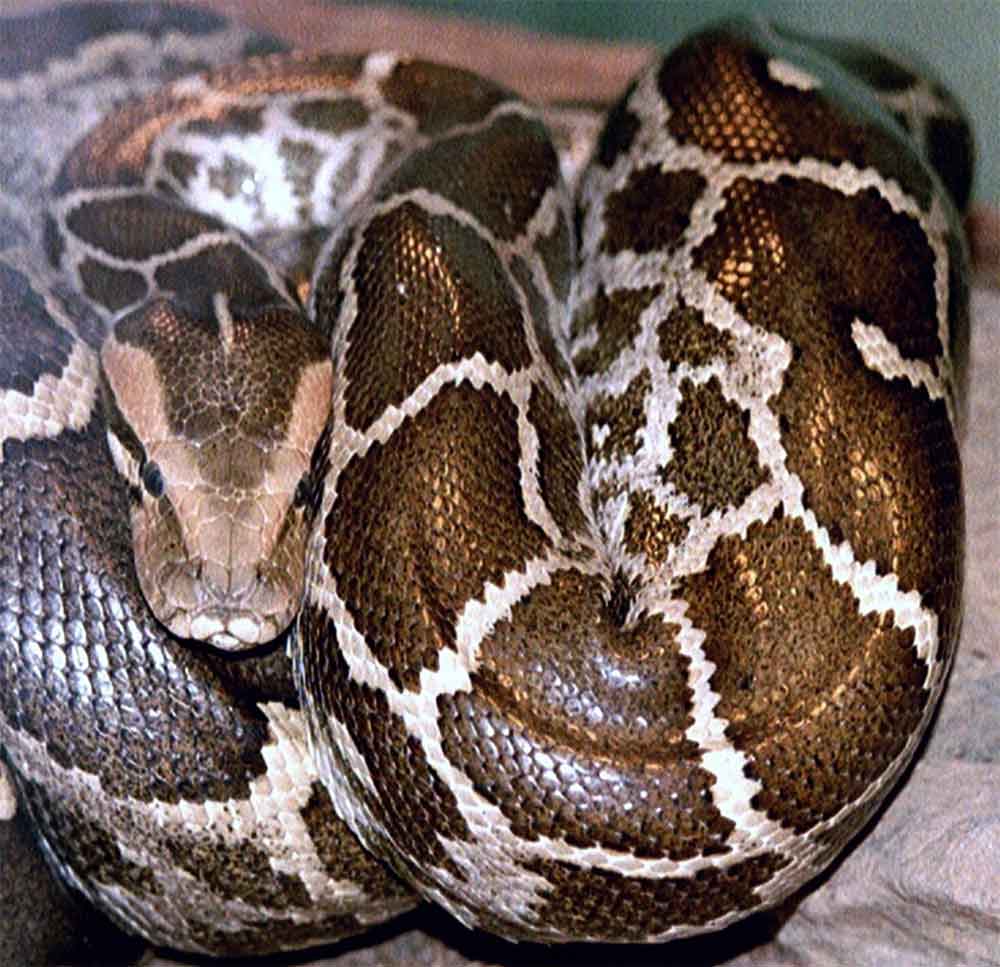
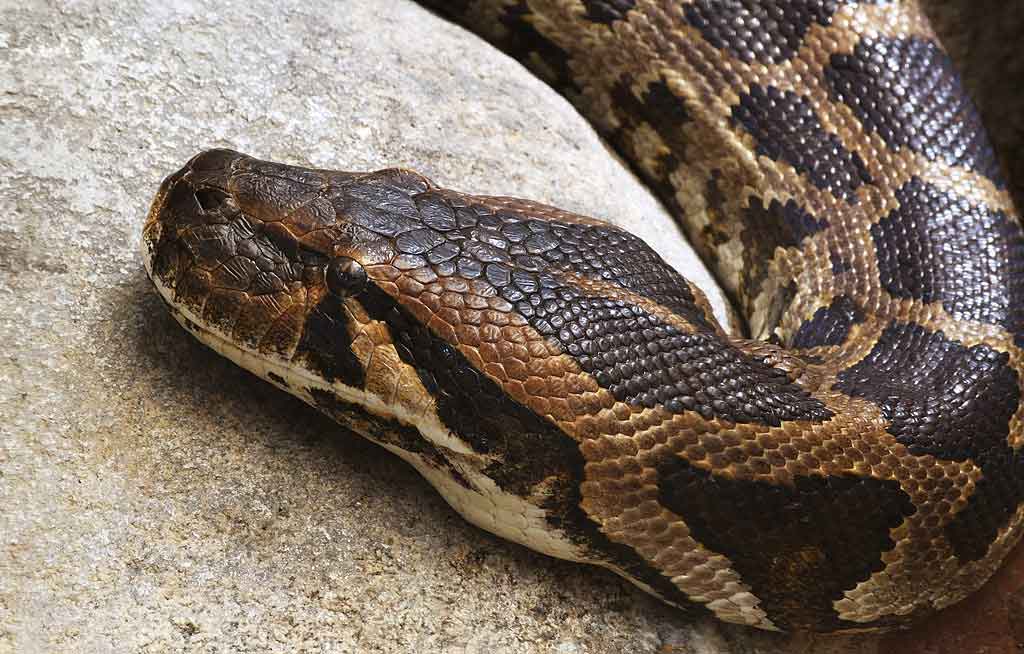
Indian python (Python molurus molurus) at the San Diego Zoo, EE.UU. – Tigerpython, CC BY-SA 3.0, via Wikimedia Commons
Content
Origin / Distribution
The Indian python(Python molurus) stretches across the lower half of the Asian continent. The western limit of the species is believed to be the Indus Valley. It can extend to the north, in Quingchuan county of Sichuan province (China), and to the south, in Borneo.
The Indian python appears to be absent from the Malay Peninsula. It has not yet been determined whether the populations scattered across several of the smaller islands are native or feral populations. (escaped pets).
There are two recognized subspecies of Python molurus that are separated by their geographical distribution area and by certain physical characteristics:
Python molurus bivittatus, (burmese python) Kuhl, 1820. The larger of the two. thought to range from Myanmar east through South Asia to China and Indonesia. It is not present on the island of Sumatra. Introduced specimens have been seen in the Florida Everglades.
Python molurus molurus (Linnaeus, 1758). She is native to India, Pakistan, Sri Lanka y Nepal.
Characteristics / Appearance
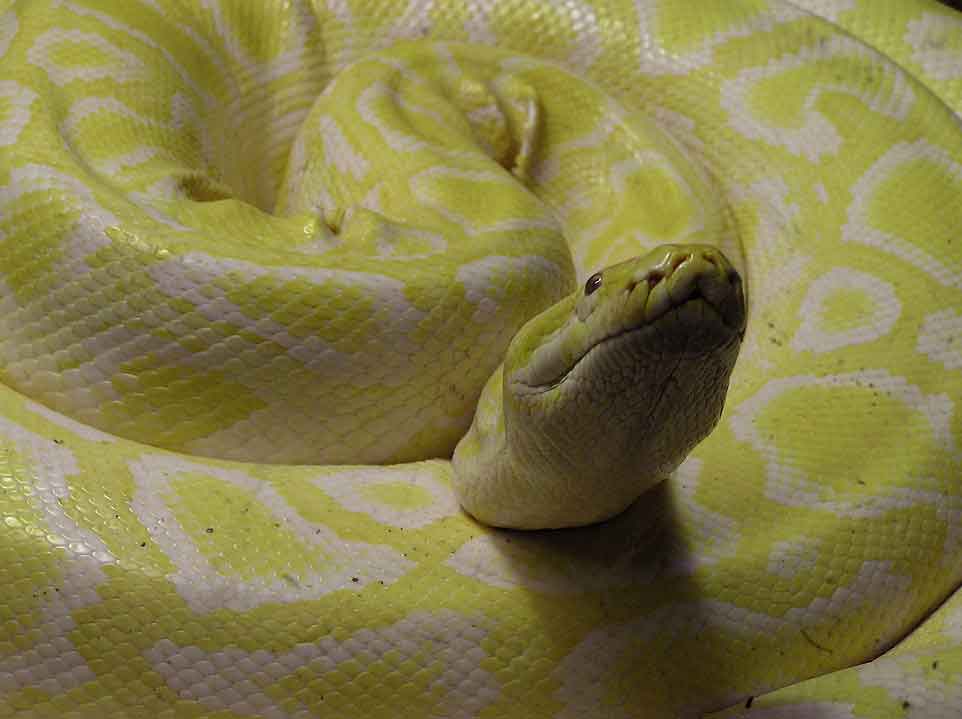
The Indian python splits into two recognized subspecies, that can be distinguished by their physical characteristics. The burmese pythons, P. molurus bivitatus, They can reach a length of about 7,6 m (25 feet), and can weigh up to 137 kg (300 pounds). The Indian python, P. molurus molurus, smaller, reaching a maximum of 6,4 m (21 feet) of length and a weight of 91 kg (200 pounds). The skins of both subspecies are marked with a mosaic-like rectangular pattern that runs the entire length of the animal.. P. molurus bivitatus has a darker color, with shades of brown and dark cream colored rectangles stretching out on a black background. This subspecies is also characterized by an arrow-shaped mark present on the top of the head., which starts the pattern. P. molurus molurus has similar markings with light brown and tan rectangles set against a typically cream background. P. molurus molurus he only has a partial arrow-shaped mark on the top of his head. Each scale of P. molurus molurus is one color.
The Indian python it is dimorphic, being the females of both subspecies longer and heavier than the males. Males have cloacal spurs., or vestigial limbs, larger than females. The cloacal spurs are two projections, one on each side of the anal opening, which are believed to be extensions of the hind limbs.
Habitat
The Indian python found in a variety of habitats including tropical forests, river valleys, forests, scrub, grassy swamps and semi rocky foothills. They are usually found in habitats with areas that can provide sufficient cover. This species is never found very far from water sources and seems to prefer very humid terrain..
Behavior
Indian python, Python molurus molurus, Family: Boidae, Location: Germany, Stuttgart, Zoo Garden – Holger Krisp, CC BY 3.0, via Wikimedia Commons
The Indian python is a solitary species. Mating is the only time these snakes are commonly found in pairs.. The Indian python usually moves only when food is scarce or when threatened. They can stalk their prey, first locating them by their scent or sensing the body heat of the prey with their thermal pits, and then following the trail. These snakes are mainly found on the ground, but sometimes they climb trees. The Indian python also often found in or near water. They are expert swimmers and can remain submerged without breathing for up to thirty minutes at a time.. During the colder months, starting in October and ending in February, the Indian python remains hidden and usually enters a brief period of hibernation until the temperature rises again.
Developing
the breeding of Indian python it is precocial when it is born. They become independent shortly after hatching.. They reach sexual maturity between 2 and 3 years of age, as long as they have the right body weight.
Reproduction
The Indian python reaches sexual maturity between 2-3 years of age, as long as you have the right body weight. At that time the courtship behavior can begin. During courtship, the male surrounds the female with his body and runs his tongue repeatedly over her head and body. Once they line their sewers, the male uses his vestigial legs to massage the female and stimulate her. Next, the female raises her tail for the male to insert a hemipenis (has two) in the female's cloaca. This process lasts between 5 and 30 minutes. About 3-4 months later, the female lays up 100 eggs, each weighing up to 207 g.. Right now, the female often coils around the eggs to prepare for the incubation period. Incubation lasts between 2 and 3 months.
during incubation, the female of Indian python uses muscle contractions or "chills" to raise your body temperature slightly above the temperature of the surrounding air. It is very rare for the mother to abandon the eggs during incubation.. Once the eggs hatch, pups quickly become independent.
Food
The Indian python is carnivorous. Their diet consists mainly of live prey. Their staple foods are rodents and other mammals.. A small part of their diet consists of birds, amphibians and reptiles. when looking for food, the Indian python stalk its prey, ambush or carrion. These snakes have very poor eyesight. To make up for this, the species has a highly developed sense of smell, and heat pits within each scale along the upper lip, that feel the heat of the nearby prey. The Indian python kills its prey by biting and constricting it until it suffocates. Then they swallow the prey whole. To accomplish the feat of swallowing prey, it dislocates its jaw and stretches its highly elastic skin around the prey.. This allows these snakes to swallow food much larger than their own heads.. In cases of scavenging there is no constriction of the prey
Life expectancy
Half life in captivity 15,8 years
Threats to the species
State of conservation ⓘ
Minor Concern ⓘ(UICN)ⓘ
The Indian python(Python molurus) It is listed by the IUCN as low risk., near-threatened. Since the 14 in June of 1976, P. molurus is listed by the United States ESA as endangered throughout its range. The subspecies P. molurus molurus is listed as endangered in Appendix I of CITES. Other subspecies of P. molurus are included in Appendix II, Like all other species of Pythonidae.
There is a large number of exports for the pet trade. The skin of the Indian python is highly valued in the fashion industry due to its exotic appearance. In its native range it is also hunted as a food source.
The Indian python it is the dream snake for many terrarium keepers. His attractive appearance, its imposing size and its temperament, generally quiet, contribute significantly to this popularity.
This species is listed in Appendix A of the European Species Protection Ordinance and you can't have it without permission. Many countries have also created legal breeding requirements so that the Indian python, as potentially dangerous wild animals, is cared for properly and competently and do not pose a danger to the public.
The terrarium
The most important thing is that the host enclosure contains the snake safely. After all, post requirements are less important once the snake has disappeared into that hole in the wall behind the washing machine because you forgot to secure it properly.
The size of the terrarium should be large enough to allow the snake a reasonable amount of movement., but small enough to allow precise temperature and humidity control. The Indian python it is a terrestrial snake that spends most of its time on the ground, so the floor space of your enclosure will be more important to the animal than the height of the cage.
A brood of Indian python You will need the space equivalent of a reptile terrarium of 40 litres. Larger individuals will need more space, of course. an animal of 90 kg will need a floor space of at least 250 cm x 120 cm.. I recommend that the enclosure have a floor space equivalent to four to six times the area of the snake itself when in a flat coil. The cage should also have a door that allows easy access and can be closed safely.. A glass or plexiglass window is also important to be able to see. Some ventilation is desirable., although not as much as you might initially think. Heat and moisture are easily lost through the vents, especially those in the upper part of the enclosure. Small vents located on the sides of the cage will allow for proper air exchange.
Timber, plastic and glass are acceptable materials for terrarium construction. Enclosures constructed of ABS plastic can be used, that have a smooth, nonporous finish that allows for easy cleaning and sterilization. Snake habitat products can make this difficult, so sometimes simplicity is the best option. All corners and edges must be rounded, so there are no hard-to-clean areas. Terrariums are light, have large tempered glass viewing areas and, the best of all, someone has already done. Regular and spot cleaning with proper reptile cleaning supplies is required.
Substrate
There are several decent substrates for snakes available. It is virtually impossible to provide a naturalistic vivarium for a large ball python., unless the strongest materials are used. Substrates are generally selected for utility rather than aesthetics. Newspaper is absorbent, fairly sterile and easy to get. Various woods are also acceptable, chips and crushed substrate products, although they tend to get dirty in humid environments.
Heating and lighting
The Indian python prefer temperatures of about 26 Celsius degrees. Slightly cooler temperatures are allowed at night. In fact, cooler night temperatures are essential for the breeding of the Indian python, in case you want to undertake this task.
Since the Indian python requires temperatures above what we consider comfortable in our homes, it is necessary to increase the temperature of the enclosure with a supplementary heat source. This heat can be provided in various ways. It is preferable to use a heating pad, like the Zilla heating pad, or heat tape under the enclosure. Heating pads or under-enclosure heaters are available at many pet stores that carry supplies for reptiles.. Provide safe and even heating for the smallest rooms. Thermal tape is also available and serves the same purpose, although it allows more flexibility to heat larger areas more economically. There are also various types of heat lamps for snakes., that are effective. There are many types of reptile heat lamps and accessories to choose from..
But, it is important to give the snake some option to determine its own temperature. In the wild, the animal could thermoregulate by moving freely between warmer and cooler zones. These options are limited in captivity, but by proper heater placement, it is possible to give the snake some control over its own temperature. Must have a hot side and a cold side. The hot side is specific to each species. Maximum thermal gradient can be obtained by placing the heater at one end of the enclosure rather than in the center. The snake will get hotter closer to the heater and will get cooler as the distance from the heater increases. This will give the snake a greater range of options to regulate its own temperature..
It should be noted that the heater has two purposes. Provides a warm zone for the snake to increase its body temperature, but it also provides heat that increases the ambient temperature of the enclosure. Depending on the type, the size and construction of the terrarium, the heat loss from the cage and the temperature of the air outside the cage, the heater may need to be much hotter than the average temperature of the enclosure itself. This is cause for alarm for many newbies. It is perfectly acceptable to have a temperature of 38 degrees Celsius or more directly above (or below) from the heat source if this is necessary to maintain the desired room temperature. But, always make sure the snake can retreat to a cooler area when it sees fit.
The room temperature can be regulated in several ways. In the first and most primitive, temperature can be controlled by initially selecting a heater with a wattage that provides the acceptable amount of heat. If the environmental conditions outside the enclosure are constant and the power of the heater is the same, the temperature inside the cage should also be. It is difficult to select a heater with exactly the necessary heat output, and the constant conditions outside the terrarium are not always as constant as they could be. A rheostat or dimmer switch can adjust the heat output of a heater by adjusting the power input, the other problem can be overcome by using a controller with a feedback system.
Since a thermostat monitors the temperature of the enclosure and activates the heater to add heat when appropriate, is by far the best method for controlling cage temperature. There are two types of thermostats on the market for use in animal related applications. Conventional on/off type works like your home thermostat; senses when the temperature has dropped below a certain level and directs the heater to add heat until the set temperature is reached, such as the Zilla Terrarium Reptile Habitat and Heat Controller. A proportional thermostat is much like a rheostat with a feedback system.. Thermostat continuously monitors temperature and makes slight adjustments to heater electrical current. in this guy, the heat is always on, but only to the level necessary to maintain the set temperature. Proportional thermostats eliminate fluctuations caused by cycling on and off of conventional type thermostats and provide continuous heat from the heat source. The Indian python wild lives in areas of high humidity, and captive animals require the same. Adding heat to the enclosure can dry it out and measures must be taken to retain moisture.. A well built terrarium, with a container for water and a minimum of ventilation grilles, should keep the relative humidity above the 60 per cent, approximately. Wooden terrariums must be painted and sealed.
Mesh-top terrariums are difficult to regulate. Heat rises and escapes through the top, which requires additional heat to maintain the proper temperature, which dries out the enclosure even more. Terrariums should have lids that limit heat and moisture loss.
Feeding of the Indian python
feed the Indian python it's quite simple. I feed a proper size meal whenever the snake is hungry. The breeding of the Indian python can an adult mouse eat during its first feeding, which is surprising to many novice snake keepers. Several sensory systems are at work in a python when it feeds. First of all, the food should smell like something to eat. In second place, the food must move in the form of a potential meal. And third, the food must be warmer than its surroundings. The Indian python eats only warm-blooded prey and has sensory organs (pits) to detect the slight amount of heat generated by the body from a potential food. A combination of these factors appears to be important in eliciting a feeding response in the newborn Python.. Pink mice don't normally move in a way that would interest a baby python., and although I think they must smell like mice, do not generate and retain body heat very well.
Once a baby python has had its first meals, it may learn behaviors that allow it to recognize and eat pre-killed food items, or even chicken parts or processed snake food. It is sometimes recommended to feed snakes only dead food to avoid potential injuries that could be inflicted by the struggling prey item.. It's important to remember, However, that nearly every meal taken by a python in the history of the species has been live. Nature has prepared them well to deal with the possible problems associated with. But, frozen and pre-cut food makes things easier for us, and perhaps that should be the most important consideration.
As the snake grows, will need more food, of course. During the first meals, a mouse offered once or twice a week will suffice. But, soon the snake will need more than one mouse at each meal. When the snake regularly eats several mice per meal, try to offer him a little rat. When a Indian python measure some 1 Metro, should be able to take a medium rat; with 1,5 m, a large rat would be appropriate. There is a young rabbit that is equivalent in mass to a very large rat; substitute one of these as the snake grows, and increase the size of the rabbits as the snake increases in size. Chickens are also a good source of food; the Indian python newborn can eat a day old chick, and to the 3 meters can eat an adult chicken.
Water for the Indian python
The Indian python should always have access to fresh water. A heavy ceramic bowl, It works well. It is not necessary for the snakes to be able to submerge in the water dish.
Management and temperament Indian python
The Indian python, due to its docile nature and undemanding requirements, it is one of the most suitable snakes as a captive animal.
Snakes only have limited reasoning ability. Trust me, this statement is quite generous. Keepers can condition a snake to think (I am generous again) that every time the door of her cage is opened she will be fed. If the snake is infrequently handled and most of its interaction with its handler occurs during feeding time, This conditioning is reinforced. with the big snakes, especially, it is important that the snake learns to differentiate the time to eat from other times, and you from his dinner. The thought processes that have brought you to your current situation will matter little when the mouth of your snake clings to your forearm.. What this means is that it is a very good idea to be aware of your snake's location and orientation when feeding or when servicing its cage.. If a snake is hungry when I open the cage, I tap her on the nose with a rolled up newspaper. This is usually enough to let you know it's not time to eat.. It is also best not to house more than one snake per cage., and it is essential not to feed more than one snake in a cage at the same time.
Buy one "Indian python"
The Indian python is available in a variety of colors and patterns, with new traits and combinations of traits that are available more frequently. They are usually available from captive breeders or online reptile stores.. It is important to check local laws and regulations regarding the species.
The price of a baby of this species ranges from 100 and 200 EUR.
Videos "Indian python"
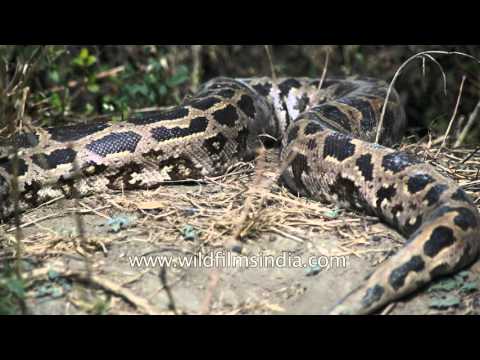
Indian Rock Python or Python molurus, with porcupine quill stuck in his body
1. Indian python, Black-tailed python, Indian rock python, Asian rock python. (English).
2. Python indien (French).
3. Heller Tigerpython (German).
4. Píton-indiana (Portuguese).
5. "Pitón de la India" (español).










_1055532511.jpg)


.jpg)

_juvenile_head.jpg)


