▷ The world of Pets: Dogs, cats, birds, reptiles, amphibians
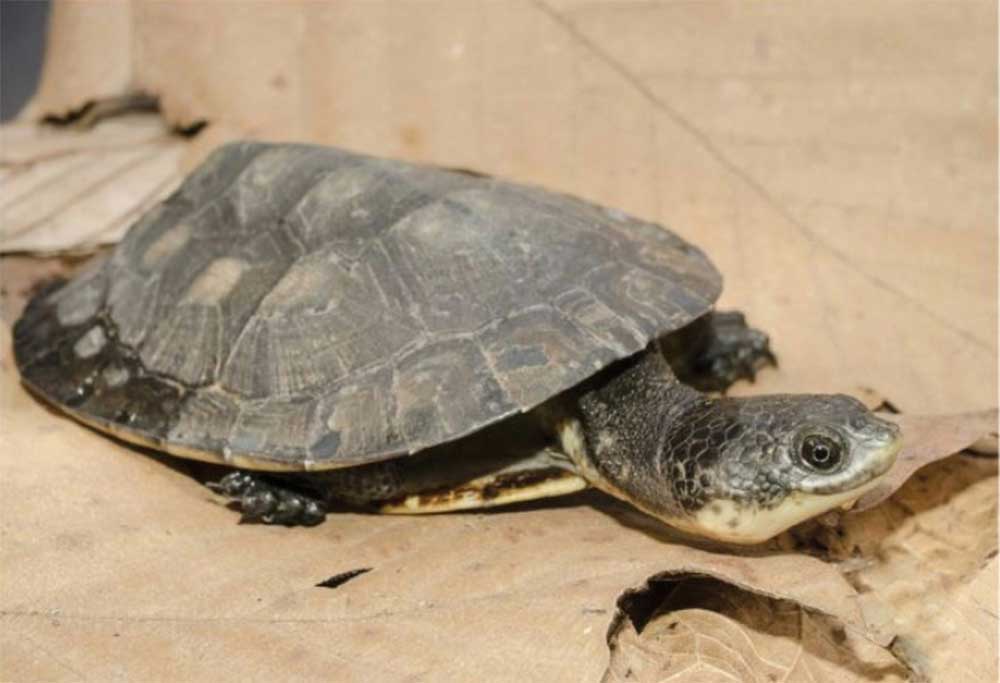
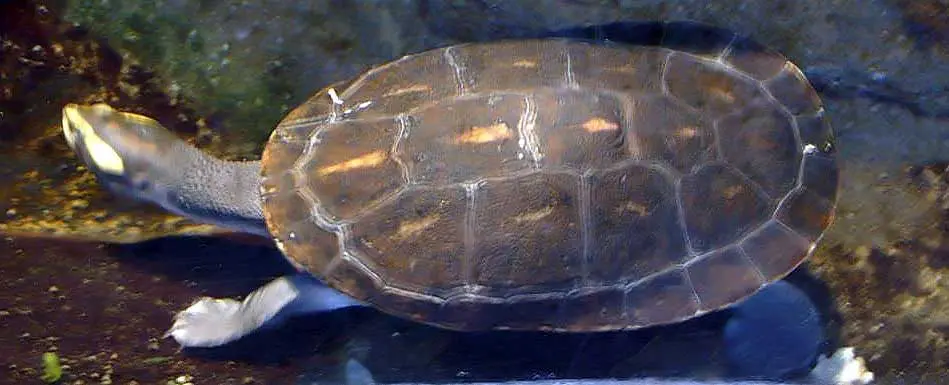
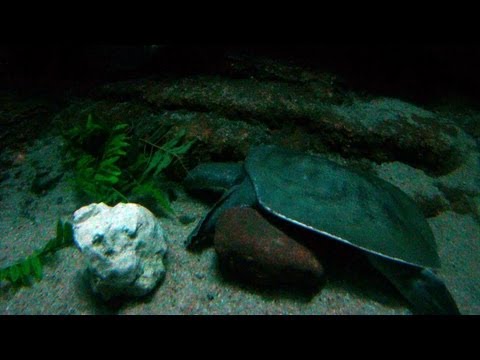
Toadhead turtle
- Mesoclemmys gibba
Origin: Colombia, Ecuador, Peru, Bolivia, Brazil, Venezuela, Suriname, French Guiana and Guyana.
Gender: Mesoclemmys
Life expectancy: 20 - 25 years
Length: 23 to 30 cm.
The Toadhead turtle It is a shy species with nocturnal and aquatic habits that prefers the bottom of bodies of water.. These turtles change their diet as they mature.
The Toadhead turtle (Mesoclemmys gibba) it is a smaller representative of the South American necked turtles (Chelidae). These animals have been known to science and the hobby for a long time, but unfortunately they have not been sufficiently investigated so far.
Its distribution is in a wide area of ​​South America., in Peru, Ecuador, Colombia, Venezuela, Trinidad, Guyana, Suriname, Paraguay and parts of Brazil.
In any case, in Europe mainly animals with Guyanese and Surinamese ancestry are kept.
Characteristics / Appearance
The Toadhead turtle is small, with a carapace length of 15-18 cm in males and 18 cm in females. In this species, sexual dimorphism is not very evident., although males tend to have longer tails and a more forked plastron at the level of the anal scutes. In Venezuela, individuals with a carapace length of up to 23 cm..
Its head is narrow compared to other species of the same genus, back of head lined with small granules; two short barbules on chin, whose length is not greater than the size of the eye; broad, flattened carapace with a serrated-looking vertebral carina, which is smaller in adults; vertebral scutes wider than long, the third and fifth have an inconspicuous posterior projection towards the keel; the intergular shield completely divides the gulars, but not to the humerals; scales between orbit and eardrum smaller than those on top of head; webbed feet with 5 nails on the forelimbs and 4 in the later;
Habitat
These turtles live in rivers, as well as in its tributaries and floodplains in the tropics. They are good swimmers and probably quite nocturnal.. Due to its distribution area, the Toadhead turtle it is active all year round and does not need to hibernate.
It is a shy species with nocturnal and aquatic habits that prefers aquatic bottoms.. These turtles change their diet as they mature: juveniles have an omnivorous diet and become more carnivorous as they grow. Some plants have been reported in the diet of juveniles., like the fruits of the palm Mauritia flexuosa and grasses of the species Pennisetum purpureum and Sacharum sinensis; while adults consume fish, Tadpoles, crustaceans, larvae of aquatic insects and other small invertebrates. To build nests, they dig in well-shaded clay soils., close to bodies of water, or at the base of tree trunks. The nests consist of 2-4 eggs longer than wide and hard-shelled. As a defense mechanism against predators, these turtles expel a strong musky odor and bite.
Threats to the species
throughout its range, Little is known about their ecology and the status of their populations., reason why it has not been evaluated by the IUCN. In any case, the destruction, habitat fragmentation and pollution are its biggest threat.
The "Toadhead turtle" in captivity
Aquaterrarium
The Toadhead turtle tends to socialize well with fish and even with shrimp, but they break the shell of the snails and eat them right away. Estas humpback turtles tend to be shy when kept with other species, and stress in combination with too high a pH value of the water can sometimes lead to skin problems. So, it is recommended to raise the young individually or in small groups of 3 to 5 animals in spacious tanks with lots of cover, and check regularly if they are stressed.
A tank is recommended. 120 x 50 x 60cm minimum to maintain a couple, although males may be better housed separately. The water temperature should vary between 24-28°C. Due to its tropical origin, animals don't hibernate, but they should not be kept in the pond either.
Food
The species feeds almost entirely carnivorously.. This means that only food of animal origin is accepted, except for bananas and sweet berries. The carnivorous component must consist of insect larvae, snails, crustaceans, mussels, worms and insects. Pellets can also be added to this species to prevent deficiency symptoms. (vitamin deficiency, etc.). The shell of cuttlefish as a source of calcium is convenient to keep in our aquaterrarium.
Reproduction
As long as a couple stays, will eventually reproduce. The females lay from 1 to 5 hard shell eggs. These should not be incubated too wet. At a constant temperature of 28 degrees Celsius, the animals hatch after a few 150 days; in the nature, the eggs need between 150 and 180 days. This has to do with the slower development of embryos due to fluctuating temperatures.. A fluctuating incubation between 24-29 degrees. In this case, young animals hatch with more vitality.
Buy one "Toadhead turtle"
The price of a "Toadhead turtle" at the exotic animal market, ranges between 90 – 120 EUR.
▷ The world of Pets: Dogs, cats, birds, reptiles, amphibians
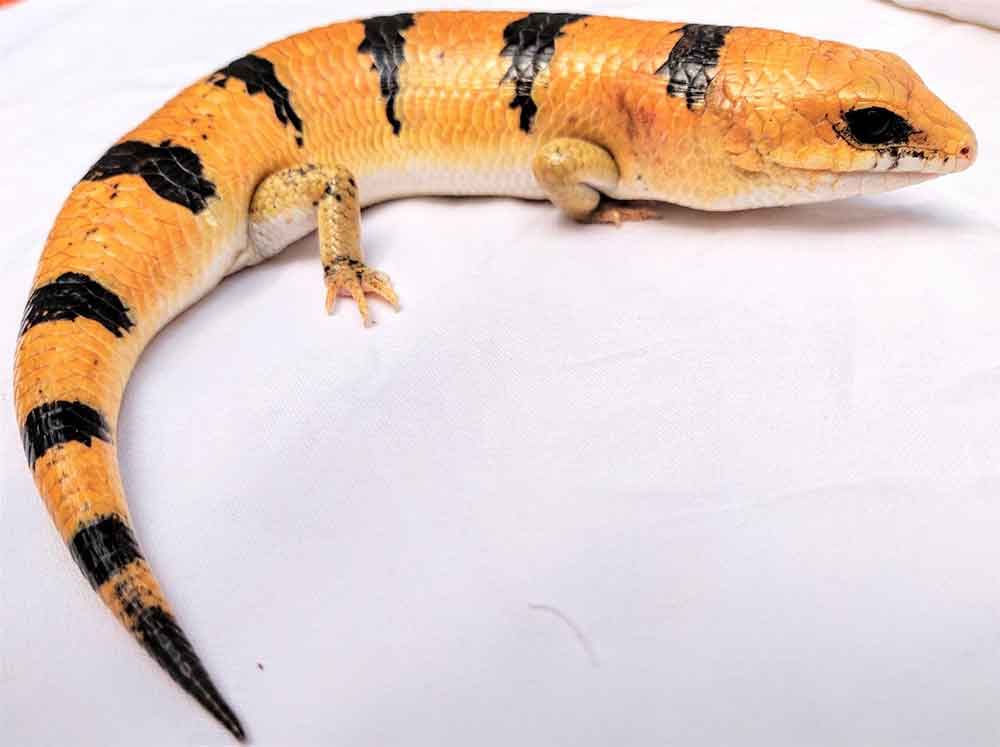
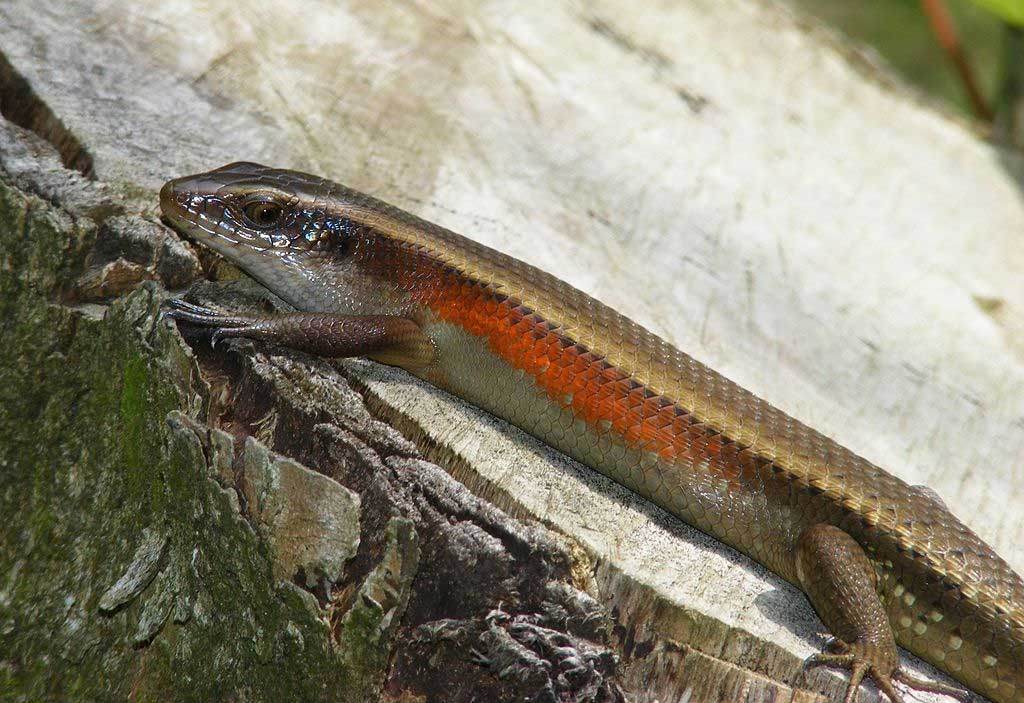
Bronze grass skink
- Mabuya macularia
Origin: Bangladesh , Bhutan , Cambodia , India , Laos , Malaysia,
Gender: Eutropis
Life expectancy: ---
Length: 16 - 23 cm..
Beautiful skink from Indonesia with a robust appearance and with colors that make it look metallic. Maintenance is exactly the same as for the rest of your family. Diet based on insects and worms.
▷ The world of Pets: Dogs, cats, birds, reptiles, amphibians
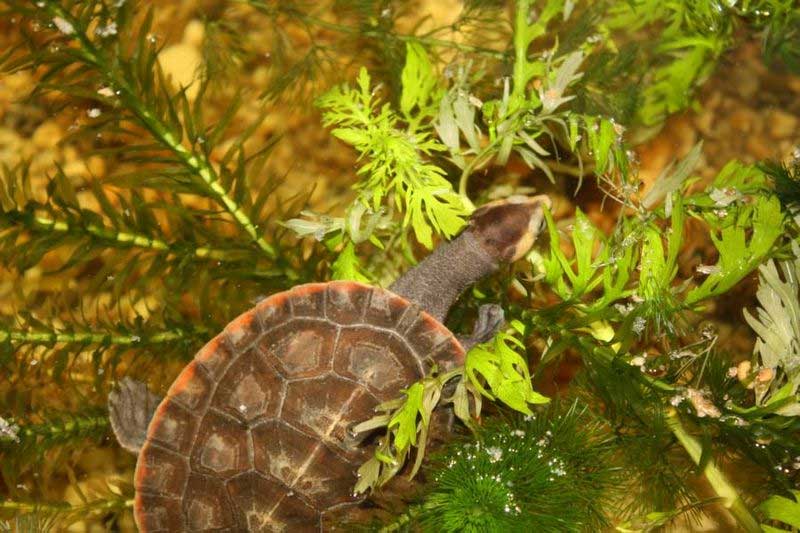
Red-bellied short-necked turtle
- Emydura subglobosa
Origin: Australia, New Guinea
Gender: Emydura
Life expectancy: 15 - 20 years
Length: Until 26 cm.
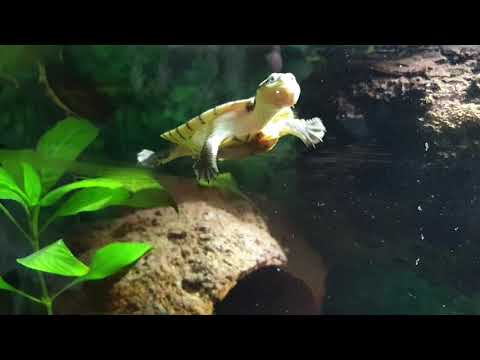
Are you looking for an active and colorful turtle that does not need to spend the winter? So, the Red-bellied short-necked turtle is ideal for you!
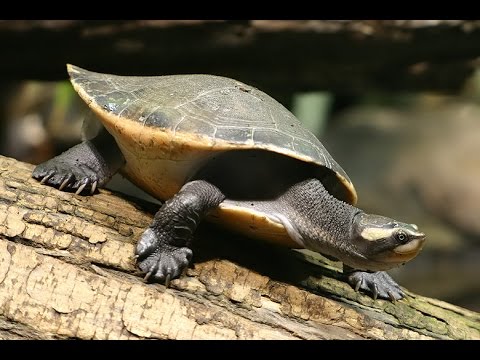
Red-bellied short-necked turtle – Location taken: National Aquarium in Baltimore, Baltimore – Photo by David J. pole, CC BY-SA 4.0, via Wikimedia Commons
Content
Origin / Distribution
The species had been described in 1876 by the director of the Sydney Natural History Museum, born in Brunswick, Johann Ludwig Gerard KREFFT, as Emydura subglobosa and in 1888 by BOULENGER as Emydura albertisii. For a long time the name given by BOULENGER was used. The specimens described as Emydura australis albertisii in the literature of a few years ago or still today in zoos they belong to the Emydura subglobosa. The two subspecies are distinguished subglobosa and worrelli.
The Red-bellied short-necked turtle (Emydura subglobosa) found on islands and rivers off the coast of Australia and New Guinea, like Fraser Island, the garden river, Daru, cape york, the Stradbroke Islands and the Torres Strait Islands. These turtles are also found in lowland swamps, covering large areas of the open tropical plains in western Papua New Guinea.
Characteristics / Appearance
The Red-bellied short-necked turtle owes its name to its purple-red ventral carapace, that fades with age. Shell, of up 26,5 cm length, it's rather flat, wider behind than in front, with a keel in juveniles and without it in adults. It is brown or gray, except marginal shields, whose edge and bottom are red.
The plastron is red, pink or yellow with a reddish lateral stripe. Bright yellow stripe over eye to ear is eye-catching. The neck is relatively short. the snout is pointed. There are two yellow barbels on the chin. Juveniles are more colorful than adults, males have more contrasting colored heads than females.
In many sea turtles, freshwater and terrestrial, the sex of the embryo is influenced by the incubation temperature. But, this is not the case for Australian chelids studied to date, lacking temperature-dependent sex determination.
The preferred habitat of the Red-bellied short-necked turtle are the rivers, swamps and ponds of Papua New Guinea and Australia. In the lower reaches of the Kikori and Omati rivers they inhabit slow-moving waters, seasonal wetlands and wetlands.
Like other freshwater turtles, the Red-bellied short-necked turtle alternate periods in the water with sunny time to increase body temperature. Most of their life is spent in the water, where they look for food. If there is a shortage of water in the warmer months, move to flooded areas.
Behavior
The Red-bellied short-necked turtle swims and sunbathes to control internal body temperature. During the sunbathing process, tears go down the side of the turtle's head and enter the mouth as it opens and closes, what are known as gular movements. Wheezing and foaming at the mouth have been observed, although it is more common in Emydura macquarii than in the other Emydura species. Wetting the head or limbs, removing limbs from heat exposure and changing breathing patterns are mechanisms that prevent overheating
The Red-bellied short-necked turtle snap and bite when threatened, causing painful wounds. They stick their heads in while tilting their shell towards predators to reduce damage to soft body parts.
The Red-bellied short-necked turtle has highly developed senses, necessary for communication and perception. These senses help them locate food, avoid predators and find a mate during the breeding season. Studies have shown that these freshwater turtles can communicate with each other through a wide range of vocalizations that are too soft for humans to hear.. Evidence also suggests that echolocation may evolve to find prey., in addition to being used to obtain a three-dimensional image of the turtle pond).
The Red-bellied short-necked turtle, like other freshwater turtles, has a nictitating membrane (transparent third eyelid) for underwater vision. Your sense of smell is achieved through your nose and a specialized Jacobsen's organ., that identifies chemical residues floating in the air and water.
Although turtles do not have an external ear hole, they have an eardrum that is covered with skin and can detect low-frequency vibrations underwater and on land. Red-bellied short-necked turtles have four scent glands in their shell. These glands produce a scent as a defense against predators and between competing males during the breeding season.. They communicate with potential mates through extensive courtship ceremonies that include bobbing their heads as they align their bodies..
Food
The Red-bellied short-necked turtle it is omnivorous and feeds on filamentous algae, perifiton, sponges, aquatic macrophytes, aquatic macroinvertebrates, terrestrial insects falling into the water and carrion. These turtles also rely heavily on mollusc crushing., fish, insects, worms, aquatic plants, plant matter and seeds as part of your daily life.
Reproduction
During the breeding season, males communicate with females with a series of signaling postures, including a combination of simultaneous caresses, blinking eyes and swinging of the head.
In the Red-bellied short-necked turtle, females have a large area inside their shell to store eggs, while the males have a larger tail. Ovulation and nesting begin in early spring. Only female turtles come out of the water at night or first thing in the morning to lay eggs in hollow cavities built into sand or soil.. Females lay eggs in about an hour.
These turtles can produce two to four clutches a year., laying four to eleven eggs each time, with an average of 7 eggs in each clutch. The eggs hatch and hatch in the next dry season, between July and August.
Threats to the species
The Red-bellied short-necked turtle It is listed as a species of least concern by the UICN. But, isolated populations may occur in arid regions throughout their range and have long times to sexual maturity. This combination leads some associations to think that a preventive conservation program should be applied. Increasing anthropogenic threats also pose a threat.
Human predation includes the collection of eggs and the capture of adult turtles as a local food source..
The "Red-bellied short-necked turtle" in captivity
Aquaterrarium
For the maintenance and care of the Red-bellied short-necked turtle, an aquaterrarium with a rim length of at least 150 cm.. This aquaterrarium must have an aquatic part and a terrestrial part for the benefit of the animals. The water part must be very large and offer swimming animals a lot of free space. Other decorations would only unnecessarily restrict the turtles' swimming space and, Therefore, are not necessary.
The Red-bellied short-necked turtle he is a peaceful and friendly creature. They can be kept as a couple or in a group without problems..
They prefer water temperatures between 22 and 28 degrees centigrade and a pH value between 6 and 8. A UV lamp must be installed for the turtles to sunbathe. It is important that turtles always stay in clean water. Animals are native to tropical and subtropical regions. They don't go into hibernation.
Temperature
The duration of illumination is always given as twelve hours, because in the natural range the length of the day hardly changes over the course of the year. December is hotter than July, which is easy to explain: The red-bellied pointy-headed turtle comes from the southern hemisphere, and the seasons there shift half a year, compared to our seasons in the northern hemisphere.
But, it makes sense to care for these aquatic turtles according to our seasons, that is to say, shift temperatures half a year. In this way, heating costs are reduced in winter and also less water evaporates in winter (danger of mold!).
In summer, animals should be kept at a water temperature slightly lower than the 30 °C, while in spring and autumn temperatures of about 26-27 °C. This species does not hibernate, so it is enough to lower the temperatures to 25°C to simulate winter.
Food
The Red-bellied short-necked turtle it is a species that feeds in a mixed way and to which the full range of foods of animal origin can be offered, but plant-based foods should also be on the menu. But, the emphasis is clearly on foods of animal origin.
These aquatic turtles also like to eat creek fleas, various mosquito larvae and insects (like crickets).
Reproduction
Both sexes of this turtle reach sexual maturity with a carapace length of between 14 and 16 cm.. Smaller specimens are assumed to be sexually mature with 12 cm of shell length.
In New Guinea, egg laying takes place in August and October, and is often dispersed throughout the year in captive breeding. A clutch usually consists of five to eleven eggs and is laid at a depth of five to 15 cm.. In the Red-bellied short-necked turtle, three to four clutches may occur per year.
The Emydura subglobosa belongs to the group of aquatic turtles with genetic sex fixation, that is to say, sex is not influenced by breeding temperature. At a rearing temperature of 25-30 °C, The young are born after 50 to 80 days.
Buy one "Red-bellied short-necked turtle"
Occasionally, the Red-bellied short-necked turtle are offered in pet stores. The specimens offered in the pet shop are usually European pups. But, it is more advisable to buy this beautiful tortoise from a breeder. Since this turtle is comparatively easy to breed, there are some breeders.
1. Red-bellied short-necked turtle, Pink-bellied side-necked turtle, Jardine River turtle (English).
2. Tortue à ventre rouge, Emydure à ventre rouge (French).
3. Rotbauch-Spitzkopfschildkröte (German).
4. Tartaruga-de-barriga-vermelha, Tartaruga de barriga vermelha e pescoço curto (Portuguese).
5. "Tortuga de cuello corto", Tortuga de cuello corto de vientre rojo, Tortuga de cuello lateral de vientre rosado, tortuga del río Jardine, Tortuga payaso (español).
▷ The world of Pets: Dogs, cats, birds, reptiles, amphibians
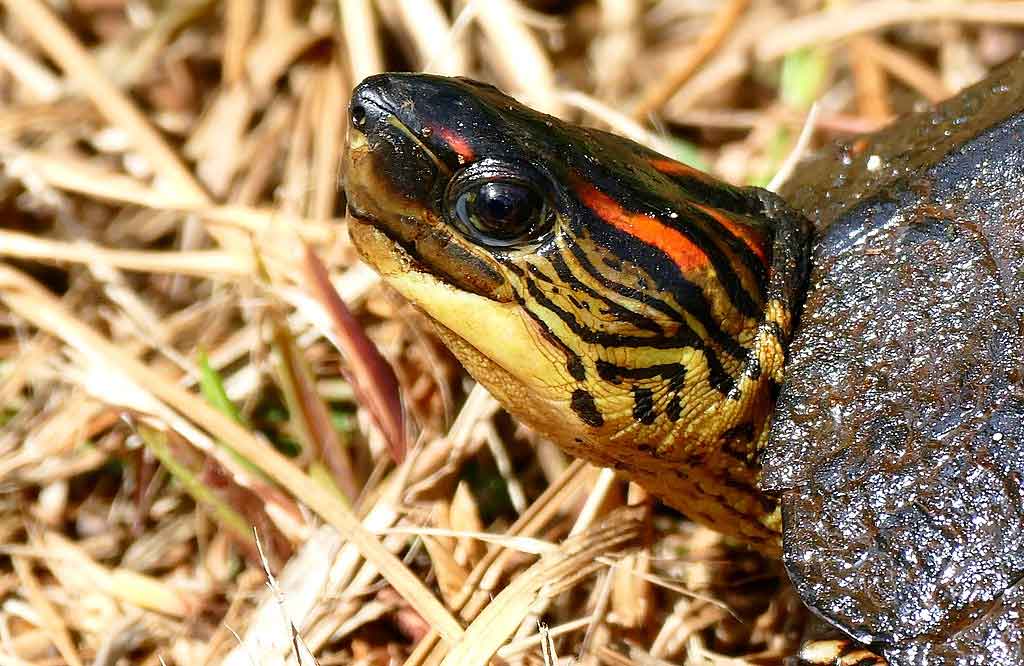
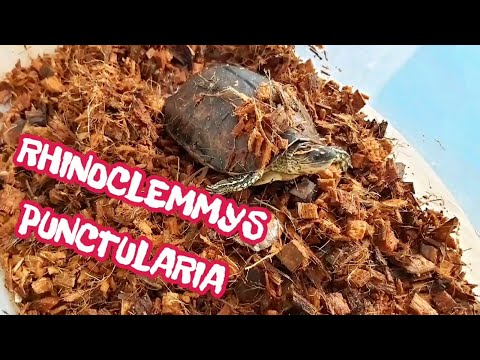
Spot-legged wood turtle
- Rhinoclemmys punctularia
Origin: Brazil, French Guiana, Guyana, Suriname, Trinidad and Tobago and Venezuela.
Gender: Rhinoclemmys
Life expectancy: 20 years
Length: Until 28 cm.
The Spot-legged wood turtle it is a semi-aquatic species. Lives most of the time in swamps, coastal streams and marshes.
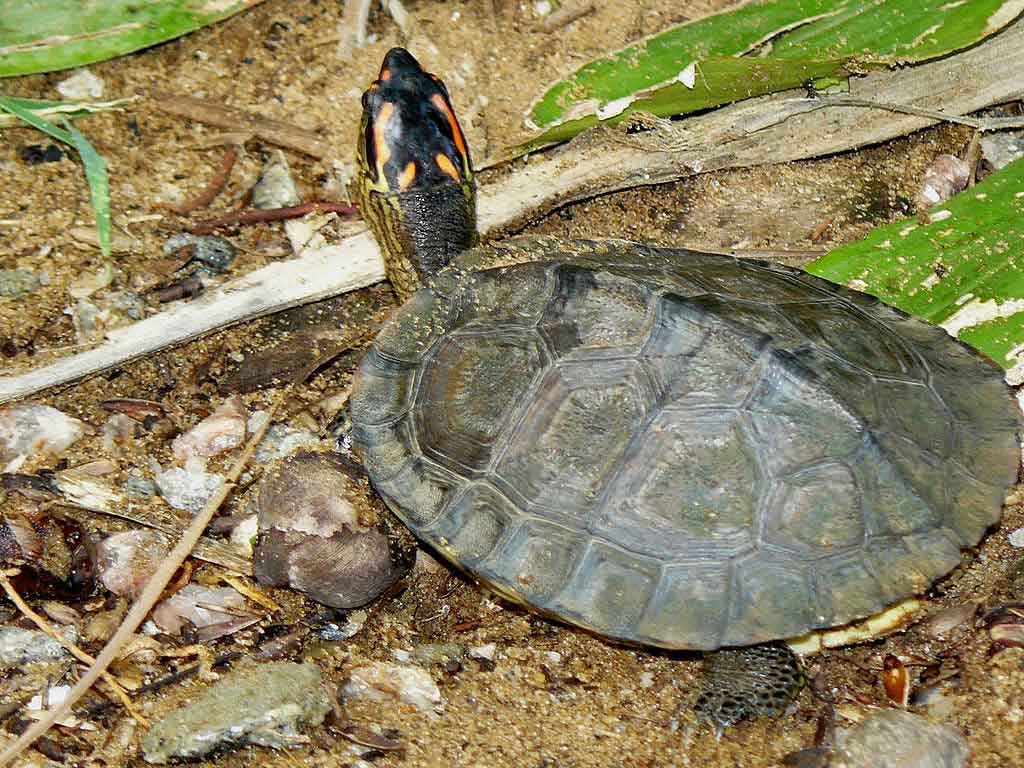
Rhinoclemmys punctularia photographed in the surroundings of Kourou (French Guiana) – Hervébreton, CC BY-SA 3.0, via Wikimedia Commons
Content
Origin / Distribution
The name Rhinoclemmys is derived from the Greek words rhinos (nose, snout, bill, bill) and klemmys (Turtle, Turtle). The name alludes to the protruding snout that some individuals of the type species have..
The Spot-legged wood turtle (Rhinoclemmys punctularia) It is distributed in eastern Colombia., Venezuela, Trinidad, Tobago, Guyana, French Guiana, Suriname, NE of Brazil (Tocantins, For, amazon, Bay, maranhão, to the lower course of the Tapajós River, Rio de Janeiro)
Characteristics / Appearance
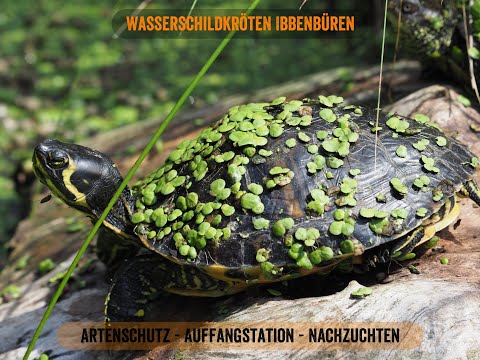
The shell is dark brown to black.. Limbs are orange-yellow with scattered black spots. The male is slightly smaller than the female and has a longer, slightly concave plastron and thicker tail.. Middle dorsal keel. red head pattern, yellow or green formed by two longitudinal or horseshoe-shaped stripes. Heavily webbed feet.
It is a semi-aquatic species. Lives most of the time in swamps, coastal streams and marshes. In Brazil it lives along the coast of Pará and in open areas along the Amazon River to the lower Tapajós.. Avoid high salinity and strong currents.
Food
Omnivores, seek both animal and plant foods. Foraging and feeding can occur both in water and on dry land.
while they feed, they bite into their food using their front limbs not only to pull and break larger amounts of food, but also to maneuver the food in their mouths.
Reproduction
They lay an average of two very large brittle-shelled elongated eggs. They make several layings in a season. The incubation period can last up to three months.. Sex is determined by temperature. The eggs are covered with leaf litter or hidden among vegetation and roots..
Behavior
Mainly active at night, but is known to bask and be active during the day.
Threats to the species
This species is consumed only locally, but there is evidence that it is widely consumed or kept as a pet and sold on the black market.
It was classified in 2012 like least concern in the new Scientific Assessment of the Risk of Extinction of the Brazilian Fauna. To date, it has not been necessary to create any conservation program for this species.
The "Spot-legged wood turtle" in captivity
It is a rarely imported species., so there is not much information about their care in captivity.
Aquaterrarium
For proper maintenance and care of the Spot-legged wood turtle, an aquarium with an integrated terrestrial part or an aquaterrarium is recommended. The aquarium must have a rim length of at least 150 cm.. The substrate of the aquatic part must be designed as a tropical forest. The lush plantation, foliage and humus can serve you.
The Spot-legged wood turtle It is native to tropical regions.. So, it is mandatory to have a heated aquarium. Reptiles prefer a water temperature between 25 and 30 degrees centigrade with a pH value between 6,0 and 8,0. It is advisable to install a UV lamp so that the turtles sunbathe.
Under no circumstances will we let these turtles hibernate. If temperatures drop below 20ºC, may start to show symptoms of breathing problems.
Buy one "Spot-legged wood turtle"
The price of a "Spot-legged wood turtle" at the exotic animal market, ranges between 90 – 120 EUR.
Imported animals must be kept in quarantine, and be dewormed.
▷ The world of Pets: Dogs, cats, birds, reptiles, amphibians
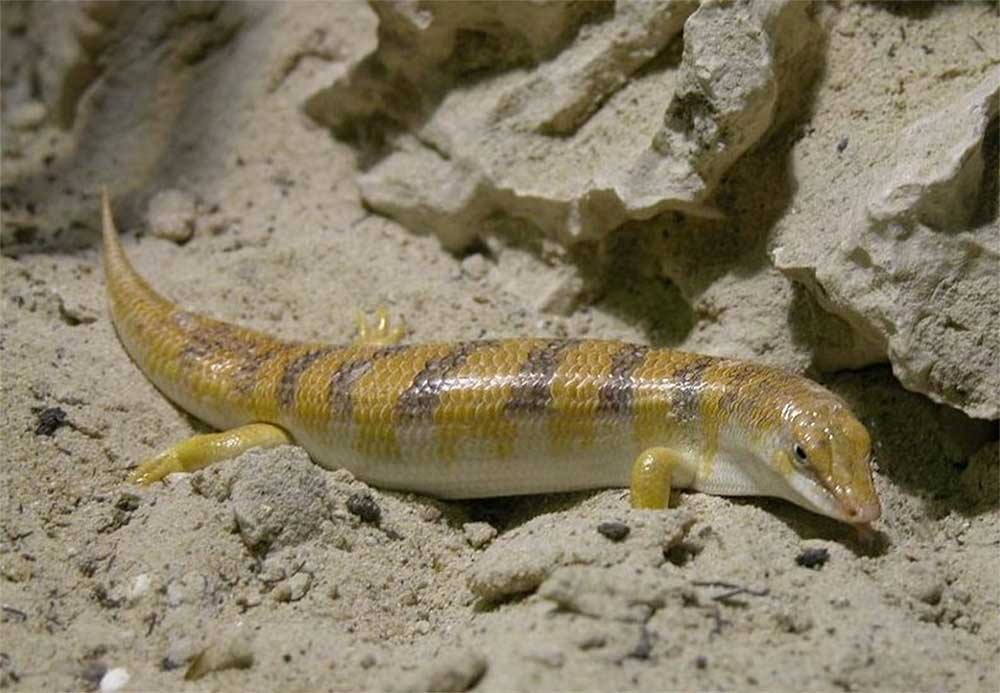
Skinks
Family: Scincidae
Origin: North of Africa
Gender: Scincus
Life expectancy: 5 to 20 years
Length: 20 - 45 cm.
The lizards resembling Skinks first appear in the fossil record about 140 millions of years, during the early Cretaceous , mainly in the form of mandibles that look very much like Skinks. The definitive fossils of skink show up later, during the Miocene period.
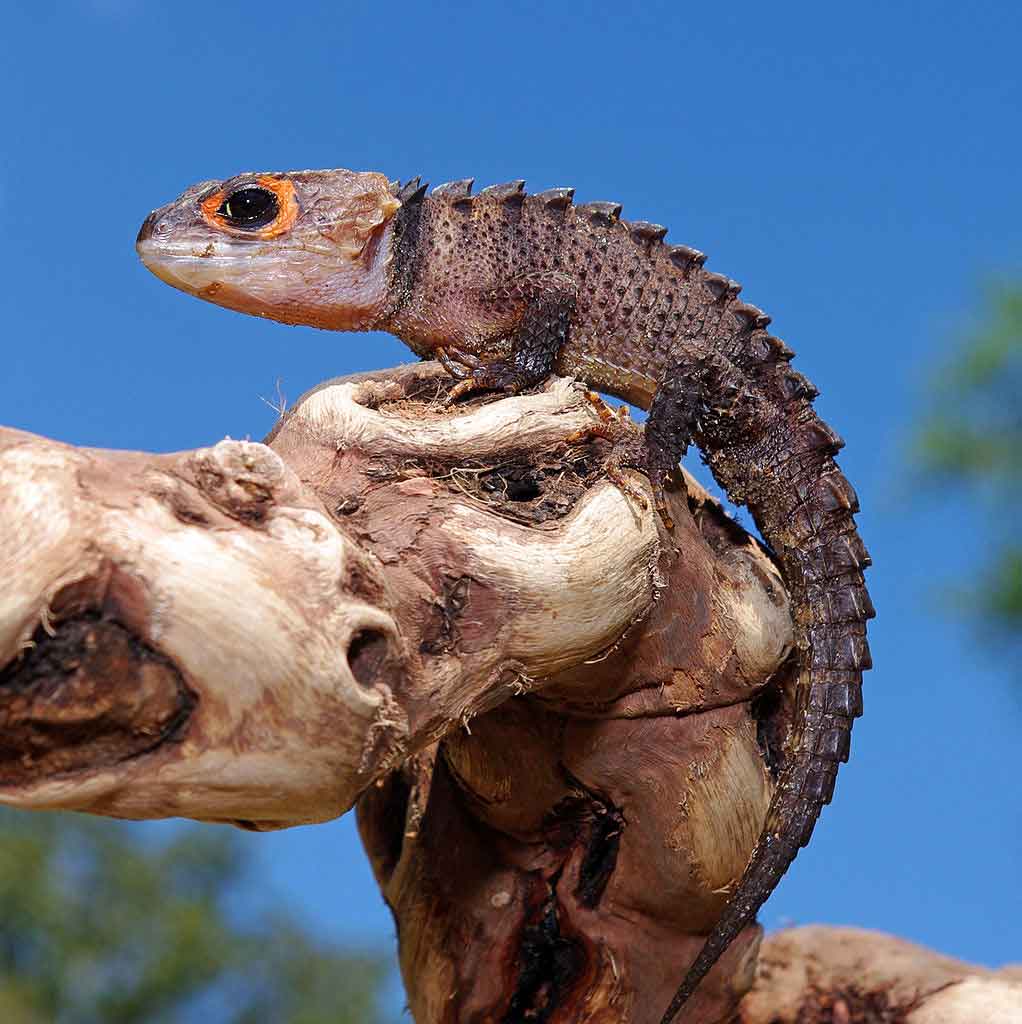
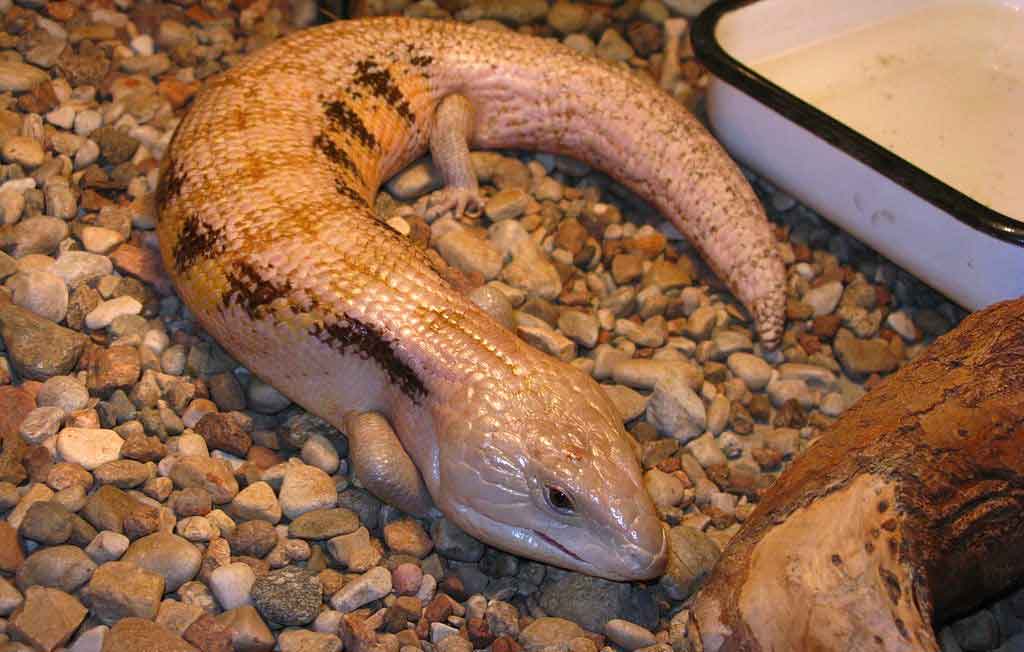
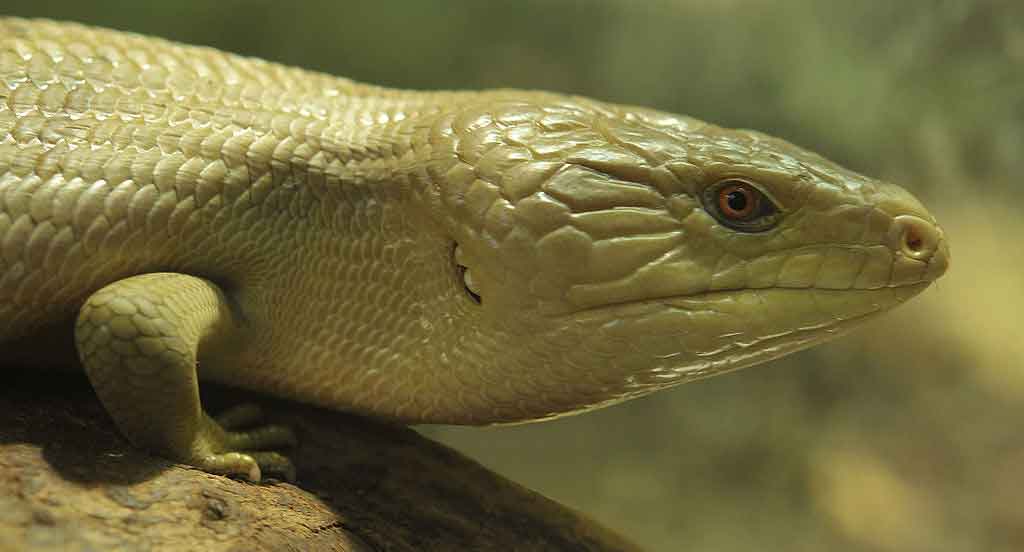
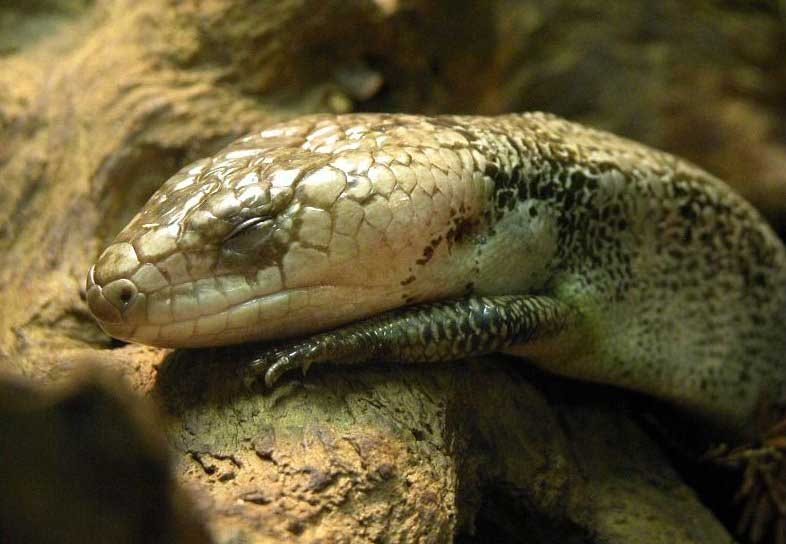
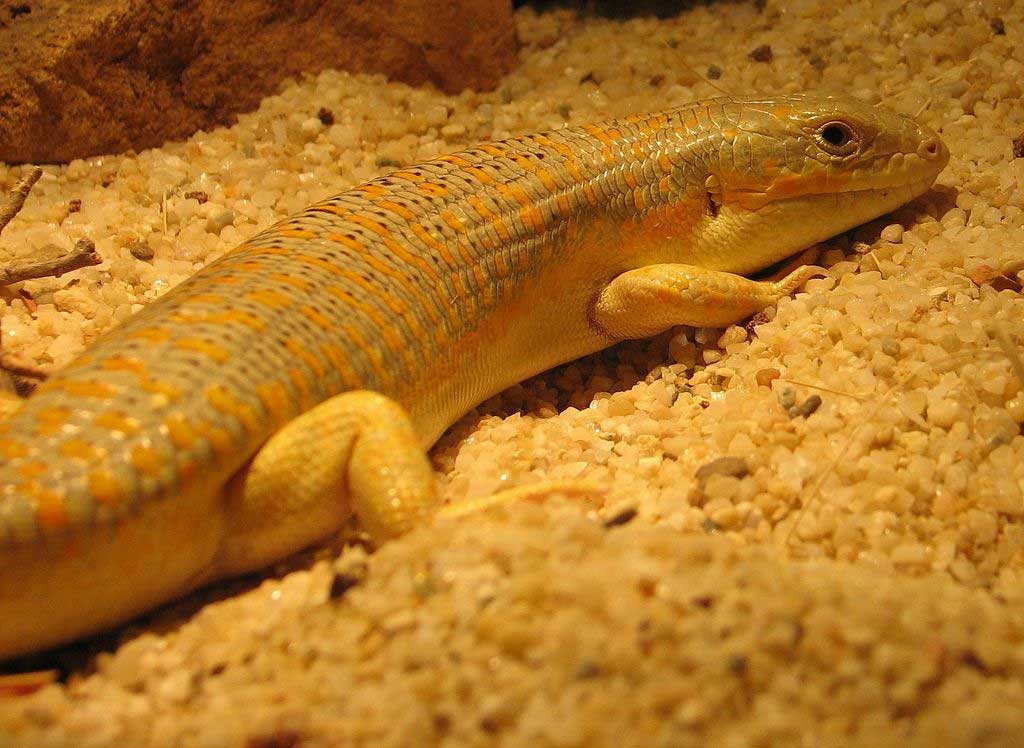
The skinks (Scincidae) they are the largest family of lizards, with more than 1.500 species, understands the escincos, skins, corners or skinks. Most of the skinks They are characterized by a round, cylindrical body that blends smoothly into the neck and small, smooth scales.. Most species live on the ground and have comparatively short legs. But, there are also arboreal representatives, as well as subterranean species that completely lack legs. Among the species that are frequently offered, and that live mainly on the ground, are the Sand fish (Scincus scincus), the African five-lined skink (Trachylepis) and the fire skink (Lepidothyris fernandi). These species are not usually subject to species protection legislation. Buying wild-caught species should always be avoided in favor of captive-bred species.
Sex differences
Difficult or impossible to recognize depending on the species, for example, the Sand fish (Scincus scincus). In some species, sexually mature males have a more splendid coloration.
Behavior
The skinks they are mostly nocturnal; even diurnal species tend to live very hidden. Many species can stand alone, in pairs or in small harems (a male with 2 – 4 females). Males are usually incompatible with each other. If aggressions occur during socialization, animals must be separated immediately and, as experience has shown, permanently.
Suitable accommodation
The minimum dimensions of a terrarium for the skinks of the terrestrial species mentioned are given as a function of head-torso length (tailless) of the animals, being the proportion 6 x 4 x 3 times that length (length x widht x hight) for 2 animals. Like this, a terrarium for up to two Sand fish should have at least the dimensions of 80 x 50 x 40 cm.. For each additional animal, the floor area should be increased by 15 %.
like cold blooded animals, the skinks need a temperature gradient in the terrarium that allows them to reach their optimal body temperature. Ideally, mimic natural conditions with sunny areas and cooler shaded areas in the terrarium. As such, is installed on one side of the terrarium a powerful heat radiator with UV components, that guarantees strong localized heating at 35 – 40 °C. Other areas can be heated to 24 °C. The other zones may have a temperature of 24 to 28 °C. At night, the temperature of the terrarium should drop slightly for most species. The basic temperature can be generated through room temperature or with thermal mats. Heating mats should always be installed outside the terrarium and heat a maximum of one third of the floor surface; the desired temperature can be adjusted with the help of a thermal controller.
The humidity should be around the 60%, the fire skink needs higher humidity ( to 80%). This can be achieved by spraying the terrarium with warm water or using a sprinkler system.. Precise thermometers and hygrometers are needed to measure temperature and humidity.
The duration of the illumination should be 10 to 14 hours. How light sources emit less and less UV radiation over time (see manufacturer's instructions), must be replaced regularly. The lighting should be placed out of the reach of skinks (note: normal glass is impervious to UV-B rays) o the animals must be protected from burns by a closed metal mesh basket.
Except for the Sand fish (Scincus scincus), the land of terrarium or the coco substrate, which should always be kept slightly moist, are suitable as a substrate. It is also important to provide many shelters and hiding places in the form of cork tubes., chunks of bark, stones and roots. Natural planting creates additional retreat possibilities and ensures uniform and increasing humidity. To much skinks that live on the bottom also like to climb. As such, you have to cover 2, preferably 3, sides of the terrarium with cork or similar. The vertical climbing zones and the horizontal resting zones, like roots, remained, etc., have proven useful as additional furniture. A shallow water bowl is also part of the basic equipment.
The Sand fish (Scincus scincus) is purely ground dweller and can be well kept in a terrarium with sandy bottom and sink-proof stone structures. For excavating species, the height of the substrate must be at least equal to the length of the head, for example, at least 15 cm for him Sand fish.
Diet
In the wild, the mentioned species feed mainly on small invertebrates. The suitable animal food is live insects (crickets, domestic crickets, Little grasshoppers, cockroaches, etc.), which are sprinkled with a mineral preparation to avoid deficiency symptoms. Mealworms or wax moths can only feed you sparingly due to their high fat content, since the Sand fish (Scincus scincus), in particular, you tend to overeat mealworms.
Fresh water must be available at all times. Young animals should be fed daily; for adult specimens, are enough 2 or 3 feedings per week. Many animals also like to eat soft, ripe fruit or fruit pulp., which can be well enriched with vitamins and minerals. Here we must insist on strict hygiene, since these feed spoil quickly.
Breeding
Although most species of Skinks They are oviparous and lay eggs in clutches., around the 45% of the species of Skinks they are viviparous in one sense or another. Many species are ovoviviparous, the babies (skinklets) develop lecithotrophically in eggs that hatch within the mother's reproductive tract and emerge as live hatchlings.
in some genres, However, as Tiliqua and Corucia , the young that develop in the reproductive tract obtain their nourishment from a mammal-like placenta attached to the female, unequivocal examples of "viviparous matrotrophy". It also, a recently described example in the species Trachylepis ivensi is the most extreme to date: a purely reptilian placenta directly comparable in structure and function to a eutherian placenta.
Clearly, this viviparum has repeatedly developed independently in the evolutionary history of the Scincidae and the different examples are not ancestral to each other. In particular, placental development of any degree in lizards is phylogenetically analogous, instead of counterpart, to functionally similar processes in mammals.
Care
Food scraps, molts and droppings should be removed daily. The water bowls should also be cleaned daily and filled with fresh water.
Animal health must be monitored daily. The most common health problems in skinks are skin mites, emaciation, tail injuries, fecal changes and softening of the bones. In case of anomalies, a reptile vet should be consulted. It is recommended to perform fecal examinations once a year to detect endoparasites.
The intestinal flora of skinks usually includes salmonella, that are harmless to animals, but they can cause disease in humans. Hygiene measures (wash your hands well, etc.) can prevent infection.
Acclimatization and handling
In the first days in his new home, animals need adequate rest to get used to their new environment. Reptiles are animals of pure observation and should NOT be petted.
Animals should only be captured when necessary. The easiest way to do this with young animals is with a pitcher or landing net.. Larger animals can be held with the bare hand behind the head. Basically, lizards should never be held or fixed by the tail.
Special features
Some skinks they can drop their tail in case of danger; therefore, you must be extremely careful when picking them up and never grabbing them by the tail.
Species that live on the ground tend to move - like snakes- with undulating movements.
Other representatives of the skinks, as the Shiny skink from Indonesia to (Mabuya macularia) or the East Indian brown mabuya (Mabuya [Eutropis] multifaceted). Their breeding conditions differ in part significantly from the species described.
Origin: Bangladesh, Cambodia, China, India, Indonesian, Myanmar, New Guinea, Philippines, Singapore, Taiwan, Thailand and Vietnam Gender: Eutropis Life expectancy: --- Length: 35 cm.
Another species of this genus so docile and friendly from Southeast Asia. They are just as easy to maintain as the others. It suits
▷ The world of Pets: Dogs, cats, birds, reptiles, amphibians
African five-lined skink
- Mabuya quinquetaeniata
Origin: Egypt, South Africa, Florida (USA)
Gender: Trachylepis
Life expectancy: ---
Length: 20 cm..
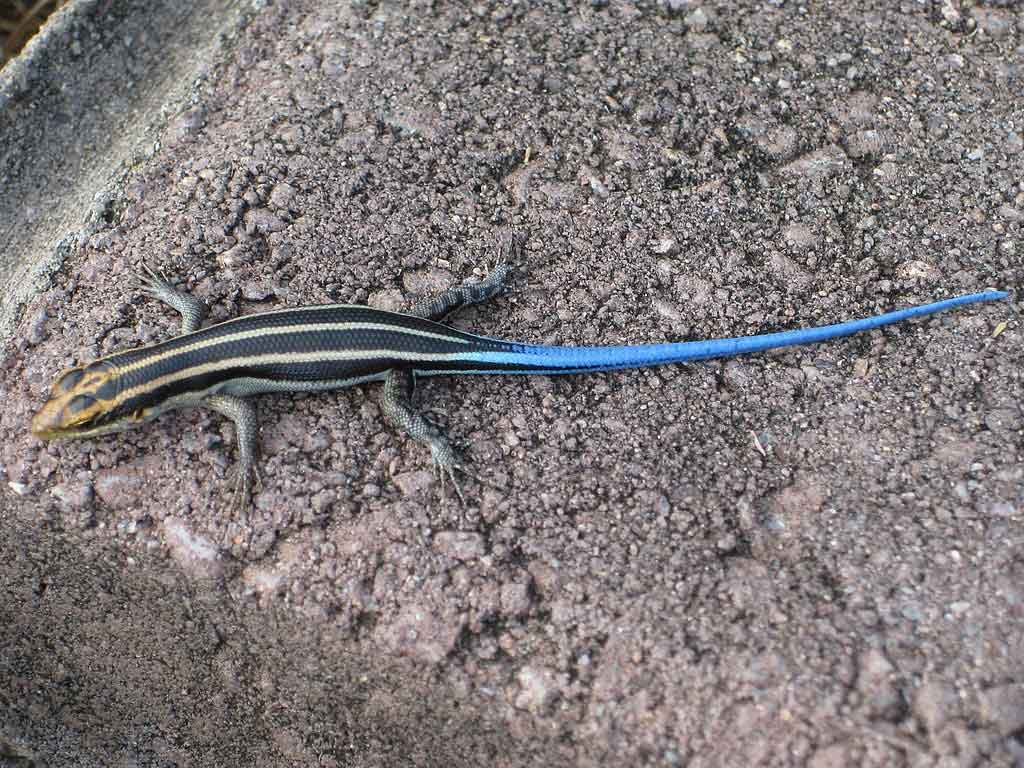
Nice small lizard of the family of the escindidos. As you can see, full of the stripes that give it its name and a beautiful blue tail. They are animals to have in community terrariums because they are not aggressive at all. They feed on insects and eat some fruit as long as it is very ripe..
Alternative names:
1. African five-lined skink (English).
2. Scinque à queue bleue (French).
3. Fünfstreifenskink (German).
4. Lagarto de cinco linhas africano (Portuguese).
5. "Escinco arcoíris" (español).
▷ The world of Pets: Dogs, cats, birds, reptiles, amphibians
East Indian brown mabuya
- Eutropis multifasciata
Origin: Bangladesh, Cambodia, China, India, Indonesian, Myanmar, New Guinea, Philippines, Singapore, Taiwan, Thailand and Vietnam
Gender: Eutropis
Life expectancy: ---
Length: 35 cm.
Another species of this genus so docile and friendly from Southeast Asia. They are just as easy to maintain as the others. It is convenient to put a little humidity in the terrarium so that they stay more hydrated and shiny, although the ground may be dry. Food based on cricket and worms.
Price 20 to 30 EUR.
▷ The world of Pets: Dogs, cats, birds, reptiles, amphibians
Chinese softshell turtle
- Pelodiscus sinensis
Origin: China, Taiwan, Korea, Manchuria, Vietnam and Japan.
Gender: Pelodiscus
Life expectancy: 35 years
Length: 28 cm.
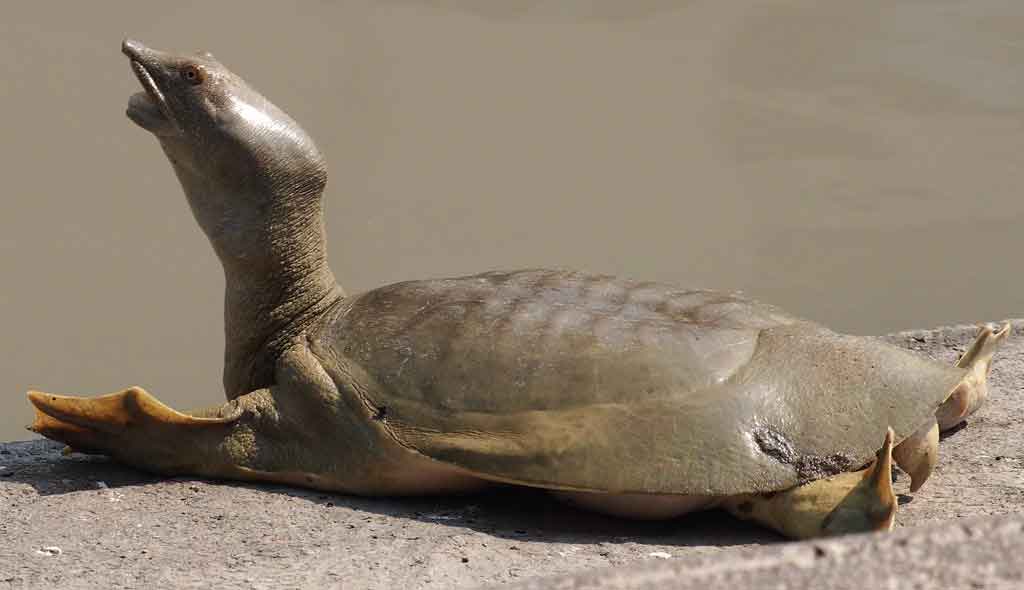
The Chinese softshell turtle it is completely different from all other turtles, if only for the soft shell.
“Chinese softshell turtle” Bangkok, Thailand by J. Maughn – Flickr
Content
Origin / Distribution
The tortoise we know in Europe as Chinese softshell turtle has recently been subjected to a great deal of taxonomic work by scientists. In fact, for many years the name was used Pelodiscus sinensis for all Chinese softshell turtles. In the meantime, the genre has been divided into many ways:
Pelodiscus parviformis – Small Chinese softshell turtle
Pelodiscus sinensis – Chinese softshell turtle
Pelodiscus variegatus – Spotted softshell turtle
Probably not the end of the story and more species will be added. It is questionable to what extent care was taken to keep these forms separate on Asian breeding farms.; there is already evidence of the existence of hybrids on farms. It is also doubtful whether the specimens found in Europe can be clearly assigned to one of the species.
Currently the Chinese softshell turtle (Pelodiscus sinensis) is widespread in China (Anhui, Fujian, Gansu, Guangdong, Guangxi, Guizhou, Hainan, Hebei, Henan, Hong Kong, Hubei, Hunan, Jiangsu, Jiangxi, Nei Mongol, Shaanxi, Shandong, Shanxi , Sichuan, Yunnan, Zhejiang) and they also live in Japan, Korea and Vietnam.
Characteristics / Appearance
The Chinese softshell turtle reaches a body length of 15 to 25 centimeters. Males are significantly smaller than females, until 15 centimeters.
The shell is relatively flat, with an elevation in the anterior part in the form of a hump. Like all softshell turtles, the shell of the Chinese softshell turtle it is not rigid, but soft and flexible. The shell surface is smooth and mostly olive-green to olive-brown in color.
The ventral plastron is predominantly whitish to cream in color.. The plastron of juveniles is red.. Like the shell, the plastron has a leathery appearance.
The neck is long and much thinner than the huge head.. head area, especially under the eyes, shows some lighter spots. The tip of the nose has been transformed into an elongated snorkel.
Adult males and females cannot be distinguished by size alone. In the male, the root of the tail is much thicker than in the female. Limbs end in long fingers, each with a small claw.
Between the fingers, the Chinese softshell turtle has clearly visible webbed feet, which makes her a very good swimmer. In the period from October to March, this chinese tortoise hibernates.
Habitat
The Chinese softshell turtle lives in water most of the time, and only comes out to the shore to sunbathe and lay her eggs. When they rest in the water, they are usually buried in the ground. The waters usually have a muddy substrate. Here the turtle can dig with special ease and speed.
Behavior
The Chinese softshell turtle has a leathery soft shell. This shell naturally offers less protection, so these softshell turtles are more aggressive than other aquatic turtles. Another tradeoff for the soft shell is different behavior, to the Chinese softshell turtle likes to bury itself in sandy substrate.
With its very long neck and huge fin-shaped legs, They are excellent swimmers and very effective predators.. Their diet is predominantly carnivorous.. eat worms, insects, snails, crustaceans and fish. A fascinating aquatic turtle and very easy to maintain.
Threats to the species
In nature the Chinese softshell turtle is almost extinct. The reason for this is not just habitat destruction, but also catch for Asian food markets and traditional Chinese medicine.
The "Chinese softshell turtle" in captivity
Chinese softshell turtle – S64, CC BY 3.0, via Wikimedia Commons
Aquaterrarium
For the Chinese softshell turtle of up 15 cm of shell length, an aquarium with a base surface of 100 x 40 cm.; The water level should be such that soft-shelled turtles standing on their hind legs can barely reach the surface of the water with their “trunk.”.
In principle, the length of the aquarium must be at least five times the length of the shell. The Chinese softshell turtle spends a lot of time buried in the sand, but she is an excellent swimmer and explores the tank a lot.
Basically, the substrate is a very important element for this species of turtle because they spend a lot of time buried in it. Its soft shell offers little protection, so buried in the substrate they can compensate for this disadvantage. So, the substrate must be sand. The substrate for young animals should consist of a layer of sand of 6 to 8 cm thick. The thickness of the sand layer will increase with growth, so that the layer of sand always corresponds to at least twice the height of the shell, but better to the width of it. In this way, the Chinese softshell turtle can comfortably dig into the substrate.
heavy furniture, like the stones, they have no place in an aquarium for Chinese softshell turtle, precisely because the turtles would undermine them. But, you can create some structure above the sand layer with some roots. You can even plant, but not with plants that form roots in the substrate.
for filtration, external pot filters are recommended, since the inmates are quickly victims of the destructive fury of the Chinese softshell turtle.
Lighting and ground part
It is often said that the Chinese softshell turtle does not need a land part. This is a mistake. These turtles occasionally bask in the sun, both in the wild and in the aquarium. Not as often as ornamental turtles, but they do. So, turtles should be given the opportunity to do so even when kept in an aquarium.
For juveniles and males, a piece of land made of cork or a willow bridge is enough. If they remain female, must have an egg-laying area with a substrate depth of at least 20 cm..
For one Chinese softshell turtle, metal halide lamps with a UV component have proven effective for lighting. For fry up to 15 cm., is enough a hqi with 35 watts, for example the set of lamps SolarRaptor HID incl. ECG + ClampLamp* or the complete lighting set Exo Terra Sun Ray*. For the Chinese softshell turtle bigger should be a lamp 70 watts. The distance between the lamp and the sunbathing area on the ground must be chosen in such a way that a temperature of 40-45 °C.
This turtle's shell seems to "let through" UV-B light more easily, so it is necessary to sunbathe in a less prolonged and intensive way to produce enough vitamin D. So, sunbathing on the surface of the water may be enough and you don't necessarily have to leave the safety of the water to do so.
Food
Although in nature the Chinese softshell turtle feeds mostly in the evening and at night, in the aquarium it easily accepts food also during the day.
The diet of this turtle in the wild is mainly carnivorous.. They feed on worms, mussels, snails, crustaceans, amphibians and fish, but also seeds and other parts of the water lily (Euryale ferox). This can be easily reproduced in the aquarium with dry food animals, frozen food and live food. While the juveniles can be fed daily in the year of hatching, it is enough to feed the Chinese softshell turtle adult one to three times a week.
Aggressiveness
These softshell turtles are more aggressive than other aquatic turtles. Its shell offers little protection, so they bite quickly. If you take them by hand, you'll be amazed how long his neck can get. Even if you grab them by the back half of their shell, they can bite you.
Chinese soft-shelled turtles are also very aggressive towards each other.. They are very territorial and can constantly bite and chase other inhabitants. So, it is recommended to keep this species of tortoise individually, even when young.
Reproduction
The Chinese softshell turtle They reach sexual maturity at about 14-18 cm..
Softshell turtles are more aggressive than other aquatic turtles. Its shell offers little protection, so they bite quickly. If you take them by hand, you'll be amazed how long his neck can get. Even if you grab the Chinese softshell turtle by the back half of its shell, can bite you.
The Chinese softshell turtles They are also very aggressive towards each other.. They are very territorial and can constantly bite and chase other inhabitants. So, it is recommended to keep this species of tortoise individually, even when young.
Reproduction
The Chinese softshell turtles They reach sexual maturity at about 14-18 cm.. Like other aquatic turtles, mating takes place in spring and spawning takes place in spring and summer. They bury their eggs as deep as 20 cm.. Each female can lay up to five clutches of 5-50 eggs each.
The Chinese softshell turtle basically has a genetic sex fixation, so it is not influenced by the playback temperature. So, the sex of the turtle cannot be influenced by hatching temperature. The ideal is to incubate the eggs at about 28 °C, and the young are born after a little more than 50 days.
The growth of the Chinese softshell turtle it's fast. After hatching with 3-3,5 g, reach of 11,5 to 18,0 g in hatching year, a year already 100,0 – 125,5 g, at two years they weigh 220,0 – 263,0 g and at three years already 450,0 – 480,0 g.
Buy one "Chinese softshell turtle"
The price of a "Chinese softshell turtle" at the exotic animal market, ranges between 20 – 40 EUR and 60 – 100 euros for the albino species.
1. Chinese softshell turtle (English).
2. Trionyx de Chine, Tortue à carapace molle de Chine (French).
3. Chinesische Weichschildkröte (German).
4. Tartaruga-de-carapaça-mole-chinesa (Portuguese).
5. "Tortuga china de caparazón blando" (español).
Sources:
Ernst, C. H. y J. E. LOVICH (2009): Turtles of the United States and Canada – Second edition. – The John Hopkins University Press (Baltimore): 827 pp.
Wolf, B., Ziegler, T., Pham, C. T., Ong, A. v., & U. Fritz (2019): A new species of Pelodiscus from northeastern Indochina (Testudines, Trionychidae). – ZooKeys, (824), 71. HTTPS://www.ncbi.nlm.nih.gov/pmc/articles/PMC6382751/
Gong, S., Vamberger, M., Auer, M., Praschag, P. y U. Fritz (2018): Chinese softshell turtles' ancient ranching (Pelodiscus spp.) causes massive erosion of biodiversity. – The Science of Nature, 105(5-6), 34.
Gong, ALREADY., L.-F. Peng, S. Huang, Y.-F. Lin, R.-Y. Huang, Y.-H. Coins, D.-C. Yang and L.-W. Not (2021): A new species of the genus Pelodiscus FRITZINGER, 1835 (Testudines: Trionychidae) de Huangshan, Anhui, China. – Zootaxa 5060(1): S. 137-145.
Kuzmin, S. L. (2002): The turtles of Russia and other former Soviet republics. – Chimaira, 159 p.*
Laicher, T. & F. Müncheberg (2020): Breeding and Breeding of the Albino Softshell Turtle, Pelodiscus sp. – reptile (141): S. 58-64.
Tortoise Taxonomy Working Group [Rhodin, A.G.J., J.B. Iverson, R. Bour, U. Fritz, A. Georges, H.B. Shaffer y P.P. van Dijk]. (2017): turtles of the world: Annotated Checklist and Atlas of Taxonomy, Synonymy, Distribution, and Conservation Status (8th ed.). – In: Rhodin, A.G.J., J.B. Iverson, P.P. van Dijk, R.A. Brine, K.A. Buhlmann, P.C.H. Pritchard & R. A. Mittermeier (eds.): Conservation Biology of Freshwater Turtles: A compilation project of the IUCN/SSC Tortoise and Aquatic Turtle Specialist Group. – Chelonian Research Monographs 7: pp. 1-292.
Wang, D., Z. Tang and Y. So (1997): Biochemical composition of the Chinese soft-shelled turtle (Trionyx sinensis). – Acta Hydrologica Sinica 21(4): 299-305.








_(31831317365).jpg)


_(38589492064).jpg)