โ–ท The world of Pets: Dogs, cats, birds, reptiles, amphibians

Hyacinth Macaw
Anodorhynchus hyacinthinus


Hyacinth Macaw

Content

Description:

Hyacinth Macaw illustration

90 to 100 cm.. of length and a weight of 1,5 to 1,7 kg.

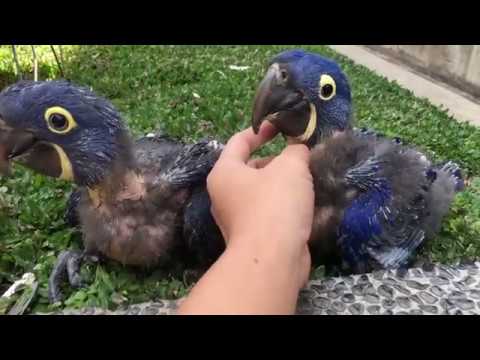
The Hyacinth Macaw (Anodorhynchus hyacinthinus) is the largest parrot; has a distinctive coloration, mostly blue intense, with different colors. Wings and tail below black. The basis of the bill and periocular ring, naked and yellow. The tail is very long, and its powerful bill Black is deeply curved and pointed.

The species Anodorhynchus glaucus, similar but smaller, extinct in the early 20th century, It may have been present in Bolivia.

Habitat:

The Hyacinth Macaw take advantage of a great diversity of habitats rich in various species of Palm trees with large seeds, of which feeds.

In the Brazilian Amazon avoid areas of more moisture, preferring lowland forests and seasonally wet formations with clear zones. In the drier parts of the northeast of Brazil inhabits areas of Plateau cut by Rocky valleys, steep with closed deciduous woodland, gallery forest and swamps with Mauritia flexuosa.

In the the Pantanal region birds frequent gallery forest with palm trees in areas covered with wet grass.

Apparently performs migratory movements.

Usually seen in pairs, family groups or small flocks (usually up to 10); much larger flocks reported before the decline.

Reproduction:

They nest in large tree hollows, in cracks in rocks from cliffs in the northeast of Brazil or in moriche or aguaje (Mauritia).

The favorite for nesting trees in the Mato Grosso, Brazil, include Enterolobium and Sterculia striata. In Northeast Brazil, the nest is located in Palms Mauritia dead or on cliffs.

They usually put one or two eggs, although only one young usually survives if the second egg hatches a few days after the first, since the smaller calf cannot compete with the larger for food.

The incubation period lasts about a month, and the male will assist his partner while she incubates the eggs.

Young people remain with their parents up to three months of age. They reach maturity and begin to play on the seven years.

The breeding season is from August to December, Maybe a little later in areas of pantanal.

Food:

The diet Hyacinth Macaw consists mainly of nuts, locally available of various Palms, including (on Amazonia) Maximiliana regia, Orbignya martiana and Astrocaryum, in the northeast of Brazil, of the Syagrus coronata and Orbignya eicherir, in areas of wetlands of Bone collectors and Acrocomia.

The palm nuts they take them from the own soil or plant (especially after a fire or when available as undigested remains in livestock droppings).

Other fruits that have information are the from the Ficus sp., as well as aquatic molluscs Pomacea.

Birds drink liquid from green palm fruits.

Distribution:

Its distribution includes the Centre of South America, Perhaps in several spacious separate areas.

In the Amazonia in For from the Tapajos River, to the East of the basin of the Tocantins River, extending to the South, possibly to the Northwestern area of Tocantins. At least before present North of the Amazon River (in Amapรก, amazon and Roraima, Brazil) and perhaps some specimens can still inhabit, Although there is no known recent records.

Distributed, as well, through the Northeast interior of Brazil, more or less centered on the Microregion of the Chapadas das Mangabeiras in the union between Maranhรฃo, Piauรญ, Goiรกs and Bay, Brazil (the region Gerais).

A third important population focuses on habitats wetlands of the upper basin of the Paraguay River in the southwest of Mato Grosso, Mato Grosso do Sul, Brazil, and extending into the adjacent area of the East of Bolivia and North end of Paraguay.

Reported as probable for the Mapori River to the South-East of Colombia (Vaupรฉs).

Movements General residents but perhaps seasonal in the Amazon in relation to the ecology of the plants on which they feed.

The territory between the three current major distributions, can still be busy even though recent trends given, They seem to indicate that this seems unlikely.

Formerly common in some areas (for example, Mato Grosso). Now they are rather unevenly distributed, with the recent and likely declines continuous in its population due mainly to the illegal trade internal and to the smaller, but significant, international market of live birds. Also hunted for its feathers (especially Pari) and as food. Declining in some areas (for example Eastern Amazonia), because of the alteration or loss of habitat.

Total estimated wild population in 3000 (1.992). CITES Appendix I.

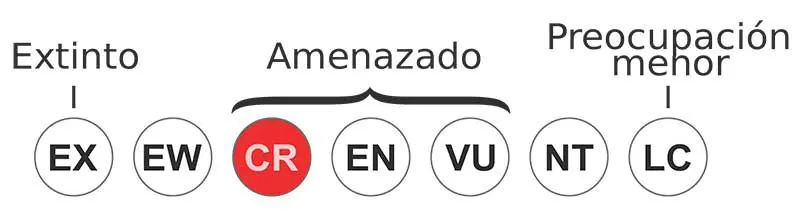
VULNERABLE.

Conservation:


Vulnerable

โ€ข Current Red List of UICN: Vulnerable

โ€ข Population trend: Decreasing

The Hyacinth Macaw It has been subjected to a massive illegal trade. At least 10.000 birds were captured in the wild, in the decade of 1980, with a 50% destined to the Brazilian market (Mittermeier et to the. 1990).

Among 1983-1984, more than 2.500 birds were moved out of Black Bay, Paraguay, with others 600 extra at the end of 1980 (J. Pryor in litt., 1998). Although these numbers are now much smaller, illegal trade continues (for example 10 bird went through a pet market in Santa Cruz, Bolivia, in August 2004 until July 2005, where the birds were changing hands for 1.000 $ US and went to Peru [Herrera and Hennessey 2007]). More recently it has been noted that there appears to be almost no illegal trade in this species in Bolivia (B. Hennessey in litt. 2012).

Through its area of distribution, There is something of the local game for use as food and for its feathers.

In the Amazon, habitat loss has occurred for cattle ranching and hydroelectric power systems in the rivers Tocantins and Xingu.

In the Pantanal, only the 5% trees S. apetala have suitable cavities (Guedes 1993, Johnson 1996). Young trees are used as food for livestock and burned by frequent fires (Newton 1994).

The Gerais is it being quickly transformed by mechanized agriculture, ranching and plantations of exotic trees (Conservation International 1999).

In Paraguay, the preferred habitats of the Hyacinth Macaw are considered seriously threatened (N. Kochalka Lopez in litt. 2013) and the Paso Bravo National Park suffering from illegal logging.

Conservation Actions Underway:

    – CITES Appendix I and II, protected under Brazilian and Bolivian law and prohibition of exports from all countries of origin.

    – Many landowners in the Pantanal (more and more in the Gerais) they do not allow hunters on their property.

    – There are several studies long-term and conservation initiatives (for example. Anon 2004).

    – In the Refuge Caiman ecological in the Pantanal, the Hyacinth Macaw Project has used artificial nests and hatchling management techniques and raised awareness among farmers (Anonymous 2004).

Conservation Actions Proposed:

    – Study of the range, the current status of the population and the scope of the negotiation of the different parts of its area of distribution (Snyder et to the., 2000).

    – Assess the effectiveness of artificial nesting boxes (Snyder et to the., 2000).

    – To enforce the legal measures that hinder trade.

    – Experiment with ecotourism in one or two sites to encourage donors (Snyder et to the., 2000).

"Hyacinth Macaw" in captivity:

Rare up to 1970; then, starting at 1980, increased considerably in number of captive birds due to increased breeding.

Despite the prohibitions, many of these Macaws they are still trading at high prices (10.000 euros or more), due to its beauty and ease to mimic human language.

Rearing this species can be difficult and, Unfortunately, many chicks die each year in inexperienced hands.

From this page we strongly preserve these beautiful birds in their natural environment, sincerely not us seems reasonable to his tenure as a pet.

Alternative names:

Hyacinth Macaw, Blue Macaw, Black Macaw (English).
Ara hyacinthe (French).
Hyazinthara, Hyathinzara (German).
Arara-azul-grande, arara-azul, arara-hiacinta, arara-preta, arara-roxa, arara-una, canindรฉ (Portuguese).
arara-azul, Arara-azul-grande, arara-hiacinta, arara-preta, arara-roxa, Ararauna, arara-una, canindรฉ (Portuguese (Brazil)).
Guacamayo Azul, Guacamayo Jacinto, Papagayo azul (espaรฑol).
Jacinta azul, Paraba azul (Bolivia).
Vihina (Desana).
Kaheta (Carijona).
Guaรญa-hovy (Guarani).
Arara-รบna (Tupi Guaranรญ).

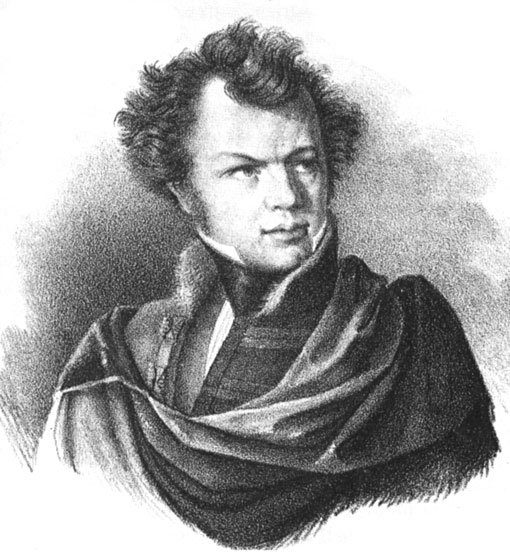
John Latham
John Latham

scientific classification:


Order: Psittaciformes
Family: Psittacidae
Genus: Anodorhynchus
Scientific name: Anodorhynchus hyacinthinus
Citation: (Latham, 1790)
Protonimo: Psittacus hyacinthinus


Images Hyacinth Macaw:

Videos "Hyacinth Macaw"


Species of the genus Anodorhynchus

ยซGuacamayo Jacintoยป (Anodorhynchus hyacinthinus)


Sources:

Avibase
– Parrots of the World โ€“ Forshaw Joseph M
– Parrots A Guide to the Parrots of the World – Tony Juniper & Mike Parr
– Birdlife
– Parrots, Parrots and macaws (Neotropical)

Photos:

(1) – Hyacinth Macaw also known as Hyacinthine Macaw at Disneyโ€™s Animal Kingdom Park by Hank Gillette [CC BY-SA 3.0 or GFDL], via Wikimedia Commons
(2) – A Hyacinth Macaw at Brevard Zoo, Florida, USA By Rusty Clark from merritt usland FLA (Brevard Zoo Hyacinth Macaw) [CC BY 2.0], via Wikimedia Commons
(3) – Hyacinthine Macaw at Melbourne Zoo, Australia By derivative work: Snowmanradio (talk)Anodorhynchus_hyacinthinus_-Australia_Zoo_-8.jpg: Erik (HASH) Hersman [CC BY 2.0], via Wikimedia Commons
(4) – Hyacinth Macaws at Stone Zoo, Stoneham, Massachusetts, USA By Eric Kilby (originally posted to Flickr as Squawking Heads) [CC BY-SA 2.0], via Wikimedia Commons
(5) – Hyacinthine Macaw (Anodorhynchus hyacinthinus) By Ana_Cotta (originally posted to Flickr as ARARA) [CC BY 2.0], via Wikimedia Commons
(6) – Hyacinth Macaws, Anodorhynchus hyacinthinus at the Aquarium of the Americas in New Orleans, Louisiana By Derek Jensen [CC BY 2.0], via Wikimedia Commons
(7) – A pair of Hyacinth Macaws and thier nest in Mato Grosso do Sul, Brazil By Geoff Gallice from Gainesville, FL, USA (Hyacinth macaws) [CC BY 2.0], via Wikimedia Commons
(8) – A Hyacinth Macaw preening at the Aquarium of the Americas, New Orleans, USA By Quinn Dombrowski (originally posted to Flickr as Dainty) [CC BY-SA 2.0], via Wikimedia Commons
(9) – Anodorhynchus hyacinthinus by Hans – Pixabay
(10) – Illustration Guacamayo Jacinto By Lear, Edward [CC BY 2.0 or Public domain], via Wikimedia Commons

Sounds: Niels Poul Dreyer (Xeno-canto)

โ–ท The world of Pets: Dogs, cats, birds, reptiles, amphibians

Military Macaw
Ara militaris

Guacamayo Militar

Content

Description:

70 to 85 cm.. length and a weight between 900 and 1100 g..
The Military Macaw (Ara militaris) has a dark green color. The head is a green slightly clearer and the crown blue. The back and the top of the wings they have a slightly greenish tone. The rounding of the wings, the edge of the wings and flight feather exterior are light blue.

Illustration military Macaw

The forecrown it is bright red in color and there are a series of purplish-brown lines of feathers on a background of bare skin, since the nose to behind eyes and in the cheeks.

The area of the throat and a narrow strip below the cheeks are olive brown in colour. Breast and belly green; undertail- coverts pale blue.

Upper, the tail orange-red with the ends of the feathers blue; undertail, the tail olive green yellowish.

The eyes has irises yellow. The bill is dark gray, legs dark grey.

Both sexes similar.

Immature not described but as other large macaws, irises probably Brown, tail shorter and the bare facial skin clearer.

Subspecies description:

  • Ara militaris bolivianus

    (Reichenow, 1908) – It differs from the species nominal by the throat reddish brown. The headphones feathers they have a base of reddish and blue present in the wings and at the end of the feathers is a more intense tone.


  • Ara militaris mexicanus

    (Ridgway, 1915) – Almost identical to the species nominal but larger.


  • Ara militaris militaris

    (Linnaeus, 1766) – The nominal species

Habitat:

The Military Macaw they can be mainly observed in foothills of mountainous terrain in woodlands with cannons fields, mostly between 500 and 1, 500 meters above sea level, at the local level to 2.000 m, (3,100 m reported in Peru, to 2,400 m in Bolivia), but also at sea level in the Pacific of Mexico and in the region of Santa Marta, Colombia.

In Mexico, most are distributed in isolated highlands in semi-arid and arid forests, as well as in forests Quercus and Pinus; sometimes in humid, riparian lowland formations, with altitudinal movements to lower altitude to dense scrub forests between November and January.

Observed in humid forests in the Colombian Andes.

In Venezuela, in the rainforest, in some mountainous areas 600 m, sometimes also in more open dry forests.

Usually in pairs or small flocks (until 10 birds), but much larger swarms reported in flights to the roosts. Communal roosts on cliffs or in trees.

Reproduction:

Nest, usually, in crevices of cliffs; sometimes in large trees (for example, Acer, Pinus or Enterolobium).

In Mexico It has been observed to the Military Macaw making use of old nests of the Imperial Woodpecker (Campephilus imperialis) in dead pine.

Breeding pairs are for life.

The egg laying takes place in the month of June in Mexico. They are of two to three eggs that it will take 24 days to hatch, and where the young will remain with the parents for about a year.

The first flights the chicks are produced between the 97 and 140 days old and reach sexual maturity to the 3 or 4 years of age.

Food:

The diet of the Military Macaw It consists of a wide variety of fruits and nuts, including fruit of the Melia azedarach, Ficus and seeds of the Hura crepitans.

Distribution:

Size of the area of distribution (reproduction / resident): 276.000 km2

distributed by Mexico, In addition to several separate populations of South America, heading south to northwest of Argentina.

Widely distributed in Mexico from Sonora (where they have been observed at 28ยฐ 45'N) and Chihuahua in the North, until Chiapas, in the South and the East, where the birds may be geographically isolated.

Absent from the lowlands of the Caribbean; ancient appearances in Guatemala not confirmed.

In Colombia to the West of the Andes to the South of Dagua, of the Magdalena River Valley, and on the West side of the Andes, to the East of the Sierra Nevada de Santa Marta, in the North, through the East of the Ecuadorian Andes until Huanuco in the Peruvian Andes.

Also distributed by the North of Venezuela on Serrania del Perija and from Northwest of Zulia until Federal District.

In Peru, mostly, observed in the East of the Andes, above all in the Maraรฑรณn region, where at least, formerly, It was a common migrant from the slope of the peaceful between September-October(reported on the west slope at 6ยฐ 50'S) to feed on the fruit available seasonally.

In the East of the slopes of the the Bolivian Andes, in Santa Cruz de la Sierra, Chuquisaca and Tarija and Northwest corner of Argentina in Salta and possibly Jujuy.

Seasonal movements in many areas, for example, visitors to the West of Caquetรก in Colombia, from the western slope of the Andes up to this.

Rare in the South of Mexico (in Chiapas possibly extinct), more numerous in the East and Northwest, where flocks of several hundred birds were reported at the end of 1970.

Very local in the Andes and at risk in Venezuela due to habitat loss and trade.

Fairly common in the North of the region of Santa Marta, but sporadic in other parts of Colombia.

Flocks of up to 60 birds observed in the Manu National Park in Peru and in the Amborรณ National Park of Bolivia.

Very rare in Argentina with only sporadic reports in recent years. Recent declines due to low habitat and bird trade, a large number of birds in captivity.

Subspecies distribution:

  • Ara militaris bolivianus

    (Reichenow, 1908) – South of Bolivia and Northwest of Argentina.


  • Ara militaris mexicanus

    (Ridgway, 1915) – Mexico


  • Ara militaris militaris

    (Linnaeus, 1766) – The species nominal

Conservation:


Vulnerable

โ€ข Current Red List of UICN: Vulnerable

โ€ข Population trend: Decreasing

The population size is estimated, provisionally, You can be in the band between 10.000 and 20.0000 individuals.

It is suspected that the population This species can be decreasing due to ongoing habitat loss and capture for national trade.

The loss of habitat and especially the national trade they are major threats to this species, even within the reserves (Snyder et to the. 2000).

In 1991-1995, 96 wild-caught specimens were found in the international trade, with Bolivia and Mexico, possibly, major exporters (Chebez 1994, D. Brightsmith in litt., 2007).

In Mexico, remains one of the most sought after species for the illegal trade of birds in cage; between 1995 and 2005, was the fifth country with the most parrots seized by the Environmental Control Agency from the country, becoming the fourth with more seizures between 2007 and 2010 (JC Cantรบ in litt. 2010).

In many areas it nests in hard-to-reach cavities in cliff faces., that provide some protection against the pressures of plundering of nests. But, the plundering of nests is a serious threat in Jalisco and Nayarit, where the species nests in tree cavities (C. Bonilla in litt. 2007, K. Renton in litt., 2007).

In Jalisco, Mexico, These macaws were not found in deforested areas, even when it was abundant the Hura polyandra (an important source of food), leaving, in the news, as trees to provide shade for cattle (Renton 2004).

An analysis of the GARP believes that the species has undergone a 23% loss of habitat within its distribution area in Mexico (Rios Munoz 2002).

A subpopulation in the Valle del Cauca, Colombia, account for less than 50 mature individuals, little is to be lost as a dam is expected to flood the only nesting cliff (ProAves Foundation 2011).

"Military Macaw" in captivity:

Very popular in poultry.

Although the Macaw Militar is present for more than one century in Europe, He has never enjoyed special interest among the fans, It's a shame, Since it is a being Intelligent. The main reason should be your little flamboyant plumage; especially compared to the one of other macaws. Other failures affect its presence in aviaries: is very loud and has a strong tendency to gnaw.

The power of their vocal organ is much higher than of any other species of Macaw. On the other hand it also good qualities: is very applied to learn, has a great talented imitator and presents an intelligence out of the ordinary.

With regard to its longevity, according to sources, a specimen lived 46 years in captivity. In captivity, these animals have been known that they can raise some 5 years of age.

Alternative names:

Military Macaw (English).
Ara militaire (French).
Soldatenara (German).
Arara-militar (Portuguese).
Guacamaya Verde, Guacamayo Militar, Guacamayo Verde, Papagayo verde (espaรฑol).
Guacamaya verde oscura (Colombia).
Guacamayo verde (Venezuela).
Guacamayo militar (Ecuador).
Maracan, Paraba militar (Bolivia).
Jarcia, Sarea (Chaka).
Panicco (Cofรกn.).

Carl Linnaeus
Carl Linnaeus

scientific classification:


Order: Psittaciformes
Family: Psittacidae
Genus: ARA
Scientific name: Ara militaris
Citation: (Linnaeus, 1766)
Protonimo: parrot military


Images Military Macaw:

Videos "Military Macaw"


Species of the genus Ara


Sources:

Avibase
– Parrots of the World โ€“ Forshaw Joseph M
– Parrots A Guide to the Parrots of the World – Tony Juniper & Mike Parr
– Birdlife

Photos:

(1) – Military Macaw (Ara militaris) at London Zoo, England By jon hanson (originally posted to Flickr as military macaw) [CC BY-SA 2.0], via Wikimedia Commons
(2) – Military Macaw Ara militaris in captivity at Occidental Grand Xcaret Resort, Yucatan, Mexico By Tony Hisgett (originally posted to Flickr as Green Parrot) [CC BY 2.0], via Wikimedia Commons
(3) – Military Macaw flying at Whipsnade Zoo, Bedfordshire, England By Ara_militaris_-Whipsnade_Zoo_-flying-8a.jpg: Alex Smithderivative work: Snowmanradio [CC BY 2.0], via Wikimedia Commons
(4) – Three Military Macaws at Zoolรณgico Los Coyotes, Mexico By Gary Denness (originally posted to Flickr as Squawk No Evil) [CC BY 2.0], via Wikimedia Commons
(5) – Two Military Macaws at Whipsnade Zoo, Bedfordshire, England. The macaw on the left has damaged feathers on its chest and abdomen probably because of a feather plucking habit By Mark Fosh (originally posted to Flickr as Macaw) [CC BY 2.0], via Wikimedia Commons
(6) – Two Military Macaws at Moody Gardens, Galveston, Texas, USA By joannapoe (originally posted to Flickr as 2005-06-18_11-52-47) [CC BY-SA 2.0], via Wikimedia Commons
(7) – A Military Macaw at Whipsnade Zoo, Bedfordshire, England. Some of its feathers are damaged probably due to feather plucking By William Warby from London, England (Military MacawUploaded by Snowmanradio) [CC BY 2.0], via Wikimedia Commons
(8) – Military Macaws in Mexico By Gregg (originally posted to Flickr as YOU WANT SOME?) [CC BY-SA 2.0], via Wikimedia Commons
(9) – Military Macaw (Ara militaris). Details of the head and face By Mary Mueller (Flickr) [CC BY 2.0], via Wikimedia Commons
(10) – Arara militaris by John Gerrard Keulemans [Public domain], via Wikimedia Commons

Sounds: (Xeno-canto)

โ–ท The world of Pets: Dogs, cats, birds, reptiles, amphibians

Black-cheeked Lovebird
Agapornis nigrigenis


Inseparable Cachetรณn

Content

Description Inseparable cachetรณn:

Among 13-14 cm long and 40 g. of weight.
Inseparable Cachetรณn

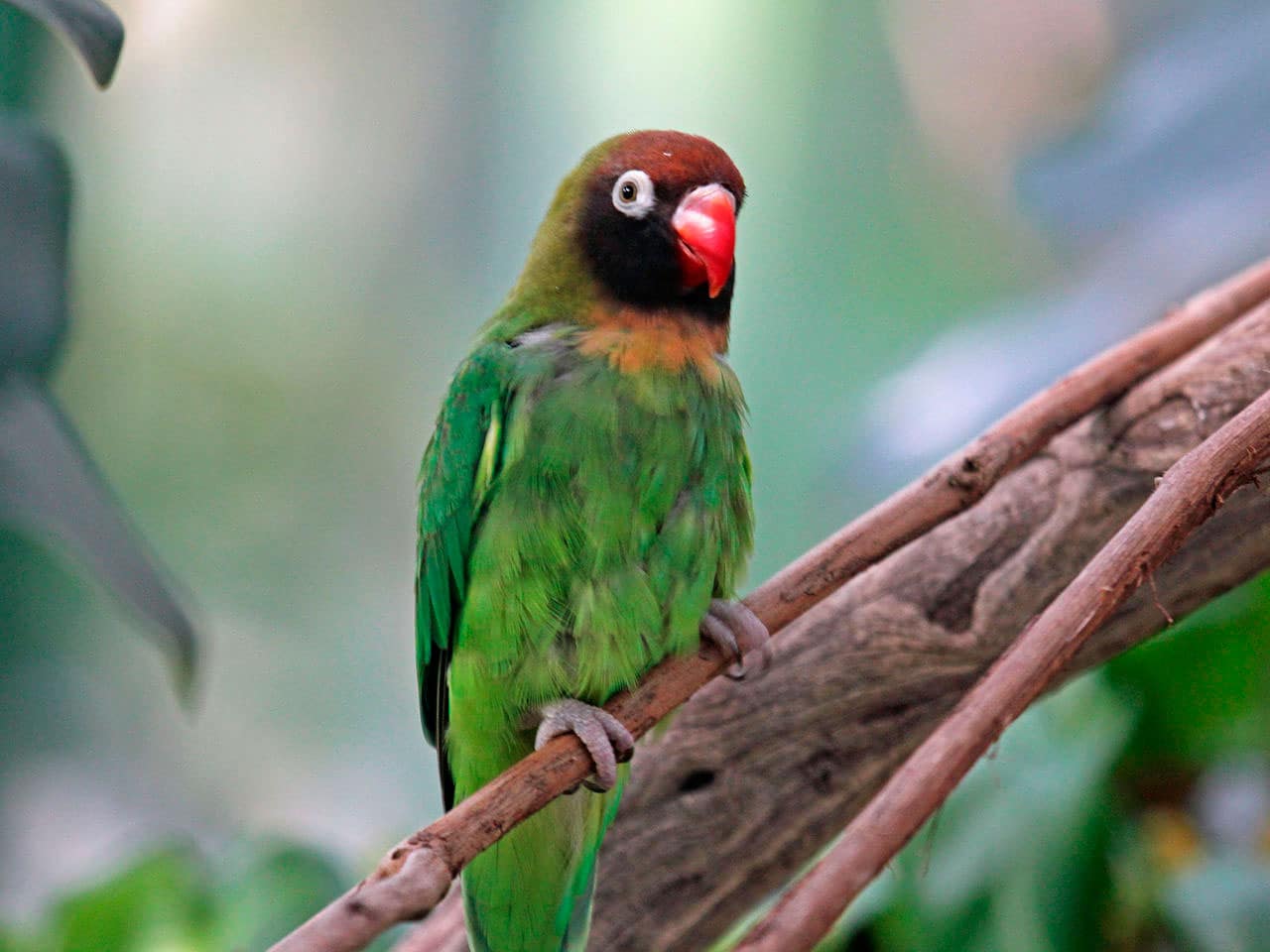
The Black-cheeked Lovebird (Agapornis nigrigenis) they have the forecrown, lores and ear-coverts blackish brown with dark brown discoloration on the crown, sides neck and nape, and forming a dark mask.

Mantle, scapulars, rump and uppertail-coverts green. Upperwing-coverts green with bluish suffusion in outer feathers, including alula; vane outside of primaries and secondaries green with bluish suffusion, darker and more green tips; vane grey internal, black at the tips. Underwing-coverts green yellow and green. Chin and front of the throat discoloration to blackish with oxidized orange patch located at the bottom of the throat and top of the chest (bright orange during playback); rest of underparts mostly pale, slightly yellowish, green, bright emerald on flanks and around the thighs.

The tail green, except for four outer feathers which show patch of red: Subterminal point dark green in all feathers, except central feathers.

Bill coral red, white at base; irises brown; eye ring white (about 2mm wide); legs grayish brown.

Both sexes similar.

The immature they have the underparts with a wash of dark green; feathers chest and the belly with dark margins. Base bill blackish.

Inseparable habitat cachetรณn:

The Black-cheeked Lovebird It is found in woods Mopane (Colophospermum mopane) and acacias, in the valleys of the rivers altitude between 600 and 1.000 m, adjacent forests Baikiaea plurijuga, on which they are dependent during the wet season. They are also distributed in coastal forests, attracted by the higueras.
Avoid groves miombo Brachystegia.

Generally it is within walking distance of reliable water sources, in small flocks of up to a few dozen birds. You can settle in the community as Lilian's Lovebird.

Inseparable play cachetรณn:

Breeding of this species is only known in captivity., but I think you may be similar to the Lilian's Lovebird. Breeding takes place in the months of November-December, perhaps September, in the Victoria Falls.

It is less sociable than other Lovebirds, and he dislikes reproduced in Cologne. The female usually puts four eggs, they are incubated for 24 days. The chicks leave the nest to the 40 days of life.

Inseparable Power cachetรณn:

The need to drink water at least twice a day is a critical determinant of the daily and seasonal activities of the Agapornis nigrigenis. In the non-breeding season, this species congregate in large flocks of up to 800 birds, reaching peak levels in the early mornings and evenings, when birds drink and feed.

The diet of the Black-cheeked Lovebird It includes seeds, cereals, flowers, buds and berries. Known foods include seeds Amaranthus, Rottboellia high, Rhus quartiniana, Albizia anthelmintica, Combretum massambicense, Syzygium guineense and grasses Hyparrhenia and Eragrostis, also young leaves Pterocarpus antunesii.

Distribution:

The Black-cheeked Lovebird they have a very restricted distribution area (maybe just 6.000 km2), from south Kafue National Park, to the south-west Zambia (only very small numbers), along the valley Zambezi up to the Victoria Falls, Zimbabwe.

Some birds, possibly, also they distributed in the Zambezi region, adjacent to the northeastern end Namibia, for example, Isla Impalila at the confluence of rivers Zambezi and When; possibly also in the northernmost tip Botswana.

In the dry season, the core areas of forests Mopane totaling only 2.500km2, but the birds are introduced into the fields when crops ripen (causing some damage).

There are some Local movements seasonal.

Many Black-cheeked Lovebird maintained in captivity, above all in South Africa.

Conservation:

โ€ข Current Red List of UICN: Vulnerable

โ€ข Population trend: Decreasing

The population of Black-cheeked Lovebird, based on surveys 1994, It was estimated at about 10,000 individuals, however due to alleged declines in population since then, Today the population can vary within a range between 3,500 and 15,000 birds.

It is believed that three factors have caused the loss of population Black-cheeked Lovebird in the last century:

    – A strong exploitation for cage bird trade from 1920 until the Decade of 1960 (Moreau 1948, Dodman 1995c)

    – The progressive desiccation of their habitat (Moreau 1948, Dodman 1995c), probably the main threat given the highly localized range of the species (Warburton 2003).

    – The partial substitution of crops sorghum and millet, (an attractive source of food).

There is evidence that trade in wild species is currently at a very low level, with isolated incidents and export trade (Dodman 1995c, Warburton y Perrin 2005c), although it is clear that any international demand is met with enthusiasm (Warburton y Perrin 2005a, d).

Some birds are captured for consumption and also pursued as pests. Farmers take steps to mitigate the damage to crops, but they are largely ineffective.

Current levels of hunt It is not likely to have a serious long-term impact on the population, but it could endanger local populations that suffer from the effects of desiccation.

Recently there may have been local declines due to loss of water supplies shallow in the dry season, perhaps due to climate change in the long term. The number of permanent water sources in forests of Mopane It has decreased since the beginning of the century 20. The low availability of water in the dry season It is probably the main factor in the disappearance of permanent populations Bovu and Sinde Rivers, and changes in the population in the ngweze river. This is compounded by a decrease in annual precipitation in habitat of the species, on average, of about 5 mm per year between 1950 and 1995, causing an increase in the dependence of the kind of artificial water sources. The recent creation of hand-pumping wells along the river basins Ngweze, Not chifulo and Machile can lead to a decrease in surface water availability.

In some areas, pools of water are poisoned to kill the fish and this may affect the species.

The species may also be threatened by the decrease in water in the dry season of temporary rivers in the south-west of Zambia, due to decreased levels of rainfall.

Wooded Mopane exploited for firewood and wood, although the habitat is being regenerated and invading other habitats in some areas.

Disease virus beak and feathers They are present in the wild population, but there is no evidence that this is a serious threat.

Conservation actions underway CITES Appendix II.

– The catch birds for trade is prohibited (T. Dodman in a bit., 2000), although a number of captive populations still exist.

– In Zambia, the trade ban was implemented in wild birds 1930 (Warburton y Perrin 2005d).

– Approximately the 35% their habitat lies within the Kafue National Park and around Game Management Areas (P. Leonard in a bit., 1999, T. Dodman in a bit., 2000), while most of the main array is included within the Machile and the IBA Kafue National Park (Leonard 2005).

– Detailed research programs on this species is being undertaken in the early 1990 (1995b Dodman, Warburton 1999a, b, Dodman et al., 2000, T. Dodman in some. 2000) of which they have been published reports.

– One education project It focused on the species was held in southwest Zambia in September of 2001, the participation of local schools, settlers and explorers Wildlife Authority of Zambia (Warburton, 2003).

Source: Birdlife

Conservation Actions Proposed:

– Regular Conduct (for example, monthly) What monitor selected sites (such as water sources during the dry season) to control their population, concentrating on core distribution (Dodman 1995c, Dodman et al. 2000, Warburton 2003, Warburton y Perrin 2005d ).

– Conduct a Annual monitoring areas such as rivers mid Machile and Not chifulo and pools of the region Followers South Kafue National Park and monitor the availability of surface water in the dry season (Warburton y Perrin 2005d).

– Investigate your state in Caprivi Eastern (Dodman (1995c, Dodman et al., 2000).

– Encourage their return to the old areas of the range (Warburton 1999b).

– Follow a program environmental education that involves schoolchildren in visits and meetings with agricultural communities (Dodman 1995c, Dodman et al. 2000, Warburton 2003) to reduce the capture and disturbance in water sources (Warburton y Perrin 2005d).

– Provide training in ornithology and in the conservation of the local potential of guide birds and hold meetings with the inhabitants on the protection of resources, such as trees and water (Dodman 1995c).

– Maintain and create water resources with minimal disturbance (Warburton 2003).

– Continue to enforce the ban on trade in wild birds of this species (Warburton 2003, Warburton y Perrin 2005d) and further develop the captive breeding programs.

– Investigate the effect of burning grass seeds (Warburton y Perrin 2005b). – Management of water sources to encourage their use by species, and evaluate the impact of pumping wells in surface water supplies (Warburton y Perrin 2005d).

– Identify a selection of reasonably accessible sites where visitors can go to see the species, and guarantee options for generating income through ecotourism, In colaboration with BirdWatch Zambia (T. Dodman in some. 2012).

Source: Birdlife

The Inseparable cachetรณn in captivity:

Rare in aviculture. Not easy to find these birds in stores, However, It is quite common among poultry farmers in the surrounding area., and always present in ornithological exhibitions.

The Black-cheeked Lovebird They are less noisy than other species of birds Lovebird; enjoy bathing, They are biting hard, lively and social; They adapt well to life in Cologne, can coexist with birds of the same species and the Lilian's Lovebird (Agapornis lilianae); if space is limited sharing, They can fight each other, although it is generally more peaceful than other Agapornis species; both adult and immature newly imported, They are susceptible first duarnte 10 months; more resistant after acclimatization.

No leaves never completely tame. They do not like the noise, so it is less suitable than others Lovebirds life in close contact with man.

Alternative names:

Black-cheeked Lovebird, Black cheeked Lovebird, Blackcheeked Lovebird, Black-faced Lovebird (English).
Insรฉparable ร  joues noires (French).
RuรŸkรถpfchen, Erdbeerkรถpfchen (German).
Inseparรกvel-de-faces-pretas (Portuguese).
Inseparable Cachetรณn, Inseparable de Cara Negra, Inseparable de Mejillas Negras (espaรฑol).

scientific classification:

Order: Psittaciformes
Family: Psittaculidae
Genus: Lovebirds
Scientific name: Agapornis nigrigenis
Citation: Sclater, WL, 1906
Protonimo: Agapornis nigrigenis

Black-cheeked Lovebird images:


Species of the genus Agapornis


Black-cheeked Lovebird (Agapornis nigrigenis)


Sources:

Avibase
– Parrots of the World โ€“ Forshaw Joseph M
– Parrots A Guide to the Parrots of the World – Tony Juniper & Mike Parr
– Birdlife
– Arkive

Photos:

(1) – Black-cheeked Lovebird (Agapornis nigrigenis) – San Diego Zoo By DickDaniels (http://carolinabirds.org /) (Own work) [CC BY-SA 3.0 or GFDL], via Wikimedia Commons
(2) – Black-cheeked Lovebird at London Zoo, England By Gediminas (Picasa Web Albums) [CC BY-SA 3.0], via Wikimedia Commons
(3) – Black-cheeked Lovebird with visible pin feathers on head, Birmingham Nature Centre, West Midlands, England By Simon Redwood (originally posted to Flickr as Parrot) [CC BY 2.0], via Wikimedia Commons
(4) – Birds-pet-wallpapers – link
(5) – back to childhood – link
(6) – By Gonzalo Blanco – Linx