โ–ท The world of Pets: Dogs, cats, birds, reptiles, amphibians

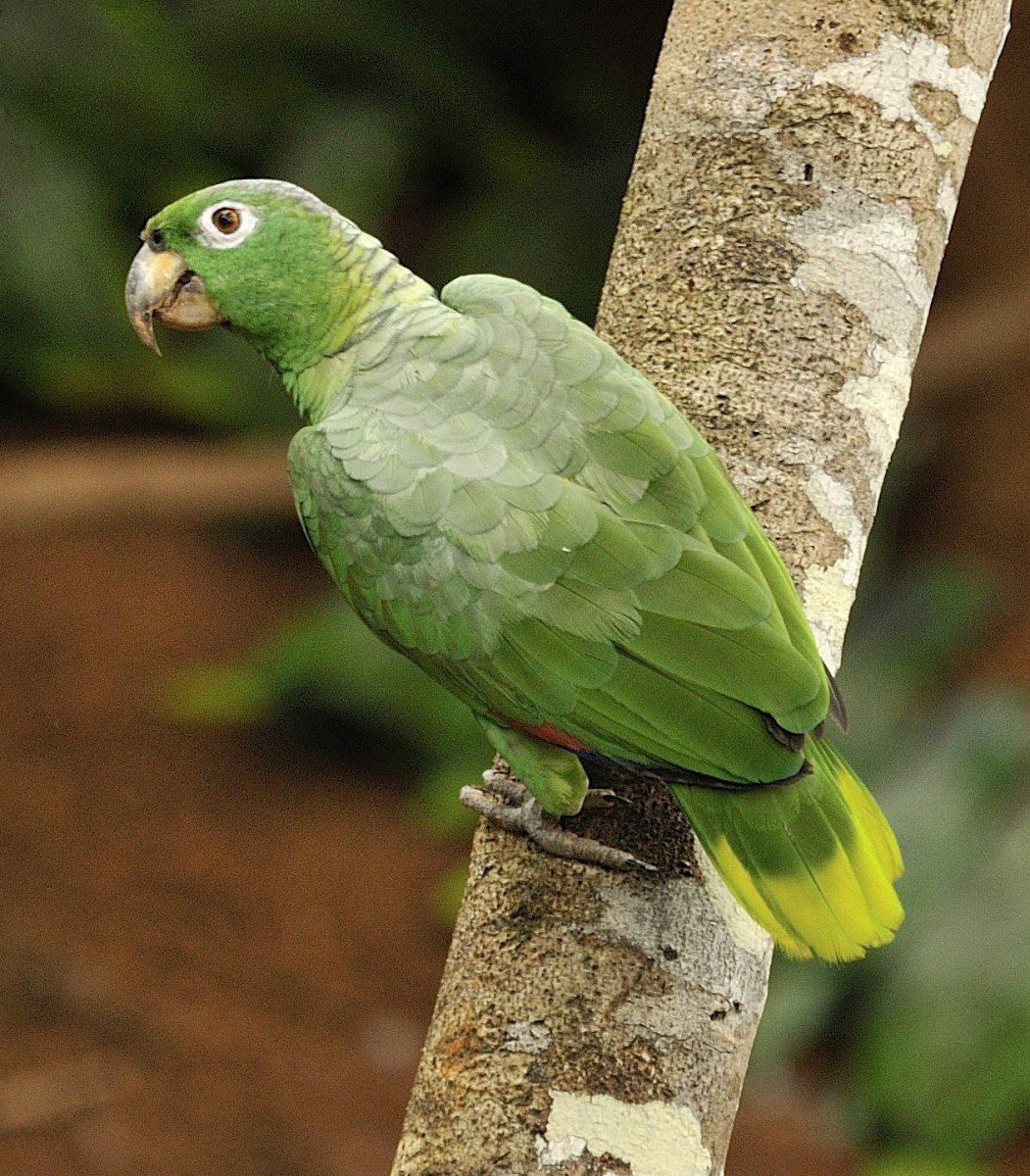
Mealy Amazon
Amazona farinosa

Mealy Amazon

Content

Mealy Amazon

Description Orange-winged Parrot

38 to 46 cm.. height and between 705 and 766g weight.

The Mealy Amazon It is distinguishable by its large size and the Ashen green color of dorsal plumage, bluish green feathers with a slight black border in the neck, edge of the Red Wing and tail with two intensities of green.

The young are similar to adults, but with the eyes of Brown.

It is a monogamous species, keeping the couple formation throughout the year.

The mealy Amazon is one of the noisiest species of parrot of the Amazon, so they are easier to observe than other species.

Like all parrots, its most important function in the ecosystem is predatory or disperser of seeds of the canopy.

Subspecies:

A. f. inornata (Mealy Amazon Inornata)
A. f. Finch (Mealy Amazon green head or Costa Rica)
A. f. Archive (Blue Crown or Guatemalan mealy Amazon)
A. f. farinosa
A. f. chapmani (Chapman's mealy Amazon)

Habitat:

Lives in humid forests, semi-humid, deciduous and gallery forests, also in stubble to the 1100 m.
Flying in pairs and rarely in flocks.

Reproduction:

Nests in hollow trees and outgoing Rocky possibly during the first quarter of the year.

Food:

Feeds on a variety of fruits including palms.
Seeds, tender leaves, buds of flowers and nectar. Clay in colpas.

Distribution:

From Mexico South to Western Ecuador, and in Amazon, to the northeast of Bolivia.

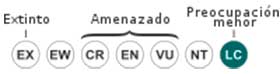
Not considered under any category of threat (LC); deforestation and hunting for consumption are its main threats.

Conservation:

Although it appears as little concern by IUCN the species has been captured by the wild bird trade; There is no evidence of a decline in the population.

Hunted for food in French Guiana.

In Mexico in danger of extinction.

In captivity:

Something rare in captivity.

Charming, gentle disposition; It can be noisy at times. Good copycat.
Probably can live among 50 and 60 years.

Alternative names:

Mealy Parrot, Blue-crowned Amazon, Blue-crowned Parrot, Mealy Amazon, Southern Mealy Amazon (English).
Amazone meunier, Amazone poudrรฉe, Amazone poudreuse (French).
Mรผlleramazone (German).
papagaio-moleiro, ageru, ajuru, curica, jerรบ, jurรบ, juru-aรงu, moleiro
Amazona Burrona, Amazona Harinosa, Lora coroniazul, Lora Real, Loro Corona Azul, loro corona-azul, Loro Verde, Lora basta (espaรฑol).
Loro Burrรณn (Nicaragua).

Images:

—————————————————————————————–

Mealy Amazon (Amazona farinosa)


Sources:
– Parrot Book, Parrots and macaws Neotropical
avibase
– Photos: Play The Jaguar, Play The Jaguar, IBC.lynxeds.com, commons.wikimedia.org
– Sounds: Diego Caiafa

โ–ท The world of Pets: Dogs, cats, birds, reptiles, amphibians

Vernal hanging parrot
Loriculus vernalis

Vernal hanging

Content

Description

Solo 14 cm.. length and 28 g. of weight.

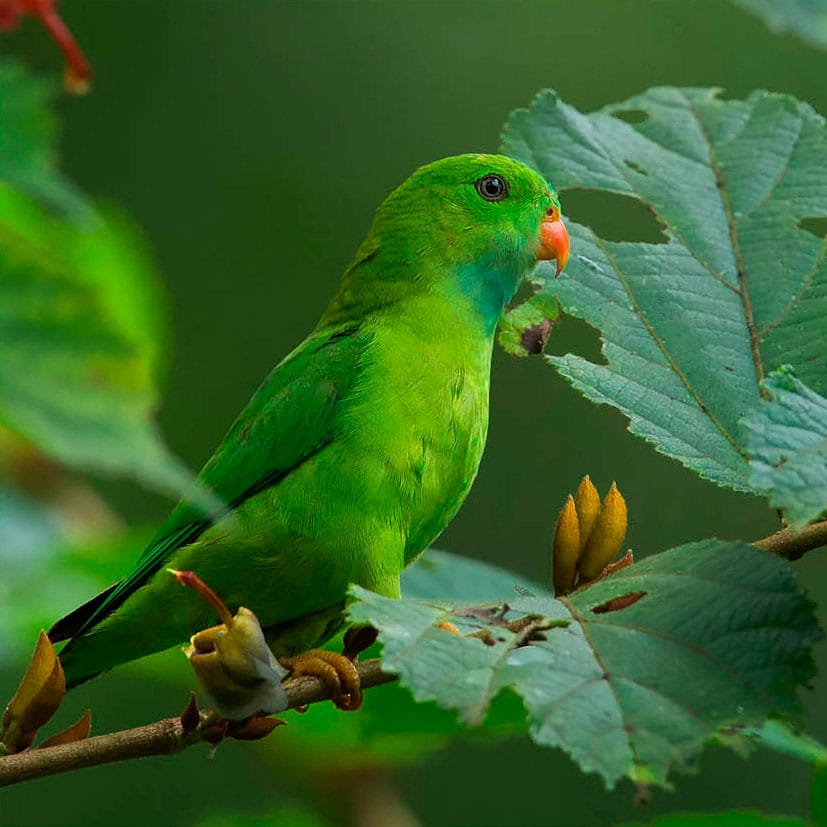
The head of the Vernal hanging parrot (Loriculus vernalis) is bright green, lighter and more yellowish in the chin. Rest of the upper region green, with the bottom of the back, rump and upper coverts bright crimson. Wing coverts a little darker than the the mantle green. Primaries bright green with vane inner blackish and a light blue-green diffusion in the feathers of the vane outer; secondaries Black with exterior bands of green and a bit of green in vane inner. Under the wing a brilliant turquoise blue, except coverts and axillary, that are pale green. The underparts more greenish-yellow that the upperparts, with a patch light blue in the throat. Upper, the tail green; Turquoise Blue below.

Bill coral red with yellow tip: irises Brown to yellowish-white; the legs they pale brown to yellowish Orange.

The females they are slightly more off than males and have a patch blue in the throat less extensive.

The young birds lack of the patch blue in the throat and have a bill paler, the rump narrow and green feathers of the tail and legs brown.

The young birds they need at least a year to mature.

  • Sound of the Vernal hanging parrot.
[audio:HTTPS://www.mascotarios.org/wp-content/themes/generatepress_child/sonidos/Loriculo Vernal.mp3]

Habitat:

Some movements, possibly related to seasonal rains, have been observed, but they require further study. The species is found in a variety of habitats, including Evergreen deciduous forests and, next to clear forest, secondary growth, bamboo thickets, orchards and too grown crops, up to approximately 2.000 m.

The birds are found in pairs, family nuclei, loose herds of up to 50 individuals or groups mixed with other birds. Their size and coloration make it a discrete ave, but they are not shy and can be found feeding in the canopy, Sometimes the attention of an observer with short flights and circular around the tops of the trees.

Jump between the branches and climb swiftly using both beak and legs, sometimes form 'spirals'’ to ascend. Lie, They groom and sleep strung upside down one or both legs, Although juveniles may remain in vertical position, scratching your head over the wing.

Reproduction:

Like the Lovebirds, cut small strips of bark, leaves and other plant materials, they put them in the contour feathers and carried them to the nest as an overlay. The breeding occurs between January and April; between two and four whites, often spotted brown eggs, they are deposited in the cavity of a rotten trunk. The narrow entrance is sometimes enlarged by birds, and the deep hole can extend below the ground level in exceptional cases.

The incubation, that lasts around 22 days, It is carried out by the female. The male helps feed the chicks as they mature over a five-week period..

Food:

They feed on acrobatic form of nectar in the trees in flower (for example, trees of Coral Erythrina) and in fruit trees especially figs Ficus or guava (Psidium guajava), as well as various berries and plant species such as bamboo and casuarina. Also consume collected potted Palm wine, and they can then take, and damage to orchards.

Distribution:

Size of its range (reproduction / resident): 6.460.000 km2

widespread, from the West coast of the India some 19 ยฐ Norte, through at least Maharashtra, Madhya Pradesh, Karnataka, Kerala, Tamil Nadu, Andhra Pradesh, Orissa, West Bengal, Assam, Nagaland, Manipur and Tripura, and is also distributed in the Andaman and Nicobar Islands. In Nepal is distributed in small amounts in the lowlands of the Terai , and also have been in the area of Chitwan.
Observed in Bhutan; Southwest of Sichuan through Yunnan, and possibly in Kwangtung, in China; Sylhet, Quotation mark and Chittagong in Bangladesh; Myanmar including the Mergui archipelago: Thailand Around South of 10 ยฐ Norte (also observed to the South, on Phuket Island); Laos; Cambodia; and Viet Nam. The species has not been recorded in Sikkim, Hong Kong and Malaysia.

Conservation:

โ€ข Current IUCN Red List category: Least concern

โ€ข Population trend: Stable

The size of the world's population has not been quantified, It is thought that it may be above the 1.000.000 of copies. The species according to information, is very rare in China, in general, common elsewhere (pit et to the. 1997).

The population is suspected to be stable in the absence of evidence of any reduction or substantial threats.

"Vernal hanging parrot" in captivity:

Limited number in captivity

Alternative names:

Vernal Hanging-Parrot, Indian Hanging Parrot, Indian Hanging-Parrot, Indian Lorikeet, Vernal Hanging Parrot (ingles).
Coryllis vernal, Coryllis d’Inde, Loricule vernal (French).
Frรผhlingspapageichen, Frรผhlings-Papageichen (German).
Lรณris-indiano (Portuguese).
Lorรญculo Vernal (espaรฑol).

scientific classification:

Order: Psittaciformes
Family: Psittaculidae
Genus: Loriculus
Scientific name: Loriculus vernalis
Citation: (Sparrman, 1787)
Protonimo: Psittacus vernalis

Vernal Parrot Images:

————————————————————————————————

Vernal hanging parrot (Loriculus vernalis)


Sources:

Avibase
– Parrots of the World โ€“ Forshaw Joseph M
– Parrots A Guide to the Parrots of the World – Tony Juniper & Mike Parr
– Birdlife

Photos:

(1) – ยซLoriculus vernalis-Ganeshgudi, Karnataka, India-male-8-1cยป by Loriculus vernalis-Ganeshgudi,_Karnataka,_India_-male-8. jpg: viwakederivative work: Snowmanradio – This file was derived from:Loriculus vernalis-Ganeshgudi,_Karnataka,_India_-male-8. jpg . Licensed under CC BY-SA 2.0 via Wikimedia Commons.
(2) – ยซVernal Hanging Parrotยป by Jason ThompsonFlickr: Vernal Hanging Parrot. Licensed under CC BY 2.0 via Wikimedia Commons.
(3) – By viwake [CC BY-SA 2.0], via Wikimedia Commons
(4) – A male bird – Author vasanthan.p.j – lynx
(5) – ยซLoriculus vernalis-Prague Zoo, Czech Republic-male-8aยป by Jozef MurgaลกZOO Praha 34Uploaded by snowmanradio. Licensed under CC BY-SA 2.0 via Wikimedia Commons.

Sounds: Mathias Ritschard (Xeno-canto)

โ–ท The world of Pets: Dogs, cats, birds, reptiles, amphibians

Azure-rumped parrot
Tanygnathus sumatranus


Azure-rumped parrot

Content


Anatomy-parrots

Description

32 cm.. length between 173 and 334 g. of weight.

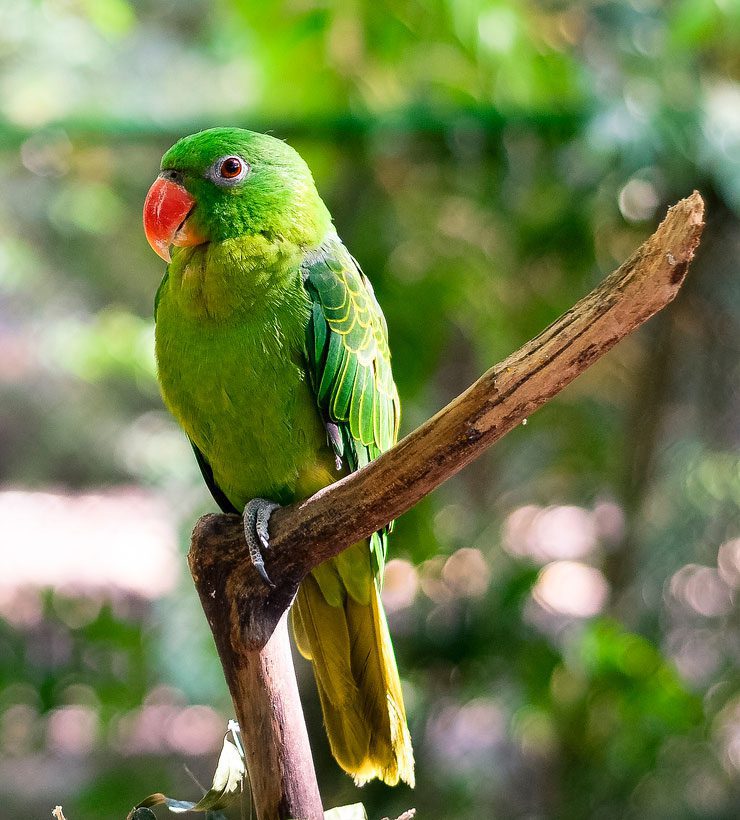
The Azure-rumped parrot (Tanygnathus sumatranus) has the head and the the mantle a light yellowish green (slightly more yellowish mantle). The low back, buttocks and uppertail-coverts strongly impregnated with light blue.

Wings Green darker that the the mantle, with fine verde-amarillentos margins to coverts; primary coverts Blue sharp; bend of wing turquoise blue color marked; primaries Foreign and blackish green in vane inner.

Wing feathers greenish yellow; underside of flight feather, blackish. The underparts yellowish-green illuminated.

Upper, the tail green, marked in yellow on the vane inmates of the lateral feathers; Under, the tail varies from yellow to dark brown.

Bill red; irises yellow; legs grey.

It presents sexual dimorphism. The female has the bill yellowish or whitish grey; less greenish-yellow in the the mantle and less blue in the under wing-coverts.

Male young acquires the bill Red after ten to twelve months.

Subspecies

List of subspecies Tanygnathus sumatranus
  • Tanygnathus sumatranus sumatranus (Raffles, 1822): La nominal.

  • Tanygnathus sumatranus sangirensis

    (AB Meyer & Wiglesworth, 1894): Presenta mรกs azul en los bordes de las alas y sus coberteras, cabeza de tono verde mรกs oscuro e iris.

  • Tanygnathus sumatranus burbidgii

    (Sharpe, 1879): Sus tonos verdes son mรกs oscuros y tiene el cuello mรกs claro, sus iris son amarillos.

  • Tanygnathus sumatranus everetti

    (Tweeddale, 1877): Tiene el manto y espalda mรกs oscuros, cabeza y obispillo mรกs claros. Presenta algo de azul en el manto y su iris es rojo.

  • Tanygnathus sumatranus duponti

    (Parkes, 1971): Es de color verde oscuro con el cuello amarillo, sus coberteras de la parte inferior de las alas son amarillentas y su iris rojo.

  • Tanygnathus sumatranus freeri

    (McGregor, 1910): Color mรกs uniforme y menos contrastado, con mรกs amarillo en la nuca y con el iris rojo.

Habitat:

Azure-rumped parrot

It is distributed mainly in lowland and lower montane forests, next to forests, and from time to time in the plantations or rice fields until 800 m altitude (less common in coastal habitats).

The birds are usually found in pairs or in small groups and may be quite accessible. They can be harmful to the crops, especially corn crops, and they are often active at night.

Reproduction:

Little is known of the species reproductive cycle, but a condition of being reproductive female was observed in April and birds have been investigating possible nests in September. In Sulawesi during November were observed in several nests chicks.

Food:

The diet includes fruits, seeds, nuts and berries.

Distribution:

The Mรผller's Parrot is distributed throughout the Celebes island e close Islands, including Button and Tobea in the South-East, groups Togian and Banggai the east, and Talisei, Bangka and Manadotua in the North, extending northward through the Sangir group, at least in Karakelong in the Talaud group.

In Philippines, the species going from the Sulu archipelago, in the South-West, including at least Bongao, Sanga Sanga, Sibutu, Tawitawi, Jolo, Loran and Basbas.

Also distributed in the main islands of Philippines Luzon, Samar, Leyte, Surigao del Sur, Blacks, and Mindanao, as well as the Polillo Islands, but it is very rare in the country.

Elsewhere widespread and locally common, While the capture and loss of habitat have caused declines in some areas. Apparently less common than Blue-naped Parrot, which cohabit.

Subspecies

Distribution subspecies Tanygnathus sumatranus

Conservation:


minor concern


โ€ข Current category of the Red List of the UICN: Least concern

โ€ข Population trend: Stable

The size of the world's population has not been quantified, It is estimated over the 50.000 specimens.

The species was reported to be common to very frequent (pit et to the. 1997).

The population is suspected to be stable in the absence of evidence of any reduction or substantial threats.

"Azure-rumped parrot" in captivity:

It adapts well to captivity, Although they are rare.

Alternative names:

Blue-backed Parrot, Azure-rumped Parrot, Blue backed Parrot, Mรจller’s parrot, Mueller’s Parrot, Muller’s Parrot, Mรผller’s Parrot (ingles).
Perruche de Mรผller, Perroquet de Mรผller (French).
Everettpapagei, Everett Papagei, Everett-Papagei (German).
Tanygnathus sumatranus (Portuguese).
Loro de Mรผller (espaรฑol).

scientific classification:

Order: Psittaciformes
Family: Psittaculidae
Genus: Tanygnathus
Scientific name: Tanygnathus sumatranus
Citation: (Raffles, 1822)
Protonimo: Psittacus Sumatranus

Images ยซMรผller's parrotยป:

Videos "Azure-rumped parrot"

————————————————————————————————

ยซLoro de Mรผllerยป (Tanygnathus sumatranus)

Sources:

Avibase
– Parrots of the World โ€“ Forshaw Joseph M
– Parrots A Guide to the Parrots of the World – Tony Juniper & Mike Parr
– Birdlife
Wikipedia

Photos:

(1) – ยซTanygnathus sumatranus-adult male-8-1cยป by Tanygnathus_sumatranus_-adult_male-8. jpg: Chrisderivative work: Snowmanradio (talk) – originally posted to Flickr at Parrot and uploaded to Commons as Tanygnathus_sumatranus_-adult_male-8. jpg. Licensed under CC BY 2.0 via Wikimedia Commons.
(2) – ยซTanygnathus sumatranus-captive-6aยป by TJ Lin – originally posted to Flickr as mullerโ€™s parrot. Licensed under CC BY-SA 2.0 via Wikimedia Commons.
(3) – Female Mรผllerโ€™s Blue-backed Parrot (Tanygnathus sumatranus) By Nick@Amsterdam – Zoochat
(4) – Tanygnathus sumatranus sumatranus By ยฉ Angie Pattison – igoterra
(5) – Azure-backed – animalphotos
(6) – ยซTanygnathuseverettikeulemansยป by John Gerrard Keulemans – Catalogue of the Birds in the British Museum. Volume 20. Licensed under Public Domain via Wikimedia Commons.

Sounds: David Farrow (Xeno-canto)

โ–ท The world of Pets: Dogs, cats, birds, reptiles, amphibians

Black-cheeked Lovebird
Agapornis nigrigenis


Inseparable Cachetรณn

Content

Description Inseparable cachetรณn:

Among 13-14 cm long and 40 g. of weight.
Inseparable Cachetรณn

The Black-cheeked Lovebird (Agapornis nigrigenis) they have the forecrown, lores and ear-coverts blackish brown with dark brown discoloration on the crown, sides neck and nape, and forming a dark mask.

Mantle, scapulars, rump and uppertail-coverts green. Upperwing-coverts green with bluish suffusion in outer feathers, including alula; vane outside of primaries and secondaries green with bluish suffusion, darker and more green tips; vane grey internal, black at the tips. Underwing-coverts green yellow and green. Chin and front of the throat discoloration to blackish with oxidized orange patch located at the bottom of the throat and top of the chest (bright orange during playback); rest of underparts mostly pale, slightly yellowish, green, bright emerald on flanks and around the thighs.

The tail green, except for four outer feathers which show patch of red: Subterminal point dark green in all feathers, except central feathers.

Bill coral red, white at base; irises brown; eye ring white (about 2mm wide); legs grayish brown.

Both sexes similar.

The immature they have the underparts with a wash of dark green; feathers chest and the belly with dark margins. Base bill blackish.

Inseparable habitat cachetรณn:

The Black-cheeked Lovebird It is found in woods Mopane (Colophospermum mopane) and acacias, in the valleys of the rivers altitude between 600 and 1.000 m, adjacent forests Baikiaea plurijuga, on which they are dependent during the wet season. They are also distributed in coastal forests, attracted by the higueras.
Avoid groves miombo Brachystegia.

Generally it is within walking distance of reliable water sources, in small flocks of up to a few dozen birds. You can settle in the community as Lilian's Lovebird.

Inseparable play cachetรณn:

Breeding of this species is only known in captivity., but I think you may be similar to the Lilian's Lovebird. Breeding takes place in the months of November-December, perhaps September, in the Victoria Falls.

It is less sociable than other Lovebirds, and he dislikes reproduced in Cologne. The female usually puts four eggs, they are incubated for 24 days. The chicks leave the nest to the 40 days of life.

Inseparable Power cachetรณn:

The need to drink water at least twice a day is a critical determinant of the daily and seasonal activities of the Agapornis nigrigenis. In the non-breeding season, this species congregate in large flocks of up to 800 birds, reaching peak levels in the early mornings and evenings, when birds drink and feed.

The diet of the Black-cheeked Lovebird It includes seeds, cereals, flowers, buds and berries. Known foods include seeds Amaranthus, Rottboellia high, Rhus quartiniana, Albizia anthelmintica, Combretum massambicense, Syzygium guineense and grasses Hyparrhenia and Eragrostis, also young leaves Pterocarpus antunesii.

Distribution:

The Black-cheeked Lovebird they have a very restricted distribution area (maybe just 6.000 km2), from south Kafue National Park, to the south-west Zambia (only very small numbers), along the valley Zambezi up to the Victoria Falls, Zimbabwe.

Some birds, possibly, also they distributed in the Zambezi region, adjacent to the northeastern end Namibia, for example, Isla Impalila at the confluence of rivers Zambezi and When; possibly also in the northernmost tip Botswana.

In the dry season, the core areas of forests Mopane totaling only 2.500km2, but the birds are introduced into the fields when crops ripen (causing some damage).

There are some Local movements seasonal.

Many Black-cheeked Lovebird maintained in captivity, above all in South Africa.

Conservation:

โ€ข Current Red List of UICN: Vulnerable

โ€ข Population trend: Decreasing

The population of Black-cheeked Lovebird, based on surveys 1994, It was estimated at about 10,000 individuals, however due to alleged declines in population since then, Today the population can vary within a range between 3,500 and 15,000 birds.

It is believed that three factors have caused the loss of population Black-cheeked Lovebird in the last century:

    – A strong exploitation for cage bird trade from 1920 until the Decade of 1960 (Moreau 1948, Dodman 1995c)

    – The progressive desiccation of their habitat (Moreau 1948, Dodman 1995c), probably the main threat given the highly localized range of the species (Warburton 2003).

    – The partial substitution of crops sorghum and millet, (an attractive source of food).

There is evidence that trade in wild species is currently at a very low level, with isolated incidents and export trade (Dodman 1995c, Warburton y Perrin 2005c), although it is clear that any international demand is met with enthusiasm (Warburton y Perrin 2005a, d).

Some birds are captured for consumption and also pursued as pests. Farmers take steps to mitigate the damage to crops, but they are largely ineffective.

Current levels of hunt It is not likely to have a serious long-term impact on the population, but it could endanger local populations that suffer from the effects of desiccation.

Recently there may have been local declines due to loss of water supplies shallow in the dry season, perhaps due to climate change in the long term. The number of permanent water sources in forests of Mopane It has decreased since the beginning of the century 20. The low availability of water in the dry season It is probably the main factor in the disappearance of permanent populations Bovu and Sinde Rivers, and changes in the population in the ngweze river. This is compounded by a decrease in annual precipitation in habitat of the species, on average, of about 5 mm per year between 1950 and 1995, causing an increase in the dependence of the kind of artificial water sources. The recent creation of hand-pumping wells along the river basins Ngweze, Not chifulo and Machile can lead to a decrease in surface water availability.

In some areas, pools of water are poisoned to kill the fish and this may affect the species.

The species may also be threatened by the decrease in water in the dry season of temporary rivers in the south-west of Zambia, due to decreased levels of rainfall.

Wooded Mopane exploited for firewood and wood, although the habitat is being regenerated and invading other habitats in some areas.

Disease virus beak and feathers They are present in the wild population, but there is no evidence that this is a serious threat.

Conservation actions underway CITES Appendix II.

– The catch birds for trade is prohibited (T. Dodman in a bit., 2000), although a number of captive populations still exist.

– In Zambia, the trade ban was implemented in wild birds 1930 (Warburton y Perrin 2005d).

– Approximately the 35% their habitat lies within the Kafue National Park and around Game Management Areas (P. Leonard in a bit., 1999, T. Dodman in a bit., 2000), while most of the main array is included within the Machile and the IBA Kafue National Park (Leonard 2005).

– Detailed research programs on this species is being undertaken in the early 1990 (1995b Dodman, Warburton 1999a, b, Dodman et al., 2000, T. Dodman in some. 2000) of which they have been published reports.

– One education project It focused on the species was held in southwest Zambia in September of 2001, the participation of local schools, settlers and explorers Wildlife Authority of Zambia (Warburton, 2003).

Source: Birdlife

Conservation Actions Proposed:

– Regular Conduct (for example, monthly) What monitor selected sites (such as water sources during the dry season) to control their population, concentrating on core distribution (Dodman 1995c, Dodman et al. 2000, Warburton 2003, Warburton y Perrin 2005d ).

– Conduct a Annual monitoring areas such as rivers mid Machile and Not chifulo and pools of the region Followers South Kafue National Park and monitor the availability of surface water in the dry season (Warburton y Perrin 2005d).

– Investigate your state in Caprivi Eastern (Dodman (1995c, Dodman et al., 2000).

– Encourage their return to the old areas of the range (Warburton 1999b).

– Follow a program environmental education that involves schoolchildren in visits and meetings with agricultural communities (Dodman 1995c, Dodman et al. 2000, Warburton 2003) to reduce the capture and disturbance in water sources (Warburton y Perrin 2005d).

– Provide training in ornithology and in the conservation of the local potential of guide birds and hold meetings with the inhabitants on the protection of resources, such as trees and water (Dodman 1995c).

– Maintain and create water resources with minimal disturbance (Warburton 2003).

– Continue to enforce the ban on trade in wild birds of this species (Warburton 2003, Warburton y Perrin 2005d) and further develop the captive breeding programs.

– Investigate the effect of burning grass seeds (Warburton y Perrin 2005b). – Management of water sources to encourage their use by species, and evaluate the impact of pumping wells in surface water supplies (Warburton y Perrin 2005d).

– Identify a selection of reasonably accessible sites where visitors can go to see the species, and guarantee options for generating income through ecotourism, In colaboration with BirdWatch Zambia (T. Dodman in some. 2012).

Source: Birdlife

The Inseparable cachetรณn in captivity:

Rare in aviculture. Not easy to find these birds in stores, However, It is quite common among poultry farmers in the surrounding area., and always present in ornithological exhibitions.

The Black-cheeked Lovebird They are less noisy than other species of birds Lovebird; enjoy bathing, They are biting hard, lively and social; They adapt well to life in Cologne, can coexist with birds of the same species and the Lilian's Lovebird (Agapornis lilianae); if space is limited sharing, They can fight each other, although it is generally more peaceful than other Agapornis species; both adult and immature newly imported, They are susceptible first duarnte 10 months; more resistant after acclimatization.

No leaves never completely tame. They do not like the noise, so it is less suitable than others Lovebirds life in close contact with man.

Alternative names:

Black-cheeked Lovebird, Black cheeked Lovebird, Blackcheeked Lovebird, Black-faced Lovebird (English).
Insรฉparable ร  joues noires (French).
RuรŸkรถpfchen, Erdbeerkรถpfchen (German).
Inseparรกvel-de-faces-pretas (Portuguese).
Inseparable Cachetรณn, Inseparable de Cara Negra, Inseparable de Mejillas Negras (espaรฑol).

scientific classification:

Order: Psittaciformes
Family: Psittaculidae
Genus: Lovebirds
Scientific name: Agapornis nigrigenis
Citation: Sclater, WL, 1906
Protonimo: Agapornis nigrigenis

Black-cheeked Lovebird images:


Species of the genus Agapornis


Black-cheeked Lovebird (Agapornis nigrigenis)


Sources:

Avibase
– Parrots of the World โ€“ Forshaw Joseph M
– Parrots A Guide to the Parrots of the World – Tony Juniper & Mike Parr
– Birdlife
– Arkive

Photos:

(1) – Black-cheeked Lovebird (Agapornis nigrigenis) – San Diego Zoo By DickDaniels (http://carolinabirds.org /) (Own work) [CC BY-SA 3.0 or GFDL], via Wikimedia Commons
(2) – Black-cheeked Lovebird at London Zoo, England By Gediminas (Picasa Web Albums) [CC BY-SA 3.0], via Wikimedia Commons
(3) – Black-cheeked Lovebird with visible pin feathers on head, Birmingham Nature Centre, West Midlands, England By Simon Redwood (originally posted to Flickr as Parrot) [CC BY 2.0], via Wikimedia Commons
(4) – Birds-pet-wallpapers – link
(5) – back to childhood – link
(6) – By Gonzalo Blanco – Linx
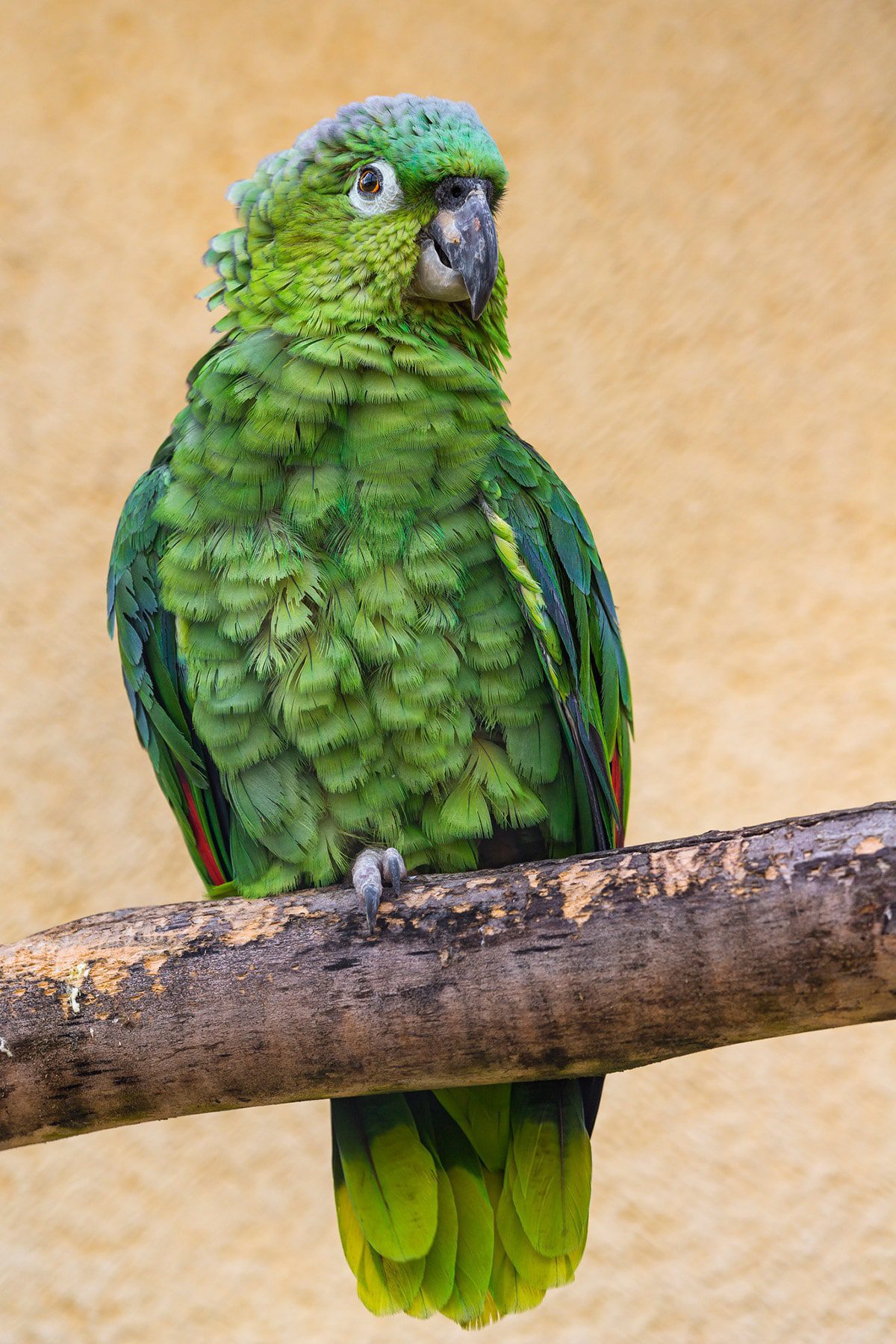
โ–ท The world of Pets: Dogs, cats, birds, reptiles, amphibians

Painted Parakeet
Pyrrhura picta

Painted Parakeet

Content

Description:


Anatomy-parrots

23 cm.. length and 54-70 g. of weight.

The Painted Parakeet (Pyrrhura picta) has a close frontal band, lores, upper cheeks and area around eyes, dull red.

lower cheeks matte red with blue points on some feathers; the front of the crown is blue; rear area of the crown and of the neck, opaque reddish brown with some blue spots; ear-coverts yellowish. Nape bluish green to green in fusion area the mantle; the scapulars and the top and bottom of the back They are brown; rump and uppertail-coverts, green. Upperwing-coverts green except for primary coverts external blue and some red feathers in the carpal area. Primaries blue up, gray below. Underwing-coverts green. Feathers of the throat, upper region chest and sides neck, opaque yellowish brown with wide margins, which results in a surprising scaled in the form of half diamonds or semicircles; bottom area chest and sides belly, green; center of belly brown; undertail-coverts green. Tail verde basalmente, brown distally. Bill brownish-grey; bare periophthalmic grey; brown the irises; legs grey.

Both sexes are similar.

Taxonomic status:

This taxon is considered a subspecies of Pyrrhura [picta, roseifrons, lucianii, amazonum, snethlageae or peruviana] (sensu lato) by some authors

  • Sound of the Painted Parakeet.

Description 4 subspecies
  • Pyrrhura picta caeruleiceps

    (Todd, 1947) – 22 cm.. length. Mostly green with a long tail reddish brown, patch belly dark red color and the primaries Bright blue. The front of the crown blue is becoming fuzzy blue brown behind; the area of the carpus red and ear-coverts gray-brown pale.


  • Azuero parakeet By Itzel Fong Gadea (www.itzelfong.com) [GFDL or CC BY 3.0], via Wikimedia Commons
  • Pyrrhura picta eisenmanni

    (Dr. Francisco Delgado – ornithologist panameรฑo, 1985) – 22 cm.. length. Of mostly green with a long tail brown, the flight feathers blue, belly dark red and white patch cheek. This species has most of its face Red Color, Lacking any blue has except in the rear area neck. It has the eyes dark. Pens top chest They are dark gray with cream colored tips. The front of the crown It is red, quickly becoming a dark brown from the middle of the crown to the back of the neck.


  • Pyrrhura picta picta

    (Statius Mรผller, 1776) – Nominal.


  • Pyrrhura picta subandina

    (Todd, 1917) – 21 cm.. Has the face bright brownish-red; the forecrown blue and dull red; Scalloped yellow and gray in the chest. Share with other species Pyrrhura a long tail red, the primaries blue and patch belly dark red. The zone of carpus is green, Unlike the red color Pyrrhura picta caeruleiceps which it is the closest geographically.

Habitat:

They inhabit in humid forests of mainland and borders, seasonally flooded forests (vรกrzea), and on the slopes of tepuyes.

They travel in flocks with quick flights.

Reproduction:

The breeding season It is between the months of December and February. Nest in hollow trees or old abandoned nests of woodpeckers.

Food:

They feed on, to a large extent, of fruit of Goupia glabra, Bagassa guianensis, Trema micrantha, Heisteria spruceana, Zanthoxylum, flowers and seeds.

Distribution:

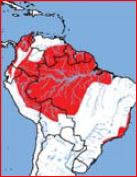
Size of its range (Play / residents): 1.560.000 km2

The Painted Parakeet It is located in northeast South America, distributed south of Orinoco, in Venezuela, eastward through Guyana, French Guiana, Suriname and the state of Amapรก in the North of Brazil (pit et to the. 1997).

In the states of amazon and western and southern Bolรญvar, in Venezuela They can be observed, mainly, on the slopes of the tepuyes, while further east inhabit the lowlands.

Distribution and status of 4 subspecies
  • Pyrrhura picta caeruleiceps

    (Todd, 1947) – It is located on the western slope at the northern end of the Andes to the east, from south Cesar state north through Los Motilones on Sierra de Perija, at the border of Venezuela and Colombia. It is estimated to have lost about 70% of its original habitat within their distribution Colombia, and its area of รขโ‚ฌโ€นรขโ‚ฌโ€นoccupation within Colombia It is expected to be less than 3.700 km2 (Botero-Delgadillo et to the. 2012to, b). It's kind extremely poorly known Venezuela, there are some samples and records of sightings in only four locations, all in the Zulia state; very infrequently recorded in recent years, despite the significant fieldwork (Sharpe 2015, CJ Sharpe in litt . 2015).

  • Classified as danger of extinction. Its population is constantly declining due to fragmentation of their habitat and capture for the pet trade.

  • Pyrrhura picta eisenmanni

    (Dr. Francisco Delgado – ornithologist panameรฑo, 1985) – Known only in the Cerro Hoya National Park in provinces Veraguas and The Saints, in the South of Panama. The distribution area is considered to be less than 700 km2; is common locally up to 1.660 m (Juniper and Parr 1998, Forshaw 2006, 2010, Montaรฑez and Angehr 2007). But, the population It has been estimated less than 2.000 individuals (World Parrot Trust 2014), and it is considered nationally threatened (Montaรฑez and Angehr 2007).


  • Pyrrhura picta picta

    (Statius Mรผller, 1776) – Nominal. They can be observed in Northeast South America, distributed south of Orinoco, in Venezuela, eastward through Guyana, French Guiana, Suriname, and in the North of Brazil, state Amapรก (pit et to the. 1997). In amazon and western and southern Bolรญvar states Venezuela mainly inhabit hillside tepuyes, while further east are distributed in the lowlands.

  • This species is classified as least concern, although the size of its population is decreasing mainly because of its capture for trade in bird cage.

  • Pyrrhura picta subandina

    (Todd, 1917) – Observed only in the Valley of the sinu river in the North of Colombia, although recent searches have not been able to find the species, so it may be extinct (PGW Salaman in litt. 2011). 18 specimens are known from four locations; Jaraquiel, Quimari and Murucucu in Bolivar, and Tierra Alta Nazareth (Joseph and Stockwell 2002). Placements Nazareth and in Jaraquiel, apparently, They have been deforested, but apparently small areas of suitable habitat may occur in Quimari and in the Murucucu hills although searches of these sites failed to find any evidence of the continued presence of the Pyrrhura picta subandina (Pgv Salman in Lit. . 2011).

  • There have been no confirmed records of this parakeet from Colombia 1949 despite extensive searches, and any remaining population is likely to be extremely small and declining. So, It has been classified as critically endangered (possibly extinct).

Conservation:

State of conservation โ“˜


minor concern Minor Concern โ“˜ (UICN)โ“˜

โ€ข Current category of the Red List of the UICN: Least concern.

โ€ข Population trend: Decreasing.

Justification of the Red List of the Category

The Painted Parakeet has a range very large, and therefore does not approach the thresholds for Vulnerable under the range size criterion. While the trend of the population seems to be decreasing, the decline is not believed to be rapid enough to approach the thresholds for Vulnerable under the population trend criterion (> 30% decrease of more than ten years or three generations). The population size has not been quantified, but are not believed to approach the thresholds for Vulnerable based on population size criteria (<10.000 individuos maduros con una disminuciรณn continua estima en> 10% in ten years or three generations, or a specific population structure). For these reasons, the species is evaluated as Least concern.

Justification of the population

The world population It has not been quantified, due to recent taxonomic divisions.

Justification trend

This species is suspected that there may be lost 6,5-7,3% of habitat within its distribution over three generations (18 years) based on a deforestation model of the Amazon (Soares-Filho et to the . 2006, Bird et to the . 2011). Given the susceptibility of this species to hunting and / or entrapment, It is suspected that it will fall in <25% en tres generaciones.

"Painted Parakeet" in captivity:

Rare.

Alternative names:

Painted Parakeet, Painted, Azuero, Sinu or Todd’s Parakeet (English).
Conure versicolore, Conure versicolore, C. d’Eisenmann, C. du Sinu ou C. de Todd (French).
Rotzรผgelsittich (German).
Tiriba-de-testa-azul (Portuguese).
Cotorra Pintada, Periquito Pintado (espaรฑol).
Periquito Pintado (Colombia).
Perico Pechiescamado (Venezuela).

scientific classification:

Order: Psittaciformes
Family: Psittacidae
Genus: Pyrrhura
Scientific name: Pyrrhura picta
Citation: (Statius Mรผller, 1776)
Protonimo: Psittacus pictus

Images Painted Parakeet:

Videos of the "Painted Parakeet"


Especies del gรฉnero Pyrrhura

Painted Parakeet (Pyrrhura picta)


Sources:

Avibase
– Parrots of the World โ€“ Forshaw Joseph M
– Parrots A Guide to the Parrots of the World – Tony Juniper & Mike Parr
Birdlife

Photos:

(1) – Venezuelan Parakeet | Perico Pintado ( Pyrrhura picta emma) By Fernando Flores from Caracas, Venezuela [CC BY-SA 2.0 or CC BY-SA 2.0], via Wikimedia Commons

Sounds: William Adsett, XC82876. accessible www.xeno-canto.org/82876