โ–ท The world of Pets: Dogs, cats, birds, reptiles, amphibians

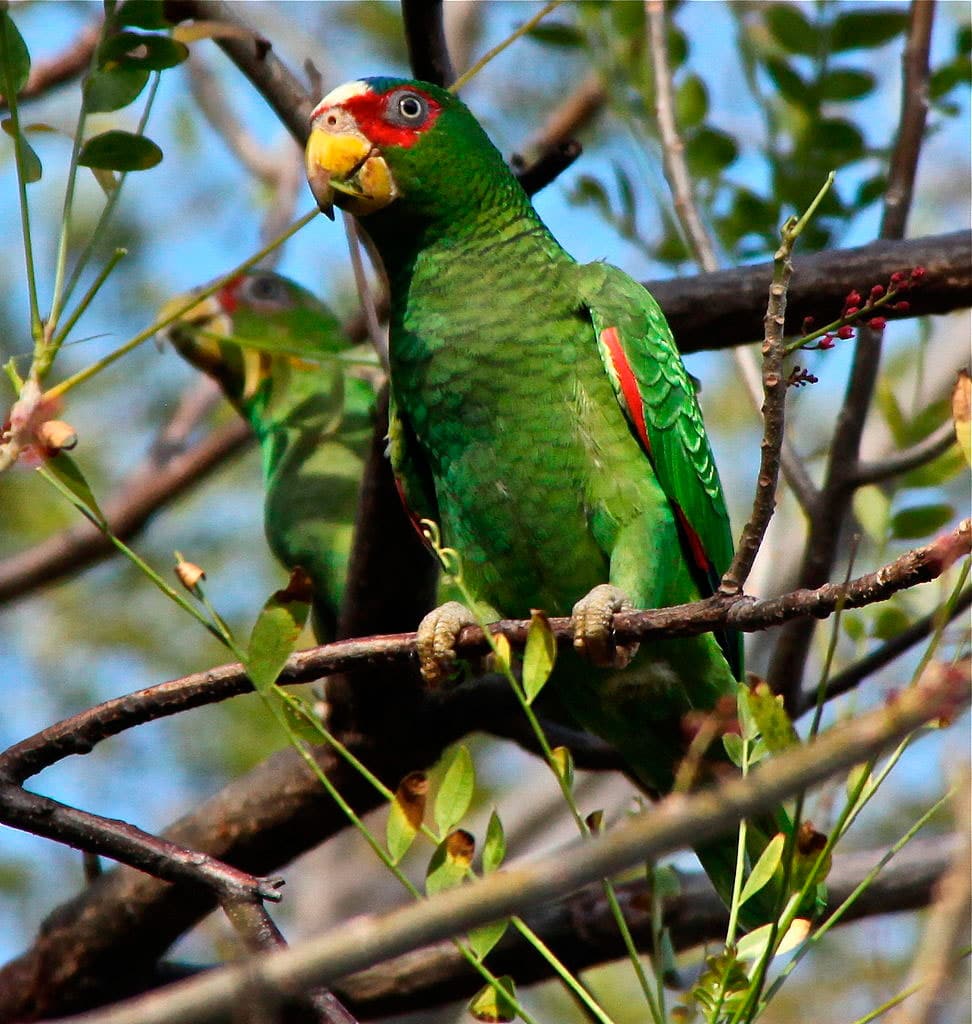
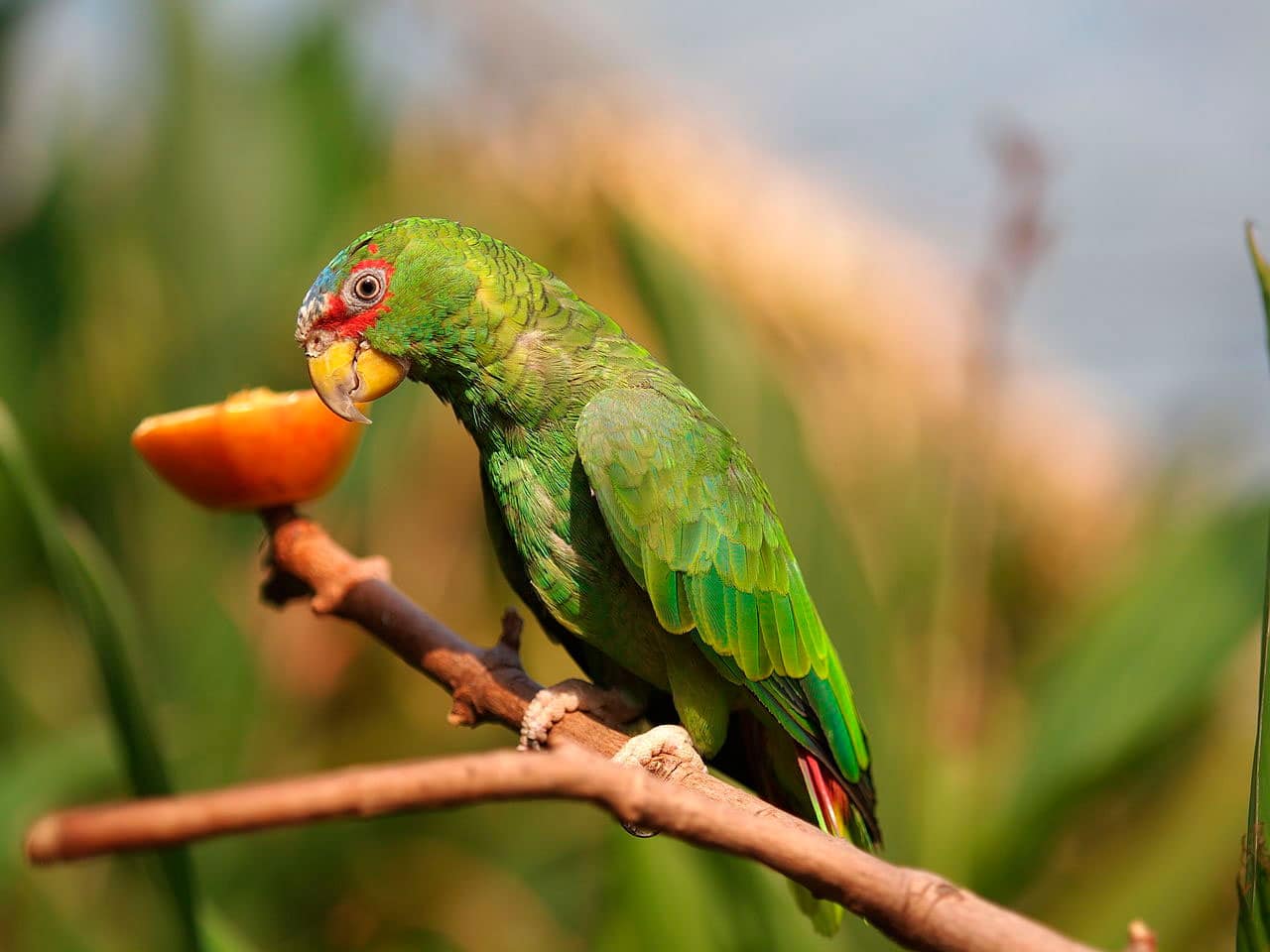
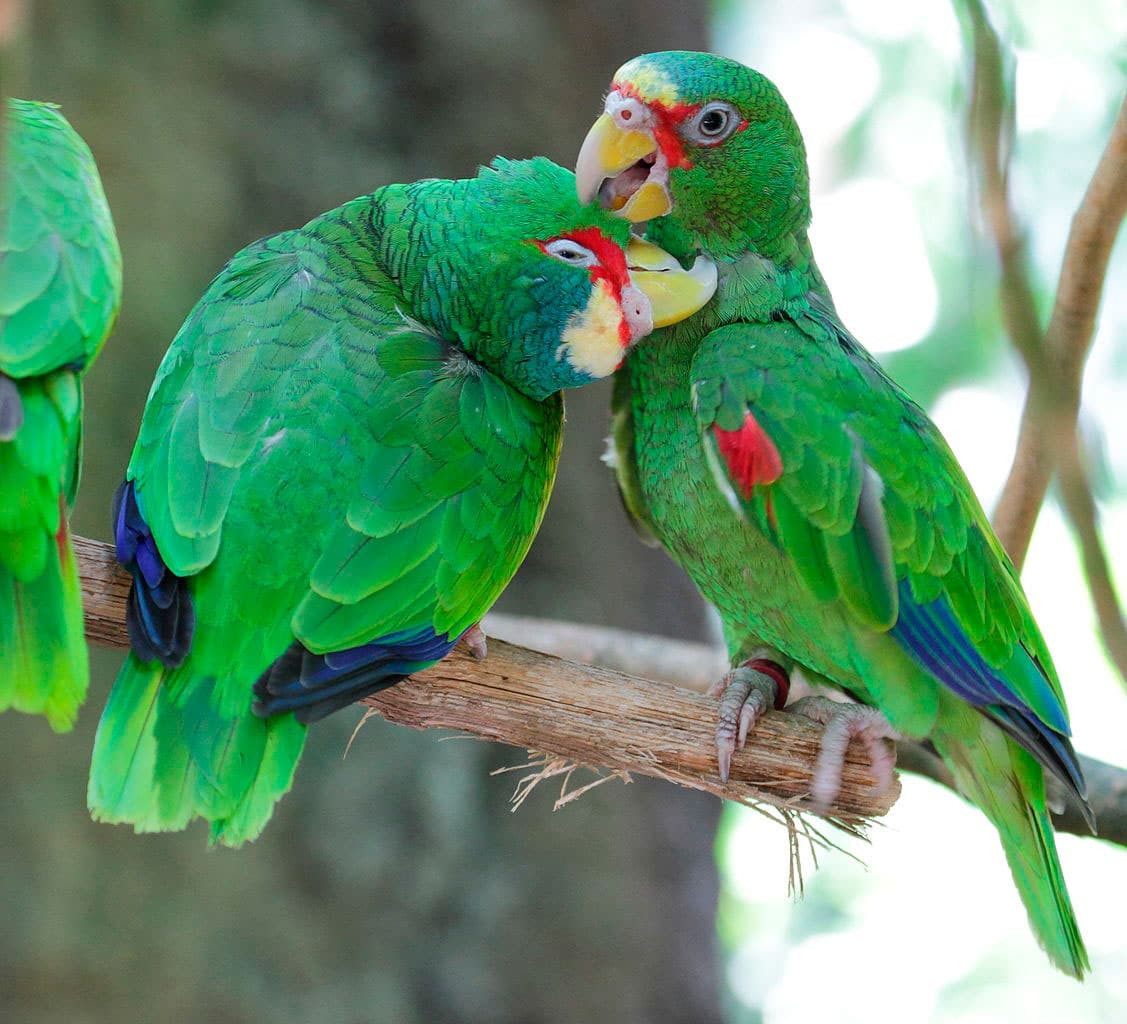
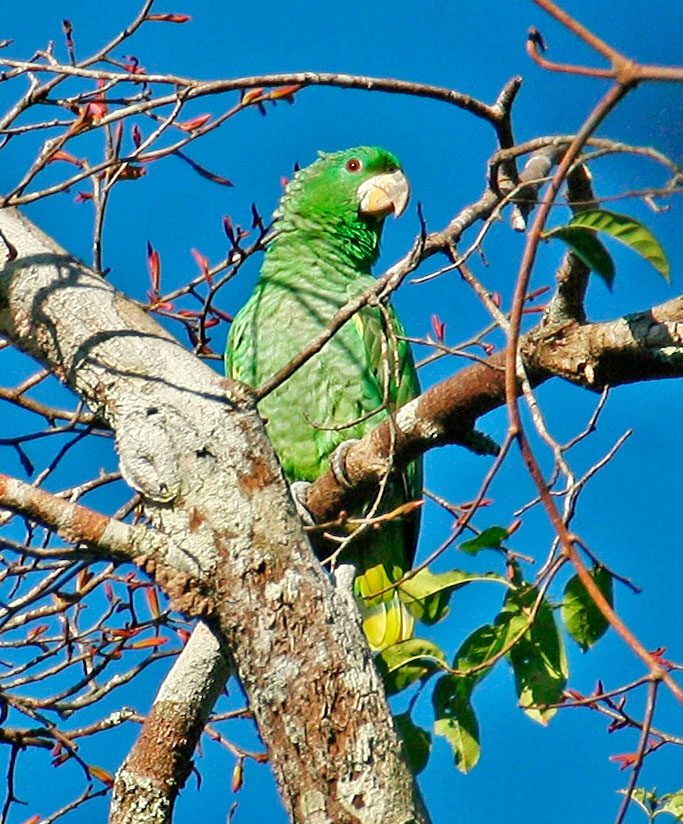
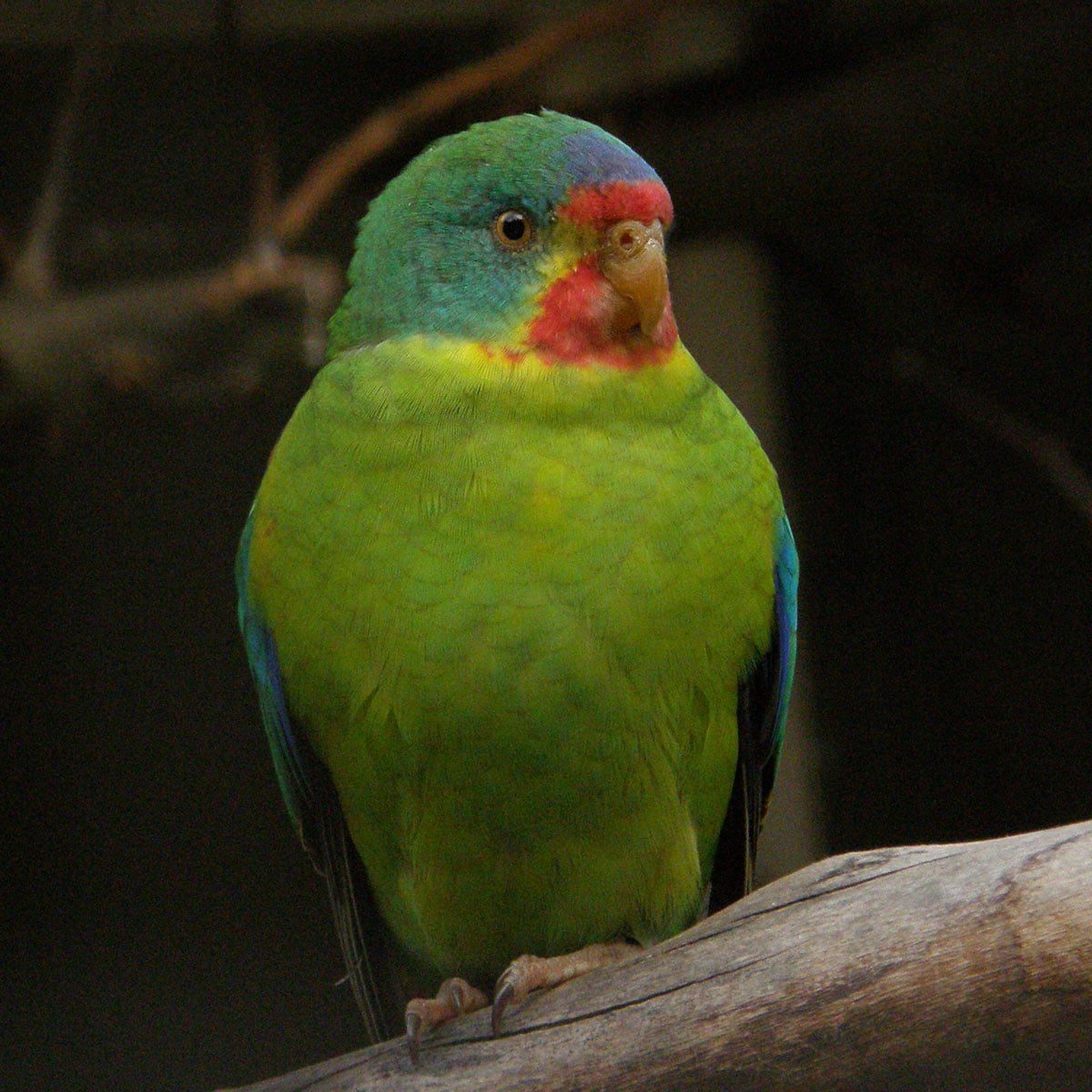
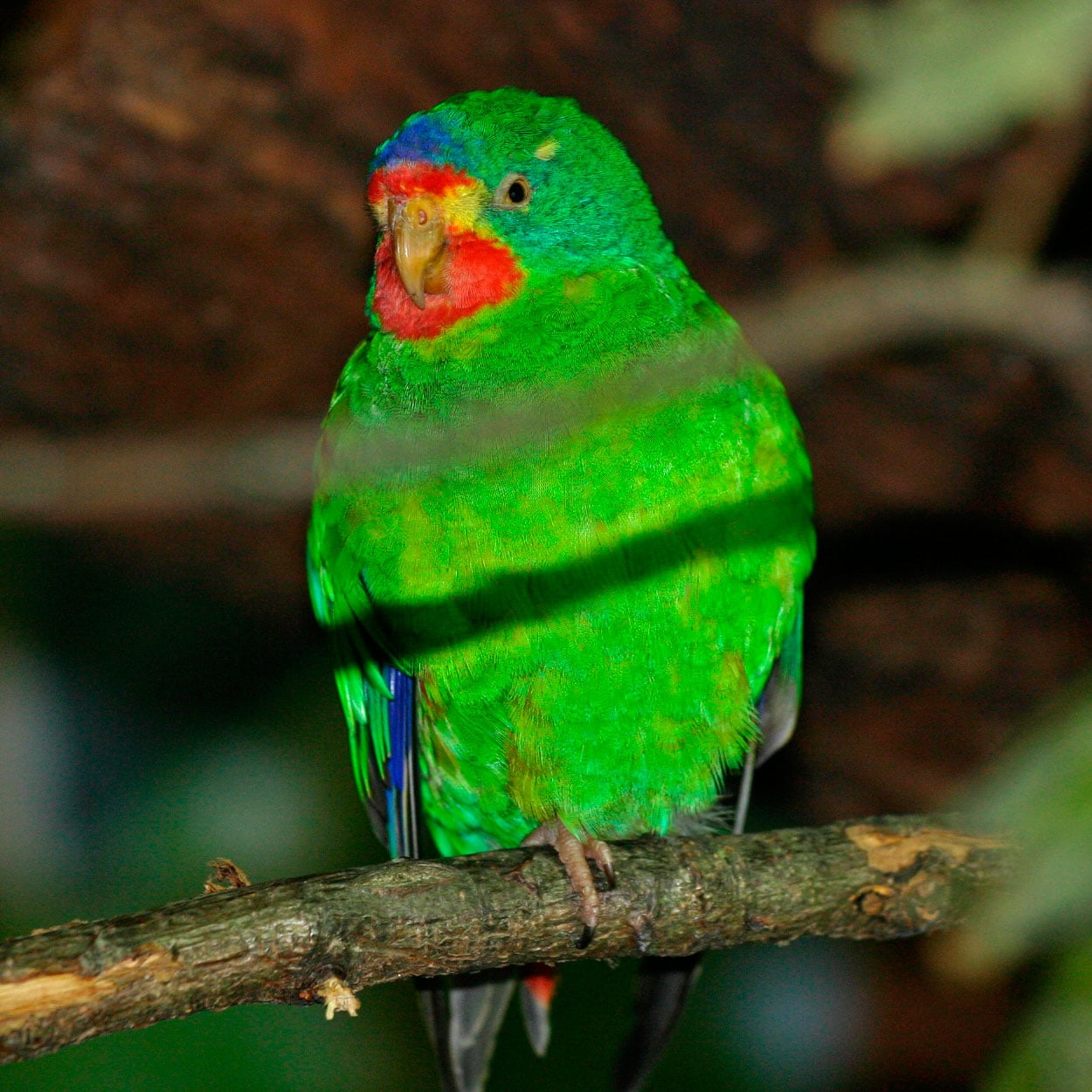
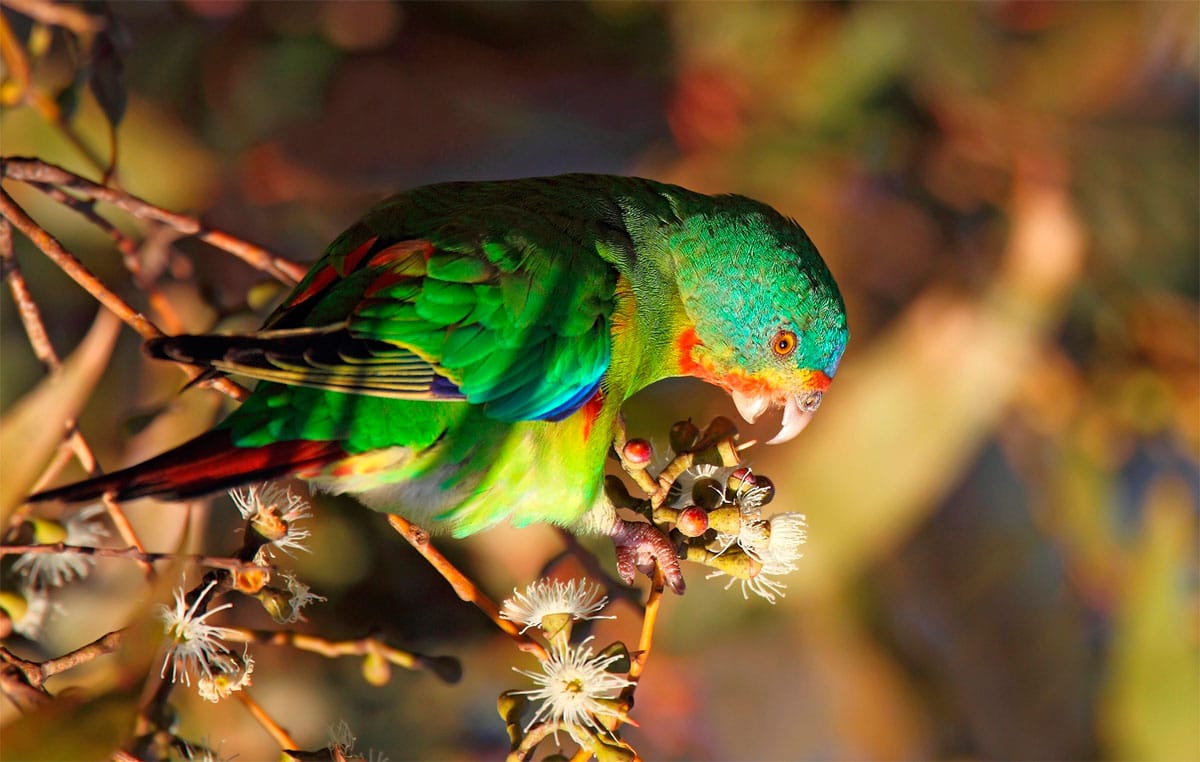
Reischek's Parakeet
Cyanoramphus hochstetteri

Reischek's Parakeet

Content


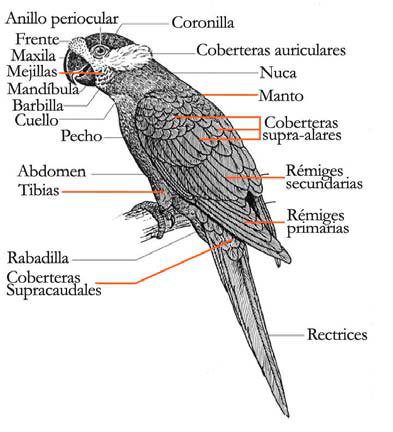
Anatomy-parrots

Description:

28 cms. length and 140 g. of weight.

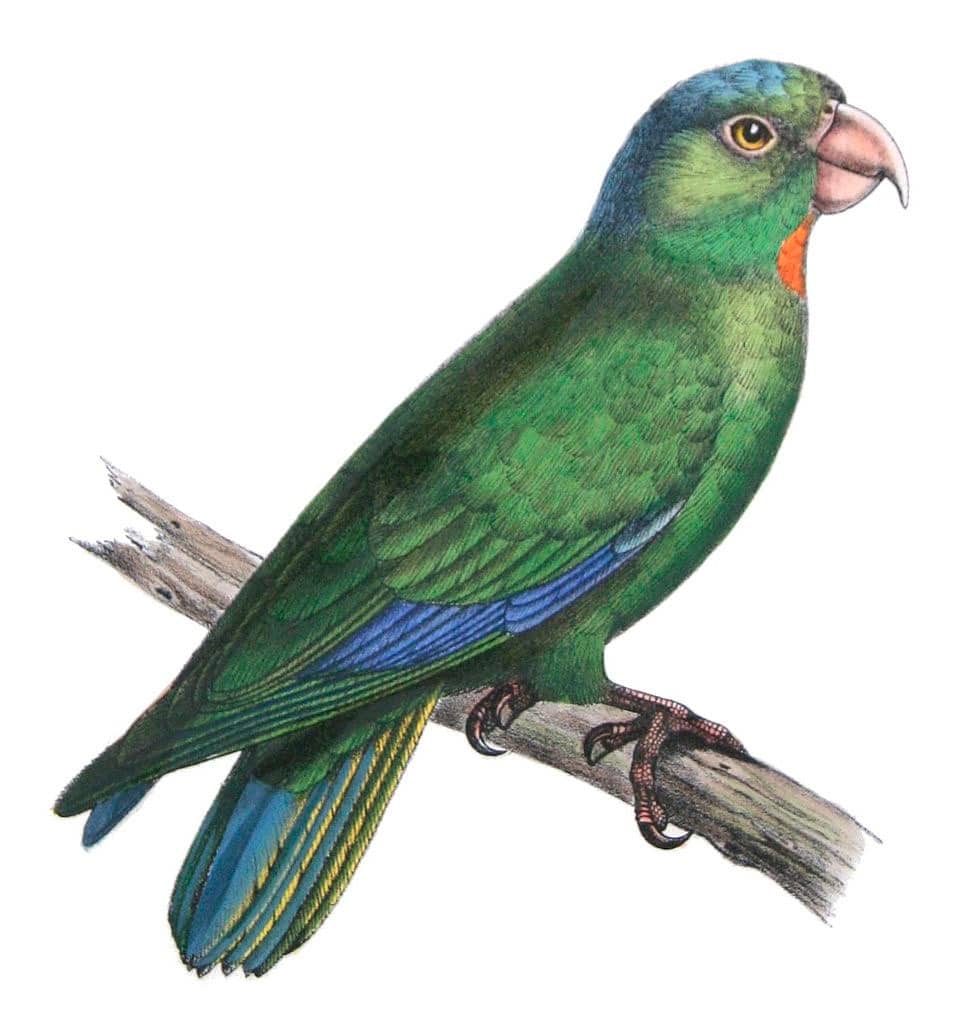
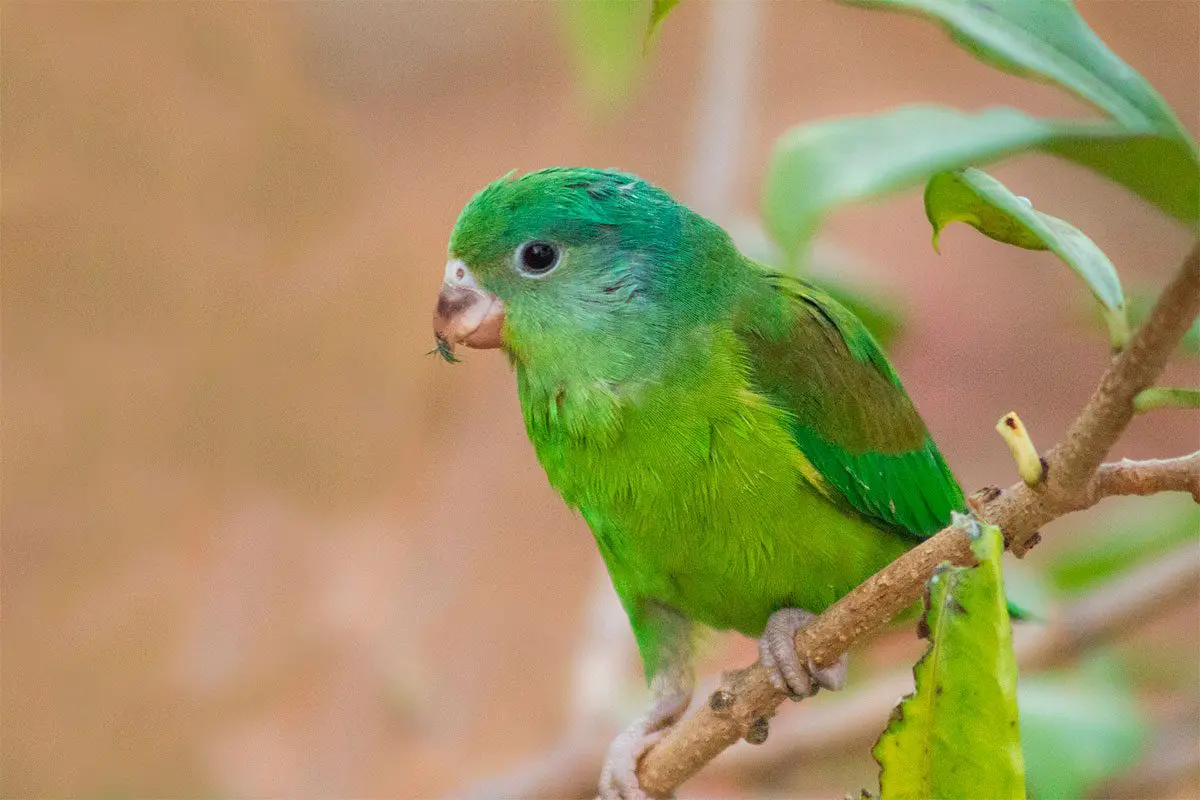
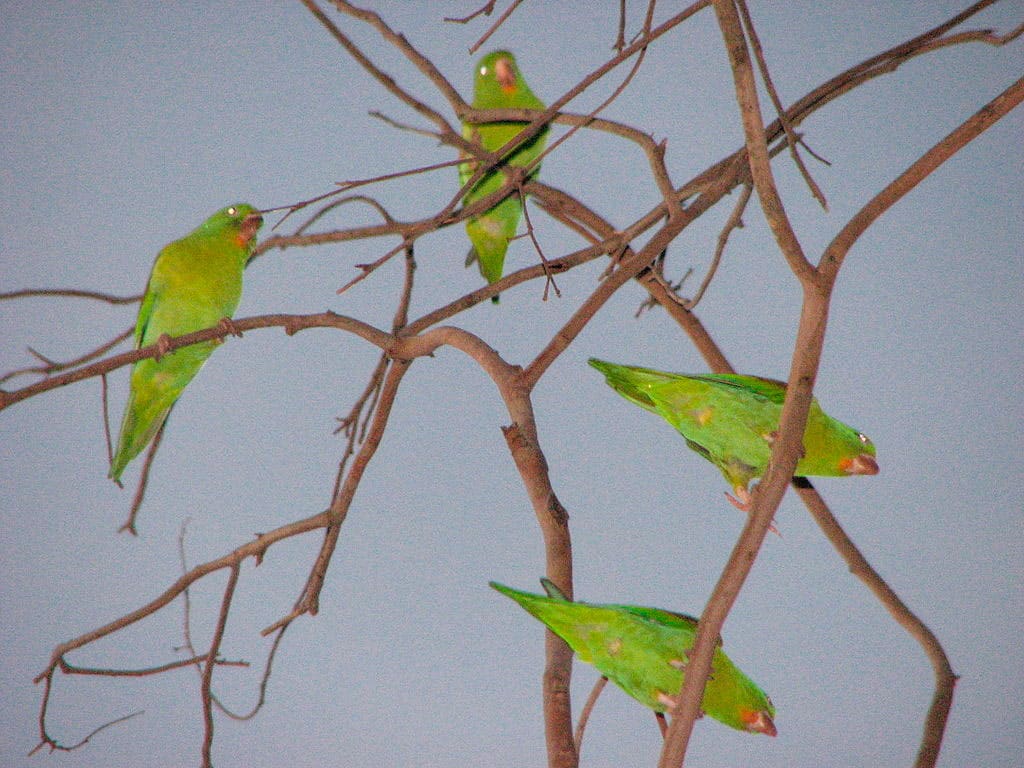
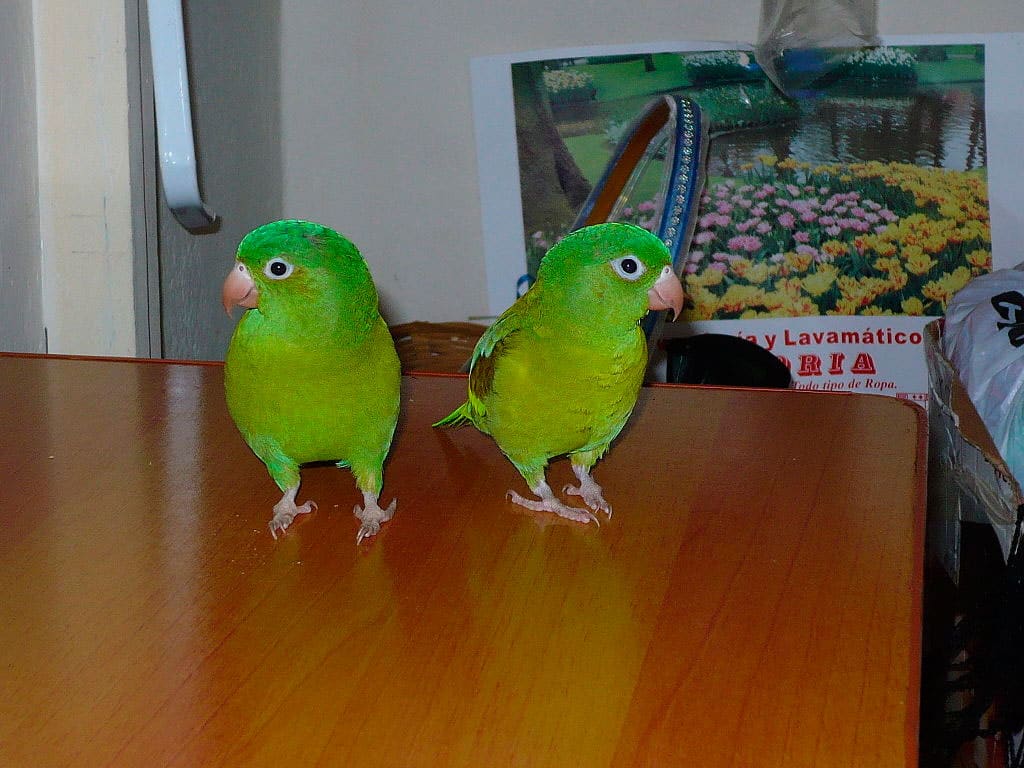
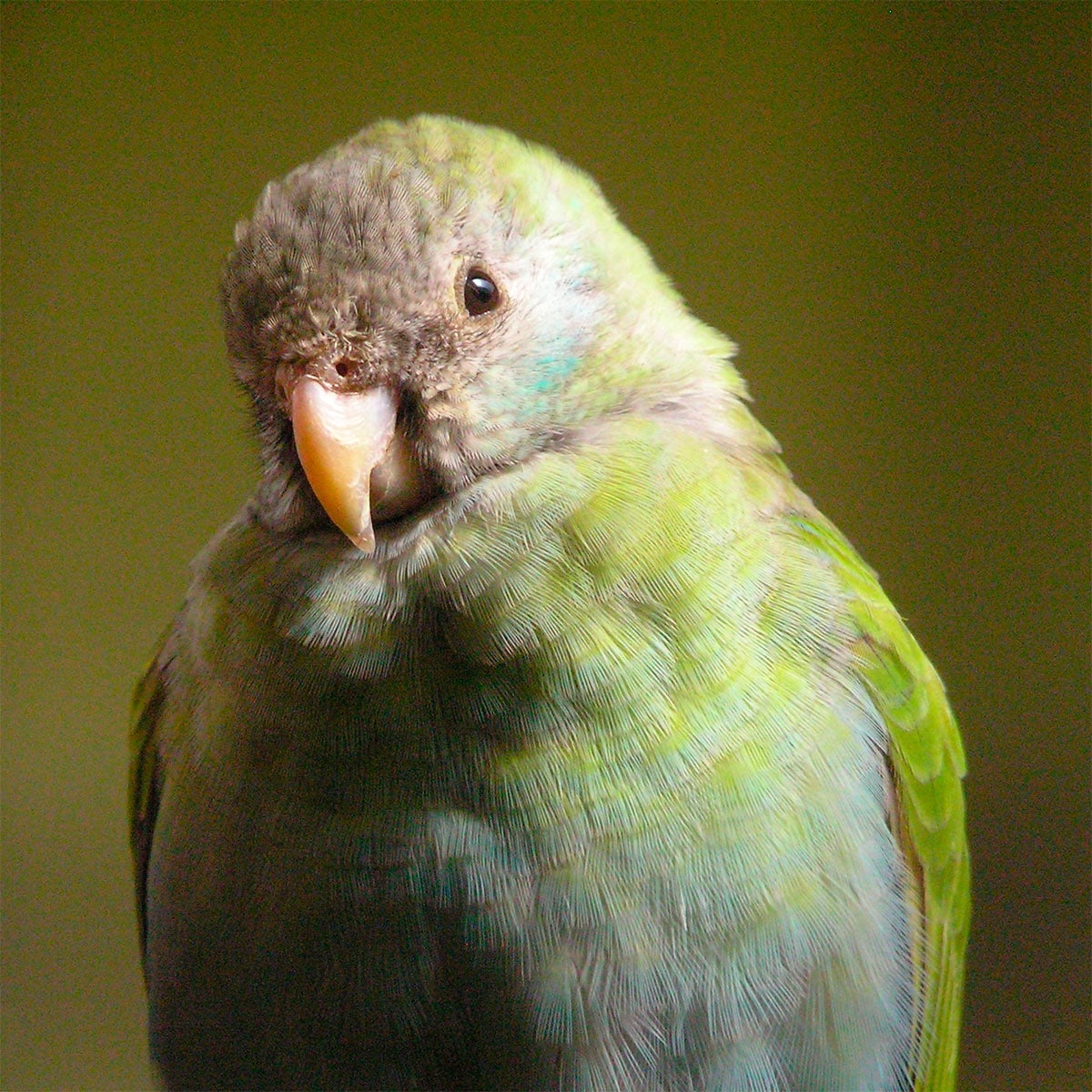
The Reischek's Parakeet (Cyanoramphus hochstetteri). They are named after the Austrian ornithologist and taxidermist ยซAndreas Reischekยซ, the first scientist to visit the Antipodes Islands. He was a passenger of Stella and reached the Antipodes Islands in February 1888.

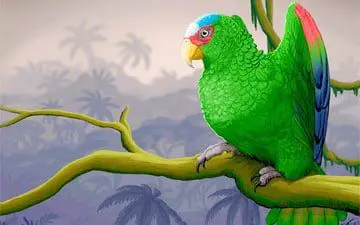
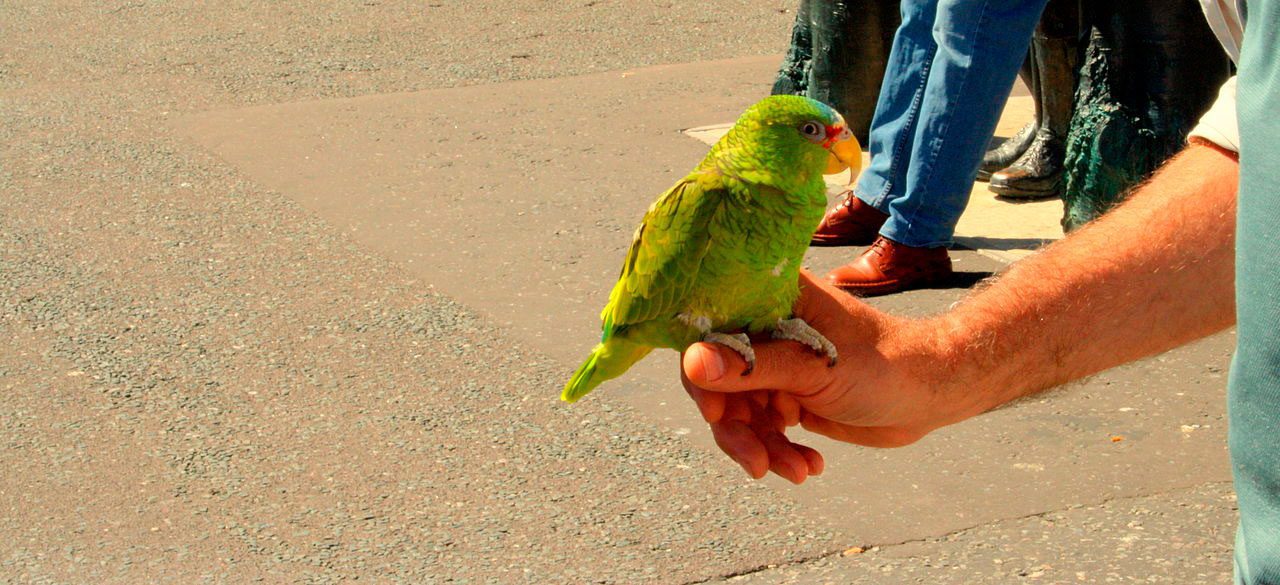
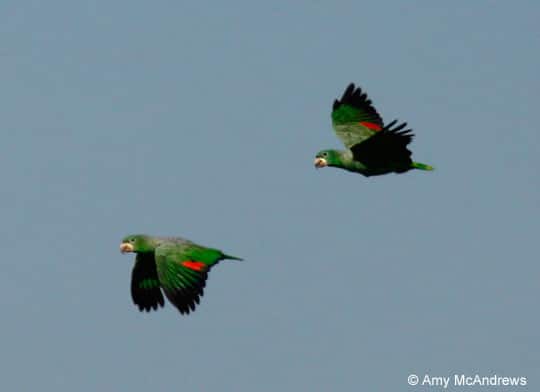
It is one of two species of parakeets Cyanoramphus who live in remote Antipodes Islands. It is a medium-sized green parrot, brightly colored, the outer flight feathers are light blue with a crown red, which looks a lot like other parakeets of "red crown" (for example, Cyanoramphus novaezelandiae). But appearances are deceptive. Genetic studies reveal that crown color may not be a good indicator of parakeet taxonomy, and the tiny Malherbe's parakeet (Cyanoramphus malherbi) It may be the closest relative of Reischek's Parakeet. It is common in all Antipodes Islands, particularly in more open areas and along shorelines close to penguin colonies.

Habitat:

The Reischek's Parakeet They are more abundant than Antipodes parakeet (Cyanoramphus unicolor) in most habitats. Significant differences were observed in diet between the two species of parakeets. are also evident strong seasonal and annual differences in diet related food availability. The Reischek's Parakeet They are strong fliers and have been observed flying between islands within the Antipodes group.

Social behavior is similar to other species of parakeets Cyanoramphus, but have been observed to spend considerable periods basking and preening in sheltered areas. Like other species Cyanoramphus, are strongly territorial around nests, and they call loudly and chase intruders from nearby.

They are usually found in pairs or, more commonly, in small groups that feed on or near the ground. You can often see them in meetings springs and wells isolated. Occasionally they flock fly to neighboring islands in search of food.

Reproduction:

We know relatively little about the breeding of the Reischek's Parakeet. Apparently nest from October to March inside tunnels modified or built inside the bases of groups of tussocks or ferns. The nest is lined with small pieces of wood, feathers, moss, herbs and other dry materials. They can reuse nests each year.

clutch size is unknown in nature. Its ecology and reproductive behavior are likely to be similar to those of other parrots. Cyanoramphus.

Food:

It has been recorded feeding on leaves, flowers, berries and seeds 14 plant species. Invertebrates are a minor component of the diet. The Reischek's Parakeet occasionally feed carcasses petreles and albatrosses, but not as often as Antipodes parakeet (Cyanoramphus unicolor). They feed on the floor often, including mud and feces accumulated within colonies antipodean penguin (Eudyptes sclateri) unoccupied, when penguins are away on their winter migration.

Distribution:

The Reischek's Parakeet is endemic of the Antipodes Islands. It is common in all the Antipodes Islands, particularly in more open areas and along shorelines close to penguin colonies.

Conservation:


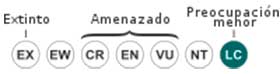
Vulnerable

โ€ข According to the New Zealand Threat Classification System of 2008: Vulnerable.

โ€ข Population trend: Stable.

โ€ข Population size : 4000-6000 individuals.

The Reischek's Parakeet apparently they have a stable population, and are common within their distribution area of 2,000 has. They are protected by the isolated situation of the islands and their status Natural reserve strict. The greatest threat to long-term survival Reischek's Parakeet is the arrival of mammalian predators. In the winter of 2016 we attempted to eradicate the mice Antipodes Islands.

The species is also affected negatively by forestry operations: logging and burning have drastically reduced the available habitat, and selective logging can reduce the number of trees with suitable nesting holes and foraging opportunities..

It was hunted by Maori to feed, and previously it was persecuted because birds were damaging crops and orchards.

"Reischek's Parakeet" in captivity:

Son confident from the beginning and not at all shy. Usually they are ready to breed in captivity. Although they are ripe (about five months), It is best not to allow them to play in the first year.

Alternative names:

Antipodes Island Parakeet, Antipodes Red-crowned (English).
Perruche de Reischek, Perruche des Antipodes (French).
Antipoden-Ziegensittich (German).
Periquito de Reischek (Portuguese).
Perico de Reischek, Perico Frentirrojo de las Antรญpodas (espaรฑol).

scientific classification:

Andreas Reischek
Andreas Reischek

Order: Psittaciformes
Family: Psittaculidae
Gender: Cyanoramphus
Scientific name: Cyanoramphus hochstetteri
Subpoena: (Reischek, 1889)
Protonimo: Platycercus hochstetteri

Images:

New Zealand Birds Online – Photos

Sources:

โ€ข Avibase
โ€ข Parrots of the World โ€“ Forshaw Joseph M
โ€ข Parrots A Guide to the Parrots of the World – Tony Juniper & Mike Parr
โ€ข Greene, T.C. 2013 [updated 2017]. Reischek's parakeet. In Miskelly, C.M. (ed.) New Zealand Birds Online. www.nzbirdsonline.org.nz

Photos:

(1) – Cyanoramphus hochstetteri by Auckland Museum [CC BY 4.0]

Sounds: Captive birds calling, Mount Bruce National Wildlife Centre, April 1973, 1215, Les McPherson, McPherson Natural History Unit Sound Archive, www.archivebirdsnz.com

โ–ท The world of Pets: Dogs, cats, birds, reptiles, amphibians

Budgerigar
Melopsittacus undulatus


Common Budgie

Content

Description

18 cm. length and a weight between 22 and 32 g..

Periquito-Comun

In the Budgerigar (Melopsittacus undulatus) of adults, the cere Blue contrasts with the frontal zone; the front of the face and throat are pale yellow. The latter is covered by a line of black dots. The area which is located below the cheeks it's purple.

The central part of the pileum extending from the rear of the eyes to neck It is covered with alternating thin black bands and bands of pale yellow. These bars are expanded on the the mantle and wing-coverts, forming a scaly effect.

The underparts, the area beneath the wings, the lower part of the back and rump create a beautiful pale green together. The tail is opaque blue tones with a central yellow stripe on the side feathers.

The female has a Brown wax.

The immature they are more turned off with bars on the front. The black spots on the throat they are absent.

Habitat:

The Budgerigar they are distributed by a wide variety of open habitats, including open forests, lightly wooded grasslands and savannas. Also appreciate the areas of Mallee, farmland, vegetation that grows along rivers, drought-adapted scrub and open plains. They come fitted with desert areas of Mulga (Acacia aneura). Although they are able to survive several days without water, These birds are never far from a water source.

In areas where fruit production is constant and in others where it is stable for very long periods, the movements of the Budgerigar they are easily predictable.

In the South end, Pilgrimages exist only in cases of prolonged drought and wandering parakeets return to their territory with the first rains and recolonize when river levels return to normal.

Reproduction:

The Budgerigar they build their nests of June to September in the North its area of distribution. They reproduce between August and January in the South. Nests can be installed at any time of the year after the rains fall. They establish a second brood as soon as conditions are favorable.

These parakeets usually nest in colonial way. The nest is located in a natural cavity in a tree, in a strain, an any fence post, or on a big fallen branch.

The female lays from 4 to 6 eggs and incubation lasts a few 18 days. The chicks remain in place of birth during 30 days before flying.

Food:

The Budgerigar It vegetarian, they eat herbs and seeds of quenopodios. Plants vary in categories and in proportions, according to which regions and times.

The East inside of Australia, These birds feed exclusively on seeds that are on the ground, While in the middle of the continent, There is more variety of plants to select. In the first case, grain size barely exceeds the 2 mm diameter and the second, more than 40 plant varieties make up the diet of these parakeets.

From time to time, the Budgerigar, they come in growing areas and take advantage of the ripe fruits.

Distribution:

The Budgerigar are distributed widely throughout the Interior of Australia, Although they are rare in the coastal districts of the This and the end South-West (absent of Tasmania, Arnhem Land and Cape York Peninsula).

The species may be of common to very abundant, but they are nomadic, and may change from year to year areas.

These parakeets, frequently, they burst from the arid zones to the more humid zones and there are temporary movements towards the south during the summer, but these changes may be affected by annual rainfall patterns.

We have introduced, without success, in a number of places around the world (or they have escaped from captivity and could not be) including South Africa, United Kingdom, Japan, Hong Kong, Puerto Rico, Brazil, Switzerland, Colombia, the Society Islands, New Zealand and Oman.

In the EE.UU. the species has managed to colonize Hawai and California (leaks also occur regularly in the city of New York City). In Florida a population was originally registered in the area of St. Petersburg, in the decade of 1950 and now has more of 3.000 individuals; These birds are mobile and have been recorded along the coast This of all the South from Jacksonville to Miami, and in the West everything Hudson to South of Fort Myers, from time to time go towards the North in Gainsville.

Parakeets, occasionally escaped, they may appear in Tasmania.

The world population is estimated at around 5.000,000 copies.

Conservation:


minor concern


โ€ข Current category of the Red List of the UICN: Least concern

โ€ข Population Trend: Growing

This species is not threatened at all, even they are abundant, and in some places where resources are good, countless flocks darken the sky, to cause branches to break from 4 centimeters in diameter, When large number of birds used them as support for their breaks.

Populations fluctuate widely depending on weather conditions.

Livestock living on farms in central Australia have caused Budgerigar they will benefit from new water supplies. Like this, the number of parakeets are constantly increasing.

These parakeets are the most well known psittacidas in the world.

"Budgerigar" in captivity:

This parakeet was discovered in 1805 and since then it has become the most popular captive bird in the world. While it is considered as domestic fowl, However, is a gregarious and instinctive animal, with the same needs that the parrots who freely roam the lands of Australia.

The Budgerigar It dynamic, curious, melodious and because of its small size, the beauty of their plumage and their entertaining behaviour, truly charming. This is what makes it a coveted bird. But, It is still a bird that needs to fly, play and socialize with their peers. Like any bird, It is sensitive to the social and environmental context. In fact, their real needs are too often overlooked, many parakeets suffer neglect or even abuse.

In captivity, the Budgerigar It is larger than its counterpart in nature. Measures of 20 to 25 cm. from head to tail and weighs between 30 and 45 g.. In addition to the colour of your coat, wild type, There are numerous mutations (other coat colors) associated with the increase in crossings and selections in certain genes, that translates into more spontaneous mutations.

The Budgerigar has two silent by year average, and the first moult occurs between the fourth and sixth month. The molt is complete renovation of the plumage of the bird. Pens fall to others push, includes your tube of keratin that parakeets will open with their beaks to release pen and relieve the irritation that engenders the same thrust. It can be more or less painful and intense. Some plucking is so fast that the bird may experience some difficulties during the flight.

Check the intensity of the change of the parakeet through black head tubes, tiredness and especially the number of feathers on the ground.

The feeding of the Budgerigar is based on the millet and the birdseed, Although it must be complemented with other seeds or vegetables (as the lettuce, Spinach, pepper, Carrot, corn). The fruits are also a good dietary supplement for these birds. Occasionally it can provide a little bread or biscuit, but always with caution that not give them anything very sweet. The avocado, the chocolate and the parsley they are deadly toxic for the Australian parakeets.

The the parakeet cage must be protected from the cold, a temperature between the 20-25 C. It must be of one sufficient size so you have freedom of movement and can exercise. The balusters must be arranged horizontally so that they can climb up them. The cage must be washed at least once a month with a disinfectant, change the water daily and clean the shells of the food. A cat litter tray can be placed to make their needs.
It is also important to let the parakeet out occasionally and fly freely around the room. Windows must be closed and curtains, because you can hit them.
Son very sociable birds and it is better to live with other parakeet. The best couple is formed by a male and a female. This will try to kill its companion if it is of the same gender.

With regard to its longevity, according to sources, these animals can come to live until 21 years in captivity. The same sources indicate that these parakeets suffer from a high incidence with respect to ovarian cancer.

Alternative names:

Budgerigar, Budgerygah, Budgie, Canary Parrot, Grass-Parakeet, Lovebird, Scalloped Parrot, Shell Parakeet, Shell Parrot, Undulated Parrot, Warbling Grass-Parrot, Zebra Parrot (ingles).
Perruche ondulรฉe (French).
Wellensittich (German).
Periquito-australiano (Portuguese).
Periquito Australiano, Periquito Comรบn, Cotorra Australiana, Cata Australiana (espaรฑol).

scientific classification:

George Shaw


Order: Psittaciformes
Family: Psittaculidae
Genus: Budgerigar
Scientific name: Melopsittacus undulatus
Citation: (Shaw, 1805)
Protonimo: Psittacus undulatus

ยซCommon Parakeetยป Images:

Videos "Budgerigar"

————————————————————————————————

ยซCommon Parakeetยป (Melopsittacus undulatus)


Sources:

Avibase
– Parrots of the World โ€“ Forshaw Joseph M
– Parrots A Guide to the Parrots of the World – Tony Juniper & Mike Parr
– Birdlife

Photos:

(1) – Budgerigar at Zoo Atlanta, USA By TheSussman (Mike) (originally posted to Flickr as Parakeet) [CC BY 2.0], via Wikimedia Commons
(2) – Two budgerigar at Henry Doorly Zoo, USA By Jeff Coffman (originally posted to Flickr as DSC_1265) [CC BY 2.0], via Wikimedia Commons
(3) – male budgerigar. taken near Cameronโ€™s Corner, Qld By Benjamint444 (Own work) [GFDL 1.2], via Wikimedia Commons
(4) – Detail shot of budgerigars head By Kirk (Own work) [CC BY-SA 3.0 or GFDL], via Wikimedia Commons
(5) – Melopsittacus undulatus flock, Karratha, Pilbara region, Western Australia By Jim Bendon from Karratha, Australia (budgies_4) [CC BY-SA 2.0], via Wikimedia Commons
(6) – By User Magnus Manske on en.wikipedia [Public domain], via Wikimedia Commons
(7) – Exterior diagram of a green budgerigar By ZooFari [CC BY-SA 3.0], via Wikimedia Commons

Sounds: Marc Anderson (Xeno-canto)

โ–ท The world of Pets: Dogs, cats, birds, reptiles, amphibians

Scaly-headed Parrot
Pionus maximiliani

Scaly-headed Parrot

Content


Anatomy-parrots

Description:

27 to 29 cm.. height and between 233 and 293 g. of weight.

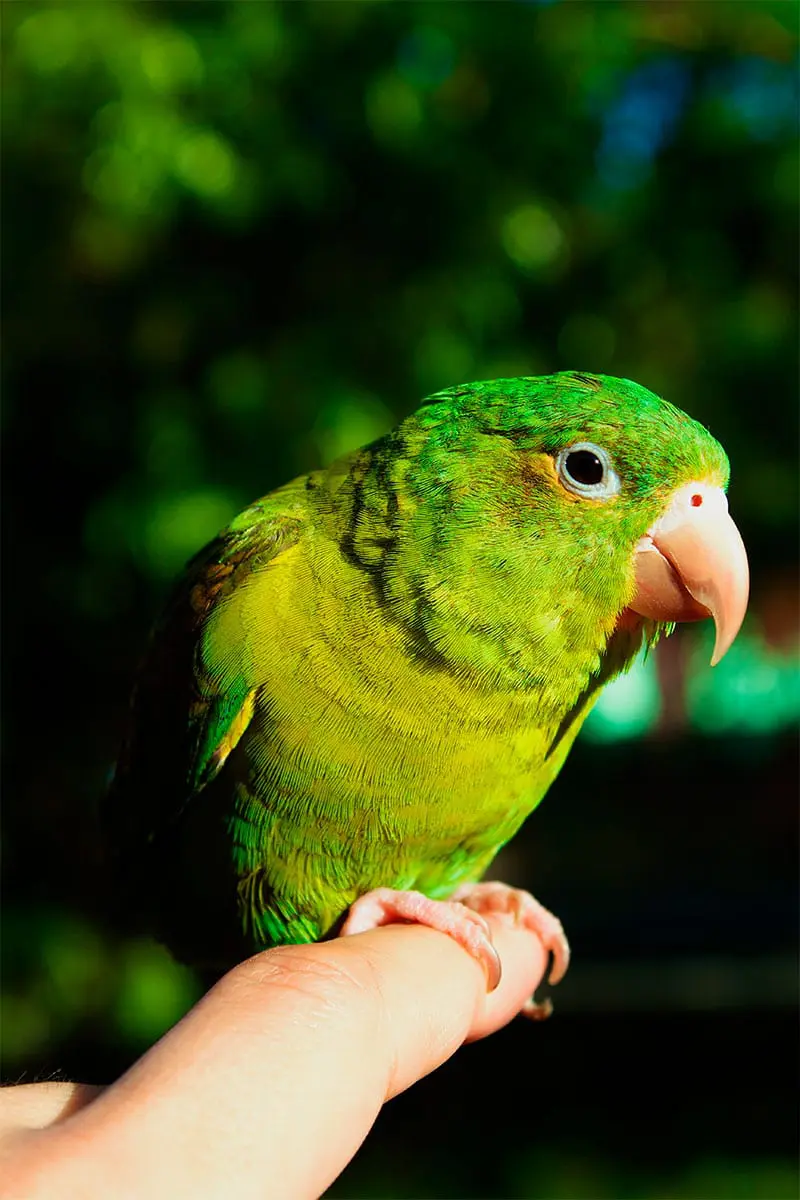
The Scaly-headed Parrot (Pionus maximiliani) It is medium in size and tail very short; has the lores, the forecrown and the eye area opaque dark bronze; the feathers on crown, the cheeks, the chin and the sides of the neck, basal green with wide enough margins bronze that give the appearance of flake; ear-coverts with dark green margins but brighter than other pens head.

The back of the neck and green the mantle become more brown and olive green upper lower parts, where some feathers have quite indistinct darker tips. Coverts smaller and medium-sized green olive brown with indistinct dark tips; alula, primary and greater coverts and flight feathers, brighter green, contrasting with the upperparts brown, duller.

Under the wings, opaque green. The throat and the top chest blue violet off that fade in brownish olive green in the bottom of the chest and most of the belly, but they are become brighter and greener in flanks and the thighs; undertail-coverts crimson. Upper, the tail green in the center, outer feathers mainly blue and red at the base; undertail, the tail, bluish green duller. Bill black with yellow edges on the upper jaw and the bottom tip; orbital skin pale grey; irises dark brown; legs grey.
Scaly-headed Parrot
Both sexes are similar. Immature It has less intense the blue throat; feathers head more green with less distinct margins.

Description 4 subspecies:

  • Pionus maximiliani lacerus

    (Heine, 1884) – Similar to the subspecies Pionus maximiliani siy but with a bill stronger, the chest more purple and perhaps larger on average.


  • Pionus maximiliani maximiliani

    (Kuhl, 1820) – Nominal.


  • Pionus maximiliani melanoblepharus

    (Ribeiro, 1920) – Blue darker in throat and darker above. Larger.


  • Pionus maximiliani siy

    (Souance , 1856) – Much like the nominal species but darker below, more purple and less blue in the chest, yellower in back and Blue throat lighter.

Habitat:

It inhabits in a wide range of forested habitats, but mostly in dry forests lowland ranging from caatinga very dry, inside the northeast of Brazil, through the savannas Cerrado seasonal, to chaco; also in wetter forests, including gallery forests and forests of araucarias, especially in southeast Brazil. They can also be seen in subtropical forests in Eastern Andean slopes some 2.000 meters in the Northwest of Argentina and some 1.500 meters in the mountains of the South of Brazil.

Tolerant to human alteration of forest habitats and sometimes cultivated areas. Usually gregarious, arriving to form flocks numerous in places in where the food is abundant probably is hiding in small groups in them cups of them trees.

Reproduction:

They nest in tree hollows. Birds in terms of breeding in the month of October in Paraguay; November in Sรฃo Paulo; laying 3-5 eggs.

Food:

The plants food include Erythrina, Inga, Piptadenia, Copaifera, Croton, Pachystroma, Plathymenia reticulata, Ficus and Araucaria.

Distribution:

Size of the area of distribution (reproduction / resident): 6.650.000 km2

The species is found in the Center, South and East of Brazil, from maranhรฃo and Cearรก in the Northeast, to the South by Piauรญ, Bay, Goiรกs, Minas Gerais, Brazil and the eastern coastal States up to Rio Grande do Sul and to the South of Mato Grosso (region pantanal), extending to the southeast of Bolivia, from Santa Cruz to the South in the Eastern Andes and to the North of Argentina in Salta, Tucumรกn and Catamarca in the East and North of Santa Fe in the West.

Mainly resident, although it may not grow in the drier parts of the Argentine Chaco. Apparently more numerous in the center of its area of distribution, where its abundance is only surpassed by the Maroon-bellied Parakeet (Pyrrhura frontalis); progressively more scarce toward the periphery.

Locally quite common the common in Bolivia and locally common in the North of Argentina, where it is most abundant in the South of Salta, Tucumรกn and areas adjacent in Catamarca. Moderately common in Rio Grande do Sul and common in the pantanal; densities Brazilian more high in Sรฃo Paulo.

The decrease apparent, in some parts of the range, (for example, North of the Argentina) is attributable to the trade, but in other places (for example, the southeast of Brazil) is undoubtedly its decline due to the loss of forests.

Distribution 4 subspecies:

  • Pionus maximiliani lacerus

    (Heine, 1884) – Northwest of Argentina.


  • Pionus maximiliani maximiliani

    (Kuhl, 1820) – Nominal. Northeast of Brazil.


  • Pionus maximiliani melanoblepharus

    (Ribeiro, 1920) – It is from Paraguay, Brazil and northeast of Argentina (Missions)


  • Pionus maximiliani siy

    (Souance , 1856) – Southeast of Bolivia until Paraguay, West of Brazil (Mato Grosso), North of Argentina.

Conservation:


minor concern


โ€ข Current category of the Red List of the UICN: Least concern.

โ€ข Population trend: Decreasing.

Justification of the population

The size of the world population It has not been quantified, but this species is described as ยซquite commonยป (Stotz et to the., 1996).

Justification of trend

It is suspected that the population is in decline due to the continuous habitat destruction and to levels of exploitation unsustainable.

Threats

The species has been object of strong exchanges: from 1981, When is included in the Appendix II of the CITES, they have been 93.234 individuals captured in the wild in the international trade (database CITES from the UNEP-WCMC, January 2005).

"Scaly-headed Parrot" in captivity:

Curious, very intelligent and social. Quiet and relatively little aggressive. Prone to obesity. You can learn to imitate.
Pretty common in captivity. Life expectancy: 20 years.

Housing: Enclosure suspended at least 2 metres in height.

Diet: fruit as: Apple, pear, orange, banana, granada, cactus fruits, they form approximately the 30 percent of the diet; vegetables as: Carrot, celery, green beans, pea in the pod; corn fresh; green leaves such as: chard, lettuce, dandelion, Aviary grass; millet; mix of seeds small e.g.: millet, and small amounts of buckwheat, oats, safflower and hemp; soaked and sprouted from seeds of sunflower; beans, cooked legumes and boiled corn.

It needs regular exercise it is necessary to provide you with an Aviary as large as possible. Provide shallow bowls of water for bathing. Also provide stairs, swings, strings, different sizes of hooks and assorted toys.

Alternative names:

Scaly-headed Parrot, Maximilian’s Parrot, Scaly headed Parrot (English).
Pione de Maximilien, Pionus de Maximilien (French).
Maximilianpapagei (German).
Maitaca, baitaca, maitaca-bronzeada, maitaca-de-Maximiliano, maitaca-suia, maitaca-verde, suia, umaitรก (Portuguese).
Loro Bronceado, Loro choclero, Loro maitaca (espaรฑol).


scientific classification:

Kuhl, Heinrich
Heinrich Kuhl

Order: Psittaciformes
Family: Psittacidae
Genus: Pionus
Scientific name: Pionus maximiliani
Citation: (Kuhl, 1820)
Protonimo: Maximilian parrot

ยซChoclero Parrotยป Images:

Videos "Scaly-headed Parrot"

pichu - My Maximilian Pionus

Scaly-headed Parrot (Pionus maximiliani)


Sources:

  • Avibase
  • Parrots of the World โ€“ Forshaw Joseph M
  • Parrots A Guide to the Parrots of the World – Tony Juniper & Mike Parr
  • Birdlife
  • Parrot Book, Parrots and macaws Neotropical
  • parrots.org

  • Photos:

(1) – IBC.lynxeds.com
(2) – A Scaly-headed Parrot (also called a Scaly-headed Pionus, Maximilianโ€™s Pionus, amd Maximilianโ€™s Parrot) in a cage By Alex Knowles [CC BY 2.0], via Wikimedia Commons
(3) – A pet male Scaly-headed Parrot (also called Maximilian Pionus, Maximilian Parrot, Maximilianโ€™s Pionus, or Maximilianโ€™s Parrot) By Snowmanradio (Own work) [CC BY-SA 3.0 or GFDL], via Wikimedia Commons
(4) – Scaly-headed Pionus (also called Maximilian Pionus, Maximilian Parrot, Maximilianโ€™s Pionus, or Maximilianโ€™s Parrot) at Zoolรณgico de Americana, Sao Paulo, Brazil By Moe Oliveira [CC BY 2.0], via Wikimedia Commons
(5) – Loro Choclero By Danbrazil (Own work) [CC BY-SA 4.0], via Wikimedia Commons
(6) – Iconographie des perroquets : non figurรฉs dans les publications de Levaillant et de M. Bourjot Saint-Hilaire By Blanchard, Emile; Bonaparte, Charles Lucian; Bourjot Saint-Hilaire, Alexandre; Le Vaillant, Franรงois; Souancรฉ, Charles de. [CC BY 2.0 or Public domain], via Wikimedia Commons

โ–ท The world of Pets: Dogs, cats, birds, reptiles, amphibians

Meek's Pygmy-Parrot
Micropsitta meeki

Meek's Pygmy-Parrot

Content


Anatomy-parrots

Description

10 cm. length.

The Meek's Pygmy-Parrot (Micropsitta meeki) has the feathers of the head dark brown, strongly scalloped in color yellow on them ear-coverts and the sides of the throat, and usually with the eyebrows in a vague color yellow; feathers of the crown with fine greyish yellow tips.

Upperparts dark green, darker on the margins and the Center to the Middle coverts black. Feathers primary Black with green trim; secondaries mainly green. Wing feathers more dark with the tips of color yellow; underside of flight feather blackish. Top of the chest and centre of belly, opaque yellow, with brown spots at the tips of the feathers; flanks color green dark; under the tail, coverts yellow. Tail greenish blue in the Center, feathers laterales blackish with stains yellow on the tips or with pointed blue and yellow.

Bill yellow rose pale; irises yellowish brown; legs Pink.

Similar to males females.

Subspecies

  • Micropsitta meeki meeki

    (Rothschild and Hartert, 1914) – The nominal.


  • Micropsitta meeki proxima

    (Rothschild and Hartert, 1924) – The face is more pale and the grey more beige that the of the nominal species; light diffusion of greenish color instead of the yellow markings of the nominal, and a band front yellow with find in them eyebrows.

Habitat:

Microloro-of-Meek-(2)

Not well known. It occurs in forests, high secondary growth, and even in trees around inhabited areas. The birds are found in small groups. Habits are like those of the Buff-faced Pygmy-Parrot.

Reproduction:

The nest they usually build it on a tree termite mound, Sometimes it can be very close to the ground.

Food:

They feed on lichens and fungi collected from trunks of trees.
They nourish also of seeds, nuts, berries and fallen fruits that they can find, Although they prefer to eat fruits of plants. They also feed on insects and insect larvae.

Distribution:

Size of the area of distribution (reproduction / resident): 2,400 km2

Endemic to the forests of the lowlands, until 700 meters of altitude on the Islands in the Northwest Bismarck Archipelago including Manus, Lou and Rambutyo in the Group of Admiralty and Mussau and Emira in the Saint Matthias group.

Of the two subspecies:

Conservation:


minor concern


โ€ข Current IUCN Red List category: Least concern

โ€ข Population trend: Stable

The size of the world population It has not been quantified, It is thought that it may be above the 10,000 specimens. According to sources, the species is common both in Manus as Lou (pit et to the. 1997).

The population is suspected to be stable in the absence of evidence of any reduction or substantial threats.

"Meek's Pygmy-Parrot" in captivity:

Not found in captivity.

While attempts have been made to keep Pygmy parrots in captivity, These have not been successful. This may be due to the fact that birds suffer from stress or a lack of understanding of their dietary needs.

Alternative names:

Meek’s Pygmy-Parrot, Citrine Pygmy Parrot, Meek’s Pygmy Parrot, Yellow-breasted Pygmy Parrot, Yellow-breasted Pygmy-parrot (ingles).
Micropsitte de Meek (French).
Meekspechtpapagei, Meek-Papagei (German).
Micropsitta meeki (Portuguese).
Microloro de Meek (espaรฑol).

scientific classification:

Order: Psittaciformes
Family: Psittaculidae
Genus: Meeki
Scientific name: Micropsitta meeki
Citation: Rothschild & Hartert, 1914
Protonimo: Micropsitta meeki

Images "Meek's Pygmy-Parrot"

————————————————————————————————

ยซMicroloro de Meekยป (Micropsitta meeki)


Sources:

Avibase
– Parrots of the World โ€“ Forshaw Joseph M
– Parrots A Guide to the Parrots of the World – Tony Juniper & Mike Parr
– Birdlife

Photos:

(1) – Parrots of the World โ€“ Forshaw Joseph M
(2) – Meekโ€™s Pygmy-Parrot on Manus – BIRDING AROUND THE WORLD

Sounds: Frank Lambert (Xeno-canto)

โ–ท The world of Pets: Dogs, cats, birds, reptiles, amphibians

Green Racquet-tail
Prioniturus luconensis


Green Racquet-tail

Content

Description

29 cm.. length.

The Green Racquet-tail (Prioniturus luconensis) has the head of color green light, impregnated of green yellowish around them lores and the base of the bill. Mantle light green, slightly yellowish. Wings green; vane outer, the first three primaries green, impregnated blue; vane Dark internal, the more internal with pale inner edge. Wing feathers greenish yellow, underside of flight feather impregnated of blue dark. The underparts brighter yellowish green, more yellow in the undertail-coverts. Upper, the tail green, lateral feathers strongly impregnated dark bluish-green and dark-tipped; undertail, the tail bluish.

Bill grey bluish pale ; irises dark brown; legs grey.

The female has the rackets of the tail shorter.

The juveniles they do not have rackets on tail.

Habitat:

Previously reported in the strata media of the land low of forest primary, and in the nearby cornfields, mostly below 700 m. Recent records are from small groups of a maximum of seven birds that live most degraded or selectively, in exploited forests outside of settlements.

Reproduction:

Young have been observed in Luzon during the month of may. The nest It , apparently, a hollow tree. Little more is known about the habits of this rare Parrot.

Food:

The diet includes fruit, Tender corn, rice, seeds and flowers.

Distribution:

Size of the area of distribution (reproduction / resident): 93.500 km2

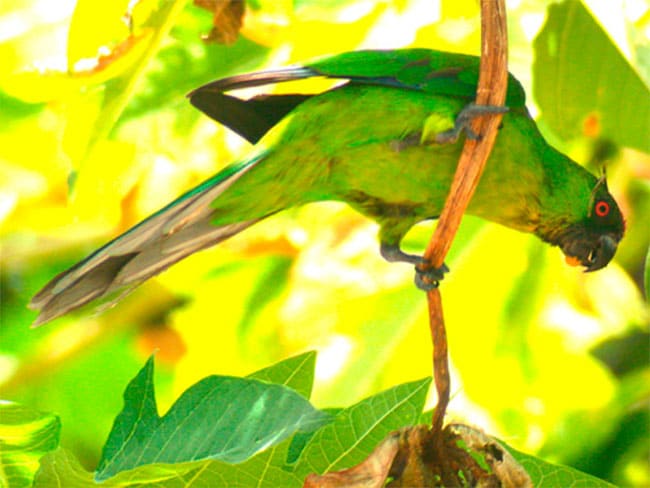
Endemic to Luzon and Marinduque, North of Philippines. Although the species was considered quite common at the end of the last century in the center of Luzon, seems to have suffered a rapid decline in recent years. Has not been registered in the Cordillera Central in this century, and now you can have their stronghold in the Sierra Madre, where it was reported to be generally rare or uncommon in the decade of 1990. It is rare in all currently considered Luzon except perhaps in the Subic Bay Naval Reserve Forest (Bataan, to the East of Manila). There are no recent records of Marinduque.

Conservation:


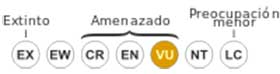
Endangered


โ€ข Current category of the Red List of the UICN: Danger

โ€ข Population trend: Decreasing

The population is in the band of 1,000 to 2,499 mature individuals.

The threats by the tala generalized and their captures to the trade of birds of cage, suggest that this species is experiencing a downhill fast in the population.

There is no national legislation to protect trade and hunting, Although this is often violated. It is currently known from two protected areas, the Bataan Natural Park / Subic Bay forest reserve and the Parque Natural del North Sierra Madre. Receive nominal protection in the Maria Aurora Memorial Park.

In captivity:

Parrot moderately loud, with nice voice. New birds are highly susceptible to diseases. Initially shy, but eventually he acclimatizes to the caregiver.

Practically unknown in captivity.

Alternative names:

Green Racquet-tail, Green Racket-tail, Green Racket-tailed Parrot, Green Racquet tail, Green Racquet-tail Parrot, Green Racquet-tailed Parrot, Green recket-tailed parrot, Green-crowned Racket-tailed Parrot, Green-headed Racket-tailed Parrot, Green-headed Racquet-tailed Parrot (ingles).
Palette verte, Perroquet ร  raquette verte (francรฉs).
Luzon-Spatelschwanzpapagei, Luzonpapagei (alemรกn).
Prioniturus luconensis (portuguรฉs).
Lorito momoto de Luzรณn, Lorito Momoto Verde, Lorito-momoto de Luzรณn (espaรฑol).

scientific classification:

Order: Psittaciformes
Family: Psittaculidae
Genus: Prioniturus
Scientific name: Prioniturus luconensis
Citation: Steere, 1890
Protonimo: Prioniturus Luconensis

Images "Green Racquet-tail"

Videos "Green Racquet-tail"

————————————————————————————————

ยซLuzon Motmock Parrotยป (Prioniturus luconensis)

Sources:

Avibase
– Parrots of the World โ€“ Forshaw Joseph M
– Parrots A Guide to the Parrots of the World – Tony Juniper & Mike Parr
– Birdlife

Photos:

(1) – By marco cooked – Forum of The European Ornithological Association

Sounds: Cedric MROCZKO (Xeno-canto)

โ–ท The world of Pets: Dogs, cats, birds, reptiles, amphibians

Superb parrot
Polytelis swainsonii

Superb parrot

Content


Anatomy-parrots

Description

40 cm.. length between 132 and 157 g. of weight.

The Superb parrot (Polytelis swainsonii) has the front, crown, Chin and throat of bright yellow; back of the bright green Crown with turquoise blue wash: headphones coverts and Lords, green. Bright green upper parts. Upper, the wings, bright green, with dark diffusion in the inner margins of the vane internal and blue diffusion in vane outer (fine yellow rear margin for flight feathers); bluish carpal edge: light blue primary coverts; primary elongated.

Wing of bright green feathers; bottom of blackish brown flight feathers. Underparts pale bright green, with thin bright red Ruff between throat yellow and green at the top of the chest. Upper, bright green tail, with dark elongated Central feathers Slightly bulbous tips. outer feathers with bluish edges vane outer. The lower part of the tail is black.

Bill, coral red; yellow-orange irises; Blackish legs.

The female is completely Green, with a bath pink Brown throat and with the headphones cinnamon and the Crown of blue-grey. The mantle is more off, more greenish Brown, contrasting with the Green rump and dark flight feathers. The underparts are paler, orange-red legs. She also has distinctive pink trim and pink tips to yellow vane internal bottom of the queue.

Yellow IRIS.

Immature as females but with Brown iris. Males attain adult plumage in about 12 months.

Habitat:

Superb parrot

A part of the population of the Superb parrot is migratory, wintering in the North of the breeding areas.

Habitat preferences of breeding populations vary slightly from east to west within the slopes of the Great dividing range and open areas in forests of eucalyptus, It is the dominant vegetation type. Here the species nests far from watercourses, and it uses a variety of tree species.
In the region of Riverina, to the West, birds breed almost exclusively on the banks of rivers, in forests of Eucalyptus camaldulensis, feeding on nearby forests of Eucalyptus bicolor, Eucalyptus melliodora and White Pino-CIPRES (Callitris columellaris).

They sometimes also found in farmland and villages.

The size of the flocks are usually small, but groups of up to 100 individuals have been recorded after the breeding season.

The superb Parrot feed in the trees, in the understory, and also in land, where can be accessible, feeding on spilled grain on the roadsides and keeping the company of the Yellow Rosella and Cockatoos.

Reproduction:

The breeding season of the Superb parrot is from September to November.
Male parade making small greetings and nodding his head. Both members of the couple make ritual exchanges of food.

The nest is usually a hollow, full of scrap wood, at the top of a tree dead or alive and a considerable height that is usually between 11 and 51 meters above the ground. The individual sites tend to be reused.

The Superb parrot, they often nest in colonies ranging up to six couples. Spawning contains 4 or 6 eggs which are incubated for at least 20 days. The chicks are altricial and leave the nest after 30 days.

Food:

The diet includes fruits and flowers of Acacia and eucalyptus, fruit shrubs (for example Exocarpos); seeds of crops, pastures, weeds and grasses

Distribution:

Size of the area of distribution (reproduction / resident): 95.300 km2

The Superb parrot they are endemic in Australia, where are distributed only in New South Wales and the north end of Victoria.

The species are concentrated in two main areas: on the South-West slope of the Great dividing range (regions of Cowra, Boorowa, Cootamundra and Yass), and in the area of Riverina, New Wales of the itsr. In the latter the range extends along the murrumbidgee river, from There is a to Darlington Point, Narrandera and Wagga Wagga.

Also found in the North of Goolgowi and the river lachlan, and in South, in the rivers Edward and Murray (Barham. Deniliquin, Tocumwal, Cobram, Getafe and Albury).

In the North of Victoria, concentrated along the rivers Goulburn and Ovens, and in the area of Barmah Forest.

Wandering birds occasionally appear more to the West, along the border of Victoria and New South Wales.

The Superb parrot, do not normally breed above 33ยฐ S, but at least part of the population disperses north to 33ยฐ S at the end of the breeding season.

These birds are found from April to August in the northeast of New South Wales from Gunnedah to Narrabri, Gilgandra and Coonamble, and between river systems to the West (Barwon, Namoi, Macquarie, Castlereagh, Marthaguy Creek).

Occasionally, alleged migratory birds, They fly to the West, about Tottenham and Hermidale.

Escapes have been recorded around Sydney and Melbourne.

A moderate number of captive.

Protected by law.

Conservation:


minor concern


โ€ข Current category of the Red List of the UICN: Least concern

โ€ข Population trend: Stable

Its population, apparently, fell in 1920 as an accidental effect of a poisoning by the crop protection.

A panel of experts considered that it was very likely that the population in 2010 exceeds the 10.000 mature individuals. The current estimate ranges in the Strip between 10.000 and 20.000 specimens.

The general trend of the population of the Superb parrot (Polytelis swainsonii) is uncertain, but there is no evidence of a continuous decline.

In Australia is also classified as vulnerable species the law of protection of the environment and conservation of the biodiversidadad of 1999. In addition, its conservation status varies between states., for example in the law of Victoria (1988) is considered to be threatened species.

"Superb parrot" in captivity:

Take it easy, relatively little aggressive with other birds, and very social.

Una muestra viviรณ 15,1 years in captivity. According to sources, these animals can live up to 24,2 years in captivity, It is possible to, but the source is not verified; the same study reported that these animals can reproduce in approximately 2 years of age in captivity.

Pretty common in captivity, above all in Australia.

Alternative names:

Superb Parrot, Barraband, Barraband Parakeet, Barraband Parrot, Green Leek, Scarlet-breasted Parrot (ingles).
Perruche de Barraband, Perruche Barraband, Perruche superbe (French).
Schildsittich (German).
Periquito-soberbo (Portuguese).
Perico Soberbio, Periquito de Barraband (espaรฑol).

scientific classification:

Order: Psittaciformes
Family: Psittaculidae
Genus: Polytelis
Scientific name: Polytelis swainsonii
Citation: (Desmarest, 1826)
Protonimo: Psittacus Swainsonii

Images ยซSuperb Parakeetยป:

Videos "Superb parrot"

————————————————————————————————

ยซSuperb Parakeetยป (Polytelis swainsonii)


Sources:

Avibase
– Parrots of the World โ€“ Forshaw Joseph M
– Parrots A Guide to the Parrots of the World – Tony Juniper & Mike Parr
– Birdlife
– The Animal Ageing and Longevity Database – Polytelis swainsonii

Photos:

(1) – By paulgear (Picasa Web Albums) [CC BY-SA 3.0], via Wikimedia Commons
(2) – Image Credit: Stuart Harris – Canberra Birds
(3) – Image Credit: Julian Robinson – Canberra Birds
(4) – Image Credit: Stuart Harris – Canberra Birds
(5) – Image Credit: Julian Robinson – Canberra Birds

Sounds: Ding Li Yong (Xeno-canto)

โ–ท The world of Pets: Dogs, cats, birds, reptiles, amphibians

Scarlet-chested Parrot
Neophema splendida

Scarlet-chested Parrot

Content


Anatomy-parrots

Description

19 cm. length and a weight between 36 and 44 g..

The Scarlet-chested Parrot (Neophema splendida) It is particularly colorful. It has the "face" and the forecrown are bright turquoise blue, darker in the throat and chin.

The upperparts are green. The curvature of the wings is dark blue, wing-coverts are the same blue tone to the face. Primary coverts dark blue-violet. The primaries Black has light blue brainwashed in the foreign bands. The outer edge of the secondaries has a tone blue-green that is mixed with the green of them vane inner and tertiary.

The underparts is dark blue. The chest is bright Scarlet, which is an important recognition feature. The sides of the top of the chest and flanks are green. The rest of the underparts is bright yellow. The bottom of the tail is green, but the tips of the outer tail feathers they are dyed yellow.

The bill is black, irises dark brown. The legs are gray-Brown.

The female is duller than its companion, with the belly and the chest green. The blue color of the face is restricted.

The females and juveniles they often show Wing bars.

The young male need four months to purchase your mature plumage, and retain a youthful glow until the age of 2 years.

Habitat:

The Scarlet-chested Parrot they are usually distributed in arid scrublands that are composed mainly of acacias and eucalyptus. They appreciate, particularly, plants of Mallee (Eucalyptus gracilis) and Mulga (Acacia aneura).

Also live in wooded areas dominated by casuarinas, as well as areas where the soil is covered by Spinifex or large clumps of grass type Triodia.

The Scarlet-chested Parrot do not despise the crests of hills that are equipped with a large number of plants, like the covered Plains of Sea sandwort or Salt grass (Honckenya peploides), What are plants which grow in saline environments.

They tend to find their food on Earth and form relatively consistent flocks outside of the nesting season.

During the breeding season, These birds are not very gregarious, but couples establish their nests in trees not very far from the other.

As with the Turquoise Parrot, the division of labor is well established and the females are responsible for the collection of green leaves that adorn the interior of the nest.

There is no description of the various courtship.

Reproduction:

The season of nesting of the Scarlet-chested Parrot, usually, is carried out between January and August, but these dates can change as the reproduction is influenced, significantly, by climatic conditions, especially the rains.

The nest It is placed in a tree cavity, above all a eucalyptus, between 2,5 and 8 meters above the ground.

The Scarlet-chested Parrot they are very loose colonies.

The spawning includes of 3 to 5 eggs and your incubation lasts a few 18 days. The most numerous litters, sometimes, provide 6 eggs.

The chicks are altricial, they take flight to leave his place of birth 30 days after hatching.

Food:

The Scarlet-chested Parrot they have a diet almost exclusively granivore.

These birds acquire most of the moisture you need eating Succulents as Calandrinia. If this practice is not enough, These parrots are like other species of arid lands, that is to say, that they are going to supply themselves with liquid directly to the sources and water points.

Menu details are poorly known, but it is known that most feed on seeds of plants such as Triodia, Newcastelia, haloragis, Acacia and Stipa.

Distribution:

Size of the area of distribution (reproduction / resident): 1.280.000 km2

This rare Nomad has a wide area of historical distribution, but it is probable that now concentrate on parts with more vegetation of the Great Victoria desert, with records from Kalgoorlie, Western Australia, the East, through the North of the Nullarbor plain in Southern Australia, North of the Eyre Peninsula, about Port Augusta and in areas of Mallee to the North of the murray river, to the Northwest of Victoria, West of New South Wales, Southwest of Queensland and MacDonnell Ranges of the Northern Territory.

A flock of 240 bird was recently recorded in the Great Victoria desert.

Conservation:


minor concern


โ€ข Current category of the Red List of the UICN: Least concern

โ€ข Population Trend: Stable

The inroads among 1939 and 1996 They show that these birds are able to form very rapidly large gatherings.

Disturbances affecting the natural environment had a negative impact on the evolution of the active population. The use of aquatic resources for the livestock and competition in this field with the Bourke's Parrot they have also caused damage.

Poaching and marketing of this bird have also had devastating consequences: more than 25.000 Scarlet-chested Parrot they are in captivity in Australia.

Its population in freedom is estimated at around 10,000 specimens.

"Scarlet-chested Parrot" in captivity:

The Scarlet-chested Parrot is a species peaceful and silent. This beautiful parakeet ends up gaining confidence with your caregiver, It is only a matter of time. It is also easy to maintain and almost do not eat wood. It is resistant to cold (light Frost), but it is very sensitive to humidity, fog, and air currents.

The Scarlet-chested Parrot they feed on the ground; It is convenient to use of vermicides, deworming them regularly. They are also susceptible to ocular infections and vulnerable to infections of Candida.

The tastes for the bathroom vary from one individual to another.

In terms of their longevity, according to sources, a sample lived during 14 years in captivity. The same sources report that these parakeets can live up to 25,4 years in captivity, but this has not been verified; the same study also ensures that the Scarlet-chested Parrot You can play from around 1 year of age in captivity.

The mutations:

    โ€ข Aqua: autosomal recessive
    โ€ข Turquoise: autosomal recessive
    โ€ข Blue: autosomal recessive
    โ€ข Pastel: autosomal recessive (not in Europe)
    โ€ข Cinnamon: recessive sex-linked
    โ€ข Pale: recessive sex-linked
    โ€ข Mixed: autosomal dominant
    โ€ข Misty: autosomal co-dominant (PAS en Europe)
    โ€ข Gris: autosomal dominant
    โ€ข Mixed: autosomal recessive
    โ€ข Fallow (bronze fallow): autosomal recessive
    โ€ข INO: recessive sex-linked
    โ€ข Platinum: recessive sex-linked
    โ€ข Violet: co-dominante autosomique
    โ€ข Dark factor: co-autosomal dominant

Alternative names:

Scarlet-chested Parrot, Scarlet chested Parrot, Scarlet-breasted Parrot, Scarlet-chested Parakeet, splendid parakeet (ingles).
Perruche splendide, Euphรจme resplendissante, Perruche resplendissante (French).
Glanzsittich (German).
Periquito-esplรชndido (Portuguese).
Papagayo Esplรฉndido, Periquito Esplรฉndido (espaรฑol).

scientific classification:

John Gould
John Gould

Order: Psittaciformes
Family: Psittaculidae
Genus: Neophema
Scientific name: Neophema splendida
Citation: (Gould, 1841)
Protonimo: E uphema splendida

ยซSplendid Parakeetยป Images:

Videos "Scarlet-chested Parrot"

————————————————————————————————

ยซSplendid Parakeetยป (Neophema splendida)


Sources:

Avibase
– Parrots of the World โ€“ Forshaw Joseph M
– Parrots A Guide to the Parrots of the World – Tony Juniper & Mike Parr
– Birdlife

Photos:

(1) – Adult male at Cincinnati zoo, USA By Ltshears (Own work) [Public domain], via Wikimedia Commons
(2) – Taken at the Cincinnati Zoo By Greg Hume (Own work) [CC BY-SA 3.0], via Wikimedia Commons
(3) – Immature male on the left and an immature female on the right at Gluepot Reserve, South Australia By David Cook Wildlife Photography from Wamboin, NSW, Australia [CC BY 2.0], via Wikimedia Commons
(4) – Immature male on the left and an immature female on the right at Gluepot Reserve, South Australia By David Cook Wildlife Photography from Wamboin, NSW, Australia [CC BY 2.0], via Wikimedia Commons
(5) – Scarlet-chested Parrot ยซNeophema splendidaยป at Cincinnati Zoo By Ltshears (Own work) [CC BY-SA 3.0], via Wikimedia Commons
(6) – By T.H. Maguire (1821โ€“1895) (http://www.birdresearch.dk/dk/jgould.htm) [Public domain], via Wikimedia Commons

โ–ท The world of Pets: Dogs, cats, birds, reptiles, amphibians

Meyer's Parrot
Poicephalus meyeri


Lorito de Meyer

Content


Description:

21 cm. and a weight of 100-130 g..

The Meyer's Parrot (Poicephalus meyeri) has the forecrown, lores, cheeks, ear-coverts and ash Brown nape; crown bright yellow. The mantle feathers ash brown edges blue or cyan dye in some birds; scapulars brown ash, some individuals show Tips blue or greenish blue; rump bright turquoise or teal; uppertail-coverts green. Outermost children and wing-coverts above bright yellow, other variables showing green tints, especially towards Tips. The primaries and high schools ash Brown with paler narrow margins to vane outer.

feathers of the wings, undertail, bright yellow in some birds, but grayish-brown in larger in other. The chin, the throat and top of the chest brown ash; remaining chest and belly turquoise or teal; the thighs yellow; undertail- coverts turquoise blue or greenish blue. Tail brown ash.

Bill dark gray or black; cere black; irises orange-red; periophthalmic skin desnuda negruzca; legs blackish.

Both sexes similar.

Youth more generally greenish brown. No yellow in the crown or the the thighs and the yellow area in the wings, at the top, It is lower. Wing coverts, undertail, green and brown with little or no yellow. The underparts mรกs greenish. Iris dark brown.

Subspecies description

Description Meyer's Parrot subspecies
  • Poicephalus meyeri damarensis

    (Neumann, 1898) – No Yellow crown. Paler than subspecies reichenowi. Intergrades with transvaalensis subspecies in the region of the delta del Okavango, Botswana and with subspecies reichenowi in Angola.


  • Poicephalus meyeri matschiei
    matschiei by Parrots of the World โ€“ Forshaw Joseph M
  • Poicephalus meyeri matschiei

    (Neumann, 1898) – Brown is paler than in the subespecie satisfied and cyan dye to the margins of the scapulars less pronounced than in the species nominal. Green colors are blue (especially below). The female spot shows yellow feathers at the base of the lower jaw.


  • Poicephalus meyeri meyeri

    (Cretzschmar, 1827) – Species nominal


  • Poicephalus meyeri reichenowi

    (Neumann, 1898) – Similar to the subespecie matschiei but with the yellow crown generally absent. Paler blue in the rump. Size larger than the subespecie matschiei.


  • reichenowi by Parrots of the World โ€“ Forshaw Joseph M
    reichenowi by Parrots of the World โ€“ Forshaw Joseph M
  • Poicephalus meyeri saturatus

    (Sharpe, 1901) – darker than species nominal (especially the brown parts), rump less blue than the nominal, showing a bit of green in the feathers. The dark centers feathers on the bottom, giving it a mottled appearance. Intergrades with the subspecies matschiei in Tanzania.


  • Poicephalus meyeri transvaalensis

    (Neumann, 1899) – Brown clearer than in the subespecie matschiei, even bluer in the rump and below. Yellow areas in the crown They are often reduced and, sometimes completely lacking (especially in males). It is thought that can hybridize with the Poicephalus cryptoxanthus.

Habitat:

The Meyer's Parrot It is found in a wide variety of forest habitats from dry savannah to gallery forest and second-growth riparian forest around crops.. Observed in forests dominated by Terminalia laxiflora and Doka Isoberlinia, thickets Combretum acacia grasslands; as well Brachystegia and riparian forests Syzygium-Adina.

Avoid lowland rainforests in the basin Congo and other humid forests including areas of the eastern highlands of the district of Zimbabwe and Cork in Malawi.

Show a preference for the tallest trees in the drier savannah habitats – in particular specimens Adansonia. They may be confined to gallery forests in the drier parts of their range and are generally found in close proximity to water..

Where it is sympatric with the Red-bellied Parrot (Poicephalus rufiventris), the Meyer's Parrot It is limited to riparian forests.

In Kenya, which it is largely in areas with higher annual rainfall 500 mm.

Sometimes observed in suburban areas.

In general, in the lowlands at altitudes of 1,250m in Ethiopia, 2.200m in east Africa and 1.500 meters in the highlands of eastern Zimbabwe.

They are distributed in pairs or small groups 3-5 birds (possibly couples); until 50 birds may congregate in areas where there are food sources in breeding season. Roosts in tree cavities. Usually shy and cautious.

Reproduction:

Solitary nesters in tree cavities at a height between 3 and 10 meters above the ground, during the season, dry (for example Mar-June Zimbabwe, from May to September Zambia and Malawi, July Angola and in December or January Sudan).

The implementation is of 2 to 4 eggs.

Food:

The diet of the Meyer's Parrot fruit is, nuts and seeds, including Ficus, Sound abyssinica, Uapaca nitidula, Monotes glaber, Combretum, Grewia, Sclerocarya, Pseudolachnostylis, fruit of the great growth and riparian trees afzelia quanzensis and Melia volkensii, grown oranges and flowers Schotia brachypetala.

The pulp of the fruit is less important than the hard seeds and the arbolados share, the Meyer's Parrot is one of the few species consume seeds Brachystegia and other leguminous trees.

They also consume grain and is considered as crop pests in some areas.

Eat some insects, including caterpillars.

May vary widely from area to area in search of food during droughts.

Distribution:

Size of the area of distribution (reproduction / resident): 5.840.000 km2

The Meyer's Parrot They are distributed throughout the central and eastern Africa. From the North-East of Cameroon and South of Chad through the North of the Central African Republic, center Sudan and South and West Ethiopia, to the south through Uganda, Kenya Western, east of Democratic Republic of the Congo and Tanzania, coming to Malawi, Zambia, Angola, Northeast of Botswana, Zimbabwe, western end of Mozambique, Namibia and northeast of Sudafrican republic.

A wild population, possibly, is distributed in the eastern province of Cape Town, Sudafrican republic, even if they are probably extinct.

Nomad in some areas during periods of drought, when they distributed outside the normal range; normally resident with local movements.

Distribution Subspecies

Meyer's Parrot subspecies distribution
  • Poicephalus meyeri damarensis

    (Neumann, 1898) – South of Angola, Northeast of Namibia and North of Botswana.


  • Poicephalus meyeri matschiei

    (Neumann, 1898) – Southeast Kenya through eastern and central Tanzania to Southeast Democratic Republic of the Congo, North of Malawi, Zambia and northeast of Angola.


  • Poicephalus meyeri meyeri

    (Cretzschmar, 1827) – Species nominal


  • Poicephalus meyeri reichenowi

    (Neumann, 1898) – North and Central Angola from Malange and sierra central until Huila, possibly also adjacent parts of the Democratic Republic of the Congo


  • Poicephalus meyeri saturatus

    (Sharpe, 1901) – The Far East Democratic Republic of the Congo, through Burundi, Rwanda and east of Uganda, in West and Central East Kenya towards Meru and Local inside Tanzania to the South of the Parque Nacional Ruaha.


  • Poicephalus meyeri transvaalensis

    (Neumann, 1899) – Areas of northern and central Mozambique to northern Save River across the South of Zambia and central and southern Zimbabwe to northeast Botswana and West of Transvaal

Conservation:


minor concern


โ€ข Current Red List of UICN: Least concern

โ€ข Population trend: Stable

The Meyer's Parrot It, in general, common to very common and is the most abundant parrot in some parts of its range (for example, Zimbabue and Angola), although few in other areas and absent from some apparently suitable habitats.

Its population has declined in some parts (for example Transvaal) where is thought to be a result of habitat destruction. I also persecuted in some locations due to crop damage (for example, in the center of Zambezi because of the damage inflicted to the maturation of the berries Boolean).

"Meyer's Parrot" in captivity:

The Meyer's Parrot, is a bird common in captivity, quiet, tender, easy to carry and with a stable temperament.

They are birds social and they tend to bond with everyone in the family, unlike other species that may prefer one person to another. In general, No es voluble – once you liked someone, the person is a friend for life.

They are not as dependent on humans for entertainment as most parrots and therefore no son tan demanding.

They like being handled and petted on the head and neck. A hand-fed hatchling will develop into a fluffy adult if treated properly, and it is not prone to bite, although it may provide a powerful bite if provoked.

You can learn a few words, although They are not known for their ability to speak. They can learn to whistle, making noises, and occasionally they will offer strong squeals. Fortunately, They are not likely to scream or make loud squawks, making good birds for apartment life. Some individuals learn household noises, as the beep of the microwave.

The Meyer's Parrot they are ready to breed at the age of 3 to 4 years and reproduce easily in captivity.

With regard to its longevity, according to sources, Meyer lived a parrot 34,2 years in captivity.

Alternative names:

Meyer’s Parrot, Brown Parrot (English).
Perroquet de Meyer, Perroquet brun, Youyou de Meyer (French).
Goldbugpapagei, Goldbug-Papagei (German).
Papagaio de Meyer, Papagaio-de-meyer (Portuguese).
Lorito de Meyer (espaรฑol).


scientific classification:

Philipp Jacob Cretzschmar

Order: Psittaciformes
Family: Psittacidae
Genus: Poicephalus
Scientific name: Poicephalus meyeri
Citation: (Cretzschmar, 1827)
Protonimo: Psittacus Meyeri


Images "Lorito de Meyer":

Videos "Meyer's Parrot"

————————————————————————————————

"Lorito de Meyer" (Poicephalus meyeri)


Sources:

Avibase
– Parrots of the World โ€“ Forshaw Joseph M
– Parrots A Guide to the Parrots of the World – Tony Juniper & Mike Parr
– Birdlife

Photos:

(1) – A Meyerโ€™s Parrot at Birds of Eden, Western Cape, South Africa. It is eating what looks like a piece of bread By SandyCole (mailto:sandyc@dicksandy.org) (Own work) [CC BY-SA 3.0 or GFDL], via Wikimedia Commons
(2) – Two Meyerโ€™s Parrots in Zimbabwe By Oce Eeco (DSC_0108Uploaded by snowmanradio) [CC BY 2.0], via Wikimedia Commons
(3) – Brown parrot also known as Meyerโ€™s Parrot (Poicephalus meyeri) by Papooga – Flickr
(4) – A Meyerโ€™s Parrot near Kwara Camp, North-West District, Botswana By Benjamin Hollis from Seattle, WA, USA (Meyerโ€™s parrotUploaded by snowmanradio) [CC BY 2.0], via Wikimedia Commons
(5) – A Meyerโ€™s Parrot in Akagera National Park, Rwanda By Lip Kee Yap [CC BY-SA 2.0], via Wikimedia Commons

Sounds: Derek Solomon (Xeno-canto)