โ–ท The world of Pets: Dogs, cats, birds, reptiles, amphibians

Vinaceous Parrot
Amazona vinacea

Vinaceous Parrot

Content


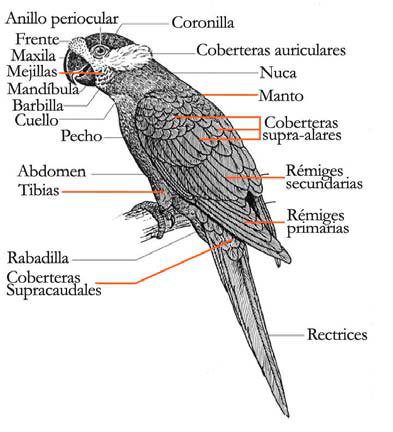
Anatomy-parrots

Description:

30 cm.. length and an approximate weight of 370 g..

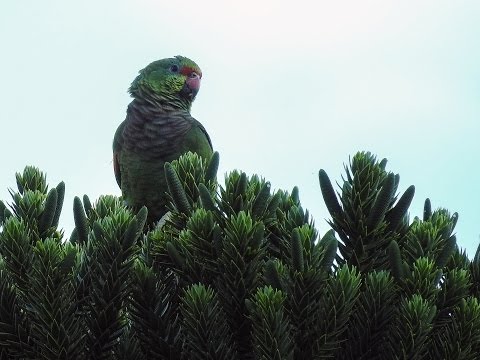
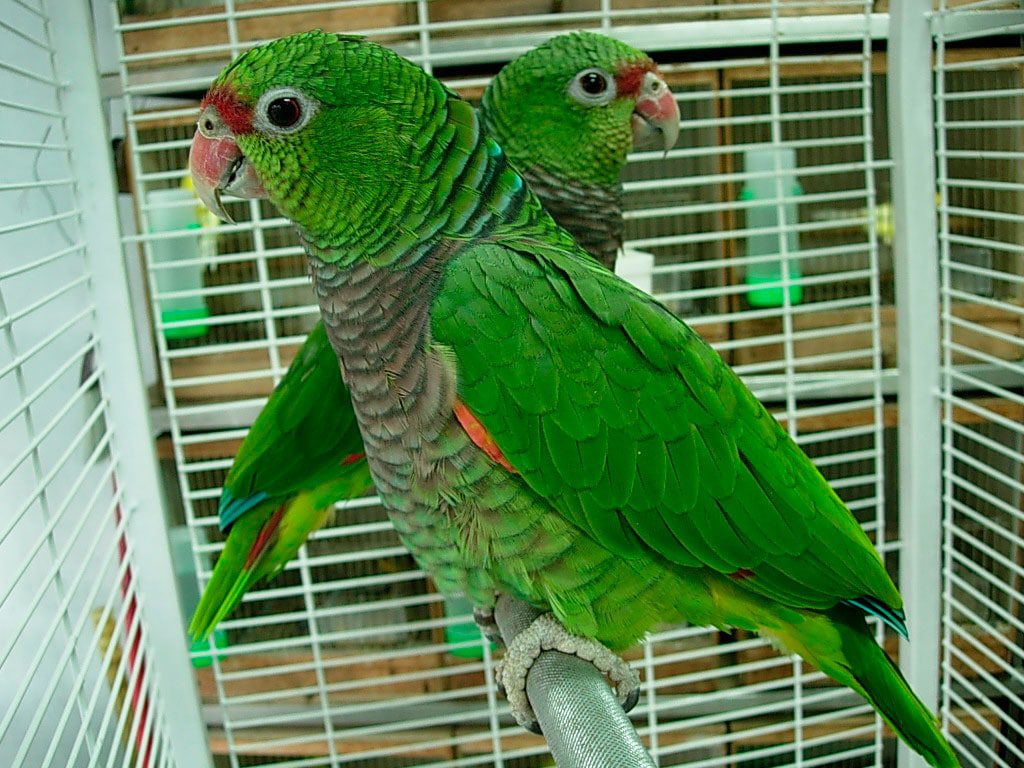
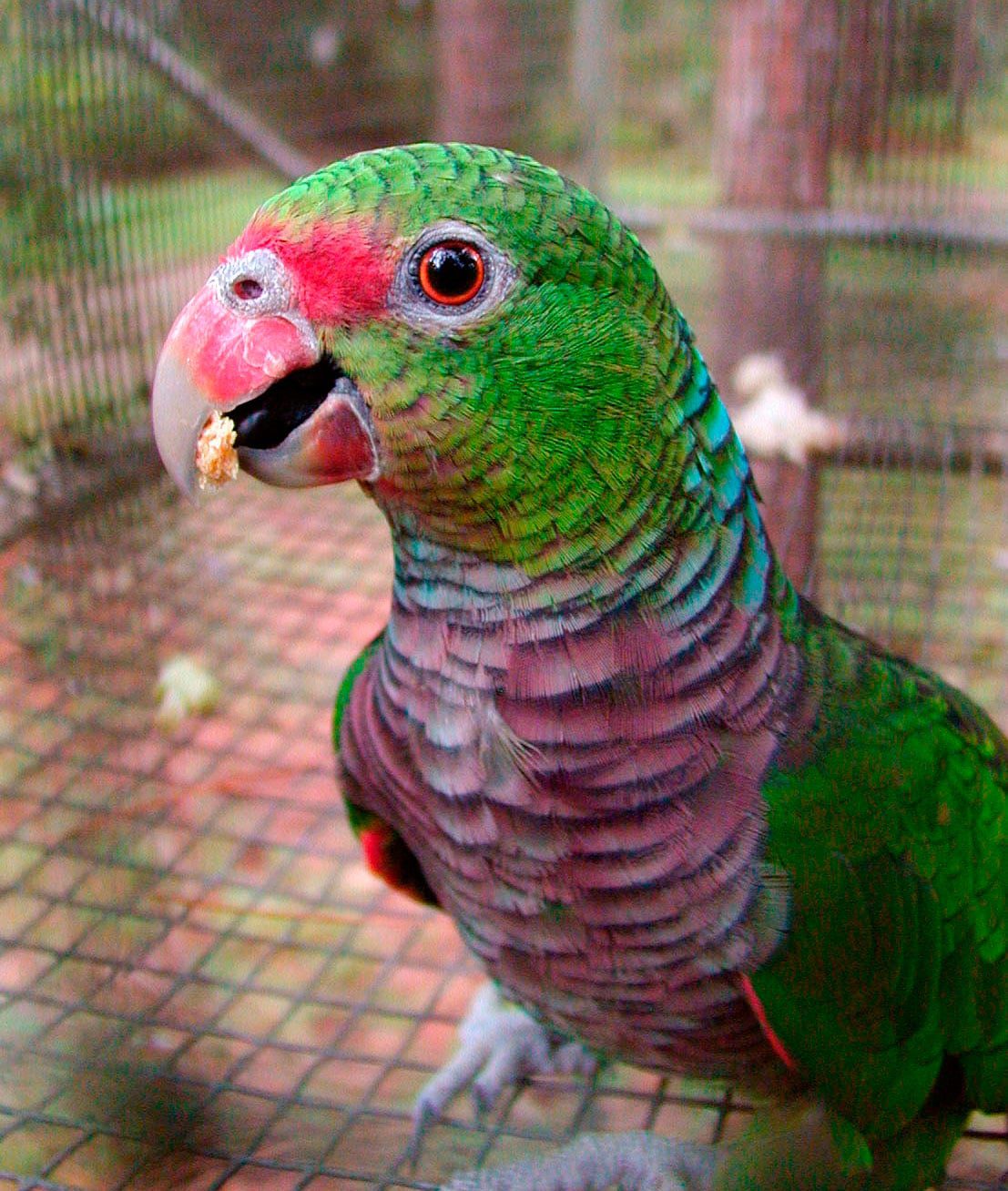
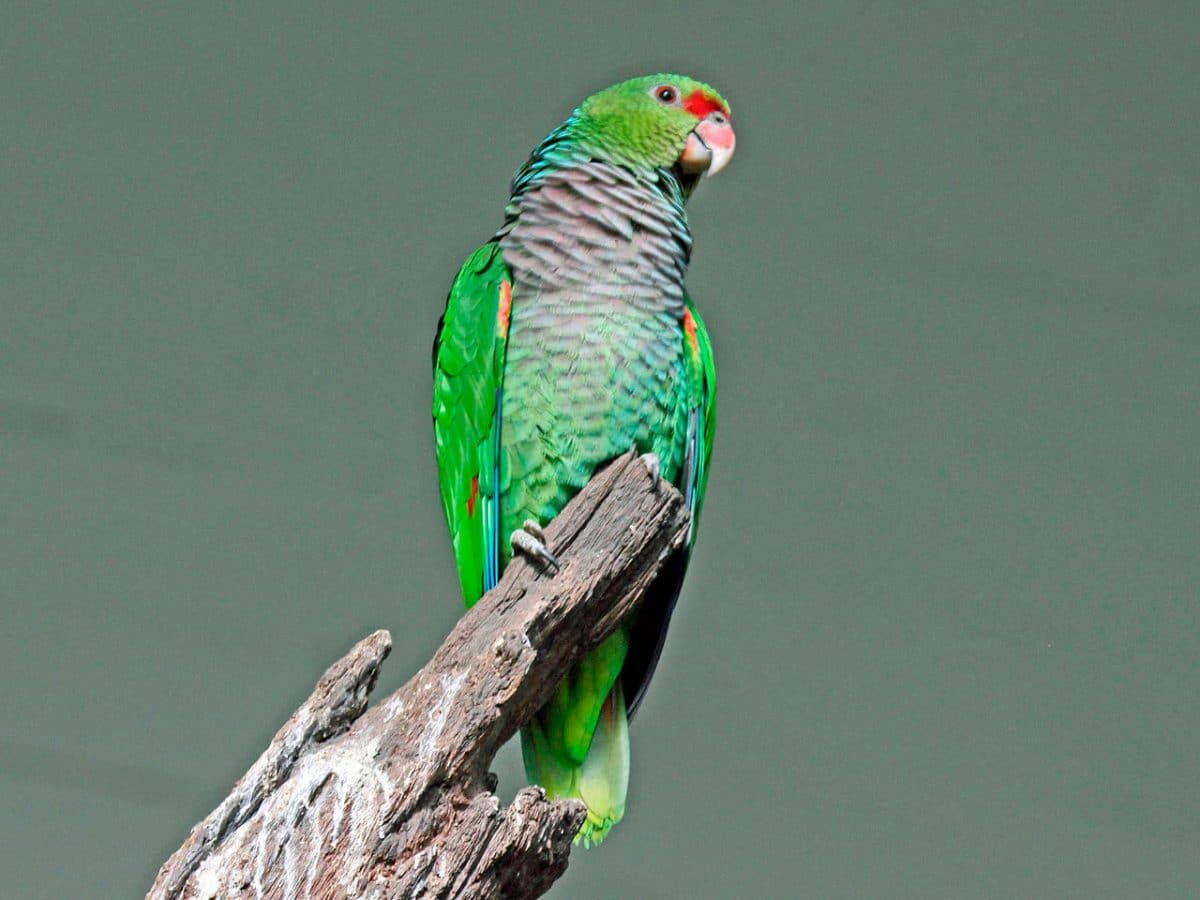
The Vinaceous Parrot (Amazona vinacea) has the lores and forecrown bright red; cheeks and crown green with black tips to some feathers head; elongated feathers on the sides of neck, the nape and the upper mantle, green at the base, subterminally light blue and black tip. The rest of the the mantle, back and scapulars, green with some feathers showing indistinct black tips; uppertail-coverts pale green.

Wing coverts green with red variable and / or yellow in leading edge of wing and the carpal area. Primaries pale bluish-green; Secondary green with blue tips, the base outerweb of the three outer secondaries, red, forming a small looking-glass. Under the wings, green. Throat and chest with shades that vary from strong wine brown to pale blue with a strong vinous diffusion; subterminal dark band at the tips of the feathers gives scalloping pattern; Belly green or yellowish green sometimes with vinous dissemination; undertail-coverts brighter yellowish green. Tail green with yellow green tip; the base lateral feathers in red innerwebs, in purple outerweb. The upper jaw It is red at the base with pale tip, horn-colored lower, reddish at the base; irises orange to reddish brown; legs grey.

Both sexes are similar. The immature It has the green suffusion in chest and the less extensive red on the head (confined to the base upper jaw).

  • Sound of the Vinaceous Parrot.

Habitat:

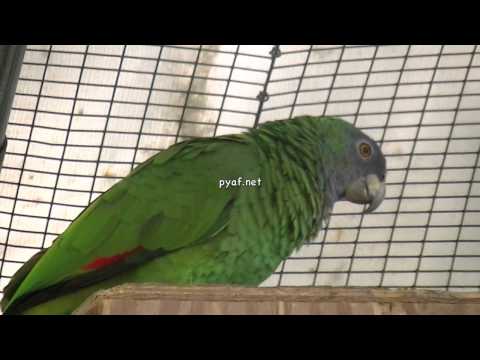
Video – "Vinaceous Parrot"

Purple-breasted Parrot in Itamonte - Minas Gerais, Brazil

The Vinaceous Parrot inhabit in tropical and subtropical evergreen mixed forests; in the Brazil in humid coastal forests, in the East of Paraguay They can be found in forests Araucaria angustifolia and Euterpe edulis. The extent of the ecological dependence of this species on coniferous trees (Araucaria and Podocorpus) It is not clear, but the Araucaria angustifolia It is clearly important in Missions, Rio Grande do Sul and Santa Catarina and possibly it was related to the previous distribution further north in southeast Brazil.

Mainly observed in the lowlands, but there are reports of birds seen in hills 1.500-2.000 meters in the southeast of Brazil, where the best forest remnants persist. Usually in pairs or small groups with larger meetings (up to approximately 30) in July-August. In pairs during breeding (usually around September).

Reproduction:

The Vinaceous Parrot nidifica in holes in large trees with obvious preference for the Araucaria angustifolia, including rarely cracks in the cliffs. With reproduce the May in loose colonies. breeding season during the months of September to January. Clutch 2-4 eggs.

After the breeding season (February to July), the species congregate in large groups and community shelters.

Food:

The specific foods of the Vinaceous Parrot include flowers and fruits of Euterpe edulis (which apparently it is important seasonally in East Paraguay), seeds of Araucaria angustifolia, fruits of cocoons of Achatocarpus and new leaves Eucalyptus and seeds of Pilocarpus. It has been reported damagor cause in crops of oranges, but with the current low density of this species, It is unlikely to produce a serious economic impact.

Distribution and status:

Size of its range (player / resident ): 1.230.000 km2

The Vinaceous Parrot It is endemic in Southeast South America.

In Brazil It was found in southern Bay, in West Espirito Santo and scattered localities as Minas Gerais, Brazil (a peripheral register from the sao francisco river, about Januaria), sporadically en Rio de Janeiro (possibly a seasonal visitor), but widely observed in Sรฃo Paulo, Paranรก, Santa Catarina and Rio Grande do Sul.

Records in East Paraguay come from Amambay, Canindeyรบ, Caaguazu, Alto Paranรก, Itapua and Guaira and in the North of Argentina from Missions and possibly the eastern half of Currents.

There are some seasonal movements and post-breeding dispersal, possibly in relation to the food supply (for example, seed availability coniferous trees), with invasions scale reported in Paraguay in the past. Declines in the number of birds occur in Rio Grande do Sul January, with all its people disappeared by March and return in April for the rest of the year.

Formerly abundant and widespread but now there has been a contraction dramatic of its range and population, mainly due to the habitat destruction scale, the expansion of agriculture and floods caused by large hydroelectric dams. also trapped for a long time for bird trade.

Are distributed in several protected areas, but none is large enough to maintain a viable population. The former strongholds in eastern Paraguay They are subject to rapid deforestation, with a recent reduction in its scope and numbers and now probably confined only in Alto Paranรก and Ganindeyu.

Probably extinct (or almost) in Bahia and Espirito Santo, and a few birds are likely to remain in Rio de Janeiro and Minas Gerais, Brazil. Confined to the north and northeast of Santa Catarina and locally common only in forested parts of Sรฃo Paulo and Paranรก, where it is thought that the remaining population survives. Persist in the north and northeast of Rio Grande do Sul.

A census 2007 yielded a minimum of 253 copies in Argentina.
It is perhaps the Amazona more common in populations of Rio Grande do Sul, Santa Catarina and Paranรก (several populations of more than 100 birds), in the South of Brazil, and the low number persists in Minas Gerais, Brazil and Sao Paulo, within an estimated total of 1.500-2.000 birds.

Conservation:

State of conservation โ“˜


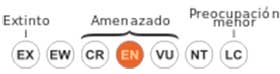
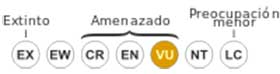
Endangered Endangered โ“˜ (UICN)โ“˜

โ€ข Current category of the Red List of the UICN: In danger of extinction.

โ€ข Population trend: Decreasing.

โ€ข Population size: 600-1700.

Rationale for the Red List category

This species is classified as endangered due to recent population estimates Brazil They indicate that the world population is very small and has suffered a rapid decline due to loss and fragmentation of habitat, aggravated by the trade. It is necessary to clarify whether Brazilian subpopulations exceed 250 specimens.

Justification of the population

Based on estimates 1.500 to 2.000 individuals in Brazil (G. Bencke in some. 2009), 220-400 in Paraguay and 253 in Argentina (K. Cockle in some. 2009), it is estimated that the total population is within the range of 1.970 -2.650 individuals and is probably positioned within the band 1,000-2,499. This is equivalent to 667-1.666 mature individuals, rounded here to 600-1.700 mature individuals.

Justification of trend

rapid and continuous population decline is suspected because of the Poaching of nests, the habitat destruction and persecution as a pest Of crops.

Conservation Actions Underway

โ€ข CITES Appendix I and II and protected by the Brazilian legislation.
โ€ข Nationally considered Vulnerable in Brazil (Urben-Filho et al . 2008, MMA 2014), and Critically Endangered in Argentina and Paraguay.
โ€ข Small populations are found in numerous protected areas (Wege and Long 1995, F. Olmos in some ., 1999).
โ€ข In the Argentina, two young provincial parks are used by the species, but they offer only partial protection because parrots use habitat outside the park for most of its life cycle, including, critically, the reproduction.
โ€ข In the Argentine stronghold of the species between San Pedro and Saint Rose, environmental education is underway to reduce the capture of chicks, and the population has been monitored since 2005 (Selva de Pino Paranรก in litt project., 2007).
โ€ข It has been achieved successful captive breeding.

Conservation Actions Proposed

โ€ข Monitor large populations (in March Argentina).
โ€ข Study reproductive biology and demography throughout the species' range and develop structured captive breeding programs to counter the high level of poaching of wild populations..
โ€ข Protect the general Carneiro (Santa Catarina), Itaipu (Alto Paranรก), RNP Itabรณ Rivas (Canindeyรบ), Estancia Golondrina (Caaguazu) and forests outside reserves Rio de Janeiro (Snyder et to the ., 2000) and between San Pedro and Saint Rose in Missions.
โ€ข Invest in permanently trained park rangers and resolve land tenure problems in Brazilian and Paraguayan reserves. (F. Olmos in some ., 1999, Cockle et al. 2007).
โ€ข Apply laws against the trafficking of species on the roads that connect the Monte Pascoal National Park with South Brazil (Snyder et to the ., 2000), in places where the species is captured and at borders and ports Paraguay and Argentina.
โ€ข Increase local public awareness to reduce nest theft and promote conservation of nesting sites..
โ€ข In Argentina, provide technical support to promote soil conservation, to avoid clearing forests for crops on small farms.

The Vinaceous Parrot in captivity:

The Vinaceous Parrot noted for its easy to imitate the human voice, better and clearer than the Amazona aestiva. Small easily they learn to speak.

Two decades ago, before placement in the Appendix 1 CITES Convention, this species was available in aviculture. It never was imported to Europe in a large number, but nevertheless often it offered for sale. Its price was higher than other species of Amazona available at that time, because of its amazing looks and his talent as an imitator. As the trade in wild birds was coming to an end, the captive population decreased markedly. While this species has been willing to breed for those that provide adequate breeding and have enough individuals to allow natural selection of the mate., captive breeding has been very disappointing, considering the number of birds that were previously available.

In the current avicultura, it seems that there are still a significant number of birds kept in Europe. A survey of amazon parrots in the European zoos, made in 1993 and published in 1994 by the EAZA, he listed in 59 species Vinaceous Parrot conserved in 11 zoological collections: of this, only three, Loro Parque (Spain), Walsrode Bird Park (Germany) and Beauval (France), had recorded breeding successes. It's known, However, that a significant number of Vinaceous Parrot They are held by private poultry farmers Europe and if these owners are willing to work in cooperation with EEP plan that can be started for this species, then the known captive population Europe could be big, enough to be considered as a viable.

The population of this species in captivity is similar to that of other species of the genus Amazona. In Loro Parque a couple is kept in an aviary in the exhibition area of รขโ‚ฌโ€นรขโ‚ฌโ€นthe park, and several more couples are kept in breeding cages suspended in their breeding outside exhibition. Suspended breeding cages are approximately 300 cm long x 95 cm width and height. Each cage has the nest-box placed against the outer rear panel, and there is a cut in the wire hole to allow birds to enter the nest-box. With the nest located outside of the cage, this eliminates the need to enter the service or inspect the nest-box.

The feeding of these birds is done twice a day. To the 7 Morning receive their main dish containing a mixed salad prepared with the following elements: – Apple, pear, tomato, beet, Carrot, alfalfa, lettuce, Peppers, papaya and other fruits and vegetables seasonally available; In addition, They are also used, when available, various fruits that are grown in the park, as nopal cactus plants and berries palmera pindรณ (Syagrus romanzoffiana). A second smaller dish meal in the morning provides birds commercial pellets dietary, and during the breeding season each pair is also given segments of their own supplement "pie" that is made fresh every day. The evening meal is given to 3:00 pm, with a mixture of nuts, seeds and beans cooked.

The Vinaceous Parrot It was raised for the first time Loro Parque in 1990, when one pigeon was raised hand. The couple proved to be very unreliable when it came to the incubation their eggs, why he has always resorted to artificial incubation or host and breeding. This couple Vinaceous Parrot He received on subsequent occasions eggs more common species to give them the opportunity to prove that they are good parents, but so far they remain unreliable.

No offspring were produced in 1991, but the couple tried again in 1992, when he carried out another manually raising and other raised squab. In 1993, when the same pair joined again, the clutch of eggs was transferred to a pair of Red-crowned Parrot (Amazona viridigenalis), which they proved to be excellent foster parents and raised chicks born. The same technique was used in 1994, but only one egg clutch proved to be fertile and the chick was raised successfully by Red-crowned Parrot.

Alternative names:

– Vinaceous Parrot, Vinaceous Amazon, Vinaceous-breasted Amazon, Vinaceous-breasted Parrot (English).
– Amazone vineuse (French).
– Taubenhalsamazone, Taubenhalsamazon (German).
– Papagaio-de-peito-roxo, chauรก, coraleiro, corraleiro, crau-crau, curraleiro, jurueba, papagaio-caboclo, papagaio-curraleiro, papagaio-peito-roxo, peito-roxo, quero-quero, tรฉu-tรฉu (Portuguese).
– Amazona de Pecho Vinoso, Amazona Vinosa, Loro vinรกceo, Loro vinoso (espaรฑol).


scientific classification:

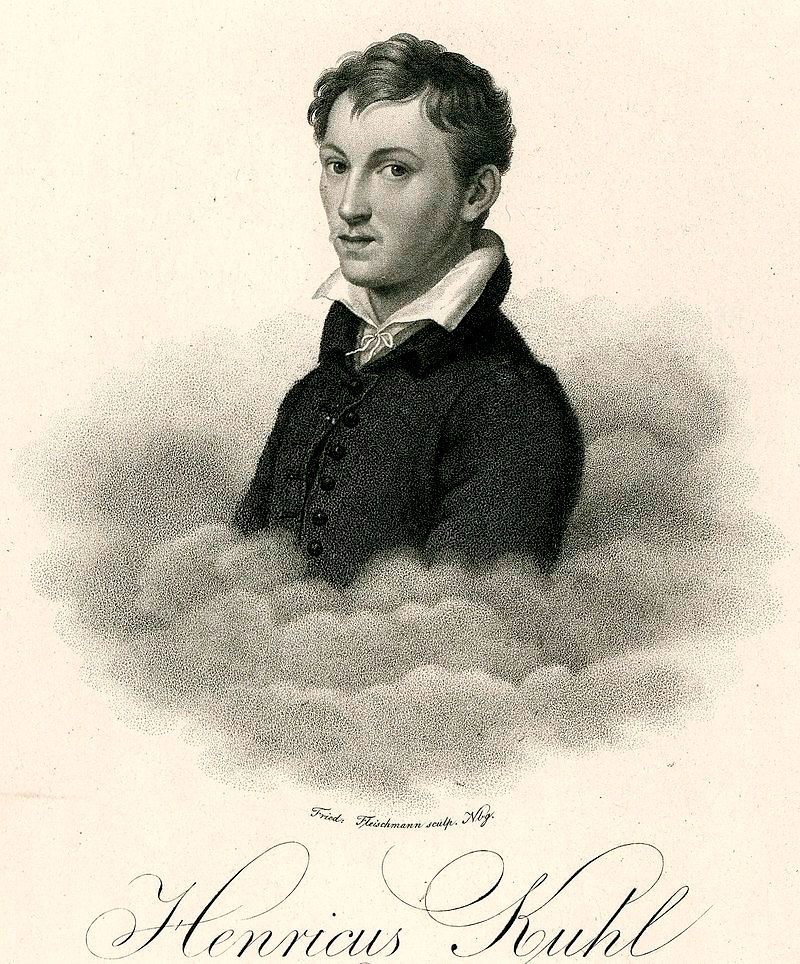
Kuhl, Heinrich
Heinrich Kuhl

– Order: Psittaciformes
– Family: Psittacidae
– Genus: Amazona
– Scientific name: Amazona vinacea
– Citation: (Kuhl, 1820)
– Protonimo: Psittacus vinaceus


Images Vinaceous Parrot:
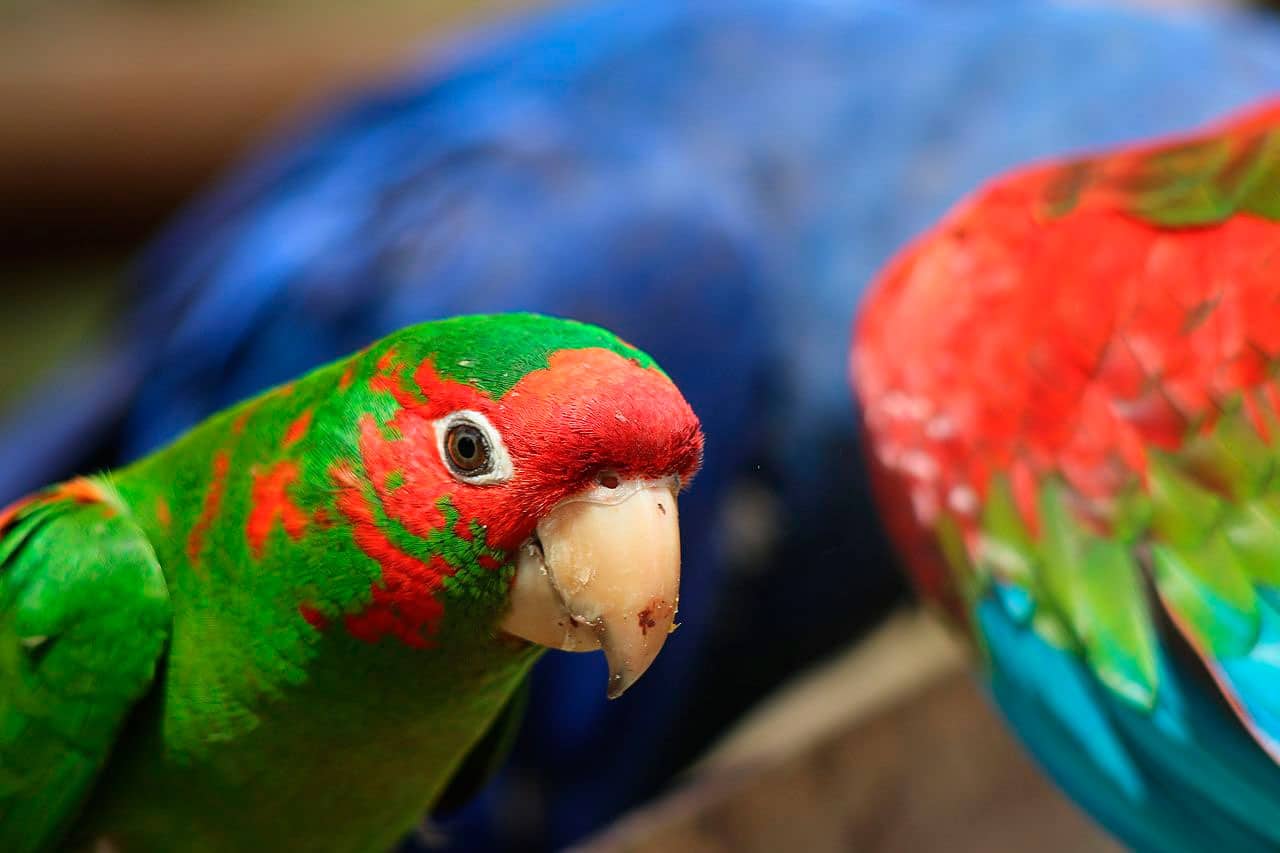

Species of the genus Amazona


Sources:

– Avibase
– Parrots of the World โ€“ Forshaw Joseph M
– Parrots A Guide to the Parrots of the World – Tony Juniper & Mike Parr
– Birdlife
– THE VINACEOUS AMAZON Amazona vinacea AT LORO PARQUE – First Published in The Avicultural Magazine Vol. 103 No. 2

– Photos:

(1) – Vinaceous-breasted Amazon (Amazona vinacea) – San Francisco Zoo, California By Dick Daniels (http://carolinabirds.org /) (Own work) [CC BY-SA 3.0 or GFDL], via Wikimedia Commons
(2) – Vinaceous Amazon in captivity at the Rare Species Foundation Programme, Florida, USA By derivative work: Snowmanradio (talk)Amazona_vinacea_-RSFP-8a.jpg: Ruth Rogers [CC BY 2.0 or CC BY 2.0], via Wikimedia Commons
(3) – Vinaceous Amazon at the Walsrode Bird Park, Germany By Quartl (Own work) [CC BY-SA 3.0], via Wikimedia Commons
(4) – Vinaceous Amazon; two in a cage By TJ Lin (originally posted to Flickr as Copy of DSCN3375) [CC BY-SA 2.0], via Wikimedia Commons
(5) – flying. Picture taken in Morretes By Leandro Govoni Lacerda (Own work) [CC BY-SA 4.0], via Wikimedia Commons
(6) – A Vinaceous-breasted Amazon at Parque das Aves, Foz do Iguaรงu, Brazil By Kee Yip from Union City, California, USA (IMG_4509_P1040019) [CC BY 2.0], via Wikimedia Commons
(7) – Pigeons neck Amazone (Amazona vinacea) Shot in Palmitospark Gran Canaria By Martingloor (Own work) [CC BY-SA 4.0], via Wikimedia Commons
(8) – Vinaceous-breasted Amazon (Amazona vinacea) – San Francisco Zoo, California By Dick Daniels (http://carolinabirds.org /) (Own work) [CC BY-SA 3.0 or GFDL], via Wikimedia Commons
(9) – Amazone vineuse, Bioparc Doue-la-Fontaine By Melvin TOULLEC (Own work) [CC BY-SA 4.0], via Wikimedia Commons

– Sounds: (Xeno-canto)
โ–ท The world of Pets: Dogs, cats, birds, reptiles, amphibians

Red-necked Parrot
Amazona arausiaca

Red-necked Parrot
Red-necked Parrot (Amazona arausiaca) | By mikko.pyhala

Content

Description:


Anatomy-parrots

40 cm.. length and 650 g. of weight.

The Red-necked Parrot (Amazona arausiaca) has the lores, forecrown, front of crown, orbital area and upper cheeks, bright blue; back of the crown, nape and sides neck, with dark blue or blackish margins.

Mantle, back and scapulars, green with narrow faint dark margins giving subtle barred effect. Wing coverts green; carpal edge brighter yellowish green. Primaries green with blue tips; the three outer secondaries, red at the base, yellow and blue at the tips; four secondaries yellow and blue tips. The remaining secondary they are green. Under the wings, the coverts green; flight feather Bluish.

Red-necked Parrot

Chin and top of the throat, blue; the bottom throat and, sometimes, upper region chest, with patch resizable bright red; remaining chest and of the belly, green; undertail-coverts, brighter yellowish green. Tail bright green in the center, their outer feathers green tip yellowish green and red marks on the basis of the innerwebs. Bill horn; iris orange; legs grey

Both sexes are similar. It is thought that the immature It is similar to adult but with irises brown. The young fledglings They are significantly smaller than of adults during its first year.

  • Sound of the Red-necked Parrot.

Habitat:

Video "Red-necked Parrot"

Amazona arausiaca www.pyaf.net/

The Red-necked Parrot inhabits the canopy mountain rainforest, preferring forest areas with trees Tabonuco (Dacryodes excelsa), especially among 300-800 m (the highest density is found and altitudes 500-600 m) although occasionally they reported to 1.200 meters and formerly was a regular visitor (August October ) of the Coast zones.

Usually in small flocks or pairs; more numerous flocks feeding areas, outside the breeding season. Communal roosting in traditional sites, for example in large trees Dacryodes excelsa or Sloanea berteriana, They are using from year to year (but not necessarily all year).

Reproduction:

Nests in a large tree cavity with most nests reported in Dacryodes or Sloanea. breeding season February-June. low productivity probably just a clutch every two years and usually only one young per nest.

Food:

The diet It includes fruits of Dacryodes excelsa, Licania ternatensis, Richeria grandis, Amanoa caribaea, Simarouba amara, Symphonia globulifera, Chimarrhis cymosa, Pouteria pallida, Cordia elliptica, C. laevigata, Pithecellobium jupunba, Byrsonima martinicensis, Dussia martinicensis, Ormosia monosperma, Buchenavia capitata and Palmas Euterpes, egg yolks of Anacardium occidentale and fruits and buds of Lonchocarpus, as well orange crops, etc. Forages mainly in the canopy but also in sub-canopy and occasionally ground level. Usually it is fed in the morning and evening.

Distribution and status:

Size of its range (reproduction / resident): 190 km2

The Red-necked Parrot It is endemic to the Dominica Island in the Lesser Antilles. Formerly it spreads through the mountainous interior, including the northern peninsula. Contraction range from about 1950 with the existing population centered Morne Diablotin (1.447 m, the highest mountain Dominica) which it may have always been his main strength but whose southern slopes birds have been absent from the hurricane 1992.

small populations, reportedly, in the north of the peninsula (where apparently they are resident) and in the eastern center of the island. They can remain very small populations in the south. Recent sporadic observations of birds in low-lying areas of the north and east; other towns in the south suggest the gradual recolonization of the parts of the former range.

mainly residents but maybe (at least once) some regular seasonal foraging movements and some November-January nomadism. Although historical accounts tell of the abundance of this species, the drastic contraction in range and population have occurred since the mid-twentieth century with its gradual retreat in the most remote forests of northern and eastern. The decline is due to the loss of habitat, the hunting and capture bird cage.

The small existing population It is especially vulnerable to the loss of food plants and nesting sites due to hurricane damage. Although the effects of habitat loss may have been especially severe because of the preference of birds through the forests of low level (which it has been under pressure) They tolerate any disturbance and returned to the old feeding areas recently after conversion to plantations of fruit trees. The hunting It was probably the greatest threat to the seventies. Capture for local pet trade now under control due to a successful education campaign.

The population 1977 It was at least 350 birds (probably), but halved by the effects of hurricanes between 1979 and 1980. A Recovery since then 350 estimated birds 1990 and evidence of further increases to more than 500 in 1992. The remaining habitat is partially protected in the North Forest Reserve, but does not include neighboring critically important areas for conservation. Completely protected by national legislation.

Conservation:

State of conservation โ“˜


Vulnerable Vulnerable โ“˜ (UICN)โ“˜

โ€ข Current category of the Red List of the UICN: Vulnerable.

โ€ข Population trend: Increasing.

โ€ข Population size: 850-1000.

  • Rationale for the Red List category

The conservation actions He has helped this species to recover a population down from 1980. Still rated as vulnerable because its population is still very small and its range of small extent and restricted to a single island. But, if future declines in habitat available, could be reclassified as danger of extinction.

  • Justification of the population

Estimating population most recent is 850-1,000 mature individuals (PR Reillo a slightly. 2012), more or less equivalent to 1.200-1.500 individuals in total.

  • Justification trend

The population size has increased possibly only 150 birds in 1980, possibly even 1.200 birds currently, based on recent surveys and density estimates (PR Reillo in some. 2016). There is no new data on the evolution of the population, but the species is supposed to still rising.

Threats
    The loss of habitat in the lower elevations has been caused mainly by clearance for agriculture (Collar 1997). Although replanting fruit crops has benefited the species (Reillo y Durand 2008), the frugivorous diet of the Red-necked Parrot, conflict is causing local farmers (Douglas 2011). Damage caused by hurricanes has also been important: another hurricane the magnitude of Hurricane David could reverse recent population increases. Hunting and illegal trade are now low-level threats, but the illegal wildlife trade throughout the Caribbean is a constant concern and there is increasing pressure from illegal wildlife trade centered in Europe (PR Reillo in some. , 2016).
Conservation Actions Underway
    CITES Appendix I and II. It is fully protected by national legislation. Much of the remaining habitat is in the northern and central forest reserves, national parks and Morne Trois Pitons and Morne Diablotin, but adjacent areas, critically important, They are not protected (Juniper and Parr 1998). Since 1980, It has benefited from the joint efforts of government and non-governmental organizations to protect their habitat and sensitize the local population of the needs of this species. Research methods have recently improved to maximize ecological information acquired, while minimizing the disturbance of birds, and the study has provided important information on nesting behavior and parental care. Similarly, census methodologies have improved to give more accurate estimates of population size and density (Reillo y Durand 2008). The population is monitored annually. A recent doctoral thesis project examined the interaction of species with fruit crops in Dominica (PR Reillo in some. 2012).
Conservation Actions Proposed
    Continue the implementation of the protection of national parks Morne Diablotin and Morne Trois Pitons and forest reserves in central and northern. Continue to monitor the population each year. To investigate the effects of nest site (and the food) competition between this species and Imperial Parrot (Amazona imperialis). Continue to prohibit the trade in this species, exports of ex situ captive breeding, and importation of non-native parrots as pets in Dominica (PR Reillo in some. 2012).

Red-necked Parrot in captivity:

CITES Appendix I and II. It is fully protected by national legislation.

Alternative names:

– Bouquet’s Parrot, Dominican Blue-faced Amazon, Dominican Blue-faced Parrot, Jacquot, Red necked Parrot, Red-necked Amazon, Red-necked Parrot (English).
– Amazone ร  cou rouge, Amazone de Bouquet (French).
– Blaukopfamazaone, Blaukopfamazone (German).
– Papagaio-de-colar-vermelho (Portuguese).
– Amazona de Cuello Rojo, Amazona Gorgirroja, Amazona gorjirroja, Jaco, loro de cuello rojo (espaรฑol).

scientific classification:

– Order: Psittaciformes
– Family: Psittacidae
– Genus: Amazona
– Scientific name: Amazona arausiaca
– Citation: (Statius Mรผller, 1776)
– Protonimo: parrot arausiacus

Images Red-necked Parrot:


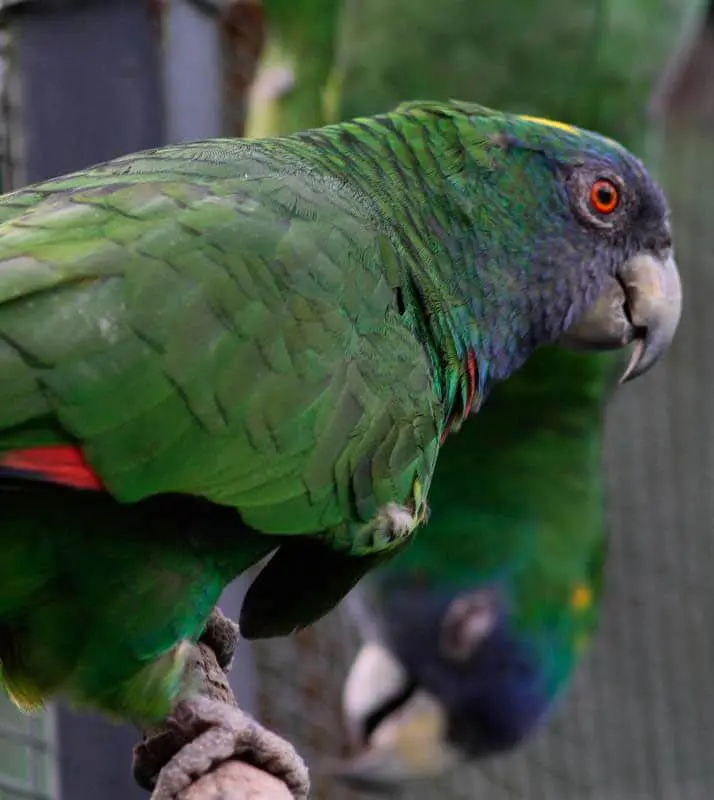
Species of the genus Amazona


Sources:

  • Avibase
  • Parrots of the World โ€“ Forshaw Joseph M
  • Parrots A Guide to the Parrots of the World – Tony Juniper & Mike Parr
  • Birdlife

Photos:

(1) – Red-necked Amazon (Amazona arausiaca) – Author: mikko.pyhala – HBW
(2) – Red-necked Amazons at the Parrot Conservation and Research Centre Botanical Gardens, Roseau, Dominica By Andrew Szymanski (originally posted to Flickr as DSCF0031) [CC BY-SA 2.0], via Wikimedia Commons
(3) – Red-necked Amazons at the Parrot Conservation and Research Centre Botanical Gardens, Roseau, Dominica By Amazona_arausiaca_-Roseau_-Dominica_-aviary-6a.jpg: Andrew Szymanskiderivative work: Snowmanradio [CC BY-SA 2.0], via Wikimedia Commons
(4) – Amazona arausiaca Sunday, West Indies by Don Faulkner – Flickr
(5) – BARRABAND, Jacques (1767/8-1809) [Parrot Bouquet (Red-necked Amazon, Amazona arausiaca)] From Natural History of Parrots (by Francois Levaillant, 1801-1805) – Wikimedia
(6) – Natural history of parrots /. In Paris :chez Levrault … ;an IX (1801)-an XIII (1805).. by Biodiversity Heritage Library – Flickr

Sounds: Aristides Elias Elias, XC211593. accessible www.xeno-canto.org/211593

โ–ท The world of Pets: Dogs, cats, birds, reptiles, amphibians

Naretha Bluebonnet
Northiella narethae

Content


Anatomy-parrots

Description:

The Naretha Bluebonnet (Northiella narethae) It is smaller than Bluebonnet (Northiella haematogaster), of about 28 cm. long.

The legs and feet are dark gray, and the irises is dark brown.

The adult male has a two tonal facial pattern forecrown lighter green-blue, the ears and the area above the eye in contrast to the rest of the face which is purple-blue. The head, the neck forward and breast are marked with pale steaks and diffuse spots.. The back It is olive gray. The belly, the area of the vent and the thighs are uniform yellow, while red is limited to the area of รขโ‚ฌโ€นรขโ‚ฌโ€นthe undertail-coverts. The lesser wing coverts are blue and outer median wing coverts red, while the inner median and greater wing coverts, and inner secondary a yellow-olive colour. The central feathers of the tail are tinged with pale blue..

The female adult has a duller blue color in forecrown, and a reduced color on wings and tail, and with no tint of orange on the belly. It is smaller overall, at around 26 cm length.

The chicks they have a bill yellow and gain their adult plumage in the first post moves to bloom (three to four months old).

taxonomy:

the species Northiella narethae It was formerly classified as a subspecies (Northiella haematogaster narethe) of the Northiella haematogaster. A molecular study published in 2015 by Gaynor Dolman and Leo Joseph He confirmed the genetic isolation Naretha Bluebonnet (Northiella narethae) and recommended that it was restored as a separate species.

Habitat:

Arid and semiarid scrub and farmland, thickets mulga, weeds and dry forests open.

Reproduction:

It is heavily influenced by rainfall and food availability, but usually peaks between August and January.

The usual site nesting It is a very small cavity tree, particularly attracted to she-oaks providing appropriate holes for nesting, often near the ground, coated shavings and wood dust rotten. The female incubates the eggs but is cared for by the male who also contributes to raising the young..

Four to seven white eggs round (23mm x 19mm). Time of incubation: 22 days. The young usually leave the nest around the 30 days.

Food:

Seeds of various grasses and herbaceous plants (autochthonous), also nectar, flowers and various fruits.

Distribution:

Reports indicate that Naretha Bluebonnet They have been common in the arid region Nullarbor, and they have become more rare in the twentieth century. It is believed that localized individuals range makes the species highly endemic in an area on the border between Western Australia and Southern Australia.

Conservation:

We know the conservation status of this species, although probably in risk status.

"Naretha Bluebonnet" in captivity:

No data.

Alternative names:

– Bluebonnet (Naretha), Little Bluebonnet, Naretha Bluebonnet (English).
– Perruche ร  bonnet bleu (narethae), Perruche de Nareth, Perruche petite (French).
– (German).
– (Portuguese).
– Perico Cariazul Naretha (espaรฑol).

Images "Naretha Bluebonnet"

scientific classification:

– Order: Psittaciformes
– Family: Psittaculidae
– Gender: Northiella
– Scientific name: Northiella narethae
– Subpoena: (White, HL, 1921
– Protonimo: Psephotus narethae

Sources:

โ€ข Avibase
โ€ข Parrots of the World โ€“ Forshaw Joseph M
โ€ข Parrots A Guide to the Parrots of the World – Tony Juniper & Mike Parr
โ€ข Birdlife

Photos:

(1) – Penochka Birds: Parrots (Psittacidae) – Source