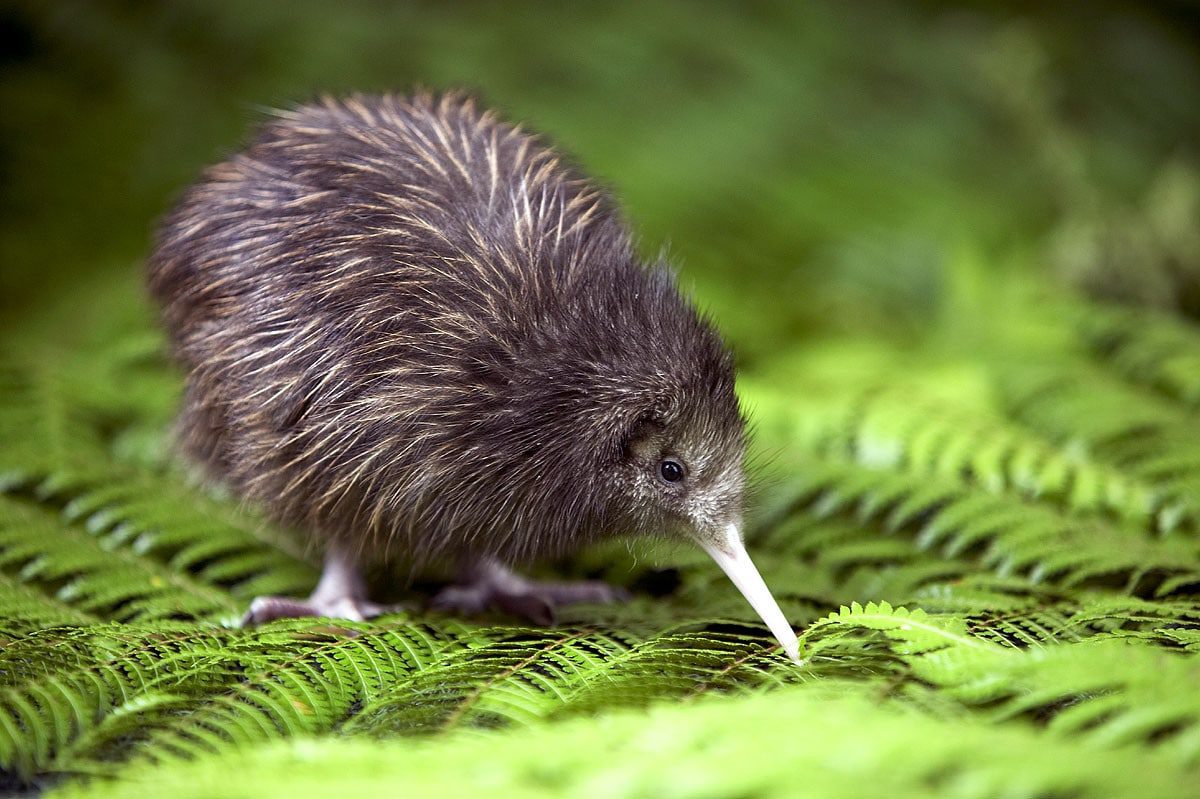
Kiwis are shy, nocturnal creatures with a highly developed sense of smell thanks to the existence of real whiskers around their beaks., These whiskers are effective olfactory organs.
All breeds and species.
Content |
|---|
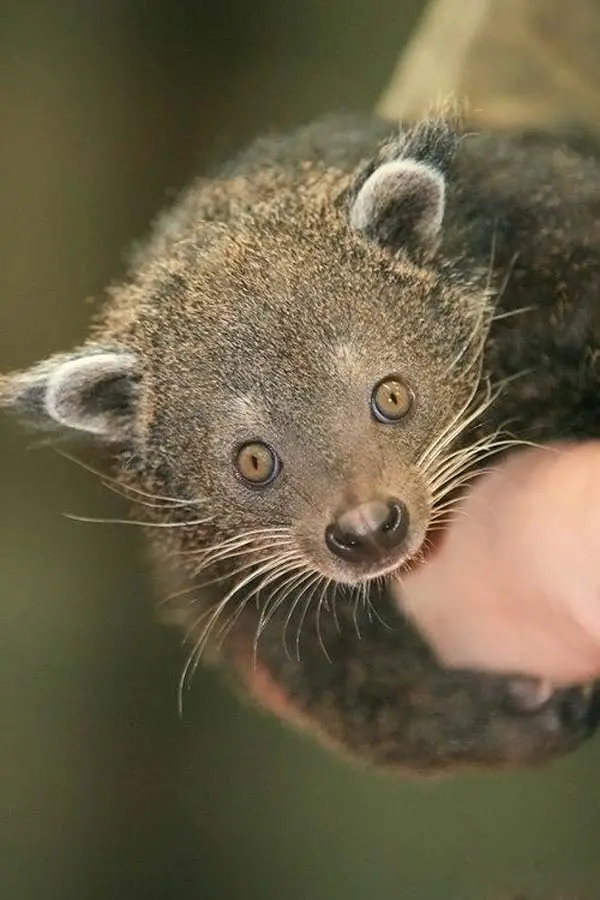
The Manturón (Arctictis binturong), also known as Binturong, the Asian bearcat, the Bearcat Palawan, or simply Bearcat, is a species in the family Eupleridae, which includes Civets and to the ginetas.
It is the only member of its genus. The binturong It is neither a bear nor a cat, and the true meaning of the original name has been lost, as well as the local language that gave it that name.
The binturong It is nocturnal and sleeps on branches. It´s omnivorous feeding mainly on fruits, Although also has been known to eat alligators, mice, Rats, spiders, insects and beetles. They can live more than 20 years in captivity, knowing cases have come to the 26 years.
The deforestation has considerably reduced their number.
You can make sounds laughing between teeth when she feels happy and an annoying sharp groan when he feels cornered.
Being burly and aggressive against any threat, to the binturong sometimes compared with a bear, Although it is considerably smaller than, being no bigger than a small dog. It´s, However, the largest living species of the family Eupleridae, matched only by the African civet.
Its length ranges between 60 and 97 cm., weighing between the 9 and 20 kg.
Its body is covered with coarse and thick black hair. The hairs are often white silver tip, giving the animal a somewhat hoary appearance. It has a clear or silvery Mane in the contour of your face to give the appearance of greater size. The tail, hairy and fully prehensile, It can act as a fifth hand and can measure between 50 and 84 cm.. The binturong it is one of only two carnivores with a prehensile tail (the other is the kinkajou). The ears of the ears are small and rounded, small eyes. Females are a 20% larger than males.
Its natural habitat is the forest canopy, in the dense tropical jungle primary or secondary, from sea level to the 400 meters above sea level.
While sometimes there may be small groups in logged forest, This species does not seem to adapt well to spaces modified with great human activity. Widely distributed in not very numerous groups, this species can be found in the Bangladesh, Bhutan, Burma, Cambodia, China, India, Indonesian, Laos, Malaysia, Nepal, Philippines, Sri Lanka, Thailand, Borneo and Viet Nam.
Females give birth to 2 or 3 pups after a gestation period of 90 days. It seems that there is no defined breeding season during the year, but there are calvings more frequently between February and April. The females are breeding from the 30 months. It is believed that the female binturong It is one of the few female mammals that can delay implantation of the egg in the womb. (phenomenon known as embryonic diapause or delayed implantation), looking for the most propitious moment for the breeding season.
The binturong It is solitary and nocturnal. It climbs trees and leaps from branch to branch, using its tail and claws to hold on to while foraging for food. It can turn its hind legs back so that its claws still have a grip when moving between branches.. It sometimes moves through the forest floor, either to cross to other trees or to feed on fallen fruits.
The binturong also it uses its tail to communicate through the scent glands. The females also have pairs of glands of odor on both sides of the vulva. Musk perfume binturong is often compared to hot butter on popcorn and cornbread. Rozan its tail against trees and howl to announce its presence to other manturones.
The manturones They have stable territories, but they are not very territorial and often overlap in range with their peers. In Thailand, the estimated range of average territory for a female is of 4 km square and 4,7 to 20,5 km square for males.
Although they are sympatric with several potential predators, including leopards, and reticulated pythons, predation on manturones adults is very rare. It is believed that it is due in part to its arboreal and nocturnal habits. It also, although he is usually quite shy, It can be notoriously aggressive when he is harassed. It is known that it uses urine and feces initially faced a threat to then emit a grunt showing teeth, If the stalker is not dissuaded, it will use its powerful jaws in self-defense.. The binturong It is believed to be one of the animals with more character of nature.
Ecologically it is considered an important seed disperser due to its frugivorous diet..
The female has a pseudopene similar to that of hyenas. They have been domesticated and are common as pets, as they are very protective with children.
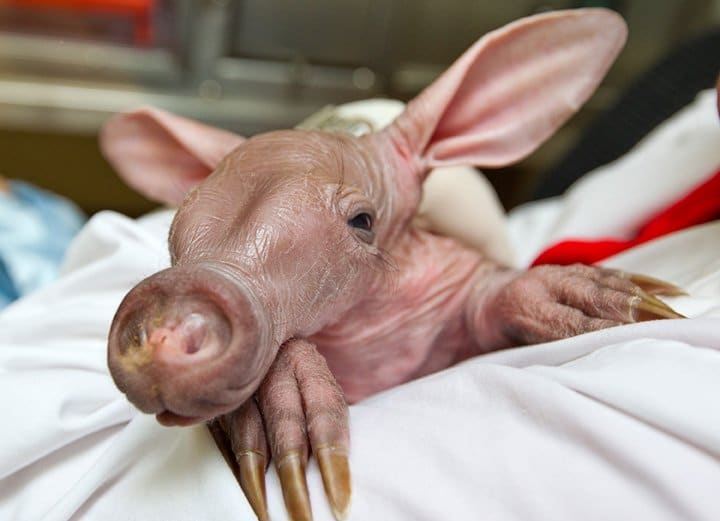
They are native to Africa, mainly in the areas south of the Sahara. Its habitats are generally grasslands and open forests and its diet is composed of ants, termites, fruit and other insects. They will live where there are sufficient to feed termites, access to water and a sandy or clayey soil. If the soil is too hard, These Anteaters, Despite being fast digging, they will move to areas where digging is easy.
Most Aardvarks are solitary and nocturnal., but sometimes they come out during the day to sunbathe. When the dream is pressing them, they block the entrance of its burrow, leaving only a very small opening at the top, and become a tight ball. Especially during the rainy season, These Anteaters can dig new Burrows at night. Many animals, such as squirrels, hares, Civets, hyenas, jackals, boars, porcupines, lizards and birds use abandoned holes of the Aardvark as a refuge. In case of being attacked, can roll over on his back and defend themselves with their large claws or by using its thick tail to take a fatal leap away from his attackers.
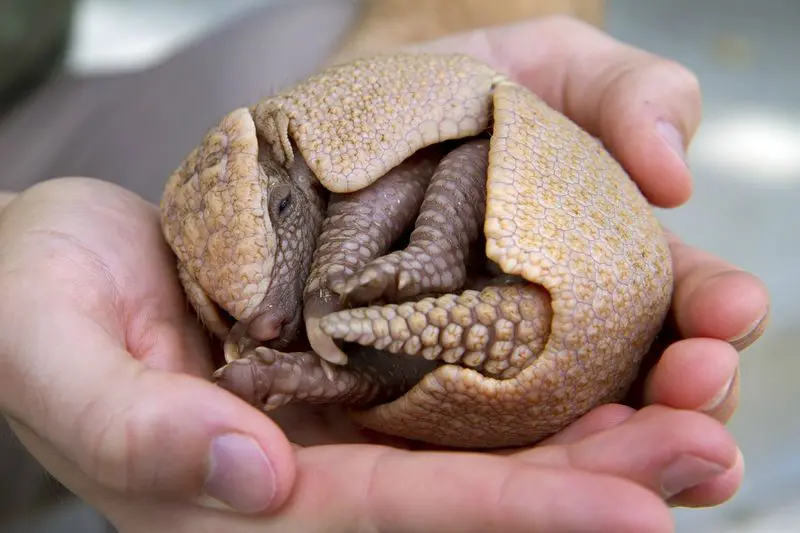
The Three bands Armadillo It has one of the most efficient defenses against their enemies. It is the only armadillo capable of rolling itself into an almost perfect ball when threatened., the most vulnerable parts of your body can hide between their shields, as your ears, legs and tails. It has three mobile bands in the shell.
They are in some parts of the North of Argentina , Southwest Brazil , Paraguay and Bolivia , at elevations from sea level to the 770 m.
The length of the body, from head to tail, is of approximately 36 cm.. It has a very small tail, only 6 cm length. His weight fluctuates between 1,45 and 1,59 Kg.
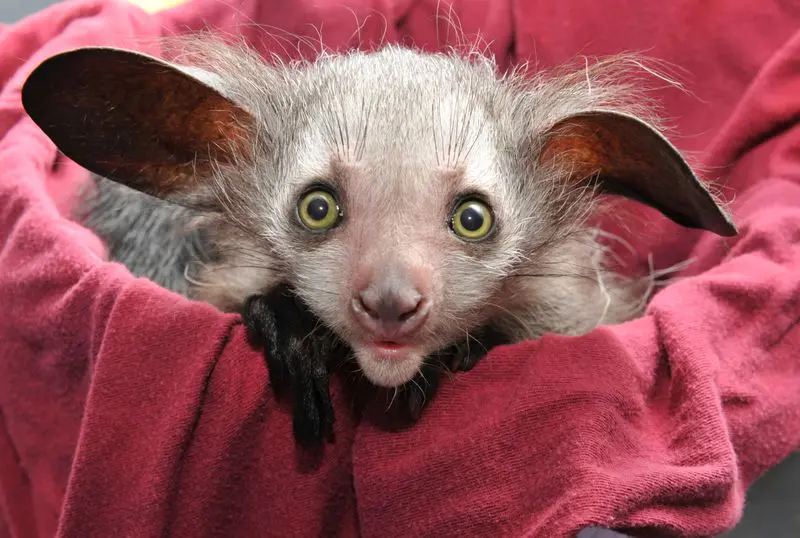
The aye-aye is the only living member of the Daubentoniidae family., and is considered to be the most unusual of all primates.
Aye-ayes have a unique method of feeding: A large percentage of its diet consists of insect larvae that live in dead wood inside. They find the larvae by tapping in the branches and listening to the echo. When is a cavity in the wood (that may contain insect larvae), the aye - aye bites through the outer layers of bark to then get a long finger at the bottom of the hole to remove the dam. He also often uses this third finger to drink liquids quickly and to wash himself..
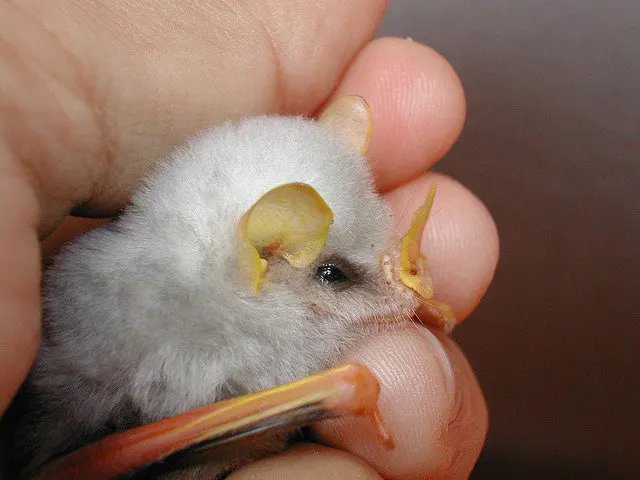
The Honduran white bat found only in a few Central American countries. With luck you can find in Nicaragua, Costa Rica and, of course, in the country from which it is named, Honduras. But, is extremely rare and, otherwise, it is minuscule – the largest examined have never exceeded the 5 cm length. Not only that, but his white skin has been developed for a reason: camouflage.
This species lives in primary and secondary forests, in groups of 4-8 individuals, they live in leaves of Heliconias, that builds a kind of shops, where they sleep and protect themselves during the day. When resting, is hanging together upside down in the center of the blade.
White pelage serves to reflect the green light that is filtered through the platanilla sheet. So they hide grouped, between the sheets, and is protecting predators that can attack from the ground.
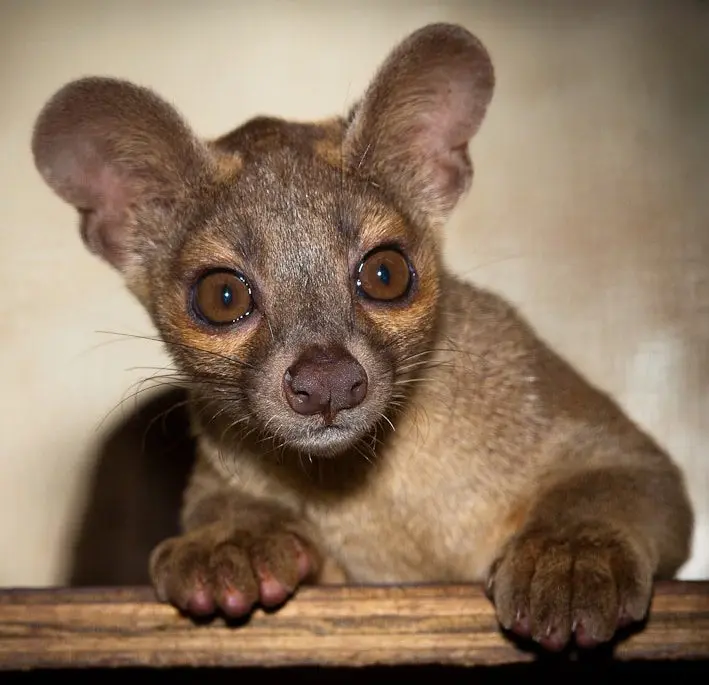
The Fossa, a rare carnivore native to Madagascar, It is the largest predator of the island. With only 2500 surviving individuals, It is considered one of the most endangered species in the world.
The fossa is an animal of the family of the Mongoose, with a length of almost 2 meters from snout to the tip of the tail and a weight of up to 12 kg.
Reserved, like a cat, they are expert climbers and well-equipped to pursue the lemurs in the forest, hunting down even the largest of the lemur species.
On the island of Madagascar, the fossa is the largest carnivore and is in fact the largest predator on the entire island. As predator eats practically everything, from lemurs to wild pigs and poultry. Unlike its cousin the Mongoose, this species has many characteristics that make it look like a cat, such as retractable claws and sharp teeth. It has a reddish brown layer and its snout is similar to that of a dog.