โ–ท The world of Pets: Dogs, cats, birds, reptiles, amphibians

Austral Parakeet
Enicognathus ferrugineus

Austral Parakeet

Content

Description:

28โ€“36 cm. length.

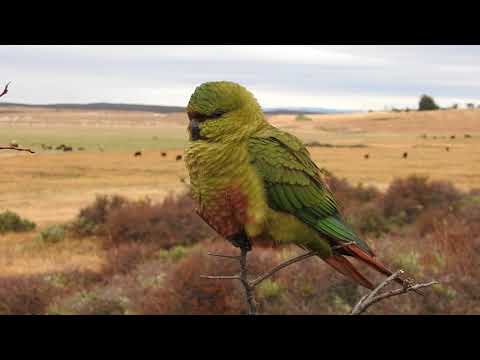
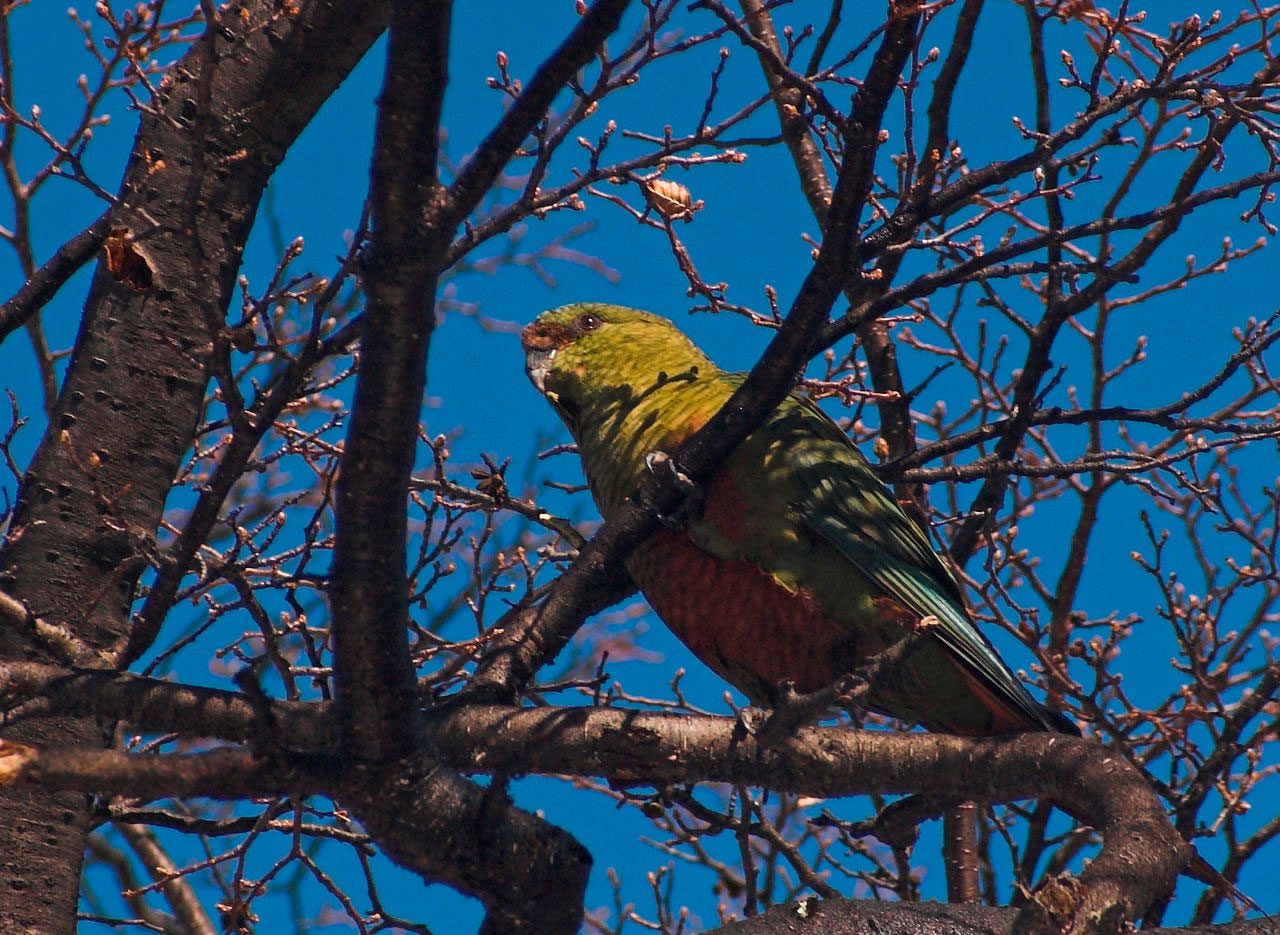
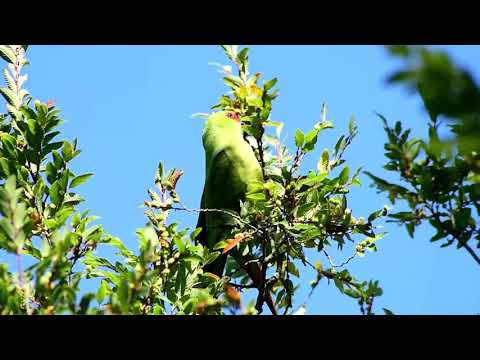
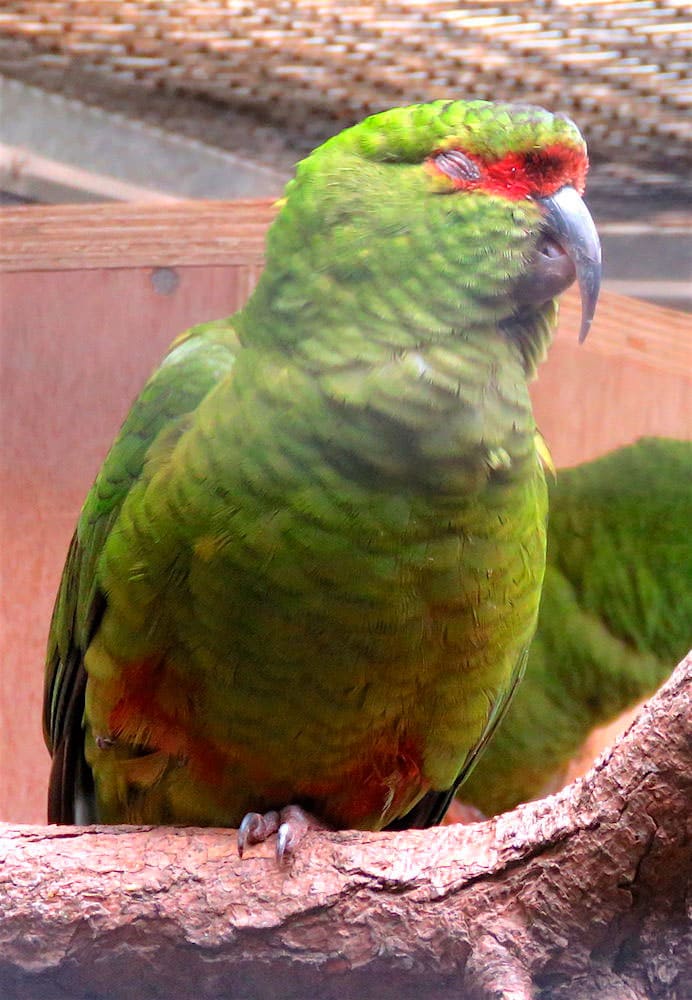
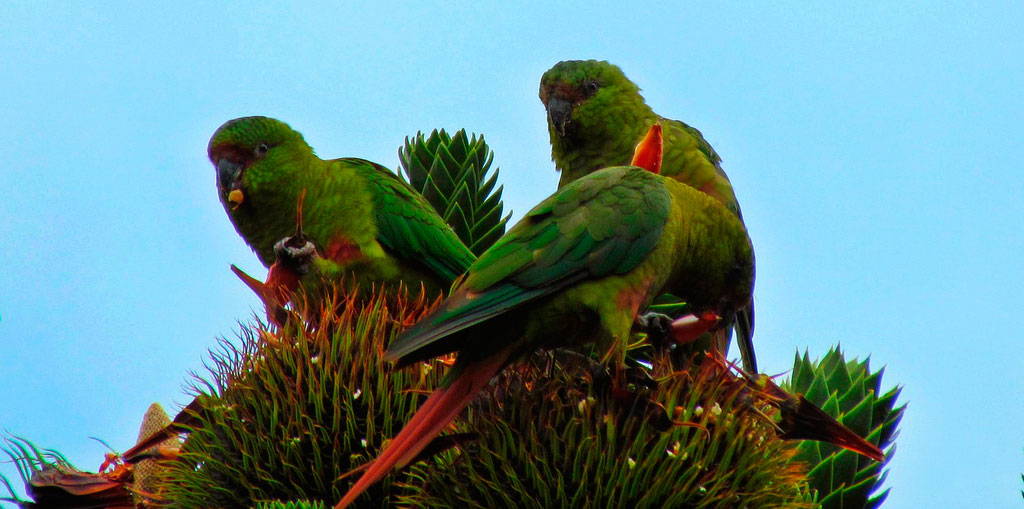
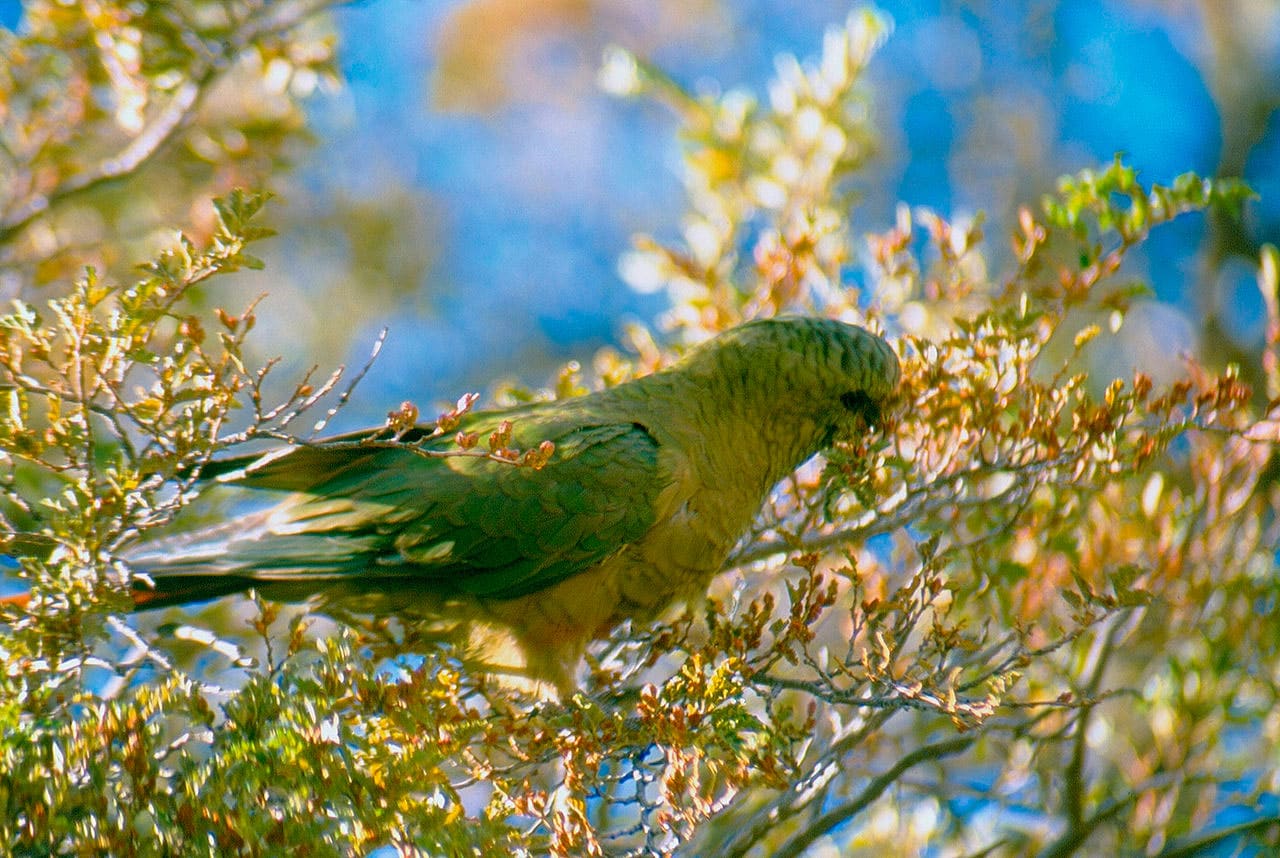
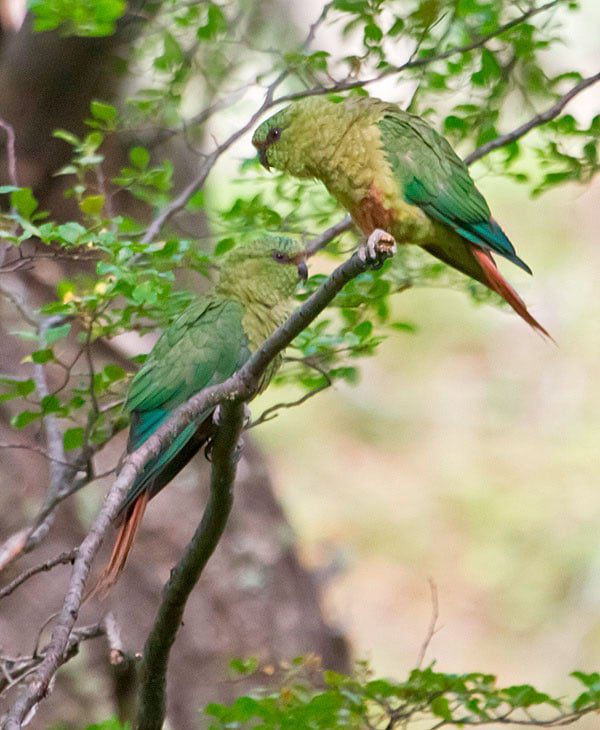
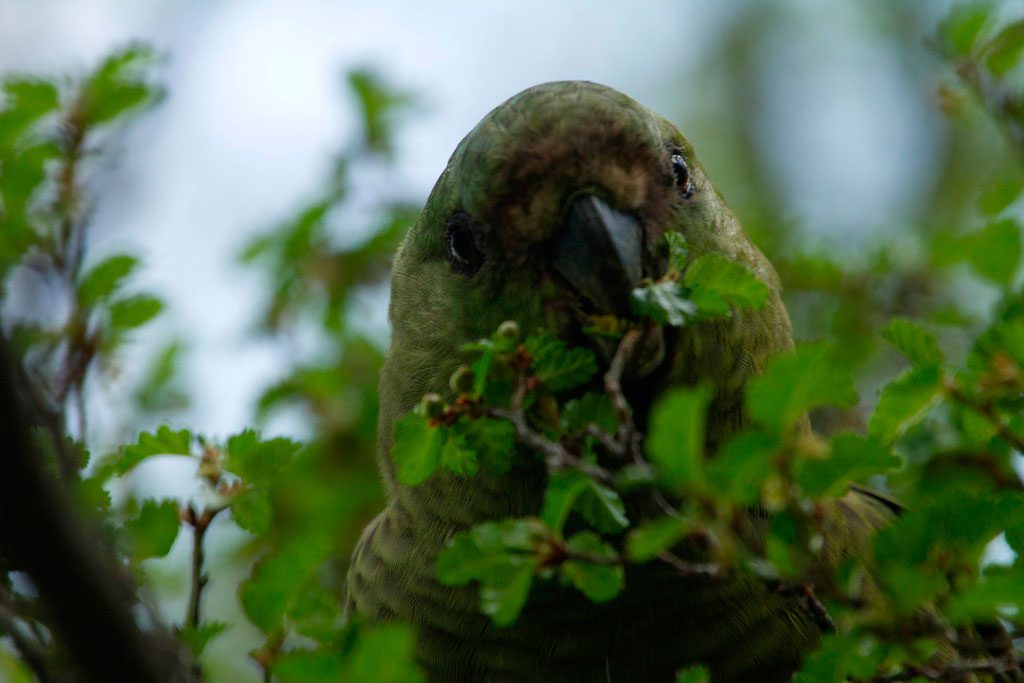
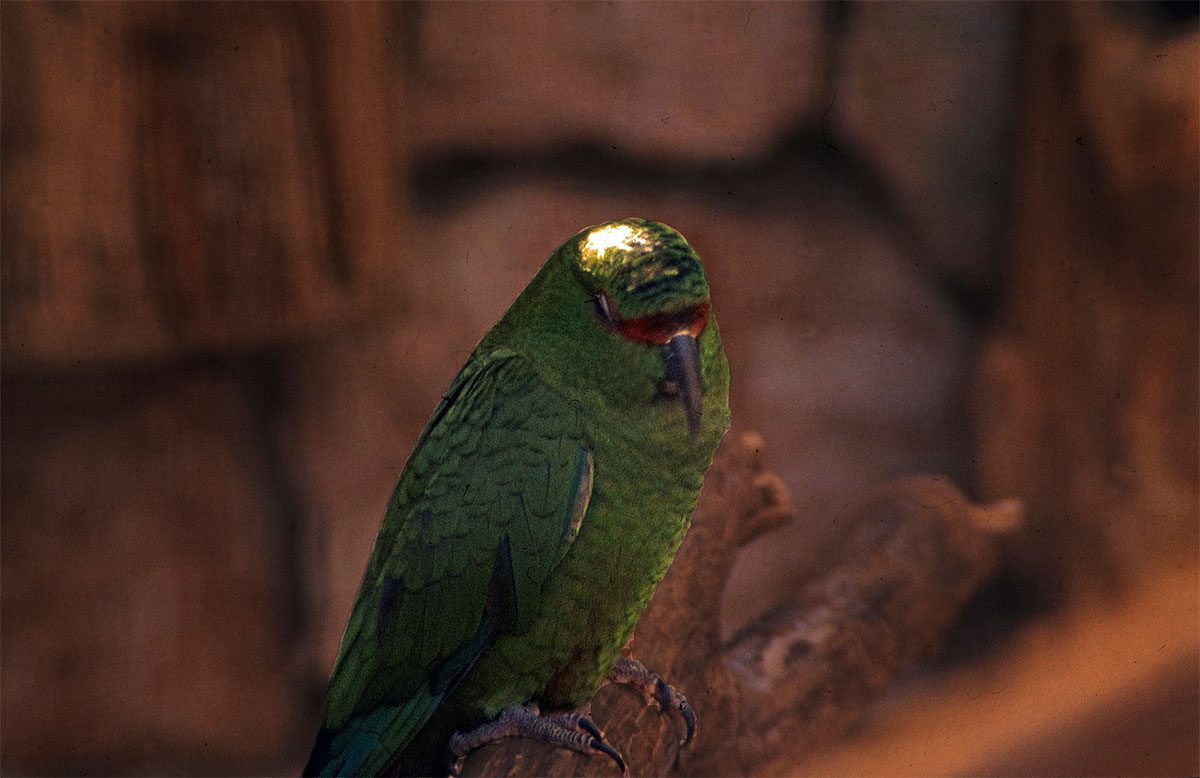
The Austral Parakeet (Enicognathus ferrugineus), is mostly green; the lores and forecrown rather dull brick-red; the front of the crown with yellow and green feathers in the center, and edges dark green olive feathers central part of the crown.

The feathers of the upperparts They are olive green with darker edges, giving a scalloped effect. The upperwing-coverts They are olive color with dark margins. Flight feathers green with metallic blue suffusion. Underwing-coverts green with dark tips; bottom of the flight feather pale grey. The underparts They are mainly pale green olive, with darker margins (except in the the thighs) and a large opaque red spot on the central belly. In the long run tail It is dark red off above; pale grayish below. The upper jaw horn is dark colored with a black tip; the bottom is dark horn-colored; irises reddish brown; legs dark gray.
Austral Parakeet

Both sexes are similar. The immature It has a duller red on the head and patch in the belly red less dense and less extensive.

  • Sound of the Austral Parakeet.

Subspecies description:

  • Enicognathus ferrugineus ferrugineus

    (Statius Mรผller, 1776) – Nominal.


  • Enicognathus ferrugineus minor

    (Chapman, 1919) – Smaller and darker than the nominal, with a abdominal patch Red less extensive (sometimes absent).

Habitat:

Video – "Austral Parakeet" (Enicognathus ferrugineus)

Cachaรฑa (Enicognathus ferrugineus)

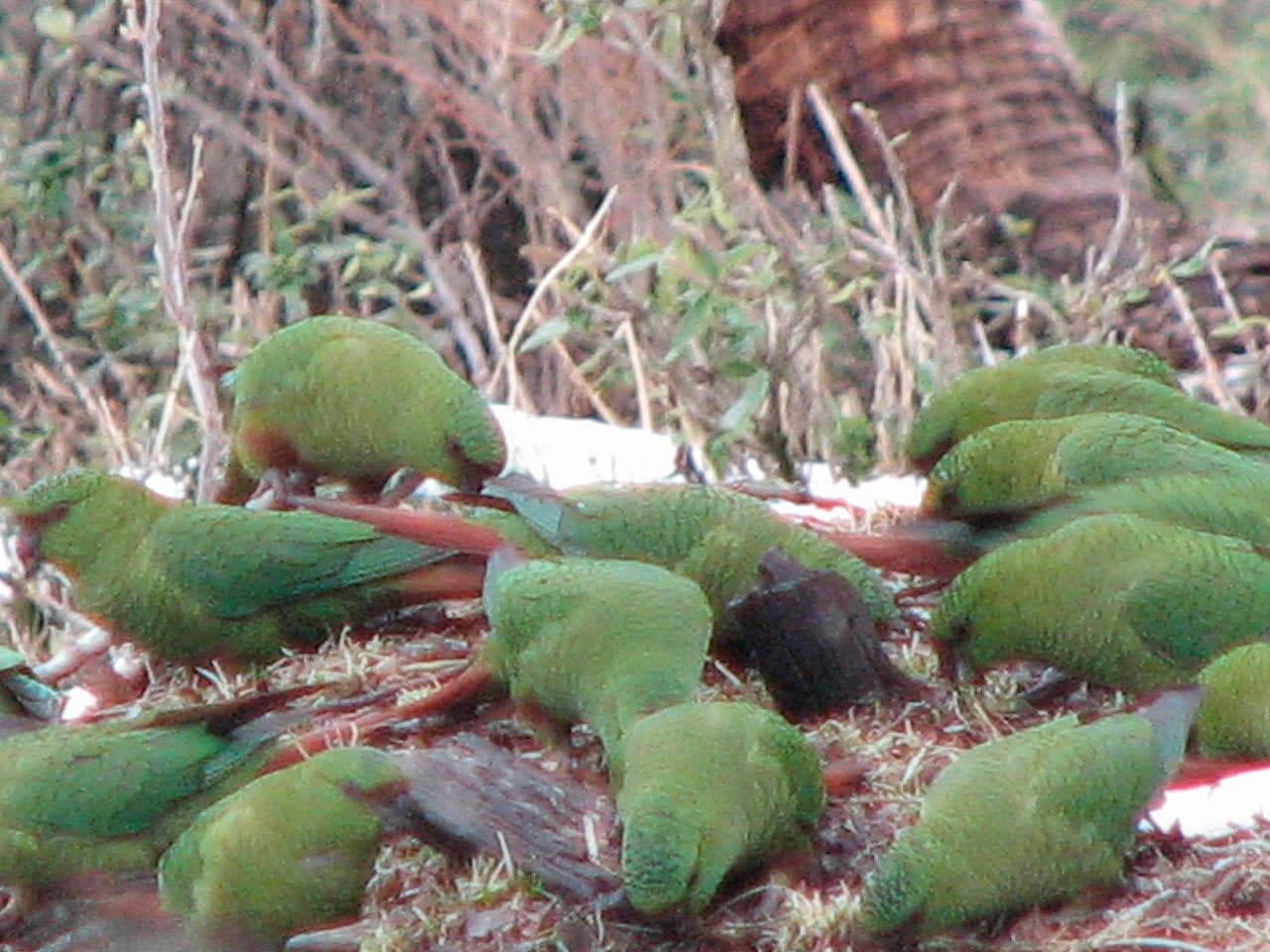
The Austral Parakeet occurs mainly in forests, including forests of Nothofagus, Araucaria and Quercus, but also in more open habitats with shrubs Berberis darwinii and Drimys winteri, also they visit cultivated areas, mainly at sea level in the southern part of the range, may reach 1200 meters and even 2.000 meters north. Observed in flocks of 10-15 individuals, coming to meet more than 100 birds outside the breeding period; flocks of 10 or more in Fire land with reports of attacks caused by Red-backed Hawk (Geranoaetus polyosoma).

In April and before the arrival of winter flocks leave the mountains to take refuge in lower valleys of lower altitude.

Reproduction:

They nest in the cavity of the trees, filling very deep holes with twigs and branches where building nests are no cavities available. The breeding season It comprising the months of November to December. Clutch 4-8 eggs. To the 26 days the chicks are born, emplumรกndose to 7-8 weeks.

Food:

predominantly eat seeds (can cause damage to grain crops). Its diet includes herbaceous and bamboo seeds, Drimys winteri, acorns and nuts Araucaria, fruit, berries and sprouts p. Nothofagus and bulbous roots.

Distribution and status:

Extending its range (reproduction / residents): 2.010.000 km2

Distributed by the south end of South America, psittacine distribution is the southernmost in the world.

They can be observed from Land of Fire north through Chile to province Oโ€™Higgins and east of Andes in Argentina, extending through Santa Cruz, Chubut, Black river Western and Neuquรฉn Western.

Usually residents, even in the extreme south, although the foothills move to raise (at least in Land of Fire) with some predictable local movements in the north. generally common, It is very abundant in the wooded coast Land of Fire. Large areas remain intact habitat and inhabiting several large protected areas.

Very rare in captivity.

Subspecies distribution:

Conservation:

State of conservation โ“˜


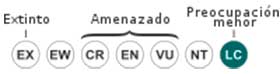
minor concern Minor Concern โ“˜ (UICN)โ“˜

โ€ข Current category of the Red List of the UICN: Least concern.

โ€ข Population trend: Stable.

โ€ข Population size : Unknown.

Justification of the Red List of the Category

This species has a very large range, and therefore does not approach the thresholds for Vulnerable under the range size criterion. The trend population seems to be stable, and therefore the species does not approach the thresholds for Vulnerable according to the population trend criterion. (> 30% decrease of more than ten years or three generations). The population size has not been quantified, but are not believed to approach the thresholds for Vulnerable based on population size criteria (<10.000 individuos maduros con una disminuciรณn continua estimada en> 10% in ten years or three generations, or in a particular population structure). For these reasons, the species is evaluated as Least concern.

Justification of the population

The world's population has not been quantified, but this species is described as ‘quite common‘ (Stotz et to the. (1996).

Justification trend

The population suspected to be stable in the absence of evidence of any reduction or substantial threats.

"Austral Parakeet" in captivity:

Very rare in captivity.

Chilean law prohibits the purchase, sale and possession of this magpie.

If you have a Austral Parakeet I recommend you give it to SAG or the Center for Rehabilitation of Wildlife of Codeff (rehabilita@codeff.cl, background: 777 25 34 – Santiago), because in that place you will come across many other parrots of the same species that suffered the same process, and specialized people who care very well, TO THEN RETURN THEM TO THEIR NATURAL HABITAT.

Alternative names:

– Austral Conure, Austral Parakeet, Emerald Conure, Emerald Parakeet, Magellan Conure, Magellan Parakeet (English).
– Conure รฉmeraude, Conure magellanique, Perriche magellanique, Perruche magellanique (French).
– Smaragdsittich, Smaragd-Sittich (German).
– Periquito-austral (Portuguese).
– Cachaรฑa, Cachaรฑa austral, Cotorra Austral, Cotorra Cachaรฑa (espaรฑol).

scientific classification:

Formerly separated from the monospecific genus Microsittace.

– Order: Psittaciformes
– Family: Psittacidae
– Genus: Enicognathus
– Scientific name: Enicognathus ferrugineus
– Citation: (Statins Mulller, 1776)
– Protonimo: Psittacus ferrugineus

Images Austral Parakeet:


Species of the genus Enicognathus

Sources:

– Avibase
– Parrots of the World โ€“ Forshaw Joseph M
– Parrots A Guide to the Parrots of the World – Tony Juniper & Mike Parr
– Birdlife

– Photos:

(1) – Austral Parakeet (also known as Austral Conure or Emerald Parakeet) in Torres del Paine National Park, Chile By Miguel Vieira [CC BY 2.0], via Wikimedia Commons
(2) – Two Austral Parakeets in Tierra del Fuego, Argentina By Francesco Veronesi [CC BY-SA 2.0], via Wikimedia Commons
(3) – Austral Parakeet (Enicognathus ferrugineus) seen near Laguna Onelli, Glaciers National Park, Santa Cruz, Argentina By Fabienkhan (Personal Picture) [CC BY-SA 2.5], via Wikimedia Commons – credit : Fabien Dany – www.fabiendany.com
(4) – Cachaรฑas in San Martin de los Andes, Province of Neuquen, Argentina By Ignsal (Own work) [Public domain], via Wikimedia Commons
(5) – An Austral Parakeet in Magallanes Province, Chile By Paulo Fassina (Parrot EatingUploaded by Snowmanradio) [CC BY-SA 2.0], via Wikimedia Commons
(6) – Austral Parakeet – Torres del Paine National Park, Chile by Eleanor Briccetti – Flickr

– Sounds: Bobby Wilcox, XC236937. accessible www.xeno-canto.org/236937
โ–ท The world of Pets: Dogs, cats, birds, reptiles, amphibians

Slender-billed Parakeet
Enicognathus leptorhynchus

Slender-billed Parakeet

Content

Description:

40 to 42 cms. length and 200 to 250 g. of weight.
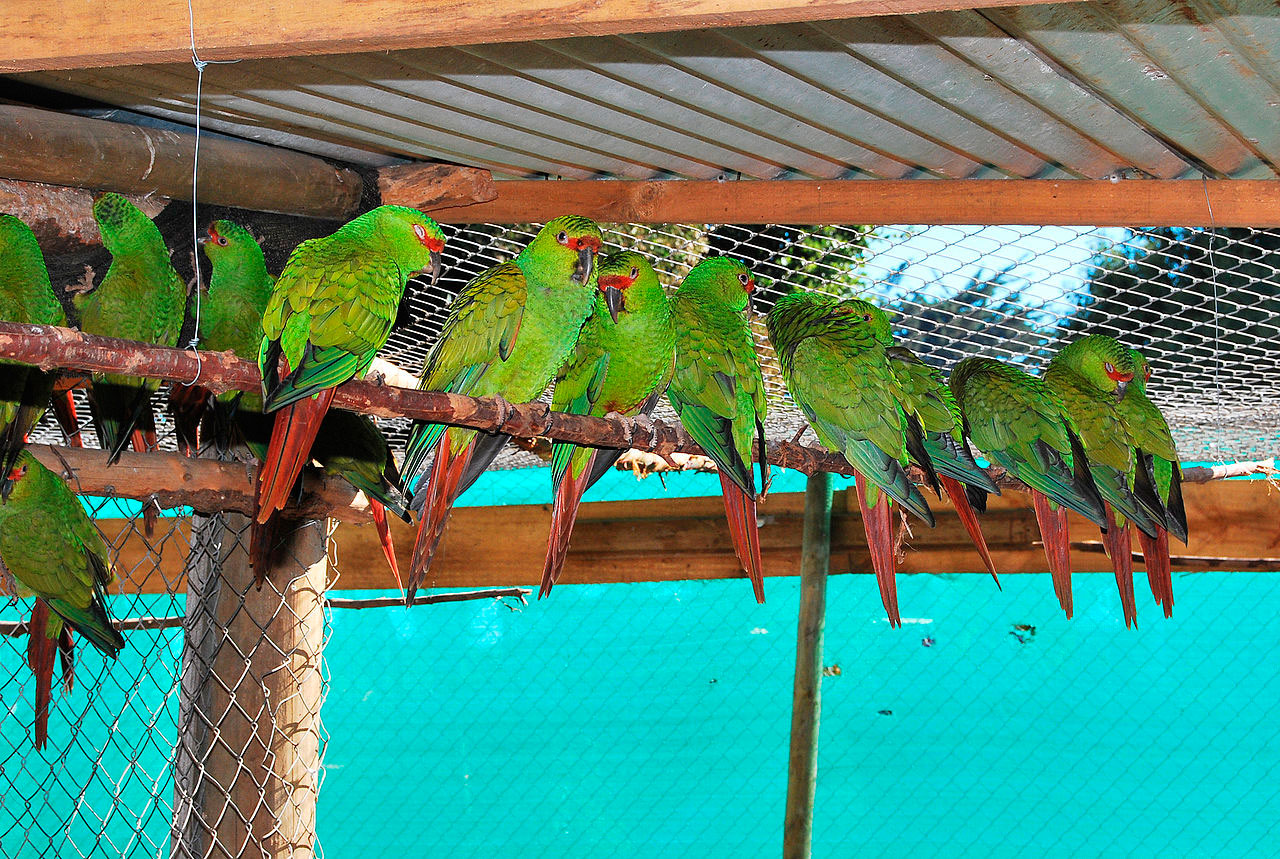
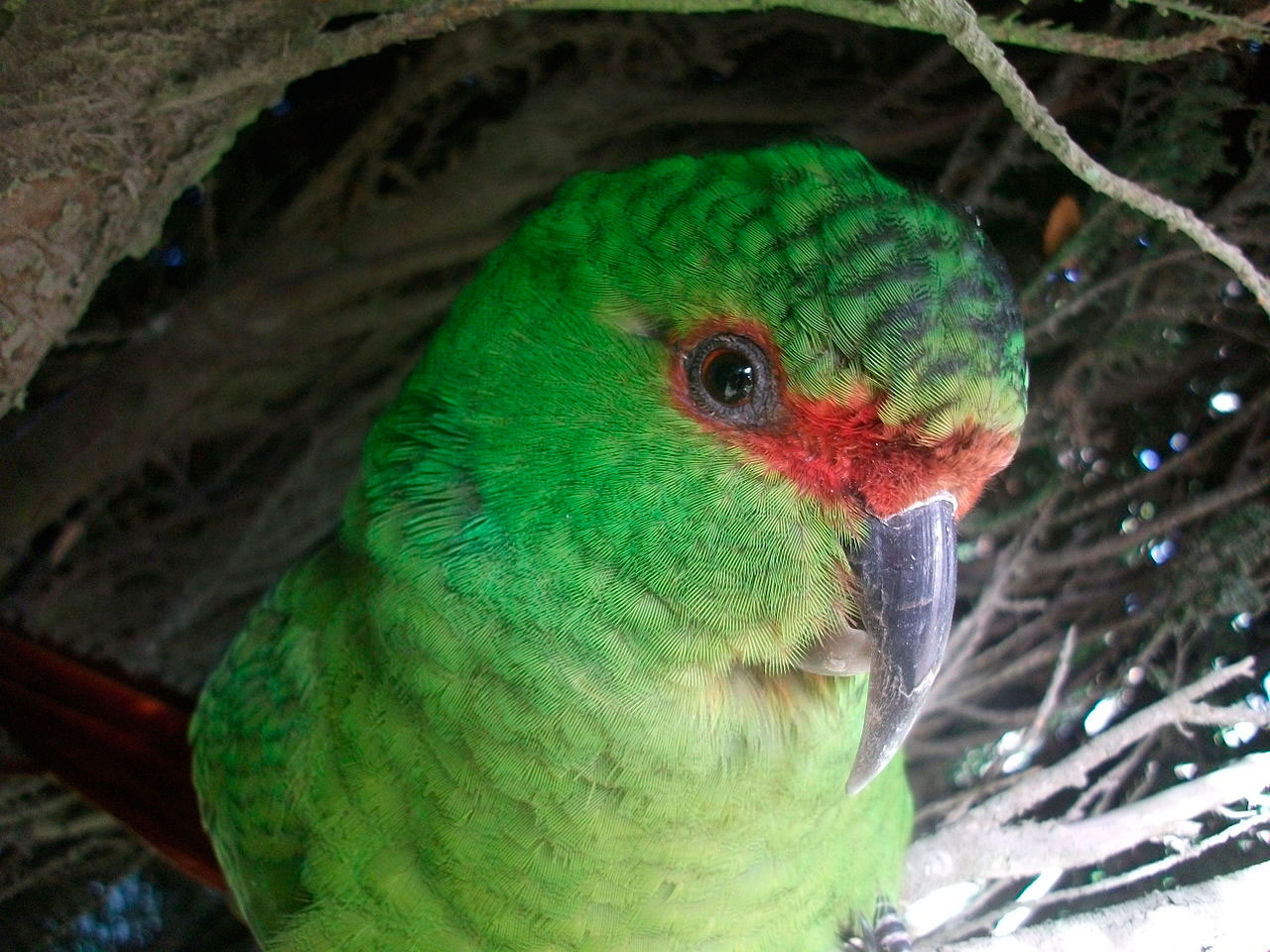
The Slender-billed Parakeet (Enicognathus leptorhynchus) has the lores, forecrown and a narrow ring feathers around the eyes bright crimson red; cheeks and sides neck, green; feathers of the crown, the nape, the the mantle and back, with dark green margins producing a scalloped effect (more pronounced in the crown, where the feathers are brighter and more emerald).

Scapulars, rump and uppertail-coverts They are green. Primary coverts green with blue suffusion; other coverts green. Flight feathers green-blue above with dark margins in innerwebs near the tips; light gray below. Underwing-coverts brighter yellowish green. Underparts yellowish green with patch dull red in centre of belly. Upper, the long tail red is off; greenish toward the tip; undertail, dull red suffused greyish.

Slender-billed Parakeet

The upper jaw It is dark gray with colored tip horn, the lower jaw is horn; Strait bare periophthalmic grey; irises orange-red; legs grey.

Both sexes are similar.

Immature darker, with the upper jaw shorter, less red in the face little or no red on belly.

  • Sound of the Slender-billed Parakeet.

Habitat:

Video – "Slender-billed Parakeet" (Enicognathus leptorhynchus)

CHOROY PARROT EATING

The Slender-billed Parakeet dwells in wooded areas, mainly Nothofagus and Araucaria, although they can be seen in more open cultivated fields or pastures, especially in winter. Its range is from sea level in winter to 2.000 meters in summer. Usually in flocks, of a few individuals to several hundred, even in breeding season; large communal concentrations sometimes composed of several thousand birds.

Reproduction:

Nests generally treeholes, often at a certain height and several couples using the same tree; very deep holes fill them with twigs to raise the base level. Occasionally nidifican in rock crevices, building the nest with twigs (for example, bamboo thicket This chusquea) if there is no tree cavities available. breeding season in November-December. Clutch 5-6 eggs.

Food:

Its diet It consists of seeds of wild and cultivated plants (They are sometimes considered a pest), including grains and thistles, seed cones araucaria (March April) open with its elongated peaks, acorns, seeds of Nothofagus and bulbous roots. generally place vigilantes while the rest of the birds feed.

Distribution and status:

Distribution area (breeding / resident): 195.000 km2

The Slender-billed Parakeet It is confined to the center Chile, from the South of Santiago through coastal lowlands and valleys on the slopes of hills peaceful, south to the Chiloe Island and maybe Palena River in the North of Aysen; They can also be seen in Isla Mocha off the southwest coast bio bio.

made some movements altitudinal seasonal, with moving from coastal lowlands to the foothills of the hills between spring and autumn bird (September-May).

Quite common, although in recent decades its population has suffered a decline due to, fundamentally, deforestation, his capture and the Newcastle disease.

Less frequent and perhaps only sporadic in the northern and southern ends of its range.

Caught locally as pets, although quite rare in captivity outside Chile.

Conservation:

State of conservation โ“˜


minor concern Minor Concern โ“˜ (UICN)โ“˜
  1. Current red list category of the UICN: Least concern.
  2. The population trend: Stable.
  3. Population size : Unknown.

(classified in Appendix II of CITES)

Justification of the Red List of the Category

This species has a range very large, and as a result does not approach the thresholds for Vulnerable under the range size criterion (extent of occurrence <20.000 km2). La tendencia de la population seems to be stable, and therefore the species does not approach the thresholds for Vulnerable according to the population trend criterion. (> 30% decrease of more than ten years or three generations). The population size It has not been quantified, but are not believed to approach the thresholds for Vulnerable based on population size criteria (<10.000 individuos maduros con una disminuciรณn continua estima en> 10% in ten years or three generations, or in a particular population structure). For these reasons, the species is evaluated as Least concern.

Justification of the population

The world population It has not been quantified, but the species according to sources is locally common (pit et to the., 1997).

Justification trend

The population suspected to be stable in the absence of evidence of any reduction or substantial threats.

"Slender-billed Parakeet" in captivity:

Virtually unknown until 1976.

It is a nice and noisy bird, whose docility and cunning behavior have meant it to be hunted down and captured to commercialize as pets, very common but absolutely illegal practice, because they are removed from their natural means of inhabitancy in South Chile, which they can not be replaced in urban areas and in captivity. People who do sell through a network of illegal trafficking. However, it is a rare bird watching in captivity outside Chile.

In captivity, according to sources, a specimen lived 15,3 years.

Alternative names:

– Chilean Parakeet, Long-billed Conure, Long-billed Parakeet, Slender billed Parakeet, Slender-billed Conure, Slender-billed Parakeet, Slight-billed Conure, Slight-billed Parakeet (English).
– Conure ร  long bec, Perriche ร  long bec, Perruche ร  long bec (French).
– Langschnabelsittich, Langschnabel-Sittich (German).
– Periquito Delgado-faturado (Portuguese).
– Choroy, Cotorra Choroy (espaรฑol).


scientific classification:

Admiral Phillip Parker King

Order: Psittaciformes
Family: Psittacidae
Genus: Enicognathus
Scientific name: Enicognathus leptorhynchus
Citation: (King, PP, 1831)
Protonimo: Psittacara leptorhyncha

Images Slender-billed Parakeet:


Species of the genus Enicognathus

Sources:

  • Avibase
  • Parrots of the World โ€“ Forshaw Joseph M
  • Parrots A Guide to the Parrots of the World – Tony Juniper & Mike Parr
  • Birdlife
  • surmagico

– Photos:

  • (1) Enicognathus leptorhynchus (Slender-billed parakeet), Vogelpark Walsrode Taken sometime during 1985 by Rรผdiger Stehn – Flickr
  • (2) Enicognathus leptorhynchus Paso Mamuil by Malal xerofito – Flickr
  • (3) they choroy, recovering after being stoned Austral By Blizzard (Own work) [CC BY-SA 4.0], via Wikimedia Commons
  • (4) Slender-billed Parakeets rehabilitating in a Parque Tumbes in a large aviary, Talcahuano, Bio Bio Region, Chile. In January 2012, about a 100 parrots were rescued from a pet shop in La Granja, Santiago Province, Chile. They were rehabilitated for about three months before being released to the wild. By Municipality of Talcahuano [CC BY-SA 2.0], via Wikimedia Commons
  • (5) Enicognathus leptorhynchus – thin-beaked conure – Slender-billed conure – long-billed conure Florin Feneru – Flickr
  • (6) A painting of a Slender-billed Parakeet (originally captioned ยซPsittacara leptorhyncha Long-billed. Parrakeet-Maccaw.ยป) by Edward Lear 1812-1888 [Public domain], via Wikimedia Commons

– Sounds: Ross Gallardy, XC296142. accessible www.xeno-canto.org/296142