▷ The world of Pets: Dogs, cats, birds, reptiles, amphibians

Fairy Lorikeet
Charmosyna pulchella


Fairy Lorikeet

Content

Description

18 cm.. length and a weight between 24 and 34 g..

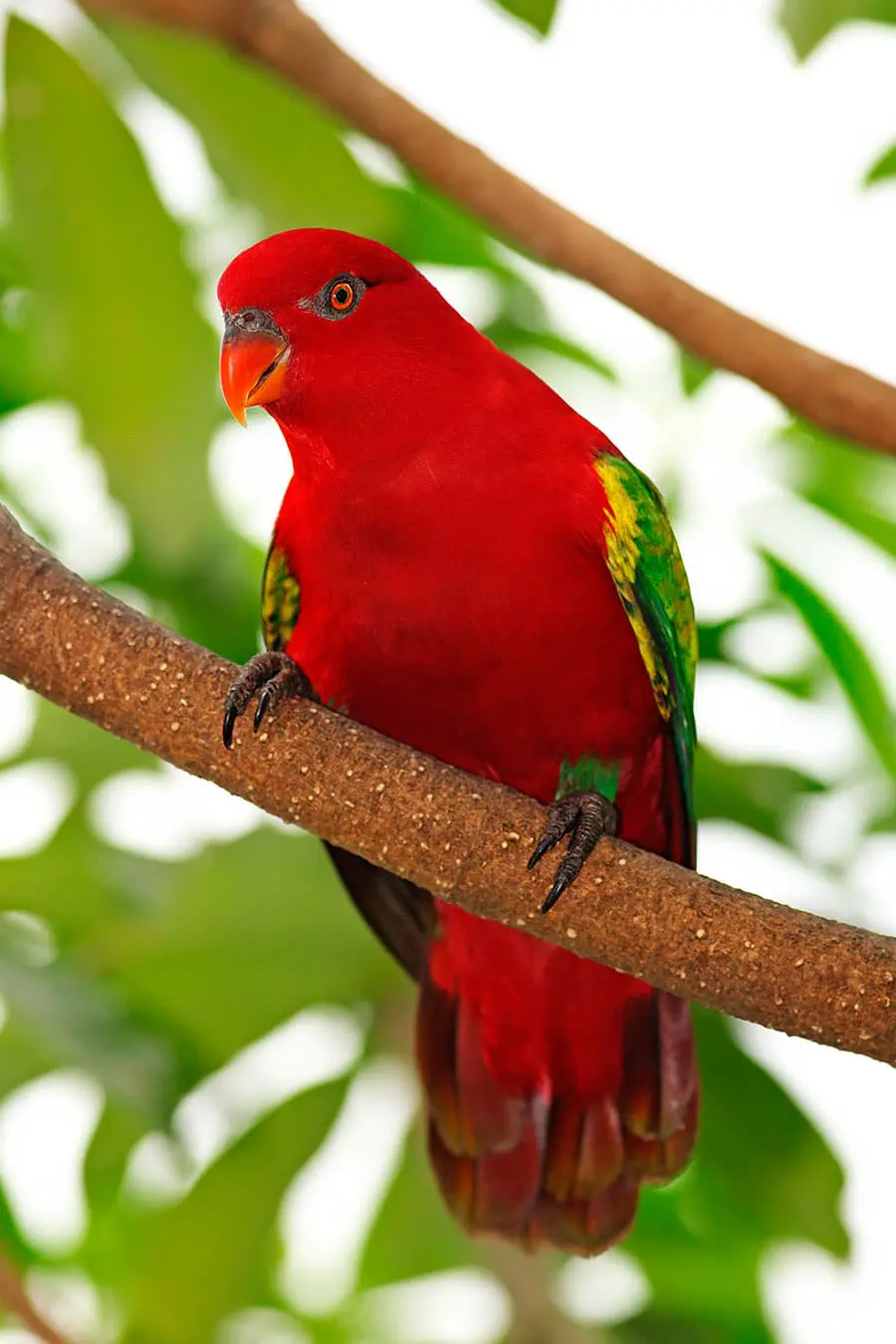
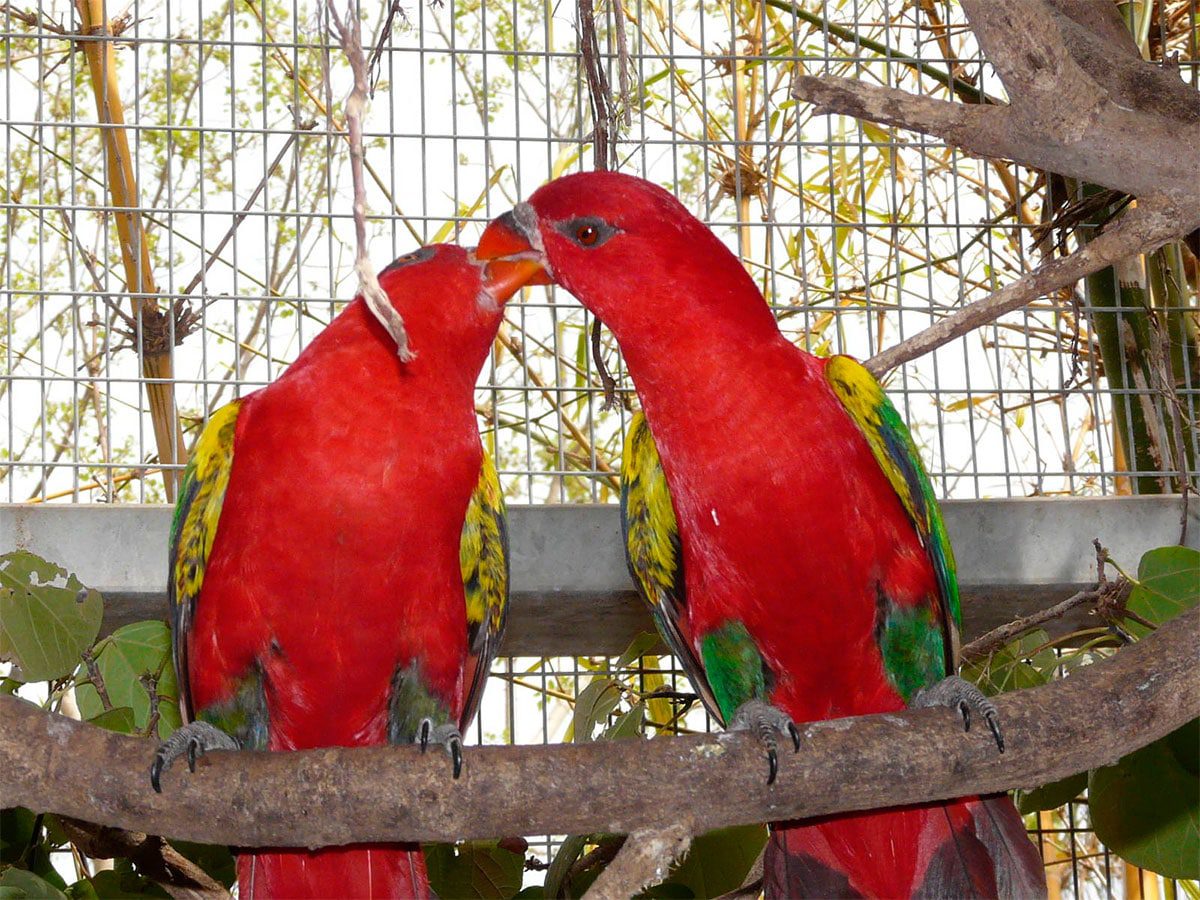
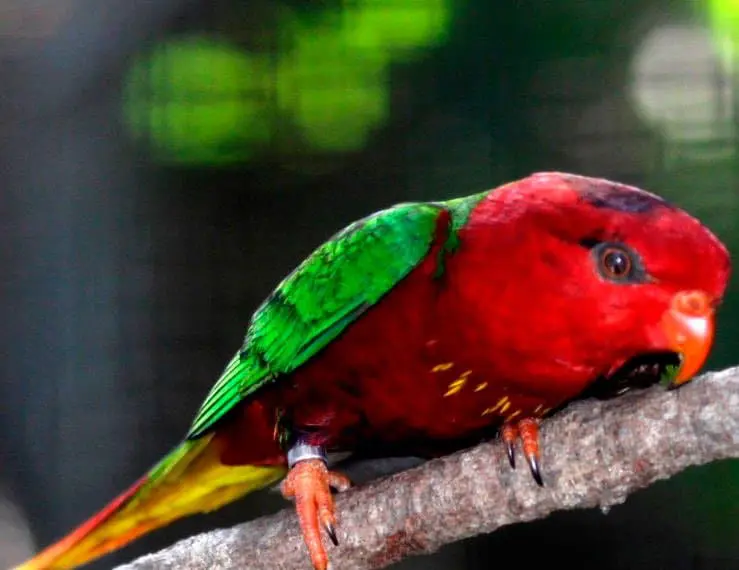
The head of the Fairy Lorikeet (Charmosyna pulchella) is dark red with the back of the crown Black extending from above and behind the eyes up to the nape. Mantle Green with a black area below the nape and collar of color red dark at the height of the shoulders; under the back It shows a patch of dark violet interspersed with some green feathers on the ends; rump and tail coverts view from above of color green.

Wings Green with extremes of color black in them flight feather and in the internal parts of the coats. below the wings Red with coverts marginal green; flight feather blackish.

The underparts Red with stripes of pale yellow in the center of the chest, the thighs purple with yellow stripes. The tail view from the top of green at the top with a black shaft in the Center and the rest of red and yellow at the tip; view from below, the tail is yellow, bathed in red and green ends.

The bill is orange with gray tip; irises yellow red; legs oranges.

The female shows a color green beige, not red, on the sides and a yellow patch in the flanks that extends to the sides of the rump.

The female of the subspecies Rothschildi also shows more green in the underparts males and a green mottling on the upper part of the chest.

The Immature They show the yellow patch of the flanks more defined than the females. The lower part of the back, mainly green with some blue-violet. Top of the chest Green mottled without clearly defined yellow stripes adult. Crown Red with black patch restricted to the nape and mixed with the green of the upper mantle. Lack of the Red of the part back from neck clearly defined in adults. Yellow area at the bottom of the flight feather. Iris brown. Beak and feet grayish brown.

Subspecies description

There are two subspecies including the nominal. A third, Charmosyna pulchella beautiful, described by Devis (1900), is considered here as Charmosyna pulchella pulchella.

  • Charmosyna pulchella pulchella

    : (Gray,GR, 1859) – The nominal


  • Charmosyna pulchella rothschildi

    : (Hartert, 1930) – The patch of the crown descends to find is with them eye; Green fusion behind the yellow lines of the chest, and green fusion in the flanks and the thighs (that can also show some yellow stripes); without the Red of the neck and much less defined the violet patch in the lower part of the back.

Habitat:

Nomads. They are mainly distributed in montane forests, at the edges of forests and secondary growth forests. Its preferred habitat are the mountains between 500 and 1.800 m, but also found in lowlands up to the level of the sea and in the mountains up to 2.300 m.

Found in pairs or flocks of 15 or more members, uniting in the tops of trees in flower with others Charmosyna lorikeets, including the Josephine's Lorikeet.

Reproduction:

In captivity it nests continuously, with incubation of 25 days shared by both parents. Usually, It lays two eggs in a hole in the base of one epiphyte. In nature it is intended that nests between January and April (Pratt picked up breeding males in March).

Food:

It feeds on pollen and nectar.

Distribution:

The Fairy Lorikeet is distributed between New Guinea in Irian Java (Indonesian) and Papua New Guinea, from the East of Vogelkop to the peninsula of Huon. Owen Stanley mountains and southeastern intervals.

Subspecies distribution:

  • Charmosyna pulchella pulchella

    : The nominal


  • Charmosyna pulchella rothschildi

    : The mountains Cyclops and the slope North of the mountains on the idenburg river (Irian Java).

Conservation:
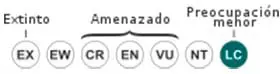

minor concern


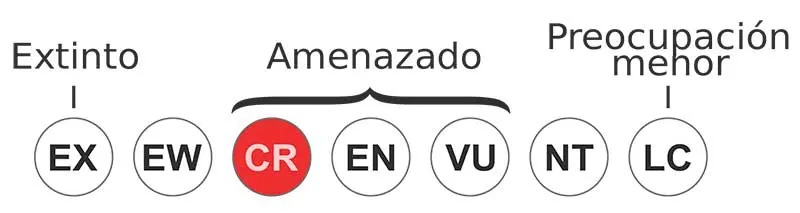
• Current IUCN Red List category: Least concern.

• Population trend: Stable.

The world's population has not been quantified, It is thought that it surpasses the 500.000 birds. the species, according to information, is abundant in some areas, but few in others due to the trade (pit et to the., 1997). Suspected that the population is stable in the absence of evidence of any reduction or substantial threats.

"Fairy Lorikeet" in captivity:

A small number of captivity.

Alternative names:

– Fairy Lorikeet, Little Red Lorikeet, Little Red Lory (ingles).
– Lori féérique, Lori à croupion noir, Lori féerique, Loriquet à croupion noir (French).
– Goldstrichellori (German).
– Lori Lindo (español).

scientific classification:

– Order: Psittaciformes
– Family: Psittaculidae
– Scientific name: Charmosyna pulchella
– Citation: Gray,GR, 1859
– Protonimo: Charmosyna pulchella

«Cute Lori» Images:

————————————————————————————————

«Lori Lindo» (Charmosyna pulchella)


Sources:

– Avibase
– Parrots of the World – Forshaw Joseph M
– Parrots A Guide to the Parrots of the World – Tony Juniper & Mike Parr
– Birdlife

– Photos:

1 – animalphotos.me
2 – by W. Voit – koppiekrauw
3 – animalphotos.me
4 – Author iggino in Vogelpark Walsrode, Walsrode, Lower Saxony, Germany – lynx
5 – in Neues vom Loro-Parque – koelle-zoo
▷ The world of Pets: Dogs, cats, birds, reptiles, amphibians

Red-throated Lorikeet
Charmosyna amabilis

Red-throated Lorikeet

Content

Description

18 cm.. length.

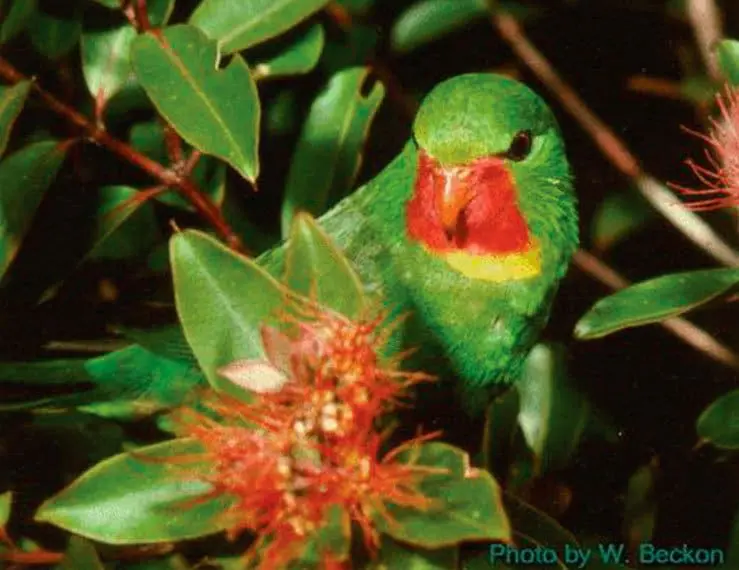
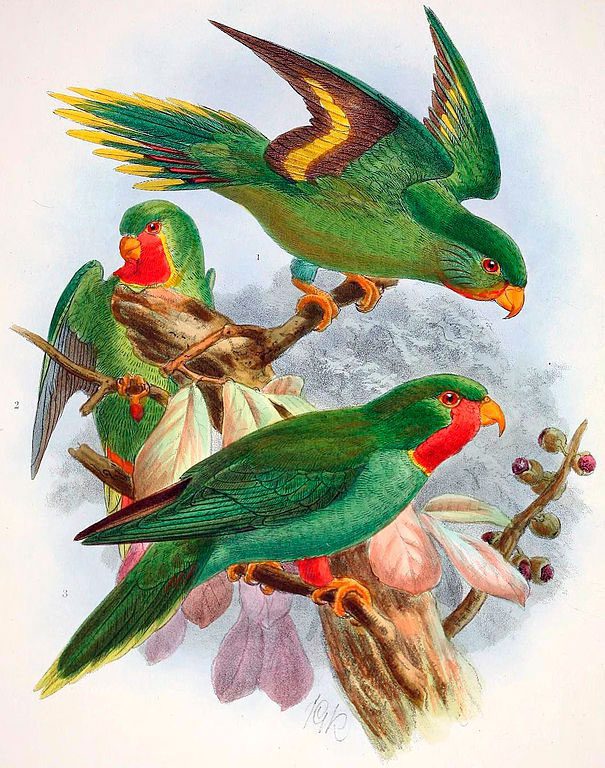
The head of the Red-throated Lorikeet (Charmosyna amabilis) is green with lores and chin red. Upperparts green. Wings internal and ends with green feathers flight feather color black. Throat red, bordered below by a narrow yellow collar; rest of the underparts with a yellowish green that upperparts, particularly in the center of belly; the thighs red. The tail above green a little darker than the rump, with yellow ends; undertail yellow. Bill orange; irises yellow; legs orange-red.

Male and female are equal.

Immature generally duller. The the thighs dull purple. The yellow band throat much weaker than in adults and the red facial and marks throat more restricted.

Habitat:

Move by tropical forests, mainly over the 500 m. Son nomads and fly in pairs or small flocks of 5-8 birds in search of flowering trees, uniting to feed on flowers, nectar and pollen. They prefer to feed in the canopy, and although it is apparently ejected away from the areas of power by the aggressive Collared Lory, Holyoak He found two species feeding on the same tree during his remarks in 1973.

Reproduction:

Breeding and nesting habits unknown.

Food:

They feed actively, to often hung upside down to get to flores.

Distribution:

Size of the area of distribution (reproduction / resident): 37.100 km2

endemic to the Fiji Islands where it is rare and usually only moves above 500 meters and below 1.000 m. Is distributed between in Viti Levu, Ovalau (where it may now be extinct), Vanua Levu and Taveuni. In 1973 Holyoak found at a Red-throated Lorikeet on a wooded Ridge around 250 metres in Viti Levu, species you saw or heard on five different days while exploring Taveuni thinking that the species was widespread in the rainy forests at an altitude between 550 and 1,000 m. The species was also recorded in rainforests between 120 meters and 980 feet by Martyn L. Gorman (1975), but it is said that they are rare. These records are among the few documented sightings of this century. The world's population is believed to be of less than 10.000 specimens. Despite its apparent rarity, This species may be overlooked due to their unobtrusive plumage and behavior.

Conservation:


critical hazard


• Current IUCN Red List category: Critical Hazard

• Population trend: Decreasing

Threats to the lowlands and hills of the forest is slowly being erased much of Fiji. But, the rarity and assumed decline of this species is probably largely the result of predation by introduced mammals, especially Black Rat (Rattus rattus) , as it is the case with the closely related New Caledonian Lorikeet (Charmosyna diadema).

Increases in course in the logging and the expansion of the road network, especially around the Highlands of Monasavu and Serua in Viti Levu, It is likely that you have caused an increase of the density of these rats (Watling 2000, G. Dutson in litt. 2005). The Indian Brown Mongoose (Herpestes fuscus) introduced, is also present in the areas of distribution of the Red-throated Lorikeet and it can be a threat (V. Masibalavu in litt. 2012).

Agricultural expansion is encroaching on primary forest in Taveuni. Have a distribution in mountains close to the maximum altitude within its distribution area, It also makes this potentially susceptible species to climate change (BirdLife International).

Is species is protected by the laws of Fiji. In Viti Levu, dwells within the Tomaniivi nature reserve, but this is not large enough to maintain a resident population and, Despite the creation of the extension Wabu proposal to make a reservation of adequate size, this would not provide better protection against rats if the reserve is kept unmanaged (D. Watling in litt. 2000)

"Red-throated Lorikeet" in captivity:

Unknown in captivity.

Alternative names:

– Red-throated Lorikeet, Red throated Lorikeet (ingles).
– Lori à gorge rouge (French).
– Rothöschen (German).
– Lori de Garganta Roja, Lori Gorgirrojo (español).

scientific classification:

– Order: Psittaciformes
– Family: Psittaculidae
– Scientific name: Charmosyna amabilis
– Citation: (Ramsay, 1875)
– Protonimo: Trichoglossus (Glossopsitta) amabilis

————————————————————————————————

«On Gorgirro» (Charmosyna amabilis)


Sources:

– Avibase
– Parrots of the World – Forshaw Joseph M
– Parrots A Guide to the Parrots of the World – Tony Juniper & Mike Parr
– Birdlife

– Photos:

1 – (Photo by Bill Beckon, 1973)
2 – Charmosyna amabilis By Artwork by John Gerard Keulemans (1842-1912). [Public domain], via Wikimedia Commons

▷ The world of Pets: Dogs, cats, birds, reptiles, amphibians

Blue-fronted Lorikeet
Charmosyna toxopei

Content


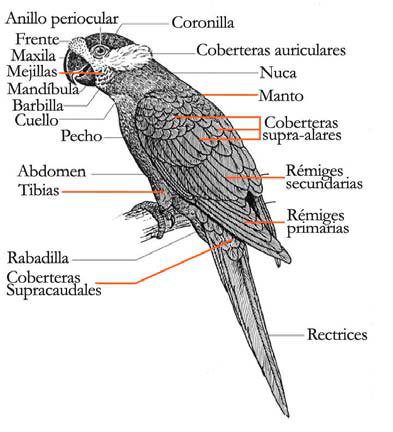
Anatomy-parrots

Description

16 cm.. length.

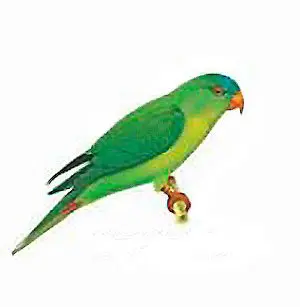
Blue-fronted Lorikeet

The forecrown of the Blue-fronted Lorikeet (Charmosyna toxopei) is bright green, the front of the crown, above the eyes is bright blue; rest of the head green. Upperparts green, bright in the rump. Wings Green with blackish inner feathers. The underwing-coverts green; flight feather Blackish with yellow band in the whole lower part of the secondaries. The underparts brighter yellowish green. Tail green, with red bases and blackish stain. The bill orange; the irises yellow orange; legs orange-red.

Habitat:

If recent observations were in fact of the Blue-fronted Lorikeet, species can be nomadic, moving from high to low altitude on the basis of the availability of food (like some other small parrots). This could explain the paucity of records, especially for a species already by itself it is distributed sparsely. The other possibility is that the birds are distributed only in the forested hills.

Interviews with local residents suggest that the species moved to the lowlands during the two annual seasons of heat, in March-April and August-November.

Reproduction:

There is no data.

Food:

The locals who live in the plateau frog They reported that the bird feeds on nectar and pollen from the trees in flower.

Distribution:

Endemic to Buru, Indonesian. Obviously, is a rare species, and virtually nothing is known of its State. The original specimens were collected in the wooded hills between 850 m and 1.000 m.

In 1980 the species was reported to be quite common in plantations, secondary and primary forest, but this record has been suggested as a reference to the Red-flanked Lorikeet (Charmosyna placentis) (the record of this species from Buru It is in fact wrong). In 1989 two flocks of five to six birds, supposedly this species, they were seen during a selective felling of forests to 600 meters on the Teluk Bara. There is also a report of 1993 of four small unidentified parakeets seen in the same area as the observations of 1.980. The species are now considered endangered by Birdlife International, although a thorough search must be carried out before its status can be fully determined. VULNERABLE.

Conservation:


critical hazard

• Current IUCN Red List category: Critical Hazard

• Population trend: Decreasing

• Population size: 50-249 mature individuals

Although there are few records (confirmed or unconfirmed) of the species, It is suspected that it is declining due to loss of forests in the lowlands.

Most of the forests in the coastal lowlands of Buru have they been clarified, and much of the forest in the northern part of the island has been connected shape selective or degraded and fragmented by migratory agriculture, in such a way that only a few small patches of lowland primary forest remain. But, the island's gardens still contain many indigenous tree species. In 2010, There was at least one search operation on a large scale above Buru, located in the lowlands. But, extensive forests of mountain of the island remain largely without being scanned. The topography of the mountain range Kaplamandan is the hope that almost all of the montane forest is inaccessible to loggers (A. Gray in litt. 2010).

All of the original specimens were captured alive using lime, However, the species is not kept as a pet, does not seem to be listed. Have a distribution of mountain which is close to the maximum altitude within its distribution area, does this species is potentially susceptible to climate change (BirdLife International data not publ.).

"Blue-fronted Lorikeet" in captivity:

Not found in captivity.

Alternative names:

– Blue-fronted Lorikeet, Blue fronted Lorikeet, Buru Lorikeet (ingles).
– Lori de Buru (French).
– Burolori, Burulori (German).
– Lori de Buru (español).

scientific classification:

– Order: Psittaciformes
– Family: Psittaculidae
– Genus: Charmosyna
– Scientific name: Charmosyna toxopei
– Citation: (Siebers, 1930)
– Protonimo: Hypocharmosyna toxopei

Images "Blue-fronted Lorikeet"

————————————————————————————————

«Lori de Buru» (Charmosyna toxopei)


Sources:

– Avibase
– Parrots of the World – Forshaw Joseph M
– Parrots A Guide to the Parrots of the World – Tony Juniper & Mike Parr
– Birdlife

▷ The world of Pets: Dogs, cats, birds, reptiles, amphibians

Red-chinned Lory
Charmosyna rubrigularis

Content


Anatomy-parrots

Description

17 to 20 cm.. length between 33 and 40 g. of weight.

Red-chinned Lory

The Red-chinned Lory (Charmosyna rubrigularis) has the head green; ear-coverts brilliant emerald green with pale green streaks and showing even paler on the crown; chin, top of the throat and lower lores, surrounded by yellow red. The upperparts, Green olive darker than the underparts. The wings Green with the part internal black and them edges yellow. Yellowish-green below-wing coverts; flight feather grey and black with stripe yellow central.

Underparts brighter yellowish green, clearly more gentle to them upperparts. The tail above it is green with yellow tips, lateral feathers marked in red, black and orange in the bases; by below with broad lateral feathers red, with tips yellow (more or less hidden red rest), central feathers Black with them ends yellow.

Bill orange red; irises orange; legs orange-yellow.

Both sexes are equal.

Immature they are similar to the adult with less red in the chin and throat.

Habitat:

With distributed by the humid forest, mainly in the mountains. Usually found in small flocks of up to ten birds, feeding in the canopy or flying above. Can be seen in the company of others Loris that is feed from nectar, including the much larger Coconut Lorikeet. You can be assured while feeding.

Reproduction:

Unknown breeding habits.

Food:

Feeds of pollen and nectar and it has been noted that they frequent native Palms in the mountains of New Ireland.

Distribution:

Size of the area of distribution (reproduction / resident): 185.000 km2

In Karkar island (off the northeast coast) and the Bismarck Archipelago (New Britain, New Hanover and New Ireland), Papua New Guinea. In Karkar is found from sea level to the top but rarely below 625 m, and more common among 1.150 meters of 1,280 m. common since 450 meters up in New Britain and in New Ireland from 1.500 metres to the Summit of the Hans Meyer Range; Although found as low as a 70 m. It tends to replace Red-flanked Lorikeet at higher altitudes, but it may be sympatric with species in some areas.

Conservation:


minor concern

• Current IUCN Red List category: Least concern

• Population trend: Stable

The population World has not been quantified, but the species according to information is common and abundant (pit et to the. 1997).

Justification of trend

It is suspected that the population is stable in the absence of evidence of any reduction or substantial threats.

"Red-chinned Lory" in captivity:

The species does not arise today as a cage bird.

Alternative names:

– Red-chinned Lory, Red chinned Lorikeet, Red-chinned Lorikeet (ingles).
– Lori à menton rouge (French).
– Rotkinnlori (German).
– Lori Barbirrojo, Lori de Barba Roja (español).

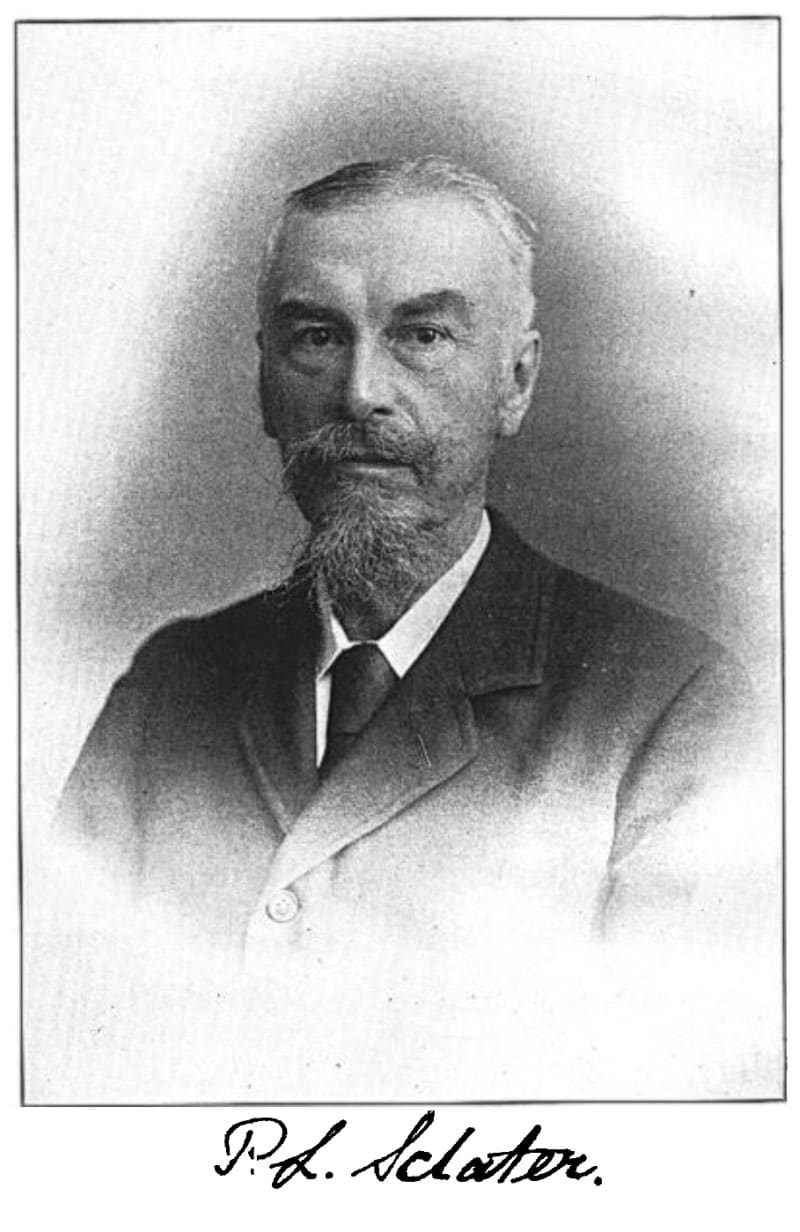
Philip Sclater
Philip Sclater

scientific classification:


– Order: Psittaciformes
– Family: Psittaculidae
– Genus: Charmosyna
– Scientific name: Charmosyna rubrigularis
– Citation: (Sclater,PL, 1881)
– Protonimo: Trichoglossus rubrigularis

Images "Red-chinned Lory"

————————————————————————————————

«On Barbirro» (Charmosyna rubrigularis)


Sources:

– Avibase
– Parrots of the World – Forshaw Joseph M
– Parrots A Guide to the Parrots of the World – Tony Juniper & Mike Parr
– Birdlife

– Sounds: Frank Lambert (Xeno-canto)

▷ The world of Pets: Dogs, cats, birds, reptiles, amphibians

Chattering Lory
Lorius garrulus


Chattering Lory

Content

Description

30 cm.. length and a weight between 180 and 250 g..

The Chattering Lory (Lorius garrulus) has the head, the nape and the the mantle top of color Scarlet bright. Great stain yellow in the center of the the mantle surrounded above and below a light spread of green opaque; scapulars Scarlet, a little darker than the the mantle; rump and top of the tail, bright Scarlet.

the flight feathers green up; coverts a little more pale and with a vague diffusion in bronze. The great coverts a dark gray at their ends; the alula Blackish green with yellow spot in the bend of wing and along the edge of the carpus.

Lori White ilustracion

The bottom of the flight feather of color black with band broadband of color tints in the Center, the coverts yellowish green. Underparts bright Scarlet; green thighs. The feathers of the tail red, with the black end fade Green. The bill orange; irises Orange to yellowish brown; legs grisaceo-negro color.

Both sexes are equal.

Immature with the bill brown, and the irises dark brown.

Description and distribution of subspecies

  • Lorius garrulus garrulus

    (Linnaeus, 1758) – (Halmahera, the Widi Islands and Ternate) The nominal


  • Lorius garrulus flavopalliatus

    (Salvadori, 1877) – (Bacan and OBI) Large yellow patch in the the mantle with much less greenish broadcasting.


  • Lorius garrulus morotaianus

    (Bemmel, 1940) – (Morotai and Riau) Small yellow patch in the mantle of green-dyed.

  • Sound of the Chattering Lory
[audio:HTTPS://www.mascotarios.org/wp-content/themes/generatepress_child/sonidos/Lori Garrulo.mp3]

Habitat:

Though White and Bruce they say the species is common in coastal lowlands with coconut palms, recent observations seem to point to forested areas of high land as their main habitat. It is unclear if the capture is responsible for the apparent absence of their previously preferred habitat. Seasonal movements or nomadic behavior could also be factors for this absence from the coastal lowlands.. The Chattering Lory they occur more often in mature primary and secondary forests, far from human settlements from the lowlands up to 1.300 m.

They are usually in pairs, and are noisy and visible in flight but, like many other parrots, can become difficult to spot when feeding quietly in the forest canopy.

Reproduction:

Little is known about the reproduction of the species in the wild. A couple was seen building a nest in June, other records include the observation of a calf feeding during October and November, and a couple occupying a nest high in a dead tree, also during October.

In captivity, the laying is of two eggs and the abandonment of the nest of the young at 76 days.

Food:

The primary food of the Chattering Lory It is believed to be the nectar and pollen, with local reports of feeding on the flowers of coconut along the coast, although fruits and corn are also included in their diet.

Distribution:

Endemic to the North of the Moluccan Islands, Indonesian, from Morotai, Riau, Halmahera, Ternate, Bacan, OBI and, possibly, Kasiruta and Obilatau. The Chattering Lory has also been released in Sangihe, to the North of Sulawesi.

Locally common, but around human settlements have apparently been reduced by means of traps. It is very popular in the trade because of its imitative abilities.

Conservation:


Vulnerable


• Current IUCN Red List category: Vulnerable.

• Population trend: Decreasing.

The main threat comes from the capture for the cage bird trade. This is the most popular bird exported from the East of Indonesian, largely due to his large imitative abilities. Thousands of copies were legally caught each year in your environment during the Decade of 1980 and principles of 1990, but the real value is probably much higher.

The legal trade was reduced at the end of the Decade of 1990 and ceased in 2003; But, illegal trade continues: in 2007 about 2.800 birds were recorded as looted and in the 2008, 60 were recorded for trade in the markets of birds of Java.

Forests within its area of distribution are largely intact since the beginning of the Decade of 1990, but the exploitation by timber companies has become intensive. Important nesting trees are felled because of its large size, and logging roads greatly facilitating access for trappers, create the perfect combination to bring to the Chattering Lory as threatened species.

Ongoing conservation actions –> Ver and Birdlife

"Chattering Lory" in captivity:

Previously it was very common, now not so much.

Smart, playful and good imitators. The Chattering Lory, However, is very aggressive with other birds. Also messy mainly due to the liquid in his diet.

Alternative names:

– Chattering Lory (ingles).
– Lori noira, Lori des Moluques, Lori noir (French).
– Prachtlori, Gelbmantelllori (German).
– Lóris-amor-amor (Portuguese).
– Lori Gárrulo, Tricogloso Gárrulo (español).

scientific classification:

– Order: Psittaciformes
– Family: Psittaculidae
– Scientific name: Lorius garrulus
– Genus: Lorius
– Citation: (Linnaeus, 1758)
– Protonimo: Psittacus garrulus

Images «Lori Gárrulo»:

Videos "Chattering Lory"

————————————————————————————————

«On the garrison» (Lorius garrulus)


Sources:

– Avibase
– Parrots of the World – Forshaw Joseph M
– Parrots A Guide to the Parrots of the World – Tony Juniper & Mike Parr
– Birdlife

– Photos:

1 – By Benjamint444 (Own work) [GFDL 1.2], via Wikimedia Commons
2 – Birds-pet-wallpapers – link
3 – by Alexkant in Israel. Kiryat Motzkin – zoochat
4 – Photos Zoochat – link
5 – by Josep de el Hoyo – lynx
6 – riscosapenas – link

– Sounds: Marc Thibault (Xeno-canto)

▷ The world of Pets: Dogs, cats, birds, reptiles, amphibians

Purple-bellied Lory
Lorius hypoinochrous

Purple-bellied Lory

Content

Description

The Purple-bellied Lory (Lorius hypoinochrous) has an approximate length of 26 cm.. with a weight ranging between 200 and 240 g..

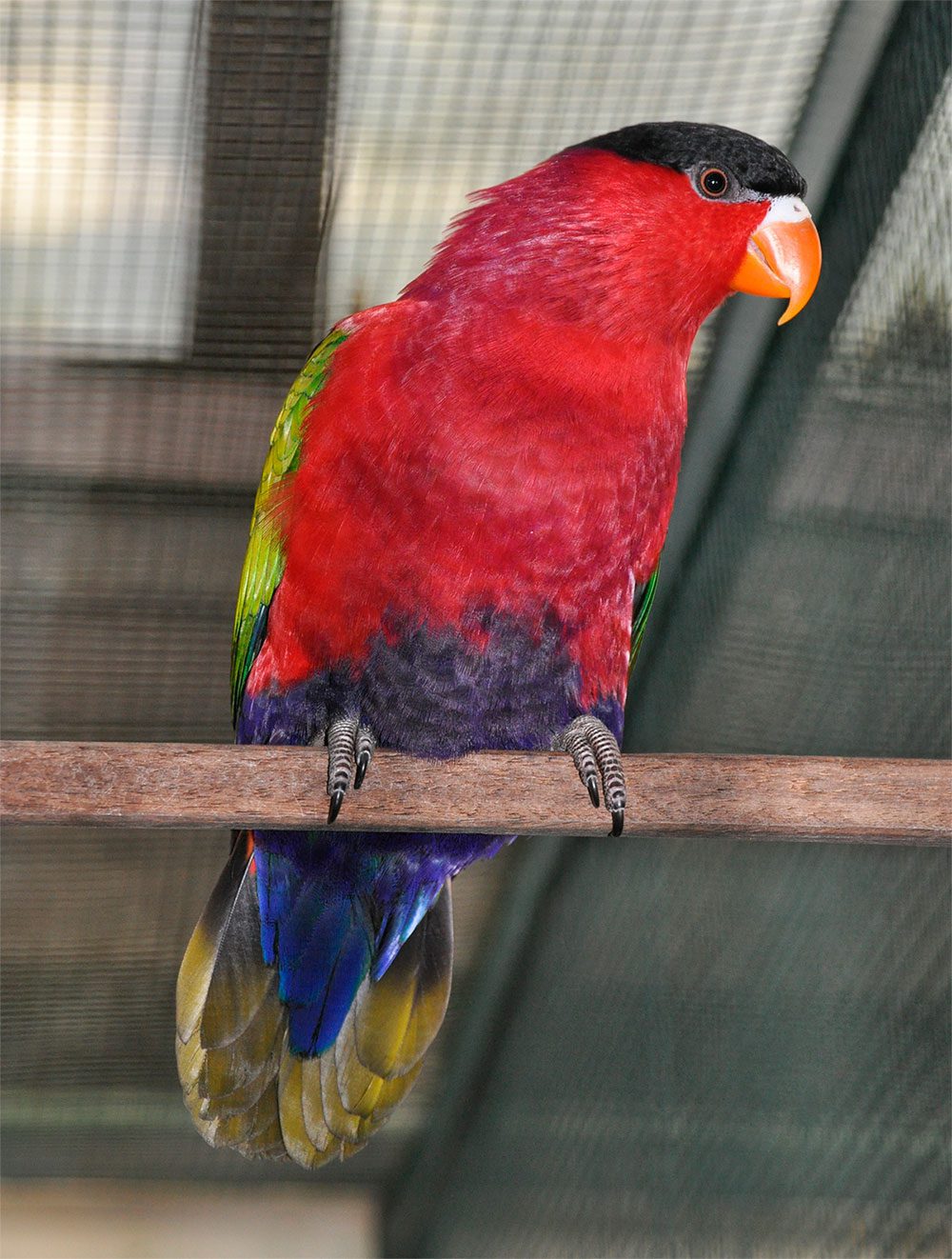
Hood black in color with blue purple sheen extending to the rear of the nape; rest of head red. Upperparts completely red with a band dark variable on the the mantle; upper mantle slightly more purple that the rest of them upperparts.
Primary coverts Bluish; remaining wing Green with the internals of the flight feather in black color. Rojas the wing-coverts with black tips. The flight feather show a large patch yellow in the part internal.

Throat and chest, red, getting more purple towards the top belly; part low belly, the thighs and coverts, dark purple-blue. The parties above of the tail basically red, with the final part in dark blue (appears only teal at rest); undertail, opaque yellow with red hidden base.

Bill orange; cere (waxy soft swelling, containing the nostrils, at the base of the upper beak) white; Iris orange; legs black grey.

There is no significant difference between males and females. In general, the male has a bill a little stronger than the female.

The juveniles has belly pale purple color and peaks are more brownish.

Description 3 subspecies

  • Lorius hypoinochrous devittatus

    (Hartert, 1898) – Differs by the absence of margins black in the large feathers underneath them wings.


  • Lorius hypoinochrous hypoinochrous

    (Gray,GR, 1859) – Nominal.


  • Lorius hypoinochrous rosselianus

    (Rothschild & Hartert, 1918) – Difference with the species rated by the fact of that has the chest the same red that the upper part of the abdomen.

Habitat:

Unlike in the Black-capped Lory, often found in coconut, mangroves and coastal vegetation (especially fond of coconut flowers); the Purple-bellied Lory also frequents low forests, the edges of these, high secondary forests, inhabited or partially cleared areas and gardens. Found individually, in pairs or in small groups of up to 10-20 birds. Ruidoso, visible and Active, they often live in trees or just above the canopy.

In the Island of Papua, they are distributed by the lowlands and foothills, in New Britain up to at least 450 m, in New Ireland until 750 m (where is sympathetic with the White-naped Lory) and up 1.600 metres in the Goodenough island.

Virtually nothing is known of the reproductive ecology of this species., Although is has been able to observe to them males in a, apparent, participation in the cortejo, with repetitive stretching of the neck and movements side of the head.

Reproduction:

Due to its extreme rarity, We know little about their reproductive behavior.
It is likely to be very similar to the of the Black-capped Lory (Lorius lory). This means a spawning two eggs and a incubation period of about 26 days.

Food:

The Purple-bellied Lory It feeds mainly in the canopy in noisy groups. Its diet natural consists of pollen, nectar, flowers, fruits, insects and their larvae, and probably seeds.
Usually see, sometimes, feeding is in company of the Sulphur-crested cockatoo and the Eclectus Parrot.

Distribution:

Size of the area of distribution (reproduction / resident): 61.900 km2

Endemic of the southeast of Papua New Guinea and surrounding island groups. On the island it reaches West, from Lae in the Huon Gulf to the North to Cape Rodney in the South. Is distributed in the islands of the archipelagos of D'Entrecasteaux and Louisiade, including (Goodenough, Fergusson, Normanby, Bentley, Misima Island, Tagula and Rossel, Islands Trobriands, Woodlark and Islands of the Bismarck Archipelago, including Umboi, Sakar, New Britain, New Ireland, Witu, Lolobau, Uatom, New Hanover, Tabar and Lihir.

common and locally abundant. World's largest population of 50.000 birds.

Distribution 3 subspecies

Conservation:


minor concern


• Current IUCN Red List category: Least concern

• Population trend: Stable

The world population It has not been quantified, but the species appears to be common and abundant throughout its area of distribution.

Justification of the trend

Suspected that the population is stable in the absence of evidence of declines or substantial threats.

"Purple-bellied Lory" in captivity:

Extremely rare.

Alternative names:

– Purple-bellied Lory, Eastern Black-capped Lory, Purple bellied Lory, Stresemann’s Lory (ingles).
– Lori à ventre violet, Lori de Louisiade (French).
– Schwarzsteißlori, Louisiadenlori (German).
– Loris Hypoinochrous (Portuguese).
– Lori Ventrivinoso, Tricogloso de Streseman, Tricogloso de Vientre Púrpura (español).

scientific classification:

– Order: Psittaciformes
– Family: Psittaculidae
– Genus: Lorius
– Scientific name: Lorius hypoinochrous
– Citation: Gray,GR, 1859
– Protonimo: Lorius hypoinochrous

Images "Ventrivinous Lori":

————————————————————————————————

"Ventrivinous Lori" (Lorius hypoinochrous)


Sources:

– Avibase
– Parrots of the World – Forshaw Joseph M
– Parrots A Guide to the Parrots of the World – Tony Juniper & Mike Parr
– Birdlife

– Photos:

1 – «Lorius hypoinochrous qtl1» by Quartl – Own work. Licensed under CC BY-SA 3.0 via Wikimedia Commons.
2 – Animal Photos – Enlace
3 – parrots-pictures
4 – by Bilder von Marion – papageien.org
5 – Free pet wallpapers – link

– Sounds: Frank Lambert (Xeno-canto)

▷ The world of Pets: Dogs, cats, birds, reptiles, amphibians

Ultramarine Lorikeet
Vini ultramarina

Ultramarine Lorikeet

Content

Description

The Ultramarine Lorikeet (Vini ultramarina) has a length of 18 cm.. and an approximate weight of 35 g..

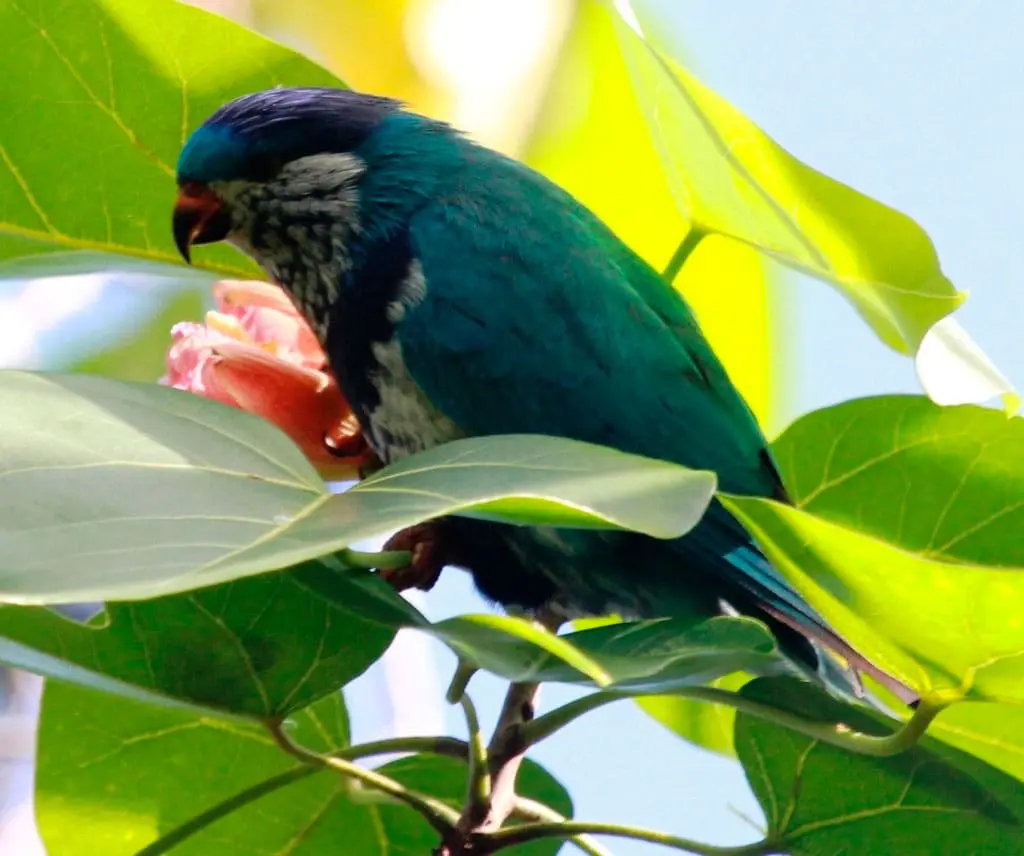
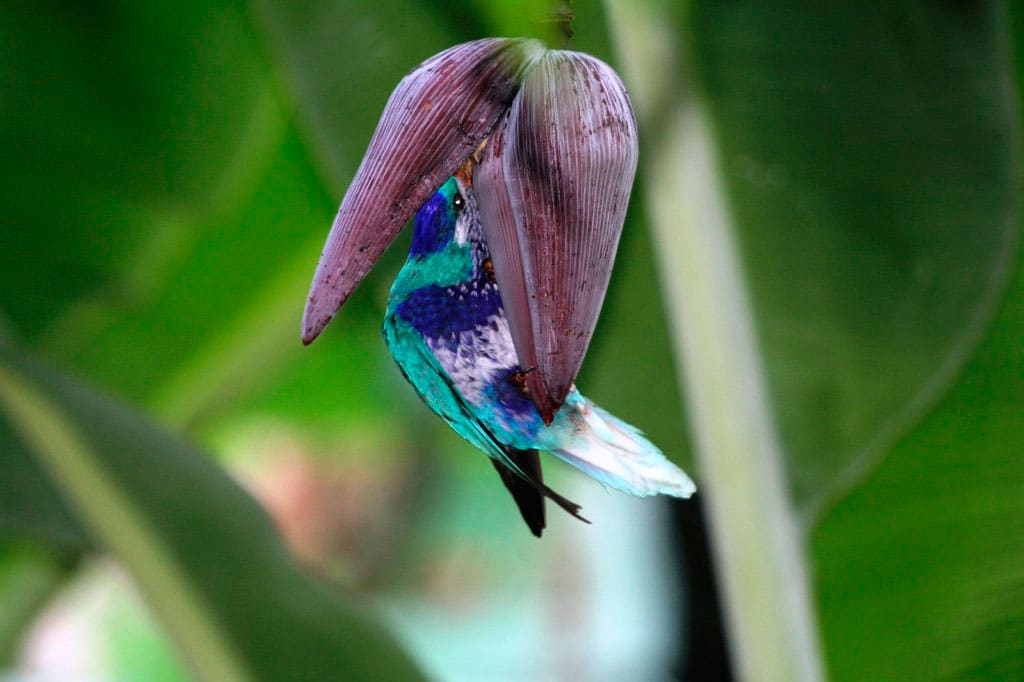
Forehead bright navy blue iridescent; crown and nape Mallow dark blue with streaks of light blue; lores and spots on ear-coverts, white (bases of ear-coverts, purple and blue color). Mantle and covert wing, Navy blue; rump and tail coverts, dark blue light. The flight feather, light blue, blackish internal. Blue off the Underwing coverts. Throat dark blue with white speckles; in the band chest mauve blue with área subterminal pale blue feathers. Belly blank slate bases in feathers, giving a mottled appearance; the thighs dark blue malva; coverts, Turquoise.

The uppertail-coverts, whitish blue with navy blue light diffuse in the outer margins;
undertail coverts whitish merged with navy and some irregular gray markings.

Bill yellow orange, upper jaw, blackish brown at the base; irises brownish yellow; the orange legs.

Both sexes are equal but the female It is slightly smaller.

The immature adult differ by the absence of white on underparts, they are uniformly blackish. Also by bill black, irises Dark Brown and legs orange-brown.

Habitat:

In the Decade of 1970 in Nuku Hiva, these parrots were found only in pristine forests (that they have not been touched and that it is in its original condition) on the 700 m.

There is a similar habitat preferences in UA Pu, where are located mainly in montane forests between 700 and 1.000 m. Populations have also been of Ultramarine Lorikeet in banana plantations, coconut and mango (Mangifera indica), in coastal areas.

The species seems to have a wider range of habitat preferences in UA Pu., being found at altitudes ranging from the coast to wooded crests.

They feed in trees with flowers, especially coconut trees and Erythrina.

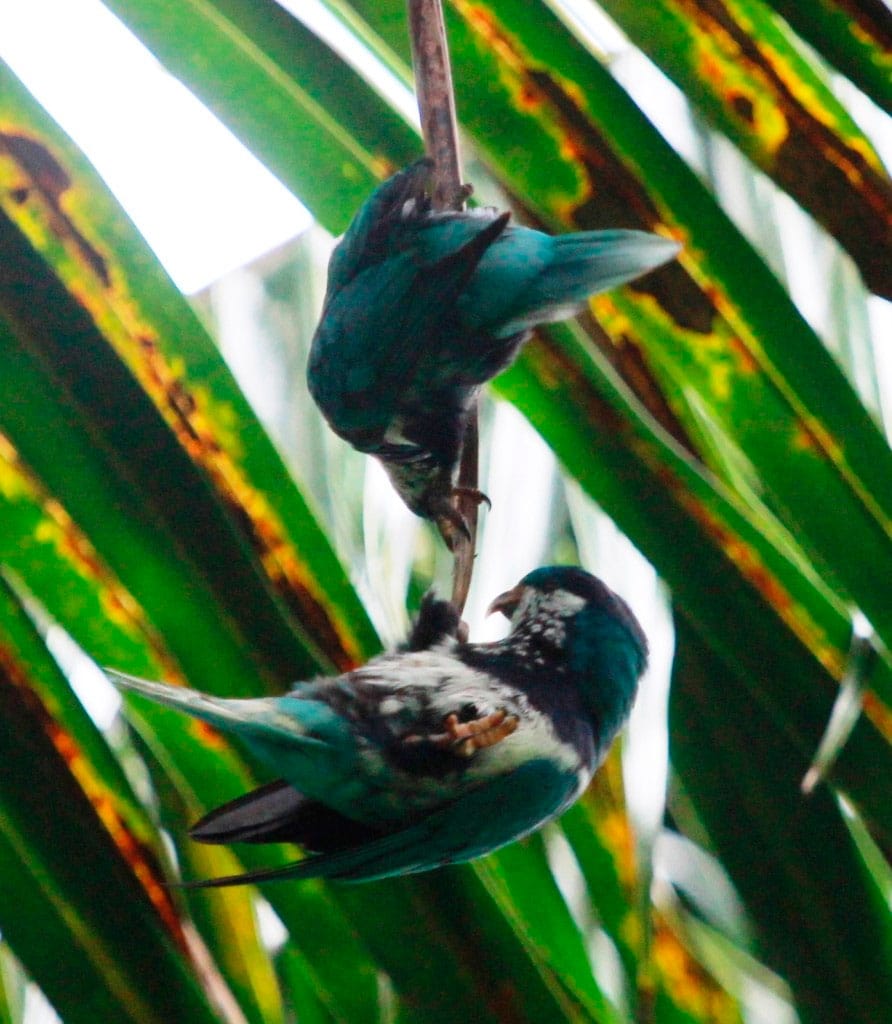
Loud and lively; the birds move freely between the canopy and lower floors, allowing the human approach. They usually travel in pairs or groups of up to a dozen of individuals. Most of its flights are made below the level of the trees, but for longer distances they rise spiral up to considerable heights.

Extremely Active, rarely long they stay in a tree and feeds using the peak acrobaticamente support.

Reproduction:

The nesting of these birds is from June to August.

It nests in hollow trees, preferring Artocarpus altilis, Pometia, Pandanus tectorius and Hibiscus tileacus. Sometimes they use the old nest of another species. They lay two white eggs.

A captive breeding record gives the chick eight weeks to become independent.

Food:

It feeds on a great variety of trees in flower, nectar and pollen. Within your preferences are the flowers of the coconut palm, the native tree and banana Hibiscus tileaceus.

It also feeds on fruits, especially mango and insects.

Distribution:

Size of its range (reproduction / resident): 100 km2

The Ultramarine Lorikeet is endemic of the Marquesas Islands, of Nuku Hiva, UA Pu and UA Huka, Although fossil remains show that previously most widely spread.

In UA Pu the population was estimated at 250-300 couples in 1975. But in 1988 had shrunk around the 60%, probably due to the spread of rats Rattus rattus, and a hurricane in 1988, Although its effects on the population of birds are uncertain.

In Nuku Hiva the small population of around of 70 birds that inhabited the high valleys and ridges in the northwestern part of the island, between 700 and 1.000 d., You can that they are now extinct.

The majority of the population, to this day, remains in UA Huka, where the species was introduced in 1940. This population would have grown from 200 to 250 couples in the late 1970s and was considered abundant in 1990 at altitudes environment to the 500 d., with a population estimated between 1.000 and 1.500 birds. The main threat to the species, here, is the potential arrival of rats, and between 1993 and 1994, 14 Ultramarine Lorikeet they were moved to Fatu Hiva in an attempt to keep them safe from rats; But, habitat deterioration by grazing mammals and avian malaria, also they have been and are still potential factors to increase the vulnerability of this species.

Conservation:


Endangered


• Current IUCN Red List category: Danger.

• Population trend: Decreasing.

CITES Appendix I. in danger of extinction.

The entire population is located on an island where the species is stable, in other islands recently has been extinguished. The general trend is suspected to be a slow and continuous decrease. If the black rats come to UA Huka the decrease will be quick and severe.

Other threats included are logging in some sectors of the habitat of the Ultramarine Lorikeet to plant crops, fruit trees, and use the trunks for woodcarvings for tourism.

"Ultramarine Lorikeet" in captivity:

Extremely rare.

Alternative names:

– Ultramarine Lorikeet, Marquesas Lorikeet, Ultramarine Lory (ingles).
– Lori ultramarin, Lori de Goupil, Lori des Marquises (French).
– Ultramarinlori (German).
– Loris Vini Ultramarine (Portuguese).
– Lori Ultramar, Lori Ultramarino (español).

scientific classification:

– Order: Psittaciformes
– Family: Psittaculidae
– Scientific name: Vini ultramarina
– Citation: (Kuhl, 1820)
– Protonimo: Psittacus ultramarinus

Images «Overseas Lory»:

Videos "Ultramarine Lorikeet"

————————————————————————————————

«Lori Ultramar» (Vini ultramarina)


Sources:

– Avibase
– Parrots of the World – Forshaw Joseph M
– Parrots A Guide to the Parrots of the World – Tony Juniper & Mike Parr
– Birdlife

– Photos:

1 – Miles to the wild – link
2 – Miles to the wild – link
3 – Miles to the wild – link
4 – An adult bird perched on a palm tree – Author Josep del Hoyo – IBC.lynxeds.com
5- A juvenile bird feeding in a tree. – Author Josep del Hoyo – IBC.lynxeds.com

– Sounds: Mark Todd (Xeno-canto)

▷ The world of Pets: Dogs, cats, birds, reptiles, amphibians

Blue-crowned Lorikeet
Vini australis


Blue-crowned Lorikeet

Content

Description

19 cm.. of length and a weight of 40 to 55 g..

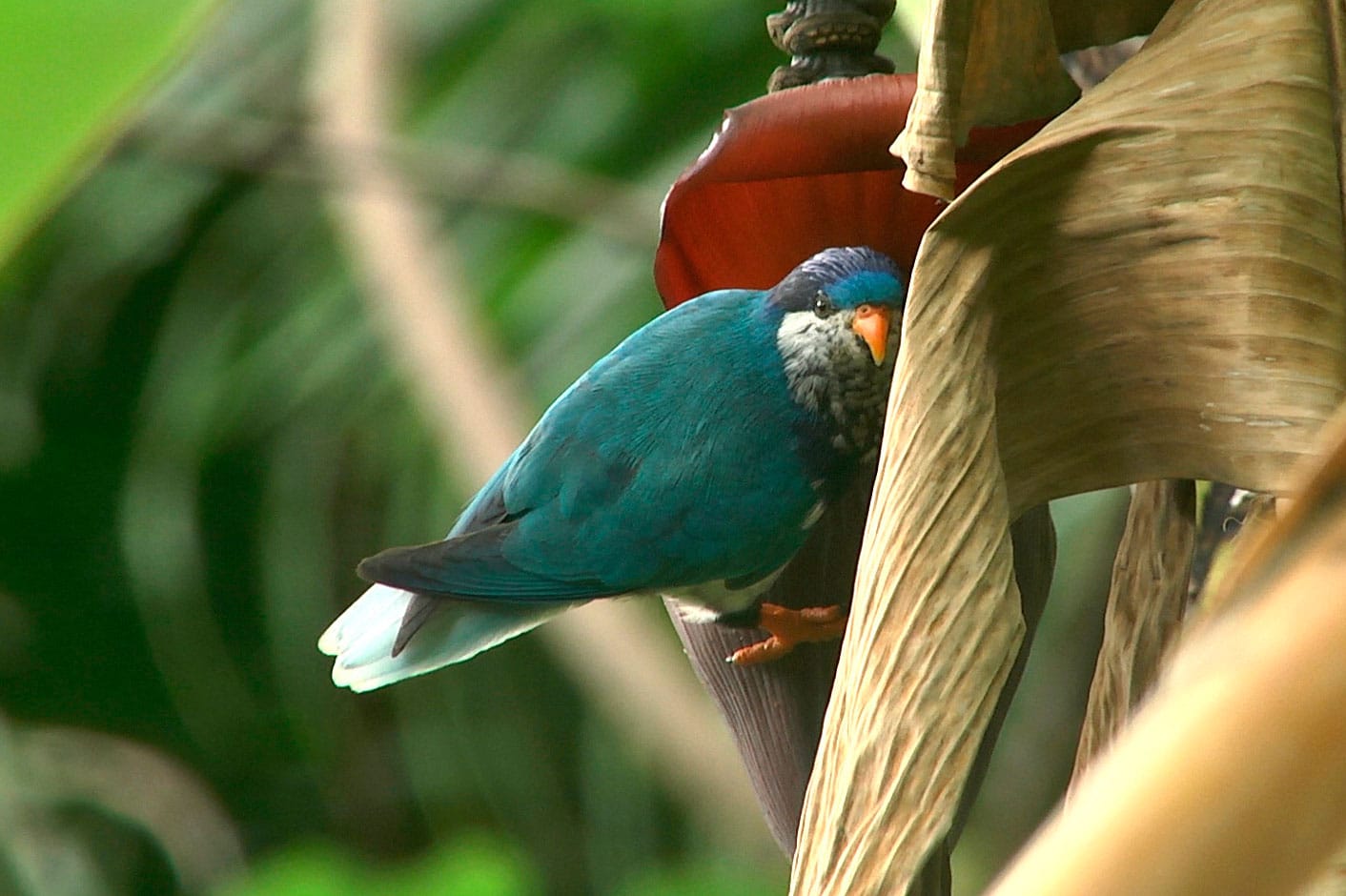
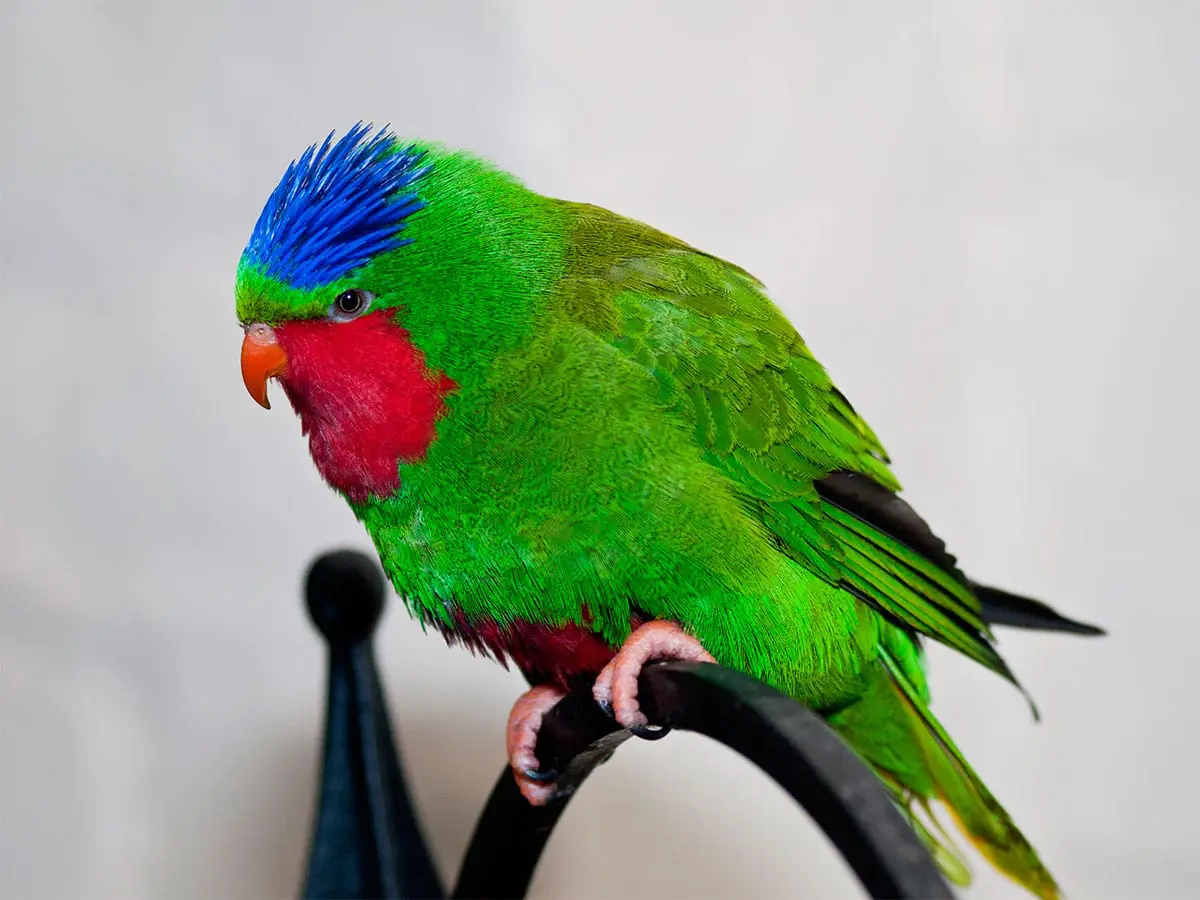
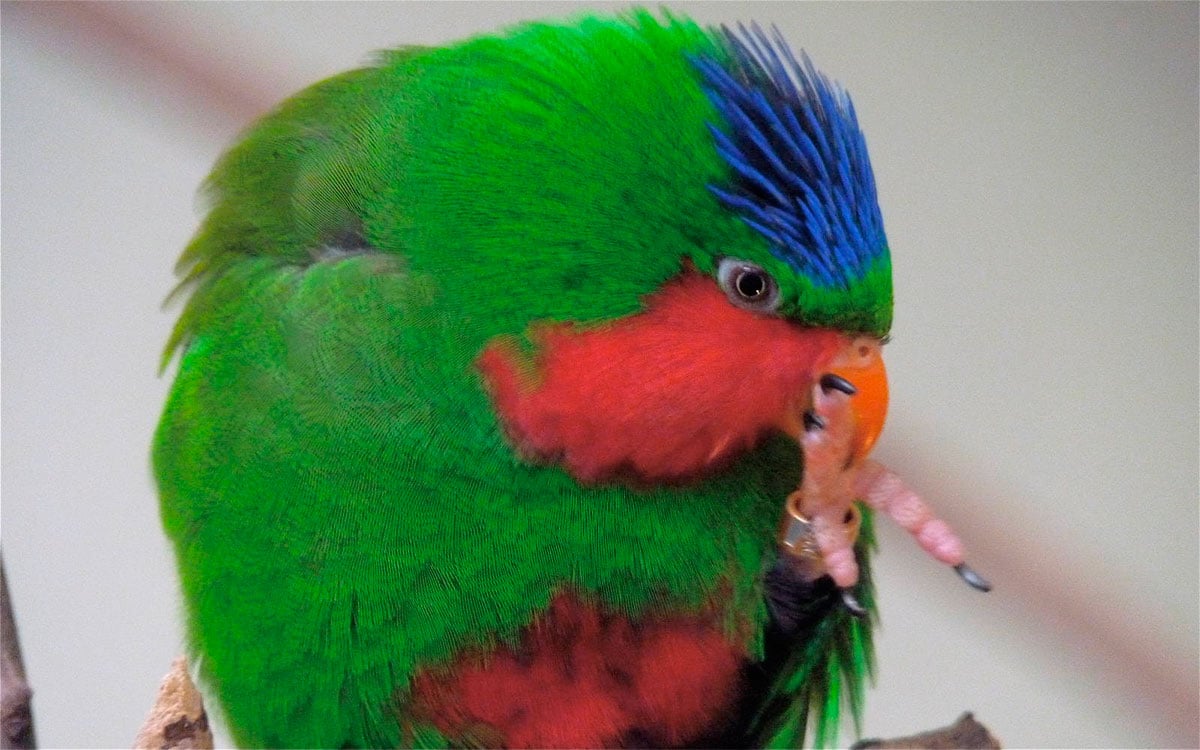
The Blue-crowned Lorikeet (Vini australis) has a plumage mostly green. The upper part of the head is dark blue with light blue streaks. The region of the windows of the nose, the cheeks, the ear-coverts, the neck and the abdomen They are red. the lower part of abdomen and the thighs they are purple blue. The back is green, the interior of the tail is yellowish-green. The irises is reddish brown. The legs are of color red and the bill is orange.

The youth are equal to adults, but with less red in the face and throat, little or none abdominal patch, stripes blue shorter in the crown, no purpura on the thighs, brown the eyes.

Habitat:

It is found in forests, coconut palms or any habitat where flowering trees; coastal mountains, gardens and agricultural areas. Nomad, sometimes traveling between the Islands.

Daily movements in search of food. Aggressive but gregarious, they often move in flocks of up to 12 individuals, except during the breeding season they live with their partners.

In Samoa it is common around villages and plantations and less common in moist forests, higher elevations in the rain forest and secondary growth.

Reproduction:

Nests in holes or hollows of trees, It has also been reported that they dig burrows in the banks of Earth, Although it has not confirmed. The laying is one or two white eggs. Breeding registered in June and August. In captivity the incubation It has been calculated in 23 days.

Food:

It feeds on nectar, pollen and red fruits. It particularly prefers Erythrina, Wild hibiscus and coconut.

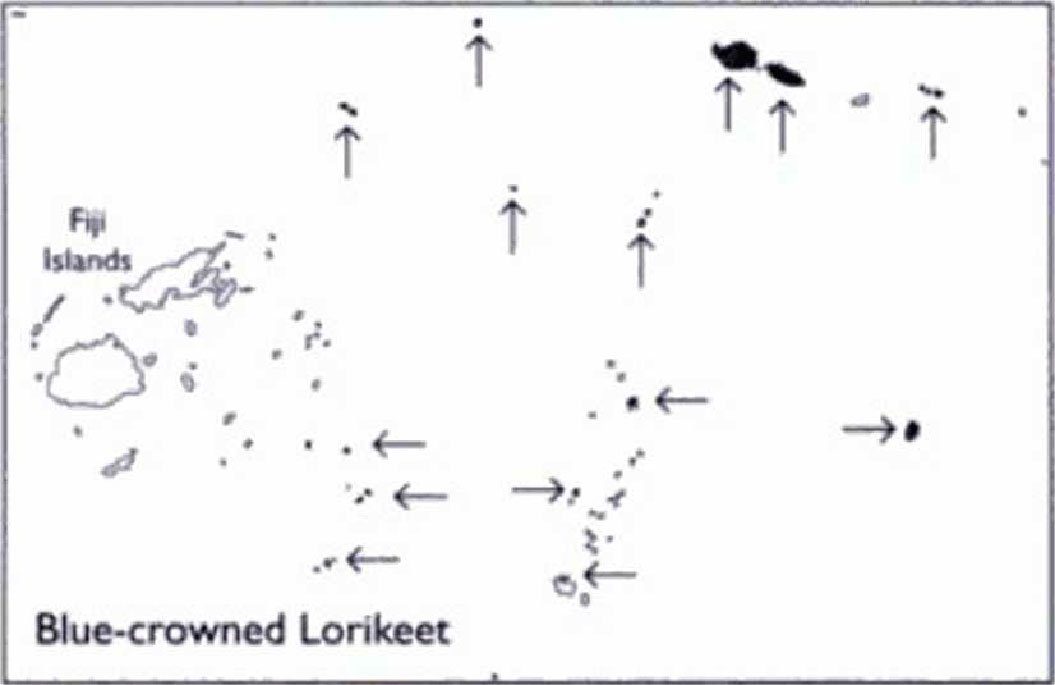
Distribution:

Samoa distribution of Lori
Extends over the archipelagos of Samoa, Tonga and LAU, distributed by Islands: Love, Futuha'a, Fulago, Futuna, Ha'afeva, You're young, Moce, Niue, Ofu, Olosega, Samoa, Salt, Tafahi, Say, Tofua, Tungua, Fire, It's cool, Varoa, I'm sorry and Voleva. In the past was also in ‘USA, Tongatapu and Mata-Utu but there it is extinct.

Conservation:


minor concern

– Current IUCN Red List category: Least concern.

– The population trend: Decreasing.

The world population It has not been quantified, but the species is informed that it is common in much of its restricted area of distribution.

The population is suspected to be in decline due to the predation by species invasive.

Still fairly common throughout its range, but it has become extinct on many islands and it is decreasing in Tonga (probably because of the rats).

"Blue-crowned Lorikeet" in captivity:

Like the others Vini lories, the Blue-crowned Lorikeet still quite rare in poultry farming, probably as a result of the protection they receive in their native South Pacific countries.

Alternative names:

– Blue-crowned Lorikeet, Blue crowned Lorikeet, Blue-crowned Lory (ingles).
– Lori fringillaire (French).
– Blaukäppchen (German).
– Loris Vini Australis (Portuguese).
– Lori de Samoa (español).

scientific classification:

– Order: Psittaciformes
– Family: Psittaculidae
– Genus: Vini
– Scientific name: Vini australis
– Citation: (Gmelin, 1788)
– Protonimo: Psittacus australis

“Samoan lory” images:

Videos "Blue-crowned Lorikeet"

————————————————————————————————

"Samoan Lori" (Vini australis)


Sources:

– Avibase
– Parrots of the World – Forshaw Joseph M
– Parrots A Guide to the Parrots of the World – Tony Juniper & Mike Parr
– BirdLife.org

– Photos:

1 – «Vini australis-London Zoo, England-8a» by William Warby from London, England – Unknown-Tropical BirdUploaded by Snowmanradio. Licensed under CC BY 2.0 via Wikimedia Commons.
2 – «Vini australis-two on a perch-8a-4c» by Vini_australis_-two_on_a_perch-8a.jpg: TJ Lin – originally posted to Flickr as Dscn6140 and uploaded to commons at Vini_australis_-two_on_a_perch-8a.jpg. Licensed under CC BY-SA 2.0 via Wikimedia Commons.
3 – By Duncan Wright (Own work) [GFDL or CC BY-SA 3.0], via Wikimedia Commons
4 – By Steven G. Johnson on commons (same as unnormalized on flickr) (Dsc_0014uploaded by Snowmanradio) [CC BY-SA 2.0], via Wikimedia Commons
5- by Zambar – zoochat.com

– Sounds: Samuel Jones (Xeno-canto)