▷ The world of Pets: Dogs, cats, birds, reptiles, amphibians

Buru Racket-tail
Prioniturus mada


Buru Racket-tail

Content

Buru Racket-tail

Description

32 cm.. length.

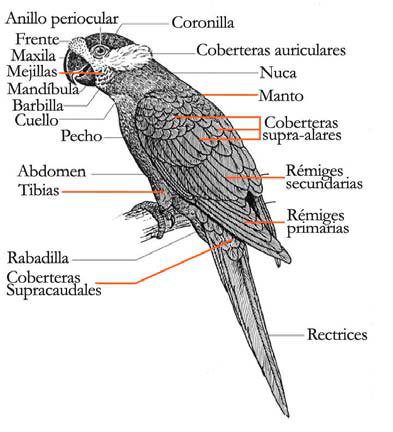
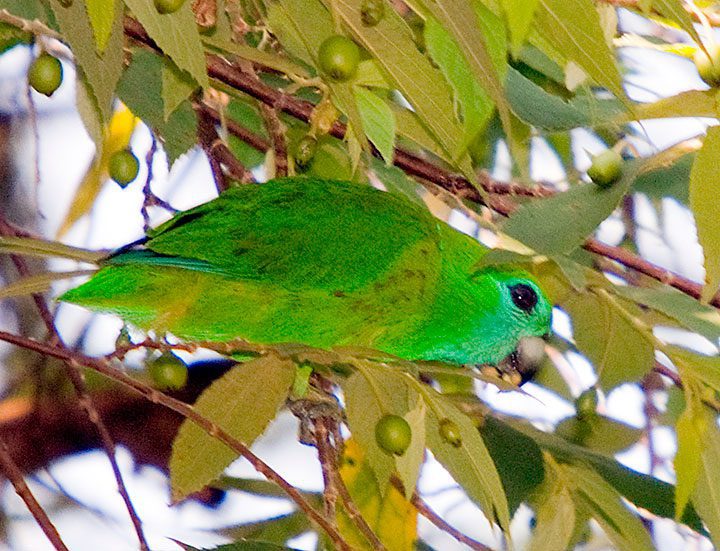
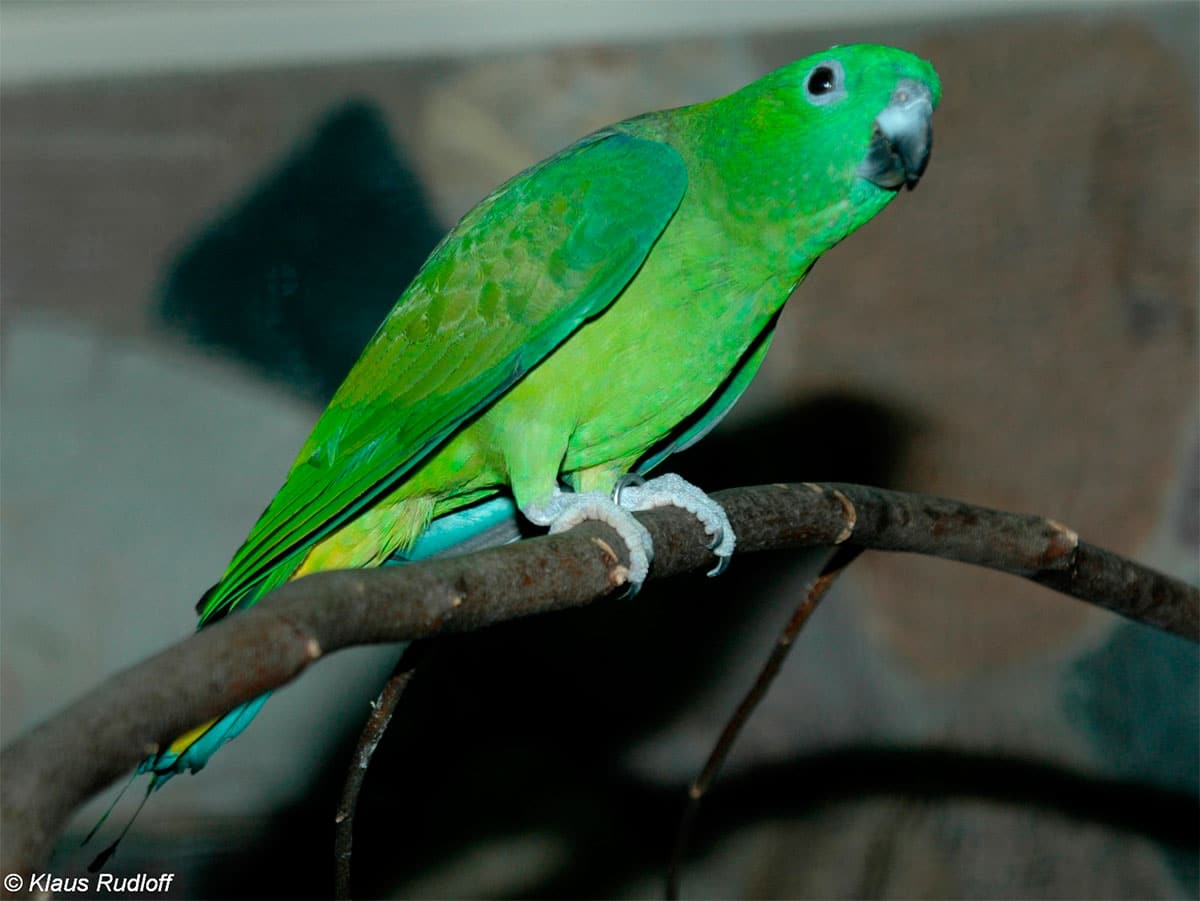
The head of the Buru Racket-tail (Prioniturus mada) is bright green, marked in blue-gray dark in the crown and in the nape. The upperparts are green, marked in grisaceo-azul dark in the upper mantle; Uppertail green. Wings green with lesser coverts and bend of wing Dark greyish-blue. Wing feathers green; underside of flight feather. Bluish.

The underparts are yellowish-green, more yellow in undertail-coverts. Upper, the tail green, outer feathers tipped dark blue; light blue, the tail down.

Bill grey; irises dark brown; legs grey.

Female lacks the blue color in the crown, nape and the the mantle; the blue in the bend of wing is smaller; rackets of the tail shorter.

Young without rackets on tail; males with blue in the nape.

Habitat:

Found until the 1600 meters above sea level, in all types of forest habitat, including selective exploitation and secondary high growth areas; also found in cultivated areas remaining trees; most common around 600 m. You often see them in small groups of up to ten birds. Tends to substitute to the Red-checked Parrot at higher elevations.

Reproduction:

breeding season from December to February. Up to five young can be raised in a nest.

Food:

It feeds on fruits, flowers, berries and seeds.

Distribution:

endemic to the island of Buru, Indonesian. The inclusion of the species as Near-threatened is based on the assumption of a very restricted range above the 1.000 m, but newly published evidence shows that it is common throughout the island with an estimated world population between 189.000-48S.000 birds.

Conservation:


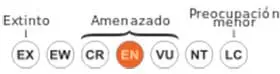
minor concern


• Current category of the Red List of the UICN: Least concern

• Population trend: Stable

The size of the world population It has not been quantified, It is estimated between 189,000 and 483,000 individuals.

The species is described as common and widespread (pit et to the. 1997).

The population is suspected to be stable in the absence of evidence of any reduction or substantial threats.

"Buru Racket-tail" in captivity:

Not found in captivity.

Alternative names:

– Buru Racket-tail, Buru Racket-tailed Parrot, Buru Racquet tail, Buru Racquet-tail, Buru Racquet-tail Parrot, Buru Racquet-tailed Parrot (ingles).
– Palette de Buru, Perroquet à raquette de Buru (French).
– Madapapagei (German).
– Prioniturus mada (Portuguese).
– Lorito Momoto de Buru, Lorito-momoto de Buru (español).

scientific classification:

– Order: Psittaciformes
– Family: Psittaculidae
– Genus: Prioniturus
– Scientific name: Prioniturus mada
– Citation: Hartert, E, 1900
– Protonimo: Prioniturus mada

Images "Lorito momoto de Buru":

Videos "Buru Racket-tail"

————————————————————————————————

«Lorito Momoto de Buru» (Prioniturus mada)

Sources:

– Avibase
– Parrots of the World – Forshaw Joseph M
– Parrots A Guide to the Parrots of the World – Tony Juniper & Mike Parr
– Birdlife

– Photos:

(1) – By Klaus Rudloff (kdrudloff@web.de) – Germany , Weltvogelpark / World Bird Park – Walsrode – biolib
(2) – «Prioniturus mada qtl1» by Quartl – Own work. Licensed under CC BY-SA 3.0 via Wikimedia Commons.
(3) – «Prioniturus mada-captive-8a-toc» by Prioniturus_mada_-captive-8a.jpg: Robert01.Original uploader was Robert01 at de.wikipediaderivative work: Snowmanradio (talk) – Transferred from de.wikipedia; transferred to Commons by User:Snowmanradio using Commonshelper.(Original text: selbst fotografiert) to Prioniturus_mada_-captive-8a.jpg. Licensed under CC BY-SA 3.0 of via Wikimedia Commons.
(4) – by jon hornbuckle – BIRDING AROUND THE WORLD
(5) – Prioniturus mada buru racquet tail – link

– Sounds: Frank Lambert (Xeno-canto)

▷ The world of Pets: Dogs, cats, birds, reptiles, amphibians

Madarasz's Tiger-Parrot
Psittacella madaraszi

Madarasz's Tiger-Parrot

Content

Description

14 cm. length between 34 and 44 g. of weight.

The Madarasz's Tiger-Parrot (Psittacella madaraszi) is very similar to the Modest Tiger-Parrot.

Head brown, slightly paler in the cheeks and ear-coverts because of the light streaks; crown strongly mottled in color yellow, the throat It also shows some pale yellow stains. Mantle and back green, with good dark edges to the feathers; rump with alternation of yellow-green and black. Wings green, marked in blue in curve and along the leading edge; flight feather Blackish with vane Green external, showing a thin yellow margin. Wing feathers light green, underside of flight feather with broadcasting yellow in vane inner. Throat and top of the chest grey-brown; rest of the underparts slightly yellowish-green, paler than upper parts, with the exception of uppertail-coverts red. Upper, the tail green, by down blackish.

Bill grey-blue, White at the tip; irises reddish brown; legs grey.

The female has the head green with front of the crown bluish and heavily barred black and orange pink nape. The rest of them upperparts are slightly more barred that in the male, and underparts are of color green uniform, lack of the colour brown of the throat and the top of chest.

The young birds they are similar to females.

Subspecies

  • Psittacella madaraszi major

    (Rothschild, 1936) – Of approximately 15 cm.. length. The only difference is that it is slightly larger.. The same as the nominal species female.

  • Psittacella madaraszi hallstromi

    (Mayr and Gilliard, 1951) – Of approximately 14,5 cm.. length. Usually more dark and yellow paths from the back of the head and neck more narrow. Females with the black Crown and broad green bordered Orange will be making them by the back of the head.

  • Psittacella madaraszi huonensis

    (Mayr and Rand, 1935) – Of 14 cm.. length. It has the Crown of yellowish-brown. Females have the Crown, neck and back green.

Habitat:

The Madarasz's Tiger-Parrot, usually lives below the Modest Tiger-Parrot. The two two species overlap, usually in the Strip between 1.200 and 2.500 m, Although less numerous the of Madarasz.

It inhabits forests, in secondary vegetation and occasionally cleared areas, being particularly fond of the forest of beech Nothofagus.

It is a quiet species, slow and inconspicuous. You are often seen sitting in pairs on the lower floors of forests, making rash calls at sunset.

Reproduction:

Little is known of their reproductive ecology., but they have been observed in breeding conditions in the month of June.

Food:

It feeds on seeds, fruit, tough berries and leaves pulp, eat alone or in pairs at different levels within the forest. Have you noticed them is, feeding, in the company of Painted Tiger-Parrot.

Distribution:

Size of the area of distribution (reproduction / resident): 193.000 km2

New Guinea from the mountains in the center of Irian Jaya, Indonesian, through the central mountains of Papua New Guinea, up to the mountain ranges to the South-East, with an isolated population in the Highlands of the Huon Peninsula. The world's population is considered to be more of 50.000 specimens.

Subspecies distribution:

  • Psittacella madaraszi major

    (Rothschild, 1936) – present in the West of its range mountains;

  • Psittacella madaraszi hallstromi

    (Mayr and Gilliard, 1951) – occupies the central mountains of New Guinea;

  • Psittacella madaraszi huonensis

    (Mayr and Rand, 1935) – is located in the northeast of New Guinea (mountains of the huon peninsula).

Conservation:


minor concern


• Current category of the Red List of the UICN: Least concern

• Population trend: Stable

The size of the world's population has not been quantified, It is estimated in more than 50.000 specimens. The species, according to sources, It very rare in its area of distribution (pit et to the. 1997).

The population suspected to be stable in the absence of evidence of any reduction or substantial threats.


"Madarasz's Tiger-Parrot" in captivity:

Not found in captivity.

Alternative names:

– Madarasz’s Tiger-Parrot, Madarasz’s Parrot, Madarasz’s Tiger Parrot, Madarász’s Tiger Parrot, Maderasz’s Parrot, Plain-breasted Little Parrot, Plain-breasted Little Tiger-Parrot (ingles).
– Perruche de Madarasz (French).
– Madaraszpapagei, Madarasz Papagei, Maderaszpapagei, Schuppenkopfpapagei (German).
– Psittacella madaraszi (Portuguese).
– Lorito de Madarasz, Lorito tigre de Madarasz, Lorito-tigre de Madarasz (español).

scientific classification:

Its scientific and common names commemorate the Hungarian ornithologist Gyula von Madarasz

– Order: Psittaciformes
– Family: Psittaculidae
– Genus: Psittacella
– Scientific name: Psittacella madaraszi
– Citation: Meyer,AB, 1886
– Protonimo: Birding tiger parrot

Videos "Madarasz's Tiger-Parrot"

————————————————————————————————

“Lorito tiger of Madarasz» (Psittacella madaraszi)

Sources:

– Avibase
– Parrots of the World – Forshaw Joseph M
– Parrots A Guide to the Parrots of the World – Tony Juniper & Mike Parr
– Wikipedia
– Birdlife
– Loromania

– Photos:

(1) – Photo by © Nancy Bell

▷ The world of Pets: Dogs, cats, birds, reptiles, amphibians

Brehm's Tiger-Parrot
Psittacella brehmii


Brehm's Tiger-Parrot

Content

Description

24 cm. length and a weight between 94 and 120 g..

The head of the Brehm's Tiger-Parrot (Psittacella brehmii) is marron-oliva. The neck It is colored with black and green bars. The front and sides of the neck they are surrounded by a bright yellow stripe. The chest It is slightly striped in green and black colors.

The center of the back is very green and it integrates perfectly, with yellow and black striped, the area of the rump. Black fusion is absent from yellowish green to the extent lumbar and Hip. Wings they are a dark green color with dark edges in the covered medium-sized. The flight feather are blackish with vane a thin border beige and green external. The curvature of the wing is Bluestone. Wing feathers green.

The underparts are green, totally opaque, except the undertail-coverts that are of color red Scarlet. The bottom of the tail is green, greyish black down.

The bill It is brownish grey with lighter edges and a white tip. The irises is reddish orange. The legs are grey green.

The female lacks the yellow Crescent on the front of the neck. The chest listed in green and black.

Youth with the colors green and yellow absent from the chest area. Coverts of the tail of color orange tinged with tips yellow. The bill pale.

Subspecies description

  • Psittacella brehmii brehmii

    : The nominal.


  • Psittacella brehmii intermixta

    : Its underparts and back listing are more yellowish green tones, and larger.


  • Psittacella brehmii pallida

    : As the nominal but with narrower peak.


  • Psittacella brehmii harterti

    : It is clearer and less yellowish green head. Is smaller.

Habitat:

Are observed in the montane forest, including Podocarpus, beech forests of Nothofagus and edge of forests, mainly from 1.500 metres to the 2.600 m, ends in 1.100 and 3.800 m.

The Brehm's Tiger-Parrot is distributed primarily at altitudes below the habitat of the Painted Tiger-Parrot, but there is a zone in which they find sympathy latitudinally, and is between 2.500 and 3.000 m. Birds are often found individually or in small groups and allow an approximation.

You spend much time below the canopy or even close plants feeding on seeds and berries (including conifers and Podocarpus), Although also found in levels higher in the forest. Move slowly, often using his beak to balance and sometimes you can stay still. They only make short flights, never flying above the canopy.

Reproduction:

Little is known of nesting behavior, but two nestlings were observed in a nest during the month of June.

Food:

Diet includes seeds, coniferous berries and Podocarpus.

Distribution:

The Brehm's Tiger-Parrot they are endemic in New Guinea, where often live almost exclusively in mountain areas. Its range is divided into three isolated populations, an in Vogelkop, West Papua, the second in all the central and South-Eastern Highlands of New Guinea and the third in the mountains of the Huon Peninsula (the Painted Tiger-Parrot is absent and the Parrot Brehm Tiger is observed at altitudes higher than usual). The species is widespread, but generally uncommon; the world's population is believed to be superior to 100.000 specimens.

Distribution Subspecies

  • Psittacella brehmii brehmii

    : The nominal.


  • Psittacella brehmii intermixta

    : Is located in the central mountains of New Guinea.


  • Psittacella brehmii pallida

    : Of the mountains of the southeast of New Guinea.


  • Psittacella brehmii harterti

    : Occupies the Huon Peninsula (to the northeast of New Guinea).

Conservation:


minor concern


• Current category of the Red List of the UICN: Least concern

• Population trend: Stable

The size of the world's population has not been quantified, It is believed that it is superior to 100.000 specimens.

The species, according to sources, it is quite common and widespread (pit et to the. 1997).

The population is suspected to be stable in the absence of evidence of any reduction or substantial threats.

"Brehm's Tiger-Parrot" in captivity:

It is not a bird for the lovers of the aviaries since their mortality rate in captivity is very high.

Alternative names:

– Brehm’s Tiger-Parrot, Brehm’s Parrot, Brehm’s Tiger Parrot (ingles).
– Perruche de Brehm (French).
– Brehmpapagei, Brehm Papagei, Brehm-Papagei (German).
– Psittacella brehmii (Portuguese).
– Lorito de Brehm, Lorito tigre de Brehm, Lorito-tigre de Brehm (español).

scientific classification:

– Order: Psittaciformes
– Family: Psittaculidae
– Genus: Psittacella
– Scientific name: Psittacella brehmii
– Citation: Schlegel, 1871
– Protonimo: Psittacella brehmii

Images "Brehm's Tiger Parrot":

Videos "Brehm's Tiger-Parrot"

————————————————————————————————

"Brehm's Tiger Parrot" (Psittacella brehmii)

Sources:

– Avibase
– Parrots of the World – Forshaw Joseph M
– Parrots A Guide to the Parrots of the World – Tony Juniper & Mike Parr
– Wikipedia
– Birdlife

– Photos:

(1) – By Jerry Oldenettel, on Flickr – Flickr
(2) – «Psittacella brehmii» by markaharper1 – Brehm’s Tiger-Parrot. Licensed under CC BY-SA 2.0 via Wikimedia Commons.
(3) – Lateral view of a male perched near the feeding table by Mikko Pyhälä – Mikko Pyhälä – Lynx
(4) – Male feeding at the bird feeder by David Cook Wildlife Photography – Lynx
(5) – By © Jerry Oldenettel – inaturalist

– Sounds: Marc Anderson (Xeno-canto)

▷ The world of Pets: Dogs, cats, birds, reptiles, amphibians

Dusky Parrot
Pionus fuscus

Dusky Parrot

Content


Anatomy-parrots

Description:

24 to 26 cm.. height and between 179 and 222g. weight.

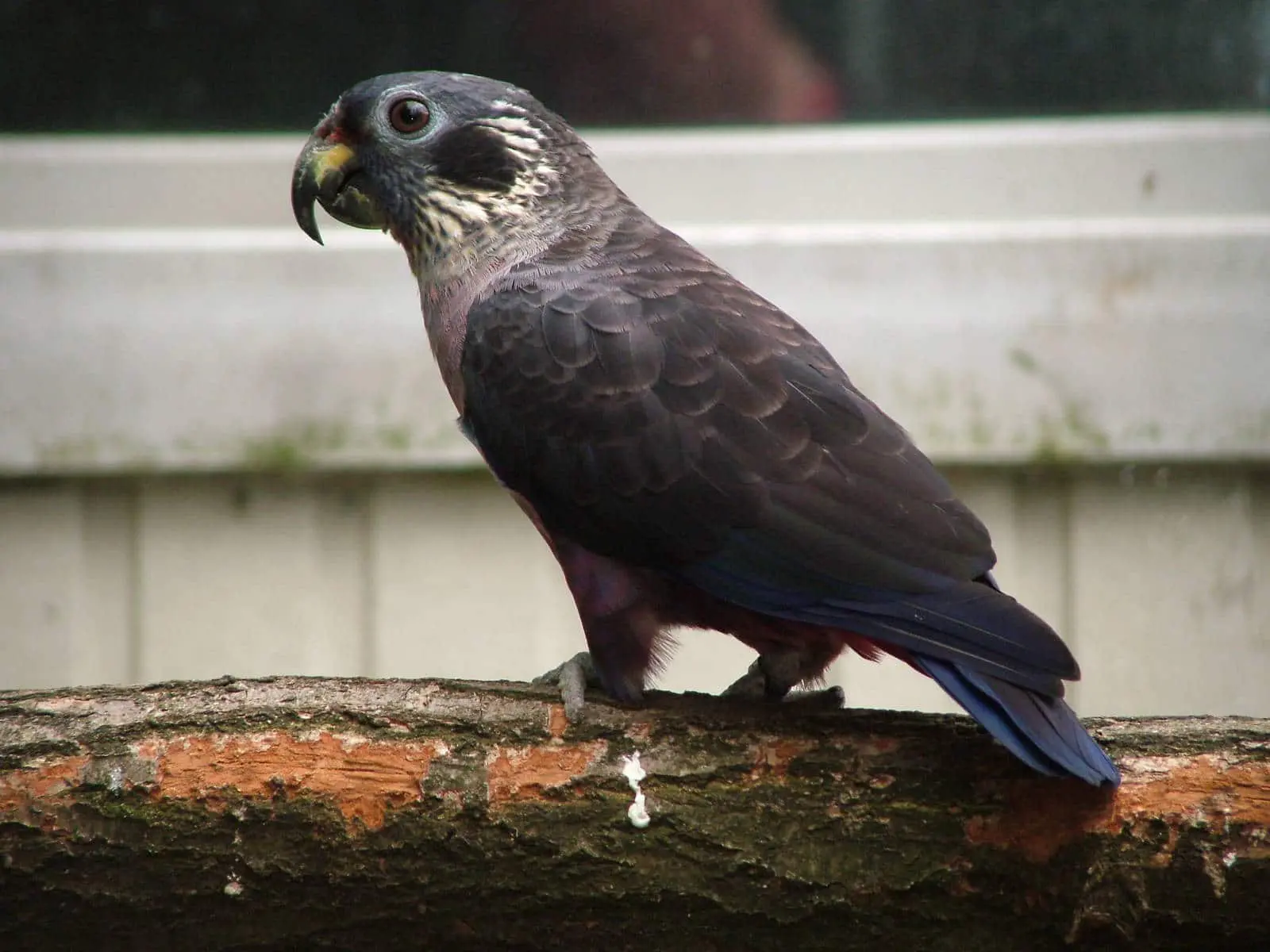
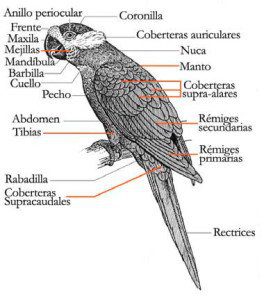
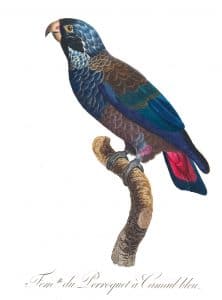
The coloration general of the Dusky Parrot (Pionus fuscus) is blue violet dark. Small patch of feathers on the front of the lores; on the basis of the cere, Pink; for the rest, lores, cheeks, forecrown and crown, lavender blue pale with white feather bases in the crown, What gives a faint mottled appearance in some birds; ear-coverts more dark and more grey, forming a distinctive patch; feathers in the throat and the sides of the neck narrow Brown in the Center and tips of pale blue white stripe, forming the joint a collar incomplete.

feathers in the the mantle and back, of color Brown leaden with those margins pale, giving the scalloped effect; Scapulars, rump and uppertail-coverts, darker grey brown, with very weak pale margins (or absent).

Coverts smaller and medium-sized, of color Brown leaden with margins pale; coverts primary and higher, as well as the flight feather, cobalt blue; undertail, the wings deep blue. Feathers on the top of the chest, pale pinkish with pale Lavender color tips; area more low in the chest with less dye Lavender, becoming darker and more color came in the belly, reaching, Some birds, the center of the belly of a rich colour came; undertail-coverts crimson.

Tail of color blue with red at the base. upper jaw Blackish at the tip with patch of color Horn in the base, lower jaw Blackish with the base more clear and more pale visible in some birds; Iris dark brown; Legs grey.

Both sexes similar.

In the immature staining is equal to the adult, but with some roofs on the upper wings with green edge; secondary feathers dyed in green and the eye ring naked and white.
Habitat:

Dusky Parrot

They inhabit mainly in lowland rainforests and moist forests in the foothills, in where the birds spend the greater part of the time in the canopy; Mainly in the forest land, occasionally in forests and marshes and less frequently in igapó (permanently flooded forests), Although there have been reports of birds in Savannah (Suriname), coastal gallery forest (French Guiana) and cultivated areas (Although avoiding habitats more open and less seen in clearings or edges of forest to some close relatives, such as the Blue-headed Parrot (Pionus menstruus).

rare species, flying alone or in small groups on the forest canopy,

Are you can see in Venezuela from the level of the sea to close them 1.000 m, and in close 1.200-1.800 meters on the side Colombian of the Sierra de Perija.

gregarious, especially outside the breeding season.

Reproduction:

It nests in hollows of old trees, probably during the second quarter of the year, although a nest was observed in the month of November in For, Brazil. The laying is of 3-4 eggs.

Food:

It feeds mainly in the canopy but also on the branches of fruiting trees in light areas..

The diet includes seeds of the gender Eschweilera and Micropholis.

Distribution:

Size distribution (reproduction / resident): 1.870.000 km2

Its population is discontinuous. There is an isolated population in the Sierra de Perija (border between Colombia and Venezuela); regardless of population, The species is found in Venezuela, to the South of the Orinoco in Bolívar, from the Caura River, in the Northwest, up to the Nuria upland, the upper area of the cuyuni river and Sierra de Lema in the areas border with Guyana, in the East, extending through the forested parts of Guyana, Suriname and presumably it French Guiana (There are no known records) until Amapá, the North-East of Brazil, and spreading more broadly to the East of the Brazilian Amazon, from Black river in the North and South, from the Madeira river to the East of For and Maranhão.

Movements regular seasonal occur in Suriname, with the birds present in the coastal region in the months of July and August.

In general quite common, Although distributed locally; reports of a moderate and widespread presence in Guyana (although rare in Mountains Kanuku in the Southwest); Common in coastal forests, the savanna and forests inside of Suriname.

The deforestation severe and rapid in parts of its range (for example, For and Maranhão, Brazil) is, presumably, causing a decline in the population of the Dusky Parrot.

Very tight in bondage.

Conservation:


minor concern


• Not considered low No category of threat.

• Not known as a cage bird, but the loss of habitat may be affecting their populations.

Justification of the population:

The size of the world population Dusky Parrot It has not been quantified, but this species is described as «Rare» (Stotz et to the., 1996).

Justification of trend:

It is suspected that this species has lost the 1,1% of habitat within its distribution over three generations (20 years) on the basis of a model of Amazon deforestation (Soares-Filho et to the., 2006, Bird et to the., 2011).

Given the susceptibility of the species to hunt or capture, It is suspected that it will fall in <25% durante tres generaciones.

"Dusky Parrot" in captivity:

Intelligent, curious, a bit noisy, playful when acclimatizes to the owner.
Rare in captivity until the Decade of 1970 When in small quantities were imported from Guyana.

Its longevity is of some 25 years.

Alternative names:

– Dusky Parrot, Little Dusky Parrot, Violaceous Parrot, Violet Parrot (English).
– Pione violette, Pionus violet (French).
– Veilchenpapagei, Veilchen-Papagei (German).
– maitaca-roxa, curica, papagainho-roxo, paraná-i (Portuguese).
– Cotorra de Perijá, Loro Morado (español).
– Cotorra de Perijá (Colombia).
– Cotorra Morada (Venezuela).

scientific classification:

– Order: Psittaciformes
– Family: Psittacidae
– Genus: Pionus
– Scientific name: Pionus fuscus
– Citation: (Statius Müller, 1776)
– Protonimo: Psittacus fuscus

Images "Dusky Parrot"

Videos "Dusky Parrot"

———————————————————————————————–

«Purple Parrot» (Pionus fuscus)


Sources:

– Avibase
– Parrots of the World – Forshaw Joseph M
– Parrots A Guide to the Parrots of the World – Tony Juniper & Mike Parr
– Birdlife

– Photos:

(1) – Veldhoven
(2) – Dusky Parrot (Pionus fuscus) or Dusky Pionus by Jacques Barraband [Public domain], via Wikimedia Commons

▷ The world of Pets: Dogs, cats, birds, reptiles, amphibians

Guaiabero
Bolbopsittacus lunulatus


Guaiabero

Content

Guaiabero

Description

15 cm.. length between 62 and 77 g. of weight.

The head of the Guaiabero (Bolbopsittacus lunulatus), is mainly green, strongly impregnated of color blue light around them eyes, in the lores, the chin and (vaguely) on throat. Mantle slightly of a green over dark that it crown, bordered above pale yellowish green.

Primary coverts blue; the others wing-coverts, greenish. The flight feather with the vane bluish external, alula bluish. Uppertail bright green, great coverts Underwing bordered with yellow; rest of the underwings with pale yellow bar in all vane internal of flight feather (except the primaries outermost). Underparts uniform Green, slightly paler which the upperparts. Tail closed from color green bright by over, pale blue below.

Bill greyish black; irises dark brown; legs gray.

The female much less blue sign in the face, and has yellowish the part back from the neck and rump, both showing darker scalloped.

Immature are like females, but with the bill lighter.

Subspecies description

  • Bolbopsittacus lunulatus lunulatus

    : (Scopoli, 1786) – Nominal


  • Bolbopsittacus lunulatus callainipictus

    : (Parkes, 1971) – The male is like the intermedius, but with the plumage, in general, more yellow, above all in the underparts; face and neck nuchal darker and more bluish green; cheeks with less blue. The female as in the intermedius, but in general with more plumage yellow; rump and the nuchal collar more yellow and brighter. The youth adult females are.


  • Bolbopsittacus lunulatus intermedius

    : (Salvadori, 1891) – The face male is dark blue tinged with purple; neck brilliant blue. Female bordered blue in the throat; cheeks pale green; Green more pale around them eyes; neck yellow-orange. The youth are like the female adult.


  • Bolbopsittacus lunulatus mindanensis

    : (Steere, 1890) – The cheeks of the male are green, Blue around them eyes, Blue throat; neck darker and brighter blue than the lunulatus; yellow tint to green in the head. The female as of the lunulatus, but the head tinted yellowish-green. The youth adult females are.

Habitat:

It inhabits in open forests, forests and their surroundings, secondary vegetation, Savannah, farmland, gardens and mangroves, in the lowlands up to approximately 600 meters above sea level. Birds congregate in fruit trees sometimes in groups of up to 50 Member. Easier to detect in flight. While feeding they move silently and can be difficult to locate..

Reproduction:

The ecology of the species is poorly understood.. A female in breeding conditions It was observed during the month of March.

Food:

The diet includes fruit, especially the guavas (Psidium guajava)

Distribution:

Size of the area of distribution (reproduction / resident): 212.000 km2

Limited to the lowlands of the Philippine Islands, including Luzon, Mindanao, Samar, Leyte and Panaon.

Distribution of the subspecies:

  • Bolbopsittacus lunulatus lunulatus

    : Nominal

  • Bolbopsittacus lunulatus callainipictus

    : Samar (central Philippines)


  • Bolbopsittacus lunulatus intermedius

    : Northern Philippines (Leyte and Panaon)


  • Bolbopsittacus lunulatus mindanensis

    : Mindanao (Southern Philippines)

Conservation:


minor concern


• Current IUCN Red List category: Least concern

• Population trend: Stable

The size of the world population It has not been quantified, Although estimated at more of 50.000 specimens. The species, according to sources, it is enough common in all its limited area of distribution (pit et to the. 1997).

The population suspected to be stable in the absence of evidence of any reduction or substantial threats.

"Guaiabero" in captivity:

Almost unknown in captivity.

Parrot quiet and gentle. Sensitive to stress and infections, primarily by protozoa. Strict hygiene is necessary to protect this species of infectious diseases. They must be kept in pairs.

Alternative names:

– Guaiabero (ingles).
– Guaiabero lunulé, Perruche lunulée, Psittacule lunulée (French).
– Stummelschwanzpapagei (German).
– Guaiabero (Portuguese).
– Lorito Guayabero, Lorito Guayabo (español).

scientific classification:

– Order: Psittaciformes
– Family: Psittaculidae
– Genus: Bolbopsittacus
– Scientific name: Bolbopsittacus lunulatus
– Citation: (Scopoli, 1786)
– Protonimo: Psittacus ephypium

Images "Guaiabero"

Videos "Guaiabero"

"Lorito's Guayabero" (Bolbopsittacus lunulatus)

Sources:

  • Avibase
  • Parrots of the World – Forshaw Joseph M
  • Parrots A Guide to the Parrots of the World – Tony Juniper & Mike Parr
  • Birdlife

Photos:

(1) – Guaiabero (Bolbopsittacus lunulatus) By Luis V. Limchiu [CC BY-SA 3.0, GFDL or Public domain], via Wikimedia Commons
(2) – A painting of a green parrot by Edward Lear. It looks like a female Guaiabero (Bolbopsittacus lunulatus) Edward Lear [Public domain], via Wikimedia Commons
Sounds: Paul Noakes (Xeno-canto)

▷ The world of Pets: Dogs, cats, birds, reptiles, amphibians

Kuhl's Lorikeet
Vini kuhlii


Kuhl's Lorikeet

Content

Description

18 cm.. long and an approximate weight of 55 g..

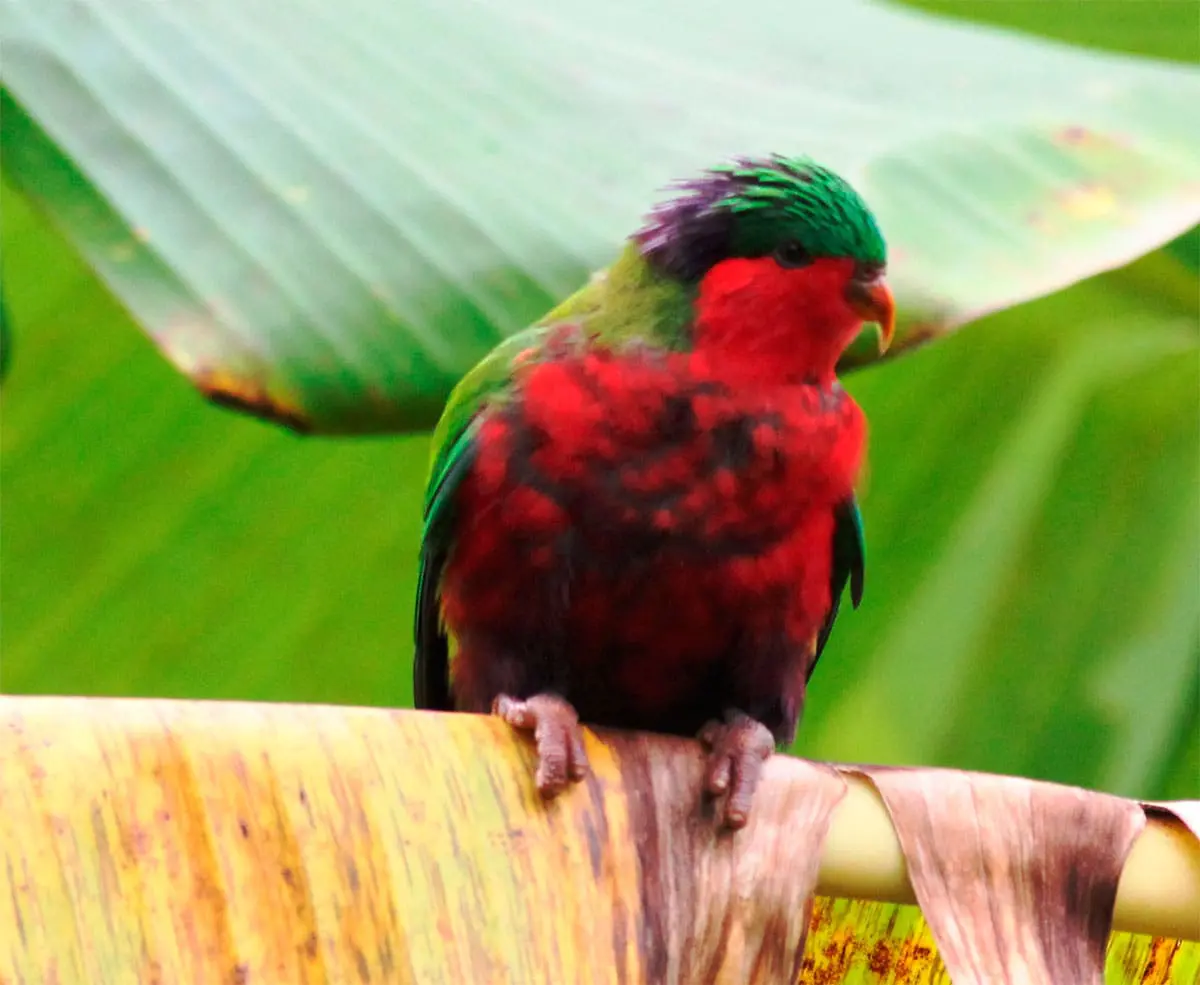
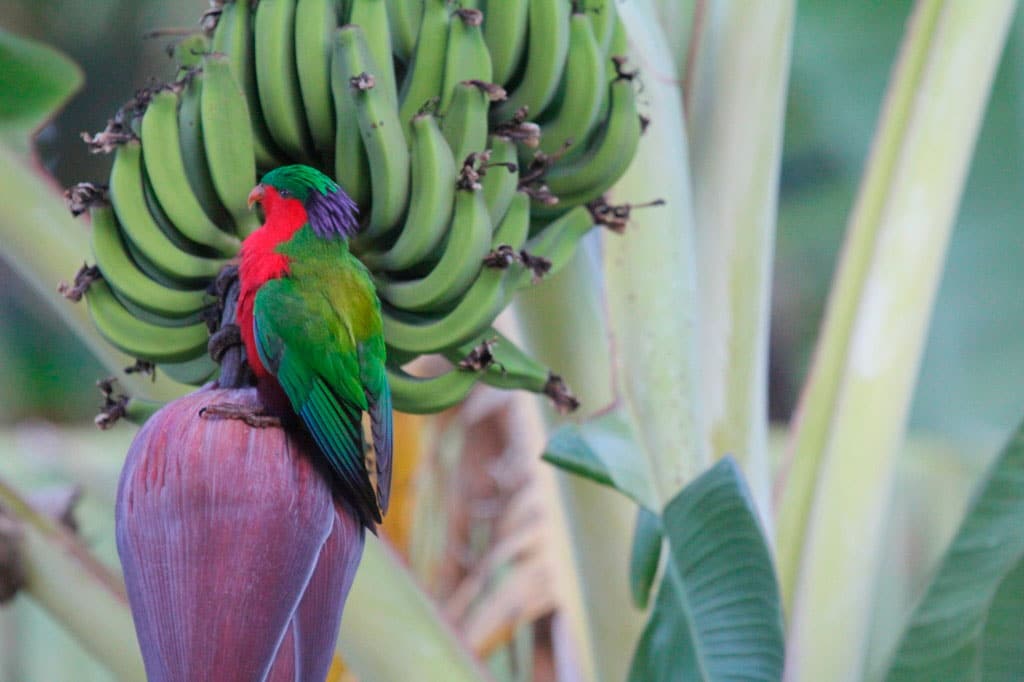
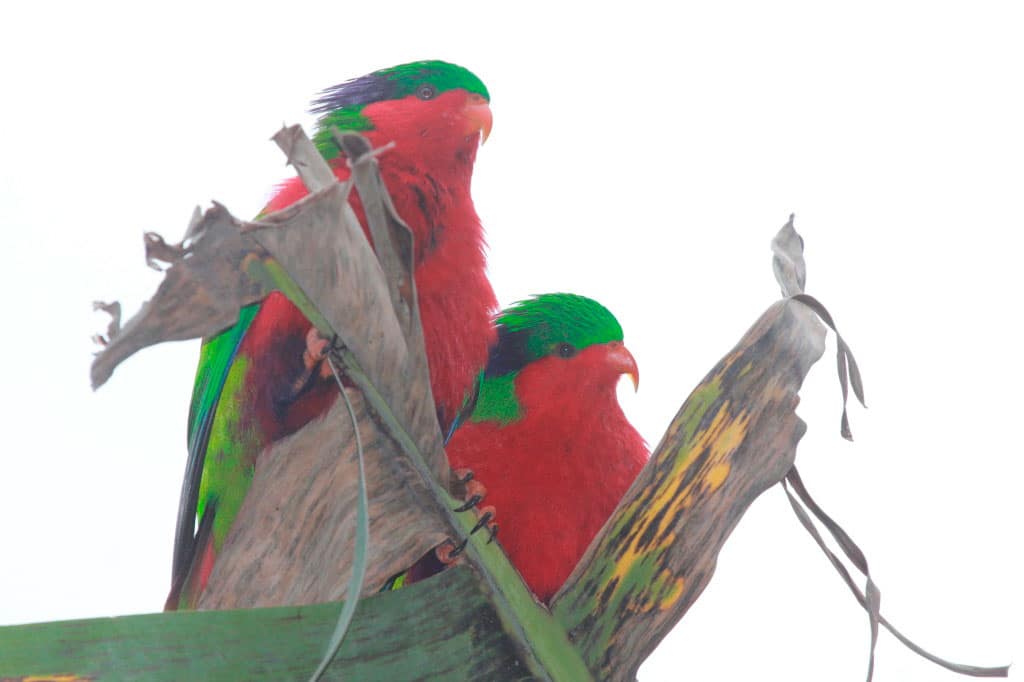
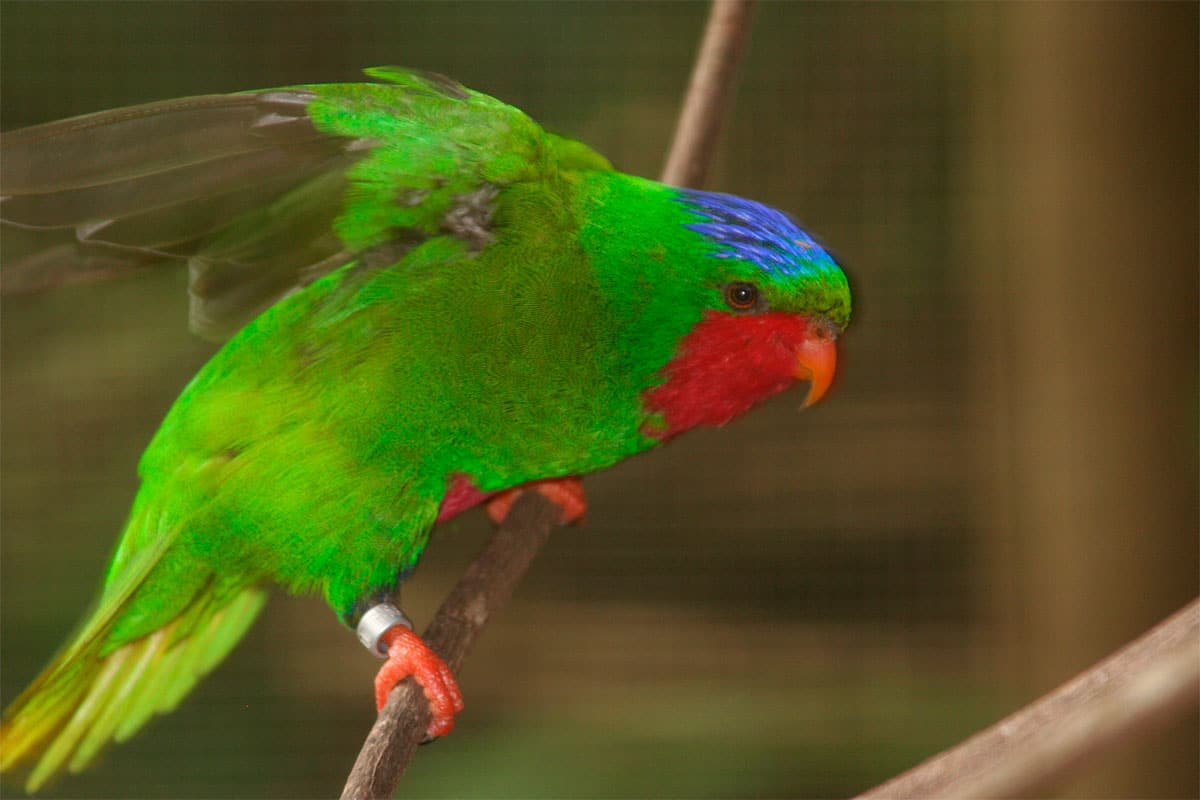
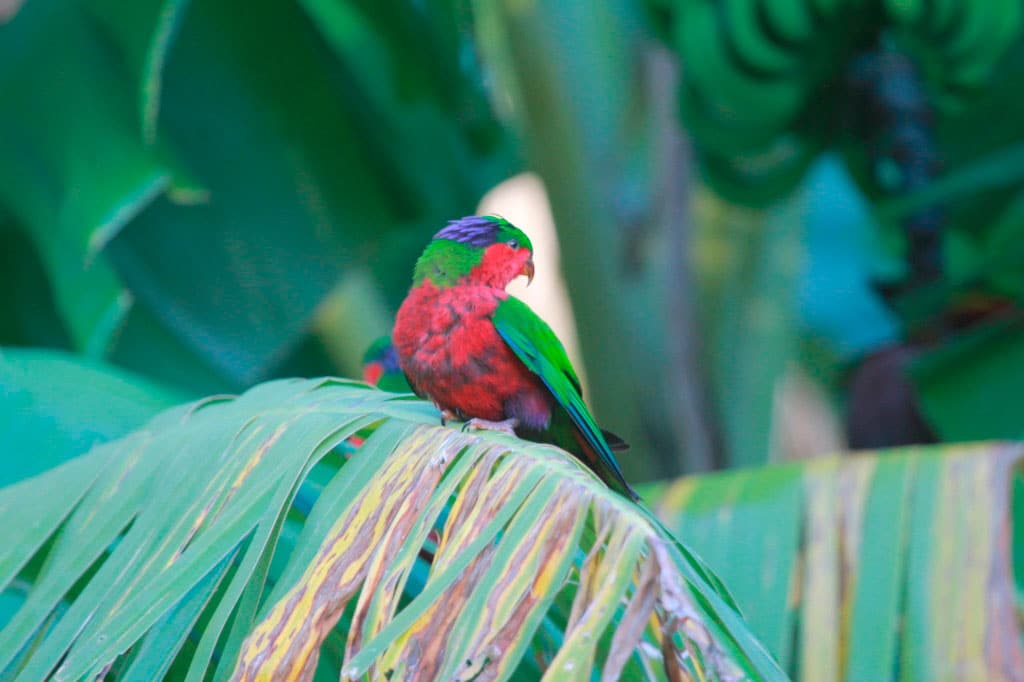
Males and females of the Kuhl's Lorikeet (Vini kuhlii) they are identical in appearance. Adult birds have cheeks, the chest and the part forward of the belly bright red.

The upperparts the body has different shades of green with the exception of a few Feather erection of color blue dark in the neck.

Its tail is multicolored, the Central feathers are red and purple sides, with the Green terminal part.
A zone blue-violet in the belly around the the thighs. The bill and legs are orange, the tail is short.

The birds youth they have the underparts opaque red.

Habitat:

The natural habitat of the Kuhl's Lorikeet are the tropical humid forests. On the Islands desforestadas also is in coconut plantations. It is a nectarivorous that feeds sucking nectar with his rough tongue.

Reproduction:

Observed in the month of March, April and August.
Nest in the trunks of coconut trees or FARA (Pandanus tectorius) dead or in cavities of hotu. Sometimes one or two rectangular holes mark the entrance of these nests. Only a litter has been found with two chicks.

Food:

Nectar and pollen from banana flowers (Musa sp.), Kapok (Ceiba pentandra), pacayers (Inga edulis), Mango (Mangifera indica), avocado (It persea americana), the coconut (Cocoa nuts), the Cordyline (fructicosa Cordyline) , the NASE (Barringtonia asiatica), the tafano (Guettarda speciosa), the Pomeroy (Syzygium jambos) and ATAE (Erythrina variegata).

The small seeds of purau (Hibiscus tiliaceus) and Aito (Casuarina equisetifolia). Axillary buds and young shoots of hotu, purau and falcata (Paraserianthes falcataria).

They lick the surface of the leaves of banana. Make sudden movements in the leaves of certain trees without flowers or fruit (including dead Palm trees), also tends to dig small holes – clearly too superficial to serve as a nest -, This we do think that also can be insectivores.

Distribution:

Size of the area of distribution (reproduction / resident) 510 km2

endemic to Rimatara in the Tubuai Islands, south-central Pacific (France), where the population is estimated at 905 birds. It has also been introduced in Kiribati including Teraina (Washington Island) and Tabueran (Fanning island), both before 1798, and Kiritimati (Isla Christmas), where six specimens were transferred in 1957.

Occasional appearances in the Thbuai island about Rimatara they are probably elopements pets.

Although the species is relatively common in Rimatara. the recent introduction of rats is cause for concern.
The population of Tabueran (c. 200 birds) It is also vulnerable because of predation of nests by rats.

In Teraina There are a few 1.000 birds and with no confirmed threat. It is possible that one or two individuals may still survive in Kiritimati. IN DANGER OF EXTINCTION.

Conservation:


Endangered

• Current IUCN Red List category: Danger

• Population trend Decreasing

Although populations are believed to be stable in Rimatara and Teraina and grow in Atiu where it was recently introduced, invading predators are probably causing a decrease in Tabuaeran and Kiritimati, Therefore, the general trend is suspected to be a moderate and continuous descent is its population.

Excessive exploitation of its red feathers is the most likely reason for the extinction of the Kuhl's Lorikeet in the Islas Cook.

A serious threat to all hatchlings in the Pacific islands, It is the depredation caused by rats in the nests, especially on the part of the Black Rat (Rattus rattus). In Rimatara, There was a wide shot of black rats (Rattus rattus), to leave the island away from them in the year 2000. However the rats of the Pacific (R. exulans) they were still very abundant.

In Teraina, There is no evidence of the presence of the (R. Rattus), although the Pacific rat (R. exulans) is abundant, While in Tabuaeran and Mitiaro, still having black rats (R. Rattus). Cats can be a threat in Kiritimati. The common mine (Acridotheres tristis) It is a threat to the introduced population in Atiu, Since it competes for nesting sites and usually attacking young people Kuhl's Lorikeet.

Ongoing conservation actions:

Appendix II of CITES.
– In Kiribati, the species is fully protected.
– In the french polynesia the species is protected by national laws and regulations from 1996.
– In Rimatara It has been protected by a traditional tapu (taboo) from 1900.

– 27 birds were reintroduced in Atiu from Rimatara in May of the 2007, after which organized a community contest to find the first young birds, with a reward given to the winner.
– Monthly count of birds in Atiu carried out to evaluate the success of the effort of introduction.
– A control program of the common mine started in Atiu in May of 2009, including harassment and capture, with a bounty for each dead bird.
– For October of the 2009, the population of the birds Mine had been reduced by 60% and this program is permanent.
– In Rimatara, 21 bait stations were established in the main Pier in September of 2009 to prevent black rats invading the island and raising awareness is taking place among children about the importance of protecting the avifauna of the island.

"Kuhl's Lorikeet" in captivity:

It is not in captivity.

Due to its State, in danger of extinction, any specimen that can not be returned to their natural habitat (natural range) should preferably be placed in a well-managed breeding program to ensure the survival of the species.

Alternative names:

– Kuhl’s Lorikeet, Kuhl’s Lory, Kühl’s lory, Rimatara Lorikeet, Rimitara Lorikeet, Ruby Lorikeet, Scarlet-breasted Lorikeet (ingles).
– Lori de Kuhl (French).
– Rubinlori (German).
– Lóris-de-kuhl (Portuguese).
– Lori de Rimatara (español).

scientific classification:

– Order: Psittaciformes
– Family: Psittaculidae
– Genus: Vini
– Scientific name: Vini kuhlii
– Citation: (Vigors, 1824)
– Protonimo: Psittacula kuhlii

Images "Lori de Rimatara":

Videos "Kuhl's Lorikeet"

————————————————————————————————

«Lori de Rimatara» (Vini kuhlii)


Sources:

– Avibase
– Parrots of the World – Forshaw Joseph M
– Parrots A Guide to the Parrots of the World – Tony Juniper & Mike Parr
– BirdLife.org

– Photos:

1 – Miles to the wild – link
2 – Miles to the wild – link
3 – Miles to the wild – link
4 – Miles to the wild – link
5 – Duncan Wright – The uploader's own work: "Vini australis”. Engedely: GFDL, Forrás: Wikimedia Commons
– Sounds: Matthias Feuersenger (Xeno-canto)

▷ The world of Pets: Dogs, cats, birds, reptiles, amphibians

Cardinal Lory
Pseudeos cardinalis


Lori Cardenal

Content

Description

31 cm.. height and weight of 175 to 215 gr.

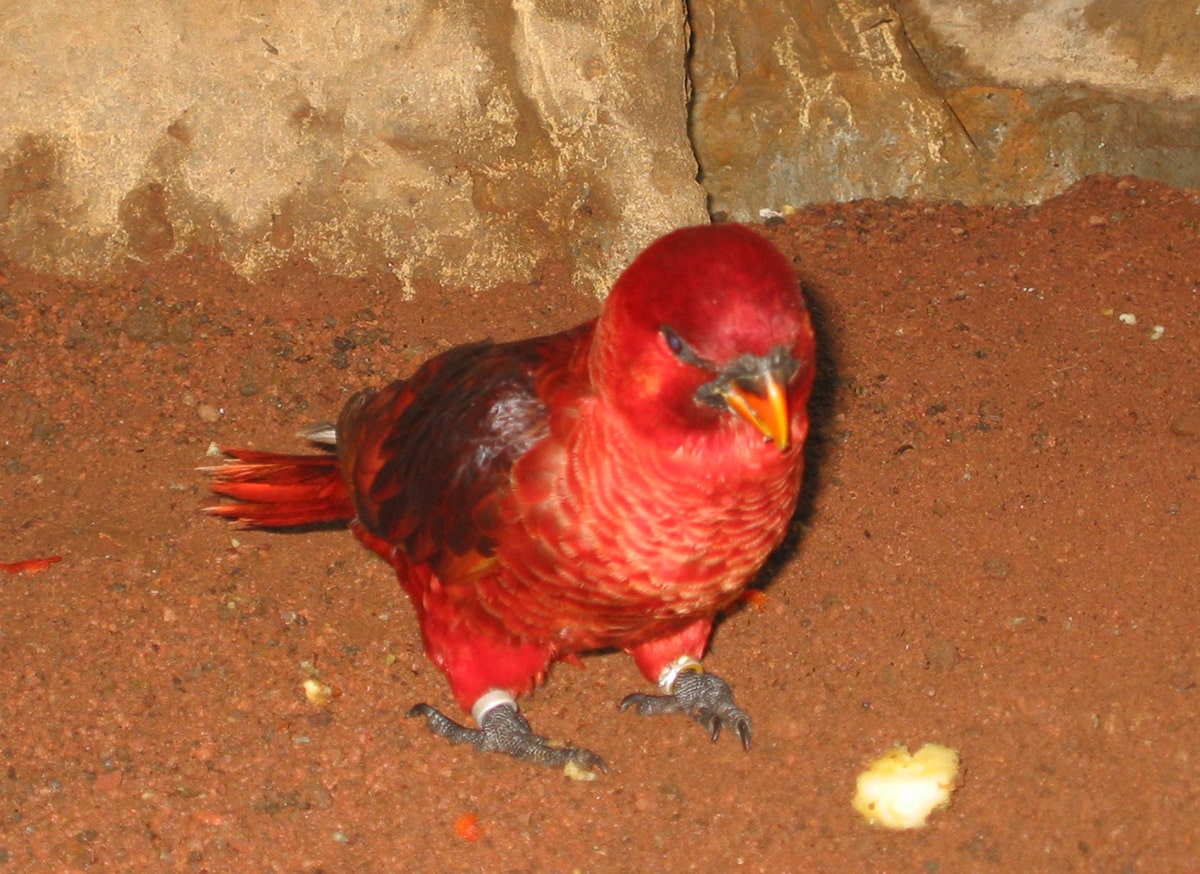
The Cardinal Lory (Pseudeos cardinalis) has a characteristic shape due to its relatively long tail.

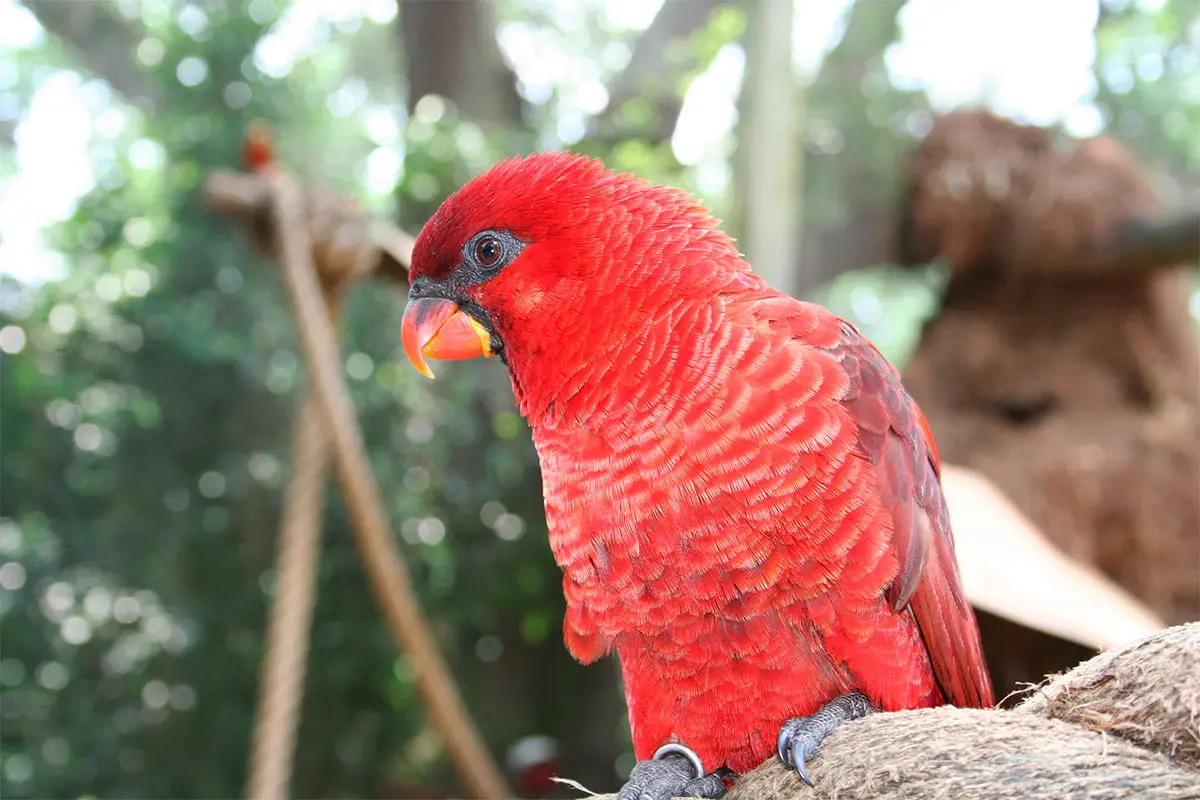
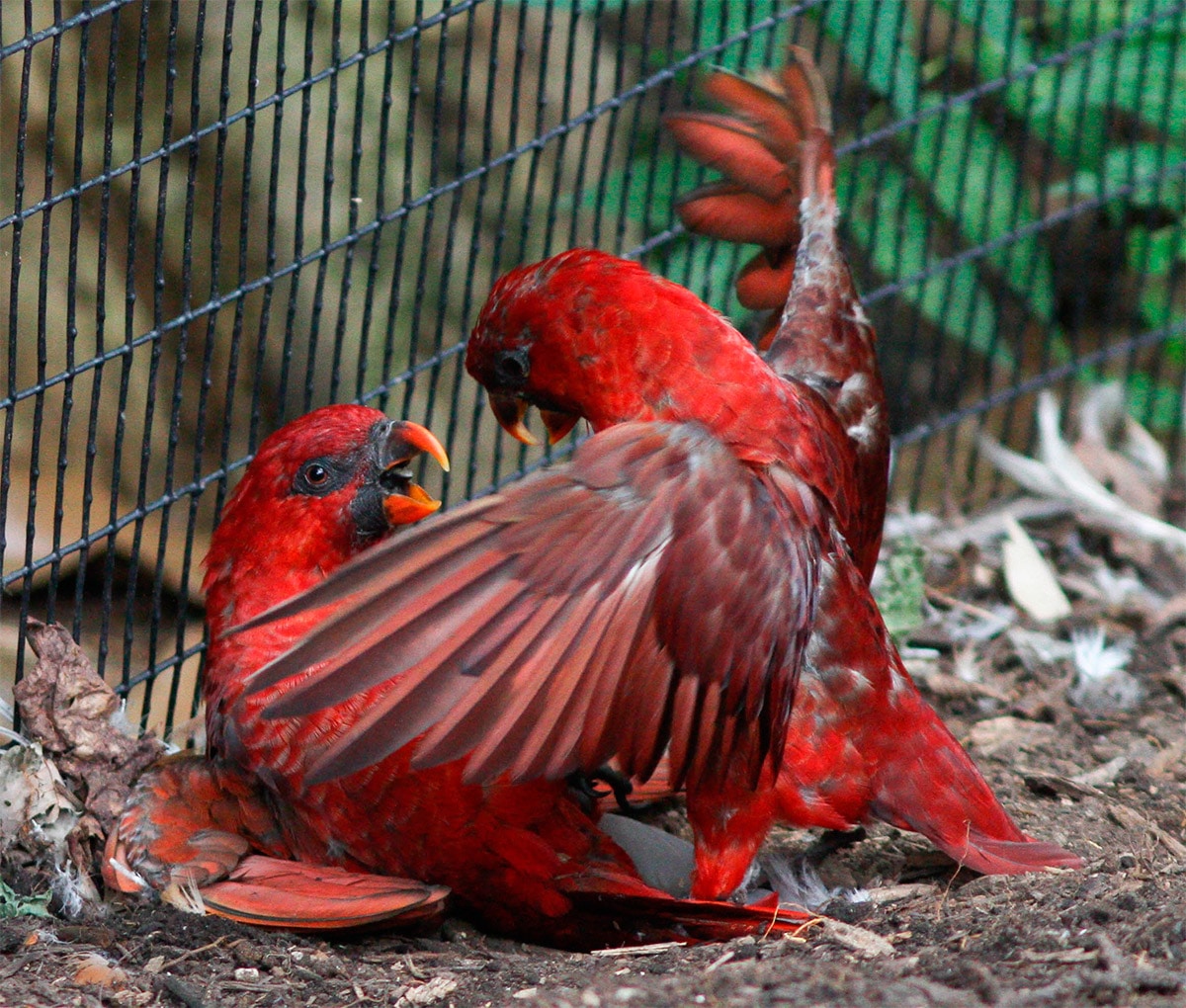
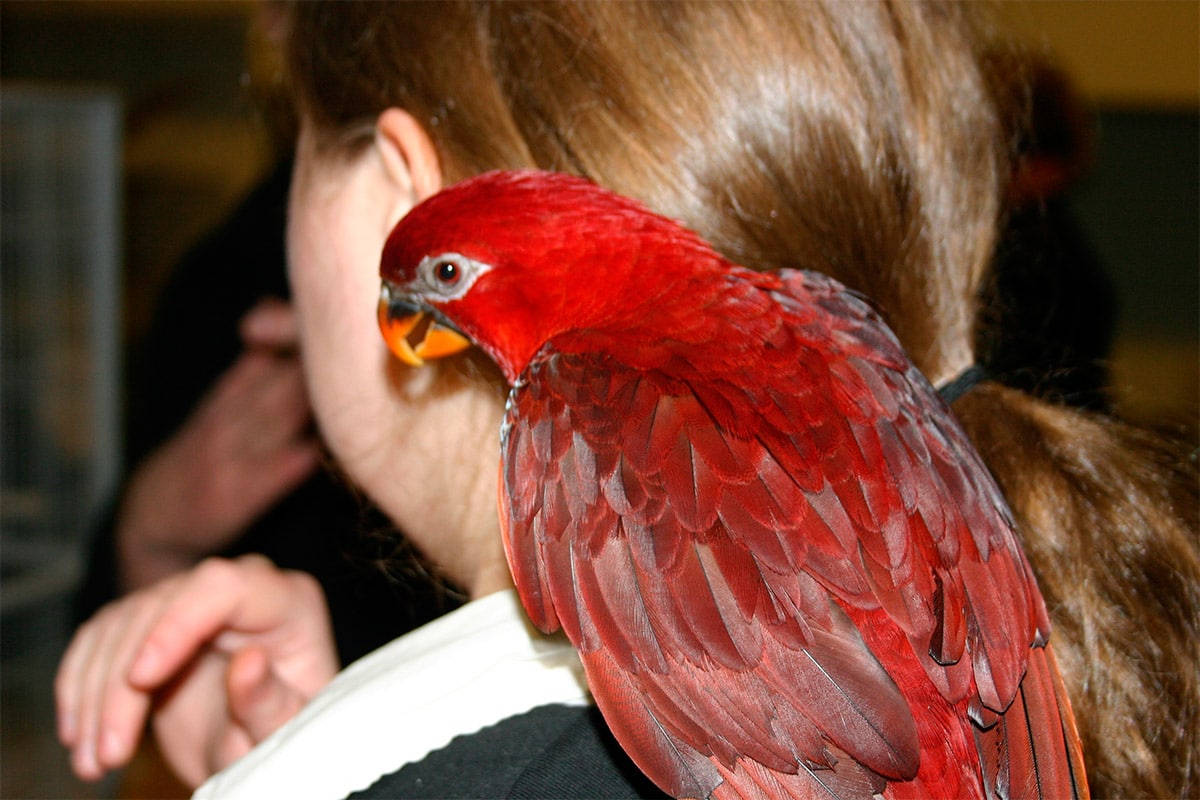
Among adults, There is no sexual dimorphism, the plumage is completely brilliant red, but the upperparts and wings They seem to be darker.

The bill is orange-red with a black color in the base area.
The bare orbital skin is black.

The feathers the lower parts have small yellowish features, What gives a vaguely scaly appearance.
The legs are grey.

The irises is red-orange.

The immature has the back and blankets of Red Wings clear. Its bill It is pale orange with small black marks. Its orbital skin is whitish grey. Their irises are pale yellow.

Habitat:

It is a kind forest. It is very widespread and is locally abundant in primary and secondary forests. It is also in the forests in regeneration in coconut plantations and mangroves where there are trees in flower.
Can rise to 1.200 m above sea level, Although in the Bougainville Island (Papua New Guinea), does not exceed of the 800 m.

It is a bird loud that does not happen easily unnoticed.

It is usually in small flocks of up to 20 birds flying high above the canopy. Also gets into branches higher trees in flower which is notable for its continuous shrieks and its beautiful bright colors.

It is often found in the company of the Coconut Lorikeet (Trichoglossus haematodus) and they particularly appreciate red flowers.

This bird moves constantly in the day, flying from one island to another.

Reproduction:

The breeding season probably starts in June. There are reports of links in August and stops extending to September.

To date, We have found a nest in a high tree cavity, at low altitude above the ground. This is the only information we have about the natural environment.

In captivity, the Cardinal Lory puts two white eggs. Both parents incubate and care for young people.
The incubation period is 24 days.

When out of the shell, chicks weigh in 6 to 7 g.. They are covered with a white quilt, long and dense.

As with all the Loris type Chalcopsitta y Pseudeos the nest is especially long and hard between 65 and 80 days.

Food:

The Cardinal Lory is exclusively vegetarian. Feeds in the canopy and fruit Palms, small berries, flowers, outbreaks, also pollen and nectar.

This Parrot seems to mark a clear preference for the flowers and red fruits.

Distribution:

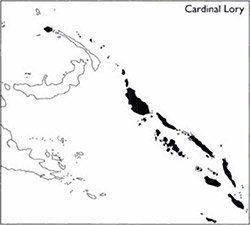
Distribucion Chalcopsitta cardinalis

The Cardinal Lory It is endemic to the Islands to the East of New Guinea. Its area of distribution covers New Hanover and the islands surrounding (Tabar, Lihir, Thong, FeNi and Nissan). Extends to Buka and Bougainville. In the Solomon Islands occupies a territory that extends to the South of San Cristóbal.

Conservation:


minor concern

– Current IUCN Red List category: Least concern

– The population trend: Stable

The world population It has not been quantified, but the species is described as abundant (pit et to the. 1997). Sources estimate that the total population in nature exceeds the 100 thousand copies.
The population is suspected to be stable in the absence of evidence of any reduction or substantial threats.

But, is classified by the UICN as a species "in restricted area", which means that it has a territory whose surface is less to 50 000 km, therefore, potential danger.

"Cardinal Lory" in captivity:

Very rare.

In 1989, the Solomon Island allowed that a few Cardinal Lory were exported to the EE.UU.. But, because of the Law on the conservation of wild birds in 1992 The export of the Lori of Solomon Islands to the United States. UU. they banned except that is for authorized reproduction.

Alternative names:

– Cardinal Lory (ingles).
– Lori cardinal (French).
– Kardinallori (German).
– Lóris-cardinal (Portuguese).
– Lori Cardenal (español).

scientific classification:

– Order: Psittaciformes
– Family: Psittaculidae
– Scientific name: Pseudeos cardinalis
– Genus: Dusky
– Citation: (Gray,GR, 1849)
– Protonimo: cardinal lorius

«Lori Cardenal» images:

Videos "Cardinal Lory"


«Lori Cardenal» (Pseudeos cardinalis)


Sources:

Avibase, BirdLife.org, Oiseaux.NET

Photos: Wikipedia, Chalcopsitta cardinalis - Cincinnati Zoo (Wikipedia), Ethan Ograngy (IBC.lynxeds.com), Minppu (IBC.lynxeds.com)

Sounds: Niels Krabbe (Xeno-canto)

▷ The world of Pets: Dogs, cats, birds, reptiles, amphibians

Meek's Pygmy-Parrot
Micropsitta meeki

Meek's Pygmy-Parrot

Content


Anatomy-parrots

Description

10 cm. length.

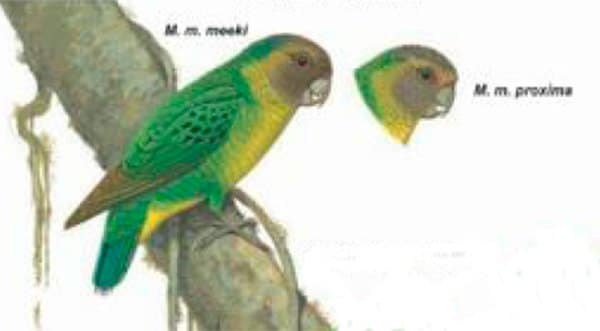
The Meek's Pygmy-Parrot (Micropsitta meeki) has the feathers of the head dark brown, strongly scalloped in color yellow on them ear-coverts and the sides of the throat, and usually with the eyebrows in a vague color yellow; feathers of the crown with fine greyish yellow tips.

Upperparts dark green, darker on the margins and the Center to the Middle coverts black. Feathers primary Black with green trim; secondaries mainly green. Wing feathers more dark with the tips of color yellow; underside of flight feather blackish. Top of the chest and centre of belly, opaque yellow, with brown spots at the tips of the feathers; flanks color green dark; under the tail, coverts yellow. Tail greenish blue in the Center, feathers laterales blackish with stains yellow on the tips or with pointed blue and yellow.

Bill yellow rose pale; irises yellowish brown; legs Pink.

Similar to males females.

Subspecies

  • Micropsitta meeki meeki

    (Rothschild and Hartert, 1914) – The nominal.


  • Micropsitta meeki proxima

    (Rothschild and Hartert, 1924) – The face is more pale and the grey more beige that the of the nominal species; light diffusion of greenish color instead of the yellow markings of the nominal, and a band front yellow with find in them eyebrows.

Habitat:

Microloro-of-Meek-(2)

Not well known. It occurs in forests, high secondary growth, and even in trees around inhabited areas. The birds are found in small groups. Habits are like those of the Buff-faced Pygmy-Parrot.

Reproduction:

The nest they usually build it on a tree termite mound, Sometimes it can be very close to the ground.

Food:

They feed on lichens and fungi collected from trunks of trees.
They nourish also of seeds, nuts, berries and fallen fruits that they can find, Although they prefer to eat fruits of plants. They also feed on insects and insect larvae.

Distribution:

Size of the area of distribution (reproduction / resident): 2,400 km2

Endemic to the forests of the lowlands, until 700 meters of altitude on the Islands in the Northwest Bismarck Archipelago including Manus, Lou and Rambutyo in the Group of Admiralty and Mussau and Emira in the Saint Matthias group.

Of the two subspecies:

Conservation:


minor concern


• Current IUCN Red List category: Least concern

• Population trend: Stable

The size of the world population It has not been quantified, It is thought that it may be above the 10,000 specimens. According to sources, the species is common both in Manus as Lou (pit et to the. 1997).

The population is suspected to be stable in the absence of evidence of any reduction or substantial threats.

"Meek's Pygmy-Parrot" in captivity:

Not found in captivity.

While attempts have been made to keep Pygmy parrots in captivity, These have not been successful. This may be due to the fact that birds suffer from stress or a lack of understanding of their dietary needs.

Alternative names:

– Meek’s Pygmy-Parrot, Citrine Pygmy Parrot, Meek’s Pygmy Parrot, Yellow-breasted Pygmy Parrot, Yellow-breasted Pygmy-parrot (ingles).
– Micropsitte de Meek (French).
– Meekspechtpapagei, Meek-Papagei (German).
– Micropsitta meeki (Portuguese).
– Microloro de Meek (español).

scientific classification:

– Order: Psittaciformes
– Family: Psittaculidae
– Genus: Meeki
– Scientific name: Micropsitta meeki
– Citation: Rothschild & Hartert, 1914
– Protonimo: Micropsitta meeki

Images "Meek's Pygmy-Parrot"

————————————————————————————————

«Microloro de Meek» (Micropsitta meeki)


Sources:

– Avibase
– Parrots of the World – Forshaw Joseph M
– Parrots A Guide to the Parrots of the World – Tony Juniper & Mike Parr
– Birdlife

– Photos:

(1) – Parrots of the World – Forshaw Joseph M
(2) – Meek’s Pygmy-Parrot on Manus – BIRDING AROUND THE WORLD

– Sounds: Frank Lambert (Xeno-canto)