â–· The world of Pets: Dogs, cats, birds, reptiles, amphibians

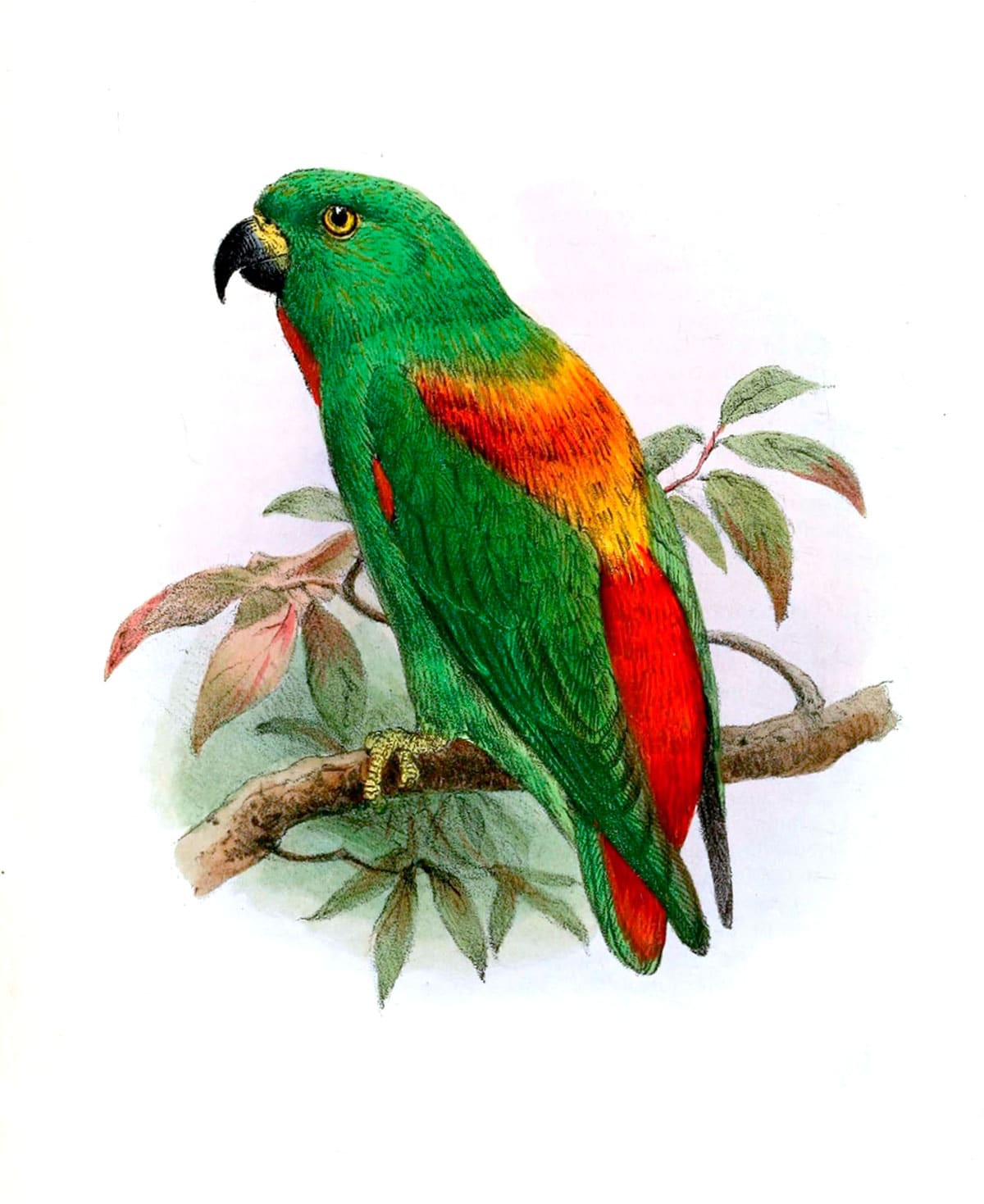
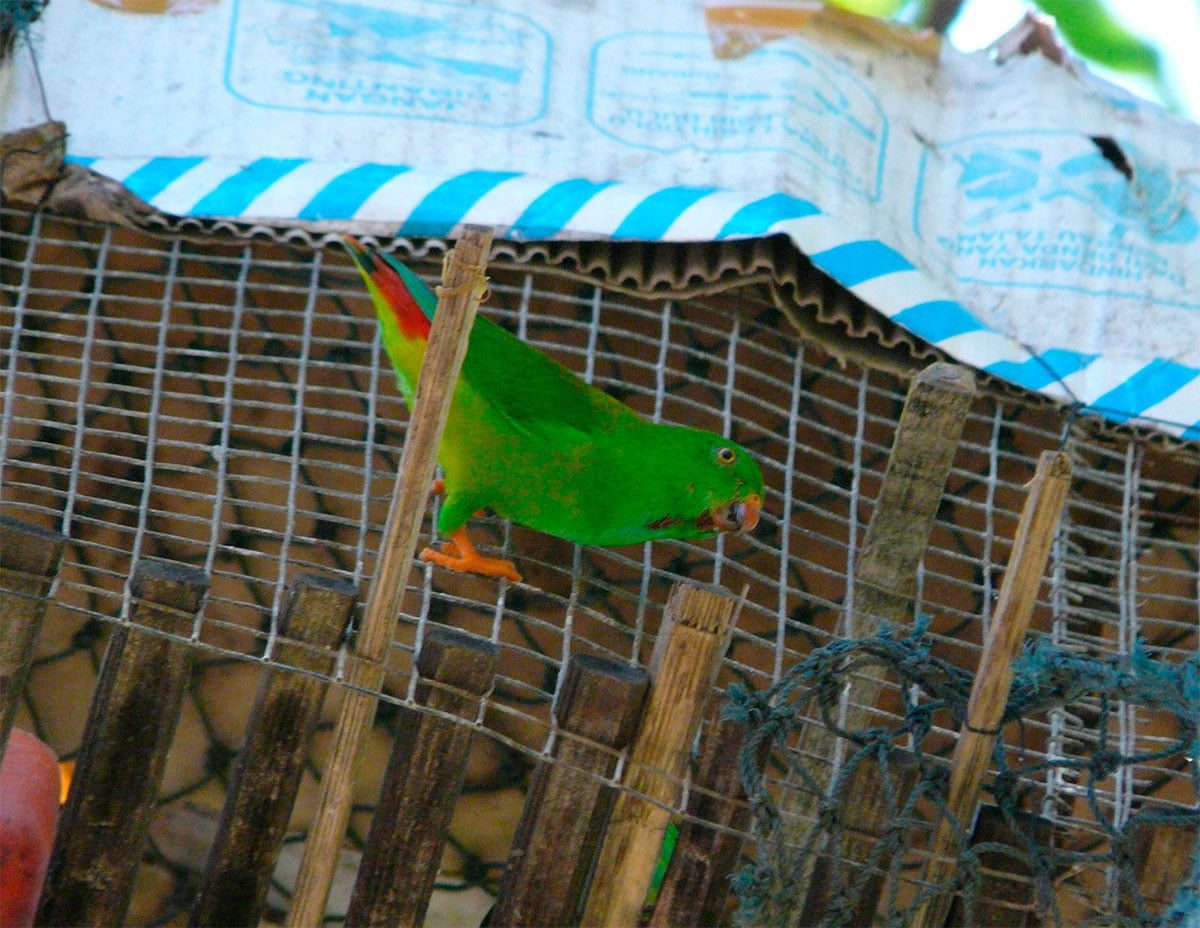
Double-eyed Fig-Parrot
Cyclopsitta Diophthalma


Double-eyed Fig-Parrot

Content

Description

13 to 16 cm.. length and a weight between 25 and 56 g..

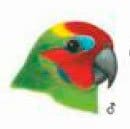
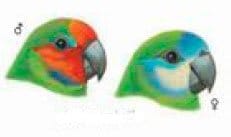
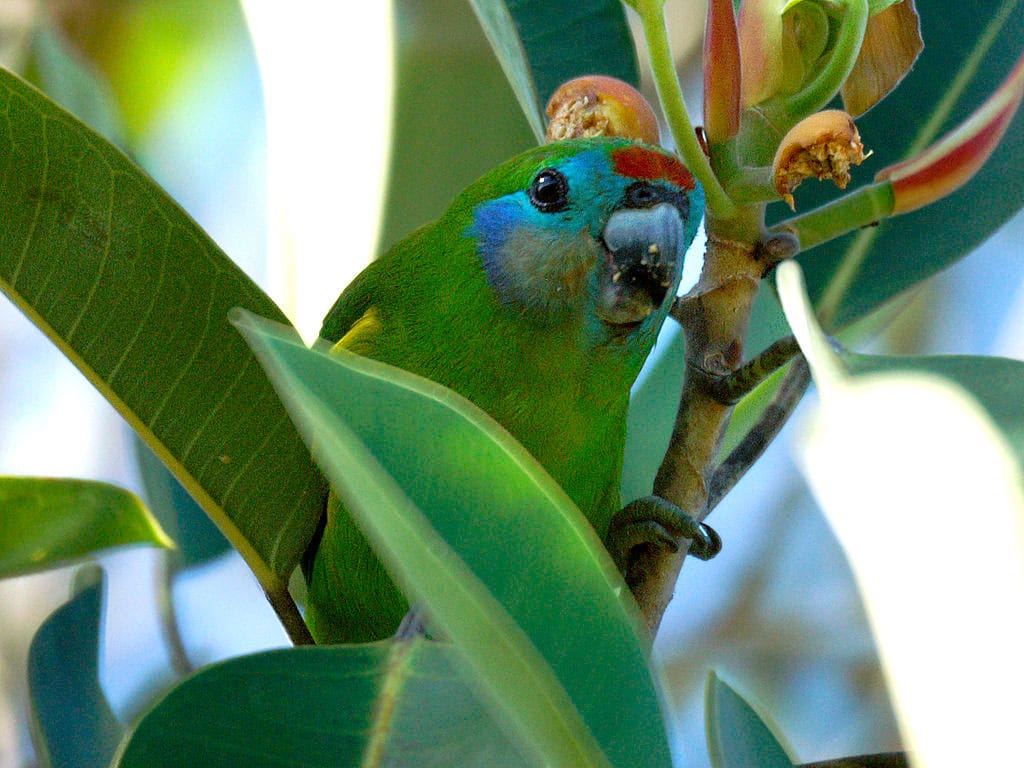
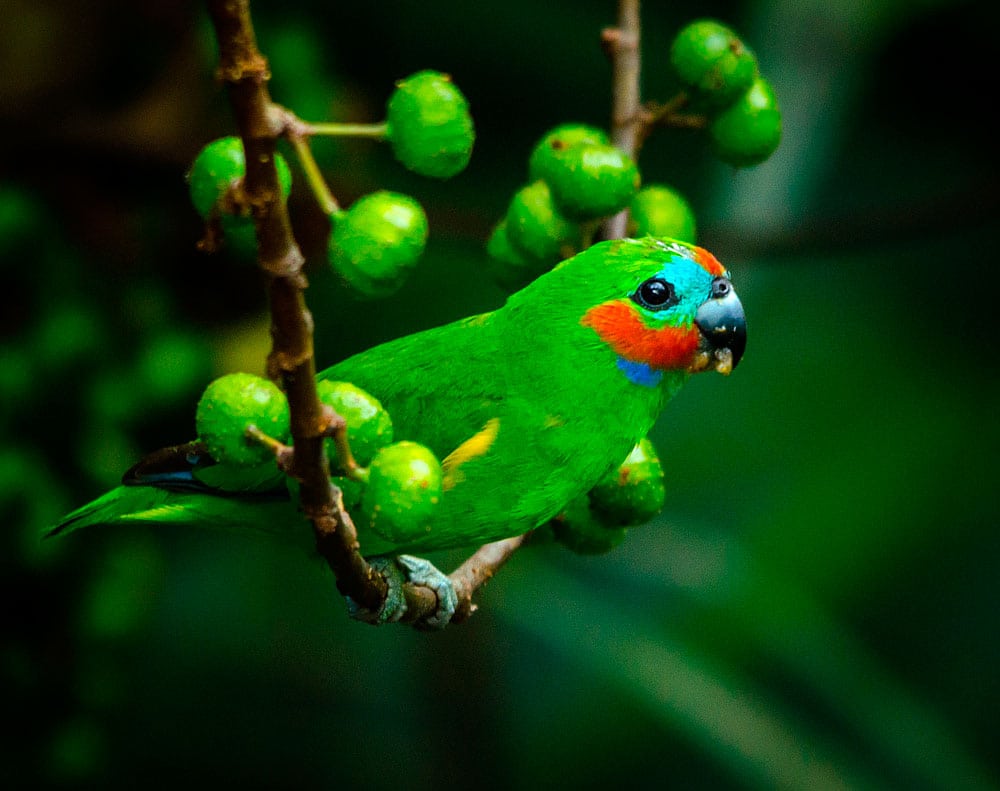
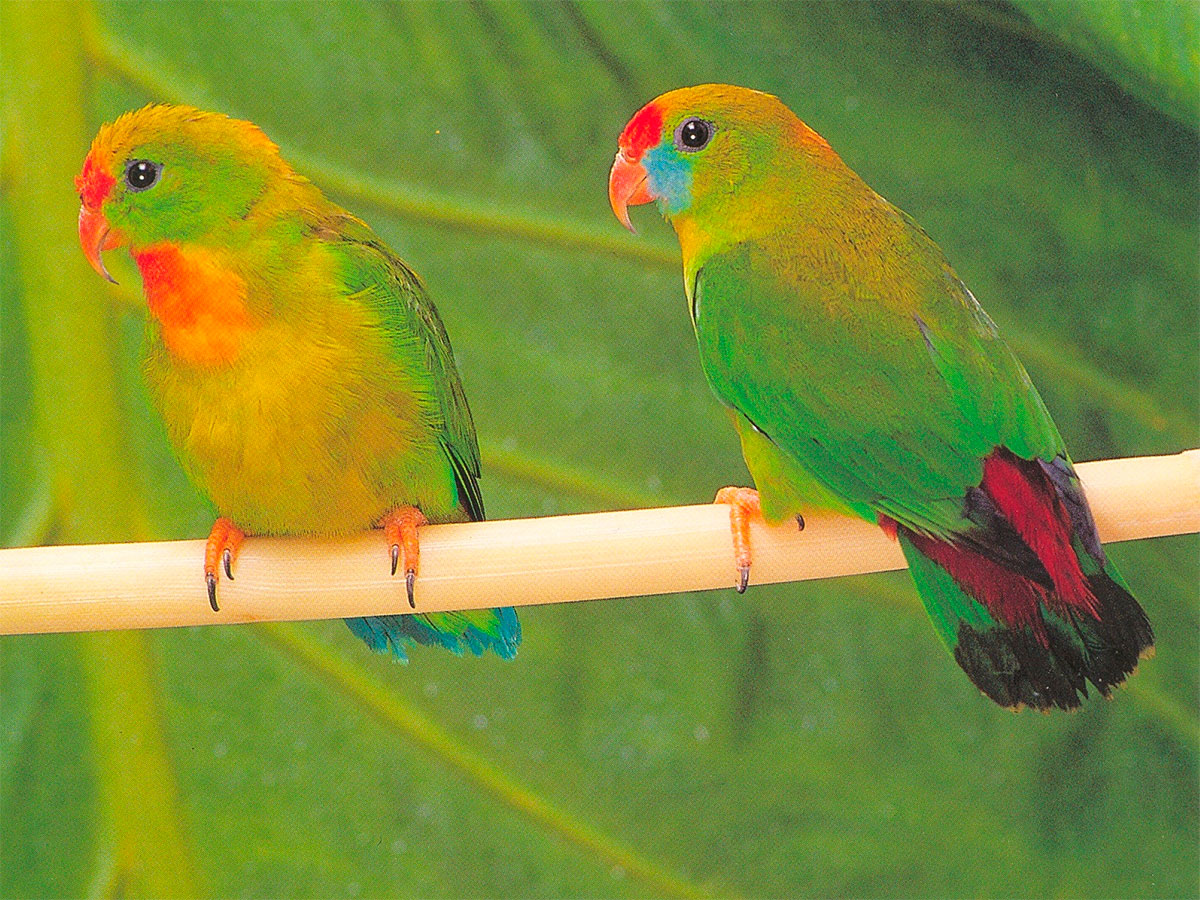
The Double-eyed Fig-Parrot (Cyclopsitta Diophthalma) half of the crown, lores, cheeks and headphones feathers bright Scarlet color with some slightly elongated feathers; bright turquoise brand above and in front of the eyes, that it extends slightly backwards above and below; green line above and behind the eyes; brand violet-blue light under the red on the back of the headphones feathers that extends to the throat; narrow yellowish Orange behind the red band of the crown, Fusion to the green in the part back from the crown.

Upperparts with indistinct diffusion of color bright green olive on the the mantle. Wing coverts, bright green; primary coverts blue; primaries with vane external of color blue turquoise pale and vane blackish internals; flight feather (except the primary outer) with band of yellowish white color visible from below; inner coverts marked in red, wing feathers bordered with yellow green.

The underparts paler; Green over yellow that the upperparts, with a strong Flash of yellow along the flank, about the bend of wing. Upper, the tail green; grey below.

Robust bill, notched grey lead and a blackish tip; cere dark grey; irises dark brown; legs Green grey.

The female has the cheeks brown, not red.

Immature as the females. The young male acquire the plumage adult in 14 months.

Subspecies description

Subspecies description
  • Cyclopsitta diophthalma diophthalma

    : (Hombron and Jacquinot, 1841) – The nominal

  • Diophthalma diophthalma aruensis - male

  • Cyclopsitta diophthalma aruensis

    : (Schlegel, 1874) – Of 14 cm.. length. The plumage is greenish-yellow, the blue area on the eyes has greenish hue , Blue cheeks are lined with mauve colouration and extends to the bottom of the peak.

    Female similar to the male but all the red marks are replaced by a pale blue.

  • Diophthalma diophthalma coccineifrons

  • Cyclopsitta diophthalma coccineifrons

    : (Sharpe, 1882) – Of 14 cm.. length.

    It is usually something more dark. The Crown is red bordered with a broad yellow band.

    The female has less yellowish white.

  • Diophthalma diophthalma virago - male

  • Cyclopsitta diophthalma virago

    : (ECTION Hartert, 1895) – Of 14 cm.. length.

    Green is more pale, the red zones of the face are less extensive and more pale.
    Yellow edge of the very weak Crown.

    Juveniles as adult females

  • Diophthalma diophthalma inseparabilis

  • Cyclopsitta diophthalma inseparabilis

    : (ECTION Hartert, 1898) – Of 14 cm.. length.

    The Red coloration is reduced to a small spot on the forehead, the rest of the forehead is bluish.

    Similar to males females.

    Juveniles as adult females.

  • Diophthalma diophthalma macleayana

  • Cyclopsitta diophthalma macleayana

    : (EP Ramsay, 1874) – Of 14 cm.. length.

    The Red is reduced to a red spot in the front area and lower cheeks. The yellow border in the area of the Crown is absent, sides of the forehead and eyes blue with green. The azul-violaceos edges of the cheek extends to below the peak.

    Females more yellowish and the bottom of the cheeks is white Brown.

    Equal to the adult female juveniles.

  • Diophthalma diophthalma marshalli

  • Cyclopsitta diophthalma marshalli

    : (Iredale, 1946) – Of 14 cm.. length.

    Green is more beige and the azul-malva coloration extends to the area under the peak.

    Females have pale blue color where the male has red and blackish brown cheek bottom area.

    Juveniles as adult females.

  • Diophthalma diophthalma coxeni

  • Cyclopsitta diophthalma coxeni

    : (Gould, 1867) – It's a bit more large, of about 15 cm.. approximately, No red forehead and face with some reddish feathers, the cheeks and orange headphones feathers. Blue front clear and without yellow stripe. The area of the eyes is absent blue. Blue edges of the bottom of the cheeks is variable.

    The females are more yellowish with less or absent red in the face.

    Equal to the adult female juveniles.

Habitat:

The Double-eyed Fig-Parrot are sedentary, with some dispersion after the breeding season. It is in a range of habitats from low to medium altitude, including jungle, secondary vegetation, on the edge of the Woods, riparian forest and occasionally dry forests and open forests of eucalyptus.

In Australia There are also birds in parks, Gardens, scrub, cultivated areas and mangroves; the Diophthalma diophthalma coxeni, probably, concentrated in the alluvial forest, but it was also visible in the forests of dry lowlands and hills of rainforest.

The species is highly dependent of the Ficus figs in all habitats.

The birds are usually found in pairs or in small groups, calling the attention with their constant calls acute while flying above the canopy.

They feed in silence, moving quietly through the foliage, often giving away their presence only by falling debris, Since break the shell of the fruit to reach its seeds.
outside the breeding season, groups of up to 200 birds can be nested together, dissolving into smaller groups to feed themselves during the morning and afternoon.

When alarmed, they move their wings in an agitated manner.

during the rains, the bath is carried out with wet foliage, and mutual grooming is common.

Reproduction:

The breeding season of the Double-eyed Fig-Parrot, probably begins in New Guinea during the month of March, in Australia the main season runs from August to November.

When the birds are played are divided into pairs, territorial around their food trees. The nest It is a cavity that is expanded in a trunk at a height between 8 and 20 meters above the ground. Most of the nest preparation is carried out by the female., that takes refuge in the hole and spends a large part of the day there during its excavation. She can experiment with more than one nest.

Courtship feeding is common. The entrance hole is about 4 cm in diameter, and putting two white eggs are deposited, at intervals of 48 hours, in one camera, some 20 centimetres below the entry hole.

The incubation hard 18 days and the young will leave the nest in 7-8 weeks, After having been fed during the first 3 to 4 weeks, only for the female. They return to settle in the hollow for a short period of time after having left the nest.

Food:

The fig seeds they are their main food, birds often return to the same ripe fruits ending all their seeds. The diet also includes whole fruits small, nectar, insect larvae and fungi or lichens collected from the barks. Birds may feed in groups with others Fig parrots and, in Australia, with Rosella parakeets and other species of parrots.

Distribution:

The Double-eyed Fig-Parrot is distributed throughout much of New Guinea and parts of the northeast of Australia. At the West end is located in Waigeo, Salawati, Misool and Rafiau in the West Papua islands, Indonesian.

Is widespread but distributed unevenly through the continental part of New Guinea, absent only in the center of the Doberai Peninsula and the central belt of mountains above the 1.600 m, Although there have previously been to 1.800 meters at the local level.

You can see in the islas Aru and Fergusson, in the Islands Goodenough in the D'Entrecasteaux Group, and in Tagula in the Louisiade group.

In Australia, the most northerly of the three isolated populations, is the tip of the Cape York Peninsula, from Jardine River in the northwest of the country, to the South, around East of Lockhart River, sometimes in the South to the extreme north of the Princess Charlotte Bay; the population Centre occupies the coastal district of everything Cooktown in the North through Cairns and the District Atherton, about South of Townsville; the southern-most population, now very reduced, with less than 50 records in the last century, formerly extended from Gympie, Queensland, to the South, about Richmond River, New South Wales, arriving inland up to the Bunya mountains (in 1976 two birds were about the Koreelah National Park, in February and two close Lamington National Park in December).

The estimate of the world population is above the 100.000 individuals and stable, but the State two of its subspecies is less secure:

– Cyclopsitta Diophthalma macleayana: has a population of 5.000 individuals and may be in decline, Although multiply in parks and gardens around Cairns.
– Cyclopsitta Diophthalma coxeni: just left 200 birds, After having reduced its population as a result of the destruction of the forests of lowlands along its limited distribution area.
– The third Australian subspecies, Cyclopsitta Diophthalma marshalli it's still pretty common.

In New Guinea, the species dispersed, and is considered to be rare in the Doberai Peninsula and absent from many parts of the lowlands of the South, is mainly distributed in the Highlands of the South basin. The Orange-breasted Fig-Parrot It probably replaces this species in much of this area. It is likely that the species has not been recorded accurately due to its small size and discreet habits. Protected by law in Australia. The Diophthalma diophthalma coxeni appears in the Appendix I of the CITES

Subspecies distribution

Subspecies distribution

Conservation:


minor concern


• Current IUCN Red List category: Least concern

• Population trend: Stable

The size of the world population Double-eyed Fig-Parrot It has not been quantified, Although it is estimated at more than 100,000 specimens. But, the Diophthalma diophthalma coxeni is in critical hazard, with a population between 50 and 200 individuals; the Diophthalma diophthalma macleayana with a population of some 5.000 individuals and the Diophthalma diophthalma marshalli generally uncommon

The population, of the nominal species, is suspected to be stable in the absence of evidence of any reduction or substantial threats.

"Double-eyed Fig-Parrot" in captivity:

Rare in captivity.
Not social with people. Welcome in the distance.

Alternative names:

– Double-eyed Fig-Parrot, Double eyed Fig Parrot, Double-eyed Fig Parrot, Two-eyed Fig Parrot (ingles).
– Psittacule double-oeil (French).
– Rotwangen-Zwergpapagei (German).
– Papagaio-do-figo-de-cara-azul (Portuguese).
– Lorito de Cuatro Ojos, Lorito Dobleojo, Lorito de la higuera de doble ojo (español).

scientific classification:

– Order: Psittaciformes
– Family: Psittaculidae
– Scientific name: Cyclopsitta Diophthalma
– Genus: Cyclopsitta
– Citation: (Hombron & Jacquinot, 1841)
– Protonimo: Psittacula diophthalma

Images "Lorito double":

Videos "Double-eyed Fig-Parrot"

————————————————————————————————

«Lorito Doublerojo» (Cyclopsitta Diophthalma)


Sources:

– Avibase
– Parrots of the World – Forshaw Joseph M
– Parrots A Guide to the Parrots of the World – Tony Juniper & Mike Parr
– Loromania

– Photos:

(1) – «Cyclopsitta diophthalma-Birdworld Kuranda, Queensland, Australia-male-8a» by Shotophoto – Double Eyed Fig ParrotUploaded by snowmanradio. Licensed under CC BY-SA 2.0 via Wikimedia Commons.
(2) – John Gerrard Keulemans [Public domain], via Wikimedia Commons
(3) – «Cyclopsitta diophthalma-Mossman Gorge, Daintree National Park, Queensland, Australia-male-8» by James Island from Brisbane, Australia – Double-Eyed Fig-ParrotUploaded by snowmanradio. Licensed under CC BY 2.0 via Wikimedia Commons.
(4) – «Cyclopsitta Diophthalma (female) -Cairns-8» by David Cook Wildlife Photography – originally posted to Flickr as Double-eyed Fig-Parrot (Cyclopsitta Diophthalma). Licensed under CC BY-SA 2.0 via Wikimedia Commons.
(5) – Birds-pet-wallpapers
(6) – By tamandua – PBase

– Sounds: Andrew Spencer (Xeno-canto)
â–· The world of Pets: Dogs, cats, birds, reptiles, amphibians

Coconut Lorikeet (deplanchii)
T. haematodus deplanchii


Coconut Lorikeet (deplanchii)

Content

Description (1)

26 cm.. of length and a weight of 140 gr.

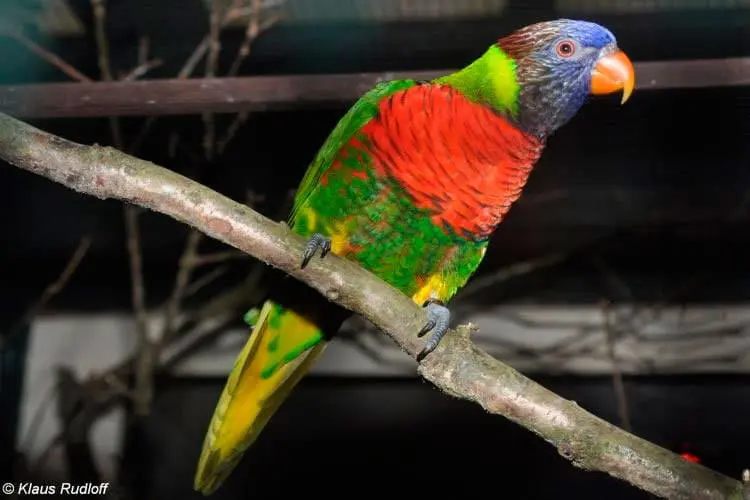
The Coconut Lorikeet (deplanchii) (T. haematodus deplanchii) is a variation of the nominal (Trichoglossus Haematodus)

Similar to the nominal Haematodus, but slightly paler plumage. The head has a bright blue. Reddish orange on the chest, similar to the Trichoglossus haematodus massena, only that more alive. The abdomen is yellowish green and extends to the back of the neck. The thighs and the feathers under the yellow tail and tail olive green top.

Distribution:

New Caledonia and Loyalty Islands.

Alternative names:

– Coconut Lorikeet (deplanchii) (ingles).
– Loriquet à tête bleue (deplanchii) (French).
– Allfarblori Deplanche (German).
– Loris Arco Iris Deplanchii (Portuguese).
– Lori Deplanche, Lori Arcoiris Deplanche (español).

scientific classification:

– Order: Psittaciformes
– Family: Psittaculidae
– Scientific name: Trichoglossus haematodus deplanchii
– Genus: Trichoglossus
– Citation: Verreaux,J & Des Murs, 1860
– Protonimo: Trichoglossus Deplanchii

————————————————————————————————

    (1) – Subspecies Coconut Lorikeet (Trichoglossus haematodus)

————————————————————————————————

«Lori Arcoiris Deplanche» (T. haematodus deplanchii)


Sources:

– Avibase

– Photos: by Klaus Rudloff (kdrudloff@web.de) – biolib.cz

â–· The world of Pets: Dogs, cats, birds, reptiles, amphibians

Meek's Pygmy-Parrot
Micropsitta meeki

Meek's Pygmy-Parrot

Content


Anatomy-parrots

Description

10 cm. length.

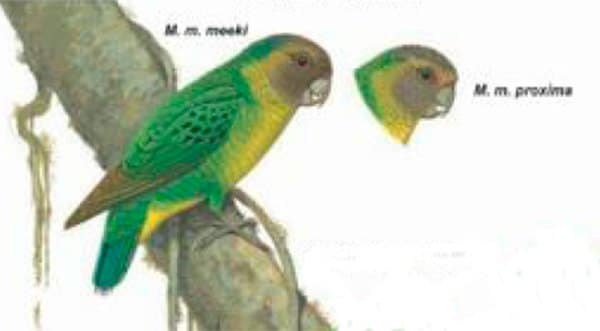
The Meek's Pygmy-Parrot (Micropsitta meeki) has the feathers of the head dark brown, strongly scalloped in color yellow on them ear-coverts and the sides of the throat, and usually with the eyebrows in a vague color yellow; feathers of the crown with fine greyish yellow tips.

Upperparts dark green, darker on the margins and the Center to the Middle coverts black. Feathers primary Black with green trim; secondaries mainly green. Wing feathers more dark with the tips of color yellow; underside of flight feather blackish. Top of the chest and centre of belly, opaque yellow, with brown spots at the tips of the feathers; flanks color green dark; under the tail, coverts yellow. Tail greenish blue in the Center, feathers laterales blackish with stains yellow on the tips or with pointed blue and yellow.

Bill yellow rose pale; irises yellowish brown; legs Pink.

Similar to males females.

Subspecies

  • Micropsitta meeki meeki

    (Rothschild and Hartert, 1914) – The nominal.


  • Micropsitta meeki proxima

    (Rothschild and Hartert, 1924) – The face is more pale and the grey more beige that the of the nominal species; light diffusion of greenish color instead of the yellow markings of the nominal, and a band front yellow with find in them eyebrows.

Habitat:

Microloro-of-Meek-(2)

Not well known. It occurs in forests, high secondary growth, and even in trees around inhabited areas. The birds are found in small groups. Habits are like those of the Buff-faced Pygmy-Parrot.

Reproduction:

The nest they usually build it on a tree termite mound, Sometimes it can be very close to the ground.

Food:

They feed on lichens and fungi collected from trunks of trees.
They nourish also of seeds, nuts, berries and fallen fruits that they can find, Although they prefer to eat fruits of plants. They also feed on insects and insect larvae.

Distribution:

Size of the area of distribution (reproduction / resident): 2,400 km2

Endemic to the forests of the lowlands, until 700 meters of altitude on the Islands in the Northwest Bismarck Archipelago including Manus, Lou and Rambutyo in the Group of Admiralty and Mussau and Emira in the Saint Matthias group.

Of the two subspecies:

Conservation:


minor concern


• Current IUCN Red List category: Least concern

• Population trend: Stable

The size of the world population It has not been quantified, It is thought that it may be above the 10,000 specimens. According to sources, the species is common both in Manus as Lou (pit et to the. 1997).

The population is suspected to be stable in the absence of evidence of any reduction or substantial threats.

"Meek's Pygmy-Parrot" in captivity:

Not found in captivity.

While attempts have been made to keep Pygmy parrots in captivity, These have not been successful. This may be due to the fact that birds suffer from stress or a lack of understanding of their dietary needs.

Alternative names:

– Meek’s Pygmy-Parrot, Citrine Pygmy Parrot, Meek’s Pygmy Parrot, Yellow-breasted Pygmy Parrot, Yellow-breasted Pygmy-parrot (ingles).
– Micropsitte de Meek (French).
– Meekspechtpapagei, Meek-Papagei (German).
– Micropsitta meeki (Portuguese).
– Microloro de Meek (español).

scientific classification:

– Order: Psittaciformes
– Family: Psittaculidae
– Genus: Meeki
– Scientific name: Micropsitta meeki
– Citation: Rothschild & Hartert, 1914
– Protonimo: Micropsitta meeki

Images "Meek's Pygmy-Parrot"

————————————————————————————————

«Microloro de Meek» (Micropsitta meeki)


Sources:

– Avibase
– Parrots of the World – Forshaw Joseph M
– Parrots A Guide to the Parrots of the World – Tony Juniper & Mike Parr
– Birdlife

– Photos:

(1) – Parrots of the World – Forshaw Joseph M
(2) – Meek’s Pygmy-Parrot on Manus – BIRDING AROUND THE WORLD

– Sounds: Frank Lambert (Xeno-canto)

â–· The world of Pets: Dogs, cats, birds, reptiles, amphibians

Yellow-and-green Lorikeet
Trichoglossus flavoviridis

Yellow-and-green Lorikeet

Content

Yellow-and-green Lorikeet

Description

20 cm.. length and a weight between 80 and 95 gr.

Very similar to the Scaly breasted Lorikeet by appearance scaly on underparts, but differs from it by color low wing and brands that adorn their head.

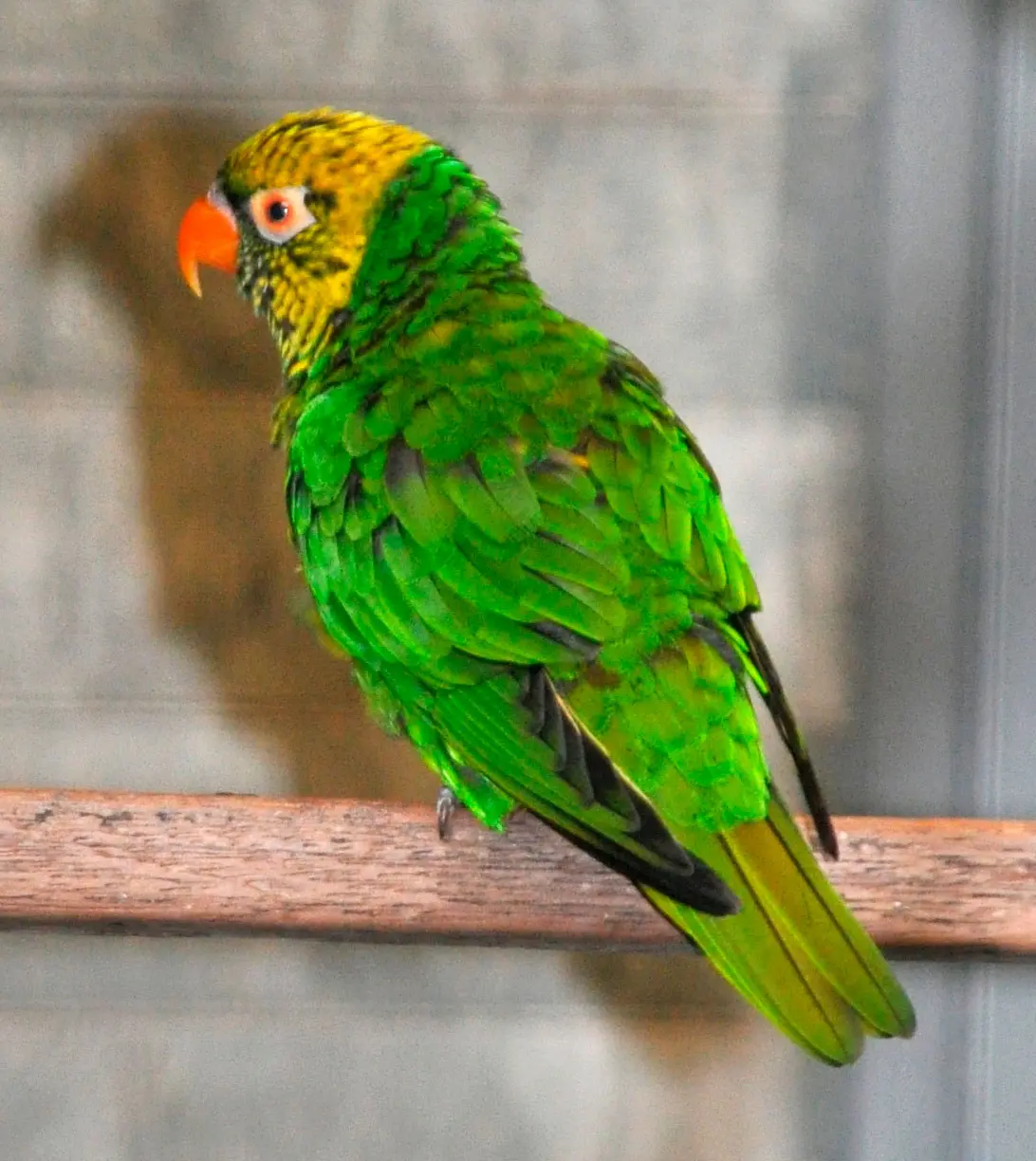
The adults of the Yellow-and-green Lorikeet (Trichoglossus flavoviridis) they have the upperparts plumage of a beautiful green.

The forecrown and top They are are greenish brown. The throat and the chest to abdomen It is yellow with dark green flakes. Area of sides up to the coverts and the bottom of the wings It shows a beautiful yellow-green.

The bill is orange. The irises is orange-yellow, the legs grey.

It has no sexual dimorphism.

In the youth, all the yellow markings are derived more green. The bill is brown, while the bare parts of the face are white. The irises is brown.

Description 2 subspecies

  • Trichoglossus flavoviridis flavoviridis

    (Wallace, 1863) – Nominal. Overall plumage It is olive green. The forecrown and crown yellow. The back of the neck brown. the yellow throat and the chest to abdomen, with the scalloped dark green.


  • Trichoglossus flavoviridis meyeri

    (Walden, 1871) – Shown in upperparts a darker shade of green; the underparts They are less scaly. The back of the top, the occiput and nape are greenish-Brown. The cheeks and throat They are yellow with dark green stripes. This subspecies is much smaller, between 40 and 50 gr.

Habitat:

The Yellow-and-green Lorikeet they are distributed with greater diligence between primary forest and mature secondary forest than their close relatives, the Ornate Lory. But, This does not prevent them from entering the open lands to feed from the ceibos in flower (coral trees).

Throughout its area, these birds are considered fairly common. In Celebes, are common in the mountainous areas where have been supplanted to a large extent to the Ornate Lory. In the Sula Islands, they are common in almost all altitudes.

They live in small flocks of noisy and sometimes mingle with the Ornate Lory When looking for food in the trees in flower at the edge of forests.

These birds are relatively Shy and they tend to stay inside the dense forest foliage, where their cryptic plumage makes them virtually invisible. When they feel threatened, leave the foliage uttering cries penetrating and powerful. They are easier to fly above the treetops on quick flights or the circulating a flight above the trees, just before landing in the branches more high.

Reproduction:

There is little information reproduction in the natural environment. The only one nest we have discovered so far was in a mossy forest, about 2.400 meters above the sea level. It was located high above the ground in a dead tree.

In captivity, the implementation is, usually, two white eggs that incubate for a few parents will be 23 days. As with all the Lori, the reproductive cycle It is particularly long and hard about 65 days.

Food:

The Yellow-and-green Lorikeet is above all vegetarian. Their language is particularly suitable for crop pollen and the nectar from the flowers. It is equipped with long buds that allows you to easily reach their favorite food. They have a predilection for the trees of the genus Euphorbia and Erythrina.

Distribution:

Size of its range (reproduction / resident): 6.300 km2

The Yellow-and-green Lorikeet They are endemic to the islands east of Indonesian. They are exclusively on the Sula Islands (Taliabu, Mangole, Sanana) and especially in the area of Celebes island.

Description 2 subspecies

Conservation:


minor concern


• IUCN Classification: Least concern.

• No threats at present.

The species is not threatened. In Taliabu, is very common in altitude zones, but it is also quite common in degraded areas bordering the coast. It is estimated one world population above the 100.000 specimens.

Justification of trend

They suspected that the population is stable in absence of evidence of any decline or threatens substantial.

"Yellow-and-green Lorikeet" in captivity:

Pretty common in captivity.

Take it easy, Nice trill. Sensitive to cold temperatures and somewhat susceptible to disease. He will join his caregiver over time although initially shy.

Alternative names:

– Yellow-and-green Lorikeet, Citrine Lorikeet, Yellow & Green Lorikeet, Yellow and Green Lorikeet, Yellow&green lorikeet, Yellow-and- Green Lorikeet, Yellow-green Lorikeet (ingles).
– Loriquet jaune et vert (French).
– Celebeslori (German).
– Lori flavoviridis (Portuguese).
– Lori Verdigualdo, Tricogloso Verde y Amarillo (español).

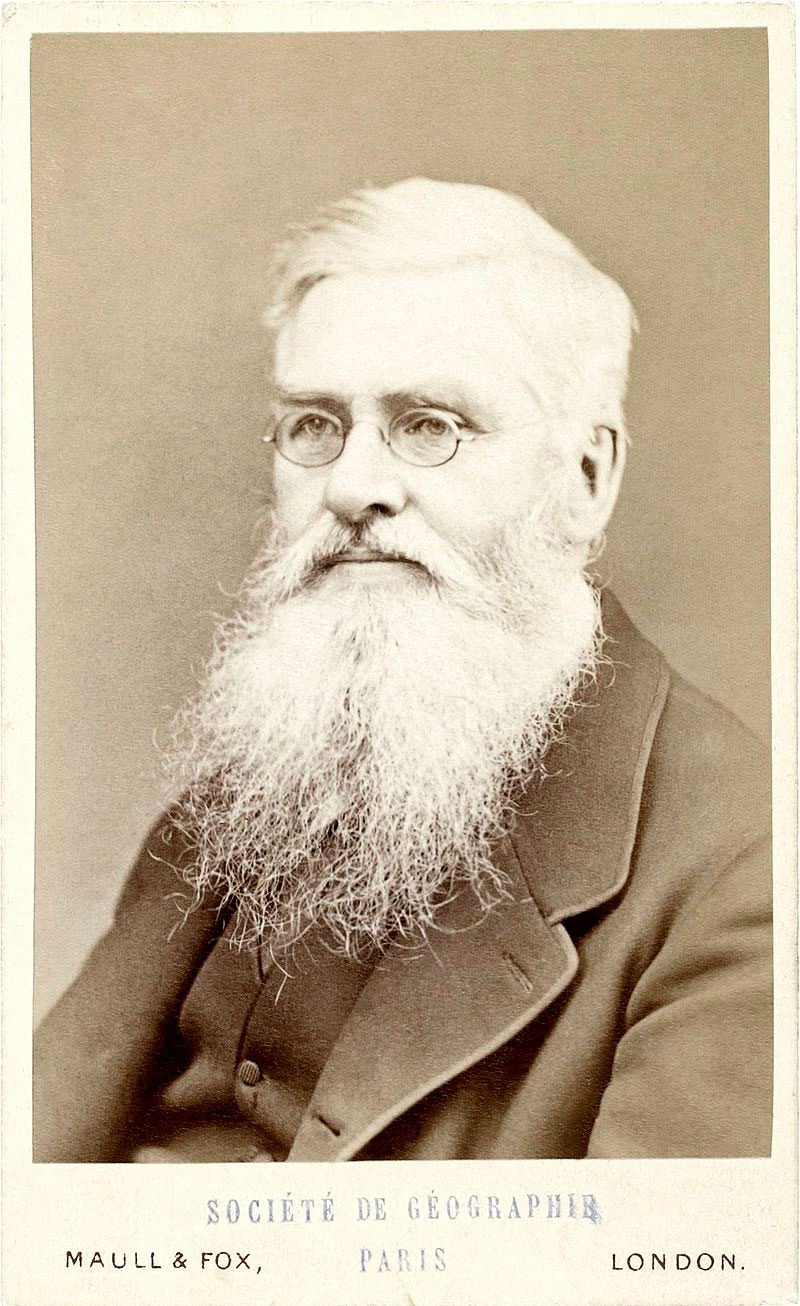
Alfred Russel Wallace

scientific classification:


– Order: Psittaciformes
– Family: Psittaculidae
– Genus: Trichoglossus
– Scientific name: Trichoglossus flavoviridis
– Citation: Wallace, 1863
– Protonimo: Trichoglossus flavoviridis


Images «Lori Verdigualdo»:

Videos "Yellow-and-green Lorikeet"

————————————————————————————————

"Lori Verdigualaldo" " (Trichoglossus flavoviridis)


Sources:

– Avibase
– Parrots of the World – Joseph Forshaw M
– Parrots-A Guide to the Parrots of the World by Tony Juniper & Mike Parr
– Birdlife

– Photos:

(1) – Yellow and Green Lorikeet (Trichoglossus flavoviridis) in the Walsrode Bird Park, Germany By Quartl (Own work) [CC BY-SA 3.0], via Wikimedia Commons
(2) – Trichoglossus flavoviridis Proceedings of the Zoological Society of London 1862 by Joseph Wolf [Public domain], via Wikimedia Commons

– Sounds: Frank Lambert (Xeno-canto)

â–· The world of Pets: Dogs, cats, birds, reptiles, amphibians

Black-headed Parrot
Pionites melanocephalus

Cotorra pechiblanca

Content

Description:

Black-headed Parrot

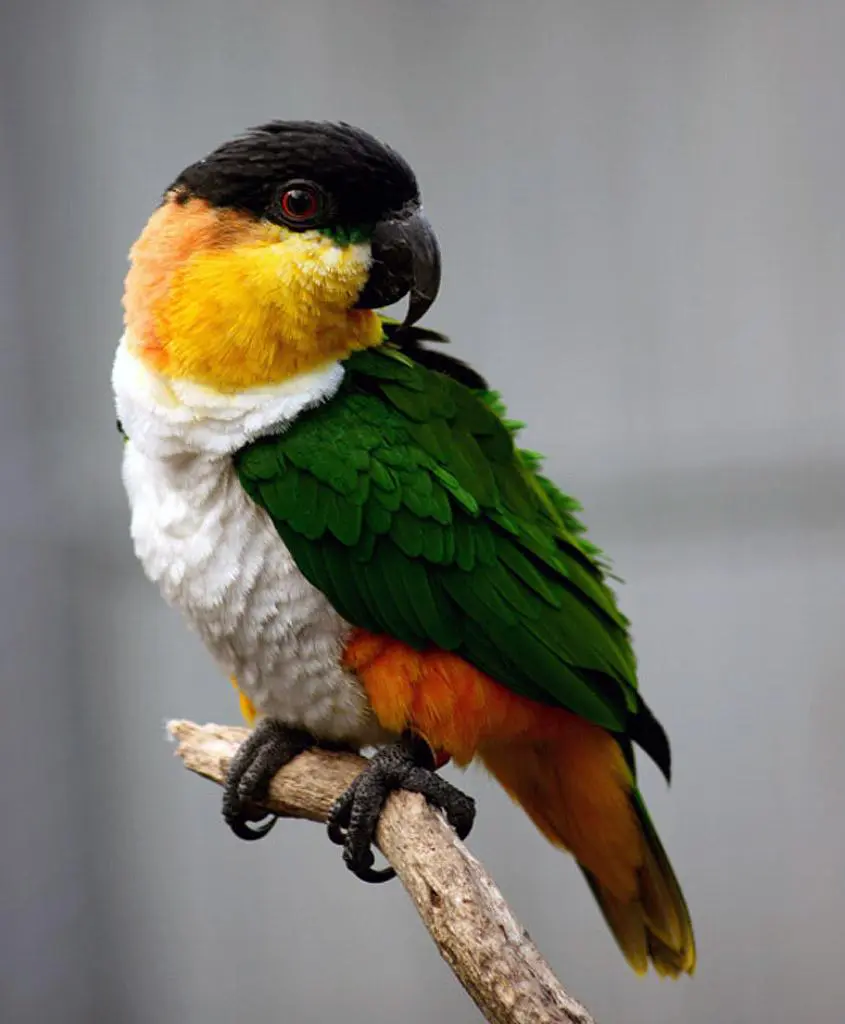
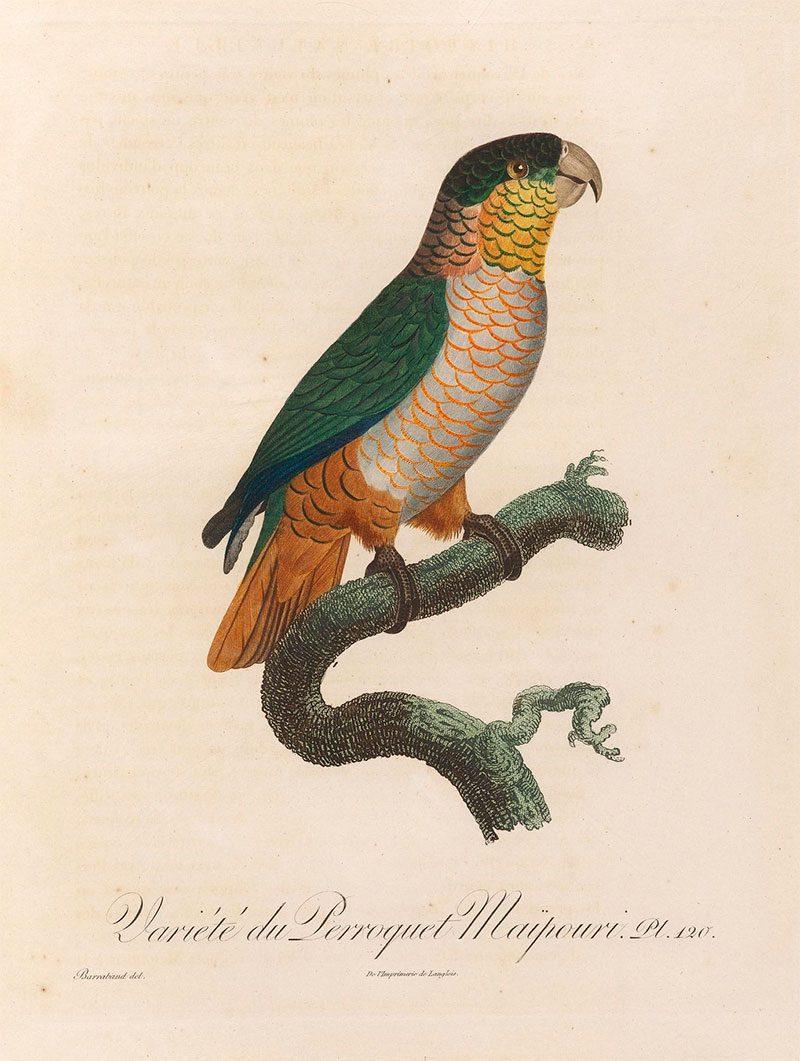
The Black-headed Parrot (Pionites melanocephalus) measures of 21 to 23 cm.. height.

Unmistakable by crown black, chest and belly white, the latter with yellow sides (very visible on the fly). Breast bright yellow, nape orange acanelada, back and rump green. Tip pens of wings They are blue and dark go the closer they get to the body.

Legs and bill dark gray.

The youth They have bluish green spots on the nape, with chest and belly yellowish.

There is no sexual dimorphism in this species. The identification of genus must be performed by DNA testing or a surgical probe.

Description 2 subspecies:

  • Pionites melanocephalus melanocephalus

    (Linnaeus,1758) – The subspecies nominal.


  • Pionites melanocephalus pallidus

    (Berlepsch, 1890) – It has bright yellow in the throat, the thighs and tail.

Habitat:

It inhabits humid jungles, semi-wet, swampy, gallery woods, stubble and crop to the 1000 m. Walks in small flocks between 3 to 10 individuals, feed in the canopy, very rare in stratum low forest.

Reproduction:

Its laying is of 2 to 4 eggs and the breeding season It is from December to February in French Guiana, april in Venezuela, April to May Colombia, October to November Suriname.

Food:

Feeds of seeds several species of plants cellulose, plants, flowers and leaves. There is also evidence of some insects in your diet.

Distribution:

She can be seen in the wild along the Amazonia, from the North of the Amazon River, bordering south to northeastern Peru, also in the Guyanas.

Distribution 2 subspecies:

  • Pionites melanocephalus melanocephalus

    (Linnaeus,1758) – The subspecies nominal.


  • Pionites melanocephalus pallidus

    (Berlepsch, 1890) – South of Colombia to the East of Ecuador and northeast of Peru.

Conservation:

State of conservation ⓘ


minor concern Minor Concern ⓘ (UICN)ⓘ

Although not in danger of extinction Its population has declined significantly. The illegal marketing is the main theory against its appearance and adaptation in an environment foreign to its natural environment. Poaching of pigeons and felling of trees are common in the south of the country.

"Black-headed Parrot" in captivity:

Popular poultry farming. They adapt easily to the bird or Aviary cages. You need a degree quite high commitment and attention by the owner. The like to interact with other birds and people. The love to play with toys and can be quite noisy. An interesting feature of the Black-headed Parrot It is their habit of rolling on his back and play with toys help of their paws.
He manages to replace their jungle habitats in parks or green areas of large cities.
Its price is quite high compared to other species due to its striking plumage and friendliness..

Alternative names:

– Black headed Parrot, Black-crowned Parrot, Black-headed Caique, Black-headed Parrot(English)
– Cotorra pechiblanca, Loro cacique o Loro mocho (Colombia)
– Perico calzoncito (Venezuela)
– Loro coroninegro (Ecuador)
– Chirricles cabeza negra (Peru)
– Grünzügelpapagei, Grünzügel-Papagei (Germany)
– Lorito Chirlecrés, Lorito Chirlicrés, Lorito Gordo de Cabeza Negra (Spain)
– Caïque à tête noire, Caïque maïpouri (France)
– cabeça-preta, maipuré, marianinha-da-cabeça-preta, Marianinha-de-cabeça-preta (Brazil)

scientific classification:

  • Order: Psittaciformes
  • Family: Psittacidae
  • Genus: Pionites
  • Scientific name: Pionites melanocephalus
  • Citation: (Linnaeus, 1758)
  • Protonimo: Psittacus melanocephalus

Images "Black-headed Parrot"

Videos "Black-headed Parrot"


Species of the genus Pionites
  • Pionites melanocephalus
  • —- Pionites melanocephalus melanocephalus
  • —- Pionites melanocephalus pallidus
  • Pionites leucogaster
  • —- Pionites leucogaster leucogaster
  • —- Pionites leucogaster xanthomerius
  • —- Pionites leucogaster xanthurus


Black-headed Parrot (Pionites melanocephalus)


Sources:

  • Avibase
  • Parrots of the World – Forshaw Joseph M
  • Parrots A Guide to the Parrots of the World – Tony Juniper & Mike Parr
  • Parrots, Parrots and macaws Neotropical
  • Baywood
  • caiqueparrots

  • Photos: Natural history of parrots /.A Paris :chez Levrault … ;an IX (1801)-an XIII (1805).. biodiversitylibrary.org/page/40064546

  • Sounds: controles-canto.org – Patrick INGREMEAU

â–· The world of Pets: Dogs, cats, birds, reptiles, amphibians

Colasisi
Loriculus philippensis


Loriculo Filipino

Content


Anatomy-parrots

Description

14 cm.. length and a weight between 31 and 40 g..

The head of the Colasisi (Loriculus philippensis) is bright green with a patch of narrow Scarlet color on the front of the Crown, bordered orange-red color on the back edge; yellowish-green Chin: narrow collar on the back of the Orange and red neck, with a wash light yellowish in the neck.

Bright green upperparts with dark crimson rump and uppertail coverts (lower sides of light blue). Bright green wings with vane internal to the darker flight feathers. Under, the wings of turquoise-blue with the exception of the outermost coverts which are green. Bright red throat Center, merging to red-orange in the center of the chest (yellow on the bases of feathers); rest of the lower region of bright green, lighter and more yellow than the upper region. Upper, the green tail; Blue below.

Coral red beak; dark brown irises; dark orange legs.

The female has a face marked in blue and does not have the Red bib, that is replaced by a greenish yellow colour wash. The female Crown is washed in yellow-orange (stronger than in the male).

Young birds have a more off Crown and paler beak.

Subspecies description
Subspecies
  • Loriculus philippensis apicalis

    (Souance 1856): Two aberrant samples previously attributed to theLoriculus salvadorii. They are larger, with less red on the Crown, more blue on the tail, and darker green colour. All the Crown of this subspecies is Scarlet, merging in Orange on the back of the neck and orange on the mantle in both sexes (duller in females). Bright red in the hip and more orange on the top.

  • Loriculus (philippensis) bonapartei

    (Souance 18563): You have the back of the head with pronunciation orange hue, Pico black and grey legs.

  • Loriculus philippensis bournsi

    (McGregor 1905): The male with red only in the front and light yellow area in the center of the Crown (female much less yellow on the Crown), upper part of the Crown of the male less yellow shows that the L. p. Regulus. Orange line on the nape of the male is less clear in the female. Female with less blue in the face that the nominal species.

  • Loriculus philippensis chrysonotus

    (Sclater, PL 1872): Frontal area and rest of the crown bright red that extends in golden yellow color on the mantle, and showing a fine reddish collar on the back of the neck. Male with more orange in the lower part of the throat patch. The female Crown similar but less marked.

  • Loriculus philippensis dohertyi

    (Hartert 1906): Maybe more orange in the mantle, but hardly different to the L. p. apicalis.

  • Loriculus philippensis mindorensis

    (Steere 1890): Orange-yellow on the neck line. Crown Green. More extensive turquoise patch on both sides of the rump.

  • Loriculus philippensis philippensis

    (Statius Müller 1776): Nominal

  • Loriculus philippensis regulus

    (Souance 1856): Similar to the L. p. bournsi but male with much more yellow on the Crown (female shows a more subdued yellow broadcast, but more than in the previous race). Nape line weaker than in the bournsi. Male with more Scarlet patch.

  • Loriculus philippensis siquijorensis

    (Steere 1890): Male with less red bib and the red spot of the largest Crown than in the nominal species. Back of the Green Crown. Falata neck mark. Female with more blue in the face.

  • Loriculus philippensis worcesteri

    (Steere 1890): Male Scarlet throat patch smaller than that in the L. p. chrysonotus. Both sexes show a more extensive Crown of orange-red in the rear margin. There is a small patch on the back of the neck of orange color and a light reddish color in the mantle of diffusion.

  • Loriculus (philippensis) camiguinensis

    (Tello, JG 2006): has mainly green plumage, with throat, front side of the face and thighs of azure-blue; the front, the pileus, the obispillo and the top of the red tail, While the rest of the tail is blue. Males and females are identical in appearance, What is unusual in others Philippine parrots, Since only males of other species have red forehead.

Habitat:

The species is found along the edges of the forest, secondary growth, Bamboo forests, areas cultivated near villages, orchards and plantations of coconut. The birds are alone, in pairs or in family groups, sometimes in small flocks, sometimes with other birds.

Reproduction:

The breeding season has been recorded from April to August.. Three eggs are deposited and incubated by the female during 20 days, the young leave the nest in five weeks.

Food:

They feed in the upper levels of flowering plants or fruit trees, sometimes at lower levels, flower, nectar, fruit (including figs) and seeds, sometimes intoxicated by consumption of fermented coconut nectar (coconuts).

Distribution:

Limited to the Philippines (less the Sulu archipelago), where are widespread and resident except in Palawan. Its abundance varies according to the subspecies.. In general, the species is locally common up to 1000 meters above sea level, but have been recorded at altitudes of up to 2.500 m (Mount Apo, Mindanao).

Subspecies distribution
Subspecies

Conservation:


minor concern


– Current IUCN Red List category: Least concern

– The population trend: Decreasing

The world population is considered to be above the 20,000 exemplary but decreasing due to loss of habitat. The subspecies Mindoro is considered as threatened, and both subspecies of Cebu as Siquijor, are nearly extinct the loss of habitat (as these birds are commonly caged and traded between islands, contemporary records of birds from Siquijor they require confirmation to determine whether they refer to the breeds).

The combined population of Mindoro, Sibuyan, Blacks, Surigao del Sur, Tables, Romblon, Masbate, Ticao, Cuimaras and Basilan (subspecies L. p. mindorensis, L. p. bournsi, L. p. Regulus and L. p. dohertyi) probably add in total not more than 5.000 birds.

"Colasisi" in captivity:

Very rare.

Alternative names:

– Colasisi, Philippine Hanging-parrot (ingles).
– Coryllis des Philippines (French).
– Philippinenpapageichen (German).
– Loriculus philippensis (Portuguese).
– Lorículo Filipino (español).

scientific classification:

– Order: Psittaciformes
– Family: Psittaculidae
– Scientific name: Loriculus philippensis
– Genus: Loriculus
– Citation: (Statius Müller, 1776)
– Protonimo: Psittacus philippensis

Images «Filipino Loriculus»:

Videos "Colasisi"

————————————————————————————————

«Philippine Lorikeet» (Loriculus philippensis)


Sources:

– Avibase
– Parrots of the World – Forshaw Joseph M
– Parrots A Guide to the Parrots of the World – Tony Juniper & Mike Parr
– Birdlife

– Photos:

(1) – a female perched. by iggino – lynx
(2) – Birds-pet-wallpapers – link
(3) – Loriculus philippensis camiguinensis (Author AlexKant) – Crocolandia Foundation – ZooChat
(4) – Loriculus p. apicalis, male, By iggino – lynx
(5) – tapety-papousci

– Sounds: David Edwards (Xeno-canto)

â–· The world of Pets: Dogs, cats, birds, reptiles, amphibians

Sula hanging parrot
Loriculus sclateri

Hanging of the Sula

Content


Anatomy-parrots

Description

14 cm.. length.

The plumage of the Sula hanging parrot (Loriculus sclateri) is mostly green.

The chin and throat They are red. There are orange-yellow markings on the mantle and in the back. The coverts, rump and tail upper are crimson, extending to the tip of the tail. Carpal edge red (Wing attack on the "shoulder"). The tail It is green with yellow-green tip. The bill is black.

the female has the irises brown, While the male is pale yellow.

To the Sula hanging parrot Sometimes I have treated as a subspecies of the Moluccan hanging parrot, but the two are treated as separate species based on its clear differences in plumage and size.

Description 2 subspecies

  • Loriculus sclateri ruber

    (Meyer,AB & Wiglesworth, 1896) – Similar to the nominal species but red in the mantle and back.


  • Loriculus sclateri sclateri

    (Wallace, 1863) – Nominal.

Habitat:

They are generally distributed in humid areas of subtropical primary and secondary forests or lowland tropical forests. until 450 meters above sea level – mainly on the edge of the forest. Can also be seen in remaining tall trees in plantations and cultivated areas.

viewed solos, or pairs or small groups.

Reproduction:

The first breeding season begins in January and lasts until April; and if conditions are right, breeding activities can once again be observed from July to September.

Nest trunks of dead trees, favor of the narrow hollow long with small entrance holes. Noticed it a female carrying nesting material, that can include pieces of bark, leaves and feathers for lining of the nest. Sunset You can consist of 2 to 4 white eggs. Single the female incubates the eggs during 20 days, While the male feeds it. Each egg measures of ~ 15 mm to 18,7 mm.

Food:

Its diet natural It consists mainly of red fruits – particularly wild figs, guava and berries, as well as flower buds and flowers. They also feed on nectar and seeds.

Distribution:

Size of the area of distribution (reproduction / resident): 30.800 km2

endemic to the Sula Islands (Taliabu, Mangole and Sanana), as well as of Banggai in Sulawesi (formerly known as Celebes)

Distribution 2 subspecies

Conservation:


minor concern


• Current IUCN Red List category: Least concern

• Population trend: Stable

The size of the world population It has not been quantified, but the species is described as common in its range (pit et to the. 1997).

The population is suspected to be stable in the absence of evidence of any reduction or substantial threats.

A possible threat to its existence are the capture for the bird trade and habitat loss.

"Sula hanging parrot" in captivity:

Practically unknown in captivity.

Alternative names:

– Sula Hanging-Parrot, Sula Hanging Parrot, Sulu Hanging Parrot (ingles).
– Coryllis de Sclater, Coryllis des Sula (French).
– Sulapapageichen (German).
– Loriculus sclateri (Portuguese).
– Lorículo de las Sula (español).

Alfred Russel Wallace

scientific classification:


– Order: Psittaciformes
– Family: Psittaculidae
– Genus: Loriculus
– Scientific name: Loriculus sclateri
– Citation: Wallace, 1863
– Protonimo: Loriculus sclateri


Images "Sula hanging parrot"

Videos "Sula hanging parrot"

————————————————————————————————

"Loricle of the Sula" (Loriculus sclateri)


Sources:

– Avibase
– Parrots of the World – Forshaw Joseph M
– Parrots A Guide to the Parrots of the World – Tony Juniper & Mike Parr
– Birdlife
– beautyofbirds

– Photos:

(1) – «Loriculussclateriwolf» by Joseph Wolf – Proceedings of the Zoological Society of London 1862 (Web). Licensed under Public Domain via Wikimedia Commons.

– Sounds: Peter Wilton (Xeno-canto)

â–· The world of Pets: Dogs, cats, birds, reptiles, amphibians

Pygmy hanging parrot
Loriculus exilis

Pygmy hanging parrot

Content


Anatomy-parrots

Description

10 to 11 cm.. length.

Pygmy hanging parrot

The head of the Pygmy hanging parrot (Loriculus exilis) is green, brighter around the base of the bill and bathed in bluish green at the chin, the throat, the cheeks and the part front of it crown.

The underparts is green, with the rump and uppertail-coverts dark red (very extended below the tail); the sides and the base of the rump are greenish-yellow. Wings green. Under, the wings Turquoise with coverts green. Throat of color red bordered of blue pale and extending is about part superior of the chest; rest of the underparts green, slightly more clear that the upperparts. The tail, at the top, Green with yellowish tips; undertail, the tail is of a pale color green blue.

The bill coral red; irises yellow; legs oranges.

The females lack of the bib red (or have very small bib). Also have a reduced blue diffusion in the chest and irises brown.

The young birds they have a bib Red small, a bill yellowish brown, and a pale brown iris.

Habitat:

Usually little-known. It is distributed by forests, coastal mangroves, around the villages and in the open field, from the lowlands to the wooded hills to some 1.000 m, altitudes and in similar habitats to the of the Great hanging parrot.

The birds are found in groups of up to five copies, feeding in the canopy of figs or the trees in flower nectar; their power moves have been compared with the movements of crawling in the Pygmy Parrot Micropsitta. Larger flocks have been found in the mangroves during may, Although the species can reproduce twice a year, in February and August; it is not known if these represent post-breeding concentrations or nomadic groups.

Reproduction:

A hole in a dead palm tree is the only known record of a zone of nesting.

Food:

Feeds of figs or nectar.

Distribution:

Size of the area of distribution (reproduction / resident): 103.000 km2

Endemic to Sulawesi, where is located from the North, on Minahassa Peninsula, to the South.

Conservation:


Near-threatened


• Current IUCN Red List category: Near threatened

• Population trend: Decreasing

The size of the world population It has not been quantified, Although it is estimated at more than 10.000 specimens. The species is described as uncommon and rare.

There are no data on trends in the population, but the species is suspected to be decreasing at a moderately fast pace, due to degradation of the habitat.

"Pygmy hanging parrot" in captivity:

Very rare in captivity.

Alternative names:

– Red-billed Hanging-Parrot, Celebes Lilliput Hanging-Parrot, Green Hanging Parrot, Green Hanging-Parrot, Lilliput Hanging-Parrot, Pygmy Hanging Parrot, Pygmy Hanging-Parrot, Red billed Hanging Parrot, Red-billed Hanging Parrot, Talabula Hanging-Parrot (ingles).
– Coryllis vert (French).
– Däumlingspapageichen, Däumlings-Papageichen (German).
– Lorículo Exiguo (Portuguese).
– Lorículo Exiguo (español).

scientific classification:

– Order: Psittaciformes
– Family: Psittaculidae
– Genus: Loriculus
– Scientific name: Loriculus exilis
– Citation: Schlegel, 1866
– Protonimo: Loriculus exilis

Videos "Pygmy hanging parrot"

Videos "Pygmy hanging parrot"

————————————————————————————————

"Meager Parrot" (Loriculus exilis)


Sources:

– Avibase
– Parrots of the World – Forshaw Joseph M
– Parrots A Guide to the Parrots of the World – Tony Juniper & Mike Parr
– Birdlife

– Photos:

(1) – By Peter Waanders – Caged female has attracted wild male. lynx
(2) – Loriculus exilis by John Gerrard Keulemans [Public domain], via Wikimedia Commons

– Sounds: Mike Nelson (Xeno-canto)