▷ The world of Pets: Dogs, cats, birds, reptiles, amphibians

Yellow-capped Pygmy-Parrot
Micropsitta keiensis

Yellow-capped Pygmy-Parrot

Content


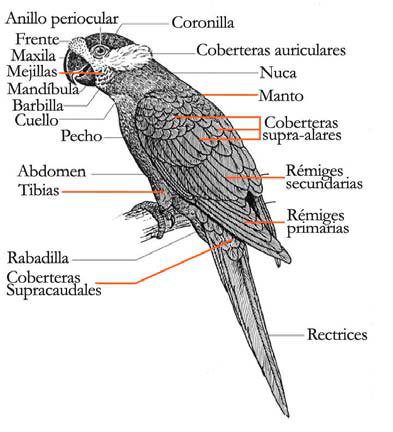
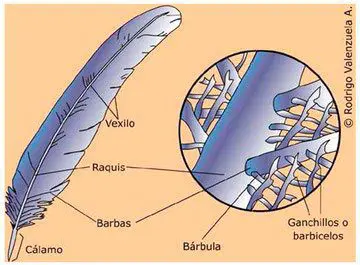
Anatomy-parrots

Description

9,5 cm. length between 11 and 14 g. of weight.

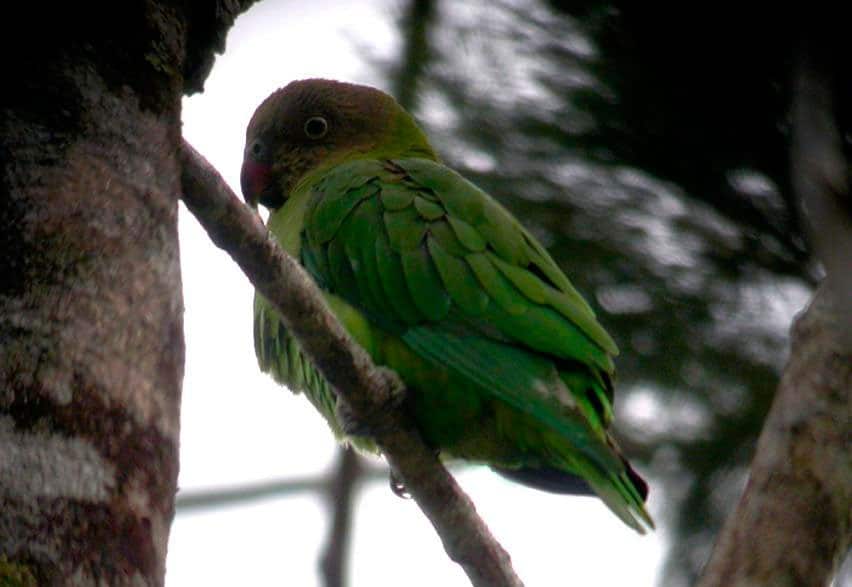
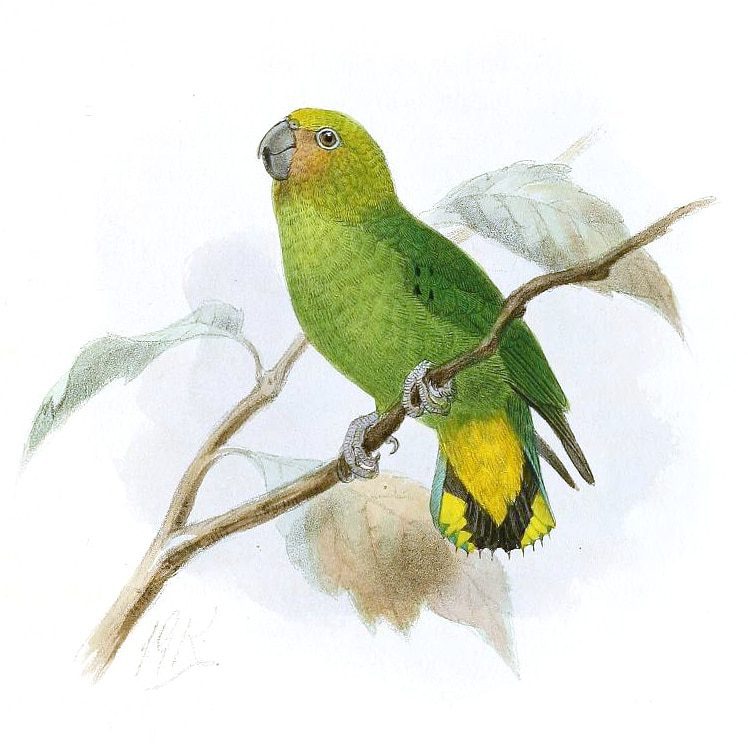
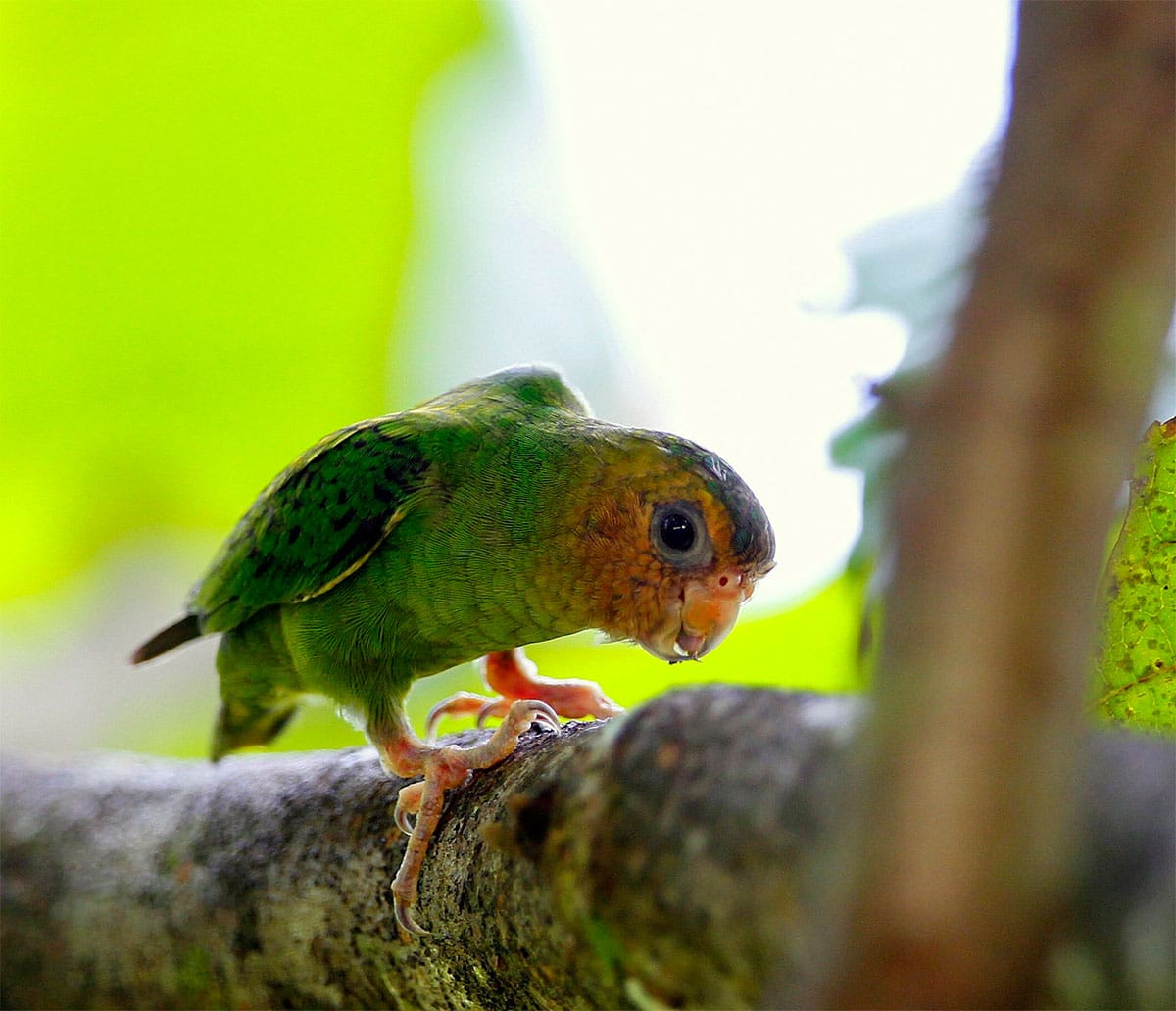
The crown of the Yellow-capped Pygmy-Parrot (Micropsitta keiensis) is yellow ocher, with a warm brown in forecrown; lores, chin and area under the eyes, brown; coverts outpus, dark green, tending to lighter green on cheeks and throat.

Upperparts, dark green with center at wing-coverts and feathers of black color with a black colored margin extrecho; flight feather black with vane Green external; feathers wings green. The underparts are yellowish-green, with fine dark stripes; undertail-coverts yellow and green. Upper, the tail It is iridescent, slightly greenish blue in the Center, Foreign feathers blackish with yellow spot on the ends. Under, the tail dark blue and yellow.

Bill dark grey; irises brown; legs dark gray.

Both sexes similar.
Immature like females but with bill pale yellow.

Description 3 subspecies

  • Micropsitta keiensis keiensis

    (Salvadori, 1876) – the subspecies nominal.


  • Micropsitta keiensis viridipectus

    (Rothschild, 1911) – Similar a nominal, but darker.


  • Micropsitta keiensis chloroxantha

    (Oberholser, 1917) – The mature more muted. The underparts with red markings male, dyed yellowish in female.

Habitat:

Yellow-capped Pygmy-Parrot

It inhabits in the forests of lowlands, in secondary growth and, sometimes around inhabited areas and coconut trees. The ecology species is similar to that of the Buff-faced Pygmy-Parrot. The birds are alone, in pairs or in small groups, and they can be distributed by undergrowth to some 20 meters above the ground. They climb on trunks and branches, and they can go down head, in inverted position, sometimes.

Reproduction:

Nest and roost Termites in tree cavities, they excavate the cavity by themselves; tunnel passageways go up and may bend before reaching nest-chamber. up the laying two white eggs deposited in a cavity unlined (dimensions around 20 cm x 15 cm.), and they can be occupied by other adults roost (up to four) during the breeding season. The exact role of these visiting birds is unknown, It is thought that they can help with the tasks of nest. nesting It has been recorded from October to March

Food:

With feed lichen, fungi, seeds, fruits and insects. Most of the lichen is collected directly from the surface of the bark of trees..

Distribution:

Size of its range (breeding/resident): 763.000 km2

The Yellow-capped Pygmy-Parrot is distributed among the papuan islands, in the West area, including Waigeo, give, Kofiau, Salawati and Misool; through Vogelkop and Onin Peninsula (Province of West Papua); in the Kai and islas Aru, and in the South of New Guinea between Mimika and the fly river. The species is common to local scale.

Distribution 3 subspecies:

Conservation:


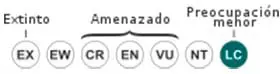
minor concern


• Current IUCN Red List category: Least concern

• Population trend: Stable

The size of the world population It has not been quantified, It is estimated over the 100,000 specimens.

The species, according to sources, It is considered very common within its range (pit et to the. 1997).

The population suspected to be stable in the absence of evidence of any reduction or substantial threats.

"Yellow-capped Pygmy-Parrot" in captivity:

Not usually survive in captivity.

Alternative names:

– Yellow-capped Pygmy-Parrot, Yellow capped Pygmy Parrot, Yellow-capped Pygmy Parrot (ingles).
– Micropsitte pygmée (French).
– Gelbkappen-Spechtpapagei (German).
– Micropsitta keiensis (Portuguese).
– Microloro de Kai, Microloro de las Kai (español).

scientific classification:

– Order: Psittaciformes
– Family: Psittaculidae
– Scientific name: Micropsitta keiensis
– Citation: (Salvadori, 1876)
– Protonimo: Nasiterna keiensis

Images "Microlyro of the Kai":

Videos "Microloro de las Kai":

————————————————————————————————

Yellow-capped Pygmy-Parrot (Micropsitta keiensis)


Sources:

– Avibase
– Parrots of the World – Forshaw Joseph M
– Parrots A Guide to the Parrots of the World – Tony Juniper & Mike Parr
– Birdlife

– Photos:

(1) – Parrot-birds – link
(2) – « NasiternaPygmaeaFKeulemans » par John Gerrard Keulemans — Ornithological Miscellany. Volume 1. Licensed public via domain Wikimedia Commons.

– Sounds: Hans Matheve (Xeno-canto)

▷ The world of Pets: Dogs, cats, birds, reptiles, amphibians

Caica Parrot
Pyrilia caica


Lorito Caica

Content

Description:

23 cm.. height.

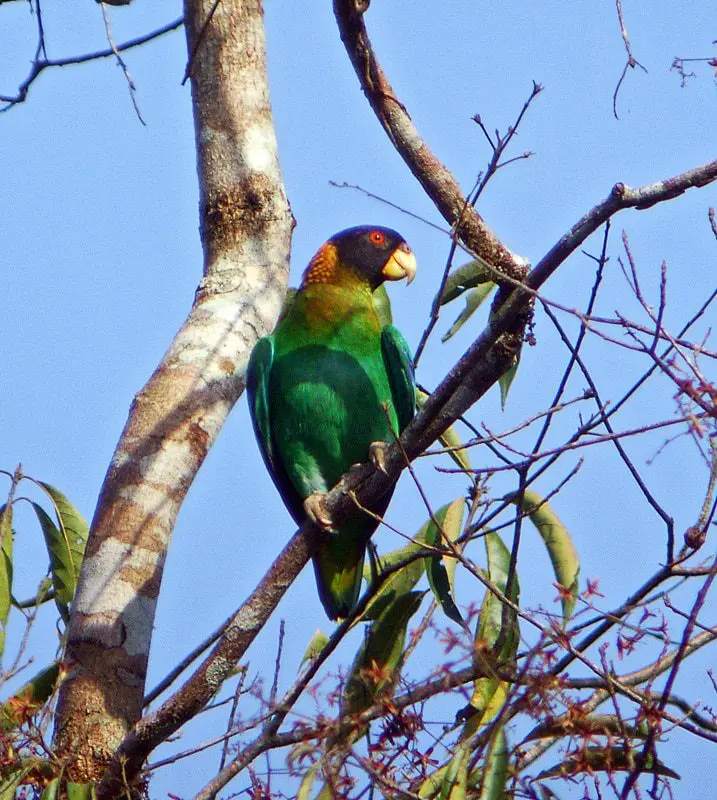
The head of the Caica Parrot (Pyrilia caica) totally black is it more distinguishable from this species, together with a collar Golden cafesoso that extends up to the chest.

The rest of the body usually Green, more clear in the belly and the inside of the tail; wing with blue stain and dark ends, Tip of the tail black.

Bill color bone; ring eyepiece bare of color grey pale; Orange irises.

The youth with crown green, face Dark greenish yellow, and collar not very notorious gold in neck and almost absent in chest.

  • Sound of the Caica Parrot.

Habitat:

Inhabits little disturbed humid forests, firm ground, in Tepuis, from the 50 to the 1100 m.
gregarious, They walk in small groups. They feed in the canopy of the forest.

Reproduction:

Currently with little information about the reproduction.

Food:

In the wild, It believes that its diet consists mainly of eucalyptus flowers, fruit, nectar and pollen.

Distribution:

Can be observed in the South-East of Venezuela, Guyanas and northeast of the brazilian amazon.

Conservation:


Near-threatened


• Red List category of the UICN current: Near-threatened

• Population trend: Stable

Justification of the population:

The size of the world population Caica Parrot It has not been quantified, although this species is described as 'rare’ (Stotz et to the., 1996).

Justification trend :

This species is suspected that it may lose 13,6-17,2% of habitat within its distribution over three generations (21 years) based on a model of deforestation of the Amazonia (Soares-Filho et to the., 2006, Bird et to the. 2011).

Given the susceptibility of this species to the hunting and/or entrapment, It is suspected that its population will decrease at a rate close to the 30% in three generations.

"Caica Parrot" in captivity:

They adult acclimatised quite easily to a new environment and are very resistant … Conversational skills (in comparison with other species).
They are very quiet in an Aviary, with a personality friendly and Gentile. They are very sociable and it should be with a partner or in a group environment. In any way, It is not easy to see to the Caica Parrot in captivity.

Alternative names:

– Caica Parrot, Hooded Parrot (English).
– Caïque à tête noire (French).
– Kappenpapagei, Kappen-Papagei (German).
– curica-caica, curica, papagainho, periquito-de-pescoço-marrom (Portuguese).
– Lorito Caica, Lorito de Cabeza Negra (español).
– Perico Cabecinegro (Venezuela).


scientific classification:

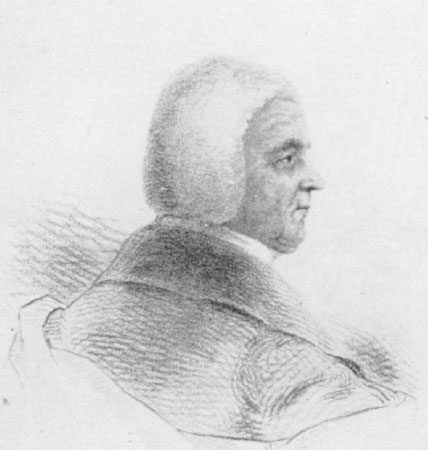
John Latham
John Latham

– Order: Psittaciformes
– Family: Psittacidae
– Genus: Pyrilia
– Scientific name: Pyrilia caica
– Citation: (Latham, 1790)
– Protonimo: Caïca parrot


Images "Caica Parrot"

Videos "Caica Parrot"

————————————————————————————————

«Lorito Caica» (Pyrilia caica)


Sources:

– Avibase
– Parrots of the World – Forshaw Joseph M
– Parrots A Guide to the Parrots of the World – Tony Juniper & Mike Parr
– Birdlife

– Photos:

(1) – lynxeds

– Sounds: controles-canto.org

▷ The world of Pets: Dogs, cats, birds, reptiles, amphibians

Blue-eared Lory
Eos semilarvata


Lori de Seram

Content

Description

Is the more small of the gender Eos, with only 24 cm.. length and an approximate weight of 170 gr.

The plumage of the Blue-eared Lory x(Psittacus erithacus) is bright red.

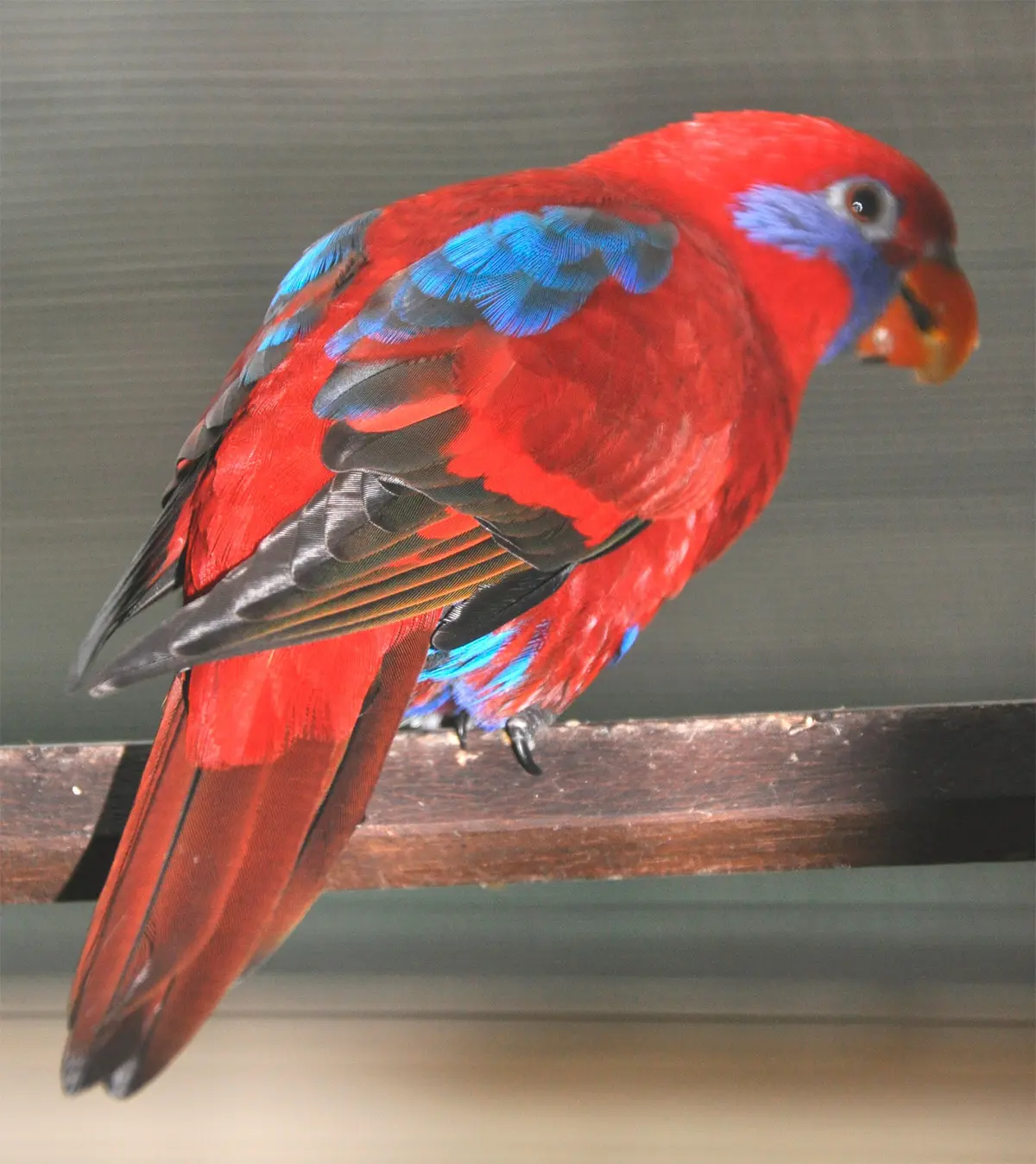
The upperparts of the cheeks and ear-coverts form a band blue violet.

The feathers of abdomen and under the tail are blue, the primaries are black and red color on the inside, the secondaries has black spots, the feathers largest of the shoulder are blue, the back is red-brown, the underparts bright red, their irises are reddish brown, the legs grey and orange red the bill.

The plumage of the youth usually appears paler and duller Red. The mask boils down to a simple pale blue dot under the eye and the mumps. The scapulars are brownish grey with light blue striped uniform. The feathers of abdomen are red with some blue touches. The irises reddish color.

The Blue-eared Lory EOS can be mistaken for other species of the genus, but in its area of distribution, only the Red Lory (Eos Bornea) shows similarity of characters. But, does not display a blue stain in the face or at the bottom of the abdomen.

Habitat:

Frequently not only in primary forests, but also in the Highlands bordering the bare mountain peaks.

This bird usually lives above the 1.200 meters above sea level, area to which the Red Lory (Eos Bornea) fails. But, from time to time is reduced to 800 m, so sometimes they interfere in the same area two species.

The Blue-eared Lory they live alone, in pairs or small family groups.

They feed in the foreign branches of trees in flower.

They are noisy birds in flight, but they are relatively quiet and discrete When feed. When they move they tend to fly at low altitude.

Reproduction:

There is not much information of their reproduction habits in the natural environment. But, It can be assumed that the Red Lory It takes a form of very similar to that of other nesting Loris. These are cavemen, that is to say, you install their nests in tree cavities.

The season of spawning It estimated that the months of September to March.
Usually, they lay two eggs per clutch and its incubation lasts a few 26 days.

Young people are often taken up to 10 weeks before you fly.

Food:

They feed mainly on nectar in the trees in flower in lower altitudes and Heath (Heather, gorse, broom) at higher altitudes.

Distribution:

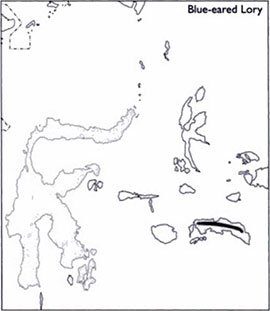
Lori distribution of Seram
The Blue-eared Lory is endemic of the Seram island in the Moluccas (Indonesian).

Conservation:


minor concern

– Current IUCN Red List category: Least concern

– The population trend: Decreasing

The world population It has not been quantified, but the species is estimated that it can range from common to abundant at the local level (pit et to the. 1997). However, justified the population trend, It is suspected to be in decline due to unsustainable levels of exploitation.
The population range is between 5,000 and 50,000 birds released.

Probably the Blue-eared Lory It will always remain a rare specimen in the world of birds.

In March of 1995 the Government of Indonesian stopped the export of these birds.

Its hunting for local trade has become especially intense.. Fortunately, There is no reason to keep to the Blue-eared Lory as a pet on the part of the indigenous population.

"Blue-eared Lory" in captivity:

Since its population is decreasing, any specimen that can not be returned to their natural habitat (natural range) should preferably be placed in a well-managed breeding program to ensure the survival of the species.

Alternative names:

– Blue-eared Lory, Ceram Lory, Blue eared Lory, Seram Lory (ingles).
– Lori masqué, Lori à oreilles bleues (French).
– Halbmaskenlori (German).
– Loris Semilarvata (Portuguese).
– Lori de Orejas Azul, Lori de Seram (español).

scientific classification:

– Order: Psittaciformes
– Family: Psittaculidae
– Genus: Eos
– Scientific name: Eos semilarvata
– Citation: Bonaparte, 1850
– Protonimo: Eos semilarvata

Images «Lory of Seram»:

Videos "Blue-eared Lory"

————————————————————————————————–

«Lori de Seram» – (Eos semilarvata)


Sources:

– Avibase
– BirdLife.org
– Oiseaux.NET

– Photos:

– Blue-eared Lory in the Walsrode Bird Park, Germany by Quartl – Wikimedia
– papageien.org
– Blue-eared Lory (Eos semilarvata) at the San Diego Zoo by Leon Mitchell – Wikipedia
– free-pet-wallpapers.com
– kanaria1898tuttlingen.de

– Sounds: Mark Todd (Xeno-canto)

▷ The world of Pets: Dogs, cats, birds, reptiles, amphibians

Blue streaked Lory
Eos reticulata


Blue streaked Lory

Content

Description

About 30 cm.. length and a weight between 140 and 170 gr.

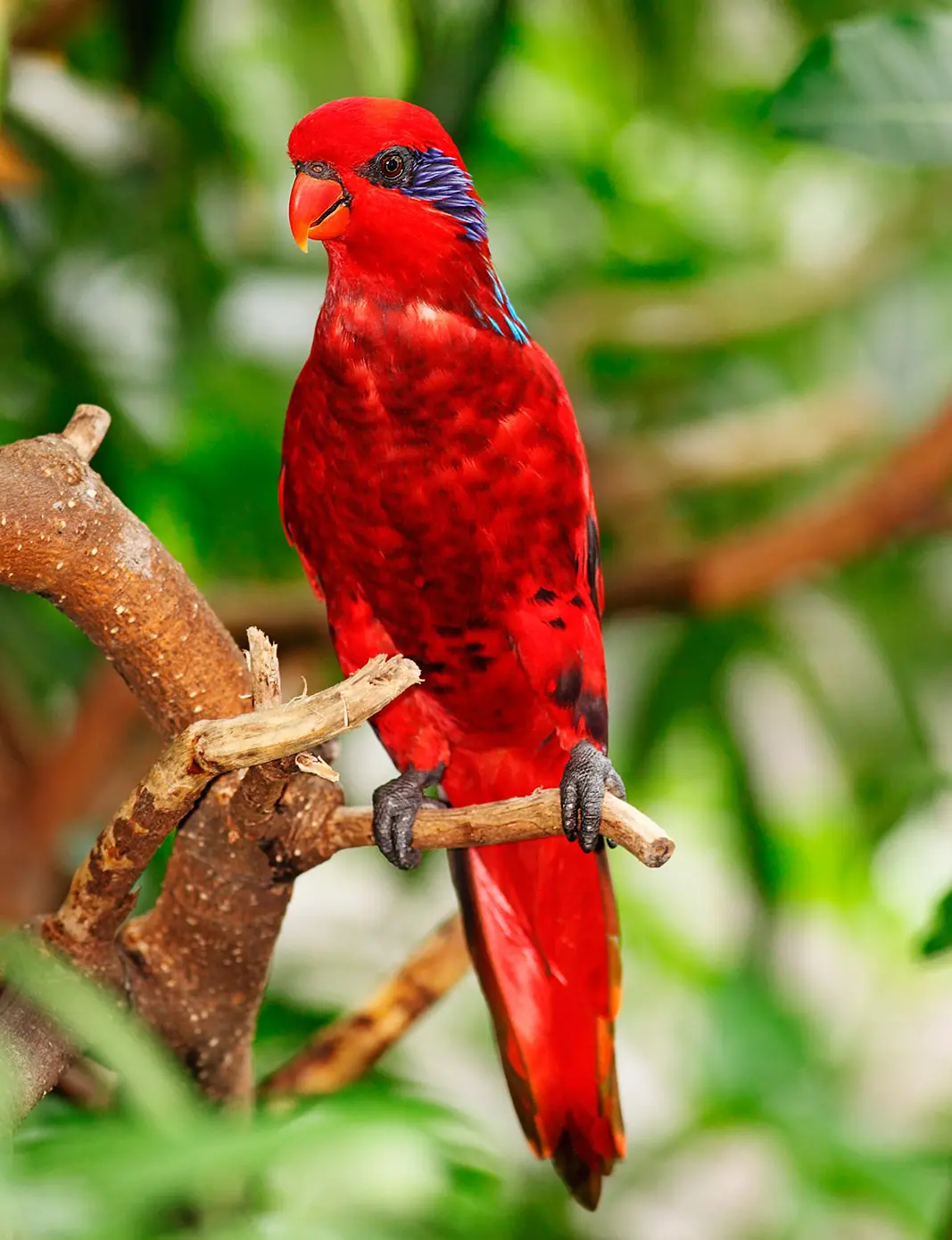
Like all species of the genus Eos, the “Tanimbar Lory” (Eos reticulata), shows a beautiful plumage mainly red. In adults, a great band blue-violet crosses the region of the eye and continues in the patches that cover the ears, at the sides of the neck.

The under neck and the mantle they are covered with long, violet-blue stripes.
The back and tail they are more or less blue red striped.

The pens and large blankets have terminations in black. The primary is almost entirely black. The tail is brownish black above and below a red opaque.

The bottom of the wings they have the edge and dark tips. Thighs and flanks they are completely Red. The bill coral red. Iris orange-red. The legs are grey.

In youth , the feathers the lower parts are aligned blue-black variably. The shield It is covered with blue spots instead of stripes. The bill is brownish Orange. The irises They are brown.

Habitat:

The Blue streaked Lory they live mostly in the most wooded areas, including primary and secondary forests. They are also found in coconut plantations, of sago palms, in the mangroves and the cultivated lands.

It seems that they show a certain attraction for the monsoon forests, relatively open and located in low-lying areas.

They live alone, in pairs or in small groups of up to ten or more individuals. These are rather shy and discreet, but their presence is often betrayed by the screams produced flocks in flight.

They have a direct flight, quite fast and composed of many flapping. Often feed on coconut blossom trees and the sago palms.

Reproduction:

There is little information of the natural environment. The Blue streaked Lory They typically make 2 or 3 eggs that colouring of 24 to 26 days. The chicks leave the nest after 7 to 8 weeks. But, even after feather, they return regularly to rest awhile. The youth they stay in the family throughout the summer and then join the dormitories where they continue their learning.

Food:

They have an exclusively vegetarian diet. They feed on fruits, seeds, buds and immature seeds. His tongue with a brush-shaped end is specialized to collect nectar and pollen.

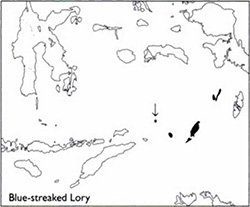
Distribution:

Lori distribution of the Tanimbar
Is located in Yamdena and Larat, Tanimbar Islands and island of Babar, Indonesian. Introduced in Kai Islands and island of Damar, where has possibly gone.

Conservation:


Near-threatened

– Current IUCN Red List category: Near threatened

– The population trend: Decreasing

Habitat loss continues apace in southern Yamdena
The species is suspected that it is decreasing at a rate of slow to moderate, due to the combined forces of habitat loss and capture.
It is estimated a population of 220.000 ± 50.000 birds in Yamdena

Nearly 3000 birds are traded on the international market of birds each year, fact that probably has not caused a decrease in its population. Habitat loss continues however, and this, combined with capture, probably if that will lead to more declines.

Conservation Actions Proposed:

– Regularly monitoring at certain sites throughout its range to determine population trends.
– Investigate the degree of capture and take appropriate measures, including the use of awareness-raising campaigns, to address these issues.
– Protection of the areas significant of forest right in all the Islands where is distributes the species.

"Blue streaked Lory" in captivity:

Lives of 15 to 30 years in the wild; and between 28 and 32 years in captivity.
Fairly common in the s 1970. Nowadays it is not unusual to see them in captivity.

Alternative names:

– Blue streaked Lory, Blue-streaked Lory (ingles).
– Lori réticulé, Lori à raies bleues, Lori strié bleu (French).
– Strichellori (German).
– Lóris-de-crista-azul (Portuguese).
– Lori de las Tanimbar, Lori Reticulado (español).

scientific classification:

– Order: Psittaciformes
– Family: Psittaculidae
– Scientific name: Eos reticulata
– Citation: (Muller,S, 1841)
– Protonimo: Psittacus reticulatus

“Tanimbar Lory” Images:

Videos "Blue streaked Lory"

————————————————————————————————————————–

«Tanimbar Lory» (Eos reticulata)


Sources:
– Avibase, BirdLife.org, Oiseaux.NET
– Photos: Wikipedia – Uploaded by Benjamint444 , Jurong Bird Park, Singapore by chong kwang (Wikimedia), Jurong Bird Park, Singapore 2 by Michael Gwyther-Jones (Wikimedia), Photographed by Benjamint444 (Wikimedia), René Modery (Wikimedia)
– Sounds: Mike Catsis (Xeno-canto)

▷ The world of Pets: Dogs, cats, birds, reptiles, amphibians

Buff-faced Pygmy-Parrot
Micropsitta pusio


Buff-faced Pygmy-Parrot

Content


Anatomy-parrots

Description

The Buff-faced Pygmy-Parrot (Micropsitta pusio) has a length 8,4-8,6 cm.. and 11,5 g. of weight, what it becomes in the Parrot more small of the world.

Has the forecrown, face and chin of color Brown mottled dark, eyebrows yellowish; centre of crown blue, merging to green in the area of the nape. Upperparts Greens with wing-coverts Black in the Center. Flight feathers Black with green ends; lower coverts greenish yellow; underside of the primaries greyish, lightly bathed in yellow. The underparts brighter yellowish green, more pale in the center of the chest and the belly; uppertail-coverts Yellow. The tail centrally blue, with a black shaft. Outer feathers Black with yellow spots.

Bill dark grey; irises brown; legs of color grey or pink.

Female slightly more off than the male around the face.

Young with crown greenish blue and less brightness in the face.

Subspecies description

  • Micropsitta pusio pusio

    (PL Sclater, 1866) – Nominal


  • Micropsitta pusio beccarii

    (Salvadori, 1876) – Usually darker than the nominal race especially on the face, including eyebrows.


  • Micropsitta pusio harterti

    (Mayr, 1940) – Brands that most off the nominal head, Blue throat. Less yellow in the parts below that the subspecies Micropsitta pusio stresemanni.


  • Micropsitta pusio stresemanni

    (ECTION Hartert, 1926) – As the subspecies Micropsitta pusio harterti, but slightly larger and more yellow below.

Habitat:

They are found in lowland forests, wooded hills, gallery forest and secondary vegetation, from sea level to the 500 m. It is also locally in the Savannah and areas of coconut trees (Cocoa nuts).

The species is common and trusting, but can be hard to find due to its small size. Birds can also sometimes be glimpsed by flying in small groups above the canopy. They tend to fraternize in pairs or in groups of up to 30 birds.

They frequently stop while they feed on and turn your head to the right, possibly to find predators.

Reproduction:

Tanysiptera-galatea
Common Long-tailed Kingfisher (Tanysiptera galatea)

Nestbox, they dig in tree cavities active termite mounds, for example the (Microcerotermes biroi). A nest was also found in a terrestrial termite, the entry just a meter from the ground. There is a flange on each side of the entry hole and this differentiates their holes of other species that make their nests in termite mounds, such as the Common Long-tailed Kingfisher (Tanysiptera galatea).

Until three white eggs are the implementation. The nesting season has been recorded throughout the year. Adults sleep on community and up to eight birds have been recorded from a cavity.

Food:

It moves rapidly along lianas and trunks or branches of trees (in inverted position) using its long claws to grip and digging lichens and fungi in the barks. Also sometimes feed on seeds, fruits and insects (that it can be accidentally ingested).

Distribution:

Lowlands of North of New Guinea from the West coast of the bahía Paradise, Irian Java, at the Southeast end of Papua New Guinea; absent from the Highlands of the Huon Peninsula and Owen Stanley Ranges above each 500 m, but observed in some of the Northern Islands of New Guinea, including Kairiru, the Schouten Islands, Manam, Karkar and Batangas. The species is found in the lowlands of the West to the coastal region of South on the Purari River. Are also in the Bismarck Archipelago, including Umboi, Tolokiwa, Sakai, the Witu Islands, Lolobau, New Britain, Uatom and Duke of York. Also observed in the d'Entrecasteaux archipelago in Fergusson and in the Louisiade archipelago in Misima Island and Tagula.

Subspecies distribution:

Conservation:


minor concern


• Current IUCN Red List category: Least concern

• Population trend: Stable

The size of the world's population has not been quantified but he is estimated above the 100 000 specimens.

The species according to sources is very rare in its range distribution.

The population suspected to be stable in the absence of evidence of any reduction or substantial threats.

"Buff-faced Pygmy-Parrot" in captivity:

They feed on lichens and fungi., therefore its reproduction and maintenance in captivity it is virtually impossible.

Alternative names:

– Buff-faced Pygmy-Parrot, Buff faced Pygmy Parrot, Buff-faced Pygmy Parrot (ingles).
– Micropsitte à tête fauve (French).
– Braunstirn-Spechtpapagei (German).
– Papagaio-pigmeu (Portuguese).
– Microloro de Cabeza Azul, Microloro Pusio (español).

scientific classification:

– Order: Psittaciformes
– Family: Psittaculidae
– Genus: Meeki
– Scientific name: Micropsitta pusio
– Citation: (Sclater,PL, 1866)
– Protonimo: Nasiterna pusio

Images «Microloro Pusio»:

Videos "Buff-faced Pygmy-Parrot"

————————————————————————————————

«Microloro Pusio» (Micropsitta pusio)


Sources:

– Avibase
– Parrots of the World – Forshaw Joseph M
– Parrots A Guide to the Parrots of the World – Tony Juniper & Mike Parr
– Birdlife

– Photos:

(1) – El loro más pequeño del mundo – medioambiente.net
(2) – Photo of Micropsitta pusio [By Katerina Tvardikova] – New Guinea Birds
(3) – A bird feeding on the bark of a tree. Author Carmelo López – lynx
(4) – Photo of Micropsitta pusio [By Katerina Tvardikova] – New Guinea Birds
(5) – Buff-faced Pygmy-Parrot, Micropsitta pusio at Nimbokrang by jon hornbuckle – BIRDING AROUND THE WORLD
(6) – Tanysiptera galatea By Katerina Tvardikova – New Guinea Birds

– Sounds: BAS van Balen (Xeno-canto)

▷ The world of Pets: Dogs, cats, birds, reptiles, amphibians

Camiguin Hanging Parrot
Loriculus camiguinensis


Loriculo the Camiguin

Content

Description

14 cm.. length.

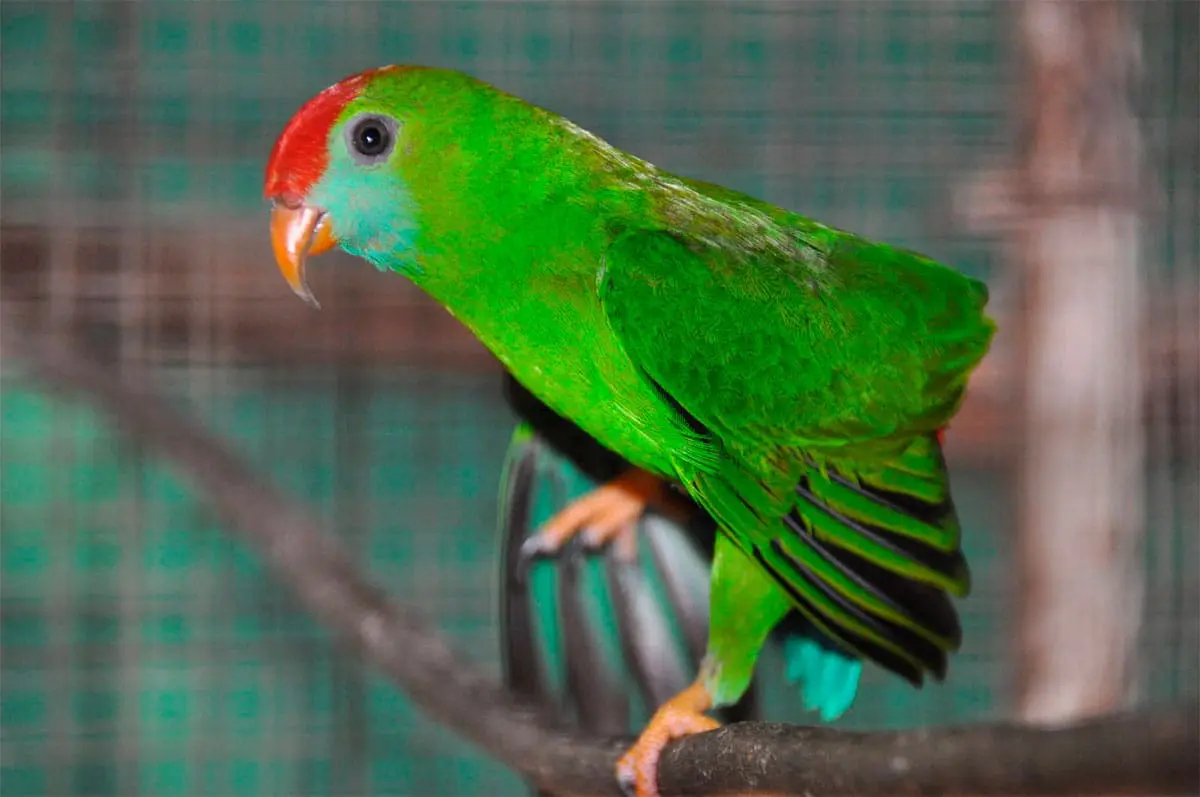
The Camiguin Hanging Parrot (Loriculus camiguinensis) has the plumage mostly green, with the throat, front side of the face and the thighs light blue; the forecrown, the pyleus, the obispillo and the top of the tail red, While the rest of the tail It is also blue. Underwing coverts blue. Band of orange-red in the nape, that varies from bird to bird.

Bill orange. Iris grayish brown.

The males and females they have a similar appearance, the female has less blue on the cheeks.

The youth they are similar to the adult female but with only a slight tinge of blue in the cheeks and red on the forehead minimal or absent. Bill a pale.

In 2006 described as a separate species to the loricles who lived on the island of Camiguin, to the North of Mindanao, Since then it was considered a subspecies of the Philippine loricle in the.

Habitat:

Probably sedentary. Found between the 300 and 1350 meters in montane forests, secondary forests, at the edges of the forest near the settlements, in plantations in the areas planted with shrubs and coconut.

Usually seen individually, in pairs, mixed flocks or small families. Feeds in trees or shrubs; difficult to detect. It´s shy and cautious.

Reproduction:

Breeding season probably between the months of September to November. Nest placed in the hole of a dead arbol-helecho. No other information.

Food:

It is said that they feed on nectar, seeds, especially wild banana (Musa), also soft fruit, berries and flowers.

Distribution:

Endemic in the Philippine island of Camiguin, off the North coast of Mindanao.

Conservation:


minor concern


This species is threatened by its limited range, the natural habitat destruction and capture for the wild bird trade.

"Camiguin Hanging Parrot" in captivity:

Probably not remain outside the island of Camiguin.

Alternative names:

– Camiguin Hanging-parrot, Camiguin Hanging Parrot (ingles).
– Coryllis de Camiguin (French).
– Camiguin-Fledermauspapagei, Camiguinpapageichen (German).
– Loriculus camiguinensis (Portuguese).
– Lorículo de Camiguin (español).

scientific classification:

– Order: Psittaciformes
– Family: Psittaculidae
– Genus: Loriculus
– Scientific name: Loriculus camiguinensis
– Citation: Tello, Degner, Bates,JM & Willard, 2006

Images "Camiguin Hanging Parrot"

Videos "Camiguin Hanging Parrot"

————————————————————————————————

"Camiguin Loricle" (Loriculus camiguinensis)


Sources:

– Avibase
– Parrots of the World – Forshaw Joseph M
– Parrots A Guide to the Parrots of the World – Tony Juniper & Mike Parr
– Wikipedia

– Photos:

(1) – By Alexkant – zoochat

– Sounds: George Wagner (Xeno-canto)

▷ The world of Pets: Dogs, cats, birds, reptiles, amphibians

Double-eyed Fig-Parrot
Cyclopsitta Diophthalma


Double-eyed Fig-Parrot

Content

Description

13 to 16 cm.. length and a weight between 25 and 56 g..

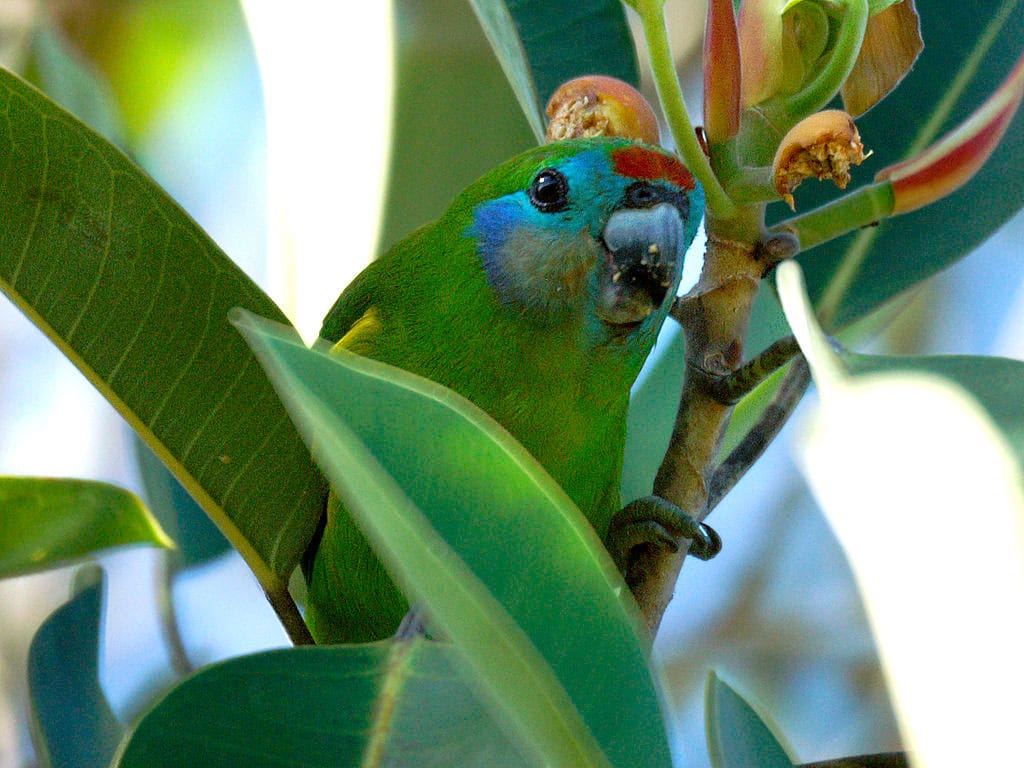
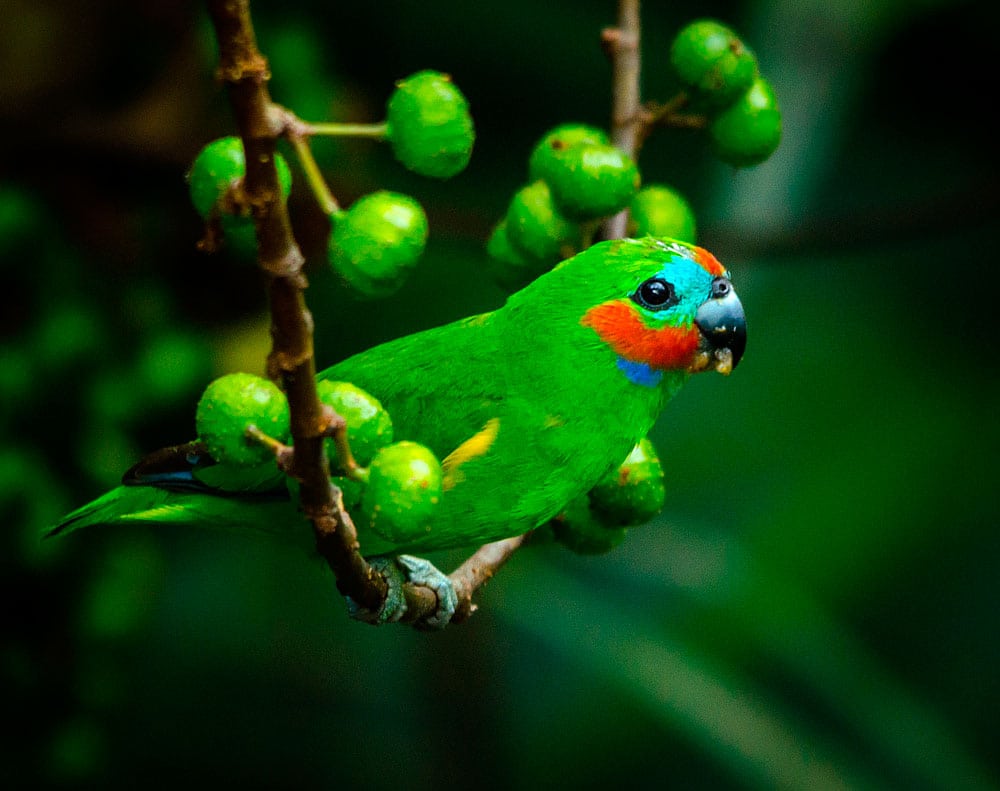
The Double-eyed Fig-Parrot (Cyclopsitta Diophthalma) half of the crown, lores, cheeks and headphones feathers bright Scarlet color with some slightly elongated feathers; bright turquoise brand above and in front of the eyes, that it extends slightly backwards above and below; green line above and behind the eyes; brand violet-blue light under the red on the back of the headphones feathers that extends to the throat; narrow yellowish Orange behind the red band of the crown, Fusion to the green in the part back from the crown.

Upperparts with indistinct diffusion of color bright green olive on the the mantle. Wing coverts, bright green; primary coverts blue; primaries with vane external of color blue turquoise pale and vane blackish internals; flight feather (except the primary outer) with band of yellowish white color visible from below; inner coverts marked in red, wing feathers bordered with yellow green.

The underparts paler; Green over yellow that the upperparts, with a strong Flash of yellow along the flank, about the bend of wing. Upper, the tail green; grey below.

Robust bill, notched grey lead and a blackish tip; cere dark grey; irises dark brown; legs Green grey.

The female has the cheeks brown, not red.

Immature as the females. The young male acquire the plumage adult in 14 months.

Subspecies description

Subspecies description
  • Cyclopsitta diophthalma diophthalma

    : (Hombron and Jacquinot, 1841) – The nominal

  • Diophthalma diophthalma aruensis - male

  • Cyclopsitta diophthalma aruensis

    : (Schlegel, 1874) – Of 14 cm.. length. The plumage is greenish-yellow, the blue area on the eyes has greenish hue , Blue cheeks are lined with mauve colouration and extends to the bottom of the peak.

    Female similar to the male but all the red marks are replaced by a pale blue.
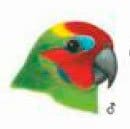
  • Diophthalma diophthalma coccineifrons

  • Cyclopsitta diophthalma coccineifrons

    : (Sharpe, 1882) – Of 14 cm.. length.

    It is usually something more dark. The Crown is red bordered with a broad yellow band.

    The female has less yellowish white.
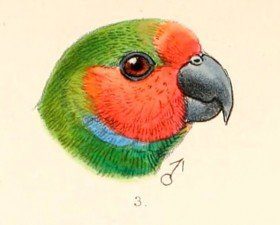
  • Diophthalma diophthalma virago - male

  • Cyclopsitta diophthalma virago

    : (ECTION Hartert, 1895) – Of 14 cm.. length.

    Green is more pale, the red zones of the face are less extensive and more pale.
    Yellow edge of the very weak Crown.

    Juveniles as adult females

  • Diophthalma diophthalma inseparabilis

  • Cyclopsitta diophthalma inseparabilis

    : (ECTION Hartert, 1898) – Of 14 cm.. length.

    The Red coloration is reduced to a small spot on the forehead, the rest of the forehead is bluish.

    Similar to males females.

    Juveniles as adult females.
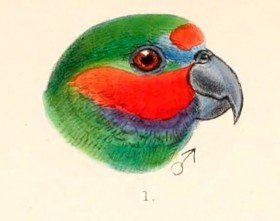
  • Diophthalma diophthalma macleayana

  • Cyclopsitta diophthalma macleayana

    : (EP Ramsay, 1874) – Of 14 cm.. length.

    The Red is reduced to a red spot in the front area and lower cheeks. The yellow border in the area of the Crown is absent, sides of the forehead and eyes blue with green. The azul-violaceos edges of the cheek extends to below the peak.

    Females more yellowish and the bottom of the cheeks is white Brown.

    Equal to the adult female juveniles.
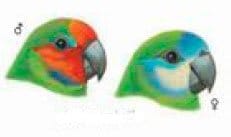
  • Diophthalma diophthalma marshalli

  • Cyclopsitta diophthalma marshalli

    : (Iredale, 1946) – Of 14 cm.. length.

    Green is more beige and the azul-malva coloration extends to the area under the peak.

    Females have pale blue color where the male has red and blackish brown cheek bottom area.

    Juveniles as adult females.

  • Diophthalma diophthalma coxeni

  • Cyclopsitta diophthalma coxeni

    : (Gould, 1867) – It's a bit more large, of about 15 cm.. approximately, No red forehead and face with some reddish feathers, the cheeks and orange headphones feathers. Blue front clear and without yellow stripe. The area of the eyes is absent blue. Blue edges of the bottom of the cheeks is variable.

    The females are more yellowish with less or absent red in the face.

    Equal to the adult female juveniles.

Habitat:

The Double-eyed Fig-Parrot are sedentary, with some dispersion after the breeding season. It is in a range of habitats from low to medium altitude, including jungle, secondary vegetation, on the edge of the Woods, riparian forest and occasionally dry forests and open forests of eucalyptus.

In Australia There are also birds in parks, Gardens, scrub, cultivated areas and mangroves; the Diophthalma diophthalma coxeni, probably, concentrated in the alluvial forest, but it was also visible in the forests of dry lowlands and hills of rainforest.

The species is highly dependent of the Ficus figs in all habitats.

The birds are usually found in pairs or in small groups, calling the attention with their constant calls acute while flying above the canopy.

They feed in silence, moving quietly through the foliage, often giving away their presence only by falling debris, Since break the shell of the fruit to reach its seeds.
outside the breeding season, groups of up to 200 birds can be nested together, dissolving into smaller groups to feed themselves during the morning and afternoon.

When alarmed, they move their wings in an agitated manner.

during the rains, the bath is carried out with wet foliage, and mutual grooming is common.

Reproduction:

The breeding season of the Double-eyed Fig-Parrot, probably begins in New Guinea during the month of March, in Australia the main season runs from August to November.

When the birds are played are divided into pairs, territorial around their food trees. The nest It is a cavity that is expanded in a trunk at a height between 8 and 20 meters above the ground. Most of the nest preparation is carried out by the female., that takes refuge in the hole and spends a large part of the day there during its excavation. She can experiment with more than one nest.

Courtship feeding is common. The entrance hole is about 4 cm in diameter, and putting two white eggs are deposited, at intervals of 48 hours, in one camera, some 20 centimetres below the entry hole.

The incubation hard 18 days and the young will leave the nest in 7-8 weeks, After having been fed during the first 3 to 4 weeks, only for the female. They return to settle in the hollow for a short period of time after having left the nest.

Food:

The fig seeds they are their main food, birds often return to the same ripe fruits ending all their seeds. The diet also includes whole fruits small, nectar, insect larvae and fungi or lichens collected from the barks. Birds may feed in groups with others Fig parrots and, in Australia, with Rosella parakeets and other species of parrots.

Distribution:

The Double-eyed Fig-Parrot is distributed throughout much of New Guinea and parts of the northeast of Australia. At the West end is located in Waigeo, Salawati, Misool and Rafiau in the West Papua islands, Indonesian.

Is widespread but distributed unevenly through the continental part of New Guinea, absent only in the center of the Doberai Peninsula and the central belt of mountains above the 1.600 m, Although there have previously been to 1.800 meters at the local level.

You can see in the islas Aru and Fergusson, in the Islands Goodenough in the D'Entrecasteaux Group, and in Tagula in the Louisiade group.

In Australia, the most northerly of the three isolated populations, is the tip of the Cape York Peninsula, from Jardine River in the northwest of the country, to the South, around East of Lockhart River, sometimes in the South to the extreme north of the Princess Charlotte Bay; the population Centre occupies the coastal district of everything Cooktown in the North through Cairns and the District Atherton, about South of Townsville; the southern-most population, now very reduced, with less than 50 records in the last century, formerly extended from Gympie, Queensland, to the South, about Richmond River, New South Wales, arriving inland up to the Bunya mountains (in 1976 two birds were about the Koreelah National Park, in February and two close Lamington National Park in December).

The estimate of the world population is above the 100.000 individuals and stable, but the State two of its subspecies is less secure:

– Cyclopsitta Diophthalma macleayana: has a population of 5.000 individuals and may be in decline, Although multiply in parks and gardens around Cairns.
– Cyclopsitta Diophthalma coxeni: just left 200 birds, After having reduced its population as a result of the destruction of the forests of lowlands along its limited distribution area.
– The third Australian subspecies, Cyclopsitta Diophthalma marshalli it's still pretty common.

In New Guinea, the species dispersed, and is considered to be rare in the Doberai Peninsula and absent from many parts of the lowlands of the South, is mainly distributed in the Highlands of the South basin. The Orange-breasted Fig-Parrot It probably replaces this species in much of this area. It is likely that the species has not been recorded accurately due to its small size and discreet habits. Protected by law in Australia. The Diophthalma diophthalma coxeni appears in the Appendix I of the CITES

Subspecies distribution

Subspecies distribution

Conservation:


minor concern


• Current IUCN Red List category: Least concern

• Population trend: Stable

The size of the world population Double-eyed Fig-Parrot It has not been quantified, Although it is estimated at more than 100,000 specimens. But, the Diophthalma diophthalma coxeni is in critical hazard, with a population between 50 and 200 individuals; the Diophthalma diophthalma macleayana with a population of some 5.000 individuals and the Diophthalma diophthalma marshalli generally uncommon

The population, of the nominal species, is suspected to be stable in the absence of evidence of any reduction or substantial threats.

"Double-eyed Fig-Parrot" in captivity:

Rare in captivity.
Not social with people. Welcome in the distance.

Alternative names:

– Double-eyed Fig-Parrot, Double eyed Fig Parrot, Double-eyed Fig Parrot, Two-eyed Fig Parrot (ingles).
– Psittacule double-oeil (French).
– Rotwangen-Zwergpapagei (German).
– Papagaio-do-figo-de-cara-azul (Portuguese).
– Lorito de Cuatro Ojos, Lorito Dobleojo, Lorito de la higuera de doble ojo (español).

scientific classification:

– Order: Psittaciformes
– Family: Psittaculidae
– Scientific name: Cyclopsitta Diophthalma
– Genus: Cyclopsitta
– Citation: (Hombron & Jacquinot, 1841)
– Protonimo: Psittacula diophthalma

Images "Lorito double":

Videos "Double-eyed Fig-Parrot"

————————————————————————————————

«Lorito Doublerojo» (Cyclopsitta Diophthalma)


Sources:

– Avibase
– Parrots of the World – Forshaw Joseph M
– Parrots A Guide to the Parrots of the World – Tony Juniper & Mike Parr
– Loromania

– Photos:

(1) – «Cyclopsitta diophthalma-Birdworld Kuranda, Queensland, Australia-male-8a» by Shotophoto – Double Eyed Fig ParrotUploaded by snowmanradio. Licensed under CC BY-SA 2.0 via Wikimedia Commons.
(2) – John Gerrard Keulemans [Public domain], via Wikimedia Commons
(3) – «Cyclopsitta diophthalma-Mossman Gorge, Daintree National Park, Queensland, Australia-male-8» by James Island from Brisbane, Australia – Double-Eyed Fig-ParrotUploaded by snowmanradio. Licensed under CC BY 2.0 via Wikimedia Commons.
(4) – «Cyclopsitta Diophthalma (female) -Cairns-8» by David Cook Wildlife Photography – originally posted to Flickr as Double-eyed Fig-Parrot (Cyclopsitta Diophthalma). Licensed under CC BY-SA 2.0 via Wikimedia Commons.
(5) – Birds-pet-wallpapers
(6) – By tamandua – PBase

– Sounds: Andrew Spencer (Xeno-canto)

▷ The world of Pets: Dogs, cats, birds, reptiles, amphibians

Duchess Lorikeet
Charmosyna margarethae


Duchess Lorikeet

Content

Duchess Lorikeet

Description

20 cm.. length and a weight between 40 60 g..

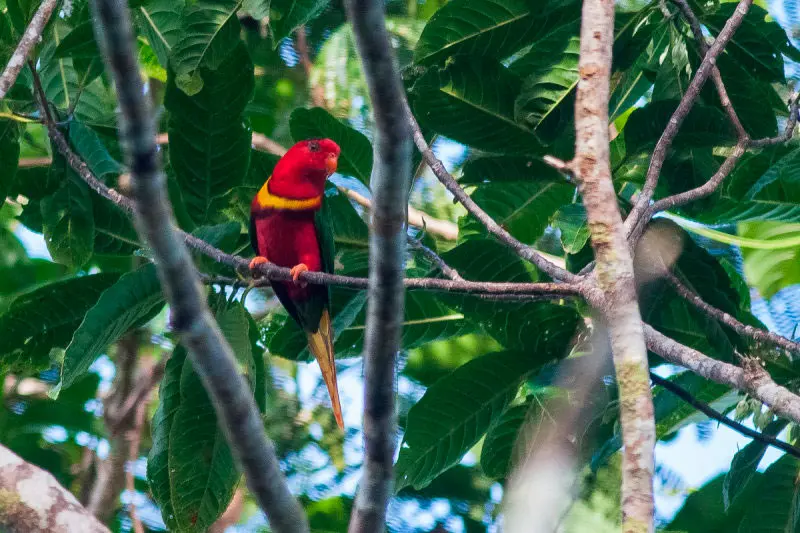
The head of the Duchess Lorikeet (Charmosyna margarethae), is red except for the back of the crown that is black and extends from the top of the eye up to the nape.

Large collar Red on the back of the neck, bordered below by a thin purplish-black line and a broader yellow-orange stripe: the mantle and scapulars green; rump Green with trademark red on the side; tail coverts, view from above, green. The wings green. Under the wing , coverts marginal green, the coats under the wing red, and the bottom of the flight feather Black with a panel of yellow color that goes from the center of the flight feather passing by the secondaries.

The underparts, basically, are red with a yellow stripe on the chest, narrow edged purple-black above, a thin red margin and a broader and more diffuse below purple edge; from below, the tail coats are green. From above, the tail It is red with black borders and the sharp tip of yellow; from below, the tail is yellowish-brown, Yellow-tipped.

The bill is orange; irises yellow to orange; legs oranges.

The male and the female are very similar.

Immature they lack the Black Hat and black and orange margin on the back of the neck. The chest belt is a yellow shutdown. The bill orange, the irises Yellow-grey and the legs gray.

Habitat:

It inhabits in the forests and wooded areas, at the edges of forests and tall secondary growth forests, mostly mountains and hills, Although you can also see in coconut plantations and coastal villages; above all between 100 and 1.350 meters above sea level.

Often feeds in noisy groups of 10 to 40 birds in the trees in flower and epiphytes with others Loris (including (Cardinal Lory). They feed acrobatically, mainly in the forest canopy.

Reproduction:

Nesting and breeding habits unknown, although a male was seen in a breeding attitude during the month of January.

Food:

Apart from pollen and nectar, observed feeding on fruits of Schefflera.

Distribution:

The Duchess Lorikeet is endemic of the Solomon Islands including Bougainville (Papua New Guinea), Gizo, Kolombangara, Guadalcanal, Malaita and San Gristobal. Brian Coates indicates that this species often seen in the city of Kieta, Bougainville.

Conservation:


Near-threatened

• Current IUCN Red List category: Near threatened.

• Population trend: Decreasing.

Much of the lowland forests, within the area of distribution of the Duchess Lorikeet, He has been or is scheduled to be connected, but this species is probably safe in the Highlands.

There is an export license fee for 60 birds, the funds will be used to finance conservation programs (JR van Oosten in litt. 1999); However, this species could be threatened by any large-scale trade (T. Leary in litt. 2000). In 2002, 200 birds were imported to Singapore with permissions CITES (UNEP-WCMC CITES Trade Database, January 2005).

The world population It is considered of less than 50.000 birds, but stable.

"Duchess Lorikeet" in captivity:

Very rare in captivity.

Alternative names:

– Duchess Lorikeet, Dutchess Lorikeet (ingles).
– Lori de Margaret (French).
– Margarethenlori, Margaretenlori (German).
– Lori de Margarita (español).
– Duchess Lorikeet (Portuguese).

scientific classification:

– Order: Psittaciformes
– Family: Psittaculidae
– Scientific name: Charmosyna margarethae
– Genus: Charmosyna
– Citation: Tristram, 1879
– Protonimo: Charmosyna margarethae

Images "Duchess Lorikeet"

Videos "Duchess Lorikeet"

————————————————————————————————

"Lori de Margarita" (Charmosyna margarethae)


Sources:

– Avibase
– Parrots of the World – Forshaw Joseph M
– Parrots A Guide to the Parrots of the World – Tony Juniper & Mike Parr
– Birdlife

– Photos:

1 – By © Markus Lagerqvist – PBase
2 – «Charmosynamargarethaesmit» by John Gerrard Keulemans – The Ibis, ser. 4, too.. 3. Licensed under Public Domain via Wikimedia Commons.

– Sounds: Niels Krabbe (Xeno-canto)