โ–ท The world of Pets: Dogs, cats, birds, reptiles, amphibians

Turquoise Parrot
Neophema pulchella

Turquoise Parrot

Content


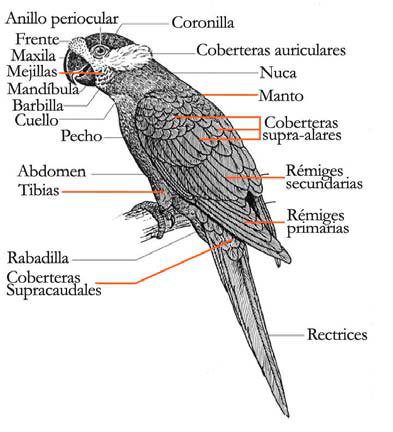
Anatomy-parrots

Description

20 cm.. length and a weight between 37 to 44 g..

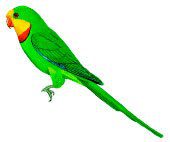
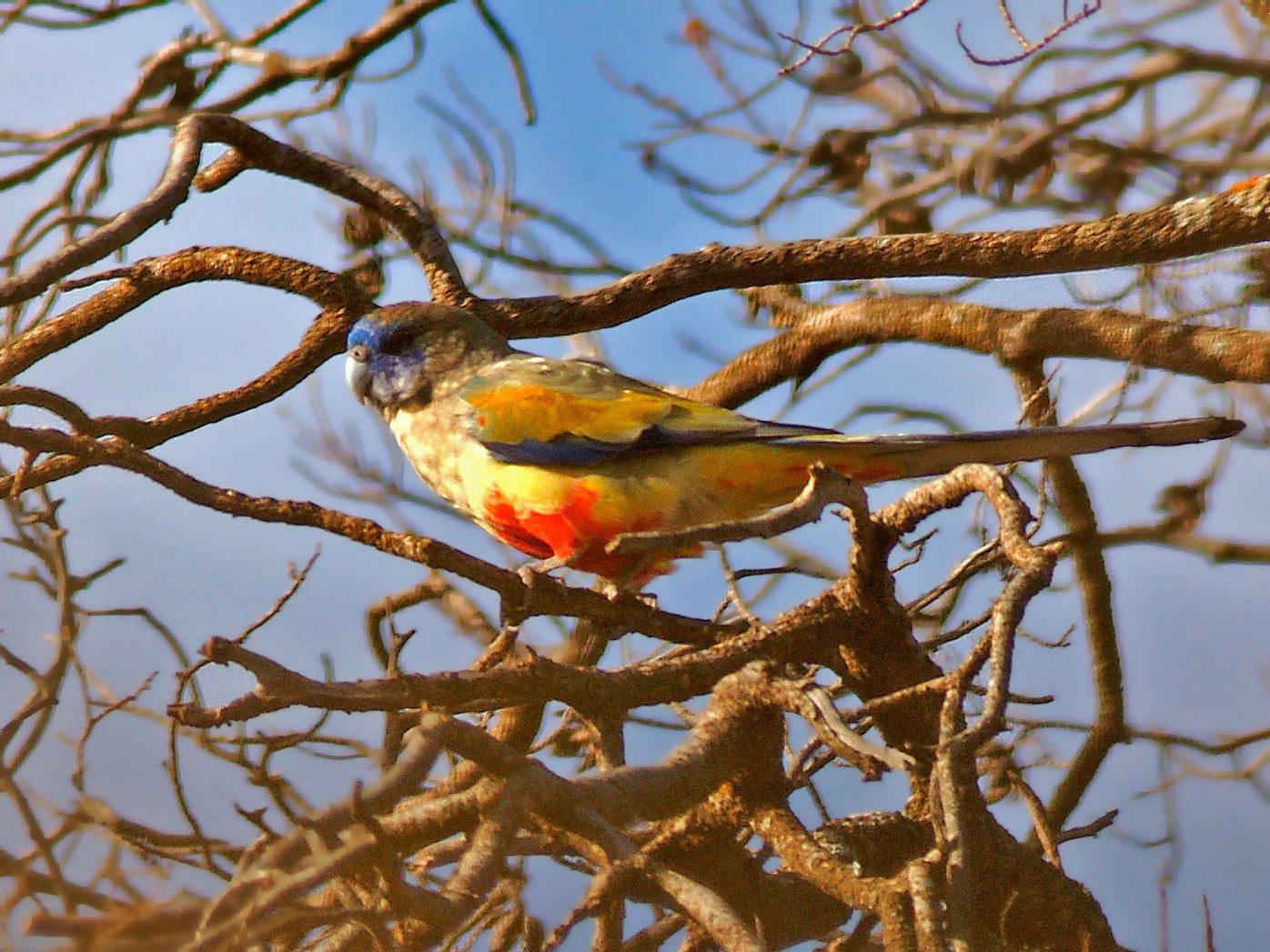
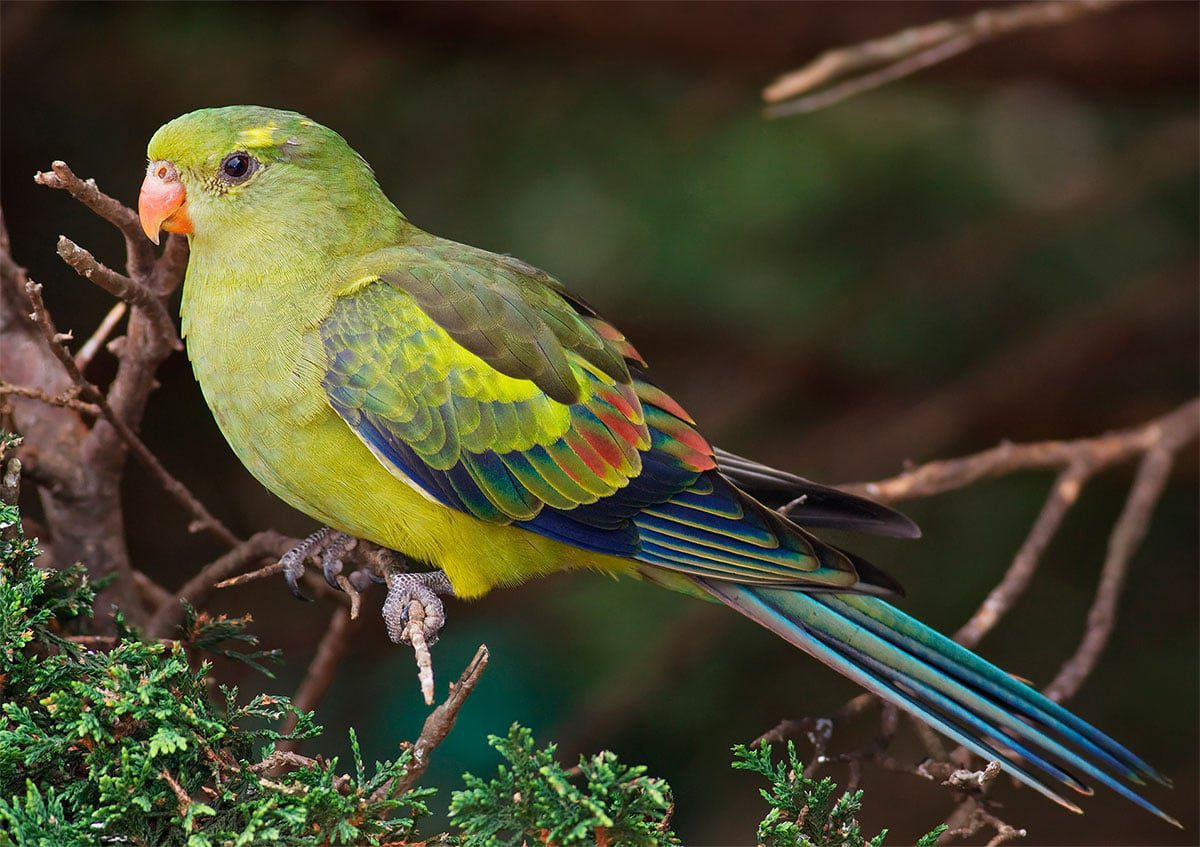
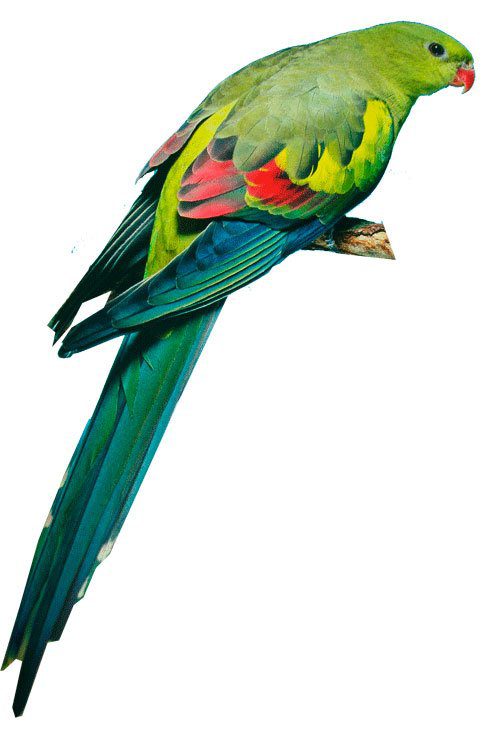
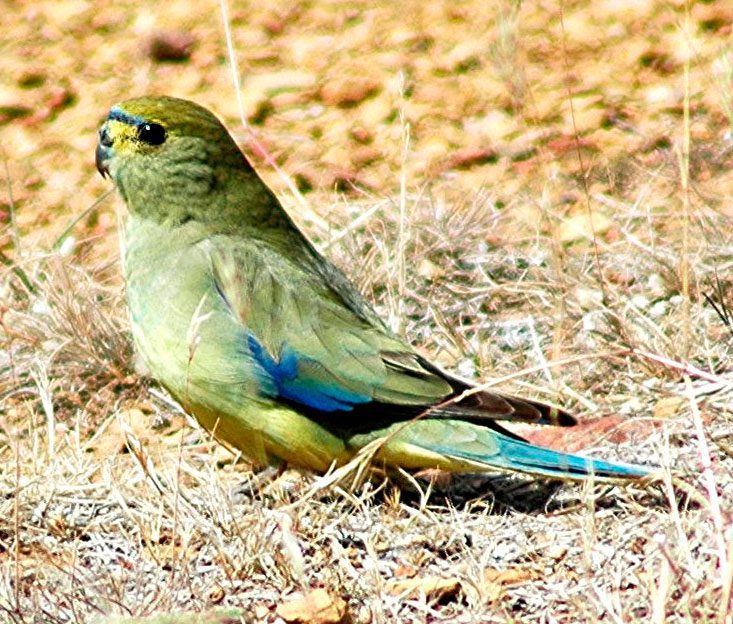
The Turquoise Parrot )(Neophema pulchella has the head bright turquoise blue, darker on the front of the crown, with the chin yellow and green on the back side of the crown.

Upperparts green.
The interior of the small and medium-sized coverts is reddish brown, the median are light blue. big blankets and primary coverts are blue-violet color. The primary feathers Black have them vane inmates of blue color and a fine yellow edge. The secondary feathers Black has foreign bands of yellowish green colour that tend toward the blue on the edges of the feathers. The lesser coverts the wings are blue-violet color.

The underparts is bright yellow with a slight orange patch in the throat and the chest. An orange stain, sometimes, is visible in the abdomen of certain individuals. The two pairs of the Central feathers of the tail are bright green, the outer tail feathers are yellow with green bases. The bill is black and the irises dark brown. The legs they are a pinkish-brown hue.

In the females, the plumage is more off than in males. There are no brown spots in the shoulders. The underparts they are much more green, especially in the chest. The lores they are whitish and the blue of the face is considerably reduced. A bar can be seen in the wing .

The immature are similar to the females.

The Immature males are distinguished by a small brown spot in the wing and blue dark figure.

Habitat:

Turquoise Parrot

The Turquoise Parrot they are distributed by clear wooded areas, wooded areas, meadows with native grasses, Although they have a strong preference for the ecotones, that is to say, regions that are intermediate between the forests and farmland.

In the State of Victoria, seasonally, These parakeets make positive use of habitats that suit them: the eucalyptus trees that are found in the Rocky Mountains in winter, wetlands and ravines from spring to fall and slopes that face southeast during all months of the year.

The Periquito turquoise they live in small flocks or family groups that feed near the ground.

These birds are sedentary but after nesting, You can attend a light dispersion.

During this last period, the formation of dorms is not uncommon.

We can often see them begging for food on the verges of roads.

Reproduction:

The Turquoise Parrot they breed from august to december. In other areas, the nests are also visible in April-may, but they are probably second clutches or broods alternatives. The nest is located in one a tree cavity, usually a eucalyptus, at least in regards to the State of Victoria. But it can also be located in a strain, a fallen pole or branch.

The spawning contains an average of 4 or 5 eggs with one incubation that lasts a few 20 days.

The chicks are altricial and remain in the nest for at least 4 weeks before you fly.

Food:

The Turquoise Parrot they have a diet vegetarian. They feed on seeds, flowers and fruits that are native and imported plants. Love cultivated herbs, wild herbs and different parts of the bushes.

A detailed census has identified the following genera: shrubs in Bloom's leucopogon, not less than 4 types of Danthonia, nettle, Urtica urens, Paspalum dilatatum, who are the edges of sea grass and the gernaios. The list is not exhaustive.

Distribution:

Size of its range (reproduction / resident): 771.000 km2

Currently fluctuates irregularly from the southeast of Queensland (North around Chinchilla and Maryborough) to the East of New South Wales, arriving at the coast, about Sydney, and extending to the South up to Nowra) in Victoria to the West of Bendigo. There is also an isolated population in the East of Victoria. The increase of population ,probably, continues in Victoria and New South Wales.

Conservation:


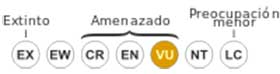
minor concern


โ€ข Current category of the Red List of the UICN: Least concern

โ€ข Population Trend: Stable

at the beginning of 20th century, the increase of pastoral activities, catastrophic drought in 1902, and to a lesser extent, poaching, they gave rise to the population of the Turquoise Parrot almost disappeared.

Since the decade of 1940, there has been a resurgence in the number of individuals. The resurgence of this species began in the vicinity of Chinchilal and Maryborough and little by little the South joined with the State of Victoria through New South Wales.

Today, growth tends to spread and strong presence in the national parks proof that the cessation of grazing is a great benefit for the development of these parrots. Since they nest close to the ground, These birds are still vulnerable to predation by foxes. The other recurring threat is habitat degradation and loss of nesting sites.. The world population deemed superior to the 20 000 birds, birds captive are estimated at 8 000.

"Turquoise Parrot" in captivity:

The Turquoise Parrot they are birds that are regularly and which are obtained very good results in the reproduction. These parakeets are highly recommended for amateur beginners.

In terms of its behavior, they are relatively strong with a sweet and melodious voice. These parakeets are not shy and are easy to keep..

During the breeding season they do not support other congeners or other species of neophemas. It is mainly of assaults by males. Your need to crack is very limited and their need for bathroom is very different from an individual to another. They tolerate dry climates, but they are very sensitive to cold and wet fog. They like to spend time on the floor, investigating, and therefore, they are vulnerable to infection by worms.

According to sources, a sample lived during 21 years in captivity. In captivity, these animals have been known that they can raise from 1 aรฑo de edad.

Alternative names:

Turquoise Parrot, Beautiful Grass-Parakeet, Beautiful Grass-Parrot, Beautiful Parrot, Chestnut-shouldered Grass-Parrot, Chestnut-shouldered Parakeet, Chestnut-shouldered Parrot, Chestnut-winged Grass-Parakeet, Chestnut-winged Parrot, Red-shouldered Grass-Parakeet, Red-shouldered Parakeet, Red-shouldered Parrot, Turcoisine Parrot, Turq, Turquoise Grass-Parakeet, turquoise parakeet, Turquoisine, Turquoisine Grass-Parrot, Turquoisine Parrot (ingles).
Perruche turquoisine (French).
Schรถnsittich (German).
Periquito-turquesa (Portuguese).
Papagayo Turquesa, Periquito Turquesa (espaรฑol).

scientific classification:

George Shaw
George Shaw

Order: Psittaciformes
Family: Psittaculidae
Genus: Neophema
Scientific name: Neophema pulchella
Citation: (Shaw, 1792)
Protonimo: Psittacus Goshawk

ยซTurquoise Parakeetยป Images:

Videos "Turquoise Parrot"

————————————————————————————————

ยซTurquoise Parakeetยป (Neophema pulchella)


Sources:

Avibase
– Parrots of the World โ€“ Forshaw Joseph M
– Parrots A Guide to the Parrots of the World – Tony Juniper & Mike Parr
– Birdlife

Photos:

(1) – Turquoise Parrot (Neophema pulchella), female; of: Lovebird by Daniel Wehmeyer –> Danweh – Wikimedia
(2) – ยซNeophema pulchella -Rainbow Jungle -Australia-8aยป by Sheila Bradford – originally posted to Flickr as DSCF7029 turquoise parrot. Licensed under CC BY 2.0 via Wikimedia Commons.
(3) – ยซNeophema pulchella -Twycross Zoo, Leicestershire, England-8aยป by stephen jones from uk – [1]Uploaded by Snowmanradio. Licensed under CC BY 2.0 via Wikimedia Commons.
(4) – ยซTurquoise Parrot (Neophema pulchella)-6ยป by Lip Kee Yap – originally posted to Flickr as Turquoise Parrot (Neophema pulchella). Licensed under CC BY-SA 2.0 via Wikimedia Commons.
(5) – ยซNeophema pulchella pair Capertee Valleyยป by Lip Kee from Singapore, Republic of Singapore – Turquoise Parrot (Neophema pulchella). Licensed under CC BY-SA 2.0 via Wikimedia Commons.
(6) – Jacques Barraband [Public domain], via Wikimedia Commons

Sounds: Marc Anderson (Xeno-canto)

โ–ท The world of Pets: Dogs, cats, birds, reptiles, amphibians

Crimson Shining-Parrot
Prosopeia splendens

Crimson Shining-Parrot

Content


Anatomy-parrots

Description:

42 cm. length and 280 g. of weight.

The Crimson Shining-Parrot (Prosopeia splendens) is very similar to the Red Shining-Parrot (Prosopeia tabuensis). has the head and underparts red intense and bright, slightly darker in ears; broad collar rear violet-blue, which becomes turquoise toward the trailing edge. The rest of upperparts bright pale green with darker edges and fine bright in back and wings. Coverts medium green, greater coverts blue green; primary coverts and primaries deep blue-violet with black on innerwebs; secondaries blue to green in the innermost feathers. Underwing-coverts marked blue-green and red; axillary pale green. Uppertail green with blue tip, violet blue with side feathers innerwebs blackish; undertail black. Bill black; irises red-orange; legs black.

The male has the bill and head bigger

taxonomy:

It was generally considered consanguineous with the Prosopeia Tabuensis, but may be closer Prosopeia Personata. Monotypic.

  • Escarlata sound Papagayo.

Habitat:

It is found in forests, farmland and villages, both in the lowlands and hills.

Reproduction:

Food, habits and reproductive behavior presumably similar to those of the Red Shining-Parrot (Prosopeia tabuensis) With which, until very recently, was considered consanguineous.

Food:

Similar al al Red Shining-Parrot (Prosopeia tabuensis).

Distribution:

Extension of the distribution (breeding/resident): 910 km2

It is endemic Fiji, where it is found naturally in islas de Kadavu (including around Vunisea) and Ono. It has also been introduced in Viti Levu and probably in the Group Yasawa and Ovalau in the past (There are no recent records).

Conservation:


Vulnerable


โ€ข Current category of the Red List of the UICN: Vulnerable

โ€ข Population trend: decreasing.

The species may be declining in Viti Levu due to trade, although at present the possible negative effects of competition are not known with Masked Shining-Parrot (Prosopeia personata). It is estimated that the world population lies between 5.000 and 10.000 specimens. NEAR THREATENED.

Justification of the population

Although recent fieldwork on Kadavu has not focused specifically on this species, seems to occur in population densities similar to those of Masked Shining-Parrot (Prosopeia personata) (86 Crimson Shining-Parrot They were recorded in Kadavu 38 standardized observation times in the two studies BirdLife, similar to the average 1,9 of the Masked Shining-Parrot /time recorded in 18 sites across the Viti Levu). The Masked Shining-Parrot It was estimated at around 29 in native lowland forest birds / km2 (Jackson y Jit 2004). The area of รขโ‚ฌโ€นรขโ‚ฌโ€นdense forest and medium density Kadavu it's around of 225 km2 (National Forest Inventory 1991-1993), so a reasonable estimate of the population Crimson Shining-Parrot would be 6.000 birds or 4.000 mature individuals.

Conservation Actions Underway

Appendix II of the CITES. It is protected by law in Fiji, which has recently been revised, the old Law Poultry and game has been partly overtaken by the Law on Protection of Endangered Species, which provides protection (SPREP 2000, D. Watling a slightly. 2007). Conservation projects have reduced the trade in this species (Jackson y Jit 2004). Four communities have declared a protected area covering community 1.535 hectares of forest and local volunteers monitor bird populations and assess the state of the habitat on their own initiative (V. Masibalavu a slightly. 2007). Conservation actions aimed at fire prevention (including awareness following the amendment of the decree concerning arson) have improved in recent years (V. Masibalavu in litt. 2012, M. Tabudravu in little. 2012).

Conservation Actions Proposed

Establish standards for maintenance of parrots in captivity to reduce demand (SPREP 2000). Monitor the numbers caught and transported to Suva. Determining population densities in various habitats. Investigate breeding needs and success. Promote the creation of community forest reserves. Use as set species to promote ecotourism in Kadavu.

"Crimson Shining-Parrot" in captivity:

Captive numbers are unknown., and everything indicates that captive breeding has rarely been achieved. It is caught in small quantities, and islanders returning to the capital, Suva (Watling 2000), the birds are carried as a gift, and there is at least some illegal trade abroad (J. S. Kretzschmar a lie. 2000).

In the nineteenth century it was imported by zoos in London, Berlin and Hamburg. In the United States, He kept San Diego Zoo, which was partially successful with the offspring when a young man born in 1973,

As they are at serious risk of extinction, only the most experienced should attempt to keep them in their aviaries, and all captive bred should be better placed in breeding programs to establish a larger population and participate in the conservation of this bird species.

Alternative names:

Crimson Shining Parrot, Crimson Shining-Parrot, Kadavu Shining Parrot, Kandavu Shining Parrot, Kandavu Shining-Parrot (inglรฉs).
Perruche รฉcarlate, Perruche masquรฉe รฉcarlate (francรฉs).
Fidschi Sittich, Fidschisittich (alemรกn).
Papagayo Escarlata (portuguรฉs).
Papagayo Escarlata, Papgayo Escarlata (espaรฑol).

Clasificaciรณn cientรญfica:

Peale, Titian Ramsay


Orden: Psittaciformes
Familia: Psittaculidae
Gรฉnero: Prosopeia
Nombre cientรญfico: Prosopeia splendens
Citaciรณn: (Peale, 1848)
Protรณnimo: Platycercus splendens

Imรกgenes Papagayo Escarlata:

Videos del "Papagayo Escarlata"

Fuentes:

โ€ข Avibase
โ€ข Parrots of the World โ€“ Forshaw Joseph M
โ€ข Parrots A Guide to the Parrots of the World – Tony Juniper & Mike Par
โ€ข Birdlife

Fotos:

(1) – Auckland Museum [CC BY 4.0]

โ–ท The world of Pets: Dogs, cats, birds, reptiles, amphibians

Yellow-capped Pygmy-Parrot
Micropsitta keiensis

Yellow-capped Pygmy-Parrot

Content


Anatomy-parrots

Description

9,5 cm. length between 11 and 14 g. of weight.

The crown of the Yellow-capped Pygmy-Parrot (Micropsitta keiensis) is yellow ocher, with a warm brown in forecrown; lores, chin and area under the eyes, brown; coverts outpus, dark green, tending to lighter green on cheeks and throat.

Upperparts, dark green with center at wing-coverts and feathers of black color with a black colored margin extrecho; flight feather black with vane Green external; feathers wings green. The underparts are yellowish-green, with fine dark stripes; undertail-coverts yellow and green. Upper, the tail It is iridescent, slightly greenish blue in the Center, Foreign feathers blackish with yellow spot on the ends. Under, the tail dark blue and yellow.

Bill dark grey; irises brown; legs dark gray.

Both sexes similar.
Immature like females but with bill pale yellow.

Description 3 subspecies

  • Micropsitta keiensis keiensis

    (Salvadori, 1876) – the subspecies nominal.


  • Micropsitta keiensis viridipectus

    (Rothschild, 1911) – Similar a nominal, but darker.


  • Micropsitta keiensis chloroxantha

    (Oberholser, 1917) – The mature more muted. The underparts with red markings male, dyed yellowish in female.

Habitat:

Yellow-capped Pygmy-Parrot

It inhabits in the forests of lowlands, in secondary growth and, sometimes around inhabited areas and coconut trees. The ecology species is similar to that of the Buff-faced Pygmy-Parrot. The birds are alone, in pairs or in small groups, and they can be distributed by undergrowth to some 20 meters above the ground. They climb on trunks and branches, and they can go down head, in inverted position, sometimes.

Reproduction:

Nest and roost Termites in tree cavities, they excavate the cavity by themselves; tunnel passageways go up and may bend before reaching nest-chamber. up the laying two white eggs deposited in a cavity unlined (dimensions around 20 cm x 15 cm.), and they can be occupied by other adults roost (up to four) during the breeding season. The exact role of these visiting birds is unknown, It is thought that they can help with the tasks of nest. nesting It has been recorded from October to March

Food:

With feed lichen, fungi, seeds, fruits and insects. Most of the lichen is collected directly from the surface of the bark of trees..

Distribution:

Size of its range (breeding/resident): 763.000 km2

The Yellow-capped Pygmy-Parrot is distributed among the papuan islands, in the West area, including Waigeo, give, Kofiau, Salawati and Misool; through Vogelkop and Onin Peninsula (Province of West Papua); in the Kai and islas Aru, and in the South of New Guinea between Mimika and the fly river. The species is common to local scale.

Distribution 3 subspecies:

Conservation:


minor concern


โ€ข Current IUCN Red List category: Least concern

โ€ข Population trend: Stable

The size of the world population It has not been quantified, It is estimated over the 100,000 specimens.

The species, according to sources, It is considered very common within its range (pit et to the. 1997).

The population suspected to be stable in the absence of evidence of any reduction or substantial threats.

"Yellow-capped Pygmy-Parrot" in captivity:

Not usually survive in captivity.

Alternative names:

Yellow-capped Pygmy-Parrot, Yellow capped Pygmy Parrot, Yellow-capped Pygmy Parrot (ingles).
Micropsitte pygmรฉe (French).
Gelbkappen-Spechtpapagei (German).
Micropsitta keiensis (Portuguese).
Microloro de Kai, Microloro de las Kai (espaรฑol).

scientific classification:

Order: Psittaciformes
Family: Psittaculidae
Scientific name: Micropsitta keiensis
Citation: (Salvadori, 1876)
Protonimo: Nasiterna keiensis

Images "Microlyro of the Kai":

Videos "Microloro de las Kai":

————————————————————————————————

Yellow-capped Pygmy-Parrot (Micropsitta keiensis)


Sources:

Avibase
– Parrots of the World โ€“ Forshaw Joseph M
– Parrots A Guide to the Parrots of the World – Tony Juniper & Mike Parr
– Birdlife

Photos:

(1) – Parrot-birds – link
(2) – ยซโ€ฏNasiternaPygmaeaFKeulemansโ€ฏยป par John Gerrard Keulemans โ€” Ornithological Miscellany. Volume 1. Licensed public via domain Wikimedia Commons.

Sounds: Hans Matheve (Xeno-canto)
โ–ท The world of Pets: Dogs, cats, birds, reptiles, amphibians

Green Rosella
Platycercus caledonicus


Green Rosella

Content


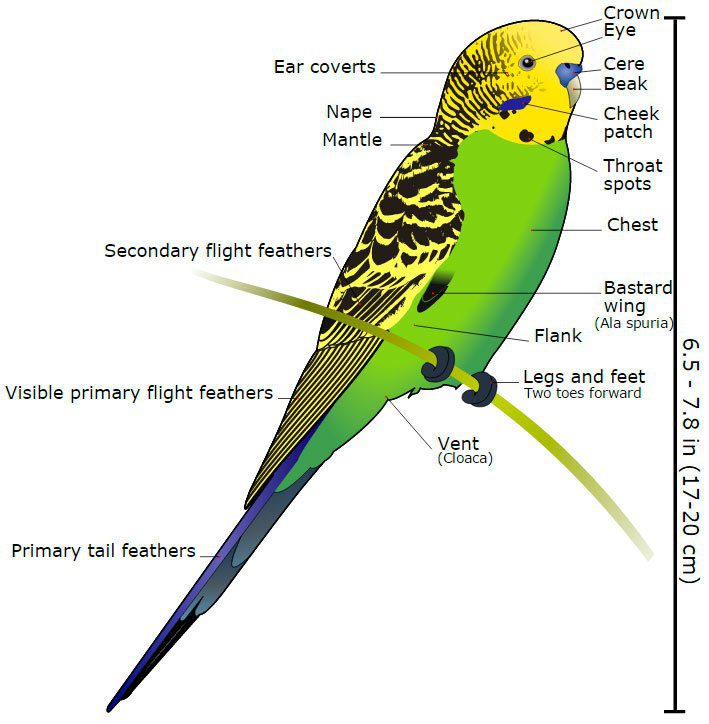
Anatomy-parrots

Description

37 cm.. length between 127 and 142 g. of weight.

The Green Rosella (Platycercus caledonicus) has the forecrown and lores bright red; a crown of a showy color yellow, marked in red and dotted with of Brown olive dark towards the part rear; area low of them cheeks and throat of color blue cake; ear-coverts a bright yellow, with the edges more dark. Strong contrast between the yellow and the dark area of the crown; Brown olive uniform in the the mantle, with fine dark green stripes on their feathers; feathers of the rump and uppertail-coverts have a diffusion of color yellow orange.

Curve of the wing blue; lesser coverts black; corbeteras internal Middle, black, lined in green dark, the light blue external; greater coverts Blue with feathers Interior black finished off with edges of color green; secondaries Blackish with vane blue externals (innermost with green edge); primaries Brown dark with vane external and dark blue margins; tertiary Brown dark with stripes Green.
Under, the wings blackish, with coverts and axillary blue.

The underparts is of color yellow with a tone clear of Orange and with small spots of color orange on the periphery of the area anal. Upper, the tail olive-green tipped off blue, lateral feathers of color blue pale with them tips white; undertail, the tail of color blue pale with them tips white.

Bill White grey; irises dark brown; legs grey.

The female It is smaller than the male and has the bill smaller; also shows more often a wash of orange-red in the upper part of the chest.

The immature they are more muted than adults, show more green in wing-coverts and have them upperparts of color grey olive and yellow olive in them underparts. Plumage adult is reached after the first comprehensive molt, in a few 15 months.

Subspecies description:

  • Platycercus caledonicus caledonicus

    (Gmelin, JF, 1788) – The species nominal


  • Platycercus caledonicus brownii

    (Kuhl, 1820) – Too little differentiated with the species nominal, according to some experts, to justify the recognition as subspecies.

Habitat:

The Green Rosella they are in all types of forest habitats in the territory in which they reside. But, more and more often, they come in orchards and gardens in urban areas, finding favorable conditions in those places to nest and feed themselves. But, its main habitat are still sclerophyllous forests and thickets. Apparently, on Hunter island, they have a strong preference for small ravines filled with piles of rocks.

Like most of the island birds that live in a small area, to the Green Rosella It is cataloged as sedentary. But, the specimens that live in altitudes of up to 1500 meters in the Alpine regions, they make altitudinal movements and approaching at low altitude towards the coastal regions in winter season. At the end of the nesting season, young birds roam in small flocks which do not exceed more of 4 or 5 individuals. The Green Rosella be associated at times with them Eastern Rosella (Platycercus eximius). Although they are not shy, These parrots take precautions and are very cautious When venturing to Earth to find their food. They prefer to stay in the foliage for this activity. Like most of the parrots, the female is attached to your partner by strong ties conjugal it last for many years. They maintain and strengthen these links practicing processions which are very similar to the one of other parrots.

Reproduction:

The Green Rosella nest during the period from September to February. The nest It is usually placed in a cavity of any branch or hollow tree trunk, normally a eucalyptus. They also occupy, exceptionally, the walls of old buildings. They use abandoned nests of sparrows into disuse.

The spawning usually contains between 4 and 6 eggs and your incubation takes a few 19 days. The chicks are altricial and leave the nest only after 3 weeks after hatching. No additional information on the care and development of the offspring.

Food:

The Green Rosella they eat mainly eucalyptus seeds, Mirto, acacia, ragwort large aromatic flowers, canaigre, Solanaceae (Solanum) and pimelea. Most flowers are toxic to pets.

These parakeets also eat many types of seeds of grasses and shrubs, some of which are at higher altitudes.

Do not disdain the berries of coprosma and the Hawthorn, they represent an important part of their diet in winter. The menu is sometimes supplemented with psyllids they are small homoptera and insect larvae .

Distribution:

Size of the area of distribution (reproduction / resident): 68.100 km2

The Green Rosella they are endemic in Tasmania. Also found in the larger islands of the Bass Strait, that is to say, on isla King and Flinders island. Has also been recorded in the Maatsuyker island, front South of Tasmania.

Birds coming from leaks can be found around Sydney.

The species is common and widespread within its range, with a stable world population of more than 50.000 specimens.

One small number in captivity.

The Green Rosella is protected, but it can be killed with a permit when they cause damage to crops.

The population living in the North of Tasmania It is sometimes differentiated under the name brownii, but this so-called subspecies differences are not as marked enough to consider it as such.

Destribuciรณn subespecies:

  • Platycercus caledonicus caledonicus

    (Gmelin, JF, 1788) – The nominal species

  • Platycercus caledonicus brownii

    (Kuhl, 1820) – isla King.

Conservation:


minor concern


โ€ข Current category of the Red List of the UICN: Least concern

โ€ข Population Trend: Decreasing

The size of the world population It has not been quantified, Although estimated at more of 50.000 specimens. The species according to sources, it is common throughout its small range (pit et to the. 1997).

The population is suspected that it may be declining due to the habitat destruction in course of King Island (pit et to the. 1997).

The Green Rosella It may cause damage to the apple orchards and, Although protected, It can be controlled under a system of licensing.

"Green Rosella" in captivity:

It is not a popular Aviary bird, possibly due to its lack of color and its aggressive reputation.

Alternative names:

Green Rosella, Caledonia Parrot, Green Parrot, Mountain Parrot, Tasmanian Rosella, Yellow-bellied Parakeet, Yellow-bellied Parrot, Yellow-breasted Parakeet, Yellow-breasted Parrot (ingles).
Perruche ร  ventre jaune (French).
Gelbbauchsittich (German).
Rosela-da-caledรดnia (Portuguese).
Perico de Tasmania, Rosela Verde (espaรฑol).

scientific classification:

Order: Psittaciformes
Family: Psittaculidae
Genus: Platycercus
Scientific name: Platycercus caledonicus
Citation: (Gmelin, JF, 1788)
Protonimo: Psittacus caledonicus

ยซTasmanian parakeetยป images:

Videos "Green Rosella"

————————————————————————————————

"Tasmanian parakeet" (Platycercus caledonicus)


Sources:

Avibase
– Parrots of the World โ€“ Forshaw Joseph M
– Parrots A Guide to the Parrots of the World – Tony Juniper & Mike Parr
– Birdlife

Photos:

(1) – A Green Rosella at Tasmanian Devil Conservation Park, Tarana, Tasmania By rockmasterp (Beautiful ParrotUploaded by snowmanradio) [CC BY-SA 2.0], via Wikimedia Commons
(2) – Green Rosella (also known as Tasmanian Rosella) in Tasmania, Australia By Sammy Sam (Picasa Web Albums) [CC BY-SA 3.0], via Wikimedia Commons
(3) – Green Rosella (also known as Tasmanian Rosella) in Tasmania, Australia By Sammy Sam (Picasa Web Albums) [CC BY-SA 3.0], via Wikimedia Commons
(4) – Green Rosella (Platycercus caledonicus), Collinsvale, Tasmania, Australia By JJ Harrison (jjharrison89@facebook.com) (Own work) [CC BY-SA 3.0], via Wikimedia Commons
(5) – Green Rosella (also known as Tasmanian Rosella) in Tasmania, Australia By Sammy Sam (Picasa Web Albums) [CC BY-SA 3.0], via Wikimedia Commons

Sounds: Marc Anderson (Xeno-canto)
โ–ท The world of Pets: Dogs, cats, birds, reptiles, amphibians

Scarlet-chested Parrot
Neophema splendida

Scarlet-chested Parrot

Content


Anatomy-parrots

Description

19 cm. length and a weight between 36 and 44 g..

The Scarlet-chested Parrot (Neophema splendida) It is particularly colorful. It has the "face" and the forecrown are bright turquoise blue, darker in the throat and chin.

The upperparts are green. The curvature of the wings is dark blue, wing-coverts are the same blue tone to the face. Primary coverts dark blue-violet. The primaries Black has light blue brainwashed in the foreign bands. The outer edge of the secondaries has a tone blue-green that is mixed with the green of them vane inner and tertiary.

The underparts is dark blue. The chest is bright Scarlet, which is an important recognition feature. The sides of the top of the chest and flanks are green. The rest of the underparts is bright yellow. The bottom of the tail is green, but the tips of the outer tail feathers they are dyed yellow.

The bill is black, irises dark brown. The legs are gray-Brown.

The female is duller than its companion, with the belly and the chest green. The blue color of the face is restricted.

The females and juveniles they often show Wing bars.

The young male need four months to purchase your mature plumage, and retain a youthful glow until the age of 2 years.

Habitat:

The Scarlet-chested Parrot they are usually distributed in arid scrublands that are composed mainly of acacias and eucalyptus. They appreciate, particularly, plants of Mallee (Eucalyptus gracilis) and Mulga (Acacia aneura).

Also live in wooded areas dominated by casuarinas, as well as areas where the soil is covered by Spinifex or large clumps of grass type Triodia.

The Scarlet-chested Parrot do not despise the crests of hills that are equipped with a large number of plants, like the covered Plains of Sea sandwort or Salt grass (Honckenya peploides), What are plants which grow in saline environments.

They tend to find their food on Earth and form relatively consistent flocks outside of the nesting season.

During the breeding season, These birds are not very gregarious, but couples establish their nests in trees not very far from the other.

As with the Turquoise Parrot, the division of labor is well established and the females are responsible for the collection of green leaves that adorn the interior of the nest.

There is no description of the various courtship.

Reproduction:

The season of nesting of the Scarlet-chested Parrot, usually, is carried out between January and August, but these dates can change as the reproduction is influenced, significantly, by climatic conditions, especially the rains.

The nest It is placed in a tree cavity, above all a eucalyptus, between 2,5 and 8 meters above the ground.

The Scarlet-chested Parrot they are very loose colonies.

The spawning includes of 3 to 5 eggs and your incubation lasts a few 18 days. The most numerous litters, sometimes, provide 6 eggs.

The chicks are altricial, they take flight to leave his place of birth 30 days after hatching.

Food:

The Scarlet-chested Parrot they have a diet almost exclusively granivore.

These birds acquire most of the moisture you need eating Succulents as Calandrinia. If this practice is not enough, These parrots are like other species of arid lands, that is to say, that they are going to supply themselves with liquid directly to the sources and water points.

Menu details are poorly known, but it is known that most feed on seeds of plants such as Triodia, Newcastelia, haloragis, Acacia and Stipa.

Distribution:

Size of the area of distribution (reproduction / resident): 1.280.000 km2

This rare Nomad has a wide area of historical distribution, but it is probable that now concentrate on parts with more vegetation of the Great Victoria desert, with records from Kalgoorlie, Western Australia, the East, through the North of the Nullarbor plain in Southern Australia, North of the Eyre Peninsula, about Port Augusta and in areas of Mallee to the North of the murray river, to the Northwest of Victoria, West of New South Wales, Southwest of Queensland and MacDonnell Ranges of the Northern Territory.

A flock of 240 bird was recently recorded in the Great Victoria desert.

Conservation:


minor concern


โ€ข Current category of the Red List of the UICN: Least concern

โ€ข Population Trend: Stable

The inroads among 1939 and 1996 They show that these birds are able to form very rapidly large gatherings.

Disturbances affecting the natural environment had a negative impact on the evolution of the active population. The use of aquatic resources for the livestock and competition in this field with the Bourke's Parrot they have also caused damage.

Poaching and marketing of this bird have also had devastating consequences: more than 25.000 Scarlet-chested Parrot they are in captivity in Australia.

Its population in freedom is estimated at around 10,000 specimens.

"Scarlet-chested Parrot" in captivity:

The Scarlet-chested Parrot is a species peaceful and silent. This beautiful parakeet ends up gaining confidence with your caregiver, It is only a matter of time. It is also easy to maintain and almost do not eat wood. It is resistant to cold (light Frost), but it is very sensitive to humidity, fog, and air currents.

The Scarlet-chested Parrot they feed on the ground; It is convenient to use of vermicides, deworming them regularly. They are also susceptible to ocular infections and vulnerable to infections of Candida.

The tastes for the bathroom vary from one individual to another.

In terms of their longevity, according to sources, a sample lived during 14 years in captivity. The same sources report that these parakeets can live up to 25,4 years in captivity, but this has not been verified; the same study also ensures that the Scarlet-chested Parrot You can play from around 1 year of age in captivity.

The mutations:

    โ€ข Aqua: autosomal recessive
    โ€ข Turquoise: autosomal recessive
    โ€ข Blue: autosomal recessive
    โ€ข Pastel: autosomal recessive (not in Europe)
    โ€ข Cinnamon: recessive sex-linked
    โ€ข Pale: recessive sex-linked
    โ€ข Mixed: autosomal dominant
    โ€ข Misty: autosomal co-dominant (PAS en Europe)
    โ€ข Gris: autosomal dominant
    โ€ข Mixed: autosomal recessive
    โ€ข Fallow (bronze fallow): autosomal recessive
    โ€ข INO: recessive sex-linked
    โ€ข Platinum: recessive sex-linked
    โ€ข Violet: co-dominante autosomique
    โ€ข Dark factor: co-autosomal dominant

Alternative names:

Scarlet-chested Parrot, Scarlet chested Parrot, Scarlet-breasted Parrot, Scarlet-chested Parakeet, splendid parakeet (ingles).
Perruche splendide, Euphรจme resplendissante, Perruche resplendissante (French).
Glanzsittich (German).
Periquito-esplรชndido (Portuguese).
Papagayo Esplรฉndido, Periquito Esplรฉndido (espaรฑol).

scientific classification:

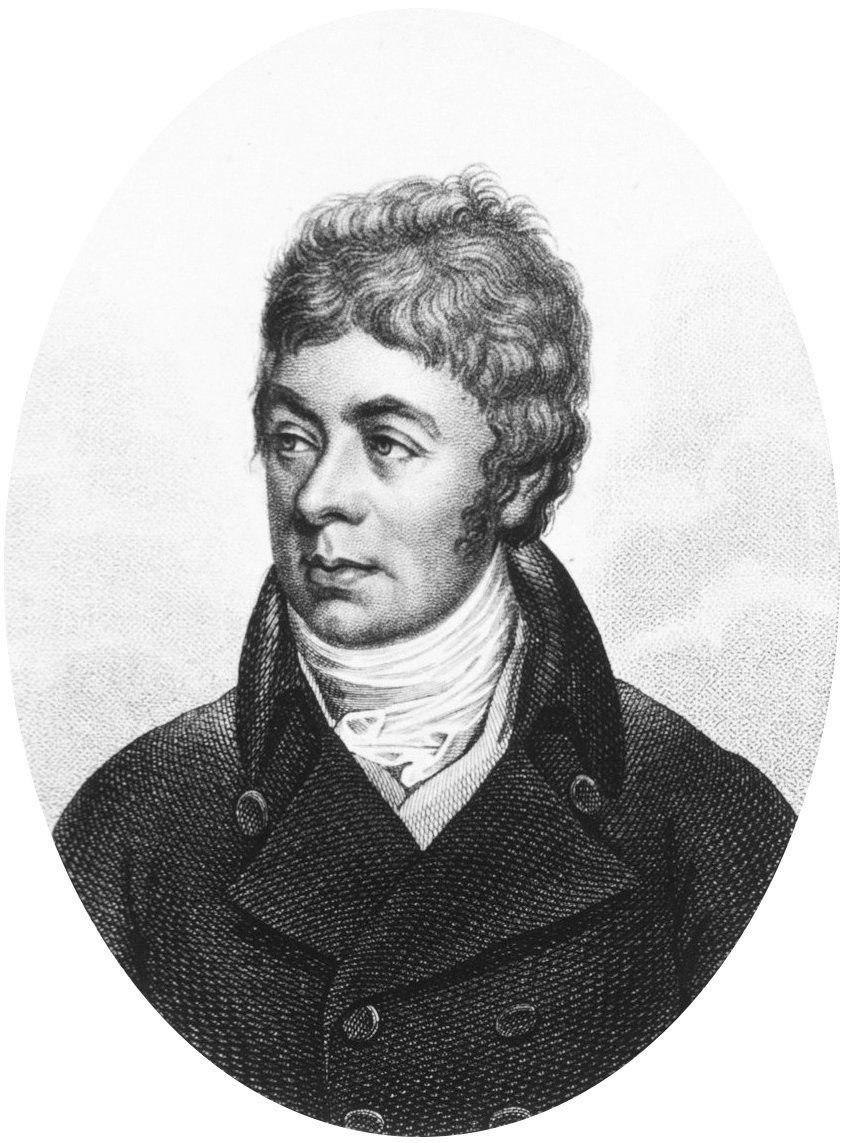
John Gould
John Gould

Order: Psittaciformes
Family: Psittaculidae
Genus: Neophema
Scientific name: Neophema splendida
Citation: (Gould, 1841)
Protonimo: E uphema splendida

ยซSplendid Parakeetยป Images:

Videos "Scarlet-chested Parrot"

————————————————————————————————

ยซSplendid Parakeetยป (Neophema splendida)


Sources:

Avibase
– Parrots of the World โ€“ Forshaw Joseph M
– Parrots A Guide to the Parrots of the World – Tony Juniper & Mike Parr
– Birdlife

Photos:

(1) – Adult male at Cincinnati zoo, USA By Ltshears (Own work) [Public domain], via Wikimedia Commons
(2) – Taken at the Cincinnati Zoo By Greg Hume (Own work) [CC BY-SA 3.0], via Wikimedia Commons
(3) – Immature male on the left and an immature female on the right at Gluepot Reserve, South Australia By David Cook Wildlife Photography from Wamboin, NSW, Australia [CC BY 2.0], via Wikimedia Commons
(4) – Immature male on the left and an immature female on the right at Gluepot Reserve, South Australia By David Cook Wildlife Photography from Wamboin, NSW, Australia [CC BY 2.0], via Wikimedia Commons
(5) – Scarlet-chested Parrot ยซNeophema splendidaยป at Cincinnati Zoo By Ltshears (Own work) [CC BY-SA 3.0], via Wikimedia Commons
(6) – By T.H. Maguire (1821โ€“1895) (http://www.birdresearch.dk/dk/jgould.htm) [Public domain], via Wikimedia Commons

โ–ท The world of Pets: Dogs, cats, birds, reptiles, amphibians

Ouvea Parakeet
Eunymphicus uvaeensis

Ouvea Parakeet

Content


Anatomy-parrots

Description:

Of 32cm.. length and 117 g. of weight.

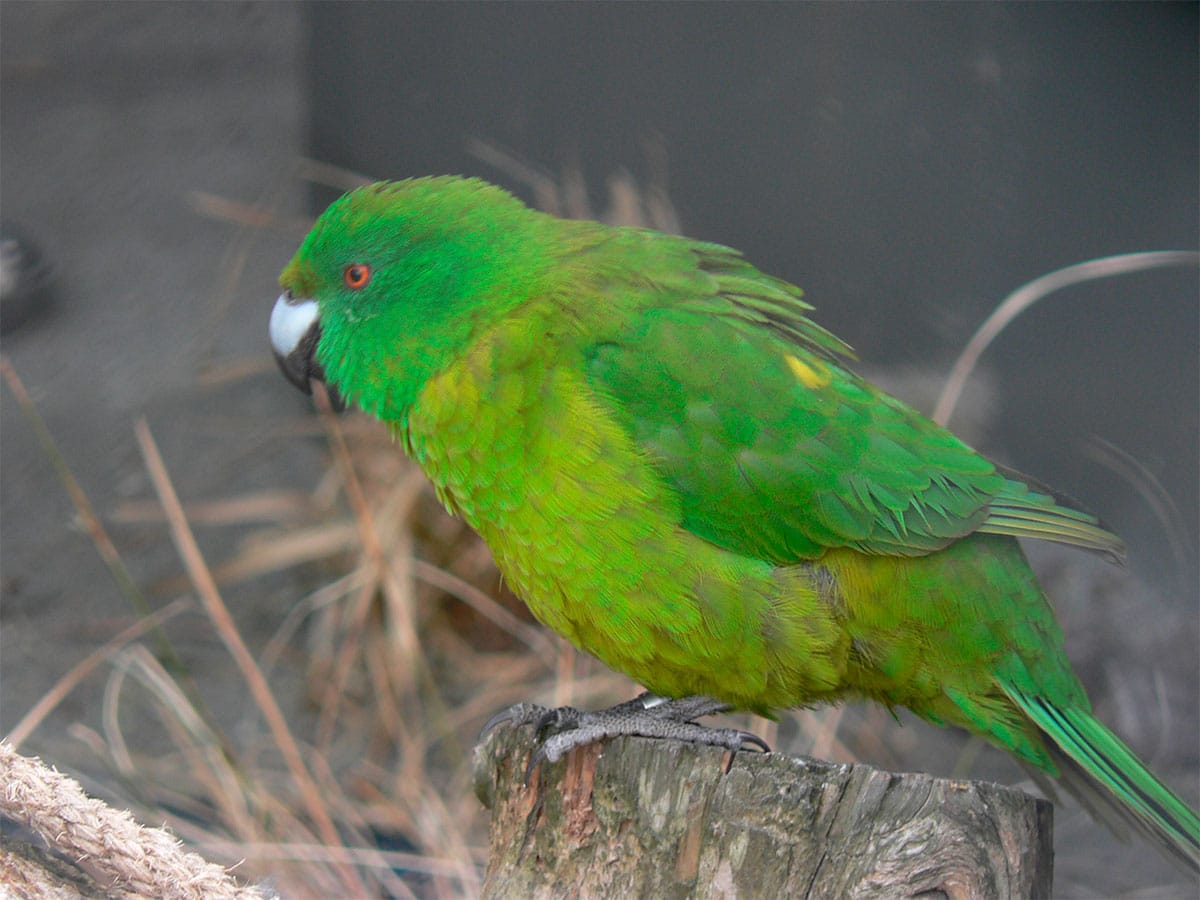
The Ouvea Parakeet (Eunymphicus uvaeensis) is similar to the Horned Parakeet (Eunymphicus cornutus) but with the face and nape green, no yellow, and crest upturned six pens greenish black: the Red of the crown It is limited to the center forecrown.

The Ouvea Parakeet generally bright mid-green. Head green, lighter on ear-coverts with some light shaft-streaks; centre of forecrown red with six wispy blackish-green uperwing feathers forming a small crest; rear-crown darker green; ears and cheeks dark green lower.

The upperparts light green, paler on rump. Wing coverts green; outerweb of primaries greenish-blue with innerwebs black. Underwing-coverts green. Underparts light yellowish-green. Uppertail green with a slight blue suffusion distally and blue edges to lateral feathers; undertail gray.

Bill blue-gray at base, blackish toward tip; irises orange; legs grey.

Both sexes similar.

Taxonomic status:

This taxon is considered a subspecies of Eunymphicus [cornutus or uvaeensis] (sensu lato) by some authors

  • Sound Uvea Parakeet.

Note:

some species, as in the case of Ouvea Parakeet, They are subject to extreme stress due to traps or harassment. The open availability of high-quality recordings of these species may make the problems even worse.. For this reason, transmission and download of these recordings is off. Recorders are free to share in xeno-edge, but they will have to approve access to these recordings.

We do not take this action lightly, and we wish it wasn't necessary, but we are convinced that the negative impacts of offering easy access to these recordings outweigh the benefits. To access these recordings, You can contact directly with the recorder.

Habitat:

It is restricted to areas of old growth forest with holes for nesting, but the highest numbers occur near papaya plantation areas.

The Ouvea Parakeet They are active in early morning and late afternoon, and usually rest in the trees during the heat of the day.

Reproduction:

An average of 2.9 Eggs are laid in one or two broods per year, of which 1.7 chicks hatch, but only 0.75 chicks survive to 30 days (Robinet et al. 1995, Robinet et al. 1996, Robinet and Salas 1999).

Food:

It feeds in the forests and crops of cultivated land adjacent. The Ouvea Parakeet It depends mainly on mature native forests with pines kauri Agathis australis.

Fruits of Ficus spp., there Canaria, scrub and passion fruit. Also forage for seeds. The cultivated papaya (Carica papaya) It is a favorite.

Distribution and status:

Population expansion (breeding/resident): 640 km2

Los Pericos Uvea are confined to 110 km2 in Ouvea island, Loyalty Islands. Introduced unsuccessfully in the nearby Lifou.

The species is found in isolated patches of forest now restricted to the coast, mainly in the district St Joseph between Cape Rossel and Cape Steep. Single 15-25 km2 of suitable habitat was considered to remain on the island in 1993, with about 70-90 birds present, although a more thorough study has suggested a total population of 617 individuals. More recent studies is estimated at 1.780 mature individuals in total (Theuerkauf s suffering. 2016)
In the past, the reduction of individuals to extensive conversion of forests for agriculture due, hunting and trade. The delicate political situation in Uvea, while Kanak Liberation Front struggle for independence France, It has hampered the work of conservation of the species.

It is relying on a captive breeding program based on Forest Park, about Noumea, in New Caledonia. Transfers from island to island also be considered feasible.

Conservation:


Vulnerable


โ€ข Current category of the Red List of the UICN: Vulnerable.

โ€ข Population trend: Growing.

โ€ข Population size : 600-1800 individuals.

Rationale for the Red List category

This species is classified as Vulnerable because it is in one very small island and can be threatened by invasive species, in particular the Black rat, that could bring the species to the category of Critically Endangered or Extinct in no time.

Justification of the population

The population is estimated at 1.780 mature individuals in total (Theuerkauf s suffering. 2016), rounded here to 1.800 mature individuals.

Justification trend

Barrรฉ et al (2010) reported that the population has increased in a 29% (of 10 birds / km2 34 birds / km2) between 1993 and 2009, which equates to an increase in population 34% in three generations.

Conservation Actions Underway

1 – Appendix I and II of CITES.

2 – The Association for the Protection of Perico Ouvea (ASPO) It was created in 1993 with members mostly local.

3 – ASPO initiated a long-term study of the biology and ecology of the species as the basis for two recovery plans. (1997-2002 and 2003-2008).

4 – Forest loss is being addressed through awareness programs and community trials to mitigate habitat degradation and improve the quality of forests, particularly in regard to nesting sites.

5 – Ten guides are used, whom, among other tasks, nests located.

6 – Illegal trade is being addressed successfully through increased awareness and enforcement.

7 – A captive breeding program has been discussed, but it hasn't started yet, and the species is found only in small quantities in captivity for a very limited reproductive success (Tap 1996).

8 – In 1998 translocation program began to repopulate southern Ouvea, and the number of birds in the south was 395 individuals in 2011 (Theuerkauf s suffering. 2016).

9 – Black rats were trapped on the island (Theuerkauf s suffering. 2016) and predator control is important.

10 – In 2003 a recovery plan was drawn updated, in which it recommended, among other things, the translocation program was canceled, since the population is considered viable and grow naturally; this Recovery Plan has been accepted by the local indigenous authorities (N. Barrรฉ a slightly. 2003, Anon 2004).

11 – Ouvea has been classified as IBA, but a management plan and a protection program involving the communities have not yet been established (Spaggiari et al. 2007).

12 – SCO obtained funding from the British Bird Watching Fair to build and test artificial nests PCV after the failure of trails wooden nest.

13 – ASPO personnel destroyed or removed 187 bee colonies between 2002 and 2008 (L. Verfaille a slightly. 2007, Barrรฉ et al. 2010).

14 – The continued presence of local guides is believed to effectively prevent nest poaching. (Barrรฉ et al. 2010).

Conservation Actions Proposed

1 – Continue population monitoring (Primotel 2000).

2 – Research interactions with Trichoglossus haematodus.

3 – Investigate the non-use of artificial nests.

4 – Review and strengthen measures to control predators.

5 – Assess progress and update plans for translocations.

6 – Review and update all aspects of the Action Plan.

7 – Maintaining the momentum of awareness and participation of the community and the island (Robinet and Salas 1997).

8 – Establish a project IBAs in Ouvea and fund a protection program (N. Barrรฉ a slightly. 2003).

9 – Start a captive breeding program to support future reintroductions.

10 – Carry out surveillance screening BFDV to guide future efforts biosecurity and conservation, and better understand the risk posed by BFDV (Jackson et al. 2014).

"Ouvea Parakeet" in captivity:

The Ouvea Parakeet they are still captured using a rope inside a fruit Upload papaya, and because the island is a plain, exports through an easily accessible atoll are difficult to control. Birds bought from trappers by 50 dollars can be sold by traders up 1.000 Australian dollars.

There is a captive breeding program, but it hasn't started yet, and the species is found only in small quantities in captivity for a very limited reproductive success (Tap 1996).

Alternative names:

Horned Parakeet (Ouvea), Ouvea Parakeet, Short-horned Parrot, Uvea Parakeet (English).
Nymphique d’Ouvรฉa, Perruche cornue (Ouvรฉa), Perruche dโ€™Ouvรฉa, Perruche d’Ouvรฉa (French).
Ouvรฉahornsittich, Uveasittich (German).
Periquito-de-uvea (Portuguese).
Perico de Uvea (espaรฑol).

scientific classification:

Edgar Leopold Layard

Order: Psittaciformes
Family: Psittaculidae
Gender: Eunymphicus
Scientific name: Eunymphicus uvaeensis
Subpoena: (Layard, THE & Layard, ELC, 1882)
Protonimo: Nymphicus uvaeensis

Images:

Videos "Ouvea Parakeet"

Sources:

โ€ข Avibase
โ€ข Parrots of the World โ€“ Forshaw Joseph M
โ€ข Parrots A Guide to the Parrots of the World – Tony Juniper & Mike Parr
โ€ข Birdlife

Photos:

(1) – This Uvea Parakeet was photographed feeding on a papaya at the edge of forest by Tunpin.ong [CC BY-SA 3.0], from Wikimedia Commons

โ–ท The world of Pets: Dogs, cats, birds, reptiles, amphibians

Geelvink Pygmy-Parrot
Micropsitta geelvinkiana


Geelvink Pygmy-Parrot

Content


Anatomy-parrots

Description

The Geelvink Pygmy-Parrot (Micropsitta geelvinkiana) has 9 cm.. length between 13 and 17 g. of weight.

The coverts headphones are of color brown with fusion to blue-green in the part rear; crown purple-blue; Upperparts green, Middle coverts with centers of color blackish. The flight feather Black with narrow green borders in vane outer. The underparts Green Center of chest and belly ocher-yellow, more warm towards the part superior of the chest. Uppertail Yellow. Central feathers of the tail blue, Green Tips with yellow spots and black exterior.

The bill grey; irises of color red or brown orange; legs grey.

Female with less blue of the crown and underparts greenish yellow.

Immature with the bill mostly yellow in color and gray tipped.

Subspecies description

  • Micropsitta geelvinkiana geelvinkiana

    : (Schlegel, 1871) – The nominal


  • Micropsitta geelvinkiana misoriensis

    : (Salvadori, 1876) – The male has the head Brown marks on the belly yellow and orange. Female with the crown blue and underparts greenish.

Habitat:

Geelvink Pygmy-Parrot

With distributes in lowland, secondary growth, cultivated areas with isolated trees, and around native gardens, until 300 meters or higher altitudes. The birds are found in groups of 4-5. and is them has seen associate it with other birds in them trees low of berries that accrued in the forest. very shy.

Reproduction:

They dig caves in termite tree in which to lay their eggs (also used for rest cavities at night), often close to the ground. The nesting It was observed from mid-June to August. Arndt He found two young in a nest which were visited by the female every two hours. The chamber was filled with dust from the termite mound and contained some broken egg shell and feathers.

Food:

Probably Lichen and fungi from the bark of the trees. As in other Meeki, crushed seeds were found in the stomach of a bird collected.

Distribution:

Size distribution (reproduction / resident): 2,500 km2

Are observed only in Numfor and Biak island, (Indonesian), up to about 300 meters above sea level. In 1991 It was thought that the global population was around of 10.000 and stable, but in 1997 searches for the species over a period of 12 days suggested that it was either rare or easily missed, with observations of a single day, sometimes only with sound contacts.

Subspecies distribution:

  • Micropsitta geelvinkiana geelvinkiana

    : (Schlegel, 1871) – Nominal


  • Micropsitta geelvinkiana misoriensis

    : (Salvadori, 1876) – Present in Biak island.

Conservation:


Near-threatened


โ€ข Current IUCN Red List category: Near threatened

โ€ข Population trend: Decreasing

The size of the world population It has not been quantified; in 1991 It was estimated in approximately 10,000 specimens. The species is described as well distributed in good numbers in lowland primary and secondary forests. (pit et to the. 1997).

There are no data on population trends, but the species is suspected that it is decreasing at a rate of slow to moderate, due to loss of habitat.

"Geelvink Pygmy-Parrot" in captivity:

Not found in poultry farming.

Alternative names:

Geelvink Pygmy-Parrot, Geelvink Bay Pygmy Parrot, Geelvink Pygmy Parrot (ingles).
Micropsitte de Geelvink (French).
Geelvinkspechtpapagei, Geelvink-Spechtpapagei (German).
Micropsitta geelvinkiana (Portuguese).
Microloro de Geelvink (espaรฑol).

scientific classification:

Order: Psittaciformes
Family: Psittaculidae
Scientific name: Micropsitta geelvinkiana
Genus: Meeki
Citation: (Schlegel, 1871)
Protonimo: Nasiterna pygmaea Geelvinkiana

Images "Geelvink Pygmy-Parrot"

Videos "Geelvink Pygmy-Parrot"

————————————————————————————————

ยซMicroloro de Geelvinkยป (Micropsitta geelvinkiana)


Sources:

Avibase
– Parrots of the World โ€“ Forshaw Joseph M
– Parrots A Guide to the Parrots of the World – Tony Juniper & Mike Parr
– Birdlife

Photos:

(1) – A juvenile bird on the termite mount (nest). by mehdhalaouate – lynx
(2) – ยซNasiternageelvinkianakeulemansยป by John Gerrard KeulemansOrnithological Miscellany. Volume 1. Licensed under Public Domain via Wikimedia Commons.

Sounds: George Wagner (Xeno-canto)

โ–ท The world of Pets: Dogs, cats, birds, reptiles, amphibians

Crimson Rosella
Platycercus elegans

Crimson Rosella

Content


Anatomy-parrots

Description

Among 30 and 37 cm.. length and a weight between 99 and 170 g..

The Crimson Rosella (Platycercus elegans) has a predominantly red plumage.

Its head is bright crimson in color with the lower part of the cheeks and the throat of blue color.. Mantle feathers are black with broad crimson margins of variable intensity.; rump and uppertail coverts crimson.

Medium and lower inner wing coverts black; bend of wing, lesser coverts and medium blue color external; external greater coverts bright blue, Black Interior with red edges giving a scaly appearance to this area; primary coverts blue violet; feathers of flying blackish with thin margin foreign white in them more external and blue violet in vane outer; secondary black with vane external blue violet; tertiary black with red borders.

Under, Blackish wings with blue coats. Underparts showy crimson.

Upper, the tail is blue, the center of green-washed, Foreign feathers with vane Blackish internal and vane Violet Blue outer with pale at both ends; undertail, the tail of pale blue edged blackish when closed.

The peak of grayish-white; dark brown irises; greyish Brown legs.

The female It is smaller with narrower peak. It has no stripe under the wings..

The immature is very different, with upper parts olive green (including the tail at the top), and green underparts greyish.
The centers to the mantle feathers are dark brown, and the black markings of the wings of the adult are replaced by green. Very young birds rump is green Orange. There is a pale stripe on the bottom of the wings (formed by stains pale in vane inner). It shows red feathers on the head, chest, buttocks and subcaudales coverts and move through the first fall.

Adult plumage is reached in a few 15 months. Immatures of the population in the North are mainly red, and there are less green unripe in Norfolk Island than mainland populations.

Subspecies

Description subspecies Platycercus elegans
  • Platycercus elegans elegans

    (Gmelin, 1788) – The nominal species


  • Platycercus elegans flaveolus

    (Gould, 1837) – With 33 cm.. length, approximately, It is but little that the nominal species, Yellow has no orange hue and there is orange in the neck, chest and abdomen.


  • Platycercus elegans fleurieuensis

    (Ashby, 1917) – IMG – It differs from the species rated as having an intense orange color, Red plumage, the mantle and black gray back, with pale orange-red spots; pale blue medium and secondary wing coverts.


  • Platycercus elegans melanopterus

    (North, 1906) – Of 36 cm.. length, approximately. The bordered red are more narrow, with which the back looks more black. Female as the nominal.


  • Platycercus elegans nigrescens

    (Ramsay,EP, 1888) – With 34 cm.. length, It is smaller than the nominal value and the color red is much more dark. Red feathers are more narrow. Female as the nominal.


  • Platycercus elegans subadelaidae

    (Mathews, 1912) – Approximately from 36 cm.. length. Instead of Red Blend Red, Orange and yellow. Orange red forehead, the Crown and face, they turned to brighter red frontal band. Yellow olive from the low back to the supracaudales coverts

Habitat:

Crimson Rosella

The Crimson Rosella they frequent tropical and humid subtropical forests near the coast and the surroundings of montane forests at altitudes up to 1.900 m.

They are mainly on the edges of jungle, in the secondary zones and in the dense forests of eucalyptus they arrive at a good stage of maturity.

To the South of the hunter river in New South Wales, they are distributed at all altitudes.

The nominal species has a preference for thick wooded areas, but often goes into open areas and farmland where it is mixed with the Perico conr (Platycercus eximius).

It also tends to visit plots of pine trees.

In the Kangaroo Island, where is the only parakeet present, He lives in all types of forest habitats, they are also adapting to farmland.

The subspecies subadelaidae and fleurieuensis, sometimes grouped under the term Adelaide parakeet, frequent valleys forest, arboreal galleries that border the rivers or trees on the edge of the roads. They are also present in the orchards and farmland.

The Flaveolus subspecies attends the same types of habitat, that is to say, curtains of trees dominated by red rubber trees along the river.

To feed, move away from rivers and raid agricultural land, flooded Plains, or thickets ยซMalleeยซ.

Adults are sedentary. Usually, they live in pairs or in small groups. On the other hand, juveniles and subadults form noisy groups and many roam locally when leaving dormitory at sunrise.

Its main activity is carried out in the morning and in the evening. in the middle of the day, they rest in the shady foliage. But, If the sky is overcast and the weather is cool, these birds are active during the day.

The Crimson Rosella they seek food on Earth, in trees and shrubs. They often feed in the company of the Eastern Rosella (Platycercus eximius), But if the joint working group is altered during its activity, the two species are separated in flight and taken opposite directions, each seeking refuge by his side.

The Crimson Rosella they are not very shy and can be approached at a very short distance.
In urban areas, they are particularly friendly.

Reproduction:

The breeding season covers the months of August to February and, sometimes even later.

The elegant parakeet build their nests on a branch or in the cavity of a tree trunk. Usually, Choose a healthy or dead eucalyptus, but sometimes they install their nests in a place as strange as the metal beam of a construction crane.

In all cases, the nest is located high above the ground. Spawning usually includes 4 to 7 white eggs, rarely 8, which are incubated during approximately 19 days.

The female incubates the eggs alone, but the chicks receive equal attention from both parents.

The nesting cycle is quite long and it takes around 5 weeks

Food:

The Crimson Rosella they have a mainly vegetarian mixed diet. Consume the seeds of black Cypress of Australia (Callitris endlicheri), figs, seeds of acacia and eucalyptus.

The vegetable part of its menu is complemented by a wide variety of imported plants such as Rosa rubiginosa, clover or chickweed (Stellaria media).

In the South of its range, they eat the fruits or flowers trees of Melaleuca, banksia and casuarina.

Insects are not forgotten in your menu: Hemiptera, psyllids, termites, aphids and larvae of beetles.

These parrots times behave as true pests in orchards, eating apples, Plums, pears and quinces.

Distribution:

Confined to the coastal area of Eastern Australia where are widely distributed in the wooded areas along and East of the Great dividing range.

There is an isolated population in the North between the surrounding of Atherton, Northeast of Queensland, to the South of the mountain range of Clarke and Eungella (the population in Eungella It can also be isolated).

The main population is distributed around Gympie, Southeast of Queensland, in the North, across the border with New South Wales, coming up to the Warrumbungle National Park, Bathurst and Wagga Wagga, where are approaching the eastern end where the Yellow Rosella.

In Victoria extends from the East to the Grampian and the Edenhope district, where spills into the Southeast end of Australia, coming to Kingston at its western end.

There is also an isolated population in the Kangaroo Island.

The species is found in the wild around Sydney, Brisbane and Melbourne, and leaks from birds have been around Perth. There are records in the North of Tasmania and the islands of the bass strait, probably, also refer to birds Getaways.

It is common in the Norfolk Island where it was introduced in the century 19, but is absent in the vicinity of Nepean and Philip Island; an attempt to introduce the species in Lord Howe Island failed.

Was also introduced in New Zealand, showing in the West suburbs of Wellington, and some birds can also persist in the District of Dunedin of South Island where can hybridize with the introduced Perico conr.

The world's population is above 200.000. Moderate numbers in captivity.
The birds can be eradicated with a permit in States where the destruction of crops occurs.

Subspecies

Distribution subspecies Platycercus elegans

Conservation:


minor concern


โ€ข Current category of the Red List of the UICN: Least concern

โ€ข Population Trend: Decreasing

The size of the world's population has not been quantified, Although it is estimated above 200.000 specimens.

The Crimson Rosella they are infrequent at both ends of its distribution area, but in other places, they are locally abundant and common.
In the North, they are slightly less numerous. In the past recent, they have colonized successfully parks and urban gardens, so now are very widespread in the suburbs of Canberra and Adelaide.
In the Norfolk Island, the import is so successful that they now represent a competition and a significant danger to the Red-crowned parakeet (Cyanoramphus novaezelandiae).

"Crimson Rosella" in captivity:

Moderately loud, very active, they are acclimatized to the owner. It is not usually compatible with other birds.
A sample of the subspecies subadelaidae lived 26,8 years in captivity
Rare in captivity.

Alternative names:

Crimson Rosella, Adelaide Parakeet, Beautiful Lory, Blue-cheeked Rosella, Campbell Parakeet, Crimson Rosella (Crimson), Mountain Lowry, Murray Rosella, Murray Smoker, Murrumbidgee Lowry, Murrumbidgee Rosella, Pennant’s Parakeet, Pennant’s Rosella, Red Lory, Red Lowry, Red Parrot, Swamp Lory, Yellow Parakeet, Yellow Parrot (ingles).
Perruche de Pennant (French).
Pennantsittich, Adelaidesittich, Pennant-Sittich (German).
Rosela-Pennant (Portuguese).
Perico Elegante, Rosela Roja, Periquito Pennant, Rosella Carmesรญ (espaรฑol).

scientific classification:

Order: Psittaciformes
Family: Psittaculidae
Genus: Platycercus
Scientific name: Platycercus elegans
Citation: (Gmelin, JF, 1788)
Protonimo: Psittacus elegans

"Elegant Perico" images:

Videos "Crimson Rosella"

Crimson Rosella (Platycercus elegans)

Sources:

  • Avibase
  • Parrots of the World โ€“ Forshaw Joseph M
  • Parrots A Guide to the Parrots of the World – Tony Juniper & Mike Parr
  • Wikipedia
  • Loromania
  • Birdlife
  • AnAge: The Animal Ageing and Longevity Database – Anagรฉ Database

  • Photos:

(1) – An adult Crimson Rosella (Platycercus elegans), Wilsons Promontory National Park, Victoria, Australia By JJ Harrison (jjharrison89@facebook.com) (Own work) [CC BY-SA 3.0], via Wikimedia Commons
(2) – A Crimson Rosella photographed though a window in the Blue Mountains, Australia By John Poulakis from Australia (Crimson RosellaUploaded by Snowmanradio) [CC BY 2.0], via Wikimedia Commons
(3) – Crimson Rosella (Platycercus elegans) photographed taken in Swifts Creek, Victoria, Australia Fir0002 [GFDL, CC-BY-SA-3.0 or GFDL 1.2], via Wikimedia Commons
(4) – A Crimson Rosella in a bird bath Canberra, Australia By Duncan McCaskill (Picasa Web Albums) [CC BY 3.0], via Wikimedia Commons
(5) – Juvenile Crimson Rosella (Platycercus elegans) by David CookFlickr
(6) – An adult Crimson Rosella (Platycercus elegans) Jacques Barraband [Public domain], via Wikimedia Commons