โ–ท The world of Pets: Dogs, cats, birds, reptiles, amphibians

Yellow-crowned parakeet
Cyanoramphus auriceps

Yellow-crowned parakeet

Content


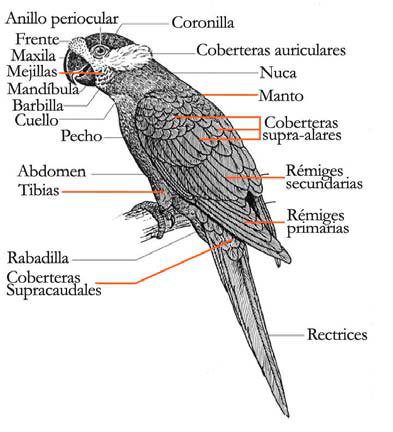
Anatomy-parrots

Description

23 cm.. length and an approximate weight of 95 g..

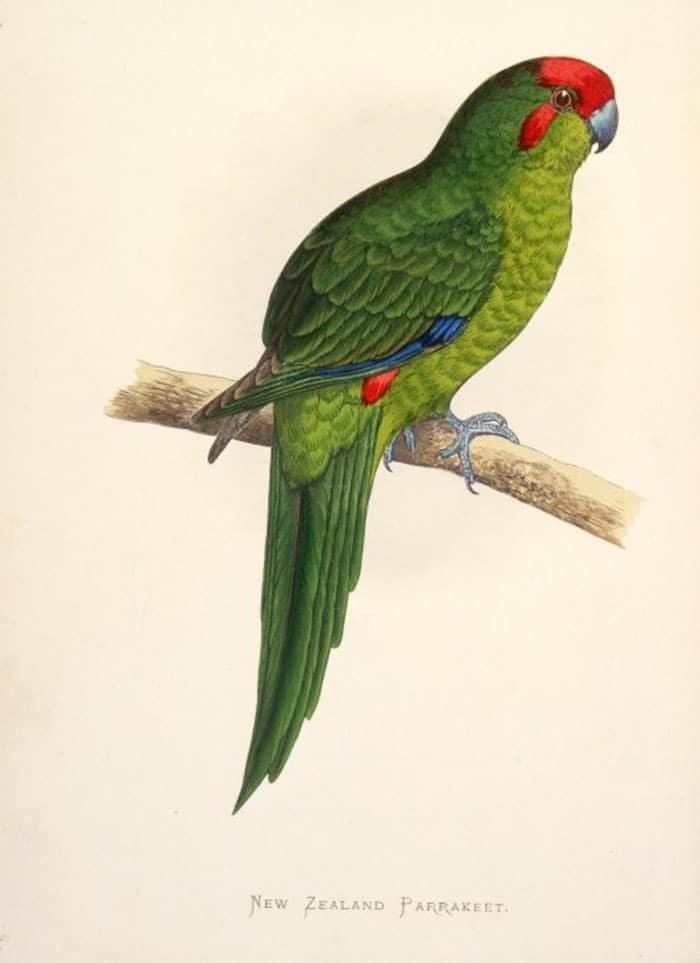
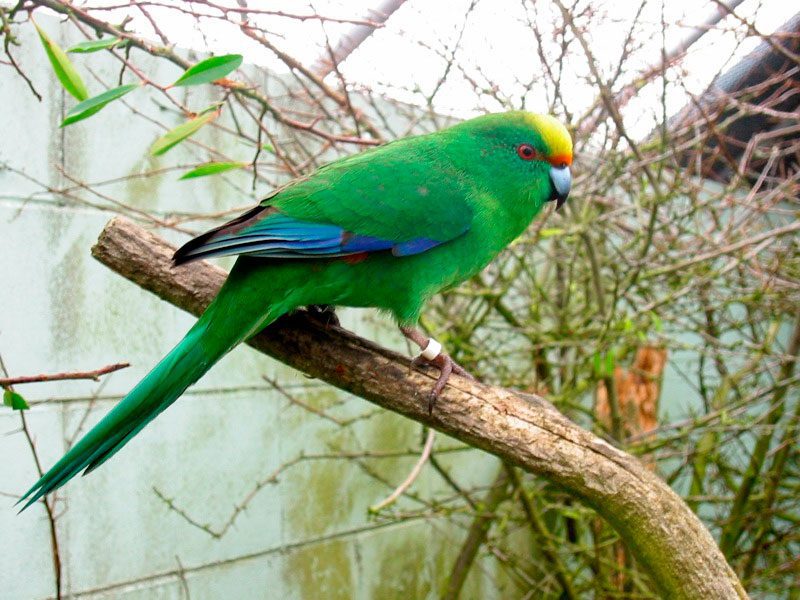
In the distance, the Yellow-crowned parakeet (Cyanoramphus auriceps) appears as a fully green Parrot, light and bright above that below.

It has a yellow spot in the forecrown, above a red stripe that goes from the bill both eyes. It can be confused with the Red-crowned parakeet (Cyanoramphus novaezelandiae) who lives in the same circles.

The upperparts they are green with a red patch on each side of the rump. Alula, primary covertss and vane outside of the primaries are blue-violet color.

feathers of the wings Green with blue at the edges of the previous; a wing bar at present times.

The underparts more yellowish green, sometimes with yellow marks.

Tail of color green for over, dark grey below.

The bill blue grey at the base, Blackish at tip; irises orange-red; legs greyish brown.

The females they are slightly smaller than males.

The young birdss have the peaks paler, queues shorter and the irises light brown.

Both females as the juveniles They show a drawing in the form of bar under the wings.

Habitat:

Yellow-crowned parakeet

On the Mainland, the Yellow-crowned parakeet, they are mainly distributed among the lush native forests, mainly in the provided ecosystems of Nothofagus and Podocarpus, at an altitude of about 600 m. Although these birds are at much lower altitudes, the species tends to move at altitudes which are the Red-crowned parakeet, especially when their habitats overlap.

The Yellow-crowned parakeet they are more common in closed areas of scrub, less common in open spaces by which moves the Red-crowned parakeet.

It is more common on offshore islands, where predation by introduced mammals is reduced.

Birds are found more often in pairs or small groups, feeding in the middle or upper floor of forest or large shrubs. Although it is, generally, more arboreal than the Red-crowned parakeet, they tend to feed on land in the islands of the coast.

Reproduction:

The breeding habits they are similar to the of the Red-crowned parakeet, but these birds seem to be more territorial around the nest.

The Yellow-crowned parakeet They nest in tree holes.

The implementation is performed between the months of October to December but have been observed nesting in almost every month, presumably in response to food availability. Of five to nine eggs whites make up the implementation, with one incubation between 18 and 20 days. The calf is fed by the female who in turn receives food from the male., the young remain in the nest from five to six weeks.

Food:

The diet consists of plant material including outbreaks, berries, flowers and seeds, as well as invertebrates such as larvae, for example, Heliostibes vibratrix and mealybugs Ultracoelostoma assmile. The insects They seem to be more important in the diet of the Yellow-crowned parakeet that in the of the Red-crowned parakeet.

Distribution:

The Yellow-crowned parakeet they can be found in New Zealand and in some islands of the coast.
They are absent, to a large extent, in the North of Auckland, but they are moderately common in some of the largest forested areas, including Urewera, Montes Raukumara, the area of the motu river, Pirongia, Pureora, Ruahine mountains, Tararua mountains, and in the South Island in the National Park Abel Tasman, the Nelson district, the Paparoa mountain range, Arthur's pass, Districts the Hope River and Canterbury, and in Fiordland about Te Anau and Cascade Creek.

Yes the aclaramineto of their continuous habitat, It might be a threat to the species.

The Yellow-crowned parakeet also you can find in the following islands of the coast: Three Kings, Polla, Big Chicken, Little Barrier, Great Barrier (rare), Kapiti (rare), the Chetwode Islands (absent the Red-crowned parakeet), Stewart Island e satellite islets, Codfish, Solander, Ruapuke and Auckland Islands, including the Adams island.

The species is also found in the chatham islands, where the Chatham Parakeet It has suffered from habitat loss, as well as competition and hybridization with the Red-crowned parakeet: both hybrids together with the Red-crowned parakeet, they survive better in open areas, helped by the improvement of the habitat and hybridisation control, so getting a slow recovery.

Conservation:


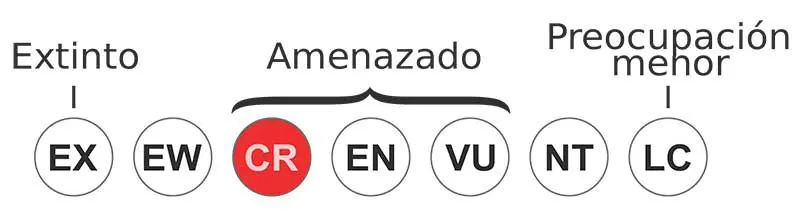
Near-threatened


โ€ข Current Red List of UICN: Near threatened

โ€ข Population trend: Decreasing

In the past the population of the Yellow-crowned parakeet has declined in number and the species is now rare throughout its range. As a result, is suspected to have one moderately low population. The world's population believed that it is inferior to the 5.000 specimens.

It is believed that this species has been adversely affected by the logging of forests, introduced predators, (cats, stoats and rats) and hybridization. Consequently, that you have been moderate declines in population to this day.

In the islands of the coast, the Red-crowned parakeet is usually much more common (Heather and Robertson 1997) and can be replaced by full to the Yellow-crowned parakeet in Solander Island. In Auckland Islands, There is an abnormally high rate of hybridization between the two species.

"Yellow-crowned parakeet" in captivity:

not as common as Red-crowned parakeet.

For its upbringing it is enough to have previous experience in the breeding of any of the smaller Australian parrots..

Reasonably hardy to cold, It has a thick plumage on their underparts which gives them a good insulation against the harsh winters; they withstand a cooler climate than most Australian species.

The sound of their voices is not strong or offensive and consists of pleasant chattering.

In terms of their longevity, according to sources, one specimen was still alive after 9.3 years in captivity

Alternative names:

Yellow-fronted Parakeet, Kakariki, Yellow-crowned Parakeet (English).
Perruche ร  tรชte d’or (French).
Springsittich (German).
Kakariki-fronte-amarela (Portuguese).
Perico Maorรญ Amarillo, Perico Maorรญ Cabecigualdo (espaรฑol).

scientific classification:


Order: Psittaciformes
Family: Psittaculidae
Genus: Cyanoramphus
Scientific name: Cyanoramphus auriceps
Citation: (Kuhl, 1820)
Protonimo: Psittacus auricep

ยซWild-headed Maori Parakeetยป images:

Videos "Yellow-crowned parakeet"

Yellow-crowned parakeet (Cyanoramphus auriceps)
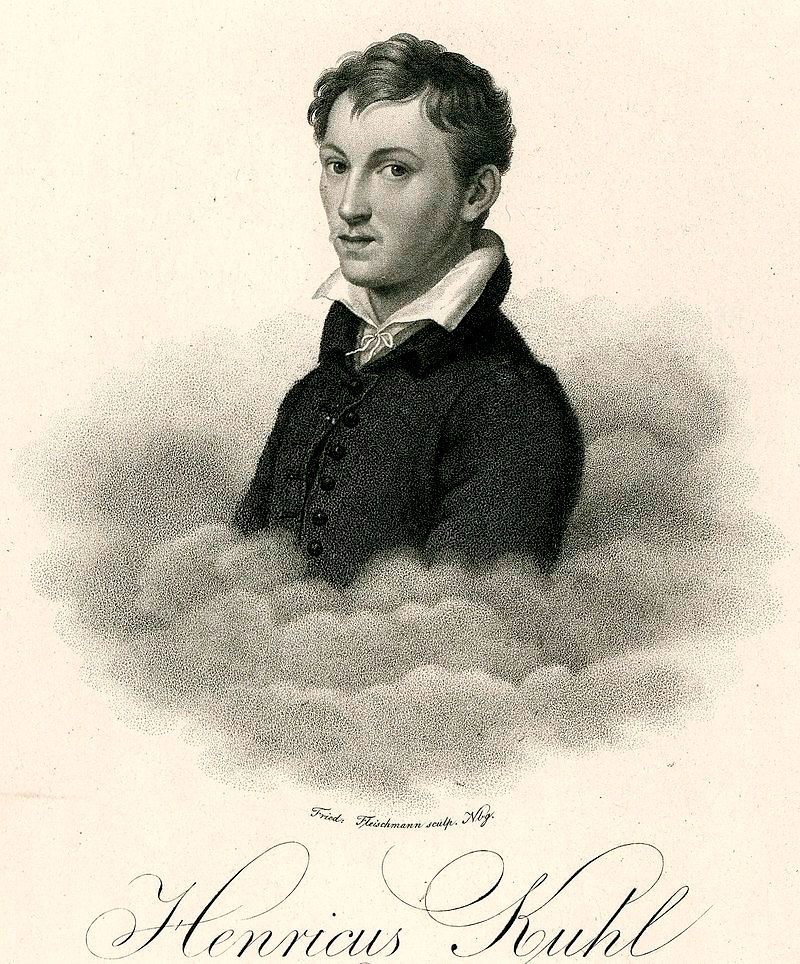
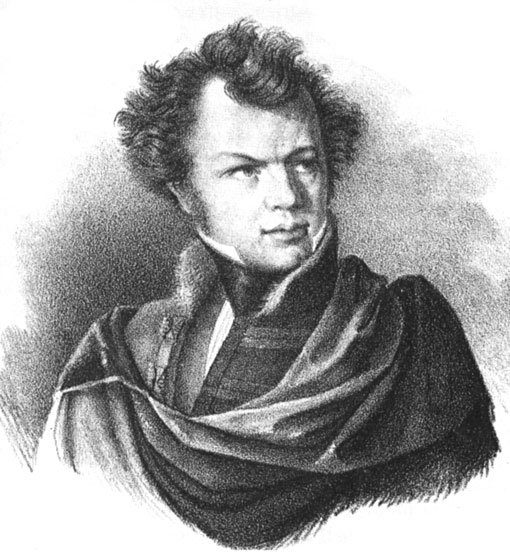
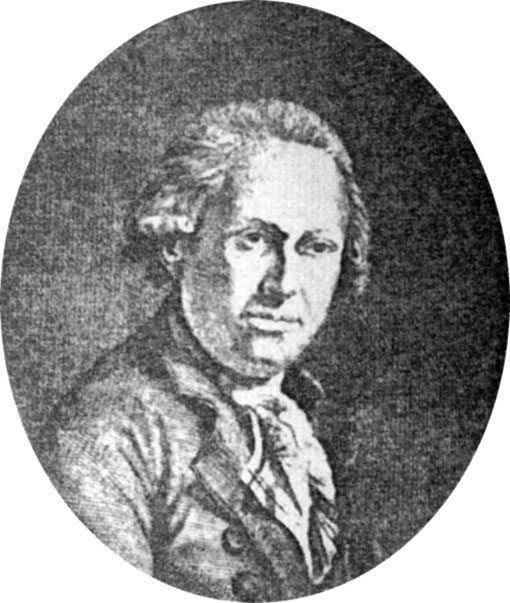
Kuhl, Heinrich
, via Wikimedia Commons
(2) – Yellow-crowned Parakeet, (Cyanoramphus auriceps) Nga Manu, Nr. Wellington, New Zealand. By Phillip Capper [CC BY 2.0], via Wikimedia Commons
(3) – A Yellow-crowned Parakeet in Otorohanga Kiwi House, New Zealand By Takver from Australia [CC BY-SA 2.0], via Wikimedia Commons
(4) – A captive Yellow-crowned Parakeet By Nrg800 (Own work) [CC BY-SA 3.0 or GFDL], via Wikimedia Commons
(5) – Photo of Kakariki (Cyanoramphus auriceps) taken during Routeburn Classic 2012 By Grapeman4 (Own work) [CC BY-SA 3.0], via Wikimedia Commons
(6) – Yellow headed parakeet Cyanoramphus auriceps (1884) By William Thomas Greene (Birds in captivity) [Public domain], via Wikimedia Commons

โ–ท The world of Pets: Dogs, cats, birds, reptiles, amphibians

Macquarie parakeet โ€ 
Cyanoramphus erythrotis

Macquarie Parakeet - Cyanoramphus erythrotis

Content

Description Perico Macquarie:

27 cm.. length

The extinct Macquarie Parakeet (Cyanoramphus erythrotis) was a medium-sized green parrot. The head was bright green with pileum and a line in the eyes crimson red. The upperparts They were bright yellow-green to dark green with a scarlet stain on either side of the rump (usually they are hidden by the wings when resting), and a greenish-blue leading edge to the wings. The eyes They were yellow or red, and the bill It was black with a base Pearly. Both sexes looked similar, but the female It was smaller (Forshaw & Cooper 1981; Higgins 1999; Oliver 1955)

Taxonomic status:

This taxon is considered a subspecies of Cyanoramphus [novaezelandiae, erythrotis, subflavescens] (sensu lato) by some authors

Lives in "Perico de Macquarie":

The Macquarie Parakeet inhabited coastal grasslands tussock in the subantarctic Isla Macquarie (Forshaw & Cooper 1981; Taylor 1979).

Reproduction:

It is known nesting in grasslands without trees.

Food ยซPerico de Macquarieยป:

Little is known about the diet of the Macquarie Parakeet, but it is said that feed on crustaceans and other small invertebrates (Oliver 1955; Taylor 1979).

It was Earth (Forshaw & Cooper 1981) and it is said to have been foraged on the seashore, taking invertebrates fused cell algae on the beach (Oliver 1955; Taylor 1979).

Distribution ยซPerico de Macquarieยป:

The Macquarie Parakeet It was an endemic parrot Isla Macquarie, one sub-Antarctic island in the Antartic Ocean which is politically part of Tasmania Australia. The island and this species were discovered in 1810, time when this parakeet was still very common. The last sighting of the Perico de la Isla Macquarie was in 1891.

Conservation Cyanoramphus erythrotis:

โ€ข Current category of the Red List of the UICN: EXTINCT.

Although hard Macquarie Parakeet They were adjusted well to inhospitable terrestrial environment Macquarie Island, They did not survive the predatory introduced species.

The extinction of the Macquarie Parakeet It was caused by the introduction of exotic predators, like cats, rabbits, mice and rats boat. He was also prey to rascรณn weka or the rascรณn of Lord Howe (Gallirallus australis). This robust flightless bird from New Zealand It was introduced on the island in the mid-nineteenth century as food for sealers, the same hunters killed large numbers of Macquarie's Parakeets (Macquarie Island) to feed. Unfortunately, the wekas They have caused considerable damage to endangered species, as they feed on small birds, Native insects and lizards.

The last sighting of live parrots occurred in 1891

Threat Reduction and Recovery

Translocation program may be suitable for the reintroduction of Norfolk Island Parakeet (Cyanoramphus cookii) on Isla Macquarie. Although programs have been tested for translocation failed Norfolk Island Parakeet (Garnett & Crowley 2000; Hermes et al. 1986), Similar programs have been successful for this parakeet in New Zealand. These programs have been successful with only 15 birds, Bottlenecks causing genetic programs with less than 150 birds. The low success of the pups in the breeding program New Zealand It may be the result of inbreeding depression or poor design of nests (Oritz-Cathedral & Brunton 2008).

The programs of eradication They are underway in Isla Macquarie. The cats were eradicated in 2002, the Keep (Gallirallus australis) in 1988 and is ongoing eradication program rats, rabbits and mice (Mouse muscle) (it. PWS 2009).

Alternative names:

Macquarie Island Parakeet, Macquarie Parakeet (English).
Perruche de Macquarie (French).
Macquarie-Laufsittich, Macquarie-Ziegensittich (German).
Periquito de Macquarie (Portuguese).
Perico de Macquarie (espaรฑol).

scientific classification:

Johann Georg Wagler
Johann Georg Wagler

Order: Psittaciformes
Family: Psittaculidae
Gender: Cyanoramphus
Scientific name: Cyanoramphus erythrotis
Subpoena: (Wagler, 1832)
Protonimo: Psittacus erythrotis

Sources:

โ€ข Avibase
โ€ข Parrots of the World โ€“ Forshaw Joseph M
โ€ข Parrots A Guide to the Parrots of the World – Tony Juniper & Mike Parr
โ€ข Department of the Environment (2018). Cyanoramphus novaezelandiae erythrotis in Species Profile and Threats Database, Department of the Environment, Canberra. Available from: http://www.environment.gov.au/sprat

โ–ท The world of Pets: Dogs, cats, birds, reptiles, amphibians

Red-winged Parrot
Aprosmictus erythropterus

Red-winged Parrot

Content


Anatomy-parrots

Description

30 to 33 cm.. length between 120 and 210 g. of weight.

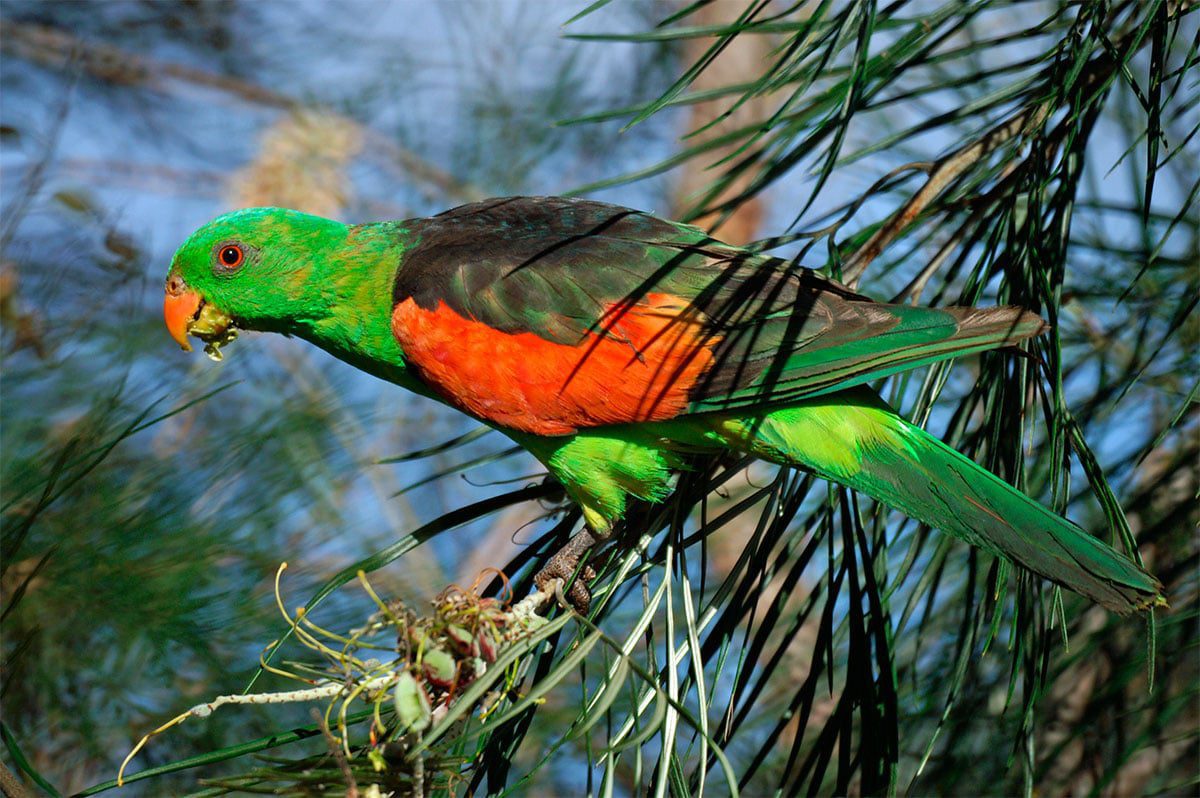
The Red-winged Parrot (Aprosmictus erythropterus) has the head of color green bright with brightness blue green in the crown and nape. Mantle, back and scapulars black. Area low of it back and rump brilliant blue, more clear towards the tail; uppertail-coverts of color green yellowish with broadcasting yellowish at the base. Curve of the wing yellow-green light. Carpal edge blackish. Upper, the wing-coverts, bright Scarlet. Tertiary and primaries marked in black on vane inner, green in vane outer; secondaries also bathed in black in vane outer; primary coverts of color green dark bathed in black. Under, the wing-coverts green. The underparts bright, pale and slightly yellowish-green. Upper, the tail Green dark with tips of color yellow and lateral feathers Blackish in vane internal with yellow tips; undertail, the tail Blackish with tips pale.

Bill coral red; irises reddish brown; legs grey-black.

Female It is predominantly green with a small red spot in the wings (only a point apical on coverts major interiors, but the increase in the external; restricted to the outer feathers of the median) that of the male, and it ain't got no black on it the mantle; vane outside of outer secondaries black. The Green is also more off, and a bit more yellowish in them underparts. The rump is of a blue more off, and the glitter blue in it crown and nape of the male, is absent in the female. Under, the tail has tips yellowish and touches of color pink.

The immature they are similar to the females, but with a irises more Brown and bill yellow from the beginning. Young males attain adult plumage in the third annual moult, but black can show the mantle feathers before this.

Description 3 subspecies

  • Aprosmictus erythropterus coccineopterus

    (Gould) 1865 – Male with more blue in it crown and nape. Both sexes slightly paler, and the female also more off the Green that it nominal species.


  • Aprosmictus erythropterus erythropterus

    (Gmelin) 1788 – The nominal.


  • Aprosmictus erythropterus papua

    (Mayr & Rand) 1936

Habitat:

Resident, Although nomads in the edges of the range. Is semiarid and subtropical forests of eucalyptus and casuarina, boedes of the Woods, riparian forests, thickets of acacia, mangroves, agricultural fields, scrub Cypress pine (Callitris), and the lowlands of the Savannah.

On the inside of Australia are mainly linked to the extension of wooded of the systems fluvial.

They are usually found in small groups of up to fifteen birds, rarely reach more of 50 individuals in a single flock. The largest groups are likely to form late in the breeding season when family groups gather at feeding grounds..

The species is common and conspicuous, but not particularly accessible; When resent, birds can fly some distance, often making strong sounds.

Sometimes associated with the Pale-headed Rosella and Mallee Ringneck, and they feed under the trees, Although it is more usual to see them on Earth to drink.

Reproduction:

The nesting You can start early, in the months of April or may in the North, but august to february is the main breeding season in the south. During the courtship, the male perches near the female, exposing your blue rump, and making sounds.

The nest normally found in a eucalyptus, and the eggs are put into a deep hole covered with scrap wood. Three to six white eggs are They incubated for around 20 days by the female, which is fed by the male until the eggs hatch. The young are cared for by both parents and they leave the nest in a five weeks.

Food:

The diet It includes seeds, fruit, flowers and insects; in the mangroves, the mistletoe (Loranthus) is your favorite diet.

Distribution:

Size of the area of distribution (reproduction / resident): 5.230.000 km2

The Red-winged Parrot (Aprosmictus erythropterus) are confined in Australia, in the coastal districts of the southeast of Irian Jaya (Indonesian) and in the Western Province (Papua New Guinea).

In New Guinea, the species is restricted to the region between the rivers Digul and Fly.

In Australia extends from about Broome, in Western Australia (registered West of Anna Plains, and southwest of the Cordillera de Edgar) through the Kimberley region, including some islands on the coast (Buccaneer and Bonaparte archipelago, Islands Osborne and Sir Graham Moore, and Admiralty Gulf Islands) in the Northern Territory, about Nicholson.

Extends northward up to the peninsula of cobourg and to the South, at the turn of the Cordillera Camfield and Dunmarra Roadhouse, reaching some coastal islands, including Melville and Groote Eylandt.

Extends to the East in Queensland, in the nicholson river, are distributed in the Cape York Peninsula, with records by the coast, about Rockhampton (occasional southernmost), and reaching inside, about Dajarra, to the South of Mount Isa and Southeast, through the lower part of the diamond river, Windorah, Quilpie, Mitchell and San Jorge.

On the inside of New South Wales the end points of the range are in Inverell in the East, Gunnedah, Dubbo and Mudgee in the South and There is a, Menindee and Broken Hill, near the southern border of Australia.

They are also in the North, in the basin of the darling river, and have been recorded in the South-East of Australia, around the Lake Eyre and North of Cooper Creek.

Wandering individuals have been recorded in Renmark and Victory Downs, In this last, possibly from an exhaust.

Leaks have also been observed in Sydney and Melbourne.

The species is common in suitable habitats, except at their range limits.

The world's population is above the 100.000individuals and the species is considered secure.

A moderate number of captive.

Protected by law.

Distribution 3 subspecies:

  • Aprosmictus erythropterus coccineopterus

    (Gould) 1865 – South of New Guinea and Western Australia, to the East through the northern territory of the Cape York Peninsula, Queensland


  • Aprosmictus erythropterus erythropterus

    (Gmelin) 1788 – The nominal


  • Aprosmictus erythropterus papua

    (Mayr & Rand) 1936 – South of New Guinea

Conservation:


minor concern


โ€ข Current category of the Red List of the UICN: Least concern

โ€ข Population trend: Growing

The size of the world population It has not been quantified, Although it is estimated very above the 100.000 specimens.

The species, according to sources, is usually common and locally abundant (pit et to the. 1997).

The population is suspected that it may be in decline due to ongoing habitat destruction.

"Red-winged Parrot" in captivity:

Fairly common in Australia, not so much in other places.

Active, Acrobat; they require a large birdhouse with plenty of hangers. The male can become aggressive with the female.
Quite quiet and shy.

Una muestra viviรณ 24,4 years in captivity.

Alternative names:

Red-winged Parrot, Red winged Parrot (ingles).
Perruche รฉrythroptรจre, Perruche erythroptรจre (French).
Rotflรผgelsittich, Rotflรผgel-Sittich (German).
Periquito-de-encontro-vermelho (Portuguese).
Papagayo Alirrojo, Papagayo de Alas Rojas (espaรฑol).


scientific classification:

Gmelin Johann Friedrich

Order: Psittaciformes
Family: Psittaculidae
Genus: Aprosmictus
Scientific name: Aprosmictus erythropterus
Citation: (Gmelin, JF, 1788)
Protonimo: Psittacus erythropterus


Images ยซPapagayo Alirrojoยป:

Videos "Red-winged Parrot"

————————————————————————————————

ยซPapagayo alirrojoยป (Aprosmictus erythropterus)

Sources:

Avibase
– Parrots of the World โ€“ Forshaw Joseph M
– Parrots A Guide to the Parrots of the World – Tony Juniper & Mike Parr
– World Parrot Trust – parrots.org
– Birdlife

Photos:

(1) – By David Cook Wildlife Photography from Wamboin, NSW, Australia [CC BY 2.0], via Wikimedia Commons
(2) – By Jan Harenburg (Own work) [CC BY 3.0], via Wikimedia Commons
(3) – Aprosmictus erythropterus erythropterus – Orde Psittaciformes – Papegaaiachtigen
(4) – Red-Winged Parrot (Aprosmictus erythropterus) Male – Pine Creek, M. 7. – encimages
(5) – ยซAprosmictus erythropterus-Australia-pair-8" Of Kitykat79 – originally posted to Flickr as King Parrots!. With license CC BY 2.0 Transact Wikimedia Commons.
(6) – A painting of two Red-winged Parrots (originally captioned ยซPlatycercus erythropterus. Crimson-winged parraket. 1. Male. 2.Female.ยป) by Edward Lear 1812-1888. The painting shows a female behind young male by Edward Lear [Public domain], via Wikimedia Commons

Sounds: Peter Woodall (Xeno-canto)

โ–ท The world of Pets: Dogs, cats, birds, reptiles, amphibians

Hooded Parrot
Psephotellus dissimilis

Hooded Parrot

Content


Anatomy-parrots

Description

25,5 to 28 cm.. length and a weight between 50 and 60 g..

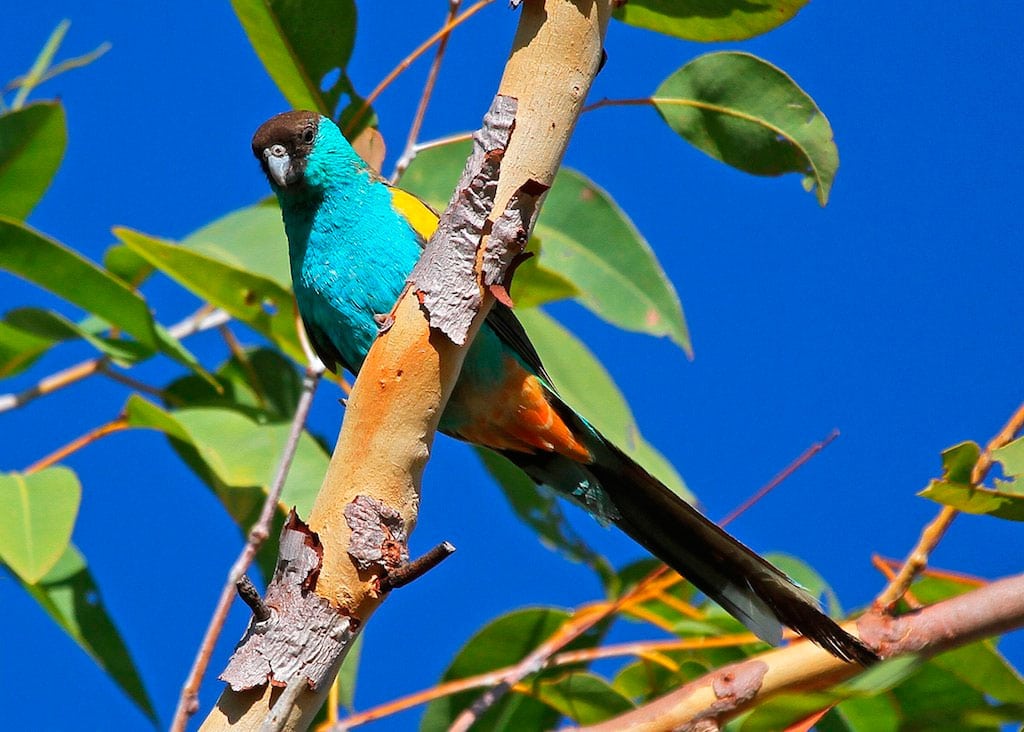
The Hooded Parrot (Psephotellus dissimilis) is a very striking species, restricted to the dry forests of the North of Australia. The male has a pileum black, their underparts are Turquoise with a patch in the shoulders golden yellow.

The females are pale green with a pale turquoise diffusion in the cheeks, abdomen and cadwas.

The Golden-shouldered Parrot, with which it is closely linked, is very similar in appearance, but they are only observed in the Cape York Peninsula, in the North of Queensland, and males differ in their tones slightly. The Hooded Parrot does the yellow colour in the forecrown or in the lores and the yellow markings of the shoulders and reddish of the belly, they are smaller than. The females they are very similar, but the Golden-shouldered Parrot It shows a faint red marks on the area, white, bass belly, has the undertail- coverts Bluish, bluish color of the belly is absent and the undertail- coverts They have a pinkish tone; also has a Brown Suffusion in the crown, a forecrown yellowish and the cheeks they are greener.

The Northern Rosella shares territory with the Hooded Parrot and also has a pileum black, but it lacks of the underparts Turquoise and yellow markings on the wings.

The Hooded Parrot they have an elegant flight, and males they are very bright with a Flash of bright yellow showing in the wings. The flight fast and slightly wavy. Bird perch, times, phone cables, and can make long flights at high altitude.

Providing more detail to its description, the Hooded Parrot has the pileum, lores and the area below and in front of the eyes, black, merging into grey-brown colour in the the mantle (darker uppers than the Golden-shouldered Parrot). The rump is turquoise blue and the uppertail-coverts green. Wing coverts golden yellow (grey dark in vane inner).

Flight feathers Blackish with difusion-verde turquoise at the edge of the vane outer (thin yellow color at the outer edge). feathers of the wings and bend of wing bluish green; underside of flight feather blackish brown. The cheeks, the neck and the chest Turquoise, lightly coated with emerald green; rest of the underparts Turquoise with the exception of undertail- coverts they are orange-red with yellow tips. Uppertail dark bars.

Central feathers of the tail Green bronze with black tips, side green blue with white tips, with a blackish central bar; undertail, the tail apparently light blue with black tips when it is closed. Bill pale grey; irises dark brown; legs light brown.

The female is usually pale, a light yellowish green, with wing-coverts a bright yellowish-green, flight feather blackish, and a turquoise color broadcasting in the rump, from the top of the breast to belly, and vaguely in the cheeks. Subcaudales coverts bathed in Pink salmon; pale marks in the wings.

The immature they are like the females, but males have the head darker and the cheeks bright. Adult plumage they would earn in the second annual moult.

The very young birds they have the peaks yellow.

Habitat:

Sedentary, although some early records of the Melville Island probably related to post-breeding dispersal. Scattered sparsely through the open dry forests, flooded Plains, especially grasslands of Malaleuca-dominated and Spinifex Triodia, grasslands with termite mounds, also in rows of eucalyptus trees along watercourses and the rocky ridges.

Usually, they are in pairs or in small groups, but after the breeding season, from September (end of the dry season) onwards, they may gather in groups of up to 100 birds feeding.

Reproduction:

Egg-laying range from late January until mid-April, at the end of the rainy season, and the nest is a tunnel in a Termite Mound. The direction and height of the entrance of the nest is variable, but nest chamber temperatures are more stable inside larger mounds. A recent study of nesting ecology in the Northern Territory showed a density of 0,45 to 0,70 nests per square kilometer, with a 50% from eggs producing hatchlings. Between two and six eggs make up the clutch, and are incubated for around 20 days for the female. In about five weeks the young leave the nest.. The females., sometimes, they roost far from their nests during the heat of the day.

Food:

The diet is composed, mainly, of pasture seeds seasonal during the dry season and perennial plants during the wet season. Variation in the ability to master feeding techniques for different seed types may explain the apparent early dispersal of immatures in the wet season.. Birds feed quietly on the ground, resting in foliage near water during the heat of the day. When drinking, they often walk into the water along banks of sand. They are sometimes seen feeding on road verges, often in association with the Black-faced Woodswallow (Artamus cinereus).

Distribution:

Endemic to North of Australia where is located in the western part of Arnhem Land, Northern Territory, from the South of the alligator river, to the southwest of Pine Creek and the South-East of Include. The birds also disperse further east and west to the rivers. Roper and upper area of the Daly.

The Hooded Parrot formerly extended eastward to the MacArthur river, but its territory, covering the Kakadu National Park, has recently been hired.

In general, It Rare. Although now it is fully protected. Capture is believed to it has been a problem in the past. Burning and grazing may limit the availability of herbs seeds during the dry season.

Mining also threatens the habitat of the species. There are a moderate number of birds in captivity.

Conservation:


minor concern


โ€ข Current category of the Red List of the UICN: Least concern

โ€ข Population Trend: Stable

The world population is estimated at 20.000 specimens (Garnett and Crowley 2000).

Population trends have not been quantified, but populations seem to be stable, without descents recent (Garnett and Crowley 2000).

The species remains common in areas under park management. Aboriginal and National, where grazing is minimal and where there are programs that guarantee their survival, or around the Rocky slopes, where is the availability of food in the rainy season relatively assured.

"Hooded Parrot" in captivity:

Although the popularity of the Hooded Parrot has increased considerably in the last decade, this species is still quite unknown in aviculture. The main reason is, probably, that they are not easy to care for and reproduce in captivity, due to its high demands care and difficulty it in terms of its food supply. The Hooded Parrot they are not recommended for a beginner breeder birds.

No one knows exactly when these birds were imported for the first time to Europe, but it was probably at the beginning of the last century. In the autumn of 1912 English Hubert Astley was the one who obtained the first satisfactory breeding result with the Hooded Parrot, got 4 young people from a litter of 5. in the netherlands, the Dr. Polak It also had results before the second world war. Once the pups are born, they were taken along with a couple of Red-rumped Parrot (Psephotus haematonotus) with which they grew up without any problem.

There is a variety of the Hooded Parrot because different crosses with other species such as Mulga Parrot (Psephotellus varius) and the the Golden-shouldered Parrot (Psephotellus chrysopterygius). So, we must pay attention to the characteristics when we are going to buy a pair of future reproducers of this species. If you have doubts about the purity of certain birds, consult with a person who is familiar with this type of parrots.

In terms of the behavior, the Hooded Parrot adapt to the European climate relatively well, although they are sensitive to cold and wet weather. They are quiet birds, enable, not shy and quickly adapt to their caregiver. His voice is not worrying. Love these birds being on the ground, where spend much time. They love to swim and are not rodents of wood. During the breeding season they are aggressive towards other birds.. Even outside the breeding season, It is not advisable to fit them with their peers or keep them with other bird species. Young birds together may stay in a birdhouse. As a basic rule, Ave predict an area of one square meter.

It is not known exactly how these birds can live, according to sources, one specimen was still alive after 18 years in captivity

Alternative names:

Hooded Parrot, Antbed Parrot, Anthill Parrot, Black-hooded Parakeet, Black-hooded Parrot, Golden-shouldered Parrot, Hooded Parakeet (ingles).
Perruche ร  capuchon noir (French).
Collettsittich, Hooded Sittich (German).
Periquito-encapuzado (Portuguese).
Perico Capirotado, Periquito encapuchado (espaรฑol).

scientific classification:

Order: Psittaciformes
Family: Psittaculidae
Genus: Psephotellus
Scientific name: Psephotellus dissimilis
Citation: Collett, 1898
Protonimo: Psephotus dissimilis

Images ยซCapitola Parakeetยป:

Videos "Hooded Parrot"

————————————————————————————————

ยซPerico Capirotadoยป (Psephotellus dissimilis)


Sources:

Avibase
– Parrots of the World โ€“ Forshaw Joseph M
– Parrots A Guide to the Parrots of the World – Tony Juniper & Mike Parr
– Birdlife

Photos:

(1) – A male Hooded Parrot, about 30 km south of Pine Creek, Northern Territory, Australia By birdphotosneill (Hooded ParrotUploaded by snowmanradio) [CC BY 2.0], via Wikimedia Commons
(2) – A pair of Hooded Parrots, about 30 km south of Pine Creek, Northern Territory, Australia By birdphotosneill (Hooded ParrotsUploaded by snowmanradio) [CC BY 2.0], via Wikimedia Commons
(3) – A pair of Hooded Parrots about 30 Km south of Pine Creek, Northern Territory, Australia. The male is in the foreground By birdphotosneill (Hooded ParrotsUploaded by snowmanradio) [CC BY 2.0], via Wikimedia Commons
(4) – By originally posted to Flickr as parkiet xxx and uploaded to commons at Psephotus_dissimilis_(female)_-Burgers_Zoo-8a.jpg: frank woutersderivative work: Snowmanradio (Psephotus_dissimilis_(female)_-Burgers_Zoo-8a.jpg) [CC BY 2.0], via Wikimedia Commons
(5) – Male Hooded Parrot (Psephotus dissimilis) – Sylvan Heights Waterfowl Park in Scotland Neck, North Carolina By SandyCole (Own work) [CC BY-SA 3.0 or GFDL], via Wikimedia Commons

โ–ท The world of Pets: Dogs, cats, birds, reptiles, amphibians

Malherbe's parakeet
Cyanoramphus malherbi

Malherbe's parakeet

Content


Anatomy-parrots

Description

19 to 22 cm. length and a weight between 40 and 52 grams for males and between 30 and 41 grams for females.

The Malherbe's parakeet (Cyanoramphus malherbi) they are small bright green parakeets, equipped with a long tail and with a bluish green colour wash in belly and chest.

The wings they have the primary coverts and the edges to the primary external of azure-blue. The crown is lemon-yellow colour and the front band, it reaches the eyes, is orange, as well as two patches on each side of the rump.

The bill is bluish grey, with the tip of black. The eyes are red and the legs are brown.

The colors tend to have a brighter tone in the males.

The youth they are more opaque, especially the patch of front band and the crown, which may be absent. The tail It is short for several weeks after feather. The bill is a pale pink color that darkens gradually when the young bird matures. They have darker the eyes, a reddish brown tone.

Habitat:

The Malherbe's parakeet tends to be quiet and hard to see. A brief and loud chatter or a quieter soft contact call can denote its presence, but locating the bird can be extremely difficult. The Malherbe's parakeet often confused with the Yellow-crowned parakeet.

Even though have been recorded in subalpine bushes and thickets of Matagouri open zones (Discaria toumatou), the Malherbe's parakeet they are predominantly in the forest.

They usually feed in the canopy, but also under frequent places with low vegetation and soil.

Reproduction:

The Malherbe's parakeet can reproduce in every month, with a main breeding period between December and April; incubation peak is in January.

Clutch size media is of approximately 7 eggs, but register a wide range (range of 1 to 10). Egg laying is asynchronous with an interval between eggs of 2 days. The incubation lasts from 21 to 26 days, and the period of breeding ranges between 35 and 45 days.

The females They seem to choose the nesting sites, as well as carry out all the preparation, incubation and breeding, the male provides most of the food during incubation.

It is suspected that the female only feeds the chicks during the first 10-14 days, just as they do other species Cyanoramphus. Once past this period, both sexes take care, equally, feeding the pigeons.

There may be second clutches If there is enough food available, for example, during the sowing of beech, or if the first attempt failed. The female may lay a second clutch when first chicks have, approximately, 2 weeks of age. This leaves the male as the sole provider for both the chicks and the incubating female..
Second clutches are not uncommon; When is food plentiful, some couples can reproduce 3 or 4 times on.

The nests are accessed normally through holes in knots of branches and the main trunk of a tree.

They use all species of you have to build the nest, predominantly the Red beech (69% nests monitored in the continent, n = 138) and dead trees (20%).
Nests may have more than one meter of depth. Records placed nests in heights that range between 2,5 and 26 m.

Food:

The Malherbe's parakeet consume seeds, flowers, buds and small invertebrates (mealybugs and caterpillars). In a year of abundance of fruits, the seeds become the dominant element of their diet, and they seem to be the main food for young people.

Invertebrates seem to play an important role in the diet of this species of parakeet which for the Yellow-crowned parakeet.

Distribution:

Size of the area of distribution (reproduction / resident) 360 km2

To the Malherbe's parakeet les is in areas where the South beeches (Nothofagaceae), in forest valleys in the South Island, the valleys Hawdon and Poulter in the Arthur Pass National Park and the South Branch of the Hurunui Valley in Lake Sumner Forest Park. Are unevenly distributed within these valleys; absent in many parts, but in some other places can be quite common.

They have been transferred to four islands: Maud and Blumine in Marlborough Sounds, Chalky Island in Fiordland, and Largest Island / Tuhua on bay of plenty.

Conservation:


critical hazard


โ€ข Current Red List of UICN: critically endangered

โ€ข Population trend: Decreasing

This species is the smallest of the class Cyanoramphus along with the Yellow-crowned parakeet.
The Malherbe's parakeet It is the kind of rare parrots of New Zealand. The population was wiped out by rats and stoats introduced by men.

Also the changes in the habitat due to the ungulates and opossums they have affected the species.

Some diseases have been discovered in two of the areas in which live.

It is in progress conservation actions such as the predator control in the three valleys of the continent and the protection of the trees hosting the nests.

The captive breeding programs they have helped to release the birds in 4 Islands cleared of predators. This work is still in progress.
On the Mainland, all populations are monitored closely by the Department of conservation.

The total population It was estimated in 290/690 individuals at the beginning of 2013.
The continent has between 130 and 270 specimens and Islands surrounding between 160 and 420.

"Malherbe's parakeet" in captivity:

Usually they are not in captivity.

A small captive breeding program was established in 2003.

Alternative names:

Malherbe’s Parakeet, Alpine Parakeet, Malherbe’s Parrot, Orange-fronted Parakeet (English).
Perruche de Malherbe, Kakariki de Malherbe (French).
Malherbesittich (German).
Kakariki-fronte-laranja (Portuguese).
Perico Maorรญ Montaรฑรฉs, Perico Maorรญ Montano (espaรฑol).

scientific classification:

Order: Psittaciformes
Family: Psittaculidae
Genus: Cyanoramphus
Scientific name: Cyanoramphus malherbi
Citation: Souancรฉ, 1857
Protonimo: Malherbe's Parakeet

Images ยซPerico Maorรญ Montanoยป:

Videos "Malherbe's parakeet"

ยซPerico Maorรญ Montanoยป (Cyanoramphus malherbi)

Sources:

  • Avibase
  • Parrots of the World โ€“ Forshaw Joseph M
  • Parrots A Guide to the Parrots of the World – Tony Juniper & Mike Parr
  • Birdlife

  • Photos Perico Maori Montano:

(1) – This is one of several birds being bred in captivity at Isaac Peacock Springs wildlife refuge.
Christchurch, New Zealand By Jon Sullivan from Christchurch, New Zealand [CC BY 2.0], via Wikimedia Commons
(2) – Orange-fronted parakeet. Adult male in captivity. Isaacs Wildlife Trust, Christchurch. Image ยฉ John Kearvell by John Kearvell – nzbirdsonline
(3) – Orange-fronted parakeet. Captive adult female. Isaacs Wildlife Trust, February 2012. Image ยฉ Sabine Bernert by Sabine Bernert www.sabinebernert.fr – nzbirdsonline
(4) – Orange-fronted parakeet. Juvenile feeding. Nelson, January 1983. Image ยฉ Department of Conservation (image ref: 10028825) by Dave Crouchley, Department of Conservation Courtesy of Department of Conservation – nzbirdsonline
(5) – Orange-fronted parakeet. Adult male (left) and female in captivity. Isaacs Wildlife Trust, Christchurch. Image ยฉ John Kearvell by John Kearvell – nzbirdsonline

โ–ท The world of Pets: Dogs, cats, birds, reptiles, amphibians

Western Ground Parrot
Pezoporus flaviventris

Western Ground Parrot

Content


Anatomy-parrots
Video ยซWestern Ground Parakeetยป

Description:

30 cms. length between 105-110 g. of weight.

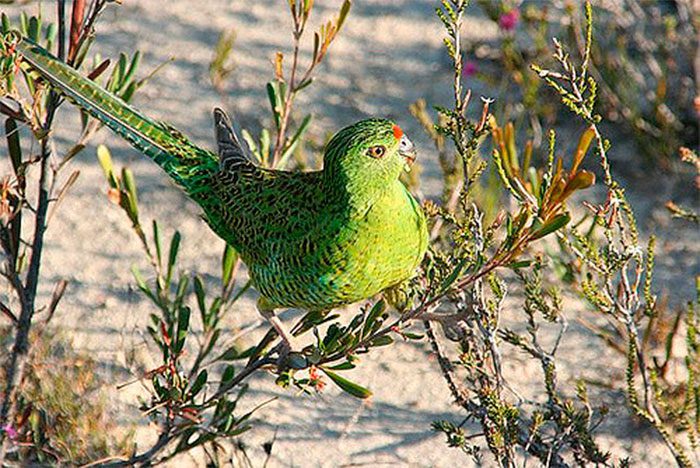
The Western Ground Parrot (Pezoporus flaviventris) It has mottled green back, underparts green and yellow, forecrown red. Tail long, with green stripes, Yellow and black poorly defined.

taxonomy:

A research team, directed by Stephen Murphy, studied taxonomy (discipline in charge of classifying living things) of the Eastern Ground Parrot (Pezoporus wallicus), an endemic species (exclusive geographic region) of fragmented coasts of southwest and southeast Australia. The researchers studied DNA from museum specimens from 160 years, and they concluded that the western population should be classified as a new species: Pezoporus flaviventris.

Habitat:

The Western Ground Parrot It is a bird that lives in soil and living in low heathland, dry or swampy near the coast. They are usually seen in habitat that has remained unburned for long periods of time. Mainly fly at dawn or dusk and feeds mainly on small seeds.

Reproduction:

It is one of the few parrots in the world that does not nest in a hole or cavity. Little else is known about the reproductive biology of the Western Ground Parrot

Food:

The Western Ground Parrot usually it feeds alone or with another parakeet. Seeds of various plants, especially of Sedge, for example, Mesomaelaena stygia ssp. stygia. Flower buds and flowers base, for example, the beaufortias, the dryandras and grevilleas, They are also important parts of the diet. It has been observed Western Ground Parrot semisuculentas feeding on leaves Daviesia pachyphylla. The diet is varied and uses the great diversity of habitat.

Distribution:

Historically, This species was found along the south west coast of Australia from Perth north to Geraldton and along the south coast east to Israelite Bay. But, It seems to have disappeared off the west coast of Western Australia in 1900.

Today only two locations are known from the extreme southwest of Western Australia: Fitzgerald River National Park and Cabo Arid National Park / Natural Reserve Nuytsland

Conservation:

โ€ข It is classified by the Australian government as a species in danger of extinction.

โ€ข Population trend: Decreasing.

โ€ข Population size : 100-110 individuals.

During an investigation (1), scientists found that the population of this new species had diminished quickly in the last 20 years, They are leaving only around 110 birds surviving in the wild, most of them in an Australian national park, so it is considered one of the rarest species in the world, so that the entry introduced predators (cats) National Park, could lead to the extinction of the species in a short time, so the need to implement is suggested Urgent conservation program for this new species described.

(1) – ยซTip(โ€˜9. S. A. Murphy, S. A., L. Joseph, A. H. Burbidge y J. Austin. โ€œA Cryptic and Critically Endangered Species Revealed by Mitochondrial DNA Analyses: the Western Ground Parrotโ€. Conservation Genetics, 12, (2010): 595-600.’

Threatened Species Strategy

The Western Ground Parrot is one of the 20 birds that the Australian Government has given priority in the allocation of resources to support the recovery effort species. The Western Ground Parrot It has a base of strong and growing support in the local community. An association between South Coast NRM, Friends of the Western Ground Parrot, the Department of Parks and Wildlife and the Perth Zoo It is working to prevent extinction.

The success of the population captive breeding recently established security will be key to the species, and management of wild cats and fires Cabo Arid National Park It will be essential for local recovery. With an estimated population of less than 150 individuals and a captive population of less than ten, we need to act.

The emergency actions include the protection of the wild population and creating a population secured in captivity. Opportunities to receive more support through National Planning Program, the local group management of natural resources and existing partnerships with Government of Western Australia and the Zoo of Perth They are likely to contribute to recovery.

The website Endangered Species Strategy It includes information on what is being done to support the recovery effort species. Understanding the habits of a partnership project of rare birds and reserved aims to benefit the species improve the behavior of captive birds, which may allow better management of wild populations.

Alternative names:

Ground Parrot (Western), Western Ground Parrot (English).
Kyloring (Aboriginal).
Perruche ร  ventre dorรฉ, Perruche ร  ventre dorรฉe, Perruche terrestre (de l’Ouest), Perruche terrestre (flaviventris) (French).
Westlicher Erdsittich (German).
Periquito Terrestre Occidental (Portuguese).
Perico Terrestre Occidental (espaรฑol).

scientific classification:

Alfred John North
Alfred John North

Order: Psittaciformes
Family: Psittaculidae
Gender: Pezoporus
Scientific name: Pezoporus flaviventris
Subpoena: North, 1911
Protonimo: Pezoporus flaviventris

Images ยซWestern Ground Parakeetยป:

Sources:

โ€ข Avibase
โ€ข Parrots of the World โ€“ Forshaw Joseph M
โ€ข Parrots A Guide to the Parrots of the World – Tony Juniper & Mike Parr
โ€ข Science and Development Magazine
โ€ข Department of the Environment (2018). Pezoporus flaviventris in Species Profile and Threats Database, Department of the Environment, Canberra. Available from: http://www.environment.gov.au/sprat.

Photos:

(1) – Feeding Western Ground Parrot….. the only photoโ€™s of this bird in the wild was taken in 2005 the day before my birthday, what a gift that was. This is from my field season the next year. No nest has been found since 1913. by Brent BarrettFlickr
(2) – Western Ground Parrot (Pezoporus flaviventris) by Brent Barrett from Dunedin, New Zealand [CC BY-SA 2.0 or CC BY-SA 2.0], via Wikimedia Commons
(3) – A Western Ground Parrot in Australia by Brent Barrett from Dunedin, New Zealand [CC BY-SA 2.0], via Wikimedia Commons
(4) – Stand and sing Western Ground Parrot (Pezoporus flaviventris) by Brent Barrett from Dunedin, New Zealand [CC BY-SA 2.0], via Wikimedia Commons
(5) – This is officially one of the rarest images in exhistence Pezoporus wallicus flaviventris by Brent BarrettFlickr