โ–ท The world of Pets: Dogs, cats, birds, reptiles, amphibians

Yellowish-breasted Racquet-tail
Prioniturus flavicans

Yellowish-breasted Racquet-tail

Content

Yellowish-breasted Racquet-tail

Description

37 cm.. length.

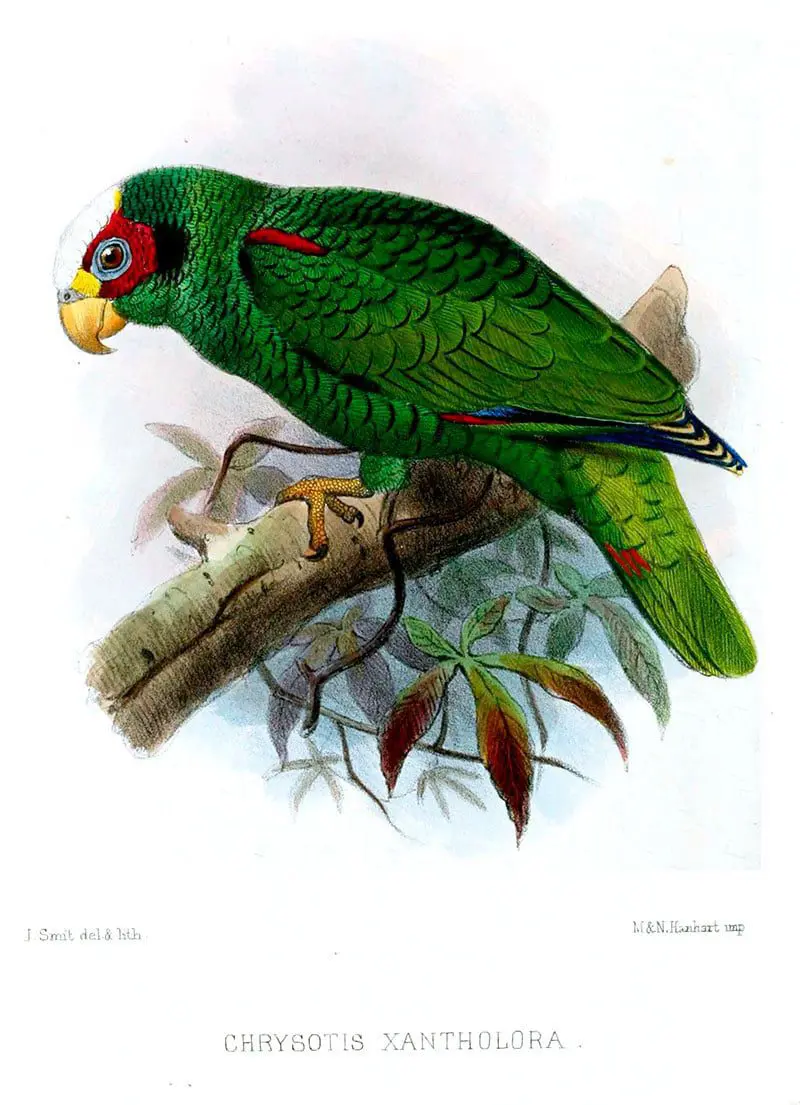
The head of the Yellowish-breasted Racquet-tail (Prioniturus flavicans) is bright green, brighter around the lores and the base of the bill.

The front of the crown is green, rest of bright blue with red spot in the center crown. Mantle ocher yellow, well delimited from the blue nape the green of the wings and back; Back and rump green. Wings green, with vane Dark internal to the flight feather and blue to primaries longer. green's Underwing coverts; underside of primaries marked dark blue.

Underparts brighter yellowish green, ocher yellow in the chest. Upper, the outer feathers of the tail green with black and turquoise tips on vane outside of the outer feathers; below, the tail dark colored, bathed in blue at the edges of the vane inner; spatulas blackish.

Bill horn; the dark brown irises; the gray legs.

Female less blue, no red dot on the crown, the underparts and the mantle, greener and rackets (a thin extension of the central tail feathers, almost as hair, It is ending with a more oval-shaped racket) shorter.

Young without rackets.

Habitat:

Found in the primary forest usually below the 1,000 m. But times may vary up to the 1.900 m. They are also observed in trees in cultivated areas.

Reproduction:

Little is known of their reproductive habits.

Food:

The birds they feed on the ground, among the plants of lowland and Hill forests, flocking often in fruit trees. They feed slowly along with other frugivorous birds..

Distribution:

Size of its range (breeding/resident ): 66.700 km2

Are distributed in the North of Sulawesi, Indonesian and on the Islands around, including Bangka, Lembeh and Togian. The species also, possibly, It is distributed in groups of Islands Sangir and Banggai. Although its population may be declining due to habitat loss and trade in birds, It is not considered threatened and is still, relatively, common on reserve Dumoga-Bone. It overlaps, although it is less common, with the Golden-mantled Racquet-tail.

Conservation:


Near-threatened


โ€ข Current category of the Red List of the UICN: Near threatened

โ€ข Population trend: Decreasing

The population It has been estimated in the order of 45.000 individuals (Walker and Cahill 2000).

It is suspected that this species has diminished recently at a moderately fast pace, due to the continuing loss of forests.

Conservation Actions Proposed:

    – Evaluate the threats to this species. Calculate loss of forests in the lowlands of the North of Sulawesi.
    – Investigate the level of dependency of the forest habitats of the species.
    – Protect effectively important tracts of forest right in key places, both in strict protection areas and in multiple use areas.

"Yellowish-breasted Racquet-tail" in captivity:

Not found in captivity.

Alternative names:

Yellow-breasted Racquet-tail, Yellow-breasted Racket-tail, Red Spotted Racket-tailed Parrot, Red-spotted Racket-tailed Parrot, Red-spotted Racquet-tail, Red-spotted Racquet-tail Parrot, Red-spotted Racquet-tailed Parrot, Yellowish breasted Racquet tail, Yellowish-breasted Racket-tail, Yellowish-breasted Racket-tailed Pa, Yellowish-breasted Racquet Tail, Yellowish-breasted Racquet-tail, Yellowish-breasted Racquet-tailed P (ingles).
Palette de Cassin, Perroquet ร  raquette de Cassin (French).
Flaggenschwanzpapagei, Flaggen-Schwanzpapagei (German).
Prioniturus flavicans (Portuguese).
Lorito momoto Amarillento, Lorito Momoto Amarillo, Lorito-momoto Amarillento (espaรฑol).


scientific classification:

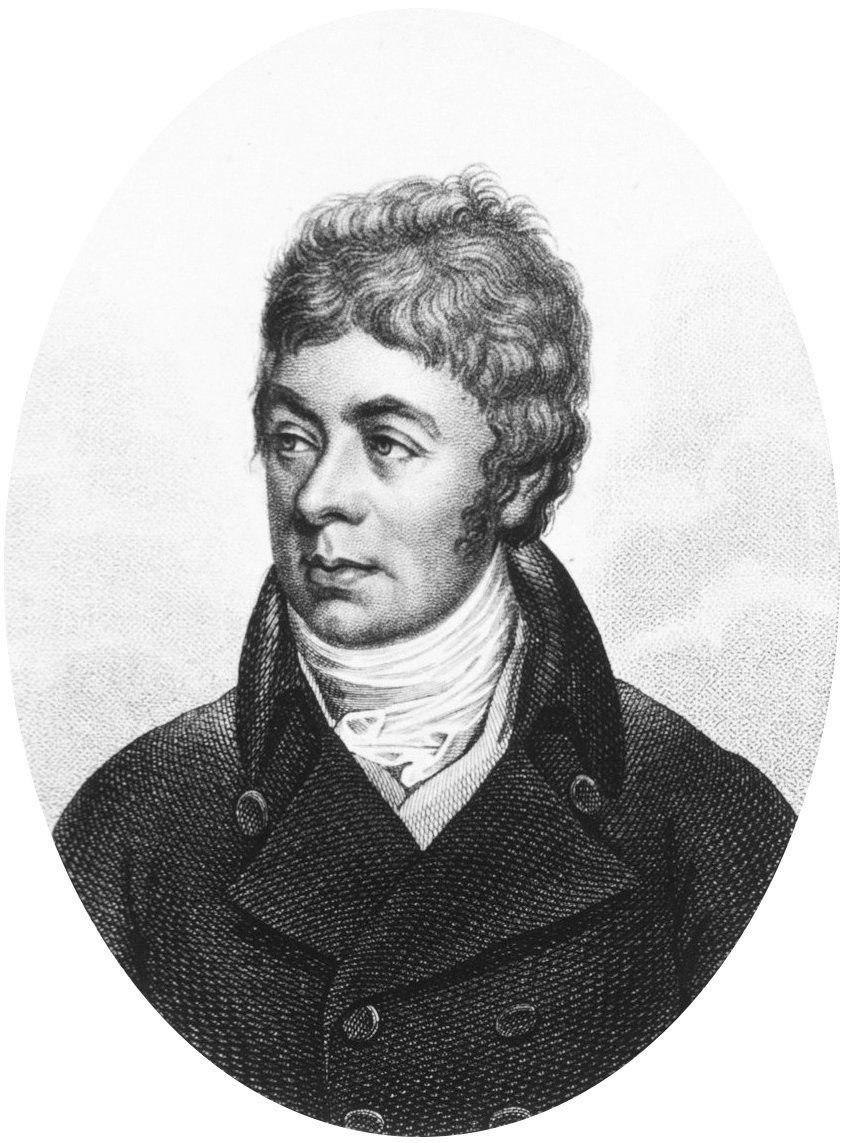
John Cassin
John Cassin

Order: Psittaciformes
Family: Psittaculidae
Genus: Prioniturus
Scientific name: Prioniturus flavicans
Citation: Cassin, 1853
Protonimo: Prioniturus flavicans


Images ยซLorito Momoto Amarillantoยป:

Videos "Yellowish-breasted Racquet-tail"

————————————————————————————————

ยซLorito Momoto Amarillantoยป (Prioniturus flavicans)

Sources:

Avibase
– Parrots of the World โ€“ Forshaw Joseph M
– Parrots A Guide to the Parrots of the World – Tony Juniper & Mike Parr
– Birdlife

Photos:

(1) – By ยฉ Simon van der Meulen – Oriental Bird Images
(2) – ยซPrioniturus flavicans" for John Gould – [1]. Available under the Public Domain license via Wikimedia Commons.

Sounds: Mike Nelson (Xeno-canto)

โ–ท The world of Pets: Dogs, cats, birds, reptiles, amphibians

Yellow-billed Parrot
Amazona collaria

Yellow-billed Parrot

Content

Description:


Anatomy-parrots

28 cm.. length and 260 g. of weight.

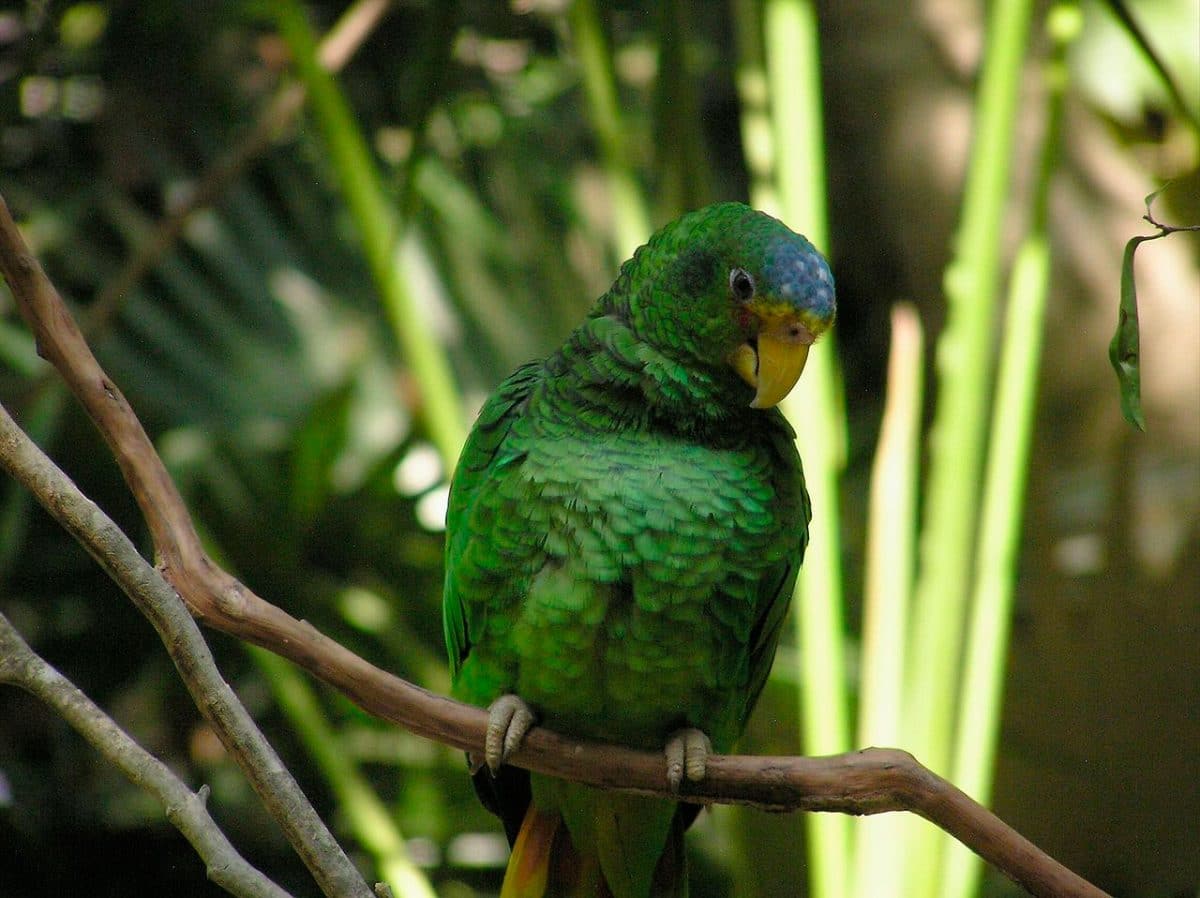
The Yellow-billed Parrot (Amazona collaria) It has a distinctive narrow band on forecrown white; lores and upper cheeks, with pale blue feathers; crown blue with black tips, merging on hindcrown; the sides of neck and nape into green feathers with black tips; feathers on the sides of neck sometimes basally pink; ear-coverts greyish-blue with black tips.

Mantle and back, green apple with black tips (the latter become less pronounced further down); lower back, the rump and uppertail-coverts, brighter yellowish green. big blankets, blue; the rest, green apple. Alula and outerweb of the flight feather, blue; innerwebs, dark gray. Under, the wings green, flight feather, bluish green.

Yellow-billed Parrot

Throat and lower cheeks, Rosaceae, sometimes with green tips; top of the chest to belly, yellowish green apple; undertail-coverts brighter yellowish green. Upper, the tail It is green with yellow and red points on the basis; undertail, paler and olive. Bill yellowish; irises brown; legs Rosaceae.

In the breeding season, the throat pink male it becomes brighter and plumage acquires green metallic tones. Both sexes are similar. Perhaps males average slightly larger. Immature similar to adult.

  • Sound of the Yellow-billed Parrot.

Habitat:

Video "Yellow-billed Parrot"

The Yellow-billed Parrot inhabit, mainly, in the middle level of humid limestone forests (annual rainfall between 1.900-4.500 mm) with (for example) Terminalia latifolia emerging and Cedrela odorata, most arid forests and upland areas planted with trees, especially the edge of the forest; from sea level up 1.200 metres in Cockpit Country.

Usually in pairs or flocks of up to about 40 individuals; larger gatherings where food is plentiful (for example, a report of 60 birds feeding on orange). They form large communal shelters out of breeding season and sometimes seen in association with the Black-billed Parrot (Amazona agilis) and Olive-throated Parakeet (Eupsittula nana). They forage closer to roosts as the day progresses.

Reproduction:

They nest in tree cavities, at higher altitudes the 15 m, frequently Brosimum, with enlarged holes in successive years. Often used initially cavity excavated by the Jamaican Crow (Corvus jamaicensis). Nesting also observed in rock cracks. Courtship registered in January laying of eggs, between 4-5, in March-May.

Food:

Foods reported include catkins of Cecropia, Anacardium occidentale dried fruits, fruits of Pimenta dioica and figs, and seeds of Melia azedarack; feeding birds took only orange seeds, squandering the fleshy part. They forage in middle and high levels.

Distribution and status:

Size of its range (breeding/resident): 7.200 km2

The Yellow-billed Parrot It is endemic to Jamaica, this species remains widespread, more than the other species of Jamaican Amazona, the Black-billed Parrot (Amazona agilis), although extensive surveys have not yet been carried out throughout the entire island. They are observed flocks of 50 to 60 individuals throughout the year, particularly in the non-breeding season, moving from inside the forest to the edge habitat to feed.

This species is particularly Cockpit Country, Mt. Diablo, and John Crow Mountains. A small population (presumably wild) also it sets to Hope Gardens in Kingston.

Recent studies indicate that Amazona collaria it is less abundant than Amazona agilis, possibly as a result of Amazona collaria It is a more colorful and preferred species in trade. while the Amazona agilis It is currently nested in all Cockpit Country, including plantation disturbed along the edges areas, the Amazona collaria now nests almost exclusively in relatively remote hinterlands.

Local reports suggest a significant overall decrease in collaria Amazona in Cockpit Country and a greater degree of threat to other species, the Amazona agilis.

The preliminary population counts suggest 5.000 individuals in Cockpit Country, Mt. Diablo, and John Crow Mountains (C. Levy in lilt, 1999).

Difficult to distinguish from Amazona agilis distance and possible misidentification, They may have affected the validity of some previous reports on their abundance and distribution.

Conservation:

State of conservation โ“˜


Vulnerable Vulnerable โ“˜ (UICN)โ“˜

โ€ข Current category of the Red List of the UICN: Vulnerable.

โ€ข Population trend: decreasing.

โ€ข Population size : 6000-15000

Rationale for the Red List category

This species is classified as Vulnerable because it has a small and fragmented range, with suitable habitat decline in extent, area and quality, mainly due to speak and forest clearing for bauxite mining. Numbers are also declining due to trampeo.

Justification of the population

The population size is preliminarily estimated to fall in the band between 10.000 and 19.999 individuals. This is equivalent to 6,667-13,333 mature individuals, rounded here to 6,000-15,000 mature individuals.

Justification of trend

No new data on population trends; However, It suspected that the species is declining at a slow pace, as a result of the loss and degradation of habitat and capture.

Conservation Actions Underway

โ€ข CITES Appendix II.

โ€ข protected under the Act Wildlife Protection Jamaica and Endangered Species Act of 2000, which together prohibit keeping the species as a domestic animal and local and international trade.

โ€ข It has been declared as threatened in Jamaica from 1986 (Juniper and Parr 1998).

โ€ข Since 1995 He has worked to delineate its distribution, estimate the size of the population, identify factors limiting reproductive performance and train local people in research methods and techniques for long-term monitoring (BirdLife Jamaica Parrot Project in little 1998, 2000).

โ€ข Habitat in the mountains Blue and John Crow It has been declared National Park, but the implementation and management are weak (BirdLife Jamaica Parrot Project in little 1998, 2000).

โ€ข There is a campaign public awareness high profile to prevent bauxite mining in Cockpit Country, by declaring the area closed to mining by the Minister's Discretion (S. Koenig in some. 2007).

โ€ข Discussions have started that, we wait, will lead to ban the importation of psittacine to Jamaica (S. Koenig in a bit., 2007).

โ€ข Exist captive breeding populations.

Conservation Actions Proposed

โ€ข Survey for delineate the range and evaluate the numbers (BirdLife Jamaica Parrot Project in little 1998, 2000).

โ€ข Declare a Cockpit Country closed to mining.

โ€ข Ensure the de facto protection of the Blue Mountains National Park and John Crow (BirdLife Jamaica Parrot Project in little 1998, 2000).

โ€ข Design and implement Educational programs in the occupied area of รขโ‚ฌโ€นรขโ‚ฌโ€นthe species (BirdLife Jamaica Parrot Project in little. , 1998, 2000) and develop captive breeding populations.

โ€ข Apply legal protection.

โ€ข Prohibit the importation of non-native parrots.

The Yellow-billed Parrot in captivity:

CITES Appendix II. protected under the Law on Protection of Wildlife Act Jamaica and Endangered Species 2000, which together prohibit keeping this species as a domestic animal, as well as local and international trade.
Exist captive breeding populations.

any trade should be avoided with this rare Amazona.
Each captive specimen of this species which is capable of reproducing, It is placed in a well managed captive breeding program and not be sold as a pet, in order to ensure its long-term survival.

Alternative names:

Yellow-billed Parrot, Jamaican Amazon, Jamaican Parrot, Red-throated Parrot, Yellow billed Parrot, Yellow-billed Amazon (English).
Amazone sasabรฉ (French).
Jamaicaamazone, Jamaikaamazone, Jamaikamazone (German).
Papagaio-da-jamaica (Portuguese).
Amazona de Pico Amarillo, Amazona Jamaicana Piquiclara (espaรฑol).


scientific classification:

Carl Linnaeus

Order: Psittaciformes
Family: Psittacidae
Genus: Amazona
Scientific name: Amazona collaria
Citation: (Linnaeus, 1758)
Protonimo: Psittacus collarius


Images Yellow-billed Parrot:


Species of the genus Amazona


Sources:

Avibase
Parrots of the World โ€“ Forshaw Joseph M
Parrots A Guide to the Parrots of the World – Tony Juniper & Mike Parr
Birdlife

Photos:

(1) – Yellow-billed Amazon in the St. Andrew, Jamaica By Amazona_collaria_-St.Andrew-Jamaica-8a.jpg: Wayne Sutherland from Kingston, Jamaicaderivative work: Snowmanradio [CC BY-SA 2.0], via Wikimedia Commons
(2) – Amazona_collaria at Vienna Zoo, Schonbrunn Palace, Vienna, Austria By Alois Staudacher (Jamaica Amazone) [CC BY 2.0], via Wikimedia Commons
(3) – Yellow-billed Amazons in the Kingston, St. Andrew, Jamaica By Wayne Sutherland from Kingston, Jamaica (Pair of Yellow Billed Parrots) [CC BY-SA 2.0], via Wikimedia Commons
(4) – Yellow-billed Amazon (Amazona collaria) in Cockpit Country by Ron KnightFlickr
(5) – Yellow-billed amazon parrot (Amazona collaria), Jamaica By Charlesjsharp (Own work, from Sharp Photography) [CC BY-SA 4.0], via Wikimedia Commons
(6) – Parrots in captivity by Biodiversity Heritage LibraryFlickr

Sounds: Nick Komar, XC255118. accessible www.xeno-canto.org/255118.

โ–ท The world of Pets: Dogs, cats, birds, reptiles, amphibians

Vernal hanging parrot
Loriculus vernalis

Vernal hanging

Content

Description

Solo 14 cm.. length and 28 g. of weight.

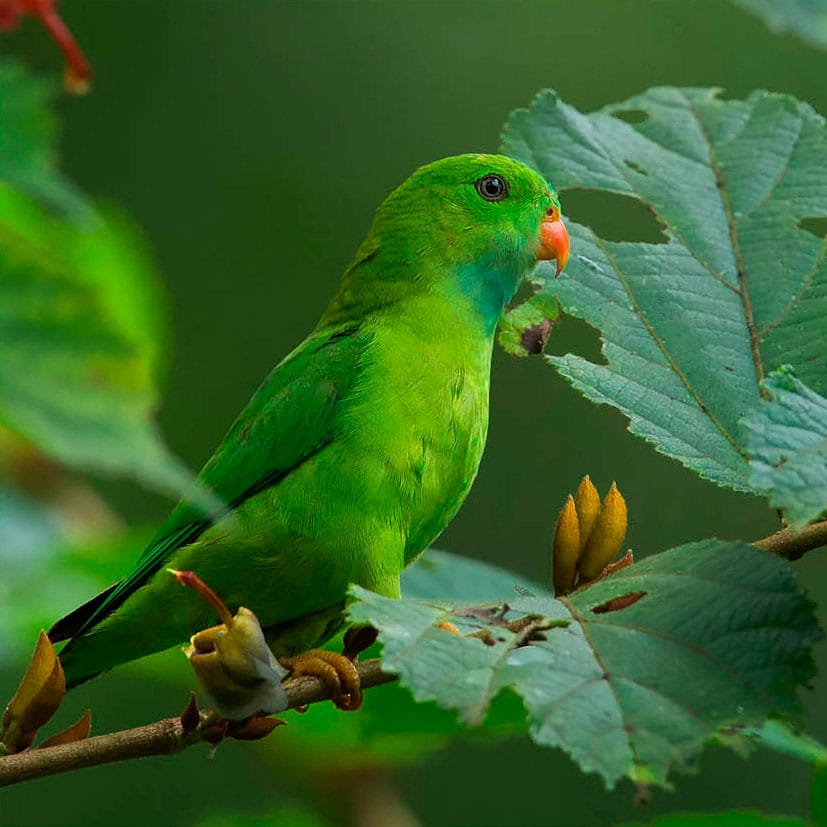
The head of the Vernal hanging parrot (Loriculus vernalis) is bright green, lighter and more yellowish in the chin. Rest of the upper region green, with the bottom of the back, rump and upper coverts bright crimson. Wing coverts a little darker than the the mantle green. Primaries bright green with vane inner blackish and a light blue-green diffusion in the feathers of the vane outer; secondaries Black with exterior bands of green and a bit of green in vane inner. Under the wing a brilliant turquoise blue, except coverts and axillary, that are pale green. The underparts more greenish-yellow that the upperparts, with a patch light blue in the throat. Upper, the tail green; Turquoise Blue below.

Bill coral red with yellow tip: irises Brown to yellowish-white; the legs they pale brown to yellowish Orange.

The females they are slightly more off than males and have a patch blue in the throat less extensive.

The young birds lack of the patch blue in the throat and have a bill paler, the rump narrow and green feathers of the tail and legs brown.

The young birds they need at least a year to mature.

  • Sound of the Vernal hanging parrot.
[audio:HTTPS://www.mascotarios.org/wp-content/themes/generatepress_child/sonidos/Loriculo Vernal.mp3]

Habitat:

Some movements, possibly related to seasonal rains, have been observed, but they require further study. The species is found in a variety of habitats, including Evergreen deciduous forests and, next to clear forest, secondary growth, bamboo thickets, orchards and too grown crops, up to approximately 2.000 m.

The birds are found in pairs, family nuclei, loose herds of up to 50 individuals or groups mixed with other birds. Their size and coloration make it a discrete ave, but they are not shy and can be found feeding in the canopy, Sometimes the attention of an observer with short flights and circular around the tops of the trees.

Jump between the branches and climb swiftly using both beak and legs, sometimes form 'spirals'’ to ascend. Lie, They groom and sleep strung upside down one or both legs, Although juveniles may remain in vertical position, scratching your head over the wing.

Reproduction:

Like the Lovebirds, cut small strips of bark, leaves and other plant materials, they put them in the contour feathers and carried them to the nest as an overlay. The breeding occurs between January and April; between two and four whites, often spotted brown eggs, they are deposited in the cavity of a rotten trunk. The narrow entrance is sometimes enlarged by birds, and the deep hole can extend below the ground level in exceptional cases.

The incubation, that lasts around 22 days, It is carried out by the female. The male helps feed the chicks as they mature over a five-week period..

Food:

They feed on acrobatic form of nectar in the trees in flower (for example, trees of Coral Erythrina) and in fruit trees especially figs Ficus or guava (Psidium guajava), as well as various berries and plant species such as bamboo and casuarina. Also consume collected potted Palm wine, and they can then take, and damage to orchards.

Distribution:

Size of its range (reproduction / resident): 6.460.000 km2

widespread, from the West coast of the India some 19 ยฐ Norte, through at least Maharashtra, Madhya Pradesh, Karnataka, Kerala, Tamil Nadu, Andhra Pradesh, Orissa, West Bengal, Assam, Nagaland, Manipur and Tripura, and is also distributed in the Andaman and Nicobar Islands. In Nepal is distributed in small amounts in the lowlands of the Terai , and also have been in the area of Chitwan.
Observed in Bhutan; Southwest of Sichuan through Yunnan, and possibly in Kwangtung, in China; Sylhet, Quotation mark and Chittagong in Bangladesh; Myanmar including the Mergui archipelago: Thailand Around South of 10 ยฐ Norte (also observed to the South, on Phuket Island); Laos; Cambodia; and Viet Nam. The species has not been recorded in Sikkim, Hong Kong and Malaysia.

Conservation:

โ€ข Current IUCN Red List category: Least concern

โ€ข Population trend: Stable

The size of the world's population has not been quantified, It is thought that it may be above the 1.000.000 of copies. The species according to information, is very rare in China, in general, common elsewhere (pit et to the. 1997).

The population is suspected to be stable in the absence of evidence of any reduction or substantial threats.

"Vernal hanging parrot" in captivity:

Limited number in captivity

Alternative names:

Vernal Hanging-Parrot, Indian Hanging Parrot, Indian Hanging-Parrot, Indian Lorikeet, Vernal Hanging Parrot (ingles).
Coryllis vernal, Coryllis d’Inde, Loricule vernal (French).
Frรผhlingspapageichen, Frรผhlings-Papageichen (German).
Lรณris-indiano (Portuguese).
Lorรญculo Vernal (espaรฑol).

scientific classification:

Order: Psittaciformes
Family: Psittaculidae
Genus: Loriculus
Scientific name: Loriculus vernalis
Citation: (Sparrman, 1787)
Protonimo: Psittacus vernalis

Vernal Parrot Images:

————————————————————————————————

Vernal hanging parrot (Loriculus vernalis)


Sources:

Avibase
– Parrots of the World โ€“ Forshaw Joseph M
– Parrots A Guide to the Parrots of the World – Tony Juniper & Mike Parr
– Birdlife

Photos:

(1) – ยซLoriculus vernalis-Ganeshgudi, Karnataka, India-male-8-1cยป by Loriculus vernalis-Ganeshgudi,_Karnataka,_India_-male-8. jpg: viwakederivative work: Snowmanradio – This file was derived from:Loriculus vernalis-Ganeshgudi,_Karnataka,_India_-male-8. jpg . Licensed under CC BY-SA 2.0 via Wikimedia Commons.
(2) – ยซVernal Hanging Parrotยป by Jason ThompsonFlickr: Vernal Hanging Parrot. Licensed under CC BY 2.0 via Wikimedia Commons.
(3) – By viwake [CC BY-SA 2.0], via Wikimedia Commons
(4) – A male bird – Author vasanthan.p.j – lynx
(5) – ยซLoriculus vernalis-Prague Zoo, Czech Republic-male-8aยป by Jozef MurgaลกZOO Praha 34Uploaded by snowmanradio. Licensed under CC BY-SA 2.0 via Wikimedia Commons.

Sounds: Mathias Ritschard (Xeno-canto)