Origin: Colombia, Peru, Brazil, Guyana, Puerto Rico, United States
Character: Affectionate and fun
Life expectancy: 10 to 12 years
Height: 24 to 25 cm.
Content
Description:
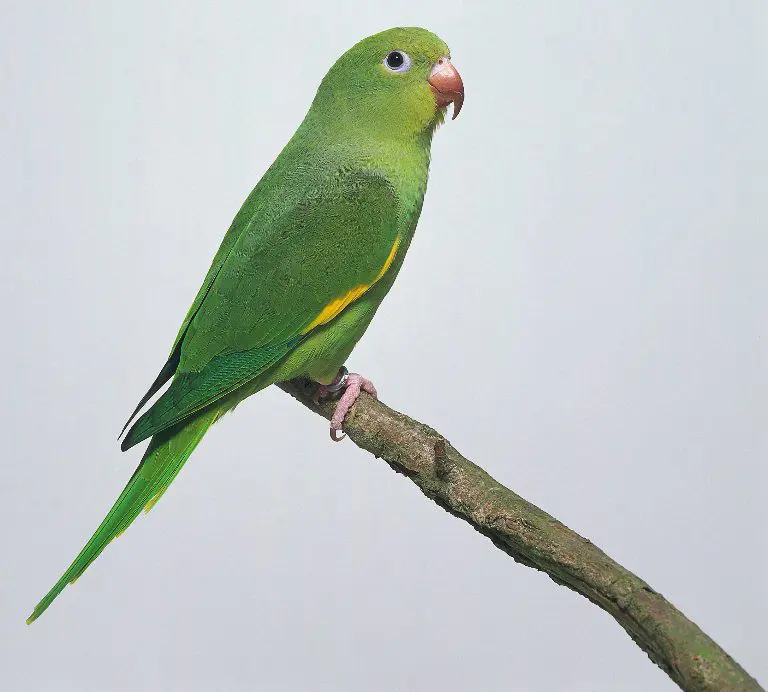
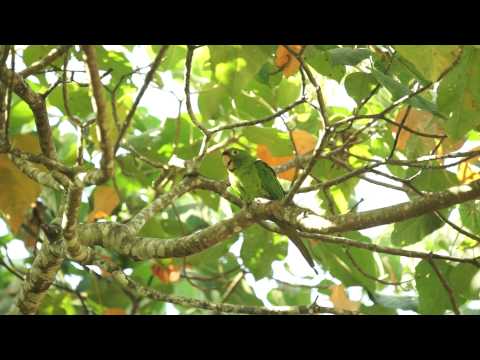
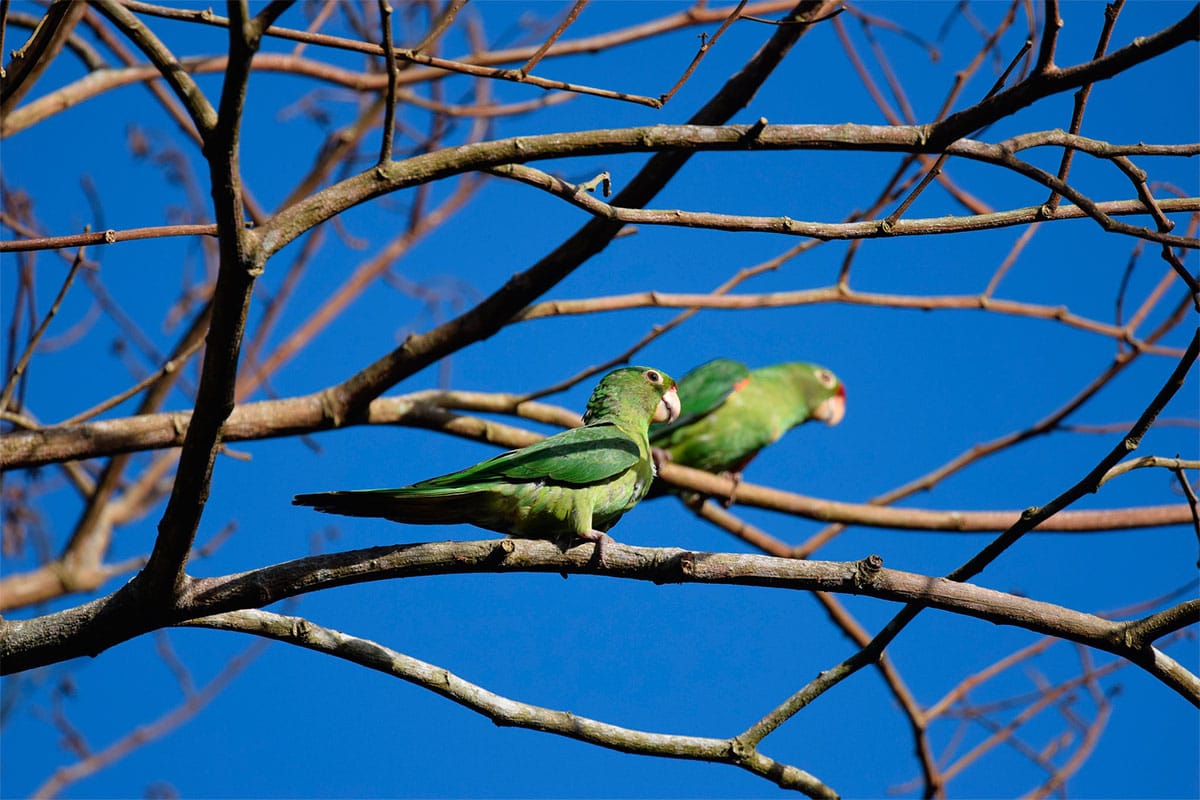
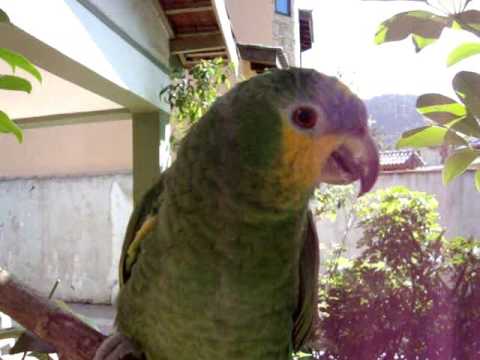
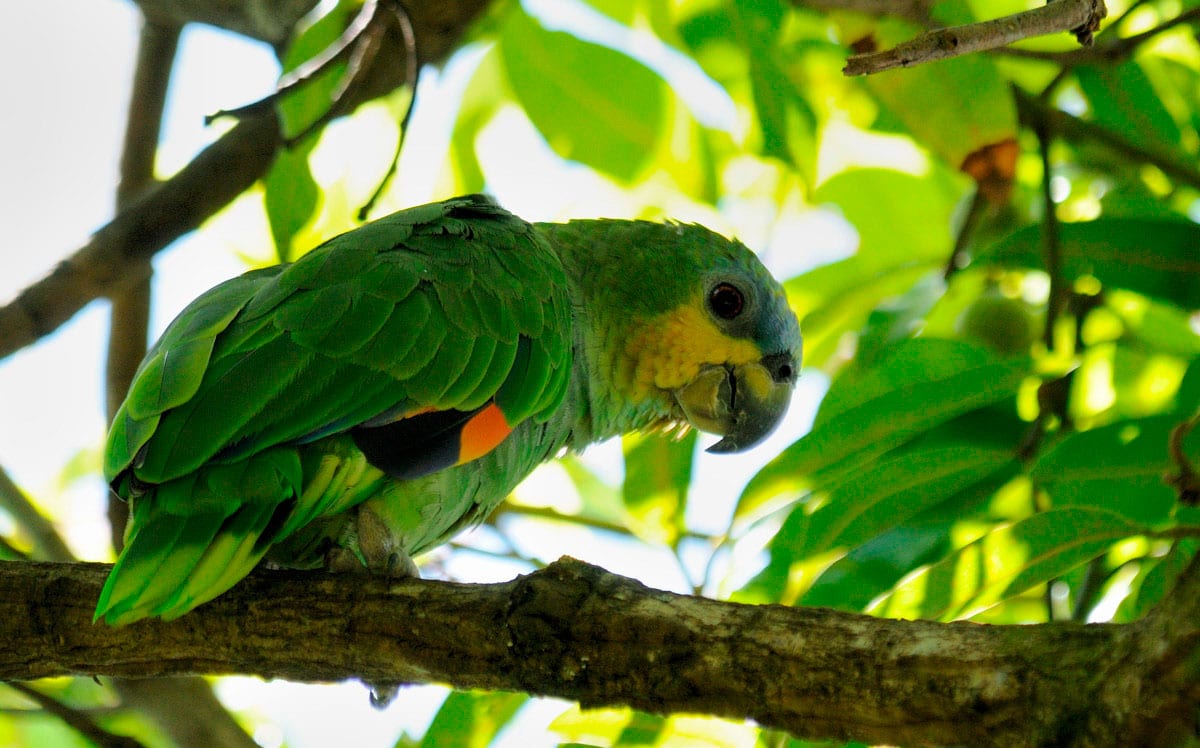
The Canary-winged Parakeet(Brotogeris versicolurus) measured between 24 and 25 height cm. Single parakeet with yellow and white patch and blue tip on the wing
, tail green, long and acute (noticeable in flight).
Of overall green coloration, with belly opaque, front and sides of the head grey. It has no sexual dimorphism.
It is found in variety of habitats, humid forest, riparian, edges, stubble, open and urban areas, until 300 m (in Bolivia comes up to the 2700 m).
Abundant trees in cities and towns. They fly high, in pairs or small flocks to large.
Reproduction:
The breeding season includes the months between January and July in South America. The female places of 4 to 5 white eggs. The incubation hard of 23 to 26 days. Usually, the male can stay in the nest at night, but the incubation is main task of females.
It nests in tree hollows and decaying fruit capsules.
Food:
In their natural habitats, the Canary-winged Parakeet, feeds mainly on worms, flowers, seeds and fruit.
Distribution:
Its population is discontinuous. All the banks of the Amazon River, from the East of Ecuador to the South of the French Guiana.
You can also see them out of these places due to its introduction by release of pet; places such as Lima, California, Florida and Puerto Rico.
Conservation:
State of conservation ⓘ
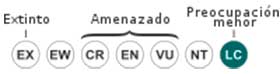
Minor Concern ⓘ(UICN)ⓘ
It is not considered in any of the threat categories, its trade has decreased in recent decades.
Justification of the population:
The size of the world population Canary-winged Parakeet It has not been quantified, but this species is described as «common» (Stotz et to the. (1996).
Justification trend:
The population suspected to be stable in the absence of evidence of any reduction or substantial threats.
"Canary-winged Parakeet" in captivity:
Years ago it was a very common bird in captivity, at the present time is less.
RECALLS: NEVER COMMAND A PARAKEET IN THE CITY OR IN THE FIELD
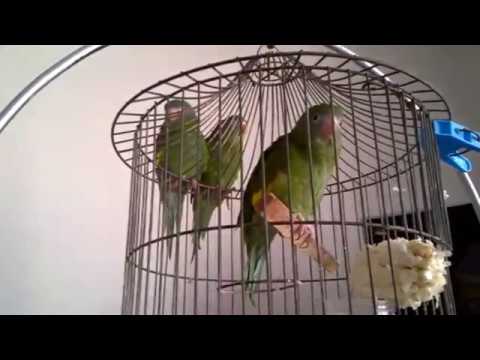
aggressive with other bird species. However, It is possible to keep a group of birds of this species together in a large enough space. Easy of tame If it is manipulated from small. Communicates with their owners, making different sounds, for example, to greet us when we see, When you want food, etc.
They are not usually very noisy. Like to climb by what shall provide elements so you can make this activity. In hot season, supplied with a tray of water so that you can bathe.
Alternative names:
– Canary-winged Parakeet, White-winged Parakeet, Yellow-winged Parakeet (English).
– Toui à ailes variées, Conure à ailes blanches, Perruche à ailes blanches, Perruche à ailes jaunes, Toui à ailes jaunes (French).
– Weissflügelsittich (German).
– Periquito-de-asa-branca, periquito-castanha, periquito-da-asa-amarela, periquito-da-campina, periquito-das-ilhas, periquito-de-asas-amarelas, periquito-estrela (Portuguese).
– Catita Chirirí, Catita de patas amarillas, Catita Versicolor, Periquito Aliamarillo, Periquito Aliblanco, Periquito de Alas Blancas, Periquito Versicolor (español).
– Catita Chirirí, Catita de patas amarillas (Argentina).
– Periqquito aliblanco, Periquito Aliblanco (Colombia).
– Periquito Aliamarillo (Dominican Republic).
– Perico de Ala Amarilla (Peru).
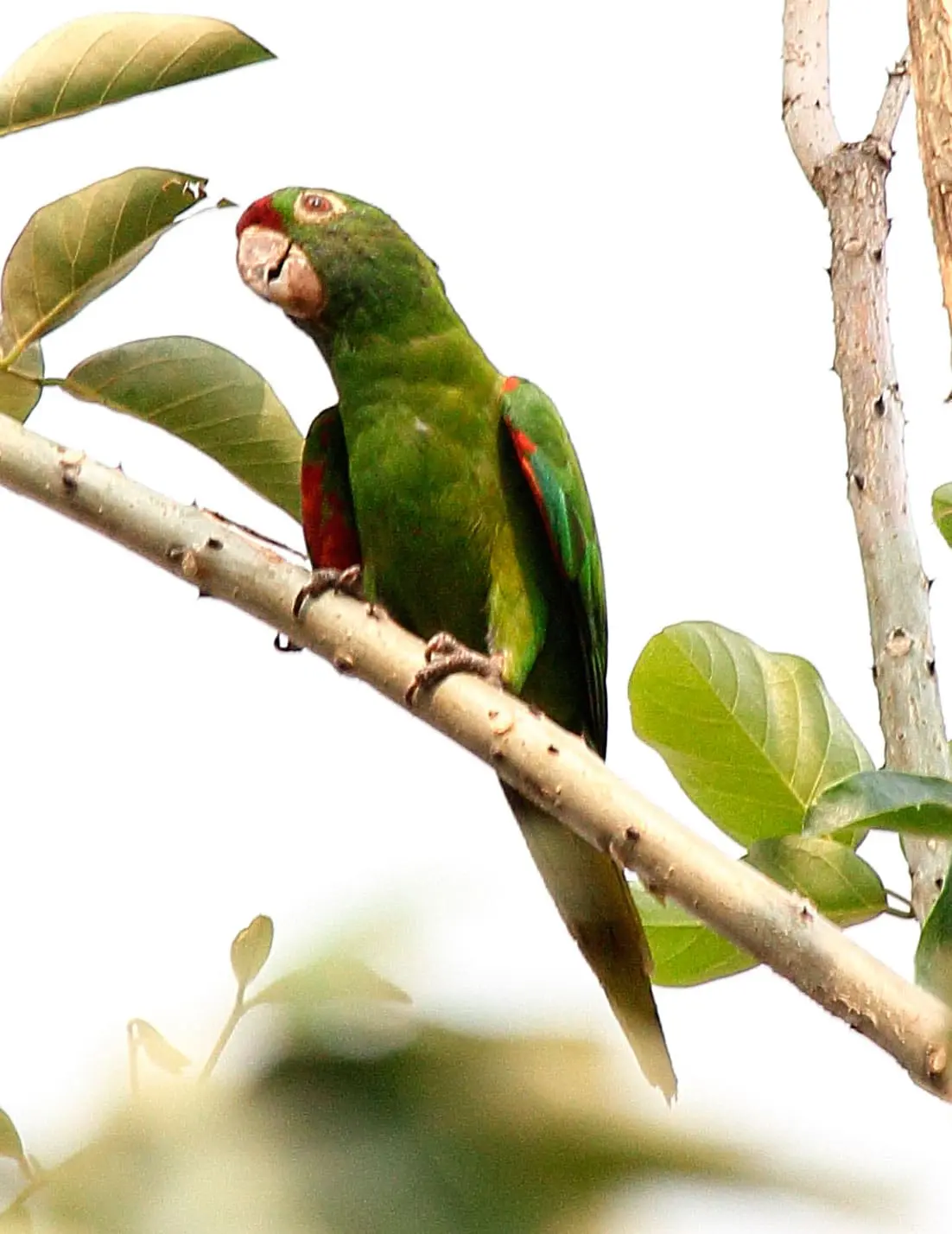
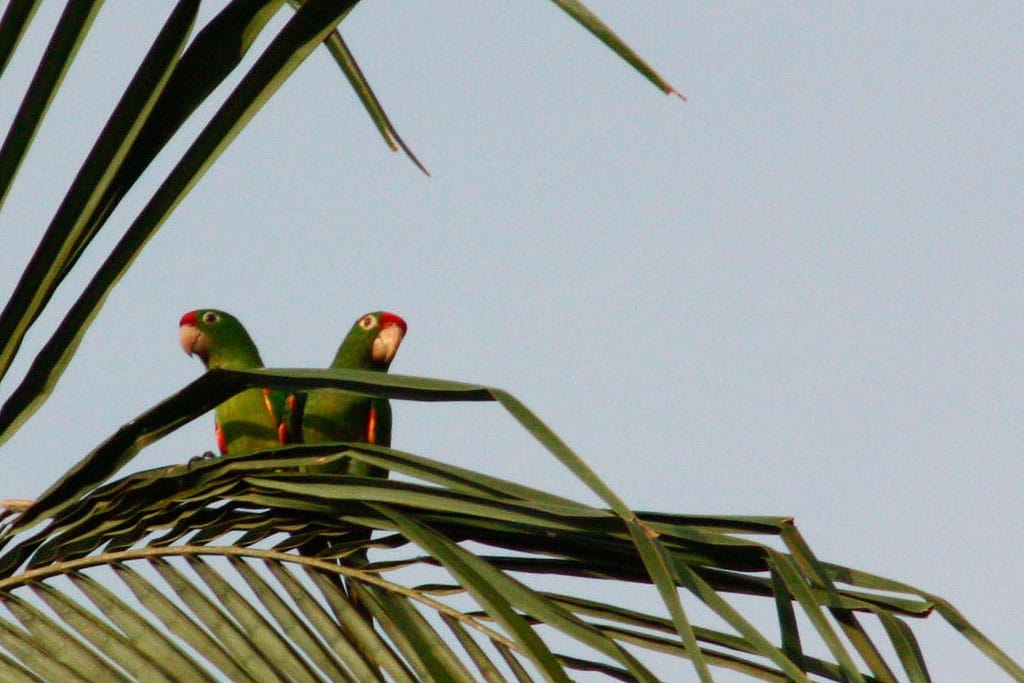
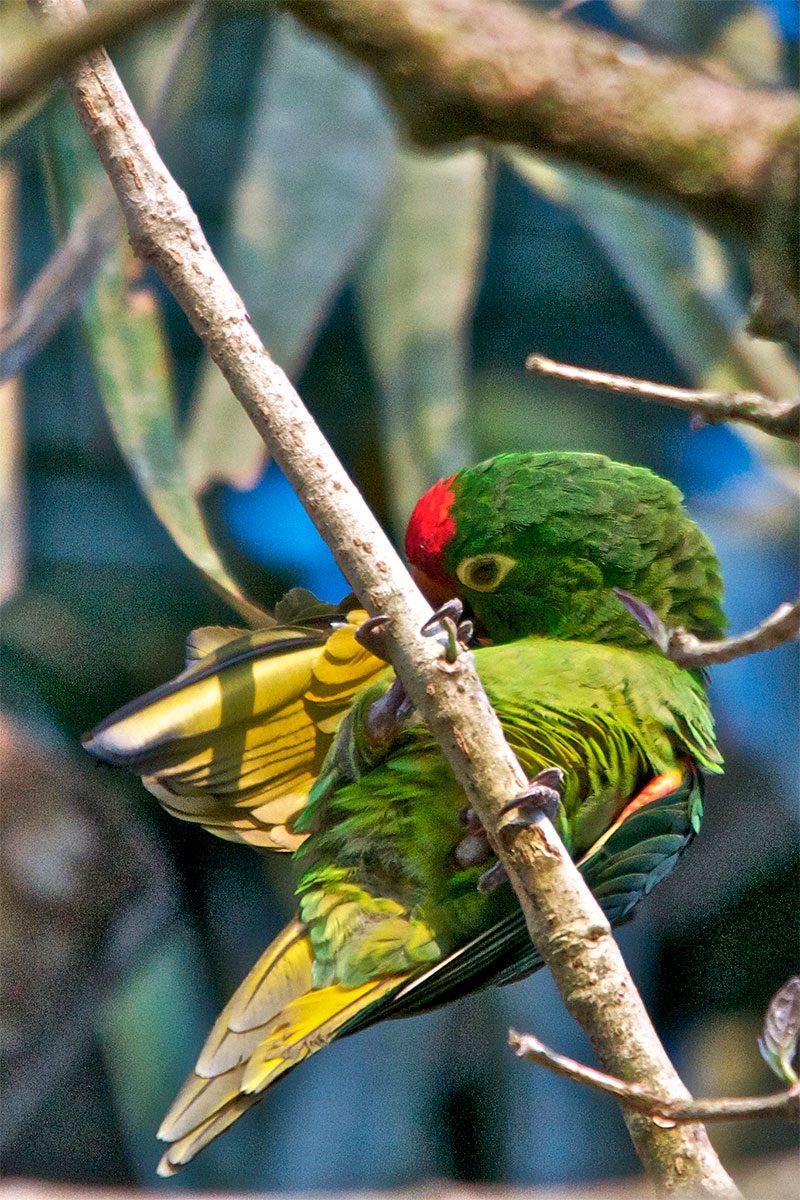
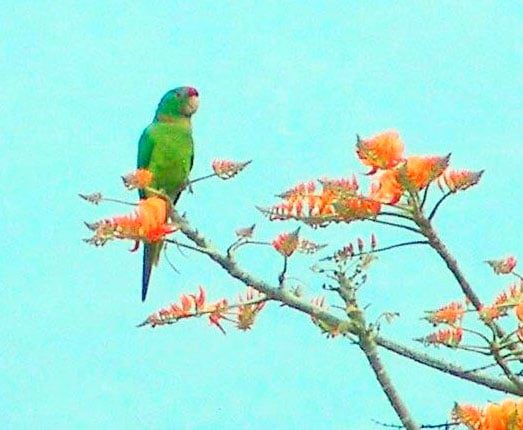
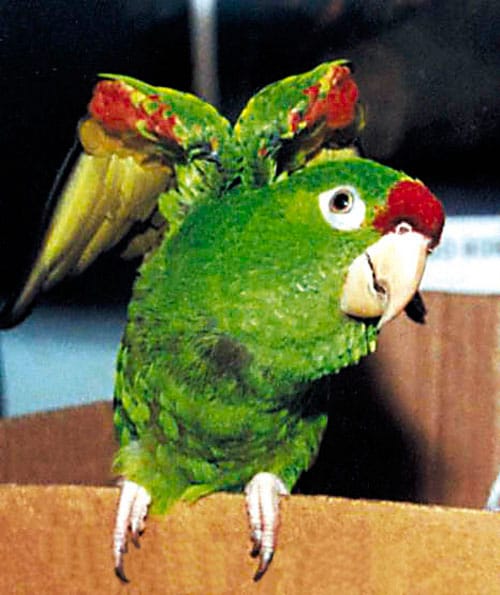
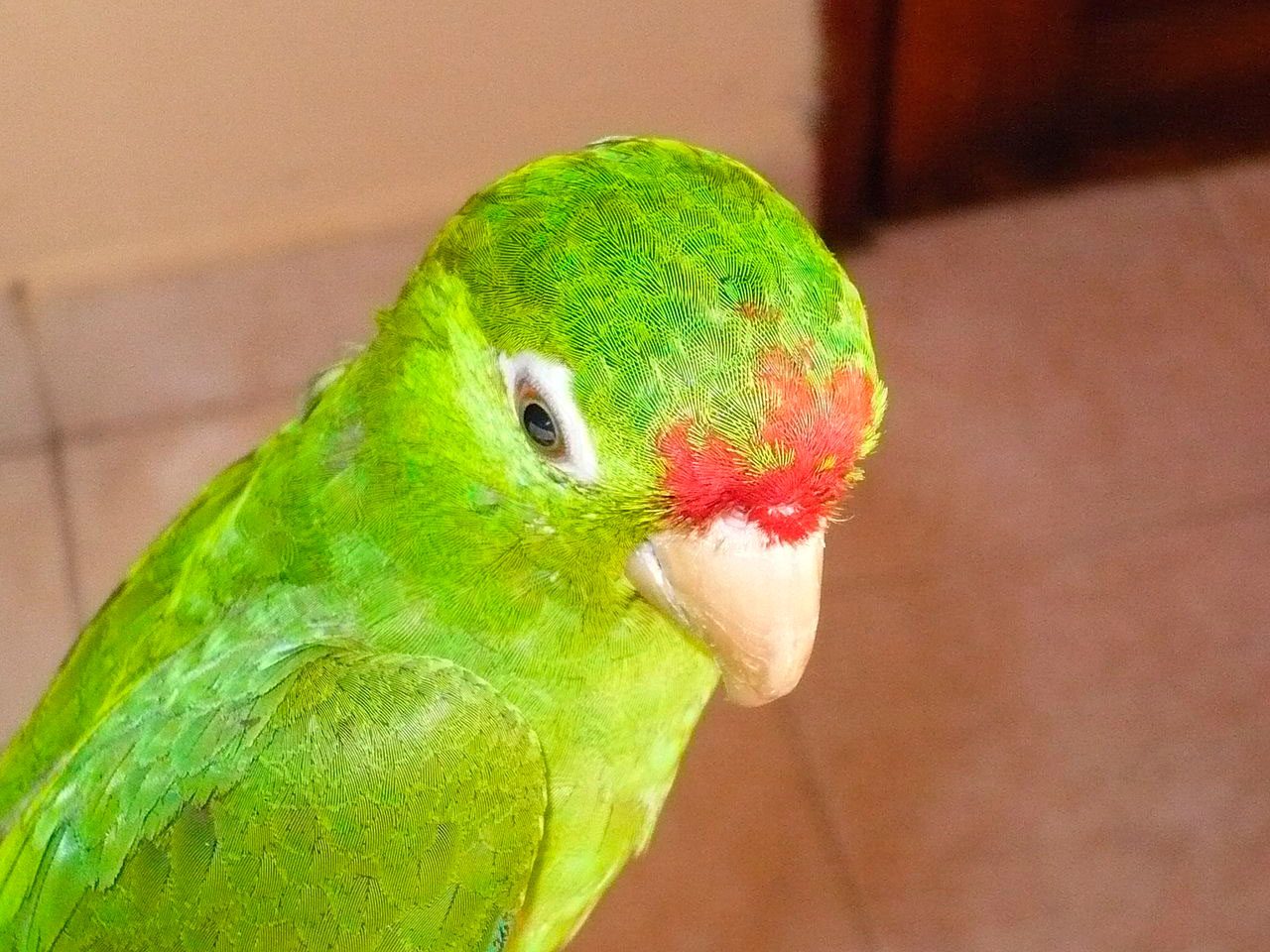
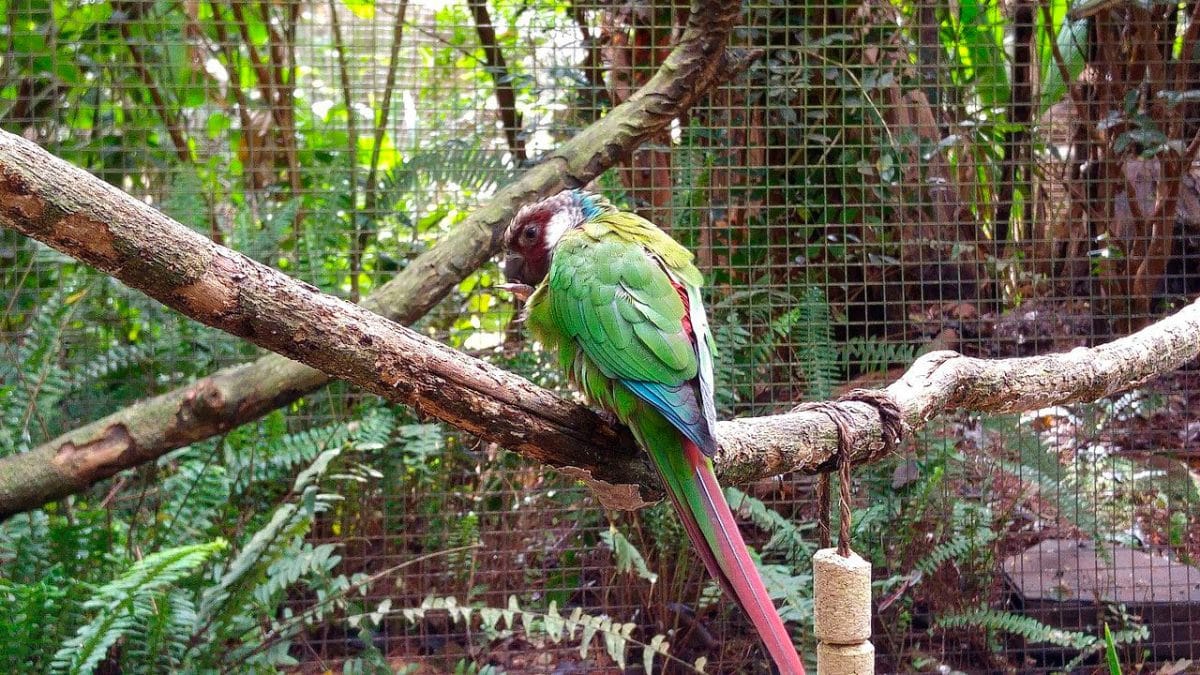
The Crimson-fronted Parakeet(Psittacara finschi) It is the only species of the genus Psittacara tail long with red color below the wing
.
They have forecrown and the former area of the lores bright red; the head and the neck green color with the exception of some scattered red feathers. The upperparts and upperwing-coverts green, with some red feathers on the bend of wing. The flight feather green above, more dark towards the tips with a dye bluish light in them vane inner; then golden brown color. Lesser and medium underwing-coverts red, the largest yellow, other coverts pale green. The underparts pale green, sometimes with red at the bottom of the tibia. Upper, the tail grass-green, by down golden brown.
The irises is orange and the eye ring naked is whitish. The bill exhibits a color gray-tipped Horn and the legs off gray color.
It has no sexual dimorphism.
The immature There are very little or almost no red in the forecrown and lack of red color in the thigh or the neck. The lining of the wings is more Orange.
They inhabit tropical and subtropical envelope 1.400 metres in Costa Rica and 1.600 meters in the West of Panama, in areas with light trees or in fields with scattered trees, in secondary growth forests, edges of the forest, coffee plantations and nearby farmland. Irregular or seasonal in large forested areas.
They are birds gregarious, usually observed in flocks of up to 30 Member, but up to several hundred birds can gather in roosts communal on the tops of the trees or palms. Roosts, at times near the cities.
Reproduction:
They located their nest in holes of various types: natural cavities, old holes of woodpeckers (F. Picidae), stumps of dead Palms. They can dig holes in rotten stumps or in masses of epiphytes.. Sometimes many couples may nest near each other.
The union of the pair of this species is particularly strong. The pairs isolate themselves from the group towards the end of July to nest.. With reproduce during the dry season and the rainy early. The female lays three or four eggs which are incubated during approximately 24 days. The juveniles they leave the nest to the 50 days of life.
Widely distributed in the South of Central America, from Nicaragua until Panama.
The species can be found in the southeast of Nicaragua to the South of the Rio Grande, and in Costa Rica mainly on the slope of the Caribbean, Although there are exemplary residents on the side of the peaceful, on Osa Peninsula, at the South-West end and seasonal visitors in the Guanacaste Cordillera, in the North and the central plateau around San Jose.
In Panama they come to the East, a unos 82°W, but it is probable that only seasonally in the lower Highlands of the Province of chiriqui.
Flocks of birds required extensive territories and the species occurs, apparently, in many areas, if only as a post-breeding visitor.
Very common or locally common with increasing numbers in Costa Rica and Panama, probably due to deforestation.
Maintained in captivity and internationally traded in small quantities.
Conservation:
State of conservation ⓘ
Minor Concern ⓘ(UICN)ⓘ
• Red List category of the UICN current: Least concern
• Population trend: Growing
The size of the world population of the Crimson-fronted Parakeet It has not been quantified, but this species is described as «quite common«.
You can be increasing their geographical range due to deforestation.
abundant on the slope of the Caribbean of Nicaragua. common and widespread in areas deforested over the slope of the Costa Rica Caribbean.
"Crimson-fronted Parakeet" in captivity:
Quite common in United States, less elsewhere.
Socialize easily with human, and can become a committed and loving companion. Es a Intelligent and lively, with easy to imitate the human voice and run different games and exercises. But, We must remember that it is a bird loud and the volume of their calls can get to be very annoying.
Alternative names:
– Crimson-fronted Parakeet, Crimson fronted Parakeet, Crimson-fronted Conure, Finsch’s Conure, Finsch’s Parakeet (English).
– Conure de Finsch, Perriche de Finsch, Perruche de Finsch (French).
– Veraguasittich (German).
– Aratinga-de-finsch (Portuguese).
– Aratinga de Finsch, Perico frentirrojo, Periquito de Pecho Rojo, Perico de Palmera (español).
– Perico frentirrojo (Costa Rica).
– Perico Frentirrojo (Nicaragua).
Parrots A Guide to the Parrots of the World – Tony Juniper & Mike Parr
Birdlife
Photos:
(1) – A Finsch’s Parakeet )also called Finsch’s Conure and Crimson-fronted Parakeet) in San José, Costa Rica By Dominic Sherony [CC BY-SA 2.0], via Wikimedia Commons
(2) – Perico frentirrojo juvenil, approximately 4 months of age, Panama City By Ricaurte (Own work) [Public domain], via Wikimedia Commons
(3) – Crimson-fronted Parakeet, also called Finsch’s Conure By Yazzieyazz (trabjo propioEnglish: own work) [Public domain], via Wikimedia Commons
(4) – Psittacara finschi en el parque nacional Henri Pittier, Venezuela By Roberto Galindo Deshays (Own work) [CC BY-SA 4.0], via Wikimedia Commons
(5) – Crimson-fronted Parakeet Costa Rica 2/15/16 Rancho Naturalistaby Andy Reago & Chrissy McClarren – Flickr
(6) – Crimson-fronted Parakeet by Brian Ralphs – Flickr
(7) – Crimson-fronted Parakeet Costa Rica 2/15/16 Rancho Naturalista by Andy Reago & Chrissy McClarren – Flickr
(8) – Aratinga finschi 06 Apr 2014 Costa Rica, San Lorenzo by Tom Benson – Flickr
(9) – Crimson-fronted parakeet by Charles Sharp – Flickr
(10) – Conurus finschii » = Psittacara finschi (Finsch’s Parakeet) by John Gerrard Keulemans [Public domain], via Wikimedia Commons
Origin: Venezuela, Guyana, Brazil, Suriname, French Guiana
Character: Intelligent and curious.
Life expectancy: 25 years
Height: 24 to 26 cm..
Content
Description:
24 to 26 cm.. height and between 179 and 222g. weight.
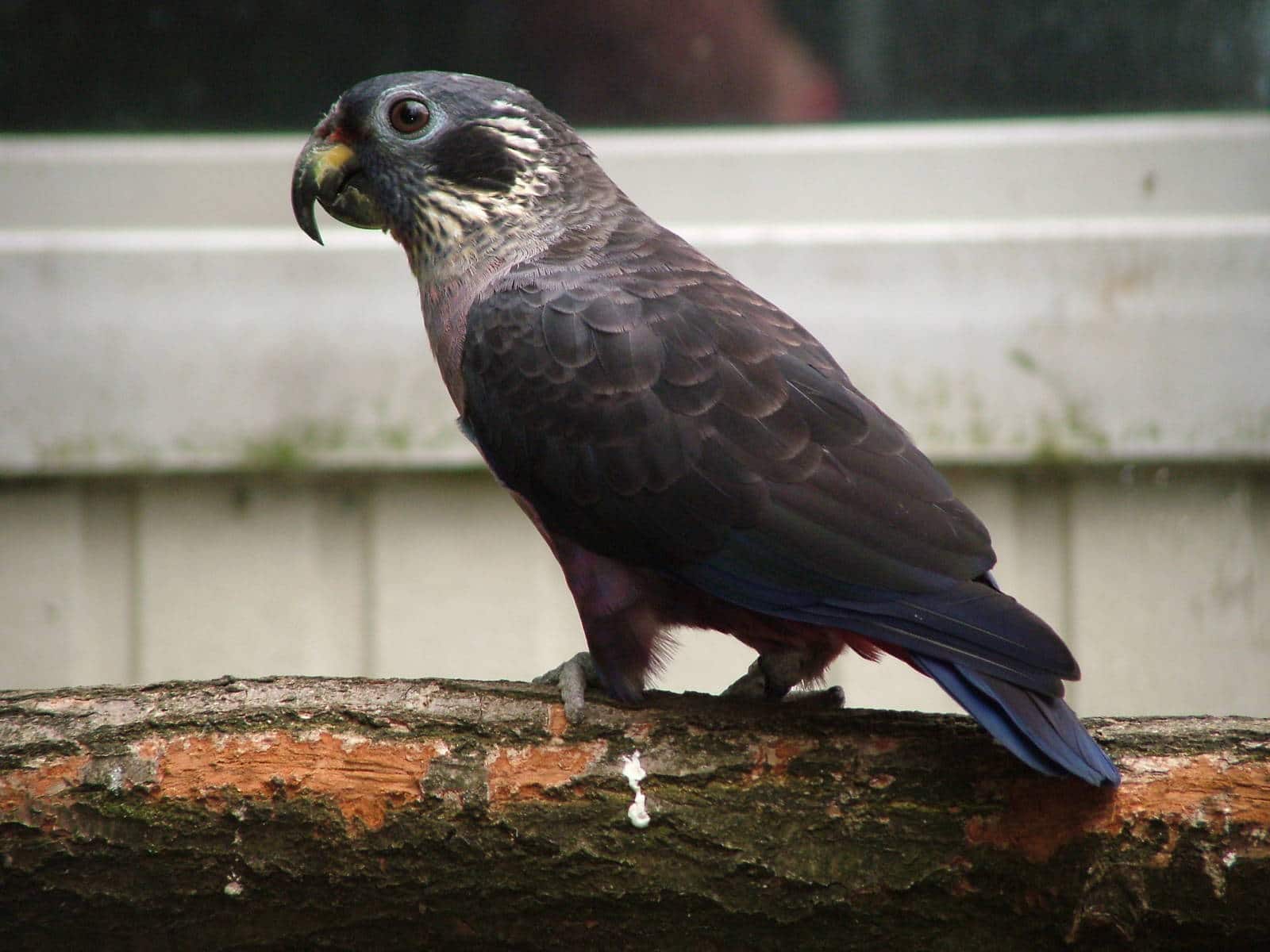
The coloration general of the Dusky Parrot(Pionus fuscus) is blue violet dark. Small patch of feathers on the front of the lores; on the basis of the cere, Pink; for the rest, lores, cheeks, forecrown and crown, lavender blue pale with white feather bases in the crown, What gives a faint mottled appearance in some birds; ear-coverts more dark and more grey, forming a distinctive patch; feathers in the throat and the sides of the neck narrow Brown in the Center and tips of pale blue white stripe, forming the joint a collar incomplete.
feathers in the the mantle and back, of color Brown leaden with those margins pale, giving the scalloped effect; Scapulars, rump and uppertail-coverts, darker grey brown, with very weak pale margins (or absent).
Coverts smaller and medium-sized, of color Brown leaden with margins pale; coverts primary and higher, as well as the flight feather, cobalt blue; undertail, the wings deep blue. Feathers on the top of the chest, pale pinkish with pale Lavender color tips; area more low in the chest with less dye Lavender, becoming darker and more color came in the belly, reaching, Some birds, the center of the belly of a rich colour came; undertail-coverts crimson.
Tail of color blue with red at the base. upper jaw Blackish at the tip with patch of color Horn in the base, lower jaw Blackish with the base more clear and more pale visible in some birds; Iris dark brown; Legs grey.
Both sexes similar.
In the immature staining is equal to the adult, but with some roofs on the upper wings with green edge; secondary feathers dyed in green and the eye ring naked and white.
They inhabit mainly in lowland rainforests and moist forests in the foothills, in where the birds spend the greater part of the time in the canopy; Mainly in the forest land, occasionally in forests and marshes and less frequently in igapó (permanently flooded forests), Although there have been reports of birds in Savannah (Suriname), coastal gallery forest (French Guiana) and cultivated areas (Although avoiding habitats more open and less seen in clearings or edges of forest to some close relatives, such as the Blue-headed Parrot(Pionus menstruus).
rare species, flying alone or in small groups on the forest canopy,
Are you can see in Venezuela from the level of the sea to close them 1.000 m, and in close 1.200-1.800 meters on the side Colombian of the Sierra de Perija.
gregarious, especially outside the breeding season.
Reproduction:
It nests in hollows of old trees, probably during the second quarter of the year, although a nest was observed in the month of November in For, Brazil. The laying is of 3-4 eggs.
Food:
It feeds mainly in the canopy but also on the branches of fruiting trees in light areas..
Size distribution (reproduction / resident): 1.870.000 km2
Its population is discontinuous. There is an isolated population in the Sierra de Perija (border between Colombia and Venezuela); regardless of population, The species is found in Venezuela, to the South of the Orinoco in Bolívar, from the Caura River, in the Northwest, up to the Nuria upland, the upper area of the cuyuni river and Sierra de Lema in the areas border with Guyana, in the East, extending through the forested parts of Guyana, Suriname and presumably it French Guiana (There are no known records) until Amapá, the North-East of Brazil, and spreading more broadly to the East of the Brazilian Amazon, from Black riverin the North and South, from the Madeira river to the East of For and Maranhão.
Movements regular seasonal occur in Suriname, with the birds present in the coastal region in the months of July and August.
In general quite common, Although distributed locally; reports of a moderate and widespread presence in Guyana (although rare in Mountains Kanuku in the Southwest); Common in coastal forests, the savanna and forests inside of Suriname.
The deforestation severe and rapid in parts of its range (for example, For and Maranhão, Brazil) is, presumably, causing a decline in the population of the Dusky Parrot.
Very tight in bondage.
Conservation:
• Not considered low No category of threat.
• Not known as a cage bird, but the loss of habitat may be affecting their populations.
Justification of the population:
The size of the world population Dusky Parrot It has not been quantified, but this species is described as «Rare» (Stotz et to the., 1996).
Justification of trend:
It is suspected that this species has lost the 1,1% of habitat within its distribution over three generations (20 years) on the basis of a model of Amazon deforestation (Soares-Filho et to the., 2006, Bird et to the., 2011).
Given the susceptibility of the species to hunt or capture, It is suspected that it will fall in <25% durante tres generaciones.
"Dusky Parrot" in captivity:
Intelligent, curious, a bit noisy, playful when acclimatizes to the owner.
Rare in captivity until the Decade of 1970 When in small quantities were imported from Guyana.
Origin: Mexico, Guatemala, Belice, El Salvador, Honduras, Costa Rica, Nicaragua
Character: active
Life expectancy: 60 years.
Height: 22 to 26 cm..
Content
Description:
22 to 26 cm.. length.
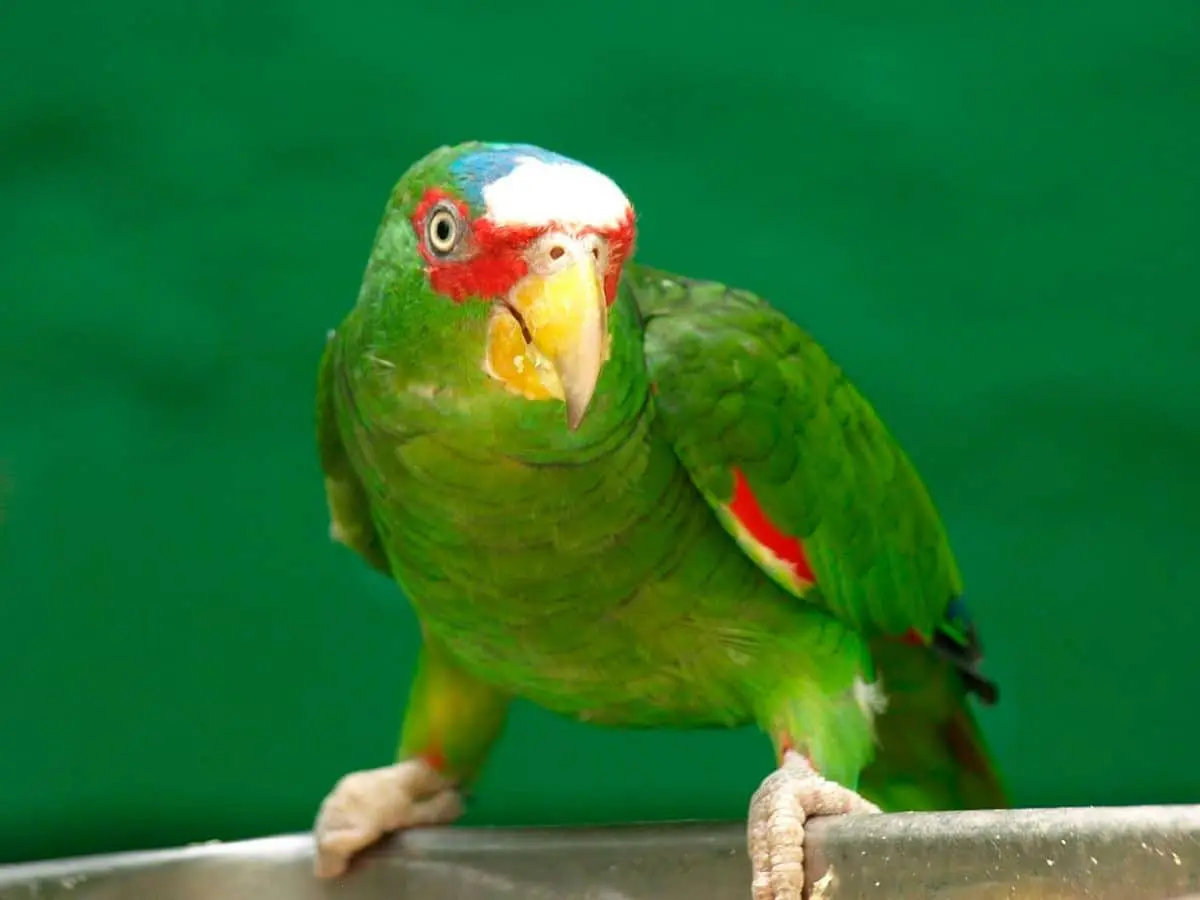
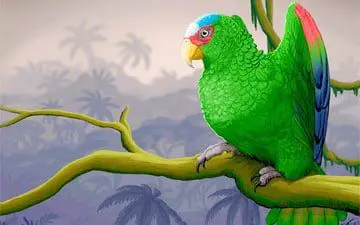
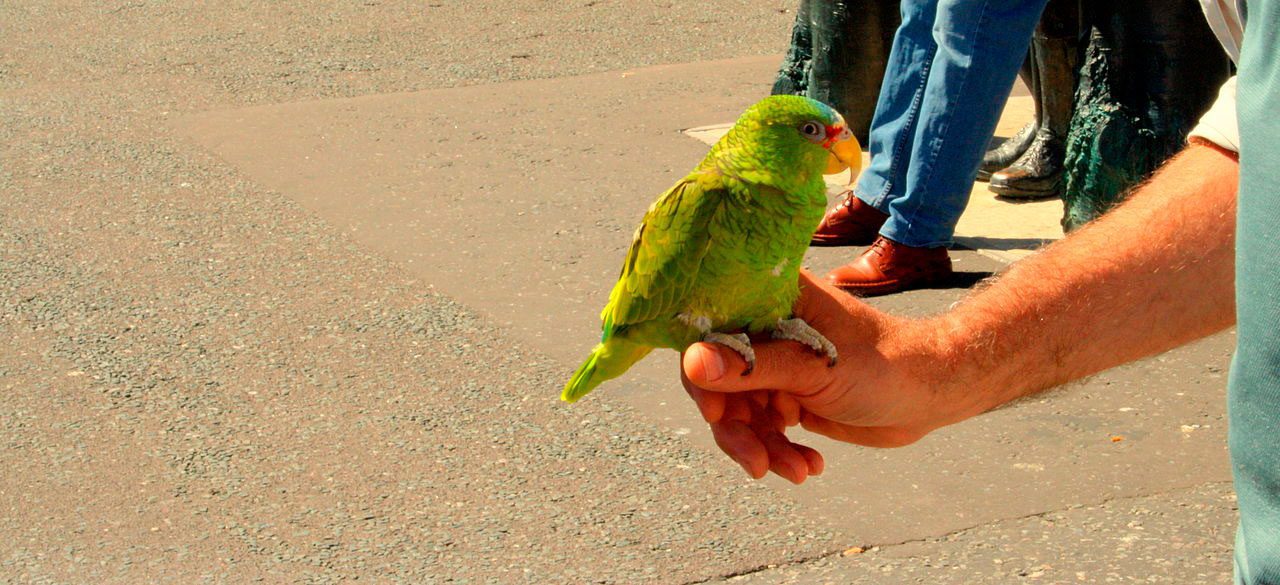
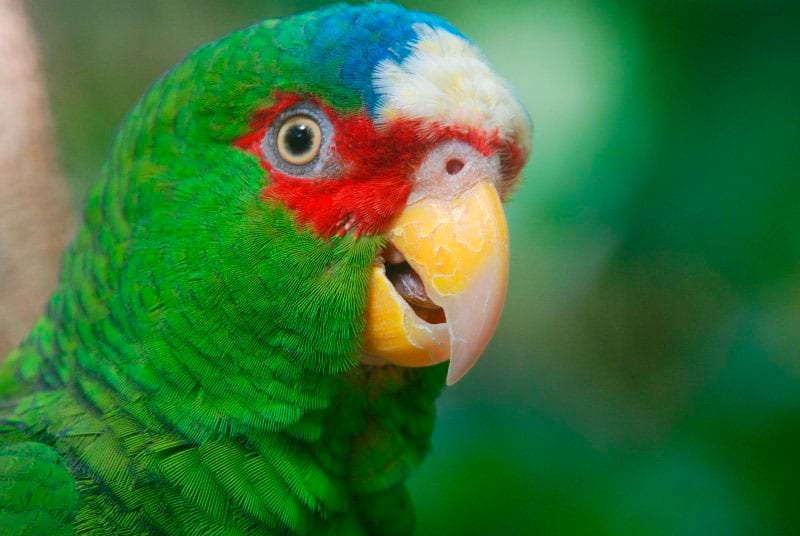
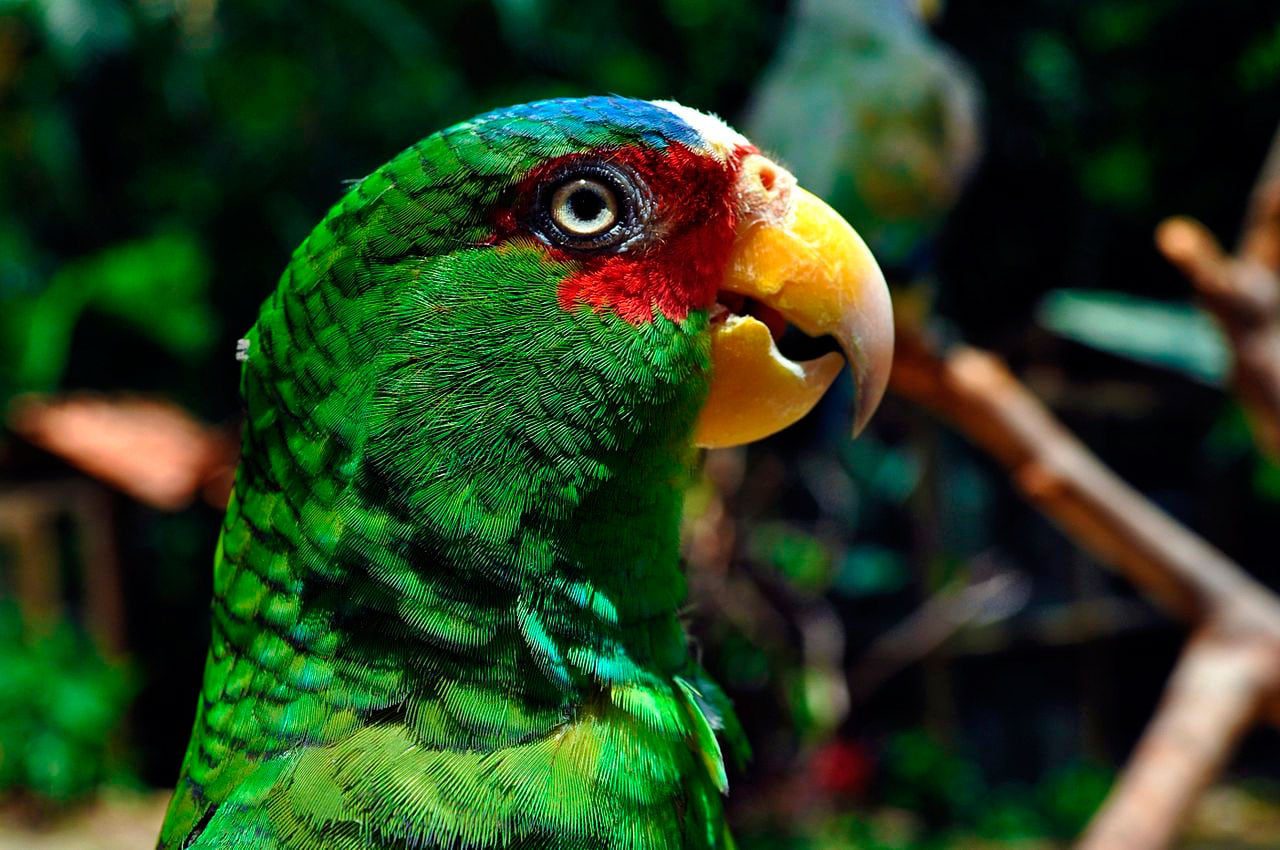
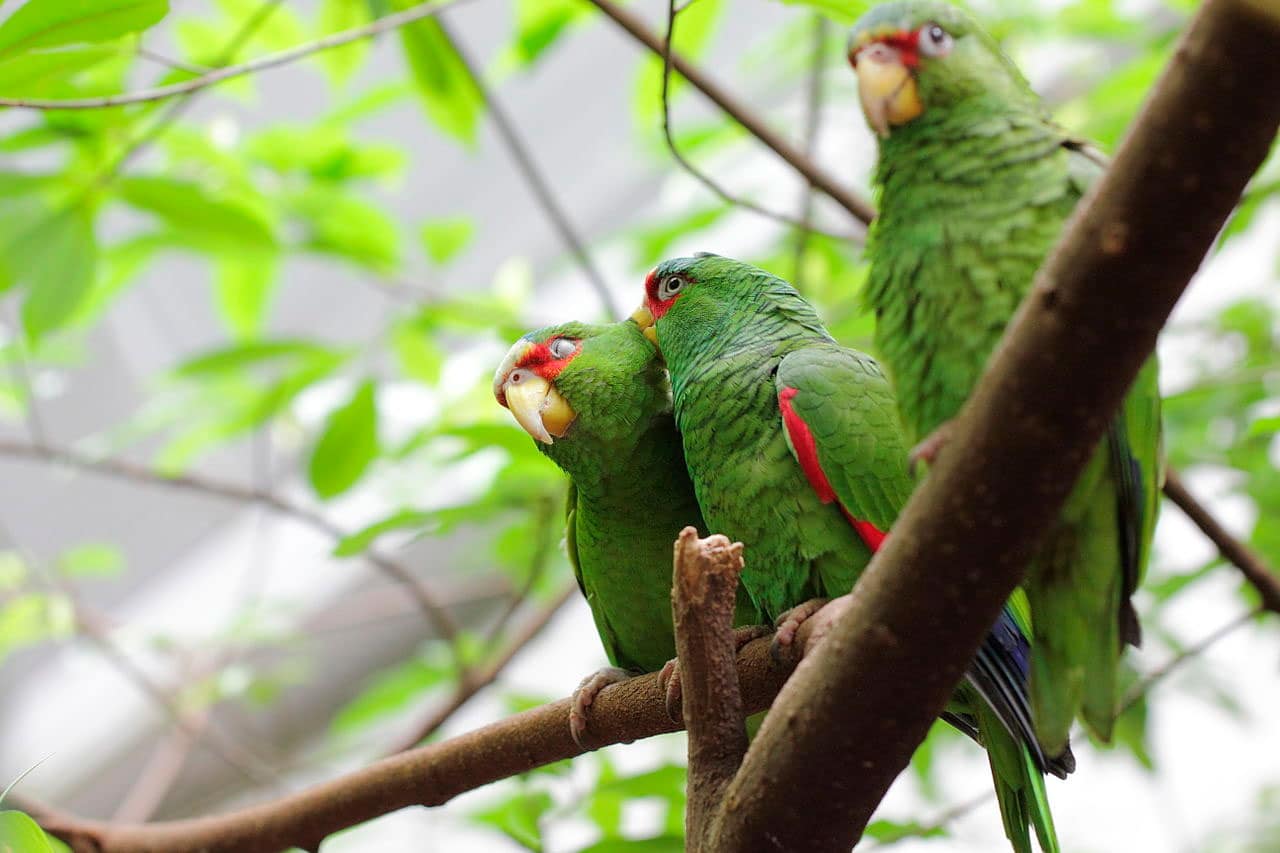
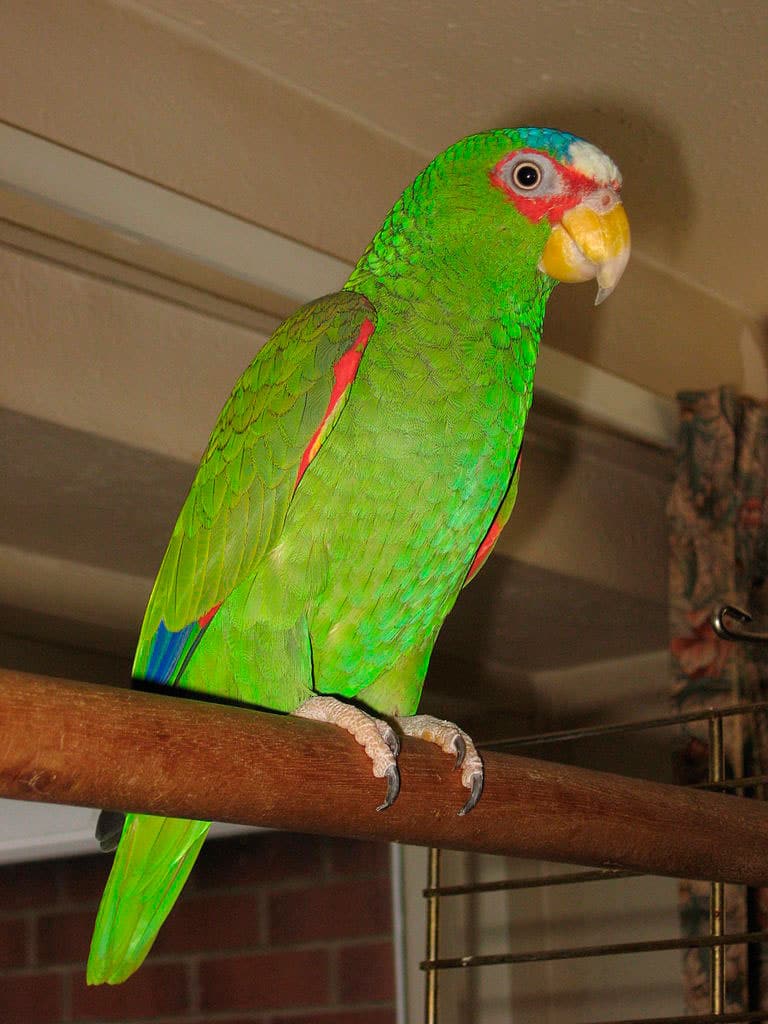
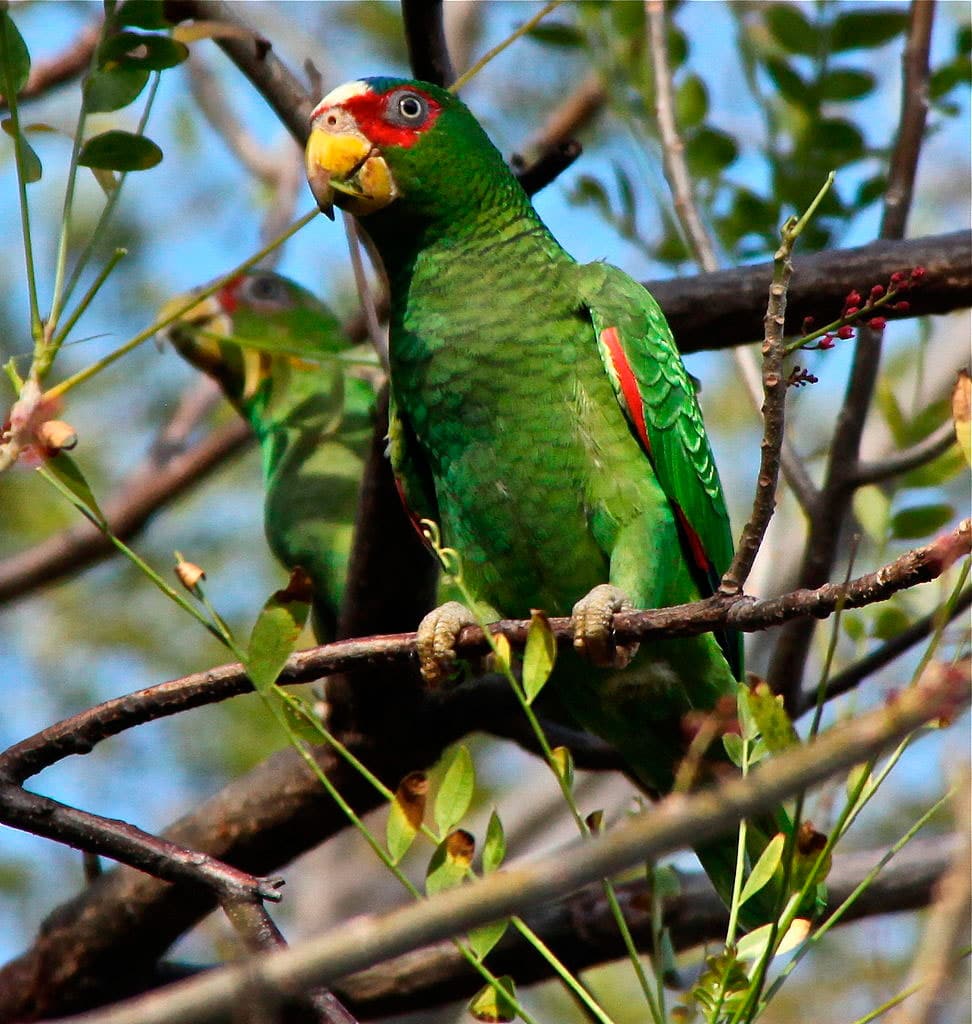
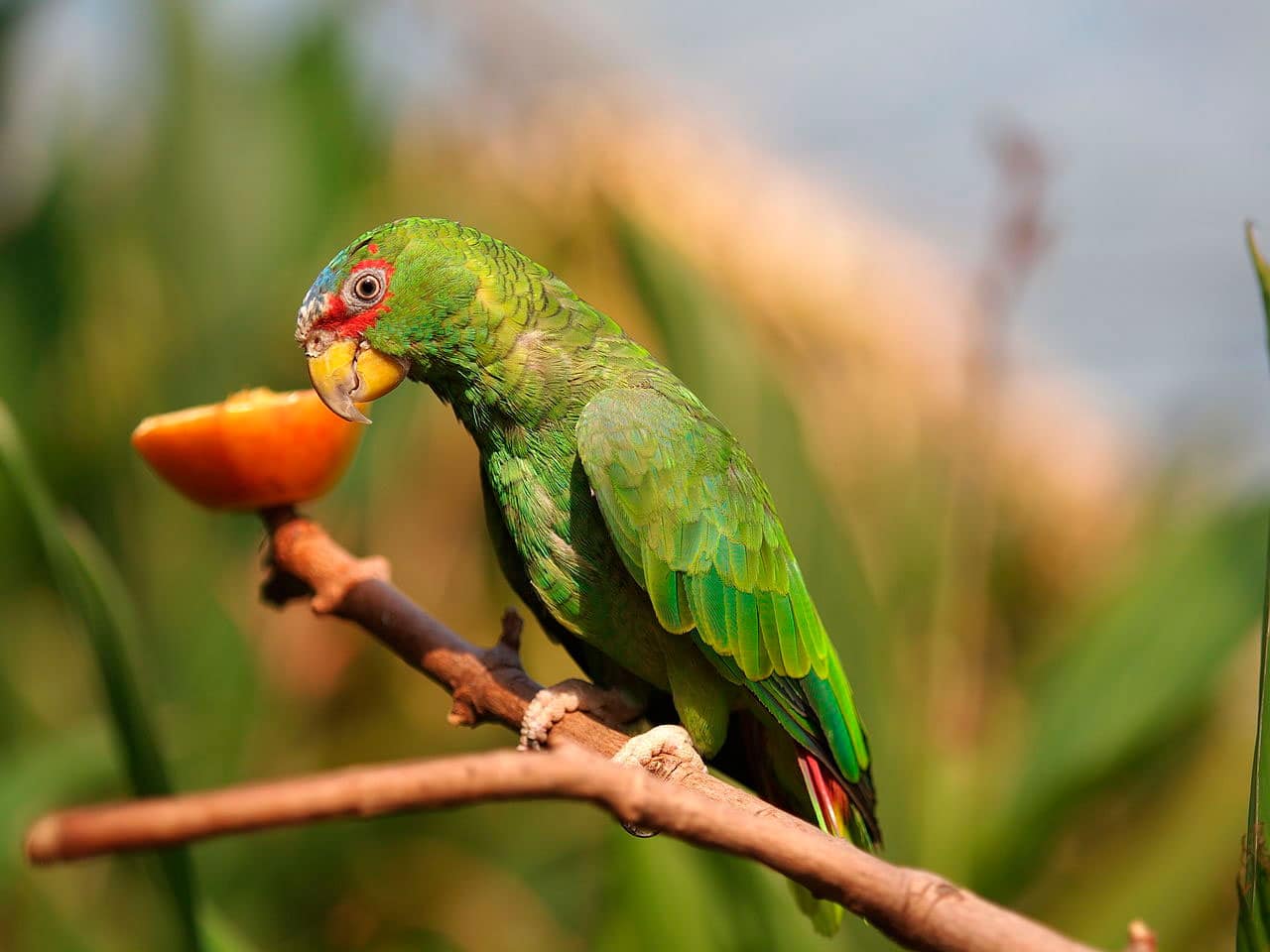
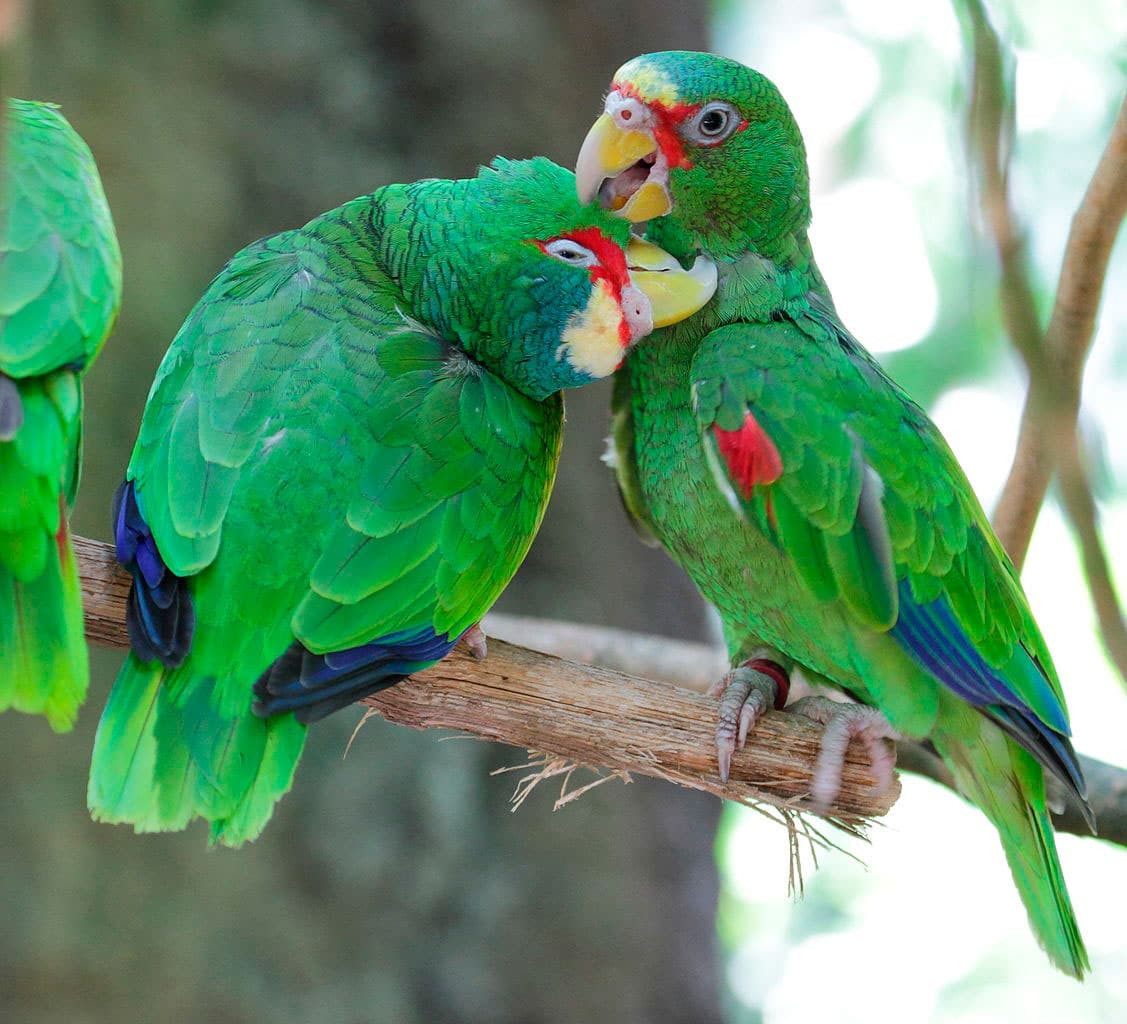
The White-fronted Parrot(Amazona albifrons) has the forecrown white; lores, upper cheeks and ring of feathers around eyes, red; the crown pale blue mingles with the green nape; the feathers with dark margins; sides neck green with narrow black margins. Mantle, back and scapulars, grass-green, sometimes with olive tint; the mantle with indistinct black tips; rump green, perhaps more emerald colors than the rest of the upperparts.
big blankets and alula, red, other coverts green. The outerweb of the primaries, green, They turn blue at the tips; outerweb of the secondaries, blue; innerwebs of the flight feather, blackish. Under, the wings bluish green. Underparts green with weak blackish edges to feathers on throat and the chest. Upper, the tail It is yellow in the center, outer feathers red at the base, blue in the outerweb. Bill light colored horn, darker at the tip; bare periophthalmic pale grey; irises pale yellow; legs pale grey.
It presents an undistinguished sexual dimorphism. The female It differs from the male in the red face It is limited to the region eye ring and it lacks the red hue in wing coverts. The immature male It looks like female but with red on the primary coverts.
(Miller,W, 1905) – smaller the species nominal. Little differentiated from nominal but the green plumage It is perhaps paler, yellower. Some individuals Coast peaceful show some red on the throat.
Amazona albifrons saltuensis
(Nelson, 1899) – Similar to the nominal but the plumage It is heavily steeped in blue. The blue of the crown It extends to the nape.
Habitat:
This adaptable Amazona uses all kinds of wooded habitats and open field with trees, including seasonally moist semi-evergreen semi-evergreen forest (especially at the edge), pine forests, gallery forest, agricultural land with open woods, savannah and tropical arid scrub with cactus, tending to more frequent open areas in the caribbean side.
Usually they prefer drier forests, but where it is simpátrica with Yellow-lored Parrot(Amazona xantholora), tends to prefer more humid and closed vegetation.
In Yucatan the White-fronted Parrot inhabit coastal coconut plantations while breeding. In altitudes of 900 m (Oaxaca), 1.800 m (Honduras) and 1.500 m (Sonora meridional: register only known outside the tropics).
In pairs during the breeding season but usually gregarious, distributed primarily in small groups, with occasional concentrations of hundreds of birds and some communal roosts (for example, mangroves) with several thousand birds.
The White-fronted Parrot nest in trees, cavities of the palm tree termitarium, sometimes in the cavity dug by some woodpecker. species trees Bursera simaruba and Caesalpinia gaumeri are among the favorites to nest in Yucatan. Breeding January July, depending on the location.
A clutch contains 3-5 eggs. Only the female incubates. The incubation lasts around 24 days.
Size of its range (breeding/resident ): 2.330.000 km2
The White-fronted Parrot They extend Mexico, from the South of Sonora (north to about 28 ° N) along the Sinaloa and West Durango south through the Pacific region to Oaxaca and north through Tehuantepec isthmus the Atlantic coast in southern Veracruz and to the East by Tabasco the entire Yucatan Peninsula, including northern Guatemala and Belice.
They are present in southern Chiapas and in the lowlands of the Guatemalan Pacific and, reportedly, in West El Salvador, extending through the lowlands of peaceful, arid and Caribbean lowlands Honduras to the Pacific Northwest Costa Rica and Nicaragua (where distribution is not detailed).
Mainly seasonal residents but visitors in some parts of the range (for example, Yucatan, El Salvador western and eastern mountains Guatemala).
Introduced in urban areas Cozumel Island, in the State of Quintana Roo (Mexico). Their presence only in urban areas of the island, the ability of the species to live successfully in urban areas, the abundance of fruit trees and use as a pet by the islanders allows us to suggest that registered individuals are the result of leakage or were released by their owners.
Usually common and together with the Orange-fronted Parakeet(Eupsittula canicularis), It is the largest parrot in the Pacific slope of Central America; although obviously scarce in some areas. The deforestation It is possibly promoting increases in population Caribbean slope of Central America. Captured for the pet trade and hunted as food, for example in Yucatan, where recently there has been a population decline due to the persecution of parrots that feed on fruit after loss of wild foods cultivated by Hurricane Gilbert. Its capture It is authorized only during the months of October to February in the states of Warrior, Jalisco, Michoacán, Oaxaca, Sinaloa and Tabasco and from September to January in Veracruz.
Distribution 3 subspecies:
Amazona albifrons albifrons
(Sparrman, 1788) – Nominal. Pacific Coast of Mexico from Nayarit to Oaxaca and South of Chiapas in the lowlands Guatemalan Pacific. Birds in the northern Guatemalan lowlands and the arid interior, they can refer to the subspecies Amazona albifrons nana.
• Current category of the Red List of the UICN: Least concern.
• Population trend: Increasing.
Rationale for the Red List category
• This species has a very large range and therefore it is not close to the thresholds for Vulnerable under the criterion of size range (Extent of occurrence below 20,000 km2 combined with a size decreasing or fluctuating range, extension / habitat quality or population size and a small number of sites or severe fragmentation).
• The trend of population appears to be increasing and, therefore, the species does not approach the thresholds Vulnerable under the criteria of population trend (Wholesale 30% decrease in ten years or three generations).
• The population size is very large and, therefore, not approaching the thresholds for vulnerable under the criterion of population size (less than 10.000 mature individuals with continuing decline estimated a higher percentage of 10% in ten years or three generations or with a specific population structure).
• For these reasons the species is evaluated as the least concern.
Justification of the population
• Partners in Flight estimated that the total population of 500.000-4.999.999 individuals (A. Panjabi in a bit., 2008).
Justification of trend
• The population is suspected to be increasing as habitat degradation is creating new areas of suitable habitat.
The White-fronted Parrot in captivity:
Due to the decline of these birds in the wild, especially in the Mexican populations, the White-fronted Parrot is now, unlike other times, offered for sale only rarely. It also, among birds received by importers, the males generally far outweigh the females so it's hard to find a partner.
According to many observations, the White-fronted Parrot captured still quite shy and unsociable, especially if they were mature when they were trapped. The birds immature, which can be stained by the yellowing of his crown, relatively well sympathize with their caregivers and are easily adapted to a life in a cage or aviary. It is said to have some talent to imitate.
According to sources, the first hatchlings in captivity They were born in 1949 in the United States by I.D. Putman; the second in 1977 on German Federal Republic by H. Müller (Walsrode) and a third set in Switzerland in 1979; Since then several European poultry farmers have reported breeding successes.. The latest report came in 1985 from the bird park Metelen Heide in Muen-sterland (Western Germany). there a clutch five eggs produced four hatchlings in mid-June 1984 after an incubation period of 28 days. The young left the nest after about 70 days, but they were still actively cared for and fed, mainly by the parent, for a few weeks more.
Its price in the European market round 1000 EUR. generally silent the Amazons largest. It can be noisy just before and during the breeding season.
These birds can become aggressive in breeding season and can attack the caregiver. The nest boxes are better positioned to nest inspection can be performed from outside the aviary. The inspection of the nest is best when adult birds are out of the nest, however captive breeding has rarely been achieved between individuals.
Susceptible to intestinal infections during the acclimatization period.
Their life expectancy can overcome the 50 years.
Alternative names:
– White-fronted Parrot, Spectacled Amazon, Spectacled Parrot, White fronted Parrot, White-browed Amazon, White-browed Parrot, White-fronted Amazon (English).
– Amazone à front blanc, Amazone à lunettes (French).
– Weißstirnamazone (German).
– Papagaio-de-testa-branca (Portuguese).
– Amazona de Frente Blanca, Amazona Frentialba, Cotorra Frentiblanca, Lora frentiblanca, Loro Frente Blanca, loro frente-blanca, Loro Frentiblanco, Cotorra Guayabera (español).
– Cabeza de Manta, Loro Manglero, Cocha, Cocho, Cucha (Mexico).
Parrots A Guide to the Parrots of the World – Tony Juniper & Mike Parr
Birdlife
The New Parrot Handbook by Werner Lantermann,Matthew M. Vriends
Photos:
(1) – White-fronted Amazon By David Oliva (originally posted to Flickr as Cotorro 007) [CC BY 2.0], via Wikimedia Commons
(2) – White-fronted Amazons in Schönbrunn Zoo By spacebirdy(also known as geimfyglið (:> )=| made with Sternenlaus-spirit) (Own work) [CC BY-SA 3.0 or FAL], via Wikimedia Commons
(3) – white-fronted amazon (Amazona albifrons) By Christoph Anton Mitterer (Flickr: P8155550) [CC BY-SA 2.0], via Wikimedia Commons
(4) – White-fronted Amazon Amazona albifrons pair perching in a tree at Guanacaste, Costa Rica By Steve Jurvetson (originally posted to Flickr as love birds) [CC BY 2.0], via Wikimedia Commons
(5) – White-fronted Amazon, (Amazona albifrons). A pet parrot on a perch. Red feathers on this parrots shoulders indicate that it is a male By ➨ Redvers (Flickr) [CC BY 2.0], via Wikimedia Commons
(6) – White-fronted Amazons in Schönbrunn Zoo By spacebirdy(also known as geimfyglið (:> )=| made with Sternenlaus-spirit) (Own work) [CC BY-SA 3.0 or FAL], via Wikimedia Commons
(7) – A captive White-fronted Amazon in Copán Ruinas, Copán, Honduras By Troy from Charlottesville, USA (Flickr) [CC BY-SA 2.0], via Wikimedia Commons
(8) – A White-fronted Amazon – upper body by sumba [CC BY 2.0 of], via Wikimedia Commons
(9) – A pet juvenile White-fronted Amazon in Poole, Dorset, England By Kyle Payne from England (Odd Looking Seagull) [CC BY-SA 2.0], via Wikimedia Commons
(10) – White-fronted Amazon, Amazona albifrons, Remove alone B. Planet Earth – Flickr
Origin: Bolivia, Brazil, Colombia, Ecuador, Guyana, Peru, Suriname, Trinidad and Tobago, Venezuela
Character: Sociable, outgoing
Life expectancy: 60 to 70 years
Height: 33 to 36 cm..
Content
Description Orange-winged Parrot
Of 33 to 36 cm.. height can weigh between 350 gr y 450 gr.
The Orange-winged Parrot(Amazona amazonica) It is distinguishable by having the Centre of the crown and cheeks yellow, separated by the forecrown and sides of the crown pale blue, edge of the wing orange, and inside of the tail Orange with stripe green in the Middle.
The copies juveniles have a color different to it of them adults; the head is green, Blue and pale yellow.
It is not possible to determine the sex of the Amazons in a safe manner by their appearance.
Present in varied habitats (dry forests, morichales, Savanna, stubble, mangroves, etc.) below the 500 m.
Frequently is seen in pairs or in flocks numerous out of it breeding season.
Reproduction:
It is a kind monogamous (the couple stays together for life).
It nests in trunks of Palms killed apparently at the end of the season dry.
The female lays from 3 to 5 eggs and she incubates them for three weeks approximately. the chicks take two months to develop.
Food:
It feeds on various fruits, seeds and sprouts leaves. Including the fruit of Palms (Sloanea, Richeria and Byrsonima) , flowers Erythrina and sometimes cocoa.
You can take oranges and mangoes of the cultivated areas when other food is scarce.
Distribution:
Size of the area of distribution (reproduction / resident): 7.420.000 km2
North and Central South America to the East of Peru, Brazilian Amazon and northeast of Bolivia.
Conservation:
State of conservation ⓘ
Minor Concern ⓘ(UICN)ⓘ
Current red list category of the UICN: Least concern.
The population trend: Decreasing.
Trapped for the wild bird trade: they have been 268.510 wild-caught individuals for international trade from 1981.
In some areas of their range they are hunted for food by the indigenous population.
The loss of habitat is also a concern.
Popular as a mascot for more than 100 years.
Loving, playful, with good ability to speak, sociable with people.
Known for being very friendly, easy to train, very Smart.
They need constant attention of their owners, they carry out all kinds of fun pranks to get that attention.
Over time they will form a strong bond with their owner., they can however be quite noisy. They will make noise early in the morning and when the Sun is setting. This usually lasts for a few 10 minutes, to wake up and just before sleep.
– Parrot Book, Parrots and macaws Neotropical
– avibase
Photos:
– Our beautiful world
– An Orange-winged Amazon at Kuala Lumpur Bird Park, Malaysia. It is eating a slice of corn on the cob by Vasenka – Wikimedia
– by Patrick Ingremeau – IBC.lynxeds.com
– by Snowmanradio (talk) – Wikimedia
– by Thore Noernberg – IBC.lynxeds.com
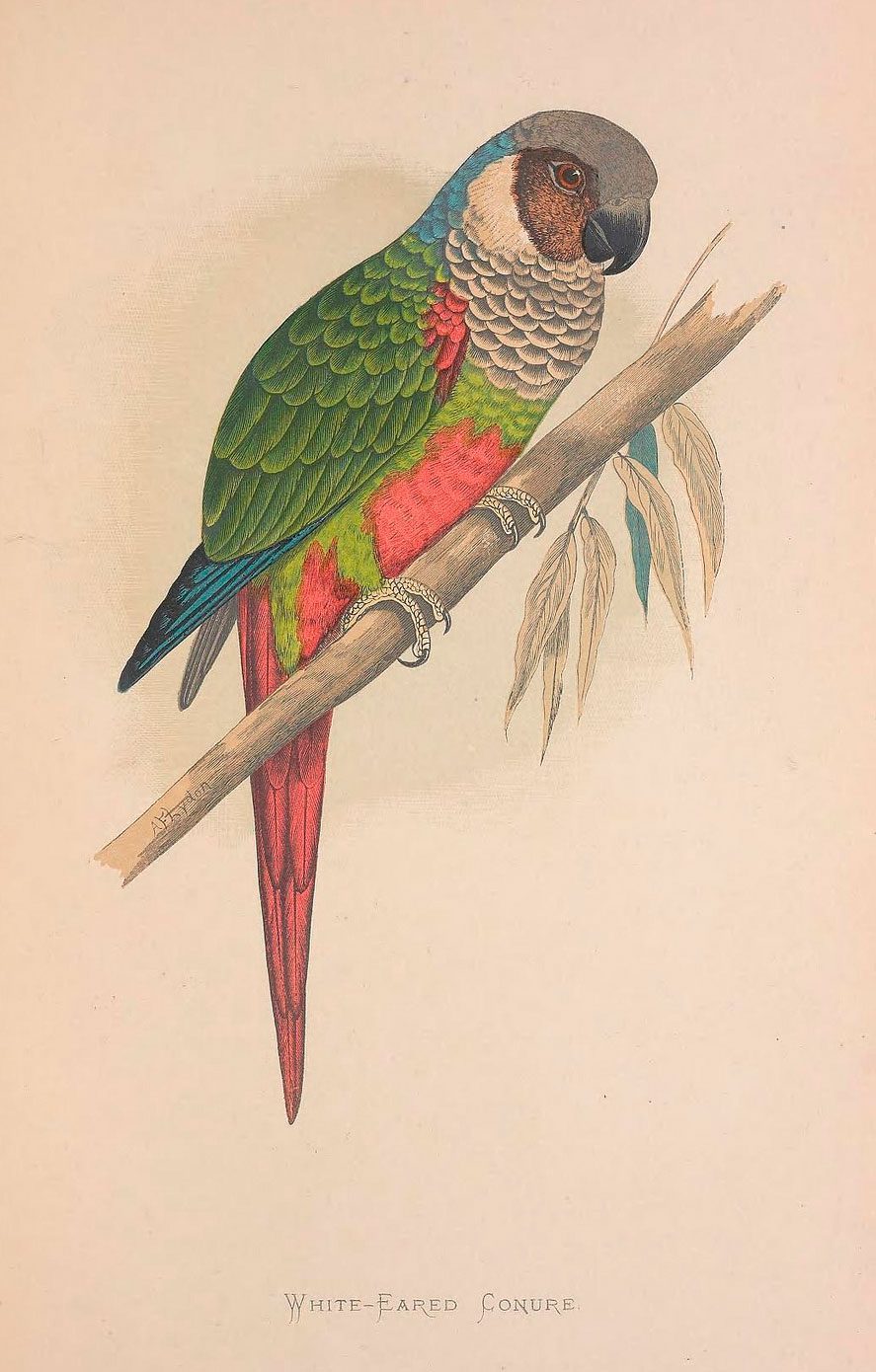
The Maroon-faced Parakeet(Pyrrhura leucotis) measured 21 centimeters length and 50-53 g. of weight, It is the smallest species long-tailed parakeets.
Their cheeks and forecrown, They are brown brown mostly, blue above eyes and on lower cheeks; crown and nape, dark brown, dotted with orange-brown from the ends of pens; ear-coverts white to pale brown; nape with bluish green tones.
Mantle and top of the back, green with scattered dark margins on some feathers; lower back, rump and uppertail-coverts, brown. Wing coverts except green primary coverts which they are blue and patch Red in the bend of wing.
Primaries blue. Under, the wings with the lesser coverts green, the greater coverts dark gray; the flight feathers grey. Feathers of the throat and sides neck, blue base with a yellowish subterminal band and black tips; feathers of the chest with little blue tones and instead to brown in bases; the underparts They are green with a large patch brown in the center of belly. maroon brown with green edges at the base of the outerweb of the lateral feathers; undertail, the tail It is reddish brown opaque.
Bill black; cere black; bare periophthalmic grey; irises dark orange-brown; legs dark grey.
The plumage of both sexes are similar.
Taxonomic status:
Regarded as a subspecies Pyrrhura [leucotis or emma] by some authors
Sound of the Maroon-faced Parakeet.
Habitat:
The Maroon-faced Parakeet inhabits forests, clear edges and adjacent with scattered trees including cocoa plantations shaded Bay, sometimes visiting parks and residential areas. They can be observed, mainly, in lowlands (for example, to 600 meters in east Brazil) and in forests at higher elevations in Northeast Brazil. gregarious, generally close to flocks 15-20 birds.
Reproduction:
No information about your reproduction in the wild. Clutch 5-9 eggs in captivity.
Food:
Probably you have a diet comparable to his close relatives in the wild, where is recorded the Miconia hypoleuca as one of their food. There are reports of birds feeding in cornfields.
Distribution:
Size of its range (players / residents): 352.000 km2
– This species appears as Near-threatened on the basis that it is suspected that there has been a decrease in moderately rapid population due to the habitat loss and capture.
Justification of the population
• Current category of the Red List of the UICN: Near-threatened..
• Population trend: Decreasing.
• Population size : 10000-19999 individuals.
– The Maroon-faced Parakeet is believed to have a small town; However, Marsden et al .(2000) It estimated that there is a combined population of about 19,300 individuals on Biological Federal Reserve Sooretama the Nature Reserve Linhares in the State of Espirito Santo, based on surveys 1998, It is suggesting that the population has been previously underestimated.
– Until an updated estimate available, the population was provisionally placed in the band 10,000-19,999 mature individuals, representing a population of about 15,000-30,000 individuals in total, although the structure of the subpopulation not known.
Justification trend
State of conservation ⓘ
Near Threatened ⓘ(UICN)ⓘ
– It is suspected that the species is in a moderate to rapid decline due to the habitat loss and capture. The rate of decline is not thought to be as rapid because the tolerance of this species to modified habitats buffers the impacts of deforestation to some extent..
– Most of the original forest cover in which the Maroon-faced Parakeet It was eliminated more than a century ago; in the news, are being eliminated very quickly the remaining patches (pit et to the ., 1997).
– This bird often seized in captivity, suggesting that there is a major catch birds for trade. (J. Gilardi in little ., 2010).
Conservation Actions Underway
– protected in parts of Bay (Private Reserve Station Veracruz, and national parks Discovery, Pau Brazil and Monte Pascoal) (Lamb 2002).
– Monte Pascoal It faces an uncertain future, as it has been invaded by Indians Pataxó they have largely eliminated neighboring area.
– Elsewhere the species is known from reserves Linhares-Sooretama(Espirito Santo), Rio Doce State Park(Minas Gerais, Brazil) and Ting Biological Reserveeructate (Rio de Janeiro).
Conservation Actions Proposed
– continue monitoring of this species in the field and in trade.
– Strengthen the network of protected areas within the Atlantic Forest of Brazil conservation of key sites.
"Maroon-faced Parakeet" in captivity:
Very rare.
Its diet in captivity it is similar to that of their peers.
Its population in the wild is small and decreasing whereby each captive specimen of this species that is capable of reproducing, must be placed in a well-managed captive breeding program and not sold as a pet, in order to ensure its long-term survival.
(2) – Several White-eared Parakeets (Pyrrhura leucotis) at Palmitos Park, Gran Canaria, Spain By Bjoertvedt (Own work) [CC BY-SA 3.0 or GFDL], via Wikimedia Commons
(3) – A White-eared Parakeet in Parque das Aves, Foz do Iguaçu, Brazil By Kee Yip from Union City, California, USA (IMG_4336_P1030859Uploaded by snowmanradio) [CC BY 2.0], via Wikimedia Commons
(4) – White-eared Parakeet (Pyrrhura leucotis), Vale Reserve, Holy Spirit, Brazil by Brendan Ryan – Flickr
54 to 56 cm.. height and a weight between 520 and 790 g.
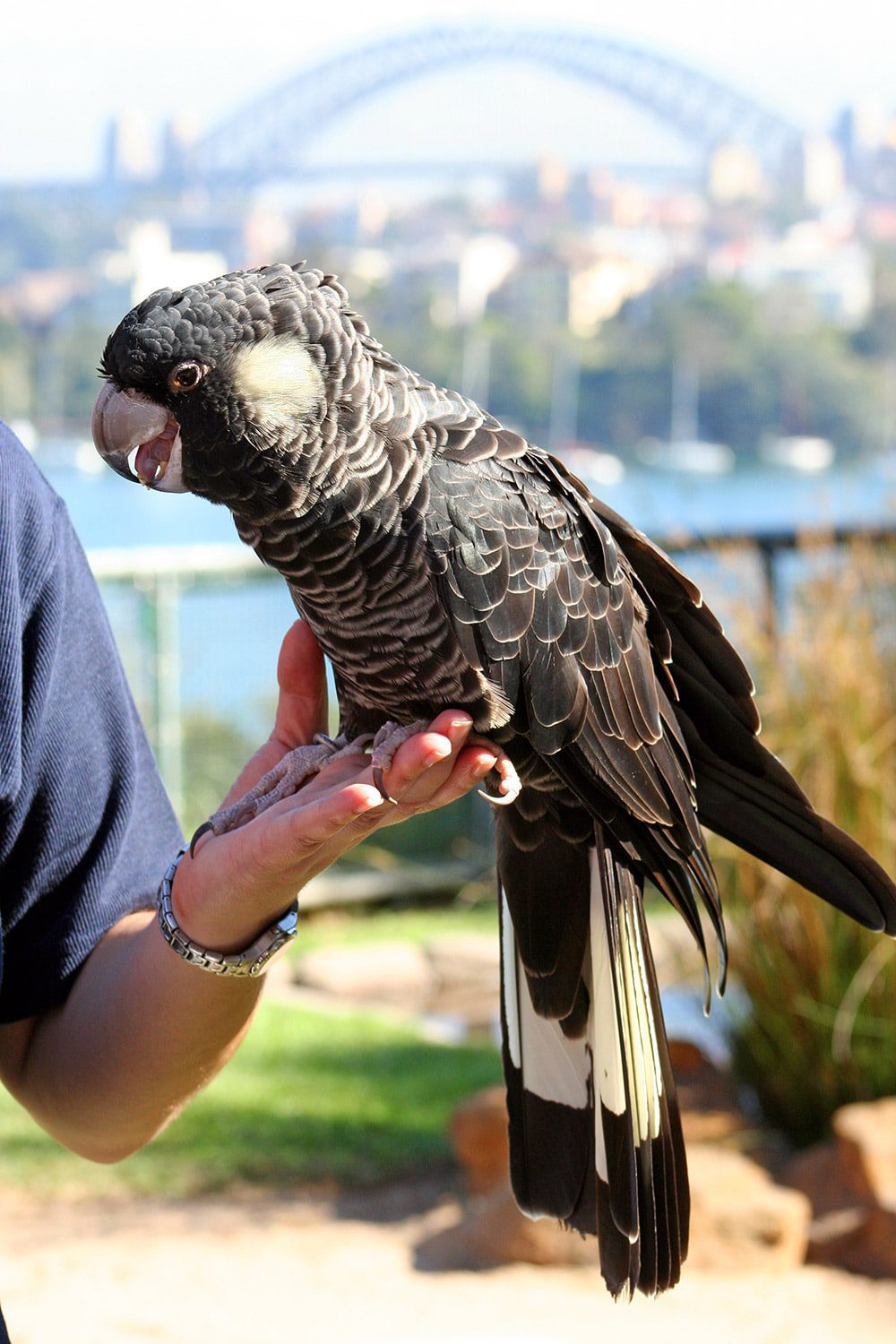
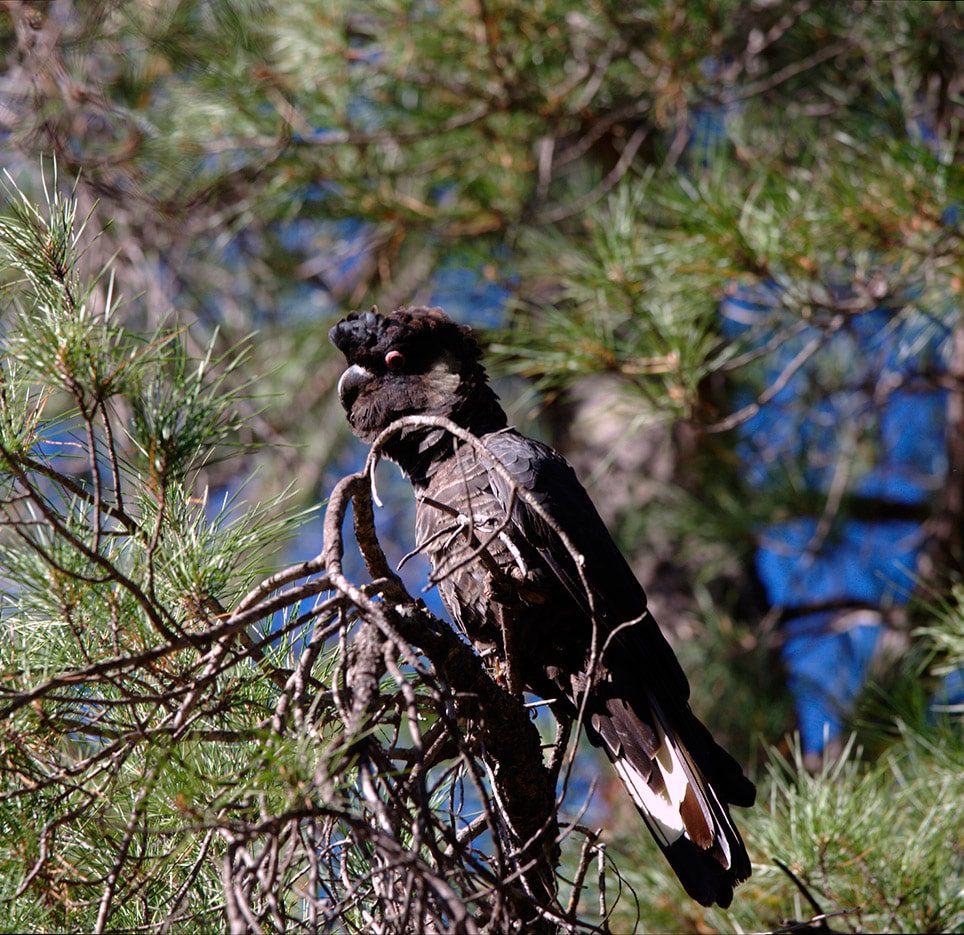
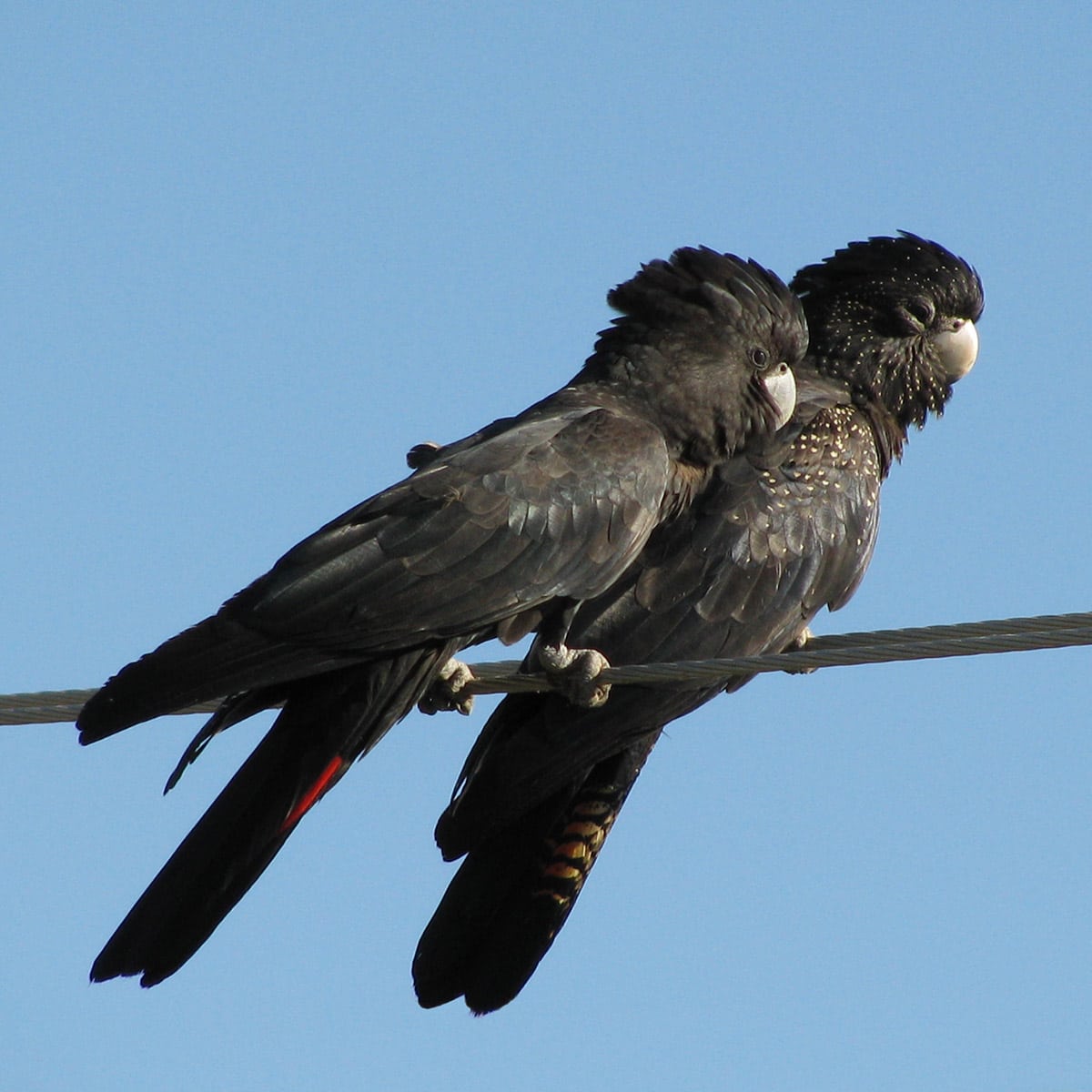
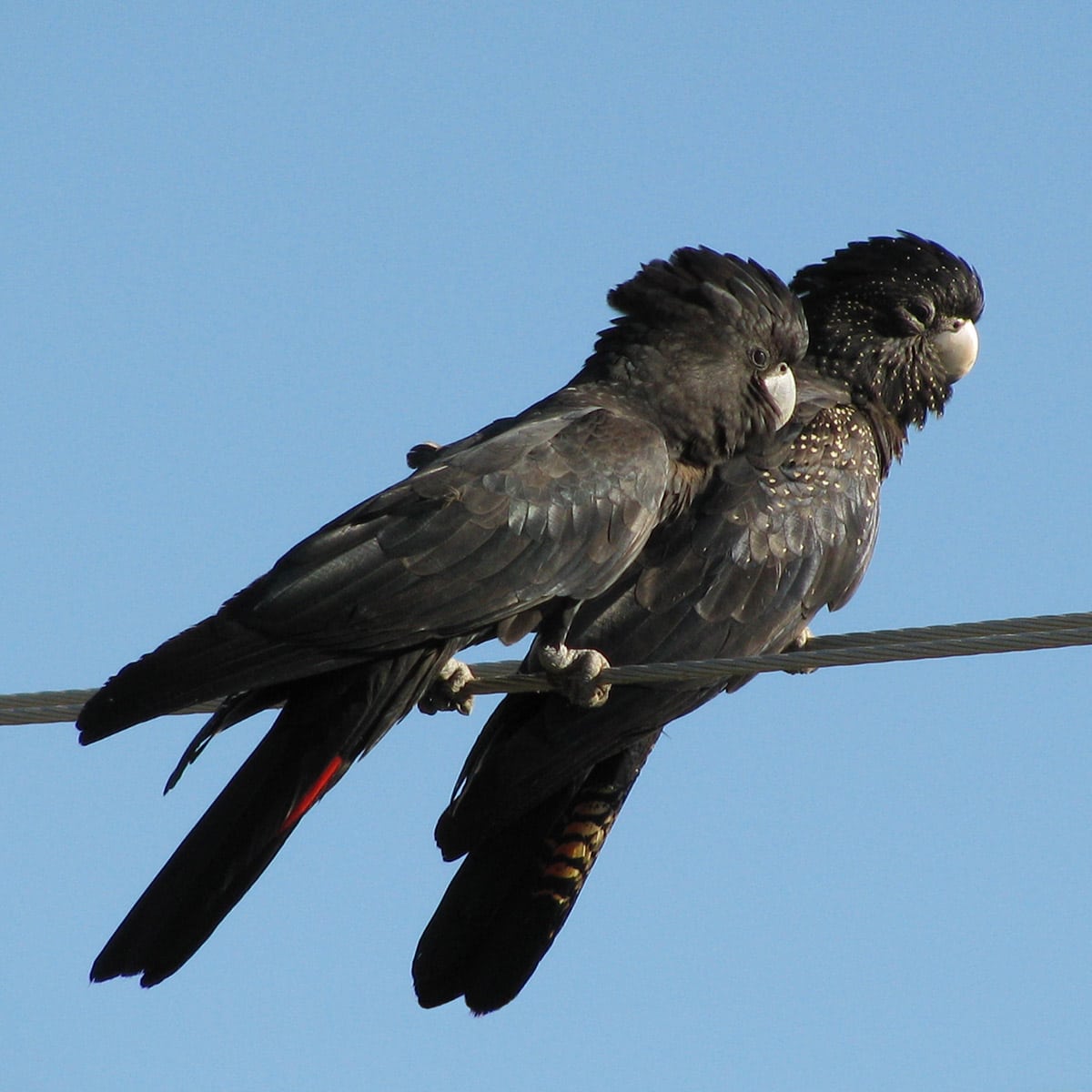
The Short-billed black cockatoo(Zanda latirostris) It is a large black cockatoo..
It has great bill black, crest erectile, white spot in the area ear and white panels on the tail. The female It is similar except patch area ear large and slightly yellowish white.
The immature Similar to adult female.
Closely related to Baudin's black cockatoo(Zanda baudinii). They were formerly treated as a single species.
Mainly inhabits in native forests eucalyptus and shrubland or heathland. Visit temporarily plantations exotic pines.
Sometimes you see them in cities or at the edges of roads. It is also a visible visitor to the gardens containing native plants with hard fruits around Perth.
Usually they see them in groups of three or in small flocks, but occasionally gather in large flocks composed of hundreds or, exceptionally, thousands of birds. Sometimes it is associated with Baudin's black cockatoo(Zanda baudinii) wave Red-tailed black cockatoo(Zanda Banksia) in places where food is plentiful.
The species is said to be Residents in areas of high rainfall They are retaining much native vegetation and are emigrants of the driest regions and places where most of the native vegetation has been removed.
Reproduction:
They do not breed until they are at least four years old..
Adult birds They mate for life, and stay together throughout the year.
Reproduction occurs mainly in the region Wheatbelt, northwest of the Stirling Range about Three Springs, but it has also recorded on the coastal plain in the South West, about Bunbury.
The reproductive activity It is limited to eucalyptus forests. They make their nests in large holes in the top of the eucalyptus.
The eggs They are white or cream, and they have no marks. Son incubated by female only, for a period of 28 to 29 days. The nestlings are fed by both parents, Although during the first 10 to 14 days after hatching they are fed exclusively by the female.
Adults return to the same breeding area each year.
Food:
It feeds mainly from seeds and occasionally nectar, fruit and insect larvae.
Distribution:
Size of the area of distribution (reproduction / resident): 196.000 km2
Endemic southwest Australia.
Conservation:
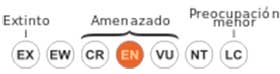
State of conservation ⓘ
Endangered ⓘ(UICN)ⓘ
• Current category of the Red List of the UICN: In danger of extinction.
• Population trend: Decreasing.
On the basis of the distribution of birds during the breeding season, the total population of the Short-billed black cockatoo it has been estimated that is between the 11 000 and 60 000 birds, although there are those who affirm that its population could count on less than 10 000 birds.
The decline of this species It is mainly due to the loss and fragmentation of habitat. This has been caused by the clearing of native vegetation, mainly for agricultural purposes, Since the mid-20th century.
No specific information available on future changes in population size. But, the range of the species is thought to continue to contract for some time, which leads to a concomitant decrease in population size.
"Short-billed black cockatoo" in captivity:
A program captive breeding It was established in 1996 by the Department of Conservation and Land Management (CALM), in association with poultry farmers and licensed Zoo of Perth.
The genetic diversity of the captive population is enhanced by an 'abandoned' program’ that rehabilitates injured birds in the wild and then incorporates them into captive breeding.
Some eggs and chicks are caught illegally for sale in the markets of poultry. Although the demand for the species is said to have declined over the past decade, high market prices (approximately 3.000 dollars per bird and 5,000 $ couple) together with the scarce success of breeding captive birds, They suggest that Illegal take of this cockatoo will continue to be a continuing threat to the survival of this species..
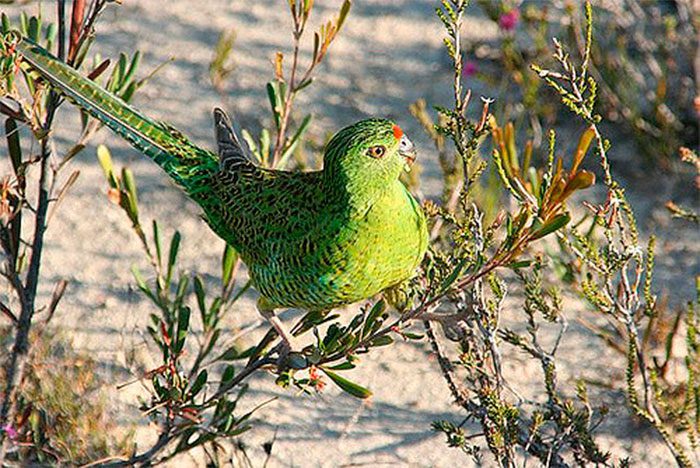
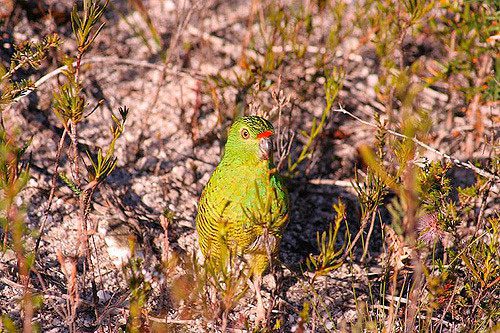
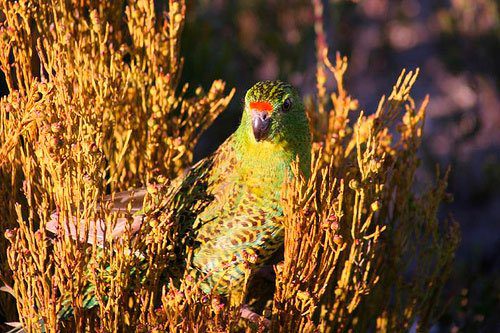
The Western Ground Parrot(Pezoporus flaviventris) It has mottled green back, underparts green and yellow, forecrown red. Tail long, with green stripes, Yellow and black poorly defined.
taxonomy:
A research team, directed by Stephen Murphy, studied taxonomy (discipline in charge of classifying living things) of the Eastern Ground Parrot(Pezoporus wallicus), an endemic species (exclusive geographic region) of fragmented coasts of southwest and southeast Australia. The researchers studied DNA from museum specimens from 160 years, and they concluded that the western population should be classified as a new species: Pezoporus flaviventris.
Habitat:
The Western Ground Parrot It is a bird that lives in soil and living in low heathland, dry or swampy near the coast. They are usually seen in habitat that has remained unburned for long periods of time. Mainly fly at dawn or dusk and feeds mainly on small seeds.
Reproduction:
It is one of the few parrots in the world that does not nest in a hole or cavity. Little else is known about the reproductive biology of the Western Ground Parrot
Food:
The Western Ground Parrot usually it feeds alone or with another parakeet. Seeds of various plants, especially of Sedge, for example, Mesomaelaena stygia ssp. stygia. Flower buds and flowers base, for example, the beaufortias, the dryandras and grevilleas, They are also important parts of the diet. It has been observed Western Ground Parrot semisuculentas feeding on leaves Daviesia pachyphylla. The diet is varied and uses the great diversity of habitat.
Distribution:
Historically, This species was found along the south west coast of Australia from Perth north to Geraldton and along the south coast east to Israelite Bay. But, It seems to have disappeared off the west coast of Western Australia in 1900.
• It is classified by the Australian government as a species in danger of extinction.
• Population trend: Decreasing.
• Population size : 100-110 individuals.
During an investigation (1), scientists found that the population of this new species had diminished quickly in the last 20 years, They are leaving only around 110 birds surviving in the wild, most of them in an Australian national park, so it is considered one of the rarest species in the world, so that the entry introduced predators (cats) National Park, could lead to the extinction of the species in a short time, so the need to implement is suggested Urgent conservation program for this new species described.
(1) – «Tip(‘9. S. A. Murphy, S. A., L. Joseph, A. H. Burbidge y J. Austin. “A Cryptic and Critically Endangered Species Revealed by Mitochondrial DNA Analyses: the Western Ground Parrot”. Conservation Genetics, 12, (2010): 595-600.’
Threatened Species Strategy
The Western Ground Parrot is one of the 20 birds that the Australian Government has given priority in the allocation of resources to support the recovery effort species. The Western Ground Parrot It has a base of strong and growing support in the local community. An association between South Coast NRM, Friends of the Western Ground Parrot, the Department of Parks and Wildlife and the Perth Zoo It is working to prevent extinction.
The success of the population captive breeding recently established security will be key to the species, and management of wild cats and fires Cabo Arid National Park It will be essential for local recovery. With an estimated population of less than 150 individuals and a captive population of less than ten, we need to act.
The emergency actions include the protection of the wild population and creating a population secured in captivity. Opportunities to receive more support through National Planning Program, the local group management of natural resources and existing partnerships with Government of Western Australia and theZoo of Perth They are likely to contribute to recovery.
The website Endangered Species Strategy It includes information on what is being done to support the recovery effort species. Understanding the habits of a partnership project of rare birds and reserved aims to benefit the species improve the behavior of captive birds, which may allow better management of wild populations.
• Avibase
• Parrots of the World – Forshaw Joseph M
• Parrots A Guide to the Parrots of the World – Tony Juniper & Mike Parr
• Science and Development Magazine
• Department of the Environment (2018). Pezoporus flaviventris in Species Profile and Threats Database, Department of the Environment, Canberra. Available from: http://www.environment.gov.au/sprat.
Photos:
(1) – Feeding Western Ground Parrot….. the only photo’s of this bird in the wild was taken in 2005 the day before my birthday, what a gift that was. This is from my field season the next year. No nest has been found since 1913. by Brent Barrett – Flickr
(2) – Western Ground Parrot (Pezoporus flaviventris) by Brent Barrett from Dunedin, New Zealand [CC BY-SA 2.0 or CC BY-SA 2.0], via Wikimedia Commons
(3) – A Western Ground Parrot in Australia by Brent Barrett from Dunedin, New Zealand [CC BY-SA 2.0], via Wikimedia Commons
(4) – Stand and sing Western Ground Parrot (Pezoporus flaviventris) by Brent Barrett from Dunedin, New Zealand [CC BY-SA 2.0], via Wikimedia Commons
(5) – This is officially one of the rarest images in exhistence Pezoporus wallicus flaviventris by Brent Barrett – Flickr
 Minor Concern ⓘ
(UICN)ⓘ
Minor Concern ⓘ
(UICN)ⓘ




















.jpg)


_1.jpeg)


