โ–ท The world of Pets: Dogs, cats, birds, reptiles, amphibians

Vasa Parrot
Coracopsis vasa

Vasa Parrot

Content


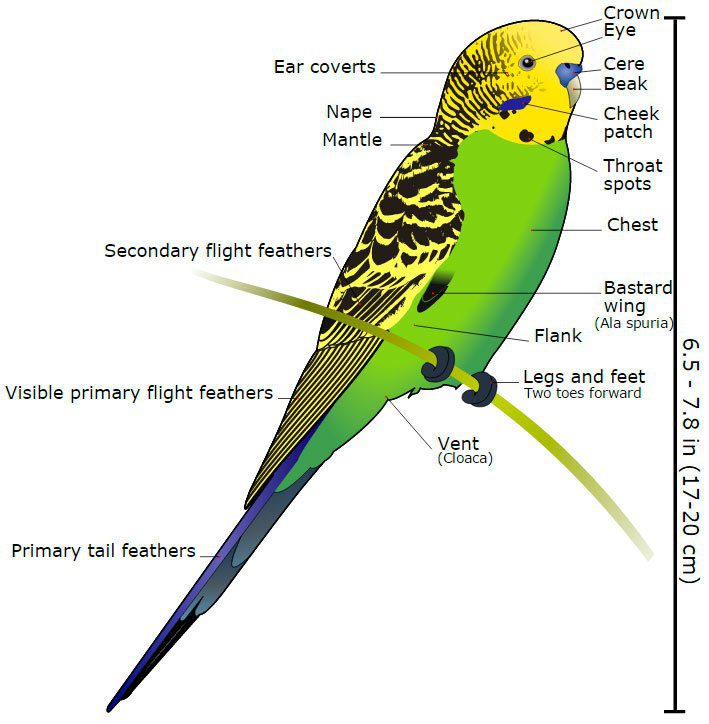
Anatomy-parrots

Description

Of 50 cm.. length and an average weight of 480 g..

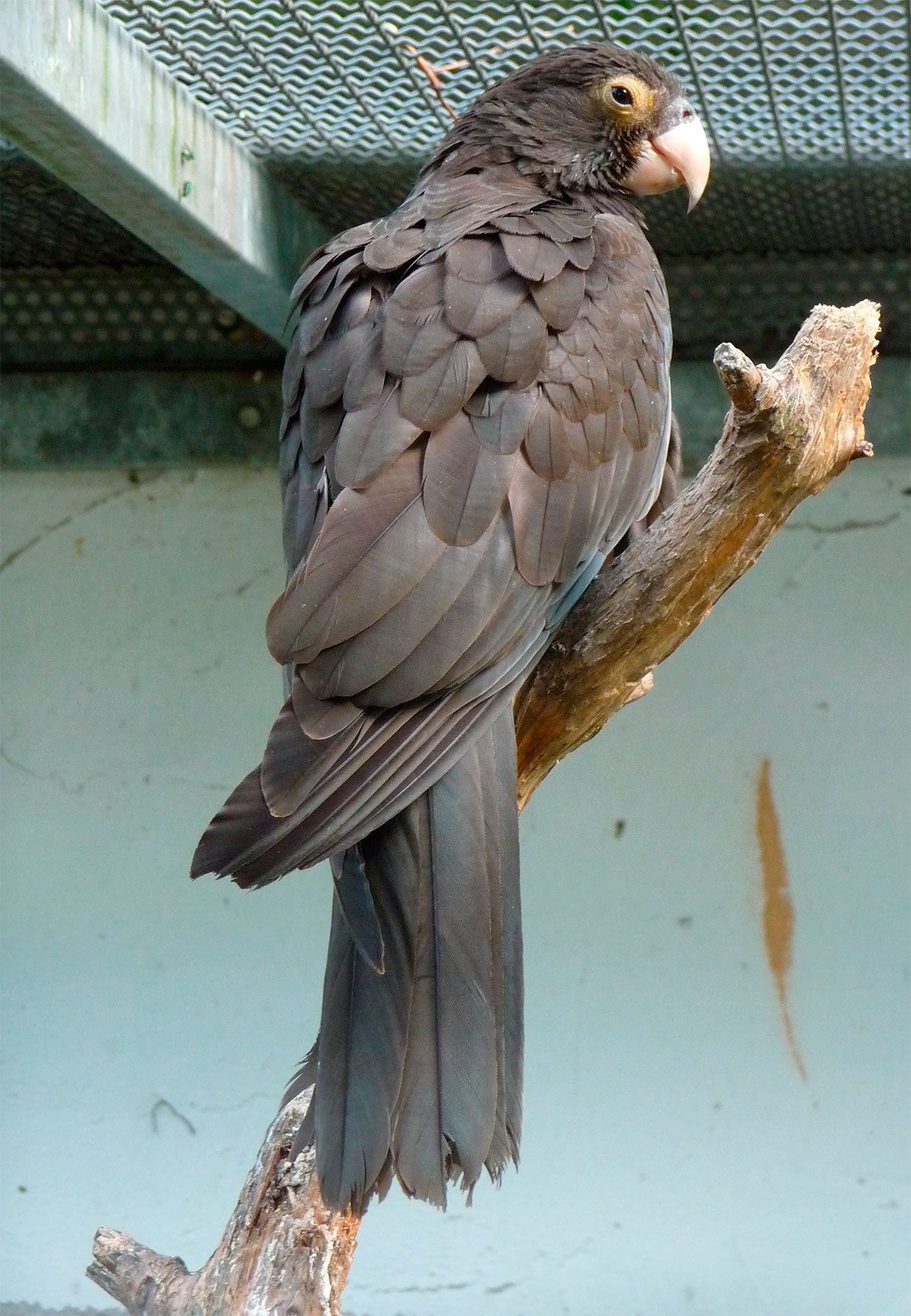
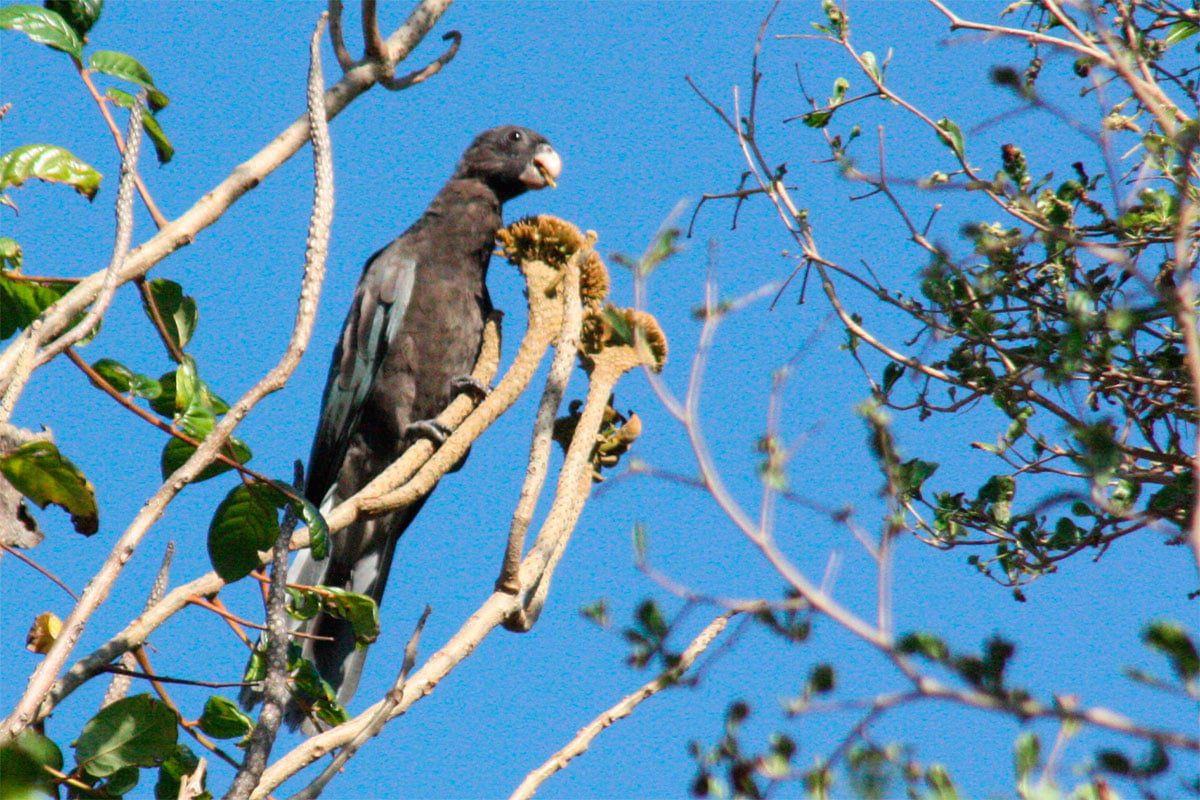
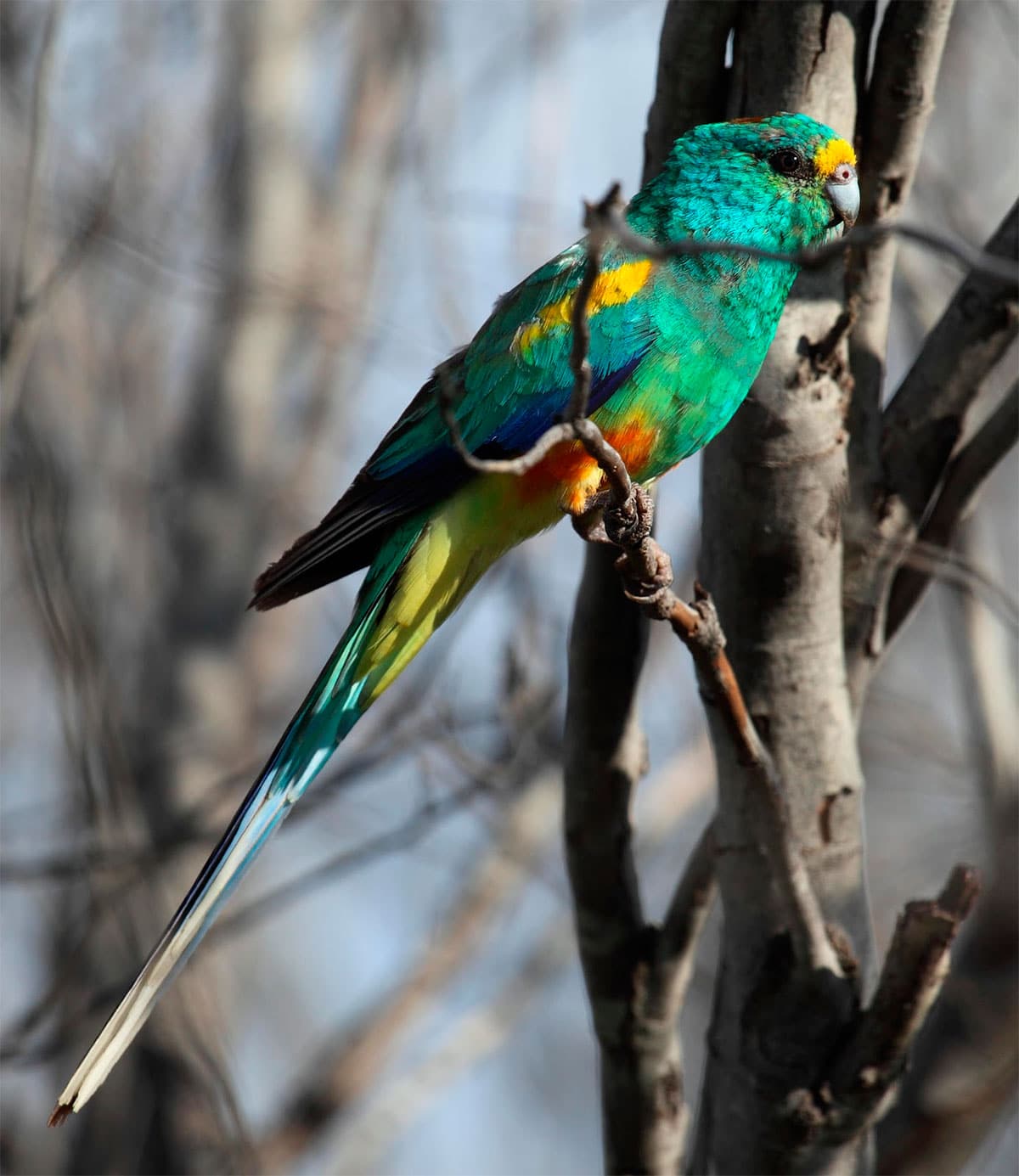
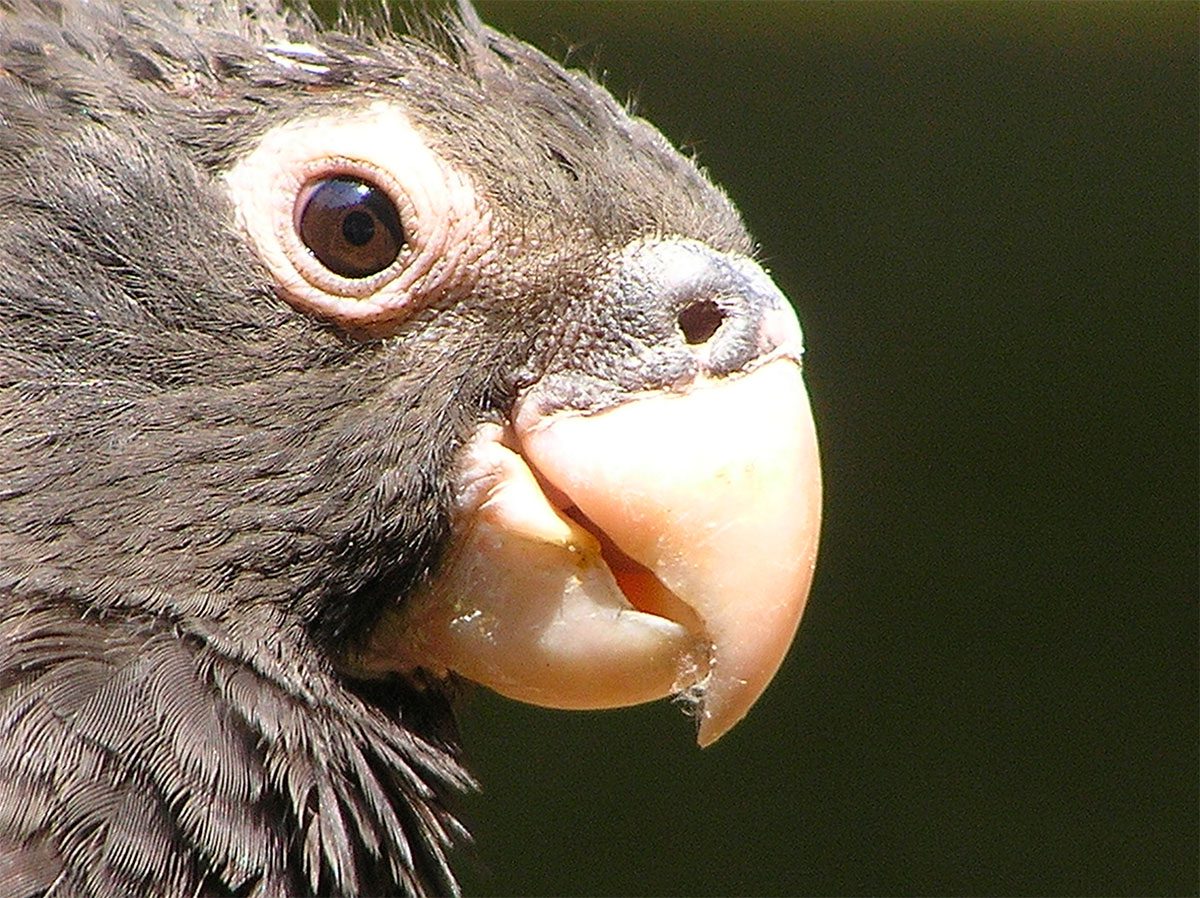
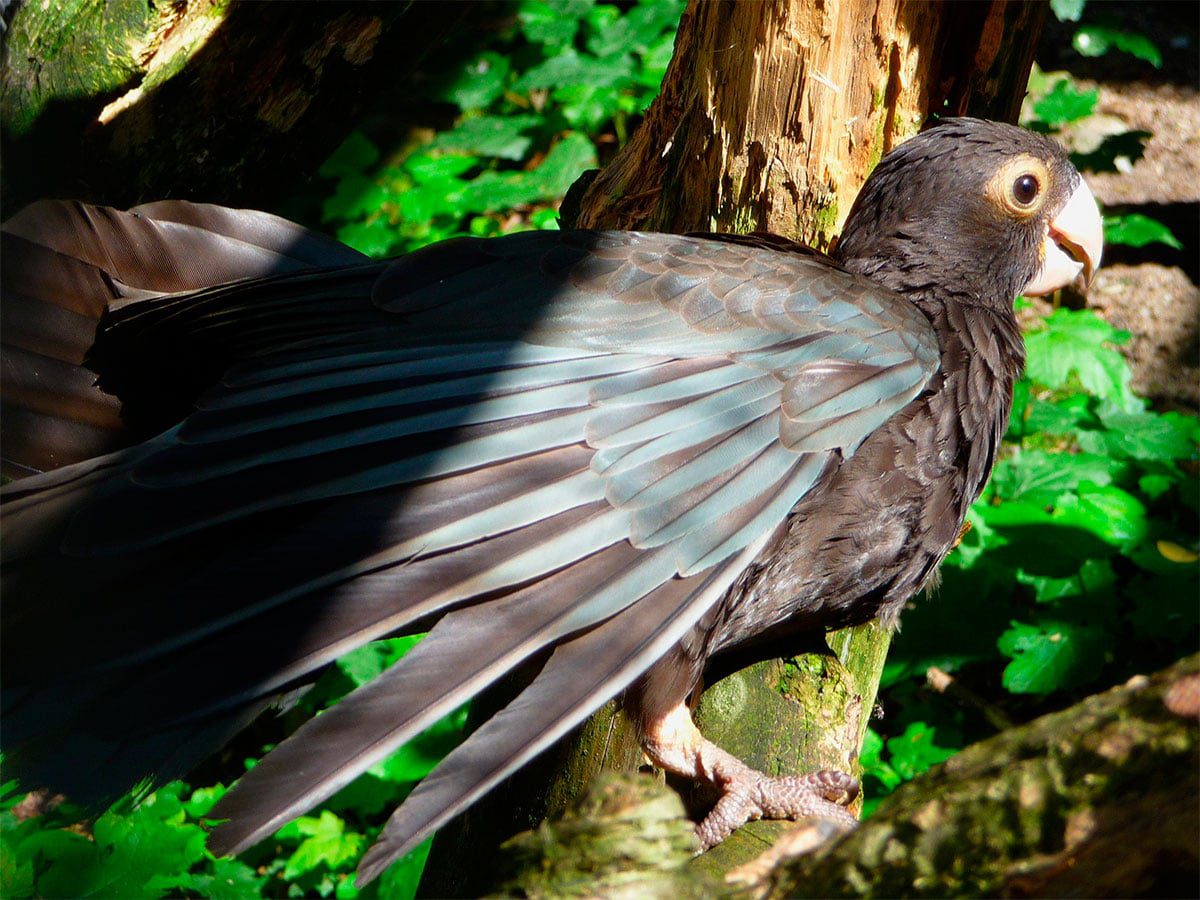
The Vasa Parrot (Coracopsis vasa) It has a few shades between black and Brown, big enough, grim looking, with the rounded tail and a powerful bill pinkish.

They can be difficult to spot when they combine their dark plumage with shadows under the forest canopy..

To a large extent, sympatric with the very similar Black Parrot (Coracopsis nigra), but the Vasa Parrot It is larger and somewhat paler, greyish Brown rather than dark brown

They can fly at high altitude when they travel to or from the sites of communal rest. It can be very Meek and accessible When feeds below the forest canopy.

In general, the plumage of the Vasa Parrot is brown-black color with a slight greyish tinge clear at the top, in special wings and top of the tail. Primaries with narrow gray margin in vane outer. bottom of the flight feather pale grey. Subcaudales coverts Gray with variable black stripes on the shafts of feathers. Tail with faint dark subterminal band; undertail, the tail pale grey. Bill usually pink but grey color after molting; irises brown; naked periophthalmic patch (that extends to the peak) pale grey; legs greyish Brown clear

Without sexual dimorphism in plumage. Reproductive females can become bald on the head, around the eyes and throat , with the exposed skin of mustard yellow or orange.

Immature with plumage more greyish Brown lighter and paler skin around the eyes. Skin patch naked eye more smaller than in adults or absent.

Description 3 subspecies

  • Coracopsis vasa comorensis

    (Peters,W, 1854) – Smaller, of 45 cm., and paler than the nominal species, Unlike the subspecies drouhardi by having underparts dyed color chocolate instead of gray, and undertail-coverts Brown instead of gray or whitish.


  • Coracopsis vasa drouhardi

    (Lavauden, 1929) – Itร‚ยดs smaller, of 45 cm., and paler than the nominal species. The underparts they are more gray with undertail-coverts more whitish, upperparts They show a bluish grey tinge clear. Dark subterminal band on the tail.


  • Coracopsis vasa vasa

    (Shaw, 1812) – Nominal species

Habitat:

Vasa Parrot

The Vasa Parrot they are distributed among a wide variety of habitats, from the dense and humid forests, Brambles open forests, until Medemia Palms in the savannas.

It attends the habitats modified by human activity; sometimes visits farmland.

Move, mainly, by lowlands, from sea level to the 1.000 meters above sea level.

In Comoros, the Vasa Parrot, generally, are associated with humid forests, always green, above the 300 m, but visit more open fields to feed.

Within its forest habitat, they are usually seen in the treetops, Although they descend to the ground to feed.

Usually found in small noisy groups, although they congregate in larger flocks when feeding or roosting.

The Vasa Parrot They perch on the top of large trees with at least one individual awake to warn of the danger; It is said that they are most active in the full moon nights.

Reproduction:

The breeding season, probably, of the months from October to December.

The nest It is built in a tree cavity or a trunk. In the western area of Madagascar, the baobabs trees (Adansonia) they are often used, sometimes with several nests in the same tree. These birds (especially the males) they can show cloacal protuberances while breeding.

Food:

Seeds, nuts, berries and fruits are part of their diet. Visit rice fields, millet and corn, causing, sometimes, extensive damage to crops. Apparently less frugivorous than the Black Parrot.

Distribution:

Size of its range (reproduction / resident): 928.000 km2

Endemic to Madagascar and Comoros Islands (Grand Comore, Mohรฉli, Anjouan).

The species is partly common, in some places abundant, but its distribution in Madagascar possibly contracted due to large-scale deforestation in the center of the island.

Officially treated as harmful species, the Vasa Parrot they are persecuted because of predation on crops (especially rice) and captured for the trade in live birds at national and international level. They are also hunted as food.

It is distributed in several protected areas and although his pursuit and capture is intense in some areas, apparently, the species still is not at risk.

Distribution 3 subspecies

Conservation:


minor concern


โ€ข Current Red List of UICN: Least concern

โ€ข Population trend: Decreasing

As they are seen as crop pests, is legal to hunt at the Vasa Parrot in Madagascar, and high levels of hunting contributes to a rapid decline in its population.

Like many species of Madagascar, the loss of their forest habitat is also a threat.

The size of the world's population has not been quantified, but the species, according to sources, It quite common in many areas

"Vasa Parrot" in captivity:

Very rare in captivity, difficult to find in aviaries, perhaps because of its initial lack of spectacularity compared to the more striking colors of any other species of parrot.
Although Vasa Parrot they are not very common as pets, comments from owners praise its virtues as a companion animal.

It is an extremely Intelligent and cunning.
Its beak is not strong enough to destroy the hard wood.

During the breeding season, they are very assets and quite noisy.
The female is the dominant, It is recommended as well that the eclectus that for an optimal result in reproduction, two males and one female are used in small aviaries or a greater number of males than females in breeding by means of colonies.

By the time they enter zeal both the male and the female, drop you the feathers of the head practically bald and both players.
The skin of the female head becomes yellow and white male. They tend to put in 2 to 3 eggs that incubate for space of 17 days.

The pups they are born completely devoid of markers, their legs are too long to be parrots and another feature that makes them unique is that they have both sides of their beaks at the corners, some bumps with characteristics similar to some exotic

Tienen facilidad para imitar la voz humana.

In terms of their longevity, according to sources, a specimen lived 53,9 years in captivity.

Alternative names:

Vasa Parrot, Greater Vasa Parrot, Greater Vasa-Parrot (English).
Grand Vaza, Grand Perroquet vasa, Grand Vasa, Perroquet vaza (French).
Vasapapagei, GroรŸer Vasa, Vasa (German).
Papagaio-vasa (Portuguese).
Loro Vasa (espaรฑol).


scientific classification:

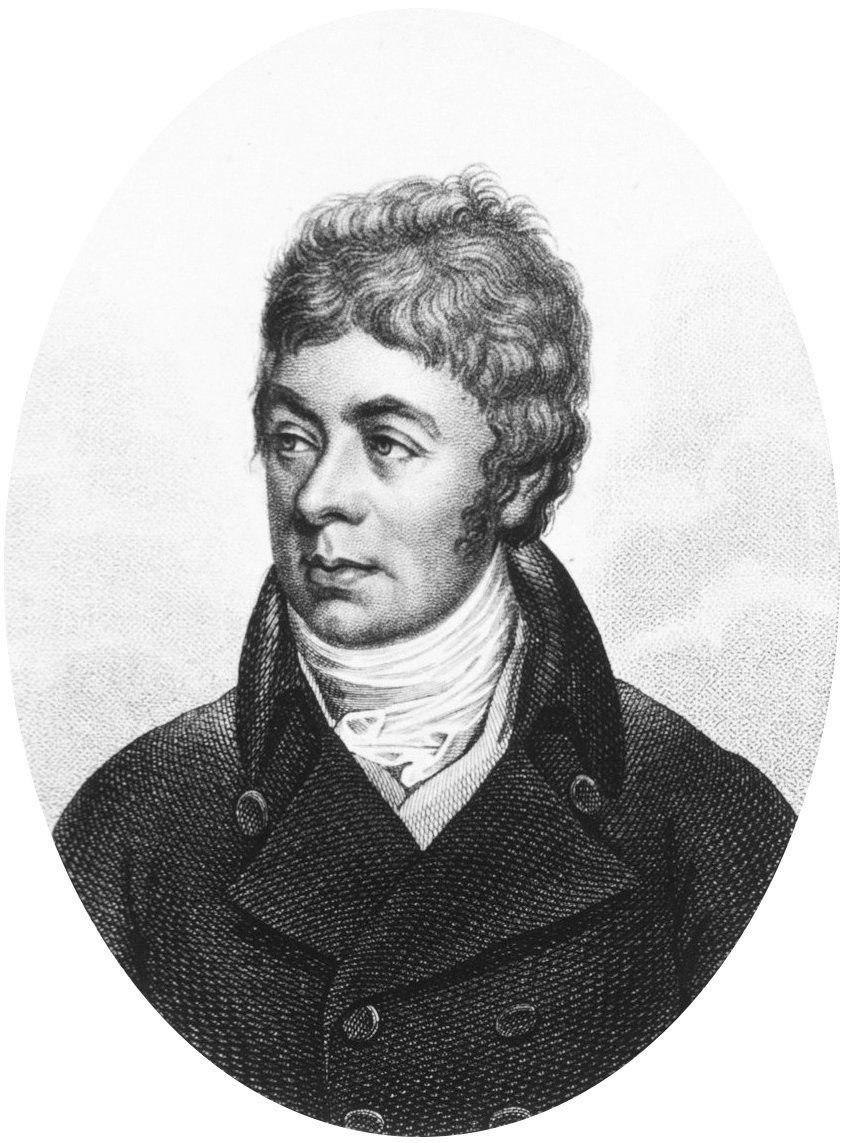
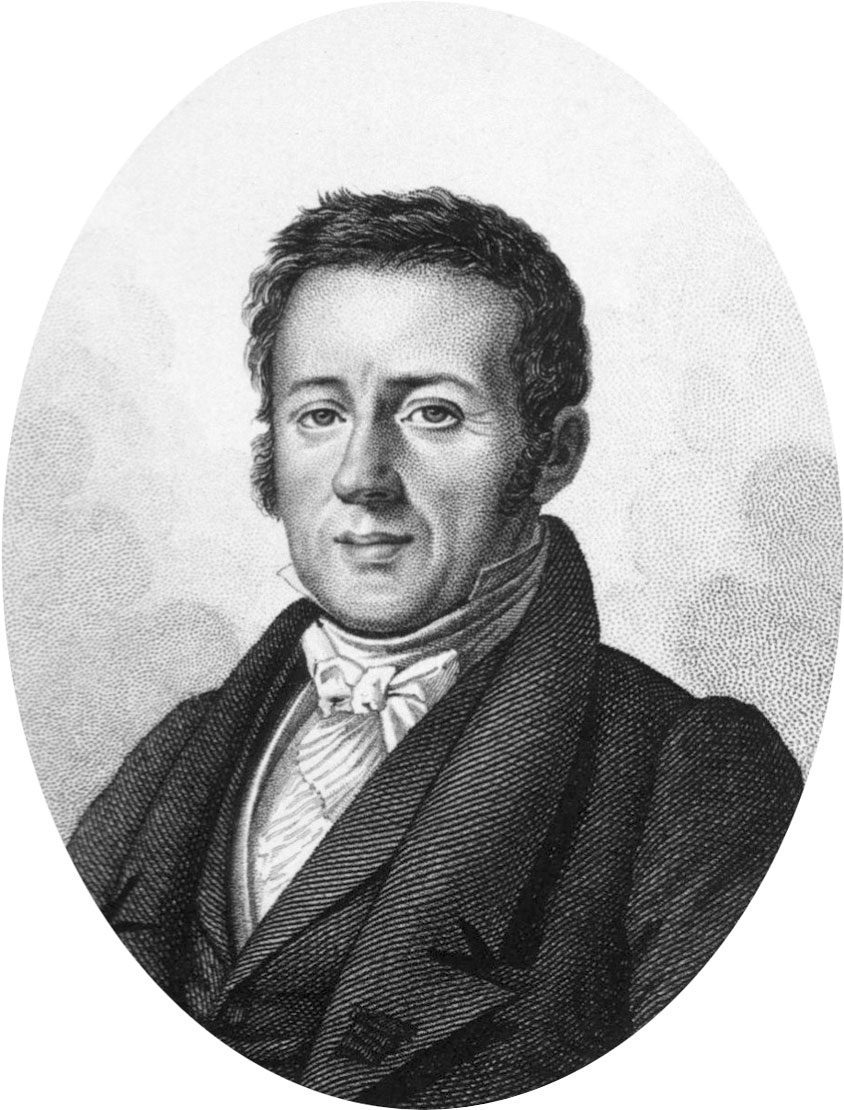
George Shaw
George Shaw

Order: Psittaciformes
Family: Psittaculidae
Genus: Coracopsis
Scientific name: Coracopsis vasa
Citation: (Shaw, 1812)
Protonimo: Psittacus Vasa

ยซVasa Parrotยป Images:

Videos "Vasa Parrot"

————————————————————————————————

ยซThem Vasaยป (Coracopsis vasa)


Sources:

Avibase
– Parrots of the World โ€“ Forshaw Joseph M
– Parrots A Guide to the Parrots of the World – Tony Juniper & Mike Parr
– Birdlife
– ornitoloxia

Photos:

(1) – Coracopsis vasa By 4028mdk09 (Own work) [CC BY-SA 3.0], via Wikimedia Commons
(2) – Greater Vasa Parrot in Madagascar By AEM (Picasa Web Albums) [CC BY-SA 3.0], via Wikimedia Commons
(3) – Coracopsis vasa By 4028mdk09 (Own work) [Public domain], via Wikimedia Commons
(4) – Greater Vasa Parrot (caracopsis vasa) in a Antwerp zoo By frank wouters from antwerpen, belgium , Belgium , Belgique (grote vasapapegaai) [CC BY 2.0], via Wikimedia Commons
(5) – Lesser vasa parrot (coracopsis nigra) in Anjajavy Forest, Madagascar By Charlesjsharp (Own work) [CC BY-SA 3.0], via Wikimedia Commons
(6) – Parrots of the World, by Joseph Forshaw (illustrated by William T. Cooper)

Sounds: Hans Matheve (Xeno-canto)
โ–ท The world of Pets: Dogs, cats, birds, reptiles, amphibians

Mountain Parakeet
Psilopsiagon aurifrons


Mountain Parakeet

Content

Description:


Anatomy-parrots

17 to 19 cm.. height.
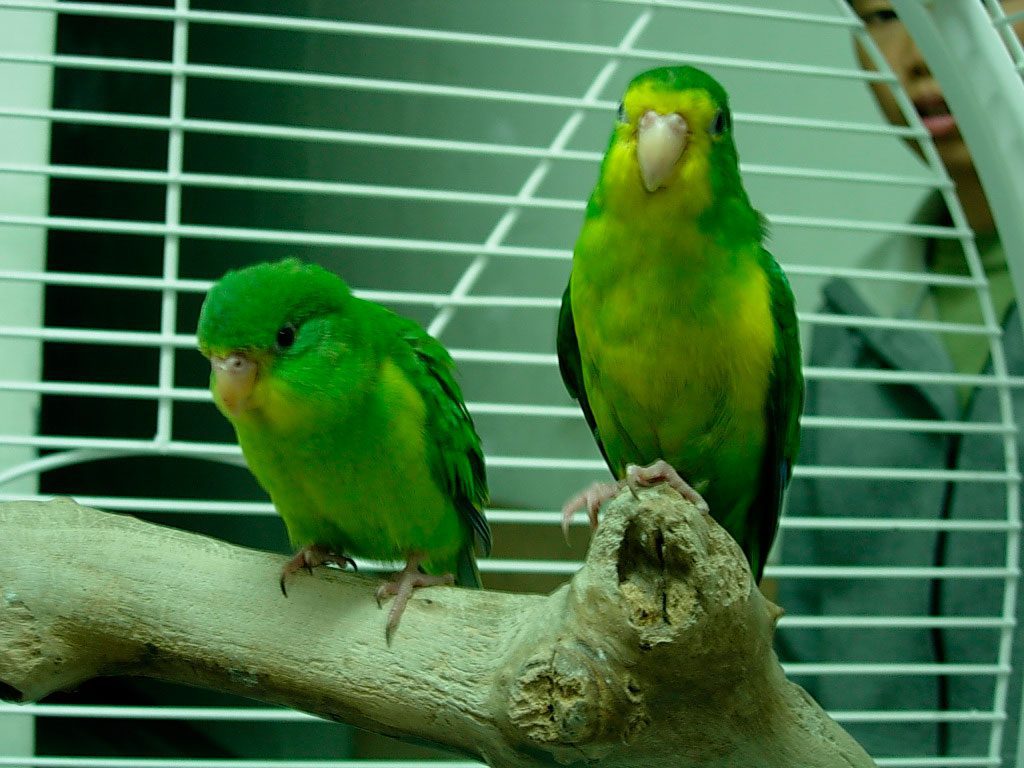
The Mountain Parakeet (Psilopsiagon aurifrons) is distinguishable by the face yellow and the belly yellow with dye-Green, bill pale, wing with extreme blue (notorious is when closed), tail long. Bill and legs color clear. Iris black.
The female with face green and belly yellow-green.
Treated above as Bolborhynchus aurifrons.

Subspecies description:

  • Psilopsiagon aurifrons aurifrons

    (Lesson, 1830) – The nominal,

  • Psilopsiagon aurifrons margaritae

    (Berlioz & Dorst, 1956) – With very little or nothing of yellow and very little dimorphic sexual, they resemble females of the subspecies nominal and robertsi. The females sometimes have the bill grey;

  • Psilopsiagon aurifrons robertsi

    (Carriker, 1933) – It has yellow only in the forecrown, sides bill, throat with green dye, and belly green with yellow line on the sides.

  • Psilopsiagon aurifrons rubrirostris

    (Burmeister, 1860) – With mask facial blue sky and no sexual dimorphism

Habitat:

Video – "Mountain Parakeet" (Psilopsiagon aurifrons)

Serrano catita girl (Psilopsiagon aurifrons): VOICE

It is found in variety of ecosystems, forest in gallery, Puna and crops, from 1000 to 2900 m (sometimes from sea level up to 4500 m). It is possible to carry out local migration after reproduction. gregarious.

Reproduction:

Sometimes They nest colonially, in cracks or holes in inaccessible Rocky escarpments.
breeding station: From October to December, North of Chile, February/March, Argentina.

Food:

It feeds on shoots, seeds, vegetables and fruits.

Distribution:

Size of the distribution (reproduction / resident): 820.000 km2

Can be found in the Centre and South of the Andes, from Peru until Argentina and Chile.

Subspecies distribution:

  • Psilopsiagon aurifrons aurifrons

    (Lesson, 1830) – The nominal,

  • Psilopsiagon aurifrons margaritae

    (Berlioz & Dorst, 1956) – The Andean slopes in the South of Peru, Bolivia, North of Chile and Northwest of Argentina.

  • Psilopsiagon aurifrons robertsi

    (Carriker, 1933) – The Valley of the Maranon River in the Center-North of Peru.

  • Psilopsiagon aurifrons rubrirostris

    (Burmeister, 1860) – The sheds Andean of the Northwest Argentine, between Catamarca and Cรณrdoba, and South of Chile

Conservation:

State of conservation โ“˜


minor concern Minor Concern โ“˜ (UICN)โ“˜

โ€ข Current category of the Red List of the UICN: Least concern.

โ€ข Population trend: Stable.

This species has a very large range, and therefore not it approaches the threshold of Vulnerable on the criterion of size of the area.

The trend of the population seems to be stable, and therefore, the species is not approaching thresholds for vulnerable under the trend of criterion.

For these reasons, the species is evaluated as Least concern.

"Mountain Parakeet" in captivity:

Itร‚ยดs rare in captivity. They are very susceptible to stress and disease, so many die during the process of acclimatization. It is good to acclimatize it in a large aviary with other birds. Prone to deficiency of vitamin D3.

Need of hiding places so that they may disappear from view.

Alternative names:

Mountain Parakeet, Golden-fronted Parakeet (English).
Toui ร  bandeau jaune, Perruche ร  bandeau jaune (French).
Zitronensittich, Zitronen-Sittich (German).
Periquito-da-cordilheira (Portuguese).
Catita de Frente Dorada, Catita Frentidorada, Catita serrana chica, Perico cordillerano (espaรฑol).
Catita serrana chica (Argentina).
Perico cordillerano (Chile).
Perico Cordillerano (Peru).
Cialla (Aymara).

scientific classification:

Renรฉ Primevรจre Lesson

Order: Psittaciformes
Family: Psittacidae
Genus: Psilopsiagon
Scientific name: Psilopsiagon aurifrons
Citation: (Lesson, 1831)
Protonimo: Psittacus (Lathamus) aurifrons

Images "Mountain Parakeet"

Mountain Parakeet

Two Mountain Parakeet views between Uquia and Yavi, Salta, Argentina


Species of the genus Psilopsiagon

Sources:

Avibase
– Parrots of the World โ€“ Forshaw Joseph M
– Parrots A Guide to the Parrots of the World – Tony Juniper & Mike Parr
Birdlife
– Parrot Book, Parrots and macaws Neotropical

Photos:

(1) – Mountain Parakeet; two in a cage By TJ Lin (originally posted to Flickr as mountain oarakeet) [CC BY-SA 2.0], via Wikimedia Commons
(2) – Two Mountain Parakeets seen between Uquia to Yavi, Salta, Argentina By Ron Knight from Seaford, East Sussex, United Kingdom (Mountain ParakeetUploaded by snowmanradio) [CC BY 2.0], via Wikimedia Commons

Sounds: (Xeno-canto)
โ–ท The world of Pets: Dogs, cats, birds, reptiles, amphibians

Red-shouldered Macaw
Diopsittaca nobilis


Guacamayo Noble

Content

Description:

30 cm.. length and a weight between 130 and 170 g..

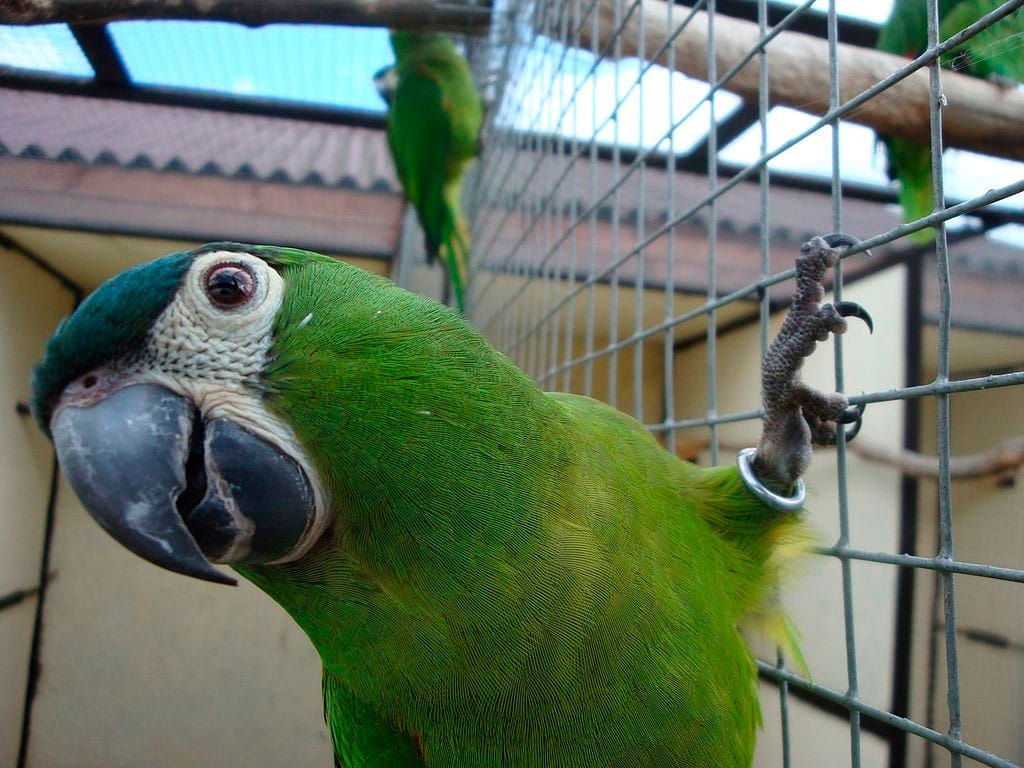
The Red-shouldered Macaw (Diopsittaca nobilis) along with the other two subspecies belong to the Group of the small macaws often called dwarf macaws or mini macaws parrots.

They have forecrown, front of the crown and top of the eyes blue; rest of the head and upperparts, including the wings and the top of the tail, grass-green. Rojas the carpal joints and the leading edge of the wing . Lesser and medium underwing-coverts red; large underwing-coverts brown; underside of flight feather Golden olive.

The underparts green, but more yellowish than the upper. The bottom of the tail Golden olive.

Bill blackish; bare skin of the lores and top of the cheeks white; irises orange-brown; black legs.

Both sexes similar; Perhaps a little smaller females.

The immature with the head completely Green: has no red color in the carpal joints.

Description 3 subspecies:

  • Diopsittaca nobilis cumanensis

    (Lichtenstein, 1823) – Larger that the species nominal, at around 33 cm.. length. The forecrown more blue and the upper maxilla off-white.


  • Diopsittaca nobilis longipennis

    (Neumann, 1931) – It is the largest subspecies, at around 35 cm.. length. Underparts more yellow and olive green


  • Diopsittaca nobilis nobilis

    (Linnaeus, 1758) – The nominal

Habitat:

With they are distributed in a variety of open wooded habitats, including savannah with scattered shrubs and palm trees (for example of Mauritia) in Suriname, morichales and the coast plantations in Guyana, closed with palm groves of Mauritia on the inside of Brazil and margins of caatinga in the northeast of Brazil with palm groves of Mauritia.

A persistent feature in its preferred habitat is the presence of palm trees., especially of the genus M. flexuosa, Orbignya martiana and Maximiliana maripa (the latter especially in the southern region of the Amazon). Also observed in wetlands with palms, gallery forests and cultivated areas.

Avoid large expanses of closed canopy forests, but they can be seen around human settlements and it is common in the city of Georgetown, Guyana.

They reach the 1.400 metres in Venezuela, to the South of the Orinoco.

Gregarious, often in large flocks outside breeding season; If not in couples.

Reproduction:

Nest in tree cavities, termite tree or in holes of palmas. Copulations registered in the month of October to the South-West of Brazil; Probably engender between February and June in Guiana. Clutch four eggs in captivity. The average period of incubation is of 24 days, the chicks leave the nest about 54 days after birth.

Food:

Its diet, probably, It is similar to its closest relatives, nuts are included in the, seeds, fruits and flowers, but with some signs of favorite seeds; known his preference for flowers of Terminalia argentea and Erythrina glauca, as well as the berries Cordia and fruits Euterpe. They also feed cereals and fruits in cultivated fields and are considered as one plague in some areas.

Distribution:

Size of the area of distribution (reproduction / resident): 910.000 km2

endemic to northeast South America, from the East of the Andes toward the center of Brazil.

In East Venezuela they are distributed, mainly, to the South of the Orinoco (Delta Amacuro and parts of Bolรญvar), also at the East end of Monagas.

The few records of Trinidad they are probably elopements captive birds.

Are distributed through of the Guianas, in areas of seasonal forests (mainly near the coast) and in Brazil to the North of the amazon in Roraima, Amapรก and North of For. Returns disjoint inside of Brazil, to the South of the Amazon from the southeast of For and maranhรฃo the wetlands of Mato Grosso and to the South by the dry northeast in Piauรญ, Bahia and, according to reports south of Alagoas until Holy Spirit, Rio de Janeiro and Northwest of Sรฃo Paulo (with a population introduced in the City of Sรฃo Paulo).

They occupy the Center and East of Bolivia and Southeast of Peru, where there are records in the Heath pampas.

In general residents, with seasonal movements in some coastal areas (for example Guianas) and distributed irregularly, to the North of amazon, where they remain scattered on the basis of suitable habitat.

In general common, especially in the Centre and northeast of Brazil, although rare in Guianas.

Distribution 3 subspecies:

Conservation:


minor concern

โ€ข Red List category of the UICN current: Least concern

โ€ข Population trend: Stable

Global population size has not been quantified, but this species is described as ยซquite commonยป (Stotz et to the., 1996).

The population of Red-shouldered Macaw suspected to be stable in the absence of evidence of any reduction or substantial threats.

Currently capture and trade of wild individuals is illegal.

"Red-shouldered Macaw" in captivity:

Quite common.

They are the smaller macaws commercially available pet and enough popular due to its small size (only a little bigger that a cockatoo) and for its excellent ability to imitate sounds.

In captivity, These birds are sociable and friendly.

The Red-shouldered Macaw they are easy to breed in captivity birds. They have proven to be prolific breeders and they have brought successfully for many years. In his book "All about parrotsยซ, the author Arthur Freud He points out that the first Red-shouldered Macaw It was bred in captivity in the United Statess in the year 1939 and again in 1940, the Lord and Lady Vance Wright. But it was the British success during the year 1949 by EMT Vane, the best known. In fact Vane received the first breeding metal from the British Avicultural Societyโ€™s for his achievements with the Red-shouldered Macaw.

The Red-shouldered Macaw are commonly held as pets, but their number has been declining in nature due to the habitat destruction and to his capture to the pet market.

With regard to its longevity, according to sources, It is known that a specimen lived 22,9 years in captivity.

Alternative names:

Red-shouldered Macaw, Hahn’s Macaw, Long-winged Macaw, Neumann’s Macaw, Red shouldered Macaw (English).
Ara noble (French).
Zwergara (German).
Maracanรฃ-pequena, arara-nanica, maracanรฃ, maracanรฃ-nobre (Portuguese).
Cotorra Serrana Occidental, Guacamayo Noble, Maracanรก Menor, Guacamaya de hombros rojos (espaรฑol).
Guacamayo Enano (Peru).
Guacamayo Enano (Venezuela).

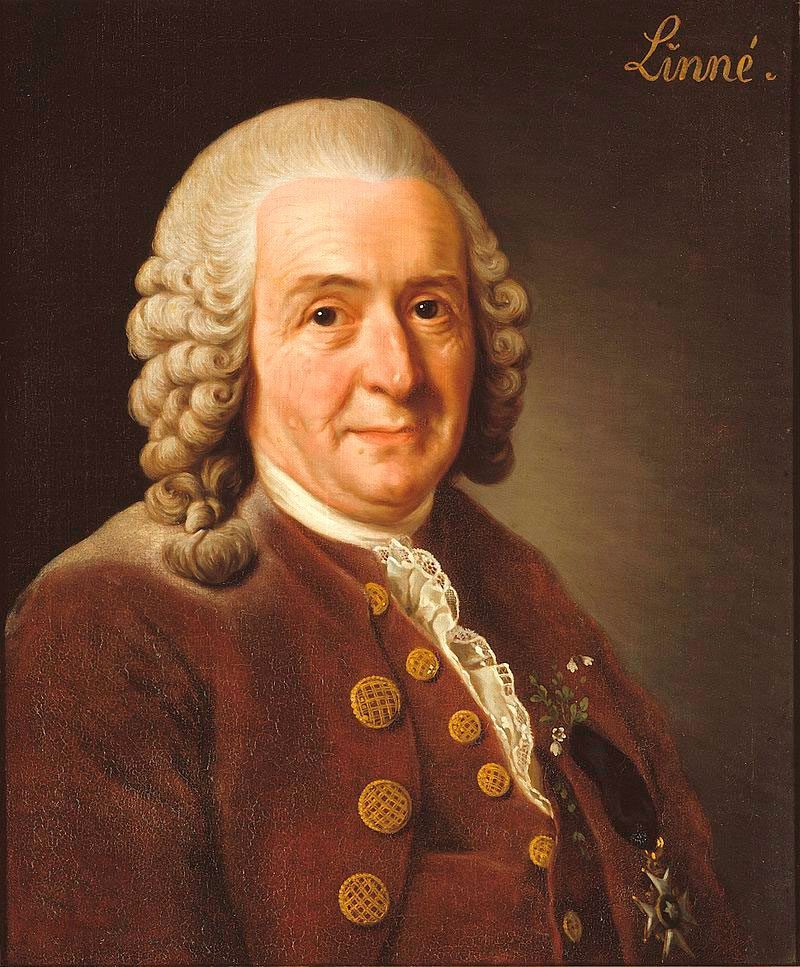
Carl Linnaeus
Carl Linnaeus

scientific classification:


Order: Psittaciformes
Family: Psittacidae
Genus: Diopsittaca
Scientific name: Diopsittaca nobilis
Citation: (Linnaeus, 1758)
Protonimo: parrot rank


Images Red-shouldered Macaw:

Videos "Red-shouldered Macaw"


ยซNoble Macawยป (Diopsittaca nobilis)


Sources:

Avibase
– Parrots of the World โ€“ Forshaw Joseph M
– Parrots A Guide to the Parrots of the World – Tony Juniper & Mike Parr
– Birdlife

Photos:

(1) – A Red-shouldered Macaw at Parque das Aves, Foz do Iguaรงu, Brazil. This subspecies is also know at the Noble Macaw By Chad Bordes (Picasa Web Albums) [CC BY 3.0], via Wikimedia Commons
(2) – The photograph shows a Hahnโ€™s Macaw (D. n. nobilis) pet parrot perching on a finger By derivative work: Snowmanradio (talk)Diopsittaca_nobilis_-pet-2.jpg:Evenprime at en.wikipedia. Photo by Walter Maier. Picture of family pet. Later version(s) were uploaded by Snowmanradio at en.wikipedia. (Diopsittaca_nobilis_-pet-2.jpg) [GFDL or CC-BY-SA-3.0], from Wikimedia Commons
(3) – Two Red-shouldered Macaws in the Pantanal, Mato Grosso, Brazil By Nori Almeida (originally posted to Flickr as Pantanal 2009) [CC BY 2.0], via Wikimedia Commons
(4) – Long-wing Macaw or Hahnโ€™s Macaw); two in a cage By TJ Lin (originally posted to Flickr as DSCN9927) [CC BY-SA 2.0], via Wikimedia Commons
(5) – Two Red-shouldered Parrots at Lisbon Zoo, Portugal By Jorge Andrade from Rio de Janeiro, Brazil (Lisbon zoo (107)Uploaded by snowmanradio) [CC BY 2.0], via Wikimedia Commons
(6) – Red-shouldered Macaw (Diopsittaca nobilis), also known as the Noble Macaw By Snowmanradio (Own work) [CC BY-SA 3.0 or GFDL], via Wikimedia Commons
(7) – A Red-shouldered Macaw at Bird Park, Kaluga region, Zhukovsky District, Russia By Remiz [CC BY-SA 2.0], via Wikimedia Commons
(8) – Three Red-shouldered Macaws at a zoo By DSuร r (To be coldUploaded by Snowmanradio) [CC BY-SA 2.0], via Wikimedia Commons
(9) – Red-shouldered Macaw (this subspecies is also known as Hahnโ€™s Macaw) at Jungle Island, Miami, USA By Chris Acuna from Miami, USA [CC BY 2.0], via Wikimedia Commons

Sounds: (Xeno-canto)

โ–ท The world of Pets: Dogs, cats, birds, reptiles, amphibians

Canary-winged Parakeet
Brotogeris versicolurus


Catita Versicolor

Content

Description:

The Canary-winged Parakeet (Brotogeris versicolurus) measured between 24 and 25 height cm. Single parakeet with yellow and white patch and blue tip on the wing , tail green, long and acute (noticeable in flight).

Of overall green coloration, with belly opaque, front and sides of the head grey.
It has no sexual dimorphism.

Habitat:

Video – "Canary-winged Parakeet" (Brotogeris versicolurus)

brotogeris versicolurus whistling

It is found in variety of habitats, humid forest, riparian, edges, stubble, open and urban areas, until 300 m (in Bolivia comes up to the 2700 m).

Abundant trees in cities and towns. They fly high, in pairs or small flocks to large.

Reproduction:

The breeding season includes the months between January and July in South America. The female places of 4 to 5 white eggs. The incubation hard of 23 to 26 days. Usually, the male can stay in the nest at night, but the incubation is main task of females.

It nests in tree hollows and decaying fruit capsules.

Food:

In their natural habitats, the Canary-winged Parakeet, feeds mainly on worms, flowers, seeds and fruit.

Distribution:

Its population is discontinuous. All the banks of the Amazon River, from the East of Ecuador to the South of the French Guiana.

You can also see them out of these places due to its introduction by release of pet; places such as Lima, California, Florida and Puerto Rico.

Conservation:

State of conservation โ“˜


minor concern Minor Concern โ“˜ (UICN)โ“˜

It is not considered in any of the threat categories, its trade has decreased in recent decades.

Justification of the population:

The size of the world population Canary-winged Parakeet It has not been quantified, but this species is described as ยซcommonยป (Stotz et to the. (1996).

Justification trend:

The population suspected to be stable in the absence of evidence of any reduction or substantial threats.

"Canary-winged Parakeet" in captivity:

Years ago it was a very common bird in captivity, at the present time is less.

RECALLS: NEVER COMMAND A PARAKEET IN THE CITY OR IN THE FIELD

aggressive with other bird species. However, It is possible to keep a group of birds of this species together in a large enough space. Easy of tame If it is manipulated from small. Communicates with their owners, making different sounds, for example, to greet us when we see, When you want food, etc.

They are not usually very noisy. Like to climb by what shall provide elements so you can make this activity. In hot season, supplied with a tray of water so that you can bathe.

Alternative names:

Canary-winged Parakeet, White-winged Parakeet, Yellow-winged Parakeet (English).
Toui ร  ailes variรฉes, Conure ร  ailes blanches, Perruche ร  ailes blanches, Perruche ร  ailes jaunes, Toui ร  ailes jaunes (French).
Weissflรผgelsittich (German).
Periquito-de-asa-branca, periquito-castanha, periquito-da-asa-amarela, periquito-da-campina, periquito-das-ilhas, periquito-de-asas-amarelas, periquito-estrela (Portuguese).
Catita Chirirรญ, Catita de patas amarillas, Catita Versicolor, Periquito Aliamarillo, Periquito Aliblanco, Periquito de Alas Blancas, Periquito Versicolor (espaรฑol).
Catita Chirirรญ, Catita de patas amarillas (Argentina).
Periqquito aliblanco, Periquito Aliblanco (Colombia).
Periquito Aliamarillo (Dominican Republic).
Perico de Ala Amarilla (Peru).

scientific classification:

Order: Psittaciformes
Family: Psittacidae
Genus: Brotogeris
Scientific name: Brotogeris versicolurus
Citation: (Statius Mรผller, 1776)
Protonimo: psittacus versicolurus

Images "Canary-winged Parakeet"


Species of the genus Brotogeris

Sources:

Avibase
– Parrots of the World โ€“ Forshaw Joseph M
– Parrots A Guide to the Parrots of the World – Tony Juniper & Mike Parr
– Birdlife

Sounds: (Xeno-canto)
โ–ท The world of Pets: Dogs, cats, birds, reptiles, amphibians

Crimson-fronted Parakeet
Psittacara finschi


Aratinga de Finsch

Content


Anatomy-parrots

Description:

28 cm. of length and a weight of 150 g..

The Crimson-fronted Parakeet (Psittacara finschi) It is the only species of the genus Psittacara tail long with red color below the wing .

They have forecrown and the former area of the lores bright red; the head and the neck green color with the exception of some scattered red feathers. The upperparts and upperwing-coverts green, with some red feathers on the bend of wing. The flight feather green above, more dark towards the tips with a dye bluish light in them vane inner; then golden brown color. Lesser and medium underwing-coverts red, the largest yellow, other coverts pale green. The underparts pale green, sometimes with red at the bottom of the tibia. Upper, the tail grass-green, by down golden brown.

Ilustraciรณn Aratinga de Finsch

The irises is orange and the eye ring naked is whitish. The bill exhibits a color gray-tipped Horn and the legs off gray color.

It has no sexual dimorphism.

The immature There are very little or almost no red in the forecrown and lack of red color in the thigh or the neck. The lining of the wings is more Orange.

Habitat:

Video – "Crimson-fronted Parakeet" (Psittacara finschi)

Psittacara finschi - feed

They inhabit tropical and subtropical envelope 1.400 metres in Costa Rica and 1.600 meters in the West of Panama, in areas with light trees or in fields with scattered trees, in secondary growth forests, edges of the forest, coffee plantations and nearby farmland. Irregular or seasonal in large forested areas.

They are birds gregarious, usually observed in flocks of up to 30 Member, but up to several hundred birds can gather in roosts communal on the tops of the trees or palms. Roosts, at times near the cities.

Reproduction:

They located their nest in holes of various types: natural cavities, old holes of woodpeckersย (F. Picidae), stumps of dead Palms. They can dig holes in rotten stumps or in masses of epiphytes.. Sometimes many couples may nest near each other.

The union of the pair of this species is particularly strong. The pairs isolate themselves from the group towards the end of July to nest.. With reproduce during the dry season and the rainy early. The female lays three or four eggs which are incubated during approximately 24 days. The juveniles they leave the nest to the 50 days of life.

Food:

Feeds of corn and sorghum; also eats flowers of the forest flame (Spathodea campalunata), flowers and fruits of porรณย (Erythrina sp.), guabasย (Inga sp.) and fruits of targuรกย (Croton sp.), lagartillo (Zanthoxylum sp.), guititeย (Acnistus arborescens)of guayabaย (Psidium guajaba) and higuerรณn

Distribution:

Widely distributed in the South of Central America, from Nicaragua until Panama.

The species can be found in the southeast of Nicaragua to the South of the Rio Grande, and in Costa Rica mainly on the slope of the Caribbean, Although there are exemplary residents on the side of the peaceful, on Osa Peninsula, at the South-West end and seasonal visitors in the Guanacaste Cordillera, in the North and the central plateau around San Jose.

In Panama they come to the East, a unos 82ยฐW, but it is probable that only seasonally in the lower Highlands of the Province of chiriqui.

Flocks of birds required extensive territories and the species occurs, apparently, in many areas, if only as a post-breeding visitor.

Very common or locally common with increasing numbers in Costa Rica and Panama, probably due to deforestation.

Maintained in captivity and internationally traded in small quantities.

Conservation:

State of conservation โ“˜


minor concern Minor Concern โ“˜ (UICN)โ“˜

โ€ข Red List category of the UICN current: Least concern

โ€ข Population trend: Growing

The size of the world population of the Crimson-fronted Parakeet It has not been quantified, but this species is described as ยซquite commonยซ.

You can be increasing their geographical range due to deforestation.

abundant on the slope of the Caribbean of Nicaragua. common and widespread in areas deforested over the slope of the Costa Rica Caribbean.

"Crimson-fronted Parakeet" in captivity:

Quite common in United States, less elsewhere.

Socialize easily with human, and can become a committed and loving companion. Es a Intelligent and lively, with easy to imitate the human voice and run different games and exercises. But, We must remember that it is a bird loud and the volume of their calls can get to be very annoying.

Alternative names:

Crimson-fronted Parakeet, Crimson fronted Parakeet, Crimson-fronted Conure, Finsch’s Conure, Finsch’s Parakeet (English).
Conure de Finsch, Perriche de Finsch, Perruche de Finsch (French).
Veraguasittich (German).
Aratinga-de-finsch (Portuguese).
Aratinga de Finsch, Perico frentirrojo, Periquito de Pecho Rojo, Perico de Palmera (espaรฑol).
Perico frentirrojo (Costa Rica).
Perico Frentirrojo (Nicaragua).


scientific classification:

Joseph Sabine
Joseph Sabine

Order: Psittaciformes
Family: Psittacidae
Genus: Psittacara
Scientific name: Psittacara finschi
Citation: (Salvin, 1871)
Protonimo: Conurus finschi


Crimson-fronted Parakeet pictures:


Species of the genus Psittacara

Sources:

  • Avibase
  • Parrots of the World โ€“ Forshaw Joseph M
  • Parrots A Guide to the Parrots of the World – Tony Juniper & Mike Parr
  • Birdlife

  • Photos:

(1) – A Finschโ€™s Parakeet )also called Finschโ€™s Conure and Crimson-fronted Parakeet) in San Josรฉ, Costa Rica By Dominic Sherony [CC BY-SA 2.0], via Wikimedia Commons
(2) – Perico frentirrojo juvenil, approximately 4 months of age, Panama City By Ricaurte (Own work) [Public domain], via Wikimedia Commons
(3) – Crimson-fronted Parakeet, also called Finschโ€™s Conure By Yazzieyazz (trabjo propioEnglish: own work) [Public domain], via Wikimedia Commons
(4) – Psittacara finschi en el parque nacional Henri Pittier, Venezuela By Roberto Galindo Deshays (Own work) [CC BY-SA 4.0], via Wikimedia Commons
(5) – Crimson-fronted Parakeet Costa Rica 2/15/16 Rancho Naturalistaby Andy Reago & Chrissy McClarrenFlickr
(6) – Crimson-fronted Parakeet by Brian RalphsFlickr
(7) – Crimson-fronted Parakeet Costa Rica 2/15/16 Rancho Naturalista by Andy Reago & Chrissy McClarrenFlickr
(8) – Aratinga finschi 06 Apr 2014 Costa Rica, San Lorenzo by Tom BensonFlickr
(9) – Crimson-fronted parakeet by Charles SharpFlickr
(10) – Conurus finschii ยป = Psittacara finschi (Finschโ€™s Parakeet) by John Gerrard Keulemans [Public domain], via Wikimedia Commons

โ–ท The world of Pets: Dogs, cats, birds, reptiles, amphibians

Dusky Parrot
Pionus fuscus

Dusky Parrot

Content


Anatomy-parrots

Description:

24 to 26 cm.. height and between 179 and 222g. weight.

The coloration general of the Dusky Parrot (Pionus fuscus) is blue violet dark. Small patch of feathers on the front of the lores; on the basis of the cere, Pink; for the rest, lores, cheeks, forecrown and crown, lavender blue pale with white feather bases in the crown, What gives a faint mottled appearance in some birds; ear-coverts more dark and more grey, forming a distinctive patch; feathers in the throat and the sides of the neck narrow Brown in the Center and tips of pale blue white stripe, forming the joint a collar incomplete.

feathers in the the mantle and back, of color Brown leaden with those margins pale, giving the scalloped effect; Scapulars, rump and uppertail-coverts, darker grey brown, with very weak pale margins (or absent).

Coverts smaller and medium-sized, of color Brown leaden with margins pale; coverts primary and higher, as well as the flight feather, cobalt blue; undertail, the wings deep blue. Feathers on the top of the chest, pale pinkish with pale Lavender color tips; area more low in the chest with less dye Lavender, becoming darker and more color came in the belly, reaching, Some birds, the center of the belly of a rich colour came; undertail-coverts crimson.

Tail of color blue with red at the base. upper jaw Blackish at the tip with patch of color Horn in the base, lower jaw Blackish with the base more clear and more pale visible in some birds; Iris dark brown; Legs grey.

Both sexes similar.

In the immature staining is equal to the adult, but with some roofs on the upper wings with green edge; secondary feathers dyed in green and the eye ring naked and white.

Habitat:

Dusky Parrot

They inhabit mainly in lowland rainforests and moist forests in the foothills, in where the birds spend the greater part of the time in the canopy; Mainly in the forest land, occasionally in forests and marshes and less frequently in igapรณ (permanently flooded forests), Although there have been reports of birds in Savannah (Suriname), coastal gallery forest (French Guiana) and cultivated areas (Although avoiding habitats more open and less seen in clearings or edges of forest to some close relatives, such as the Blue-headed Parrot (Pionus menstruus).

rare species, flying alone or in small groups on the forest canopy,

Are you can see in Venezuela from the level of the sea to close them 1.000 m, and in close 1.200-1.800 meters on the side Colombian of the Sierra de Perija.

gregarious, especially outside the breeding season.

Reproduction:

It nests in hollows of old trees, probably during the second quarter of the year, although a nest was observed in the month of November in For, Brazil. The laying is of 3-4 eggs.

Food:

It feeds mainly in the canopy but also on the branches of fruiting trees in light areas..

The diet includes seeds of the gender Eschweilera and Micropholis.

Distribution:

Size distribution (reproduction / resident): 1.870.000 km2

Its population is discontinuous. There is an isolated population in the Sierra de Perija (border between Colombia and Venezuela); regardless of population, The species is found in Venezuela, to the South of the Orinoco in Bolรญvar, from the Caura River, in the Northwest, up to the Nuria upland, the upper area of the cuyuni river and Sierra de Lema in the areas border with Guyana, in the East, extending through the forested parts of Guyana, Suriname and presumably it French Guiana (There are no known records) until Amapรก, the North-East of Brazil, and spreading more broadly to the East of the Brazilian Amazon, from Black river in the North and South, from the Madeira river to the East of For and Maranhรฃo.

Movements regular seasonal occur in Suriname, with the birds present in the coastal region in the months of July and August.

In general quite common, Although distributed locally; reports of a moderate and widespread presence in Guyana (although rare in Mountains Kanuku in the Southwest); Common in coastal forests, the savanna and forests inside of Suriname.

The deforestation severe and rapid in parts of its range (for example, For and Maranhรฃo, Brazil) is, presumably, causing a decline in the population of the Dusky Parrot.

Very tight in bondage.

Conservation:


minor concern


โ€ข Not considered low No category of threat.

โ€ข Not known as a cage bird, but the loss of habitat may be affecting their populations.

Justification of the population:

The size of the world population Dusky Parrot It has not been quantified, but this species is described as ยซRareยป (Stotz et to the., 1996).

Justification of trend:

It is suspected that this species has lost the 1,1% of habitat within its distribution over three generations (20 years) on the basis of a model of Amazon deforestation (Soares-Filho et to the., 2006, Bird et to the., 2011).

Given the susceptibility of the species to hunt or capture, It is suspected that it will fall in <25% durante tres generaciones.

"Dusky Parrot" in captivity:

Intelligent, curious, a bit noisy, playful when acclimatizes to the owner.
Rare in captivity until the Decade of 1970 When in small quantities were imported from Guyana.

Its longevity is of some 25 years.

Alternative names:

Dusky Parrot, Little Dusky Parrot, Violaceous Parrot, Violet Parrot (English).
Pione violette, Pionus violet (French).
Veilchenpapagei, Veilchen-Papagei (German).
maitaca-roxa, curica, papagainho-roxo, paranรก-i (Portuguese).
Cotorra de Perijรก, Loro Morado (espaรฑol).
Cotorra de Perijรก (Colombia).
Cotorra Morada (Venezuela).

scientific classification:

Order: Psittaciformes
Family: Psittacidae
Genus: Pionus
Scientific name: Pionus fuscus
Citation: (Statius Mรผller, 1776)
Protonimo: Psittacus fuscus

Images "Dusky Parrot"

Videos "Dusky Parrot"

———————————————————————————————–

ยซPurple Parrotยป (Pionus fuscus)


Sources:

Avibase
– Parrots of the World โ€“ Forshaw Joseph M
– Parrots A Guide to the Parrots of the World – Tony Juniper & Mike Parr
Birdlife

Photos:

(1) – Veldhoven
(2) – Dusky Parrot (Pionus fuscus) or Dusky Pionus by Jacques Barraband [Public domain], via Wikimedia Commons

โ–ท The world of Pets: Dogs, cats, birds, reptiles, amphibians

White-fronted Parrot
Amazona albifrons

White-fronted Parrot

Content

Description:

22 to 26 cm.. length.

The White-fronted Parrot (Amazona albifrons) has the forecrown white; lores, upper cheeks and ring of feathers around eyes, red; the crown pale blue mingles with the green nape; the feathers with dark margins; sides neck green with narrow black margins. Mantle, back and scapulars, grass-green, sometimes with olive tint; the mantle with indistinct black tips; rump green, perhaps more emerald colors than the rest of the upperparts.

big blankets and alula, red, other coverts green. The outerweb of the primaries, green, They turn blue at the tips; outerweb of the secondaries, blue; innerwebs of the flight feather, blackish. Under, the wings bluish green. Underparts green with weak blackish edges to feathers on throat and the chest. Upper, the tail It is yellow in the center, outer feathers red at the base, blue in the outerweb. Bill light colored horn, darker at the tip; bare periophthalmic pale grey; irises pale yellow; legs pale grey.


Anatomy-parrots

It presents an undistinguished sexual dimorphism. The female It differs from the male in the red face It is limited to the region eye ring and it lacks the red hue in wing coverts. The immature male It looks like female but with red on the primary coverts.

  • Sound of the White-fronted Parrot.

Description 3 subspecies:

White-fronted Parrot

  • Amazona albifrons albifrons

    (Sparrman, 1788) – Nominal.


  • Amazona albifrons nana

    (Miller,W, 1905) – smaller the species nominal. Little differentiated from nominal but the green plumage It is perhaps paler, yellower. Some individuals Coast peaceful show some red on the throat.


  • Amazona albifrons saltuensis

    (Nelson, 1899) – Similar to the nominal but the plumage It is heavily steeped in blue. The blue of the crown It extends to the nape.

Habitat:

This adaptable Amazona uses all kinds of wooded habitats and open field with trees, including seasonally moist semi-evergreen semi-evergreen forest (especially at the edge), pine forests, gallery forest, agricultural land with open woods, savannah and tropical arid scrub with cactus, tending to more frequent open areas in the caribbean side.

Usually they prefer drier forests, but where it is simpรกtrica with Yellow-lored Parrot (Amazona xantholora), tends to prefer more humid and closed vegetation.

In Yucatan the White-fronted Parrot inhabit coastal coconut plantations while breeding. In altitudes of 900 m (Oaxaca), 1.800 m (Honduras) and 1.500 m (Sonora meridional: register only known outside the tropics).

In pairs during the breeding season but usually gregarious, distributed primarily in small groups, with occasional concentrations of hundreds of birds and some communal roosts (for example, mangroves) with several thousand birds.

Reproduction:

Video – "White-fronted Parrot"

Chauรก(Amazona Rhodocorytha) - Red-browed Parrot

The White-fronted Parrot nest in trees, cavities of the palm tree termitarium, sometimes in the cavity dug by some woodpecker. species trees Bursera simaruba and Caesalpinia gaumeri are among the favorites to nest in Yucatan. Breeding January July, depending on the location.

A clutch contains 3-5 eggs. Only the female incubates. The incubation lasts around 24 days.

Food:

Registered foods include guilt of Acacia gaumeri (Yucatan), fruits of Lemaireocereus thurberi and Pachycereus and cocoons of Jatropha cordata (Sonora), Ehretia tinijolia and Metopium browneii (Campeche); They also feed on cultivated fruits like mango and grain, including corn. Birds often get excited and shout while feeding.

Distribution and status:

Size of its range (breeding/resident ): 2.330.000 km2

The White-fronted Parrot They extend Mexico, from the South of Sonora (north to about 28 ยฐ N) along the Sinaloa and West Durango south through the Pacific region to Oaxaca and north through Tehuantepec isthmus the Atlantic coast in southern Veracruz and to the East by Tabasco the entire Yucatan Peninsula, including northern Guatemala and Belice.

They are present in southern Chiapas and in the lowlands of the Guatemalan Pacific and, reportedly, in West El Salvador, extending through the lowlands of peaceful, arid and Caribbean lowlands Honduras to the Pacific Northwest Costa Rica and Nicaragua (where distribution is not detailed).

Mainly seasonal residents but visitors in some parts of the range (for example, Yucatan, El Salvador western and eastern mountains Guatemala).

Introduced in urban areas Cozumel Island, in the State of Quintana Roo (Mexico). Their presence only in urban areas of the island, the ability of the species to live successfully in urban areas, the abundance of fruit trees and use as a pet by the islanders allows us to suggest that registered individuals are the result of leakage or were released by their owners.

Usually common and together with the Orange-fronted Parakeet (Eupsittula canicularis), It is the largest parrot in the Pacific slope of Central America; although obviously scarce in some areas. The deforestation It is possibly promoting increases in population Caribbean slope of Central America. Captured for the pet trade and hunted as food, for example in Yucatan, where recently there has been a population decline due to the persecution of parrots that feed on fruit after loss of wild foods cultivated by Hurricane Gilbert. Its capture It is authorized only during the months of October to February in the states of Warrior, Jalisco, Michoacรกn, Oaxaca, Sinaloa and Tabasco and from September to January in Veracruz.

Distribution 3 subspecies:

  • Amazona albifrons albifrons

    (Sparrman, 1788) – Nominal. Pacific Coast of Mexico from Nayarit to Oaxaca and South of Chiapas in the lowlands Guatemalan Pacific. Birds in the northern Guatemalan lowlands and the arid interior, they can refer to the subspecies Amazona albifrons nana.


  • Amazona albifrons nana

    (Miller,W, 1905) – Veracruz until Costa Rica, including all yucatan peninsula.


  • Amazona albifrons saltuensis

    (Nelson, 1899) – Sonora, Sinaloa and Durango, in Mexico.

Conservation Amazona:

State of conservation โ“˜


minor concern Minor Concern โ“˜ (UICN)โ“˜

โ€ข Current category of the Red List of the UICN: Least concern.

โ€ข Population trend: Increasing.

Rationale for the Red List category

โ€ข This species has a very large range and therefore it is not close to the thresholds for Vulnerable under the criterion of size range (Extent of occurrence below 20,000 km2 combined with a size decreasing or fluctuating range, extension / habitat quality or population size and a small number of sites or severe fragmentation).

โ€ข The trend of population appears to be increasing and, therefore, the species does not approach the thresholds Vulnerable under the criteria of population trend (Wholesale 30% decrease in ten years or three generations).

โ€ข The population size is very large and, therefore, not approaching the thresholds for vulnerable under the criterion of population size (less than 10.000 mature individuals with continuing decline estimated a higher percentage of 10% in ten years or three generations or with a specific population structure).

โ€ข For these reasons the species is evaluated as the least concern.

Justification of the population

โ€ข Partners in Flight estimated that the total population of 500.000-4.999.999 individuals (A. Panjabi in a bit., 2008).

Justification of trend

โ€ข The population is suspected to be increasing as habitat degradation is creating new areas of suitable habitat.

The White-fronted Parrot in captivity:

Due to the decline of these birds in the wild, especially in the Mexican populations, the White-fronted Parrot is now, unlike other times, offered for sale only rarely. It also, among birds received by importers, the males generally far outweigh the females so it's hard to find a partner.

According to many observations, the White-fronted Parrot captured still quite shy and unsociable, especially if they were mature when they were trapped. The birds immature, which can be stained by the yellowing of his crown, relatively well sympathize with their caregivers and are easily adapted to a life in a cage or aviary. It is said to have some talent to imitate.

According to sources, the first hatchlings in captivity They were born in 1949 in the United States by I.D. Putman; the second in 1977 on German Federal Republic by H. Mรผller (Walsrode) and a third set in Switzerland in 1979; Since then several European poultry farmers have reported breeding successes.. The latest report came in 1985 from the bird park Metelen Heide in Muen-sterland (Western Germany). there a clutch five eggs produced four hatchlings in mid-June 1984 after an incubation period of 28 days. The young left the nest after about 70 days, but they were still actively cared for and fed, mainly by the parent, for a few weeks more.

Its price in the European market round 1000 EUR. generally silent the Amazons largest. It can be noisy just before and during the breeding season.

These birds can become aggressive in breeding season and can attack the caregiver. The nest boxes are better positioned to nest inspection can be performed from outside the aviary. The inspection of the nest is best when adult birds are out of the nest, however captive breeding has rarely been achieved between individuals.

Susceptible to intestinal infections during the acclimatization period.

Their life expectancy can overcome the 50 years.

Alternative names:

White-fronted Parrot, Spectacled Amazon, Spectacled Parrot, White fronted Parrot, White-browed Amazon, White-browed Parrot, White-fronted Amazon (English).
Amazone ร  front blanc, Amazone ร  lunettes (French).
WeiรŸstirnamazone (German).
Papagaio-de-testa-branca (Portuguese).
Amazona de Frente Blanca, Amazona Frentialba, Cotorra Frentiblanca, Lora frentiblanca, Loro Frente Blanca, loro frente-blanca, Loro Frentiblanco, Cotorra Guayabera (espaรฑol).
Cabeza de Manta, Loro Manglero, Cocha, Cocho, Cucha (Mexico).


Scientific classification Amazona albifrons:

Anders Sparrman

Order: Psittaciformes
Family: Psittacidae
Genus: Amazona
Scientific name: Amazona albifrons
Citation: (Sparrman, 1788)
Protonimo: Psittacus albifrons


Images White-fronted Parrot:


Species of the genus Amazona


Sources:

  • Avibase
  • Parrots of the World โ€“ Forshaw Joseph M
  • Parrots A Guide to the Parrots of the World – Tony Juniper & Mike Parr
  • Birdlife
  • The New Parrot Handbook by Werner Lantermann,Matthew M. Vriends

Photos:

(1) – White-fronted Amazon By David Oliva (originally posted to Flickr as Cotorro 007) [CC BY 2.0], via Wikimedia Commons
(2) – White-fronted Amazons in Schรถnbrunn Zoo By spacebirdy(also known as geimfygliรฐ (:> )=| made with Sternenlaus-spirit) (Own work) [CC BY-SA 3.0 or FAL], via Wikimedia Commons
(3) – white-fronted amazon (Amazona albifrons) By Christoph Anton Mitterer (Flickr: P8155550) [CC BY-SA 2.0], via Wikimedia Commons
(4) – White-fronted Amazon Amazona albifrons pair perching in a tree at Guanacaste, Costa Rica By Steve Jurvetson (originally posted to Flickr as love birds) [CC BY 2.0], via Wikimedia Commons
(5) – White-fronted Amazon, (Amazona albifrons). A pet parrot on a perch. Red feathers on this parrots shoulders indicate that it is a male By โžจ Redvers (Flickr) [CC BY 2.0], via Wikimedia Commons
(6) – White-fronted Amazons in Schรถnbrunn Zoo By spacebirdy(also known as geimfygliรฐ (:> )=| made with Sternenlaus-spirit) (Own work) [CC BY-SA 3.0 or FAL], via Wikimedia Commons
(7) – A captive White-fronted Amazon in Copรกn Ruinas, Copรกn, Honduras By Troy from Charlottesville, USA (Flickr) [CC BY-SA 2.0], via Wikimedia Commons
(8) – A White-fronted Amazon – upper body by sumba [CC BY 2.0 of], via Wikimedia Commons
(9) – A pet juvenile White-fronted Amazon in Poole, Dorset, England By Kyle Payne from England (Odd Looking Seagull) [CC BY-SA 2.0], via Wikimedia Commons
(10) – White-fronted Amazon, Amazona albifrons, Remove alone B. Planet EarthFlickr

Sounds: Richard E. Webster, XC353211. accessible www.xeno-canto.org/353211