▷ The world of Pets: Dogs, cats, birds, reptiles, amphibians

Red billed Parrot
Pionus sordidus

Tropicbird Parrot

Content


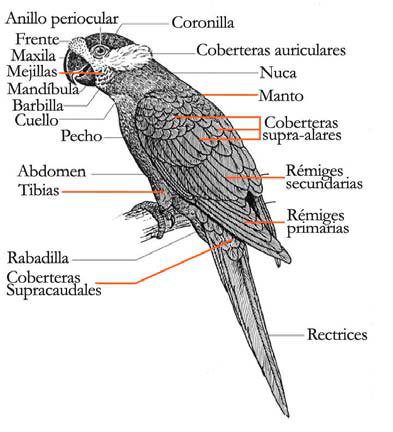
Anatomy-parrots

Description:

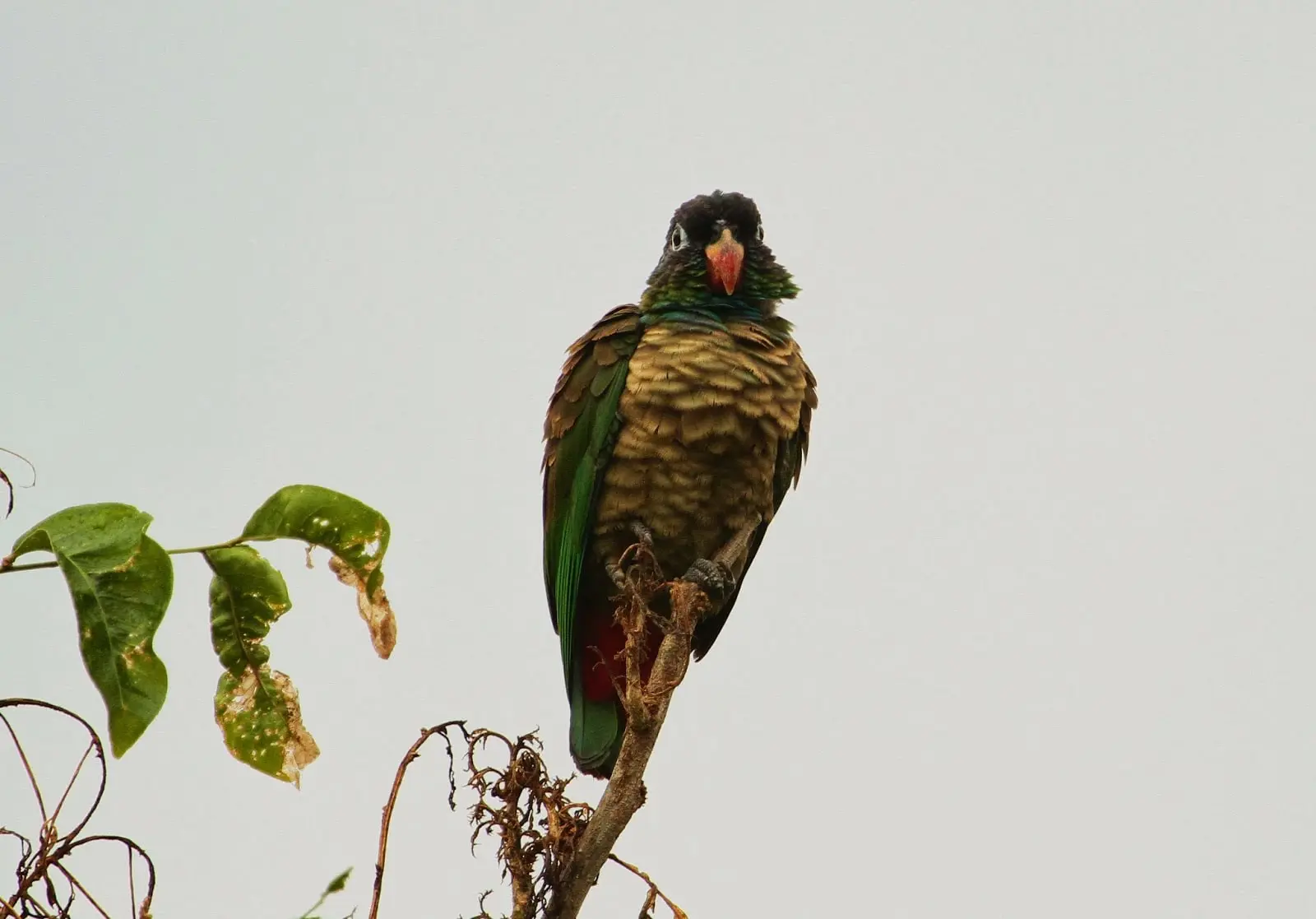
The Red billed Parrot (Pionus sordidus), of looking scruffy, has a length of 28 to 31 cm. and a weight between 255 and 275 g..

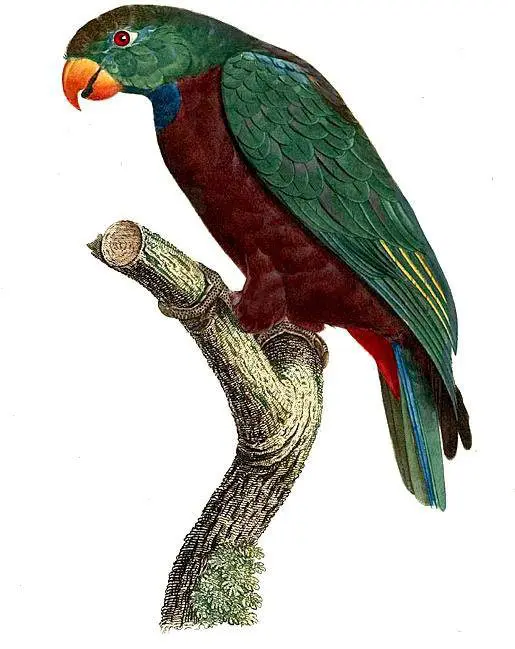
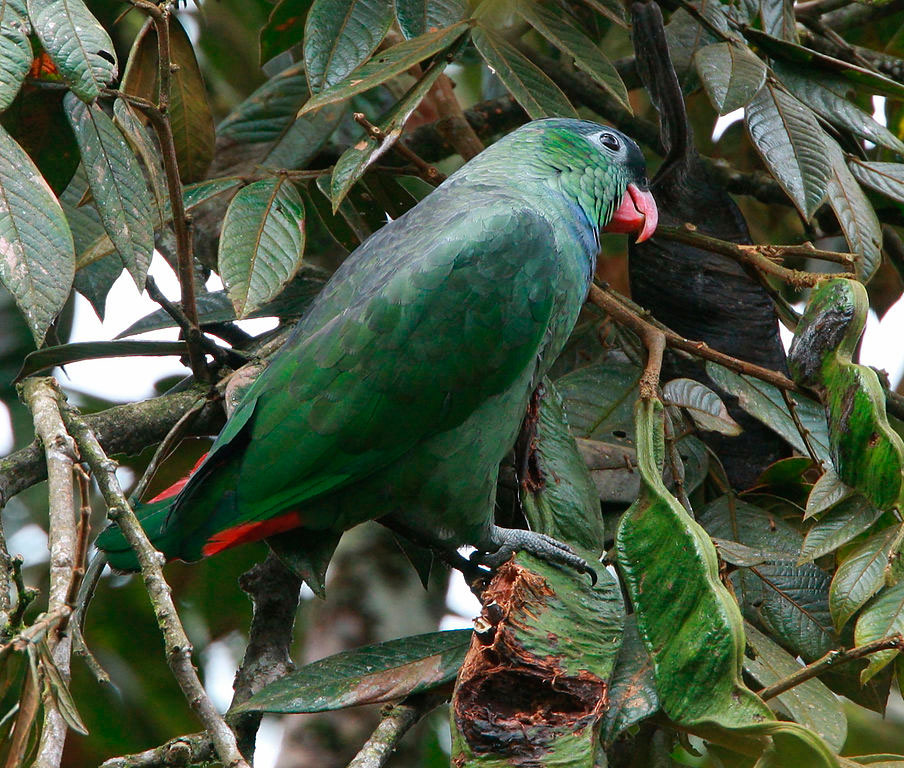
The subspecies Pionus sordidus corallinus, the most widespread, has the feathers of the forecrown, lores and behind the eyes, Green at the base and with blue edges widths; the cheeks, ear-coverts and the sides of the neck, mainly green with some blue narrow tips; the crown and rear of the neck, Green with edges blue narrow. Mantle and back pretty dull green with paler blue margins; rump and uppertail-coverts, of color green basally, more Brown olive distally. Coverts medium and small with wide olive green tips; the front edge of the wing ; coverts primary and higher and flight feather brightest which the parts superiores and others wing-coverts.

Under, the wings green; chin green; throat and upper breast with band broadband of color blue violet; belly green, Some birds with gray Suffusion; undertail-coverts crimson. Tail Green by the Center, Blue side; Red at the base.

Bill coral red, pale at the base of the upper jaw; cere dark grey; bare periophthalmic pale grey; Iris dark brown; legs pale grey.

Both sexes are similar. Immature sample undertail-coverts yellowish-green with some red marks; head green.

Subspecies description

Description 6 subspecies
  • Pionus sordidus antelius

    (Todd, 1947) – Similar to the nominal species but the feathers of the throat lack of edges blue and the center of the chest is in color pink.

  • Pionus sordidus corallinus

    (Bonaparte, 1854) – Described above.

  • Pionus sordidus mindoensis

    (Chapman, 1925) – Is as the subspecies Pionus sordidus corallinus, but of color green more beige, those edges blue of the feathers of the head are more narrow and the under wing-coverts not have them edges dark.

  • Pionus sordidus ponsi

    (Aveledo & Gines, 1950) – Throat of color blue violet almost solid. The chest and upperparts they are darker and greener that the of the nominal species, they lack clear margins to the feathers of the back and of the wing-coverts.

  • Pionus sordidus saturatus

    (Todd, 1915) – More dark and more green that it nominal species with the feathers of the upperparts lack of margins of color green olive. Less green in the throat and cheeks.

  • Pionus sordidus sordidus

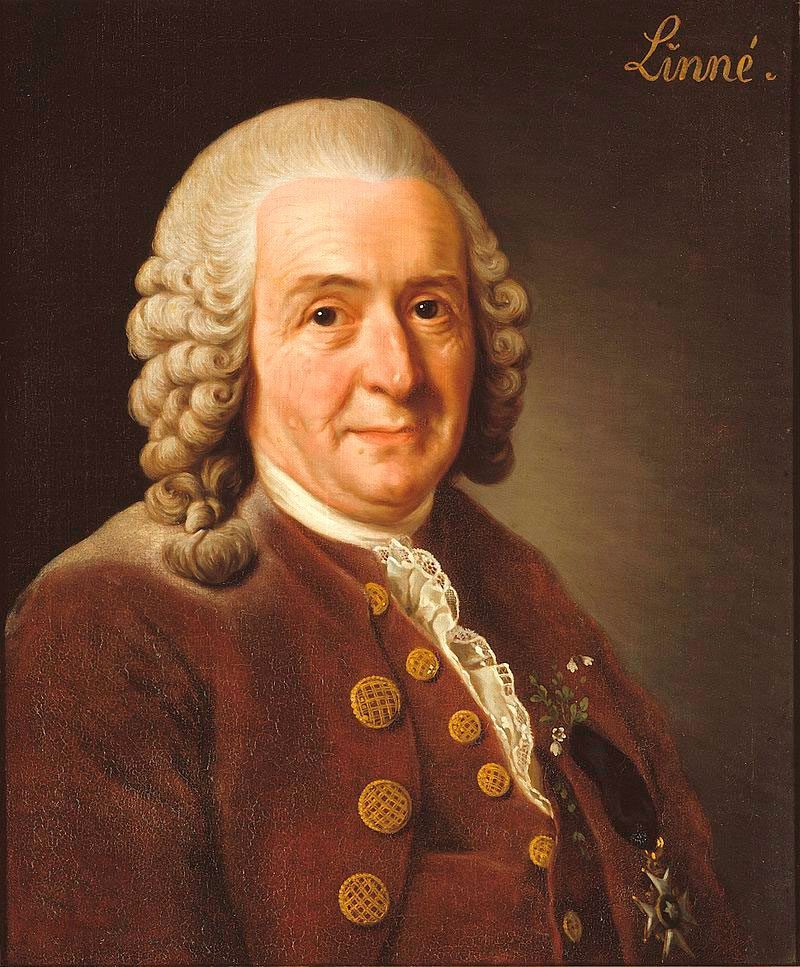
    (Linnaeus, 1758) – Nominal. Much more Brown that the subspecies Pionus sordidus corallinus, with blue (turquoise) more reduced in the throat. Feathers in them upperparts with most distinctive pale margins.

Habitat:

Red billed Parrot

It is a very rare species. It inhabits in mountains of humid and semi-humid cloudy forests, edges of forest and partially deforested areas, between 200-2850 m, Although they are more frequent at altitudes of 500-1.500 m. They use areas of secondary growth, partially deforested with tall trees scattered and sometimes light forests on coffee plantations, being less frequent in dry areas.

Gregarious outside of breeding season; formations in flocks of up to 50 birds, sometimes more where the food is abundant. Children sleep in community.

Reproduction:

They nest in the cavity of the trees, sometimes in very degraded habitats. Birds in breeding attitude during the months of February-April in Colombia; It breeds in the months of April-June in Venezuela, January-may in Ecuador; Nest occupied in October in Bolivia. Laying three eggs in captivity.

Food:

Feeds of fruit, berries and seeds.

Distribution:

Size of the area of distribution (reproduction / resident): 169.000 km2

This species has a distribution batch through them land high in the North and West of South America, from Venezuela to the North of Bolivia. You can find in the North of Venezuela, in the mountains of Anzoátegui, Sucre, North of Monagas and apparently, of way to discontinuous, in the Highlands of the Federal District through the mountains coastal, to the West, until Lara and Falcon, then in the Sierra de Perija, Zulia and parts adjacent in Colombia, West to the foothills of Santa Marta in Magdalena, also locally in the Eastern Andes of Boyacá and Huila. Extends over the Western side of the Andes in Ecuador, from Pichincha until Gold and for all the East side to the northeast of Peru.

Although there are no records in the Eastern Andean slope, in the central and southern Peru, the range includes the Yungas North of Bolivia in Santa Cruz and Cochabamba.

common locally; apparently less numerous in the West of Ecuador and North of Bolivia, and probably in decline locally due to the deforestation (for example, in the Ecuador Western, North of Venezuela and Andes of Colombia).

A recent study not localized to the subspecies Pionus sordidus antelius in its area of distribution widely cleared, Although the subspecies can dwell in forests moderately disturbed.

Kept as pets locally although generally scarce in captivity.

Subspecies distribution

Distribution 6 subspecies

Conservation:


minor concern


• Current category of the Red List of the UICN: Least concern.

• Population trend: Decreasing.

Justification of the population

The size of the world population It has not been quantified, but this species is described as «quite common» (Stotz et to the., 1996).

Justification of trend

It is suspected that the population is in decline due to ongoing habitat destruction.

"Red billed Parrot" in captivity:

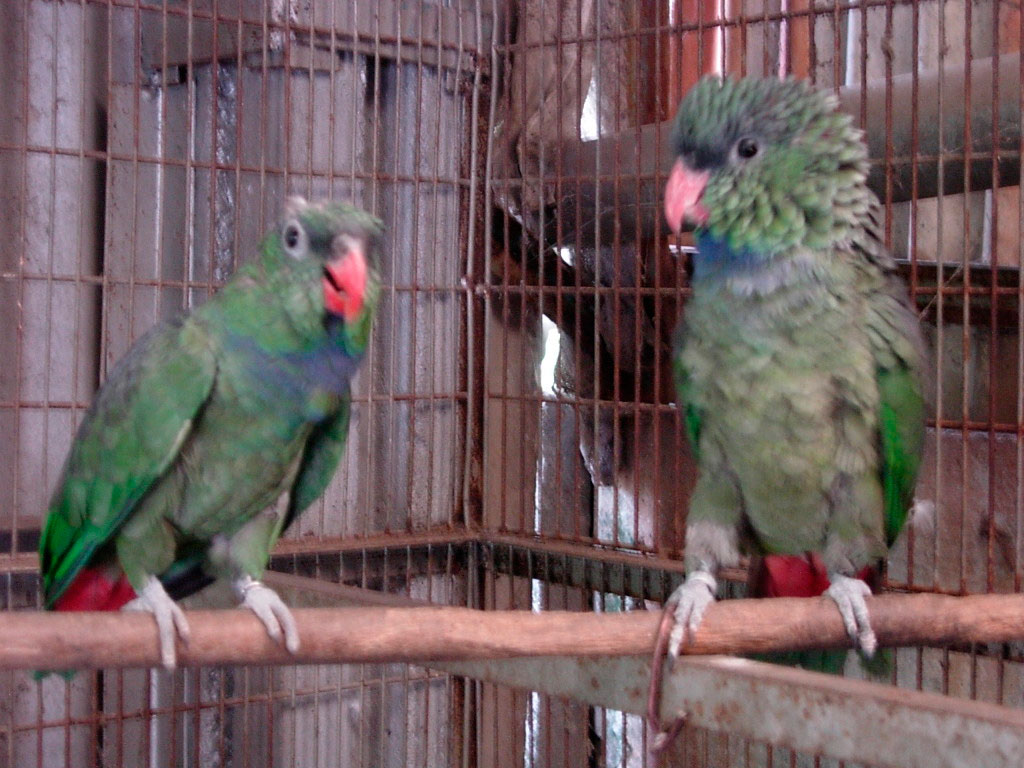
Very rare in captivity. In general, they are not so nervous in temperament as other parrots. They can learn to imitate.

Its diet in captivity It varied: fruits such as: Apple, orange, banana, granada, Cactus, they form approximately the 30 percent of the diet; vegetables such as: Carrot, celery, green beans, pea in the pod, fresh corn; Greens such as: chard, lettuce, dandelion, Aviary grass; millet; mixture of small seeds, such as: millet, birdseed, and small amounts of oats, buckwheat, safflower and hemp; soaked and sprouted sunflower seeds; beans, cooked legumes and boiled corn; hard cheese.

Alternative names:

– Red-billed Parrot, Dusky parrot, Red billed Parrot, Sordid parrot (English).
– Pione à bec rouge, Perroquet sordide (French).
– Dunenkopfpapagei, Dunenkopf, Dunenkopf-Papagei (German).
– Curica-de-bico-vermelho (Portuguese).
– Cotorra Piquirroja, Loro de Pico Rojo, Loro Piquirrojo (español).
– Cotorra piquiroja, Cotorra Piquirroja (Colombia).
– Loro de Pico Rojo (Peru).
– Perico Pico Rojo (Venezuela).

scientific classification:

Carl Linnaeus
Carl Linnaeus

– Order: Psittaciformes
– Family: Psittacidae
– Genus: Pionus
– Scientific name: Pionus sordidus
– Citation: (Linnaeus, 1758)
– Protonimo: Psittacus sordidus


Images «Loro Piquirrojo»:

Videos "Red billed Parrot"

«Loro Piquirrojo» (Pionus sordidus)

Sources:

  • Avibase
  • Parrots of the World – Forshaw Joseph M
  • Parrots A Guide to the Parrots of the World – Tony Juniper & Mike Parr
  • Birdlife
  • Parrot Book, Parrots and macaws Neotropical

  • Photos:

(1) – Red-billed Parrot, Pionus s. sordidus, Perico Pico Rojo – Our beautiful world
(2) – Red-billed Parrot, Pionus s. sordidus, Perico Pico Rojo – Our beautiful world
(3) – Red-billed Parrot, Pionus s. sordidus, Perico Pico Rojo – Our beautiful world
(4) – Red-billed Parrot (also known ans the Red-billed Pionus); two captive By TJ Lin (originally posted to Flickr as coral-billed pionus) [CC BY-SA 2.0], via Wikimedia Commons
(5) – Red-billed-Parrot (Pionus sordidus), Pajaro Jumbo Reserve, NW Ecuador By Nomdeploom (Own work) [CC BY-SA 4.0], via Wikimedia Commons
(6) – BARRABAND, Jacques (1767/8-1809) Le Perroquet brun [Red-billed Parrot (Pionus sordidus)] – Wikimedia

  • Sounds: Sebastian K. Herzog

▷ The world of Pets: Dogs, cats, birds, reptiles, amphibians

Turquoise Parrot
Neophema pulchella

Turquoise Parrot

Content


Anatomy-parrots

Description

20 cm.. length and a weight between 37 to 44 g..

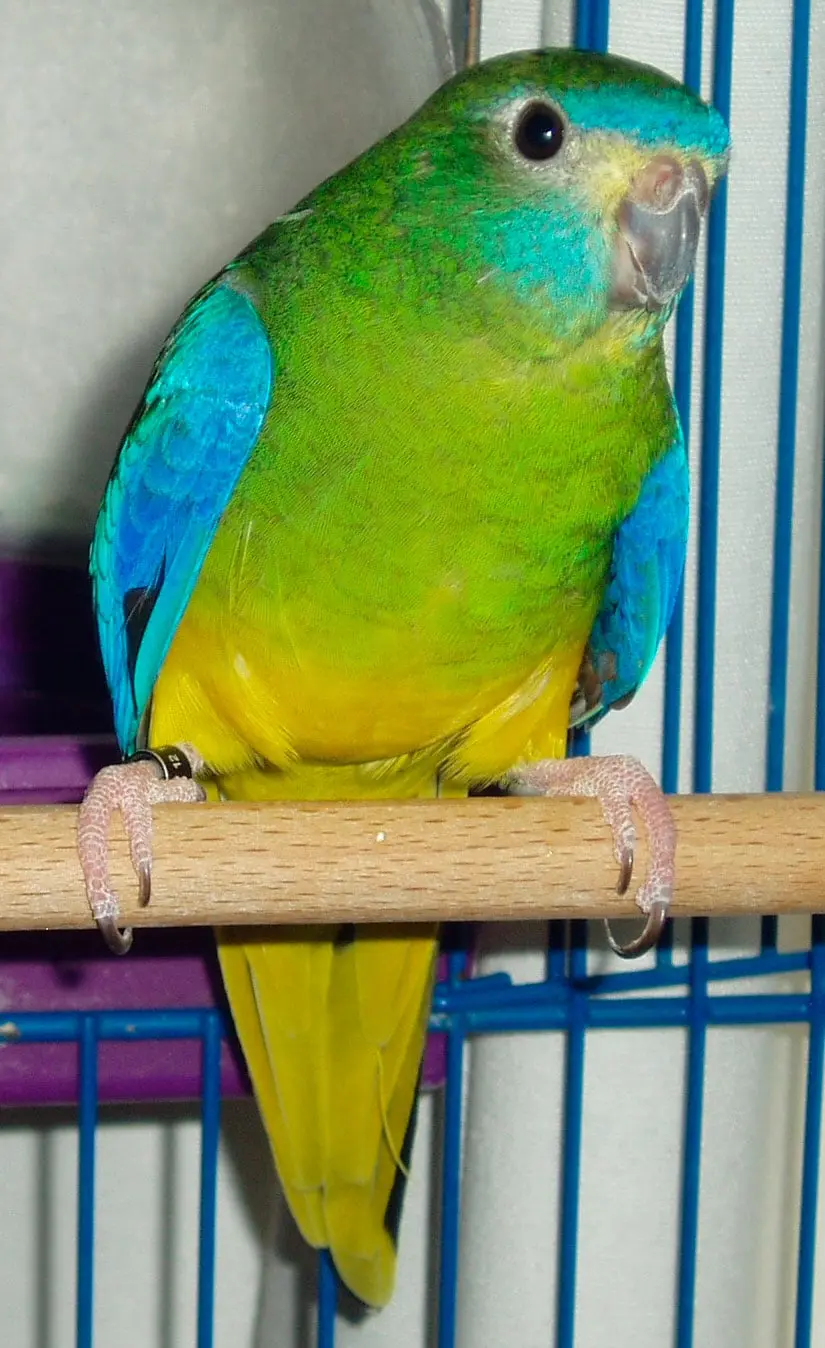
The Turquoise Parrot )(Neophema pulchella has the head bright turquoise blue, darker on the front of the crown, with the chin yellow and green on the back side of the crown.

Upperparts green.
The interior of the small and medium-sized coverts is reddish brown, the median are light blue. big blankets and primary coverts are blue-violet color. The primary feathers Black have them vane inmates of blue color and a fine yellow edge. The secondary feathers Black has foreign bands of yellowish green colour that tend toward the blue on the edges of the feathers. The lesser coverts the wings are blue-violet color.

The underparts is bright yellow with a slight orange patch in the throat and the chest. An orange stain, sometimes, is visible in the abdomen of certain individuals. The two pairs of the Central feathers of the tail are bright green, the outer tail feathers are yellow with green bases. The bill is black and the irises dark brown. The legs they are a pinkish-brown hue.

In the females, the plumage is more off than in males. There are no brown spots in the shoulders. The underparts they are much more green, especially in the chest. The lores they are whitish and the blue of the face is considerably reduced. A bar can be seen in the wing .

The immature are similar to the females.

The Immature males are distinguished by a small brown spot in the wing and blue dark figure.

Habitat:

Turquoise Parrot

The Turquoise Parrot they are distributed by clear wooded areas, wooded areas, meadows with native grasses, Although they have a strong preference for the ecotones, that is to say, regions that are intermediate between the forests and farmland.

In the State of Victoria, seasonally, These parakeets make positive use of habitats that suit them: the eucalyptus trees that are found in the Rocky Mountains in winter, wetlands and ravines from spring to fall and slopes that face southeast during all months of the year.

The Periquito turquoise they live in small flocks or family groups that feed near the ground.

These birds are sedentary but after nesting, You can attend a light dispersion.

During this last period, the formation of dorms is not uncommon.

We can often see them begging for food on the verges of roads.

Reproduction:

The Turquoise Parrot they breed from august to december. In other areas, the nests are also visible in April-may, but they are probably second clutches or broods alternatives. The nest is located in one a tree cavity, usually a eucalyptus, at least in regards to the State of Victoria. But it can also be located in a strain, a fallen pole or branch.

The spawning contains an average of 4 or 5 eggs with one incubation that lasts a few 20 days.

The chicks are altricial and remain in the nest for at least 4 weeks before you fly.

Food:

The Turquoise Parrot they have a diet vegetarian. They feed on seeds, flowers and fruits that are native and imported plants. Love cultivated herbs, wild herbs and different parts of the bushes.

A detailed census has identified the following genera: shrubs in Bloom's leucopogon, not less than 4 types of Danthonia, nettle, Urtica urens, Paspalum dilatatum, who are the edges of sea grass and the gernaios. The list is not exhaustive.

Distribution:

Size of its range (reproduction / resident): 771.000 km2

Currently fluctuates irregularly from the southeast of Queensland (North around Chinchilla and Maryborough) to the East of New South Wales, arriving at the coast, about Sydney, and extending to the South up to Nowra) in Victoria to the West of Bendigo. There is also an isolated population in the East of Victoria. The increase of population ,probably, continues in Victoria and New South Wales.

Conservation:


minor concern


• Current category of the Red List of the UICN: Least concern

• Population Trend: Stable

at the beginning of 20th century, the increase of pastoral activities, catastrophic drought in 1902, and to a lesser extent, poaching, they gave rise to the population of the Turquoise Parrot almost disappeared.

Since the decade of 1940, there has been a resurgence in the number of individuals. The resurgence of this species began in the vicinity of Chinchilal and Maryborough and little by little the South joined with the State of Victoria through New South Wales.

Today, growth tends to spread and strong presence in the national parks proof that the cessation of grazing is a great benefit for the development of these parrots. Since they nest close to the ground, These birds are still vulnerable to predation by foxes. The other recurring threat is habitat degradation and loss of nesting sites.. The world population deemed superior to the 20 000 birds, birds captive are estimated at 8 000.

"Turquoise Parrot" in captivity:

The Turquoise Parrot they are birds that are regularly and which are obtained very good results in the reproduction. These parakeets are highly recommended for amateur beginners.

In terms of its behavior, they are relatively strong with a sweet and melodious voice. These parakeets are not shy and are easy to keep..

During the breeding season they do not support other congeners or other species of neophemas. It is mainly of assaults by males. Your need to crack is very limited and their need for bathroom is very different from an individual to another. They tolerate dry climates, but they are very sensitive to cold and wet fog. They like to spend time on the floor, investigating, and therefore, they are vulnerable to infection by worms.

According to sources, a sample lived during 21 years in captivity. In captivity, these animals have been known that they can raise from 1 año de edad.

Alternative names:

– Turquoise Parrot, Beautiful Grass-Parakeet, Beautiful Grass-Parrot, Beautiful Parrot, Chestnut-shouldered Grass-Parrot, Chestnut-shouldered Parakeet, Chestnut-shouldered Parrot, Chestnut-winged Grass-Parakeet, Chestnut-winged Parrot, Red-shouldered Grass-Parakeet, Red-shouldered Parakeet, Red-shouldered Parrot, Turcoisine Parrot, Turq, Turquoise Grass-Parakeet, turquoise parakeet, Turquoisine, Turquoisine Grass-Parrot, Turquoisine Parrot (ingles).
– Perruche turquoisine (French).
– Schönsittich (German).
– Periquito-turquesa (Portuguese).
– Papagayo Turquesa, Periquito Turquesa (español).

scientific classification:

George Shaw
George Shaw

– Order: Psittaciformes
– Family: Psittaculidae
– Genus: Neophema
– Scientific name: Neophema pulchella
– Citation: (Shaw, 1792)
– Protonimo: Psittacus Goshawk

«Turquoise Parakeet» Images:

Videos "Turquoise Parrot"

————————————————————————————————

«Turquoise Parakeet» (Neophema pulchella)


Sources:

– Avibase
– Parrots of the World – Forshaw Joseph M
– Parrots A Guide to the Parrots of the World – Tony Juniper & Mike Parr
– Birdlife

– Photos:

(1) – Turquoise Parrot (Neophema pulchella), female; of: Lovebird by Daniel Wehmeyer –> Danweh – Wikimedia
(2) – «Neophema pulchella -Rainbow Jungle -Australia-8a» by Sheila Bradford – originally posted to Flickr as DSCF7029 turquoise parrot. Licensed under CC BY 2.0 via Wikimedia Commons.
(3) – «Neophema pulchella -Twycross Zoo, Leicestershire, England-8a» by stephen jones from uk – [1]Uploaded by Snowmanradio. Licensed under CC BY 2.0 via Wikimedia Commons.
(4) – «Turquoise Parrot (Neophema pulchella)-6» by Lip Kee Yap – originally posted to Flickr as Turquoise Parrot (Neophema pulchella). Licensed under CC BY-SA 2.0 via Wikimedia Commons.
(5) – «Neophema pulchella pair Capertee Valley» by Lip Kee from Singapore, Republic of Singapore – Turquoise Parrot (Neophema pulchella). Licensed under CC BY-SA 2.0 via Wikimedia Commons.
(6) – Jacques Barraband [Public domain], via Wikimedia Commons

– Sounds: Marc Anderson (Xeno-canto)

▷ The world of Pets: Dogs, cats, birds, reptiles, amphibians

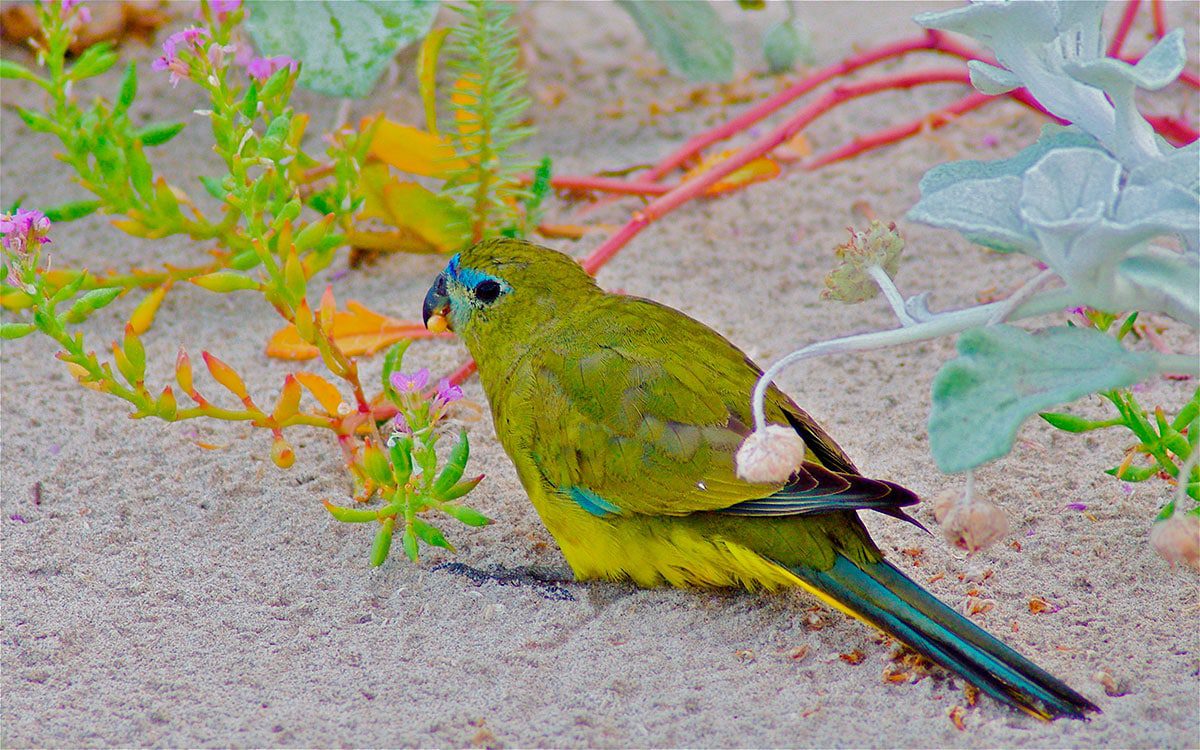
Rock Parrot
Neophema petrophila

Rock Parrot

Content


Anatomy-parrots

Description

22 cm. height and a weight between 47 and 54 g..

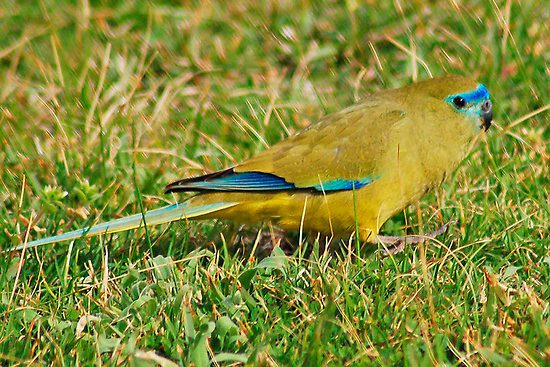
The male of the Rock Parrot (Neophema petrophila) has a band front of color blue dark that is surrounded by a small and striking edge blue marine. The blue becomes even a little bit behind the eye. The area between the eyes and ears, the region of the eye and the anterior part of the cheeks are Navy Blue. The upper part of the crown, the neck, the the mantle, the back, rump and covered wing are olive green. The cheeks, except the front edge, the region of the throat and the chest are olive-gray color. The belly, flanks, the thighs and anal region are opaque yellow.

The curvature of the wing and feathers of the median of the wings are Navy Blue. The flight feather are black with a dark blue marks.

The feathers of the uppertail-coverts are an olive green-brown color and the undertail yellow. The upper part of the feathers of the tail are matte blue streaked olive green. The bottom is dark gray. The irises the eye is dark brown, the bill is dark gray, the cere is brown, legs grayscale and nails dark grey.

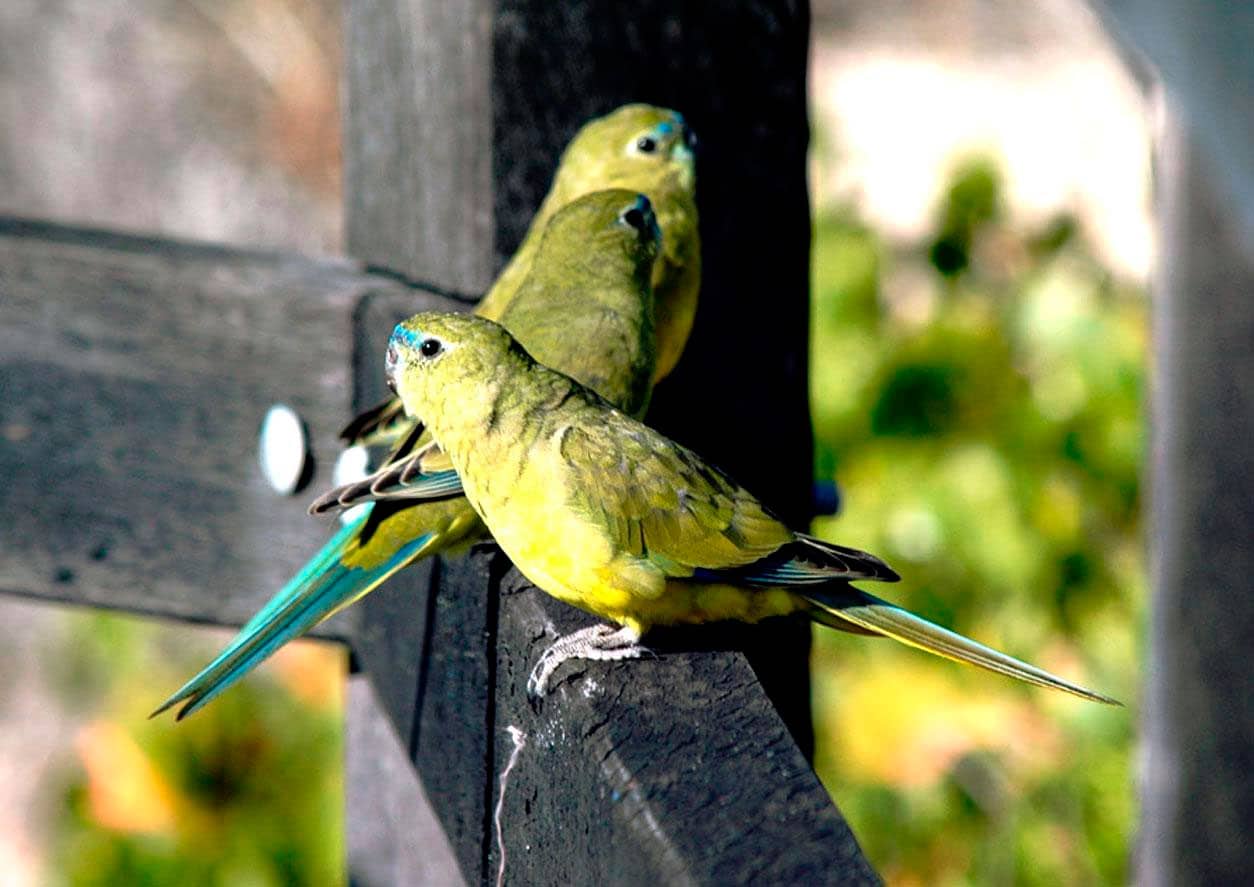
The female: is very similar to the male, but its colors are more opaque, especially the blue. The frontal band is a little thinner.

The immature do not have the frontal band blue. The only decoration is a bare periophthalmic characteristic white.

2 subspecies

  • Neophema petrophila petrophila

    (Gould, 1841)


  • Neophema petrophila zietzi

    (Mathews, 1912)

Habitat:

The Rock Parrot they frequent the coastal dunes, mangroves, marshes, agricultural areas, lightly treed savanna, areas of mallee (Eucalytus slender), scrublands abound where the Salt plants (Atriplex). Also visit the coast, where small rivers flow into estuaries. They appreciate the plantations of casuarina and margins of brackish water bordering the coasts and rocky islets where nests are less susceptible to predation. Throughout the year, These birds do not deviate more than several hundred meters from the sea.

Large gatherings of the Rock Parrot, sometimes, There are land, When there is abundance of food. But, like most of Neophema, this parakeet can be hard to spot, and it will only be visible when you take flight due to some danger.

Their plumage is not anti-absorbente and often remains wet, which gives it a darker shade. They tend to use the same Burrows to the Pacific Shearwater (Puffinus pacificus), the 2 species sometimes have the same habits and the same mating rituals.

Reproduction:

The Rock Parrot reproduced from august to december, sometimes in February. Occasionally, There is a second litter.

The nest is placed in the crevice of a low cliff, on a facade or on some rocky ledge. Since relatively recently, they have come to nest on small islands of limestone, the entry hole is often hidden behind a curtain of vegetation.

Sometimes, abandoned Burrows of the Pacific Shearwater (Puffinus pacificus) they are used as a nest by the Rock Parrot. In other cases, These parakeets usurp active nests of the Paíno Pechialbo (Pelagodroma marina).

Spawning contains 4 or 5 eggs and your incubation lasts a few 18 days. The chicks are altricial and stay in the nest during 30 days.

Food:

The Rock Parrot are, above all, vegetarian. They like to eat cultivated seeds, fruits and a variety of herbs. They also eat young shoots, shrubs and plants that are tolerant of saline environments.

Distribution:

Size of the area of distribution (reproduction / resident): 1.700.000 km2

There are two separate populations by the Great Australian Bight, which does not offer the suitable coastal islands for nesting.

The Eastern population extends from about Robe, Southern Australia, in the East, to Nuyts archipelago, approximately 133 °E in the west (although breeding records in Kangaioo Island, they have not been confirmed).

The Western population extends from Israelite Bay to archipelago of the Recherche.

In Western Australia, to the West around the Cabo Leeuwin and to the North of Shark Bay.

To the North of Perth the species nests in the continent, but in other parts, birds occupy the coastal islands, at least for breeding, also sometimes traveling from the Mainland to settle on the islands of the coast.

The population of the Rottnest Island on the coast of Perth suffered, in the past, illegal capture, but has grown rapidly in recent years.

The Rock Parrot they are considered common and partially nomadic residents throughout its area of distribution; so far, coastal islands have not been subjected to the same pressures of development than continental zones.

Conservation:


minor concern


• Current category of the Red List of the UICN: Least concern.

• Population Trend: Decreasing.

In accordance with Handbook of the Birds of the World, This species is not threatened at the global level. His surprising absence from the region of the Great Australian Bight It can be explained by the lack of sites available in which to nest. In these places, rocks are in fact very limited in number, so the nests bad are protected in the absence of rocks and crevices where they serve this species as a refuge against the attacks of predators. The Rock Parrot they prefer to nest on the islets off the coast, Surely in order not to deal with rats, foxes, cats, lizards, monitors and monitor lizards.

Its population is estimated above of the 20,000 individuals.

"Rock Parrot" in captivity:

The Rock Parrot they are extremely rare in captivity and is likely to be more present in the aviaries of Europe.

In Australia they are only in the hands of some fans.

These parrots are extremely slow, within the genus Neophema, is the least active, so these birds tend to the Obesity, which is very damaging for the fertility.

The Rock Parrot they are birds peaceful in the nature, that make noise. They are birds that they spend too much time on the ground and they bathe regularly. The first generations in captivity will be very susceptible to various infections, including, among others, intestinal parasites. These birds also regularly die without apparent reason.

Alternative names:

– Rock Parrot, Rock Elegant, Rock Elegant-Parakeet, Rock Grass-Parakeet, Rock Parakeet, Western Rock-Parrot (ingles).
– Perruche des rochers, Perruche pétrophile (French).
– Klippensittich (German).
– Periquito-da-rocha (Portuguese).
– Papagayo de las Rocas, Periquito Roquero (español).

scientific classification:

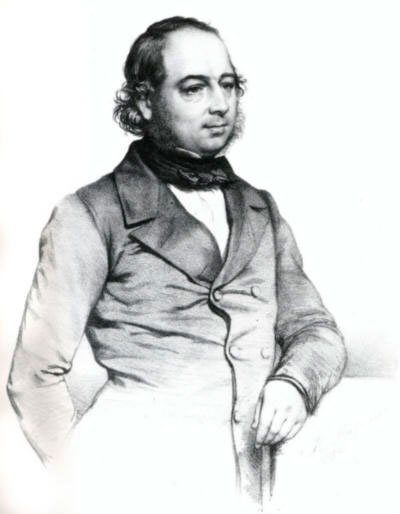
John Gould
John Gould

– Order: Psittaciformes
– Family: Psittaculidae
– Genus: Neophema
– Scientific name: Neophema petrophila
– Citation: (Gould, 1841)
– Protonimo: Euphema petrophila

Images "Rochequet Paraquito":

Videos "Rock Parrot"

————————————————————————————————

"ROQUERO PARQUITO" (Neophema petrophila)


Sources:

– Avibase
– Parrots of the World – Forshaw Joseph M
– Parrots A Guide to the Parrots of the World – Tony Juniper & Mike Parr
– Birdlife

– Photos:

(1) – A Rock Parrot with grass seed in rain near Cape Leeuwin Lighthouse, Cape Lioness, Western Australia, Australia By Cas Liber (CAs Liber) [Public domain], via Wikimedia Commons
(2) – A Rock Parrot at Greens Pool, Western Australia, Australia By butupa (IMGP8254Uploaded by snowmanradio) [CC BY 2.0], via Wikimedia Commons
(3) – Neophema petrophila rock parrot free wallpaper in free pet category – free-pet-wallpapers
(4) – Neophema petrophila free wallpaper in free pet category – free-pet-wallpapers
(5) – Grass Parrots {Neopherma} – myparrots

▷ The world of Pets: Dogs, cats, birds, reptiles, amphibians

Elegant Parrot
Neophema elegans


Elegant Parrot

Content


Anatomy-parrots

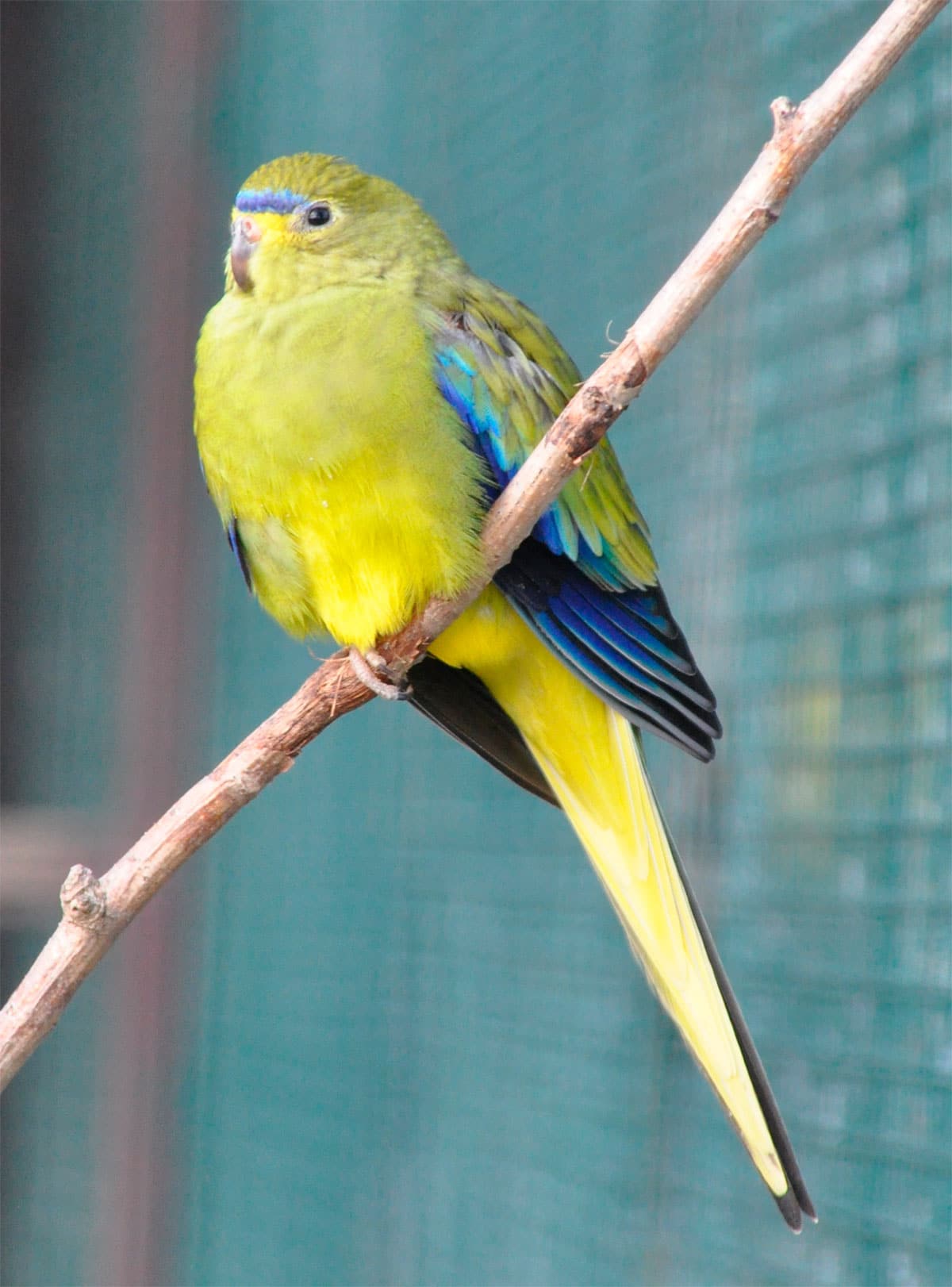
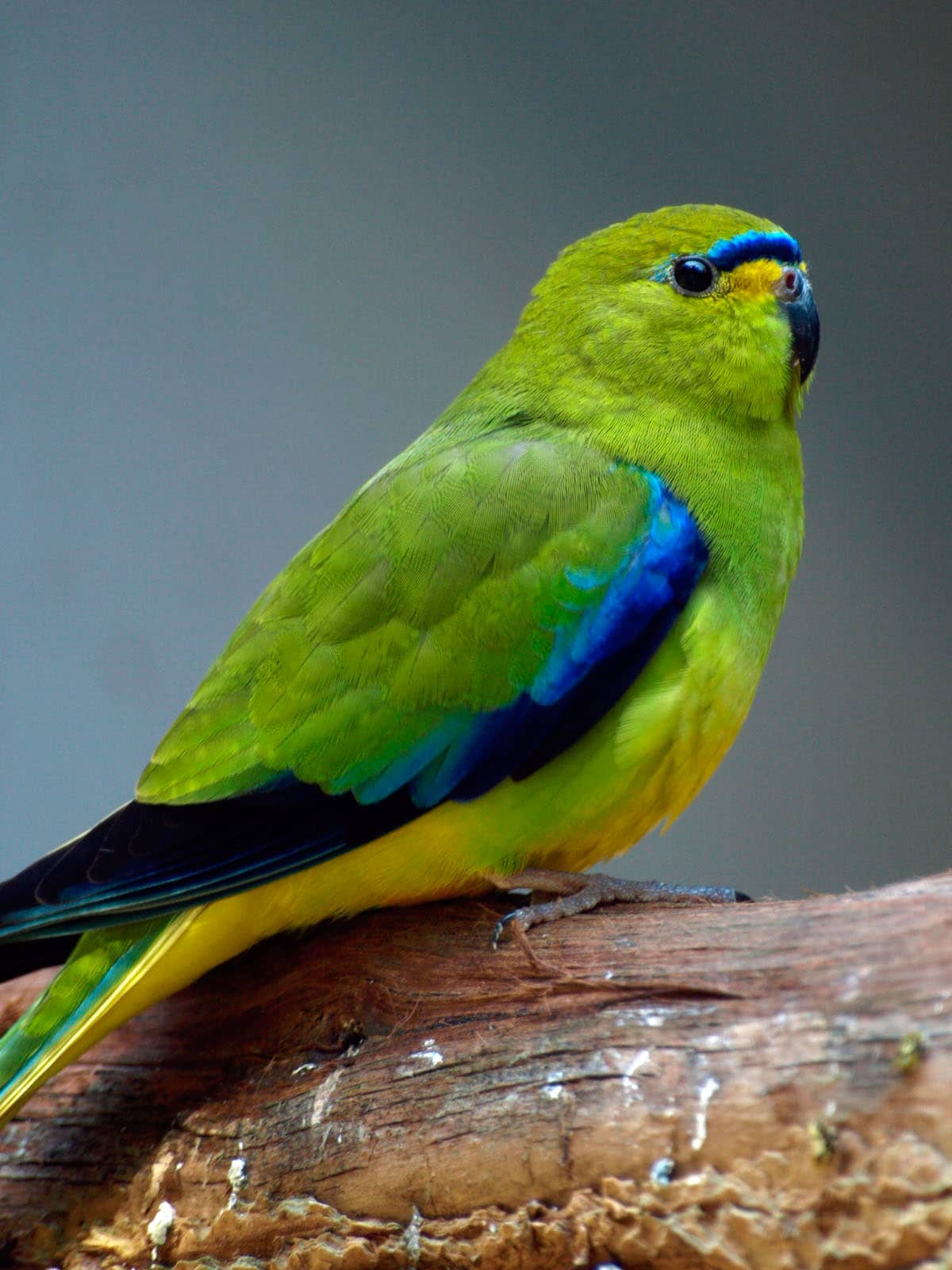
Description «Elegant Parakeet»

21 to 24 cm.. length between 40 and 51 g. of weight.

The Elegant Parrot (Neophema elegans) is very similar to the Blue-winged Parrot (Neophema chrysostoma), but its plumage It is brighter and more yellowish especially in the chest.

The crown is olive-green with a front band in dark blue tone and a distinctive and fine light blue on the rear margin. Lords bright yellow; the face Yellow olive.

The the mantle and back are olive green, staining in yellow tones in the area of the rump. The bend of wing they are blue. The wing-coverts more internal are olive green, the median pale blue tips, the large coverts with edge them in blue malva; the primary coverts in blackish shades with margins of violet-blue. The primaries black, with edges in blue violet dark; the secondaries greenish-yellow colour with external margins of blue color in the outermost zone.

The wing feathers blue-violet color. Throat and chest of yellowish-green, becoming bright yellow in the belly and in the undertail- coverts, sometimes with orange patches among the legs. Upper, the tail greyish blue, darker towards tip, Yellow lateral feathers with darker bases.

The bill black; irises dark brown; legs grey.

The plumage of the female is olive green opaque.

Immature females they are similar, except the line forecrown It is barely visible.

The adult plumage WINS in three or four months.

  • Sound of the Elegant Parrot.

“Elegant Parakeet” Habitat:

The Elegant Parrot It is a nocturnal migratory bird. It is the least specialized of its kind. It attends the nearshore or coastal dunes, wooded grasslands and Shrublands, areas of Mallee that have the appearance of large shrubs and plots of eucalyptus.

You can also see in the shrubs of Acacia, in areas of low altitude provided Acacias (Acacia caesiella) or fitted with bushes of the salt Plains Saltbush Atriplex. They especially appreciate the groups of trees that are cleared up areas.

outside the breeding season, the Elegant Parrot they form large flocks, often in association with the Blue-winged Parrot, in the Southeast. They gather in grasslands and brushy areas to feed on native or imported seeds or grasses..

These parakeets are partially nomadic, above the outer limits of its range. Local low-intensity movements can also occur. These birds nest in Kangaroo Island, from November to April. after this last month, they move to the Mainland to form their winter quarters.

Reproduction «Elegant Parakeet»:

The Elegant Parrot They nest from August to November. Usually install their nest in a cavity in a tree at high altitude. They often use the highest branches of isolated trees. Spawning is composed of 4 or 5 eggs incubation lasts a few 18 days. The chicks are altricial and they leave the nest after one month.

“Elegant Parakeet” Feeding:

The Elegant Parrot they are almost exclusively vegetarian. Their menu consists of clover or sunflower seeds and other plants of the type Helianthus, Trifolium and paspalum. Also appreciate the Berberis (Jeffersonia diphylla) and barberry (Berberis vulgaris).

«Elegant Parakeet» Distribution:

There is a two morphologically identical populations but well separated, although the species is nomadic so the birds can appear outside the normal range sometimes.

In the Southwest the species occurs west of a line from the environs of Esperance on the southern coast of the North of Western Australia through Merredin until Moora on the Northwest Coast.

They have spread through the wheat belt of the drier areas of the northeast and are now in the vicinity of Perth, as well as sometimes north of Point Cloates and the fortescue river.

In the Southeast are distributed in the South of Southern Australia, on eyre peninsula, on Kangaroo Island (present in summer), and in the districts of South, about Port Augusta, Port Wakefield and about adelaide, in the Lofty Mountains, reaching northward in the northern most part of the Montes Flinders.

The species is irregular East of 140 ° E, with few records from New South Wales, North of Riverina to paroo river; is also irregular in the Northwest of Victoria.

The population of the Southwest It is growing, While in the Southeast believed to be stable although the species is generally less common and its historical range is not easy to determine due to possible confusion with the Blue-winged Parrot.

The world population is estimated over of 30.000 individuals.

“Elegant Parakeet” Conservation:


minor concern


• Current category of the Red List of the UICN: Least concern

• Population Trend: Growing

According to the Manual of the birds of the world (HBW), This species is not threatened globally. It is common, especially in the southwest of Australia.

Until the Decade of 1930, It grew, After the use of clover in pastures.

The size of the world's population has not been quantified, but the species, according to sources, it is common. (pit et to the. 1997). It is estimated that it may be around the 30,000 specimens.

"Elegant Parrot" in captivity:

The Elegant Parrot they belong to a species that are obtained very good results in reproduction. They are also suitable for fans of parrots.

They are peaceful birds that do very low noise. They are a little shy, but they become confident with time. They are easy to maintain but they have the need to crack, a little bigger, than other species of neophemas, without the destruction of your Aviary. Your bathroom need depends on the individual. Son heat-resistant, but they are very sensitive to cold and wet fog.

To the Elegant Parrot He loves to dig the ground and is therefore susceptible to infection by worms. They are also sensitive to eye infections.

Alternative names:

– Elegant Parrot, Elegant Grass-Parakeet, Grass Parakeet, Grass Parrot, Yellow Lowry (ingles).
– Perruche élégante (French).
– Schmucksittich (German).
– Periquito-elegante (Portuguese).
– Papagayo Elegante, Periquito Elegante (español).

scientific classification:

– Order: Psittaciformes
– Family: Psittaculidae
– Genus: Neophema
– Scientific name: Neophema elegans
– Citation: (Gould, 1837)
– Protonimo: Nanodes elegans

«Elegant Parakeet» Images:

Videos "Elegant Parrot"

————————————————————————————————

«Elegant Parakeet» (Neophema elegans)


Sources:

– Avibase
– Parrots of the World – Forshaw Joseph M
– Parrots A Guide to the Parrots of the World – Tony Juniper & Mike Parr
– Birdlife

– Photos:

(1) – Elegant Parrot in the Walsrode Bird Park, Germany By Quartl (Own work) [CC BY-SA 3.0], via Wikimedia Commons
(2) – By Goura – Elegant parrot Perth, WA, Australia – ZooChat
(3) – Elegant Parrot Neophema elegans – animalphotos
(4) – Elegant Parakeet (Neophema elegans) at Walsrode 2007 by Maguari – ZooChat
(5) – Stirling Range Retreat, Stirling Range National Park, Western Australia, Australia (Monotypic species) by Clive Nealon – Lynx

– Sounds: Mark Harper (Xeno-canto)

▷ The world of Pets: Dogs, cats, birds, reptiles, amphibians

Bluebonnet
Northiella haematogaster


Bluebonnet

Content


Anatomy-parrots

Description

28 cm. length and a weight between 74 and 105 g..

The Bluebonnet (Northiella haematogaster) they have the forecrown, lores and face, blue-violet color. The rest of the head, the chest, the layer, the back and rump It has a beautiful ochre mixed with yellow belly. The abdominal area It is covered by a large red spot.

The curvature of the wings is blue, most of the coverts are a key olive. The outermost feathers are purplish blue. The the wing lower and flight feather they are also blue-purple. The tail color is greenish bronze but the outer feathers they are blue-purple with white tips.
The bill grayish white is; the irises pale grey; legs grey.

The females they are more off, with less blue in the face and a pale bar on the wing .

The immature they resemble females, but the stain abdominal Red is more discrete. The immature plumage is lost after few months. The chicks have the bill yellow.

Subspecies description

  • Northiella haematogaster haematogaster

    (Gould 1838) – The nominal.


  • Northiella haematogaster haematorrhoa

    (Bonaparte 1856) – The curvature of the wing is turquoise blue and the blankets they are redheads. The underparts is red


  • Northiella haematogaster pallescens

    (Salvadori 1891) – The plumage It is similar to the nominal, but the underparts they are paler.


  • *

    Northiella haematogaster narethae

    (White,HL 1921) – The forecrown is blue, and has spots on the chest. The upperparts color is olive, the underparts is yellow with reddish color underneath the tail. Small outer covers red.

  • * A molecular study published in 2015 by Gaynor Dolman and Leo Joseph He confirmed the genetic isolation of the subspecies Northiella haematogaster narethae and recommended that it was restored as a separate species, the Naretha Bluebonnet (Northiella narethae)

Habitat:

The Bluebonnet frequent arid and semi-arid forests dominated by trees of the genus Myoporum, which are perennial shrubs and resistant to salt and drought.

They also appreciate the conifer and the casuarinas that you are home to colonies of caterpillars. They have a certain affection for the acacias and eucalyptus, especially if the weed is made up of small quenopodios.

The Bluebonnet they often visit the grassy plains, dry brush and trees lining the river. Sometimes they come to buildings, farms or small ponds.

In the South of its range, the removal of waste bags of Mallee, located on agricultural land, It seems to have had a very important influence.

The Bluebonnet they live in pairs or in small groups. When resent, loud disperse, but they remain on the ground a short distance from the trees. In the event of alarm, they raise the feathers of her eyebrows.

These birds are very enable, especially early in the morning when the boisterous groups are formed, just before his departure to feed. They are able to run very fast and have a very characteristic straight posture.. They are less active during the heat of the day, staying on the ground in silence.

The Western populations They seem to form larger groups, showing more sociability than the Eastern. They tend to get together with other species of parrots, such as the Mulga Parrot, Pale-headed Rosella and Mallee Ringneck.

During the spawning, the Bluebonnet carried out parades such as greetings with head, movements of the tail and eating ritual exchanges. They also have a ceremonial flight consisting of small flapping.

Reproduction:

The season of nesting extends from July to December, with some variations depending on the rains. The nest is located in a cavity in a tree, except in the subspecies narethae to use scrubby trees, being their favorite nesting place a nest on the ground in a crack in the base of a trunk. This subspecies usually gives preference to a tree of the genus acacia (Acacia papyrocarpa) family Fabaceae.

The spawning contains 4-7 eggs with one incubation lasts a few 19 days. The young chicks are born without feathers and remain in place of birth at least during 30 days.

Food:

The Bluebonnet consume mainly herbaceous seeds, of Atriplex hortensis, of coquia (Kochia scoparia), of bassia and some grown as garden plants.

Sometimes consume fruit, berries and acacia flowers, the mistletoe and the larvae of Lepidoptera that are attracted to the trunks of casuarinas.

When are juveniles, its menu consists mainly of seeds composed of helipterum, that you belong to the same family as sunflowers.

Distribution:

Endemic to Australia, where there are four populations, one of which is isolated in the southeast of Western Australia, from the West of the Nullarbor plain up close Kalgoorlie.

Birds belonging to this western race are also found in western Southern Australia, about Ooldea and Colon, but they are probably coming from exhausts. further east, the range of the species varies through the east of Southern Australia, from the West of Bordertown through Salt Creek, Adelaide, the northern parts of the Cape York Peninsula and Eyre, to the North across the basin of the Lake Eyre to the Simpson Desert, about Commonwealth Hill station (but largely absent from the Montes Flinders).

From the North of Southern Australia, extends to the South of Queensland to the West of the Great dividing range, reaching around to East of Windorah, Charleville, Mitchell and Goondiwindi.

In New South Wales found to the West of the Cordillera Central, and coming east of a line, More or less, that crosses Warialda, Orange and Wagga Wagga (record out of bounds east of Gunning).

In Victoria, from time to time, they arrive as far East as Rochester and Southeast of Bendigo and Beaufort.

The species is common within a suitable habitat.

The world population is probably superior to the 100.000 individuals, although the Western subspecies Nanthae You can have less than 5.000 specimens, having suffered for their catch in the past.

A small number of captivity.

Fully protected by law.

Subspecies distribution

Conservation:

minor concern


• Current category of the Red List of the UICN: Least concern

• Population Trend: Decreasing
In accordance with the Manual of the birds of the world (Handbook of the Birds of the World, HBW), the Bluebonnet they are not globally threatened. Son fairly common, except at the extremes of its range. But, the elucidation of native plants must be stopped if we want to preserve the food resources and nesting places.

The spread of the Common Starling (Sturnus vulgaris) It is a real danger in some areas. The subspecies Narethae is prized by poachers and the lots of beautiful feathers.

The proliferation of rabbits and Lagomorphs threatens the equilibrium of the habitat.

"Bluebonnet" in captivity:

The Bluebonnet they were classified for more than one hundred years within the genus Psephotus. On the basis of some essential differences with the species Psephotus, they are currently classified within the independent genre Northiella.

The parakeet more required by lovers of Australian parakeets, are likely to be the Bluebonnet, Although the subspecies Naretha is very rare and scarce. The Bluebonnet pure breed, they are virtually non-existent in Europe.

There are many Bluebonnet non-purebred, since they often interbreed with the of red-bellied (Northiella haematogaster haematorrhoa). The birds that have tones rojas in the coverts infracaudales non-purebred. Be very careful when making their acquisitions.

The first breeding success of the nominal species dates back to the year 1878, in France. With the subspecies of red-bellied (Northiella haematogaster haematorrhoa) also data from 1878, but this time in Belgium.

The first breeding results with the subspecies Northiella narethae they date from 1941 in Australia.

Are capricious in nature. The big problem is that of aggression since they are probably the most aggressive of all the Australian parakeets. Males, above all, they are the protagonists of this bad reputation. Therefore other birds not can be joined with the Bluebonnet, even larger birds.

The aggressiveness of the male reaches their own partner, the Aviary must take into account this, the female should be able to take refuge in case of attack. On the other hand, they are very animated and jugetones.

You spend much time on the ground looking for food, they are moderate rodents and are lovers of bath.

According to sources, a sample lived 15,3 years in captivity. In captivity, these animals have been known that they be reproduced in approximately 2 years of age.

Alternative names:

– Bluebonnet, Blue Bonnet, Blue-Bonnet, Bluebonnet Parakeet, Bulloak Parrot, Common Bluebonnet, Common Bluebonnet Parrot, Crimson-bellied Parakeet, Crimson-bellied Parrot, Eastern or Western Bluebonnet, Little Bluebonnet, Naretha Bluebonnet, Naretha Parrot, Oak Parrot, Pallid Parrot, Red-bellied Bluebonnet, Red-vented Bluebonnet, Yellow-vented Bluebonnet, Yellow-vented Parrot (ingles).
– Perruche à bonnet bleu, Bonnet bleu, Perruche à bonnet bleu ou P. de Nareth (French).
– Blutbauchsittich (German).
– Periquito-de-bluebonnet (Portuguese).
– Perico Azul, Perico Cariazul (español).

scientific classification:

– Order: Psittaciformes
– Family: Psittaculidae
– Genus: Northiella
– Scientific name: Northiella haematogaster
– Citation: (Gould, 1838)
– Protonimo: Platycercus haematogaster

“Blue-faced Parakeet” images:

Videos "Bluebonnet"

«Blue-faced Parakeet» (Northiella haematogaster)

Sources:

  • Avibase
  • Parrots of the World – Forshaw Joseph M
  • Parrots A Guide to the Parrots of the World – Tony Juniper & Mike Parr
  • Birdlife

Photos:

(1) – To Blue Bonnett in the Cocoparra National Park (near Griffith), NSW, Australia By David Cook Wildlife Photography [CC BY-SA 2.0], via Wikimedia Commons
(2) – Bluebonnet (Northiella haematogaster) Birdsville Track, South AustraliaBy by Ron Knight – Flickr
(3) – Northiella haematogaster, Photo by Benjamint444 – Animalia Etymology of animal name
(4) – Bluebonnet/Blue Bonnet/Crimson-bellied Parrot – animalphotos
(5) – Blue Bonnet Fact Sheet 26 May 2011, Windorah. QLD – travelling-australia.info

Sounds: Frank Lambert (Xeno-canto)

▷ The world of Pets: Dogs, cats, birds, reptiles, amphibians

Hooded Parrot
Psephotellus dissimilis

Hooded Parrot

Content


Anatomy-parrots

Description

25,5 to 28 cm.. length and a weight between 50 and 60 g..

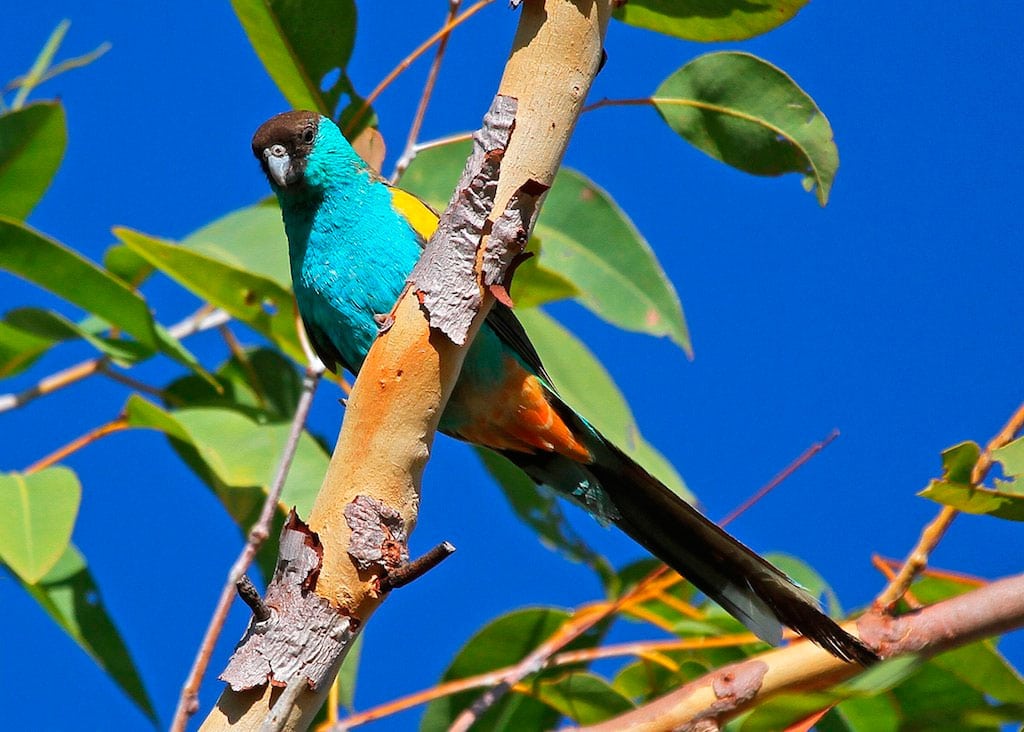
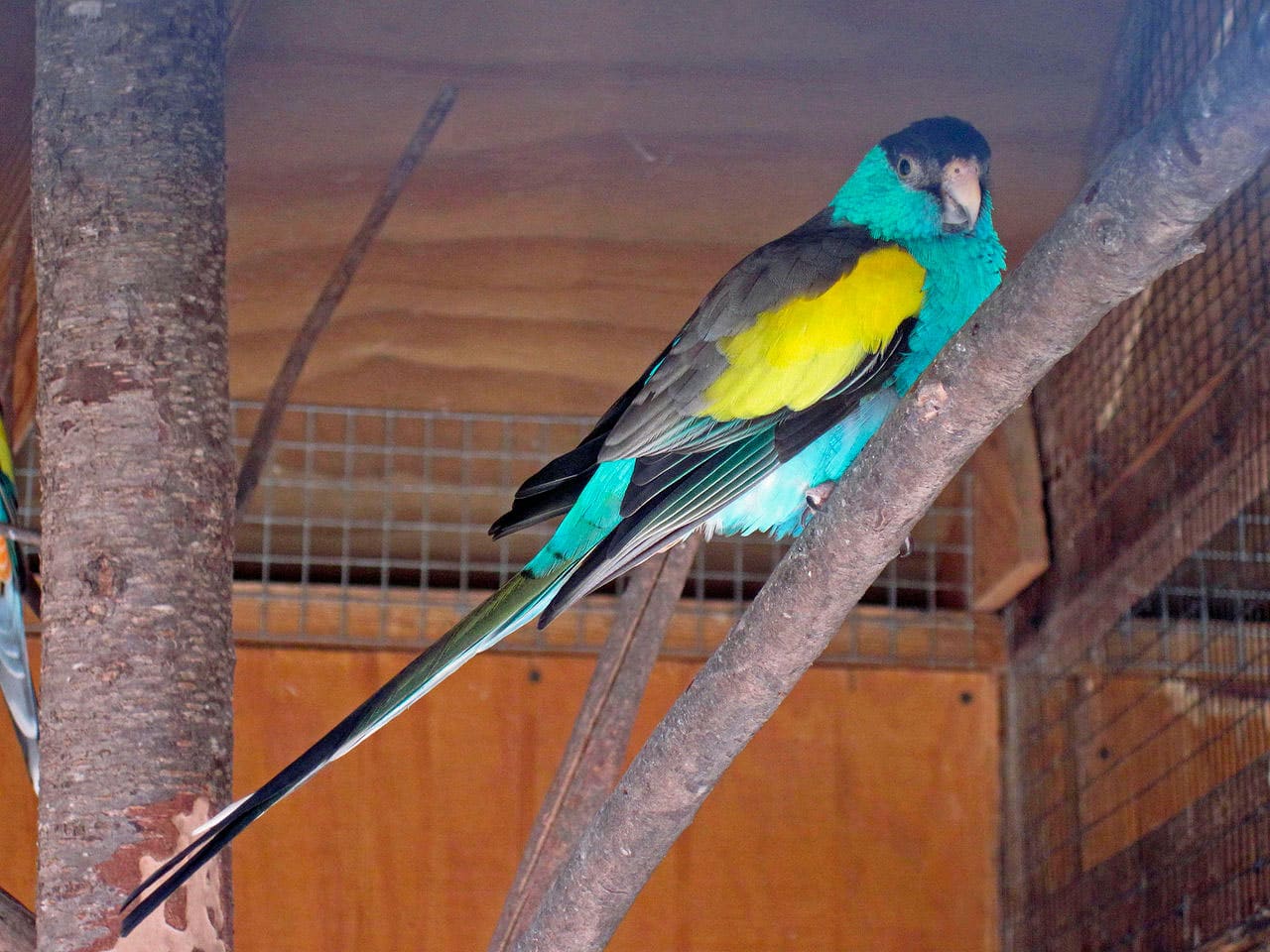
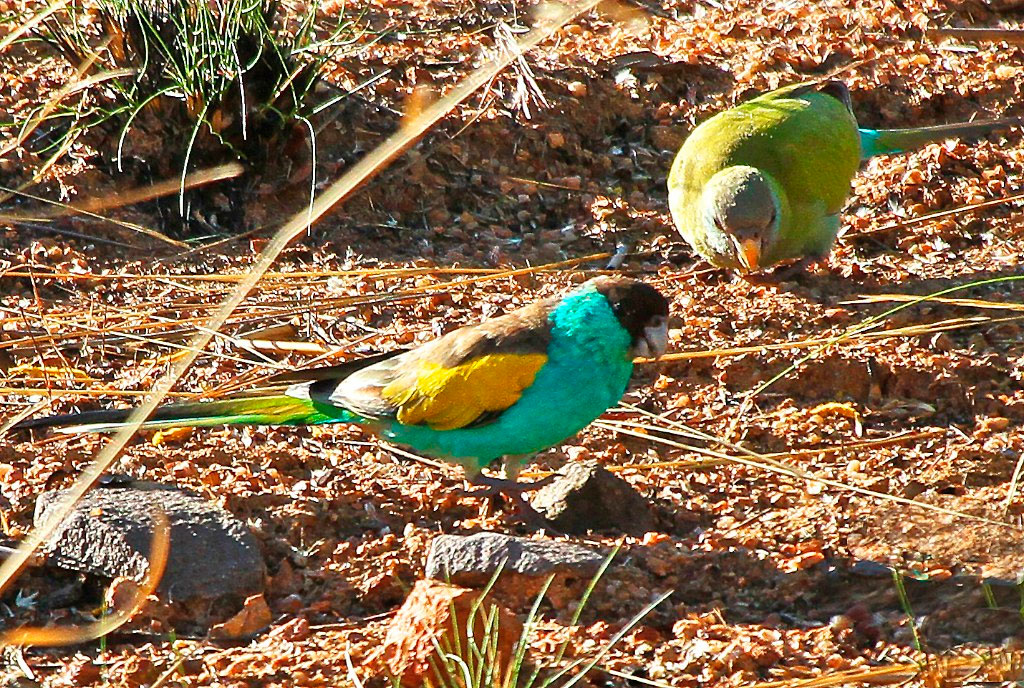
The Hooded Parrot (Psephotellus dissimilis) is a very striking species, restricted to the dry forests of the North of Australia. The male has a pileum black, their underparts are Turquoise with a patch in the shoulders golden yellow.

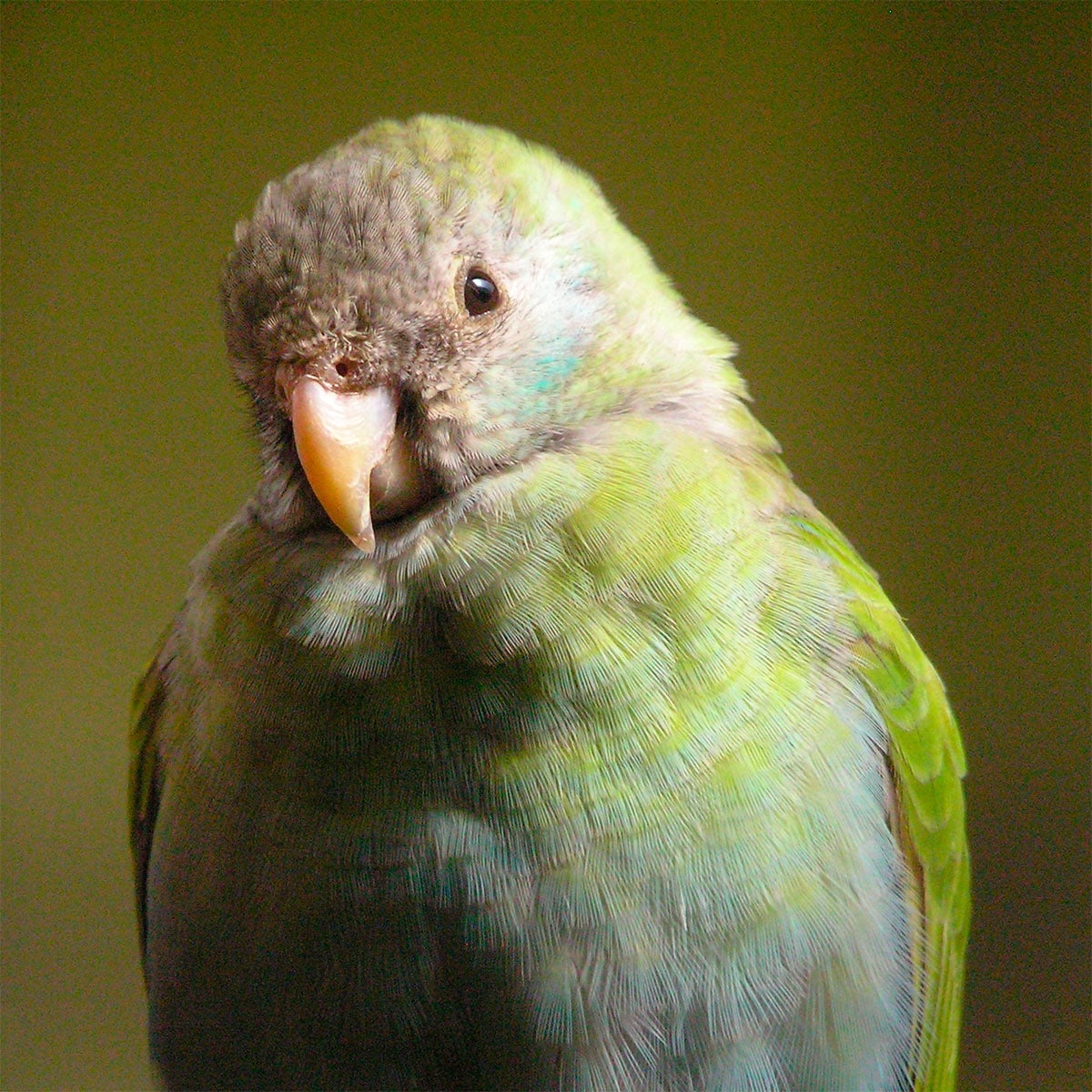
The females are pale green with a pale turquoise diffusion in the cheeks, abdomen and cadwas.

The Golden-shouldered Parrot, with which it is closely linked, is very similar in appearance, but they are only observed in the Cape York Peninsula, in the North of Queensland, and males differ in their tones slightly. The Hooded Parrot does the yellow colour in the forecrown or in the lores and the yellow markings of the shoulders and reddish of the belly, they are smaller than. The females they are very similar, but the Golden-shouldered Parrot It shows a faint red marks on the area, white, bass belly, has the undertail- coverts Bluish, bluish color of the belly is absent and the undertail- coverts They have a pinkish tone; also has a Brown Suffusion in the crown, a forecrown yellowish and the cheeks they are greener.

The Northern Rosella shares territory with the Hooded Parrot and also has a pileum black, but it lacks of the underparts Turquoise and yellow markings on the wings.

The Hooded Parrot they have an elegant flight, and males they are very bright with a Flash of bright yellow showing in the wings. The flight fast and slightly wavy. Bird perch, times, phone cables, and can make long flights at high altitude.

Providing more detail to its description, the Hooded Parrot has the pileum, lores and the area below and in front of the eyes, black, merging into grey-brown colour in the the mantle (darker uppers than the Golden-shouldered Parrot). The rump is turquoise blue and the uppertail-coverts green. Wing coverts golden yellow (grey dark in vane inner).

Flight feathers Blackish with difusion-verde turquoise at the edge of the vane outer (thin yellow color at the outer edge). feathers of the wings and bend of wing bluish green; underside of flight feather blackish brown. The cheeks, the neck and the chest Turquoise, lightly coated with emerald green; rest of the underparts Turquoise with the exception of undertail- coverts they are orange-red with yellow tips. Uppertail dark bars.

Central feathers of the tail Green bronze with black tips, side green blue with white tips, with a blackish central bar; undertail, the tail apparently light blue with black tips when it is closed. Bill pale grey; irises dark brown; legs light brown.

The female is usually pale, a light yellowish green, with wing-coverts a bright yellowish-green, flight feather blackish, and a turquoise color broadcasting in the rump, from the top of the breast to belly, and vaguely in the cheeks. Subcaudales coverts bathed in Pink salmon; pale marks in the wings.

The immature they are like the females, but males have the head darker and the cheeks bright. Adult plumage they would earn in the second annual moult.

The very young birds they have the peaks yellow.

Habitat:

Sedentary, although some early records of the Melville Island probably related to post-breeding dispersal. Scattered sparsely through the open dry forests, flooded Plains, especially grasslands of Malaleuca-dominated and Spinifex Triodia, grasslands with termite mounds, also in rows of eucalyptus trees along watercourses and the rocky ridges.

Usually, they are in pairs or in small groups, but after the breeding season, from September (end of the dry season) onwards, they may gather in groups of up to 100 birds feeding.

Reproduction:

Egg-laying range from late January until mid-April, at the end of the rainy season, and the nest is a tunnel in a Termite Mound. The direction and height of the entrance of the nest is variable, but nest chamber temperatures are more stable inside larger mounds. A recent study of nesting ecology in the Northern Territory showed a density of 0,45 to 0,70 nests per square kilometer, with a 50% from eggs producing hatchlings. Between two and six eggs make up the clutch, and are incubated for around 20 days for the female. In about five weeks the young leave the nest.. The females., sometimes, they roost far from their nests during the heat of the day.

Food:

The diet is composed, mainly, of pasture seeds seasonal during the dry season and perennial plants during the wet season. Variation in the ability to master feeding techniques for different seed types may explain the apparent early dispersal of immatures in the wet season.. Birds feed quietly on the ground, resting in foliage near water during the heat of the day. When drinking, they often walk into the water along banks of sand. They are sometimes seen feeding on road verges, often in association with the Black-faced Woodswallow (Artamus cinereus).

Distribution:

Endemic to North of Australia where is located in the western part of Arnhem Land, Northern Territory, from the South of the alligator river, to the southwest of Pine Creek and the South-East of Include. The birds also disperse further east and west to the rivers. Roper and upper area of the Daly.

The Hooded Parrot formerly extended eastward to the MacArthur river, but its territory, covering the Kakadu National Park, has recently been hired.

In general, It Rare. Although now it is fully protected. Capture is believed to it has been a problem in the past. Burning and grazing may limit the availability of herbs seeds during the dry season.

Mining also threatens the habitat of the species. There are a moderate number of birds in captivity.

Conservation:


minor concern


• Current category of the Red List of the UICN: Least concern

• Population Trend: Stable

The world population is estimated at 20.000 specimens (Garnett and Crowley 2000).

Population trends have not been quantified, but populations seem to be stable, without descents recent (Garnett and Crowley 2000).

The species remains common in areas under park management. Aboriginal and National, where grazing is minimal and where there are programs that guarantee their survival, or around the Rocky slopes, where is the availability of food in the rainy season relatively assured.

"Hooded Parrot" in captivity:

Although the popularity of the Hooded Parrot has increased considerably in the last decade, this species is still quite unknown in aviculture. The main reason is, probably, that they are not easy to care for and reproduce in captivity, due to its high demands care and difficulty it in terms of its food supply. The Hooded Parrot they are not recommended for a beginner breeder birds.

No one knows exactly when these birds were imported for the first time to Europe, but it was probably at the beginning of the last century. In the autumn of 1912 English Hubert Astley was the one who obtained the first satisfactory breeding result with the Hooded Parrot, got 4 young people from a litter of 5. in the netherlands, the Dr. Polak It also had results before the second world war. Once the pups are born, they were taken along with a couple of Red-rumped Parrot (Psephotus haematonotus) with which they grew up without any problem.

There is a variety of the Hooded Parrot because different crosses with other species such as Mulga Parrot (Psephotellus varius) and the the Golden-shouldered Parrot (Psephotellus chrysopterygius). So, we must pay attention to the characteristics when we are going to buy a pair of future reproducers of this species. If you have doubts about the purity of certain birds, consult with a person who is familiar with this type of parrots.

In terms of the behavior, the Hooded Parrot adapt to the European climate relatively well, although they are sensitive to cold and wet weather. They are quiet birds, enable, not shy and quickly adapt to their caregiver. His voice is not worrying. Love these birds being on the ground, where spend much time. They love to swim and are not rodents of wood. During the breeding season they are aggressive towards other birds.. Even outside the breeding season, It is not advisable to fit them with their peers or keep them with other bird species. Young birds together may stay in a birdhouse. As a basic rule, Ave predict an area of one square meter.

It is not known exactly how these birds can live, according to sources, one specimen was still alive after 18 years in captivity

Alternative names:

– Hooded Parrot, Antbed Parrot, Anthill Parrot, Black-hooded Parakeet, Black-hooded Parrot, Golden-shouldered Parrot, Hooded Parakeet (ingles).
– Perruche à capuchon noir (French).
– Collettsittich, Hooded Sittich (German).
– Periquito-encapuzado (Portuguese).
– Perico Capirotado, Periquito encapuchado (español).

scientific classification:

– Order: Psittaciformes
– Family: Psittaculidae
– Genus: Psephotellus
– Scientific name: Psephotellus dissimilis
– Citation: Collett, 1898
– Protonimo: Psephotus dissimilis

Images «Capitola Parakeet»:

Videos "Hooded Parrot"

————————————————————————————————

«Perico Capirotado» (Psephotellus dissimilis)


Sources:

– Avibase
– Parrots of the World – Forshaw Joseph M
– Parrots A Guide to the Parrots of the World – Tony Juniper & Mike Parr
– Birdlife

– Photos:

(1) – A male Hooded Parrot, about 30 km south of Pine Creek, Northern Territory, Australia By birdphotosneill (Hooded ParrotUploaded by snowmanradio) [CC BY 2.0], via Wikimedia Commons
(2) – A pair of Hooded Parrots, about 30 km south of Pine Creek, Northern Territory, Australia By birdphotosneill (Hooded ParrotsUploaded by snowmanradio) [CC BY 2.0], via Wikimedia Commons
(3) – A pair of Hooded Parrots about 30 Km south of Pine Creek, Northern Territory, Australia. The male is in the foreground By birdphotosneill (Hooded ParrotsUploaded by snowmanradio) [CC BY 2.0], via Wikimedia Commons
(4) – By originally posted to Flickr as parkiet xxx and uploaded to commons at Psephotus_dissimilis_(female)_-Burgers_Zoo-8a.jpg: frank woutersderivative work: Snowmanradio (Psephotus_dissimilis_(female)_-Burgers_Zoo-8a.jpg) [CC BY 2.0], via Wikimedia Commons
(5) – Male Hooded Parrot (Psephotus dissimilis) – Sylvan Heights Waterfowl Park in Scotland Neck, North Carolina By SandyCole (Own work) [CC BY-SA 3.0 or GFDL], via Wikimedia Commons

▷ The world of Pets: Dogs, cats, birds, reptiles, amphibians

Mulga Parrot
Psephotellus varius

Mulga Parrot

Content


Anatomy-parrots

Description

27 to 28 cm. length between 53 and 70 g. of weight.

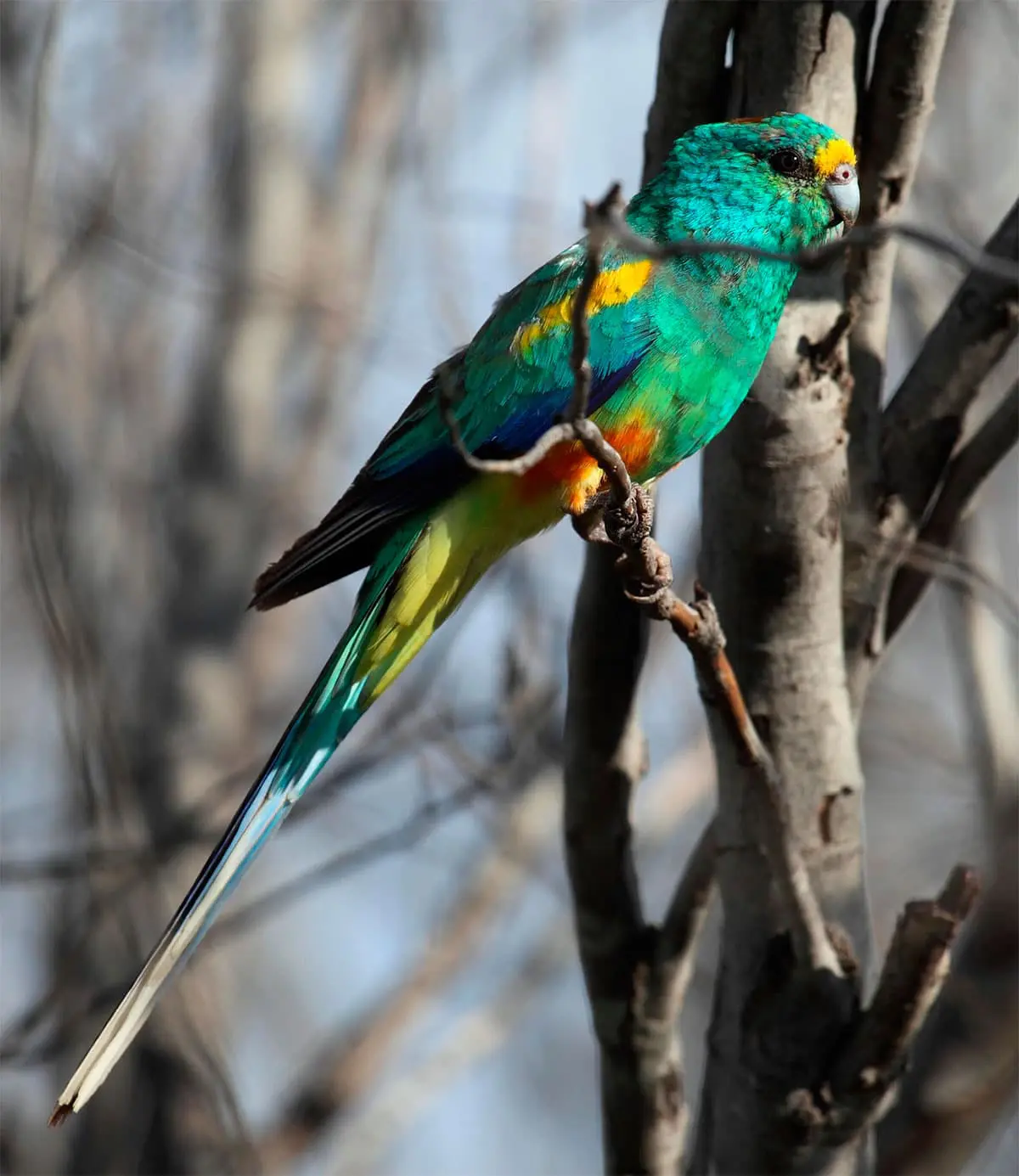
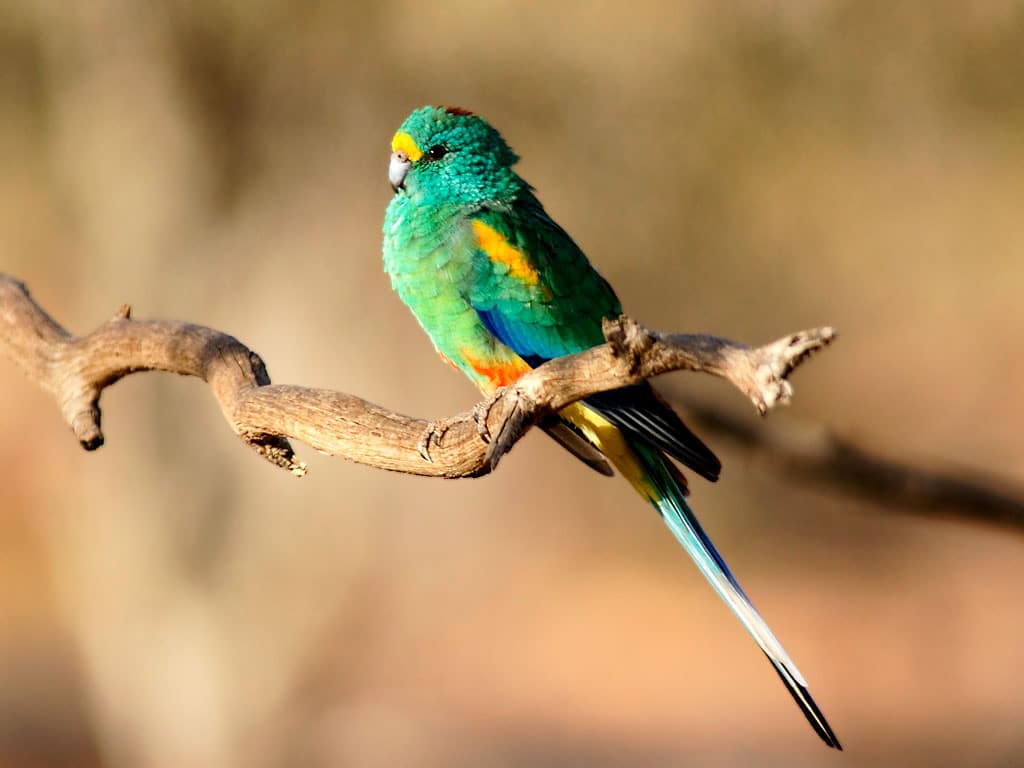
The plumage of the Mulga Parrot (Psephotellus varius) It, in general, color bright green. A yellow band across the front and a variable red spot adorns the back of the crown. The abdomen and the thighs are yellow, more or less stained Red. The uppertail-coverts are bright green, with a reddish blotch at the base of the tail. The lower area of the back has a blue-green band bordered above and below with a dark bluish-green line;. The curvature of the wings are turquoise and the blankets they have a yellow-orange tone forming a patch on the wing. The central feathers of the tail are green bronze, changing to greenish-blue. The outer feathers of the tail are green-blue on the bottom and white on the tip. The bottom of the tail It has a pale blue base and a finish in black. The bill is dark gray. The irises They are brown, legs grey.

In the female, the head, the back and top of the chest a color is brownish olive. The feathers of the lower parts are light green. The headband orange-yellow is barely noticeable and, often dyed red bermejo. The place that adorns the back of the crown is opaque reddish. The patch of the wing is red, not yellow as in the male.

The youth they are much more muted than their parents. Young females have small blankets green edged with red, giving the latter a scaly appearance. Among young males, the red in the abdomen and the thighs is practically missing.

Habitat:

Mulga Parrot

The Mulga Parrot generally prefers dry open habitats and lightly wooded Plains, where can find a great variety of vegetation. Found in scrubland Mallee and, in plots of acacia, casuarina, and also in the regions where small trees of eucalyptus They punctuate the stretches of sand. They are also present in the rocky hills or rocky cliffs.

They survive in dry areas, but in these cases, often sit near sources or temporary streams. The Mulga Parrot they owe their English name (Mulga Parrot) the fact that his rank often coincides with areas of Mulga, It is the vernacular name of Aboriginal origin, It is used to describe the semi-arid vegetation that covers the largest part the Australian continent. Mulga It appoints to the extension of the ecosystem or landscape in which Acacia are the dominant vegetation type. This does not mean that this species is strictly dependent on this habitat type.

Unlike in the Red-rumped Parrot, the Mulga Parrot is a quiet and reserved bird. This species usually lives in pairs or small family groups, rarely in large flocks. Most of the time, looking for food on the ground, in the shade of the trees at the edge of a road.

They show a great familiarity and usually allow to photograph them at close range. When it manifests some distrust, They walk away a short distance, to a tree and then return to Earth as soon as the intruder has moved away. On the other hand, When it comes to drinking, they are very cautious, as well as when they rest in the treetops, where are trying to keep hidden.

Reproduction:

The nesting period is carried out between the months of July and December, but also at other times of the year, provided that is a rainy month. The processions are very similar to the of the Red-rumped Parrot (Psephotus haematonotus) and includes mutual grooming.

The nest It is often found in a cavity in a tree, However, They also use nests of others parakeets or other openings such as tunnels dug in riverbanks.

The nests of the Mulga Parrot they are often found in small stunted trees, at low altitude above the ground. But, places near rivers provide locations that are at a higher elevation.

The female incubated during 19 days, While the male mounts guard close to stock up your food partner and warn of possible dangers.

The chicks, they leave the nest four weeks after hatching. Immediately after take-off, they join adults to form family groups.

Food:

The Mulga Parrot they feed on grass seeds, acacia seeds, berries, mistletoe and fruits. They complement their menu with different varieties of insects.

Distribution:

Size of the area of distribution (reproduction / resident): 3.330.000 km2

Endemic to the southern part of the Australian continent. Its range covers the entire southern part of Western Australia, except the forest area of ​​south west. It continues throughout the Great Australian Bight, Southern Australia and reaching the state of Victoria. Ends in southeast New South Wales, but does not cross the Great dividing range and it kept at great distance from the coast. Despite the large size of its territory (more than 3 million square kilometers), the species is considered monotypic (no subspecies).

Conservation:


minor concern


• Current category of the Red List of the UICN: Least concern

• Population Trend: Decreasing

The Mulga Parrot they are widespread and relatively common in appropriate habitats.

Since the European colonization, the species appears to have changed its habitat significantly and is now more common in the grain belt in the desert.

The population, currently estimated at around 100.000 birds, It is slightly decreasing in the South due to the thinning areas of Mallee. In general, is not endangered. Classified by the IUCN as it does not present major problems.

"Mulga Parrot" in captivity:

It is in 1861 that the Mulga Parrot they arrived in Europe. The first specimen was exhibited to the public at the London Zoo. The first case of reproduction of this species dates back in the year 1876 in charge of the SR. Verviers in France. For a long time, These birds were known for being unreliable. That may be true, but the Mulga Parrot who are captives now in Europe support good climate, although they seem a little less solid than the Red-rumped Parrot (Psephotus haematonotus). It is possible that this is one of reasons why have been much less popular in aviaries that the Red-rumped Parrot.
Despite this, It is a parakeet can be advised to novice fans. The varied Perico often show minor differences in color and design. This is not anything unusual, This phenomenon is also known among the birds living in the wild. It is even possible to see the small differences in the same nest, If you look well.
These birds always in motion they are not suitable for being kept captive as pet birds in a small cage.

These are relatively strong birds, they withstand the cold relatively well, although they are sensitive to very low temperatures. They are birds peaceful and assets. Quickly show confidence to their caregiver. The sound of his voice is melodious. It is a bird that likes to raise. Like to be on the ground and, often spend their time grooming are. They also love to bathe. On the other hand, they are large rodents.
During the breeding season they are aggressive when in the company of other birds., even if it can be accommodated with conspecifics and other species of large birds, that will have no trouble, If the space in which birds are kept is large enough.

With regard to its longevity, a sample lived 11,8 years in captivity. In captivity, estas aves se han conocido casos de reproducción con 1 año de edad.

Alternative names:

– Mulga Parrot, Many-colored Parakeet, Many-colored Parrot, Many-coloured Parakeet, Many-coloured Parrot, Varied Parrot (ingles).
– Perruche multicolore (French).
– Vielfarbensittich (German).
– Periquito-de-mulga (Portuguese).
– Perico Variado, Periquito multicolor (español).

scientific classification:

– Order: Psittaciformes
– Family: Psittaculidae
– Genus: Psephotellus
– Scientific name: Psephotellus varius
– Citation: Clark, AH, 1910
– Protonimo: Psephotus varius

Images «Varied Parakeet»:

Videos "Mulga Parrot"

«Varied Parakeet» (Psephotellus varius)

Sources:

  • Avibase
  • Parrots of the World – Forshaw Joseph M
  • Parrots A Guide to the Parrots of the World – Tony Juniper & Mike Parr
  • Birdlife
  • Anage: El Animal Envejecimiento y Longevidad de base de datos – AnAge entry for Psephotus varius

  • Photos:

(1) – Mulga Parrot (Psephotus varius), Northern Territory, Australia By Christopher Watson (http://www.comebirdwatching.blogspot.com/) [CC BY-SA 3.0], via Wikimedia Commons
(2) – A male Mulga Parrot at Gluepot Reserve, South Australia, Australia. Male By David Cook Wildlife Photography from Wamboin, NSW, Australia [CC BY 2.0], via Wikimedia Commons
(3) – Mulga Parrot (Psephotus varius) Currawinya NP, SW Queensland, Australia By Aviceda (Own work) [CC BY-SA 3.0], via Wikimedia Commons
(4) – Mulga Parrot (Psephotus varius), Northern Territory, Australia By Christopher Watson (http://www.comebirdwatching.blogspot.com/) [CC BY-SA 3.0], via Wikimedia Commons
(5) – A male Mulga Parrot (also known as the Many-coloured Parrot at Wyperfeld National Park, Victoria, Australia By David Cook Wildlife Photography [CC BY-SA 2.0], via Wikimedia Commons
(6) – Parrots in captivity /. London :George Bell and Sons,1884-1887 [i.e. 1883-1888] – Flickr

  • Sounds: Marc Anderson (Xeno-canto)

▷ The world of Pets: Dogs, cats, birds, reptiles, amphibians

Red-rumped Parrot
Psephotus haematonotus

Red-rumped Parrot

Content


Anatomy-parrots

Description

27 to 30 cm. length between 55 and 85 g. of weight.

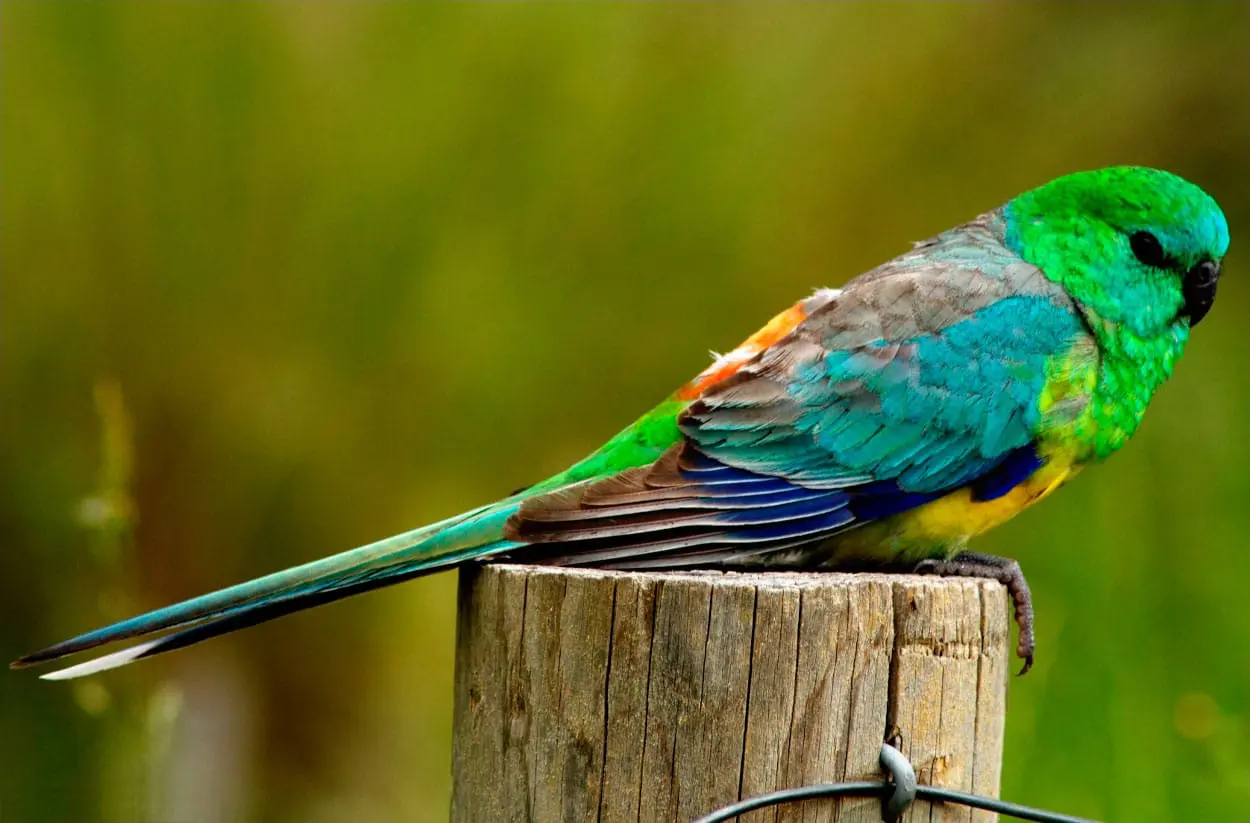
The Red-rumped Parrot (Psephotus haematonotus) It has a bright pale green head, slightly iridescent, with the front of the crown Blue pale and diffusion in the throat. Mantle Green grey with stripes dark fine; floor area of the back and Hip, Scarlet pale; uppertail-coverts bright green. Curve of the wing blue-violet shiny; carpal edge dark blue; small coverts bluish green, the external medium yellow, the inner of a pale blue-green; greater coverts, bluish green, clearer internal; primary coverts dark blue. Flight feathers Blackish with vane external edges and dark blue yellowish; tertiarys grey-green with vane Dark internal. Wing feathers dark blue. Green light the chest with a broadcasting slightly yellow, belly bright yellow, feathers of the chest and belly with stripes more dark very fine; the thighs, vent and undertail- coverts off-white, sometimes blur of yellowish-green. Upper, the tail Green feathered side of greenish-blue with white tips; by down whitish appearance when it is closed.

Bill black; irises brown; legs grey.

The female It is much more off than the male, usually greyish green. With white spots on the ear-coverts, the upper part of the chest is grey olive clear with fringed slightly more dark and the belly whitish with a blue-green light diffusion. The wing-coverts are of a gray olive more uniform that it's the male (medium-sized coverts pale blue). The vane outside of the flight feather they are more muted and more greenish, with the tail green. The bill and the irises are more pale, with some brands shaped pale wing bar.

The immature They also have a pale bar on the wings. Males are darker, with more olive than females and a rump with a narrow margin of Red; The feathers greenish blue begin to show in the head, the chest and wing-coverts first.

The adult plumage was purchased in two or three months, the male young retain the bar of wing and have it rump more off for another year.

Description 2 subspecies

  • Psephotus haematonotus caeruleus

    (Condon 1941) – Adults of both sexes are more pale in color, the male is a shade more blue, the Central undertail feathers they have more nuances blue and red of the rump is more pale; the nape and the the mantle of the female are more grayish Green


  • Psephotus haematonotus haematonotus

    (Gould 1838) – The nominal.

Habitat:

The Red-rumped Parrot usually sedentary, but some movements of flocks with breeding sites have been recorded at the edges of their range.

They prefer open terrain and trees of ribera, grasslands and croplands until 1.000 meters above sea level, where the annual precipitation is inferior to 800 mm. They are also found in suburban areas, having canevale for golf courses, roadsides and parks, and locally in the mangroves.

They are generally replaced by Bluebonnet and Mulga Parrot in wetter areas.

They are usually in pairs or small groups, but they are not uncommon flocks of 100 specimens or more during the post-breeding season. In these groups the pair bond is maintained and mutual grooming is common.. The Red-rumped Parrot are sociable, and to retire to the roosts are constantly called.

Reproduction:

The breeding season of the Red-rumped Parrot extends from July to January, Although you can rely more on the rains in the North than elsewhere. The courtship the male consists of head and tail Wiggles, as well as the drooping-wings pose.

The nesting they tend to occur in small colonies, often resulting in disputes between couples. The nest usually in a hollow tree, in different heights, often in a eucalyptus, it can also be located on a tree stump or even the eaves of a building can provide a suitable place. Between two and eight eggs (usually four to five) they form the laying. The female incubates alone for around 20 days, regularly fed by the male.

The pricipio, males remain in small groups, but as the chicks grow, These groups begin to disperse and males joined young people directly in the moments of eating. Young people take to abandon the nest between four to six weeks.

Food:

The Red-rumped Parrot they tend to feed on the ground, but it is also common to see them feeding in trees and shrubs.

The diet comprises a mixture of grasses and herbs, also seed sprouts, leaves, flowers and grain. They rest during the heat of the day and can remain hidden, unless you disturb them.

Distribution:

Size of the area of distribution (reproduction / resident): 1.930.000 km2

The Red-rumped Parrot are confined to the southeast of Australia, from the north of the Peninsula Eyre and Yorke, in the South of Australia, until the Montes Flinders, the basin of the Lake Eyre and Innamincka in the Northeast. The species expands eastward through Victoria, having come up to Melbourne in the middle of the Decade of 1970.

In the news, the species is still scarce in the eastern end of the State. But, in New South Wales can be found around Sydney and along the coast towards the North, extending inward across the fullest part of New South Wales (largely absent in the Northwest of the darling river,).

In Queensland reaches Windorah, in the West and the surrounding area of Charleville, Chinchilla and Brisbane, in the East.

Its population is common and growing in the north and towards the south coast of Queensland, to the South of New South Wales, benefiting from the expansion of agriculture.

The world population is more of 200.000 specimens and the species is protected by law.

Distribution 2 subspecies

Conservation:


minor concern


• Current category of the Red List of the UICN: Least concern

• Population Trend: Crecent

The size of the world population It has not been quantified, It is estimated over the 200.000 specimens.

Considered as a bird common to abundant in some parts of its area of distribution, do not believe that the Red-rumped Parrot is in danger of extinction, although there is some evidence that the numbers they may be decreasing slightly. The reasons for this are not clear.

As the Red-rumped Parrot It is immersed in the pet trade, This species is included in the Appendix II the Convention on international trade in endangered species (CITES), which means that all international trade in this species should be carefully controlled.

"Red-rumped Parrot" in captivity:

You have a nice voice. He is active and not especially shy. It can be kept with other parrots outside the breeding season..

The Red-rumped Parrot (Psephotus h. Psephotus) It is one of the species of breeding parakeets more common in captivity. The first imports of Australia they arrived in the middle of the 19TH century. In 1857, the Zoo's London announced the first reproduction successful with this species. Other reproductive successes would follow in Germany and Netherlands, already in 1860.

It's a tough species recommended for novice breeders. The Red-rumped Parrot It is very tolerant of our climate and prefers an Aviary in the open air all year round.

You can play from the age of one year; being two years total maturity age. Playing at the end of the winter, early spring. Usually has two to three young.

The El Perico shrike is also used as a foster parent. Breeders have used their good reproductive dispositions for the breeding of more delicate species such as the Australian King-Parrot (Alisterus scapuleris), the Red-winged Parrot (Apromictus erytropterus) or other species of Polytelis.

The first mutation mentioned back in the middle of the Decade of 1930. This mutation of Australian origin was named as Yellow before later being renamed as Green cake. They are currently known as cinnamon.

Other mutations emerged later as the panache, blue, lutino, opaline, etc … In the news, this species is very common in aviaries. Observations show an unrecognized majority of mutated subjects and a worrying decline in wild-type phenotypes.. Reasonably, it is likely that genetically pure wild type phenotypes are extremely rare today.

According to sources, a sample lived 12,2 years in captivity.

Alternative names:

– Red-rumped Parrot, Grass Parrot, Grassie, Green Leek, Ground Parrot, Red rumped Parrot, Red-backed Parakeet, Red-backed Parrot, Redrump, Red-rumped Grass Parakeet, Red-rumped Parakeet (ingles).
– Perruche à croupion rouge (French).
– Singsittich (German).
– Periquito-dorso-vermelho (Portuguese).
– Perico de Dorso Rojo, Perico Dorsirrojo, Periquito de Rabadilla Roja, Cotorra de rabadilla roja, Espalda roja, Periquito cantor (español).

scientific classification:

– Order: Psittaciformes
– Family: Psittaculidae
– Genus: Psephotus
– Scientific name: Psephotus haematonotus
– Citation: (Gould, 1838)
– Protonimo: Platycercus haematonotus

Images «Red-backed Parakeet»:

Videos "Red-rumped Parrot"

————————————————————————————————

«Red-backed Parakeet» (Psephotus haematonotus)


Sources:

– Avibase
– Parrots of the World – Forshaw Joseph M
– Parrots A Guide to the Parrots of the World – Tony Juniper & Mike Parr
– AnAge: The Animal Ageing and Longevity Database – Anagé entry for Psephotus haematonotus
– Birdlife

– Photos:

(1) – A male Red-rumped Parrot by Yarra River, Victoria, Australia By Andrea (originally posted to Flickr as rainbow parrot) [CC BY 2.0], via Wikimedia Commons
(2) – A male Red-rumped Parrot near Lake Ginninderra, Canberra, Australia By Duncan McCaskill (Picasa Web Albums) [CC BY 3.0], via Wikimedia Commons
(3) – Red-rumped Parrot in Capertee Valley, Blue Mountains, NSW, Australia. The red rump is seen only in male By Lip Kee Yap from Singapore, Republic of Singapore [CC BY-SA 2.0], via Wikimedia Commons
(4) – Red-rumped Parrot male (Psephotus haematonotus) – Flickr by Patrick_K59
(5) – Red-rumped Parrot (Psephotus haematonotus) Photographed @ Yarra Bend Park, Melbourne, Australia – Flickr

– Sounds: Peter Woodall (Xeno-canto)