โ–ท The world of Pets: Dogs, cats, birds, reptiles, amphibians

Olive headed Lorikeet
Trichoglossus euteles

Olive headed Lorikeet

Content

Description

Its length is about 25 cm. and weigh between 80 and 85 gr.

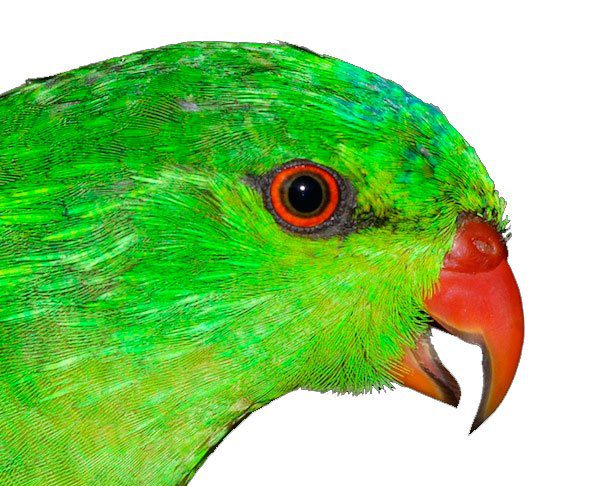
The Olive headed Lorikeet (Trichoglossus euteles) show, in general, a green shade.
The head color is olive with waves pale mustard and yellow stripes over the entire surface of the top.
The neck and its part rear are surrounded by a collar of color green brilliant that continues until the throat.

The underparts below the throat are entirely greenish-yellow.
The bill is red-orange. The irises they are red, and legs grey.

The youth they are more muted than adults. Its head is slightly greenish with streaks pale. The bill is brown. The irises They are brown. The species is considered monotype.

Habitat:

They frequent humid subtropical forests., secondary forests and wooded meadows. Adapt quite well to cultivated land and the gardens in cities.

In Timor, they are relatively abundant between 1.000 and 2.300 meters above sea level, apparently, substitute to the Coconut Lorikeet in these heights. Also they can be observed at sea level in the island of Timor. In the rest of the Islands it frequents lowland areas.

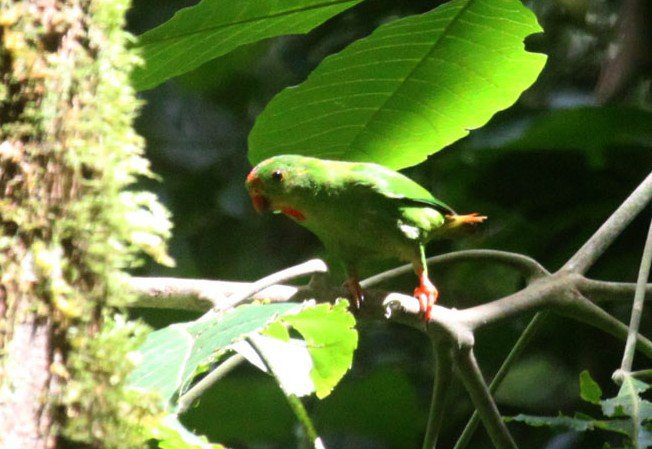
The Olive headed Lorikeet they live in small groups. They are especially visible when they are in flight because they emit continuously shouts. On the other hand, when feeding or resting in trees, they are very difficult to observe because of their green plumage mixed with the color of the foliage.

They are birds territorial, capable of showing great aggressiveness if the limits of their area of โ€‹โ€‹influence are violated.

Usually disperse in search of their food, forming large groups when resources are abundant.

Outside the breeding season they form large roaming flocks of a hundred or more individuals.. Move in flying fast and slightly wavy.

In Timor, during the season, dry, These birds seem to descend below 1.000 meters and are scattered in coastal areas.

Reproduction:

The anidacio seasonn would take place perhaps between September and October, but this information needs to be confirmed.

In captivity, the Olive headed Lorikeet put 3 white eggs that parents are in charge of incubate for a few 23 days. As in the majority of the Lori, the nesting cycle is particularly long.

Food:

Feed primarily of nectar and fruit. They forage in trees in flower and shrubs.

Distribution:

Size of the area of distribution (reproduction / resident): 38.100 km2

Timor and Lesser Sunda Islands, from the East of Lembata until Nila and Babar.

Conservation:


minor concern


โ€ข Current IUCN Red List category: Least concern

โ€ข Population trend: Stable


The population size This species has not been quantified. Suspected that the population is stable in the absence of evidence of any reduction or substantial threats.

Like most brightly plumaged parrots, the Olive headed Lorikeet It victim of trade bird cage or Aviary.


"Olive headed Lorikeet" in captivity:

Pretty common. They can be housed with others of its kind.

Alternative names:

Olive headed Lorikeet, Olive-headed Lorikeet, Perfect Lorikeet (ingles).
Loriquet eutรจle (French).
Gelbkopflori (German).
Lรณris-de-cabeรงa-amarilla (Portuguese).
Lori Humilde, Tricogloso Humilde (espaรฑol).

scientific classification:

Order: Psittaciformes
Family: Psittaculidae
Genus: Trichoglossus
Scientific name: Trichoglossus euteles
Citation: (Temminck, 1835)
Protonimo: Psittacus euteles

Images "Humned Lori":

Videos "Olive headed Lorikeet"

———————————————————————————————–

"Lori humildeยป (Trichoglossus euteles)


Sources:

Avibase
– Parrots of the World – Joseph Forshaw M
– Parrots-A Guide to the Parrots of the World by Tony Juniper & Mike Parr
– BirdLife.org

Photos:

1 – Photo by and (C)2007 Derek Ramsey (Ram-Man) – Self-photographed – Wikipedia
2 – By James Eaton – IBC.lynxeds.com
3 – ยซTrichoglossus euteles-captive-8a-ecยป by Trichoglossus_euteles_-captive-8a.jpg: Ruth Rogersderivative work: Snowmanradio (talk) – originally posted to Flickr as P8120395 and uploaded to commons at Trichoglossus_euteles_-captive-8a.jpg. Licensed under CC BY 2.0 via Wikimedia Commons.
4 – "Scaly-breasted Lorikeet Kobble Dec06" von AvicedaEigenes Werk. Lizenziert unter CC BY-SA 3.0 รผber Wikimedia Commons.
5 – By Marcella (Picasa Web Albums) [CC-BY-SA-3.0], via Wikimedia Commons

Sounds: Colin Trainor (Xeno-canto)

โ–ท The world of Pets: Dogs, cats, birds, reptiles, amphibians

Purple-bellied Lory
Lorius hypoinochrous

Purple-bellied Lory

Content

Description

The Purple-bellied Lory (Lorius hypoinochrous) has an approximate length of 26 cm.. with a weight ranging between 200 and 240 g..

Hood black in color with blue purple sheen extending to the rear of the nape; rest of head red. Upperparts completely red with a band dark variable on the the mantle; upper mantle slightly more purple that the rest of them upperparts.
Primary coverts Bluish; remaining wing Green with the internals of the flight feather in black color. Rojas the wing-coverts with black tips. The flight feather show a large patch yellow in the part internal.

Throat and chest, red, getting more purple towards the top belly; part low belly, the thighs and coverts, dark purple-blue. The parties above of the tail basically red, with the final part in dark blue (appears only teal at rest); undertail, opaque yellow with red hidden base.

Bill orange; cere (waxy soft swelling, containing the nostrils, at the base of the upper beak) white; Iris orange; legs black grey.

There is no significant difference between males and females. In general, the male has a bill a little stronger than the female.

The juveniles has belly pale purple color and peaks are more brownish.

Description 3 subspecies

  • Lorius hypoinochrous devittatus

    (Hartert, 1898) – Differs by the absence of margins black in the large feathers underneath them wings.


  • Lorius hypoinochrous hypoinochrous

    (Gray,GR, 1859) – Nominal.


  • Lorius hypoinochrous rosselianus

    (Rothschild & Hartert, 1918) – Difference with the species rated by the fact of that has the chest the same red that the upper part of the abdomen.

Habitat:

Unlike in the Black-capped Lory, often found in coconut, mangroves and coastal vegetation (especially fond of coconut flowers); the Purple-bellied Lory also frequents low forests, the edges of these, high secondary forests, inhabited or partially cleared areas and gardens. Found individually, in pairs or in small groups of up to 10-20 birds. Ruidoso, visible and Active, they often live in trees or just above the canopy.

In the Island of Papua, they are distributed by the lowlands and foothills, in New Britain up to at least 450 m, in New Ireland until 750 m (where is sympathetic with the White-naped Lory) and up 1.600 metres in the Goodenough island.

Virtually nothing is known of the reproductive ecology of this species., Although is has been able to observe to them males in a, apparent, participation in the cortejo, with repetitive stretching of the neck and movements side of the head.

Reproduction:

Due to its extreme rarity, We know little about their reproductive behavior.
It is likely to be very similar to the of the Black-capped Lory (Lorius lory). This means a spawning two eggs and a incubation period of about 26 days.

Food:

The Purple-bellied Lory It feeds mainly in the canopy in noisy groups. Its diet natural consists of pollen, nectar, flowers, fruits, insects and their larvae, and probably seeds.
Usually see, sometimes, feeding is in company of the Sulphur-crested cockatoo and the Eclectus Parrot.

Distribution:

Size of the area of distribution (reproduction / resident): 61.900 km2

Endemic of the southeast of Papua New Guinea and surrounding island groups. On the island it reaches West, from Lae in the Huon Gulf to the North to Cape Rodney in the South. Is distributed in the islands of the archipelagos of D'Entrecasteaux and Louisiade, including (Goodenough, Fergusson, Normanby, Bentley, Misima Island, Tagula and Rossel, Islands Trobriands, Woodlark and Islands of the Bismarck Archipelago, including Umboi, Sakar, New Britain, New Ireland, Witu, Lolobau, Uatom, New Hanover, Tabar and Lihir.

common and locally abundant. World's largest population of 50.000 birds.

Distribution 3 subspecies

Conservation:


minor concern


โ€ข Current IUCN Red List category: Least concern

โ€ข Population trend: Stable

The world population It has not been quantified, but the species appears to be common and abundant throughout its area of distribution.

Justification of the trend

Suspected that the population is stable in the absence of evidence of declines or substantial threats.

"Purple-bellied Lory" in captivity:

Extremely rare.

Alternative names:

Purple-bellied Lory, Eastern Black-capped Lory, Purple bellied Lory, Stresemann’s Lory (ingles).
Lori ร  ventre violet, Lori de Louisiade (French).
SchwarzsteiรŸlori, Louisiadenlori (German).
Loris Hypoinochrous (Portuguese).
Lori Ventrivinoso, Tricogloso de Streseman, Tricogloso de Vientre Pรบrpura (espaรฑol).

scientific classification:

Order: Psittaciformes
Family: Psittaculidae
Genus: Lorius
Scientific name: Lorius hypoinochrous
Citation: Gray,GR, 1859
Protonimo: Lorius hypoinochrous

Images "Ventrivinous Lori":

————————————————————————————————

"Ventrivinous Lori" (Lorius hypoinochrous)


Sources:

Avibase
– Parrots of the World โ€“ Forshaw Joseph M
– Parrots A Guide to the Parrots of the World – Tony Juniper & Mike Parr
– Birdlife

Photos:

1 – ยซLorius hypoinochrous qtl1ยป by QuartlOwn work. Licensed under CC BY-SA 3.0 via Wikimedia Commons.
2 – Animal Photos – Enlace
3 – parrots-pictures
4 – by Bilder von Marion – papageien.org
5 – Free pet wallpapers – link

Sounds: Frank Lambert (Xeno-canto)

โ–ท The world of Pets: Dogs, cats, birds, reptiles, amphibians

Josephine's Lorikeet
Charmosyna josefinae


Josephine's Lorikeet

Content

Lori-of-Josefina drawing

Description

24 cm.. length and an approximate weight of 68 g..

The head of the Josephine's Lorikeet (Charmosyna josefinae) it is red in color with a conspicuous black patch extending from the back of the crown to the nape and in a transverse line to the eyes; back of the Crown is marked with purple stripes; large red necklace. Mantle and scapulars Green; bottom of the Red back: rump with a central patch of dark blue; views from the top, the coverts of the tail of blue to red. The wings, from above, green with vane internal greyish towards flight feathers; marginal coverts Green. View from below, the coverts of Red Wings. Red underparts with a purplish-black spot in the center of the belly, that extends to the flanks on the thighs; seen from below, tail-coats are red. From above, the tail shows red with yellow tip and green color side feathers; from below, the tail is yellow. The peak, orange red; iris yellow ; orange-yellow legs.

The female It shows the lower part of the back of yellow, tending to green on the rump.

The immature with impregnated in green belly patch, and bluish black thighs. The blue rump patch impregnated in green. Makes color lilac in the back of the Crown replaced by blue-green color marks.

Immature females It shows the low back of red with some yellow marks.

Subspecies description

  • Charmosyna josefinae josefinae

    : The nominal.


  • Charmosyna josefinae sepikiana

    : It differs from the nominal value by having more extensive black belly patch and more grey marks on the back of the Crown. Females lack of greenish broadcasting on the flanks and in the low back.


  • Charmosyna josefinae cyclopum

    : Differs from the nominal value by the absence of black belly patch and the practical absence of grisaceo-azul in the back color of the Crown marks.

Habitat:

Possibly Nomad. Frequents montane forests, edges of forests and partially cleared areas, mainly between 760 and 2.200 meters and more common between 850 and 1.200 meters although there have been up to at sea level. Usually seen in pairs or small groups. Despite their striking coloration, is quite discreet. Feeds in the tops of trees in flower, flowering vines or plants epiphytes, often with him Fairy Lorikeet.

Reproduction:

Nesting and breeding to be described.

Food:

Diet includes pollen, nectar, flower buds and soft fruits.

Distribution:

New Guinea in Irian Java (Indonesian) and Papua New Guinea, mainly in the Western and central cordillera, Since the Mountains Parotia and Vogelkop, to the Bismarck range in the Northeast (Jimi and also Baiyer River). There has been since Jayapura, on the North coast of Irian Java, and come to the South of Mount Bosavi, Papua New Guinea.

Subspecies distribution:

  • Charmosyna josefinae josefinae

    : The nominal.


  • Charmosyna josefinae sepikiana

    : Mountains of the region of Sepik, Papua New Guinea and in the Highlands of the West to the East until approximately the area of the jimi river and to the South of Mount Bosavi


  • Charmosyna josefinae cyclopum

    : Cyclops ranges.

Conservation:


minor concern

โ€ข Current IUCN Red List category: Least concern.

โ€ข Population trend: Stable.

The world's population has not been quantified, but it is thought that it may be above the 300.000 specimens.

A small number in captivity.

The population is suspected to be stable in the absence of evidence of any reduction or substantial threats.

"Josephine's Lorikeet" in captivity:

Take it easy, but at the lively and active time. Some new birds may initially be nervous. Young birds, in particular, curious and playful. Aggressive toward other birds. Susceptible to stress and disease during the acclimatization. Strict hygiene necessary due to a mainly liquid diet.

Alternative names:

Josephine’s Lorikeet, Josephine’s Lory (ingles).
Lori de Josephine, Lori de Josรฉphine (French).
Josefinenlori (German).
Lori de Josefina (espaรฑol).

scientific classification:

Order: Psittaciformes
Family: Psittaculidae
Scientific name: Charmosyna josefinae
Genus: Charmosyna
Citation: (Finsch, 1873)
Protonimo: Trichoglossus Josefinae

ยซLori de Josefinยป images:

————————————————————————————————

ยซLori de Josefinaยป (Charmosyna josefinae)


Sources:

Avibase
– Parrots of the World โ€“ Forshaw Joseph M
– Parrots A Guide to the Parrots of the World – Tony Juniper & Mike Parr
– Birdlife

Photos:

1 – danskloriklub.dk
2 – By Drรคgus (Own work) [Public domain], via Wikimedia Commons
3 – By Katerina Tvardikova – Photo of Charmosyna josefinae [By Drรคgus (Own work) [Public domain], via Wikimedia Commons] – Charmosyna josefinae
4 – papageien.org
5 – animalphotos.me
6 – Dibujo by HBW.com

Sounds: BAS van Balen (Xeno-canto)

โ–ท The world of Pets: Dogs, cats, birds, reptiles, amphibians

Ceylon Hanging-Parrot
Loriculus beryllinus


Ceylon hanging

Content

Description

13 cm.. length.

The Ceylon Hanging-Parrot (Loriculus beryllinus) has the crown red, merging into orange-yellow in the area of the nape; eyebrows, lores and the area in front of the eyes light green (lightly bathed in pale blue); sides of the front of the crown red. Mantle green, Baรฑado de slightly reddish and yellowish orange color in the Center; back green; rump and uppertail-coverts, red. Wings green up, with the exception of vane inner of the blackish flight feathers ; undertail, the wings bright turquoise color with the exception of coats and axillary green. The underparts bright green, paler and more yellowish which the upperparts and light blue marking in the throat. above the tail green color; Turquoise below.

Bill orange red, paler at the tip; irises off-white; legs dark yellow.

Female as the male, but most off and only a trace of blue in the throat.

The young birds they are even duller, the crown reddish-tinged, the patch blue of the throat absent, the rump with some green feathers, the bill paler, the iris and the legs brown; the face nude in the fledglings.

Habitat:

Seen in a range of habitats, from sea level to 1.600 m, reaching the highest areas according to seasonal conditions. The species is found in forests of coconut trees, Evergreen and deciduous forests, semicultivadas areas, open woodland and around the dwellings.

birds are not shy, and is usually found in pairs or family groups, although outside the breeding season larger flocks congregate high up in flowering trees. They are active and acrobatic feeding.

Reproduction:

Observations, they have registered the male approaching his partner upright, with the high peak, swollen throat, extended tail and rump feathers erect, while emitting a screeching chirp. Wiggles head in courtship period have also been observed.

The breeding begins in January and although the main nesting period is between March and May, a second litter is, sometimes, until September. The nest is located in a hollow branch filled with fragments of vegetation that the female carefully cuts with her beak and carries to the nesting sites tucked between her rump feathers.. Only two to four white eggs she incubates, sitting firmly, screeching and creating a 'thumping' sound’ Yes is the annoying. The young Chick has the face exposed, presumably to avoid getting dirty by liquid food.

Food:

Feed on fruits such as Ficus figs and guava (Psidium guajava); berries; flowers, including Erythrina, Salmalia and eucalyptus; seeds, including Casuarina. Poisonings have been reported after drinking Palm wine collected pots attached to the trunks of the trees.

Distribution:

Endemic to Sri Lanka, where most records come from the South, Although there have been North of Trincomalee and should be observed in suitable habitats throughout the country. Records include proximities of Colombo, around Kandy, Yala and National parks Gal Oya, the district Welimada, and to the South of Galle and Hambantota, on the coast.

Conservation:


minor concern


โ€ข Current IUCN Red List category: Least concern

โ€ข Population trend: Stable

The size of the world's population has not been quantified, Although it is estimated at 10.000 specimens. The species is qualified as widespread and abundant in the South-West and almost absent in the North of its distribution area (pit et to the. 1997).

The population is suspected to be stable in the absence of evidence of any reduction or substantial threats, However, the bird trade is judged as a potential threat.

"Ceylon Hanging-Parrot" in captivity:

Rare.

Alternative names:

Ceylon Hanging-Parrot, Ceylon Hanging Parrot, Ceylon Lorikeet, Sri Lanka Hanging Parrot, Sri Lanka Hanging-Parrot, Sri Lankan Hanging Parrot (ingles).
Coryllis de Ceylan, Coryllis du Sri Lanka (French).
Ceylonpapageichen, Ceylon Papageichen (German).
Loriculus beryllinus (Portuguese).
Lorรญculo de Ceilรกn, Lorรญculode Ceilรกn (espaรฑol).

scientific classification:

Order: Psittaciformes
Family: Psittaculidae
Scientific name: Loriculus beryllinus
Genus: Loriculus
Citation: (Forster,JR, 1781)
Protonimo: Psittacus beryllinus

ยซCeylon loricleยป images:

Video of the "Ceylon Hanging-Parrot"

————————————————————————————————

ยซCeylon loricleยป (Loriculus beryllinus)


Sources:

Avibase
– Parrots of the World โ€“ Forshaw Joseph M
– Parrots A Guide to the Parrots of the World – Tony Juniper & Mike Parr
– Birdlife

Photos:

(1) – ยซLoriculus beryllinus-Sri Lanka-adult-8ยป by Hafiz Issadeen – originally posted to Flickr as Sri Lanka Hanging Parrot. Licensed under CC BY 2.0 via Wikimedia Commons.
(2) – ยซThimindu 2010 03 06 Sinharaja Sri Lanka Hangling Parrot 1ยป by ThiminduOwn work. Licensed under CC BY-SA 3.0 via Wikimedia Commons.
(3) – Perched in a tree by John A Thompson – lynx
(4) – Birds-pet-wallpapers/Parrot-birds – link
(5) – A fight by Guy Poisson – lynx

Sounds: Tero Linjama (Xeno-canto)

โ–ท The world of Pets: Dogs, cats, birds, reptiles, amphibians

Red-checked Parrot
Geoffroyus geoffroyi

Red-checked Parrot

Content

Red-checked Parrot

Description

21 to 27 cm. length and a weight between 130 and 180 g..

The face of the Red-checked Parrot (Geoffroyus geoffroyi) is of color rojo-rosaceo up to just above the eyes, more pink in the ear-coverts; front of the crown of color rojo-rosaceo. Half of the crown to the nape mauve-blue. Upperparts green. Wings with patch red in them Middle coverts interiors.

Flight feathers with vane Dark internal and external Green. Edge of yellow to vane internal of greater coverts and secondaries. Wing feathers and axillary, bright blue; below, the rest of the wings, blackish. The underparts green, more yellowish in them lower flanks. Upper, the feathers of the tail of color green, drenched sides of yellow; below, brighter yellowish green.
The bill red orange in upper jaw, the lower jaw in color black; irises yellow; legs grey.

Female with head Brown and upper jaw black.

Youth they have the head green, irises dark and bill pale. The male juveniles go through a plumage ยซfemale stageยป before they begin to acquire masculine characters (bird takes over one year to mature). The birds young also lack of the brand red on them small coverts.

Subspecies description

Description of the 16 subspecies
  • Geoffroyus geoffroyi cyanicollis

    (Mรผller, 1841) – The darker male in general that the nominal; purple blue crown comes to the part back from the neck; neck light blue; Marron-bronce washing variable on the mantle and top of the back; Green bluish in the part superior of the chest and zone inferior of the abdomen ; brown reddish of them coats internal of the wings absent; Blue more dark in them Underwing coverts. Larger in size.
    The female with the head more dark that the nominal; purple diffusion in the crown; nape blue, reaching the neck with color blue light.

  • Geoffroyus geoffroyi obiensis

    (Finsch, 1868) – Adults as the subspecies cyanicollis but collar Blue in the part back from the neck more comprehensive, reaching almost up to the eyes; blue-purple in the male or brown in the female does not reach the lower part of the occiput; reddish brown in the bottom of the back to rear.

  • Geoffroyus geoffroyi rhodops

    (Schlegel), 1864) – Similar to the subspecies males floresianus, but darker in general; marks of the coats internal of the wings of color brown reddish dark; crown Blue separate with red in the face; Underwing coverts Blue more dark. Larger in size.
    The female with the crown castano-oscuro color.

  • Geoffroyus geoffroyi explorator

    (Hartert, 1901) – Synonymous with Geoffroyus geoffroyi rhodops

  • Geoffroyus geoffroyi keyensis

    (Finsch, 1868) – The male resembles the subspecies floresianus, but in general more greenish-yellow, in particular in the tail; cheeks Pink and ear-coverts washed with Blue Lilac; Yellow greenish pale in the neck through the part back from the neck and a strip Green, darker, in the early part of the neck; Underwing coverts pale blue. Larger in size.
    The female chestnut brown on the head.

  • Geoffroyus geoffroyi floresianus

    (Salvadori, 1891) – The male is like the nominal, but darker in general; the purple blue of the crown It's darker and reached to the nape; coats internal of the wings dark reddish brown; Blue more dark them Underwing coverts. Larger in size. Largest peak.
    Female with the crown darker brown, coming up to the nape.

  • Geoffroyus geoffroyi geoffroyi

    (Bechstein, 1811) the subspecies nominal

  • Geoffroyus geoffroyi timorlaoensis

    (Meyer, 1884) – The subspecies resemble adults Kei, but smaller.

  • Geoffroyus geoffroyi pucherani

    (Souancรฉ, 1856) – Adults and juveniles with bronze-colored marking of the parts internal of the wings, minimal or absent; the mantle have less marron-bronce washing; Brown more pale in the part low of it back; the buttocks with less red; coats dark blue low the wings.

  • Geoffroyus geoffroyi minor

    (Neumann, 1922) – Male adults are as the subspecies aruensis, but with reddish brown under the back to rear; face darker red; washing Marron-bronce in the the mantle; brands in the coats internal of the wings minimal or absent.
    The female as the subspecies aruensis, but with the head of brown slightly more dark.

  • Geoffroyus geoffroyi jobiensis

    (Meyer, 1874) – Adults and juveniles but with Underwing coverts pale blue; bright red in the lower part of the back to the rear; in males, the red in the forecrown back to the front of the crown.

  • Geoffroyus geoffroyi mysoriensis

    (Meyer, 1874) – Males as juveniles, but with the crown blue-purple, down on the back of the neck, and red in the face, coming up to the throat; washing marron-bronce absent in the the mantle; extensive reddish brown marks in inner median coverts; Underwing coverts dark blue; dark brown in the bottom of the back to rear.
    The female as juveniles, but the color brown in the crown comes to the part back from the neck.

  • Geoffroyus geoffroyi orientalis

    (Meyer, 1891) – Hardly differs from the subspecies aruensis; Crown of the male is slightly more pale.

  • Geoffroyus geoffroyi sudestiensis

    (Estimate, 1890) – The adult male is similar to the subspecies aruensis, but with the underparts darker; the trademark brown reddish of them coats internal, absent.
    The crown and nape of the female, is dark green.

  • Geoffroyus geoffroyi cyanicarpus

    (Hartert, 1899) – The adult male is similar to the subspecies aruensis, but with azul-lila wash in them cheeks and ear-coverts; bend of wing has edge blue.
    The female is as the subspecies aruensis, but the crown and nape They are brown, with light green dye; edge blue in the part outside of the wing as in the male.

  • Geoffroyus geoffroyi aruensis

    (Gray, 1858) – Similar to the species males nominal, but darker purple blue from the crown up to the nape; inner coverts a reddish brown marked darker; Blue more dark in them Underwing coverts.
    The female Brown darker from the crown even the nape.

  • Geoffroyus geoffroyi maclennani

    (W. D. K. Macgillivray, 1913) – The male is similar to the subspecies aruensis, but darker in general; the Red of the face is darker and more uniform; Underwing coverts paler blue.
    Female similar to the female of subspecies aruensis, but darker in general; head dark brown; Underwing coverts paler blue.

* The varieties sumbavensis and tjindanae proposed as subspecies are synonymous of floresianus; rhodops stresemanni; explorator It is also synonymous of rhodops.

Habitat:

Distributed by primary and secondary forests, tree savannas, plantations, Open forests, mangrove forests and farmland, a altitude of 1.400 m. Usually replaced by the Blue-collared Parrot at higher altitudes. Exclusive tropical jungle in the North of Australia. View the birds, generally, flying high above the trees, making calls to cries.

Groups of birds in the North of Australia, many still in family units, they have been observed leaving their roosts early, to feed into the dense jungle; in their flights to areas of foraging, We have seen some of these birds perched in the upper branches of the trees, by calling aloud for a few minutes and dithered wings before continuing. The reason for this unknown behavior can be a way of requesting food due to early maturation.

During the day the birds are less visible, they can draw attention by discarded food falling from their food trees.

They are usually in couples, in small groups or assembled in groups in fruit trees.

Reproduction:

The nest It is a hole that the birds excavate in a rotten limb of a tree from the forest, sometimes also in a knot in the trunk; probably only the female excavates. The entrance to the nest is of 80 to 90 mm. wide, and the tunnel, that it can twist in order to hide the eggs, You can have a length of 42 cm.. Includes the implementation of 2 to 4 eggs. The female alone incubates and is fed by the male during this time. In the West, the breeding season It takes place between April and September at least, month in which a live nest was found in Seram.
In New Guinea, the nesting is been registered during several months more, including February in the North and between the months of April to December in other places.
In Australia, in where the season seems to extend is from August to December, little information about the cycle reproductive is available.

It is known that the species It has never been raised successfully in captivity.

Food:

The diet It includes seeds, fruits and flowers. The birds tend to hang acrobaticamente to reach their food.

Distribution:

Size of the area of distribution (reproduction / resident): 793.000 km2

Generalized from the West of Lombok, through the Moluccas, the lowlands of New Guinea, and observed in the groups of associated Islands, to the East of Rossel in the Louisiade archipelago.

The species can also be observed in the northeast of the Cape York Peninsula, Australia, at its southern end, and North ranges up to Morotai in the North of the Moluccas. In many areas, throughout its distribution area, is the most abundant Parrot (rarer over the 800 meters above sea level), even around inhabited areas. Despite this, It may be extinct in Ambon.

Distribution Subspecies

Distribution of the 16 subspecies

Conservation:


minor concern


โ€ข Current IUCN Red List category: Least concern

โ€ข Population trend: Stable

The size of the world population It has not been quantified, Although it is estimated above 1.000.000 of copies. The species according to sources, is of common to abundant much of its area of distribution (pit et to the. 1997).

The population suspected to be stable in the absence of evidence of any reduction or substantial threats, Although you can that its population is affected by the capture in various parts of its area of distribution.

"Red-checked Parrot" in captivity:

Very rare or impossible to see in poultry.

Passive Parrot. Extremely susceptible to stress and disease; they may die suddenly without apparent reason. Few times you live long in captivity

Alternative names:

Red-checked Parrot, Red cheeked Parrot, Red-cheeked Parrot (ingles).
Perruche de Geoffroy, Eclectus de Geoffroy, ร‰clectus de Geoffroy (francรฉs).
Rotkopfpapagei (alemรกn).
Papagaio de bochechas vermelhas (portuguรฉs).
Lorito Carirrojo, Lorito de Mejillas Rojas (espaรฑol).


scientific classification:

Johann Matthew Bechstein

Order: Psittaciformes
Family: Psittaculidae
Genus: Geoffroyus
Scientific name: Geoffroyus geoffroyi
Citation: (Bechstein, 1811)
Protonimo: Psittacus Geoffroyi


Images "Lorito Carirrojo":

Videos "Red-checked Parrot"

————————————————————————————————

"Lorito Carirrojo" (Geoffroyus geoffroyi)


Sources:

Avibase
– Parrots of the World โ€“ Forshaw Joseph M
– Parrots A Guide to the Parrots of the World – Tony Juniper & Mike Parr
Wikipedia
– Birdlife
parrots.org

Photos:

(1) – By Ron Knight (Flickr: Red-cheeked Parrot) [CC BY 2.0], via Wikimedia Commons
(2) – By Nick Athanas/Tropical Birding – Birds-pet-wallpapers
(3) – A male perched in a tree by Josep del Hoyo – Lynx
(4) – A male and a female looking for a suitable nest by mehdhalaouate – Lynx
(5) – By markharper1 [CC BY-SA 2.0], via Wikimedia Commons

Sounds: Marc Thibault (Xeno canto)

โ–ท The world of Pets: Dogs, cats, birds, reptiles, amphibians

Great-billed Parrot
Tanygnathus megalorynchos


Great-billed Parrot

Content


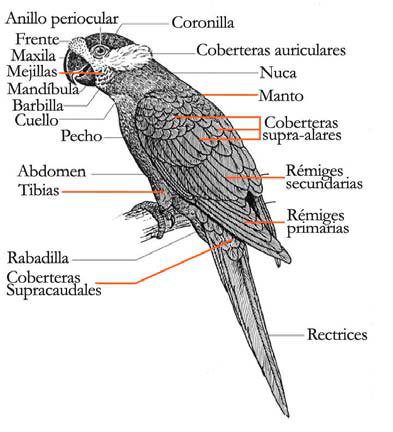
Anatomy-parrots

Description

33 to 43 cm.. length and an approximate weight of 260 g..

The Great-billed Parrot (Tanygnathus megalorynchos) It has a bright green head. Green mantle with narrow blue stripes to the feathers of the back; pale blue rump; coverts underwings light green.

Scapulars black bordered of blue-green; less black on the inner wing coverts, the blue-green external; medium black coverts, with yellow margins in both bands: large blue-green coverts with yellow margins.

Secondary green with thin yellow margins; primary heavily drenched blue in vane external with a gradient through the greenish or blackish blue in the vane inner. The wings and bright yellow axillary feathers; lower part of flight feathers black gray, the inner most dyed yellow.

The underparts, greenish yellow, greener-tinged in the belly, the coverts and thighs undertail. Upper, green tail with yellow tips; at the bottom I light brown with orange tips.

Billed red; iris yellow ; black legs.

Males and the females similar.

Young with beaming less variegated in wings.

Subspecies

List of subspecies Tanygnathus megalorynchos
  • Tanygnathus Megalorynchos Affinis

    (Wallace, 1863) – The head with light bluish hue and chest and abdomen much more green, bend of the blue wing. More green in general.

  • Tanygnathus Megalorynchos Djampeae

    (Hartert, 1924) – Chest and abdomen pale green, the secondary feathers of the coverts bluish green with bordered Straits.

  • Tanygnathus Megalorynchos Floris

    (Hartert, 1924) – Chest and abdomen pale green, the lower part of the back blue is more dark.

  • Tanygnathus Megalorynchos Hellmayri

    (Mayr, 1944) – It is more small, more green by the chest and abdomen while the head is yellowish-green. Practically has tones of blue and on the wings has little black color. In females it just black coloration in the wings.

  • Tanygnathus Megalorynchos Subaffinis

    (PL Sclater, 1883) – Face with slight bluish hue, more green in general and below the back and rump area, light blue-green hue.

  • Tanygnathus Megalorynchos Sumbensis

    (AB Meyer, 1882) – It is more large, with much more blue and blue more dark in the lower area of the back.

  • Tanygnathus Megalorync Viridipennis

    (Hartert, 1903) – The primary feathers of green wings, and in some cases also the secondary.

Habitat:

Great-billed Parrot

The Great-billed Parrot is distributed mainly primary lowland forests, as well as in secondary and coastal forests, mangroves, cultivated areas, gardens and plantations up to 1.000 meters above sea level. The birds regularly travel between the smaller islands and make daily flights between roosts and areas of foraging, calling the attention with its loud cries in flight as a time to settle to rest.

They normally gather in small groups of up to a dozen individuals in search of food., usually fruits and nuts, and commonly throw the remains of from the trees where they feed, since they discard unwanted elements.

Reproduction:

Nesting has been recorded between August and December, Noting a nest in the hollow of a mature tree in the forest at a height of some 30 m.

Food:

The fruit of the Sonneratia alba, as well Canarium vulgare and casuarinas.

Distribution:

Widely but unevenly distributed across Nusa Tenggara, the Moluccas and Islands to the West of papua. The range includes the following Islands: Sumba, Timor (West end) and adjacent Semau , Flowers, Madu, Kalaotowa, Kalao, Tanahjampea, the Group Tukangbesi to the southwest of Sulawesi, Damar, Babar, the Group Tanimbar, Seram, Haruku, Buru, OBI, Bacan, Kayoa, Halmahera, Makian, Moti, Ternate, Ternate, Morotai, Mayu, islets to the North of Sulawesi and the Group Togian to the East of Sulawesi, Sangir and groups Talaud, Widi, Muor, give, Waigeo, Batanta, Salawati and Misool. The nominal race seems to have been introduced in Balut at the southern end of Mindanao, Philippines. Occasional records in Java and Bali they are probably leaks, but the birds on the Mainland of New Guinea they may be wandering genuine, probably from the small islands of the West Group of papua. The species is quite common, but you might be getting some local decreases as a result of trade and habitat loss. The world population is estimated at more of 100.000 birds.

Subspecies

Distribution of subspecies Tanygnathus megalorynchos
  • Tanygnathus Megalorynchos Affinis

    (Wallace, 1863) – South of Moluccas

  • Tanygnathus Megalorynchos Djampeae

    (Hartert, 1924) – Islands Tanahjampea and Kalao, South of Sulawesi

  • Tanygnathus Megalorynchos Floris

    (Hartert, 1924) – Islands Flowers and Lesser Sunda.

  • Tanygnathus Megalorynchos Hellmayri

    (Mayr, 1944) – Southwest of the Islands Timor, Semau and Roti.

  • Tanygnathus Megalorynchos Subaffinis

    (PL Sclater, 1883) – Tanimbar Islands, and Babar Islands.

  • Tanygnathus Megalorynchos Sumbensis

    (AB Meyer, 1882) – Islands Sumba and Lesser Sunda.

  • Tanygnathus Megalorync Viridipennis

    (Hartert, 1903) – Islands Kalaotowa and Madu, South of Sulawesi.

Conservation:


minor concern


โ€ข Current category of the Red List of the UICN: Least concern

โ€ข Population trend: Decreasing

The world population is estimated at more of 100.000 birds.

This species has a very large range, and therefore not approaching the thresholds for Vulnerable according to the range size criterion.

The population is suspected to be declining due to the destruction of habitat in course and unsustainable levels of exploitation.

"Great-billed Parrot" in captivity:

Quiet, little shrill, don't like to be touched.
Rare in captivity.

Alternative names:

Great-billed Parrot, Great billed Parrot, Island Parrot, Large-billed Parrot, Moluccan Parrot (ingles).
Perruche ร  bec de sang, Perruche ร  gros bec (French).
Schwarzschulterpapagei, Schwarzschulter-Papagei (German).
Tanygnathus megalorynchos (Portuguese).
Loro de Pico Grueso, Loro Picogordo, Loro Picogoro (espaรฑol).

scientific classification:

Order: Psittaciformes
Family: Psittaculidae
Genus: Tanygnathus
Scientific name: Tanygnathus megalorynchos
Citation: (Boddaert, 1783)
Protonimo: Psittacus megalorynchos

Images "Picogordo Loro"

Videos "Great-billed Parrot"

————————————————————————————————

"Their picogordo" (Tanygnathus megalorynchos)

Sources:

Avibase
– Parrots of the World โ€“ Forshaw Joseph M
– Parrots A Guide to the Parrots of the World – Tony Juniper & Mike Parr
– Loromania
– Birdlife

Photos:

(1) – By TJ Lin (originally posted to Flickr as photo 1445) [CC BY-SA 2.0 (http://creativecommons.org/licenses/by-sa/2.0)], via Wikimedia Commons from Wikimedia Commons – Wikimedia
(2) – By TJ Lin (originally posted to Flickr as great-billed parrot) [CC BY-SA 2.0], via Wikimedia Commons
(3) – ยซTanygnathus megalorynchos-two in captivity-8aยป by TJ Lin – originally posted to Flickr as photo 1466. Licensed under CC BY-SA 2.0 via Wikimedia Commons.
(4) – ยซTanygnathus megalorynchos-captivity-8a" for TJ Lin – originally posted to Flickr as great-billed parrot. Disponible bajo la licencia CC BY-SA 2.0 via Wikimedia Commons.
(5) – A bird in flight by James Eaton – Lynx
(6) – ยซTanygnathus megalorynchos – Barrabandยซ. Licensed under Public Domain via Wikimedia Commons.

Sounds: Mike Catsis (Xeno-canto)

โ–ท The world of Pets: Dogs, cats, birds, reptiles, amphibians

Green Rosella
Platycercus caledonicus


Green Rosella

Content


Anatomy-parrots

Description

37 cm.. length between 127 and 142 g. of weight.

The Green Rosella (Platycercus caledonicus) has the forecrown and lores bright red; a crown of a showy color yellow, marked in red and dotted with of Brown olive dark towards the part rear; area low of them cheeks and throat of color blue cake; ear-coverts a bright yellow, with the edges more dark. Strong contrast between the yellow and the dark area of the crown; Brown olive uniform in the the mantle, with fine dark green stripes on their feathers; feathers of the rump and uppertail-coverts have a diffusion of color yellow orange.

Curve of the wing blue; lesser coverts black; corbeteras internal Middle, black, lined in green dark, the light blue external; greater coverts Blue with feathers Interior black finished off with edges of color green; secondaries Blackish with vane blue externals (innermost with green edge); primaries Brown dark with vane external and dark blue margins; tertiary Brown dark with stripes Green.
Under, the wings blackish, with coverts and axillary blue.

The underparts is of color yellow with a tone clear of Orange and with small spots of color orange on the periphery of the area anal. Upper, the tail olive-green tipped off blue, lateral feathers of color blue pale with them tips white; undertail, the tail of color blue pale with them tips white.

Bill White grey; irises dark brown; legs grey.

The female It is smaller than the male and has the bill smaller; also shows more often a wash of orange-red in the upper part of the chest.

The immature they are more muted than adults, show more green in wing-coverts and have them upperparts of color grey olive and yellow olive in them underparts. Plumage adult is reached after the first comprehensive molt, in a few 15 months.

Subspecies description:

  • Platycercus caledonicus caledonicus

    (Gmelin, JF, 1788) – The species nominal


  • Platycercus caledonicus brownii

    (Kuhl, 1820) – Too little differentiated with the species nominal, according to some experts, to justify the recognition as subspecies.

Habitat:

The Green Rosella they are in all types of forest habitats in the territory in which they reside. But, more and more often, they come in orchards and gardens in urban areas, finding favorable conditions in those places to nest and feed themselves. But, its main habitat are still sclerophyllous forests and thickets. Apparently, on Hunter island, they have a strong preference for small ravines filled with piles of rocks.

Like most of the island birds that live in a small area, to the Green Rosella It is cataloged as sedentary. But, the specimens that live in altitudes of up to 1500 meters in the Alpine regions, they make altitudinal movements and approaching at low altitude towards the coastal regions in winter season. At the end of the nesting season, young birds roam in small flocks which do not exceed more of 4 or 5 individuals. The Green Rosella be associated at times with them Eastern Rosella (Platycercus eximius). Although they are not shy, These parrots take precautions and are very cautious When venturing to Earth to find their food. They prefer to stay in the foliage for this activity. Like most of the parrots, the female is attached to your partner by strong ties conjugal it last for many years. They maintain and strengthen these links practicing processions which are very similar to the one of other parrots.

Reproduction:

The Green Rosella nest during the period from September to February. The nest It is usually placed in a cavity of any branch or hollow tree trunk, normally a eucalyptus. They also occupy, exceptionally, the walls of old buildings. They use abandoned nests of sparrows into disuse.

The spawning usually contains between 4 and 6 eggs and your incubation takes a few 19 days. The chicks are altricial and leave the nest only after 3 weeks after hatching. No additional information on the care and development of the offspring.

Food:

The Green Rosella they eat mainly eucalyptus seeds, Mirto, acacia, ragwort large aromatic flowers, canaigre, Solanaceae (Solanum) and pimelea. Most flowers are toxic to pets.

These parakeets also eat many types of seeds of grasses and shrubs, some of which are at higher altitudes.

Do not disdain the berries of coprosma and the Hawthorn, they represent an important part of their diet in winter. The menu is sometimes supplemented with psyllids they are small homoptera and insect larvae .

Distribution:

Size of the area of distribution (reproduction / resident): 68.100 km2

The Green Rosella they are endemic in Tasmania. Also found in the larger islands of the Bass Strait, that is to say, on isla King and Flinders island. Has also been recorded in the Maatsuyker island, front South of Tasmania.

Birds coming from leaks can be found around Sydney.

The species is common and widespread within its range, with a stable world population of more than 50.000 specimens.

One small number in captivity.

The Green Rosella is protected, but it can be killed with a permit when they cause damage to crops.

The population living in the North of Tasmania It is sometimes differentiated under the name brownii, but this so-called subspecies differences are not as marked enough to consider it as such.

Destribuciรณn subespecies:

  • Platycercus caledonicus caledonicus

    (Gmelin, JF, 1788) – The nominal species

  • Platycercus caledonicus brownii

    (Kuhl, 1820) – isla King.

Conservation:


minor concern


โ€ข Current category of the Red List of the UICN: Least concern

โ€ข Population Trend: Decreasing

The size of the world population It has not been quantified, Although estimated at more of 50.000 specimens. The species according to sources, it is common throughout its small range (pit et to the. 1997).

The population is suspected that it may be declining due to the habitat destruction in course of King Island (pit et to the. 1997).

The Green Rosella It may cause damage to the apple orchards and, Although protected, It can be controlled under a system of licensing.

"Green Rosella" in captivity:

It is not a popular Aviary bird, possibly due to its lack of color and its aggressive reputation.

Alternative names:

Green Rosella, Caledonia Parrot, Green Parrot, Mountain Parrot, Tasmanian Rosella, Yellow-bellied Parakeet, Yellow-bellied Parrot, Yellow-breasted Parakeet, Yellow-breasted Parrot (ingles).
Perruche ร  ventre jaune (French).
Gelbbauchsittich (German).
Rosela-da-caledรดnia (Portuguese).
Perico de Tasmania, Rosela Verde (espaรฑol).

scientific classification:

Order: Psittaciformes
Family: Psittaculidae
Genus: Platycercus
Scientific name: Platycercus caledonicus
Citation: (Gmelin, JF, 1788)
Protonimo: Psittacus caledonicus

ยซTasmanian parakeetยป images:

Videos "Green Rosella"

————————————————————————————————

"Tasmanian parakeet" (Platycercus caledonicus)


Sources:

Avibase
– Parrots of the World โ€“ Forshaw Joseph M
– Parrots A Guide to the Parrots of the World – Tony Juniper & Mike Parr
– Birdlife

Photos:

(1) – A Green Rosella at Tasmanian Devil Conservation Park, Tarana, Tasmania By rockmasterp (Beautiful ParrotUploaded by snowmanradio) [CC BY-SA 2.0], via Wikimedia Commons
(2) – Green Rosella (also known as Tasmanian Rosella) in Tasmania, Australia By Sammy Sam (Picasa Web Albums) [CC BY-SA 3.0], via Wikimedia Commons
(3) – Green Rosella (also known as Tasmanian Rosella) in Tasmania, Australia By Sammy Sam (Picasa Web Albums) [CC BY-SA 3.0], via Wikimedia Commons
(4) – Green Rosella (Platycercus caledonicus), Collinsvale, Tasmania, Australia By JJ Harrison (jjharrison89@facebook.com) (Own work) [CC BY-SA 3.0], via Wikimedia Commons
(5) – Green Rosella (also known as Tasmanian Rosella) in Tasmania, Australia By Sammy Sam (Picasa Web Albums) [CC BY-SA 3.0], via Wikimedia Commons

Sounds: Marc Anderson (Xeno-canto)

โ–ท The world of Pets: Dogs, cats, birds, reptiles, amphibians

Scarlet-chested Parrot
Neophema splendida

Scarlet-chested Parrot

Content


Anatomy-parrots

Description

19 cm. length and a weight between 36 and 44 g..

The Scarlet-chested Parrot (Neophema splendida) It is particularly colorful. It has the "face" and the forecrown are bright turquoise blue, darker in the throat and chin.

The upperparts are green. The curvature of the wings is dark blue, wing-coverts are the same blue tone to the face. Primary coverts dark blue-violet. The primaries Black has light blue brainwashed in the foreign bands. The outer edge of the secondaries has a tone blue-green that is mixed with the green of them vane inner and tertiary.

The underparts is dark blue. The chest is bright Scarlet, which is an important recognition feature. The sides of the top of the chest and flanks are green. The rest of the underparts is bright yellow. The bottom of the tail is green, but the tips of the outer tail feathers they are dyed yellow.

The bill is black, irises dark brown. The legs are gray-Brown.

The female is duller than its companion, with the belly and the chest green. The blue color of the face is restricted.

The females and juveniles they often show Wing bars.

The young male need four months to purchase your mature plumage, and retain a youthful glow until the age of 2 years.

Habitat:

The Scarlet-chested Parrot they are usually distributed in arid scrublands that are composed mainly of acacias and eucalyptus. They appreciate, particularly, plants of Mallee (Eucalyptus gracilis) and Mulga (Acacia aneura).

Also live in wooded areas dominated by casuarinas, as well as areas where the soil is covered by Spinifex or large clumps of grass type Triodia.

The Scarlet-chested Parrot do not despise the crests of hills that are equipped with a large number of plants, like the covered Plains of Sea sandwort or Salt grass (Honckenya peploides), What are plants which grow in saline environments.

They tend to find their food on Earth and form relatively consistent flocks outside of the nesting season.

During the breeding season, These birds are not very gregarious, but couples establish their nests in trees not very far from the other.

As with the Turquoise Parrot, the division of labor is well established and the females are responsible for the collection of green leaves that adorn the interior of the nest.

There is no description of the various courtship.

Reproduction:

The season of nesting of the Scarlet-chested Parrot, usually, is carried out between January and August, but these dates can change as the reproduction is influenced, significantly, by climatic conditions, especially the rains.

The nest It is placed in a tree cavity, above all a eucalyptus, between 2,5 and 8 meters above the ground.

The Scarlet-chested Parrot they are very loose colonies.

The spawning includes of 3 to 5 eggs and your incubation lasts a few 18 days. The most numerous litters, sometimes, provide 6 eggs.

The chicks are altricial, they take flight to leave his place of birth 30 days after hatching.

Food:

The Scarlet-chested Parrot they have a diet almost exclusively granivore.

These birds acquire most of the moisture you need eating Succulents as Calandrinia. If this practice is not enough, These parrots are like other species of arid lands, that is to say, that they are going to supply themselves with liquid directly to the sources and water points.

Menu details are poorly known, but it is known that most feed on seeds of plants such as Triodia, Newcastelia, haloragis, Acacia and Stipa.

Distribution:

Size of the area of distribution (reproduction / resident): 1.280.000 km2

This rare Nomad has a wide area of historical distribution, but it is probable that now concentrate on parts with more vegetation of the Great Victoria desert, with records from Kalgoorlie, Western Australia, the East, through the North of the Nullarbor plain in Southern Australia, North of the Eyre Peninsula, about Port Augusta and in areas of Mallee to the North of the murray river, to the Northwest of Victoria, West of New South Wales, Southwest of Queensland and MacDonnell Ranges of the Northern Territory.

A flock of 240 bird was recently recorded in the Great Victoria desert.

Conservation:


minor concern


โ€ข Current category of the Red List of the UICN: Least concern

โ€ข Population Trend: Stable

The inroads among 1939 and 1996 They show that these birds are able to form very rapidly large gatherings.

Disturbances affecting the natural environment had a negative impact on the evolution of the active population. The use of aquatic resources for the livestock and competition in this field with the Bourke's Parrot they have also caused damage.

Poaching and marketing of this bird have also had devastating consequences: more than 25.000 Scarlet-chested Parrot they are in captivity in Australia.

Its population in freedom is estimated at around 10,000 specimens.

"Scarlet-chested Parrot" in captivity:

The Scarlet-chested Parrot is a species peaceful and silent. This beautiful parakeet ends up gaining confidence with your caregiver, It is only a matter of time. It is also easy to maintain and almost do not eat wood. It is resistant to cold (light Frost), but it is very sensitive to humidity, fog, and air currents.

The Scarlet-chested Parrot they feed on the ground; It is convenient to use of vermicides, deworming them regularly. They are also susceptible to ocular infections and vulnerable to infections of Candida.

The tastes for the bathroom vary from one individual to another.

In terms of their longevity, according to sources, a sample lived during 14 years in captivity. The same sources report that these parakeets can live up to 25,4 years in captivity, but this has not been verified; the same study also ensures that the Scarlet-chested Parrot You can play from around 1 year of age in captivity.

The mutations:

    โ€ข Aqua: autosomal recessive
    โ€ข Turquoise: autosomal recessive
    โ€ข Blue: autosomal recessive
    โ€ข Pastel: autosomal recessive (not in Europe)
    โ€ข Cinnamon: recessive sex-linked
    โ€ข Pale: recessive sex-linked
    โ€ข Mixed: autosomal dominant
    โ€ข Misty: autosomal co-dominant (PAS en Europe)
    โ€ข Gris: autosomal dominant
    โ€ข Mixed: autosomal recessive
    โ€ข Fallow (bronze fallow): autosomal recessive
    โ€ข INO: recessive sex-linked
    โ€ข Platinum: recessive sex-linked
    โ€ข Violet: co-dominante autosomique
    โ€ข Dark factor: co-autosomal dominant

Alternative names:

Scarlet-chested Parrot, Scarlet chested Parrot, Scarlet-breasted Parrot, Scarlet-chested Parakeet, splendid parakeet (ingles).
Perruche splendide, Euphรจme resplendissante, Perruche resplendissante (French).
Glanzsittich (German).
Periquito-esplรชndido (Portuguese).
Papagayo Esplรฉndido, Periquito Esplรฉndido (espaรฑol).

scientific classification:

John Gould
John Gould

Order: Psittaciformes
Family: Psittaculidae
Genus: Neophema
Scientific name: Neophema splendida
Citation: (Gould, 1841)
Protonimo: E uphema splendida

ยซSplendid Parakeetยป Images:

Videos "Scarlet-chested Parrot"

————————————————————————————————

ยซSplendid Parakeetยป (Neophema splendida)


Sources:

Avibase
– Parrots of the World โ€“ Forshaw Joseph M
– Parrots A Guide to the Parrots of the World – Tony Juniper & Mike Parr
– Birdlife

Photos:

(1) – Adult male at Cincinnati zoo, USA By Ltshears (Own work) [Public domain], via Wikimedia Commons
(2) – Taken at the Cincinnati Zoo By Greg Hume (Own work) [CC BY-SA 3.0], via Wikimedia Commons
(3) – Immature male on the left and an immature female on the right at Gluepot Reserve, South Australia By David Cook Wildlife Photography from Wamboin, NSW, Australia [CC BY 2.0], via Wikimedia Commons
(4) – Immature male on the left and an immature female on the right at Gluepot Reserve, South Australia By David Cook Wildlife Photography from Wamboin, NSW, Australia [CC BY 2.0], via Wikimedia Commons
(5) – Scarlet-chested Parrot ยซNeophema splendidaยป at Cincinnati Zoo By Ltshears (Own work) [CC BY-SA 3.0], via Wikimedia Commons
(6) – By T.H. Maguire (1821โ€“1895) (http://www.birdresearch.dk/dk/jgould.htm) [Public domain], via Wikimedia Commons