โ–ท The world of Pets: Dogs, cats, birds, reptiles, amphibians

Little corella
Cacatua sanguinea


Cacatua sanguinea

Content

Description

It measures 35-40 cm.. and weighs approximately 500 g..
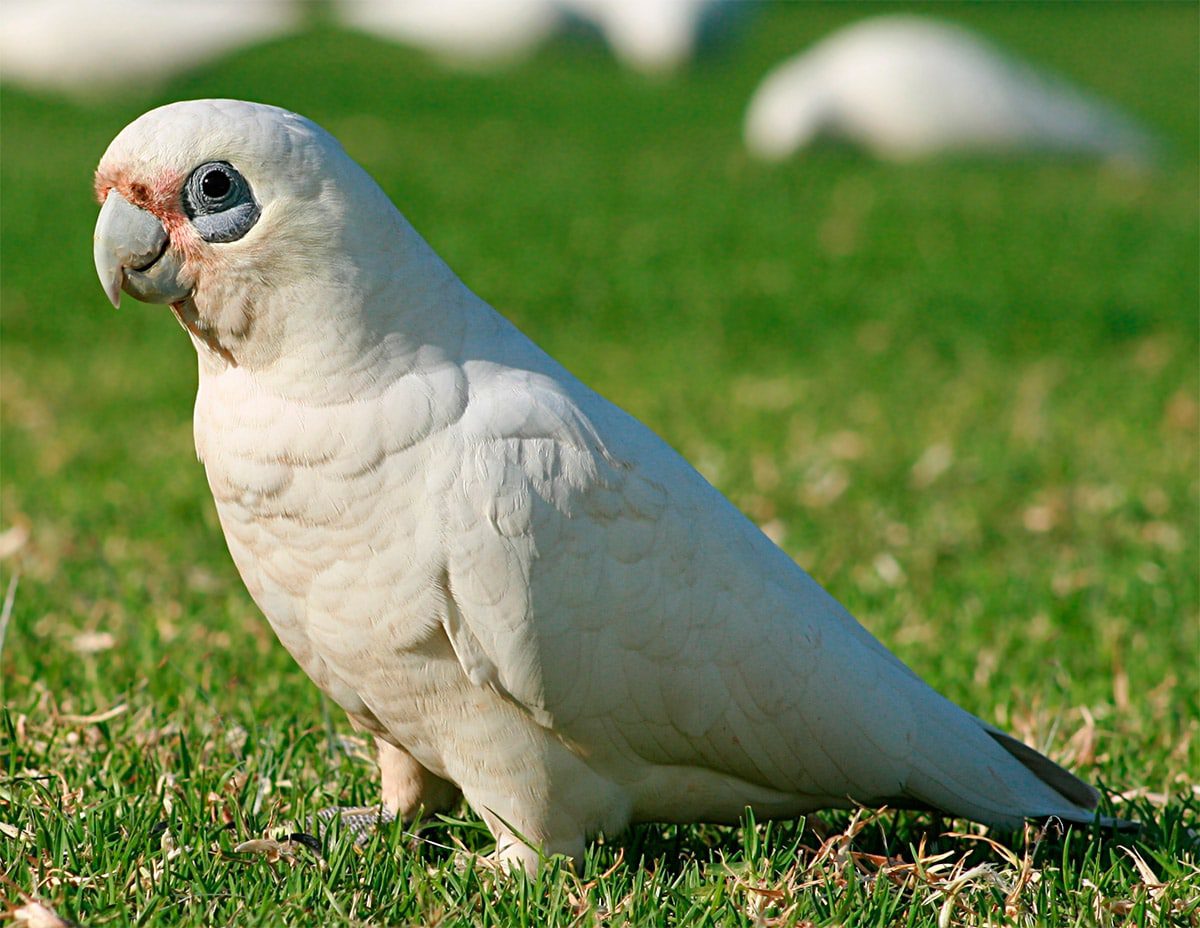
In the Little corella (Cacatua sanguinea), the head and crest (that most of the time stays low) are white. The pink base of the feathers are almost completely hidden and yet barely visible small flakes in the cheeks.
Dissemination of salmon-rosa color to the area around the eyes. The upperparts and coverts of the wing are white. There is a remarkable spread of yellow color on the bottom of the flight feather and of the tail.
The bill is grayish white. The skin nude around the eyes is blue grey. The irises is dark brown, the legs grey.

Both sexes are identical in all aspects, including the color of the irises.

The immature have a look more white and the skin of the periphery eyepiece less prominent.

Subspecies description
  • Cacatua sanguinea gymnopis

    (Sclater,PL, 1871) – Features with more naranja-rosa around them eyes and in the bases of the feathers of the head, neck and top of the chest. Its orbital skin is darker.

  • Cacatua sanguinea normantoni

    (Mathews, 1917) – Is smaller.

  • Cacatua sanguinea sanguinea

    (Gould, 1843) –

  • Nominal.

  • Cacatua sanguinea transfreta

    (Mees, 1982) – Displays below the wings and tail infiltrations slightly yellow pulling a Brown.

  • Cacatua sanguinea westralensis

    (Mathews, 1917) – It has bright orange-red colors around the eyes and the bases of feathers, also in the the mantle and in the part inferior of the abdomen.

Habitat:

Video – "Little corella" (Cacatua sanguinea)

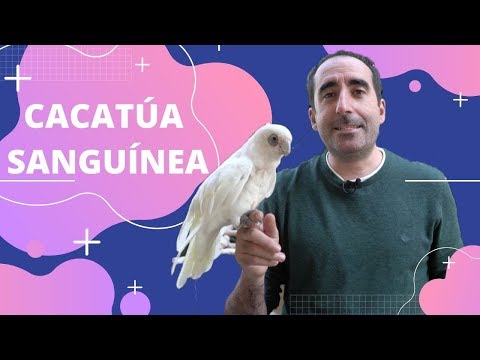
The spectacular BLOODED COCKATOO - BIRD VETERINARY

It nests in riparian forests bordering permanent pasture and cropland. In the breeding season, they can be found in a wide variety of habitats, including areas of acacias and eucalyptus bushes of short grass or pasture with groups of scattered trees. During this time, they are also present in the rice fields, cane extensions, areas of shrubs, at the edges of mangrove areas, in the pastures for horses, on roads and gardens on the outskirts of cities.

Behavior:

The Bloody Cockatoos they often form large gatherings in crops and pastures.

Out of it breeding season, It is not uncommon to see flocks of up to 70.000 birds.
At night they fly to their bedrooms, located near the water.

Early in the morning, they drink before heading to the feeding sites often many kilometres from the bedroom.
During the hottest hours of the day, they seek shelter in the shade of the leaves..

Reproduction:

In Australia they can be played back in any month of the year, When are conditions good. But, the nesting seems to be further developed early in the North (from May to October) and in the Southeast (August-December).

In Queensland, the implementation is carried out mainly from December to April and from July to October. Reproduction is strongly influenced by climate, usually begins 2 or 3 months after the end of the rainy season in northern districts.

There may be two or three broods per season. Couple ties are very strong and seem to last for life. They are loyal to the same nesting sites year after year. The nest is usually placed in a eucalyptus (Eucalyptus camaldulensis) between 3 and 10 meters above the ground.

The cavity is approximately one meter in depth. It is fairly easy to detect since crust is often removed around inlet. They also nest on cliffs or termite mounds..

They put 2-4 eggs in a bed made from chips of wood that is replaced each year.

In general, two chicks manage to break the shell after 25 days. They remain in the nest for nine weeks, After this take off.

Food:

It has a diet mainly vegetarian. They feed on seeds you are in the trees of the genus EMEX, green areas or fields of melon (cucumber myriocarpus). They also eat nuts, fruit, berries, flowers, estate, bulbs, shoots as well as insects and larvae.

Distribution:

Size of the area of distribution (reproduction / resident): 5.300.000 km2

The Little corella lives in New Guinea and Australia. In Australia, We found in the Northwest, on the plateau of Kimberley and Arnhem in the this of the Cape York Peninsula. They are absent from the east coast and the entire southwestern part of the country..

Subspecies distribution
  • Cacatua sanguinea gymnopis

    (Sclater,PL, 1871) – Within the Centre and it's Australia.

  • Cacatua sanguinea normantoni

    (Mathews, 1917) – To the West of the cape york peninsula

  • Cacatua sanguinea sanguinea

    (Gould, 1843) –

  • Nominal.

  • Cacatua sanguinea transfreta

    (Mees, 1982) – Plain to the South of New Guinea.

  • Cacatua sanguinea westralensis

    (Mathews, 1917) – Basin of the murchison river, Western Australia.

Conservation:

State of conservation โ“˜


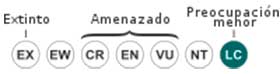
Near-threatened Minor Concern โ“˜ (UICN)โ“˜

โ€ข Current IUCN Red List category: Least concern.

โ€ข Population trend: Growing.

Its population is estimated at more than 1 million of birds and it believes that is in constant increase, especially in the South of Australia.

Its growth and expansion depends on the development of agriculture and the availability of artificial reservoirs. It is a Bird protected, except in the the Australia South. In this last area, the landowners are allowed to kill birds to prevent the formation of large destructive meetings for crops.

"Little corella" in captivity:

The Australian poultry to the blood cockatoo is it considered common.
They are very docile and Welcome to as pets, but you must pay them attention.

Alternative names:

– Little Corella, Bare-eyed Cockatoo, Bare-eyed Corella, Blood-stained Cockatoo, Blue-eyed Cockatoo, Corella, Dampier’s Corella, Little Cockatoo, Short-billed Cockatoo, Short-billed Corella (ingles).
– Cacatoรจs corella, Cacatoรจs ร  oeil nu (French).
– Nacktaugenkakadu (German).
– Cacatua-corella-pequena (Portuguese).
– Cacatรบa Sanguรญnea (espaรฑol).

scientific classification:

– Order: Psittaciformes
– Family: Cacatuidae
– Genus: Cockatoo
– Scientific name: Cacatua sanguinea
– Citation: Gould, 1843
– Protonimo: Cacatua sanguinea

Blood Cockatoo Images:


Species of the genus Cacatua

Sources:
– Avibase
– Photos: Wikipedia, John H. Boyd, murrundi.org
– Sounds: Nigel Jackett (Xeno-canto)
โ–ท The world of Pets: Dogs, cats, birds, reptiles, amphibians

Little Lorikeet
Parvipsitta petty


Little Lorikeet

Content

Description

16 to 19 cm.. length and an approximate weight of 40 g.. The Little Lorikeet (Parvipsitta petty) is the smallest of the Parrots Australian.

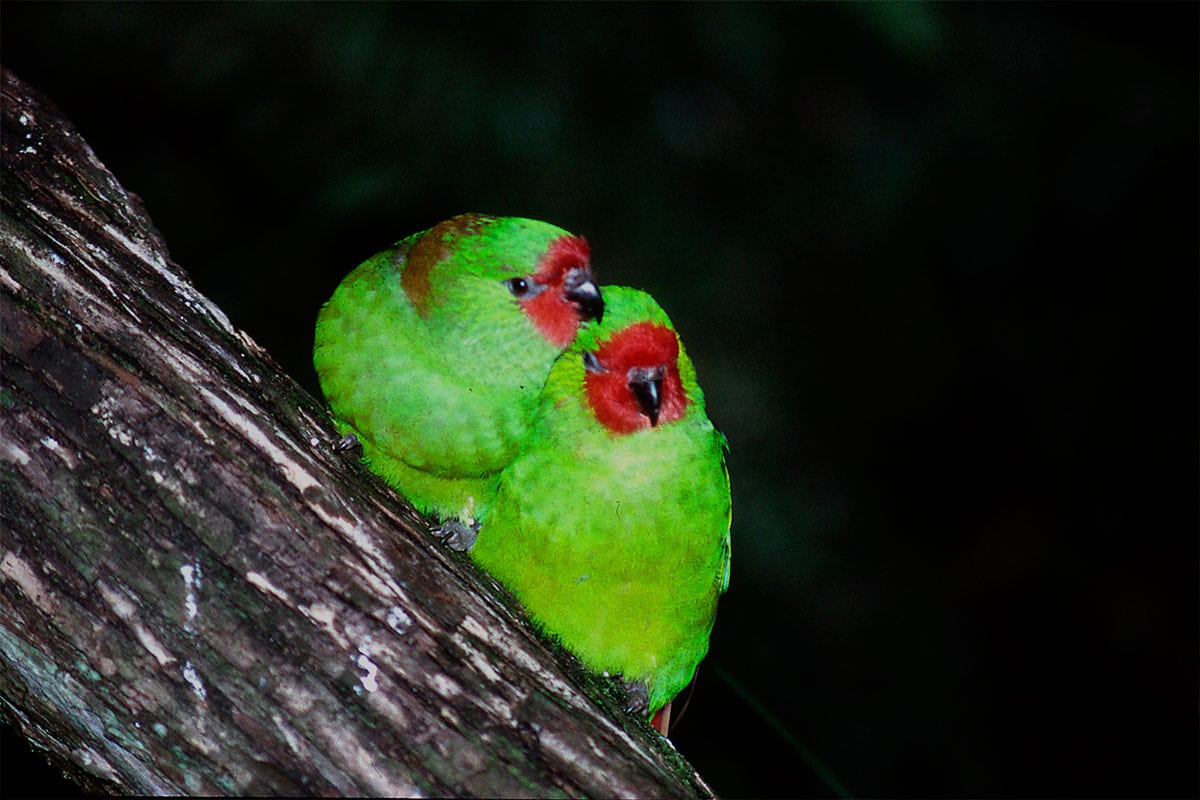
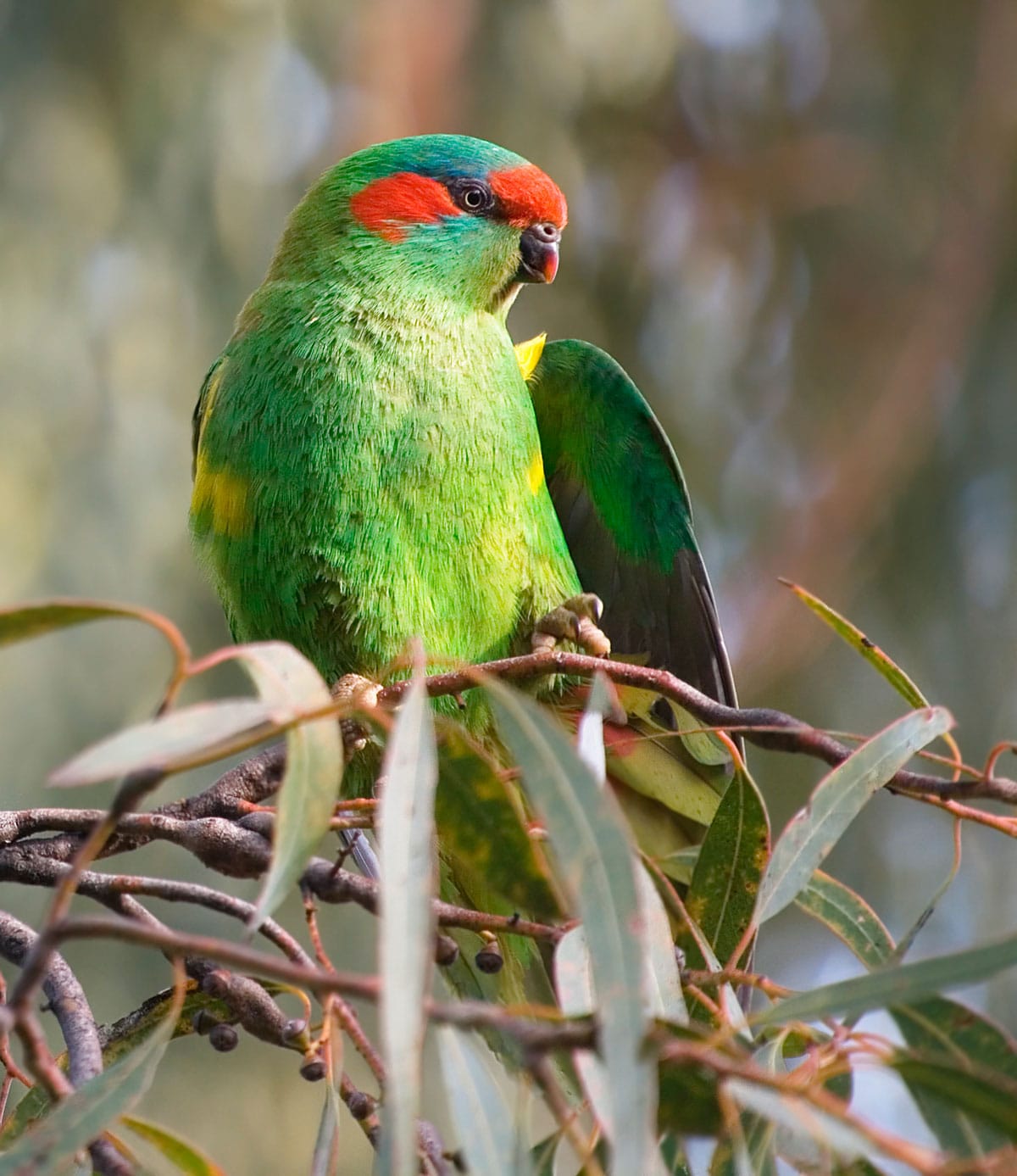
The body is bright green, the area of the nose, the forecrown, the neck, part of the forecrown and cheeks They are red.

The ear-coverts are of color green with stripes of color green light. The neck and back top are brown-green. Under the wings brighter yellowish green. The primary flight feathers they have a very narrow yellowish Board, their underparts is yellowish-green.

The feathers of the tail has reddish orange base, the circle around the eyes is narrow and black, the irises is orange, the legs grayscale and the bill black.

Parvipsitta buttercups

  • Parvipsitta petty
  • Parvipsitta porphyrocephala
  • The immature have more off the Red of the face; the Brown of the upper mantle is minimal. Bill Dark Brown and brown the eye.

    This small Lori is likely to be confused with the Purple-crowned lorikeet (Parvipsitta porphyrocephala).

    Habitat:

    The Little Lorikeet dispatched virtually all areas and at all altitudes with trees. They prefer open areas with flowering or fruit trees and riverbanks.. Found up to one altitude of 1600 m.

    Occasionally seen in orchards and farming areas.

    Son nomads and outside the breeding season they gather in small groups of 4 to 12 birds.

    They prefer tall treetops and are difficult to see due to their small size and green color.. They prefer trees of eucalyptus that they are in bloom and they can attend major meetings when they are feeding, often associated with other lori as the Coconut Lorikeet and the Musk Lorikeet.

    Ruidoso. Their flight is flapping fast and straight, accompanied by shrill calls.

    Reproduction:

    The breeding season It is going may in the North, or August in the South, to December. It nests in the Hollows of trees, where sets of 3 to 5 rounded whitish eggs. The incubation hard ones three weeks.

    Food:

    It feeds mainly from fruits and flowers, including native plants such as those belonging to the genera Xanthorrhoea and (Melaleuca and Loranthus, and introduced plants such as the medlar (Eriobotrya japonica). Occasionally visit orchards.

    Distribution:

    Size of the area of distribution (reproduction / resident): 788.000 km2

    Distribution Lori Carirrojo
    The Little Lorikeet is located in the East and Southeast of Australia, from the vicinity of Cairns to the South by Queensland and New South Wales from the slopes of the Great dividing range until the eastern coasts to most of Victoria and Southeast of Southern Australia. Also located in Tasmania, although there is little abundant.

    Conservation:


    minor concern

    โ€ข Current category of the Red List of the UICN: Least concern.

    โ€ข Population trend: Stable.

    The main threats to these small parrots are the loss of breeding sites and of those resources food by the clearing of land in course. Most breeding records come from the western slopes, where has been a great loss of habitat trees. The loss of trees nest along the verges of Highway, often associated with roadwork, It is still a constant threat.

    "Little Lorikeet" in captivity:

    Although it was exported to Europe for the first time in 1877, the Little Lorikeet rarely seen outside of Australia. And even in the country of which it is native it is rare in captivity. Has a reputation for being difficult to maintain.

    Alternative names:

    – Little Lorikeet, Little Red Lorikeet (ingles).
    – Lori ร  masque rouge, Petit Loriquet (French).
    – Zwergmoschuslori (German).
    – Loris Pusilla (Portuguese).
    – Lori Carirrojo, Lori de Cabeza Roja (espaรฑol).

    scientific classification:

    – Order: Psittaciformes
    – Family: Psittaculidae
    – Genus: Parvipsitta
    – Scientific name: Parvipsitta petty
    – Citation: (Shaw, 1790)
    – Protonimo: Psittacus Pusillus

    Images ยซRed-faced Loryยป:

    Videos "Little Lorikeet"


    ยซOn Carirrojoยป (Parvipsitta petty)


    Sources:

    Avibase
    Parrots of the World โ€“ Forshaw Joseph M
    Parrots A Guide to the Parrots of the World – Tony Juniper & Mike Parr
    Wikipedia
    environment.NSW.gov.au

    Photos:

    1 – By JJ Harrison (jjharrison89@facebook.com) (Hand darbas) [CC BY-SA 3.0 or GFDL], via Wikimedia Commons
    2 – By Joxerra Aihartza (ร โ€˜ire argazki bilduma / own picture) [FAL], via Wikimedia Commons
    3 – Little Lorikeets by Julian Robinson, on Flickr – Flickr
    4 โ€“ Little Lorikeets (Glossopsitta pusilla) by David Cook, on Flickr – Flickr
    5 – Musk Lorikeet [Glossopsitta concinna] again! by Norm Hanson, on Flickr – Flickr

    Sounds: Marc Anderson (Xeno-canto)