โ–ท The world of Pets: Dogs, cats, birds, reptiles, amphibians

Kakapo
Strigops habroptila


Kakapo

Content

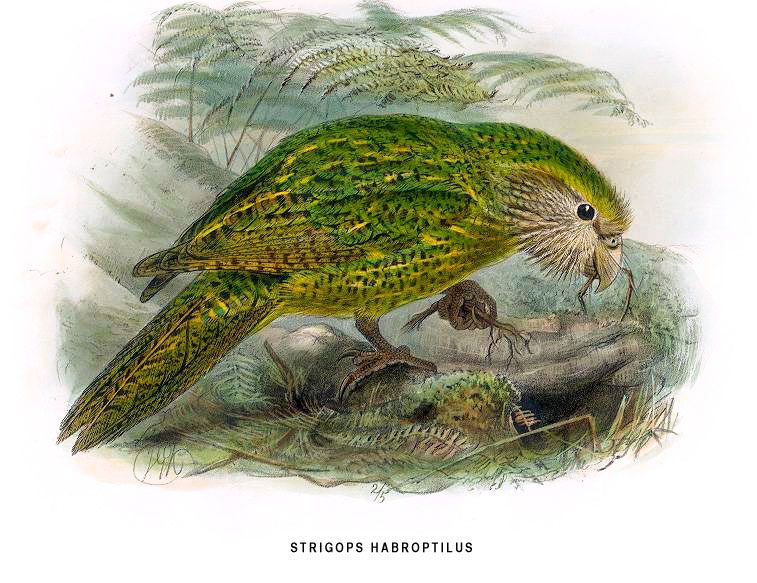
Illustration Kakapo

Description

Males can reach up to 60 cm. and weigh between 3 and 4 kg.

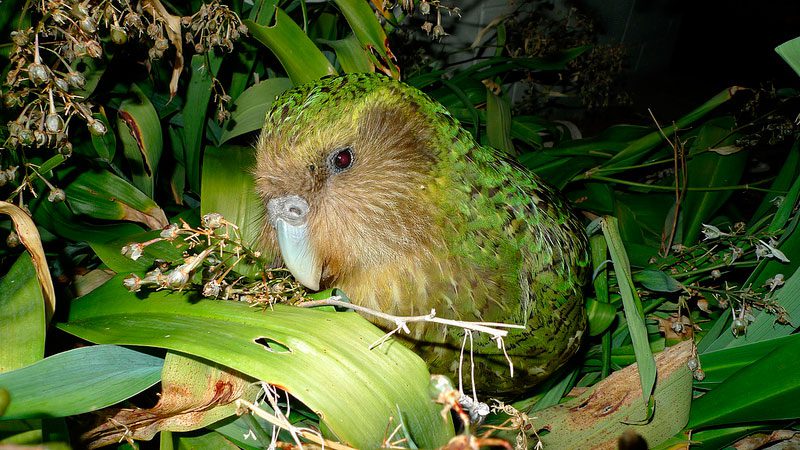
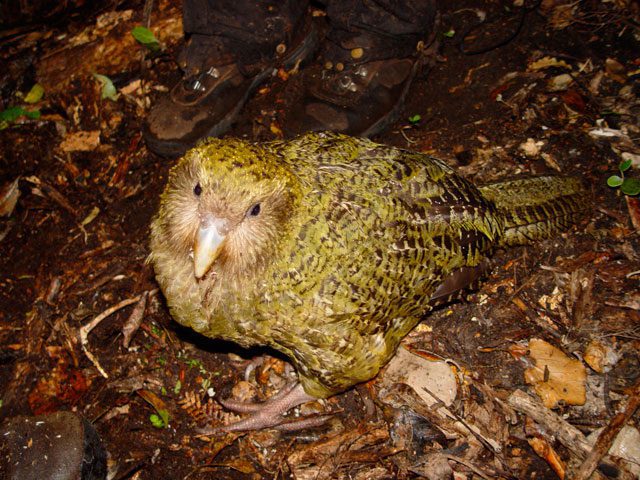
The Kakapo (Strigops habroptila) It is a robust and stocky bird with wings short in relation to the rest of the body.

grown ups, on upperpartsr, are MOSS Green, pulling a beige. All his upperparts they are spotted black and brownish gray, What gives them an excellent camouflage in its environment. The chest and flanks are yellowish green with streaks of yellow. The abdomen, under the tail, the neck and face are yellow, mostly streaked with pale green and imperceptible gray-brown spots.

Their feathers they are surprisingly soft, since they do not need the strength and the necessary stiffness for flying birds.

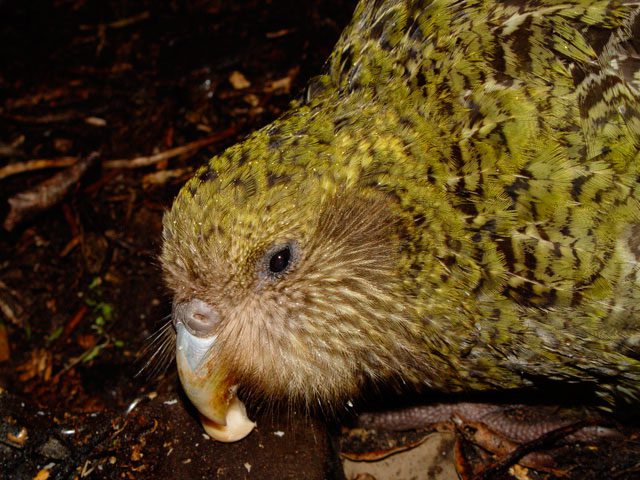
The Kakapo shows a composite facial disc of feathers fine, giving it the appearance of an owl.

Its bill it is surrounded by fine whiskers that are very useful for testing the ground when moving through the undergrowth.

The mandible it is mostly ivory color, but with a bit of blue-gray in the upper jaw.

Their eyes are dark brown. Their long and scaly legs they have long claws which serve to climb.

The end of the feathers of the tail It tends to end up worn down by the continuous friction with the ground.

The females they are very different from your partner. Its head is narrow and has a crown less rounded. Their peaks they are narrow and elongated. Less muscular legs, a grayish pink. Its tail is more elongated. Though their plumage is hardly different from males, appears less mottled beige.

The nesting females they are also distinguished by the cushion of bare skin that develops on the abdomen during the incubation period.

Habitat:

Before the humans arrived to New Zealand, the Kakapo lived in a wide variety of habitats, pastures with clumps of grass, scrub and coastal regions.

They were also the primary forests, including those who were dominated by lush podocarp and false have the gender Nothofagus. In the region of Fiordland, to the southwest of South Island, the Kakapo they frequented areas of avalanches and landslides, small regenerated trees or vegetation with abundant fruit.

These regions contained among other plants, Japanese raspberry wine (Rubus phoenicolasius), Shrubby Veronica (genus Scrophulariaceae) and Coprosmas. It was known as "kakapo gardensยป

Given its inability to fly, the Kakapo It, mainly, a terrestrial bird. This is also a excellent climber able to reach the tops of the tallest trees. They leave the foliage practicing a "parachute" descent, spreading their wings in all their amplitude.

When the Kakapo is threatened, simply is still trying to pass unnoticed in the vegetation, with which is camouflaged. This was a great strategy to avoid his great enemy, the gigantic Haast's Eagle, but does not protect against introduced mammals.

Son nocturnal birds. They sit during the day and roam their territory during the night period.. Having lost the ability to fly, the Kakapo they have developed remarkable skills for their long haul. His powerful legs allow them to make long distances at night to feed or during the time of nesting that it takes place from October to January.

During courtship, the males they abandon their traditional territories and walk many kilometers to reach the top of the hills or a crest to establish their mating area, competing in the place to try to conquer the location that appears most advantageous to them. Conflicts often lead to serious injury and are sometimes fatal for the belligerents.

To appeal to the females, the males they emit a kind of explosions that produce dilating a bag in the area of the chest. After a series of 20 explosions, is right and take a break. Then lower the head again to issue a new series of explosions. Inside its cavity, move to make sounds in all directions. on clear days, These explosions can be heard more than one kilometre away. The males get involved in this type of sample for nearly eight hours at night. Each male produces thousands of explosions during 3 or 4 months. During this time, males sometimes lost half of their body mass.

Reproduction:

During the time of reproduction, the Kakapo They use a system ofLekยซ. He "Lekยป is the space dedicated to the parade within which males gather in loose groups in an attempt to attract and seduce females. Females are very attentive spectator and choose your partner according to the quality of your display. Females are not persecuted openly by males.

It is not set no marital bond. He "Lekยป is just a meeting place that serves only for mating. The space for processions They consist of one or more small depressions of 10 cm of depth and 50 cm in diameter dug into the soil. The holes are usually do about faces of rocks, banks, or tree trunks, to help the sound bounce. The holes of each male are connected. The various depressions are interconnected by a network of small roads that cleaned thoroughly of all plant debris.

As soon as the male's cry is heard, the female embarks on a long journey to reach the area Lek. As soon as it enters the lek mating area, the male begins its rituals. It sways from side to side emitting clicks with the peak. He turns his back on his future partner, It spreads its wings and walk back towards her. Once mating has occurred, The female returns to her area of โ€‹โ€‹origin to lay her eggs and raise her young.. The male stays in place of courtship for try to seduce a new female.

The Kakapo they usually put 3 eggs per season. The nest placed on the ground under vegetation cover or in a hollow of a tree. The female incubated during 30 days, but you must leave the nest at night to feed, leaving the door open to many predators. After the eggs have hatched, She It feeds the chicks for three months, these will still remain in the company of their mother for a few more months. Since they have a life relatively long, the Kakapo have a fairly prolonged adolescence. Males do not begin courting until the age of 5 years and females do not respond to the calls of the males until they have reached the age of 9 or 11 years.

Food:

The peak of the Kakapo It is especially suitable for grinding food finely. For this reason, they have a gizzard less developed than most birds of its size.

The Kakapo they have a menu that is mostly herbivore. They used native plants, seeds, fruit, pollen and even the SAP flowing from the trees.

In a study of 1984, 25 different types of plants have been identified as part of your diet. Is particularly fond of the fruit of the rimu tree, and they feed on it exclusively during seasons when it is abundant. The Kakapo He has a habit of distinctive grab a leaf or frond with a foot and stripping the nutritious parts of the plant with its beak, leaving a non-digestible fiber ball. These small groups of vegetable fibers are a distinctive sign of the presence of the bird.

Distribution:

In the past, the Kakapo they were in the Islands North Island and South Island of New Zealand.

The species has suffered a sharp decline since the European colonization, and now it is one of the rarest birds in the world.

map-kakapo

Despite the fact that it disappeared from most of its original range following human colonization, the species remained abundant in Fiordland and some other places of great rainfall was scarce in the inhabited areas of South Island until the beginning of the 20th century. In 1976, However, the known population had been reduced to 18 birds, all males, all in Fiordland.

In 1977, found to be a rapid decline in the population of birds, about 150, on Stewart Island. Among 1980 and 1992, the 61 other birds of the Stewart Island they were transferred to the islands of the coast, and are currently in Codfish and Anchor island. The last accepted records were in North Island in 1927, three males reported in South Island, in Fiordland in 1987, and the last record in the Stewart Island of a female found and transferred to the Codfish Island in 1997.

In 2009, a male of the transferred four of Stewart Island to Isla Codfish in 1987, It was rediscovered after having been missing for 21 years.

It is likely that it is extinct in its natural distribution area, but, from November of 2005, birds are still present on four islands: Isla Codfish, Chalky, Anchor and Maud island.

In 1999, 26 females and 36 males survived, which includes 50 individuals in reproductive age, six subadults and six juveniles.

The population was stabilized, and has started to increase slowly following the application of intensive management. In the 2005, the population of the Kakapo stood in 86 specimens, of which 52 they were of reproductive age (21 females and 31 males) and 34 they were underage; a productive breeding year in the 2009 He saw the increase of the population up to 124 specimens, and it was known of the existence of 126 birds at the beginning of 2012, including 78 adult players.

Conservation:
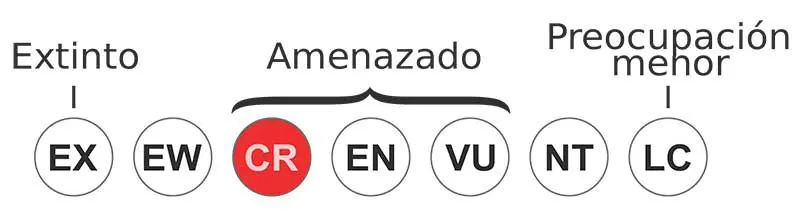

critical hazard

โ€ข Current Red List of UICN: critically endangered

โ€ข Population trend: Increasing

In the Stewart Island, more than the 50% of adults monitored died, each year, attacked by cats (CLOUT and Merton 1998).

An abnormal low fertility and low natural rates of reproduction and mating are the main concerns.

In 2004, three young people died of septicaemia caused by bacteria Erysipelothrix rhusiopathiae (erysipelas), a disease that had not been previously reported in this species (P. Jansen in litt. 2004)

They are subject to a plan of support by the authorities of New Zealand. Their number is currently estimated at little more than one hundred of copies, increases slowly with the plan.

At the beginning of 2012 there was 126 specimens, among them 78 adult players (RJ Moorhouse in litt. 2012).

"Kakapo" in captivity:

The only birds in captivity are those bred in the Recovery program of the Kakapo.

In terms of their longevity, debido a su largo ciclo de vida y la ausencia de depredadores naturales, es posible que el Kakapo viva mรกs de 60 years.

Alternative names:

– Kakapo, Owl Parrot (English).
– Strigops kakapo, Kakapo, Perroquet hibou (French).
– Kakapo, Eulenpapagei (German).
– Kakapo (Portuguese).
– Kakapo (espaรฑol).

scientific classification:

– Order: Psittaciformes
– Family: Strigopidae
– Genus: Habroptilus
– Scientific name: Strigops habroptila
– Citation: Gray, GR, 1845
– Protonimo: Strigops habroptilus

Images "Kakapo":

Videos "Kakapo"

————————————————————————————————

"Kakapo" (Strigops habroptila)


Sources:

– Avibase
– Parrots of the World โ€“ Forshaw Joseph M
– Parrots A Guide to the Parrots of the World – Tony Juniper & Mike Parr
– Birdlife
– Wikipedia

– Photos:

(1) – Pura, a 1-year-old Kakapo (Strigops habroptila) on Codfish Island By Mnolf [GFDL, CC-BY-SA-3.0 or CC BY-SA 2.0], via Wikimedia Commons
(2) – Kakapo Pura on Codfish Island By Mnolf [GFDL, CC-BY-SA-3.0 or CC BY-SA 2.0], via Wikimedia Commons
(3) – Kea, on the road to Milford Sound Uploaded by The Rambling Man – Wikipedia
(4) – Kakapo Sirocco amongst the renga renga lillies. Maud Island. Photo: Chris Birmingham, 2012 – Flickr
(5) – Kakapo by jidanchaomian – Flickr
(6) – Birds of New Zealand 1st edition, by Walter Lawry Buller, published in 1873 By John G. Keulemans. Minor edits have been made to the original by User:Msikma; I release these changes into the public domain as well. [Public domain], via Wikimedia Commons
โ–ท The world of Pets: Dogs, cats, birds, reptiles, amphibians

Lilian's Lovebird
Agapornis lilianae


Inseparable del Nyasa

Content

Description Lilian's Lovebird

Ilustraciรณn Inseparable del Nyasa

14 cm.. length and a weight between 28 and 37 g..

The colorful plumage of Nyasa small Inseparable (Agapornis lilianae) may cause their extinction, as it faces the constant threat of capture for the cage bird trade.

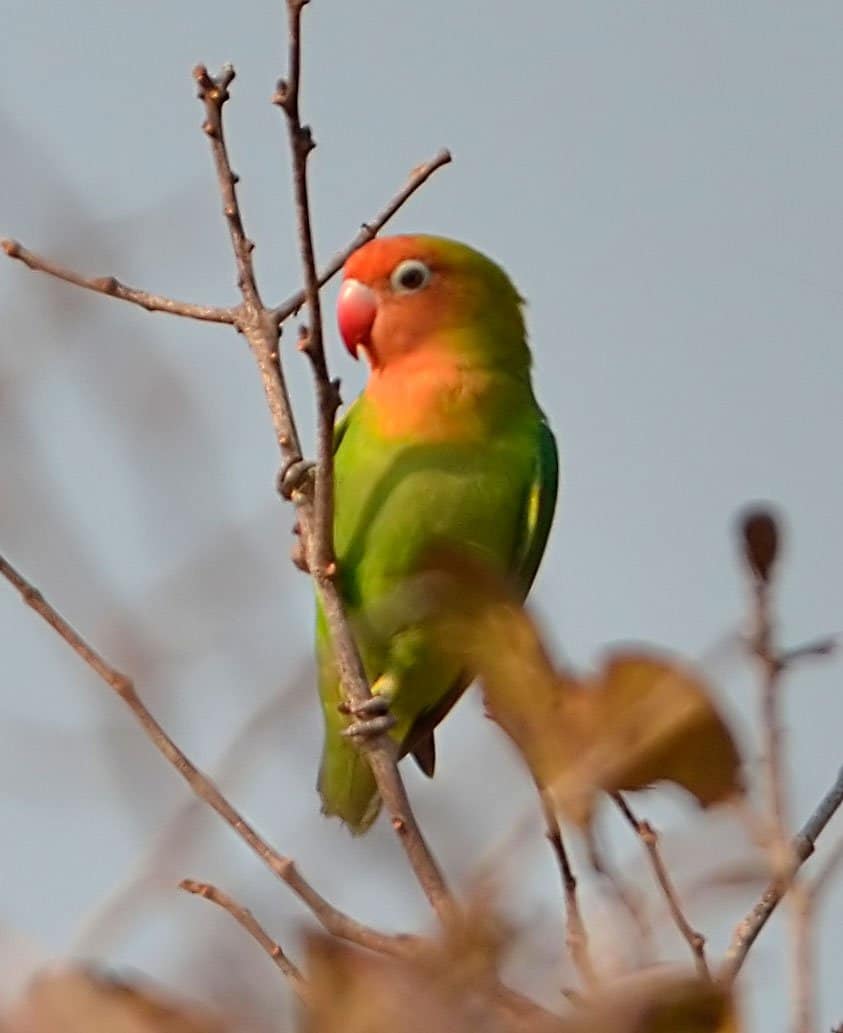
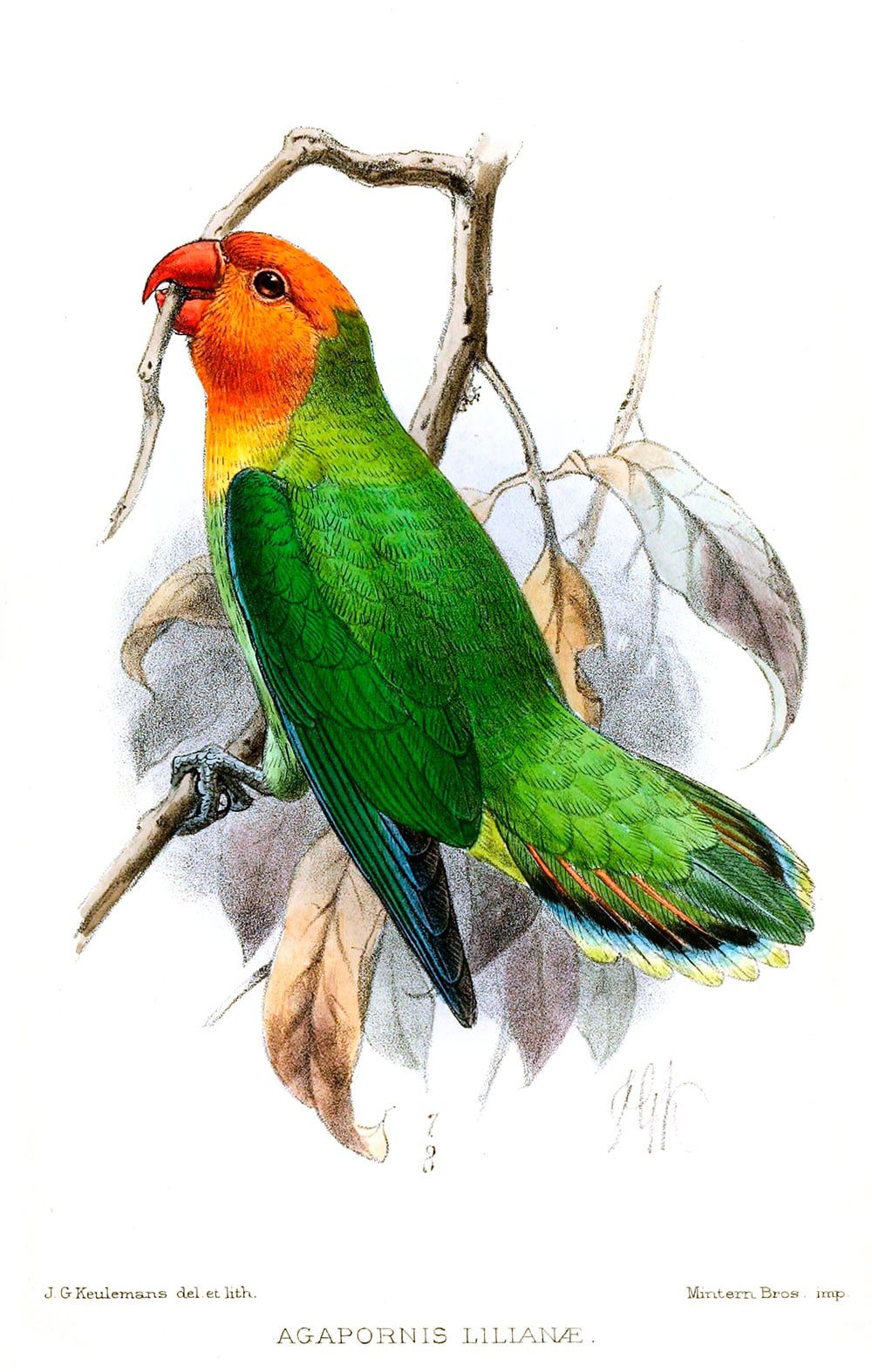
They have forecrown, fore crown, lores and cheeks brick red, merging with an orange and yellow-green wash on the back of the crown, ear-coverts, sides neck and nape, but occasionally (including samples taken in Malawi and unlikely to be hybrids with the Black-cheeked Lovebird (Agapornis nigrigenis)) brick red is replaced by dark crimson and orange by dark brown.

Mantle and scapulars bright green, rump and uppertail-coverts, Also bright green, but lighter. Upper, wing-coverts bright green; sometimes in yellow alula; vane outside of primaries and secondaries green; vane blackish internal. Under, the wing-coverts green with some blue feathers; bottoms of the flight feather blackish. Throat and top of the chest orange-red to pink salmon; bottom of the chest up to the undertail- coverts light green. The tail green, except central feathers with orange-red base and subterminal band dark.

Bill coral red; cere white; irises brown; eye ring white (2mm wide); legs pale grey.

Both sexes similar.

Immature and adults, but in black suffusion ear-coverts and black marks on the basis of upper jaw.

Habitat Lilian's Lovebird

The Lilian's Lovebird It is in groves mopane (Colophospermum mopane) and acacias in alluvial deposits and banks of river valleys, in general, below the 1.000 m, preferring areas with figs. Avoid trees miombo.

Very sociable and usually observed in noisy flocks of 20 to 100 birds, sometimes many more, especially when food is plentiful. The birds are not breeding, forman communal roosts in hollow trees, where between 4 and 20 sleeping birds clinging to the walls of the chamber.

Before settling in the place of descando, the Lilian's Lovebird They engaged, to a great extent, to engage in fights and chases.

Reproduction Lilian's Lovebird

Reproduction colonies.

The nest it is a bulky dome-shaped structure with a tube-shaped entrance built from strips of bark, branches and stems brought to the nest by females at the peak.

They build nests in the cavities of trees Mopane, sometimes in some nest of the White-billed Buffalo-Weaver (Bubalornis albirostris).

Wild birds Lundazi nest in the eaves of buildings. the brood, according to sources, It takes place in the months of January and February (birds possibly introduced), September in Zimbabwe and between January and July Zambia.

The laying you can have between 3 and 8 eggs in captivity.

Food Lilian's Lovebird

The diet Lilian's Lovebird It is mainly composed of grass seeds, including Rice perennial and cultivated varieties like millet (particularly unripe) and the sorghum, also seeds acacias, flowers A. whitish, African Erythrophleum, Vitex duamiana and African Cordyla, berries and leaf buds.

The food is collected directly from plants and soil. Often they need to drink, so usually they live near water sources.

Distribution:

Size of the area of distribution (reproduction / resident): 129.000 km2

Several populations Lilian's Lovebird separated on a restricted area in the southeast africa.

They are distributed in the middle of the valley Zambezi River, from the top of Lake Kariba around East of Binga to province Head in Mozambique, in northern and southern belt Zambezi River, below the 1.000 m, including valleys Angwa and Hunyani in Zimbabwe and valleys Lunsemfwa and Sash in Zambia.

In Northeast Zambia, It is also located north of valle de Luangwa, seemingly isolated from the valley Zambezi River, where possibly they were imported.

In Malawi, There is an isolated population of Inseparable the Nyasa located in forests Mopane in the region of the Lake Malombe, to the South of the Lake Malawi. There is also dispersed populations in southern Tanzania.

Wild birds are believed to exist (at least in the past) in the District of Choma and Mazabuka, to the South of Zambia. Aves on al Namibia are escapes from.

generally common, in some places abundant, but probably overall decline due to habitat loss, for example, in the basin of the Lake Kariba.

Apparently they are sedentary, but you can make local movements in response to the food supply.

There is a large number of Lilian's Lovebird in captivity.

Conservation:


Near-threatened

โ€ข Current Red List of UICN: Near threatened

โ€ข Population trend: Decreasing

The population of the Lilian's Lovebird It is suspected of being in decline due to predation by invasive species and unsustainable levels of exploitation.

Its population has been greatly reduced by the flooding of much of the valley Zambezi by the Lake Kariba, and probably also by the dam Cahorra Low in Mozambique.

They considered a pest, small-scale, by farmers (Harrison et al. 1997). Besides the captura legal large quantities for the international trade in cage birds (more than 10.000 from 1981 when it began to be mentioned in the CITES Appendix II), many are caught and sold locally Mozambique, and the species is also caught and sold in Zimbabwe and Zambia (V. Parker in little . 2003, UNEP-WCMC CITES Trade Database, January 2005).

Conservation Actions Underway:

    – Conduct surveys to obtain an overall estimate of the population.
    – Monitor population trends through regular surveys.
    – Control or stop the capture and trade in order to prevent overfishing.

This species is well studied in South Africa "Research Project" conducted by the "Research Center for Parrot Conservation" of the University of Kwazulu-Natal. Studies to better understand its ecology and conservation.

The Inseparable from the Nyasa in captivity

They were imported to Europe 1926.

Rarely seen among breeders and many crossed with Fischer's Lovebird (Agapornis fischeri).

The Lilian's Lovebird son aves gregarias, that coexist very well in Cologne. They have a character quite scary because not very frequent, they have not yet become very familiar with the human being, but once caught enough confidence spend the day making a racket.

You can keep an aviary with Black-cheeked Lovebird (Agapornis nigrigenis).

They are birds something else complicated to create than other varieties Lovebird, are birds more timid and therefore need more peace of mind, plus the percentage of egg fertility in this species is a 40 % to 60 %.

Apparently they have problems to survive the first moult, so in this case it is recommended to acquire and adults.

With regard to its longevity, according to sources, a specimen lived 19,2 years in captivity.

Alternative names:

– Nyasa Lovebird, Black-cheeked Lovebird, Nyassa Lovebird (English).
– Insรฉparable de Lilian, Insรฉparable de Liliane, Insรฉparable liliane, Insรฉparable nyasa (French).
– Erdbeerkรถpfchen (German).
– Inseparรกvel do Niassa, Inseparรกvel-de-niassa (Portuguese).
– Inseparable del Nyasa, Inseparable Liliana, Agapornis Lilianae (espaรฑol).

scientific classification:

– Order: Psittaciformes
– Family: Psittaculidae
– Genus: Lovebirds
– Scientific name: Agapornis lilianae
– Citation: Shelley, 1894
– Protonimo: Agapornis lilianae

Images Lilian's Lovebird

Videos "Lilian's Lovebird"


Species of the genus Agapornis


Lilian's Lovebird (Agapornis lilianae)


Sources:

– Avibase
– Parrots of the World โ€“ Forshaw Joseph M
– Parrots A Guide to the Parrots of the World – Tony Juniper & Mike Parr
– Birdlife

– Photos:

(1) – Lilianโ€™s Lovebird at South Luangwa Valley National Park, Zambia ยฉ Hans Hillewaert/, via Wikimedia Commons
(2) – Three Agapornis lilianae birds By derivative work: Snowmanradio (talk)Agapornis_lilianae.jpg: Wessel van der Veen (Agapornis_lilianae.jpg) [CC BY 3.0], via Wikimedia Commons
(3) – Agapornis lilianae green D (Jade) By Gonzalo Blanco – Linx
(4) – A perched bird By Paul van Giersbergen – Lynx
(5) – Pair By Philip Perry – Lynx
(6) – Illustration by Ibis 1894

– Sounds: Derek Solomon (Xeno-canto)

โ–ท The world of Pets: Dogs, cats, birds, reptiles, amphibians

Layard's Parakeet
Psittacula calthrapae


Cotorra de Ceilรกn

Content

Description:

29 cm., including its tail up 13 cm.. and 100 g. of weight.
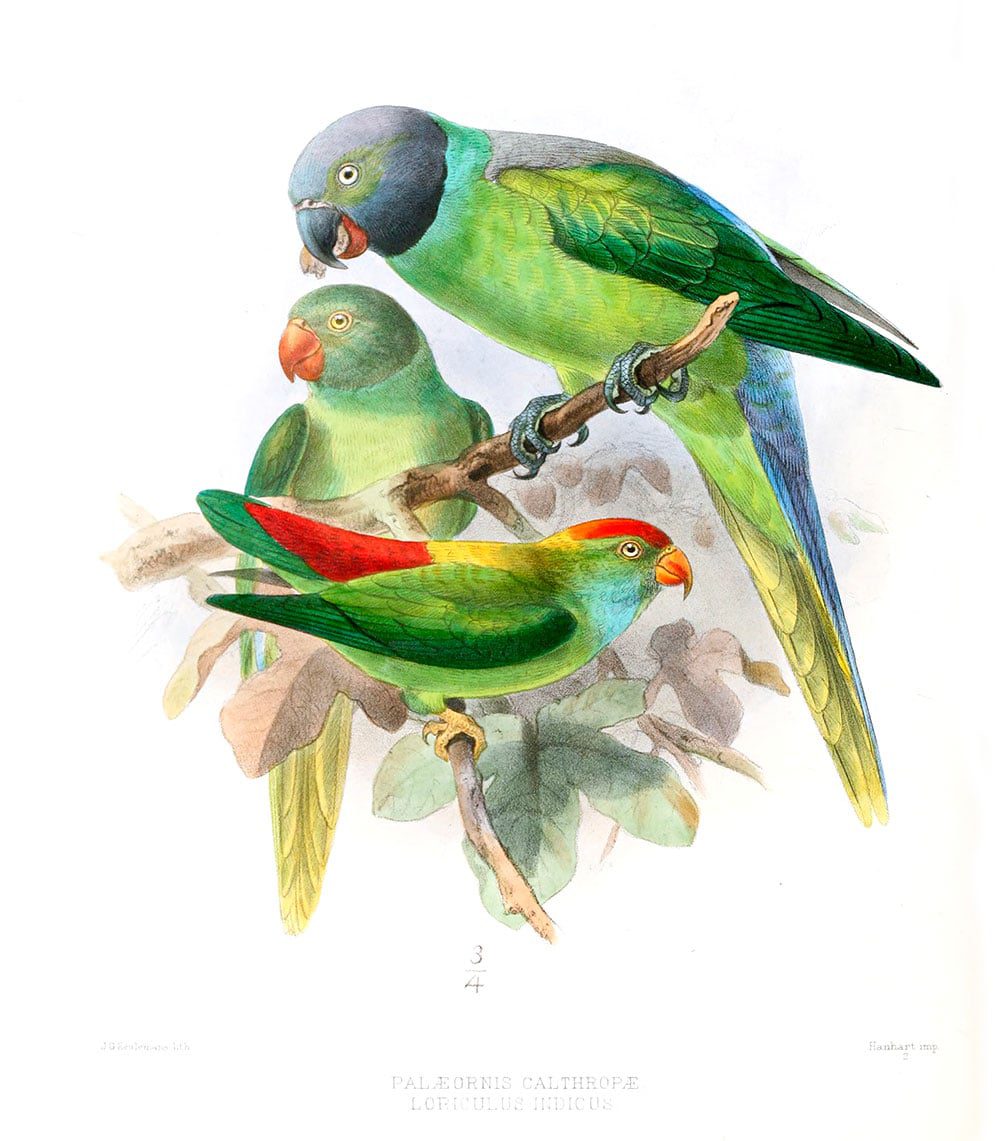
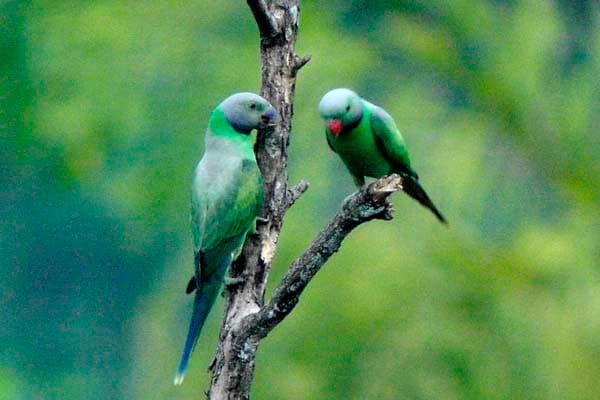
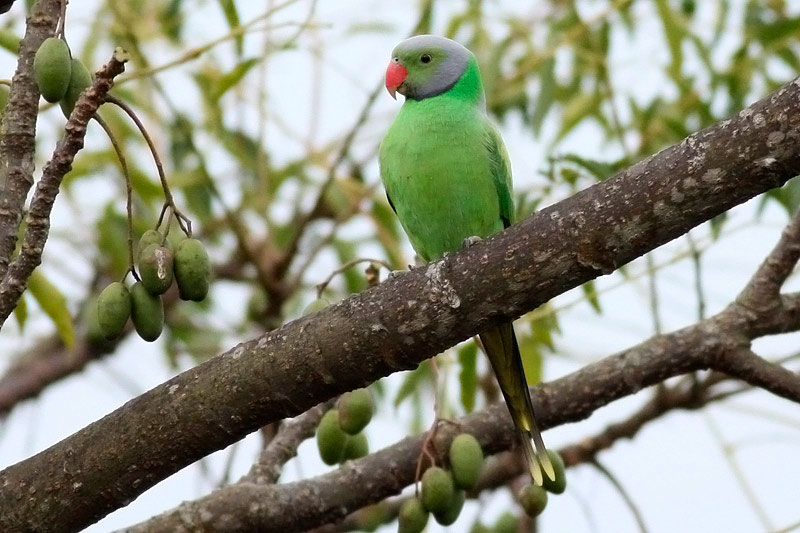
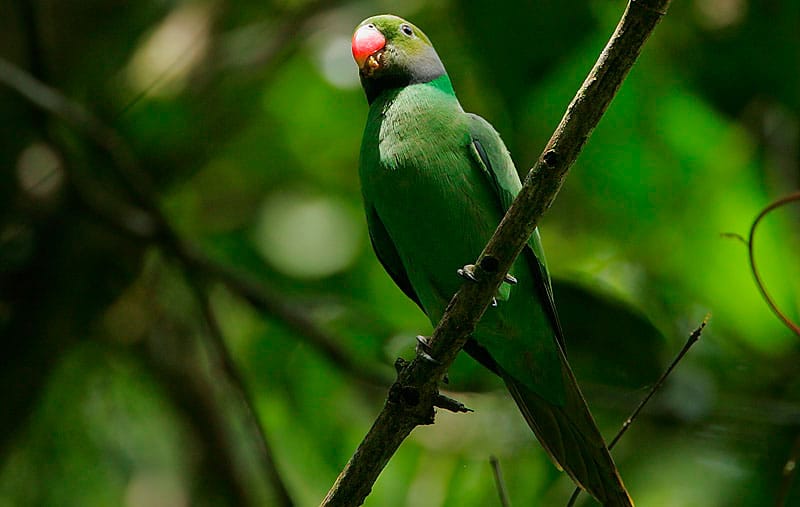
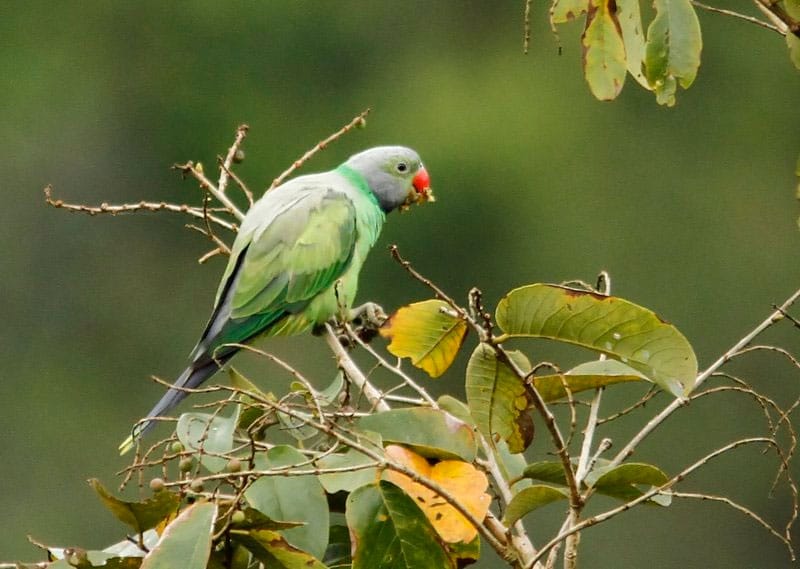
The adult male of the (Psittacula calthrapae) Layard's Parakeet has the head and back bluish grey, separated by a neck green. There is a wide swath in the chin of black color and tail It is blue with a yellow tip. Upper bill the male is red, and the bill bottom is brown.

The female es similar, but has the bill top in black, and dark green stripe on the cheek. Lack the band pink in nape and the neck is greenish yellow. They have the blue tint in the rear of the head if you can see in males. Feathers middle of the tail You are washed with blue.

The immature they are like the females, but with feathers tail shorter, with a plumage mainly green and bill dark red.

Ilustraciรณn Cotorra de Ceilรกn

  • Sound of the Layard's Parakeet.

    Habitat:

    Their preferred habitats are forested areas 1.600 meters above sea level, although registered at altitudes 2.000 m, taking advantage of a wide variety of vegetation types including natural and semi-natural moist forests, tea plantation and botanical gardens; often at the edge of the woods, generally in small groups or couples.

    Sedentary, especially in mountain areas, but extending over the lowlands, especially in humid forests near sea level.

    after feeding, the Layard's Parakeet congregate in trees chattering loud and persistent. Before break, roam issuing strong calls.

    Reproduction:

    The time of reproduction It is around January to May, with a high season from July to September.

    The eggs They are deposited in a natural cavity or disused nest Woody Woodpecker or a bearded, usually at the top of a tree. Competition for nest sites is often intense, especially with Plum-headed Parakeet. The cavity is lined with rotting wood and dust. Two to four white eggs make commissioning. Both sexes share duties incubation and feed on young.

    Food:

    Diet Layard's Parakeet It is believed to be similar to the Rose-ringed Parakeet and Plum-headed Parakeet, although their arboreal habits make them more frugivores and less destructive to crops.

    Registered with the company Brahminy Starling (Sturnia pagodarum) feeding fruit Map peltata (Macaranga tomentosa). Favorite foods include figs and fruit of wild cinnamon (Cinnamomum).

    Distribution:

    Size of the area of distribution (reproduction / resident): 18.900 km2

    The Layard's Parakeet It is endemic in south-central and south-west Sri Lanka. In Provincia Central, North of Matale through highlands around south and west Kandy in Western Province and Sabaragamuwa to the North of On Provincia.

    They are distributed also in the east, around the Gal Oya National Park and to the South, in Uva Province, until Haputale. A record of 1880 a bird against Eastern Province. Registration, unconfirmed, in the Maldives It is believed to come from leaks.

    According to sources, abundant in the 19th century and apparently still numerous in some areas, but declining due to habitat loss arising, for example, conversion of natural and semi-natural forests and plantations capture for trade.

    Conservation:

    State of conservation โ“˜


    minor concern Minor Concern โ“˜ (UICN)โ“˜

    โ€ข Current Red List of UICN: Least concern

    โ€ข Population trend: Decreasing

    The Psittacula calthrapae (del Hoyo and necklace 2014) It was previously listed as Psittacula calthropae.

    The size of the world's population has not been quantified, but the species is reported as locally common (pit et to the. 1997).

    The population is suspected of being in decline due to ongoing habitat destruction.

    "Layard's Parakeet" in captivity:

    Rare captive out of their range.

    Alternative names:

    – Layard’s Parakeet, Emerald-collared Parakeet (English).
    – Perruche de Layard (French).
    – Blauschwanzsittich (German).
    – Periquito-de-colarinho-verde (Portuguese).
    – Cotorra de Ceilรกn (espaรฑol).


    scientific classification:

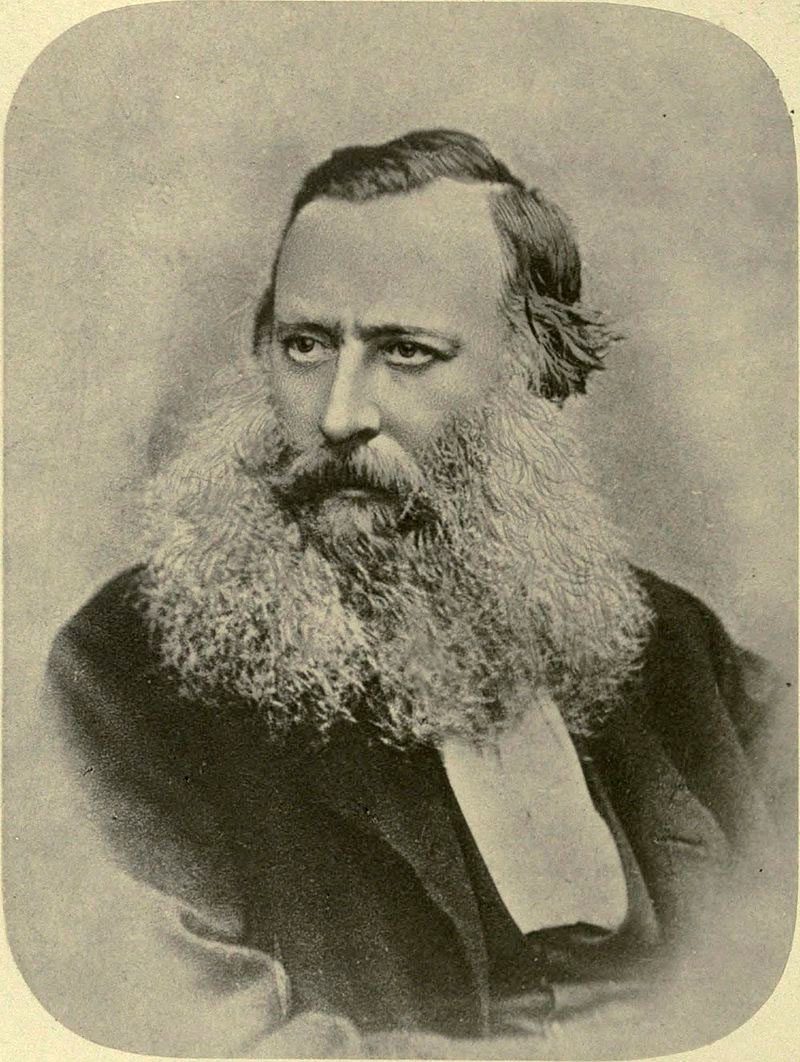
    Edward Blyth
    Edward Blyth

    – Order: Psittaciformes
    – Family: Psittaculidae
    – Genus: Psittacula
    – Scientific name: Psittacula calthrapae
    – Citation: (Blyth, 1849)
    – Protonimo: Palaeornis Calthrapae


    Layard's Parakeet Images:

    Videos "Layard's Parakeet"

    Parrots in the world
  • Psittaciformes (Psittaciformes) from America
  • Psittaciformes (Psittaciformes) Oceanian
  • Psittaciformes (Psittaciformes) from Asia
  • Psittaciformes (Psittaciformes) from Africa
  • Psittaciformes (Psittaciformes) of the world

  • Especies del gรฉnero Psittacula
  • Psittacula finschii
  • Psittacula himalayana
  • Psittacula roseata
  • —- Psittacula roseata juneae
  • —- Psittacula roseata roseata
  • Psittacula cyanocephala
  • Psittacula alexandri
  • —- Psittacula alexandri abbotti
  • —- Psittacula alexandri alexandri
  • —- Psittacula alexandri cala
  • —- Psittacula alexandri dammermani
  • —- Psittacula alexandri fasciata
  • —- Psittacula alexandri kangeanensis
  • —- Psittacula alexandri major
  • —- Psittacula alexandri perionca
  • Psittacula derbiana
  • Psittacula longicauda
  • —- Psittacula longicauda defontainei
  • —- Psittacula longicauda longicauda
  • —- Psittacula longicauda modesta
  • —- Psittacula longicauda nicobarica
  • —- Psittacula longicauda tytleri
  • Psittacula columboides
  • Psittacula calthrapae
  • Psittacula eupatria
  • —- Psittacula eupatria Avensis
  • —- Psittacula eupatria eupatria
  • —- Psittacula eupatria magnirostris
  • —- Psittacula eupatria nipalensis
  • —- Psittacula eupatria siamensis
  • Parrots wardi
  • Psittacula krameri
  • —- Psittacula krameri borealis
  • —- Psittacula krameri krameri
  • —- Psittacula krameri manillensis
  • —- Psittacula krameri parvirostris
  • Psittacula eques
  • —- Parrot knight knightโ€ 
  • —- Psittacula eques echo
  • Parrots
  • Psittacula caniceps

  • Layard's Parakeet (Psittacula calthrapae)


    Sources:

    – Avibase
    – Parrots of the World โ€“ Forshaw Joseph M
    – Parrots A Guide to the Parrots of the World – Tony Juniper & Mike Parr
    – Birdlife

    – Photos:

    (1) – Layardโ€™s Parakeet eating fruit in Sri Lanka. Its beak is not fully black, so it is probably a sub-adult female By Hafiz Issadeen (originally posted to Flickr as Layardโ€™s Parakeet) [CC BY 2.0], via Wikimedia Commons
    (2) – [BirdPhotoIndia] Layardโ€™s parakeet, Sri Lanka – Indian Birds Photography
    (3) – Photo by Steve G near Sinharaja, Sri Lanka, July 28, 2009 – Bird Forum
    (4) – An adult of Layardโ€™s Parakeet – World-Birds
    (5) – Layardโ€™s Parakeet Psittacula calthropae – Starron Bird and Wildlife
    (6) – John Gerrard Keulemans [Public domain], via Wikimedia Commons

    – Sounds: David Farrow (Xeno-canto)

    โ–ท The world of Pets: Dogs, cats, birds, reptiles, amphibians

    Long-tailed Parakeet
    Psittacula longicauda


    Cotorra Colilarga

    Content

    Description:

    Of 40 to 48 cm.. length and 168 to 196 g. of weight.

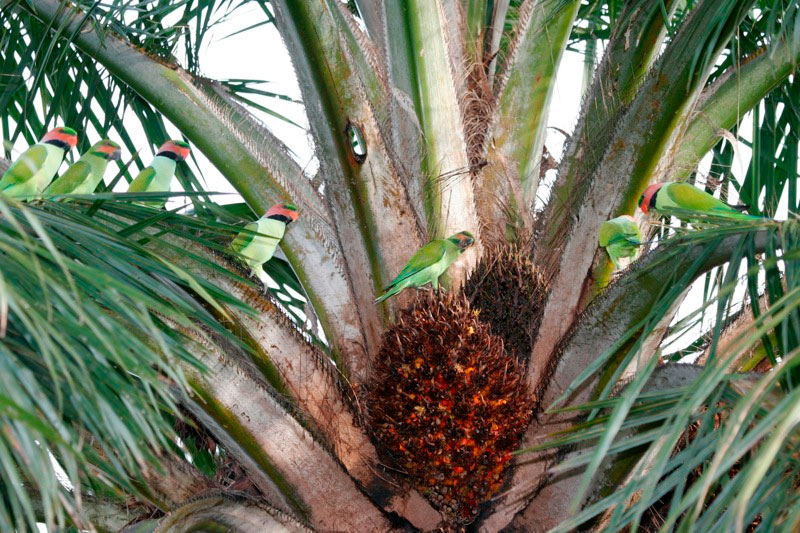
    The Long-tailed Parakeet (Psittacula longicauda) has the plumage, in general, green. The throat, the chest and the abdomen are greenish-yellow; and lores (the regions between the eyes and the beak, on both sides of the head) are bluish-black. The crown is a green dark, and the sides of the head and nape are pinkish Red. They have a black stripe in the cheeks.

    The upperparts is yellowish wash of blue-grey. The lower part of the back is pale-blue. The upperwing-coverts are yellowish. The supracaudales-coverts and infracaudales, as well as the the thighs are pale green. The central feathers of the tail are blue with pale tips and outer feathers are green.

    The bill top is red and the lower beak is brown-black color. The irises they are amarillos-blanquecinos, and legs are grey.

    The females they have the nape green. The band to their cheeks is dark green, and cheeks superiors are an orange-red live. Their feathers of the tail they are much shorter, and the bill top and bottom are brown-black color.

    Ilustraciรณn Cotorra Colilarga

    The young birds they have the head variable green interspersed with orange-red. The feathers of the tail they are shorter, and both the bill top and bottom are brown.

    The young male they have a tint blue in the lower part of the back and some birds can have a reddish tint in the bill top.

    Immature birds reach your adult plumage When they are near the 30 months of age.

    The lutino and other colorations, It is believed that they are mutations observed both in the wild and in captivity.

    Subspecies description:
    Subspecies
    • Psittacula longicauda defontainei

      (Chasen, 1935) – Of an average length of 42 cm.. As the species nominal but but the pinkish red from the sides of the head It is deep orange-red-streaked.


    • Psittacula longicauda longicauda

      (Boddaert, 1783) – The species nominal


    • Psittacula longicauda modesta

      (Fraser, 1845) – Of 48 cm.. Plumage as of the species nominal, but the crown It has a reddish-brown core and a green at the end of feather edging, becoming pink on the back of the head and nape, thus causing in the crown more Brown than green appears in many birds . The black stripe in the lores is more clearly defined, continuing in some birds to form a narrow band in the forecrown. The upper cheeks they have a deep pinkish-Red, orange-red stripes.


    • Psittacula longicauda nicobarica

      (Gould, 1857) – Of 48 cm.. As the species nominal, but the back of the head, the nape and back are greenish-yellow and slightly washed with pale blue. The ear-coverts and cheeks are deep red. The lower part of the back is green.


    • Psittacula longicauda tytleri

      (Hume, 1874) – Of 44 cm.. length. As the species nominal but the back of the head, the nape and back are yellowish green washed with grisaceo-malva. The throat, the chest and the top chest they have a pale bluish tint. The lower part of the back is green.

    Habitat:

    Video – "Long-tailed Parakeet" (Psittacula longicauda)

    eating Starfruit... Long-tailed Parakeet, parakeets, parakeets, Psittacula longicauda, Long-tailed Parakeet, MALAY BAYAN

    The Long-tailed Parakeet distributed over all types of lowland (below 300 metres in Sumatra), Evergreen from mangrove forests, swamps, tropical forests, to plantations of oil palm plantations (Elaeis) and coconut trees. It prefers the edges of high forest, especially with large dead trees, including close cultivated areas.

    Visit parks and gardens on the Islands Nicobar Islands.

    gregarious.

    Flocks of thousands of birds reported in the Islands Andaman and Borneo but smaller groups (minor's 20) they are typically, especially during breeding. They form mixed flocks with the Blue-rumped Parrot (Psittinus cyanurus) in Kalimantan.

    The Long-tailed Parakeet It is a restless bird that are constantly in motion. They fly quickly around branches, moving quickly from a tree to another. Although they are usually well camouflaged in green foliage, its continuous chirp betrays its position. They tend to feed shortly after sunrise and resume foraging around sunset..

    Reproduction:

    The Long-tailed Parakeet nests in tree cavities, usually dead, often to a considerable height (for example, reported nest in a tree of the species Koompassia in Sumatra to 45 meters above sea level); in the andaman islands commonly nest in trees of the species Pterocarpus marsupium; in the Nicobar Islands sometimes in Pandanus, some 4 meters above ground and in larger trees to 10 metres in height.

    Breeds in colonies.

    The nest It is full of pieces of bark and chewed wood. In the natural habitat, the average clutch consists of 2 to 3 eggs, each one measures 30,6 x 24,7 mm.

    During the courtship, the male bows before the female, by spitting up, circular motions with his head and gently touching its beak.

    The breeding It is between the months of December-February, Although pigeons have been observed in July in the Malacca Peninsula; Feb-Mar in the Nicobar Islands and Andaman. Reports of eggs in July sunsets in Sumatra.

    Food:

    The nominal species diet includes plants from Borneo camphor (Dryobalanops sumatrensis) and fruit of the Dillenia; the subspecies nicobarica largely feeds on fruits as the papaya (Carica papaya) and Pandanus; occasionally feed on the outer cover of the betel nuts (Areca catechu). On the other hand, They assail orchards and fruit plantations to feed, for example, of the oil palm plantations Elaeis, grains and seeds, and they can have an important impact in the fields of ripening rice (for example in the Islas Andaman) and fruit of the oil palm plantations (for example in the Malay Peninsula).

    Insects and their larvae can also be part of your daily diet; If these parrots seek them actively unknown, but they may be ingested ,probably, While they feed on fruits and flowers.

    Distribution:

    Size of the area of distribution (reproduction / resident): 877.000 km2

    The Long-tailed Parakeet distributed by the islands of the bay of bengal until Borneo. The range goes from the Coco Islands and andaman islands and Nicobar Islands (India) through Sumatra (including the Enggano Islands, Nias, Bangka and Belitung), South of Malay Peninsula from Sungei Patani (approximately 6ยฐN) to Singapore, Riau archipelago and Bintan, to the East, through the Anambas Islands and up Borneo including Natuna and Karimata Islands.

    Resident and common in andaman islands and Coconut.

    On the Islands Nicobar Islands described in the century 19 as 'excessively abundant', but with few details today.

    Resident on Malay Peninsula, but possibly passage migrant in Singapore.

    You can display migratory movements in Sumatra, where probably is the decrease due to the loss in the lowlands of the primary tropical forest.

    Unevenly distributed in Borneo, and in Kalimantan numbers fluctuate through little-known seasonal movements.

    Resident local in Sabah. More common in the coastal districts of Sumatra and Borneo.

    Usually unpredictable appearances, being abundant in a locality for a period and against, absent for years.

    Subspecies distribution:
    Subspecies

    Conservation:

    State of conservation โ“˜


    Near-threatened Near Threatened โ“˜ (UICN)โ“˜

    โ€ข Current Red List of UICN: Near-threatened

    โ€ข Population trend: Decreasing

    The size of the world population Long-tailed Parakeet It has not been quantified, but the species is described as very common and widespread in southern Borneo, locally common in Sumatra and Peninsular Malaysia and common in Brunei, the andaman islands and Nicobar Islands (pit et to the. 1997).

    The destruction of forests in the lowlands of Sundaland in Indonesian, as well as in Thailand and Malaysia It has been wide (Kalimantan almost lost the 25% its perennial forest during 1985 to 1.997, and Sumatra almost lost the 30% your coverage 1985), still, the species is still numerous in a number of areas, due to its ability to forage away from forested areas and nest communally. So, the decrease is estimated to have been of the order of 20 to 30% in the last ten years.

    Conservation Actions Underway:

      – CITES Appendix II.

    Conservation Actions Proposed:

      – Monitor the species in trade.

      – Monitor habitat trends and rates of deforestation in the lowlands of Sundaland using satellite imagery and remote sensing.

      – The investigation of the ecology of the species to improve the understanding of the movements it makes.

      – Effectively protect significant areas of habitat at key sites, both in strictly protected areas and in multiple use areas.

    "Long-tailed Parakeet" in captivity:

    Rare in captivity, their mortality is high and breeding successes are rare.

    It is a bird very noisy. It is a principle very shy and slow to get your confidence. They don't bathe often, Although they occasionally sit in the rain. They enjoy gnawing fresh branches. The main problems for captive breeding are the difficulty of matching compatible pairs; the Long-tailed Parakeet they usually do not accept a mate that they have not chosen themselves and even if they are breeding pairs, it is very difficult to keep the chicks alive. Sudden deaths no apparent cause they have been reported – possibly as a result of stress.

    Some birds may refuse to eat. Have been observed Occasional attacks of females to males, coming to Peck them on the penis, causing them serious injury. It also, these delicate parrots are difficult to acclimatize. Newly imported birds are susceptible to cold, wet conditions. During the acclimatization period, should not be exposed to temperatures below to 24 ยฐC and at no time below 10 ยฐ C.

    Given that these parrots are so rare, experts prefer well managed breeding programs the possibility of keeping them captive in private hands.

    The size of the clutch average consists of 2 – 4 eggs laid at daily intervals, with an incubation which lasts approximately 23 days. The young leave the nest 7 weeks after hatching and are independent 2 weeks later.

    The Long-tailed Parakeet, in any case, you will need a large aviary which is a very active bird and will need plenty of room to move.
    It is important to place the bird in a quiet and protected, as well as provide a rest box (22 x 22 x 60 cm.) at all times.

    Alternative names:

    – Long-tailed Parakeet, Long tailed Parakeet, Malaccan Red-cheeked Parakeet, Malayan Red-cheeked Parakeet, Pink-cheeked Parakeet, Red-cheeked Parakeet (English).
    – Perruche ร  longs brins, Perruche de Malacca (French).
    – Langschwanzsittich (German).
    – Periquito-mustache-cauda-longa (Portuguese).
    – Cotorra Colilarga, Cotorra de Cola Larga (espaรฑol).

    scientific classification:

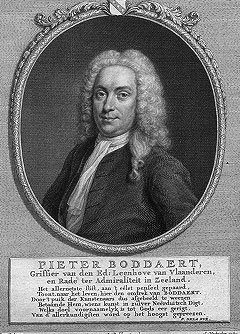
    Pieter Boddaert
    Pieter Boddaert

    – Order: Psittaciformes
    – Family: Psittaculidae
    – Genus: Psittacula
    – Scientific name: Psittacula longicauda
    – Citation: (Boddaert, 1783)
    – Protonimo: Psittacus longicauda

    Long-tailed Parakeet Images:


    Especies del gรฉnero Psittacula

    Sources:

    – Avibase
    – Parrots of the World โ€“ Forshaw Joseph M
    – Parrots A Guide to the Parrots of the World – Tony Juniper & Mike Parr
    – Birdlife

    – Photos:

    (1) – A male warning juvenile to keep away from the food while he is there in Queenstown, Singapore By Lip Kee Yap [CC BY-SA 2.0], via Wikimedia Commons
    (2) – A female in Queenstown, Central Singapore on 2 December 2005 By Lip Kee Yap [CC BY-SA 2.0], via Wikimedia Commons
    (3) – feeding in Queenstown, Singapore on 2 December 2005 By Lip Kee Yap [CC BY-SA 2.0], via Wikimedia Commons
    (4) – A juvenile in Queenstown, Central Singapore on 2 December 2005 By Lip Kee Yap [CC BY-SA 2.0], via Wikimedia Commons
    (5) – Long-tailed Parakeets at the Botanic Gardens, Singapore By Lip Kee Yap [CC BY-SA 2.0], via Wikimedia Commons
    (6) – Long-tailed Parakeet, adult male Joseph Wolf [Public domain], via Wikimedia Commons

    – Sounds: Mathias Ritschard (Xeno-canto)

    โ–ท The world of Pets: Dogs, cats, birds, reptiles, amphibians

    Jandaya parakeet
    Aratinga jandaya

    Cotorra Jandaya

    Content

    Description:


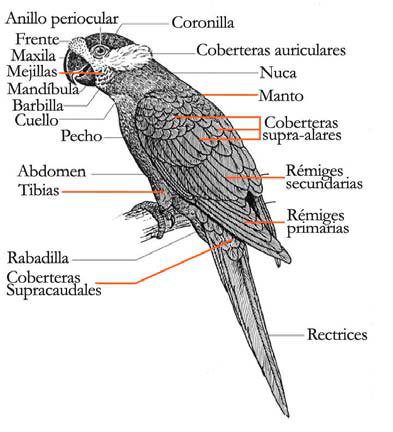
    Anatomy-parrots

    30 cm.. length.

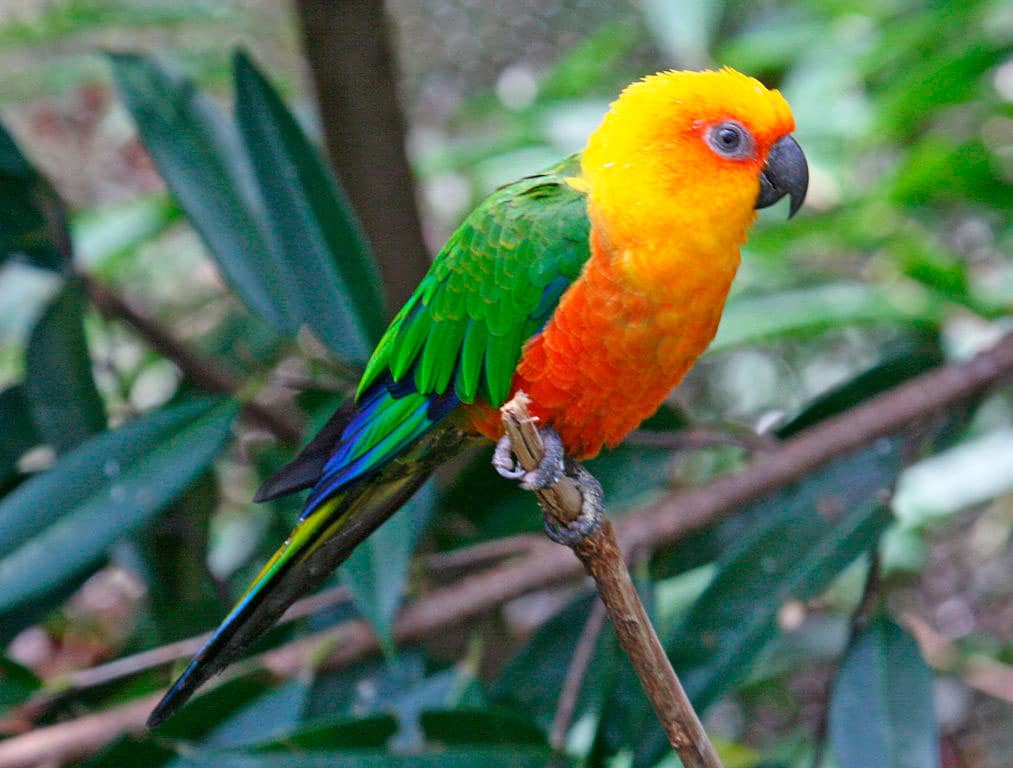
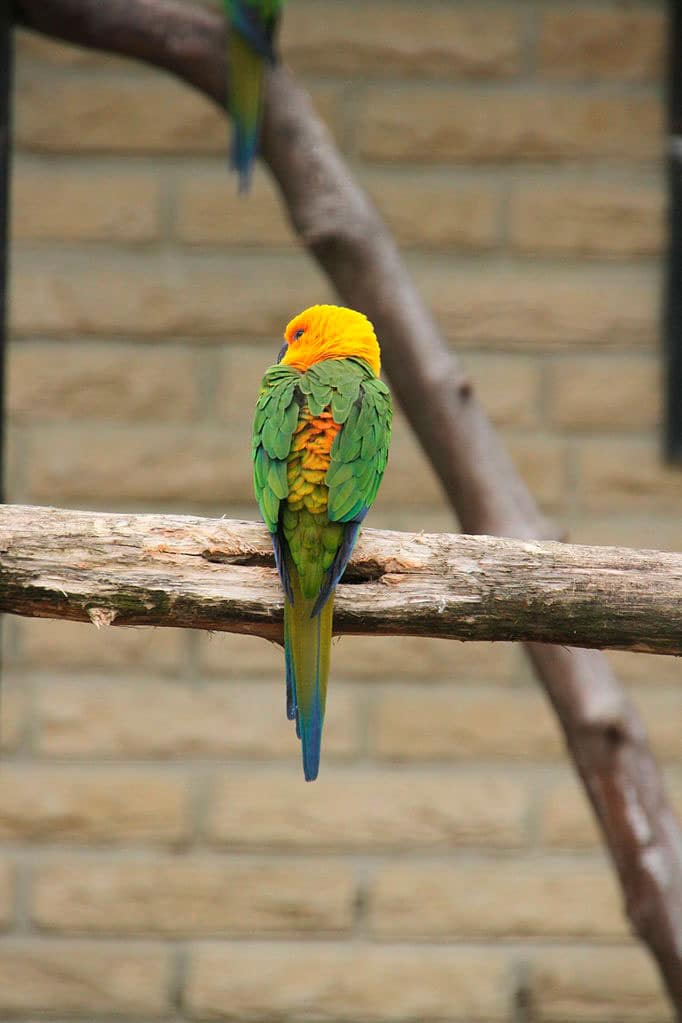
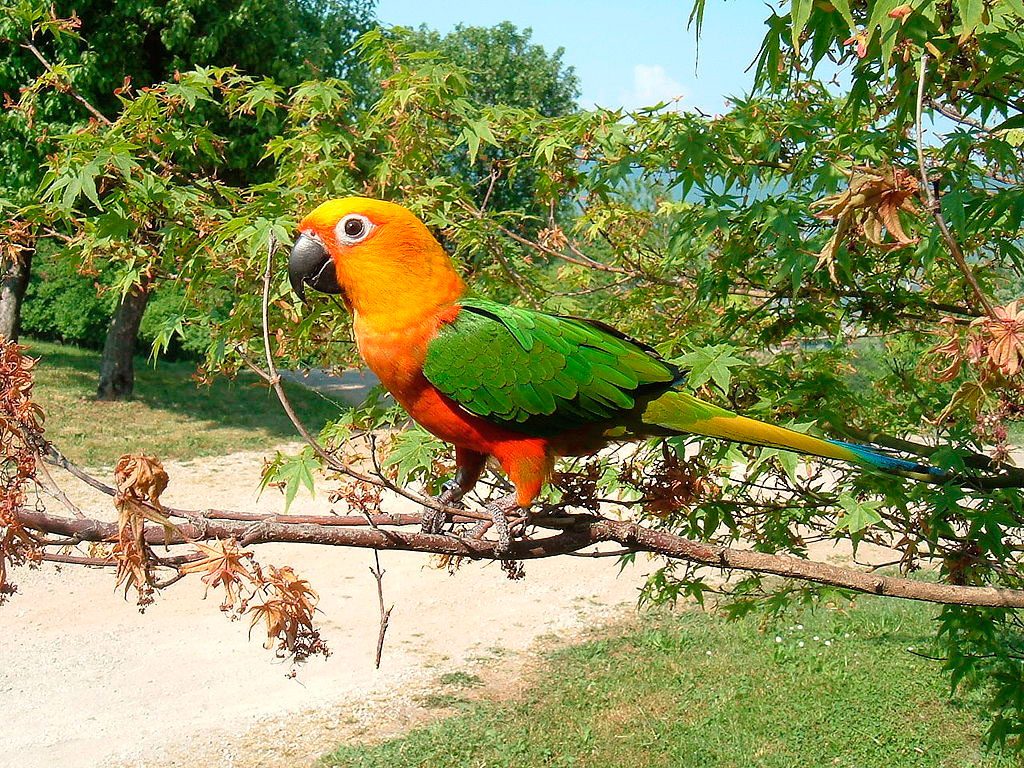
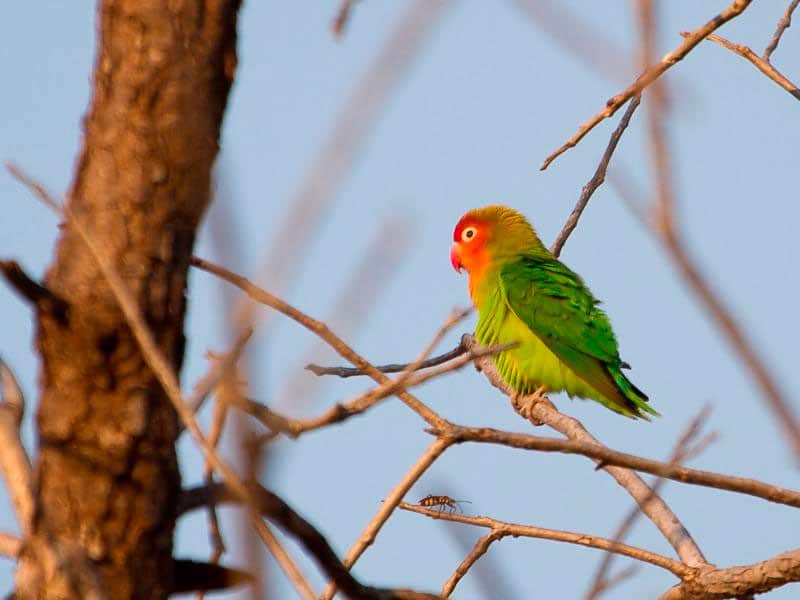
    The Jandaya parakeet (Aratinga jandaya) they have both sides of the neck, cheeks, lores, ear-coverts and forecrown orange, deeper in the ear-coverts, around the eyes and in the lores; the crown and nape are yellowish-Orange (Some birds with paler yellow tones in the head).

    Mantle and scapulars olive green; back and top of the rump, Green with orange-red horizontal bars; lower rump and uppertail-coverts olive green. Main feathers of the wings blue, the others feathers, green (brightest that in the the mantle). The flight feather blue color above, on the vane outer, Blackish towards the tip and grey below. Underwing-coverts orange-red. The underparts orange-red, slightly paler in the upper part of the chest and in the throat; undertail-coverts green.

    Upper, the tail of olive with blue tips; undertail, charcoal grey.

    Bill grey-black; bare periophthalmic pale grey; irises brown; legs grey.

    Both sexes similar.

    The immature has the head yellow and the neck with green markings; Dim Orange below.

    Habitat:

    The Jandaya parakeet move between deciduous woodlands, closed, thickets and clear areas of humid forest. Sporadically at the edge of the humid forest and in the caatinga. In palm groves of coconut on the coast of Pernambuco. Also frequent croplands and pastures. (Usually in flocks of approximately 12 birds, but sometimes in pairs or individually.

    Reproduction:

    Nests in tree cavities, at least a 15 metres in height. Observed young in the December nest in Maranhรฃo; eggs hatch between August-December, in the area of Belem. Clutch, probably composed of three eggs.

    Food:

    Food reported include seeds, berries and fruits of certain Melastomataceae, Mangifera, Palms Mauritia and Cecropia. Sometimes they can damage corn crops.

    Distribution:

    Distributed by northeast of Brazil. The species extends from the vicinity of Belem, Northeast of For, and Sao Luis, maranhรฃo, from South to North and East of Goiรกs and more eastward through Piauรญ, Cearรก, Rio Grande do Norte, Paraรญba, Pernambuco, Alagoas and probably the north end of Bay.

    Locally common, While perhaps decreasing in some areas. It is possible that its range is usually expanding through the colonization of cleared areas of high humid forest., especially in For and Maranhรฃo.

    Their status in the East its area of distribution is unknown.

    Maintained in captivity with consequences serious, Perhaps derived from the illegal trade internal in Brazil and, possibly, by smuggling towards Asia South-East.

    Conservation:

    State of conservation โ“˜


    minor concern Minor Concern โ“˜ (UICN)โ“˜

    โ€ข Red List category of the UICN current: Least concern

    โ€ข Population trend: Stable

    This species has a range very large, and therefore not approaching the thresholds for vulnerable under the criterion of size range

    The size of the world population of Jandaya Parakeet It has not been quantified, but this species has been described as ยซrareยป (Stotz et to the., 1996).

    Its population is suspected to be stable in the absence of evidence of any reduction or substantial threats.

    "Jandaya parakeet" in captivity:

    Pretty common in captivity and easy to raise.

    Like all the Parakeets, This species is not characterized by their ability to speak, still, can get to say some words with crystal clarity.

    Its feeding is made up of different fruits, vegetables, soaked legumes and specific feed for parrots. There are species Meek and intelligent to which are the trains very well and are playful, What makes them good pet to maintain in a House. Being aves gregarias, is convenient to provide them a companion, Since solo can be quite noisy.

    Enjoy the bathrooms, and is advisable to keep them in an Aviary or in cage of good proportions; It is also convenient to let the small flights out of its enclosure.

    Its longevity often haunt them 20 years in captivity, being able to get to the 30 years, Depending on your care.

    Alternative names:

    – Jandaya Parakeet, Flaming Conure, Flaming Parakeet, Jandaya Conure (English).
    – Conure jandaya, Conure ร  tรชte jaune, Perriche jandaya, Perruche ร  tรชte jaune, Perruche jandaya (French).
    – Jandayasittich, Jendajasittich, Jendayasittich (German).
    – Jandaia, jandaia-verdadeira (Portuguese).
    – Aratinga Jandaya, Periquito Rojo (espaรฑol).


    scientific classification:

    Gmelin Johann Friedrich
    Gmelin Johann Friedrich

    – Order: Psittaciformes
    – Family: Psittacidae
    – Genus: Aratinga
    – Scientific name: Aratinga jandaya
    – Citation: (Gmelin, JF, 1788)
    – Protonimo: Psittacus Jandaya


    Images Jandaya Parrot:

    Videos "Jandaya parakeet"


    Species of the genus Aratinga

    Jandaya parakeet (Aratinga jandaya)


    Sources:

    – Avibase
    – Parrots of the World โ€“ Forshaw Joseph M
    – Parrots A Guide to the Parrots of the World – Tony Juniper & Mike Parr
    – Birdlife

    – Photos:

    (1) – Jandaya Parakeet (Aratinga jandaya) aka Janday Conure. Photographed in Puerto Rico at the Mayaquez Zoo By Dick Daniels (http://carolinabirds.org /) (Own work) [CC BY-SA 3.0 or GFDL], via Wikimedia Commons

    (2) – Jandaya Parakeet (also known as Jenday Conure) in Beale Park, Reading, Berkshire, England By David Long from London, United Kingdom (IMG_4798Uploaded by Snowmanradio) [CC BY 2.0], via Wikimedia Commons

    (3) – Jenday Conure or Jandaya Parakeet in a tree. By GIANNIZZZERO at English Wikipedia [Public domain], via Wikimedia Commons
    (4) – Jenday Conure or Jandaya Parakeet (Aratinga jandaya) at Iguaรงu Bird Park, Foz do Iguaรงu, Brazil. Photographed on 23 April 2003 By Arthur Chapman [CC BY 2.0], via Wikimedia Commons

    (5) – Jenday Conure (Aratinga jandaya) at the Las Vegas Zoo By ZooFari (Own work) [CC BY-SA 3.0], via Wikimedia Commons

    (6) – Aratinga jandaya and Aratinga solstitialis at Kobe Kachoen (Kobe Flowers and Birds Garden) in Kobe, Hyogo prefecture, Japan By Chris Gladis from Kyoto, Japan (Jandaya Parakeet) [CC BY 2.0], via Wikimedia Commons

    (7) – Jendayasittiche (Aratinga jandaya) im Karl-Foerster-Garten des Tierparks Berlin-Friedrichsfelde By Lotse (Own work) [GFDL or CC BY-SA 3.0], via Wikimedia Commons

    (8) – A Jandaya Parakeet (also known as Jenday Conure) at Beale Park, Lower Basildon, Reading, Berkshire, England By David Long (originally posted to Flickr as IMG_4800) [CC BY 2.0], via Wikimedia Commons

    (9) – Jandaya Parakeet (also known as Jenday Conure) in Beale Park, Reading, Berkshire, England By David Long from London, United Kingdom (IMG_4802Uploaded by Snowmanradio) [CC BY 2.0], via Wikimedia Commons

    – Sounds: GABRIEL MILK (Xeno-canto)

    โ–ท The world of Pets: Dogs, cats, birds, reptiles, amphibians

    Lilac-crowned Parrot
    Amazona finschi

    Lilac-crowned Parrot

    Content

    Description:


    Anatomy-parrots

    33 cm. head to tail and weighs on average 310 g..

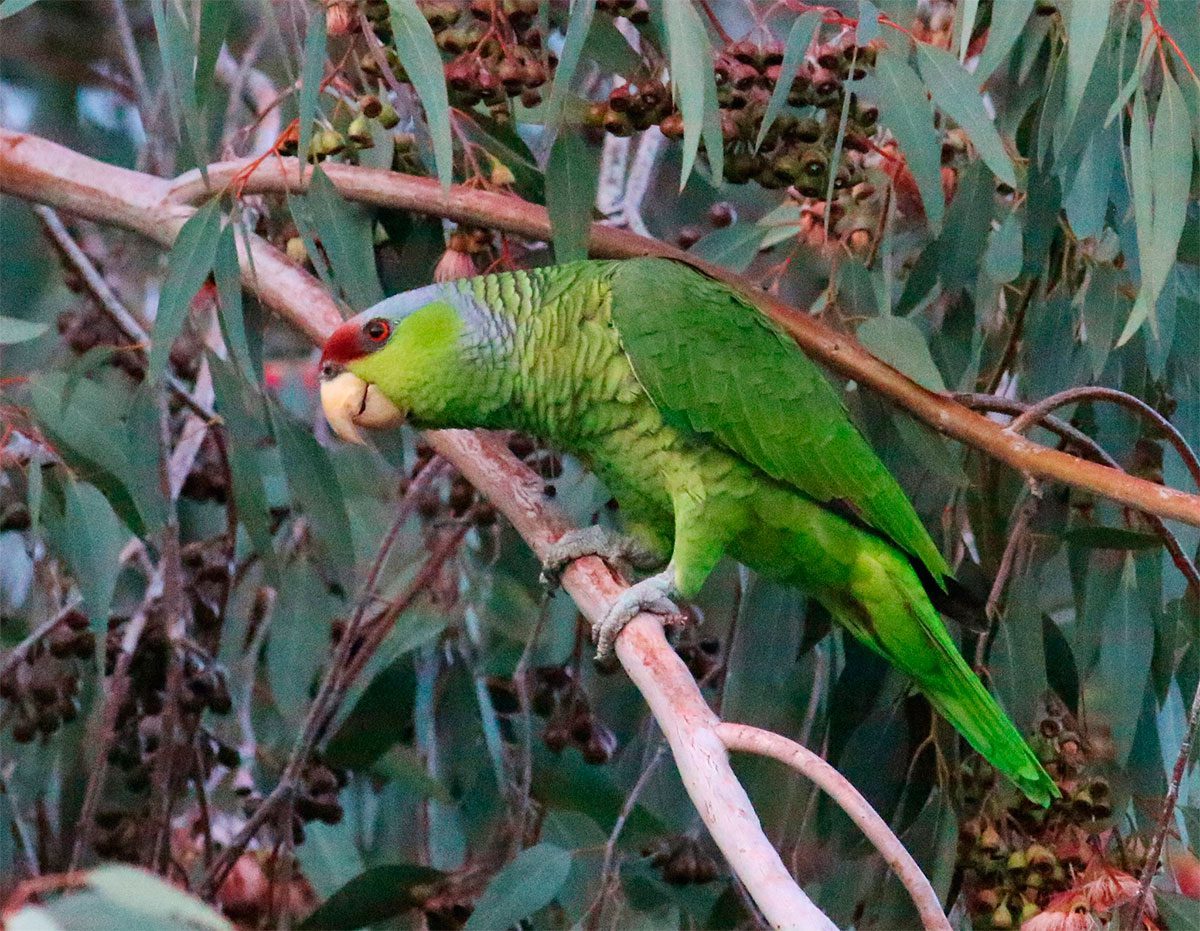
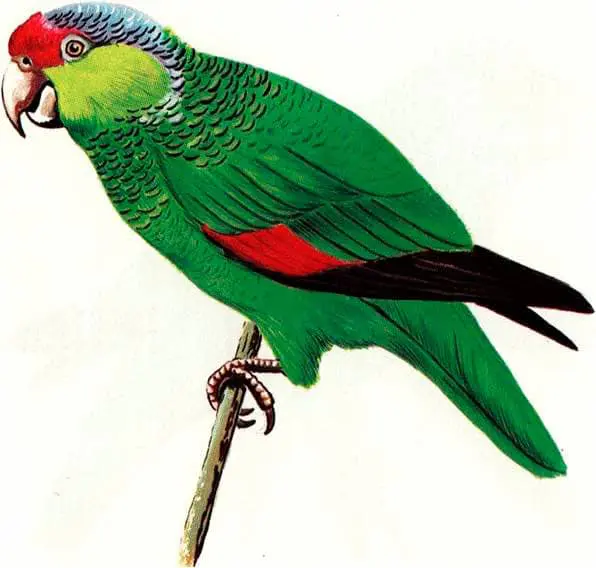
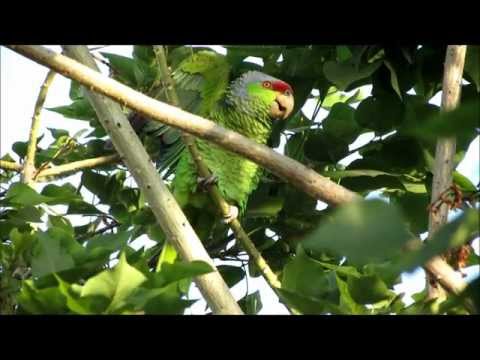
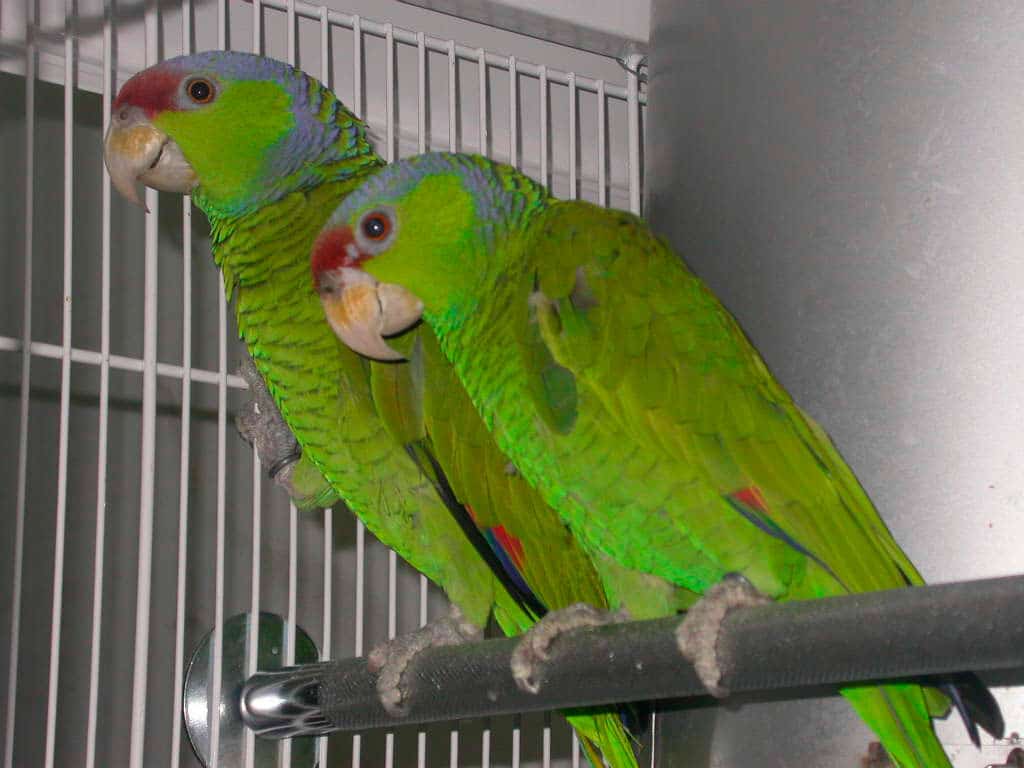
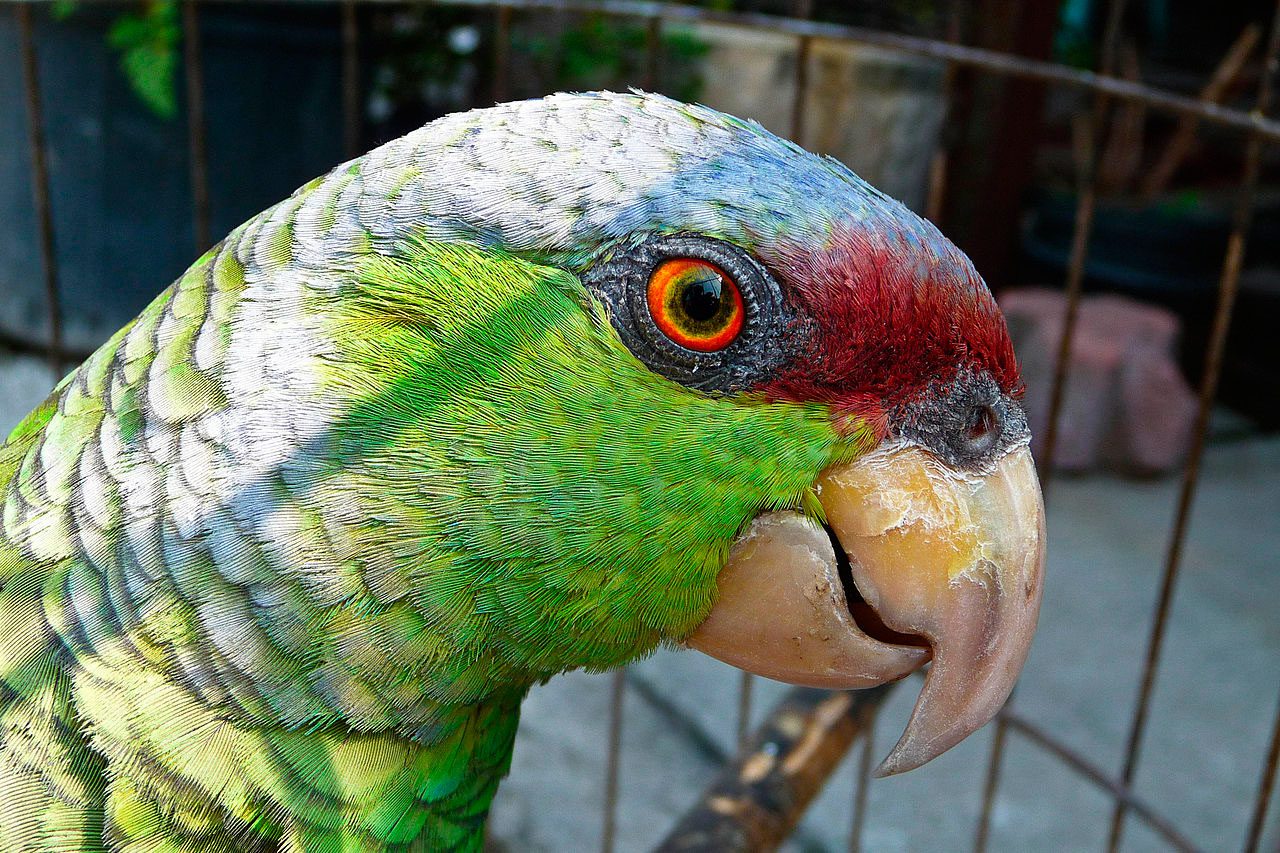
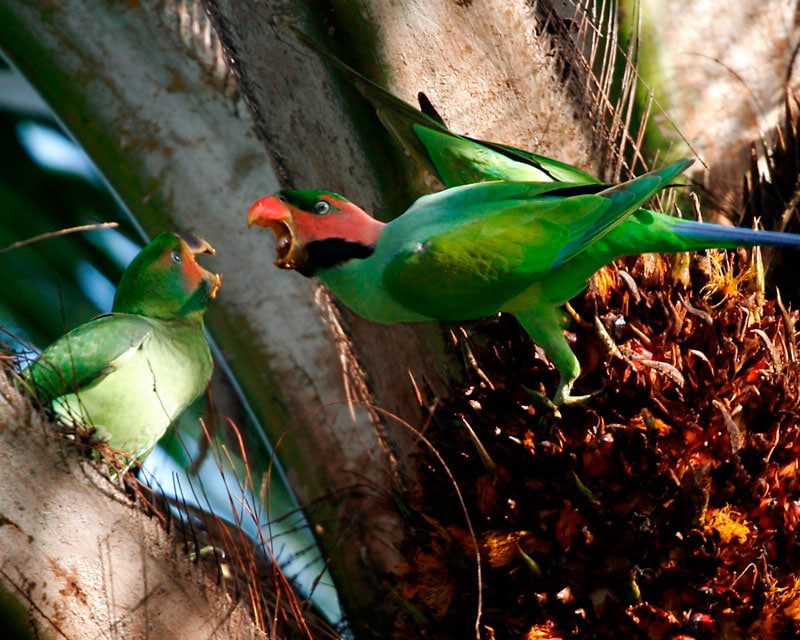
    The Lilac-crowned Parrot (Amazona finschi) has the forecrown and the higher lords, red off; the lower lores, the cheeks and ear-coverts, pale lime green; crown, sides neck and nape, lilac or pale blue with some feathers crown showing narrow black margins.

    Mantle green with broad black edges giving distinct scalloped effect; back and scapulars weak green with black borders to some feathers; rump and uppertail-coverts, green, slightly brighter than the back. Wing coverts green. Primaries blue toward the tip, green at the base; the base outerweb the first five secondaries, red with subterminal band yellow and blue tips, secondaries, otherwise, green, becoming blue at tips. Under the wings, brighter yellowish green; flight feather dull green.

    Lilac-crowned Parrot

    Throat yellowish green with bluish tint to some feathers; remaining underparts, yellowish-green with black margins to some feathers (especially in the chest), giving scalloped effect. Tail green tip yellowish green, lateral feathers blue margin to the base of the outerweb. Bill color horn; irises orange red; legs grey.

    Both sexes are similar. Immature has the irises dark brown (rather than red).

    • Sound of the Lilac-crowned Parrot.

    Habitat:

    "Lilac-crowned Parrot"

    Lilac Crowned Amazons (Amazona Finschi)

    The Lilac-crowned Parrot Living mainly in wooded hills and mountains, from the tropical zone in the lower levels of the deciduous forests, to the forests of oak and pine-oak forest in the highlands, preferably through the valleys with lush vegetation along streams that run on the basis of cannons; often also in areas of arid or semi-arid vegetation, or clear forest edge, coming into cultivated areas and orchards adjacent to the forest.

    mainly in altitudes of 600 to 2.000 m, but recorded at sea level Sinaloa and from sea level to the temperate forest Colima. observed between 360-1.700 metres in Sonora and 880-1.480 metres in Oaxaca. Usually in pairs or small groups, although larger groups are formed in the dry season (500 birds reported) and in communal roosts (more than 1,000 birds reported in the same place Nayarit).

    Reproduction:

    They nest in tree hollows (for example, Ficus), including old nests woodpeckers (for example, Phloeoceastes) or arboreal termite mounds.

    The breeding season It comprises from February to June, nesting with a cycle consisting of 28 incubation days eggs, followed by two months of growth of chickens in the nest (Forshaw 1989, Renton 1998, 2002).

    Food:

    Eating habits are poorly documented: It has been observed a particular preference for figs. During the dry season the diet consists mainly of Astronium graveolens, Brosimum alicastrum, Celaenodendron mexicanum, Comocladia engleriana and Ficus insipida. during the rains The diet consists of species such as Caesalpinia pulcherrima, Celaenodendron mexicanum, Esenbeckia nesiotica, Jatropha spp and Sciadodendron excelsum (Renton 1998, 2001)

    cause some crop damage corn and banana.

    They have been observed wild species groups, feeding with the Red-crowned Parrot (Amazona viridigenalis) in Los Angeles, California.

    Distribution:

    Size of its range (breeding/resident): 372.000 km2

    The Lilac-crowned Parrot inhabits Pacific coast of Mexico, from the southeast end of Sonora and Southwest Chihuahua, to the South by Sinaloa, Durango Western, Nayarit, Jalisco, Colima, Michoacรกn and Warrior, until Oaxaca, west of Isthmus of Tehuantepec.

    It is mostly residents, but outside the breeding season, visit during autumn, lowlands, for example in Oaxaca. generally common. Described as fairly common locally in southeastern Sonora. abundant in Colima. Very rare in the highlands of Oaxaca. Several wild populations reported in several locations in the United States.

    Conservation:

    State of conservation โ“˜


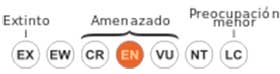
    Endangered Endangered โ“˜ (UICN)โ“˜

    โ€ข Current category of the Red List of the UICN: In danger of extinction.

    โ€ข Population trend: Decreasing.

    โ€ข Population size : 4700-6700.

    Rationale for the Red List category

      This species has been selected in danger of extinction because it is suspected that is decreasing very quickly as a function of contractions recorded ranges and due to the unsustainable exploitation and loss of habitat.

    Justification of the population

      Renton and Elias (2003) estimate the world population between 7.000 and 10.000 individuals, based on surveys covering most of the global range of the species. This equates to approximately 4.700-6.700 mature individuals. An estimate that 5.400 individuals each year are caught illegally in Mexico (Cantu et al ., 2007), implies that the estimation of population Renton and Elias (2003) could be an understatement, but it remains in this evaluation to best data available.

    Justification of trend

      It is suspected that the population of this species is in decline very fast, based on a study of Marin-Togo et al . (2012), who estimated the current distribution of this species along the Pacific coast of Mexico and he showed a reduction 72.6% its estimated original distribution.
    Threats

    โ€ข The Capture for national and international trade It is the greatest threat to wild populations.

    โ€ข It is highly valued in trade (Cantu et al., 2007) and it was the kind of Amazon parrot most caught in the early eighties (Inigo-Elias y Ramos 1991).

    โ€ข The illicit trade is intense and widespread, and Lilac-crowned Parrot It is one of the most frequently confiscated Mexican parrots (K. Renton in litt., 2005).

    โ€ข During the period 1981-2001, were registered 4.061 individuals in international trade, of which 79% It was exported directly from Mexico and the 64% it took Nature (CITES 2004a).

    โ€ข Remains one of the five species of Mexican parrots most caught, with an estimated 5.400 individuals / year caught illegally Mexico (Cantu et al ., 2007).

    โ€ข Los Adults and young people are easily trapped in large numbers due to their habit of congregating at communal shelter sites in the late afternoon (Renton 2005, K. Renton in some 2005).

    โ€ข Chicks are commonly poached from nests (K. Renton in litt., 2005).

    โ€ข During interviews with local people throughout the range of the species, the 75% reported poaching in your area (K. Renton in litt., 2005).

    โ€ข Also, it is said that this species requires semi-deciduous forest with tall mature trees for nesting and can not adapt to the changed areas nesting (Marin-worm Togo et al ., 2012).

    โ€ข Habitat loss and degradation, mainly for conversion to small and large crops and pastures (K. Renton in some . 2007, A. Salinas in some . 2007, Ortega-Rodriguez and Monterrubio-Rico 2008), are serious threats, with the semi-deciduous forest along the Pacific coast lost at a higher rate than any other type of forest in Mexico (Masera et al ., 1996, K. Renton in litt., 2005), It is resulting in the destruction of nesting sites and reducing the extent of this crucial critical habitat (Renton 2005).

    โ€ข In Michoacรกn, nesting areas potentially more accessible, as plains or hills, have been converted to livestock or agricultural farms (Ortega-Rodriguez and Monterrubio-Rico 2008).

    โ€ข Large development projects, such as dams, also they resulted in loss of breeding habitat for the species (K. Renton in some ., 2007).

    โ€ข The semi-deciduous forest now covers only 5.106 km2 within the range of the species (Renton and Elias 2003, K. Renton in litt., 2005).

    โ€ข The decrease in rainfall that could result from the global climate change would lead to a decrease in the reproductive potential of wild populations in tropical dry forests (K. Renton in some ., 2007).

    โ€ข Despite the various pressures on habitats, by showing that the species has disappeared from more than 70% of its former range, Marin-Togo et al. (2012), has reinforced the view that the capture pressure is the predominant threat to the species.

    Conservation Actions Underway

    โ€ข In 1999, the Mexican government established a Conservation Plan, Protection and Recovery Psitรกcinos in Mexico, in which the Lilac-crowned Parrot It is considered a priority species (Macias Caballero et al ., 2000).

    โ€ข In 2004, the species was updated to Appendix 1 of CITES and in 2007 It approved a proposal to change its state species conservation 2008 of "threatenedยป a ยซin dangerยป under the Mexican wildlife law (K. Renton in some.)

    โ€ข In Mexico, They have made considerable efforts to combat illegal domestic trade, with at least 52 seizures during 1997-2003 (CITES 2004b).

    โ€ข Inspections carried out in Mexico They resulted in the seizure of 266 live individuals of the species that were offered illegally in the pet trade between 1995 and 2003 (CITES 2004b).

    โ€ข The species It is in three biosphere reserves; Sierra de รlamos-Rรญo Cuchujaqui flora and fauna protection area in Sonora meridional, and Reserva de la biosfera Chamela-Cuixmala and Biosphere Reserve Sierra de Manantlรกn, in Jalisco, and according to sources, It is distributed in seven other important bird areas; However, some of them lack official protection or conservation programs (CITES 2004a)

    Conservation Actions Proposed

    โ€ข Monitor the demographic trends through regular surveys.

    โ€ข Monitor levels of destruction and degradation of habitat.

    โ€ข Implement trade regulation strategies in the plan 1999.

    โ€ข Carry out extension work and environmental education as described in the plan 1999.

    โ€ข Perform the habitat conservation and recovery of wild populations as it recommended in the Plan 1999.

    โ€ข Monitor the success of the strategies of the plan of 1999.

    โ€ข Protect the rest of the tropical forest supports in areas where the slope is greater than 6 ยฐ: ideally all areas on steep slopes should be restored to forest, to provide habitat for all native wildlife (including the Lilac-crowned Parrot)

    โ€ข Prevent soil erosion AND promote alternative economic activities in rugged coastal areas such as recreation and tourism. (Ortega-Rodriguez and Monterrubio-Rico 2008).

    The Lilac-crowned Parrot in captivity:

    Very popular as a pet throughout its area of distribution; It has cultural value as a pet or ornamental bird by its feathers; ability to imitate sounds and its tendency to form bonds with people; widespread in captivity internationally.

    Currently protected by the Appendix 1 of CITES.

    Each copy captive of this species which is capable of reproducing, should be placed in a well-managed breeding program in captivity and not be sold as a pet, with the objective of ensure their survival long-term.

    Alternative names:

    – Finsch’s Parrot, Lilac crowned Parrot, Lilac-crowned Amazon, Lilac-crowned Parrot, Pacific Amazon, Pacific Parrot (English).
    – Amazone ร  couronne lilas, Amazone de Finsch, Amazone verte de Finsch (French).
    – Blaukappenamazone (German).
    – Papagaio-de-finsch (Portuguese).
    – Amazona de Corona Violeta, Amazona Guayabera, Loro Corona Lila, loro corona-lila, Loro Corona-violeta (espaรฑol).


    scientific classification:

    Philip Sclater
    Philip Sclater

    – Order: Psittaciformes
    – Family: Psittacidae
    – Genus: Amazona
    – Scientific name: Amazona finschi
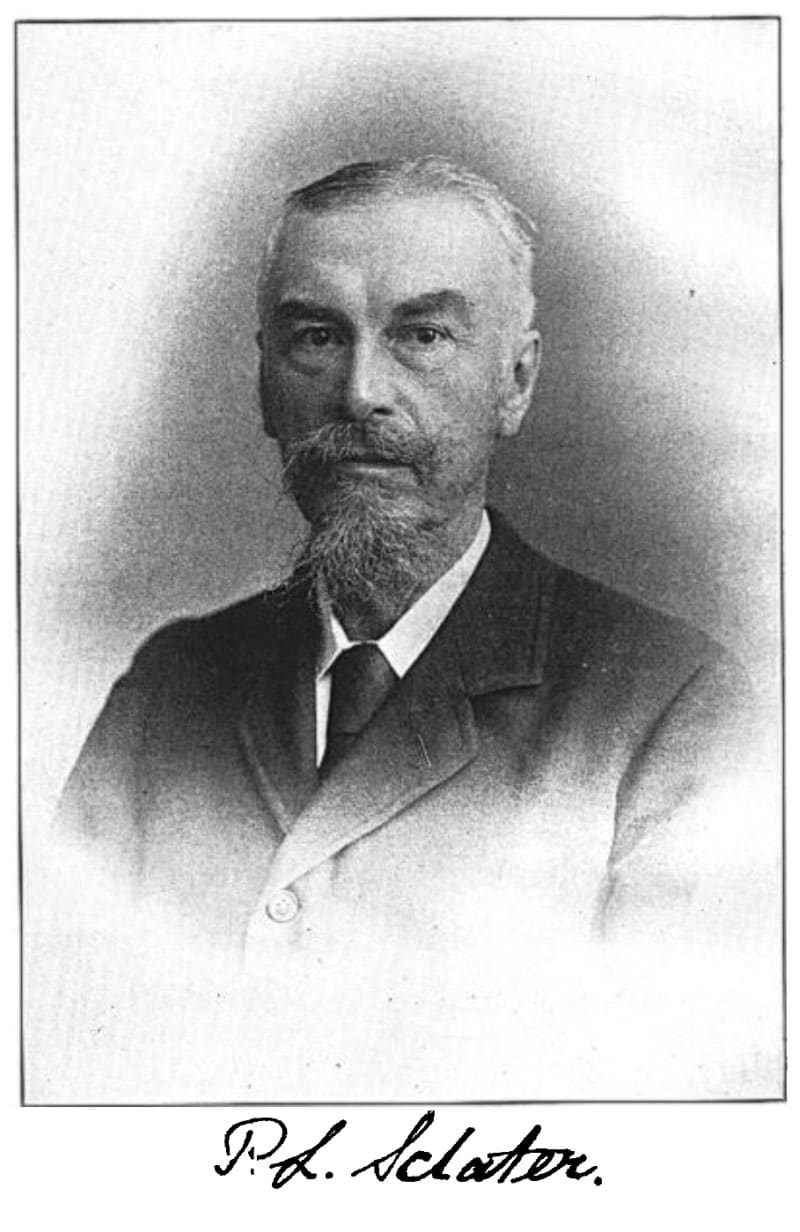
    – Citation: (Sclater, PL, 1864)
    – Protonimo: Chrysotis finschi


    Images Lilac-crowned Parrot:


    Species of the genus Amazona


    Sources:

    Avibase
    Parrots of the World โ€“ Forshaw Joseph M
    Parrots A Guide to the Parrots of the World – Tony Juniper & Mike Parr
    Birdlife
    Naturalist

    Photos:

    (1) – Lilac-crowned Parrot by Tom Benson – Flickr
    (2) – Lilac-crowned Amazon perching on a branch By Amazona_finschi_-perching_on_branch-8.jpg: Cรฉdric Allierderivative work: Snowmanradio [CC BY 2.0], via Wikimedia Commons
    (3) – Lilac-crowned Amazon (Amazona finschi) by Emilie Chen – Flickr
    (4) – Lilac-crowned Parrot by wplynn – Flickr
    (5) – A pet Lilac-crowned Amazon; head and neck By Gary Denness (originally posted to Flickr as Pretty Boy) [CC BY 2.0], via Wikimedia Commons
    (6) – Lilac-crowned Amazon; two in a cage By TJ Lin (originally posted to Flickr as DSCN0549) [CC BY-SA 2.0], via Wikimedia Commons
    (7) – Lilac-crowned Amazon (Amazona finschi) By CDest [Public domain], via Wikimedia Commons
    (8) – Lilac-crowned Amazon at the Arizona-Sonora Desert Museum, Tucson, Arizona, USA By DrStarbuck from Madison, WI, USA (Arizona-Sonora Desert Museum 18) [CC BY 2.0], via Wikimedia Commons
    (9) – A Lilac-crowned Amazon at Arizona-Sonora Desert Museum, USA By Dave Bezaire & Susi Havens-Bezaire [CC BY-SA 2.0], via Wikimedia Commons
    (10) – Amazona finschi Uploaded by Francisco_aviario – Photobucket

    Sounds: Richard E. Webster, XC353198. accessible www.xeno-canto.org/353198

    โ–ท The world of Pets: Dogs, cats, birds, reptiles, amphibians

    Kawall's Parrot
    Amazona kawalli

    Kawall's Parrot

    Content

    Description:

    35-36 cm.. length.

    The Kawall's Parrot (Amazona kawalli) after not having been recorded in the wild for a few 70 years, It was rediscovered in the early 1980.

    Wrongly confused with Southern Mealy Parrot (Amazona farinosa) which differs from the remarkable white band at the base of bill.

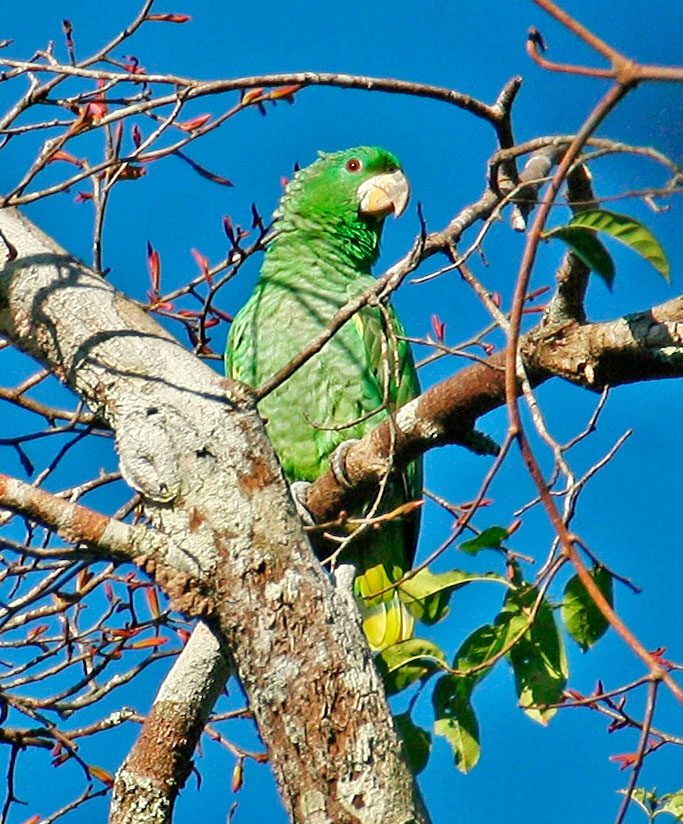
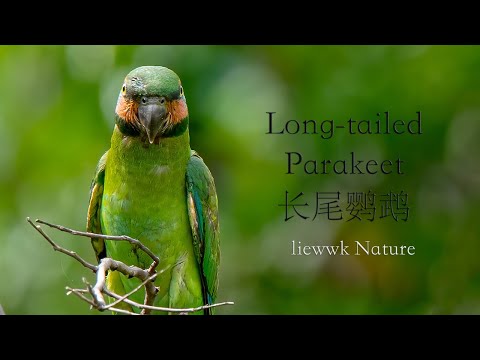
    They have forecrown, the lores, the cheeks and ear-coverts green, although in some birds appear blackish. The crown, sides and back of the neck, as well as the nape, They are green with broad blackish margins to feathers, giving the whole a intricate scaly appearance, with escalation most pronounced in the nape and the the mantle.

    Kawall's Parrot

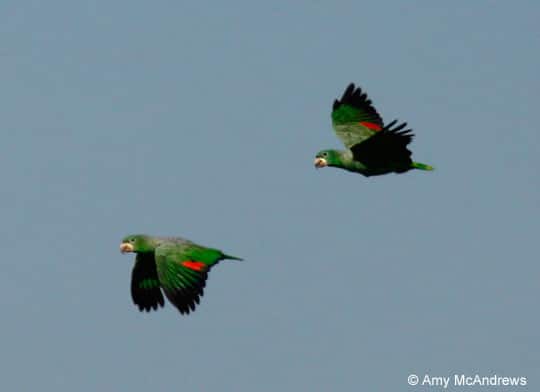
    Upperwing-coverts green, with the coverts smaller and medium dark shades showing weak at tips; some feathers yellowish green in the leading edge of wing . Primaries green with black towards the tips and some blue in outerweb (a specimen with primary external bright yellow in a wing); red in the three secondaries External form a speculum bright. The underparts They are green with scaling effect derived from the blackish tips to the feathers on the sides of the low chest; some feathers with dark tips in the middle of the chest although little visible; undertail-coverts, more greenish yellow. Upper, the tail It is green with wide band terminal greenish yellow, lateral feathers variably marked dark red (sometimes lined with black-brown and blue) in basal half; undertail, the tail similar but slightly off.


    Anatomy-parrots

    Bill gray bare skin cream in the base and a cream patch on the upper jaw; irises reddish-orange; legs gray.

    The male has the lores and perhaps gray bill largest. Immature not described.

    • Sound of the Kawall's Parrot.

    Habitat:

    The Kawall's Parrot They inhabit tropical rainforests, with apparent preference for river edges and permanently flooded forests (igapรณ).

    Reproduction:

    Nests observed in tree cavities flooded forest

    Food:

    Foods reported include seeds trees Hevea brasiliensis and H. spruceana, mesocarpio palm fruit Maximiliana maripa and seeds of Eichleria and Joannesia.

    Distribution:

    Size of its range (breeding/resident ): 1,160,000 km2

    The few published records come from the Amazon basin of Brazil; on top of Juruรก (under Eirunepรฉ), in the amazon; the confluence of roosevelt river and Aripuanรฃ River, to the South of For; and southern Santarรฉm, For.

    Possibly they overlooked in the field due to morphological similarities with some of the best known and there are almost certainly more individuals than congeners the few records suggest. Distribution map based on alleged occurrence among localities known. No details on the population or condition.

    Conservation:

    State of conservation โ“˜


    Near-threatened Near Threatened โ“˜ (UICN)โ“˜

    โ€ข Current category of the Red List of the UICN: Near-threatened.

    โ€ข Population trend: Stable.

    Rationale for the Red List category

    Based on a model of future deforestation in the Amazon basin and the susceptibility of the species to habitat fragmentation and hunting , It suspected population decline by 25-30% in the next three generations and, therefore, It has risen to Near Threatened.

    Justification of the population

    The size of the world's population has not been quantified, but this species is described as ยซrareยป (Stotz et to the., 1996).

    Justification of trend

    It is suspected that this species has lost 19.1-33.6% of habitat suitable within their distribution during three generations (37 years), based on a model of Amazon deforestation (Soares-Filho et to the., 2006, Bird et to the., 2011). But, it is considered that the species has a wider distribution than indicated on the map used in this analysis (A. Lees in litt 2011), As it suspected to decline by 25-30% during three generations.

    Conservation Actions Underway

    The species in Appendix II CITES.

    Conservation Actions Proposed

    First of all, expand the network of protected areas to effectively protect the IBA. Second manage more effectively the resources and existing and new protected areas, using the emerging opportunities for funding the management of protected areas with the overall goal of reducing carbon emissions and maximize the conservation of biodiversity. Especially relevant conservation on private land, through the expansion of market pressures for proper land management and prevention of deforestation on land not suitable for agriculture (Soares-Filho et to the., 2006). Campaign against proposed changes to Brazilian Forest Code that would lead to a decrease in the width of protected riparian forest areas such as Permanent Preservation Areas (APPs), that function as vital corridors in fragmented landscapes.

    "Kawall's Parrot" in captivity:

    The Kawall's Parrot It is a half-noisy parrot, not very active and hard chewing. They can easily tame. They are not common in aviculture. They are hardy once acclimated. Its minimum temperature tolerance is 15 degrees. Any lower temperature than this requires supplemental heat until the Parrot has acclimatized.

    Alternative names:

    – Kawall’s Amazon, Kawall’s Parrot, Kawall’sParrot, White-cheeked Amazon, White-faced Amazon (English).
    – Amazone de Kawall (French).
    – Kawallamazone, Stromamazone (German).
    – papagaio-dos-Garbes (Portuguese).
    – Amazona de Kawall, Loro de Kawall, Loro de Kawallรญ, Amazonas de mejillas blancas,
    loro de garbes
    (espaรฑol).


    scientific classification:

    Rolf Grantsau

    – Order: Psittaciformes
    – Family: Psittacidae
    – Genus: Amazona
    – Scientific name: Amazona kawalli
    – Citation: Grantsau & Camargo, 1989
    – Protonimo: Amazona kawalli

    Kawall's Parrot images:

    Amazona de Control


    Videos Kawall's Amazon:


    Species of the genus Amazona


    Sources:

    • Avibase
    • Parrots of the World โ€“ Forshaw Joseph M
    • Parrots A Guide to the Parrots of the World – Tony Juniper & Mike Parr
    • Birdlife

    Photos:

    (1) – Kawallโ€™s Amazon at Rio Cristalino, Mato Grosso, Brazil by Jacek Kisielewski [CC BY-SA 3.0], via Wikimedia Commons
    (2) – Kawallโ€™s Parrot (Amazona kawalli) Cristalino Jungle Lodge, Mato Grosso, Brazil by Amy McAndrews – Flickr
    (3) – ROLF GRANTSAU* and Hร‰LIO F. DE ALMEIDA CAMARGO** Museum of Zoology of the University of Sรฃo Paulo CP 7172, Sao Paulo, Brazil – NEW BRAZILIAN AMAZON SPECIES

    Sounds: Jeremy Recall, XC313948. accessible www.xeno-canto.org/313948

    โ–ท The world of Pets: Dogs, cats, birds, reptiles, amphibians

    Lilac-tailed Parrotlet
    Touit batavicus

    Lilac-tailed Parrotlet

    Content

    Description:

    Lilac-tailed Parrotlet

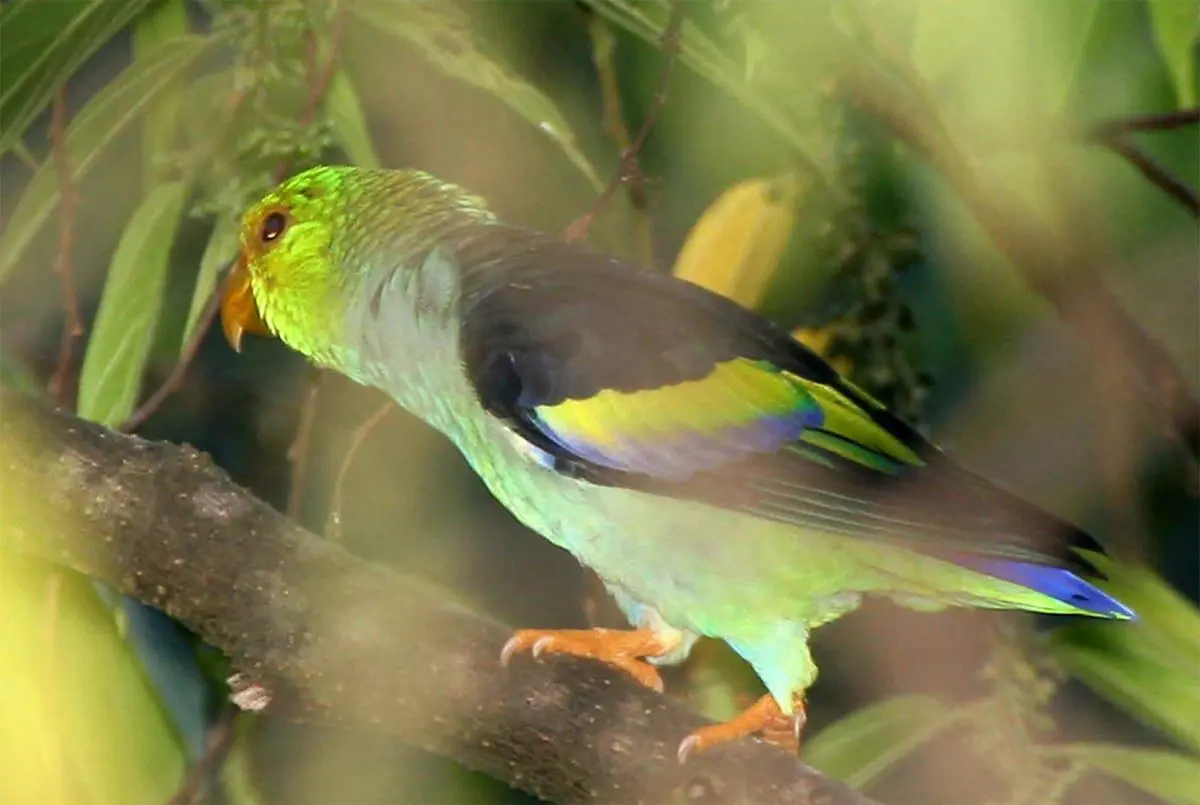
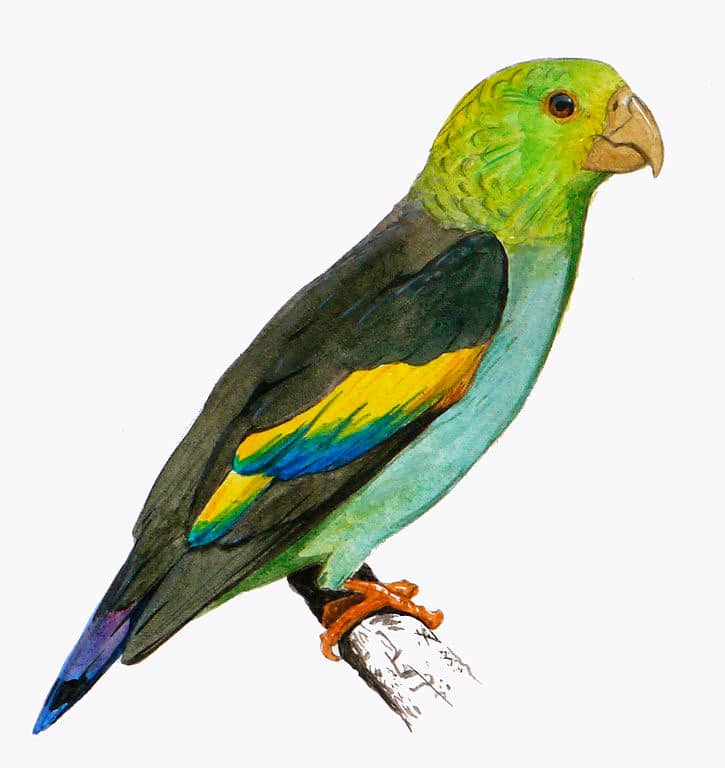
    The Lilac-tailed Parrotlet (Touit batavicus) has 14 cm.. height. Usually black in it upperparts (back and wings) and green in it lower. With the crown and nape yellowish-green with black border (What gives a suspiciously aspect). The forecrown, cheeks and chin Yellow Gold, chest Azure Blue, Yellow patch in the wing , tail ends reddish purple and black subterminal edge.

    Habitat:

    It inhabits in forest dry and jungles cloudy between 400 and 1700 m (in Colombia).
    Considered powerful flying, the sharp profile of its wings, They quickly fly over the forest canopy, in groups of 10 to 50 and they are gregarious except in the time reproductive.

    It is of a forest Ave, but it can be seen near the shore of the sea in the areas where the edge of the forest close to the coast.

    The calls during the flight they are soft and nasal, reaching a high tone, Buzz.

    Reproduction:

    It nests in hollows in trees or in arboreal termite holes, between the months of February and March. It is thought that it has migratory movements.

    Food:

    Its diet is composed of flowers, nectar, fruit, outbreaks, berries and seeds.

    Distribution:

    Size of the area of distribution (reproduction / resident): 330.000 km2

    Can be found from the North of Venezuela According to the East up to Guyana, Suriname, French Guiana and in Trinidad and Tobago.

    Conservation:

    State of conservation โ“˜


    minor concern Minor Concern โ“˜ (UICN)โ“˜

    โ€ข Current category of the Red List of the UICN: Least concern.
    โ€ข Population trend: Decreasing.

    Justification of the population

    The size of the world population It has not been quantified, but this species is described as ยซquite commonยป (Stotz et to the., 1996).

    Justification of trend

    They suspect that this species has lost a 8,2-8,4% of habitat suitable within their distribution during three generations (15 years) based on a model of Amazon deforestation (Soares-Filho et to the., 2006, Bird et to the., 2011). Given the susceptibility of the species to the hunting or the capture, It is suspected that will decrease in <25% during three generations.

    "Lilac-tailed Parrotlet " in captivity:

    It's hard to keep alive captivity, refuses food during the acclimatization period. Deaths occur for this reason and the unbalanced diet.

    Images of the "Lilac-tailed Parrotlet "

    Videos:

    Alternative names:

    – Lilac-tailed Parrotlet, Black-winged Parrot, Lilac tailed Parrotlet, Scopoli’s Parrot, Seven-colored Parrot, Seven-colored Parrotlet, Seven-coloured Parrot, Seven-coloured Parrotlet (English).
    – Toui ร  sept couleurs (French).
    – Siebenfarbenpapagei, Siebenfarben-Papagei (German).
    – Lilac-tailed Parrotlet (Portuguese).
    – Cotorrita Sietecolores, Lorito de Siete Colores (espaรฑol).


    scientific classification:

    Pieter Boddaert
    Pieter Boddaert

    – Order: Psittaciformes
    – Family: Psittacidae
    – Genus: Touit
    – Scientific name: Touit batavicus
    – Citation: (Boddaert, 1783)
    – Protonimo: Psittaca Batavica


    Lilac-tailed Parrotlet (Touit batavicus)


    Species of the genus Touit


    Sources:

    • Avibase
    • Parrots of the World โ€“ Forshaw Joseph M
    • Parrots A Guide to the Parrots of the World – Tony Juniper & Mike Parr
    • Parrot Book, Parrots and macaws Neotropical

    Photos:

    (1) – birdsoftt
    (2) – Lilac-tailed Parrotlet. Watercolor, Romain Risso By Gossipguy (Own work) [CC BY-SA 3.0], via Wikimedia Commons
    + More