โ–ท The world of Pets: Dogs, cats, birds, reptiles, amphibians

British longhair cat
Federations: LOOF, TICA, WCF

The British longhair cat was recognized as a breed by the International Cat Association (TICA) in 2009. Some other registration organizations still do not consider it a breed of its own..

Photo: wilkipedia

Content

History

The British longhair cat originated in Great Britain at the beginning of the 20th century and is the result of crossing the British Shorthair cat and the Persian cat. The British Shorthair cat They had long interbred with the persian cats, but the resulting cats that showed the long-haired gene of the Persian they were considered unusual.

Because the breed has only recently been bred for its specific traits, have achieved race status in recent history. Much of the history of British longhair cat is associated with its relationship with its namesake and ancestor, the British Shorthair cat.

Physical characteristics

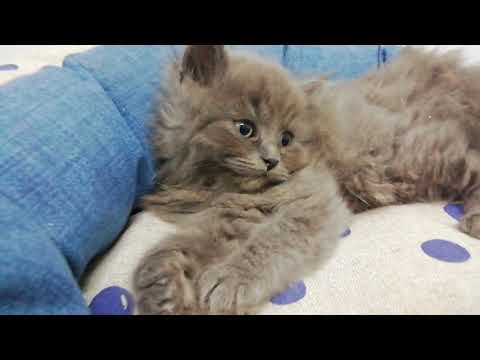
The British longhair cats are size medium, with long hair and a nice round face. His big round eyes, their sweet expressions and fluffy fur give this breed adorable charm. Under all your fluff, these cats have muscular and robust bodies. The british long hair usually weigh between 3 and 7 kg, and males tend to weigh more.

The coat of the British longhair it's dense and straight, and moves away from the body to make these cats appear larger than they really are. Its fur is also soft, thick and available in many colors, like black, the lilac, chocolate or gold. They can also have a bicolor pattern, ticked o colorpoint. These cat breeds shed little compared to other long-haired breeds, but they have a thick undercoat.

The British longhair cat is often compared to the British Shorthair cat and with the Persian cat as for its appearance, And for good reason: This breed of cat follows the same breed standard as the British Shorthair cat, except for their long, soft fur. The magnificent mane of British longhair is the result of the side of Persian cat of his genealogy.
British longhair cat
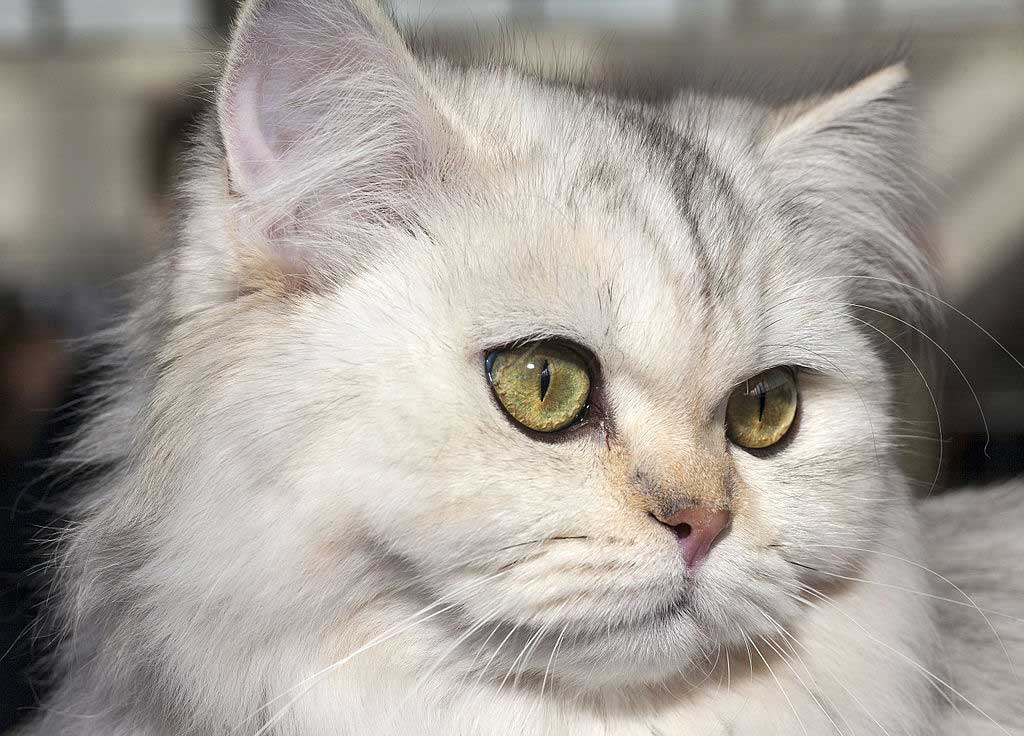
British longhair cat Bounty Amouge, No. 4 according to the catalog of the international cat exhibition of the RosKosh club ยซGolden Autumn-2014ยป (WCF). – Nickolas Titkov from Moscow, Russian Federation, CC BY-SA 2.0, via Wikimedia Commons

Character and skills

These sweet cats are as personable as their smiling faces would suggest.. The British longhair cat He is known for his smooth, calm demeanor and easygoing demeanor. These cats are not easily upset – some might even call them lazy!! Although sometimes they behave like typical playful kittens, they are significantly less active than most cat breeds and become less active with age. They also sleep quite a bit, even by cat standards.

But these cuddly cats are so much more than just sofa companions.. They are incredibly smart, social and loving. The British longhair is a loyal breed that loves people and tolerates most environments.

Although they are very sociable, these cats also have an independent vein, and they often feel good doing their own thing. That does not mean that these cats always leave you alone.; in fact, They have been described as small "private investigators". True to the cats of pop culture, these cats are quite curious. Don't be surprised if you find these cats pawing at your personal belongings or looking closely to see what you are doing..

The British longhair cat He is affectionate and tolerant with children, but he doesn't like to be caught. Parents will have to spend time teaching their little ones not to pick up these adorable cats and to meet them on the floor to pet and play.

Needs of the "British longhair cat"

Thanks to his laid-back temperament, the British longhair adapts to a wide variety of environments. Their gentle and carefree demeanor makes them patient and loving pets for families with young children and frequent guests.. These friendly felines are sociable and adapt to changes, they tolerate curious young children and noisy dinners.

They are far from sticky, and they don't mind being left alone while you go to work or your social activities. This independent spirit also means that the British longhair can be a bit stubborn. They prefer to do things their own way, and often do not respond to owners starting the game when they prefer to lie down. But, this does not mean that your british longhair cat does not want to know anything about you. On the contrary, you will have to spend time showing your love and affection. Lots of pampering, attention and the presence of other pets will keep you from feeling lonely.

These cats love to chat and will have small conversations with you often to let you know that they are hungry., thirsty or just to get your attention. If you have roommates who are easily irritated or you live in an apartment with thin walls, this breed might not be the most suitable.

If what you are looking for is a friendly and cuddly companion that adapts to different lifestyles and living spaces, the British longhair cat it's a good option. This calm cat adapts well to family life, to frequent travel and most life situations, as long as I receive a lot of love and care.

Health

The british longhair cats they are not more prone to disease than other cats, but they have a certain incidence of health problems. This breed has a life expectancy of between 15 and 17 years.

ยซIt is important to check for polycystic kidney disease, in which cysts develop in the kidneys causing decreased function and, finally, "kidney failure". DNA tests are now available to detect the risk of this disease in parents, so it is advisable to do a previous screening. This disease is also very common in the Persian ancestors of the British longhair.

Responsible breeders will test kittens for genetic health problems, but it is important to keep regularly scheduled veterinary appointments and follow the advice of your cat's veterinarian. Health problems can develop later in life and will need to be managed.
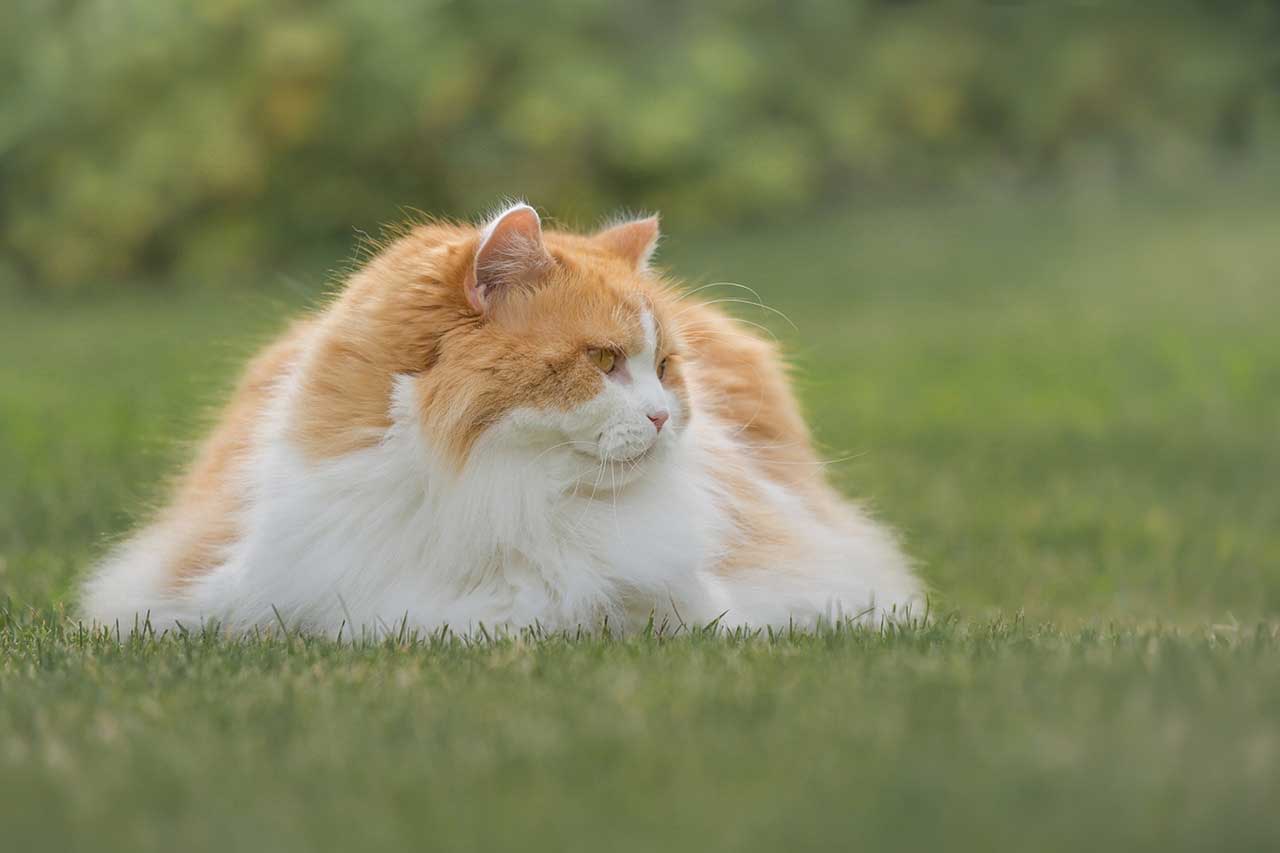
British longhair cat

Grooming and care

British longhair mainly handles that task itself. Because of all this self-grooming, your British longhair cat is prone to swallowing a lot of hair and developing hairballs. Help your cat by brushing more frequently or offering hairball relief treatments.

The British longhair cat tends to be a bit lazy, and owners will have to motivate them to move. Encourage play often, provide trees to climb and interactive toys to play with.

ยซWeight control is very important with these cats because they tend to be less active as adults compared to other cat breeds.. ยซThey are prone to being overweight, Therefore, daily exercise is essential..

How are they smart, these cats are usually easy to train to perform simple tasks, how to use the litter box or scratching post. These food-loving cats will always appreciate a treat to reward good behavior.

Socialization should be easy with this easygoing breed. Kittens british long hair those who are introduced to people and pets at a young age are usually easy to get along with and accept unfamiliar faces well.

Food

The British longhair cat should be fed a high-quality diet approved by your veterinarian. Look for protein ingredients primarily of animal origin. Your cat can be fed dry or wet food. This breed is prone to obesity, so it is important to monitor your food intake.

British longhair
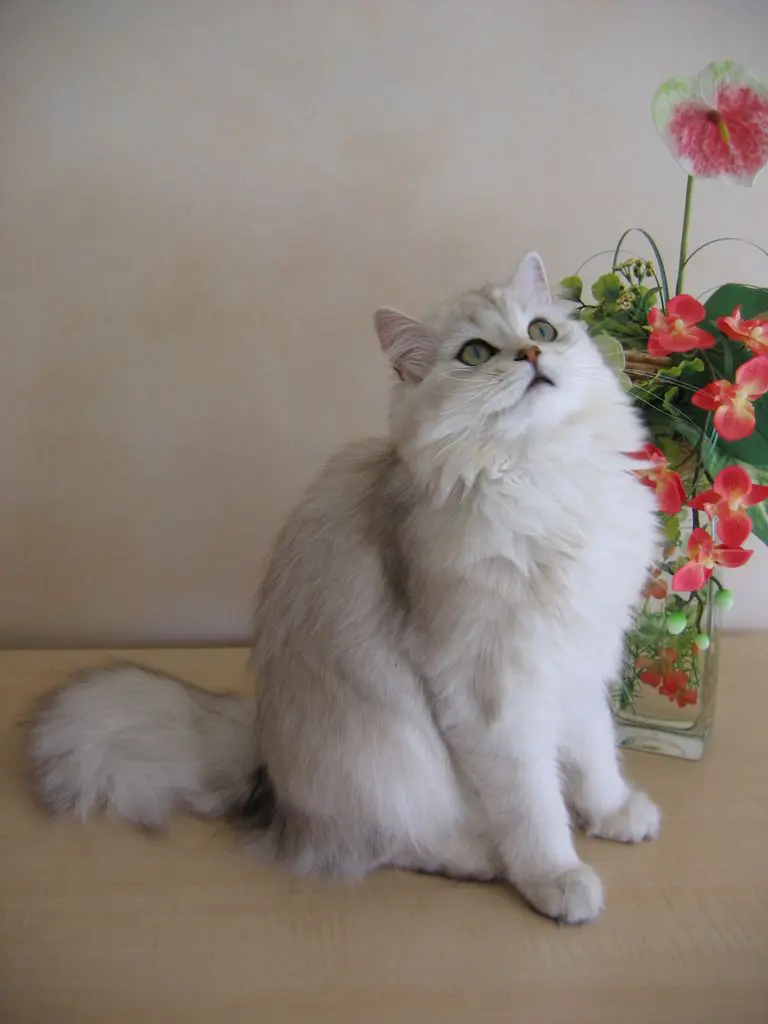
A bluish-white long-haired British cat from the McQueen Cattery. – Felinology, CC BY-SA 4.0, via Wikimedia Commons

For sale "British longhair cat"

Kittens british long hair from a reputable breeder usually cost between 700 and 1.100 EUR, depending on pedigree.

Characteristics "British longhair cat"

Coexistence is important that you have with your new friend. Before considering the acquisition of a cat of the breed "British longhair cat" you know certain factors. You must take into account their character, their need for exercise, their interaction with other pets, their care and if you have small children, their level of tolerance towards them.

Joy

3,0 of 5 stars (based on 1 review)

Activity level

2,0 of 5 stars (based on 1 review)

Friendliness to other pets

3,0 of 5 stars (based on 1 review)

Friendliness to children

3,0 of 5 stars (based on 1 review)

Grooming requirements

4,0 of 5 stars (based on 1 review)

Vocality

2,0 of 5 stars (based on 1 review)

Need for attention

3,0 of 5 stars (based on 1 review)

Affection towards its owners

4,0 of 5 stars (based on 1 review)

Docility

4,0 of 5 stars (based on 1 review)

Intelligence

4,0 of 5 stars (based on 1 review)

Independence

3,0 of 5 stars (based on 1 review)

Hardiness

3,0 of 5 stars (based on 1 review)

Videos "British longhair cat"

Cat British Longhair Blue Aquanatura Barcelona
Gato British Longhair Azul Aquanatura Barcelona
British Longhair Cats - Everything You Need To Know
British Longhair Cats – Everything You Need To Know

โ–ท The world of Pets: Dogs, cats, birds, reptiles, amphibians

Burmese cat
Federations: LOOF, CFA, ACF, ACFA, TICA, FIFรฉ, WCF

Today, you can still find cats similar to the current ones Burmese cats in the Buddhist temples of Southeast Asia
Burmese cat
Burmese Cat ยซGamseยป – DPCS.ie, CC BY-SA 4.0, via Wikimedia Commons

Content

History

The first written records of the Burmese cat date back to the 14th century. El Tamra Maew, a manuscript of poems and illustrations found in Ayutthaya, the capital of the Kingdom of Siam (current Thailand), date of this period. This "treatise on cats" describes, among other things, to the Rajah, a round-headed cat, slightly chunky body and very silky chocolate coat: a description that corresponds in all respects to the Burmese what do we know today. According to legend, it was one of the 16 races that lived with Buddhist monks, who considered them sacred.

For centuries confined to his homeland, the cat began to spread internationally when in 1930 a US Navy medic, Joseph Thompson, brought a chocolate coated female from Thailand, Wong Mau. As the fur of this one was almost black at the tips (ears, legs and tail) and chocolate-colored in the rest of the body, guessed it was a Siamese cat. But, genetic testing disproved this assumption and established that it was a different breed. Fascinated by the beauty of this animal, Joseph Thompson decided to start a breeding program with other enthusiasts. Thus was born the American Burmese cat, a round-headed cat with a slightly chunky body.

The Burmeses did not arrive in Britain until later. It was not until the end of World War II that soldiers returning from Burma brought some brown cats.. Breeders who learned about the development of the American Burmese cat in the United States and Canada were interested in these cats and started a breeding program.

They contacted the American breeders so that they could send them some specimens. Among 1949 and 1956 some imports were made that allowed to expand the gene pool, which otherwise risked being insufficient due to the small number of subjects.

The program was a success: from the third generation, and more specifically in 1952, the breed was recognized by the Governing Council of the Cat Fancy (GCCF), the british feline organization. It was distinguished from Burmese Raised in America for his more triangular head and less stocky body.

The first standard only specified one layer color: chocolate. But, as time passed and more cats were raised, other colors appeared in the litters and lines. Like this, the first blue guy was born in 1952, and others with red fur followed in the following years, cream, tortoiseshell or even lilac in 1971. Breeders continued to develop the breed incorporating these additional colors, that were recognized in the successive updates of the breed standard.

But, until the end of the decade 1960, the gene pool of European Burmes cat remained very small, what limited its development. In 1969 imports could be reorganized, this time from canada, that contributed greatly to the development of the breed.

It also, the breed spread fairly quickly to most of western Europe. so it happened, for example, already in 1956 in France and in 1970 in Germany.

Burmese
Male Brown/Sable Australian Burmese Cat – Psypherium, CC0, via Wikimedia Commons
The controversy between the European Burmes cat and the American Burmese cat

The breeding of Burmese has developed in parallel, but in a somewhat different way, in the United States and Great Britain, respectively. This explains a certain divergence between the North American and European lines..

Like this, the American Burmese cat, also called Contemporary Burmese, has a rather round head, a rather short nose and a somewhat stocky body.

The European Burmes cat, also known as Traditional Burmese, has a more triangular head, a longer nose and slimmer body.

This heterogeneity divides breeders and institutions. These may include, the Governing Council of the Cat Fancy (GCCF) has refused to register specimens from the United States since 1980, to preserve traditional English lines.

The controversy is amplified by the existence of serious cranial deformities in some kittens from North American lines. These may include, some have two noses or just one cheek. Most affected kittens are stillborn., and those who are born are immediately euthanized. But, due to the limited size of the breed's gene pool, not even Cat Fanciers’ Association (CFA) not even Asociaciรณn Canadiense de Gatos (CCA) require routine sterilization of breeders with these defects. This decision is left to the discretion of each breeder..

The English Burmese lines are not entirely free from these problems.. But, the prevalence of these problems is much lower than on the other side of the Atlantic.

Physical characteristics

Burmese cat
Burmese – Flickr

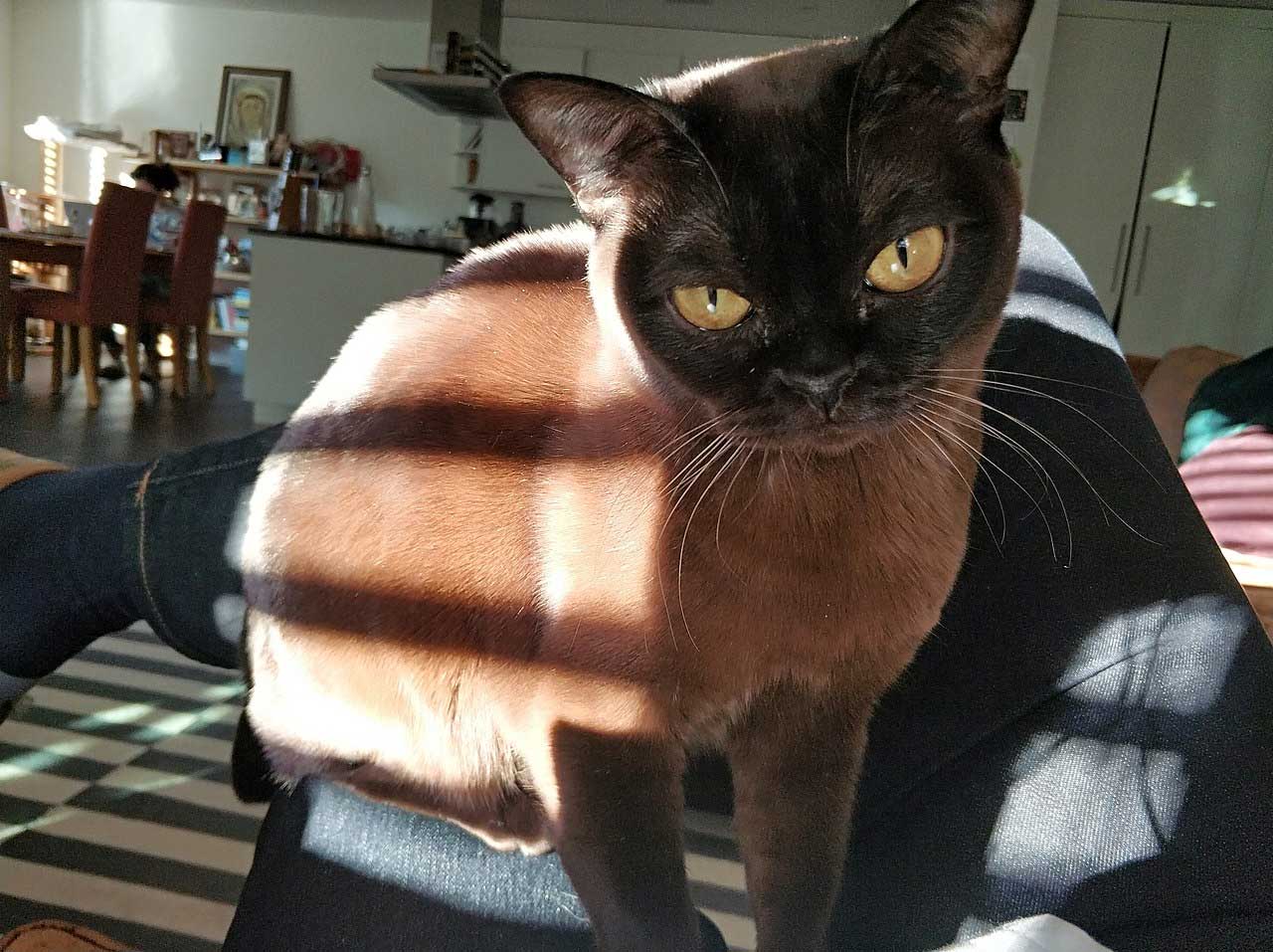
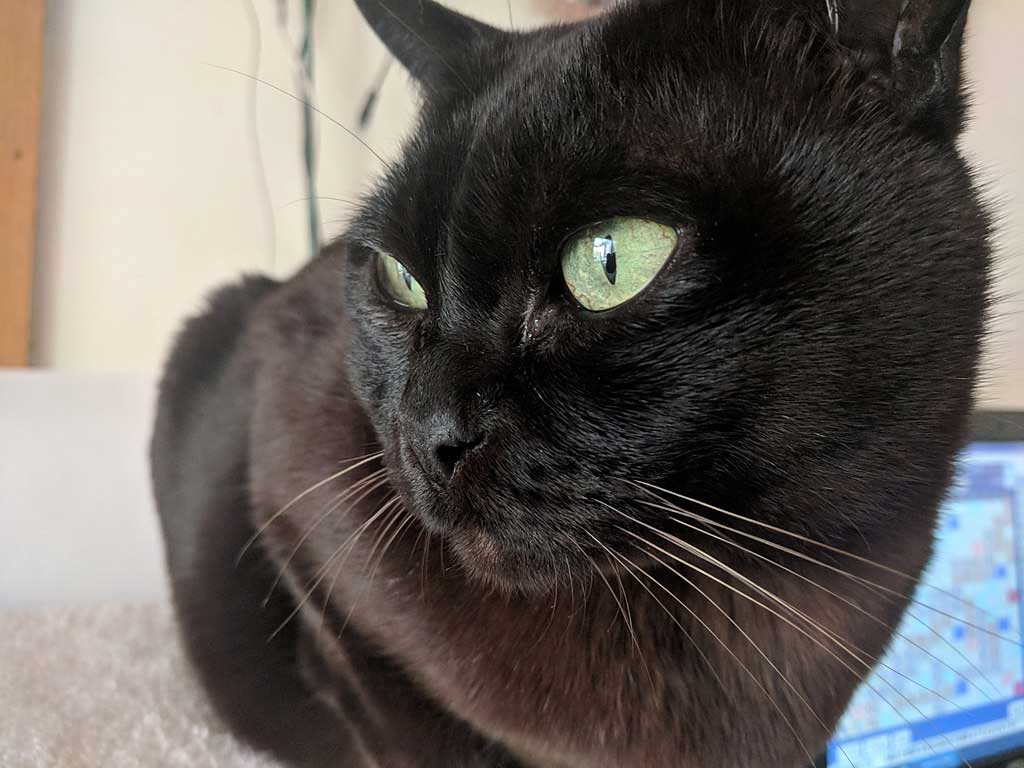
The Burmese it is a medium size cat, muscular and of strong stature, tending to weigh between 4 and 6 kg.

The legs they are long and delicate, with delicate oval feet. Overhead wedge-shaped, with one forecrown wide, some settle ears wide and of medium size and a straight nose.

The Greats eyes are golden yellow to amber in color and have an oriental curved upper eyelid. The fur of the Burmese, dense and silky, has a very fine undercoat, so it is attached to the body.

Officially, ten different coat colors are recognized, no pattern allowed. The Burmese comes in ten generally recognized colors. As a common feature, they all have so-called spiky coloration, why the face, the ears, legs and tail are darker than the rest of the body. The most common coat color is nut brown..

Varieties:

As a result of separate breeding programs, the English Burmese are different from americans. European tends to be more eastern, with a more triangular face, while the American Burmese cat it is plump and rounded in the body, head, eyes and feet; with full cheeks and a short muzzle.

Character and skills

The Burmeses they are curious cats, energetic and loving. They especially like to play and are very people-oriented. You should not leave them alone for a long time, as they quickly feel lonely. Not in vain, These affectionate cats are called "people's cats".

They need close physical contact and cannot do without daily caresses. The friendly cats remain active and attentive until old age. They do not show any fear towards strangers and are usually quite "talkative".

Indoor or outdoor cat?

The "Burmese cat" it is an active animal that needs a lot of space. You are not comfortable in a narrow flat. So that they are happy, must have at least one secure balcony or, even better, a fenced garden. If the conditions are good, the Burmeses they can also go abroad. The only problem is that these friendly cats are not afraid of the neighbors or other strangers.. So, They can easily fall victim to "cat thieves".

How much activity does he need? "Burmese cat"?

The Burmeses They are great cats for the whole family. They need a lot of activity and are reluctant to be alone. In fact, They consider themselves so affectionate that they would rather come on vacation with you than wait home alone. If you have to leave your loving cat alone more often, you should get a second cat to keep each other busy.

Especially if cats can't go outside, you must provide them with a suitable substitute occupation. Even outdoor cats are not averse to playing regularly with their humans. With his attentive and curious character, to the Burmese loves to play and chase toys. It is best to provide this clever cat puzzle games or encourage him to seek and chase with hidden treats..

Burmese cat
Burmese cat

Grooming and feeding

The coat of the Burmese cat it is very easy to care for and does not need any special treatment. Just brush the silky fur from time to time to remove dirt. This will not only guarantee a well-groomed and silky appearance, it will also do your cat a favor with extra petting.

A varied and healthy diet also contributes to the well-being of the cat.

For sale "Burmese cat"

Before buying a Burmese cat, you must be sure that you can dedicate the necessary time. The Burmeses they are considered one of the breeds with the longest life expectancy. You can't leave, often, to this cat only for the next 12 to 18 years and you will have to take care of it daily. If you have discovered this oriental cat for yourself, looking for a trusted breeder. There is currently no independent breeding club for the breed and you will have to turn to amateur breeders.. When you choose a kitten, make sure both the kittens and the parents appear healthy.

The price of a "Burmese cat" ranges between 800 and 1300 EUR.

European Burmes cat
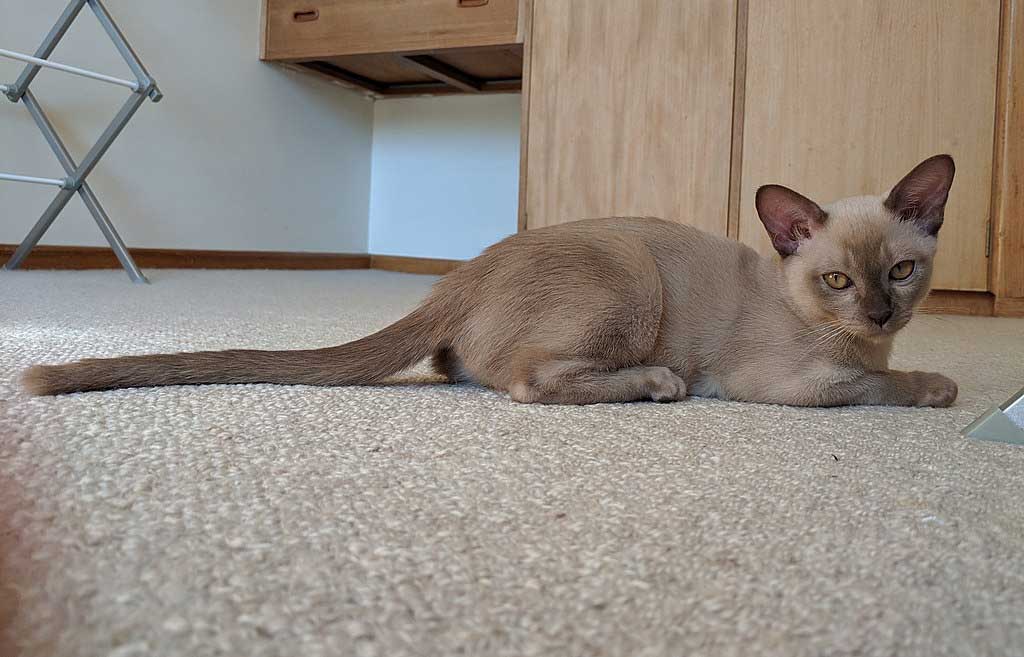
Chocolate (American ยซChampagneยป) British/European Female Kitten –

Characteristics "Burmese cat"

Coexistence is important that you have with your new friend. Before considering the acquisition of a cat of the breed "Burmese cat" you know certain factors. You must take into account their character, their need for exercise, their interaction with other pets, their care and if you have small children, their level of tolerance towards them.

Joy

5,0 of 5 stars (based on 1 review)

Activity level

4,0 of 5 stars (based on 1 review)

Friendliness to other pets

3,0 of 5 stars (based on 1 review)

Friendliness to children

3,0 of 5 stars (based on 1 review)

Grooming requirements

1,0 of 5 stars (based on 1 review)

Vocality

4,0 of 5 stars (based on 1 review)

Need for attention

4,0 of 5 stars (based on 1 review)

Affection towards its owners

5,0 of 5 stars (based on 1 review)

Docility

1,0 of 5 stars (based on 1 review)

Intelligence

4,0 of 5 stars (based on 1 review)

Independence

2,0 of 5 stars (based on 1 review)

Hardiness

3,0 of 5 stars (based on 1 review)

Videos "Burmese cat"

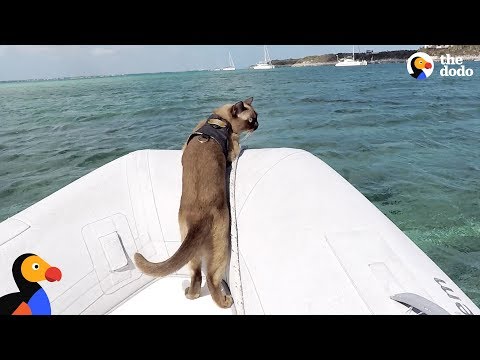
Cat Who Lives On A Boat Loves Visiting New Places - MISS RIGBY | The Dodo
Cat Who Lives On A Boat Loves Visiting New Places – MISS RIGBY | The Dodo
๐Ÿฑ Burmese Cat - Characteristics, Behavior and Origin ๐Ÿฑ
Gato Burmรฉs – Caracterรญsticas, Comportamiento y Origen