โ–ท The world of Pets: Dogs, cats, birds, reptiles, amphibians

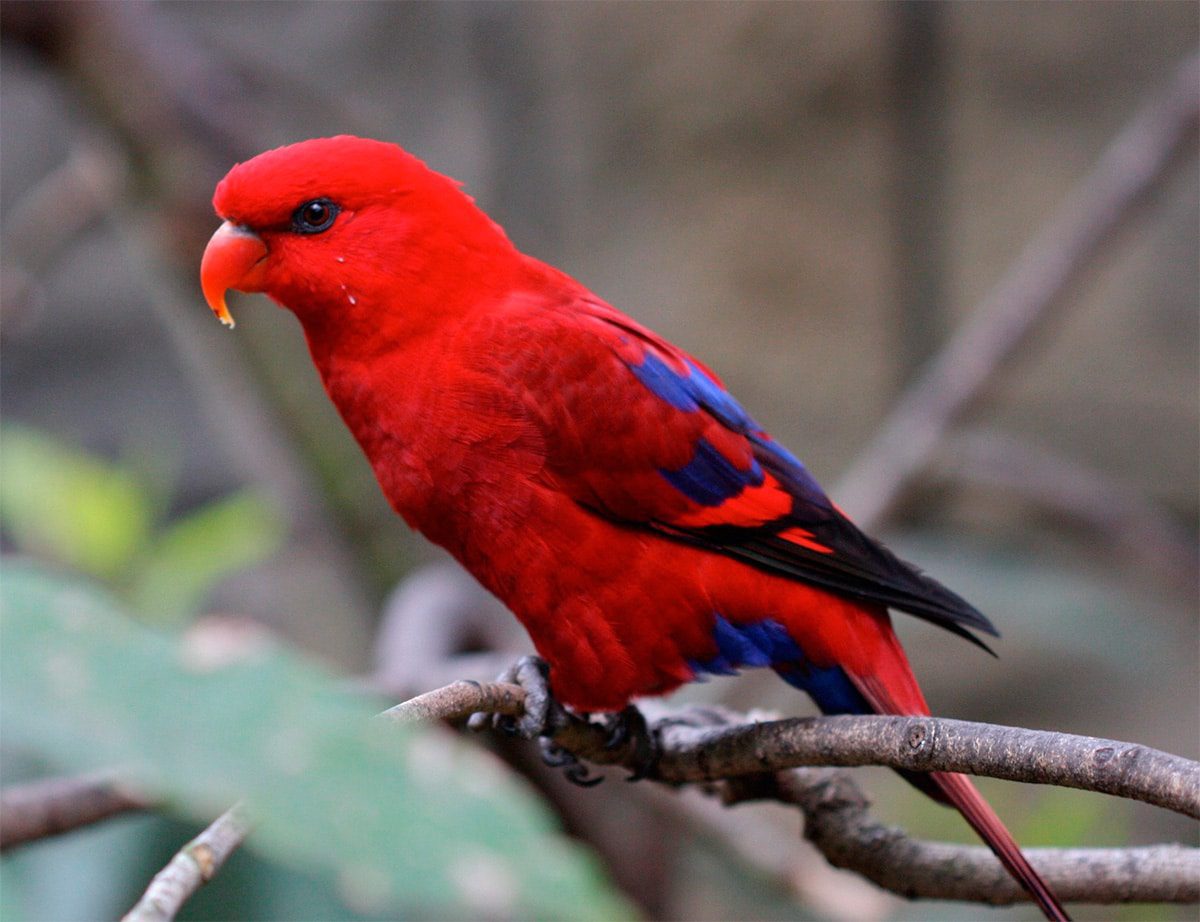
Red-and-blue Lory
Eos histrio

Eos histrio

Content

Lori-of-them-sangihe-6

Description

31 cm.. length and a weight between 150 and 185 gr.

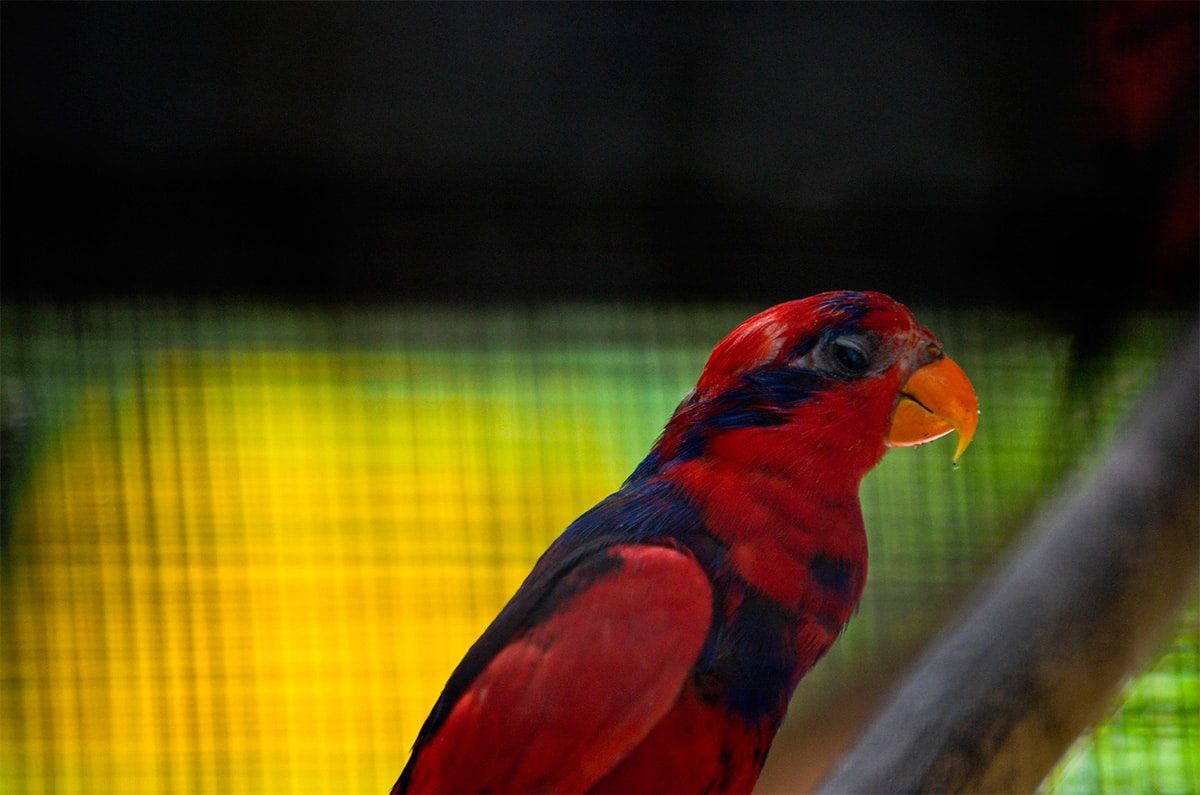
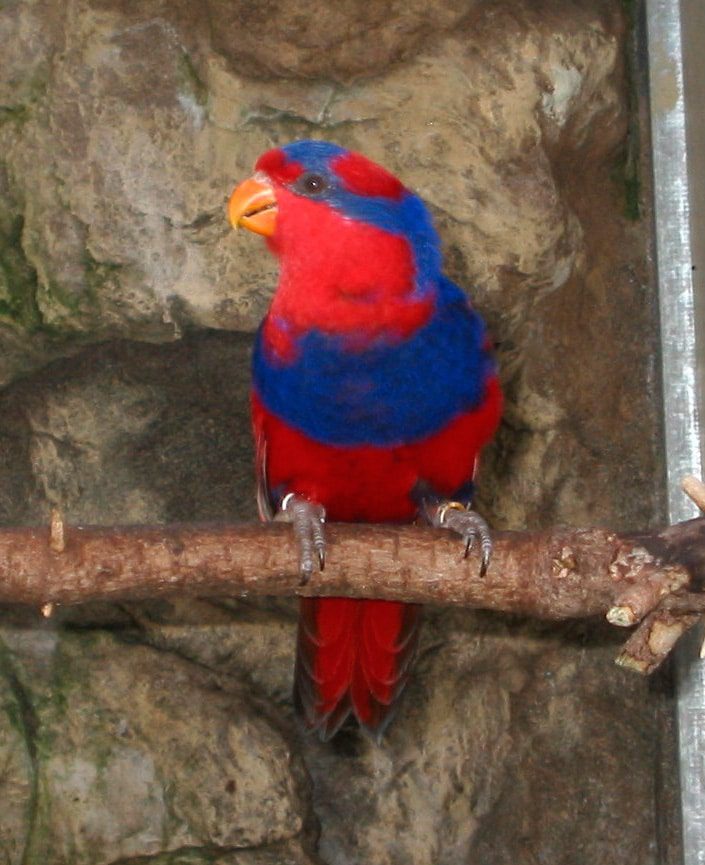
The two main colors of the Red-and-blue Lory (Eos histrio) they are the red and blue.

A broad blue-purple line extends from the eyes through the ears and for the sides of the neck. A broad transverse band blue on the chest. The tail coverts they have blue pink. The feathers of the part superior of the tail they are reddish purple.

The irises is red, the legs grey.

Both sexes are very similar.

In immature, the feathers of the head and the chest they have a dark blue edging. The blue of the crown extends up to the neck and below the eyes. Thighs they are dull purple. The irises They are brown.

Description 3 subspecies

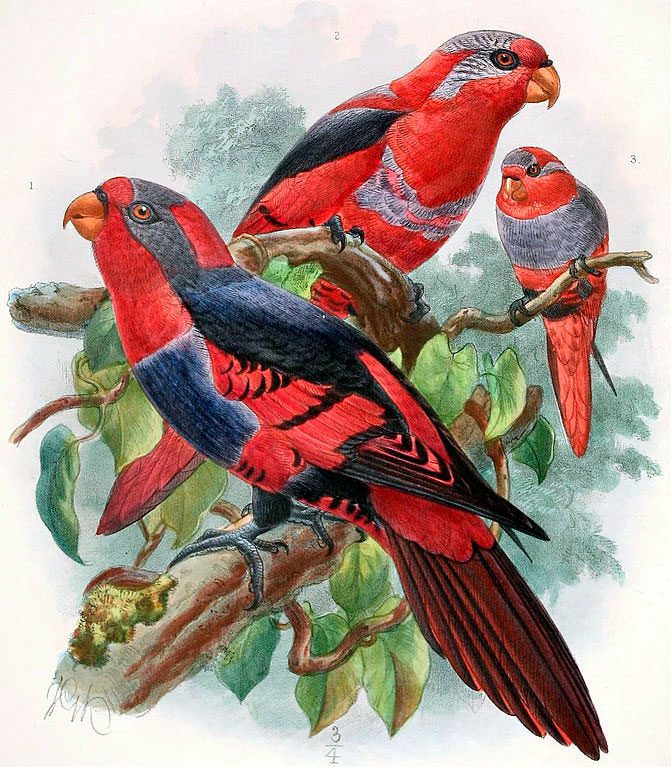
  • Eos histrio challengeri

    (Salvadori, 1891) – The band blue of the chest is of smaller size and mixed with red; the blue band of the eyes does not extend to the the mantle; smaller.


  • Eos histrio histrio

    (Statius Mรผller, 1776) – Nominal.


  • Eos histrio talautensis

    (Meyer,AB & Wiglesworth, 1894) – More black in the corbeteras wing and in the flight feather.

Habitat:

The Red-and-blue Lory they are common in primary forests, and on the hills of the hills. The feed, they made raids in coconut plantations along the coast and in the more open areas.

They make short trips daily. In the Talaud Islands You can see flying from island to island.

Initially, They lived in large flocks and concentrated in large numbers in common dormitories..

Today, in view of its decline, them find in pairs or in small groups. Large gatherings have become extremely rare or virtually non-existent.

In the Karakelong island were seen, However, on two occasions, more groups of 400 birds.

The Red-and-blue Lory they are birds noisy, which makes them quite easy to observe.

Reproduction:

The species nests in holes in tall trees, most belonging to the class canarium family Burseraceae, and the breeding period main seems to be from May to June, Although it is suspected that nesting may include other months.

We find nests, both in the forests and cultivated areas. The spawning usually includes 2 eggs which are incubated for approximately 25 or 26 days. There is no any other information in the natural environment.

Food:

Although they also consume some insect larvae, the Red-and-blue Lory are mostly vegetarian. They feed on coconut plantations, in the fig trees and trees of the genus canarium It produces edible nuts.

Distribution:

Size of the area of distribution (reproduction / resident): 1,000 km2

The Red-and-blue Lory is confined to the Talaud Islands (almost exclusively in Karakelang) front North of Sulawesi, Indonesian

Description 3 subspecies

Conservation:


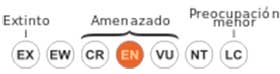
Endangered

โ€ข Current category of the Red List of the UICN: Endangered.

โ€ข Population trend: Decreasing.

This species has a very small range (It is known only in some places), and it is declining due to habitat loss. It has been a downhill fast in the population, largely as a result of their capture for trade, and this is expected to increase in the future. So, qualified as In danger.

Although it was previously abundant, the species has decreased and the population in KarakelongIt was estimated in 8,230-21,400 birds in 1999 (Riley 2003). The subspecies of the nominal of the Sangihe Islands, is likely that has been extinguished.

The encroachment and logging are driving the loss of forests, aggravated by the threat of illegal trade in the species, contribute to the acceleration in the decrease of the population.

In 1999, the investigation concluded that you the 1.000 and 2.000 birds were being captured in Karakelang each year, the 80% (illegally) for the markets of birds of the Philippines.

Ongoing conservation actions:

Since 1995, the project "Action Sampiriยป has been working for the conservation of biodiversity in Sangihe and Talaud, in the implementation of awareness-raising programmes of field work and the conservation and development of ideas for the future use of the land.

Efforts have been made to promote the local support of the species at Talaud, his last bastion.

It has been reported that the poaching and the trade of this species have decreased drastically after the confiscation of assets by Ranger of the forest Department in 2005 (RT Prayudhi in litt., 2008).

The bird is part of the European Association of Zoos, the program Aquariaโ€™s European Endangered [species] and Parrot Taxon Advisory Group (Wilkinson 2000), where it is being bred in captivity (Sweeney, 1998).

"Red-and-blue Lory" in captivity:

It is currently very rare in captivity.

Due to its status in danger of extinction, any specimen that can not be returned to their natural habitat (natural range) should preferably be placed in a well-managed breeding program to ensure the survival of the species.

Alternative names:

Red-and-blue Lory, Blue-tailed Lory, Red & Blue Lory, Red and Blue Lory, Red-blue Lory (ingles).
Lori arlequin, Lori histrion (French).
Harlekinlori (German).
Lรณris-arlequin (Portuguese).
Lori de las Sangihe, Lori Rojo y Azul (espaรฑol).

scientific classification:

Order: Psittaciformes
Family: Psittaculidae
Genus: Eos
Scientific name: Eos histrio
Citation: (Statius Mรผller, 1776)
Protonimo: A player parrot

โ€œSangihe Loryโ€ images:

——————————————————————————————————-

ยซLori de las Sangiheยป (Eos histrio)


Sources:

Avibase, BirdLife.org

Photos:

1 – En Loro Parque (Spain, Tenerife) by Drรคgรผs – Wikimedia
2 – Lori en Loro Parque, Tenerife, Espaรฑa by Drรคgรผs – Wikimedia
3 – En ZooParc de Beauval, France by User:Edhral – Wikimedia
4 – Red-and-blue lory. two in a cage. by TJ Lin – Wikimedia
5 – A Red-and-blue lory in a zoo by jojo nicdao – Wikimedia
6 – The Red and Blue Lory (Eos histrio now Eos histrio histrio) and The Challenger Lory (EOS challengeri now Eos histrio challengeri) Chromolithograph. Plate VII from A monograph of the lories, or brush-tongued parrots, composing the family Loriidae. By St. George Jackson St. Mivart (1827โ€“1900). Artwork by John Gerard Keulemans (1842-1912). This was published by R. H. Porter (London) in 1896. By John Gerard Keulemans [Public domain], via Wikimedia Commons

Sounds: Frank Lambert (Xeno-canto)

โ–ท The world of Pets: Dogs, cats, birds, reptiles, amphibians

Little Lorikeet
Parvipsitta petty


Little Lorikeet

Content

Description

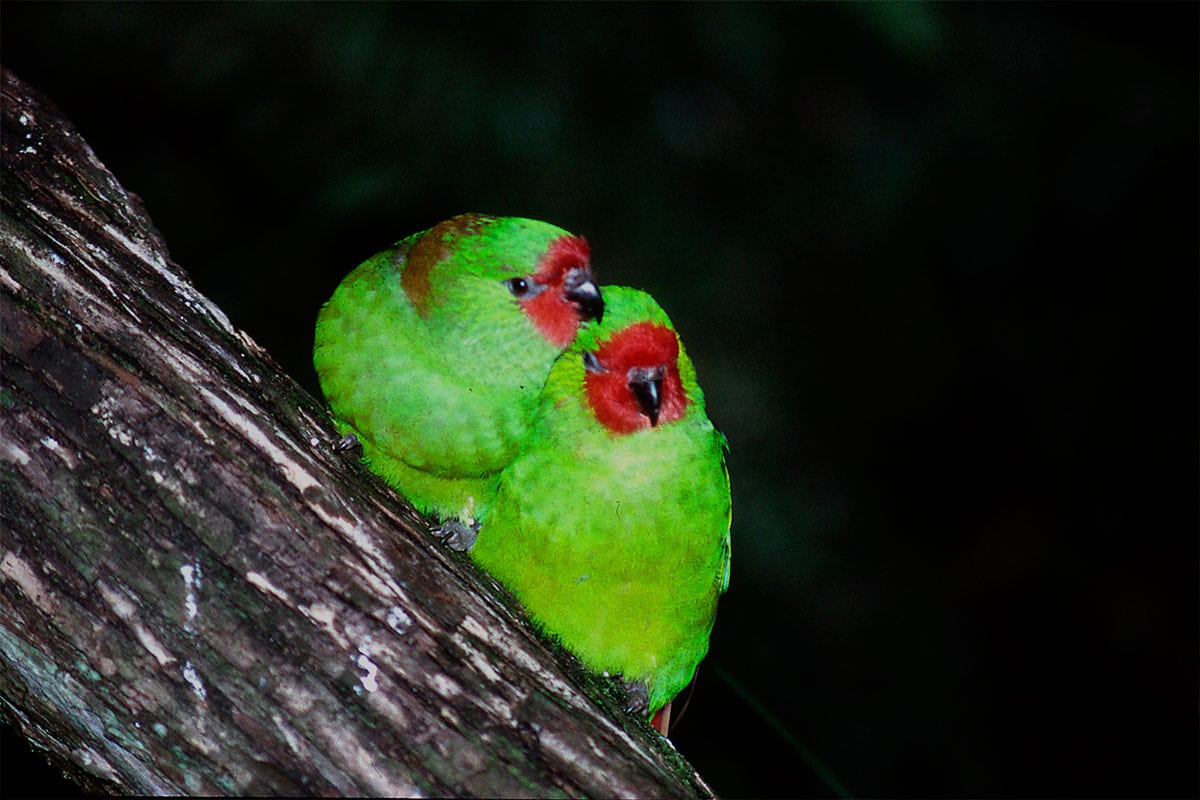
16 to 19 cm.. length and an approximate weight of 40 g.. The Little Lorikeet (Parvipsitta petty) is the smallest of the Parrots Australian.

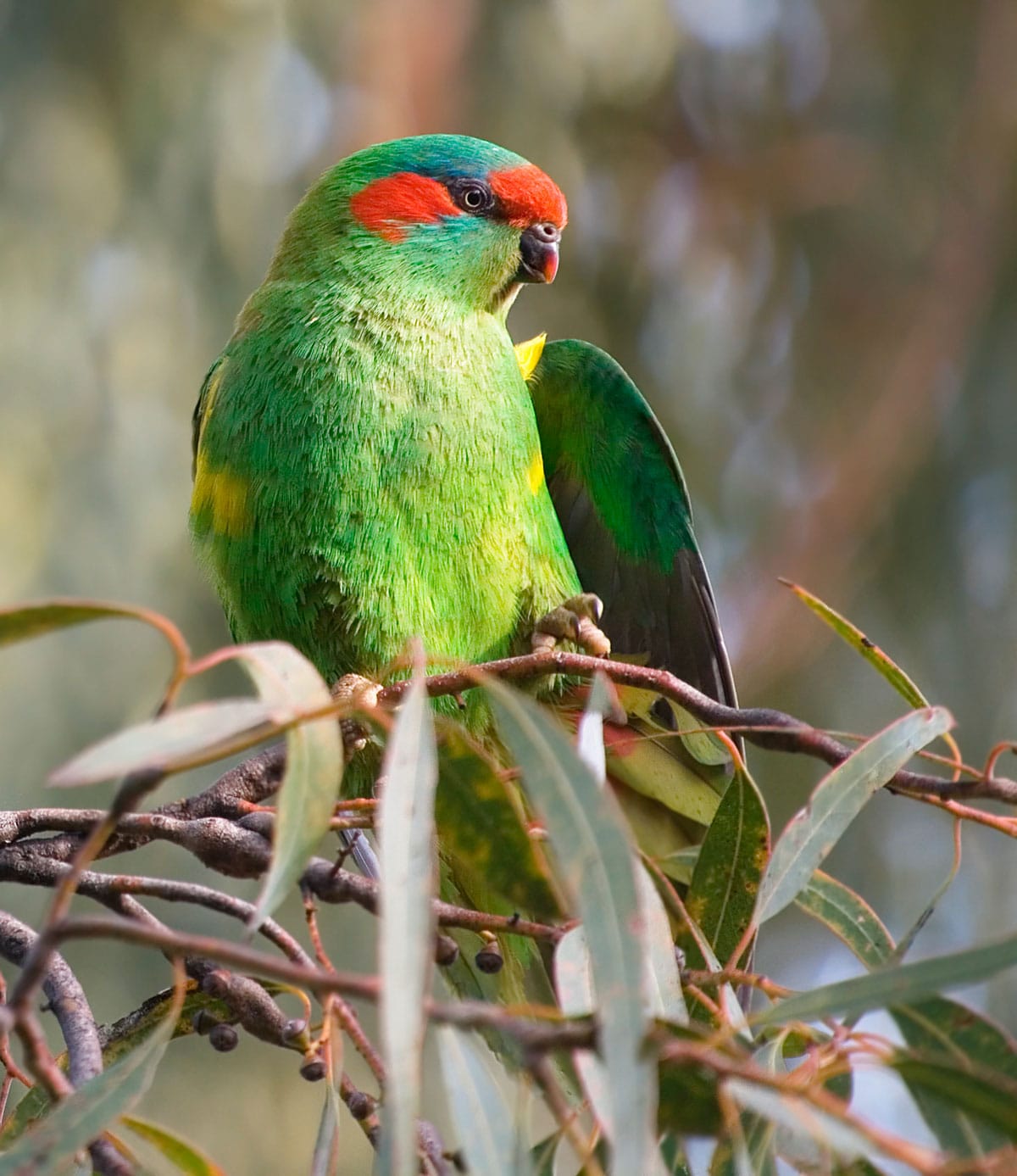
The body is bright green, the area of the nose, the forecrown, the neck, part of the forecrown and cheeks They are red.

The ear-coverts are of color green with stripes of color green light. The neck and back top are brown-green. Under the wings brighter yellowish green. The primary flight feathers they have a very narrow yellowish Board, their underparts is yellowish-green.

The feathers of the tail has reddish orange base, the circle around the eyes is narrow and black, the irises is orange, the legs grayscale and the bill black.

Parvipsitta buttercups

  • Parvipsitta petty
  • Parvipsitta porphyrocephala
  • The immature have more off the Red of the face; the Brown of the upper mantle is minimal. Bill Dark Brown and brown the eye.

    This small Lori is likely to be confused with the Purple-crowned lorikeet (Parvipsitta porphyrocephala).

    Habitat:

    The Little Lorikeet dispatched virtually all areas and at all altitudes with trees. They prefer open areas with flowering or fruit trees and riverbanks.. Found up to one altitude of 1600 m.

    Occasionally seen in orchards and farming areas.

    Son nomads and outside the breeding season they gather in small groups of 4 to 12 birds.

    They prefer tall treetops and are difficult to see due to their small size and green color.. They prefer trees of eucalyptus that they are in bloom and they can attend major meetings when they are feeding, often associated with other lori as the Coconut Lorikeet and the Musk Lorikeet.

    Ruidoso. Their flight is flapping fast and straight, accompanied by shrill calls.

    Reproduction:

    The breeding season It is going may in the North, or August in the South, to December. It nests in the Hollows of trees, where sets of 3 to 5 rounded whitish eggs. The incubation hard ones three weeks.

    Food:

    It feeds mainly from fruits and flowers, including native plants such as those belonging to the genera Xanthorrhoea and (Melaleuca and Loranthus, and introduced plants such as the medlar (Eriobotrya japonica). Occasionally visit orchards.

    Distribution:

    Size of the area of distribution (reproduction / resident): 788.000 km2

    Distribution Lori Carirrojo
    The Little Lorikeet is located in the East and Southeast of Australia, from the vicinity of Cairns to the South by Queensland and New South Wales from the slopes of the Great dividing range until the eastern coasts to most of Victoria and Southeast of Southern Australia. Also located in Tasmania, although there is little abundant.

    Conservation:


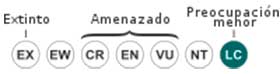
    minor concern

    โ€ข Current category of the Red List of the UICN: Least concern.

    โ€ข Population trend: Stable.

    The main threats to these small parrots are the loss of breeding sites and of those resources food by the clearing of land in course. Most breeding records come from the western slopes, where has been a great loss of habitat trees. The loss of trees nest along the verges of Highway, often associated with roadwork, It is still a constant threat.

    "Little Lorikeet" in captivity:

    Although it was exported to Europe for the first time in 1877, the Little Lorikeet rarely seen outside of Australia. And even in the country of which it is native it is rare in captivity. Has a reputation for being difficult to maintain.

    Alternative names:

    Little Lorikeet, Little Red Lorikeet (ingles).
    Lori ร  masque rouge, Petit Loriquet (French).
    Zwergmoschuslori (German).
    Loris Pusilla (Portuguese).
    Lori Carirrojo, Lori de Cabeza Roja (espaรฑol).

    scientific classification:

    Order: Psittaciformes
    Family: Psittaculidae
    Genus: Parvipsitta
    Scientific name: Parvipsitta petty
    Citation: (Shaw, 1790)
    Protonimo: Psittacus Pusillus

    Images ยซRed-faced Loryยป:

    Videos "Little Lorikeet"


    ยซOn Carirrojoยป (Parvipsitta petty)


    Sources:

    Avibase
    Parrots of the World โ€“ Forshaw Joseph M
    Parrots A Guide to the Parrots of the World – Tony Juniper & Mike Parr
    Wikipedia
    environment.NSW.gov.au

    Photos:

    1 – By JJ Harrison (jjharrison89@facebook.com) (Hand darbas) [CC BY-SA 3.0 or GFDL], via Wikimedia Commons
    2 – By Joxerra Aihartza (ร โ€˜ire argazki bilduma / own picture) [FAL], via Wikimedia Commons
    3 – Little Lorikeets by Julian Robinson, on Flickr – Flickr
    4 โ€“ Little Lorikeets (Glossopsitta pusilla) by David Cook, on Flickr – Flickr
    5 – Musk Lorikeet [Glossopsitta concinna] again! by Norm Hanson, on Flickr – Flickr

    Sounds: Marc Anderson (Xeno-canto)

    โ–ท The world of Pets: Dogs, cats, birds, reptiles, amphibians

    New Caledonian Lorikeet
    Charmosyna diadema

    New Caledonian Lorikeet

    Content


    Anatomy-parrots

    Description

    18 to 19 cm.. length.

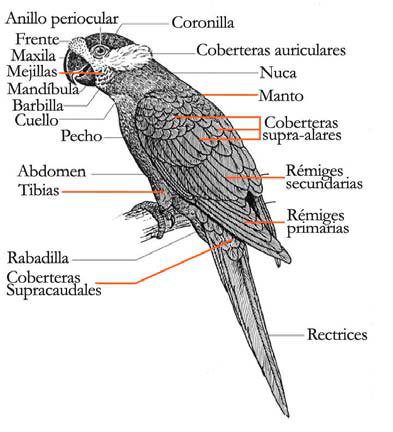
    The females of the New Caledonian Lorikeet (Charmosyna diadema) are green in general, with the crown Violet Blue intense and the thighs Blue dark, a face Beige and it bottom side and anal region red. The tail It is green above and yellowish olive below, with the four lateral feathers with red basal markings followed by a band of black, with yellow tip on the bottom. The bill is red-orange, the irises dark orange, probably, similar to the legs.

    The males they have not been registered. On the basis of similar species, they probably have a more red coloration, probably including the face, the bottom of the primaries and the sides of the rump; and it is likely to be slightly larger than. The immature should look like females but paler.

    Habitat:

    This bird is difficult to track because it is Nomad and is relatively little visible. The species is believed to be able to live in moist montane forests but (seasonally). Flying in and out of the lowland forests of Melaleuca. Most reports come from such lowland forests, but this probably reflected only a better accessibility for observation. Mt. Ignambi It is believed that it is an ideal habitat for the species. The report Yacht Lake was an area of low scrub.

    Reproduction:

    Data playback of the New Caledonian Lorikeet (Charmosyna diadema) are only available the of the Red-flanked Lorikeet (Charmosyna placentis) and the Red-fronted Lorikeet (Charmosyna rubronotata). The breeding season, probably, is from July to December, and possibly until February, or even all year round. They dig in the arboreal nests of termites or in epiphytic ferns. Link gives as a result the implementation of two (sometimes three?) White rounded eggs; the incubation period likely to be similar to other species of Loris.

    Food:

    The bird apparently is fed into the tops of the trees.
    Related species eat nectar, pollen, flowers and sometimes delicate fruits, in pairs or small groups feeding (usually less than 10). The Erythrina is specifically mentioned as plants on which this species feeds.

    Distribution:

    Size of the area of distribution (reproduction / resident): 1 km2

    Possibly extinct. Endemic to New Caledonia and known from two female specimens collected in 1859. The species also could have been observed in the forests of the North of the island in the year 1900. and it was identified by the Islanders with the reference of a picture (at Delacour 1966) of Anthony Stokes in December of 1976. One Islander claimed to see a single individual in the Decade of 1920, and another had observed two the 3 in June of 1976 to the West of Monte Panie. This last observation was made by an experienced observer who noticed the birds by their call, and said it was different to Coconut Lorikeet. The authors are in agreement with Necklace et to the. (1994) in the extension of remaining forests in New Caledonia and the size of the island indicate that this species may well still exist and that observations and studies should be within suitable habitat including the Monte Panie, Mount Humboldt and other forest areas of the Highlands. IN DANGER.

    Conservation:


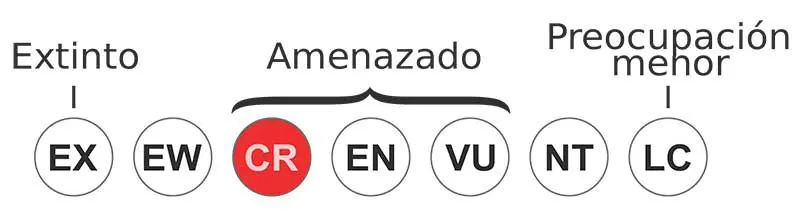
    critical hazard


    โ€ข Current IUCN Red List category: Critical Hazard

    โ€ข Population trend: Unknown

    The population It is estimated between 1 and 49 individuals mature.

    This species has not been recorded with certainty since 1913, despite specific searches in 1998, and it may have decreased as a result of a number of different threats. But, cannot be assumed that they have become extinct, because there were local reports in the Decade of 1950 and in 1976, and lorites of this genus are notoriously difficult to detect, being discreet and nomadic, more studies are needed. Any remaining population is likely to be small, and for these reasons it is in Critical Hazard.

    The montane moist forest is not under threat, but it is possible that this species has a requirement for other habitats, some of which, forests semi-deciduous in particular, the lowlands, they have almost disappeared from the island (Ekstrom et to the. 2000, Ekstrom et to the . 2002). Several Lori headband have suffered severe population decreases and fluctuations by unknown causes (Forshaw 1989). The introduction of any disease is possible (such as malaria, avian) or more likely mammals (especially rats) they may have been one of the causes of the decline of this species.(Bregulla 1992, Ekstrom et to the. 2000, Ekstrom et to the ., 2002).

    "New Caledonian Lorikeet" in captivity:

    Not found in captivity.

    Alternative names:

    New Caledonian Lorikeet, New Caledonia lorikeet (ingles).
    Lori ร  diadรจme, Loriquet ร  diadรจme (French).
    Diademlori (German).
    Lori Diadema (espaรฑol).

    scientific classification:

    Order: Psittaciformes
    Family: Psittaculidae
    Genus: Charmosyna
    Scientific name: Charmosyna diadema
    Citation: (Verreaux,J & Des Murs, 1860)
    Protonimo: Psitteuteles diadem


    ยซLori Diademaยป (Charmosyna diadema)


    Sources:

    • Avibase
    • Parrots of the World โ€“ Forshaw Joseph M
    • Parrots A Guide to the Parrots of the World – Tony Juniper & Mike Parr
    • Birdlife

    • Photos:

    1 – Birds-pet-wallpapers – link

    • Sounds:

    โ–ท The world of Pets: Dogs, cats, birds, reptiles, amphibians

    Red-collared Lorikee
    Trichoglossus rubritorquis

    Red-collared Lorikee

    Content

    Description Red-collared Lorikeet:

    Red-collared Lorikee

    26 cm. in length and 103โ€“140 grams in weight.

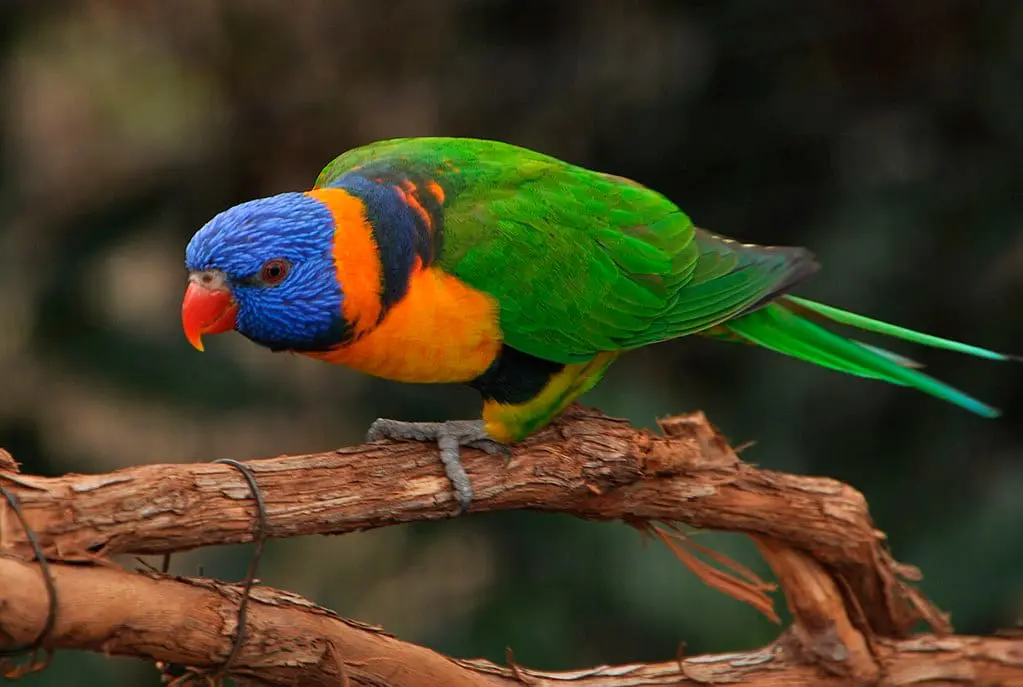
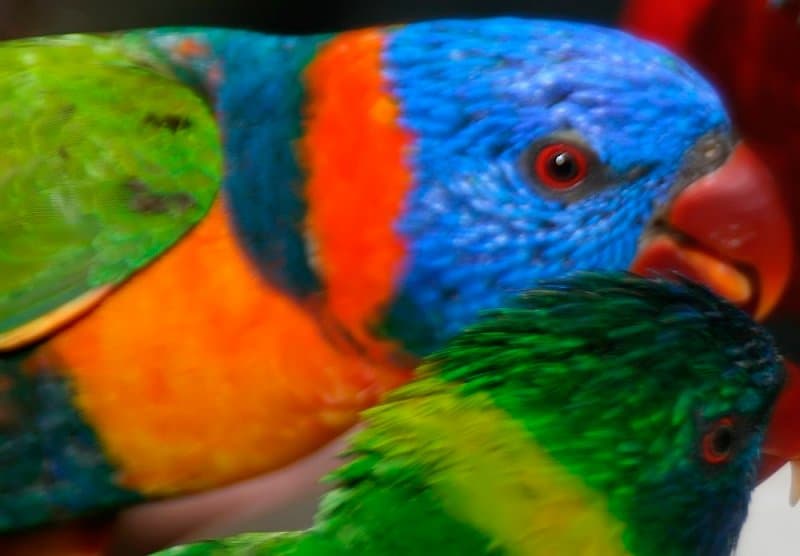
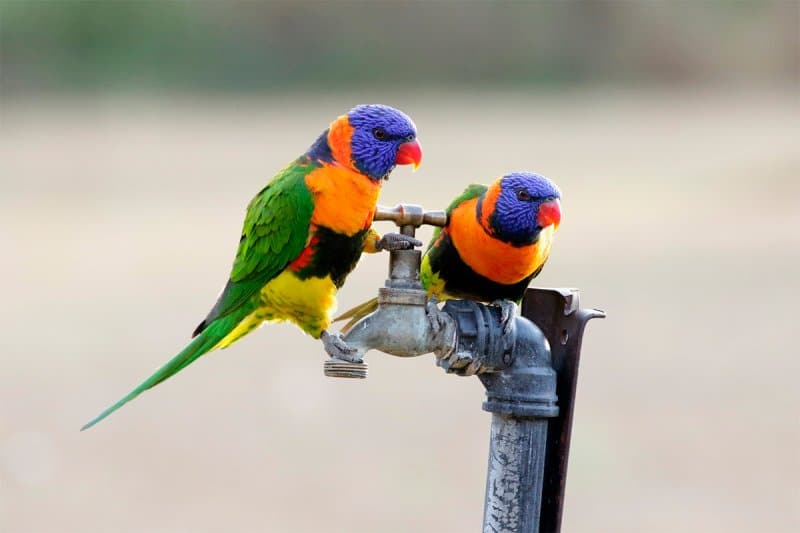
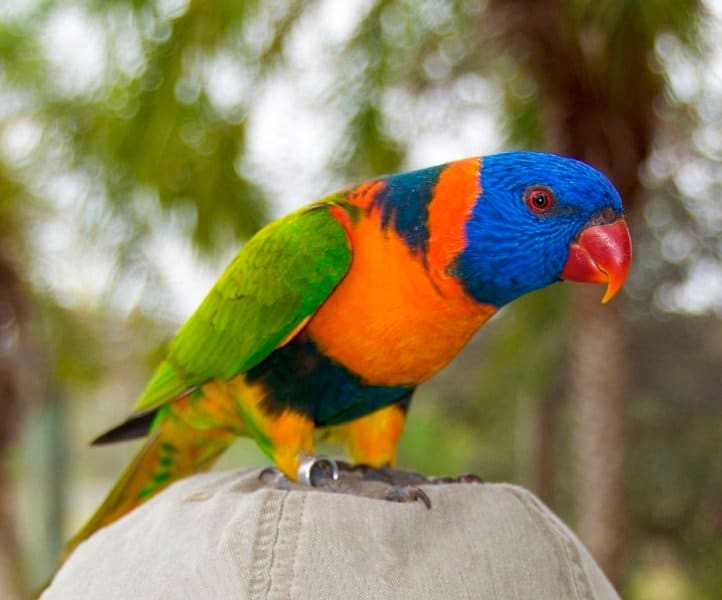
    The Red-collared Lorikee (Trichoglossus rubritorquis) they have the head violet / blue with purple / blue streaks on face; throat and sides of the nape blackish; neck orange / red; chest yellow / orange without sweeping; abdomen dark green; the thighs green / yellow until undertail-coverts; upperparts and tail green; underwing-coverts orange; yellow and broadband under the wing . Bill orange / red. Eyes dark orange.
    The youth they are similar to adults.

      taxonomy:

    Occasionally he treated in Australian literature as a separate species of Coconut Lorikeet (Trichoglossus haematodus), but this is only appropriate review, as here, the whole complex of Rainbow Lorikeet: differs from Rainbow Lorikeet (Trichoglossus moluccanus) in his collar Orange Fire vs. pale green; Blue neck vs. green; vs belly black. blue; and of the Scarlet-breasted Lorikeet (Trichoglossus forsteni) in his collar Orange Fire vs. yellowish green; nape blue vs. red crab; nape blue vs. dark blue or green; larger size.

    Species Monotypic.

    • Sound of the Red-collared Lorikee.

    Habitat:

    There have been no large-scale seasonal movements are common throughout the year in some places.

    It's more common in lowlands, but it is up 2400 meters above sea level. They can be observed in a wide variety of areas including settlements, forests, coconut plantations, Savanna, eucalyptus forests and mangroves. They are in mixed flocks with other parrots; small and noisy groups. Nomads, since they depend on flowering trees. It perches communally in groups of hundreds of birds.

    Reproduction:

    Reproductive biology very similar to that of the Coconut Lorikeet (Trichoglossus haematodus). May-January season in Northern Territory. The laying Typically two or three eggs.

    Food:

    Diet very similar to the Coconut Lorikeet (Trichoglossus haematodus) which feeds on nectar, fruit, flowers and insects, including Pandanus spiralis. It can also be found around artificial feeding stations.

    I necked Lori distribution:

    Extension of the distribution (breeding/resident): 1.100.000 km2

    North Autรณctono Australia, which they inhabit the lowlands. Integrated or hybridized with Coconut Lorikeet (Trichoglossus haematodus) on queensland peninsula, Australia, in southwest Cape York.

    Red-collared Lorikeet Conservation:

    Rationale for the Red List category

    1. Current red list category of the UICN: Least Concern..


    minor concern

    2. The population trend: Decreasing.

    3. Population size : It is unknown.

    This species has a extremely large distribution area, and therefore does not approach the thresholds Vulnerable under the criterion of size range (Extent of Occurrence <20,000 km2 combined with a decreasing area size or fluctuating distribution, extension / habitat quality, or population size and a small number of places or severe fragmentation).

    While the trend of the population seems to be decreasing, the decline is not believed to be rapid enough to approach the Vulnerable thresholds according to the population trend criterion (decrease of more than 30% in ten years or three generations).

    The population size has not been quantified, but it is not believed to approach the thresholds Vulnerable under the criterion of population size (<10.000 mature individuals with an estimated continuous decrease in> 10% in ten years or three generations, or with a specific population structure). For these reasons, the species is assessed as Least concern.

      Justification of the population

    Global population size has not been quantified, but the species is described as abundant (pit et to the. 1997).

      Justification trend

    It is suspected that the population is declining due to unsustainable levels of exploitation.

      Threats

    The species has been the subject of a intense trade: from 1981, When it was included in the Appendix II of the CITES, they have been 100.388 individuals caught in international trade (UNEP-WCMC CITES Trade Database, January 2005).

    In captivity:

    In Europe, this species of lori has been largely imported from early last century, and in 1910 it managed to raise in the zoo London (four years later, the first calf in France). Currently it is rare outside Australia. Life expectancy: 20 years in nature, 15-25 years in captivity.

    Alternative names

    Australian rainbow lory, Rainbow Lorikeet (Red-collared), Red collared Lorikeet, Red-collared Lorikeet (English).
    Loriquet ร  col rouge, Loriquet ร  collier rouge, Loriquet ร  tรชte bleue (ร  col rouge), Loriquet ร  tรชte bleue (rubritorquis) (French).
    Australischer Blauwangenallfarblori, Darwin-Allfarblori, Rotnackenlori (German).
    Periquito-arco-รญris (rubritorquis), Lรณris-de-colar-rojo (Portuguese).
    Lori cuellirrojo, Lori Arcoiris (rubritorquis) (espaรฑol).

    scientific classification:


    Thomas Horsfield
    Thomas Horsfield

    Order: Psittaciformes
    Family: Psittaculidae
    Gender: Trichoglossus
    Scientific name: Trichoglossus rubritorquis
    Subpoena: Vigors & Horsfield, 1827
    Protonimo: Trichoglossus Rubritorquis

    ยซRed-necked loryยป images:

    Videos "Red-collared Lorikee"


    ยซLori cuellirrojoยป (Trichoglossus rubritorquis)

      Sources:

      1. Avibase
      2. Parrots of the World โ€“ Forshaw Joseph M
      3. Parrots A Guide to the Parrots of the World – Tony Juniper & Mike Parr
      4. Birdlife

      Photos:

      (1) – A Red-collared Lorikeet at Cincinnati Zoo, Ohio, USA by Fr. Ted Bobosh [CC BY-SA 2.0], via Wikimedia Commons
      (2) – A Red-collared Lorikeet at Cincinnati Zoo, Ohio, USA by Ted [CC BY-SA 2.0], via Wikimedia Commons
      (3) – Red-collared Lorikeet standing on a manโ€™s cap at Lion Country Safari, Florida, USA by derivative work: Snowmanradio (talk)Trichoglossus_haematodus_rubritorquis_-Lion_Country_Safari-6.jpg: Duncan Rawlinson from Vancouver, BC [CC BY 2.0 or CC BY 2.0], via Wikimedia Commons
      (4) – Red-collared Lorikeet (Trichoglossus rubritorquis) in the Walsrode Bird Park, Germany by Quartl [CC BY-SA 3.0], from Wikimedia Commons
      (5) – Red-collared Lorikeet (Trichoglossus haemotodius rubritorquis) by Geoff WhalanFlickr
      (6) – Red-collared Lorikeet (Trichoglossus haemotodius rubritorquis) by Geoff WhalanFlickr
      (7) – Red-collared Lorikeet (Trichoglossus haematodus rubritorquis) by Graham WinterfloodFlickr
      (8) – Trichoglossus haematodus rubritorquis Location taken: Lion Country Safari, Loxahatchee, Florida Photo by David J. pole [CC BY-SA 4.0], via Wikimedia Commons
      (9) – Red-collared Lorikeet (Trichoglossus haemotodius rubritorquis) by Geoff WhalanFlickr
      (10) – A painting of a Red-collared Lorikeet (originally captioned ยซTrichoglossus rubritorquis. Scarlet-collared Parrakeet by Edward Lear [Public domain]

      Sounds: Phil Gregory, XC287820. accessible www.xeno-canto.org/287820

    โ–ท The world of Pets: Dogs, cats, birds, reptiles, amphibians

    Red Lory
    Eos bornea

    Red Lory

    Content

    Description

    31 cm.. length and an approximate weight of 170 gr.

    The head and the neck of the Red Lory (Eos bornea) are entirely of a deep red color.

    In the adult the primary feathers are black with a large red mirror. The feathers tertiary and the coverts are of color blue. The joint of the feathers of the helmsman they are reddish-brown. The irises they are red, legs grayscale and the bill dark orange.

    The immature they tend to be more off than their parents coloring. They show the feathers tertiary grey, lightly stained blue. The ear-coverts Sometimes it tinges of blue. Times, the area of the vent and the thighs it infiltrates with small stains blue. The feathers of the abdomen often carry some edges blue dark. They have the irises brown.

    Not exists no sexual dimorphism visible although the males tend to be more corpulent that the females.

    Description 2 subspecies

    • Eos bornea bornea

      (Linnaeus, 1758) – Nominal.


    • Eos bornea cyanonotha

      (Vieillot, 1818) – The Red of his plumage is much more dark almost brown.

    Habitat:

    They are mostly primary forests, in the wooded areas during regeneration, Forest Hills, coconut plantations, in abandoned gardens and mangroves.

    They are mainly in coastal areas, What does not climb up to 900 m in the island of Ceram and up 1.800 m in the of Buru.

    Throughout its area, the Red Lory are fairly common, However, some populations are more dispersed around the villages, since they are very cautious towards humans.

    Behavior:

    The Red Lory they live in pairs or in small groups, but sometimes you can observe large flocks of 50 individuals.

    They are birds noisy and quite easy to observe, as they often fly above the canopy attracted by the red flowers of the tree of coral (Erythrina).

    They have a fast and direct flight and when moving, make your buzz due to its quick flapping.

    In the Kai Islands, their movements are common: all days, they cross the arm of sea that separates the different islands flying rapidly and at high altitude.

    During the rest hours that occur at noon, the Red Lory they spend most of their time smoothing their feathers in the shade of a tree. Probably, This practice is designed to strengthen marital ties. Parties that enjoy priority are the head and neck; as you can not reach these areas with its beak, you will always need your partner collaboration. The "patient" that undergoes this preferential treatment seems to express a great sense of satisfaction.

    Reproduction:

    The couples begin to look for the location of the nest between the months of August and September. It is located high in a big tree.
    In mid-December some young leaving the nest have observed.

    As in all loris, the nesting period is very long and hard 7 to 9 weeks.

    In captivity, the Red Lory puts 1 or 2 litters per year. Each spawning has usually 2 white eggs that are incubated for a period ranging from 24 to 26 days.

    Food:

    In their natural habitats, the Red Lory feed of nectar, pollen, fruits and insects of fashion casual.
    Your food รขโ‚ฌยบ seem to be them flowers of the trees of the species Eugenia and Erythrina.

    All the Loris they have a language that is especially suited, with a brush tip made up of elongated papillae. This characteristic allows birds to collect pollen from flowers and compress it in a suitable way for swallowing.. They play an important role in the pollination of flowering plants and trees.

    Distribution:

    Size of the area of distribution (reproduction / resident): 57.900 km2

    The Red Lory they have a very restricted distribution area. They live South of the Moluccan Islands, halfway between Sulawesi and the western end of New Guinea.

    Distribution 2 subspecies:

    Conservation:


    minor concern


    โ€ข Current IUCN Red List category: Least concern

    โ€ข Population trend: Decreasing

    This species has a very large range, and therefore not approaching the thresholds for Vulnerable according to the range size criterion.

    The population is suspected of being in decline due to unsustainable levels of exploitation.

    The species has undergone intense trade from 1981, When it began trading in Appendix II. 99.834 wild-caught specimens have been recorded in international trade, Although none from 2000 (UNEP-WCMC trade database, January 2005 CITES).

    "Red Lory" in captivity:

    This lori is considered one of the most widespread within poultry. It's an interesting bird, robust and easy of play, ideal for a start in the world of the loris. It also has a very attractive red color; It playful and is easy for tame.

    It is a great conversationalist. Some have entire sentences in their vocabulary. Unfortunately, his voice is sometimes very strong, with a high sharp squeal. Most are docile, even at maturity. They can be prolific breeders and are fairly easy to find as hand-raised pets..

    Too much protein in the diet can lead to gout., a type of arthritis that crystals are deposited in the joints. May be a bit uncomfortable due to liquid diet.

    Alternative names:


    Red Lory, Buru Red Lory (ingles).
    Lori รฉcarlate, Lori rouge (French).
    Rotlori (German).
    Lรณris-vermelho (Portuguese).
    Lori Rojo (espaรฑol).

    Carl Linnaeus
    Carl Linnaeus

    scientific classification:


    Order: Psittaciformes
    Family: Psittaculidae
    Genus: Eos
    Scientific name: Eos bornea
    Citation: (Linnaeus, 1758)
    Protonimo: Psittacus borneus


    Images "Red Lori":

    Videos "Red Lory"

    ——————————————————————————————————–

    ยซLori Rojoยป (Eos bornea)


    Sources:

    Avibase
    – BirdLife.org
    – mundoexotics
    Oiseaux.NET

    Photos:

    * A Red Lorry at Taronga Zoo, Sydney, Australia by Navin – wikimdia
    * Red Lory (Eos bornea) looking upwards by shahram sharif – Wikimedia
    * Red Lory (Eos bornea) at Singapore Zoo by Joost Rooijmans – Wikimedia
    * Red Lory – KL Bird Park – Malaysia by diego_cue – Panoramio
    * Moluccan Red Lory – Parrots Australia

    Sounds: BAS van Balen (Xeno-canto)

    โ–ท The world of Pets: Dogs, cats, birds, reptiles, amphibians

    Purple-crowned lorikeet
    Parvipsitta porphyrocephala

    Purple-crowned lorikeet

    Content

    Description

    The Purple-crowned lorikeet (Parvipsitta porphyrocephala) has a length of 16 cm.. and a weight between 40 and 50 g..

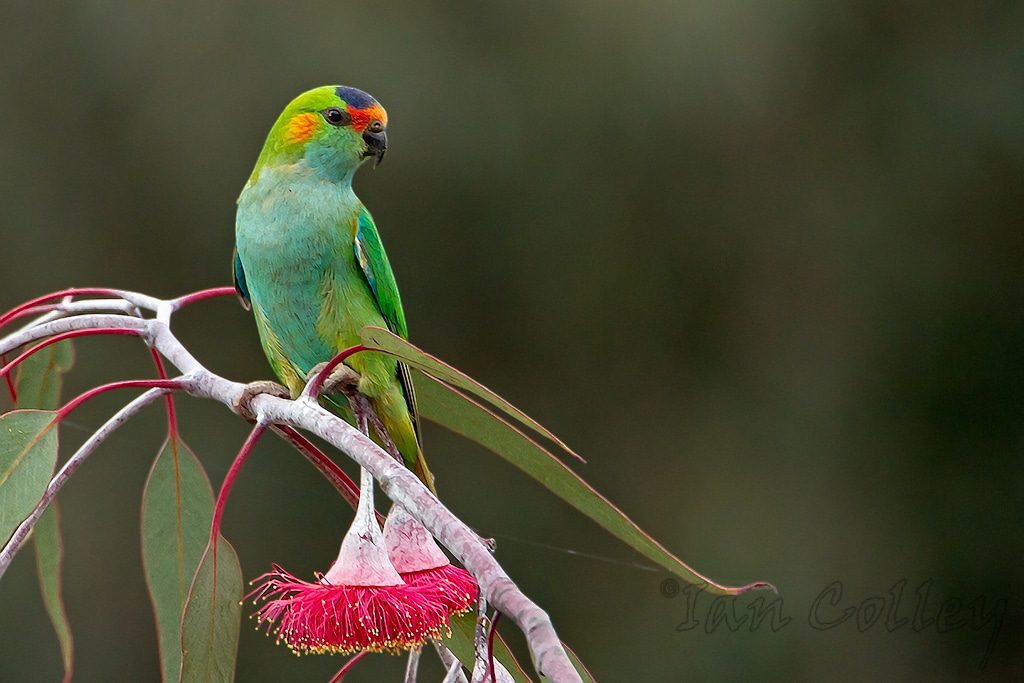
    The part forward of the crown is orange, merging is in red in the lores. Above and in front of the eyes, orange-yellow. Crown dark purple color, merging into green at the nape, also showing a few feathers of orange-red.
    The ear-coverts, yellowish-orange, Red Centre. Chin and throat, of color turquoise light.
    Upperparts, of color green with washed Brown in the the mantle and rump more bright, slightly greenish-blue.

    The upperwing green color, bright blue marked in the curve and on the edge of the carpal area.

    The interior of the flight feather color black; fine yellow margins in primaries.
    Coverts interiors, red. Breast , neck and upperparts, of color green with a wash light blue turquoise; sides chest top with slight brownish wash; Center of belly washed turquoise with flanks and coverts, of color color green; yellowish stains on the bottom sides of the chest hidden with the wing folded. Green the upper part of the tail and yellow on the inside.

    Its small bill curved is black, their legs grayscale and the irises her Brown eyes.

    The female is similar but has the irises darker, the ear-coverts lighter and lacks crimson spots.

    The immature are more muted tones and lack of purple coloration of the head.

    Habitat:

    It is a nomadic local that often are found in the forests dried sclerophyllous, especially when the eucalyptus Bloom.
    Nomadic flocks may also travel far, Sometimes the inside of the Australian continent.

    The flowering of the eucalyptus is mainly responsible of its movements unpredictable, Although in some areas, the birds may be present throughout the year.

    Found in diverse areas forming large flocks of hundreds of individuals, often with groups mixed from others Lori including the Musk Lorikeet.

    Found commonly in Woods and forests, but also visitors are urban areas, where feed on ornamental flowers.

    Casual visitors during the winter of banksias in habitats of Heath.

    The Purple-crowned lorikeet is characteristic of drier areas, lightly lined, especially eucalyptus Woods.
    Can convert it in a plague to the orchards.

    Roosts in large groups, sometimes very far from the feeding areas. Manso and discreet While feeds, except the constant calls. Usually feed on low branches and shrubs.

    Reproduction:

    The breeding season It includes the months of August to December. The nests are located in holes in trees, preferably a eucalyptus near the water. Several couples often occupy neighboring holes in the same tree.

    The cycle of of reproduction in captivity gives a period of incubation of around 22 days, with the young people of 6 to 7 weeks weaned high is after the hatching.

    Food:

    Feed primarily of nectar and pollen of the flowering of the eucalyptus, but they can also attack the orchards to feed on ripe fruit.

    Distribution:

    Size of the area of distribution (reproduction / resident): 938.000 km2

    The Purple-crowned lorikeet are located in two areas separate from Australia to the Southwest and Southeast of the continent. Separate ranges, but racial differences are not recognized, and it is possible that the birds can travel from time to time between the two areas of distribution. Also located in the Kangaroo Island, Although not found in Tasmania.

    Conservation:


    minor concern

    โ€ข Current IUCN Red List category: Least concern

    โ€ข Population trend: Decreasing

    The world population It is believed that it is superior to 50.000 individuals.
    This species has a very large range, and therefore not approaching the thresholds for Vulnerable according to the range size criterion.

    While the trend of the population seems to be decreasing, the descent do not believe that it is sufficiently fast for approaching the thresholds of Vulnerable according to the criterion of population trend.

    For these reasons, the species is evaluated as Least concern.

    "Purple-crowned lorikeet" in captivity:

    It is a bird noisy, sociable and always in motion.

    Very rare in captivity out of Australia.

    Alternative names:

    Purple crowned Lorikeet, Purple-crowned Lorikeet (ingles).
    Lori ร  couronne pourpre (French).
    Blauscheitellori (German).
    Lorikeet Roxo-coroado (Portuguese).
    Lori Coronipรบrpura, Lori de Corona Pรบrpura (espaรฑol).

    scientific classification:

    Order: Psittaciformes
    Family: Psittaculidae
    Genus: Parvipsitta
    Scientific name: Parvipsitta porphyrocephala
    Citation: (Dietrichsen, 1837)
    Protonimo: Trichoglossus porphyrocephalus

    Images "Lori Coronipurpin":

    Videos "Purple-crowned lorikeet"


    ยซOn Coroniprightยป (Parvipsitta porphyrocephala)


    Sources:

    Avibase
    Parrots of the World โ€“ Forshaw Joseph M
    Parrots A Guide to the Parrots of the World – Tony Juniper & Mike Parr
    BirdLife.org

    Photos:

    1 – by Ian Colley – IBC.lynxeds.com
    2 – "Purple-crowned Lorikeetvon KeresH – Eigenes Werk. Lizenziert unter CC BY-SA 3.0 รผber Wikimedia Commons.
    3 – by Nick Talbot – IBC.lynxeds.com
    4 โ€“ by Nick Talbot – IBC.lynxeds.com
    5 – gopixpic.com

    Sounds: nick talbot (Xeno-canto)
    โ–ท The world of Pets: Dogs, cats, birds, reptiles, amphibians

    Blue-fronted Lorikeet
    Charmosyna toxopei

    Content


    Anatomy-parrots

    Description

    16 cm.. length.

    Blue-fronted Lorikeet

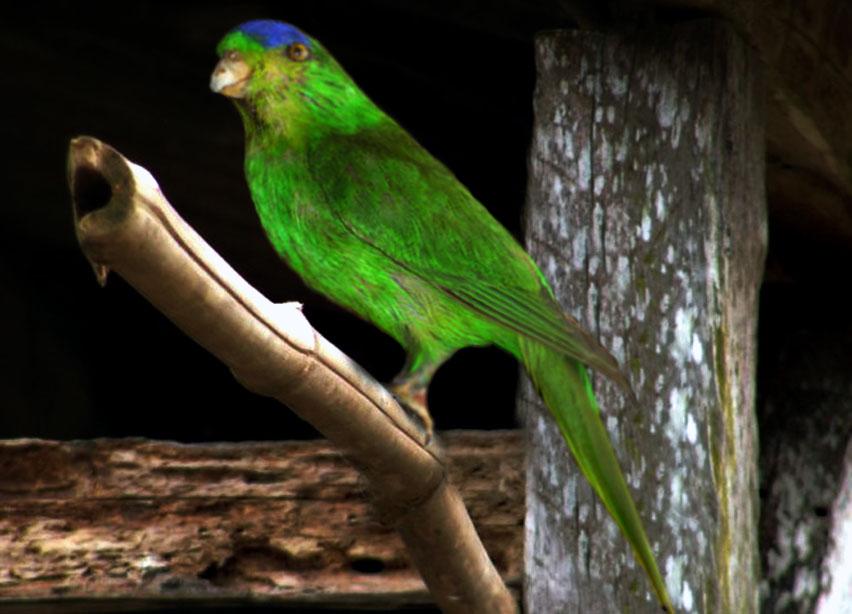
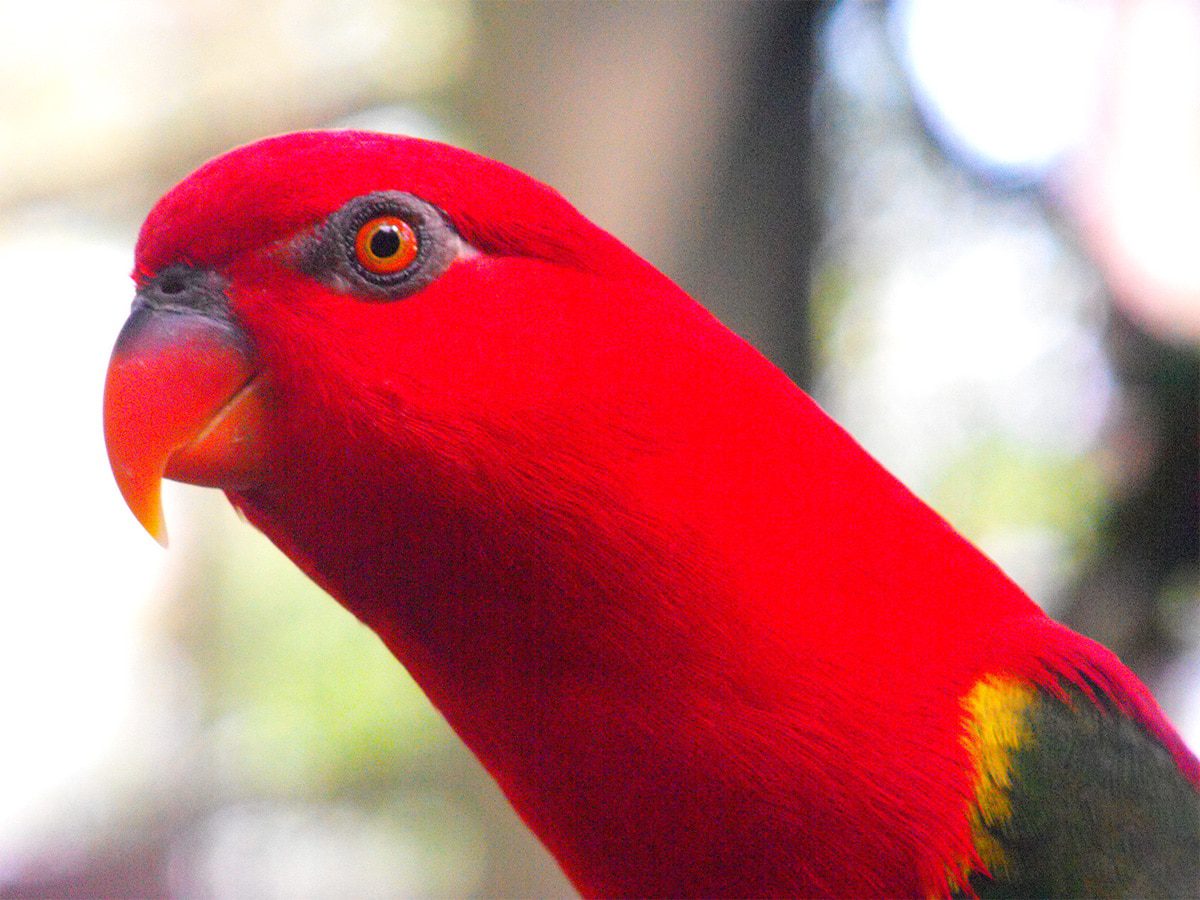
    The forecrown of the Blue-fronted Lorikeet (Charmosyna toxopei) is bright green, the front of the crown, above the eyes is bright blue; rest of the head green. Upperparts green, bright in the rump. Wings Green with blackish inner feathers. The underwing-coverts green; flight feather Blackish with yellow band in the whole lower part of the secondaries. The underparts brighter yellowish green. Tail green, with red bases and blackish stain. The bill orange; the irises yellow orange; legs orange-red.

    Habitat:

    If recent observations were in fact of the Blue-fronted Lorikeet, species can be nomadic, moving from high to low altitude on the basis of the availability of food (like some other small parrots). This could explain the paucity of records, especially for a species already by itself it is distributed sparsely. The other possibility is that the birds are distributed only in the forested hills.

    Interviews with local residents suggest that the species moved to the lowlands during the two annual seasons of heat, in March-April and August-November.

    Reproduction:

    There is no data.

    Food:

    The locals who live in the plateau frog They reported that the bird feeds on nectar and pollen from the trees in flower.

    Distribution:

    Endemic to Buru, Indonesian. Obviously, is a rare species, and virtually nothing is known of its State. The original specimens were collected in the wooded hills between 850 m and 1.000 m.

    In 1980 the species was reported to be quite common in plantations, secondary and primary forest, but this record has been suggested as a reference to the Red-flanked Lorikeet (Charmosyna placentis) (the record of this species from Buru It is in fact wrong). In 1989 two flocks of five to six birds, supposedly this species, they were seen during a selective felling of forests to 600 meters on the Teluk Bara. There is also a report of 1993 of four small unidentified parakeets seen in the same area as the observations of 1.980. The species are now considered endangered by Birdlife International, although a thorough search must be carried out before its status can be fully determined. VULNERABLE.

    Conservation:


    critical hazard

    โ€ข Current IUCN Red List category: Critical Hazard

    โ€ข Population trend: Decreasing

    โ€ข Population size: 50-249 mature individuals

    Although there are few records (confirmed or unconfirmed) of the species, It is suspected that it is declining due to loss of forests in the lowlands.

    Most of the forests in the coastal lowlands of Buru have they been clarified, and much of the forest in the northern part of the island has been connected shape selective or degraded and fragmented by migratory agriculture, in such a way that only a few small patches of lowland primary forest remain. But, the island's gardens still contain many indigenous tree species. In 2010, There was at least one search operation on a large scale above Buru, located in the lowlands. But, extensive forests of mountain of the island remain largely without being scanned. The topography of the mountain range Kaplamandan is the hope that almost all of the montane forest is inaccessible to loggers (A. Gray in litt. 2010).

    All of the original specimens were captured alive using lime, However, the species is not kept as a pet, does not seem to be listed. Have a distribution of mountain which is close to the maximum altitude within its distribution area, does this species is potentially susceptible to climate change (BirdLife International data not publ.).

    "Blue-fronted Lorikeet" in captivity:

    Not found in captivity.

    Alternative names:

    Blue-fronted Lorikeet, Blue fronted Lorikeet, Buru Lorikeet (ingles).
    Lori de Buru (French).
    Burolori, Burulori (German).
    Lori de Buru (espaรฑol).

    scientific classification:

    Order: Psittaciformes
    Family: Psittaculidae
    Genus: Charmosyna
    Scientific name: Charmosyna toxopei
    Citation: (Siebers, 1930)
    Protonimo: Hypocharmosyna toxopei

    Images "Blue-fronted Lorikeet"

    ————————————————————————————————

    ยซLori de Buruยป (Charmosyna toxopei)


    Sources:

    Avibase
    – Parrots of the World โ€“ Forshaw Joseph M
    – Parrots A Guide to the Parrots of the World – Tony Juniper & Mike Parr
    – Birdlife

    โ–ท The world of Pets: Dogs, cats, birds, reptiles, amphibians

    Blue-eared Lory
    Eos semilarvata


    Lori de Seram

    Content

    Description

    Is the more small of the gender Eos, with only 24 cm.. length and an approximate weight of 170 gr.

    The plumage of the Blue-eared Lory x(Psittacus erithacus) is bright red.

    The upperparts of the cheeks and ear-coverts form a band blue violet.

    The feathers of abdomen and under the tail are blue, the primaries are black and red color on the inside, the secondaries has black spots, the feathers largest of the shoulder are blue, the back is red-brown, the underparts bright red, their irises are reddish brown, the legs grey and orange red the bill.

    The plumage of the youth usually appears paler and duller Red. The mask boils down to a simple pale blue dot under the eye and the mumps. The scapulars are brownish grey with light blue striped uniform. The feathers of abdomen are red with some blue touches. The irises reddish color.

    The Blue-eared Lory EOS can be mistaken for other species of the genus, but in its area of distribution, only the Red Lory (Eos Bornea) shows similarity of characters. But, does not display a blue stain in the face or at the bottom of the abdomen.

    Habitat:

    Frequently not only in primary forests, but also in the Highlands bordering the bare mountain peaks.

    This bird usually lives above the 1.200 meters above sea level, area to which the Red Lory (Eos Bornea) fails. But, from time to time is reduced to 800 m, so sometimes they interfere in the same area two species.

    The Blue-eared Lory they live alone, in pairs or small family groups.

    They feed in the foreign branches of trees in flower.

    They are noisy birds in flight, but they are relatively quiet and discrete When feed. When they move they tend to fly at low altitude.

    Reproduction:

    There is not much information of their reproduction habits in the natural environment. But, It can be assumed that the Red Lory It takes a form of very similar to that of other nesting Loris. These are cavemen, that is to say, you install their nests in tree cavities.

    The season of spawning It estimated that the months of September to March.
    Usually, they lay two eggs per clutch and its incubation lasts a few 26 days.

    Young people are often taken up to 10 weeks before you fly.

    Food:

    They feed mainly on nectar in the trees in flower in lower altitudes and Heath (Heather, gorse, broom) at higher altitudes.

    Distribution:

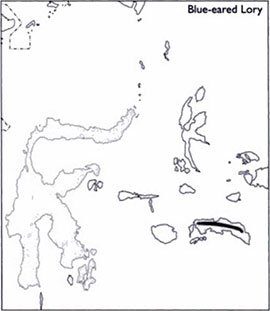
    Lori distribution of Seram
    The Blue-eared Lory is endemic of the Seram island in the Moluccas (Indonesian).

    Conservation:


    minor concern

    – Current IUCN Red List category: Least concern

    – The population trend: Decreasing

    The world population It has not been quantified, but the species is estimated that it can range from common to abundant at the local level (pit et to the. 1997). However, justified the population trend, It is suspected to be in decline due to unsustainable levels of exploitation.
    The population range is between 5,000 and 50,000 birds released.

    Probably the Blue-eared Lory It will always remain a rare specimen in the world of birds.

    In March of 1995 the Government of Indonesian stopped the export of these birds.

    Its hunting for local trade has become especially intense.. Fortunately, There is no reason to keep to the Blue-eared Lory as a pet on the part of the indigenous population.

    "Blue-eared Lory" in captivity:

    Since its population is decreasing, any specimen that can not be returned to their natural habitat (natural range) should preferably be placed in a well-managed breeding program to ensure the survival of the species.

    Alternative names:

    Blue-eared Lory, Ceram Lory, Blue eared Lory, Seram Lory (ingles).
    Lori masquรฉ, Lori ร  oreilles bleues (French).
    Halbmaskenlori (German).
    Loris Semilarvata (Portuguese).
    Lori de Orejas Azul, Lori de Seram (espaรฑol).

    scientific classification:

    Order: Psittaciformes
    Family: Psittaculidae
    Genus: Eos
    Scientific name: Eos semilarvata
    Citation: Bonaparte, 1850
    Protonimo: Eos semilarvata

    Images ยซLory of Seramยป:

    Videos "Blue-eared Lory"

    ————————————————————————————————–

    ยซLori de Seramยป – (Eos semilarvata)


    Sources:

    Avibase
    – BirdLife.org
    Oiseaux.NET

    Photos:

    – Blue-eared Lory in the Walsrode Bird Park, Germany by Quartl – Wikimedia
    papageien.org
    – Blue-eared Lory (Eos semilarvata) at the San Diego Zoo by Leon Mitchell – Wikipedia
    – free-pet-wallpapers.com
    kanaria1898tuttlingen.de

    Sounds: Mark Todd (Xeno-canto)