▷ The world of Pets: Dogs, cats, birds, reptiles, amphibians

Hispaniolan Parrot
Amazona ventralis

Hispaniolan Parrot

Content

Description:

28-31 cm.. length and 250 g. of weight.

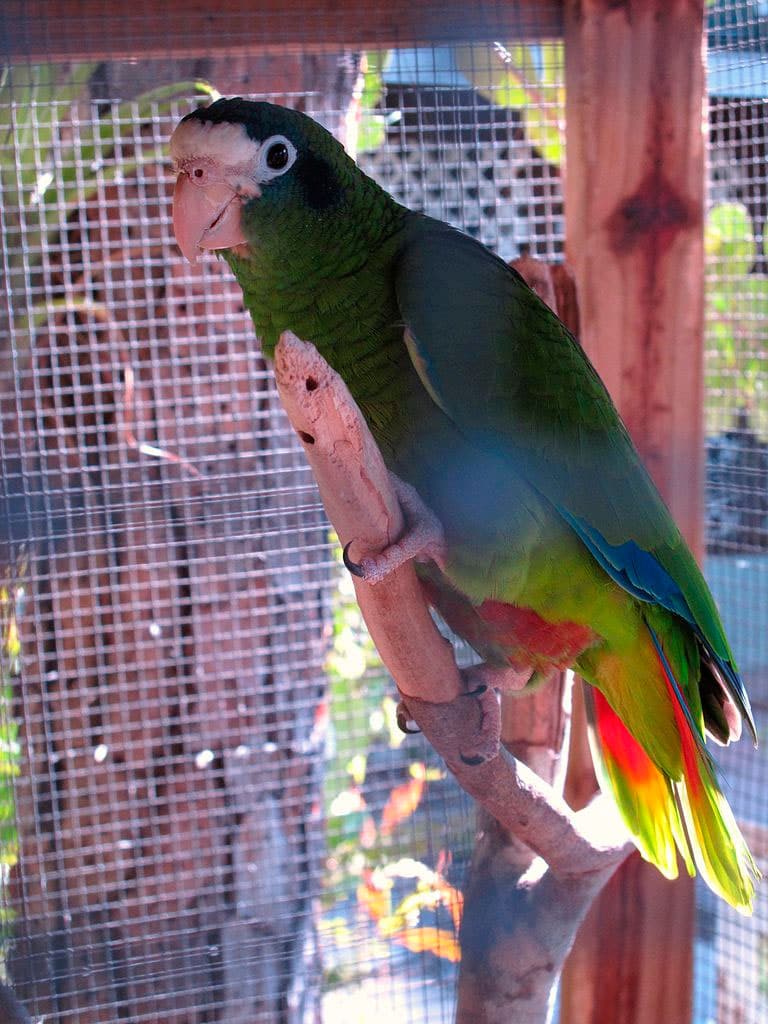
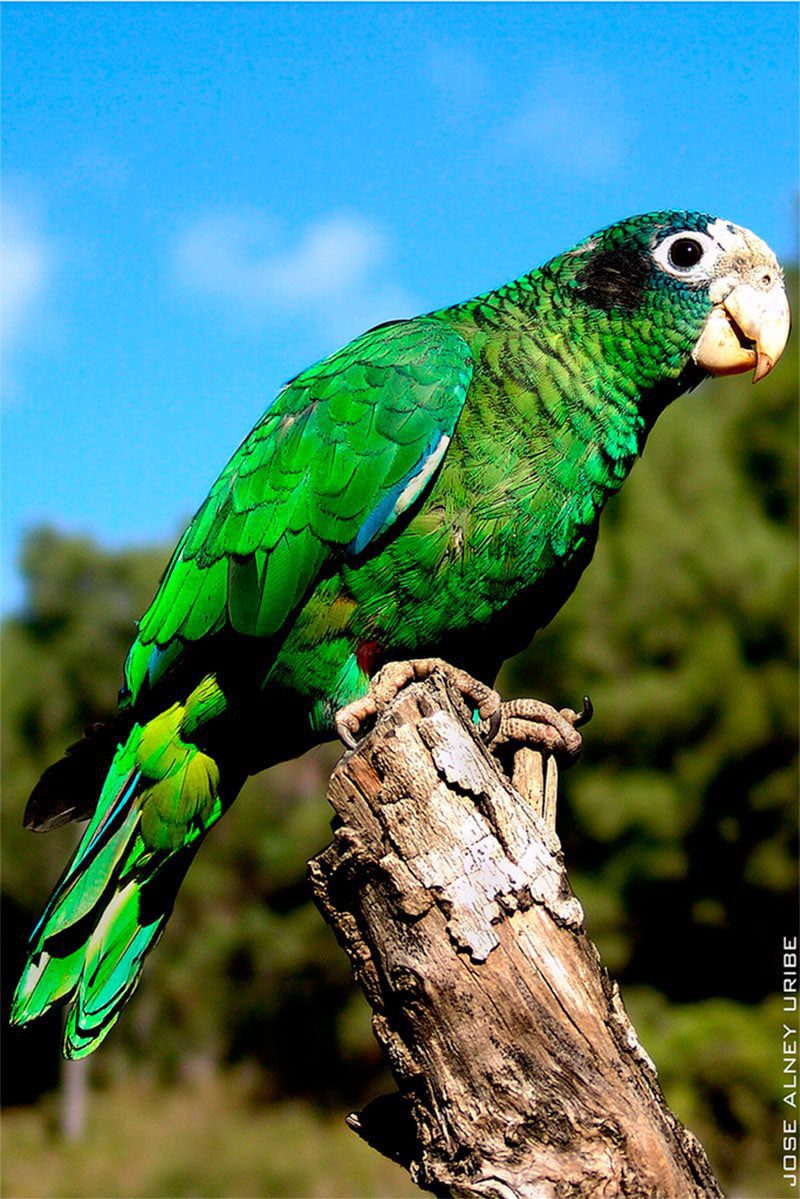
The Hispaniolan Parrot (Amazona ventralis) has the forecrown Lords color and white (variable extension); the crown and upper cheeks with blue feathers and black colored ends; ear-coverts and lower cheeks, charcoal colored (variable measure); feathers nape and the sides of the neck, emerald green with visible black tips.
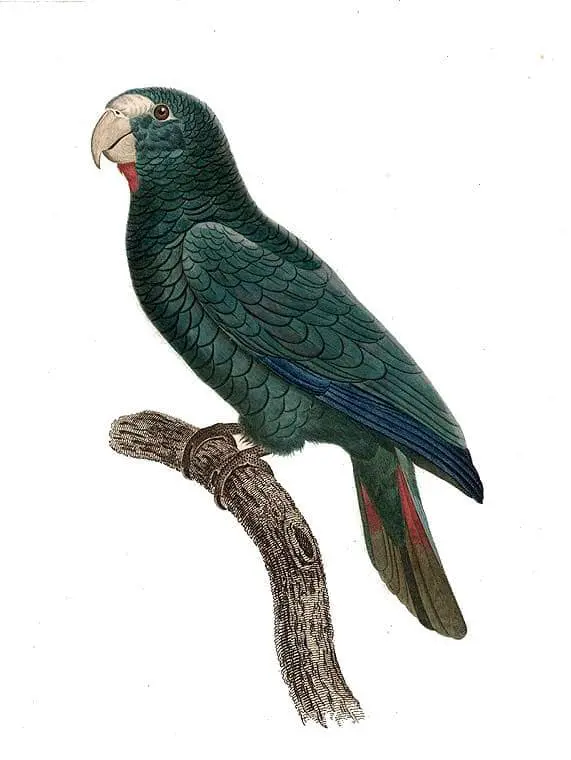
Hispaniolan Parrot
Mantle and back green grass with black tips, which become progressively less visible to the bottom; rump green, slightly yellowish; uppertail-coverts brighter yellowish green. greater coverts blue; remaining coberteras grass-green. Primaries and secondaries, blue, darker towards the tips, on the innerwebs. Under the wings, green; flight feather bluish green.

The underparts usually green, slightly yellowish, with most feathers showing fairly conspicuous black margins (especially in the upper region) but sometimes with some red feathers chin; patch resizable brown in the center of belly; undertail-coverts pale yellow-green. Upper, the tail is green (perhaps a little darker than the rest of the upperparts) with visible yellowish tip and outerweb external feathers with blue margins; undertail, the tail It is yellowish with the bases of the outer feathers red. Bill Pink; cere brownish white; skin bare periophthalmic white; brown the irises; legs pale grey.
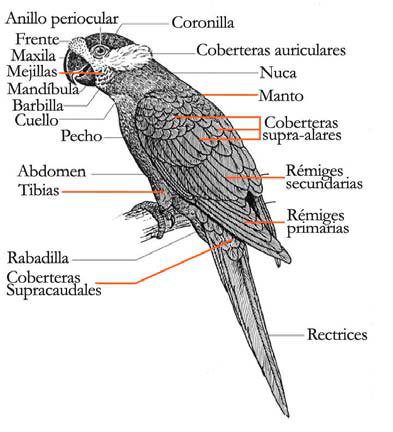

Anatomy-parrots

There is no sexual dimorphism. Immature as an adult but less blue in the crown and the patch abdominal is paler brown.

NOTE

Some authors consider that the Hispaniolan Parrot It conspecific (belonging to the same species) with the Cuban Parrot. Although closely related, It is believed to be quite different due to differences in hue pronounced plumage.

  • Sound of the Hispaniolan Parrot.

Habitat:

Video "Hispaniolan Parrot"

The Hispaniolan Parrot They are distributed in a variety of forested habitats, from lowland sandy palm savannahs to montane pine forests and moist montane forests. Currently most commonly observed in montane forests on the island Hispaniola, due to continued deforestation, although birds also feed at lower altitudes. Observed above 1,500 m (Hispaniola).

Views in pairs during breeding; outside the breeding season, observed in small flocks, usually up to a dozen birds; much larger meetings, until 500 reported in the nineteenth century birds. Couples and couples with young often identifiable in flocks.

Reproduction:

Nests generally constructed in tree cavities, but also in rock crevices, cactus voids and cavities in coconut. Territorial and very aggressive while playing. The breeding season It covers the months of February to May. Clutch 2-3 eggs.

Food:

They feed on, among others, of seeds or fruits of Caesalpinia, Psidium and Ficus, seeds of oranges wild Citrus, corn and bananas.

Distribution:

Size of its range (breeding/resident): 99.000 km2

The Hispaniolan Parrot are distributed by the islands of Hispaniola (Dominican Republic and Haiti), Gonave Island (Haiti), Isla Saona (Dominican Republic), Puerto Rico and probably Snake (Puerto Rico) in the West Indies. It is found in moderate numbers in parts of the Sierra de Bahoruco, Sierra Neiba and Cordillera Central in Dominican Republic. More restricted and less numerous in Haiti, with the remaining population apparently largely in the south of the country.

introduced in Puerto Rico, where the wild population derived from captive birds escaped and at least one consignment of illegally traded birds were released after discovering an attempt to import Puerto Rico. Also wild populations in US Virgin Islands.

Formerly very common in Hispaniola, although there have been during the twentieth century a strong decline in its population, mainly due to the habitat destruction (arising from agriculture and charcoal production). As well persecuted due to crop damage, hunted for food and trapped for sale as pets at local and international level.

In the Decade of 1930 It was limited to the interior mountain forests of the island of largely Hispaniola.

Although it remains locally common, it is enough rare and rare in the wild.

The population in Puerto Rico It is at least several hundred birds and apparently increasing.

Conservation:

State of conservation ⓘ


minor concern Minor Concern ⓘ (UICN)ⓘ

• Current category of the Red List of the UICN: Vulnerable.

• Population trend: Decreasing.

• Population size : 6000-15000

Rationale for the Red List category

This species is considered Vulnerable because anecdotal evidence suggests there has been a rapid reduction of the population. The size of the population and the exact extent of the decline are unclear, clarification and may lead to the species be reclassified as near threatened.

Justification of the population

The population size It is preliminarily estimated to fall in the band between 10.000 and 19.999 individuals. This is equivalent to 6,667-13,333 mature individuals, rounded here to 6,000-15,000 mature individuals.

Justification of trend

No new data on population trends, but it is suspected that the species is declining quickly, as a result of the hunting, the loss of habitat and capture.

Threats

The agricultural conversion and charcoal production have destroyed the most suitable habitat. It is also persecuted as a crop pest, hunted as food and trapped for Local trade and above for international trade cage birds. (Juniper and Parr 1998).

Trapping adults and stealing hatchlings from nests to supply the Local pet trade It is a particular concern because in some areas most families own a parrot, and they only live a few years before they have to be replaced (G. Woolmer in some. T. White one bit., 2012). It also, activities theft nests often they cause destruction of the nest cavity or nest tree, further aggravating the loss of nesting habitat other causes (T. White in a little .

Conservation Actions Underway

CITES Appendix II.

• You have started a education strategy with community participation to protect species (Vasquez et to the., 1995).

• In 1997-1998, 49 birds bred in captivity were released and you radiographed in East National Park, Dominican Republic (Vilella et al., 1999).

• The Biological Reserve Loma Charco Azul, created in 2009, It has populations of the species. in addition, They have carried out recent activities public education and outreach, including some actions of law enforcement, in several communities surrounding the Jaragua National Park, near the border with Haiti.

• In January of 2012 there was also a Liberation of 10 parrots raised in captivity they had been confiscated as young chicks from poachers nests. These chicks were raised and rehabilitated in National Zoological Park, and released successfully in the grounds of the zoo (T. White in a little ).

Conservation Actions Proposed

Assess current population size.

• Establish a program of comprehensive monitoring.

• Determine at extension remaining habitat.

• Determine the impact of various threats.

Apply laws and regulations that protect this species and its habitat (Snyder et to the., 2000).

• Promote better bird-keeping practices to reducing demand for wild birds and develop a captive breeding program.

• Educate the public about the negative impact of pet trade in native Dominican Republic (T. White in a bit., 2012).

The Hispaniolan Parrot in captivity:

It is easily reproduced in captivity and used as substitute mother to raise the young Puerto Rican Parrot as part of the recovery program for the species (highly threatened).

Each captive specimen of this species which is capable of reproducing, It is placed in a well-managed program captive breeding and not be sold as a pet, with the objective of ensure their survival long-term.

Alternative names:

Hispaniolan Amazon, Hispaniolan Parrot, Salle’s Amazon, Salle’s Parrot, San Domingo Amazon, San Domingo Parrot (English).
Amazone à ventre pourpre, Amazone de Sallé, Amazone d’Hispaniola (French).
Blaukronenamazone, Haitiamazone (German).
Papagaio-de-hispaniola (Portuguese).
Amazona de la Española, Amazona Dominicana, Cotorra, Cotorra de la Española (español).

scientific classification:

Order: Psittaciformes
Family: Psittacidae
Genus: Amazona
Scientific name: Amazona ventralis
Citation: (Statius Müller, 1776)
Protonimo: Psittacus ventralis

Images Hispaniolan Parrot:
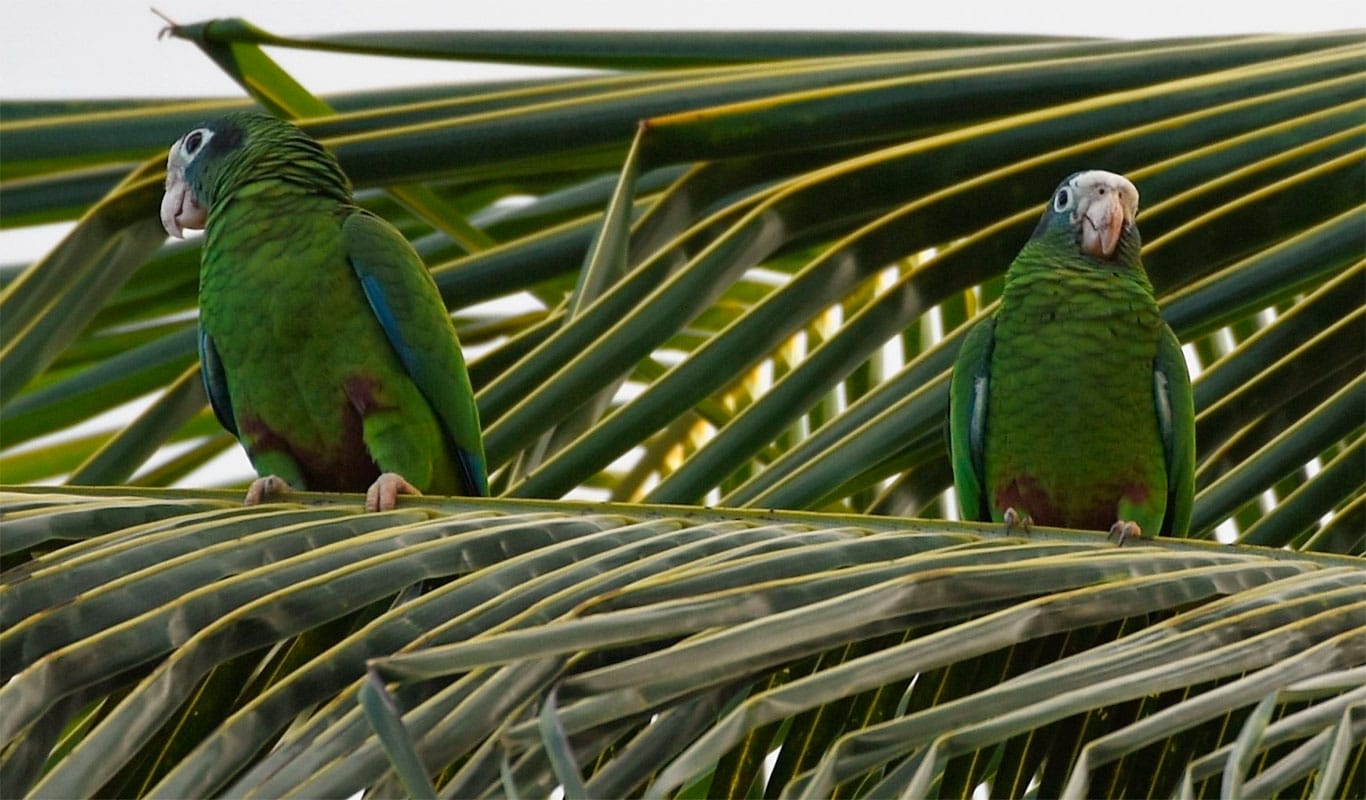

Species of the genus Amazona


Sources:

  • Avibase
  • Parrots of the World – Forshaw Joseph M
  • Parrots A Guide to the Parrots of the World – Tony Juniper & Mike Parr
  • Birdlife

Photos:

(1) – The parrot Cuca – Cuca The Parrot by Jose Uribe AlneyFlickr
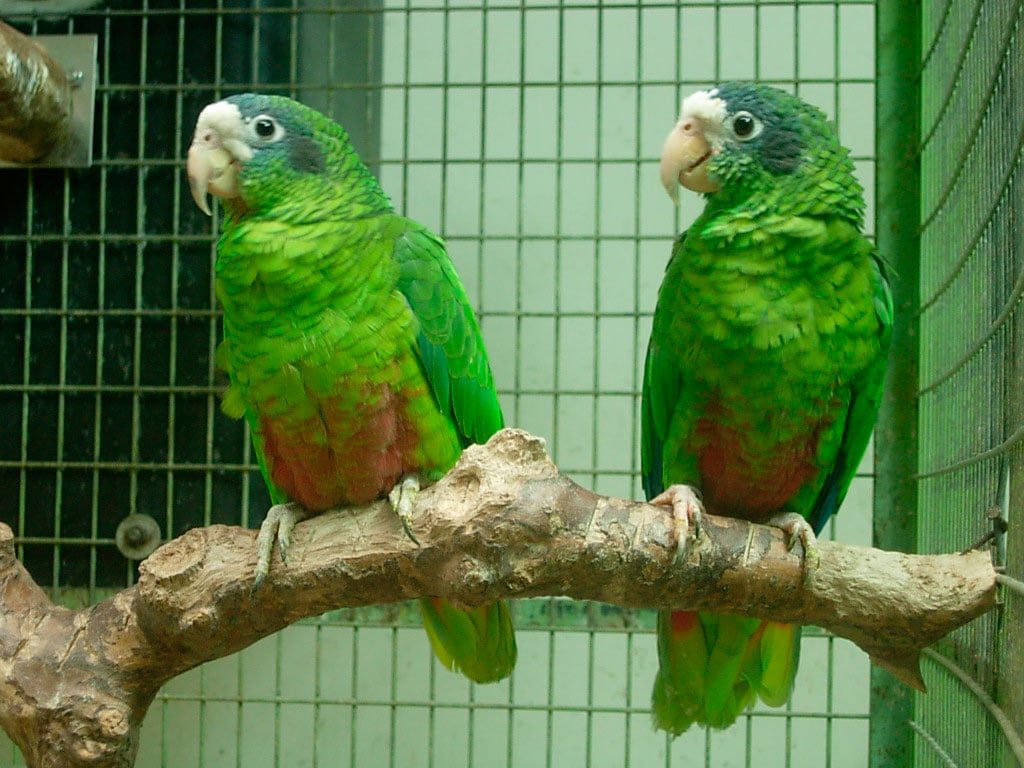
(2) – Hispaniolan Amazon. Two in a cage By TJ Lin (originally posted to Flickr as DSCN0712) [CC BY-SA 2.0], via Wikimedia Commons
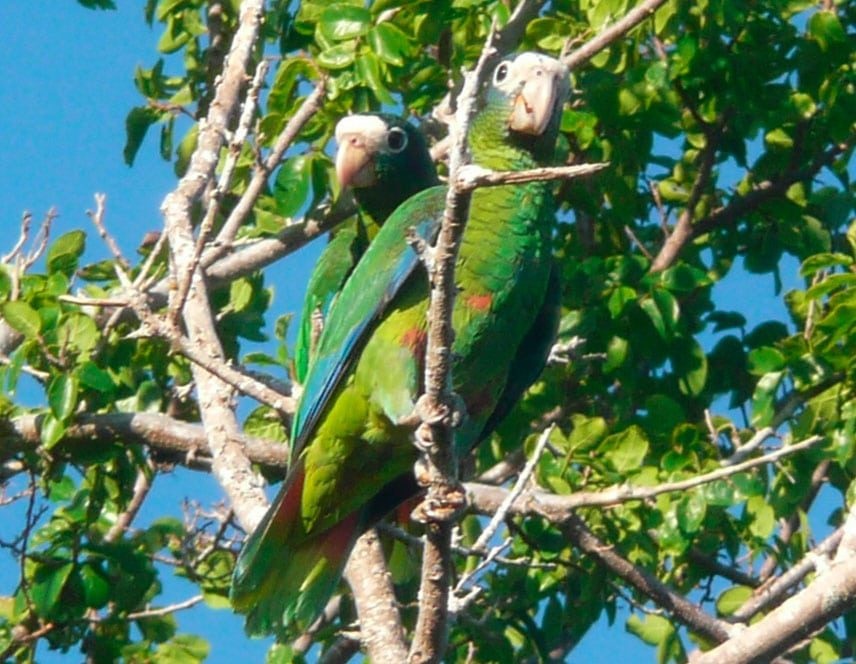
(3) – Couple of parrots Amazona ventralis in the Jaragua National Park, Dominican Republic By Yolanda M. Leon (Own work) [Public domain], via Wikimedia Commons
(4) – A Hispaniolan Amazon in a cage By Patrick Hawks (originally posted to Flickr as Hispaniolan Parrot) [CC BY-SA 2.0], via Wikimedia Commons
(5) – Blaukronenamazone (Amazona ventralis) Bávaro, Punta Cana, Dominican Republic By Martingloor (Own work) [CC BY-SA 4.0], via Wikimedia Commons
(6) – BARRABAND, Jacques (1767/8-1809) [male red-faced parrot (Hispaniolan Amazon [Amazona ventralis])] From Natural History of Parrots (by Francois Levaillant, 1801-1805) – Wikimedia

Sounds: Ante Strand, XC15749. accessible www.xeno-canto.org/15749
▷ The world of Pets: Dogs, cats, birds, reptiles, amphibians

New Caledonian Parakeet
Cyanoramphus saisseti

New Caledonian Parakeet

Content


Anatomy-parrots

Description:

26 cm.. length and 100 g. of weight.

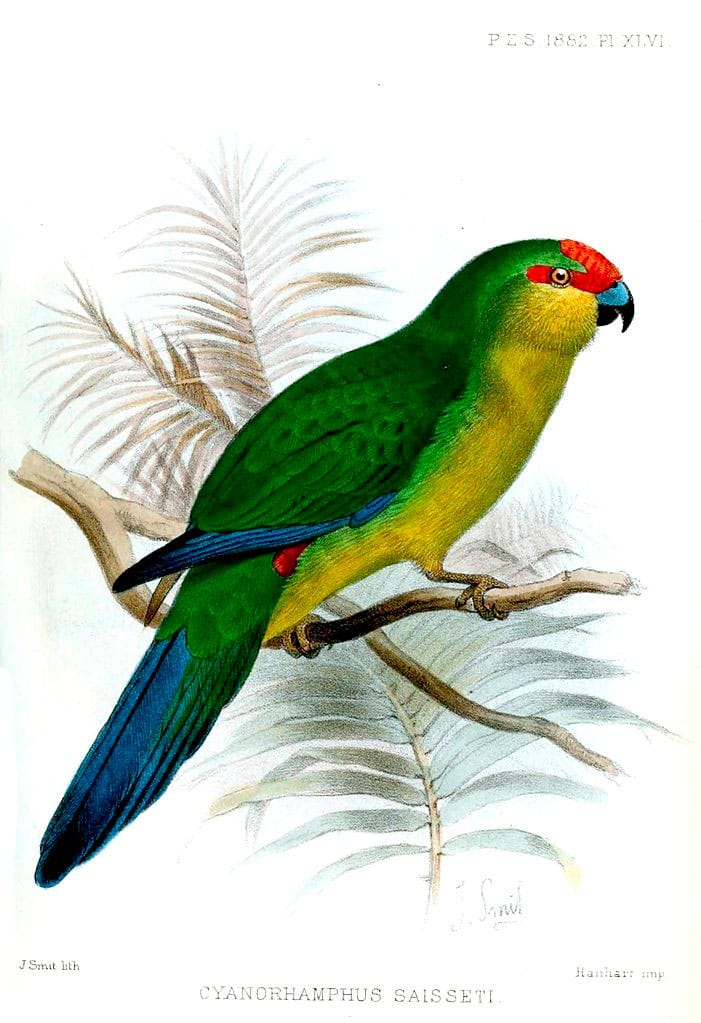
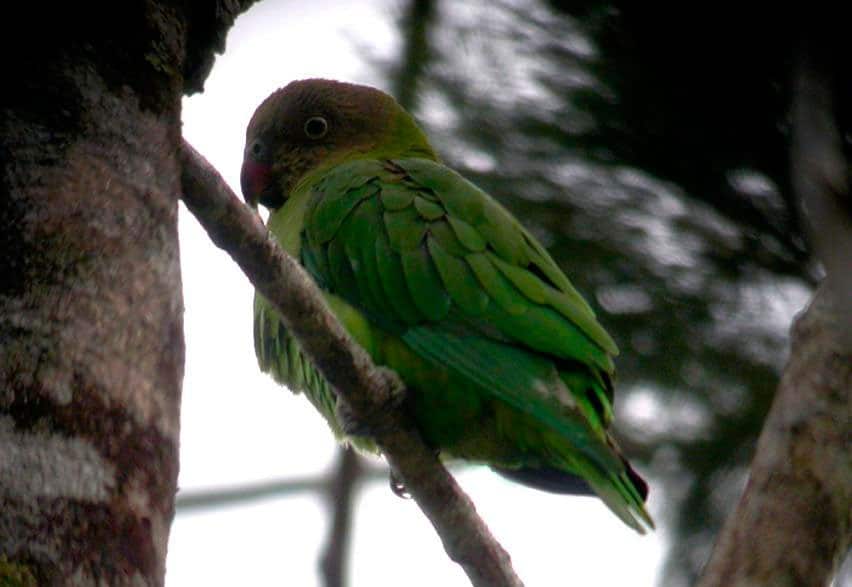
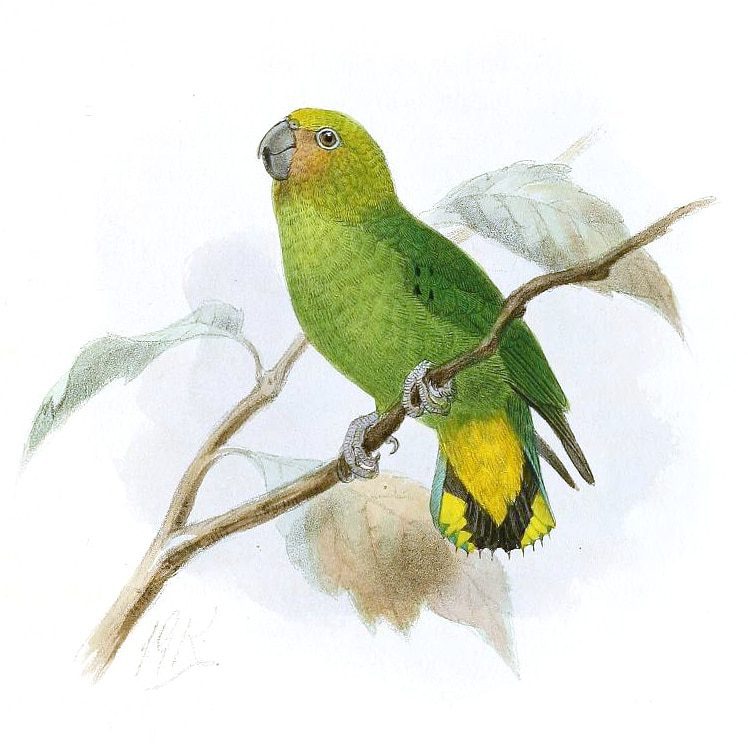
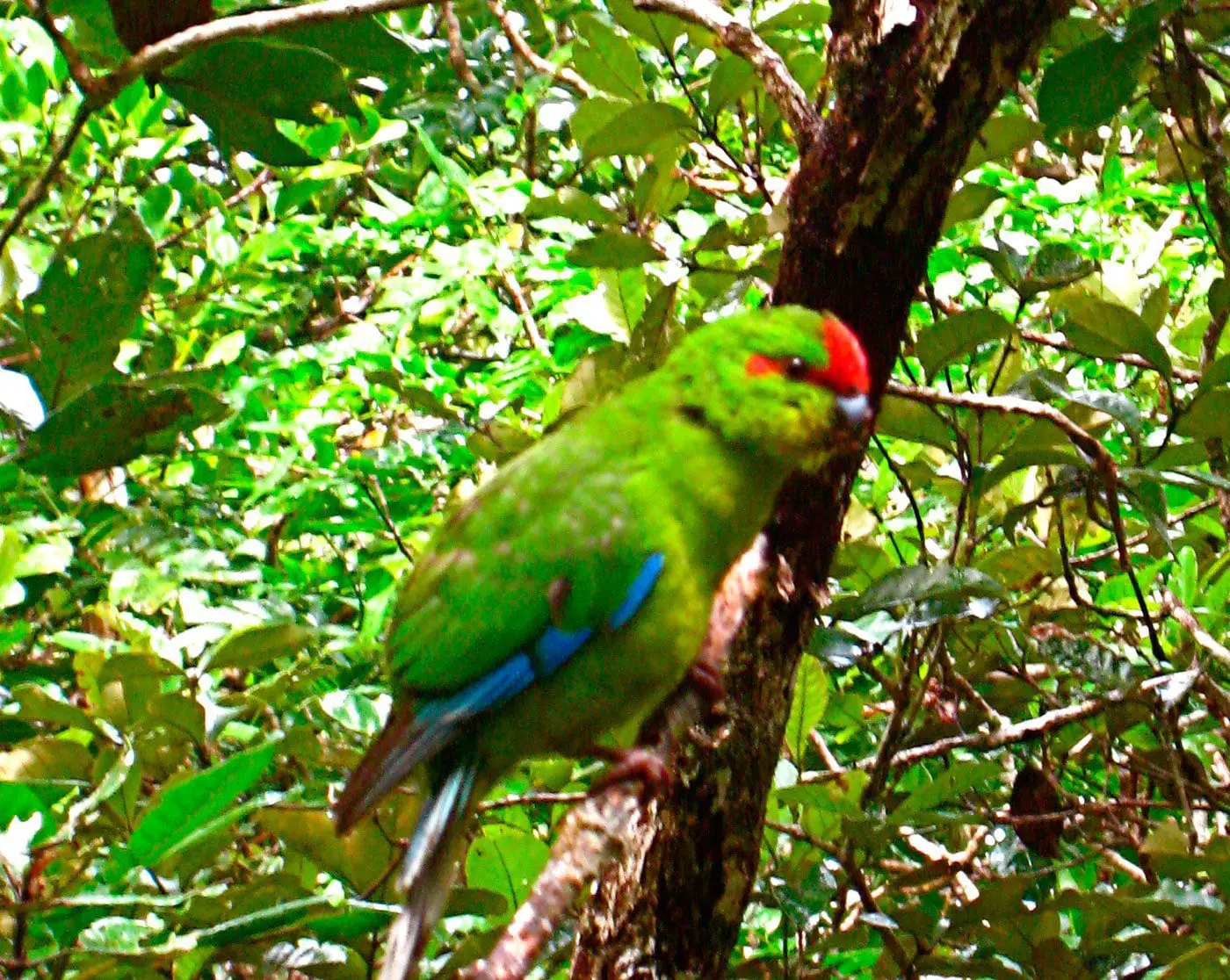
The upperparts of the New Caledonian Parakeet (Cyanoramphus saisseti) they are mostly green, with some bluish green in the tail, violet-blue along the outerweb flight feathers, and red patches on each side of the rump. The underparts are yellowish green, yellower near throat, and gray below tail (Forshaw 1989, Juniper & Parr 1998, Doughty et al. 1999).

A red patch extends from the crown up to the forecrown, and it extends in a narrow band from the forecrown up to the ears (Juniper & Parr 1998).
The bill is leaden gray, with black tips, the irises is red-orange and legs are dark gray. (Layard & Layard 1882b, Juniper & Parr 1998).

The males typically exceed the females in size, although its plumage is similar (Verreaux & walls 1860, Layard & Layard 1882b, Salvadori 1891, Forshaw 1989)

taxonomy:

In the past it was considered to New Caledonian Parakeet conspecific of Red-crowned parakeet (Cyanoramphus novaezelandiae) of New Zealand, but genetic studies have shown that it is a separate species and occupying a basal position on gender Cyanoramphus, which indicates that the genus would have its origin in New Caledonia.

  • Sound of the New Caledonian Parakeet.

Habitat:

New Caledonian Parakeet

The New Caledonian Parakeet They were primarily fed at low altitudes canopy, and regularly they observed on the edge of the forest, on slopes or in the forest maquis (scrub).

Seem to have small populations and their distributions are expected to shrink as a result of climate change.
They are not particularly shy, although they tend to be rather calm and difficult to observe.

Reproduction:

It has been reported that the nesting It occurs between November and January, and nidadas They consist of two to five eggs, that they are placed in holes in trees (Hannecart & Létocart 1980, Theuerkauf et al. 2009b).
Genetic evidence suggests that the species is polyandrous, and the presence of male food assistants suggests that probably involves mating system poliandria cooperative (Theuerkauf et al., 1999).

Food:

It is usually fed in average heights, low canopy, but it has also been observed that feeds on the floor.
Essentially it is granivore. It feeds mainly on seeds and fruits, besides berries, nuts and other plant parts (outbreaks, flowers and leaves).

Distribution:

The New Caledonian Parakeet It is endemic to the main island of New Caledonia, although there are still uncertainties about the extent of its range and population size (Taylor 1985, Juniper & Parr 1998). The species was considered rare at the time of its introduction (Verreaux & walls 1860). But, in the decade of 1880, Flocks of birds were reported in the West, flying into the valleys Moindou from nearby mountain forests, where it is rumored to have slept in large quantities (Layard & Layard 1882b).

It has the lowest population density of parrots New Caledonia.

Conservation:


Vulnerable


• Current category of the Red List of the UICN: Vulnerable.

• Population trend: Decreasing.

• Population size : 2500-10,000 individuals.

The New Caledonian Parakeet They face a variety of threats, and their populations seem to be in decline. But, it is difficult to determine the cause or extent of their declines due to the paucity of ecological data.

classified as Vulnerable because it has a single small population suspected to be declining due to predation by invasive species; his fortress is in an area threatened by nickel mining and may be in rapid decline in the near future.
The humid mountain forest is not threatened, but it is possible that this species in need of other habitats, some of which, particularly semi-deciduous forests lowland, They have almost disappeared from the island. It is possible that introduced diseases (such as avian malaria) or the mammals (especially rats) It has been a cause of decline.

There is no evidence that nest poaching is widespread.

"New Caledonian Parakeet" in captivity:

unregistered.

Alternative names:

New Caledonian Parakeet, New Caledonian Parrot, New Caledonian Red-crowned Parakeet, Red-crowned Parakeet (inglés).
Perruche à front rouge, Perruche calédonienne, Perruche de Nouvelle-Calédonie (francés).
Cyanoramphus saisseti (alemán).
Periquito-da-nova-caledônia (portugués).
Perico de Nueva Caledonia (español).

scientific classification:

Jules Verreaux

Order: Psittaciformes
Family: Psittaculidae
Gender: Cyanoramphus
Scientific name: Cyanoramphus saisseti
Subpoena: Verreaux & Des Murs, 1860
Protonimo: New Caledonian Parakeet

Images "New Caledonian Parakeet"

Videos "New Caledonian Parakeet"

Sources:

Avibase
• Parrots of the World – Forshaw Joseph M
• Parrots A Guide to the Parrots of the World – Tony Juniper & Mike Parr
• Birdlife

Photos:

(1) – Cyanoramphus saisseti, blue river park, New Caledonia by Mickaël T. [CC BY 2.0], via Wikimedia Commons
(2) – Cyanoramphus saisseti Proceedings of the Zoological Society of London 1882 (Web) by Joseph Smit [Public domain]

▷ The world of Pets: Dogs, cats, birds, reptiles, amphibians

Caica Parrot
Pyrilia caica


Lorito Caica

Content

Description:

23 cm.. height.

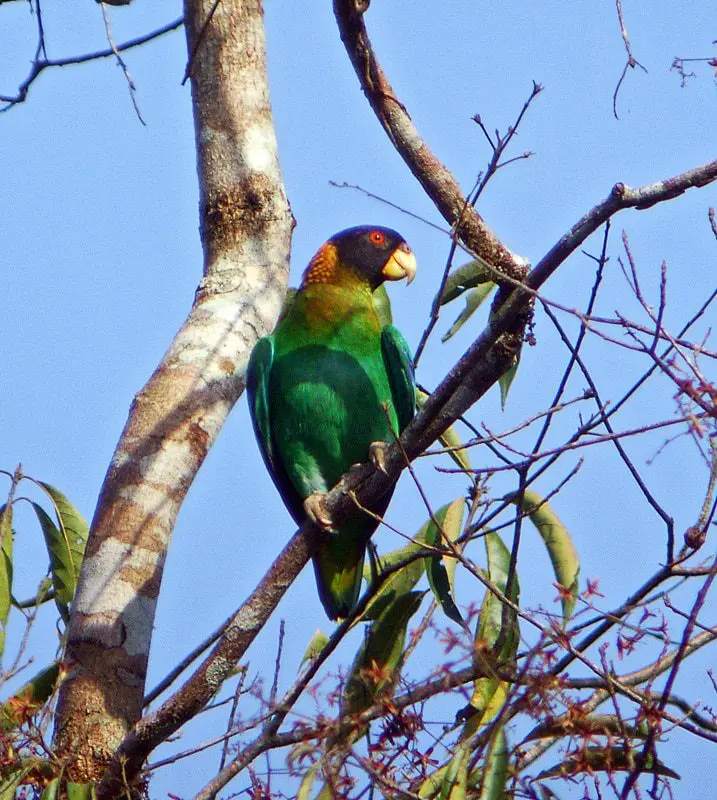
The head of the Caica Parrot (Pyrilia caica) totally black is it more distinguishable from this species, together with a collar Golden cafesoso that extends up to the chest.

The rest of the body usually Green, more clear in the belly and the inside of the tail; wing with blue stain and dark ends, Tip of the tail black.

Bill color bone; ring eyepiece bare of color grey pale; Orange irises.

The youth with crown green, face Dark greenish yellow, and collar not very notorious gold in neck and almost absent in chest.

  • Sound of the Caica Parrot.

Habitat:

Inhabits little disturbed humid forests, firm ground, in Tepuis, from the 50 to the 1100 m.
gregarious, They walk in small groups. They feed in the canopy of the forest.

Reproduction:

Currently with little information about the reproduction.

Food:

In the wild, It believes that its diet consists mainly of eucalyptus flowers, fruit, nectar and pollen.

Distribution:

Can be observed in the South-East of Venezuela, Guyanas and northeast of the brazilian amazon.

Conservation:


Near-threatened


• Red List category of the UICN current: Near-threatened

• Population trend: Stable

Justification of the population:

The size of the world population Caica Parrot It has not been quantified, although this species is described as 'rare’ (Stotz et to the., 1996).

Justification trend :

This species is suspected that it may lose 13,6-17,2% of habitat within its distribution over three generations (21 years) based on a model of deforestation of the Amazonia (Soares-Filho et to the., 2006, Bird et to the. 2011).

Given the susceptibility of this species to the hunting and/or entrapment, It is suspected that its population will decrease at a rate close to the 30% in three generations.

"Caica Parrot" in captivity:

They adult acclimatised quite easily to a new environment and are very resistant … Conversational skills (in comparison with other species).
They are very quiet in an Aviary, with a personality friendly and Gentile. They are very sociable and it should be with a partner or in a group environment. In any way, It is not easy to see to the Caica Parrot in captivity.

Alternative names:

Caica Parrot, Hooded Parrot (English).
Caïque à tête noire (French).
Kappenpapagei, Kappen-Papagei (German).
curica-caica, curica, papagainho, periquito-de-pescoço-marrom (Portuguese).
Lorito Caica, Lorito de Cabeza Negra (español).
Perico Cabecinegro (Venezuela).


scientific classification:

John Latham
John Latham

Order: Psittaciformes
Family: Psittacidae
Genus: Pyrilia
Scientific name: Pyrilia caica
Citation: (Latham, 1790)
Protonimo: Caïca parrot


Images "Caica Parrot"

Videos "Caica Parrot"

————————————————————————————————

«Lorito Caica» (Pyrilia caica)


Sources:

Avibase
– Parrots of the World – Forshaw Joseph M
– Parrots A Guide to the Parrots of the World – Tony Juniper & Mike Parr
– Birdlife

Photos:

(1) – lynxeds

Sounds: controles-canto.org

▷ The world of Pets: Dogs, cats, birds, reptiles, amphibians

Brown Lory
Chalcopsitta duivenbodei


Lori Pardo

Content

Description

31 cm.. length and a weight between 200 and 230 gr.

The bottom of the wings of the Brown Lory (Chalcopsitta duivenbodei) are bright yellow narcissus.

Two other features of its plumage that powerfully attract attention are, seen head-on , the yellow that completely surrounds the bill and forecrown and also the contrast of color violet or blue deep in it low back, the thighs and feathers of the tail.

The feathers of the chest have pointed yellow, giving a scaly appearance to the area.

The bill is black, as the eye ring and the skin bare at the base of the bill. The irises are orange-red, the legs are grey.

There is no sexual dimorphism, females are identical to males.

The youth they have more muted colors, with less yellow.

To the Brown Lory may be mistaken for it is a very similar species, the Dusky lory (Pseudeos fuscata). The latter, However, can be distinguished by their underparts predominantly orange or yellow, rump white, their bill Orange and its smaller size.

It is a bird of extraordinary beauty.

Subspecies description

  • Chalcopsitta Duivenbodei Syringanuchalis

    (Neumann, 1915) – 31 cm approx.. Brown is more dark by the area of the head and back. Many specimens with dark violet hue.


  • Chalcopsitta Duivenbodei Duivenbodei

    (Dubois, 1884) – The nominal

Habitat:

They frequent the primary and secondary forests with large mature trees.
They seem to especially appreciate the edges of wooded areas. They are also found in the partially open forests. They seem to be able to adapt to areas that have suffered more or less significant damage.

The Brown Lory It is a bird of lowland, It is usually present below the 200 m.

There is little information about the habits of this species. Often live in pairs or in small groups in that often is associated with other species of parrots dining rooms of nectar or near those trees in flower.

They usually seek food the canopy of the forest and vegetation at ground level. Their activity seems to have no end. At night they retire to dormitories in the branches.

When moving, they have a very characteristic flight made with very accentuated flapping at the tips of the wings.
Their flight is much slower than the Coconut Lorikeet (Trichoglossus hamatodus). Yellow-orange color under the wings are very obvious.

Reproduction:

The breeding season is produced in April. In captivity, the females usually lay two eggs, which hatch in approximately 24 days. The total duration of the nesting is very long. 11 weeks from the construction of the nest to the full autonomy of the young. We don't have more information.

Food:

We don't have many details about their menu. One thing is certain, their diet is almost exclusively vegetarian. It feeds on fruits, seeds and sprouts. Given the fact that spends most of its time in shrubs or flowering trees, pollen and nectar should be an essential resource in your diet.

Distribution:

This species has a patchy distribution along the lowlands of the North coast of New Guinea, since the Cenderawasih Bay between papua and West Papua (Indonesian) to the Astrolabe Bay in Papua New Guinea. In general they are rare (Coates 1985, Beehler et to the., 1986), but it is quite common locally in locations such as the southern zone of Vanimo Puwani River and in the area of the wapoga river (A. Mack in lit. . 1999, KD Bishop in litt. 1999, B. Beehler in litt., 2000).

Subspecies distribution

  • Chalcopsitta Duivenbodei Syringanuchalis

    (Neumann, 1915) – Cenderawasih Bay between Papua and West Papua and Astrolabe Bay, in Papua New Guinea.


  • Chalcopsitta Duivenbodei Duivenbodei

    (Dubois, 1884) – The nominal

Conservation:


minor concern


• Current IUCN Red List category: Least concern.

• Population trend: Stable.

The species has a population global estimated at more of 50.000 individuals.
Forests throughout its area of distribution is threatened by commercial logging, but the abundance of the species in secondary forest suggests that it is not threatened.

The fact that are able to adapt to them areas forest exploited or degraded, It is an encouraging sign and the mark of the relative health of the species.

"Brown Lory" in captivity:

It is of a bird rare in captivity, but its breeding is easy.

Information in BeautyofBirds

Alternative names:

Brown Lory, Duyvenbode’s Lory (ingles).
Lori de Duyvenbode (French).
Braunlori (German).
Lóris-castanho (Portuguese).
(español).

scientific classification:

Order: Psittaciformes
Family: Psittaculidae
Genus: Chalcopsitta
Scientific name: Chalcopsitta duivenbodei
Citation: (Dubois, 1884)
Protonimo: Chalcopsittacus Duivenbodei

«Lori Pardo» images:

Videos "Brown Lory"

—————————————————————————————————

«Lori Pardo» (Chalcopsitta duivenbodei)


Sources:
Avibase, Birdlife International, Oiseaux.NET

Photos: bob|P-&-S (Flickr), Wikimedia, J. Brubaker (IBC.lynxeds.com), iggino (IBC.lynxeds.com), animalphotos.me

Sounds: BAS van Balen (Xeno-canto)

▷ The world of Pets: Dogs, cats, birds, reptiles, amphibians

Varied Lorikeet
Psitteuteles versicolor

Varied Lorikeet

Content

Description

19 cm.. length and a weight between 50 and 60 gr.

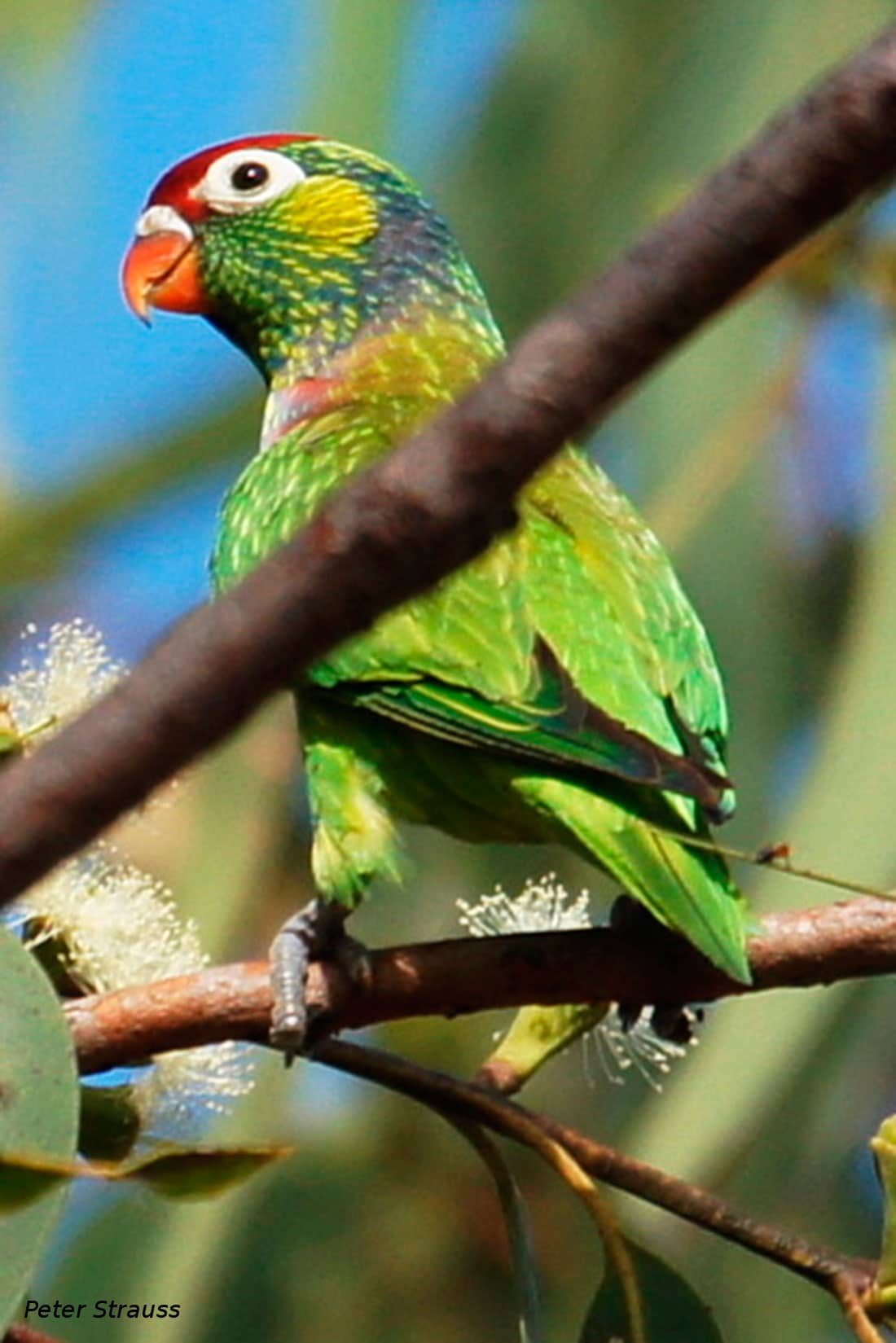
The Varied Lorikeet (Psitteuteles versicolor) has the forecrown and beginning of skull red-scarlet; the mumps and cheeks They are bright yellow-green with a slight bluish green stripe; the back of the mumps and the back of the head They are greenish blue with yellow streaks.

The upperparts They are olive green with pale green streaks along the rump; the Feather coverts are green with a pale border; the flight feather They are blackish green inside and outside with a thin yellow stripe on the edge.

The bottom of the wings It is green with a yellow border; the throat It is dotted with yellow and blue-green; lower throat and the chest show infiltrations green with pink and orange; the abdomen It is pale greenish yellow with yellow stripes.

The upper part of the tail is green, yellow-green below, darker when tail is closed.

The bill is orange. The area covering the nostrils and the bare periophthalmic, are white. The irises It is yellow and legs grey.

The Red coloration of the head on female It is less intensive and extensive. Its chest It is pink with less infiltrations.

In the immature, red color lores and the cap It is absent. The bill It is more marked in brown and irises They are darker.

Habitat:

This species lives a nomadic life, mainly on the Plains. It is in a wide variety of forest habitats, including dense eucalyptus plots Melaleuca, swamp forest, savannas and Shrublands, grasslands and sometimes mangroves.

The Varied Lorikeet They also inhabit regions of rolling hills and wooded areas along streams. They live in pairs, in small groups or large groups that are often associated with the Red-collared Lorikee (Trichoglossus rubritorquis), although they have a much calmer demeanor than the latter.

are very aggressive with other species nectarivores that are competing for the same flower beds.

outside the breeding season, the Varied Lorikeet they become more mobile because the blooming trees are rarer. In some areas they are most abundant from April to may and from September to October. But, the information is not sufficient to say that this bird is a seasonal migrant.

Reproduction:

The reproduction It takes place throughout the year, However, It is most active between April and August.

install nest in the cavity of a trunk or branch, usually near a water source. The bottom of the hole is lined with wood chips or leaves that have been previously "chewed".

The spawning is between 2 and 5 white eggs that are incubated by the female alone for about 22 days. The young are fed by both parents, and leave the nest after 6 weeks.

Food:

Their diet consists of pollen, fruits, seed and probably some insects. These birds feed on the Ceiba or Kapok, wood and Red eucalyptus trees of Melaleuca.

Distribution:

Size of its range (reproduction / resident): 2.170.000 km2

This bird is endemic in northern Australian continent.

Its area of distribution extends from Broome and the surroundings of the fitzroy river (Western Australia), to the Northwest of Queensland and Mount Isa.

Crosses the region from Kimberley, all the Arnhem Land and in the Gulf of Carpentaria.

The Varied Lorikeet It is also present in the Cape York Peninsula and in the South, Townsville.

Conservation:


minor concern


• Current IUCN Red List category: Least concern

• Population trend: Stable

The Varied Lorikeet they are usually fairly common. In the Darwin region, for example, It can be found in large quantities when the trees are in bloom. They are less common in the Cape York Peninsula and along the east coast.

The world population It is estimated in more than 100.000 specimens. The species is not globally threatened and does not receive any specific protection measures..

"Varied Lorikeet" in captivity:

It is not found outside Australia; limited breeding in Australia.

Alternative names:

Varied Lorikeet, Northern Varied Lorikeet (ingles).
Loriquet varié, Loriquet versicolore (French).
Buntlori (German).
Lóris-versicolor (Portuguese).
Lori Versicolor, Tricogloso Versicolor (español).

scientific classification:

Order: Psittaciformes
Family: Psittaculidae
Genus: Psitteuteles
Scientific name: Psitteuteles versicolor
Citation: (Lear, 1831)
Protonimo: Trichoglossus versicolor

«Lori Versicolor» images:

Videos "Varied Lorikeet"

————————————————————————————————

«Lori Versicolor» (Psitteuteles versicolor)


Sources:

Avibase
– Parrots of the World – Forshaw Joseph M
– Parrots A Guide to the Parrots of the World – Tony Juniper & Mike Parr
– BirdLife.org

Photos:

1 – by Peter Strauss – IBC.lynxeds.com
2 – «Psitteuteles versicolor - Queensland-8-4 c» by Psitteuteles_versicolor_-Queensland-8.jpg: Joshua Robertsonderivative work: Snowmanradio (talk) – originally posted to Flickr as Varied Lorikeet [Psitteuteles versicolor] and uploaded to commons at Psitteuteles_versicolor_-Queensland-8.jpg. Licensed under CC BY 2.0 via Wikimedia Commons.
3 – by Steve_Murphy – IBC.lynxeds.com
4 – Varied Lorikeet (Psitteuteles versicolor), Bell Gorge, WA – olsvik.info
5 – Alan Marshall’s Pictures of Varied Lorikeet – members.ozemail.com.au
6 – Varied Lorikeet (Psitteuteles versicolor) Illustration by Edward Lear [Public domain], via Wikimedia Commons

▷ The world of Pets: Dogs, cats, birds, reptiles, amphibians

Palm Lorikeet
Charmosyna palmarum

Content

Description

17 cm.. length and an approximate weight of 35 g..
Palm Lorikeet

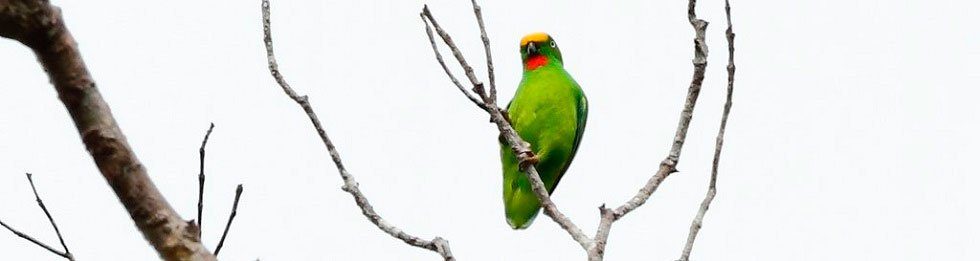
The head of the Palm Lorikeet (Charmosyna palmarum) is bright green, showing some red markings around the base of the bill, lores and the chin. The upperparts are bright green with a light washed olive brown through the mantle.

The wings are green. Under the greenish-gray wing coverts. The lower parts are bright green, more yellowish in the chin, the throat and the center of the belly (males sometimes also with some feathers red in the abdomen and the thighs). Tail Green with yellow in the Center and by the side of the feathers; below the tail is yellow.
Bill orange; cere orange; irises yellow; legs yellowish-orange.

In the females, Red in the face is reduced or absent. Immature similar to the female, but in general most off. Iris ochre-coloured. Bill yellowish brown.

Habitat:

The Palm Lorikeet It is distributed in the forests and wooded lands, more common in the foothills than in the lowlands, and mostly uninhabited cloud forests of the larger islands above 1.000 m. He travels a lot between feeding sites and is found in pairs or flocks in the tops of the trees, where its Green plumage blends with the surroundings when it feeds among the flowers.
In flocks, couples have been observed grooming are, indicating that the pair bond is maintained when the birds are in larger groups.

A constant chatter deals the presence of these parrots in their search for food.

Reproduction:

Breeding habits they are little known, but a nest with two chicks in Holy (Vanuatu), It was found, in December of 1961, in a branch of a hollow tree to 6 meters above the ground in the cloud to 1,600 m forests. altitude.
They appear in the lowlands of sporadically, especially when the Erythnna and sago palm they are in flower.

Food:

Feeds in the Palms, lianas, fig trees and shrubs, taking nectar, pollen, fruits and berries, and particularly fond with the sago palm (Cycas circinalis).

Distribution:

Size of the area of distribution (reproduction / resident): 11.300 km2

Distributed by Southwest of Polynesia in Vanuatu, the Duff Islands, Santa Cruz Islands and Banks Islands.
Range seems to expand and contract, and it has been speculated that this may be related to the effect of cyclones, or sporadic colonies as a result of blooms. These may include, in Vanuatu It was noted from fate in 1879 for the first time in 30 years, and was still present there in the decade of 1930, but by the Decade of 1960 had disappeared.

Has also been recorded in Vanuatu from Holy Spirit, Aoba, Maewo, Pentecost, Malakula, Ambrym, Paama, Lopévi, Tongoa, EMAE, Nguna, Eromanga, Tanna and Futuna; in Banks group in Santa Maria. Ureparapara, Vanua Lava Lava and Mere; and in the Group of Tinakula Santa Cruz, Utupua and Vanikoro.

Conservation:


Vulnerable


• Current IUCN Red List category: Vulnerable

• Population trend: Decreasing

The total size of the population It is estimated that it will fall within the band of 1,000-2,499 mature individuals.

Avian malaria, the cyclones and the natural cycles are suggested causes of the fluctuating range. Lowland forests, especially in small islands with high populations human, It is clearing for agriculture, domestic demand for timber and commercial logging, avoiding this kind of habitat can be regularly used by this species.

"Palm Lorikeet" in captivity:

Very rare poultry.

Alternative names:

Palm Lorikeet, Green Palm Lorikeet (ingles).
Lori des palmiers (French).
Palmenlori (German).
Lori Palmero (español).

scientific classification:

Order: Psittaciformes
Family: Psittaculidae
Genus: Charmosyna
Scientific name: Charmosyna palmarum
Citation: (Gmelin, 1788)
Protonimo: parrot trees

Images "Palm Lorikeet"

————————————————————————————————

"Lori Palmer" (Charmosyna palmarum)


Sources:

Avibase
– Parrots of the World – Forshaw Joseph M
– Parrots A Guide to the Parrots of the World – Tony Juniper & Mike Parr
– Birdlife

Photos:

1 – taenos

▷ The world of Pets: Dogs, cats, birds, reptiles, amphibians

Orange-fronted hanging parrot
Loriculus aurantiifrons

Loriculo Bean

Content


Anatomy-parrots

Description

It measures each 11 cm.. length and a weight between 13 and 16 g..

Hanging-Papu

The head of the Orange-fronted hanging parrot (Loriculus aurantiifrons) is green, with the front of the crown yellow (sharp demarcation of the green in the crown rear). Upperparts green, with rump and uppertail-coverts bright red; sides rump with yellow marks. Wings Greens with vane internal to the flight feather blackish. Blue with green Underwing coverts. Chin red, rest of the underparts are slightly more yellowish than upperparts (especially coverts). Timoneras pens Green with tips yellow; undertail bluish.

Bill black; Iris whitish; legs brownish black.

Female has the face and the part front of it crown Green with red and pale blue feathers. Spada Red more small that it's the male. Iris brown.

The young birds lack of the crown and throat red. Bill brown.

Description 3 subspecies

  • Loriculus aurantiifrons aurantiifrons

    (Schlegel, 1871) – Nominal


  • Loriculus aurantiifrons batavorum

    (Stresemann, 1913) – Male with less yellow in forecrown. Female similar to nominal.


  • Loriculus aurantiifrons meeki

    (Hartert, 1895) – The male as of the subspecies batavorum but slightly larger. Female also similar to nominal but larger and bases of feathers on the front of the crown, yellow-brown color.

Habitat:

The Orange-fronted hanging parrot they are distributed in the low jungle to a altitude approximate of 1.200 m (from time to time to 1.000 m), along the edges of forests, in palm plantations, areas of secondary growth, casuarinas, pines, gardens and partially cleared areas.

The species is inconspicuous and usually difficult to detect, except when they are called among them, Since it flies above the canopy. It is usually found in groups of two to four members, foraging at various levels in the forest.

Birds perch on occasions in a branch and sing (possibly part of their courtship behavior).

Reproduction:

Guidelines of nesting you have registered between July and October, and it is said that on one occasion a bird was found incubating four eggs in a hole to 12 meters above the ground. The birds have also been observed visiting holes in arboreal termite, perhaps to rest.

Food:

Is them has observed entering their peak next to the needles of casuarinas, probably in search of Lerp insects. The diet also includes outbreaks, fruits and flowers.

Distribution:

Size of the area of distribution (reproduction / resident): 576.000 km2

Widely distributed, Although not particularly continuously, through much of the lowlands of New Guinea, in both Irian Java, Indonesian, and Papua New Guinea, Although it can be absent from most of the Center-South of the big island.

Its small size, coloration and habits make difficult his observation. Field work are running that the species is continuing in the North and South of New Guinea with the clinal variation in size. The range includes the following islands of the coast: Misool, Waigeo, Karkar, Fergusson and Goodenough.

Distribution 3 subspecies:

  • Loriculus aurantiifrons aurantiifrons

    Nominal.


  • Loriculus aurantiifrons batavorum

    Waigeu, West of the papua islands, and Northwest of New Guinea, East Coast region North of Sepik River, North of Papua New Guinea, and the South coast of Setekwa River, Irian Jaya.


  • Loriculus aurantiifrons meeki

    Fergusson, Goodenough, Karkar Islands (Papua New Guinea), and this from New Guinea, from the coast north to the West of the region of Sepik River, and in the South West area of lowland up to the region of Fly River, and possibly in the vicinity of Irian Jaya.

Conservation:


minor concern


• Current IUCN Red List category: Least concern.

• Population trend: Stable.

The world population of the Orange-fronted hanging parrot It has not been quantified, Although it is suspected that it may be most of 100.000 specimens and are considered stable and locally common (pit et to the. 1997).

The population is suspected to be stable in the absence of evidence of any reduction or substantial threats.


"Orange-fronted hanging parrot" in captivity:

extremely rare.

Alternative names:

Orange-fronted Hanging-Parrot, Bat Lorikeet, Golden-fronted Hanging-Parrot, Misool Hanging-Parrot, Orange fronted Hanging Parrot, Orange-fronted Hanging Parrot, Papuan Hanging Parrot, Papuan Hanging-Parrot (ingles).
Coryllis à front orange (French).
Goldstirnpapageichen, Grünstirnpapag (German).
Lorículo Papú (español).


scientific classification:

Hermann Schlegel
Hermann Schlegel

Order: Psittaciformes
Family: Psittaculidae
Genus: Loriculus
Scientific name: Loriculus aurantiifrons
Citation: Schlegel, 1871
Protonimo: Loriculus aurantiifrons

Images "Orange-fronted hanging parrot"

«Papú Loricle» (Loriculus aurantiifrons)


Sources:

Avibase
Parrots of the World – Forshaw Joseph M
Parrots A Guide to the Parrots of the World – Tony Juniper & Mike Parr
Birdlife

Photos:

(1) – Rockjumper
(2) – hbw

▷ The world of Pets: Dogs, cats, birds, reptiles, amphibians

Yellow-capped Pygmy-Parrot
Micropsitta keiensis

Yellow-capped Pygmy-Parrot

Content


Anatomy-parrots

Description

9,5 cm. length between 11 and 14 g. of weight.

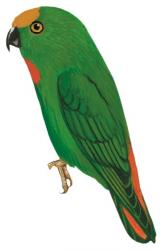
The crown of the Yellow-capped Pygmy-Parrot (Micropsitta keiensis) is yellow ocher, with a warm brown in forecrown; lores, chin and area under the eyes, brown; coverts outpus, dark green, tending to lighter green on cheeks and throat.

Upperparts, dark green with center at wing-coverts and feathers of black color with a black colored margin extrecho; flight feather black with vane Green external; feathers wings green. The underparts are yellowish-green, with fine dark stripes; undertail-coverts yellow and green. Upper, the tail It is iridescent, slightly greenish blue in the Center, Foreign feathers blackish with yellow spot on the ends. Under, the tail dark blue and yellow.

Bill dark grey; irises brown; legs dark gray.

Both sexes similar.
Immature like females but with bill pale yellow.

Description 3 subspecies

  • Micropsitta keiensis keiensis

    (Salvadori, 1876) – the subspecies nominal.


  • Micropsitta keiensis viridipectus

    (Rothschild, 1911) – Similar a nominal, but darker.


  • Micropsitta keiensis chloroxantha

    (Oberholser, 1917) – The mature more muted. The underparts with red markings male, dyed yellowish in female.

Habitat:

Yellow-capped Pygmy-Parrot

It inhabits in the forests of lowlands, in secondary growth and, sometimes around inhabited areas and coconut trees. The ecology species is similar to that of the Buff-faced Pygmy-Parrot. The birds are alone, in pairs or in small groups, and they can be distributed by undergrowth to some 20 meters above the ground. They climb on trunks and branches, and they can go down head, in inverted position, sometimes.

Reproduction:

Nest and roost Termites in tree cavities, they excavate the cavity by themselves; tunnel passageways go up and may bend before reaching nest-chamber. up the laying two white eggs deposited in a cavity unlined (dimensions around 20 cm x 15 cm.), and they can be occupied by other adults roost (up to four) during the breeding season. The exact role of these visiting birds is unknown, It is thought that they can help with the tasks of nest. nesting It has been recorded from October to March

Food:

With feed lichen, fungi, seeds, fruits and insects. Most of the lichen is collected directly from the surface of the bark of trees..

Distribution:

Size of its range (breeding/resident): 763.000 km2

The Yellow-capped Pygmy-Parrot is distributed among the papuan islands, in the West area, including Waigeo, give, Kofiau, Salawati and Misool; through Vogelkop and Onin Peninsula (Province of West Papua); in the Kai and islas Aru, and in the South of New Guinea between Mimika and the fly river. The species is common to local scale.

Distribution 3 subspecies:

Conservation:


minor concern


• Current IUCN Red List category: Least concern

• Population trend: Stable

The size of the world population It has not been quantified, It is estimated over the 100,000 specimens.

The species, according to sources, It is considered very common within its range (pit et to the. 1997).

The population suspected to be stable in the absence of evidence of any reduction or substantial threats.

"Yellow-capped Pygmy-Parrot" in captivity:

Not usually survive in captivity.

Alternative names:

Yellow-capped Pygmy-Parrot, Yellow capped Pygmy Parrot, Yellow-capped Pygmy Parrot (ingles).
Micropsitte pygmée (French).
Gelbkappen-Spechtpapagei (German).
Micropsitta keiensis (Portuguese).
Microloro de Kai, Microloro de las Kai (español).

scientific classification:

Order: Psittaciformes
Family: Psittaculidae
Scientific name: Micropsitta keiensis
Citation: (Salvadori, 1876)
Protonimo: Nasiterna keiensis

Images "Microlyro of the Kai":

Videos "Microloro de las Kai":

————————————————————————————————

Yellow-capped Pygmy-Parrot (Micropsitta keiensis)


Sources:

Avibase
– Parrots of the World – Forshaw Joseph M
– Parrots A Guide to the Parrots of the World – Tony Juniper & Mike Parr
– Birdlife

Photos:

(1) – Parrot-birds – link
(2) – « NasiternaPygmaeaFKeulemans » par John Gerrard KeulemansOrnithological Miscellany. Volume 1. Licensed public via domain Wikimedia Commons.

Sounds: Hans Matheve (Xeno-canto)