Origin: Peru, Guyana, Brazil, Venezuela, Colombia, Ecuador, Bolivia
Character: Divertida.
Life expectancy: 30 to 40 years
Height: 21 to 23 cm..
Content
Description:
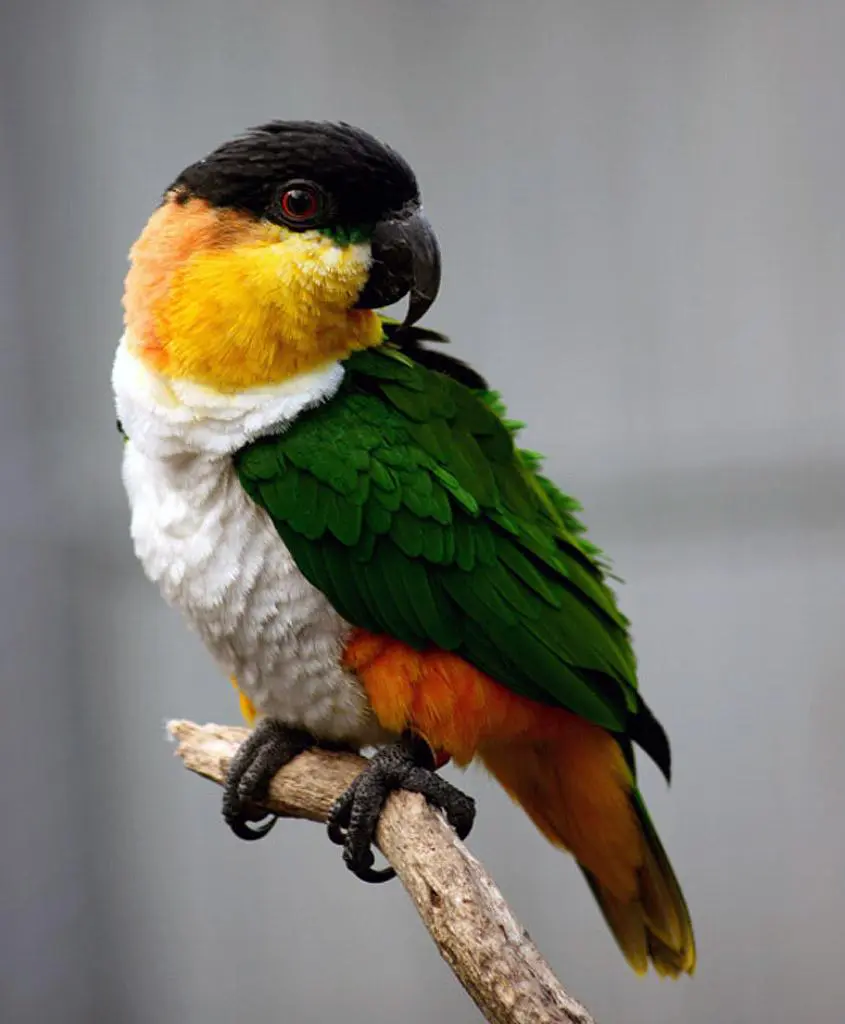
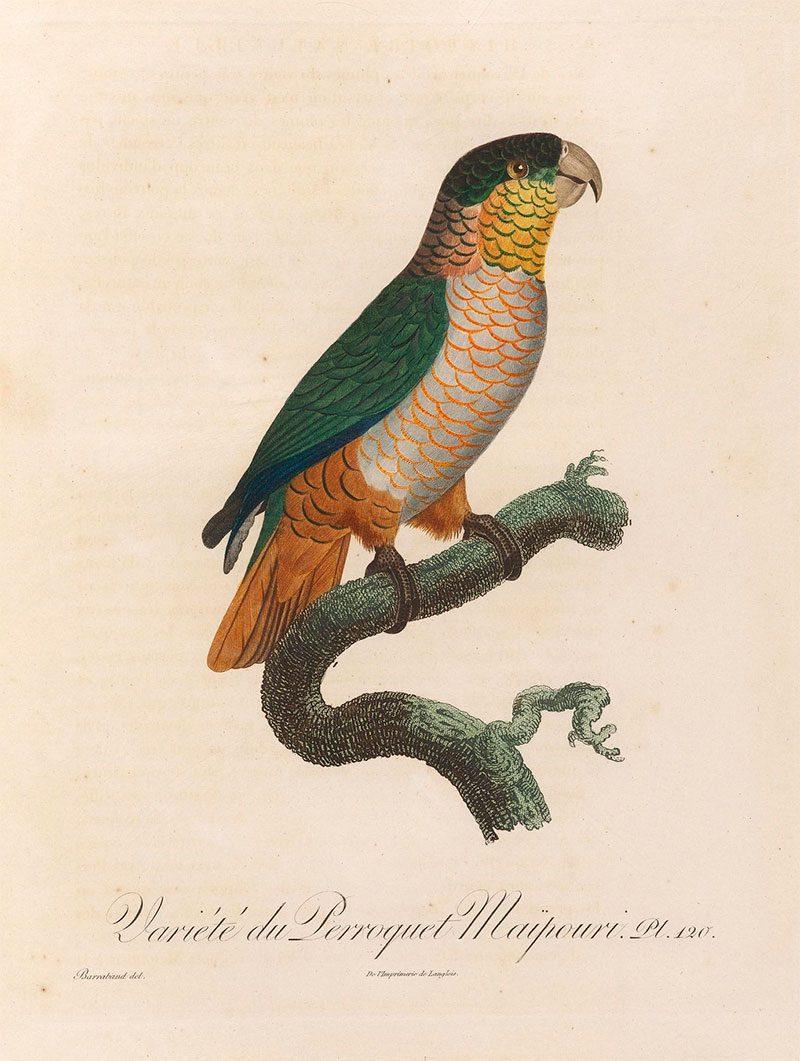
The Black-headed Parrot(Pionites melanocephalus) measures of 21 to 23 cm.. height.
Unmistakable by crown black, chest and belly white, the latter with yellow sides (very visible on the fly). Breast
bright yellow, nape orange acanelada, back and rump green. Tip pens of wings They are blue and dark go the closer they get to the body.
Legs and bill dark gray.
The youth They have bluish green spots on the nape, with chest and belly yellowish.
There is no sexual dimorphism in this species. The identification of genus must be performed by DNA testing or a surgical probe.
(Berlepsch, 1890) – It has bright yellow in the throat, the thighs and tail.
Habitat:
It inhabits humid jungles, semi-wet, swampy, gallery woods, stubble and crop to the 1000 m. Walks in small flocks between 3 to 10 individuals, feed in the canopy, very rare in stratum low forest.
Reproduction:
Its laying is of 2 to 4 eggs and the breeding season It is from December to February in French Guiana, april in Venezuela, April to May Colombia, October to November Suriname.
Food:
Feeds of seeds several species of plants cellulose, plants, flowers and leaves. There is also evidence of some insects in your diet.
Distribution:
She can be seen in the wild along the Amazonia, from the North of the Amazon River, bordering south to northeastern Peru, also in the Guyanas.
(Berlepsch, 1890) – South of Colombia to the East of Ecuador and northeast of Peru.
Conservation:
State of conservation ⓘ
Minor Concern ⓘ(UICN)ⓘ
Although not in danger of extinction Its population has declined significantly. The illegal marketing is the main theory against its appearance and adaptation in an environment foreign to its natural environment. Poaching of pigeons and felling of trees are common in the south of the country.
"Black-headed Parrot" in captivity:
Popular poultry farming. They adapt easily to the bird or Aviary cages. You need a degree quite high commitment and attention by the owner. The like to interact with other birds and people. The love to play with toys and can be quite noisy. An interesting feature of the Black-headed Parrot It is their habit of rolling on his back and play with toys help of their paws.
He manages to replace their jungle habitats in parks or green areas of large cities.
Its price is quite high compared to other species due to its striking plumage and friendliness..
Alternative names:
– Black headed Parrot, Black-crowned Parrot, Black-headed Caique, Black-headed Parrot(English)
– Cotorra pechiblanca, Loro cacique o Loro mocho (Colombia)
– Perico calzoncito (Venezuela)
– Loro coroninegro (Ecuador)
– Chirricles cabeza negra (Peru)
– Grünzügelpapagei, Grünzügel-Papagei (Germany)
– Lorito Chirlecrés, Lorito Chirlicrés, Lorito Gordo de Cabeza Negra (Spain)
– Caïque à tête noire, Caïque maïpouri (France)
– cabeça-preta, maipuré, marianinha-da-cabeça-preta, Marianinha-de-cabeça-preta (Brazil)
The head of the Caica Parrot(Pyrilia caica) totally black is it more distinguishable from this species, together with a collar Golden cafesoso that extends up to the chest.
The rest of the body usually Green, more clear in the belly and the inside of the tail; wing
with blue stain and dark ends, Tip of the tail black.
Bill color bone; ring eyepiece bare of color grey pale; Orange irises.
The youth with crown green, face Dark greenish yellow, and collar not very notorious gold in neck and almost absent in chest.
Sound of the Caica Parrot.
Habitat:
Inhabits little disturbed humid forests, firm ground, in Tepuis, from the 50 to the 1100 m. gregarious, They walk in small groups. They feed in the canopy of the forest.
Reproduction:
Currently with little information about the reproduction.
Food:
In the wild, It believes that its diet consists mainly of eucalyptus flowers, fruit, nectar and pollen.
Distribution:
Can be observed in the South-East of Venezuela, Guyanas and northeast of the brazilian amazon.
Conservation:
• Red List category of the UICN current: Near-threatened
• Population trend: Stable
Justification of the population:
The size of the world population Caica Parrot It has not been quantified, although this species is described as 'rare’ (Stotz et to the., 1996).
Justification trend :
This species is suspected that it may lose 13,6-17,2% of habitat within its distribution over three generations (21 years) based on a model of deforestation of the Amazonia (Soares-Filho et to the., 2006, Bird et to the. 2011).
Given the susceptibility of this species to the hunting and/or entrapment, It is suspected that its population will decrease at a rate close to the 30% in three generations.
"Caica Parrot" in captivity:
They adult acclimatised quite easily to a new environment and are very resistant … Conversational skills (in comparison with other species).
They are very quiet in an Aviary, with a personality friendly and Gentile. They are very sociable and it should be with a partner or in a group environment. In any way, It is not easy to see to the Caica Parrot in captivity.
The Black-winged Parrot(Hapalopsittaca melanotis) is distinguishable by the head almost all greyish blue, with blue-billed, ochre around the eye and back of the same black spot defined. Wings with large black patch and purple-blue ends; the tip of the tail blue. The subspecies Hapalopsittaca melanotis peruvianahead green, with the spot towards the back of the eye dark orange.
Habitat
Rare, Although most abundant in Bolivia. It lives in temperate inter-Andean valleys and humid montane forests., between 1500 to 2500 m.. (Occasionally a 3450 m.. in Peru). Usually in pairs or small groups. Seen mostly in pairs or in small groups of 3 to 25 birds. From time to time they gather in groups of up to 50 birds around their favored roosting.
Conservation
Not considered in any of the threat categories, It is very rare in captivity.
They have recorded for this species altitudinal migration, Depending perhaps on the fruiting, Since the fruit is their main source of food.
With reproduced in cavities of trees or places of nesting woodpeckers.
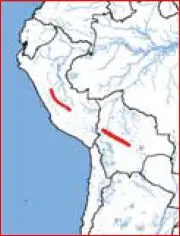
Inhabits intermittently to the East of the Andes, in the center of Peru and in the yunga of Bolivia.
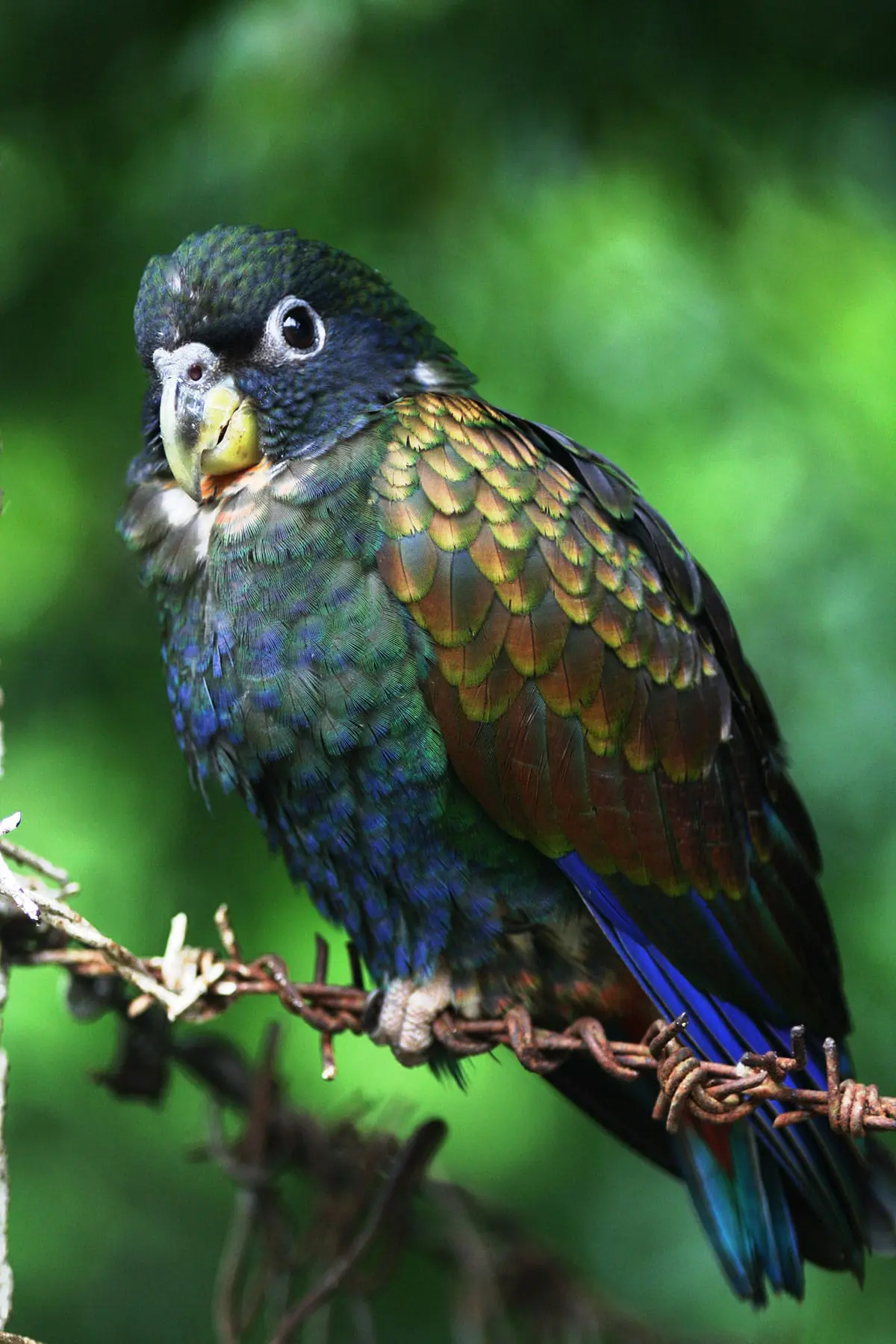
The Bronze winged Parrot(Pionus chalcopterus) has the general Brown, darker in head, neck, chest and flanks, This plumage with blue-violet edge.
The throat whitish and pink; wings bronze green.
Flight is evident violet blue at the top of the wing
the Green bottom, that contrasts with the Red of the lower abdomen. Dorsally Violet Blue is notorious in the rump, shoulder and tail. The feathers of the tail are dark blue with a shade of red at the base.
The bill is of color beige, area of naked skin surrounding the eyes of pink. The legs They are pink.
It inhabits in humid jungle, semi-humid, crops and forest edge between 120 and 2800 m.
They are birds gregarious and noisy. Every tomorrow is mobilized in flocks in search of food. Within the flocks are can observe to the couples, that form of life, and who interact with a variety of contact behaviors that reaffirm the marital bond.
Reproduction:
Prefer for their nests broken rods, hollow of logs and palm trees. They nest in the months of October-may. The female often put in two to four eggs they are incubated during three weeks approximately, after which are born them chicks naked or just covered with down. The chicks remain with their parents until the next reproductive shekel.
Food:
Will congregate in cornfields in groups up to of 40 individuals, feeding is of pulp and seeds many fruits and other material ingredients as nectar and flower petals, complementing occasionally its diet with insects.
Distribution:
Its population is distributed by the mountain range of the Andes, from Colombia, Northwest of Venezuela; to the South, by the mountains to the Northwest of Peru.
Conservation:
• Red List category of the UICN current: Least concern
• Population trend: Decreasing
The size of the population World of the Bronze winged Parrot It has not been quantified, but this species is described as ‘rare‘ (Stotz et to the., 1996).
The population was suspected of being in decline due to ongoing habitat destruction.
This species is characterized be decreasing in Colombia and West Ecuador, due to the logging of forest subtropical, which has been severe and quick on the slopes of the Andes (Juniper and Parr 1998).
The evident anecdotal, based on the frequency of sightings, suggests that the species has declined in Pineapples, South of Ecuador, in recent years c.15-20 (M. By D Sanchez. Díaz in litt. 2011). Also is says that has been extirpated from areas previously occupied as the slopes of them Andes and valleys of the Cauca and the Magdalena river in Colombia, again due to loss of habitat (Juniper and Parr 1998).
In Venezuela the species is scarce and local, limited, to a large extent, to the slope West of them Andes in Mérida and Sierra de Perija, with occasional records in Táchira (CJ Sharpe in litt. 2011). These areas have experienced rapid deforestation for at least the last few 24 years for cultivation and livestock.
Surveys conducted in the Northwest of Peru in the decade of 1990 they appeared to detect a sharp decrease in population from 1993 (Rosales et to the., 2007), although this species is known to be nomadic and its local numbers can fluctuate.
"Bronze winged Parrot" in captivity:
Rare in captivity, It is not a main target of poachers (CJ Sharpe in litt. 2011, R. Clay in litt. 2011), although it is still present in the illegal trade of Peru (F. Angle in litt. 2011)
Intelligent, playful and curious. You can be nervous, loving with your caregiver and aggressive with other people. It has a tendency to obesity.
It requires a spacious cage unless the bird pass periods of time outside of it. Not must keep is to open air where the temperatures fall below them 5 °C.
With feed a wide variety of seeds, fruits and berries.
It is a relatively healthy bird, While it may be more susceptible to infection aspergillosis that other species.
In captivity they lay two eggs the incubation takes 26 days.
Alternative names:
– Bronze winged Parrot, Bronze-winged Parrot (English).
– Pione noire, Pionus noir (French).
– Glanzflügelpapagei, Glanzflügel-Papagei (German).
– Curica-asa-de-bronze (Portuguese).
– Cotorra Oscura (Colombia).
– Cotorra Negra (Venezuela).
– Cotorra Oscura, Loro Alibronceado, Loro de Alas Bronceadas, Cheja alibronceada (español).
It lives in humid forest, of gallery and sheets, up to 1700m.
It can also be seen sporadically in coastal areas, possibly in response to food availability.
Reproduction Blue cheeked Parrot:
They walk in pairs or small groups of no more of 4 to 8 individuals.
Reproduction and feeding, there is little information.
In the wild, the breeding season occurs in March in Guyana. In captivity, the female lays 3 eggs that we do not know exactly the incubation period.
Food Blue cheeked Parrot:
We don't know the details of your menu, but it is assumed that they eat almost exclusively seeds, and berries.
Distribution Blue cheeked Parrot:
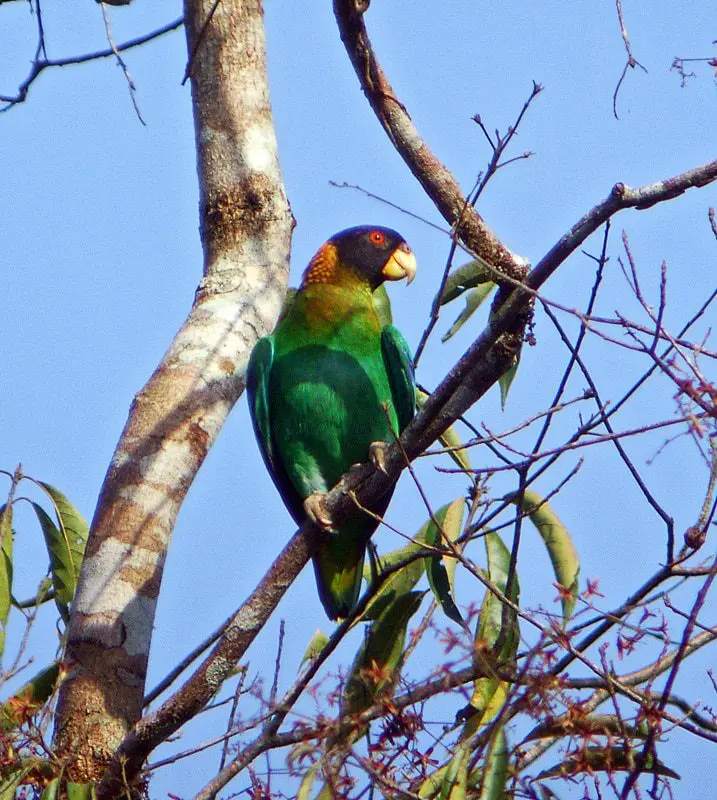
The Amazona dufresniana It is located in southeast Venezuela (Bolívar, with a record isolated on Amazon), Northern Guyana (north of 5°N), Northeast Suriname and French Guiana northeast (Y way Collar 1991).
There are reports of Para and Amapa, Brazil, where its occurrence seems likely, but there is no conclusive records (Y way Collar 1991, Collar 1995). The scarcity of records from frequently surveyed areas suggests that it is a low-density and rare species., at the least in parts of its range (Y way Collar 1991).
a Guyana, Healthy populations are known in the area in northwestern Aruka Guyana, between the Aruka and Amakuru rivers, the Kaieteur National Park and the Kuribong River, and the Iwokrama Forest Reserve (A. Narine a slightly. 2010)
Conservation:
State of conservation ⓘ
Near Threatened ⓘ(UICN)ⓘ
It is in the category of near threatened. (NT), due to habitat loss and illegal trade.
Classified as near-threatened (NT) on the IUCN Red list (1) listed in Appendix II of the CITES (4).
Conservation in March CITES Appendix II actions. Banded from Canaima National Park (Venezuela), Iwokrama forest reserve (Guyana) and the Brownsberg nature park (Suriname).
Blue cheeked Parrot in captivity:
Rare in captivity.
Placid temperament, seems less active than many Amazon.
Alternative names:
– Blue cheeked Parrot, Blue-checked Parrot, Blue-cheeked Amazon, Blue-cheeked Parrot, Dufresne’s Amazon, Dufresne’s Parrot (English).
– Amazone de Dufresne (French).
– Goldmaskenamazone, Granada Amazone (German).
– Papagaio-de-bochecha-azul (Portuguese).
– Loro de cachetes azules, Amazona Cariazul, Amazona de Cara Azul, Loro cariazul (español).
Origin: Panama, Brazil, Bolivia, Venezuela, Colombia, Ecuador, Guyana, Trinidad and Tobago, Peru
Character: active and smart
Life expectancy: 50 to 60 years.
Height: 35 to 41 cm..
Content
Description
35 to 41 cm.. height and between 380 and 500 g. of weight.
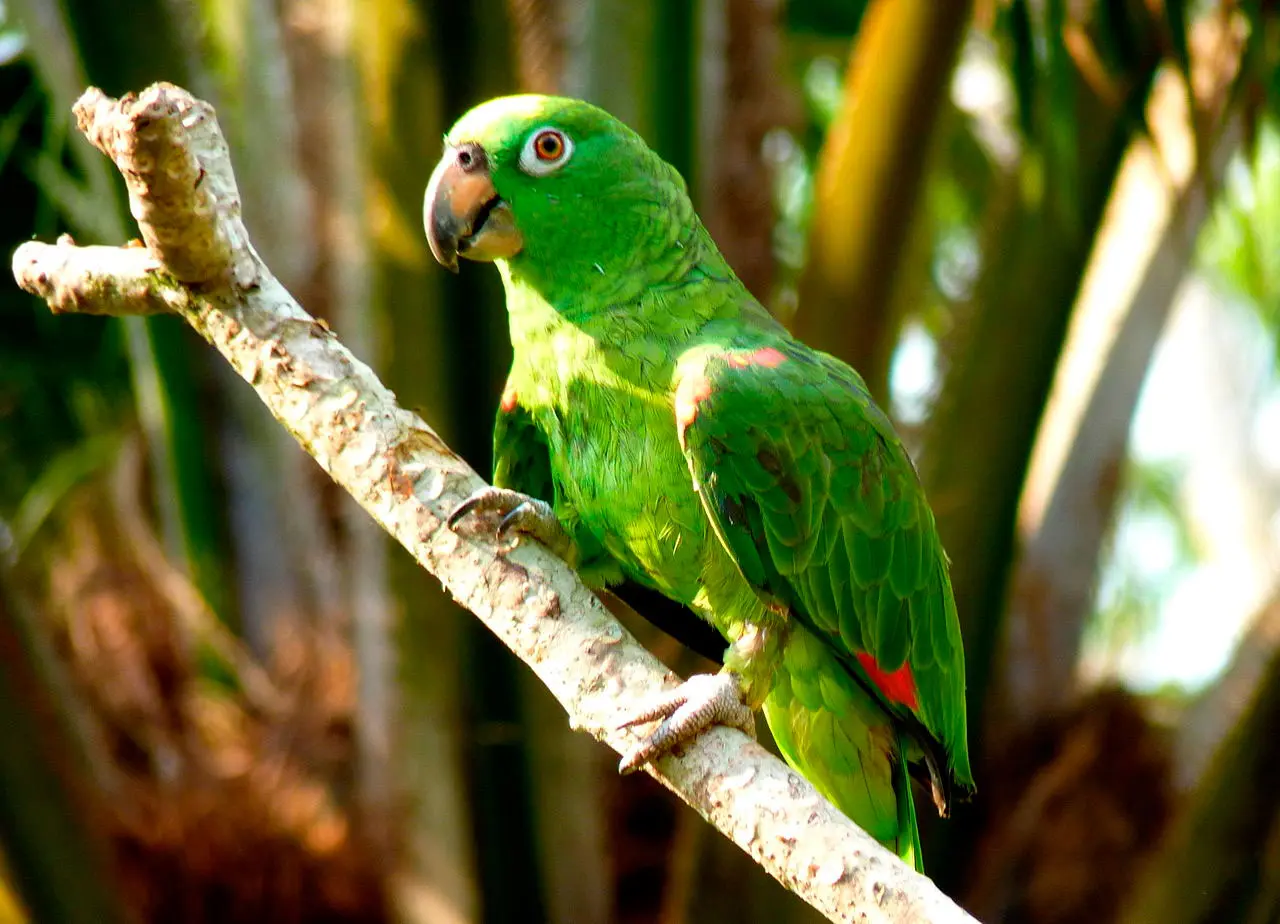
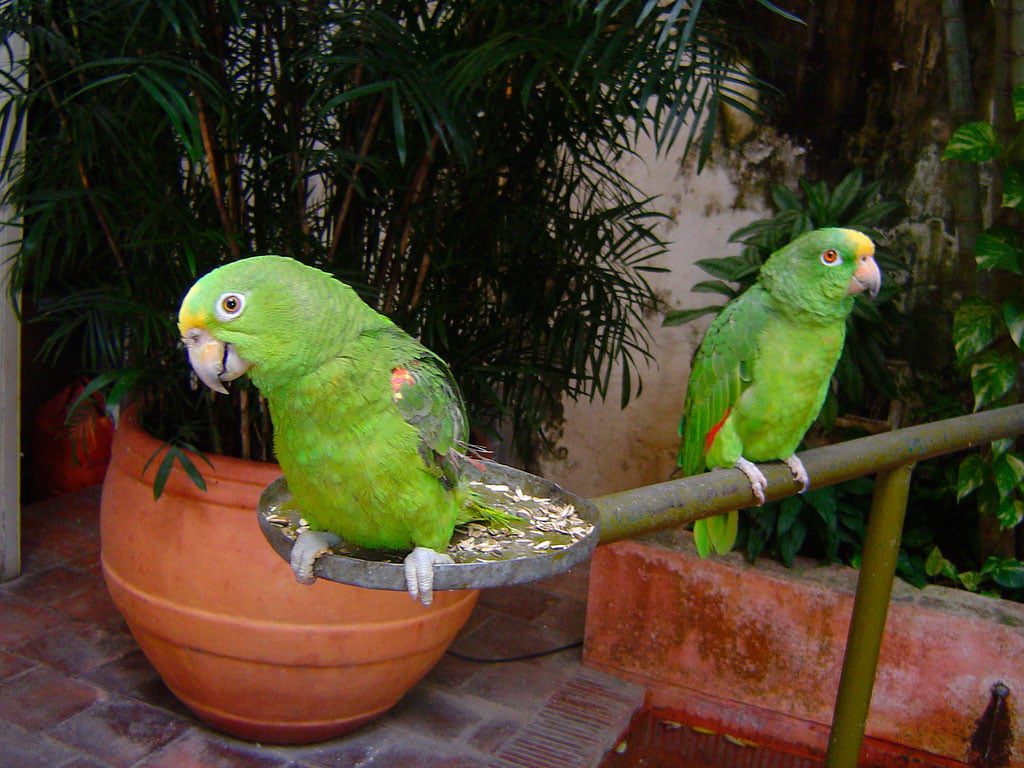
The Yellow-crowned Parrot(Amazona ochrocephala) has the forecrown and front area crown, bright yellow; lores, cheeks and supercilii area, green in most birds, but sometimes with yellow extending over lores and around eyes, and some birds with red bases hidden by yellow feathers crown; sides and back of the neck, nape and the mantle, green with dark margins, giving scalloped effect.
Upperparts green. coverts lower red, other coverts green; edge front of the wing
yellowish; five o'clock outer secondaries They are green with bright red to outerweb forming speculum; flight feather green with blue tips to secondaries and primary outerweb, dark to black in points. Underwing-coverts, dull green with blackish tips. Underparts green with plenty of blue in the chest; yellow feathers on the the thighs (often few and discrete).
Upper, the tail It is green with yellow stripes; below green with wide yellow ends; both with outer feathers basically red and a bluish puckered in outerweb.
Dark gray Bill, reddish at base of upper jaw; iris orange; legs grey.
Both sexes they are similar. The immature It has a narrower yellow patch on the head, stripes orange-red to yellow feathers crown; less red at the base of feathers tail; feathers of the tail more pointed and irises brown.
(Finsch, 1865) – Less yellow in the head that the nominal species, with frontal band green. Cheeks, supercilii area and lores with blue tint. Red curve wing
often mixed with yellow feathers.
(Cabanis, 1874) – Bill horn-colored pink, yellow feathers restricted as V in forecrown and front of the crown. Possibly average smaller than the nominal species.
Amazona ochrocephala xantholaema
(Berlepsch, 1913) – More extensive yellow in the head which extends to the back of the neck, around the eyes, to cheeks and to the ear-coverts. Often with frontal band narrow green. bluish tint in the chest.
They inhabit in open forests, moist forest edges, gallery forests, deciduous forest, open savannas and wetlands in lowland rain forests, also cultivated and suburban areas in some localities, and often near rivers.
The gallery forest It is your preferred Panama where Yellow-crowned Parrot avoid continuous humid forest, being replaced, possibly, there and in many areas of South America, by the Orange-winged Parrot(Amazona amazonica).
Usually observed in the lowlands; reported to 500 metres in Colombia and Venezuela and a 750 metres in Honduras. Usually in pairs or small flocks of 10-30 birds, with occasional gatherings up 300. Birds gather in common trees.
Reproduction:
Son Monogamie, couples joined in for life.
His time of reproduction It is from December to May. During this time, they lay clutches of 2 to 4 eggs, only Por those Nidada Tempordaa. Nest palm trunks and termite mounds.
It takes about 25 days for the eggs to hatch and near 56 days to become fledglings. The young become independent 2 months after hatching. Both male and female Yellow crowned Parrot reach sexual maturity around the 3 years.
Food:
Foods reported in the diet include fruit Immature American Curatella, Pereskia guamacho and other Cactus. Mainly feeds on treetop.
It is considered a plague in some localities for their love of eating bananas (Mussa paradisea), handles and Corn crops.
This species is considered a pest in some areas by his fondness for the consumption of bananas (Mussa paradisea), mangoes and corn crops.
Distribution:
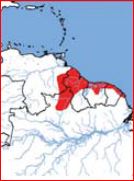
Size of its range (reproduction / resident): 8.010.000 km2
The Yellow-crowned Parrot are in Panama, in Central America and in South America, from south to east Brazil and to the North of Bolivia.
Observed in the eastern foothills of the Andes and adjacent lowlands Colombia; eastward across the tropical zone Venezuela and south, from the coastal mountains through Bolívar (where apparently it is not known from south) and amazon, until Guyanas and Trinidad (where their status is uncertain due to the captive birds introduced).
Present in the basin Amazonas Brazil, to the south, to the Northwest of Mato Grosso and west, in the lowlands of eastern Ecuador and through the Peruvian Amazon, to the North of Bolivia.
Apparently residents throughout its distribution area. very small numbers in Panama, although locally fairly common, especially in those areas more dry; it is the most common parrot (at least once) in the San Blas Islands. generally common (even locally abundant) in South America, but the numbers are reduced in the more accessible areas due to trade.
Distribution 4 subspecies
Amazona ochrocephala nattereri
(Finsch, 1865) – South of Colombia in Caqueta, is of Ecuador, is of Peru, West of Brazil and North of Bolivia. Possibly integrated with nominal species in border areas Goal and Caquetá in Colombia.
Amazona ochrocephala ochrocephala
(Gmelin, 1788) – Nominal. It is from Colombia, Venezuela, Trinidad, Guianas and North of Brazil south to the tributaries of the lower margin right amazon in amazon and For.
• Current category of the Red List of the UICN: Least concern.
• Population trend: Decreasing.
This species is considered at present as minor concern BirdLife International, and, as a result, also by UICN.
Even though the populations it is believed that are in decline, still do not approach the threshold specified by BirdLife International to evaluate the species as Near-threatened.
It is listed in the Appendix II of the CITES.
The Yellow-crowned Parrot in captivity:
Known for his pranks and excellent skills imitate the human voice. Having said that, the ability to mimic will vary between birds and although many of them are excellent conversadoras, Some will never come to talk. These Amazons are generally affectionate. Its friendly and playful nature make them excellent pets.
Son easily domesticable and easy to train. Known to be very active, What makes them more suited to an environment that enables them to fly.
Son known for their voices. It is said that it is the strongest of all Amazon parrots. People who are not tolerant to noise, they will do well to live with this Parrot.
like most parrots, this horsewoman it can be very destructive. We must "personalize their environment" by providing them with objects to chew such as different toys and branches.
Its longevity should also be a consideration. These parrots They can live between 60 and 80 years.
Alternative names:
– Yellow crowned Parrot, Yellow-crowned Amazon, Yellow-headed Amazon, Yellow-headed Parrot (English).
– Amazone à front jaune, Amazone à tête jaune, Amazone verte de Colombie (French).
– Gelbscheitalamazone, Gelbscheitelamazone, Panama Amazone, Surinamamazone (German).
– papagaio-campeiro, ajurú-apara, papagaio-de-Suriname (Portuguese).
– Amazona Real, Cotorra Cabeciamarilla, Lora Cabeciamarilla, Lora coroniamarilla, Lora Real (español).
avibase
Parrots of the World – Forshaw Joseph M
Parrots A Guide to the Parrots of the World – Tony Juniper & Mike Parr Birdlife
Parrot Book, Parrots and macaws Neotropical
Photos:
(1) – A pet Yellow-crowned Amazon in Puerto Maldonado, Peru By Kate from UK (Lola) [CC BY-SA 2.0], via Wikimedia Commons
(2) – A pet Yellow-crowned Amazon By Freegiampi (From Giuseppe's farm) [CC BY-SA 2.5], via Wikimedia Commons
(3) – Yellow-crowned Amazon or Yellow-crowned Parrot (Amazona ochrocephala) in captivity By Stephen Joyce from barcelona, Spain (Parrot) [CC BY-SA 2.0], via Wikimedia Commons
(4) – Yellow-crowned Amazon or Yellow-crowned Parrot (Amazona ochrocephala) in captivity in the Parrot’s Garden (Jardim dos Louros), in the Botanical Garden of Funchal, Madeira island, Portugal By jmaximo [CC BY 2.0], via Wikimedia Commons
(5) – A Yellow-crowned Amazon in Gatorland, Florida, USA By greyloch from Washington, DC, area, U.S.A. (green parrot preening) [CC BY-SA 2.0], via Wikimedia Commons
(6) – Amazona ochrocephala panamensis, Panama Amazon (also known as the Panama Yellow-headed Amazon); two in captivity By TJ Lin (originally posted to Flickr as DSCN1005) [CC BY-SA 2.0], via Wikimedia Commons
(7) – A Yellow-headed Amazon (or Parrot) near the Brazil-Peru-Colombia triple junction By Dick Culbert from Gibsons, B.C., Canada (Amazona ochrocephala) [CC BY 2.0], via Wikimedia Commons
(8) – A Yellow-crowned Amazon at Bloedel Floral Conservatory, Vancouver, Canada By Karen Neoh (Parrot) [CC BY 2.0], via Wikimedia Commons
(9) – Yellow-crowned Amazon or Yellow-crowned Parrot (Amazona ochrocephala) in a tree in Venezuela By Rufino (originally posted to Flickr as camouflage) [CC BY-SA 2.0], via Wikimedia Commons
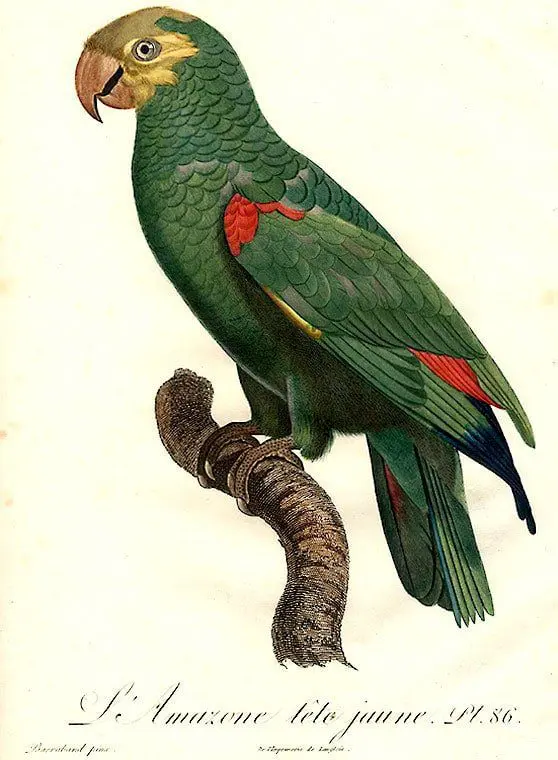
(10) – Amazona ochrocephala From Natural History of Parrots (by Francois Levaillant, 1801-1805) – Wikimedia
Origin: Brazil, Colombia, Ecuador, French Guiana, Guyana, Peru, Suriname, Venezuela
Character: active and playful.
Life expectancy: 30 to been
Height: 35 a 41cm.
National Zoo - Washington DC
Content
Description
35 to 41 cm.. height and between 190 and 277 g. of weight.
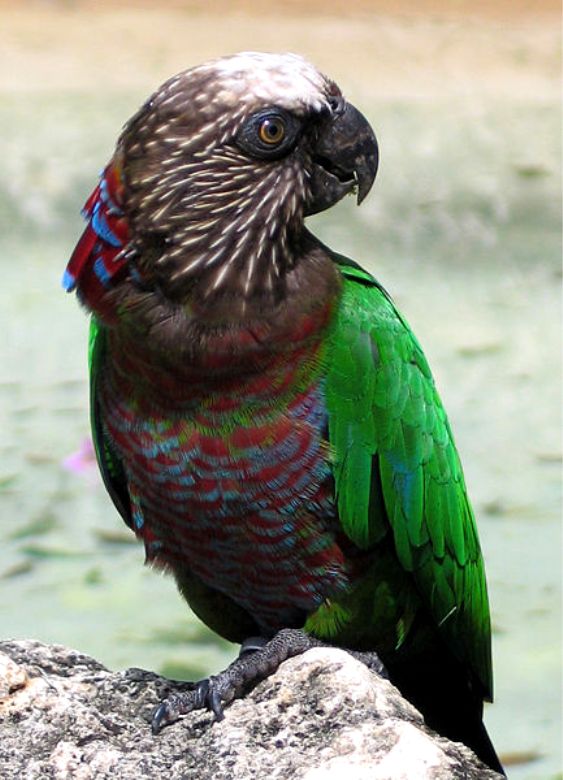
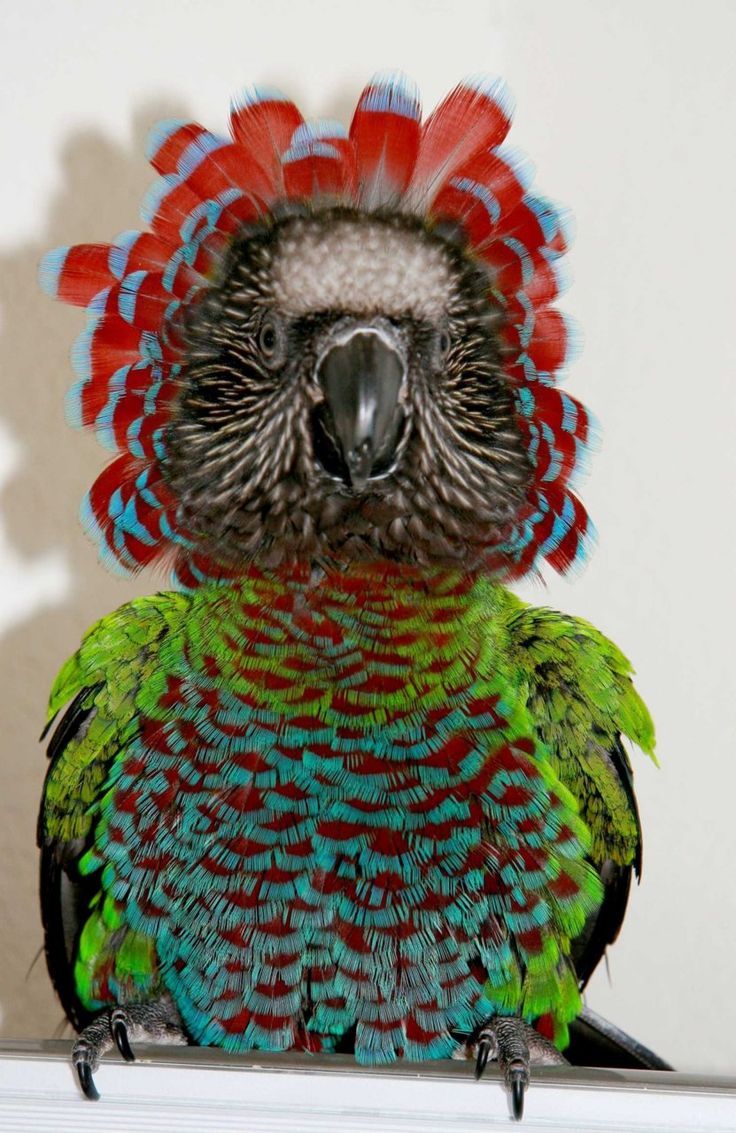
The Red fan Parrot(Deroptyus accipitrinus) is unmistakable for its showy colours. Has the forecrown and crown yellowish white, fading is back to Brown with striped pale in the part back from the neck and a bordered of feathers elongated in form of collar of color red Bordeaux in its base and blue bright in the tips; lores brown; cheeks, throat, sides neck and supercilii area, brown, strongly striped with shades yellow.
The upperparts are green. The under wing-coverts medium-sized and small are green; primary coverts of color blue dark dark. Primaries blackish, secondaries Green with dark tips. Under, the wings green, flight feather blackish. Sides of chest and belly green; center of chest and the belly red Bordeaux with blue tips, creating an effect bleached blue and Red, sometimes with a little bit of green, especially in the part superior of the chest; the thighs and undertail-coverts green. Upper, the tail green with blue tips, outer feathers with blue in the outerweb and Red hidden in the base of the innerwebs; undertail, the tail black. Bill blackish, paler at the tip; cere black; yellow the irises; legs dark grey.
It is not possible to determine the sex safely by their appearance.
Immature has lower jaw of color Horn and a rainbow Brown warm.
The Red fan Parrot living in the jungle tropical of land low, preferring the formations of land firm, including the ground slightly wavy or of the hills (perhaps due to a greater diversity of plants of which is fed). Apparently prevents them forests and marshes, edge of forest and clear, but there is a report of birds in forest flooded in the drainage of Morona River, Peru, and feeds mainly on riverine forests in Venezuela. Only comes to them 400 meters in the southeast of Colombia and a 200 metres in Venezuela.
Not is very gregarious, are distributed in pairs or small groups of 3-4. On rare occasions, until 10. Pre-breeding aggregations appear to break up into pairs or trios at the onset of nesting. Rest in the cups give the trees in small groups (Perhaps alone in tree cavities). It feeds mainly in the canopy.
Not are very sociable. They show an appearance of Raptor, Deploying the feathers of the back of the head fan.
Reproduction:
Nest in tree holes, including an old nest of Woody Woodpecker, for example of a Woodpecker grebes (Campephilus rubricollis). The rapid flapping of wings, followed of a mild decline of sliding, they give a deeply undulating display flight during the breeding period. Breeding March-June, Venezuela; January-March, Guiana; February-April, Suriname; December-February, Brazil. Clutch 2-3 in captivity.
Size of the area of distribution (reproduction / resident): 4.240.000 km2
Discontinuous. Amazonia, from the South of Venezuela to the northeast of Ecuador and Peru, the Guianas and Amazonia Brazil.
Distribution 2 subspecies:
Deroptyus accipitrinus accipitrinus
(Linnaeus, 1758) – Nominal. From the South-East of Colombia to Venezuela, the Guianas; Northeast of Peru and North of Brazil.
Deroptyus accipitrinus fuscifrons
(Hellmayr, 1905) – Brazil, to the South of the amazon rivers (from For to the North of Mato Grosso) possibly Bolivia.
Conservation:
• Current category of the Red List of the UICN: Least concern.
• Population trend: Decreasing.
Justification of the population
The size of the world population It has not been quantified, but this species is described as «quite common» (Stotz et to the., 1996).
Justification of trend
It is suspected that this species has lost 24-31.3% of habitat suitable within their distribution during three generations (23 years) based on a model of Amazon deforestation (Soares-Filho et to the., 2006, Bird et to the., 2011). But, given the tolerance of the species to the effects of fragmentation / degradation / edges and / or the magnitude of the losses global, It is suspected that will decrease in <25% en tres generaciones.
"Red fan Parrot" in captivity:
The Red fan Parrot or Parrot Hawk is a bird very Intelligent, playful and very beautiful. However and, Despite its undeniable appeal, It is not ideal to have captive species. Are extremely nervous and in occasions this is translated in that is start or bite them feathers or even can get to self-harm is.
Are parrots extremely noisy and having a copy inside the house does not seem too tolerable and yes, a tough test for our patience.
46 to 51 cm.. height and between 400 and 500 g. of weight.
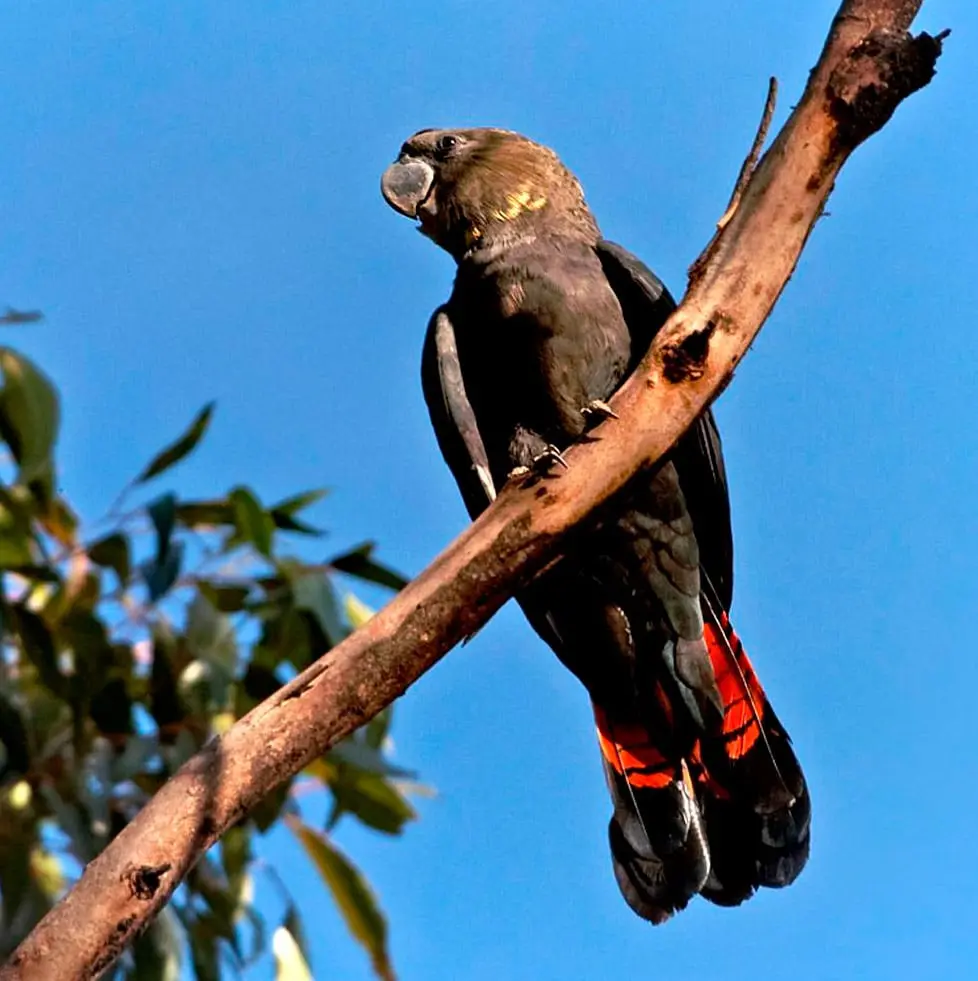
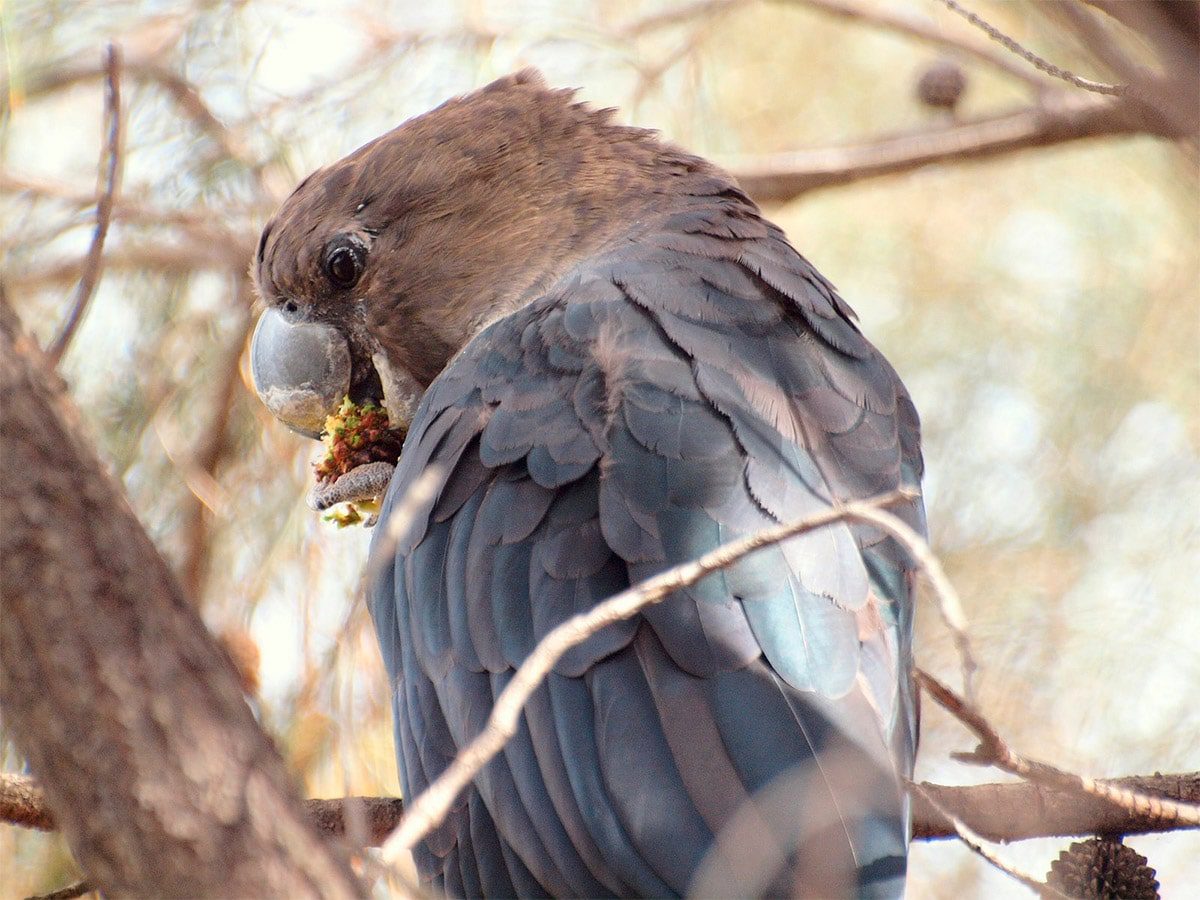
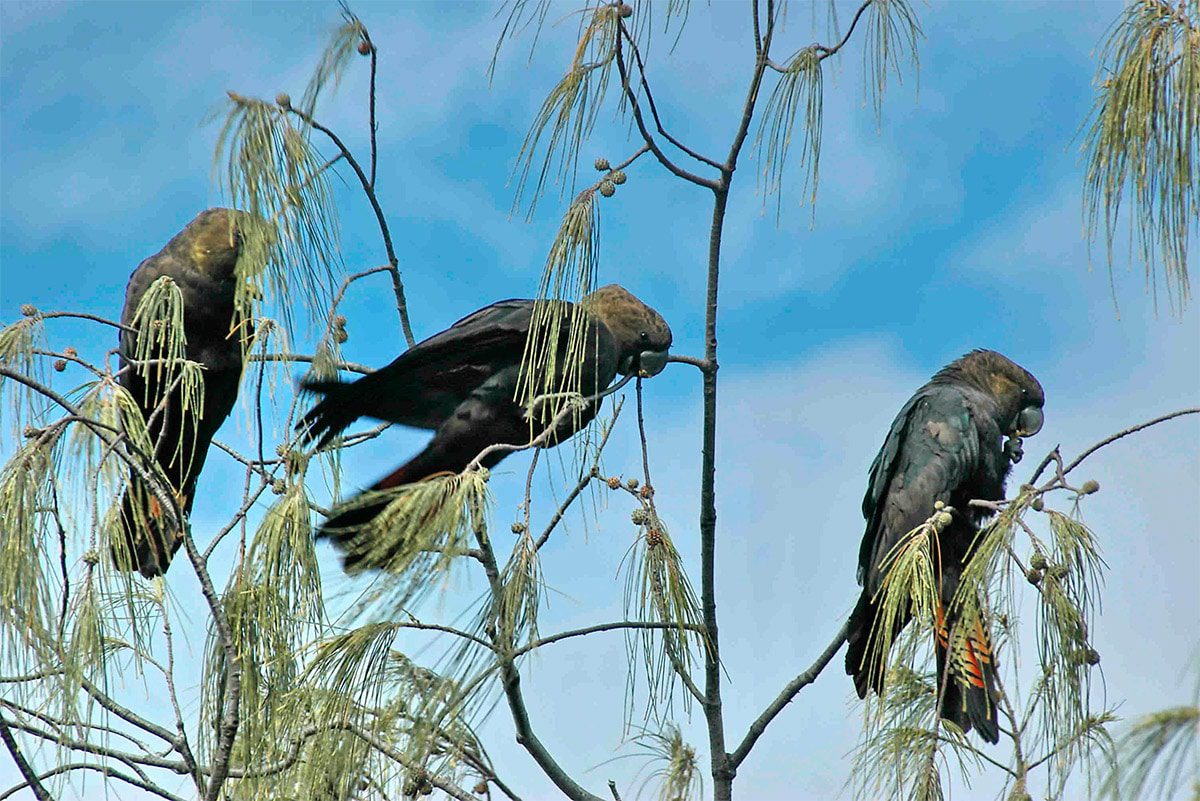
The Glossy black cockatoo(Calyptorhynchus lathami) is the smallest of the 5 black cockatoos and is restricted to the East coast of Australia (a population isolated also is reproduced in the Islands Kangaroo).
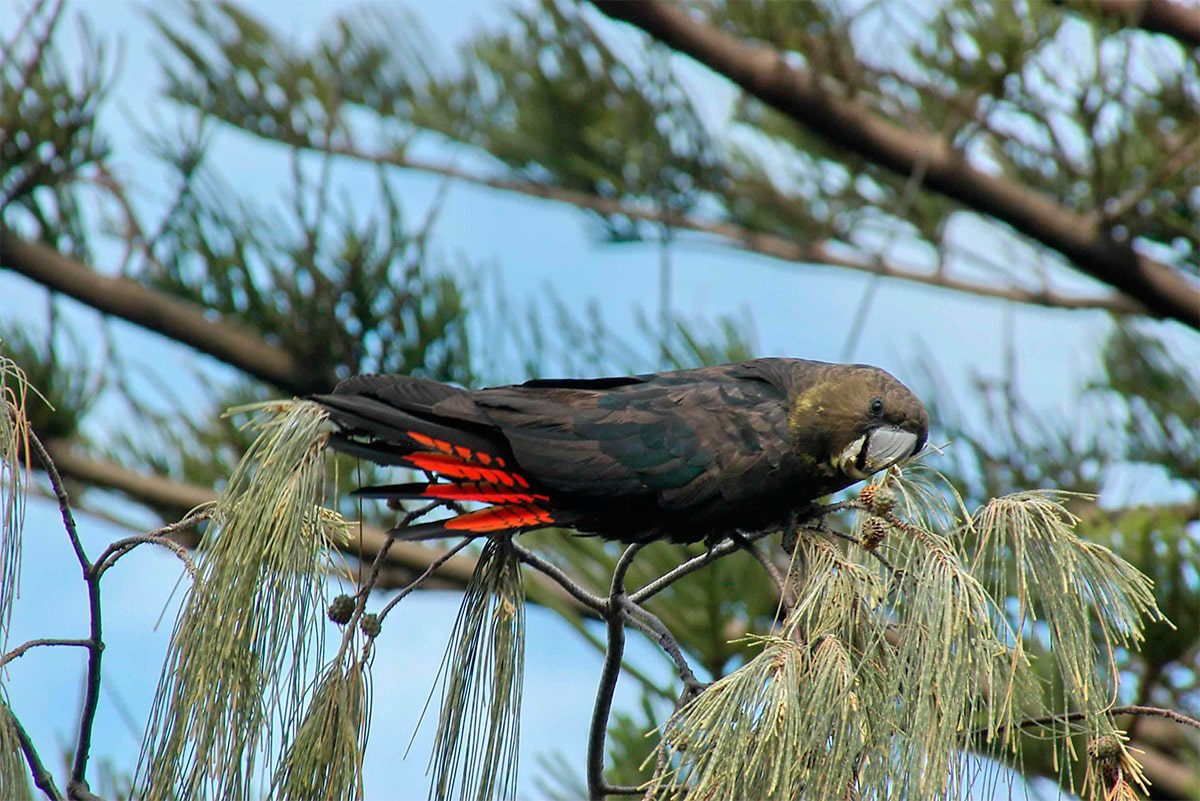
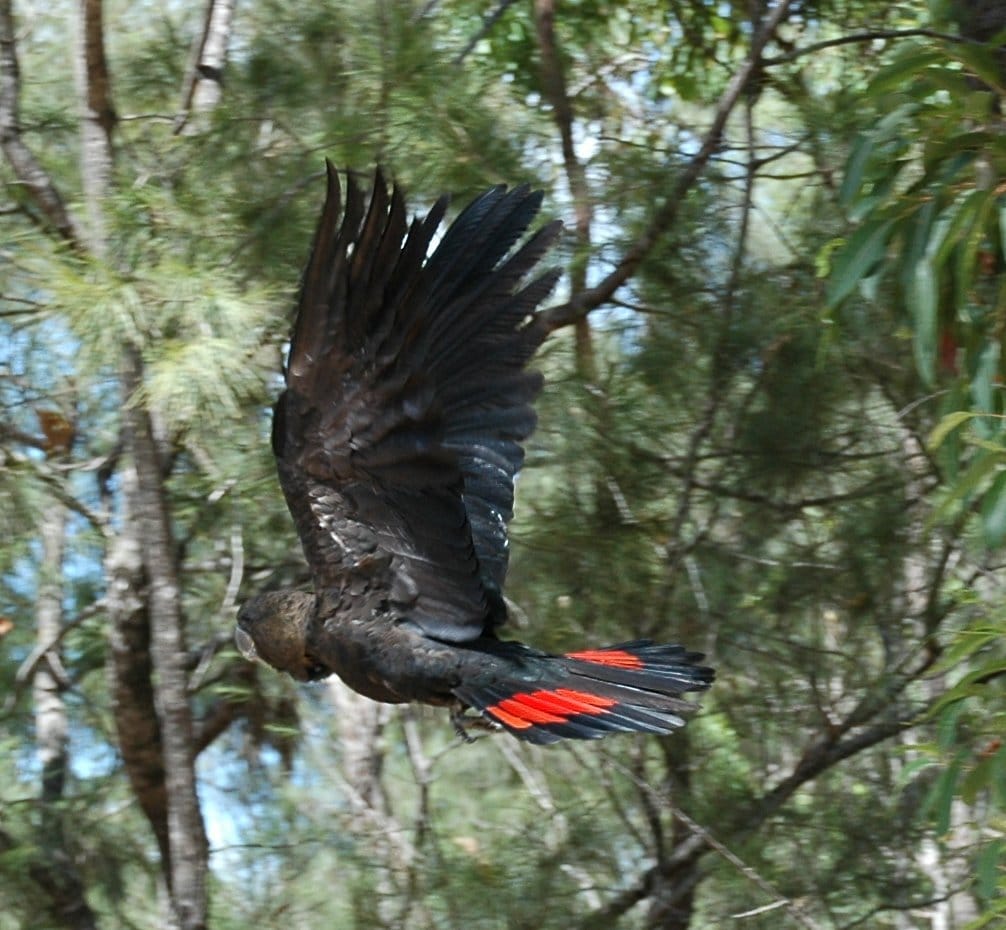
The male is brown-black color with a small crest rounded and bright Scarlet spots in the tail. The female shows spots irregular in color yellow in it head, The Scarlet patches in the tail they are permeated by narrow black bars and edges of pale yellow on the underparts of the wings.
The immature they are similar to the females, but they lack the yellow markings on the head and show different yellowish tones in the feathers, the chest and in the belly.
(Mathews, 1912) – Medium-size ones 48 cm. length and 510 to 515 weight g, with a wing
of approximately 90 cm.. The of adults they are mainly black, dark brown in the head, the neck and the bottom of the body, and Red panels (in males) or orange-red with bars Black (in females) on tail. The female adult is also conspicuous in the head. These patches are absent from most males., Although they can be expressed faintly in a few individuals (Higgins 1999).
The immature are similar in appearance to the male adult, but have small stains yellow in it head; spots or bars yellow in the chest, belly and flanks; yellow or orange spots on the wing
(mainly on the bottom); Red or orange-yellow panels with black bars at the tail; One bill pale grey (instead of dark); And a ring of skin around the eye pale grey (instead of grey dark) (Higgins 1999, L. Pedler 2007, com. Pers.).
Calyptorhynchus lathami erebus
(Schodde & Mason,IJ, 1993) – The only difference with the nominal species resides in that has the bill shorter.
Habitat:
Video – "Glossy black cockatoo" (Calyptorhynchus lathami)
Glossy-black Cockatoo (Calyptorhynchus lathami ) HD Video clip 1/3
Areas forested frequently dominated by casuarinas of which are highly dependent for its food. These are small shrubs commonly known as the Sheoaks, wood for beef (Beefwood) or Australian pine. These shrubs are widespread in tropical and subtropical regions.
They are also distributed in open humid forests, difficult terrain where deforestation has not been too great. They have an imperative for natural tree cavities to nest.
Reproduction:
Forman couple during all the life. The couple has relationships throughout the year. This type of family of them parrots prefers to nest in cavities natural of the eucalyptus, whether dead or in full vitality. The nest usually placed at an altitude that ranges between the 3 and 30 meters above the ground. The cavity is filled with leaves and branches. Sometimes, together with other breeding pairs, they share the same tree year after year.
In New South Wales the season extends from March to August. The spawning It consists of a single egg white. It is the female that takes charge of most of the tasks.: It prepares the nest and incubates herself. Never leave the nest until the small is reached the age of one week. In most cases, the male provides the female with food and assistance until the young can fend for itself, normally four months which remains with them until the next breeding season.
Food:
It feeds almost exclusively on the seeds several species of She-oak (Casuarina and Allocasuarina). You can also sometimes eat larvae of wood-boring. They feed in threes, less frequently in pairs, small groups or flocks of up to 60 birds. They can be detected by the snapping of their beaks and the remains of the casuarina cones and twigs that fall.
Distribution:
Size distribution (reproduction / resident): 770.000 km2
The species is Rare Although widespread in suitable forests of the central coast and forest habitats of Queensland and in the interior of the southern plateaus and Plains of the Midwest's New South Wales, with a small population in the Riverina. There is an isolated population in the Kangaroo Island, South of Australia.
(Schodde & Mason,IJ, 1993) – It is from Australia (the central eastern coastal area of Queensland)
Conservation:
State of conservation ⓘ
Minor Concern ⓘ(UICN)ⓘ
• Current category of the Red List of the UICN: Least concern.
• Population trend: Decreasing.
Like most parrot species, the Glossy black cockatoo is protected by the Convention on international trade in endangered species of Fauna and Flora Silvestres ( CITES ), with its inclusion in the list of the Appendix II of vulnerable species, What makes the import, the export and trade of animals captured in the wild is illegal.
Justification of the population
Garnett and Crowley (2000) estimated the size of the population in the following way: 12.000 individuals of the subspecies lathami, 70 breeding pairs of the subspecies halmaturinus (equivalent to 140 individuals) and 5.000 individuals of the subspecies erebus giving a total of 17.140 individuals.
Justification of trend
They suspected that the population is declining in general Since the largest subpopulation, lathami, It is slowly decreasing throughout its range. However it is believed that the subspecies Erebus is increasing and the subspecies halmaturinus It is increasing as a result of conservation efforts in the Island Ganguro (Garnett and Crowley 2000).
"Glossy black cockatoo" in captivity:
Like the other black cockatoos, the Glossy black cockatoo(Calyptorhynchus lathami) is extremely rare in the poultry. In Australia It has attained breed in captivity.

 Minor Concern ⓘ
(UICN)ⓘ
Minor Concern ⓘ
(UICN)ⓘ















.jpg)
.jpg)
