Origin: Venezuela, Colombia, Ecuador, Peru, Bolivia
Character: shy
Life expectancy: ---
Height: 33 to 38 cm..
Content
Description
33 to 38 cm.. tall and 300 g. of weight.
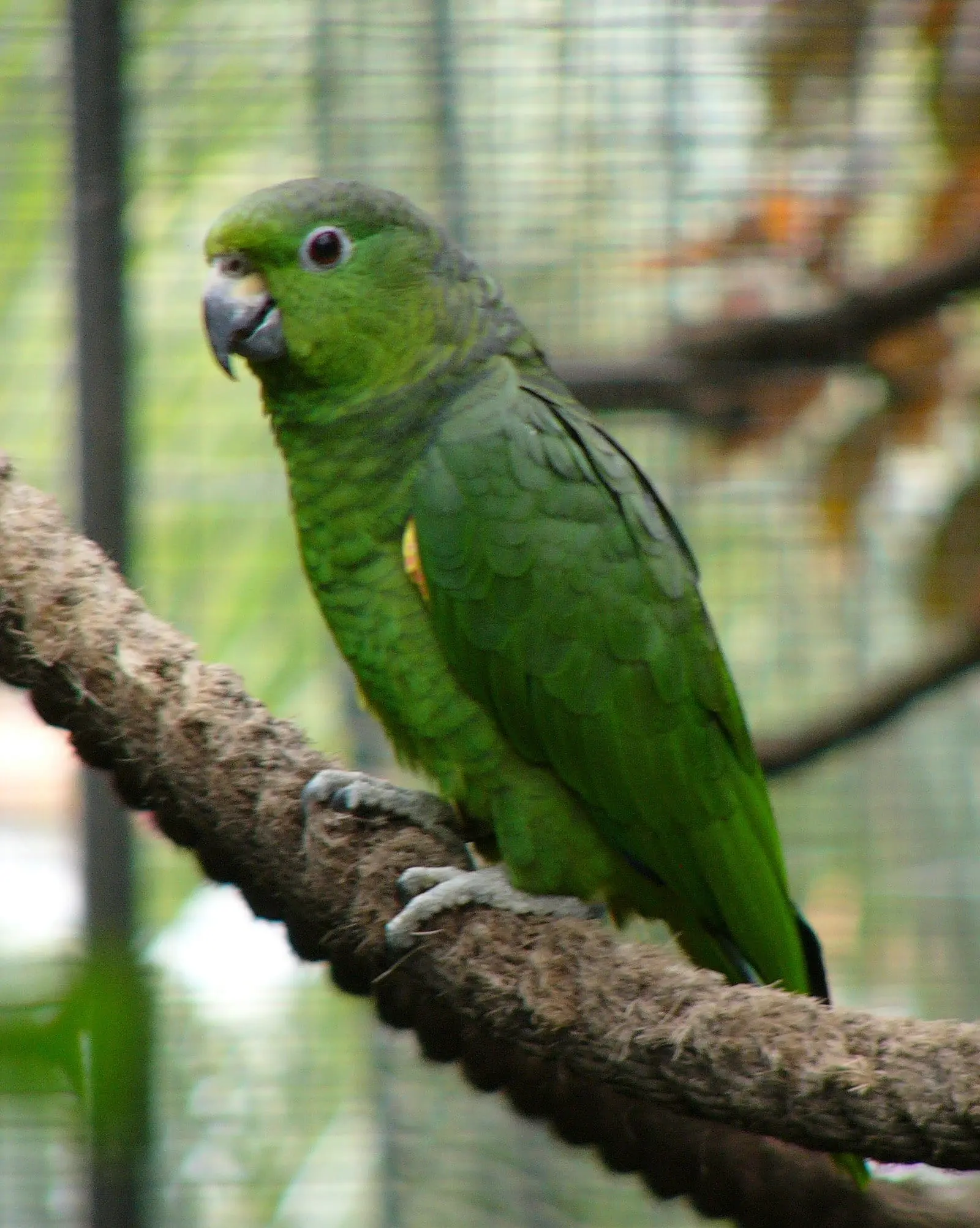
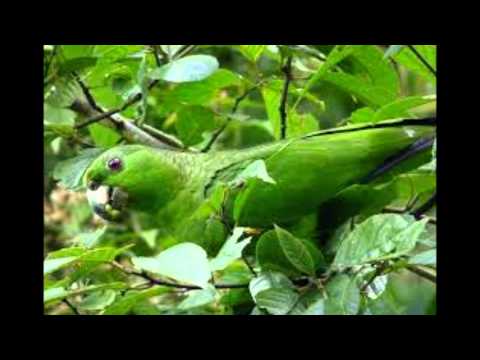
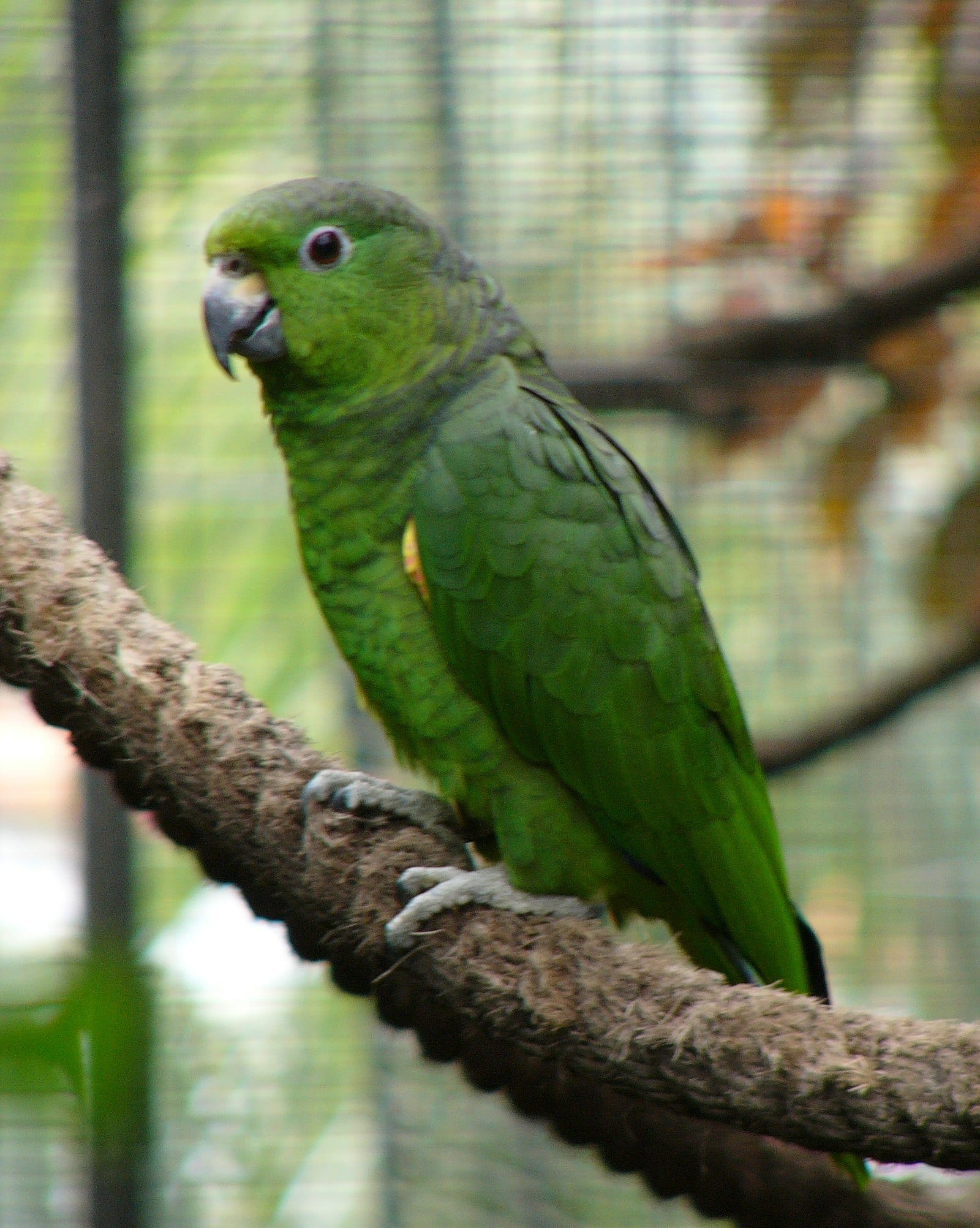
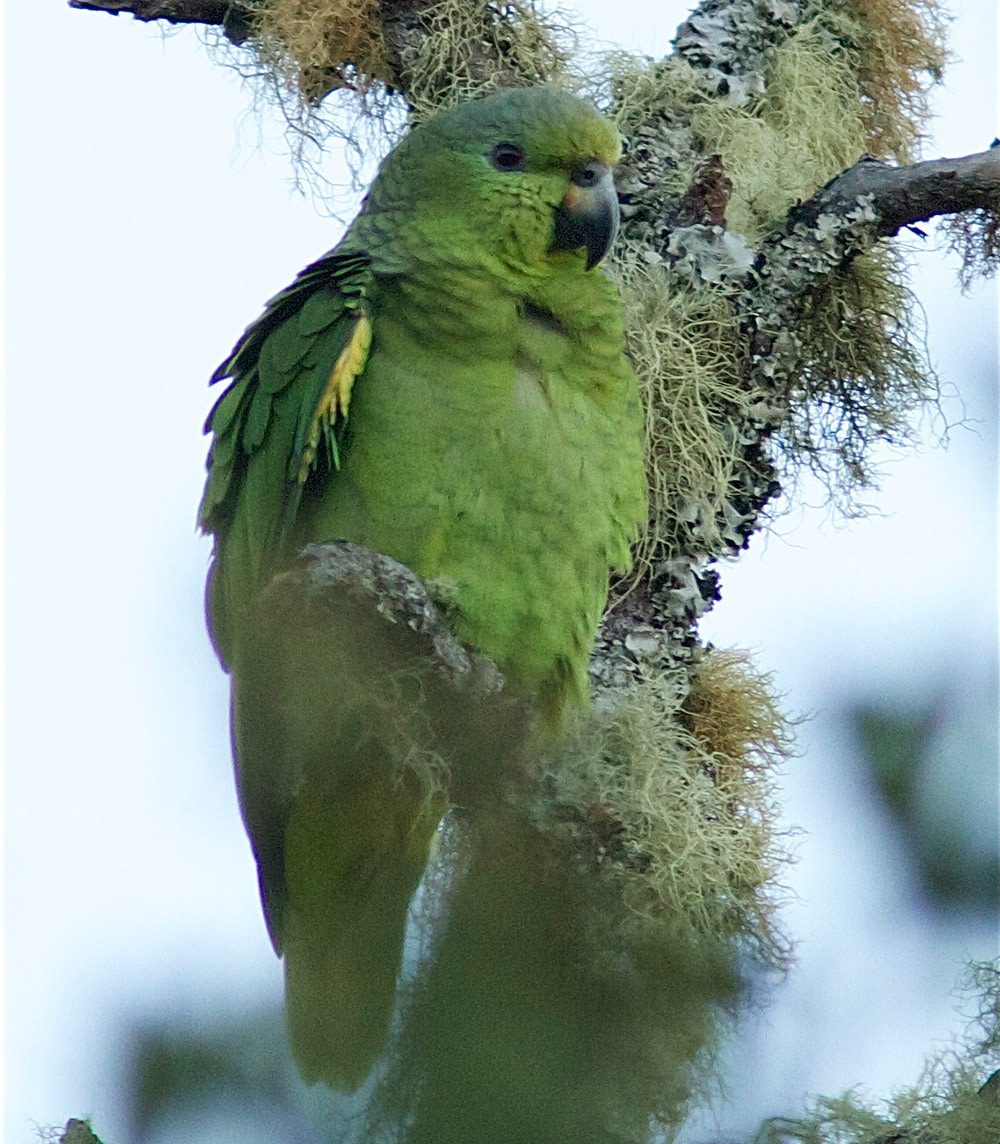
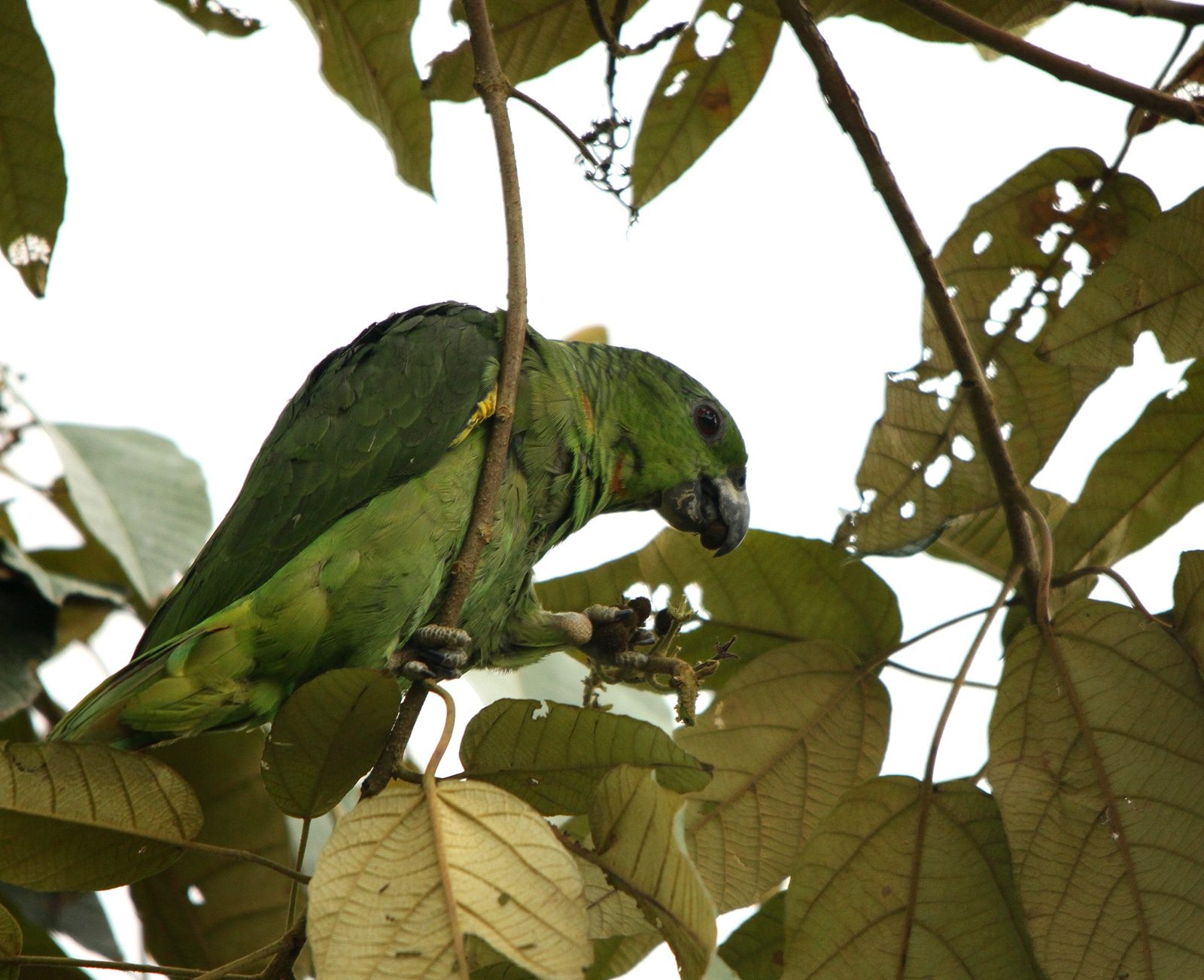
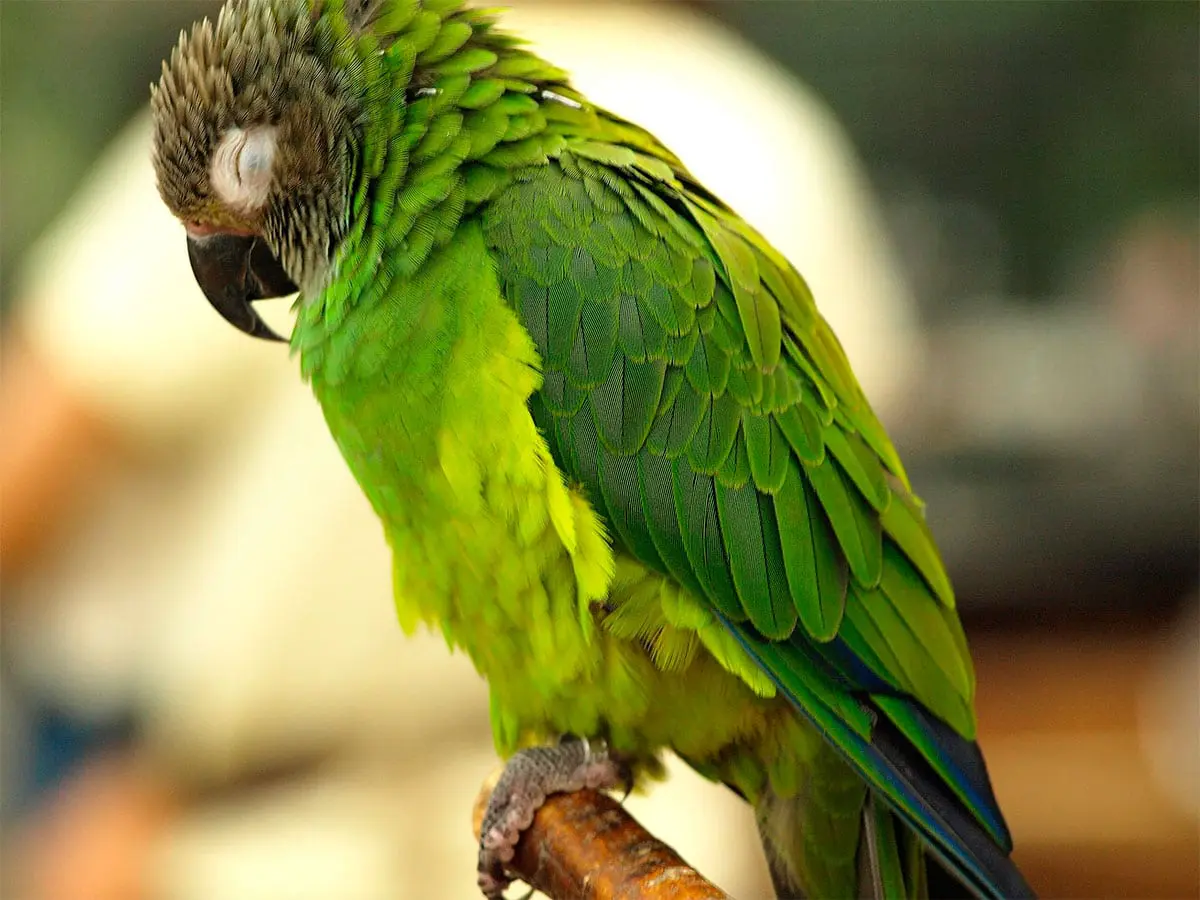
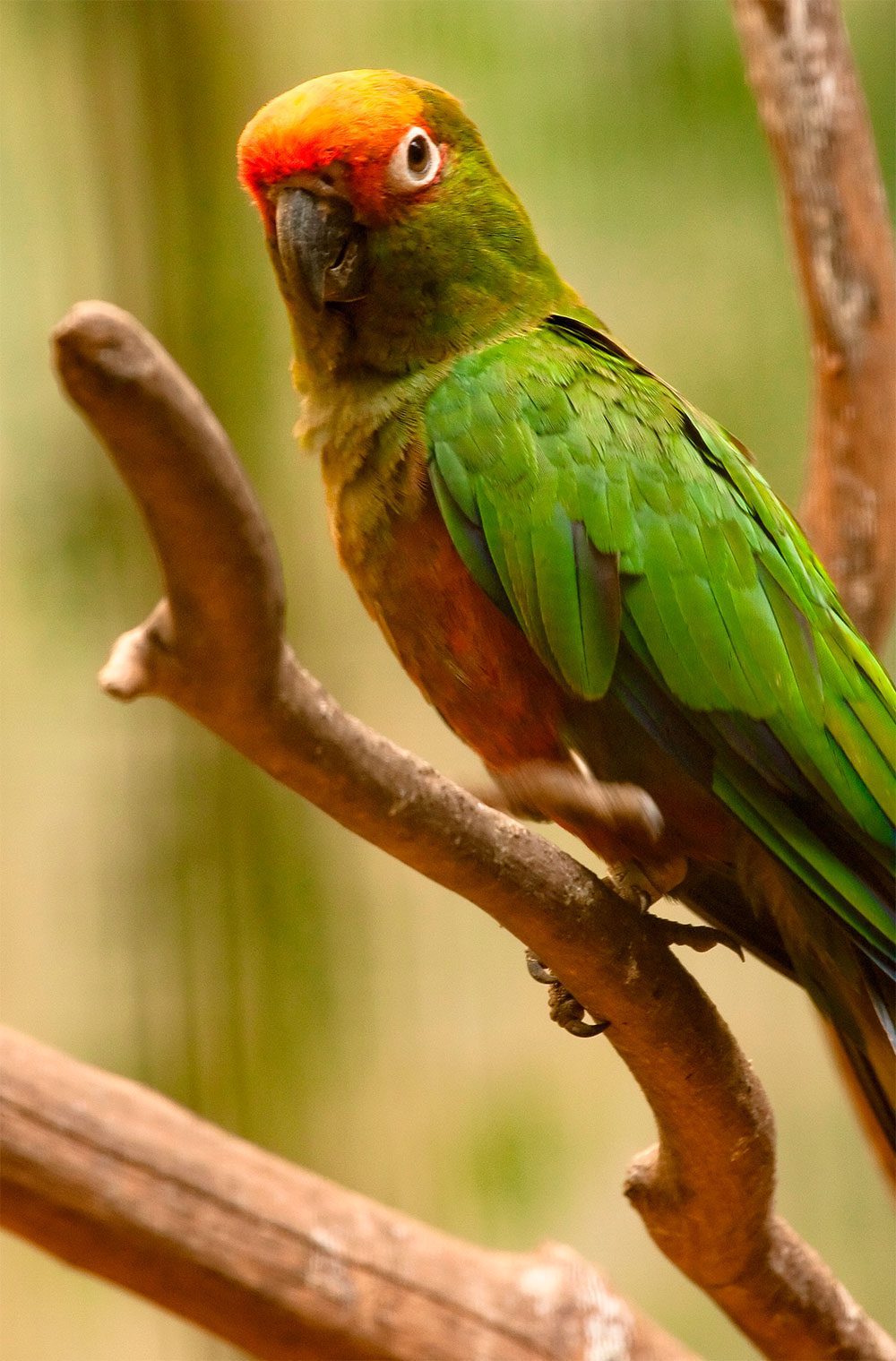
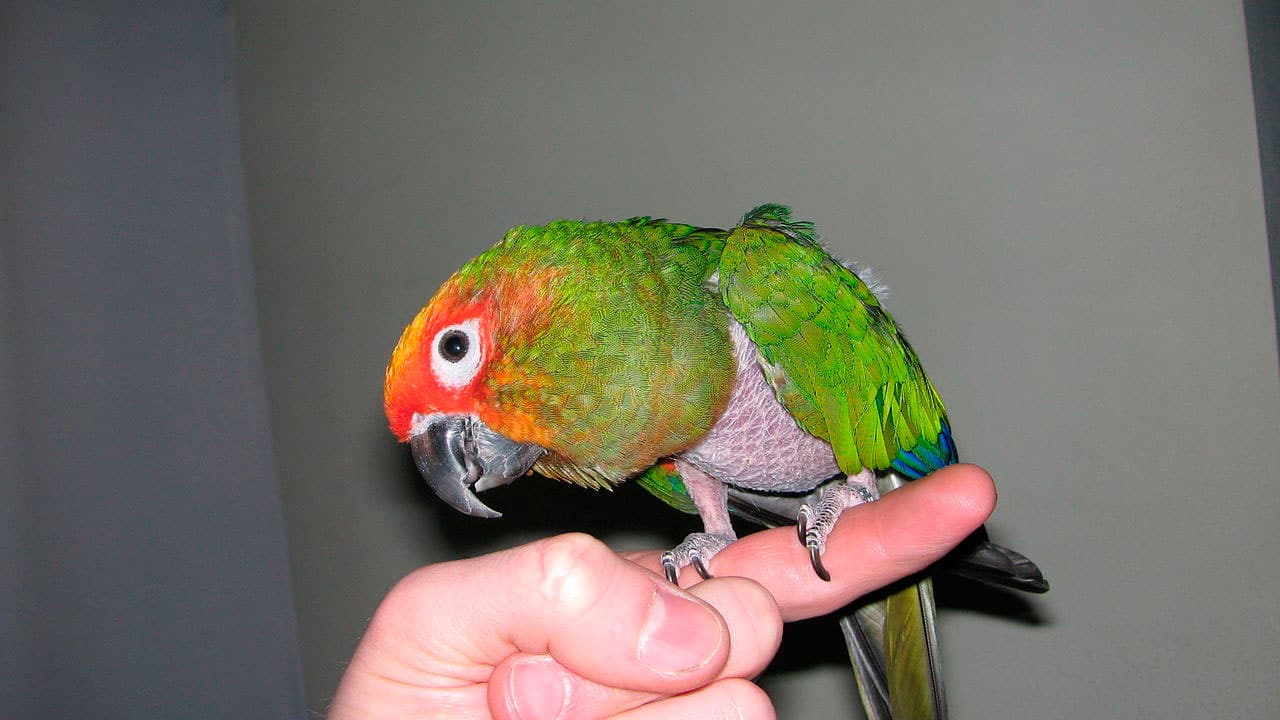
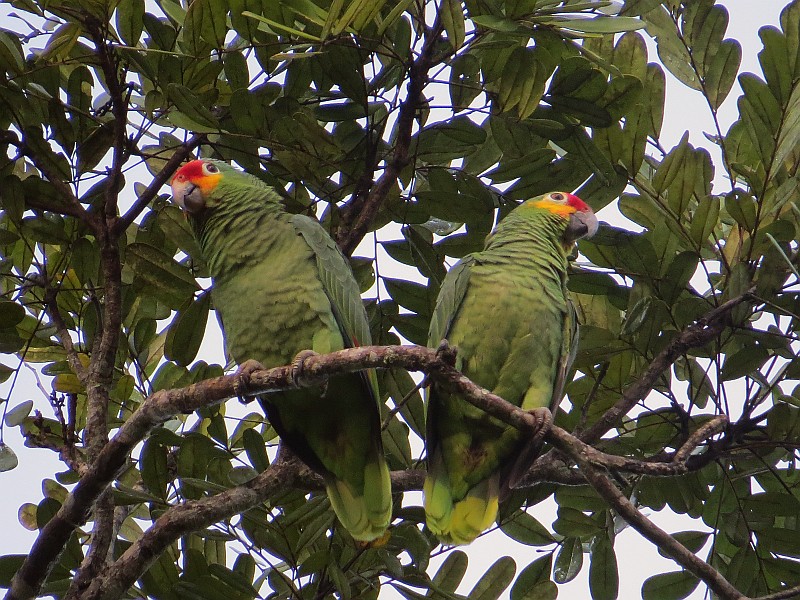
The Scaly-naped Amazon (Amazona mercenarius) it is the only amazon in mountainous areas.
General coloring green, with the feathers of the chest with black border, It is distinguished by having the wingtip yellow with orange spots, and external feathers tail tricolor with blue base, middle part red and yellow tip.
Bill pale gray area at the base of jaw; irises orange; legs brown.
Both sexes are similar. It is thought that immature they are similar to adults.
(Cabanis, 1874) – Speculum red absent. bases outer secondaries marked with brown spots. Some specimens show scattered red feathers crown, the throat top of the chest.
Andean and sub-Andean forests permanently cloudy between 1200 and 3000 m. Occasionally in warm floor and cultivated land.
Usually in pairs or groups of 30 to 40 individuals.
Reproduction:
They have reported evidence reproduction between March and May in Colombia. Nest and eggs not yet described. The incubation period apparently it lasts 25 and 26 days.
Food:
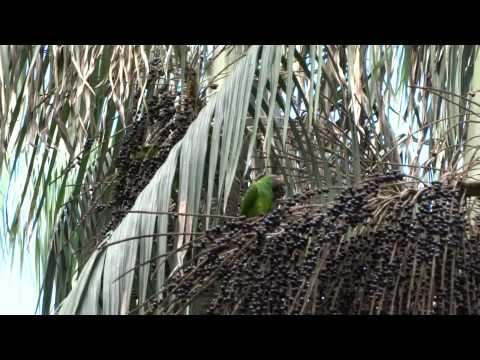
Little information on their diet, but he has seen taking figs and fruit unidentified in Colombia.
In Colombia they have been observed down to attack corn fields.
Distribution:
Size of the area of distribution (reproduction / resident): 3.160.000 km2
Andes from Venezuela to the North of Bolivia.
Distribution 2 subspecies
Amazona mercenarius canipalliata
(Cabanis, 1874) – Andes of Colombia to northwest Venezuela and Ecuador.
Amazona mercenarius mercenarius
(Tschudi, 1844) – Nominal. Andes North of Peru to the North of Bolivia; a single record in Argentina.
Conservation:
State of conservation ⓘ
Minor Concern ⓘ(UICN)ⓘ
• Current category of the Red List of the UICN: Least concern.
• Population trend: Decreasing.
Justification of the population
The population size World has not been quantified, but this species is described as «quite common» (Stotz et to the., 1996).
Justification of trend
It is suspected that the population is in decline due to the continuous habitat destruction.
Sources:
– Parrot Book, Parrots and macaws Neotropical
– avibase
– Parrots of the World – Forshaw Joseph M
– Parrots A Guide to the Parrots of the World – Tony Juniper & Mike Parr
– Birdlife
Of 25-30 cm.. length and a weight between 95-115 g.
The head of the Dusky-headed Parakeet(Aratinga weddellii) is greyish Brown, with off blue stripes that give it a scaly appearance. The upperparts are green, the feathers of the nape they have yellowish margins (some banks in the mantle), the back and Hip with Brown centers, giving an appearance of Brown altogether. The scapulars with varying between Brown and green edges; the minor, large and medium-sized inner coverts green grass with paler green margins; the outer and the primary coverts are dark blue. Primary and secondary mostly blue with vane outer Green or green margins toward the vane external in the primaries; very dark (almost black) the Tips. Underwing-coverts green: underside of the flight feather opaque gray. Top of the chest pale green with turquoise suffusion; belly and undertail-coverts pale yellowish green, greener on the flanks. Upper, the tail green, Blue towards the tip: undertail, opaque gray.
The bill shiny black; cere pinkish grey; wide area orbital off-white; irises yellowish white; legs dark gray.
Both sexes similar.
The immature are like adults but with the irises darker.
They inhabit in humid jungle, semi-wet, swamps, involved swamp forest and stubble, until 500 metres in Colombia and exceptionally 750 metres in Bolivia. Its preferred habitats are the forests and marshes and flooded forests in swampy areas. Also in the remnants of forest in humid savannah and cleared areas with patches of remnant forest. Also observed in coffee and sugarcane plantations; apparently rarely fly over the dense forest. Usually, in pairs or in small groups, but flocks of up to 75 reported individuals where food is plentiful.
Reproduction:
It nests in trees and palms of marshy or riparian areas, between June and August. They also used the cups of dead Palm trees and termite nests.
Four nests observed in Leticia, Colombia, between 4 and 15 metres in height. Birds incubating in the month of February in Colombia. Bird in reproductive condition in the month of August in Bolivia. Observed breeding from June to September in Loreto, eastern peru; from April to July in the Mato Grosso.
A normal start is of 3 to 5 eggs and both parents feed the chicks.
Food:
Its diet consists of seeds, fruit, flowers, berries, as well as insects and their larvae found in decaying trees and stumps.
Distribution:
Its distribution ranges from the southeast of Colombia, east of Ecuador and Peru to the East of Bolivia and West of Brazil.
Apparently Nomad in some parts of the distribution. In general common, even in partially deforested areas, and perhaps increase due to clearing and fragmentation of dense forest.
Conservation:
State of conservation ⓘ
Minor Concern ⓘ(UICN)ⓘ
• Red List category of the UICN current: Least concern
• Population trend: Growing
The size of the world population Dusky-headed Parakeet It has not been quantified, but this species is described as common(Stotz et to the. (1996)).
This species is suspected that it has been lost between the 15 and the 17,7% of its suitable habitat within its range over three generations (21 years) based on a model of deforestation of the Amazon(Soares-Filho et to the., 2006, Bird et to the. 2011). Given the susceptibility of this species to the hunting or trapping, It is suspected that its population may decrease in around the 25% in three generations.
"Dusky-headed Parakeet" in captivity:
Not common in captivity, but in the past was part of the international trade. They are common in cultivation areas, for this reason they are common in homes of peasants.
The Dusky-headed Parakeet is not known for its ability to mimic the speak human, but they are nevertheless birds very fun, kind and loving – provided that they have been hand reared and socialized properly. They are not as active and noisy as other species of parrots, they only emit sounds, not too high, when excited.
wonderful pets. His charming personality makes them good pets for children. They are not demanding, they spend happy hours playing with their favorite toys but still enjoy human company very much.
They are relatively easy to raise. They may have several broods per year; But, good husbandry practice stipulates that they should not be allowed to have more than two or three clutches to allow for their rest. The size of Sunset is of 3 to 4 eggs, they are incubated for a few 23 days. Both parents take care of the young.. The chicks leave the nest after a few 50 days.
In the wild, according to sources, females have been estimated can live up to 25 years. Its longevity in captivity It has not been studied in detail. It has been observed a muscle aging in wild animals.
Alternative names:
– Dusky-headed Parakeet, Dusky Conure, Dusky headed Parakeet, Dusky Parakeet, Dusky-headed Conure, Weddell’s Conure (English).
– Conure de Weddell, Conure à tête sombre, Perriche de Weddell, Perruche de Weddell (French).
– Weddellsittich, Weddell-Sittich (German).
– Aratinga-de-cabeca-escura, aratinga-de-cabeça-suja, jandaia-de-cabeça-azulada, jandaia-de-cara-suja, periquito-de-cabeça-suja (Portuguese).
– Aratinga Cabecifusca, Perico Canoso, Periquito de Cabeza Gris, Perico cabezagris(español).
– Loro canoso, Perico Canoso, Cotorra cabecigris, Cotorra cabeciparda (Colombia).
– Cotorra de Cabeza Oscura, San Pedrito, Lorito cabeza gris (Peru).
– Perico cabecioscuro (Ecuador).
– Tarechi (Bolivia).
– Ipií (Chimane).
– Bambaorito (I ingano).
– Sacara (Cofán.).
– Butuquiria (Macuna).
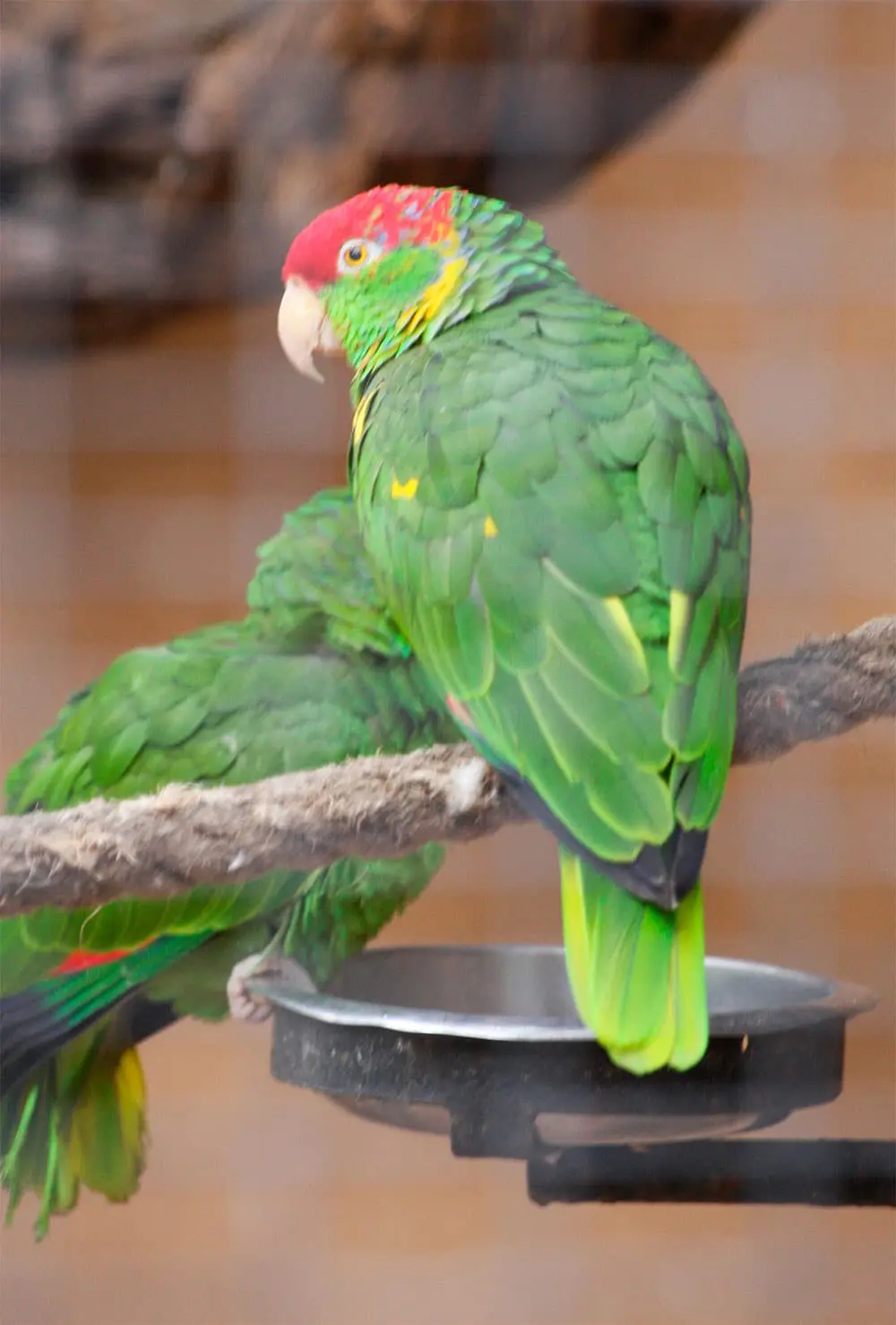
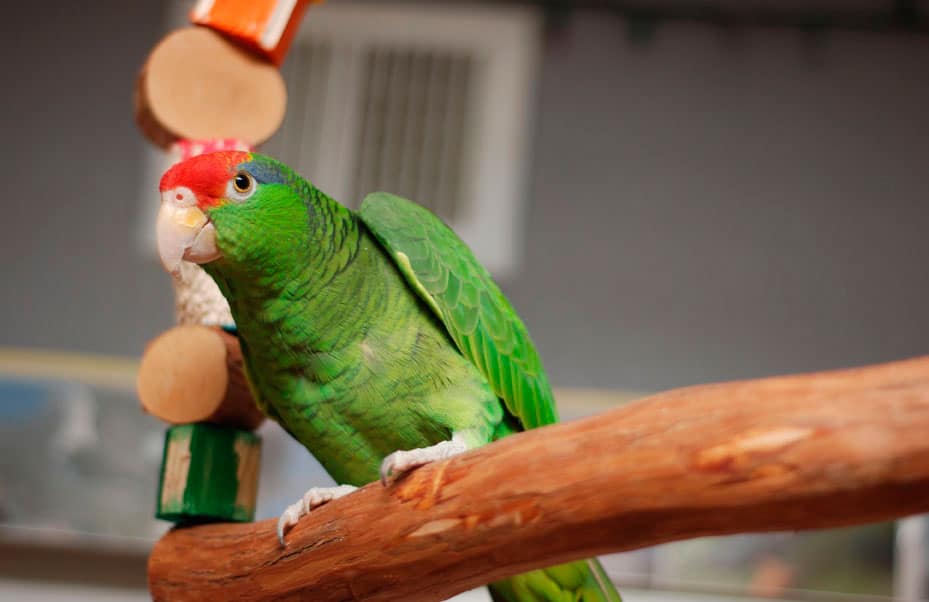
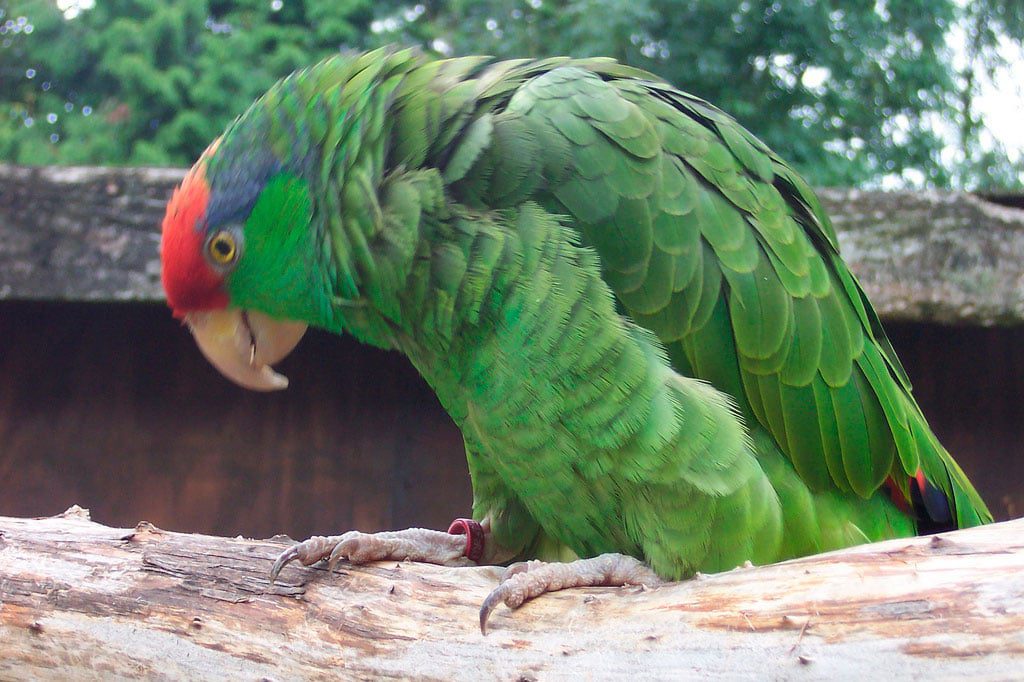
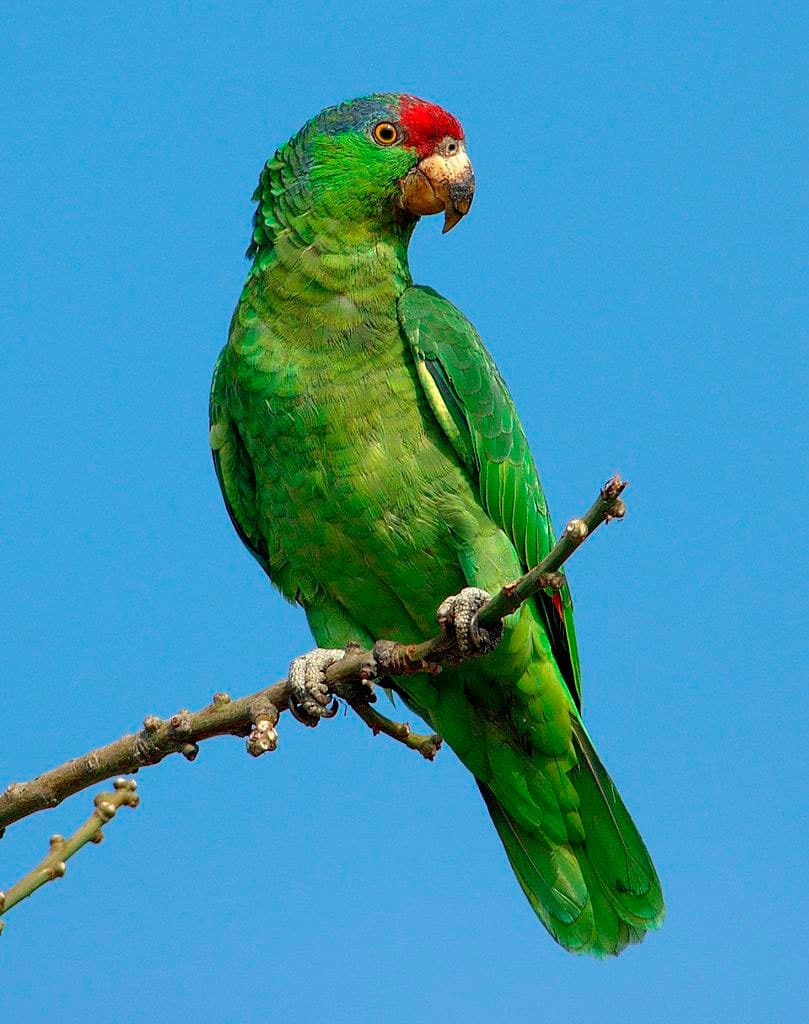
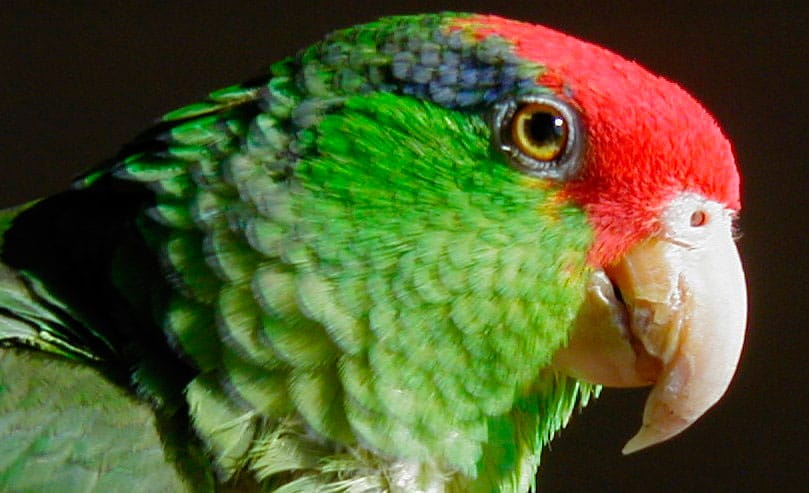
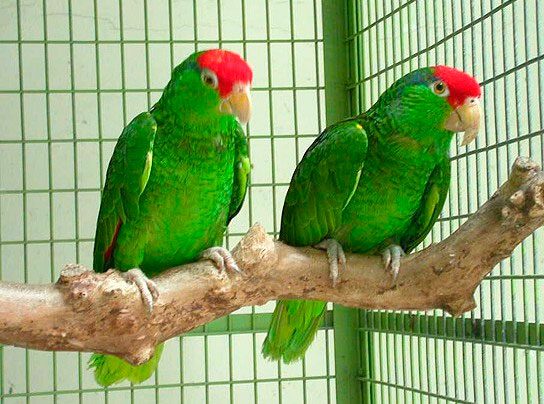
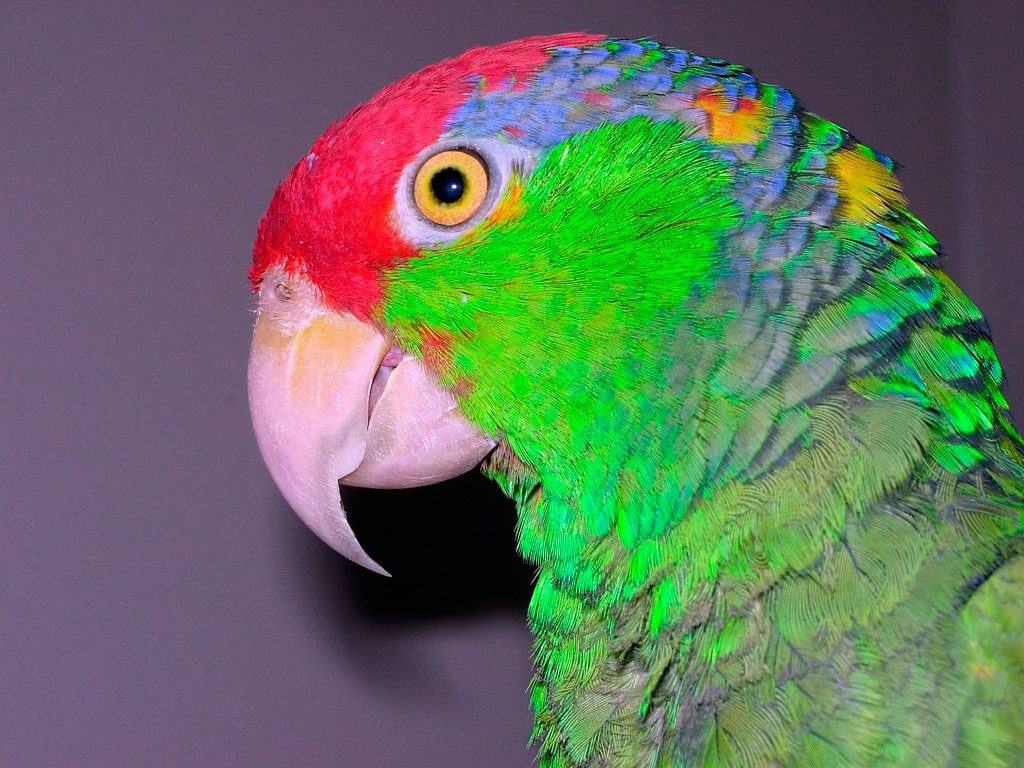
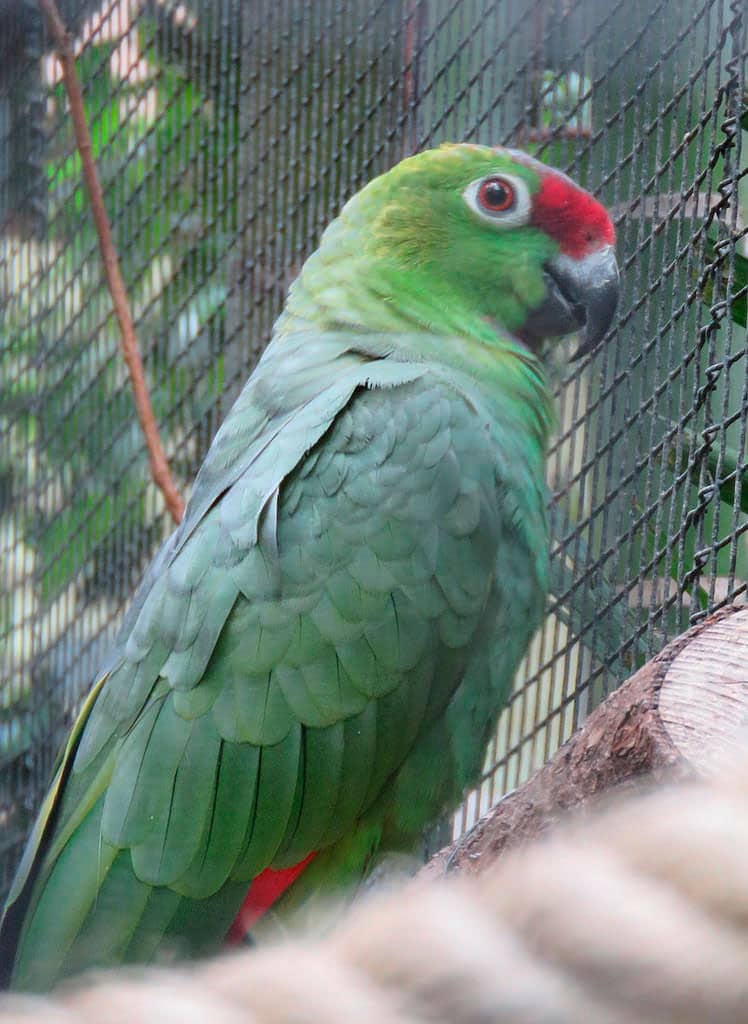
The Red-crowned Parrot(Amazona viridigenalis) has the lores, forecrown and crown, bright red, with side margins on the back of the neck and top of the neck, showing blue feathers with black ends; ear-coverts bright green without black ends in feathers; nape boldly festooned with green feathers with their ends in black.
Mantle and back green with some weak black tips; rump and uppertail-coverts, green. Wing coverts green with black margins on some weak feathers. The flight feather, mostly green, the primaries, in general, with dark ends, of dark blue or black, the Outer secondaries, with the ends of blue with red in the outerweb. Under, the wings green. Underparts green, slightly yellowish; some feathers show visible dark tips. The tail is green, in general with its yellow end. Bill pale yellow; irises yellow; legs pale grey.
although females They can have on average less red in the head, probably no consistent sexual dimorphism. The immature She has red in the head very small, with feathers in the central part of the crown green tipped black and subterminally banded pale blue; feathers on the side of the crown, forming broad band over eye.
Sound of the Red-crowned Parrot.
Habitat:
Video "Red-crowned Parrot"
The habitat of the Red-crowned Parrot son los Bosques deciduous, gallery forests and evergreen floodplain forests in tropical lowlands, with non-breeding birds on dry ridges extend to 1,200 meters in temperate zones Pinus and Quercus.
frequenting cultivated areas where they remain large trees. Usually in flocks, generally larger than its sympatric congeners (Red-lored Amazon and the Yellow-headed Parrot, with which sometimes mixed); in larger flocks in winter. Used roost communally.
Reproduction:
They nest in tree hollows, including abandoned nests Lineated Woodpecker(Dryocopus lineatus), generally 6-20 meters above the ground. Nests reported in trees Taxodium mucronatum, Bumelia laetivirens and Brosimum alicastrum. Reproduction April-May Tamaulipas. The laying is of 3 or 4 eggs. Only the female incubates. The incubation hard 28 days. The young are cared for for nine weeks.
Size of its range (breeding/resident ): 61.900 km2
Northeast Endemic Mexico, where records from southernNuevo León (South of Monterrey) through Tamaulipas (mostly in the center and south of the state) and East of San Luis Potosi, to the North of Veracruz and towards the south until near 21ºN. They can be seen as visitors in the winter Brownsville, southwestern end Texas, USA.
wild populations in California, Florida, Oahu (Hawaiian Islands) and Puerto Ricor (small number in southern dry forests).
Resident but nomadic in winter with some altitudinal movements that lead birds to higher ground in winter (perhaps to exploit the seeds and acorns Pine) and with other movements further away from the breeding range, for example, to the South of Texas. Apparently they return to the breeding area in February, declining along the ridge, but they are most common near the east coast, especially around the Sierra de Tamaulipas and on the slopes east of the Sierra Madre Oriental in Tamaulipas. Otherwise, sparsely distributed and frequently only some strengths as the Valley Sabinas River, Tamaulipas.
Total population estimated in 3.000-6.500. Popular in captivity locally and previously traded in large numbers internationally. Clearly the recent population declines are due to excessive trade and to the continued destruction of habitats scale; they are also you fired in some areas due to crop damage. There are no large protected areas within reach and illegal trade continues.
Conservation:
State of conservation ⓘ
Endangered ⓘ(UICN)ⓘ
• Current category of the Red List of the UICN: In danger of extinction.
• Population trend: Decreasing.
• Population size : 2000-4300.
Rationale for the Red List category
The combination of high levels of exploitation for cage bird trade, loss of habitat and long term estimates reduced density It indicates that this species is declining very quickly. Therefore it qualifies as in danger of extinction.
Justification of the population
In 1992-1994, estimated in an area in Mexico densities indicated a wild population of 3.000 to 6.500 birds (EC Enkerlin-Hoeflich in a bit., 1994). This estimate equals approximately 2.000-4.300 mature individuals.
Justification of trend
The historical densities recorded for the species were 25,2 in the early birds / km2 1970 (Castro 1976), down to 5,7 birds / km2 in an area 1992-1994 (EC Enkerlin-Hoeflich in 1994, Enkerlin-Hoeflich 1995), indicating a population declines of up to 77,4% on a strip of 20 years. It is suspected that the decline will continue at a higher rate to 50% in ten years, due to threats capture and forest clearing.
Threats
• In 1970-1982, 16.490 birds (mainly chicks) They were imported legally to United States.
• Las illegal exports from Mexico and mortality prior to export to the top 50% they are equivalent to 5.000 birds per year (Enkerlin-Hoeflich and Hogan, 1997).
• Los hunters damage nests when removing chicks (sometimes cutting whole trees), reducing the availability of the nest and bringing the permanent abandonment of the site (Snyder et to the., 2000).
• Many gallery forests have been cleared or degraded, with more than 80% lowlands of Tamaulipas cleared for agriculture (especially sorghum) and pastures.
• The habitat of the Red-crowned Parrot It is now distributed unevenly in cattle ranches, where the pressure is greater capture (Enkerlin-Hoeflich and Hogan, 1997).
• The population of Red-crowned Parrot It is distributed in the Biosphere Reserves Heaven and Sierra Gorda (A. G. Navarro in some ., 1998, T. Brush in a bit., 2003), but there are only small colonies in Sierra Gorda and status in Heaven It is unknown (Wege and Long 1995, A. G. Navarro in some 1998).
• Los livestock They are increasingly aware of the benefits of keeping large trees, but this is not reflected in practice.
Conservation Actions Proposed
• Conduct surveys to obtain an estimate of the total size of the population.
• Monitor populations to determine degree of decline.
• Identify the most important nesting aggregations for protection (Enkerlin-Hoeflich and Hogan 1997).
• Integrate ranchers in efforts to reduce capture and regenerate habitat (Enkerlin-Hoeflich and Hogan 1997) .
The Red-crowned Parrot in captivity:
CITES Appendix I. (It includes species threatened with extinction. Trade individuals of these species, it is allowed only in exceptional circumstances.)
Each captive specimen of this species which is capable of reproducing, It is placed in a well managed captive breeding program and not be sold as a pet, with the order to ensure their survival long-term.
Alternative names:
– Green-cheeked Amazon, Green-cheeked Parrot, Mexican Red-headed Amazon, Mexican Red-headed Parrot, Red-crowned Amazon, Red-crowned Parrot, red-crowned parrot parakeet (English).
– Amazone à joues vertes, Amazone verte à front rouge (French).
– Grünwangenamazon, Grünwangenamazone (German).
– Papagaio-de-coroa-vermelha, Papagaio-de-face-verde (Portuguese).
– Amazona de Corona Roja, Amazona Tamaulipeca, Cotorra Coronirroja, Loro Tamaulipeco (español).
– Avibase
– Parrots of the World – Forshaw Joseph M
– Parrots A Guide to the Parrots of the World – Tony Juniper & Mike Parr
– Birdlife
– Photos:
(1) – Amazona_viridigenalis is native of Mexico. Specimen in Palmitos Park, Gran Canaria By Bjoertvedt (Own work) [CC BY-SA 3.0 or GFDL], via Wikimedia Commons
(2) – Red-crowned Amazon (Amazona viridigenalis) also known as Green-cheeked Amazon, Red-crowned Parrot, or Mexican Red-headed Parrot By rachael fogarty (originally posted to Flickr as Fred) [CC BY-SA 2.0], via Wikimedia Commons
(3) – Red-crowned Amazon (also known as Red-crowned Parrot, Green-cheeked Amazon, or Mexican Red-headed Parrot). Two in a cage By TJ Lin [CC BY-SA 2.0], via Wikimedia Commons
(4) – Red-crowned Amazon, (Amazona viridigenalis) also known as Green-cheeked Amazon, Red-crowned Parrot, or Mexican Red-headed Parrot by Leonhard F at the German language Wikipedia [GFDL or CC-BY-SA-3.0], via Wikimedia Commons
(5) – Red-crowned Amazon By Glandauer/Roger Moore (Roger Moore (transfer from en.wiki)) [GFDL or CC-BY-SA-3.0], via Wikimedia Commons
(6) – Red-crowned Amazonian Parrot (Amazona viridigenalis) by Heather Paul – Flickr
(7) – Red-crowned Amazon (also known as Red-crowned Parrot, Green-cheeked Amazon, and Mexican Red-headed Parrot) at Tropical Birdland, Leicestershire, England By Dean Sas from Chesterfield, UK (Pieces of eight) [CC BY-SA 2.0], via Wikimedia Commons
(8) – A pet Red-crowned Amazon By jarrett chandler from Rowland Heights, US (zazu) [CC BY 2.0], via Wikimedia Commons
(9) – (Amazona viridigenalis), photographed in Heidelberg Tiergarten (Baden-Wuerttemberg, Deutschland) By 4028mdk09 (Own work) [CC BY-SA 3.0], via Wikimedia Commons
(10) – PL XXXI Chrysohs viridigenalis, (tassro) By Blanchard, Emile; Bonaparte, Charles Lucian; Bourjot Saint-Hilaire, Alexandre; Le Vaillant, François; Souancé, Charles de. [CC BY 2.0 or Public domain], via Wikimedia Commons
30 cm. length and 110 g. of weight.
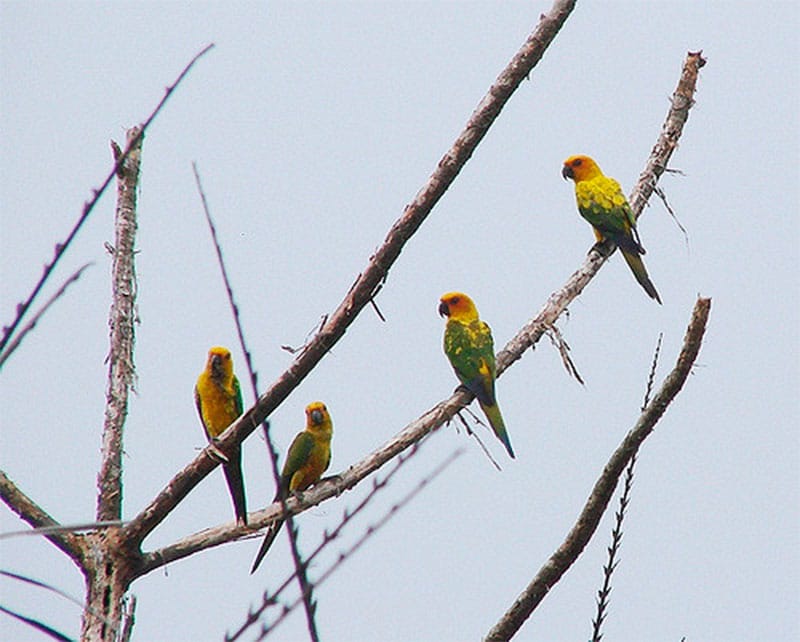
The Sulphur-breasted parakeet(Aratinga maculata) is pale orange, with the head and back of the neck pale yellow
. The throat and the chest are pale yellow, the the thighs are greenish; flanks pale orange, undertail-coverts greenish, the mantle pale greenish yellow; rump pale yellow orange, tail blue-green, wings green-yellow, underwing-coverts pale yellow. Close orange stripe on the front of the crown, in the lores and around eyes. Orbital ring pale grey. Iris dark gray / brown. Bill almost black.
The immature presumably as of adults, but with cheeks and top of the chest Yellow olive. (Observed one specimen).
Sound of the Sulphur-breasted parakeet.
taxonomy:
described in 2005 under the name of Aratinga pintoi, but later it was shown that the current name, It considered invalid for a long time, indeed it applies to this form, and therefore takes precedence; of holotype of Aratinga pintoi It has now been designated as neotype of Psittacus maculatus, which formally stabilizes synonymity. The species was misidentified as a juvenile of the Sun Parakeet(Aratinga solstitialis) or a hybrid between the latter and the Jandaya Parakeet(Aratinga jandaya); now generally recognized as a separate taxon, differing greatly reduced due to the orange-red in the face (where it forms an irregular mask), Breast and belly.
Habitat and behavior:
The species inhabits areas with large tracts of forest and Savannah adjacent (O’ Shea 2005, Mittermeier et to the. 2010). performs movements nomads.
It is similar in behavior and general ecology to the species of the group of the Aratinga solstitialis. Are in groups of 2-10 birds and they are relatively Meek, feeding along roads and orchards.
Reproduction:
Not much is known about their breeding habits. One nest observed with an egg of unknown size.
Extending its range (breeding/resident): 159.000 km2
The Sulphur-breasted parakeet (Aratinga maculata) (formerly pintoi; see Nemésio y Rasmussen 2009) It has a fragmented range in For and Amapá in Brazil, and at the southern end of Suriname(p. e.g.. Silveira et al. 2005, Mittermeier et to the. 2010, Vieira da Costa et al. 2011). After a three-day survey conducted in 2003, Silveira et al. (2005) They claim that Sulphur-breasted parakeet was quite common in Monte Alegre, For. in addition, in Suriname the species has been characterized as uncommon to fairly common (O’ Shea 2005, Mittermeier et to the. 2010).
Conservation:
• Current category of the Red List of the UICN: Least concern.
• Population trend: Growing.
• Population size : unknown.
Rationale for the Red List category
The trend of the population It seems to be increase, and therefore the species does not approach the thresholds for Vulnerable under the criteria of population trend (> 30% decrease in ten years or three generations). The population size has not been quantified, but it is not believed to approach the thresholds for Vulnerable under the criterion of population size (<10.000 individuos maduros con un descenso continuo estimado en >10% in ten years or three generations, or with a specific population structure). For these reasons, the species is evaluated as Least concern
Threats
The distribution area this species is affected by the deforestation, mainly driven by the expansion of agriculture as they build new roads; However, deforestation Brazil You may be benefiting this species and facilitating their spread to new areas (Vieira da Costa et al. 2011). Long-term, deforestation may become so rapid and extensive that the balance of extensive forest tracts and savannas required by the species will be exceeded and the species may begin to decline. Silveira et al. (2005) They claim that Monte Alegre, For, no obvious signs of a strong pressure entrapment. in addition, Mittermeier et to the. (2010) state that no hunting or capture of the species by Amerindians in the savannah was reported Sipaliwini of Suriname meridional.
"Sulphur-breasted parakeet" in captivity:
virtually unknown; maintained by local people and zoos Brazil. It can live up 30 years in captivity.
– Avibase
– Parrots of the World – Forshaw Joseph M
– Parrots A Guide to the Parrots of the World – Tony Juniper & Mike Parr
– Birdlife
– World Parrot Trust
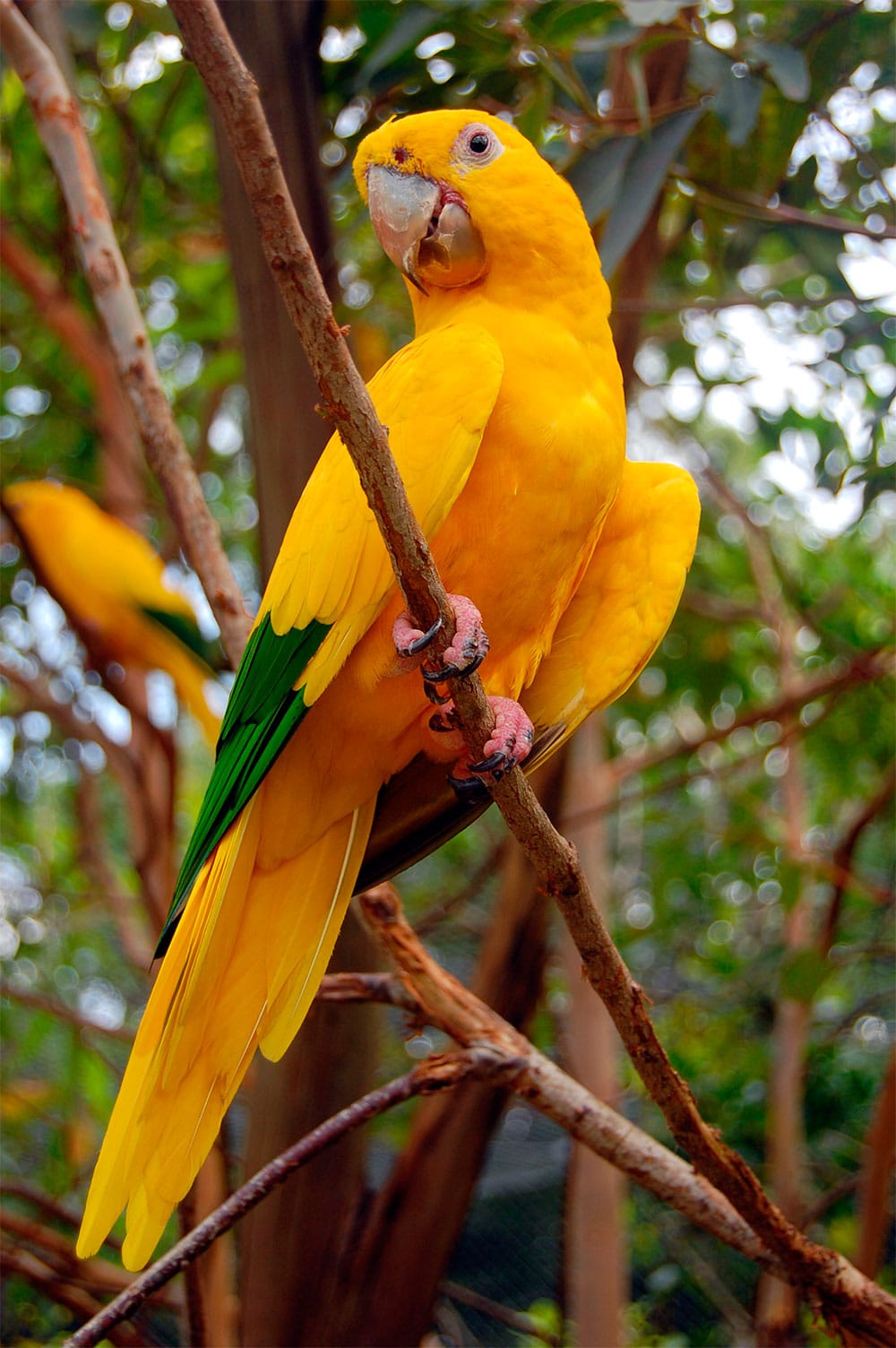
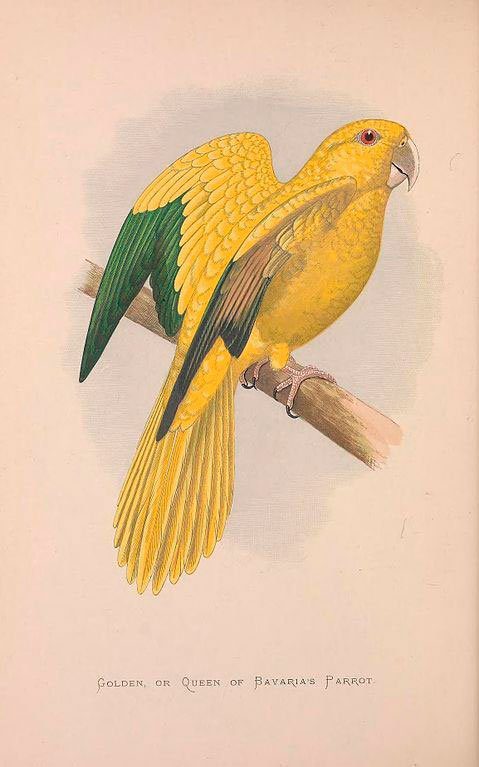
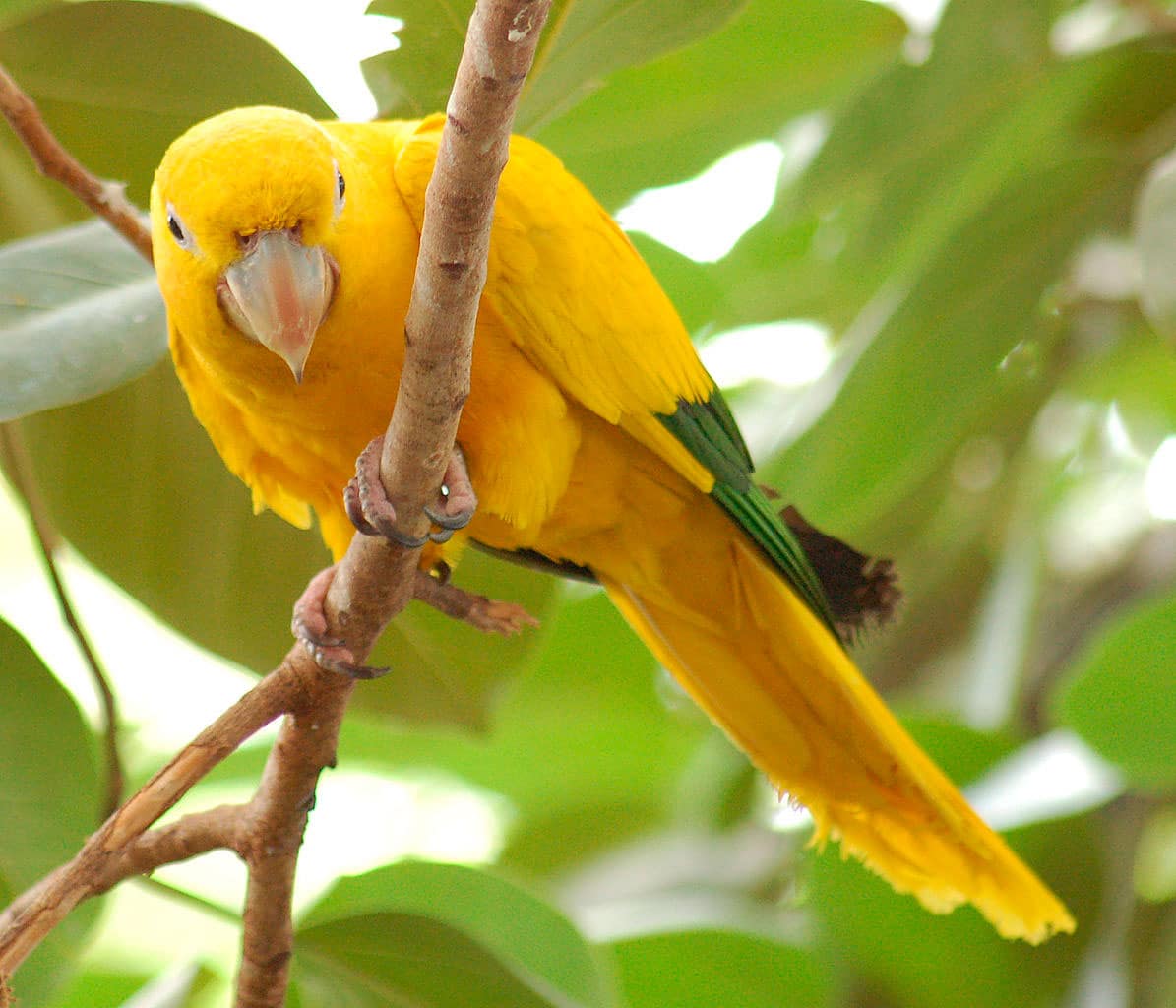
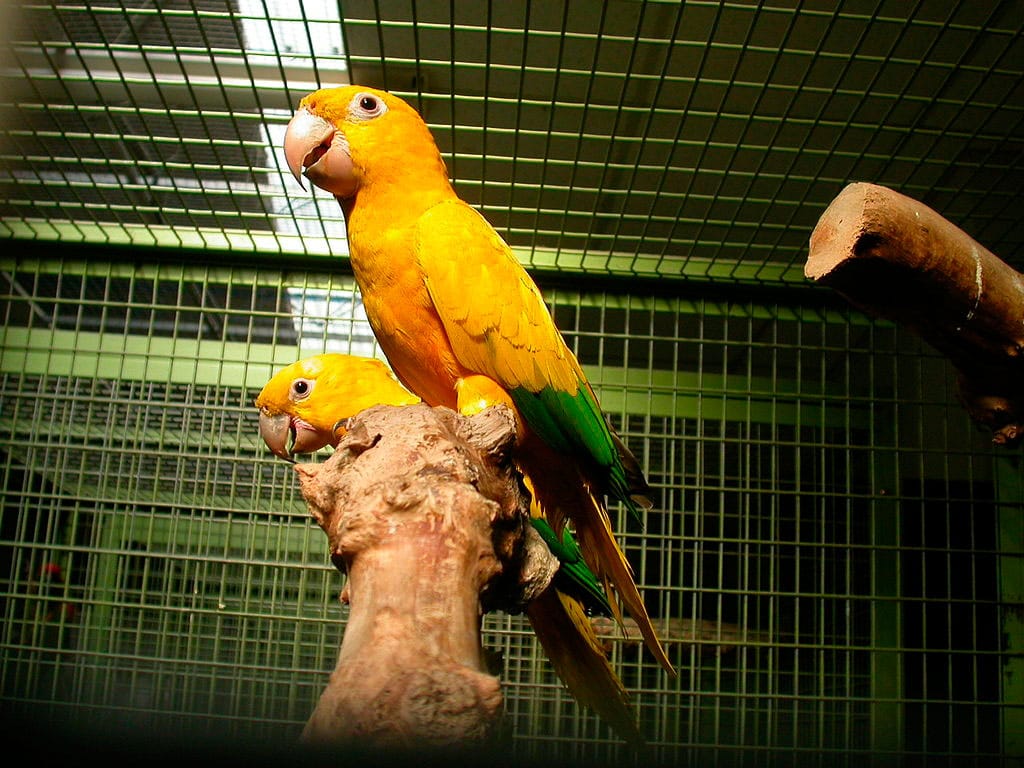
The Golden Parakeet(Guaruba guarouba) has all the head, upperparts, lower andtail , a bright yellow. The greater coverts, primaries and secondaries are dark green (one or two feathers yellow in some birds flying). Underwing-coverts yellow, the bottom of the flight feather dark yellow. Feather shafts of the tail are white.
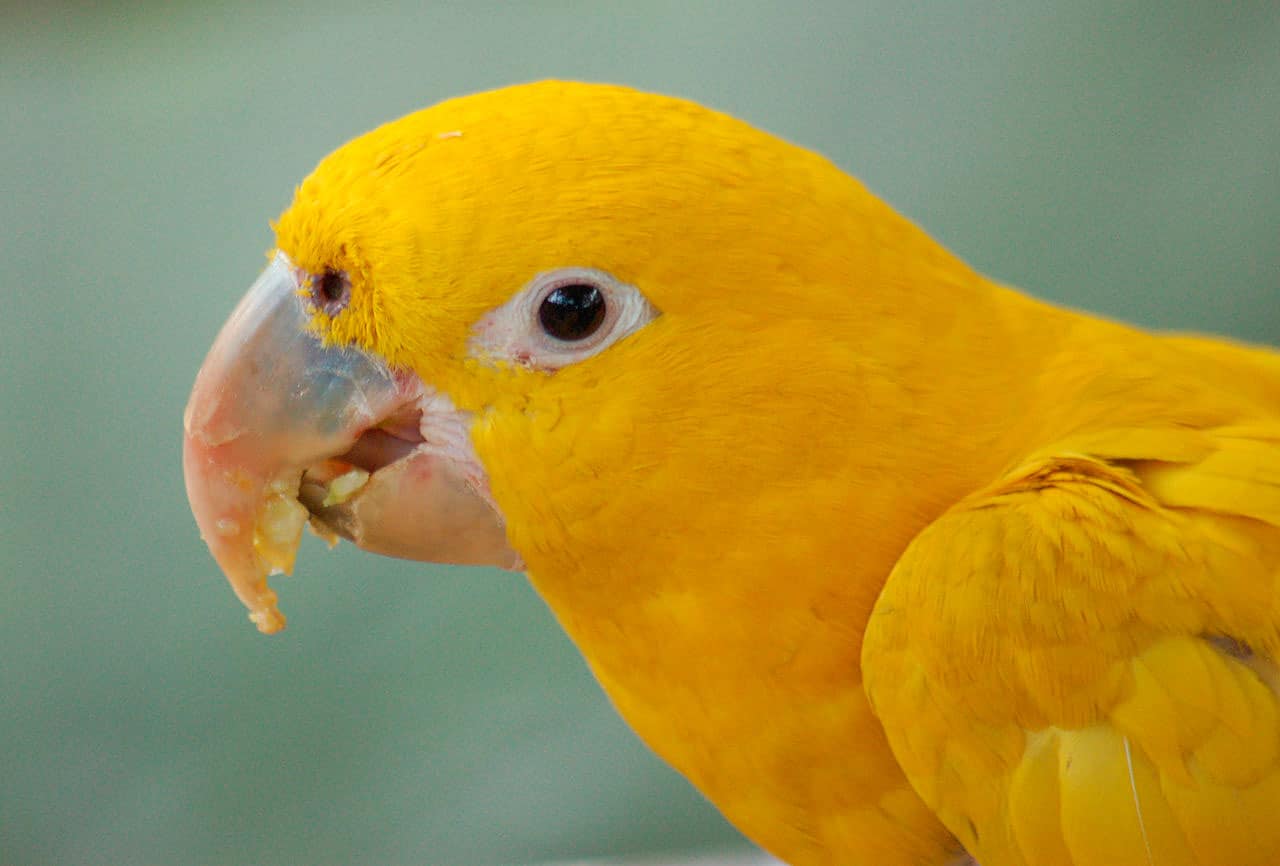
The bill pale pink, more Brown on the basis of the upper jaw; bare periophthalmic naked whitish; Iris Orange to brownish Orange; legs Rosaceae.
Both sexes similar.
Immature colour olive brown opaque dark green streak. In the transition to adulthood, the head, top of the tail and back They are the last to acquire the bright yellow color of the adult plumage.
inhabits the humid tropical forests, avoiding the forests and marshes (seasonally flooded), Although in the immediate breeding period, You can wander through these habitats from the adjacent dry forests.
When is the breeding season, the Golden Parakeet they occupy the forests next to the clear. Gregarious in all the seasons of the year. Observed in flocks of 3 to 30 birds, Although on a regular basis in groups between 6 and 10.
Forman communal roosts in tree cavities during the non-breeding season, using the holes in the area, alternately in successive nights. The usual and regular use of resting and feeding areas, is suspected to be due to the predictable daily routines. Sometimes seen feeding with other species of parrots.
Reproduction:
Nest at the top of the trunk or main branch of a hollow tree, a height between 15 and 30 m. Nesting tree is usually isolated, but near virgin forests. The old nest of other species It can be used by the Golden Parakeet, expanding its cavity as necessary.
The sexual behavior This species is unusual, and this is one of the most interesting aspects of their biology. With reproduce communally, with several females contributing to the work of the clutch, Although there are also reports of individual couples. Young people at different stages of development sometimes share a same nest.
On the other hand, at breeding sites during the reproductive period, the Golden Parakeet they react defensively to the presence of flocks of the same species, other species of parrots, especially the Scarlet Macaw (Ara macao), and before the approach of birds of prey.
The normal clutch female is of 2 to 4 eggs (perhaps up to six); 14 reported in a single nest chicks in captive, where the six adults helped in the breeding work. The breeding season, usually, takes place from December to April, and it corresponds to the rainy season
endemic to the Amazonia, to the South of amazon in Brazil, from the west shore of the Tapajos River, to the East through the basins of the Xingu River and North of Tocantins to 5 ° N, For, and up to the eastern shore of the Turiacu River in West Maranhão.
Are not observed in the Marajó island and prevents the forests and marshes (for example, immediately to the South of the Amazonia).
Recent records in Rondà´nia and Mato Grosso, far from their known range, They suggest a little-known distribution. Apparently, they are distributed in large areas, but it is not known whether the movements are predictable or related with, for example, the seasonal availability of food.
Rare range-wide and no doubt in decline due to the very wide, fast and continuous deforestation and fragmentation of forests, both in the Amazonia occidental as in the Eastern.
The capture illegal for national and international live bird markets and the hunting for food and sport they pose a serious additional pressures. Protected areas in the range are insufficient and are being violated regularly, for example, with the illegal logging of Mahogany Swietenia macrophylla.
Listed in Appendix 1. In danger of extinction.
Conservation:
• Red List category of the UICN current: Vulnerable
• Population trend: Decreasing
The threat most obvious for the survival of the Golden Parakeet is deforestation? The construction of the tucuruí dam, which was completed in 1984, displaced 35.000 settlers from their House to adjoining territories and brought rapid deforestation. Prior to the dam construcicón, Wildlife in the lower basin of Tocantins It was considered among the richest and most diverse in the world. It is estimated that you a 117 species of mammals and 294 species of birds were displaced. So what 120 species of amphibians and reptiles were affected.
The population of the Golden Parakeet was initially in a range between 1,000-2,499 individuals, based on an assessment of the known records, descriptions of the abundance and range size. But, recent information suggests that the population may be greater. The species has been recorded in several additional places. (Laranjeiras and Cohn-Haft 2009), and a recent survey along of the Tapajos River by Laranjeiras (2011) indicated that it was as common in the study area as other Psittacidae, not threatened.
On the basis of this information, the population is placed on the band's 10,000-19,999 individuals, that means include c.6,600-13,400 mature individuals.
– CITES Appendix I and II, managed under the Association of Zoos and Aquariums Parrot Taxon Advisory Group and protected by the Brazilian legislation (being proposal as the national bird of Brazil).
– A campaign attacking trade of birds in Bolivia It can help to reduce international trade (AB Hennessey in litt., 2009).
– A population is relatively well protected in the Tapajos National Park, and a remnant population can survive in the Gurupi biological reserve.
– Floresta Nacional do Jamari It is poorly protected and suffer the constant pressure of illegal occupants, loggers and poachers (F. Olmos in litt., 1999).
– The conservation of this species in the reserves is problematic because of its apparent nomadism.
Conservation Actions Proposed:
– Conduct studies to find the populations so far unknown, especially in the South and West of its range.
– Maintain the integrity of the Tapajos National Park.
– Protect and manage the land between the existing protected areas to facilitate the movements of nomadic.
– To enforce the legal restrictions on trade, especially in domestic markets.
– Further develop the program captive breeding.
"Golden Parakeet" in captivity:
Date back to the first reproductive outcomes of this kind of 1939 in Sri Lanka.
The Golden Parakeet It is probably the most coveted among all the parrots, being the prices demanded by her extremely high. It is very rare and endangered in its natural habitat, and are therefore protected from import.
Birds reserved for breeding are happier in the presence of members of their species. This is due to the nature of the Golden Parakeet, sociable and cheerful, with an intense need for interaction with their peers.
With regard to its longevity, according to sources, a specimen lived 23,2 years in captivity. It has been reported that these animals can live up to the 60,9 years in captivity, but this has not been verified; the same study reported that these animals can reproduced from the 3 years age in captivity.
(1) – Avibase
(2) – Parrots of the World – Forshaw Joseph M
(3) – Parrots A Guide to the Parrots of the World – Tony Juniper & Mike Parr
(4) – Birdlife
(5) – WAZA
Photos:
(1) – Golden Parakeet (also known or Golden Conure) at Gramado Zoo, in south Brazil By Ironman br (Own work) [CC BY-SA 3.0], via Wikimedia Commons
(2) – Golden Parakeet or the Queen of Bavaria Conure in Burgers Zoo, Arnhem By frank wouters (originally posted to Flickr as goudparkiet) [CC BY 2.0], via Wikimedia Commons
(3) – Two Golden Parakeets at Gramado Zoo, Rio Grande do Sul, Brazil By diegodobelo (Zoo de GramadoUploaded by Snowmanradio) [CC BY-SA 2.0], via Wikimedia Commons
(4) – Golden Parakeet or the Queen of Bavaria Conure). Two captive By TJ Lin (originally posted to Flickr as Golden Conure) [CC BY-SA 2.0], via Wikimedia Commons
(5) – Photo taken at the National Aviary By Photo by and (C)2007 Derek Ramsey (Ram-Man) (Self-photographed) [GFDL 1.2 or CC BY-SA 2.5], via Wikimedia Commons
(6) – Photo taken at the National Aviary By Photo by and (C)2007 Derek Ramsey (Ram-Man) (Self-photographed) [GFDL 1.2 or CC BY-SA 2.5], via Wikimedia Commons
(7) – Golden Conure at the Parque das Aves, Foz do Iguaçu, Brazil By Bruno Girin from London, United Kingdom (06680018Uploaded by Snowmanradio) [CC BY-SA 2.0], via Wikimedia Commons
(8) – Photo taken at the National Aviary By Photo by and (C)2007 Derek Ramsey (Ram-Man) (Self-photographed) [GFDL 1.2 or CC BY-SA 2.5], via Wikimedia Commons
(9) – Golden Conure by Jean – Flickr
(10) – Illustration Guaruba guarouba By Dutton, F. G.; Fawcett, Benjamin; Greene, W. T.; Lydon, A. F.; Lydon, A. F. [CC BY 2.0 or Public domain], via Wikimedia Commons
Of 30 cm.. of length and a weight of 130 g..
The Golden-capped Parakeet(Aratinga auricapillus) It is often treated as the same species as the Sun Parakeet(Aratinga solstitialis) and Jandaya Parakeet(Aratinga jandaya).
The lores, frontal band and ocular region of this kind are of color red glossy; the crown is bright golden yellow; ear-coverts, cheeks and both sides of the neck, green. The area of the nape and the the mantle are pale green: the back and the top of the rump with different hues of green and tips of red or orange; floor area of the rump and uppertail-coverts, green; the small and medium-sized upperwing-coverts, green; the large coverts and primaries, secondaries, vane outer and tips from them primaries, blue.
Underwing-coverts, orange-red; underside of flight feather grey. The chin and throat yellowish green with orange discoloration on the top of the chest and deep color red pale in the belly; vent, the thighs and undertail-coverts, green. Upper, the tail, of colour brownish with them tips blue, sometimes with the vane external foreign blue feathers; undertail, the tail, grey.
The bill, grey-black; grey, the bare skin of the bare periophthalmic; irises yellowish; legs grey.
Both sexes similar.
Immature It has little or nothing red in the rump, more off the yellow colour of the crown; the top of the chest is greener and less extensive red on the belly.
(Spix, 1824) – The upperparts totally green (without red margins on the feathers of the back and Hip top). More green in the upper zone of the chest, lacking Orange dye of the nominal species.
Habitat:
Video – "Golden-capped Parakeet" (Aratinga auricapillus)
They live in forests, as well as in the clearings and edges of the same, including coastal moist Atlantic evergreen forests and inland closed-type deciduous forests. They prefer primary formations.
Scarce or absent grassland with trees or secondary vegetation, including from the vicinity of the remaining original forests. Observed to 2.180 m (Parque nacional do Caparaó, to the South of Holy Spirit). gregarious, usually observed in flocks of 12-20 individuals, more rarely in groups of up to 40.
Reproduction:
There are few details on the reproductive ecology of this species., Although probably nest in the months of November-December.
Implementation size in captivity is of 3-5 eggs.
Food:
Diet Golden-capped Parakeet includes various seeds and fruits. Reported foods include the corn, okra and fruits red sweet unspecified.
considered a pest of crops in some areas before its abrupt population decline.
• Red List category of the UICN current: Near-threatened
• Population trend: Decreasing
The size of the population of the Golden-capped Parakeet It has not estimated formally and in the absence of sufficient data, it is estimated that you there are more than 10.000 specimens, more or less equivalent to 6.700 mature individuals; But, detailed research is required.
The population the species is suspected that it may be in decline due to the continuous loss of habitat and to his capture to the pet trade.
• There has been extensive and ongoing clearance and fragmentation of suitable habitat for this species., for use as coffee plantations, soybean and sugarcane in Sao Paulo, and livestock in Goiás and Minas Gerais, Brazil (Snyder et to the., 2000).
• The capture for trade, He has probably had a significant impact, since it was relatively common in the illegal Brazilian markets in the mid-1990s. 1980, importing hundreds of birds to Western Germany in the decade of 1980. But, the precise effect is obscured by large numbers of captive-bred birds, that presumably see reduced pressure on wild populations remaining (LF Silveira in litt., 1999).
• Despite its tendency to nest, times, near human settlements, It is apparently not the most favoured species for the pet trade (VT Lombardi in litt. 2011).
• There are no records of persecution in response to crop degradation..
• Survey to locate important new populations and define the limits of their current range..
• Study to determine its population dynamics and dispersal capacity., as well as provide a detailed analysis of their habitat requirements in different sites.
•Ensure the protection of key reserves.
• Protect species under Brazilian law.
"Golden-capped Parakeet" in captivity:
Rare in captivity, mostly out of Brazil.
Their life expectancy is about 30 years.
Alternative names:
– Golden-capped Parakeet, Flame-capped Conure, Flame-capped Parakeet, Gold-capped Conure, Golden capped Parakeet, Golden-capped Conure (English).
– Conure à tête d’or, Conure à tête dorée, Perriche à tête d’or, Perruche à tête d’or (French).
– Goldkopfsittich, Goldkappensittich (German).
– jandaia-de-testa-vermelha, cara-suja, jandaia, periquito-de-cabeça-vermelha (Portuguese).
– Aratinga Testadorada, Maracaná corona dorada, Periquito de Cabeza Dorada (español).
– Maracaná corona dorada (Paraguay).
– Avibase
– Parrots of the World – Forshaw Joseph M
– Parrots A Guide to the Parrots of the World – Tony Juniper & Mike Parr
– Birdlife
– Photos:
(1) – A Golden-capped Parakeet at Jurong Bird Park, Singapore By Peter so (Golden-capped ParakeetUploaded by Snowmanradio) [CC BY-SA 2.0], via Wikimedia Commons
(2) – Picture of a Golden-capped Parakeet in the zoo of Wrocław (Poland) By Nicolas Guérin (messages) (Own work) [GFDL or CC BY-SA 3.0], via Wikimedia Commons
(3) – A Golden-capped Parakeet (also known as Golden-capped Conure) in Seattle, Washington, USA By Matthew Wilson (Picasa Web Albums) [CC BY-SA 3.0], via Wikimedia Commons
(4) – Two Golden-capped Parakeets (also known as Golden-capped Conures) in Seattle, Washington By Matthew Wilson (Picasa Web Albums) [CC BY-SA 3.0], via Wikimedia Commons
(5) – A Golden-capped Parakeet (also known as Golden-capped Conure) in captivity By Patrick Hawks from Sint Maarten (Bird is the wordUploaded by snowmanradio) [CC BY 2.0], via Wikimedia Commons
The Diademed Parrot(Amazona Diadema) It is generally green, with black edges to feathers crown, to the mantle and the chest; crown green to nape; the back of the green neck, mauve margin; feathers of the cere and forecrown, red; yellow-green, less yellow in upper cheeks, up to the ear-coverts; secondaries red on the bases, the green rest; tail green; eye ring pale yellow; eyes oranges; bill dark grey.
It is likely to frequent a variety of habitats from lowland forest species, including edges evergreen forest, as well as modified areas containing scattered trees or plantations (Del Hoyo et al., 1997, pit et to the., 2016).
They are in loose flocks or pairs, are gregarious When feed.
Reproduction:
The laying is of 2-3 eggs. Breeding season, It is supposed to be in early: January-March.
Food:
It feeds mainly from fruits and seeds, even some cultivated species (Del Hoyo et al., 1997), although there are no published data (Del Hoyo et al., 2016).
Distribution:
Size of its range (breeding/resident): 71.800 km2
Endemic low Black river and the northern margin of Amazon River, in the states of amazon and Northwest of For, in Brazil.
Conservation Amazona diadema:
State of conservation ⓘ
Endangered ⓘ(UICN)ⓘ
• Current category of the Red List of the UICN: In danger of extinction.
• Population trend: Decreasing.
Rationale for the Red List category
Based on a model of future deforestation on amazon basin and susceptibility to this new species capture, it is suspected that its population will suffer a very fast along three generations descent from 2002, so it is in danger of extinction.
Justification of trend
This species is expected to lose between 49 and 55% suitable habitat within its distribution throughout three generations (37 years) starting at 2002, based on a model of Amazon deforestation (Soares-Filho et to the). Given its susceptibility to capture, It is suspected that species decline by 50-79% during this time.
Threats
• The main threat to this species is the accelerating deforestation in the Amazon Basin as land is cleared for ranching and soy production, provided by the expansion of the road network, together with his susceptibility to capture (Soares-Filho et to the. 2011).
• The species is assumed to experience some pressure catch, probably mainly for internal trade, since this species is rare in aviculture (Del Hoyo et al ., 1997, pit et to the ., 2016).
• Proposed changes to the Brazilian Forest Code reduce the percentage of land to a private owner is legally obliged to keep as forest (including, critically, a reduction in the width of forest buffers with perennial vapors) and include an amnesty for owners who deforested before July 2008 (That they would later be absolved of the need to reforest illegally vacated land) (Bird et to the., 2011).
Conservation Actions Underway
• No specific conservation actions are known for this species, although part of their habitat is protected.
• It is distributed in the Jau National Park where it is rare or uncommon (Borges et al ., 2001, Borges & Almeida 2011).
Conservation Actions Proposed
• Carry out surveys to estimate the size of the population.
• Monitor deforestation rates in the range using remote sensing techniques.
• Study the level of Trapping threat.
• Increase the area of suitable habitat that receives protection effective.
• Boost changes in laws related to deforestation and forest protection.
The Diademed Parrot in captivity:
Rare in aviculture.
Each captive specimen of this species which is capable of reproducing, It is placed in a well managed captive breeding program and not be sold as a pet, in order to ensure its long-term survival.
(1) – diadem parrot. Red lored parrot. 11 November 2015, Tikal, Guatemala by ze_da_binha
(2) – Diademed Parrot – amazon with tiara – Diademed amazon – amazon tiara By Florin Feneru from Orpington, UK (Diademed Parrot) [CC BY 2.0], via Wikimedia Commons
(3) – A Red-lored Amazon at Loro Parque, Cross port, Tenerife, Spain. This subspecies is also called the Diademed Amazon By Carlos Urdiales [CC BY-SA 2.0], via Wikimedia Commons
(4) – A Red-lored Amazon at Xcaret Eco Park, Riviera Maya, Mexico. Photographed as it started to rain By Tomasz Wagner from Burnaby, BC, Canada (Parrot – Amazona autumnalis) [CC BY-SA 2.0], via Wikimedia Commons
(5) – Diademed amazon (Diademed Parrot) Loro Parque, Tenerife by Florin Feneru – Flickr
(6) – PL. XXXI I Chrysolis diadema (î^wl By Blanchard, Emile; Bonaparte, Charles Lucian; Bourjot Saint-Hilaire, Alexandre; Le Vaillant, François; Souancé, Charles de. [CC BY 2.0 or Public domain], via Wikimedia Commons
42 cm.. of length and a weight of 285 g..
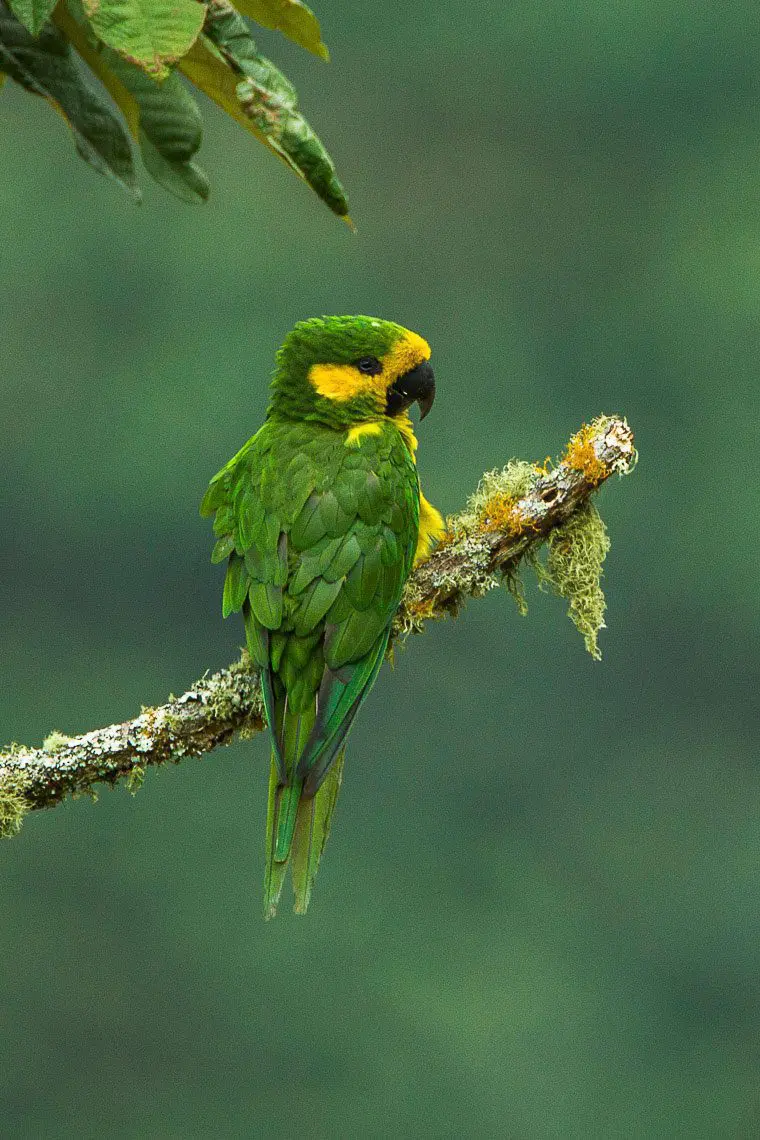
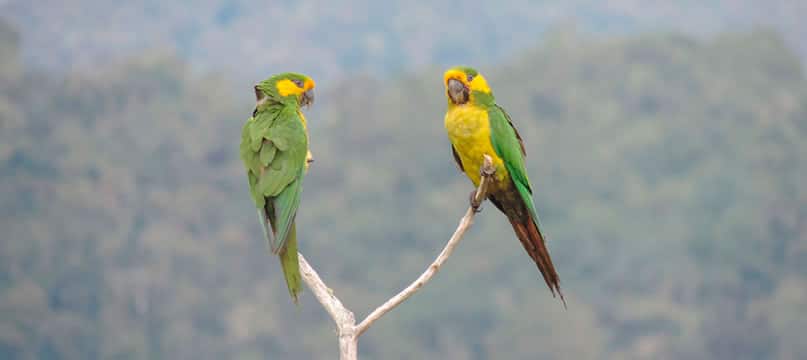
The Yellow-eared Parrot or Yellow-eared Parrot(Ognorhynchus icterotis) is a parrot of medium-sized; has the crown green grass with Emerald suffusion; the forecrown with a wide yellow stripe that extends to the lores, upper cheeks and below the eyes up to the ear-coverts; bottom of the cheeks and both sides of the neck green.
The upperparts, upperwing-coverts and flight feather are green grass. Under the wings yellowish green in coverts, yellowish in the flight feather. The underparts yellowish with increasingly darker green dye in the belly, the the thighs and area of the vent.
Upper, the tail green; down off red. The head is large in proportion to the body, with bill thick, blackish. Orbital ring, pale grey; Orange the irises; legs grey.
Both sexes similar.
The immature not described.
Sound of the HTTPS://www.mascotarios.org/wp-content/themes/generatepress_child/sonidos/Yellow-eared Parrot.mp3.
Habitat:
Video – "Yellow-eared Parrot" (Ognorhynchus icterotis)
yellow-eared parrot project 10 years - Ognorhynchus icterotis - ProAves
They inhabit in the humid montane forests in the subtropical high and low temperate zones, sometimes frequent partially cleared areas.
Associated to the wax Palms (Ceroxylon quindiuense), Although the dependence of these species is uncertain since the birds remain absent from those areas in which these palms are abundant. Move, generally, in pairs or small flocks and perform migrations altitudinal and latitudinal, not specified, outside the breeding season.
Reproduction:
They fly in stable couples and they always nest in old nests.
There are reports of nests on wax Palms (Ceroxylon quindiuense) to 25 metres in height child in the month of may in the North of Tolima and conditions of reproductive birds have been seen in the month of March in Huila. Breeding season July to October in Ecuador.
One of the most unique behaviors in reproduction of the Yellow-eared Parrot is the assistance of a third adult ave sharing the duties of parents, known as "breeding assistants", they have been observed assisting parents in parenting, feeding and caring for the chicks.
Clutch of four eggs.
Food:
It is known that they feed on las Palmas Ceroxylon quindiuense and Ceroxylon alpinum but it probably takes fruits of all other species of this genus; other reported foods include fruits of the Saurauia tomentosa and Sapium.
The Yellow-eared Parrot they sometimes feed in more open areas, returning the forest to rest.
Distribution:
Size of its range (breeding/resident): 168.000 km2
Its distribution is discontinuous.
Limited to the North of the Andes, in the North of Ecuador and West Colombito between 1.200 and 3.400 meters above sea level, (mostly between 2,500-3,000 m).
With distributed (or distributed) in the three chains of the Andes in Colombia; records in the West of the Andes, from a small area in the South, to the North of Cauca and possibly Valle del Cauca; in the Central Andes, from the western slope of Antioquia, Caldas and Cauca and in the eastern slope, in Tolima and Huila; in the East of the Andes from the West side and the East of the basin in Norte de Santander, on the eastern slope of Cundinamarca and in the header of the Magdalena River Valley, in Huila.
It is likely that they led by seasonality, with the evidence that are present in Ecuador in the months of November and Colombia during the rest of the year.
Formerly considered common and in some places even abundant, but now is very scarce and local.
Drastic reduction of its population in the century 20 due to deforestation on a large scale on much of its distribution area and perhaps decrease of species of Quindio wax Palm.
Recent records sporadic and the species may now be confined in a few localities in Colombia, including the region of the Munchique national natural park (West of the Andes in Cauca), where some forests remain unchanged, at the front of the Magdalena River Valley, and in the Northwest of the Andes, in Ecuador.
The total population of the Aratinga Orejigualda is very small and in danger of extinction.
Very rare in captivity and remaining birds could be at risk of capture. Appendix I. critical.
Conservation:
• Red List category of the UICN current: In danger of extinction
• Population trend: Growing
The current population It is thought that you understand 1.103 individuals. But, a maximum of only 212 individuals have bred in recent years (Fundación ProAves in litt., 2010), therefore, This figure is used for the current population of mature individuals. The rest of the population is assumed cautiously being too young to reproduce.
Due to the intensive action conservation of the population has grown from 81 to 1.103 individuals in 2009, of which 212 they are mature (Fundación ProAves in litt., 2010).
Threats:
– Its distribution area It seems to be strongly restricted by the expansion of exotic forests, Since only occurs in the native forest (CEIA et to the., 2009).
– It has been a considerable loss and fragmentation of habitat (90-93% of Montane forest in Colombia) throughout its area of distribution (Salaman et al the 1999b, Snyder et to the., 2000.); But, several significant areas of habitat are maintained within their historic range, which suggests additional causes of impairment (Krabbe 1998, PGW Salaman in litt., 1999).
– The mortality of the Quindio wax Palm (Ceroxylon quindiuense) It is accelerating and the logging in adjacent areas increases its susceptibility to disease (Krabbe 1998, Salaman et to the. 1999to, Salaman et to the. 1999b, PGW Salaman in litt., 1999).
– The Quindio wax Palm they are incredibly long-lived and slow growing (some more of 500 years of age) (Salaman 2001), and are being exploited unsustainably for use in the celebrations of the Domingo de Ramos within the range of the species.
– In Ecuador, their hunting was prolific as food source (Krabbe and Sornoza 1996, Salaman et to the., 1999b), and capture has had any impact on Colombia, Although the species is very difficult to keep in captivity (Salaman et to the. 1999b, Salaman 2001).
Conservation Actions Underway:
– CITES Appendix I and II.
– The traditional breeding place in Ecuador He has bought and is being reforested (Snyder et to the., 2000).
– Surveys were conducted at the beginning of 2008 in Ecuador to determine the status of the species there (O. Jahn in litt., 2007).
– It hopes that an awareness campaign for people who live in close, stop parrots feed hunting (Krabbe 1998).
– In Colombia, awareness to reduce the pressure of the hunting and the impact of the processions of the Domingo de Ramos, It has involved poster campaigns, environmental education, community workshops, radio and school visits (Waugh, 2004).
– In combination with actions on the ground, such as surveys, fencing of sites of play to allow the regeneration of the wax Palm, the restoration of the habitat and the provision of artificial nest boxes (Salaman 2001, the ProAves Foundation in litt. 2012), the size of the population of the species has increased significantly (Waugh's 2004, the ProAves Foundation in litt. 2010, 2012).
– In San Luis of Cubarral, the use of artificial nests started in 2011, and it was reported that the population has increased as a result (by O. Cuts in litt. 2013).
– More information about conservation efforts is provided by Salaman et to the. (2006).
Conservation Actions Proposed:
– Search additional subpopulations, with a focus on the definition of the State within the Intag Valley, Ecuador (PGW Salaman in litt., 1999, Snyder et to the., 2000), and prepare maps of habitats of the massif of the The Ruiz-Tolima volcano (Salaman et to the . 1999b).
– Purchase and further protect habitat (Salaman et to the. 1999b, PGW Salaman in litt., 1999, Snyder et to the., 2000).
– Continue with the current program of successful conservation efforts in Colombia, and extend it into any subpopulation identified inside of Ecuador in the future.
In the news, the Yellow-eared ParrotIt is not a bird to keep captive, but you run the risk of being easy prey for poachers, Since It shows no fear toward humans.
In May of the 2000, a nest It was looted to remove a fledgling and use it as pet. But, this practice is apparently not common.
Alternative names:
– Yellow-eared Parrot, Yellow eared Parrot, Yellow-eared Conure, Yellow-eared Parakeet (ingles).
– Conure à joues d’or, Perriche à joues d’or, Perruche à joues d’or (French).
– Gelbohrsittich, Gelbohr-Sittich (German).
– Papagaio-de-crista-amarela (Portuguese).
– Aratinga Orejigualda, Loro Amarillo, Loro Orejiamarillo (español).
– Loro orejiamarillo, Perico de páramo o Catarnica (Colombia).
– Loro caripero (Ecuador).
– Avibase
– Parrots of the World – Forshaw Joseph M
– Parrots A Guide to the Parrots of the World – Tony Juniper & Mike Parr
– Birdlife
– Photos:
(1) – Yellow-eared Parrot – Colombia_S4E5367 by Francesco Veronesi – Flickr
(2) – Yellow-eared Parrot In the Yellow-eared Parrot Reserve near Jardin, Colombia by Joseph Blowers – Flickr
(3) – YELLOW-EARED PARROT Immature by Bryant Olsen – Flickr
(4) – YELLOW-EARED PARROTS by Bryant Olsen – Flickr
(5) – Reserva Natural de las Aves Loro Orejiamarillo – ProAves
(6) – Ognorhynchus icterotis Syn: Psittacara icterotis By J. Davernes (biodiversitylibrary.org) [Public domain], via Wikimedia Commons
 Minor Concern ⓘ
(UICN)ⓘ
Minor Concern ⓘ
(UICN)ⓘ























_in_captivity.jpg)

9_pet.jpg)


.jpg)


.jpg)


-1.JPG)


.jpg)


.jpg)
