โ–ท The world of Pets: Dogs, cats, birds, reptiles, amphibians

Tres Marias Parrot
Amazona tresmariae

Tres Marias Parrot

Content

Description:

38-40 cm.. length and 580-650 g. of weight.

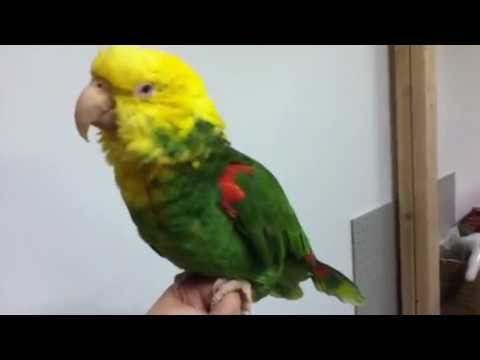
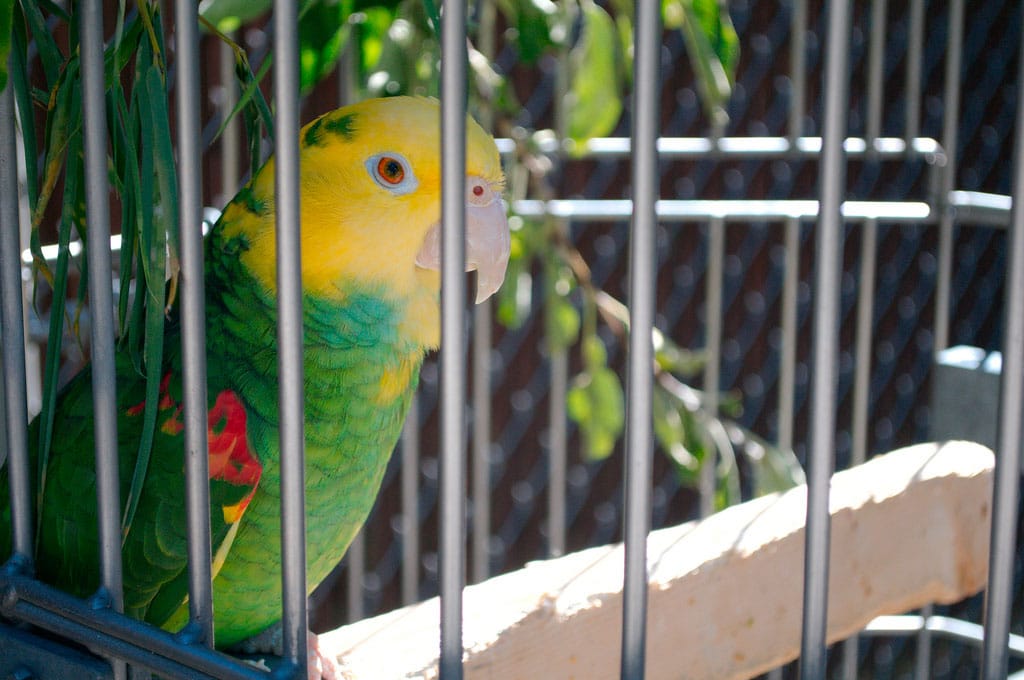
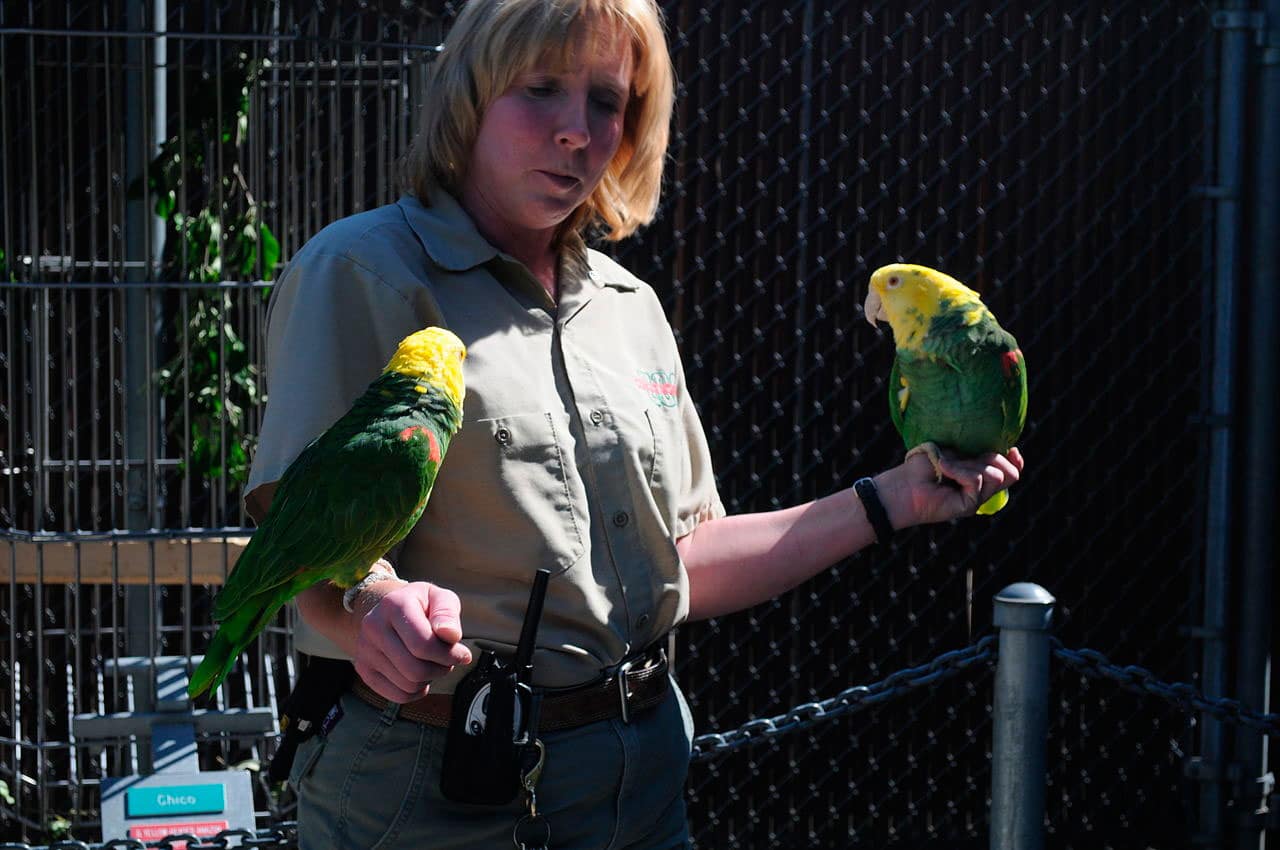
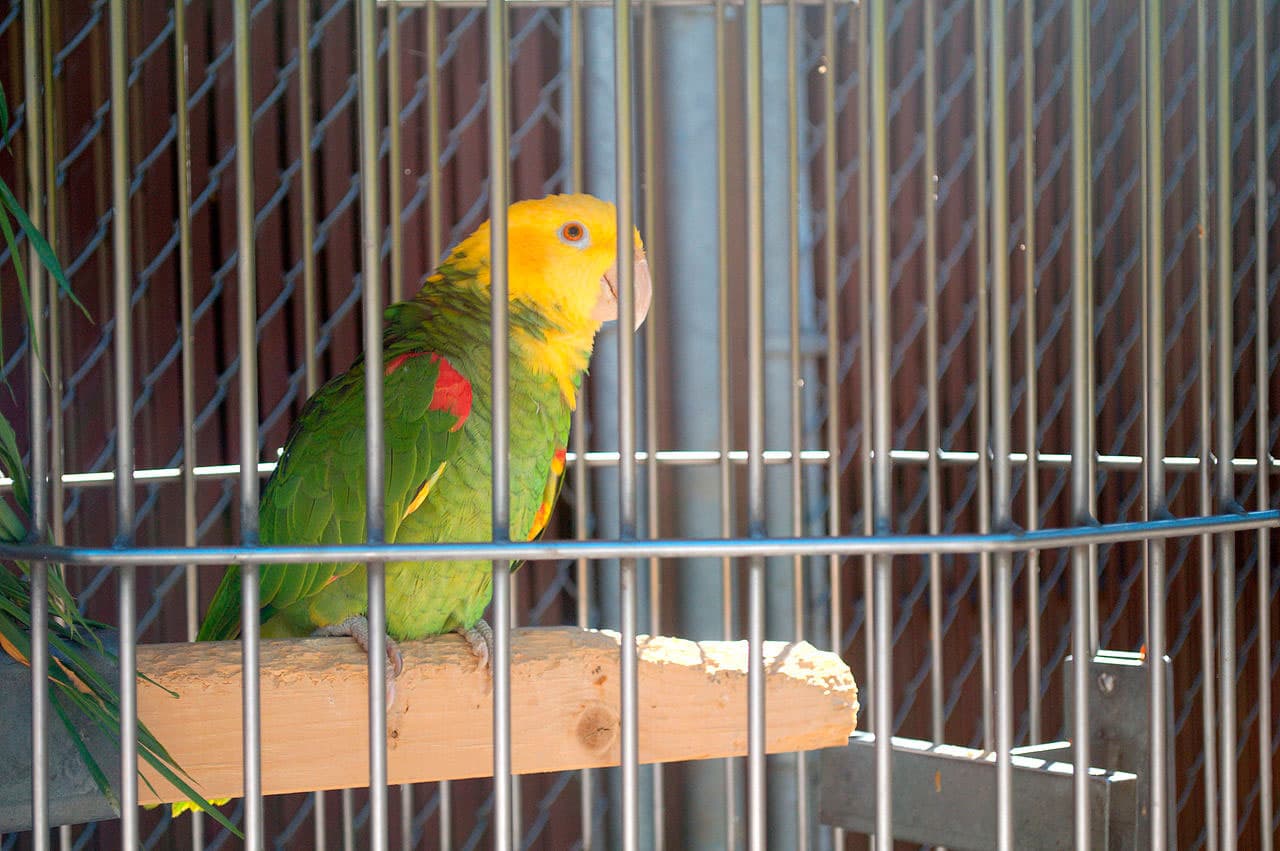
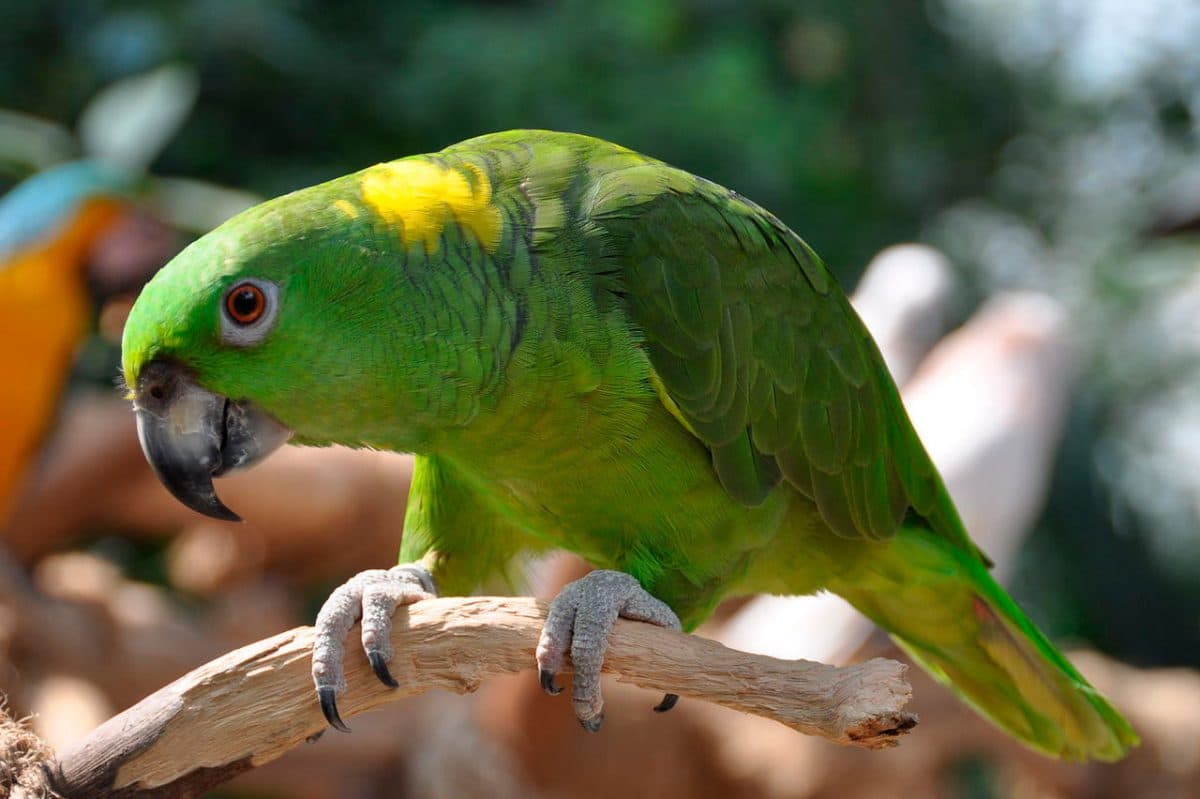
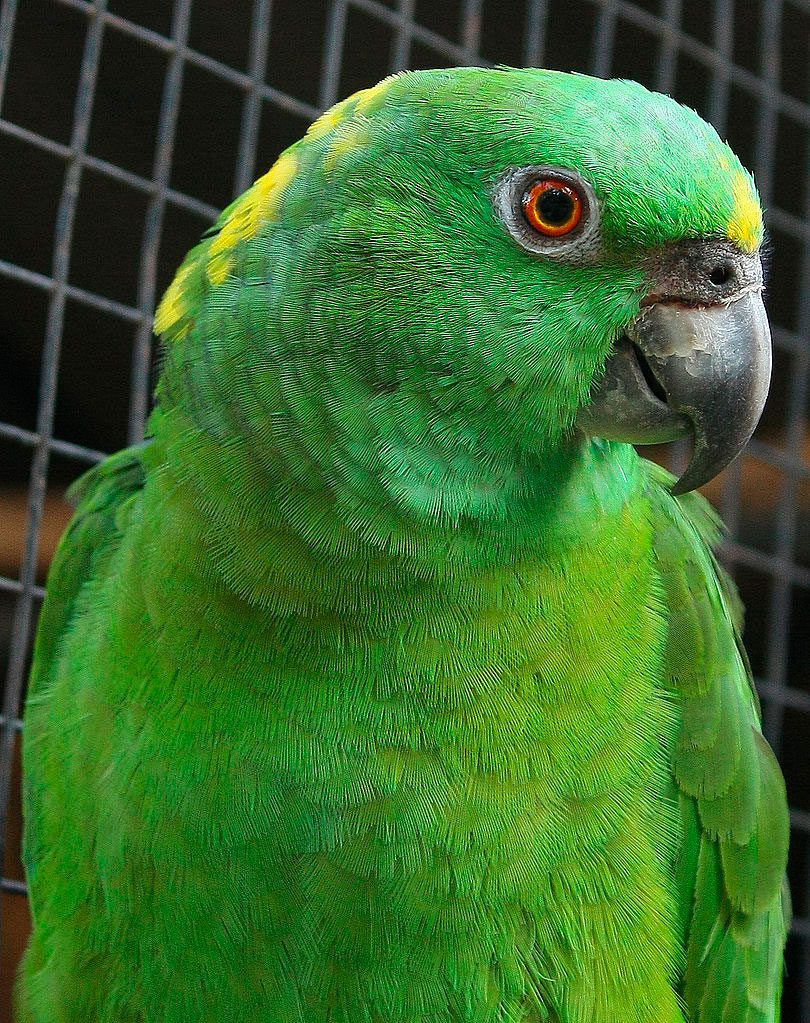
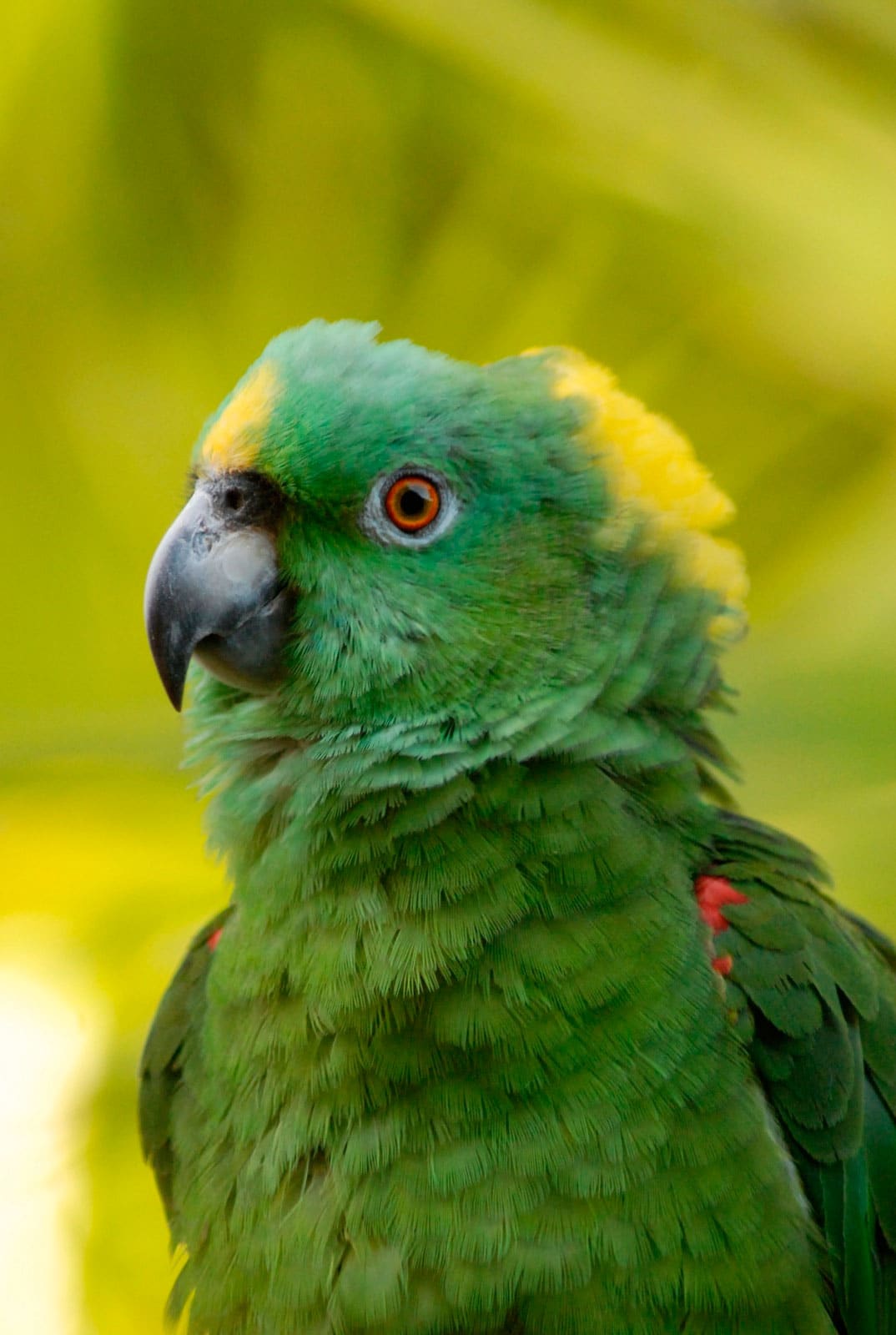
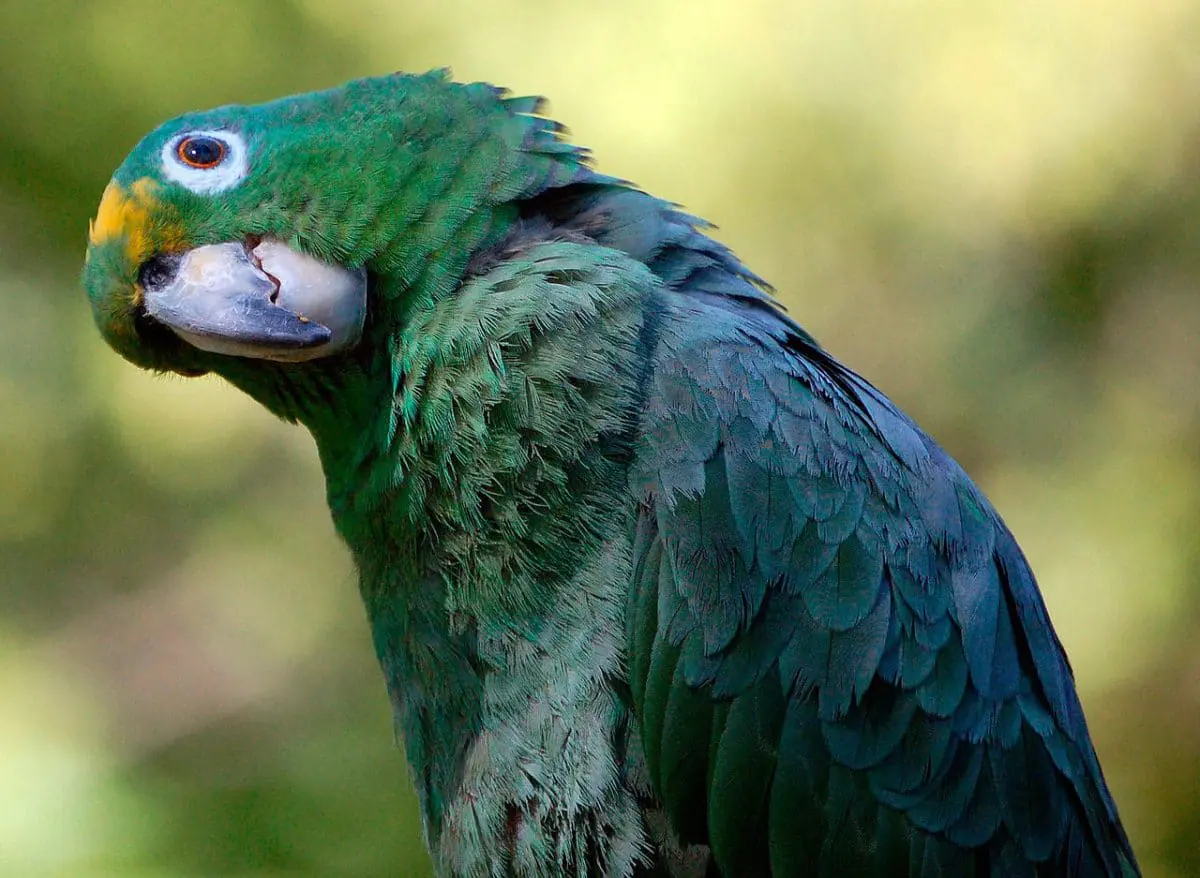
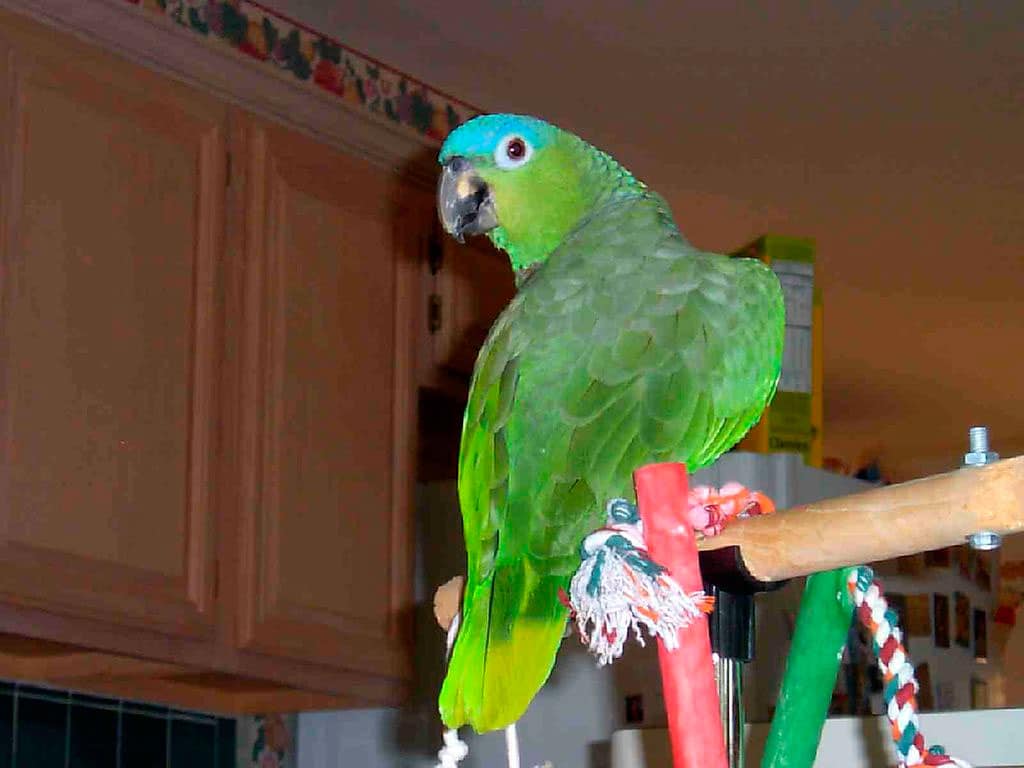
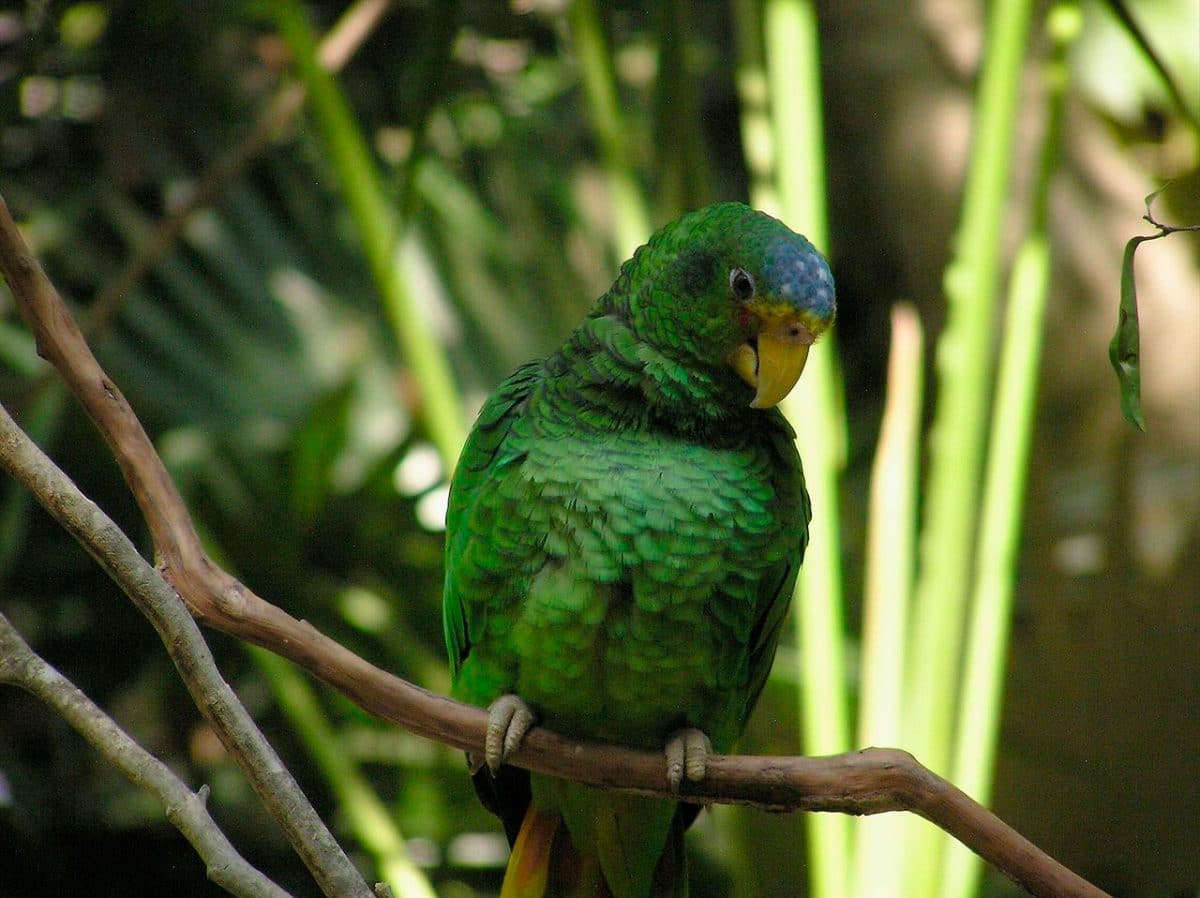
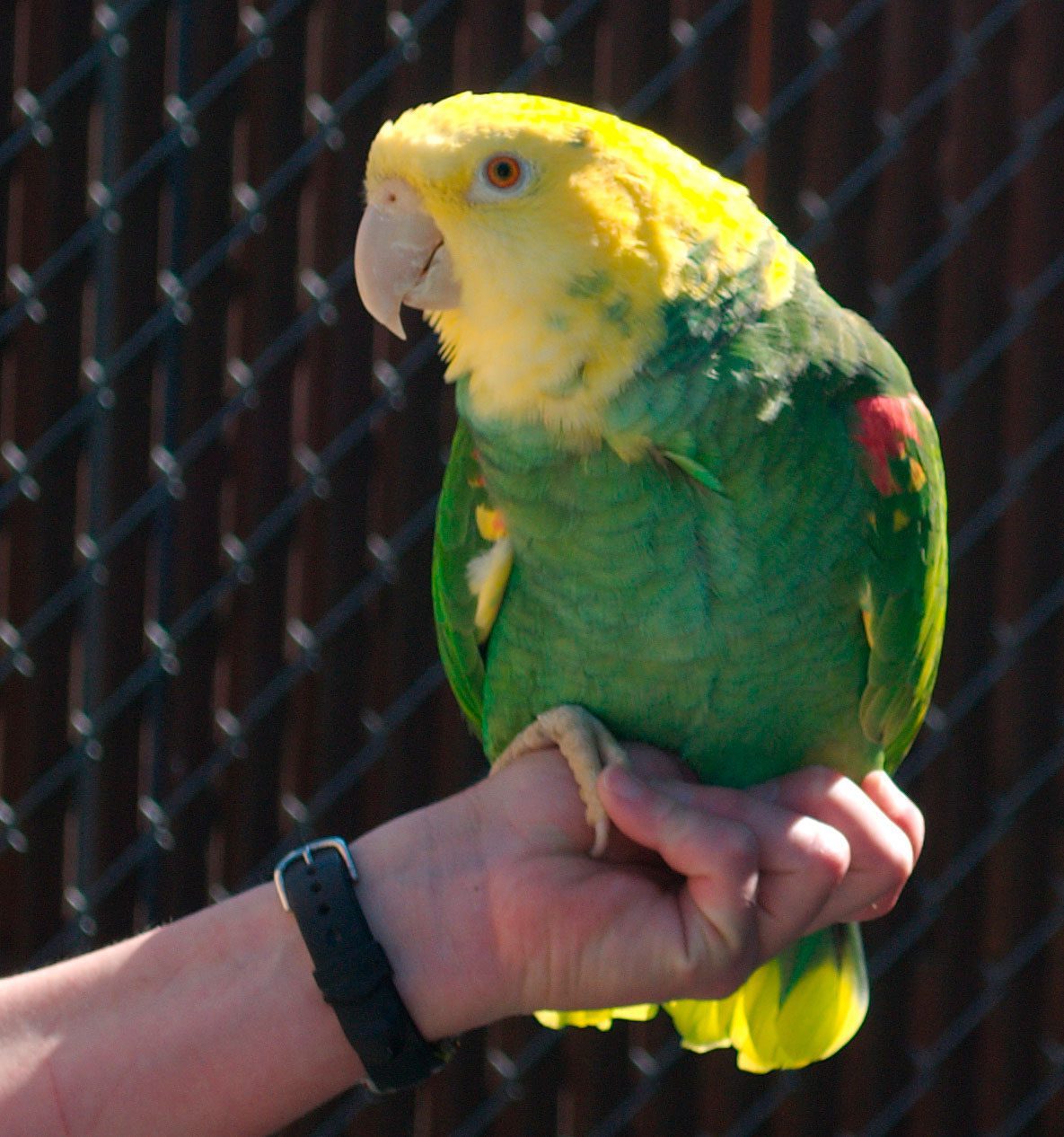
The Tres Marias Parrot (Amazona tresmariae) has head and throat yellow.

The upperparts are green. The underparts They are green but more yellowed than upperparts. Thighs yellow. Primaries and secondaries green, violet-blue becoming the tip. should carpal yellow. Speculum red on the basis of the five outer secondaries. The curve wings, pale red, with some yellow.

The tail is green, with yellowish green tip and lateral feathers basically marked with red on the inner band; outermost feathers fringed blue. The legs They are pale gray. The irises It is orange. The bill is horn-colored, gray towards the base of the upper jaw. Cere dark gray.
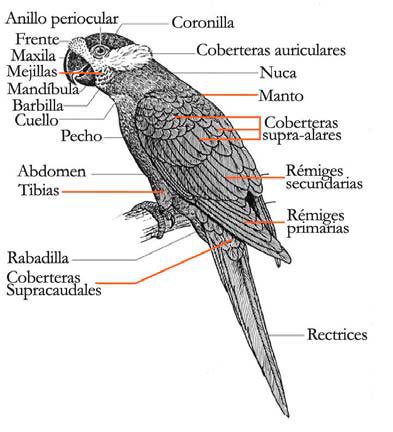

Anatomy-parrots

Both sexes are similar. The immature They are completely green head, except the yellow patch in forecrown. The curve wings, green. should carpal yellowish green.

Taxonomic note:

It is granted status species by the International Congress of Ornithology.

Habitat:

Video "Tres Marias Parrot"

They have preference by deciduous forests or evergreen, clear, Savanna Woods, pine forests, dense gallery forests; less commonly in dry thorn forests, mangroves or coastal marshes and cultivated areas with scattered trees.

Resident throughout its area of distribution.

Reproduction:

Nest in holes in tree trunks or fallen branches.

Food:

consume outbreaks, leaves news, fruits palm, seeds of Acacia, fruits of Macuna, figs and some fruits of cultivated land.

Distribution:

Endemic to the Marias Islands, on the west coast of Mexico.

Amazon tresmariae Conservation :

State of conservation โ“˜


minor concern Minor Concern โ“˜ (UICN)โ“˜

โ€ข Current category of the Red List of the UICN: Least concern.

โ€ข Population trend: Decreasing.

The Tres Marias Parrot It has an extremely large range and, therefore, it does not approach the thresholds for Vulnerable at the discretion of the distribution area size (Extension <20,000 km2 combined with a size decreasing or fluctuating range, extent or quality of habitat or population size and a small number of locations or severe fragmentation).

Even though the population trend appears to be declining, It not believed to be declining fast enough to approach the thresholds for Vulnerable under the criteria of population trend (> 30% decline over ten years or three generations).

The population size has not been quantified, but it is not believed that approximates Vulnerable thresholds under the criterion of population size (<10.000 mature individuals with an estimated continuous decline> 10% in ten years or three generations or a population structure). For these reasons, the species is evaluated as Least Concern.

Usually it regarded as a subspecies of the Yellow-crowned Parrot (Amazona ochrocephala).

Tres Marias Parrot in captivity:

These birds belong to Appendix I of the CITES, with special protection because they are highly sought.

Alternative names:

– Panama yellow-crowned amazon, Tres Maria Yellow-headed Parrot, Tres Marias Amazon, Tres Marias Parrot, Yellow-headed Parrot (Tres Marias Is.) (English).
– Amazone ร  tรชte jaune (forme des Tres Marias), Amazone de Trรชs Marias, Amazone des Tres Marias (French).
– Gelbkopfamazone-tresmariae, Tres-Marias-Amazone (German).
– Tres Marias Parrot (Portuguese).
– Tres Marias Parrot, Tres Marias Amazon, amazona de Tres Marias, Amazona cabeciamarilla de tres marias, Loro de las islas Marรญa (espaรฑol).


Scientific classification Amazona tresmariae:
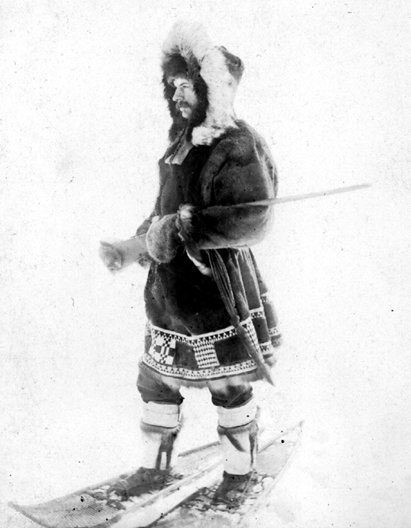
Edward William Nelson

– Order: Psittaciformes
– Family: Psittacidae
– Genus: Amazona
– Scientific name: Amazona tresmariae
– Citation: Nelson, 1900<

Tres Marias Parrot images:
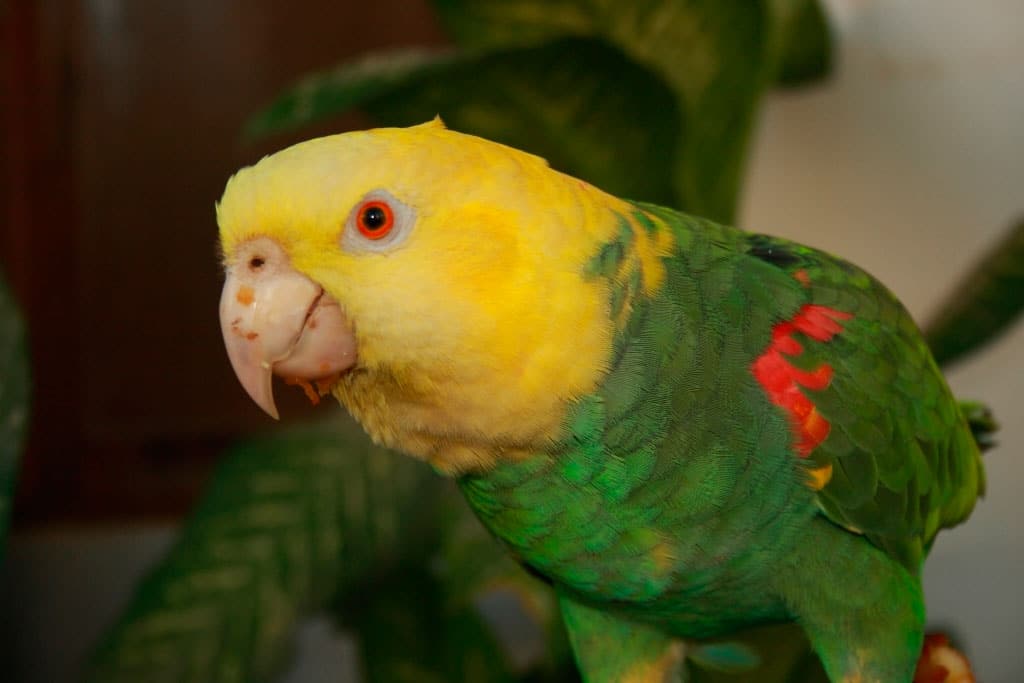

Species of the genus Amazona


Sources:

  • Avibase
  • Parrots of the World โ€“ Forshaw Joseph M
  • Parrots A Guide to the Parrots of the World – Tony Juniper & Mike Parr

Photos:

(1) – Amazona tresmariae at Cougar Mountain Zoological Park, USA perching on a zoo keepers left hand By Derrick CoetzeeCamera location47ยฐ 33โ€ฒ 11.72โ€ณ N, 122ยฐ 04โ€ฒ 50.26โ€ณ W View this and other nearby images on: Openstreetmap – Google Earth 47.553255; -122.080628 [CC0], via Wikimedia Commons
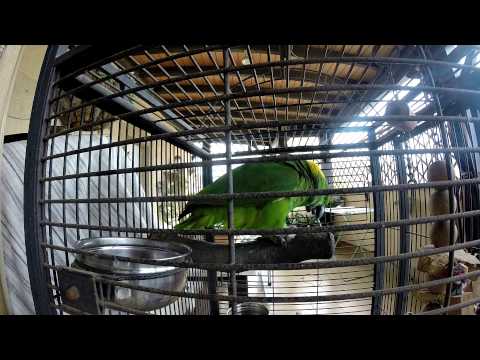
(2) – Amazona tresmariae in a cage at Cougar Mountain Zoological Park By Derrick Coetzee from Seattle, USA (Tres Marias Amazon in cage 2) [CC0], via Wikimedia Commons
(3) – Amazona tresmariae at Cougar Mountain Zoological Park, USA. There are two with a woman zoo keeper By Derrick Coetzee [CC0], via Wikimedia Commons
(4) – Tres Marias Amazon in cage by D Coetzee – Flickr
(5) – Yellow-headed Parrot of the Tres Marias Islands by (c) Juan Cruzado Cortรฉs – naturalista.mx
โ–ท The world of Pets: Dogs, cats, birds, reptiles, amphibians

Scaly-naped Amazon
Amazona mercenarius

Scaly-naped Amazon

Content

Description


Anatomy-parrots

33 to 38 cm.. tall and 300 g. of weight.

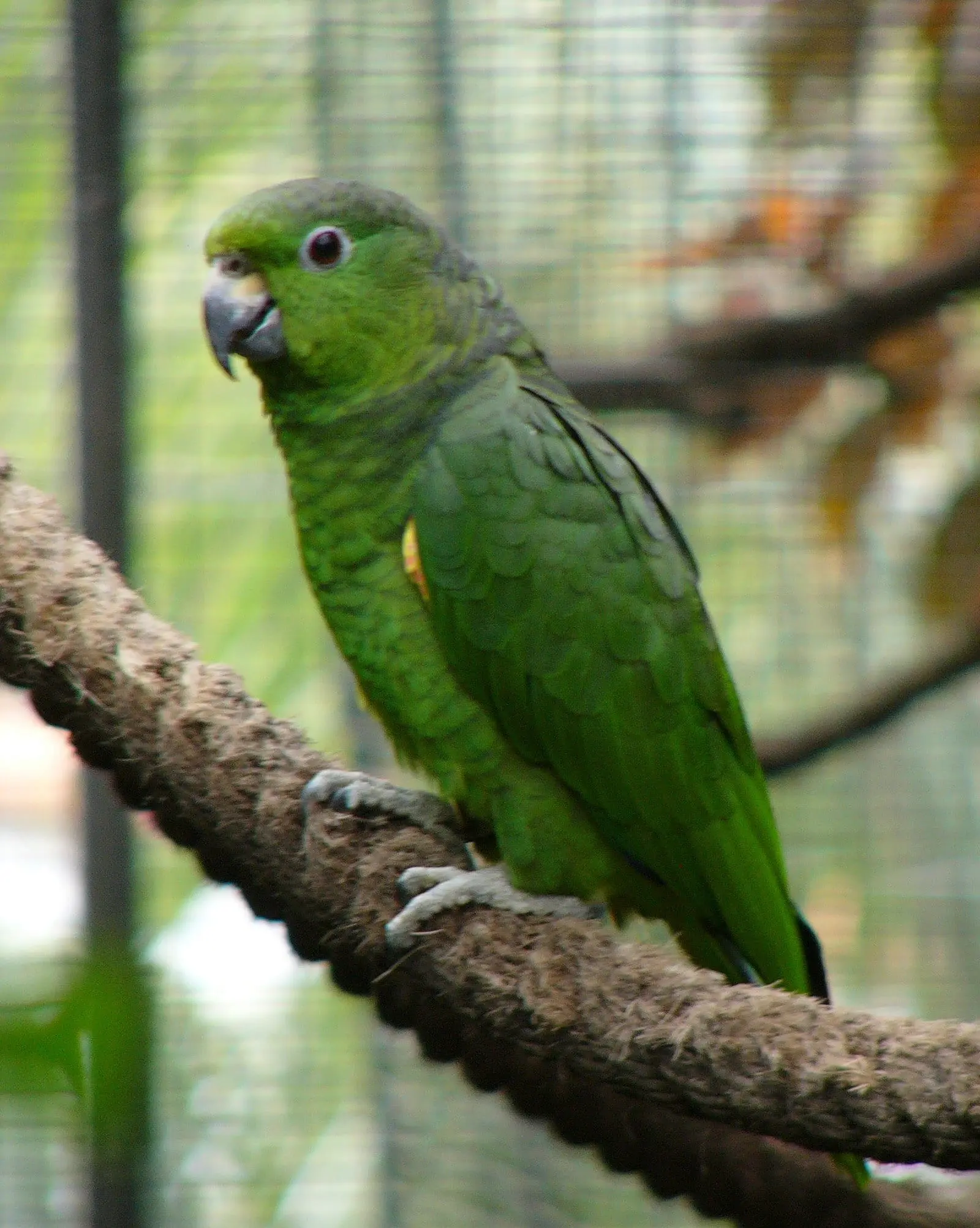
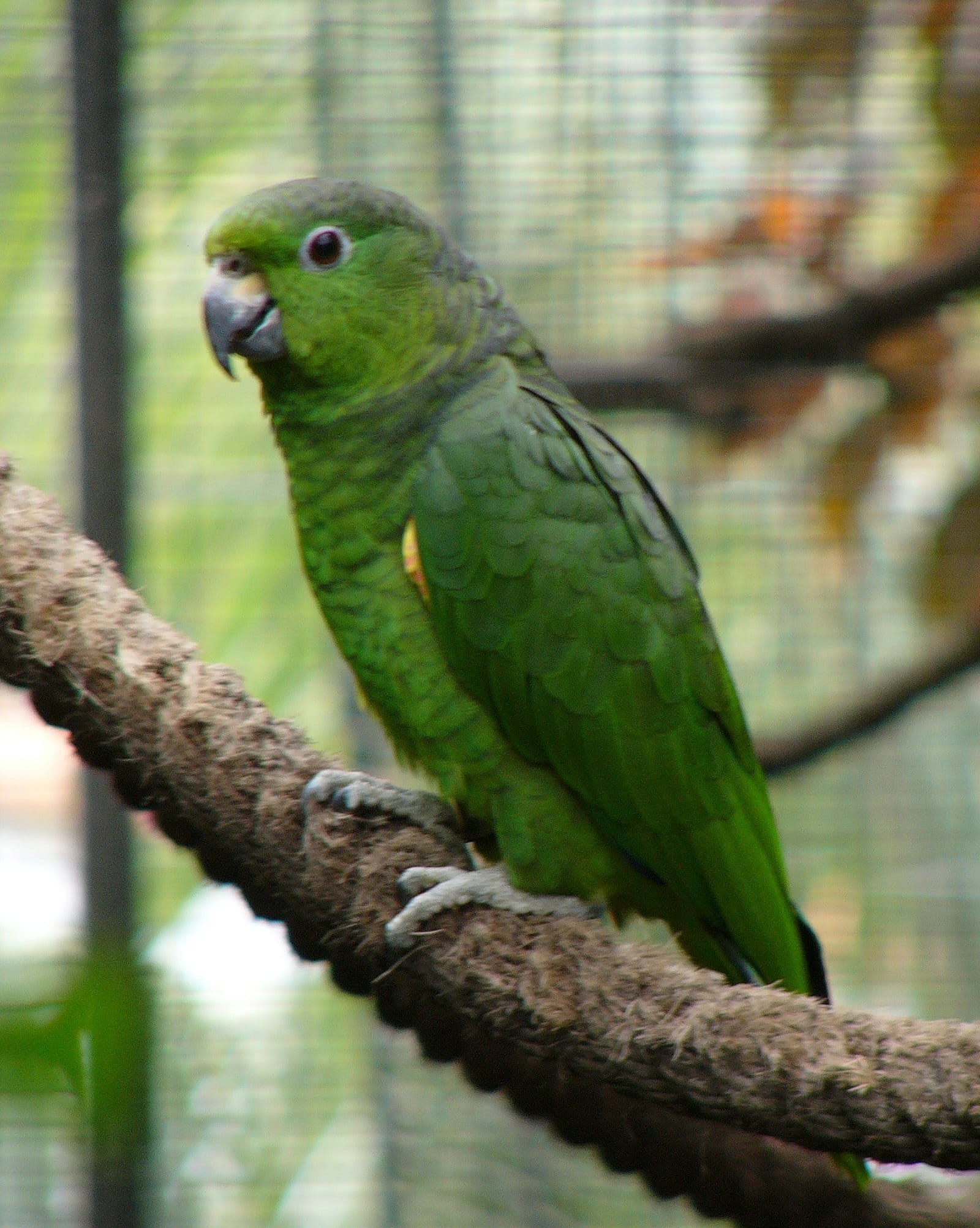
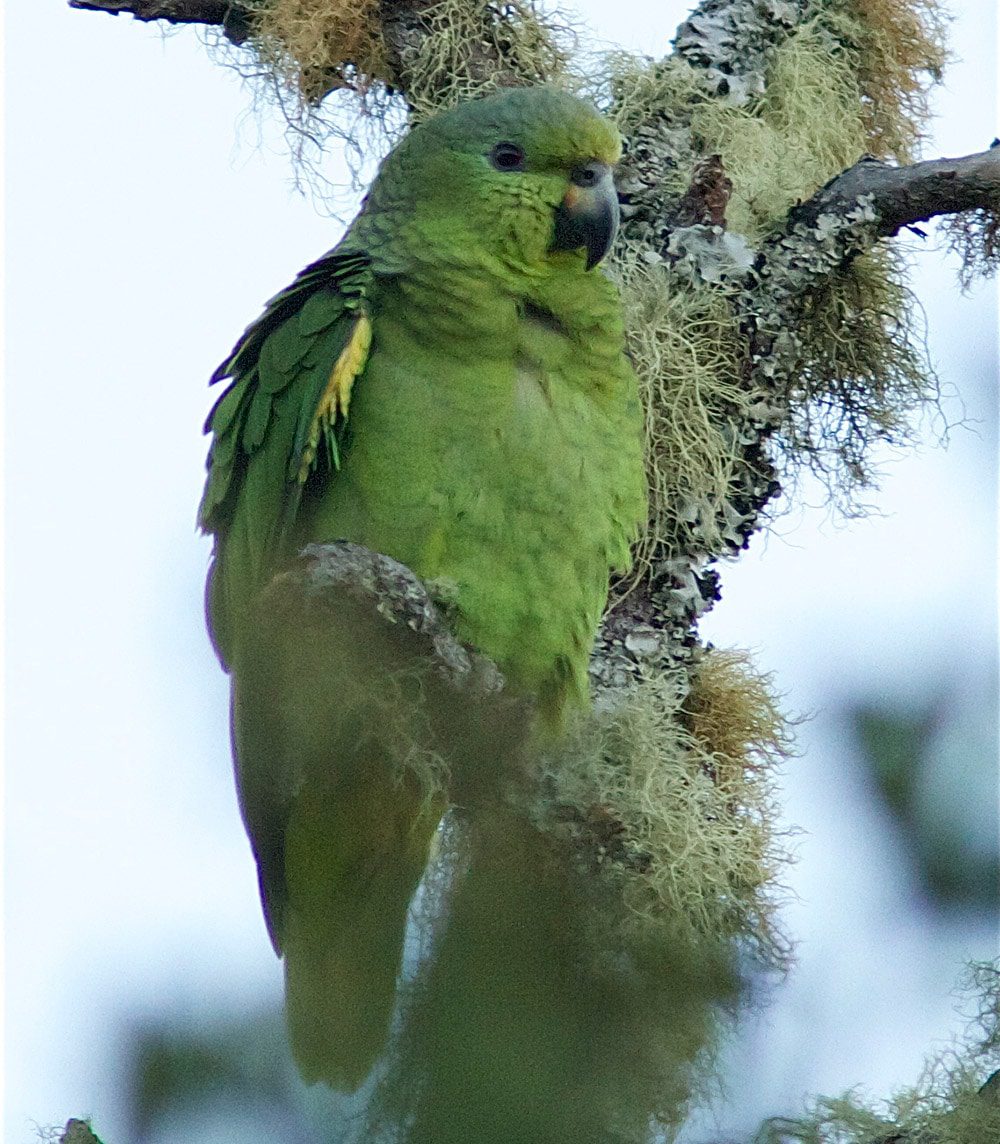
The Scaly-naped Amazon (Amazona mercenarius) it is the only amazon in mountainous areas.

General coloring green, with the feathers of the chest with black border, It is distinguished by having the wingtip yellow with orange spots, and external feathers tail tricolor with blue base, middle part red and yellow tip.

Bill pale gray area at the base of jaw; irises orange; legs brown.

Both sexes are similar. It is thought that immature they are similar to adults.

Description 2 subspecies

  • Amazona mercenarius canipalliata

    (Cabanis, 1874) – Speculum red absent. bases outer secondaries marked with brown spots. Some specimens show scattered red feathers crown, the throat top of the chest.


  • Amazona mercenarius mercenarius

    (Tschudi, 1844) – Nominal.

Habitat:

Video – "Scaly-naped Amazon"

Loro Verde (Mercenary Amazon)

Andean and sub-Andean forests permanently cloudy between 1200 and 3000 m. Occasionally in warm floor and cultivated land.
Usually in pairs or groups of 30 to 40 individuals.

Reproduction:

They have reported evidence reproduction between March and May in Colombia. Nest and eggs not yet described. The incubation period apparently it lasts 25 and 26 days.

Food:

Little information on their diet, but he has seen taking figs and fruit unidentified in Colombia.
In Colombia they have been observed down to attack corn fields.

Distribution:

Size of the area of distribution (reproduction / resident): 3.160.000 km2

Andes from Venezuela to the North of Bolivia.

Distribution 2 subspecies

  • Amazona mercenarius canipalliata

    (Cabanis, 1874) – Andes of Colombia to northwest Venezuela and Ecuador.


  • Amazona mercenarius mercenarius

    (Tschudi, 1844) – Nominal. Andes North of Peru to the North of Bolivia; a single record in Argentina.

Conservation:

State of conservation โ“˜


minor concern Minor Concern โ“˜ (UICN)โ“˜

โ€ข Current category of the Red List of the UICN: Least concern.

โ€ข Population trend: Decreasing.

Justification of the population

The population size World has not been quantified, but this species is described as ยซquite commonยป (Stotz et to the., 1996).

Justification of trend

It is suspected that the population is in decline due to the continuous habitat destruction.

The Amazona Mercenary in captivity:

Very rare in captivity.

Alternative names:

– Scaly-naped Amazon, Mercenary Amazon, Mercenary Parrot, Scaly naped Parrot, Scaly-naped Parrot (English).
– Amazone mercenaire (French).
– Soldatenamazone (German).
– Loro verde (Portuguese).
– Amazona Mercenaria, Amazona Verde, Lora Andina, Loro nuca escamada, Lora paramera (espaรฑol).


scientific classification:

Tschudi-Johann Jakob of

– Order: Psittaciformes
– Family: Psittacidae
– Genus: Amazona
– Scientific name: Amazona mercenarius
– Citation: (Tschudi, 1844)
– Protonimo: parrot hired


Scaly-naped Amazon Pictures:


Species of the genus Amazona


Sources:
– Parrot Book, Parrots and macaws Neotropical
– avibase
– Parrots of the World โ€“ Forshaw Joseph M
– Parrots A Guide to the Parrots of the World – Tony Juniper & Mike Parr
– Birdlife

– Photos: papageien.org, IBC.lynxeds.com , chrislansdell.blogspot.com.es, Flickr.com

– Sound: Hans Matheve

โ–ท The world of Pets: Dogs, cats, birds, reptiles, amphibians

Red-shouldered Macaw
Diopsittaca nobilis


Guacamayo Noble

Content

Description:

30 cm.. length and a weight between 130 and 170 g..

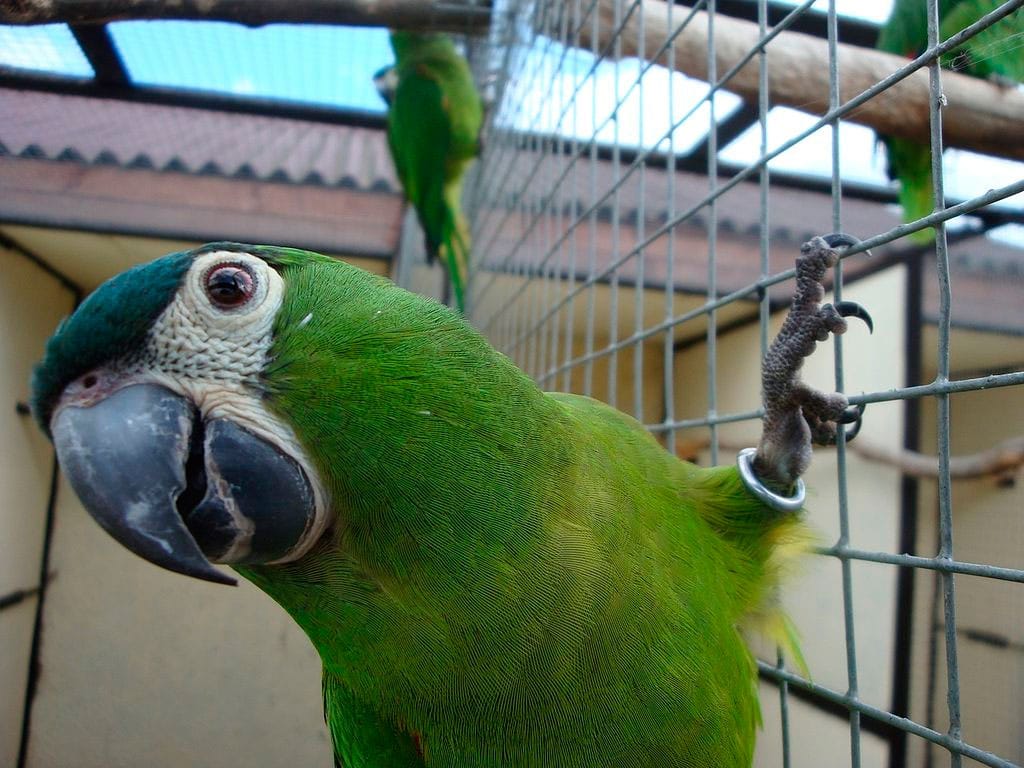
The Red-shouldered Macaw (Diopsittaca nobilis) along with the other two subspecies belong to the Group of the small macaws often called dwarf macaws or mini macaws parrots.

They have forecrown, front of the crown and top of the eyes blue; rest of the head and upperparts, including the wings and the top of the tail, grass-green. Rojas the carpal joints and the leading edge of the wing . Lesser and medium underwing-coverts red; large underwing-coverts brown; underside of flight feather Golden olive.

The underparts green, but more yellowish than the upper. The bottom of the tail Golden olive.

Bill blackish; bare skin of the lores and top of the cheeks white; irises orange-brown; black legs.

Both sexes similar; Perhaps a little smaller females.

The immature with the head completely Green: has no red color in the carpal joints.

Description 3 subspecies:

  • Diopsittaca nobilis cumanensis

    (Lichtenstein, 1823) – Larger that the species nominal, at around 33 cm.. length. The forecrown more blue and the upper maxilla off-white.


  • Diopsittaca nobilis longipennis

    (Neumann, 1931) – It is the largest subspecies, at around 35 cm.. length. Underparts more yellow and olive green


  • Diopsittaca nobilis nobilis

    (Linnaeus, 1758) – The nominal

Habitat:

With they are distributed in a variety of open wooded habitats, including savannah with scattered shrubs and palm trees (for example of Mauritia) in Suriname, morichales and the coast plantations in Guyana, closed with palm groves of Mauritia on the inside of Brazil and margins of caatinga in the northeast of Brazil with palm groves of Mauritia.

A persistent feature in its preferred habitat is the presence of palm trees., especially of the genus M. flexuosa, Orbignya martiana and Maximiliana maripa (the latter especially in the southern region of the Amazon). Also observed in wetlands with palms, gallery forests and cultivated areas.

Avoid large expanses of closed canopy forests, but they can be seen around human settlements and it is common in the city of Georgetown, Guyana.

They reach the 1.400 metres in Venezuela, to the South of the Orinoco.

Gregarious, often in large flocks outside breeding season; If not in couples.

Reproduction:

Nest in tree cavities, termite tree or in holes of palmas. Copulations registered in the month of October to the South-West of Brazil; Probably engender between February and June in Guiana. Clutch four eggs in captivity. The average period of incubation is of 24 days, the chicks leave the nest about 54 days after birth.

Food:

Its diet, probably, It is similar to its closest relatives, nuts are included in the, seeds, fruits and flowers, but with some signs of favorite seeds; known his preference for flowers of Terminalia argentea and Erythrina glauca, as well as the berries Cordia and fruits Euterpe. They also feed cereals and fruits in cultivated fields and are considered as one plague in some areas.

Distribution:

Size of the area of distribution (reproduction / resident): 910.000 km2

endemic to northeast South America, from the East of the Andes toward the center of Brazil.

In East Venezuela they are distributed, mainly, to the South of the Orinoco (Delta Amacuro and parts of Bolรญvar), also at the East end of Monagas.

The few records of Trinidad they are probably elopements captive birds.

Are distributed through of the Guianas, in areas of seasonal forests (mainly near the coast) and in Brazil to the North of the amazon in Roraima, Amapรก and North of For. Returns disjoint inside of Brazil, to the South of the Amazon from the southeast of For and maranhรฃo the wetlands of Mato Grosso and to the South by the dry northeast in Piauรญ, Bahia and, according to reports south of Alagoas until Holy Spirit, Rio de Janeiro and Northwest of Sรฃo Paulo (with a population introduced in the City of Sรฃo Paulo).

They occupy the Center and East of Bolivia and Southeast of Peru, where there are records in the Heath pampas.

In general residents, with seasonal movements in some coastal areas (for example Guianas) and distributed irregularly, to the North of amazon, where they remain scattered on the basis of suitable habitat.

In general common, especially in the Centre and northeast of Brazil, although rare in Guianas.

Distribution 3 subspecies:

Conservation:


minor concern

โ€ข Red List category of the UICN current: Least concern

โ€ข Population trend: Stable

Global population size has not been quantified, but this species is described as ยซquite commonยป (Stotz et to the., 1996).

The population of Red-shouldered Macaw suspected to be stable in the absence of evidence of any reduction or substantial threats.

Currently capture and trade of wild individuals is illegal.

"Red-shouldered Macaw" in captivity:

Quite common.

They are the smaller macaws commercially available pet and enough popular due to its small size (only a little bigger that a cockatoo) and for its excellent ability to imitate sounds.

In captivity, These birds are sociable and friendly.

The Red-shouldered Macaw they are easy to breed in captivity birds. They have proven to be prolific breeders and they have brought successfully for many years. In his book "All about parrotsยซ, the author Arthur Freud He points out that the first Red-shouldered Macaw It was bred in captivity in the United Statess in the year 1939 and again in 1940, the Lord and Lady Vance Wright. But it was the British success during the year 1949 by EMT Vane, the best known. In fact Vane received the first breeding metal from the British Avicultural Societyโ€™s for his achievements with the Red-shouldered Macaw.

The Red-shouldered Macaw are commonly held as pets, but their number has been declining in nature due to the habitat destruction and to his capture to the pet market.

With regard to its longevity, according to sources, It is known that a specimen lived 22,9 years in captivity.

Alternative names:

– Red-shouldered Macaw, Hahn’s Macaw, Long-winged Macaw, Neumann’s Macaw, Red shouldered Macaw (English).
– Ara noble (French).
– Zwergara (German).
– Maracanรฃ-pequena, arara-nanica, maracanรฃ, maracanรฃ-nobre (Portuguese).
– Cotorra Serrana Occidental, Guacamayo Noble, Maracanรก Menor, Guacamaya de hombros rojos (espaรฑol).
– Guacamayo Enano (Peru).
– Guacamayo Enano (Venezuela).

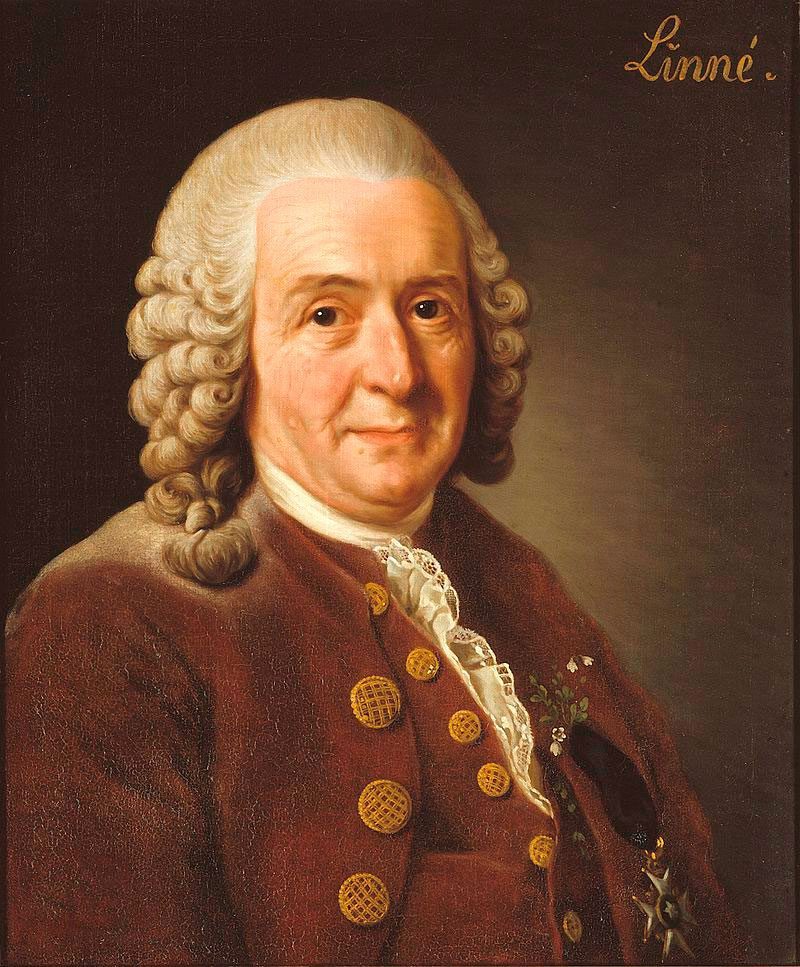
Carl Linnaeus
Carl Linnaeus

scientific classification:


– Order: Psittaciformes
– Family: Psittacidae
– Genus: Diopsittaca
– Scientific name: Diopsittaca nobilis
– Citation: (Linnaeus, 1758)
– Protonimo: parrot rank


Images Red-shouldered Macaw:

Videos "Red-shouldered Macaw"


ยซNoble Macawยป (Diopsittaca nobilis)


Sources:

– Avibase
– Parrots of the World โ€“ Forshaw Joseph M
– Parrots A Guide to the Parrots of the World – Tony Juniper & Mike Parr
– Birdlife

– Photos:

(1) – A Red-shouldered Macaw at Parque das Aves, Foz do Iguaรงu, Brazil. This subspecies is also know at the Noble Macaw By Chad Bordes (Picasa Web Albums) [CC BY 3.0], via Wikimedia Commons
(2) – The photograph shows a Hahnโ€™s Macaw (D. n. nobilis) pet parrot perching on a finger By derivative work: Snowmanradio (talk)Diopsittaca_nobilis_-pet-2.jpg:Evenprime at en.wikipedia. Photo by Walter Maier. Picture of family pet. Later version(s) were uploaded by Snowmanradio at en.wikipedia. (Diopsittaca_nobilis_-pet-2.jpg) [GFDL or CC-BY-SA-3.0], from Wikimedia Commons
(3) – Two Red-shouldered Macaws in the Pantanal, Mato Grosso, Brazil By Nori Almeida (originally posted to Flickr as Pantanal 2009) [CC BY 2.0], via Wikimedia Commons
(4) – Long-wing Macaw or Hahnโ€™s Macaw); two in a cage By TJ Lin (originally posted to Flickr as DSCN9927) [CC BY-SA 2.0], via Wikimedia Commons
(5) – Two Red-shouldered Parrots at Lisbon Zoo, Portugal By Jorge Andrade from Rio de Janeiro, Brazil (Lisbon zoo (107)Uploaded by snowmanradio) [CC BY 2.0], via Wikimedia Commons
(6) – Red-shouldered Macaw (Diopsittaca nobilis), also known as the Noble Macaw By Snowmanradio (Own work) [CC BY-SA 3.0 or GFDL], via Wikimedia Commons
(7) – A Red-shouldered Macaw at Bird Park, Kaluga region, Zhukovsky District, Russia By Remiz [CC BY-SA 2.0], via Wikimedia Commons
(8) – Three Red-shouldered Macaws at a zoo By DSuร r (To be coldUploaded by Snowmanradio) [CC BY-SA 2.0], via Wikimedia Commons
(9) – Red-shouldered Macaw (this subspecies is also known as Hahnโ€™s Macaw) at Jungle Island, Miami, USA By Chris Acuna from Miami, USA [CC BY 2.0], via Wikimedia Commons

– Sounds: (Xeno-canto)

โ–ท The world of Pets: Dogs, cats, birds, reptiles, amphibians

Yellow-naped Parrot
Amazona auropalliata

Yellow-naped Parrot

Content

Description:


Anatomy-parrots

35,5-38 cm.. length and 480 g. of weight.

The Yellow-naped Parrot (Amazona auropalliata) It has a large size; their forecrown and front of the crown, usually, pale bluish green, sometimes with narrow frontal band yellow that extends to the front of the crown.

back of the crown pale bluish green; lores, cheeks and sides neck, green; nape with broad golden-yellow ban. Upperparts green with some feathers in the the mantle and in the back with blackish edges; rump and uppertail-coverts slightly brighter than the rest of the upperparts. The wing-coverts green but more emerald than upper body; feathers yellow feathers on leading edge of wing in some birds. Outerwebs of the four outer secondaries, bright red as speculum; primaries and secondaries violet blue outerweb and towards tips. Under, the wings are green. Underparts pale green with a slight bluish tinge throat.

Yellow-naped Parrot

Tail green with a wide terminal band brighter yellowish green, red at the base with outerweb of the outer feathers, blue. Bill blue, black tip; bare periophthalmic grey; irises orange; legs grey.

Both sexes are similar. The immature has the nape green with yellow feathers appearing at end of first year; irises brown.

  • Yellow-naped Parrot sound.

Description 3 subspecies:

Birds of Bay islands often they treated as parvipes, not as caribaea. Some copies of Guatemalan Pacific show forecrown yellow, but apparently not consistent racial difference.

  • Amazona auropalliata auropalliata

    (Lesson,PA, 1842) – Nominal.


  • Amazona auropalliata caribaea

    (Lousada, 1989) – Similar to the subespecie parvipes but with olive below and bill paler colored horn (especially lower jaw). usually adults patch yellow triangular in front of the crown. Young birds show little yellow in the head wave nape.


  • Amazona auropalliata parvipes

    (Monroe,BL Jr & Howell,TR, 1966) – Less than nominal species, with red feathers on the curve wing , otherwise similar.

Note:

The Amazona auropalliata, It is often considered conspecific with the Amazona ochrocephala and Amazona oratrix.

Habitat:

Video – "Yellow-naped Parrot"

My Yellow-naped Amazon talking and whistling

The Yellow-naped Parrot inhabits semiarid forests, arid scrubland and savannas (including those of Pinus), openings in deciduous tropical forests and swamps peaceful, evergreen gallery forests and, sometimes, second growth in agricultural areas. Observed to 600 metres in Guatemala and a 700 metres in Honduras. Usually in pairs or small groups, sometimes in larger meetings, but the decline of the population may now obscures large flocks in some areas. They meet at communal roosts.

Reproduction:

Monรณgama; It maintains the union of couples throughout the year.
It nests in natural cavities in trees, such as holes in old trunks or dead, including pines Nicaragua and Bay islands. breeding season in February Oaxaca and El Salvador; March Roatan. Clutch 2-3 eggs.

In captivity cycle nesting of the Yellow-naped Parrot complete with 29 days of incubation eggs, followed by two months increase of the young in the nest.

Food:

Foods reported include seeds of Cachlospermum, Curatella, Higos Ficus and fruit mature Terminalia. The birds in the Bay islands observed feeding on cones Pinus caribaea, with high seasonal dependence on this resource.

Distribution:

Size of its range (breeding/resident): 580.000 km2

The Yellow-naped Parrot It is confined to Central America. They are distributed in the lowlands Eastern Pacific of Mexico (Oaxaca and Chiapas), Guatemala (a sample taken in Petรฉn but his status there is uncertain), El Salvador (arid lowland tropical zone), Honduras and Nicaragua, to the Northwest of Costa Rica from the south end of Gulf of Nicoya northward. They can also be seen in the Caribbean slope of Honduras and in the Mosquito Coast from Honduras, as well as in the neighboring area of โ€‹โ€‹northeast Nicaragua. found in Roatan and Guanaja, in the Bay islands but absent in Utila.

Resident. Apparently uncommon in Oaxaca and rare and declining in Costa Rica. Birds observed in the Sula Valley, Honduras, previously attributed to this species but now included within the species Yellow-headed Parrot.

Formerly common and locally abundant, but probably now declining throughout its entire range due to conversion of habitat for agricultural uses and its capture for trade local and international. Not yet considered endangered, but its long-term status is uncertain if its population decline continues.

Although Guanaja reasonable numbers remain, the species inhabiting the Bay islands (caribaea), It is in serious decline due to capture for export (practically 100% of hatchlings are caught each year); also at risk from tourism development, especially in Roatan.

Distribution 3 subspecies:

  • Amazona auropalliata auropalliata

    (Lesson,PA, 1842) – Nominal. Pacific Coast of Central America, from Oaxaca, Mexico, to the Northwest of Costa Rica.


  • Amazona auropalliata caribaea

    (Lousada, 1989) – Bay islands, Honduras.


  • Amazona auropalliata parvipes

    (Monroe,BL Jr & Howell,TR, 1966) – Mosquito Coast in Honduras and northeast of Nicaragua.

Conservation:

State of conservation โ“˜


Vulnerable Vulnerable โ“˜ (UICN)โ“˜

โ€ข Current category of the Red List of the UICN: Vulnerable.

โ€ข Population trend: Decreasing.

โ€ข Population size : 20000-49999.

Rationale for the Red List category

    This species has been uploaded to Vulnerable because information on levels exploitation and habitat loss, and trends of the local population, They suggest that the species is suffering at least one rapid population decline. In fact, the rate of decline can be very rapid; However, Additional data are needed to confirm this, in which case the species may qualify for elevation In danger of extinction.

Justification of the population

    Partners in Flight estimated that the population in number of less than 50.000 individuals (A. Punjabi in some. 2008), so it is placed in the band 20.000 to 49.999 individuals on freedom.

Justification of trend

    It is suspected that the population is in rapid decline due to the continuous habitat destruction and unsustainable levels of hunting, a suspicion that is supported by the observations of trends of the local population.
Conservation Actions Underway

โ€ข CITES Appendix I (Endangered species, which they are or may be affected by international trade. Only trade in the species is authorized in the Appendix I in exceptional circumstances, and it must not have a primarily commercial purpose.)
โ€ข The species occurs in a number of protected areas.

โ€ข Efforts have been made to obtain an area of 4.000 hectares east of Monterrico on Pacific coast of Guatemala declared as protected area (C. Muccio in some . 2011).

โ€ข The species has been the subject of a number of local studies, some ongoing, aimed at gathering information on population trends and threats.

โ€ข The extent of exploitation of wildlife for the trade It has been highlighted by the local media, for example in Honduras ( by O. Andino in some . 2011).

Conservation Actions Proposed

โ€ข Carry out surveys coordinated through the range of the species to quantify the Total population size.

โ€ข Monitor the demographic trends through regular surveys.

โ€ข Monitor harvest rates for the trade through regular surveys of the local population and officials.

โ€ข Monitor rates of loss and degradation of habitat throughout the range of the species.

โ€ข Accomplish awareness activities to reduce exploitation.

โ€ข Increase the area of โ€‹โ€‹suitable habitat that receives effective protection..

The Yellow-naped Parrot in captivity:

The populations of the Amazon nuquigualda have suffered strong pressure by national and international trade (Ridgely, 1981, Iรฑigo- Elias and Ramos, 1992). There is now an illegal heavy traffic this species, both for domestic and international trade, Parrot's being seized in the Mexico-Texas border, with 648 copies confiscated during 1990-1993 (Gobbi, et to the., 1996).

protected by CITES Appendix I species (Endangered species, which they are or may be affected by international trade. Only trade in the species included in Appendix I authorized in exceptional circumstances, and it must not have a primarily commercial purpose.)

Each captive specimen of this species which is capable of reproducing, must be placed in a well-managed captive breeding program and not sold as a pet, in order to ensure its long-term survival.

Alternative names:

– Yellow naped Parrot, Yellow-naped Amazon, Yellow-naped Parrot, Yellow-naped Parrot (incl. ssp. caribaea, parvipes),
(English).
– Amazone ร  nuque d’or, Amazone ร  nuque jaune, Amazone verte ร  nuque jaune (French).
– Gelbnackenamazone (German).
– Papagaio-de-nuca-amarela (Portuguese).
– Amazona nuquigualda, Lora de Nacu Amarilla, Lora de nuca amarilla, Lora nuca amarilla, Loro Nuca Amarilla, loro nuca-amarilla, Loro Nuquiamarillo (espaรฑol).
– Lora de nuca amarilla (Costa Rica).
– Lora nuca amarilla (Honduras).
– loro nuca amarilla, loro nuca-amarilla, Loro Nuquiamarillo (Mexico).
– Loro Nuquiamarillo (Nicaragua).


scientific classification:

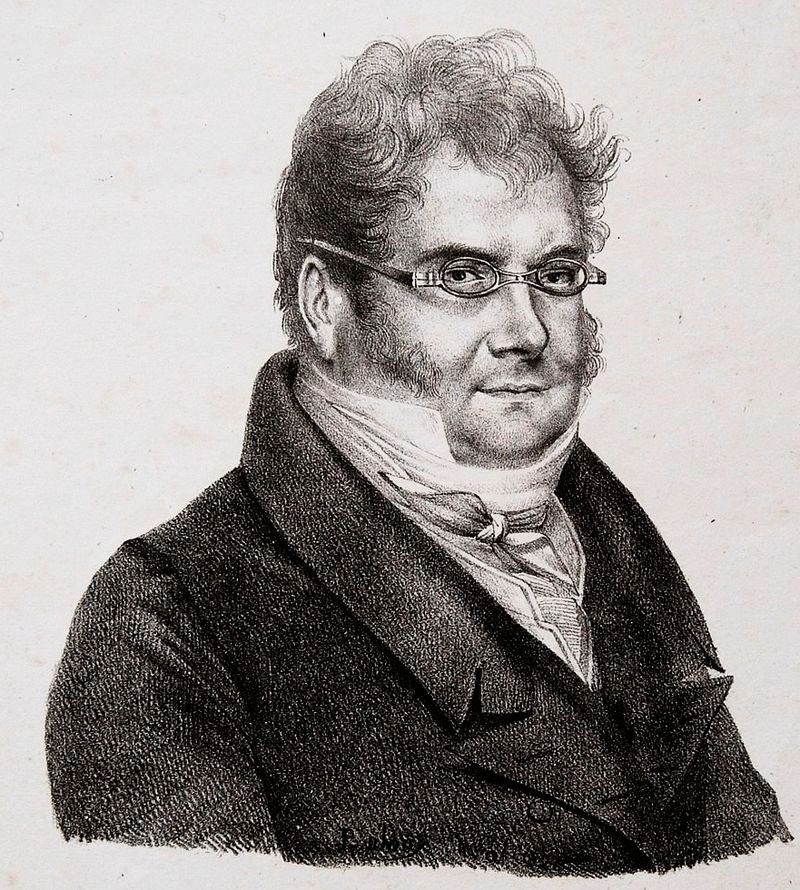
drawn portrait of Adolphe Pierre Lesson
Pierre Adolphe Lesson

– Order: Psittaciformes
– Family: Psittacidae
– Genus: Amazona
– Scientific name: Amazona auropalliata
– Citation: (Lesson, 1842)
– Protonimo: Psittacus auropalliatus


Images Yellow-naped Parrot:


Species of the genus Amazona


Sources:

– Avibase
– Parrots of the World โ€“ Forshaw Joseph M
– Parrots A Guide to the Parrots of the World – Tony Juniper & Mike Parr
– Birdlife

– Photos:

(1) – A Yellow-naped Amazon at Jurong Bird Park, Singapore By Michael Gwyther-Jones from UK (Flickr) [CC BY 2.0], via Wikimedia Commons
(2) – Yellow-naped Parrot or Yellow-naped Amazon (Amazona auropalliata) at Gatorland By Josh Hallett [CC BY 2.0], via Wikimedia Commons
(3) – Yellow-naped Parrot, also known as Yellow-naped Amazon, in an aviary at Leeds Castle, Kent, England By Martin Pettitt [CC BY 2.0], via Wikimedia Commons
(4) – Yellow-naped Parrot or Yellow-naped Amazon (Amazona auropalliata) in captivity. Upper body By whiskymac (Flickr) [CC BY 2.0], via Wikimedia Commons
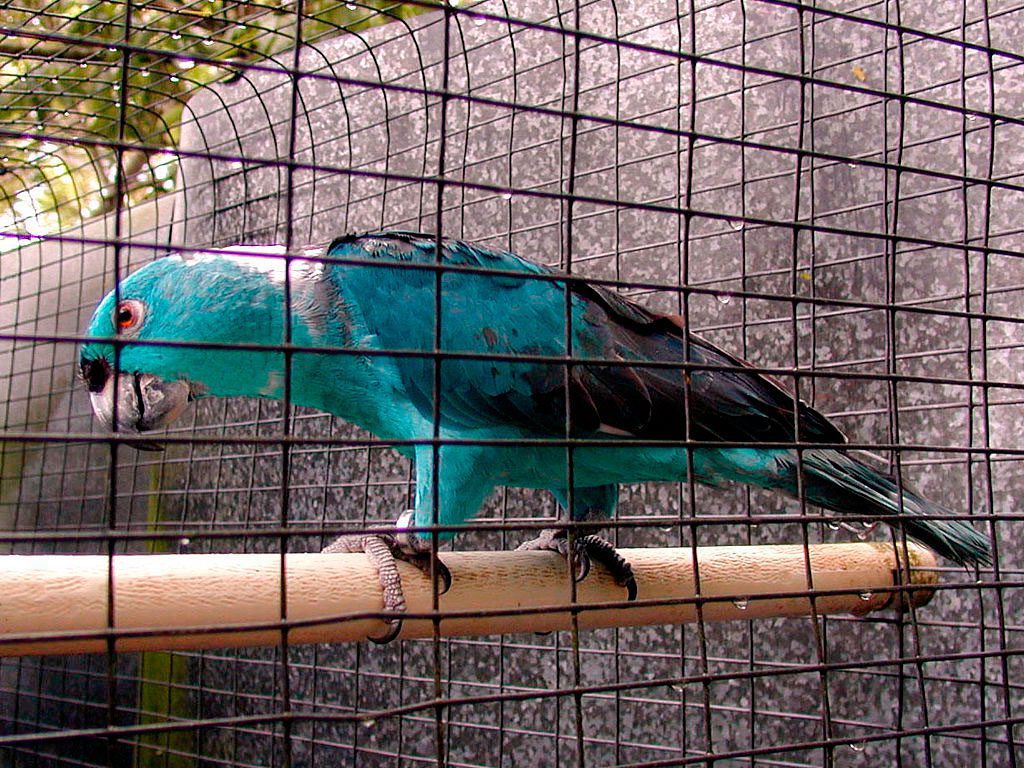
(5) – Yellow-naped Amazon (also called Yellow-naped Parrot) in a cage. A blue colour mutant variety bred in aviculture By Ruth Rogers (originally posted to Flickr as Blue Amazon) [CC BY 2.0], via Wikimedia Commons
(6) – Yellow-naped amazon by Ecocientificos 2 IE PIO XII – Flickr
(7) – Roatรกn-Gelbnackenamazone (Amazona auropalliata caribaea) By Martingloor (Own work) [CC BY-SA 4.0], via Wikimedia Commons
(8) – Yellow-naped Parrot or Yellow-naped Amazon (Amazona auropalliata) By Just chaos [CC BY 2.0], via Wikimedia Commons
(9) – Yellow naped Amazon parrot Matt edmonds at the English language Wikipedia [GFDL or CC-BY-SA-3.0], via Wikimedia Commons
(10) – Amazona auropalliata – The zoology of the voyage of H.M.S. Sulphur :. London :Smith, Elder,1844 [i.e. 1843-1846]. by Biodiversity Heritage Library – Flickr

– Sounds: Marcio Martinez, XC239997. accessible www.xeno-canto.org/239997

โ–ท The world of Pets: Dogs, cats, birds, reptiles, amphibians

Southern Mealy Parrot
Amazona farinosa

Southern Mealy Parrot

Content

Description:


Anatomy-parrots

38 to 45 cm.. from head to tail and 535 to 766 weight g.

The Southern Mealy Parrot (Amazona farinosa) It is the fifth in size among the amazon parrots of the Americas, and is the Parrot largest in Mexico. The plumage its body is green with a slight yellow tone. Presents some yellow feathers on the crown, Although may not be very well defined.

Is characterized by its crown light blue color that continues to the side of the nape . Their wings are of round shape, and tail is short and square. The primary feathers and secondaries they have the blue-violet end, with a band red in them 4 – 5 Outer secondaries. The feathers of the tail they have a broad band of yellowish-green tip. The irises the eye is red with eye ring white, and the bill horn.

It has no sexual dimorphism and youth they are similar to adults, but with the irises dark brown .

Two more for South America subspecies have been proposed, Chapmani and Inornata but lack of character distinctive clear.

Habitat:

They inhabit in dense, humid tropical forests near clearings, Although also can inhabit in areas forested of the sheets.
You can see in altitudes of 290 to 1,200 m.

The Southern Mealy Parrot are birds very social, often seen flying in pairs or small flocks of up to 20 individuals. Also form groups more large, hundreds of birds, close to breeding season. Very enable, is the view often interacting with other species of parrots, such as macaws (ARA).

Is an of the species of parrot more noisy of the amazon, so they are easier to observe than other species.

Reproduction:

The mating It takes place once a year and usually starts in the spring. Once they mature sexually, the Southern Mealy Parrot they will choose a partner for life.

The breeding It normally varies between the months of November to March. The nesting has place in the cavity of a tree. The laying by year tends to be of three eggs. The eggs are hatch for approximately four weeks, after the hatching the males help females in the upbringing of young people, regurgitating food in the crop of the female. The offspring are ready to leave the nest after a period of about eight weeks..

Food:

It feeds on fruits of various species, some of them are: Euterpe SP.., Brosimum sp., Inga sp., Dussia sp., Eschweilera SP.., Pithecellobium SP.., Tetragastris sp., Dialium guianensis, Peritassa compta, Sloanea grandiflora and It corima macrocarpa. Also consumes flowers, arils of Cassearia sp. and nectar of Tabebuia insignis.

Distribution:

Size of the area of distribution (reproduction / resident): 6.790.000 km2

Are in Mexico, Central America and South America, occupying a wide range from the South of Mexico to the North of Bolivia and South of Brazil. They are more common in Costa Rica and Panama, particularly in the costa Caribbean. Observed in the Middle Magdalena River Valley and to the East of them Andes on San Jacinto Mountain Range, Western base of the Perijรก Mountain Range and the Department of Sucre, in Colombia.

Conservation:

State of conservation โ“˜


Near-threatened Near Threatened โ“˜ (UICN)โ“˜

โ€ข Current category of the Red List of the UICN: Near-threatened.

โ€ข Population trend: Decreasing.

Not are currently identified as a species in crisis. Not comply with the criteria for a decrease of the population, that means a loss of thirty per cent of the population in ten years or three generations, as defined in the Red list of the UICN.

Are considered a least concern species. This, However, It does not suggest that the species is completely free from danger.

The important trade of trade in live birds of this species, and loss of habitat caused by deforestation have a significant impact on the decrease of the population of the Southern Mealy Parrot in certain areas.

The Southern Mealy Parrot in captivity:

Of special interest to the international trade in exotic birds; common in captivity. In some areas, they are also hunted for food, due to its relatively large size. With regard to its ability to speak, It seems that can be good talkative, but is true that there are birds that do not come to make it never.

Alternative names:

– Southern Mealy Parrot, Mealy Parrot, Mealy Parrot (nominate), Southern Mealy Amazon (English).
– Amazone poudrรฉe, Amazone poudrรฉe (nominal), Amazone poudrรฉe (nominale), Amazone poudrรฉe (race nominale) (French).
– Mรผlleramazone (German).
– papagaio-moleiro (Portuguese).
– Amazona harinosa sureรฑa, Amazona Burrona (espaรฑol).
– Lora Real (Colombia).
– Loro verde (Costa Rica).
– Lora coroniazul (Honduras).
– Loro corona-azul (Mexico).
– Loro Harinoso (Peru).
– Loro Burrรณn (Venezuela).


scientific classification:

Pieter Boddaert
Pieter Boddaert

– Order: Psittaciformes
– Family: Psittacidae
– Genus: Amazona
– Scientific name: Amazona farinosa
– Citation: (Boddaert, 1783)
– Protonimo: Psittacus farinosus


Southern Mealy Parrot images:


Species of the genus Amazona


Sources:

– Avibase
– Parrots of the World โ€“ Forshaw Joseph M
– Parrots A Guide to the Parrots of the World – Tony Juniper & Mike Parr
– Birdlife

– Photos:

(1) – Mealy Amazon at Elmwood Park Zoo. Photograph shows upper body By Art G. from Willow Grove, PA, USA (African Parrot) [CC BY 2.0], via Wikimedia Commons
(2) – Mealy Parrot (Amazona farinosa), Tambopata Lodge, Peru By D. Gordon E. Robertson (Own work) [CC BY-SA 3.0 or GFDL], via Wikimedia Commons
(3) – Two Mealy Amazons at South Lakes Wild Animal Park, Broughton Road, Dalton in Furness, Cumbria, England By Glen Bowman (originally posted to Flickr as 18:02:2009 14:33:08) [CC BY 2.0], via Wikimedia Commons
(4) – A Mealy Amazon at Kobe Oji Zoo, Kobe, Japan By Jun Y (originally posted to Flickr as Poll Parrot) [CC BY-SA 2.0], via Wikimedia Commons
(5) – Mealy Parrot or Mealy Amazon (Amazona farinosa) of the blue crowned variety. Note the characteristic flour-like surface texture of the feathers on shoulder area By Eightball38 at English Wikipedia [Public domain], via Wikimedia Commons

– Sounds: Diego Caiafa (Xeno-canto)

โ–ท The world of Pets: Dogs, cats, birds, reptiles, amphibians

Yellow-lored Parrot
Amazona xantholora

Yellow-lored Parrot

Content

Description:


Anatomy-parrots

25-28 cm.. length and 200-232 g. of weight.

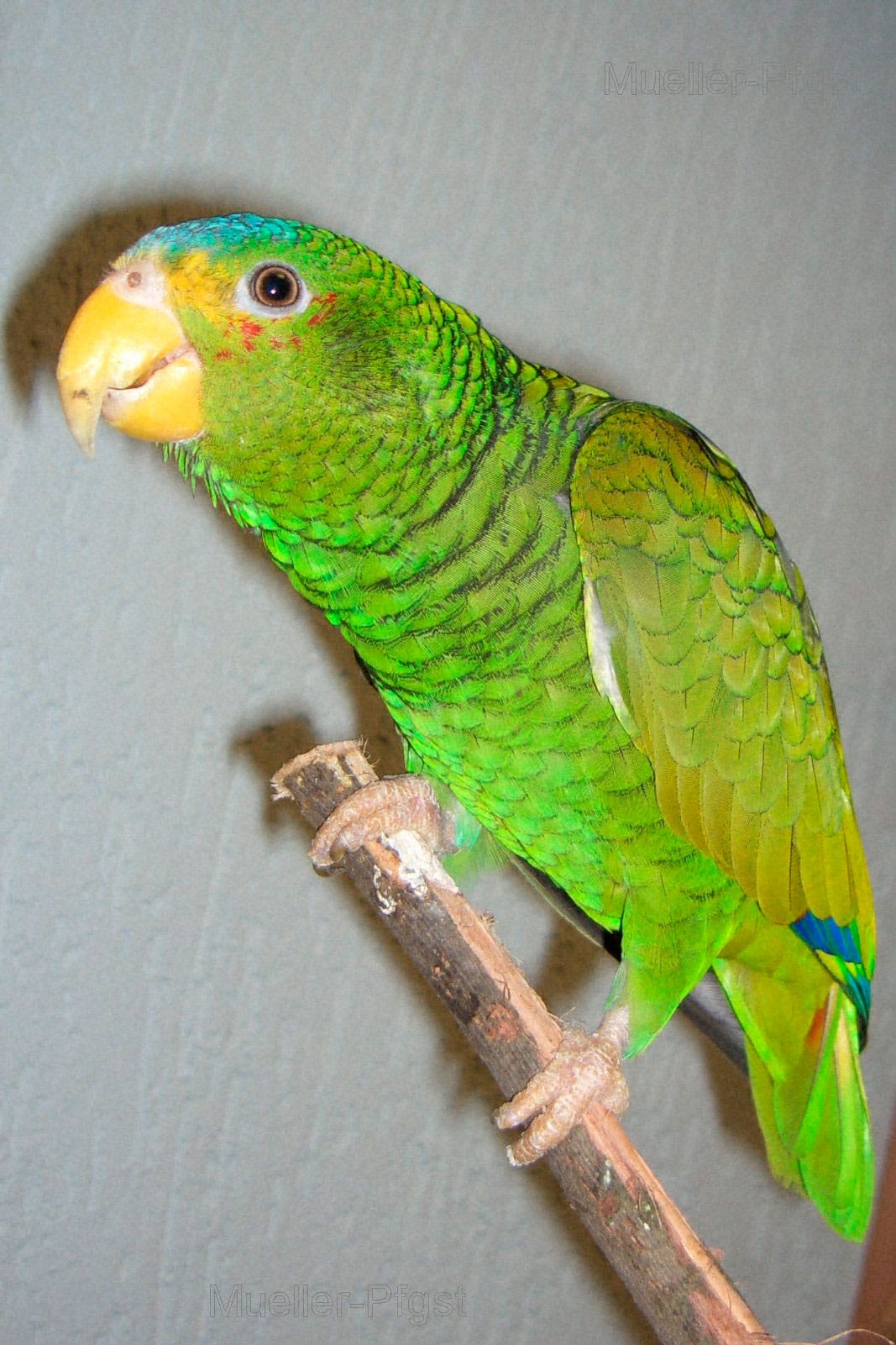
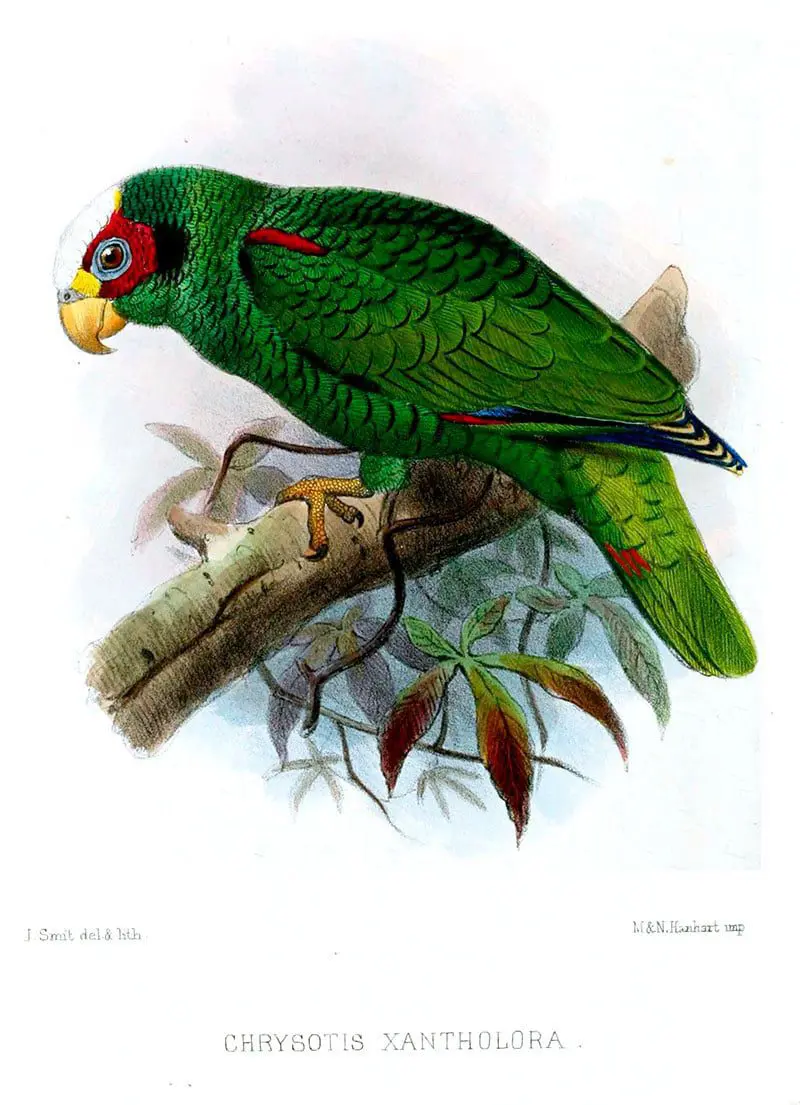
The Yellow-lored Parrot (Amazona xantholora) has the lores and a close frontal band, bright yellow; most of the forecrown and crown, are white; the back of the crown is blue; band wide around the eyes, including upper cheeks, bright red; ear-coverts dark gray.

Top green grass with prominent black tips on feathers giving a scalloped appearance, although uppertail-coverts are yellowish-green. Primary coverts red; remaining coberteras (especially smaller and medium), green with black tips. Flight feathers mostly blue with a green base at primaries. Under the wings, bluish green. Underparts green with black tips on breast feathers, although undertail-coverts are yellowish-green; at the top, the tail is green; below green with yellowish tip and the outer feathers red.

Yellow-lored Parrot

Bill yellow-horn; irises yellow; legs grey.

In this species sexual dimorphism. The female has the crown blue (nonwhite), little or no red around the eye, and primary coverts green. The immature They are like female but with lores paler yellow and crown pale blue.

  • Sound of the Yellow-lored Parrot.

Habitat:

Video – "Yellow-lored Parrot"

Yellow-lored Parrot (?)

In Yucatan, the Yellow-lored Parrot They live mostly in the tropical deciduous forest, probably avoiding dense rain forests. But, their exact preferences are unknown due to the difficulty of distinguishing the White-fronted Parrot (Amazona albifrons). Observed in pine forests and mixed forests of pines and oaks Quercus in the North of Belice, and pine forests in the highlands in Roatan.
They are distributed at altitudes between 100 and 250 m.
Usually views in flocks, to form communal roosts coming up 1.500 birds from roosting and dispersed in small herds forage.

Reproduction:

They lay their nests in tree cavities on agricultural land and around cornfields where dead trees have been left standing after forests have been cleared and burned. also can nest in cracks of trees, rock walls or termiteros.

It has been observed to Yellow-lored Parrot in breeding condition in March in the yucatan peninsula, and young in the nest in April-May Belice. The laying is of 1 to 3 eggs; the incubation similar in duration to that of White-fronted Parrot (Amazona albifrons), that is to say, of 25 to 28 days.

Food:

Foods reported include guilt of Acacia gaumeri, corn and citrus. The Yellow-lored Parrot They feed mainly in the treetops.

Distribution:

Size of its range (reproduction / resident): 157.000 kilometros2

The Yellow-lored Parrot It is found mainly in the Eastern and Central parts of the Yucatan Peninsula, Mexico, in Yucatan, Campeche and Quintana Roo; in the northern parts of Belice; and in the islands of Cozumel (Mexico) and possibly Roatan (Honduras), where the recent field work could not confirm its current (or previous) existence. Common to quite common in the East of Yucatan and in Cozumel, but considered quite rare in some other parts (especially at the edges) Mexican range. It is thought to be scarcer than the White-fronted Parrot (Amazona albifrons) with which it is closely related, although in some areas, the Yellow-lored Parrot it's more common, especially towards the center of its range.

Live in several areas protected. Situation in Northern Belice unknown.

Conservation:

State of conservation โ“˜


minor concern Minor Concern โ“˜ (UICN)โ“˜

โ€ข Current category of the Red List of the UICN: Least concern.

โ€ข Population trend: Stable.

โ€ข Population size: 20,000-49,999.

  • Justification of the Red List of the Category

This species has a range very large, and therefore not approaching the thresholds for vulnerable under the criterion of size range (extent of occurrence <20.000 km2 combinan con un tamaรฑo gama disminuciรณn o fluctuante, hรกbitat medida / calidad, o de la poblaciรณn tamaรฑo y un pequeรฑo nรบmero de lugares o fragmentaciรณn severa). La population trend appears to be stable, and therefore the species does not approach the thresholds for Vulnerable according to the population trend criteria. (> 30% decrease of more than ten years or three generations). The population size It can be moderately small to large, but are not believed to approach the thresholds for Vulnerable based on population size criteria (<10.000 individuos maduros con una disminuciรณn continua estima en> 10% in ten years or three generations, or with a specific population structure). For these reasons, the species was evaluated as Least concern.

  • Population justification

Partners in Flight estimates the population at fewer than 50.000 individuals (A. they Panjabi a slightly. 2008), by what is placed in the band 20,000-49,999 individuals here.

  • Justification trend

The population suspected to be stable in the absence of evidence of any reduction or substantial threats.

  • Threats

The main threats to this species are the deforestation, the catch eggs and chicks directly from their nests, just like him illegal trade adult individuals. Moreover and, considering the differential distribution of this species within the Peninsula, You may think that areas are susceptible to drastic declines in these species (Beissinger and Snyder 1992).

The Yellow-lored Parrot in captivity:

Very rare in captivity. Convention CITES regulates international trade under the Appendix II (Species not necessarily threatened with extinction, but in which trade must be controlled in order to avoid utilization incompatible with their survival).

Alternative names:

– Yellow Lored Amazon, Yellow lored Parrot, Yellow-faced Amazon, Yellow-lored Amazon, Yellow-lored Parrot, Yucatan Amazon, Yucatan Parrot (English).
– Amazone du Yucatan, Amazone xantholore (French).
– Goldflรผgelamazone, Goldzรผgelamazone (German).
– Papagaio-de-iucatรฃ (Portuguese).
– Amazona de Yucatรกn, Amazona Yucateca, Lora de Roatรกn, Loro Yucateco (espaรฑol).

scientific classification:

– Order: Psittaciformes
– Family: Psittacidae
– Genus: Amazona
– Scientific name: Amazona xantholora
– Citation: (Gray, GR, 1859)
– Protonimo: Chrysotis xantholora

Images Yellow-lored Parrot:


Species of the genus Amazona


Sources:

– Avibase
– Parrots of the World โ€“ Forshaw Joseph M
– Parrots A Guide to the Parrots of the World – Tony Juniper & Mike Parr
– Birdlife
– Naturalist

– Photos:

(1) – Amazon Yucatan, Mexico, Quintana Roo, Xcaret By philippe from FRANCE, You can search by name, by commission or family for birds and insects, using tags [CC BY-SA 2.0], via Wikimedia Commons
(2) – A female Yellow-lored Amazona also known as the Yucatan Amazona at Xcaret Eco Park, Quintana Roo, Mexico. By philippe from FRANCE, You can search by name, by commission or family for birds and insects, using tags [CC BY-SA 2.0], via Wikimedia Commons
(3) – Amazona species xantholora. His name is Poll By GuillermoPech (Own work) [CC BY-SA 4.0], via Wikimedia Commons
(4) – Yellow-lored Amazon By Andreas Mueller Pfgst (Picture yourself created) [GFDL or CC BY-SA 3.0], via Wikimedia Commons
(5) – Yellow-Lored Parrot by James Diedrick – Flickr
(6) – Chrysotis xantholora = Amazona xantholora by Joseph Smit [Public domain], via Wikimedia Commons

– Sounds: Oliver Komar, XC182833. accessible www.xeno-canto.org/182833

โ–ท The world of Pets: Dogs, cats, birds, reptiles, amphibians

Indigo Macaw
Anodorhynchus leari


Guacamayo de Lear

Content

Description:

Ilustraciรณn Guacamayo de Lear

75 cm.. length and 940 g. of weight.

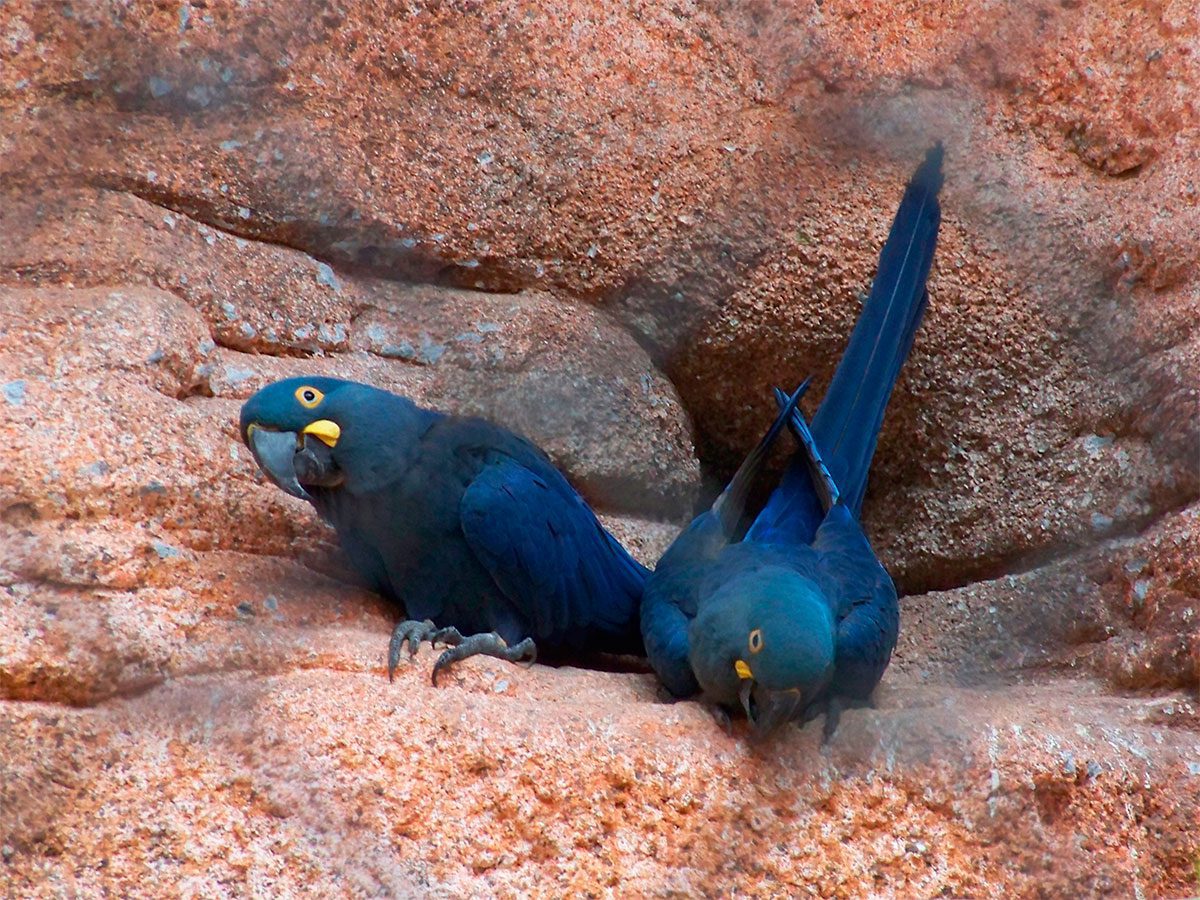
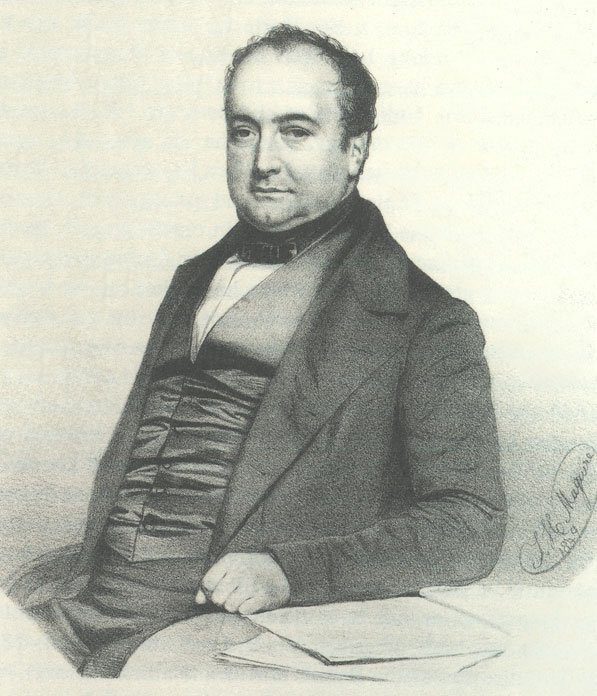
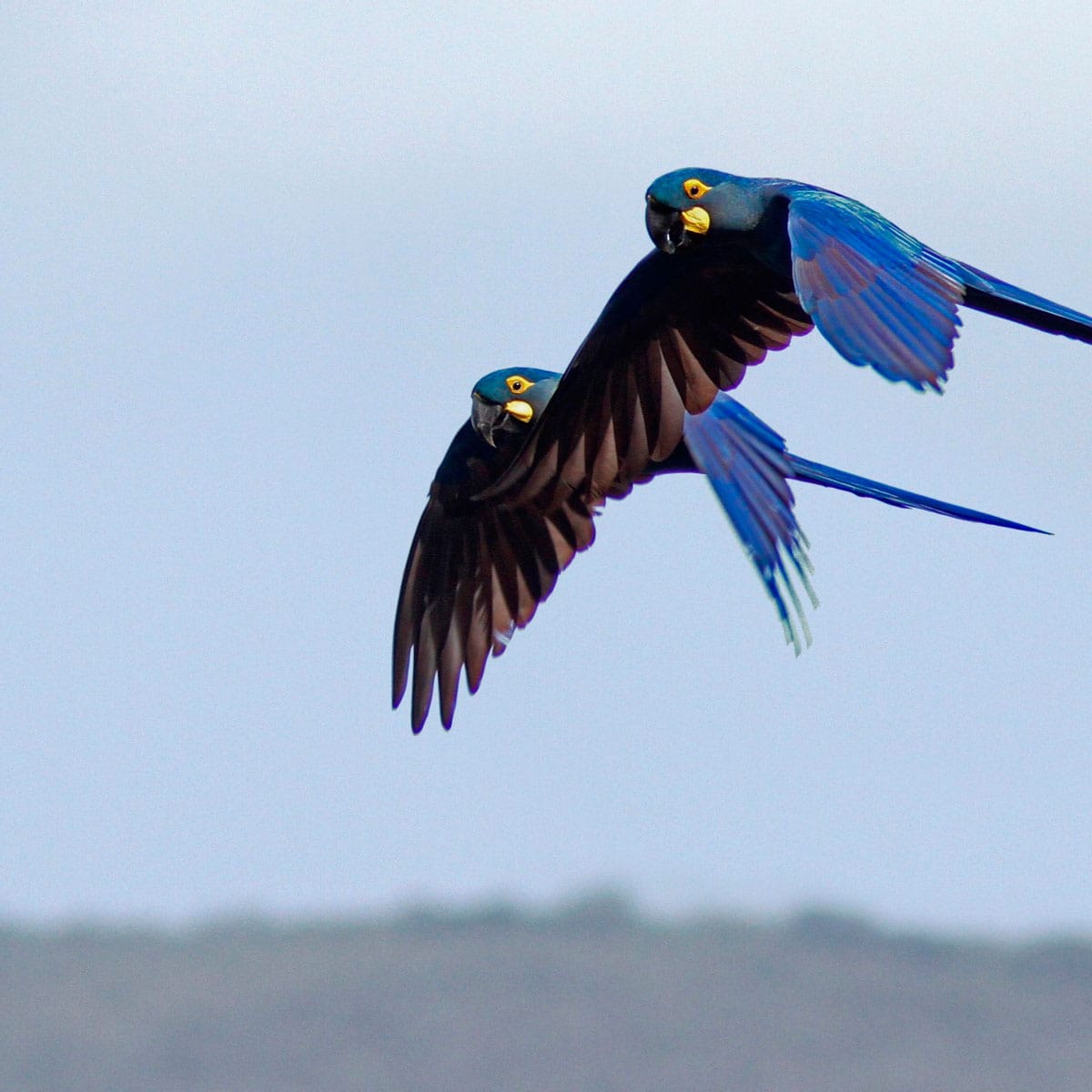
The Indigo Macaw (Anodorhynchus leari) It is a beautiful Blue Parrot with a long tail. Similar to the Hyacinth Macaw, but much smaller and chunky, with a large yellow spot in the cheeks. It was described for the first time in 1858 by the nephew of Napoleon, Lucien Bonaparte, from an illustration by the famous English illustrator and artist known for his absurd poetry, Edward Lear.

This Parrot, However, remained elusive in nature, and it was only accepted as a distinct species in 1978, When the naturalist Helmut Sick finally found a wild population.

The head, the neck and underparts This Parrot are greenish-blue, While the rest of the body looks like a purple / indigo. The bare skin around the eyes and at the base of the bill It is pale yellow.

The irises are dark brown and the bill, Although predominantly black, You may have a grey stains clear.

Males and females They seem to. The male can have a larger beak and can usually be larger in size, but those differences vary or may be only slight and are not considered reliable for gender identification.

The youth they can be identified by its shorter tail; the upper beak is pale.

Habitat:

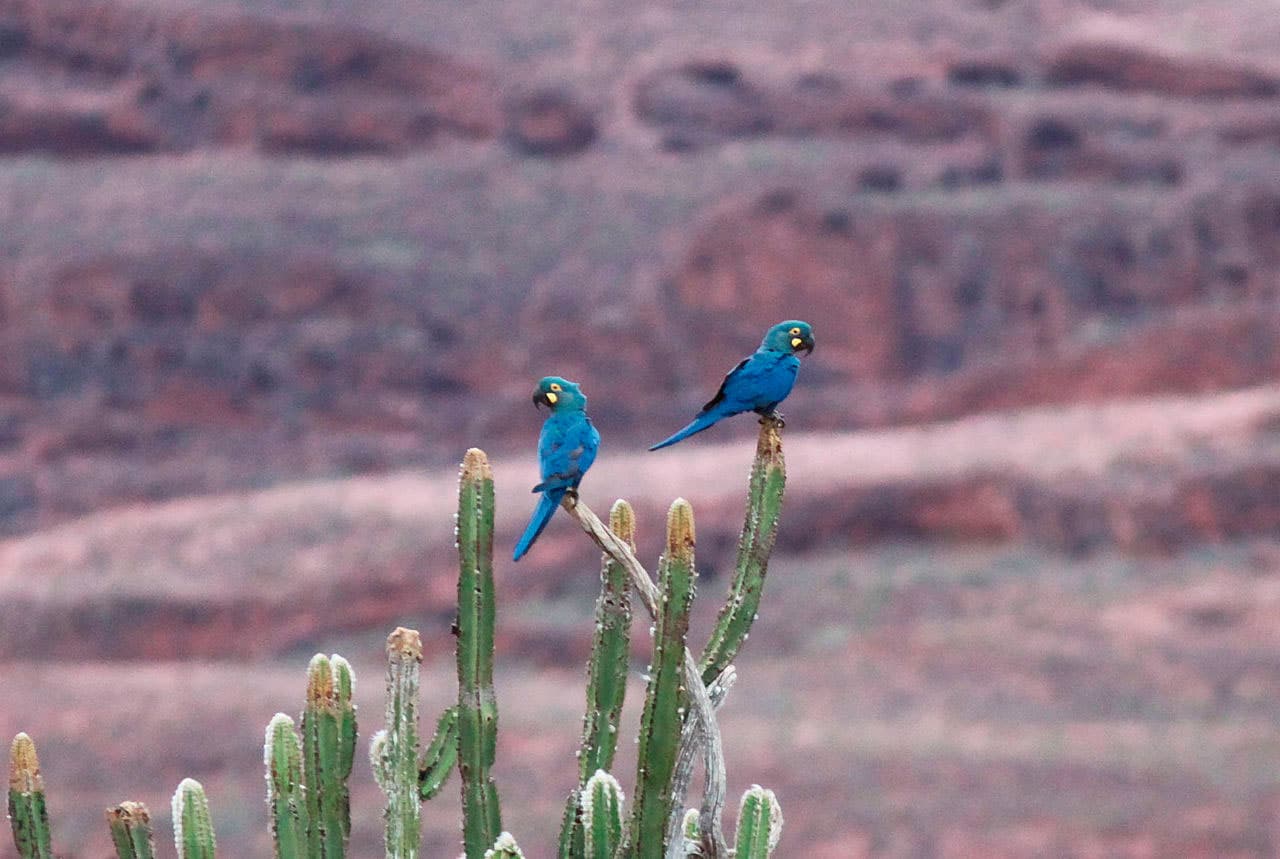
They live in drylands, with resistant vegetation of caatinga (thorny scrub), especially in areas with Palm trees Syagrus coronata.

They require sandstone cliffs to perch and nest.

gregarious and in general in flocks, although usually in very small numbers. Shapes communal roosts in cracks eroded near the top of the walls of canyons of sandstone at altitudes between 30 and 50 m. Many birds perch on the largest holes, while others cling to rocks or rest on the cornices.

The Indigo Macaw leave the roosts in family groups to go to the feeding areas before dawn to return at dusk.

Reproduction:

The nests of the Indigo Macaw they are located in crevices in cliffs, Although sometimes they also nest in shallow tree cavities.

The breeding season It is located in the months February-April, coinciding with the rainy season and possibly coinciding with the maximum availability of palm nuts.
The average clutch size is two to three eggs. The average period of incubation is of 28 days and the average age of feathered is of 16 to 20 weeks.

Food:

The staple food of the Indigo Macaw they are palm nuts Syagrus (a bird can take 350 nuts in a day). Also take seeds from Melanoxylon, above all when the walnuts Syagrus they are scarce (July-September). Other reported foods include fruits of Jatropha pohliana, Dioclea and Spondias tuberosa, flowers Agave and corn.

Fluid from the unripe fruit of Palms is perhaps the main source of moisture.

The Indigo Macaw they feed in the trees and on the ground.

Distribution:

Confined to the plateau Raso da Catarina, to the northeast of Bay in Brazil; mainly occupy an area close to 8,000 km 2 in the center of Rรญo Vasa Neighborhoods, in the South of the plateau. Two main colonies are known, one on each side of the Vasa Barris.

These birds make daytime movements South of Holy and Euclides da Cunha and possibly from the North to the north-western edge of the plateau to feed.

There is a peripheral population smaller at several hundred kilometers of Vasa Barris and there are unconfirmed reports of other small groups in remote northern dry inside of Bay.

Resident, remaining close to the cliffs where nest and their favorite roosting birds.

The population of Indigo Macaw is estimated at 139 birds (117 more 22) with an evident decline during the last 100 years. The pressures arising from the trade in birds, hunting, the loss of plants used as food for livestock, the disturbance and, possibly, inbreeding depression, could quickly lead to extinction in freedom of this beautiful species.

Conservation:

โ€ข Current Red List of UICN: Danger

โ€ข Population trend: Unknown

The Indigo Macaw suffered a historic long-term drop due to the capture, but estimates of population remained fairly stable after its rediscovery in the wild in 1978 until the mid of 1990 when the numbers began to rise rapidly; While this may reflect in part, improvements in the survey methodology, also there has been a real increase due to intense conservation efforts.

According to specialists, they only survive in the world, mainly in zoos, a few 1.300 specimens This species whose natural habitat are the rock walls in the arid interior of the state of bahia (Northeast of Brazil).

For its part, the Spix's Macaw It is considered extinct in the wild since 2000, Although currently survive in captivity a few 90 specimens, that are maintained by institutions from different countries, mostly out of Brazil.

"Indigo Macaw" in captivity:

The Indigo Macaw It is the most uncommon of all the macaws in captivity. There are three known copies in United States and a similar amount in Europe. The Government of Brazil does not recognize any other legal specimen of this species outside its borders. On the other hand, in the zoos of Rio de Janeiro and Sรฃo Paulo in Brazil, they have several copies. Twelve copies of Indigo Macaw with that features the Zoo's Sรฃo Paulo they are isolated and in cages that cannot be visited by the public due to the risk of extinction of the species.

With regard to its longevity, They have News of a captive bird that lived 38,3 years.

During the last ten years, attempts to smuggle this species have been discovered from Brazil and some birds have confiscated, who have been returned to the country.

A Special Committee has been formed by the part of the IBAMA of the Government of Brazil to initiate actions for the conservation of this species. Likewise, other countries that have also signed the treaty CITES they should support Brazil in their attempts to establish pairs of players in captivity and to conserve the habitat of the Indigo Macaw.

If anyone knows the whereabouts of illegal copies of this species must notify the authorities for his immediate intervention. This species is on the verge of extinction and all possible actions to save her must be coordinated through a working group for the conservation.

Notes:

They are accomplished in Brazil the first reproduction in captivity of a Lear's macaw

Alternative names:

– Indigo Macaw, Lear’s Macaw (English).
– Ara de Lear (French).
– Learara, Lear-Ara (German).
– Arara-azul-pequeรฑa, arara-azul-de-Lear, arara-azul-pequena (Portuguese).
– Arara-azul-de-lear, arara-azul-pequena (Portuguese (Brazil)).
– Guacamayo de Lear, Guacamayo Indio (espaรฑol).

Charles Lucien Bonaparte

scientific classification:


– Order: Psittaciformes
– Family: Psittacidae
– Genus: Anodorhynchus
– Scientific name: Anodorhynchus leari
– Citation: Bonaparte, 1856
– Protonimo: Anodorhynchus leari


Images Indigo Macaw:

Videos "Indigo Macaw"


Species of the genus Anodorhynchus

ยซGuacamayo de Learยป (Anodorhynchus leari)


Sources:

– Avibase
– Parrots of the World โ€“ Forshaw Joseph M
– Parrots A Guide to the Parrots of the World – Tony Juniper & Mike Parr
– Birdlife
– Wildscreen Arkive
– Macaws. A Complete Guide by Rick Jordan.

– Photos:

(1) – Two Learโ€™s Macaws at Rio de Janeiro Zoo, Brazil By Marcos Pereira (originally posted to Flickr as blue macaw couple) [CC BY 2.0], via Wikimedia Commons
(2) – Learโ€™s Macaw Anodorhynchus leari By https://www.flickr.com/photos/jquental [CC BY 2.0], via Wikimedia Commons
(3) – Two Learโ€™s Macaws at Canudos Biological Station, Bahia, Brazil By Miguelrangeljr (Own work) [Public domain], via Wikimedia Commons
(4) – Anodorhynchus lear By Rick elis.simpson (Own work) [CC BY-SA 3.0], via Wikimedia Commons
(5) – PROGRAMA DE CATIVEIRO DA ARARA-AZUL-DE-LEAR by Fabio Nunes – icmbio.gov.br
(6) – Illustration by Edward Lear (1812โ€“88) first published in his book Illustrations of the Family of the Psittacidae, or Parrots in 1832

– Sounds: Hans Matheve (Xeno-canto)

โ–ท The world of Pets: Dogs, cats, birds, reptiles, amphibians

Yellow-shouldered Parrot
Amazona barbadensis

Yellow-shouldered Parrot

Content

Description:

33 to 36 cm.. height and an average weight of 270 g.

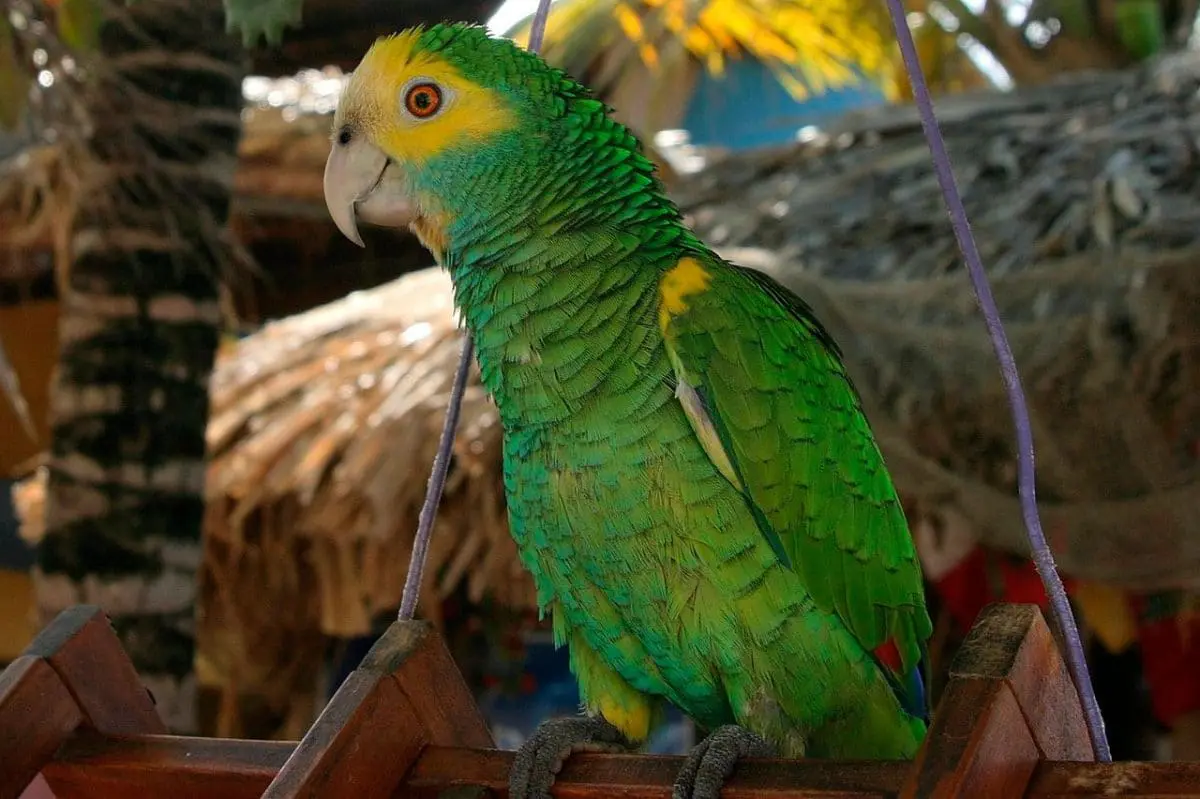
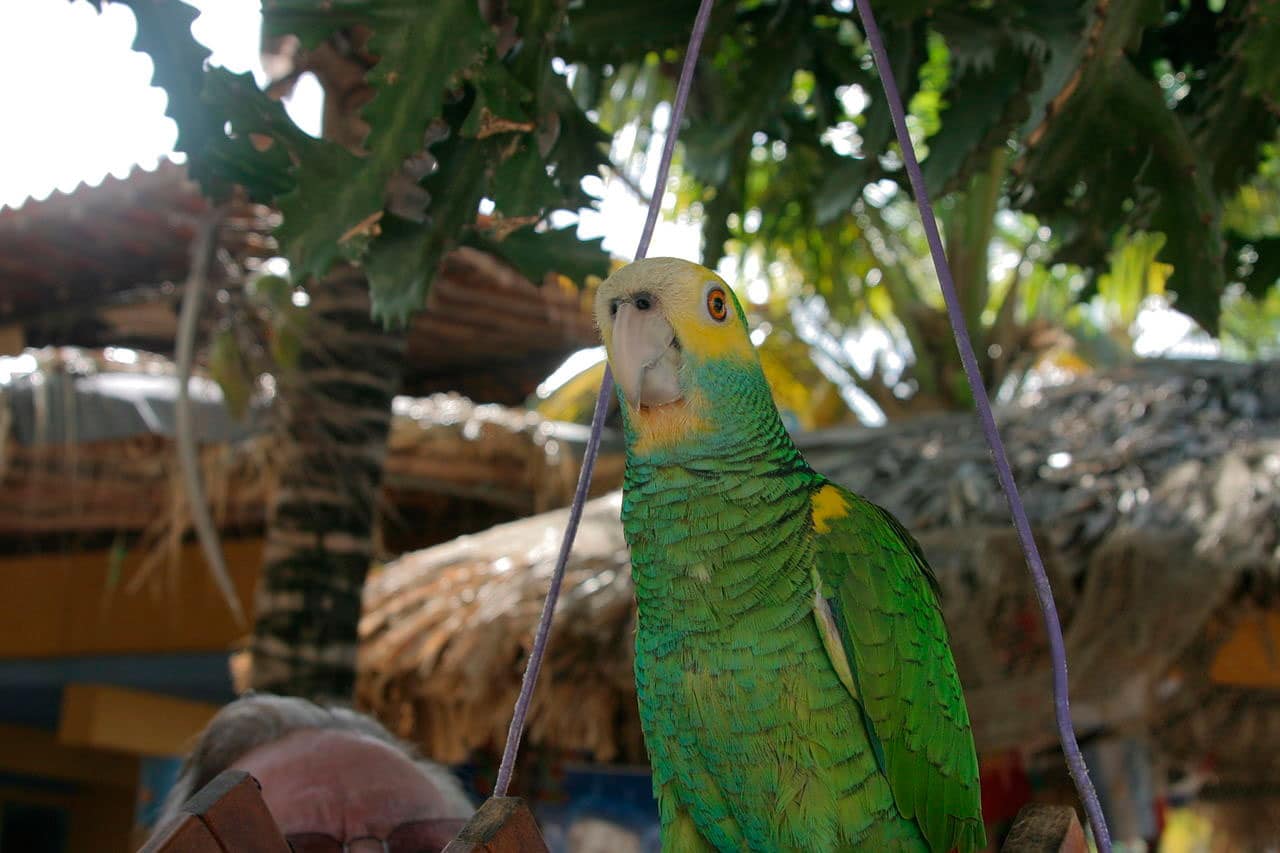
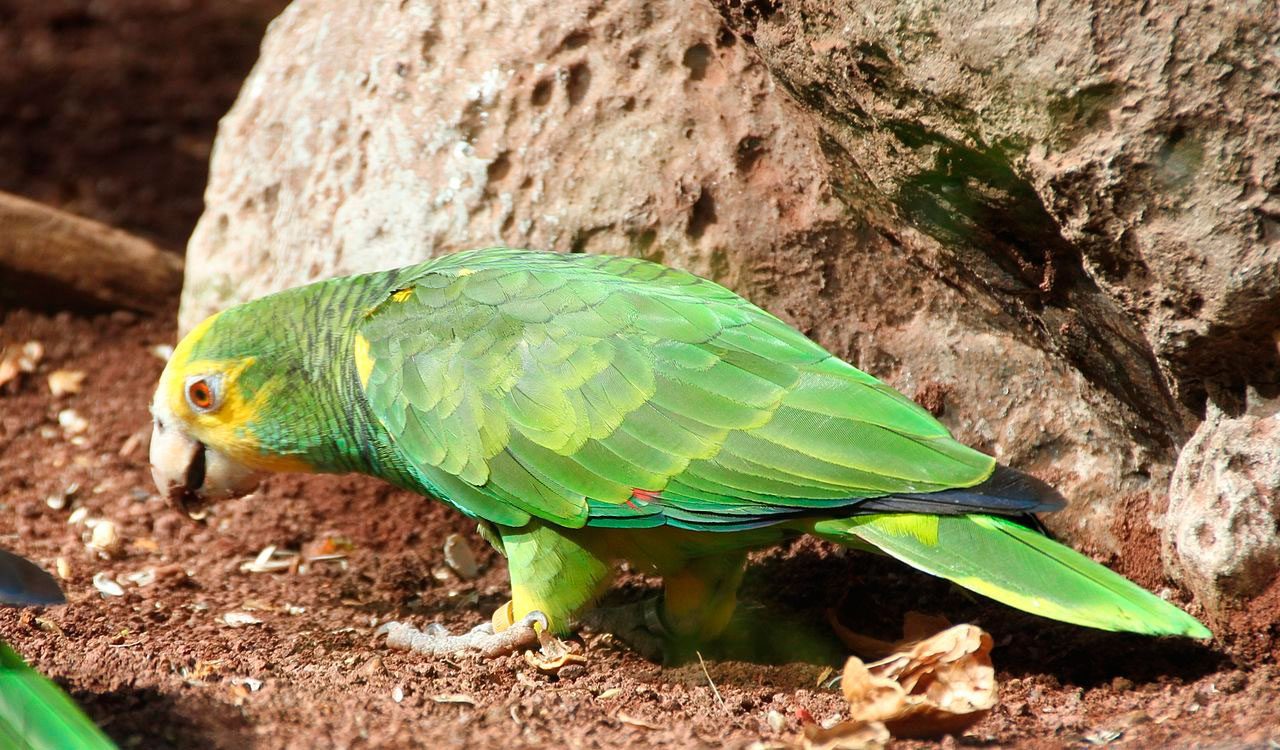
The Yellow-shouldered Parrot (Amazona barbadensis) It has a short tail, head yellow, some with forecrown white.

Its body is usually green, with black feathers edge neck, chest and back; greenish yellow in underparts.

Chin yellow with bluish tint in lower cheeks and around the chin. Shoulder and the thighs yellow.

Speculum red. dark blue tips to the flight feathers. The black edge of their feathers give them a look scaled.


Yellow-shouldered Parrot


Anatomy-parrots

The irises are red or orange and bill whitish.

The young birds are similar to adults but may distinguish by their irises and the absence darker blue hue in the lower body.

In the most notorious flight apart from the head, is the wing with shoulder yellow, Red patch and blue end.

Habitat:

They live in areas xerophytic vegetation, frequenting desert scrub dominated by cactus, cardรณn and shrubs or small trees; also frcuentan cultivated areas, until the 450 m. They move in pairs or flocks of up 100 individuals, especially at the time of feed.

Reproduction:

The nesting takes place in tree cavities, cactus or cliffs, in general, between March and August (Sanz and Rodriguez-Ferraro 2006). The average size of clutch is of 3,38 eggs per nest, and most of the eggs survive until the hatching. The incubation lasts a few 26 days and leave the nest 60 days after hatch.

It tends to rest communally in tall trees, with groups of up 700 birds recorded (Juniper and Parr 1998).

Food:

Their diet is composed of Cactus and other fruits. They have been reported in their diet fruits 22 genders. rich flowers nectar, cardรณn and the urero, which eats fruits, flowers and trunk, fruits and seeds Stenocereus, seeds and flowers guatacaro (Boarreria Sumnensis) and yaque.

Distribution:

Size of its range (reproduction / resident): 11,000 km2

The Yellow-shouldered Parrot It has a disjoint range with seven genetically isolated populations in northern Venezuela (Lara (Cerro Saroche National Park, which)), Falcon (Dabajuro, Casigua), Anzoรกtegui (about Piritu and Barcelona) and Sucre (Araya Peninsula), as well as the Margarita Islands, the blanquilla, Curacao and Bonaire (Rodriguez-Ferraro 2009).

He is currently extinct on Paraguana Peninsula (Briceรฑo-Linares et. To the. 2011). References to the presence of a population of wild parrots in Curacao They are based on a historical source of the century 18 (AO Debrot in some 1999, 2007.); there have been reports from modern 1988 (The farmer 2008, A. Rodriguez-Ferraro in litt. 2012), although it has been suggested that these birds can be released or escaped cages. (Williams 2012).

It became extinct in Aruba towards 1950 (Rojas-Suarez & Rodrรญguez 2015).

The numbers on the islands seem to fluctuate, but they have increased in Margarita of 750 birds in 1989 (Sanz y Grajal 1998) until around 2000 in 2015 (Rojas-Suarez & Rodrรญguez 2015).

The population in Bonaire It was estimated in 400 individuals in 2006 (Williams and Martin 2006) and 650-800 individuals in 2012 (Department of Resources and Planning, Bonaire by R. Martin y S. Williams a slightly. 2012).

The continent's population was considered in decline 2003 (Hilty 2003).

Their habitat continues to be lost in the eastern part of the continental mountain range (V. Sanz in some. 2016) and the population of together (is of Venezuela) it is believed that are declining due to poaching and habitat conversion for agriculture (V. Sanz n bit. 2016), so it is likely that the continental population continues to decline.

Conservation:

State of conservation โ“˜


Vulnerable Vulnerable โ“˜ (UICN)โ“˜

โ€ข Current category of the Red List of the UICN: Vulnerable.

โ€ข Population trend: Unknown.

The population size: 1700-5600 specimens.

It is classified as a endangered specie, It is the main threats capture their young for pet trade, and habitat destruction of nesting and feeding by the extraction of sand for the construction industry.

The recovery of the population of this bird has been the spearhead of Provita's work in Macanao, since its conservation benefits a large part of the biodiversity of the peninsula, as their habitat covers large areas, it is also a charismatic species, that easily attracts the public to conservation efforts.

Source: PROVITA

"Yellow-shouldered Parrot" in captivity:

Rare but increasing due to the successes of captive breeding.
have a participatory personality, inquisitivas and curious to the point of being "nosy" and her gentle nature only adds to her charm. Mild to moderate its ability to speak.
Always playful, enable They require a cage equipped with toys. They worship a bathroom and displayed chatty while bathing under running warm water.

Alternative names:

– Yellow-shouldered Parrot, Yellow shouldered Parrot, Yellow-shouldered Amazon (English).
– Amazone ร  รฉpaulettes jaunes (French).
– Gelbflรผgelamazone, Kleine Gelbkopfamazone (German).
– Papagaio-de-cabeรงa-branca (Portuguese).
– Amazona de Cabeza Amarilla, Amazona de hombro gualda, Amazona Hombrogualda, Cotorra margariteรฑa (espaรฑol).
– Cotorra Cabeciamarilla (Venezuela).

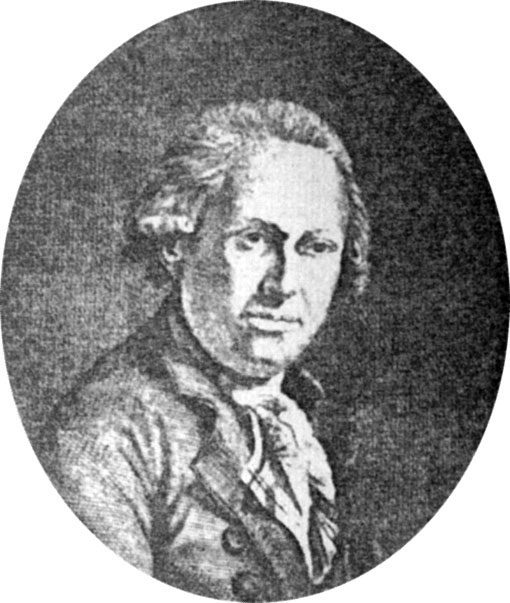
Gmelin Johann Friedrich

scientific classification:


– Order: Psittaciformes
– Family: Psittacidae
– Genus: Amazona
– Scientific name: Amazona barbadensis
– Citation: (Gmelin, JF, 1788)
– Protonimo: Psittacus barbadensis


Images "Yellow-shouldered Parrot":


Species of the genus Amazona


Sources:

  • Avibase
  • Parrots of the World โ€“ Forshaw Joseph M
  • Parrots A Guide to the Parrots of the World – Tony Juniper & Mike Parr
  • Birdlife

  • Photos:

(1) – Yellow-shouldered Amazon (Amazona barbadensis) also known as Yellow-shouldered Parrot. Pet in Venezuela perching on the top of a wooden frame. By John Bรคckstrand (originally posted to Flickr as IMG_2721) [CC BY 2.0], via Wikimedia Commons
(2) – Yellow-shouldered Amazon in the Walsrode Bird Park, Germany By Quartl (Own work) [CC BY-SA 3.0], via Wikimedia Commons By Quartl (Own work) [CC BY-SA 3.0], via Wikimedia Commons
(3) – Yellow-shouldered Amazon (also known as Yellow-shouldered Parrot). Two in the foreground in a cage By TJ Lin [CC BY-SA 2.0], via Wikimedia Commons
(4) – Yellow-shouldered Amazon (Amazona barbadensis) also known as Yellow-shouldered Parrot. Pet in Venezuela perching on a hand. Shows crown By John Bรคckstrand (originally posted to Flickr as IMG_2469) [CC BY 2.0], via Wikimedia Commons
(5) – Yellow-shouldered Amazon (Amazona barbadensis) also known as Yellow-shouldered Parrot. Pet in Venezuela By John Bรคckstrand (originally posted to Flickr as IMG_2468) [CC BY 2.0], via Wikimedia Commons
(6) – Amazona barbadensis in the Loro Parque zoo of Tenerife, Spain By Bjoertvedt (Own work) [CC BY-SA 4.0], via Wikimedia Commons
(7) – Amazona barbadensis in the Loro Parque zoo of Tenerife, Spain By Bjoertvedt (Own work) [CC BY-SA 4.0], via Wikimedia Commons
(8) – Yellow-shouldered Amazon (Amazona barbadensis) also known as Yellow-shouldered Parrot. Pet in Venezuela – side view – a little red and blue seen at edge of wing By John Bรคckstrand (originally posted to Flickr as IMG_3117) [CC BY 2.0], via Wikimedia Commons
(9) – Yellow-shouldered Amazon (Amazona barbadensis) also known as Yellow-shouldered Parrot. Pet in Venezuela on the top of a wooden climbing frame. Mainly showing its upper body By John Bรคckstrand (originally posted to Flickr as IMG_2723) [CC BY 2.0], via Wikimedia Commons
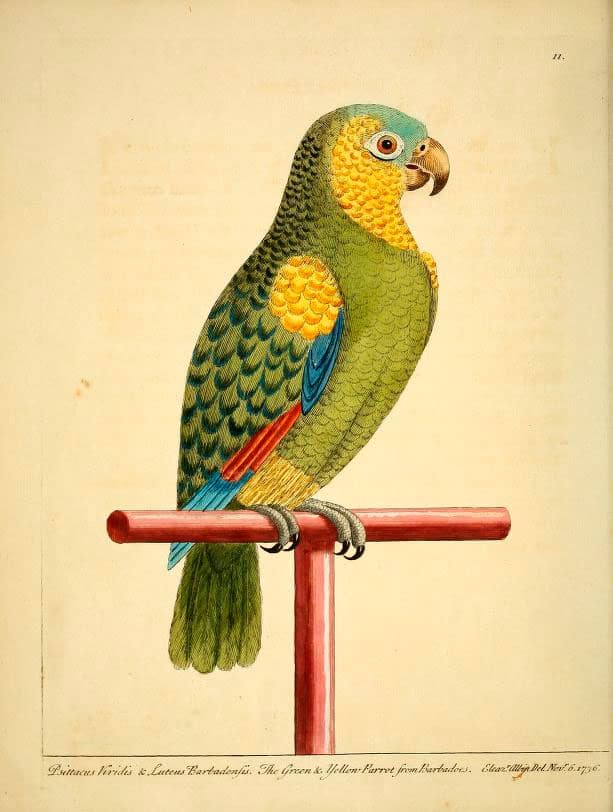
(10) – Original illustration of the ยซGreen & Yellow Parrot from Barbadosยป, currently known as Amazona barbadensis – Wikipedia

  • Sounds: ยฉ 2014 Cornell University