โ–ท The world of Pets: Dogs, cats, birds, reptiles, amphibians

Buru Racket-tail
Prioniturus mada


Buru Racket-tail

Content

Buru Racket-tail

Description

32 cm.. length.

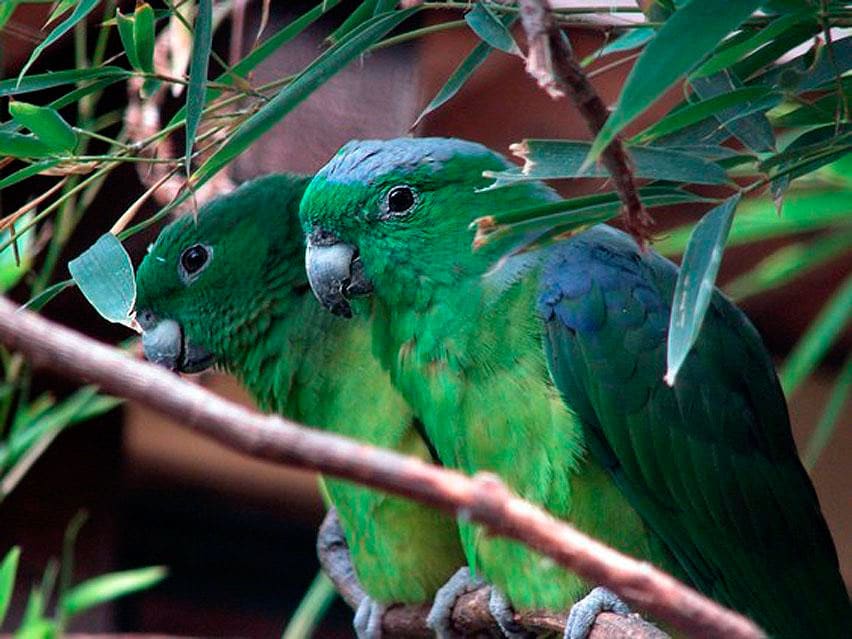
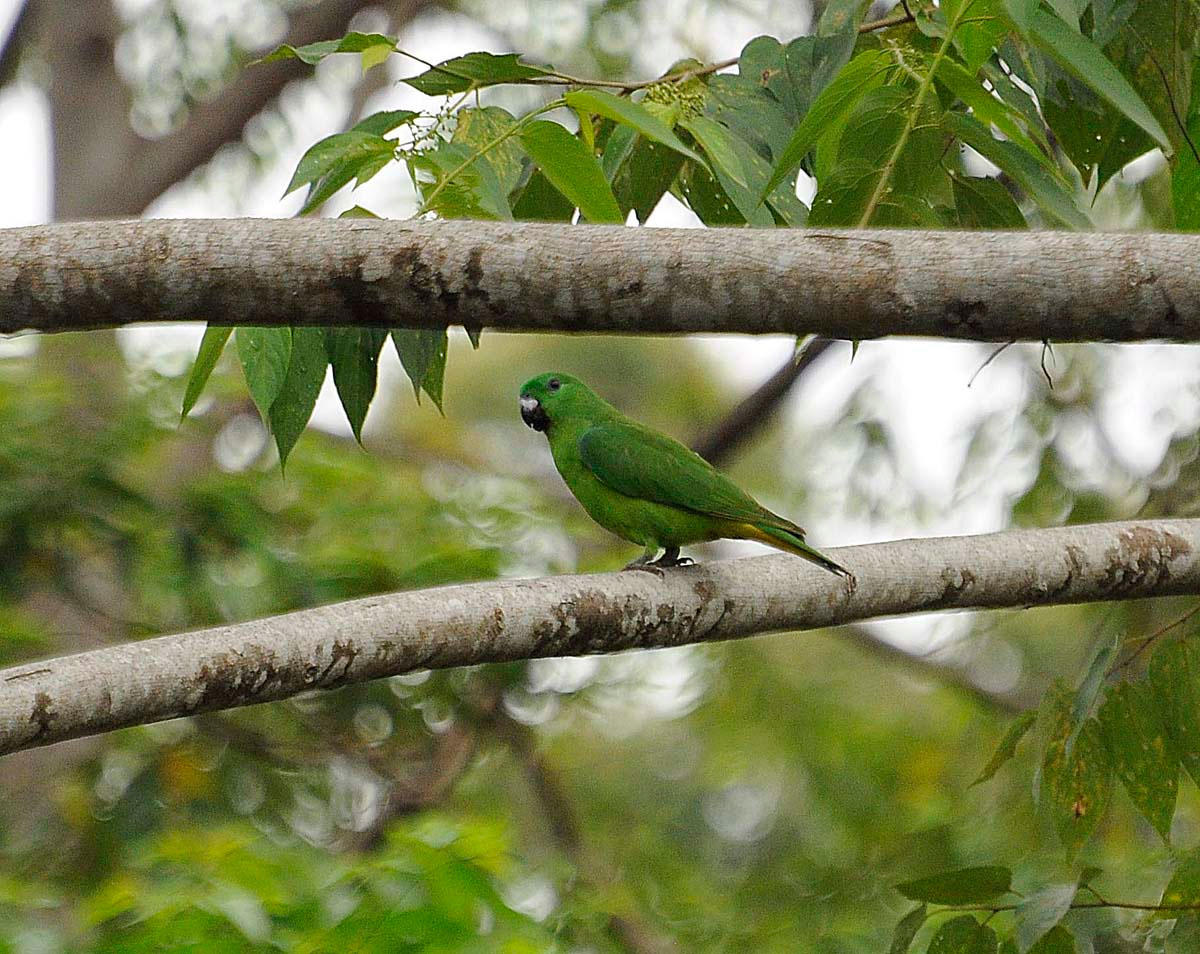
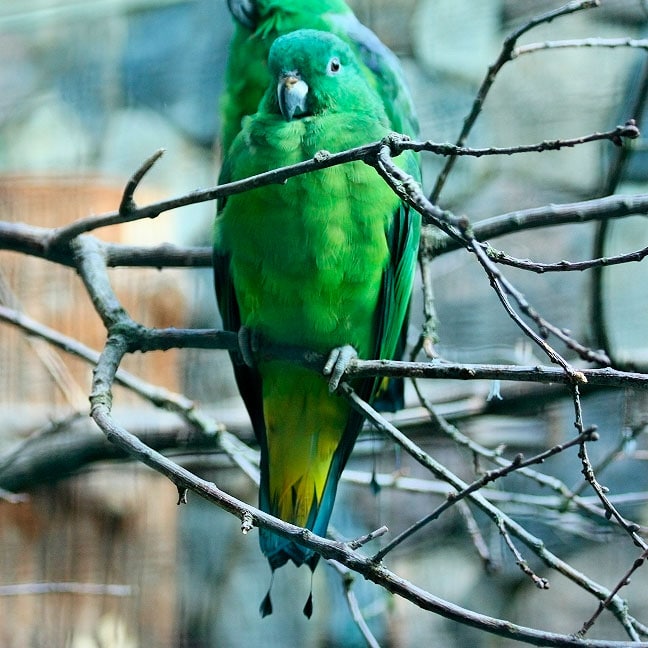
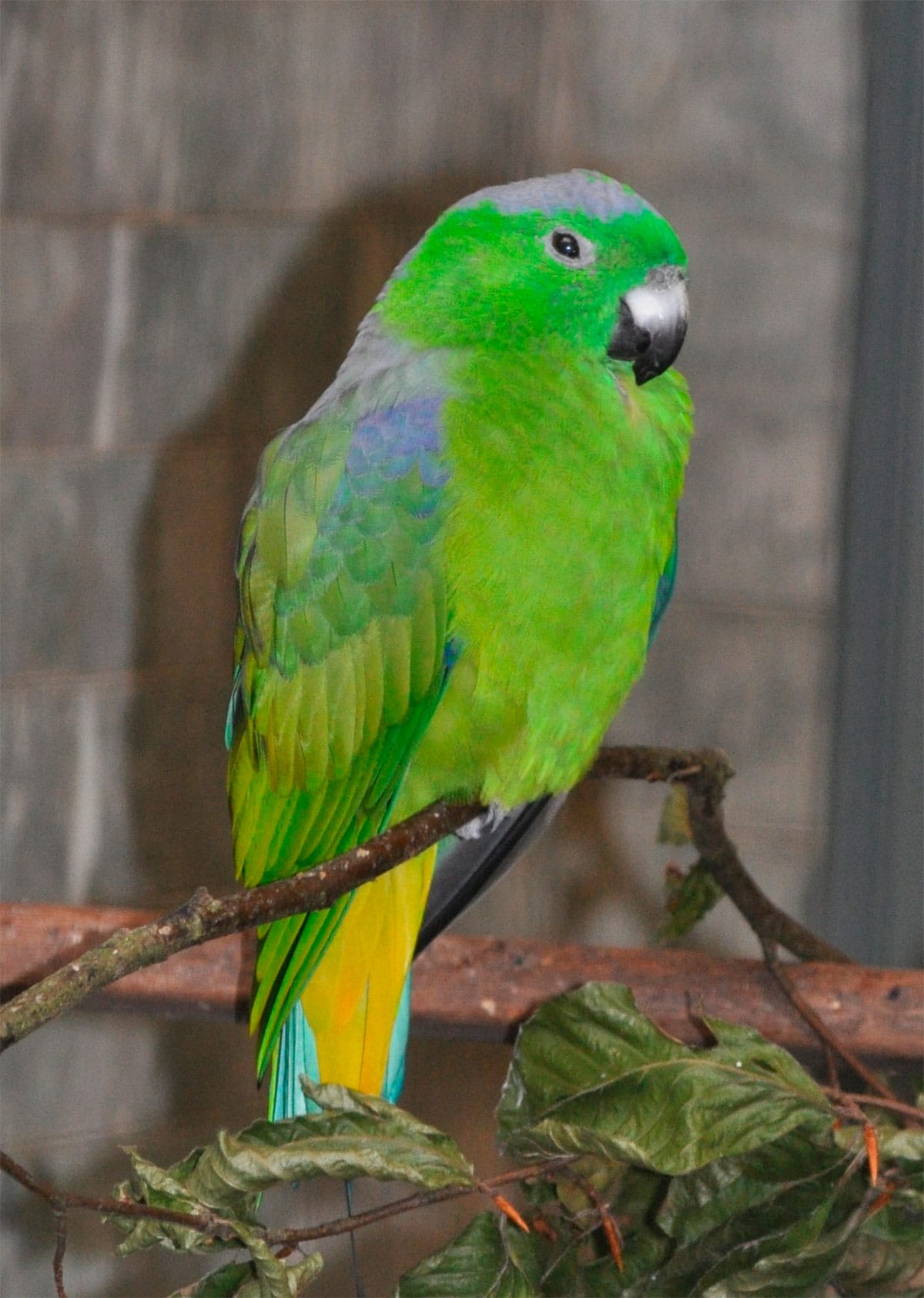
The head of the Buru Racket-tail (Prioniturus mada) is bright green, marked in blue-gray dark in the crown and in the nape. The upperparts are green, marked in grisaceo-azul dark in the upper mantle; Uppertail green. Wings green with lesser coverts and bend of wing Dark greyish-blue. Wing feathers green; underside of flight feather. Bluish.

The underparts are yellowish-green, more yellow in undertail-coverts. Upper, the tail green, outer feathers tipped dark blue; light blue, the tail down.

Bill grey; irises dark brown; legs grey.

Female lacks the blue color in the crown, nape and the the mantle; the blue in the bend of wing is smaller; rackets of the tail shorter.

Young without rackets on tail; males with blue in the nape.

Habitat:

Found until the 1600 meters above sea level, in all types of forest habitat, including selective exploitation and secondary high growth areas; also found in cultivated areas remaining trees; most common around 600 m. You often see them in small groups of up to ten birds. Tends to substitute to the Red-checked Parrot at higher elevations.

Reproduction:

breeding season from December to February. Up to five young can be raised in a nest.

Food:

It feeds on fruits, flowers, berries and seeds.

Distribution:

endemic to the island of Buru, Indonesian. The inclusion of the species as Near-threatened is based on the assumption of a very restricted range above the 1.000 m, but newly published evidence shows that it is common throughout the island with an estimated world population between 189.000-48S.000 birds.

Conservation:


minor concern


โ€ข Current category of the Red List of the UICN: Least concern

โ€ข Population trend: Stable

The size of the world population It has not been quantified, It is estimated between 189,000 and 483,000 individuals.

The species is described as common and widespread (pit et to the. 1997).

The population is suspected to be stable in the absence of evidence of any reduction or substantial threats.

"Buru Racket-tail" in captivity:

Not found in captivity.

Alternative names:

Buru Racket-tail, Buru Racket-tailed Parrot, Buru Racquet tail, Buru Racquet-tail, Buru Racquet-tail Parrot, Buru Racquet-tailed Parrot (ingles).
Palette de Buru, Perroquet ร  raquette de Buru (French).
Madapapagei (German).
Prioniturus mada (Portuguese).
Lorito Momoto de Buru, Lorito-momoto de Buru (espaรฑol).

scientific classification:

Order: Psittaciformes
Family: Psittaculidae
Genus: Prioniturus
Scientific name: Prioniturus mada
Citation: Hartert, E, 1900
Protonimo: Prioniturus mada

Images "Lorito momoto de Buru":

Videos "Buru Racket-tail"

————————————————————————————————

ยซLorito Momoto de Buruยป (Prioniturus mada)

Sources:

Avibase
– Parrots of the World โ€“ Forshaw Joseph M
– Parrots A Guide to the Parrots of the World – Tony Juniper & Mike Parr
– Birdlife

Photos:

(1) – By Klaus Rudloff (kdrudloff@web.de) – Germany , Weltvogelpark / World Bird Park – Walsrode – biolib
(2) – ยซPrioniturus mada qtl1ยป by QuartlOwn work. Licensed under CC BY-SA 3.0 via Wikimedia Commons.
(3) – ยซPrioniturus mada-captive-8a-tocยป by Prioniturus_mada_-captive-8a.jpg: Robert01.Original uploader was Robert01 at de.wikipediaderivative work: Snowmanradio (talk) – Transferred from de.wikipedia; transferred to Commons by User:Snowmanradio using Commonshelper.(Original text: selbst fotografiert) to Prioniturus_mada_-captive-8a.jpg. Licensed under CC BY-SA 3.0 of via Wikimedia Commons.
(4) – by jon hornbuckle – BIRDING AROUND THE WORLD
(5) – Prioniturus mada buru racquet tail – link

Sounds: Frank Lambert (Xeno-canto)

โ–ท The world of Pets: Dogs, cats, birds, reptiles, amphibians

Red-winged Parrot
Aprosmictus erythropterus

Red-winged Parrot

Content


Anatomy-parrots

Description

30 to 33 cm.. length between 120 and 210 g. of weight.

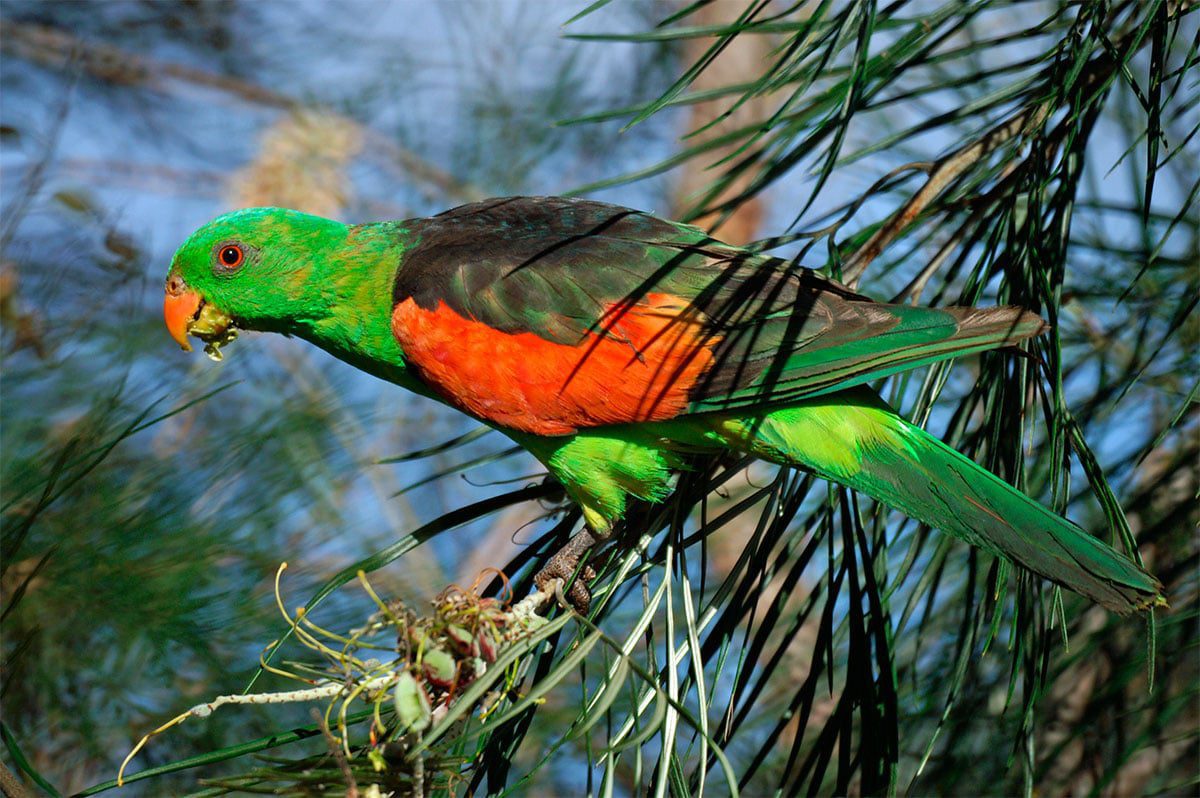
The Red-winged Parrot (Aprosmictus erythropterus) has the head of color green bright with brightness blue green in the crown and nape. Mantle, back and scapulars black. Area low of it back and rump brilliant blue, more clear towards the tail; uppertail-coverts of color green yellowish with broadcasting yellowish at the base. Curve of the wing yellow-green light. Carpal edge blackish. Upper, the wing-coverts, bright Scarlet. Tertiary and primaries marked in black on vane inner, green in vane outer; secondaries also bathed in black in vane outer; primary coverts of color green dark bathed in black. Under, the wing-coverts green. The underparts bright, pale and slightly yellowish-green. Upper, the tail Green dark with tips of color yellow and lateral feathers Blackish in vane internal with yellow tips; undertail, the tail Blackish with tips pale.

Bill coral red; irises reddish brown; legs grey-black.

Female It is predominantly green with a small red spot in the wings (only a point apical on coverts major interiors, but the increase in the external; restricted to the outer feathers of the median) that of the male, and it ain't got no black on it the mantle; vane outside of outer secondaries black. The Green is also more off, and a bit more yellowish in them underparts. The rump is of a blue more off, and the glitter blue in it crown and nape of the male, is absent in the female. Under, the tail has tips yellowish and touches of color pink.

The immature they are similar to the females, but with a irises more Brown and bill yellow from the beginning. Young males attain adult plumage in the third annual moult, but black can show the mantle feathers before this.

Description 3 subspecies

  • Aprosmictus erythropterus coccineopterus

    (Gould) 1865 – Male with more blue in it crown and nape. Both sexes slightly paler, and the female also more off the Green that it nominal species.


  • Aprosmictus erythropterus erythropterus

    (Gmelin) 1788 – The nominal.


  • Aprosmictus erythropterus papua

    (Mayr & Rand) 1936

Habitat:

Resident, Although nomads in the edges of the range. Is semiarid and subtropical forests of eucalyptus and casuarina, boedes of the Woods, riparian forests, thickets of acacia, mangroves, agricultural fields, scrub Cypress pine (Callitris), and the lowlands of the Savannah.

On the inside of Australia are mainly linked to the extension of wooded of the systems fluvial.

They are usually found in small groups of up to fifteen birds, rarely reach more of 50 individuals in a single flock. The largest groups are likely to form late in the breeding season when family groups gather at feeding grounds..

The species is common and conspicuous, but not particularly accessible; When resent, birds can fly some distance, often making strong sounds.

Sometimes associated with the Pale-headed Rosella and Mallee Ringneck, and they feed under the trees, Although it is more usual to see them on Earth to drink.

Reproduction:

The nesting You can start early, in the months of April or may in the North, but august to february is the main breeding season in the south. During the courtship, the male perches near the female, exposing your blue rump, and making sounds.

The nest normally found in a eucalyptus, and the eggs are put into a deep hole covered with scrap wood. Three to six white eggs are They incubated for around 20 days by the female, which is fed by the male until the eggs hatch. The young are cared for by both parents and they leave the nest in a five weeks.

Food:

The diet It includes seeds, fruit, flowers and insects; in the mangroves, the mistletoe (Loranthus) is your favorite diet.

Distribution:

Size of the area of distribution (reproduction / resident): 5.230.000 km2

The Red-winged Parrot (Aprosmictus erythropterus) are confined in Australia, in the coastal districts of the southeast of Irian Jaya (Indonesian) and in the Western Province (Papua New Guinea).

In New Guinea, the species is restricted to the region between the rivers Digul and Fly.

In Australia extends from about Broome, in Western Australia (registered West of Anna Plains, and southwest of the Cordillera de Edgar) through the Kimberley region, including some islands on the coast (Buccaneer and Bonaparte archipelago, Islands Osborne and Sir Graham Moore, and Admiralty Gulf Islands) in the Northern Territory, about Nicholson.

Extends northward up to the peninsula of cobourg and to the South, at the turn of the Cordillera Camfield and Dunmarra Roadhouse, reaching some coastal islands, including Melville and Groote Eylandt.

Extends to the East in Queensland, in the nicholson river, are distributed in the Cape York Peninsula, with records by the coast, about Rockhampton (occasional southernmost), and reaching inside, about Dajarra, to the South of Mount Isa and Southeast, through the lower part of the diamond river, Windorah, Quilpie, Mitchell and San Jorge.

On the inside of New South Wales the end points of the range are in Inverell in the East, Gunnedah, Dubbo and Mudgee in the South and There is a, Menindee and Broken Hill, near the southern border of Australia.

They are also in the North, in the basin of the darling river, and have been recorded in the South-East of Australia, around the Lake Eyre and North of Cooper Creek.

Wandering individuals have been recorded in Renmark and Victory Downs, In this last, possibly from an exhaust.

Leaks have also been observed in Sydney and Melbourne.

The species is common in suitable habitats, except at their range limits.

The world's population is above the 100.000individuals and the species is considered secure.

A moderate number of captive.

Protected by law.

Distribution 3 subspecies:

  • Aprosmictus erythropterus coccineopterus

    (Gould) 1865 – South of New Guinea and Western Australia, to the East through the northern territory of the Cape York Peninsula, Queensland


  • Aprosmictus erythropterus erythropterus

    (Gmelin) 1788 – The nominal


  • Aprosmictus erythropterus papua

    (Mayr & Rand) 1936 – South of New Guinea

Conservation:


minor concern


โ€ข Current category of the Red List of the UICN: Least concern

โ€ข Population trend: Growing

The size of the world population It has not been quantified, Although it is estimated very above the 100.000 specimens.

The species, according to sources, is usually common and locally abundant (pit et to the. 1997).

The population is suspected that it may be in decline due to ongoing habitat destruction.

"Red-winged Parrot" in captivity:

Fairly common in Australia, not so much in other places.

Active, Acrobat; they require a large birdhouse with plenty of hangers. The male can become aggressive with the female.
Quite quiet and shy.

Una muestra viviรณ 24,4 years in captivity.

Alternative names:

Red-winged Parrot, Red winged Parrot (ingles).
Perruche รฉrythroptรจre, Perruche erythroptรจre (French).
Rotflรผgelsittich, Rotflรผgel-Sittich (German).
Periquito-de-encontro-vermelho (Portuguese).
Papagayo Alirrojo, Papagayo de Alas Rojas (espaรฑol).


scientific classification:

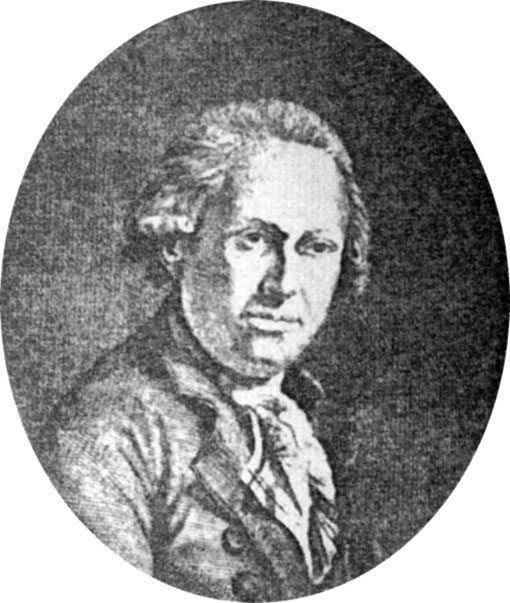
Gmelin Johann Friedrich

Order: Psittaciformes
Family: Psittaculidae
Genus: Aprosmictus
Scientific name: Aprosmictus erythropterus
Citation: (Gmelin, JF, 1788)
Protonimo: Psittacus erythropterus


Images ยซPapagayo Alirrojoยป:

Videos "Red-winged Parrot"

————————————————————————————————

ยซPapagayo alirrojoยป (Aprosmictus erythropterus)

Sources:

Avibase
– Parrots of the World โ€“ Forshaw Joseph M
– Parrots A Guide to the Parrots of the World – Tony Juniper & Mike Parr
– World Parrot Trust – parrots.org
– Birdlife

Photos:

(1) – By David Cook Wildlife Photography from Wamboin, NSW, Australia [CC BY 2.0], via Wikimedia Commons
(2) – By Jan Harenburg (Own work) [CC BY 3.0], via Wikimedia Commons
(3) – Aprosmictus erythropterus erythropterus – Orde Psittaciformes – Papegaaiachtigen
(4) – Red-Winged Parrot (Aprosmictus erythropterus) Male – Pine Creek, M. 7. – encimages
(5) – ยซAprosmictus erythropterus-Australia-pair-8" Of Kitykat79 – originally posted to Flickr as King Parrots!. With license CC BY 2.0 Transact Wikimedia Commons.
(6) – A painting of two Red-winged Parrots (originally captioned ยซPlatycercus erythropterus. Crimson-winged parraket. 1. Male. 2.Female.ยป) by Edward Lear 1812-1888. The painting shows a female behind young male by Edward Lear [Public domain], via Wikimedia Commons

Sounds: Peter Woodall (Xeno-canto)

โ–ท The world of Pets: Dogs, cats, birds, reptiles, amphibians

Hooded Parrot
Psephotellus dissimilis

Hooded Parrot

Content


Anatomy-parrots

Description

25,5 to 28 cm.. length and a weight between 50 and 60 g..

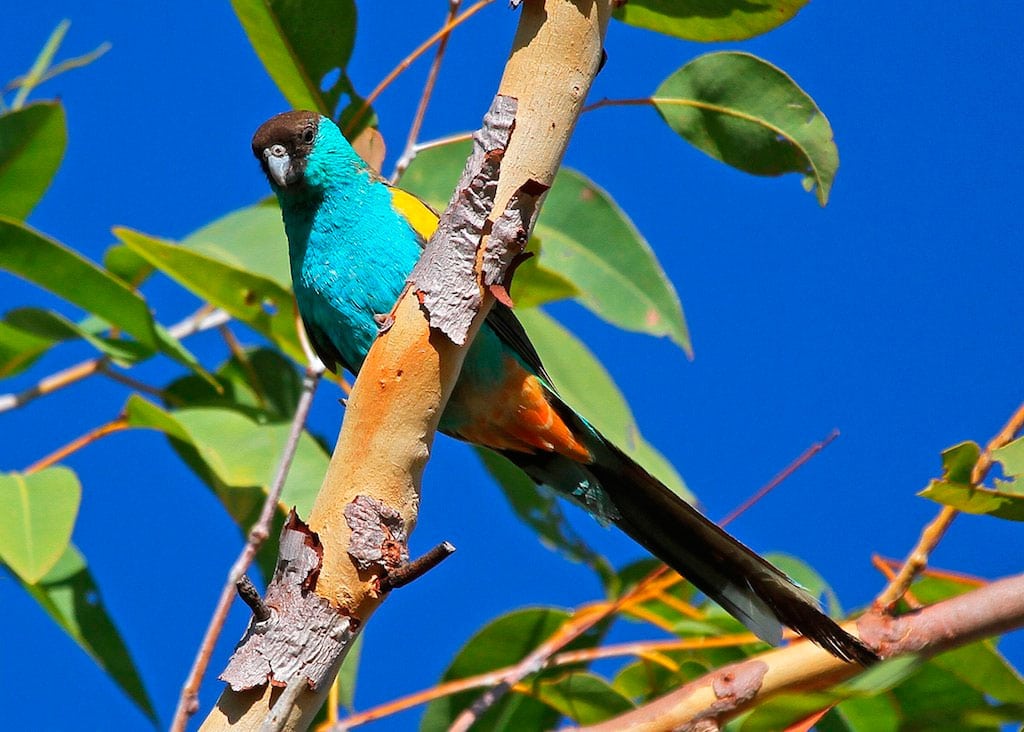
The Hooded Parrot (Psephotellus dissimilis) is a very striking species, restricted to the dry forests of the North of Australia. The male has a pileum black, their underparts are Turquoise with a patch in the shoulders golden yellow.

The females are pale green with a pale turquoise diffusion in the cheeks, abdomen and cadwas.

The Golden-shouldered Parrot, with which it is closely linked, is very similar in appearance, but they are only observed in the Cape York Peninsula, in the North of Queensland, and males differ in their tones slightly. The Hooded Parrot does the yellow colour in the forecrown or in the lores and the yellow markings of the shoulders and reddish of the belly, they are smaller than. The females they are very similar, but the Golden-shouldered Parrot It shows a faint red marks on the area, white, bass belly, has the undertail- coverts Bluish, bluish color of the belly is absent and the undertail- coverts They have a pinkish tone; also has a Brown Suffusion in the crown, a forecrown yellowish and the cheeks they are greener.

The Northern Rosella shares territory with the Hooded Parrot and also has a pileum black, but it lacks of the underparts Turquoise and yellow markings on the wings.

The Hooded Parrot they have an elegant flight, and males they are very bright with a Flash of bright yellow showing in the wings. The flight fast and slightly wavy. Bird perch, times, phone cables, and can make long flights at high altitude.

Providing more detail to its description, the Hooded Parrot has the pileum, lores and the area below and in front of the eyes, black, merging into grey-brown colour in the the mantle (darker uppers than the Golden-shouldered Parrot). The rump is turquoise blue and the uppertail-coverts green. Wing coverts golden yellow (grey dark in vane inner).

Flight feathers Blackish with difusion-verde turquoise at the edge of the vane outer (thin yellow color at the outer edge). feathers of the wings and bend of wing bluish green; underside of flight feather blackish brown. The cheeks, the neck and the chest Turquoise, lightly coated with emerald green; rest of the underparts Turquoise with the exception of undertail- coverts they are orange-red with yellow tips. Uppertail dark bars.

Central feathers of the tail Green bronze with black tips, side green blue with white tips, with a blackish central bar; undertail, the tail apparently light blue with black tips when it is closed. Bill pale grey; irises dark brown; legs light brown.

The female is usually pale, a light yellowish green, with wing-coverts a bright yellowish-green, flight feather blackish, and a turquoise color broadcasting in the rump, from the top of the breast to belly, and vaguely in the cheeks. Subcaudales coverts bathed in Pink salmon; pale marks in the wings.

The immature they are like the females, but males have the head darker and the cheeks bright. Adult plumage they would earn in the second annual moult.

The very young birds they have the peaks yellow.

Habitat:

Sedentary, although some early records of the Melville Island probably related to post-breeding dispersal. Scattered sparsely through the open dry forests, flooded Plains, especially grasslands of Malaleuca-dominated and Spinifex Triodia, grasslands with termite mounds, also in rows of eucalyptus trees along watercourses and the rocky ridges.

Usually, they are in pairs or in small groups, but after the breeding season, from September (end of the dry season) onwards, they may gather in groups of up to 100 birds feeding.

Reproduction:

Egg-laying range from late January until mid-April, at the end of the rainy season, and the nest is a tunnel in a Termite Mound. The direction and height of the entrance of the nest is variable, but nest chamber temperatures are more stable inside larger mounds. A recent study of nesting ecology in the Northern Territory showed a density of 0,45 to 0,70 nests per square kilometer, with a 50% from eggs producing hatchlings. Between two and six eggs make up the clutch, and are incubated for around 20 days for the female. In about five weeks the young leave the nest.. The females., sometimes, they roost far from their nests during the heat of the day.

Food:

The diet is composed, mainly, of pasture seeds seasonal during the dry season and perennial plants during the wet season. Variation in the ability to master feeding techniques for different seed types may explain the apparent early dispersal of immatures in the wet season.. Birds feed quietly on the ground, resting in foliage near water during the heat of the day. When drinking, they often walk into the water along banks of sand. They are sometimes seen feeding on road verges, often in association with the Black-faced Woodswallow (Artamus cinereus).

Distribution:

Endemic to North of Australia where is located in the western part of Arnhem Land, Northern Territory, from the South of the alligator river, to the southwest of Pine Creek and the South-East of Include. The birds also disperse further east and west to the rivers. Roper and upper area of the Daly.

The Hooded Parrot formerly extended eastward to the MacArthur river, but its territory, covering the Kakadu National Park, has recently been hired.

In general, It Rare. Although now it is fully protected. Capture is believed to it has been a problem in the past. Burning and grazing may limit the availability of herbs seeds during the dry season.

Mining also threatens the habitat of the species. There are a moderate number of birds in captivity.

Conservation:


minor concern


โ€ข Current category of the Red List of the UICN: Least concern

โ€ข Population Trend: Stable

The world population is estimated at 20.000 specimens (Garnett and Crowley 2000).

Population trends have not been quantified, but populations seem to be stable, without descents recent (Garnett and Crowley 2000).

The species remains common in areas under park management. Aboriginal and National, where grazing is minimal and where there are programs that guarantee their survival, or around the Rocky slopes, where is the availability of food in the rainy season relatively assured.

"Hooded Parrot" in captivity:

Although the popularity of the Hooded Parrot has increased considerably in the last decade, this species is still quite unknown in aviculture. The main reason is, probably, that they are not easy to care for and reproduce in captivity, due to its high demands care and difficulty it in terms of its food supply. The Hooded Parrot they are not recommended for a beginner breeder birds.

No one knows exactly when these birds were imported for the first time to Europe, but it was probably at the beginning of the last century. In the autumn of 1912 English Hubert Astley was the one who obtained the first satisfactory breeding result with the Hooded Parrot, got 4 young people from a litter of 5. in the netherlands, the Dr. Polak It also had results before the second world war. Once the pups are born, they were taken along with a couple of Red-rumped Parrot (Psephotus haematonotus) with which they grew up without any problem.

There is a variety of the Hooded Parrot because different crosses with other species such as Mulga Parrot (Psephotellus varius) and the the Golden-shouldered Parrot (Psephotellus chrysopterygius). So, we must pay attention to the characteristics when we are going to buy a pair of future reproducers of this species. If you have doubts about the purity of certain birds, consult with a person who is familiar with this type of parrots.

In terms of the behavior, the Hooded Parrot adapt to the European climate relatively well, although they are sensitive to cold and wet weather. They are quiet birds, enable, not shy and quickly adapt to their caregiver. His voice is not worrying. Love these birds being on the ground, where spend much time. They love to swim and are not rodents of wood. During the breeding season they are aggressive towards other birds.. Even outside the breeding season, It is not advisable to fit them with their peers or keep them with other bird species. Young birds together may stay in a birdhouse. As a basic rule, Ave predict an area of one square meter.

It is not known exactly how these birds can live, according to sources, one specimen was still alive after 18 years in captivity

Alternative names:

Hooded Parrot, Antbed Parrot, Anthill Parrot, Black-hooded Parakeet, Black-hooded Parrot, Golden-shouldered Parrot, Hooded Parakeet (ingles).
Perruche ร  capuchon noir (French).
Collettsittich, Hooded Sittich (German).
Periquito-encapuzado (Portuguese).
Perico Capirotado, Periquito encapuchado (espaรฑol).

scientific classification:

Order: Psittaciformes
Family: Psittaculidae
Genus: Psephotellus
Scientific name: Psephotellus dissimilis
Citation: Collett, 1898
Protonimo: Psephotus dissimilis

Images ยซCapitola Parakeetยป:

Videos "Hooded Parrot"

————————————————————————————————

ยซPerico Capirotadoยป (Psephotellus dissimilis)


Sources:

Avibase
– Parrots of the World โ€“ Forshaw Joseph M
– Parrots A Guide to the Parrots of the World – Tony Juniper & Mike Parr
– Birdlife

Photos:

(1) – A male Hooded Parrot, about 30 km south of Pine Creek, Northern Territory, Australia By birdphotosneill (Hooded ParrotUploaded by snowmanradio) [CC BY 2.0], via Wikimedia Commons
(2) – A pair of Hooded Parrots, about 30 km south of Pine Creek, Northern Territory, Australia By birdphotosneill (Hooded ParrotsUploaded by snowmanradio) [CC BY 2.0], via Wikimedia Commons
(3) – A pair of Hooded Parrots about 30 Km south of Pine Creek, Northern Territory, Australia. The male is in the foreground By birdphotosneill (Hooded ParrotsUploaded by snowmanradio) [CC BY 2.0], via Wikimedia Commons
(4) – By originally posted to Flickr as parkiet xxx and uploaded to commons at Psephotus_dissimilis_(female)_-Burgers_Zoo-8a.jpg: frank woutersderivative work: Snowmanradio (Psephotus_dissimilis_(female)_-Burgers_Zoo-8a.jpg) [CC BY 2.0], via Wikimedia Commons
(5) – Male Hooded Parrot (Psephotus dissimilis) – Sylvan Heights Waterfowl Park in Scotland Neck, North Carolina By SandyCole (Own work) [CC BY-SA 3.0 or GFDL], via Wikimedia Commons
โ–ท The world of Pets: Dogs, cats, birds, reptiles, amphibians

Malherbe's parakeet
Cyanoramphus malherbi

Malherbe's parakeet

Content


Anatomy-parrots

Description

19 to 22 cm. length and a weight between 40 and 52 grams for males and between 30 and 41 grams for females.

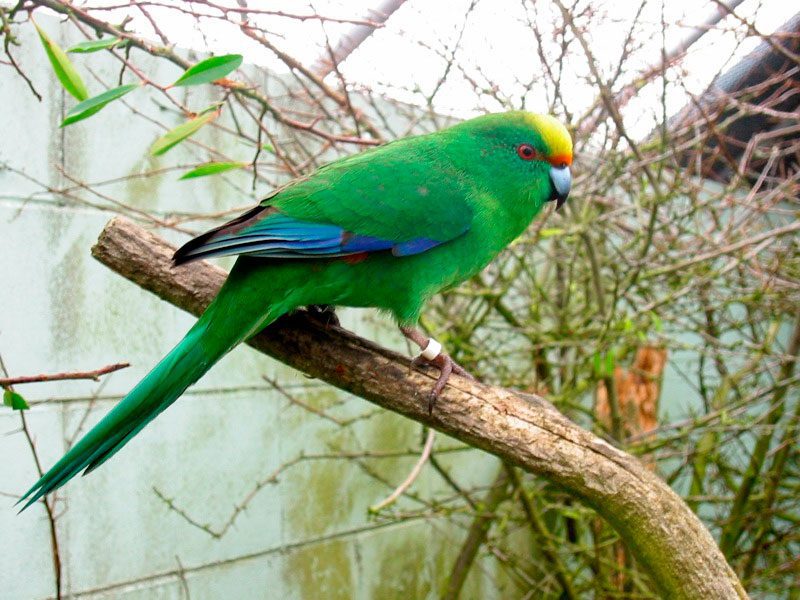
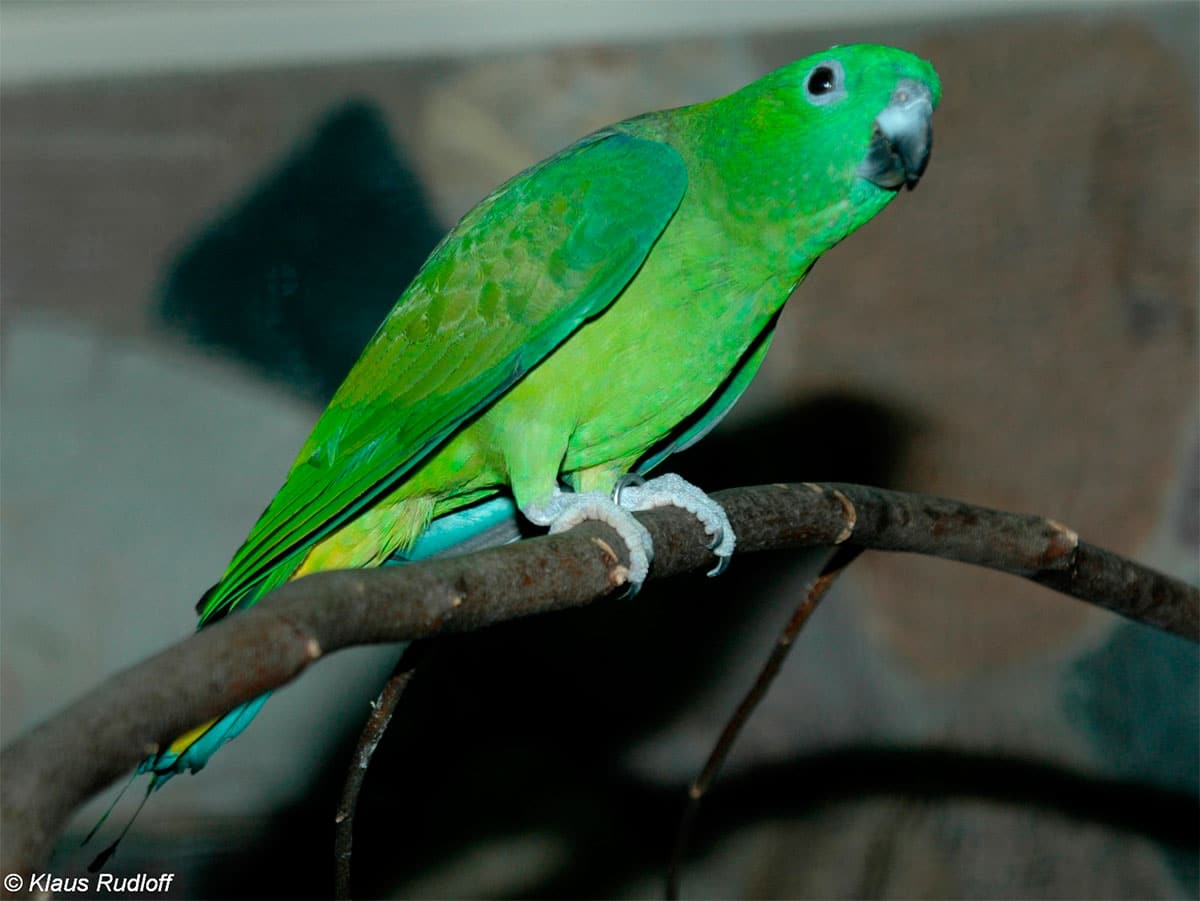
The Malherbe's parakeet (Cyanoramphus malherbi) they are small bright green parakeets, equipped with a long tail and with a bluish green colour wash in belly and chest.

The wings they have the primary coverts and the edges to the primary external of azure-blue. The crown is lemon-yellow colour and the front band, it reaches the eyes, is orange, as well as two patches on each side of the rump.

The bill is bluish grey, with the tip of black. The eyes are red and the legs are brown.

The colors tend to have a brighter tone in the males.

The youth they are more opaque, especially the patch of front band and the crown, which may be absent. The tail It is short for several weeks after feather. The bill is a pale pink color that darkens gradually when the young bird matures. They have darker the eyes, a reddish brown tone.

Habitat:

The Malherbe's parakeet tends to be quiet and hard to see. A brief and loud chatter or a quieter soft contact call can denote its presence, but locating the bird can be extremely difficult. The Malherbe's parakeet often confused with the Yellow-crowned parakeet.

Even though have been recorded in subalpine bushes and thickets of Matagouri open zones (Discaria toumatou), the Malherbe's parakeet they are predominantly in the forest.

They usually feed in the canopy, but also under frequent places with low vegetation and soil.

Reproduction:

The Malherbe's parakeet can reproduce in every month, with a main breeding period between December and April; incubation peak is in January.

Clutch size media is of approximately 7 eggs, but register a wide range (range of 1 to 10). Egg laying is asynchronous with an interval between eggs of 2 days. The incubation lasts from 21 to 26 days, and the period of breeding ranges between 35 and 45 days.

The females They seem to choose the nesting sites, as well as carry out all the preparation, incubation and breeding, the male provides most of the food during incubation.

It is suspected that the female only feeds the chicks during the first 10-14 days, just as they do other species Cyanoramphus. Once past this period, both sexes take care, equally, feeding the pigeons.

There may be second clutches If there is enough food available, for example, during the sowing of beech, or if the first attempt failed. The female may lay a second clutch when first chicks have, approximately, 2 weeks of age. This leaves the male as the sole provider for both the chicks and the incubating female..
Second clutches are not uncommon; When is food plentiful, some couples can reproduce 3 or 4 times on.

The nests are accessed normally through holes in knots of branches and the main trunk of a tree.

They use all species of you have to build the nest, predominantly the Red beech (69% nests monitored in the continent, n = 138) and dead trees (20%).
Nests may have more than one meter of depth. Records placed nests in heights that range between 2,5 and 26 m.

Food:

The Malherbe's parakeet consume seeds, flowers, buds and small invertebrates (mealybugs and caterpillars). In a year of abundance of fruits, the seeds become the dominant element of their diet, and they seem to be the main food for young people.

Invertebrates seem to play an important role in the diet of this species of parakeet which for the Yellow-crowned parakeet.

Distribution:

Size of the area of distribution (reproduction / resident) 360 km2

To the Malherbe's parakeet les is in areas where the South beeches (Nothofagaceae), in forest valleys in the South Island, the valleys Hawdon and Poulter in the Arthur Pass National Park and the South Branch of the Hurunui Valley in Lake Sumner Forest Park. Are unevenly distributed within these valleys; absent in many parts, but in some other places can be quite common.

They have been transferred to four islands: Maud and Blumine in Marlborough Sounds, Chalky Island in Fiordland, and Largest Island / Tuhua on bay of plenty.

Conservation:


critical hazard


โ€ข Current Red List of UICN: critically endangered

โ€ข Population trend: Decreasing

This species is the smallest of the class Cyanoramphus along with the Yellow-crowned parakeet.
The Malherbe's parakeet It is the kind of rare parrots of New Zealand. The population was wiped out by rats and stoats introduced by men.

Also the changes in the habitat due to the ungulates and opossums they have affected the species.

Some diseases have been discovered in two of the areas in which live.

It is in progress conservation actions such as the predator control in the three valleys of the continent and the protection of the trees hosting the nests.

The captive breeding programs they have helped to release the birds in 4 Islands cleared of predators. This work is still in progress.
On the Mainland, all populations are monitored closely by the Department of conservation.

The total population It was estimated in 290/690 individuals at the beginning of 2013.
The continent has between 130 and 270 specimens and Islands surrounding between 160 and 420.

"Malherbe's parakeet" in captivity:

Usually they are not in captivity.

A small captive breeding program was established in 2003.

Alternative names:

Malherbe’s Parakeet, Alpine Parakeet, Malherbe’s Parrot, Orange-fronted Parakeet (English).
Perruche de Malherbe, Kakariki de Malherbe (French).
Malherbesittich (German).
Kakariki-fronte-laranja (Portuguese).
Perico Maorรญ Montaรฑรฉs, Perico Maorรญ Montano (espaรฑol).

scientific classification:

Order: Psittaciformes
Family: Psittaculidae
Genus: Cyanoramphus
Scientific name: Cyanoramphus malherbi
Citation: Souancรฉ, 1857
Protonimo: Malherbe's Parakeet

Images ยซPerico Maorรญ Montanoยป:

Videos "Malherbe's parakeet"

ยซPerico Maorรญ Montanoยป (Cyanoramphus malherbi)

Sources:

  • Avibase
  • Parrots of the World โ€“ Forshaw Joseph M
  • Parrots A Guide to the Parrots of the World – Tony Juniper & Mike Parr
  • Birdlife

  • Photos Perico Maori Montano:

(1) – This is one of several birds being bred in captivity at Isaac Peacock Springs wildlife refuge.
Christchurch, New Zealand By Jon Sullivan from Christchurch, New Zealand [CC BY 2.0], via Wikimedia Commons
(2) – Orange-fronted parakeet. Adult male in captivity. Isaacs Wildlife Trust, Christchurch. Image ยฉ John Kearvell by John Kearvell – nzbirdsonline
(3) – Orange-fronted parakeet. Captive adult female. Isaacs Wildlife Trust, February 2012. Image ยฉ Sabine Bernert by Sabine Bernert www.sabinebernert.fr – nzbirdsonline
(4) – Orange-fronted parakeet. Juvenile feeding. Nelson, January 1983. Image ยฉ Department of Conservation (image ref: 10028825) by Dave Crouchley, Department of Conservation Courtesy of Department of Conservation – nzbirdsonline
(5) – Orange-fronted parakeet. Adult male (left) and female in captivity. Isaacs Wildlife Trust, Christchurch. Image ยฉ John Kearvell by John Kearvell – nzbirdsonline

โ–ท The world of Pets: Dogs, cats, birds, reptiles, amphibians

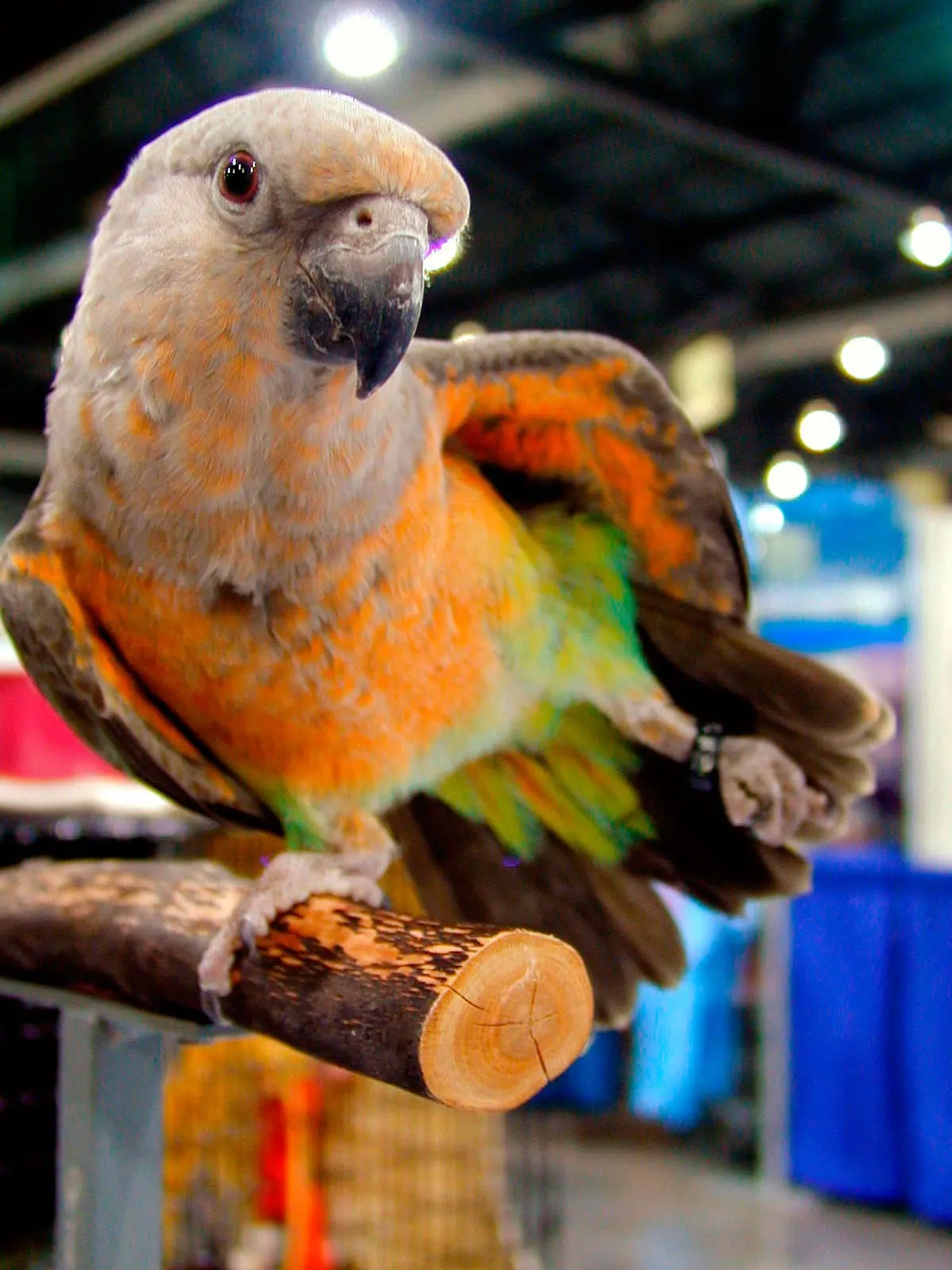
Red-bellied Parrot
Poicephalus rufiventris


Lorito Ventrirrojo

Content

Description:

22 cm.. length and an average weight of 130 g..

The Red-bellied Parrot (Poicephalus rufiventris) has the crown, nape and lores brown ash, the cheeks sometimes with orange tips; ear-coverts slightly paler. Mantle and scapulars brown ash; the back blue-black; rump iridescent pale blue or bluish green. Upper, the wings slightly darker than the head and back: the primaries brown. Under, the feathers of orange wings; underside of feathers Light brown flight. Throat and the chest ash brown with orange tint; top of the chest orange; belly up to undertail- coverts pale green sometimes shows Orange-tinged feathers. Tail dark brown ash.

Bill, cere and orbital skin black; irises orange-red; legs black.

The female You have the upper chest grey, the pale green underside sometimes dyed orange. The head paler and grayer than male. Feathers of the wings greyish.

Immature, generally, similar to females, but the young males have orange feathers Wings below and can show brown marks on the chest.

Description 2 subspecies:

  • Poicephalus rufiventris pallidus

    (Someren, 1922) – head of color Brown and throat clearer than the one of the species nominal..


  • Poicephalus rufiventris rufiventris

    (Ruppell, 1842) – The species nominal.

Habitat:

Usually associated with semiarid vegetation, including areas of dry scrub and forest steppe Acacia Commiphora. It tends to avoid the dense foliage and, often it perches on dead branches.

In the south of the range, He prefers savannas Adansonia.

Where it is sympatric with the Meyer's Parrot (West range) the Red-bellied Parrot riparian forests and avoid living in the most open savannas.

In Ethiopia They can be observed in areas of savannah Acacia-Chrysopogon, up to 2,000m. altitude.

In Somalia They are subject to seasonal altitudinal movements in relation to the food supply, moving in altitude of about 2,000m from July to September in search of wild figs Ficus. Otherwise, generally below 1,400m.

Usually, seen in pairs or in family groups 3-4 birds; rarely in larger flocks.

Reproduction:

Nest in cavities within terrestrial termite mounds, between 2 and 3 meters above ground or 10 meters or more, in some dead tree.

The female incubates the eggs while the male goes in search of food, these eggs hatch after a few 28 days and start flying to the 60 days after hatching.

A female was recorded under breeding conditions during the month of March (Tanzania) and feeding immature in July and October. Registered one laying in the months of May and June Ethiopia; In Somalia, between January and May; also recorded half-grown chicks in January. In Somalia in colonial times, with individual couples baobab, between 100 and 200 meters away. The implementation is of 1 to 2 eggs.

Food:

They feed on, besides the figs, seed (including Acacia), fruits of Egyptian balanites, Cordia ovation and Dalbergia melanoxylon, including the corn.

They drink frequently and often they can be found near the water.

Due to the limited food that is in their respective regions, the Red-bellied Parrot They reach the fields and harvest crops eaten, so they are often hunted by farmers.

Distribution:

Size of the area of distribution (reproduction / resident): 1.540.000 km2

endemic to eastern Africa, from the North-East of Tanzania, eastern and northern Kenya, in the horn of africa in the southern and eastern Ethiopia (included Rift Valley) and western and northern zone Somalia.

Usually common within its range. Absent in the coastal lowlands, mainly sedentary with seasonal movements in some areas.

Distribution 2 subspecies:

  • Poicephalus rufiventris pallidus

    (Someren, 1922) – It is found exclusively in eastern Ethiopia.


  • Poicephalus rufiventris rufiventris

    (Ruppell, 1842) – The species nominal.

Conservation:


minor concern


โ€ข Current Red List of UICN: Least concern

โ€ข Population trend: Stable

The Red-bellied Parrot It is included in the Appendix II according to CITES (The Convention on International Trade in Endangered Species of Wild Fauna and Flora) from 1981 and established as a lesser concern in the Red List of Threatened Species of the UICN since the population has fallen by more than 30% in the last 10 years. The Red-bellied Parrot it began exporting significant quantities primarily in Tanzania over the years 80. Years before it began to export to Great Britain in very small quantities.

"Red-bellied Parrot" in captivity:

In captivity is rare, although Spain Some important breeding centers have managed to bring them up without difficulty. This parrot can be purchased directly from a specialized breeding.

What pet They are very cheerful, Playful, Intelligent and affectionate, a generally peaceful nature.

They are not very noisy. He likes to climb and climb, great need to crack and it is always advisable a regular supply of fresh branches. They like to bathe.

With regard to its longevity, according to sources, a specimen lived 33,4 years in captivity.

Alternative names:

Red-bellied Parrot, African Orange-bellied Parrot, Orange-bellied Parrot, Red bellied Parrot (English).
Perroquet ร  ventre rouge (French).
Rotbauch-Mohrenkopf (German).
Papagaio-de-ventre-vermelho (Portuguese).
Lorito de Vientre Rojo, Lorito Ventrirrojo, Loro Abisinio (espaรฑol).

scientific classification:

Order: Psittaciformes
Family: Psittacidae
Genus: Poicephalus
Scientific name: Poicephalus rufiventris
Citation: (Rรผppell, 1842)
Protonimo: Pionus rufiventris

Images "Red Ventriloid Lori":

Videos "Red-bellied Parrot"

"Red Ventriloid Lori" (Poicephalus rufiventris)

Sources:

  • Avibase
  • Parrots of the World โ€“ Forshaw Joseph M
  • Parrots A Guide to the Parrots of the World – Tony Juniper & Mike Parr
  • Birdlife
  • Wikipedia
  • Loromania

  • Photos:

(1) – Red-bellied Parrot; a male juvenile pet parrot on a wooden perch stretching By Ruth Rogers [CC BY 2.0], via Wikimedia Commons
(2) – Mature breeding pair of Red-Bellied Parrots (Poicephalus rufiventris) on a perch in a cage. Picture taken by user:Fruitwerks at home By Fruitwerks at English Wikipedia(Original text: User:Fruitwerks on en wiki) (Transferred from en.wikipedia to Commons.) [Public domain], via Wikimedia Commons
(3) – A adult male pet Red-bellied Parrot perching on a bright red perch. Photography: one SB-600, diffused, hand held to the left and below Joey, fired with CLS, on TTL with no Compensation. By Bram Cymet [CC BY 2.0], via Wikimedia Commons
(4) – Red-bellied Parrot; a juvenile male pet parrot on a wooden perch. Shows back By Ruth Rogers [CC BY 2.0], via Wikimedia Commons
(5) – A Red-bellied Parrot at San Antonio Zoo, USA. In the male the abdomen is red-orange and in the female the abdomen is green, but the abdomen is not visible making it difficult to sex this parrot from the view shown By Zach Welty (originally posted to Flickr as Parrot 2) [CC BY-SA 2.0], via Wikimedia Commons

โ–ท The world of Pets: Dogs, cats, birds, reptiles, amphibians

Blossom-headed Parakeet
Psittacula roseata


Cotorra Carirrosa

Content

Description:

Of 30 to 36 cm.. length between 85 and 90 g. of weight.
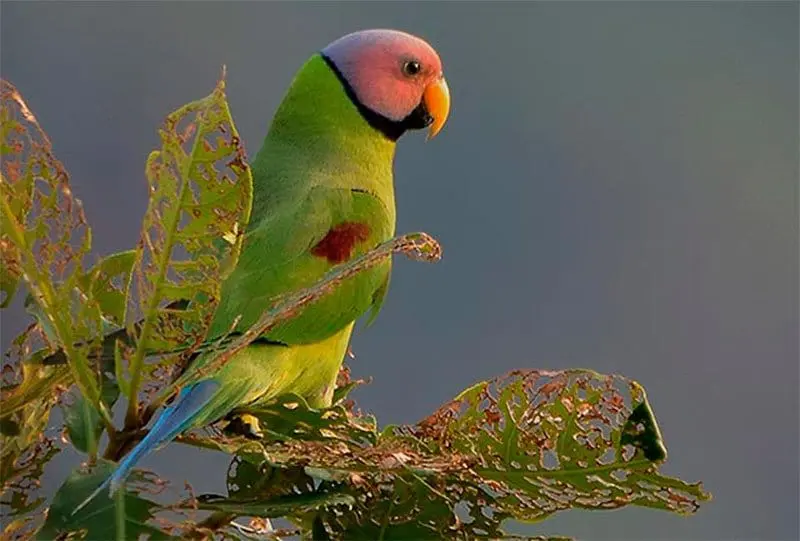
The Blossom-headed Parakeet (Psittacula roseata) has the forecrown, lores, cheeks and ear-coverts mauve-pink, fading to pale blue in the lower cheeks, the sides of neck, the crown and back neck, with broad black "mustache" stripes to form a narrow collar between black blue head and green body; nape bright green fading to a duller green on upperparts.

Upperwing-coverts, mostly green with a brown patch coverts smaller and medium; greater coverts outer and alula darker green. The primaries dark green (darker in vane inner) with a margin yellowish narrow in them vane outer.

Underwing-coverts green. The underparts pale green. Uppertail, centrally bright blue, with creamy white tip; outer feathers green on vane outer, yellowish-green on inner, tipped yellow; undertail-coverts dull yellowish.

Ilustraciรณn Cotorra Carirrosa

upper jaw orange-yellow, the lower black: cere whitish; irises yellowish white; legs gray-green.

The female has the head pale blue-gray, no black "mustache" and collar ring replaced by yellow opaque olive extending from the nape, around the sides of neck; tail slightly shorter. The upper jaw yellow, the lower dark grey.

The immature has the head greenish, the gray tint chin and the bill yellowish to the 15 months, when both sexes develop similar to plumage adult female; the males acquires adult plumage at about 30 months.

Subspecies description

Once considered the same species Psittacula cyanocephala, where he was often wrongly classified as Psittacula cyanocephala rosa.

  • Psittacula roseata juneae

    (Biswas, 1951) – Like species nominal, but the overall color body It is yellower; more extensive stain or red patch shoulder; central feathers tail paler color, side feathers tail yellower.


  • Psittacula roseata roseata

    (Biswas, 1951) – The species nominal.

Habitat:

Video – "Blossom-headed Parakeet" (Psittacula roseata)

Blossom-headed parakeet Call / Psittacula roseata / Bird's Call

The Blossom-headed Parakeet inhabit open forests, including Savannah, secondary forests, forest edge, clear and cultivated land. Partially deforested areas persists and seems to prefer forest edges adjacent farm.

Mainly observed in the lowlands to about 1.500 meters above sea level. Usually, in small flocks, form larger congregations where food is plentiful. He joins mixed flocks with Rose-ringed Parakeet, the Plum-headed Parakeet and Red-breasted Parakeet and form communal roosts in dense vegetation.

Reproduction:

The nests This species is found in tree cavities, usually at a moderate height; they can dig the hole themselves or modify old nests of other species (for example, woodpeckers or barbets).

Nest usually in colonies of several couples. The laying is of 4-5 (rarely six); eggs are more spherical than those of other congeners. The breeding season It is from January to April (May sometimes).

Food:

Foods are reported: wild flowers and Granada, nectar, including grain sorghum and corn, fruits such as figs and apricots, red peppers and chard seeds. Their diet is very similar to the Plum-headed Parakeet.

Distribution:

Distributed by the foothills of Himalaya Oriental until Indochina. Of Sikkim (India) and South of Bhutan through Assam until Bengal and Bangladesh and east along the north and center Burma, South of China (Yunnan, Guangxi and Guangdong province), Thailand, Laos, Kampuchea and Viet Nam.

Mainly sedentary with seasonal movements in southwest Burma, where Blossom-headed Parakeet They are common in the months of March and April, but otherwise few months, generally common despite apparent decline in some areas (for example, Thailand and Burma), mainly due to large-scale deforestation, and persecution. Few in Viet Nam.

Resident but with some local movements in relation to the food supply.

Held captive and apparently the subject of strong catch in some parts.

Subspecies distribution

  • Psittacula roseata juneae

    (Biswas, 1951) – From East Bangladesh to the North of Burma and east through southern China, Thailand, Laos, Kampuchea and Viet Nam.


  • Psittacula roseata roseata

    (Biswas, 1951) – The species nominal.

Conservation:

State of conservation โ“˜


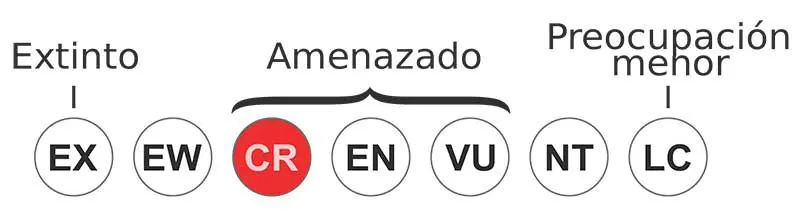
Near-threatened Near Threatened โ“˜ (UICN)โ“˜

โ€ข Current Red List of UICN: Near-threatened

โ€ข Population trend: Decreasing

This species has been upgraded from Least concern due to new information on population trends. It is listed as Near-threatened on the grounds that it is experiencing rapid moderate decline due to habitat loss, unsustainable levels of exploitation and hunting pressure.

This species has suffered greatly loss of habitat (Forshaw 2006), What, in combination with capture for trade bird cage and general persecution as a pest, have caused the Blossom-headed Parakeet it becomes rare or rare in Thailand (pit et to the. 1997, Juniper and Parr 1998) and Myanmar (Juniper and Parr 1998).

The size of the world's population has not been quantified, but the species according to sources, has a population variable through its range

International trade records showed that 836 birds were exported between 1981 and 1985, but this increased to 6.873 birds between 1986-1990, mainly Viet Nam and Thailand (pit et to the. 1997).

In Laos, habitat encroachment has been so severe in the lowlands, few remaining areas large enough so that the nests Blossom-headed Parakeet they can escape from theft, and there is little active effort to reduce this pressure (JW Duckworth in litt. 2013).

In Cambodia, changes in land use in the lowlands have been too quickly (RJ Timmins in litt. 2013), and it is expected that the intended conversion bosque deciduous Dry for agribusiness plantations may cause a decrease of 30% or more in the national population of this species in the next 20 years (F. Goes in some. 2013).

Actions ongoing:

    The species is known to occur in some protected areas, as the Kirirom National Park, Cambodia (F. Goes in some. 2013).

Conservation actions proposed:

    – Conduct periodic surveys to track broad population trends.
    – Monitor the rates of loss and degradation of habitat.
    – Quantify the impact of harvesting for trade.
    – List CITES listed species.
    – Increase the area of รขโ‚ฌโ€นรขโ‚ฌโ€นsuitable habitat that are protected.
    – Carry out awareness raising activities to discourage theft of nests and capture.

"Blossom-headed Parakeet" in captivity:

The Blossom-headed Parakeet It is a rare bird and very expensive, requiring experienced breeders. Immature of this species are nearly identical to those of the Slaty-headed Parakeet and Plum-headed Parakeet, so when buying an immature Blossom-headed Parakeet, be sure to do so only from a reputable breeder.

To ensure breeding success, each partner should have their own aviary. No house them with Plum-headed Parakeet wave Slaty-headed Parakeet, in order to avoid hybridisation.

The Blossom-headed Parakeet, generally, they are not aggressive with other smaller birds, usually calm and they are not very destructive to wood. The female is, usually, the dominant bird; reach breeding age at about the age of 3 years. New pairs should be introduced several months before the start of the breeding season so that the birds have enough time to establish a strong bond with each other.. A good pair bond will usually translate into better breeding results.. However, are very difficult birds to breed in captivity.

Since Blossom-headed Parakeet It is so rare, we should consider well managed breeding programs, before acquiring one of these copies for your particular pet enjoy. This Parrot You need constant training and behavioral counseling from an early age to ensure its potential owners the enjoyment of a free bird destructive habits and annoying.

Alternative names:

Blossom-headed Parakeet, Blossom headed Parakeet, Eastern Blossom-headed Parakeet (English).
Perruche ร  tรชte rose (French).
Rosenkopfsittich (German).
Periquito-de-cabeรงa-rosa (Portuguese).
Cotorra Carirrosa, Cotorra de Cara Rosada (espaรฑol).


scientific classification:

Dr. Biswamoy Biswas
Dr. Biswamoy Biswas

Order: Psittaciformes
Family: Psittaculidae
Genus: Psittacula
Scientific name: Psittacula roseata
Citation: Biswas, 1951
Protonimo: Psittacula roseata


Blossom-headed Parakeet Images:


Especies del gรฉnero Psittacula

Sources:

Avibase
– Parrots of the World โ€“ Forshaw Joseph M
– Parrots A Guide to the Parrots of the World – Tony Juniper & Mike Parr
– Birdlife

Photos:

(1) – Rose-headed Parakeet in Guwahati, Assam, India By ยฉ Raj Kamal Phukan – Oriental Bird Images
(2) – Psittacula roseata blossom headed parakeet – Birds-pet-wallpapers
(3) – Blossom-headed Parakeet (Psittacula roseata) by Elite-Pets
(4) – Juvenil Blossom-headed Parakeet (Psittacula roseata) by desbecsetdesplumes
(5) – Blossom-headed Parakeet (Psittacula roseata) in Tenerife – Loro Parque – link
(6) – Birds of Asia, Vol. V, Parts XXV-XXX, by John Gould, 1873-1877. Painted by John Gould & Henry C. Richter [Public domain], via Wikimedia Commons

Sounds: Frank Lambert (Xeno-canto)

โ–ท The world of Pets: Dogs, cats, birds, reptiles, amphibians

Red-fronted Macaw
Ara rubrogenys


Guacamayo de Cochabamba

Content

Description:

Ilustraciรณn Guacamayo de Cochabamba

Approximately from 55 cm.. length and 525 g. weight.

The Red-fronted Macaw (Ara rubrogenys) they are the smallest of the large macaws.

They have forecrown, former Lords, crown and some ear-coverts bright orange red. back of the crown, nape and the mantle olive green color orange color in some feather-tipped; scapulars color marron-oliva; rump and uppertail-coverts olive green, pale that the of the the mantle. Lesser coverts, bend of wing and carpal edge orange-red; median olive green, some pale orange tips, the outermost impregnated blue; greater coverts mostly blue, back more olive at the body; vane outer primary blue, olive green internal.
Underwing-coverts juvenile red-orange, remaining the rest of green olive beige.

The underparts olive green with the the thighs red. Upper, the the tail feathers color olive green suffusion blue tip blue and; undertail, olive green yellowish.

The bill dark grey; the bare area of the subsequent Lords and upper cheeks, white crossed with narrow lines of dark brown feathers; Orange the irises; perioftalmico ring white; legs dark grey.

Both sexes similar.

Immature more opaque, with less extensive orange-red color in the head and in the ear-coverts and without the orange-red in the wing .

Habitat:

The Red-fronted Macaw It is very selective in searching for its preferred habitat.. It prefers subtropical scrubland areas Xeric or semi-desert with many Cactus (including Cereus, Neocardenasia, Cleistocactus, Echinopsis, Opuntia, Quiabentia and the endemic Lobivia caineana) and areas with scattered trees and shrubs (especially legumes including species Prosopis kuntzei, Acacia aroma, Cnidoscolus and Schinus molle).

Another fundamental characteristic of the habitat of the Red-fronted Macaw they are the steep slopes and coastal cliffs unchanged to that used for nesting and roosting sites.

Often share space with communities of farmers who used the land of valleys with climates mesothermic to plant peanuts, corn and other cereals, the same people who are part of the diet of the Red-fronted Macaw.

They are birds social and rarely stands alone. Are often seen flying in small groups of 3 to 5 individuals. For most activities such as feeding or roosting they congregate in large groups of 20 to 30 individuals. They rest frequently during the middle of the day in the hottest hours. Activity level largely depends on age and number of macaws in the group.

Reproduction:

Observed nests loose or in colonies in ravine holes on the banks of rivers. In rainy season the egg laying It has been reported in the months November-April. They are of 1 to 3 eggs per season, usually two, and incubation lasts around 26 days. Most pairs fledge one young per year..

They form bonds of monogamous they maintain throughout the year. Even in the off-season of breeding, the copula and preening appear exclusively between the consolidated couple, presumably to maintain their bond.

Generally speaking they are not territorial, but during the breeding season You can defend the area surrounding the cavity of the nest.

Food:

The diet of the Red-fronted Macaw It includes various seeds and fruits which include the genera of plants Cenchrus, Tribulus, Cnidoscolus, legumes Prosopis kuntzei, P. juliflora, Prosopis chilensis, trees and shrubs of the genus Aspidosperma, Schinus molle, Ziziphus mistol and Jatropha ricinifolia.

But, natural food is often scarce and birds feed on, to a large extent, of crop plants, especially the peanuts Arachis hypogaea and corn unripened.

Distribution:

Size of the area of distribution (reproduction / resident): 27.100 km2

The Red-fronted Macaw being endemic to a small area in the East of the Andes, in the Center-South of Bolivia, from the South of Cochabamba and West Santa Cruz, passing by Chuquisaca, to the East of potosi, mainly in the valleys of Rio Grande, Mizque and Pilcomayo.

The full range estimate is of 20,000 kmยฒ, with 18,000 kmยฒ in Grand / system of Mizque and 2.000 kmยฒ in the valley of the Pilcomayo, between 1.100 and 2.500 m (local after breeding at 3,000m).

They perform many Local movements in response to the availability of food.

Locally common, but declining and endangered at the global level.

Conservation:

โ€ข Current Red List of UICN: Danger

โ€ข Population trend: Decreasing

The population of the Red-fronted Macaw (Ara rubrogenys) is estimated between 1.000-4.000 individuals, more or less equivalent to a strip between 670-2,700 mature individuals.

This species has a very small population and decreasing. Conservative estimates suggest that all subpopulations are extremely small. So, qualified as endangered.

Conservation status:

Is located in the Appendix I to the International Convention on the trafficking of endangered species of Fauna and Flora (CITES). Its capture, transport and export is prohibited by Bolivian law. However is captured by live bird catchers for the illegal trade and is pursued in an intensive way for the farmers that the consider a plague for their corn and peanut crops.

Its natural habitat It is being impaired activities human unsustainable as indiscriminate logging and grazing goats envelope. Approximately the 40% of the natural vegetation of the valleys inhabited by these macaws have been converted into agricultural land since 1991. As native vegetation is losing the exhibition of the Macaw of Cochabamba in the growing areas to search for food is greater. The continuous illegal capture, most of the illegal trade is domestic but some species are marketed in Peru.

Conservation measures:

The presence of small populations inside national parks Amboro and Torotoro, they constitute an effective conservation measure.

The Harmony Association It has a long range project in the Mizque River through which it works with peasant families to protect nesting cliffs.

in addition, in 2006, a was opened ecotourism stay that promotes conservation of this bird in time of generating profits for the local community; It also plans to establish a protected area in that site. Additionally, in 1992, 5000 posters of protection of this species and its habitat were apparently well received in the region, as a secondary measure to preserve it.

"Red-fronted Macaw" in captivity:

Uncommon in captivity.

It is an extremely intelligent and curious bird that has the ability to imitate the human voice, Although the indigenous people of Bolivia refer to them as "donkey birds", due to their inability to speak. All skills require a training; holders of these birds breeders give proof of how easy it is to talk.

With regard to its longevity, according to sources, a pair of these macaws still breed after 23 years in captivity. It has been reported that these animals can live up to 36,2 years in captivity, something possible, but that has not been verified; the same study reported that these animals can reproduce at the age of 3 years in captivity.

Due to the few specimens that are released and their situation in danger of extinction, The Red-fronted Macaw only recommended for experienced handlers and breeders.

Alternative names:

Red-fronted Macaw, Lafresnaye’s Macaw, Red fronted Macaw, Red-cheeked Macaw (English).
Ara de Lafresnaye, Ara rubrogenys (French).
Rotohrara (German).
Arara-de-fronte-vermelha (Portuguese).
Guacamayo de Cochabamba, Guacamayo Dorado, Guacamaya frente roja (espaรฑol).
Paraba frente roja (Bolivia).
Qaqa Loro (Quechua).

Frรฉdรฉric de Lafresnaye

scientific classification:


Order: Psittaciformes
Family: Psittacidae
Genus: ARA
Scientific name: Ara rubrogenys
Citation: Lafresnaye, 1847
Protonimo: Ara Rubro-woodpecker


Images Red-fronted Macaw:

Videos "Red-fronted Macaw"

————————————————————————————————

ยซGuacamayo de Cochabambaยป (Ara rubrogenys)


Species of the genus Ara


Sources:

Avibase
– Parrots of the World โ€“ Forshaw Joseph M
– Parrots A Guide to the Parrots of the World – Tony Juniper & Mike Parr
– Birdlife

Photos:

(1) – Red-fronted Macaw at Berlin Zoological Garden, Germany. Some of the tail feathers are not clean By Konstantinos K [CC BY 2.0], via Wikimedia Commons
(2) – Two Red-fronted Macaws at Tulsa Zoo, Oklahoma, USA By originally posted to Flickr at Tulsa Zoo – Parrots and uploaded to Commons at Ara_rubrogenys_-Tulsa_Zoo,_Oklahoma,_USA-8a.jpg: Doug Wertman from Rogers, AR, USAderivative work: Snowmanradio (Ara_rubrogenys_-Tulsa_Zoo,_Oklahoma,_USA-8a.jpg) [CC BY 2.0], via Wikimedia Commons
(3) – A Red-fronted Macaw at Wilhelma Zoo, Stuttgart, Germany By Kathrin GaiรŸer (PapageiUploaded by snowmanradio) [CC BY-SA 2.0], via Wikimedia Commons
(4) – A Red-fronted Macaw flying at Douรฉ la Fontaine zoo, France By frank wouters (originally posted to Flickr as papegaai) [CC BY 2.0], via Wikimedia Commons
(5) – Red-fronted Macaw (Ara rubrogenys) head By Benjamin Graves (originally posted to Flickr as Red Fronted Macaw) [CC BY 2.0], via Wikimedia Commons
(6) – Red-fronted Macaw (Ara rubrogenys) on a branch in the foreground By derivative work: Snowmanradio (talk)Red-fronted_Macaw_(Ara rubrogenys)_-on_branch.jpg: Balaji Dutt M V [CC BY 2.0], via Wikimedia Commons
(7) – Red-fronted Macaw in the Walsrode Bird Park, Germany By Quartl (Own work) [CC BY-SA 3.0], via Wikimedia Commons
(8) – A Red-fronted Macaw at Jurong Bird Park By Peter Tan (Red-fronted MacawUploaded by Snowmanradio) [CC BY-SA 2.0], via Wikimedia Commons
(9) – Red-fronted Macaw – Jurong BirdPark, Singapore By Doug Janson (Own work) [CC BY-SA 3.0 or GFDL], via Wikimedia Commons
(10) – Illustration Ara rubrogenys (Red-fronted Macaw) by Marc Athanase Parfait Oeillet Des Murs [Public domain], via Wikimedia Commons

Sounds: (Xeno-canto)

โ–ท The world of Pets: Dogs, cats, birds, reptiles, amphibians

Socorro Parakeet
Psittacara brevipes


Aratinga de Socorro

Content

Description:


Anatomy-parrots

Approximately from 33 cm.. length, and a weight of 140 g.
The Socorro Parakeet (Psittacara brevipes) is a medium Parrot with the plumage bright dark green, with the crown, the forecrown and lores grass-green, the sides of neck slightly brighter, the head and the neck, sometimes with one or more scattered feathers of orange-red. The upperparts are green grass, slightly brighter in the area of the rump. Upperwing-coverts herb with bluish green in the outside greater coverts. Primaries and secondaries Green in the part superior with tint blue in them vane outer; olive Oliva-Amarillo down. Underwing-coverts green. Underparts grass-green. Above, the tail dark green, by down color yellowish olive.

The bill color horn; eye ring pale beige; irises orange yellow or orange; legs yellowish brown.

Aratinga de Socorro

Gender-related differences are unknown although the immature has irises Brown color.

NOTE:

  • The Socorro Parakeet It is often considered a subspecies of the Green Parakeet. But, Howell and Webb They presented evidence that supports the separation of the species from the other subspecies of Aratinga holochlora. They found that the bill of the Socorro Parakeet is larger than, and noticed differences in the color of the skin of the eye ring, also has a Wing formula different, the tenth primary feather It is shorter than the seventh and Green Parakeet is the reverse. Both species also differ in the vocalization, calls of the Green Parakeet they are richer in harmonics that the of the Socorro Parakeet.

Habitat:

Most commonly observed in forests of species such as Bumelia socorrense, Guettarda insularis, Ilex socorroensis, with trees of at least 8 metres in height. Usually, above 500 m (especially on the South side of Socorro island), because in most of the rest of its distribution area, in the lower elevations, It has lost its vegetation preferred because of the sheep pasture.

Registered at low altitudes, 4 m, where the native forest (in canyons), near the sea level, especially in tall trees of Croton masonii, Conocarpus erecta and Ficus.

Usually, in flocks of up to 40 birds, rarely come to the 100 specimens. They gather in numerous flocks on the branches of the guayabillo, in smaller flocks (until 6) or only in pairs during the breeding season.

Son social, even there is care collective nests, They show strong fidelity to nesting sites, based on observations of re-use of nests.

Reproduction:

They nest in tree cavities, especially of the species Bumelia socorrense. the size of the clutch It is unknown, but the breeding It is thought that it can begin in the month of November. The young are altricial.

Food:

Registered foods include seeds trees Bumelia socorrense, Guettarda insularis, Ilex socorroensis and Psidium socorrense; pulp of fruits of Opuntia and Ficus cotinifoilia, especially in the season dry.

They aim to feed in the tips of the trees or the highest branches, Although also has observed them are home on the floor

Distribution:

Endemic, It is only in the Socorro island in the The Revillagigedo Islands archipelago off the West coast of Mexico. Estimated population in 400-500 birds in 1992 (approximately nine birds per kmยฒ of suitable habitat). considered common, but recent decreasepossible n due to loss of preferred habitat (still present in about 22% of the island) and the resulting erosion of the sheep that graze in excess. Predation by feral cats can also be a threat.

Conservation:

State of conservation โ“˜


Endangered Endangered โ“˜ (UICN)โ“˜

โ€ข Red List category of the UICN current: In danger of extinction

โ€ข Population trend: Decreasing

Threatened in the Mexican official standard NOM- 059-ECOL-2001, but in Danger of extinction in the NOM-O59-SEMARNAT-2006 that is not yet published. CITES Appendix II

The Socorro Parakeet (in danger of extinction; It is only in the Socorro island and this species the habitat destruction threatens, as well as the introduction of cats, sheep and rodents.

Estimated population in 400-500 birds in 1992.

"Socorro Parakeet" in captivity:

The species, unlike most continental psittacines, does not face problems of extracting pups for the pet market.

Alternative names:

Socorro Parakeet, Green Parakeet (Socorro), Socorro Conure (English).
Conure de Socorro, Perruche de Socorro (French).
Socorrosittich, Socorro-Grรผnsittich (German).
Periquito-de-socorro (Portuguese).
Aratinga de Socorro, Perico de Socorro, Perico mexicano (espaรฑol).
Perico de Socorro (Mexico).


scientific classification:

George Newbold Lawrence

Order: Psittaciformes
Family: Psittacidae
Genus: Psittacara
Scientific name: Psittacara brevipes
Citation: (Lawrence, 1871)
Protonimo: Conurus holochlorus var. brevipes


Species of the genus Psittacara

Sources:

Avibase
– Parrots of the World โ€“ Forshaw Joseph M
– Parrots A Guide to the Parrots of the World – Tony Juniper & Mike Parr
ยฉ CONABIO

Photos:

(1) – Revillagigedo Archipelago by CONANP
(2) – Photo: (c) Carlos Galindo-Leal, some rights reserved (CC BY-NC) – inaturalist.org

Sounds: Manuel Grosselet & Juan Cornejo / Africam Safari (Xeno-canto)