โ–ท The world of Pets: Dogs, cats, birds, reptiles, amphibians

Blue-eyed cockatoo
Cacatua ophthalmica

Cacatรบa Oftรกlmica

Content

Description:

50 cm. length and a weight between 500 and 580 gr.
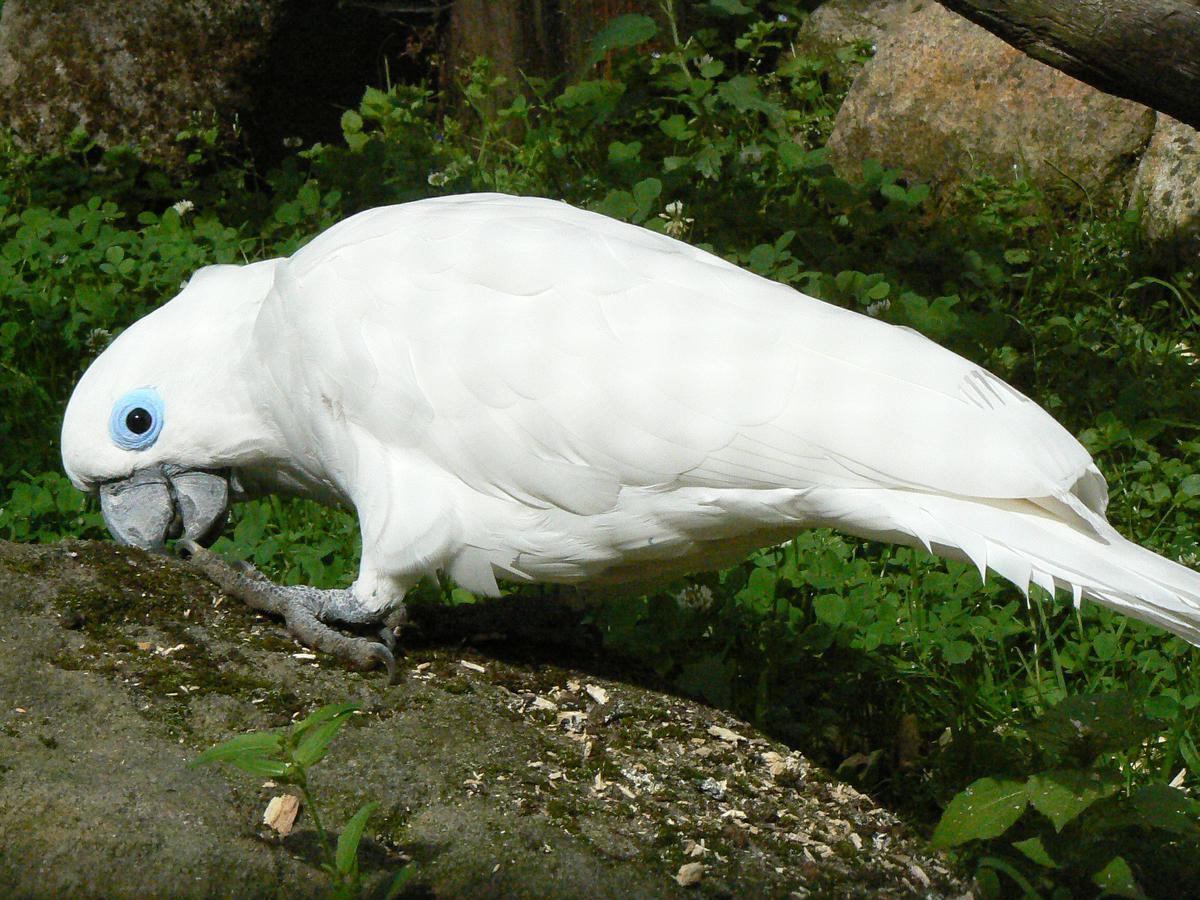
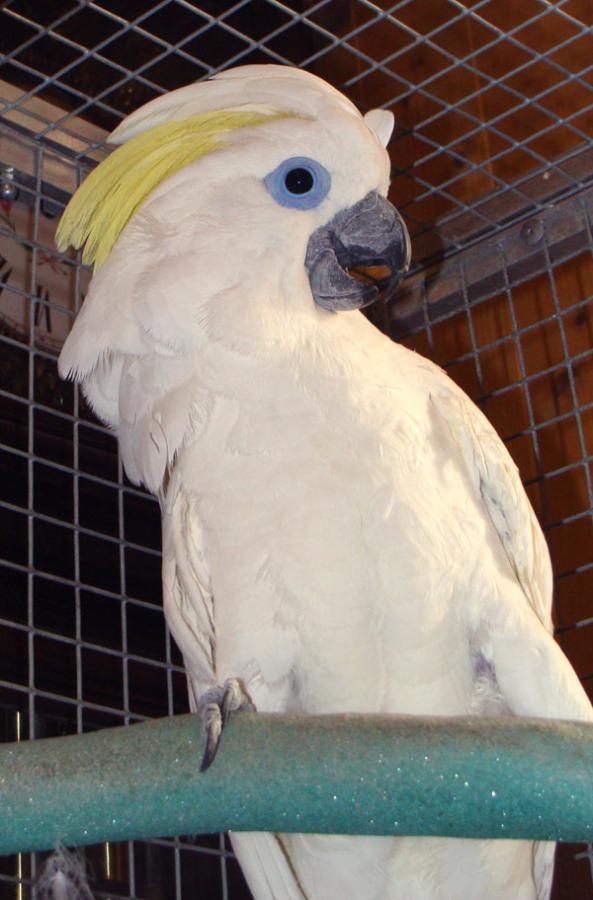
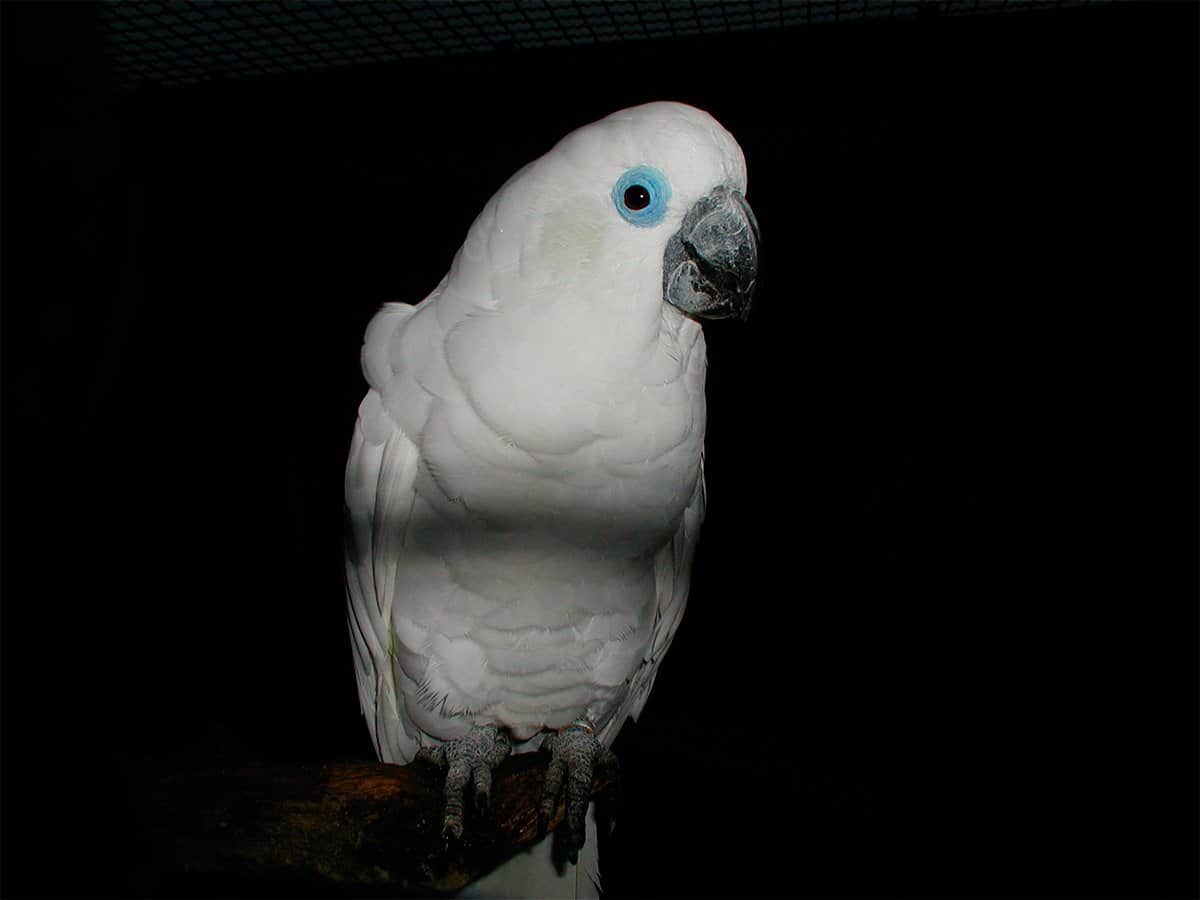
The plumage of the Blue-eyed cockatoo (Cacatua ophthalmica) is mostly white. Its crest is yellow, large and well rounded back, leaning to the neck.

The feathers that cover the ear, the base of the neck and cheek are pale yellow. The inside of the wings and tail are slightly yellowish. The ring around the eye is blue, the iris is dark brown and gray peak.
Only you can distinguish males and females by iris.

Habitat:

Video – "Blue-eyed cockatoo" (Blue-eyed cockatoo)

Ophthalmic cockatoo.MPG

Primary forest, edges of forests and areas with sparse vegetation to 1.000 m.
It is more common in the plains than in the mountains.

They live alone, in pairs or flocks of birds 10-20. Easy to distinguish and noisy, usually. When you are flying over forests, your flight is sandwiched between glide and powerful flapping. Probably similar habits to the Sulphur-crested cockatoo, screams as she, only that stronger.

Reproduction:

There is no information about the reproduction of this species in the wild, but in captivity the female lays around 2 eggs and incubation lasts 28-30 days. The young are altricial (totally dependent on their parents for the first few weeks of life) and they remain in the nest for nine to twelve weeks being fed by both parents; later, young people, they are accompanied for a few months.

Food:

They feed mainly on seeds, fruit, in particular the figs, berries and, possibly, insects and larvae.

Distribution:

Ophthalmic Cockatoo Distribution

New Britain and new Ireland in the Bismarck Archipelago (Papua New Guinea).

Conservation:

Vulnerable

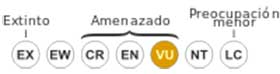
Conservation status of IUCN: Vulnerable (VU)

This species has been upgraded to Vulnerable because remote sensing techniques indicate that the lowland forest, on which this species depends for nesting, It is disappearing at a notorious enough pace to cause a rapid decline in the population.
The rapid conversion of lowland rainforest to oil plantation use over the past thirty years is likely to have caused significant loss of breeding habitat..

Although it is rare in international trade, even the limited catch would be a cause for concern.

The population is estimated at at least 10.000 mature individuals.

"Blue-eyed cockatoo" in captivity:

Extremely elegant and striking. It is gaining share as a companion pet.
It mimics human speech, is very active, capable of stunts and very close to the people.

Despite his intelligence and skills, not at all a cockatoo that can be kept in an apartment.
On the one hand, due to its high energy, and secondly because of the power of their cries.

Their average lifespan is of 40 years in captivity. Surprisingly their hope for life in nature is longer, of 50 to 60 years. The life expectancy in captivity decrease may be due to inadequate attention.

Alternative names:

Blue eyed Cockatoo, Blue-eyed cackatoo, Blue-eyed Cockatoo (ingles).
Cacatoรจs ร  oeil bleu, Cacatoรจs aux yeux bleus (French).
Brillenkakadu (German).
Cacatua-de-olhos-azuis (Portuguese).
Cacatรบa Oftรกlmica (espaรฑol).

scientific classification:

Order: Psittaciformes
Family: Cacatuidae
Scientific name: Cacatua ophthalmica
Citation: Sclater,PL, 1864
Protonimo: Cacatua ophthalmica

Ophthalmic Cockatoo Images:


Species of the genus Cacatua

Sources:
Avibase
– Photos: Wikimedia Commons, kisspanda.rajce.idnes.cz/, Gros-becs.net
– Sounds: Frank Lambert
โ–ท The world of Pets: Dogs, cats, birds, reptiles, amphibians

Salmon-crested cockatoo
Cacatua moluccensis

Cacatรบa Moluqueรฑa

Content

Description

40 to 50 cm.. length and a weight of up to 900 gr.
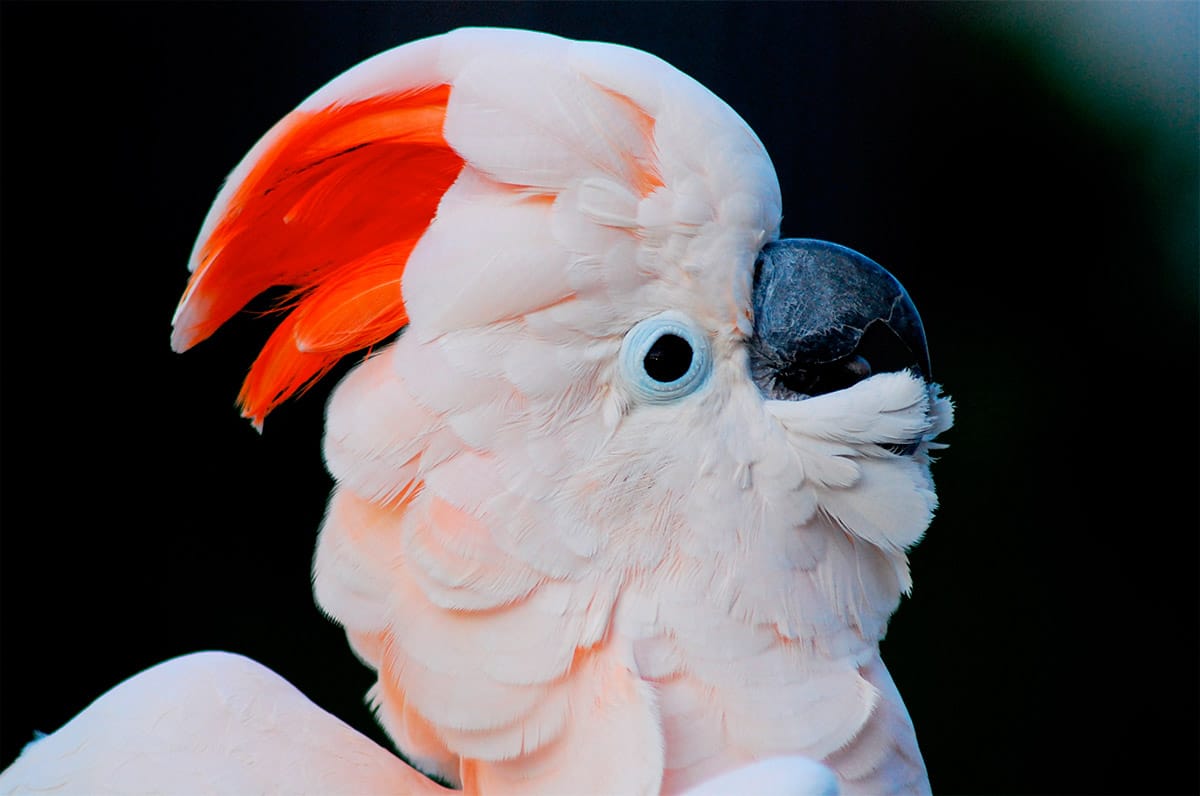
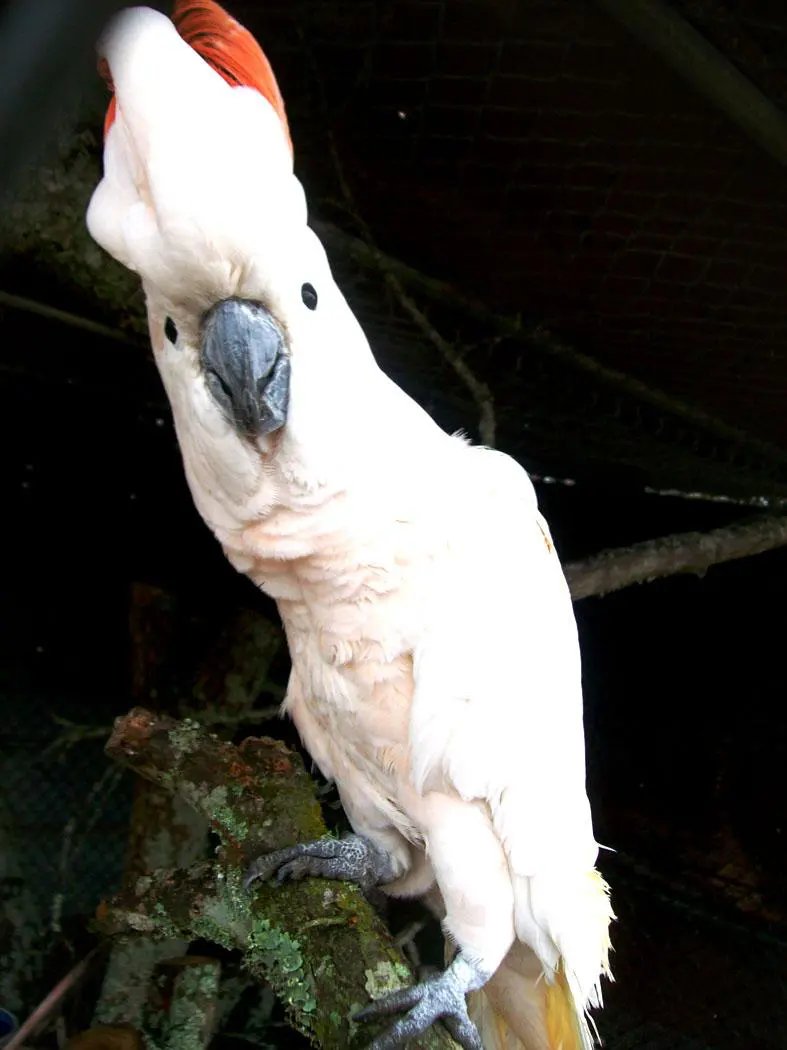
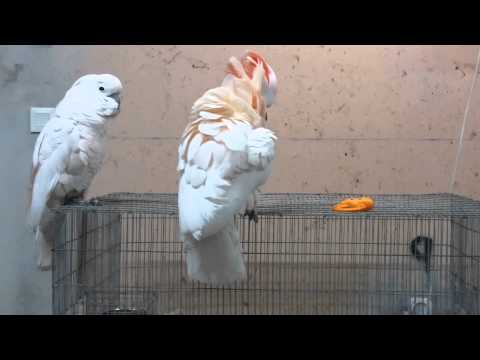
The plumage of the Salmon-crested cockatoo (Cacatua moluccensis) is predominantly white, except the tuft, that consists of red feathers that is usually when the bird is excited.

The interior of the wings is light salmon color. The the tail feathers they have a yellow-orange and pink color at the base.
The bill is strong, curved and black. The legs also are of color black. A skin bare of color white blue surrounds them eyessexual dimorphism It is in the color of your eyes. Males have dark eyes while females have them red.
The immature are like adults.

Habitat:

Video – "Salmon-crested cockatoo" (Cacatua moluccensis)

moluccan cockatoo

It shows preference for forests. It is from sea level up to the 1200 metres of elevation. In noisy roosts, during the breeding season, alone or in couples; at other times are found in groups of up to 16 birds. Species usually shy. You enable in the early morning and at dusk.

Reproduction:

The breeding season exact in the nature is unknown, but the activity of nesting It has observed in mayo, July and August, When the birds are usually seen alone or in pairs. The nests are built in large trees, taking advantage of holes in the trunks to 25 meters above the ground. The implementation size in captivity is from one to three, usually two, the eggs, they are incubated by both parents for 28 to 29 days.

Food:

With feeds fruit, grains, seeds, berries, vegetables and dried fruits. It has a peak strong, able to break the hard shells.
Probably also feed on insects and their larvae and from time to time in the coconut plantations, where Peck young fruits, to reach the water and the meat of the content.

Distribution:

Size of the area of distribution (reproduction / resident): 33.800 km2

Lives in the Plains to low height in the islands of the South of the Moluccas in Indonesian, Islands of Ceram, Saparua and Haruku.
It was introduced on the neighbouring island of Ambon.

Conservation:

State of conservation โ“˜


Vulnerable Vulnerable โ“˜ (UICN)โ“˜

โ€ข Current category of the Red List of the UICN: Vulnerable.

โ€ข Population trend: Decreasing.

Is in the list of species at risk of CIPA (International Council for the protection of birds). It became part of the I in 1989 of the CITES and, in Europe, is covered by the program of protection of the species in extinction (EEP).

Their main threats they are the illegal trade (in great measure responsibility of Indonesian) and deforestation, that has led to a dramatic loss of habitat.

In 1982, exported a total of 6.413 birds, around the 15% of all local poultry exports, Since this species is still very desired as a companion bird.

Although the international trade reported fell to zero in the Decade of 1990, them hunters will have maintained very active and the birds are sold openly in Indonesian.

Just 62.400 Salmon-crested cockatoo in the world according to the FWS Federal Register.

In the news Loro Parque Foundation has a "field project" underway for its protection and survival in its country of origin, We hope that this great work to proceed and succeed.

"Salmon-crested cockatoo" in captivity:

In captivity is quite rare and face, but he has adapted well and plays smoothly in the spaces provided.

As a pet is simply exceptional for its docility. The only drawback is the noise it emits at times when its demands are not immediately met.

Despite their exceptional behavior, we should not consider the possession of this cockatoo as a cage bird of this wonderful bird. Trade can lead in a few years to extinction.

Alternative names:

Salmon-crested Cockatoo, Moluccan Cockatoo, Rose cackatoo (ingles).
Cacatoรจs ร  huppe rouge, Cacatoรจs des Moluques (francรฉs).
Molukkenkakadu (alemรกn).
Cacatua-das-molucas (portuguรฉs).
Cacatรบa Copete Encarnado, Cacatรบa Moluqueรฑa, Cacatรบa de las Molucas (espaรฑol).

Gmelin Johann Friedrich

Clasificaciรณn cientรญfica:


Orden: Psittaciformes
Familia: Cacatuidae
Genus: Cacatua
Nombre cientรญfico: Cacatua moluccensis
Citation: (Gmelin, 1788)
Protรณnimo: Psittacus moluccensis


Imรกgenes Cacatรบa Moluqueรฑa:


Especies del gรฉnero Cacatua

Fuentes:
Avibase
– Parrots of the World โ€“ Forshaw Joseph M
– Parrots A Guide to the Parrots of the World – Tony Juniper & Mike Par
– Birdlife

– Fotos: de.wikipedia.org, Wikimedia

– Sonidos: Frank Lambert (xeno-canto)

โ–ท The world of Pets: Dogs, cats, birds, reptiles, amphibians

White cockatoo
Cacatua alba

Cacatรบa Blanca

Content

Description White Cockatoo


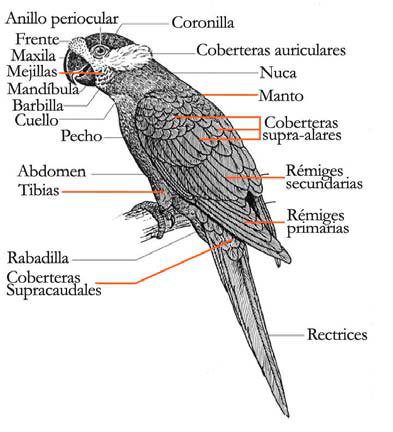
Anatomy-parrots

40 to 50 cm.. length and a weight of approximately 550 gr.
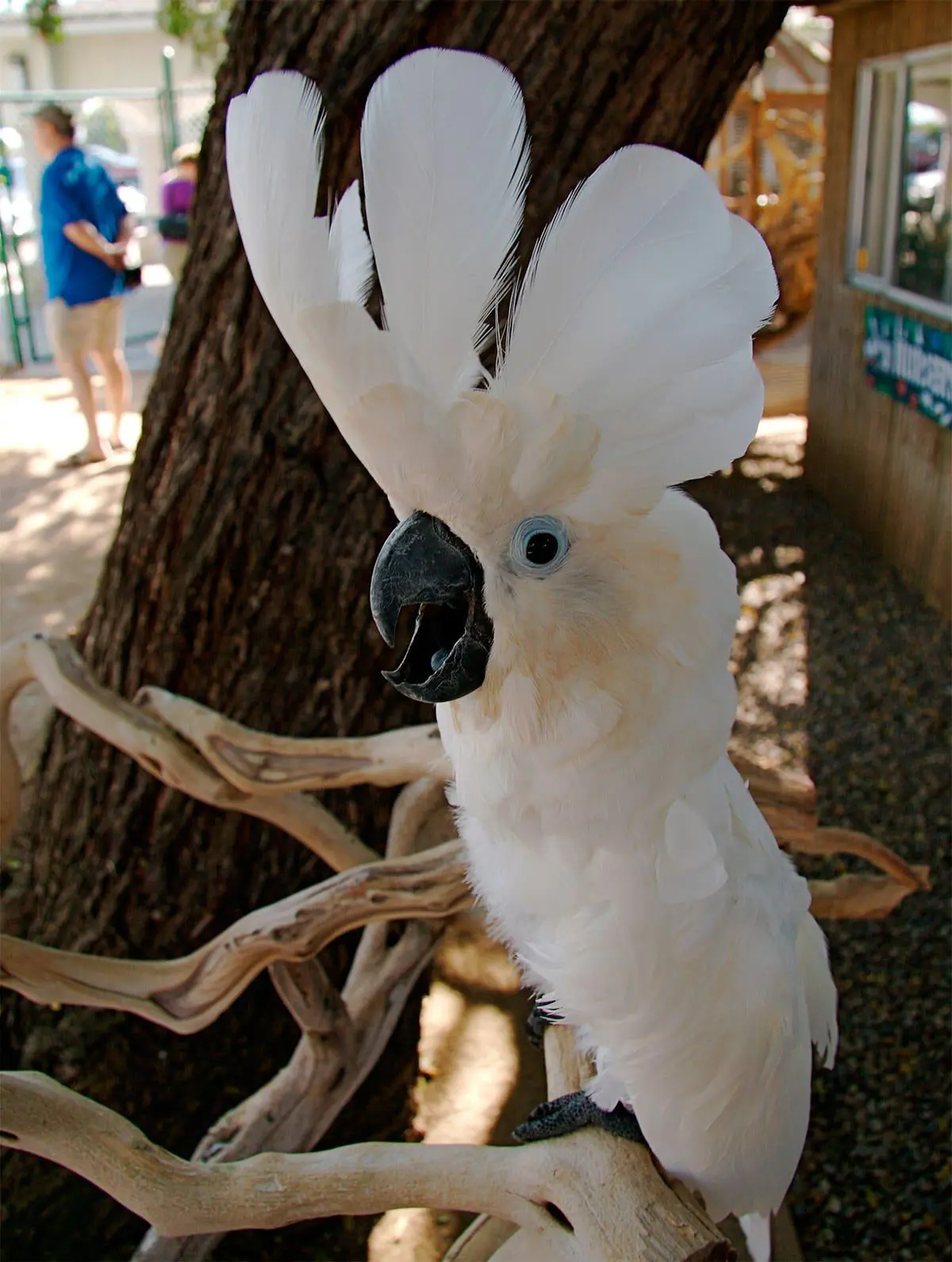
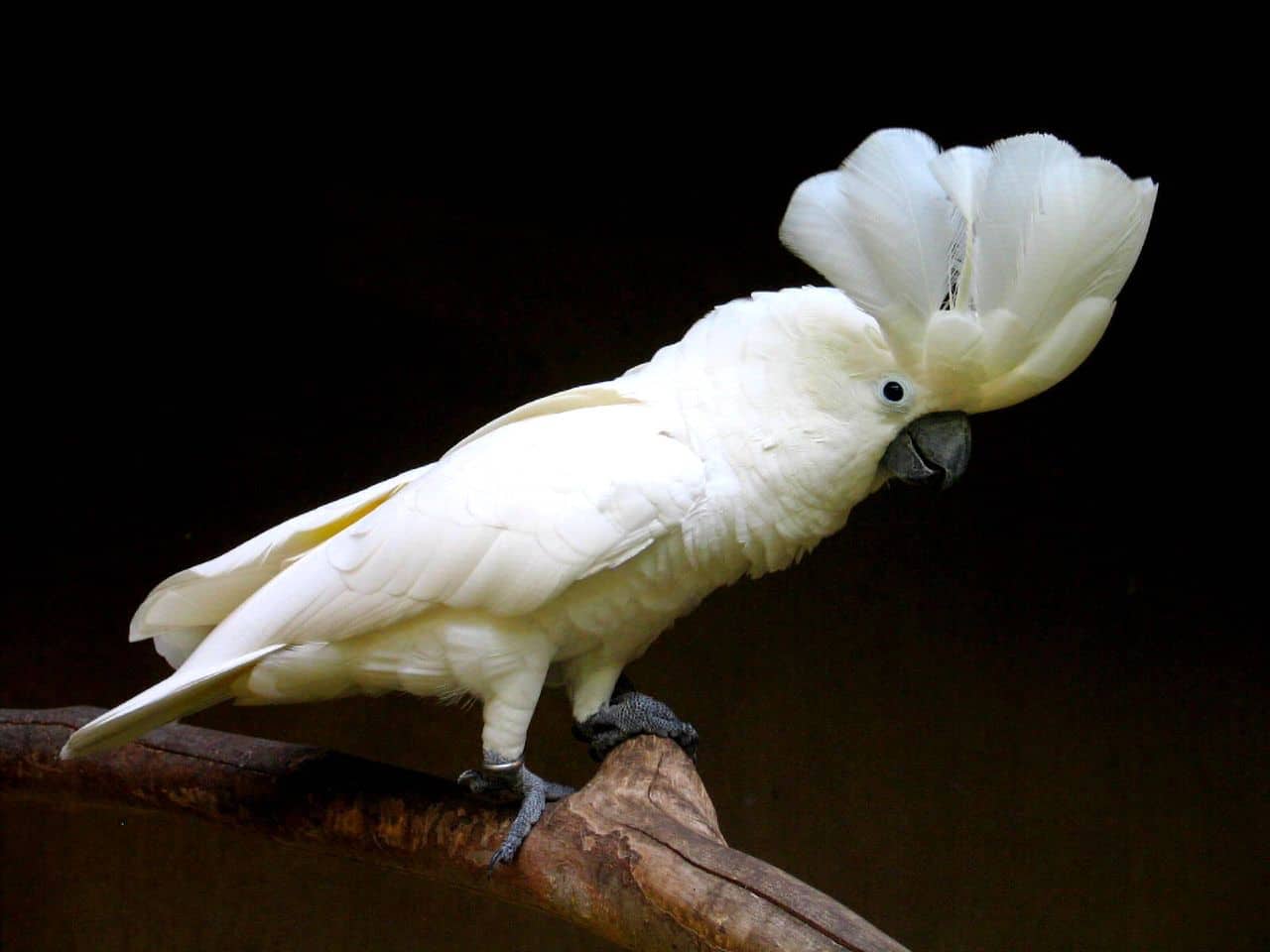
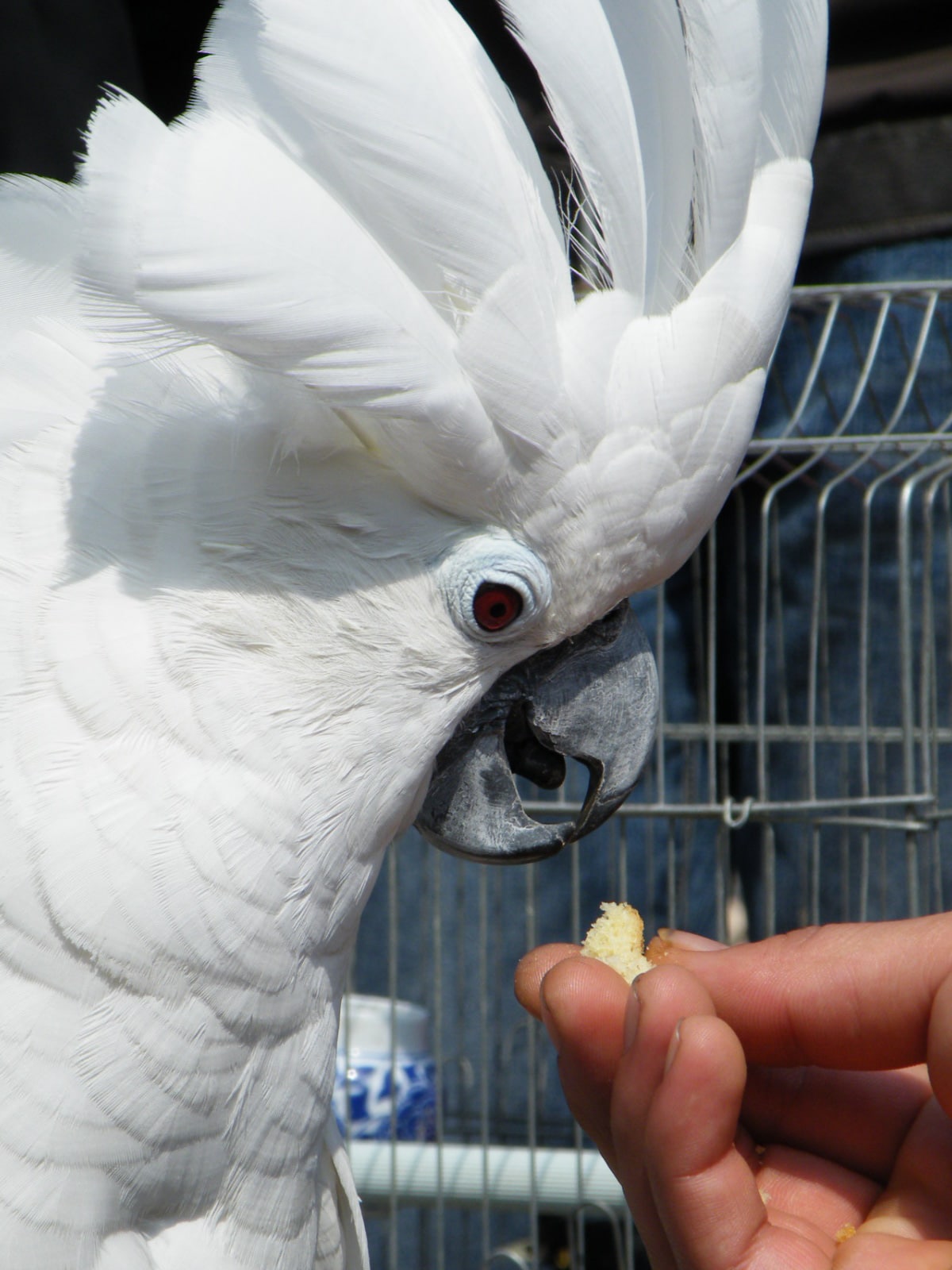
The White cockatoo (Cacatua alba) is completely white, with yellowing below wings, bill black and legs dark gray.

The eye ring is blue.
It has a crest exuberant, that is elevated or low, Depending on your state of mind. The wings They are tapered or rounded.

If he irises is brown, then it is male, if reddish, it is female. The females has bill smaller.

The juveniles only they differ by color irises.

White Cockatoo Behavior:

They usually fly solo, in pairs, small groups, or in flocks of up to fifteen birds. In the afternoon, they gather in groups of up to fifty birds. even though they are social, with the exception of mating pairs, usually, they do not form close ties with others. As a result, There is no firmly defined order of dominant position in the community. Son day and they tend to be sedentary, Although some can be nomadic and wander in search of food.

The white cockatoos they are very bright and curious birds. They have the ability to use tools, as the use of a branch to scratch your back. They are monogamous, with couple bonds lasting lifetime. They can fall into a deep depression if you lose your partner.

Habitat White Cockatoo:

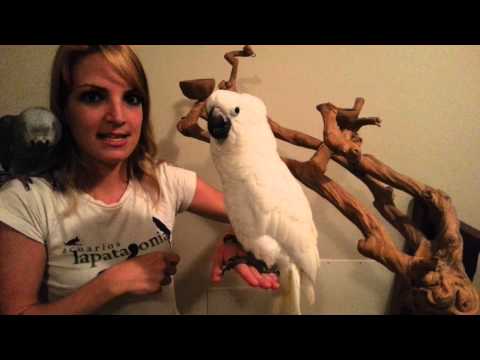
Video – "White cockatoo" (Cacatua alba)

Presentation of the cockatoo alba

They live in lowland forests below 900 m, as well as in mangrove forests, plantations and agricultural land.
they are particularly common around the edge of clearings and rivers. They spend most of their time in the tops of the trees. The secondary vegetation high is its preferred habitat.

White Cockatoo Reproduction:

It nests in the hollows of trees. They lay two eggs and two birds hatch for a few 28 days. The larger hatchling tends to take dominance over the smaller hatchling, which will not be able to survive.. The chicks leave the nest to the 84 days old and are independent around 15-18 weeks. These birds reach sexual maturity at the age of 3-4 years.

White Cockatoo feeding:

In nature it feeds mainly on Tree fruits. They are often seen feeding on papaya, Durian, complexioned and rambutan. It has also seen them will eat crickets and lizards. They often feed on corn that grows in the fields, sometimes doing considerable damage.

Distribution:

Size of its range (reproduction / resident): 51.400 km2

The white cockatoo It found in rainforests on the islands of Halmahera, Bacan, Ternate, Ternate, Kasiruta and Mandioli in the north of the Moluccas of Indonesian.

Conservation:

Appears as vulnerable by the IUCN and placed in Appendix II in 1981.

In their natural environment, the white cockatoo is a species vulnerable Due to the decrease in number due to habitat loss natural, as well as for the capture for the illegal bird trade. There are restrictions on the number of birds that can be exported, but BirdLife International He says that this is being exceeded by up to 18 times the agreed number in some areas.

It can cause substantial damage to Corn crops.

World population: 43,000 – 183,000 individuals.

The White Cockatoo in captivity:

The White cockatoo You can live more than 60 years. It is very common in poultry farming and it is perhaps one of the most frequent pet cockatoos.

They are sympathetic, calm, beautiful, sweets and easy to domesticate. Bred to porridge they are usually wonderful pets, You can play some words but are not good talkers. These birds in captivity require mental stimulation almost constant. They are in constant motion, up and doing gymnastics. When lack of mental stimulation, often they are become neurotic, booting the feathers to the point of causing areas of baldness.

They are known for being very affectionate with their human companions, acting more like a dog than a bird in this regard as.

In the absence of a partner, captive white cockatoos will bond with their keeper as if that person were their mate.

Alternative names:

White cackatoo, Great White Cockatoo, White Cockatoo, White-crested Cockatoo (ingles).
Cacatoรจs blanc, Grand Cacatoรจs blanc (French).
WeiรŸhaubenkakadu (German).
Catatua-branca (Portuguese).
Cacatรบa Alba, Cacatรบa Blanca, Cacatรบa Copete Blanco, Cacatรบa de Goffin (espaรฑol).

scientific classification:

Order: Psittaciformes
Family: Cacatuidae
Genus: Cockatoo
Scientific name: Cacatua alba
Citation: (Statius Mรผller, 1776)
Protonimo: Psittacus albus

White Cockatoo Images:


Species of the genus Cacatua

Sources:

Avibase
– Parrots of the World โ€“ Forshaw Joseph M
– Parrots A Guide to the Parrots of the World – Tony Juniper & Mike Parr
Birdlife
avimarparrots.es

Photos:

(1) – commons.wikimedia.org
(2) – Adam Lysican

Sounds: Mike Nelson (Xeno-canto)

โ–ท The world of Pets: Dogs, cats, birds, reptiles, amphibians

Long-billed corella
Cacatua tenuirostris

Cacatรบa Picofina

Content

Description

35 to 41 cm.. length. The weight of 500 to 600 g..
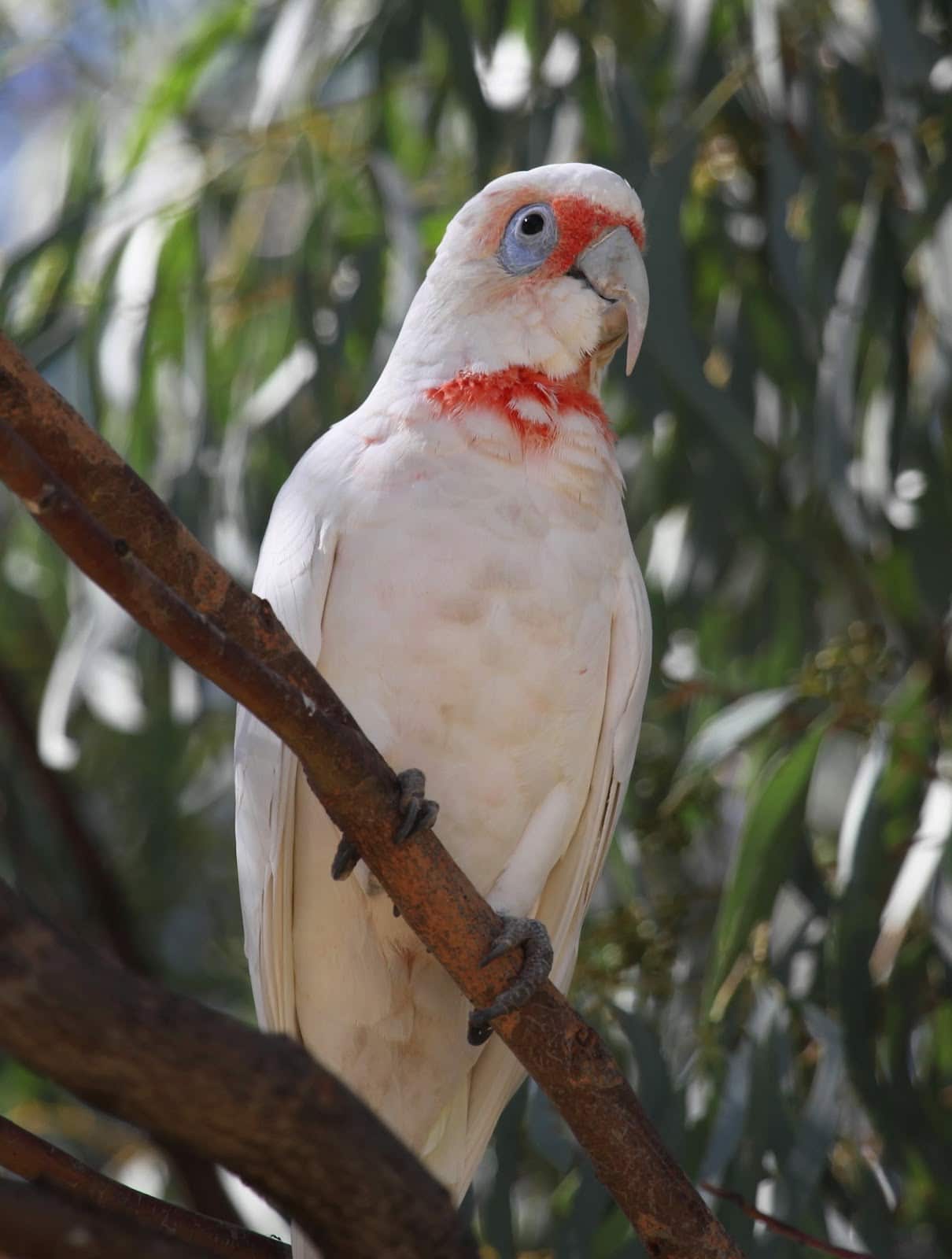
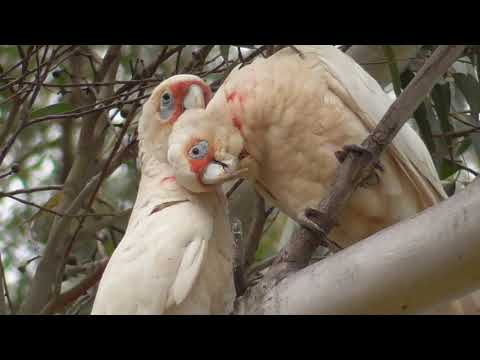
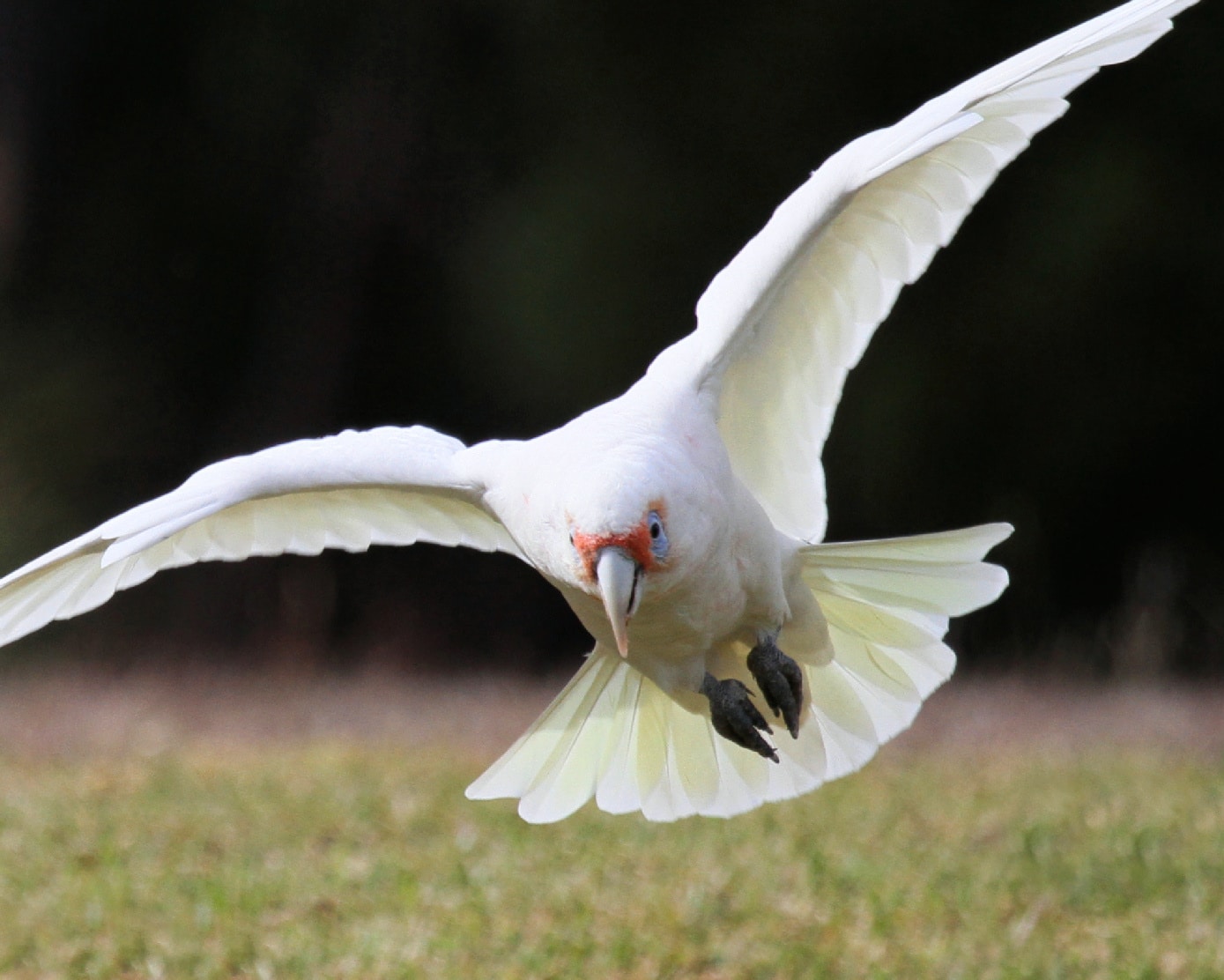
The Long-billed corella (Cacatua tenuirostris) has white plumage. The undertail coverts and the parts below from the wings they are bathed in pale yellow, very visible in flight. It has red coloration in the throat and the chest, with a Red Crescent ranked in the upper breast.
The Head shows a small crest white, Red front and a wide, nude and fleshy eye ring blue-grey around the eyes dark browns. The bill is white with blue base. upper jaw is long and hooked. The legs and feet are dark gray.

The female is similar to the male, with the upper jaw more short and less red.

There are two similar species:

Cacatua sanguinea. Lack of forecrown Red and the red color in the neck. The upper jaw is shorter.

Cacatua galerita. Similar in flight, has crest yellow and lacks of colour red. The bill is black.

Habitat:

Video – "Long-billed corella" (Cacatua tenuirostris)

Long-billed corella ~ Cacatua tenuirostris

Common in forests and remnant trees on farmland. It nests in Eucalyptus camaldulensis in the flooded Plains or close to streams. Wild populations living on farms and parks in urban areas.

Behavior:

Itร‚ยดs resident in their area of distribution, some local movements. Outside of breeding season, You can see in large flocks of up to 2.000 birds or more. Son noisy and visible, pronouncing discordant calls.

Pose in large eucalyptus near water. They leave the roost in the morning to drink, and then, go to the feeding areas. Again when the darkness comes to sleep, but not before excited participate in games and stunts .

They move on the floor with stunning movement jump. They do not have the other species waddling gait cockatoo.
It causes damage to crops of cereals and tree fruit, considered as one pest for farmers.

Nest colonies. They can create their nests with other species of Corella, and sometimes they hybridize. Populations feral in Sydney and Perth, from the release of unwanted birds, they may hybridize with endangered species such as the Cacatua pastinator

Reproduction:

Held from July to November. Forman couples monogamous. The male and female prepared the nest in the Hollows of large old eucalypts. If you do not find a suitable tree, You can make a burrow in soft soil Bank. They fill the nest of wood chips and often reuse it for several years.

They nest in large colonies, with several nests in the same tree.
The female lays 2-4 eggs White. The incubation lasts a few 24 days, shared by both parents. The young leave the nest 55 days after hatching, being fed by the parents for three weeks more.

Food:

Feeds mainly on what obtained from soil, seeds, estate and bulbs that unearths with its upper jaw. They feed in the coolest hours of the day. Also consumes insects.

Distribution:

Size of the area of distribution (reproduction / resident): 382.000 km2

Is located in the southeast of Australia. Introduced in urban centers of Australia and Tasmania.

Conservation:

State of conservation โ“˜


minor concern Minor Concern โ“˜ (UICN)โ“˜

โ€ข Current IUCN Red List category: Least concern.

โ€ข Population trend growing


Populations may be declining due to loss of breeding grounds in its original distribution area.
But, the Long-billed corella It common in its range.

Is created that in the world there are more than 250 thousand individuals.


"Long-billed corella" in captivity:

It is very popular as a pet for the most part of Australia, and has been classified as the best ยซtalkative" of the australian cockatoos for its ability to mimic words almost to perfection.
Has a personality playful and active.

Out of its area of distribution is rare in poultry farming.

Alternative names:

Long billed Corella, Long-billed Cockatoo, Long-billed Corella, Slender-billed Corella (ingles).
Cacatoรจs nasique (French).
Nasenkakadu (German).
Cacatua-corella-de-bico-longo (Portuguese).
Cacatรบa de Pico Largo, Cacatรบa Picofina (espaรฑol).

scientific classification:

Order: Psittaciformes
Family: Cacatuidae
Genus: Cockatoo
Scientific name: Cacatua tenuirostris
Citation: (Kuhl, 1820)
Protonimo: Psittacus tenuirostris

Images Slender-billed Cockatoo:


Species of the genus Cacatua

Sources:
Avibase
– Photos: Alice Springs in Australiaโ€™s Red Centre, commons.wikimedia.org, Ian Barker (ibc.lynxeds.com/)
– Sounds: Marc Anderson (Xeno-canto)