โ–ท The world of Pets: Dogs, cats, birds, reptiles, amphibians

Thick-billed Parrot
Rhynchopsitta pachyrhyncha


Cotorra Serrana Occidental

Content

Description:

Ilustraciรณn Cotorra Serrana Occidental

38 cm.. of length and a weight of 300 g..

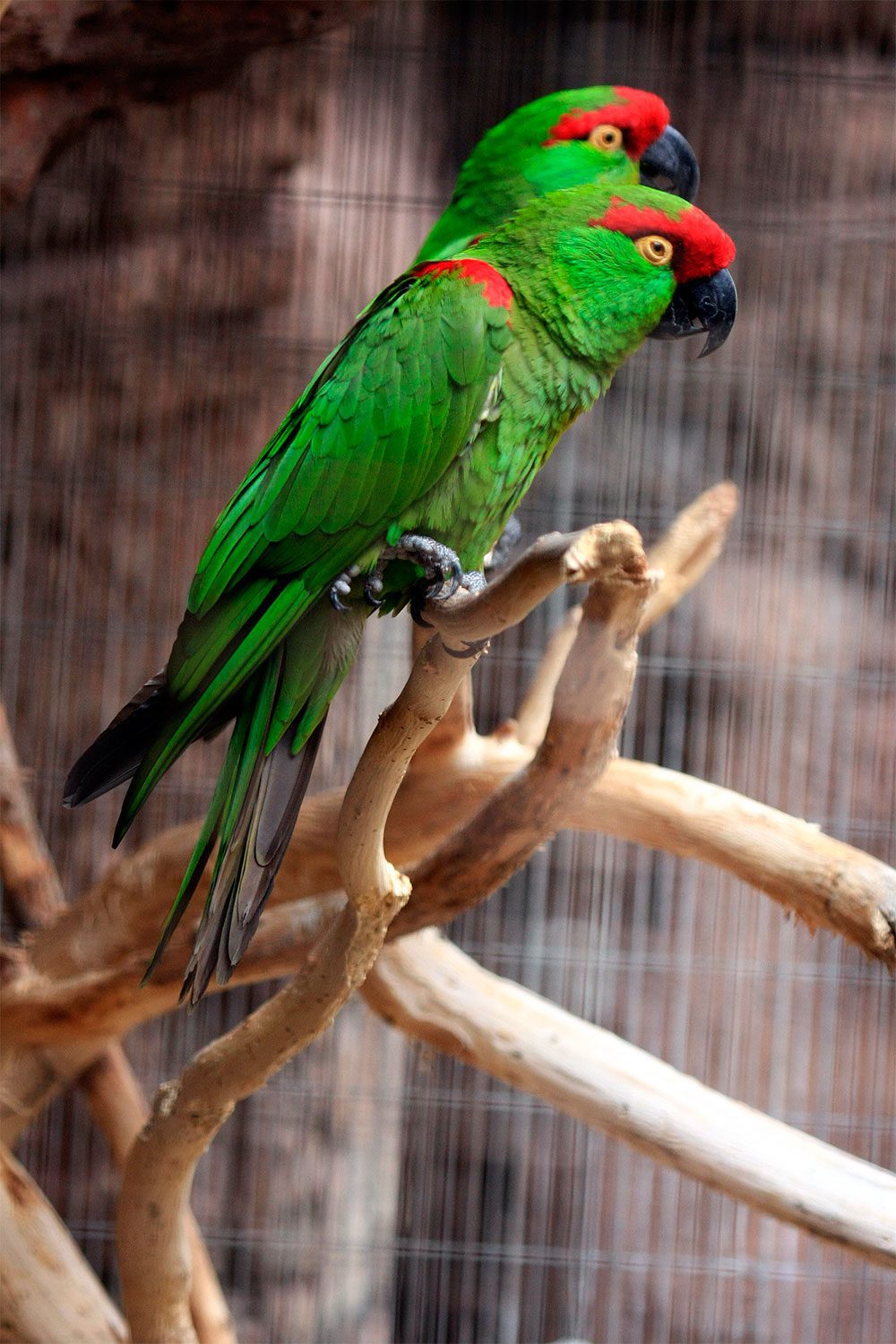
The Thick-billed Parrot (Rhynchopsitta pachyrhyncha) has the forecrown, the lores and a large swath in the region supercilii, bright Scarlet Red; a small patch of feathers brown in color lores, directly in front of the eyes; the crown, the cheeks and the sides of the neck are green with yellow tinge. The upperparts Green tinged indistinct tone olive in scapulars.

Upperwing-coverts Green with red feathers in the region where bend the wings. The flight feather of color green for over, with blackish tips and margins to the vane inner, grey below. Large infra-wing coverts Yellow, other coverts green.

Underparts Green with red on the the thighs. Upper, the tail green; gray at the bottom.

The bill black; bare orbital skin yellowish white; irises yellow-orange; legs grey.

Both sexes similar.

Immature with the bill color horn, greyish the bare orbital skin, and no Scarlet feathers behind the eye or red in the region where bend the wings.

The Thick-billed Parrot is often treated as the same species as the Maroon-fronted Parrot.

Habitat:

It inhabits in Highlands with mature pine forests or pine forests with other conifers of the genus Pseudotsuga, malls Populus and/or trees of the genus Quercus, in areas isolated and often rugged, sometimes are also observed in towns of lowlands.

They are mostly distributed at altitudes between 1,500 and 3,000 m, breeding generally at heights between 2,000 and 3,000 m.

Its preference they are areas with Pinus arizonica and Pinus ayacahuite. In general, observed in flocks. They rest in large groups on inaccessible cliffs or trees with dense foliage. Diurnal movements of up 40 km between resting areas and feeding.

Long-lived and gregarious, they form social groups; because of this, over time the Thick-billed Parrot they return to visit forests which are of your choice.

Reproduction:

Nest in the cavities of trees, usually pine, but also, according to sources, in trees of the species Populus tremuloides and Pseudotsuga taxifolia; usually in trees partially dead or alive, with small holes excavated, for example, by woodpeckers as the Northern Flicker (Colaptes auratus) or caused by fungal decomposition in the Heartwood wood; sometimes very together (in the same tree) When there is available room, Although generally scattered.

The breeding season coincides with the ripening of the pine seeds; birds, usually, They arrive at the breeding area between the months of April and May, carrying out the mid June to end of July update. The young begin to leave the nest from early September to late October, after 59 – 65 days, depending on their parents for a period of time after fledging.

Clutch of 2 to 4 eggs, generally three, Perhaps variable with the size of the harvest of pine seeds. The care of the eggs during incubation is carried out by the female and the care of the young is biparental..

Food:

Diet Thick-billed Parrot It is mainly composed of pine seeds (including the of the Pinus teocote and of the Pinus leiophylla) extracted from the cones with its powerful beak; They also feed, according to sources, of seeds and sprouts coniferous Pseudotsuga, fruits of the American black cherry (Prunus serotina) and acorns.

Distribution:

Size of the area of distribution (reproduction / resident): 67.100 km2

The distribution Master of the Thick-billed Parrot lies between the West and centre of Mexico, with sporadic movements towards the North and towards South.

You can see in Sierra Madre Occidental in the South of Chihuahua, South and West of Durango, the adjacent areas of the East of Sonora and Sinaloa; confirmed breeding only in the first two states.

Like other bird specialists in pine seeds, the Thick-billed Parrot wanders widely after playback, sporadically to South-West of Mexico in Jalisco, Colima and Michoacรกn, previously to the East up to Veracruz (Although these records are possibly involved the Maroon-fronted ParrotRhynchopsitta in terris) and, possibly, Coahuila de Zaragoza.

Formerly it was a sporadic visitor, and possibly resided and lesson in Arizona (especially in the mountains of Chiricahua, in the South) and in New Mexico, EE.UU, Although since the beginning of the century 20 no large-scale visits have been observed and the latest reproductive data in the area date from the 1938.

The presence of the Thick-billed Parrot is determined by the availability of pine seeds; the core of your playback area It seems to be the most constantly occupied area.

The decrease important in your population during the century 20 as a result ,mainly, of the loss and degradation of habitat, with the absence of these birds where the large pines were cut down, mainly by forestry. The loss of birds in EE.UU. was attributable to the hunt, but his presence there, probably, It was only in the short term, When were feeding conditions unusually favorable (or on the contrary very unfavorable in Mexico).

The recent threats in Mexico they are the trade in live birds and the continuous loss of habitat for livestock, as well as logging (the loss of old trees for nesting is a major problem that puts this species at a higher risk than the of the Maroon-fronted Parrot, when the latter uses the cliffs to build their nests).

Confiscated and captive-bred birds were released in Arizona at the end of the Decade of 1960, with the first successful reproduction in EE.UU. shortly after, although unfortunately the birds have mostly disappeared from that area.

There are no protected areas in Sierra Madre Occidental. The Appendix I. In danger.

Conservation:

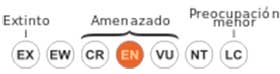
State of conservation โ“˜


Endangered Endangered โ“˜ (UICN)โ“˜

โ€ข Red List category of the UICN current: In danger of extinction

โ€ข Population trend: Decreasing

The thick-billed Parrot is found in danger of extinction due to the destruction of nesting habitat, as well as his commercial exploitation, the decrease of population who have suffered these parrots is very evident to those that, long overdue, They inhabit the timber areas of Chihuahua and Durango (Lanning and Shiflett, 1981).

The commercial logging of pine living for wood, as well as standing dead trees to obtain their pulp, they are ending with a lot of nesting sites effective and potential for these birds (Lanning and Shiflett, 1983).

The trade of the parrots seemed to be minimal until the 1980s (Lanning and Shiflett, 1981), However, It is estimated that during 1985 and 1986 between several hundred and even thousands of parrots were illegally trafficked to the United States of America (Snyder & Wallace, 1988).

To reduce these threats the species and its habitat, There are legal instruments such as the vedas and provisions in the Law-General ecological balance and environmental protection (LGEEPA) and General wildlife law (LGVS); as well as the Norma Oficial Mexicana NOM-059-SEMARNAT-2001 that lists the species of Mexican wild flora and fauna under some risk category and the inclusion and modification mechanisms.

The size of the population of the Thick-billed Parrot It is estimated between 2000-2800 mature individuals.

"Thick-billed Parrot" in captivity:

Its sale as a pet is illegal.

Alternative names:

Thick-billed Macawlet, Thick billed Parrot, Thick-billed Parrot (English).
Conure ร  gros bec, Perriche ร  gros bec, Perruche ร  gros bec (French).
Kiefernsittich, Arasittich, Kiefern Sittich (German).
Papagaio-mexicano-de-testa-vermelha (Portuguese).
Cotorra de Pico Ancho, Cotorra serrana, Cotorra Serrana Occidental, Cotorra-serrana Occidental (espaรฑol).
Cotorra serrana, Cotorra-serrana Occidental, Loro de Pico Grueso Occidental Mexicano, Cotorra de Pico Duro,
Guacamaya, Guaca
(Mexico).


scientific classification:
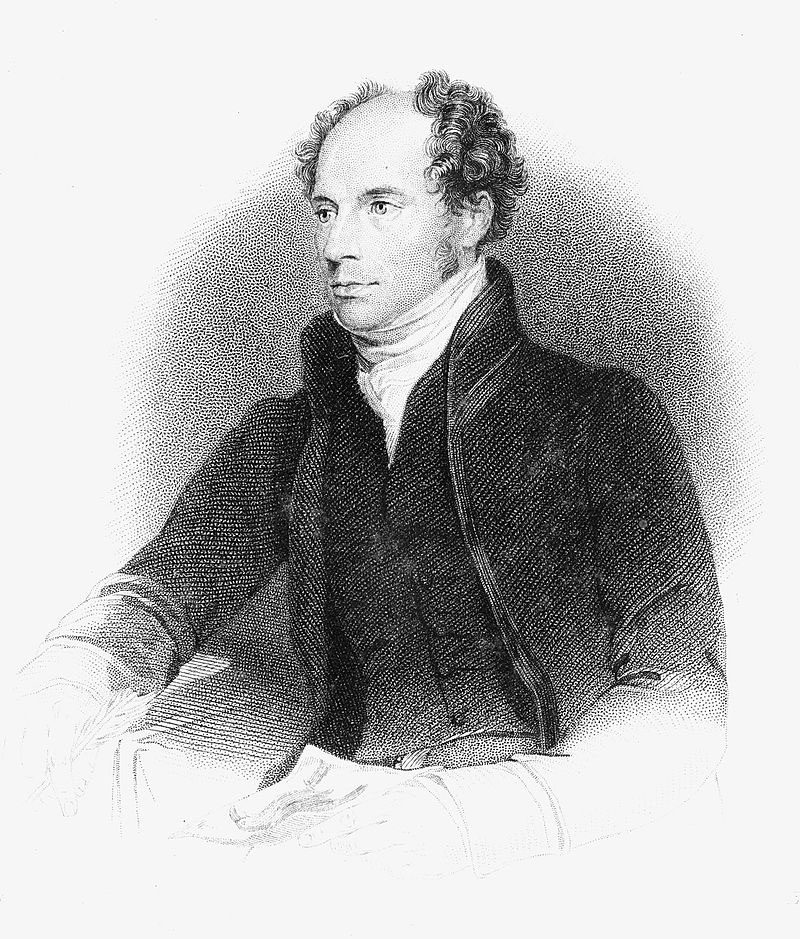
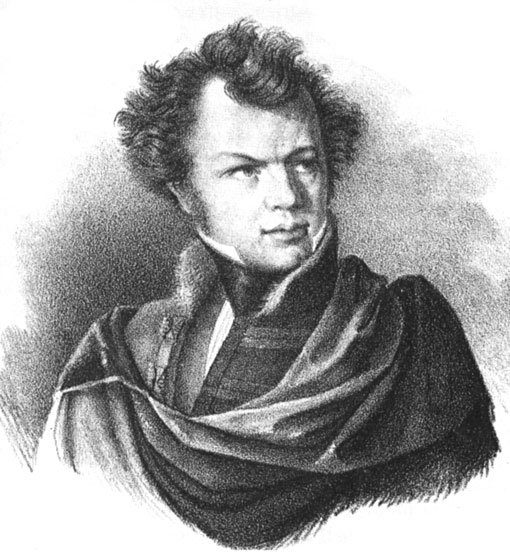
William Swainson
William Swainson

Order: Psittaciformes
Family: Psittacidae
Genus: Rhynchopsitta
Scientific name: Rhynchopsitta pachyrhyncha
Citation: (Swainson, 1827)
Protonimo: Macrocercus pachyrhynchus


Thick-billed Parrot images:


Species of the genus Rhynchopsitta

Thick-billed Parrot (Rhynchopsitta pachyrhyncha)


Sources:

Avibase
– Parrots of the World โ€“ Forshaw Joseph M
– Parrots A Guide to the Parrots of the World – Tony Juniper & Mike Parr
– Birdlife
– National Commission of Natural Protected Areas

Photos:

(1) – Two Thick-billed Parrots at Arizona-Sonora Desert Museum, Tucson, Arizona, USA By Tim Lenz from Ithaca (Thick-billed ParrotsUploaded by Snowmanradio) [CC BY 2.0], via Wikimedia Commons
(2) – Thick-Billed Parrots at Twycross Zoo, Leicestershire, England By derivative work: Snowmanradio (talk)Rhynchopsitta_pachyrhyncha_-Twycross_Zoo-8.jpg: Paul Reynolds from UK [CC BY 2.0 or CC BY 2.0], via Wikimedia Commons
(3) – An adult Thick-billed Parrot at Edinburgh Zoo, Scotland By Jenni Douglas from Edinburgh, Scotland (Thick billed ParrotUploaded by Snowmanradio) [CC BY 2.0], via Wikimedia Commons
(4) – A Thick-billed Parrot at Cincinnati Zoo, USA By Rhynchopsitta_pachyrhyncha_-captive-8a.jpg: Jean from Shelbyville, KYderivative work: Snowmanradio [CC BY 2.0], via Wikimedia Commons
(5) – Three adult Thick-billed Parrots in captivity in the USA By Joe Mazzola (LovebirdsUploaded by snowmanradio) [CC BY-SA 2.0], via Wikimedia Commons
(6) – Thick-billed Parrot (Rhynchopsitta pachyrhyncha). Two parrots on a nestbox By Just chaos [CC BY 2.0], via Wikimedia Commons
(7) – Thick-billed Parrot Rhynchopsitta pachyrhyncha at Cincinnati Zoo By Ltshears (Own work) [CC BY-SA 3.0 or GFDL], via Wikimedia Commons
(8) – A Thick-billed Parrot in captivity By Mark Dumont from Cincinnati, USA (Thick Billed ParrotUploaded by snowmanradio) [CC BY 2.0], via Wikimedia Commons
(9) – Thick-billed Parrot – Rhynchopsitta pachyrhyncha at Cincinnati Zoo By Ltshears (Own work) [CC BY 3.0], via Wikimedia Commons
(10) – Monographia Psittacorum By Wagler, Johann Georg [CC BY 2.0 or Public domain], via Wikimedia Commons

Sounds: Scott Olmstead (Xeno-canto)

โ–ท The world of Pets: Dogs, cats, birds, reptiles, amphibians

Violet-necked Lory
Eos squamata

Lori Escamoso

Content

Description

27 cm.. height and an approximate weight of 110 gr.

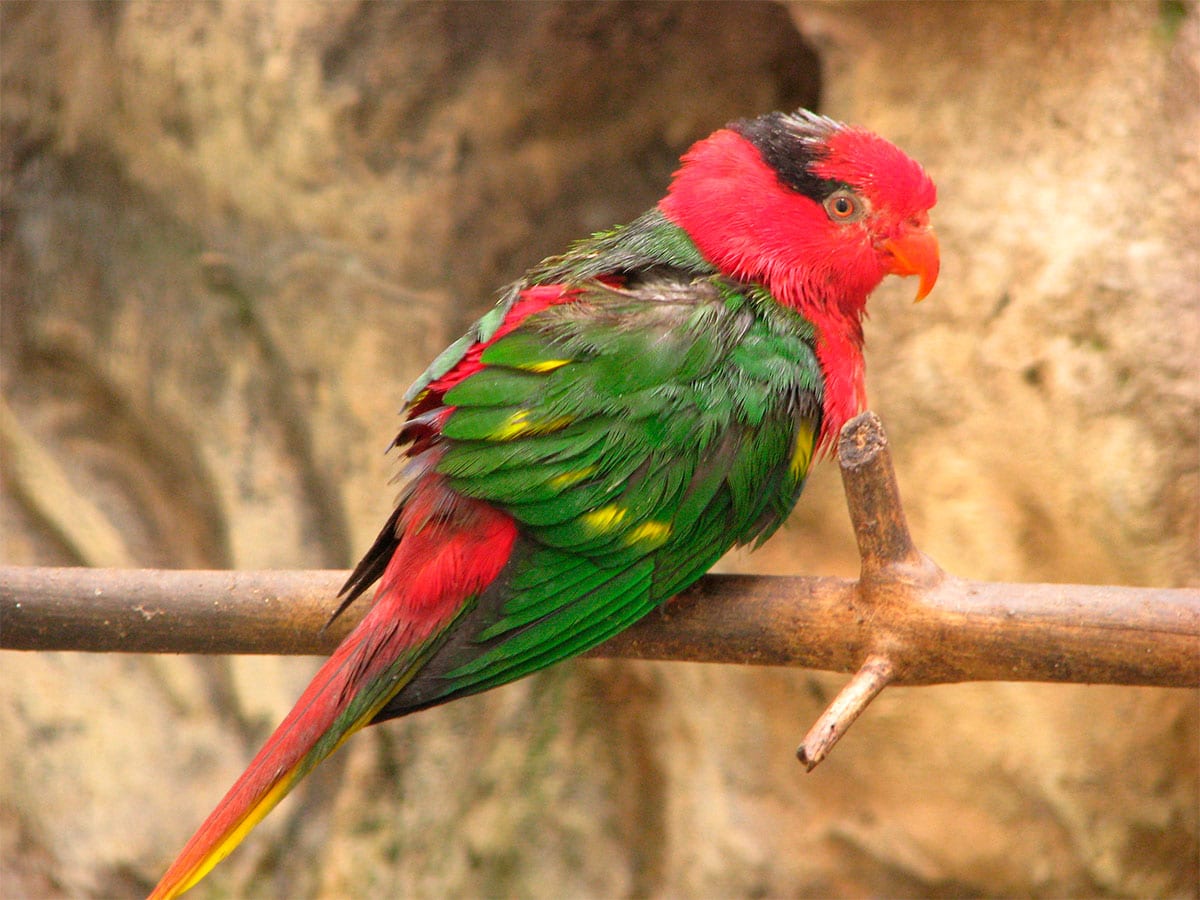
Along with the Red Lory (Eos Bornea) the "Scaly Lory" (Eos squamata) it is the only lory of the genus Eos it does not have blue marks on the ear-coverts.

Its plumage It has a scarlet general appearance. The neck It is surrounded by a violet blue collar which is well developed in some individuals, but nearly absent in others. The area from the abdomen up to the subcaudales it is dark purple. The scapulars they are dull purple with black tips. The feathers of the greater coverts and flight feather They are red with black tips.
The bottom of the wings and of remiges from below they are red with black spots at the primary level. The tail is purple red.

The irises is orange, the legs grey.

In the immature the feathers of the lower parts, have broad dull blackish purple borders. The irises They are brown.

Description 3 subspecies

  • Eos squamata squamata

    : (Boddaert, 1783) – Something smaller and feathers in the nominal species They are blue violet, in this subspecies are blackish blue.


  • Eos squamata riciniata

    : (Bechstein, 1811) – Smaller and band chest and neck is violet gray.


  • Eos squamata obiensis

    : (Rothschild, 1899) – It is somewhat smaller and with shoulders blacks. the band of neck It is variable and greyish violet. The area of the nape is red.

Habitat:

The Violet-necked Lory they are relatively common in the primeval forests or secondary forests that have large mature trees. Also found in the mountain forests and also, but with lower density in the coconut plantations bordering the coast, in the bushes during regeneration, in the abandoned gardens and mangroves.

Populations that inhabit small islands tend to stay near the coast.
On the larger islands, These birds can run in the forests of the mountains up to a height of 1.220 meters above the sea level.

The Violet-necked Lory they are particularly noisy and easily identifiable when they are in flocks, but they are a much more secretive behavior when in isolated pairs.

They usually gather in large flocks when they find abundant food sources.. This habit makes appearing more or less abundant in different regions. These flocks of birds are usually just above the tops of the trees.

Every day, they make short trips between the different islands. To do this they use a flight quick and direct, It consists of shallow wing beats. When they beat their wings produce a very audible hum.

Reproduction:

There is almost no information on the reproduction in the wild. In captivity, the implementation is of 2 eggs that are incubated during 27 days. As with all loris, the reproductive cycle is particularly long and hard about 80 days.

Food:

Exclusively vegetarian. They feed on sago palm in bloom and consume figs when they are still firm. Also eat nectar from big red flowers of Erythrina family Fabaceae.

Distribution:

Size of its range (reproduction / resident): 189.000 km2

The Violet-necked Lory They are endemic to the islands or archipelagos which are among New Guinea and Las Celebes.

They are mostly found in West Papua and of the Moluccan Islands.

Distribution 3 subspecies

  • Eos squamata squamata

    : (Boddaert, 1783) – Islands West Papua, that is to say Stupid, Waigeo, Batanta and Misool and islas Turtle (Indonesian)


  • Eos squamata riciniata

    : (Bechstein, 1811) – North of Moluccas, from Morotai to Bacan and Damar, also in islas Widi and Mayu islands in the sea of Moluccas (Indonesian).


  • Eos squamata obiensis

    : (Rothschild, 1899) – Only in the Obi Islands in the northern Moluccas.

Conservation:


minor concern


โ€ข Current IUCN Red List category: Least concern

โ€ข Population trend: Stable

The population size is very large, and therefore not approaching the threshold of Vulnerable under the criterion of population size.
The world population is estimated between 100,000 and 500,000 individuals.

About 3.000 specimens are caught every year for the trade aviaries. The pressure on the species is estimated to be quite reasonable, but it is recommended, by many associations, the establishment of catch quotas for the year.

"Violet-necked Lory" in captivity:

Son loving, curious, extroverts and show some unique behaviors. Some like to wrap yourself in a blanket to sleep. Sometimes, they can even be sleeping on your back. They can learn to mimic sounds and words.

They are capable of aggressive behavior if their territories and possessions is disregarded.

They are demanding in the requirements should be for their care, requiring much attention. Baths or showers daily should be part of your daily habit.

Alternative names:

Violet-necked Lory, Moluccan Red Lory, Violet necked Lory (ingles).
Lori รฉcaillรฉ, Lori ร  nuque violette, Lori de Wallace (French).
Kapuzenlori (German).
Lรณris-de-colar-violeta (Portuguese).
Lori de Collar Violeta, Lori Escamosa, Lori Escamoso (espaรฑol).

scientific classification:

Order: Psittaciformes
Family: Psittaculidae
Scientific name: Eos squamata
Genus: Eos
Citation: (Boddaert, 1783)
Protonimo: Psittacus Squamatus

โ€œScaly Loryโ€ Images:

Videos "Violet-necked Lory"

————————————————————————————————–

"Scaly Lory" (Eos squamata)


Sources:
Avibase, BirdLife.org, Oiseaux.NET
– Photos: SALIS- (Flickr), Bernard DUPONT (Flickr), Wikimedia, IBC.lynxeds.com
– Sounds: Frank Lambert (Xeno-canto)
โ–ท The world of Pets: Dogs, cats, birds, reptiles, amphibians

Cuban Parakeet
Psittacara euops

Aratinga Cubana

Content

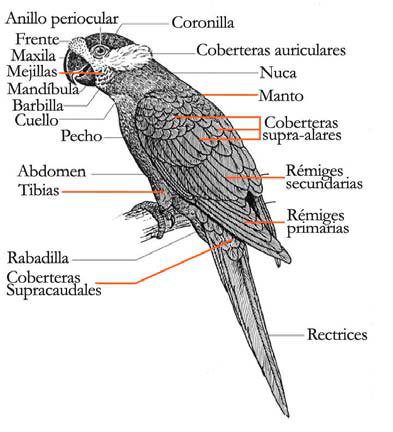
Morphology – "Cuban Parakeet"


Anatomy-parrots

Description:

26 cm. length and a weight between 78 and 96 g..

The bill of the Cuban Parakeet (Psittacara euops) is strong and hooked, presenting the capacity of both the upper and the lower mobility, enabling this psittacine to husk and crush seeds, fruits and nuts discarded by many other birds, thus showing another successful feature of this Psittacara.

Their legs they have a magnificent prehensile capacity that allows them to take incredible poses and hold on to extreme places thanks to a "zygodactyly" arrangement of the fingers by moving two fingers forward, the 2 and 3, and two backwards, the 1 and 4.

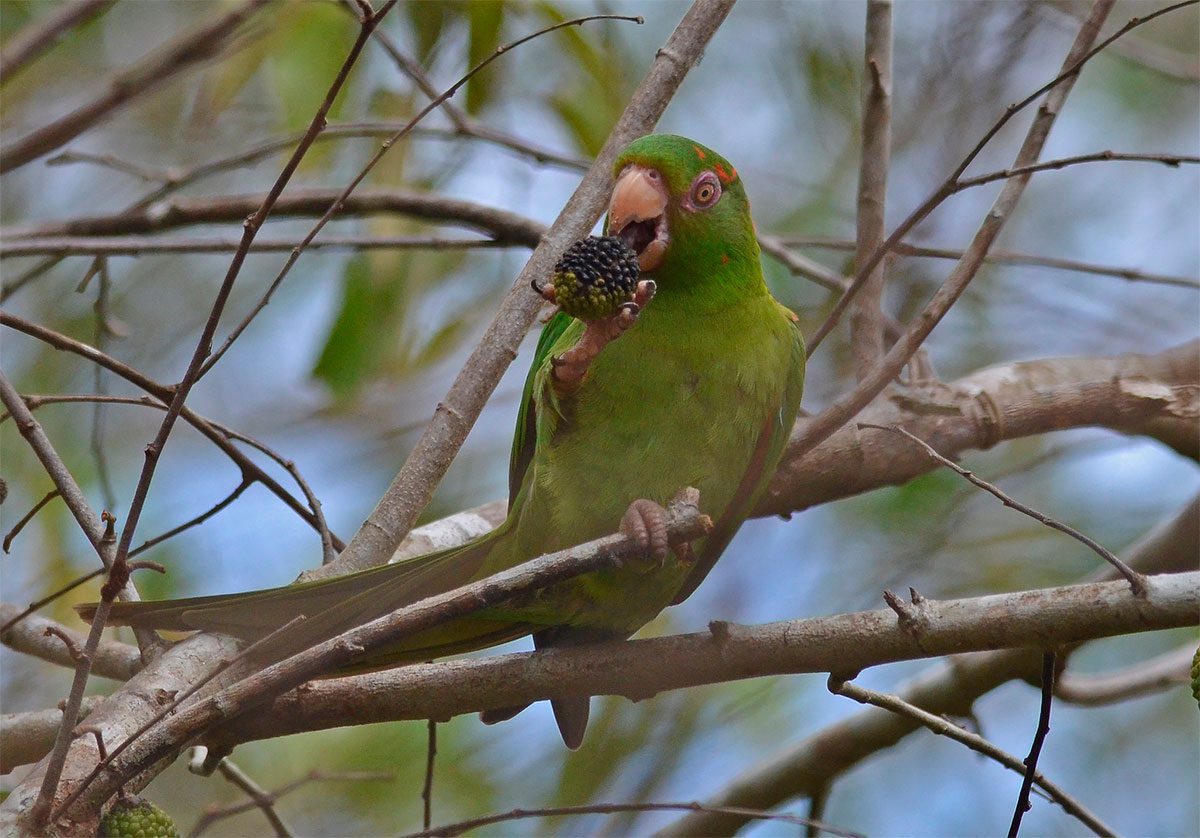
Has the head, sides neck and nape green grass with some red feathers scattered, sometimes forming patches. The upperparts and upperwing-coverts grass-green; primaries and secondaries with margins and dark green tips to vane inner; carpal edge with scattered red feathers and bend of wing red. Underwing-coverts with golden brown in the flight feather, small and medium-sized coverts Red and large coverts Yellow olive. The underparts yellowish green with diffusion of color olive, sometimes with scattered red feathers, especially in the throat and/or the thighs. Upper, the tail dark green color with dye olive; by down yellowish brown. The bill color Horn; bare periophthalmic bluish white; irises yellow; legs distant.

Ilustraciรณn Aratinga Cubana

The female has more orange in the wings.

Immature has green and red in underwing-coverts, beige color (not red) in carpal edge, irises Gray with scattered red feathers.

Habitat:

Video "Cuban Parakeet"

They inhabit on Savannah, especially in areas where there are the Palmas Copernicus and Thrinax, at the edges of forests and Lands planted with trees. Although they have also been very modified habitats, such as eucalyptus forests in open field and fragments of forests of Evergreen in sheets of Palma. The species survives only near large extensions of primary forest.

In general, observed in family groups or small flocks, but sometimes in larger groups, hundreds of birds; the Cuban Parakeet, often, mix with the more common and endemic Cuban Parrot (Amazona leucocephala).

Reproduction:

One of the major problems of this kind in the reproduction, It is competition and the finding by the nesting cavities; This psittacine is a small, so their physical advantage over other birds to displace these from cavities or nests is less and they must show greater aggressiveness to be able to expel woodpeckers and even some small birds of prey These cavities that already occupy.

But, in recent studies, It is suggested that in free-living this species has a high degree of selectivity by the height of the Palma in which anidated or for the depth of the nest, still not evident during the stage of formation of couples and nesting strong signs of gregariousness, But if there could be a tendency to prefer nests with a sufficiently narrow entrance opening to enter the couple and hamper the penetration of predators. It also seems that the species in reproduction is more tolerant of other neighboring couples of the same species, than others parrots, but to some degree of alienation, preferring Palmas in which there is only one cavity to have a certain degree of privacy in the rearing of their chicks.

The breeding season It begins in April and usually ends in July. They sometimes build their nests in cavities excavated, originally, by the Cuban Green Woodpecker (Xiphidiopicus percussus).

The number of eggs in the implementation It, in averaged, between three and five. The incubation both members of the couple is done, as well as feeding the young until they leave the nest. Once abandoned the nest, You can see to the immature flying with parents in small camps before the winter season, forming major sides joining them different families.

Food:

Diet Cuban Parakeet consists in fruits Mango, papaya, guava, Roystonea Palms, Melicoccus bijogatus and Spondias mombin, as well as seeds of Inga vera, outbreaks, Millet and berries.

Formerly persecuted by provoking large damage to crops Orange, coffee and corn.

Distribution:

Species vulnerable to extinction, from an original distribution throughout Cuba and Isle of youth, isolated populations between Yes.

Formerly one of the most common endemic birds in Cuba and in the Isle of youth, old Isle of pines, but now is limited to various strongholds in remote areas of Cuba, including the Zapata Peninsula, the districts around Cienfuegos and the mountains around the city of Trinidad, to the extent Western Centre of the island, and Sierra Maestra at the end of this.

Resident but some seasonal movements (Perhaps altitude) supposedly by the decline of the birds of the mountains of Trinidad in the months of September and October.

Extinct in the Isle of youth from 1913, mainly due to the strong capture for export as bird cage.

The current population, Although comparatively small, Perhaps stable. A small number of captivity out of Cuba, especially in Eastern Europe. The international trade currently it is small.

Today this species is restricted to 16 populations considering that a total of 2800 individuals released, with a number of individuals per population not exceeding, usually, the 100 copies and is considered of greater size the located in the Zapata Swamp live in where is estimated around 800 these birds. Each of these populations are isolated or insulated semi between if, not exceeding groups or sides that make it up, the 30 individuals, with a general tendency to the disappearance of the species in many of the populations, mainly due to the loss of Habitat and illegal catches.

Conservation:

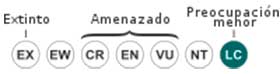
State of conservation โ“˜


Vulnerable Vulnerable โ“˜ (UICN)โ“˜

โ€ข Red List category of the UICN current: Vulnerable

โ€ข Population trend: Decreasing

There are no new data on the evolution of the population of the Cuban Parakeet; But, the species is suspected of have been declining at a moderate pace, mainly as a result of the habitat degradation.

Rounded, a population estimated between 1,500-7,000 mature individuals.

The persecution as a pest of crops, loss of habitat and, in particular, the capture for trade bird cage, They explain the current shortage of copies of Cuban Parakeet (A. Kirkconnell in litt., 2007).

The capture for trade International is now insignificant, with only 10 birds recorded in trade between 1991 and 1995. Another major threat is the loss of nesting trees (Snyder et to the., 2000) as a result of hurricane damage (as the caused in the Zapata Peninsula by the Hurricane Lili in 1996), and the felling of trees for chicks of the Cuban Parrot (Amazona leucocephala) (A. Mitchell in litt., 1998).

Conservation Actions Underway

โ€ข Appendix II of CITES.

โ€ข Is legally protected.

โ€ข They are distributed within the seven environmental reserves, including the important Ciรฉnaga de Zapata National Park (Snyder et to the., 2000).

โ€ข A study of the species and an intense public awareness campaign are intended to help establish a management programme effective (Wiley, 1998).

โ€ข The programs of ecotourism they have begun in some areas (Snyder et to the., 2000).

โ€ข A provision scheme has been started for nest boxes, the plastic boxes are more durable than the facts of sections of the trunk of the Palm (Waugh 2006), but the parakeets prefer those made of natural materials (Anon., 2010).

โ€ข A program of reintroduction from the main island of Cuba to the Isle of youth is being developed from the 2004, but the species is generally difficult to breed (parrots 2000-2004; avianweb.com).

Conservation Actions Proposed

โ€ข Carry out more Research to determine the ecological requirements of the species and population (Wiley 1998, Snyder et to the., 2000).

โ€ข Conserve additional habitat, especially in the areas of nesting (Snyder et to the., 2000).

โ€ข Adapt the environmental awareness and protection of nests in situ to local situations (Snyder et to the., 2000).

โ€ข Continue a plan for the re-establishment of the species in the Isle of youth (Wiley 1998, Snyder et to the., 2000) through the development and extension of the programme of captive breeding.

"Cuban Parakeet" in captivity:

In captivity, they are very sleepers and somewhat quarrelsome and restless, needing always to be monitored. Non-communicative the issuance of words but very friendly with the person you choose as partner, which will not get rid of some sympathetic evil, almost always tolerated and even grateful.

Sensitive to the changing conditions of the ecosystem that inhabits.

The requirements and difficulties in the reproduction of this species are considerable.

Own this nice bird as pet, Although on the one hand it can be a satisfaction to the owner, on the other hand means to convict individuals of this species not reproduction and populations to lead them to the risk of the extinction.

Alternative names:

Cuban Parakeet, Cuban Conure, Cuban Paroquet, Red-speckled Conure (English).
Conure de Cuba, Perriche de Cuba, Perruche de Cuba (French).
Kubasittich (German).
Periquito-cubano (Portuguese).
Aratinga Cubana, Perico, Periquito, Periquito Cubano (espaรฑol).
Catey, Perico, Periquito (Cuba).


scientific classification:

Johann Georg Wagler
Johann Georg Wagler

Order: Psittaciformes
Family: Psittacidae
Genus: Psittacara
Scientific name: Psittacara euops
Citation: (Wagler, 1832)
Protonimo: Sittace euops


Cuban Parakeet pictures:


Species of the genus Psittacara

Sources:

  • Avibase
  • Parrots of the World โ€“ Forshaw Joseph M
  • Parrots A Guide to the Parrots of the World – Tony Juniper & Mike Parr
  • Birdlife
  • Veterinaria.orgยฎ
  • REDVETยฎ

  • Photos:

(1) – Psittacara euops – Cuban parakeet by Ekaterina Chernetsova (Papchinskaya)Flickr
(2) – Psittacara euops – Cuban parakeet by Ekaterina Chernetsova (Papchinskaya)Flickr
(3) – Cuban Parakeet, Conure De Cuba, or Aratinga Cubana (Aratinga euops). Two parrots in a tree By dominic sherony (originally posted to Flickr as Cuban Parakeet) [CC BY-SA 2.0], via Wikimedia Commons
(4) – Cuban Parakeets are a rare sight in Cuba, the only place they live in the world by Hank Davis, DNS Board Member – Delaware nature society
(5) – For the Caribbean Conservation Trust in conjunction with the Massachusets Audubon Society – Winged spur imaging
(6) – Deutsch: Psittacara euops Syn: Evopsitta euops & Psittacara chloropterus Syn: Psittacara chloropter bzw. Psittacara euops St. Domingue By Charles Emile Blanchard (1819โ€“1900) (biodiversitylibrary.org) [Public domain], via Wikimedia Commons

โ–ท The world of Pets: Dogs, cats, birds, reptiles, amphibians

Pohnpei Lorikeet
Trichoglossus rubiginosus

Pohnpei Lorikeet

Content


Anatomy-parrots

Description

24 cm.. length and a weight between 70 and 85 gr.

The Pohnpei Lorikeet (Trichoglossus rubiginosus) is unmistakable.

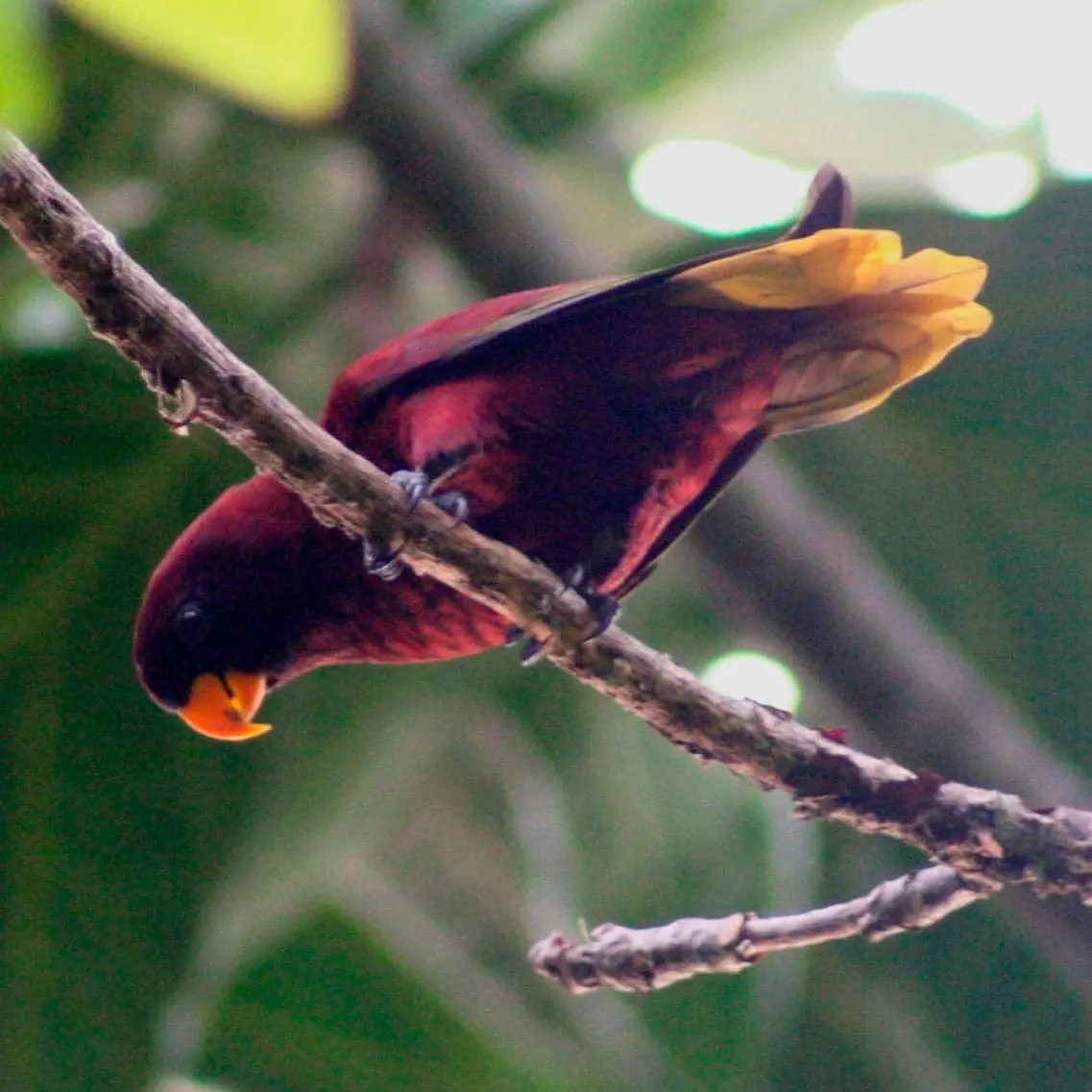
The head and back, dark brown, darker in the head. Scapulars and blankets, are of color Bordeaux dark. The flight feather are blackish in those networks internal and infiltrated with color olivaceous in them vane outer.

The primaries more external are clearly yellow. The bottom of the wings black. The underparts Deep Garnet color, with a black edge in the bottom sides of the edges that draw a bar at the bottom.

The upper part of the tail color is olivaceous, brighter in the vicinity of the tip; lower tail is of color yellow pale. The bill is orange. The irises are yellow-orange, the legs and feet are dark gray.

In the female, the bill seems more yellowish and the irises are greyish white.

In the youth, the feathers seem sharper.

Habitat:

This species is present on the entire surface of the island, until 600 m. It is distributed by a variety of habitats, such as coconut trees, plane trees, dense tropical forests, plots regenerated, forests and mangroves.

The Pohnpei Lorikeet is a bird especially loud, He throws her screams from the roosts after dark. It is fairly easy to detect, Since it wanders in small flocks of February to December in search of food in trees in flower.

It tends to fly high and travel long distances over the ocean.

When fed into the forests of tall trees, usually favors the average vegetation floor.

As the Ponape island receives a large amount of precipitation (until 7600 mm. per year in some places), the Pohnpei Lorikeet seek refuge under the large leaves.

Reproduction:

The Pohnpei Lorikeet It builds its nest on top of a coconut tree or in any cavity of a tree from the forest.
The spawning usually consists of an only egg.
The nesting season generally goes from December to may.

Food:

Consumes nectar, pollen and fruit. While feeding, It tends to keep its head down to pick up their food in the flowers of coconut and banana.
The nectar of Erythrina and the mango is very appreciated by the Pohnpei Lorikeet.

Distribution:

Size of the area of distribution (reproduction / resident): 350 km2

As its name implies, lori this is endemic of the Ponape island, which is the most populated island of the States federate of Micronesia. Formerly, also lived on the atoll of Namoluk about the island of Truk.

It is possible that range was more extensive than it is today.

Conservation:


Near-threatened

– Current IUCN Red List category: Near threatened

– The population trend: Decreasing

This species is listed as near-threatened because it is suspected that their population, which is mostly a subpopulation, It is in decline due to changes in land use. It also has a very small range; But, is unlikely that it is declining, in terms of population, given the adaptability of the species. Neither population is severely fragmented or restricted to a few locations.

Surveys in 1994 suggested that the species had declined a 74-75% Since the beginning of the eighties, probably indicating a decrease in real (Buden 2000). The current population exceeds the 10.000 specimens (Juniper and Parr 1998, M. O'Brien a little. 2011).

In the news, It is the official bird of the State of Pohnpei and your hunting, capture and export is illegal.

"Pohnpei Lorikeet" in captivity:

Is usually not kept out of the Pohnpei island.

Alternative names:

Pohnpei Lorikeet, Pohnpei Lory, Ponape Lorikeet, Ponape Lory, Ponapรฉ lory, Red Lory (ingles).
Loriquet de Panapรฉ, Loriquet de Ponapรฉ (French).
Kirschlori (German).
Loris rubiginosus (Portuguese).
Lori de Ponapรฉ, Tricogloso de Ponapรฉ (espaรฑol).

scientific classification:

Order: Psittaciformes
Family: Psittaculidae
Genus: Trichoglossus
Scientific name: Trichoglossus rubiginosus
Citation: (Bonaparte, 1850)
Protonimo: Chalcopsitta rubiginosa

Images "Pohnpei Lorikeet"


ยซLori de Ponapรฉยป (Trichoglossus rubiginosus)


    Sources:

    Avibase
    – BirdLife.org
    – Parrots of the World – Joseph Forshaw M
    – Parrots-A Guide to the Parrots of the World by Tony Juniper & Mike Parr

    Photos: By Peter – Flickr

    Sounds: Mark Oโ€™Brien (Xeno-canto)
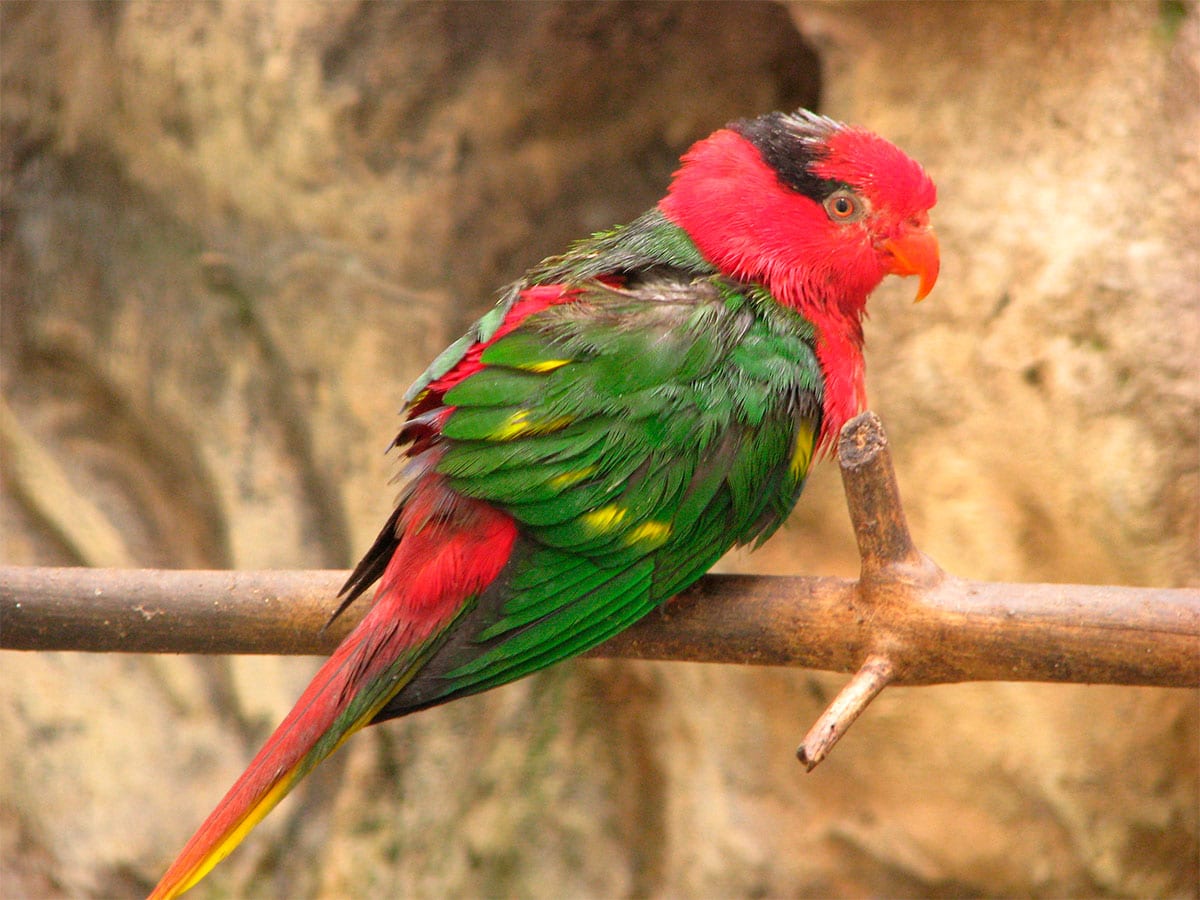
โ–ท The world of Pets: Dogs, cats, birds, reptiles, amphibians

Barred Parakeet
Bolborhynchus lineola

Catita Barrada

Content

Description:


Anatomy-parrots

They measure 17 cm. long and weigh between 47 and 55 g.
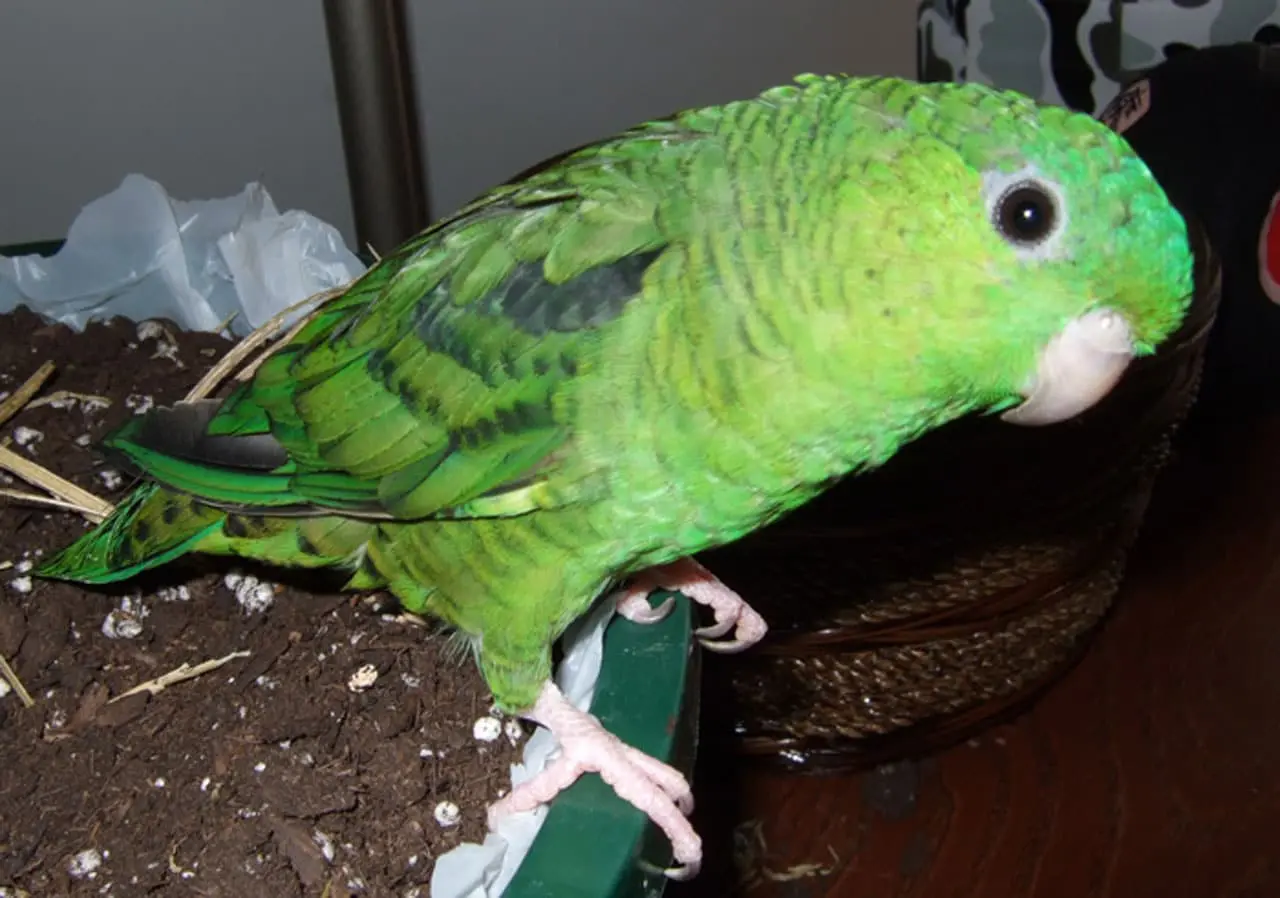
The Barred Parakeet (Bolborhynchus lineola) has a size similar to the of a Sparrow. The tail and wings they are pointed. Slightly different sexes: in males, the eyes they are brown, the eye ring grey, the bill and legs flesh-colored. The head and underparts they are bright green, with a tenuous beaming on the sides and the tail coverts. The wings they have very marked black bars at the shoulder and patch black(not always visible), the upperparts they are green with a beaming widely dispersed black in the nape and back.
The females and juveniles they present a beaming more pardo. A wide black border and dark green bottom; the irises Dark coffee and legs pink (Howell and Webb, 1995).

Subspecies description:

  • Bolborhynchus lineola lineola

    (Cassin, 1853) – The nominal


  • Bolborhynchus lineola tigrinus

    (Souance, 1856) – Dark green, Crown and bright green front and the rough black is more intense.

Habitat:

Rare and unpredictable. It lives in humid forests, subandinos and Andean cloud forests, open areas, from 900 at 2900m. They are nomads, with numerous flocks (150 or more individuals) following the fruition of the โ€œchusqueโ€ (This chusquea). In small groups or in pairs during the dry season in Central America.

Reproduced in elevations of 1500 meters or more and, like most parrots, they prefer to raise their chicks in a hollow tree or limb trunk. In the winter after the breeding season, the Barred Parakeet often descends to lowland forests. This season, Many feed on partially cleared areas, areas cultivated and in them sheets.

Registered at altitudes from 900 to 2.400 m. in Mexico; by under 1.500 m. in Honduras, Although below 600 After the playback meters; above 1.500 m especially in the West of Panama, although there are records there and in Costa Rica below the 600 m; between 900 and 1,500 m. in Venezuela, between 1,600 and 2,600 m. in Colombia, and until 2.900 m. in the South of Ecuador.

Little known about the habits of these small wild parrots. Since they are small, they like to live high in the treetops, and they are very well camouflaged in their environment, still very hard to see in nature. It also, they are not as noisy as other parrots, which makes them difficult to detect. Most frequently observed during the flight, because they often emit a chirp while flying, What can attract the attention of an observer of birds.

Reproduction:

It nests colonies, in tree hollows, Although you can to occur in crevices in Rocky escarpments, probably during the dry season in Costa Rica; during the month of December in Panama; July-August in Colombia.

Food:

Reported foods that make up their diet include Myrtis, Heliocarpus and Miconia, catkins of Cecropia and bamboo seeds; they occasionally forage in cultivated areas, where has observed them is consuming corn.

Distribution:

Distributed in South of Mexico to western Panama and separated by the Andes, from Venezuela until Peru.

In Mexico they can be observed on the Atlantic slope, in the Highlands of Veracruz, Oaxaca, Chiapas and possibly (There is only a record) in Warrior, also seen in the South of Guatemala (a record from time to time) and in the Highlands of Honduras, with a single bird observed in Nicaragua, specifically in Saint Mary of Ostuma; also registered in those areas mountain of Costa Rica (not seen in areas of the Northwest, for example in the Cordillera de Guanacaste) and in the West of Panama (apparently absent from Central and Eastern).

Distributed through them Andes, to the Northwest of Venezuela in the Federal District, Tรกchira and Merida; scattered locations of Colombia, in subtropical areas of the Western Andes, Central and Eastern and in the massif of Santa Marta; Ecuadorian Andes, with records recent in the South; Peruvian Andes, in Huanuco, Ayacucho and Cuzco, with birds, possibly of this species, observed in the North.

Scattered records, e irregular, as well as a strong nomadic tendency (movements perhaps related to bamboo planting) they indicate that their appearances may be continuous.

Apparently, is one local and rare species over much of its range, Although according to reports, is quite common in Honduras and even locally abundant in the Talamanca mountain range in Costa Rica.

Deforestation in parts of its range, Although these birds travel on cleared land and distributed (at least from time to time) in protected areas, which suggests a low risk population at present.

There is a captive specimens outside their countries of origin.

Subspecies distribution:

  • Bolborhynchus lineola lineola

    (Cassin, 1853) – The nominal


  • Bolborhynchus lineola tigrinus

    (Souance, 1856) – Mountains from northwestern Venezuela and Colombia to southern Peru

Conservation:

State of conservation โ“˜


minor concern Minor Concern โ“˜ (UICN)โ“˜

โ€ข Red List category of the UICN current: Least concern.

โ€ข Population trend: Stable.

Partners in Flight estimated the total population of Barred Parakeet in a number ranging from 50,000-499,999 individuals (A. Panjabi in litt., 2008).


The population This species is suspected of being stable in the absence of evidence of any reduction or substantial threats.


"Barred Parakeet" in captivity:

It is of a species that is has adapted well to the life in captivity, tough enough, its reproduction is expanding.

They are perfect apartment birds due to its arrangement and you need only basic things of life. Son kind and happy of being with the people, but they can be kept entertained with toys and swings when there is nobody around.

Is an Ave. moderately long-lived and if is of good health, Food and hygiene can live during 12 or 14 years.

Limited ability for speech.

They have developed many and striking mutations of color in poultry, including blue, olive, cobalt, Slate (or mauve), turquoise, lutino (bright yellow with red eyes), cremino, cinnamon, Silver, purple …

Alternative names:

Barred Parakeet, Catherine Parakeet, Lineolated Parakeet (English).
Toui catherine, Perruche catherine, Perruche rayรฉe (French).
Katharinasittich, Katharina Sittich (German).
Periquito-catarina (Portuguese).
Catita Barrada, Catita Manchada, Chocoyo Listado, Perico Barrado, Perico Listado, Perico rayado, Periquito Barrado, Periquito Listado, Periquito saraviado (espaรฑol).
Periquito Barrado (Colombia).
Perico Listado, Periquito listado (Costa Rica).
Perico rayado (Honduras).
Perico rayado (Mexico).
Chocoyo Listado (Nicaragua).
Perico Barrado (Peru).
Perico Barreteado (Venezuela).

scientific classification:

Order: Psittaciformes
Family: Psittacidae
Genus: Bolborhynchus
Scientific name: Bolborhynchus lineola
Citation: (Cassin, 1853)
Protonimo: Psittacula lineola

Images ยซCatita Barradaยป:

Videos "Barred Parakeet"


Species of the genus Bolborhynchus

Sources:

Avibase
– Parrots of the World โ€“ Forshaw Joseph M
– Parrots A Guide to the Parrots of the World – Tony Juniper & Mike Parr
– Birdlife

Photos:

(1) – A Barred Parakeet (also known as Lineolated Parakeet) in captivity By Timo Helgert (originally posted to Flickr as greenguy.) [CC BY 2.0], via Wikimedia Commons
(2) – Two pet Barred Parakeets (also known as Lineolated Parakeet) perching on a parasol By Lisa Lenscap (originally posted to Flickr as sistas) [CC BY-SA 2.0], via Wikimedia Commons
(3) – Barred Parakeet (Bolborhynchus lineola) also known as Lineolated Parakeet or Catherine Parakeet By Lisa Lenscap [CC BY-SA 2.0], via Wikimedia Commons
(4) – Perruche Catherine de couleur mauve By Weena (Own work) [GFDL, CC-BY-SA-3.0 or CC BY-SA 2.5-2.0-1.0], via Wikimedia Commons

Sounds:

โ–ท The world of Pets: Dogs, cats, birds, reptiles, amphibians

Josephine's Lorikeet
Charmosyna josefinae


Josephine's Lorikeet

Content

Lori-of-Josefina drawing

Description

24 cm.. length and an approximate weight of 68 g..

The head of the Josephine's Lorikeet (Charmosyna josefinae) it is red in color with a conspicuous black patch extending from the back of the crown to the nape and in a transverse line to the eyes; back of the Crown is marked with purple stripes; large red necklace. Mantle and scapulars Green; bottom of the Red back: rump with a central patch of dark blue; views from the top, the coverts of the tail of blue to red. The wings, from above, green with vane internal greyish towards flight feathers; marginal coverts Green. View from below, the coverts of Red Wings. Red underparts with a purplish-black spot in the center of the belly, that extends to the flanks on the thighs; seen from below, tail-coats are red. From above, the tail shows red with yellow tip and green color side feathers; from below, the tail is yellow. The peak, orange red; iris yellow ; orange-yellow legs.

The female It shows the lower part of the back of yellow, tending to green on the rump.

The immature with impregnated in green belly patch, and bluish black thighs. The blue rump patch impregnated in green. Makes color lilac in the back of the Crown replaced by blue-green color marks.

Immature females It shows the low back of red with some yellow marks.

Subspecies description

  • Charmosyna josefinae josefinae

    : The nominal.


  • Charmosyna josefinae sepikiana

    : It differs from the nominal value by having more extensive black belly patch and more grey marks on the back of the Crown. Females lack of greenish broadcasting on the flanks and in the low back.


  • Charmosyna josefinae cyclopum

    : Differs from the nominal value by the absence of black belly patch and the practical absence of grisaceo-azul in the back color of the Crown marks.

Habitat:

Possibly Nomad. Frequents montane forests, edges of forests and partially cleared areas, mainly between 760 and 2.200 meters and more common between 850 and 1.200 meters although there have been up to at sea level. Usually seen in pairs or small groups. Despite their striking coloration, is quite discreet. Feeds in the tops of trees in flower, flowering vines or plants epiphytes, often with him Fairy Lorikeet.

Reproduction:

Nesting and breeding to be described.

Food:

Diet includes pollen, nectar, flower buds and soft fruits.

Distribution:

New Guinea in Irian Java (Indonesian) and Papua New Guinea, mainly in the Western and central cordillera, Since the Mountains Parotia and Vogelkop, to the Bismarck range in the Northeast (Jimi and also Baiyer River). There has been since Jayapura, on the North coast of Irian Java, and come to the South of Mount Bosavi, Papua New Guinea.

Subspecies distribution:

  • Charmosyna josefinae josefinae

    : The nominal.


  • Charmosyna josefinae sepikiana

    : Mountains of the region of Sepik, Papua New Guinea and in the Highlands of the West to the East until approximately the area of the jimi river and to the South of Mount Bosavi


  • Charmosyna josefinae cyclopum

    : Cyclops ranges.

Conservation:


minor concern

โ€ข Current IUCN Red List category: Least concern.

โ€ข Population trend: Stable.

The world's population has not been quantified, but it is thought that it may be above the 300.000 specimens.

A small number in captivity.

The population is suspected to be stable in the absence of evidence of any reduction or substantial threats.

"Josephine's Lorikeet" in captivity:

Take it easy, but at the lively and active time. Some new birds may initially be nervous. Young birds, in particular, curious and playful. Aggressive toward other birds. Susceptible to stress and disease during the acclimatization. Strict hygiene necessary due to a mainly liquid diet.

Alternative names:

Josephine’s Lorikeet, Josephine’s Lory (ingles).
Lori de Josephine, Lori de Josรฉphine (French).
Josefinenlori (German).
Lori de Josefina (espaรฑol).

scientific classification:

Order: Psittaciformes
Family: Psittaculidae
Scientific name: Charmosyna josefinae
Genus: Charmosyna
Citation: (Finsch, 1873)
Protonimo: Trichoglossus Josefinae

ยซLori de Josefinยป images:

————————————————————————————————

ยซLori de Josefinaยป (Charmosyna josefinae)


Sources:

Avibase
– Parrots of the World โ€“ Forshaw Joseph M
– Parrots A Guide to the Parrots of the World – Tony Juniper & Mike Parr
– Birdlife

Photos:

1 – danskloriklub.dk
2 – By Drรคgus (Own work) [Public domain], via Wikimedia Commons
3 – By Katerina Tvardikova – Photo of Charmosyna josefinae [By Drรคgus (Own work) [Public domain], via Wikimedia Commons] – Charmosyna josefinae
4 – papageien.org
5 – animalphotos.me
6 – Dibujo by HBW.com

Sounds: BAS van Balen (Xeno-canto)
โ–ท The world of Pets: Dogs, cats, birds, reptiles, amphibians

Cliff Parakeet
Myiopsitta luchsi

Cliff Parakeet

Content

Description:

Cliff Parakeet

26-28 cm.. length and a weight between 120 and 140 g..
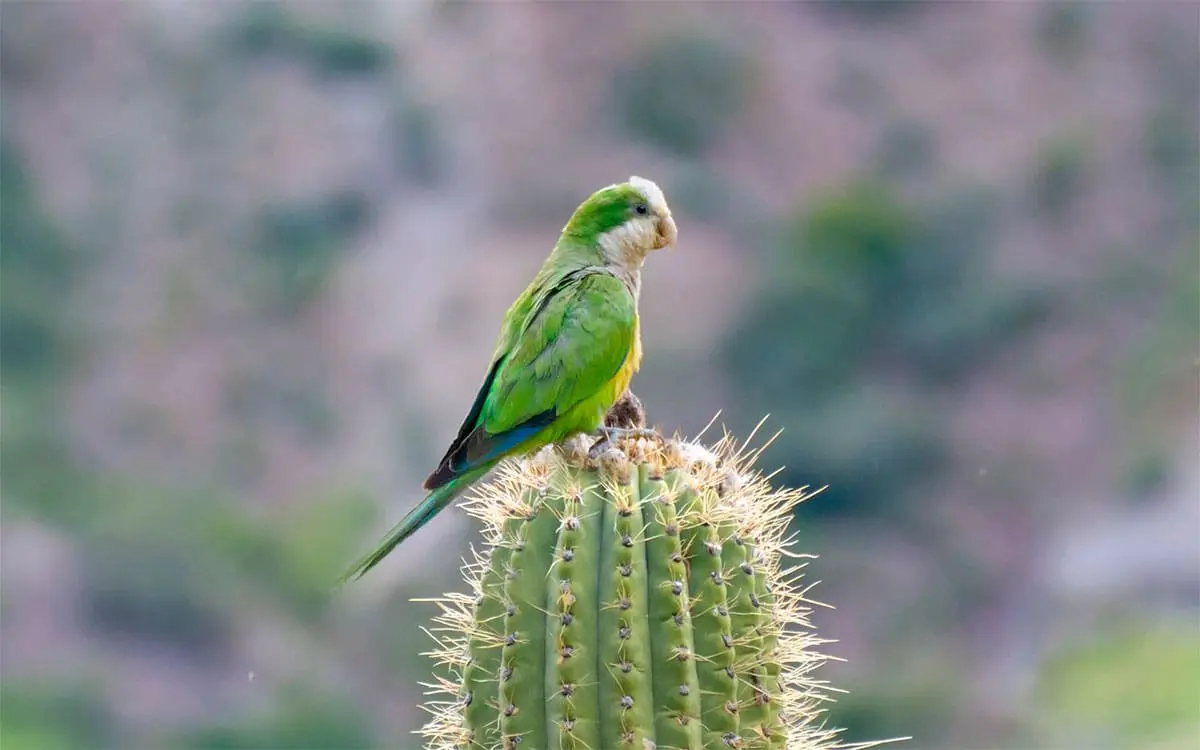
The Cliff Parakeet (Myiopsitta luchsi) It has a medium size and is mainly green; the front of the crown, lower face and the chest, They are whitish, becoming bright yellow on the lower chest and the belly; the primaries and tail (medium-sized long), They are bright metallic blue.
Similar Monk Parakeet has less extensive white color crown, pale yellow instead of bright yellow in the belly and the pale gray chest It has a scaling effect that give centers feathers dark.

Bill color horn.

The immature They are similar to adults but with forecrown gray tinged with green.


Taxonomic note:

      This species was described in 1868 by Finsch as Bolborhynchus luchsi, with specimens from Bolivia. Later, the species was transferred to the genus Myiopsitta and the name Myiopsitta luchsi It was used apparently to 1918 by Cory. From 1943, Bond & de Schauensee and they treat it as a subspecies of monachus (Myiopsitta monachus luchsi), approach that has been followed by all modern authors, but Necklace (1997) finally he considers that the morphological characters and their way of nesting are sufficient to raise again species level.

Habitat:

Video – "Cliff Parakeet" (Myiopsitta luchsi)

It shares the same habitat with another endemic parrot, the Red-fronted Macaw (Ara rubrogenys), although both species do not compete because they feed on different plants.

They found in dry woodland or open fields including fields with trees gallery woods, isolated groups of trees, Palm trees, forests, savannah and scrubland thorny cactus. It is also found in cultivated areas. Visitors from some urban areas. Until 3000 m.

Reproduction:

The breeding season occurs between December and March in crevices in cliffs, constructing a bulky nest branches. Unlike Monk Parakeet (Myiopsitta monachus), the Cliff Parakeet does not nest commonly, but often the nests are placed immediately adjacent to each other. The female is in charge of making this nest, as well as its maintenance.
Couples are for life. The laying is of 5 to 8 eggs per clutch, and incubation lasts a few 26 days. At six weeks old chicks can now leave their nest.

Food:

It feeds on seeds of various fruits, including those of fruits cactus Neocardenasia herzogiana and seeds of the Acacia furcatispina; It is also known to feed on cultivated corn.

Distribution:

Size of its range (breeding/resident): 148.000 km2

Restricted to xerophytic vegetation, near cliffs in intermountain valleys of eastern Andes of Bolivia, from the southeast of Peace, South of Cochabamba and West Santa Cruz, to the North of Chuquisaca and possibly other areas.

Its range is very similar to the Red-fronted Macaw (Ara rubrogenys).

Conservation:

State of conservation โ“˜


minor concern Minor Concern โ“˜ (UICN)โ“˜

โ€ข Current category of the Red List of the UICN: Least concern.

โ€ข Population trend: Unknown.

Justification of the population

The size of the population has not been estimated, but the species has been described as ยซquite commonยป (pit et to the., 1997) and "possibly quite rare" (Juniper and Parr 1998).

Justification of trend

Population trends are difficult to determine due to uncertainty about the extent and severity of threats to the species..
However, like many parrots, They face the traffic of wildlife and wild captivity. Also they suffer direct and immediate consequences of the destruction of their habitat by deforestation and the advance of the agricultural frontier.

Conservation Actions Underway

The species is listed on Appendix II of CITES.

"Cliff Parakeet" in captivity:

Quite common. Very sociable, but shy with the human being.
It is able to vocalize or imitate words, although this quality is far from possessing the capabilities of some genera of the same family.

Alternative names:

Cliff Parakeet, Bolivean monk parakeet, monk parakeet, Monk Parakeet (Cliff) (English).
Perriche des falaises, Conure de Luchs, Conure des falaises, Conure des rochers (French).
Luchssittich, Bolivien Mรถnchsittich, Bolivien-Mรถnchsittich (German).
Cliff Parakeet (Portuguese).
Cotorra Boliviana (espaรฑol).

Friedrich Hermann Otto Finsch

scientific classification:


Order: Psittaciformes
Family: Psittacidae
Genus: Myiopsitta
Scientific name: Myiopsitta luchsi
Citation: (Finsch, 1868)
Protonimo: Luchs Bolborrhynchus


Images ยซBolivian Parrotยป:

Videos ยซBolivian Parrotยป:


Species of the genus Myiopsitta

Sources:

Avibase
– Parrots of the World โ€“ Forshaw Joseph M
– Parrots A Guide to the Parrots of the World – Tony Juniper & Mike Parr
– Birdlife
– FAUNA – Psittacidae

Photos:

(1) – Bolivian Parrot, Bolivia, Sud Chichas, Churquipampa by giorgetta.ch
(2) – Bolivian Parrot, Bolivia, Sud Chichas, Cerro Elefante by giorgetta.ch
(3) – Bolivian Parrot, Bolivia, Sud Chichas, Churquipampa by giorgetta.ch
(4) – A couple of Bolivian parrots in their nest located in the chalky wall of Churquipampa where its waters fall almost freely 330 meters to the creek. The female is arranging the main entrance of the nest while the male takes delight in watching her work by giorgetta.ch
(5) – Bolivian Parrot, Bolivia, Sud Chichas, Churquipampa by giorgetta.ch
(6) – Myopsittacus luchsi = Myiopsitta (monachus) luchsi, Cliff Parakeet, sometimes treated as a subspecies of the Monk Parakeet by John Gerrard Keulemans [Public domain], via Wikimedia Commons

Sounds: Andrew Spencer (Xeno-canto)

โ–ท The world of Pets: Dogs, cats, birds, reptiles, amphibians

Black-billed Hanging Parrot (2)
Loriculus philippensis bonapartei

Content

Description

Black-billed Hanging Parrot
14 cm.. length.

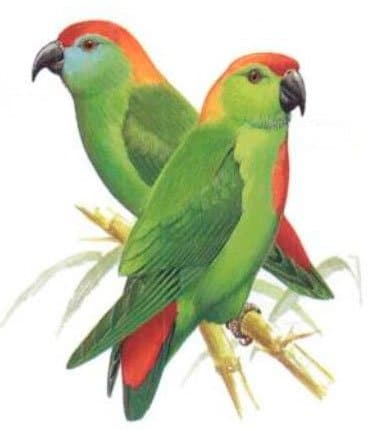
The Black-billed Hanging Parrot (2) is a subspecies of the Colasisi (Loriculus philippensis) being the only member of the genus, in the Sulu archipelago. The combination of the Red Crown on front, merging Orange gold neckband, and the black Bill are the brand identity of the Black-billed Hanging Parrot for both sexes. Aside from lacking these features, the most similar species within the subspecies of Loriculus philippensis, the L. p. apicalis and L. p. dohertyi, they have the necks much more of orange-red color and a strong orange color shawl in broadcast.

The female of the Ceylon Hanging-Parrot has the Red Crown, reddish diffusion in the mantle, peak red and a whitish iris (males do not have the Red bib of birds of Sulu).

The front of the Crown of the Black-billed Hanging Parrot is red, shading back in Orange and yellow in the back of the Crown, with a clear line of demarcation of the green mantle; bright green cheeks and Lores. Orange robe loosely washed in the Center; rump and tail coverts bright crimson (Blue Suffusion on sides of rump). Wings green brilliant with vane internal to blackish flight feathers. Feathers of the wings of Turquoise Green: below, the wings of blue. The Chin and throat bright Scarlet; rest of the underparts of bright green. Upper, the Green tail; Blue below. the black beak; Brown irises; Orange to greyish legs.

Habitat:

The species is little known, but their habits and ecology are presumably similar to those of the Colasisi. Commonly found in front of coconut groves on the coast, inside you have registered in forests, as well as in partially cleared areas. Observed feeding on flowers of Palm and flying between the trees.

Reproduction:

The breeding season starts around February and may continue until may. An average clutch can coasts of 2 to 4 eggs. Parents make their nests on top of the cavities of the trees.

Food:

Their natural diet consists of nectar, seeds, red fruits (especially wild figs), berries and flowers

Distribution:

Loriculus-bonapartei-Distribucion
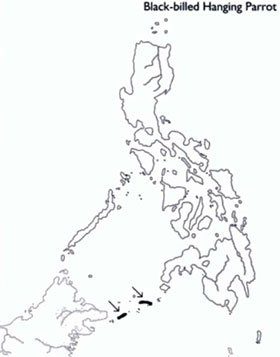
Restricted to islands in the Sulu archipelago. Philippines, among them: Sibutu, Bongao, Sanga Sanga, Manuk Manka, Tawitawi, Siasi and Jolo.

Conservation:

There is no data

"Black-billed Hanging Parrot (2)" in captivity:

Captive breeding of this species has rarely been achieved.; It has however occurred in communal aviaries.

Alternative names:

Black-billed Hanging Parrot, Black-billed Hanging-Parrot (ingles).
Coryllis de Bonaparte, Coryllis ร  bec noir (French).

scientific classification:

Order: Psittaciformes
Family: Psittaculidae
Scientific name: Black-billed Hanging Parrot
Citation: Souance, 1856
Protonimo: Loriculus Bonaparte

————————————————————————————————

ยซLoriculus bonaparteiยป (Black-billed Hanging Parrot)


Sources:

– Avibase
– Parrots of the World โ€“ Forshaw Joseph M
– Parrots A Guide to the Parrots of the World – Tony Juniper & Mike Parr