โ–ท The world of Pets: Dogs, cats, birds, reptiles, amphibians

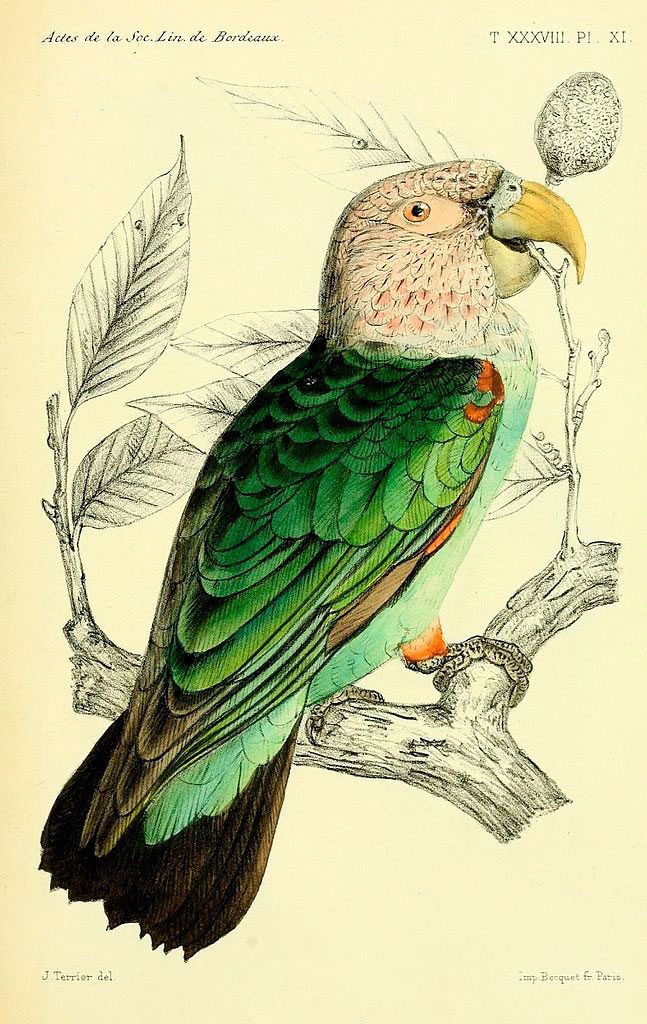
Brown-necked Parrot
Poicephalus fuscicollis

Brown-necked Parrot

Content

Description:

32 cm.. length and weight between 310-400 g..

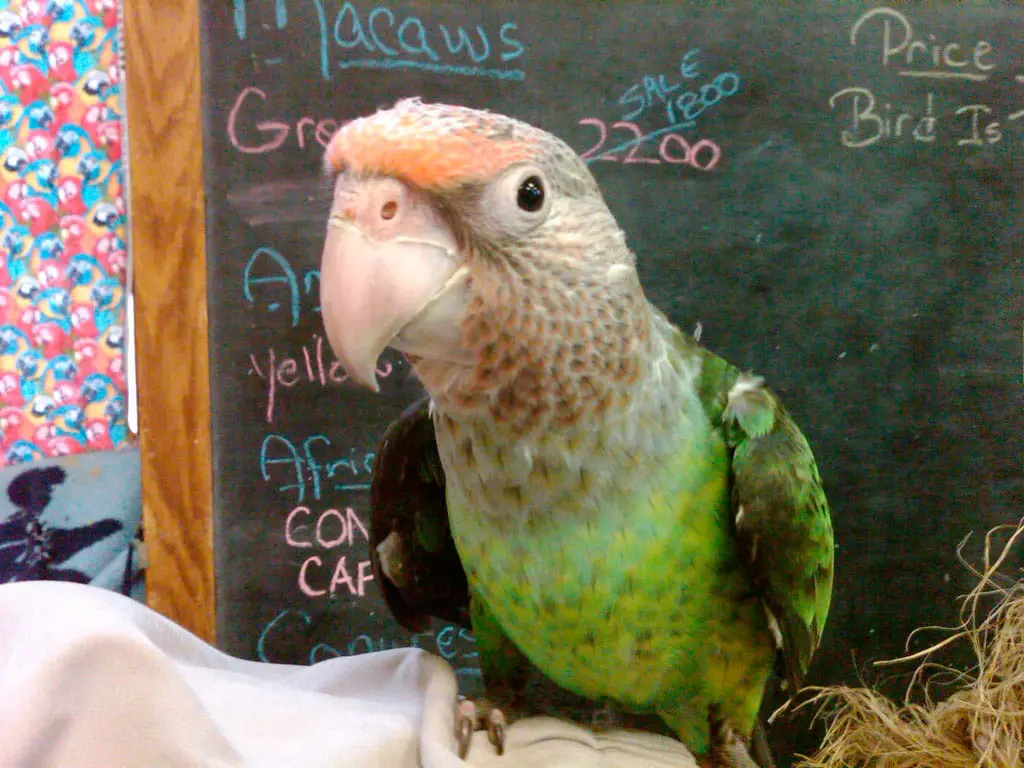
The Brown-necked Parrot (Poicephalus fuscicollis) has a plumage variable; head and gray to brown "neck" / light pink, slightly festooned with orange / brown; band orange / red through crown on female (absent in the males); back and wings, dark green; rump and underparts, green; the thighs, bend of wing and the carpal edge, red / orange; tail black / brown; irises dark brown; eye ring white / grey; bill color horn.

Immature with the head and the neck, green to yellow / brown; body dark green / oliva.

Taxonomic status:

In a study initiated in 1992, the taxonomic status of Lorito was revised Robusto (Poicephalus robustus) (Gmelin), and two species were proposed; Poicephalus robustus, restricted to montane forests of southern Africa, Poicephalus fuscicollis suahelicus, with wider distribution in wooded areas, and Poicephalus fuscicollis fuscicollis, similar to the Poicephalus fuscicollis suahelicus ostensibly, but with discontinuous, restricted to a narrow range of forests and West Africa.

Description 2 subspecies:

  • Poicephalus fuscicollis fuscicollis

    (Their Robust de Kuhl) (Kuhl, 1820) – Nominal.


  • Poicephalus fuscicollis suahelicus
  • Poicephalus fuscicollis suahelicus

    (Gray-headed parrot) (Reichenow, 1898) – With a plumage variable; head and neck silver / grey, festoneado slightly orange / brown; band orange / red through crown on female (absent in the males); back and wings, dark green; rump and lower partess, green / blue ; the thighs, bend of wing and the carpal edge, orange / red; tail black / brown; irises dark brown; eye ring white / grey; bill color horn.

Habitat:

Usually, prefers habitats of forests, as Mopane (Colosphermum mopane), miombo (Brachystegia) and riparian forests.

Most populations are residents but in the dry season become nomads, wandering in search of food.

Reproduction:

Nest in natural cavities of trees, usually on the trunk or at the bottom of a branch. The laying is of 2-4 eggs, they are incubated only by the female during 28-30 days. The male contributes to providing food for the female and chicks. Them They learn to fly when they have a 68-83 days old, only become fully independent 4-5 months later.

Food:

It feeds almost exclusively on fruit, mainly foraging in the upper canopy, using its beak to climb branches. The following foods have been recorded in your diet:

โ€ข Sclerocarya birrea (Marula)
โ€ข Pseudolachnostylis maprouneifolia (Kudu-berry)
โ€ข Commiphora mollis (Velvet cork)
โ€ข Xanthocercis zambesiaca (Nyala tree)
โ€ข Terminalia (cluster leaves)
โ€ข Gmelina arborea (Melina)

Distribution:

It is distributed from South Democratic Republic of the Congo and Tanzania until Zambia, Angola, Malawi and South of Africa; It is rare in the Caprivi Strip (Namibia), North of Botswana, Zimbabwe, Mozambique, the Limpopo and Southeast of South Africa.

Distribution 2 subspecies:

  • Poicephalus fuscicollis fuscicollis

    (Kuhl, 1820) – Nominal. It inhabits most forests including mangroves and can be found in West Africa, from Gambia and South of Senegal to the North of Ghana and Togo.


  • Poicephalus fuscicollis suahelicus

    (Reichenow, 1898) – Is located in South Africa, North of Zimbabue, Mozambique, areas Namibia, Angola, Zambia, North of Tanzania, Burundi, Rwanda and the southern part of the Sudafrican republic.

Conservation:


minor concern


โ€ข Current category of the Red List of the UICN: Least concern.

โ€ข Population trend: Decreasing.

This species has a extremely large range and therefore it is not close to the thresholds for Vulnerable under the criterion of size range (Extension <20,000 km2 combinada con un tamaรฑo de rango decreciente o fluctuante, extensiรณn o calidad de hรกbitat o tamaรฑo de poblaciรณn y un pequeรฑo nรบmero De lugares o fragmentaciรณn severa). A pesar de que la population trend appears to be declining, do not believe that the decline is fast enough for approaching the threshold of vulnerable under the criterion of population trend (> 30% decline in ten years or three generations). The population size has not been quantified, but it is not believed to be close to the thresholds for Vulnerable under the criterion of population size (<10.000 individuos maduros con una disminuciรณn continua estimada> 10% in ten years or three generations or a population structure). For these reasons, the species is evaluated as least concern.

Local and mostly uncommon throughout the range, Although more numerous and frequent in Ghana. South Subspecies considered vulnerable in South Africa where, although the erratic movements give the impression that the population fluctuates, It has suffered a decline due to the capture of the LBMs, the habitat destruction and persecution by farmers of pecan nuts; There are only fragmented patches of native vegetation. Generally rare or rare across West Africa (except Ghana).

We know very little about the biology on the loose subspecies Poicephalus fuscicollis suahelicus.
Although it has a very wide distribution area and is not classified as threatened, an analysis of the UICN and CITES recorded significantly high trafficking of Poicephalus robustus (including the Poicephalus fuscicollis suahelicus) between 1991 and 1995, It is involving a risk to natural populations. The lack of data on the ecology and behavior of this species restricts the establishment of the necessary conservation measures to effectively protect and manage the populations..

"Brown-necked Parrot" in captivity:

It easily adapts to captivity and is seen in the pet trade.

Alternative names:

Brown-necked Parrot, Angola Brown-necked Parrot, Brown-necked Parrot (Brown-necked), Gambia Brown-necked Parrot, Uncape Parrot (English).
Perroquet ร  cou brun, Perroquet ร  cou brun (nominal), Perroquet ร  cou brun (nominale), Perroquet ร  cou brun (race nominale) (French).
Graukopfpapage (German).
Brown-necked Parrot (Portuguese).
Loro de Cuello Marrรณn, You You Fuscicollis (espaรฑol).


scientific classification:

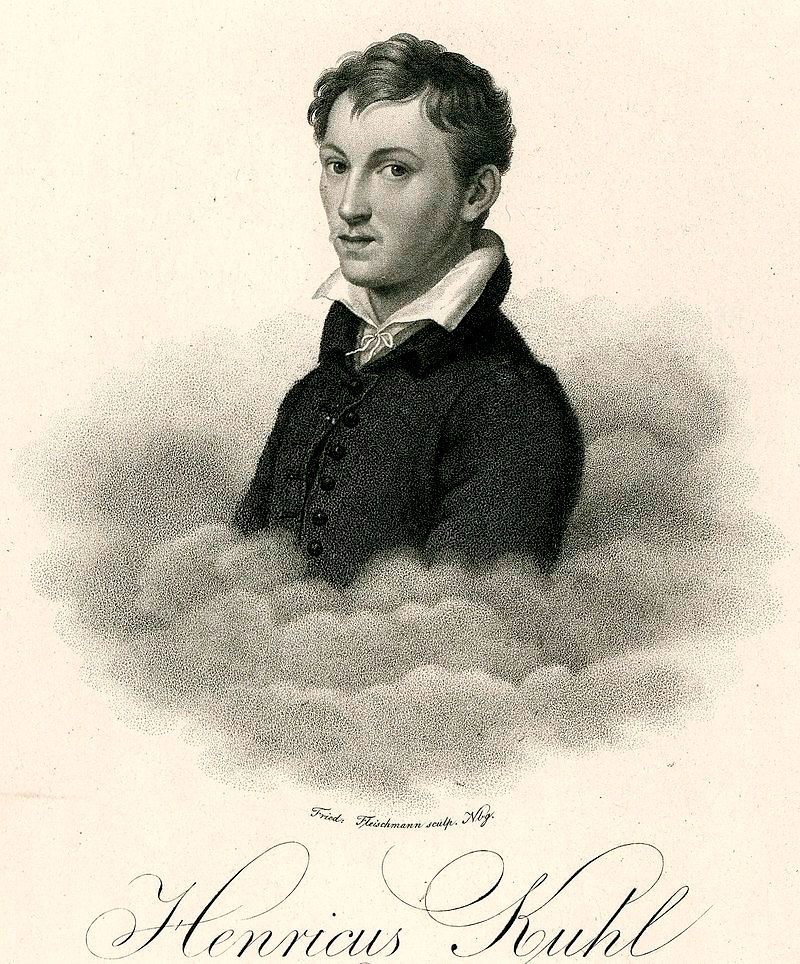
Kuhl, Heinrich
Heinrich Kuhl

Order: Psittaciformes
Family: Psittacidae
Genus: Poicephalus
Scientific name: Poicephalus fuscicollis
Citation: (Kuhl, 1820)
Protonimo: Psittacus fuscicollis


Images "Brown neck parrot":

Poicephalus [robustus or fuscicollis] suahelicus

Poicephalus [robustus or fuscicollis]

Poicephalus [robustus or fuscicollis] suahelicus

Poicephalus [robustus or fuscicollis] suahelicus

Videos "Brown-necked Parrot"

"Brown neck parrot" (Poicephalus fuscicollis)


Sources:

Avibase
– Parrots of the World โ€“ Forshaw Joseph M
– Parrots A Guide to the Parrots of the World – Tony Juniper & Mike Parr
– Birdlife
Parrots.org

Photos:

(1) – Youth, captive, friendly Poicephalus robustus fuscicollis by Bob CorriganFlickr
(2) – Brown-necked Parrot By Tremeau de Rochebrune, Alphonse [CC BY 2.0 or Public domain], via Wikimedia Commons

Sounds: Peter Boesman (Xeno-canto)
โ–ท The world of Pets: Dogs, cats, birds, reptiles, amphibians

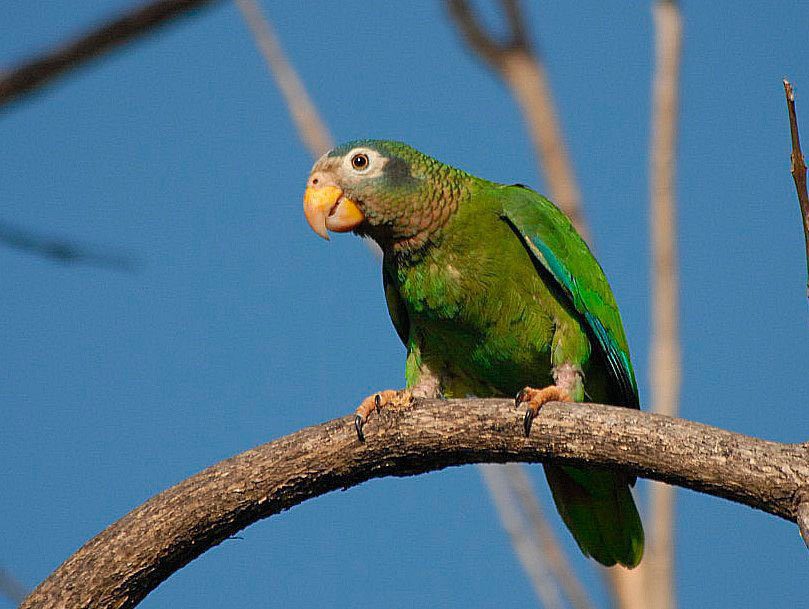
Yellow-billed Parrot
Amazona collaria

Yellow-billed Parrot

Content

Description:


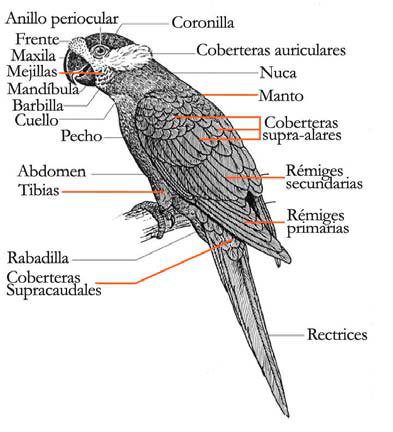
Anatomy-parrots

28 cm.. length and 260 g. of weight.

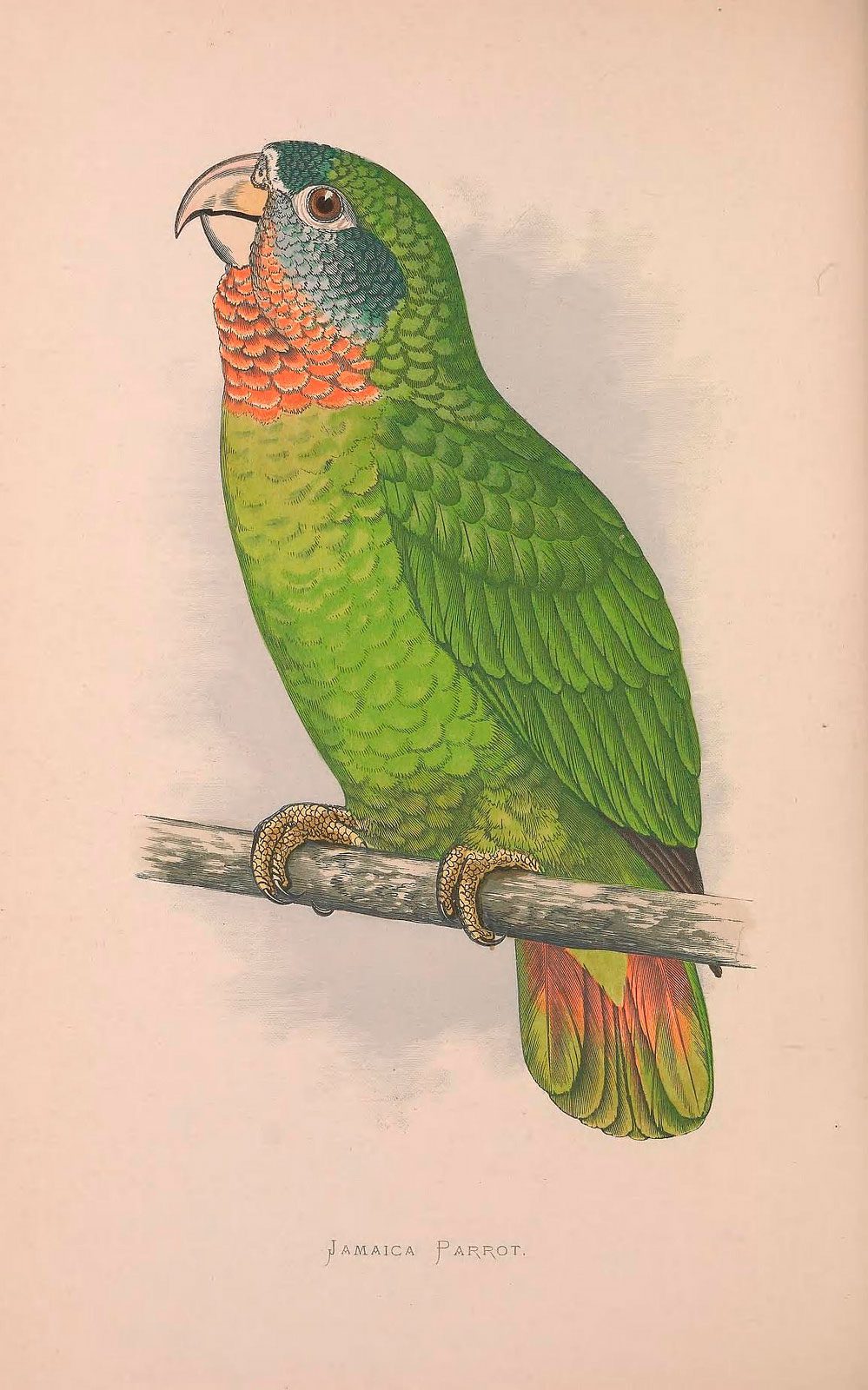
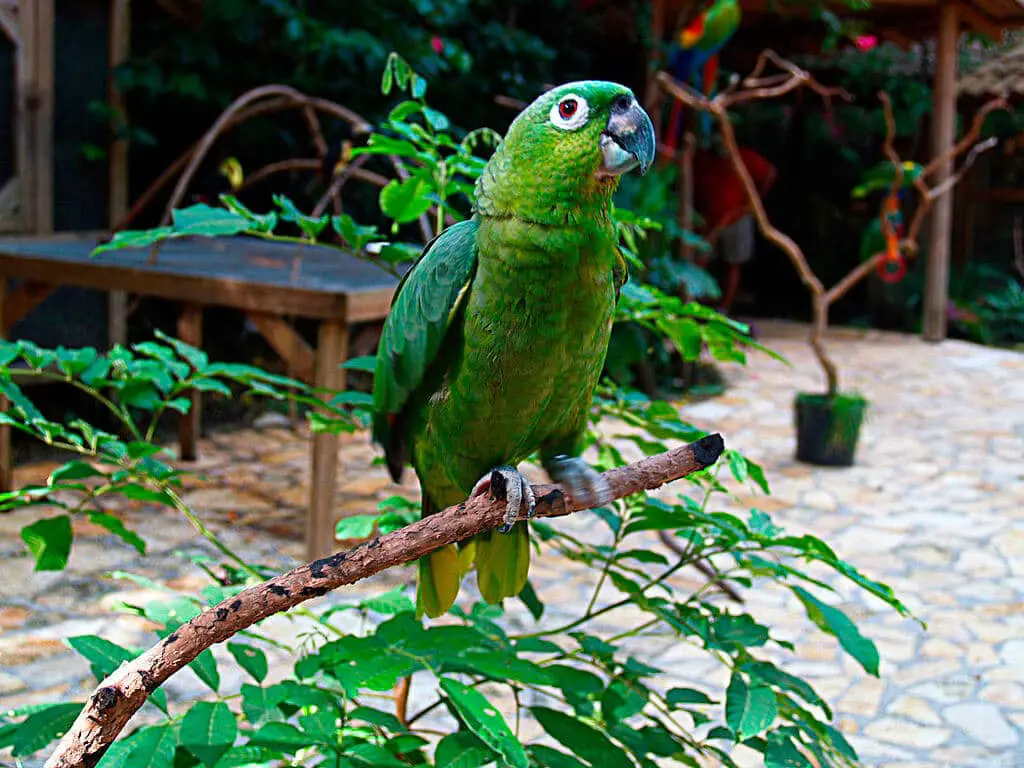
The Yellow-billed Parrot (Amazona collaria) It has a distinctive narrow band on forecrown white; lores and upper cheeks, with pale blue feathers; crown blue with black tips, merging on hindcrown; the sides of neck and nape into green feathers with black tips; feathers on the sides of neck sometimes basally pink; ear-coverts greyish-blue with black tips.

Mantle and back, green apple with black tips (the latter become less pronounced further down); lower back, the rump and uppertail-coverts, brighter yellowish green. big blankets, blue; the rest, green apple. Alula and outerweb of the flight feather, blue; innerwebs, dark gray. Under, the wings green, flight feather, bluish green.

Yellow-billed Parrot

Throat and lower cheeks, Rosaceae, sometimes with green tips; top of the chest to belly, yellowish green apple; undertail-coverts brighter yellowish green. Upper, the tail It is green with yellow and red points on the basis; undertail, paler and olive. Bill yellowish; irises brown; legs Rosaceae.

In the breeding season, the throat pink male it becomes brighter and plumage acquires green metallic tones. Both sexes are similar. Perhaps males average slightly larger. Immature similar to adult.

  • Sound of the Yellow-billed Parrot.

Habitat:

Video "Yellow-billed Parrot"

The Yellow-billed Parrot inhabit, mainly, in the middle level of humid limestone forests (annual rainfall between 1.900-4.500 mm) with (for example) Terminalia latifolia emerging and Cedrela odorata, most arid forests and upland areas planted with trees, especially the edge of the forest; from sea level up 1.200 metres in Cockpit Country.

Usually in pairs or flocks of up to about 40 individuals; larger gatherings where food is plentiful (for example, a report of 60 birds feeding on orange). They form large communal shelters out of breeding season and sometimes seen in association with the Black-billed Parrot (Amazona agilis) and Olive-throated Parakeet (Eupsittula nana). They forage closer to roosts as the day progresses.

Reproduction:

They nest in tree cavities, at higher altitudes the 15 m, frequently Brosimum, with enlarged holes in successive years. Often used initially cavity excavated by the Jamaican Crow (Corvus jamaicensis). Nesting also observed in rock cracks. Courtship registered in January laying of eggs, between 4-5, in March-May.

Food:

Foods reported include catkins of Cecropia, Anacardium occidentale dried fruits, fruits of Pimenta dioica and figs, and seeds of Melia azedarack; feeding birds took only orange seeds, squandering the fleshy part. They forage in middle and high levels.

Distribution and status:

Size of its range (breeding/resident): 7.200 km2

The Yellow-billed Parrot It is endemic to Jamaica, this species remains widespread, more than the other species of Jamaican Amazona, the Black-billed Parrot (Amazona agilis), although extensive surveys have not yet been carried out throughout the entire island. They are observed flocks of 50 to 60 individuals throughout the year, particularly in the non-breeding season, moving from inside the forest to the edge habitat to feed.

This species is particularly Cockpit Country, Mt. Diablo, and John Crow Mountains. A small population (presumably wild) also it sets to Hope Gardens in Kingston.

Recent studies indicate that Amazona collaria it is less abundant than Amazona agilis, possibly as a result of Amazona collaria It is a more colorful and preferred species in trade. while the Amazona agilis It is currently nested in all Cockpit Country, including plantation disturbed along the edges areas, the Amazona collaria now nests almost exclusively in relatively remote hinterlands.

Local reports suggest a significant overall decrease in collaria Amazona in Cockpit Country and a greater degree of threat to other species, the Amazona agilis.

The preliminary population counts suggest 5.000 individuals in Cockpit Country, Mt. Diablo, and John Crow Mountains (C. Levy in lilt, 1999).

Difficult to distinguish from Amazona agilis distance and possible misidentification, They may have affected the validity of some previous reports on their abundance and distribution.

Conservation:

State of conservation โ“˜


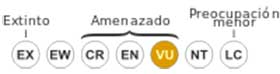
Vulnerable Vulnerable โ“˜ (UICN)โ“˜

โ€ข Current category of the Red List of the UICN: Vulnerable.

โ€ข Population trend: decreasing.

โ€ข Population size : 6000-15000

Rationale for the Red List category

This species is classified as Vulnerable because it has a small and fragmented range, with suitable habitat decline in extent, area and quality, mainly due to speak and forest clearing for bauxite mining. Numbers are also declining due to trampeo.

Justification of the population

The population size is preliminarily estimated to fall in the band between 10.000 and 19.999 individuals. This is equivalent to 6,667-13,333 mature individuals, rounded here to 6,000-15,000 mature individuals.

Justification of trend

No new data on population trends; However, It suspected that the species is declining at a slow pace, as a result of the loss and degradation of habitat and capture.

Conservation Actions Underway

โ€ข CITES Appendix II.

โ€ข protected under the Act Wildlife Protection Jamaica and Endangered Species Act of 2000, which together prohibit keeping the species as a domestic animal and local and international trade.

โ€ข It has been declared as threatened in Jamaica from 1986 (Juniper and Parr 1998).

โ€ข Since 1995 He has worked to delineate its distribution, estimate the size of the population, identify factors limiting reproductive performance and train local people in research methods and techniques for long-term monitoring (BirdLife Jamaica Parrot Project in little 1998, 2000).

โ€ข Habitat in the mountains Blue and John Crow It has been declared National Park, but the implementation and management are weak (BirdLife Jamaica Parrot Project in little 1998, 2000).

โ€ข There is a campaign public awareness high profile to prevent bauxite mining in Cockpit Country, by declaring the area closed to mining by the Minister's Discretion (S. Koenig in some. 2007).

โ€ข Discussions have started that, we wait, will lead to ban the importation of psittacine to Jamaica (S. Koenig in a bit., 2007).

โ€ข Exist captive breeding populations.

Conservation Actions Proposed

โ€ข Survey for delineate the range and evaluate the numbers (BirdLife Jamaica Parrot Project in little 1998, 2000).

โ€ข Declare a Cockpit Country closed to mining.

โ€ข Ensure the de facto protection of the Blue Mountains National Park and John Crow (BirdLife Jamaica Parrot Project in little 1998, 2000).

โ€ข Design and implement Educational programs in the occupied area of รขโ‚ฌโ€นรขโ‚ฌโ€นthe species (BirdLife Jamaica Parrot Project in little. , 1998, 2000) and develop captive breeding populations.

โ€ข Apply legal protection.

โ€ข Prohibit the importation of non-native parrots.

The Yellow-billed Parrot in captivity:

CITES Appendix II. protected under the Law on Protection of Wildlife Act Jamaica and Endangered Species 2000, which together prohibit keeping this species as a domestic animal, as well as local and international trade.
Exist captive breeding populations.

any trade should be avoided with this rare Amazona.
Each captive specimen of this species which is capable of reproducing, It is placed in a well managed captive breeding program and not be sold as a pet, in order to ensure its long-term survival.

Alternative names:

Yellow-billed Parrot, Jamaican Amazon, Jamaican Parrot, Red-throated Parrot, Yellow billed Parrot, Yellow-billed Amazon (English).
Amazone sasabรฉ (French).
Jamaicaamazone, Jamaikaamazone, Jamaikamazone (German).
Papagaio-da-jamaica (Portuguese).
Amazona de Pico Amarillo, Amazona Jamaicana Piquiclara (espaรฑol).


scientific classification:

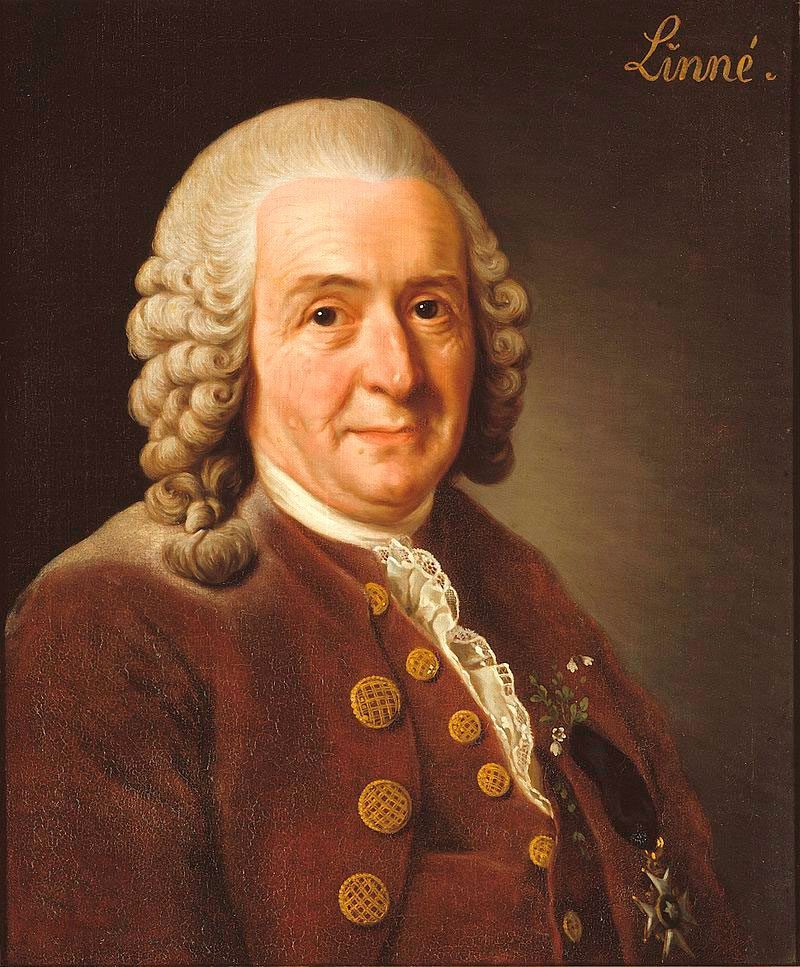
Carl Linnaeus

Order: Psittaciformes
Family: Psittacidae
Genus: Amazona
Scientific name: Amazona collaria
Citation: (Linnaeus, 1758)
Protonimo: Psittacus collarius


Images Yellow-billed Parrot:


Species of the genus Amazona


Sources:

Avibase
Parrots of the World โ€“ Forshaw Joseph M
Parrots A Guide to the Parrots of the World – Tony Juniper & Mike Parr
Birdlife

Photos:

(1) – Yellow-billed Amazon in the St. Andrew, Jamaica By Amazona_collaria_-St.Andrew-Jamaica-8a.jpg: Wayne Sutherland from Kingston, Jamaicaderivative work: Snowmanradio [CC BY-SA 2.0], via Wikimedia Commons
(2) – Amazona_collaria at Vienna Zoo, Schonbrunn Palace, Vienna, Austria By Alois Staudacher (Jamaica Amazone) [CC BY 2.0], via Wikimedia Commons
(3) – Yellow-billed Amazons in the Kingston, St. Andrew, Jamaica By Wayne Sutherland from Kingston, Jamaica (Pair of Yellow Billed Parrots) [CC BY-SA 2.0], via Wikimedia Commons
(4) – Yellow-billed Amazon (Amazona collaria) in Cockpit Country by Ron KnightFlickr
(5) – Yellow-billed amazon parrot (Amazona collaria), Jamaica By Charlesjsharp (Own work, from Sharp Photography) [CC BY-SA 4.0], via Wikimedia Commons
(6) – Parrots in captivity by Biodiversity Heritage LibraryFlickr

Sounds: Nick Komar, XC255118. accessible www.xeno-canto.org/255118.

โ–ท The world of Pets: Dogs, cats, birds, reptiles, amphibians

Northern Mealy Parrot
Amazona guatemalae

Northern Mealy Parrot

Content

Description:


Anatomy-parrots

38 cm.. length and 705-766 g. of weight.

The Northern Mealy Parrot (Amazona guatemalae) is a large parrot, mainly green, with a large bare periophthalmic white; head green, increasingly off toward the area nape.

The youth similar to adults but eyes brown.

taxonomy:

Treated for decades subspecifically within the species Amazona farinosa. Based on a genetic study of the year 2012 They came to be regarded as a full species.

Subspecies description:

  • Amazona guatemalae guatemalae

    (Sclater,PL, 1860) – Mostly green, with the crown, forecrown and lores, blue; carpal edge Green Wing / yellow; Feathers edges wing , blue; Red in the secondary feathers; feathers of the tail dark green to light green at the tip. Bill dark grey. Eye ring white, irises red.


  • Amazona guatemalae virenticeps

    (Salvadori, 1891) – Mostly green with less blue on the crown that the subspecies Amazona guatemalae guatemalae; yellower shades / green; carpal edge green / yellow, with varying shades of red; crown green; lores and forecrown, green tinted blue. Bill black / horn. Eye ring white, irises red.

Habitat:

Video "Northern Mealy Parrot"

They inhabit in dense humid lowland forests, especially near the gaps and edges; also they extend lower montane forest plantations and frequent, crops, gallery forests and deciduous forests.

They are in pairs or groups up 20 individuals, with larger congregations in feeding areas. Form noisy flocks in communal roosts high up in big trees out of breeding season, sometimes with several hundred birds. Well camouflaged while feeding quietly on the upper floors of the forest canopy.

Reproduction:

Season April-May Guatemala. Nests in tree holes, to 3-30 height m, once observed in the crack of a stone wall in a Mayan temple. The laying usually three eggs.

Food:

No known differences with Amazona farinosa.

Distribution:

Size of its range (Standard playback): 919.000 km2

It is present along the slope of Caribbean of Central America, from Veracruz and Oaxaca, Mexico, to the South by Belice, Guatemala, Honduras, Nicaragua and Costa Rica, to western Panama. They are also found in the shed peaceful of Costa Rica and West Panama. Its abundance varies locally, but it is common in many areas.

Subspecies distribution:

  • Amazona guatemalae guatemalae

    (Sclater,PL, 1860) – Caribbean coast from southeast Mexico to the Northwest of Honduras.


  • Amazona guatemalae virenticeps

    (Salvadori, 1891) – Since Honduras (Sula Valley) to western Panama.

Conservation:

State of conservation โ“˜


Near-threatened Near Threatened โ“˜ (UICN)โ“˜

โ€ข Current category of the Red List of the UICN: Near-threatened.

โ€ข Population trend: In decrease.

Rationale for the Red List category

He suspected this species is undergoing a rapid decrease in moderately population due to habitat loss and unsustainable levels of hunting and trapping.

Population size: Unknown

The population trend: In decline.

The Amazona mealy northern captive:

Little known in poultry.

Alternative names:

Mealy Parrot [guatemalae or virenticeps], Northern Mealy Amazon, Northern Mealy Parrot (English).
Amazone guatรฉmaltรจque, Amazone poudrรฉe [guatemalae or virenticeps], Amazone poudrรฉe [guatemalae ou virenticeps] (French).
Guatemalaamazone (German).
Northern Mealy Parrot (Portuguese).
Amazona harinosa norteรฑa (espaรฑol).


scientific classification:

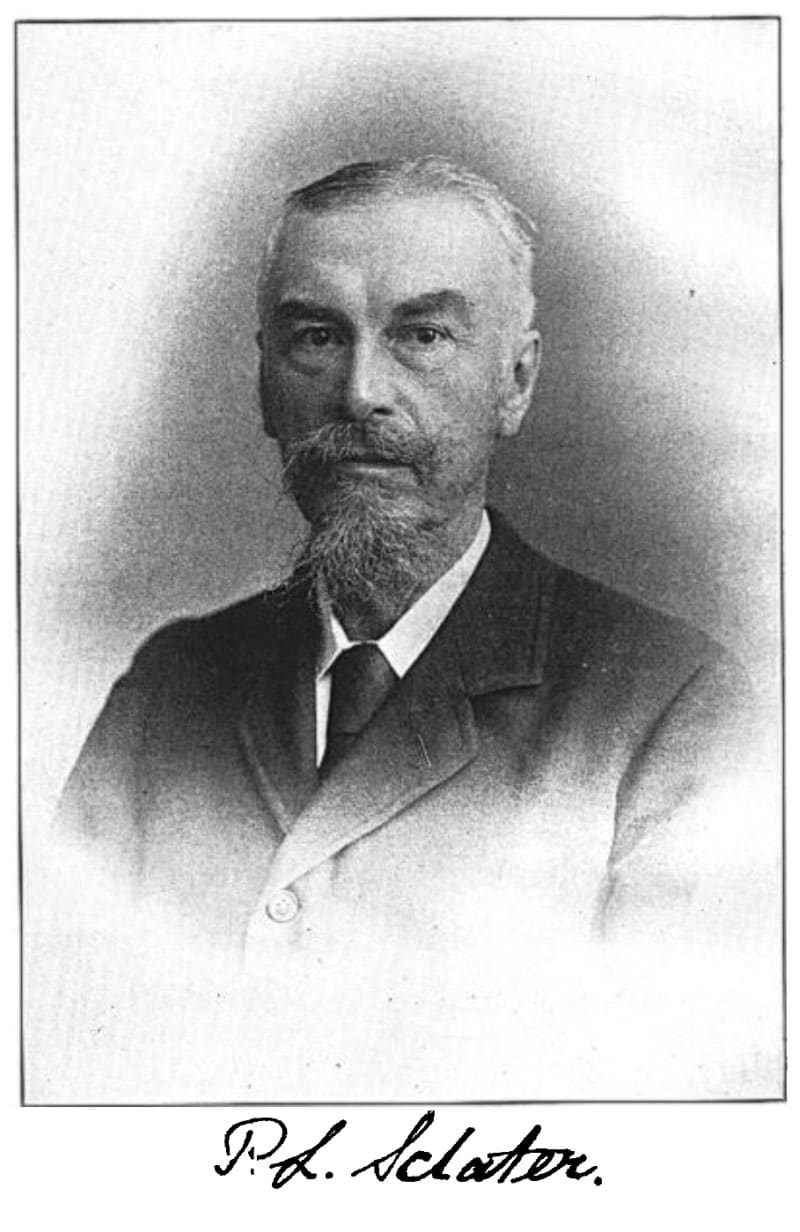
Philip Sclater
Philip Sclater

Order: Psittaciformes
Family: Psittacidae
Genus: Amazona
Scientific name: Amazona guatemalae
Citation: (Sclater, PL, 1860)
Protonimo: Chrysotis guatemalae

Images Northern Mealy Parrot:


Species of the genus Amazona


Sources:

Avibase
Parrots of the World โ€“ Forshaw Joseph M
Parrots A Guide to the Parrots of the World – Tony Juniper & Mike Parr
Birdlife

Photos:

(1) – Amazona farinosa guatemalae By Adalberto Hernandez Vega from Copan Ruinas, Honduras (Macaw Mountain Bird Park – Copan Ruinas, Honduras) [CC BY 2.0], via Wikimedia Commons
(2) – Guatemalaamazone Amazona farinosa guatemalae By Martingloor (Own work) [CC BY-SA 4.0], via Wikimedia Commons
(3) – Amazona farinosa guatemalae by Ulises MuรฑizFlickr
(4) – Amazona farinosa guatemalae By Katrin Lorenzen (IMG_4685) [CC BY-SA 2.0], via Wikimedia Commons
(5) –
Amazona farinosa guatemalae By Adalberto Hernandez Vega from Copan Ruinas, Honduras (Macaw Mountain Bird Park – Copan Ruinas, Honduras) [CC BY 2.0], via Wikimedia Commons

โ–ท The world of Pets: Dogs, cats, birds, reptiles, amphibians

Austral Parakeet
Enicognathus ferrugineus

Austral Parakeet

Content

Description:

28โ€“36 cm. length.

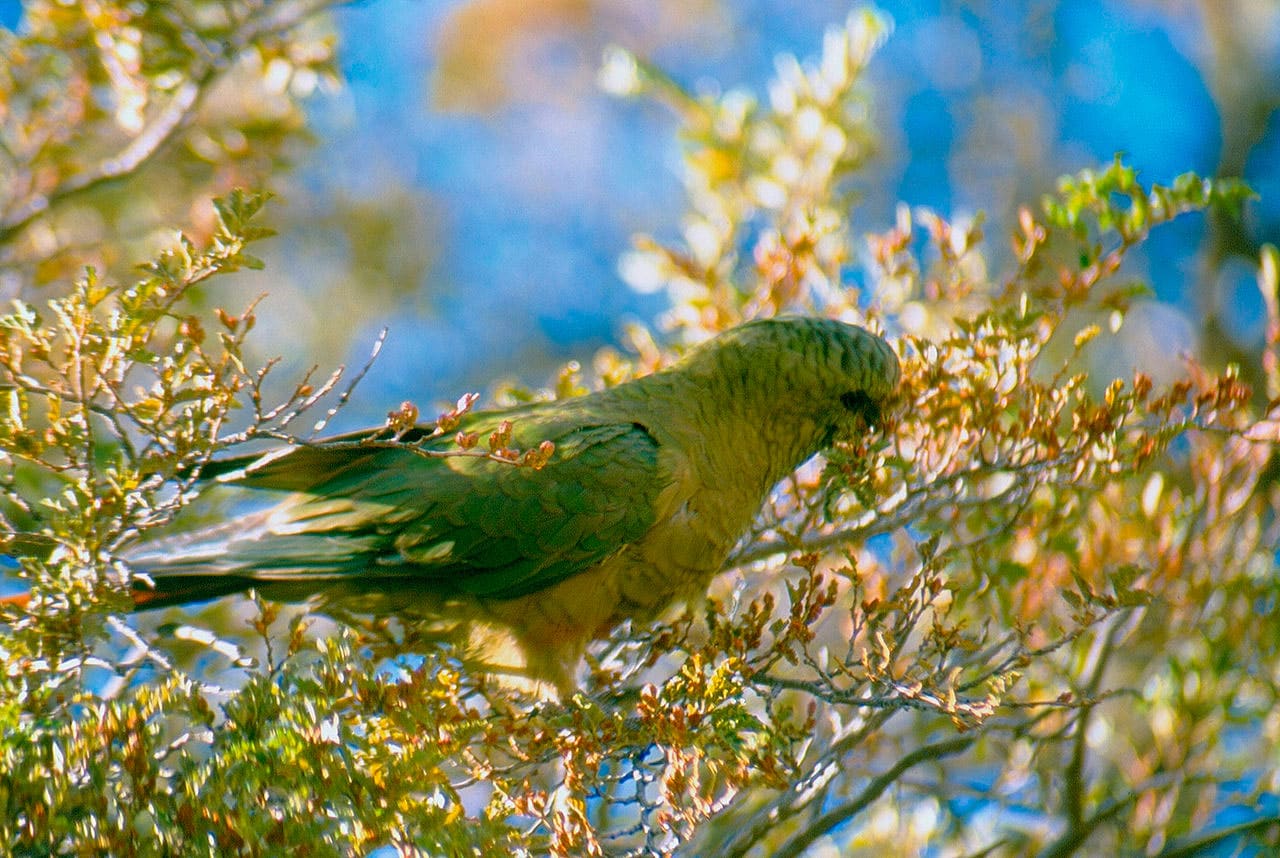
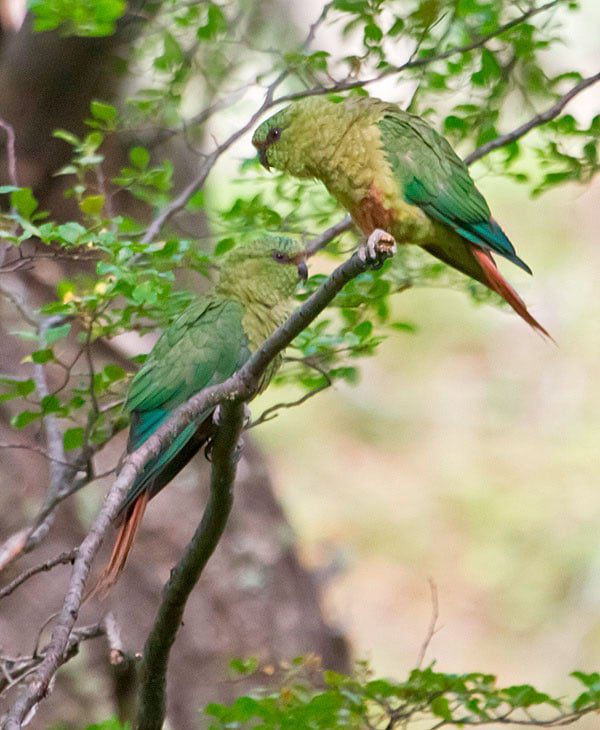
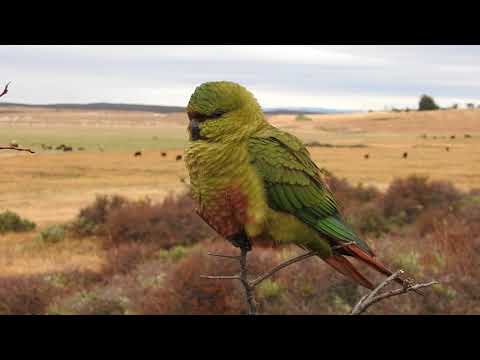
The Austral Parakeet (Enicognathus ferrugineus), is mostly green; the lores and forecrown rather dull brick-red; the front of the crown with yellow and green feathers in the center, and edges dark green olive feathers central part of the crown.

The feathers of the upperparts They are olive green with darker edges, giving a scalloped effect. The upperwing-coverts They are olive color with dark margins. Flight feathers green with metallic blue suffusion. Underwing-coverts green with dark tips; bottom of the flight feather pale grey. The underparts They are mainly pale green olive, with darker margins (except in the the thighs) and a large opaque red spot on the central belly. In the long run tail It is dark red off above; pale grayish below. The upper jaw horn is dark colored with a black tip; the bottom is dark horn-colored; irises reddish brown; legs dark gray.

Austral Parakeet

Both sexes are similar. The immature It has a duller red on the head and patch in the belly red less dense and less extensive.

  • Sound of the Austral Parakeet.

Subspecies description:

  • Enicognathus ferrugineus ferrugineus

    (Statius Mรผller, 1776) – Nominal.


  • Enicognathus ferrugineus minor

    (Chapman, 1919) – Smaller and darker than the nominal, with a abdominal patch Red less extensive (sometimes absent).

Habitat:

Video – "Austral Parakeet" (Enicognathus ferrugineus)

Cachaรฑa (Enicognathus ferrugineus)

The Austral Parakeet occurs mainly in forests, including forests of Nothofagus, Araucaria and Quercus, but also in more open habitats with shrubs Berberis darwinii and Drimys winteri, also they visit cultivated areas, mainly at sea level in the southern part of the range, may reach 1200 meters and even 2.000 meters north. Observed in flocks of 10-15 individuals, coming to meet more than 100 birds outside the breeding period; flocks of 10 or more in Fire land with reports of attacks caused by Red-backed Hawk (Geranoaetus polyosoma).

In April and before the arrival of winter flocks leave the mountains to take refuge in lower valleys of lower altitude.

Reproduction:

They nest in the cavity of the trees, filling very deep holes with twigs and branches where building nests are no cavities available. The breeding season It comprising the months of November to December. Clutch 4-8 eggs. To the 26 days the chicks are born, emplumรกndose to 7-8 weeks.

Food:

predominantly eat seeds (can cause damage to grain crops). Its diet includes herbaceous and bamboo seeds, Drimys winteri, acorns and nuts Araucaria, fruit, berries and sprouts p. Nothofagus and bulbous roots.

Distribution and status:

Extending its range (reproduction / residents): 2.010.000 km2

Distributed by the south end of South America, psittacine distribution is the southernmost in the world.

They can be observed from Land of Fire north through Chile to province Oโ€™Higgins and east of Andes in Argentina, extending through Santa Cruz, Chubut, Black river Western and Neuquรฉn Western.

Usually residents, even in the extreme south, although the foothills move to raise (at least in Land of Fire) with some predictable local movements in the north. generally common, It is very abundant in the wooded coast Land of Fire. Large areas remain intact habitat and inhabiting several large protected areas.

Very rare in captivity.

Subspecies distribution:

Conservation:

State of conservation โ“˜


minor concern Minor Concern โ“˜ (UICN)โ“˜

โ€ข Current category of the Red List of the UICN: Least concern.

โ€ข Population trend: Stable.

โ€ข Population size : Unknown.

Justification of the Red List of the Category

This species has a very large range, and therefore does not approach the thresholds for Vulnerable under the range size criterion. The trend population seems to be stable, and therefore the species does not approach the thresholds for Vulnerable according to the population trend criterion. (> 30% decrease of more than ten years or three generations). The population size has not been quantified, but are not believed to approach the thresholds for Vulnerable based on population size criteria (<10.000 individuos maduros con una disminuciรณn continua estimada en> 10% in ten years or three generations, or in a particular population structure). For these reasons, the species is evaluated as Least concern.

Justification of the population

The world's population has not been quantified, but this species is described as ‘quite common(Stotz et to the. (1996).

Justification trend

The population suspected to be stable in the absence of evidence of any reduction or substantial threats.

"Austral Parakeet" in captivity:

Very rare in captivity.

Chilean law prohibits the purchase, sale and possession of this magpie.

If you have a Austral Parakeet I recommend you give it to SAG or the Center for Rehabilitation of Wildlife of Codeff (rehabilita@codeff.cl, background: 777 25 34 – Santiago), because in that place you will come across many other parrots of the same species that suffered the same process, and specialized people who care very well, TO THEN RETURN THEM TO THEIR NATURAL HABITAT.

Alternative names:

Austral Conure, Austral Parakeet, Emerald Conure, Emerald Parakeet, Magellan Conure, Magellan Parakeet (English).
Conure รฉmeraude, Conure magellanique, Perriche magellanique, Perruche magellanique (French).
Smaragdsittich, Smaragd-Sittich (German).
Periquito-austral (Portuguese).
Cachaรฑa, Cachaรฑa austral, Cotorra Austral, Cotorra Cachaรฑa (espaรฑol).

scientific classification:

Formerly separated from the monospecific genus Microsittace.

Order: Psittaciformes
Family: Psittacidae
Genus: Enicognathus
Scientific name: Enicognathus ferrugineus
Citation: (Statins Mulller, 1776)
Protonimo: Psittacus ferrugineus

Images Austral Parakeet:


Species of the genus Enicognathus

Sources:

Avibase
– Parrots of the World โ€“ Forshaw Joseph M
– Parrots A Guide to the Parrots of the World – Tony Juniper & Mike Parr
Birdlife

Photos:

(1) – Austral Parakeet (also known as Austral Conure or Emerald Parakeet) in Torres del Paine National Park, Chile By Miguel Vieira [CC BY 2.0], via Wikimedia Commons
(2) – Two Austral Parakeets in Tierra del Fuego, Argentina By Francesco Veronesi [CC BY-SA 2.0], via Wikimedia Commons
(3) – Austral Parakeet (Enicognathus ferrugineus) seen near Laguna Onelli, Glaciers National Park, Santa Cruz, Argentina By Fabienkhan (Personal Picture) [CC BY-SA 2.5], via Wikimedia Commons – credit : Fabien Dany – www.fabiendany.com
(4) – Cachaรฑas in San Martin de los Andes, Province of Neuquen, Argentina By Ignsal (Own work) [Public domain], via Wikimedia Commons
(5) – An Austral Parakeet in Magallanes Province, Chile By Paulo Fassina (Parrot EatingUploaded by Snowmanradio) [CC BY-SA 2.0], via Wikimedia Commons
(6) – Austral Parakeet – Torres del Paine National Park, Chile by Eleanor BriccettiFlickr

Sounds: Bobby Wilcox, XC236937. accessible www.xeno-canto.org/236937

โ–ท The world of Pets: Dogs, cats, birds, reptiles, amphibians

Crimson Shining-Parrot
Prosopeia splendens

Crimson Shining-Parrot

Content


Anatomy-parrots

Description:

42 cm. length and 280 g. of weight.

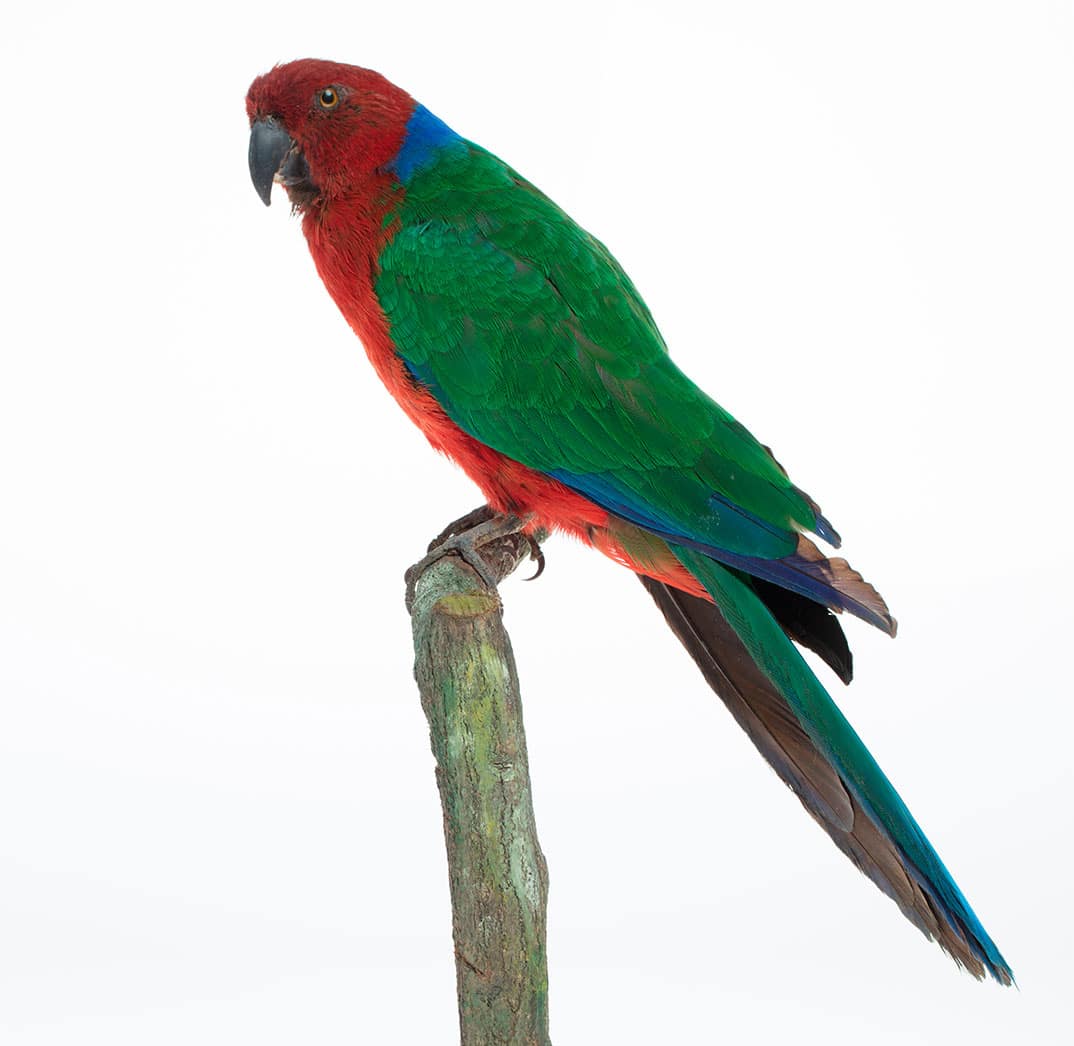
The Crimson Shining-Parrot (Prosopeia splendens) is very similar to the Red Shining-Parrot (Prosopeia tabuensis). has the head and underparts red intense and bright, slightly darker in ears; broad collar rear violet-blue, which becomes turquoise toward the trailing edge. The rest of upperparts bright pale green with darker edges and fine bright in back and wings. Coverts medium green, greater coverts blue green; primary coverts and primaries deep blue-violet with black on innerwebs; secondaries blue to green in the innermost feathers. Underwing-coverts marked blue-green and red; axillary pale green. Uppertail green with blue tip, violet blue with side feathers innerwebs blackish; undertail black. Bill black; irises red-orange; legs black.

The male has the bill and head bigger

taxonomy:

It was generally considered consanguineous with the Prosopeia Tabuensis, but may be closer Prosopeia Personata. Monotypic.

  • Escarlata sound Papagayo.

Habitat:

It is found in forests, farmland and villages, both in the lowlands and hills.

Reproduction:

Food, habits and reproductive behavior presumably similar to those of the Red Shining-Parrot (Prosopeia tabuensis) With which, until very recently, was considered consanguineous.

Food:

Similar al al Red Shining-Parrot (Prosopeia tabuensis).

Distribution:

Extension of the distribution (breeding/resident): 910 km2

It is endemic Fiji, where it is found naturally in islas de Kadavu (including around Vunisea) and Ono. It has also been introduced in Viti Levu and probably in the Group Yasawa and Ovalau in the past (There are no recent records).

Conservation:


Vulnerable


โ€ข Current category of the Red List of the UICN: Vulnerable

โ€ข Population trend: decreasing.

The species may be declining in Viti Levu due to trade, although at present the possible negative effects of competition are not known with Masked Shining-Parrot (Prosopeia personata). It is estimated that the world population lies between 5.000 and 10.000 specimens. NEAR THREATENED.

Justification of the population

Although recent fieldwork on Kadavu has not focused specifically on this species, seems to occur in population densities similar to those of Masked Shining-Parrot (Prosopeia personata) (86 Crimson Shining-Parrot They were recorded in Kadavu 38 standardized observation times in the two studies BirdLife, similar to the average 1,9 of the Masked Shining-Parrot /time recorded in 18 sites across the Viti Levu). The Masked Shining-Parrot It was estimated at around 29 in native lowland forest birds / km2 (Jackson y Jit 2004). The area of รขโ‚ฌโ€นรขโ‚ฌโ€นdense forest and medium density Kadavu it's around of 225 km2 (National Forest Inventory 1991-1993), so a reasonable estimate of the population Crimson Shining-Parrot would be 6.000 birds or 4.000 mature individuals.

Conservation Actions Underway

Appendix II of the CITES. It is protected by law in Fiji, which has recently been revised, the old Law Poultry and game has been partly overtaken by the Law on Protection of Endangered Species, which provides protection (SPREP 2000, D. Watling a slightly. 2007). Conservation projects have reduced the trade in this species (Jackson y Jit 2004). Four communities have declared a protected area covering community 1.535 hectares of forest and local volunteers monitor bird populations and assess the state of the habitat on their own initiative (V. Masibalavu a slightly. 2007). Conservation actions aimed at fire prevention (including awareness following the amendment of the decree concerning arson) have improved in recent years (V. Masibalavu in litt. 2012, M. Tabudravu in little. 2012).

Conservation Actions Proposed

Establish standards for maintenance of parrots in captivity to reduce demand (SPREP 2000). Monitor the numbers caught and transported to Suva. Determining population densities in various habitats. Investigate breeding needs and success. Promote the creation of community forest reserves. Use as set species to promote ecotourism in Kadavu.

"Crimson Shining-Parrot" in captivity:

Captive numbers are unknown., and everything indicates that captive breeding has rarely been achieved. It is caught in small quantities, and islanders returning to the capital, Suva (Watling 2000), the birds are carried as a gift, and there is at least some illegal trade abroad (J. S. Kretzschmar a lie. 2000).

In the nineteenth century it was imported by zoos in London, Berlin and Hamburg. In the United States, He kept San Diego Zoo, which was partially successful with the offspring when a young man born in 1973,

As they are at serious risk of extinction, only the most experienced should attempt to keep them in their aviaries, and all captive bred should be better placed in breeding programs to establish a larger population and participate in the conservation of this bird species.

Alternative names:

Crimson Shining Parrot, Crimson Shining-Parrot, Kadavu Shining Parrot, Kandavu Shining Parrot, Kandavu Shining-Parrot (inglรฉs).
Perruche รฉcarlate, Perruche masquรฉe รฉcarlate (francรฉs).
Fidschi Sittich, Fidschisittich (alemรกn).
Papagayo Escarlata (portuguรฉs).
Papagayo Escarlata, Papgayo Escarlata (espaรฑol).

Clasificaciรณn cientรญfica:

Peale, Titian Ramsay


Orden: Psittaciformes
Familia: Psittaculidae
Gรฉnero: Prosopeia
Nombre cientรญfico: Prosopeia splendens
Citaciรณn: (Peale, 1848)
Protรณnimo: Platycercus splendens

Imรกgenes Papagayo Escarlata:

Videos del "Papagayo Escarlata"

Fuentes:

โ€ข Avibase
โ€ข Parrots of the World โ€“ Forshaw Joseph M
โ€ข Parrots A Guide to the Parrots of the World – Tony Juniper & Mike Par
โ€ข Birdlife

Fotos:

(1) – Auckland Museum [CC BY 4.0]

โ–ท The world of Pets: Dogs, cats, birds, reptiles, amphibians

Rainbow Lorikeet
Trichoglossus moluccanus

Rainbow Lorikeet

Content

Description ยซRainbow Lorikeetยป:

Of 25-30 cm. length; 70-169 grams and a wingspan of 46 cm..

Rainbow Lorikeet

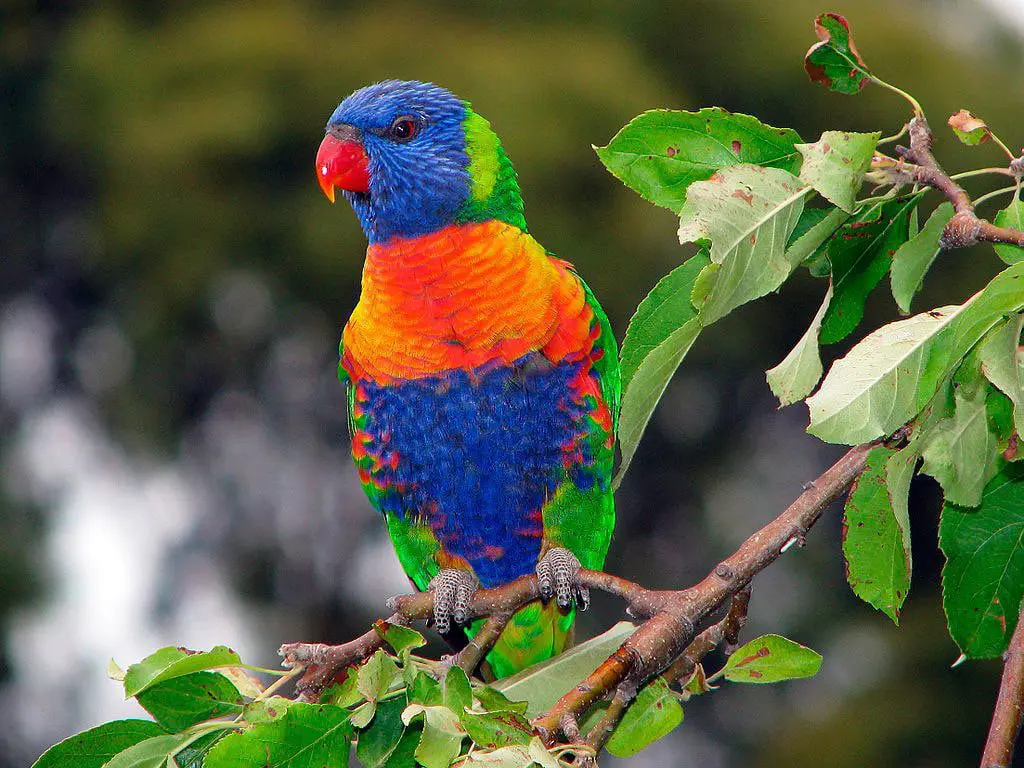
The plumage of the Rainbow Lorikeet (Trichoglossus moluccanus) is very bright. The head is deep blue with a neck greenish-yellow and the rest of the upperparts (wings, back and tail) are deep green. The chest is red with blue-black barring.. The belly is deep green, and the thighs and rump are yellow with deep green barring.. In flight, a yellow wing-bar contrasts clearly with the red underwing-coverts.

There is little to visually distinguish between the sexes; However, for an acute observer, their dimorphism is readily apparent.

The youth has bill black, which gradually brightens to orange in the adults..

The markings of Trichoglossus moluccanus resemble of the Coconut Lorikeet (Trichoglossus haematodus), but with a belly blue and breast with little or no blue-black barring..

Rainbow Lorikeet taxonomy

With one exception, the species have been treated so far as a group of subspecies within the extended group Coconut Lorikeet (Trichoglossus haematodus), but they differ from the Trichoglossus haematodus her pale red breast without bars ; its blue belly against green or blackish; its pale blue hood without black edge and its larger size.

The subspecies Trichoglossus moluccanus eyrei (South of Australia) It is included within the species nominal. Small hybrid population of present species paired with the Musk Lorikeet (Glossopsitta concinna) in SE Southern Australia (Yorke Peninsula).

  • Sound of the Rainbow Lorikeet. (1)

(1) Some species are under extreme pressure because of traps and harassment. So, the open availability of high-quality recordings of these species may further worsen the problems, this being the reason why downloading these recordings is off. In conclusion, recorders themselves are free to share these files on xeno-canto, but they will have to approve access to these recordings.

We do not take this action lightly, and we wish it wasn't necessary, but we are convinced that the negative impacts of offering easy access to these recordings outweigh the benefits. To access these recordings, You can contact directly with the recorder.

Subspecies description:

  • Trichoglossus moluccanus moluccanus

    (Gmelin, 1788) – Nominal.

  • Trichoglossus moluccanus septentrionalis

    (Robinson, 1900) – As the species nominal but with brighter purple/blue stripes on the head and tail shorter.

Habitat:

The Rainbow Lorikeet often they travel together in pairs and occasionally respond to calls to fly like a flock, then they disperse again in pairs. Couples aggressively defend their feeding and nesting against other lstallion arcoiris and other bird species. Not only they scare off smaller birds, as the Noisy Miner (Manorina melanocephala) and the Brush Wattlebird (Anthochaera chrysoptera), but also to larger, as the Australian Magpie (Gymnorhina tibicen).

Reproduction:

In Australia, Reproduction usually takes place during spring (from September to December), but it may vary from one region to another with changes in food availability and climate. Sites nesting They are variable and may include gaps as tall trees eucalyptus, trunks of palm trees or overhanging rocks.

Couples sometimes nest in the same tree with other couples Rainbow Lorikeet or other species of birds. The clutch size is between one and three eggs, which are incubated for about 25 days. Incubation tasks are performed by the female alone.

The Rainbow Lorikeet are mostly monogamous and remain paired for long periods, if not for life.

Food:

Nectar and pollen of native trees and shrubs, especially eucalyptus (for example, Eucalyptus gummifera, Eucalyptus maculata).

Rainbow Lorikeet distribution:

Extension of the distribution (breeding/resident): 3,810,000 km2

Endemic East and Southeast Australia (of Cape York to the Eyre Peninsula, South of Australia)

They were recorded for the first time in Perth in 1968 and the population is believed to have come from fewer than ten birds that were deliberately released or had escaped from aviaries.

Since the beginning of the decade 1960, the population has grown exponentially and has spread rapidly throughout 174 km2 metropolitan area. The current population is estimated at 8.400 birds and their range is expanding at a rate of 0,7 km per year.

wanderer Tasmania.

Subspecies distribution:

  • Trichoglossus moluccanus moluccanus

    (Gmelin, 1788) – Nominal.

  • Trichoglossus moluccanus septentrionalis

    (Robinson, 1900) – North of Queensland (Cape York Peninsula), in northwestern Australia; also the Torres Strait Islands (Boigu and Saibai except, at the north end) and it was introduced in the district of Perth, in southwest Australia..

Conservation "Rainbow Lorikeet":


minor concern

1. Current red list category of the UICN: Least concern.

2. The population trend: Decreasing.

3. Population size : Unknown.

Rationale for the Red List category

This species has a extremely large distribution area, and therefore does not approach the thresholds for Vulnerable under the criteria of size range (Extent of Occurrence <20,000 km2 combined with a decreasing area size or fluctuating distribution, extension / habitat quality, or population size and a small number of places or severe fragmentation). While the trend of the population seems to be decreasing, the decline is not believed to be rapid enough to approach the Vulnerable thresholds according to the population trend criterion (decrease of more than 30% in ten years or three generations).

The population size has not been quantified, but it is not believed to approach the thresholds for Vulnerable under the criterion of population size (<10.000 mature individuals with an estimated continuous decrease in> 10% in ten years or three generations, or with a specific population structure). For these reasons, the species is assessed as Least concern.

Justification of the population

Global population size has not been quantified, but the species is described as abundant in northern Australia and rare Tasmania (pit et to the. 1997).

Justification trend

They suspected that the population is declining due to unsustainable levels of exploitation.

Rainbow Lori Threats

The species has been the subject of a intense trade: from 1981, When it was included in the Appendix II of the CITES, they have been 100.388 individuals caught in international trade (UNEP-WCMC CITES Trade Database, January 2005).

In captivity:

Not very common. Its longevity It 20 years en libertad, 15-25 years in captivity and its market price is around wild birds 250 EUR.

Alternative names:

Rainbow Lorikeet, Rainbow Lorikeet (Rainbow) (English).
Loriquet ร  tรชte bleue (de Swainson), Loriquet ร  tรชte bleue (moluccanus), Loriquet arc-en-ciel, Loriquet de Swainson (French).
Regenbogenlori (German).
Lรณris-molucano, Periquito-arco-รญris (moluccanus) (Portuguese).
Lori arcoiris, Lori de Arco Iris (espaรฑol).


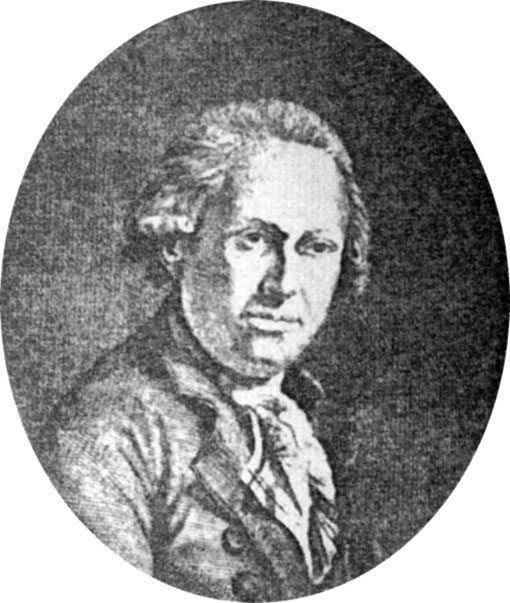
Gmelin Johann Friedrich

scientific classification:


Order: Psittaciformes
Family: Psittaculidae
Gender: Trichoglossus
Scientific name: Trichoglossus moluccanus
Subpoena: (Gmelin, JF, 1788)
Protonimo: Psittacus moluccanus

Images "Rainbow Lorikeet":

Videos "Rainbow Lorikeet"


"Rainbow Lorikeet" (Trichoglossus moluccanus)

โ–ท The world of Pets: Dogs, cats, birds, reptiles, amphibians

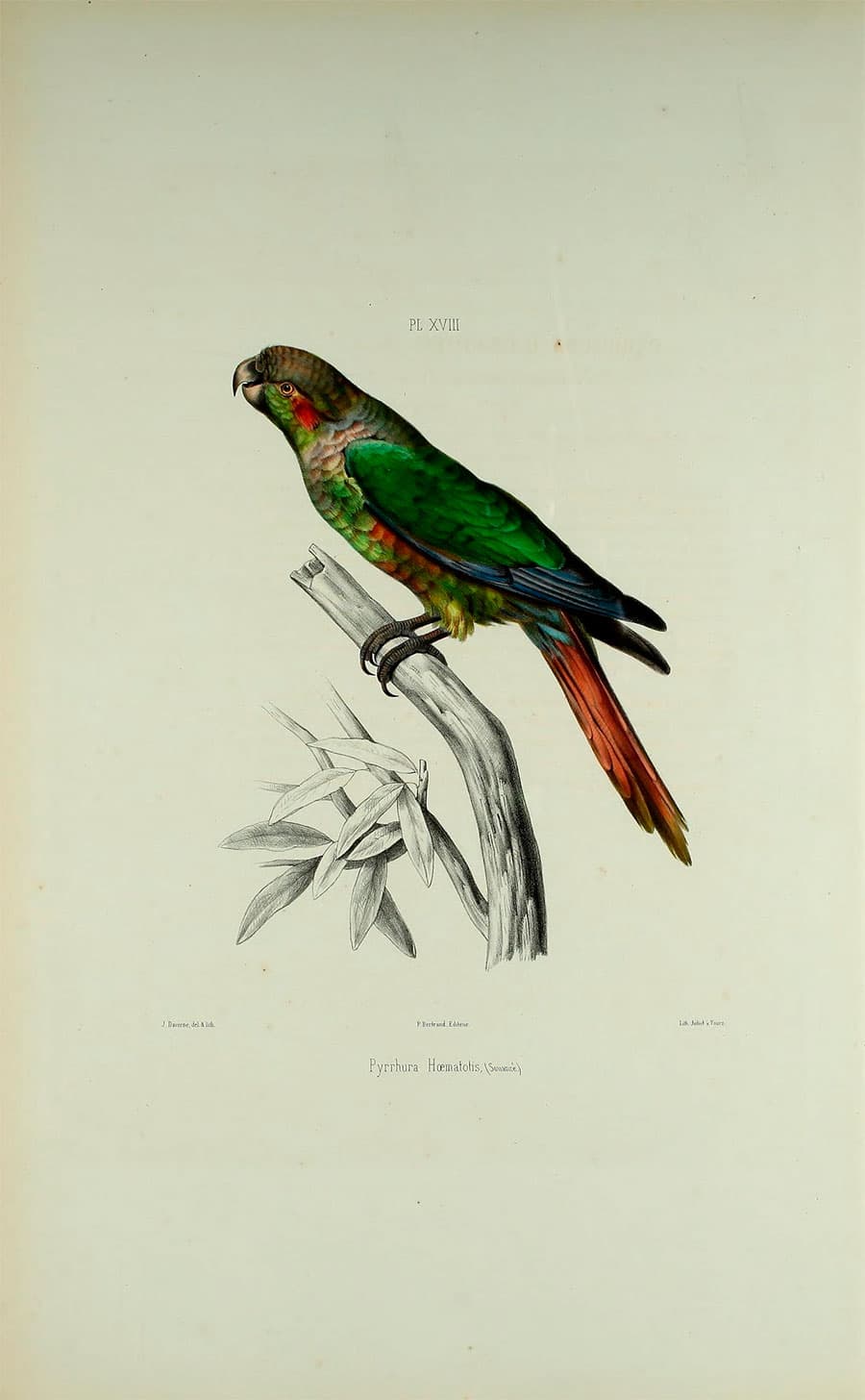
Red-eared Parakeet
Pyrrhura hoematotis

Cotorra Colirroja

Content

Red-eared Parakeet

Description:

25 cm.. height.

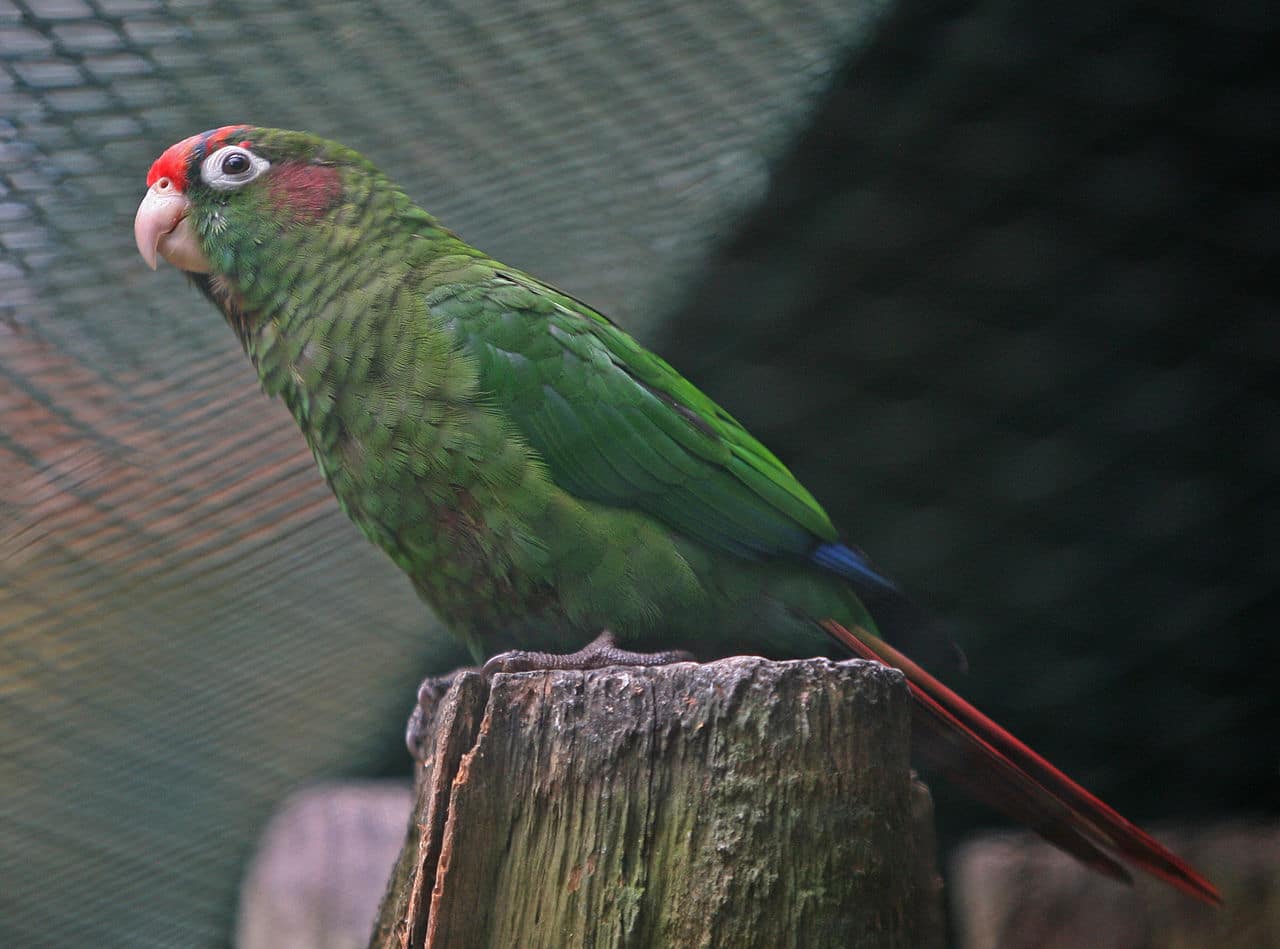
The Red-eared Parakeet (Pyrrhura hoematotis) It is distinguishable by the Brown of the forecrown with edges bluish to them feathers; cheeks green; crown and feathers of nape Green with tips more pale and yellowish. The upperparts green. Primary coverts and maybe some feathers in the area of the carpus, blue; other coverts green. Primaries Blue with black tips. Under wings with the lesser coverts green, the others coverts black. Throat and chest Brown olive with tones dark; margins to some feathers create a pattern squamous; sides neck also with effect squamous; belly and undertail-coverts Green with a patch Brown mal-definido in the center of the belly. Upper, the tail of color brown with tips from color olive; undertail, of color copper. Bill of color bone pink; Iris and legs brown.

Both of them sexes are similar. Immature not described.

Description 2 subspecies:

  • Pyrrhura hoematotis hoematotis

    (Souance, 1857) – Nominal.


  • Pyrrhura hoematotis immarginata

    (Zimmer & Phelps, 1944) – It has a narrow red line above the bill. What nominal but chest and sides of neck more green and with a pickling less obvious. Not there are tips yellowish in the feathers of the crown and nape.

Habitat:

They inhabit in montane and cloud forests with open areas and trees of low dispersion, often at the edge or in clear, mainly in altitudes of 1.000-2.000 m, Although there are report of the species at altitudes between 600 and 2.400 m. It is estimated that he performs altitudinal migrations. Gregaria, mainly seen in groups of 3-12 outside the breeding season, rarely in flocks of up to 100 individuals.

Reproduction:

Probably it breeding season be in the month of August (rainy season).

Food:

Poorly documented diet and breeding: the food known include guava (Psidium) and petioles some leafy trees, possibly to extract larvae of insects.

Distribution:

Size of the area of distribution (reproduction / resident): 14.300 km2

To the Red-eared Parakeet is known only in the coastal mountains north of Venezuela, with the westernmost record observed in Cubiro, Lara, the eastern-most in Miranda. But, Most of the records are from Aragua in Miranda; Cubiro is in fact the only known site in Lara and the population there is apparently discontinuous (subspecies Pyrrhura hoematotis immarginata). Diurnal movements occur from the mountains of the Highlands until the lowest feeding areas; also apparently some local seasonal movements guided by the availability of food.

Fairly common in most of its more restricted range and especially numerous in the Henri Pittier National Park; its status in Lara It is unknown. Much habitat right remains within the range outside the areas protected, and there is a rate of deforestation relatively low, but with constant habitat loss around Cubiro.

Absent or very rare in captivity.

Distribution 2 subspecies:

Conservation:

โ€ข Current category of the Red List of the UICN: Least concern.

โ€ข Population trend: Decreasing.

Justification of the population

The size of the world population It has not been quantified, but this species is described as ยซquite commonยป (Stotz et to the., 1996).

Justification of trend

It is suspected that the population is in decline due to ongoing habitat destruction.

"Red-eared Parakeet" in captivity:

Absent or very rare in captivity.

Alternative names:

Red-eared Parakeet, Blood-eared Conure, Blood-eared Parakeet, Red eared Parakeet, Red-eared Conure (English).
Conure ร  oreillons, Perriche ร  oreillons, Perruche ร  oreillons rouges (French).
Blutohrsittich, Blutohr-Sittich (German).
Tiriba-de-orelha-vermelha (Portuguese).
Cotorra Colirroja, Perico de Cuello Rojo (espaรฑol).
Perico Cola Roja (Venezuela).

scientific classification:

Order: Psittaciformes
Family: Psittacidae
Genus: Pyrrhura
Scientific name: Pyrrhura hoematotis
Citation: Souancรฉ, 1857
Protonimo: Pyrrhura hoematotis

Red-eared Parakeet images:


Red-eared Parakeet (Pyrrhura hoematotis)


Sources:

  • Avibase
  • Parrots of the World โ€“ Forshaw Joseph M
  • Parrots A Guide to the Parrots of the World – Tony Juniper & Mike Parr
  • Birdlife
  • Parrot Book, Parrots and macaws Neotropical

  • Photos:

(1) – Venezuelan endemic Red-eared Parakeet (Pyrrhura hoematotis) photographed in captivity in Mรฉrida, Venezuela By http://www.birdphotos.com (Own work) [CC BY 3.0], via Wikimedia Commons
(2) – Perico tail Red [Blood-eared Parakeet] (Pyrrhura hoematotis hoematotis) Place: The deer, Park national the Avila by barloventomagicoFlickr
(3) – Bando of parrots parakeet place: The deer, Park national Guaraira Repano by barloventomagicoFlickr
(4) – Pyrrhura hoematotis by Diana registerFlickr
(5) – Pyrrhura hoematotis by Diana registerFlickr
(6) – Iconographie des perroquets: Paris :P. Bertrand,1857 by Biodiversity Heritage LibraryFlickr

โ–ท The world of Pets: Dogs, cats, birds, reptiles, amphibians

Canary-winged Parakeet
Brotogeris versicolurus


Catita Versicolor

Content

Description:

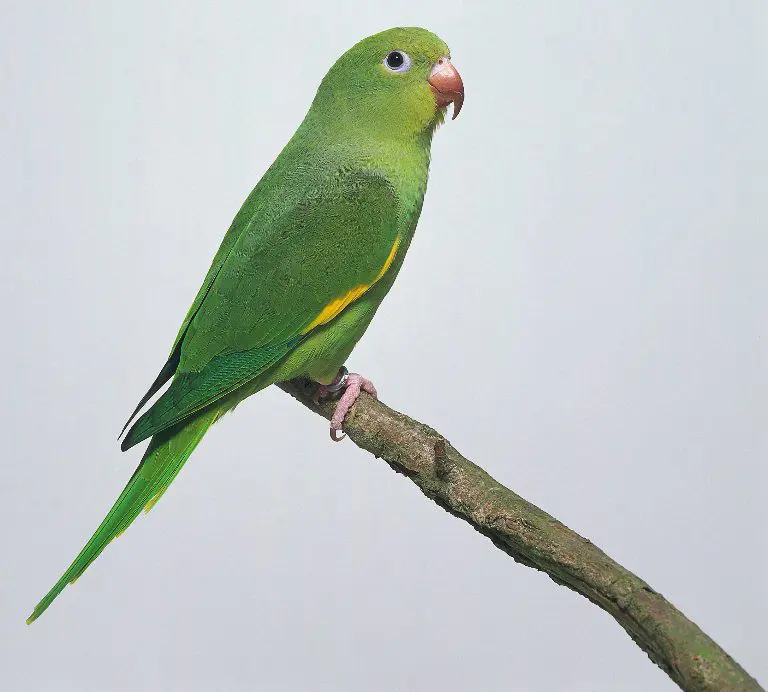
The Canary-winged Parakeet (Brotogeris versicolurus) measured between 24 and 25 height cm. Single parakeet with yellow and white patch and blue tip on the wing , tail green, long and acute (noticeable in flight).

Of overall green coloration, with belly opaque, front and sides of the head grey.
It has no sexual dimorphism.

Habitat:

Video – "Canary-winged Parakeet" (Brotogeris versicolurus)

brotogeris versicolurus whistling

It is found in variety of habitats, humid forest, riparian, edges, stubble, open and urban areas, until 300 m (in Bolivia comes up to the 2700 m).

Abundant trees in cities and towns. They fly high, in pairs or small flocks to large.

Reproduction:

The breeding season includes the months between January and July in South America. The female places of 4 to 5 white eggs. The incubation hard of 23 to 26 days. Usually, the male can stay in the nest at night, but the incubation is main task of females.

It nests in tree hollows and decaying fruit capsules.

Food:

In their natural habitats, the Canary-winged Parakeet, feeds mainly on worms, flowers, seeds and fruit.

Distribution:

Its population is discontinuous. All the banks of the Amazon River, from the East of Ecuador to the South of the French Guiana.

You can also see them out of these places due to its introduction by release of pet; places such as Lima, California, Florida and Puerto Rico.

Conservation:

State of conservation โ“˜


minor concern Minor Concern โ“˜ (UICN)โ“˜

It is not considered in any of the threat categories, its trade has decreased in recent decades.

Justification of the population:

The size of the world population Canary-winged Parakeet It has not been quantified, but this species is described as ยซcommonยป (Stotz et to the. (1996).

Justification trend:

The population suspected to be stable in the absence of evidence of any reduction or substantial threats.

"Canary-winged Parakeet" in captivity:

Years ago it was a very common bird in captivity, at the present time is less.

RECALLS: NEVER COMMAND A PARAKEET IN THE CITY OR IN THE FIELD

aggressive with other bird species. However, It is possible to keep a group of birds of this species together in a large enough space. Easy of tame If it is manipulated from small. Communicates with their owners, making different sounds, for example, to greet us when we see, When you want food, etc.

They are not usually very noisy. Like to climb by what shall provide elements so you can make this activity. In hot season, supplied with a tray of water so that you can bathe.

Alternative names:

Canary-winged Parakeet, White-winged Parakeet, Yellow-winged Parakeet (English).
Toui ร  ailes variรฉes, Conure ร  ailes blanches, Perruche ร  ailes blanches, Perruche ร  ailes jaunes, Toui ร  ailes jaunes (French).
Weissflรผgelsittich (German).
Periquito-de-asa-branca, periquito-castanha, periquito-da-asa-amarela, periquito-da-campina, periquito-das-ilhas, periquito-de-asas-amarelas, periquito-estrela (Portuguese).
Catita Chirirรญ, Catita de patas amarillas, Catita Versicolor, Periquito Aliamarillo, Periquito Aliblanco, Periquito de Alas Blancas, Periquito Versicolor (espaรฑol).
Catita Chirirรญ, Catita de patas amarillas (Argentina).
Periqquito aliblanco, Periquito Aliblanco (Colombia).
Periquito Aliamarillo (Dominican Republic).
Perico de Ala Amarilla (Peru).

scientific classification:

Order: Psittaciformes
Family: Psittacidae
Genus: Brotogeris
Scientific name: Brotogeris versicolurus
Citation: (Statius Mรผller, 1776)
Protonimo: psittacus versicolurus

Images "Canary-winged Parakeet"


Species of the genus Brotogeris

Sources:

Avibase
– Parrots of the World โ€“ Forshaw Joseph M
– Parrots A Guide to the Parrots of the World – Tony Juniper & Mike Parr
– Birdlife

Sounds: (Xeno-canto)