โ–ท The world of Pets: Dogs, cats, birds, reptiles, amphibians

Yellow-bibbed Lory
Lorius chlorocercus

Yellow-bibbed Lory

Content

Description

28 cm.. length and an approximate weight of 200 g..

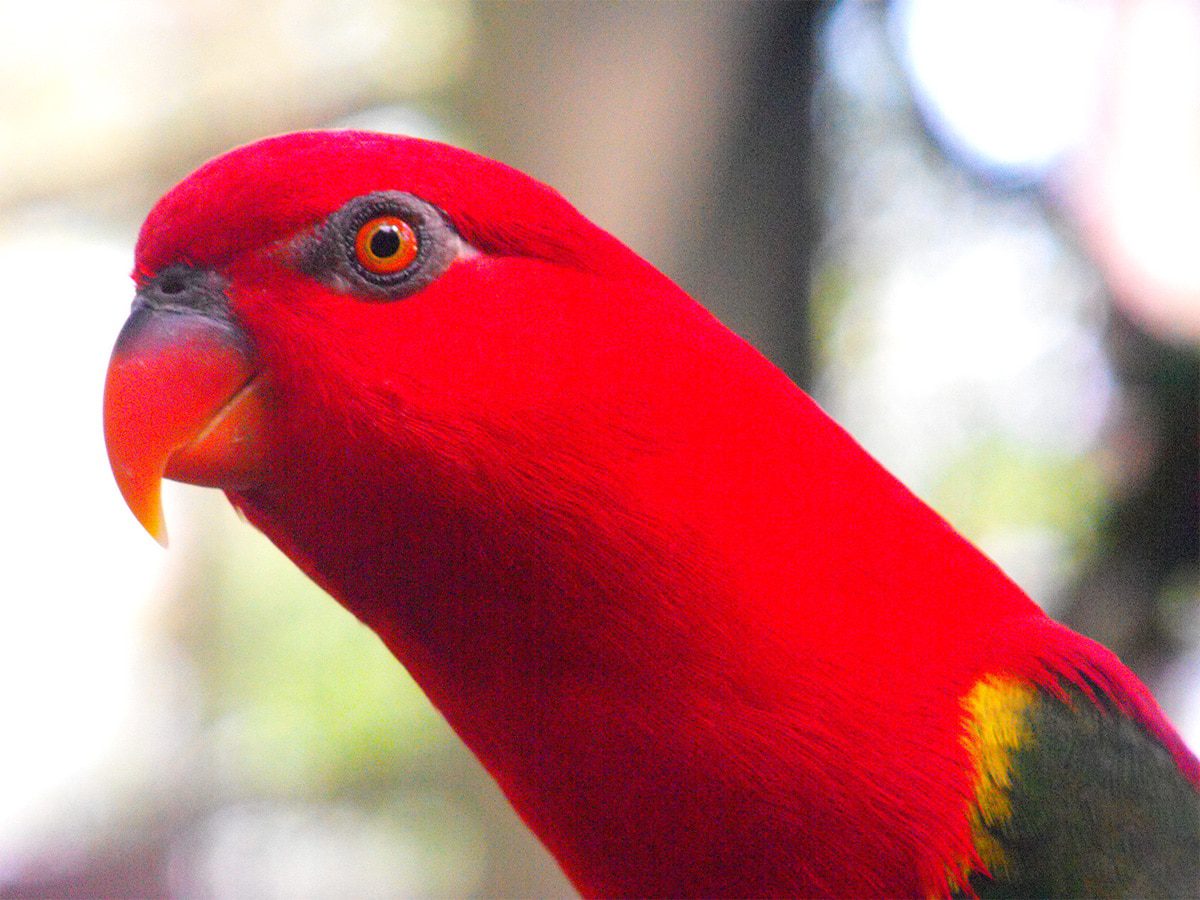
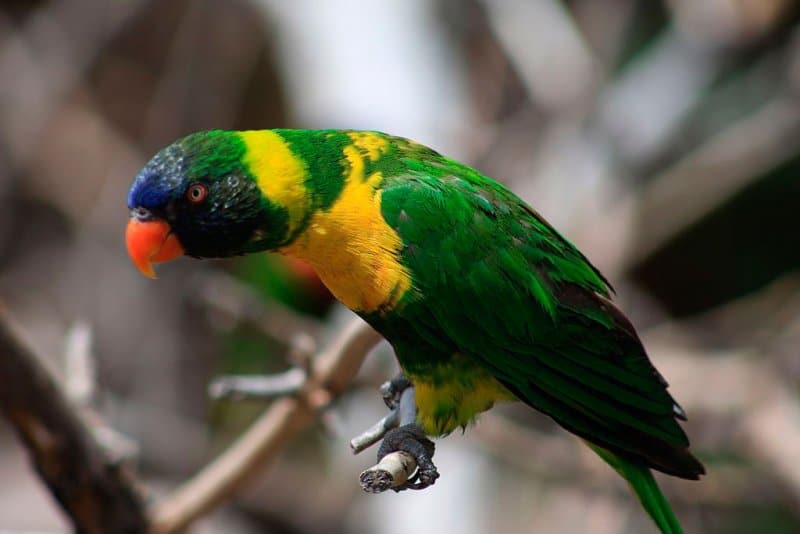
The Yellow-bibbed Lory (Lorius chlorocercus) is the only member of the genus Lorius It found in the Solomon Islands Orientales. In flight it has a robust construction, with a distinctive tail short.

It has a hood black running from the top of the bill up to the nape; the rest of the head is bright red with a prominent patch black, Crescent-shaped, on one side of neck. The upperparts They are red; center of the mantle, dark red. The wings green with yellow light bronze glow, in particular coverts and tertiary.

internals flight feather and greater coverts, black; bend of wing with a white spot and sometimes showing blue below wing-coverts; the coverts are blue, black tip, with a reddish pink broadband in the Central, on the undersides of the primaries. axillary purple blue.

The underparts They are red with a prominent yellow necklace; the thighs blue. Top, of the tail, red with green tips; lower tail, red with yellow opaque tip.

The bill It is orange with dark base to lower jaw; Orange the irises; legs dark gray.

The immature They have yellow band chest and marks on the sides and virtually absent bill is brown.

The cap black, wings green and underparts red with a band in the chest yellow, you are distinguished from other sympatric species of similar size as the Cardinal Lory and the Coconut Lorikeet.

Habitat:

Found in the canopy of the forest and secondary growth at all altitudes up to 1.000 m. In Guadalcanal it is more common in foothills than in lowlands and more common in low cloud forest. Other islands also occasionally observed around coconut plantations. Usually moves individually, in pairs or in groups of up to ten birds. Ecology generally little known although presumably typical of the genus.

Reproduction:

Little is known of its reproduction in the wild.

In captive, the setting is two eggs and incubation lasts and 25 days. The young remain in the nest during 8 to 10 weeks.

Food:

Its diet pollen compose, nectar, flowers and seeds.

Distribution:

Size of its range (reproduction / resident): 78.200 km2

endemic to the Solomon Islands Eastern on Savo, Guadalcanal, Malaita, Suavanao, Uki, San Cristรณbal and Rennell. Quite common. World population 10.000 – 50, 000 specimens.

Conservation:


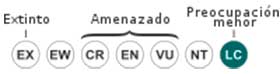
minor concern

โ€ข Current IUCN Red List category: Least concern.

โ€ข Population trend: Stable.

Least concern – in the news quite common in the natural and abundant across most of its range.

Many species of birds in the Solomon Islands are vulnerable simply because of their small natural ranges, and the felling of forests for agriculture is a constant threat.

"Yellow-bibbed Lory" in captivity:

Before the Decade of 1990, the Yellow-bibbed Lory (Lorius chlorocercus) it was almost unknown in the United States and poultry farming, even then, a handful of birds were imported from the Solomon Islands. In 1998, a captive breeding consortium, call Solomon Island Parrot Consortium (SIPC), It was formed and received permission from the Government of the Solomon Islands and permissions of USFWS to import 30 pairs of each of the six species of parrots that are found in the Solomon Islands.

These 60 Yellow-bibbed Lory they were the first species imported under this permit. From these original 60 birds, now there are enough birds that are starting to appear as pets from time to time. They were first bred in United States in 1989, in the aviaries of Seattle by Jan van Oosteen, who is considered the force behind the obtaining of this group of 30 couples.

More information on –> birdchannel

Alternative names:

Yellow-bibbed Lory, Yellow bibbed Lory (ingles).
Lori ร  collier jaune (French).
Grรผnschwanzlori (German).
Lรณris-de-colar-amarelo (Portuguese).
Lori Acollarado, Tricogloso de Collar (espaรฑol).

John Gould
John Gould

scientific classification:


Order: Psittaciformes
Family: Psittaculidae
Scientific name: Lorius chlorocercus
Genus: Lorius
Citation: Gould, 1856
Protonimo: Lorius chlorocercus


Images ยซCollared Loriยป:

Videos "Yellow-bibbed Lory"

————————————————————————————————

ยซLori Acollaradoยป (Lorius chlorocercus)


Sources:

Avibase
– Parrots of the World โ€“ Forshaw Joseph M
– Parrots A Guide to the Parrots of the World – Tony Juniper & Mike Parr
– Birdlife

Photos:

1 – By Benjamint444 (Own work) [GFDL 1.2], via Wikimedia Commons
2 – Birds-pet-wallpapers – link
3 – By Benjamint444 (Own work) [GFDL 1.2], via Wikimedia Commons
4 – Young Yellow-bibbed lory feeding from spoon – kcbbs.gen.nz
5 – Singapore Jurong Bird Park – jaxstumpes

Sounds: Niels Krabbe (Xeno-canto)
โ–ท The world of Pets: Dogs, cats, birds, reptiles, amphibians

Yellow-billed Lorikeet
Neopsittacus musschenbroekii

Yellow-billed Lorikeet

Content

Yellow-billed Lorikeet

Description

23 cm.. length and a weight between 43 and 55 g..

The head of the Yellow-billed Lorikeet (Neopsittacus musschenbroekii) is green, strongly impregnated with olive brown, veined in ear-coverts and showing a shaft of yellow stripes on the crown; darker line in the lores, above the bill; forecrown green.

Upperparts green intermediate. The wings green above with vane blackish internal to the coverts and black on the tips of the flight feather. Rojas the Underwing coverts. Flight feathers blackish with wide red central band. Throat greenish yellow yielding to red chest to the top of the the thighs. Flanks yellowish green to the sides of chest, with a central area in the bottom area chest and belly, red; coverts more yellowish than the rest of the underparts.

Cover top of queue, green, yellow tips, Brown shafts with red bases on the side of the feathers; undertail yellow-orange, showing red bases in lateral feathers when they deployed.

Bill pale yellow; irises red; gray of the legs.

Sexes alike.

Immature duller than adults with brands head less clear and red on the underparts restricted to spots in the center of belly and in the chest. Bill brownish-orange, irises yellow brown or orange. Young birds also show feathers tail pointy, which they are rounded as adults.

Description 2 subspecies

  • Neopsittacus musschenbroekii musschmbrorkii

    (Schlegel, 1871) – The nominal.


  • Neopsittacus musschenbroekii mayor

    (Neumann, 1924) – Slightly larger than the nominal and paler in upperparts.

Habitat:

It inhabits in montane forests, edges of forests, partially cleared areas of secondary growth, mainly between 1.400 and 2.500 m, even if you are also registered at altitudes as low as 1.100 meters and as high as 3,000 m. It is also common in altered areas or in groves of Casuarina or eucalyptus in garden areas.

It seems that they have adapted well to the impacts of the man. But it is absent from the places where the forest has been removed completely over large areas.

Visible and noisy, they are in pairs, small flocks and in larger congregations of up to 50 birds in flowering trees. Over most of New Guinea, This species is replaced at higher altitudes by the smaller Orange-billed Lorikeet, commonly found in the company with the latter in the upper band of its altitudinal range (except Vogelkop).

Most frequently found in flowering trees, often in the company of other species such as the Papuan Lorikeet, also in the fructification of the Schefflera and feeding is sometimes lower levels even on the weeds at ground level.

Reproduction:

Observed to be moving like a rodent along branches. The laying It is two eggs in a hole in the trunk of a tree. Period unknown but an immature nesting was observed in the Province of West Papua in late August and a fledgling in the same area in the middle of November.

Food:

Feeds of pollen, nectar, small fruits and berries. It is also thought that feed on seeds as part regular your diet, while the Orange-billed Lorikeet is limited to nectar only. As other parrots can eat insects and their larvae, deliberately or accidentally.

Distribution:

Size of its range (reproduction / resident): 587.000 km2

New Guinea in Irian Java (Indonesian) and Papua New Guineto. Is distributed from East of Vogelkop up to the Huon Peninsula and scattered areas in the Southeast. In Vogelkop, Despite the absence of the Orange-billed Lorikeet, the population of the Yellow-billed Lorikeet is relatively low. A small amount in captivity.

Distribution 2 subspecies

  • Neopsittacus musschenbroekii musschmbrorkii

    (Schlegel, 1871) – The nominal.


  • Neopsittacus musschenbroekii mayor

    (Neumann, 1924) – Live from the East of the region of Sepik to the Huon Peninsula and areas southeast.

Conservation:


minor concern


โ€ข Current IUCN Red List category: Least concern.

โ€ข Population trend: Growing.

The world population It has not been quantified, Although it is probably superior to the 300.000 specimens.

The species according to information is usually common.

The population is suspected can be increased. As the degradation of the habitat is permanent, new suitable habitat areas are being created.

"Yellow-billed Lorikeet" in captivity:

Rare in aviculture.

More distant other parrots. Average noise level. Shy.

Alternative names:

Yellow-billed Lorikeet, Musschenbroek’s Lorikeet, Yellow billed Lorikeet, Yellow-billed Mountain Lory (ingles).
Lori de Musschenbroek (French).
Gelbschnabel-Berglori, Gelbschnabelberglori (German).
Lori Montano Grande, Lori Moteado Grande (espaรฑol).

Hermann Schlegel

scientific classification:

Order: Psittaciformes
Family: Psittaculidae
Scientific name: Neopsittacus musschenbroekii
Genus: Neopsittacus
Citation: (Schlegel, 1871)
Protonimo: Nanodes Musschenbroekii


โ€œLori Montano Grandeโ€ images:

Video

————————————————————————————————

ยซLori Montano Grandeยป (Neopsittacus musschenbroekii)


Sources:

Avibase
– Parrots of the World โ€“ Forshaw Joseph M
– Parrots A Guide to the Parrots of the World – Tony Juniper & Mike Parr
– Birdlife

Photos:

(1) – Animal Photos – link
(2) – ยซNeopsittacus musschenbroekii-two captive-8aยป by TJ Lin – originally posted to Flickr as Dscn8852. Licensed under CC BY-SA 2.0 via Wikimedia Commons.
(3) – papageien.org – link
(4) – Animal Photos – link
(5) – neopsittacus musschenbroekii, male By iggino – lynx
(6) – Illustration

Sounds: Frank Lambert (Xeno-canto)
โ–ท The world of Pets: Dogs, cats, birds, reptiles, amphibians

Black-winged Lory
Eos cyanogenia

Lori Alinegro

Content

Description

30 cm.. height and an approximate weight of 120 gr.

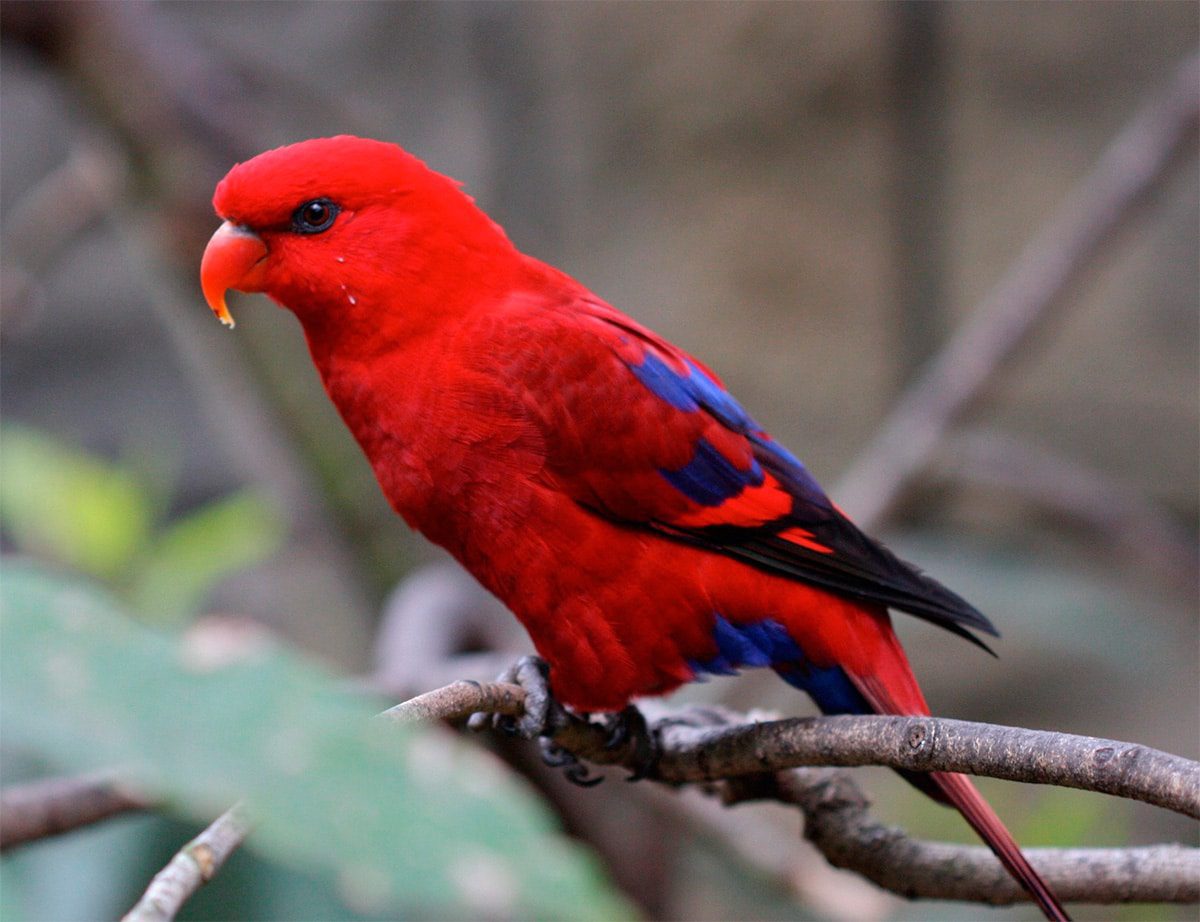
The Black-winged Lory (Eos cyanogenia) has a plumage predominantly red.

Adults have a blue patch surrounding the eyes, cover the tops of the ear and reaches the back of the neck.

Feathers covering the shoulder blade (scapular), small feathers that cover the outside (coverts) and bend of wing are black. The primary and high school they have a black bordered.

The the thighs and flanks they are sprinkled with black. The bottom of the wings shows a wide band Red. The feathers of the tail are black contrasted with red feathers.

The bill is red-orange. The irises they are red, legs grey.

The youth they are more muted than adults. They have blue-black ends in feathers of the head, neck and underparts. The the wing covers are black, with a green light opaque. The bill is of color brown orange, irises brown.

The Black-winged Lory It can be confused with almost all parrots of the genus Eos, but it is the only one of this category that has the covered wing in black color.

Habitat:

The Black-winged Lory they are quite common and widespread in coastal areas, coconut plantations, the forested areas in the process of regeneration, in some large trees scattered in bushes Moors and local gardens.

In some small islands such as Supiori, they are also present in large numbers in inland forests.

Residing in altitudes ranging from sea level to the 460 m.

They live in pairs or in small family groups. They are also often found in flocks of forty individuals or more.

Son noisy birds and easily observable. At the local level are very popular. In the reflection of both, the natives capture them frequently as pet birds.

The Black-winged Lory they have a fly quick and direct. Often you can hear the hum of their wings when they fly over the villages. They are even more recognizable when they often fly low, well below the tops of the trees.

Reproduction:

Little is known of their reproductive ecology., but it was observed the presence of a possible nesting site in a hole in a tall tree in the forest by a couple during the observations in 1982.

The incubation in harsh captivity around 26 days, and as in all loris, the nesting cycle is particularly long and hard between 75 and 89 days.

Food:

They have a regime that differs little from other parrots of the genus Eos. Feed in the trees in flower of nectar of Brugierto and pollen. Your menu will probably be complemented by fruit, berries of the mistletoe and sometimes insects.

Distribution:

Distribution Lori Alinegro


Being endemic to the islands of the Cenderawasih Bay in the part Indonesia of New Guinea.

They live on most islands (Numfor, Biak, Manim, Pulau Num) but are absent from Yapen, the main island, where are replaced by the Dusky lory (Pseudeos fuscata).


Conservation:


Vulnerable

– Current IUCN Red List category: Vulnerable

– The population trend: Decreasing

The population is estimated at 2,500 to 9,999 mature individuals.

Logging and subsistence agriculture have driven the loss of forests within their range and the hunting pressure remains a threat. Consequently, the species is suspected to be declining at a moderate pace.

Relatively large numbers of birds have been trapped for the national and international trade.

Since December of 1989, the import of the Black-winged Lory It is strictly prohibited in the European Community.

Conservation Actions Proposed:

– Conduct surveys on all the Geelvink Islands to clarify its distribution and current population status.
– Investigation of their ecology and movements to facilitate conservation planning.
– Investigate the species trade and design and implement appropriate controls.
– Estimating the rate of loss of forests within its range.
– Check the register in Supiori and establish a captive breeding program to support future reintroduction and supplementation efforts.

"Black-winged Lory" in captivity:

This species is observed commonly as a pet in Biak (island located in the bahรญa Paradise, off the north coast of Papua).

Due to its status in danger of extinction, any specimen that can not be returned to their natural habitat (natural range) should preferably be placed in a well-managed breeding program to ensure the survival of the species.

Alternative names:

Black winged Lory, Biak Red Lory, Black-winged Lory (ingles).
Lori ร  joues bleues (French).
Schwarzschulterlori (German).
Lรณris-asa-negra (Portuguese).
Lori Alinegro, Lori de Alas Negras (espaรฑol).

scientific classification:

Order: Psittaciformes
Family: Psittaculidae
Scientific name: Eos cyanogenia
Citation: Bonaparte, 1850
Protonimo: Eos cyanogenia

ยซLori Alinegroยป images:

Videos "Black-winged Lory"

————————————————————————————————-

ยซLori Alinegroยป (Eos cyanogenia)


Sources:
Avibase, Oiseaux.NET, BirdLife.org
– Photos: galleryhip.com, Sheri Hanna
– Sounds: Hans Matheve (Xeno-canto)
โ–ท The world of Pets: Dogs, cats, birds, reptiles, amphibians

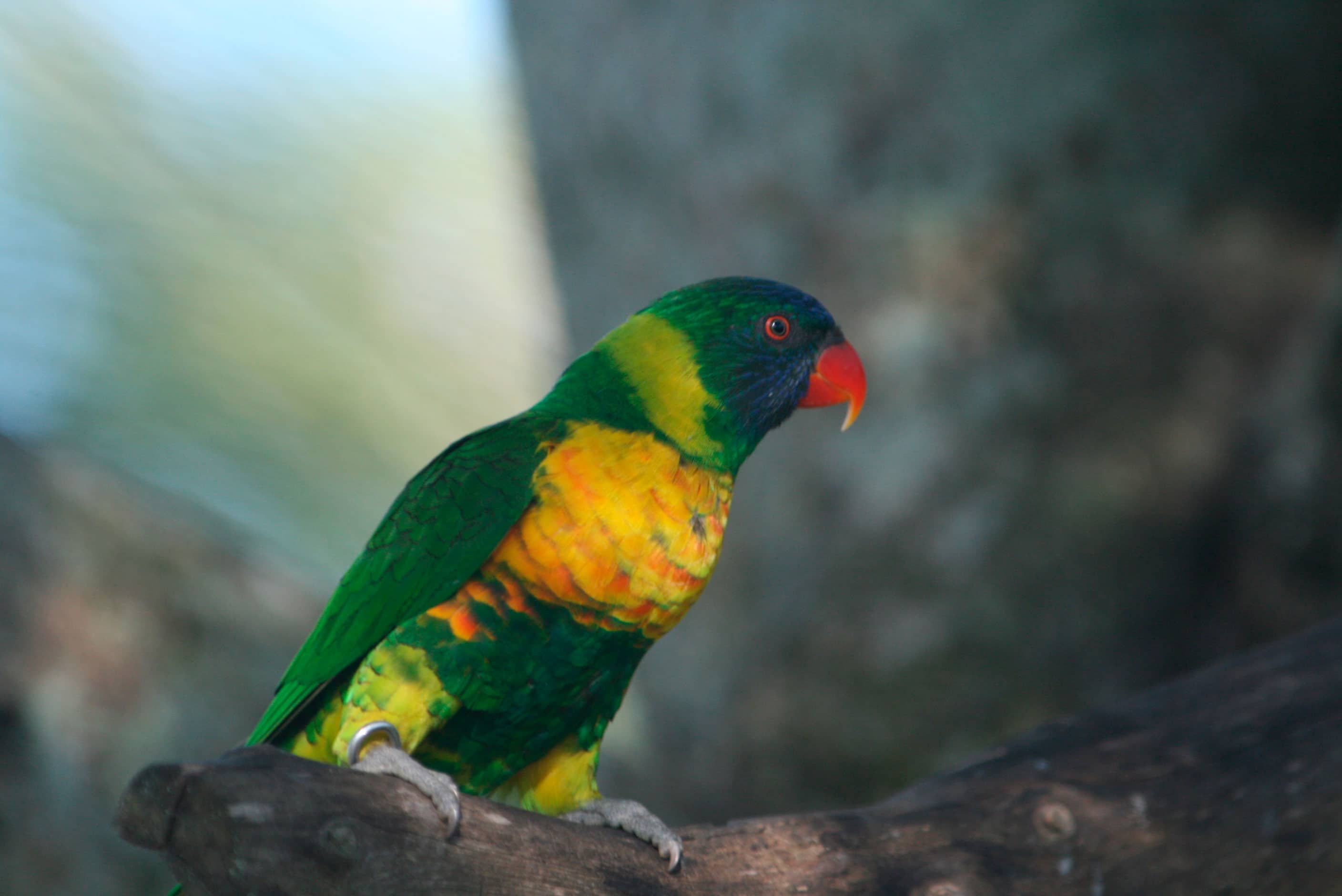
Iris Lorikeet
Psitteuteles iris


Iris Lorikeet

Content

Description

20 cm.. length and a weight between 65 and 75 gr.

The Iris Lorikeet (Psitteuteles iris) It has three subspecies recognized including the nominal, the extent and gradation of red and purple coloration in the head varies among the three subspecies:

  • Psitteuteles iris iris

    The Iris Lorikeet (Psitteuteles iris) has a plumage, in general, Green with stripes of color green light in the underparts.

    The forecrown, lores and zone extending in a narrow line around the Crown rear, red.
    Cheeks yellowish green. The eye-stripe and headphones feathers purple.
    Center of the crown, Turquoise, extending it until it nape in a large yellow-green necklace.
    The chest and abdomen are yellowish-green. The feathers of the neck and the chest they have dark green edges. Wings and tail green.
    Bill and irises orange. The legs greyish black.

    It presents sexual dimorphism. The Red coloration of the female on head It is more off and less extensive that in the male.


  • Psitteuteles iris rubripileum

    It has all the forecrown and crown Red and the headphones feathers Violet Blue.


  • Psitteuteles iris wetterensis

    Larger, the crown It is red and mixed with Violet Blue variable extension. The cheeks they are dark green. The chest bright yellow contrast with the Panza green.

Note:

It has placed at times as subspecies to the Neopsittacus. The validity of the subspecies Psitteuteles iris rubripileum, is questionable, and it was claimed that the differences with the nominal species It may be due to age or individual variation.

Habitat:

Found up to a height of 1.500 meters above the sea level.

The Iris Lorikeet They inhabit monsoon forests, plantations and agricultural land with flowering trees.
Although they are apparently more common in the higher elevations, its local abundance is based on the availability of trees with flowers for food, as is the case with most Lori.
The flight of the Iris Lorikeet fast and slightly wavy.

Reproduction:

Little is known about the breeding ecology of this species in its natural environment.. A record of a captive calf states that the laying is of two eggs, with a period of incubation of 23 days and emancipation some nine weeks more afternoon.

Food:

Feeds of nectar of the flowers Sesbania sp.

Distribution:

Size of the area of distribution (reproduction / resident): 31.300 km2

Endemic to the Islands Wetar and Timor (Indonesian).

Subspecies distribution:

  • Psitteuteles iris Iris

    : West of Timor.


  • Psitteuteles iris Rubripileum

    : It is from Timor.


  • Psitteuteles iris Wetterrensis

    : Wetar island.

Conservation:


Near-threatened


โ€ข Current IUCN Red List category: Near threatened

โ€ข Population trend: Decreasing

There are no data on population trend; But, the species is suspected to be in decline due to the capture and the degradation of the habitat.

Previously considered common, but not found in the Island of Wetar during a search in 1990, found only in two places during a study of nine weeks in the jungle in Timor West in 1993. Considered main many that the Olive headed Lorikeet and the Coconut Lorikeet in East Timor. World population around 10.000 specimens. VULNERABLE.

"Iris Lorikeet" in captivity:

Quite rare.

Alternative names:

Iris Lory, Iris Lorikeet (ingles).
Loriquet iris, Loriquet d’Iris (French).
Irislori (German).
Lรณris-รญris (Portuguese).
Lori de Goldie, Lori Iris, Tricogloso Iris (espaรฑol).

scientific classification:

Order: Psittaciformes
Family: Psittaculidae
Scientific name: Psitteuteles iris
Citation: (Temminck, 1835)
Protonimo: Psittacus iris

Images ยซLori Irisยป:

————————————————————————————————

ยซIris Truckยป (Psitteuteles iris)


Sources:

Avibase
– Parrots of the World โ€“ Forshaw Joseph M
– Parrots A Guide to the Parrots of the World – Tony Juniper & Mike Parr
– BirdLife.org

Photos:

1 – By Dirk (originally posted to Flickr as DSC_7897) [CC-BY-2.0], via Wikimedia Commons
2 – By Dirk (originally posted to Flickr as DSC_2608) [CC-BY-2.0], via Wikimedia Commons
3 – By Asim Bharwani (originally posted to Flickr as San Diego Zoo) [CC-BY-2.0], via Wikimedia Commons
4 – By tinyfroglet [CC-BY-2.0], via Wikimedia Commons
5 – By Liam from Washington DC, USA (IMG_9040Uploaded by snowmanradio) [CC-BY-2.0], via Wikimedia Commons

Sounds: Filip Noel (Xeno-canto)
โ–ท The world of Pets: Dogs, cats, birds, reptiles, amphibians

Chattering Lory
Lorius garrulus


Chattering Lory

Content

Description

30 cm.. length and a weight between 180 and 250 g..

The Chattering Lory (Lorius garrulus) has the head, the nape and the the mantle top of color Scarlet bright. Great stain yellow in the center of the the mantle surrounded above and below a light spread of green opaque; scapulars Scarlet, a little darker than the the mantle; rump and top of the tail, bright Scarlet.

the flight feathers green up; coverts a little more pale and with a vague diffusion in bronze. The great coverts a dark gray at their ends; the alula Blackish green with yellow spot in the bend of wing and along the edge of the carpus.

Lori White ilustracion

The bottom of the flight feather of color black with band broadband of color tints in the Center, the coverts yellowish green. Underparts bright Scarlet; green thighs. The feathers of the tail red, with the black end fade Green. The bill orange; irises Orange to yellowish brown; legs grisaceo-negro color.

Both sexes are equal.

Immature with the bill brown, and the irises dark brown.

Description and distribution of subspecies

  • Lorius garrulus garrulus

    (Linnaeus, 1758) – (Halmahera, the Widi Islands and Ternate) The nominal


  • Lorius garrulus flavopalliatus

    (Salvadori, 1877) – (Bacan and OBI) Large yellow patch in the the mantle with much less greenish broadcasting.


  • Lorius garrulus morotaianus

    (Bemmel, 1940) – (Morotai and Riau) Small yellow patch in the mantle of green-dyed.

  • Sound of the Chattering Lory
[audio:HTTPS://www.mascotarios.org/wp-content/themes/generatepress_child/sonidos/Lori Garrulo.mp3]

Habitat:

Though White and Bruce they say the species is common in coastal lowlands with coconut palms, recent observations seem to point to forested areas of high land as their main habitat. It is unclear if the capture is responsible for the apparent absence of their previously preferred habitat. Seasonal movements or nomadic behavior could also be factors for this absence from the coastal lowlands.. The Chattering Lory they occur more often in mature primary and secondary forests, far from human settlements from the lowlands up to 1.300 m.

They are usually in pairs, and are noisy and visible in flight but, like many other parrots, can become difficult to spot when feeding quietly in the forest canopy.

Reproduction:

Little is known about the reproduction of the species in the wild. A couple was seen building a nest in June, other records include the observation of a calf feeding during October and November, and a couple occupying a nest high in a dead tree, also during October.

In captivity, the laying is of two eggs and the abandonment of the nest of the young at 76 days.

Food:

The primary food of the Chattering Lory It is believed to be the nectar and pollen, with local reports of feeding on the flowers of coconut along the coast, although fruits and corn are also included in their diet.

Distribution:

Endemic to the North of the Moluccan Islands, Indonesian, from Morotai, Riau, Halmahera, Ternate, Bacan, OBI and, possibly, Kasiruta and Obilatau. The Chattering Lory has also been released in Sangihe, to the North of Sulawesi.

Locally common, but around human settlements have apparently been reduced by means of traps. It is very popular in the trade because of its imitative abilities.

Conservation:


Vulnerable


โ€ข Current IUCN Red List category: Vulnerable.

โ€ข Population trend: Decreasing.

The main threat comes from the capture for the cage bird trade. This is the most popular bird exported from the East of Indonesian, largely due to his large imitative abilities. Thousands of copies were legally caught each year in your environment during the Decade of 1980 and principles of 1990, but the real value is probably much higher.

The legal trade was reduced at the end of the Decade of 1990 and ceased in 2003; But, illegal trade continues: in 2007 about 2.800 birds were recorded as looted and in the 2008, 60 were recorded for trade in the markets of birds of Java.

Forests within its area of distribution are largely intact since the beginning of the Decade of 1990, but the exploitation by timber companies has become intensive. Important nesting trees are felled because of its large size, and logging roads greatly facilitating access for trappers, create the perfect combination to bring to the Chattering Lory as threatened species.

Ongoing conservation actions –> Ver and Birdlife

"Chattering Lory" in captivity:

Previously it was very common, now not so much.

Smart, playful and good imitators. The Chattering Lory, However, is very aggressive with other birds. Also messy mainly due to the liquid in his diet.

Alternative names:

Chattering Lory (ingles).
Lori noira, Lori des Moluques, Lori noir (French).
Prachtlori, Gelbmantelllori (German).
Lรณris-amor-amor (Portuguese).
Lori Gรกrrulo, Tricogloso Gรกrrulo (espaรฑol).

scientific classification:

Order: Psittaciformes
Family: Psittaculidae
Scientific name: Lorius garrulus
Genus: Lorius
Citation: (Linnaeus, 1758)
Protonimo: Psittacus garrulus

Images ยซLori Gรกrruloยป:

Videos "Chattering Lory"

————————————————————————————————

ยซOn the garrisonยป (Lorius garrulus)


Sources:

Avibase
– Parrots of the World โ€“ Forshaw Joseph M
– Parrots A Guide to the Parrots of the World – Tony Juniper & Mike Parr
– Birdlife

Photos:

1 – By Benjamint444 (Own work) [GFDL 1.2], via Wikimedia Commons
2 – Birds-pet-wallpapers – link
3 – by Alexkant in Israel. Kiryat Motzkin – zoochat
4 – Photos Zoochat – link
5 – by Josep de el Hoyo – lynx
6 – riscosapenas – link

Sounds: Marc Thibault (Xeno-canto)

โ–ท The world of Pets: Dogs, cats, birds, reptiles, amphibians

Orange-billed Lorikeet
Neopsittacus pullicauda

Orange-billed Lorikeet

Content

Description

18 cm.. length and a weight between 28 and 40 g..

The head of the Orange-billed Lorikeet (Neopsittacus pullicauda) is green, the nape lightly brown tinged with yellow stripes; ear-coverts dark green, showing some streaks of greenish-yellow; chin dark green. Upperparts green. The wings, at the top, green, with vane internal to coverts blackish. Under the wings, the coats red; flight feather Blackish with wide red central stripe. Throat green; top of the chest, Scarlet Red, extending to the belly and ending above the the thighs; flanks green; undertail-coverts brighter yellowish green. Uppertail green; retrizes penas lower color olive brown, marked in red in vane inner.

Bill orange red: irises red; legs grey.

The sexes alike.

Immature more off than adults with much less red (or orange) on the chest and a Brown peak.

Subspecies description

  • Neopsittacus pullicauda pullicauda

    The nominal.


  • Neopsittacus pullicauda alpinus

    It differs from the nominal by the chest Orange which contrasts with the Red of the belly and upperparts darker.


  • Neopsittacus pullicauda socialis

    Similar to the nominal, but darker and showing less Brown at the nape.

Habitat:

Lives in the forests of MOSS and areas surrounding partially cleared, mainly between 2.100 and 3.800 m, with a limit not below 1,600 meters except for some occasionalLori found to 800 m. Normally found at higher altitudes than the Yellow-billed Lorikeet, but there is considerable overlap in lower altitudes to 2.500 m. where the two meet, often feeding in friendly company.

Pretty common and often found in pairs, small groups or groups of up to 30 birds in the trees in flower.

Travel in noisy groups, and it can fly very high above the canopy to and from the feeding areas. Not only feeds in the canopy, but also at low altitude of plants and even at the lowest levels near the ground. Assets and meek.

Reproduction:

Habits of nesting not described, Although it is said that they nest in holes of tall trees and lay two eggs. A male in breeding conditions was observed in October.

Food:

It feeds on pollen, nectar, flowers, fruits and seeds, Although he believes that they are less dependent on seeds as part regular your diet than the Yellow-billed Lorikeet.

Distribution:

Size of the area of distribution (reproduction / resident): 113.000 km2

New Guinea in Irian Jaya (Indonesian) and Papua New Guineto. The range runs from the East of Snow Mountains far reaches the Huon Peninsula e intervals to the Southeast. A small number of captivity.

Subspecies distribution:

  • Neopsittacus pullicauda pullicauda

    The nominal.


  • Neopsittacus pullicauda alpinus

    Snow Mountains, Irian Jaya, to the East with the upper region of the fly river, West of Papua New Guinea


  • >Neopsittacus pullicauda socialis

    Herzog mountains and mountains of the Huon Peninsula, North of Papua New Guinea.

Conservation:


minor concern


โ€ข Current IUCN Red List category: Least concern.

โ€ข Population trend: Stable.


The world population It has not been quantified, Although it is thought that it may be superior to the 30.000 birds. The species according to sources is common (pit et to the. 1997).

The population suspected to be stable in the absence of evidence of any reduction or substantial threats.


"Orange-billed Lorikeet" in captivity:

Uncommon in captivity.

Shy until getting used to the owner, It is best in coexistence with other loris, playful, they need stimulation to avoid boredom. You can learn to imitate. They are messy due to liquid diet.

Alternative names:

Orange-billed Lorikeet, Emerald Lorikeet, Orange billed Lorikeet, Orange-billed Mountain Lory (ingles).
Lori รฉmeraude, Lori รฉmรฉraude (French).
Orangeschnabel-Berglori, Orangeschnabelberglori (German).
Lori Montano Chico, Lori Moteado Chico (espaรฑol).

scientific classification:

Order: Psittaciformes
Family: Psittaculidae
Genus: Neopsittacus
Scientific name: Neopsittacus pullicauda
Citation: Hartert, 1896
Protonimo: Neopsittacus pullicauda

ยซLori Montano Chicoยป images:

Videos "Orange-billed Lorikeet"

————————————————————————————————

ยซLori Montano Chicoยป (Neopsittacus pullicauda)


Sources:

Avibase
– Parrots of the World โ€“ Forshaw Joseph M
– Parrots A Guide to the Parrots of the World – Tony Juniper & Mike Parr
– Birdlife

Photos:

(1) – Birds-pet-wallpapers – link
(2) – Birds-pet-wallpapers – link
(3) – Author iggino – lynx
(4) – Animal Photos – link
(5) – Animal Photos – link

Sounds: Hans Matheve (Xeno-canto)

โ–ท The world of Pets: Dogs, cats, birds, reptiles, amphibians

Violet-necked Lory
Eos squamata

Lori Escamoso

Content

Description

27 cm.. height and an approximate weight of 110 gr.

Along with the Red Lory (Eos Bornea) the "Scaly Lory" (Eos squamata) it is the only lory of the genus Eos it does not have blue marks on the ear-coverts.

Its plumage It has a scarlet general appearance. The neck It is surrounded by a violet blue collar which is well developed in some individuals, but nearly absent in others. The area from the abdomen up to the subcaudales it is dark purple. The scapulars they are dull purple with black tips. The feathers of the greater coverts and flight feather They are red with black tips.
The bottom of the wings and of remiges from below they are red with black spots at the primary level. The tail is purple red.

The irises is orange, the legs grey.

In the immature the feathers of the lower parts, have broad dull blackish purple borders. The irises They are brown.

Description 3 subspecies

  • Eos squamata squamata

    : (Boddaert, 1783) – Something smaller and feathers in the nominal species They are blue violet, in this subspecies are blackish blue.


  • Eos squamata riciniata

    : (Bechstein, 1811) – Smaller and band chest and neck is violet gray.


  • Eos squamata obiensis

    : (Rothschild, 1899) – It is somewhat smaller and with shoulders blacks. the band of neck It is variable and greyish violet. The area of the nape is red.

Habitat:

The Violet-necked Lory they are relatively common in the primeval forests or secondary forests that have large mature trees. Also found in the mountain forests and also, but with lower density in the coconut plantations bordering the coast, in the bushes during regeneration, in the abandoned gardens and mangroves.

Populations that inhabit small islands tend to stay near the coast.
On the larger islands, These birds can run in the forests of the mountains up to a height of 1.220 meters above the sea level.

The Violet-necked Lory they are particularly noisy and easily identifiable when they are in flocks, but they are a much more secretive behavior when in isolated pairs.

They usually gather in large flocks when they find abundant food sources.. This habit makes appearing more or less abundant in different regions. These flocks of birds are usually just above the tops of the trees.

Every day, they make short trips between the different islands. To do this they use a flight quick and direct, It consists of shallow wing beats. When they beat their wings produce a very audible hum.

Reproduction:

There is almost no information on the reproduction in the wild. In captivity, the implementation is of 2 eggs that are incubated during 27 days. As with all loris, the reproductive cycle is particularly long and hard about 80 days.

Food:

Exclusively vegetarian. They feed on sago palm in bloom and consume figs when they are still firm. Also eat nectar from big red flowers of Erythrina family Fabaceae.

Distribution:

Size of its range (reproduction / resident): 189.000 km2

The Violet-necked Lory They are endemic to the islands or archipelagos which are among New Guinea and Las Celebes.

They are mostly found in West Papua and of the Moluccan Islands.

Distribution 3 subspecies

  • Eos squamata squamata

    : (Boddaert, 1783) – Islands West Papua, that is to say Stupid, Waigeo, Batanta and Misool and islas Turtle (Indonesian)


  • Eos squamata riciniata

    : (Bechstein, 1811) – North of Moluccas, from Morotai to Bacan and Damar, also in islas Widi and Mayu islands in the sea of Moluccas (Indonesian).


  • Eos squamata obiensis

    : (Rothschild, 1899) – Only in the Obi Islands in the northern Moluccas.

Conservation:


minor concern


โ€ข Current IUCN Red List category: Least concern

โ€ข Population trend: Stable

The population size is very large, and therefore not approaching the threshold of Vulnerable under the criterion of population size.
The world population is estimated between 100,000 and 500,000 individuals.

About 3.000 specimens are caught every year for the trade aviaries. The pressure on the species is estimated to be quite reasonable, but it is recommended, by many associations, the establishment of catch quotas for the year.

"Violet-necked Lory" in captivity:

Son loving, curious, extroverts and show some unique behaviors. Some like to wrap yourself in a blanket to sleep. Sometimes, they can even be sleeping on your back. They can learn to mimic sounds and words.

They are capable of aggressive behavior if their territories and possessions is disregarded.

They are demanding in the requirements should be for their care, requiring much attention. Baths or showers daily should be part of your daily habit.

Alternative names:

Violet-necked Lory, Moluccan Red Lory, Violet necked Lory (ingles).
Lori รฉcaillรฉ, Lori ร  nuque violette, Lori de Wallace (French).
Kapuzenlori (German).
Lรณris-de-colar-violeta (Portuguese).
Lori de Collar Violeta, Lori Escamosa, Lori Escamoso (espaรฑol).

scientific classification:

Order: Psittaciformes
Family: Psittaculidae
Scientific name: Eos squamata
Genus: Eos
Citation: (Boddaert, 1783)
Protonimo: Psittacus Squamatus

โ€œScaly Loryโ€ Images:

Videos "Violet-necked Lory"

————————————————————————————————–

"Scaly Lory" (Eos squamata)


Sources:
Avibase, BirdLife.org, Oiseaux.NET
– Photos: SALIS- (Flickr), Bernard DUPONT (Flickr), Wikimedia, IBC.lynxeds.com
– Sounds: Frank Lambert (Xeno-canto)

โ–ท The world of Pets: Dogs, cats, birds, reptiles, amphibians

Goldie's Lorikeet
Psitteuteles goldiei

Goldie's Lorikeet

Content

Description

19 cm.. long and weighing between 45 and 60 g..

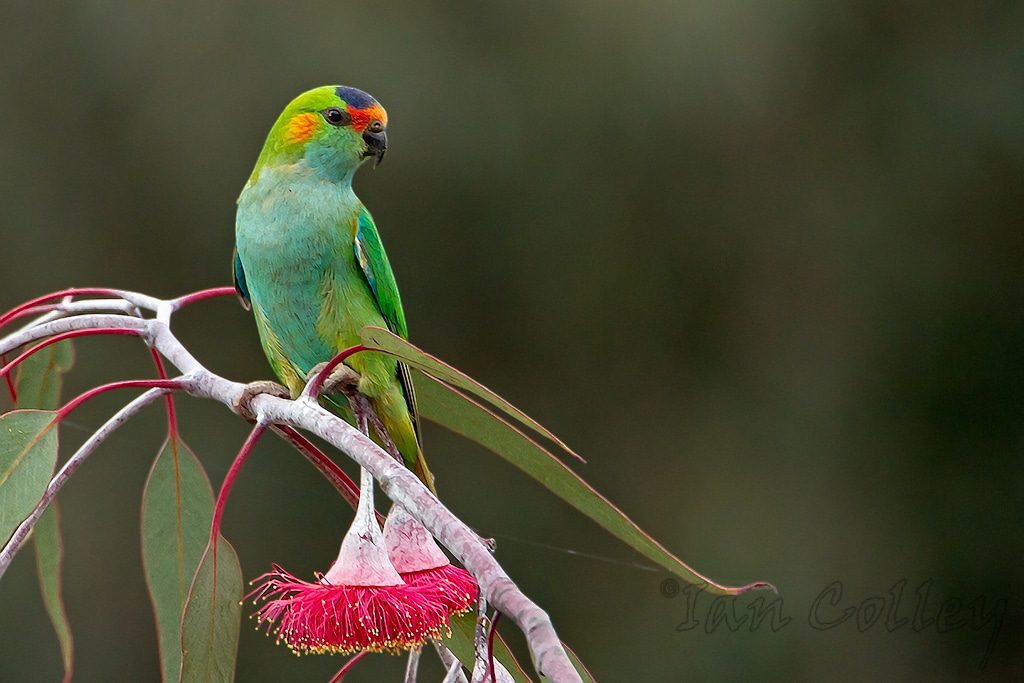
The Goldie's Lorikeet (Psitteuteles goldiei) has the top red. Its neck is surrounded by a strip blue opaque that it extends to the edge of the eye.

The mumps and their cheeks They are pink with multiple dark blue veins.. The upperparts of color green dark streaked of black in the part inferior of the neck and of color yellow greenish mottling on the sides of the layer.
The feathers that cover the wing are dark green, as well as the top of the tail.
The feathers they have a green color with black internal wires and a fine yellow edge.

The underparts are yellowish green with many streaks of dark green, more concentrated in the area of the chest. The bottom of the tail is of color yellow grey.

The bill is black, brown the iris. The legs son grises.

The females adult, they have the top more opaque and less developed.

In the immature, the top is reddish with dark blue spots. The upper mantle is spotted of yellow.

There are no geographic variations. The species is considered monotype.

Habitat:

The Goldie's Lorikeet It is distributed mainly by primary forests, mountain forests and eucalyptus between 1.000 and 2.200 meters above sea level. But, These birds are very Mobile and their habitat may vary from sea level to the 2.800 m.

At higher altitudes, sometimes be parked in the forests of beech and false Podocarpus. They are also set fairly regularly in the areas where the trees are in bloom and around small mountain villages. They have been , occasionally, in small groups of trees isolated in the middle of open spaces.

The Goldie's Lorikeet they are very sociebles. They are often associated with other Charmosyna type Loris: Fairy Lorikeet (Charmosyna pulchella) and Lori Flanquirrojo (Charmosyna placentis).

Most of the time they live in large groups of 30 or more individuals. These birds make long flights daily, often in the company of Pygmy Lorikeet (Charmosyna wilhelminae). Move from their places of rest to its feeding sites found at the middle level, or at the top of the tall trees in flower.

They probably make seasonal migrations to meet their specific feeding needs.. Between mid June and early January, the Goldie's Lorikeet they are common in the forests of the lowlands around Port Moresby.

Reproduction:

We really know very little about free-range breeding.. Apparently, the nest is well hidden inside a tree in thick foliage dry, mostly big pandanus. The female lays two white eggs.

In captivity, the incubation period ranges between 23 and 24 days. Young are altricial, and leave the nest after 8 to 9 weeks.

Food:

The Goldie's Lorikeet they have a scheme rather similar to all the lori, that is to say, they are almost exclusively vegetarian. Its menu consists mainly of pollen, nectar, flowers and fruits than that found in the trees of the genus Casuarina in shrubs of the genus honey Grevillea and of the eucalyptus.

Distribution:

Size of the area of distribution (reproduction / resident): 307.000 km2

This species is endemic of New Guinea. Lives exclusively in the mountains in the center of the island and stretches to the mountains of the Huon Peninsula and Owen Stanley.

Conservation:


minor concern

– Current IUCN Red List category: Least concern

– The population trend: Stable

The population suspected to be stable in the absence of evidence of any reduction or substantial threats.

The world population It has not been quantified, It is estimated above 100.000 specimens, but the species is reported to be locally common depending on food availability.

"Goldie's Lorikeet" in captivity:

The Goldie's Lorikeet is a bird prized as a pet. His character is not aggressive, or destructive and is quite silent for a parrot. They can be taken in pairs or in large communities. Some of them come to imitate the human voice.

Alternative names:

Goldie’s Lorikeet, Red-capped Streaked Lorikeet, Red-capped Streaked Lory (ingles).
Loriquet de Goldie (French).
Veilchenlori (German).
Lรณris-de-goldie (Portuguese).
Lori de Goldie, Tricogloso de Goldie (espaรฑol).

scientific classification:

Order: Psittaciformes
Family: Psittaculidae
Genus: Psitteuteles
Scientific name: Psitteuteles goldiei
Citation: (Sharpe, 1882)
Protonimo: Trichoglossus Goldiei

"Goldie's Lory" Images:

————————————————————————————————

"Lori de Goldie" (Psitteuteles goldiei)


Sources:

Avibase
– Parrots of the World โ€“ Forshaw Joseph M
– Parrots A Guide to the Parrots of the World – Tony Juniper & Mike Parr
– BirdLife.org
Wikipedia

Photos:

1 – ยซPsitteuteles goldiei - Pittsburgh National Aviary-8-3 cยป by derivative work: Snowmanradio (talk)Psitteuteles_goldiei_-Pittsburgh_National_Aviary-8.jpg: Benny Mazur – originally posted to Flickr as Goldieโ€™s Lorikeet and uploaded to commons as Psitteuteles_goldiei_-Pittsburgh_National_Aviary-8.jpg. Licensed under CC BY 2.0 via Wikimedia Commons.
2 – animalhouse.Re.it
3 – ยซGoldies Lorikeetยป by LtshearsOwn work. Licensed under CC BY-SA 3.0 via Wikimedia Commons.
4 โ€“ Jackson Zoological Park – Jackson, MS, USA ยฉ 2004 Jeff Whitlock
5- Bird feeding on fruit in a tree. by David Cook Wildlife Photography – IBC.lynxeds.com

Sounds: Michiel de Boer (Xeno-canto)