โ–ท The world of Pets: Dogs, cats, birds, reptiles, amphibians

Fairy Lorikeet
Charmosyna pulchella


Fairy Lorikeet

Content

Description

18 cm.. length and a weight between 24 and 34 g..

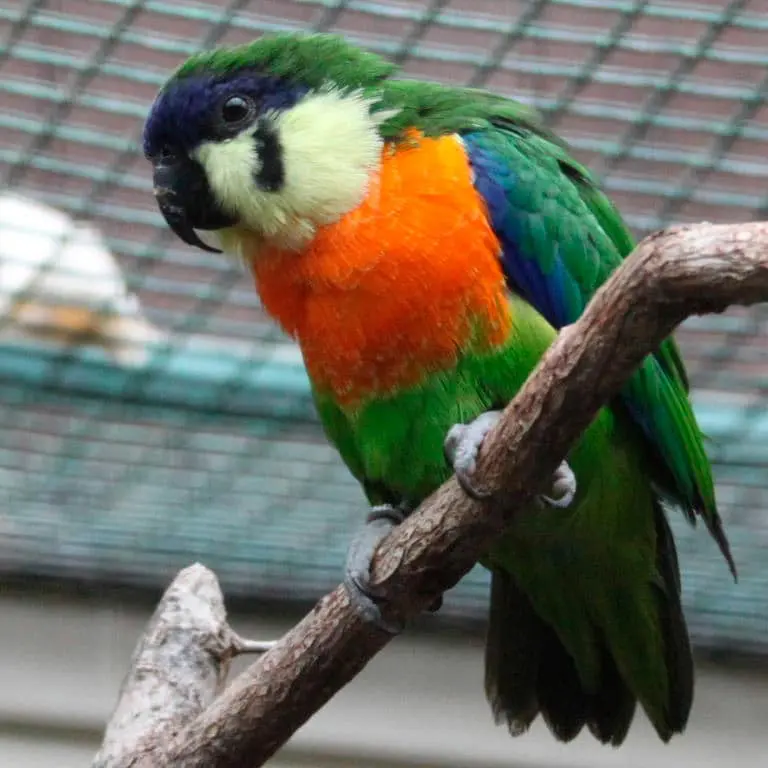
The head of the Fairy Lorikeet (Charmosyna pulchella) is dark red with the back of the crown Black extending from above and behind the eyes up to the nape. Mantle Green with a black area below the nape and collar of color red dark at the height of the shoulders; under the back It shows a patch of dark violet interspersed with some green feathers on the ends; rump and tail coverts view from above of color green.

Wings Green with extremes of color black in them flight feather and in the internal parts of the coats. below the wings Red with coverts marginal green; flight feather blackish.

The underparts Red with stripes of pale yellow in the center of the chest, the thighs purple with yellow stripes. The tail view from the top of green at the top with a black shaft in the Center and the rest of red and yellow at the tip; view from below, the tail is yellow, bathed in red and green ends.

The bill is orange with gray tip; irises yellow red; legs oranges.

The female shows a color green beige, not red, on the sides and a yellow patch in the flanks that extends to the sides of the rump.

The female of the subspecies Rothschildi also shows more green in the underparts males and a green mottling on the upper part of the chest.

The Immature They show the yellow patch of the flanks more defined than the females. The lower part of the back, mainly green with some blue-violet. Top of the chest Green mottled without clearly defined yellow stripes adult. Crown Red with black patch restricted to the nape and mixed with the green of the upper mantle. Lack of the Red of the part back from neck clearly defined in adults. Yellow area at the bottom of the flight feather. Iris brown. Beak and feet grayish brown.

Subspecies description

There are two subspecies including the nominal. A third, Charmosyna pulchella beautiful, described by Devis (1900), is considered here as Charmosyna pulchella pulchella.

  • Charmosyna pulchella pulchella

    : (Gray,GR, 1859) – The nominal


  • Charmosyna pulchella rothschildi

    : (Hartert, 1930) – The patch of the crown descends to find is with them eye; Green fusion behind the yellow lines of the chest, and green fusion in the flanks and the thighs (that can also show some yellow stripes); without the Red of the neck and much less defined the violet patch in the lower part of the back.

Habitat:

Nomads. They are mainly distributed in montane forests, at the edges of forests and secondary growth forests. Its preferred habitat are the mountains between 500 and 1.800 m, but also found in lowlands up to the level of the sea and in the mountains up to 2.300 m.

Found in pairs or flocks of 15 or more members, uniting in the tops of trees in flower with others Charmosyna lorikeets, including the Josephine's Lorikeet.

Reproduction:

In captivity it nests continuously, with incubation of 25 days shared by both parents. Usually, It lays two eggs in a hole in the base of one epiphyte. In nature it is intended that nests between January and April (Pratt picked up breeding males in March).

Food:

It feeds on pollen and nectar.

Distribution:

The Fairy Lorikeet is distributed between New Guinea in Irian Java (Indonesian) and Papua New Guinea, from the East of Vogelkop to the peninsula of Huon. Owen Stanley mountains and southeastern intervals.

Subspecies distribution:

  • Charmosyna pulchella pulchella

    : The nominal


  • Charmosyna pulchella rothschildi

    : The mountains Cyclops and the slope North of the mountains on the idenburg river (Irian Java).

Conservation:


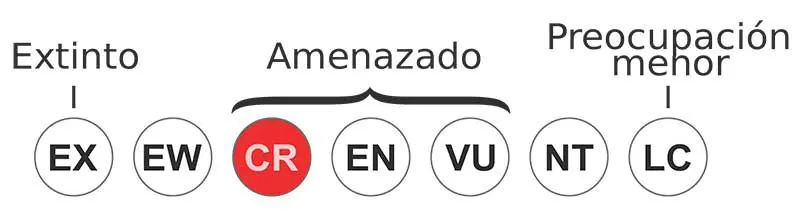
minor concern


โ€ข Current IUCN Red List category: Least concern.

โ€ข Population trend: Stable.

The world's population has not been quantified, It is thought that it surpasses the 500.000 birds. the species, according to information, is abundant in some areas, but few in others due to the trade (pit et to the., 1997). Suspected that the population is stable in the absence of evidence of any reduction or substantial threats.

"Fairy Lorikeet" in captivity:

A small number of captivity.

Alternative names:

Fairy Lorikeet, Little Red Lorikeet, Little Red Lory (ingles).
Lori fรฉรฉrique, Lori ร  croupion noir, Lori fรฉerique, Loriquet ร  croupion noir (French).
Goldstrichellori (German).
Lori Lindo (espaรฑol).

scientific classification:

Order: Psittaciformes
Family: Psittaculidae
Scientific name: Charmosyna pulchella
Citation: Gray,GR, 1859
Protonimo: Charmosyna pulchella

ยซCute Loriยป Images:

————————————————————————————————

ยซLori Lindoยป (Charmosyna pulchella)


Sources:

Avibase
– Parrots of the World โ€“ Forshaw Joseph M
– Parrots A Guide to the Parrots of the World – Tony Juniper & Mike Parr
– Birdlife

Photos:

1 – animalphotos.me
2 – by W. Voit – koppiekrauw
3 – animalphotos.me
4 – Author iggino in Vogelpark Walsrode, Walsrode, Lower Saxony, Germany – lynx
5 – in Neues vom Loro-Parque – koelle-zoo

โ–ท The world of Pets: Dogs, cats, birds, reptiles, amphibians

Colasisi
Loriculus philippensis


Loriculo Filipino

Content


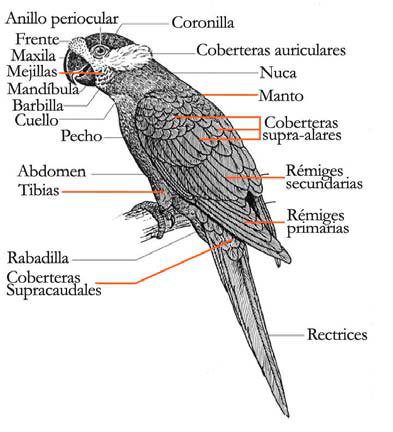
Anatomy-parrots

Description

14 cm.. length and a weight between 31 and 40 g..

The head of the Colasisi (Loriculus philippensis) is bright green with a patch of narrow Scarlet color on the front of the Crown, bordered orange-red color on the back edge; yellowish-green Chin: narrow collar on the back of the Orange and red neck, with a wash light yellowish in the neck.

Bright green upperparts with dark crimson rump and uppertail coverts (lower sides of light blue). Bright green wings with vane internal to the darker flight feathers. Under, the wings of turquoise-blue with the exception of the outermost coverts which are green. Bright red throat Center, merging to red-orange in the center of the chest (yellow on the bases of feathers); rest of the lower region of bright green, lighter and more yellow than the upper region. Upper, the green tail; Blue below.

Coral red beak; dark brown irises; dark orange legs.

The female has a face marked in blue and does not have the Red bib, that is replaced by a greenish yellow colour wash. The female Crown is washed in yellow-orange (stronger than in the male).

Young birds have a more off Crown and paler beak.

Subspecies description
Subspecies
  • Loriculus philippensis apicalis

    (Souance 1856): Two aberrant samples previously attributed to theLoriculus salvadorii. They are larger, with less red on the Crown, more blue on the tail, and darker green colour. All the Crown of this subspecies is Scarlet, merging in Orange on the back of the neck and orange on the mantle in both sexes (duller in females). Bright red in the hip and more orange on the top.

  • Loriculus (philippensis) bonapartei

    (Souance 18563): You have the back of the head with pronunciation orange hue, Pico black and grey legs.

  • Loriculus philippensis bournsi

    (McGregor 1905): The male with red only in the front and light yellow area in the center of the Crown (female much less yellow on the Crown), upper part of the Crown of the male less yellow shows that the L. p. Regulus. Orange line on the nape of the male is less clear in the female. Female with less blue in the face that the nominal species.

  • Loriculus philippensis chrysonotus

    (Sclater, PL 1872): Frontal area and rest of the crown bright red that extends in golden yellow color on the mantle, and showing a fine reddish collar on the back of the neck. Male with more orange in the lower part of the throat patch. The female Crown similar but less marked.

  • Loriculus philippensis dohertyi

    (Hartert 1906): Maybe more orange in the mantle, but hardly different to the L. p. apicalis.

  • Loriculus philippensis mindorensis

    (Steere 1890): Orange-yellow on the neck line. Crown Green. More extensive turquoise patch on both sides of the rump.

  • Loriculus philippensis philippensis

    (Statius Mรผller 1776): Nominal

  • Loriculus philippensis regulus

    (Souance 1856): Similar to the L. p. bournsi but male with much more yellow on the Crown (female shows a more subdued yellow broadcast, but more than in the previous race). Nape line weaker than in the bournsi. Male with more Scarlet patch.

  • Loriculus philippensis siquijorensis

    (Steere 1890): Male with less red bib and the red spot of the largest Crown than in the nominal species. Back of the Green Crown. Falata neck mark. Female with more blue in the face.

  • Loriculus philippensis worcesteri

    (Steere 1890): Male Scarlet throat patch smaller than that in the L. p. chrysonotus. Both sexes show a more extensive Crown of orange-red in the rear margin. There is a small patch on the back of the neck of orange color and a light reddish color in the mantle of diffusion.

  • Loriculus (philippensis) camiguinensis

    (Tello, JG 2006): has mainly green plumage, with throat, front side of the face and thighs of azure-blue; the front, the pileus, the obispillo and the top of the red tail, While the rest of the tail is blue. Males and females are identical in appearance, What is unusual in others Philippine parrots, Since only males of other species have red forehead.

Habitat:

The species is found along the edges of the forest, secondary growth, Bamboo forests, areas cultivated near villages, orchards and plantations of coconut. The birds are alone, in pairs or in family groups, sometimes in small flocks, sometimes with other birds.

Reproduction:

The breeding season has been recorded from April to August.. Three eggs are deposited and incubated by the female during 20 days, the young leave the nest in five weeks.

Food:

They feed in the upper levels of flowering plants or fruit trees, sometimes at lower levels, flower, nectar, fruit (including figs) and seeds, sometimes intoxicated by consumption of fermented coconut nectar (coconuts).

Distribution:

Limited to the Philippines (less the Sulu archipelago), where are widespread and resident except in Palawan. Its abundance varies according to the subspecies.. In general, the species is locally common up to 1000 meters above sea level, but have been recorded at altitudes of up to 2.500 m (Mount Apo, Mindanao).

Subspecies distribution
Subspecies

Conservation:


minor concern


– Current IUCN Red List category: Least concern

– The population trend: Decreasing

The world population is considered to be above the 20,000 exemplary but decreasing due to loss of habitat. The subspecies Mindoro is considered as threatened, and both subspecies of Cebu as Siquijor, are nearly extinct the loss of habitat (as these birds are commonly caged and traded between islands, contemporary records of birds from Siquijor they require confirmation to determine whether they refer to the breeds).

The combined population of Mindoro, Sibuyan, Blacks, Surigao del Sur, Tables, Romblon, Masbate, Ticao, Cuimaras and Basilan (subspecies L. p. mindorensis, L. p. bournsi, L. p. Regulus and L. p. dohertyi) probably add in total not more than 5.000 birds.

"Colasisi" in captivity:

Very rare.

Alternative names:

Colasisi, Philippine Hanging-parrot (ingles).
Coryllis des Philippines (French).
Philippinenpapageichen (German).
Loriculus philippensis (Portuguese).
Lorรญculo Filipino (espaรฑol).

scientific classification:

Order: Psittaciformes
Family: Psittaculidae
Scientific name: Loriculus philippensis
Genus: Loriculus
Citation: (Statius Mรผller, 1776)
Protonimo: Psittacus philippensis

Images ยซFilipino Loriculusยป:

Videos "Colasisi"

————————————————————————————————

ยซPhilippine Lorikeetยป (Loriculus philippensis)


Sources:

Avibase
– Parrots of the World โ€“ Forshaw Joseph M
– Parrots A Guide to the Parrots of the World – Tony Juniper & Mike Parr
– Birdlife

Photos:

(1) – a female perched. by iggino – lynx
(2) – Birds-pet-wallpapers – link
(3) – Loriculus philippensis camiguinensis (Author AlexKant) – Crocolandia Foundation – ZooChat
(4) – Loriculus p. apicalis, male, By iggino – lynx
(5) – tapety-papousci

Sounds: David Edwards (Xeno-canto)

โ–ท The world of Pets: Dogs, cats, birds, reptiles, amphibians

Guaiabero
Bolbopsittacus lunulatus


Guaiabero

Content

Guaiabero

Description

15 cm.. length between 62 and 77 g. of weight.

The head of the Guaiabero (Bolbopsittacus lunulatus), is mainly green, strongly impregnated of color blue light around them eyes, in the lores, the chin and (vaguely) on throat. Mantle slightly of a green over dark that it crown, bordered above pale yellowish green.

Primary coverts blue; the others wing-coverts, greenish. The flight feather with the vane bluish external, alula bluish. Uppertail bright green, great coverts Underwing bordered with yellow; rest of the underwings with pale yellow bar in all vane internal of flight feather (except the primaries outermost). Underparts uniform Green, slightly paler which the upperparts. Tail closed from color green bright by over, pale blue below.

Bill greyish black; irises dark brown; legs gray.

The female much less blue sign in the face, and has yellowish the part back from the neck and rump, both showing darker scalloped.

Immature are like females, but with the bill lighter.

Subspecies description

  • Bolbopsittacus lunulatus lunulatus

    : (Scopoli, 1786) – Nominal


  • Bolbopsittacus lunulatus callainipictus

    : (Parkes, 1971) – The male is like the intermedius, but with the plumage, in general, more yellow, above all in the underparts; face and neck nuchal darker and more bluish green; cheeks with less blue. The female as in the intermedius, but in general with more plumage yellow; rump and the nuchal collar more yellow and brighter. The youth adult females are.


  • Bolbopsittacus lunulatus intermedius

    : (Salvadori, 1891) – The face male is dark blue tinged with purple; neck brilliant blue. Female bordered blue in the throat; cheeks pale green; Green more pale around them eyes; neck yellow-orange. The youth are like the female adult.


  • Bolbopsittacus lunulatus mindanensis

    : (Steere, 1890) – The cheeks of the male are green, Blue around them eyes, Blue throat; neck darker and brighter blue than the lunulatus; yellow tint to green in the head. The female as of the lunulatus, but the head tinted yellowish-green. The youth adult females are.

Habitat:

It inhabits in open forests, forests and their surroundings, secondary vegetation, Savannah, farmland, gardens and mangroves, in the lowlands up to approximately 600 meters above sea level. Birds congregate in fruit trees sometimes in groups of up to 50 Member. Easier to detect in flight. While feeding they move silently and can be difficult to locate..

Reproduction:

The ecology of the species is poorly understood.. A female in breeding conditions It was observed during the month of March.

Food:

The diet includes fruit, especially the guavas (Psidium guajava)

Distribution:

Size of the area of distribution (reproduction / resident): 212.000 km2

Limited to the lowlands of the Philippine Islands, including Luzon, Mindanao, Samar, Leyte and Panaon.

Distribution of the subspecies:

  • Bolbopsittacus lunulatus lunulatus

    : Nominal

  • Bolbopsittacus lunulatus callainipictus

    : Samar (central Philippines)


  • Bolbopsittacus lunulatus intermedius

    : Northern Philippines (Leyte and Panaon)


  • Bolbopsittacus lunulatus mindanensis

    : Mindanao (Southern Philippines)

Conservation:


minor concern


โ€ข Current IUCN Red List category: Least concern

โ€ข Population trend: Stable

The size of the world population It has not been quantified, Although estimated at more of 50.000 specimens. The species, according to sources, it is enough common in all its limited area of distribution (pit et to the. 1997).

The population suspected to be stable in the absence of evidence of any reduction or substantial threats.

"Guaiabero" in captivity:

Almost unknown in captivity.

Parrot quiet and gentle. Sensitive to stress and infections, primarily by protozoa. Strict hygiene is necessary to protect this species of infectious diseases. They must be kept in pairs.

Alternative names:

Guaiabero (ingles).
Guaiabero lunulรฉ, Perruche lunulรฉe, Psittacule lunulรฉe (French).
Stummelschwanzpapagei (German).
Guaiabero (Portuguese).
Lorito Guayabero, Lorito Guayabo (espaรฑol).

scientific classification:

Order: Psittaciformes
Family: Psittaculidae
Genus: Bolbopsittacus
Scientific name: Bolbopsittacus lunulatus
Citation: (Scopoli, 1786)
Protonimo: Psittacus ephypium

Images "Guaiabero"

Videos "Guaiabero"

"Lorito's Guayabero" (Bolbopsittacus lunulatus)

Sources:

  • Avibase
  • Parrots of the World โ€“ Forshaw Joseph M
  • Parrots A Guide to the Parrots of the World – Tony Juniper & Mike Parr
  • Birdlife

Photos:

(1) – Guaiabero (Bolbopsittacus lunulatus) By Luis V. Limchiu [CC BY-SA 3.0, GFDL or Public domain], via Wikimedia Commons
(2) – A painting of a green parrot by Edward Lear. It looks like a female Guaiabero (Bolbopsittacus lunulatus) Edward Lear [Public domain], via Wikimedia Commons

Sounds: Paul Noakes (Xeno-canto)
โ–ท The world of Pets: Dogs, cats, birds, reptiles, amphibians

Mindanao Racquet-tail
Prioniturus waterstradti

Content

Description

Mindanao Racquet-tail

27 cm.. length between 120 and 160 g. of weight.

The Mindanao Racquet-tail (Prioniturus waterstradti) has the head bright green, with broadcasting slightly more blue-green in the cheeks, the lores and front of the crown. Duller green mantle; olive rump with different shades. The Green wings, with vane Dark internal to the flight feather, narrow marginalized yellow on the edges Interior; carpal edge yellow, wing feathers green; underside of primaries with blue dye.

The underparts brighter yellowish green, more yellow in undertail-coverts. Upper, the tail green, with side feathers blackish tip; undertail, the tail bluish; Blackish spatulas

Bill light grey; Brown irises; legs blackish gray.

females with extensions of tail more short.

Subspecies:

  • Prioniturus waterstradti malindangensis

    (Mearns, 1909) – Both adults, the color blue in the forecrown and the area under the eyes, paler; less Brown at the back.


  • Prioniturus waterstradti waterstradti

    (Rothschild, 1904) – The nominal

Habitat:

It is distributed in the humid montane forest, mainly between 850 and 2000 m, but have been recorded at altitudes of 450 m. Little is known about the habits of this species, that until recently was considered the same species as the Luzon Racquet-tail. Most of the observations refer to small flocks of between two and ten birds.. Apparently lower than other members of its genus is distributed in densities.

Reproduction:

There are no data on its reproductive ecology.

Food:

Without data

Distribution:

Size of the area of distribution (reproduction / resident): 11.300 km2

Endemic to the Highlands of Mindanao, Philippines. The records come from the Mount Apo, the Mount Malindang, Mount Kitanglad, Mount Mayon, Mount Matutum, Mt. Lebo, Anakan, Civolig, the Mount McKinley, Lake Faggamb and Baracatan, But even though the total population is estimated at 5.000 specimens, currently only limited to five mountains.

Subspecies distribution:

  • Prioniturus waterstradti malindangensis

    (Mearns, 1909) – Southeast of the mountains of Mindanao (Southeast of Philippines).


  • Prioniturus waterstradti waterstradti

    (Rothschild, 1904) – The nominal

Conservation:


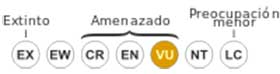
Near-threatened


โ€ข Current IUCN Red List category: Near threatened

โ€ข Population trend: Decreasing

In 1993, the population was estimated at 5,000 individuals (Lambert et to the. 1993)

The population is suspected that it may be declining due to the continuous degradation of the forests and the capture for the cage bird trade.

Conservation Actions Proposed:

– Collect data on the impacts of the international and domestic trade.
– Review the estimate of the population.
– Calculate loss of forests within their geographic range and altitude using satellite and remote sensing images.
– Protect effectively important tracts of forest right in key places, both in the areas of strict protection, such as multi-use areas.

"Mindanao Racquet-tail" in captivity:

Not found in captivity.

Alternative names:

Mindanao Racquet-tail, Crimson-spotted Racket-tailed Parrot, Crimson-spotted Racquet-tailed Parr, Minadnao racket-tailed parrot, Mindanao Montane Racquet-tail, Mindanao Racket-Tail, Mindanao Racket-tailed Parrot, Mindanao Racquet tail, Mindanao Racquet-tailed Parrot (ingles).
Palette de Mindanao, Palette de Waterstradt, Perroquet ร  raquette de Mindanao (French).
Mindanao-Spatelschwanzpapagei, Mindanao Spatelschwanz-Papagei, Mindanaopapagei, Mindano-Spatelschwanzpapagei (German).
Prioniturus waterstradti (Portuguese).
Lorito Momoto de Mindanao, Lorito-momoto de Mindanao (espaรฑol).

scientific classification:

Order: Psittaciformes
Family: Psittaculidae
Genus: Prioniturus
Scientific name: Prioniturus waterstradti
Citation: Rothschild, 1904
Protonimo: Prioniturus waterstradti

Images "Mindanao Racquet-tail"

Video of the "Mindanao Racquet-tail"

————————————————————————————————

ยซLorito momo de Mindanaoยป (Prioniturus waterstradti)


Sources:

Avibase
– Parrots of the World โ€“ Forshaw Joseph M
– Parrots A Guide to the Parrots of the World – Tony Juniper & Mike Parr
– Birdlife

Sounds: Desmond Allen (Xeno-canto)

โ–ท The world of Pets: Dogs, cats, birds, reptiles, amphibians

Red-capped Parrot
Purpureicephalus spurius

Red-capped Parrot

Content


Anatomy-parrots

Description

36 cm.. length and a weight between 105 and 156 g..

The Red-capped Parrot (Psittacus erithacus) It has the "crown" lid and the nape deep carmine red. The throat and cheeks are yellowish-green, merging slightly yellow on the sides of neck. The the mantle shows a dark green. The rump is bright yellow, which contrasts with the uppertail-coverts green. The wings covers are green, although large coberteras stain blue in the outer feathers.

The flight feather They are blackish with a large dark blue border around the outside edges of the primaries. The underparts is blue, with the exception of the flight feather that are black. The feathers of the chest and the abdomen they are blue-purple, becoming paler in area anal.

The the thighs and lower area of the tail They have a beautiful red. The undersides They have infiltrated some green feathers. Large central feathers tail They are green at the base, and bluish to the tip. side feathers tail They are dark at the base but gradually diluted colors light blue in the middle and then to white at the tips. The bottom of the tail It is pale blue with a white termination.

The bill, formed by a upper jaw more elongated, is bluish grey. The irises is of color Brown dark and the legs brown.

The female is more off than your partner. It has a crown green and chest brown. It shows a clear cross bar at the bottom of the wings, the level of flight feather. This motif is also present in the immature.

The immature they have the upperparts dark green and yellow rump duller than in adults. The the thighs They are less bright red colo. The chest It is browner. The forecrown It is covered with red feathers that are part, in small scattered groups, red feathers crown. The adult plumage It is acquired largely during the first molt and subsequently completed in the first spring.

Habitat:

Red-capped Parrot

Paired adults are sedentary, Although noisy flocks of up to 20 young birds are often seen wandering in search of food.

The Red-capped Parrot they have a preference for the eucalyptus forest and specialized to feed on seeds MARRI since its elongated upper jaw is adapted to eating the large seeds of the plant. The Fruit Marri they are available throughout the year and provide the source of staple food. The Red-capped Parrot they can also be observed in gardens (where sometimes cause serious damage), peoples, wooded pastures and forest of mallee (Eucalyptus Gracilis), feeding also on strips of grass covering the roads.

Couples remain inconspicuous, While quietly feeding in the canopy, during most of the day, Although they sometimes perch on Earth, in the clear, to feed on fallen fruit.

Reproduction:

The nesting season is between between August and December.

During the courtship, the male raises its crest, the tail, It tilts its wings and emits loud calls. The ritual offerings of food are also common, feeding the male to his partner during the incubation period.

The spawning usually includes 5 eggs, but may vary from 3 to 9. These are white. The eggs are deposited on a layer of sawdust that lines the bottom of a natural cavity of a eucalyptus marri, to a great height above the ground.

The incubation lasts a few 20 days. The male does not participate in feeding youngsters until they reach the age of 15 days. The flight of the young occurs approximately 5 weeks after hatching. The young remain in the family group for a short time after leaving the nest.

Food:

Apart from MARRI, These birds also feed on other eucalyptus, for example, Jarrah (Eucalyptus marginata), casuarinas, (Grevillea, Hakea), and they have also been feeding on flowers and insects.

Distribution:

Size of the area of distribution (reproduction / resident): 126.000 km2

Confined to the southwest corner of Western Australia. The species is distributed around the Moore river to the North of Perth (occasionally in Dandaragan), through the leafy South-West corner, usually within 100 km from the coast, reaching the inside of Lake Grace in the East and Esperance on the South Coast. The Red-capped Parrot they are regularly observed in the outskirts of Perth, and are reproduced in the Kingโ€™s Park in the center of the city. The species is common, especially in the forests of MARRI (eucalyptus calphylla).

The world's population is believed to be above 20.000.

Moderate numbers in captivity. Can be shot like a plague in a small number of areas.

Conservation:


minor concern


โ€ข Current category of the Red List of the UICN: Least concern

โ€ข Population Trend: Growing

The size of the world population It has not been quantified, Although the world's population is estimated at more of 20 000 specimens.
The species is described as quite common (pit et to the. 1997).

The number of captive birds It seems to be quite modest. In some areas, This bird has no protection and can be shot down if it enters an area of intensive growth. Even so, the population It is suspected that You may be increasing.

As the degradation of the habitat is permanent, new areas of suitable habitat are being created.

"Red-capped Parrot" in captivity:

It is a bird shy and nervous. They should not be housed with aggressive species. They can be noisy especially early, in the morning.
Not common in captivity.

Una muestra viviรณ 15,3 years in captivity. In captivity, these animals have been able to play to the 2 years of age approximately.

Alternative names:

Red-capped Parrot, Hookbill, King Parrot, Pileated Parakeet, Pileated Parrot, Purple-crowned Parrot, Red capped Parrot, Red-capped Parakeet, Western Australian King Parrot, Western Gray Parrot, Western Grey Parrot, Western King Parrot (ingles).
Perruche ร  tรชte pourpre (French).
Kappensittich, Rotkappensittich (German).
Periquito-cabeรงa-pรบrpura (Portuguese).
Perico Capelo, Periquito de Birrete Rojo (espaรฑol).

scientific classification:

Order: Psittaciformes
Family: Psittaculidae
Genus: Purpureicephalus
Scientific name: Purpureicephalus spurius
Citation: (Kuhl, 1820)
Protonimo: parrot champion

Images ยซPerico Capeloยป:

Videos "Red-capped Parrot"

————————————————————————————————

ยซPerico Capeloยป (Purpureicephalus spurius)


Sources:

Avibase
– Parrots of the World โ€“ Forshaw Joseph M
– Parrots A Guide to the Parrots of the World – Tony Juniper & Mike Parr
– Birdlife
– AnAge: The Animal Ageing and Longevity Database – Anagรฉ entry for Purpureicephalus spurius

Photos:

(1) – ยซRed-Capped-Parrot 0004 flat webยซ. Licensed under CC BY-SA 2.5 via Wikimedia Commons.
(2) – A juvenile Red-capped Parrot at Earls Golf Club, Perth, Western Australia, Australia By Michael MK Khor [CC BY 2.0], via Wikimedia Commons
(3) – By Bill & Mark Bell – Flickr
(4) – By Bill & Mark Bell – Flickr
(5) – By Ralph Green – Red-capped Parrot juvenile – Flickr
(6) – Edward Lear [Public domain], via Wikimedia Commons

Sounds: Randy Moore (Xeno-canto)

โ–ท The world of Pets: Dogs, cats, birds, reptiles, amphibians

Turquoise Parrot
Neophema pulchella

Turquoise Parrot

Content


Anatomy-parrots

Description

20 cm.. length and a weight between 37 to 44 g..

The Turquoise Parrot )(Neophema pulchella has the head bright turquoise blue, darker on the front of the crown, with the chin yellow and green on the back side of the crown.

Upperparts green.
The interior of the small and medium-sized coverts is reddish brown, the median are light blue. big blankets and primary coverts are blue-violet color. The primary feathers Black have them vane inmates of blue color and a fine yellow edge. The secondary feathers Black has foreign bands of yellowish green colour that tend toward the blue on the edges of the feathers. The lesser coverts the wings are blue-violet color.

The underparts is bright yellow with a slight orange patch in the throat and the chest. An orange stain, sometimes, is visible in the abdomen of certain individuals. The two pairs of the Central feathers of the tail are bright green, the outer tail feathers are yellow with green bases. The bill is black and the irises dark brown. The legs they are a pinkish-brown hue.

In the females, the plumage is more off than in males. There are no brown spots in the shoulders. The underparts they are much more green, especially in the chest. The lores they are whitish and the blue of the face is considerably reduced. A bar can be seen in the wing .

The immature are similar to the females.

The Immature males are distinguished by a small brown spot in the wing and blue dark figure.

Habitat:

Turquoise Parrot

The Turquoise Parrot they are distributed by clear wooded areas, wooded areas, meadows with native grasses, Although they have a strong preference for the ecotones, that is to say, regions that are intermediate between the forests and farmland.

In the State of Victoria, seasonally, These parakeets make positive use of habitats that suit them: the eucalyptus trees that are found in the Rocky Mountains in winter, wetlands and ravines from spring to fall and slopes that face southeast during all months of the year.

The Periquito turquoise they live in small flocks or family groups that feed near the ground.

These birds are sedentary but after nesting, You can attend a light dispersion.

During this last period, the formation of dorms is not uncommon.

We can often see them begging for food on the verges of roads.

Reproduction:

The Turquoise Parrot they breed from august to december. In other areas, the nests are also visible in April-may, but they are probably second clutches or broods alternatives. The nest is located in one a tree cavity, usually a eucalyptus, at least in regards to the State of Victoria. But it can also be located in a strain, a fallen pole or branch.

The spawning contains an average of 4 or 5 eggs with one incubation that lasts a few 20 days.

The chicks are altricial and remain in the nest for at least 4 weeks before you fly.

Food:

The Turquoise Parrot they have a diet vegetarian. They feed on seeds, flowers and fruits that are native and imported plants. Love cultivated herbs, wild herbs and different parts of the bushes.

A detailed census has identified the following genera: shrubs in Bloom's leucopogon, not less than 4 types of Danthonia, nettle, Urtica urens, Paspalum dilatatum, who are the edges of sea grass and the gernaios. The list is not exhaustive.

Distribution:

Size of its range (reproduction / resident): 771.000 km2

Currently fluctuates irregularly from the southeast of Queensland (North around Chinchilla and Maryborough) to the East of New South Wales, arriving at the coast, about Sydney, and extending to the South up to Nowra) in Victoria to the West of Bendigo. There is also an isolated population in the East of Victoria. The increase of population ,probably, continues in Victoria and New South Wales.

Conservation:


minor concern


โ€ข Current category of the Red List of the UICN: Least concern

โ€ข Population Trend: Stable

at the beginning of 20th century, the increase of pastoral activities, catastrophic drought in 1902, and to a lesser extent, poaching, they gave rise to the population of the Turquoise Parrot almost disappeared.

Since the decade of 1940, there has been a resurgence in the number of individuals. The resurgence of this species began in the vicinity of Chinchilal and Maryborough and little by little the South joined with the State of Victoria through New South Wales.

Today, growth tends to spread and strong presence in the national parks proof that the cessation of grazing is a great benefit for the development of these parrots. Since they nest close to the ground, These birds are still vulnerable to predation by foxes. The other recurring threat is habitat degradation and loss of nesting sites.. The world population deemed superior to the 20 000 birds, birds captive are estimated at 8 000.

"Turquoise Parrot" in captivity:

The Turquoise Parrot they are birds that are regularly and which are obtained very good results in the reproduction. These parakeets are highly recommended for amateur beginners.

In terms of its behavior, they are relatively strong with a sweet and melodious voice. These parakeets are not shy and are easy to keep..

During the breeding season they do not support other congeners or other species of neophemas. It is mainly of assaults by males. Your need to crack is very limited and their need for bathroom is very different from an individual to another. They tolerate dry climates, but they are very sensitive to cold and wet fog. They like to spend time on the floor, investigating, and therefore, they are vulnerable to infection by worms.

According to sources, a sample lived during 21 years in captivity. In captivity, these animals have been known that they can raise from 1 aรฑo de edad.

Alternative names:

Turquoise Parrot, Beautiful Grass-Parakeet, Beautiful Grass-Parrot, Beautiful Parrot, Chestnut-shouldered Grass-Parrot, Chestnut-shouldered Parakeet, Chestnut-shouldered Parrot, Chestnut-winged Grass-Parakeet, Chestnut-winged Parrot, Red-shouldered Grass-Parakeet, Red-shouldered Parakeet, Red-shouldered Parrot, Turcoisine Parrot, Turq, Turquoise Grass-Parakeet, turquoise parakeet, Turquoisine, Turquoisine Grass-Parrot, Turquoisine Parrot (ingles).
Perruche turquoisine (French).
Schรถnsittich (German).
Periquito-turquesa (Portuguese).
Papagayo Turquesa, Periquito Turquesa (espaรฑol).

scientific classification:

George Shaw
George Shaw

Order: Psittaciformes
Family: Psittaculidae
Genus: Neophema
Scientific name: Neophema pulchella
Citation: (Shaw, 1792)
Protonimo: Psittacus Goshawk

ยซTurquoise Parakeetยป Images:

Videos "Turquoise Parrot"

————————————————————————————————

ยซTurquoise Parakeetยป (Neophema pulchella)


Sources:

Avibase
– Parrots of the World โ€“ Forshaw Joseph M
– Parrots A Guide to the Parrots of the World – Tony Juniper & Mike Parr
– Birdlife

Photos:

(1) – Turquoise Parrot (Neophema pulchella), female; of: Lovebird by Daniel Wehmeyer –> Danweh – Wikimedia
(2) – ยซNeophema pulchella -Rainbow Jungle -Australia-8aยป by Sheila Bradford – originally posted to Flickr as DSCF7029 turquoise parrot. Licensed under CC BY 2.0 via Wikimedia Commons.
(3) – ยซNeophema pulchella -Twycross Zoo, Leicestershire, England-8aยป by stephen jones from uk – [1]Uploaded by Snowmanradio. Licensed under CC BY 2.0 via Wikimedia Commons.
(4) – ยซTurquoise Parrot (Neophema pulchella)-6ยป by Lip Kee Yap – originally posted to Flickr as Turquoise Parrot (Neophema pulchella). Licensed under CC BY-SA 2.0 via Wikimedia Commons.
(5) – ยซNeophema pulchella pair Capertee Valleyยป by Lip Kee from Singapore, Republic of Singapore – Turquoise Parrot (Neophema pulchella). Licensed under CC BY-SA 2.0 via Wikimedia Commons.
(6) – Jacques Barraband [Public domain], via Wikimedia Commons

Sounds: Marc Anderson (Xeno-canto)

โ–ท The world of Pets: Dogs, cats, birds, reptiles, amphibians

Black Parrot
Coracopsis nigra

Black Parrot

Black Parrot

Content


Anatomy-parrots

Description

35 to 40 cm. length and a weight between 215 and 315 gr.

The plumage of the Black Parrot (Coracopsis nigra) It, usually, blackish brown (iridescent green glow during breeding season) with inconspicuous grayish color marks in undertail- coverts and gray in vane external to the primary.

Bottom of flight feathers pale grey. Upper, the tail brown-black color; undertail, light grey: subterminal band dark.

The bill color horn, more off-white to modify the moult; irises dark brown: periophthalmic ring grey-brown (does not reach the peak); legs dark brown.

Sound of the โœฉ Black Parrot โœฉ.

Without sexual dimorphism.

Immature paler than adults with pale undertail- coverts and yellowish tint in the bill; Tips of the feathers of the tail pale grey.

Subspecies description

  • Coracopsis nigra libs

    (Bangs, 1927) – Paler and with the underparts browner than the nominal species; back bluish grey tinted. No dark subterminal band on the tail.

  • Coracopsis nigra nigra

    (Linnaeus, 1758) – Nominal species

  • Coracopsis nigra sibilans

    (Milne-Edwards & Oustalet, 1885) – Smaller, of about 30 cm., and paler than the nominal species. The chocolate color replaces the blackish brown of the nominal. No grey in the vane the primary external

Habitat:

The Black Parrot are resident with some movements of foraging day.

It is found in a wide variety of forests and savanna areas, including ecosystems modified by man, wooded land of cities and towns, as well as primary forests, from the level of the sea up to 2,050 m altitude.

You can see more on the dense forests, swamp forest (including mangroves) and scrublands, that the Vasa Parrot, in order to avoid large areas of humid forests.

Usually seen in small noisy groups, either flying or sitting on the tops of the trees; active on moonlit nights.

In Seychelles, However, the Black Parrot seldom form flocks and in general you seen alone or in pairs, except when the food, locally, they are abundant.

Is not known to form mixed flocks with the Vasa Parrot.

Reproduction:

Nest in the hollow trunk of tree or in a branch, usually above the 15 m.

Breeding probably from November to February.

Clutch of 2 to 8 eggs.

Food:

The Black Parrot they feed on seed, berries, fruits and nuts; more frugivorous than Vasa Parrot.

Specific articles reported on their diet include fruits of Afzelia bijuga and Chassalia, seeds of Cinnamosma fragrans, flowers of Symphonia and some types of leaves.

In Madagascar, according to sources, It has reported consumption of Insect Galls on the part of the Black Parrot.

They attack crops and in the Comoros they are real pests in cocoa plantations, feeding on immature pods.

The main food of the population of Praslin include: Verschaffeltia splendida, Averrhoa bilimbi, Phoenicophorium borsigianum, Deckenia nobilis, Chrysobalanus icaco and Ficus rubra.

Distribution:

Endemic to Madagascar, The Comoros archipelago (Grand Comore and Anjouan) and Praslin island (Seychelles), where it was possibly introduced.

Subspecies distribution

  • Coracopsis nigra libs

    (Bangs, 1927) – Can be found in the West of Madagascar.

  • Coracopsis nigra nigra

    (Linnaeus, 1758) – Nominal species

Conservation:


minor concern


  • Current Red List of UICN: Least concern
  • The population trend: Stable

The species that are found in Madagascar and the Comoros they are generally described as common.

Officially treated as pests in Madagascar where the Black Parrot they are persecuted because of the damage caused in crops; Also hunted as food and as domestic fowl.

Despite their intense persecution, apparently they are not at risk and are distributed in many protected areas of Madagascar.

The size of the world's population has not been quantified.

The subspecies of the Praslin island (Seychelles), found in the The Valle de Mai nature reserve, is located in critical state (probably less than 100 birds). Competition for nesting sites with the common mine (Acridotheres tristis) can be one of the threats of the remaining birds.

The โ€œBlack Parrotโ€ in captivity:

It is possible to keep them in community with its kind, but out of breeding period. At first he can be shy. It is a active parrot and nervous, generally outgoing Once accustomed to people and environment, tends to be entrusted, although it also depends a lot on its breeding method (natural or by hand) and earlier experiences.

As a pet it can be a wonderful company., loving, playful and very smart.

With regard to its longevity, sources they indicate that a sample lived 34.1 years in captivity.

Alternative names:

Black Parrot, Lesser Vasa Parrot, Lesser Vasa-Parrot (English).
Vaza noir, Perroquet noir (French).
Rabenpapagei (German).
Papagaio preto (Portuguese).
Loro Negro (espaรฑol).

scientific classification:

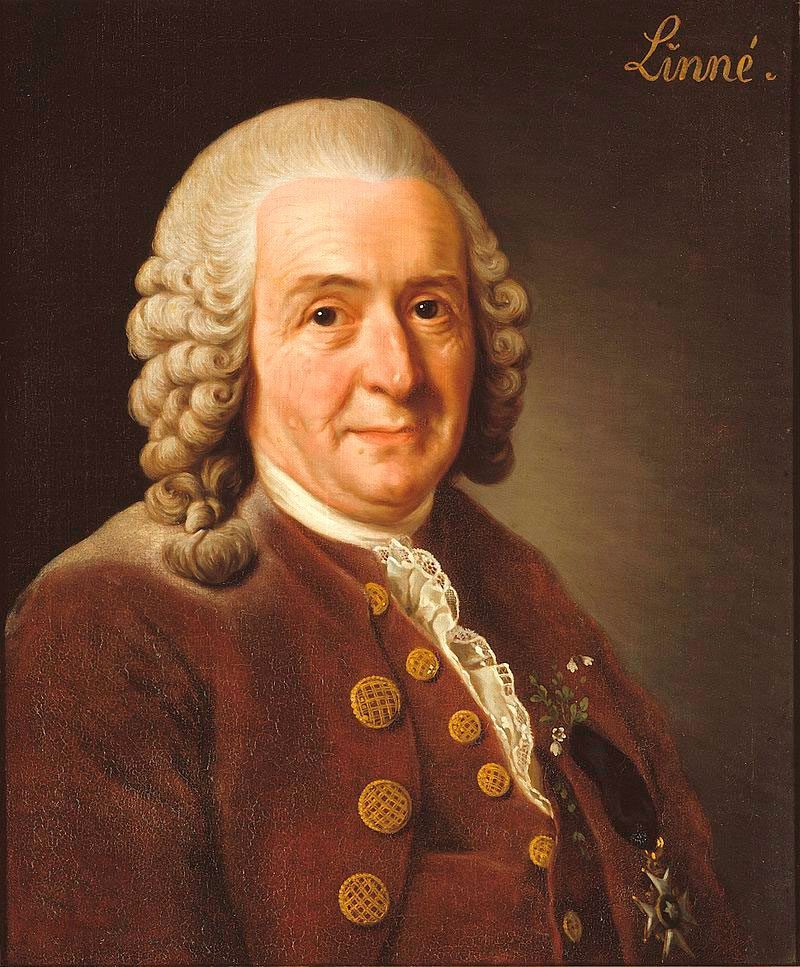
Carl Linnaeus
Carl Linnaeus

Order: Psittaciformes
Family: Psittaculidae
Genus: Coracopsis
Scientific name: Coracopsis nigra
Citation: (Linnaeus, 1758)
Protonimo: Psittacus niger

ยซBlack Parrotยป Images:

————————————————————————————————

ยซBlack Parrotยป (Coracopsis nigra)

Sources:

Avibase
– Parrots of the World โ€“ Forshaw Joseph M
– Parrots A Guide to the Parrots of the World – Tony Juniper & Mike Parr
– Birdlife
– Parromania

Photos:

(1) – Madeira_botanischer_garten_Coracopsis_nigra By Hedwig Storch (Own work) [GFDL or CC BY-SA 3.0], via Wikimedia Commons
(2) – Lesser Vasa Parrot (also known as the Black Parrot). Two in a cage with a nestbox By TJ Lin (originally posted to Flickr as pic-264) [CC BY-SA 2.0], via Wikimedia Commons
(3) – Lesser vasa parrot (coracopsis nigra) in Anjajavy Forest, Madagascar By Charlesjsharp (Own work) [CC BY-SA 3.0], via Wikimedia Commons
(4) – Lesser Vasa Parrot or Black Parrot (Coracopsis nigra); picture taken at Mangily, Western Madagascar By Axel Strauss (Own work) [GFDL or CC BY-SA 3.0], via Wikimedia Commons
(5) – Male Lesser Vasa Parrot in an aviary at Tropical Birdland, Leicestershire, England By Snowmanradio (Own work) [CC BY-SA 3.0 or GFDL], via Wikimedia Commons

Sounds: Mike Nelson (Xeno-canto)

โ–ท The world of Pets: Dogs, cats, birds, reptiles, amphibians

Yellow-collared Lovebird
Agapornis personatus


Inseparable Cabecinegro

Content

Description "Inseparable Cabecinegro":

Among 13 and 15 cm.. length and a weight between 43 and 47 g., the Yellow-collared Lovebird (Agapornis personatus) They are surprisingly beautiful.

Inseparable Cabecinegro

They have head, the throat and the top of the nape blackish brown, merging into yellow at the bottom of the nape and top of the the mantle, forming a distintivo collar. The remaining the mantle, scapulars and rump, are green; uppertail-coverts blue. Upper, the wing-coverts green; primaries green, darker in vane inner; vane outside of secondaries green, the vane internal black.

Under, wing-coverts green; underside of flight feather grey-black. Top of the chest bright lemon yellow; belly and undertail- coverts pale green. Tail mostly green, but all feathers, except the central pair, labeled orange opaque; subterminal band negruzca.

Bill coral red, white at the base of the upper jaw; cere white; irises brown; eye ring white (2mm wide); legs pale grey.

Both sexes are similar.

Immature and adults, but the head it is less dark and bright; neck yellow duller; black markings, sometimes at the base of the upper jaw.

Habitat "Inseparable Cabecinegro":

The Yellow-collared Lovebird They are distributed in well wooded pastures, including the cultivated areas, with Acacia, Commiphora and, above all, Adansonia, at altitudes between 1,100-1,800 m. Avoid miombo woodland.

Usually observed in small flocks of 4-5 birds but sometimes they can meet up to a hundred.

Reproduction "Inseparable Cabecinegro":

The nests of the Yellow-collared Lovebird they find, normally, in tree cavities, with a strong preference for Adansonia. They can also use free domed nests of other species. In Dar-es-Salaam, the nest, sometimes, They build it in the cavity of a building or in a free nest Little Swift (Apus ajffinis).

The nest is a complex domed structure built from long stems and strips of bark, carried by the female at the peak. The Eggs are laid in the dry season (March-April and June-July). The laying is of 3-8 in captivity. The egg incubation hard 23 days. During the first six weeks after hatching, the females they feed the young. Then, Once the young birds leave the nest, the males They take care of feeding pigeons During two weeks, or until young birds achieve independence.

"Inseparable head":

The Yellow-collared Lovebird feed of grass seeds, the millet and the sorghum, Also seed Cassia. They require regular access to water and can drink several times a day.

Distribution:

Size of its range (breeding/resident): 224.000 km2

Except track in southwest Kenya (in Taveta), the Yellow-collared Lovebird appear to be limited to the plateau in eastern and southern Tanzania, from northern, Mount Meru south to Morogoro and west on Regiรณn de Rukwa and Mbeya Region.

In Kenya, there are considerable feral populations in Naivasha, Nairobi and Mombasa; smaller in some highlands and the coastal towns (6.000 birds in 1.986.); in Tanzania, in Dar-es-Salaam and Thong.

Sedentary, in general, common and sometimes abundant. Wild population probably in decline due to the large scale capture for the bird trade. One large number in captivity.

Conservation:


minor concern

โ€ข Current Red List of UICN: Least concern

โ€ข Population trend: Stable

Until this year (2007) It was included in Appendix II (o anexo B) convention C.I.T.E.S.. Not globally threatened, but still vulnerable by presenting a reduced distribution area. Importation is no longer necessary to be a sufficient number in captivity.

The population size World has not been quantified, but the species according to sources is locally quite common.

The "inseparable head" in captivity:

The Yellow-collared Lovebird It, next to the Rosy-faced Lovebird and the Fischer's Lovebird, one of the most Lovebird bred in captivity.

The Yellow-collared Lovebird (Agapornis personatus) It is a bird very sociable with his kind and can live in a group.

Its aggressiveness does not reach the limit of being able to kill a fellow, as if they would Rosy-faced Lovebird.

Very common, available in all pet stores. A bit less noisy some other Lovebirds, their cry is less annoying. Like all Lovebirds, the Yellow-collared Lovebird they are very agile, Dynamic, good climbers and skilled in all kinds of acrobatics. After the breeding period, Some couples prefer to be alone if they spent this time with other couples of their species.

The Lovebirds rarely talk, but there is the possibility that learn to imitate human speech if they are taught since very young. It is important to remember that you should never have the expectation that a bird can speak.

With regard to its feeding, We provide our Yellow-collared Lovebird a set of seeds, such as millet, mixture of canary, sunflower and hemp. Alternatively, we can provide insect, ears of corn and an abundance of fruit, vegetables.

Give them opportunity to bathe and change the water regularly.

The Yellow-collared Lovebird are very easy to play, at humidity 70%. Three nidadas by year. The female tends to lead twigs on his rump to decorate your nest.

A cage of 80 x 40 x 40 cm.. It is suitable for these Lovebirds. The nest It must be a horizontal box height 25cm, 18cm wide and 18cm deep. The laying is of 3 to 6 eggs. The time of incubation of these eggs is 23 days and the chicks leave the nest 4 to 5 weeks after hatching.

Mutations Agapornis personatus

No sex-linked mutations present, All are autosomal. They can be recessive, dominant and incomplete dominant. They are recessive: blue, pastel, ino, albino, recessive harlequin, DEC, dilute, bronze fallow y pale fallow. The only dominant as such they are dominant harlequin and slaty. Incomplete dominant They are dark factor, purple, misty y edged.

One type of harlequin which it is transmitted to different recessive and dominant form, is the progressive harlequin o mottle. The harlequin is increasing as the bird will be more adult, as it is getting older.

This species has been used to "pass" its mutations to other species such as A. fischeri and A. nigrigenis. This step is called transmutation (type hybridization). In fact, personatus lutino comes from the transmutations with A. lilianae, species which came first. This whole process is possible to be fertile birds resulting from joining any of these 4 species including. With the A. roseicollis sterile individuals out. For all that we have seen, Finding Agapornis Persatus "pure" is a difficult task.

Source: The Bird Aviary

Alternative names:

Yellow-collared Lovebird, Black-masked Lovebird, Masked Lovebird, Yellow collared Lovebird (English).
Insรฉparable masquรฉ, Insรฉparable personata (French).
Schwarzkรถpfchen (German).
Inseparรกvel-mascarado (Portuguese).
Inseparable Cabecinegro, Inseparable de Mascara, inseparable enmascarado (espaรฑol).


scientific classification:

Anton Reichenow
Anton Reichenow

Order: Psittaciformes
Family: Psittaculidae
Genus: Lovebirds
Scientific name: Agapornis personatus
Citation: Reichenow, 1887
Protonimo: Agapornis personata


Images "Inseparable Cabecinegro":

Videos "Yellow-collared Lovebird"


Species of the genus Agapornis


"Black-neck lovebird" (Agapornis personatus)


Sources:

Avibase
Parrots of the World โ€“ Forshaw Joseph M
Parrots A Guide to the Parrots of the World – Tony Juniper & Mike Parr
Birdlife
Wikipedia

Photos:

(1) – Masked Lovebird (Agapornis personata) at Auckland Zoo By Chris Gin (originally posted to Flickr as Masked Lovebird 2) [CC BY 2.0], via Wikimedia Commons
(2) – A Yellow-collared Lovebird in Serengeti, Tanzania By Demetrius John Kessy from Arusha, Tanzania (Serengeti(Fisher Love Bird)) [CC BY 2.0], via Wikimedia Commons
(3) – The blue colour mutant of the Masked Lovebird, at ฤŒastolovice Castle, Czech Republic By Mistvan (Own work) [CC BY-SA 3.0 or GFDL], via Wikimedia Commons
(4) – Several Yellow-collared Lovebirds at Kansas City Zoo, Missouri, USA By KCZooFan from Olathe, KS, U.S.A (Black-masked Lovebirds) [CC BY-SA 2.0], via Wikimedia Commons
(5) – A Yellow-collared Lovebird at Pukekura Park, New Plymouth, Taranaki, New Zealand By Virginia McMillan from Wellington, New Zealand (yellow breasted bird) [CC BY 2.0], via Wikimedia Commons
(6) – A Yellow-collared Lovebird at Honolulu Zoo, Hawaii, USA. It is perching by the entrance to a nestbox By Daniel Ramirez from Oakland, USA (Masked Love Bird) [CC BY 2.0], via Wikimedia Commons
(7) – A pet Yellow-collared Lovebird in a cage with toys By Mike Fernwood from Santa Cruz, California, United States (Lauraโ€™s prisoner) [CC BY-SA 2.0], via Wikimedia Commons
(8) – Lovebird hybrids (Fischerโ€™s Lovebird x Masked Lovebird) in a back garden near Bangkok, Thailand By krisprachant [CC BY 2.0], via Wikimedia Commons
(9) – The blue mutant of the Masked Lovebird Agapornis personata. This variety is called blue Masked Lovebird By Autor: norasuered [CC BY-SA 2.0], via Wikimedia Commons

Sounds: Stein ร˜. Nilsen (Xeno-canto)