โ–ท The world of Pets: Dogs, cats, birds, reptiles, amphibians

Derbyan Parakeet
Psittacula derbiana


Cotorra de Derby

Content

Description:

50 cm.. of length and a weight of 320 g..

The Derbyan Parakeet (Psittacula derbiana) has the crown and lower cheeks lavender blue with pale iridescent blue shading on the forecrown and pale green bright in the upper cheeks and periophthalmic region; narrow black stripe that extends horizontally from the eyes to the area above the bill; spacious malar stripes (ยซmoustacheยซ) Black fuse next to the chin to create a great patch.

Since the nape until uppertail-coverts green, bright in the the mantle. Upperwing-coverts Green with yellow or marginalized feathers with yellow in median and greater coverts, creating distinct pale patch. The primaries and secondaries emerald green.

The underparts to belly lavender-bue; the thighs, vent and undertail-coverts grass-green. Uppertail centrally blue, outer feathers Blue in vane outer, green on inner.

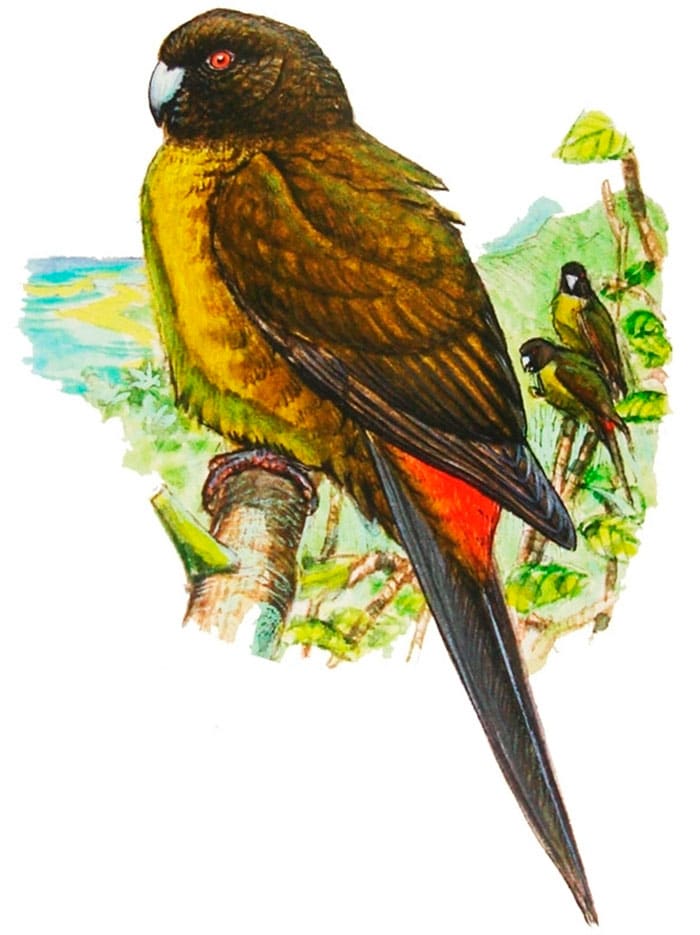
Ilustraciรณn Cotorra de Derby

upper jaw red tipped yellow, the lower black; cere blue-gray, irises straw-colored; legs dark grey.

The female has the bill black.

The immature they have the head green and the underparts much paler.
The very young birds has bill pink, turning black later and then red again in males.

Habitat:

Observed in forest, between 1.250 and 4.000 meters above sea level. It is thought that you can make vertical migration seasonal. Views in the Tibet in 3.300 m, even in winter.

According to reports, have priority for coniferous forests or mixed forests of Pinus and Quercus, also of Alpine growth as the rhododendron. Visit valleys culture, especially during harvest.

Gregaria, usually seen in noisy flocks of up to several dozen birds. Only rarely are in pairs or individually.

Reproduction:

Holes for their nests they are located in tree hollows, usually at a certain height, commonly in a himalayan poplar Populus ciliata.

The breeding they performed it during the month of June.

The put in captivity is between 2 and 5 eggs.

Food:

Reported foods include barley, the corn, catkins of Populus ciliata, cones of Pinus tabulaefornis and fruit grown according to availability, including peaches; they can be highly destructive crops. It is believed that they may eat some invertebrates, Hoja-brotes and berries.

Distribution:

Distributed by the Of the Himalayas and South of the Tibetan plateau. Since Arunachal Pradesh and Assam, India, to the southeast of Tibet and Southwest China in Sichuan Western fence of 32 ยฐN and west of Yunnan to the South up to around Tengchong to 25 ยฐ N.

Visitors during the summer in the northeast of the India (May-September). Resident elsewhere, apparently with some seasonal altitudinal movements.

Usually common. Live birds traded in small numbers with a modest population captive outside their area of distribution.

Conservation:

State of conservation โ“˜


Near-threatened Near Threatened โ“˜ (UICN)โ“˜

โ€ข Current Red List of UICN: Near-threatened

โ€ข Population trend: Decreasing

The population of the Derbyan Parakeet It is suspected that it may be suffering a moderately rapid decline mainly due to the pressure that is subjected , not only due to its continuous capture for the cage bird trade, but also by the indiscriminate felling of trees in the nest, together with evidence of local extinctions and declining birds in some parts of its area of distribution.

Threats:

    – This species was previously threatened by deforestation campaigns, that it resulted in, loss of much of their breeding habitat; However, This threat ended in the Decade of 1990 (Zeidler and Francis 2011).

    – Today, Middle-aged trees, some of which provide the perfect place for the construction of the nest, they are being felled for the construction of housing and firewood, even in protected forests (Zeidler and Francis 2011).

    – Recent observations indicate that this species is subject to a strong pressure catch and the collection of eggs for the pet trade (J. Eaton in litt. 2010, Zeidler and Francis 2011).

    – The collection of eggs and subsequent incubation, for the breeding of Derby Parrots and subsequent sale, is very organized in some areas (Zeidler and Francis 2011).

    – The species is sold openly and are kept, in large numbers, as a pet in its natural distribution area (J. Eaton in litt. 2010, J. Hornskov in litt. 2010, Zeidler and Francis 2011).

Actions of conservation in CITES Appendix II course.:

    – Is listed in Schedule I of the law of 1972 for nature (Protection) on India (The India Government, 1993) and the collection for the pet trade is illegal in China (Zeidler and Francis 2011).

    – In some areas, as the Shachong valley (Szechwan), the monks provide protection for wildlife, including trap activities (Zeidler and Francis 2011).

Conservation Actions Proposed:

    – Population trends and monitor hunting pressure.

    – Addressing the threat of trade through the application of the legislation and awareness-raising activities.

    – Steadily increase the number of sites that are protected.

    – Support monks engaged in activities for the protection of wildlife (Zeidler and Francis 2011).

    – Evaluate the effectiveness of a scheme of nest boxes (Zeidler and Francis 2011).

"Derbyan Parakeet" in captivity:

The Derbyan Parakeet is a pet very popular at the local level due to the wonderful color of its plumage, his intelligence and its excellent speaking skills, that distinguishes it from other Asian parrots, usually you do not have that voice clarity.
While these parrots do not have the ability to learn an extensive vocabulary, his manner of speaking looks like the speech of Amazon parrots. Having said that, there are never guarantees that a Derbyan Parakeet you will learn to speak, but most do – even the females.

It is a bird that needs much stimulation. She loves to chew and can be very destructive, provided that provide it a variety of toys to chew, It will inhibit its destructive behavior and avoid his boredom.

It is a species with demand among farmers for several reasons, including its striking plumage, its ease of reproduction and its excellent parenting skills.

The
Derby Parrot reach sexual maturity between the 2 and 3 years of age. It reported that it may reach sexual maturity later in nature, possibly to the 5 years.

The typical breeding season It will begin in April or June and average clutch sizes are of 2 – 4 eggs. The incubation period lasts 23 – 28 days, and the chicks leave the nest to the 8 to 9 weeks of age.

The Derbyan Parakeet It must be kept in an Aviary, or in a large cage, providing a daily time flying out. They are social birds and like to be โ€œpart of a flock.โ€ – which could be a group of birds in an aviary environment or a human family.

It requires much interaction to keep its meekness. By nature, it is a shy bird to human contact, Although considered usually placid compared to some other parrots.

If they are kept outdoors they may require periodic deworming – since they spend considerable time at the bottom of your aviaries or cages. Because of this habit, they are also susceptible to fungal infections. Good hygiene is especially important to keep healthy this Parrot.

Even so, the Derby Parakeet is a rare bird outside its range and with limited breeding.

Alternative names:

Derbyan Parakeet, Chinese Parakeet, Lord Derby’s Parakeet, Upper Yangtze Parakeet (English).
Perruche de Derby (French).
Chinasittich (German).
Periquito-da-china (Portuguese).
Cotorra de Derby, Cotorra Verde China (espaรฑol).

scientific classification:

Order: Psittaciformes
Family: Psittaculidae
Genus: Psittacula
Scientific name: Psittacula derbiana
Citation: (Fraser, 1852)
Protonimo: Palaeornis Derbianus

Derbyan Parakeet images:

Videos "Derbyan Parakeet"

Derbyan Parakeet (Psittacula derbiana)


Especies del gรฉnero Psittacula

Sources:

Avibase
– Parrots of the World โ€“ Forshaw Joseph M
– Parrots A Guide to the Parrots of the World – Tony Juniper & Mike Parr
– Birdlife

Photos:

(1) – A pair of Lord Derbyโ€™s Parakeet (also known as Derbyan Parakeet)s at Wilhelma Zoo, Stuttgart, Germany By krislorenz (_DSC2098Uploaded by Snowmanradio) [CC BY-SA 2.0], via Wikimedia Commons
(2) – A male Derbyan Parakeet (also known as Lord Derbyโ€™s Parakeet) in Hangzhou, Zhejiang, China By Michael Vito from South Orange, NJ, USA (Hangzhou RevisitedUploaded by Snowmanradio) [CC BY-SA 2.0], via Wikimedia Commons
(3) – An adult male Derbyan Parakeet at Shenlong Eco Park, Peopleโ€™s Republic of China By Doug Janson (Own work) [CC BY-SA 3.0 or GFDL], via Wikimedia Commons
(4) – A male Lord Derbyโ€™s Parakeet (also known as Derbyan Parakeet) in an aviary By Richard J. Blach (Own work (Original text: eigene Fotografie)) [GFDL or CC-BY-SA-3.0], via Wikimedia Commons
(5) – Derbyan Parakeet (Psittacula derbiana) at Wellington Zoo, New Zealand. A male bird showing red beak by Peter Halasz – Wikipedia
(6) – Psittacula derbiana, drawing from nature by J. Gould & H.C. Richter By JoJan (Own work) [CC BY 3.0], via Wikimedia Commons

Sounds: jon hornbuckle (Xeno-canto)

โ–ท The world of Pets: Dogs, cats, birds, reptiles, amphibians

Blue-winged Macaw
Primolius maracana


Guacamayo Maracanรก

Content

Maracanรฃ Macaw description:

Of 43 cm.. of length and a weight of 265 g..

The Blue-winged Macaw (Primolius maracana) It is increasingly rare and exotic.

This small Macaw has the forecrown marked with a narrow band of black color that fades into blue in the area of the crown; the ear-coverts and both sides of the neck are blue, becoming green in the area of the nape.

Upperparts olive green with light tint in the rump and in the uppertail-coverts. Small, large and medium-sized inner coverts are green; the large external coverts blue.

The flight feather blue color above, (a bit of green in high schools), of yellow olive color below. The underparts green, slightly more yellow than the upper. Upper, the tail mostly blue, but the green central feathers, Red opaque in the Center, and with blue tips; undertail, the tail opaque yellow olive.

The bill horn, Black base; bare skin of the lores and cheeks upperparts gray with a bluish tint and crossed in front by lines of small black feathers: the irises yellow; legs grayish pink.

Both sexes similar; female possibly smaller and duller plumage compared to males.

The immature they have a paler plumage and less red coloration in the forecrown. The red spots in the abdomen and back they are stained yellow. Edges of color Horn in its bill. The tail is short and the eyes brown.

Habitat:

They inhabit in tropical and subtropical forests of Evergreen and deciduous forests (including the rainforest of the Atlantic and the Savannah of the Cerrado) with apparent preference for forest edges or forests near water.

At the north end of Bay, Brazil, inhabits tree-lined galleries Tabebuia caraiba in the area caatinga next to the Spix's Macaw, where the birds avoid flying over open field, preferring to remain among the trees.

There are reports of these birds to 1.000 meters above sea level. Usually in small flocks, except when playing.

Reproduction:

Evidence of breeding in December (Brazil) and February (Argentina). Nest in the cavity of a tree. The average size of the clutch is three to five eggs and the period of incubation is of 25 days.

Food:

Observed birds take the seeds of Melia azedarach introduced in the northeast of Brazil; no more details about the diet, although it is known that they also forage in the fields of cereals and corn, which leads to his persecution by farmers.

Distribution:

Distributed by East of South America from south amazon.

In Brazil stretching from the South of For, South of Maranhรฃo (including a record on the coast) and to the West by Piauรญ, Pernambuco, Bay, Tocantins, Goiรกs and Minas Gerais, Brazil, Mato Grosso, with a recent recolonization in the State of Rio de Janeiro and records in Rio Grande do Sul until 1930.

In East Paraguay and time back in the northeast of Argentina, in Missions and North of Currents.

Apparently resident, with a significant decline in recent decades, probably due to the large scale deforestation.

In the news rare and local; the remaining population common only in the Sierra Negra, Pernambuco, and Serra do Cachimbo, For in Brazil.

Scarce in Paraguay, where it seems to persist in small fragmented populations; previously common in Argentina, now apparently extinct. A small number in captivity.

They are distributed in several protected areas, at least in small quantities. Legally protected in all the States of the area.

Conservation:


Near-threatened

โ€ข Red List category of the UICN current: Near Threatened

โ€ข Population trend: Decreasing

The population of the Blue-winged Macaw It is estimated that it may be in the band of 2,500-9,999 individuals in total, which is equivalent to a strip between 1,667-6,666 mature individuals.

A population decline moderately rapid and permanent is suspected it may be due to the habitat loss, the capture for the cage bird trade and the persecution as a pest of crops.

Its decline It is only partly explained by the deforestation, Since it has disappeared from areas where have apparently disappeared suitable habitats (Juniper and Parr 1998).

They suffer from the capture for the bird trade cage. 183 individuals came to the EE.UU. from Paraguay between 1977 and 1979 (Chebez 1994).

At least in Argentina his downfall could have been caused in large part by the persecution of the Blue-winged Macaw consider them a pests for crops (Et Bodrati to the., 2006).

  • Conservation Actions Underway:
    CITES Appendix I and II.

    – Has been recorded in numerous protected areas in Brazil, but Serra do Cachimbo is unprotected and the Serra Negra biological reserve is to only 10 km (Wege and Long 1995, Clay et to the., 1998).

    – Twenty birds have been released in Bahia, Brazil, with the intention of correlate differences in the ability to survive in nature with differences of history in captivity (Waugh, 1997).

  • Conservation Actions Proposed:
    – Collate data from the latest specimen records to provide an enhanced assessment of the distribution and status of the Blue-winged Macaw.

    Monitor known populations to assess trends.

    – Investigate the impact of the trade.

    Protect habitat in areas known to host high concentrations of the species and develop captive breeding programs to further extend this.

"Blue-winged Macaw" in captivity:

During the 1970s and 1980s, the Blue-winged Macaw It was considered quite uncommon in captivity in United States and in other countries. The Busch Gardens of Florida were one of the first successful breeding facilities and is probably responsible for this species being so common in aviaries across the country today. The fact is that the Blue-winged Macaw It has become very common and is currently also in the pet market while it is considered vulnerable in the wild.

Evidence shows that the Blue-winged Macaw It adapts well to captivity. Despite the apparent inbreeding, this species remains prolific in captivity, and have obtained a minimum of three (or possibly more) generations in Aviary everything United States.

Today several generations of this species are produced in captivity.. As this species is very rare in nature, they are increasing the quantities in captivity. This species would be a perfect candidate for future release programs.

They have reports an exemplary live after 31 years in captivity. In captivity, these animals can be raised from the 6 years of age

Mutations in captivity:

There are rumors in Europe the existence of a variety of Lutino. although there is no evidence of the fact through any photograph of it or other forms of documentation. No other mutation has not been documented.

Alternative names:

Blue-winged Macaw, Blue winged Macaw, Illiger’s Macaw (English).
Ara d’Illiger, Ara maracana (French).
Blauflรผgelara, Maracana, Marakana, Rotrรผckenara (German).
Maracanรฃ-verdadeira, ararinha, Maracanรฃ, maracanรฃ-do-buriti (Portuguese).
Guacamayo Maracanรก, Maracanรก afeitado, Maracanรก de Dorso Rojo, Maracanรก lomo rojo (espaรฑol).
Maracanรก de dorso rojo, Maracanรก lomo rojo (Argentina).
Maracanรก afeitado (Paraguay).

scientific classification:

Order: Psittaciformes
Family: Psittacidae
Genus: Primolius
Scientific name: Primolius maracana
Citation: (Vieillot, 1816)
Protonimo: Macrocercus maracana

Images Blue-winged Macaw:

Videos "Blue-winged Macaw"


Sources:

Avibase
– Parrots of the World โ€“ Forshaw Joseph M
– Parrots A Guide to the Parrots of the World – Tony Juniper & Mike Parr
– Birdlife
– Macaws. A Complete Guide by Rick Jordan

Photos:

(1) – Blue-winged Macaw (also known as Illigerโ€™s Macaw) at Palmitos Park, Gran Canaria, Spain By Teijo Hakala from Jyvรคskylรค, Finland (PapukaijaUploaded by Snowmanradio) [CC BY-SA 2.0], via Wikimedia Commons
(2) – Blue-winged Macaw (also known as Illigerโ€™s Macaw). Two captive By TJ Lin (originally posted to Flickr as illigerโ€™s macaw) [CC BY-SA 2.0], via Wikimedia Commons
(3) – Blue-winged Macaw (also known as Illigerโ€™s Macaw). Two captive By TJ Lin (originally posted to Flickr as illigerโ€™s macaw) [CC BY-SA 2.0], via Wikimedia Commons
(4) – Illigerโ€™s Macaw also called Blue-winged Macaw (Primolius maracana) at Iguaรงu Bird Park, Foz do Iguaรงu, Brazil By Arthur Chapman [CC BY 2.0], via Wikimedia Commons
(5) – Blue-winged Macaw (also known as Illigerโ€™s Macaw Mount), Two in a tree hole in Alegre, For, Brazil By Sidnei Dantas (originally posted to Flickr as Primolius maracana) [CC BY 2.0], via Wikimedia Commons

Sounds: Eduardo D. Schultz (Xeno-canto)

โ–ท The world of Pets: Dogs, cats, birds, reptiles, amphibians

Cuban Parakeet
Psittacara euops

Aratinga Cubana

Content

Morphology – "Cuban Parakeet"


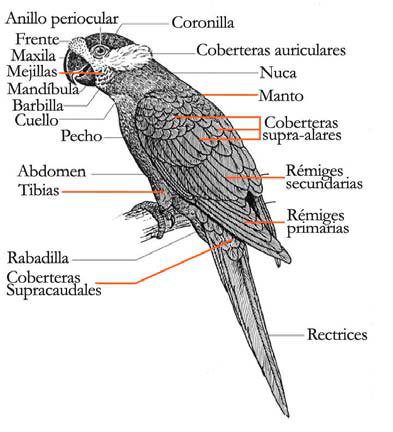
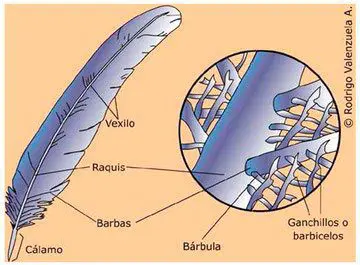
Anatomy-parrots

Description:

26 cm. length and a weight between 78 and 96 g..

The bill of the Cuban Parakeet (Psittacara euops) is strong and hooked, presenting the capacity of both the upper and the lower mobility, enabling this psittacine to husk and crush seeds, fruits and nuts discarded by many other birds, thus showing another successful feature of this Psittacara.

Their legs they have a magnificent prehensile capacity that allows them to take incredible poses and hold on to extreme places thanks to a "zygodactyly" arrangement of the fingers by moving two fingers forward, the 2 and 3, and two backwards, the 1 and 4.

Has the head, sides neck and nape green grass with some red feathers scattered, sometimes forming patches. The upperparts and upperwing-coverts grass-green; primaries and secondaries with margins and dark green tips to vane inner; carpal edge with scattered red feathers and bend of wing red. Underwing-coverts with golden brown in the flight feather, small and medium-sized coverts Red and large coverts Yellow olive. The underparts yellowish green with diffusion of color olive, sometimes with scattered red feathers, especially in the throat and/or the thighs. Upper, the tail dark green color with dye olive; by down yellowish brown. The bill color Horn; bare periophthalmic bluish white; irises yellow; legs distant.

Ilustraciรณn Aratinga Cubana

The female has more orange in the wings.

Immature has green and red in underwing-coverts, beige color (not red) in carpal edge, irises Gray with scattered red feathers.

Habitat:

Video "Cuban Parakeet"

They inhabit on Savannah, especially in areas where there are the Palmas Copernicus and Thrinax, at the edges of forests and Lands planted with trees. Although they have also been very modified habitats, such as eucalyptus forests in open field and fragments of forests of Evergreen in sheets of Palma. The species survives only near large extensions of primary forest.

In general, observed in family groups or small flocks, but sometimes in larger groups, hundreds of birds; the Cuban Parakeet, often, mix with the more common and endemic Cuban Parrot (Amazona leucocephala).

Reproduction:

One of the major problems of this kind in the reproduction, It is competition and the finding by the nesting cavities; This psittacine is a small, so their physical advantage over other birds to displace these from cavities or nests is less and they must show greater aggressiveness to be able to expel woodpeckers and even some small birds of prey These cavities that already occupy.

But, in recent studies, It is suggested that in free-living this species has a high degree of selectivity by the height of the Palma in which anidated or for the depth of the nest, still not evident during the stage of formation of couples and nesting strong signs of gregariousness, But if there could be a tendency to prefer nests with a sufficiently narrow entrance opening to enter the couple and hamper the penetration of predators. It also seems that the species in reproduction is more tolerant of other neighboring couples of the same species, than others parrots, but to some degree of alienation, preferring Palmas in which there is only one cavity to have a certain degree of privacy in the rearing of their chicks.

The breeding season It begins in April and usually ends in July. They sometimes build their nests in cavities excavated, originally, by the Cuban Green Woodpecker (Xiphidiopicus percussus).

The number of eggs in the implementation It, in averaged, between three and five. The incubation both members of the couple is done, as well as feeding the young until they leave the nest. Once abandoned the nest, You can see to the immature flying with parents in small camps before the winter season, forming major sides joining them different families.

Food:

Diet Cuban Parakeet consists in fruits Mango, papaya, guava, Roystonea Palms, Melicoccus bijogatus and Spondias mombin, as well as seeds of Inga vera, outbreaks, Millet and berries.

Formerly persecuted by provoking large damage to crops Orange, coffee and corn.

Distribution:

Species vulnerable to extinction, from an original distribution throughout Cuba and Isle of youth, isolated populations between Yes.

Formerly one of the most common endemic birds in Cuba and in the Isle of youth, old Isle of pines, but now is limited to various strongholds in remote areas of Cuba, including the Zapata Peninsula, the districts around Cienfuegos and the mountains around the city of Trinidad, to the extent Western Centre of the island, and Sierra Maestra at the end of this.

Resident but some seasonal movements (Perhaps altitude) supposedly by the decline of the birds of the mountains of Trinidad in the months of September and October.

Extinct in the Isle of youth from 1913, mainly due to the strong capture for export as bird cage.

The current population, Although comparatively small, Perhaps stable. A small number of captivity out of Cuba, especially in Eastern Europe. The international trade currently it is small.

Today this species is restricted to 16 populations considering that a total of 2800 individuals released, with a number of individuals per population not exceeding, usually, the 100 copies and is considered of greater size the located in the Zapata Swamp live in where is estimated around 800 these birds. Each of these populations are isolated or insulated semi between if, not exceeding groups or sides that make it up, the 30 individuals, with a general tendency to the disappearance of the species in many of the populations, mainly due to the loss of Habitat and illegal catches.

Conservation:

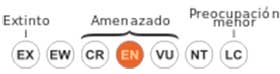
State of conservation โ“˜


Vulnerable Vulnerable โ“˜ (UICN)โ“˜

โ€ข Red List category of the UICN current: Vulnerable

โ€ข Population trend: Decreasing

There are no new data on the evolution of the population of the Cuban Parakeet; But, the species is suspected of have been declining at a moderate pace, mainly as a result of the habitat degradation.

Rounded, a population estimated between 1,500-7,000 mature individuals.

The persecution as a pest of crops, loss of habitat and, in particular, the capture for trade bird cage, They explain the current shortage of copies of Cuban Parakeet (A. Kirkconnell in litt., 2007).

The capture for trade International is now insignificant, with only 10 birds recorded in trade between 1991 and 1995. Another major threat is the loss of nesting trees (Snyder et to the., 2000) as a result of hurricane damage (as the caused in the Zapata Peninsula by the Hurricane Lili in 1996), and the felling of trees for chicks of the Cuban Parrot (Amazona leucocephala) (A. Mitchell in litt., 1998).

Conservation Actions Underway

โ€ข Appendix II of CITES.

โ€ข Is legally protected.

โ€ข They are distributed within the seven environmental reserves, including the important Ciรฉnaga de Zapata National Park (Snyder et to the., 2000).

โ€ข A study of the species and an intense public awareness campaign are intended to help establish a management programme effective (Wiley, 1998).

โ€ข The programs of ecotourism they have begun in some areas (Snyder et to the., 2000).

โ€ข A provision scheme has been started for nest boxes, the plastic boxes are more durable than the facts of sections of the trunk of the Palm (Waugh 2006), but the parakeets prefer those made of natural materials (Anon., 2010).

โ€ข A program of reintroduction from the main island of Cuba to the Isle of youth is being developed from the 2004, but the species is generally difficult to breed (parrots 2000-2004; avianweb.com).

Conservation Actions Proposed

โ€ข Carry out more Research to determine the ecological requirements of the species and population (Wiley 1998, Snyder et to the., 2000).

โ€ข Conserve additional habitat, especially in the areas of nesting (Snyder et to the., 2000).

โ€ข Adapt the environmental awareness and protection of nests in situ to local situations (Snyder et to the., 2000).

โ€ข Continue a plan for the re-establishment of the species in the Isle of youth (Wiley 1998, Snyder et to the., 2000) through the development and extension of the programme of captive breeding.

"Cuban Parakeet" in captivity:

In captivity, they are very sleepers and somewhat quarrelsome and restless, needing always to be monitored. Non-communicative the issuance of words but very friendly with the person you choose as partner, which will not get rid of some sympathetic evil, almost always tolerated and even grateful.

Sensitive to the changing conditions of the ecosystem that inhabits.

The requirements and difficulties in the reproduction of this species are considerable.

Own this nice bird as pet, Although on the one hand it can be a satisfaction to the owner, on the other hand means to convict individuals of this species not reproduction and populations to lead them to the risk of the extinction.

Alternative names:

Cuban Parakeet, Cuban Conure, Cuban Paroquet, Red-speckled Conure (English).
Conure de Cuba, Perriche de Cuba, Perruche de Cuba (French).
Kubasittich (German).
Periquito-cubano (Portuguese).
Aratinga Cubana, Perico, Periquito, Periquito Cubano (espaรฑol).
Catey, Perico, Periquito (Cuba).


scientific classification:

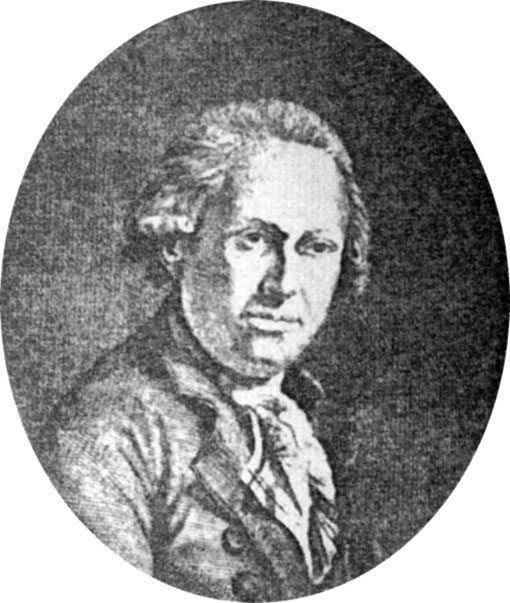
Johann Georg Wagler
Johann Georg Wagler

Order: Psittaciformes
Family: Psittacidae
Genus: Psittacara
Scientific name: Psittacara euops
Citation: (Wagler, 1832)
Protonimo: Sittace euops


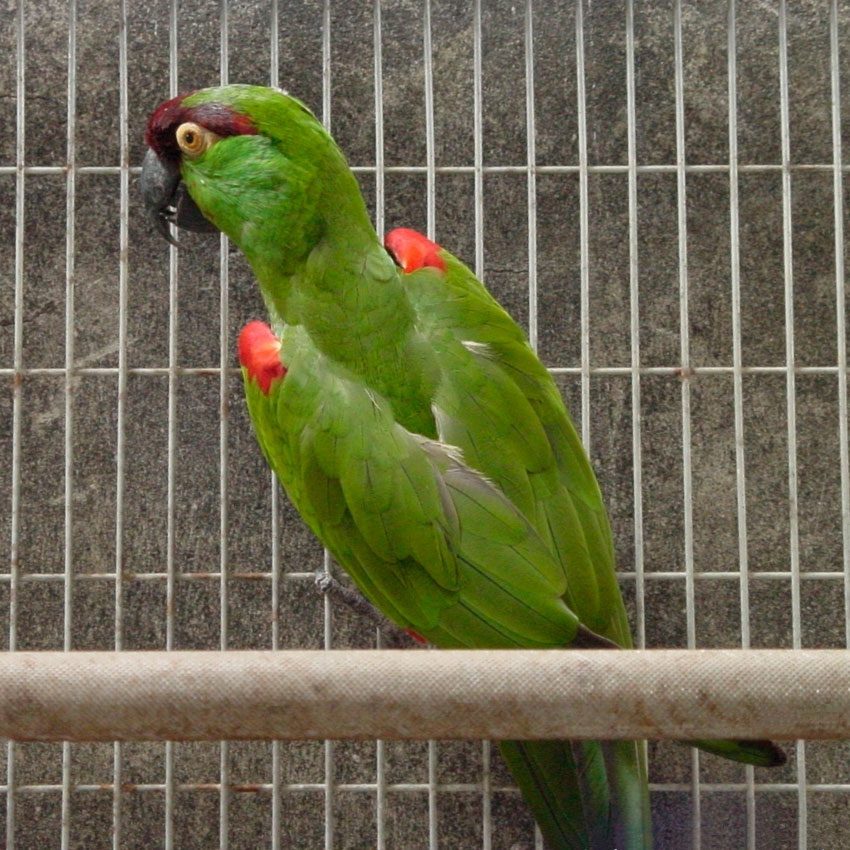
Cuban Parakeet pictures:


Species of the genus Psittacara

Sources:

  • Avibase
  • Parrots of the World โ€“ Forshaw Joseph M
  • Parrots A Guide to the Parrots of the World – Tony Juniper & Mike Parr
  • Birdlife
  • Veterinaria.orgยฎ
  • REDVETยฎ

  • Photos:

(1) – Psittacara euops – Cuban parakeet by Ekaterina Chernetsova (Papchinskaya)Flickr
(2) – Psittacara euops – Cuban parakeet by Ekaterina Chernetsova (Papchinskaya)Flickr
(3) – Cuban Parakeet, Conure De Cuba, or Aratinga Cubana (Aratinga euops). Two parrots in a tree By dominic sherony (originally posted to Flickr as Cuban Parakeet) [CC BY-SA 2.0], via Wikimedia Commons
(4) – Cuban Parakeets are a rare sight in Cuba, the only place they live in the world by Hank Davis, DNS Board Member – Delaware nature society
(5) – For the Caribbean Conservation Trust in conjunction with the Massachusets Audubon Society – Winged spur imaging
(6) – Deutsch: Psittacara euops Syn: Evopsitta euops & Psittacara chloropterus Syn: Psittacara chloropter bzw. Psittacara euops St. Domingue By Charles Emile Blanchard (1819โ€“1900) (biodiversitylibrary.org) [Public domain], via Wikimedia Commons

โ–ท The world of Pets: Dogs, cats, birds, reptiles, amphibians

Crimson-bellied Parakeet
Pyrrhura perlata

Crimson-bellied Parakeet

Content

Description:

Crimson-bellied Parakeet

24-25 cm. of length and weight 85-94 g

The Crimson-bellied Parakeet (Pyrrhura perlata) has the lores and cheeks of color yellowish-olive with dye Brown; The forecrown, the crown and back neck Dark Slate with velvety probes, giving a mottled appearance, especially in parts where increases the blue at the bases of the feathers.

The upper mantle is blue; robe bottom up to the uppertail-coverts green. Scapulars green at the base, blue down; the lesser wing coverts, olive green; the medium-sized and large coverts, with a predominance of the color blue. The flight feather, blue top, secondaries with green in the outerweb; slate grey dark below.

Underwing-coverts bright red. Sides of the neck, the throat and the top of the chest, with a predominance of brown color, with some brands blue and tips velvety, giving a scaly appearance; The under chest and most of the belly bright crimson; Flanks, the thighs and undertail-coverts, Blue with greenish tint. Upper, the tail, with predominance of color Brown, shades of green and some blue feathers; below, the tail, dark gray.

The bill brown-black color; eye ring whitish grey; Iris dark brown; legs black slate.

Both sexes similar.

Immature they lack the bright crimson color on the underparts; Sometimes with dark margins in the scapulars.

The Pyrrhura perlata was formerly known as Pyrrhura rhodogaster.

Habitat:

They generally inhabit humid forests on dry land., clear forest, secondary and probably drier formations in the North of Mato Grosso and have been registered also dominated by fig trees in eastern forests of Bolivia.

Usually views in small flocks and, sometimes in mixed groups with the Golden-winged Parakeet and Painted Parakeet. Larger family groups have been reported previously. They have often been seen descending into rivers and streams to bathe and drink..

Reproduction:

With reproduce between August and November, probably in April and June, They nest in tree cavities. Incubation period: 24-25 days.

The put in captivity is of 3-9 eggs, being 5 the average.

Food:

Reported foods include catkins Cecropia, small fruits of Trema micrantha, fruits of the ficus, Eugenia and Zanthoxylum, and flowers of Bertholletia excelsa and Dioclea glabra.

Distribution:

They can be found in Brazil, in the area of the great South-Central amazon basin, in West For and in the western area of amazon, in the river basins Madeira and South of the Tapajรณs, to the extreme north of Mato Grosso, Rivers Roosevelt and Aripuanรฃ.

Observed in adjacent parts of Bolivia and probably widely distributed east of Rio Mamorรฉ in hand me and Santa Cruz.

In general common, but perhaps decreasing due to the loss of forests in some parts of its area of distribution (for example, along the river JI-Paranรก in Rondร ยดnia, Brazil).

Conservation:

State of conservation โ“˜


Vulnerable Vulnerable โ“˜ (UICN)โ“˜

โ€ข Current category of the Red List of the UICN: Vulnerable

โ€ข Population trend: Stable

Justification of the population:

The size of the world's population has not been quantified, but this species is described as "quite commonยป (Stotz et to the., 1996).

Justification of trend:

It is suspected that this species has lost 23-30.3% of habitat within its distribution area for three generations (18 years), based on a model of Amazon deforestation (Soares-Filho et to the., 2006, Bird et to the., 2011). Given the susceptibility of species the hunting and capture, they suspected that the population of Crimson-bellied Parakeet will decrease by โ‰ฅ 30% during three generations.

"Crimson-bellied Parakeet" in captivity:

Not very common in captivity. Its diet ideal would be based on fruits such as: apples, Pears, oranges, bananas, grenades, cactus fruits , which form the 30 percent of their food, vegetables, such as: carrots, celery, green beans, pea in the pod, fresh corn, green leaves, such as: chard, lettuce, dandelion, chickweed, healer, millet; a mixture of seeds as such: Canary Islands, small amounts of wheat and millet, oats, safflower and hemp, Sunflower, cooked beans and legumes and cooked corn.

Es una ave muy playful a la que le encanta baรฑarse, so toys and a shallow bowl of water should be provided.
Moderate voice, but when are they excited can be somewhat noisy. It is not aggressive with other species.
Price per couple: 500-600 EUR

Alternative names:

Crimson-bellied Parakeet, Crimson bellied Parakeet, Crimson-bellied Conure, Pearly Conure, Pearly Parakeet, Rose-bellied Conure, Rose-breasted Conure, Rose-breasted Parakeet (English).
Conure ร  ventre rouge, Conure perlรฉe, Perriche ร  ventre rouge, Perruche ร  poitrine cramoise, Perruche ร  ventre rouge (French).
Rotbauchsittich, BlausteiรŸsittich, Blausteiss-Sittich, Rotbauch-Sittich (German).
Tiriba-de-barriga-vermelha (Portuguese).
Catita cola granate, Cotorra Ventirroja, Cotorra Ventrirroja, Perico de Pecho Rojo, Perico Perla (espaรฑol).
Catita cola granate (Paraguay).


scientific classification:

Johann Baptist von Spix

Order: Psittaciformes
Family: Psittacidae
Genus: Pyrrhura
Scientific name: Pyrrhura perlata
Citation: (von Spix, 1824)
Protonimo: Aratinga reported


Crimson-bellied Parakeet images:

Videos of the "Crimson-bellied Parakeet"


Especies del gรฉnero Pyrrhura

Crimson-bellied Parakeet (Pyrrhura perlata)


Sources:

Avibase
– Parrots of the World โ€“ Forshaw Joseph M
– Parrots A Guide to the Parrots of the World – Tony Juniper & Mike Parr
Birdlife

Photos:

(1) – Crimson-bellied Parakeet (Pyrrhura perlata) also called the Crimson-Bellied Conure By derivative work: Snowmanradio (talk)Juan_Caparrรณs_cabeza. JPG: Juan Caparrรณs [CC BY-SA 3.0 or GFDL], via Wikimedia Commons
(2) – A Crimson-bellied Parakeet (also known as the Crimson-bellied Conure) captive by Pyrrhura_perlata_-captive-8a.jpg: Nori Almeidaderivative work: Snowmanradio [CC BY 2.0], via Wikimedia Commons
(3) – Crimson-bellied Conure in the Walsrode Bird Park, Germany By Quartl (Own work) [CC BY-SA 3.0], via Wikimedia Commons
(4) – Parrot by pixabay Crimson
(5) – Pyrrhura perlata by Florin FeneruFlickr
(6) – Conurus rhodogaster=Pyrrhura perlata by Joseph Wolf [Public domain], via Wikimedia Commons

Sounds: Xeno-canto

โ–ท The world of Pets: Dogs, cats, birds, reptiles, amphibians

Emma's Parakeet
Pyrrhura emma

Emma's Parakeet

Content

Description:

Emma's Parakeet

23 cm.. length.

The Emma's Parakeet (Pyrrhura emma) is a bird, mostly, green, with blue in the wings, reddish-brown in rump, on tail and in the back; Scaled plumage chest yellowish color on a gray background olive; wings with red shoulder, inconspicuous.

The face red plum, while the pileum It is brown and gray forecrown blue. Abdomen with dark red stain, tail with green base, edge red and below all red.

Eye ring grey, cheeks red with white spot on ears. Bill dark. It has no sexual dimorphism.

Habitat:

They can be seen in hill forests in the coastal mountain range in Venezuela, in humid forests and edges as well as in adjacent clearings with sparse trees and groves (pit et to the., 1997).

Usually it moves in flocks, on quick flights up 25 specimens, before landing in the canopy.

Reproduction:

There is insufficient information regarding reproduction and feeding. Breeding season probably between May and July. Period of incubation: 24-25 days.

Food:

They have been observed eating flowers of Ochroma and nectar (Hilty 2003).

Distribution:

Size of its range (reproduction / resident): 88.300 km2

The Emma's Parakeet inhabits forested areas of the northern coastal range Venezuela, from Yacacuy and Carabobo until Miranda, and disjuntamente from Anzoรกtegui to Sucre and northern part of Monagas (Del Hoyo et al., 1997, Juniper and Parr 1998, Hilty 2003, Forshaw 2006).

It is mainly found at altitudes 250-1.700 m, but you can see at sea level in eastern Sucre (Hilty 2003), where is quite common (Hilty 2003, P. Boesman in a bit., 2006). Its distribution within this range is complex and disjoint, found especially in mountainous terrain at lower elevations (Hilty 2003).

Conservation:

โ€ข Current category of the Red List of the UICN: Least concern.
โ€ข Population trend: Decreasing.

Justification of the population

State of conservation โ“˜


minor concern Minor Concern โ“˜ (UICN)โ“˜

Apparently, the population size of this species has not been quantified.

Justification of trend

The capture for trade and changes in land use may be causing a decrease in population of this species, although the trend has not been quantified, and none of these is considered serious threats to this species today(CJ Sharpe a slightly. 2014).

Conservation Actions Underway

They live in several national parks (P. Boesman in a bit., 2006), with a "substantial" population in the Guatopo National Park, Miranda (Juniper and Parr 1998, Hilty 2003).

Conservation Actions Proposed

Continue to monitor this species in the field and in trade.

Strengthen the network of protected areas within the range of this species.

"Emma's Parakeet" in captivity:

Very rare in captivity. Very intelligent, active and playful. They are very aggressive with other species. Price per couple: 400 EUR.

Alternative names:

Emma’s Parakeet, Emma’s Parakeet (incl. auricularis), Painted Parakeet (Venezuelan), Venezuelan Parakeet (English).
Conure d’Emma, Conure emma, Conure emma (incl. auricularis) (French).
Emmasittich (German).
Emma’s Parakeet (Portuguese).
Cotorra de Emma (espaรฑol).


scientific classification:

Salvadori Tommaso

Order: Psittaciformes
Family: Psittacidae
Genus: Pyrrhura
Scientific name: Pyrrhura emma
Citation: Salvadori, 1891
Protonimo: Pyrrhura emma


Images Emma's Parakeet:

Videos "Emma's Parakeet"


Especies del gรฉnero Pyrrhura

Emma's Parakeet (Pyrrhura emma)


Sources:

Avibase
– Parrots of the World โ€“ Forshaw Joseph M
– Parrots A Guide to the Parrots of the World – Tony Juniper & Mike Parr
Birdlife

Photos:

(1) – Venezuelan Parakeet | Perico Pintado ( Pyrrhura emma)By Fernando Flores from Caracas, Venezuela [CC BY-SA 2.0], via Wikimedia Commons
(2) – Venezuelan Parakeet | Perico Pintado ( Pyrrhura picta emma) By Fernando Flores from Caracas, Venezuela [CC BY-SA 2.0 or CC BY-SA 2.0], via Wikimedia Commons
(3) – Venezuelan Parakeet | Perico Pintado (Pyrrhura emma) by Fernando FloresFlickr
(4) – Venezuelan Parakeet | Perico Pintado (Pyrrhura emma) by Fernando FloresFlickr
(5) – Venezuelan Parakeet | Perico Pintado (Pyrrhura emma) By Fernando Flores from Caracas, Venezuela [CC BY-SA 2.0], via Wikimedia Commons
(6) – Pyrrhura emma = Pyrrhura picta, Painted Parakeet by John Gerrard Keulemans [Public domain], via Wikimedia Commons

Sounds:

โ–ท The world of Pets: Dogs, cats, birds, reptiles, amphibians

Vinaceous Parrot
Amazona vinacea

Vinaceous Parrot

Content


Anatomy-parrots

Description:

30 cm.. length and an approximate weight of 370 g..

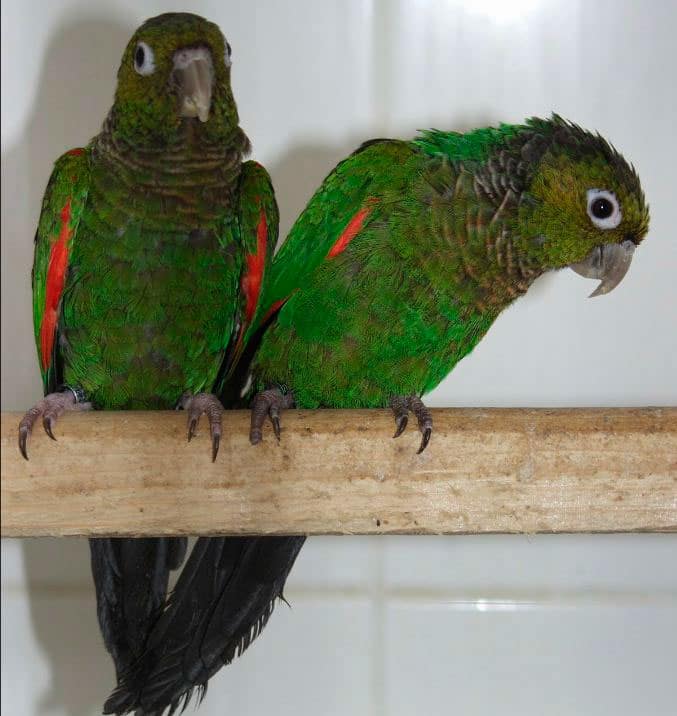
The Vinaceous Parrot (Amazona vinacea) has the lores and forecrown bright red; cheeks and crown green with black tips to some feathers head; elongated feathers on the sides of neck, the nape and the upper mantle, green at the base, subterminally light blue and black tip. The rest of the the mantle, back and scapulars, green with some feathers showing indistinct black tips; uppertail-coverts pale green.

Wing coverts green with red variable and / or yellow in leading edge of wing and the carpal area. Primaries pale bluish-green; Secondary green with blue tips, the base outerweb of the three outer secondaries, red, forming a small looking-glass. Under the wings, green. Throat and chest with shades that vary from strong wine brown to pale blue with a strong vinous diffusion; subterminal dark band at the tips of the feathers gives scalloping pattern; Belly green or yellowish green sometimes with vinous dissemination; undertail-coverts brighter yellowish green. Tail green with yellow green tip; the base lateral feathers in red innerwebs, in purple outerweb. The upper jaw It is red at the base with pale tip, horn-colored lower, reddish at the base; irises orange to reddish brown; legs grey.

Both sexes are similar. The immature It has the green suffusion in chest and the less extensive red on the head (confined to the base upper jaw).

  • Sound of the Vinaceous Parrot.

Habitat:

Video – "Vinaceous Parrot"

Purple-breasted Parrot in Itamonte - Minas Gerais, Brazil

The Vinaceous Parrot inhabit in tropical and subtropical evergreen mixed forests; in the Brazil in humid coastal forests, in the East of Paraguay They can be found in forests Araucaria angustifolia and Euterpe edulis. The extent of the ecological dependence of this species on coniferous trees (Araucaria and Podocorpus) It is not clear, but the Araucaria angustifolia It is clearly important in Missions, Rio Grande do Sul and Santa Catarina and possibly it was related to the previous distribution further north in southeast Brazil.

Mainly observed in the lowlands, but there are reports of birds seen in hills 1.500-2.000 meters in the southeast of Brazil, where the best forest remnants persist. Usually in pairs or small groups with larger meetings (up to approximately 30) in July-August. In pairs during breeding (usually around September).

Reproduction:

The Vinaceous Parrot nidifica in holes in large trees with obvious preference for the Araucaria angustifolia, including rarely cracks in the cliffs. With reproduce the May in loose colonies. breeding season during the months of September to January. Clutch 2-4 eggs.

After the breeding season (February to July), the species congregate in large groups and community shelters.

Food:

The specific foods of the Vinaceous Parrot include flowers and fruits of Euterpe edulis (which apparently it is important seasonally in East Paraguay), seeds of Araucaria angustifolia, fruits of cocoons of Achatocarpus and new leaves Eucalyptus and seeds of Pilocarpus. It has been reported damagor cause in crops of oranges, but with the current low density of this species, It is unlikely to produce a serious economic impact.

Distribution and status:

Size of its range (player / resident ): 1.230.000 km2

The Vinaceous Parrot It is endemic in Southeast South America.

In Brazil It was found in southern Bay, in West Espirito Santo and scattered localities as Minas Gerais, Brazil (a peripheral register from the sao francisco river, about Januaria), sporadically en Rio de Janeiro (possibly a seasonal visitor), but widely observed in Sรฃo Paulo, Paranรก, Santa Catarina and Rio Grande do Sul.

Records in East Paraguay come from Amambay, Canindeyรบ, Caaguazu, Alto Paranรก, Itapua and Guaira and in the North of Argentina from Missions and possibly the eastern half of Currents.

There are some seasonal movements and post-breeding dispersal, possibly in relation to the food supply (for example, seed availability coniferous trees), with invasions scale reported in Paraguay in the past. Declines in the number of birds occur in Rio Grande do Sul January, with all its people disappeared by March and return in April for the rest of the year.

Formerly abundant and widespread but now there has been a contraction dramatic of its range and population, mainly due to the habitat destruction scale, the expansion of agriculture and floods caused by large hydroelectric dams. also trapped for a long time for bird trade.

Are distributed in several protected areas, but none is large enough to maintain a viable population. The former strongholds in eastern Paraguay They are subject to rapid deforestation, with a recent reduction in its scope and numbers and now probably confined only in Alto Paranรก and Ganindeyu.

Probably extinct (or almost) in Bahia and Espirito Santo, and a few birds are likely to remain in Rio de Janeiro and Minas Gerais, Brazil. Confined to the north and northeast of Santa Catarina and locally common only in forested parts of Sรฃo Paulo and Paranรก, where it is thought that the remaining population survives. Persist in the north and northeast of Rio Grande do Sul.

A census 2007 yielded a minimum of 253 copies in Argentina.
It is perhaps the Amazona more common in populations of Rio Grande do Sul, Santa Catarina and Paranรก (several populations of more than 100 birds), in the South of Brazil, and the low number persists in Minas Gerais, Brazil and Sao Paulo, within an estimated total of 1.500-2.000 birds.

Conservation:

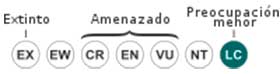
State of conservation โ“˜


Endangered Endangered โ“˜ (UICN)โ“˜

โ€ข Current category of the Red List of the UICN: In danger of extinction.

โ€ข Population trend: Decreasing.

โ€ข Population size: 600-1700.

Rationale for the Red List category

This species is classified as endangered due to recent population estimates Brazil They indicate that the world population is very small and has suffered a rapid decline due to loss and fragmentation of habitat, aggravated by the trade. It is necessary to clarify whether Brazilian subpopulations exceed 250 specimens.

Justification of the population

Based on estimates 1.500 to 2.000 individuals in Brazil (G. Bencke in some. 2009), 220-400 in Paraguay and 253 in Argentina (K. Cockle in some. 2009), it is estimated that the total population is within the range of 1.970 -2.650 individuals and is probably positioned within the band 1,000-2,499. This is equivalent to 667-1.666 mature individuals, rounded here to 600-1.700 mature individuals.

Justification of trend

rapid and continuous population decline is suspected because of the Poaching of nests, the habitat destruction and persecution as a pest Of crops.

Conservation Actions Underway

โ€ข CITES Appendix I and II and protected by the Brazilian legislation.
โ€ข Nationally considered Vulnerable in Brazil (Urben-Filho et al . 2008, MMA 2014), and Critically Endangered in Argentina and Paraguay.
โ€ข Small populations are found in numerous protected areas (Wege and Long 1995, F. Olmos in some ., 1999).
โ€ข In the Argentina, two young provincial parks are used by the species, but they offer only partial protection because parrots use habitat outside the park for most of its life cycle, including, critically, the reproduction.
โ€ข In the Argentine stronghold of the species between San Pedro and Saint Rose, environmental education is underway to reduce the capture of chicks, and the population has been monitored since 2005 (Selva de Pino Paranรก in litt project., 2007).
โ€ข It has been achieved successful captive breeding.

Conservation Actions Proposed

โ€ข Monitor large populations (in March Argentina).
โ€ข Study reproductive biology and demography throughout the species' range and develop structured captive breeding programs to counter the high level of poaching of wild populations..
โ€ข Protect the general Carneiro (Santa Catarina), Itaipu (Alto Paranรก), RNP Itabรณ Rivas (Canindeyรบ), Estancia Golondrina (Caaguazu) and forests outside reserves Rio de Janeiro (Snyder et to the ., 2000) and between San Pedro and Saint Rose in Missions.
โ€ข Invest in permanently trained park rangers and resolve land tenure problems in Brazilian and Paraguayan reserves. (F. Olmos in some ., 1999, Cockle et al. 2007).
โ€ข Apply laws against the trafficking of species on the roads that connect the Monte Pascoal National Park with South Brazil (Snyder et to the ., 2000), in places where the species is captured and at borders and ports Paraguay and Argentina.
โ€ข Increase local public awareness to reduce nest theft and promote conservation of nesting sites..
โ€ข In Argentina, provide technical support to promote soil conservation, to avoid clearing forests for crops on small farms.

The Vinaceous Parrot in captivity:

The Vinaceous Parrot noted for its easy to imitate the human voice, better and clearer than the Amazona aestiva. Small easily they learn to speak.

Two decades ago, before placement in the Appendix 1 CITES Convention, this species was available in aviculture. It never was imported to Europe in a large number, but nevertheless often it offered for sale. Its price was higher than other species of Amazona available at that time, because of its amazing looks and his talent as an imitator. As the trade in wild birds was coming to an end, the captive population decreased markedly. While this species has been willing to breed for those that provide adequate breeding and have enough individuals to allow natural selection of the mate., captive breeding has been very disappointing, considering the number of birds that were previously available.

In the current avicultura, it seems that there are still a significant number of birds kept in Europe. A survey of amazon parrots in the European zoos, made in 1993 and published in 1994 by the EAZA, he listed in 59 species Vinaceous Parrot conserved in 11 zoological collections: of this, only three, Loro Parque (Spain), Walsrode Bird Park (Germany) and Beauval (France), had recorded breeding successes. It's known, However, that a significant number of Vinaceous Parrot They are held by private poultry farmers Europe and if these owners are willing to work in cooperation with EEP plan that can be started for this species, then the known captive population Europe could be big, enough to be considered as a viable.

The population of this species in captivity is similar to that of other species of the genus Amazona. In Loro Parque a couple is kept in an aviary in the exhibition area of รขโ‚ฌโ€นรขโ‚ฌโ€นthe park, and several more couples are kept in breeding cages suspended in their breeding outside exhibition. Suspended breeding cages are approximately 300 cm long x 95 cm width and height. Each cage has the nest-box placed against the outer rear panel, and there is a cut in the wire hole to allow birds to enter the nest-box. With the nest located outside of the cage, this eliminates the need to enter the service or inspect the nest-box.

The feeding of these birds is done twice a day. To the 7 Morning receive their main dish containing a mixed salad prepared with the following elements: – Apple, pear, tomato, beet, Carrot, alfalfa, lettuce, Peppers, papaya and other fruits and vegetables seasonally available; In addition, They are also used, when available, various fruits that are grown in the park, as nopal cactus plants and berries palmera pindรณ (Syagrus romanzoffiana). A second smaller dish meal in the morning provides birds commercial pellets dietary, and during the breeding season each pair is also given segments of their own supplement "pie" that is made fresh every day. The evening meal is given to 3:00 pm, with a mixture of nuts, seeds and beans cooked.

The Vinaceous Parrot It was raised for the first time Loro Parque in 1990, when one pigeon was raised hand. The couple proved to be very unreliable when it came to the incubation their eggs, why he has always resorted to artificial incubation or host and breeding. This couple Vinaceous Parrot He received on subsequent occasions eggs more common species to give them the opportunity to prove that they are good parents, but so far they remain unreliable.

No offspring were produced in 1991, but the couple tried again in 1992, when he carried out another manually raising and other raised squab. In 1993, when the same pair joined again, the clutch of eggs was transferred to a pair of Red-crowned Parrot (Amazona viridigenalis), which they proved to be excellent foster parents and raised chicks born. The same technique was used in 1994, but only one egg clutch proved to be fertile and the chick was raised successfully by Red-crowned Parrot.

Alternative names:

Vinaceous Parrot, Vinaceous Amazon, Vinaceous-breasted Amazon, Vinaceous-breasted Parrot (English).
Amazone vineuse (French).
Taubenhalsamazone, Taubenhalsamazon (German).
Papagaio-de-peito-roxo, chauรก, coraleiro, corraleiro, crau-crau, curraleiro, jurueba, papagaio-caboclo, papagaio-curraleiro, papagaio-peito-roxo, peito-roxo, quero-quero, tรฉu-tรฉu (Portuguese).
Amazona de Pecho Vinoso, Amazona Vinosa, Loro vinรกceo, Loro vinoso (espaรฑol).


scientific classification:

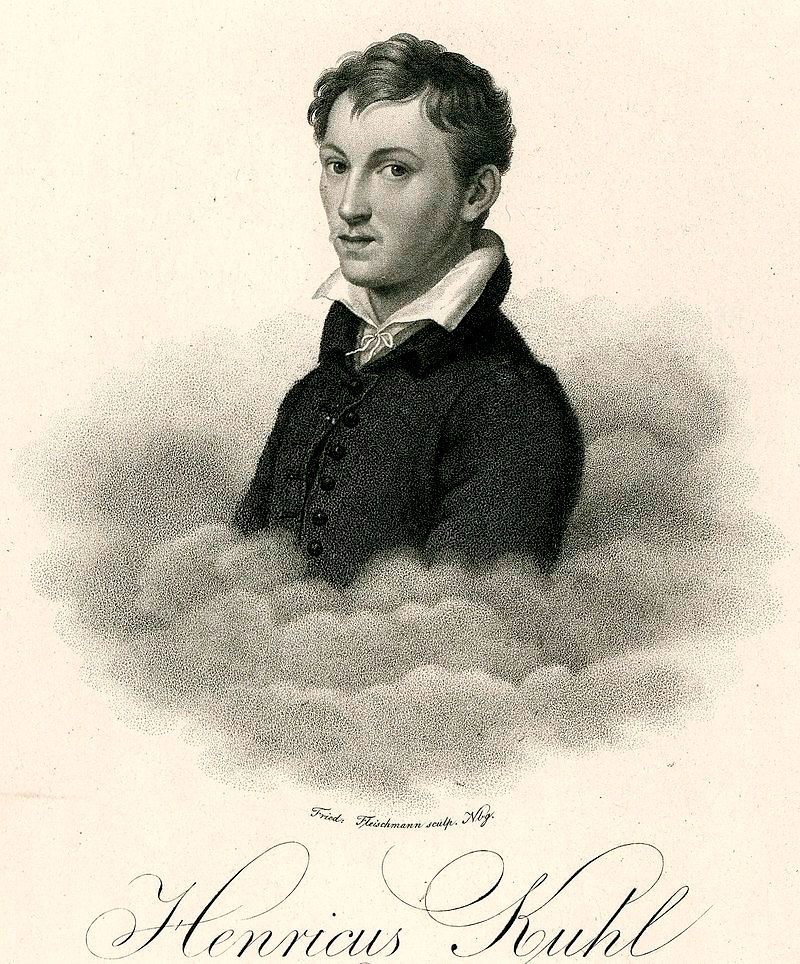
Kuhl, Heinrich
Heinrich Kuhl

Order: Psittaciformes
Family: Psittacidae
Genus: Amazona
Scientific name: Amazona vinacea
Citation: (Kuhl, 1820)
Protonimo: Psittacus vinaceus


Images Vinaceous Parrot:


Species of the genus Amazona


Sources:

Avibase
– Parrots of the World โ€“ Forshaw Joseph M
– Parrots A Guide to the Parrots of the World – Tony Juniper & Mike Parr
Birdlife
– THE VINACEOUS AMAZON Amazona vinacea AT LORO PARQUE – First Published in The Avicultural Magazine Vol. 103 No. 2

Photos:

(1) – Vinaceous-breasted Amazon (Amazona vinacea) – San Francisco Zoo, California By Dick Daniels (http://carolinabirds.org /) (Own work) [CC BY-SA 3.0 or GFDL], via Wikimedia Commons
(2) – Vinaceous Amazon in captivity at the Rare Species Foundation Programme, Florida, USA By derivative work: Snowmanradio (talk)Amazona_vinacea_-RSFP-8a.jpg: Ruth Rogers [CC BY 2.0 or CC BY 2.0], via Wikimedia Commons
(3) – Vinaceous Amazon at the Walsrode Bird Park, Germany By Quartl (Own work) [CC BY-SA 3.0], via Wikimedia Commons
(4) – Vinaceous Amazon; two in a cage By TJ Lin (originally posted to Flickr as Copy of DSCN3375) [CC BY-SA 2.0], via Wikimedia Commons
(5) – flying. Picture taken in Morretes By Leandro Govoni Lacerda (Own work) [CC BY-SA 4.0], via Wikimedia Commons
(6) – A Vinaceous-breasted Amazon at Parque das Aves, Foz do Iguaรงu, Brazil By Kee Yip from Union City, California, USA (IMG_4509_P1040019) [CC BY 2.0], via Wikimedia Commons
(7) – Pigeons neck Amazone (Amazona vinacea) Shot in Palmitospark Gran Canaria By Martingloor (Own work) [CC BY-SA 4.0], via Wikimedia Commons
(8) – Vinaceous-breasted Amazon (Amazona vinacea) – San Francisco Zoo, California By Dick Daniels (http://carolinabirds.org /) (Own work) [CC BY-SA 3.0 or GFDL], via Wikimedia Commons
(9) – Amazone vineuse, Bioparc Doue-la-Fontaine By Melvin TOULLEC (Own work) [CC BY-SA 4.0], via Wikimedia Commons

Sounds: (Xeno-canto)
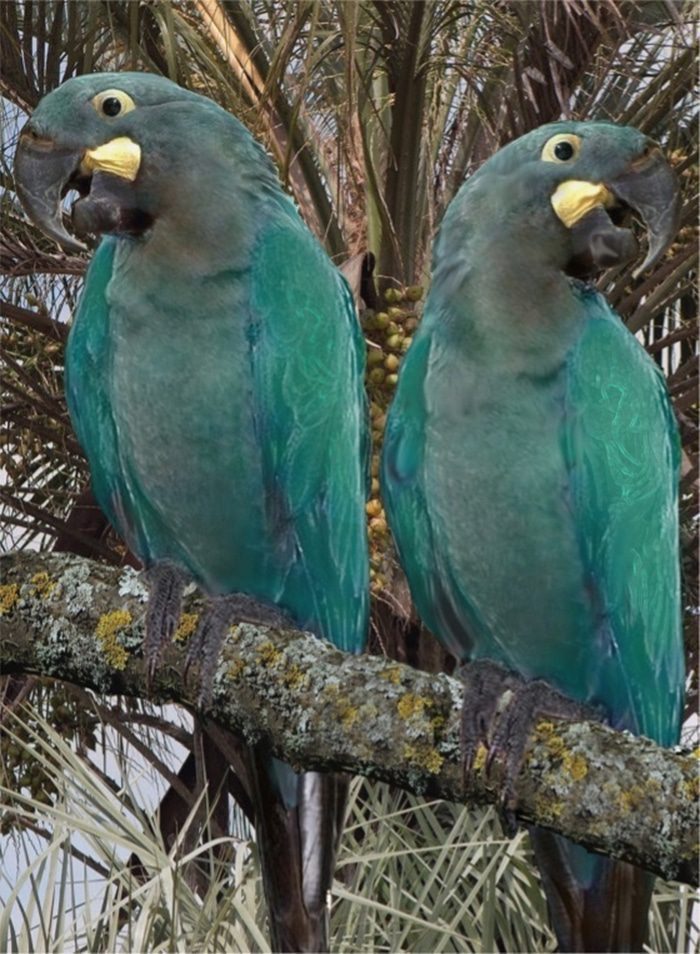
โ–ท The world of Pets: Dogs, cats, birds, reptiles, amphibians

Red-tailed Parrot
Amazona brasiliensis

Red-tailed Parrot

Content

Description:

37 cm.. length and 430 g. of weight.

The Red-tailed Parrot (Amazona brasiliensis) has forecrown, front of crown and lores, red; Subsequent red feathers crown with purple tips; cheeks, ear-coverts, sides neck and throat, mauve-blue; back of the crown and nape, green with black tips.

Upperparts green, some feathers rump with yellow points. The median, greater coverts and secondary internal clearly appear yellow; edge front of the wing Red and yellow; primaries grey-black, secondaries green, turning blue towards the tips.


Anatomy-parrots

Under the wings, brighter yellowish green; flight feather of black and blue color on the basis of innerwebs. Underparts brighter yellowish green, paler in undertail-coverts. Tail green with broad greenish-yellow tips, lateral feathers marked basally with purplish-blue on outerweb and tipped yellowish-green with broad subterminal band red.

Red-tailed Parrot

Bill pale horn with dark tip; irises orange; legs pink-gray.

Both sexes are similar. The immature It is less extensive in red head, a plumage darker overall and irises darker.

  • Sound of the Red-tailed Parrot.

taxonomic note:

The molecular study suggests that this species is closest to the Orange-winged Parrot (Amazona amazonica). Previously it thought to form a group with Blue cheeked Parrot (Amazona dufresniana) and Red-browed Parrot (Amazona rhodocorytha), and it has been treated as conspecific with one or both. monotypic.

Habitat:

Video "Red-tailed Parrot"

The Red-tailed Parrot dwells in a restricted area or coastal lowland forest and wetlands with rare species and structural diversity, including moist lowland forests, restinga, freshwater marshes and mangroves. Your preferred coastal habitats have complex channel networks, swamps and wetlands. Trees characteristic of its forest habitat include Luehea and Andira, while the vegetation of the islands, where they sleep and breed, They are dominated by several species Halophyte and formations restinga.

Apparently, some birds are practically living in flooded forests, probably due to increased availability of nests. Sympatric presence and partnership with the Red-spectacled Parrot (Amazona pretrei) in forests Araucaria, probably wrong. Lives in altitudes not exceeding the 300-400 m, Although there are records to 700 metres in Paranรก. Forman communal shelters (often in mangroves) during at least part of the year, with more than 750 birds reported at a meeting (1985).

Reproduction:

They nest in the cavity of a living or dead tree, for example, palms Jerivรก (Syagrus romanzoffianum) and guanandi (Callophyllum Brasiliense) and occasionally arboreal nests of termites; height generally, but recorded only a nest 1 meter above the floodwater. Usually it played in flooded or swampy areas, including mangroves. breeding season in September to February, in some cases in April. Clutch 5-4 eggs. The eggs are hatch during 27 to 28 days, and the period until nest abandonment is thought to last from 50 to 55 days

Food:

The fruits of Callophyllum Brasiliense They are considered of considerable importance in the diet of the Red-tailed Parrot, with fruits Syagrus romanzoffianum and Psidium cattleyanum also taken in quantity; other registered foods include flowers, fruits of Erythrina speciosa, fruits of Euphorbia and Myrcia and insects in fruit. They feed in pairs or groups up 20 birds.

Distribution and status:

Size of its range (breeding/resident): 10.100 km2

The Amazona Colirroja et is confined to a small area in the southeast coastal of Brazil, in the states of Sรฃo Paulo and Paranรก. In coastal areas Sรฃo Paulo It extends southwest of Itanhaรฉm, including the isla Long and isla del Cardoso, and virtually all coastal areas of neighboring Paranรก, from Guaraquecaba, Antonina and Paianagua, until Guaratuba and several offshore islands adjacent, eg Mel Island.

Possibly they inhabit the extreme northeast Santa Catarina, adjacent to Paranรก, but there are no reliable records. An old record Rio Grande do Sul it seems unlikely. possibly some seasonal movements lower in winter (May-August).

The rapid decline in population in the twentieth century it is due in part to the loss of habitat, with most areas densely settled and totally deforested, the remaining threatened are given by urbanization (for example, in isla Long), the felling of trees nesting and feeding, as well as the Palmas for human use (shipbuilding and food) and conversion of wetlands for water buffalo and rice production (birds also face competition from grazing animals for consumption of fruits Erythrina speciosa). But, direct human exploitation of the species is not now a less serious problem, some related to their hunting for food, although most suffer their capture illegal for trade. A recent study 49 showed that nests 41 of them they were illegally stolen their young, while the 1,27% available habitat was lost only in 1993.

Total wild population estimated in 3.600 birds (1995) with rapid decline of several hundreds Predicted. Distribution area probably no more than 6.000 km2, with large parts of this extension susceptible to sea level rise caused by climate change.

protected by national legislation. Live in several areas protected (for example, Isla del Cardoso, Sao Paulo), but in them there is only a very small proportion of birds.

Conservation:

State of conservation โ“˜


Vulnerable Vulnerable โ“˜ (UICN)โ“˜

โ€ข Current category of the Red List of the UICN: Vulnerable.

โ€ข Population trend: Increasing.

โ€ข Population size : 6000-6700.

  • Rationale for the Red List category

The catch for cage bird trade and loss of habitat are the major threats to this species. Despite the heavy pressure to capture the early nineties, It is believed that the range of the species remained essentially the same, and populations have been stable or declined less steeply than feared, According to a recent estimate that suggests a population increase. Due to its small breeding range and highly fragmented habitat, the species qualifies as Vulnerable.

conservation project "Red-tailed Parrot"

Amazona brasiliensis - Puffin of red-tailed - Red Parrot-tailled
  • Justification of the population

The winter counts in 2015 registered 7.464 and individuals in Paranรก 1.712 in Sรฃo Paulo, with both populations continuing to increase (D. Waugh in some ., 2015). The population It is estimated, therefore, between 9.000 and 10.000 individuals, equivalent approximately to 6.000 to 6.700 mature individuals.

  • Justification of trend

It is suspected that the conservation measures long term have contributed to a recent increase in population at a rate unquantified, although habitat fragmentation and poaching remain significant threats (Waugh 2006).

Threats
    In the municipality of Canaanite (a quarter of the distribution of the species) (Freire 1994), has been caught during the breeding period of 1991-1992 for domestic trade and (especially) international with 356 birds. Of 47 controlled nests between 1990 and 1994, six were naturally default and the other 41 stolen by human (Freire 1997). Nest cavities are almost always damaged when the chicks are captured, reducing the number available (Freire 1994). Habitat loss persists for shipbuilding, banana plantations, cattle and buffalo and beach houses (Lalime 1999, Snyder et to the., 2000). They cut the Palmitos for processing in Guaraqueรงaba (Lalime 1999). The proposed construction of a bridge to Ilha Comprida increase the pressure of tourism and habitat conversion (Snyder et to the., 2000).
Conservation Actions Underway
    CITES Appendix I and II and protected by Brazilian law. This species is not considered of conservation concern nationwide in Brazil (MMA 2014). They are distributed within 15 protected areas, but these do not apply locally (Freire 1994, Lalime 1999). The Superagui National Park in Paranรก, It is a bastion for the protection of the species (R. Bรณรงon in litt., 2006). The creation of new reserves is hampered by economic interests (Freire 1994). Several programs are increasing local awareness (Freire 1994, Lalime 1999 , Padua et al. 2001). Conservation projects and protected areas created in the area of รขโ‚ฌโ€นรขโ‚ฌโ€นdistribution of species appear to be paying off, although there are still pitfalls. There are herd books and successful captive breeding programs in the European Union and Brazil (Lucker 1998) and the provision of artificial nests and repair of natural nesting cavities is enhancing reproductive success in the wild (Waugh 2006). Conservation Project of the Amazon Redstart is monitoring the population in Paranรก (R. Bรณรงon in litt., 2006).
Conservation Actions Proposed
    Conduct surveys to monitor population trends and support captive breeding programs. Monitoring discount rates for trade. Monitor trade levels. Monitor the rates of loss and degradation of habitat. Apply laws on trafficking, especially in the paths to breeding islands (Lalime 1997, Lalime 1999). effectively protect existing reserves (Lalime 1997, Lalime 1999). formally appoints the Ilha Comprida State Park and Ecological Station Itapanhapina (Snyder et to the., 2000). Expand Superagรผi National Park to include Ilha do Pinheiro (Snyder et to the., 2000). Reforest nursery islands (Lalime 1999). Continue and expand awareness efforts (Lalime 1999).

The "Red-tailed Parrot" in captivity:

CITES Appendix I and II and protected by the Brazilian legislation.

Each captive specimen of this species which is capable of reproducing, It is placed in a Program well managed captive breeding and not be sold as a pet, in order to ensure long term survival.

Alternative names:

Blue-cheeked Parrot, Blue-faced Parrot, Brazilian Green Amazon, Brazilian Green Parrot, Red tailed Parrot, Red-tailed Amazon, Red-tailed Parrot (English).
Amazone ร  joues bleues (French).
Rotschwanzamazone (German).
papagaio, papagaio-de-cara-roxa (Portuguese).
Amazona Brasilera, Amazona Colirroja (espaรฑol).
Marreco ananai (Brazil)

Carl Linnaeus

scientific classification:


Order: Psittaciformes
Family: Psittacidae
Genus: Amazona
Scientific name: Amazona brasiliensis
Citation: (Linnaeus, 1758)
Protonimo: Psittacus brasiliensis


Images Red-tailed Parrot:


Species of the genus Amazona


Sources:

Avibase
– Parrots of the World โ€“ Forshaw Joseph M
– Parrots A Guide to the Parrots of the World – Tony Juniper & Mike Parr
– Birdlife

Photos:

(1) – A Red-tailed Amazon at Parque das Aves, Foz do Iguaรงu, Brazil By Kee Yip from Union City, California, USA (IMG_4509_P1040018) [CC BY 2.0], via Wikimedia Commons
(2) – A juvenile Red-tailed Amazon which is grasping something in its right foot, probably to chew or eat it By writhedhornbill (originally posted to Flickr as Red tailed amazon) [CC BY 2.0], via Wikimedia Commons
(3) – Red-tailed Amazon (Amazona brasiliensis) bird Park, Foz do Iguaรงu, Brazil By http://www.birdphotos.com (Own work) [GFDL or CC BY 3.0], via Wikimedia Commons
(4) – Red-tailed Amazon at the zoo By Elcio Ferreira [CC BY-SA 2.0], via Wikimedia Commons
(5) – A Red-tailed Amazon at Parque das Aves, Foz do Iguaรงu, Brazil By Chad Bordes (Picasa Web Albums) [CC BY 3.0], via Wikimedia Commons
(6) – CHEYSOTIS ERYTHRURA By Zoological Society of London.; Zoological Society of London. [CC BY 2.0 or Public domain], via Wikimedia Commons

Sounds: Antonio Silveira, XC109467. accessible www.xeno-canto.org/109467

โ–ท The world of Pets: Dogs, cats, birds, reptiles, amphibians

Grey-breasted parakeet
Pyrrhura griseipectus

Grey-breasted parakeet

Content

Description:

23 cm.. length and 70 g. of weight.

Grey-breasted parakeet

The Grey-breasted parakeet (Pyrrhura griseipectus) is a bird marked by a mask in reddish face, interrupted by a surrounding white coloration in the regions orbitals and ear-coverts.

The feathers of the neck to the upper region chest They have a gray coloration with light streaks interspersed, giving the region a striped appearance or escamado. The species has a characteristic patch reddish in belly, highlighting green coloration, its predominant body. The region forecrown up to the nape, It is dark brown with white or lighter brown spots that vary from bird to bird.. rear area neck green blue border with a width. They have a patch reddish brown in the bottom of the back which leads to the crown. The tail It is long and maroon. Bill gray-black; eye ring white gray; irises brown-orange.

It has no sexual dimorphism. The immature they are more muted than adults; You have scattered green feathers in the abdomen; the cere and the bare periophthalmic is white, less gray tone.

Taxonomic status:

This species is considered to be a subspecies of Pyrrhura [leucotis, emma or griseipectus] by some authors

  • Sound of the Grey-breasted parakeet.

Habitat:

It is in the rainforests, often located in Serranas regions, where orographic rains favor the occurrence of enclaves Atlantic Forest and Mata dry amid caatinga.

Reproduction:

The breeding season It occurs during the rainy season. The laying It is five to eight eggs in holes dug by woodpeckers since they are not able to dig their own nests; They use these holes to sleep.

When the pups are born, the couple divides the task of feeding. Sometimes they have help from even a third member of the flock to successfully raise all the young..

Food:

Probably it feeds on fruits, flowers, seeds and algae.

Distribution and status:

Size of its range (players / residents): 830 km2

This species was formerly known in 15 Locations (. Anon 2014) within Brazil. At present it is in only three areas in the state of Cearรก, the Serra de Baturitรฉ and Quixadรก (C. Albano in a little . 2006, Waugh et al 2010.) and most recently observed in a rocky mountain Cearรก, where five birds were recorded in March 2014 (Anon. 2014).

In Serra do Baturitรฉ appears to be very rare and seems to have been extinct from several areas, but recent records of groups in the Environmental Protection Area mountains Baturitรฉ; surveys 2007 half of the remaining habitat in this site revealed near 80 individuals (C. Albano in a little. 2007, 2008) and the population here is now estimated to be about 250 birds (Waugh et al . 2010).

Forests of Baturite mountains They have been greatly reduced to make way for coffee plantations and only 13% of the jungle remained in 1996. The discovery in 2010 a population of about 50 birds in Quixadรก (Waugh et al ., 2010) It raises the known world population of this species in about 300 birds.

The Grey-breasted parakeet It was previously known two other areas: the eastern slope of the Saw Ibiapaba in Cearรก, and small Serra Negra, in Pernambuco, where it was very common in 1974, with flocks of 4-6 individuals regularly seen in the early 1980, although there are no recent records. There are also unconfirmed reports 1991 in organic station Murici Alagoas in which possibly it refers to individuals released; Recent fieldwork was unable to locate the species.

Its known range is very small, and the species has declined dramatically in the past, a trend that may be permanent.

Conservation:

  • Justification of the Red List of the Category

Recent surveys indicate that this species has a extremely small population, which continues to decline after dramatic historical declines. For these reasons it qualifies as Critically Endangered.

  • Justification of the population

State of conservation โ“˜


critical hazard critically endangered โ“˜ (UICN)โ“˜

โ€ข Current category of the Red List of the UICN: critically endangered.

โ€ข Population trend: Decreasing.

โ€ข Population size : 200 individuals.

The population in the Area of Baturitรฉ Mountains Environmental Protection It is estimated at about 250 birds, and discovery in 2010 a population of about 50 birds in Quixadรก raises the known world population of about 300 birds (Waugh et al ., 2010). This equates to approximately 200 mature individuals.

  • Justification trend

This species is suspected to be decreasing quickly because of their capture and habitat loss in progress within its range.

  • Threats

The habitat destruction He has played a role in the decline of the species with the original forest cover now reduced to only 13%.

The coffee plantations (especially where coffee is grown in the sun instead of shade coffee) They are impacting the habitat of the species.

The main threat, However, It is believed to come from the capture illegal underway for local and national trade (C. Albano a slightly 2006, Anon 2009..) and captive breeding (Fernandes-Ferreira et al 2012.); the Grey-breasted parakeet They can be easily purchased through Internet (Girรฃo and Albano 2008).

It is easily found in the international trade in bird cage.

The lack of natural nesting sites also it believed to are limiting reproductive success of the species (Campos et al . 2014).

Conservation Actions Underway

Appendix II of CITES.

In Brazil, It was considered above in critical hazard (Silveira y Straube 2008), but it has now been legally designated as endangered national (MMA 2014), and protected Brazilian law.

Dwelleth within Baturitรฉ Mountains Environmental Protection Area, but this area has been designated for sustainable use and traditionally has not been achieved for conservation.

Management of land by a private owner in the area has led to an increase in a small town known (C. Albano a slightly . 2006).

Since 2007, NGO AQUASIS Brazil has been conducting two research projects: one sponsored by the Brazilian Foundation O Boticรกrio for the Protection of Nature, the topography of the Baturite mountains to monitor their condition and research their biology; and another sponsored Fundaciรณn Loro Parque, for additional populations (C. Albano in a little. 2007, 2008).

The surveys carried out in the historical sites and areas of potential habitat in the period 2007-2008 They have not been able to locate members of this species, although there are strong indications of individuals that may still be inhabiting the degraded Serra do Estevรฃo, municipality Jaw, state Cearรก (C. Albano in a little. 2007 2008, Anon 2007), where it was actually rediscovered in the 2010 (Waugh et al ., 2010).

A team of AQUASIS, funded by an award Leadership Program for Conservation in 2012, conducted searches for the species on an isolated mountain in Cearรก and he found a small population of five individuals in March 2014 (Anon. 2014).

You can also persist in Serra Negra Biological Reserve, state Pernambuco, although a combination of marijuana crops and hostile local culture makes research work in this latter area difficult (C. Albano in a little. 2007, 2008).


At least 11 private reserves (RPPN) They are in the process of being created in the Serra de Baturitรฉ (C. Albano in a little. 2007, 2008) and AQUASIS They are now engaged in the process of developing a nature reserve in the Baturite mountains (Campos et al . 2014).

AQUASIS has strengthened ties with government agencies in order to influence policy decisions (Campos et al . 2014).

Scheme nest box sponsored by Loro Parque It has been carried out with nest boxes installed in different places with the consent of the landowners. (Anon, 2009).

AQUASIS also they provided nest boxes Insecticide treated to reduce infestations of bee and wasp (Campos et al . 2014). These measures have proved effective, with 16 boxes occupied in 2012 give place to 97 eggs and 71 chicks hatched successfully.

A education and awareness campaign large scale was carried out in the Serra de Baturitรฉ in 2008 (C. Albano in a little. 2007, 2008) and continues today, with many schools currently participating in education programs AQUASIS (Campos et al . 2014).

A main objective of AQUASIS is to promote the Cotorra pechigris as a flagship species, the work being supported by commercial NGOs and ecotourism WATER Trails of the Park (Anonymous 2009).

AQUASIS also it aims to develop the ability to bird watching and a development process of consciousness creating alternative livelihoods (Anonymous 2009). A visitor center has recently been established (Campos et al . 2014).

It breeds well in captivity and stocks are held in Brazil and abroad. Always captive breeding is well managed and coordinated, could be used for reintroduction into the wild.

They are being conducted studies on factors influencing the survival rate of chicks, population's genetics (in future DNA techniques can be used as a deterrent against illegal collection of wild birds); both adults and juveniles have been banded (Campos et al . 2014).

Conservation Actions Proposed

Conduct more studies in areas similar to the mountains Baturitรฉ in the northeast of Brazil, such as Sierras de Aratanha, Maranguape and Machado, by the presence of additional existing populations.

continue population monitoring known in Serra de Baturitรฉ.

improve conservation management practiced in the Guaramiranga Ecological Park.

Provide incentives for landowners to increase the network of private reserves Baturite mountains.

Monitor and control trade locally, National and international.

Investigate the feasibility of using giant bamboo (Dendrocalamus giganteus) as sites for constructing artificial nests (Campos et al . 2014).

continue making awareness campaigns to promote the Grey-breasted parakeet as a symbol for the conservation of humid forests and associated biodiversity in the Baturite mountains.

Investigate in situ conservation measures.

"Grey-breasted parakeet" in captivity:

Its continuous capture, both for domestic and international trade, They have taken this beautiful bird to a critical situation, there are only 200 specimens in the nature. There are probably more animals captivity in its natural habitat

Protected by the Appendix II of CITES, each captive specimen of this species that is capable of reproducing, must be placed in a well-managed captive breeding program and not sold as a pet, in order to ensure long term survival.

Alternative names:

Gray-breasted Conure, Gray-breasted Parakeet, Grey-breasted Conure, Grey-breasted Parakeet, Maroon-faced Parakeet (Gray-breasted) (English).
Conure ร  poitrine grise (French).
Graubrustsittich, Salvadori-WeiรŸohrsittich (German).
Tiriba-de-orelha-branca, tiriba-de-peito-cinza, periquito cara-suja (Portuguese).
Cotorra pechigrรญs, Periquito sujo, Cotorra de pecho gris (espaรฑol).


scientific classification:

Salvadori-Thomas
Salvadori Tommaso

Order: Psittaciformes
Family: Psittacidae
Genus: Pyrrhura
Scientific name: Pyrrhura griseipectus
Citation: Salvadori, 1900
Protonimo: Pyrrhura griseipectus


Images Grey-breasted Parakeet:

Videos "Grey-breasted parakeet"


Especies del gรฉnero Pyrrhura

Grey-breasted parakeet (Pyrrhura griseipectus)


Sources:

Avibase
– Parrots of the World โ€“ Forshaw Joseph M
– Parrots A Guide to the Parrots of the World – Tony Juniper & Mike Parr
Birdlife

Photos:

(1) – Grey-breasted Parakeet By writhedhornbill [CC BY 2.0], via Wikimedia Commons
(6) – Grey-breasted Parakeet by Internet Archive Book ImagesFlickr

Sounds: Ciro Albano, XC7948. accessible www.xeno-canto.org/7948