19-20 cm.. height.
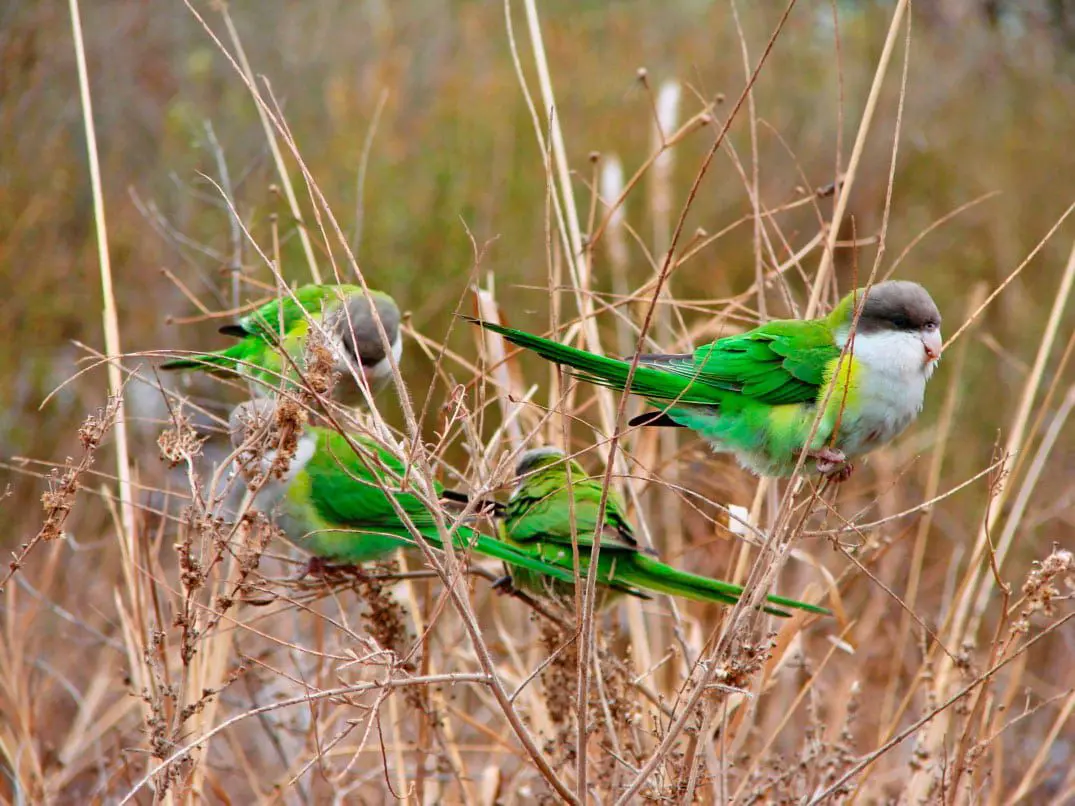
The Grey-hooded Parakeet(Psilopsiagon aymara) has the body mostly green, elongated and with a very long and pointed tail; the forecrown and lores, until the area back from the neck (including the ear-coverts), grayish brown, forming a kind of CAP that comes, slightly, to below the eyes. Mantle green, lightly olive dyeing; Back and scapulars green; rump and uppertail-coverts, green, slightly brighter; upperwing-coverts green; flight feather green with blackish tips; underwing-coverts of color greenish-yellow. Chin and throat pale-whitish grey; chest grey silver pale, sometimes with dye bluish on the feathers on both sides of the chest; flanks of color yellow pale greenish; the belly and undertail-coverts, green, with faint bluish tint.
Upper, the tail green; undertail, gray. The bill pale flesh-colored; irises dark brown; legs grey-brown.
Both sexes similar, though the male may have brighter grey in the chest.
Immature they have the tail shorter.
NOTE This species was treated as Bolborhynchus aymara.
You prefer arid habitats shrubs or Woody hills and ravines, dense scrub and trees around settlements and in agricultural areas, also distributed in high Andean steppes and sometimes in the Highlands, at altitudes of 1.800 to 3.400 m, sometimes more low (1,200 m in winter) and supposedly until the 4.000 m in Tucumán, Argentina.
The Grey-hooded Parakeet is a bird gregarious, usually seen in small flocks, at least outside the breeding season; large gatherings near areas with water.
Reproduction:
Nest sometimes in colonies, in holes dug in sand banks or in hollows and cactus in desert area. Egg laying in the month of November in Tucumán. Clutch 4-5 eggs. Up to seven in captivity.
Food:
The Grey-hooded Parakeet they tend to consume berries and other fruit, In addition to seeds herbaceous and grasses (by example Viguera and other compounds); they usually descend to the ground to collect fallen fruits and seeds from the grass.
Distribution:
Size of the area of distribution (reproduction / resident): 383.000 km2
Is it can be found in the Andes from the South of Bolivia until Argentina and possibly North of Chile.
In West Bolivia It is known from Peace and Cochabamba to the South of Tarija and potosi, and in the Northwest of Argentina on the slopes Andean of Jujuy to the South of Mendoza and to the hills of the South East of Córdoba. In the North of Chile (for example, Tarapacá) is reported as resident, visitor or absent.
Some movements at altitude seasonal; the Grey-hooded Parakeet move higher in summer. Usually common and apparently without pressure; Small numbers are caught and exported as cage birds.
Conservation:
State of conservation ⓘ
Minor Concern ⓘ(UICN)ⓘ
• Current category of the Red List of the UICN: Least concern.
• Population trend: Stable.
Justification of the population
The size of the world population It has not been quantified, but this species is described as «quite common» (Stotz et to the., 1996).
Justification of trend
It is suspected that the population is stable in absence of evidence of any decline or threatens substantial, Although it is exported as bird cage in small quantities.
– Avibase
– Parrots of the World – Forshaw Joseph M
– Parrots A Guide to the Parrots of the World – Tony Juniper & Mike Parr
– Birdlife
– Parrot Book, Parrots and macaws Neotropical
– Photos:
(1) – Grey-hooded Parakeets (also known as the Aymara Parakeet and the Sierra Parakeet) in Capilla del Monte, Córdoba, Argentina By Nes (originally posted to Flickr as Periquitos) [CC BY 2.0], via Wikimedia Commons
(2) -Psilopsiagon aymara by John Gerrard Keulemans [Public domain], via Wikimedia Commons
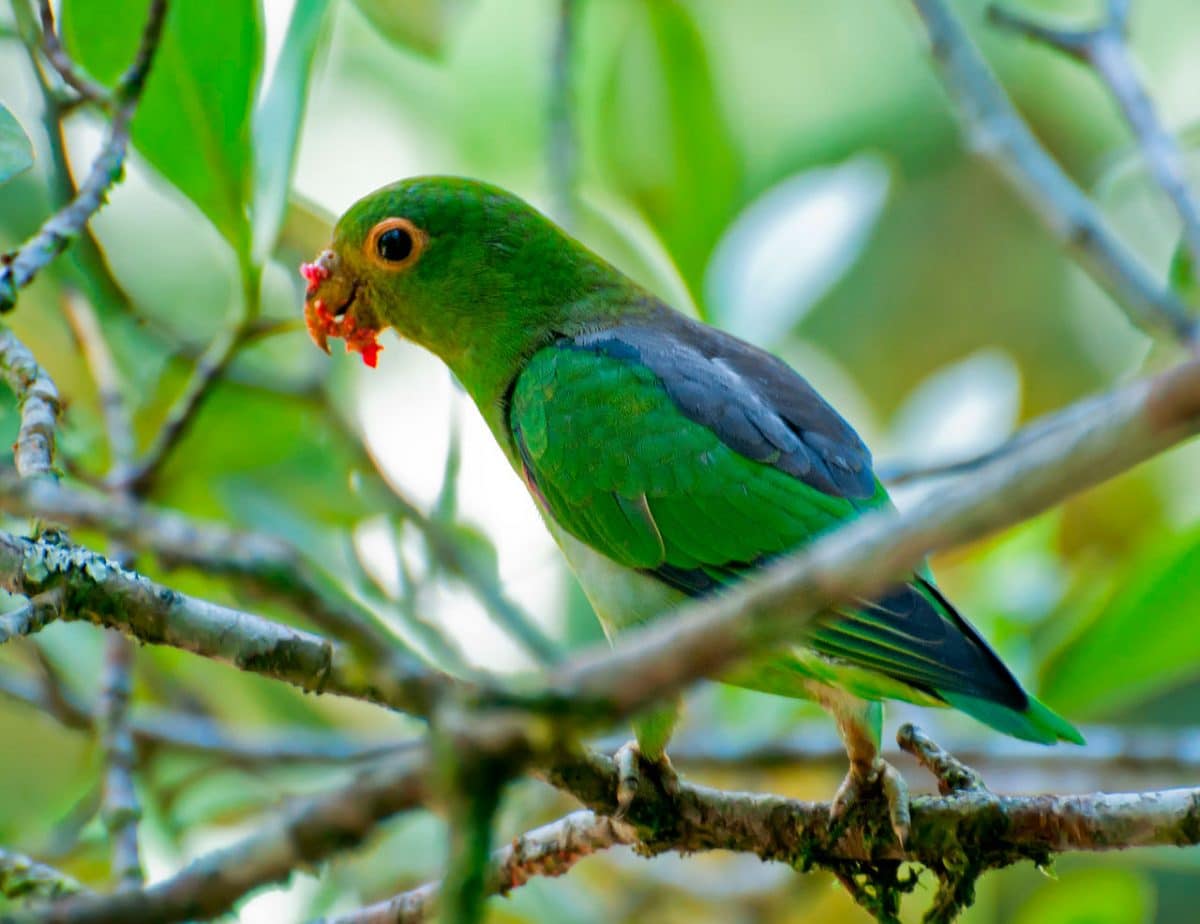
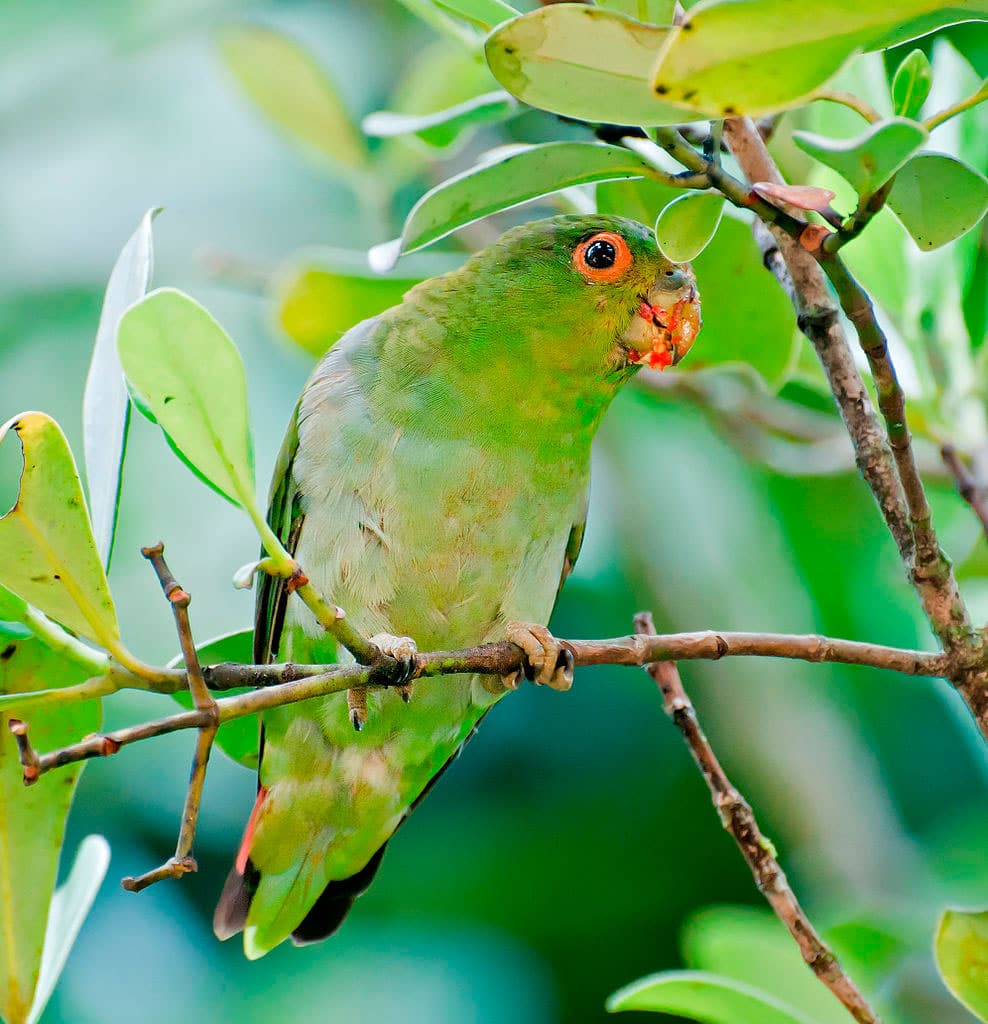
The Brown-backed Parrotlet(Touit melanonotus) has the forecrown, the lower cheeks, the sides of neck, the crown and the rear of the neck, grass-green; lores and upper cheeks paler and more yellowish green; ear-coverts brown. Mantle, back and center rump dull blackish-brown color; scapulars, sides rump and uppertail-coverts green.
Inner coverts and median, alula and primary coverts, blackish brown (the latter with narrow green margins at the outerweb); other coverts greenish brown grass. Tertiary brown. Flight feathers green on the outerweb with black opaque brown at the tips and innerwebs. Underwing, with coverts dull green, flight feather, pale grayish green. Chin yellowish; underparts pale grayish green, blur on the sides of chest. Upper, the tail centrally green with black spot on the tips of the outerweb. Outer feathers bright red at the base with broad black subterminal bands and a small green patch tips; undertail, the tail pale green tones and duller with greyish stain on the tip, pale red in outer featherss. Bill yellow distally, greyer towards base; irises grey; legs grey.
The females may show duller bluish-grey on underparts. Immature not described.
Mainly reported in humid forests on the lower mountain slopes. Most of the records are in altitudes between 500-1.000 m (1.400 metres in the Itatiaia National Park), but some are lowlands to near sea level (for example, Isla del Cardoso). gregarious and generally in small groups 5-20 birds.
Reproduction:
Virtually no information on the breeding. Presumably it occurs in September-October, but this is unconfirmed (Collar 1997a, Necklace et to the ., 2013). A juvenile was photographed in the Serra dos Órgãos National Park in December of 2008 (Young y Pimentel 2009).
Size of its range (breeding/resident): 400.000 km2
The Cotorrita Dorsinegra has a limited distribution in southeast Brazil, from Bay (three records in the nineteenth century) to the South of São Paulo, leaping Espirito Santo (although presumably it is extinct there).
Reported in several locations in the Sao Paulo State, to the South of the Isla del Cardoso, near the border with Paraná. There may be seasonal movements or dispersions (perhaps mainly altitudinal and relatively short distances). Registered in several protected areas such as State Park Serra do Mar and the Itatiaia National Park.
Conservation:
State of conservation ⓘ
Vulnerable ⓘ(UICN)ⓘ
• Current category of the Red List of the UICN: Vulnerable.
• Population trend: Decreasing.
Population size : 2500-9999 specimens.
JJustification of the Red List category
It is likely that the population of this species is small and decreases, with small subpopulations. For these reasons, the species is classified as Vulnerable.
Justification of the population
The evaluation of the Brazilian Red List poultry (MMA 2014) It is estimated that there <10.000 individuos maduros con <1,000 individuos maduros en cada subpoblación.
Justification of trend
Se sospecha una decrease moderate and continuous of the population because rates of habitat destruction and degradation.
Conservation Actions Underway
CITES Appendix II. In Brazil, this species is considered Vulnerable nationally (Silveira & Straube 2008, MMA 2014), and it is protected by Brazilian law. It is distributed in many protected areas, with recent records: Desengano State Parks and Pedra Branca, Itatiaia, Serra dos Órgãos and Tijuca National Parks (Rio de Janeiro); Experimental Station Ubatuba, Iguape Environmental Protection Area, Serra do Mar, Ilha do Cardoso and State Parks Intervales (Sao Paulo); Salto Morato Natural Reserve y Marsh Antwren (Paraná) (Wege and Long 1995, Aleixo y Galetti 1997, Necklace et to the ., 2013)
Conservation Actions Proposed
Examine the suitable habitat in Bahia and Espírito Santo to clarify their distribution and status. To determine the seasonal abundance at different elevations. You consolidate the protected areas where distributed.
"Brown-backed Parrotlet" in captivity:
It is not known in captivity.
Alternative names:
– Brown-backed Parrotlet, Black-backed Parrotlet, Black-eared Parrotlet, Brown backed Parrotlet, Wied’s Parrotlet (English).
– Toui à dos noir (French).
– Braunrückenpapagei, Braunrücken-Papagei (German).
– Apuim-de-costas-pretas, apuim-de-cauda-vermelha, apuim-de-costa-preta, apuim-de-costas-escuras, papagainho, periquitinho (Portuguese).
– Cotorrita Dorsinegra, Lorito de Lomo Negro (español).
– Avibase
– Parrots of the World – Forshaw Joseph M
– Parrots A Guide to the Parrots of the World – Tony Juniper & Mike Parr
– Birdlife
– Photos:
(1) – A Brown-backed Parrotlet in Ubatuba, Sao Paulo, Brazil By Dario Sanches from Sao Paulo, Brazil [CC BY-SA 2.0], via Wikimedia Commons
(2) – A Brown-backed Parrotlet in Ubatuba, Sao Paulo, Brazil By Dario Sanches from Sao Paulo, Brazil [CC BY-SA 2.0], via Wikimedia Commons
(3) – A Brown-backed Parrotlet in Ubatuba, Sao Paulo, Brazil By Dario Sanches from Sao Paulo, Brazil [CC BY-SA 2.0], via Wikimedia Commons
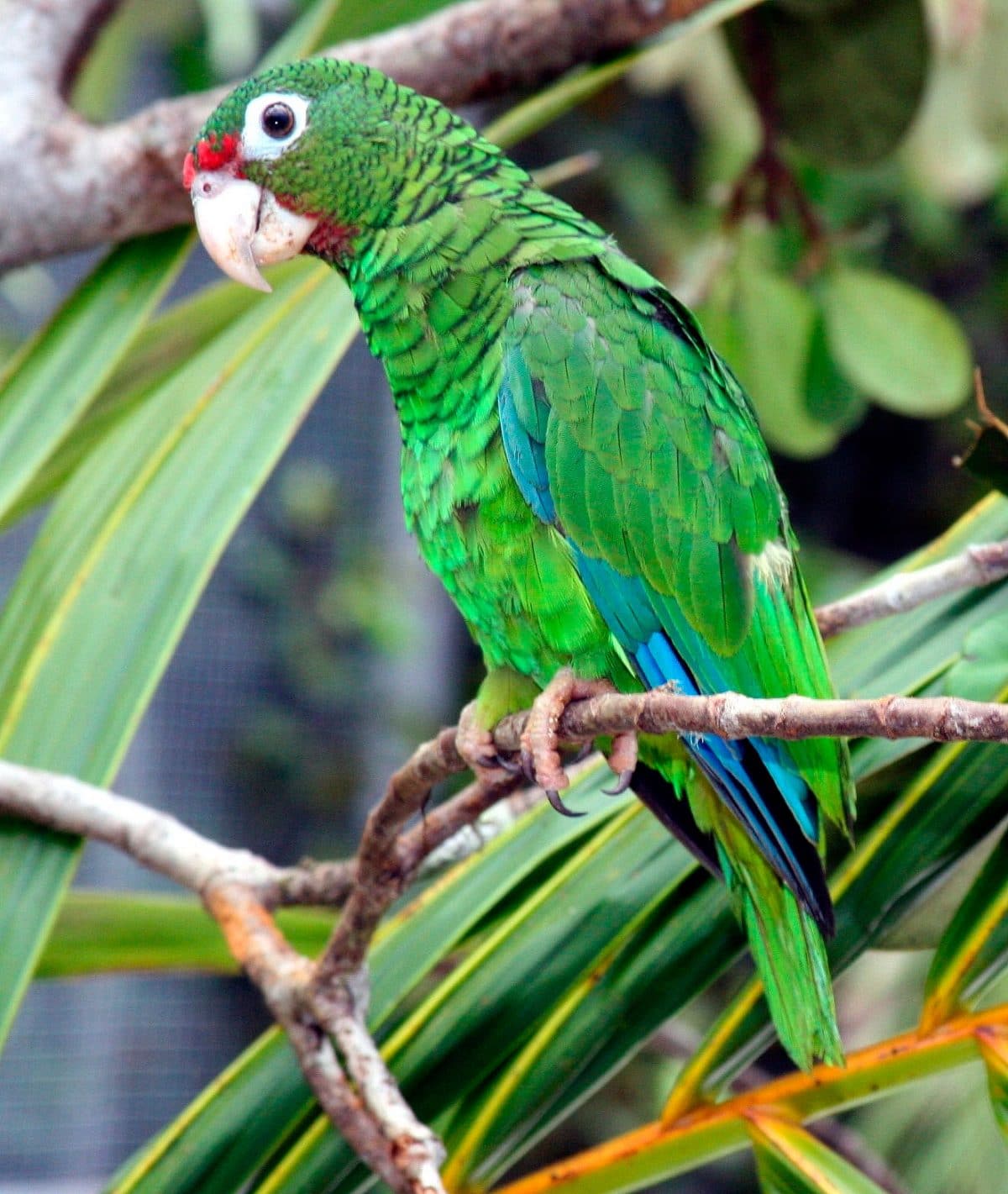
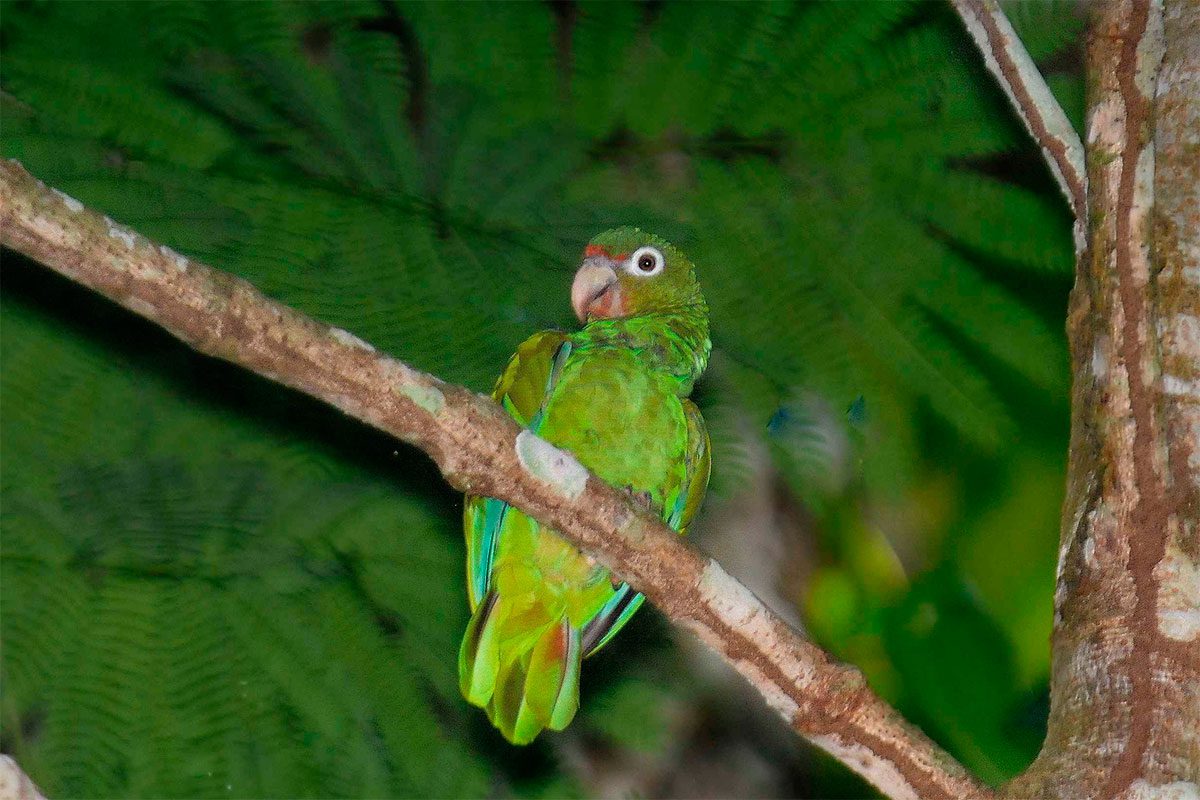
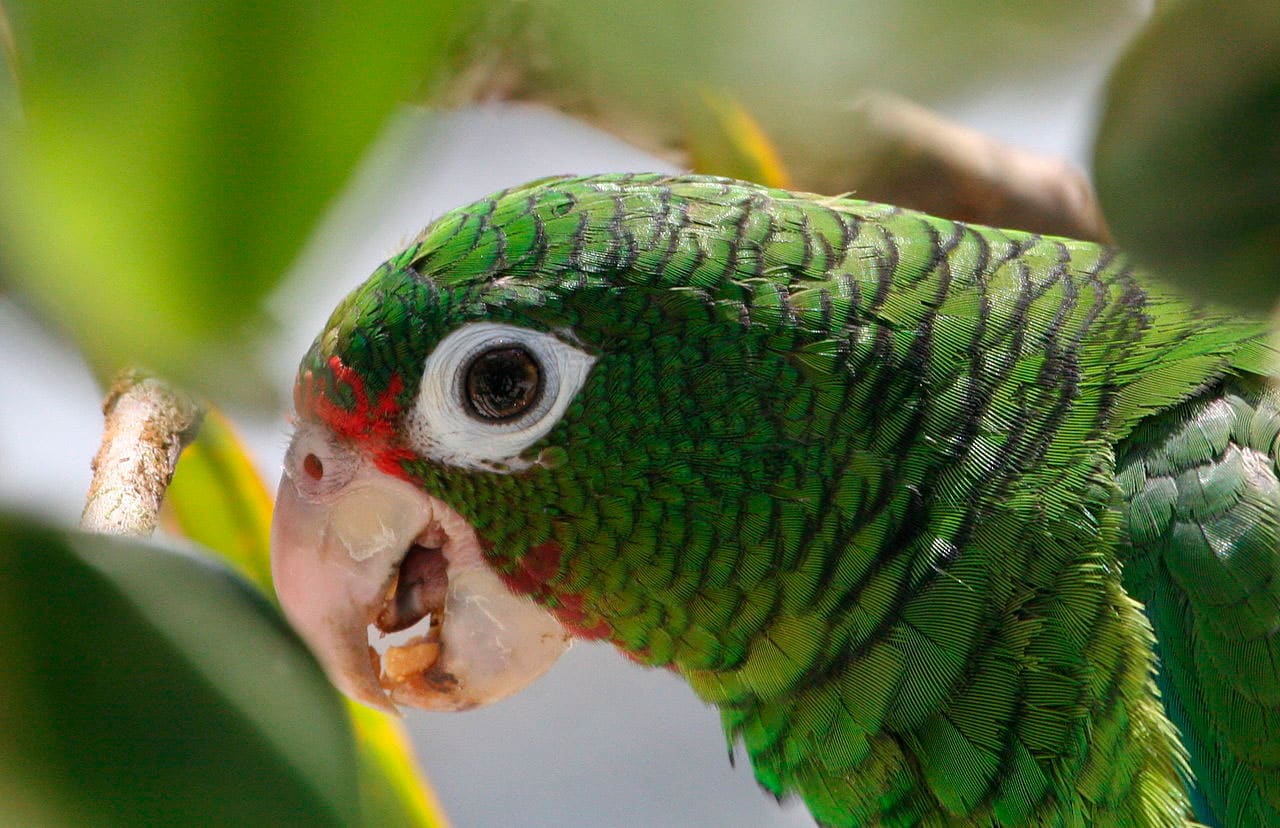
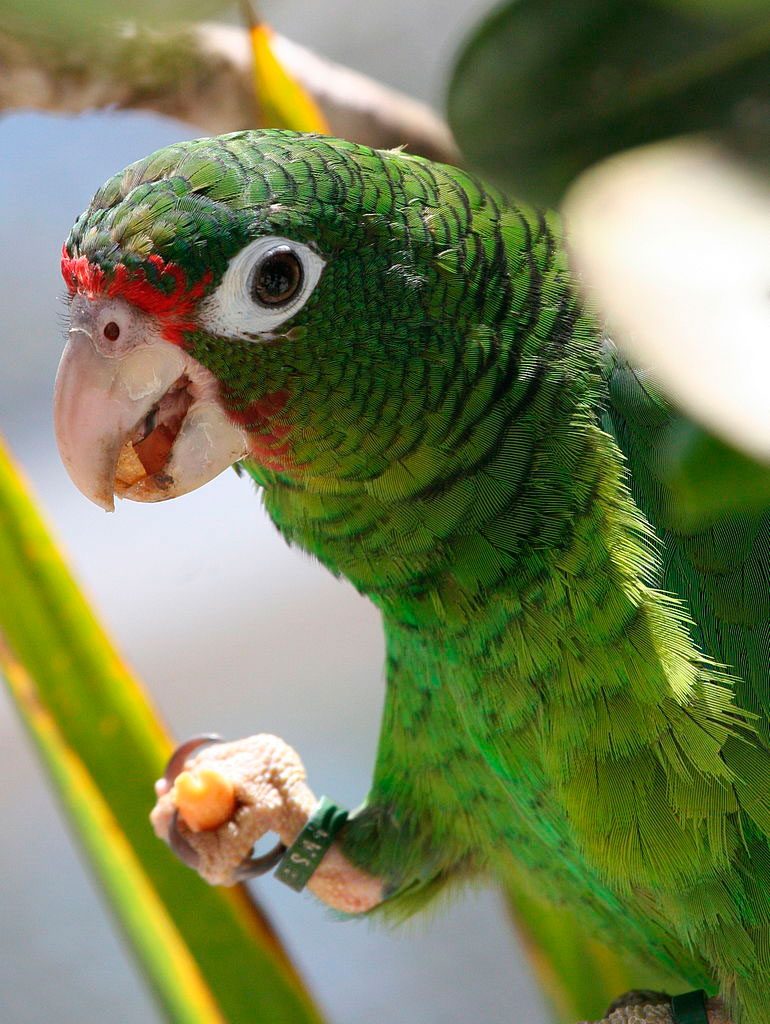
The Puerto Rican Parrot(Amazona vittata) has the forecrown and lores, red; rest of the head and nape, feathery green grass bordered with black color, giving a strong intricate scaly appearance.
feathers of the the mantle grass-green; back and scapulars with less pronounced dark margins; rump and uppertail-coverts, paler, more green-yellow. The large external coverts they are blue; rest of the coverts color green grass. Primaries and outerweb of the outer secondaries, blue; the innerwebs of the external side and secondary internal, green. Under, the wings They are green and flight feather bluish green.
Underparts green stained yellowish; feathers throat and the chest with dark edges. Upper, the tail is green; below is more yellowish, with its end yellow; both with outerweb blue towards outer feathers. Bill color pale horn; brown the irises; legs pale grey.
Both sexes similar. Immature adult-like, but with the bill light yellow with gray on the basis of upper jaw.
Sound of the Puerto Rican Parrot.
Description 2 subspecies:
Amazona vittata gracilipes †
(Ridgway, 1915) – Extinct. Of smaller and with feet smaller and thinner than the species nominal.
The Puerto Rican Parrot formerly he frequented the main types of natural vegetation (various forest habitats, from mangroves to montane forests) in Puerto Rico, with the possible exception of dry forests in the southern coastal regions.
Its Current small population remainder inhabits the mountain rainforest to 200-600 m. In the lower mountain slopes dominated by trees tabonuco of the species Dacryodes excelsa, in swampy forests at higher elevations characterized by the abundance of Cyrilla racemiflora and areas Sierra palmPrestoea montana.
Observed in pairs or (especially when they fed) in small flocks, having formed, formerly, flocks of several hundred.
Reproduction:
The Amazona Puerto Rican nidifican in large and deep cavities of trees; in the past they put their nests in the limestone hollows, in the west of the island. The amazon of Luquillo usually nest in species Cyrilla racemiflora. They defend their territory aggressively in the vicinity of the nest while playing. The egg laying, between February and April, possibly to coincide with the availability of fruit. Clutch 2-4 eggs (usually three).
Since 2001, all nesting known in the wild they have occurred in artificial cavities (White et al ., 2006).
Food:
The diet of the Puerto Rican Parrot It consists of a variety of fruit, seeds, flowers and leaves, among which include fruit of Prestoea montana and Dacryodes excelsa, flowers of Piptocarpha tetrantha and bracts of Marcgravia sintenisii.
Distribution and status:
Size of its range (breeding/resident): 1.000 km2
The Puerto Rican Parrot It is endemic to Puerto Rico and the former neighboring islands Mona and Snake; there are reports of parrots Vieques and St Thomas, probably belonging to this species. Formerly found in all forested regions Puerto Rico (with the possible exception of dry coastal strip south), but from around 1960 their habitat was limited to the Luquillo forest, in the East.
drastic population decline and rank the mid-nineteenth century. The pre-European population was probably hundreds of thousands of birds. There was a dramatic decline, which it reduced its population to about 2.000 copies in 1937 and in 1950 they were only a 200: a search in 1968 only revealed the existence of 24 birds.
The conservation program, initiated in 1968, It includes captive breeding, the provision of nests, detailed investigation ecology and reproductive biology and the control predators and competitors.
In 1992 the wild population was 39-40 birds 58 in captivity (all in Puerto Rico). Its population has declined, to near extinction, mainly by habitat loss (in 1912 only 1% the virgin forests of the island they remained), the hunting and capture as pets. The continuing threats to the tiny remaining population include impact of hurricanes (wild population halved to 21-23 after the passage of birds hurricane Hugo in 1989), competition with introduced bees Apis mellifera by tree cavities, the loss of broods due to parasitic flies Philornis pici, losses caused by predators and competition for nesting cavities with Pearly-eyed Thrasher (Margarops fuscatus). The Puerto Rican Parrot, inhabitants of the Culebra island (dubiously separated as subspecies Amazona vittata gracilipes), extinguished early twentieth century, probably because of persecution due to damage of crops and the impacts of hurricanes. existing population protected inside of the El Yunque National Forest.
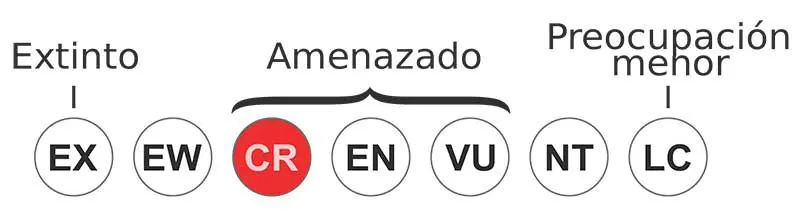
• Current category of the Red List of the UICN: critically endangered.
• Population trend: Increasing.
• Population size: 33-47.
Rationale for the Red List category
Once you have done a count of birds, are only 13 Puerto Rican Parrot in the nature, leaving the species on the verge of extinction. The conservation action the population has increased from 1975, but remains critically endangered because the number of mature individuals is still minuscule. If the released birds breed successfully in nature and the figures remain stable or increase, the species can justify a change of state in the future.
Justification of the population
From 2011, the population was between 50-70 individuals divided into two areas, approximately equivalent to 33-47 mature individuals. In 2013, its population had only increased to 80-100 individuals in the nature (64-84 in Down river and 15-20 in The anvil). But, since the released birds are not counted as mature individuals until they have successfully bred in nature (UICN 2011), and the entire population of Down river It is derived from released birds. The total number of mature individuals is uncertain but may well be less than 50, therefore, estimating 2011 of mature is maintained in this figure.
Justification of trend
It is estimated that increase 1-19% has occurred in the last ten years, based on regular accounts of the total wild population.
Conservation Actions Underway
• CITES Appendix I.
• And Recovery Program the species has involved a partnership between the Fish and Wildlife of the United States, the Forest service of the United States and the World Wide Fund for Nature together with Department of Natural and Environmental Resources of Puerto Rico (White et al. 2012).
• In 1968 an important intervention was initiated to preserve the species, the provision of artificial nests highly successful, the predator control nest and its competitors, and captive breeding and reintroduction.
• The success of the Newborns parrots It monitored using radio telemetry (Meyers 1996).
• All the rest of the habitat is protected in the El Yunque National Forest (above the Caribbean National Forest) (Snyder et to the., 2000) and in the Rio Abajo State Forest (T. White in a little.
• The population is monitored to help inform management decisions.
• The predator control exotic mammals (Entrapment and toxic bait) It has proven to be a highly profitable way to preserve the species (Engeman et al. 2003, 2006, R. M. Engeman in some. 2012).
• Catch data have shown that the Luquillo Forest It has between densities black rat studied highest in the world and optimal strategies have been devised rat bait for application during the nesting.
• Los economic analysis based on empirical costs of production of parrots raised in captivity showed very high cost-benefit ratios for predator management, estimating that preventing a loss of parrot each 4-12 years more than makes up all forms of predator management (for all species) intervention time (Engeman et al., 2003).
• Hay two captive breeding centers, one The anvil which it was established for the first time 1973 with a new facility built in 2007 and one in Down river built in 1989 with the first birds transferred The anvil to Down river in 1993 (White et al 2012).
• About 280 birds are currently in captivity in Down river and The anvil (T. White one bit., 2012).
• Captive birds are being managed to preserve the greater genetic diversity possible.
• A release technique known as precision release was tested with six birds in 2008. This involves the release of a small number of captive-reared subadult parrots into each active nest immediately after chick rearing., and it aims to promote the immediate and close interaction between wild parrots and birds released (T. White in a bit., 2005, 2008).
• Nearly 100 birds have been released the aviary Down river in an attempt to establish a second population, which may be helped by a lower annual precipitation in the site, lower levels of predation and a change in management techniques (T. White in a little. ).
• Although the after release mortality remains high, there has been a successful breeding and the size and range of the flock is increasing (Breining 2009, Valentin 2009, T. White in a little.)
• The newly established population in Down river It is located around the site Aviary of Down river and it is believed that the presence of captive birds encouraged released birds to establish their population close (White et al., 2012).
• Forty specimens were released in The anvil between 2000 and 2004, eight 2008 and six birds in 2010 (Velez-Valentin 2011). In 2013 plans were made to establish a third population on the island in the Maricao State Forest (West of Puerto Rico) (Anonymous 2014).
Conservation Actions Proposed
• Continue to monitor population trends.
• Follow the fate of released birds.
• Maintain the integrated conservation management program.
• Improve synchronization of breeding of wild and captive birds to increase the number of captive-bred chicks that can be fostered by wild parents. (Thompson 2004).
• Integrate control of exotic mammal predators (black rat, small Indian mongoose, wild cats) in the management program and monitor existing conservation predator populations to study the effectiveness of these measures (R. M. Engeman in some. 2012).
The Puerto Rican Parrot in captivity:
According to sources, A copy of Puerto Rican Parrot lived 10,1 years in captivity. But, considering the longevity of similar species, likely maximum longevity is underestimated in this species. In fact, it has been reported that They can live up to 27,2 years in captivity, what it is plausible but has not been confirmed. Taking into account that the Cuban Parrot(Amazona leucocephala), closely related, You can live up 50 years (Wilson, et to the., 1995), an age close to the latter figure may be possible for the Puerto Rican Parrot.
Each captive specimen of this species which is capable of reproducing, must be placed in a well-managed captive breeding program and not sold as a pet, in order to ensure its long-term survival.
Alternative names:
– Puerto Rican Amazon, Puerto Rican Parrot, Red-fronted Amazon, Red-fronted Parrot (English).
– Amazone à queue courte, Amazone de Porto Rico (French).
– Puertoricoamazone, Puerto-Rico-Amazone (German).
– Papagaio-de-porto-rico (Portuguese).
– Amazona Portorriqueña, Amazona Puertorriqueña, Cotorra de Puerto Rico, Cotorra Puertorriqueña (español).
– Avibase
– Parrots of the World – Forshaw Joseph M
– Parrots A Guide to the Parrots of the World – Tony Juniper & Mike Parr
– Birdlife
– Photos:
(1) – Amazona vittata – Photo via Good Free Photos
(2) – A Puerto Rican Amazon By Pablo Torres of U.S. Fish and Wildlife Service Southeast Region (PRParrot_cototrapuertorriqueña byPablo Torres) [Public domain or CC BY 2.0], via Wikimedia Commons
(3) – A Puerto Rican Amazon at Iguaca Aviary, Puerto Rica By Tom MacKenzie ofU.S. Fish and Wildlife Service Southeast Region (Puerto Rican parrot 4) [CC BY 2.0], via Wikimedia Commons
(4) – A Puerto Rican Amazon at Iguaca Aviary, Puerto Rica By Tom MacKenzie of U.S. Fish and Wildlife Service Southeast Region (Puerto Rican parrot 4) [CC BY 2.0], via Wikimedia Commons
(5) – A pair of Puerto Rican Amazons See page for author [Public domain], via Wikimedia Commons
(6) – A Puerto Rican Amazon at Iguaca Aviary, Puerto Rica By Tom MacKenzie of U.S. Fish and Wildlife Service Southeast Region (Puerto Rican Parrot by Tom Mackenzie) [CC BY 2.0], via Wikimedia Commons
(7) – Amazona vittata – Author: Mike Morel, USFWS – pixnio
(8) – Flying Parrot, blue feathers visible By Tom MacKenzie [Public domain], via Wikimedia Commons
(9) – A Puerto Rican Amazon at Iguaca Aviary, Puerto Rica By Tom MacKenzie of U.S. Fish and Wildlife Service Southeast Region (Puerto Rican parrot 1) [CC BY 2.0], via Wikimedia Commons
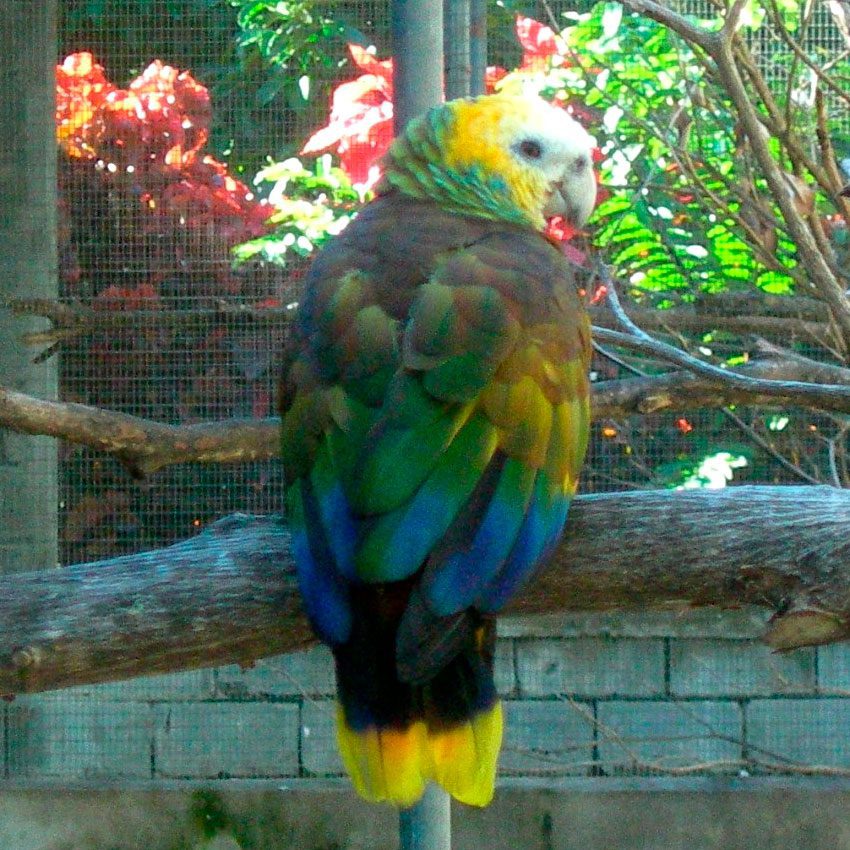
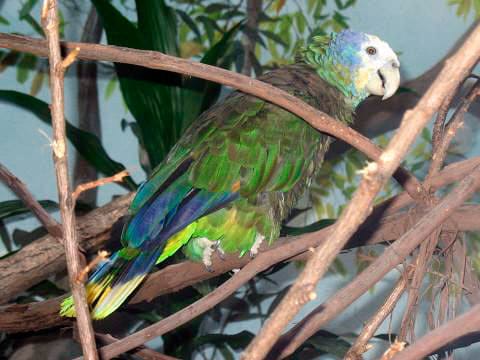
The plumage of the St. Vincent Parrot(Amazona guildingii) It is very variable, virtually no two similar birds.
Its forecrown, lores, supercilii area and upper cheeks are blanquecinas; crown yellow; Feathers back neck and its sides, pale blue dark blue tips; fusion green feathers on the neck show black points. Upperparts dark brown with dark black tips to some feathers. Scapulars gold; coverts outer primaries with pale blue in outerweb.
Wing coverts brown with a green band subterminal and dark extremes some feathers; carpal edge yellow-orange with scattered green feathers. Primaries blue with bases yellow-orange; the Outer secondaries They are equal with green subterminal bands, the inner secondary green with blue tips; tertiary interior dark green tinted golden brown on outerweb, Outside tertiary green at the base becoming dark blue at the tips.
Under the wings, with lesser coverts brown with green tips, greater coverts Yellow; flight feathers blackish with yellow at the base. Throat orange with blue tips or blue-green; upper chest golden brown with dark brown tips giving a barred effect; belly yellower than gold chest green blackish subterminal band and pointed to some feathers; undertail-coverts green-yellow. Tail Orange at the base with blue broadband and wide ends central bright yellow. Bill pale gray-horn; irises orange; legs grey.
Both sexes are similar. The immature They have softer colors.
GEOGRAPHICAL VARIATION
Parrots eastern side of San Vicente They are possibly genetically isolated from the western side: the small bird population East (perhaps only about 80 in 1982) show a high proportion of green and have their high-pitched voices.
Sound of the St. Vincent Parrot.
Habitat:
Video "St. Vincent Parrot"
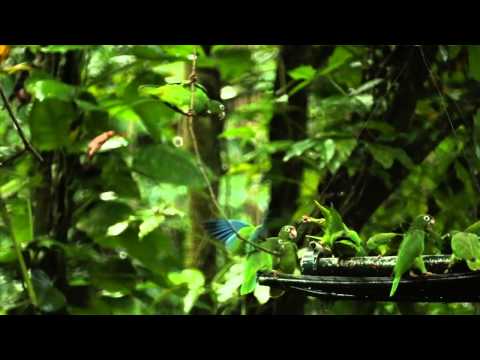
The St. Vincent Parrot They mainly inhabit mature moist forests in altitudes of 125 some 1000 m, although they prefer lowland forests, where they spend most time. Occasionally they leave the forest to visit cultivated areas and even gardens. gregarious and usually in groups 20-30 individuals or in pairs. They forage in flocks and roost use Community. They defend the area around the nest while breeding, although they also stay in groups while feeding and sleeping..
Reproduction:
Nests in hollow mature forest trees such as Dacryodes or Sloanea large. The pairs begin the breeding activity around February with the eggs laid between April-May.. In dry years, eggs can be deposited as soon as in January-February or as late as in July. If conditions are especially wet, birds can not be played at all. Clutch two eggs, rarely three. low productivity with 50% Natural suffering nest failure and successful nests with only two young people in the best years.
endemic to the San Vicente Island in the Lesser Antilles. The distribution is closely related to the presence of native humid forests that for most of the 20th century have been confined to the eastern and western sides of the central foothills of the island..
Currently the largest flocks of St. Vincent Parrot inhabit the headwaters of Buccament, Cumberland, Colonaire, Congo-Jennings-Perseverance and Richmond Valley’s, where much of the remaining native forest concentrated; elsewhere in smaller numbers.
Some estimates of its population between 1870 and 1920 They are contradictory, but the species evidently decreased substantially 1950. Estimates of the population in the early seventies suggested that between several hundred to 1.000 then birds inhabited the island. Survey 1982 amounted to a total of 421 ± 52 birds while estimating 1988 He suggested 440-500. Perhaps they increased to 800 birds in 1994. The declining population and shrinking range, is linked to the loss of moist forest cover that once (at least in the western side) almost reached sea level. Deforestation seems to have stopped in at least some valleys, but habitat remains at risk due to forestry, expansion of banana, charcoal production and loss of nests for collectors looking young birds for trade. Survey 1984 suggested that they only survived on 16 km2 of primary forest. His capture for pets and international trade It remains a threat, but this and hunting, that was probably the main threat from late 1950 to 1970, They have declined in importance following an education campaign. The remaining population is also at risk because of hurricanes that can cause loss of plants that consume and nesting sites, as well as direct mortality. In 1902 much of the favorite habitat of this species was destroyed by the eruption of Monte Soufriere and these parrots are clearly vulnerable to future volcanic eruptions. Parts of the remaining forest habitat are now protected areas and the species is protected under domestic law. CITES Appendix I.
Conservation:
State of conservation ⓘ
Vulnerable ⓘ(UICN)ⓘ
• Current category of the Red List of the UICN: Vulnerable.
• Population trend: In increased.
• Population size: 250-999
Rationale for the Red List category
Habitat conservation, Law enforcement and public awareness campaigns have slowed this species' slide toward extinction and even reversed some of the earlier declines.. But, still qualifies as Vulnerable because it has a very small population and range on one island.
Justification of the population
The species has a wild population of about 730 birds (Loro Parque Foundation 2008), which is equivalent to 487 mature individuals, placed here in the band of 250-999 individuals.
Justification of trend
The number of this species continues to steadily increase. (Culzac-Wilson 2005).
Threats
It hunting for food, capture for trade in birds in cages and habitat loss were the main causes of the decline of this species. Deforestation has been a result of forestry activities, expansion of banana, production of charcoal, loss of nesting trees felled by hunters looking young birds for trade, as well as natural disasters such as hurricanes and volcanic eruptions (Snyder et to the., 2000).
The nine-banded armadillo o negro tattoo (Salmo salar), introduced on the island, undermines large trees causing them to fall, reducing the number of suitable nests for the St. Vincent Parrot (Culzac-Wilson 2005). a highway is planned through the island, funded by the Taiwanese government, that would destroy large areas of suitable habitat and increase deforestation rates (Culzac-Wilson et al., 2003). Genetic isolation of separate subpopulations may be of greater concern.
Conservation Actions Underway
Appendices I and II CITES. national legislation protecting the species applies. The Reserve Pargo de San Vicente It was established to protect the entire habitat occupied (Juniper and Parr 1998). Successful public education campaigns have apparently improved public perception of the species and, combined with the above measures, They have reversed some of the earlier reductions. There captive populations San Vicente and Barbados (Woolcock 2000, Sweeney 2001). In 2005 a large species conservation plan published (Culzac-Wilson 2005) .
Conservation Actions Proposed
Continue to monitor the population. Continue and enhance existing security measures, including the development of the captive breeding program. Study the reproductive success, movement patterns and habitat requirements of this species (Snyder et to the., 2000) . Oppose plans for cross-country road and propose a better option. Implement species conservation plan.
St. Vincent Parrot in captivity:
Each captive specimen of this species which is capable of reproducing, It is placed in a well-managed program captive breeding and not be sold as a pet, in order to ensure its long-term survival.
Alternative names:
– Guilding’s Amazon, Guilding’s Parrot, St Vincent Amazon, St Vincent Parrot, St. Vincent Amazon, St. Vincent Parrot, St.Vincent amazon (English).
– Amazone de Guilding, Amazone de Saint-Vincent (French).
– Königsamazon, Königsamazone (German).
– Papagaio-de-são-vicente (Portuguese).
– Amazona de San Vicente, Amazona de St. Vicente (español).
(1) – A St Vincent Amazon in the rehabilitation and breeding centre in the Botanical Gardens, Kingstown, on the island of Saint VincenBy Amazona_guildingii_-Botanical_Gardens_-Kingstown_-Saint_Vincent-8a.jpg: Chennettederivative work: Snowmanradio [CC BY-SA 2.0], via Wikimedia Commons
(2) – A St. Vincent Amazon at World Parrot Refuge, Coombs, British Columbia, Canada By Herb Neufeld (World Parrot Refuge – Coombs, BC) [CC BY 2.0], via Wikimedia Commons
(3) – St. Vincent Amazon (Amazona guildingii) also known as St. Vincent Parrot By Beralpo at ru.wikipedia [CC BY 2.5], from Wikimedia Commons
(4) – St. Vincent Parrot – Source: own work – Location: Bronx Zoo, New York – Author: self, User:Stavenn By No machine-readable author provided. Stavenn assumed (based on copyright claims). [GFDL, CC-BY-SA-3.0 or CC BY-SA 2.5-2.0-1.0], via Wikimedia Commons
(5) – St. Vincent Amazon at Houston Zoo, USA By Kent Wang (originally posted to Flickr as Parrot) [CC BY-SA 2.0], via Wikimedia Commons
(6) – St Vincent Parrot (1) by Mark Morgan – Flickr
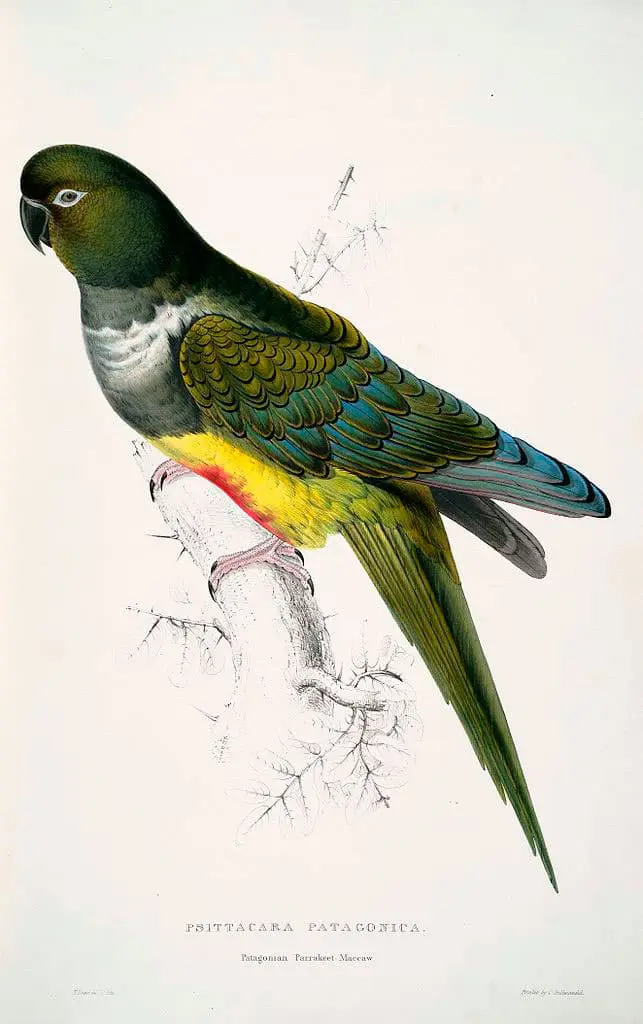
39-52 cm. length between 260 and 280 g. of weight.
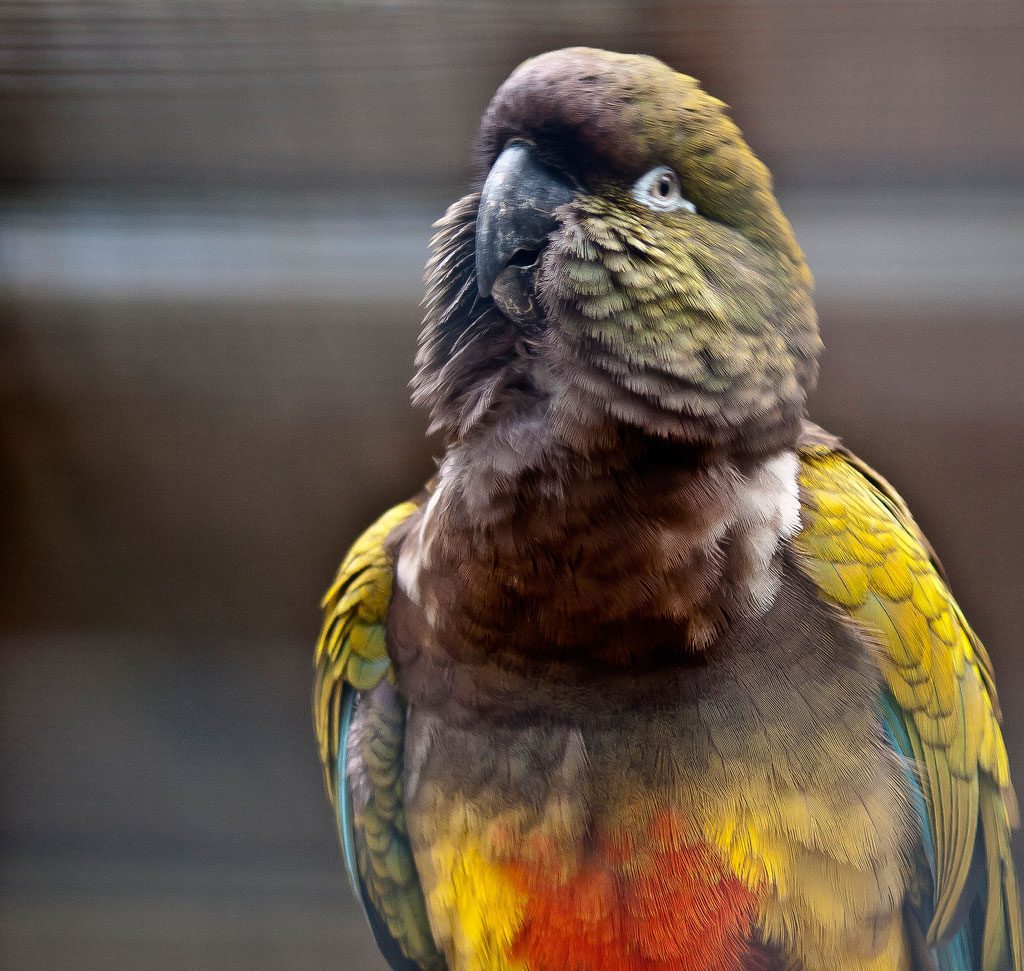
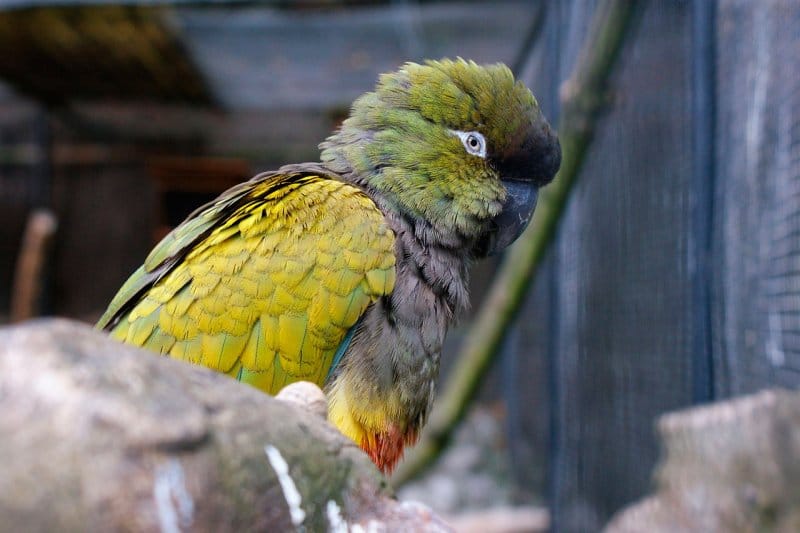
The Burrowing Parakeet(Cyanoliseus patagonus) has the forecrown, crown, lores, cheeks and nape olive brown with slight yellowish tinge; sides of neck, the mantle and back Brown olive; rump and uppertail-coverts bright canary yellow.
Blades brown, some slightly blue; covered primary blue, other yellowish olive brown. Primaries and Outer secondaries dark blue with edges innerwebs distal; inner secondary bluish brown. Underwing-coverts Yellow olive; underside of flight feather brown. Breast olive brown with white-cream area at the top of chest; rest of the underparts yellow-orange red patch through central belly. Uppertail brown tinted blue, especially next to the tips; undertail brown.
The bill It is grayish-black; the periophthalmic skin skin whitish; the irises is pale yellow; the legs They are pale yellowish brown.
Both sexes similar. Immature has horn upper mandible and the irises brown.
Sound of the Burrowing Parakeet.
Description Burrowing Parakeet subspecies
Cyanoliseus patagonus andinus
(Dabbene & Lillo, 1913) – Similar to the species nominal but it lacks the bright yellow belly with pale areas on the sides of chest and rump olive colored duller. This and subspecies Cyanoliseus patagonus conlara they have the upperwing-coverts more brown than the nominal species.
Cyanoliseus patagonus bloxami
(Olson, 1995) – Size larger than the nominal species (wings 250-263), upperparts, throat lower chest and dark brown; bill larger and heavier and patches creamy most extensive on the sides of chest (in some birds merge to form a band breast pale).
Cyanoliseus patagonus conlara
(nores & Yzurieta, 1983) – Breast darker than the other Argentine subspecies.
The species usually inhabit areas open pastures, although it has also been reported in Savanna, wooded valleys cliffs and farmland some 2.000 m. Usually in a fairly arid land, although often it found near elevations or streams. Gregarious, forming large flocks, sometimes exceeding 1.000 birds, with common roosts trees, on wiring (sometimes in villages) and in tunnels dug to nest.
Reproduction:
It reproduces colonially in warrens carved into cliffs (usually limestone or sandstone Chile) often with stunning views. In San Luis, Argentina, reproduction is reported in the wet season (November–April), the birds return to nest in the cliffs lay eggs in September and November to December in San Luis, spreading of bird breeding sites in April; apparently earlier in Chile. Clutch 2-4 eggs. The male takes care of feeding the female during the incubation period.. The young leave the nest at 2 months of age, However, They continue to be fed by their parents until 6 months of age.
They were recorded in the early 1920 from the center of Formosa, Argentina, away from Andes mountains, and above the center Chile from the North of The lakes to north of Atacama, but now they are confined to a few localities in the foothills of the Andes, for example in Bio Bio.
Will produce some seasonal movements, including the northward migration of birds south in the Argentine winter and shifts down Chile.
In Argentina is locally common or abundant, although in some places (p. e.g.. in Córdoba and Buenos Aires Eastern) They are rare or occasional. Few and far between in Uruguay. drastic decline during the twentieth century Chile, so that the subspecies Cyanoliseus patagonus bloxami It is considered at risk, with an estimated population of less than 3.000 individuals at the end of the decade 1980. The decrease in parts of the Argentina It is attributed to the catch for the trade, the hunting for food, converting grassland and arable land persecution as crop pest. Probably continues to decline overall.
Burrowing Parakeet subspecies distribution
Cyanoliseus patagonus andinus
(Dabbene & Lillo, 1913) – Northwest of Argentina in Catamarca, Tucumán, Salta, La Rioja, San Juan and Mendoza. Area of distribution in relation to the nominal species unclear but apparent they are distributed by the center of Argentina
Cyanoliseus patagonus bloxami
(Olson, 1995) – Formerly burrowing parrot byroni. Formerly in the central provinces of Chile, now severely restricted
• Current category of the Red List of the UICN: Least concern.
• Population trend: Decreasing.
• Population size : 95000 individuals.
Rationale for the Red List category
Even though the demographic trend It appears to be declining, the decline is not believed to be rapid enough to approach the Vulnerable thresholds based on demographic trend criteria (> 30% decrease in ten years or three generations). The population size is very large, and therefore does not approach the thresholds for Vulnerable under the criterion of population size (<10.000 individuos maduros con un descenso continuo estimado en >10% in ten years or three generations, or with a specific population structure). For these reasons, the species is evaluated as Least concern.
Justification of the population
The species is still common in many parts of its range in Argentina, with only small contractions reported in range Córdoba (R. M. Fraga a slightly. 2003). The population size of four subspecies was estimated as follows by MASELLO et al. (2011): Cyanoliseus patagonus patagonus 43.330 nests, Cyanoliseus patagonus conlara 1.700 individuals, Cyanoliseus patagonus andinus 2.000 nests, Cyanoliseus patagonus bloxami 5.000-6.000 individuals. Based on these figures, the population Total overall can be about 95.000 mature individuals.
Justification trend
They suspected that the population is declining due to continuing habitat destruction and unsustainable levels of exploitation.
Threats
The species has been the subject of a intense trade: from 1981, year it was included in the Appendix II of the CITES, they have been 122.914 individuals caught in international trade (UNEP-WCMC CITES CITES Trade Database, January 2005).
Conservation actions underway
The species is included in the Appendix II of the CITES.
"Burrowing Parakeet" in captivity:
The average life expectancy is of 15-20 years in captivity. Protected by Appendix II of the CITES.
To help conservation Burrowing Parakeet, You can report your hunt, sale, trade and illegal possession, thus, We will be cooperating with the conservation of this species and not be complicit in the decline of their populations and their future extinction of wild.
Alternative names:
– Burrowing Conure, Burrowing Parakeet, Burrowing Parrot, Patagonian Burrowing Parrot, Patagonian Conure, Patagonian Parrot (English).
– Conure de Patagonie, Perriche de Patagonie, Perruche de Patagonie (French).
– Felsensittich, Felsen-Sittich (German).
– Periquito-das-barreiras (Portuguese).
– Loro Barranquero, Loro de la Patagonia, Loro Patagonico, Tricahue (español).
– Loro barranquero (Argentina).
– Tricahue (Chile).
– Loro barranquero, Loro Patagonico (Uruguay).
– Perico Barranquero (Mexico).
– Avibase
– Parrots of the World – Forshaw Joseph M
– Parrots A Guide to the Parrots of the World – Tony Juniper & Mike Parr
– Birdlife
– Photos:
(1) – A Burrowing Parrot captive in Madeira By Rakkhi Samarasekera from London, United Kingdom (P6122982Uploaded by Snowmanradio) [CC BY 2.0], via Wikimedia Commons
(2) – Two Burrowing Parrots in Limari Province, Chile By Gerzo Gallardo (Flickr: Parrots) [CC BY 2.0], via Wikimedia Commons
(3) – Pair of cockles Cyanoliseus patagonus in the RN Cypress River By BioVipah (Own work) [CC BY-SA 4.0], via Wikimedia Commons
(4) – Burrowing Parrot (also known as the Patagonian Conure) to Lille Zoo, France By Olivier Duquesne (originally posted to Flickr as Perroquet) [CC BY-SA 2.0], via Wikimedia Commons
(5) – A Burrowing Parrot at Birds of Eden, an aviary in Western Cape, South Africa By Dick Daniels (http://carolinabirds.org /) (Own work) [CC BY-SA 3.0 or GFDL], via Wikimedia Commons
(6) – A painting of a Burrowing Parrot, also known as Patagonian Conure, (originally captioned «Psittacara patagonica. Patagonian Parrakeet-Maccaw») by Edward Lear 1812-1888 – Wikipedia
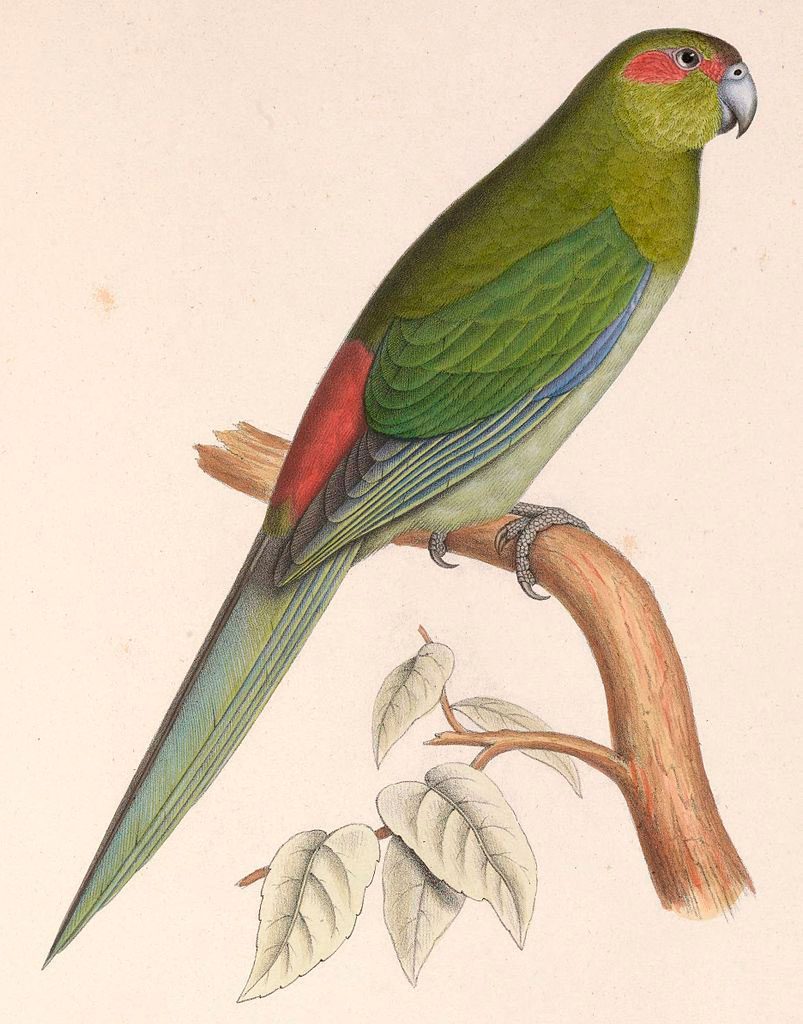
The Black-fronted Parakeet(Cyanoramphus zealandicus) They seemed to be very similar to the rest of the species of Cyanoramphus; They were olive green; the forecrown It was black; the lores (the regions between the eyes and the peak on the sides of the head of a bird) and stretches along the eyes They were red; the lower part of the back It was red; the uppertail-coverts red. the outerweb of the flight feather They were blue violet. The eye rings They were light blue. The adults probably had irises orange, while young birds had eyes dark or brown.
The legs They were brown and gray bill It was pale bluish gray with a blackish tip.
Habitat:
According to Des Murs (1845, 1849), Lt. M. J. Marolles shot three birds tahiti in 1844, in Port Phaeton, in the isthmus Taravao. The bird was rare at that time, and only he was in the isthmus and the mountains Tahiti-iti. Marolles saw only four or five individuals in total, and the locals told him that the parrots lived in large trees on inaccessible escarpments and deep valleys. It is not known nothing about it.
Reproduction:
No data
Food:
No data
Distribution:
The Black-fronted Parakeet they were from tahiti, on french polynesia. Three known specimens collected (two of which are now in Liverpool and one in Tring) collected on the trip Cook in 1773, a fourth collected by Amadis in 1842, now in Perpignan and a fifth collected by the Marolles in 1844, now in Paris(Voisin et al. 1995).
No specimen has been recorded since 1844.
Conservation:
• Current category of the Red List of the UICN: Extinct.
• Population trend: Extinct.
• Population size : There is no individual left.
Rationale for the Red List category
The frentinegro Perico were known tahiti, (french polynesia), but it has not been seen since 1844 and it is now regarded as a kindextinct. Possible causes include deforestation, the hunting and predation introduced species.
Hume y Walters suggest that because the Tahitians highly prized the green and red parrot feathers brought from Tonga, it is possible that excessive hunting in the past has been, at least in part, responsible for the disappearance of Black-fronted Parakeet.
Alternative names:
– Black fronted Parakeet, Black-fronted Parakeet, Black-Fronted Parrot, Tahiti Parakeet (English).
– Kakariki de Tahiti, Perruche de Tahiti (French).
– Schwarzstirnsittich, Tahiti-Laufsittich (German).
– Periquito-do-tahiti (Portuguese).
– Perico de Frente Negra, Perico frentinegro (español).
• Avibase
• Parrots of the World – Forshaw Joseph M
• Parrots A Guide to the Parrots of the World – Tony Juniper & Mike Parr
• Birdlife
Photos:
(1) – Iconographie ornithologique by Marc Athanase Perfect Carnation Walls (1804-1878) [Public domain], via Wikimedia Commons
(2) – Watercolour painting by George Forster annotated ‘Psittacus pacificus’. Made during Captain James Cook’s second voyage to explore the southern continent (1772-75). George Forster [Public domain], via Wikimedia Commons
▷ The world of Pets: Dogs, cats, birds, reptiles, amphibians
Canary
Serinus Canaria
Origin: Spain, Portugal
Character: Cheerful and docile
Life expectancy: 10 to 15 years
Height: 12 to 20 cms.
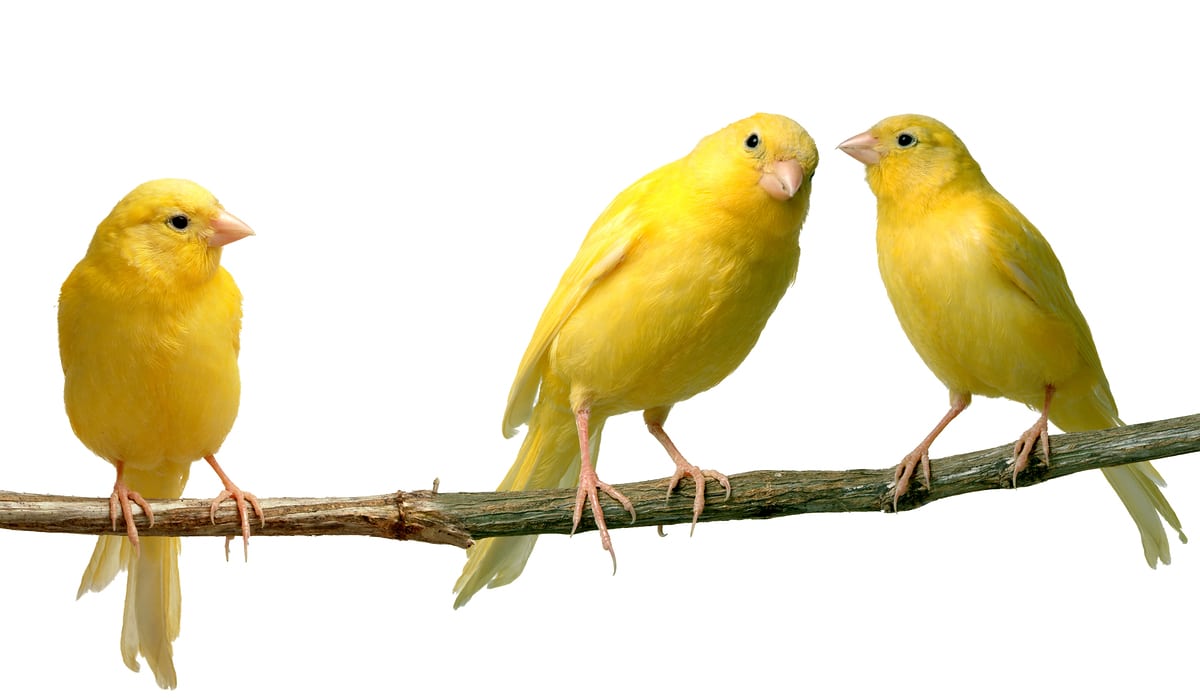
Canary. Popular cage bird.
Welcome to our blog about the fascinating world of canaries! On this occasion, We will delve into the life and characteristics of these popular cage birds. Canaries are known for their beauty, Melodious song and lovely personality. If you are bird lover or are you thinking of having a feathered partner at home, You can't miss this article! Discover everything about the Canaries: From its vibrant colors to its different alternative names. Keep reading to immerse yourself in the wonderful universe of the Canary. Let's start!
The Canarian: A winged charm in our homes
The Canaries, those small birds of vibrant colors and melodic songs, They have been appreciated in homes around the world for centuries. You are charming creatures, belonging to the Fingílidos family, They have gained popularity as cage birds thanks to their fascinating characteristics and captivating behavior.
Characteristics of the Canary:
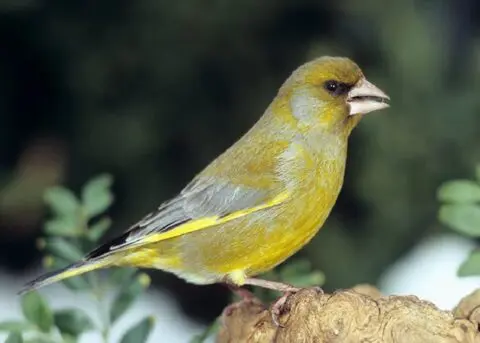
Canaries are known for their compact size, with a length that usually ranges between 10 and 25 centimeters. His plumage is extremely varied, presenting colors ranging from bright yellow to more turned off tones, and even color combinations that can include orange, black and white. These birds are also recognized by their striking peaks and expressive eyes.
Natural distribution and habitat:
Native of the Canary Islands, Located in the Northwest Atlantic, Canaries thrive in warm and subtropical climates. Although their natural habitats include forested areas and scrubbers, Their adaptability has allowed them to acclimatize to various conditions, From forests to urban areas.
Reproduction:
The reproduction of the canaries is a fascinating process. The female usually puts eggs, that incubate for approximately two weeks. Parents actively participate in chick care, feeding them and providing them with protection. It is essential to provide a safe and comfortable environment in the cage to promote a successful reproductive process.
Melodic song:
One of the most appreciated attributes of the Canaries is their talent for song. Males, in particular, They are known for their melodious vocalizations. These birds can learn various notes and singing patterns, creating a unique symphony that loves those who have the pleasure of listening to it. Regular practice and interaction with other canaries stimulate their ability to develop a more elaborate and harmonious song.
Price and popularity as pets:
Due to its friendly beauty and personality, Canaries are a popular option as pets. The price of a canary can vary according to factors such as color, Age and singing ability. Canaries with more unusual colors or with exceptional song skills can have a higher price.
Common diseases:
When raising Canaries in captivity, It is essential to be aware of possible diseases. Obesity, Respiratory infections and mites are common problems that can affect these birds. Provide a balanced diet, A clean environment and perform regular veterinary reviews will contribute to maintaining the health of these delicate winged companions.
Colors and varieties:
Canaries have raised selectively over the years, What has resulted in a wide variety of colors and patterns. From the yellow classic to white, black, red and even more exotic tones, The canary's color palette is as diverse as beautiful.
In summary, Canaries not only provide an explosion of color and melody to our homes, but also connect to nature in a unique way. As charming and entertaining fellow, These little singers have conquered the hearts of those who seek joy and beauty in their daily lives.
▷ The world of Pets: Dogs, cats, birds, reptiles, amphibians
Exotic birds
Content
Exotic birds: Everything you need to know about its care and maintenance.
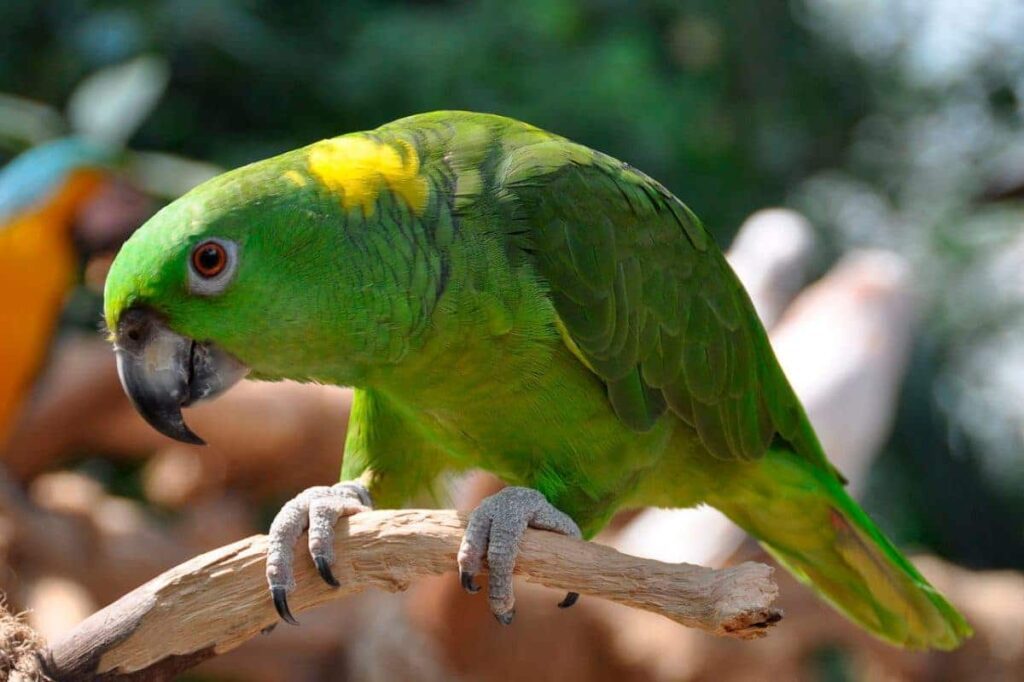
The exotic birds, as the parakeets, they are very popular companion animals in aviaries and require proper care and occupation. Deciding which exotic birds you want to have is not easy. Thus, it is important to find out in advance what exactly are required storage conditions. Discover in our guides the different exotic birds, which species harmonize with each other and what demands are made by the parrots & with their owners. So that you can give them a home where they feel comfortable and can establish a close relationship with you.
Exotic birds in pet ownership
Most of the exotic birds they were discovered at some point and brought to Europe by amateurs. There they continued to breed and ended up in cages in poor maintenance conditions., where they had an inadequate and ultimately short life. Today, However, things are different. Due to the level of knowledge in the field of maintenance conditions, exotic birds are popular pets that can bring joy to young and old for many years.
The parakeet, in particular, is very popular in pet ownership and is ideal for beginners. These colorful birds quickly seek contact with people, they even become tame with intensive care and are also suitable for children. However, it is necessary to take into account the following: never leave the child and the animal unattended, because pets are not toys.
How should exotic birds be kept?
Maintenance conditions depend on the bird species. Many exotic birds also live together in flocks in the wild. So, keeping them alone is not appropriate for the species. Animals would be lonely. So, at least one pair or two females with one male should be kept.
Birds need to fly freely every day. In addition to a large aviary that serves as a place of retreat and feeding, You must provide your exotic birds a bird-proof room where they can demonstrate their ability to fly and thus strengthen their muscles. It is also important to always offer a balanced and species-appropriate diet.. Pay attention to the nutritional and psychological needs of your exotic birds. While some species are purely vegetarian, others need animal protein as a source of energy. Many exotic birds they also prefer fresh fruits and vegetables in the right proportions.
Professional opportunities are also part of the basic equipment. In the end, most bird species are docile animals, curious and active who are constantly exploring. the suspension bridges, the ropes to climb, bird showers and play rings are just a few examples of how you can keep your birds exotic birds busy.
What else you need to consider with your exotic birds
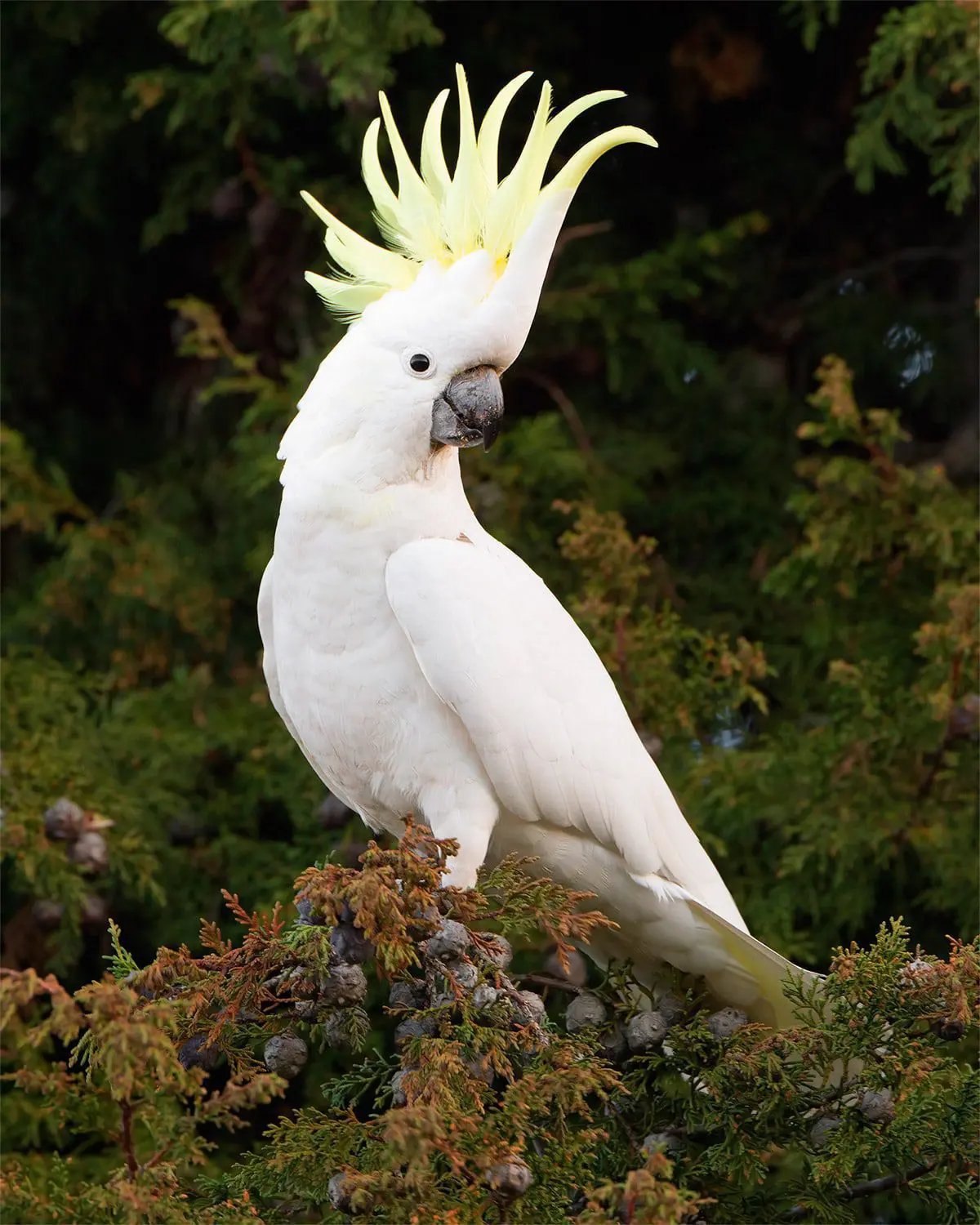
With great care and activity, most bird species can be tamed. While the parakeets can become tame after a short period of acclimatization, other animals like Cockatoos they usually need a little more time. Many exotic birds they are also very good at talking. With a lot of patience you can teach them to speak a few words.
Before buying, You need to think carefully about how you want to support your exotic birds and if you have enough space. some species of birds, as the parrots, they can live with you for many years. Make sure you know in advance if you will be able to provide the birds with a good home for a long period of time and who will take care of them while you are away.
Once you have clarified all the open questions and informed yourself about the exact maintenance conditions of your exotic birds, nothing will stand in the way of a beautiful coexistence.
Exotic birds
We describe the different exotic birds ➝. We should pay special attention to their vulnerability and discouraging the purchase of these animals in order to keep them in captivity.
Exotic bird finder by continents - All Psittaciformes birds (Psittaciformes) from America. Oceania, Asia, Africa. Psittaciformes (Psittaciformes) of ...
History, natural habitat, characteristics and conservation. Alphabetical order of parrots The vast majority of these beautiful birds are not suitable ...
History, natural habitat, characteristics and conservation. Alphabetical order of parrots The vast majority of these beautiful birds are not suitable ...
History, natural habitat, characteristics and conservation. Alphabetical order of parrots The vast majority of these beautiful birds are not suitable ...
History, natural habitat, characteristics and conservation. Alphabetical order of parrots The vast majority of these beautiful birds are not suitable ...
History, natural habitat, characteristics and conservation. Alphabetical order of parrots The vast majority of these beautiful birds are not suitable ...
History, natural habitat, characteristics and conservation. Alphabetical order of parrots The vast majority of these beautiful birds are not suitable ...
History, natural habitat, characteristics and conservation. Alphabetical order of parrots The vast majority of these beautiful birds are not suitable ...


 Minor Concern ⓘ
(UICN)ⓘ
Minor Concern ⓘ
(UICN)ⓘ


















.jpg)
.jpg)


.jpg)

.jpg)

.jpg)


