โ–ท The world of Pets: Dogs, cats, birds, reptiles, amphibians

Blue Lorikeet
Vini peruviana


Blue Lorikeet

Content

Description

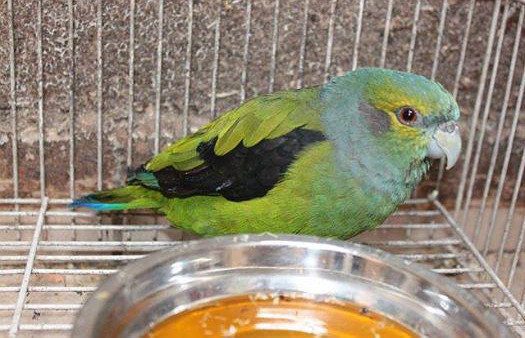
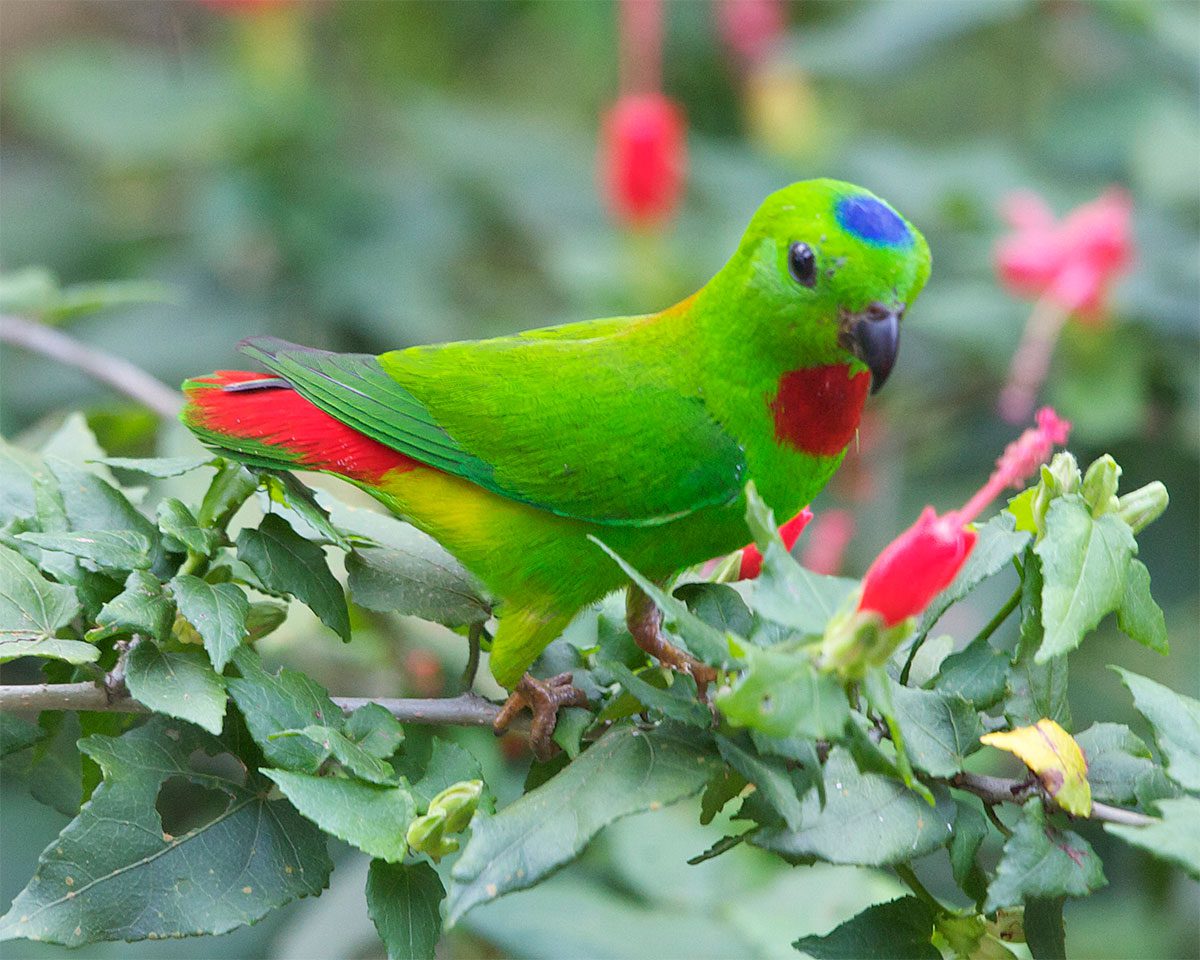
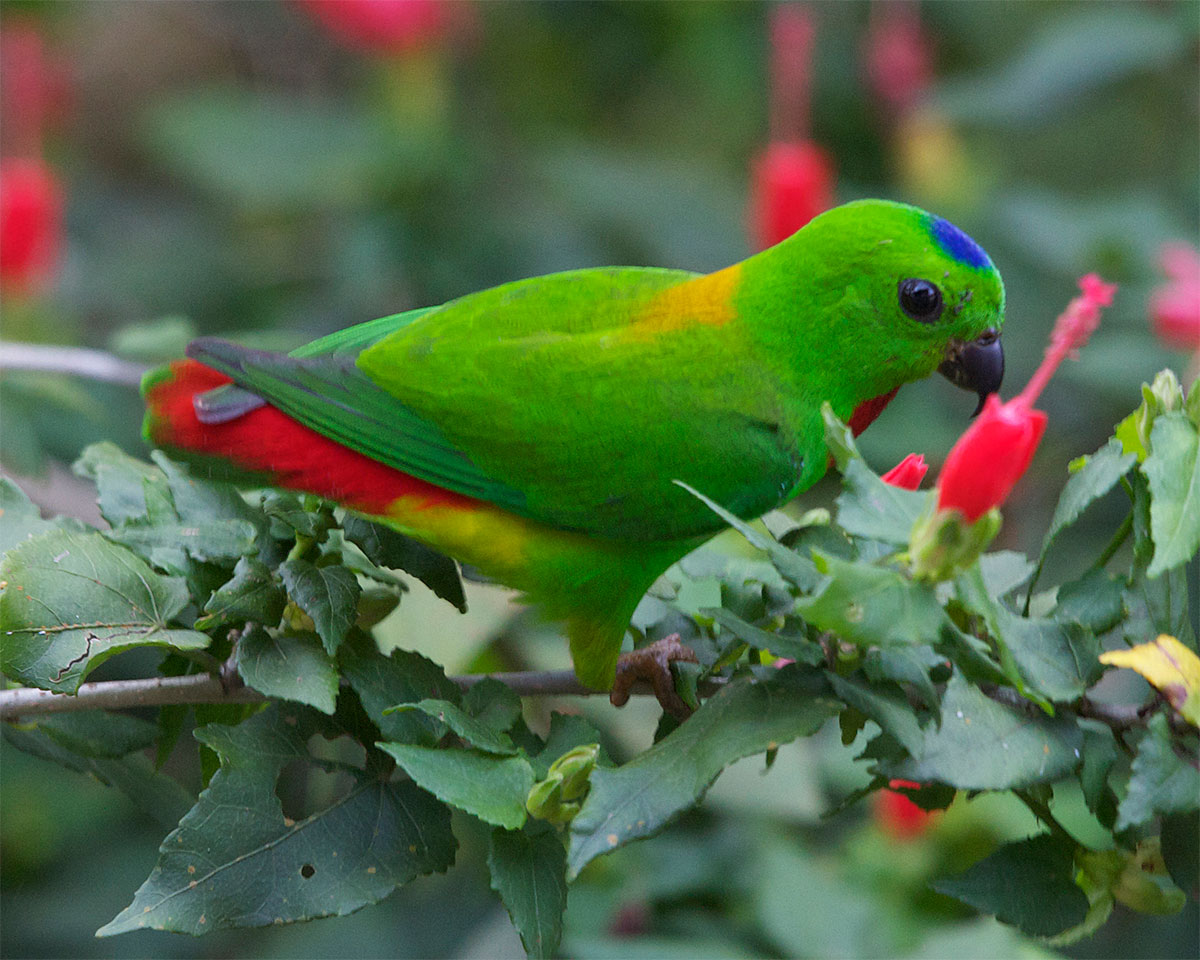
The Blue Lorikeet (Vini peruviana) has an approximate length of 18 cm.. and a weight ranging between 31 and 34 g..

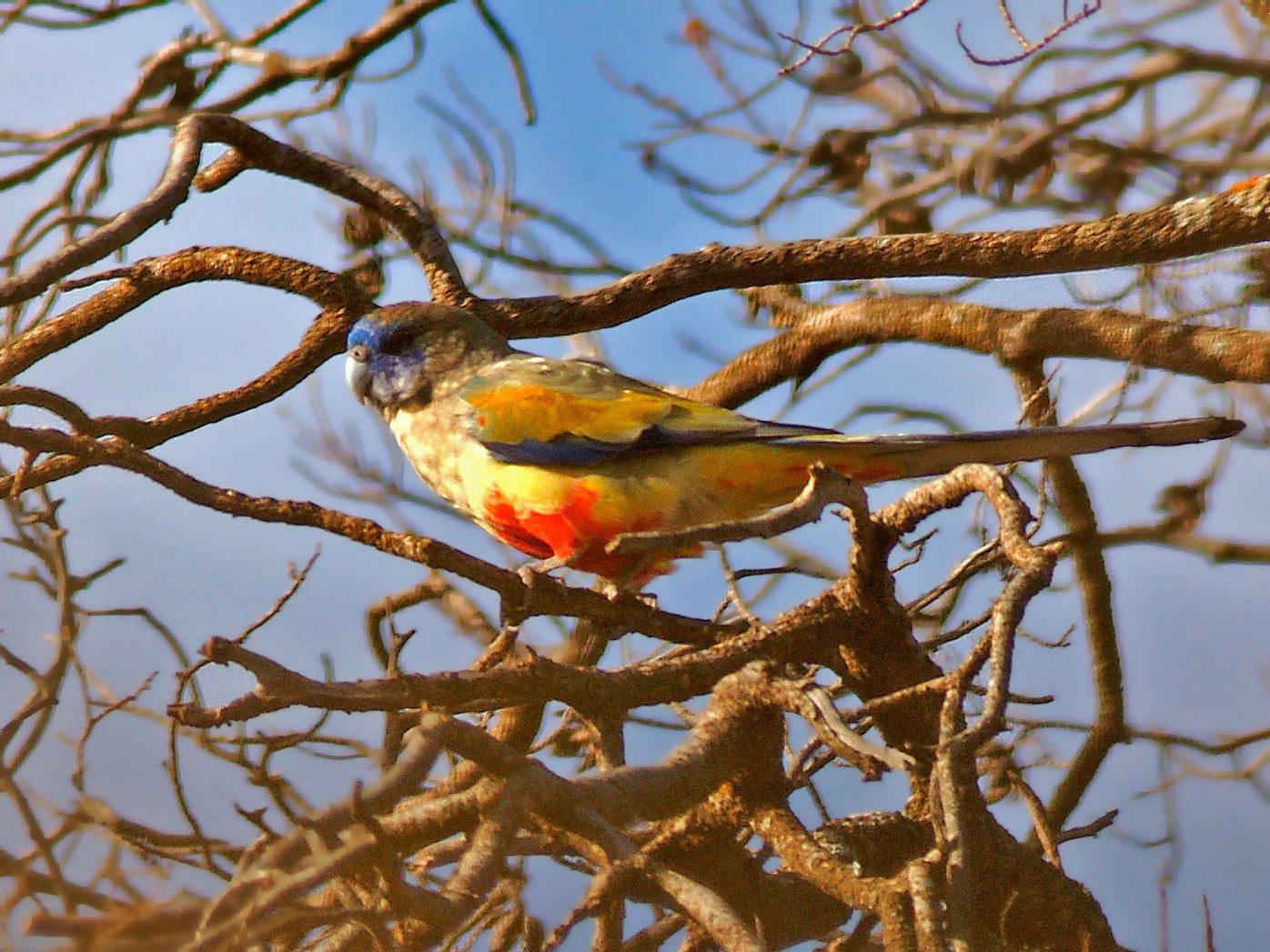
Dark blue bright in the crown with paler veins; The feathers of the back of the crown, elongated as in other members of the genus; Lords and ear-coverts white. Upperparts dark blue bright with Plumas-bases blackish. Upper wing bright blue with the internals of the flight feather brownish colour. Underwing coverts dark blue, the rest of Underwing color negro.

Throat and upper breast white; bright dark blue rest, underparts on the basis of blackish feathers. The tail dark blue, with the slightly elongated central feathers typical of the genus; undertail blackish.

The bill orange; Iris yellowish brown; Legs orange color.

Male slightly larger, particularly the head and the bill, with the chin pure white. Legs they can also be a bit darker.

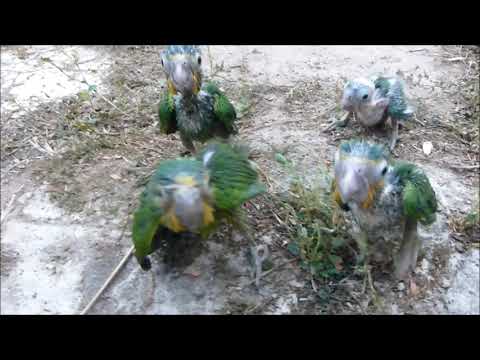
The immature differs from the adult as having the underparts uniform greyish-black, with the exception of some small white spots on the chin. Black the bill. Dark brown the irises and legs dark brown.

Habitat:

It depends largely on coconut palm (Cocoa nuts) for food and nesting, Although other species such as the banana and Hibiscus they are also frequented by the Blue Lorikeet.

Sometimes they look around the villages and in the gardens. The Blue Lorikeet they are very active, rarely remain long in one place. They are usually seen in small groups of a maximum of seven birds that fly between the coconut trees in flower.

Reproduction:

The breeding It is estimated that it is from May to July. Nests in the coconut trees, either in a hollow log or in a rotten coconut palm still attached to the tree, also have seen them are nesting in a stump of Pandanus fallen. The laying is two eggs that incubate for 25 days and the fledgling young leaves the nest in 6-8 weeks.

Food:

They feed on nectar, but foraging on the ground and the search for small insects on the underside of the leaves have also been recorded..

Distribution:

The Blue Lorikeet It was formerly widespread in the The Society Islands and the Tuatnotu archipelago, but at present is absent from 15 of the 23 Islands where dwelt in the past (some of which can be to come back to enter), including tahiti, Bora-Bora and Moorea, the largest group of the Society Islands (c expiry date. 1900 of tahiti and Moorea; decade of 1920 for Bora-Bora).

Although the population decline has been linked to a series of threats, including the introduction of the the swamp Harrier (Cirrus approximans) and introduction of a malaria avian provoked by the Culicoides mosquito; predation by rats and cats is the most serious problem facing the species. The distribution currently in the different islands, including population estimated with the dates when they know, shown below (but there are several more islands that have never been visited and that could still be suitable to support the species).

The Society Islands: Motu One 250 couples; Manuae 300-400 couples in 1974 but in apparent decline following the introduction of cats in 1975.

Tuamotu archipelago: Tikehau 30 couples in 1984; Rangiroa 100-200 birds before 1972, were kept in 1991 but the numbers are not quantified; Arutua, apparently they were still present 1975 but no current stats; Manihi a bird in 1991; Kaukura last sighting in 1923; No estimate of population; Apataki 1989 survey gave a minimum of 300 birds.

Islas Cook: Aitutaki probably introduced; until 500 couples present in 1991; Island Hervey possibly introduced in the past, but there is no recent information.

– The population in Aitutaki seems stable and as the Black Rat (Ratuus ruttus) is not present, This island is thought to be the hope for the survival of the species.

Conservation:


Vulnerable


– Current IUCN Red List category: Vulnerable

– The population trend: Decreasing

There are few data on population trends; But, the species has declined gradually in each island, where cats, the black rats of Marsh Harriers have colonized the coast. So, a slow to moderate fall in the population is suspicious.

The threat of extinction of this species in the Islands, It is more than likely due to their predation by black rats (Rattus rattus) and to a lesser extent, by the Feral cats (Felis catus). Their extinction since Makatea in the Tuamotu archipelago could have been accelerated by a particularly violent hurricane. Its reduction in the scope of the Society Islands correlated with the spread of the marsh harriers (Circus approximans) introduced. The accidental introduction of black rats on islands where the Blue Lorikeet It is a continuous threat to the species.

"Blue Lorikeet" in captivity:

There are more than 20 males in captivity, but only about ten females. The species was first raised in captivity in 1937 by Lord Tavistock, but until 1977, When a group of birds seized in the U.S.. He was sent to the poultry farmer Rosemary Low en el Reino Unido, These birds were practically unknown in poultry.

Also have grown up in the San Diego Zoo, whose success with breeding two females in 1979 He had much international publicity when parents, that had been confiscated from smugglers, escaped destruction by customs officers after a public outcry.

Alternative names:

Blue Lorikeet, Pacific Lorikeet, Tahiti Lorikeet, Tahiti Lory, Tahitian Lorikeet, Tahitian Lory, Thaitian lory, Violet Lorikeet (ingles).
Lori nonnette, Lori de Tahiti, Perruche nonnette (French).
Saphirlori (German).
Loris Vini Peruviana (Portuguese).
Lori Monjita, Lorito Zafiro (espaรฑol).

scientific classification:

Order: Psittaciformes
Family: Psittaculidae
Genus: Vini
Scientific name: Vini peruviana
Citation: (Statius Mรผller, 1776)
Protonimo: Psittacus peruvianus

โ€œLori Monjitaโ€ images:

โ€œLori Monjitaโ€ video:

————————————————————————————————

"Lori Monjita" (Vini peruviana)


Sources:

Avibase
– Parrots of the World โ€“ Forshaw Joseph M
– Parrots A Guide to the Parrots of the World – Tony Juniper & Mike Parr
– Birdlife

Photos:

1 – free-pet-wallpapers
2 – Two adults (left) close to a three immature birds perched in a palm tree. – Author Josep del Hoyo – lynxeds
3 – Miles to the wild – Enlace
4 โ€“ Miles to the wild – Enlace
5 – Adult bird preening. Author Tomasz Doron – lynxeds

Sounds: Matthias Feuersenger (Xeno-canto)

โ–ท The world of Pets: Dogs, cats, birds, reptiles, amphibians

Australian King-Parrot
Alisterus scapularis

Australian King-Parrot

Content


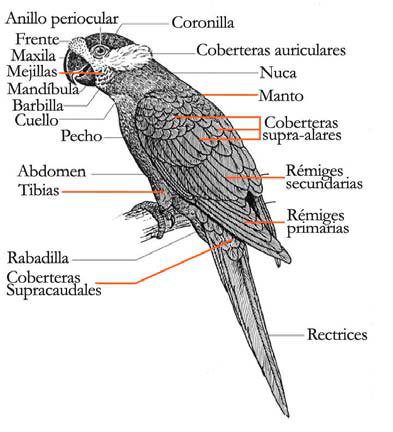
Anatomy-parrots

Description

39-43 cm.. length between 195 and 275 g. of weight.

The Australian King-Parrot (Alisterus scapularis) is very similar to the Moluccan King-Parrot, but larger.

It has the head and bright Scarlet underparts, with the exception of the coverts black infracaudales, with large red tips. Narrow rear necklace with mixture of the dark blue to dark green of the mantle (mantle feathers fringed even darker); lower back and rump, dark blue. Pale necklaces, slightly greenish-blue, forming a distinctive 'brace'; green wing coverts, and green flight feathers with vane blackish internal. Under, feathers dark green bathed in blue wing. Upper, Black tail with a light blue bathroom in the vane external side feathers; undertail, black tail.

Bright coral red beak, with black tips; iris yellow ; grey legs.

Strong dimorphism in female, with the Crown and green upper parts (including supracaudales coverts and tail, but not the Croup which is a lighter blue than in males). The face and the chest are coloured green opaque with a reddish spread warm. Females may occasionally show some pale necklaces. The infracaudales coverts are green, very red-tipped. The Central tail feathers are green, the lateral blackish with narrow pink tips.

The peak is a blackish brown dark.

The immature birds are like females, but with a pale beak and dark iris.

Younger females are less red below. Males get the adult plumage during a slow change that starts around of the 16 months, and continue for others 14 to 15 months.

Subspecies Alisterus scapularis

  • Alisterus scapularis minor

    Mathews, 1911 – Same as the nominal species, but smaller.

  • Alisterus scapularis scapularis

    (Lichtenstein, 1816) – The nominal

Habitat:

Australian King-Parrot

The Australian King-Parrot disperse, regularly, after the breeding season, in wooded areas, reaching altitudes of 1.625 m, Although rarely seen on top of the 1.200 m, from where come down to more open habitats; they have seen other apparently climate-related movements. They can travel moderate distance; a ringed bird was recovered to 270 kilometers from their place of origin.

During the breeding season, they are often found in dense forests (sclerophyllous forest wet), wooded streams and associated habitats, including more open eucalyptus forests and savannahs bordering riparian forests.

Outside the breeding season, they are in a wider variety of habitats, including the cultivated areas, parks, orchards and occasionally suburban gardens.

They are usually in pairs or small groups, although subsequent flocks of immatures may form groups of up to 50 or more birds. The Australian King-Parrot, often, they sit in a visible way on high exposed branches. When feed, However, the birds are still cautious and fairly quiet. They gather to feed early in the morning, sometimes in mixed groups with Rosella parakeets and other parrots. They remain silent during the hottest part of the day, to re-enable the afternoon.

Noisy flocks, often, they might be returning to the roosts at night.

Reproduction:

During courtship, males move head, the wings and inflate their feathers; the female responds with Wiggles head, and asking for food. The breeding season extends from September to February. The nest is a hollow in a tree dead or alive (often a large eucalyptus with hollow tips). The entrance of the nest is usually at a certain height. Between three and six (usually four) eggs are deposited in a deep hollow on a bed of wood dust. The female incubates alone during 20 days, with the male nearby to provide her with food.

The young remain in the nest during 5 weeks, after which they leave the nest and remain with their parents.

Food:

The diet consists of fruit, berries, nuts, seeds, insect larvae, flowers, outbreaks and other vegetable materials. The species is also fond of mistletoe VISCUM album, eucalyptus and acacia trees. It can cause damage in orchards and fields, usually in search of potato, corn and other crops.

When feed, They argue the food with their legs, and extract with its beak. If you bother, These parrots flying quickly to hide, but they can become tame in some inhabited areas.

Distribution:

The Australian King-Parrot is distributed along the East coast of Australia, in the interior of the western slopes of the Great dividing range, extending from Cooktown in the North of Queensland, to the South, the District of Atherton, then through Eungella, Blackall, MooNiE and in New South Wales, where it reaches inside approximately in Bingara, Mudgee and Albury. In Victoria is limited to the South-East, being Portland its southwestern border.

It is common in Canberra, especially during autumn and winter, and birds Getaways, occasionally seen in adelaide, along the murray river and in the West of Victoria.

The species can also be seen in Fraser, Stradbroke and Broughton Islands.

The world's population is considered that it is far superior to 50.000 specimens and stable, although they may have been affected by trade and to some degree habitat loss.

Distribution subspecies Alisterus scapularis

Conservation:


minor concern


โ€ข Current category of the Red List of the UICN: Least concern

โ€ข Population trend: Decreasing

The size of the world's population has not been quantified, Although it is estimated above 50,000 specimens.

The species, according to sources, is usually common, but may be declining due to deforestation and the destruction of their habitat in course (pit et to the. 1997).

"Australian King-Parrot" in captivity:

Fairly common in Australia, not so much in other places.

Sweet disposition, tame; will tolerate other species outside of breeding season.

Alternative names:

Australian King-Parrot, Australian King Parrot, Blood Rosella, King Lory, King Parakeet, King Parrot, King-Red Lory, Queensland King-Parrot, Scarlet-and-Green Parrot, Southern King-Parrot, Spud Parrot (ingles).
Perruche royale (French).
Kรถnigssittich, Kรถnigsittich (German).
Periquito-rei-australiano (Portuguese).
Papagayo Australiano, Papagayo Real Australiano (espaรฑol).

scientific classification:

Order: Psittaciformes
Family: Psittaculidae
Genus: Alisterus
Scientific name: Alisterus scapularis
Citation: (Lichtenstein, MHC, 1816)
Protonimo: Psittacus scapularis

ยซAustralian Parrotยป Images:

Videos "Australian King-Parrot"

————————————————————————————————

ยซAustralian Parrotยป (Alisterus scapularis)

Sources:

Avibase
– Parrots of the World โ€“ Forshaw Joseph M
– Parrots A Guide to the Parrots of the World – Tony Juniper & Mike Parr
– Birdlife

Photos:

(1) – ยซAlisterus scapularis (male) -Bunya Mountains-8ยป by Arthur Chapman – originally posted to Flickr as Alisterus scapularis (Australian King Parrot). Licensed under CC BY 2.0 via Wikimedia Commons.
(2) – By Andy (originally posted to Flickr as King Parrot Couple) [CC BY-SA 2.0], via Wikimedia Commons
(3) – By Geoff Penaluna from Australia (Female King parrotUploaded by snowmanradio) [CC BY 2.0], via Wikimedia Commons
(4) – By Jan from Singapore, Singapore [CC BY 2.0], via Wikimedia Commons
(5) – ยซAlisterus scapularis-Commonwealth Park, Canberra, Australia-male-8ยป by Duncan McCaskill – Picasa Web Albums. Licensed under CC BY 3.0 via Wikimedia Commons.
(6) – HBW Alive – hbw

Sounds: Diego Caiafa (Xeno-canto)

โ–ท The world of Pets: Dogs, cats, birds, reptiles, amphibians

Blue-throated Macaw
Ara glaucogularis


Guacamayo barbiazul

Content

Description:

Of 85 cm.. length and a weight between 600 and 1000 g..

The Blue-throated Macaw (Ara glaucogularis) they have a very vivid coloration. Very similar to the more common Blue-and-yellow Macaw (Ara ararauna), easily differentiated by wide turquoise blue stain that reaches the throat.

These beautiful macaws have bright turquoise blue feathers that cover the throat, crown, the back and the back of your wings and tail. Yellow gold feathers grow in a strip between the crown blue and neck, on the sides of the face and in the ventral part of the body, the wings and tail.

In the face There is a patch sparsely feathered skin near the base of the great bill dark which has 5 or 6 horizontal stripes of blue feathers, unique for each Blue-throated Macaw and that they can be used to individually identify adults. The skin This patch is predominantly white with a tinge of pink around the bill.

The Blue-throated Macaw sample little sexual dimorphism.; However, the males they tend to be a little larger than the females with approximate masses of 600 and 800 g., respectively.

The newborn infants they are completely pink and have no feathers. The gray color of the underparts grows as they age, and is later replaced by colorful feather, fully developed. The irises It also changes color with age. The color of the eyes of a hatchling is initially black and changes to brown shortly after the opening of the eyes.

When is the Macaw one to three years, their eyes Gray become, then white. In the old mature, the irises It turns yellow and will be more golden color to the 10 years, becoming a gold richer with age.

The largest macaws They show a ring dark grey color that surrounds the pupil. This ring can be used to estimate the age of the Macaw.

Habitat:

Very scarce and localised. They inhabit gallery forests and tree islands surrounded by tropical savannah..

Seasonal rains cause floods in October to may and transform the Savannah in a swamp covered with grass that surrounds the high forest islands, permanently dry. The presence of Palms is required Motivate (Attalea phalerata) for the survival of the Blue-throated Macaw Since this species feeds, In addition to using it to build their nests. Also have favoritism by the Acrocomia aculeata.

They are most frequently between the elevations 200 and 300 m. Most of these macaws' habitat is used for cattle ranching.. But, the land is not suitable for cultivation, so there is one alteration of habitat for agriculture.

In general, observed in pairs; apparently less sociable nearby conspecifics than. The young are believed to stay with the parents for only a brief period of time., Perhaps that explains the infrequency in which observed small flocks or family groups. Probably communal roosts, sometimes with the Blue-and-yellow Macaw. They tend to use hangers in tall trees, especially of the species Tabebuia.

Although cattle trample young trees, Palms Motivate mature they are very resilient and resist damage. This Palm is also fire-resistant. As a result, Palms Motivate, often dominate the forest fragments in the Beni savanna (Llanos de Moxos).

Reproduction:

The Blue-throated Macaw are monogamous and they mate for life. It is not known if these macaws are matched with another partner if your original partner, dies. Nothing more is known about systems of mating for this species in the wild.

Usually They nest in cavities of Palm trees, often the species Attalea phalerata, but they will also use other Palm species or trees Tabebuia. You can use the holes previously occupied by other species, for example, woodpeckers.

Dead Palm trees are ideal for nesting, insofar as they are excavated by large larvae after a tree has died.

Some species of macaws, including the Blue-throated Macaw, palm leaves are eaten, causing the death of the tree. The trunk of the Palm will be recessed by larvae, resulting in the creation of a potential nest. It is not yet known if this is a coincidence or if these birds do this intentionally to create nesting sites..

Nesting couples do not remain in a nest consecutive reproductive seasons and generally seek different nesting sites each year.

The reproduction do it once a year if environmental conditions permit; However, If eggs or chicks are lost, the breeding pair can produce a second clutch in the same breeding season.

It has been speculated that the two sub-populations they breed at slightly different times: the population of North from August to November and the population of South from November to March.

The female It puts one to three eggs by laying and incubated during 26 days. The chicks have a mass of about 18 g at hatching; they leave the nest to 13 to 14 weeks and not be completely independent parents for a full year. They will reach their sexual maturity to the 5 years.

Food:

The Blue-throated Macaw do not feed on seeds and nuts to the same extent that other many other species of macaws make it. On the other hand, they eat mainly fruit of large Palm trees, including the of the Attalea phalerata and Acrocomia aculeata.

They supplement their diet with seeds and leaves of Hura crepitans, Inflorescences of Syagrus botryophora and palm trees Astrocaryum vulgare.

Birds consume ripe and near-ripe fruit and drink fluids from immature palm fruits. Attalea.

Distribution:

The Blue-throated Macaw only found in the Beni Department, Bolivia (between 200 and 300 meters above the sea level). In total, They inhabit an area of 2508 square kilometers.

There is a two inhabited areas by two subpopulations, to the Northwest of Trinidad (the capital of Beni), and the other to the South of Trinidad. This separation may have occurred because of the indigenous peoples who historically inhabited this area and who hunted the Blue-throated Macaw in order to use their feathers in their ornamental costumes. This separation could also have been caused more recently by the wild bird trade. With the high population of humans, macaws in those areas would have a higher chance of being caught. The formation of large human settlements in this area also resulted in a loss of suitable habitat and fragmentation of the habitat of this species. So, there are not any Blue-throated Macaw in the vicinity of Trinidad.

Reports of birds in Tarija and Chuquisaca they have not been tested. Stock in Paraguay and North of Argentina they are still being corroborated and seem unlikely. Apparently resident. Scarce and highly dispersed.

Conservation:


critical hazard

โ€ข Current Red List of UICN: critically endangered

โ€ข Population trend: Stable

The Blue-throated Macaw is currently classified as in critical hazard on The IUCN Red list and figure in the Appendix I by the CITES. Trapping for this species is illegal because the Blue-throated Macaw they are protected by the national law of Bolivia and Convention on international trade in endangered species of Fauna and Flora Silvestres (CITES) from 1986. (Strem, 2008; ยซBlue-throated Macawยป, 2009)

The capture for the pet trade It is the main reason that the Blue-throated Macaw are in such critical danger. The rarity of this species drove the selling price, What gives as a result an increase in the pressure of capture. As more birds were captured, the rarity of the Blue-throated Macaw was on the rise. This became a vicious cycle that greatly reduced the wild population of these Macaws to the numbers currently observed.. Currently there is an estimated number of 50 to 250 specimens in the nature. (Hesse and Duffield, 2000; Jorยญdan and Munn, 1993; ยซBlue-throated Macawยป, 2009)

Since the Spix's Macaw (Cyanopsitta spixii) became extinct in the 2000, the species Ara glaucogularis It is now the rarest among macaws in the world. With the low estimated wild population, extreme conservation actions are needed.

The World Parrot Trust has many volunteers and employees who work in the conservation of the Blue-throated Macaw. These people watch over nests to protect the chicks from predation. The chicks are also examined periodically to be sure that they are healthy and receive adequate food from their parents. If the female is not doing as well as expected, is then supplemented with formula. New nest boxes have been built and current nesting sites have been improved. The support of local landowners has also been established. (Giยญlardi, et to the., 2005; Kyle, 2006; Kyle, 2007b; Kyle, 2007to)

"Blue-throated Macaw" in captivity:

The Blue-throated Macaw they are relatively easy to breed in captivity, and the captive population is many times greater than the wild population.

This species of Macaw is now more common in captivity in United States and South Africa in its natural habitat. In a recent study of the species of the Appendix I of the CITES, carried out by the Committee CITES of the AF A, This species was the second more documented; only the Scarlet Macaw had been documented in greater numbers in captivity. It also, most owners have had success in breeding, Although it is uncommon to obtain seed of the second generation (only three owners have reported it). Without a doubt, This will change in the near future, When juveniles reach the age and maturity appropriate to reproduce.

With regard to its longevity, according to sources, a specimen lived during 22 years in captivity. It has been reported that these animals can live up to 32,8 years in captivity, but this has not been verified.

As a special, a specific installation of United States produces more than seventy copies of Blue-throated Macaw a year. The price of this species has experienced the most drastic decline of any parrot species; initially, It was not unusual to see couples of Blue-throated Macaw that were sold for even 10.000 $ americans, While it is now possible to find a pair of unrelated young by 3000 $ American or even less.

On the other hand, export made by breeders of United States to those of other countries is difficult to carry out at this time due to the strict restrictions on trade in this species imposed by the CITES. The legal trade in legal birds would certainly alleviate some of the threat hanging over the remaining flocks of wild birds..

Its feathers have also been used for ornamental costume decoration by indigenous groups..

Only breeders of a long experience with the most common species of Ara should consider obtaining these macaws.

Alternative names:

Blue-throated Macaw, Blue throated Macaw, Caninde Macaw, Wagler’s Macaw (English).
Ara canindรฉ, Ara ร  gorge bleue (French).
Blaukehlara, Kaninde (German).
Arara-de-garganta-azul (Portuguese).
Guacamayo Barbazul, Guacamayo barbiazul, Guacamayo de Barba Azul, Papagayo azul y amarillo (espaรฑol).
Guacamaya caninde, Guacamaya garganta azul (Bolivia).
Andapury, Arara (Guarani).
Bagarรก (Emberรก).
Carรบ (Yucuna).
Koatรก (Tunebo).

scientific classification:

Order: Psittaciformes
Family: Psittacidae
Genus: ARA
Scientific name: Ara glaucogularis
Citation: Dabbene, 1921
Protonimo: Ara glaucogularis

Images Blue-throated Macaw:

Videos "Blue-throated Macaw"

————————————————————————————————

"Blue-chinned macaw" (Ara glaucogularis)


Species of the genus Ara


Sources:

Avibase
– Parrots of the World โ€“ Forshaw Joseph M
– Parrots A Guide to the Parrots of the World – Tony Juniper & Mike Parr
– Birdlife
– Macaws. A Complete Guide by Rick Jordan.

Photos:

(1) – A Blue-throated Macaw at Chester Zoo, Cheshire, England By Steve Wilson – over 2 million views thank you from Chester, UK (Blue throated MacawUploaded by snowmanradio) [CC BY 2.0], via Wikimedia Commons
(2) – Blue-throated Macaws at Chester Zoo, England. Photograph shows upper bodies of two macaws By David Friel [CC BY 2.0], via Wikimedia Commons
(3) – A Blue-throated Macaw at Cincinnati Zoo, Cincinnati, Ohio, USA By Photo by Greg Hume (Greg5030) (Own work) [CC BY-SA 3.0], via Wikimedia Commons
(4) – Blue-throated Macaw at Cincinnati Zoo, USA By Ted (originally posted to Flickr as DSC_0388) [CC BY-SA 2.0], via Wikimedia Commons
(5) – Blue-throated Macaw; photograph shows upper body of pet parrot By Ruth Rogers (originally posted to Flickr as Candinde Macaw) [CC BY 2.0], via Wikimedia Commons
(6) – A Macaw Ara ararauna at Indira Gandhi Zoological Park in Visakhapatnam, Andhra Prades By Adityamadhav83 (Own work) [CC BY-SA 3.0], via Wikimedia Commons
(7) – The back of a Blue-throated Macaw showing the blue over its back and top of head By Eric Savage from USA [CC BY-SA 2.0], via Wikimedia Commons
(8) – Blue-and-yellow macaw Ara ararauna at Himeji Central Park, Hyogo, Japan – opencage.info
(9) – Blue-throated Macaw at Chester Zoo, England By Matt Sims (originally posted to Flickr as DSC_0236) [CC BY 2.0], via Wikimedia Commons

Sounds: (Xeno-canto)

โ–ท The world of Pets: Dogs, cats, birds, reptiles, amphibians

Black-fronted Parakeet โ€ 
Cyanoramphus zealandicus

Black-fronted Parakeet

Content


Anatomy-parrots

Description:

Of 25 cm.. length

The Black-fronted Parakeet (Cyanoramphus zealandicus) They seemed to be very similar to the rest of the species of Cyanoramphus; They were olive green; the forecrown It was black; the lores (the regions between the eyes and the peak on the sides of the head of a bird) and stretches along the eyes They were red; the lower part of the back It was red; the uppertail-coverts red. the outerweb of the flight feather They were blue violet. The eye rings They were light blue. The adults probably had irises orange, while young birds had eyes dark or brown.

The legs They were brown and gray bill It was pale bluish gray with a blackish tip.

Habitat:

Black-fronted Parakeet

According to Des Murs (1845, 1849), Lt. M. J. Marolles shot three birds tahiti in 1844, in Port Phaeton, in the isthmus Taravao. The bird was rare at that time, and only he was in the isthmus and the mountains Tahiti-iti. Marolles saw only four or five individuals in total, and the locals told him that the parrots lived in large trees on inaccessible escarpments and deep valleys. It is not known nothing about it.

Reproduction:

No data

Food:

No data

Distribution:

The Black-fronted Parakeet they were from tahiti, on french polynesia. Three known specimens collected (two of which are now in Liverpool and one in Tring) collected on the trip Cook in 1773, a fourth collected by Amadis in 1842, now in Perpignan and a fifth collected by the Marolles in 1844, now in Paris (Voisin et al. 1995).

No specimen has been recorded since 1844.

Conservation:

โ€ข Current category of the Red List of the UICN: Extinct.

โ€ข Population trend: Extinct.

โ€ข Population size : There is no individual left.

Rationale for the Red List category

The frentinegro Perico were known tahiti, (french polynesia), but it has not been seen since 1844 and it is now regarded as a kindextinct. Possible causes include deforestation, the hunting and predation introduced species.

Hume y Walters suggest that because the Tahitians highly prized the green and red parrot feathers brought from Tonga, it is possible that excessive hunting in the past has been, at least in part, responsible for the disappearance of Black-fronted Parakeet.

Alternative names:

Black fronted Parakeet, Black-fronted Parakeet, Black-Fronted Parrot, Tahiti Parakeet (English).
Kakariki de Tahiti, Perruche de Tahiti (French).
Schwarzstirnsittich, Tahiti-Laufsittich (German).
Periquito-do-tahiti (Portuguese).
Perico de Frente Negra, Perico frentinegro (espaรฑol).

scientific classification:

John Latham
John Latham

Order: Psittaciformes
Family: Psittaculidae
Gender: Cyanoramphus
Scientific name: Cyanoramphus zealandicus
Subpoena: (Latham, 1790)
Protonimo: Psittacus zealandicus

Sources:

โ€ข Avibase
โ€ข Parrots of the World โ€“ Forshaw Joseph M
โ€ข Parrots A Guide to the Parrots of the World – Tony Juniper & Mike Parr
โ€ข Birdlife

Photos:

(1) – Iconographie ornithologique by Marc Athanase Perfect Carnation Walls (1804-1878) [Public domain], via Wikimedia Commons
(2) – Watercolour painting by George Forster annotated โ€˜Psittacus pacificusโ€™. Made during Captain James Cookโ€™s second voyage to explore the southern continent (1772-75). George Forster [Public domain], via Wikimedia Commons

โ–ท The world of Pets: Dogs, cats, birds, reptiles, amphibians

Black-headed Parrot
Pionites melanocephalus

Cotorra pechiblanca

Content

Description:

Black-headed Parrot

The Black-headed Parrot (Pionites melanocephalus) measures of 21 to 23 cm.. height.

Unmistakable by crown black, chest and belly white, the latter with yellow sides (very visible on the fly). Breast bright yellow, nape orange acanelada, back and rump green. Tip pens of wings They are blue and dark go the closer they get to the body.

Legs and bill dark gray.

The youth They have bluish green spots on the nape, with chest and belly yellowish.

There is no sexual dimorphism in this species. The identification of genus must be performed by DNA testing or a surgical probe.

Description 2 subspecies:

  • Pionites melanocephalus melanocephalus

    (Linnaeus,1758) – The subspecies nominal.


  • Pionites melanocephalus pallidus

    (Berlepsch, 1890) – It has bright yellow in the throat, the thighs and tail.

Habitat:

It inhabits humid jungles, semi-wet, swampy, gallery woods, stubble and crop to the 1000 m. Walks in small flocks between 3 to 10 individuals, feed in the canopy, very rare in stratum low forest.

Reproduction:

Its laying is of 2 to 4 eggs and the breeding season It is from December to February in French Guiana, april in Venezuela, April to May Colombia, October to November Suriname.

Food:

Feeds of seeds several species of plants cellulose, plants, flowers and leaves. There is also evidence of some insects in your diet.

Distribution:

She can be seen in the wild along the Amazonia, from the North of the Amazon River, bordering south to northeastern Peru, also in the Guyanas.

Distribution 2 subspecies:

  • Pionites melanocephalus melanocephalus

    (Linnaeus,1758) – The subspecies nominal.


  • Pionites melanocephalus pallidus

    (Berlepsch, 1890) – South of Colombia to the East of Ecuador and northeast of Peru.

Conservation:

State of conservation โ“˜


minor concern Minor Concern โ“˜ (UICN)โ“˜

Although not in danger of extinction Its population has declined significantly. The illegal marketing is the main theory against its appearance and adaptation in an environment foreign to its natural environment. Poaching of pigeons and felling of trees are common in the south of the country.

"Black-headed Parrot" in captivity:

Popular poultry farming. They adapt easily to the bird or Aviary cages. You need a degree quite high commitment and attention by the owner. The like to interact with other birds and people. The love to play with toys and can be quite noisy. An interesting feature of the Black-headed Parrot It is their habit of rolling on his back and play with toys help of their paws.
He manages to replace their jungle habitats in parks or green areas of large cities.
Its price is quite high compared to other species due to its striking plumage and friendliness..

Alternative names:

Black headed Parrot, Black-crowned Parrot, Black-headed Caique, Black-headed Parrot(English)
Cotorra pechiblanca, Loro cacique o Loro mocho (Colombia)
Perico calzoncito (Venezuela)
Loro coroninegro (Ecuador)
Chirricles cabeza negra (Peru)
Grรผnzรผgelpapagei, Grรผnzรผgel-Papagei (Germany)
Lorito Chirlecrรฉs, Lorito Chirlicrรฉs, Lorito Gordo de Cabeza Negra (Spain)
Caรฏque ร  tรชte noire, Caรฏque maรฏpouri (France)
cabeรงa-preta, maipurรฉ, marianinha-da-cabeรงa-preta, Marianinha-de-cabeรงa-preta (Brazil)

scientific classification:

  • Order: Psittaciformes
  • Family: Psittacidae
  • Genus: Pionites
  • Scientific name: Pionites melanocephalus
  • Citation: (Linnaeus, 1758)
  • Protonimo: Psittacus melanocephalus

Images "Black-headed Parrot"

Videos "Black-headed Parrot"


Species of the genus Pionites
  • Pionites melanocephalus
  • —- Pionites melanocephalus melanocephalus
  • —- Pionites melanocephalus pallidus
  • Pionites leucogaster
  • —- Pionites leucogaster leucogaster
  • —- Pionites leucogaster xanthomerius
  • —- Pionites leucogaster xanthurus


Black-headed Parrot (Pionites melanocephalus)


Sources:

  • Avibase
  • Parrots of the World โ€“ Forshaw Joseph M
  • Parrots A Guide to the Parrots of the World – Tony Juniper & Mike Parr
  • Parrots, Parrots and macaws Neotropical
  • Baywood
  • caiqueparrots

  • Photos: Natural history of parrots /.A Paris :chez Levrault … ;an IX (1801)-an XIII (1805).. biodiversitylibrary.org/page/40064546

  • Sounds: controles-canto.org – Patrick INGREMEAU

โ–ท The world of Pets: Dogs, cats, birds, reptiles, amphibians

Black-capped Lory
Lorius lory

Tricolor loris

Content

Description

The Black-capped Lory (Lorius lory) has an approximate length of 31 cm.. and a weight between 200 and 260 g..

Black hood extends above the peak to the nape of the neck, where a few blue spots appear; rest of the head is bright red. The black hood is separated from the rear mantle red pink (sometimes mottled red), by a fine necklace of dark purple blue; back, the upper coverts bright red tail and rump.

Upper parts of green color with slight shine bronze wing, more visible on the coverts and secondary more internal.

Flight feathers of black on the inside and marked with yellow in the middle part, forming the group a tricolour in the Underwing. Red Wing coverts.

Throat and upper part of the chest of Red; Blue mantle extends around the sides of the chest, dark blue in the abdomen that is slightly brighter in thighs and coverts; flanks with varying amounts of Red ranging upward and around the curve of the wing.

Dark bluish black on the upper tail feathers, Green slightly sieved in the Centre and Red at the base (It shows only dark blue at rest); Yellow undertail dark Olive with red hidden base.

Orange peak; Cere and grey-black periophthalmic ring; orange-yellow IRIS; grey to black legs.

Males and females they are the same. Immature with less extensive blue underparts and the upper part of the chest of color red wine. Fine blue collar around throat. Underwing coverts blue and yellow with a black tip, not red as in adults. Brownish beak.

Subspecies vary considerably in color:

  • Lorius lory lory: It is the nominal
  • Lorius lory erythrothorax: Neck and central area of blue belly. Yellow in the wings. Blue mantle in two bands. Red Underwing coverts.
  • Lorius lory SOMU: Red neck, blue belly.
  • Lorius lory salvadorii: As the erythrothorax but with blue-black Underwing coverts.
  • Lorius lory viridicrissalis: As the salvadorii but the blue darker everywhere.
  • Lorius lory jobiensis: As the salvadorii but top of the paler breast and mantle bands.
  • Lorius lory cyanuchen: Black on the top with blue on the nape of the neck.

Habitat:

The Black-capped Lory he prefers the primary forests and edges of these, They also reported in secondary forests well grown, in some partially cleared areas and swamp forest. It is not known to occur in the monsoon forest, planted forests or plantations of coconut trees. The Black-capped Lory is mainly distributed in the lowlands up to 1.000 m, but there have been examples to 1.750 m.

They are mainly found in pairs and usually smaller than other groups parrots sympatric, but it may happen that they get together in groups of ten or more to feed in trees in flower.

Reproduction:

Little is known of its breeding ecology in the wild., Although there is a history of a couple digging a pit to make the nest in a dead tree. Apparently the nesting occurs from the month of may until October.

In captivity, the setting is two eggs with 26 incubation days; emancipation occurs between 57 and 70 days after hatching.

Food:

The diet includes pollen, nectar, flowers, fruits and insects. The birds prefer to feed in the canopy or half-height where they remain quiet and discrete. Unlike in the Coconut Lorikeet and the Dusky lory, It reached generally similar maximum altitudes, This species has been able to adapt to secondary habitats in high levels in the East of New Guinea.

Distribution:

Widely distributed from the West of Irian Java (Indonesian), including Waigeo, Batanta, Salawati and Misool in the Group of islands west of papua and Yapen, My Num. They are also found in the Biak island on bahรญa de Geelvink, (It is from Papua New Guinea).

It is quite common in the lowlands and foothills.. Top world population to the 100.000 individuals.

Subspecies distribution:

  • Lorius lory lory: It is the nominal.
  • Lorius lory erythrothorax: The South coast of New Guinea east of the peninsula Birdโ€™s Head, and to the southeast of the North Coast.
  • Lorius lory SOMU: Mountain districts in the South of the center of New Guinea.
  • Lorius lory salvadorii: Northwest Coast of Papua New Guinea.
  • Lorius lory viridicrissalis: Northeast coast of Western New Guinea.
  • Lorius lory jobiensis: Islands Yapen and My Num.
  • Lorius lory cyanuchen: Biak Island.

Conservation:


minor concern


โ€ข Current IUCN Red List category: Least concern

โ€ข Population trend: Stable


The world's population has not been quantified, but the species has been observed that it is, usually, common, but not abundant throughout its area of distribution.

Suspected that the population is stable in the absence of evidence of any reduction or substantial threats.


"Black-capped Lory" in captivity:

It has attractive voice and can learn to imitate. Playful and curious; It can be noisy at times.

Common up to the decade of 1960 When exports began to cease.

Alternative names:

Black-capped Lory, Black capped Lory, Tricolored Lory, Tricoloured Lory, Western Black-capped Lory (ingles).
Lori tricolore, Lori ร  calotte noire (French).
Frauenlori (German).
Lรณris-bailarino (Portuguese).
Lori Tricolor, Tricogloso Tricolor (espaรฑol).

scientific classification:

Order: Psittaciformes
Family: Psittaculidae
Scientific name: Lorius lory
Citation: (Linnaeus, 1758)
Protonimo: Psittacus Lory

โ€œTricolor Loryโ€ Images:

Videos "Black-capped Lory"

————————————————————————————————

"Lori Tricolor" (Lorius lory)


Sources:

Avibase
– Parrots of the World โ€“ Forshaw Joseph M
– Parrots A Guide to the Parrots of the World – Tony Juniper & Mike Parr
– Birdlife

Photos:

1 – By Michael Spencer [CC BY 2.0], via Wikimedia Commons
2 – ยซLorius lory – Bird Park, Singapore – upside down-8aยป by Benjamint444Own work. Licensed under GFDL 1.2 via Wikimedia Commons.
3 – ยซLorius lory-20051118ยป by Doug JansonOwn work. Licensed under CC BY-SA 3.0 via Wikimedia Commons.
4 – By Renรฉ Modery (originally posted to Flickr as CIMG6207) [CC BY 2.0], via Wikimedia Commons
5 – VJ Czar World – Black-capped Lory Snapshots

Sounds: Frank Lambert (Xeno-canto(

โ–ท The world of Pets: Dogs, cats, birds, reptiles, amphibians

Alexandra's Parrot
Polytelis alexandrae

Alexandra's Parrot

Content


Anatomy-parrots

Description

45 cm. length, including its long, narrow tail, and around 92 g. of weight.

The head of the Alexandra's Parrot (Polytelis alexandrae) is light olive brown color, heavily washed in blue pastel in the Crown area, the nape of the neck, and slightly below the eyes; the Chin and throat pale pink.

Mantle and scapulars Brown olive-tinged greenish and fine dark stripes; back and rump, color pastel blue; upper coverts greenish-gray tail. Upper coverts bright yellowish green wings, with a few more green feathers around the curve of the wing; Dark greenish blue primary coverts; primary blue-green with yellowish-brown, and dark brown margin leading edge for the vane inner (the third rรฉmige primary has the tip spatula-shaped. ); secondary of pale blue-green with a yellowish margin (more pronounced in vane outer); greenish grey tertials with vane more obscure internal. Wing of bright green feathers, more yellow towards leading edge; undertail, wings greyish Brown with large pale yellow inner margin to the vane inner. Usually gray olive underparts pale, with the pink color of the throat which runs on top of the chest; belly and flanks washed clear bluish green; thighs and lower flanks with increase in pink; coverts yellow olive color infracaudales. Upper, tail Brown olive green near the axis and blue toward tip-washed, lateral feathers bluish grey and pink-tipped; undertail, Black tail with tips and margins of pink.

The beak is red with a grey periophthalmic ring; orange-yellow irises; grey legs.

Female has a shorter tail (average of 6 cm.. less than the male) and it lacks of spatula in the third tip rรฉmige primary. The wing coverts are greener and more off. And the mantle shows less green Suffusion. Crown, back and rump are less blue.

Immature similar to females and males acquire the adult plumage in about 14 to 18 months.

Habitat:

Highly nomadic and little known in the wild.

Inhabits the deserts of sand from the arid Center of Australia, often far from water. Birds can reach an area which have been absent for many years, reproduce, and quickly exit again.

They are found in mound grasslands, dry forests of coastal eucalyptus, thickets of acacia, mulga (Acacia aneura) and deserts with scattered Oaks (Allocasuarina decaisneana).

The birds are alone, in pairs or in small groups of up to 15 Member. There are also some earlier records of larger breeding colonies.

Reproduction:

The breeding season has been recorded from September to January, Although the nesting can be irregular and probably depend on the rainfall of rain and is also sometimes colonial.

During courtship, the male raises some feathers on its Crown and extends its wings and tail.

Favorite nesting place is a large hole in a Red eucalyptus (Eucalyptus camaldulensis) lined with a pile of rotting wood dust (the desert oak It has also been used).

Of four to six white eggs make up the implementation, incubated by the female for a few 21 days. While the female is incubating, the male takes care of your power. The young are fed during 5-6 weeks and become independent from three to five weeks after leaving the nest.

Food:

The birds feed on the ground and can be very meek. The diet includes seeds of Spinifex (Triodia mitchelli) and Herb mulga (Bipartite Danthonia). As well, according to sources, they can feed on nectar.

Distribution:

The Alexandra's Parrot are confined to the interior of Australia, where usually are very rare and few records. The species is an irregular visitor, It may not appear in parts of its distribution area for two decades or more.

Are distributed in Western Australia, from the North of the Great sandy desert to the West of the fitzroy river, about Wiluna, Sandstone, Menzies and Coolgardie and East through the deserts Gibson and Great victory.

Occurs in the Northern Territory to the North of the area of Newcastle Waters and Stuart Plains, and to the South up to around Alice Springs.

In Queensland, It is very rare in the South-western end, but there is a recent breeding record around Cloncurry.

In South Australia, extends to the East, about Oodnadatta, and there is a record of 1986 in the Great Victoria desert some 25 kilometers to the North of the Nurrari Lakes.

There is disagreement about its conservation status. The recent lack of records of large groups of reproduction, He cited as a possible indication of population decline, but there is little real information, and it suggests that the world's population can be estimated between 1.000 and 20.000 birds. A recent study suggests the species could be irruptive rather than nomadic, and that a population nucleus may be resident in the area around the Tobin Lake, Western Australia.

Trade, fires, changing land use regimes and predation, they have been cited as potential threats.

Protected by law.

A large number in captivity.

VULNERABLE

Conservation:


Near-threatened


โ€ข Current category of the Red List of the UICN: Near threatened

โ€ข Population trend: Stable

The population of the Alexandra's Parrot It is estimated, with low reliability, in 5 000 birds breeding (Garnett and Crowley 2000).

There is no firm evidence to determine the general trend of the number of Princess Parrot that exist. But, the rate appears to have decreased (Garnett and Crowley 2000), and recent sightings (in different places of Tobin Lake in the Great sandy desert) they have only been small batches (Garnett 1993; Garnett and Crowley 2000). On the other hand, historical records include reports of large flocks and large breeding colonies (Forshaw and Cooper 2002; North 1912; Parker 1971; Whitlock 1924).

The Alexandra's Parrot It has not been registered crossed with other species in nature. It is unlikely that any interbreeding occurs because the other two members of the genus Polytelis, the Superb parrot (Polytelis swainsonii) and the Regent Parrot (Polytelis anthopeplus), they usually do not occur in the same places as the Princess Parrot (Higgins 1999).

Remote areas occupied by species, its irregular presence in most places, and the lack of information about their movements, make it difficult to accurately estimate population size (Higgins 1999).

Conservation Actions Proposed

โ€ข Study the ecology of species, about the Tobin Lake or the Great Victoria desert to determine the likely constraints on population size.

โ€ข Monitoring of sightings to characterize the habitat and habitat models to verify the needs and historical responses to fire and precipitation throughout the distribution of the species.

โ€ข Use research information to develop a management strategy.

โ€ข Protect the areas where the species breeds..

"Alexandra's Parrot" in captivity:

Not too noisy, good whistling, and friendly disposition. It is a robust bird able to tolerate reasonable temperatures. Susceptible to infections in the eyes.

According to records, a female lived 23,9 years in captivity.

common in captivity.

Pure birds, with colors typical of their species are increasingly difficult to find.

The Alexandra's Parrot they can be accommodated in a wide variety of sizes of aviaries. It is best to raise them as couples, They seem to play better if they can see or listen to another pair of the same species. An Aviary of 4 meters long is considered the minimum to adequately house these birds.

Have brought successfully as a colony of 3-5 couples in a large aviary.

Non-toxic hardwood branches can be placed in the Aviary of birds so that they can chew them. This entertains our parakeets, helping to minimize boredom and providing them with a little exercise for supico. Natural branches of different diameters, and placed in different angles, they can be used for hangers. These natural hangers can be chewed by birds and may need to be replaced periodically. Birds can chew the flowers and fruiting bodies on the branches.

Its diet It requires a mixture of quality of food for parrots and a variety of fruits, such as the Apple and orange, as well as a variety of vegetables – corn, chard, usually providing green food and green leafy vegetables. Sowing grasses, If they are available. Soaked or sprouted seeds if they are available.

Commercial dry pellets can be part of a balanced diet.

Some birds will eat insects, as mealworms, especially around the breeding season. The insects will provide adult and young birds with a good source of easily digestible protein.. Insects can serve food to these birds on your daily diet.

The breeding season These parrots begins in March; the implementation is of 3 to 7 eggs, and incubation lasts approximately 20 days; the young become independent to the 50 days; occasionally breeding occurs 2 times a year. It is frequent that the female sexually mature in the first year, the male after the second year; couples can stay in adjacent aviaries each other separated by double metal fabric.

Alternative names:

Alexandra’s Parrot, Gould princess parrot, Pilpul, Princess Alexandra’s Parrot, Princess Parrot (ingles).
Perruche d’Alexandra, Perruche, Perruche ร  calotte bleue, Perruche Princesse-de-Galles, Princesse-de-Galle (French).
Alexandrasittich, Alexandra-Sittich, Blaukappensittich, Grosser Alexandersittich (German).
Periquito-princesa (Portuguese).
Perico Princesa, Periquito Princesa de Gales (espaรฑol).

scientific classification:

Order: Psittaciformes
Family: Psittaculidae
Genus: Polytelis
Scientific name: Polytelis alexandrae
Citation: Gould, 1863
Protonimo: Polyteles alexandrae

ยซPrincess Parakeetยป Images:

————————————————————————————————

ยซPrincess Parakeetยป (Polytelis alexandrae)

Sources:

Avibase
– Parrots of the World โ€“ Forshaw Joseph M
– Parrots A Guide to the Parrots of the World – Tony Juniper & Mike Parr
– Birdlife
– AnAge: The Animal Ageing and Longevity Database – Genomics.senescence.info

Photos:

(1) – Pet Info Club – petinfoclub.com
(2) – Princess Parrot at Cincinnati Zoo, USA By Ted (originally posted to Flickr as DSC_0026) [CC BY-SA 2.0], via Wikimedia Commons
(3) – Princess Parrot at Cincinnati Zoo, USA By Ted (originally posted to Flickr as DSC_0063) [CC BY-SA 2.0], via Wikimedia Commons
(4) – A blue mutant Princess Parrot at Flying High Bird Sanctuary, Australia By paulgear (Picasa Web Albums) [CC BY-SA 3.0], via Wikimedia Commons
(5) – ยฉ2013 Simon J.. Tonge – calphotos

Sounds: Nigel Jackett (Xeno-canto)

โ–ท The world of Pets: Dogs, cats, birds, reptiles, amphibians

Blue-headed Macaw
Primolius couloni


Guacamayo Cabeciazul

Content

Description:

Of 41 cm.. in length and a weight that varies between 207 and 294 g..

The rare and beautiful Blue-headed Macaw (Primolius couloni), with its striking and vivid plumage green and blue, Unfortunately, now hardly seen in nature.

As its common name indicates, the head is blue, the forecrown with a narrow band of black color that will fade in blue on the area of the crown; the ear-coverts and both sides of the neck are blue, fading to green in the area of the nape. Upperparts olive green with light tint in the tail and in the uppertail-coverts. Small, large and medium-sized coverts green interiors; the large coverts Blue exterior. The flight feather are blue top (with a bit of green in high schools), by below, Yellow olive. Underparts green, slightly more yellow than the upper. The upper part of the tail is an intense Brown, while the underparts is yellowish-green.

The bill is black, Ivory at the end; the bare skin of the lores and the top of the cheeks it is gray with a bluish tint and crossed in front by very small lines of black feathers: the irises yellow; legs grayish pink.

Both sexes are similar, the male, possibly, largest average.

The immature with the irises dark. The bill is completely black and the legs more grey. The skin of the face and lores (area between the beak and eyes) is white. Depending on your age, have queues shorter.

NOTE:

    In close relationship with the Yellow-collared Macaw (Primolius auricollis) and the Blue-winged Macaw (Primolius maracana); it has sometimes been considered congeneric with the latter. monotypic.

Habitat:

The Blue-headed Macaw distributed by humid tropical forests, at altitudes between 150 and 1,550 m. They prefer habitats altered or partially open, mainly in forest edges along rivers, in the clearings and in partially wooded areas surrounding; There are also records of these macaws in marshy areas of forest with Mauritia Palms.

This species prefers possibly the wooded foothills of lowlands.

He is not very sociable: The flocks with the largest number of individuals appear between June and October, usually traveling in pairs or groups of three individuals; apparently, not associated with the Chestnut-fronted Macaw.

Reproduction:

Known that the reproduction of these birds is correlated with the period of greatest abundance of food due to the breeding of pigeons (before and after leaving the nest) It requires a lot of energy expenditure.
There are no records of their reproductive period, However there has been during the months of April to June shown to the parents with their chicks and that in Peru, species Mauritia flexuosa "guaje" and Dipterix odorata "odorata" are key to its reproduction.

In captivity they reproduce couples chosen by them and have of two to three eggs, two chicks being generally viable.

Food:

The Blue-headed Macaw they feed mainly on seeds, mature and immature fruit, and flowers, occasionally supplemented with bark and other inputs.

Unlike many other birds, the parrots of the New world They seem to not be able to modify your diet to predominately insectivorous, reason why they are intimately linked to the patterns of flowering and fruit production (Brightsmith et to the, 2008). They have a strong dependency of the colpas clay.

Distribution:

Distributed by the Western basin of the amazon at the West end of Brazil (in Acre, from time to time), Peru Eastern and in the Northwest corner of Bolivia.

In Peru are known from the top of the Valley of the Huallaga River in Loreto, San Martin and Huanuco (including the outskirts of Tingo Maria), in a town on the eastern slope of the National Park of the Sierra of the Divisor in the basin Ucayali, in the basins of the Curanja River and Purus River, in the Apurimac River in the Cuzco and Mother of God to the West of Puerto Maldonado, around Puerto Maldonado and the Tambopata River to 50 km of the border with Bolivia; You can see in the Manu National Park.

In Bolivia have been found in Peace and perhaps in the South of Beni with indications that the birds are distributed regularly to the South, in the Eastern foothills of the Andes to the South of Bolivia.

Local and erratic in its distribution, but apparently quite common in some places. Perhaps the enlargement of its range is fairly limited in the southwest of the Amazonia due to the degradation of forests.

Rare in captivity.

Conservation:


Vulnerable

โ€ข Red List category of the UICN current: Vulnerable

โ€ข Population trend: Decreasing

Until recently it was considered quite common., but a review in 2006 by BirdLife International suggested that it was rare, with a decrease in the total population to the 1.000-2.500 individuals. Thus, has been placed in the category in danger of extinction in the 2007 (Red list of the UICN).

Parts of the distribution of this species are still little known, but Tobias and Brightsmith (2007) It has been suggested that the previous estimates were too low, with the most probable real number of 9.200 to 46.000 mature individuals. It is suggested that vulnerable could be a more appropriate category for this species.

The Blue-headed Macaw It is commonly found in the markets of Brazil, still valuable, prices above the 12.000 $, and in high demand due to their rarity.

OBJECTIVES:

Information about the actual state of conservation of the species. It also, This project, that is being conducted under a partnership with the Government of Peru, includes other project, in this case for the conservation of the Grey-cheeked Parakeet, classified as "endangered".

STRATEGIES:

The two projects include the definition of methods for determining the density of populations in key places, the evaluation of the level of the illegal trade in birds, and the promotion of the local social consciousness in relation to the illicit traffic of these species.

ACTIONS:

The field team is carrying out assessments of populations and habitat analysis, and at the same time they updated the assessment of the threats weighing on the two species. The general population trend of the Blue-headed Macaw is one very gradual decrease, but it seems that the species can withstand certain levels of their forest habitat change. By censuses in consecutive years, the population of the Grey-cheeked Parakeet It has not undergone further decline despite the severe fragmentation of the preferred dry forest.

"Blue-headed Macaw" in captivity:

Very rare in captivity.

Couples are formed according to the preferences of the copies, couples chosen by the breeder will not work. The diet is based on the seasonal fruits and vitamin supplements.

The Parque de las Leyendas Zoo in Peru, captive breeding, It has no objective reproduction but the exhibition of animals that are twelve in total. Births have been but manualรข studies have not been performed. In the month of March to April of the 2010, This project through the SERNANP with scientific staff of the aforementioned zoo, he carried out the biometric studies of this species and established the protocols for the reproduction studies.

Are no data about your longevity, Although similar species such as the Blue-winged Macaw have records having lived 31 years in captivity and having raised from the 6 years of age.

The illegal traffic This species is a serious problem that affects their conservation.

Alternative names:

Blue-headed Macaw, Blue headed Macaw, Coulon’s Macaw (English).
Ara de Coulon (French).
Blaukopfara (German).
maracanรฃ-de-cabeรงa-azul (Portuguese).
Guacamayo Cabeciazul, Maracanรก de Cabeza Azul, Guacamaya cabeza azul (espaรฑol).
Parabachi cabeza azul (Colombia).
Guacamayo de Cabeza Azรบl (Peru).

Philip Sclater
Philip Sclater

scientific classification:


Order: Psittaciformes
Family: Psittacidae
Genus: Primolius
Scientific name: Primolius couloni
Citation: (Sclater, PL, 1876)
Protonimo: Ara couloni


Images Blue-headed Macaw:

Videos "Blue-headed Macaw"

————————————————————————————————

ยซBlue-headed Macawยป (Primolius couloni)


Sources:

Avibase
– Parrots of the World โ€“ Forshaw Joseph M
– Parrots A Guide to the Parrots of the World – Tony Juniper & Mike Parr
– Birdlife

Photos:

(1) – Blue-headed Macaw in the Walsrode Bird Park, Germany By Quartl (Own work) [CC BY-SA 3.0], via Wikimedia Commons
(2) – Blue-headed Macaw (also known as Coulonโ€™s Macaw) in captivity at Walsrode Bird Park, Germany By Robert01 (Self-photographed) [CC BY-SA 3.0 of], via Wikimedia Commons
(3) – Blue-headed Macaw (Primolius couloni) at Jungle Island of Miami By DickDaniels (http://carolinabirds.org /) (Own work) [GFDL or CC BY-SA 4.0-3.0-2.5-2.0-1.0], via Wikimedia Commons
(4) – Moscow Zoo. Blue-headed Macaw (Ara couloni, syn. Primolius couloni) By Andrey Korzun (Kor!An) (Own work) [GFDL or CC BY-SA 3.0], via Wikimedia Commons
(5) – Ara couloni – Wikipedia

Sounds: (Xeno-canto)