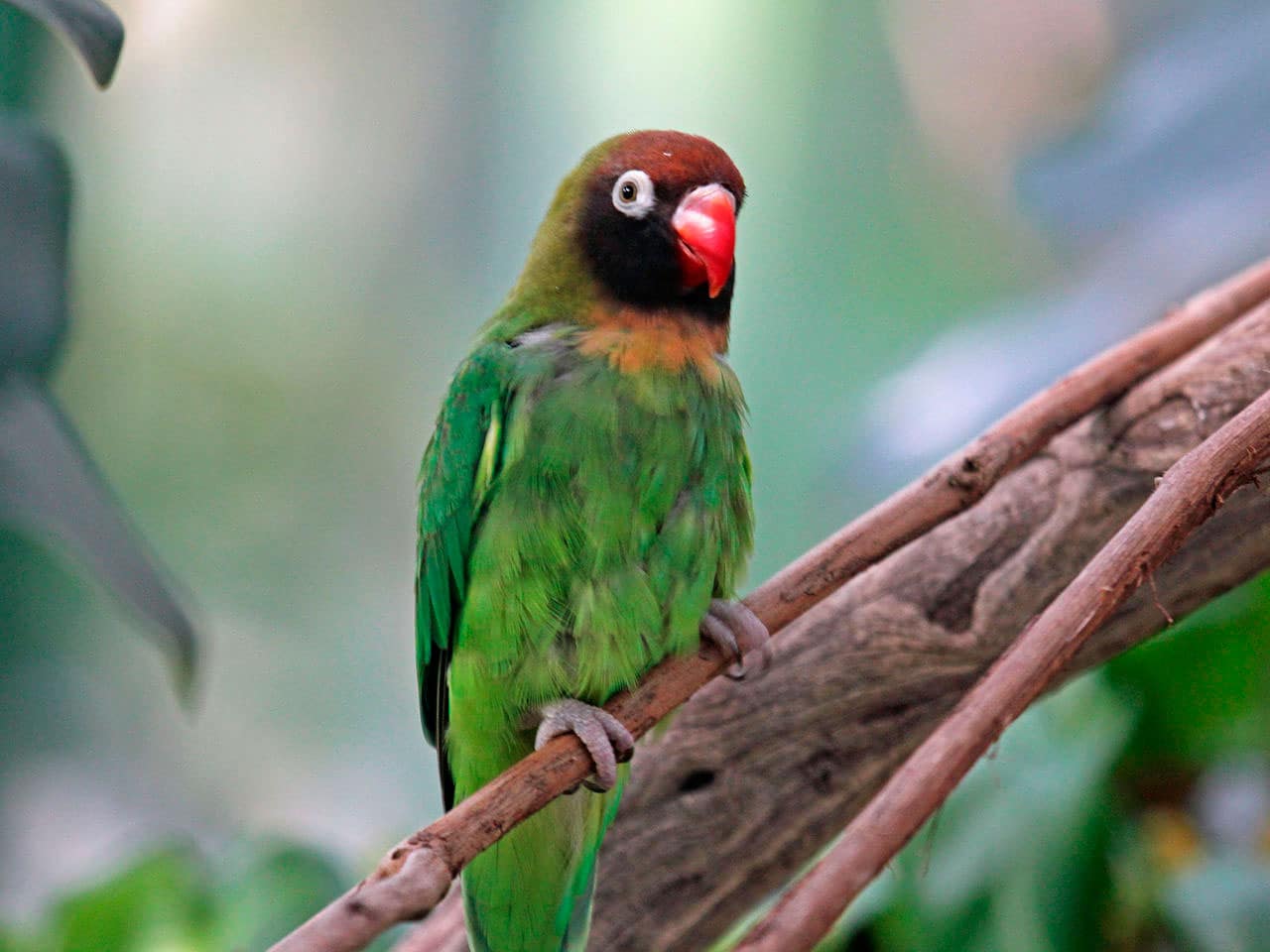
โ–ท The world of Pets: Dogs, cats, birds, reptiles, amphibians

Blue-eyed cockatoo
Cacatua ophthalmica

Cacatรบa Oftรกlmica

Content

Description:

50 cm. length and a weight between 500 and 580 gr.
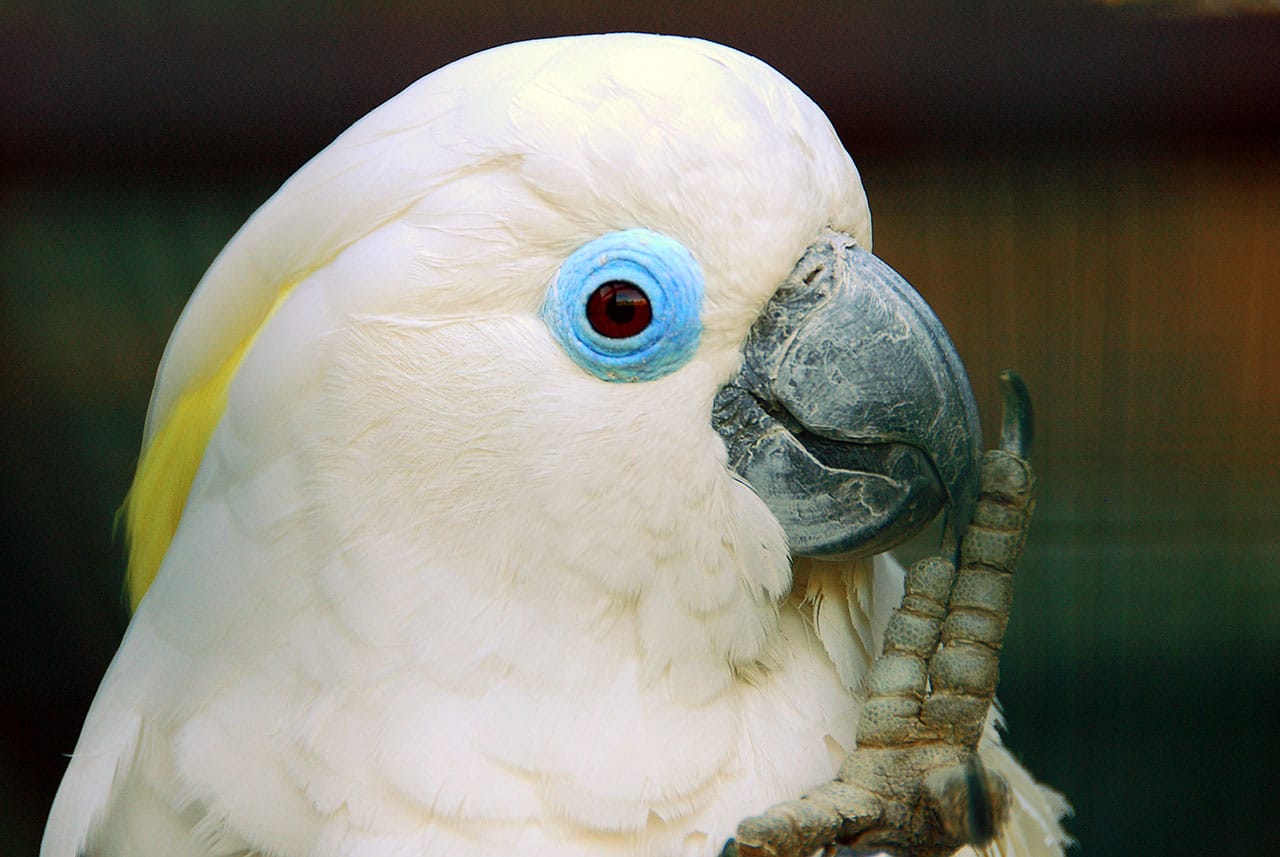
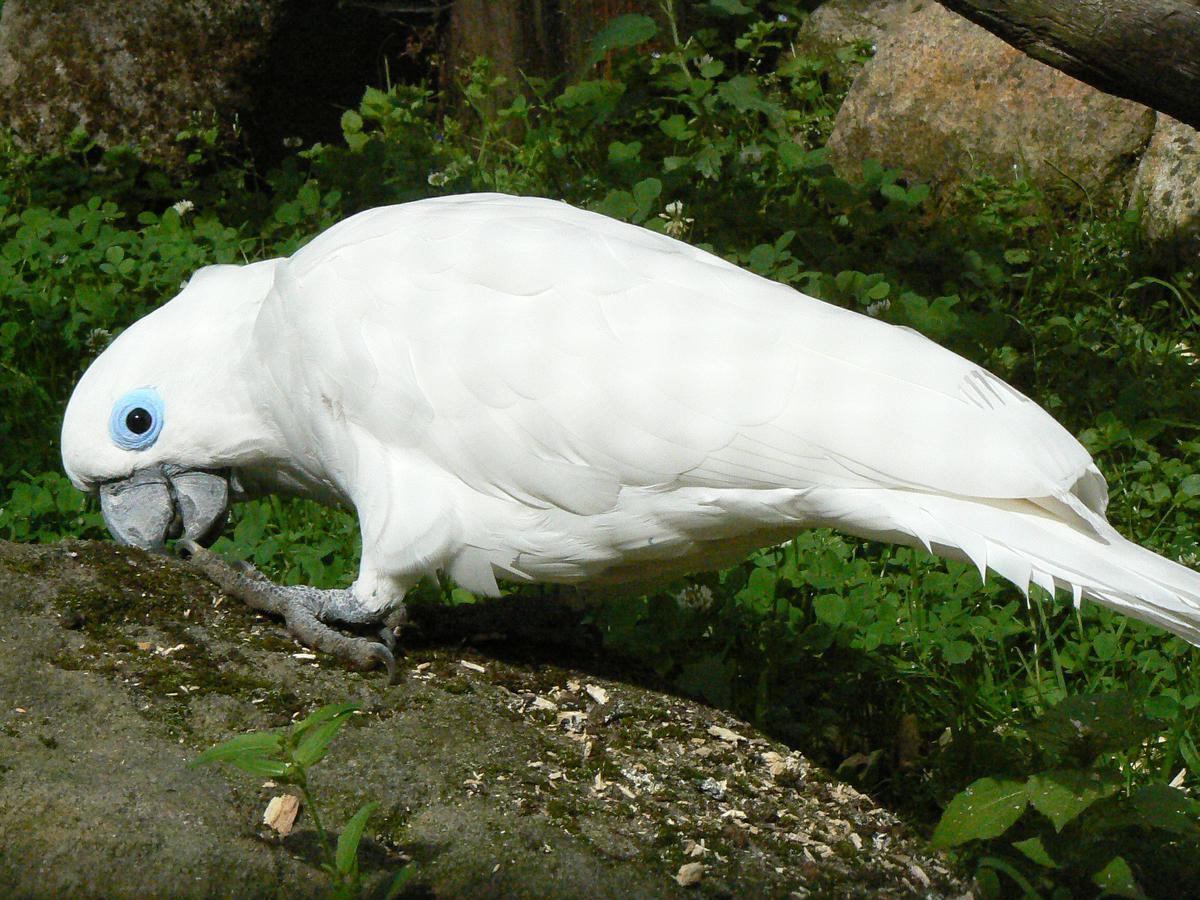
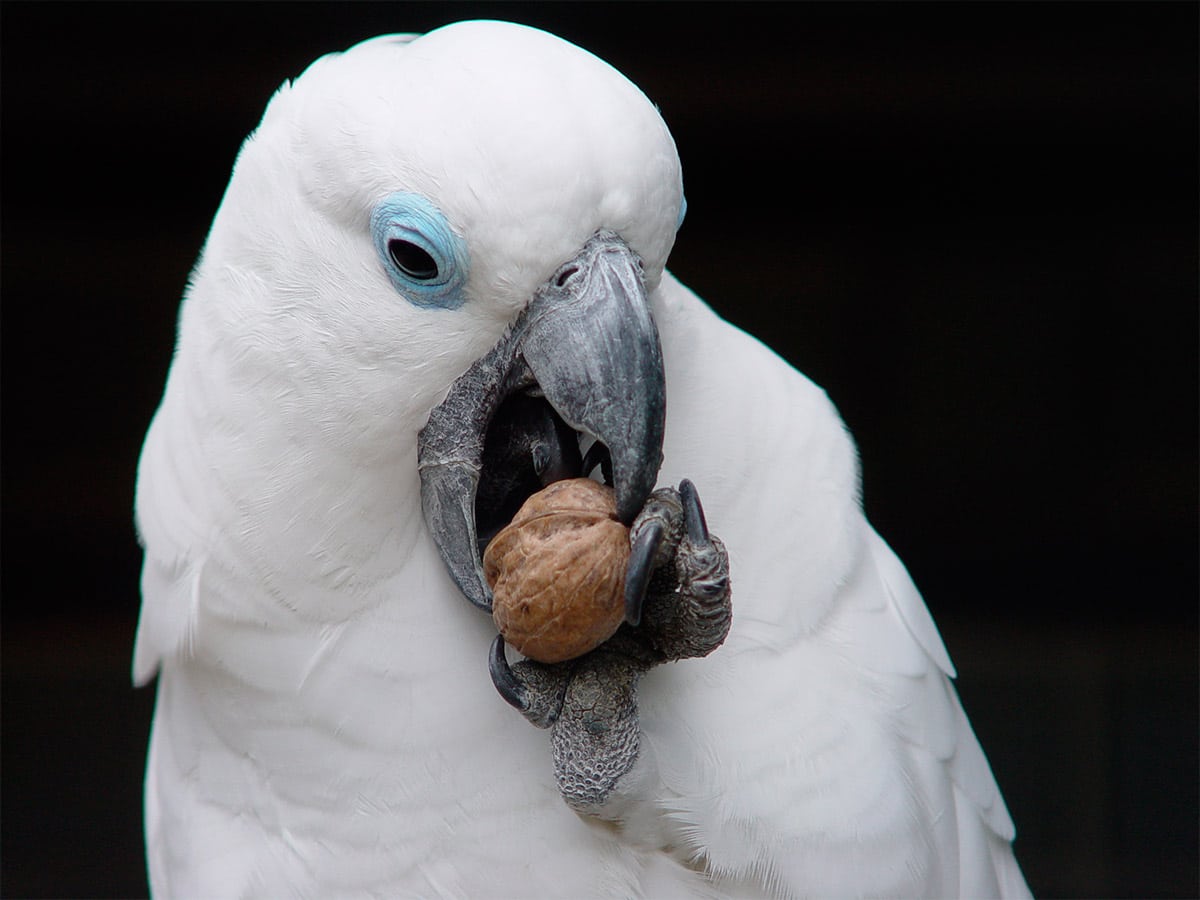
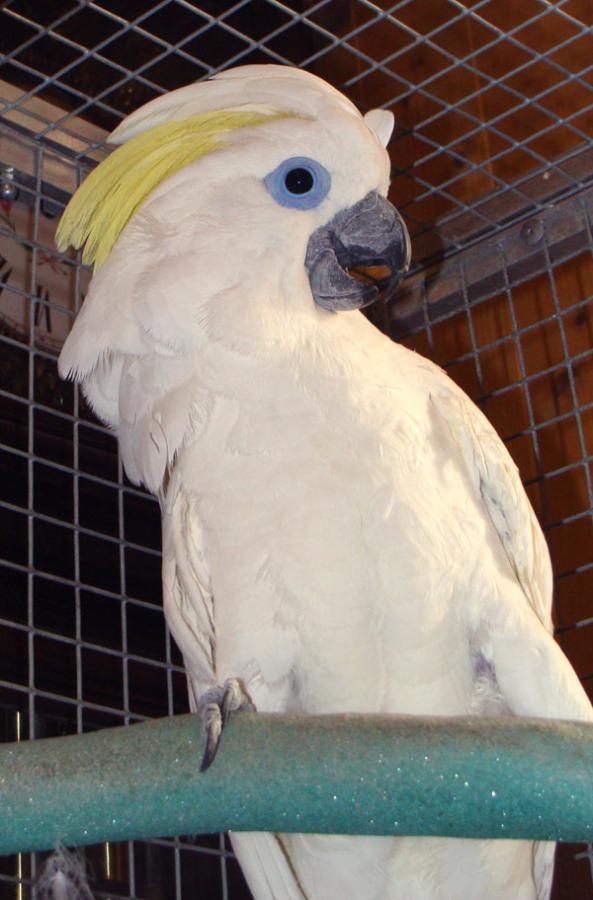
The plumage of the Blue-eyed cockatoo (Cacatua ophthalmica) is mostly white. Its crest is yellow, large and well rounded back, leaning to the neck.

The feathers that cover the ear, the base of the neck and cheek are pale yellow. The inside of the wings and tail are slightly yellowish. The ring around the eye is blue, the iris is dark brown and gray peak.
Only you can distinguish males and females by iris.

Habitat:

Video – "Blue-eyed cockatoo" (Blue-eyed cockatoo)

Ophthalmic cockatoo.MPG

Primary forest, edges of forests and areas with sparse vegetation to 1.000 m.
It is more common in the plains than in the mountains.

They live alone, in pairs or flocks of birds 10-20. Easy to distinguish and noisy, usually. When you are flying over forests, your flight is sandwiched between glide and powerful flapping. Probably similar habits to the Sulphur-crested cockatoo, screams as she, only that stronger.

Reproduction:

There is no information about the reproduction of this species in the wild, but in captivity the female lays around 2 eggs and incubation lasts 28-30 days. The young are altricial (totally dependent on their parents for the first few weeks of life) and they remain in the nest for nine to twelve weeks being fed by both parents; later, young people, they are accompanied for a few months.

Food:

They feed mainly on seeds, fruit, in particular the figs, berries and, possibly, insects and larvae.

Distribution:

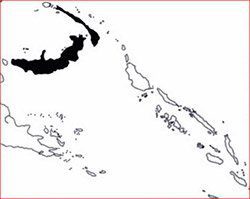
Ophthalmic Cockatoo Distribution

New Britain and new Ireland in the Bismarck Archipelago (Papua New Guinea).

Conservation:


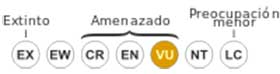
Vulnerable

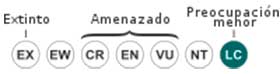
Conservation status of IUCN: Vulnerable (VU)

This species has been upgraded to Vulnerable because remote sensing techniques indicate that the lowland forest, on which this species depends for nesting, It is disappearing at a notorious enough pace to cause a rapid decline in the population.
The rapid conversion of lowland rainforest to oil plantation use over the past thirty years is likely to have caused significant loss of breeding habitat..

Although it is rare in international trade, even the limited catch would be a cause for concern.

The population is estimated at at least 10.000 mature individuals.

"Blue-eyed cockatoo" in captivity:

Extremely elegant and striking. It is gaining share as a companion pet.
It mimics human speech, is very active, capable of stunts and very close to the people.

Despite his intelligence and skills, not at all a cockatoo that can be kept in an apartment.
On the one hand, due to its high energy, and secondly because of the power of their cries.

Their average lifespan is of 40 years in captivity. Surprisingly their hope for life in nature is longer, of 50 to 60 years. The life expectancy in captivity decrease may be due to inadequate attention.

Alternative names:

Blue eyed Cockatoo, Blue-eyed cackatoo, Blue-eyed Cockatoo (ingles).
Cacatoรจs ร  oeil bleu, Cacatoรจs aux yeux bleus (French).
Brillenkakadu (German).
Cacatua-de-olhos-azuis (Portuguese).
Cacatรบa Oftรกlmica (espaรฑol).

scientific classification:

Order: Psittaciformes
Family: Cacatuidae
Scientific name: Cacatua ophthalmica
Citation: Sclater,PL, 1864
Protonimo: Cacatua ophthalmica

Ophthalmic Cockatoo Images:


Species of the genus Cacatua

Sources:
Avibase
– Photos: Wikimedia Commons, kisspanda.rajce.idnes.cz/, Gros-becs.net
– Sounds: Frank Lambert

โ–ท The world of Pets: Dogs, cats, birds, reptiles, amphibians

Buru Racket-tail
Prioniturus mada


Buru Racket-tail

Content

Buru Racket-tail

Description

32 cm.. length.

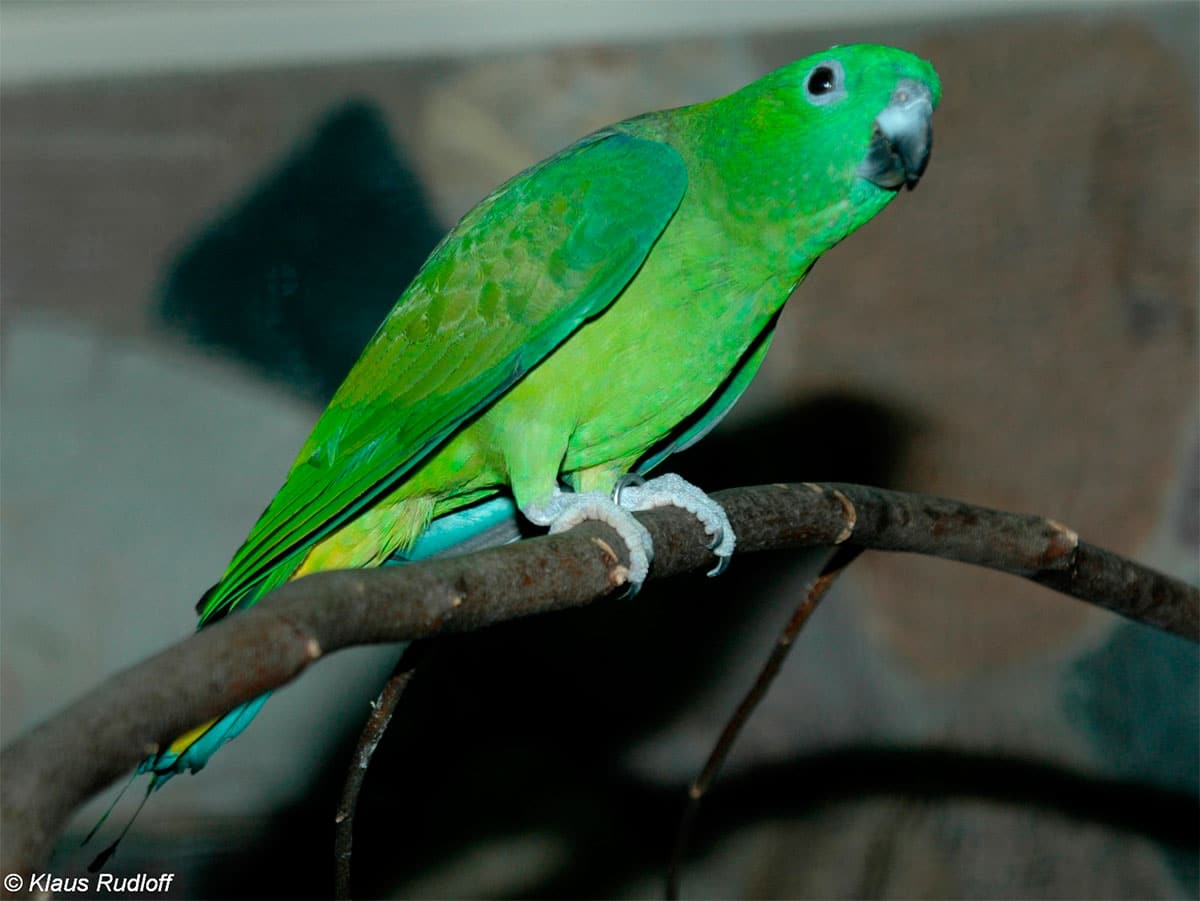
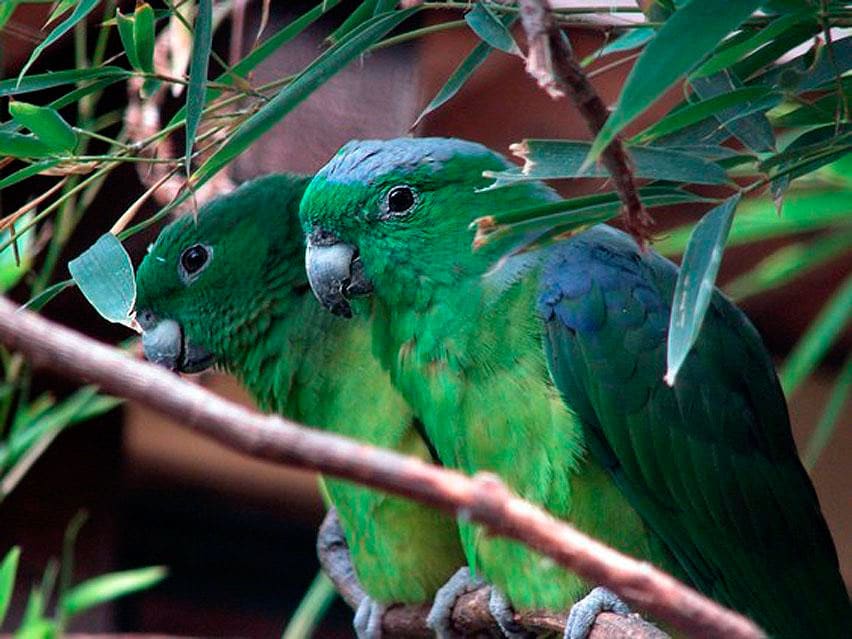
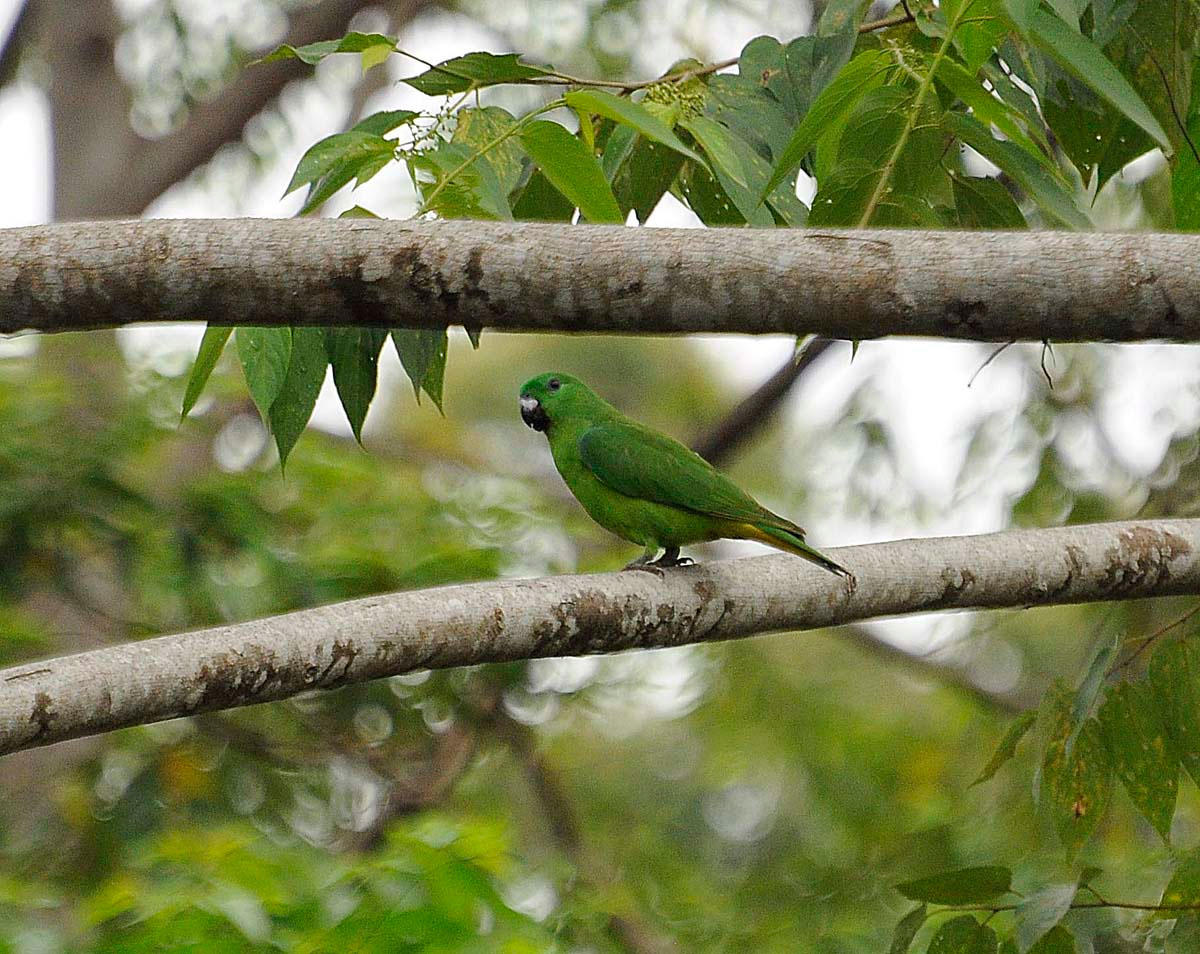
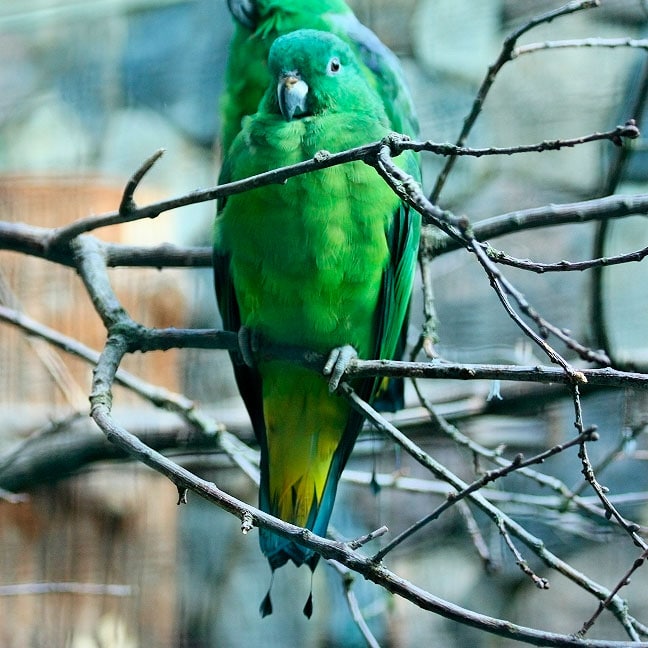
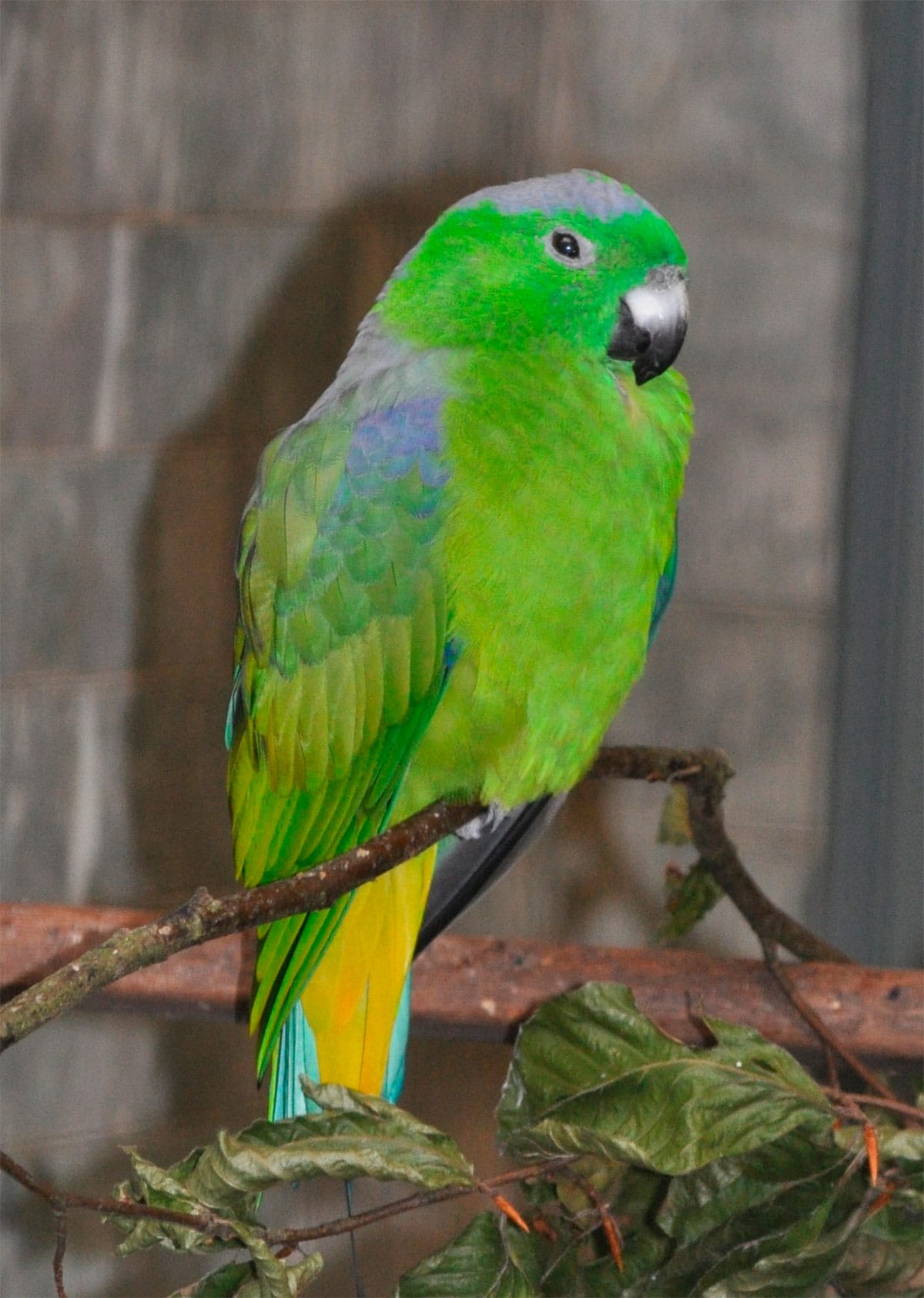
The head of the Buru Racket-tail (Prioniturus mada) is bright green, marked in blue-gray dark in the crown and in the nape. The upperparts are green, marked in grisaceo-azul dark in the upper mantle; Uppertail green. Wings green with lesser coverts and bend of wing Dark greyish-blue. Wing feathers green; underside of flight feather. Bluish.

The underparts are yellowish-green, more yellow in undertail-coverts. Upper, the tail green, outer feathers tipped dark blue; light blue, the tail down.

Bill grey; irises dark brown; legs grey.

Female lacks the blue color in the crown, nape and the the mantle; the blue in the bend of wing is smaller; rackets of the tail shorter.

Young without rackets on tail; males with blue in the nape.

Habitat:

Found until the 1600 meters above sea level, in all types of forest habitat, including selective exploitation and secondary high growth areas; also found in cultivated areas remaining trees; most common around 600 m. You often see them in small groups of up to ten birds. Tends to substitute to the Red-checked Parrot at higher elevations.

Reproduction:

breeding season from December to February. Up to five young can be raised in a nest.

Food:

It feeds on fruits, flowers, berries and seeds.

Distribution:

endemic to the island of Buru, Indonesian. The inclusion of the species as Near-threatened is based on the assumption of a very restricted range above the 1.000 m, but newly published evidence shows that it is common throughout the island with an estimated world population between 189.000-48S.000 birds.

Conservation:


minor concern


โ€ข Current category of the Red List of the UICN: Least concern

โ€ข Population trend: Stable

The size of the world population It has not been quantified, It is estimated between 189,000 and 483,000 individuals.

The species is described as common and widespread (pit et to the. 1997).

The population is suspected to be stable in the absence of evidence of any reduction or substantial threats.

"Buru Racket-tail" in captivity:

Not found in captivity.

Alternative names:

Buru Racket-tail, Buru Racket-tailed Parrot, Buru Racquet tail, Buru Racquet-tail, Buru Racquet-tail Parrot, Buru Racquet-tailed Parrot (ingles).
Palette de Buru, Perroquet ร  raquette de Buru (French).
Madapapagei (German).
Prioniturus mada (Portuguese).
Lorito Momoto de Buru, Lorito-momoto de Buru (espaรฑol).

scientific classification:

Order: Psittaciformes
Family: Psittaculidae
Genus: Prioniturus
Scientific name: Prioniturus mada
Citation: Hartert, E, 1900
Protonimo: Prioniturus mada

Images "Lorito momoto de Buru":

Videos "Buru Racket-tail"

————————————————————————————————

ยซLorito Momoto de Buruยป (Prioniturus mada)

Sources:

Avibase
– Parrots of the World โ€“ Forshaw Joseph M
– Parrots A Guide to the Parrots of the World – Tony Juniper & Mike Parr
– Birdlife

Photos:

(1) – By Klaus Rudloff (kdrudloff@web.de) – Germany , Weltvogelpark / World Bird Park – Walsrode – biolib
(2) – ยซPrioniturus mada qtl1ยป by QuartlOwn work. Licensed under CC BY-SA 3.0 via Wikimedia Commons.
(3) – ยซPrioniturus mada-captive-8a-tocยป by Prioniturus_mada_-captive-8a.jpg: Robert01.Original uploader was Robert01 at de.wikipediaderivative work: Snowmanradio (talk) – Transferred from de.wikipedia; transferred to Commons by User:Snowmanradio using Commonshelper.(Original text: selbst fotografiert) to Prioniturus_mada_-captive-8a.jpg. Licensed under CC BY-SA 3.0 of via Wikimedia Commons.
(4) – by jon hornbuckle – BIRDING AROUND THE WORLD
(5) – Prioniturus mada buru racquet tail – link

Sounds: Frank Lambert (Xeno-canto)

โ–ท The world of Pets: Dogs, cats, birds, reptiles, amphibians

Black-winged Lovebird
Agapornis taranta


Inseparable Abisinio

Content

Description Inseparable Abyssinian:

Inseparable Abisinio

Of 16 cm in length and a weight between 49 and 66 g..

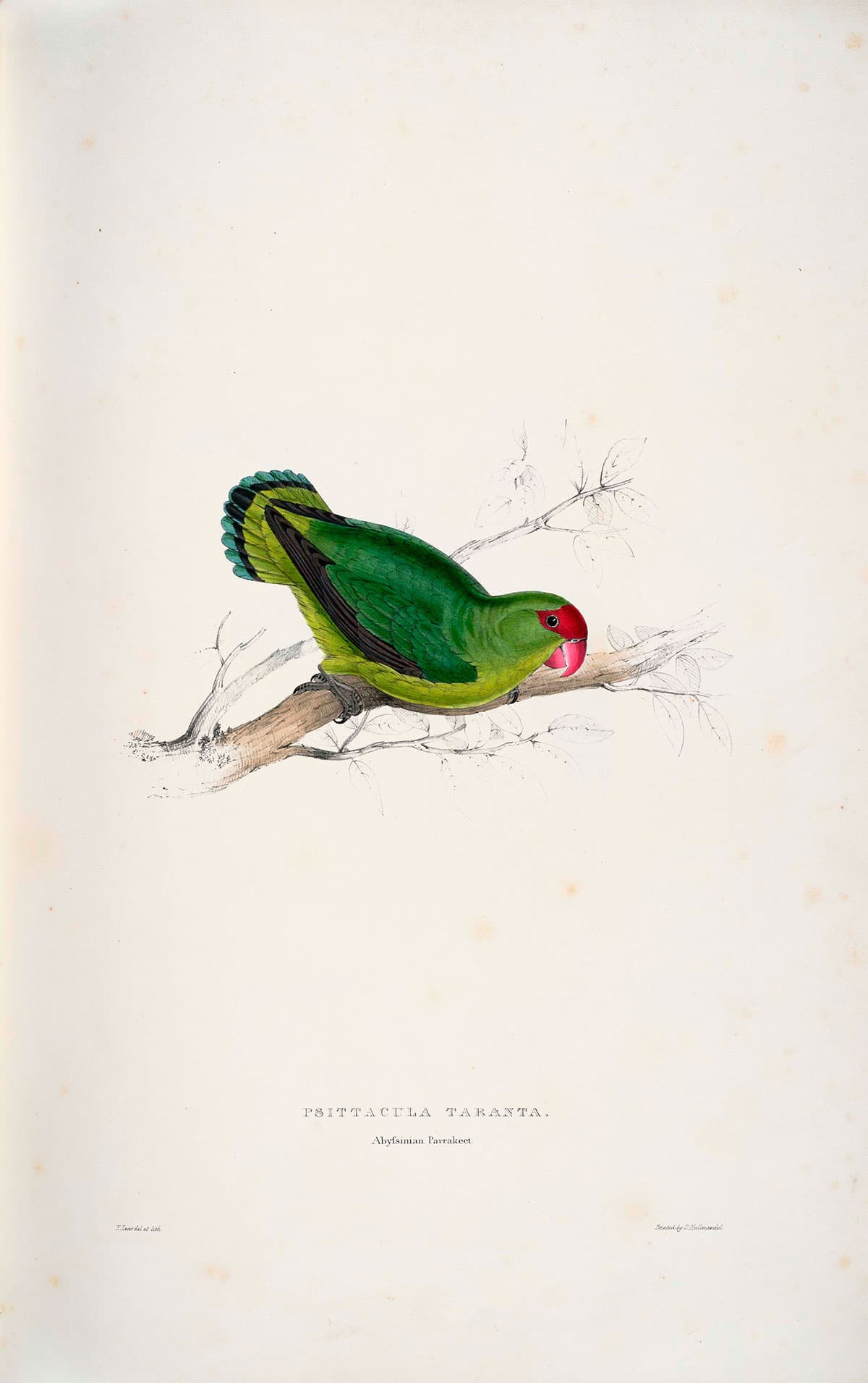
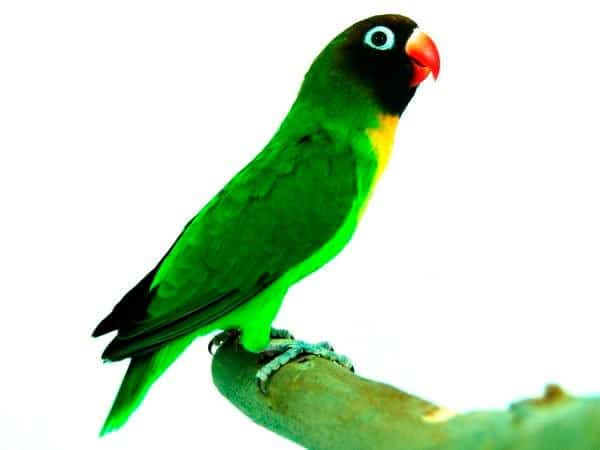
The Black-winged Lovebird (Agapornis taranta) has the forecrown, lores and feathers eye ring, red; rest of the head and nape green dyed brown. Mantle and green scapulars, rump and uppertail-coverts brighter green. Upper, the wing-coverts green with the exception of coverts outer primaries that they are black. Primaries blackish brown with a narrow green margin towards the vane outer; secondaries black. Under, the wing-coverts black. Chin and throat pale green tinged brown; rest of the underparts pale green. Central feathers of the tail green with toes in black, the green side with yellow in vane inner, subterminal black bar with green tips.

Bill red; irises dark brown; legs grey.

The female no red in the head, and feathers sometimes under the wings marked in green.

The immature are like females, with the bill yellowish. The Immature males show the color black feathers under the wings with red feathers scattered on the forehead.

Partially sympatric and very similar to Red-headed Lovebird (Agapornis pullarius) with which it has an throat red or orange (no verde) and rump blue (no verde). Usually found in small flocks on the tops of tall trees, where the plumage It blends well with the foliage. Its flight It is fast and direct.

Proposal subspecies Agapornis Taranta nanus (Southwest of Ethiopia) supposedly in bill smaller and wings shorter, but generally not accepted. Birds at higher altitudes are larger, but not subspecifically recognized. monotypic.

Inseparable habitat Abyssinian:

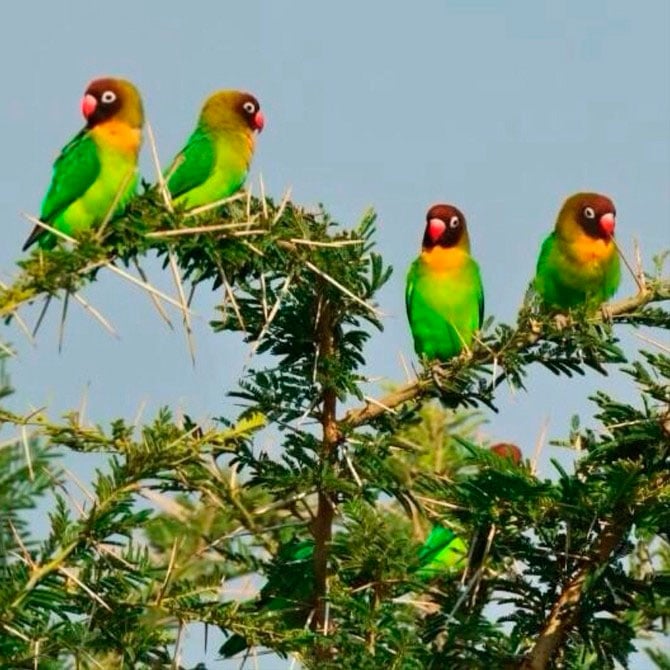
The Black-winged Lovebird, at high altitudes (1.800-3.800 m), They are linked, normally, mountain forests dominated Podocarpus, Juniperus, Hagenia and Hypericum; below , on the 1.400 m, They found in grassy savannas and forests Acacia, Combretum and Euphorbia; also frequent cultivated areas and peripheries of urban areas Addis Ababa.

gregarious, at least out of breeding season, when usually they found in small flocks (8-20) on the tops of the tallest trees, gathering in greater numbers when food is locally plentiful.

Used communal roosts in tree cavities (often old nests woodpeckers or bearded ethiopian).

Sometimes it associated with Yellow-fronted Parrot.

Occasionally they lie face down on captivity.

Playing black-winged lovebird:

The Black-winged Lovebird nest in tree cavities, in holes in walls and even in nests of some Baglafecht Weaver.

In captivity, female leads Nesting material (small pieces of branches, leaves and grass) put in almost any part of their plumage.

The Black-winged Lovebird it's the only one Lovebirds using their own pens to build nest.

The breeding season, according to sources, It between March and November. It is not clear if the egg laying is synchronized with the rainy season. Normally, starting up five eggs, but they can reach eight captive.

Inseparable Power Abyssinian:

The diet release of the Black-winged Lovebird It consists mainly fruit, including Ficus figs and berries juniper.

Perform seasonal movements in relation to food availability.

Distribution:

The Black-winged Lovebird They are endemic to the highlands of Ethiopia from the South of Eritrea through the Harari Region and Addis Ababa including Great Rift Valley.

Frequently in montane forests: relatively uncommon at low altitudes in savanna areas.

Conservation:


minor concern

โ€ข Current Red List of UICN: Least concern

โ€ข Population trend: Increasing

The Black-winged Lovebird It is not globally threatened, although it is included in Appendix II (Anexo B) of the CITES Convention.

It has a very small distribution area, so you have a greater risk of extinction because if their habitat is destroyed or uncontrolled catches are made can lead to extinction.

considered as crop pest in some areas, though not of great importance, they can become the object of chemical fumigations to avoid their attacks.

However they are more frequent since 1989, perhaps due to reduced sales of this species for the pet trade.

In the news they are not considered endangered, but we must not fail to protect them and avoid both habitat destruction and illegal capture.

The Inseparable Abyssinian in captivity:

Although not as common as other species of Lovebirds (Rosy-faced Lovebird or the Yellow-collared Lovebird), this handsome Lovebirds It has a very pleasant disposition.

They are more tolerant with others Lovebirds, provided they have enough space, and they are one of the least noisy species.

Dwelling, on freedom, high mountain areas, It is not surprising that the Black-winged Lovebird I can tolerate ambient outdoor aviary, as long as they stay out of drafts and temperatures are not too extreme.

birds are relatively resistant, similar to Fischer's Lovebird or the Yellow-collared Lovebird, although they are not as much as Rosy-faced Lovebird.

typical in all Lovebirds, the Black-winged Lovebird is very sociable and loves the companionship. Their natural behavior is to live closely with a partner / a.

Despite being a very sociable pet and tender, they will need a lot of attention if kept separate. The majority They are kept in pairs to satisfy his great need for constant companionship, acicalamiento mortgage, and socialization.

For reproduce in captivity You need tranquility and a spacious and equipped cage at least two nest boxes.

With regard to its longevity, according to sources, a living specimen 14,6 years in captivity. In captivity, these animals are known to breed, approximately, to the 2 years of age.

Alternative names:

Black-winged Lovebird, Abyssinian Lovebird, Black winged Lovebird (English).
Insรฉparable d’Abyssinie, Insรฉparable ร  ailes noires, Insรฉparable taranta (French).
Tarantapapagei (German).
Inseparรกvel-de-asa-preta (Portuguese).
Inseparable Abisinio, Inseparable de Frente Roja, Agapornis Taranta (espaรฑol).


scientific classification:

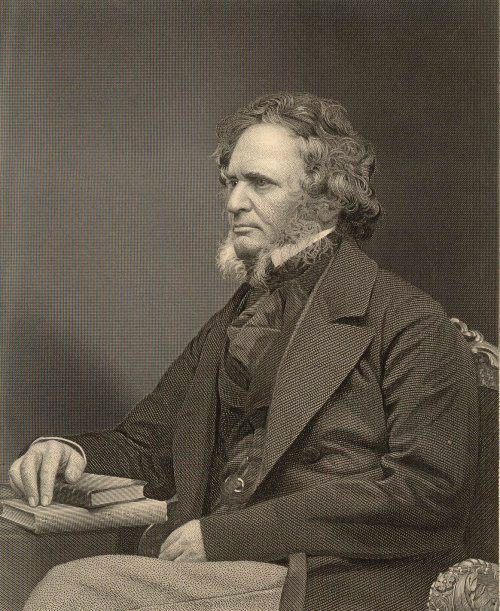
Edward Smith-Stanley

Order: Psittaciformes
Family: Psittaculidae
Genus: Lovebirds
Scientific name: Agapornis taranta
Citation: (Stanley, 1814)
Protonimo: Psittacus taranta


Images Black-winged Lovebird:

Videos "Black-winged Lovebird"


Species of the genus Agapornis


"Inseparable Abyssinian" (Agapornis taranta)


Sources:

Avibase
– Parrots of the World โ€“ Forshaw Joseph M
– Parrots A Guide to the Parrots of the World – Tony Juniper & Mike Parr
– Birdlife

Photos:

(1) – Agapornis taranta – Black-winged Lovebird in the San Diego Wild Animal Park, California By Carlos Urdiales [CC BY-SA 2.0], via Wikimedia Commons
(2) – A male Black-winged Lovebird in a guava tree (eating semiripe) guavas, in Bahir Dar, Ethiopia By Veli Pohjonen (Own photographing in Bahir Dar, Ethiopia) [Public domain], via Wikimedia Commons
(3) – A female Black-winged Lovebird in Ethiopia By Alastair Rae from London, United Kingdom (Black-winged Lovebird) [CC BY-SA 2.0], via Wikimedia Commons
(4) – Inseparable from Abyssinia by avicue
(5) – Black-winged lovebird by mundoexotics
(6) – A painting of a male Black-winged Lovebird (also known as Abyssinian Lovebird) (originally captioned ยซPsittacula taranta. Abyssinian parrakeetยป) by Edward Lear 1812-1888 [Public domain], via Wikimedia Commons

Sounds: Andrew Spencer (Xeno-canto)

โ–ท The world of Pets: Dogs, cats, birds, reptiles, amphibians

Brown-backed Parrotlet
Touit melanonotus

Brown-backed Parrotlet

Content

Description:


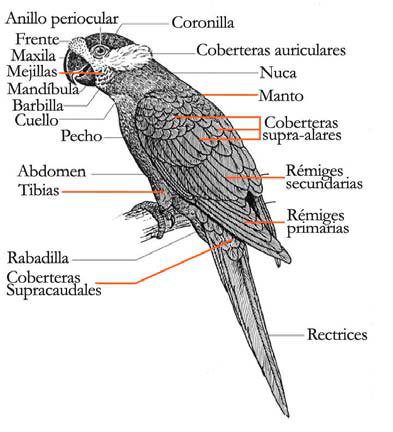
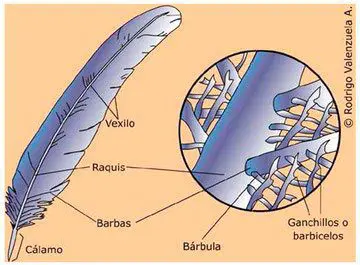
Anatomy-parrots

15 cm.. length.

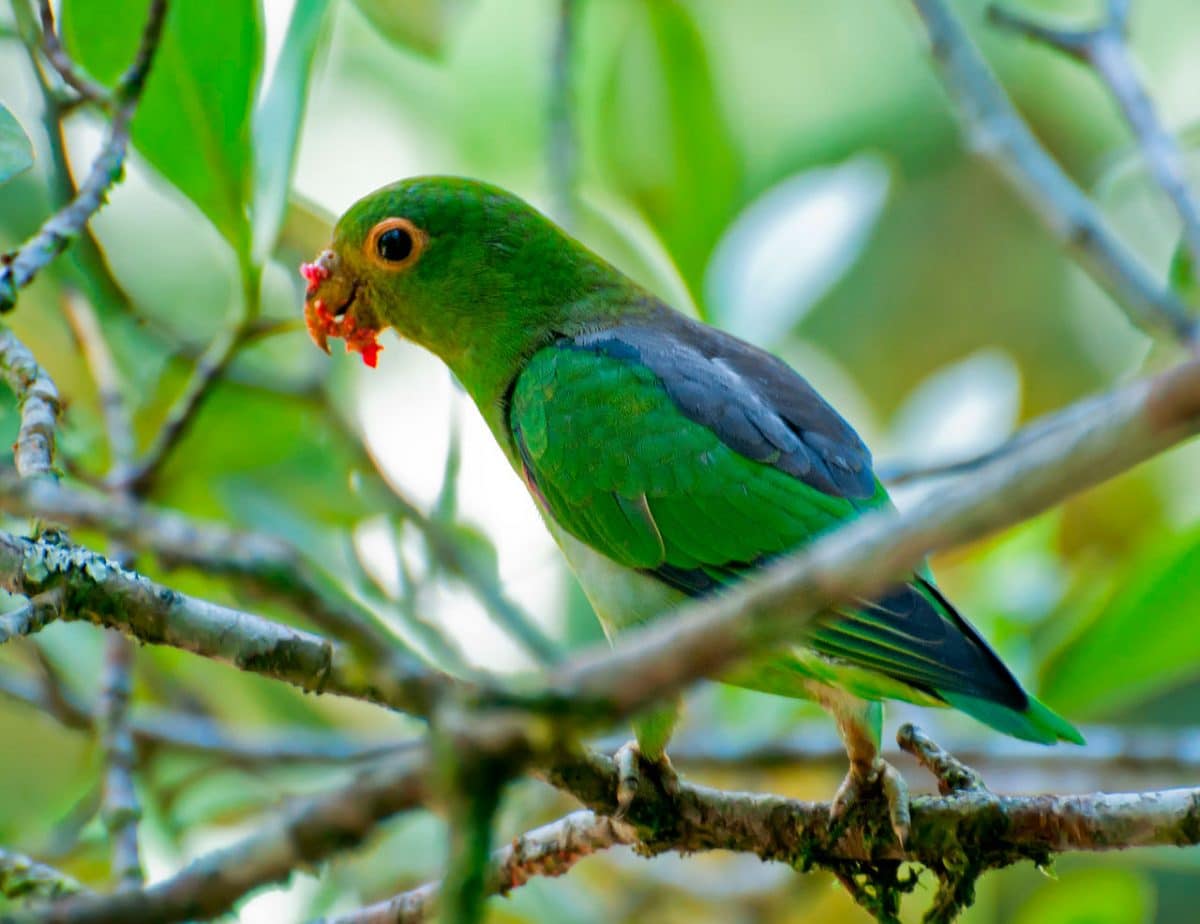
The Brown-backed Parrotlet (Touit melanonotus) has the forecrown, the lower cheeks, the sides of neck, the crown and the rear of the neck, grass-green; lores and upper cheeks paler and more yellowish green; ear-coverts brown. Mantle, back and center rump dull blackish-brown color; scapulars, sides rump and uppertail-coverts green.

Inner coverts and median, alula and primary coverts, blackish brown (the latter with narrow green margins at the outerweb); other coverts greenish brown grass. Tertiary brown. Flight feathers green on the outerweb with black opaque brown at the tips and innerwebs. Underwing, with coverts dull green, flight feather, pale grayish green. Chin yellowish; underparts pale grayish green, blur on the sides of chest. Upper, the tail centrally green with black spot on the tips of the outerweb. Outer feathers bright red at the base with broad black subterminal bands and a small green patch tips; undertail, the tail pale green tones and duller with greyish stain on the tip, pale red in outer featherss. Bill yellow distally, greyer towards base; irises grey; legs grey.

The females may show duller bluish-grey on underparts. Immature not described.

Habitat:

Mainly reported in humid forests on the lower mountain slopes. Most of the records are in altitudes between 500-1.000 m (1.400 metres in the Itatiaia National Park), but some are lowlands to near sea level (for example, Isla del Cardoso). gregarious and generally in small groups 5-20 birds.

Reproduction:

Virtually no information on the breeding. Presumably it occurs in September-October, but this is unconfirmed (Collar 1997a, Necklace et to the ., 2013). A juvenile was photographed in the Serra dos ร“rgรฃos National Park in December of 2008 (Young y Pimentel 2009).

Food:

Known foods include seeds large tree legumes and fruits Rapanea acuminata, Clusia sp. and mistletoe.

Distribution:

Size of its range (breeding/resident): 400.000 km2

The Cotorrita Dorsinegra has a limited distribution in southeast Brazil, from Bay (three records in the nineteenth century) to the South of Sรฃo Paulo, leaping Espirito Santo (although presumably it is extinct there).

sporadically, albeit broad, reported in State of Rio de Janeiro, including Sierra Cantagalo, Serra dos ร“rgรฃos National Park and the surrounding areas of Teresopolis, including vicinity of The Desengano State Park. They were also observed in the Itatiaia massif (including the Itatiaia National Park) where distribution may include adjacent parts of Minas Gerais, Brazil.

Also observed in other locations of unspecified Serra do Mar in the State of Rio de Janeiro and in the city of Rio de Janeiro (for example, in the National Park of Tijuca and forest Corvocado).

Reported in several locations in the Sao Paulo State, to the South of the Isla del Cardoso, near the border with Paranรก. There may be seasonal movements or dispersions (perhaps mainly altitudinal and relatively short distances). Registered in several protected areas such as State Park Serra do Mar and the Itatiaia National Park.

Conservation:

State of conservation โ“˜


Vulnerable Vulnerable โ“˜ (UICN)โ“˜

โ€ข Current category of the Red List of the UICN: Vulnerable.
โ€ข Population trend: Decreasing.

Population size : 2500-9999 specimens.

JJustification of the Red List category

It is likely that the population of this species is small and decreases, with small subpopulations. For these reasons, the species is classified as Vulnerable.

Justification of the population

The evaluation of the Brazilian Red List poultry (MMA 2014) It is estimated that there <10.000 individuos maduros con <1,000 individuos maduros en cada subpoblaciรณn. Justification of trend

Se sospecha una decrease moderate and continuous of the population because rates of habitat destruction and degradation.

Conservation Actions Underway

CITES Appendix II. In Brazil, this species is considered Vulnerable nationally (Silveira & Straube 2008, MMA 2014), and it is protected by Brazilian law. It is distributed in many protected areas, with recent records: Desengano State Parks and Pedra Branca, Itatiaia, Serra dos ร“rgรฃos and Tijuca National Parks (Rio de Janeiro); Experimental Station Ubatuba, Iguape Environmental Protection Area, Serra do Mar, Ilha do Cardoso and State Parks Intervales (Sao Paulo); Salto Morato Natural Reserve y Marsh Antwren (Paranรก) (Wege and Long 1995, Aleixo y Galetti 1997, Necklace et to the ., 2013)

Conservation Actions Proposed

Examine the suitable habitat in Bahia and Espรญrito Santo to clarify their distribution and status. To determine the seasonal abundance at different elevations. You consolidate the protected areas where distributed.

"Brown-backed Parrotlet" in captivity:

It is not known in captivity.

Alternative names:

Brown-backed Parrotlet, Black-backed Parrotlet, Black-eared Parrotlet, Brown backed Parrotlet, Wied’s Parrotlet (English).
Toui ร  dos noir (French).
Braunrรผckenpapagei, Braunrรผcken-Papagei (German).
Apuim-de-costas-pretas, apuim-de-cauda-vermelha, apuim-de-costa-preta, apuim-de-costas-escuras, papagainho, periquitinho (Portuguese).
Cotorrita Dorsinegra, Lorito de Lomo Negro (espaรฑol).


scientific classification:

Prince Maximilian of Wied-Neuwied

Order: Psittaciformes
Family: Psittacidae
Genus: Touit
Scientific name: Touit melanonotus
Citation: (Wied-Neuwied, 1820)
Protonimo: Psittacus melanonotus


Images Brown-backed Parrotlet:

Video of the "Brown-backed Parrotlet"


Species of the genus Touit


Brown-backed Parrotlet (Touit melanonotus)


Sources:

Avibase
– Parrots of the World โ€“ Forshaw Joseph M
– Parrots A Guide to the Parrots of the World – Tony Juniper & Mike Parr
Birdlife

Photos:

(1) – A Brown-backed Parrotlet in Ubatuba, Sao Paulo, Brazil By Dario Sanches from Sao Paulo, Brazil [CC BY-SA 2.0], via Wikimedia Commons
(2) – A Brown-backed Parrotlet in Ubatuba, Sao Paulo, Brazil By Dario Sanches from Sao Paulo, Brazil [CC BY-SA 2.0], via Wikimedia Commons
(3) – A Brown-backed Parrotlet in Ubatuba, Sao Paulo, Brazil By Dario Sanches from Sao Paulo, Brazil [CC BY-SA 2.0], via Wikimedia Commons

Sounds: Guilherme de Melo Becher (Xeno-canto)

โ–ท The world of Pets: Dogs, cats, birds, reptiles, amphibians

Black-cheeked Lovebird
Agapornis nigrigenis


Inseparable Cachetรณn

Content

Description Inseparable cachetรณn:

Among 13-14 cm long and 40 g. of weight.
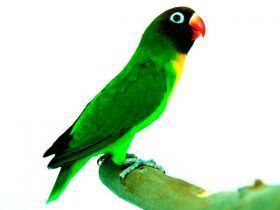
Inseparable Cachetรณn

The Black-cheeked Lovebird (Agapornis nigrigenis) they have the forecrown, lores and ear-coverts blackish brown with dark brown discoloration on the crown, sides neck and nape, and forming a dark mask.

Mantle, scapulars, rump and uppertail-coverts green. Upperwing-coverts green with bluish suffusion in outer feathers, including alula; vane outside of primaries and secondaries green with bluish suffusion, darker and more green tips; vane grey internal, black at the tips. Underwing-coverts green yellow and green. Chin and front of the throat discoloration to blackish with oxidized orange patch located at the bottom of the throat and top of the chest (bright orange during playback); rest of underparts mostly pale, slightly yellowish, green, bright emerald on flanks and around the thighs.

The tail green, except for four outer feathers which show patch of red: Subterminal point dark green in all feathers, except central feathers.

Bill coral red, white at base; irises brown; eye ring white (about 2mm wide); legs grayish brown.

Both sexes similar.

The immature they have the underparts with a wash of dark green; feathers chest and the belly with dark margins. Base bill blackish.

Inseparable habitat cachetรณn:

The Black-cheeked Lovebird It is found in woods Mopane (Colophospermum mopane) and acacias, in the valleys of the rivers altitude between 600 and 1.000 m, adjacent forests Baikiaea plurijuga, on which they are dependent during the wet season. They are also distributed in coastal forests, attracted by the higueras.
Avoid groves miombo Brachystegia.

Generally it is within walking distance of reliable water sources, in small flocks of up to a few dozen birds. You can settle in the community as Lilian's Lovebird.

Inseparable play cachetรณn:

Breeding of this species is only known in captivity., but I think you may be similar to the Lilian's Lovebird. Breeding takes place in the months of November-December, perhaps September, in the Victoria Falls.

It is less sociable than other Lovebirds, and he dislikes reproduced in Cologne. The female usually puts four eggs, they are incubated for 24 days. The chicks leave the nest to the 40 days of life.

Inseparable Power cachetรณn:

The need to drink water at least twice a day is a critical determinant of the daily and seasonal activities of the Agapornis nigrigenis. In the non-breeding season, this species congregate in large flocks of up to 800 birds, reaching peak levels in the early mornings and evenings, when birds drink and feed.

The diet of the Black-cheeked Lovebird It includes seeds, cereals, flowers, buds and berries. Known foods include seeds Amaranthus, Rottboellia high, Rhus quartiniana, Albizia anthelmintica, Combretum massambicense, Syzygium guineense and grasses Hyparrhenia and Eragrostis, also young leaves Pterocarpus antunesii.

Distribution:

The Black-cheeked Lovebird they have a very restricted distribution area (maybe just 6.000 km2), from south Kafue National Park, to the south-west Zambia (only very small numbers), along the valley Zambezi up to the Victoria Falls, Zimbabwe.

Some birds, possibly, also they distributed in the Zambezi region, adjacent to the northeastern end Namibia, for example, Isla Impalila at the confluence of rivers Zambezi and When; possibly also in the northernmost tip Botswana.

In the dry season, the core areas of forests Mopane totaling only 2.500km2, but the birds are introduced into the fields when crops ripen (causing some damage).

There are some Local movements seasonal.

Many Black-cheeked Lovebird maintained in captivity, above all in South Africa.

Conservation:

โ€ข Current Red List of UICN: Vulnerable

โ€ข Population trend: Decreasing

The population of Black-cheeked Lovebird, based on surveys 1994, It was estimated at about 10,000 individuals, however due to alleged declines in population since then, Today the population can vary within a range between 3,500 and 15,000 birds.

It is believed that three factors have caused the loss of population Black-cheeked Lovebird in the last century:

    – A strong exploitation for cage bird trade from 1920 until the Decade of 1960 (Moreau 1948, Dodman 1995c)

    – The progressive desiccation of their habitat (Moreau 1948, Dodman 1995c), probably the main threat given the highly localized range of the species (Warburton 2003).

    – The partial substitution of crops sorghum and millet, (an attractive source of food).

There is evidence that trade in wild species is currently at a very low level, with isolated incidents and export trade (Dodman 1995c, Warburton y Perrin 2005c), although it is clear that any international demand is met with enthusiasm (Warburton y Perrin 2005a, d).

Some birds are captured for consumption and also pursued as pests. Farmers take steps to mitigate the damage to crops, but they are largely ineffective.

Current levels of hunt It is not likely to have a serious long-term impact on the population, but it could endanger local populations that suffer from the effects of desiccation.

Recently there may have been local declines due to loss of water supplies shallow in the dry season, perhaps due to climate change in the long term. The number of permanent water sources in forests of Mopane It has decreased since the beginning of the century 20. The low availability of water in the dry season It is probably the main factor in the disappearance of permanent populations Bovu and Sinde Rivers, and changes in the population in the ngweze river. This is compounded by a decrease in annual precipitation in habitat of the species, on average, of about 5 mm per year between 1950 and 1995, causing an increase in the dependence of the kind of artificial water sources. The recent creation of hand-pumping wells along the river basins Ngweze, Not chifulo and Machile can lead to a decrease in surface water availability.

In some areas, pools of water are poisoned to kill the fish and this may affect the species.

The species may also be threatened by the decrease in water in the dry season of temporary rivers in the south-west of Zambia, due to decreased levels of rainfall.

Wooded Mopane exploited for firewood and wood, although the habitat is being regenerated and invading other habitats in some areas.

Disease virus beak and feathers They are present in the wild population, but there is no evidence that this is a serious threat.

Conservation actions underway CITES Appendix II.

– The catch birds for trade is prohibited (T. Dodman in a bit., 2000), although a number of captive populations still exist.

– In Zambia, the trade ban was implemented in wild birds 1930 (Warburton y Perrin 2005d).

– Approximately the 35% their habitat lies within the Kafue National Park and around Game Management Areas (P. Leonard in a bit., 1999, T. Dodman in a bit., 2000), while most of the main array is included within the Machile and the IBA Kafue National Park (Leonard 2005).

– Detailed research programs on this species is being undertaken in the early 1990 (1995b Dodman, Warburton 1999a, b, Dodman et al., 2000, T. Dodman in some. 2000) of which they have been published reports.

– One education project It focused on the species was held in southwest Zambia in September of 2001, the participation of local schools, settlers and explorers Wildlife Authority of Zambia (Warburton, 2003).

Source: Birdlife

Conservation Actions Proposed:

– Regular Conduct (for example, monthly) What monitor selected sites (such as water sources during the dry season) to control their population, concentrating on core distribution (Dodman 1995c, Dodman et al. 2000, Warburton 2003, Warburton y Perrin 2005d ).

– Conduct a Annual monitoring areas such as rivers mid Machile and Not chifulo and pools of the region Followers South Kafue National Park and monitor the availability of surface water in the dry season (Warburton y Perrin 2005d).

– Investigate your state in Caprivi Eastern (Dodman (1995c, Dodman et al., 2000).

– Encourage their return to the old areas of the range (Warburton 1999b).

– Follow a program environmental education that involves schoolchildren in visits and meetings with agricultural communities (Dodman 1995c, Dodman et al. 2000, Warburton 2003) to reduce the capture and disturbance in water sources (Warburton y Perrin 2005d).

– Provide training in ornithology and in the conservation of the local potential of guide birds and hold meetings with the inhabitants on the protection of resources, such as trees and water (Dodman 1995c).

– Maintain and create water resources with minimal disturbance (Warburton 2003).

– Continue to enforce the ban on trade in wild birds of this species (Warburton 2003, Warburton y Perrin 2005d) and further develop the captive breeding programs.

– Investigate the effect of burning grass seeds (Warburton y Perrin 2005b). – Management of water sources to encourage their use by species, and evaluate the impact of pumping wells in surface water supplies (Warburton y Perrin 2005d).

– Identify a selection of reasonably accessible sites where visitors can go to see the species, and guarantee options for generating income through ecotourism, In colaboration with BirdWatch Zambia (T. Dodman in some. 2012).

Source: Birdlife

The Inseparable cachetรณn in captivity:

Rare in aviculture. Not easy to find these birds in stores, However, It is quite common among poultry farmers in the surrounding area., and always present in ornithological exhibitions.

The Black-cheeked Lovebird They are less noisy than other species of birds Lovebird; enjoy bathing, They are biting hard, lively and social; They adapt well to life in Cologne, can coexist with birds of the same species and the Lilian's Lovebird (Agapornis lilianae); if space is limited sharing, They can fight each other, although it is generally more peaceful than other Agapornis species; both adult and immature newly imported, They are susceptible first duarnte 10 months; more resistant after acclimatization.

No leaves never completely tame. They do not like the noise, so it is less suitable than others Lovebirds life in close contact with man.

Alternative names:

Black-cheeked Lovebird, Black cheeked Lovebird, Blackcheeked Lovebird, Black-faced Lovebird (English).
Insรฉparable ร  joues noires (French).
RuรŸkรถpfchen, Erdbeerkรถpfchen (German).
Inseparรกvel-de-faces-pretas (Portuguese).
Inseparable Cachetรณn, Inseparable de Cara Negra, Inseparable de Mejillas Negras (espaรฑol).

scientific classification:

Order: Psittaciformes
Family: Psittaculidae
Genus: Lovebirds
Scientific name: Agapornis nigrigenis
Citation: Sclater, WL, 1906
Protonimo: Agapornis nigrigenis

Black-cheeked Lovebird images:


Species of the genus Agapornis


Black-cheeked Lovebird (Agapornis nigrigenis)


Sources:

Avibase
– Parrots of the World โ€“ Forshaw Joseph M
– Parrots A Guide to the Parrots of the World – Tony Juniper & Mike Parr
– Birdlife
– Arkive

Photos:

(1) – Black-cheeked Lovebird (Agapornis nigrigenis) – San Diego Zoo By DickDaniels (http://carolinabirds.org /) (Own work) [CC BY-SA 3.0 or GFDL], via Wikimedia Commons
(2) – Black-cheeked Lovebird at London Zoo, England By Gediminas (Picasa Web Albums) [CC BY-SA 3.0], via Wikimedia Commons
(3) – Black-cheeked Lovebird with visible pin feathers on head, Birmingham Nature Centre, West Midlands, England By Simon Redwood (originally posted to Flickr as Parrot) [CC BY 2.0], via Wikimedia Commons
(4) – Birds-pet-wallpapers – link
(5) – back to childhood – link
(6) – By Gonzalo Blanco – Linx
โ–ท The world of Pets: Dogs, cats, birds, reptiles, amphibians

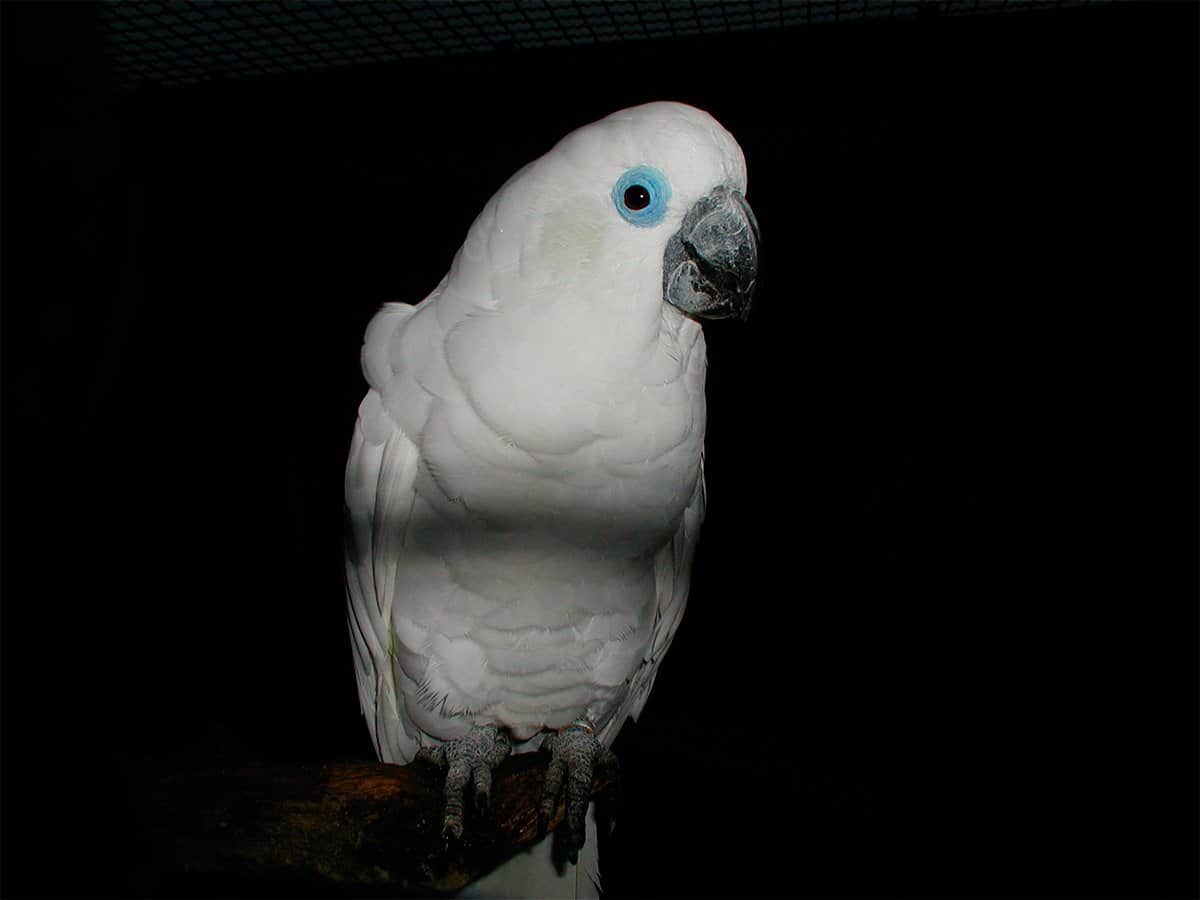
Azure-rumped parrot
Tanygnathus sumatranus


Azure-rumped parrot

Content


Anatomy-parrots

Description

32 cm.. length between 173 and 334 g. of weight.

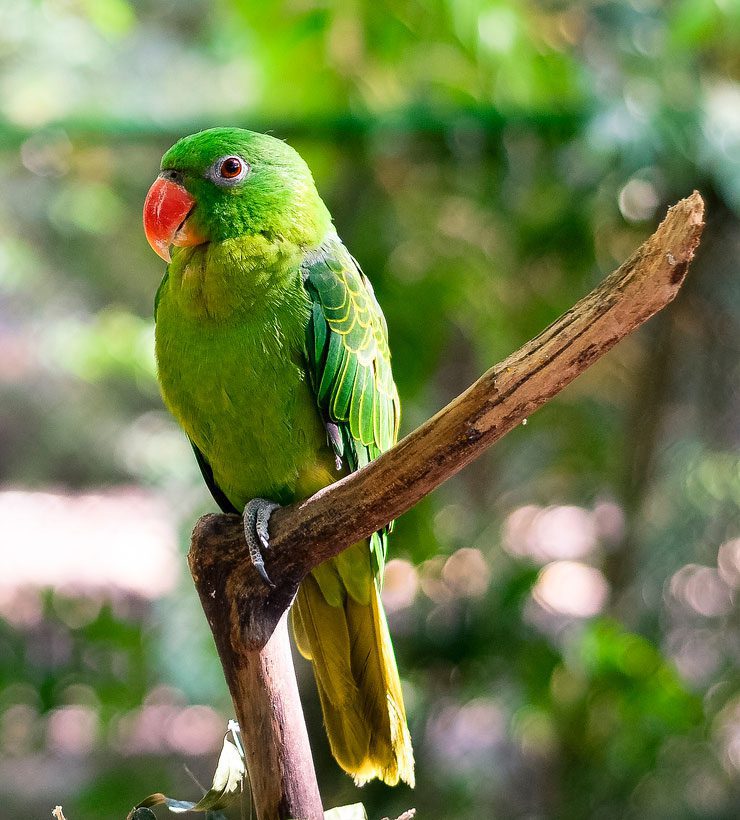
The Azure-rumped parrot (Tanygnathus sumatranus) has the head and the the mantle a light yellowish green (slightly more yellowish mantle). The low back, buttocks and uppertail-coverts strongly impregnated with light blue.

Wings Green darker that the the mantle, with fine verde-amarillentos margins to coverts; primary coverts Blue sharp; bend of wing turquoise blue color marked; primaries Foreign and blackish green in vane inner.

Wing feathers greenish yellow; underside of flight feather, blackish. The underparts yellowish-green illuminated.

Upper, the tail green, marked in yellow on the vane inmates of the lateral feathers; Under, the tail varies from yellow to dark brown.

Bill red; irises yellow; legs grey.

It presents sexual dimorphism. The female has the bill yellowish or whitish grey; less greenish-yellow in the the mantle and less blue in the under wing-coverts.

Male young acquires the bill Red after ten to twelve months.

Subspecies

List of subspecies Tanygnathus sumatranus
  • Tanygnathus sumatranus sumatranus (Raffles, 1822): La nominal.

  • Tanygnathus sumatranus sangirensis

    (AB Meyer & Wiglesworth, 1894): Presenta mรกs azul en los bordes de las alas y sus coberteras, cabeza de tono verde mรกs oscuro e iris.

  • Tanygnathus sumatranus burbidgii

    (Sharpe, 1879): Sus tonos verdes son mรกs oscuros y tiene el cuello mรกs claro, sus iris son amarillos.

  • Tanygnathus sumatranus everetti

    (Tweeddale, 1877): Tiene el manto y espalda mรกs oscuros, cabeza y obispillo mรกs claros. Presenta algo de azul en el manto y su iris es rojo.

  • Tanygnathus sumatranus duponti

    (Parkes, 1971): Es de color verde oscuro con el cuello amarillo, sus coberteras de la parte inferior de las alas son amarillentas y su iris rojo.

  • Tanygnathus sumatranus freeri

    (McGregor, 1910): Color mรกs uniforme y menos contrastado, con mรกs amarillo en la nuca y con el iris rojo.

Habitat:

Azure-rumped parrot

It is distributed mainly in lowland and lower montane forests, next to forests, and from time to time in the plantations or rice fields until 800 m altitude (less common in coastal habitats).

The birds are usually found in pairs or in small groups and may be quite accessible. They can be harmful to the crops, especially corn crops, and they are often active at night.

Reproduction:

Little is known of the species reproductive cycle, but a condition of being reproductive female was observed in April and birds have been investigating possible nests in September. In Sulawesi during November were observed in several nests chicks.

Food:

The diet includes fruits, seeds, nuts and berries.

Distribution:

The Mรผller's Parrot is distributed throughout the Celebes island e close Islands, including Button and Tobea in the South-East, groups Togian and Banggai the east, and Talisei, Bangka and Manadotua in the North, extending northward through the Sangir group, at least in Karakelong in the Talaud group.

In Philippines, the species going from the Sulu archipelago, in the South-West, including at least Bongao, Sanga Sanga, Sibutu, Tawitawi, Jolo, Loran and Basbas.

Also distributed in the main islands of Philippines Luzon, Samar, Leyte, Surigao del Sur, Blacks, and Mindanao, as well as the Polillo Islands, but it is very rare in the country.

Elsewhere widespread and locally common, While the capture and loss of habitat have caused declines in some areas. Apparently less common than Blue-naped Parrot, which cohabit.

Subspecies

Distribution subspecies Tanygnathus sumatranus

Conservation:


minor concern


โ€ข Current category of the Red List of the UICN: Least concern

โ€ข Population trend: Stable

The size of the world's population has not been quantified, It is estimated over the 50.000 specimens.

The species was reported to be common to very frequent (pit et to the. 1997).

The population is suspected to be stable in the absence of evidence of any reduction or substantial threats.

"Azure-rumped parrot" in captivity:

It adapts well to captivity, Although they are rare.

Alternative names:

Blue-backed Parrot, Azure-rumped Parrot, Blue backed Parrot, Mรจller’s parrot, Mueller’s Parrot, Muller’s Parrot, Mรผller’s Parrot (ingles).
Perruche de Mรผller, Perroquet de Mรผller (French).
Everettpapagei, Everett Papagei, Everett-Papagei (German).
Tanygnathus sumatranus (Portuguese).
Loro de Mรผller (espaรฑol).

scientific classification:

Order: Psittaciformes
Family: Psittaculidae
Genus: Tanygnathus
Scientific name: Tanygnathus sumatranus
Citation: (Raffles, 1822)
Protonimo: Psittacus Sumatranus

Images ยซMรผller's parrotยป:

Videos "Azure-rumped parrot"

————————————————————————————————

ยซLoro de Mรผllerยป (Tanygnathus sumatranus)

Sources:

Avibase
– Parrots of the World โ€“ Forshaw Joseph M
– Parrots A Guide to the Parrots of the World – Tony Juniper & Mike Parr
– Birdlife
Wikipedia

Photos:

(1) – ยซTanygnathus sumatranus-adult male-8-1cยป by Tanygnathus_sumatranus_-adult_male-8. jpg: Chrisderivative work: Snowmanradio (talk) – originally posted to Flickr at Parrot and uploaded to Commons as Tanygnathus_sumatranus_-adult_male-8. jpg. Licensed under CC BY 2.0 via Wikimedia Commons.
(2) – ยซTanygnathus sumatranus-captive-6aยป by TJ Lin – originally posted to Flickr as mullerโ€™s parrot. Licensed under CC BY-SA 2.0 via Wikimedia Commons.
(3) – Female Mรผllerโ€™s Blue-backed Parrot (Tanygnathus sumatranus) By Nick@Amsterdam – Zoochat
(4) – Tanygnathus sumatranus sumatranus By ยฉ Angie Pattison – igoterra
(5) – Azure-backed – animalphotos
(6) – ยซTanygnathuseverettikeulemansยป by John Gerrard Keulemans – Catalogue of the Birds in the British Museum. Volume 20. Licensed under Public Domain via Wikimedia Commons.

Sounds: David Farrow (Xeno-canto)