โ–ท The world of Pets: Dogs, cats, birds, reptiles, amphibians

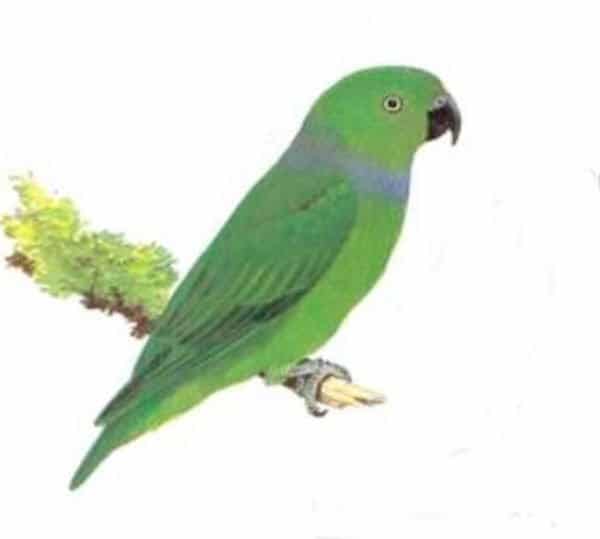
Antipodes parakeet
Cyanoramphus unicolor

Antipodes parakeet

Content


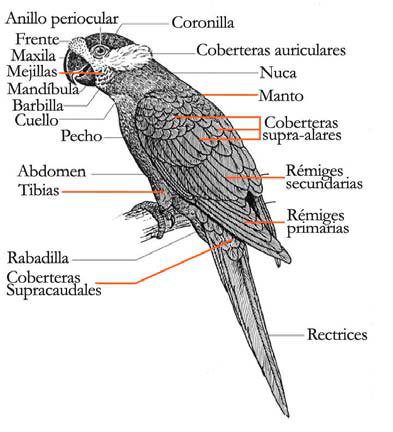
Anatomy-parrots

Description

32 cm.. of length and a weight of 130 g..

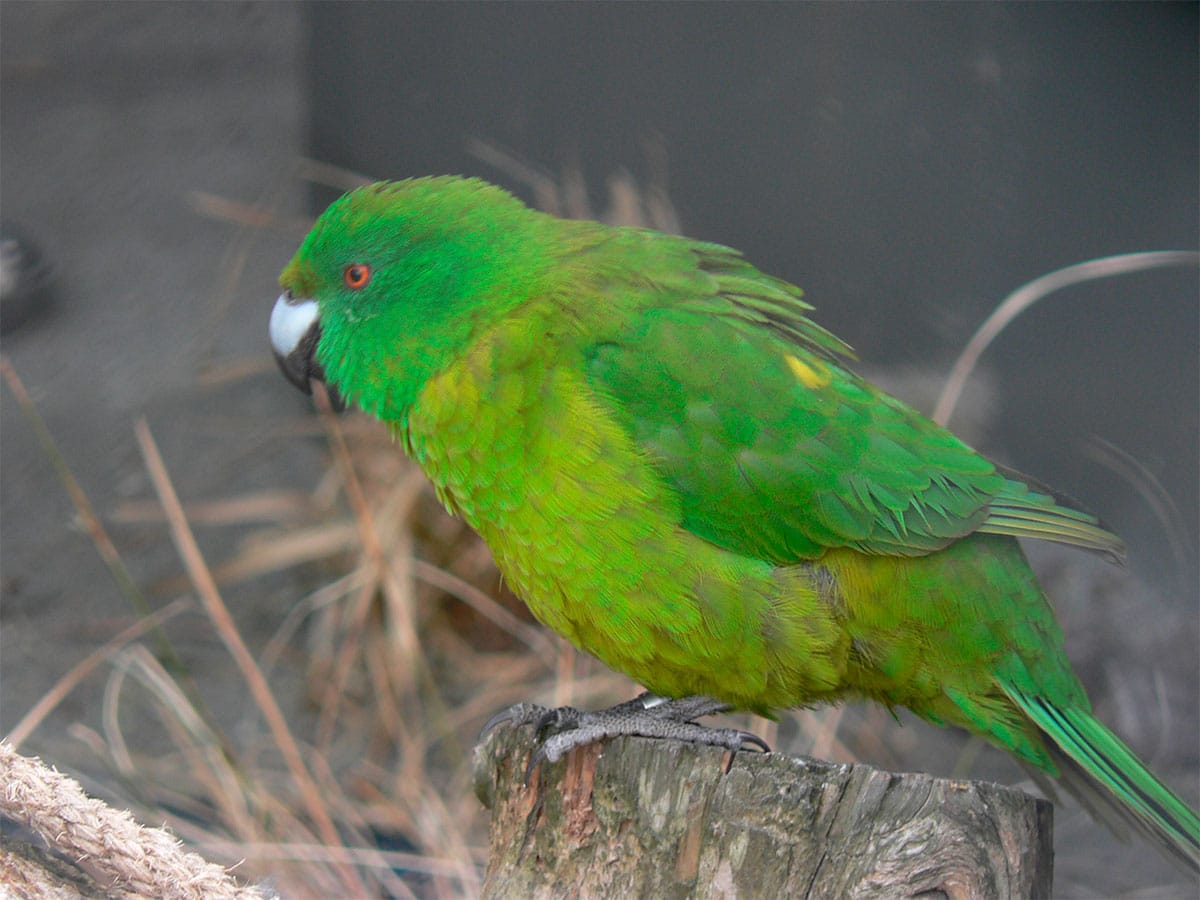
The Antipodes parakeet (Cyanoramphus unicolor) has a plumage brighter yellowish green, more yellowish on the hand down and sometimes with irregular yellow markings at the top. It is the only species that does not have color markings on head and tail. It is the largest of its kind.

The face and top are bright emerald green, and the contrast with the neck and the chest is more off.

At the top of the wings, the outer bands of the flight feather are blue, While the long tail It is green with fine yellow piping.

The great bill is silver-grey with dark end. The eyes are orange-red. The legs and feet are greyish.

Both sexes are identical. The female is slightly smaller than the male.

The young birds they are of tail shorter. The young people have the bill Pink White and the eyes light brown.

Habitat:

Antipodes parakeet

The Antipodes parakeet, usually, they prefer areas with tall grass (POA littorosa), areas of open scrub and sedges (Carex). Can also be seen in areas where thorny ferns grow (Polystichum vestitum) and the bushes (Coprosma antipode).

The birds are most common on steeper slopes and near water courses, alone or in small groups; They walk on the floor and climb among the branches as they seek food, normally during the morning and before nightfall.

These birds are very Meek and curious. When frightened, they disappear among the dense vegetation, keeping silent or giving a short alarm call. More than half of the day is spent sunbathing and grooming in protected areas. They bathe in small ponds and rest in burrows.

Reproduction:

The season of reproduction takes place between October and March. The Antipodes parakeet nest in soils with good drainage, a length of at least one meter. The nests is carved in fibrous peat, under the thick base of the tall grass vegetation. The nesting Chamber It is full of rootlets or fern scales.

The spawning occurs between November and January. The female lays 2-3 white eggs (5-6 in captivity). She carries out most of the duties of nesting, and incubates the eggs for a few 26 days. She cares for and feeds the chicks for nearly two weeks. The male contributes to breeding, feeding the female during this period, as well as feeding the young until their independence, at least two weeks after leaving the nest.

Food:

The diet main consists of leaves; an amount of crushed leaves, still attached to the plant, they are a distinctive sign of the power of the Antipodes parakeet. Also consume seeds, berries, the remains of penguins and petrels dead. They often enter into colonies of the Rockhopper Penguin (Eudyptes chrysocome) and of the Sclater's Penguin (Eudyptes sclateri) between the months of October and may, to feed on their eggs or dead young. It also feeds on the eggs and sometimes on the newborns of the same species.. (The sympatrico Red-crowned parakeet prevents competition by taking advantage of the niche that provide seeds, flowers, berries and small invertebrates.)

Distribution:

Endemic to the main island Antipodes, In addition to Bollons, Leeward, Inner Windward and Islands Archway.

Conservation:
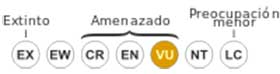

Vulnerable


โ€ข Current Red List of UICN: Vulnerable

โ€ข Population trend: Stable

The world's population of the Antipodes parakeet It is estimated between 2.000 and 3,000 specimens. Although common and stable within its range, the species is permanently at risk due to accidental introduction of predators, problem that could be fixed in no time.

Some birds are kept in captivity in New Zealand.

VULNERABLE.

"Antipodes parakeet" in captivity:

This stocky parakeet can live in community with species with similar characteristics.. It is usually outgoing, Active and depending on their way of breeding (natural or hand) and earlier experiences, It may be a trusted Parrot (hand raised or treated early), even being raised by their parents tends to be entrusted.

As a pet it could be good pet by his way of being cheerful and curious.

It is a rather nice parrot as vocalizations. It is not just loud. He likes to climb, There is no great need to crack and loves to be on the floor. enjoy the baths.

However, due to their vulnerability, is very rare poultry.

Alternative names:

Antipodes Parakeet, Antipodes Green Parakeet, Antipodes Green Parrot, Antipodes Island Parakeet, Antipodes Island Parrot (English).
Perruche des Antipodes, Kakariki des Antipodes, Perruche d’Antipodes (French).
Einfarbsittich (German).
Kakariki dos Antรญpodas (Portuguese).
Perico de Antรญpodas, Perico de las Antรญpodas (espaรฑol).

scientific classification:

Edward Lear
Edward Lear

Order: Psittaciformes
Family: Psittaculidae
Genus: Cyanoramphus
Scientific name: Cyanoramphus unicolor
Citation: (Lear, 1831)
Protonimo: Platycercus unicolor

ยซAntipodean Parakeetยป Images:

Videos "Antipodes parakeet"

ยซAntipodean Parakeetยป (Cyanoramphus unicolor)

Sources:

  • Avibase
  • Parrots of the World โ€“ Forshaw Joseph M
  • Parrots A Guide to the Parrots of the World – Tony Juniper & Mike Parr
  • Birdlife
  • Loromania

  • Photos Antipodean Parakeet:

(1) – Cyanoramphus unicolor at Wellington Zoo, Wellington, New Zealand by Peter Halasz. (User:Pengo) – Wikimedia
(2) – Cyanoramphus unicolor at Wellington Zoo, Wellington, New Zealand by Peter Halasz. (User:Pengo) – Wikimedia
(3) – Antipodes Island Parakeet, Auckland Zoo by russellstreet – Flickr
(4) – Antipodes Island parakeet (Cyanoramphus unicolor) by Chlidonias – zoochat
(5) – Antipodes Island parakeet (Cyanoramphus unicolor) by Chlidonias – zoochat
(6) – A painting of Antipodes Parakeet, also known as Antipodes Island Parakeet, (originally captioned ยซPlatycercus unicolor Uniform Parrakeetยป) by Edward Lear 1812-1888 [Public domain], via Wikimedia Commons
โ–ท The world of Pets: Dogs, cats, birds, reptiles, amphibians

Black-capped Parakeet
Pyrrhura rupicola

Should be noted that until the year 1981, The Blackcap Parakeet was considered a rarity in poultry farming.. From that date began to be imported in quantity although at a very high price.

Black-capped Parakeet

Content

Description:

25 cm. length and 70 g. weight.

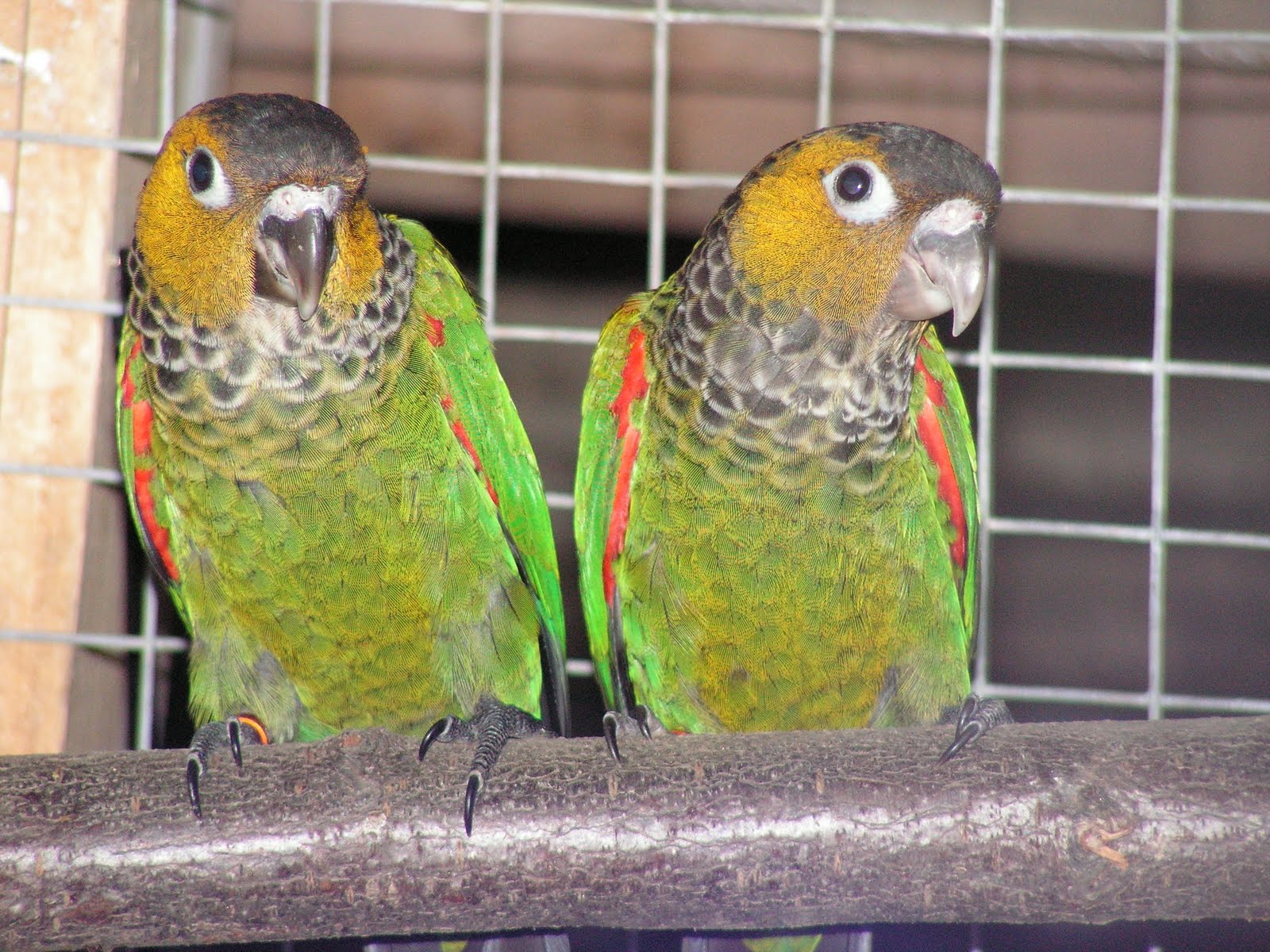
The Black-capped Parakeet (Pyrrhura rupicola) has the lores, the forecrown and the Crown, blackish brown; cheeks, ear-coverts and supercilii area, of color olive beige; back of the neck brown with narrow pale edges.

Upperparts green. External primary coverts, alula and leading edge of the wings bright red; other coverts mainly green. The flight feather, mainly bluish green, by top with narrow black tips; grey dark below.

Underwing-coverts green. The throat feathers, sides neck and top of the chest, Black base with wide white margins, becoming yellowish-white at the bottom of the chest and almost no formation of continuous pale band; belly and undertail-coverts green with brown stain in the center of the belly. Upper, the tail mainly green.

Black-capped Parakeet

The bill slaty-grey; Cere pale grey; bare periophthalmic off-white; irises brown; legs blackish.

Both sexes similar.

The immature has primary coverts almost completely green, as well as the leading edge of the wings.

Subspecies description:

  • Pyrrhura rupicola rupicola

    (Tschudi, 1844) – The nominal


  • Pyrrhura rupicola sandiae

    (Bond & Meyer de Schauensee, 1944) – It differs from the species nominal much closer to the Gray margins to the feathers of the throat and the front of the neck. These pale fringes measure only 2-2,5 mm. wide (specimens with new plumage) in comparison with the 4-5 mm of the nominal species. Like this, the dark basal portion of these pens is more prominent. It also, the whitish edges to the feathers of the back of the neck they are practically obsolete and the sides of the neck much smaller.

Habitat:

Video – "Black-capped Parakeet" (Pyrrhura rupicola)

PYRRHURA RUPICOLA TAUGHT

It lives in the Amazon rainforest., including formations of vรกrzea and the Mainland, below 300 m. Visits have been recorded in the East of the Andes. Fly in flocks of 30 individuals, or small groups in reproductive age.

Reproduction:

It is believed that it can nest in the months of February-March, although the copulation of observed during the month of September. Sunset until the seven eggs in captivity than hatch during 23 to 24 days.

Food:

Usually feed in the canopy but no specific information on diet or breeding.

Distribution:

Can be seen in the Western basin of the amazon. There has been in the East of Peru from the South of Loreto until Mother of God and Puno, and in the North of Bolivia in Pando.

Also distributed in Peace and the Yungas and in the lowlands of the North of Beni, from the East to the border with Rondร ยดnia in Brazil, with a record until the date in the extreme west of Brazil (Rio Branco, Acre).

In general common (Perhaps more scarce on the edges of the range), but it can be locally decreasing due to the alteration of its habitat.

Subspecies distribution:

  • Pyrrhura rupicola rupicola

    (Tschudi, 1844) – The nominal


  • Pyrrhura rupicola sandiae

    (Bond & Meyer de Schauensee, 1944) – Southeast of Peru, West end of Brazil and North of Bolivia.

Conservation:

State of conservation โ“˜


Near-threatened Near Threatened โ“˜ (UICN)โ“˜

โ€ข Red List category of the UICN current: Near-threatened

โ€ข Population trend: Decreasing

The Parrot Capirotada world population size has not been quantified, but this species is described as "quite common" (Stotz et to the. (1996).

This species is suspected that may be losing from the 13,7 to the 15,5% of their habitat within its distribution over three generations (18 years) based on a model of deforestation of the Amazon (Soares-Filho et to the., 2006, Bird et to the. 2011). Given the susceptibility of this species to be hunted or trapped, leads to the suspicion of a probable decline in population close to the 30% in three generations.

"Black-capped Parakeet" in captivity:

Should be noted that until the year 1981, the Black-capped Parakeet It was considered a rarity in aviculture. From that date began to be imported in quantity although at a very high price.

Their behavior Active, his sympathetic character, their robustness and ease of reproduction attached to the made of own a voice very little annoying, they make an excellent animal for those poultry producers who are initiated into this wonderful hobby. These qualities allow us to intuit that if raised by hand they could be lovely pets.. It is sad to observe that, too often, the main maxim that justifies poultry farming "play to preserve" becomes "play to sellโ€.

Alternative names:

Black-capped Parakeet, Black capped Parakeet, Black-capped Conure, Rock Conure, Rock Parakeet (English).
Conure ร  cape noire, Perriche ร  cape noire, Perruche ร  cape noire (French).
Schwarzkappensittich, Schwarzkappen-Sittich (German).
tiriba-rupestre (Portuguese).
Cotorra Capirotada, Perico de Frente Negra (espaรฑol).
Wewey, Aboro gushรณus (Chimane).


scientific classification:

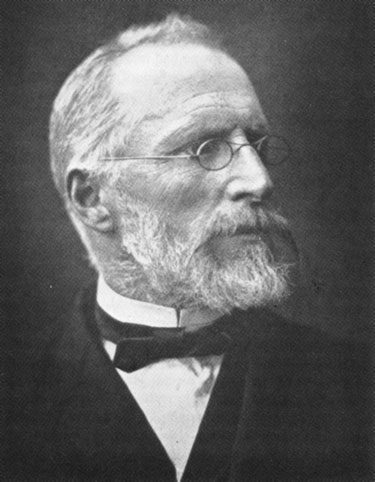
Tschudi-Johann Jakob of

Order: Psittaciformes
Family: Psittacidae
Genus: Pyrrhura
Scientific name: Pyrrhura rupicola
Citation: (Tschudi, 1844)
Protonimo: Conurus rupicola

Images "Black-capped Parakeet"


Especies del gรฉnero Pyrrhura

Sources:

Avibase
– Parrots of the World โ€“ Forshaw Joseph M
– Parrots A Guide to the Parrots of the World – Tony Juniper & Mike Parr
– Birdlife

Photos:

(1) – Pyrrhura rupicola sandiae by pedroduarte
(2) – Maroon-tailed Parakeet ssp. (in front); and Pyrrhura rupicola, Black-capped Parakeet (behind) by John Gerrard Keulemans [Public domain], via Wikimedia Commons

Sounds: (Xeno-canto)

โ–ท The world of Pets: Dogs, cats, birds, reptiles, amphibians

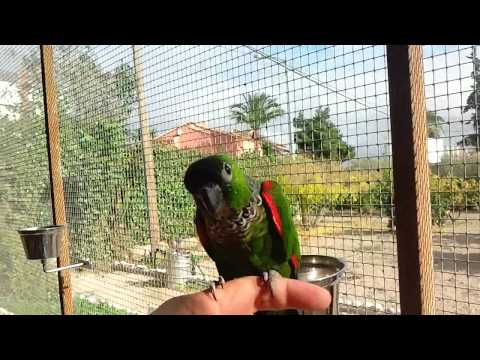
Blue fronted Parrot
Amazona aestiva


Blue fronted Parrot

Content

Description

33-39 cm.. height and weight around the 450 and 550 g..

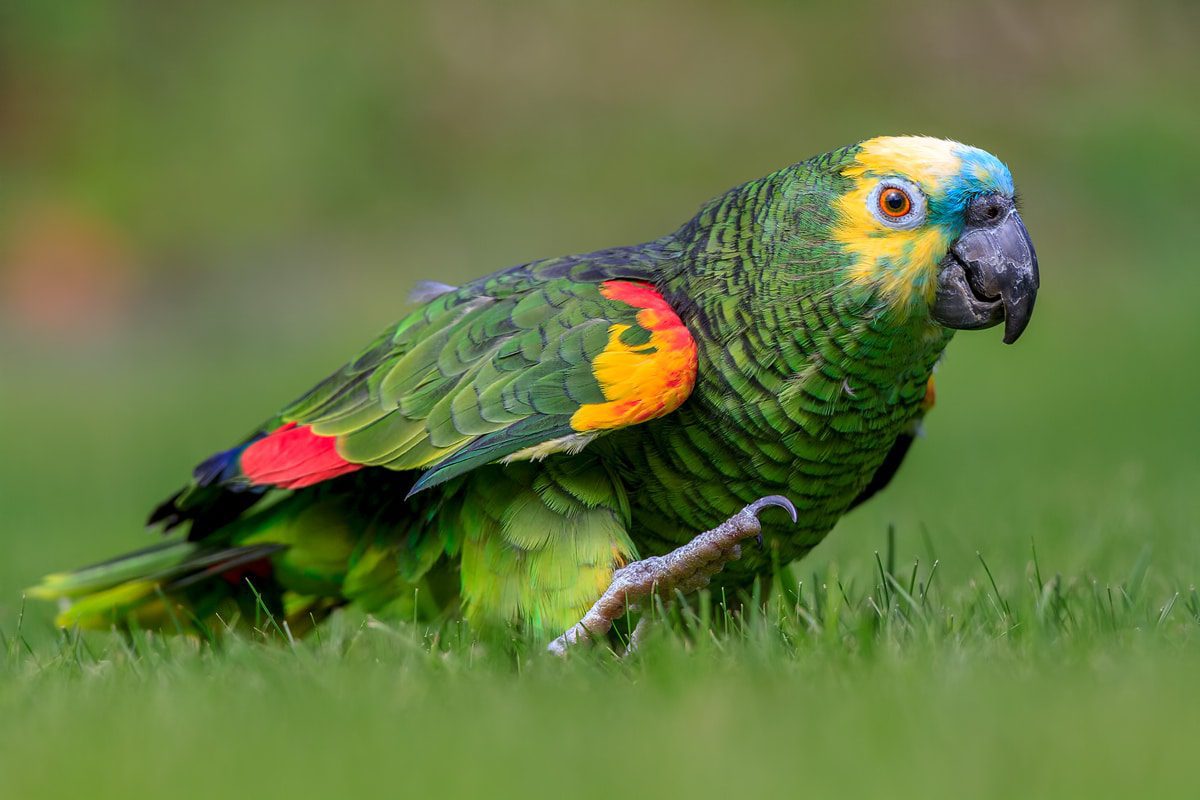
The Blue fronted Parrot (Amazona aestiva) is distinguished by yellow head, with blue-green forehead and cheek, Dark nostrils, Red shoulders outlined with yellow, wing with red patch and dark blue ends. Rest of the usually green body, more clear towards the belly and tail.

  • The subspecies Amazona aestiva xanthopteryx of Bolivia, has more extensive yellow face and the shoulder is mostly yellow with a small red patch.

  • The subspecies A. to. xanthopteryx (Yellow wing Amazon): Wing coverts of the shoulder area almost exclusively yellow and, in general, creating a stain of greater extension. – From the southwest of Mato Grosso, Brazil, North and East of Bolivia, Paraguay and northern Argentina


Anatomy-parrots

In young coloration is generally more off. The blue and yellow practically do not exist and the iris is dark

Habitat:

Video – "Blue fronted Parrot"

AVES - The Amazon Aestiva, one of the most popular and talkative parrots

Lives in humid forests, Savanna, gallery forest, areas planted with trees and forest with palms, up to 1600m.

Common in pairs or flocks, they have many individuals community roosts.
In this species the sex of the specimens is not distinguished at a glance.

Reproduction:

It nests in holes in large trees.

Breeds between October and March.

The implementation is usually of 3 eggs, and incubation lasts approximately 25 days. Chicks leave the nest to the 60 days.

Food:

Its food consists of fruit, berries, nuts, leaves and seeds.

Distribution:

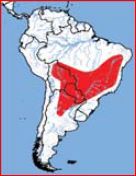
Amazon Frentiazul location

Interior of South America, from the North-East of Brazil, East of Bolivia, Paraguay, to the North of Argentina.

Conservation:

Not considered under any threat category globally.

State of conservation โ“˜


minor concern Minor Concern โ“˜ (UICN)โ“˜

Protected by the Convention CITES, consisting in annex II (species that may be threatened by a trade out of control).
It is a fairly widespread species in their area of distribution and is considered to have a stable population. However, numbers are declining rapidly in some areas due to capture for trade (both legal and illegal), and to other problems such as the destruction of their habitat and human pressure. Another problem affecting the species is that the average age of populations that exist in freedom is not known.

Blue fronted Parrot in captivity:

He is very smart, curious and loving. They are very sociable and gets along very well with children.

It is one of the best imitators that exist within the group psittacine after grays.
With its strong beak, as any Parrot, She likes chewing everything that gets you ahead. So, newcomer to our home, It is necessary to pay close attention.

It has a social behaviour so it is important to look for a partner. A large aviary and the possibility of going out every day are necessary.
If it feels threatened, It opens its wings between loud cries and wild-eyed.
Water love it. Released, When it rains, enjoy, in the rain, with open wings. The ideal humidity for a Blue fronted Parrot is of the 60-70%, which is impossible in an apartment during the winters in the heat of radiators. It is therefore necessary the use of humidifiers.

The staple food is made up of different types of nuts, sunflower seeds, pumpkin seeds, corn, wheat, etc. Important for a healthy diet are fruits and vegetables. These must be offered fresh every day.
Just before the breeding season, our birds must be provided with foods rich in calcium and protein, for example egg cooked.
Multivitamin supplements complete proper nutrition.

The female lays two to five eggs that incubate for an approximate period of 25 to 28 days.

Alternative names:

Blue fronted Parrot, Blue-fronted Amazon, Blue-fronted Parrot, Turquoise-fronted Amazon, Turquoise-fronted Parrot (English).
Amazone ร  front bleu (French).
Blaustirnamazone, Rotbugamazone (German).
Papagaio-verdadeiro, papagaio-colareiro, papagaio-comum, papagaio-curau (Portuguese).
Amazona Frentiazul, Amazona Sudamericana, Loro hablador, Lora frente azul (espaรฑol).

scientific classification:

Order: Psittaciformes
Family: Psittacidae
Genus: Amazona
Scientific name: Amazona aestiva
Citation: (Linnaeus, 1758)
Protonimo: Psittacus aestivus


Species of the genus Amazona


Sources:
– Parrot Book, Parrots and macaws Neotropical
avibase
– SEO.org
– Photo: birdnest
– Sounds: Diego Caiafa

โ–ท The world of Pets: Dogs, cats, birds, reptiles, amphibians

Blue-collared Parrot
Geoffroyus simplex


Blue-collared Parrot

Content

Description

23-25 cm.. length and around 161 g. of weight.

The Blue-collared Parrot (Geoffroyus simplex), they have the head green, more pale and more yellowish in the chin and lower cheeks, with a collar weak but clearly identified blue across the top of the chest and rear of the neck. The upperparts are blackish Green. Curve of the wings yellow; patch Brown in medium-sized inner cover; greater coverts with yellowish green trim; flight feather Black with green in the vane outer; pale line along the inner edge of the tips of the wings closed, formed by yellow tipping in the vane inmates of the flight feather. Underwing coverts and axillary, blue. Ventral pale, more yellowish green than the upper parts. Upper, the tail green; undertail, yellowish.

Bill greyish black; Iris White pale yellowish; legs gray-green.

The females they lack the collar Blue males but have a little blue on the back of the crown.

Subspecies

  • Geoffroyus simplex simplex (Meyer, AB, 1874): The nominal.
  • Geoffroyus simplex buergersi (Neumann, 1922): It measures each 25 cm in length and has purplish blue collar more extensive. Coverts of the wings with Violet Blue. Females have Violet Blue Underwing.

Habitat:

The species is distributed mainly between humid hills and medium-montane forests., along its edges and areas of secondary growth between 500 and 2.500 meters above sea level, being more frequent among the 800 and 1.900 m. Variations in food supply can lead to birds at elevations lower than normal (even at altitudes near sea level).

The Blue-collared Parrot they are shy and hard to spot when perched in trees. Large flocks of birds, of up 200 specimens, can be seen and heard flying above the treetops.

The species tends to form large groups with the Red-checked Parrot, Although sometimes single birds are, in pairs or in small groups.

Reproduction:

Little is known of the breeding ecology. A nest dug with three young was found in mid-January to nine metres in height, close to the top of a stump. The entrance was of 80 mm in diameter, and the gap between 200 mm and 400 mm deep. Nesting is also reported in October.

Food:

The Parrot Acollarado quietly feed in the canopy of seeds, fruit, berries and nectar. They are particularly fond of the seeds of (Castanopis and Oaks Lithocarpus).

Distribution:

New Guinea, Indonesian and Papua New Guinea, with an isolated population in the Doberai Peninsula, from Tamrau to Mountains Parotia. The main population is distributed through the central highlands, absent from the higher central areas, But coming to the Owen Stanley mountain range at the end of this. generally common, but the difficulty of detection makes these less abundant parecezcan birds.

Distribution of the subspecies:

  • Geoffroyus simplex simplex (Meyer, AB, 1874): The nominal.
  • Geoffroyus simplex buergersi (Neumann, 1922): Mountains of New Guinea, except Penรญnsula Bird's Head.

Conservation:


minor concern


โ€ข Current IUCN Red List category: Least concern.

โ€ขPopulation trend: Stable.

The size of the world's population has not been quantified, Although estimated at more of 50.000 specimens. The species, according to sources, is generally rather rare to fairly common (pit et to the. 1997).

The population is suspected to be stable in the absence of evidence of any reduction or substantial threats.

"Blue-collared Parrot" in captivity:

Rare.

Alternative names:

Blue-collared Parrot, Blue collared Parrot, Lilac-Collared Parrot, Simple Parrot (ingles).
Perruche ร  col bleu, Eclectus ร  col bleu, ร‰clectus ร  col bleu (French).
Blauhalspapagei (German).
Geoffroyus simplex (Portuguese).
Lorito Acollarado, Lorito Acollorado, Lorito de Collar (espaรฑol).

scientific classification:

Order: Psittaciformes
Family: Psittaculidae
Genus: Geoffroyus
Scientific name: Geoffroyus simplex
Citation: (Meyer,AB, 1874)
Protonimo: Pionias simplex

Images "Blue-collared Parrot"

————————————————————————————————

ยซLorito acolladoยป (Geoffroyus simplex)


Sources:

Avibase
– Parrots of the World โ€“ Forshaw Joseph M
– Parrots A Guide to the Parrots of the World – Tony Juniper & Mike Parr
– Birdlife

Sounds: Phil Gregory (Xeno-canto)

โ–ท The world of Pets: Dogs, cats, birds, reptiles, amphibians

Black Parrot
Coracopsis nigra

Black Parrot

Black Parrot

Content


Anatomy-parrots

Description

35 to 40 cm. length and a weight between 215 and 315 gr.

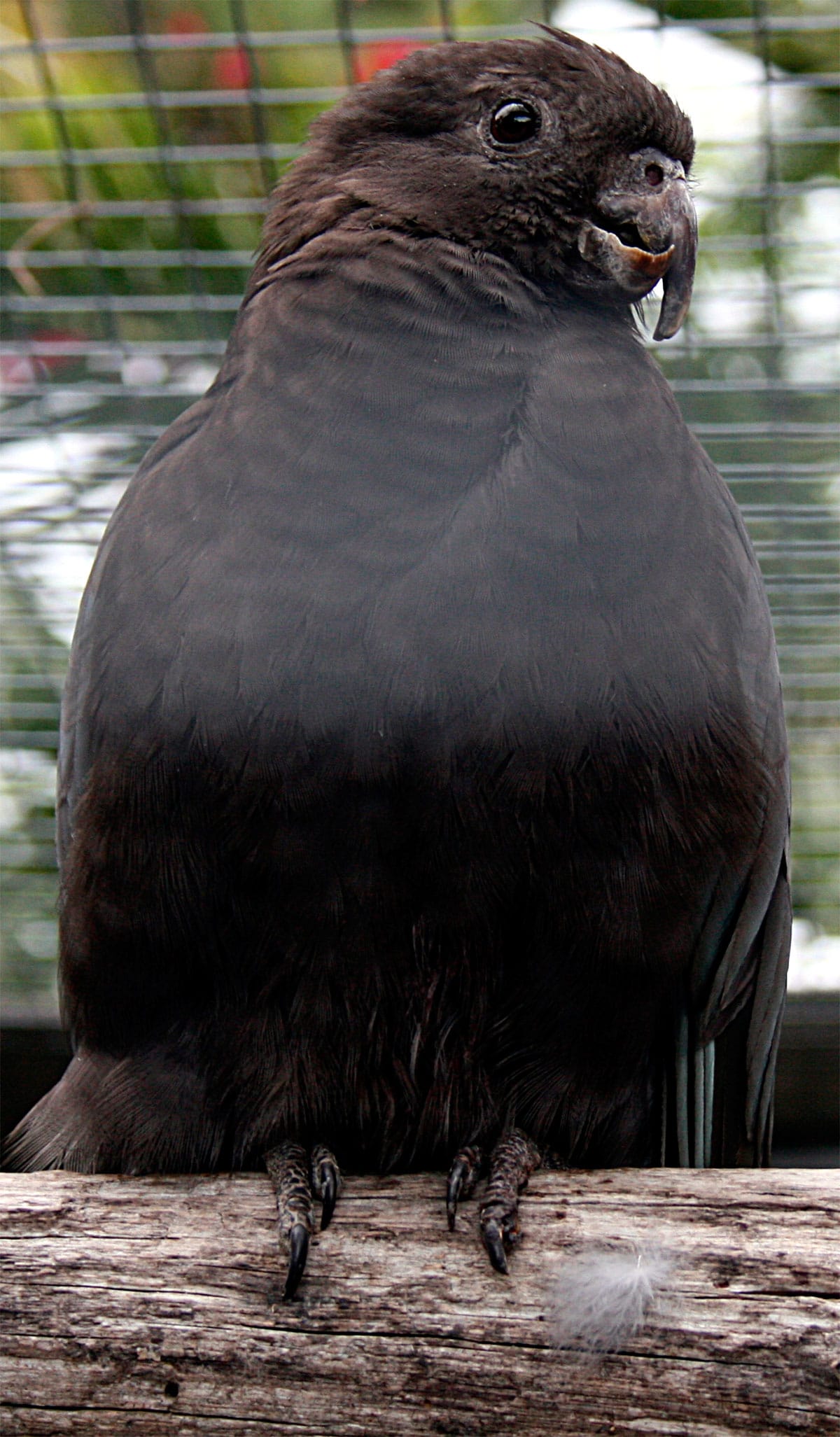
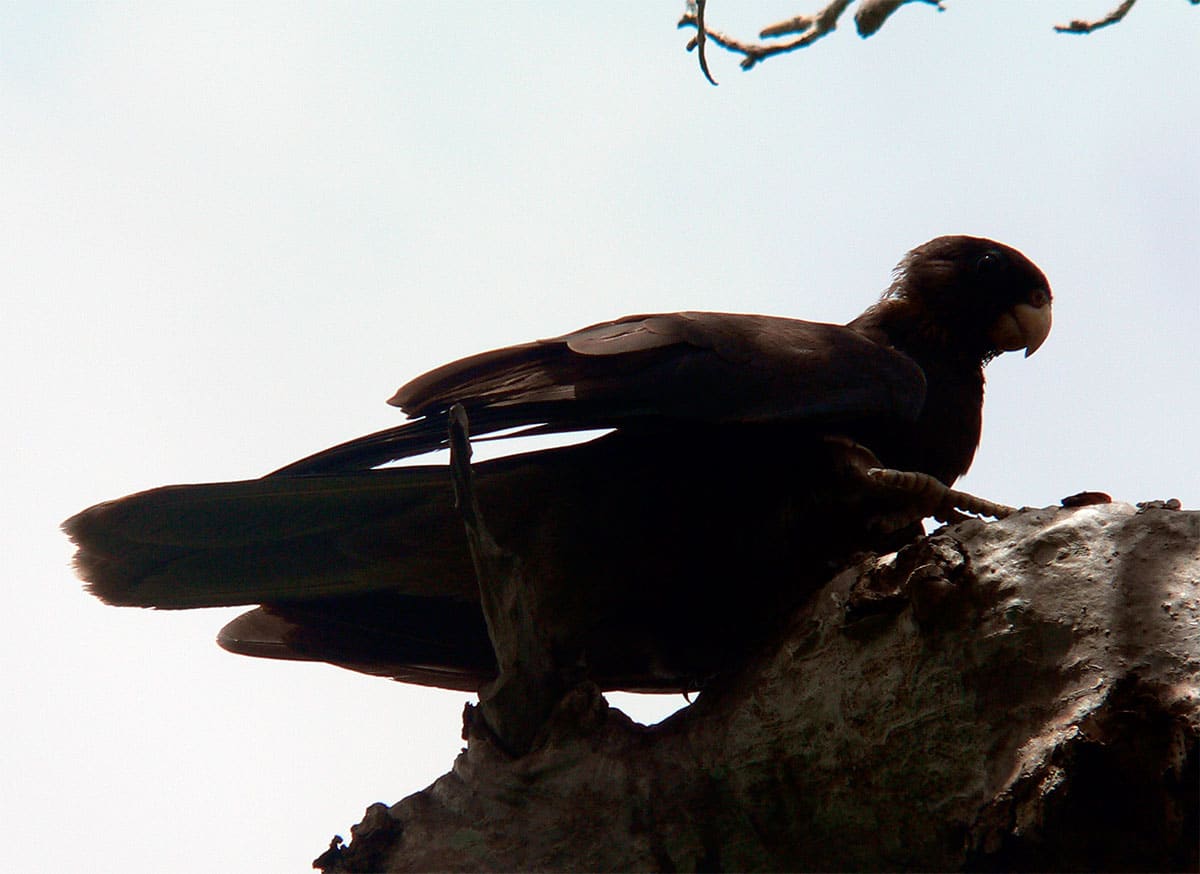
The plumage of the Black Parrot (Coracopsis nigra) It, usually, blackish brown (iridescent green glow during breeding season) with inconspicuous grayish color marks in undertail- coverts and gray in vane external to the primary.

Bottom of flight feathers pale grey. Upper, the tail brown-black color; undertail, light grey: subterminal band dark.

The bill color horn, more off-white to modify the moult; irises dark brown: periophthalmic ring grey-brown (does not reach the peak); legs dark brown.

Sound of the โœฉ Black Parrot โœฉ.

Without sexual dimorphism.

Immature paler than adults with pale undertail- coverts and yellowish tint in the bill; Tips of the feathers of the tail pale grey.

Subspecies description

  • Coracopsis nigra libs

    (Bangs, 1927) – Paler and with the underparts browner than the nominal species; back bluish grey tinted. No dark subterminal band on the tail.

  • Coracopsis nigra nigra

    (Linnaeus, 1758) – Nominal species

  • Coracopsis nigra sibilans

    (Milne-Edwards & Oustalet, 1885) – Smaller, of about 30 cm., and paler than the nominal species. The chocolate color replaces the blackish brown of the nominal. No grey in the vane the primary external

Habitat:

The Black Parrot are resident with some movements of foraging day.

It is found in a wide variety of forests and savanna areas, including ecosystems modified by man, wooded land of cities and towns, as well as primary forests, from the level of the sea up to 2,050 m altitude.

You can see more on the dense forests, swamp forest (including mangroves) and scrublands, that the Vasa Parrot, in order to avoid large areas of humid forests.

Usually seen in small noisy groups, either flying or sitting on the tops of the trees; active on moonlit nights.

In Seychelles, However, the Black Parrot seldom form flocks and in general you seen alone or in pairs, except when the food, locally, they are abundant.

Is not known to form mixed flocks with the Vasa Parrot.

Reproduction:

Nest in the hollow trunk of tree or in a branch, usually above the 15 m.

Breeding probably from November to February.

Clutch of 2 to 8 eggs.

Food:

The Black Parrot they feed on seed, berries, fruits and nuts; more frugivorous than Vasa Parrot.

Specific articles reported on their diet include fruits of Afzelia bijuga and Chassalia, seeds of Cinnamosma fragrans, flowers of Symphonia and some types of leaves.

In Madagascar, according to sources, It has reported consumption of Insect Galls on the part of the Black Parrot.

They attack crops and in the Comoros they are real pests in cocoa plantations, feeding on immature pods.

The main food of the population of Praslin include: Verschaffeltia splendida, Averrhoa bilimbi, Phoenicophorium borsigianum, Deckenia nobilis, Chrysobalanus icaco and Ficus rubra.

Distribution:

Endemic to Madagascar, The Comoros archipelago (Grand Comore and Anjouan) and Praslin island (Seychelles), where it was possibly introduced.

Subspecies distribution

  • Coracopsis nigra libs

    (Bangs, 1927) – Can be found in the West of Madagascar.

  • Coracopsis nigra nigra

    (Linnaeus, 1758) – Nominal species

Conservation:


minor concern


  • Current Red List of UICN: Least concern
  • The population trend: Stable

The species that are found in Madagascar and the Comoros they are generally described as common.

Officially treated as pests in Madagascar where the Black Parrot they are persecuted because of the damage caused in crops; Also hunted as food and as domestic fowl.

Despite their intense persecution, apparently they are not at risk and are distributed in many protected areas of Madagascar.

The size of the world's population has not been quantified.

The subspecies of the Praslin island (Seychelles), found in the The Valle de Mai nature reserve, is located in critical state (probably less than 100 birds). Competition for nesting sites with the common mine (Acridotheres tristis) can be one of the threats of the remaining birds.

The โ€œBlack Parrotโ€ in captivity:

It is possible to keep them in community with its kind, but out of breeding period. At first he can be shy. It is a active parrot and nervous, generally outgoing Once accustomed to people and environment, tends to be entrusted, although it also depends a lot on its breeding method (natural or by hand) and earlier experiences.

As a pet it can be a wonderful company., loving, playful and very smart.

With regard to its longevity, sources they indicate that a sample lived 34.1 years in captivity.

Alternative names:

Black Parrot, Lesser Vasa Parrot, Lesser Vasa-Parrot (English).
Vaza noir, Perroquet noir (French).
Rabenpapagei (German).
Papagaio preto (Portuguese).
Loro Negro (espaรฑol).

scientific classification:

Carl Linnaeus
Carl Linnaeus

Order: Psittaciformes
Family: Psittaculidae
Genus: Coracopsis
Scientific name: Coracopsis nigra
Citation: (Linnaeus, 1758)
Protonimo: Psittacus niger

ยซBlack Parrotยป Images:

————————————————————————————————

ยซBlack Parrotยป (Coracopsis nigra)

Sources:

Avibase
– Parrots of the World โ€“ Forshaw Joseph M
– Parrots A Guide to the Parrots of the World – Tony Juniper & Mike Parr
– Birdlife
– Parromania

Photos:

(1) – Madeira_botanischer_garten_Coracopsis_nigra By Hedwig Storch (Own work) [GFDL or CC BY-SA 3.0], via Wikimedia Commons
(2) – Lesser Vasa Parrot (also known as the Black Parrot). Two in a cage with a nestbox By TJ Lin (originally posted to Flickr as pic-264) [CC BY-SA 2.0], via Wikimedia Commons
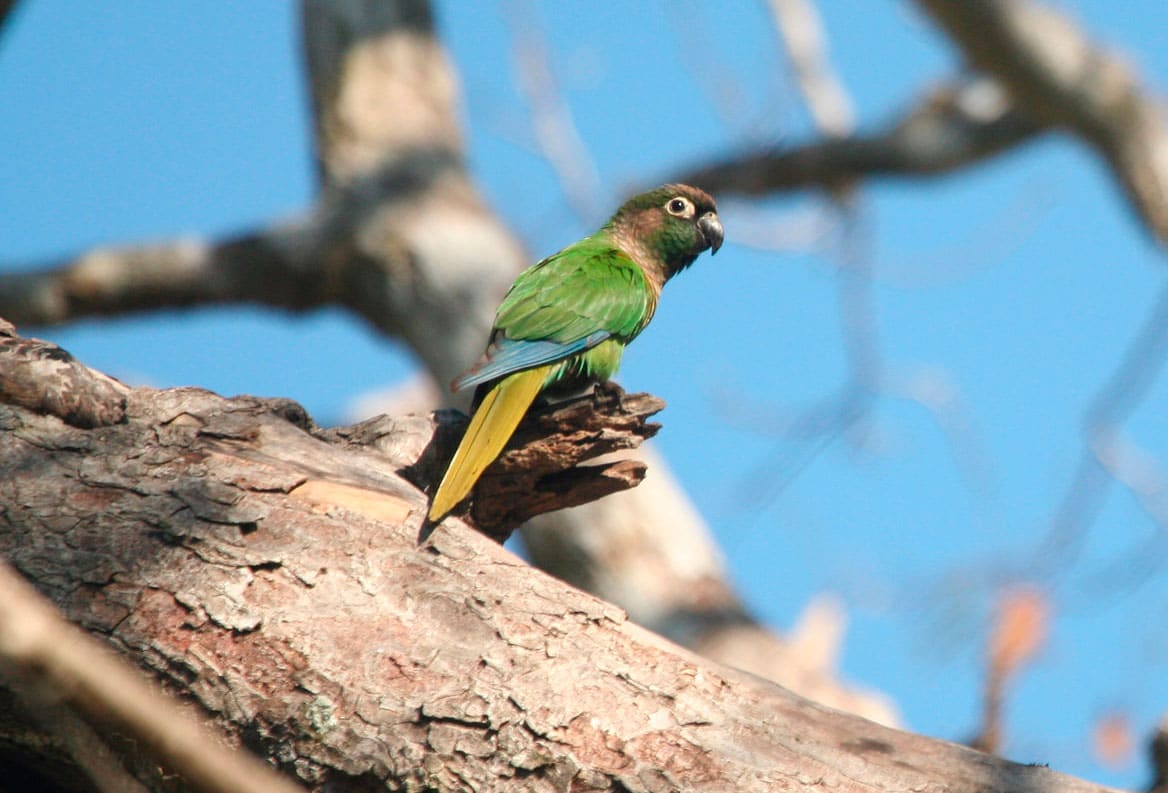
(3) – Lesser vasa parrot (coracopsis nigra) in Anjajavy Forest, Madagascar By Charlesjsharp (Own work) [CC BY-SA 3.0], via Wikimedia Commons
(4) – Lesser Vasa Parrot or Black Parrot (Coracopsis nigra); picture taken at Mangily, Western Madagascar By Axel Strauss (Own work) [GFDL or CC BY-SA 3.0], via Wikimedia Commons
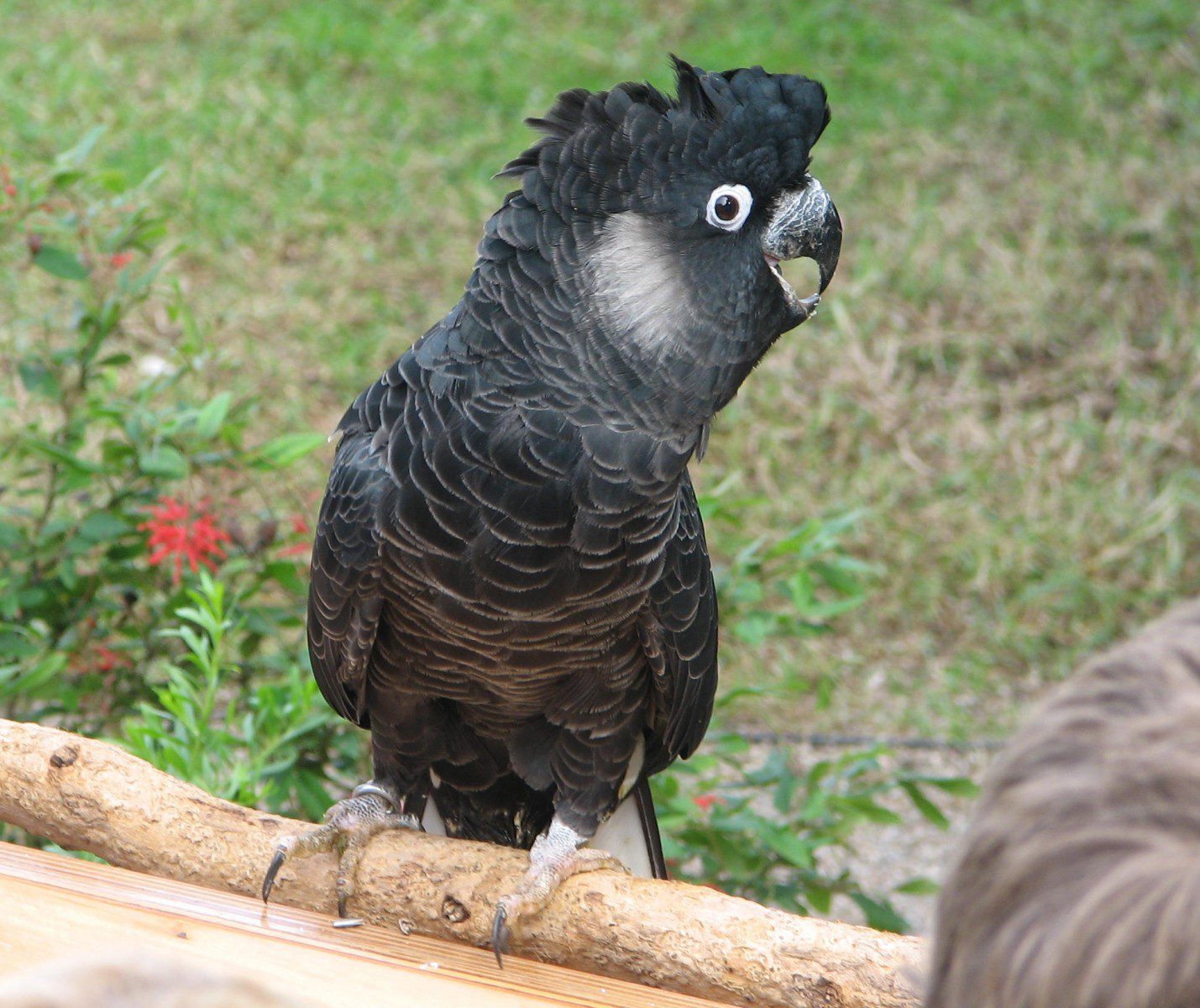
(5) – Male Lesser Vasa Parrot in an aviary at Tropical Birdland, Leicestershire, England By Snowmanradio (Own work) [CC BY-SA 3.0 or GFDL], via Wikimedia Commons
Sounds: Mike Nelson (Xeno-canto)

โ–ท The world of Pets: Dogs, cats, birds, reptiles, amphibians

Blaze-winged Parakeet
Pyrrhura devillei


Blaze-winged Parakeet

Content

Description:

Blaze-winged Parakeet

It measures 25 to 28 cm. and 70 weight GR.

In flight notorious is the armpit red with yellow line at the end; Red patch in the belly. The tail is opaque red.

Was formerly considered as a subspecies of the Maroon-bellied Parakeet (Pyrrhura frontalis), of crown brown, darker underparts, and underwing-coverts especially red and yellow.

Bill black; eye ring naked white; irises brown. Tail long.

It has no sexual dimorphism.

Habitat:

It lives in the Woods, on the clear and marshy edges, until the 1000 m.

It is a species tolerant of disturbance of the habitat.

Fly in flocks between 6 to 12 individuals.

Reproduction:

It nests in hollow of trees and is plays between October and December.

Food:

Feed a wide variety of dried fruits and fruit.

Distribution:

Is distributed between the South of Brazil (Mato Grosso from the South), North of Paraguay (Northwest of Conception and Southeast of Alto Paraguay) and Southeast of Bolivia.

In Brazil only it is known in Mato Grosso from the South, where is limited to the mountain ranges of Bodoquena and Maracayu, in the Ecotone between the Planalto and the lowlands of the Pantanal, and along the taboco river in the municipality of Aquidauana. It has a very limited range in the Paraguay, from where records of the latter are confined to gallery forests along the apa river.

Conservation:

โ€ข Red List category of the UICN current: Near-threatened
โ€ข Population trend: Stable

The size of the world population Blaze-winged Parakeet It has not been quantified, but this species has been described as ยซrareยซ.

State of conservation โ“˜


Near-threatened Near Threatened โ“˜ (UICN)โ“˜

This species is suspected that they have experienced a moderately rapid decline due to the extensive loss and degradation of its habitat range within. Now survive in a highly fragmented landscape. Its area of distribution in Brazil has suffered extensive forest loss and degradation through agricultural expansion and charcoal production. The forests of the North of Conception and those who are in Chaco, in the easternmost area of Paraguay, are coming under increasing pressure and have seen considerable deforestation in recent 10 years (R. Clay in litt., 2009).

There is one hybridization apparent with the Maroon-bellied Parakeet (Pyrrhura frontalis) observed in the apa river (R. Clay in litt., 2009).

The trade is apparently minimal (pit et to the., 1997).

"Blaze-winged Parakeet" in captivity:

These small parrots are very rare in captivity, Although its potential for pets is excellent. Are birds animated and soon procured confidence with its owner. They often enjoy bath and are not hard chewing. are mostly calm and they shall only be loud when they are excited. They can be aggressive toward other birds. Playful and curious and generally resistant.

Alternative names:

Black-winged Parakeet, Black-winged Conure, Blaze winged Parakeet, Blaze-winged Conure, Blaze-winged Parakeet, Deville’s Conure (English).
Conure de Deville, Perriche de Deville, Perruche de Deville (French).
Devillesittich, Deville Sittich, Deville-Sittich (German).
tiriba-fogo (Portuguese).
Chiripepรฉ ala anaranjada, Cotorra de Deville, Perico de Alas Naranjas, Periquito alianaranjado (espaรฑol).
Periquito alianaranjado (Bolivia).
Chiripepรฉ ala anaranjada (Paraguay).

scientific classification:

Order: Psittaciformes
Family: Psittacidae
Genus: Pyrrhura
Scientific name: Pyrrhura devillei
Citation: (Massena & Souancรฉ, 1854)
Protonimo: Conurus Devillei

Images "Blaze-winged Parakeet"

Videos "Blaze-winged Parakeet"


Especies del gรฉnero Pyrrhura

Blaze-winged Parakeet (Pyrrhura devillei)


Sources:

Avibase
– Parrots of the World โ€“ Forshaw Joseph M
– Parrots A Guide to the Parrots of the World – Tony Juniper & Mike Parr
– Birdlife

Photos:

(1) – Blaze-winged Parakeet, Pousada Aguape, Mato Grosso Sul, In Brazil Flickr by Wildlife Travel
(2) – Iconographie des perroquets :Paris :P. Bertrand,1857 biodiversitylibrary

Sounds: (Xeno-canto)

โ–ท The world of Pets: Dogs, cats, birds, reptiles, amphibians

Baudin's black cockatoo
Zanda baudinii

Baudin's black cockatoo

Content

Description

50 to 57 cm.. height and weight between 560 and 770 g.
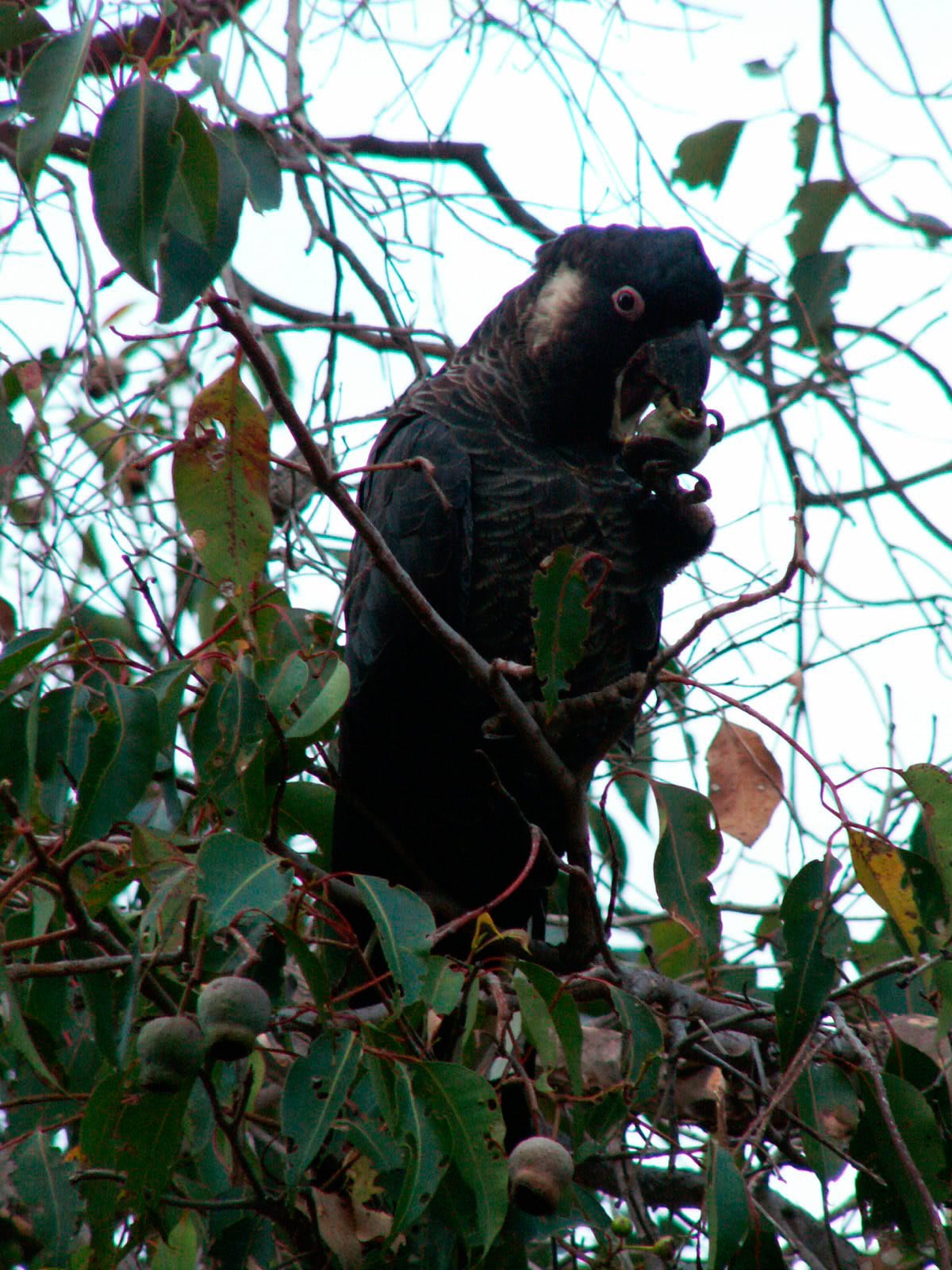
to Baudin's black cockatoo (Zanda baudinii) is almost entirely of black, with whitish margins in the feathers, patches rounded on them ear-coverts (yellowish to white in the female and Brown to grey in the male), white rectangular panels in the tail.
has a powerful bill (with greatly elongated upper jaw), Black in the male and white-gray color with a black color in the female tip.
Iris dark brown surrounded by a eye ring Red in the male and female grey.
Tail rounded, crest Erectile and legs greys. birds youth are like adults in appearance, but the bill of the male juvenile is equal to the of the of the female adult. The bill the juvenile male begins to darken after the second year.

Habitat:

Its natural habitat is the dense forests dominated by the Marris (Corymbia calophylla) in the extreme southwest of Australia.

Gregaria, is often seen in groups of three, a pair of adults with a young, or in small groups. Occasionally they gather in large flocks of up to 300 birds during the non-breeding season, usually in places where food is abundant.

Reproduction:

Very little is known about the reproductive biology This cockatoo, such as their reproduction area, nesting events calendar, the nest tree, Characteristics of holes for nests, implementation size, incubation period, incipient and successful nesting period.

Little is known about their reproductive cycle because nests are extremely difficult to locate.. Most of the characteristics of the biology of the species are inferred from the Short-billed black cockatoo.

They show a strong union of couple and probably is pair of by life. They remain together throughout the year, except when the female is incubating eggs. Probably they begin to breed at the age of four. The species breeds in late winter and spring, from August to November or December. Copulation probably takes place three days before laying. The female lays one or two white eggs and you can lay an egg of replacement if the first since egg fails. The incubation lasts a few 29 days and only the female incubates them. The chicks remain in the nest for a maximum of 16 weeks.

The nests are composed of a layer of wood chips, built in large hollow in the high eucalyptus, 30 to 40 cm. in diameter and more than 30 depth cm.

Food:

Are fed mainly from the seeds of MARRI and Karri. They are also fond of the rending of wood, Apart from pierce the bark of trunks in search of larvae. Apple trees and pear trees are frequently visited to enjoy its fruits.

Distribution:

Confined in the South-West of Western Australia, especially among Perth, Albany and Margaret River.

Distribution Long-billed Black-billed Cockatoo

Small captive populations in the Melbourne Zoo, in the Healesville sanctuary in Victoria, and in the Zoo of Perth. The species is bred in captivity with great difficulty.

Conservation:

State of conservation โ“˜


Vulnerable Vulnerable โ“˜ (UICN)โ“˜

In Australia is listed as Vulnerable by the law on protection and conservation of biodiversity for the environment.

The total population of the species is estimated at 12.500 individuals, with one downward trend.
Before the inclusion of the threatened species, the annual reproductive rate was of 0,6 per couple, too low to replace the large number of birds that were killed by horticulturists to protect their crops. It is now illegal to shoot these birds, However is it still done.

In captivity:

Appears in the Appendix II of CITES, what limited international trade in the species. Itร‚ยดs illegal capture These wild birds, a penalty of up to 10,000 $. This cockatoo is protected under the Wildlife Conservation Act of Australia.

Alternative names:

Baudinโ€™s Black Cockatoo, Long-billed Black Cockatoo, White tailed Black Cockatoo (English).
Cacatoรจs de Baudin (French).
Langschnabel-RuรŸkakadu, WeiรŸohr-Rabenkakadu (German).
Cacatua-negra-de-bico-longo (Portuguese).
Cacatรบa Fรบnebre de Pico Largo, Cacatรบa Fรบnebre Piquilarga (espaรฑol).

scientific classification:

Order: Psittaciformes
Family: Cacatuidae
Scientific name: Zanda baudinii
Genus: Zanda
Citation: Lear, 1832
Protonimo: Zanda Baudinii

Images:


Species of the genus Zanda
  • Zanda funerea
  • —- Zanda funeral funeral
  • —- Zanda funerea whiteae
  • —- Zanda funerary xanthanota
  • Zanda baudinii
  • Zanda latirostris

  • Sources:
    Avibase, Australian Government
    Photos: Long-billed Black-cockatoo, Taronga Zoo, Sydney, Wikipedia, Goura (zoochat.com),
    Sounds: Chris Benesh (controles-canto.org)

    โ–ท The world of Pets: Dogs, cats, birds, reptiles, amphibians

    Brehm's Tiger-Parrot
    Psittacella brehmii


    Brehm's Tiger-Parrot

    Content

    Description

    24 cm. length and a weight between 94 and 120 g..

    The head of the Brehm's Tiger-Parrot (Psittacella brehmii) is marron-oliva. The neck It is colored with black and green bars. The front and sides of the neck they are surrounded by a bright yellow stripe. The chest It is slightly striped in green and black colors.

    The center of the back is very green and it integrates perfectly, with yellow and black striped, the area of the rump. Black fusion is absent from yellowish green to the extent lumbar and Hip. Wings they are a dark green color with dark edges in the covered medium-sized. The flight feather are blackish with vane a thin border beige and green external. The curvature of the wing is Bluestone. Wing feathers green.

    The underparts are green, totally opaque, except the undertail-coverts that are of color red Scarlet. The bottom of the tail is green, greyish black down.

    The bill It is brownish grey with lighter edges and a white tip. The irises is reddish orange. The legs are grey green.

    The female lacks the yellow Crescent on the front of the neck. The chest listed in green and black.

    Youth with the colors green and yellow absent from the chest area. Coverts of the tail of color orange tinged with tips yellow. The bill pale.

    Subspecies description

    • Psittacella brehmii brehmii

      : The nominal.


    • Psittacella brehmii intermixta

      : Its underparts and back listing are more yellowish green tones, and larger.


    • Psittacella brehmii pallida

      : As the nominal but with narrower peak.


    • Psittacella brehmii harterti

      : It is clearer and less yellowish green head. Is smaller.

    Habitat:

    Are observed in the montane forest, including Podocarpus, beech forests of Nothofagus and edge of forests, mainly from 1.500 metres to the 2.600 m, ends in 1.100 and 3.800 m.

    The Brehm's Tiger-Parrot is distributed primarily at altitudes below the habitat of the Painted Tiger-Parrot, but there is a zone in which they find sympathy latitudinally, and is between 2.500 and 3.000 m. Birds are often found individually or in small groups and allow an approximation.

    You spend much time below the canopy or even close plants feeding on seeds and berries (including conifers and Podocarpus), Although also found in levels higher in the forest. Move slowly, often using his beak to balance and sometimes you can stay still. They only make short flights, never flying above the canopy.

    Reproduction:

    Little is known of nesting behavior, but two nestlings were observed in a nest during the month of June.

    Food:

    Diet includes seeds, coniferous berries and Podocarpus.

    Distribution:

    The Brehm's Tiger-Parrot they are endemic in New Guinea, where often live almost exclusively in mountain areas. Its range is divided into three isolated populations, an in Vogelkop, West Papua, the second in all the central and South-Eastern Highlands of New Guinea and the third in the mountains of the Huon Peninsula (the Painted Tiger-Parrot is absent and the Parrot Brehm Tiger is observed at altitudes higher than usual). The species is widespread, but generally uncommon; the world's population is believed to be superior to 100.000 specimens.

    Distribution Subspecies

    • Psittacella brehmii brehmii

      : The nominal.


    • Psittacella brehmii intermixta

      : Is located in the central mountains of New Guinea.


    • Psittacella brehmii pallida

      : Of the mountains of the southeast of New Guinea.


    • Psittacella brehmii harterti

      : Occupies the Huon Peninsula (to the northeast of New Guinea).

    Conservation:


    minor concern


    โ€ข Current category of the Red List of the UICN: Least concern

    โ€ข Population trend: Stable

    The size of the world's population has not been quantified, It is believed that it is superior to 100.000 specimens.

    The species, according to sources, it is quite common and widespread (pit et to the. 1997).

    The population is suspected to be stable in the absence of evidence of any reduction or substantial threats.

    "Brehm's Tiger-Parrot" in captivity:

    It is not a bird for the lovers of the aviaries since their mortality rate in captivity is very high.

    Alternative names:

    Brehm’s Tiger-Parrot, Brehm’s Parrot, Brehm’s Tiger Parrot (ingles).
    Perruche de Brehm (French).
    Brehmpapagei, Brehm Papagei, Brehm-Papagei (German).
    Psittacella brehmii (Portuguese).
    Lorito de Brehm, Lorito tigre de Brehm, Lorito-tigre de Brehm (espaรฑol).

    scientific classification:

    Order: Psittaciformes
    Family: Psittaculidae
    Genus: Psittacella
    Scientific name: Psittacella brehmii
    Citation: Schlegel, 1871
    Protonimo: Psittacella brehmii

    Images "Brehm's Tiger Parrot":

    Videos "Brehm's Tiger-Parrot"

    ————————————————————————————————

    "Brehm's Tiger Parrot" (Psittacella brehmii)

    Sources:

    Avibase
    – Parrots of the World โ€“ Forshaw Joseph M
    – Parrots A Guide to the Parrots of the World – Tony Juniper & Mike Parr
    Wikipedia
    – Birdlife

    Photos:

    (1) – By Jerry Oldenettel, on Flickr – Flickr
    (2) – ยซPsittacella brehmiiยป by markaharper1 – Brehmโ€™s Tiger-Parrot. Licensed under CC BY-SA 2.0 via Wikimedia Commons.
    (3) – Lateral view of a male perched near the feeding table by Mikko Pyhรคlรค – Mikko Pyhรคlรค – Lynx
    (4) – Male feeding at the bird feeder by David Cook Wildlife Photography – Lynx
    (5) – By ยฉ Jerry Oldenettel – inaturalist

    Sounds: Marc Anderson (Xeno-canto)