โ–ท The world of Pets: Dogs, cats, birds, reptiles, amphibians

Balinese cat
Recognized by the CFA, FIFe, TICA, ACF, ACFA/CAA, CCA-AFC, GCCF

The Balinese cat can boast of having among his close relatives the famous Siamese cat.
Balinรฉs
Photo: aboutpedigreecats.com

Content

Characteristics "Balinese cat"

Coexistence is important that you have with your new friend. Before considering the acquisition of a cat of the breed "Balinese cat" you know certain factors. You must take into account their character, their need for exercise, their interaction with other pets, their care and if you have small children, their level of tolerance towards them.

Joy

5,0 of 5 stars (based on 1 review)

Activity level

4,0 of 5 stars (based on 1 review)

Friendliness to other pets

3,0 of 5 stars (based on 1 review)

Friendliness to children

3,0 of 5 stars (based on 1 review)

Grooming requirements

2,0 of 5 stars (based on 1 review)

Vocality

5,0 of 5 stars (based on 1 review)

Need for attention

5,0 of 5 stars (based on 1 review)

Affection towards its owners

4,0 of 5 stars (based on 1 review)

Docility

1,0 of 5 stars (based on 1 review)

Intelligence

5,0 of 5 stars (based on 1 review)

Independence

1,0 of 5 stars (based on 1 review)

Hardiness

2,0 of 5 stars (based on 1 review)

History

The origins of the breed as such are in the United States and go back to the years 50, but the first references to this type of cat are much older. In fact, a Chinese tapestry from several centuries ago already depicted long-haired cats with features Siamese. More recently, in 1871, Penny Illustrated magazine mentioned a long-hair Siamese, and in 1928 the American Federation of Cat Fans (CFF) accepted the registration of a long-hair Siamese.

In the Decade of 1950, Marion Dorsey and Helen Smith, of the creators of Siamese Americans based in California and New York respectively, they became interested in these long-haired kittens and decided to start a dedicated breeding program. The program was successful and resulted in Balinese cat what do we know today.

Despite what its name may suggest, the Balinese cat It, in effect, an american cat breed. The name was chosen by Helen Smith to highlight its grace and elegance, similar to that of the ballerinas on the island of Bali

Already in 1961, the Federation of Cat Fans (CFF) recognized this new breed, and the Cat Fan Association (CFA) did the same in 1970. In 1979, this same CFA set a new standard for a breed called Javanese, whose characteristics were those of Balinese cat, and that it simply allowed covering the coat colors not accepted by the latter's standard. In fact, the Balinese standard had been established by accepting the same colors as the Siamese cat, that is to say, seal, blue, chocolate and lilac.

That same year 1979, the International Cat Association (TICA) also recognized the Balinese cat, antes de ser seguida for the International Feline Federation (FIFรฉ) in 1983 and, later, por el British Governing Council of the Cat Fancy (GCCF) in 1986.

Today, but the Balinese cat is present and recognized throughout the world, still a relatively uncommon cat. in your country of origin, United States, the CFA statistics indicate that it is in the second half of the breed table based on the number of annual registrations. In France, each year less than 20 ejemplares en el Official Book of Feline Origins (LOOF). In Great Britain, GCCF figures even show a very steep decline, mainly due to the appearance of new races: Enrollments in the organization went from 150 to 200 per year at the beginning of the decade 2000 less than 50 at the end of the Decade of 2010.

Physical characteristics
Balinese cat
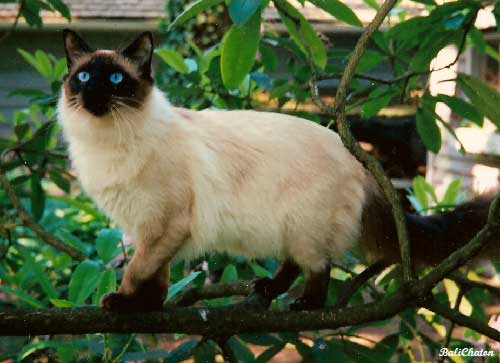
Old-Style Balinese Seal Point – Mary Desmond, CC BY-SA 3.0, via Wikimedia Commons

Muscular but slim, the Balinese cat seems very delicate and flexible in its movements.

With a weight between three and four kilos, the Balinese cats belong to the medium-sized breeds.

Males balinese they can weigh a little more and are around five kilos.

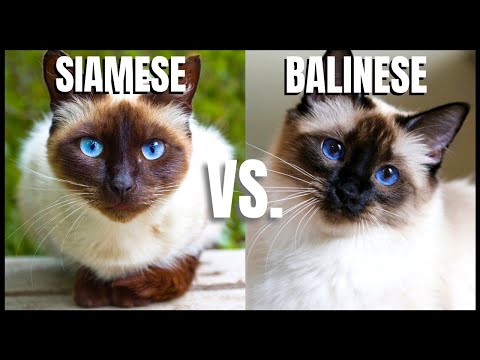
While the body, face and character are similar to those of the Siamese cat original, coat length differs considerably, which is particularly evident in the bushy tail of the balinese. But, from the start of breeding, the balinese has changed a bit and, with its elongated body and its triangular face, has been adapted to the modern variant of the Siamese cat.

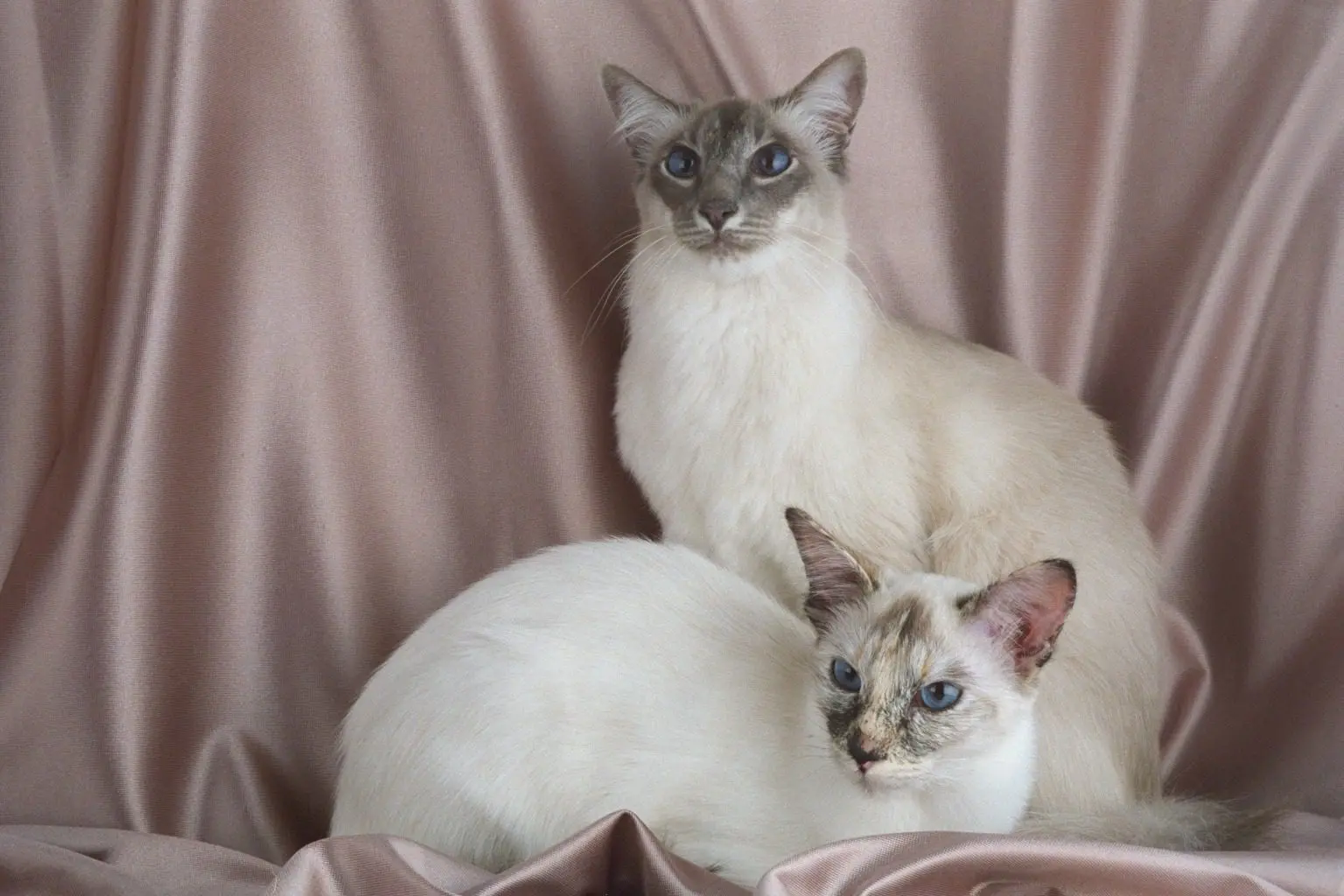
If you want to buy Balinese cats, nowadays you will only find a few breeders that breed this breed in its original breeding way. In most breeders, cat lovers can buy the modern shape of the Balinese cat, whose body is narrower and its head is more wedge-shaped. A distinctive feature of Balinese cat it's her bright blue eyes, that seem especially alive and vibrant.

The only coat pattern allowed is colourpoint: the body is one color, but the tips are a darker and different color. Although the only colors allowed in the original CFA standard, written in 1970, are accepted for the Siamese, that is to say, the seal, the blue, the chocolate and lilac, the vast majority of current standards also allow the cream, The candy, red, apricot and other non-traditional colors.

blue eyes, of a unique beauty, are present regardless of coat color and are characteristic of the appearance of the balinese.

Last, sexual dimorphism is moderately marked, the male being slightly larger than the female.

Varieties of "Balinese cat"
Balinese cat
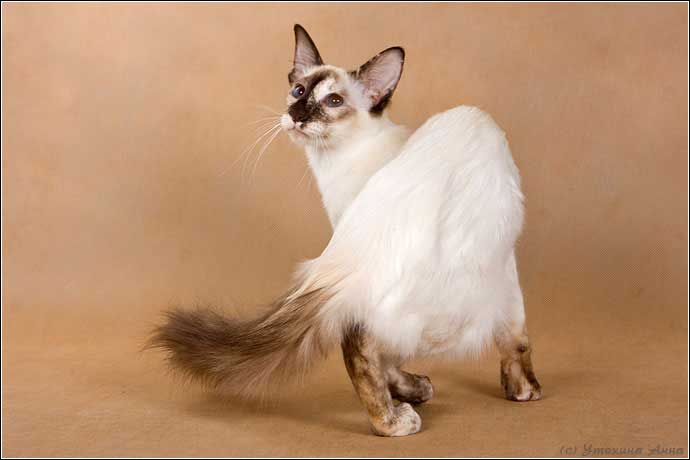
Ghislaine of Chrysanthe, balinese cat, female, chocolate tortie point – Photographer:Anna Utekhina, CC BY-SA 3.0, via Wikimedia Commons

The case of a Balinese cat with colors other than the seal, the blue, chocolate and lilac divide cat lovers from all over the world, as well as various organizations. While the International Cat Association (TICA) and the British Feline Fantasy Governing Council (GCCF) consider that these cats are indeed balinese, the American Cat Fan Association (CFA) consider from 1979 that all "Balinese" of different colors constitute a different race: that of Javanese cat.

Despite the official merger in 2008 of the two breeds under the standard balinese of the CFA, the term Javanese still commonly used in the US. to define the balinese different colors from the original standard.

This term was chosen in reference to the island of Java, neighbor of the island of Bali, in Indonesia: is a nod to the fact that the Javanese its near to balinese.

Character and skills
Balinese cat
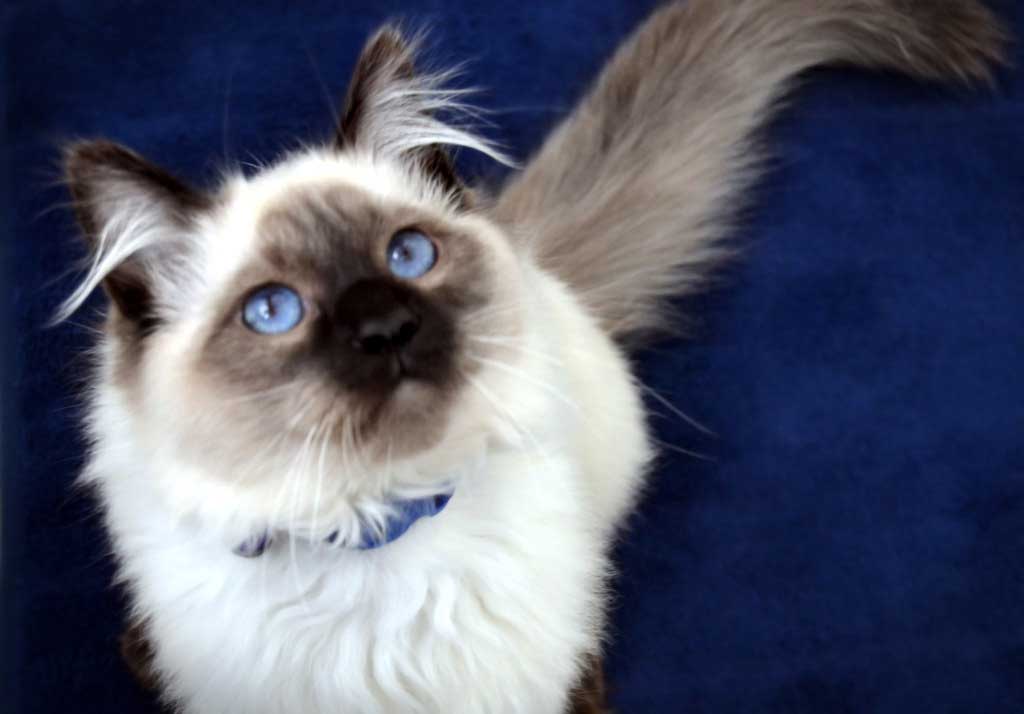
20-week old Balinese kitten – Flickr

The balinese he is a very cuddly cat, who is lovingly attached to his family and does not leave their eyes. They demand a lot of attention, they follow their owner everywhere and constantly seek to play with him or be petted by him. It is sociable, accepts other pets without difficulty and enjoys the company of children, provided they have been taught to behave with animals.

His constant need for attention makes him not tolerate loneliness well, and you can quickly adopt destructive behavior if you feel that your family does not give you the attention you deserve. So, not suitable for a teacher who is absent often.

It is reputed to be sensitive to human emotions, and knows how to comfort a sad man or, on the other hand, share your moments of joy. They also know how to interpret voice intonations, so reprimands can hurt your sensitive nature, while encouragement reinforces the bond they have with their family.

Activos, agile and curious, to the balinese they love to explore the corners of the house. These may include, you can crawl out from under your bed with a toy you lost weeks ago or find that old photo that fell behind your living room closet years ago. But, one of his favorite activities is to climb on the shoulders of one of the family members.

He is also very smart and playful, making you an excellent candidate for teaching your cat tricks. It is very possible that he will learn something by himself, and then come proudly show your family what you can do.

Despite his high energy level, It is a breed of cat that lives very well in an apartment -if the apartment is not tiny- and does not need outer space.

Last, one of the main characteristics of the Balinese cat is your propensity to be vocal. They seem to have an opinion on everything, and they do not stop making it known, commenting from his food to what is on television or the cover of the book his master wants to read in a low voice. Although he has no problem giving long monologues, you expect to be listened to and risk starting over if you think your family has not paid attention to what you are saying. Both in terms of activity level and volume, they are definitely not one of the calmest cat breeds.

Care "Balinese cat"
Balinese cat
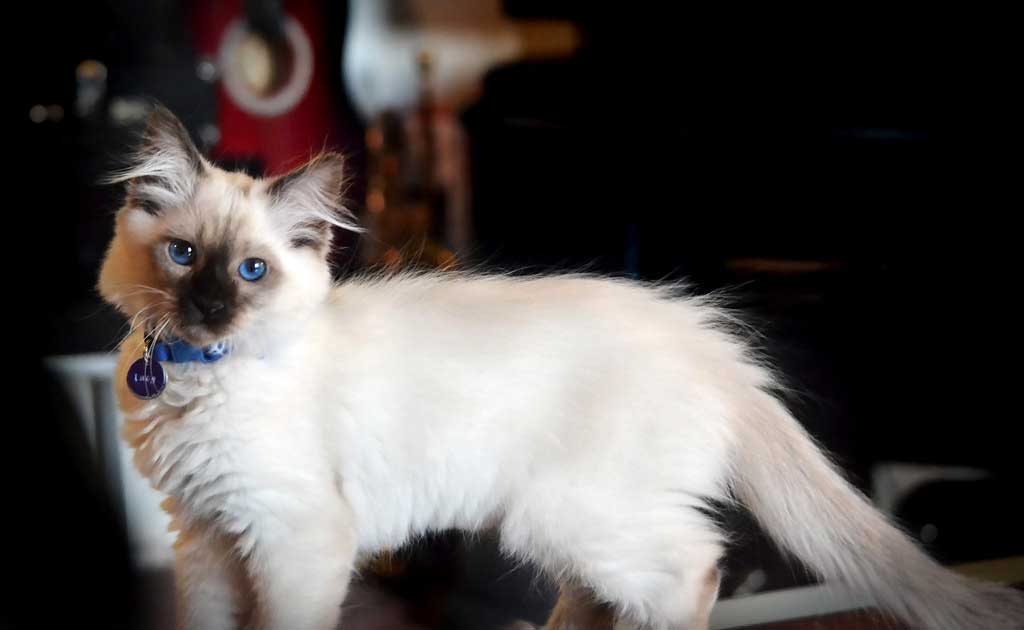
Seal Point Balinese kitten at 13 weeks of age – Flickr

The Balinese cat it is an easy-care breed of cat, since its long and silky coat does not tend to knot and sheds very little. So, a simple brushing once a week is enough.

This brushing session is an opportunity to check that your teeth and eyes are clean., and to pay special attention to their ears, which often need to be cleaned with a damp cloth. It also, make sure its claws are not too long, and trim them if necessary.

Indoor or outdoor cat?

The Balinese cat not necessarily a cat that should be kept outside, since these graceful animals are sensitive to cold. But, as the balinese it is one of the most active cat breeds, your house should be as big as possible and, above all, be equipped with many climbing possibilities. The ideal is to have a well-protected balcony or garden, that can also be used for running. To the balinese cats they also like to get inspired by climbing trees outdoors, and a small pool of water and other play opportunities are always welcome for this breed of cat.

How much activity does he need? "Balinese cat"?

If you decide to have a balinese, it does not matter if it is a puppy or an adult, you should take your time with him. Intelligent breed cats are very affectionate and like to be the center of attention, so they will gladly dispense with the company of other cats, but not from human attention.

So, the Balinese cat he needs a lot of pampering and you also have to take time to keep him busy. The balinese is very receptive to training and learns very quickly, which is why search games are so easy for him balinese how to learn new tricks or intelligence games. However, in regards to scratching opportunities, climb and play, you should also make sure your cat has quiet places to retreat to, since animals tend to prefer places where they have their favorite humans in sight.

Health and nutrition

The balinese is an exceptionally long-lived breed of cats, since many reach or exceed the 20 years of age.

Despite this overall robustness, are at increased risk for certain diseases:

  • The progressive retinal atrophy (ARP), a retinal disease that causes blindness in cats;
  • The amyloidosis, a disease that causes kidney failure and is often fatal;
  • Achalasia or megaesophagus, a gastrointestinal disorder that can cause food blockages;
  • Squint, a vision disorder without serious consequences for the animal;
  • Acromelanismo, a genetic disease that causes changes in coat color based on skin temperature.
  • Last, obesity is a major risk to the health of the balinese, but can easily be avoided with a vigilant and responsible owner.

    Life expectancy

    15 to 20 years

    Food

    When it comes to feeding, should focus on a protein-rich diet. So, a high-quality cat food with a high meat and protein content is essential. Especially since balinese cats they are very active and need a lot of energy, a good diet is essential. As an alternative, can feed your balinese on a soft diet, but you should thoroughly familiarize yourself with the subject and also seek advice from a veterinarian, because only with the right composition can the needs of the cat be met in a specific way.

    For sale "Balinese cat"

    If you want to get a "Balinese cat", you should know that they are very affectionate and that these intelligent purebred cats want to keep busy. Do not underestimate the necessary care of the coat.. If you are thinking of buying a Balinese cat, should only be done by a reputable and responsible breeder.

    Responsible breeders ensure that the Balinese cats are raised in a family and are well socialized. It also, if you want to buy a cat of this breed, you should know that good breeders do not place their balinese in new homes before the end of the imprinting period.

    If you want to buy a Balinese cat, do not respond to ads from amateur breeders offering purebred cats for sale without papers. The balinese kittens should only be purchased from an experienced breeder who is a member of a breeding club. Since experienced breeders only sell cats that have been vet checked and are healthy, should expect to pay between 900 and 1100 euros for a balinese kitten.

    If you want to give a new home to a Balinese cat adult, with a bit of luck you can also find it in shelters and animal protection organizations. Also in this case you will have to pay a nominal fee.

    Videos "Balinese cat"

    Siamese Cat VS. Balinese Cat
    Siamese Cat VS. Balinese Cat
    6 things you should know about the Balinese cat
    6 cosas que debes saber sobre el gato Balinรฉs

    Alternative names:

  • Long-haired Siamese
  • Thai Siamese
  • โ–ท The world of Pets: Dogs, cats, birds, reptiles, amphibians

    Bengal cat
    Recognized by the CFA, FIFe, TICA, WCF, ACF, ACFA/CAA, CCA-AFC, GCCF, NZCF

    Despite his wild looks, the Bengal cat it's a domestic cat, affectionate and very attached to humans

    Bengala

    Content

    History

    The Bengal cat is a recent breed of cat that, despite its name, has nothing to do with the Bengal tiger. In 1963, Jean Sugden Mill, an American breeder, managed to cross a Leopard cat (or Felis Prionailurus Bengalensis, a Southeast Asian feline with the appearance of a leopard but the dimensions of a cat) with a domestic cat, who gave birth to two kittens, one of which was a female named Kin Kin. Against all odds, this female was not sterile and was able to interbreed with her father, giving birth to a litter of kittens, some of which were black, while others had a spotted brown fur.

    It was this first crossing, in 1963, the one that marked the true beginning of Bengal cat, by developing a breeding program to create a new breed in its own right. In fact, if there were already in the past crossing experiments between a domestic cat and Leopard cat, following the example of those already documented in 1889 in the book Our Cats and Everything About Them of Harrison Weir, an English artist with a passion for cats, they did not intend to create a new breed of domestic cat.

    For personal reasons, Jean Sugden Mill could not continue with this experiment, and nowadays none Bengal descend from this line. When he wanted to resume this project a decade later, the Endangered Species Ordinance had made it illegal to import the Leopard cat, so I could no longer acquire this animal to resume these crosses. But, in 1971, the Dr. Willard Centerwall, director of the genetics laboratory at Loma Linda University (California), had started a hybridization program between the domestic cat and the Leopard cat for scientific purposes, with the aim of testing the resistance of these hybrids to the virus of the feline leukosis, a disease that does not affect Asian leopards.

    Bengal cat
    Hereโ€™s our crazy little kitten at 5 months – Sean McGrath from Saint John, NB, Canada, CC BY 2.0, via Wikimedia Commons

    At the end of the year 70, Jean Sugden Mill acquired 8 first generation hybrids Dr. Centerwall and a Mau imported directly from India called Millwood Tory de Delhi. A long and difficult selection process began, during which other well-established breeds were used, as the Burmese cat, the Siamese cat, the American shorthair cat, the Abyssinian cat and the Egyptian Mau, to convert to Bengal cat in what is today: a domestic cat with the wild appearance of Felis Bengalensis, from which he inherited his name.

    But, There is another theory that attributes the name of ยซBengalยป a William Engler, zoo keeper and active member of the Long Island Ocelot Club. Interested in these hybrids since the early years 70, it is said that he was the first to speak of Bengal, and the term comes from his own name: Bill Engler.

    Jean Sugden Mill presented his Bengalis in various feline exhibitions in 1985, and the success was immediate. In 1986, the TICA (International Cat Association) officially recognized this new breed. The GCCF (Governing Council of the Cat Fancy) British followed him in 1997, then the FiFe (International Feline Federation) did the same in 1999, while the CFA (Cat Fanciers’ Association) American waited until 2018 to do the same.

    The Bengal cat had a quick success, especially in France. The first specimen was imported in 1989, and the breed was recognized that same year by the Association Nationale des Cercles Fรฉlins de France (ANCFF). Many breeders were quickly interested, to the point that today the breeding of Bengals is flourishing in France (and internationally recognized), with more than 1000 active creators, that is to say, that have registered at least one litter in the last two years.

    Since 2016, in the framework of meteoric growth, the Bengal cat it has even placed itself on the podium of the most popular cat breeds in France, with more than 3.000 kittens registered every year in the LOOF (Livre Officiel des Origines Fรฉlines), versus just over a hundred at the beginning of the years 2000.

    This great popularity of Bengal it is rather a French specificity. In the United Kingdom, for example, where it suffered a legal restriction until 2007, it is rather between the 15th and the 20th position in the ranking of the most popular breeds, with an average of 300 specimens registered annually with the GCCF, that is to say, some 10 times less than in France.

    In United States, the Bengali entered the Top 20 of America's most popular cat breeds when the CFA finally recognized it in 2018, despite its late recognition and the fact that it is prohibited in some places, like New York City or the State of Hawaii.

    Physical characteristics

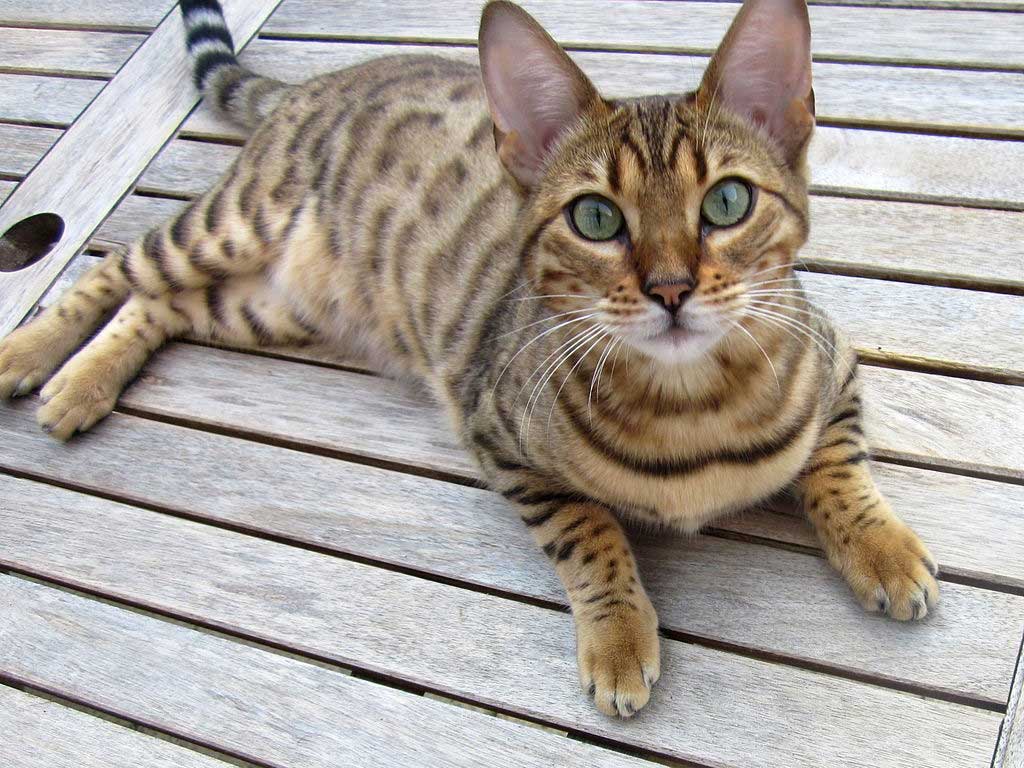
    The Bengal cat it is a domestic cat that has retained the general appearance of a wild leopard. It is a fairly large cat with a long, muscular body, hind legs slightly larger than forelegs and a thick tail with a rounded tip, all of which gives it a classy look. As such, belongs to the long and powerful morphological type.

    Bengal cat
    Bengal cat – Flickr – gailhampshire

    The head is wide, with small rounded ears and large round or oval eyes that express curiosity and intelligence.

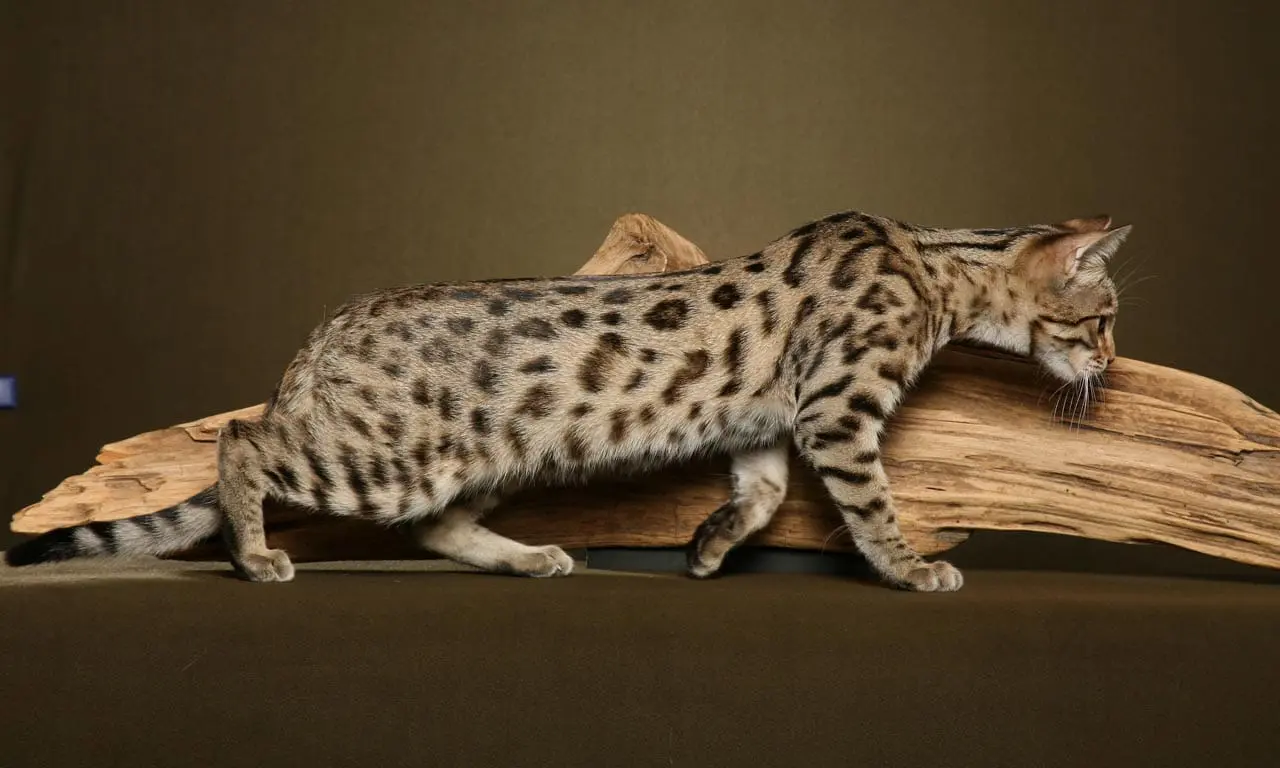
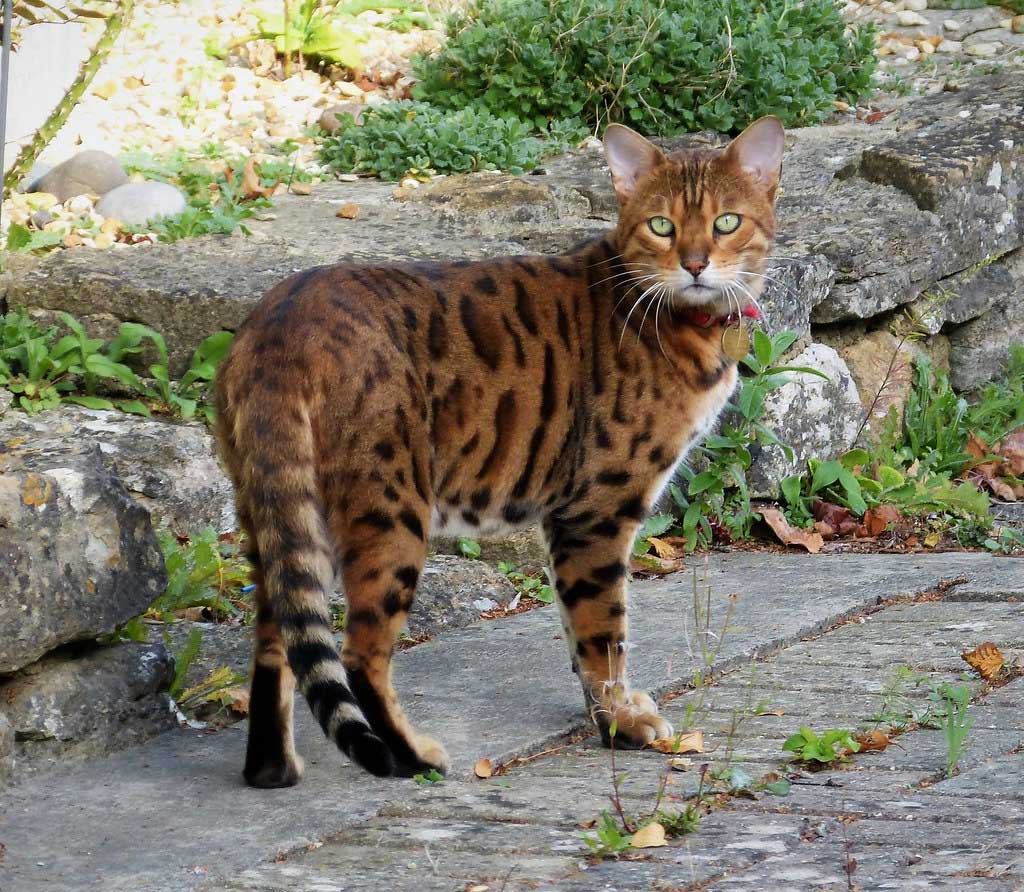
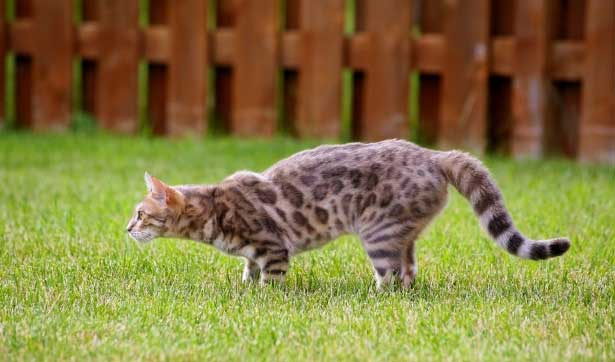
    The fur is short, dense and silky to the touch. Emblematic of the breed, the fur is reminiscent of its wild ancestor, the Leopard cat, with random rosettes or horizontal scrolls. In both cases, these marks are bicolor and well marked.

    Different standards accept many colors, the most common being brown-black, including all gold variations, bronze, copper and mahogany. But, there are also many specimens with an ivory or creamy white color, as well as some rarer ones with a beautiful silver gray.

    Size and weight

  • Size: Of 30 – 35 cm.
  • Male weight: 4,5 – 7 kg
  • female weight: 3,5 – 5,5 kg

  • Varieties "Bengal cat"

    There are two varieties of Bengal: the stained and marbled.

    In the first, rosettes must be large, clear, bicoloured, different and randomly arranged throughout the body.

    The latter has elongated horizontal marks in the form of scrolls that are reminiscent of the veins of marble., bicolor and different.

    There are also specimens with long or semi-long hair, sometimes called Bengal Kashmir. For the moment, only the TICA has recognized this cat as an experimental breed.

    Character and skills

    Bengal cat
    Bengal cat

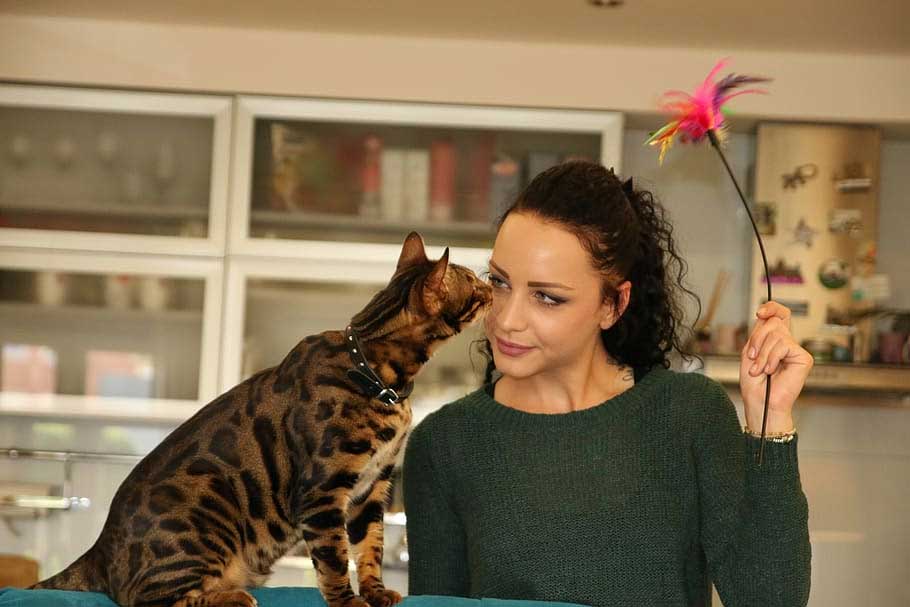
    Despite his wild looks, the Bengal cat it's a domestic cat, affectionate and very attached to humans, whose company constantly seeks. In fact, he is never far from where his master is, To make sure you don't miss anything that happens!!

    He is also very sociable with other cats and dogs, provided they are also used to cats. But, they may still have some wild reactions, especially towards small domestic rodents, those who can be mistaken for prey and chase.

    It is a very active and curious cat, who spends his time playing, chasing, fucking, exploring… before coming to rest near his master. He especially likes cat trees, that allow you to jump from one platform to another and settle in a high place to observe your environment from the highest. This energy expenditure is not unique to puppies: the Bengali is hyperactive and playful even as an adult, and is not the ideal companion for an older person who wants a quiet animal. Having said that, can be perfectly adapted to life in a flat, as long as you receive the necessary care… and that your family is not offended by the possible mischief you may cause.

    Lively, explorers and playful, they can also be occasionally destructive. This is especially true in the case of females., which tend to be more excessive than males, both in their games and in their displays of affection. To minimize this risk, it is advisable to ensure that the Bengali get all the care you need: if you are left alone too often without occupation throughout the day, it is likely that he will find a way to remind his master of his existence, and this will not necessarily be in a pleasant way for this one…

    The Bengal cat it is also a very intelligent breed, able to adapt and learn quickly. So, if a light turns on by itself at night or if a door that had been left closed is found to be open, there is no reason to believe that it is the work of a ghost: your partner has simply learned to press the switch or turn the handle. This makes him a good candidate for teaching your cat tricks and training.. In fact, it is not uncommon to see a Bengali who has learned to use the toilet or to take things to the owner. But, do not lose sight that it is still a cat, with his independent and stubborn character: although this may give results, training (for example with clicker, which is very suitable) requires a lot of patience.

    It also, it is a breed of cat that loves water. This characteristic has been inherited from its ancestor the Leopard cat, who is an excellent fisherman. Some individuals do not hesitate to follow their master even under the shower!! It is logical that aquarium enthusiasts know that the inhabitants of an open aquarium are likely to end up in the clutches of this experienced hunter.…

    Last, the Bengali It, in general, a pretty talkative cat, with a wide range of sounds, ranging from chirping to a low, hoarse noise reminiscent of certain big cats.

    Care "Bengal cat"

    Bengal cat
    Or is it a tiger? – ReflectedSerendipity from United Kingdom, CC BY-SA 2.0, via Wikimedia Commons

    The BengalIt is an easy-care breed of cats, since it is only necessary to brush the cat's fur to remove dead hair and distribute the oil from the skin once a month. It also, it is seldom necessary to bathe your cat.

    As in the case of all cats, regular check-ups of teeth, the ears and eyes will help avoid the risk of infection.

    Last, its claws may be clipped from time to time, when necessary.

    Indoor or outdoor cat?

    The athletic Bengalis need a lot of exercise to feel comfortable. It is best to offer them a large house with a garden where they can roam.. If you decide to keep them inside, it should also provide them with enough space and opportunities to play and climb.

    These freedom-loving animals don't feel comfortable in small city flats. A sturdy cat tree or climbing track should fit the floor.

    The "Bengal cat" have great jumping ability and no lift is out of reach. Definitely, you should take this into account before bringing a Bengal cat to your house. Especially when they get bored, big cats tend to wreck the floor. In general, it is advisable to maintain a Bengal like a free animal and provide you with enough to do indoors. With outdoor cats, can you be prepared for these cats, otherwise so loving, go for a walk for two days in a row.

    How much activity does he need? "Bengal cat"?

    Due to their offspring from wild cats, the Bengal cats belong to the very active cat breeds. They are persistent climbers and need a lot of exercise. The best place for them to vent is the scratching post., during hunting games or, ideally, in the open air.

    Regular hunting games with a rod, hunting mice or balls along with your human are also a great activity. Mental stimulation with smart toys or learning little tricks is essential so that cats do not get bored.

    If you are often away from home, cats need company. They get along better with other cats. It is one of the few breeds of cats that loves water so it will easily be entertained by a leaky faucet.

    Health and nutrition

    The Bengali has a fairly robust health, having inherited from Leopard cat remarkable longevity for a domestic cat.

    But, have a predisposition to certain diseases:

  • The Hypertrophic cardiomyopathy (MCH), a disease that makes it difficult for the heart to circulate blood;
  • The Chronic anemia, a genetic disease that can be detected by any decent Bengal breeder by a simple test;
  • The Progressive Retinal Atrophy (ARP), another genetic disease that can also be detected by a simple test, allowing carriers to be excluded from breeding;
  • The cataract, an opaque film on the cornea of โ€‹โ€‹the eye that can cause blindness in the most severe cases.
  • It also, being quite large and very active, are prone to Hip Dysplasia.

    Last, it is important to know that, unlike his ancestor the Leopard cat, the Bengal not immune to feline leukosis.

    Life expectancy

    12 to 16 years

    Food

    The Bengal fits perfectly in commercial cat food, both croquettes and canned wet food. But, it is important to make sure your Bengal cat eat a quality food that contains all the essential nutrients necessary for their development.

    There should always be enough food and fresh water. But, no risk of obesity in cats; on the one hand, because they are quite active, and on the other, because they are able to regulate their own weight.

    For sale "Bengal cat"

    Bengal cat
    Bengal cat

    If you want to have a Bengal cat, you should know that this breed is one of the most expensive. For a healthy kitten you will pay between 1000 and 2000 EUR in a serious breeder. The price mainly depends on the type of leopard coat.

    The Bengal cats with pedigree and physical characteristics that make them suitable for breeding are priced between 2000 and 3000 EUR.

    Breeders also differentiate between the three categories of companion animals, breeding and exhibition. as creator, usually only kittens showing small deviations from breeding targets are obtained. In the purchase contract you have to agree not to use the cat for breeding.

    Criticism of the breeding of "Bengalis"

    Critics of breeding "Bengal cat" they believe that it is irresponsible to cross a wild animal with a domestic cat just to obtain a certain coat pattern. According to animal rights advocates, the first mating is even a torture brood, since complications often arise at birth. Many of these wild cat hybrids continue to display the character traits of a wild animal.. So, before acquiring a cat of this type, you must be very sure that, even though you have inherited the activity from your ancestors, will be able to lead a life appropriate to his species.

    Characteristics "Bengal cat"

    Coexistence is important that you have with your new friend. Before considering the acquisition of a cat of the breed "Bengal cat" you know certain factors. You must take into account their character, their need for exercise, their interaction with other pets, their care and if you have small children, their level of tolerance towards them.

    Joy

    5,0 of 5 stars (based on 1 review)

    Activity level

    5,0 of 5 stars (based on 1 review)

    Friendliness to other pets

    2,0 of 5 stars (based on 1 review)

    Friendliness to children

    2,0 of 5 stars (based on 1 review)

    Grooming requirements

    1,0 of 5 stars (based on 1 review)

    Vocality

    2,0 of 5 stars (based on 1 review)

    Need for attention

    4,0 of 5 stars (based on 1 review)

    Affection towards its owners

    4,0 of 5 stars (based on 1 review)

    Docility

    1,0 of 5 stars (based on 1 review)

    Intelligence

    5,0 of 5 stars (based on 1 review)

    Independence

    2,0 of 5 stars (based on 1 review)

    Hardiness

    3,0 of 5 stars (based on 1 review)

    Videos "Bengal cat"

    These Beautiful Bengal Cats Are Incredibly Intelligent | Cats 101
    These Beautiful Bengal Cats Are Incredibly Intelligent | Cats 101
    Benji the Bengal Cat: from Kitten to Adulthood
    Benji the Bengal Cat: from Kitten to Adulthood