โ–ท The world of Pets: Dogs, cats, birds, reptiles, amphibians

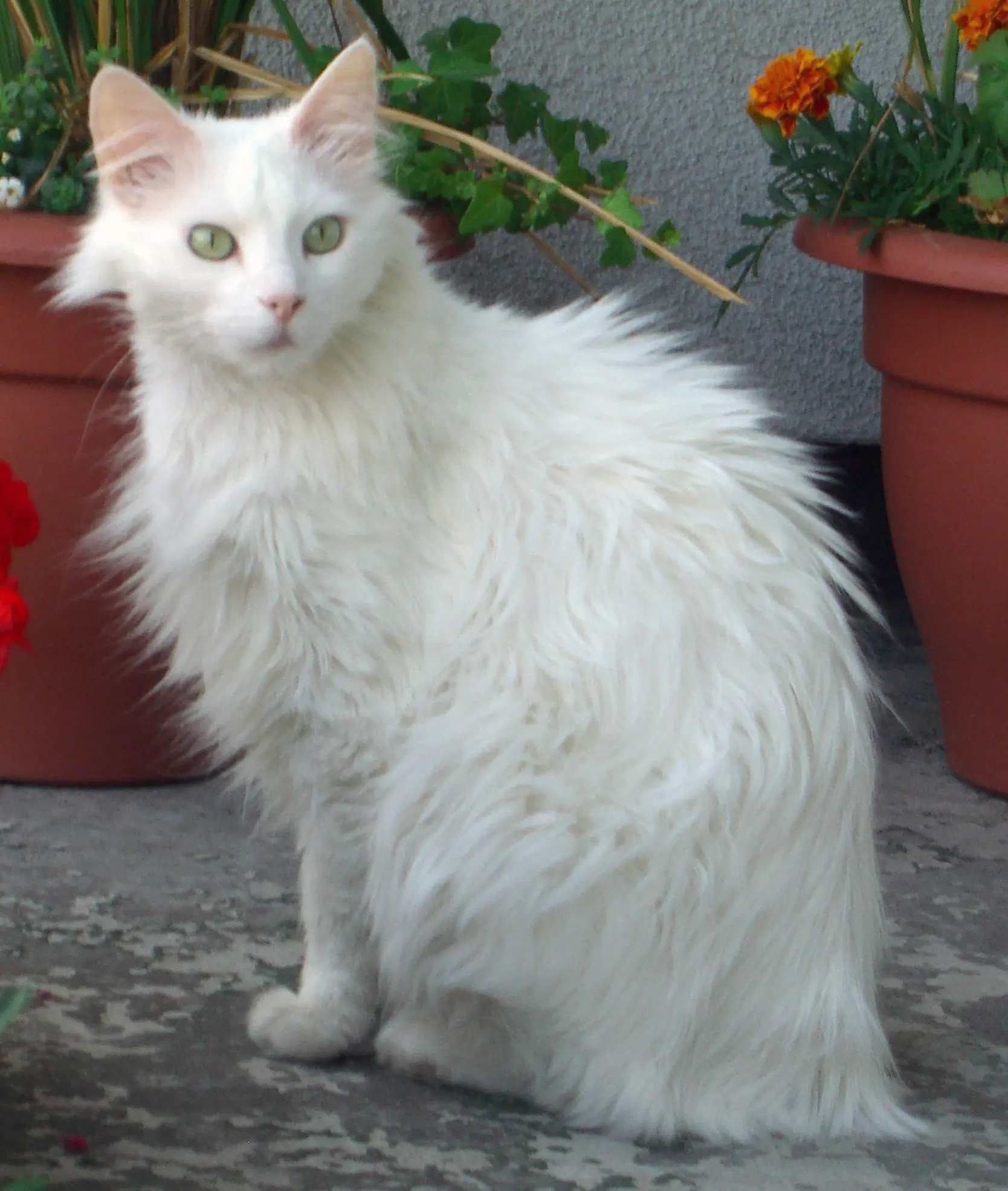
Turkish Angora cat
Recognized by the CFA, FIFe, TICA, ACFA/CAA, CCA-AFC

The Turkish Angora cat remains the national animal of Turkey today.
Angora Turco
Photo: Wilkipedia

Content

History

The Turkish Angora cat It, as the name reflects, a breed of cat native to Turkey, where she was prized for her long hair and fur. Angora is the ancient name of the capital of Turkey, currently Ankara. This breed of cat has a long history, since it is estimated that it can be traced back to ancient Egypt.

In XVII century, the Turkish Angora cat It was introduced to Europe by an Italian explorer named Pietro Della Valle and by a French named Nicolas de Peiresc, who brought several copies to their respective countries. It was a success, since it was the first breed of long-haired cat, since the other European domestic cats were short or semi-long hair. The Swedish naturalist Linnaeus called it Cattus Angorensis to distinguish it from the domestic cat and Chartreux cat, and the French biologist Buffon called it "Angora cat with long hair and completely white.".

Such was the popularity of the cat's fur color that it served as a "royal gift", being appreciated by the entire European aristocracy, especially the court of Louis XV. Painters of the time even chose her as a model to represent their cats in their paintings, for its elegance and beauty.

In the 19th century, the Turkish Angora cat contributed to the birth of Persian cat, to the one who transmitted the gene responsible for long hair. But with the passage of time and the dangerous crosses with other breeds of cats, the Turkish Angora lost the characteristics that had made it famous. At the same time, the dazzling success of the Persian, chosen as a breeding base by the English in Victorian times, caused a disinterest in the Turkish Angora cat as dazzling as its success, to the point that it almost disappeared after WWII. The Turkish government decided to protect the remaining specimens to ensure the survival of the breed, so he decided to prohibit its export.

Finally, The breed was saved by American cat breeders who managed to obtain them from the Ankara Zoo in 1959 a couple of Turkish Angora Cats llamados Star (What does "Star" mean?) y Yร„ยฑldร„ยฑzcik ("Little Star"). The current Turkish Angoras were born from this couple. Interest in the breed was rekindled in 1963, when the breeders in question presented her to the rest of the world. La C.F.A. (Cat Fanciers’ Association, one of the leading American feline organizations) recorded the first animals in 1970 and recognized the breed in 1973. La F.I.Fe (Fรฉdรฉration Internationale Fรฉline) did the same in 1988.

Despite its beauty, the Turkish Angora cat it is not yet widespread in the world and is still protected in Turkey: some zoos continue to breed to ensure the survival of this breed, which is still considered "fragile". But, the Turkish Angora It is one of the favorite feline breeds of the French, and is often featured at feline shows.

Physical characteristics
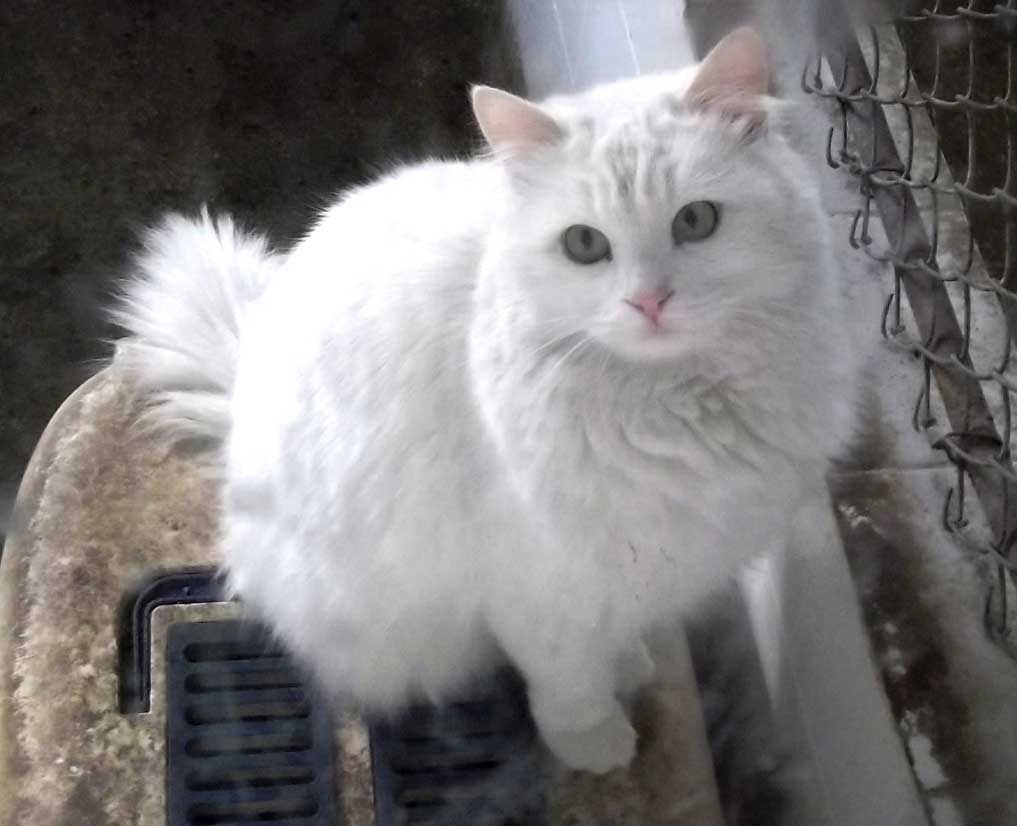
Turkish Angora
Turkish Angora cat at the Atatรผrk Forest Farm and Zoo in January 2012. The zoo breeds and sells Turkish Angora cats – Ankaracats, CC BY 3.0, via Wikimedia Commons

The Turkish Angora cat it is a small to medium sized cat, with a graceful appearance, has a beautiful head that tapers downwards and is relatively small in relation to the rest of the body. The muzzle has no pinches, the nose is slightly curved, the ears are set high on the head, turns forward and has a lock of hair at the end.

The legs of the Turkish Angora cat they are long and thin, with oval legs and tufts of hair between the toes. The tail is wide at the base and tapers as it grows. The tail is quite long compared to the rest of the body and feathery in appearance., due to the long hair.

The coat is of medium to long length, fine and silky, with a very light undercoat. The hair is slightly more numerous and wavy on the belly. Due to its dense fur, the turkish angora may appear much larger than it actually is: is light-boned and does not usually exceed 5 kg. The molt occurs in summer and is quite considerable.

Originally, only a completely white gown was allowed. Today, although the white variety is still the most popular by far, a wide range of single-color coats is tolerated, bicoloured, brindle and smoked. Just some colors, like chocolate or mink, are not recognized by the standard.

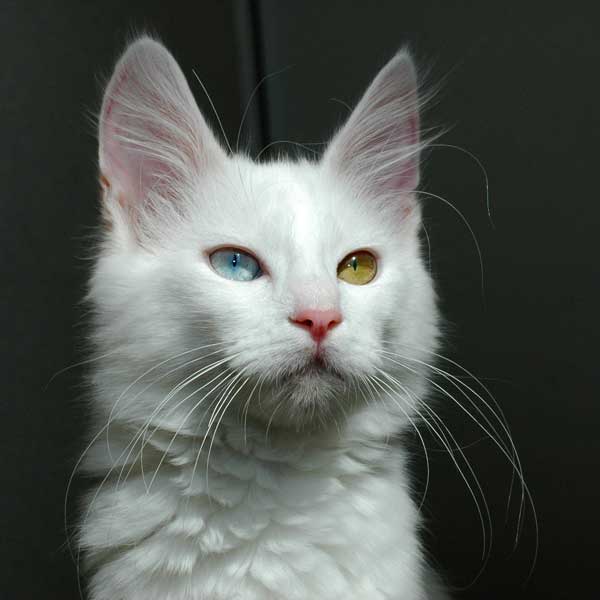
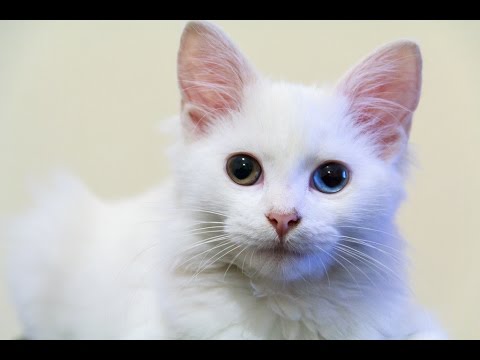
Large, almond-shaped eyes are traditionally amber in color. In the white variety, blue or minnow eyes are also accepted (that is to say, with two different colors), while in the gold and silver varieties green eyes are also tolerated.

Size and weight

  • Height: 30 – 35 cm.
  • Weight: 2,5 – 5 kg
  • Character and skills

    Turkish Angora
    A white Turkish Angora cat with odd eyes (heterochromia), which is common among the breed – Karatas., Public domain, via Wikimedia Commons

    The Turkish Angora cat it is a very sociable and affectionate cat, who likes to be the center of attention, to the point of being a bit loud at times. Enjoys the company of its owner and other animals, including dogs, and he especially likes children. Being a very playful and intelligent cat, can learn some tricks, how to stand up on its hind legs when presented with a toy or treat, or retrieve and return a small ball.

    The Turkish Angora cat he is also an observant cat, and nothing escapes him: is everywhere, following your every move, jumping on your shoulders when you least expect it and picking up your pen as you write. He is very capable of running after taking the glasses case, the glove or tights that were lying on the ground. But she knows how to make up for it by purring and stroking it.

    Robust, athletic and hunter, the Turkish Angora is a very independent cat that values รขโ‚ฌโ€นรขโ‚ฌโ€นits freedom. They need to have a lot of space to develop and they don't like being confined to one floor.

    Last, it is one of the few cats that loves water, and will gladly take a dip in a basin or bathtub if given the chance.

    Care "Turkish Angora cat"
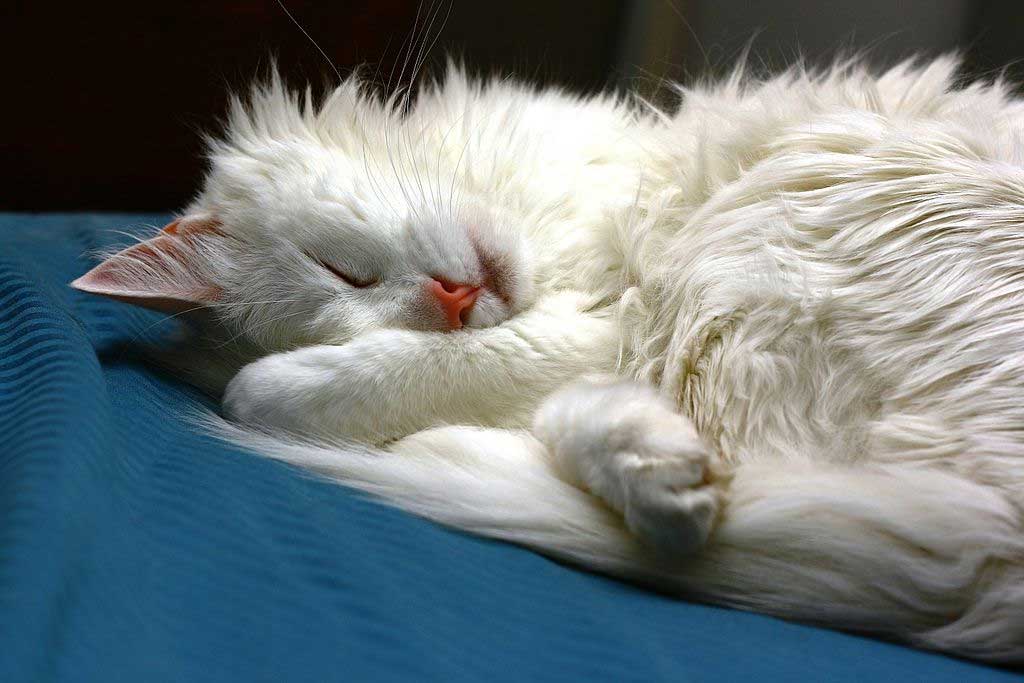
    Turkish Angora
    Sleeping cat, white long-hair Turkish Angora – Roo72, CC BY-SA 3.0, via Wikimedia Commons

    The Turkish Angora cat Grooming his silky fur himself, so it is enough to brush it from time to time. This helps remove loose hair and strengthens the bond between you and your cat.. How long-haired cats tend to swallow more hair, hairballs can form in the digestive tract. To reduce the formation of these hairballs in the stomach, there are special foods for cats.

    Food

    Due to the long and dense coat of the Turkish Angora cat, it is recommended to feed the dog a diet rich in fiber so that it can more easily evacuate the trichobezoars (hair balls) what you eat when preening, and thus limit the risk of digestive problems.

    Indoor or outdoor cat?

    The Turkish Angora cat he is a very calm cat and, therefore, ideal for interiors. It is not particularly demanding in terms of its accommodation conditions and also settles for less space. Especially as an indoor cat, develops an intimate relationship with its owner and enjoys being with the family. For this reason, the loving cat should not be left alone for a long time. If you have the opportunity to let the cat out under supervision, give this opportunity. They enjoy observing their surroundings from an elevated position and breathing fresh air.

    How much activity does he need? "Turkish Angora cat"?

    This lively and active cat loves creative and challenging toys. He also enjoys learning little tricks., how to recover toys. A sturdy scratching post for playing and sleeping also offers great employment opportunities and also helps the cat care for its nails.. Extensive petting is a must for this affectionate, people-oriented cat.

    For sale "Turkish Angora cat"

    The Turkish Angora cat it is an excellent cat for beginners, but it also needs enough affection and care. Before buying a cat, you must be sure that you can offer him a full life. Once you have decided on the breed, you must visit a trusted breeder who belongs to a registered club. Pay attention to the behavior and health of kittens and parents as well. For a purebred kitten with papers you pay a few 800 EUR. In the animal shelter you can sometimes find a cat that looks and behaves like a Turkish Angora cat.

    Characteristics "Turkish Angora cat"

    Coexistence is important that you have with your new friend. Before considering the acquisition of a cat of the breed "Turkish Angora cat" you know certain factors. You must take into account their character, their need for exercise, their interaction with other pets, their care and if you have small children, their level of tolerance towards them.

    Joy

    4,0 of 5 stars (based on 1 review)

    Activity level

    4,0 of 5 stars (based on 30 reviews)

    Friendliness to other pets

    3,0 of 5 stars (based on 1 review)

    Friendliness to children

    3,0 of 5 stars (based on 1 review)

    Grooming requirements

    3,0 of 5 stars (based on 1 review)

    Vocality

    1,0 of 5 stars (based on 1 review)

    Need for attention

    4,0 of 5 stars (based on 1 review)

    Affection towards its owners

    4,0 of 5 stars (based on 1 review)

    Docility

    2,0 of 5 stars (based on 1 review)

    Intelligence

    4,0 of 5 stars (based on 1 review)

    Independence

    2,0 of 5 stars (based on 1 review)

    Hardiness

    3,0 of 5 stars (based on 1 review)

    Videos "Turkish Angora cat"

    Turkish Angora - Turkish Angora / Cat Breed
    Turkish Angora – Turkish Angora / Cat Breed
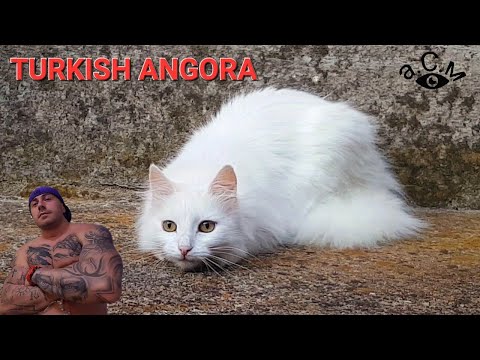
    WHITE CAT TURKISH ANGORA ะฐ.ะก.ะผ
    WHITE CAT TURKISH ANGORA ะฐ.ะก.ะผ

    โ–ท The world of Pets: Dogs, cats, birds, reptiles, amphibians

    Celtic shorthair cat (Common european cat)
    Federations: LOOF, ACF, FIFe, WCF

    Cรฉltico de pelo corto
    Photo: Wilkipedia

    Content

    History

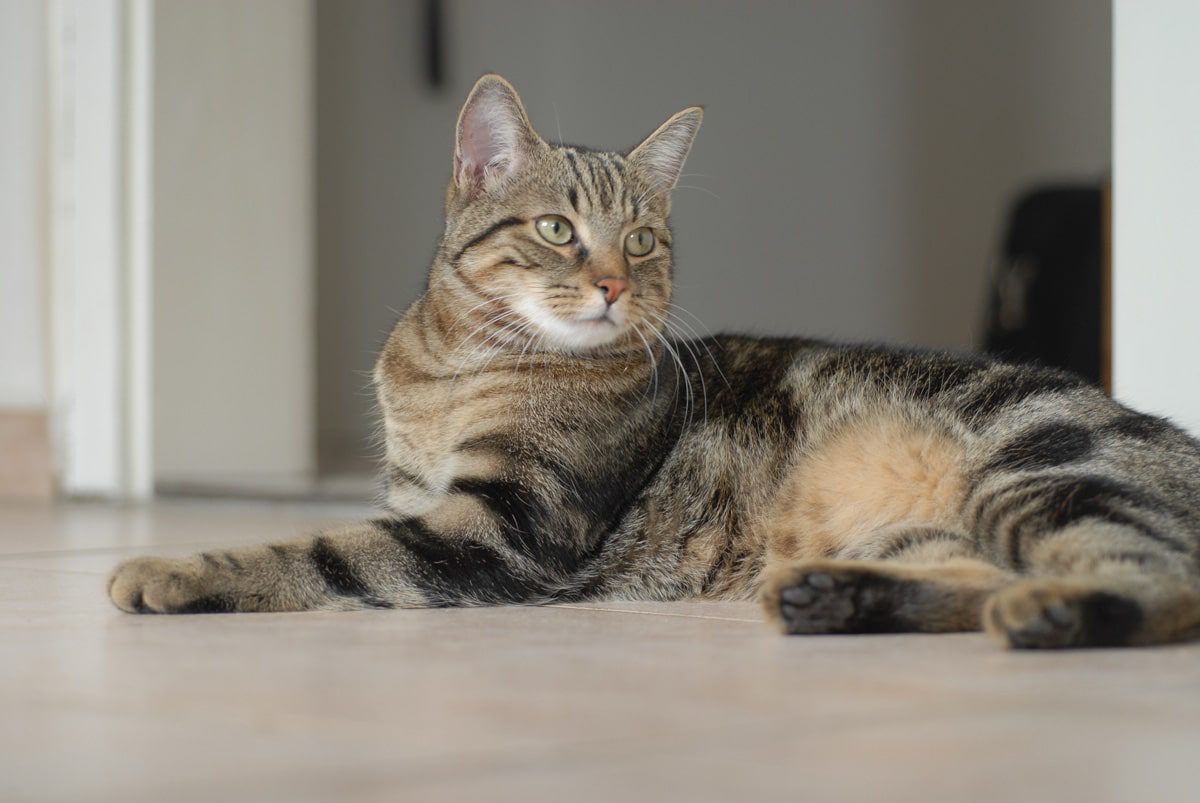
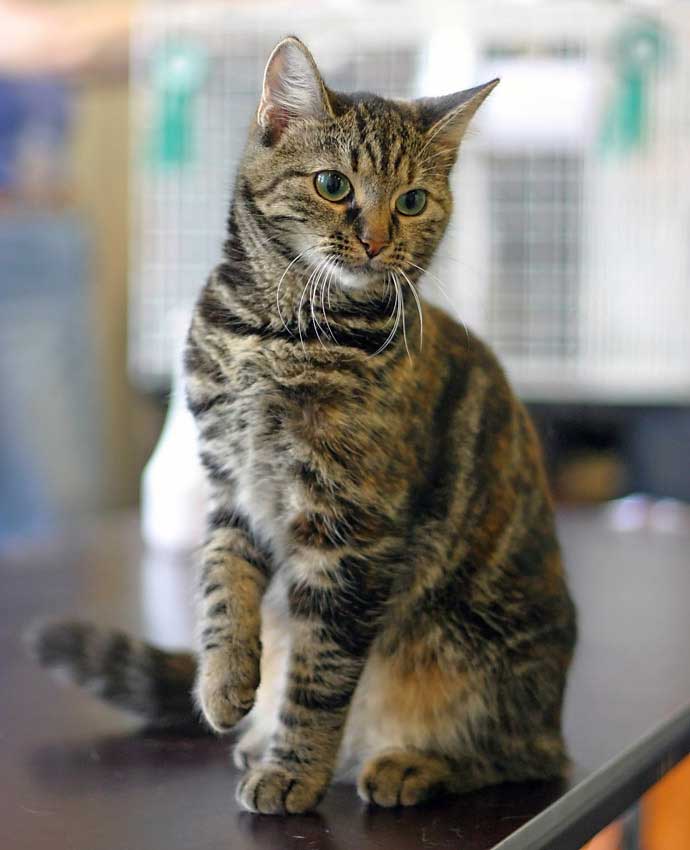
    The Celtic shorthair cat corresponds to a european domestic cat medium, It has developed course, without any breeding plan.

    The celtic short hair has its counterparts in Great Britain ( British Shorthair cat ) and EE.UU. ( American shorthair cat ).

    A breed from Central Europe, solemnly developed for aesthetic purposes. The modern European shorthair has its origin in common domestic animals. By creating a new breed, breeders strove to realize its usefulness, while reducing their desire to wander the streets and, in general, made them more emotionally stable. To get it, the domestic cats they crossed paths with Persians and, especially in France, with Carthusians. Contemporary British Celts were blue, and the Germans bred mostly silver and white.

    The breeding process began at the beginning of the 20th century, and the first standard is dated in 1925. Even despite that, FIFe has given its official acclaim as late as in 1982, And they were treating the Celts like shorthaired Brits from before. According to the WCF standard, The "Celtic" in the name of the breed indicates its historical origin.

    Physical characteristics

    According to the World Cat Federation standard (WCF)

    Body Medium to large in size, strong and muscular, not too compact, but agile.
    The rib cage is round and well developed.
    Strong and solid legs of medium length, tapering evenly to firm, round legs.
    The tail is of medium length with a broad base and tapers slightly to a rounded tip..
    Head Wide head gives a rounded impression, it is a little longer than it is wide.
    The nose is straight, medium in length and equally wide throughout its length.
    The profile is clearly curved, the neck is of medium length and muscular..
    Ears The ears are medium in size with slightly rounded tips, that they can have tufts.
    The ears are wide and almost erect. The ears are as high as their width at the base.
    Eyes The eyes are round and open, well spaced and set at a slight angle.
    The color of the eyes must be uniform and correspond to the color of the coat.
    Shelter The fur is short, dense, firm and shiny.
    Color varieties The colors chocolate and cinnamon, as well as its dilution (lilac and fawn) they are not recognized
    in no combination (bicolor, tricolor, striped).The pointy pattern is also not recognized.
    All other colors and patterns are recognized Any amount of white is allowed Description
    of the colors is included in the general color list.
    Observations
    • The Celtic shorthair cat equates to a European domestic cat medium, that has developed naturally, without any planned breeding goal.
    • The Celtic shorthair cat ideal is free from any crossing with other recognized breeds.

    Character and skills

    Celtic shorthair
    Femelle European shorthair in Helsinki cat show – Heikki Siltala, CC BY 3.0, via Wikimedia Commons

    Since the breed was developed from domestic cats, they have very different temperaments, the character of the European or Celtic shorthair cat it is impossible to summarize.

    The members of this breed can be very affectionate, but there are others who prefer to be outside and chase mice. Most of the European they are strong and healthy, and they are generally friendly. They get along well with other cats and tolerate dogs well. They are intelligent and playful, and most of them are experts in keeping houses and gardens free of mice.

    Health

    They are known for their good health and resistance to infection.

    Grooming

    These cats are very easy to care for, since their coat looks good when brushed periodically. But, during the hot season, their coat may require additional attention.

    Alternative names:

  • Celtic Shorthair (WCF)
  • European Shorthair (FIFe)
  • โ–ท The world of Pets: Dogs, cats, birds, reptiles, amphibians

    Burmilla cat
    Recognized by the LOOF, ACF, FIFรฉ, GCCF, WCF. TICA, CFA

    Burmilla
    Photo: Some rights reserved by ramtops - Flickr

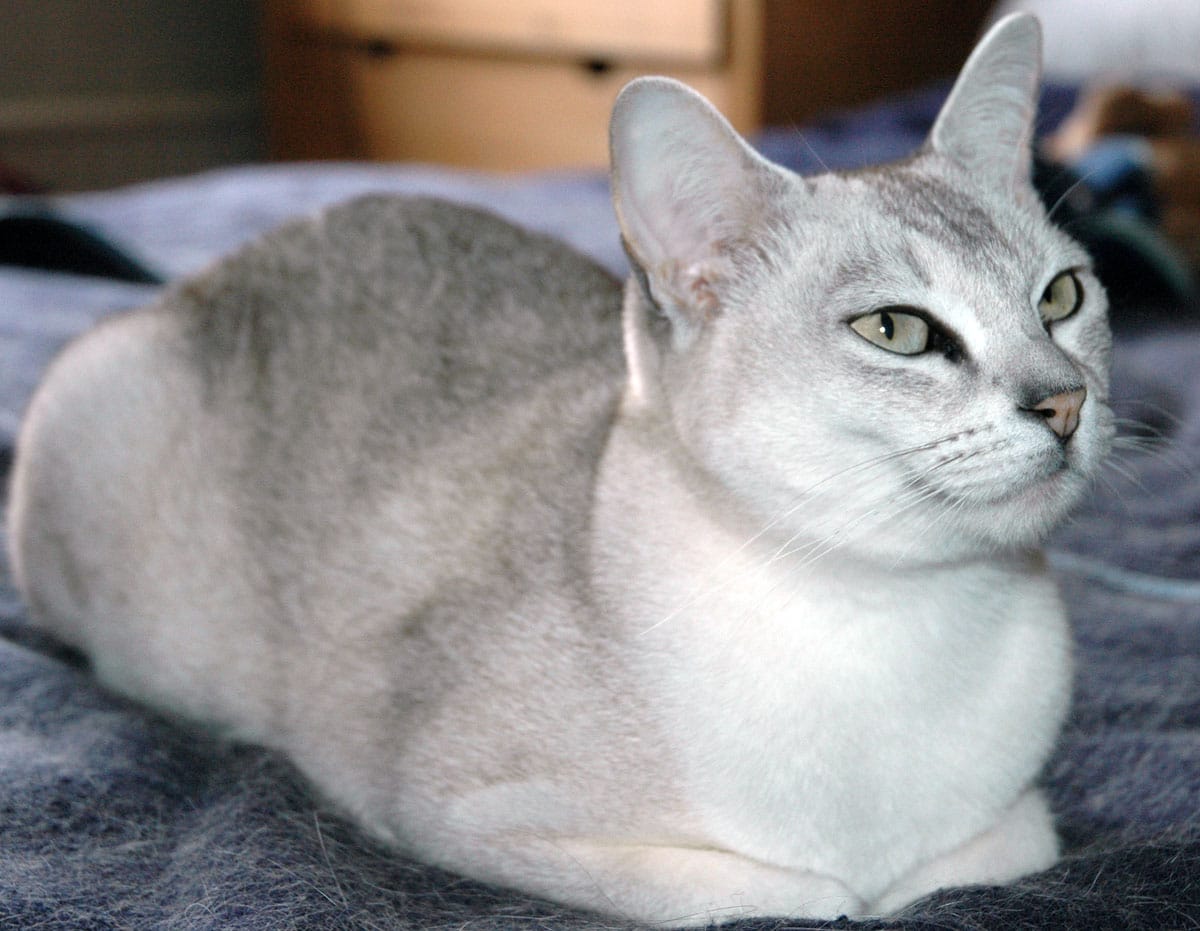
    The Burmilla cat born as a result of an accidental cross, in the United Kingdom between a cat chinchilla Persian and a Burmesa lilac, and fruit of this cat love affair, in 1981 its four kittens are born. In the year 1984 imported several cats of this breed to Denmark.

    Burmilla and bunny
    Photo: Burmilla.co.UK / Bellabonny Quicksilver (female) & Bunny

    The Burmilla is considered part of the race of the Asian Group.

    Its color is white but as if a blanket of shadows and shades of black. Although different patterns are presented, Silver with black or white colors, blue, chocolate, lilac, red, cream and turtle. The different brands and colors are more than 40 different layers.

    Their eyes have oblique form of large size, the bottom line is very curved, always in various green tones.

    Are medium-sized with muscular bodies, round face and short snout

    The Burmilla is a very irreverent and independent cat who adores his owner and displays many kitten-like characteristics., even in adulthood. In temperament that are sociable, playful and affectionate, and they get along well with children and other animals.

    Cat breeds: Burmilla


    โ–ท The world of Pets: Dogs, cats, birds, reptiles, amphibians

    German Angora cat
    Recognized by WCF

    Angora alemรกn
    Shiningdiamonds by cattery - of the allerfeinsten.de

    Content

    History

    At the end of the 19th century they appeared repeatedly in the paintings of Anton Julio Adรกn, called "Adam-cats", in the from Henriette Ronner-Knip and in the work of Arthur Heyer strikingly similar this breed semi-long haired cats.

    In this period there was no organized breeding of pedigreed cats on the mainland.

    The German Angora cat was originally bred from semi-longhair cats bred and house cats by Mrs.. Aschemeier who retired from breeding in 2010 . Aschemeier always referred to his long-haired cats, as German, not as Angoras.

    The German Angora cat was not recognized by any cat association.

    The breeders of the Angora Alemรกn they claimed there was no German Longhair Cat genuine since they are extinct. They describe the German Angora cat as natural long hair in the same way as the ยซNorwegian Forest Cat ยซ, both are natural hairy breeds.

    Was not up 2007, When were the hairy Germans recognized. The German Angora cat longhair and the German Longhair Cat they were synonymous with a race.

    In 2007, the Council of administration of the Club German of cat Angora rejected this idea, that ended in a dispute that ended up dividing the Group of breeders.

    The German Angora became a trademark and could only be bred by the German Angora Cat Club. International recognition has not been sought.

    In the meantime, the German Longhair Cat is raised to meet the old image. Both breeds are described as very similar and both have crossed to the old style of the Persians to improve conformation and coat.

    Physical characteristics

    This breed has a silky hair, with a lot of background layers and do not tend to sticky. Your body is strong and robust (Cobbytyp). It has a round head and a powerful broad nasal bridge. The eye color should be green, but other colours are permitted. The tail is profusely covered and is intended to show long hair waving. All colors are permitted.

    Character and skills

    The German Angora cat is considered an active and playful cat, very people-oriented. In a group it is social and friendly.

    โ–ท The world of Pets: Dogs, cats, birds, reptiles, amphibians

    Nebelung cat
    Federations: TICA, LOOF, GCCF, WCF

    Content

    Characteristics "Nebelung cat"

    Coexistence is important that you have with your new friend. Before considering the acquisition of a cat of the breed "Nebelung cat" you know certain factors. You must take into account their character, their need for exercise, their interaction with other pets, their care and if you have small children, their level of tolerance towards them.

    Joy

    4,0 of 5 stars (based on 1 review)

    Activity level

    4,0 of 5 stars (based on 1 review)

    Friendliness to other pets

    4,0 of 5 stars (based on 1 review)

    Friendliness to children

    3,0 of 5 stars (based on 1 review)

    Grooming requirements

    3,0 of 5 stars (based on 1 review)

    Vocality

    2,0 of 5 stars (based on 1 review)

    Need for attention

    4,0 of 5 stars (based on 1 review)

    Affection towards its owners

    4,0 of 5 stars (based on 1 review)

    Docility

    3,0 of 5 stars (based on 1 review)

    Intelligence

    4,0 of 5 stars (based on 1 review)

    Independence

    2,0 of 5 stars (based on 1 review)

    Hardiness

    4,0 of 5 stars (based on 1 review)

    History

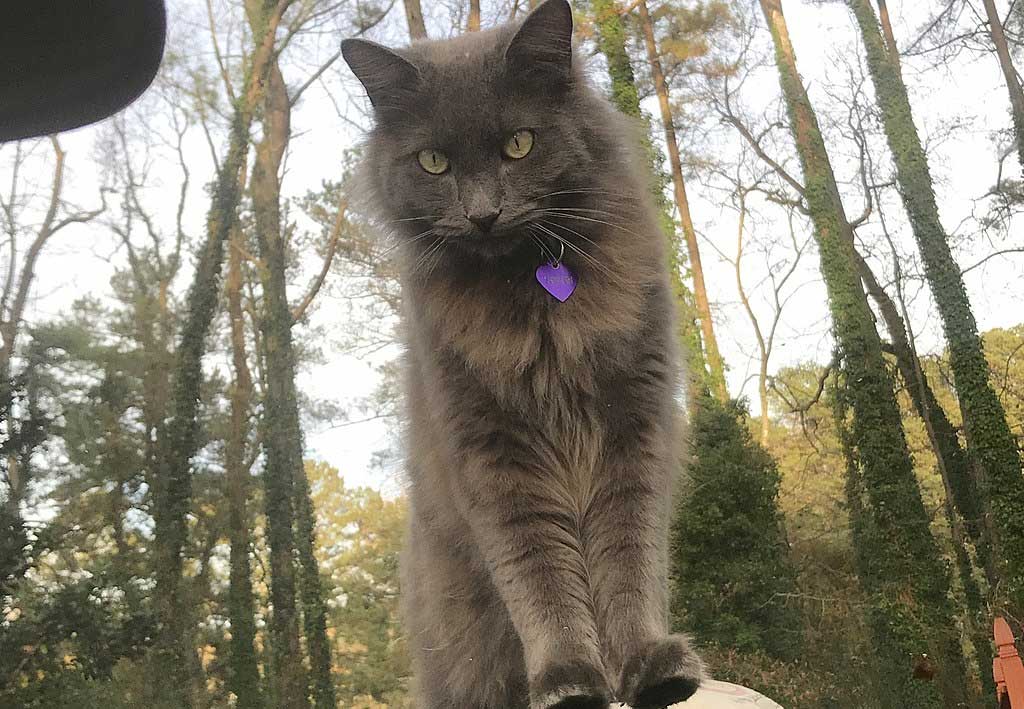
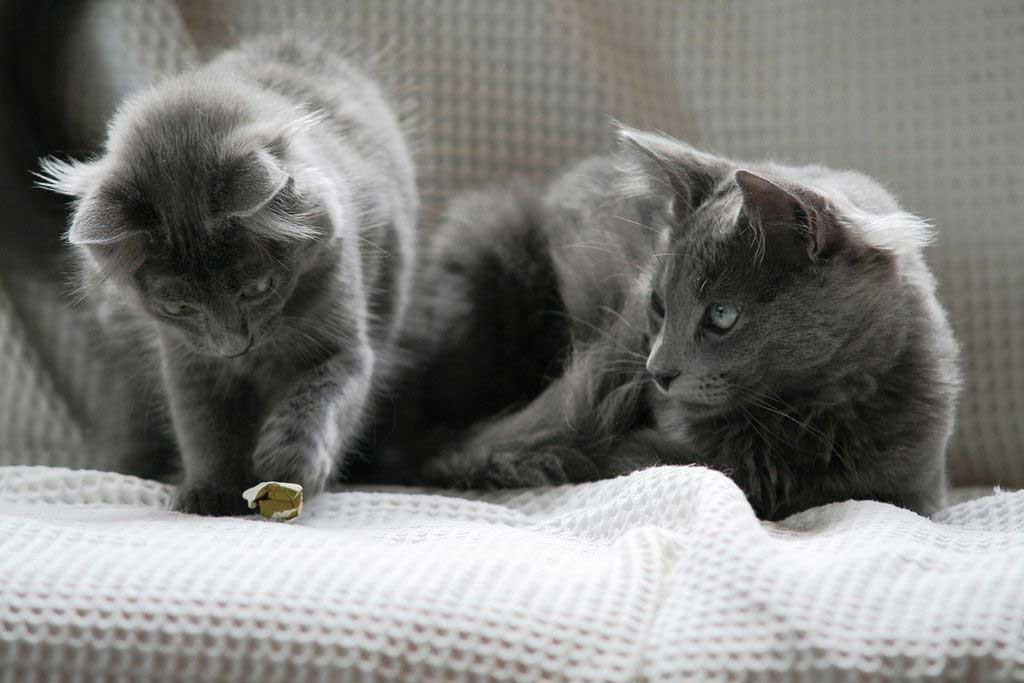
    The Nebelung cat today originated in the United States in the 1980, but its history is much older and inseparable from that of the Russian Blue Cat.

    The Russian Blue Cat already existed in Russia in the 19th century, where it was often hunted for the quality of its hide, which caused a population decline. The breed included both individuals of shorthair like Longhair. If he Russian Blue Cat shorthair was exported to Great Britain from 1870 and quickly met some success there, his cousin from Longhair did not have this opportunity, and it continued to decline. The 20th century and its two world wars sealed its fate, and is now considered extinct. In other words, the Nebelungs current replicate their appearance, but they are not his descendants.

    The history of the Nebelung starts in 1984 and Denver, Colorado ((UNITED STATES)UU.), when the cat of the son of Cora Cobb, a computer developer, gave birth to a long-haired gray-blue male kitten. Seduced by this ball of hair, Cora Cobb decided to stay with him and called him Siegfried, in honor of the protagonist of Wagner's opera "The Ring of the Nibelung".

    "Nebelung cat"

    Nebelung
    This is a Nebelung cat – Howdyhithere, CC BY-SA 4.0, via Wikimedia Commons

    A few months later, this cat gave birth to another litter in which one of the kittens had long bluish gray hair. Cora Cobb he also adopted this cat and named her Brunilda, again in reference to the characters in Wagner's opera, based on the 13th century Germanic poem Nibelungenlied.

    When he moved to Old Paso, Texas, Cora Cobb took to Siegfried and Brunhilde, who thanked him by giving birth to a litter of three kittens in 1986. They all had the same medium-long, blue-gray fur..

    This is because the gene responsible for Longhair and the gene responsible for blue-gray hair are both recessive, which means that the individual must inherit it from both parents to have this appearance. Like this, kittens resulting from the mating of two long-haired gray or gray-blue cats must have the same coat as their parents.

    Decided to call the cats Nebelung, a clear reference to Wagner's opera and original poem, but also a pun on the German word ยซNebelยป (What does "fog" mean?) and the Russian ยซNeboยป (what does "heaven" mean). Then the breed recognition process began, contacting the Dra. Solveig Pflueger, head of genetics of the TICA (International Cat Association).

    Following his advice, developed a standard for the Nebelung cat based on the Russian Blue Cat, changing only the description of the fur. The TICA provisionally recognized the breed in 1987, and Cora Cobb founded his kennel, who called Nebelheim.

    In 1989, the Nebelung was featured at a cat show in Paris, where it had some success and offspring began to appear in Europe. In 1997 was definitely recognized by the TICA, later for him Livre Officiel des Origines Fรฉlines (LOOF) french in 2008 and by the Governing Council of the Cat Fancy (GCCF) british in 2015. The World Cat Federation (WCF) has also recognized the breed, but neither the American Cat Fanciers’ Association (CFA) not even Fรฉdรฉration Internationale Fรฉline (FIFรฉ) have yet taken the step.

    Although it is now present in North America, as well as in Europe, the Nebelung still a rare breed of cat, and has not yet conquered the general public. In France, the statistics of Libro Oficial de Orรญgenes Felinos (LOOF) indicate that less than fifty specimens are registered each year, while in Great Britain these figures do not exceed twenty. Breed is even more discreet in America, where there are only a handful of hatcheries in the entire country.

    Physical characteristics

    Nebelung
    Majestic shadow beast. He prote – Amarnth7, CC BY-SA 4.0, via Wikimedia Commons

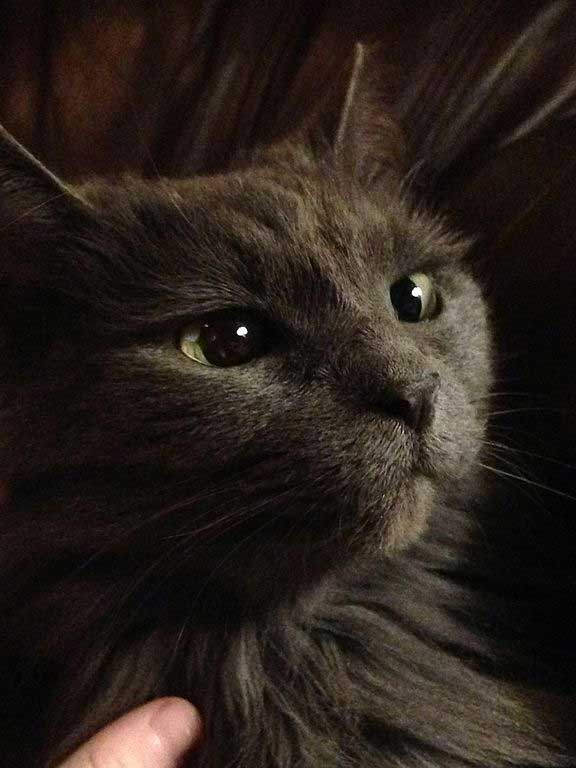
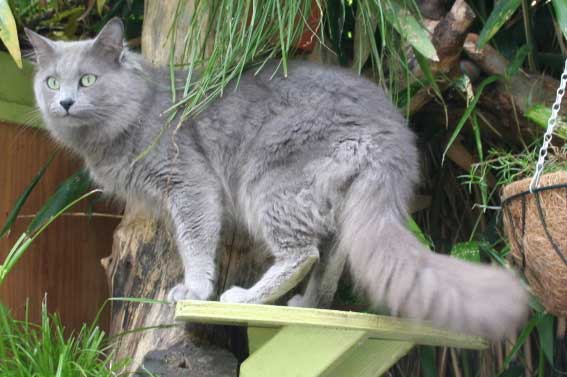
    The Nebelung It has a type morphology Semi-Foreign. Its body, long and elegant, he is athletic and well proportioned, and rests on muscular legs that end in oval legs. The tail is long, at least as much as the body, and the hair of the same is longer than in the rest of the body.

    The head wedge-shaped is well proportioned to the size of the animal and the ears they are big and pointed. The boca is slightly turned up at the corners, which gives the appearance of constantly smiling, and the nose is charcoal gray. The eyes They are slightly oval and of a deep green color similar to that of the Russian Blue Cat. But, kittens may have greenish-yellow eyes until they reach maturity, around two years old.

    The fur of the Nebelung, that is not fully developed until that age, it's semi-long, and males can have mane. The undercoat it is dense and waterproof, while the outer coat is long and silky. In winter, the coat becomes longer and denser, allowing you to better protect yourself from the cold.

    The only coat color allowed is gray., but this one is called "blue" in the world of cat shows. Kittens can have "ghost" stripes, but these disappear as they grow, giving way to a nice uniform tone.

    Last, the sexual dimorphism it is quite marked, the female being smaller than the male.

    Size and weight

    • Male size: 26 to 30 cm.
    • female size: 25-28 cm.
    • Male weight: 4-7 kg
    • female weight: 3-6 kg

    Breed standard

    The breed standards are documents established by official bodies that list the conditions that a dog must meet. Nebelung to be fully recognized as belonging to the race:

    Varieties

    If he Nebelung it is called often Russian Blue longhair, this is a mistake: is a long-haired equivalent of the Russian Blue Cat, but the Nebelung and this one are two different races that do not share common origins. In fact, contrary to what one might think, the Nebelung does not descend from Russian Blue longhair found in Russia in the 19th century and have since disappeared.

    But, the rules allow the crossing between these two breeds, what, of course, can only lead to confusion. A kitten resulting from such a union is considered as Russian Blue if you have short hair, and as Nebelung if, on the contrary, the Longhair.

    Character and skills

    Nebelung
    Nebelung – Nebelung, CC BY 3.0, via Wikimedia Commons

    The Nebelung he is extremely affectionate with his family and loves to spend time with them. But, he is a rather shy cat, you need some time before you trust humans; after adopting one, you should not be forced to socialize with your family, but should be allowed to get used to at your own pace. Once you feel comfortable, he will follow his family members throughout the house and remain devoted and loyal to them for life.

    Like is logic, even when it is well integrated into your home, prefers the tranquility of a family evening to social life. It is common for him to run away when guests arrive at the house, and can stay hidden for a while before showing up to greet newcomers.

    They get along very well with the children in the family who have learned to behave with an animal, but they run away from the too boisterous youth. in addition, can live very well with other cats, or even with dogs accustomed to cats, as long as you are not being chased around the house and introductions are made on your terms, that is to say, without forcing you to socialize quickly.

    In general, cats don't like changes, and the Nebelung is no exception. He likes routine and does not like his habits to be altered. It is an excellent alarm clock, that every morning reminds its owner that it is time to get up and, step, to give him breakfast. So, not suitable for people who move often and / or have a chaotic lifestyle.

    When you feel safe in the family nucleus, this peaceful companion becomes active and playful, not hesitating to invite his master to play or run after a shiny object that has fallen to the ground. Once they have had enough exercise, they will gladly accommodate with a family member to receive well-deserved caresses.

    As an intelligent race, the Nebelung is even able to learn some tricks, like fetching a ball or opening the door to the candy closet. This intelligence enables you to understand the intonations of voices, and makes you able to recognize the compliments, but also teasing: it's not uncommon to see him sulking at his family after making them laugh against their will, for example, falling off the couch.

    Last, it is a cat made to live in an apartment and not in the garden: finds your marks faster and feels safer there, what favors their adaptation. In fact, even if I have access to the outside, you probably prefer the comfort of home to the possible novelties that await you outside. It also, it is a breed of cat that tolerates loneliness well, so it can be left home alone when your family is working: unlike other active and intelligent breeds, there is no need to fear that he will adopt destructive behavior, especially if you get extra care at night.

    Health

    The Nebelung it is a very resistant cat breed, no known genetic diseases.

    This does not protect him from most of the diseases that all cats are exposed to; even if he spends his life inside, it is essential to vaccinate him well and give him adequate antiparasitic treatments.

    The most important health risk is Obesity. It is not a disease in itself, but it can cause serious problems. The owner is the only person who can protect the dog from this condition, so you should make sure to weigh it regularly to control your weight and avoid being overweight.

    Life expectancy

    15 to 18 years

    Grooming

    "Nebelung cat"

    Nebelung
    Nebelung Male, Aleksandr of Song de China – Nebelung, CC BY 3.0, via Wikimedia Commons

    The maintenance of Nebelung cat is not difficult, but it takes a little time.

    Its beautiful coat should be brushed twice a week to remove dead hairs and distribute sebum from the skin. These actions help keep the coat shiny and avoid knots..

    During the moulting season, in spring and autumn, this brushing should be done every day to deal with the large amount of dead hair.

    It also, it is advisable to spend a few minutes each week to check the condition of the ears, cat's eyes and teeth: to avoid any risk of infection, must be kept perfectly clean. Ears and eyes can be wiped clean with a damp cloth if necessary.

    When they get too long, it is necessary to trim the claws with a nail clipper. As the Nebelung it is generally an indoor cat, natural wear is usually insufficient.

    Last, It should be noted that the Nebelung has a very high level of cleanliness, even more than most of its congeners. So, to avoid problems, it is important to replace the litter box and clean it regularly.

    Feeding

    The Nebelung is not demanding in terms of food and can be fed with commercially available industrial cat food. These must be of sufficient quality to provide you with all the necessary nutrients and vitamins to keep you healthy.. Y, as in the case of any cat of any breed, diet should be adapted to your age and activity level.

    The Nebelung he's a big glutton, and your appetite can be a source of trouble. So, it is important to respect the daily servings recommended by the manufacturer, and pay attention to the calorie content of any cat treats you receive; the ideal is, of course, deduct from your ration of croquettes or pate the amount contributed by them. It also, not usually able to self-regulate, so it is better to avoid having food available all the time.

    In case of excessive weight gain, do not let the situation get out of control, Instead, you have to quickly consult a veterinarian to establish a new feeding program more suited to your needs..

    For sale "Nebelung cat"

    A kitten Nebelung it costs on average about 1.200 EUR, but the price range goes from 1.000 to 1.400 EUR, depending on the physical characteristics of the kitten.

    The price of females is usually slightly lower than that of males, but there are no big differences.

    Videos "Nebelung cat"

    Nebelung / Cat Breed

    the nebelung cat family.

    โ–ท The world of Pets: Dogs, cats, birds, reptiles, amphibians

    Snowshoe cat
    Federations: LOOF, ACFA, TICA, FIFรฉ

    Content

    Characteristics "Snowshoe cat"

    Coexistence is important that you have with your new friend. Before considering the acquisition of a cat of the breed "Snowshoe cat" you know certain factors. You must take into account their character, their need for exercise, their interaction with other pets, their care and if you have small children, their level of tolerance towards them.

    Joy

    5,0 of 5 stars (based on 1 review)

    Activity level

    4,0 of 5 stars (based on 1 review)

    Friendliness to other pets

    4,0 of 5 stars (based on 1 review)

    Friendliness to children

    4,0 of 5 stars (based on 1 review)

    Grooming requirements

    3,0 of 5 stars (based on 1 review)

    Vocality

    4,0 of 5 stars (based on 1 review)

    Need for attention

    4,0 of 5 stars (based on 1 review)

    Affection towards its owners

    5,0 of 5 stars (based on 1 review)

    Docility

    3,0 of 5 stars (based on 1 review)

    Intelligence

    4,0 of 5 stars (based on 1 review)

    Independence

    4,0 of 5 stars (based on 1 review)

    Hardiness

    3,0 of 5 stars (based on 1 review)

    History

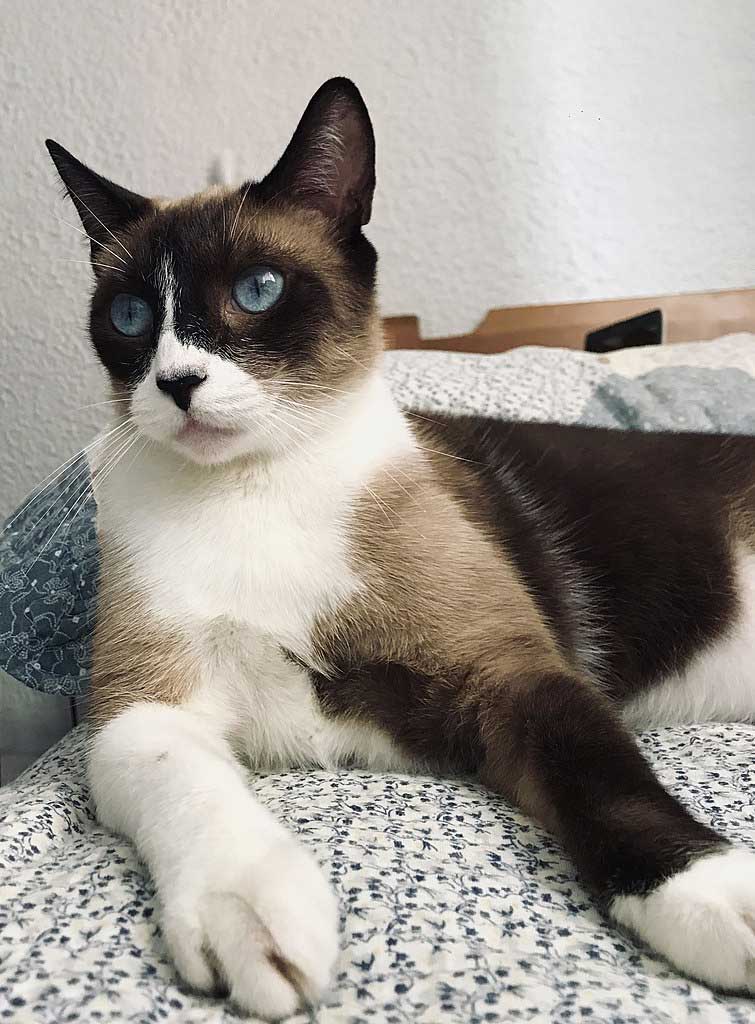
    The Snowshoe cat as we know it today originated in the United States in the 1980s. 1960, but the first Siamese white-legged appeared as early as the nineteenth century. In fact, numerous photographs from the Victorian era show that these cats already existed in Great Britain. More recently, in the decade of 1950, some appeared Siamese cats with white paws under the name of Silver Laces, but they soon disappeared from circulation.

    Over the years 60, Dorothy Hinds-Daugherty, a breeder of Siamese from philadelphia ((UNITED STATES)UU.), discovered that three kittens in a litter had white tips on all four paws. Seduced by this new look, decided to cross a Siamese cat with a American shorthair cat bicolor. The resulting kittens did not have the patternpointยป (light colored body and dark colored tips), but they did carry the corresponding gene. So when they crossed cats Siamese, produced kittens with the desired appearance.

    "Snowshoe cat"

    Gato Snowshoe
    Male Snowshoe cat – Editor.els.dc, CC BY-SA 4.0, via Wikimedia Commons

    Dorothy Hinds-Daugherty decided to baptize these cats with the name of Snowshoe, in reference to its white paws, that give the impression that they have just walked through fresh snow. Although there is little written record of his work, it is accepted that he continued to cross these cats with siamese cats and the American shorthair cat, but also with him Sacred Cat of Burma (Birman), aiming to get a cat of type Siamese with white legs and a more rounded body.

    One of these crosses with a American shorthair cat (black with white markings on the belly, the legs and the face) resulted in the white โ€œVโ€ shaped mark on the face, which is now a characteristic of the breed.

    But, Dorothy Hinds-Daugherty stopped breeding and interest in the breed diminished, so in 1977 there was only one breeder, Vikki Ollander. He had already drawn up the first breed standard and was struggling to develop it. Then he received the support of Jim Hoffman and Georgia Kuhnell, who decided to raise themselves to Snowshoes. They were soon joined by other breeders and got the breed recognized by the American Cat Breeders Federation. (CFF) in 1983.

    The Snowshoe arrived in Britain at the same time, and the first kennel of Snowshoe It was established in 1986. Soon a small group of breeders got together to form a breed club in the country., the Snowshoe UK Club. The Snowshoe cat received experimental breed status from the Governing Council of the Cat Fancy (GCCF), the main feline organization in the country. But, just like in the United States, interest declined rapidly to the point that in 1998 Maureen Shackell she had become the only breeder in the whole country. Joined him Mollie Southall, and together, with a handful of copies, decided to revive the Snowshoe cat and recruit other breeders to form a breed club.

    In 1995, the TICA (International Cat Association, one of the most important organizations in the world) finally recognized the Snowshoe and granted him the right to compete in cat shows organized under his auspices. The Governing Council of the Cat Fancy (GCCF) waited until 2003 to accept the Snowshoe as a race in its own right, and Fรฉdรฉration Internationale Fรฉline (FIFรฉ) did the same in 2004. curiously, the Cat Fanciersโ€™ Association (CFA), the main American organization, still does not recognize the race, despite its local origins and the fact that every other organization in the country does: the American Association of Cat Enthusiasts (AACE), the American Cat Fanciers Association (ACFA) and Cat Fanciers Federation (CFF).

    In France, the first litter of Snowshoe born in 2006, but it is still a very rare feline breed, with solo 43 specimens registered in the Official Book of Feline Origins (LOOF) between 2006 and 2019.

    In fact, both in France and elsewhere, including your country of origin, still rare. The number of annual registrations in the British GCCF is certainly higher than in France, but the number is still limited: less than a hundred births a year (and even less than 50 in some years), and the trend seems even downward from 2015.

    Physical characteristics

    Snowshoe cat
    Mr Slinky.–Champion Snowshoe cat with puurrfect markingsCooseman22 at the English Wikipedia project, CC BY-SA 3.0, via Wikimedia Commons

    The Snowshoe it is a cat foreign medium-sized.

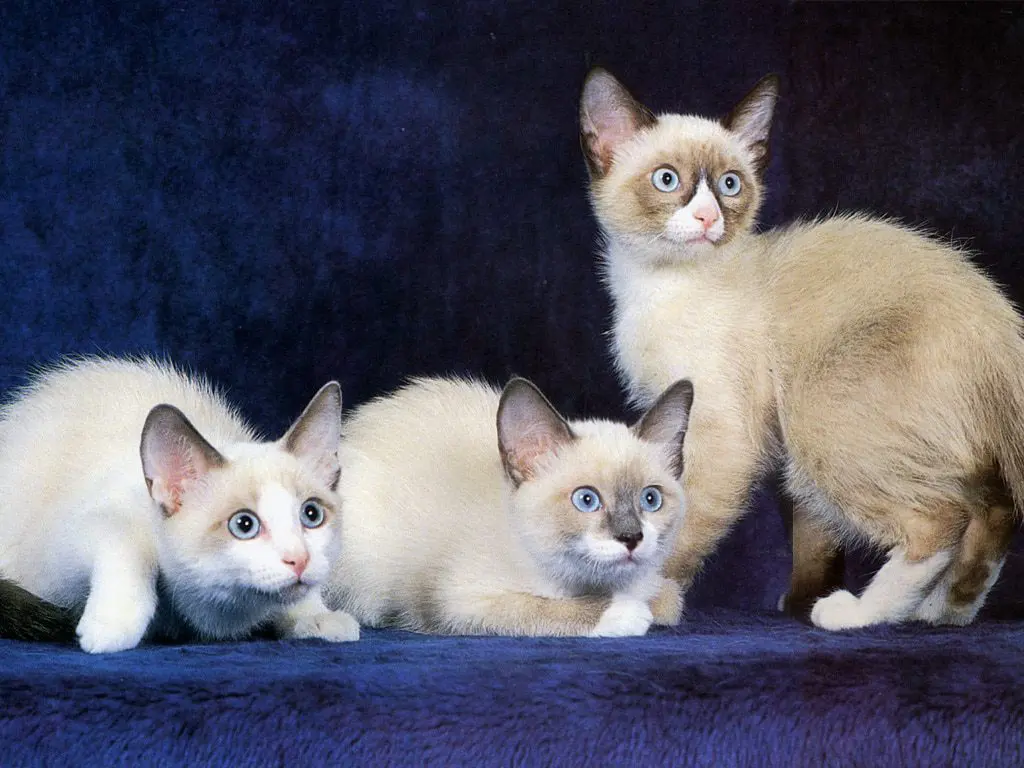
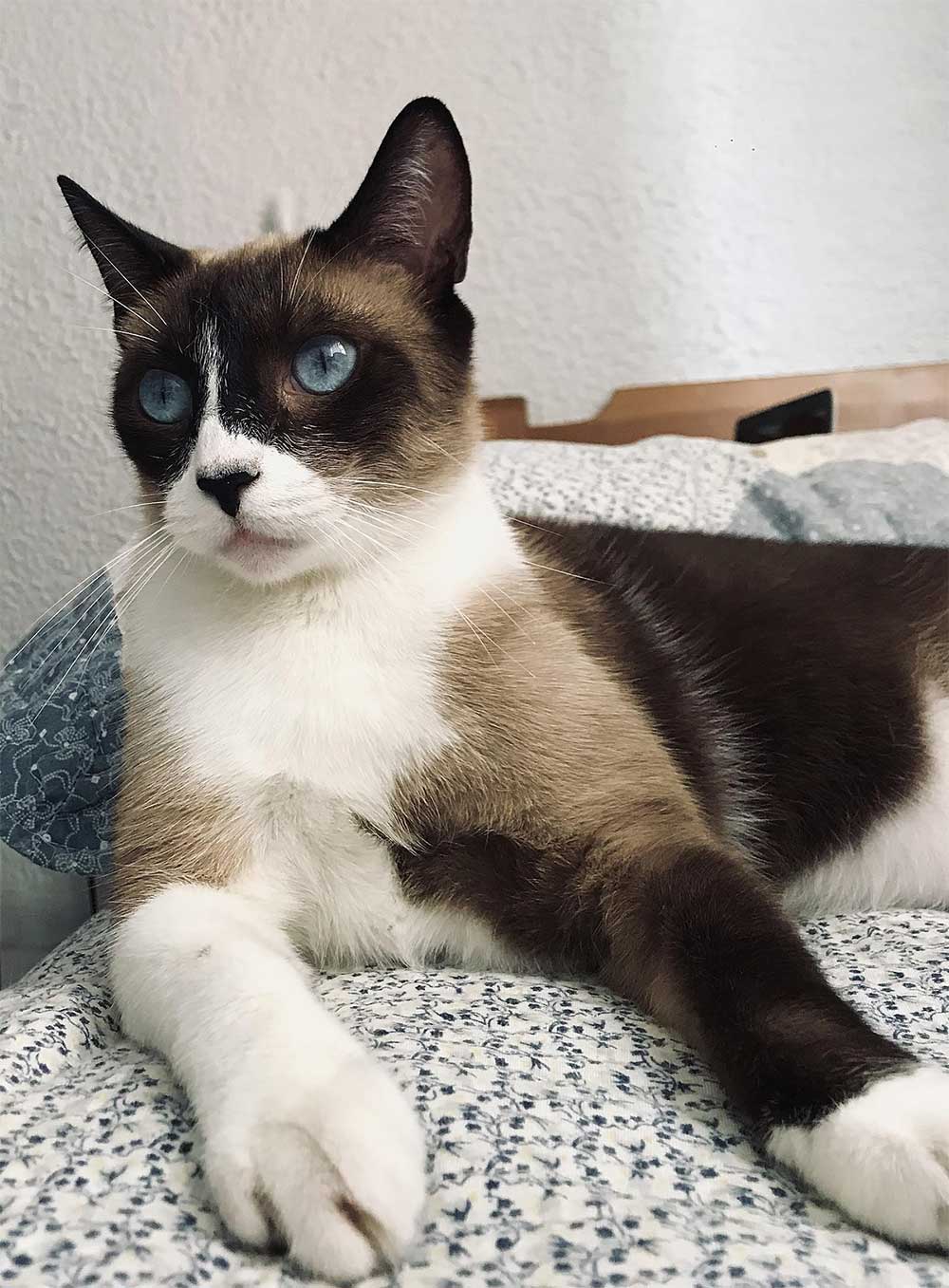
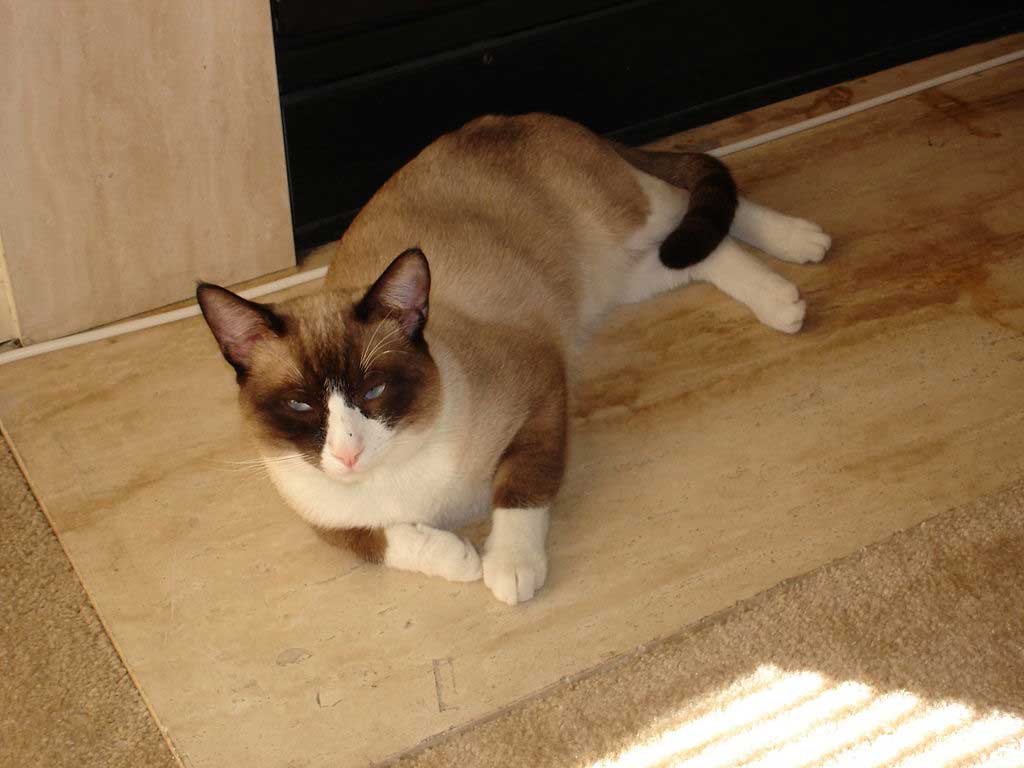
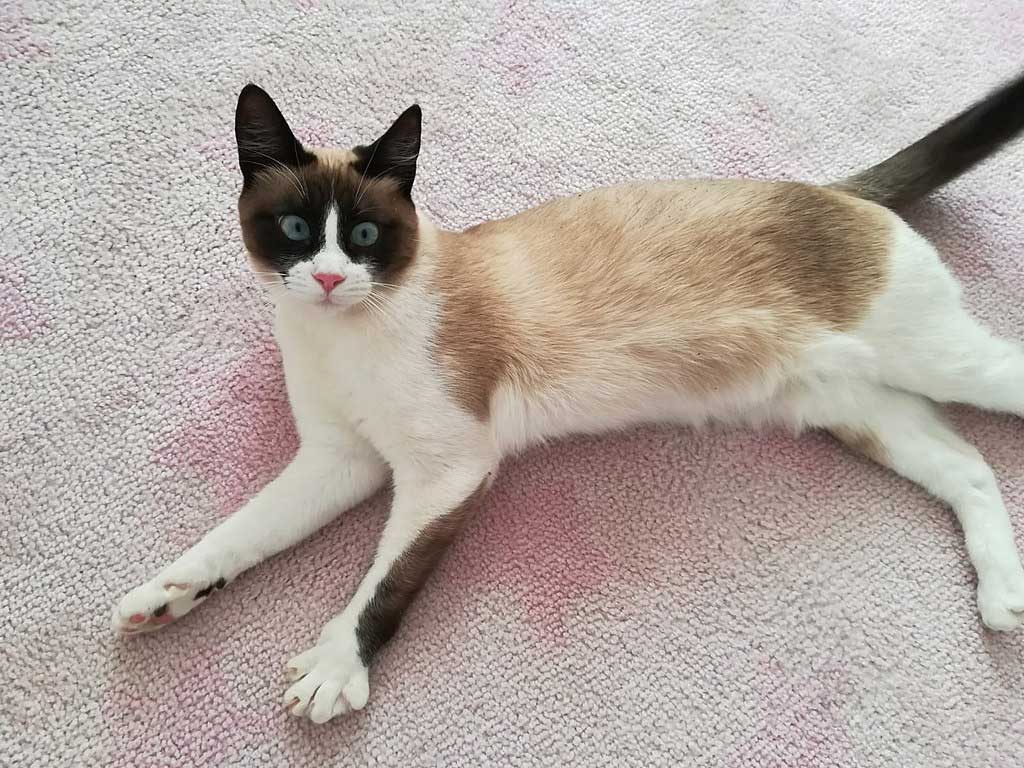
    It has a balanced appearance, a muscular body without being corpulent and great flexibility. His long and muscular legs are those of an athlete made to run and jump. Its tips are white, which gives the impression that the cat is wearing socks, or just walked through the snow, hence its name. The tail is sharp and of a length proportional to the rest of the body.

    The head of the Snowshoe cat is shaped like a rounded triangle, with gently contoured cheekbones. It has a more or less well-defined marking in the shape of an inverted V, it should be white. The ears they are medium in size and rounded at the tip. The eyes they are also medium size, larger and rounder than the Siamese, but smaller than those of the Persian. They can be various shades of blue.

    The fur is short, soft to the touch and dense. All are allowed colors of fur of the Siamese.

    The kitties Snowshoe they are born completely white. Dot mark (darker fur on tail, the legs and the head) begins to appear within a few weeks and develops as the kitten grows.

    The white markings on the tips of the legs and on the face differ from kitten to kitten. While the best show specimens have the same size stockings and a perfect V between the eyes, the vast majority of Snowshoes have more random marks, with different socks on each foot.

    But, the sexual dimorphism is well marked in this breed, the female being smaller than the male.

    Size and weight

    • Male size: 24 to 28 cm.
    • female size: 22-25 cm.
    • Male weight: 4-6 kg
    • female weight: 3 to 5 kg

    Breed standard

    The breed standards are documents produced by official bodies that list the conditions that a dog must meet. Snowshoe to be fully recognized as belonging to the race:

    Character and skills

    Snowshoe cat
    Eight-month-old Snowshoe female puppy – Educasadocerrato, CC BY-SA 4.0, via Wikimedia Commons

    The Snowshoe gets along well and is affectionate with the whole family, but he is quick to choose his favorite human to spend most of his time with. He likes to be with his owner, whether sitting on the couch watching TV or lying at the desk working. This attachment makes him not tolerate loneliness and does not adapt to a person who is absent often.

    They are sociable and get along well with other dogs and with other people, and can live in harmony in a home with other animals. But, have a possessive streak and may resent the fact that their owner is paying attention to another animal instead of them.

    On the other hand, it is a breed of cat that adores children and, if they have been trained to behave well in the presence of an animal, can spend hours playing with them before taking a nap next to them.

    The Snowshoe is intelligent, making it possible to teach your cat tricks, how to go looking for an object. But, it is the ability to teach his owner that makes him such a special companion. The owners of a Snowshoe cat they quickly learn when they want a reward, when they want to play or when they want to be scratched between their ears.

    Active, this cat likes to take advantage of his physical abilities by running and jumping. Although they can live in a flat, Ideally, they should have access to an outdoor area where they can exercise freely.

    The Snowshoe is also attracted to water and will play with a dripping faucet for a while. They also don't miss the opportunity to admire the eddies in the sink or toilet when someone flushes the toilet.. Some cats even accompany their owners in the shower, and others have learned to swim.

    Another peculiarity of this cat is its propensity for kleptomania. Likes to pick up personal items, walk them around for a bit and then put them in one of your favorite spots, usually near your water bowl or in a sink.

    Last, It is a breed of cat that meows a lot.: discuss any topic, whether it's dinner time or the newscaster's dress that its owner wants to see quietly. His voice is quite soft and melodic.

    Health

    The Snowshoe is a robust cat breed with little susceptibility to genetic diseases.

    But, there have been some cases of renal polyquistosis, a genetic disease that causes the formation of numerous cysts in the kidneys. The existence of a genetic test for this disease can considerably reduce the risks, since a responsible breeder will systematically analyze the individuals that he considers for breeding and will exclude from breeding those that are carriers.

    The Snowshoe has also inherited from Siamese a tendency to squint or have a crooked tail. But, these are purely cosmetic considerations and do not pose a threat to the cat's health.

    But, like any indoor cat, the Snowshoe may be vulnerable to the greatest scourge of modern house cats: the Obesity. Although it is not especially prone to it, any responsible owner must ensure that their cat is healthy and does not gain more weight than it should.

    Life expectancy

    Of 12 to 15 years

    Grooming

    "Snowshoe cat"

    Gato Snowshoe
    Male Snowshoe cat – Editor.els.dc, CC BY-SA 4.0, via Wikimedia Commons

    The maintenance of Snowshoe It is easy. In effect, as he is used to taking care of his fur himself, a simple weekly brushing to remove dead hairs and distribute the skin's protective sebum well is amply sufficient.

    To make sure you stay healthy, it is advisable to take advantage of this grooming session to check their eyes and ears, and clean them if necessary.

    It is also a good time to brush your cat's teeth to prevent plaque and the problems it can cause.. Having said that, more frequent brushing is ideal.

    Last, when wear and tear and / or the use of a scratching post are not enough and your claws have become too long, must be trimmed with nail clippers to avoid injury.

    Food

    The Snowshoe it does not present any difficulties in terms of feeding and can be fed with commercial industrial cat food. But, it is important to ensure that the food is of good quality and provides all the nutrients and vitamins that the cat needs.

    It also, to fully meet your needs, you must make sure that he eats a diet adapted to his age and activity level, and that the daily amounts recommended by the manufacturer or the veterinarian are respected.

    Even if the Snowshoe not particularly prone to obesity, excessive weight gain is a warning sign that the owner should not ignore. If required, You have to go to the vet to rule out a disease and establish a more appropriate diet with him..

    Last, like any cat, you must have fresh water at all times.

    For sale "Snowshoe cat"

    A kitten Snowshoe it costs about 1.200 EUR, and females tend to be somewhat more expensive than males.

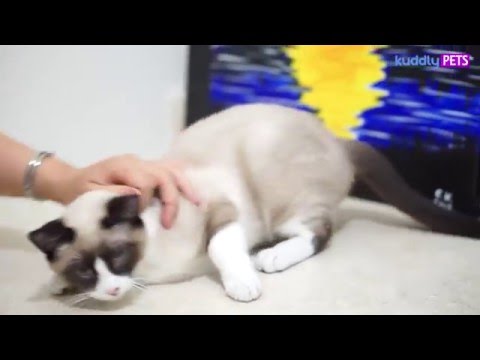
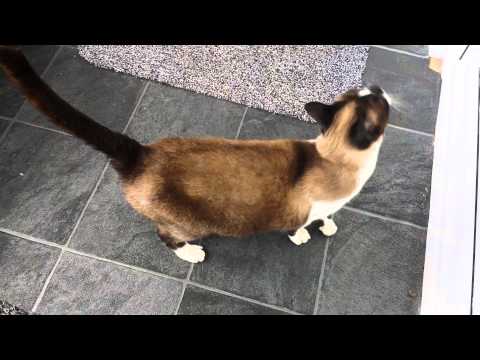
    Kit Kat the Snowshoe | Purring

    Holly the Snowshoe Cat Personality

    โ–ท The world of Pets: Dogs, cats, birds, reptiles, amphibians

    Traditional Persian cat
    Federations: WCF, SACC

    Photo: petsforsale.co.za

    Content

    History

    The Traditional Persian cat, also called Persian โ€œdoll faceโ€ for its sweet, doll-like expression, it is one of the most popular purebred cat breeds in the world. Like most domestic cats, his story is shrouded in myths and rumors, but the first recorded cases of its appearance in Iran (then called persia) they were produced in the 16th century. From there, the breed burst onto the international feline scene and became one of the most popular breeds in the world.
    But, what makes these cute balls of fur so special? And what differentiates a "traditional" Persian cat from any other? Persian?

    Physical characteristics

    "Traditional Persian cat"

    Gato Persa tradicional
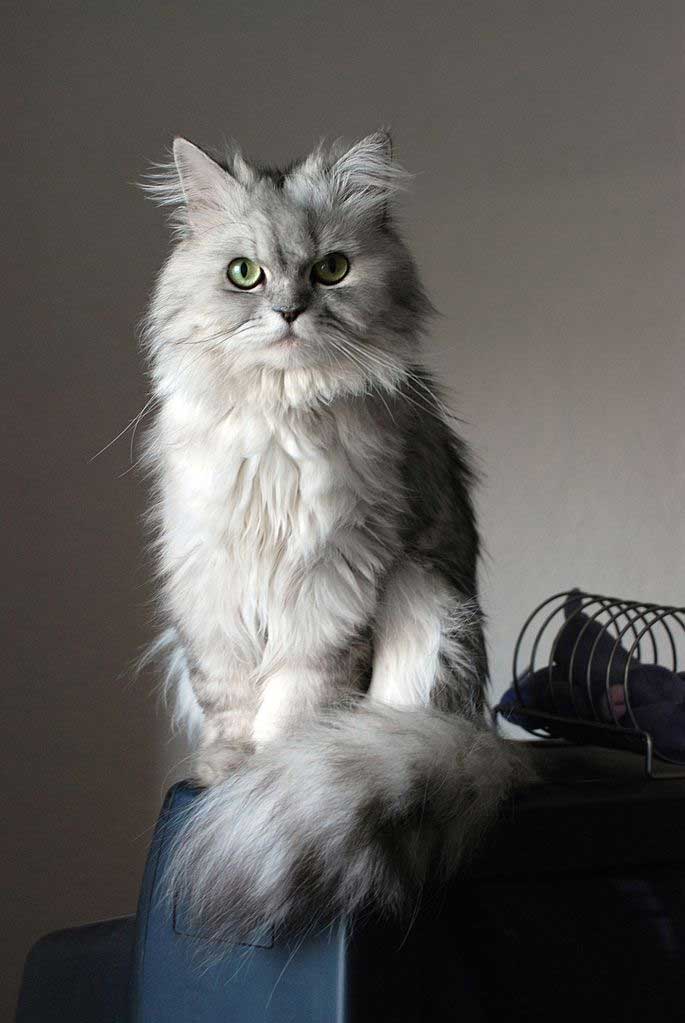
    Doll face silver Persian cat – Andrey, CC BY 2.0, via Wikimedia Commons

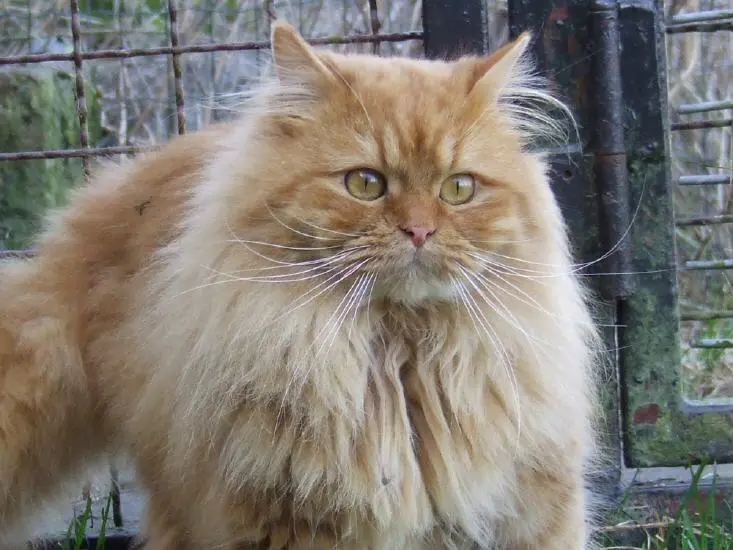
    When you hear the word "Persian cat", you may immediately think of a flattened face and a short nose. Although he is not mistaken, the more pug-like variants of Persians have been specifically bred to exaggerate those traits. The traditional Persians, for its part, they have also been bred to have small, rounded heads and short noses, but not to the same extent as their exposure counterparts. Instead of the flat faces of the show Persians, traditional Persians have cute and innocent expressions reminiscent of children's dolls, hence their common nickname of "doll-faced Persians.".

    The Traditional Persian cat, just like their show cousins, has chubby cheeks and a short body. They are medium sized cats, that usually weigh between 2,5 and 4,5 kilos when they are adults. Y, like the persian show, traditional Persians also have long, flowing fur that requires daily combing to remove and avoid carpets and tangles. Their fur comes in a wide variety of colors and patterns, that go from white to black and from red to lilac, and can be found in calico, striped, flamed and many other patterns.

    Character and skills

    Like people, cats have their own personality, so not all persians are exactly the same. Having said that, as he Traditional Persian cat like show cats they tend to be very calm and docile cats that enjoy little naps on the sofa or on another favorite perch. They are affectionate and often enjoy the attention of their human family., but they don't usually make an effort to get it. They like peace and quiet, so they do not adapt well to homes with noisy children or extremely playful dogs.

    Although they are not as energetic as other races, enjoy a good play session from time to time. And although they are happy to give you their space, they also like to be paid attention to and treated like royalty, and if they feel that he has neglected them, they will let you know that it is time for you to give them some good back rubs and scratch their ears.

    Doll Face Persian, Chinchilla Silver

    Doll Face Persian Kittens Class Clown Line - Persiankittens.com

    Alternative names:

    Doll Face Persian, Classic Persian, Old Fashioned Persian, Long-nosed Persian, Old-style Longhair, Traditional Longhair, Original Longhair.

    โ–ท The world of Pets: Dogs, cats, birds, reptiles, amphibians

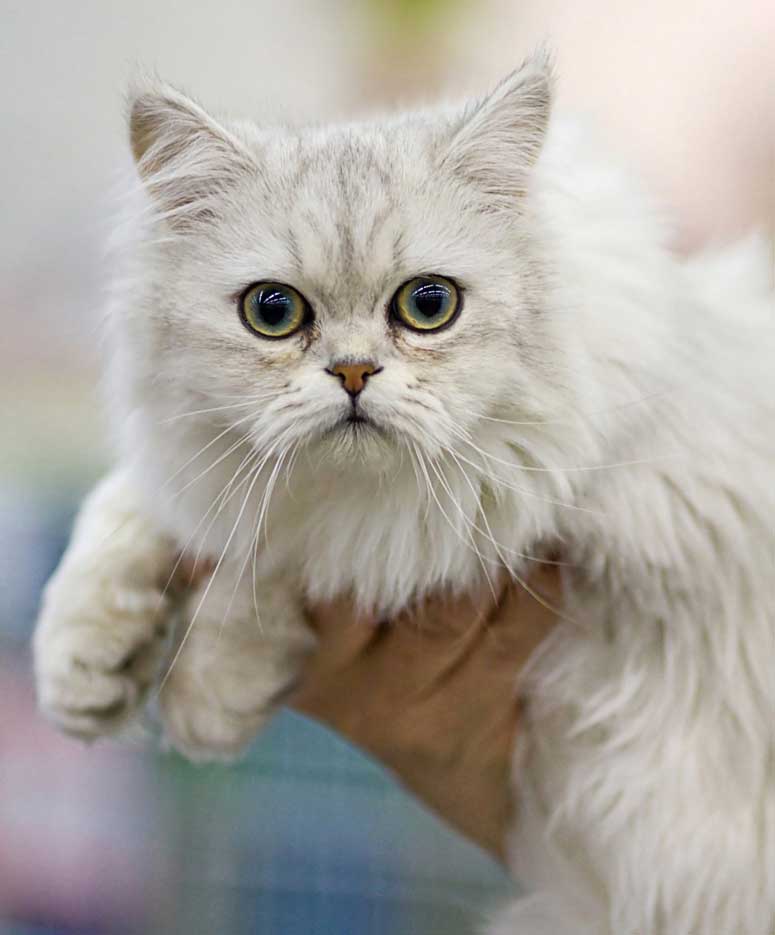
    Asian Semi-longhair cat (Tiffanie)
    Federations: LOOF, WCF, GCCF

    At first sight, the Tiffanie It is defined by its owners as an "aristocratic" cat: refined, sociable, quiet, often with an air of dignity.

    Asian Semi-longhair

    Content

    History

    The history of the origins of Tiffanie (or Asian Semi-longhair cat) differs slightly from hobbyist to hobbyist. But, all agree that the first kittens Tiffanie They were born from the mating of a Burma and cats Chinchilla. The origin may go back even further and may include the Persian cats and the races of Angora. Whether it is a deliberate crossing or not, the beauty of the resulting kittens prompted the Baroness to repeat the experiment and start a breeding program to produce Burmeses of payment, better known today as Burmilla. Some of the kittens obtained had a color that did not fit the criteria for the Persian chinchilla, or its fur was too long. But, became the founders of the Asian races and Tiffanie respectively.

    Due to its relatively recent creation, a lot of people confuse the Tiffany (spelled Tiffanie in the UK) with a American Burmese long-haired or with his distant American cousin the Chantilly-Tiffany Cat. Confusion has persisted for a long time even in America: beyond their physical resemblance, the two breeds developed at similar times and shared the same name until 1992. To limit the risks of the sale of "fake Tiffanys", now only cats resulting from crosses between English Burmese are allowed to be registered as Tiffanys, persian chinchillas, Asians or other Tiffanys.

    Despite these efforts, difficulties in accurately identifying the origins of the Tiffanie make it difficult for them to be recognized as a breed in their own right. With the exception of the Australian National Cats (or ANCats), who recognized the breed in 1999, y el British Governing Council of the Cat Fancy (recognition in 2003), other important feline associations, like the LOOF in France, consider that the Tiffanie is a simple long-haired variant of the Birman.

    Whatever the name or status of the cat, their representatives are especially present in Australia, the United Kingdom (your country of origin), as well as in Canada and the United States.

    Physical characteristics

    The Tiffanie (or Asian Semi-longhair cat) it's a ball of muscle buried under silky fur. Many agree that he is the height of a Birman with long hair. It is a medium linear cat with a semi-foreal subtype. His body is medium in size and lighter than it seems. The legs are slim and proportionate to the body, with the rear ones higher than the front ones. The tail is moderately thick at the base and tapers to a rounded tip, like a feather. If carried back over the body, should reach the cat's shoulders. Females tend to be thinner than males.

    Tiffanie
    Photograph of a Tiffany cat called Kumori – Jennie Kondo (Jennie Valdivieso Kondo – Grialte), CC BY-SA 3.0, via Wikimedia Commons

    The head it is medium size, but it must be quite high, with rounded skull top. The face has a rather triangular shape, with wide cheekbones, cheeks compact, with a marked stop and a delicate chin without protrusions. The nose is straight, neither too short nor too long. The eyes they are big, oblique and far apart. Its color can vary from gold to amber green. Other eye colors are allowed depending on the cat's coat color, but solid green eyes are considered a fault by the standards, regardless of the associated coat color. The ears they are fine, large and slightly inclined forward, moderate in size. They are widely separated on the skull and rounded at the tip. There may be a tarsus inside, and a discreet plumage is accepted.

    Last, the Tiffany has a fur dense, with an undercoat that is usually white, but fine enough to avoid the knot problems that are common in long-haired cats. The top layer is thin, silky and shiny, and forms a collar on the neck and shoulders. It is located along the spine and extends over the breeches, under the belly and on the tail. Ghost brindle markings on non-agouti adults are penalizing, except in the case of kittens or orange cats.

    Relatively little shed, and is especially recommended for cats with allergies.

    Measurements of the "Asian Semi-longhair cat (Tiffanie)"

    Height: Of 20 – 25 cm.
    Male weight: 5 – 7 kg
    female weight: 3,5 – 5 kg

    Varieties

    The "Asian Semi-longhair cat (Tiffanie)" is available in a wide range of colors. Allowable coat patterns are identical to Burmese and Asian: solid, striped, silver, ticked and smoked.

    None of these traits are favored or more sought after than another in feline shows..

    Character and skills

    At first sight, the Tiffanie It is defined by its owners as an "aristocratic" cat: refined, sociable, quiet, often with an air of dignity. But, Beneath his calm demeanor lies an energy and curiosity inherited from his eastern ancestors..

    Tiffany
    A white male Tiffanie (Asian Semi-longhair) cat presented at TUROK cat show Turku 2008 – Finland: Heikki Siltala, CC BY 3.0, via Wikimedia Commons

    Moderately active, but mischievous enough to liven up any home, the Tiffanys they are very close to their owners. He does not hesitate to ask for his share of pampering and attention with many purrs and meows, in addition to chatting with the different people in the family for no particular reason. But, he also knows how to be discreet when his master wants to go about his affairs in peace.

    They are not very aggressive and adapt easily to new environments, They are also kind to other animals in the house and to strangers, as long as they respect your quiet time. But, some cats are jealous of other cats if they get too close to their favorite master.
    Beware of possible fights!

    Apart from these rare cases of jealousy, the affectionate temperament of Tiffanie and its general characteristics make it a suitable cat breed for children, but also in a breed of cat recommended for lonely older people.

    The Tiffanie, a house cat, she is a tireless player once the game is on. Beware of fragile objects that can get in the way during your gaming sessions. To channel your excess energy, a cat tree and cat toys are essential. His intelligence and attachment to his owner also allow him to try to teach his cat tricks and commands., such as looking for a toy.

    Health

    Thanks to its multiple crosses, the "Asian Semi-longhair cat (Tiffanie)" it has a diversified gene pool that makes it quite resistant to diseases that its ancestors could suffer from. Its average life expectancy is estimated to be about 17 years, like his cousin the Burmilla, as long as, of course, is properly fed and cared for.

    But, if you want to raise your cat, it is important to be tested for polycystic kidney disease, especially if you have a Persian ancestor. Before any possible acquisition from a breeder of Tiffanie, It is possible to – if not spontaneously, as it should be normally – ask you to provide the kitten and parent screening test results. Cat tests cost between 45 and 75 EUR.

    It also, kittens of some lines may have significant umbilical hernias, whose correction requires a small surgical intervention.

    Life expectancy

    16 years.

    Grooming

    The Tiffanie (or Asian Semi-longhair cat) should be brushed daily to avoid the development of tangles in the hindquarters. But, unlike some long-haired breeds, they lose very little hair, even during the move, which makes them a hypoallergenic breed of cats. The frequency of brushing the cat's hair does not have to increase at this time.

    But, it is necessary to check the ears regularly. Cats produce slightly more earwax than the average cat, but they are not more efficient in cleaning. Thus, it is important to help you in this task, to avoid infections such as cat otitis.

    Food

    Being the Tiffanie a gluttonous cat, it is recommended to pay attention to the quantity and quality of your food, to avoid any problem of overweight or even obesity of the cat. Vigilance is all the more necessary since its semi-long coat can easily camouflage its curves..

    For sale "Asian Semi-longhair cat (Tiffanie)"

    A kitten Tiffanie male without castrar sells himself between 400 and 1.500 EUR, according to his lineage. The price of a kitten Tifanny is slightly higher, but it does not exceed 1.600 EUR.

    Characteristics "Asian Semi-longhair cat (Tiffanie)"

    Coexistence is important that you have with your new friend. Before considering the acquisition of a cat of the breed "Asian Semi-longhair cat (Tiffanie)" you know certain factors. You must take into account their character, their need for exercise, their interaction with other pets, their care and if you have small children, their level of tolerance towards them.

    Joy

    4,0 of 5 stars (based on 1 review)

    Activity level

    4,0 of 5 stars (based on 1 review)

    Friendliness to other pets

    3,0 of 5 stars (based on 1 review)

    Friendliness to children

    5,0 of 5 stars (based on 1 review)

    Grooming requirements

    3,0 of 5 stars (based on 1 review)

    Vocality

    3,0 of 5 stars (based on 1 review)

    Need for attention

    3,0 of 5 stars (based on 1 review)

    Affection towards its owners

    5,0 of 5 stars (based on 1 review)

    Docility

    3,0 of 5 stars (based on 1 review)

    Intelligence

    4,0 of 5 stars (based on 1 review)

    Independence

    3,0 of 5 stars (based on 1 review)

    Hardiness

    4,0 of 5 stars (based on 1 review)

    Videos "Asian Semi-longhair cat (Tiffanie)"

    Asian Semi-Longhair Cats 101 : Fun Facts & Myths
    Asian Semi-Longhair Cats 101 : Fun Facts & Myths
    Asian Semi longhair Cat Compilation and Mix
    Asian Semi longhair Cat Compilation and Mix