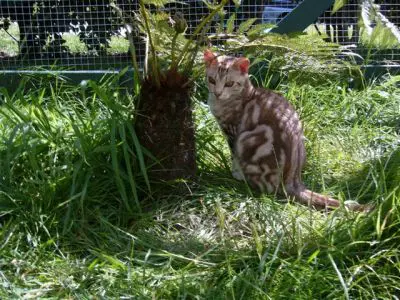
Ann Baker stated that the genes of the Skunk were infused into the female and that her kittens resembled the young skunks, born silver before turning black with stripes across the head, the back or the bottom. For the rest of the feline world, this sounds like shaded silvers develop their color.
Supposedly, cats had tails flattened on the sides - actually, an illusion caused by the long fur- that they held on their backs like skunks. Baker stated that the Honey Bears looked like a Persian cat, but he didn't have a cat skeleton.
Essentially, the cats were Persians and were even marketed as similar to hairless persians, but the breeding philosophies of Baker and the increasingly outlandish claims, made it impossible to register as Persian cat in conventional registers.
For practical purposes, the Honey Bears they were Persians, although of a less extreme type than those seen on the display bench. A few breeders persevered with them, but otherwise they were absorbed by the RagaMuffin cat.
Note: Ann continued to develop more lines for a short time until her death in 1997 after the RagaMuffins were established as a separate race. These new fledgling lines were not used in the development of our RagaMuffins.: Ragdoll Tu, Catenoides, Ragdoll HobbyType, Baby Dolls, Angels, Shu Schoo, Symoneese / Symonees, Manxees, Fuzz
The founders were actively breeding the full spectrum of cat lines Cherubim in the International Ragdoll Cat Association (IRCA) until 1992, When, due to deteriorating health and stability of Ann, they decided to leave the IRCA and seek recognition as a race within the formal organizations of Cat Fancy.
His contracts with Ann stipulated that if the breeders continued to breed cats from the International Ragdoll Cat Association (IRCA) off your record, name "Ragdoll» could not be used to describe the cats produced. The name Cherubim had also been recorded by Ann at that time. So, even though the RagaMuffins they were in fact the cats Cherubim original, and that the logical thing would have been to keep Cherubim as breed name, The need arose to “change brands” to remain ethically faithful to their contracts.
▷ The world of Pets: Dogs, cats, birds, reptiles, amphibians
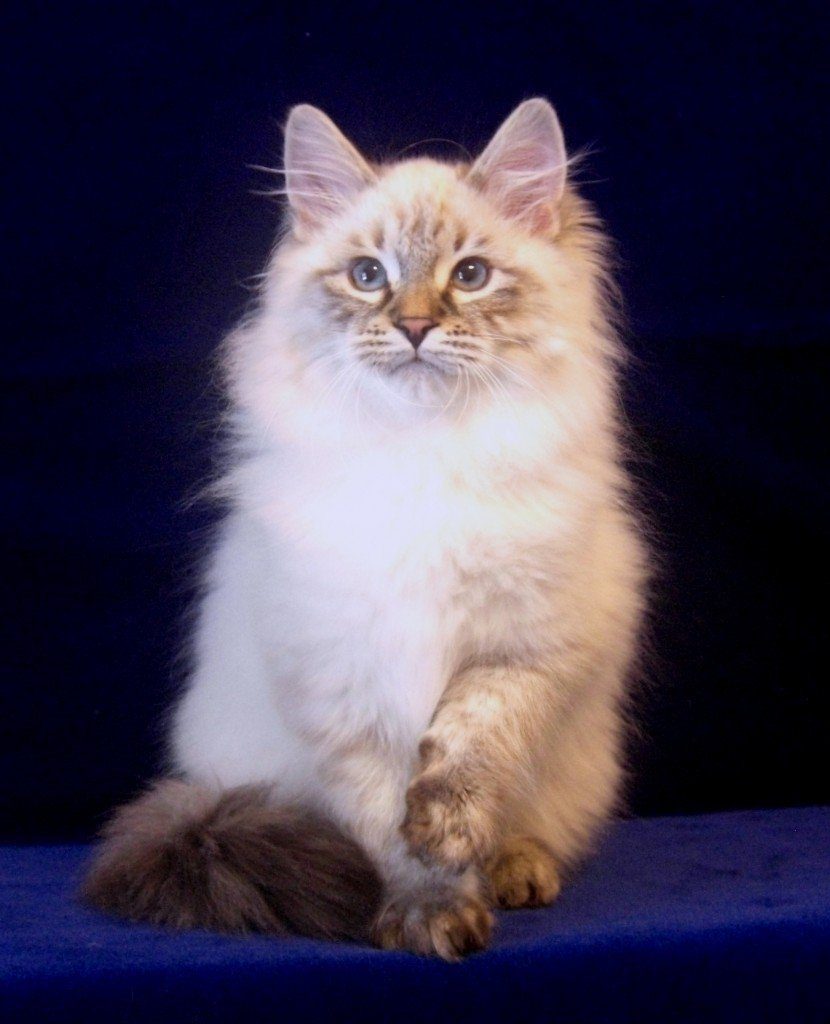
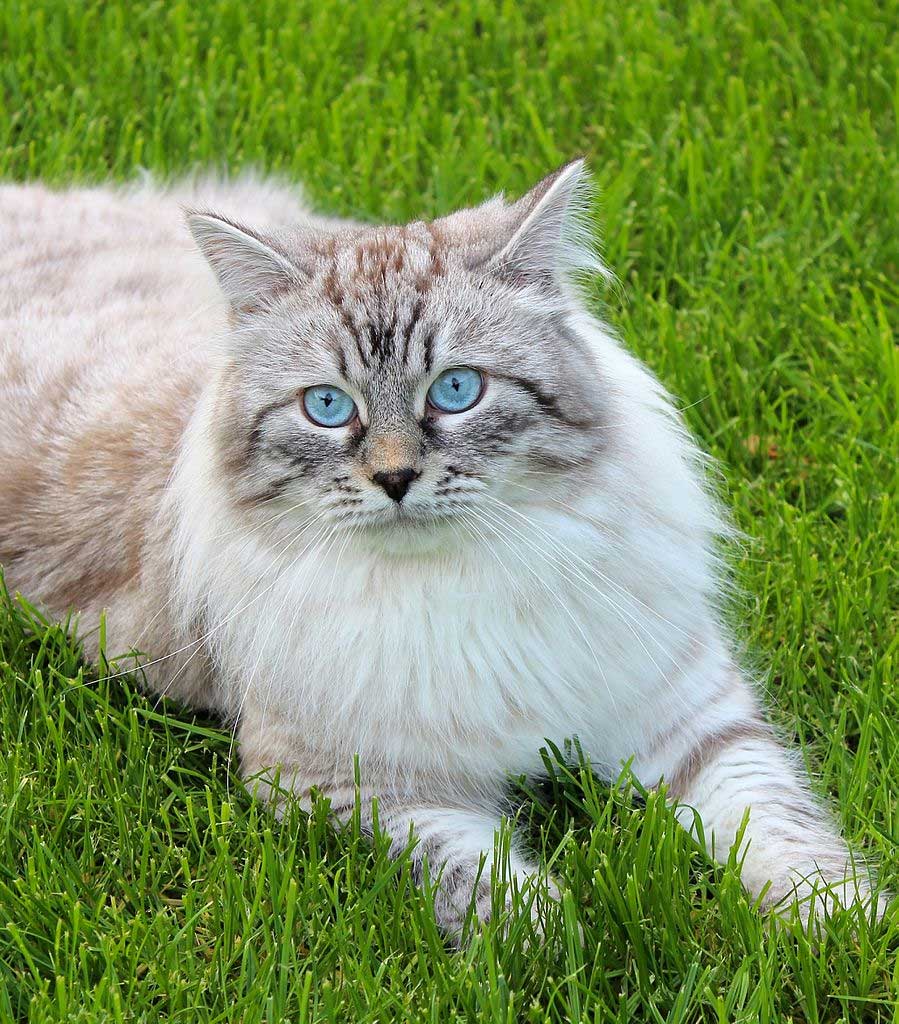
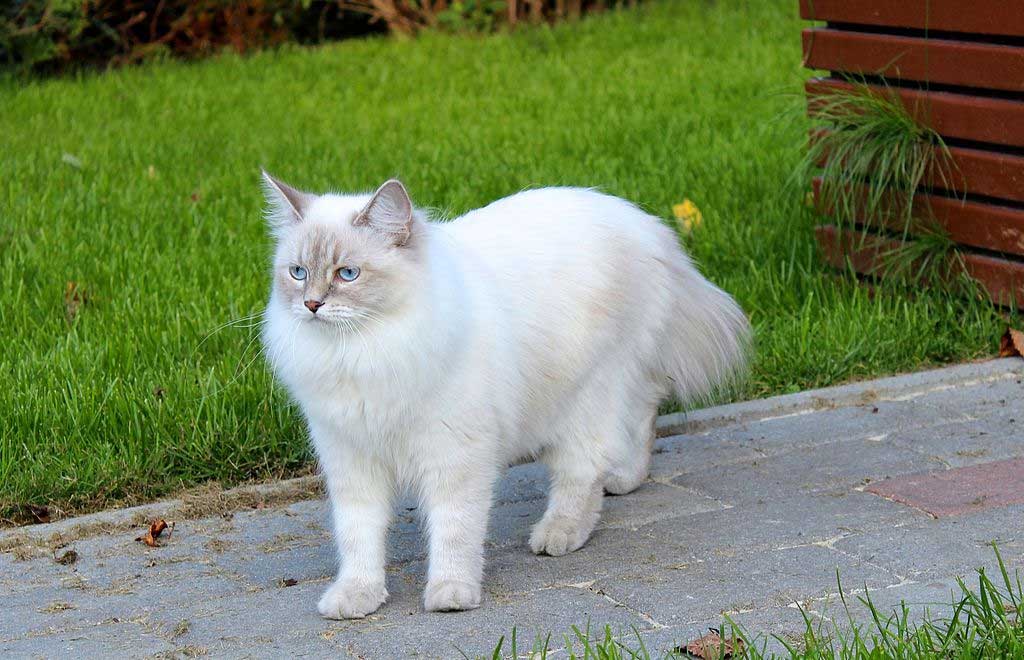
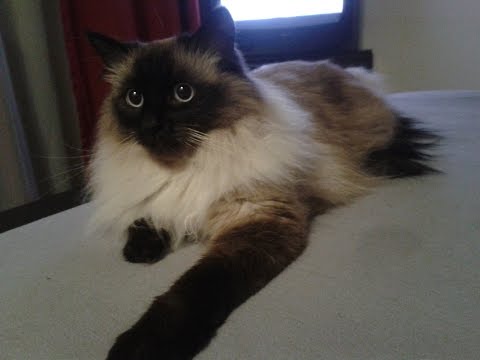
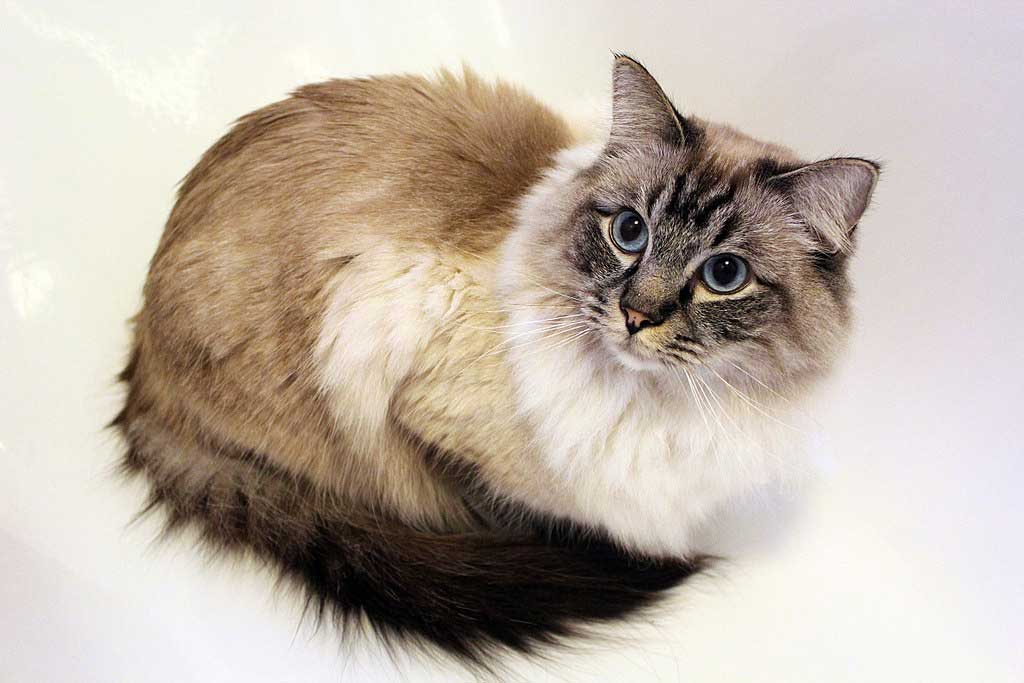
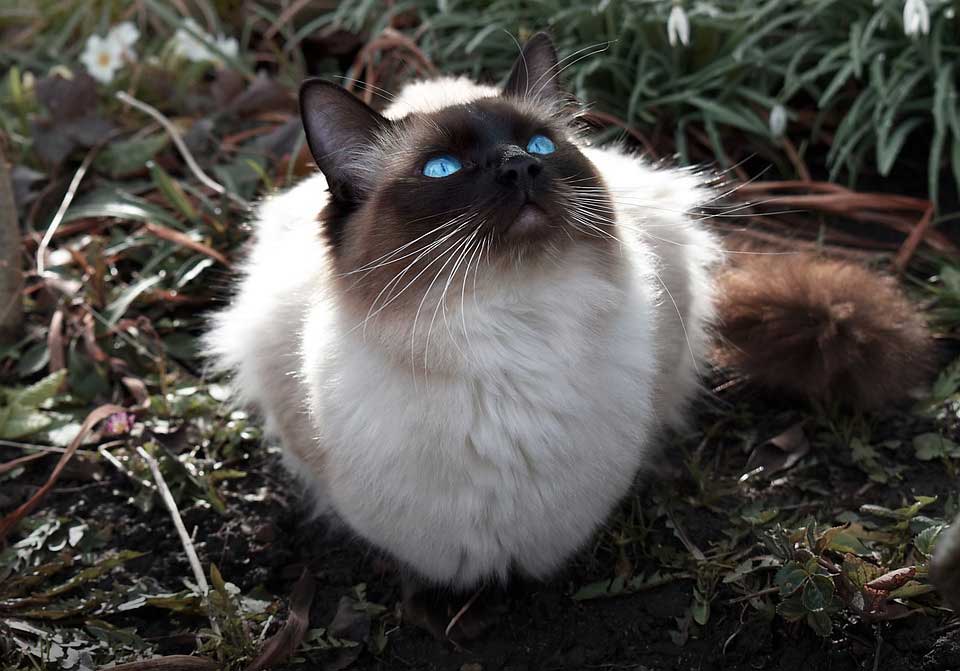
The Neva Masquerade cat it's the traditional cat Colorpoint of the Siberian cat. The Neva Masquerade has its source along the Neva River in Leningrad (now St. Petersburg). When were the other cats breeds imported to the area of Siberia, the place street cat, mixed with other races like the Balinese cat, the Siamese, Persians, himalayas, etc, the descendant States that it arose naturally.
The traditional ideal of Neva Masquerade is that of a medium-sized cat, robust, strong and long-haired. They are believed to be a mixed race based on the Siberian cat, the Persian and with bloodlines Siamese.
Mature cats are corpulent with a general appearance of strength and a pose of alert. Powerful hind legs that are slightly longer than the front. They have a natural expression of sweetness. Their fur is dense due to the weather and varies in length and coat density with different seasons.. The traditional Neva Masquerade originally withstood the rigors of the weather, the cold of his native Russia. Since then it has been adapted easily to different environments.
The color of your eyes it is deep blue. The ears are slightly inclined forward, a little convex. The tip of the ears should be rounded and generally with longer strands of hair at the ends.
Although the Neva Masquerade share most of the characteristics of a Siberian cat traditional (including his physique and personality), has some distinct attributes that make it special.
They lack the enzyme tyrosinase, responsible for the production of the pigment melanin, what gives rise to his white body.
While some have black legs, gray or brown as part of your colorpoint, others may have white legs despite their dark face and ears.
The color of these cats can be of the following types:
The character of the cat Neva Masquerade It is very similar to the Norwegian Forest Cat . Although it is often described as a silent force, it is a cat that shows great vitality, has a strong personality and a strong character. One of the peculiarities of Neva Masquerade is that it is hypoallergenic.
Although he is descended from the rustic mountain cats, the Neva Masquerade it is an easy-going animal that gets along well with children, with other cats and even with dogs. This sociable character explains his success. It is also a demonstrative feline, intelligent and very communicative. As he has highly developed hunter instincts, must be able to meet your needs, what comes with the desire for freedom and independence. It is highly recommended to put at your disposal a tree so that the cat can vent.
The Neva Masquerade he is no longer the rustic mountain cat he used to be. Now, he is a very sociable cat, able to get along with everyone (cats, dogs, children…) As long as you are not in a hurry and are nice to him. Very affectionate, demonstrative and communicative, it can even be exclusive with its master or a little tail.
lively and smart, has brilliant qualities as a hunter. Sometimes you may have a certain desire for independence and freedom, but that does not prevent him from living in an apartment as long as he can vent comfortably with games, a cat tree and other entertainment sources.
Health
The Neva Masquerade it is a model of robustness. No specific disease is attributed to him.
Curiosities
Former Russian President Dmitry Medvedev he owned a well-known cat Neva Masquerade call Dorofei, who was crowned with the title of "First Mascot" in 2008.
The Neva Masquerade they have even been diplomatic gifts from Russian officials. People say that Vladimir Putin gave one to a Japanese governor, and that Dmitri Medvédev gave one to the former Finnish president.
Playing with Siberian Cats and Kittens - Neva Masquerade
Recognized by the CFA, CFA, TICA, WCF, FFE, AACE, ACF, ACFA/CAA
Origin: Russia
Antiquity: decade of 1980
Character: Sensible and resourceful
Weight: 4,5 to 9 kg
Content
Characteristics "Siberian cat"
Coexistence is important that you have with your new friend. Before considering the acquisition of a cat of the breed "Siberian cat" you know certain factors. You must take into account their character, their need for exercise, their interaction with other pets, their care and if you have small children, their level of tolerance towards them.
Joy
4,0 of 5 stars (based on 1 review)
Activity level
3,0 of 5 stars (based on 1 review)
Friendliness to other pets
4,0 of 5 stars (based on 1 review)
Friendliness to children
4,0 of 5 stars (based on 1 review)
Grooming requirements
2,0 of 5 stars (based on 1 review)
Vocality
2,0 of 5 stars (based on 1 review)
Need for attention
3,0 of 5 stars (based on 1 review)
Affection towards its owners
4,0 of 5 stars (based on 1 review)
Docility
3,0 of 5 stars (based on 1 review)
Intelligence
4,0 of 5 stars (based on 1 review)
Independence
3,0 of 5 stars (based on 1 review)
Hardiness
5,0 of 5 stars (based on 1 review)
History
The Siberian cat is a breed of cat native to Russia and has a natural origin: already roamed the Siberian forests more than 1000 years. Its exact origin is not known, but the fact that the mutation responsible for long hair in cats appeared almost simultaneously in regions as distant as Siberia, Asia minor (which corresponds to the eastern part of Turkey, and from which the Turkish Angora cat and the Turkish Van Cat) and persia (which became Iran, and from which the Persian cat) suggests that these different long-haired cat breeds share common origins.
In fact, some specialists think that these cats appeared in Turkey and that human migrations to the Great North explain their appearance in Siberia. On the other hand, others believe that the first long-haired cats originated in Russia and spread to Asia Minor, giving rise to Turkish Van Cat, to the Turkish Angora cat and to the Persian cat, but also to Scandinavia, where would they be at the origin of Norwegian Forest Cat , and then to North America, where they would have evolved to Maine Coon cat.
But, it is certain that they played an important role for the local populations who had to survive in the extreme conditions of Siberia, since they protected the provisions from rodents. Russian folklore says that they once weighed more than twenty kilos and were true "guardian cats.", who protected their homes from wild animals and hunted other animals to feed their families. Still today, many stories tell of magical cats whose mission is to protect children.
The Siberian cat It is known in Europe and North America since the 19th century. It was even one of the breeds exhibited in the first feline exhibition in modern history., held in 1871 at the Crystal Palace in London. It was also presented in the United States at 1884, at the exhibition held in the Madison Square Garden from New York. It is documented in the book Our Cats de Harrison Weir de 1889 and in the book Domestic & Fancy Cats the John Jennings the 1898. A photograph of a representative of the breed also appears on Concerning Cats, written by Helen Winslow and published in 1900.
But, the Siberian cat disappeared from the international scene for much of the 20th century, since his country of origin was isolated from the rest of the world by the Soviet regime that came to power in 1917. It was not until the decade of 1980 when Russian cat lovers were once again free to own domestic cats and organize into associations to define the rules. He had a great success at the first Moscow cat show in 1988, and soon became the national cat of Russia.
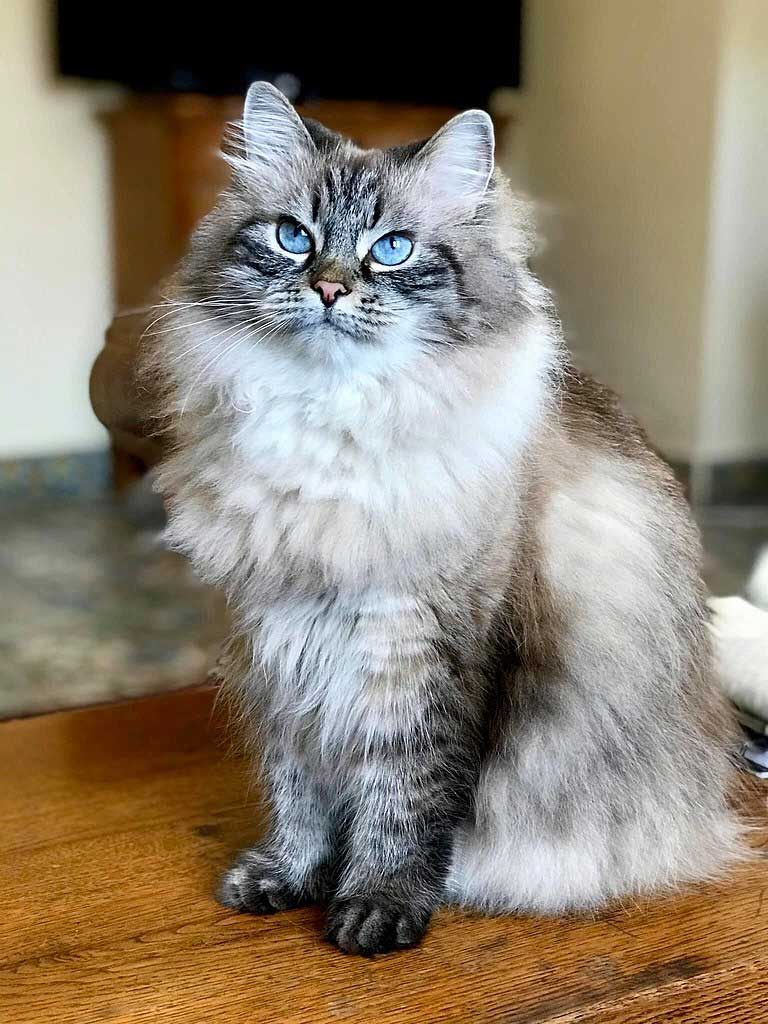
Female Adult Siberian Cat with Seal Lynx Point Coat Color – The voice, CC BY-SA 4.0, via Wikimedia Commons
In 1990, Ophelia, Naina and Kalostro they became the first Siberians to set foot on American soil in almost 100 years, When Elizabeth Terrell, a creator, exchanged them with Nelli Sachuk for four gatos himalayos. A few weeks later, David Boehm, another american breeder, traveled to Russia to bring fifteen cats from the Siberian jungle. Thanks to these two enthusiasts, the breeding of this breed began in North America..
Once the Iron Curtain fell, its international recognition was fast: the International Cat Association (TICA) was the first to do so in 1993, followed by Fédération Internationale Féline (FIFé) in 1997 and then for the American Cat Fanciers’ Association (CFA) in 2000. Surprisingly, the first copies Siberians did not arrive in the UK until 2002. Two years later, in 2004, the Governing Council of the Cat Fancy (GCCF), the country's main body, granted the breed full recognition, including the right to compete in exhibitions organized under their auspices.
Today, as well as remaining extremely popular in his home country, the Siberian has clearly found an audience beyond its borders, helped by his reputation, although unfounded, hypoallergenic cat.
In United States, for example, the Siberian cat stands above the position 20 (of 45) in the classification of breeds according to the number of annual registrations in the CFA. Its success is also growing in Europe. In Great Britain, GCCF statistics show that births in the second decade of the 21st century have risen from about 100 per year to more than 300, which places it in the top ten of the favorite cat breeds of the British.
There is also a blazing growth in France: the statistics of the Official Book of Feline Origins (LOOF) show that if in the mid-1990s 2000 only thirty specimens were registered per year, this figure had already exceeded 200 in 2010, and then cross the barrier of 1000 in 2016 and overcome the 1500 at the end of the decade. Since 2015, is one of the 10 favorite breeds of cats of the French, representing more than 3,5% of registered births.
Physical characteristics
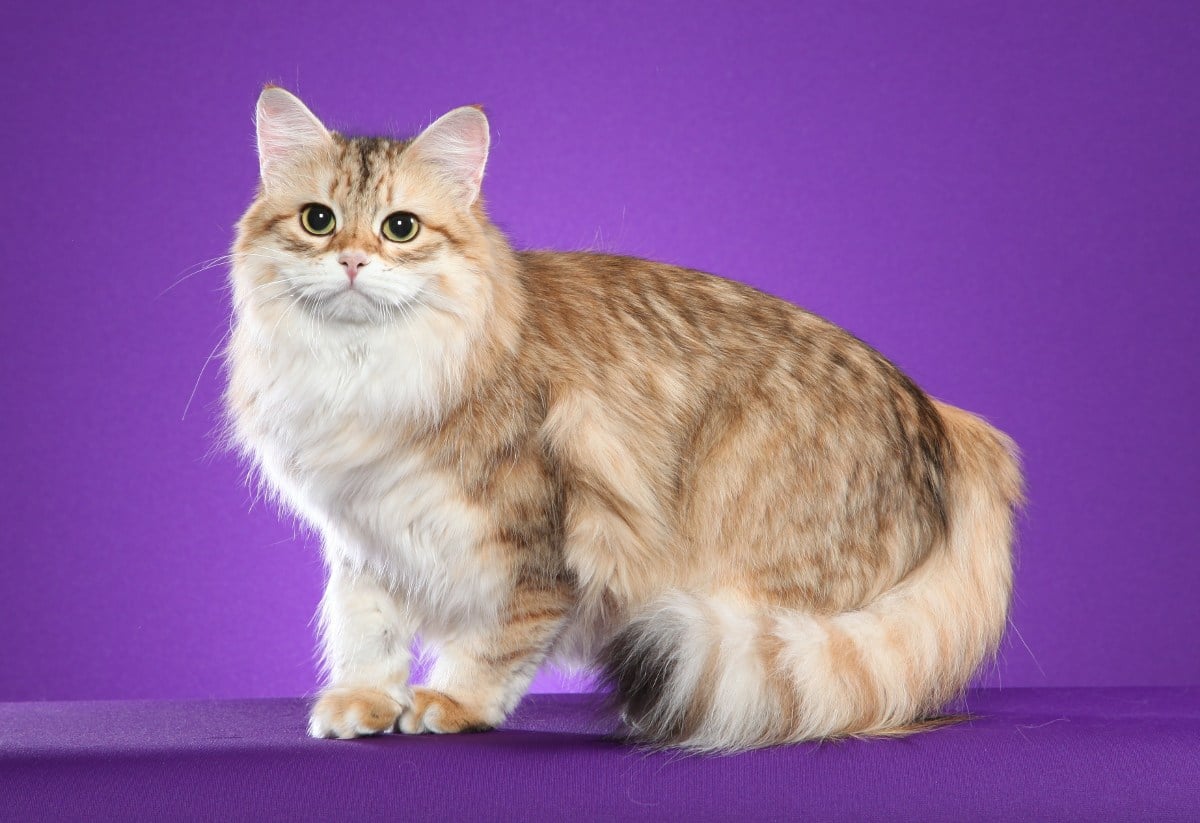
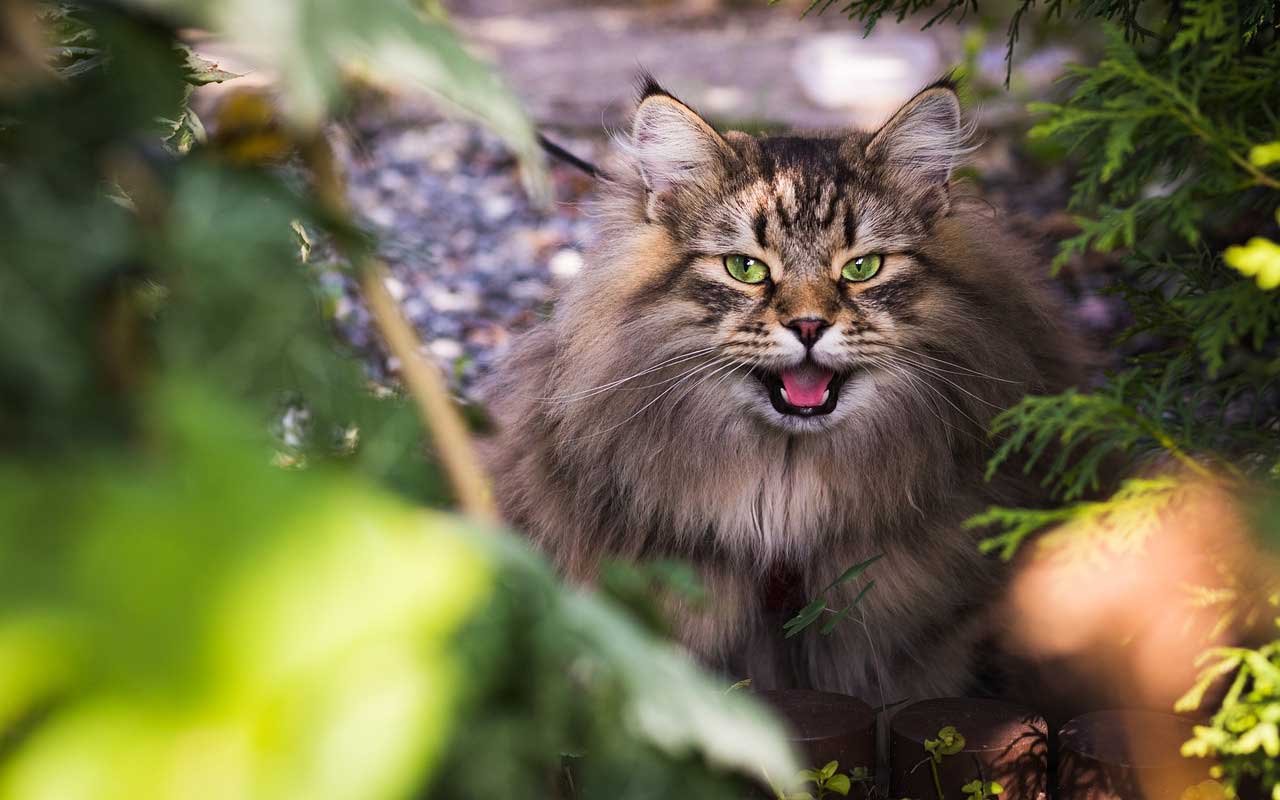
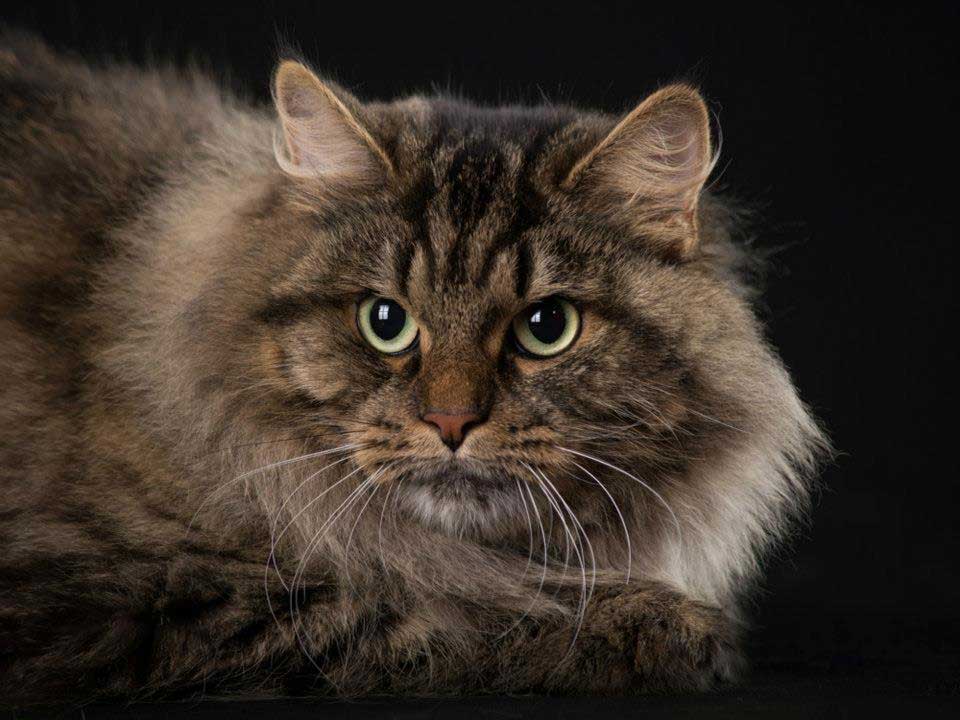
The Siberian has a semi-cobby midline morphology. Sometimes it is confused with the Maine Coon cat or the Norwegian Forest Cat , as it has a similar general appearance, but it differs by having a much more rounded head and body.
Of average length, He is powerfully muscular and his back is slightly arched. The legs they are also very strong with a solid bone structure, the rear ones being somewhat longer than the front ones. The tail is slightly shorter than the body, very full and sharp.
The head is wide and has a triangular shape with rounded sides when viewed from the front. Profile, the rounded forehead ends in a slope at the nose. The ears are size medium, wide at the base and ends in a rounded shape. The eyes they are big, almost round, slightly oblique, and they can be green, yellow, coppery or blue in some white-coated dogs.
The fur of the Siberian it is medium to long, and consists of three parts: abundant down and undercoat, and a thick, shiny protection layer. It is much more abundant in winter than in summer and forms a mane around the neck.
Except for chocolate and lilac, all the coat colors They're possible, but the brown tabby is the most common. All coat patterns are also accepted by the standard, but some organizations, like the FIFé (Fédération Internationale Féline), consider the Siberian colourpoint as a breed apart, call Neva Masquerade.
In any case, this cat grows slowly, as it does not reach full maturity until it is about five years old. But, most of the growth occurs during the first 18 months.
Last, the sexual dimorphism it is very marked: the male is much more imposing than the female.
Size and weight
Male size: 30 – 38 cm.
female size: 28 – 35 cm.
Male weight: 7 – 11 kg
female weight: 5 – 9 kg
Varieties of "Siberian cat"
The fur colourpoint (a light color on the body and darker on the tips of the legs, the tail, ears and face) is accepted by most associations, as the International Cat Association (TICA), the World Cat Federation (WCF) and the Livre Officiel des Origines Félines (LOOF), the reference organization in France. But, some consider cats Siberian colourpoint like a different race.
Is the case, in particular, of the Fédération Internationale Féline (FIFé), that since 2011 registers them with the name of Neva Masquerade cat. The LOOF also recognizes the term Neva Masquerade, but in conjunction with the name «Siberian«: in his eyes, is simply another way of designating siberianos colourpoint, but by no means a breed in its own right.
A 3-year-old Calico Tabby Siberian Cat – Lilllio, CC BY-SA 4.0, via Wikimedia Commons
Character and skills
The Siberian he is a loving and devoted cat who loves his family. He waits for his owner at the door when he comes home from work, and immediately begins to tell him about his day following him around the house. Loves to participate in various household activities, either helping in the kitchen, lying on the computer keyboard where his owner is working, or sitting in front of the TV that its owner is watching.
Having said that, although he loves to receive attention from his owners, not overly intrusive or demanding, and he is perfectly capable of waiting patiently for his owners to have time for him. They can be left alone during the day without separation anxiety.
They are also excellent hosts and, after observing the newcomer from a distance to meet him, they will not hesitate to come over to greet you and participate in the conversation. It is also an ideal cat breed with children who have learned to behave with a certain respect., since he likes to play with them and has enough patience to tolerate some oddities and clumsiness.
His outgoing character also applies to his peers, but also the dogs: he is not afraid of anything and is aware of his respectable size, is not easily impressed and likes to resolve conflicts amicably.
On the other hand, has retained a strong hunting instinct that makes it very difficult, yes not impossible, cohabitation with rodents and birds. The fish are not safe either, especially because they have a certain fascination for water. This can lead to, for example, to play with the water in your bowl or toilet, or even to spray his master when he is bathing.
The Siberian cat he is extremely intelligent, able to learn to retrieve objects (activity that you especially enjoy) or to be walked on a leash, but also to solve complex problems, like opening the closet door or reaching for that toy that its owner thought was out of reach. Teaching your cat tricks is a great way to spend quality time with him., while giving you the opportunity to exercise both physically and intellectually.
They are also very good at understanding human emotions and know when to go play with a cheerful owner., or comfort someone who has had a bad day by purring on their lap to show their affection. This makes them an excellent therapy cat..
Although the Siberian cat has a rather calm and quiet character, he is also an active cat that retains a playful side throughout his life. They are surprisingly agile for their size, being able to climb almost anywhere and make dizzying jumps. Some owners still wonder how their dog got the spider in the living room.… And is that, like most of his peers, he likes to be in a high place from which he can admire his territory; if you think your cat tree is not tall enough, do not hesitate to find a closet more to your liking.
Curious and without any notion of property rights, does not hesitate to steal any object to make a toy with which to play. Thus, it is strongly recommended to store jewelry and other valuables in a safe place.
On the other hand, although they are delighted to have access to the outside and to be able to run and climb at their ease, they are still a breed of cats capable of living in a flat. In fact, for a Siberian, the company and affection of your family are even more important than physical exercise.
Last, this cat has a wide vocal range of soft meows, trills and chirps, but also a powerful purr reminiscent of a boat engine. They are not as talkative as the eastern races, but they like to communicate and give their opinion.
Siberian cat
Grooming and caring for the "Siberian cat"
The triple coat of the Siberian it is low maintenance, since it does not tend to knot. But, a thorough brushing is necessary every week to remove dead hairs and distribute sebum from the skin. During the moulting season, in autumn and spring, the dog loses a lot of hair, so it is recommended to brush it every day. This grooming session is also an opportunity to share a complicity moment with your pet., especially since he especially appreciates staying quietly on his owner's lap while he is being brushed.
On the other hand, it should be noted that, against popular belief, the Siberian it can perfectly provoke allergic reactions in its master. The amount of Fel d1 (an enzyme that causes allergies in people sensitive to it) in the saliva of the Siberian cat is much lower than that of a cat without a pedigree, but the amount is not zero. Thus, it is simply a race of hypoallergenic cat, that is to say, that is less likely to cause an allergy.
Unless you want to expose your cat in a feline exhibition, it is rarely necessary to bathe him. This is certainly a good thing, as it is very difficult to shampoo their thick, waterproof fur.
But, the weekly grooming session is an opportunity to check your teeth, eyes and ears looking for dirt, and clean them with a damp cloth if necessary. This will reduce the risk of cavities and infections of all kinds.
Last, if your dog spends a lot of time outdoors, it may be that natural wear and tear is enough to file your nails. If not the case, it is advisable to trim them with a nail trimmer when they have become too long, so that they are not hindered in their movements.
Indoor or outdoor cat?
The Siberian cat it is a nature loving breed that spends a lot of time outdoors if allowed to roam freely. This independent cat loves to roam for hours in nature, hunt and explore the environment. Like a good hunter, Siberian he usually takes his prey home.
That you Siberian gift you with dead birds and mice is not to everyone's liking and should be considered prior to purchase. If the cat stays indoors, a large floor with a sturdy scratching post is a minimum requirement. The ideal would be a safe garden, where the cat can live its desire to move. With the proper precautions, your cat will live happily.
How much activity does he need? "Siberian cat"?
As an active breed, the Siberian cat needs a lot of space to play and hunt. Independent cats prefer to occupy themselves and explore their environment. Of course, especially at a young age, they still like to be kept busy with a gaming rod or mice.
Intelligence toys for cats also keep them busy and boost their intelligence. They also like to play with other cats, so they should not be alone. As one of the few cats, to the Siberian he likes to play with water and can also keep busy for a long time with a leaky faucet.
The Siberian it is very robust. Able to live in environments as difficult as the Siberian forests from which it originates, It is a breed of cat that does not fear the cold. But, not at its best when temperatures exceed 30 °C: to avoid any risk of heat stroke, it is then important to keep it in a shady area or even with air conditioning.
It also, have a predisposition to certain genetic diseases. This is the case, in particular, of :
The feline hypertrophic cardiomyopathy, a relatively common disease in domestic cats that causes abnormal development of heart tissue, with potentially serious heart problems. Screening of parents can minimize, but not delete, the risk of transmission to the kitten;
Deficiency of pyruvate kinase (PK-def), which causes a problem in red blood cell metabolism leading to anemia of varying severity in cats. There is a DNA test to identify the gene; a breeder's siberian cats responsible must exclude the carriers of the offspring.
It also, the fact that the Siberian forest cat being so large does not make you immune to one of the greatest health risks of a domestic cat: the Obesity. Responsible owners should ensure that their cats maintain an adequate weight and seek the advice of the veterinarian if they notice a tendency to be overweight.
Life expectancy
Of 12 to 15 years
Food
The Siberian forest cat he has no problems with his diet; can be fed commercially available industrial cat food without any problem. But, choosing a quality product that is suitable for your age and activity level is essential to ensure that you are getting all the nutrients and vitamins you need.
By being able to self-regulate, can be left with food at all times.
But, it is the owner's responsibility to ensure that the dog is not overweight and, Therefore, weigh him regularly to monitor his weight. In the event of deviations, consultation with a veterinarian will allow to establish a more adequate feeding program.
For sale "Siberian cat"
It is only possible to get a Siberian cat of breeders of this breed. It is preferable to resort to a family breeding, where the cat is born near its breeder. The small size of the structure and the proximity of the human being have allowed it to develop its familiar and endearing character.
If raised in good conditions, the Siberian cat he will not be wild and he will be very close to his master. It can become the "dog-cat" that the owner expects, the one who will be curious about strangers, the one who will wait for his owner behind the door and the one who will follow him everywhere. Please note that if the cat you are purchasing does not have a pedigree, It will not be considered a pedigree cat but a "street cat".
Having said that, the price of a Siberian cat ranges between 700 and 1.000 EUR. The price depends mainly on whether you buy a companion cat or a breeding cat.
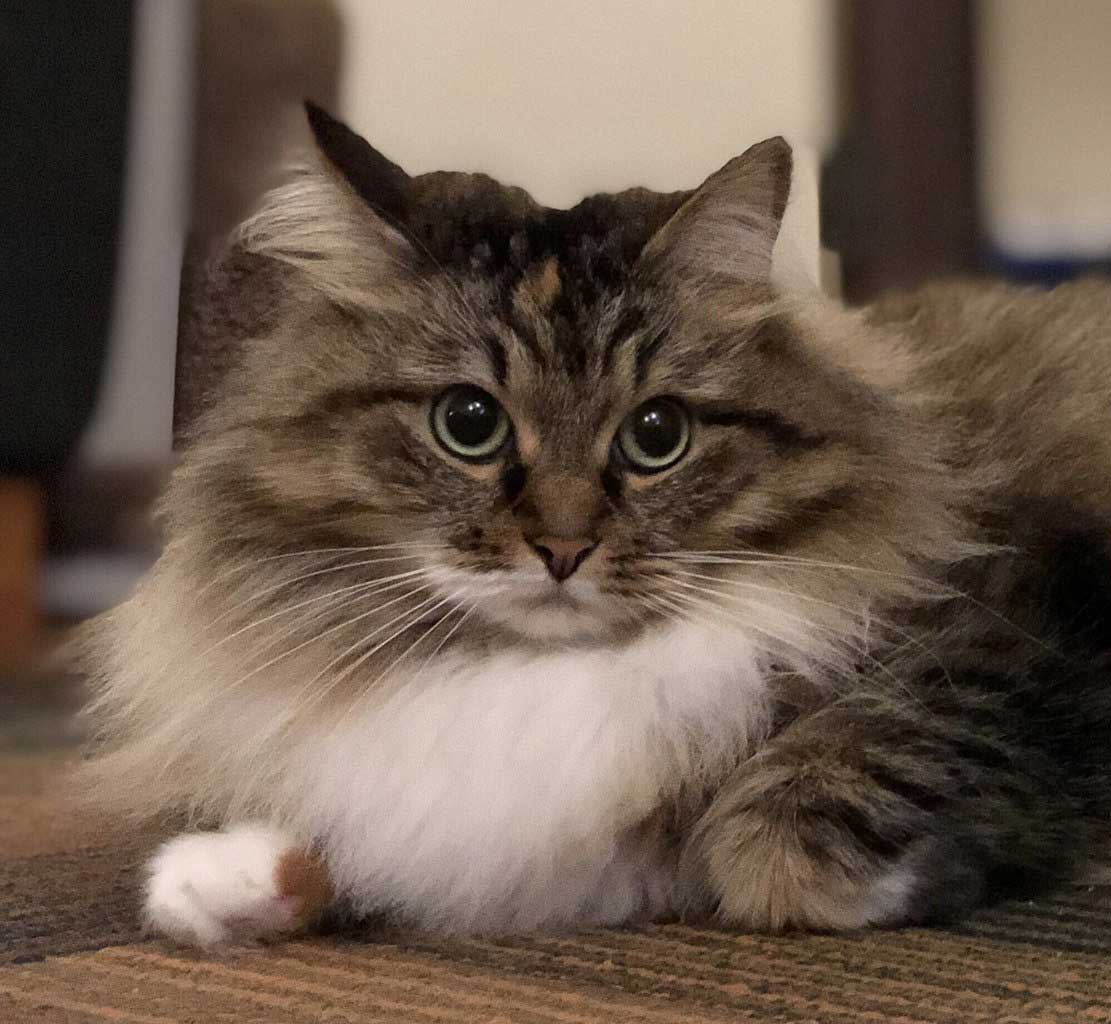
Portrait of a Brown tabby Siberian – Sibirela, CC BY-SA 3.0, via Wikimedia Commons
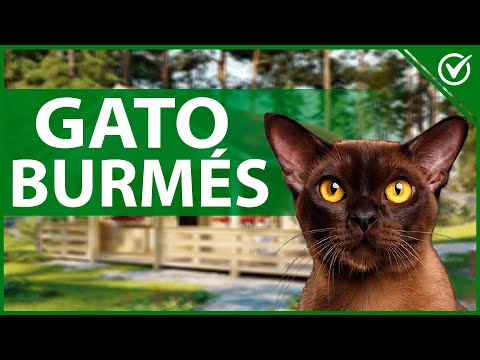
The first written records of the Burmese cat date back to the 14th century. El Tamra Maew, a manuscript of poems and illustrations found in Ayutthaya, the capital of the Kingdom of Siam (current Thailand), date of this period. This "treatise on cats" describes, among other things, to the Rajah, a round-headed cat, slightly chunky body and very silky chocolate coat: a description that corresponds in all respects to the Burmese what do we know today. According to legend, it was one of the 16 races that lived with Buddhist monks, who considered them sacred.
For centuries confined to his homeland, the cat began to spread internationally when in 1930 a US Navy medic, Joseph Thompson, brought a chocolate coated female from Thailand, Wong Mau. As the fur of this one was almost black at the tips (ears, legs and tail) and chocolate-colored in the rest of the body, guessed it was a Siamese cat. But, genetic testing disproved this assumption and established that it was a different breed. Fascinated by the beauty of this animal, Joseph Thompson decided to start a breeding program with other enthusiasts. Thus was born the American Burmese cat, a round-headed cat with a slightly chunky body.
The Burmeses did not arrive in Britain until later. It was not until the end of World War II that soldiers returning from Burma brought some brown cats.. Breeders who learned about the development of the American Burmese cat in the United States and Canada were interested in these cats and started a breeding program.
They contacted the American breeders so that they could send them some specimens. Among 1949 and 1956 some imports were made that allowed to expand the gene pool, which otherwise risked being insufficient due to the small number of subjects.
The program was a success: from the third generation, and more specifically in 1952, the breed was recognized by the Governing Council of the Cat Fancy (GCCF), the british feline organization. It was distinguished from Burmese Raised in America for his more triangular head and less stocky body.
The first standard only specified one layer color: chocolate. But, as time passed and more cats were raised, other colors appeared in the litters and lines. Like this, the first blue guy was born in 1952, and others with red fur followed in the following years, cream, tortoiseshell or even lilac in 1971. Breeders continued to develop the breed incorporating these additional colors, that were recognized in the successive updates of the breed standard.
But, until the end of the decade 1960, the gene pool of European Burmes cat remained very small, what limited its development. In 1969 imports could be reorganized, this time from canada, that contributed greatly to the development of the breed.
It also, the breed spread fairly quickly to most of western Europe. so it happened, for example, already in 1956 in France and in 1970 in Germany.
Male Brown/Sable Australian Burmese Cat – Psypherium, CC0, via Wikimedia Commons
The breeding of Burmese has developed in parallel, but in a somewhat different way, in the United States and Great Britain, respectively. This explains a certain divergence between the North American and European lines..
Like this, the American Burmese cat, also called Contemporary Burmese, has a rather round head, a rather short nose and a somewhat stocky body.
The European Burmes cat, also known as Traditional Burmese, has a more triangular head, a longer nose and slimmer body.
This heterogeneity divides breeders and institutions. These may include, the Governing Council of the Cat Fancy (GCCF) has refused to register specimens from the United States since 1980, to preserve traditional English lines.
The controversy is amplified by the existence of serious cranial deformities in some kittens from North American lines. These may include, some have two noses or just one cheek. Most affected kittens are stillborn., and those who are born are immediately euthanized. But, due to the limited size of the breed's gene pool, not even Cat Fanciers’ Association (CFA) not even Asociación Canadiense de Gatos (CCA) require routine sterilization of breeders with these defects. This decision is left to the discretion of each breeder..
The English Burmese lines are not entirely free from these problems.. But, the prevalence of these problems is much lower than on the other side of the Atlantic.
The Burmese it is a medium size cat, muscular and of strong stature, tending to weigh between 4 and 6 kg.
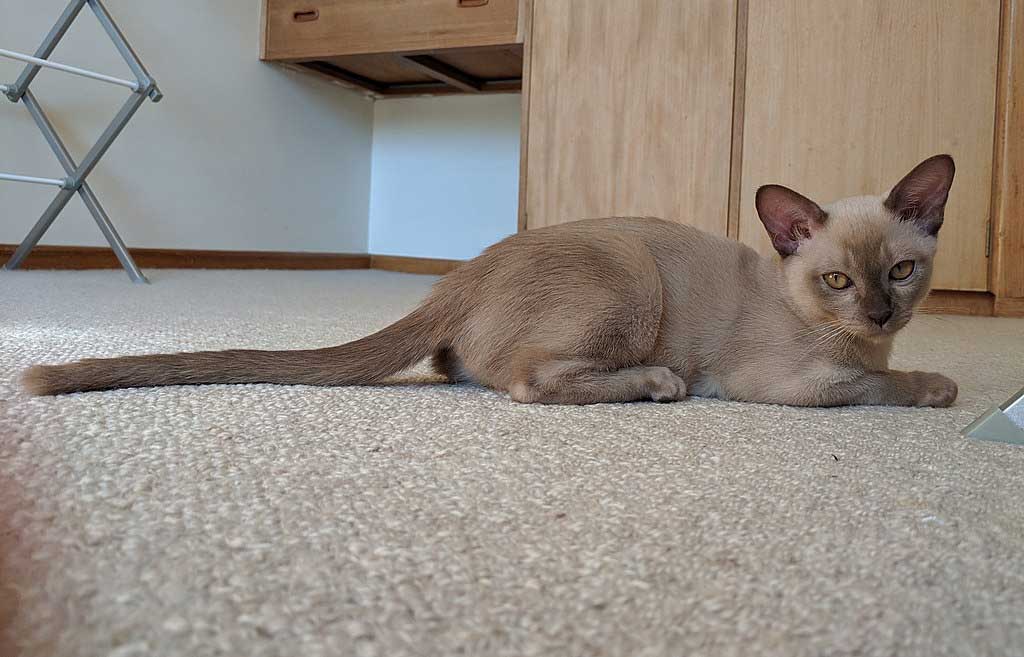
The legs they are long and delicate, with delicate oval feet. Overhead wedge-shaped, with one forecrown wide, some settle ears wide and of medium size and a straight nose.
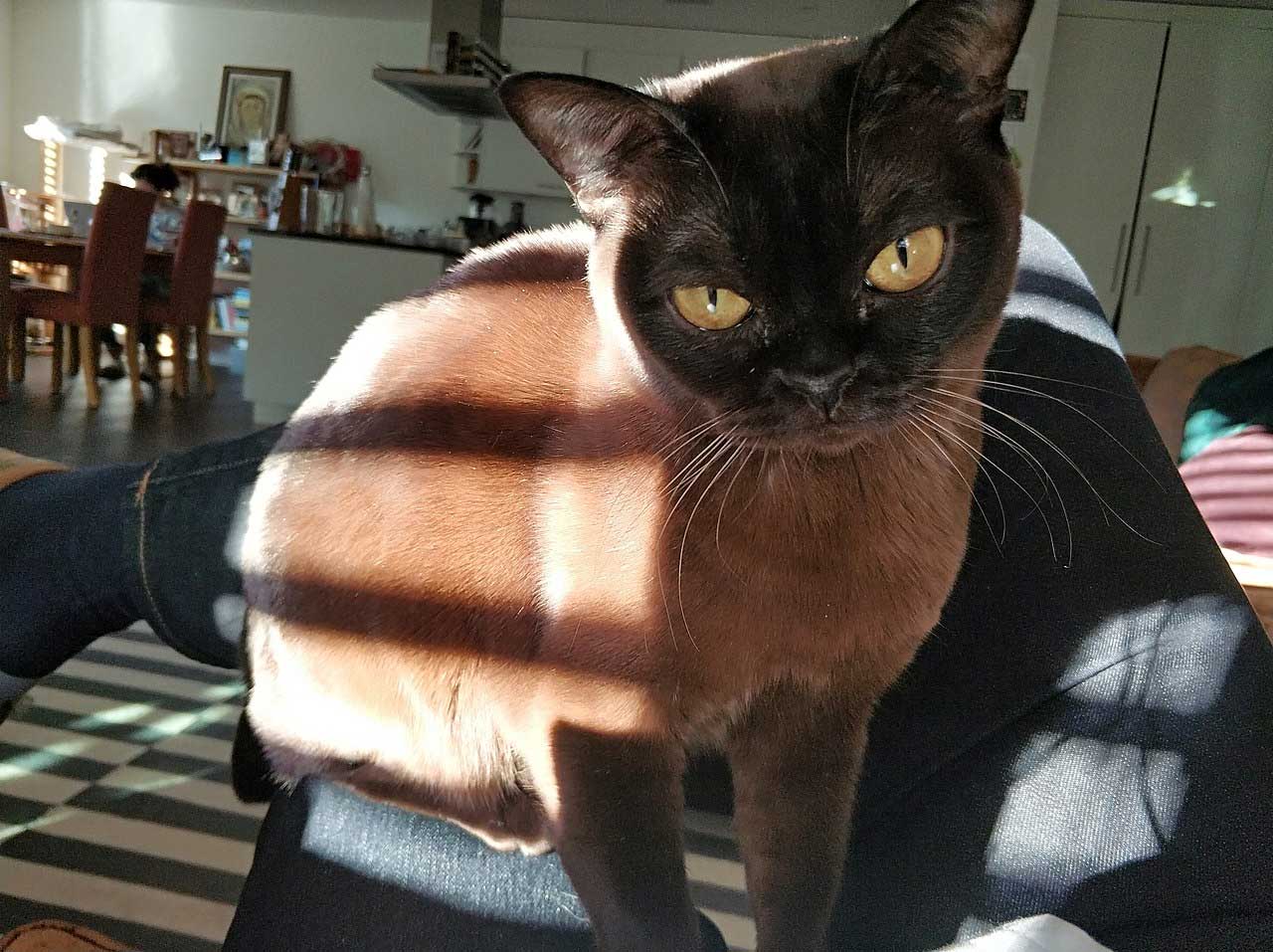
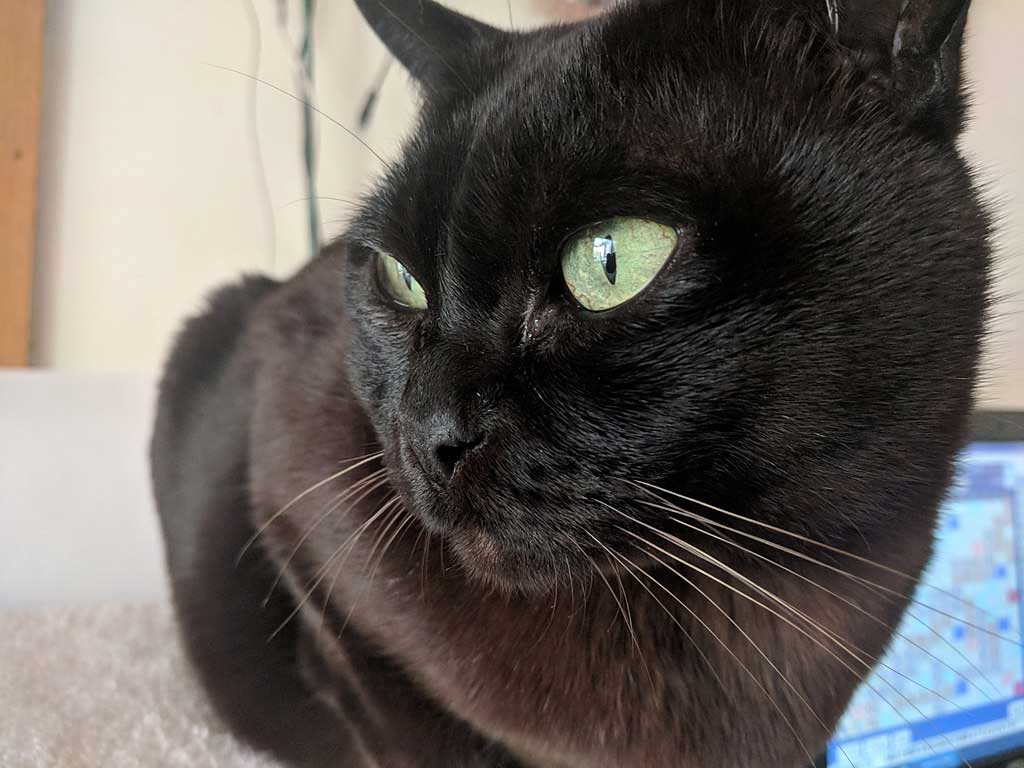
The Greats eyes are golden yellow to amber in color and have an oriental curved upper eyelid. The fur of the Burmese, dense and silky, has a very fine undercoat, so it is attached to the body.
Officially, ten different coat colors are recognized, no pattern allowed. The Burmese comes in ten generally recognized colors. As a common feature, they all have so-called spiky coloration, why the face, the ears, legs and tail are darker than the rest of the body. The most common coat color is nut brown..
Varieties:
As a result of separate breeding programs, the English Burmese are different from americans. European tends to be more eastern, with a more triangular face, while the American Burmese cat it is plump and rounded in the body, head, eyes and feet; with full cheeks and a short muzzle.
Character and skills
The Burmeses they are curious cats, energetic and loving. They especially like to play and are very people-oriented. You should not leave them alone for a long time, as they quickly feel lonely. Not in vain, These affectionate cats are called "people's cats".
They need close physical contact and cannot do without daily caresses. The friendly cats remain active and attentive until old age. They do not show any fear towards strangers and are usually quite "talkative".
Indoor or outdoor cat?
The "Burmese cat" it is an active animal that needs a lot of space. You are not comfortable in a narrow flat. So that they are happy, must have at least one secure balcony or, even better, a fenced garden. If the conditions are good, the Burmeses they can also go abroad. The only problem is that these friendly cats are not afraid of the neighbors or other strangers.. So, They can easily fall victim to "cat thieves".
How much activity does he need? "Burmese cat"?
The Burmeses They are great cats for the whole family. They need a lot of activity and are reluctant to be alone. In fact, They consider themselves so affectionate that they would rather come on vacation with you than wait home alone. If you have to leave your loving cat alone more often, you should get a second cat to keep each other busy.
Especially if cats can't go outside, you must provide them with a suitable substitute occupation. Even outdoor cats are not averse to playing regularly with their humans. With his attentive and curious character, to the Burmese loves to play and chase toys. It is best to provide this clever cat puzzle games or encourage him to seek and chase with hidden treats..
Burmese cat
Grooming and feeding
The coat of the Burmese cat it is very easy to care for and does not need any special treatment. Just brush the silky fur from time to time to remove dirt. This will not only guarantee a well-groomed and silky appearance, it will also do your cat a favor with extra petting.
A varied and healthy diet also contributes to the well-being of the cat.
For sale "Burmese cat"
Before buying a Burmese cat, you must be sure that you can dedicate the necessary time. The Burmeses they are considered one of the breeds with the longest life expectancy. You can't leave, often, to this cat only for the next 12 to 18 years and you will have to take care of it daily. If you have discovered this oriental cat for yourself, looking for a trusted breeder. There is currently no independent breeding club for the breed and you will have to turn to amateur breeders.. When you choose a kitten, make sure both the kittens and the parents appear healthy.
The price of a "Burmese cat" ranges between 800 and 1300 EUR.
Coexistence is important that you have with your new friend. Before considering the acquisition of a cat of the breed "Burmese cat" you know certain factors. You must take into account their character, their need for exercise, their interaction with other pets, their care and if you have small children, their level of tolerance towards them.
Joy
5,0 of 5 stars (based on 1 review)
Activity level
4,0 of 5 stars (based on 1 review)
Friendliness to other pets
3,0 of 5 stars (based on 1 review)
Friendliness to children
3,0 of 5 stars (based on 1 review)
Grooming requirements
1,0 of 5 stars (based on 1 review)
Vocality
4,0 of 5 stars (based on 1 review)
Need for attention
4,0 of 5 stars (based on 1 review)
Affection towards its owners
5,0 of 5 stars (based on 1 review)
Docility
1,0 of 5 stars (based on 1 review)
Intelligence
4,0 of 5 stars (based on 1 review)
Independence
2,0 of 5 stars (based on 1 review)
Hardiness
3,0 of 5 stars (based on 1 review)
Videos "Burmese cat"
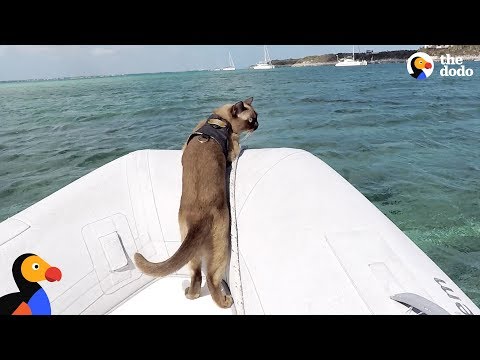
Cat Who Lives On A Boat Loves Visiting New Places - MISS RIGBY | The Dodo
Most official bodies consider that the Shorthair japanese bobtail It is a variety of Japanese Bobtail, but the TICA (International Cat Association) consider it to be a breed in its own right.
Physical characteristics
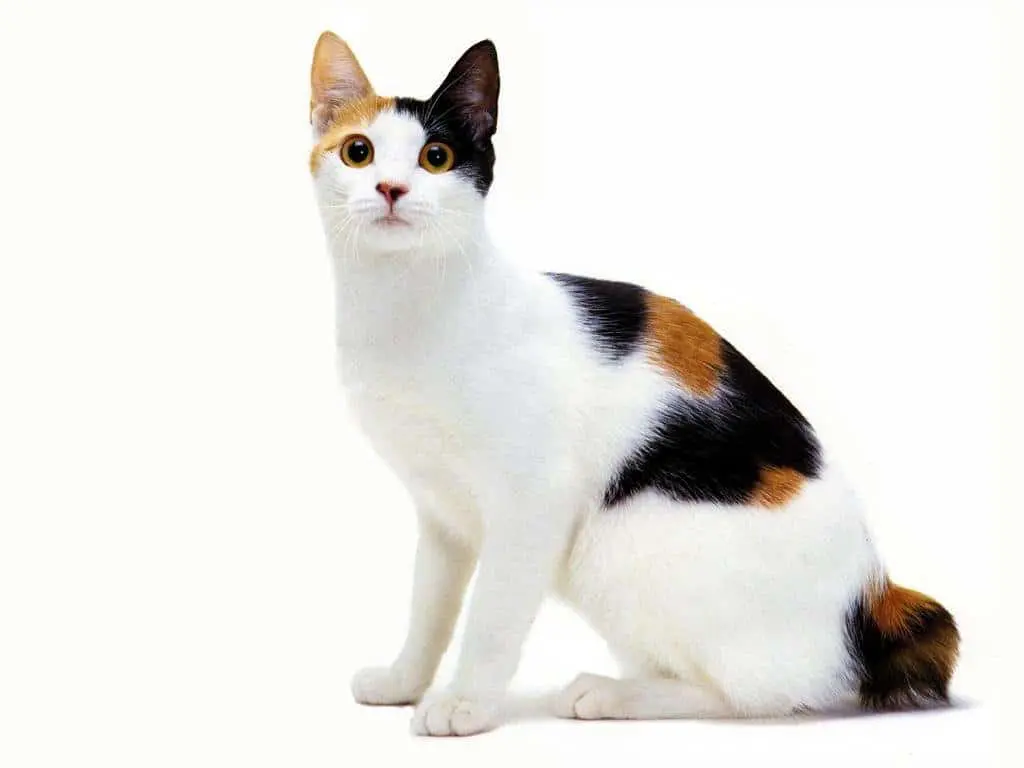
The Japanese Bobtail looks similar to a domestic cat, but with a very shortened tail.
Its coat is short and, mostly, bicolor (white-red or white-black); the tricolor variety, less common, is especially popular. Are size medium, but very light. Even the males, that do not weigh much more than females, reach a maximum of just 3 kg.
Body: The body is medium in size, elongated, slim and elegant, but muscular.
The legs: they are long and thin, oval legs.
The tail: must be bent and / or curved and be shorter than 8 cm.. The fur on the tail is longer than the rest of the body (pompom effect).
Head: The head is no longer than it is wide and is shaped like an equilateral triangle with smooth contours.
The profile: is slightly curved. The muzzle is deviated and slightly rounded.
The chin and lower jaw: they are strong.
Ears: The ears are large and erect. They are far apart, the tips are slightly rounded.
Eyes: The eyes are large, almond-shaped. They are placed slightly obliquely. The color of the eyes corresponds to the color of the coat.
Fur: The coat is short and smooth. Has a silky texture and hardly any undercoat.
Color variations: The colors chocolate and cinnamon, as well as its dilution (lilac and fawn) are available in all combinations. (Bicolor, Tricolor, Striped) they are not recognized. A pattern with dots is also not recognized. Everyone else
All other colors and designs are accepted. Any amount of white is allowed.
▷ The world of Pets: Dogs, cats, birds, reptiles, amphibians
Coexistence is important that you have with your new friend. Before considering the acquisition of a cat of the breed "Ragdoll cat" you know certain factors. You must take into account their character, their need for exercise, their interaction with other pets, their care and if you have small children, their level of tolerance towards them.
Joy
3,0 of 5 stars (based on 1 review)
Activity level
2,0 of 5 stars (based on 1 review)
Friendliness to other pets
4,0 of 5 stars (based on 1 review)
Friendliness to children
4,0 of 5 stars (based on 1 review)
Grooming requirements
4,0 of 5 stars (based on 1 review)
Vocality
2,0 of 5 stars (based on 1 review)
Need for attention
2,0 of 5 stars (based on 1 review)
Affection towards its owners
4,0 of 5 stars (based on 1 review)
Docility
5,0 of 5 stars (based on 1 review)
Intelligence
4,0 of 5 stars (based on 1 review)
Independence
2,0 of 5 stars (based on 1 review)
Hardiness
3,0 of 5 stars (based on 1 review)
History
The Ragdoll cat He is originally from California, United States. At the beginning of the Decade of 1960, Ann Baker, a breeder of persian cats, a white cat began to cross, semi-wild and looking like Turkish Angora cat call Josephine with several street cats. Josephine gave birth, among others, to two cats named Buckwheat and Fugianna.
They were large and docile in temperament and tended to relax completely when picked up., becoming real "Ragdolls".
Two males were added to the breeding program of the Mrs. Barker: Blackie, a black guy looking like Burmese cat, and Daddy Warbucks, dark in color and with white tips of the legs. These five cats interbred and gave rise to the breed Ragdoll as we know it today.
Aware that he had a new breed of cat on his hands, Ann Baker decided not to have her recognized by feline associations and, Instead, chose to register the trademark Ragdoll and create your own record, the International Ragdoll Cat Association (IRCA), in 1971. At the same time, prohibited anyone from using the name Ragdoll, breed these cats outside the strict conditions imposed to preserve the purity of the breed or register them with another feline association.
Although the eccentric claims of Ann Baker about what Josephine was genetically altered by aliens in a car accident are not credible, it seems likely that he had a unique genetic makeup, probably a natural genetic mutation, which was later passed on to their offspring.
The eccentricities of Ann Baker sparked dissension among other breeders of the Ragdoll cat, especially because of the high level of inbreeding caused by the strict restrictions imposed by. In 1975, Denny and Laura Dayton they were among the first to distance themselves from the breed and attempt to give it a legitimate existence under the umbrella of recognized feline associations. They drew up the standard that was used later when it was recognized by the Fédération Internationale Féline (FIFé) in 1991 and for the American Cat Fanciers’ Association (CFA) in 1993.
In the meantime, the Ragdoll had arrived in Britain already in 1981, when breeders Pat Brownsell and Lulu Rowley they imported the first specimens and began to breed this cat that little by little would conquer British cat lovers. A few years later, in 1986, made its appearance in France.
In the news, the Ragdoll is recognized by most major national and international feline associations: is the case, in particular, of the Governing Council of the Cat Fancy (GCCF) British, of the Livre Officiel des Origines Félines (LOOF) French, of the International Cat Association (TICA) and of the World Cat Federation (WCF).
Well established in both North America and Europe, and its success is undeniable. In United States, it is one of the most popular breeds in terms of number of registrations in the CFA, and even ranked first in 2018. In the United Kingdom, has firmly established itself in second place since 2010; with about 3.000 kittens registered every year, it only represents around the 15% of the country's cat population.
It is also one of the five most popular cat breeds in France., and its growth is dazzling: While in 2003 less than 100 specimens in the LOOF, in 2010 more than 1.000 and in 2019 more than 2.600, surpassing the Persian for the first time. So, represents almost the 6% of births registered in the country.
Physical characteristics
Ragdoll
The Ragdoll it is one of the largest breeds of domestic cats, but it grows slowly and in fits and starts, and does not reach maturity until four years.
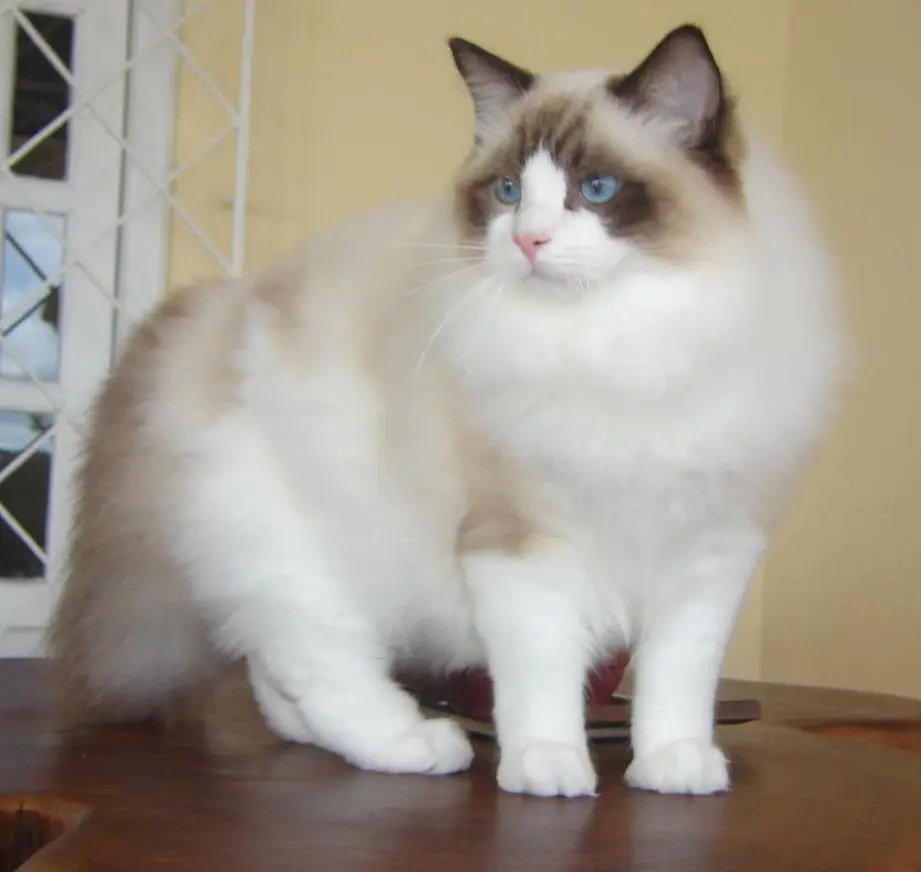
Has a kind of body long and mighty. His body is wide and imposing, with a solid bone structure and supported by medium-sized muscular legs that end in legs round and wide. The tail is quite long and tapers slightly towards the tip.
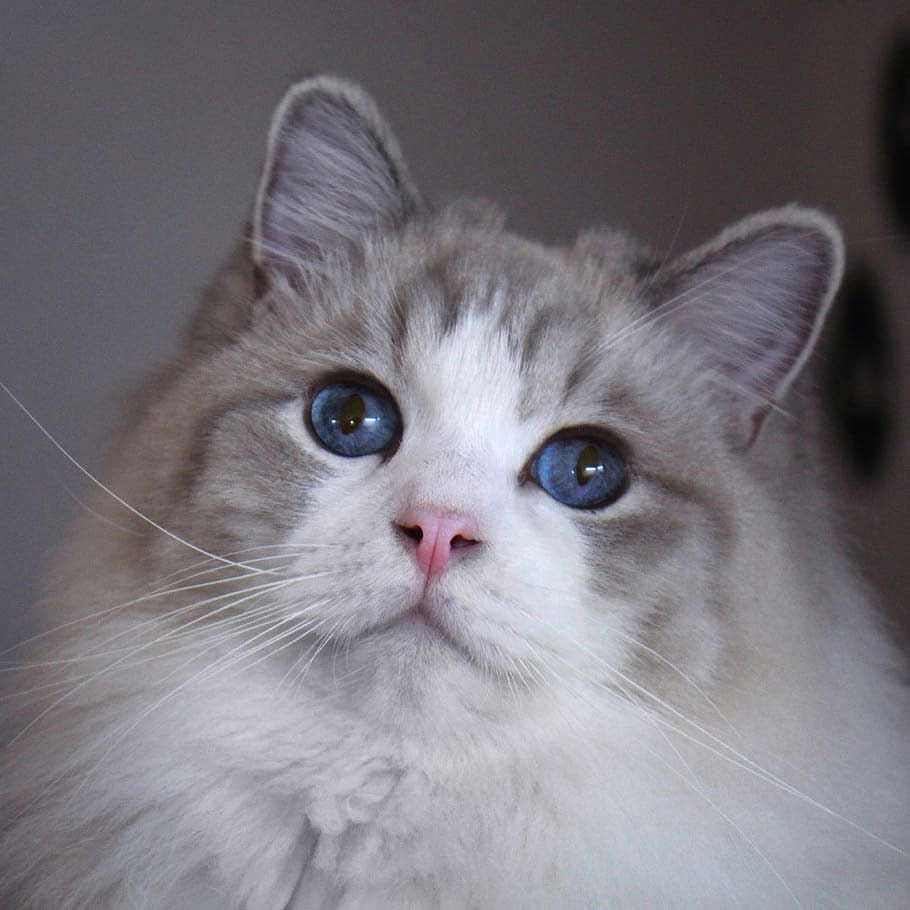
The head forms an equilateral triangle viewed from the front. Profile, the rounded forehead is prolonged with a slide-shaped depression at the nose. The ears are size medium, point forward and end in a rounded shape. The eyes they are big, oval and of an intense blue color that rarely leaves you indifferent.
The fur of the Ragdoll, composed of a sparse undercoat and a medium length topcoat, it is silky and close to the body. Tends to elongate in winter and is densest in the back of the body, and the queue is particularly crowded. It also, some dogs have a well-developed mane.
The fur tends to be colourpoint (a light color and dark tips), but it can also be gloved or bicolor. In United States, the CFA (Cat Fanciers’ Association) also allows pattern van, or Seychelles, which is a white individual with a colored tail and head, and spots on the body. The colors allowed by the standards of the different organizations that recognize the breed are the seal, the blue, chocolate, the lilac, red and cream. These colors can be found in tortoiseshell patterns (black and Red) or tabby (striped), which gives rise to a large number of possible combinations and, Therefore, to as many cats with different appearances.
Last, the sexual dimorphism it is very marked, being the male much more imposing than the female.
Size and weight
Male height: Of 30 to 35 cm.
Female height: 28-32 cm.
Male weight: 5-9 kg
female weight: 4-7 kg
Breed standard
The breed standards are documents established by official bodies that list the conditions that a dog must meet. Ragdoll to be fully recognized as belonging to the race:
Male Ragdoll, about three years old, with prototypical tabby patterns in the head region – BlackIceNRW, CC BY-SA 3.0, via Wikimedia Commons
Docile and devoted, the Ragdoll he loves the company of his family and follows them around the house, greeting them at the door when they arrive. He is a gentle and loving companion, who just wants to get into his master's lap to warm him up and relax him with a lot of purring after a hard day's work.
Very sociable, he has no problem greeting guests. If they take it in their arms, he behaves as he would with his masters: relax all your muscles, which reminds us why it's called "Ragdoll".
Its quiet character, relaxed and easygoing makes it an excellent choice for a cat breed with children, especially if they have learned to interact with an animal. But even if they are not treated with respect, for example, if they are carried around the house for a long time, it is very rare that they remove their claws. And if there is a cat that is willing to be dressed like a doll and then carried in a stroller, it's the ragdoll. Of course, make sure that the child does not cross the line and abuse their indulgent nature.
It is not a problem of coexistence with other dogs, as long as they don't chase you around the house. It can even live with small rodents or fish, but it is advisable not to tempt the devil: the Ragdoll still a feline, and his hunting instincts can resurface at any moment.
Its flexible and calm personality makes it a cat that adapts well to changes and is capable of living in almost any environment. A move with a cat goes much better if it is a Ragdoll that a race that does not share this quality. The owner can also perfectly consider taking his cat on vacation, without fear that your partner will be completely disoriented and not enjoy the change of scenery. It is also possible to take your cat around your holiday destination on a leash, since it is something that this breed accepts very well.
Despite its impressive size, the Ragdoll adapts perfectly to life in a flat, as long as you have everything you need: the warmth and comfort of a cozy home, the affection of his family and a little space to play. Even if you live in a house and have free access to the outside, it's more of an indoor cat: rarely goes outside to explore the garden or surroundings.
On the other hand, his closeness to humans and his patience make him suitable for friendship with anyone, and turn you into a excellent therapy cat. His presence and willingness to interact with people also means that he can be a real comfort to his owner when he is going through a difficult time., and he knows that he has a support in him that he can trust in those circumstances. On the other hand, It is not for someone who likes to be alone and does not want a companion who is a little "clingy", who prefers to opt for a more independent breed.
The Ragdoll is moderately active, but enjoy chasing a cloth mouse, especially because he retains a playful side throughout his life. They are also able to learn some tricks, especially if the owner uses positive reinforcement techniques with praise and treats. It also, if given the opportunity, they love to play fetch for an object thrown by its owner, how would a dog. But don't expect him to constantly jump on the kitchen table or climb on furniture.: prefers to run rather than jump and does not venture beyond the living room sofa or bed. Like this, unlike most of his peers, does not seek a high position to observe its surroundings from above, but choose a place that facilitates contact with your family.
It also, against a legend, not insensitive to pain, and reacts like any other cat if someone steps on its tail: cries out in pain and then walks away with a reproachful look at the offender.
Last, has a soft and musical voice, but he rarely uses it, except when you order your food.
Health
"Ragdoll cat"
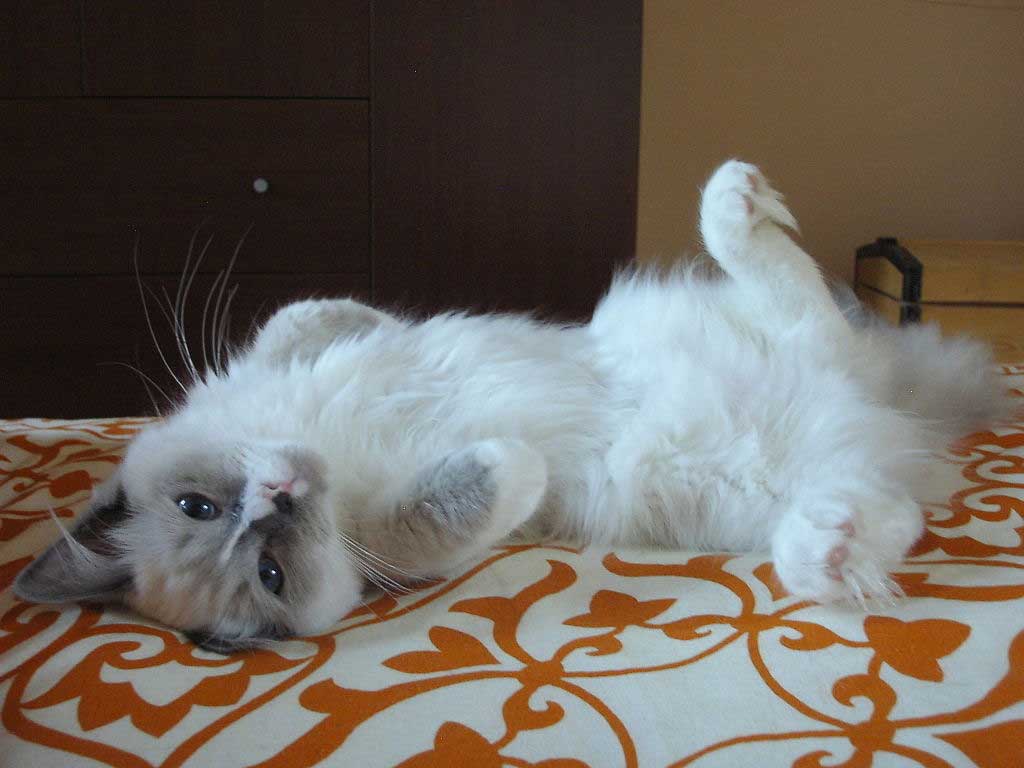
Male Ragdoll of 4 months. Blue mitted with a blaze – CalistaZ, CC BY-SA 3.0, via Wikimedia Commons
The Ragdoll cat it is a fairly robust breed with few genetic predispositions.
But, you are not immune to certain health problems. Among the possible risks, the most common are:
The feline hypertrophic cardiomyopathy, a growth of heart tissue that can have serious consequences. But, from 2007 there is a DNA test to detect the responsible gene, so serious breeders of Ragdoll have taken all precautions to minimize this risk;
Bladder lithiasis, that is to say, stone formation in the bladder;
The urolitiasis, what is stone formation in the urethra.
These last two conditions can cause the cat to be unable to urinate, a serious situation that requires the urgent intervention of the veterinarian.
Life expectancy
Of 12 to 15 years
Grooming
The Ragdoll it is a breed of cat that is easy to care for: the brushed once a week removes dead hairs and knots that may form. This session is usually appreciated by the receiver, who enjoys the attention and caresses he receives.
Although they do not shed excessively (especially because its undercoat is not very abundant), it is advisable to increase the frequency of grooming sessions during their shedding periods, in autumn and spring.
The teeth, the eyes and ears should also be checked and maintained once a week to make sure they are clean and free of infection.
It also, depending on wear and tear and how often your dog uses the scratching post, its claws need to be trimmed more or less frequently.
Last, keep in mind that, given its size, a large litter box is necessary so that she can turn over without difficulty.
Food
Ragdoll
The Ragdoll it does not pose any difficulties in terms of feeding and adapts very well to industrial cat foods available on the market. But, food must be of good quality, adapted to your age and activity level, to provide you with everything you need to stay healthy.
Kittens of this breed can experience large growth spurts, so it is important that they always have food at their disposal to develop properly. This is especially true as they are capable of self-regulation., so the risk of being overweight is very limited. This is not a sign of obesity, but a normal morphological characteristic of the breed.
Adults are also capable of self-regulation and can also have food at all times without this generally posing a problem.
But, your dog's weight should be monitored regularly and a veterinarian should be consulted in the event of a pronounced increase.
What is the price of a "Ragdoll cat"?
The price of a kitten Ragdoll round the 1100 euros on average, whether it is a male or a female.
But, this stocking hides a fairly wide range of prices, since it goes from the 600 euros of the cats with the characteristics furthest from the standard up to almost 3.000 euros of the specimens belonging to a prestigious lineage and destined for their physical attributes to shine in feline exhibitions.
Interesting data
Do "Ragdolls" have a reduced sense of pain?
Since the Ragdoll hangs limply when caught and lets everything hang over him, some researchers assumed the breed has a lower sense of pain than other cats. For some time, experiments were done on the poor animals. It is even believed that the founder of the breed, Ann Baker, made this claim to better market his breed. At the end, the tests led to the conclusion that there are no differences with other cats.
The "Ragdolls" on social networks
Their funny and clumsy character makes cats Ragdoll be real stars on the internet. There is hardly a compilation of "funny cat videos" in which this breed does not appear.. The Ragdolls most famous on Instagram are the three cats Lola, Nina and Olan, whose day to day you can follow under the name of @ladylolathecat. The three cats live with their owner in a floating house and delight 139.000 subscribers almost daily with funny videos and images.
The Ojos Azules cat still one of the rarest feline breeds in the world, and the number of breeders remains confidential.
Photo: elblogdegatos.com
Content
History
The history of Ojos Azules cat started on 1984 in New Mexico ((UNITED STATES)UU.), when a family discovered a colony of stray cats, some of whose members had intense blue eyes. Their attention focused on a tortoiseshell cat that they took in and called Cornflower.
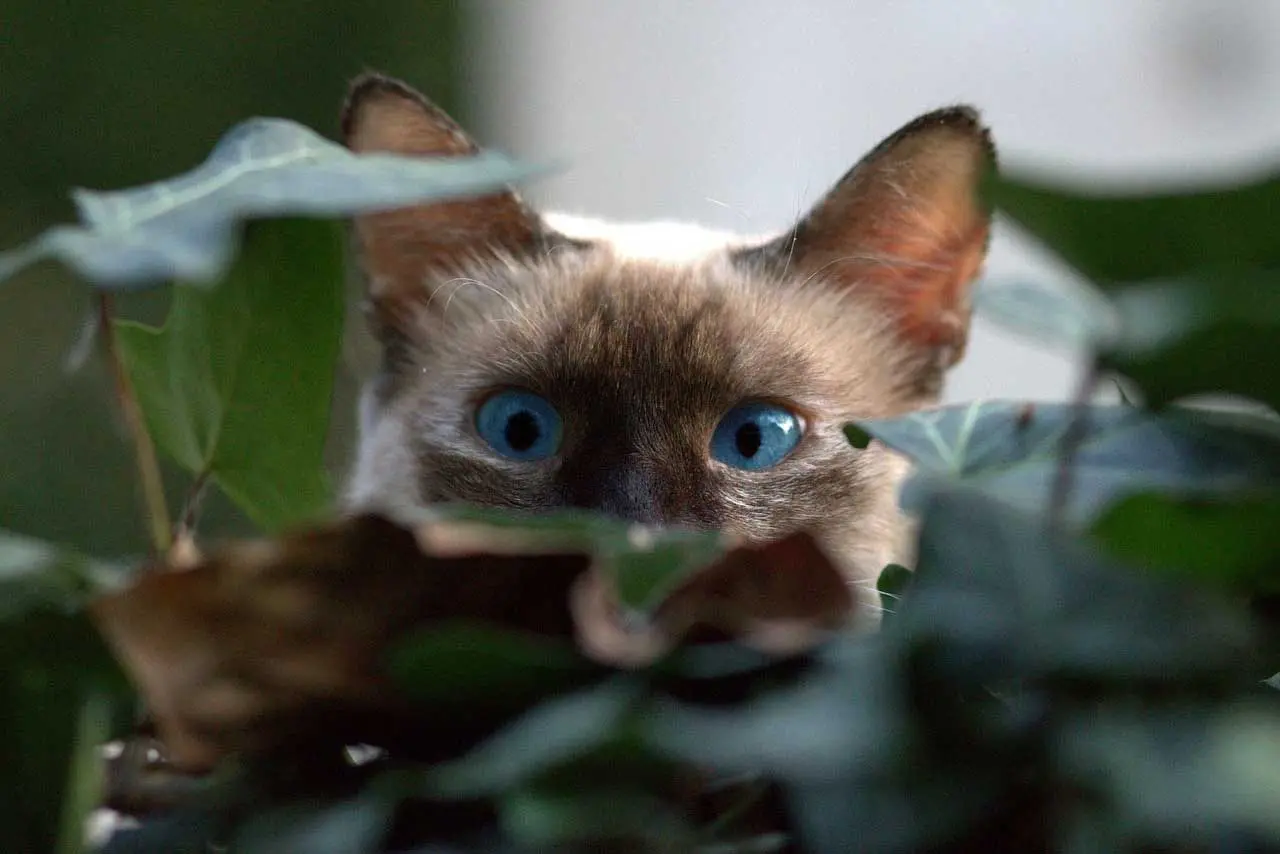
She was bred with other unrelated cats and gave birth to kittens, some with the same eyes. More intense than the Siamese cat, this blue color is not linked to the color of the cat's fur, and the gene responsible for it does not cause strabismus or deafness, unlike other blue-eyed cats.
In fact, regardless of race, it is the absence of melanin in the iris that makes the cat's eye blue. But, the cause of this absence is not the same; in the case of Ojos Azules, it is a hitherto unknown gene that is in the origin.
It was the discovery of this new gene, that allowed to have cats with dark fur and blue eyes, without being affected by strabismus or deafness, which led to the International Cat Association (TICA) to recognize this breed in 1991 and to set a standard, although at that time it was still very rare. In fact, in 1992 they only registered 10 specimens.
But, Later research showed that the gene responsible for blue eyes was also responsible for a life-threatening cranial deformity. A subsequent investigation by the DRA. Solveig Pflueger, judge and president of the TICA Genetics Committee since its creation in 1979, confirmed the link. But, at the same time he discovered that the gene is Heterozygosity, so these dangerous cranial deformities can be avoided by crossing a blue-eyed individual with a standard-eyed individual. This led to prohibiting the breeding of two Ojos Azules cats together.
At the same time, a Ojos Azules in Australia, although no specimen had been imported there. This led breeders to believe that this mutation could occur spontaneously in the domestic cat population..
In France, the LOOF (Livre Officiel des Origines Francaises) established a standard for Blue Eyes in 2004.
But, contrary to what is usually observed, recognition of the breed by reference bodies did not lead to its expansion: the Ojos Azules still one of the rarest feline breeds in the world, and the number of breeders remains confidential. In fact, in 2019, both the TICA and the LOOF eliminated the Ojos Azules from the list of recognized breeds.
The main feature of the Ojos Azules cat It, as the name reflects, her magnificent deep blue eyes.
Otherwise, the standards describe a body rectangular with a fine and solid bone structure, well proportioned and flexible: it is about, because, of a semi-linear cat. The legs hind legs are slightly longer than front and legs, round or oval, they are rather small and delicate. The tail is of medium length and tapers to the tip.
The head it is triangular seen from the front, with prominent cheekbones and a slightly rounded forehead in profile, followed by a slight stop at the beginning of the nose. The ears medians are rounded, while the muzzle is rather square. The eyes they are almost round and as big as possible. Different colored eyes are tolerated, being one of them blue and the other green, gold or copper.
The fur it can be short or medium long and has a silky smooth texture. All colors and patterns are accepted, except for the White, to distinguish this breed from the usual white cats with blue eyes.
The gene responsible for blue eyes also usually gives white markings on the tips of the legs, ears and tail.
Size and weight
Size: 30 cm.
Weight: Of 4 to 6 kg
Varieties
By recognizing the Ojos Azules in 1991, the TICA (International Cat Association) distinguished between two different varieties in the first published standard: the Ojos Azules Shorthair and the Ojos Azules Longhair, having a medium length coat.
Character and skills
The rarity of Ojos Azules cats makes it difficult - even dangerous- draw conclusions about their character. But, owners of this breed describe them as affectionate, loyal, smart and playful.
Health
The population of the Ojos Azules cats it is not large enough to have reliable information on possible health problems specific to this breed.
But, in the early days of the breed, some individuals were affected by a cranial deformity that was sometimes fatal.
A study carried out later on the specific gene of this breed that is at the origin of the color of its eyes made it possible to establish that it was enough not to breed two individuals with blue eyes.: being the gene Heterozygosity, kittens born from the union between a Blue Eyes and another cat that does not have blue eyes are protected from this risk of cranial deformation. In fact, this risk has already been eliminated: current specimens no longer suffer from this life-threatening malformation.
The Ojos Azules cat It is an easy-care breed of cats: one brushing a week is enough to remove dead hair.
The teeth, the eyes and ears should also be checked once a week to avoid any risk of infection.
Last, if the claws are too long because they do not wear out naturally, it is necessary to trim them from time to time.
Food
The Ojos Azules can be commercially fed, either with kibble or cat food. Quality industrial products provide all the nutrients and vitamins necessary for good health.
For sale "Ojos Azules cat"
The rarity of Ojos Azules cats makes it very difficult to get one of these cats. The few specimens that exist are, Obviously, in the hands of breeders, and no kittens are officially available for sale.
Most people have heard of or seen cats. Ocicats, But you never hear about the classic "Jungala". An image of one may not be found on a website, that farmers are allowed to breed with them, However, they may not exhibit them. There are three additional variants in the breed Ocicat, The classic «Jungala,», the classic tabby Ocicat which in New Zealand is called a cat Jungala, as well as the name of the race of the Ocicat cat (‘Oci‘), It is derived from the name of the cat of Ocelot, a "wild" Central American or a cat "jungle", The new name in Spain for the "Jungala", which is also taken from the Sanskrit word that means "the jungle".
"Jungala Ocicat cat"
This breed was achieved by crossing a mixture of the Abyssinian cat, the Siamese cat and of the American shorthair cat. As such, is a home race, that was selectively bred to emulate the ocelot is found in nature, while retaining the friendly disposition of domestic.
In New Zealand, the first cats Jungala were registered by the Karakakat kennel, with CATZ Incorporated, who recognized the Jungala cat as an independent breed with full championship status in August 2001.
Physical characteristics
The so -called "Jungala" is a Ocicat cat without stains. Or more specifically, a cat with genetics Ocicat that express only one pattern Tabby Classic. The conformation and personality type are exactly the same as an Ocicat, but the pattern should conform to that of the classic brindle model of the American shorthair cat
"Jungala Ocicat cat"
The Oci-Classic has a large bullseye circle on each side of the torso broadly defined with a beautiful color contrast. Their stomachs are also marked with spots. The spotted kittens are very nice, the classical coloring is awesome, with a luxurious and exceptional velvety color, an authentic and unusual color combination. Are highly prized for its stunning beauty. This pattern is especially striking when viewed on a Tabby Silver, where the silver under light allows a strong contrast with the marks of the final layer color depth.
Character and skills
The Jungala cat, just like their counterparts Ocicat, they are very sociable and somewhat similar to dogs in their devotion for the people. They are bright, easily manageable and often are outgoing, even with strangers. As such, they are an ideal cat for households where there are other pets and children.