โ–ท The world of Pets: Dogs, cats, birds, reptiles, amphibians

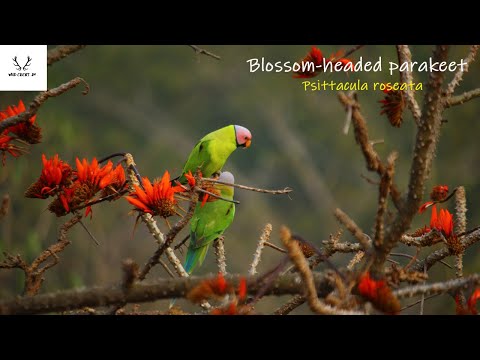
Blossom-headed Parakeet
Psittacula roseata


Cotorra Carirrosa

Content

Description:

Of 30 to 36 cm.. length between 85 and 90 g. of weight.
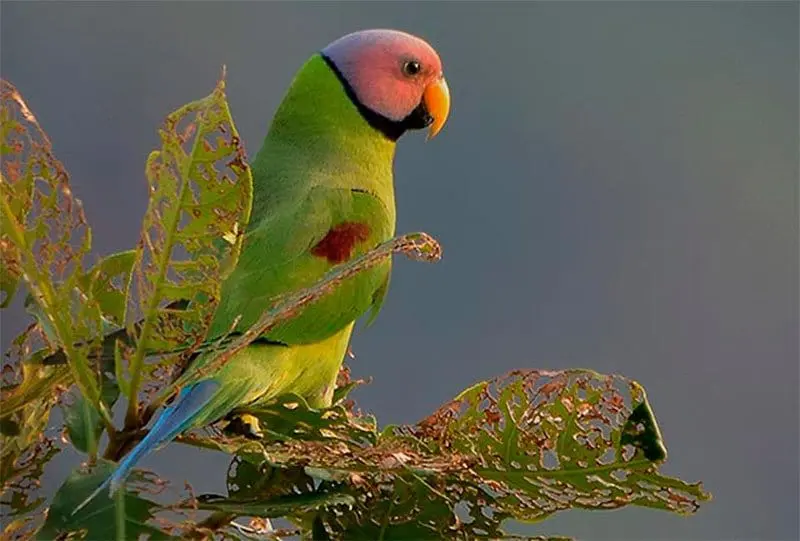
The Blossom-headed Parakeet (Psittacula roseata) has the forecrown, lores, cheeks and ear-coverts mauve-pink, fading to pale blue in the lower cheeks, the sides of neck, the crown and back neck, with broad black "mustache" stripes to form a narrow collar between black blue head and green body; nape bright green fading to a duller green on upperparts.

Upperwing-coverts, mostly green with a brown patch coverts smaller and medium; greater coverts outer and alula darker green. The primaries dark green (darker in vane inner) with a margin yellowish narrow in them vane outer.

Underwing-coverts green. The underparts pale green. Uppertail, centrally bright blue, with creamy white tip; outer feathers green on vane outer, yellowish-green on inner, tipped yellow; undertail-coverts dull yellowish.

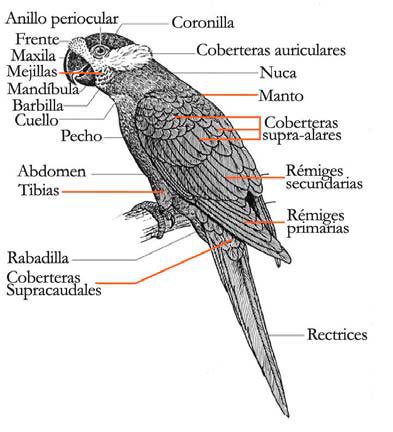
Ilustraciรณn Cotorra Carirrosa

upper jaw orange-yellow, the lower black: cere whitish; irises yellowish white; legs gray-green.

The female has the head pale blue-gray, no black "mustache" and collar ring replaced by yellow opaque olive extending from the nape, around the sides of neck; tail slightly shorter. The upper jaw yellow, the lower dark grey.

The immature has the head greenish, the gray tint chin and the bill yellowish to the 15 months, when both sexes develop similar to plumage adult female; the males acquires adult plumage at about 30 months.

Subspecies description

Once considered the same species Psittacula cyanocephala, where he was often wrongly classified as Psittacula cyanocephala rosa.

  • Psittacula roseata juneae

    (Biswas, 1951) – Like species nominal, but the overall color body It is yellower; more extensive stain or red patch shoulder; central feathers tail paler color, side feathers tail yellower.


  • Psittacula roseata roseata

    (Biswas, 1951) – The species nominal.

Habitat:

Video – "Blossom-headed Parakeet" (Psittacula roseata)

Blossom-headed parakeet Call / Psittacula roseata / Bird's Call

The Blossom-headed Parakeet inhabit open forests, including Savannah, secondary forests, forest edge, clear and cultivated land. Partially deforested areas persists and seems to prefer forest edges adjacent farm.

Mainly observed in the lowlands to about 1.500 meters above sea level. Usually, in small flocks, form larger congregations where food is plentiful. He joins mixed flocks with Rose-ringed Parakeet, the Plum-headed Parakeet and Red-breasted Parakeet and form communal roosts in dense vegetation.

Reproduction:

The nests This species is found in tree cavities, usually at a moderate height; they can dig the hole themselves or modify old nests of other species (for example, woodpeckers or barbets).

Nest usually in colonies of several couples. The laying is of 4-5 (rarely six); eggs are more spherical than those of other congeners. The breeding season It is from January to April (May sometimes).

Food:

Foods are reported: wild flowers and Granada, nectar, including grain sorghum and corn, fruits such as figs and apricots, red peppers and chard seeds. Their diet is very similar to the Plum-headed Parakeet.

Distribution:

Distributed by the foothills of Himalaya Oriental until Indochina. Of Sikkim (India) and South of Bhutan through Assam until Bengal and Bangladesh and east along the north and center Burma, South of China (Yunnan, Guangxi and Guangdong province), Thailand, Laos, Kampuchea and Viet Nam.

Mainly sedentary with seasonal movements in southwest Burma, where Blossom-headed Parakeet They are common in the months of March and April, but otherwise few months, generally common despite apparent decline in some areas (for example, Thailand and Burma), mainly due to large-scale deforestation, and persecution. Few in Viet Nam.

Resident but with some local movements in relation to the food supply.

Held captive and apparently the subject of strong catch in some parts.

Subspecies distribution

  • Psittacula roseata juneae

    (Biswas, 1951) – From East Bangladesh to the North of Burma and east through southern China, Thailand, Laos, Kampuchea and Viet Nam.


  • Psittacula roseata roseata

    (Biswas, 1951) – The species nominal.

Conservation:

State of conservation โ“˜


Near-threatened Near Threatened โ“˜ (UICN)โ“˜

โ€ข Current Red List of UICN: Near-threatened

โ€ข Population trend: Decreasing

This species has been upgraded from Least concern due to new information on population trends. It is listed as Near-threatened on the grounds that it is experiencing rapid moderate decline due to habitat loss, unsustainable levels of exploitation and hunting pressure.

This species has suffered greatly loss of habitat (Forshaw 2006), What, in combination with capture for trade bird cage and general persecution as a pest, have caused the Blossom-headed Parakeet it becomes rare or rare in Thailand (pit et to the. 1997, Juniper and Parr 1998) and Myanmar (Juniper and Parr 1998).

The size of the world's population has not been quantified, but the species according to sources, has a population variable through its range

International trade records showed that 836 birds were exported between 1981 and 1985, but this increased to 6.873 birds between 1986-1990, mainly Viet Nam and Thailand (pit et to the. 1997).

In Laos, habitat encroachment has been so severe in the lowlands, few remaining areas large enough so that the nests Blossom-headed Parakeet they can escape from theft, and there is little active effort to reduce this pressure (JW Duckworth in litt. 2013).

In Cambodia, changes in land use in the lowlands have been too quickly (RJ Timmins in litt. 2013), and it is expected that the intended conversion bosque deciduous Dry for agribusiness plantations may cause a decrease of 30% or more in the national population of this species in the next 20 years (F. Goes in some. 2013).

Actions ongoing:

    The species is known to occur in some protected areas, as the Kirirom National Park, Cambodia (F. Goes in some. 2013).

Conservation actions proposed:

    – Conduct periodic surveys to track broad population trends.
    – Monitor the rates of loss and degradation of habitat.
    – Quantify the impact of harvesting for trade.
    – List CITES listed species.
    – Increase the area of รขโ‚ฌโ€นรขโ‚ฌโ€นsuitable habitat that are protected.
    – Carry out awareness raising activities to discourage theft of nests and capture.

"Blossom-headed Parakeet" in captivity:

The Blossom-headed Parakeet It is a rare bird and very expensive, requiring experienced breeders. Immature of this species are nearly identical to those of the Slaty-headed Parakeet and Plum-headed Parakeet, so when buying an immature Blossom-headed Parakeet, be sure to do so only from a reputable breeder.

To ensure breeding success, each partner should have their own aviary. No house them with Plum-headed Parakeet wave Slaty-headed Parakeet, in order to avoid hybridisation.

The Blossom-headed Parakeet, generally, they are not aggressive with other smaller birds, usually calm and they are not very destructive to wood. The female is, usually, the dominant bird; reach breeding age at about the age of 3 years. New pairs should be introduced several months before the start of the breeding season so that the birds have enough time to establish a strong bond with each other.. A good pair bond will usually translate into better breeding results.. However, are very difficult birds to breed in captivity.

Since Blossom-headed Parakeet It is so rare, we should consider well managed breeding programs, before acquiring one of these copies for your particular pet enjoy. This Parrot You need constant training and behavioral counseling from an early age to ensure its potential owners the enjoyment of a free bird destructive habits and annoying.

Alternative names:

– Blossom-headed Parakeet, Blossom headed Parakeet, Eastern Blossom-headed Parakeet (English).
– Perruche ร  tรชte rose (French).
– Rosenkopfsittich (German).
– Periquito-de-cabeรงa-rosa (Portuguese).
– Cotorra Carirrosa, Cotorra de Cara Rosada (espaรฑol).


scientific classification:

Dr. Biswamoy Biswas
Dr. Biswamoy Biswas

– Order: Psittaciformes
– Family: Psittaculidae
– Genus: Psittacula
– Scientific name: Psittacula roseata
– Citation: Biswas, 1951
– Protonimo: Psittacula roseata


Blossom-headed Parakeet Images:


Especies del gรฉnero Psittacula

Sources:

– Avibase
– Parrots of the World โ€“ Forshaw Joseph M
– Parrots A Guide to the Parrots of the World – Tony Juniper & Mike Parr
– Birdlife

– Photos:

(1) – Rose-headed Parakeet in Guwahati, Assam, India By ยฉ Raj Kamal Phukan – Oriental Bird Images
(2) – Psittacula roseata blossom headed parakeet – Birds-pet-wallpapers
(3) – Blossom-headed Parakeet (Psittacula roseata) by Elite-Pets
(4) – Juvenil Blossom-headed Parakeet (Psittacula roseata) by desbecsetdesplumes
(5) – Blossom-headed Parakeet (Psittacula roseata) in Tenerife – Loro Parque – link
(6) – Birds of Asia, Vol. V, Parts XXV-XXX, by John Gould, 1873-1877. Painted by John Gould & Henry C. Richter [Public domain], via Wikimedia Commons

– Sounds: Frank Lambert (Xeno-canto)

โ–ท The world of Pets: Dogs, cats, birds, reptiles, amphibians

Seychelles parakeet โ€ 
Psittacula wardi

Seychelles Parakeet

Content

Description:


Anatomy-parrots

The Seychelles Parakeet (Psittacula wardi) It was a medium-sized parrot with a length of about 41 cm and a weight between 100 and 125 g..

It was green with a large bill red with yellow tips, a red stain on the shoulders and a long tail. The male had a narrow black band on the cheek and neck black that the female and juvenile lacked. blueness in nape and eyes yellow. the legs They were greyish

taxonomy:

Phylogenetic studies suggest that this species away from the Alexandrine Parakeet (Psittacula eupatria).

Habitat:

In a report they were seen over the forest along a field corn.

They were probably in small groups or flocks, making striking flights. It was reported that the birds were cautious, presumably due to its constant pursuit.

Reproduction:

No data.

Food:

It was a forest species, which probably it fed on fruit and seeds.

Distribution:

The Seychelles Parakeet It was endemic to Mahe and Silhouette, Seychelles, with a visual record of Praslin. A considerable number were found in 1811, But it was rare in 1867 and the last specimen was shot at Mahe by Abbott in 1893. It may have survived until the twentieth century (Skerrett y Disley 2011), although apparently he was already extinguished when Nicoll He visited the island 1906 (Lionnet 1984).

Conservation:

โ€ข Current category of the Red List of the UICN: Extinct.
โ€ข Population trend: The last known individuals were shot dead in 1893.

Clearing forests for plantations and coconut hunting and capture (in particular, to protect corn crops) were the main causes of the disappearance of the species (Forshaw and Cooper 1989).

In captivity:

The last captive records of these birds date back to the year 1883.

There are currently two specimens in the museums of Liverpool and New York City.

Alternative names:

– Green Parakeet, Seychelles Alexandrine Parrot, Seychelles Parakeet, Seychelles Parrot (inglรฉs).
– Perruche des Seychelles (francรฉs).
– Seychellen-Edelsittich, Seychellensittich, Seychellen-Sittich (alemรกn).
– Periquito-das-seychelles (portuguรฉs).
– Cotorra de las Seychelles, Cotorra de los Seychelles, Cotorra de Seychelles (espaรฑol).


scientific classification:

Newton Edward
Newton Edward

– Order: Psittaciformes
– Family: Psittaculidae
– Genus: Psittacula
– Scientific name: Psittacula wardi
– Citation: (Newton, E, 1867)
– Protonimo: Palaeornis wardi


Especies del gรฉnero Psittacula

Seychelles Parakeet (Psittacula wardi)


Sources:

Avibase
Parrots of the World โ€“ Forshaw Joseph M
Parrots A Guide to the Parrots of the World – Tony Juniper & Mike Parr
Birdlife

Photos:

(1) – Seychelles Parakeet (Psittacula wardi), depiction by John Gerrard Keulemans from โ€˜Extinct Birds’ by Lionel Walter Rothschild from the year 1907 by John Gerrard Keulemans [Public domain], via Wikimedia Commons

โ–ท The world of Pets: Dogs, cats, birds, reptiles, amphibians

Red billed Parrot
Pionus sordidus

Tropicbird Parrot

Content


Anatomy-parrots

Description:

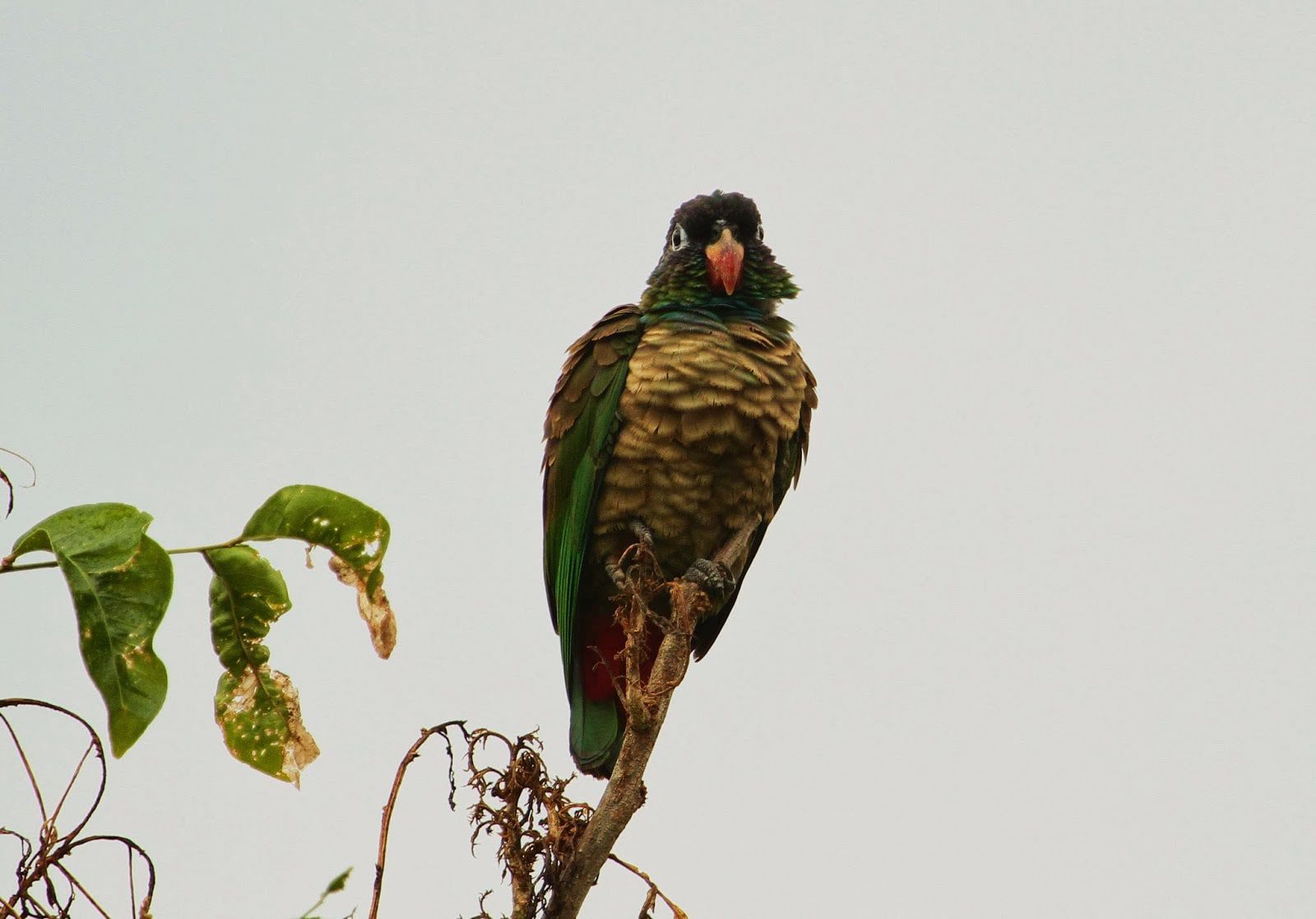
The Red billed Parrot (Pionus sordidus), of looking scruffy, has a length of 28 to 31 cm. and a weight between 255 and 275 g..

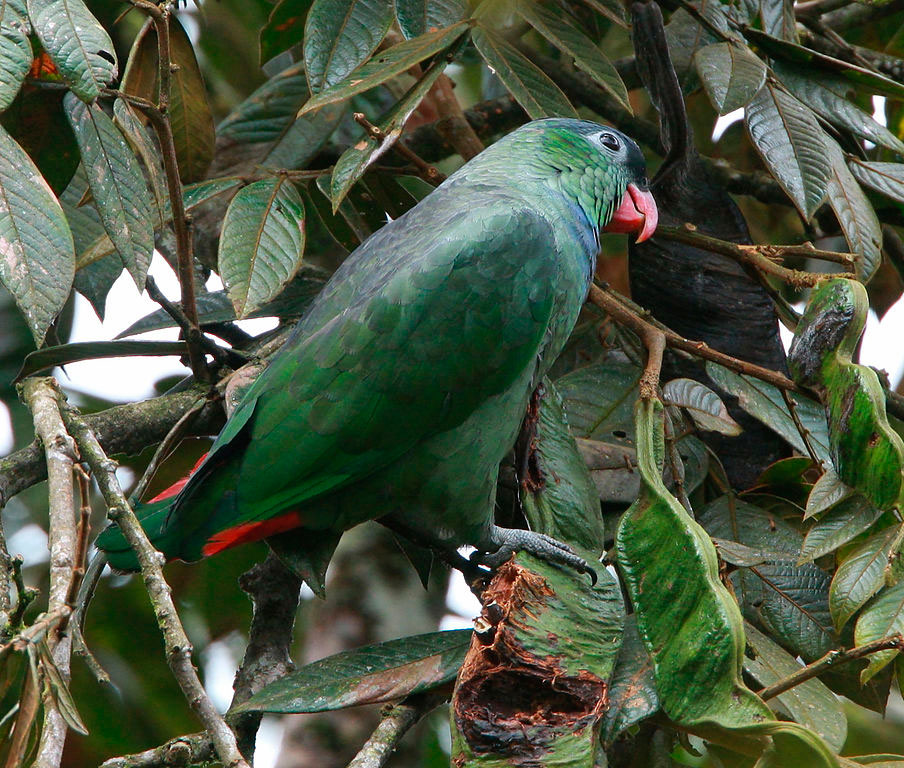
The subspecies Pionus sordidus corallinus, the most widespread, has the feathers of the forecrown, lores and behind the eyes, Green at the base and with blue edges widths; the cheeks, ear-coverts and the sides of the neck, mainly green with some blue narrow tips; the crown and rear of the neck, Green with edges blue narrow. Mantle and back pretty dull green with paler blue margins; rump and uppertail-coverts, of color green basally, more Brown olive distally. Coverts medium and small with wide olive green tips; the front edge of the wing ; coverts primary and higher and flight feather brightest which the parts superiores and others wing-coverts.

Under, the wings green; chin green; throat and upper breast with band broadband of color blue violet; belly green, Some birds with gray Suffusion; undertail-coverts crimson. Tail Green by the Center, Blue side; Red at the base.

Bill coral red, pale at the base of the upper jaw; cere dark grey; bare periophthalmic pale grey; Iris dark brown; legs pale grey.

Both sexes are similar. Immature sample undertail-coverts yellowish-green with some red marks; head green.

Subspecies description

Description 6 subspecies
  • Pionus sordidus antelius

    (Todd, 1947) – Similar to the nominal species but the feathers of the throat lack of edges blue and the center of the chest is in color pink.

  • Pionus sordidus corallinus

    (Bonaparte, 1854) – Described above.

  • Pionus sordidus mindoensis

    (Chapman, 1925) – Is as the subspecies Pionus sordidus corallinus, but of color green more beige, those edges blue of the feathers of the head are more narrow and the under wing-coverts not have them edges dark.

  • Pionus sordidus ponsi

    (Aveledo & Gines, 1950) – Throat of color blue violet almost solid. The chest and upperparts they are darker and greener that the of the nominal species, they lack clear margins to the feathers of the back and of the wing-coverts.

  • Pionus sordidus saturatus

    (Todd, 1915) – More dark and more green that it nominal species with the feathers of the upperparts lack of margins of color green olive. Less green in the throat and cheeks.

  • Pionus sordidus sordidus

    (Linnaeus, 1758) – Nominal. Much more Brown that the subspecies Pionus sordidus corallinus, with blue (turquoise) more reduced in the throat. Feathers in them upperparts with most distinctive pale margins.

Habitat:

Red billed Parrot

It is a very rare species. It inhabits in mountains of humid and semi-humid cloudy forests, edges of forest and partially deforested areas, between 200-2850 m, Although they are more frequent at altitudes of 500-1.500 m. They use areas of secondary growth, partially deforested with tall trees scattered and sometimes light forests on coffee plantations, being less frequent in dry areas.

Gregarious outside of breeding season; formations in flocks of up to 50 birds, sometimes more where the food is abundant. Children sleep in community.

Reproduction:

They nest in the cavity of the trees, sometimes in very degraded habitats. Birds in breeding attitude during the months of February-April in Colombia; It breeds in the months of April-June in Venezuela, January-may in Ecuador; Nest occupied in October in Bolivia. Laying three eggs in captivity.

Food:

Feeds of fruit, berries and seeds.

Distribution:

Size of the area of distribution (reproduction / resident): 169.000 km2

This species has a distribution batch through them land high in the North and West of South America, from Venezuela to the North of Bolivia. You can find in the North of Venezuela, in the mountains of Anzoรกtegui, Sucre, North of Monagas and apparently, of way to discontinuous, in the Highlands of the Federal District through the mountains coastal, to the West, until Lara and Falcon, then in the Sierra de Perija, Zulia and parts adjacent in Colombia, West to the foothills of Santa Marta in Magdalena, also locally in the Eastern Andes of Boyacรก and Huila. Extends over the Western side of the Andes in Ecuador, from Pichincha until Gold and for all the East side to the northeast of Peru.

Although there are no records in the Eastern Andean slope, in the central and southern Peru, the range includes the Yungas North of Bolivia in Santa Cruz and Cochabamba.

common locally; apparently less numerous in the West of Ecuador and North of Bolivia, and probably in decline locally due to the deforestation (for example, in the Ecuador Western, North of Venezuela and Andes of Colombia).

A recent study not localized to the subspecies Pionus sordidus antelius in its area of distribution widely cleared, Although the subspecies can dwell in forests moderately disturbed.

Kept as pets locally although generally scarce in captivity.

Subspecies distribution

Distribution 6 subspecies

Conservation:


minor concern


โ€ข Current category of the Red List of the UICN: Least concern.

โ€ข Population trend: Decreasing.

Justification of the population

The size of the world population It has not been quantified, but this species is described as ยซquite commonยป (Stotz et to the., 1996).

Justification of trend

It is suspected that the population is in decline due to ongoing habitat destruction.

"Red billed Parrot" in captivity:

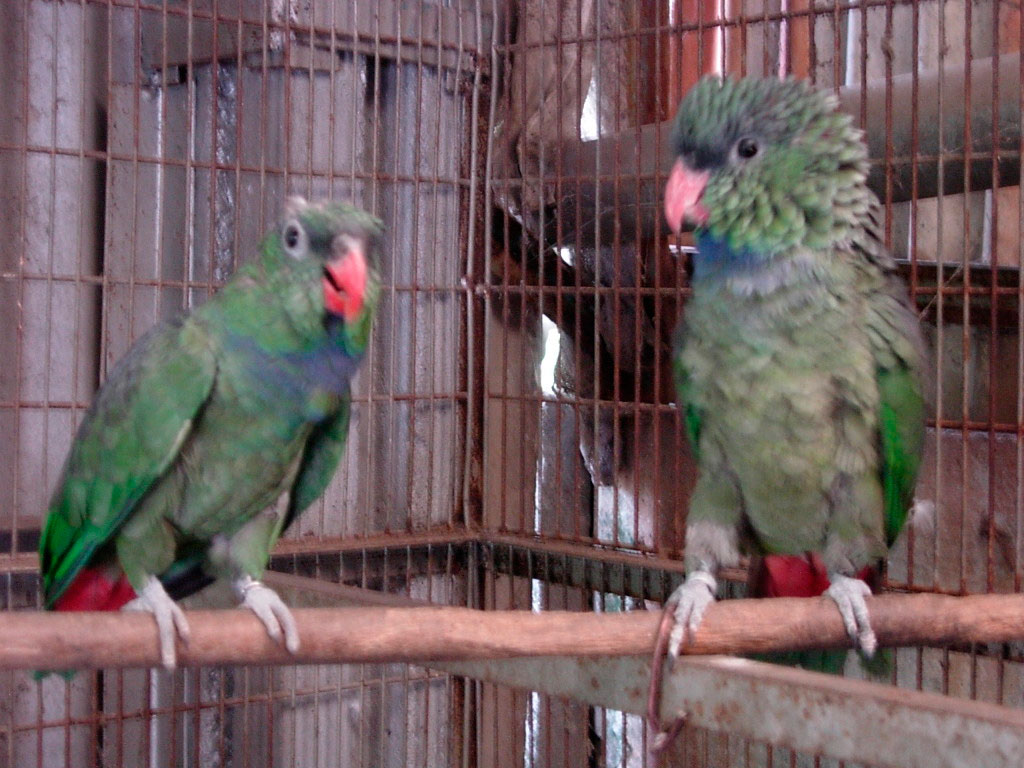
Very rare in captivity. In general, they are not so nervous in temperament as other parrots. They can learn to imitate.

Its diet in captivity It varied: fruits such as: Apple, orange, banana, granada, Cactus, they form approximately the 30 percent of the diet; vegetables such as: Carrot, celery, green beans, pea in the pod, fresh corn; Greens such as: chard, lettuce, dandelion, Aviary grass; millet; mixture of small seeds, such as: millet, birdseed, and small amounts of oats, buckwheat, safflower and hemp; soaked and sprouted sunflower seeds; beans, cooked legumes and boiled corn; hard cheese.

Alternative names:

– Red-billed Parrot, Dusky parrot, Red billed Parrot, Sordid parrot (English).
– Pione ร  bec rouge, Perroquet sordide (French).
– Dunenkopfpapagei, Dunenkopf, Dunenkopf-Papagei (German).
– Curica-de-bico-vermelho (Portuguese).
– Cotorra Piquirroja, Loro de Pico Rojo, Loro Piquirrojo (espaรฑol).
– Cotorra piquiroja, Cotorra Piquirroja (Colombia).
– Loro de Pico Rojo (Peru).
– Perico Pico Rojo (Venezuela).

scientific classification:

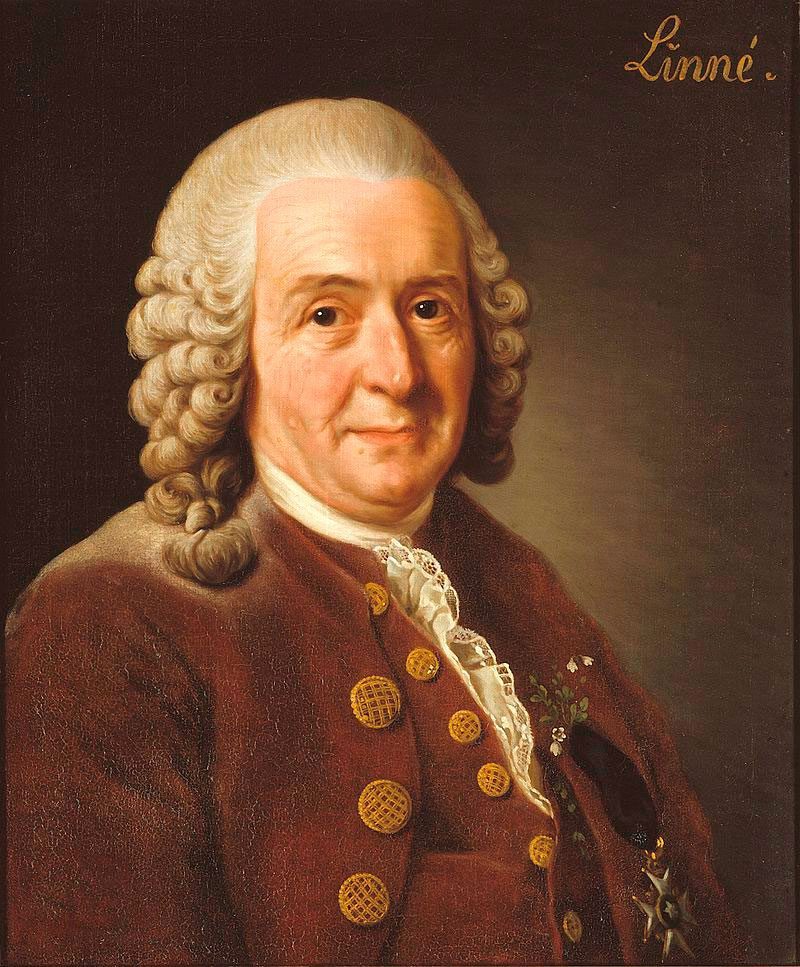
Carl Linnaeus
Carl Linnaeus

– Order: Psittaciformes
– Family: Psittacidae
– Genus: Pionus
– Scientific name: Pionus sordidus
– Citation: (Linnaeus, 1758)
– Protonimo: Psittacus sordidus


Images ยซLoro Piquirrojoยป:

Videos "Red billed Parrot"

ยซLoro Piquirrojoยป (Pionus sordidus)

Sources:

  • Avibase
  • Parrots of the World โ€“ Forshaw Joseph M
  • Parrots A Guide to the Parrots of the World – Tony Juniper & Mike Parr
  • Birdlife
  • Parrot Book, Parrots and macaws Neotropical

  • Photos:

(1) – Red-billed Parrot, Pionus s. sordidus, Perico Pico Rojo – Our beautiful world
(2) – Red-billed Parrot, Pionus s. sordidus, Perico Pico Rojo – Our beautiful world
(3) – Red-billed Parrot, Pionus s. sordidus, Perico Pico Rojo – Our beautiful world
(4) – Red-billed Parrot (also known ans the Red-billed Pionus); two captive By TJ Lin (originally posted to Flickr as coral-billed pionus) [CC BY-SA 2.0], via Wikimedia Commons
(5) – Red-billed-Parrot (Pionus sordidus), Pajaro Jumbo Reserve, NW Ecuador By Nomdeploom (Own work) [CC BY-SA 4.0], via Wikimedia Commons
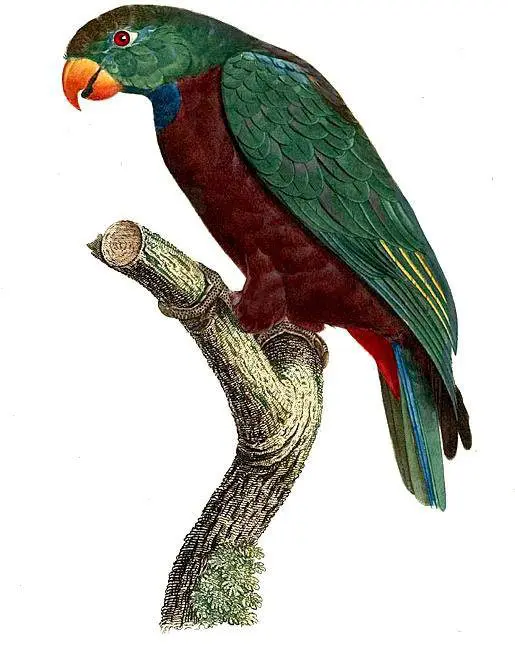
(6) – BARRABAND, Jacques (1767/8-1809) Le Perroquet brun [Red-billed Parrot (Pionus sordidus)] – Wikimedia

  • Sounds: Sebastian K. Herzog

โ–ท The world of Pets: Dogs, cats, birds, reptiles, amphibians

Salvadori's Fig-Parrot
Psittaculirostris salvadorii

Salvadori's Fig-Parrot

Content

Description

19 cm.. length and a weight of environment to the 118 g..

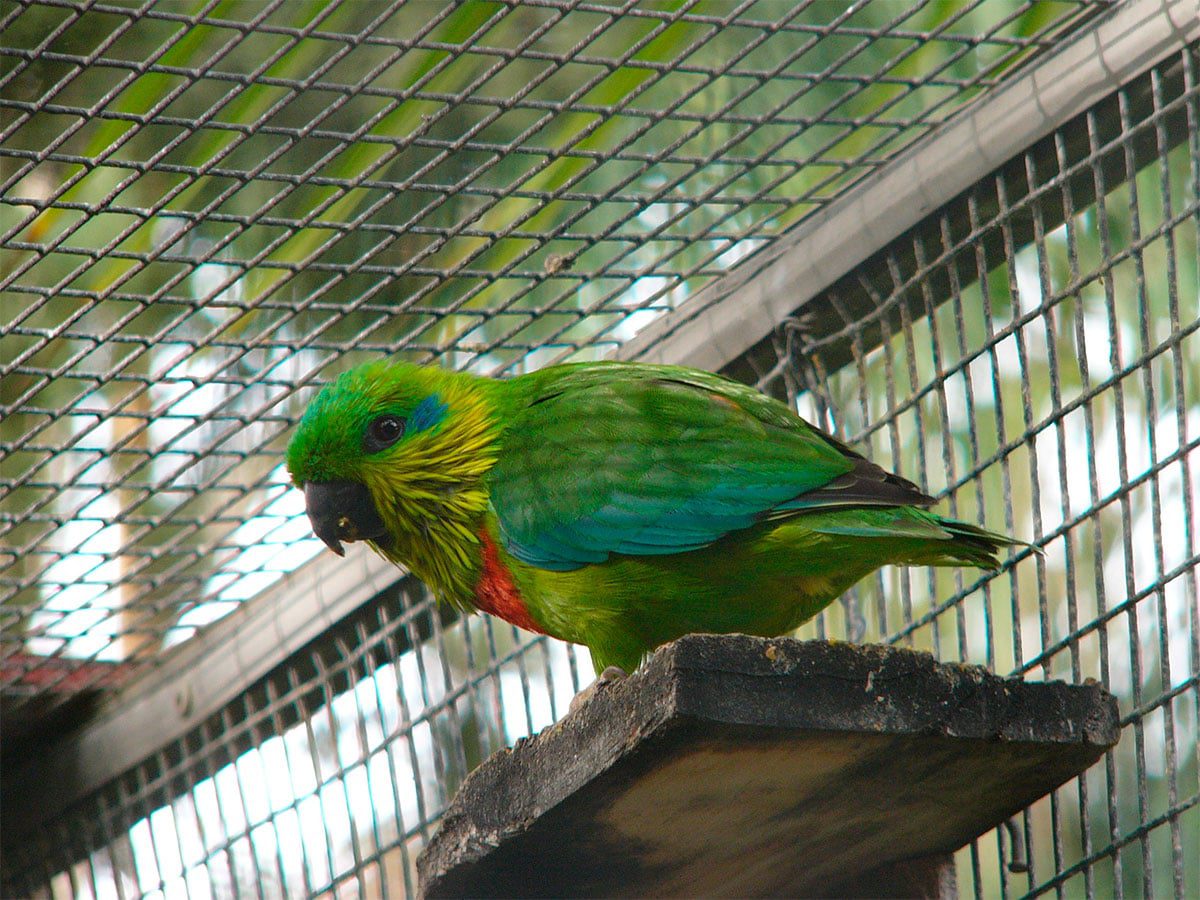
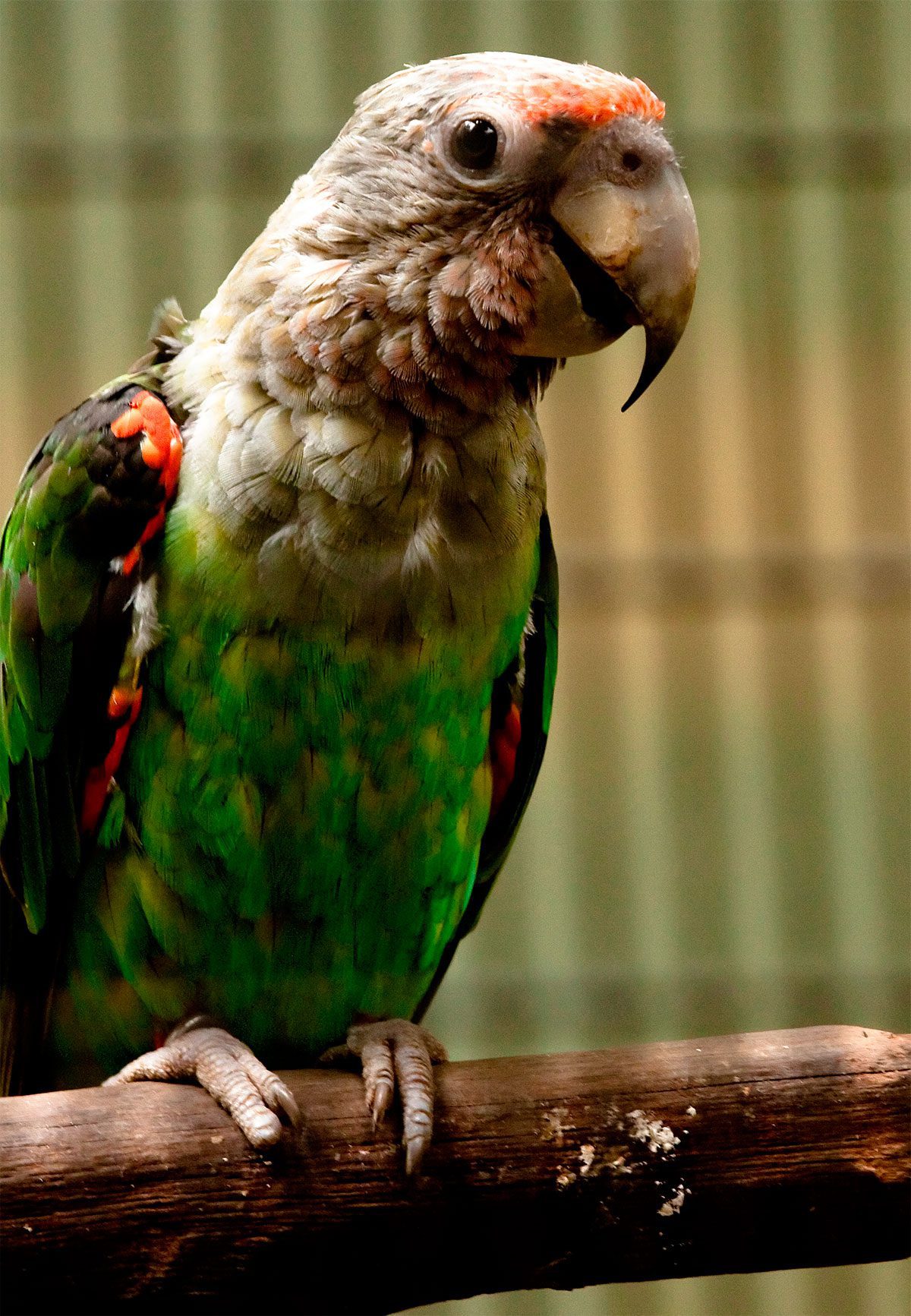
The forecrown and crown of the Salvadori's Fig-Parrot (Psittaculirostris salvadorii) is bright green with a little blue diffusion; cheeks and ear-coverts elongated yellow gold; area behind the eyes, pale blue: yellow the nape.

Upperparts green; internal parts of flight feather, orange-red at their ends. Under, the wings opaque green. Top of the chest with bright red band, rest of the underparts bright yellowish green, brighter and clearer than the upperparts. Upper, the tail green; Yellow below.

Bill black; irises red-brown; legs grey,

Female lacks the band scarlet chest, evident in the male, which it is substituted by a band It is showing some green opaque red feathers on the sides.

Youth equal to the adult female but duller overall; band pale blue chest, weak or invisible. Iris reddish brown.

Habitat:

The Salvadori's Fig-Parrot is distributed in the forests, along their edges, partially cleared areas and close to human settlements. Birds subsist mainly on the seeds of figs, and groups are fed into the cup of fruit trees, sometimes mixed with other species. Hang it upside down to feed, and they can make brief forays above the canopy. The species is found more often in pairs or in small groups, and nests colonies.

Reproduction:

Little is known about its ecology.

Food:

Their diet consists mainly of figs and other fruit.

Distribution:

Size of the area of distribution (reproduction / resident): 81.500 km2

THE Salvadori's Fig-Parrot (Psittaculirostris salvadorii) is endemic to the North of Irian Jaya, Indonesian. You can see in the forests of lowlands from the eastern edge of the Cenderawasih Bay to the humboldt bay (approximately 137 ยฐ a 141 it is), reaching inside through the northern slopes of the Van Rees mountains to 700 meters above sea level. Not rare within its small range.

Conservation:


minor concern


โ€ข Current IUCN Red List category: Least concern

โ€ข Population trend: Decreasing

This species is suspected of slow to moderate decline due to loss of habitat, limited degradation and some pressure for his capture.

Its population is estimated around the 10,000 specimens.

In the past, this species has been caught in relatively large numbers for the cage bird trade, both for the domestic and foreign markets, with a total of 1.582 birds exported from Indonesia between 1985 and 1990 (Beehler 1985, Nash 1990b , KD Bishop in litt., 1996, 1997to collar), and 1.791 between 1990 and 2001, When the species registered trade ceased (UNEP-WCMC 2007). But, the true extent of trade is unknown and is likely to be overlooked by many hunters in the preference of the most coveted and abundant species (B. Beehler in litt. 2012).

"Salvadori's Fig-Parrot" in captivity:

Susceptible to stress and disease.

Very rare in captivity.

Alternative names:

– Salvadori’s Fig-Parrot, Salvadori’s Fig Parrot, Whiskered Fig-Parrot, Yellow-cheeked Fig Parrot (ingles).
– Psittacule de Salvadori (French).
– Salvadorizwergpapagei, Salvadori Zwergpapagei, Salvadori-Zwergpapagei (German).
– Papagaio-dos-figos-de-salvador (Portuguese).
– Lorito de Salvadori (espaรฑol).

scientific classification:

– Order: Psittaciformes
– Family: Psittaculidae
– Genus: Psittaculirostris
– Scientific name: Psittaculirostris salvadorii
– Citation: (Oustalet, 1880)
– Protonimo: Cyclopsittacus Salvadorii

Images "Salvadori's Fig-Parrot"

Videos "Salvadori's Fig-Parrot"

————————————————————————————————

"Lorito de Salvadori" (Psittaculirostris salvadorii)


Sources:

– Avibase
– Parrots of the World โ€“ Forshaw Joseph M
– Parrots A Guide to the Parrots of the World – Tony Juniper & Mike Parr
– Birdlife

– Photos:

(1) – Album parrots – parrots

– Sounds: Hans Matheve (Xeno-canto)
โ–ท The world of Pets: Dogs, cats, birds, reptiles, amphibians

Mindanao Racquet-tail
Prioniturus waterstradti

Content

Description

Mindanao Racquet-tail

27 cm.. length between 120 and 160 g. of weight.

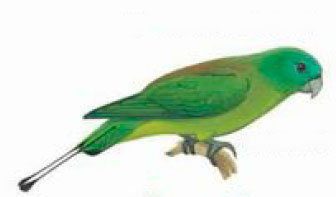
The Mindanao Racquet-tail (Prioniturus waterstradti) has the head bright green, with broadcasting slightly more blue-green in the cheeks, the lores and front of the crown. Duller green mantle; olive rump with different shades. The Green wings, with vane Dark internal to the flight feather, narrow marginalized yellow on the edges Interior; carpal edge yellow, wing feathers green; underside of primaries with blue dye.

The underparts brighter yellowish green, more yellow in undertail-coverts. Upper, the tail green, with side feathers blackish tip; undertail, the tail bluish; Blackish spatulas

Bill light grey; Brown irises; legs blackish gray.

females with extensions of tail more short.

Subspecies:

  • Prioniturus waterstradti malindangensis

    (Mearns, 1909) – Both adults, the color blue in the forecrown and the area under the eyes, paler; less Brown at the back.


  • Prioniturus waterstradti waterstradti

    (Rothschild, 1904) – The nominal

Habitat:

It is distributed in the humid montane forest, mainly between 850 and 2000 m, but have been recorded at altitudes of 450 m. Little is known about the habits of this species, that until recently was considered the same species as the Luzon Racquet-tail. Most of the observations refer to small flocks of between two and ten birds.. Apparently lower than other members of its genus is distributed in densities.

Reproduction:

There are no data on its reproductive ecology.

Food:

Without data

Distribution:

Size of the area of distribution (reproduction / resident): 11.300 km2

Endemic to the Highlands of Mindanao, Philippines. The records come from the Mount Apo, the Mount Malindang, Mount Kitanglad, Mount Mayon, Mount Matutum, Mt. Lebo, Anakan, Civolig, the Mount McKinley, Lake Faggamb and Baracatan, But even though the total population is estimated at 5.000 specimens, currently only limited to five mountains.

Subspecies distribution:

  • Prioniturus waterstradti malindangensis

    (Mearns, 1909) – Southeast of the mountains of Mindanao (Southeast of Philippines).


  • Prioniturus waterstradti waterstradti

    (Rothschild, 1904) – The nominal

Conservation:


Near-threatened


โ€ข Current IUCN Red List category: Near threatened

โ€ข Population trend: Decreasing

In 1993, the population was estimated at 5,000 individuals (Lambert et to the. 1993)

The population is suspected that it may be declining due to the continuous degradation of the forests and the capture for the cage bird trade.

Conservation Actions Proposed:

– Collect data on the impacts of the international and domestic trade.
– Review the estimate of the population.
– Calculate loss of forests within their geographic range and altitude using satellite and remote sensing images.
– Protect effectively important tracts of forest right in key places, both in the areas of strict protection, such as multi-use areas.

"Mindanao Racquet-tail" in captivity:

Not found in captivity.

Alternative names:

– Mindanao Racquet-tail, Crimson-spotted Racket-tailed Parrot, Crimson-spotted Racquet-tailed Parr, Minadnao racket-tailed parrot, Mindanao Montane Racquet-tail, Mindanao Racket-Tail, Mindanao Racket-tailed Parrot, Mindanao Racquet tail, Mindanao Racquet-tailed Parrot (ingles).
– Palette de Mindanao, Palette de Waterstradt, Perroquet ร  raquette de Mindanao (French).
– Mindanao-Spatelschwanzpapagei, Mindanao Spatelschwanz-Papagei, Mindanaopapagei, Mindano-Spatelschwanzpapagei (German).
– Prioniturus waterstradti (Portuguese).
– Lorito Momoto de Mindanao, Lorito-momoto de Mindanao (espaรฑol).

scientific classification:

– Order: Psittaciformes
– Family: Psittaculidae
– Genus: Prioniturus
– Scientific name: Prioniturus waterstradti
– Citation: Rothschild, 1904
– Protonimo: Prioniturus waterstradti

Images "Mindanao Racquet-tail"

Video of the "Mindanao Racquet-tail"

————————————————————————————————

ยซLorito momo de Mindanaoยป (Prioniturus waterstradti)


Sources:

– Avibase
– Parrots of the World โ€“ Forshaw Joseph M
– Parrots A Guide to the Parrots of the World – Tony Juniper & Mike Parr
– Birdlife

– Sounds: Desmond Allen (Xeno-canto)

โ–ท The world of Pets: Dogs, cats, birds, reptiles, amphibians

Red-capped Parrot
Purpureicephalus spurius

Red-capped Parrot

Content


Anatomy-parrots

Description

36 cm.. length and a weight between 105 and 156 g..

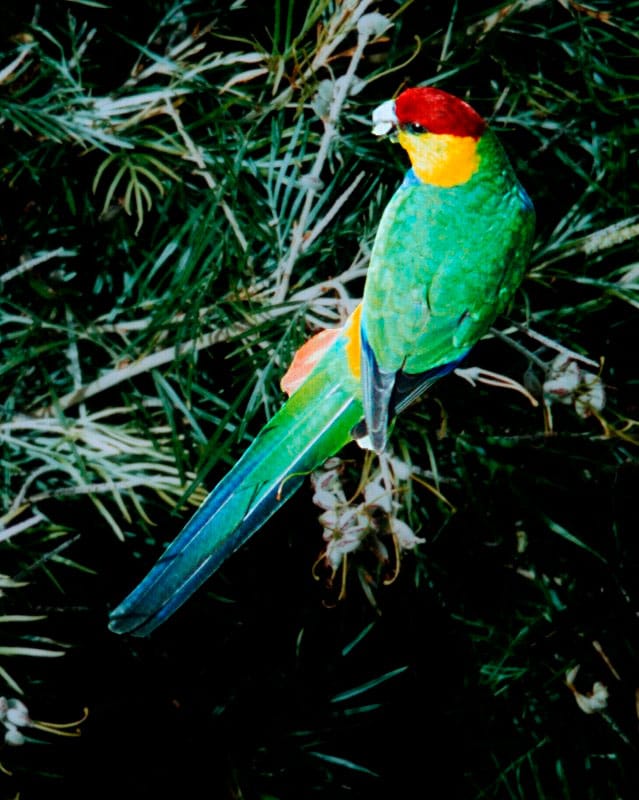
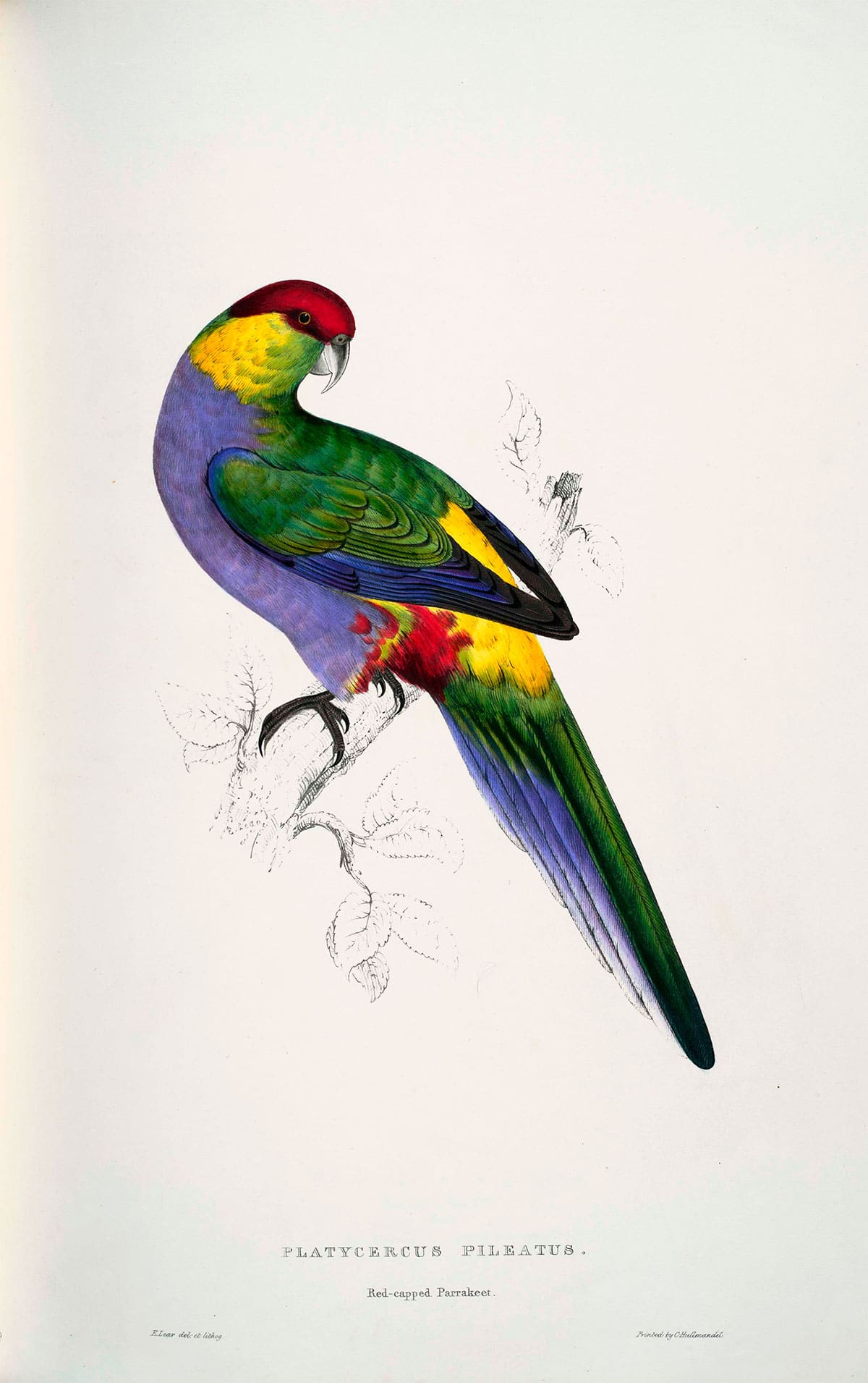
The Red-capped Parrot (Psittacus erithacus) It has the "crown" lid and the nape deep carmine red. The throat and cheeks are yellowish-green, merging slightly yellow on the sides of neck. The the mantle shows a dark green. The rump is bright yellow, which contrasts with the uppertail-coverts green. The wings covers are green, although large coberteras stain blue in the outer feathers.

The flight feather They are blackish with a large dark blue border around the outside edges of the primaries. The underparts is blue, with the exception of the flight feather that are black. The feathers of the chest and the abdomen they are blue-purple, becoming paler in area anal.

The the thighs and lower area of the tail They have a beautiful red. The undersides They have infiltrated some green feathers. Large central feathers tail They are green at the base, and bluish to the tip. side feathers tail They are dark at the base but gradually diluted colors light blue in the middle and then to white at the tips. The bottom of the tail It is pale blue with a white termination.

The bill, formed by a upper jaw more elongated, is bluish grey. The irises is of color Brown dark and the legs brown.

The female is more off than your partner. It has a crown green and chest brown. It shows a clear cross bar at the bottom of the wings, the level of flight feather. This motif is also present in the immature.

The immature they have the upperparts dark green and yellow rump duller than in adults. The the thighs They are less bright red colo. The chest It is browner. The forecrown It is covered with red feathers that are part, in small scattered groups, red feathers crown. The adult plumage It is acquired largely during the first molt and subsequently completed in the first spring.

Habitat:

Red-capped Parrot

Paired adults are sedentary, Although noisy flocks of up to 20 young birds are often seen wandering in search of food.

The Red-capped Parrot they have a preference for the eucalyptus forest and specialized to feed on seeds MARRI since its elongated upper jaw is adapted to eating the large seeds of the plant. The Fruit Marri they are available throughout the year and provide the source of staple food. The Red-capped Parrot they can also be observed in gardens (where sometimes cause serious damage), peoples, wooded pastures and forest of mallee (Eucalyptus Gracilis), feeding also on strips of grass covering the roads.

Couples remain inconspicuous, While quietly feeding in the canopy, during most of the day, Although they sometimes perch on Earth, in the clear, to feed on fallen fruit.

Reproduction:

The nesting season is between between August and December.

During the courtship, the male raises its crest, the tail, It tilts its wings and emits loud calls. The ritual offerings of food are also common, feeding the male to his partner during the incubation period.

The spawning usually includes 5 eggs, but may vary from 3 to 9. These are white. The eggs are deposited on a layer of sawdust that lines the bottom of a natural cavity of a eucalyptus marri, to a great height above the ground.

The incubation lasts a few 20 days. The male does not participate in feeding youngsters until they reach the age of 15 days. The flight of the young occurs approximately 5 weeks after hatching. The young remain in the family group for a short time after leaving the nest.

Food:

Apart from MARRI, These birds also feed on other eucalyptus, for example, Jarrah (Eucalyptus marginata), casuarinas, (Grevillea, Hakea), and they have also been feeding on flowers and insects.

Distribution:

Size of the area of distribution (reproduction / resident): 126.000 km2

Confined to the southwest corner of Western Australia. The species is distributed around the Moore river to the North of Perth (occasionally in Dandaragan), through the leafy South-West corner, usually within 100 km from the coast, reaching the inside of Lake Grace in the East and Esperance on the South Coast. The Red-capped Parrot they are regularly observed in the outskirts of Perth, and are reproduced in the Kingโ€™s Park in the center of the city. The species is common, especially in the forests of MARRI (eucalyptus calphylla).

The world's population is believed to be above 20.000.

Moderate numbers in captivity. Can be shot like a plague in a small number of areas.

Conservation:


minor concern


โ€ข Current category of the Red List of the UICN: Least concern

โ€ข Population Trend: Growing

The size of the world population It has not been quantified, Although the world's population is estimated at more of 20 000 specimens.
The species is described as quite common (pit et to the. 1997).

The number of captive birds It seems to be quite modest. In some areas, This bird has no protection and can be shot down if it enters an area of intensive growth. Even so, the population It is suspected that You may be increasing.

As the degradation of the habitat is permanent, new areas of suitable habitat are being created.

"Red-capped Parrot" in captivity:

It is a bird shy and nervous. They should not be housed with aggressive species. They can be noisy especially early, in the morning.
Not common in captivity.

Una muestra viviรณ 15,3 years in captivity. In captivity, these animals have been able to play to the 2 years of age approximately.

Alternative names:

– Red-capped Parrot, Hookbill, King Parrot, Pileated Parakeet, Pileated Parrot, Purple-crowned Parrot, Red capped Parrot, Red-capped Parakeet, Western Australian King Parrot, Western Gray Parrot, Western Grey Parrot, Western King Parrot (ingles).
– Perruche ร  tรชte pourpre (French).
– Kappensittich, Rotkappensittich (German).
– Periquito-cabeรงa-pรบrpura (Portuguese).
– Perico Capelo, Periquito de Birrete Rojo (espaรฑol).

scientific classification:

– Order: Psittaciformes
– Family: Psittaculidae
– Genus: Purpureicephalus
– Scientific name: Purpureicephalus spurius
– Citation: (Kuhl, 1820)
– Protonimo: parrot champion

Images ยซPerico Capeloยป:

Videos "Red-capped Parrot"

————————————————————————————————

ยซPerico Capeloยป (Purpureicephalus spurius)


Sources:

– Avibase
– Parrots of the World โ€“ Forshaw Joseph M
– Parrots A Guide to the Parrots of the World – Tony Juniper & Mike Parr
– Birdlife
– AnAge: The Animal Ageing and Longevity Database – Anagรฉ entry for Purpureicephalus spurius

– Photos:

(1) – ยซRed-Capped-Parrot 0004 flat webยซ. Licensed under CC BY-SA 2.5 via Wikimedia Commons.
(2) – A juvenile Red-capped Parrot at Earls Golf Club, Perth, Western Australia, Australia By Michael MK Khor [CC BY 2.0], via Wikimedia Commons
(3) – By Bill & Mark Bell – Flickr
(4) – By Bill & Mark Bell – Flickr
(5) – By Ralph Green – Red-capped Parrot juvenile – Flickr
(6) – Edward Lear [Public domain], via Wikimedia Commons

– Sounds: Randy Moore (Xeno-canto)
โ–ท The world of Pets: Dogs, cats, birds, reptiles, amphibians

Turquoise Parrot
Neophema pulchella

Turquoise Parrot

Content


Anatomy-parrots

Description

20 cm.. length and a weight between 37 to 44 g..

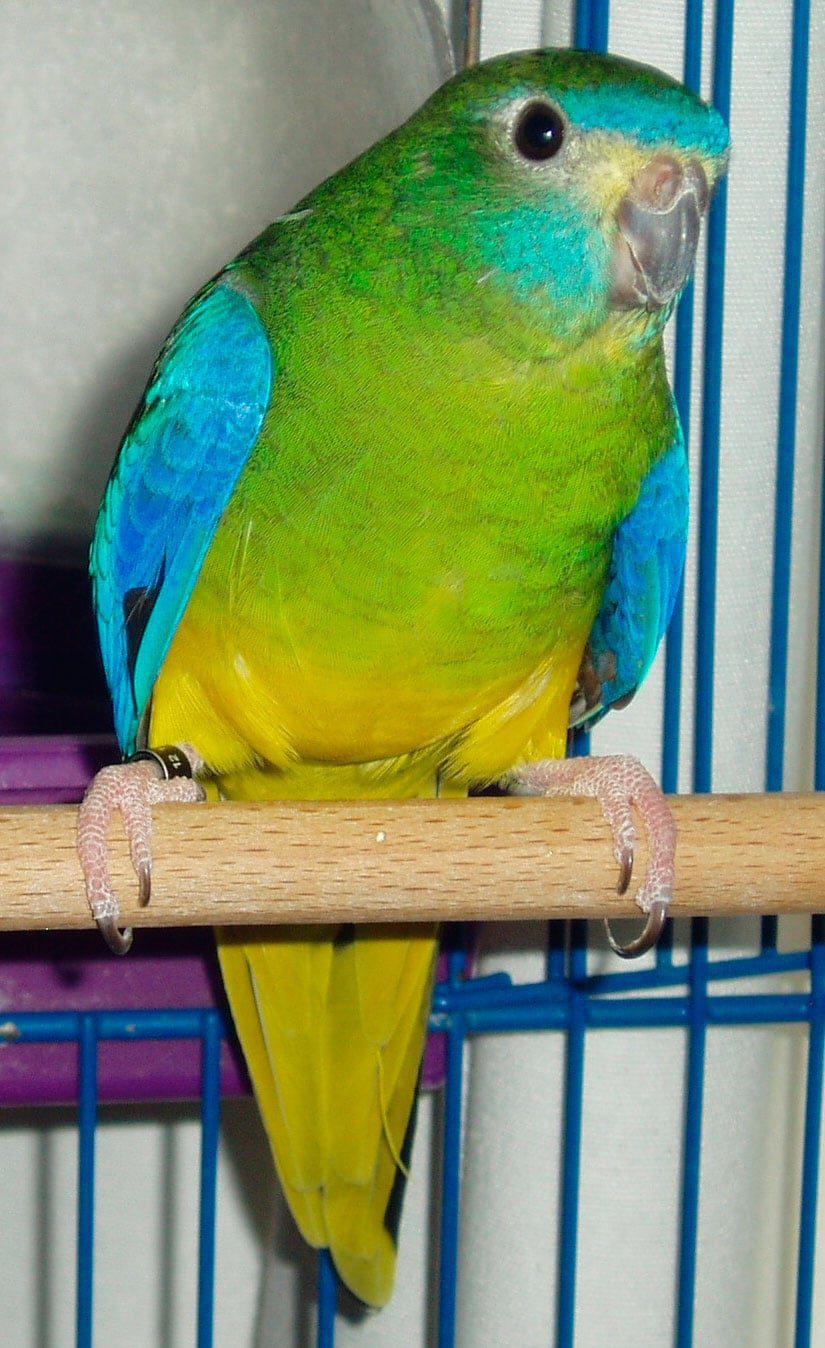
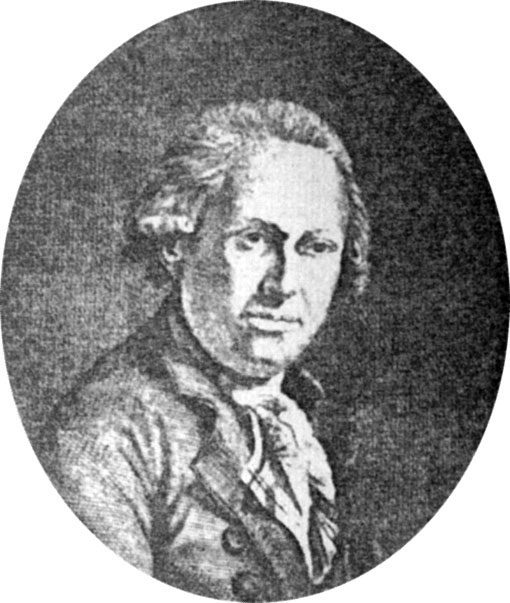
The Turquoise Parrot )(Neophema pulchella has the head bright turquoise blue, darker on the front of the crown, with the chin yellow and green on the back side of the crown.

Upperparts green.
The interior of the small and medium-sized coverts is reddish brown, the median are light blue. big blankets and primary coverts are blue-violet color. The primary feathers Black have them vane inmates of blue color and a fine yellow edge. The secondary feathers Black has foreign bands of yellowish green colour that tend toward the blue on the edges of the feathers. The lesser coverts the wings are blue-violet color.

The underparts is bright yellow with a slight orange patch in the throat and the chest. An orange stain, sometimes, is visible in the abdomen of certain individuals. The two pairs of the Central feathers of the tail are bright green, the outer tail feathers are yellow with green bases. The bill is black and the irises dark brown. The legs they are a pinkish-brown hue.

In the females, the plumage is more off than in males. There are no brown spots in the shoulders. The underparts they are much more green, especially in the chest. The lores they are whitish and the blue of the face is considerably reduced. A bar can be seen in the wing .

The immature are similar to the females.

The Immature males are distinguished by a small brown spot in the wing and blue dark figure.

Habitat:

Turquoise Parrot

The Turquoise Parrot they are distributed by clear wooded areas, wooded areas, meadows with native grasses, Although they have a strong preference for the ecotones, that is to say, regions that are intermediate between the forests and farmland.

In the State of Victoria, seasonally, These parakeets make positive use of habitats that suit them: the eucalyptus trees that are found in the Rocky Mountains in winter, wetlands and ravines from spring to fall and slopes that face southeast during all months of the year.

The Periquito turquoise they live in small flocks or family groups that feed near the ground.

These birds are sedentary but after nesting, You can attend a light dispersion.

During this last period, the formation of dorms is not uncommon.

We can often see them begging for food on the verges of roads.

Reproduction:

The Turquoise Parrot they breed from august to december. In other areas, the nests are also visible in April-may, but they are probably second clutches or broods alternatives. The nest is located in one a tree cavity, usually a eucalyptus, at least in regards to the State of Victoria. But it can also be located in a strain, a fallen pole or branch.

The spawning contains an average of 4 or 5 eggs with one incubation that lasts a few 20 days.

The chicks are altricial and remain in the nest for at least 4 weeks before you fly.

Food:

The Turquoise Parrot they have a diet vegetarian. They feed on seeds, flowers and fruits that are native and imported plants. Love cultivated herbs, wild herbs and different parts of the bushes.

A detailed census has identified the following genera: shrubs in Bloom's leucopogon, not less than 4 types of Danthonia, nettle, Urtica urens, Paspalum dilatatum, who are the edges of sea grass and the gernaios. The list is not exhaustive.

Distribution:

Size of its range (reproduction / resident): 771.000 km2

Currently fluctuates irregularly from the southeast of Queensland (North around Chinchilla and Maryborough) to the East of New South Wales, arriving at the coast, about Sydney, and extending to the South up to Nowra) in Victoria to the West of Bendigo. There is also an isolated population in the East of Victoria. The increase of population ,probably, continues in Victoria and New South Wales.

Conservation:


minor concern


โ€ข Current category of the Red List of the UICN: Least concern

โ€ข Population Trend: Stable

at the beginning of 20th century, the increase of pastoral activities, catastrophic drought in 1902, and to a lesser extent, poaching, they gave rise to the population of the Turquoise Parrot almost disappeared.

Since the decade of 1940, there has been a resurgence in the number of individuals. The resurgence of this species began in the vicinity of Chinchilal and Maryborough and little by little the South joined with the State of Victoria through New South Wales.

Today, growth tends to spread and strong presence in the national parks proof that the cessation of grazing is a great benefit for the development of these parrots. Since they nest close to the ground, These birds are still vulnerable to predation by foxes. The other recurring threat is habitat degradation and loss of nesting sites.. The world population deemed superior to the 20 000 birds, birds captive are estimated at 8 000.

"Turquoise Parrot" in captivity:

The Turquoise Parrot they are birds that are regularly and which are obtained very good results in the reproduction. These parakeets are highly recommended for amateur beginners.

In terms of its behavior, they are relatively strong with a sweet and melodious voice. These parakeets are not shy and are easy to keep..

During the breeding season they do not support other congeners or other species of neophemas. It is mainly of assaults by males. Your need to crack is very limited and their need for bathroom is very different from an individual to another. They tolerate dry climates, but they are very sensitive to cold and wet fog. They like to spend time on the floor, investigating, and therefore, they are vulnerable to infection by worms.

According to sources, a sample lived during 21 years in captivity. In captivity, these animals have been known that they can raise from 1 aรฑo de edad.

Alternative names:

– Turquoise Parrot, Beautiful Grass-Parakeet, Beautiful Grass-Parrot, Beautiful Parrot, Chestnut-shouldered Grass-Parrot, Chestnut-shouldered Parakeet, Chestnut-shouldered Parrot, Chestnut-winged Grass-Parakeet, Chestnut-winged Parrot, Red-shouldered Grass-Parakeet, Red-shouldered Parakeet, Red-shouldered Parrot, Turcoisine Parrot, Turq, Turquoise Grass-Parakeet, turquoise parakeet, Turquoisine, Turquoisine Grass-Parrot, Turquoisine Parrot (ingles).
– Perruche turquoisine (French).
– Schรถnsittich (German).
– Periquito-turquesa (Portuguese).
– Papagayo Turquesa, Periquito Turquesa (espaรฑol).

scientific classification:

George Shaw
George Shaw

– Order: Psittaciformes
– Family: Psittaculidae
– Genus: Neophema
– Scientific name: Neophema pulchella
– Citation: (Shaw, 1792)
– Protonimo: Psittacus Goshawk

ยซTurquoise Parakeetยป Images:

Videos "Turquoise Parrot"

————————————————————————————————

ยซTurquoise Parakeetยป (Neophema pulchella)


Sources:

– Avibase
– Parrots of the World โ€“ Forshaw Joseph M
– Parrots A Guide to the Parrots of the World – Tony Juniper & Mike Parr
– Birdlife

– Photos:

(1) – Turquoise Parrot (Neophema pulchella), female; of: Lovebird by Daniel Wehmeyer –> Danweh – Wikimedia
(2) – ยซNeophema pulchella -Rainbow Jungle -Australia-8aยป by Sheila Bradford – originally posted to Flickr as DSCF7029 turquoise parrot. Licensed under CC BY 2.0 via Wikimedia Commons.
(3) – ยซNeophema pulchella -Twycross Zoo, Leicestershire, England-8aยป by stephen jones from uk – [1]Uploaded by Snowmanradio. Licensed under CC BY 2.0 via Wikimedia Commons.
(4) – ยซTurquoise Parrot (Neophema pulchella)-6ยป by Lip Kee Yap – originally posted to Flickr as Turquoise Parrot (Neophema pulchella). Licensed under CC BY-SA 2.0 via Wikimedia Commons.
(5) – ยซNeophema pulchella pair Capertee Valleyยป by Lip Kee from Singapore, Republic of Singapore – Turquoise Parrot (Neophema pulchella). Licensed under CC BY-SA 2.0 via Wikimedia Commons.
(6) – Jacques Barraband [Public domain], via Wikimedia Commons

– Sounds: Marc Anderson (Xeno-canto)

โ–ท The world of Pets: Dogs, cats, birds, reptiles, amphibians

Cape Parrot
Poicephalus robustus


Lorito Robusto

Content

Description:

32 cm. medium length and a weight between 300 and 400 g..

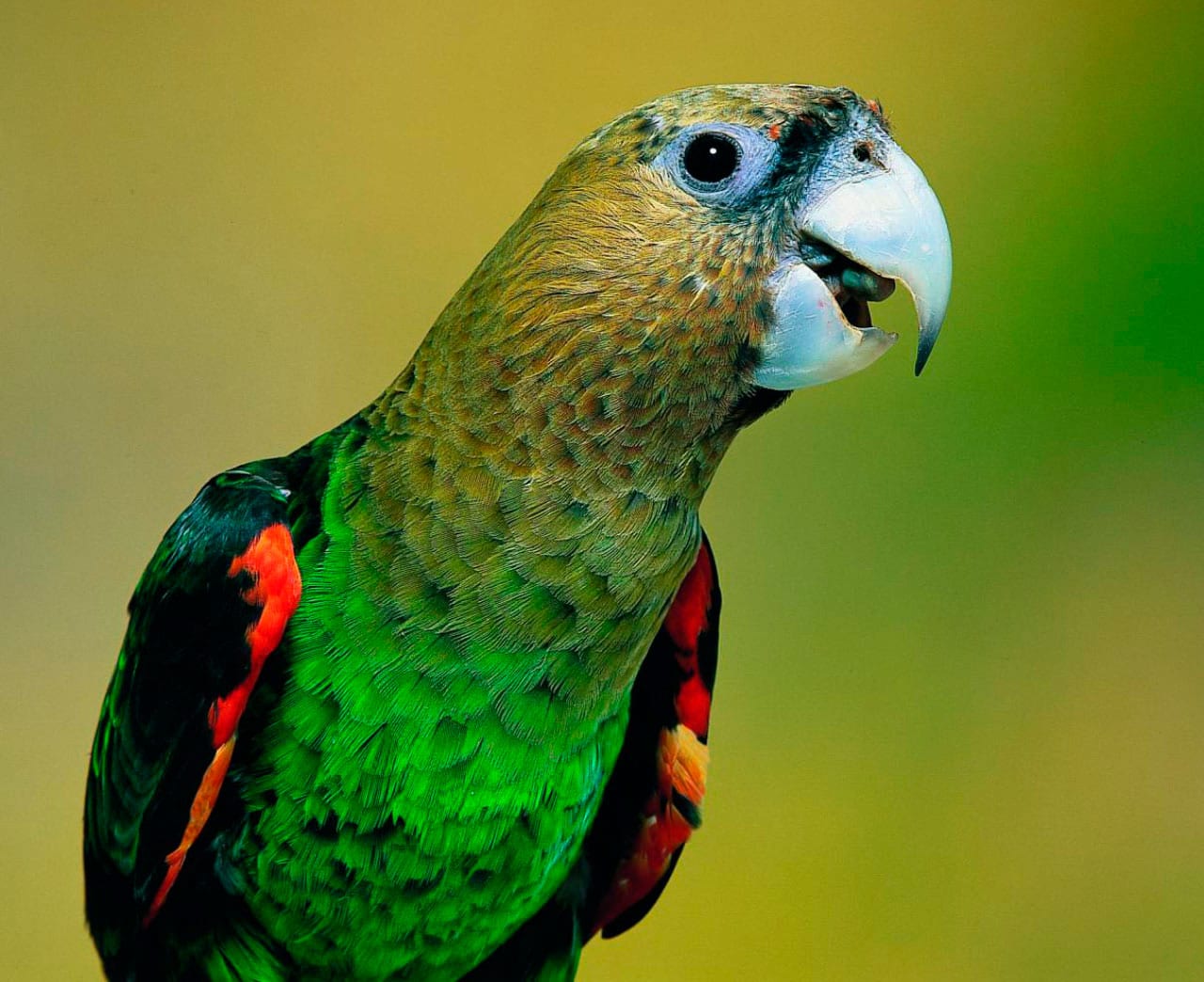
The Cape Parrot (Poicephalus robustus) has the head, neck and throat between olive brown and olive yellow, with darker spots (almost black in some birds), especially in the crown; lores and cheeks blackish; pale red frontal band, is present, occasionally, in males (generally evident in females).

The mantle feathers and scapulars dark green opaque, bright green-edged; rump bright green.

Coverts on the leading edges of the wings, Since the carpal joints at the base of the primaries, bright orange red; upper wing coverts, dark green to black, with lighter green edges; below, the feathers of the wings blackish and green. The primaries and secondaries black top, dark brown below. High area of the chest, stomach and vent, bright green; the thighs orange red glossy. Upper, the tail black; undertail, dark brown.

Some birds (around the 10%) have feathers yellow in the plumage spread.

Bill color horn; irises dark brown to reddish brown; legs bluish grey.

The females, generally (Although not always), they have well defined orange red frontal band.

The youth lack of color marks orange red envelope the wing-coverts and the thighs, but tend to show a bit of red in the forecrown.

Subspecies description:

Taxonomic status:

In a study initiated in 1992, the taxonomic status of Lorito was revised Robusto (Poicephalus robustus) (Gmelin), and two species were proposed; Poicephalus robustus, restricted to montane forests of southern Africa, Poicephalus fuscicollis suahelicus, with wider distribution in wooded areas, and Poicephalus fuscicollis fuscicollis, similar to the Poicephalus fuscicollis suahelicus ostensibly, but with discontinuous, restricted to a narrow range of forests and West Africa.

Subspecies Poicephalus robustus

  • Poicephalus robustus robustus

    (Gmelin, 1788) – The nominal species


  • Poicephalus robustus suahelicus

    (Reichenow, 1898) – Of larger size the species nominal, the male has the head and the neck a silvery gray and lacks the reddish frontal band. The female has orange colouring in the the thighs and in the shoulders and in the cere, while the male not. Blue tint in the rump.


  • Poicephalus robustus fuscicollis

    (Kuhl, 1820) – The smaller subspecies. With more blue tones, especially in rump and bottom of the back.

Habitat:

They live in a variety of forest types, including Red Mangroves (Rhizophora mangle) (for example, in Gambia), riparian forests (for example in Ghana, Zimbabwe), Savanna Woods (for example, Nigeria, Ivory Coast), in montane forests at altitudes of 3,750m (for example, east of Zaire), in lowland forests (for example, South Zaire).

The birds of the Southern Africa they have favoritism by the Acacia mearnsii and Podocarpus forests at altitudes between 1.000 and 1,700 m, separating attitudinally and ecologically in the subspecies suahelicus, It occurs in lowland forests.

The birds of the Southern Africa (also perhaps other species) they form communal roosts before spreading to power remote areas (until 90 km) in small flocks.

Sometimes seen separately but more usually found in groups of up to 20 birds (sometimes 50). It forms mixed flocks with peers.

Reproduction:

The nest in hollow trees (including in Brachystegia, Adansonia or Podocarpus) between 6 and 12 meters above the ground.

The season of breeding varies with locality. In Gambia, reportedly, breeding takes place between the months of February and April, While in Zimbabwe It is estimated to be between the months of March to June, and between October and November. In South Africa, breeding takes place in June and between August and October.

The laying tends to be of 3 to 4 eggs.

During the courtship the male feeds the female making exaggerated turns his head and dropping their wings to form a kind of layer around the lower half of your body. The pair shows a strong union ties and they spend much time grooming each other.

Food:

In Zimbabwe, In addition to daily trips in search of food, seasonal movements are performed in search of Uapaca and fruits of Sysygium.

They feed on fruits of ficus, Olea capensis, Mimusops caffra, Acacia molissima, Melia azecdarach, Terminalia, Calodendron capense and Commiphora, the consumption of seeds has also been recorded from the acacia mearnsii, Monotes glaber and the fruits of the Parinari curatellifolia. But, they may prefer the pulp of fruit, discarding the seeds and grains of the seeds.

Has been feeding of millet in Zimbabwe and Malawi, of peanuts harvested in Gambia and, occasionally, visiting gardens of Apple trees, but numerous enough to be considered a plague serious nowhere.

The birds of the Southern Africa feed almost exclusively on fruit of the Podocarpus, long as they are available.

Use the peak to climb between the branches when they feed in the trees; They also feed on the ground. The Cape Parrot make daily trips to secret locations for drinking water.

Distribution:

Probably occupy three zones separated, in the West, South-Central and South of Africa.

In West Africa, are from Gambia and South of Senegal to the East of Ghana and Togo.

In the Center-South of Africa, from the southwest of Congo, South and East of Zaire, Southwest of Uganda, Rwanda and from the center of Tanzania to the North of Namibia, North of Botswana, Zambia and Zimbabwe.

In South Africa from the North-East of Transvaal to the Province Eastern Cape.

Flocks of foraging roam unpredictably and can remain away from traditional sites for weeks. Sometimes they make seasonal movements in relation to the availability of food, for example, in the northern savannas of Ghana.

Local and mostly uncommon across the range, Although more numerous and frequent in Ghana.

Subspecies distribution:

  • Poicephalus robustus robustus

    (Gmelin, 1788) – The nominal species


  • Poicephalus robustus suahelicus

    (Reichenow, 1898) – Are distributed by the center of Angola; Southeast of the Democratic Republic of the Congo, Rwanda and South of Tanzania until Zimbabwe, North of Mozambique, and far northeast of South Africa; in populations along the lower Congo River the three subspecies can mix.


  • Poicephalus robustus fuscicollis

    (Kuhl, 1820) – Are distributed from the South of the Senegal and Gambia to the North of Ghana

Conservation:


minor concern


โ€ข Current Red List of UICN: Least concern

โ€ข Population trend: Decreasing

In 1988 included for the first time in the red list of threatened species by the IUCN as least concern species.

The size of its current population is estimated at less than 1.600 birds in their natural habitat.

Why not join this parrot species in critical hazard is due to the subspecies of this they comprise an area of diffusion much greater than that of the nominal species, whereupon, This leads to a growth in the population of subspecies and the decrease of the nominal species. The subspecies occupy all the Central Africa and Western, while the Poicephalus robustus only lives in some provinces of South Africa as they are Eastern Cape, KwaZulu-Natal and Limpopo.

Over time the Poicephalus robustus, they have drastically dropped its population due to the uncontrolled felling of the forests of Sandalwood to manufacture furniture. Thus reaching that there is only two percent of the forest of Sandalwood.

Diffusion area of Poicephalus fuscicollis and Poicephalus robustus

In captive the Cape Parrot it is found in small quantities by several countries of Europe and without many successful breeding advances, so the first objective to preserve the nominal species is to control the logging of forests, Since the Cape Parrot they have to travel many miles to feed, as there is no food have to descend to feed from the crop fields where many die because they are hunted by the owners of the fields. Forests are also needed in the life of the Poicephalus robustus since they nest in cavities of the trees, they feed on.

The legal and illegal trade It is another point to be highlighted in the conservation of this species. Since 1998 the countries with the most legal exports have been Tanzania, Guinea-Bissau, Guinea, Democratic Republic of the Congo and Ivory Coast. What makes think that the nominal species It has been the least affected in the terms of trade while the subspecies they have been the most affected and the most marketed. This can be known by looking at the area of diffusion of the subspecies and the countries with the most exports made..

The diseases they are also a major threat, above all in the nominal species. The disease of PBFD or beak and feather disease (Psittacine Beak and Feather Disease virus) is that more deaths has caused to the Poicephalus robustus.

"Cape Parrot" in captivity:

It is very similar in nature to the Grey Parrot.
Its capacity for imitation is still little known since, for years, has been very difficult to get in poultry farming.

Not advisable to keep mixed aviaries. Son quiet and depending on their way of breeding (natural or by hand) and previous experiences, they can be quite confident and curious, even without being hand reared do not usually take to commit themselves. As pets they are very Welcome to, Smart and affectionate, with a very good character.

Captive breeding of this species may be the last hope of saving it from total extinction.. The number of specimens in captivity is low, but enough, If handled properly to strengthen the species.

In terms of their longevity, according to sources, a Cape Parrot lived 29,7 years in captivity. In captivity, These birds can be raised from the 5 years of age.

Alternative names:

– Cape Parrot, Brown necked Parrot, Brown-necked Parrot, Cape or Brown-necked Parrot, Gray-headed Parrot, Grey-headed Parrot (English).
– Perroquet ร  cou brun, Perroquet du Cap, Perroquet du Cap ou P. ร  cou brun, Perroquet robuste (French).
– Graukopfpapage, Kap Papagei, Kappapagei (German).
– Papagaio-de-bico-grosso (Portuguese).
– Lorito Robusto, Loro de El Cabo, Lorito del Cabo (espaรฑol).


scientific classification:

Gmelin Johann Friedrich

– Order: Psittaciformes
– Family: Psittacidae
– Genus: Poicephalus
– Scientific name: Poicephalus robustus
– Citation: (Gmelin, JF, 1788)
– Protonimo: Psittacus robustus

Images "Lorito Robusto":

————————————————————————————————

Cape Parrot (Poicephalus robustus)


Sources:

– Avibase
– Parrots of the World โ€“ Forshaw Joseph M
– Parrots A Guide to the Parrots of the World – Tony Juniper & Mike Parr
– Birdlife
– Wikipedia
– Loromania
– Mundoexotics

– Photos:

(1) – To Brown-necked Parrot at Jurong Bird Park, Singapore By Peter so [CC BY 2.0], via Wikimedia Commons
(2) – Cape Parrot en Benvie, Karkloof, KwaZulu-Natal, South Africa By Alan Manson [CC BY-SA 2.0], via Wikimedia Commons
(3) – Youth, captive, friendly Poicephalus robustus fuscicollis by Bob Corrigan – Flickr
(4) – Male Cape parrot (Poicephalus robustus). Image credit: Cyril Laubscher – SCI-news.com
(5) – Cape parrot flying low over to wild plum tree. Africa's most endangered parrot like never before... (Rodnick Biljon) – nationalgeographic
(6) – Diffusion area of Poicephalus fuscicollis and Poicephalus robustus By Juan Caparrรณs (Own work) [GFDL or CC BY-SA 4.0-3.0-2.5-2.0-1.0], via Wikimedia Commons

– Sounds: Daniel Danckwert (Xeno-canto)