โ–ท The world of Pets: Dogs, cats, birds, reptiles, amphibians

Vinaceous Parrot
Amazona vinacea

Vinaceous Parrot

Content


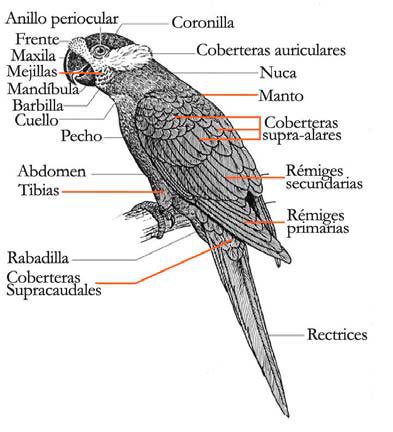
Anatomy-parrots

Description:

30 cm.. length and an approximate weight of 370 g..

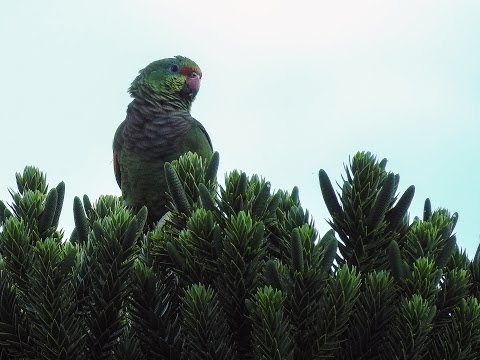
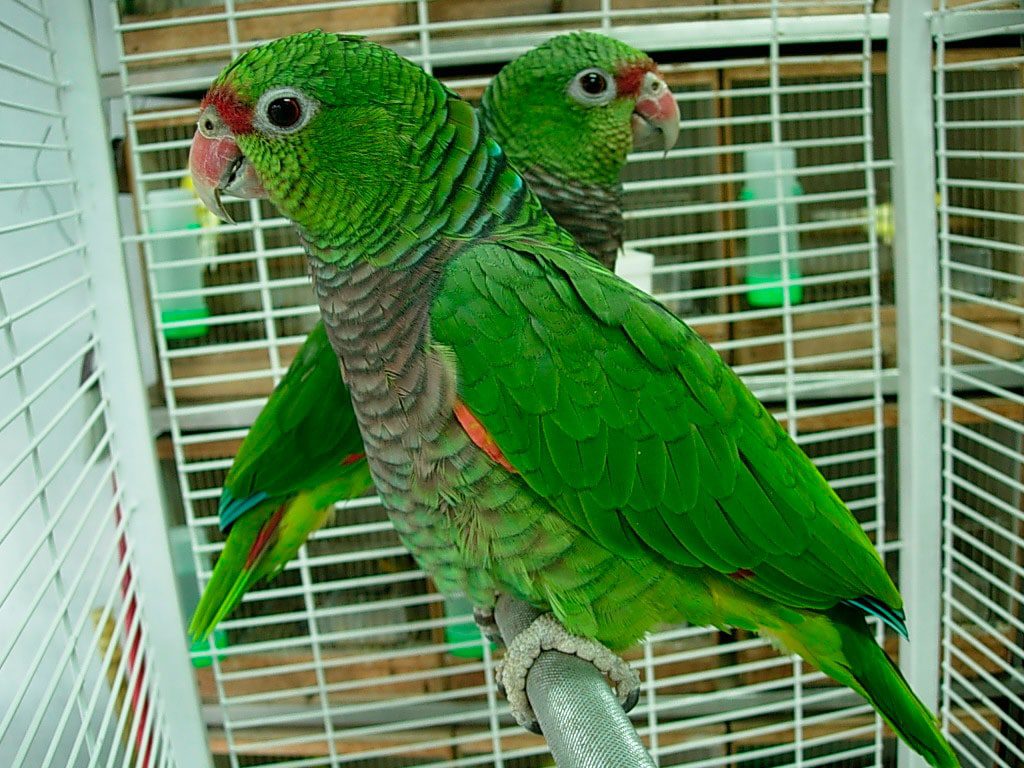
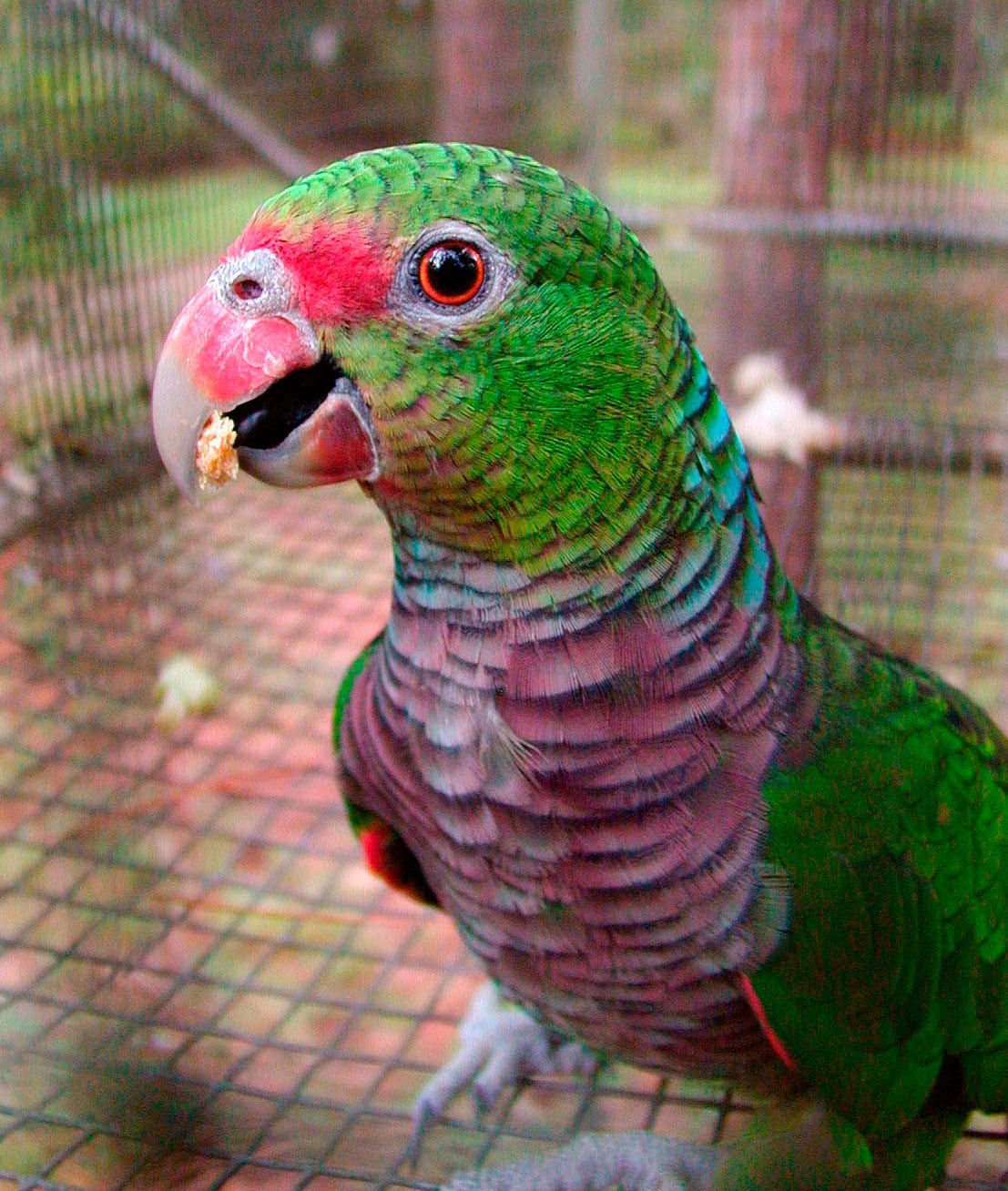
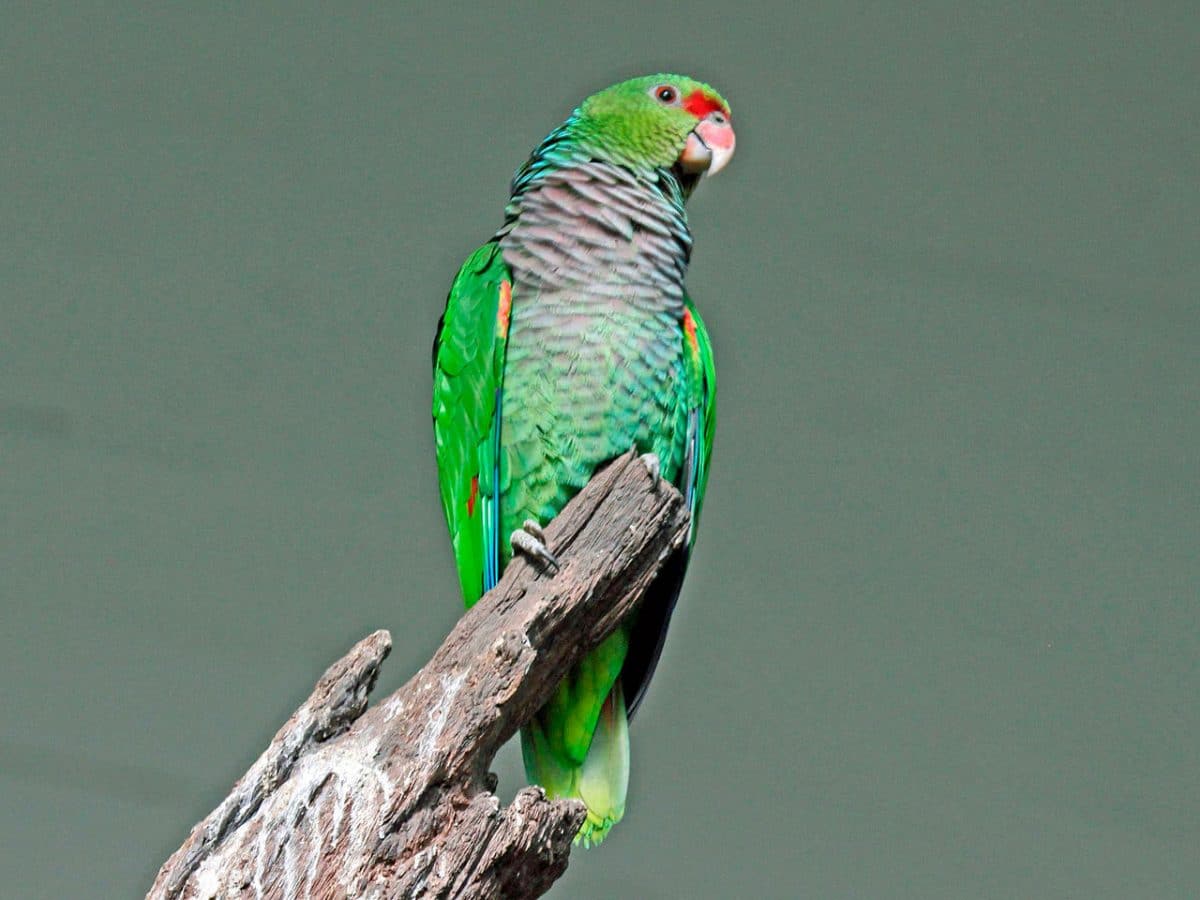
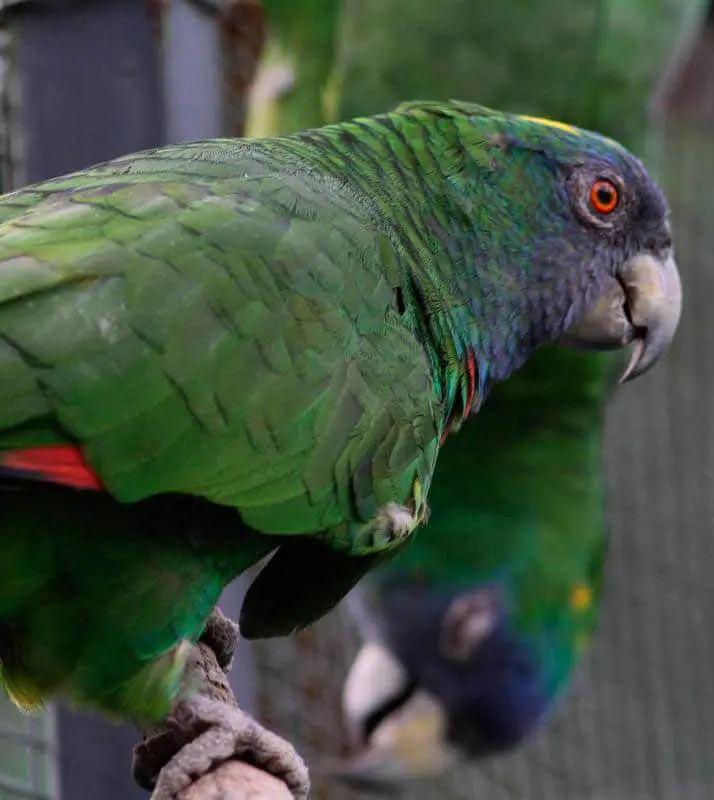
The Vinaceous Parrot (Amazona vinacea) has the lores and forecrown bright red; cheeks and crown green with black tips to some feathers head; elongated feathers on the sides of neck, the nape and the upper mantle, green at the base, subterminally light blue and black tip. The rest of the the mantle, back and scapulars, green with some feathers showing indistinct black tips; uppertail-coverts pale green.

Wing coverts green with red variable and / or yellow in leading edge of wing and the carpal area. Primaries pale bluish-green; Secondary green with blue tips, the base outerweb of the three outer secondaries, red, forming a small looking-glass. Under the wings, green. Throat and chest with shades that vary from strong wine brown to pale blue with a strong vinous diffusion; subterminal dark band at the tips of the feathers gives scalloping pattern; Belly green or yellowish green sometimes with vinous dissemination; undertail-coverts brighter yellowish green. Tail green with yellow green tip; the base lateral feathers in red innerwebs, in purple outerweb. The upper jaw It is red at the base with pale tip, horn-colored lower, reddish at the base; irises orange to reddish brown; legs grey.

Both sexes are similar. The immature It has the green suffusion in chest and the less extensive red on the head (confined to the base upper jaw).

  • Sound of the Vinaceous Parrot.

Habitat:

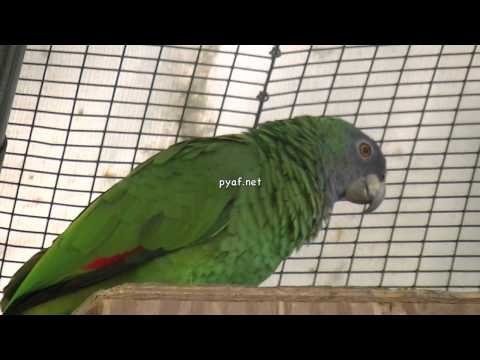
Video – "Vinaceous Parrot"

Purple-breasted Parrot in Itamonte - Minas Gerais, Brazil

The Vinaceous Parrot inhabit in tropical and subtropical evergreen mixed forests; in the Brazil in humid coastal forests, in the East of Paraguay They can be found in forests Araucaria angustifolia and Euterpe edulis. The extent of the ecological dependence of this species on coniferous trees (Araucaria and Podocorpus) It is not clear, but the Araucaria angustifolia It is clearly important in Missions, Rio Grande do Sul and Santa Catarina and possibly it was related to the previous distribution further north in southeast Brazil.

Mainly observed in the lowlands, but there are reports of birds seen in hills 1.500-2.000 meters in the southeast of Brazil, where the best forest remnants persist. Usually in pairs or small groups with larger meetings (up to approximately 30) in July-August. In pairs during breeding (usually around September).

Reproduction:

The Vinaceous Parrot nidifica in holes in large trees with obvious preference for the Araucaria angustifolia, including rarely cracks in the cliffs. With reproduce the May in loose colonies. breeding season during the months of September to January. Clutch 2-4 eggs.

After the breeding season (February to July), the species congregate in large groups and community shelters.

Food:

The specific foods of the Vinaceous Parrot include flowers and fruits of Euterpe edulis (which apparently it is important seasonally in East Paraguay), seeds of Araucaria angustifolia, fruits of cocoons of Achatocarpus and new leaves Eucalyptus and seeds of Pilocarpus. It has been reported damagor cause in crops of oranges, but with the current low density of this species, It is unlikely to produce a serious economic impact.

Distribution and status:

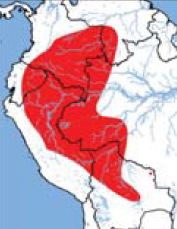
Size of its range (player / resident ): 1.230.000 km2

The Vinaceous Parrot It is endemic in Southeast South America.

In Brazil It was found in southern Bay, in West Espirito Santo and scattered localities as Minas Gerais, Brazil (a peripheral register from the sao francisco river, about Januaria), sporadically en Rio de Janeiro (possibly a seasonal visitor), but widely observed in Sรฃo Paulo, Paranรก, Santa Catarina and Rio Grande do Sul.

Records in East Paraguay come from Amambay, Canindeyรบ, Caaguazu, Alto Paranรก, Itapua and Guaira and in the North of Argentina from Missions and possibly the eastern half of Currents.

There are some seasonal movements and post-breeding dispersal, possibly in relation to the food supply (for example, seed availability coniferous trees), with invasions scale reported in Paraguay in the past. Declines in the number of birds occur in Rio Grande do Sul January, with all its people disappeared by March and return in April for the rest of the year.

Formerly abundant and widespread but now there has been a contraction dramatic of its range and population, mainly due to the habitat destruction scale, the expansion of agriculture and floods caused by large hydroelectric dams. also trapped for a long time for bird trade.

Are distributed in several protected areas, but none is large enough to maintain a viable population. The former strongholds in eastern Paraguay They are subject to rapid deforestation, with a recent reduction in its scope and numbers and now probably confined only in Alto Paranรก and Ganindeyu.

Probably extinct (or almost) in Bahia and Espirito Santo, and a few birds are likely to remain in Rio de Janeiro and Minas Gerais, Brazil. Confined to the north and northeast of Santa Catarina and locally common only in forested parts of Sรฃo Paulo and Paranรก, where it is thought that the remaining population survives. Persist in the north and northeast of Rio Grande do Sul.

A census 2007 yielded a minimum of 253 copies in Argentina.
It is perhaps the Amazona more common in populations of Rio Grande do Sul, Santa Catarina and Paranรก (several populations of more than 100 birds), in the South of Brazil, and the low number persists in Minas Gerais, Brazil and Sao Paulo, within an estimated total of 1.500-2.000 birds.

Conservation:

State of conservation โ“˜


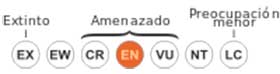
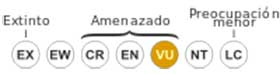
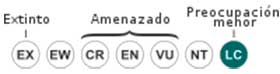
Endangered Endangered โ“˜ (UICN)โ“˜

โ€ข Current category of the Red List of the UICN: In danger of extinction.

โ€ข Population trend: Decreasing.

โ€ข Population size: 600-1700.

Rationale for the Red List category

This species is classified as endangered due to recent population estimates Brazil They indicate that the world population is very small and has suffered a rapid decline due to loss and fragmentation of habitat, aggravated by the trade. It is necessary to clarify whether Brazilian subpopulations exceed 250 specimens.

Justification of the population

Based on estimates 1.500 to 2.000 individuals in Brazil (G. Bencke in some. 2009), 220-400 in Paraguay and 253 in Argentina (K. Cockle in some. 2009), it is estimated that the total population is within the range of 1.970 -2.650 individuals and is probably positioned within the band 1,000-2,499. This is equivalent to 667-1.666 mature individuals, rounded here to 600-1.700 mature individuals.

Justification of trend

rapid and continuous population decline is suspected because of the Poaching of nests, the habitat destruction and persecution as a pest Of crops.

Conservation Actions Underway

โ€ข CITES Appendix I and II and protected by the Brazilian legislation.
โ€ข Nationally considered Vulnerable in Brazil (Urben-Filho et al . 2008, MMA 2014), and Critically Endangered in Argentina and Paraguay.
โ€ข Small populations are found in numerous protected areas (Wege and Long 1995, F. Olmos in some ., 1999).
โ€ข In the Argentina, two young provincial parks are used by the species, but they offer only partial protection because parrots use habitat outside the park for most of its life cycle, including, critically, the reproduction.
โ€ข In the Argentine stronghold of the species between San Pedro and Saint Rose, environmental education is underway to reduce the capture of chicks, and the population has been monitored since 2005 (Selva de Pino Paranรก in litt project., 2007).
โ€ข It has been achieved successful captive breeding.

Conservation Actions Proposed

โ€ข Monitor large populations (in March Argentina).
โ€ข Study reproductive biology and demography throughout the species' range and develop structured captive breeding programs to counter the high level of poaching of wild populations..
โ€ข Protect the general Carneiro (Santa Catarina), Itaipu (Alto Paranรก), RNP Itabรณ Rivas (Canindeyรบ), Estancia Golondrina (Caaguazu) and forests outside reserves Rio de Janeiro (Snyder et to the ., 2000) and between San Pedro and Saint Rose in Missions.
โ€ข Invest in permanently trained park rangers and resolve land tenure problems in Brazilian and Paraguayan reserves. (F. Olmos in some ., 1999, Cockle et al. 2007).
โ€ข Apply laws against the trafficking of species on the roads that connect the Monte Pascoal National Park with South Brazil (Snyder et to the ., 2000), in places where the species is captured and at borders and ports Paraguay and Argentina.
โ€ข Increase local public awareness to reduce nest theft and promote conservation of nesting sites..
โ€ข In Argentina, provide technical support to promote soil conservation, to avoid clearing forests for crops on small farms.

The Vinaceous Parrot in captivity:

The Vinaceous Parrot noted for its easy to imitate the human voice, better and clearer than the Amazona aestiva. Small easily they learn to speak.

Two decades ago, before placement in the Appendix 1 CITES Convention, this species was available in aviculture. It never was imported to Europe in a large number, but nevertheless often it offered for sale. Its price was higher than other species of Amazona available at that time, because of its amazing looks and his talent as an imitator. As the trade in wild birds was coming to an end, the captive population decreased markedly. While this species has been willing to breed for those that provide adequate breeding and have enough individuals to allow natural selection of the mate., captive breeding has been very disappointing, considering the number of birds that were previously available.

In the current avicultura, it seems that there are still a significant number of birds kept in Europe. A survey of amazon parrots in the European zoos, made in 1993 and published in 1994 by the EAZA, he listed in 59 species Vinaceous Parrot conserved in 11 zoological collections: of this, only three, Loro Parque (Spain), Walsrode Bird Park (Germany) and Beauval (France), had recorded breeding successes. It's known, However, that a significant number of Vinaceous Parrot They are held by private poultry farmers Europe and if these owners are willing to work in cooperation with EEP plan that can be started for this species, then the known captive population Europe could be big, enough to be considered as a viable.

The population of this species in captivity is similar to that of other species of the genus Amazona. In Loro Parque a couple is kept in an aviary in the exhibition area of รขโ‚ฌโ€นรขโ‚ฌโ€นthe park, and several more couples are kept in breeding cages suspended in their breeding outside exhibition. Suspended breeding cages are approximately 300 cm long x 95 cm width and height. Each cage has the nest-box placed against the outer rear panel, and there is a cut in the wire hole to allow birds to enter the nest-box. With the nest located outside of the cage, this eliminates the need to enter the service or inspect the nest-box.

The feeding of these birds is done twice a day. To the 7 Morning receive their main dish containing a mixed salad prepared with the following elements: – Apple, pear, tomato, beet, Carrot, alfalfa, lettuce, Peppers, papaya and other fruits and vegetables seasonally available; In addition, They are also used, when available, various fruits that are grown in the park, as nopal cactus plants and berries palmera pindรณ (Syagrus romanzoffiana). A second smaller dish meal in the morning provides birds commercial pellets dietary, and during the breeding season each pair is also given segments of their own supplement "pie" that is made fresh every day. The evening meal is given to 3:00 pm, with a mixture of nuts, seeds and beans cooked.

The Vinaceous Parrot It was raised for the first time Loro Parque in 1990, when one pigeon was raised hand. The couple proved to be very unreliable when it came to the incubation their eggs, why he has always resorted to artificial incubation or host and breeding. This couple Vinaceous Parrot He received on subsequent occasions eggs more common species to give them the opportunity to prove that they are good parents, but so far they remain unreliable.

No offspring were produced in 1991, but the couple tried again in 1992, when he carried out another manually raising and other raised squab. In 1993, when the same pair joined again, the clutch of eggs was transferred to a pair of Red-crowned Parrot (Amazona viridigenalis), which they proved to be excellent foster parents and raised chicks born. The same technique was used in 1994, but only one egg clutch proved to be fertile and the chick was raised successfully by Red-crowned Parrot.

Alternative names:

– Vinaceous Parrot, Vinaceous Amazon, Vinaceous-breasted Amazon, Vinaceous-breasted Parrot (English).
– Amazone vineuse (French).
– Taubenhalsamazone, Taubenhalsamazon (German).
– Papagaio-de-peito-roxo, chauรก, coraleiro, corraleiro, crau-crau, curraleiro, jurueba, papagaio-caboclo, papagaio-curraleiro, papagaio-peito-roxo, peito-roxo, quero-quero, tรฉu-tรฉu (Portuguese).
– Amazona de Pecho Vinoso, Amazona Vinosa, Loro vinรกceo, Loro vinoso (espaรฑol).


scientific classification:

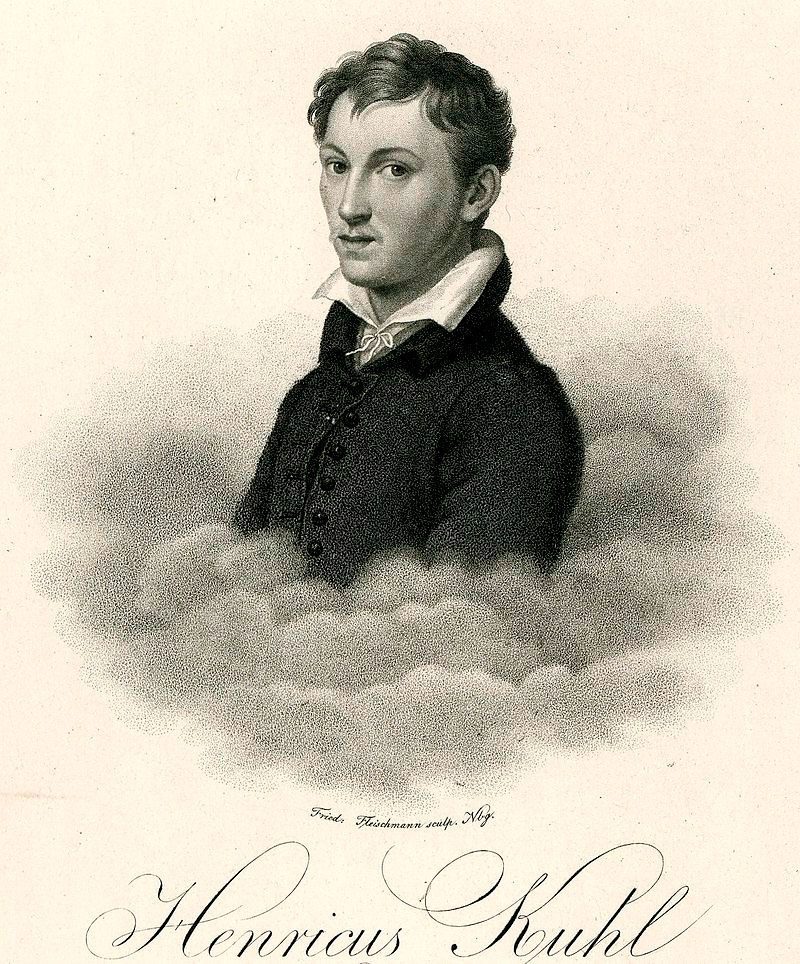
Kuhl, Heinrich
Heinrich Kuhl

– Order: Psittaciformes
– Family: Psittacidae
– Genus: Amazona
– Scientific name: Amazona vinacea
– Citation: (Kuhl, 1820)
– Protonimo: Psittacus vinaceus


Images Vinaceous Parrot:

Species of the genus Amazona


Sources:

– Avibase
– Parrots of the World โ€“ Forshaw Joseph M
– Parrots A Guide to the Parrots of the World – Tony Juniper & Mike Parr
– Birdlife
– THE VINACEOUS AMAZON Amazona vinacea AT LORO PARQUE – First Published in The Avicultural Magazine Vol. 103 No. 2

– Photos:

(1) – Vinaceous-breasted Amazon (Amazona vinacea) – San Francisco Zoo, California By Dick Daniels (http://carolinabirds.org /) (Own work) [CC BY-SA 3.0 or GFDL], via Wikimedia Commons
(2) – Vinaceous Amazon in captivity at the Rare Species Foundation Programme, Florida, USA By derivative work: Snowmanradio (talk)Amazona_vinacea_-RSFP-8a.jpg: Ruth Rogers [CC BY 2.0 or CC BY 2.0], via Wikimedia Commons
(3) – Vinaceous Amazon at the Walsrode Bird Park, Germany By Quartl (Own work) [CC BY-SA 3.0], via Wikimedia Commons
(4) – Vinaceous Amazon; two in a cage By TJ Lin (originally posted to Flickr as Copy of DSCN3375) [CC BY-SA 2.0], via Wikimedia Commons
(5) – flying. Picture taken in Morretes By Leandro Govoni Lacerda (Own work) [CC BY-SA 4.0], via Wikimedia Commons
(6) – A Vinaceous-breasted Amazon at Parque das Aves, Foz do Iguaรงu, Brazil By Kee Yip from Union City, California, USA (IMG_4509_P1040019) [CC BY 2.0], via Wikimedia Commons
(7) – Pigeons neck Amazone (Amazona vinacea) Shot in Palmitospark Gran Canaria By Martingloor (Own work) [CC BY-SA 4.0], via Wikimedia Commons
(8) – Vinaceous-breasted Amazon (Amazona vinacea) – San Francisco Zoo, California By Dick Daniels (http://carolinabirds.org /) (Own work) [CC BY-SA 3.0 or GFDL], via Wikimedia Commons
(9) – Amazone vineuse, Bioparc Doue-la-Fontaine By Melvin TOULLEC (Own work) [CC BY-SA 4.0], via Wikimedia Commons

– Sounds: (Xeno-canto)
โ–ท The world of Pets: Dogs, cats, birds, reptiles, amphibians

Red-necked Parrot
Amazona arausiaca

Red-necked Parrot
Red-necked Parrot (Amazona arausiaca) | By mikko.pyhala

Content

Description:


Anatomy-parrots

40 cm.. length and 650 g. of weight.

The Red-necked Parrot (Amazona arausiaca) has the lores, forecrown, front of crown, orbital area and upper cheeks, bright blue; back of the crown, nape and sides neck, with dark blue or blackish margins.

Mantle, back and scapulars, green with narrow faint dark margins giving subtle barred effect. Wing coverts green; carpal edge brighter yellowish green. Primaries green with blue tips; the three outer secondaries, red at the base, yellow and blue at the tips; four secondaries yellow and blue tips. The remaining secondary they are green. Under the wings, the coverts green; flight feather Bluish.

Red-necked Parrot

Chin and top of the throat, blue; the bottom throat and, sometimes, upper region chest, with patch resizable bright red; remaining chest and of the belly, green; undertail-coverts, brighter yellowish green. Tail bright green in the center, their outer feathers green tip yellowish green and red marks on the basis of the innerwebs. Bill horn; iris orange; legs grey

Both sexes are similar. It is thought that the immature It is similar to adult but with irises brown. The young fledglings They are significantly smaller than of adults during its first year.

  • Sound of the Red-necked Parrot.

Habitat:

Video "Red-necked Parrot"

Amazona arausiaca www.pyaf.net/

The Red-necked Parrot inhabits the canopy mountain rainforest, preferring forest areas with trees Tabonuco (Dacryodes excelsa), especially among 300-800 m (the highest density is found and altitudes 500-600 m) although occasionally they reported to 1.200 meters and formerly was a regular visitor (August October ) of the Coast zones.

Usually in small flocks or pairs; more numerous flocks feeding areas, outside the breeding season. Communal roosting in traditional sites, for example in large trees Dacryodes excelsa or Sloanea berteriana, They are using from year to year (but not necessarily all year).

Reproduction:

Nests in a large tree cavity with most nests reported in Dacryodes or Sloanea. breeding season February-June. low productivity probably just a clutch every two years and usually only one young per nest.

Food:

The diet It includes fruits of Dacryodes excelsa, Licania ternatensis, Richeria grandis, Amanoa caribaea, Simarouba amara, Symphonia globulifera, Chimarrhis cymosa, Pouteria pallida, Cordia elliptica, C. laevigata, Pithecellobium jupunba, Byrsonima martinicensis, Dussia martinicensis, Ormosia monosperma, Buchenavia capitata and Palmas Euterpes, egg yolks of Anacardium occidentale and fruits and buds of Lonchocarpus, as well orange crops, etc. Forages mainly in the canopy but also in sub-canopy and occasionally ground level. Usually it is fed in the morning and evening.

Distribution and status:

Size of its range (reproduction / resident): 190 km2

The Red-necked Parrot It is endemic to the Dominica Island in the Lesser Antilles. Formerly it spreads through the mountainous interior, including the northern peninsula. Contraction range from about 1950 with the existing population centered Morne Diablotin (1.447 m, the highest mountain Dominica) which it may have always been his main strength but whose southern slopes birds have been absent from the hurricane 1992.

small populations, reportedly, in the north of the peninsula (where apparently they are resident) and in the eastern center of the island. They can remain very small populations in the south. Recent sporadic observations of birds in low-lying areas of the north and east; other towns in the south suggest the gradual recolonization of the parts of the former range.

mainly residents but maybe (at least once) some regular seasonal foraging movements and some November-January nomadism. Although historical accounts tell of the abundance of this species, the drastic contraction in range and population have occurred since the mid-twentieth century with its gradual retreat in the most remote forests of northern and eastern. The decline is due to the loss of habitat, the hunting and capture bird cage.

The small existing population It is especially vulnerable to the loss of food plants and nesting sites due to hurricane damage. Although the effects of habitat loss may have been especially severe because of the preference of birds through the forests of low level (which it has been under pressure) They tolerate any disturbance and returned to the old feeding areas recently after conversion to plantations of fruit trees. The hunting It was probably the greatest threat to the seventies. Capture for local pet trade now under control due to a successful education campaign.

The population 1977 It was at least 350 birds (probably), but halved by the effects of hurricanes between 1979 and 1980. A Recovery since then 350 estimated birds 1990 and evidence of further increases to more than 500 in 1992. The remaining habitat is partially protected in the North Forest Reserve, but does not include neighboring critically important areas for conservation. Completely protected by national legislation.

Conservation:

State of conservation โ“˜


Vulnerable Vulnerable โ“˜ (UICN)โ“˜

โ€ข Current category of the Red List of the UICN: Vulnerable.

โ€ข Population trend: Increasing.

โ€ข Population size: 850-1000.

  • Rationale for the Red List category

The conservation actions He has helped this species to recover a population down from 1980. Still rated as vulnerable because its population is still very small and its range of small extent and restricted to a single island. But, if future declines in habitat available, could be reclassified as danger of extinction.

  • Justification of the population

Estimating population most recent is 850-1,000 mature individuals (PR Reillo a slightly. 2012), more or less equivalent to 1.200-1.500 individuals in total.

  • Justification trend

The population size has increased possibly only 150 birds in 1980, possibly even 1.200 birds currently, based on recent surveys and density estimates (PR Reillo in some. 2016). There is no new data on the evolution of the population, but the species is supposed to still rising.

Threats
    The loss of habitat in the lower elevations has been caused mainly by clearance for agriculture (Collar 1997). Although replanting fruit crops has benefited the species (Reillo y Durand 2008), the frugivorous diet of the Red-necked Parrot, conflict is causing local farmers (Douglas 2011). Damage caused by hurricanes has also been important: another hurricane the magnitude of Hurricane David could reverse recent population increases. Hunting and illegal trade are now low-level threats, but the illegal wildlife trade throughout the Caribbean is a constant concern and there is increasing pressure from illegal wildlife trade centered in Europe (PR Reillo in some. , 2016).
Conservation Actions Underway
    CITES Appendix I and II. It is fully protected by national legislation. Much of the remaining habitat is in the northern and central forest reserves, national parks and Morne Trois Pitons and Morne Diablotin, but adjacent areas, critically important, They are not protected (Juniper and Parr 1998). Since 1980, It has benefited from the joint efforts of government and non-governmental organizations to protect their habitat and sensitize the local population of the needs of this species. Research methods have recently improved to maximize ecological information acquired, while minimizing the disturbance of birds, and the study has provided important information on nesting behavior and parental care. Similarly, census methodologies have improved to give more accurate estimates of population size and density (Reillo y Durand 2008). The population is monitored annually. A recent doctoral thesis project examined the interaction of species with fruit crops in Dominica (PR Reillo in some. 2012).
Conservation Actions Proposed
    Continue the implementation of the protection of national parks Morne Diablotin and Morne Trois Pitons and forest reserves in central and northern. Continue to monitor the population each year. To investigate the effects of nest site (and the food) competition between this species and Imperial Parrot (Amazona imperialis). Continue to prohibit the trade in this species, exports of ex situ captive breeding, and importation of non-native parrots as pets in Dominica (PR Reillo in some. 2012).

Red-necked Parrot in captivity:

CITES Appendix I and II. It is fully protected by national legislation.

Alternative names:

– Bouquet’s Parrot, Dominican Blue-faced Amazon, Dominican Blue-faced Parrot, Jacquot, Red necked Parrot, Red-necked Amazon, Red-necked Parrot (English).
– Amazone ร  cou rouge, Amazone de Bouquet (French).
– Blaukopfamazaone, Blaukopfamazone (German).
– Papagaio-de-colar-vermelho (Portuguese).
– Amazona de Cuello Rojo, Amazona Gorgirroja, Amazona gorjirroja, Jaco, loro de cuello rojo (espaรฑol).

scientific classification:

– Order: Psittaciformes
– Family: Psittacidae
– Genus: Amazona
– Scientific name: Amazona arausiaca
– Citation: (Statius Mรผller, 1776)
– Protonimo: parrot arausiacus

Images Red-necked Parrot:


Species of the genus Amazona


Sources:

  • Avibase
  • Parrots of the World โ€“ Forshaw Joseph M
  • Parrots A Guide to the Parrots of the World – Tony Juniper & Mike Parr
  • Birdlife

Photos:

(1) – Red-necked Amazon (Amazona arausiaca) – Author: mikko.pyhala – HBW
(2) – Red-necked Amazons at the Parrot Conservation and Research Centre Botanical Gardens, Roseau, Dominica By Andrew Szymanski (originally posted to Flickr as DSCF0031) [CC BY-SA 2.0], via Wikimedia Commons
(3) – Red-necked Amazons at the Parrot Conservation and Research Centre Botanical Gardens, Roseau, Dominica By Amazona_arausiaca_-Roseau_-Dominica_-aviary-6a.jpg: Andrew Szymanskiderivative work: Snowmanradio [CC BY-SA 2.0], via Wikimedia Commons
(4) – Amazona arausiaca Sunday, West Indies by Don Faulkner – Flickr
(5) – BARRABAND, Jacques (1767/8-1809) [Parrot Bouquet (Red-necked Amazon, Amazona arausiaca)] From Natural History of Parrots (by Francois Levaillant, 1801-1805) – Wikimedia
(6) – Natural history of parrots /. In Paris :chez Levrault … ;an IX (1801)-an XIII (1805).. by Biodiversity Heritage Library – Flickr

Sounds: Aristides Elias Elias, XC211593. accessible www.xeno-canto.org/211593

โ–ท The world of Pets: Dogs, cats, birds, reptiles, amphibians

Naretha Bluebonnet
Northiella narethae

Content


Anatomy-parrots

Description:

The Naretha Bluebonnet (Northiella narethae) It is smaller than Bluebonnet (Northiella haematogaster), of about 28 cm. long.

The legs and feet are dark gray, and the irises is dark brown.

The adult male has a two tonal facial pattern forecrown lighter green-blue, the ears and the area above the eye in contrast to the rest of the face which is purple-blue. The head, the neck forward and breast are marked with pale steaks and diffuse spots.. The back It is olive gray. The belly, the area of the vent and the thighs are uniform yellow, while red is limited to the area of รขโ‚ฌโ€นรขโ‚ฌโ€นthe undertail-coverts. The lesser wing coverts are blue and outer median wing coverts red, while the inner median and greater wing coverts, and inner secondary a yellow-olive colour. The central feathers of the tail are tinged with pale blue..

The female adult has a duller blue color in forecrown, and a reduced color on wings and tail, and with no tint of orange on the belly. It is smaller overall, at around 26 cm length.

The chicks they have a bill yellow and gain their adult plumage in the first post moves to bloom (three to four months old).

taxonomy:

the species Northiella narethae It was formerly classified as a subspecies (Northiella haematogaster narethe) of the Northiella haematogaster. A molecular study published in 2015 by Gaynor Dolman and Leo Joseph He confirmed the genetic isolation Naretha Bluebonnet (Northiella narethae) and recommended that it was restored as a separate species.

Habitat:

Arid and semiarid scrub and farmland, thickets mulga, weeds and dry forests open.

Reproduction:

It is heavily influenced by rainfall and food availability, but usually peaks between August and January.

The usual site nesting It is a very small cavity tree, particularly attracted to she-oaks providing appropriate holes for nesting, often near the ground, coated shavings and wood dust rotten. The female incubates the eggs but is cared for by the male who also contributes to raising the young..

Four to seven white eggs round (23mm x 19mm). Time of incubation: 22 days. The young usually leave the nest around the 30 days.

Food:

Seeds of various grasses and herbaceous plants (autochthonous), also nectar, flowers and various fruits.

Distribution:

Reports indicate that Naretha Bluebonnet They have been common in the arid region Nullarbor, and they have become more rare in the twentieth century. It is believed that localized individuals range makes the species highly endemic in an area on the border between Western Australia and Southern Australia.

Conservation:

We know the conservation status of this species, although probably in risk status.

"Naretha Bluebonnet" in captivity:

No data.

Alternative names:

– Bluebonnet (Naretha), Little Bluebonnet, Naretha Bluebonnet (English).
– Perruche ร  bonnet bleu (narethae), Perruche de Nareth, Perruche petite (French).
– (German).
– (Portuguese).
– Perico Cariazul Naretha (espaรฑol).

Images "Naretha Bluebonnet"

scientific classification:

– Order: Psittaciformes
– Family: Psittaculidae
– Gender: Northiella
– Scientific name: Northiella narethae
– Subpoena: (White, HL, 1921
– Protonimo: Psephotus narethae

Sources:

โ€ข Avibase
โ€ข Parrots of the World โ€“ Forshaw Joseph M
โ€ข Parrots A Guide to the Parrots of the World – Tony Juniper & Mike Parr
โ€ข Birdlife

Photos:

(1) – Penochka Birds: Parrots (Psittacidae) – Source

โ–ท The world of Pets: Dogs, cats, birds, reptiles, amphibians

Cobalt-winged Parakeet
Brotogeris cyanoptera


Periquito Aliazul

Content

Description:

The Cobalt-winged Parakeet (Brotogeris cyanoptera) measured 15-21 cm.. in height and weighs around 67 g. Distinguishable on the fly by the cobalt blue of the the flight feathers; forecrown yellow and crown with blue dye; chin orange.

Has the tail short and acute. Its bill opaque beige es

Subspecies description:

  • Brotogeris cyanoptera beniensis

    (Gyldenstolpe, 1941) – It has lighter green in all the body and yellow plumage edges in the wing .


  • Brotogeris cyanoptera cyanoptera

    (Pelzeln, 1870) – The nominal


  • Brotogeris cyanoptera gustavi

    (Berlepsch, 1889) – Has the forecrown light green, shoulder yellow and only a patch blue in half of the wing .

Habitat:

Very common. It is found in secondary forest, riparian, edges and savanna, until the 600 m (occasional over of 1000 m). Fly in small flocks of 10 to 20 individuals (rare in couples), feed in the canopy.

Reproduction:

It nests in hollow and termite mounds on tree.

Food:

Its diet probably the same as for most species Brotogeris: fruit nectar, figs, berries and seeds.

Distribution:

Periquito Aliazul

Its population is distributed between the East of Colombia, Southwest of Venezuela to the North of Bolivia and Brazilian Amazon.

Subspecies distribution:

  • Brotogeris cyanoptera beniensis

    (Gyldenstolpe, 1941) – Bolivia.


  • Brotogeris cyanoptera cyanoptera

    (Pelzeln, 1870) – The nominal


  • Brotogeris cyanoptera gustavi

    (Berlepsch, 1889) – Peru.

Conservation:


minor concern


  • Its population has been estimated at more of one million copies
  • .

  • Not considered in any of the threat categories.

"Cobalt-winged Parakeet" in captivity:

Rare in captivity, due to the limited success in reproduction.

Alternative names:

– Cobalt-winged Parakeet, Blue-winged Parakeet, Cobalt winged Parakeet (English).
– Toui de Deville, Perruche ร  ailes de cobalt (French).
– Kobaltflรผgelsittich (German).
– Periquito-de-asa-azul, Periquito-de-asa-azul, tuipara-de-asa-azul (Portuguese).
– Catita Aliazul, Periquito Aliazul, Periquito de Alas Azules (espaรฑol).

scientific classification:

Order: Psittaciformes
Family: Psittacidae
Genus: Brotogeris
Scientific name: Brotogeris cyanoptera
Citation: (of Pelzeln, 1870)
Protonimo: Sittace cyanoptera

Images "Cobalt-winged Parakeet"

Videos "Cobalt-winged Parakeet"

————————————————————————————————

Cobalt-winged Parakeet (Brotogeris cyanoptera)


Sources:

– Avibase
– Parrots of the World โ€“ Forshaw Joseph M
– Parrots A Guide to the Parrots of the World – Tony Juniper & Mike Parr
– Birdlife

โ–ท The world of Pets: Dogs, cats, birds, reptiles, amphibians

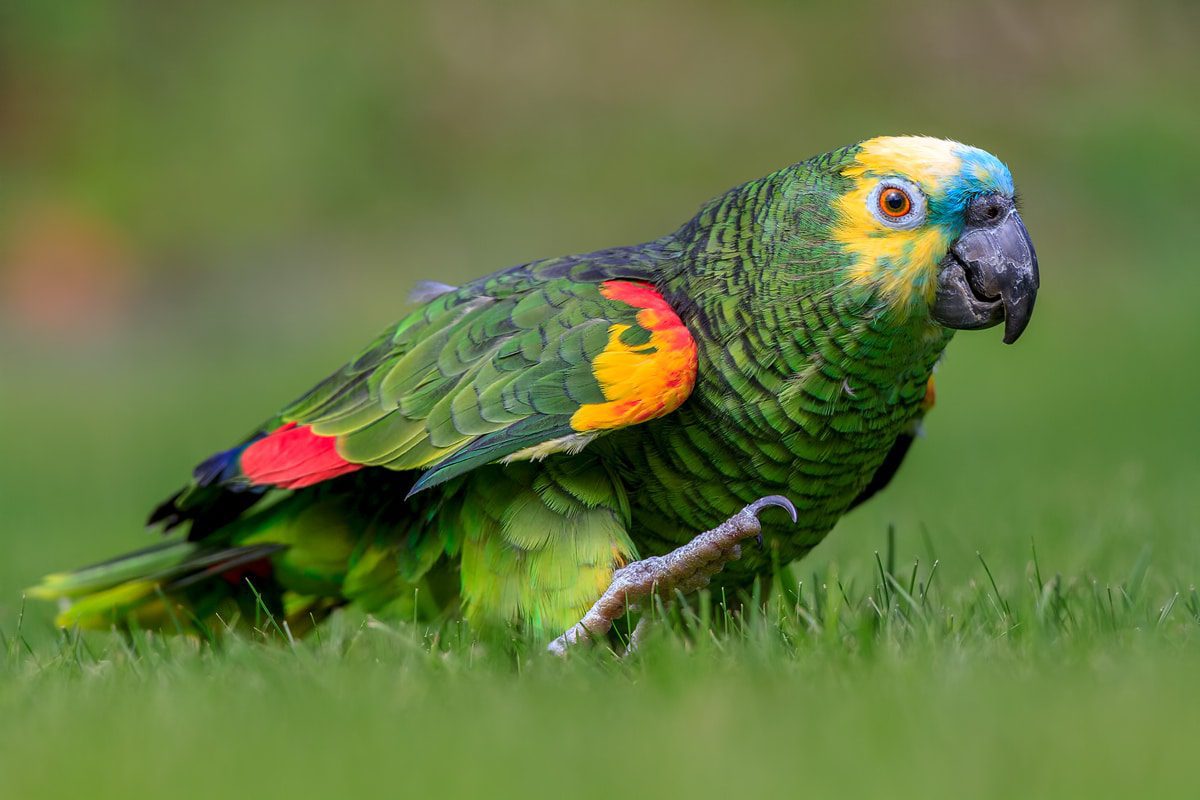
Blue fronted Parrot
Amazona aestiva


Blue fronted Parrot

Content

Description

33-39 cm.. height and weight around the 450 and 550 g..

The Blue fronted Parrot (Amazona aestiva) is distinguished by yellow head, with blue-green forehead and cheek, Dark nostrils, Red shoulders outlined with yellow, wing with red patch and dark blue ends. Rest of the usually green body, more clear towards the belly and tail.

  • The subspecies Amazona aestiva xanthopteryx of Bolivia, has more extensive yellow face and the shoulder is mostly yellow with a small red patch.

  • The subspecies A. to. xanthopteryx (Yellow wing Amazon): Wing coverts of the shoulder area almost exclusively yellow and, in general, creating a stain of greater extension. – From the southwest of Mato Grosso, Brazil, North and East of Bolivia, Paraguay and northern Argentina


Anatomy-parrots

In young coloration is generally more off. The blue and yellow practically do not exist and the iris is dark

Habitat:

Video – "Blue fronted Parrot"

AVES - The Amazon Aestiva, one of the most popular and talkative parrots

Lives in humid forests, Savanna, gallery forest, areas planted with trees and forest with palms, up to 1600m.

Common in pairs or flocks, they have many individuals community roosts.
In this species the sex of the specimens is not distinguished at a glance.

Reproduction:

It nests in holes in large trees.

Breeds between October and March.

The implementation is usually of 3 eggs, and incubation lasts approximately 25 days. Chicks leave the nest to the 60 days.

Food:

Its food consists of fruit, berries, nuts, leaves and seeds.

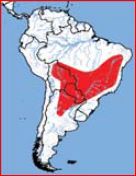
Distribution:

Amazon Frentiazul location

Interior of South America, from the North-East of Brazil, East of Bolivia, Paraguay, to the North of Argentina.

Conservation:

Not considered under any threat category globally.

State of conservation โ“˜


minor concern Minor Concern โ“˜ (UICN)โ“˜

Protected by the Convention CITES, consisting in annex II (species that may be threatened by a trade out of control).
It is a fairly widespread species in their area of distribution and is considered to have a stable population. However, numbers are declining rapidly in some areas due to capture for trade (both legal and illegal), and to other problems such as the destruction of their habitat and human pressure. Another problem affecting the species is that the average age of populations that exist in freedom is not known.

Blue fronted Parrot in captivity:

He is very smart, curious and loving. They are very sociable and gets along very well with children.

It is one of the best imitators that exist within the group psittacine after grays.
With its strong beak, as any Parrot, She likes chewing everything that gets you ahead. So, newcomer to our home, It is necessary to pay close attention.

It has a social behaviour so it is important to look for a partner. A large aviary and the possibility of going out every day are necessary.
If it feels threatened, It opens its wings between loud cries and wild-eyed.
Water love it. Released, When it rains, enjoy, in the rain, with open wings. The ideal humidity for a Blue fronted Parrot is of the 60-70%, which is impossible in an apartment during the winters in the heat of radiators. It is therefore necessary the use of humidifiers.

The staple food is made up of different types of nuts, sunflower seeds, pumpkin seeds, corn, wheat, etc. Important for a healthy diet are fruits and vegetables. These must be offered fresh every day.
Just before the breeding season, our birds must be provided with foods rich in calcium and protein, for example egg cooked.
Multivitamin supplements complete proper nutrition.

The female lays two to five eggs that incubate for an approximate period of 25 to 28 days.

Alternative names:

– Blue fronted Parrot, Blue-fronted Amazon, Blue-fronted Parrot, Turquoise-fronted Amazon, Turquoise-fronted Parrot (English).
– Amazone ร  front bleu (French).
– Blaustirnamazone, Rotbugamazone (German).
– Papagaio-verdadeiro, papagaio-colareiro, papagaio-comum, papagaio-curau (Portuguese).
– Amazona Frentiazul, Amazona Sudamericana, Loro hablador, Lora frente azul (espaรฑol).

scientific classification:

– Order: Psittaciformes
– Family: Psittacidae
– Genus: Amazona
– Scientific name: Amazona aestiva
– Citation: (Linnaeus, 1758)
– Protonimo: Psittacus aestivus


Species of the genus Amazona


Sources:
– Parrot Book, Parrots and macaws Neotropical
– avibase
– SEO.org
– Photo: birdnest
– Sounds: Diego Caiafa

โ–ท The world of Pets: Dogs, cats, birds, reptiles, amphibians

Salvadori's Fig-Parrot
Psittaculirostris salvadorii

Salvadori's Fig-Parrot

Content

Description

19 cm.. length and a weight of environment to the 118 g..

The forecrown and crown of the Salvadori's Fig-Parrot (Psittaculirostris salvadorii) is bright green with a little blue diffusion; cheeks and ear-coverts elongated yellow gold; area behind the eyes, pale blue: yellow the nape.

Upperparts green; internal parts of flight feather, orange-red at their ends. Under, the wings opaque green. Top of the chest with bright red band, rest of the underparts bright yellowish green, brighter and clearer than the upperparts. Upper, the tail green; Yellow below.

Bill black; irises red-brown; legs grey,

Female lacks the band scarlet chest, evident in the male, which it is substituted by a band It is showing some green opaque red feathers on the sides.

Youth equal to the adult female but duller overall; band pale blue chest, weak or invisible. Iris reddish brown.

Habitat:

The Salvadori's Fig-Parrot is distributed in the forests, along their edges, partially cleared areas and close to human settlements. Birds subsist mainly on the seeds of figs, and groups are fed into the cup of fruit trees, sometimes mixed with other species. Hang it upside down to feed, and they can make brief forays above the canopy. The species is found more often in pairs or in small groups, and nests colonies.

Reproduction:

Little is known about its ecology.

Food:

Their diet consists mainly of figs and other fruit.

Distribution:

Size of the area of distribution (reproduction / resident): 81.500 km2

THE Salvadori's Fig-Parrot (Psittaculirostris salvadorii) is endemic to the North of Irian Jaya, Indonesian. You can see in the forests of lowlands from the eastern edge of the Cenderawasih Bay to the humboldt bay (approximately 137 ยฐ a 141 it is), reaching inside through the northern slopes of the Van Rees mountains to 700 meters above sea level. Not rare within its small range.

Conservation:


minor concern


โ€ข Current IUCN Red List category: Least concern

โ€ข Population trend: Decreasing

This species is suspected of slow to moderate decline due to loss of habitat, limited degradation and some pressure for his capture.

Its population is estimated around the 10,000 specimens.

In the past, this species has been caught in relatively large numbers for the cage bird trade, both for the domestic and foreign markets, with a total of 1.582 birds exported from Indonesia between 1985 and 1990 (Beehler 1985, Nash 1990b , KD Bishop in litt., 1996, 1997to collar), and 1.791 between 1990 and 2001, When the species registered trade ceased (UNEP-WCMC 2007). But, the true extent of trade is unknown and is likely to be overlooked by many hunters in the preference of the most coveted and abundant species (B. Beehler in litt. 2012).

"Salvadori's Fig-Parrot" in captivity:

Susceptible to stress and disease.

Very rare in captivity.

Alternative names:

– Salvadori’s Fig-Parrot, Salvadori’s Fig Parrot, Whiskered Fig-Parrot, Yellow-cheeked Fig Parrot (ingles).
– Psittacule de Salvadori (French).
– Salvadorizwergpapagei, Salvadori Zwergpapagei, Salvadori-Zwergpapagei (German).
– Papagaio-dos-figos-de-salvador (Portuguese).
– Lorito de Salvadori (espaรฑol).

scientific classification:

– Order: Psittaciformes
– Family: Psittaculidae
– Genus: Psittaculirostris
– Scientific name: Psittaculirostris salvadorii
– Citation: (Oustalet, 1880)
– Protonimo: Cyclopsittacus Salvadorii

Images "Salvadori's Fig-Parrot"

Videos "Salvadori's Fig-Parrot"

————————————————————————————————

"Lorito de Salvadori" (Psittaculirostris salvadorii)


Sources:

– Avibase
– Parrots of the World โ€“ Forshaw Joseph M
– Parrots A Guide to the Parrots of the World – Tony Juniper & Mike Parr
– Birdlife

– Photos:

(1) – Album parrots – parrots

– Sounds: Hans Matheve (Xeno-canto)

โ–ท The world of Pets: Dogs, cats, birds, reptiles, amphibians

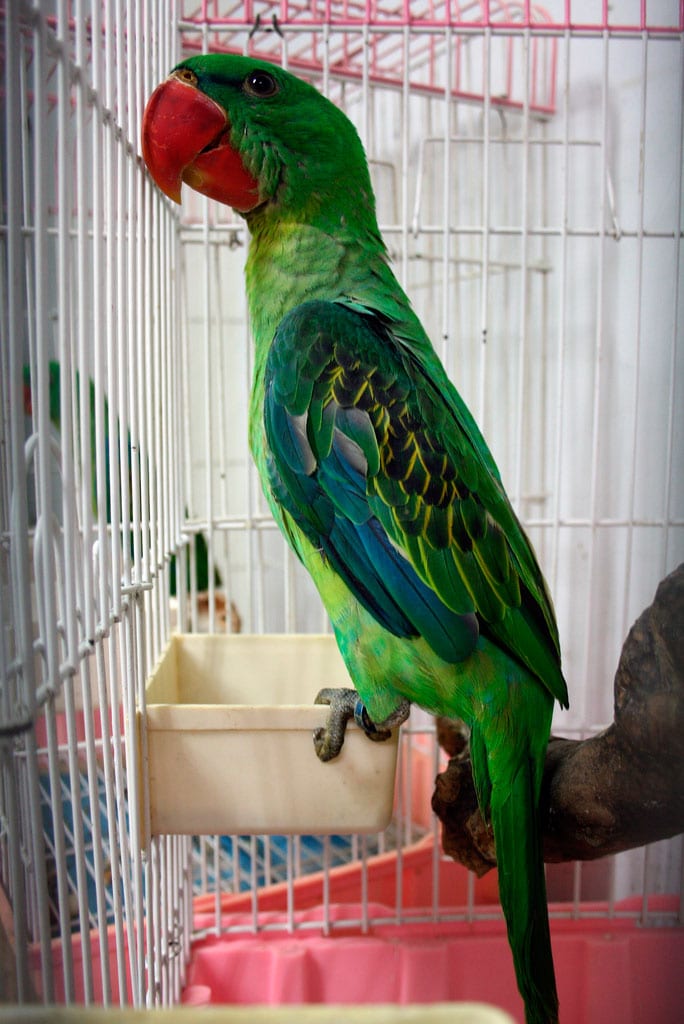
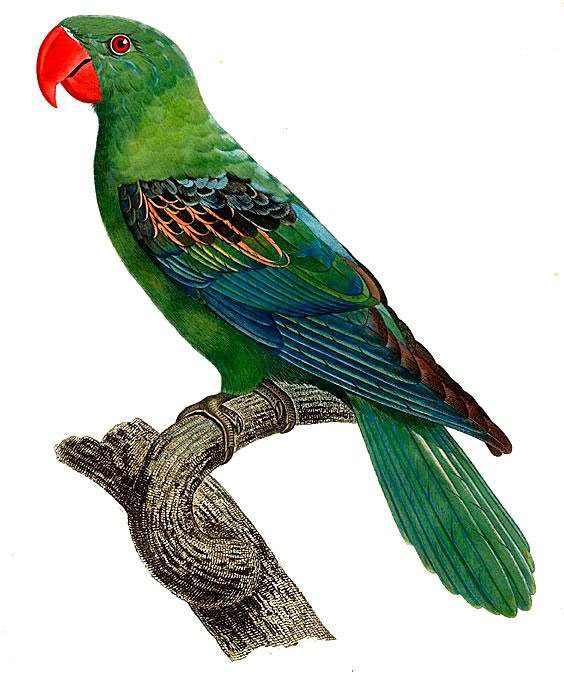
Great-billed Parrot
Tanygnathus megalorynchos


Great-billed Parrot

Content


Anatomy-parrots

Description

33 to 43 cm.. length and an approximate weight of 260 g..

The Great-billed Parrot (Tanygnathus megalorynchos) It has a bright green head. Green mantle with narrow blue stripes to the feathers of the back; pale blue rump; coverts underwings light green.

Scapulars black bordered of blue-green; less black on the inner wing coverts, the blue-green external; medium black coverts, with yellow margins in both bands: large blue-green coverts with yellow margins.

Secondary green with thin yellow margins; primary heavily drenched blue in vane external with a gradient through the greenish or blackish blue in the vane inner. The wings and bright yellow axillary feathers; lower part of flight feathers black gray, the inner most dyed yellow.

The underparts, greenish yellow, greener-tinged in the belly, the coverts and thighs undertail. Upper, green tail with yellow tips; at the bottom I light brown with orange tips.

Billed red; iris yellow ; black legs.

Males and the females similar.

Young with beaming less variegated in wings.

Subspecies

List of subspecies Tanygnathus megalorynchos
  • Tanygnathus Megalorynchos Affinis

    (Wallace, 1863) – The head with light bluish hue and chest and abdomen much more green, bend of the blue wing. More green in general.

  • Tanygnathus Megalorynchos Djampeae

    (Hartert, 1924) – Chest and abdomen pale green, the secondary feathers of the coverts bluish green with bordered Straits.

  • Tanygnathus Megalorynchos Floris

    (Hartert, 1924) – Chest and abdomen pale green, the lower part of the back blue is more dark.

  • Tanygnathus Megalorynchos Hellmayri

    (Mayr, 1944) – It is more small, more green by the chest and abdomen while the head is yellowish-green. Practically has tones of blue and on the wings has little black color. In females it just black coloration in the wings.

  • Tanygnathus Megalorynchos Subaffinis

    (PL Sclater, 1883) – Face with slight bluish hue, more green in general and below the back and rump area, light blue-green hue.

  • Tanygnathus Megalorynchos Sumbensis

    (AB Meyer, 1882) – It is more large, with much more blue and blue more dark in the lower area of the back.

  • Tanygnathus Megalorync Viridipennis

    (Hartert, 1903) – The primary feathers of green wings, and in some cases also the secondary.

Habitat:

Great-billed Parrot

The Great-billed Parrot is distributed mainly primary lowland forests, as well as in secondary and coastal forests, mangroves, cultivated areas, gardens and plantations up to 1.000 meters above sea level. The birds regularly travel between the smaller islands and make daily flights between roosts and areas of foraging, calling the attention with its loud cries in flight as a time to settle to rest.

They normally gather in small groups of up to a dozen individuals in search of food., usually fruits and nuts, and commonly throw the remains of from the trees where they feed, since they discard unwanted elements.

Reproduction:

Nesting has been recorded between August and December, Noting a nest in the hollow of a mature tree in the forest at a height of some 30 m.

Food:

The fruit of the Sonneratia alba, as well Canarium vulgare and casuarinas.

Distribution:

Widely but unevenly distributed across Nusa Tenggara, the Moluccas and Islands to the West of papua. The range includes the following Islands: Sumba, Timor (West end) and adjacent Semau , Flowers, Madu, Kalaotowa, Kalao, Tanahjampea, the Group Tukangbesi to the southwest of Sulawesi, Damar, Babar, the Group Tanimbar, Seram, Haruku, Buru, OBI, Bacan, Kayoa, Halmahera, Makian, Moti, Ternate, Ternate, Morotai, Mayu, islets to the North of Sulawesi and the Group Togian to the East of Sulawesi, Sangir and groups Talaud, Widi, Muor, give, Waigeo, Batanta, Salawati and Misool. The nominal race seems to have been introduced in Balut at the southern end of Mindanao, Philippines. Occasional records in Java and Bali they are probably leaks, but the birds on the Mainland of New Guinea they may be wandering genuine, probably from the small islands of the West Group of papua. The species is quite common, but you might be getting some local decreases as a result of trade and habitat loss. The world population is estimated at more of 100.000 birds.

Subspecies

Distribution of subspecies Tanygnathus megalorynchos
  • Tanygnathus Megalorynchos Affinis

    (Wallace, 1863) – South of Moluccas

  • Tanygnathus Megalorynchos Djampeae

    (Hartert, 1924) – Islands Tanahjampea and Kalao, South of Sulawesi

  • Tanygnathus Megalorynchos Floris

    (Hartert, 1924) – Islands Flowers and Lesser Sunda.

  • Tanygnathus Megalorynchos Hellmayri

    (Mayr, 1944) – Southwest of the Islands Timor, Semau and Roti.

  • Tanygnathus Megalorynchos Subaffinis

    (PL Sclater, 1883) – Tanimbar Islands, and Babar Islands.

  • Tanygnathus Megalorynchos Sumbensis

    (AB Meyer, 1882) – Islands Sumba and Lesser Sunda.

  • Tanygnathus Megalorync Viridipennis

    (Hartert, 1903) – Islands Kalaotowa and Madu, South of Sulawesi.

Conservation:


minor concern


โ€ข Current category of the Red List of the UICN: Least concern

โ€ข Population trend: Decreasing

The world population is estimated at more of 100.000 birds.

This species has a very large range, and therefore not approaching the thresholds for Vulnerable according to the range size criterion.

The population is suspected to be declining due to the destruction of habitat in course and unsustainable levels of exploitation.

"Great-billed Parrot" in captivity:

Quiet, little shrill, don't like to be touched.
Rare in captivity.

Alternative names:

– Great-billed Parrot, Great billed Parrot, Island Parrot, Large-billed Parrot, Moluccan Parrot (ingles).
– Perruche ร  bec de sang, Perruche ร  gros bec (French).
– Schwarzschulterpapagei, Schwarzschulter-Papagei (German).
– Tanygnathus megalorynchos (Portuguese).
– Loro de Pico Grueso, Loro Picogordo, Loro Picogoro (espaรฑol).

scientific classification:

– Order: Psittaciformes
– Family: Psittaculidae
– Genus: Tanygnathus
– Scientific name: Tanygnathus megalorynchos
– Citation: (Boddaert, 1783)
– Protonimo: Psittacus megalorynchos

Images "Picogordo Loro"

Videos "Great-billed Parrot"

————————————————————————————————

"Their picogordo" (Tanygnathus megalorynchos)

Sources:

– Avibase
– Parrots of the World โ€“ Forshaw Joseph M
– Parrots A Guide to the Parrots of the World – Tony Juniper & Mike Parr
– Loromania
– Birdlife

– Photos:

(1) – By TJ Lin (originally posted to Flickr as photo 1445) [CC BY-SA 2.0 (http://creativecommons.org/licenses/by-sa/2.0)], via Wikimedia Commons from Wikimedia Commons – Wikimedia
(2) – By TJ Lin (originally posted to Flickr as great-billed parrot) [CC BY-SA 2.0], via Wikimedia Commons
(3) – ยซTanygnathus megalorynchos-two in captivity-8aยป by TJ Lin – originally posted to Flickr as photo 1466. Licensed under CC BY-SA 2.0 via Wikimedia Commons.
(4) – ยซTanygnathus megalorynchos-captivity-8a" for TJ Lin – originally posted to Flickr as great-billed parrot. Disponible bajo la licencia CC BY-SA 2.0 via Wikimedia Commons.
(5) – A bird in flight by James Eaton – Lynx
(6) – ยซTanygnathus megalorynchos – Barrabandยซ. Licensed under Public Domain via Wikimedia Commons.

– Sounds: Mike Catsis (Xeno-canto)

โ–ท The world of Pets: Dogs, cats, birds, reptiles, amphibians

Red-rumped Parrot
Psephotus haematonotus

Red-rumped Parrot

Content


Anatomy-parrots

Description

27 to 30 cm. length between 55 and 85 g. of weight.

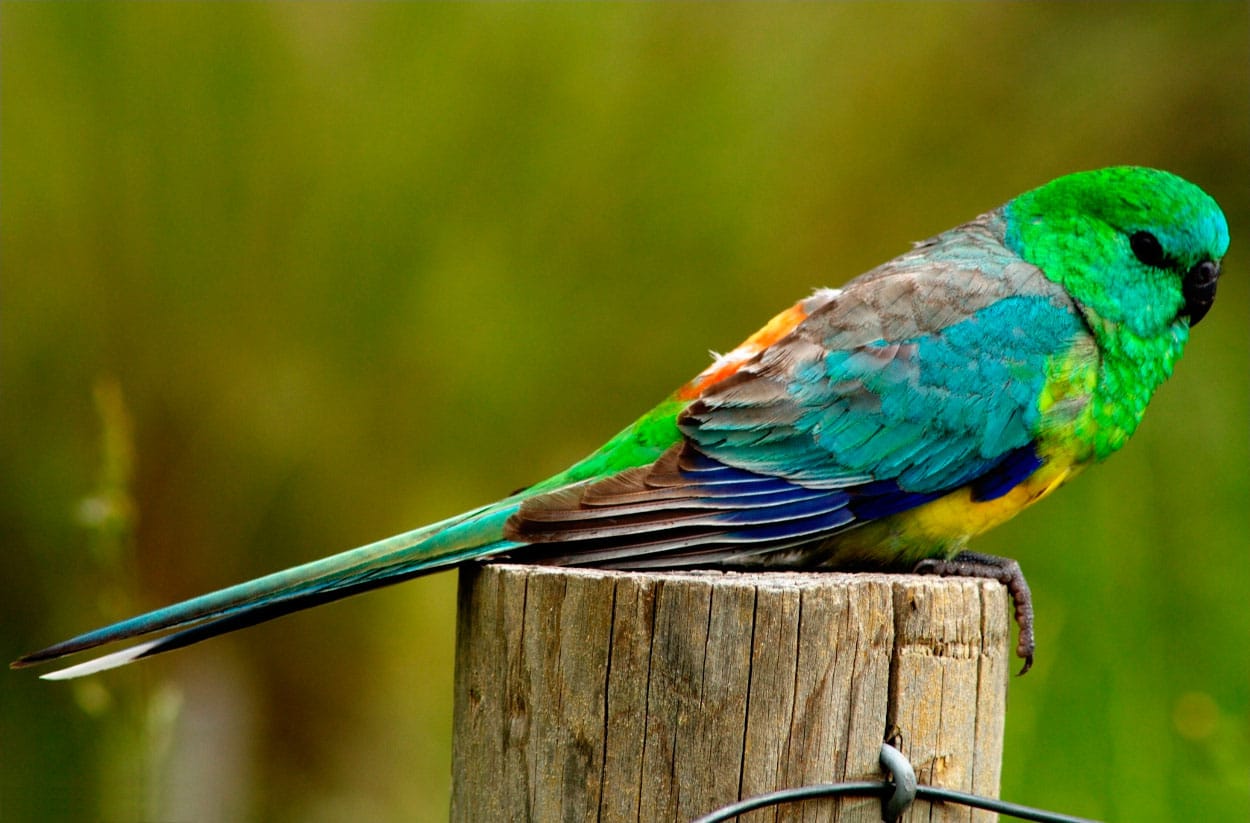
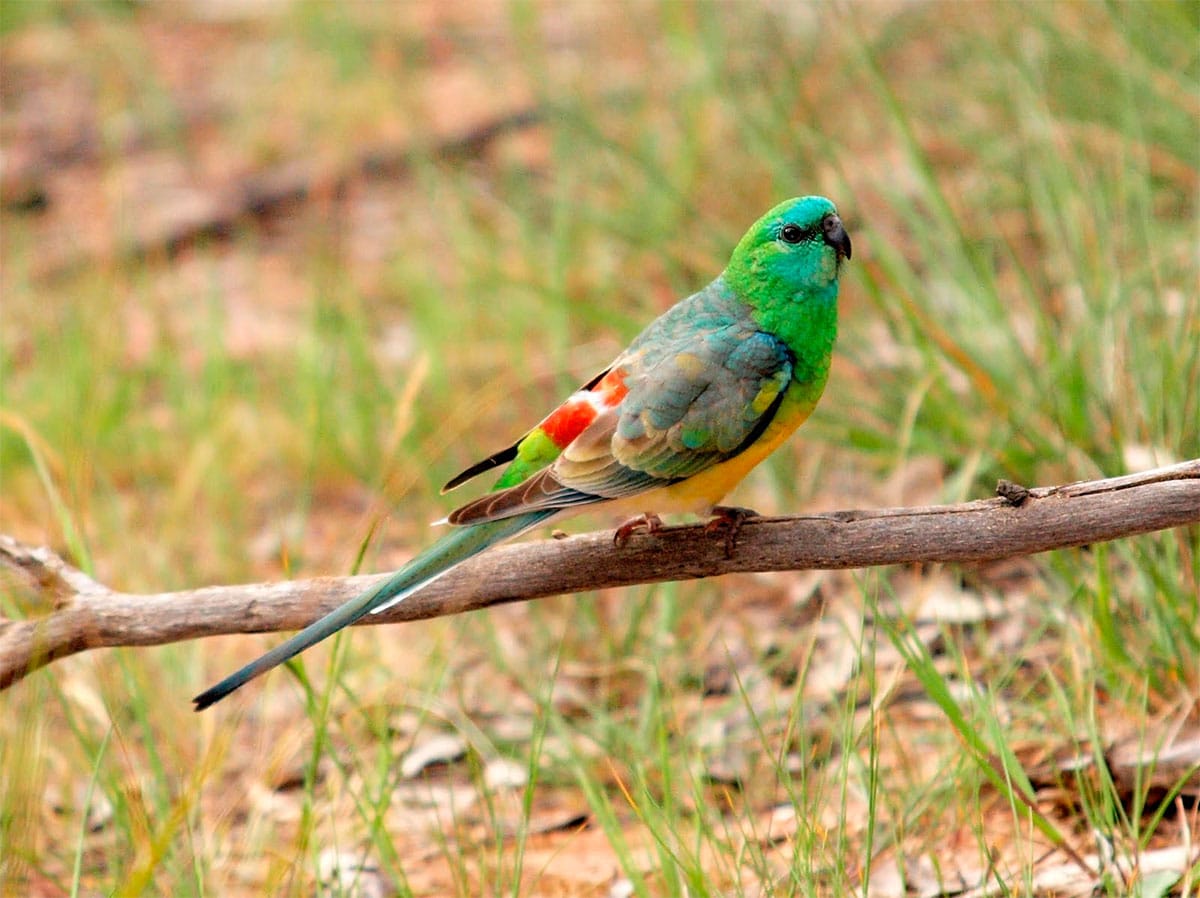
The Red-rumped Parrot (Psephotus haematonotus) It has a bright pale green head, slightly iridescent, with the front of the crown Blue pale and diffusion in the throat. Mantle Green grey with stripes dark fine; floor area of the back and Hip, Scarlet pale; uppertail-coverts bright green. Curve of the wing blue-violet shiny; carpal edge dark blue; small coverts bluish green, the external medium yellow, the inner of a pale blue-green; greater coverts, bluish green, clearer internal; primary coverts dark blue. Flight feathers Blackish with vane external edges and dark blue yellowish; tertiarys grey-green with vane Dark internal. Wing feathers dark blue. Green light the chest with a broadcasting slightly yellow, belly bright yellow, feathers of the chest and belly with stripes more dark very fine; the thighs, vent and undertail- coverts off-white, sometimes blur of yellowish-green. Upper, the tail Green feathered side of greenish-blue with white tips; by down whitish appearance when it is closed.

Bill black; irises brown; legs grey.

The female It is much more off than the male, usually greyish green. With white spots on the ear-coverts, the upper part of the chest is grey olive clear with fringed slightly more dark and the belly whitish with a blue-green light diffusion. The wing-coverts are of a gray olive more uniform that it's the male (medium-sized coverts pale blue). The vane outside of the flight feather they are more muted and more greenish, with the tail green. The bill and the irises are more pale, with some brands shaped pale wing bar.

The immature They also have a pale bar on the wings. Males are darker, with more olive than females and a rump with a narrow margin of Red; The feathers greenish blue begin to show in the head, the chest and wing-coverts first.

The adult plumage was purchased in two or three months, the male young retain the bar of wing and have it rump more off for another year.

Description 2 subspecies

  • Psephotus haematonotus caeruleus

    (Condon 1941) – Adults of both sexes are more pale in color, the male is a shade more blue, the Central undertail feathers they have more nuances blue and red of the rump is more pale; the nape and the the mantle of the female are more grayish Green


  • Psephotus haematonotus haematonotus

    (Gould 1838) – The nominal.

Habitat:

The Red-rumped Parrot usually sedentary, but some movements of flocks with breeding sites have been recorded at the edges of their range.

They prefer open terrain and trees of ribera, grasslands and croplands until 1.000 meters above sea level, where the annual precipitation is inferior to 800 mm. They are also found in suburban areas, having canevale for golf courses, roadsides and parks, and locally in the mangroves.

They are generally replaced by Bluebonnet and Mulga Parrot in wetter areas.

They are usually in pairs or small groups, but they are not uncommon flocks of 100 specimens or more during the post-breeding season. In these groups the pair bond is maintained and mutual grooming is common.. The Red-rumped Parrot are sociable, and to retire to the roosts are constantly called.

Reproduction:

The breeding season of the Red-rumped Parrot extends from July to January, Although you can rely more on the rains in the North than elsewhere. The courtship the male consists of head and tail Wiggles, as well as the drooping-wings pose.

The nesting they tend to occur in small colonies, often resulting in disputes between couples. The nest usually in a hollow tree, in different heights, often in a eucalyptus, it can also be located on a tree stump or even the eaves of a building can provide a suitable place. Between two and eight eggs (usually four to five) they form the laying. The female incubates alone for around 20 days, regularly fed by the male.

The pricipio, males remain in small groups, but as the chicks grow, These groups begin to disperse and males joined young people directly in the moments of eating. Young people take to abandon the nest between four to six weeks.

Food:

The Red-rumped Parrot they tend to feed on the ground, but it is also common to see them feeding in trees and shrubs.

The diet comprises a mixture of grasses and herbs, also seed sprouts, leaves, flowers and grain. They rest during the heat of the day and can remain hidden, unless you disturb them.

Distribution:

Size of the area of distribution (reproduction / resident): 1.930.000 km2

The Red-rumped Parrot are confined to the southeast of Australia, from the north of the Peninsula Eyre and Yorke, in the South of Australia, until the Montes Flinders, the basin of the Lake Eyre and Innamincka in the Northeast. The species expands eastward through Victoria, having come up to Melbourne in the middle of the Decade of 1970.

In the news, the species is still scarce in the eastern end of the State. But, in New South Wales can be found around Sydney and along the coast towards the North, extending inward across the fullest part of New South Wales (largely absent in the Northwest of the darling river,).

In Queensland reaches Windorah, in the West and the surrounding area of Charleville, Chinchilla and Brisbane, in the East.

Its population is common and growing in the north and towards the south coast of Queensland, to the South of New South Wales, benefiting from the expansion of agriculture.

The world population is more of 200.000 specimens and the species is protected by law.

Distribution 2 subspecies

Conservation:


minor concern


โ€ข Current category of the Red List of the UICN: Least concern

โ€ข Population Trend: Crecent

The size of the world population It has not been quantified, It is estimated over the 200.000 specimens.

Considered as a bird common to abundant in some parts of its area of distribution, do not believe that the Red-rumped Parrot is in danger of extinction, although there is some evidence that the numbers they may be decreasing slightly. The reasons for this are not clear.

As the Red-rumped Parrot It is immersed in the pet trade, This species is included in the Appendix II the Convention on international trade in endangered species (CITES), which means that all international trade in this species should be carefully controlled.

"Red-rumped Parrot" in captivity:

You have a nice voice. He is active and not especially shy. It can be kept with other parrots outside the breeding season..

The Red-rumped Parrot (Psephotus h. Psephotus) It is one of the species of breeding parakeets more common in captivity. The first imports of Australia they arrived in the middle of the 19TH century. In 1857, the Zoo's London announced the first reproduction successful with this species. Other reproductive successes would follow in Germany and Netherlands, already in 1860.

It's a tough species recommended for novice breeders. The Red-rumped Parrot It is very tolerant of our climate and prefers an Aviary in the open air all year round.

You can play from the age of one year; being two years total maturity age. Playing at the end of the winter, early spring. Usually has two to three young.

The El Perico shrike is also used as a foster parent. Breeders have used their good reproductive dispositions for the breeding of more delicate species such as the Australian King-Parrot (Alisterus scapuleris), the Red-winged Parrot (Apromictus erytropterus) or other species of Polytelis.

The first mutation mentioned back in the middle of the Decade of 1930. This mutation of Australian origin was named as Yellow before later being renamed as Green cake. They are currently known as cinnamon.

Other mutations emerged later as the panache, blue, lutino, opaline, etc … In the news, this species is very common in aviaries. Observations show an unrecognized majority of mutated subjects and a worrying decline in wild-type phenotypes.. Reasonably, it is likely that genetically pure wild type phenotypes are extremely rare today.

According to sources, a sample lived 12,2 years in captivity.

Alternative names:

– Red-rumped Parrot, Grass Parrot, Grassie, Green Leek, Ground Parrot, Red rumped Parrot, Red-backed Parakeet, Red-backed Parrot, Redrump, Red-rumped Grass Parakeet, Red-rumped Parakeet (ingles).
– Perruche ร  croupion rouge (French).
– Singsittich (German).
– Periquito-dorso-vermelho (Portuguese).
– Perico de Dorso Rojo, Perico Dorsirrojo, Periquito de Rabadilla Roja, Cotorra de rabadilla roja, Espalda roja, Periquito cantor (espaรฑol).

scientific classification:

– Order: Psittaciformes
– Family: Psittaculidae
– Genus: Psephotus
– Scientific name: Psephotus haematonotus
– Citation: (Gould, 1838)
– Protonimo: Platycercus haematonotus

Images ยซRed-backed Parakeetยป:

Videos "Red-rumped Parrot"

————————————————————————————————

ยซRed-backed Parakeetยป (Psephotus haematonotus)


Sources:

– Avibase
– Parrots of the World โ€“ Forshaw Joseph M
– Parrots A Guide to the Parrots of the World – Tony Juniper & Mike Parr
– AnAge: The Animal Ageing and Longevity Database – Anagรฉ entry for Psephotus haematonotus
– Birdlife

– Photos:

(1) – A male Red-rumped Parrot by Yarra River, Victoria, Australia By Andrea (originally posted to Flickr as rainbow parrot) [CC BY 2.0], via Wikimedia Commons
(2) – A male Red-rumped Parrot near Lake Ginninderra, Canberra, Australia By Duncan McCaskill (Picasa Web Albums) [CC BY 3.0], via Wikimedia Commons
(3) – Red-rumped Parrot in Capertee Valley, Blue Mountains, NSW, Australia. The red rump is seen only in male By Lip Kee Yap from Singapore, Republic of Singapore [CC BY-SA 2.0], via Wikimedia Commons
(4) – Red-rumped Parrot male (Psephotus haematonotus) – Flickr by Patrick_K59
(5) – Red-rumped Parrot (Psephotus haematonotus) Photographed @ Yarra Bend Park, Melbourne, Australia – Flickr

– Sounds: Peter Woodall (Xeno-canto)