โ–ท The world of Pets: Dogs, cats, birds, reptiles, amphibians

Brehm's Tiger-Parrot
Psittacella brehmii


Brehm's Tiger-Parrot

Content

Description

24 cm. length and a weight between 94 and 120 g..

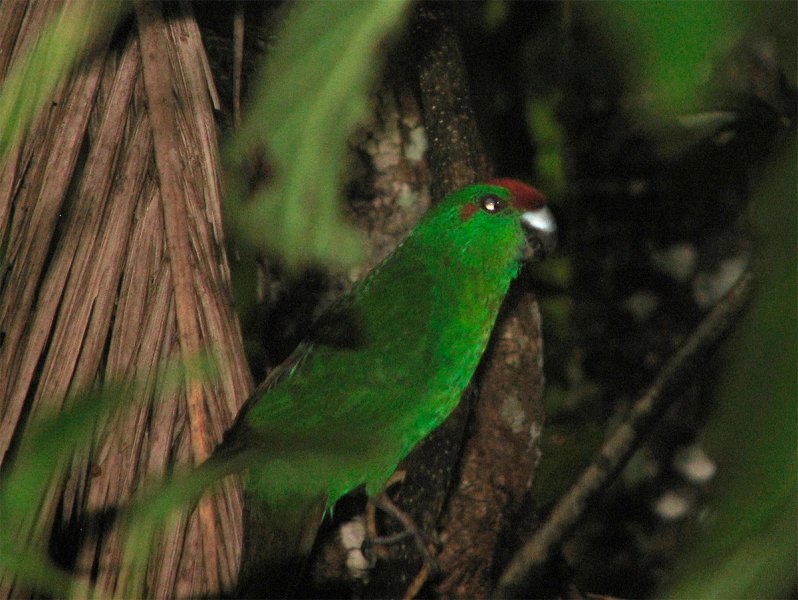
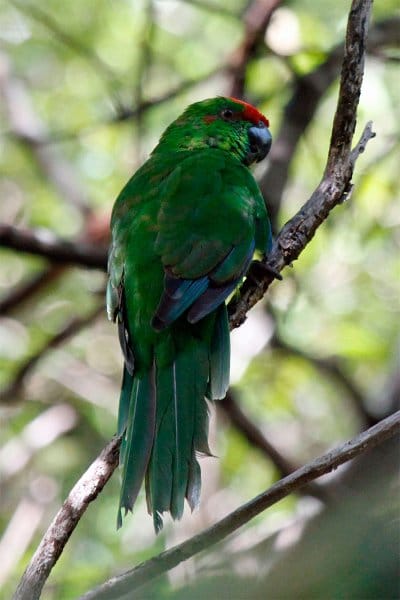
The head of the Brehm's Tiger-Parrot (Psittacella brehmii) is marron-oliva. The neck It is colored with black and green bars. The front and sides of the neck they are surrounded by a bright yellow stripe. The chest It is slightly striped in green and black colors.

The center of the back is very green and it integrates perfectly, with yellow and black striped, the area of the rump. Black fusion is absent from yellowish green to the extent lumbar and Hip. Wings they are a dark green color with dark edges in the covered medium-sized. The flight feather are blackish with vane a thin border beige and green external. The curvature of the wing is Bluestone. Wing feathers green.

The underparts are green, totally opaque, except the undertail-coverts that are of color red Scarlet. The bottom of the tail is green, greyish black down.

The bill It is brownish grey with lighter edges and a white tip. The irises is reddish orange. The legs are grey green.

The female lacks the yellow Crescent on the front of the neck. The chest listed in green and black.

Youth with the colors green and yellow absent from the chest area. Coverts of the tail of color orange tinged with tips yellow. The bill pale.

Subspecies description

  • Psittacella brehmii brehmii

    : The nominal.


  • Psittacella brehmii intermixta

    : Its underparts and back listing are more yellowish green tones, and larger.


  • Psittacella brehmii pallida

    : As the nominal but with narrower peak.


  • Psittacella brehmii harterti

    : It is clearer and less yellowish green head. Is smaller.

Habitat:

Are observed in the montane forest, including Podocarpus, beech forests of Nothofagus and edge of forests, mainly from 1.500 metres to the 2.600 m, ends in 1.100 and 3.800 m.

The Brehm's Tiger-Parrot is distributed primarily at altitudes below the habitat of the Painted Tiger-Parrot, but there is a zone in which they find sympathy latitudinally, and is between 2.500 and 3.000 m. Birds are often found individually or in small groups and allow an approximation.

You spend much time below the canopy or even close plants feeding on seeds and berries (including conifers and Podocarpus), Although also found in levels higher in the forest. Move slowly, often using his beak to balance and sometimes you can stay still. They only make short flights, never flying above the canopy.

Reproduction:

Little is known of nesting behavior, but two nestlings were observed in a nest during the month of June.

Food:

Diet includes seeds, coniferous berries and Podocarpus.

Distribution:

The Brehm's Tiger-Parrot they are endemic in New Guinea, where often live almost exclusively in mountain areas. Its range is divided into three isolated populations, an in Vogelkop, West Papua, the second in all the central and South-Eastern Highlands of New Guinea and the third in the mountains of the Huon Peninsula (the Painted Tiger-Parrot is absent and the Parrot Brehm Tiger is observed at altitudes higher than usual). The species is widespread, but generally uncommon; the world's population is believed to be superior to 100.000 specimens.

Distribution Subspecies

  • Psittacella brehmii brehmii

    : The nominal.


  • Psittacella brehmii intermixta

    : Is located in the central mountains of New Guinea.


  • Psittacella brehmii pallida

    : Of the mountains of the southeast of New Guinea.


  • Psittacella brehmii harterti

    : Occupies the Huon Peninsula (to the northeast of New Guinea).

Conservation:


minor concern


โ€ข Current category of the Red List of the UICN: Least concern

โ€ข Population trend: Stable

The size of the world's population has not been quantified, It is believed that it is superior to 100.000 specimens.

The species, according to sources, it is quite common and widespread (pit et to the. 1997).

The population is suspected to be stable in the absence of evidence of any reduction or substantial threats.

"Brehm's Tiger-Parrot" in captivity:

It is not a bird for the lovers of the aviaries since their mortality rate in captivity is very high.

Alternative names:

Brehm’s Tiger-Parrot, Brehm’s Parrot, Brehm’s Tiger Parrot (ingles).
Perruche de Brehm (French).
Brehmpapagei, Brehm Papagei, Brehm-Papagei (German).
Psittacella brehmii (Portuguese).
Lorito de Brehm, Lorito tigre de Brehm, Lorito-tigre de Brehm (espaรฑol).

scientific classification:

Order: Psittaciformes
Family: Psittaculidae
Genus: Psittacella
Scientific name: Psittacella brehmii
Citation: Schlegel, 1871
Protonimo: Psittacella brehmii

Images "Brehm's Tiger Parrot":

Videos "Brehm's Tiger-Parrot"

————————————————————————————————

"Brehm's Tiger Parrot" (Psittacella brehmii)

Sources:

Avibase
– Parrots of the World โ€“ Forshaw Joseph M
– Parrots A Guide to the Parrots of the World – Tony Juniper & Mike Parr
Wikipedia
– Birdlife

Photos:

(1) – By Jerry Oldenettel, on Flickr – Flickr
(2) – ยซPsittacella brehmiiยป by markaharper1 – Brehmโ€™s Tiger-Parrot. Licensed under CC BY-SA 2.0 via Wikimedia Commons.
(3) – Lateral view of a male perched near the feeding table by Mikko Pyhรคlรค – Mikko Pyhรคlรค – Lynx
(4) – Male feeding at the bird feeder by David Cook Wildlife Photography – Lynx
(5) – By ยฉ Jerry Oldenettel – inaturalist

Sounds: Marc Anderson (Xeno-canto)
โ–ท The world of Pets: Dogs, cats, birds, reptiles, amphibians

Pesquet's Parrot
Psittrichas fulgidus

aquiline parrot

Content

Description

46 cm. length and a weight between 680 and 800 g..

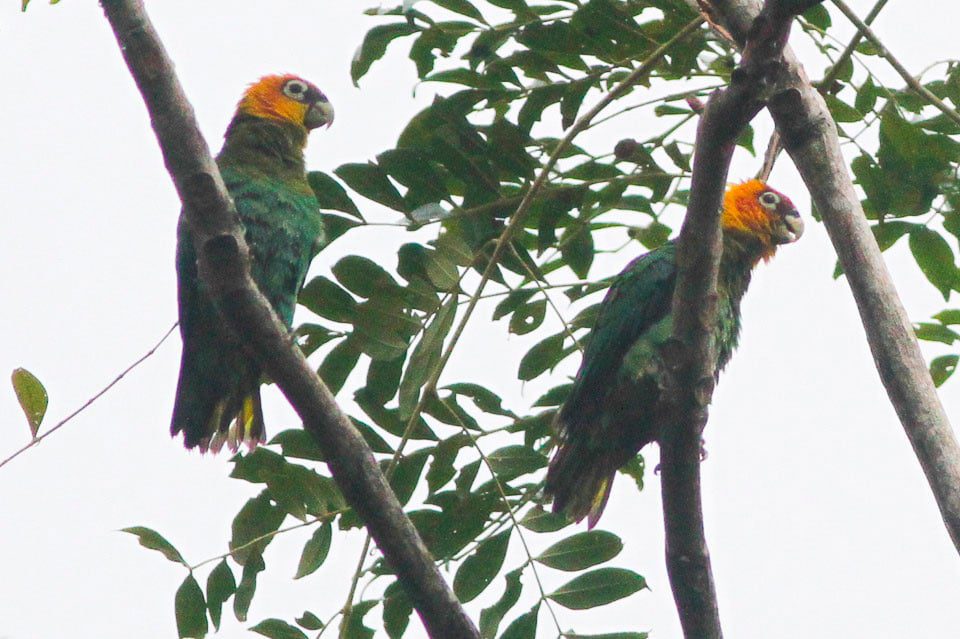
The head of the Pesquet's Parrot (Psittrichas fulgidus) is black, front without feathers, may be covered with small ruffled black feathers with a patch of stiff red feathers on the front of the legs ear-coverts. Nape, the mantle, back and tail blackish brown with fine pale edges.

Uppertail Red with black bases. Upper, black flight feathers, with large and medium-sized external coverts (except the innermost) and vane external Central flight feathers, red; Black primary coverts. Under, Black tail with red in the lower and medium coverts. More Brown on the top breast than in the rest, with a wavy effect to pale fringes to the feathers; belly, flanks and coverts red infracaudales. Upper, the black tail.

black beak; black skin of the face; dark brown irises; Blackish grey legs.

The female It lacks the red patch on the side of the head and is slightly smaller on average.

In birds immature the red marks are more off.

Habitat:

The Pesquet's Parrot are found mainly in the primary and secondary montane rain forest at an altitude between 600 and 1.200 m. However there are to the 2.000 m, and are occasional at altitudes as low as 50 m.

The species is thought, generally, they have a low density of population, finding the highest concentrations in forest areas relatively calm, where the birds are free from persecution.

These large and showy parrots, They are commonly found in pairs or in groups of up to 20 individuals, perched, usually, at the top of the exposed trees, or loud flying through or above the canopy.

Jump nervously around the Bush with quick flapping, and they can stay in the tops of emergent trees during a rain. It has been flying to settle on a solitary tree in the midst of the darkness.

Reproduction:

Reproductive habits in nature are unknown, but birds in breeding conditions have been observed in the months of February to May. In captivity a pair was observed to courting; There was a two-egg-laying, which were incubated by the female during 31 days, and the only chick, yellowish white, was fed by both parents.

Food:

The Pesquet's Parrot mainly feed on the soft pulp of fruits such as Ficus figs, handles (Mangifera indica) and Freycinetia cumingiana.

During their feeding, the base of the beak can become covered with fruit pulp, and it is likely that extension of the exposed facial skin has evolved to avoid that feathers absorb from food scraps.

Distribution:

Size of the area of distribution (reproduction / resident): 278.000 km2

confined in West Papua New, Indonesian and Papua New Guinea. It goes from the Mountains Tamrau, Vogelkop, West Papua, to the East by the mountains of snow and Cordillera Central (including the upper part of the fly river, Lake Kutubu and Karimui district), on Owen Stanley mountain range and Huon Peninsula, in the East of Papua New Guinea.

The species is unevenly distributed in montane forests, and is considered uncommon in most areas. World population is thought to be in decline, mainly due to hunting for food and feathers (that are more appreciated even than the feathers of the bird of paradise Paradisaeidae).

The introduction of weapons has significantly increased the pressure of the species in more densely populated areas. Live bird trade and habitat loss, It is also thought that they represent potential threats. There are a small number in captivity.

Conservation:


Vulnerable


โ€ข Current category of the Red List of the UICN: Vulnerable

โ€ข Population trend: Decreasing

It is estimated that their population may be setting to the 42,000 birds.

This species is under severe pressure from the hunt for obtaining their colorful feathers, and to one degree lower for trade and meat. Hunting for feathers has increased with population growth and the increasing number of tourists. As a whole, These factors are suspected of being leading to a rapid and continuous reduction of the population of this species.

Conservation Actions Proposed:

– Conduct surveys to improve the accuracy of the estimate of the population.
– Investigation of the basic ecology of the species, especially any of their food.
– Investigate the trade in feathers.
– Monitor numbers at surveyed sites, as the crater of the mountain and Kikori.
– Numbers of monitors marketed domestically and internationally.
– Transport Control of threatened species in domestic flights.
– Run an education program to discourage tourists from buying feathers and artifacts.
– Investigate adequacy of a program to replace artificial or dyed feathers (Mack and Wright 1998) .

"Pesquet's Parrot" in captivity:

extremely rare.

Birds, even bred hand, may be difficult and aggressive with their caregiver; they can be a bit uncomfortable mainly due to their diet of fruit.

Alternative names:

Pesquet’s Parrot, Vulturine Parrot (ingles).
Psittrichas de Pesquet, Perroquet de Pesquet (French).
Borstenkopf (German).
Papagaio-de-pesquet (Portuguese).
Loro Aguileรฑo (espaรฑol).

scientific classification:

Order: Psittaciformes
Family: Psittaculidae
Genus: Psittrichas
Scientific name: Psittrichas fulgidus
Citation: (Lesson, 1830)
Protonimo: Banksianus fulgidus

Images ยซAguileรฑo Loroยป:

————————————————————————————————

"Aguileรฑo Loro" (Psittrichas fulgidus)

Sources:

Avibase
– Parrots of the World โ€“ Forshaw Joseph M
– Parrots A Guide to the Parrots of the World – Tony Juniper & Mike Parr
– Birdlife

Photos:

(1) – ยซPesquetsparrot03ยป by Greg HumeOwn work. Licensed under CC BY-SA 3.0 via Wikimedia Commons.
(2) – ยซPsittrichas fulgidus-Jurong Bird Park-8aยป by Peter TanPesquetโ€™s ParrotUploaded by Snowmanradio. Licensed under CC BY-SA 2.0 via Wikimedia Commons.
(3) – ยซPsittrichas fulgidus-Miami Zoo, USA-8-tocยป by Psittrichas fulgidus-Miami Zoo,_Usa-8. jpg: bognietsderivative work: Snowmanradio (talk) – originally posted to Flickr as Pesquetโ€™s Parrot and uploaded to commons as Psittrichas fulgidus-Miami Zoo,_Usa-8. jpg. Licensed under CC BY 2.0 via Wikimedia Commons.
(4) – Greg HumeThe uploader's own work: "Pesquetsparrot03โ€. Engedely: CC BY-SA 3.0, Forrรกs: Wikimedia Commons
(5) – By Matthias Wicke – Flickr

Sounds: Phil Gregory (Xeno-canto)
โ–ท The world of Pets: Dogs, cats, birds, reptiles, amphibians

Bluebonnet
Northiella haematogaster


Bluebonnet

Content


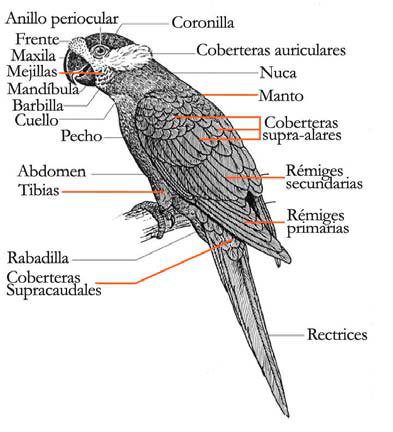
Anatomy-parrots

Description

28 cm. length and a weight between 74 and 105 g..

The Bluebonnet (Northiella haematogaster) they have the forecrown, lores and face, blue-violet color. The rest of the head, the chest, the layer, the back and rump It has a beautiful ochre mixed with yellow belly. The abdominal area It is covered by a large red spot.

The curvature of the wings is blue, most of the coverts are a key olive. The outermost feathers are purplish blue. The the wing lower and flight feather they are also blue-purple. The tail color is greenish bronze but the outer feathers they are blue-purple with white tips.
The bill grayish white is; the irises pale grey; legs grey.

The females they are more off, with less blue in the face and a pale bar on the wing .

The immature they resemble females, but the stain abdominal Red is more discrete. The immature plumage is lost after few months. The chicks have the bill yellow.

Subspecies description

  • Northiella haematogaster haematogaster

    (Gould 1838) – The nominal.


  • Northiella haematogaster haematorrhoa

    (Bonaparte 1856) – The curvature of the wing is turquoise blue and the blankets they are redheads. The underparts is red


  • Northiella haematogaster pallescens

    (Salvadori 1891) – The plumage It is similar to the nominal, but the underparts they are paler.


  • *

    Northiella haematogaster narethae

    (White,HL 1921) – The forecrown is blue, and has spots on the chest. The upperparts color is olive, the underparts is yellow with reddish color underneath the tail. Small outer covers red.

  • * A molecular study published in 2015 by Gaynor Dolman and Leo Joseph He confirmed the genetic isolation of the subspecies Northiella haematogaster narethae and recommended that it was restored as a separate species, the Naretha Bluebonnet (Northiella narethae)

Habitat:

The Bluebonnet frequent arid and semi-arid forests dominated by trees of the genus Myoporum, which are perennial shrubs and resistant to salt and drought.

They also appreciate the conifer and the casuarinas that you are home to colonies of caterpillars. They have a certain affection for the acacias and eucalyptus, especially if the weed is made up of small quenopodios.

The Bluebonnet they often visit the grassy plains, dry brush and trees lining the river. Sometimes they come to buildings, farms or small ponds.

In the South of its range, the removal of waste bags of Mallee, located on agricultural land, It seems to have had a very important influence.

The Bluebonnet they live in pairs or in small groups. When resent, loud disperse, but they remain on the ground a short distance from the trees. In the event of alarm, they raise the feathers of her eyebrows.

These birds are very enable, especially early in the morning when the boisterous groups are formed, just before his departure to feed. They are able to run very fast and have a very characteristic straight posture.. They are less active during the heat of the day, staying on the ground in silence.

The Western populations They seem to form larger groups, showing more sociability than the Eastern. They tend to get together with other species of parrots, such as the Mulga Parrot, Pale-headed Rosella and Mallee Ringneck.

During the spawning, the Bluebonnet carried out parades such as greetings with head, movements of the tail and eating ritual exchanges. They also have a ceremonial flight consisting of small flapping.

Reproduction:

The season of nesting extends from July to December, with some variations depending on the rains. The nest is located in a cavity in a tree, except in the subspecies narethae to use scrubby trees, being their favorite nesting place a nest on the ground in a crack in the base of a trunk. This subspecies usually gives preference to a tree of the genus acacia (Acacia papyrocarpa) family Fabaceae.

The spawning contains 4-7 eggs with one incubation lasts a few 19 days. The young chicks are born without feathers and remain in place of birth at least during 30 days.

Food:

The Bluebonnet consume mainly herbaceous seeds, of Atriplex hortensis, of coquia (Kochia scoparia), of bassia and some grown as garden plants.

Sometimes consume fruit, berries and acacia flowers, the mistletoe and the larvae of Lepidoptera that are attracted to the trunks of casuarinas.

When are juveniles, its menu consists mainly of seeds composed of helipterum, that you belong to the same family as sunflowers.

Distribution:

Endemic to Australia, where there are four populations, one of which is isolated in the southeast of Western Australia, from the West of the Nullarbor plain up close Kalgoorlie.

Birds belonging to this western race are also found in western Southern Australia, about Ooldea and Colon, but they are probably coming from exhausts. further east, the range of the species varies through the east of Southern Australia, from the West of Bordertown through Salt Creek, Adelaide, the northern parts of the Cape York Peninsula and Eyre, to the North across the basin of the Lake Eyre to the Simpson Desert, about Commonwealth Hill station (but largely absent from the Montes Flinders).

From the North of Southern Australia, extends to the South of Queensland to the West of the Great dividing range, reaching around to East of Windorah, Charleville, Mitchell and Goondiwindi.

In New South Wales found to the West of the Cordillera Central, and coming east of a line, More or less, that crosses Warialda, Orange and Wagga Wagga (record out of bounds east of Gunning).

In Victoria, from time to time, they arrive as far East as Rochester and Southeast of Bendigo and Beaufort.

The species is common within a suitable habitat.

The world population is probably superior to the 100.000 individuals, although the Western subspecies Nanthae You can have less than 5.000 specimens, having suffered for their catch in the past.

A small number of captivity.

Fully protected by law.

Subspecies distribution

Conservation:


minor concern


โ€ข Current category of the Red List of the UICN: Least concern

โ€ข Population Trend: Decreasing

In accordance with the Manual of the birds of the world (Handbook of the Birds of the World, HBW), the Bluebonnet they are not globally threatened. Son fairly common, except at the extremes of its range. But, the elucidation of native plants must be stopped if we want to preserve the food resources and nesting places.

The spread of the Common Starling (Sturnus vulgaris) It is a real danger in some areas. The subspecies Narethae is prized by poachers and the lots of beautiful feathers.

The proliferation of rabbits and Lagomorphs threatens the equilibrium of the habitat.

"Bluebonnet" in captivity:

The Bluebonnet they were classified for more than one hundred years within the genus Psephotus. On the basis of some essential differences with the species Psephotus, they are currently classified within the independent genre Northiella.

The parakeet more required by lovers of Australian parakeets, are likely to be the Bluebonnet, Although the subspecies Naretha is very rare and scarce. The Bluebonnet pure breed, they are virtually non-existent in Europe.

There are many Bluebonnet non-purebred, since they often interbreed with the of red-bellied (Northiella haematogaster haematorrhoa). The birds that have tones rojas in the coverts infracaudales non-purebred. Be very careful when making their acquisitions.

The first breeding success of the nominal species dates back to the year 1878, in France. With the subspecies of red-bellied (Northiella haematogaster haematorrhoa) also data from 1878, but this time in Belgium.

The first breeding results with the subspecies Northiella narethae they date from 1941 in Australia.

Are capricious in nature. The big problem is that of aggression since they are probably the most aggressive of all the Australian parakeets. Males, above all, they are the protagonists of this bad reputation. Therefore other birds not can be joined with the Bluebonnet, even larger birds.

The aggressiveness of the male reaches their own partner, the Aviary must take into account this, the female should be able to take refuge in case of attack. On the other hand, they are very animated and jugetones.

You spend much time on the ground looking for food, they are moderate rodents and are lovers of bath.

According to sources, a sample lived 15,3 years in captivity. In captivity, these animals have been known that they be reproduced in approximately 2 years of age.

Alternative names:

Bluebonnet, Blue Bonnet, Blue-Bonnet, Bluebonnet Parakeet, Bulloak Parrot, Common Bluebonnet, Common Bluebonnet Parrot, Crimson-bellied Parakeet, Crimson-bellied Parrot, Eastern or Western Bluebonnet, Little Bluebonnet, Naretha Bluebonnet, Naretha Parrot, Oak Parrot, Pallid Parrot, Red-bellied Bluebonnet, Red-vented Bluebonnet, Yellow-vented Bluebonnet, Yellow-vented Parrot (ingles).
Perruche ร  bonnet bleu, Bonnet bleu, Perruche ร  bonnet bleu ou P. de Nareth (French).
Blutbauchsittich (German).
Periquito-de-bluebonnet (Portuguese).
Perico Azul, Perico Cariazul (espaรฑol).

scientific classification:

Order: Psittaciformes
Family: Psittaculidae
Genus: Northiella
Scientific name: Northiella haematogaster
Citation: (Gould, 1838)
Protonimo: Platycercus haematogaster

โ€œBlue-faced Parakeetโ€ images:

Videos "Bluebonnet"

ยซBlue-faced Parakeetยป (Northiella haematogaster)

Sources:

  • Avibase
  • Parrots of the World โ€“ Forshaw Joseph M
  • Parrots A Guide to the Parrots of the World – Tony Juniper & Mike Parr
  • Birdlife

Photos:

(1) – To Blue Bonnett in the Cocoparra National Park (near Griffith), NSW, Australia By David Cook Wildlife Photography [CC BY-SA 2.0], via Wikimedia Commons
(2) – Bluebonnet (Northiella haematogaster) Birdsville Track, South AustraliaBy by Ron Knight – Flickr
(3) – Northiella haematogaster, Photo by Benjamint444 – Animalia Etymology of animal name
(4) – Bluebonnet/Blue Bonnet/Crimson-bellied Parrot – animalphotos
(5) – Blue Bonnet Fact Sheet 26 May 2011, Windorah. QLD – travelling-australia.info

Sounds: Frank Lambert (Xeno-canto)
โ–ท The world of Pets: Dogs, cats, birds, reptiles, amphibians

Timneh Parrot
Psittacus timneh


Loro Timneh

Content


Anatomy-parrots

Description:

28 to 32 cm.. length and a weight between 275 and 375 g..

The Timneh Parrot (Psittacus timneh) is darker than Grey Parrot and the Red of the the tail feathers more off, darker and usually Brown (not Scarlet).

The uppertail-coverts son grises, dyed red (not Scarlet).

The bill It is mostly black, but it has an ivory-coloured or pinkish in the upper third of the upper jaw.

There is no visible difference between male and female.

The youth they have black eyes that become a yellowish cream at the age of two years.

Smaller that the Grey Parrot

Description 2 subspecies:

  • Psittacus timneh princeps

    (Alexander, 1909) – Darker and slightly larger than the subspecies Psittacus timneh timneh, although its size is still below the Grey Parrot (Psittacus erithacus). The feathers of the tail are as red as those of Grey Parrot, but marked by a greater contrast with the almost black feathers body, giving a different impression this subspecies. The eyes are yellow, the bill It is black and legs are dark gray.


  • Psittacus timneh timneh

    (Fraser, 1844) – Nominal.

Habitat:

Ilustraciรณn por Judy Marรฉ
Illustration by Judy Mare

Although they normally inhabit the dense forests, they are also usually seen at the edges of forests, clear, gallery forest, mangroves, tree-lined sheets, cultivated areas, and even the gardens, Although it is not clear if it's self-sustaining populations.

You can do seasonal movements out of the drier areas of its distribution in the station area dry.

Sometimes travel long distances to feed. They nest in hollow trees high above the ground. Found in small flocks of a few dozen, usually no more. Flocks of birds can be noisy.

Reproduction:

Little known difference with regard to the Grey Parrot.

The breeding season is usually from November to April in the westernmost areas of west africal, probably, especially during the season dry.

During the season of breeding they put in 2 to 4 eggs, every two or three days. These hatch in 28-30 days and the young are independent in 12 to 14 weeks.

Food:

In the wild, the Timneh Parrot they eat seeds, nuts, fruits and vegetables. they climb trees, instead of flying, to collect food and keep it with one leg while eating. They enjoy eating the external Walnut meat of the Palm oil, and have been observed eating snails.

In West Africa, his hobby is known for beads, attacking cornfields and becoming considered pests in certain places.

Distribution:

Size of the area of distribution (reproduction / resident): 541.000 km2

They are distributed in the West, in the humid forest areas of the Upper Guinea and bordering savannahs of West Africa from Guinea-Bissau, Sierra Leone and South of Mali to the East of Ivory Coast, at least a 70 kilometers to the East of the bandama river.

The wild population is distributed along with the species nominal in Abidjan, Ivory Coast.

Distribution 2 subspecies:

  • Psittacus timneh princeps

    (Alexander, 1909) – Principe Island (gulf of guinea).


  • Psittacus timneh timneh

    (Fraser, 1844) – Nominal. South of Guinea, Sierra Leone and Liberia, as well as the western part of Ivory Coast. There are also smaller groups Guinea Bissau and Mali. Populations Senegal They have disappeared fish trade.

Conservation:


Vulnerable


โ€ข Current Red List of UICN: Vulnerable

โ€ข Population trend: Decreasing

Its population is estimated between 100,000 and 500,000 exemplary and decreasing.
The P. erithacus, before the division of the timneh, He was put in the Appendix II of CITES with all Psittaciformes in 1981 at the request of Switzerland and Liechtenstein. Due to concerns about the effects of the large number of this species traded, It was the subject of a review of significant trade of the CITES, in which was listed as "possible concern" (Inskipp et to the. 1988).

The Animals Committee of the CITES he imposed a sanction of two years from January of 2007 on exports of timneh from four countries of West Africa (Ivory Coast, Liberia, Sierra Leone and Guinea), and banned the import of wild birds into the EU in 2007 (Anon 2011).

In 2009 Guinea exported 720 timneh, Despite having a share of 0 (Anonymous 2011).

The controlled legal trade by CITES may represent only a small proportion of total numbers caught in the wild.

The species is found in a number of protected areas.

A PhD study assessed the distribution, abundance and the impacts of trade and habitat loss for the timneh started in 2011 (Anon 2011).

Conservation Actions Proposed:

    โ€ข Ensure that proposed trade restrictions are enforced.

    โ€ข Monitor wild populations to determine ongoing trends..

"Timneh Parrot" in captivity:

Poultry are known in a manner abbreviated as TAG (Timneh African grey).

The Parrot Timneh is equivalent in intelligence and ability of his Congo counterpart, the Grey Parrot, being, generally, less nervous and with a great ability to imitate sounds (they often learn to imitate human sounds before the Grey Parrot). They can have a wide vocabulary of hundreds of words.

Unlike the Parrot Yaco, their voices are not an exact replica of the voice of the person you are copying. The Timneh Parrot they have their own special little voice.

Alternative names:

Timneh Parrot, Gray Parrot (Timneh), Sierra Leone Gray Parrot, Sierra Leone Grey Parrot, Zambesi Green Pigeon (English).
Perroquet timneh (French).
Timnehgraupapagei (German).
papagaio-timneh (Portuguese).
Loro timneh, Loro Gris de Cola Vinagre (espaรฑol).

scientific classification:

Order: Psittaciformes
Family: Psittacidae
Genus: Psittacus
Scientific name: Psittacus timneh
Citation: Fraser, 1844
Protonimo: Psittacus Timneh

ยซTimneh Parrotยป Images:

————————————————————————————————

"Two Timneh" (Psittacus timneh)


Sources:

Avibase
– Parrots of the World โ€“ Forshaw Joseph M
– Parrots A Guide to the Parrots of the World – Tony Juniper & Mike Parr
– Birdlife

Photos:

(1) – Timneh African Grey Parrot (Psittacus erithacus timneh) Pet parrot sanding on a cage By Peter Fuchs (Flickr) [CC BY-SA 2.0], via Wikimedia Commons
(2) – Two pet Timneh African Grey Parrots perching on a manโ€™s arm By rebeccakoconnor (originally posted to Flickr as Timneh Greys) [CC BY 2.0], via Wikimedia Commons
(3) – Timneh African Grey Parrot (Psittacus erithacus timneh). A pet parrot standing on a cage. Photo shows the maroon tail feathers By Peter Fuchs (originally posted to Flickr as henry tired) [CC BY-SA 2.0], via Wikimedia Commons
(4) – A Timneh African Grey Parrot at Birds of Eden, South Africa By Graham (originally posted to Flickr as IMG_0972) [CC BY-SA 2.0], via Wikimedia Commons
(5) – A Timneh African Grey Parrot that is allowed to fly free in Tropical Birdland, Leicestershire, England I, Snowmanradio [GFDL or CC-BY-SA-3.0], via Wikimedia Commons
(6) Ilustraciรณn by Judy Marรฉ – Africa Geographic Magazine

Sounds: Etienne Leroy (Xeno-canto)
โ–ท The world of Pets: Dogs, cats, birds, reptiles, amphibians

Blossom-headed Parakeet
Psittacula roseata


Cotorra Carirrosa

Content

Description:

Of 30 to 36 cm.. length between 85 and 90 g. of weight.
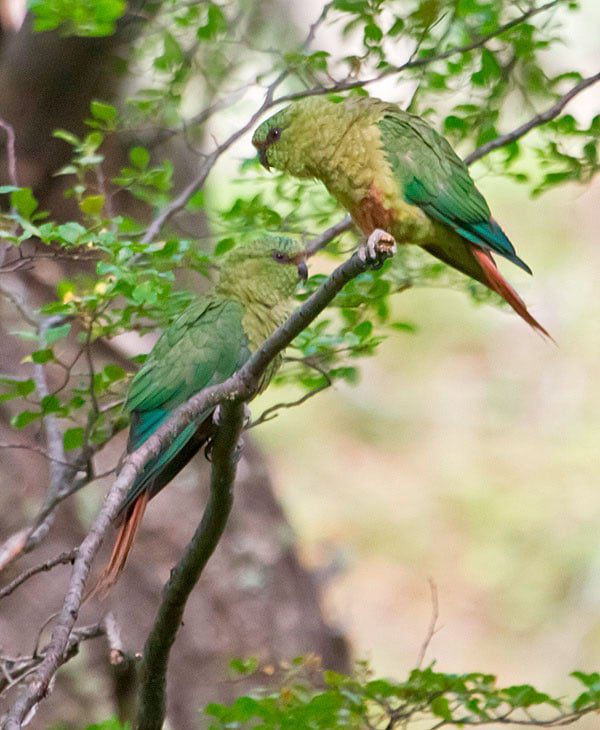
The Blossom-headed Parakeet (Psittacula roseata) has the forecrown, lores, cheeks and ear-coverts mauve-pink, fading to pale blue in the lower cheeks, the sides of neck, the crown and back neck, with broad black "mustache" stripes to form a narrow collar between black blue head and green body; nape bright green fading to a duller green on upperparts.

Upperwing-coverts, mostly green with a brown patch coverts smaller and medium; greater coverts outer and alula darker green. The primaries dark green (darker in vane inner) with a margin yellowish narrow in them vane outer.

Underwing-coverts green. The underparts pale green. Uppertail, centrally bright blue, with creamy white tip; outer feathers green on vane outer, yellowish-green on inner, tipped yellow; undertail-coverts dull yellowish.

Ilustraciรณn Cotorra Carirrosa

upper jaw orange-yellow, the lower black: cere whitish; irises yellowish white; legs gray-green.

The female has the head pale blue-gray, no black "mustache" and collar ring replaced by yellow opaque olive extending from the nape, around the sides of neck; tail slightly shorter. The upper jaw yellow, the lower dark grey.

The immature has the head greenish, the gray tint chin and the bill yellowish to the 15 months, when both sexes develop similar to plumage adult female; the males acquires adult plumage at about 30 months.

Subspecies description

Once considered the same species Psittacula cyanocephala, where he was often wrongly classified as Psittacula cyanocephala rosa.

  • Psittacula roseata juneae

    (Biswas, 1951) – Like species nominal, but the overall color body It is yellower; more extensive stain or red patch shoulder; central feathers tail paler color, side feathers tail yellower.


  • Psittacula roseata roseata

    (Biswas, 1951) – The species nominal.

Habitat:

Video – "Blossom-headed Parakeet" (Psittacula roseata)

Blossom-headed parakeet Call / Psittacula roseata / Bird's Call

The Blossom-headed Parakeet inhabit open forests, including Savannah, secondary forests, forest edge, clear and cultivated land. Partially deforested areas persists and seems to prefer forest edges adjacent farm.

Mainly observed in the lowlands to about 1.500 meters above sea level. Usually, in small flocks, form larger congregations where food is plentiful. He joins mixed flocks with Rose-ringed Parakeet, the Plum-headed Parakeet and Red-breasted Parakeet and form communal roosts in dense vegetation.

Reproduction:

The nests This species is found in tree cavities, usually at a moderate height; they can dig the hole themselves or modify old nests of other species (for example, woodpeckers or barbets).

Nest usually in colonies of several couples. The laying is of 4-5 (rarely six); eggs are more spherical than those of other congeners. The breeding season It is from January to April (May sometimes).

Food:

Foods are reported: wild flowers and Granada, nectar, including grain sorghum and corn, fruits such as figs and apricots, red peppers and chard seeds. Their diet is very similar to the Plum-headed Parakeet.

Distribution:

Distributed by the foothills of Himalaya Oriental until Indochina. Of Sikkim (India) and South of Bhutan through Assam until Bengal and Bangladesh and east along the north and center Burma, South of China (Yunnan, Guangxi and Guangdong province), Thailand, Laos, Kampuchea and Viet Nam.

Mainly sedentary with seasonal movements in southwest Burma, where Blossom-headed Parakeet They are common in the months of March and April, but otherwise few months, generally common despite apparent decline in some areas (for example, Thailand and Burma), mainly due to large-scale deforestation, and persecution. Few in Viet Nam.

Resident but with some local movements in relation to the food supply.

Held captive and apparently the subject of strong catch in some parts.

Subspecies distribution

  • Psittacula roseata juneae

    (Biswas, 1951) – From East Bangladesh to the North of Burma and east through southern China, Thailand, Laos, Kampuchea and Viet Nam.


  • Psittacula roseata roseata

    (Biswas, 1951) – The species nominal.

Conservation:

State of conservation โ“˜


Near-threatened Near Threatened โ“˜ (UICN)โ“˜

โ€ข Current Red List of UICN: Near-threatened

โ€ข Population trend: Decreasing

This species has been upgraded from Least concern due to new information on population trends. It is listed as Near-threatened on the grounds that it is experiencing rapid moderate decline due to habitat loss, unsustainable levels of exploitation and hunting pressure.

This species has suffered greatly loss of habitat (Forshaw 2006), What, in combination with capture for trade bird cage and general persecution as a pest, have caused the Blossom-headed Parakeet it becomes rare or rare in Thailand (pit et to the. 1997, Juniper and Parr 1998) and Myanmar (Juniper and Parr 1998).

The size of the world's population has not been quantified, but the species according to sources, has a population variable through its range

International trade records showed that 836 birds were exported between 1981 and 1985, but this increased to 6.873 birds between 1986-1990, mainly Viet Nam and Thailand (pit et to the. 1997).

In Laos, habitat encroachment has been so severe in the lowlands, few remaining areas large enough so that the nests Blossom-headed Parakeet they can escape from theft, and there is little active effort to reduce this pressure (JW Duckworth in litt. 2013).

In Cambodia, changes in land use in the lowlands have been too quickly (RJ Timmins in litt. 2013), and it is expected that the intended conversion bosque deciduous Dry for agribusiness plantations may cause a decrease of 30% or more in the national population of this species in the next 20 years (F. Goes in some. 2013).

Actions ongoing:

    The species is known to occur in some protected areas, as the Kirirom National Park, Cambodia (F. Goes in some. 2013).

Conservation actions proposed:

    – Conduct periodic surveys to track broad population trends.
    – Monitor the rates of loss and degradation of habitat.
    – Quantify the impact of harvesting for trade.
    – List CITES listed species.
    – Increase the area of รขโ‚ฌโ€นรขโ‚ฌโ€นsuitable habitat that are protected.
    – Carry out awareness raising activities to discourage theft of nests and capture.

"Blossom-headed Parakeet" in captivity:

The Blossom-headed Parakeet It is a rare bird and very expensive, requiring experienced breeders. Immature of this species are nearly identical to those of the Slaty-headed Parakeet and Plum-headed Parakeet, so when buying an immature Blossom-headed Parakeet, be sure to do so only from a reputable breeder.

To ensure breeding success, each partner should have their own aviary. No house them with Plum-headed Parakeet wave Slaty-headed Parakeet, in order to avoid hybridisation.

The Blossom-headed Parakeet, generally, they are not aggressive with other smaller birds, usually calm and they are not very destructive to wood. The female is, usually, the dominant bird; reach breeding age at about the age of 3 years. New pairs should be introduced several months before the start of the breeding season so that the birds have enough time to establish a strong bond with each other.. A good pair bond will usually translate into better breeding results.. However, are very difficult birds to breed in captivity.

Since Blossom-headed Parakeet It is so rare, we should consider well managed breeding programs, before acquiring one of these copies for your particular pet enjoy. This Parrot You need constant training and behavioral counseling from an early age to ensure its potential owners the enjoyment of a free bird destructive habits and annoying.

Alternative names:

Blossom-headed Parakeet, Blossom headed Parakeet, Eastern Blossom-headed Parakeet (English).
Perruche ร  tรชte rose (French).
Rosenkopfsittich (German).
Periquito-de-cabeรงa-rosa (Portuguese).
Cotorra Carirrosa, Cotorra de Cara Rosada (espaรฑol).


scientific classification:

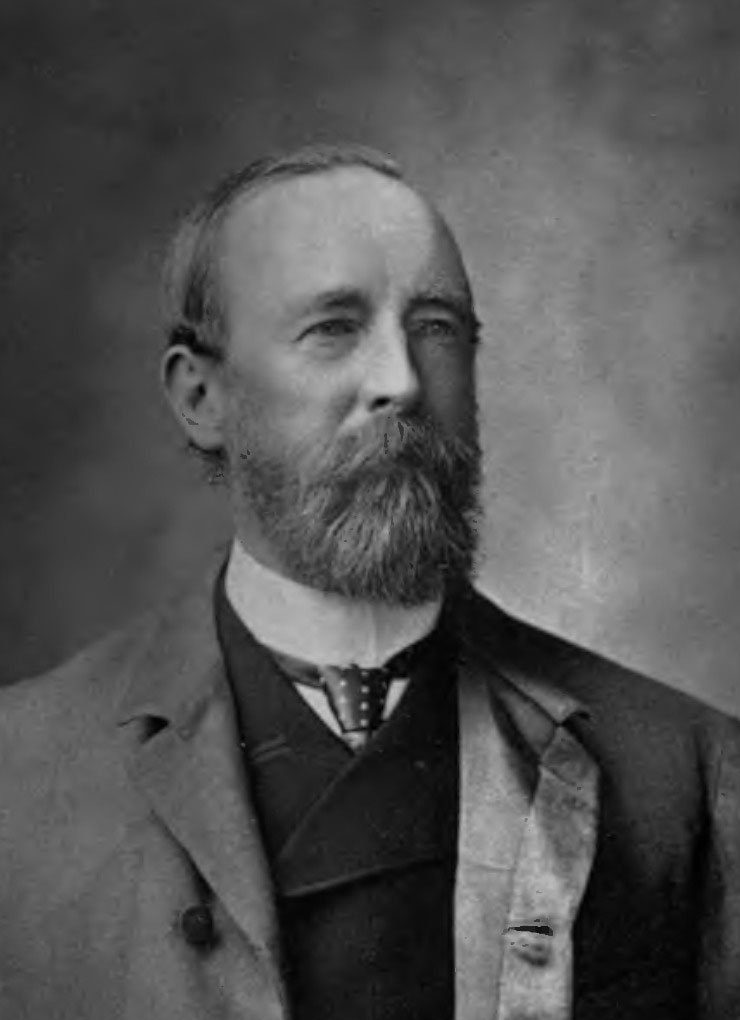
Dr. Biswamoy Biswas
Dr. Biswamoy Biswas

Order: Psittaciformes
Family: Psittaculidae
Genus: Psittacula
Scientific name: Psittacula roseata
Citation: Biswas, 1951
Protonimo: Psittacula roseata


Blossom-headed Parakeet Images:


Especies del gรฉnero Psittacula

Sources:

Avibase
– Parrots of the World โ€“ Forshaw Joseph M
– Parrots A Guide to the Parrots of the World – Tony Juniper & Mike Parr
– Birdlife

Photos:

(1) – Rose-headed Parakeet in Guwahati, Assam, India By ยฉ Raj Kamal Phukan – Oriental Bird Images
(2) – Psittacula roseata blossom headed parakeet – Birds-pet-wallpapers
(3) – Blossom-headed Parakeet (Psittacula roseata) by Elite-Pets
(4) – Juvenil Blossom-headed Parakeet (Psittacula roseata) by desbecsetdesplumes
(5) – Blossom-headed Parakeet (Psittacula roseata) in Tenerife – Loro Parque – link
(6) – Birds of Asia, Vol. V, Parts XXV-XXX, by John Gould, 1873-1877. Painted by John Gould & Henry C. Richter [Public domain], via Wikimedia Commons

Sounds: Frank Lambert (Xeno-canto)
โ–ท The world of Pets: Dogs, cats, birds, reptiles, amphibians

Maroon-fronted Parrot
Rhynchopsitta terrisi


Cotorra Serrana Oriental

Content

Description:


Anatomy-parrots

Among 40 and 45 cm.. length and 300 g. of weight.

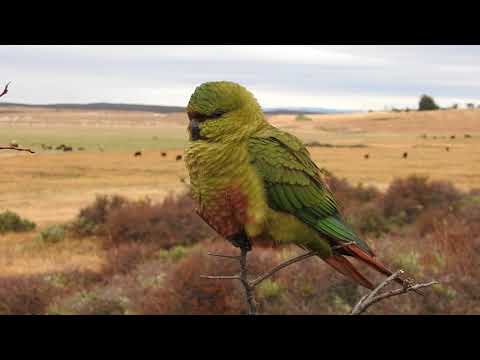
The Maroon-fronted Parrot (Rhynchopsitta terrisi) It has a size slightly larger than the Thick-billed Parrot. Its bill is large, hooked and curved black. Of tail short in comparison to other members of the family, by high green and below Brown gray. Upright perching, legs short but strong and the fingers toes zigodactilos, i.e. two toes forward and two backwards. Is bright green, slightly more clear and yellowish on the cheekbones and ears. It has a patch brown in the forecrown, red spots on the shoulders and in the the thighs.

The color of the irises in adults is yellow amber, While in juveniles is coffee. The eye ring is yellow. below the wings they have red border. The rest of the inside of the wings darker Green is. The legs they are greyish.

Both sexes of similar shape and color.
Immature with eyes browns and bill paler.

Often treated as the same species as the Thick-billed Parrot.

Habitat:

It lives in temperate with dry winter climates, to high altitudes ranging from the 1,900 to the 3,000 m, exceptionally a 1.300 meters and 3.700 m, in mountainous regions with pine forest (Pinus duranguensis, Pinus ayacahuite, and Pinus arizonica among others), forest of Pine-oak (Pinus spp.. and Quercus spp..), isolated forest fragments of pure FIR (Abies spp..), or mixed forests of oyamel, firs (Pseudotsuga spp..) and poplars (Populus tremuloides). Forests may be at the top of the mountains, open areas or be part of abrupt cliffs and crags land.

The Maroon-fronted Parrot is a Diurnal with activity social. To the nestsr meets in large flocks, at times of until 100 individuals and to build their nest, Unlike in the Thick-billed Parrot, don't use holes in trees but cavities and cracks in the rock of the cliffs. With pairs once a year with a single partner throughout the reproductive season. Form flocks to find their food. These groups tend to fly at low altitude moving long distances in search of trees with fruits and seeds that can be eaten. It is also possible to find lonely couples looking for food. They sleep in community, flocking on inaccessible crags. Individuals within the flock to communicate by means of strong vocals similar to harsh squawks and squeaks, While they are looking for food or to warn of threats. In general, the species of this family are known to be noisy, especially when they are in groups.

You know when these birds are approximated by the noises that make, the group flies in a flock that forms an โ€œopen Vโ€. The reproductive colony You can move up to 30 km to find food, If it is scarce. With enough food available near the nests, just move in 3 to 5 daily km.

Reproduction:

The breeding season It between July and November. To build the nest using cracks and voids in high limestone crags and they tend to use the same sites year after year to nest. The colony nests above the 1,300 and 1,700 m.

They put between 2 and 5 eggs (average is 2.7) between mid-June and late July. When is food scarce, drastically reduces the production of broilers. The female incubates eggs between 24 and 27 days which hatch between early September and late October. Since they are born until they fly chicks they remain in the nest for approximately two months, being fed and cared for by both parents. Of all the eggs laid and incubated in the colony only the 60% fledged young occur. The chicks are bred in sync with the maturation of pine seeds, It usually occurs in late summer and autumn.

Food:

They eat mainly seeds of coniferous cones, especially of pines (Pinus durangensis, Pinus leiophylla, Pinus ayacahuite, Pinus arizonica, Pinus gregii, Pinus teocote, Pinus montezumae, Pinus cembroides and Pinus engelmannii) and bur-marigold (Pseudotsuga menziesi).

Its beak is specially adapted to extract seeds from the cones (pine nuts) of Pine. When are pine seeds scarce, include in your diet oak acorns (Quercus spp..) and Guatemalan FIR seeds (Abies spp..). Their diet also includes capulin fruits (Prunus capuli) and flowers of Agave Nectar. In general the diet of both species, the Eastern Mountain Parrot and the Thick-billed Parrot es similar. The Maroon-fronted Parrot has the habit of eating dirt (geophagy) in clay banks.

Distribution:

The distribution of the Maroon-fronted Parrot is restricted in the northeast of Mexico. confined in Sierra Madre Oriental, in the southeast of Coahuila de Zaragoza, about Saltillo, in the Centre-West of Nuevo Leรณn, including mountains to the South-West of Monterrey, and the mountains of the West of Tamaulipas.

Full range of approximately 300 km from North to South, with an average of 60 kilometers from West to East and breeding pairs, possibly, only in the North third.

Similar to the Thick-billed Parrot, ago seasonal movements (Although probably less extensive) in response to the availability of pine seeds, apparently being distributed to the South of their range only between October and April (old reports of the Thick-billed Parrot in Veracruz they may belong to this species).

Rare, very local and extinct in many areas. Now limited to restricted areas in the few pine forests that remain (probably around 7.000 kmยฒ of forests within the 18.000 kmยฒ of its range, they are suitable).

The decrease in its population is mainly due to the loss of habitat by logging, the Agriculture, the burning and the grazing, Although their habits of nesting on cliffs, It avoids the need of old or dead trees. Selective logging can reduce the diversity of pine trees and therefore the availability of food.

Conservation:

In 1981 they were estimated between 2,000 and 3,000 individuals of this species.

State of conservation โ“˜


Endangered Endangered โ“˜ (UICN)โ“˜

โ€ข Red List category of the UICN current: In danger of extinction

โ€ข Population trend: Decreasing

In 1997 ranked in the The Taray sanctuary, in Coahuila de Zaragoza as the reproductive Center of the species for having been found there near 100 reproductive couples. A 16 km from there, in a place known as Condos the second largest colony was located with 60 couples.

Census continued and in 1999, the population was estimated at a minimum of 2,500 individuals.

One recent census based on the large flocks threw an account of approximately 3,500 individuals of Eastern Mountain Parrot.

The main threat facing the Maroon-fronted Parrot is the destruction and modification of their habitat, mainly due to actions such as agriculture, livestock, logging (to produce wood and paper) and forest fires.

Its current Habitat is very limited, as well as the area of โ€‹โ€‹its distribution as an endemic species that is.

The deforestation continues to diminish more and more forests mountain of the region, and unfortunately the recovery or regeneration of these forests is poor compared to pine forests in other parts of the country, which is probably due to the layer of soil of the region is thin and Rocky and scarce rain.

In 2006, a forest fire devastated about 2,000 It has pine forest in the Sierra, destroying trees that provided food to the Parrot and causing a decrease in the number of chickens raised in the era of nidation. Additionally, when the average size of the trees that make up a forest is reduced and also the area occupied by seed production decreases and the number of defective cones increases, Finally affecting to the Maroon-fronted Parrot that feeds on the seeds.

Exist protected natural areas on Sierra Madre Oriental that protect and preserve to the Maroon-fronted Parrot.

Since 1939 was decreed the Cumbres de Monterrey National Park, in Nuevo Leรณn to protect more than 150 thousand hectares of forest, including half of the areas where the species nests. Shortly before it had been decreed, in 1936, The El Potosi National Park, in San Luis Potosi.

In 1985 created the The El Cielo biosphere reserve, in Tamaulipas. And between the three Protected natural areas partially cover the rest of the known colonies and part of the winter range. Also they have formed private protected natural areas, as the The Taray sanctuary in Coahuila de Zaragoza, nail 350 has of forest, created in 1996 specifically to protect the Maroon-fronted Parrot that contains the nidation largest colony known. This area is managed by the Museum of the birds of Mexico in Saltillo, Coahuila de Zaragoza and has been funded by the National Commission for the knowledge and use of biodiversity (CONABIO) and donations from other national and foreign organizations such as the Zoological Society of San Diego and the Fish and Wildlife Service of United Statess.

Various research projects they have been conducted from 1995 for the knowledge and conservation of the Maroon-fronted Parrot.

Recently in 2008, the Universidad Autรณnoma de Nuevo Leรณn (UANL), carried out a project on the Cumbres de Monterrey National Park. For its part, the Instituto Tecnolรณgico de Monterrey (ITESM) and Pronatura After studies in the same area, they have begun to establish landscape-level conservation strategies.

In the Official standard of species at risk (NAME-059-ECOL-2001), The Maroon-fronted Parrot (Rhynchopsitta terrisi) appears as danger of extinction.

The Convention on international trade in endangered species of Fauna and Flora Silvestres (CITES) protects it inside of the Appendix I.

The International Union for the conservation of nature (IUCN for its acronym in English) in his Red list of threatened species, granted the threatened category to the Maroon-fronted Parrot from 1988. Category changed to vulnerable from 1994 up until the present day.

In the year 2000 the National Consultative Technical Subcommittee for the protection, Conservation and recovery of the Psitacidae, developed the Conservation project, Management and sustainable utilization of the Psitacidae in Mexico (PREP), in which we considered both mountain parrots as priorities for conservation.

The species of Thick-billed Parrot (R. pachyrhyncha) and Maroon-fronted Parrot (R. terrisi), they are considered from 2008 as priority species in the Species at risk conservation program (NATIONAL HERO) of the National Commission of Protected Natural Areas (CONANP). Due to their biological similarities and a common problem, both were included in a single PACE (Programmes of action for the conservation of species), after the Subcommittee on Psitacidae carried out the Workshop of species identification of priority Psitacidae to be included in a PACE, document that contains, among other aspects related to the biology of the species, the objectives, goals and strategies for the conservation of both Mountain parrots.

Conservation actions have also been made in the field of the environmental education.

at the end of 2008, in the framework of the Program for the conservation of species at risk (NATIONAL HERO), seven locations of the Cumbres de Monterrey National Park they conducted environmental education activities with the Maroon-fronted Parrot as a priority species.

Perhaps the most important conservation measure, the publication is the 14 in October of 2008, in the Official Journal of the Federation, the decree that reforms to the General wildlife law (Decree Art. 60 Bis 2) What prohibits the capture of parrots and macaws from Mexico. The law prohibits the extractive use subsistence or commercial, export, the import or re-export of these native species of the country. With this law is protected 22 bird species of the family Psittacidae in Mexico. The violation of the above provision, is in a federal crime that is punished with prison, through a penalty ranging from 1 to 9 years in prison and up to 12 years if the offence is committed within a protected natural area or is done for commercial purposes.

The priority regions for the species are located in the Sierra Madre Oriental: The Cumbres de Monterrey National Park, in Nuevo Leรณn, The El Potosi National Park, in San Luis Potosi, the The El Cielo biosphere reserve, in Tamaulipas and the The Taray sanctuary in Coahuila de Zaragoza.

Source: Site on the network of knowledge on birds of Mexico

"Maroon-fronted Parrot" in captivity:

The mountainous region of Wood, Chihuahua, It has been inhabited since makes 1500 years by the ethnic groups that built the "cliff houses", those who originally were hunters and gatherers. The archaeological remains of Paquimรฉ, to 350 km to the Northwest of the city of Chihuahua and half a kilometer from Large houses they indicate that the region had a dedicated trade to the production of feathers from macaws, shells, ceramic and copper among others, the being first settlers in capture and breed, both the Eastern Mountain Parrot as to the Thick-billed Parrot.

In the conquest increased interest in capturing individuals from the family of the parrots. Starting at the century XVI, they gained greater popularity among Mexicans, mainly as pets.

During the 20th century This intense trade, In addition to the illegal traffic, has resulted from 1970 and 1982, Mexico It was the largest exporter of live birds to the pet trade coming from the countries of the Neotropics, exporting on average 14,500 Mexican parrots, annually a United States.

During the period of 1981 to 1985 United States imported a minimum of 703 thousand parrots; and still in 1987 Mexico was the largest source of smuggling of wild birds. In addition only between 1982 and 1983, 104,530 individuals the family were captured in Mexico for the internal domestic market.

Sale as pets is illegal.

Alternative names:

Maroon-fronted Parrot, Maroon fronted Parrot (English).
Conure ร  front brun, Perriche ร  front brun, Perruche ร  front brun (French).
Maronenstirnsittich, Maronenstirn-Sittich (German).
Papagaio-de-fronte-castanha (Portuguese).
Cotorra Serrana Oriental, Cotorra-serrana Oriental (espaรฑol).

scientific classification:

Order: Psittaciformes
Family: Psittacidae
Genus: Rhynchopsitta
Scientific name: Rhynchopsitta terrisi
Citation: Moore, RT, 1947
Protonimo: Rhynchopsitta terrisi

Maroon-fronted Parrot images:

Video of the "Maroon-fronted Parrot"


Species of the genus Rhynchopsitta

Maroon-fronted Parrot (Rhynchopsitta terrisi)


Sources:

Avibase
– Parrots of the World โ€“ Forshaw Joseph M
– Parrots A Guide to the Parrots of the World – Tony Juniper & Mike Parr
– Birdlife
– CONABIO. 2011. Priority species sheets. Maroon-fronted Parrot (Rhynchopsitta terrisi). National Commission of Protected Natural Areas and National Commission for the Knowledge and Use of Biodiversity, Mexico D.F.

Photos:

(1) – An adult Maroon-fronted Parrot in a cage By TJ Lin (originally posted to Flickr as DSC01484) [CC BY-SA 2.0], via Wikimedia Commons
(2) – Maroon-fronted Parrot by ยฉ greglasley – inaturalist.org
(3) – Maroon-fronted Parrot by ยฉ greglasley – inaturalist.org
(4) – Maroon-fronted Parrot by Zรณcalo Saltillo
(5) – Maroon-fronted Parrot (Rhynchopsitta terrisi) – Loro Parque

Sounds: Jon King (Xeno-canto)
โ–ท The world of Pets: Dogs, cats, birds, reptiles, amphibians

Southern Mealy Parrot
Amazona farinosa

Southern Mealy Parrot

Content

Description:


Anatomy-parrots

38 to 45 cm.. from head to tail and 535 to 766 weight g.

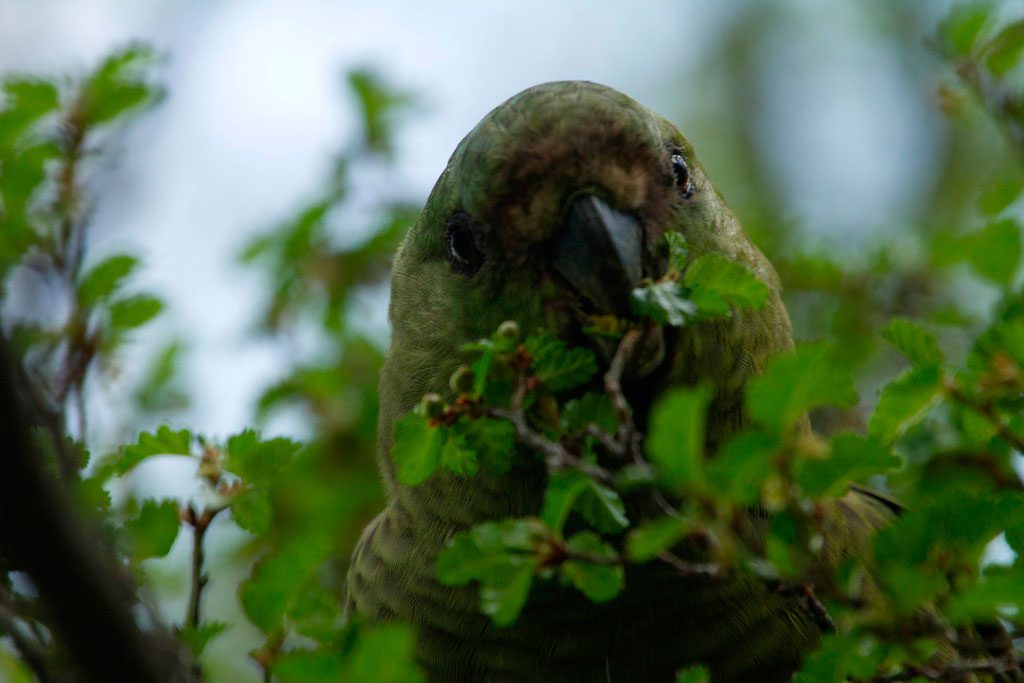
The Southern Mealy Parrot (Amazona farinosa) It is the fifth in size among the amazon parrots of the Americas, and is the Parrot largest in Mexico. The plumage its body is green with a slight yellow tone. Presents some yellow feathers on the crown, Although may not be very well defined.

Is characterized by its crown light blue color that continues to the side of the nape . Their wings are of round shape, and tail is short and square. The primary feathers and secondaries they have the blue-violet end, with a band red in them 4 – 5 Outer secondaries. The feathers of the tail they have a broad band of yellowish-green tip. The irises the eye is red with eye ring white, and the bill horn.

It has no sexual dimorphism and youth they are similar to adults, but with the irises dark brown .

Two more for South America subspecies have been proposed, Chapmani and Inornata but lack of character distinctive clear.

Habitat:

They inhabit in dense, humid tropical forests near clearings, Although also can inhabit in areas forested of the sheets.
You can see in altitudes of 290 to 1,200 m.

The Southern Mealy Parrot are birds very social, often seen flying in pairs or small flocks of up to 20 individuals. Also form groups more large, hundreds of birds, close to breeding season. Very enable, is the view often interacting with other species of parrots, such as macaws (ARA).

Is an of the species of parrot more noisy of the amazon, so they are easier to observe than other species.

Reproduction:

The mating It takes place once a year and usually starts in the spring. Once they mature sexually, the Southern Mealy Parrot they will choose a partner for life.

The breeding It normally varies between the months of November to March. The nesting has place in the cavity of a tree. The laying by year tends to be of three eggs. The eggs are hatch for approximately four weeks, after the hatching the males help females in the upbringing of young people, regurgitating food in the crop of the female. The offspring are ready to leave the nest after a period of about eight weeks..

Food:

It feeds on fruits of various species, some of them are: Euterpe SP.., Brosimum sp., Inga sp., Dussia sp., Eschweilera SP.., Pithecellobium SP.., Tetragastris sp., Dialium guianensis, Peritassa compta, Sloanea grandiflora and It corima macrocarpa. Also consumes flowers, arils of Cassearia sp. and nectar of Tabebuia insignis.

Distribution:

Size of the area of distribution (reproduction / resident): 6.790.000 km2

Are in Mexico, Central America and South America, occupying a wide range from the South of Mexico to the North of Bolivia and South of Brazil. They are more common in Costa Rica and Panama, particularly in the costa Caribbean. Observed in the Middle Magdalena River Valley and to the East of them Andes on San Jacinto Mountain Range, Western base of the Perijรก Mountain Range and the Department of Sucre, in Colombia.

Conservation:

State of conservation โ“˜


Near-threatened Near Threatened โ“˜ (UICN)โ“˜

โ€ข Current category of the Red List of the UICN: Near-threatened.

โ€ข Population trend: Decreasing.

Not are currently identified as a species in crisis. Not comply with the criteria for a decrease of the population, that means a loss of thirty per cent of the population in ten years or three generations, as defined in the Red list of the UICN.

Are considered a least concern species. This, However, It does not suggest that the species is completely free from danger.

The important trade of trade in live birds of this species, and loss of habitat caused by deforestation have a significant impact on the decrease of the population of the Southern Mealy Parrot in certain areas.

The Southern Mealy Parrot in captivity:

Of special interest to the international trade in exotic birds; common in captivity. In some areas, they are also hunted for food, due to its relatively large size. With regard to its ability to speak, It seems that can be good talkative, but is true that there are birds that do not come to make it never.

Alternative names:

Southern Mealy Parrot, Mealy Parrot, Mealy Parrot (nominate), Southern Mealy Amazon (English).
Amazone poudrรฉe, Amazone poudrรฉe (nominal), Amazone poudrรฉe (nominale), Amazone poudrรฉe (race nominale) (French).
Mรผlleramazone (German).
papagaio-moleiro (Portuguese).
Amazona harinosa sureรฑa, Amazona Burrona (espaรฑol).
Lora Real (Colombia).
Loro verde (Costa Rica).
Lora coroniazul (Honduras).
Loro corona-azul (Mexico).
Loro Harinoso (Peru).
Loro Burrรณn (Venezuela).


scientific classification:

Pieter Boddaert
Pieter Boddaert

Order: Psittaciformes
Family: Psittacidae
Genus: Amazona
Scientific name: Amazona farinosa
Citation: (Boddaert, 1783)
Protonimo: Psittacus farinosus


Southern Mealy Parrot images:


Species of the genus Amazona


Sources:

Avibase
– Parrots of the World โ€“ Forshaw Joseph M
– Parrots A Guide to the Parrots of the World – Tony Juniper & Mike Parr
Birdlife

Photos:

(1) – Mealy Amazon at Elmwood Park Zoo. Photograph shows upper body By Art G. from Willow Grove, PA, USA (African Parrot) [CC BY 2.0], via Wikimedia Commons
(2) – Mealy Parrot (Amazona farinosa), Tambopata Lodge, Peru By D. Gordon E. Robertson (Own work) [CC BY-SA 3.0 or GFDL], via Wikimedia Commons
(3) – Two Mealy Amazons at South Lakes Wild Animal Park, Broughton Road, Dalton in Furness, Cumbria, England By Glen Bowman (originally posted to Flickr as 18:02:2009 14:33:08) [CC BY 2.0], via Wikimedia Commons
(4) – A Mealy Amazon at Kobe Oji Zoo, Kobe, Japan By Jun Y (originally posted to Flickr as Poll Parrot) [CC BY-SA 2.0], via Wikimedia Commons
(5) – Mealy Parrot or Mealy Amazon (Amazona farinosa) of the blue crowned variety. Note the characteristic flour-like surface texture of the feathers on shoulder area By Eightball38 at English Wikipedia [Public domain], via Wikimedia Commons

Sounds: Diego Caiafa (Xeno-canto)
โ–ท The world of Pets: Dogs, cats, birds, reptiles, amphibians

Cuban Parrot
Amazona leucocephala

Cuban Parrot

Content

Description:


Anatomy-parrots

28-33 cm.. length and 260-301 g. of weight.
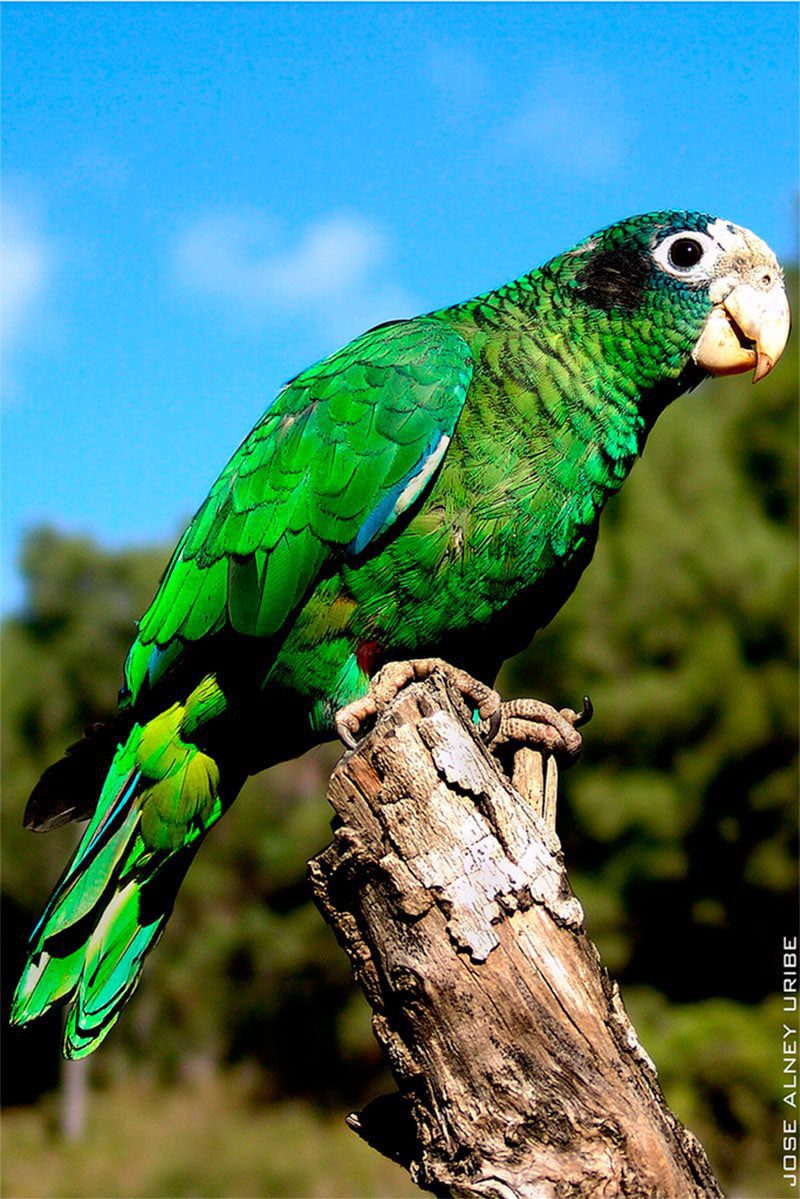
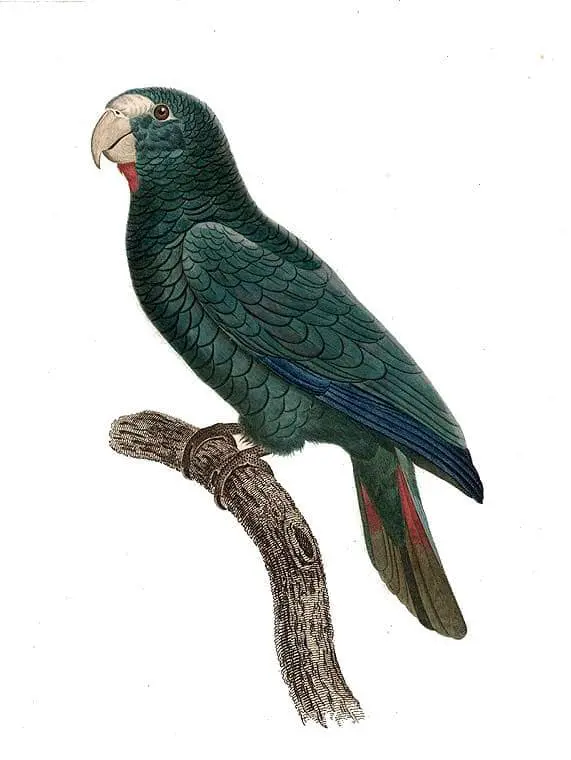
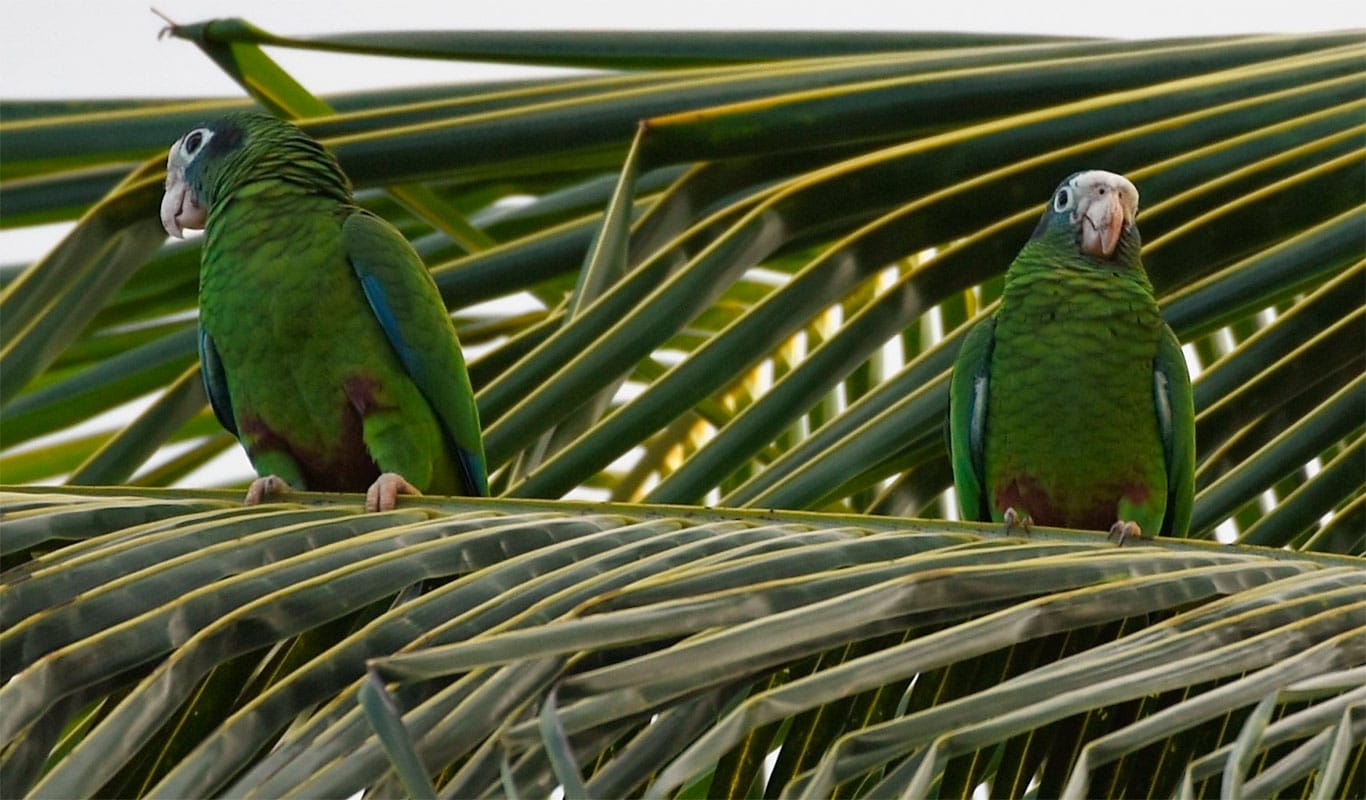
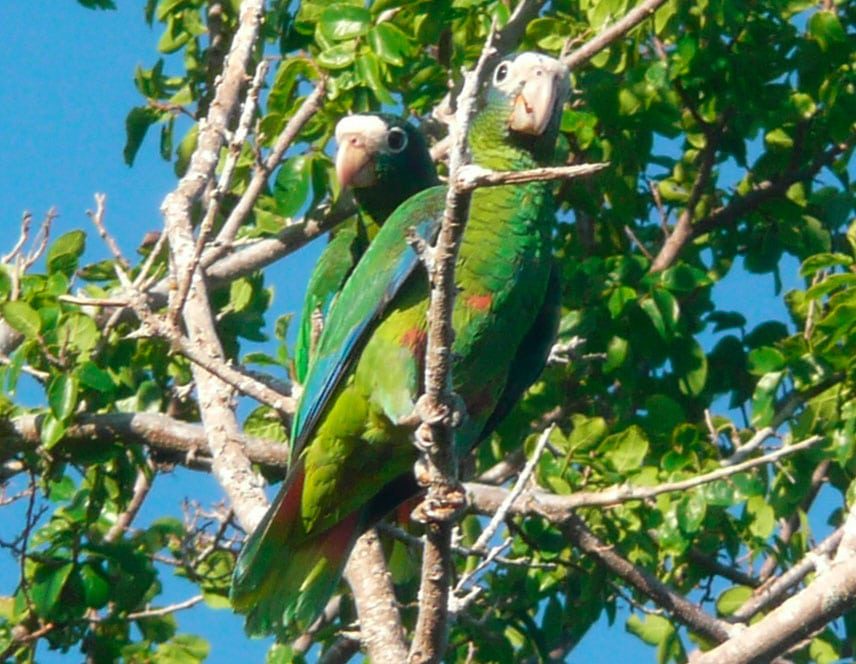
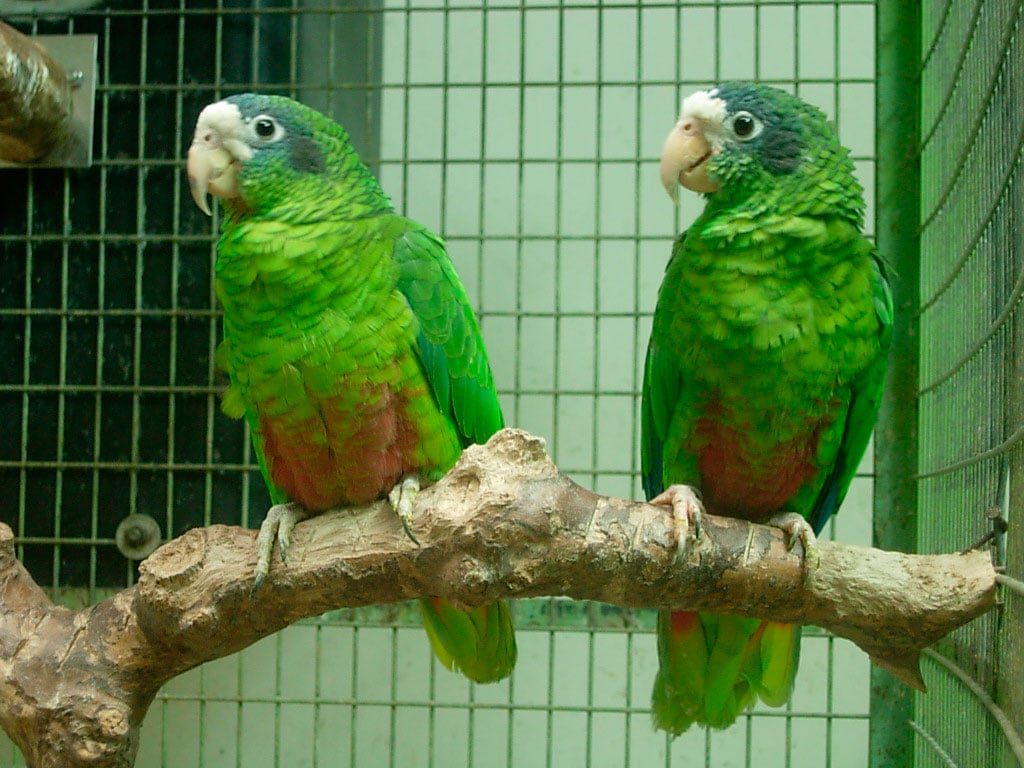
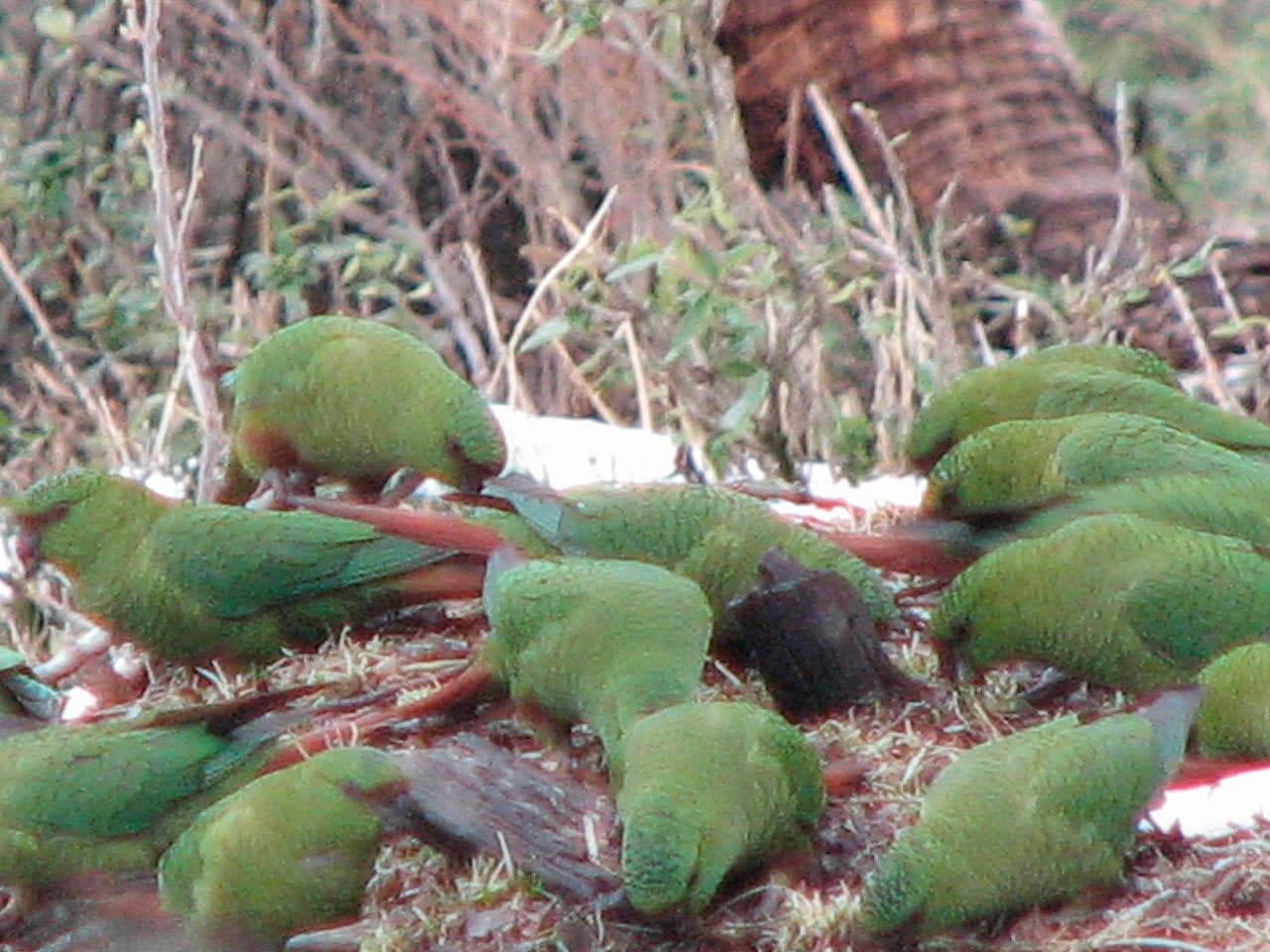
The Cuban Parrot (Amazona leucocephala) has a plumage rather variable, a main color ranging from bright green to olive color,, some birds feathers yellow dispersed in wings and in the back.

Forehead, fore crown, lores and area around eyes, white; lower cheeks and throat, red-pink; feathers the back of the crown and nape, bluish-green with black margins, giving the whole a heavy barred effect; similar pattern on the sides of neck but with the bluish tint absent; ear-coverts charcoal grey. Feathers of the back and the mantle, green with black distal margins but less intense than in the nape and head; rump and uppertail-coverts, dark green with weak margins to some feathers rump.

Cuban Parrot

Alula, greater coverts and flight feather, blue on the outerweb, gray on inner; remaining coberteras green with dark margins, showing most distinct barring on lesser coverts. Under the wings, green with dark margins, flight feather grey. Breast green with dark margins to most feathers; feathers on belly with vinaceous base showing green at margins forming a patch variable-sized, barely noticeable in some birds, striking in other; the thighs green or with some vinaceous feathers; undertail-coverts green. feathers tail green with red at base. Bill yellow-horn: irises reddish brown; legs yellowish brown.

Both sexes are alike, but males of the subspecies caymanenis reportedly larger and brighter than females. Usually, the immature show less black borders on the body feathers and less red wine in the belly.

  • Sound of the Cuban Parrot.

Description 4 subspecies:
  • Amazona leucocephala bahamensis

    (Bryant,H, 1867) – Larger that the nominal species, with slate blue on the back of the crown and more extensive white color head. Pens red wine in the belly, reduced or absent and red at the bottom of the tail less extensive.


  • Amazona leucocephala caymanensis

    (Cory, 1886) – It differs from other subspecies by the turquoise dye in the chest and in the rump and rosacea suffusion (sometimes yellowish) in white feathers head. Plumage Barred yellower and less thick than the nominal species (especially below and on upperwing-coverts), with less white in the head and much less pronounced the patch red wine belly.


  • Amazona leucocephala hesterna

    (Bangs, 1916) – Smaller and darker than the nominal species and that the subspecies caymanensis, most individuals with the red color confined to a point under the eye and patch smaller target in the crown, it lacks the rosy tint of the subspecies caymanensis. Patch red wine in the larger belly than the subspecies caymanensis.


  • Amazona leucocephala leucocephala

    (Linnaeus, 1758) – Nominal.

Habitat:

Cuban Amazon Video

The Cuban Parrot They inhabit in different habitats in different islands. In Cuba They inhabit dense forests; in the Bahamas, in native broadleaf forests and pine forests, and in the Cayman Islands, in dry forests in the plateau ridge and on nearby farmland (Bond 1979, King 1981, Sibley y Monroe 1990). Usually in small groups but forages while forming larger groups in places where food is plentiful; couples or family groups in flocks discernable. More usually in pairs during breeding. They sleep communally outside the breeding season.

Reproduction:

The Cuban Parrot make their nests in cavities or palm tree hollows created by termites or woodpeckers. The population of Abaco It is particularly interesting because nests in natural holes in substrate limestone in the soil (O'Brien et al., 2006); over there, chicks and adults are completely isolated from the frequent fires in the pine forests They are forming their habitat. Breeding March until mid-summer Cuba and Abaco. The laying usually it comprises between 2 and 4 eggs, the incubation period hard of 26 to 28 days and the chicks remain in the nest between 56 and 60 days.

Food:

The diet It includes yema Leaf Roystonea, the cones and new shoots tender the Pinus caribea, sea รขโ‚ฌโ€นรขโ‚ฌโ€นgrape uvifera and Conocarpus erretis, fruits and seeds of Smilax, Sabal, Durant, Exothea, Ernodea, Tabebuia, Acacia, Metopium, Tetrazygia, Swietenia, Cupania and Lisiloma. Sometimes they are persecuted for damage cultivated fruits like Mango (Mangifera) and grain.

Distribution and status:

Size of its range (breeding/resident): 590.000 km2

The Cuban Parrot live in Cuba, Island Pines, Bahamas and Cayman Islands. Formerly observed throughout the island Cuba but now it is difficult to see or is extinct in much of the island. They are still locally distributed throughout the provinces but they are still only common in a few redoubts, including the peninsulas of Zapata and Guanahacabibes and in Sierra de sewage.

You can see in the Isle of Pines (Isle of youth) which dropped dramatically in the twentieth century, especially during the sixties, with most of the population surviving on Lanier Swamp National Park.

Formerly distributed by all the major islands of the Bahamas, but currently extinct, Except in Gran Inagua (spread south, east and north) and Abaco (especially in the southern third). You can visit Little Inagua from Great Inagua.

Mainly in the central and eastern parts of Grand Cayman where habitat loss is less severe. A residual population persists Cayman Brac but it became extinct in little Cayman about 1932.

Mainly resident, but with some seasonal movements, for example in the Isle of youth, where birds possibly (at least once) moved to the coast from the dry interior in the non-breeding season.

The decline across the range is due to the habitat destruction and capture of birds Vivas (for use as pets locally and for export).

Poor breeding success in Grand Cayman in the seventies it was due to mosquito attacks against the pups. Birds that nest on the ground in Abaco attacked by wild cats. The hurricanes They can cause shortages of food and nesting sites. It is likely that Bahamas are stable, but generally decreasing. You can not be considered safe in most of its range.

Distribution 4 subspecies:

Conservation:

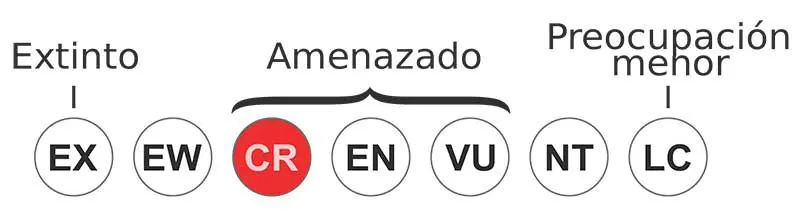
State of conservation โ“˜


Near-threatened Near Threatened โ“˜ (UICN)โ“˜

Rationale for the Red List category

The Cuban Parrot It is classified as near threatened because it is suspected to have suffered a reduction in population in Cuba, which has not ceased, mainly due to the capture and destruction of nesting sites.

โ€ข Current category of the Red List of the UICN: Near-threatened.

โ€ข Population trend: Decreasing.

โ€ข Population size : 13600-23000

Justification of the population

Population estimates for Bahamas and Cayman Islands they are as follows: 2.000 in Gran Cayman in 1995 (Bradley 2000), about 450 in Cayman Brac in 2013 (Marsden, 2013), 8.000-13.000 in Great Inagua, 3.000-5.000 in Abaco and around 10 individuals in new Providence (Bahamas National Trust 2016, S. Cant-Woodside in a bit., 2016). It is estimated that the population of Cuba amounts of 7.000 to 14.000 copies based on estimates recorded population density and the fact that it is likely that only a proportion of the estimated extent of occurrence deal. So, the total population It is estimated in 20.460-34.460 individuals, which is equivalent to 13.640-22.973 mature individuals, rounded here to 13.600-23.000 mature individuals.

Justification of trend

It is considered that the species is declining mainly due to the capture and destruction of nesting sites. It is considered that the population of the Bahamas It has remained stable or increased. The population of the Cayman Islands It has increased since the species was protected in 1989 (Bradley 20000). It is believed that the Cuban population has decreased in recent years, mainly due to the poaching (Canizares 2012, M. Canizares in a bit., 2016). Although there is no data on the extent of this decline, the species has been classified as Vulnerable in Cuba (Canizares 2012). So, It is suspected that the total population has decreased 10-20% over three generations.

Conservation Actions Underway

โ€ข CITES Appendix 1.

โ€ข Protected in the Bahamas under the Wild birds Protection Act (Protection).

โ€ข Rightfully protected in the Cayman Islands from 1989.

โ€ข Los artificial nests a variety of designs are in use in several locations Cuba and they have been used by more than 1.300 birds (Waugh 2006). The facts of artificial materials have proved more durable (Waugh 2006).

โ€ข Los volunteers counts in the center of Cuba They have been conducted twice a year since 2009 and more than 1.500 local people are involved in the activity.

โ€ข Important plant species are used for parrot feeding for reforestation and forest enrichment..

Conservation Actions Proposed

โ€ข Discourage the taking of birds from the wild through public education campaigns.

โ€ข Promote better bird-keeping practices to increase the longevity of captive birds and reduce the demand for wild populations.

โ€ข In Abaco, protect vital areas of broadleaf forests.

โ€ข In Cuba, make and erect more artificial nests.

โ€ข Monitor the population trends across its range.

Cuban Parrot in captivity:

Currently international trade Cuban Parrot It is legally prohibited; However, at regional level, the illegal traffic This species is one of the most worrying in Cuba.

Each captive specimen of this species which is capable of reproducing, must be placed in a well-managed captive breeding program and not sold as a pet, in order to ensure its long-term survival.

Alternative names:

bahaman parrot, Caribbean Amazon, Caribbean Parrot, Cuban Amazon, Cuban Parrot, Rose-throated Parrot, White-headed Amazon, White-headed Parrot (English).
Amazone ร  face rouge, Amazone ร  tรชte blanche, Amazone de Cuba (French).
Kubaamazone (German).
Papagaio-de-cuba (Portuguese).
Amazona Cubana, Cotorra (espaรฑol).

Carl Linnaeus

scientific classification:


Order: Psittaciformes
Family: Psittacidae
Genus: Amazona
Scientific name: Amazona leucocephala
Citation: (Linnaeus, 1758)
Protonimo: Psittacus leucocephalus


Images Cuban Parrot:


Species of the genus Amazona


Sources:

(1) Avibase
(2) Parrots of the World โ€“ Forshaw Joseph M
(3) Parrots A Guide to the Parrots of the World – Tony Juniper & Mike Parr
(4) Birdlife

Photos:

(1) – Rose-throated Parrot. Amazona leucocephala Long Beach, Zapata N.P. Cuba by gailhampshireFlickr
(2) – A Cuban parrot (amazona leucocephala) in Naturarte Center. santa Clara, Cuba 2011 by lezumbalaberenjenaFlickr
(3) – A Cuban parrot (Amazona leucocephala) Vega de Palma, Camajuanรญ, Cuba by lezumbalaberenjenaFlickr
(4) – Amazona leucocephala by Ekaterina Chernetsova (Papchinskaya)Flickr
(5) – Amazona leucocephala by Ekaterina Chernetsova (Papchinskaya)Flickr
(6) – Cuban Parrot (Amazona leucocephala) by HeathFlickr
(7) – Cuban Amazon by Eric SavageFlickr
(8) – Two Cuban Amazons in Matanzas, Matanzas Province, Cuba By Laura Gooch (BI110211-174 – Cuban Parrot) [CC BY-SA 2.0], via Wikimedia Commons
(9) – Cuban Amazon parrot on Grand Cayman Island By Lhb1239 (Own work) [CC BY-SA 3.0], via Wikimedia Commons
(10) – Cuban Amazon (also known as the Rose-throated Parrot) at Jungle Island, Miami, USA By Chris Acuna from Miami, USA (Jungle Island-20090823-086) [CC BY 2.0], via Wikimedia Commons
(11) – A Cuban Amazon in Isla de la Juventud, Cuba. It is in a small round cage on a balcony By Alex Graves (Parrot) [CC BY-SA 2.0], via Wikimedia Commons
(12) – A Cuban Amazon flying in Matanzas, Matanzas Province, Cuba By Laura Gooch (BI110211-159 – Cuban Parrot) [CC BY-SA 2.0], via Wikimedia Commons
(13) – Cayman parrot (Amazona leucocephala caymanensis), Grand Cayman By Charlesjsharp (Own work, from Sharp Photography, sharpphotography) [CC BY-SA 4.0], via Wikimedia Commons
(14) – Parrots in captivity /. London :George Bell and Sons,1884-1887 [i.e. 1883-1888] by Biodiversity Heritage LibraryFlickr

Sounds: Hans Matheve, XC256757. accessible www.xeno-canto.org/256757