โ–ท The world of Pets: Dogs, cats, birds, reptiles, amphibians

Superb parrot
Polytelis swainsonii

Superb parrot

Content


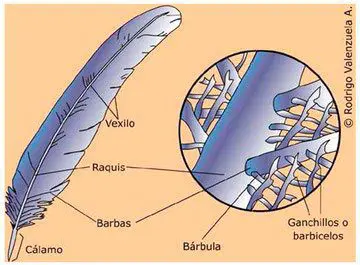
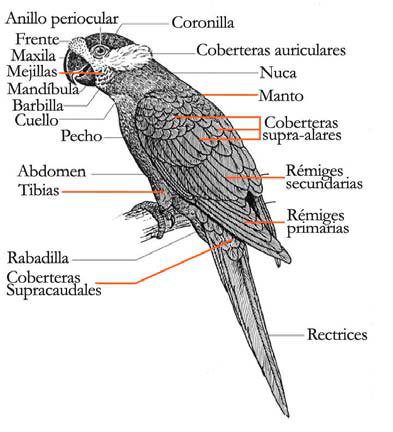
Anatomy-parrots

Description

40 cm.. length between 132 and 157 g. of weight.

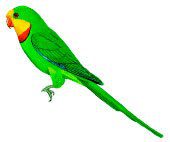
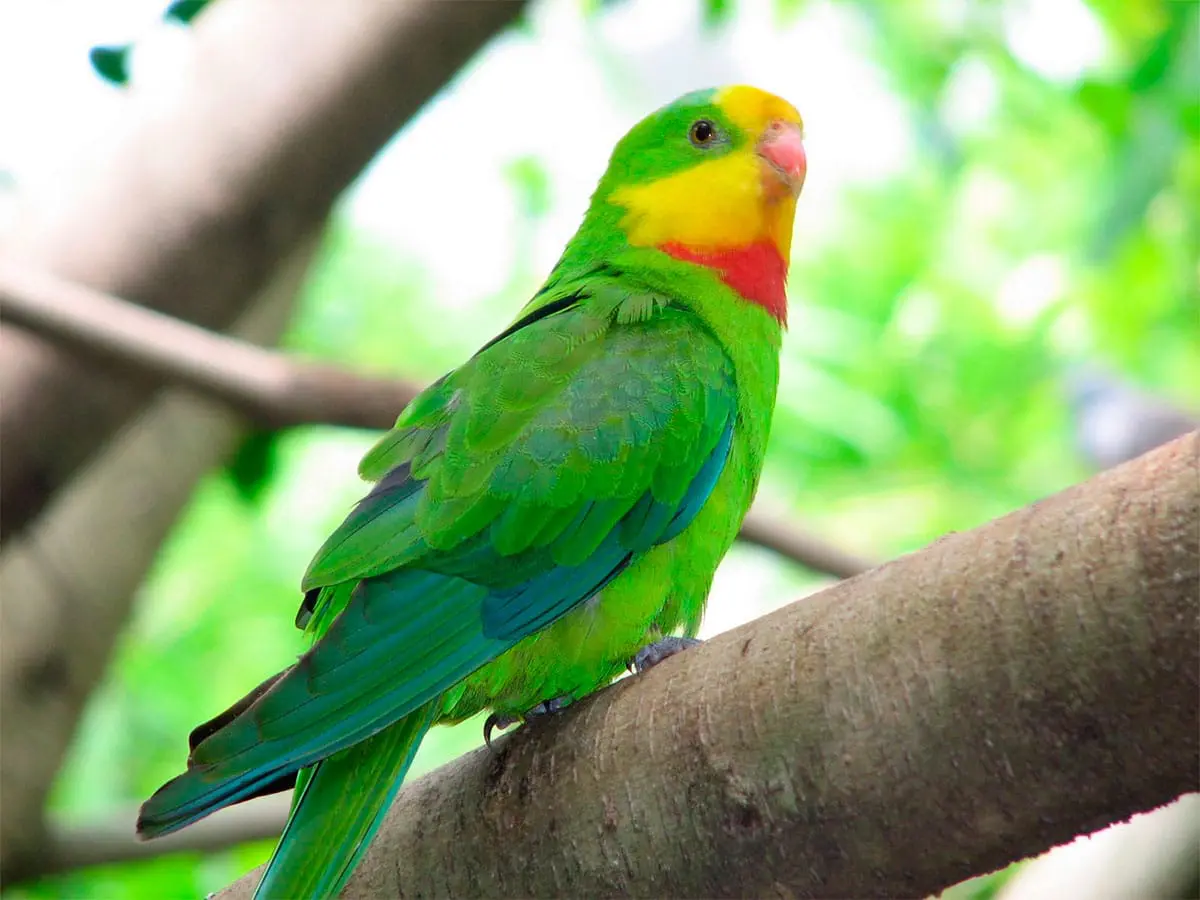
The Superb parrot (Polytelis swainsonii) has the front, crown, Chin and throat of bright yellow; back of the bright green Crown with turquoise blue wash: headphones coverts and Lords, green. Bright green upper parts. Upper, the wings, bright green, with dark diffusion in the inner margins of the vane internal and blue diffusion in vane outer (fine yellow rear margin for flight feathers); bluish carpal edge: light blue primary coverts; primary elongated.

Wing of bright green feathers; bottom of blackish brown flight feathers. Underparts pale bright green, with thin bright red Ruff between throat yellow and green at the top of the chest. Upper, bright green tail, with dark elongated Central feathers Slightly bulbous tips. outer feathers with bluish edges vane outer. The lower part of the tail is black.

Bill, coral red; yellow-orange irises; Blackish legs.

The female is completely Green, with a bath pink Brown throat and with the headphones cinnamon and the Crown of blue-grey. The mantle is more off, more greenish Brown, contrasting with the Green rump and dark flight feathers. The underparts are paler, orange-red legs. She also has distinctive pink trim and pink tips to yellow vane internal bottom of the queue.

Yellow IRIS.

Immature as females but with Brown iris. Males attain adult plumage in about 12 months.

Habitat:

Superb parrot

A part of the population of the Superb parrot is migratory, wintering in the North of the breeding areas.

Habitat preferences of breeding populations vary slightly from east to west within the slopes of the Great dividing range and open areas in forests of eucalyptus, It is the dominant vegetation type. Here the species nests far from watercourses, and it uses a variety of tree species.
In the region of Riverina, to the West, birds breed almost exclusively on the banks of rivers, in forests of Eucalyptus camaldulensis, feeding on nearby forests of Eucalyptus bicolor, Eucalyptus melliodora and White Pino-CIPRES (Callitris columellaris).

They sometimes also found in farmland and villages.

The size of the flocks are usually small, but groups of up to 100 individuals have been recorded after the breeding season.

The superb Parrot feed in the trees, in the understory, and also in land, where can be accessible, feeding on spilled grain on the roadsides and keeping the company of the Yellow Rosella and Cockatoos.

Reproduction:

The breeding season of the Superb parrot is from September to November.
Male parade making small greetings and nodding his head. Both members of the couple make ritual exchanges of food.

The nest is usually a hollow, full of scrap wood, at the top of a tree dead or alive and a considerable height that is usually between 11 and 51 meters above the ground. The individual sites tend to be reused.

The Superb parrot, they often nest in colonies ranging up to six couples. Spawning contains 4 or 6 eggs which are incubated for at least 20 days. The chicks are altricial and leave the nest after 30 days.

Food:

The diet includes fruits and flowers of Acacia and eucalyptus, fruit shrubs (for example Exocarpos); seeds of crops, pastures, weeds and grasses

Distribution:

Size of the area of distribution (reproduction / resident): 95.300 km2

The Superb parrot they are endemic in Australia, where are distributed only in New South Wales and the north end of Victoria.

The species are concentrated in two main areas: on the South-West slope of the Great dividing range (regions of Cowra, Boorowa, Cootamundra and Yass), and in the area of Riverina, New Wales of the itsr. In the latter the range extends along the murrumbidgee river, from There is a to Darlington Point, Narrandera and Wagga Wagga.

Also found in the North of Goolgowi and the river lachlan, and in South, in the rivers Edward and Murray (Barham. Deniliquin, Tocumwal, Cobram, Getafe and Albury).

In the North of Victoria, concentrated along the rivers Goulburn and Ovens, and in the area of Barmah Forest.

Wandering birds occasionally appear more to the West, along the border of Victoria and New South Wales.

The Superb parrot, do not normally breed above 33ยฐ S, but at least part of the population disperses north to 33ยฐ S at the end of the breeding season.

These birds are found from April to August in the northeast of New South Wales from Gunnedah to Narrabri, Gilgandra and Coonamble, and between river systems to the West (Barwon, Namoi, Macquarie, Castlereagh, Marthaguy Creek).

Occasionally, alleged migratory birds, They fly to the West, about Tottenham and Hermidale.

Escapes have been recorded around Sydney and Melbourne.

A moderate number of captive.

Protected by law.

Conservation:
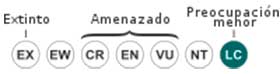

minor concern


โ€ข Current category of the Red List of the UICN: Least concern

โ€ข Population trend: Stable

Its population, apparently, fell in 1920 as an accidental effect of a poisoning by the crop protection.

A panel of experts considered that it was very likely that the population in 2010 exceeds the 10.000 mature individuals. The current estimate ranges in the Strip between 10.000 and 20.000 specimens.

The general trend of the population of the Superb parrot (Polytelis swainsonii) is uncertain, but there is no evidence of a continuous decline.

In Australia is also classified as vulnerable species the law of protection of the environment and conservation of the biodiversidadad of 1999. In addition, its conservation status varies between states., for example in the law of Victoria (1988) is considered to be threatened species.

"Superb parrot" in captivity:

Take it easy, relatively little aggressive with other birds, and very social.

Una muestra viviรณ 15,1 years in captivity. According to sources, these animals can live up to 24,2 years in captivity, It is possible to, but the source is not verified; the same study reported that these animals can reproduce in approximately 2 years of age in captivity.

Pretty common in captivity, above all in Australia.

Alternative names:

Superb Parrot, Barraband, Barraband Parakeet, Barraband Parrot, Green Leek, Scarlet-breasted Parrot (ingles).
Perruche de Barraband, Perruche Barraband, Perruche superbe (French).
Schildsittich (German).
Periquito-soberbo (Portuguese).
Perico Soberbio, Periquito de Barraband (espaรฑol).

scientific classification:

Order: Psittaciformes
Family: Psittaculidae
Genus: Polytelis
Scientific name: Polytelis swainsonii
Citation: (Desmarest, 1826)
Protonimo: Psittacus Swainsonii

Images ยซSuperb Parakeetยป:

Videos "Superb parrot"

————————————————————————————————

ยซSuperb Parakeetยป (Polytelis swainsonii)


Sources:

Avibase
– Parrots of the World โ€“ Forshaw Joseph M
– Parrots A Guide to the Parrots of the World – Tony Juniper & Mike Parr
– Birdlife
– The Animal Ageing and Longevity Database – Polytelis swainsonii

Photos:

(1) – By paulgear (Picasa Web Albums) [CC BY-SA 3.0], via Wikimedia Commons
(2) – Image Credit: Stuart Harris – Canberra Birds
(3) – Image Credit: Julian Robinson – Canberra Birds
(4) – Image Credit: Stuart Harris – Canberra Birds
(5) – Image Credit: Julian Robinson – Canberra Birds

Sounds: Ding Li Yong (Xeno-canto)

โ–ท The world of Pets: Dogs, cats, birds, reptiles, amphibians

Blossom-headed Parakeet
Psittacula roseata


Cotorra Carirrosa

Content

Description:

Of 30 to 36 cm.. length between 85 and 90 g. of weight.
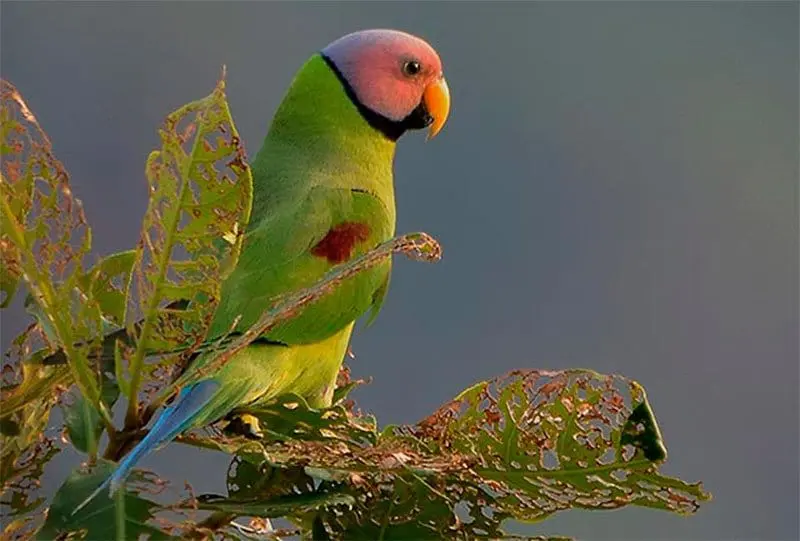
The Blossom-headed Parakeet (Psittacula roseata) has the forecrown, lores, cheeks and ear-coverts mauve-pink, fading to pale blue in the lower cheeks, the sides of neck, the crown and back neck, with broad black "mustache" stripes to form a narrow collar between black blue head and green body; nape bright green fading to a duller green on upperparts.

Upperwing-coverts, mostly green with a brown patch coverts smaller and medium; greater coverts outer and alula darker green. The primaries dark green (darker in vane inner) with a margin yellowish narrow in them vane outer.

Underwing-coverts green. The underparts pale green. Uppertail, centrally bright blue, with creamy white tip; outer feathers green on vane outer, yellowish-green on inner, tipped yellow; undertail-coverts dull yellowish.

Ilustraciรณn Cotorra Carirrosa

upper jaw orange-yellow, the lower black: cere whitish; irises yellowish white; legs gray-green.

The female has the head pale blue-gray, no black "mustache" and collar ring replaced by yellow opaque olive extending from the nape, around the sides of neck; tail slightly shorter. The upper jaw yellow, the lower dark grey.

The immature has the head greenish, the gray tint chin and the bill yellowish to the 15 months, when both sexes develop similar to plumage adult female; the males acquires adult plumage at about 30 months.

Subspecies description

Once considered the same species Psittacula cyanocephala, where he was often wrongly classified as Psittacula cyanocephala rosa.

  • Psittacula roseata juneae

    (Biswas, 1951) – Like species nominal, but the overall color body It is yellower; more extensive stain or red patch shoulder; central feathers tail paler color, side feathers tail yellower.


  • Psittacula roseata roseata

    (Biswas, 1951) – The species nominal.

Habitat:

Video – "Blossom-headed Parakeet" (Psittacula roseata)

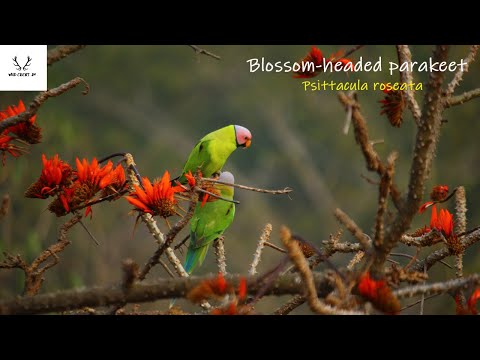
Blossom-headed parakeet Call / Psittacula roseata / Bird's Call

The Blossom-headed Parakeet inhabit open forests, including Savannah, secondary forests, forest edge, clear and cultivated land. Partially deforested areas persists and seems to prefer forest edges adjacent farm.

Mainly observed in the lowlands to about 1.500 meters above sea level. Usually, in small flocks, form larger congregations where food is plentiful. He joins mixed flocks with Rose-ringed Parakeet, the Plum-headed Parakeet and Red-breasted Parakeet and form communal roosts in dense vegetation.

Reproduction:

The nests This species is found in tree cavities, usually at a moderate height; they can dig the hole themselves or modify old nests of other species (for example, woodpeckers or barbets).

Nest usually in colonies of several couples. The laying is of 4-5 (rarely six); eggs are more spherical than those of other congeners. The breeding season It is from January to April (May sometimes).

Food:

Foods are reported: wild flowers and Granada, nectar, including grain sorghum and corn, fruits such as figs and apricots, red peppers and chard seeds. Their diet is very similar to the Plum-headed Parakeet.

Distribution:

Distributed by the foothills of Himalaya Oriental until Indochina. Of Sikkim (India) and South of Bhutan through Assam until Bengal and Bangladesh and east along the north and center Burma, South of China (Yunnan, Guangxi and Guangdong province), Thailand, Laos, Kampuchea and Viet Nam.

Mainly sedentary with seasonal movements in southwest Burma, where Blossom-headed Parakeet They are common in the months of March and April, but otherwise few months, generally common despite apparent decline in some areas (for example, Thailand and Burma), mainly due to large-scale deforestation, and persecution. Few in Viet Nam.

Resident but with some local movements in relation to the food supply.

Held captive and apparently the subject of strong catch in some parts.

Subspecies distribution

  • Psittacula roseata juneae

    (Biswas, 1951) – From East Bangladesh to the North of Burma and east through southern China, Thailand, Laos, Kampuchea and Viet Nam.


  • Psittacula roseata roseata

    (Biswas, 1951) – The species nominal.

Conservation:

State of conservation โ“˜


Near-threatened Near Threatened โ“˜ (UICN)โ“˜

โ€ข Current Red List of UICN: Near-threatened

โ€ข Population trend: Decreasing

This species has been upgraded from Least concern due to new information on population trends. It is listed as Near-threatened on the grounds that it is experiencing rapid moderate decline due to habitat loss, unsustainable levels of exploitation and hunting pressure.

This species has suffered greatly loss of habitat (Forshaw 2006), What, in combination with capture for trade bird cage and general persecution as a pest, have caused the Blossom-headed Parakeet it becomes rare or rare in Thailand (pit et to the. 1997, Juniper and Parr 1998) and Myanmar (Juniper and Parr 1998).

The size of the world's population has not been quantified, but the species according to sources, has a population variable through its range

International trade records showed that 836 birds were exported between 1981 and 1985, but this increased to 6.873 birds between 1986-1990, mainly Viet Nam and Thailand (pit et to the. 1997).

In Laos, habitat encroachment has been so severe in the lowlands, few remaining areas large enough so that the nests Blossom-headed Parakeet they can escape from theft, and there is little active effort to reduce this pressure (JW Duckworth in litt. 2013).

In Cambodia, changes in land use in the lowlands have been too quickly (RJ Timmins in litt. 2013), and it is expected that the intended conversion bosque deciduous Dry for agribusiness plantations may cause a decrease of 30% or more in the national population of this species in the next 20 years (F. Goes in some. 2013).

Actions ongoing:

    The species is known to occur in some protected areas, as the Kirirom National Park, Cambodia (F. Goes in some. 2013).

Conservation actions proposed:

    – Conduct periodic surveys to track broad population trends.
    – Monitor the rates of loss and degradation of habitat.
    – Quantify the impact of harvesting for trade.
    – List CITES listed species.
    – Increase the area of รขโ‚ฌโ€นรขโ‚ฌโ€นsuitable habitat that are protected.
    – Carry out awareness raising activities to discourage theft of nests and capture.

"Blossom-headed Parakeet" in captivity:

The Blossom-headed Parakeet It is a rare bird and very expensive, requiring experienced breeders. Immature of this species are nearly identical to those of the Slaty-headed Parakeet and Plum-headed Parakeet, so when buying an immature Blossom-headed Parakeet, be sure to do so only from a reputable breeder.

To ensure breeding success, each partner should have their own aviary. No house them with Plum-headed Parakeet wave Slaty-headed Parakeet, in order to avoid hybridisation.

The Blossom-headed Parakeet, generally, they are not aggressive with other smaller birds, usually calm and they are not very destructive to wood. The female is, usually, the dominant bird; reach breeding age at about the age of 3 years. New pairs should be introduced several months before the start of the breeding season so that the birds have enough time to establish a strong bond with each other.. A good pair bond will usually translate into better breeding results.. However, are very difficult birds to breed in captivity.

Since Blossom-headed Parakeet It is so rare, we should consider well managed breeding programs, before acquiring one of these copies for your particular pet enjoy. This Parrot You need constant training and behavioral counseling from an early age to ensure its potential owners the enjoyment of a free bird destructive habits and annoying.

Alternative names:

Blossom-headed Parakeet, Blossom headed Parakeet, Eastern Blossom-headed Parakeet (English).
Perruche ร  tรชte rose (French).
Rosenkopfsittich (German).
Periquito-de-cabeรงa-rosa (Portuguese).
Cotorra Carirrosa, Cotorra de Cara Rosada (espaรฑol).


scientific classification:

Dr. Biswamoy Biswas
Dr. Biswamoy Biswas

Order: Psittaciformes
Family: Psittaculidae
Genus: Psittacula
Scientific name: Psittacula roseata
Citation: Biswas, 1951
Protonimo: Psittacula roseata


Blossom-headed Parakeet Images:


Especies del gรฉnero Psittacula

Sources:

Avibase
– Parrots of the World โ€“ Forshaw Joseph M
– Parrots A Guide to the Parrots of the World – Tony Juniper & Mike Parr
– Birdlife

Photos:

(1) – Rose-headed Parakeet in Guwahati, Assam, India By ยฉ Raj Kamal Phukan – Oriental Bird Images
(2) – Psittacula roseata blossom headed parakeet – Birds-pet-wallpapers
(3) – Blossom-headed Parakeet (Psittacula roseata) by Elite-Pets
(4) – Juvenil Blossom-headed Parakeet (Psittacula roseata) by desbecsetdesplumes
(5) – Blossom-headed Parakeet (Psittacula roseata) in Tenerife – Loro Parque – link
(6) – Birds of Asia, Vol. V, Parts XXV-XXX, by John Gould, 1873-1877. Painted by John Gould & Henry C. Richter [Public domain], via Wikimedia Commons

Sounds: Frank Lambert (Xeno-canto)

โ–ท The world of Pets: Dogs, cats, birds, reptiles, amphibians

Santa Marta Parakeet
Pyrrhura viridicata

Cotorra de Santa Marta

Content

Description:

25 cm.. height.

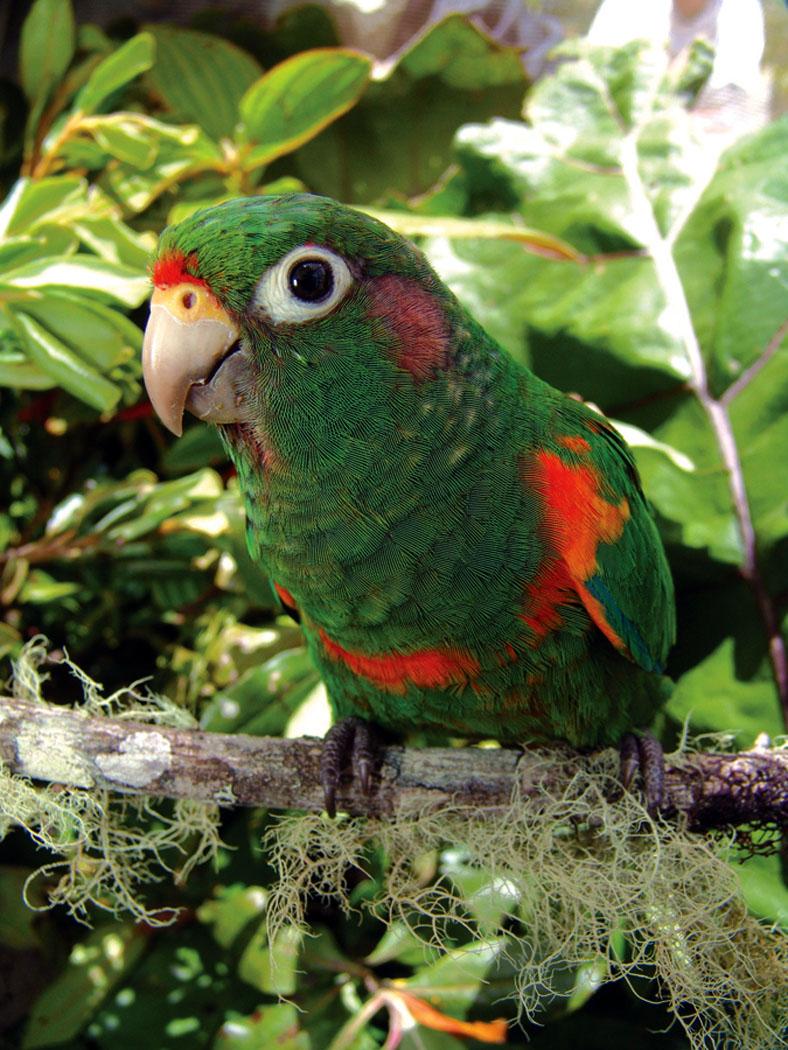
The Santa Marta Parakeet (Pyrrhura viridicata) It, in general, green, with a characteristic red stripe in the middle of the chest which continues until shoulder and armpit. The scales of the chest is less evident; the flight feathers blue. Band front narrow red in the forecrown and behind the eye with red and yellow dye. Tail over green and below red opaque.

Bill color bone; brown iris; pale black legs. It has no sexual dimorphism.

Habitat:

It inhabits in humid mountain forest, clouded forest, pastures and edges, from 1900 to 2800 m. They fly at dawn and at dusk in compact and numerous flocks on the canopy of the forest. Is les has observed flying over them clear adjacent and each time more visiting them mulberry plantations.

The species rests and nests in couples and in lesser proportion in groups of three individuals in cavities of Palms of bouquet Ceroxylon ceriferum (Arecaceae).

Reproduction:

The period reproductive is starts in December and lasts until June, the cavities are visited on average 4 to 5 times a day. There is a sexual dimorphism and a low reproductive success can be associated with displacement or predation by the Aratinga wagleri wagleri (Scarlet-fronted Parakeet) or the Santa Marta Toucanet (Aulacorhynchus lautus prassinus) – Ramphastidae.

Food:

Twelve plant species are incorporated into the diet so far known to the Santa Marta Parakeet, It consists mainly of flowers and fruits, the inflorescence of the Croton bogotanus (Euphorbiaceae) is their main source of food. It forages in groups of size variable, presenting an integration and disintegration of subgroups throughout the day. A sentinel system was observed.

Distribution:

Size of the area of distribution (reproduction / resident): 1,600 km2

Endemic species of Sierra Nevada de Santa Marta, to the northeast of Colombia. The towns registered include The Summit, is of Taquiรฑa on the basis of the Pรกramo of Mamarongo in the Guajira, and Cerro Quemado in the mountains of San Lorenzo.

Will produce some movements altitudinal seasonal. Almost all the habitat forest subtropical is designated as reserve forest or Park national, but the clearing for plantations of marijuana has been extensive, similar to the use of herbicides to combat it. So it only remains for the 15% the original forest (especially in the hillsides North), including only 200 the preferred height of the species km2. Fairly common within this very restricted range, but the population probably below of the 5.000 birds.

Conservation:

State of conservation โ“˜


Endangered Endangered โ“˜ (UICN)โ“˜

โ€ข Current category of the Red List of the UICN: In danger of extinction.

โ€ข Population trend: Decreasing.

Rationale for the Red List category

The range of this species and its small population are probably decreasing as a result of habitat loss. So, qualifies as in danger.

Justification of the population

The population It has been estimated for a long time between 5.000 and 10.000 individuals, equivalent approximately to 3.300-6.700 mature individuals. The density of population is of 1 Ave per km2 (Botero-Delgadillo et to the. 2012). Assuming that the 680 km2 of habitat are fully occupied, the population total is calculated that is 2,900-4,800 birds, which is equivalent to 1,933-3,200 mature individuals; But, with occupation part is likely to remain less than 2.500 birds (Botero-Delgadillo et to the. 2012).

Justification of trend

Se sospecha una decrease moderate and continuous of the population on the basis of the rates of habitat loss.

Threats

only one left 15% the original vegetation of the Sierra Nevada de Santa Marta, to a large extent on the slope North, where this species is found (LM Renjifo, Com. 1993, 2000).

The main current threat is the expansion of plantations of non-native trees, such as the of Pine and eucalyptus, in addition to the clearing of land for livestock (C. Olaciregui in litt. 2012).

ยท Historically, the conversion of forests in plantations of marijuana and coca was also a major threat (LG Olarte in litt., 1993, com LM Renjifo. Comm., 1993, J. Fjeldsรฅ verbally they 2000, pers LM Renjifo. Comm., 2000, C. Olaciregui in litt. 2012), that is compounded by the Government with application of herbicides in the sierra (LG Olarte in litt., 1993, com LM Renjifo. Comm., 1993, 2000).

Other threats that followed the human migration to the area Since the Decade of 1950 hereafter include slash & burn (Dinerstein et to the., 1995, Snyder et to the. 2000, Salazar and Strewe undated, PGW Salaman in litt. 1999).

ยท It is known to be hunted in the cold river valley, and in the San Pedro district individuals in mulberry plantations have skyrocketed. The species not found in the local bird trade (Strewe 2005).

"Santa Marta Parakeet" in captivity:

Not marketed for captive.

Alternative names:

Santa Marta Parakeet, Santa Marta Conure (English).
Conure des Santa Marta, Perriche de Santa Marta, Perruche de Santa Marta (French).
Santa-Marta-Sittich, Santa Marta Sittich, Sittich (German).
Santa Marta Parakeet (Portuguese).
Cotorra de Santa Marta, Perico Oliva, Periquito de Santa Marta (espaรฑol).

scientific classification:

Order: Psittaciformes
Family: Psittacidae
Genus: Pyrrhura
Scientific name: Pyrrhura viridicata
Citation: Todd, 1913
Protonimo: Pyrrhura viridicata

Images "Santa Marta Parakeet"

Videos "Santa Marta Parakeet"


Especies del gรฉnero Pyrrhura

Santa Marta Parakeet (Pyrrhura viridicata)


Sources:

Avibase
Parrots of the World โ€“ Forshaw Joseph M
Parrots A Guide to the Parrots of the World – Tony Juniper & Mike Parr
Birdlife
Oliveros rooms, H.. 2005. Population and ecological evaluation of the Santa Marta parakeet Parrot parakeet in the sector of San Lorenzo, Sierra Nevada de Santa Marta, Colombia. (ProAves.org)

Photos:

(1) – ProAves Foundation – Proaves.org

Sounds: By GABRIEL MILK (Xeno-canto)
โ–ท The world of Pets: Dogs, cats, birds, reptiles, amphibians

Newton's parakeet โ€ 
Psittacula exsul

Newton's Parakeet

Content

Description:

Of 40 centimeters length.

The male of the Newton's Parakeet (Psittacula exsul) It was probably green, with red patches on wings, also manifested in a variation bluish; only two skins of this species, both blue hue; the plumage It was generally greenish blue with gray shades; chest, abdomen and under cover tail slightly paler shades; head darker gray hue without; fine black line between cere and the eye; black bars cheek and narrow black strip on the neck, strip adjacent the blue-green; primaries blue-green; feathers on top of the tail blue-green, underside grey; mandible red top, mandible lower black; irises yellow; legs grey.

The female with narrow black stripe on the forehead; black bars cheek not extend to the side neck; crown washed with gray; upper jaw black.

Immature; No information

Habitat:

It was a kind forest who lived in areas of pine Pandanus and Palm trees.

Reproduction:

Probably similar to Reunion Parakeet (Psittacula eques)

Food:

According to reports, birds preferred nuts and fruits of Cassine East and Fernelia buxifolia.

Distribution:

The Newton's Parakeet It was endemic to the forests of Rodrigues, Mauritius (checks 1987).

It was said to be abundant by explorer Leguat in 1691 (Cowles 1987), but Pingre He noted that it was rare in 1761, and the last record was a bird captured in August of 1875 (Forshaw 2010).

It seems likely that the last birds were wiped out later that year, When the island suffered "the worst cyclonic season of the nineteenth century" (checks 1987).

Two complete specimens survive, plus several bones subfossil (Cowles 1987).


Conservation:

Rationale for the Red List category


This species was endemic to the Rodrigues Island, Mauritius, but it has not been seen since 1875 and now it is extinct.

โ€ข Current category of the Red List of the UICN: Extinct.
โ€ข The last record was a bird collected in August of 1875

It is believed that hunting and habitat loss greatly contributed to its decline, and that the final blow could have been given by heavy storms 1876. curiously, survived for much longer than most of the island's endemic bird species.

Justification of the population

extinct.

"Newton's parakeet โ€ " in captivity:

Leguat and his followers saw the birds – presumably Newton's Parakeet – feeding nuts, and they taught to speak to some of these parakeets, which certainly it is an indication of what these birds were tame. Apparently they became bilingual; They could speak both French and Flemish!! When Leguat and his small band of followers fled the island, a parakeet they took with them on their trip to Mauritius.

Alternative names:

Newton’s Parakeet, Newton’s Parrot, Rodrigues Parakeet, Rodrigues Ring-necked Parakeet, Rodriguez Parakeet (English).
Perruche de Newton (French).
Rodriguessittich, Rodrigues-Sittich, Rodriguez-Edelsittich (German).
Periquito-de-rodriguez (Portuguese).
Cotorra de Newton, Cotorra de Rodrigues (espaรฑol).


scientific classification:

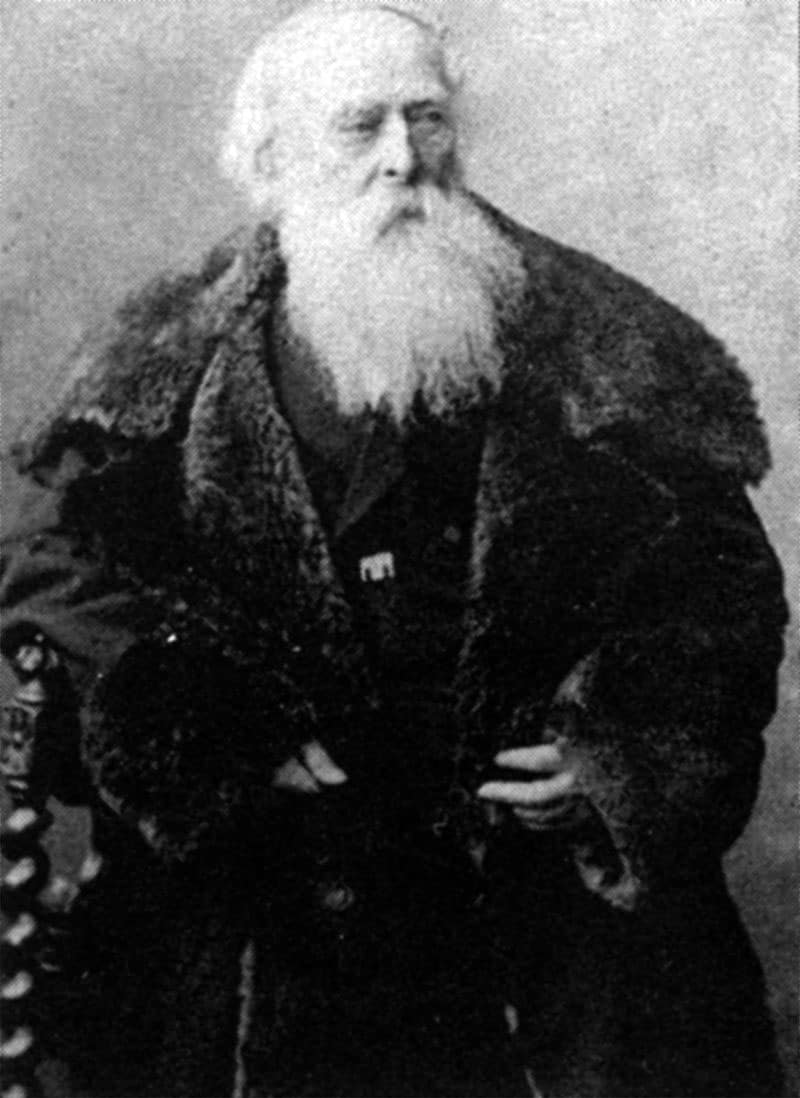
Alfred Newton
Alfred Newton

Order: Psittaciformes
Family: Psittaculidae
Gender: Psittacula
Scientific name: Psittacula exsul
Subpoena: (Newton, A, 1872)
Protonimo: Palaeornis exaul


Especies del gรฉnero Psittacula

Sources:

โ€ข Avibase
โ€ข Parrots of the World โ€“ Forshaw Joseph M
โ€ข Parrots A Guide to the Parrots of the World – Tony Juniper & Mike Parr
โ€ข Birdlife

Photos:

(1) – Psittacula exsul (Newtonโ€™s Parakeet), female holotype specimen – Wikipedia
(2) – Sternum and mandible of Psittacula exsul, extracted from the female holotype specimen – Wikipedia

โ–ท The world of Pets: Dogs, cats, birds, reptiles, amphibians

Dusky-billed Parrotlet
Forpus modestus


Content

Description:

Dusky-billed Parrotlet

13 cm.. length and 28 g. of weight.

Chubby appearance, the Dusky-billed Parrotlet (Forpus modestus) has the forecrown, lores, cheeks and crown, emerald green, forming sometimes a visible mask; the sides and rear of the neck, the the mantle, the upper part of the back and scapulars, rather dark, of color green matte with light color of olive; lower back and rump of color blue cobalt dark: uppertail-coverts dark green. Primaries and larger covers, dark blue. Primaries with innerwebs green; Secondary of color blue dark with tips Green. Under the wings of color blue cobalt dark; flight feather grey-blue. Underparts opaque in color green dark with a light shade of olive. Upper, the tail dark green; undertail, paler.

upper jaw and cere dark gray, lower jaw clearer; Strait ring perioptalmico dark gray; Iris dark brown; legs grey.

Female all green except beige in it forecrown and front of the crown, contrasting with the Green more dark on the back of the crown.

Immature as their respective adult but paler.

Subspecies description:

  • Forpus modestus modestus

    (Cabanis, 1849) – The nominal.


  • Forpus modestus sclateri

    (Gray,GR, 1859) – Similar to the nominal species but from a color green more pale, more yellowish below, male with blue pale in rump and wings ; the face Green Emerald bright.

Habitat:

They inhabit in tropical forest lowlands in clear, margins, coastal growth, forests and marshes, secondary habitats and sheets, mainly in lowlands (150-250 metres in Venezuela, to 500 metres in Colombia), but spreading in sub-tropical forests to 1,500-1, 800 m in the Eastern Andes of Ecuador.

Gregarious; Outside the breeding season, sometimes in flocks of 100 or more individuals

Reproduction:

It nests in hollows and dead trees. breeding season of registered in the month of July in Peru.

Food:

The diet comprises seeds (for example, Cecropia miparia), berries, egg yolks, etc. It takes the banks along with other parrots mineral soil.

Distribution:

Size distribution (reproduction / resident): 2.840.000 km2

Discontinuous distribution. Since the Guianas to the North of Bolivia. Although according to reports in Guyana and French Guiana not there are records (at least not recently). Be distributed by the Basin Amazon East of Brazil in Amapรก, Maranhรฃo and For, and in the Basin Amazon West from the high of the Black river to the North of Mato Grosso; in Venezuela, to the South of the Orinoco, on bass Caura River and Cuyuni River (a record of Carabobo; in the North, is apparently wrong); In East Colombia to the South from the East end of the Guainia (about him Black river) until Caquetรก to the East of Ecuador and East of Peru to the South and to the North of Bolivia at least Beni.

Reasonably frequent in the West of its range (the Forpus most common in the range in Ecuador and Colombia) but scarcer eastward, with few records in Venezuela and Guyanas.

Evidence of decline in the Eastern Amazonia (about Bethlehem) and possible increase in Colombia, perhaps linked to reduction of dense forests.

Rare in captivity.

Subspecies distribution:

  • Forpus modestus modestus

    (Cabanis, 1849) – The nominal.


  • Forpus modestus sclateri

    (Gray,GR, 1859) – Southeast of Colombia to the North of Bolivia and Brazilian Amazon.

Conservation:

State of conservation โ“˜


minor concern Minor Concern โ“˜ (UICN)โ“˜

โ€ข Red List Category: Least concern
โ€ข Population trend: Stable

Justification of the population:

The size of the world population Dusky-billed Parrotlet It has not been quantified, but this species is described as ยซquite commonยป (Stotz et to the., 1996).

Justification of trend:

It is suspected that this species has lost 11,6-12,6% of habitat within its distribution in three generations (12 years) based on a model of Amazon deforestation (Soares-Filho et to the., 2006, Bird et to the., 2011).

Given the susceptibility of the species to hunt or capture, It is suspected that it will fall in <25% durante tres generaciones.

"Dusky-billed Parrotlet" in captivity:

In captive not all known, However, this species is probably similar to other parakeet species โ€“ quite quiet, best with a partner, although, they can be aggressive with other groups of parrots. It has a tendency to obesity.
You can learn to speak, usually up to around. 15 words. Males are generally more loquacious than females. They can also learn to whistle numerous tunes and perform some tricks..

This Parrot is very small, they do not occupy much space, It makes it an ideal pet for people living in apartments, residences, or anywhere else than in small size, do not require a large cage and its maintenance is simple.

Alternative names:

Dusky-billed Parrotlet, Dusky billed Parrotlet, Sclater’s Parrotlet (English).
Toui de Sclater (French).
Schwarzschnabel-Sperlingspapagei (German).
tuim-de-bico-escuro (Portuguese).
Catita Enana Oscura, Cotorrita de Sclater, Periquito Piquinegro (espaรฑol).
Periquito Piquinegro (Colombia).
Periquito de Pico Oscuro (Peru).
Periquito Pico Oscuro (Venezuela).


scientific classification:

Jean Louis Cabanis
Jean Louis Cabanis

Order: Psittaciformes
Family: Psittacidae
Genus: Forpus
Scientific name: Forpus modestus
Citation: (Cabanis, 1849)
Protonimo: Psittacula Sclateri


Images Dusky-billed Parrotlet:

Videos of the "Dusky-billed Parrotlet"


Species of the genus Forpus

Dusky-billed Parrotlet (Forpus modestus)


Sources:

Avibase
– Parrots of the World โ€“ Forshaw Joseph M
– Parrots A Guide to the Parrots of the World – Tony Juniper & Mike Parr
– Birdlife

Photos:

(1) – Brazil – Crystal River (Amazonia)
(2) – Periquito de pico oscuro en Alta Floresta – MT – Brasil By Hector Bottai (Own work) [CC BY-SA 3.0], via Wikimedia Commons
(3) – Periquito de pico oscuro en Alta Floresta – MT – Brasil By Hector Bottai (Own work) [CC BY-SA 3.0], via Wikimedia Commons
(4) – Forpus modestus by Gunther EichhornFlickr
(5) – Dusky Billed Parrotlets at the end of the branch with Dusky Headed Parrots by Vince SmithFlickr
(6) – Psittacula sclateri = Forpus modestus, Dusky-billed Parrotlet by John Gerrard Keulemans [Public domain], via Wikimedia Commons

Sounds: (Xeno-canto)
โ–ท The world of Pets: Dogs, cats, birds, reptiles, amphibians

Philippine cockatoo
Cacatua haematuropygia

Cacatรบa Filipina


Content

Description

It measures 31 cm. and weighs around 300 g..
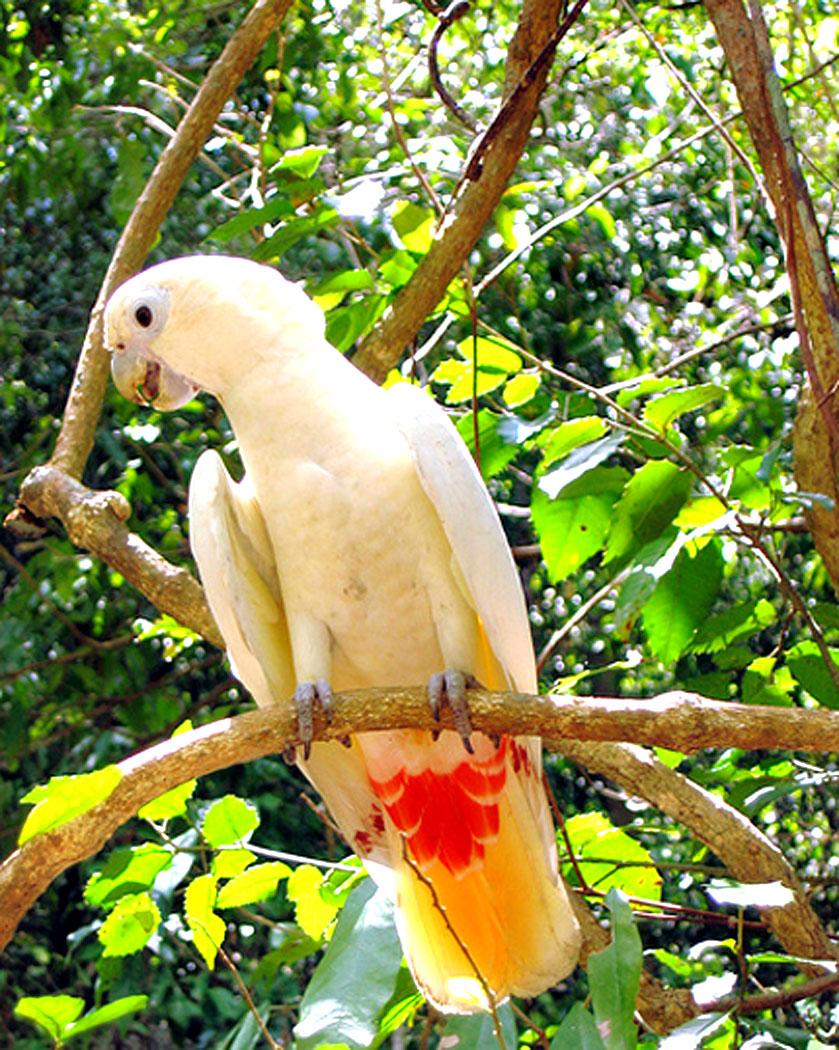
To the Philippine cockatoo (Cacatua haematuropygia) It is called locally Katala.
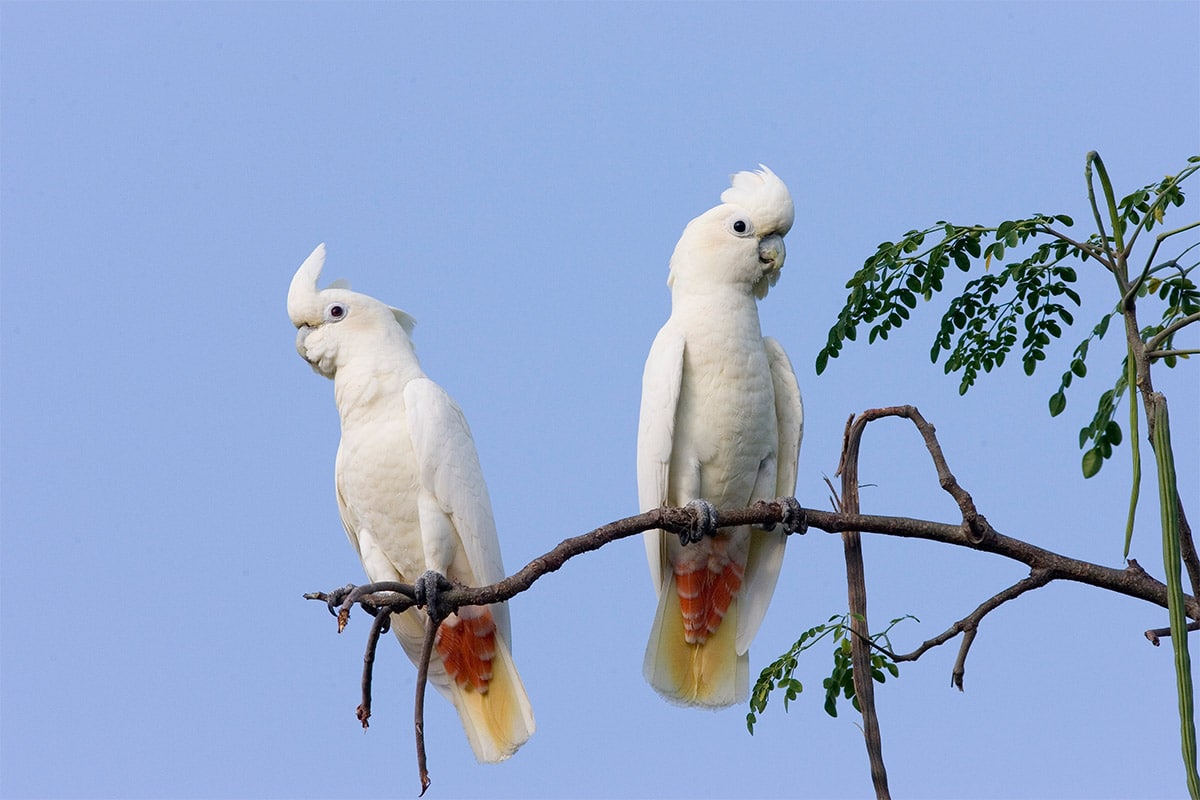
Its plumage is of a beautiful white color except for the feathers of the crest they are yellow or pink on its base and the bottom of the tail and wings they are yellow and Red.
The bill is a grayish-white color, and males has irises dark brown, While the of the female are brown-red color.

Habitat:

Is restricted to lowland not more than 50 meters above the sea level, in or adjacent to rivers, and in coastal mangrove areas.

outside the breeding season (March to June, and, times, from February to August), frequents corn and rice crops. This depends on the station where foods are grown and have the available resources, being partially nomadic.

These birds can fly from their island to the adjacent if they are not more than a few 8 km. distance.

Reproduction:

breeding season between February and June. Of one to three eggs they are placed on a nest on a tree branch. The eggs are hatch for a few 28 days, and the chicks remain in the nest for nine to ten weeks after the hatching.

Food:

They feed on seeds, vegetables, fruits and berries.
They are known to attack corn crops in agricultural areas.

Distribution:

Size of the area of distribution (reproduction / resident): 22.700 km2

This cockatoo is endemic in Philippines, and the only representative of the cockatoos that we will find there; This has become a treasure of these islands.

Conservation:

State of conservation โ“˜


critical hazard critically endangered โ“˜ (UICN)โ“˜

โ€ข Current IUCN Red List category: Critical Hazard.

โ€ข Population trend: Decreasing.

โ€ข Population size: 370-770 mature individuals.

In Palawan the capture of the cockatoos for the international illegal trade is particularly serious, something which is reflected in the high price of these birds ($ 160 Americans in Manila in 1997); to have been looted all the visible nests each time the price is higher because it costs more to catch them.

The deforestation and the destruction of mangroves have been extensive in their range of occupancy and have contributed significantly to their decline.

It is also hunted and hunted for consumption as food.
The release of captive birds can introduce diseases into wild populations.

Conservation Actions Proposed:

    โ€ข Conduct surveys on all range islands to assess species population size and distribution.
    โ€ข Monitor population trends.
    โ€ข Monitor rates of habitat loss and degradation.
    โ€ข Quantify catch levels, persecution and trade.
    โ€ข Designate more protected areas (for example Tawi-Tawi and towns in or near Palawan).
    โ€ข Support the proposal to expand the Puerto Princesa Subterranean River National Park.
    โ€ข Prevent destruction of mangroves.
    โ€ข Promote economically viable alternatives to avoid the capture of this cockatoo.
    โ€ข Continue with education programs and captive breeding programs.
    โ€ข Establish staff at airports and ferry terminals to control the departure of specimens.
    โ€ข Translocate animals to suitable areas such as lowland forests or mangroves..

Loro Parque Foundation It has warned of the risk of extinction that runs the Philippine cockatoo by the construction of a power plant in Palawan, an island province of Philippines in the region of Western Visayas.

This Spanish NGO has invested 1,3 millions of dollars and more than 14 years of work in the recovery project of this cockatoo, and fears that with the construction of this station, the less than 1.000 remaining specimens in the world could be electrocuted by high-voltage lines, In addition to being blocked their migration in search of food.

See more in: (20minutes)

"Philippine cockatoo" in captivity:

Very rare in captivity, fortunately.

Alternative names:

Philippine Cockatoo, Philippine Islands Cockatoo, Red-vented cackatoo, Red-vented Cockatoo (ingles).
Cacatoรจs des Philippines (French).
RotsteiรŸkakadu (German).
Catatua-filipina (Portuguese).
Cacatรบa Filipina, Cacatรบa Malaya (espaรฑol).

scientific classification:

Order: Psittaciformes
Family: Cacatuidae
Genus: Cockatoo
Scientific name: Cacatua haematuropygia
Citation: (Statius Mรผller, 1776)
Protonimo: Psittacus haematuropygius

Philippine Cockatoo Images:


Species of the genus Cacatua

Sources:

Avibase, BirdLife.org

– Photos: Kim Arveen homeland, ยฉ Benedict of Laender, Wikimedia.

– Sounds: Frank Lambert (Xeno-canto)
โ–ท The world of Pets: Dogs, cats, birds, reptiles, amphibians

Red-throated Lorikeet
Charmosyna amabilis

Red-throated Lorikeet

Content

Description

18 cm.. length.

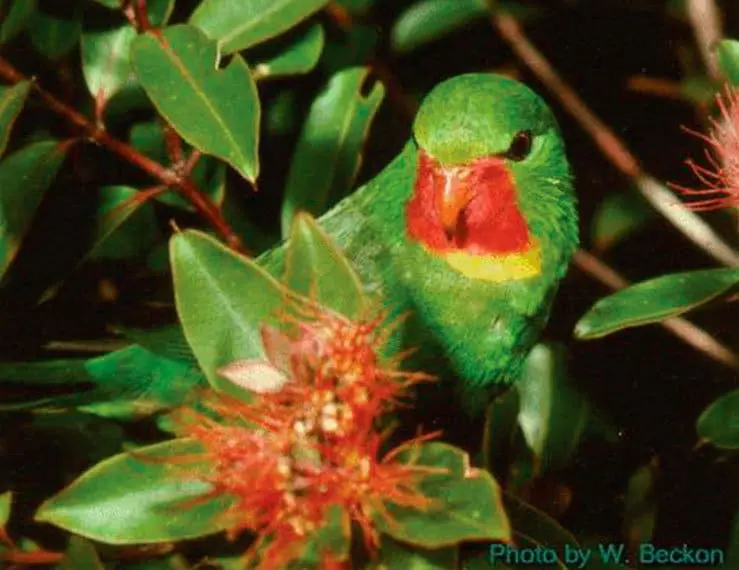
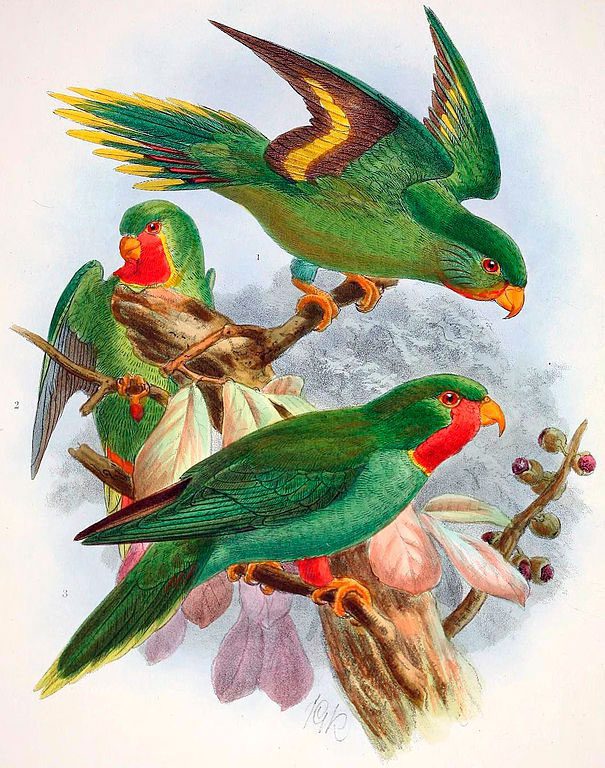
The head of the Red-throated Lorikeet (Charmosyna amabilis) is green with lores and chin red. Upperparts green. Wings internal and ends with green feathers flight feather color black. Throat red, bordered below by a narrow yellow collar; rest of the underparts with a yellowish green that upperparts, particularly in the center of belly; the thighs red. The tail above green a little darker than the rump, with yellow ends; undertail yellow. Bill orange; irises yellow; legs orange-red.

Male and female are equal.

Immature generally duller. The the thighs dull purple. The yellow band throat much weaker than in adults and the red facial and marks throat more restricted.

Habitat:

Move by tropical forests, mainly over the 500 m. Son nomads and fly in pairs or small flocks of 5-8 birds in search of flowering trees, uniting to feed on flowers, nectar and pollen. They prefer to feed in the canopy, and although it is apparently ejected away from the areas of power by the aggressive Collared Lory, Holyoak He found two species feeding on the same tree during his remarks in 1973.

Reproduction:

Breeding and nesting habits unknown.

Food:

They feed actively, to often hung upside down to get to flores.

Distribution:

Size of the area of distribution (reproduction / resident): 37.100 km2

endemic to the Fiji Islands where it is rare and usually only moves above 500 meters and below 1.000 m. Is distributed between in Viti Levu, Ovalau (where it may now be extinct), Vanua Levu and Taveuni. In 1973 Holyoak found at a Red-throated Lorikeet on a wooded Ridge around 250 metres in Viti Levu, species you saw or heard on five different days while exploring Taveuni thinking that the species was widespread in the rainy forests at an altitude between 550 and 1,000 m. The species was also recorded in rainforests between 120 meters and 980 feet by Martyn L. Gorman (1975), but it is said that they are rare. These records are among the few documented sightings of this century. The world's population is believed to be of less than 10.000 specimens. Despite its apparent rarity, This species may be overlooked due to their unobtrusive plumage and behavior.

Conservation:


critical hazard


โ€ข Current IUCN Red List category: Critical Hazard

โ€ข Population trend: Decreasing

Threats to the lowlands and hills of the forest is slowly being erased much of Fiji. But, the rarity and assumed decline of this species is probably largely the result of predation by introduced mammals, especially Black Rat (Rattus rattus) , as it is the case with the closely related New Caledonian Lorikeet (Charmosyna diadema).

Increases in course in the logging and the expansion of the road network, especially around the Highlands of Monasavu and Serua in Viti Levu, It is likely that you have caused an increase of the density of these rats (Watling 2000, G. Dutson in litt. 2005). The Indian Brown Mongoose (Herpestes fuscus) introduced, is also present in the areas of distribution of the Red-throated Lorikeet and it can be a threat (V. Masibalavu in litt. 2012).

Agricultural expansion is encroaching on primary forest in Taveuni. Have a distribution in mountains close to the maximum altitude within its distribution area, It also makes this potentially susceptible species to climate change (BirdLife International).

Is species is protected by the laws of Fiji. In Viti Levu, dwells within the Tomaniivi nature reserve, but this is not large enough to maintain a resident population and, Despite the creation of the extension Wabu proposal to make a reservation of adequate size, this would not provide better protection against rats if the reserve is kept unmanaged (D. Watling in litt. 2000)

"Red-throated Lorikeet" in captivity:

Unknown in captivity.

Alternative names:

Red-throated Lorikeet, Red throated Lorikeet (ingles).
Lori ร  gorge rouge (French).
Rothรถschen (German).
Lori de Garganta Roja, Lori Gorgirrojo (espaรฑol).

scientific classification:

Order: Psittaciformes
Family: Psittaculidae
Scientific name: Charmosyna amabilis
Citation: (Ramsay, 1875)
Protonimo: Trichoglossus (Glossopsitta) amabilis

————————————————————————————————

ยซOn Gorgirroยป (Charmosyna amabilis)


Sources:

Avibase
– Parrots of the World โ€“ Forshaw Joseph M
– Parrots A Guide to the Parrots of the World – Tony Juniper & Mike Parr
– Birdlife

Photos:

1 – (Photo by Bill Beckon, 1973)
2 – Charmosyna amabilis By Artwork by John Gerard Keulemans (1842-1912). [Public domain], via Wikimedia Commons

โ–ท The world of Pets: Dogs, cats, birds, reptiles, amphibians

Australian Ringneck
Barnardius zonarius

Australian Ringneck

Content


Anatomy-parrots

Description

Among 32 to 44 cm.. length and a weight between 121 and 200 g..

Two species were traditionally recognized in the genus Barnardius, Barnardius zonarius and Barnardius barnardi, but both hibridaban in the contact area and are currently considered a single species.
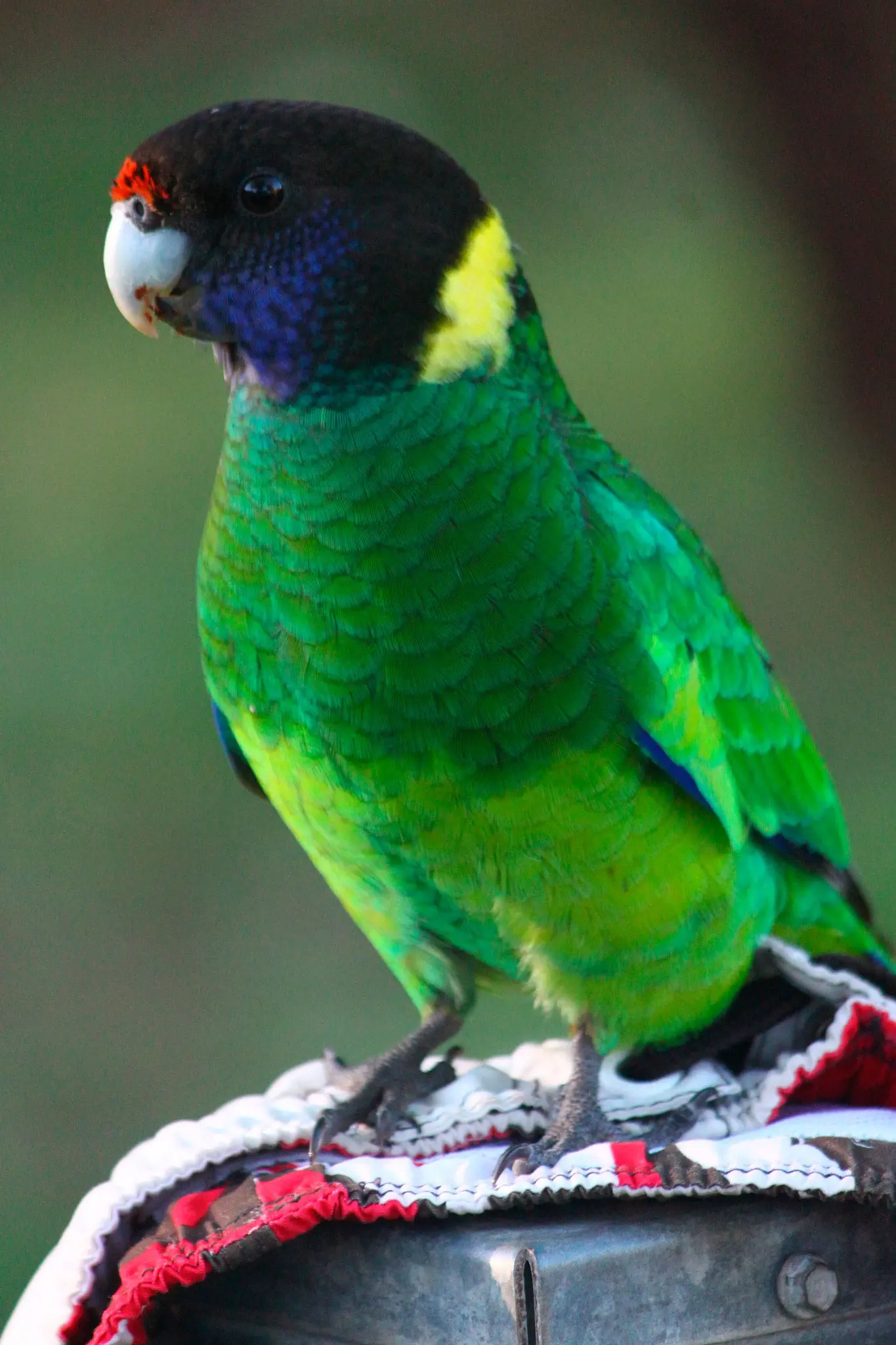
The Australian Ringneck (Barnardius zonarius) It has the head of blackish brown with cheeks, both sides of the throat and underside of the headset coverts densely dotted with dark blue (You can display a few red spots on the front of the Crown); the back of the neck of bright yellow.
Middle of the mantle of dark green with thin dark stripes; slightly more bright green rump; a little more off than the rump supracaudales coverts.

External Middle coverts slightly greenish-yellow color, Green the inner coverts, the large green with blue-green and pale inner margins coverts green outer margins in the outermost feathers; curve of the wing of Turquoise, It extends slightly towards small coverts; primary coverts dark brown with vane dark blue external; blackish flight feathers, strongly marginalized in foreign feathers, showing fusion from the blue color in the vane external to the blue gray of the tips.

Under, with turquoise coverts blackish flight feathers. Dark green chest with fine dark stripes; upper part of the abdomen of bright yellow, Green the lower belly area, slightly impregnated yellow; subcaudales coverts greenish-yellow. Central tail feathers of dark green merging to dark blue, the external of pale blue with dark bases and white tips. Under, pale blue tail.

The greyish white Peak: the Brown irises; legs grey

The female It has peak and smaller head, the slightly Browner head, and you can display a mark in the form of bar at the bottom of the wings.

The immature, they are a brand of pale bar on the wings (disappearing earlier in males than in females); they are more turned off, with a head of Brown and dissemination of greyish-Brown mantle and upper chest area; the tail is green above. Adult plumage is reached between 12 and 15 months.

Subspecies Barnardius zonarius

  • Barnardius zonarius semitorquatus

    (Quoy and Gaimard, 1830) – Of 40 cm.. length approximately. It is more than nominal, but with the red front, abdomen green more off, Pico mas grande. Female plumage more pale and head color more Brown, the Red coloration of the forehead is narrower in some absentee.

  • Barnardius zonarius zonarius

    (Shaw, 1805) – Equal to the Barnardius zonarius collared, but with a yellow abdomen and without the prominent crimson red stripe on the forehead, that if you have the subspecies collared.

  • Barnardius zonarius macgillivrayi

    (North, 1900) – Cloncurry Ringneck – Crown and nape of an intense green color and some reddish tones on the cheeks. Is lighter green shades, No red frontal band, and with a broad band uniform across your abdomen. Not recognized by all experts.

  • Barnardius zonarius barnardi

    (Vigors and Horsfield, 1827) – It has an intense green crown and nape and certain reddish tones on the cheeks.. Their underparts are Turquoise green with an irregular band yellow orange across the abdomen. Your back and mantle are blackish blue and also this subspecies has a red band on the forehead.
    Presumably either the nominal race.

Habitat:

Australian Ringneck

The Australian Ringneck is mainly sedentary, with occasional movements during extreme weather conditions. The species occupies a range of habitats, including eucalyptus red zones (Eucalyptus camaldulensis), along water courses, acacia scrub and mallee (Eucalyptus gracilis), eucalyptus open woodlands, agricultural fields, desert shrubland and suburban areas.

In general has adapted better to the effects produced by settlements that the Mallee Ringneck, and it has been particularly successful in the South-West wheat belt, in where the birds are observed while they eat at road verges. The subspecies collared has a more specific habitat, preferring the high forests of coastal eucalyptus, particularly marri (Eucalyptus calophylla).

The Australian Ringneck form strong pair bonds and, normally, is found in small family parties or groups of up to eight birds. They are usually visible, loud and inquisitive, being more active during the morning and evening. They tend to remain silent while they feed on the ground, but they chatter loudly when feeding in the canopy and when gathering to sleep after drinking, remaining assets after the sunset.

Reproduction:

The time of nesting is from June to February, starting earliest in the North.

The birds are territorial around the nest, and there are many fights at the beginning of the breeding season. In courtship, the male drops his wings, WAGs tail producing a buzzing sound, He chatters loudly and shakes head. Courtship feeding is also common. The nest is built at different heights, usually in the natural hollow of a tree based on decomposition of waste wood inside.

Between four and seven (normally five) white eggs are laid during the implementation, sometimes producing two offspring. The female incubates during 19 days and leaves the nest only to feed herself or be fed by the male. At the beginning, She feeds the chicks alone, but a week after hatching, the male joins food tasks. The young leave the nest about four weeks after. Family groups remain together for some time after the chicks have fled the nest..

Food:

The diet consists of nectar, flowers, seeds, fruit, insects and their larvae (that sometimes stripping the bark of lso trees). The cereal crops and orchards are often attacked by the Australian Ringneck, registering birds digging up onion bulbs (Romulea longifolia).

The more arboreal southwestern subspecies has preference by the ripe fruits of eucalyptus, especially those of marri.

Distribution:

The Australian Ringneck they are in the West, Central and South of Australia. Is distributed from Port Augusta, the Eyre Peninsula and Cordillera Gawler, to the North, through the center of Southern Australia in the Northern Territory, where stretches through of the MacDonnell Ranges and lies to the North of Newcastle Waters and Winnecke Creek.

Birds may also go more towards the East, sometimes up to the border of Queensland, and an off-eastern boundary record comes from Pine Creek in New South Wales.

In Western Australia, the species is increasing in the South West which concentrates around King George Sound, in the South, to murchison river, in the North, reaching inside for Kalgoorlie and Wiluna the east. Further north, is scattered through the Northwest corner, and extends eastward to the upper part of the Grey River system.

There is a small isolated population, probably, at the East end of Western Australia in the Gardiner Range region. Escapes have been recorded in the District of Port Wakefield, about Melbourne, Canberra, Sydney, Darwin and Hobart, in Tasmania.

A population of probable leak in the Lofty Mountains It was destroyed to prevent cross-breeding with the Mallee Ringneck, but there is a zone of hybridization with the Mallee Ringneck in the Montes Flinders. The two species are found and hybridize in other places also.

The world's population is piobablemente well above the current estimate of 100.000 specimens given by Lambert (1993).

A moderate number of captive.

The birds can be low temperatures under permit in some districts to prevent damage in orchards.

Subspecies B distribution. zonarius

Conservation:


minor concern


โ€ข Current category of the Red List of the UICN: Least concern

โ€ข Population trend: Growing
The size of the world's population has not been quantified, It is estimated over 100 000 specimens. The species, according to sources, is the most common species of birds in the wheat belt of Australia (pit et to the. 1997).

The population is suspected that it may be increasing. To mitigate the effects of the degradation of the habitat, new areas of suitable habitat are being created.

In the East, numbers are affected by scrub clearing Mallee and forests for agriculture. The Australian Ringneck they were considered vermin in Western Australia and in the seasons of hunting by be considered pests of orchards. Fugadas birds in aviaries are seen around the urban areas in the East.

"Australian Ringneck" in captivity:

Son aggressive toward other birds, especially during the breeding season, and it is better to accommodate them with a couple by Aviary.

Although friendly, they are not as sociable with people like other parrots. They are formidable chewing and require a heavy duty cage. You can learn to imitate.

Una muestra viviรณ 17,9 years in captivity. According to some sources, these animals can live up to 31,6 years in captivity, but this has not been verified.

Common in Europe, less in the United Kingdom and United States. UU.

Alternative names:

Australian Ringneck, Banded Parakeet, Banded Parrot, Barnard’s Parakeet, Barnard’s Parrot, Bauer’s Parakeet, Buln Buln, Buln-buln Parakeet, Buln-buln Parrot, Cloncurry Buln-buln, Cloncurry Parrot, Eastern Ringneck, Mallee Parrot, Mallee Ringneck, Mallee Ringneck-Parrot, Mrs Morgan’s Parrot, North Parakeet, Northern Buln-buln, North’s Parrot, Port Lincoln Parrot, Port Lincoln Ringneck, Port Lincoln Ringnecked Parrot, Ringneck, Ring-necked Parrot, Scrub Parrot, Twenty-eight Parakeet, Twenty-eight Parrot, Western Banded Parakeet, Western Ringneck, Yellow-banded Parrot, Yellow-collared Parakeet, Yellow-collared Parrot, Yellow-naped Parakeet, Yellow-naped Parrot (ingles).
Perruche ร  collier jaune, Perruche de Bauer, Perruche de Port Lincoln (French).
Ringsittich (German).
Periquito-port-lincoln (Portuguese).
Perico de Port Lincoln (espaรฑol).

scientific classification:

Order: Psittaciformes
Family: Psittaculidae
Genus: Barnardius
Scientific name: Barnardius zonarius
Citation: (Shaw, 1805)
Protonimo: Psittacus zonarius

Images ยซPort Lincoln Parakeetยป:

Videos "Australian Ringneck"

————————————————————————————————

ยซPerico de Port Lincolnยป (Barnardius zonarius)

Sources:

Avibase
– Parrots of the World โ€“ Forshaw Joseph M
– Parrots A Guide to the Parrots of the World – Tony Juniper & Mike Parr
– Parromania
Wikipedia
– AnAge: The Animal Ageing and Longevity Database – Genomics.senescence.info
– Birdlife

Photos:

(1) – An Australian Ringneck in Perth, Western Australia, Australia By Luke Durkin (Img_9967 (3)Uploaded by snowmanradio) [CC BY 2.0], via Wikimedia Commons
(2) – An Australian Ringneck at Gloucester National Park, Western Australia, Australia By Ken & Nyetta (Ring Necked CocatooUploaded by Snowmanradio) [CC BY 2.0], via Wikimedia Commons
(3) – A Australian Ringneck in Karratha, Pilbara, Western Australia, Australia By Jim Benton from Karratha, Australia (ring necked parrot_1Uploaded by snowmanradio) [CC BY-SA 2.0], via Wikimedia Commons
(4) – Twenty Eight Parrot (Barnardius zonarius collared) at Mundaring Weir picnic reserve. It is eating by holding food in is left foot By Casliber (Own work) [CC BY-SA 3.0 or GFDL], via Wikimedia Commons
(5) – ยซBarnardius zonarius macgillivrayi – Buffalo Zooยป by Dave PapeOwn work. Licensed under Public Domain via Wikimedia Commons.
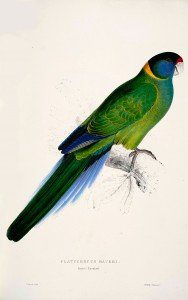
(6) – A painting of an jpg Australian Ringneck (originally captioned ยซPlatycercus baueri. Bauerโ€™s Parrakeet.ยป by Edward Lear 1812-1888. – Edward Lear [Public domain], via Wikimedia Commons

Sounds: Patrik ร…berg (Xeno-canto)