โ–ท The world of Pets: Dogs, cats, birds, reptiles, amphibians

Alexandra's Parrot
Polytelis alexandrae

Alexandra's Parrot

Content


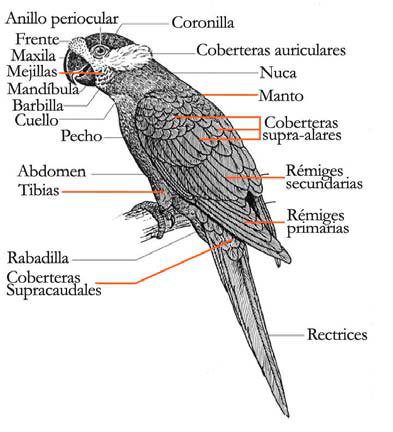
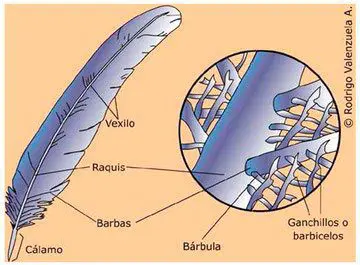
Anatomy-parrots

Description

45 cm. length, including its long, narrow tail, and around 92 g. of weight.

The head of the Alexandra's Parrot (Polytelis alexandrae) is light olive brown color, heavily washed in blue pastel in the Crown area, the nape of the neck, and slightly below the eyes; the Chin and throat pale pink.

Mantle and scapulars Brown olive-tinged greenish and fine dark stripes; back and rump, color pastel blue; upper coverts greenish-gray tail. Upper coverts bright yellowish green wings, with a few more green feathers around the curve of the wing; Dark greenish blue primary coverts; primary blue-green with yellowish-brown, and dark brown margin leading edge for the vane inner (the third rรฉmige primary has the tip spatula-shaped. ); secondary of pale blue-green with a yellowish margin (more pronounced in vane outer); greenish grey tertials with vane more obscure internal. Wing of bright green feathers, more yellow towards leading edge; undertail, wings greyish Brown with large pale yellow inner margin to the vane inner. Usually gray olive underparts pale, with the pink color of the throat which runs on top of the chest; belly and flanks washed clear bluish green; thighs and lower flanks with increase in pink; coverts yellow olive color infracaudales. Upper, tail Brown olive green near the axis and blue toward tip-washed, lateral feathers bluish grey and pink-tipped; undertail, Black tail with tips and margins of pink.

The beak is red with a grey periophthalmic ring; orange-yellow irises; grey legs.

Female has a shorter tail (average of 6 cm.. less than the male) and it lacks of spatula in the third tip rรฉmige primary. The wing coverts are greener and more off. And the mantle shows less green Suffusion. Crown, back and rump are less blue.

Immature similar to females and males acquire the adult plumage in about 14 to 18 months.

Habitat:

Highly nomadic and little known in the wild.

Inhabits the deserts of sand from the arid Center of Australia, often far from water. Birds can reach an area which have been absent for many years, reproduce, and quickly exit again.

They are found in mound grasslands, dry forests of coastal eucalyptus, thickets of acacia, mulga (Acacia aneura) and deserts with scattered Oaks (Allocasuarina decaisneana).

The birds are alone, in pairs or in small groups of up to 15 Member. There are also some earlier records of larger breeding colonies.

Reproduction:

The breeding season has been recorded from September to January, Although the nesting can be irregular and probably depend on the rainfall of rain and is also sometimes colonial.

During courtship, the male raises some feathers on its Crown and extends its wings and tail.

Favorite nesting place is a large hole in a Red eucalyptus (Eucalyptus camaldulensis) lined with a pile of rotting wood dust (the desert oak It has also been used).

Of four to six white eggs make up the implementation, incubated by the female for a few 21 days. While the female is incubating, the male takes care of your power. The young are fed during 5-6 weeks and become independent from three to five weeks after leaving the nest.

Food:

The birds feed on the ground and can be very meek. The diet includes seeds of Spinifex (Triodia mitchelli) and Herb mulga (Bipartite Danthonia). As well, according to sources, they can feed on nectar.

Distribution:

The Alexandra's Parrot are confined to the interior of Australia, where usually are very rare and few records. The species is an irregular visitor, It may not appear in parts of its distribution area for two decades or more.

Are distributed in Western Australia, from the North of the Great sandy desert to the West of the fitzroy river, about Wiluna, Sandstone, Menzies and Coolgardie and East through the deserts Gibson and Great victory.

Occurs in the Northern Territory to the North of the area of Newcastle Waters and Stuart Plains, and to the South up to around Alice Springs.

In Queensland, It is very rare in the South-western end, but there is a recent breeding record around Cloncurry.

In South Australia, extends to the East, about Oodnadatta, and there is a record of 1986 in the Great Victoria desert some 25 kilometers to the North of the Nurrari Lakes.

There is disagreement about its conservation status. The recent lack of records of large groups of reproduction, He cited as a possible indication of population decline, but there is little real information, and it suggests that the world's population can be estimated between 1.000 and 20.000 birds. A recent study suggests the species could be irruptive rather than nomadic, and that a population nucleus may be resident in the area around the Tobin Lake, Western Australia.
Trade, fires, changing land use regimes and predation, they have been cited as potential threats.

Protected by law.

A large number in captivity.

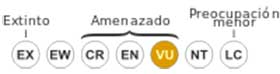
VULNERABLE

Conservation:


Near-threatened


โ€ข Current category of the Red List of the UICN: Near threatened

โ€ข Population trend: Stable

The population of the Alexandra's Parrot It is estimated, with low reliability, in 5 000 birds breeding (Garnett and Crowley 2000).

There is no firm evidence to determine the general trend of the number of Princess Parrot that exist. But, the rate appears to have decreased (Garnett and Crowley 2000), and recent sightings (in different places of Tobin Lake in the Great sandy desert) they have only been small batches (Garnett 1993; Garnett and Crowley 2000). On the other hand, historical records include reports of large flocks and large breeding colonies (Forshaw and Cooper 2002; North 1912; Parker 1971; Whitlock 1924).

The Alexandra's Parrot It has not been registered crossed with other species in nature. It is unlikely that any interbreeding occurs because the other two members of the genus Polytelis, the Superb parrot (Polytelis swainsonii) and the Regent Parrot (Polytelis anthopeplus), they usually do not occur in the same places as the Princess Parrot (Higgins 1999).

Remote areas occupied by species, its irregular presence in most places, and the lack of information about their movements, make it difficult to accurately estimate population size (Higgins 1999).

Conservation Actions Proposed

โ€ข Study the ecology of species, about the Tobin Lake or the Great Victoria desert to determine the likely constraints on population size.

โ€ข Monitoring of sightings to characterize the habitat and habitat models to verify the needs and historical responses to fire and precipitation throughout the distribution of the species.

โ€ข Use research information to develop a management strategy.

โ€ข Protect the areas where the species breeds..

"Alexandra's Parrot" in captivity:

Not too noisy, good whistling, and friendly disposition. It is a robust bird able to tolerate reasonable temperatures. Susceptible to infections in the eyes.

According to records, a female lived 23,9 years in captivity.

common in captivity.

Pure birds, with colors typical of their species are increasingly difficult to find.

The Alexandra's Parrot they can be accommodated in a wide variety of sizes of aviaries. It is best to raise them as couples, They seem to play better if they can see or listen to another pair of the same species. An Aviary of 4 meters long is considered the minimum to adequately house these birds.

Have brought successfully as a colony of 3-5 couples in a large aviary.

Non-toxic hardwood branches can be placed in the Aviary of birds so that they can chew them. This entertains our parakeets, helping to minimize boredom and providing them with a little exercise for supico. Natural branches of different diameters, and placed in different angles, they can be used for hangers. These natural hangers can be chewed by birds and may need to be replaced periodically. Birds can chew the flowers and fruiting bodies on the branches.

Its diet It requires a mixture of quality of food for parrots and a variety of fruits, such as the Apple and orange, as well as a variety of vegetables – corn, chard, usually providing green food and green leafy vegetables. Sowing grasses, If they are available. Soaked or sprouted seeds if they are available.

Commercial dry pellets can be part of a balanced diet.

Some birds will eat insects, as mealworms, especially around the breeding season. The insects will provide adult and young birds with a good source of easily digestible protein.. Insects can serve food to these birds on your daily diet.

The breeding season These parrots begins in March; the implementation is of 3 to 7 eggs, and incubation lasts approximately 20 days; the young become independent to the 50 days; occasionally breeding occurs 2 times a year. It is frequent that the female sexually mature in the first year, the male after the second year; couples can stay in adjacent aviaries each other separated by double metal fabric.

Alternative names:

Alexandra’s Parrot, Gould princess parrot, Pilpul, Princess Alexandra’s Parrot, Princess Parrot (ingles).
Perruche d’Alexandra, Perruche, Perruche ร  calotte bleue, Perruche Princesse-de-Galles, Princesse-de-Galle (French).
Alexandrasittich, Alexandra-Sittich, Blaukappensittich, Grosser Alexandersittich (German).
Periquito-princesa (Portuguese).
Perico Princesa, Periquito Princesa de Gales (espaรฑol).

scientific classification:

Order: Psittaciformes
Family: Psittaculidae
Genus: Polytelis
Scientific name: Polytelis alexandrae
Citation: Gould, 1863
Protonimo: Polyteles alexandrae

ยซPrincess Parakeetยป Images:

————————————————————————————————

ยซPrincess Parakeetยป (Polytelis alexandrae)

Sources:

Avibase
– Parrots of the World โ€“ Forshaw Joseph M
– Parrots A Guide to the Parrots of the World – Tony Juniper & Mike Parr
– Birdlife
– AnAge: The Animal Ageing and Longevity Database – Genomics.senescence.info

Photos:

(1) – Pet Info Club – petinfoclub.com
(2) – Princess Parrot at Cincinnati Zoo, USA By Ted (originally posted to Flickr as DSC_0026) [CC BY-SA 2.0], via Wikimedia Commons
(3) – Princess Parrot at Cincinnati Zoo, USA By Ted (originally posted to Flickr as DSC_0063) [CC BY-SA 2.0], via Wikimedia Commons
(4) – A blue mutant Princess Parrot at Flying High Bird Sanctuary, Australia By paulgear (Picasa Web Albums) [CC BY-SA 3.0], via Wikimedia Commons
(5) – ยฉ2013 Simon J.. Tonge – calphotos

Sounds: Nigel Jackett (Xeno-canto)

โ–ท The world of Pets: Dogs, cats, birds, reptiles, amphibians

Blue-headed Macaw
Primolius couloni


Guacamayo Cabeciazul

Content

Description:

Of 41 cm.. in length and a weight that varies between 207 and 294 g..

The rare and beautiful Blue-headed Macaw (Primolius couloni), with its striking and vivid plumage green and blue, Unfortunately, now hardly seen in nature.

As its common name indicates, the head is blue, the forecrown with a narrow band of black color that will fade in blue on the area of the crown; the ear-coverts and both sides of the neck are blue, fading to green in the area of the nape. Upperparts olive green with light tint in the tail and in the uppertail-coverts. Small, large and medium-sized coverts green interiors; the large coverts Blue exterior. The flight feather are blue top (with a bit of green in high schools), by below, Yellow olive. Underparts green, slightly more yellow than the upper. The upper part of the tail is an intense Brown, while the underparts is yellowish-green.

The bill is black, Ivory at the end; the bare skin of the lores and the top of the cheeks it is gray with a bluish tint and crossed in front by very small lines of black feathers: the irises yellow; legs grayish pink.

Both sexes are similar, the male, possibly, largest average.

The immature with the irises dark. The bill is completely black and the legs more grey. The skin of the face and lores (area between the beak and eyes) is white. Depending on your age, have queues shorter.

NOTE:

    In close relationship with the Yellow-collared Macaw (Primolius auricollis) and the Blue-winged Macaw (Primolius maracana); it has sometimes been considered congeneric with the latter. monotypic.

Habitat:

The Blue-headed Macaw distributed by humid tropical forests, at altitudes between 150 and 1,550 m. They prefer habitats altered or partially open, mainly in forest edges along rivers, in the clearings and in partially wooded areas surrounding; There are also records of these macaws in marshy areas of forest with Mauritia Palms.

This species prefers possibly the wooded foothills of lowlands.

He is not very sociable: The flocks with the largest number of individuals appear between June and October, usually traveling in pairs or groups of three individuals; apparently, not associated with the Chestnut-fronted Macaw.

Reproduction:

Known that the reproduction of these birds is correlated with the period of greatest abundance of food due to the breeding of pigeons (before and after leaving the nest) It requires a lot of energy expenditure.
There are no records of their reproductive period, However there has been during the months of April to June shown to the parents with their chicks and that in Peru, species Mauritia flexuosa "guaje" and Dipterix odorata "odorata" are key to its reproduction.

In captivity they reproduce couples chosen by them and have of two to three eggs, two chicks being generally viable.

Food:

The Blue-headed Macaw they feed mainly on seeds, mature and immature fruit, and flowers, occasionally supplemented with bark and other inputs.

Unlike many other birds, the parrots of the New world They seem to not be able to modify your diet to predominately insectivorous, reason why they are intimately linked to the patterns of flowering and fruit production (Brightsmith et to the, 2008). They have a strong dependency of the colpas clay.

Distribution:

Distributed by the Western basin of the amazon at the West end of Brazil (in Acre, from time to time), Peru Eastern and in the Northwest corner of Bolivia.

In Peru are known from the top of the Valley of the Huallaga River in Loreto, San Martin and Huanuco (including the outskirts of Tingo Maria), in a town on the eastern slope of the National Park of the Sierra of the Divisor in the basin Ucayali, in the basins of the Curanja River and Purus River, in the Apurimac River in the Cuzco and Mother of God to the West of Puerto Maldonado, around Puerto Maldonado and the Tambopata River to 50 km of the border with Bolivia; You can see in the Manu National Park.

In Bolivia have been found in Peace and perhaps in the South of Beni with indications that the birds are distributed regularly to the South, in the Eastern foothills of the Andes to the South of Bolivia.

Local and erratic in its distribution, but apparently quite common in some places. Perhaps the enlargement of its range is fairly limited in the southwest of the Amazonia due to the degradation of forests.

Rare in captivity.

Conservation:


Vulnerable

โ€ข Red List category of the UICN current: Vulnerable

โ€ข Population trend: Decreasing

Until recently it was considered quite common., but a review in 2006 by BirdLife International suggested that it was rare, with a decrease in the total population to the 1.000-2.500 individuals. Thus, has been placed in the category in danger of extinction in the 2007 (Red list of the UICN).

Parts of the distribution of this species are still little known, but Tobias and Brightsmith (2007) It has been suggested that the previous estimates were too low, with the most probable real number of 9.200 to 46.000 mature individuals. It is suggested that vulnerable could be a more appropriate category for this species.

The Blue-headed Macaw It is commonly found in the markets of Brazil, still valuable, prices above the 12.000 $, and in high demand due to their rarity.

OBJECTIVES:

Information about the actual state of conservation of the species. It also, This project, that is being conducted under a partnership with the Government of Peru, includes other project, in this case for the conservation of the Grey-cheeked Parakeet, classified as "endangered".

STRATEGIES:

The two projects include the definition of methods for determining the density of populations in key places, the evaluation of the level of the illegal trade in birds, and the promotion of the local social consciousness in relation to the illicit traffic of these species.

ACTIONS:

The field team is carrying out assessments of populations and habitat analysis, and at the same time they updated the assessment of the threats weighing on the two species. The general population trend of the Blue-headed Macaw is one very gradual decrease, but it seems that the species can withstand certain levels of their forest habitat change. By censuses in consecutive years, the population of the Grey-cheeked Parakeet It has not undergone further decline despite the severe fragmentation of the preferred dry forest.

"Blue-headed Macaw" in captivity:

Very rare in captivity.

Couples are formed according to the preferences of the copies, couples chosen by the breeder will not work. The diet is based on the seasonal fruits and vitamin supplements.

The Parque de las Leyendas Zoo in Peru, captive breeding, It has no objective reproduction but the exhibition of animals that are twelve in total. Births have been but manualรข studies have not been performed. In the month of March to April of the 2010, This project through the SERNANP with scientific staff of the aforementioned zoo, he carried out the biometric studies of this species and established the protocols for the reproduction studies.

Are no data about your longevity, Although similar species such as the Blue-winged Macaw have records having lived 31 years in captivity and having raised from the 6 years of age.

The illegal traffic This species is a serious problem that affects their conservation.

Alternative names:

Blue-headed Macaw, Blue headed Macaw, Coulon’s Macaw (English).
Ara de Coulon (French).
Blaukopfara (German).
maracanรฃ-de-cabeรงa-azul (Portuguese).
Guacamayo Cabeciazul, Maracanรก de Cabeza Azul, Guacamaya cabeza azul (espaรฑol).
Parabachi cabeza azul (Colombia).
Guacamayo de Cabeza Azรบl (Peru).

Philip Sclater
Philip Sclater

scientific classification:


Order: Psittaciformes
Family: Psittacidae
Genus: Primolius
Scientific name: Primolius couloni
Citation: (Sclater, PL, 1876)
Protonimo: Ara couloni


Images Blue-headed Macaw:

Videos "Blue-headed Macaw"

————————————————————————————————

ยซBlue-headed Macawยป (Primolius couloni)


Sources:

Avibase
– Parrots of the World โ€“ Forshaw Joseph M
– Parrots A Guide to the Parrots of the World – Tony Juniper & Mike Parr
– Birdlife

Photos:

(1) – Blue-headed Macaw in the Walsrode Bird Park, Germany By Quartl (Own work) [CC BY-SA 3.0], via Wikimedia Commons
(2) – Blue-headed Macaw (also known as Coulonโ€™s Macaw) in captivity at Walsrode Bird Park, Germany By Robert01 (Self-photographed) [CC BY-SA 3.0 of], via Wikimedia Commons
(3) – Blue-headed Macaw (Primolius couloni) at Jungle Island of Miami By DickDaniels (http://carolinabirds.org /) (Own work) [GFDL or CC BY-SA 4.0-3.0-2.5-2.0-1.0], via Wikimedia Commons
(4) – Moscow Zoo. Blue-headed Macaw (Ara couloni, syn. Primolius couloni) By Andrey Korzun (Kor!An) (Own work) [GFDL or CC BY-SA 3.0], via Wikimedia Commons
(5) – Ara couloni – Wikipedia

Sounds: (Xeno-canto)

โ–ท The world of Pets: Dogs, cats, birds, reptiles, amphibians

Brown-hooded Parrot
Pyrilia haematotis


Lorito Encapuchado

Content

Description:

21 cm.. height and weight around 165 g.

It more distinguishable from the Brown-hooded Parrot (Pyrilia haematotis) is your head, with forecrown White and the eye ring naked white also; ear with red feathers or oranges, crown grayish coffee, chest and nape Green yellowish.

The rest of the body usually green with it armpit red (easily view on the fly), contrasting with the blue-green of the wings and the green of the tail. The latter with light blue at the tip of the central feathers.

The bill is pale brown with yellow tinge. The irises they are red and the legs grayish brown.

The immature they are similar to adults, but more pale, off and without the color red in the head. Their irises is dark.

Subspecies description:

  • Pyrilia haematotis coccinicollaris

    (Lawrence, 1862) – With red marks on the bottom of the rear of the neck and in the part superior of the chest, often forming a band in the male, more weakly in the females.


  • Pyrilia haematotis haematotis

    (Sclater,PL & Salvin, 1860) – The nominal.

Habitat:

It inhabits mainly in the canopy of humid forests with a deciduous tendency, until the 1500 m. Their flocks are not numerous and are quiet at the time of feeding.
In Colombia is considered species very rare.

Reproduction:

It nests in hollow of trees and seems to share them with Blue-headed Parrot (Pionus menstruus).

Breeding season in February in Yucatan; May-July in Guatemala; August in Panama.

Food:

Feeds of fruits and seeds of trees in areas forested, as well as plants epiphytes and leaves green of some types of mistletoe.

Distribution:

Are you can observe in freedom from the Centre-South of Mexico to northwest of Colombia.
You can socialize with other parrots and toucans.

Subspecies distribution:

  • Pyrilia haematotis coccinicollaris

    (Lawrence, 1862) – It is from Panama and Northwest of Colombia.


  • Pyrilia haematotis haematotis

    (Sclater,PL & Salvin, 1860) – The nominal.

Conservation:


minor concern


โ€ข Red List category of the UICN current: Least concern

โ€ข Population trend: Stable

Justification of the population:

Partners in Flight estimates the population at fewer than 50.000 individuals (A. Panjabi in litt., 2008), by what is placed in the band 20,000-49,999 individuals here.

Justification trend:

The population of the Parrot Encapuchad suspected to be stable in the absence of evidence of any reduction or substantial threats.

"Brown-hooded Parrot" in captivity:

Extremely susceptible to stress and diseases during the acclimatization, sudden deaths occur without warning. These are reasons why the they are seldom seen in captivity.

Alternative names:

Brown hooded Parrot, Brown-hooded Parrot, Red-eared Parrot (English).
Caรฏque ร  capuchon (French).
Grauwangenpapagei, Grauwangen-Papagei (German).
Brown-hooded Parrot (Portuguese).
Cotorra Cabeciparda, Lora cabeciparda, Lorito Abigarrada, Lorito Encapuchado, Loro Cabecipardo, Loro Cabeza Oscura, loro cabeza-oscura, Loro Orejirrojo (espaรฑol).
Cotorra Cabeciparda (Colombia).
Loro cabecipardo (Costa Rica).
Lora cabeciparda (Honduras).
loro cabeza oscura, loro cabeza-oscura, Loro Orejirrojo (Mexico).
Loro Cabecipardo (Nicaragua).

scientific classification:

Order: Psittaciformes
Family: Psittacidae
Genus: Pyrilia
Scientific name: Pyrilia haematotis
Citation: (Sclater,PL & Salvin, 1860)
Protonimo: Pionus haematotis

Images "Brown-hooded Parrot"

Videos "Brown-hooded Parrot"

"Hooded Parrot" (Pyrilia haematotis)


Sources:

  • Avibase
  • Parrots of the World โ€“ Forshaw Joseph M
  • Parrots A Guide to the Parrots of the World – Tony Juniper & Mike Parr
  • Birdlife
  • parrots.org

  • Photos:

(1) – avconline

  • Sounds: controles-canto.org – Doug Knapp

โ–ท The world of Pets: Dogs, cats, birds, reptiles, amphibians

Blue-fronted Lorikeet
Charmosyna toxopei

Content


Anatomy-parrots

Description

16 cm.. length.

Blue-fronted Lorikeet

The forecrown of the Blue-fronted Lorikeet (Charmosyna toxopei) is bright green, the front of the crown, above the eyes is bright blue; rest of the head green. Upperparts green, bright in the rump. Wings Green with blackish inner feathers. The underwing-coverts green; flight feather Blackish with yellow band in the whole lower part of the secondaries. The underparts brighter yellowish green. Tail green, with red bases and blackish stain. The bill orange; the irises yellow orange; legs orange-red.

Habitat:

If recent observations were in fact of the Blue-fronted Lorikeet, species can be nomadic, moving from high to low altitude on the basis of the availability of food (like some other small parrots). This could explain the paucity of records, especially for a species already by itself it is distributed sparsely. The other possibility is that the birds are distributed only in the forested hills.

Interviews with local residents suggest that the species moved to the lowlands during the two annual seasons of heat, in March-April and August-November.

Reproduction:

There is no data.

Food:

The locals who live in the plateau frog They reported that the bird feeds on nectar and pollen from the trees in flower.

Distribution:

Endemic to Buru, Indonesian. Obviously, is a rare species, and virtually nothing is known of its State. The original specimens were collected in the wooded hills between 850 m and 1.000 m.

In 1980 the species was reported to be quite common in plantations, secondary and primary forest, but this record has been suggested as a reference to the Red-flanked Lorikeet (Charmosyna placentis) (the record of this species from Buru It is in fact wrong). In 1989 two flocks of five to six birds, supposedly this species, they were seen during a selective felling of forests to 600 meters on the Teluk Bara. There is also a report of 1993 of four small unidentified parakeets seen in the same area as the observations of 1.980. The species are now considered endangered by Birdlife International, although a thorough search must be carried out before its status can be fully determined. VULNERABLE.

Conservation:


critical hazard

โ€ข Current IUCN Red List category: Critical Hazard

โ€ข Population trend: Decreasing

โ€ข Population size: 50-249 mature individuals

Although there are few records (confirmed or unconfirmed) of the species, It is suspected that it is declining due to loss of forests in the lowlands.

Most of the forests in the coastal lowlands of Buru have they been clarified, and much of the forest in the northern part of the island has been connected shape selective or degraded and fragmented by migratory agriculture, in such a way that only a few small patches of lowland primary forest remain. But, the island's gardens still contain many indigenous tree species. In 2010, There was at least one search operation on a large scale above Buru, located in the lowlands. But, extensive forests of mountain of the island remain largely without being scanned. The topography of the mountain range Kaplamandan is the hope that almost all of the montane forest is inaccessible to loggers (A. Gray in litt. 2010).

All of the original specimens were captured alive using lime, However, the species is not kept as a pet, does not seem to be listed. Have a distribution of mountain which is close to the maximum altitude within its distribution area, does this species is potentially susceptible to climate change (BirdLife International data not publ.).

"Blue-fronted Lorikeet" in captivity:

Not found in captivity.

Alternative names:

Blue-fronted Lorikeet, Blue fronted Lorikeet, Buru Lorikeet (ingles).
Lori de Buru (French).
Burolori, Burulori (German).
Lori de Buru (espaรฑol).

scientific classification:

Order: Psittaciformes
Family: Psittaculidae
Genus: Charmosyna
Scientific name: Charmosyna toxopei
Citation: (Siebers, 1930)
Protonimo: Hypocharmosyna toxopei

Images "Blue-fronted Lorikeet"

————————————————————————————————

ยซLori de Buruยป (Charmosyna toxopei)


Sources:

Avibase
– Parrots of the World โ€“ Forshaw Joseph M
– Parrots A Guide to the Parrots of the World – Tony Juniper & Mike Parr
– Birdlife

โ–ท The world of Pets: Dogs, cats, birds, reptiles, amphibians

Australian Ringneck
Barnardius zonarius

Australian Ringneck

Content


Anatomy-parrots

Description

Among 32 to 44 cm.. length and a weight between 121 and 200 g..

Two species were traditionally recognized in the genus Barnardius, Barnardius zonarius and Barnardius barnardi, but both hibridaban in the contact area and are currently considered a single species.
The Australian Ringneck (Barnardius zonarius) It has the head of blackish brown with cheeks, both sides of the throat and underside of the headset coverts densely dotted with dark blue (You can display a few red spots on the front of the Crown); the back of the neck of bright yellow.
Middle of the mantle of dark green with thin dark stripes; slightly more bright green rump; a little more off than the rump supracaudales coverts.

External Middle coverts slightly greenish-yellow color, Green the inner coverts, the large green with blue-green and pale inner margins coverts green outer margins in the outermost feathers; curve of the wing of Turquoise, It extends slightly towards small coverts; primary coverts dark brown with vane dark blue external; blackish flight feathers, strongly marginalized in foreign feathers, showing fusion from the blue color in the vane external to the blue gray of the tips.

Under, with turquoise coverts blackish flight feathers. Dark green chest with fine dark stripes; upper part of the abdomen of bright yellow, Green the lower belly area, slightly impregnated yellow; subcaudales coverts greenish-yellow. Central tail feathers of dark green merging to dark blue, the external of pale blue with dark bases and white tips. Under, pale blue tail.

The greyish white Peak: the Brown irises; legs grey

The female It has peak and smaller head, the slightly Browner head, and you can display a mark in the form of bar at the bottom of the wings.

The immature, they are a brand of pale bar on the wings (disappearing earlier in males than in females); they are more turned off, with a head of Brown and dissemination of greyish-Brown mantle and upper chest area; the tail is green above. Adult plumage is reached between 12 and 15 months.

Subspecies Barnardius zonarius

  • Barnardius zonarius semitorquatus

    (Quoy and Gaimard, 1830) – Of 40 cm.. length approximately. It is more than nominal, but with the red front, abdomen green more off, Pico mas grande. Female plumage more pale and head color more Brown, the Red coloration of the forehead is narrower in some absentee.

  • Barnardius zonarius zonarius

    (Shaw, 1805) – Equal to the Barnardius zonarius collared, but with a yellow abdomen and without the prominent crimson red stripe on the forehead, that if you have the subspecies collared.

  • Barnardius zonarius macgillivrayi

    (North, 1900) – Cloncurry Ringneck – Crown and nape of an intense green color and some reddish tones on the cheeks. Is lighter green shades, No red frontal band, and with a broad band uniform across your abdomen. Not recognized by all experts.

  • Barnardius zonarius barnardi

    (Vigors and Horsfield, 1827) – It has an intense green crown and nape and certain reddish tones on the cheeks.. Their underparts are Turquoise green with an irregular band yellow orange across the abdomen. Your back and mantle are blackish blue and also this subspecies has a red band on the forehead.
    Presumably either the nominal race.

Habitat:

Australian Ringneck

The Australian Ringneck is mainly sedentary, with occasional movements during extreme weather conditions. The species occupies a range of habitats, including eucalyptus red zones (Eucalyptus camaldulensis), along water courses, acacia scrub and mallee (Eucalyptus gracilis), eucalyptus open woodlands, agricultural fields, desert shrubland and suburban areas.

In general has adapted better to the effects produced by settlements that the Mallee Ringneck, and it has been particularly successful in the South-West wheat belt, in where the birds are observed while they eat at road verges. The subspecies collared has a more specific habitat, preferring the high forests of coastal eucalyptus, particularly marri (Eucalyptus calophylla).

The Australian Ringneck form strong pair bonds and, normally, is found in small family parties or groups of up to eight birds. They are usually visible, loud and inquisitive, being more active during the morning and evening. They tend to remain silent while they feed on the ground, but they chatter loudly when feeding in the canopy and when gathering to sleep after drinking, remaining assets after the sunset.

Reproduction:

The time of nesting is from June to February, starting earliest in the North.

The birds are territorial around the nest, and there are many fights at the beginning of the breeding season. In courtship, the male drops his wings, WAGs tail producing a buzzing sound, He chatters loudly and shakes head. Courtship feeding is also common. The nest is built at different heights, usually in the natural hollow of a tree based on decomposition of waste wood inside.

Between four and seven (normally five) white eggs are laid during the implementation, sometimes producing two offspring. The female incubates during 19 days and leaves the nest only to feed herself or be fed by the male. At the beginning, She feeds the chicks alone, but a week after hatching, the male joins food tasks. The young leave the nest about four weeks after. Family groups remain together for some time after the chicks have fled the nest..

Food:

The diet consists of nectar, flowers, seeds, fruit, insects and their larvae (that sometimes stripping the bark of lso trees). The cereal crops and orchards are often attacked by the Australian Ringneck, registering birds digging up onion bulbs (Romulea longifolia).

The more arboreal southwestern subspecies has preference by the ripe fruits of eucalyptus, especially those of marri.

Distribution:

The Australian Ringneck they are in the West, Central and South of Australia. Is distributed from Port Augusta, the Eyre Peninsula and Cordillera Gawler, to the North, through the center of Southern Australia in the Northern Territory, where stretches through of the MacDonnell Ranges and lies to the North of Newcastle Waters and Winnecke Creek.

Birds may also go more towards the East, sometimes up to the border of Queensland, and an off-eastern boundary record comes from Pine Creek in New South Wales.

In Western Australia, the species is increasing in the South West which concentrates around King George Sound, in the South, to murchison river, in the North, reaching inside for Kalgoorlie and Wiluna the east. Further north, is scattered through the Northwest corner, and extends eastward to the upper part of the Grey River system.

There is a small isolated population, probably, at the East end of Western Australia in the Gardiner Range region. Escapes have been recorded in the District of Port Wakefield, about Melbourne, Canberra, Sydney, Darwin and Hobart, in Tasmania.

A population of probable leak in the Lofty Mountains It was destroyed to prevent cross-breeding with the Mallee Ringneck, but there is a zone of hybridization with the Mallee Ringneck in the Montes Flinders. The two species are found and hybridize in other places also.

The world's population is piobablemente well above the current estimate of 100.000 specimens given by Lambert (1993).

A moderate number of captive.

The birds can be low temperatures under permit in some districts to prevent damage in orchards.

Subspecies B distribution. zonarius

Conservation:


minor concern


โ€ข Current category of the Red List of the UICN: Least concern

โ€ข Population trend: Growing
The size of the world's population has not been quantified, It is estimated over 100 000 specimens. The species, according to sources, is the most common species of birds in the wheat belt of Australia (pit et to the. 1997).

The population is suspected that it may be increasing. To mitigate the effects of the degradation of the habitat, new areas of suitable habitat are being created.

In the East, numbers are affected by scrub clearing Mallee and forests for agriculture. The Australian Ringneck they were considered vermin in Western Australia and in the seasons of hunting by be considered pests of orchards. Fugadas birds in aviaries are seen around the urban areas in the East.

"Australian Ringneck" in captivity:

Son aggressive toward other birds, especially during the breeding season, and it is better to accommodate them with a couple by Aviary.

Although friendly, they are not as sociable with people like other parrots. They are formidable chewing and require a heavy duty cage. You can learn to imitate.

Una muestra viviรณ 17,9 years in captivity. According to some sources, these animals can live up to 31,6 years in captivity, but this has not been verified.

Common in Europe, less in the United Kingdom and United States. UU.

Alternative names:

Australian Ringneck, Banded Parakeet, Banded Parrot, Barnard’s Parakeet, Barnard’s Parrot, Bauer’s Parakeet, Buln Buln, Buln-buln Parakeet, Buln-buln Parrot, Cloncurry Buln-buln, Cloncurry Parrot, Eastern Ringneck, Mallee Parrot, Mallee Ringneck, Mallee Ringneck-Parrot, Mrs Morgan’s Parrot, North Parakeet, Northern Buln-buln, North’s Parrot, Port Lincoln Parrot, Port Lincoln Ringneck, Port Lincoln Ringnecked Parrot, Ringneck, Ring-necked Parrot, Scrub Parrot, Twenty-eight Parakeet, Twenty-eight Parrot, Western Banded Parakeet, Western Ringneck, Yellow-banded Parrot, Yellow-collared Parakeet, Yellow-collared Parrot, Yellow-naped Parakeet, Yellow-naped Parrot (ingles).
Perruche ร  collier jaune, Perruche de Bauer, Perruche de Port Lincoln (French).
Ringsittich (German).
Periquito-port-lincoln (Portuguese).
Perico de Port Lincoln (espaรฑol).

scientific classification:

Order: Psittaciformes
Family: Psittaculidae
Genus: Barnardius
Scientific name: Barnardius zonarius
Citation: (Shaw, 1805)
Protonimo: Psittacus zonarius

Images ยซPort Lincoln Parakeetยป:

Videos "Australian Ringneck"

————————————————————————————————

ยซPerico de Port Lincolnยป (Barnardius zonarius)

Sources:

Avibase
– Parrots of the World โ€“ Forshaw Joseph M
– Parrots A Guide to the Parrots of the World – Tony Juniper & Mike Parr
– Parromania
Wikipedia
– AnAge: The Animal Ageing and Longevity Database – Genomics.senescence.info
– Birdlife

Photos:

(1) – An Australian Ringneck in Perth, Western Australia, Australia By Luke Durkin (Img_9967 (3)Uploaded by snowmanradio) [CC BY 2.0], via Wikimedia Commons
(2) – An Australian Ringneck at Gloucester National Park, Western Australia, Australia By Ken & Nyetta (Ring Necked CocatooUploaded by Snowmanradio) [CC BY 2.0], via Wikimedia Commons
(3) – A Australian Ringneck in Karratha, Pilbara, Western Australia, Australia By Jim Benton from Karratha, Australia (ring necked parrot_1Uploaded by snowmanradio) [CC BY-SA 2.0], via Wikimedia Commons
(4) – Twenty Eight Parrot (Barnardius zonarius collared) at Mundaring Weir picnic reserve. It is eating by holding food in is left foot By Casliber (Own work) [CC BY-SA 3.0 or GFDL], via Wikimedia Commons
(5) – ยซBarnardius zonarius macgillivrayi – Buffalo Zooยป by Dave PapeOwn work. Licensed under Public Domain via Wikimedia Commons.
(6) – A painting of an jpg Australian Ringneck (originally captioned ยซPlatycercus baueri. Bauerโ€™s Parrakeet.ยป by Edward Lear 1812-1888. – Edward Lear [Public domain], via Wikimedia Commons

Sounds: Patrik ร…berg (Xeno-canto)

โ–ท The world of Pets: Dogs, cats, birds, reptiles, amphibians

Blue-winged Macaw
Primolius maracana


Guacamayo Maracanรก

Content

Maracanรฃ Macaw description:

Of 43 cm.. of length and a weight of 265 g..

The Blue-winged Macaw (Primolius maracana) It is increasingly rare and exotic.

This small Macaw has the forecrown marked with a narrow band of black color that fades into blue in the area of the crown; the ear-coverts and both sides of the neck are blue, becoming green in the area of the nape.

Upperparts olive green with light tint in the rump and in the uppertail-coverts. Small, large and medium-sized inner coverts are green; the large external coverts blue.

The flight feather blue color above, (a bit of green in high schools), of yellow olive color below. The underparts green, slightly more yellow than the upper. Upper, the tail mostly blue, but the green central feathers, Red opaque in the Center, and with blue tips; undertail, the tail opaque yellow olive.

The bill horn, Black base; bare skin of the lores and cheeks upperparts gray with a bluish tint and crossed in front by lines of small black feathers: the irises yellow; legs grayish pink.

Both sexes similar; female possibly smaller and duller plumage compared to males.

The immature they have a paler plumage and less red coloration in the forecrown. The red spots in the abdomen and back they are stained yellow. Edges of color Horn in its bill. The tail is short and the eyes brown.

Habitat:

They inhabit in tropical and subtropical forests of Evergreen and deciduous forests (including the rainforest of the Atlantic and the Savannah of the Cerrado) with apparent preference for forest edges or forests near water.

At the north end of Bay, Brazil, inhabits tree-lined galleries Tabebuia caraiba in the area caatinga next to the Spix's Macaw, where the birds avoid flying over open field, preferring to remain among the trees.

There are reports of these birds to 1.000 meters above sea level. Usually in small flocks, except when playing.

Reproduction:

Evidence of breeding in December (Brazil) and February (Argentina). Nest in the cavity of a tree. The average size of the clutch is three to five eggs and the period of incubation is of 25 days.

Food:

Observed birds take the seeds of Melia azedarach introduced in the northeast of Brazil; no more details about the diet, although it is known that they also forage in the fields of cereals and corn, which leads to his persecution by farmers.

Distribution:

Distributed by East of South America from south amazon.

In Brazil stretching from the South of For, South of Maranhรฃo (including a record on the coast) and to the West by Piauรญ, Pernambuco, Bay, Tocantins, Goiรกs and Minas Gerais, Brazil, Mato Grosso, with a recent recolonization in the State of Rio de Janeiro and records in Rio Grande do Sul until 1930.

In East Paraguay and time back in the northeast of Argentina, in Missions and North of Currents.

Apparently resident, with a significant decline in recent decades, probably due to the large scale deforestation.

In the news rare and local; the remaining population common only in the Sierra Negra, Pernambuco, and Serra do Cachimbo, For in Brazil.

Scarce in Paraguay, where it seems to persist in small fragmented populations; previously common in Argentina, now apparently extinct. A small number in captivity.

They are distributed in several protected areas, at least in small quantities. Legally protected in all the States of the area.

Conservation:


Near-threatened

โ€ข Red List category of the UICN current: Near Threatened

โ€ข Population trend: Decreasing

The population of the Blue-winged Macaw It is estimated that it may be in the band of 2,500-9,999 individuals in total, which is equivalent to a strip between 1,667-6,666 mature individuals.

A population decline moderately rapid and permanent is suspected it may be due to the habitat loss, the capture for the cage bird trade and the persecution as a pest of crops.

Its decline It is only partly explained by the deforestation, Since it has disappeared from areas where have apparently disappeared suitable habitats (Juniper and Parr 1998).

They suffer from the capture for the bird trade cage. 183 individuals came to the EE.UU. from Paraguay between 1977 and 1979 (Chebez 1994).

At least in Argentina his downfall could have been caused in large part by the persecution of the Blue-winged Macaw consider them a pests for crops (Et Bodrati to the., 2006).

  • Conservation Actions Underway:
    CITES Appendix I and II.

    – Has been recorded in numerous protected areas in Brazil, but Serra do Cachimbo is unprotected and the Serra Negra biological reserve is to only 10 km (Wege and Long 1995, Clay et to the., 1998).

    – Twenty birds have been released in Bahia, Brazil, with the intention of correlate differences in the ability to survive in nature with differences of history in captivity (Waugh, 1997).

  • Conservation Actions Proposed:
    – Collate data from the latest specimen records to provide an enhanced assessment of the distribution and status of the Blue-winged Macaw.

    Monitor known populations to assess trends.

    – Investigate the impact of the trade.

    Protect habitat in areas known to host high concentrations of the species and develop captive breeding programs to further extend this.

"Blue-winged Macaw" in captivity:

During the 1970s and 1980s, the Blue-winged Macaw It was considered quite uncommon in captivity in United States and in other countries. The Busch Gardens of Florida were one of the first successful breeding facilities and is probably responsible for this species being so common in aviaries across the country today. The fact is that the Blue-winged Macaw It has become very common and is currently also in the pet market while it is considered vulnerable in the wild.

Evidence shows that the Blue-winged Macaw It adapts well to captivity. Despite the apparent inbreeding, this species remains prolific in captivity, and have obtained a minimum of three (or possibly more) generations in Aviary everything United States.

Today several generations of this species are produced in captivity.. As this species is very rare in nature, they are increasing the quantities in captivity. This species would be a perfect candidate for future release programs.

They have reports an exemplary live after 31 years in captivity. In captivity, these animals can be raised from the 6 years of age

Mutations in captivity:

There are rumors in Europe the existence of a variety of Lutino. although there is no evidence of the fact through any photograph of it or other forms of documentation. No other mutation has not been documented.

Alternative names:

Blue-winged Macaw, Blue winged Macaw, Illiger’s Macaw (English).
Ara d’Illiger, Ara maracana (French).
Blauflรผgelara, Maracana, Marakana, Rotrรผckenara (German).
Maracanรฃ-verdadeira, ararinha, Maracanรฃ, maracanรฃ-do-buriti (Portuguese).
Guacamayo Maracanรก, Maracanรก afeitado, Maracanรก de Dorso Rojo, Maracanรก lomo rojo (espaรฑol).
Maracanรก de dorso rojo, Maracanรก lomo rojo (Argentina).
Maracanรก afeitado (Paraguay).

scientific classification:

Order: Psittaciformes
Family: Psittacidae
Genus: Primolius
Scientific name: Primolius maracana
Citation: (Vieillot, 1816)
Protonimo: Macrocercus maracana

Images Blue-winged Macaw:

Videos "Blue-winged Macaw"


Sources:

Avibase
– Parrots of the World โ€“ Forshaw Joseph M
– Parrots A Guide to the Parrots of the World – Tony Juniper & Mike Parr
– Birdlife
– Macaws. A Complete Guide by Rick Jordan

Photos:

(1) – Blue-winged Macaw (also known as Illigerโ€™s Macaw) at Palmitos Park, Gran Canaria, Spain By Teijo Hakala from Jyvรคskylรค, Finland (PapukaijaUploaded by Snowmanradio) [CC BY-SA 2.0], via Wikimedia Commons
(2) – Blue-winged Macaw (also known as Illigerโ€™s Macaw). Two captive By TJ Lin (originally posted to Flickr as illigerโ€™s macaw) [CC BY-SA 2.0], via Wikimedia Commons
(3) – Blue-winged Macaw (also known as Illigerโ€™s Macaw). Two captive By TJ Lin (originally posted to Flickr as illigerโ€™s macaw) [CC BY-SA 2.0], via Wikimedia Commons
(4) – Illigerโ€™s Macaw also called Blue-winged Macaw (Primolius maracana) at Iguaรงu Bird Park, Foz do Iguaรงu, Brazil By Arthur Chapman [CC BY 2.0], via Wikimedia Commons
(5) – Blue-winged Macaw (also known as Illigerโ€™s Macaw Mount), Two in a tree hole in Alegre, For, Brazil By Sidnei Dantas (originally posted to Flickr as Primolius maracana) [CC BY 2.0], via Wikimedia Commons

Sounds: Eduardo D. Schultz (Xeno-canto)

โ–ท The world of Pets: Dogs, cats, birds, reptiles, amphibians

Black-winged Parrot
Hapalopsittaca melanotis


Parrot Alinegro

Content

Description

24 cm. height.

The Black-winged Parrot (Hapalopsittaca melanotis) is distinguishable by the head almost all greyish blue, with blue-billed, ochre around the eye and back of the same black spot defined. Wings with large black patch and purple-blue ends; the tip of the tail blue. The subspecies Hapalopsittaca melanotis peruviana head green, with the spot towards the back of the eye dark orange.

Habitat


Rare, Although most abundant in Bolivia. It lives in temperate inter-Andean valleys and humid montane forests., between 1500 to 2500 m.. (Occasionally a 3450 m.. in Peru). Usually in pairs or small groups. Seen mostly in pairs or in small groups of 3 to 25 birds. From time to time they gather in groups of up to 50 birds around their favored roosting.

Conservation

Not considered in any of the threat categories, It is very rare in captivity.

They have recorded for this species altitudinal migration, Depending perhaps on the fruiting, Since the fruit is their main source of food.

With reproduced in cavities of trees or places of nesting woodpeckers.

Inhabits intermittently to the East of the Andes, in the center of Peru and in the yunga of Bolivia.

scientific classification:

Order: Psittaciformes
Family: Psittacidae
Genus: Hapalopsittaca
Scientific name: Hapalopsittaca melanotis
Citation: (Lafresnaye, 1847)
Protonimo: Pionus melanotis

Alternative names:

Black-winged Parrot or Black-eared Parrot (English)
Lorito celeste (Peru, Bolivia)
Schwarzflรผgelpapagei (German)
Caรฏque ร  ailes noires (French)
Pappagallo alinere, (Italian).

Videos "Black-winged Parrot"

in the

ยซBlack-winged parrotยป (Hapalopsittaca melanotis)

Sources:

Parrot Book, Parrots and macaws Neotropical.

Sounds: controles-canto.org

โ–ท The world of Pets: Dogs, cats, birds, reptiles, amphibians

Bismarck hanging parrot
Loriculus tener


Bismarck hanging parrot

Content

Description

Measured around 10 cm.. length and approximately 12 g. of weight.

The head of the Bismarck hanging parrot (Loriculus tener)(Loriculus tener) is green. Upperparts Green except for the rump and upper coverts of the tail that are yellowish-green. The wings they are green with vane internal darker towards the flight feather.

Under, the wings blue with Feather coverts green. Chin red orange; rest of the underparts green. Upper, the tail green, pale blue view from below.

The bill black; irises yellowish white; legs yellowish brown.

The female have the front part of the crown and face blue.

The young birds they lack the orange patch of the throat and your bill is pale-brown.

Habitat:

A species very little known. Has been recorded along of the edge of forests and partially cleared from the lowlands up to the low hills areas.

Reproduction:

There is practically no information. Only a nest found, in the stump of one areca palm.

Food:

There is practically no information, but it is suspected that they feed on flowers and small fruit, usually, alone or in pairs, and often hung upside down.

Distribution:

Size of the area of distribution (reproduction / resident): 26.300 km2

Endemic to the Islands in the Bismarck Archipelago, registered in New Britain, New Ireland, Duke of York and New Hanover.

Conservation:


Near-threatened


โ€ข Current IUCN Red List category: Near threatened

โ€ข Population trend: Decreasing

This little known species is classified as Near-threatened, Since it is believed that it has a moderately low population that is limited to the lower forests. These areas are developing rapidly in oil palm plantations and therefore the population is undoubtedly decreasing.

In New England, clearing of lowland forests for conversion to oil palm plantations has been intense in recent decades.

The population size is between the 10.000 and 19.999 mature individuals.

"Bismarck hanging parrot" in captivity:

Usually they are not in captivity.

Alternative names:

Green-fronted Hanging Parrot, Bismarck Hanging Parrot, Bismarck Hanging-parrot, Green fronted Hanging Parrot, Green-fronted Hanging-Parrot (ingles).
Coryllis des Bismarck, Coryllis ร  front vert, Coryllis des Bismark (French).
Bismarckpapageichen, Goldstirnpapageichen, Zartpapageichen (German).
Lorรญculo de las Bismarck (espaรฑol).

scientific classification:

Order: Psittaciformes
Family: Psittaculidae
Genus: Loriculus
Scientific name: Loriculus tener
Citation: Sclater,PL, 1877
Protonimo: Loriculus tener

Images ยซBismarck's Parrotยป:

Loriculus tener. Image from page 18 of "Bulletin of the British Ornithologists' Club" (2007) - (N. J. Collar ยฉ Natural History Museum)
Loriculus tener. Image from page 18 of ยซBulletin of the British Ornithologists’ Clubยป (2007) – (N. J. Collar ยฉ Natural History Museum)

————————————————————————————————

"Bismarck's Parrot" (Loriculus tener)


Sources:

Avibase
– Parrots of the World โ€“ Forshaw Joseph M
– Parrots A Guide to the Parrots of the World – Tony Juniper & Mike Parr
– Birdlife

Photos:

(1) – ยซLoriculus tener Smitยป by Joseph Smit – Ornithological Miscellany. Volume 2. Licensed under Public Domain via Wikimedia Commons – http://Commons.wikimedia.org/wiki/file:Loriculus_tener_smit.jpg#mediaviewer/file:Loriculus_tener_smit.jpg