โ–ท The world of Pets: Dogs, cats, birds, reptiles, amphibians

Blossom-headed Parakeet
Psittacula roseata


Cotorra Carirrosa

Content

Description:

Of 30 to 36 cm.. length between 85 and 90 g. of weight.
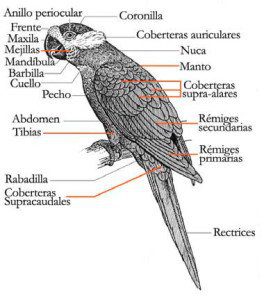
The Blossom-headed Parakeet (Psittacula roseata) has the forecrown, lores, cheeks and ear-coverts mauve-pink, fading to pale blue in the lower cheeks, the sides of neck, the crown and back neck, with broad black "mustache" stripes to form a narrow collar between black blue head and green body; nape bright green fading to a duller green on upperparts.

Upperwing-coverts, mostly green with a brown patch coverts smaller and medium; greater coverts outer and alula darker green. The primaries dark green (darker in vane inner) with a margin yellowish narrow in them vane outer.

Underwing-coverts green. The underparts pale green. Uppertail, centrally bright blue, with creamy white tip; outer feathers green on vane outer, yellowish-green on inner, tipped yellow; undertail-coverts dull yellowish.

Ilustraciรณn Cotorra Carirrosa

upper jaw orange-yellow, the lower black: cere whitish; irises yellowish white; legs gray-green.

The female has the head pale blue-gray, no black "mustache" and collar ring replaced by yellow opaque olive extending from the nape, around the sides of neck; tail slightly shorter. The upper jaw yellow, the lower dark grey.

The immature has the head greenish, the gray tint chin and the bill yellowish to the 15 months, when both sexes develop similar to plumage adult female; the males acquires adult plumage at about 30 months.

Subspecies description

Once considered the same species Psittacula cyanocephala, where he was often wrongly classified as Psittacula cyanocephala rosa.

  • Psittacula roseata juneae

    (Biswas, 1951) – Like species nominal, but the overall color body It is yellower; more extensive stain or red patch shoulder; central feathers tail paler color, side feathers tail yellower.


  • Psittacula roseata roseata

    (Biswas, 1951) – The species nominal.

Habitat:

Video – "Blossom-headed Parakeet" (Psittacula roseata)

Blossom-headed parakeet Call / Psittacula roseata / Bird's Call

The Blossom-headed Parakeet inhabit open forests, including Savannah, secondary forests, forest edge, clear and cultivated land. Partially deforested areas persists and seems to prefer forest edges adjacent farm.

Mainly observed in the lowlands to about 1.500 meters above sea level. Usually, in small flocks, form larger congregations where food is plentiful. He joins mixed flocks with Rose-ringed Parakeet, the Plum-headed Parakeet and Red-breasted Parakeet and form communal roosts in dense vegetation.

Reproduction:

The nests This species is found in tree cavities, usually at a moderate height; they can dig the hole themselves or modify old nests of other species (for example, woodpeckers or barbets).

Nest usually in colonies of several couples. The laying is of 4-5 (rarely six); eggs are more spherical than those of other congeners. The breeding season It is from January to April (May sometimes).

Food:

Foods are reported: wild flowers and Granada, nectar, including grain sorghum and corn, fruits such as figs and apricots, red peppers and chard seeds. Their diet is very similar to the Plum-headed Parakeet.

Distribution:

Distributed by the foothills of Himalaya Oriental until Indochina. Of Sikkim (India) and South of Bhutan through Assam until Bengal and Bangladesh and east along the north and center Burma, South of China (Yunnan, Guangxi and Guangdong province), Thailand, Laos, Kampuchea and Viet Nam.

Mainly sedentary with seasonal movements in southwest Burma, where Blossom-headed Parakeet They are common in the months of March and April, but otherwise few months, generally common despite apparent decline in some areas (for example, Thailand and Burma), mainly due to large-scale deforestation, and persecution. Few in Viet Nam.

Resident but with some local movements in relation to the food supply.

Held captive and apparently the subject of strong catch in some parts.

Subspecies distribution

  • Psittacula roseata juneae

    (Biswas, 1951) – From East Bangladesh to the North of Burma and east through southern China, Thailand, Laos, Kampuchea and Viet Nam.


  • Psittacula roseata roseata

    (Biswas, 1951) – The species nominal.

Conservation:

State of conservation โ“˜


Near-threatened Near Threatened โ“˜ (UICN)โ“˜

โ€ข Current Red List of UICN: Near-threatened

โ€ข Population trend: Decreasing

This species has been upgraded from Least concern due to new information on population trends. It is listed as Near-threatened on the grounds that it is experiencing rapid moderate decline due to habitat loss, unsustainable levels of exploitation and hunting pressure.

This species has suffered greatly loss of habitat (Forshaw 2006), What, in combination with capture for trade bird cage and general persecution as a pest, have caused the Blossom-headed Parakeet it becomes rare or rare in Thailand (pit et to the. 1997, Juniper and Parr 1998) and Myanmar (Juniper and Parr 1998).

The size of the world's population has not been quantified, but the species according to sources, has a population variable through its range

International trade records showed that 836 birds were exported between 1981 and 1985, but this increased to 6.873 birds between 1986-1990, mainly Viet Nam and Thailand (pit et to the. 1997).

In Laos, habitat encroachment has been so severe in the lowlands, few remaining areas large enough so that the nests Blossom-headed Parakeet they can escape from theft, and there is little active effort to reduce this pressure (JW Duckworth in litt. 2013).

In Cambodia, changes in land use in the lowlands have been too quickly (RJ Timmins in litt. 2013), and it is expected that the intended conversion bosque deciduous Dry for agribusiness plantations may cause a decrease of 30% or more in the national population of this species in the next 20 years (F. Goes in some. 2013).

Actions ongoing:

    The species is known to occur in some protected areas, as the Kirirom National Park, Cambodia (F. Goes in some. 2013).

Conservation actions proposed:

    – Conduct periodic surveys to track broad population trends.
    – Monitor the rates of loss and degradation of habitat.
    – Quantify the impact of harvesting for trade.
    – List CITES listed species.
    – Increase the area of รขโ‚ฌโ€นรขโ‚ฌโ€นsuitable habitat that are protected.
    – Carry out awareness raising activities to discourage theft of nests and capture.

"Blossom-headed Parakeet" in captivity:

The Blossom-headed Parakeet It is a rare bird and very expensive, requiring experienced breeders. Immature of this species are nearly identical to those of the Slaty-headed Parakeet and Plum-headed Parakeet, so when buying an immature Blossom-headed Parakeet, be sure to do so only from a reputable breeder.

To ensure breeding success, each partner should have their own aviary. No house them with Plum-headed Parakeet wave Slaty-headed Parakeet, in order to avoid hybridisation.

The Blossom-headed Parakeet, generally, they are not aggressive with other smaller birds, usually calm and they are not very destructive to wood. The female is, usually, the dominant bird; reach breeding age at about the age of 3 years. New pairs should be introduced several months before the start of the breeding season so that the birds have enough time to establish a strong bond with each other.. A good pair bond will usually translate into better breeding results.. However, are very difficult birds to breed in captivity.

Since Blossom-headed Parakeet It is so rare, we should consider well managed breeding programs, before acquiring one of these copies for your particular pet enjoy. This Parrot You need constant training and behavioral counseling from an early age to ensure its potential owners the enjoyment of a free bird destructive habits and annoying.

Alternative names:

Blossom-headed Parakeet, Blossom headed Parakeet, Eastern Blossom-headed Parakeet (English).
Perruche ร  tรชte rose (French).
Rosenkopfsittich (German).
Periquito-de-cabeรงa-rosa (Portuguese).
Cotorra Carirrosa, Cotorra de Cara Rosada (espaรฑol).


scientific classification:

Dr. Biswamoy Biswas
Dr. Biswamoy Biswas

Order: Psittaciformes
Family: Psittaculidae
Genus: Psittacula
Scientific name: Psittacula roseata
Citation: Biswas, 1951
Protonimo: Psittacula roseata


Blossom-headed Parakeet Images:


Especies del gรฉnero Psittacula

Sources:

Avibase
– Parrots of the World โ€“ Forshaw Joseph M
– Parrots A Guide to the Parrots of the World – Tony Juniper & Mike Parr
– Birdlife

Photos:

(1) – Rose-headed Parakeet in Guwahati, Assam, India By ยฉ Raj Kamal Phukan – Oriental Bird Images
(2) – Psittacula roseata blossom headed parakeet – Birds-pet-wallpapers
(3) – Blossom-headed Parakeet (Psittacula roseata) by Elite-Pets
(4) – Juvenil Blossom-headed Parakeet (Psittacula roseata) by desbecsetdesplumes
(5) – Blossom-headed Parakeet (Psittacula roseata) in Tenerife – Loro Parque – link
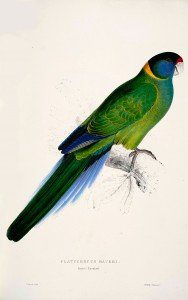
(6) – Birds of Asia, Vol. V, Parts XXV-XXX, by John Gould, 1873-1877. Painted by John Gould & Henry C. Richter [Public domain], via Wikimedia Commons

Sounds: Frank Lambert (Xeno-canto)

โ–ท The world of Pets: Dogs, cats, birds, reptiles, amphibians

Blue-throated Parakeet
Pyrrhura cruentata

Blue-throated Parakeet

Content

Description:

Blue-throated Parakeet
30 cm.. length and 90 g. of weight.

The Blue-throated Parakeet (Pyrrhura cruentata) It is a very colorful bird; has the forecrown, crown and rear of the neck, dark brown with pale orange sides and with some feathers (especially posteriorly) giving speckled appearance; lores, cheeks top, supercilii area and ear-coverts, dull red, merging on sides of neck with yellowish patch bordered behind by blue band running across nape; bottom of the cheeks, green.

Mantle, back and scapulars, green; broad crimson patch on lower back and rump; uppertail-coverts green. Bend of wing bright red; upperwing-coverts green. Outerwebs of the primaries, blue, green on the innerwebs; secondaries green on outerweb, Gray on innerwebs; flight feather with dark tips; infra-wing coverts minor, olive green, the gray greater coverts; underside of flight feather, olive gray wash. Chin green; the throat and the top chest, blue with some dark tips; underparts green with a patch of variable size of crimson color on the belly. Upper, the tail It is golden in color with green tint; brown below. Bill grey; bare periophthalmic grey; irises yellow orange; legs grey.

Both sexes similar, but the irises perhaps brighter in the male. Immature more off, with less red at bend of wing.

  • Sound of the Blue-throated Parakeet.

Habitat:

The Blue-throated Parakeet inhabit, mainly, in primary forests of the Atlantic forest or on the edges of forests and, sometimes, in slightly modified natural forests, penetrate into agricultural areas where tall forest trees shade cocoa crops. Unknown seasonal and dry forests. (Usually in lowlands below 400 m, but 960 metres in Minas Gerais, Brazil, usually in flocks of 6-20 birds(mainly 8-12), at least where they are locally common.

Reproduction:

Nests in tree hollows. The breeding, apparently, It occurs in the austral spring, from June to October. Clutch 2-4.

Food:

The diet of the Blue-throated Parakeet includes plants of Talisia esculenta, Alchornea iricurana, Mabea fistulifera, Trema micrantha and Cecropia. The fruits of Miconia hypoleuca can be important in times of scarcity. Birds feeding in the canopy and the lower edge vegetation, never out of the woods; Once he observed feeding on the Golden-capped Parakeet (Aratinga auricapillus).

Distribution and status:

Size of its range (breeding/resident): 281.000 km2

endemic to eastern Brazil, from Bahia until Rio de Janeiro. They were formerly known from Jequiรฉ and islanders, Bay, but the latest reports are North Jequitinhonha River, south of which, reports come from remaining patches of forest (including the Monte Pascoal National Park) to the border Holy Spirit.

The birds continue in the few wooded areas of eastern Minas Gerais, Brazil as the Rio Doce State Park, the Book Caratinga (about Raรบl Soares) and about Mantena and several locations in northern Espirito Santo, including Biological reserves Great stream and Sooretama and neighboring Linhares Sooretama reserve. It is apparently absent from the southern state but survives near Desengano State Park in the State of Rio de Janeiro, the southernmost site which have been observed recently.

Resident. Common and widespread at the end of the 19th century, but decreased dramatically with massive deforestation within its range due to agriculture, speak, mining, roads and urban development. The final bastion (the only place where birds remain common) It is complex reserve Sooretama / Linhares; much smaller numbers exist in other forest remnants (protected but widely separated). Habitat loss continues in Bay with some sites (for example Monte Pascoal) under intense pressure.

Rare in captivity, but trapping for illegal trade is an additional threat. Listed in Appendix I of the CITES and protected by Brazilian law.

Conservation:

State of conservation โ“˜


Vulnerable Vulnerable โ“˜ (UICN)โ“˜

โ€ข Current category of the Red List of the UICN: Vulnerable.

โ€ข Population trend: Decreasing.

โ€ข Population size : 2500-9999 individuals.

Rationale for the Red List category

This species survives in scattered fragments of Atlantic Forest, where the extent of suitable habitat continues to decline rapidly. The remaining populations are small, severely fragmented into isolated reserves, where protection is largely inadequate and are suspected to be declining rapidly. So, qualifies as Vulnerable.

Justification of the population

The population is calculated in the number 2.500-9.999 mature individuals based on an evaluation of known records, descriptions of abundance and size range. This is consistent with estimates of population density recorded for congeners or close relatives with similar body size, and the fact that only a proportion of its distribution area is occupied. This estimate is equivalent to 3.750-14.999 individuals, rounded here to 3.500-15.000 individuals.

Justification of trend

continued rapid population decline is suspected because rates loss of habitat.

Threats

The extensive and continuous clearing of the forest You are responsible for its current fragmented distribution. Their apparent tolerance to shade cocoa plantations provides little hope because shading techniques since the early 1980 They have involved the use of banana trees and Erythrina, rather than stand, and unstable prices have led to conversion to pasture. Many remaining populations are affected by site-specific threats, as conflicts between habitat conservation and the rights of local communities in the Monte Pascoal National Park. The capture for the cage bird trade It is a relatively new phenomenon, Although the species is rare in domestic and international markets.

Conservation Actions Underway

CITES Appendix I. It is considered nationally Vulnerable in Brazil (Silveira y Straube 2008, MMA 2014), and is protected by Brazilian law. It is in the National Parks of Chapada da Diamantina and Monte Pascoal, on Experimental Station Barrolรขndia, on Linhares Forest Reserve, on Book Caratinga, in sweet River and probably in the Desengano State Parks, and in the Biological Reserves Great Stream, Deer Stream and Sooretama (Wege and Long 1995).

Conservation Actions Proposed

Survey to locate additional populations and protect undetected (Snyder et to the., 2000), especially in southern Bay and northeast of Minas Gerais, Brazil. Ensure protection de facto key reserves, especially Sooretama, Linhares and Vera Cruz Station. Confiscation of birds of trade and well-planned release of these birds in areas of the previous range of species to improve recovery and connectivity of disjunct populations (J. Gilardi in little).

"Blue-throated Parakeet" in captivity:

Protected by CITES Appendix I.

Rara in national and international markets. Each captive specimen of this species which is capable of reproducing, must be placed in a well-managed captive breeding program and not sold as a pet, in order to ensure its long-term survival.

Alternative names:

Black-tailed Parakeet, Blue throated Conure, Blue throated Parakeet, Blue-chested Parakeet, Blue-throated Conure, Blue-throated Parakeet, Ochre Marked Conure, Ochre-marked Parakeet, Red-eared Parakeet, Red-rumped Parakeet (English).
Conure tiriba, Perriche tiriba, Perruche tiriba (French).
Blaulatzsittich, Blaulatz-Sittich (German).
cara-suja, fura-mato, tiriba, tiriba-fura-mato, Tiriba-grande, tiriva (Portuguese).
Cotorra Tiriba, Perico Grande (espaรฑol).


scientific classification:

Prince Maximilian of Wied-Neuwied

Order: Psittaciformes
Family: Psittacidae
Genus: Pyrrhura
Scientific name: Pyrrhura cruentata
Citation: (Wied-Neuwied, 1820)
Protonimo: bloody parrot


Images Blue-throated Parakeet:


Especies del gรฉnero Pyrrhura

Blue-throated Parakeet (Pyrrhura cruentata)


Sources:

Avibase
– Parrots of the World โ€“ Forshaw Joseph M
– Parrots A Guide to the Parrots of the World – Tony Juniper & Mike Parr
Birdlife

Photos:

(1) – Ochre-marked Parakeet (also known as Blue-chested Parakeet, Blue-throated Parakeet, or Blue-throated Conure) at Palmitos Park, Gran Canaria, one of the Canary islands, Spain By ipfreaks (originally posted to Flickr as Papagei) [CC BY-SA 2.0], via Wikimedia Commons
(2) – Blue-chested Parakeet, (Pyrrhura cruentata) also known as Blue-throated Parakeet or Blue-throated Conure. Pet parrot By โžจ Redvers (originally posted to Flickr as Hector and toy 8) [CC BY 2.0], via Wikimedia Commons
(3) – Blue-chested Parakeet (Pyrrhura cruentata) also known as Blue-throated Parakeet or Blue-throated Conure at Central Park Zoo, New York, USA By Claire Houck [CC BY-SA 2.0], via Wikimedia Commons
(4) – Blue-chested Parakeet (Pyrrhura cruentata) also known as Blue-throated Parakeet or Blue-throated Conure. Pet with yellow toy By โžจ Redvers (originally posted to Flickr as Hector and toy 4) [CC BY 2.0], via Wikimedia Commons
(5) – Blue-chested Parakeet (also known as Blue-throated Parakeet or Blue-throated Conure); two on a perch By TJ Lin [CC BY-SA 2.0], via Wikimedia Commons
(6) – Parrots A Guide to the Parrots of the World – Tony Juniper & Mike Parr

Sounds: Jeremy Recall, XC85365. accessible www.xeno-canto.org/85365

โ–ท The world of Pets: Dogs, cats, birds, reptiles, amphibians

Blue-winged Parrotlet
Forpus xanthopterygius

Cotorrita Aliazul

Content

Description:


Anatomy-parrots

12 to 13 cm.. height.

The Blue-winged Parrotlet (Forpus xanthopterygius) has the forecrown, the crown, back of the neck and ear-coverts, green; cheeks, eye area and lores, emerald green. Upperparts and wings, green, except the part inferior of the back, rump, primaries and greater coverts, are cobalt blue and blue color toward the base of the secondaries. Under, the wings with the coverts a rich cobalt blue color; the flight feathers Matte metallic blue. the underparts of color green with shades yellow and with feathers of color red Emerald around the thighs and vent. Upper, the tail green; undertail, pale green.

Bill and cere Pink with gray base up to the upper jaw; bare periophthalmic pale grey: irises dark brown: legs Gris-Rosado pale.

Female all green.

Immature similar to the adult respective but the color blue of them males young mixed with green.

Subspecies description
  • Forpus xanthopterygius flavescens

    (Salvadori, 1891) – Similar to the species nominal but the males with the rump pale blue; underparts and facial area more yellowish; undertail, the tail more bluish.

  • Forpus xanthopterygius flavescens

    (Hellmayr, 1929) – Generally paler and more yellowish which the nominal. Forehead, throat and cheeks males, yellow.

  • Forpus xanthopterygius xanthopterygius

    (Spix, 1824) – The nominal

  • Forpus xanthopterygius crassirostris

    (By Taczanowsk, 1883) – As the species nominal but blue pale with emerald green in it forecrown. Primary coverts pale, of color grisaceo-violeta that contrast with the coverts more large of color blue more dark. upper jaw laterally compressed in the Center.

    – Some authors like (Stotz et to the., 1996, Collar 1997) They have followed Pinto (1945) and considered this subspecies as monotypic species under the scientific name Forpus crassirostris

Habitat:

Frequent habitats woodlands more dry such as Open forests and riparian, closed and caatinga; at the edge of the range that is located in the Savannah, palm groves, scrub semiarid and pastures. In the western amazon appears to be mainly distributed along rivers in lighter riparian growth. Mainly in the land low, but reported to 1,200 m in the mountains of the southeast of Brazil. Gregaria, in herds of up to 50.

Reproduction:

It nests, mainly, in the cavities of trees, Although also termite tree, posts in fences, nests common hornero (Furnarius rufus), which can be occupied by force and lined with grass stalks, or even nests of the Red-rumped Cacique (Cacique haemorrhous). Clutch 3-7 eggs.

Food:

Its diet includes fruit of Cecropia, seeds of Mikania and Trema micrantha and flowers of Ambrosia and Marcgravia; Forages in open areas, sometimes in land.

Distribution:

Size of the area of distribution (reproduction / resident): 5.780.000 km2

Its distribution is discontinuous in South America, since the Basin Amazon to the North of Argentina with people separated in the North of Colombia. The latter occurs in the lowlands of the Caribbean arid from Cartagena through the valley bottom of the river Magdalena South to North of Bolรญvar and East to the base of Sierra Nevada de Santa Marta. The species reappears in the end South of Colombia about Leticia and possibly in the Putumayo, and records from the Northeast borders of the Ecuador and from the East of Peru to the East of Bolivia in hand me and Santa Cruz; It extends through the basin of the Western Amazon of Brazil eastward to the East of amazon and in large part of the interior of the this of Brazil towards the Southeast, possibly up to Rio Grande do Sul.

Apparently absent from parts of the East and northeast of brazilian amazon with its northeastern limits in maranhรฃo and Cearรก.

They are distributed in the northeast of Argentina, in Missions, Northeast of Currents, Chaco oriental and Formosa Eastern.

Is located in the East of Paraguay and can be observed over the West in the chaco.

Apparently introduced in Jamaica, but the current situation is unknown.

Mainly resident Although migrant altitude in the southeast of Brazil, with seasonal movements in Argentina in relation to food supply. common in the East of the cordillera, sometimes locally abundant (for example, in the northern parts of Bay), less abundant in the West, being uncommon and local (Perhaps reducing) in the Northwest of Colombia and scarce throughout the East of Peru and Bolivia. Perhaps increasing in parts of the western amazon with cleared of forest dense, but probably in decline in Paraguay, where formerly common and now rare.

The Blue-winged Parrotlet have been caught for the trade, with captive birds outside range countries. Is unlikely that the trade has been affected to their abundance in the Middle wild.

Subspecies distribution

With the aim of preserving the stability of the nomenclature, It has designated a lectotype for the name widely used xanthopterygius, What makes the correct name for the species present. Four subspecies currently recognized.

  • Forpus xanthopterygius flavescens

    (Salvadori, 1891) – Bolivia and Southeast Peru.

  • Forpus xanthopterygius flavescens

    (Hellmayr, 1929) – maranhรฃo, Piauรญ, Cearรก and Northeast South of Brazil to the North of Bay.

  • Forpus xanthopterygius xanthopterygius

    (Spix, 1824) – The nominal

  • Forpus xanthopterygius crassirostris

    (By Taczanowsk, 1883) – West amazon in South Colombia, is of Ecuador and this from Peru to center of amazon, Brazil.

    – Some authors like (Stotz et to the., 1996, Collar 1997) They have followed Pinto (1945) and considered this subspecies as monotypic species under the scientific name Forpus crassirostris

Conservation:

State of conservation โ“˜


minor concern Minor Concern โ“˜ (UICN)โ“˜

โ€ข Current category of the Red List of the UICN: Least concern.

โ€ข Population trend: Stable.

Justification of the population

The size of the world's population of the Blue-winged Parrotlet It has not been quantified, but this species is described as ยซcommonยป (Stotz et to the., 1996).

Justification of trend

Suspected that the population is stable in absence of evidence of any decline or threatens substantial.

"Blue-winged Parrotlet" in captivity:

In captivity they are not very frequent. They are birds enable you require a large cage. Quiet and something Shy. Not is easy to accommodate them with other parrots.
Can be prone to it Obesity.

Note:

Among the various species of the Blue-winged Parrotlet (Forpus xanthopterygius), There is, Unfortunately, a very extensive variety of colors mixed due to the crossing in captivity of the nominal species with several of their subspecies, as well as the different crosses between subspecies. So, it is rather doubtful to find yet species and subspecies properly colored, especially in the poultry raising European. Only the subspecies Forpus xanthopterygius flavescens, as pure subspecies, it's still pretty easy to recognize.

Alternative names:

Blue-winged Parrotlet, Blue winged Parrotlet, Blue-winged, Large-billed or Turquoise-winged Parrotlet, Blue-winget parrotlet (English).
Toui de Spix, Perruche-moineau ร  ailes bleues, xT. ร  gros bec ou T. de Spengel (French).
Blauflรผgel-Sperlingspapagei (German).
Tuim, bate-cu, caturra, coiรณ-coiรณ, cu-cozido, cuiรบba, cu-tapado, meudo, periquitinho, periquito, periquito-do-espรญrito-santo, quilim, tabacu, tapa-cu, tuietรช, tuim-de-asa-azul, tuitiri (Portuguese).
Catita enana, Catita Enana Sudamericana, Cotorrita Aliazul, Periquito Azulejo, Viudita (espaรฑol).
Catita enana (Argentina).
Catita enana (Colombia).
Periquito de Ala Azul (Peru).
Viudita (Paraguay).


scientific classification:

Johann Baptist von Spix

Order: Psittaciformes
Family: Psittacidae
Genus: Forpus
Scientific name: Forpus xanthopterygius
Citation: (of Spix, 1824)
Protonimo: Psittaculus xanthopterygius


Images Blue-winged Parrotlet:

Videos of the "Blue-winged Parrotlet"


Species of the genus Forpus

Blue-winged Parrotlet (The xanthopterygi of Forp)


Sources:

Avibase
– Parrots of the World โ€“ Forshaw Joseph M
– Parrots A Guide to the Parrots of the World – Tony Juniper & Mike Parr
Birdlife

Photos:

(1) – A male Blue-winged Parrotlet in Goiรขnia, Goiรกs, Brazil By Wagner Machado Carlos Lemes [CC BY 2.0], via Wikimedia Commons
(2) – Blue-winged Parrotlet (Forpus xanthopterygius) Vale do Ribeira, Sao Paulo (state), Brazil By Dario Sanches [CC BY-SA 2.0], via Wikimedia Commons
(3) – A male Blue-winged Parrotlet in Goiรขnia, Goiรกs, Brazil By Wagner Machado Carlos Lemes [CC BY 2.0], via Wikimedia Commons
(4) – A male Blue-winged Parrotlet (Forpus xanthopterygius) looking out from a nest in the Vale do Ribeira, Brazil By Dario Sanches [CC BY-SA 2.0], via Wikimedia Commons
(5) – Blue-winged Parrotlet (Forpus xanthopterygius) at Foz do Iguacu, Brazil By Arthur Chapman [CC BY 2.0], via Wikimedia Commons

Sounds: (Xeno-canto)

โ–ท The world of Pets: Dogs, cats, birds, reptiles, amphibians

Blue-eared Lory
Eos semilarvata


Lori de Seram

Content

Description

Is the more small of the gender Eos, with only 24 cm.. length and an approximate weight of 170 gr.

The plumage of the Blue-eared Lory x(Psittacus erithacus) is bright red.

The upperparts of the cheeks and ear-coverts form a band blue violet.

The feathers of abdomen and under the tail are blue, the primaries are black and red color on the inside, the secondaries has black spots, the feathers largest of the shoulder are blue, the back is red-brown, the underparts bright red, their irises are reddish brown, the legs grey and orange red the bill.

The plumage of the youth usually appears paler and duller Red. The mask boils down to a simple pale blue dot under the eye and the mumps. The scapulars are brownish grey with light blue striped uniform. The feathers of abdomen are red with some blue touches. The irises reddish color.

The Blue-eared Lory EOS can be mistaken for other species of the genus, but in its area of distribution, only the Red Lory (Eos Bornea) shows similarity of characters. But, does not display a blue stain in the face or at the bottom of the abdomen.

Habitat:

Frequently not only in primary forests, but also in the Highlands bordering the bare mountain peaks.

This bird usually lives above the 1.200 meters above sea level, area to which the Red Lory (Eos Bornea) fails. But, from time to time is reduced to 800 m, so sometimes they interfere in the same area two species.

The Blue-eared Lory they live alone, in pairs or small family groups.

They feed in the foreign branches of trees in flower.

They are noisy birds in flight, but they are relatively quiet and discrete When feed. When they move they tend to fly at low altitude.

Reproduction:

There is not much information of their reproduction habits in the natural environment. But, It can be assumed that the Red Lory It takes a form of very similar to that of other nesting Loris. These are cavemen, that is to say, you install their nests in tree cavities.

The season of spawning It estimated that the months of September to March.
Usually, they lay two eggs per clutch and its incubation lasts a few 26 days.

Young people are often taken up to 10 weeks before you fly.

Food:

They feed mainly on nectar in the trees in flower in lower altitudes and Heath (Heather, gorse, broom) at higher altitudes.

Distribution:

Lori distribution of Seram
The Blue-eared Lory is endemic of the Seram island in the Moluccas (Indonesian).

Conservation:


minor concern

– Current IUCN Red List category: Least concern

– The population trend: Decreasing

The world population It has not been quantified, but the species is estimated that it can range from common to abundant at the local level (pit et to the. 1997). However, justified the population trend, It is suspected to be in decline due to unsustainable levels of exploitation.
The population range is between 5,000 and 50,000 birds released.

Probably the Blue-eared Lory It will always remain a rare specimen in the world of birds.

In March of 1995 the Government of Indonesian stopped the export of these birds.

Its hunting for local trade has become especially intense.. Fortunately, There is no reason to keep to the Blue-eared Lory as a pet on the part of the indigenous population.

"Blue-eared Lory" in captivity:

Since its population is decreasing, any specimen that can not be returned to their natural habitat (natural range) should preferably be placed in a well-managed breeding program to ensure the survival of the species.

Alternative names:

Blue-eared Lory, Ceram Lory, Blue eared Lory, Seram Lory (ingles).
Lori masquรฉ, Lori ร  oreilles bleues (French).
Halbmaskenlori (German).
Loris Semilarvata (Portuguese).
Lori de Orejas Azul, Lori de Seram (espaรฑol).

scientific classification:

Order: Psittaciformes
Family: Psittaculidae
Genus: Eos
Scientific name: Eos semilarvata
Citation: Bonaparte, 1850
Protonimo: Eos semilarvata

Images ยซLory of Seramยป:

Videos "Blue-eared Lory"

————————————————————————————————–

ยซLori de Seramยป – (Eos semilarvata)


Sources:

Avibase
– BirdLife.org
Oiseaux.NET

Photos:

– Blue-eared Lory in the Walsrode Bird Park, Germany by Quartl – Wikimedia
papageien.org
– Blue-eared Lory (Eos semilarvata) at the San Diego Zoo by Leon Mitchell – Wikipedia
– free-pet-wallpapers.com
kanaria1898tuttlingen.de

Sounds: Mark Todd (Xeno-canto)

โ–ท The world of Pets: Dogs, cats, birds, reptiles, amphibians

Blue-rumped Parrot
Psittinus cyanurus


Lorito Dorsiazul

Content

Ilustraciรณn Lorito Dorsiazul

Description:

Of 18 cm.. of length and a weight of 85 g..

The Blue-rumped Parrot (Psittinus cyanurus) is a small Parrot, robust and with a tail very short.

Since the crown up to the nape is a bluish grey, glossy on the front of the crown; the lower cheeks and chin grayish brown; the nape sharply demarcated from the the mantle black, with a strongly mottled grey; the low back and rump Blue light violet, brighter than the blue of the head. The patch in the shoulders reddish brown; upperwing-coverts medium Green, the edges of yellowish-green, especially in internal and great stockings coverts; primary coverts blue; flight feather green, with the primaries finely lined with yellow along the inner edges; carpal edge Blue and yellow. Lower parts of the wings dark, with bright red feathers on the underwing-coverts and axillary.

Underparts grayish brown, becoming a blue-green shutdown, with yellow marks in the vent. Uppertail greenish blue in the Center, inner featherss of yellow light with vane outer greener; undertail-coverts yellow

A long bill with red notches in the upper jaw, lower jaw duller; irises yellowish white; legs bluish grey.

The female has the head and upper jaw brown; lacks black on the back and shows just a little blue in the rump; the underparts are light green, Gray as in the male Brown not.

The youth are like females, but with the head green.

Subspecies description

Subspecies description:
  • Psittinus cyanurus abbotti

    (Richmond, 1902) – Males with green spread at the front of the crown, the back of neck black, Green mantle and the rump green (marked with turquoise), the underparts greenish. Female with the head green. Larger than the subspecies Psittinus cyanurus pontius.


  • Psittinus cyanurus cyanurus

    (Forster,JR, 1795) – The species nominal


  • Psittinus cyanurus pontius

    (Oberholser, 1912) – As well as the species nominal but larger.

Habitat:

There is some evidence of possible regular movements in the North of its distribution area, with a view to passing birds above Fraser Hill in Malaysia, 1,300 m.

The Blue-rumped Parrot is also seasonal in parts of the South visitor of Burma.

They are distributed in lowland forests (usually below 700 m) and related habitats, including open forests, secondary growth, huertas, mangroves, dry forests, swamp forest, cultivated areas, including oil palm plantations (Elaeis guineensis), near forests (where post-breeding concentrations are considered pests in some areas), dense thickets and groves of coconut (Cocoa nuts).

The Blue-rumped Parrot they are not shy, and can be found in groups of up to 20 birds, whether eating in silence at the canopy level, quickly flying above the forest, or above the tops of the trees hacuendo calls continuously.

Reproduction:

The breeding season of the Blue-rumped Parrot extends from February to may in Malaysia, and from June to September in Borneo, Although some birds have been seen inspecting possible nesting cavities at other times of the year.

During the courtship grooming each other is common; the male jumps by placing both feet on the back of the female during mating. The implementation is up to three eggs, which are deposited in a hole in the top of a tree, little more is known about the reproductive cycle.

Food:

The diet of the Blue-rumped Parrot is composed of seeds, fruits and flowers.

Distribution:

Its distribution varies from around 11ยฐN in Peninsular Thailand and South of Tenasserim, Burma, across the peninsula Malaysia, Singapore, Sumatra and Borneo (Kalimantan, Sarawak, Sabah and Brunei). They are also found in the Riau (including Bintan) and groups of Lingga Islands to the North of the South of Sumatra, in Bangka, and, in West Sumatra, in Simeulue and the group Mentawai including Siberut, Sipura, Pagai Utara and Pagai Selatan.

It is only locally common and less abundant than other sympatric species of Psittaculas in most of its range.

Subspecies distribution

Subspecies distribution:

Conservation:


Near-threatened


โ€ข Current Red List of UICN: Near threatened

โ€ข Population trend: Decreasing

The size of the world population Blue-rumped Parrot He has not formally quantified, but it is believed that they are more than 100.000 individuals (Juniper and Parr 1998), and the species is described as common in primary habitats and uncommon in secondary habitats and plantations (pit et to the. 1997).

In general, the loss of the forest cover between 2000 and 2010 It has been estimated in 23,7% in the case of Sumatra, the 12,0% in Borneo and the 8,2% for Peninsular Malaysia (Miettinen et to the. 2011).

In Sumatra, It has been estimated that you close to of the 36% primary forest cover in 1990, lost in 2010 (including degraded primary forest) (Margono et to the. 2012).

Descents are compounded by the pressure of the capture; But, the Blue-rumped Parrot uses of forest fragments, forest exploitation, secondary vegetation, other modified habitats and habitats at elevations, What has prevented a faster decrease in its population. But, many lowland forests have been logged.. So, suspected of may be suffering a decrease in the moderately rapid population.

Conservation Actions Underway:

"Blue-rumped Parrot" in captivity:

Pretty rare in captivity.

The Blue-rumped Parrot It is not a bird which like to interact with humans, nor is it a particularly playful bird. Are described as docile who love to sing on rainy days. Due to its melodic voice, they are often alone as songbirds. But, not all of them are born as birds cantadoras, in fact, Some are dumb.

It is recommended to buy the younger, since they are more likely to sing. But, in general it's parrots very quiet with occasional whistles and high-pitched vocation, that it can be irritating when held captive in an apartment.

They have very limited ability to speak. Some of them learn to speak – but most never do.

Unfortunately, they are easy to catch, since they remain immobile when frightened. Hunters have only to shoot into the air or make some noise on turning the birds when they are resting so that they can be easily caught. This has led to its State endangered extincion ..

With regard to its longevity, according to sources, a Blue-backed Parrot was still alive after 10,2 years in captivity. Taking into account the longevity of the similar species, maximum longevity is probably underestimated in this species.

The Blue-rumped Parrot It is a beautiful bird when it is in its natural habitat, its potential as a pet it is said that it is limited. Usually do better in an environment of Aviary, with plenty of space so that you can explore the surrounding area. Better yet is protect their natural habitat and let them enjoy freedom.

Alternative names:

Blue-rumped Parrot, Blue rumped Parrot (English).
Perruche ร  croupion bleu, Perroquet ร  croupion bleu (French).
Rotachselpapagei, Rotachsel-Papagei (German).
Papagaio-de-rabadilha-azul (Portuguese).
Lorito de Lomo Azul, Lorito Dorsiazul (espaรฑol).


scientific classification:

Johann Reinhold Forster

Order: Psittaciformes
Family: Psittaculidae
Genus: Psittinus
Scientific name: Psittinus cyanurus
Citation: (Forster, JR, 1795)
Protonimo: Psittacus cyanurus


Images "Lorito Dorsiazul":

Videos "Blue-rumped Parrot"

ยซLorito Dorsiazulยป (Psittinus cyanurus)


Sources:

Avibase
Parrots of the World โ€“ Forshaw Joseph M
Parrots A Guide to the Parrots of the World – Tony Juniper & Mike Parr
Birdlife

Photos:

(1) – Blue-rumped Parrot Psittinus cyanurus. Bird Park Kuala Lumpur by Bernard DUPONT – Flickr
(2) – Bird Park Kuala Lumpur By Bernard DUPONT from FRANCE (Blue-rumped Parrots Psittinus cyanurus) [CC BY-SA 2.0], via Wikimedia Commons
(3) – Blue-rumped Parrot in a cage By TJ Lin (originally posted to Flickr as DSC01255) [CC BY-SA 2.0], via Wikimedia Commons
(4) – Male blue-rumped parrot (Psittinus cyanurus) by Chlidonias – zoochat
(5) – Female blue-rumped parrot (Psittinus cyanurus) by Chlidonias – zoochat
(6) – Psittacus Malaccensis. (Latham, not Gmellin) Blue-rumped Parrot By William Swainson, F.R.S., F.L.S. (Zoological Illustrations, Volume III.) [Public domain], via Wikimedia Commons

Sounds: Martjan Lammertink (Xeno-canto)

โ–ท The world of Pets: Dogs, cats, birds, reptiles, amphibians

Austral Parakeet
Enicognathus ferrugineus

Austral Parakeet

Content

Description:

28โ€“36 cm. length.

The Austral Parakeet (Enicognathus ferrugineus), is mostly green; the lores and forecrown rather dull brick-red; the front of the crown with yellow and green feathers in the center, and edges dark green olive feathers central part of the crown.

The feathers of the upperparts They are olive green with darker edges, giving a scalloped effect. The upperwing-coverts They are olive color with dark margins. Flight feathers green with metallic blue suffusion. Underwing-coverts green with dark tips; bottom of the flight feather pale grey. The underparts They are mainly pale green olive, with darker margins (except in the the thighs) and a large opaque red spot on the central belly. In the long run tail It is dark red off above; pale grayish below. The upper jaw horn is dark colored with a black tip; the bottom is dark horn-colored; irises reddish brown; legs dark gray.

Austral Parakeet

Both sexes are similar. The immature It has a duller red on the head and patch in the belly red less dense and less extensive.

  • Sound of the Austral Parakeet.

Subspecies description:

  • Enicognathus ferrugineus ferrugineus

    (Statius Mรผller, 1776) – Nominal.


  • Enicognathus ferrugineus minor

    (Chapman, 1919) – Smaller and darker than the nominal, with a abdominal patch Red less extensive (sometimes absent).

Habitat:

Video – "Austral Parakeet" (Enicognathus ferrugineus)

Cachaรฑa (Enicognathus ferrugineus)

The Austral Parakeet occurs mainly in forests, including forests of Nothofagus, Araucaria and Quercus, but also in more open habitats with shrubs Berberis darwinii and Drimys winteri, also they visit cultivated areas, mainly at sea level in the southern part of the range, may reach 1200 meters and even 2.000 meters north. Observed in flocks of 10-15 individuals, coming to meet more than 100 birds outside the breeding period; flocks of 10 or more in Fire land with reports of attacks caused by Red-backed Hawk (Geranoaetus polyosoma).

In April and before the arrival of winter flocks leave the mountains to take refuge in lower valleys of lower altitude.

Reproduction:

They nest in the cavity of the trees, filling very deep holes with twigs and branches where building nests are no cavities available. The breeding season It comprising the months of November to December. Clutch 4-8 eggs. To the 26 days the chicks are born, emplumรกndose to 7-8 weeks.

Food:

predominantly eat seeds (can cause damage to grain crops). Its diet includes herbaceous and bamboo seeds, Drimys winteri, acorns and nuts Araucaria, fruit, berries and sprouts p. Nothofagus and bulbous roots.

Distribution and status:

Extending its range (reproduction / residents): 2.010.000 km2

Distributed by the south end of South America, psittacine distribution is the southernmost in the world.

They can be observed from Land of Fire north through Chile to province Oโ€™Higgins and east of Andes in Argentina, extending through Santa Cruz, Chubut, Black river Western and Neuquรฉn Western.

Usually residents, even in the extreme south, although the foothills move to raise (at least in Land of Fire) with some predictable local movements in the north. generally common, It is very abundant in the wooded coast Land of Fire. Large areas remain intact habitat and inhabiting several large protected areas.

Very rare in captivity.

Subspecies distribution:

Conservation:

State of conservation โ“˜


minor concern Minor Concern โ“˜ (UICN)โ“˜

โ€ข Current category of the Red List of the UICN: Least concern.

โ€ข Population trend: Stable.

โ€ข Population size : Unknown.

Justification of the Red List of the Category

This species has a very large range, and therefore does not approach the thresholds for Vulnerable under the range size criterion. The trend population seems to be stable, and therefore the species does not approach the thresholds for Vulnerable according to the population trend criterion. (> 30% decrease of more than ten years or three generations). The population size has not been quantified, but are not believed to approach the thresholds for Vulnerable based on population size criteria (<10.000 individuos maduros con una disminuciรณn continua estimada en> 10% in ten years or three generations, or in a particular population structure). For these reasons, the species is evaluated as Least concern.

Justification of the population

The world's population has not been quantified, but this species is described as ‘quite common(Stotz et to the. (1996).

Justification trend

The population suspected to be stable in the absence of evidence of any reduction or substantial threats.

"Austral Parakeet" in captivity:

Very rare in captivity.

Chilean law prohibits the purchase, sale and possession of this magpie.

If you have a Austral Parakeet I recommend you give it to SAG or the Center for Rehabilitation of Wildlife of Codeff (rehabilita@codeff.cl, background: 777 25 34 – Santiago), because in that place you will come across many other parrots of the same species that suffered the same process, and specialized people who care very well, TO THEN RETURN THEM TO THEIR NATURAL HABITAT.

Alternative names:

Austral Conure, Austral Parakeet, Emerald Conure, Emerald Parakeet, Magellan Conure, Magellan Parakeet (English).
Conure รฉmeraude, Conure magellanique, Perriche magellanique, Perruche magellanique (French).
Smaragdsittich, Smaragd-Sittich (German).
Periquito-austral (Portuguese).
Cachaรฑa, Cachaรฑa austral, Cotorra Austral, Cotorra Cachaรฑa (espaรฑol).

scientific classification:

Formerly separated from the monospecific genus Microsittace.

Order: Psittaciformes
Family: Psittacidae
Genus: Enicognathus
Scientific name: Enicognathus ferrugineus
Citation: (Statins Mulller, 1776)
Protonimo: Psittacus ferrugineus

Images Austral Parakeet:


Species of the genus Enicognathus

Sources:

Avibase
– Parrots of the World โ€“ Forshaw Joseph M
– Parrots A Guide to the Parrots of the World – Tony Juniper & Mike Parr
Birdlife

Photos:

(1) – Austral Parakeet (also known as Austral Conure or Emerald Parakeet) in Torres del Paine National Park, Chile By Miguel Vieira [CC BY 2.0], via Wikimedia Commons
(2) – Two Austral Parakeets in Tierra del Fuego, Argentina By Francesco Veronesi [CC BY-SA 2.0], via Wikimedia Commons
(3) – Austral Parakeet (Enicognathus ferrugineus) seen near Laguna Onelli, Glaciers National Park, Santa Cruz, Argentina By Fabienkhan (Personal Picture) [CC BY-SA 2.5], via Wikimedia Commons – credit : Fabien Dany – www.fabiendany.com
(4) – Cachaรฑas in San Martin de los Andes, Province of Neuquen, Argentina By Ignsal (Own work) [Public domain], via Wikimedia Commons
(5) – An Austral Parakeet in Magallanes Province, Chile By Paulo Fassina (Parrot EatingUploaded by Snowmanradio) [CC BY-SA 2.0], via Wikimedia Commons
(6) – Austral Parakeet – Torres del Paine National Park, Chile by Eleanor BriccettiFlickr

Sounds: Bobby Wilcox, XC236937. accessible www.xeno-canto.org/236937

โ–ท The world of Pets: Dogs, cats, birds, reptiles, amphibians

Amazonian Parrotlet
Nannopsittaca dachilleae

Cotorrita Amazรณnica

Content

Description:


Anatomy-parrots

Very small size, 12 cm.. height.

The Amazonian Parrotlet (Nannopsittaca dachilleae) has pointed wings, something square tail. Distinguishable from this species is the forehead and Crown with blue dye, feet and pink Bill, area naked clear around the eye. Usually green body on the back, and more yellowish belly.

Sound of the Amazonian Parrotlet.

Habitat:

Common and abundant in riparian forest, until the 300 m. Possibly associated with the guadua. They fly low over rivers in small, compact flocks of 3 to 12 individuals.

Seen climbing on trees.

They are presumed to nest in clumps of bromeliads or other epiphytes..

Calls are described as acute, they sound very similar to the chicks of birds of farm.

Distribution:

It is found in the western part of the Amazon basin, from southern and southeastern Peru to northwestern Bolivia. Probably West of Brazil.

Cotorrita amazonica

It is a scarce bird that rarely has photographed. The conservation of the rainforest is crucial to their survival. There are many threats to the ecosystem of the Amazonian Parrotlet, harvesting the Guaua bamboo, the Habitat fragmentation and pollution.

Conservation:


Near-threatened


According to the IUCN categories it is considered as Near Threatened. (NT). Deforestation, mainly for colonization, logging and mining, affect their populations.

Alternative names:

Manu Parrotlet o Amazonian Parrotlet (English)
Amazonaspapagei, Amazonassittich, Urwaldsittich (Germany)
Toui de D’Achille, Toui de l’Amazone (France)
Periquito-da-amazรดnia (Brazil).
Periquito-da-Amazรดnia (Portugal).
Periquito Amazรณnico (Peru).


scientific classification:

Order: Psittaciformes
Family: Psittacidae
Genus: Nannopsittaca
Scientific name: Nannopsittaca dachilleae
Citation: Oโ€™Neill, Munn & Franke, 1991
Protonimo: Nannopsittaca dachilleae

Images "Amazonian Parrotlet"

Video "Amazonian Parrotlet"


Species of the genus Nannopsittaca

"Amazon Parakeet" (Nannopsittaca dachilleae)


Photo: olhares.uol.com.br
Source: Parrot Book, Parrots and macaws Neotropical

โ–ท The world of Pets: Dogs, cats, birds, reptiles, amphibians

Blue-crowned Lorikeet
Vini australis


Blue-crowned Lorikeet

Content

Description

19 cm.. of length and a weight of 40 to 55 g..

The Blue-crowned Lorikeet (Vini australis) has a plumage mostly green. The upper part of the head is dark blue with light blue streaks. The region of the windows of the nose, the cheeks, the ear-coverts, the neck and the abdomen They are red. the lower part of abdomen and the thighs they are purple blue. The back is green, the interior of the tail is yellowish-green. The irises is reddish brown. The legs are of color red and the bill is orange.

The youth are equal to adults, but with less red in the face and throat, little or none abdominal patch, stripes blue shorter in the crown, no purpura on the thighs, brown the eyes.

Habitat:

It is found in forests, coconut palms or any habitat where flowering trees; coastal mountains, gardens and agricultural areas. Nomad, sometimes traveling between the Islands.

Daily movements in search of food. Aggressive but gregarious, they often move in flocks of up to 12 individuals, except during the breeding season they live with their partners.

In Samoa it is common around villages and plantations and less common in moist forests, higher elevations in the rain forest and secondary growth.

Reproduction:

Nests in holes or hollows of trees, It has also been reported that they dig burrows in the banks of Earth, Although it has not confirmed. The laying is one or two white eggs. Breeding registered in June and August. In captivity the incubation It has been calculated in 23 days.

Food:

It feeds on nectar, pollen and red fruits. It particularly prefers Erythrina, Wild hibiscus and coconut.

Distribution:

Samoa distribution of Lori
Extends over the archipelagos of Samoa, Tonga and LAU, distributed by Islands: Love, Futuha'a, Fulago, Futuna, Ha'afeva, You're young, Moce, Niue, Ofu, Olosega, Samoa, Salt, Tafahi, Say, Tofua, Tungua, Fire, It's cool, Varoa, I'm sorry and Voleva. In the past was also in ‘USA, Tongatapu and Mata-Utu but there it is extinct.

Conservation:


minor concern

– Current IUCN Red List category: Least concern.

– The population trend: Decreasing.

The world population It has not been quantified, but the species is informed that it is common in much of its restricted area of distribution.

The population is suspected to be in decline due to the predation by species invasive.

Still fairly common throughout its range, but it has become extinct on many islands and it is decreasing in Tonga (probably because of the rats).

"Blue-crowned Lorikeet" in captivity:

Like the others Vini lories, the Blue-crowned Lorikeet still quite rare in poultry farming, probably as a result of the protection they receive in their native South Pacific countries.

Alternative names:

Blue-crowned Lorikeet, Blue crowned Lorikeet, Blue-crowned Lory (ingles).
Lori fringillaire (French).
Blaukรคppchen (German).
Loris Vini Australis (Portuguese).
Lori de Samoa (espaรฑol).

scientific classification:

Order: Psittaciformes
Family: Psittaculidae
Genus: Vini
Scientific name: Vini australis
Citation: (Gmelin, 1788)
Protonimo: Psittacus australis

โ€œSamoan loryโ€ images:

Videos "Blue-crowned Lorikeet"

————————————————————————————————

"Samoan Lori" (Vini australis)


Sources:

Avibase
– Parrots of the World โ€“ Forshaw Joseph M
– Parrots A Guide to the Parrots of the World – Tony Juniper & Mike Parr
– BirdLife.org

Photos:

1 – ยซVini australis-London Zoo, England-8aยป by William Warby from London, England – Unknown-Tropical BirdUploaded by Snowmanradio. Licensed under CC BY 2.0 via Wikimedia Commons.
2 – ยซVini australis-two on a perch-8a-4cยป by Vini_australis_-two_on_a_perch-8a.jpg: TJ Lin – originally posted to Flickr as Dscn6140 and uploaded to commons at Vini_australis_-two_on_a_perch-8a.jpg. Licensed under CC BY-SA 2.0 via Wikimedia Commons.
3 – By Duncan Wright (Own work) [GFDL or CC BY-SA 3.0], via Wikimedia Commons
4 โ€“ By Steven G. Johnson on commons (same as unnormalized on flickr) (Dsc_0014uploaded by Snowmanradio) [CC BY-SA 2.0], via Wikimedia Commons
5- by Zambar – zoochat.com

Sounds: Samuel Jones (Xeno-canto)