โ–ท The world of Pets: Dogs, cats, birds, reptiles, amphibians

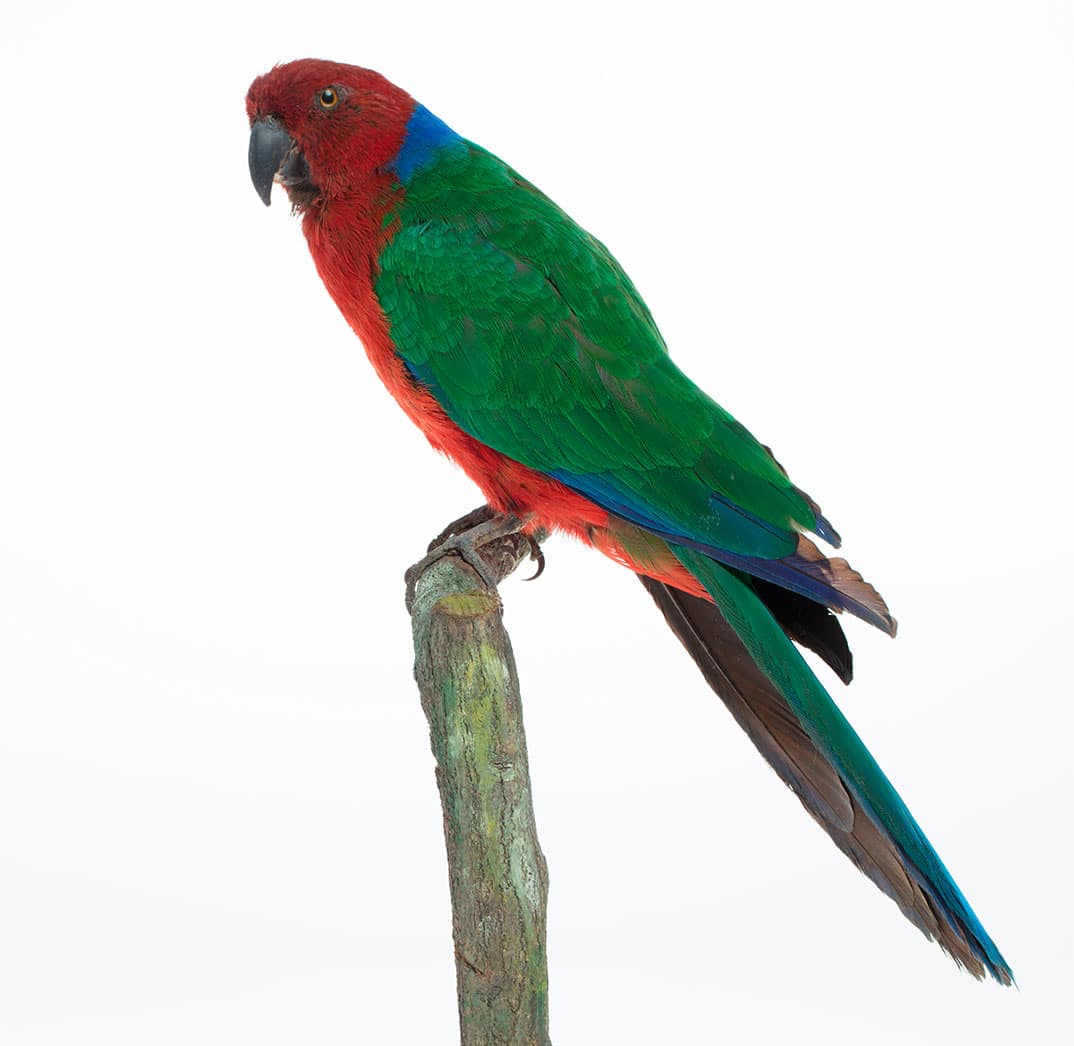
Crimson Shining-Parrot
Prosopeia splendens

Crimson Shining-Parrot

Content


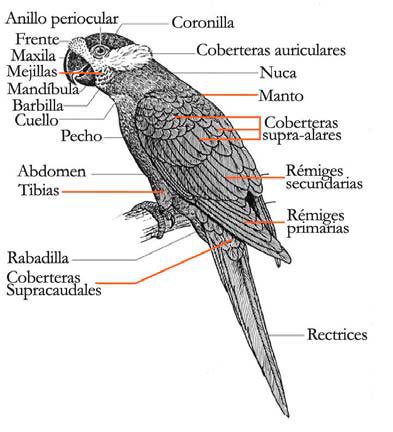
Anatomy-parrots

Description:

42 cm. length and 280 g. of weight.

The Crimson Shining-Parrot (Prosopeia splendens) is very similar to the Red Shining-Parrot (Prosopeia tabuensis). has the head and underparts red intense and bright, slightly darker in ears; broad collar rear violet-blue, which becomes turquoise toward the trailing edge. The rest of upperparts bright pale green with darker edges and fine bright in back and wings. Coverts medium green, greater coverts blue green; primary coverts and primaries deep blue-violet with black on innerwebs; secondaries blue to green in the innermost feathers. Underwing-coverts marked blue-green and red; axillary pale green. Uppertail green with blue tip, violet blue with side feathers innerwebs blackish; undertail black. Bill black; irises red-orange; legs black.

The male has the bill and head bigger

taxonomy:

It was generally considered consanguineous with the Prosopeia Tabuensis, but may be closer Prosopeia Personata. Monotypic.

  • Escarlata sound Papagayo.

Habitat:

It is found in forests, farmland and villages, both in the lowlands and hills.

Reproduction:

Food, habits and reproductive behavior presumably similar to those of the Red Shining-Parrot (Prosopeia tabuensis) With which, until very recently, was considered consanguineous.

Food:

Similar al al Red Shining-Parrot (Prosopeia tabuensis).

Distribution:

Extension of the distribution (breeding/resident): 910 km2

It is endemic Fiji, where it is found naturally in islas de Kadavu (including around Vunisea) and Ono. It has also been introduced in Viti Levu and probably in the Group Yasawa and Ovalau in the past (There are no recent records).

Conservation:
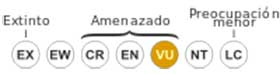

Vulnerable


โ€ข Current category of the Red List of the UICN: Vulnerable

โ€ข Population trend: decreasing.

The species may be declining in Viti Levu due to trade, although at present the possible negative effects of competition are not known with Masked Shining-Parrot (Prosopeia personata). It is estimated that the world population lies between 5.000 and 10.000 specimens. NEAR THREATENED.

Justification of the population

Although recent fieldwork on Kadavu has not focused specifically on this species, seems to occur in population densities similar to those of Masked Shining-Parrot (Prosopeia personata) (86 Crimson Shining-Parrot They were recorded in Kadavu 38 standardized observation times in the two studies BirdLife, similar to the average 1,9 of the Masked Shining-Parrot /time recorded in 18 sites across the Viti Levu). The Masked Shining-Parrot It was estimated at around 29 in native lowland forest birds / km2 (Jackson y Jit 2004). The area of รขโ‚ฌโ€นรขโ‚ฌโ€นdense forest and medium density Kadavu it's around of 225 km2 (National Forest Inventory 1991-1993), so a reasonable estimate of the population Crimson Shining-Parrot would be 6.000 birds or 4.000 mature individuals.

Conservation Actions Underway

Appendix II of the CITES. It is protected by law in Fiji, which has recently been revised, the old Law Poultry and game has been partly overtaken by the Law on Protection of Endangered Species, which provides protection (SPREP 2000, D. Watling a slightly. 2007). Conservation projects have reduced the trade in this species (Jackson y Jit 2004). Four communities have declared a protected area covering community 1.535 hectares of forest and local volunteers monitor bird populations and assess the state of the habitat on their own initiative (V. Masibalavu a slightly. 2007). Conservation actions aimed at fire prevention (including awareness following the amendment of the decree concerning arson) have improved in recent years (V. Masibalavu in litt. 2012, M. Tabudravu in little. 2012).

Conservation Actions Proposed

Establish standards for maintenance of parrots in captivity to reduce demand (SPREP 2000). Monitor the numbers caught and transported to Suva. Determining population densities in various habitats. Investigate breeding needs and success. Promote the creation of community forest reserves. Use as set species to promote ecotourism in Kadavu.

"Crimson Shining-Parrot" in captivity:

Captive numbers are unknown., and everything indicates that captive breeding has rarely been achieved. It is caught in small quantities, and islanders returning to the capital, Suva (Watling 2000), the birds are carried as a gift, and there is at least some illegal trade abroad (J. S. Kretzschmar a lie. 2000).

In the nineteenth century it was imported by zoos in London, Berlin and Hamburg. In the United States, He kept San Diego Zoo, which was partially successful with the offspring when a young man born in 1973,

As they are at serious risk of extinction, only the most experienced should attempt to keep them in their aviaries, and all captive bred should be better placed in breeding programs to establish a larger population and participate in the conservation of this bird species.

Alternative names:

– Crimson Shining Parrot, Crimson Shining-Parrot, Kadavu Shining Parrot, Kandavu Shining Parrot, Kandavu Shining-Parrot (inglรฉs).
– Perruche รฉcarlate, Perruche masquรฉe รฉcarlate (francรฉs).
– Fidschi Sittich, Fidschisittich (alemรกn).
– Papagayo Escarlata (portuguรฉs).
– Papagayo Escarlata, Papgayo Escarlata (espaรฑol).

Clasificaciรณn cientรญfica:

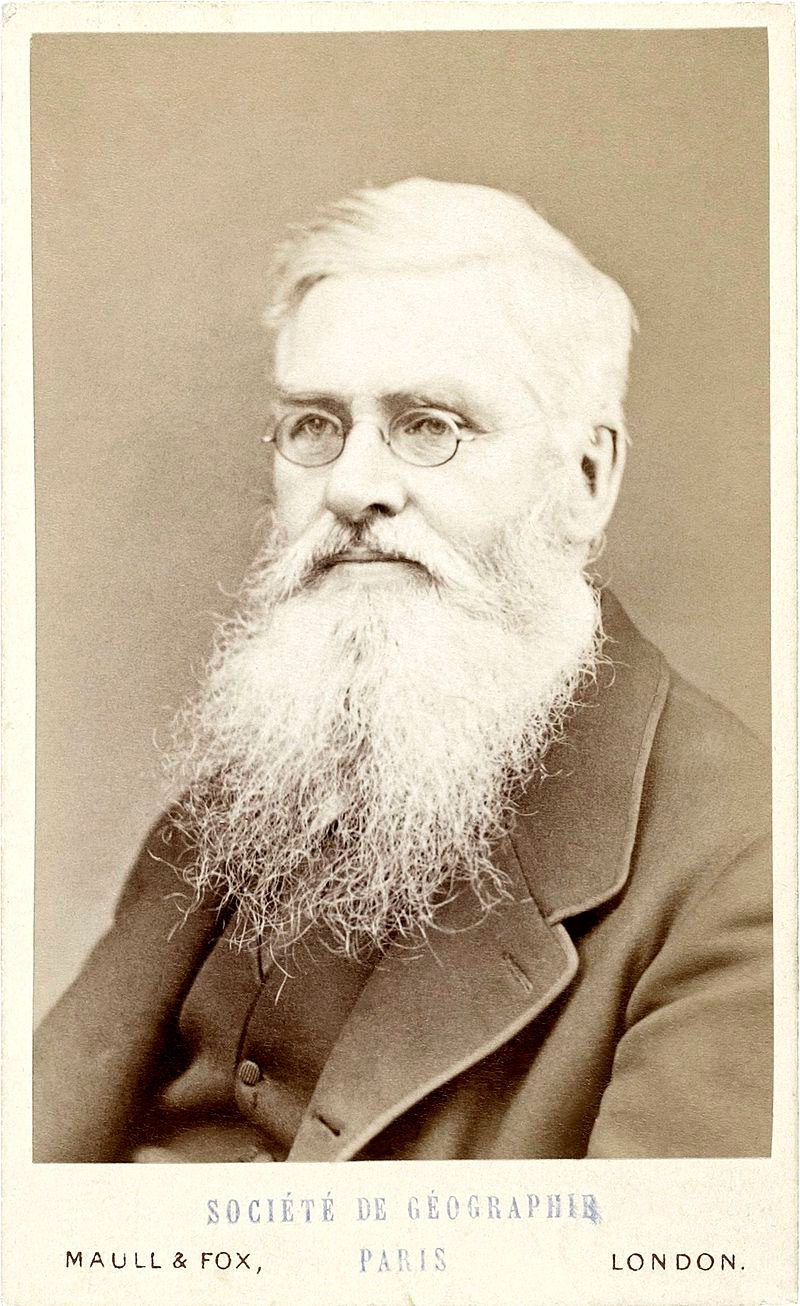
Peale, Titian Ramsay


– Orden: Psittaciformes
– Familia: Psittaculidae
– Gรฉnero: Prosopeia
– Nombre cientรญfico: Prosopeia splendens
– Citaciรณn: (Peale, 1848)
– Protรณnimo: Platycercus splendens

Imรกgenes Papagayo Escarlata:

Videos del "Papagayo Escarlata"

Fuentes:

โ€ข Avibase
โ€ข Parrots of the World โ€“ Forshaw Joseph M
โ€ข Parrots A Guide to the Parrots of the World – Tony Juniper & Mike Par
โ€ข Birdlife

Fotos:

(1) – Auckland Museum [CC BY 4.0]

โ–ท The world of Pets: Dogs, cats, birds, reptiles, amphibians

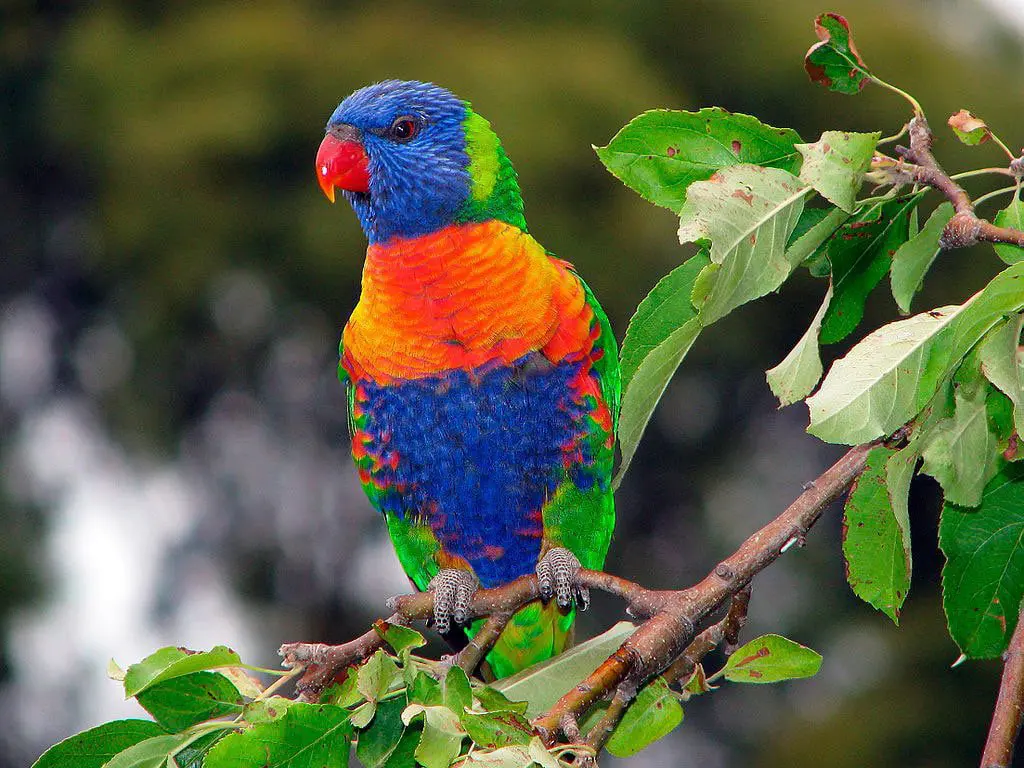
Rainbow Lorikeet
Trichoglossus moluccanus

Rainbow Lorikeet

Content

Description ยซRainbow Lorikeetยป:

Of 25-30 cm. length; 70-169 grams and a wingspan of 46 cm..

Rainbow Lorikeet

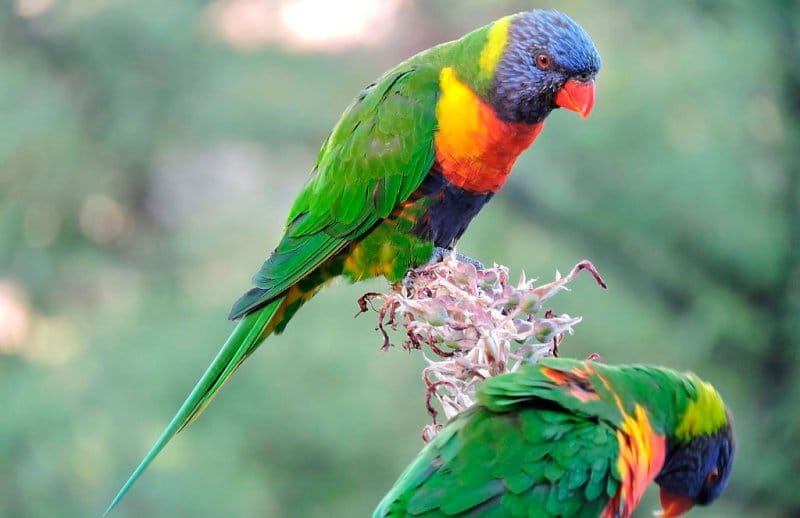
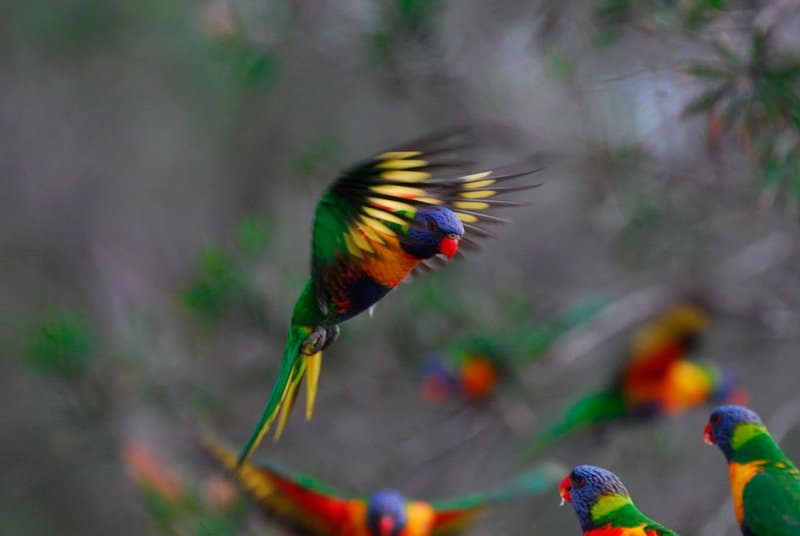
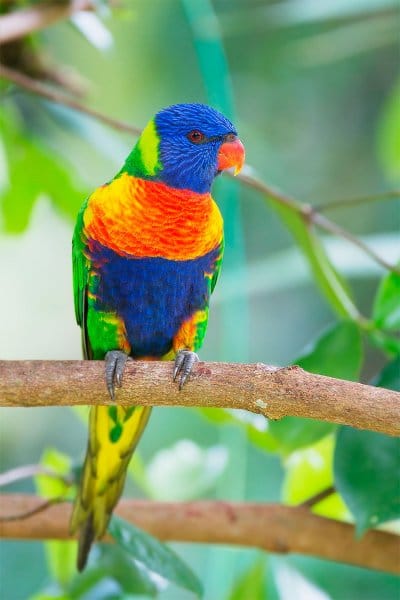
The plumage of the Rainbow Lorikeet (Trichoglossus moluccanus) is very bright. The head is deep blue with a neck greenish-yellow and the rest of the upperparts (wings, back and tail) are deep green. The chest is red with blue-black barring.. The belly is deep green, and the thighs and rump are yellow with deep green barring.. In flight, a yellow wing-bar contrasts clearly with the red underwing-coverts.

There is little to visually distinguish between the sexes; However, for an acute observer, their dimorphism is readily apparent.

The youth has bill black, which gradually brightens to orange in the adults..

The markings of Trichoglossus moluccanus resemble of the Coconut Lorikeet (Trichoglossus haematodus), but with a belly blue and breast with little or no blue-black barring..

Rainbow Lorikeet taxonomy

With one exception, the species have been treated so far as a group of subspecies within the extended group Coconut Lorikeet (Trichoglossus haematodus), but they differ from the Trichoglossus haematodus her pale red breast without bars ; its blue belly against green or blackish; its pale blue hood without black edge and its larger size.

The subspecies Trichoglossus moluccanus eyrei (South of Australia) It is included within the species nominal. Small hybrid population of present species paired with the Musk Lorikeet (Glossopsitta concinna) in SE Southern Australia (Yorke Peninsula).

  • Sound of the Rainbow Lorikeet. (1)

(1) Some species are under extreme pressure because of traps and harassment. So, the open availability of high-quality recordings of these species may further worsen the problems, this being the reason why downloading these recordings is off. In conclusion, recorders themselves are free to share these files on xeno-canto, but they will have to approve access to these recordings.

We do not take this action lightly, and we wish it wasn't necessary, but we are convinced that the negative impacts of offering easy access to these recordings outweigh the benefits. To access these recordings, You can contact directly with the recorder.

Subspecies description:

  • Trichoglossus moluccanus moluccanus

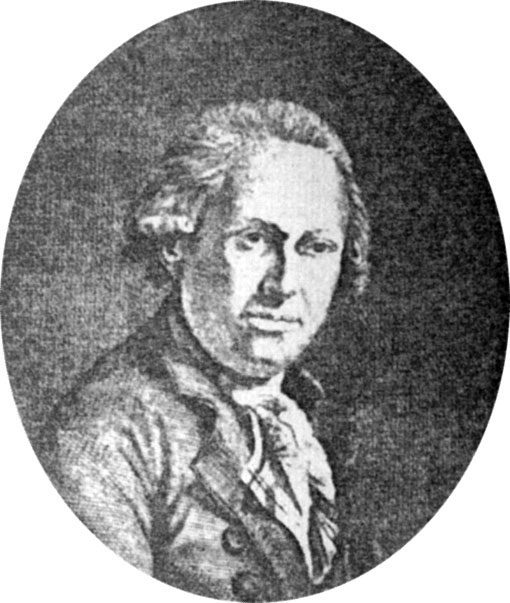
    (Gmelin, 1788) – Nominal.

  • Trichoglossus moluccanus septentrionalis

    (Robinson, 1900) – As the species nominal but with brighter purple/blue stripes on the head and tail shorter.

Habitat:

The Rainbow Lorikeet often they travel together in pairs and occasionally respond to calls to fly like a flock, then they disperse again in pairs. Couples aggressively defend their feeding and nesting against other lstallion arcoiris and other bird species. Not only they scare off smaller birds, as the Noisy Miner (Manorina melanocephala) and the Brush Wattlebird (Anthochaera chrysoptera), but also to larger, as the Australian Magpie (Gymnorhina tibicen).

Reproduction:

In Australia, Reproduction usually takes place during spring (from September to December), but it may vary from one region to another with changes in food availability and climate. Sites nesting They are variable and may include gaps as tall trees eucalyptus, trunks of palm trees or overhanging rocks.

Couples sometimes nest in the same tree with other couples Rainbow Lorikeet or other species of birds. The clutch size is between one and three eggs, which are incubated for about 25 days. Incubation tasks are performed by the female alone.

The Rainbow Lorikeet are mostly monogamous and remain paired for long periods, if not for life.

Food:

Nectar and pollen of native trees and shrubs, especially eucalyptus (for example, Eucalyptus gummifera, Eucalyptus maculata).

Rainbow Lorikeet distribution:

Extension of the distribution (breeding/resident): 3,810,000 km2

Endemic East and Southeast Australia (of Cape York to the Eyre Peninsula, South of Australia)

They were recorded for the first time in Perth in 1968 and the population is believed to have come from fewer than ten birds that were deliberately released or had escaped from aviaries.

Since the beginning of the decade 1960, the population has grown exponentially and has spread rapidly throughout 174 km2 metropolitan area. The current population is estimated at 8.400 birds and their range is expanding at a rate of 0,7 km per year.

wanderer Tasmania.

Subspecies distribution:

  • Trichoglossus moluccanus moluccanus

    (Gmelin, 1788) – Nominal.

  • Trichoglossus moluccanus septentrionalis

    (Robinson, 1900) – North of Queensland (Cape York Peninsula), in northwestern Australia; also the Torres Strait Islands (Boigu and Saibai except, at the north end) and it was introduced in the district of Perth, in southwest Australia..

Conservation "Rainbow Lorikeet":


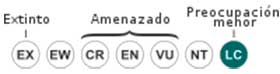
minor concern

1. Current red list category of the UICN: Least concern.

2. The population trend: Decreasing.

3. Population size : Unknown.

Rationale for the Red List category

This species has a extremely large distribution area, and therefore does not approach the thresholds for Vulnerable under the criteria of size range (Extent of Occurrence <20,000 km2 combined with a decreasing area size or fluctuating distribution, extension / habitat quality, or population size and a small number of places or severe fragmentation). While the trend of the population seems to be decreasing, the decline is not believed to be rapid enough to approach the Vulnerable thresholds according to the population trend criterion (decrease of more than 30% in ten years or three generations).

The population size has not been quantified, but it is not believed to approach the thresholds for Vulnerable under the criterion of population size (<10.000 mature individuals with an estimated continuous decrease in> 10% in ten years or three generations, or with a specific population structure). For these reasons, the species is assessed as Least concern.

Justification of the population

Global population size has not been quantified, but the species is described as abundant in northern Australia and rare Tasmania (pit et to the. 1997).

Justification trend

They suspected that the population is declining due to unsustainable levels of exploitation.

Rainbow Lori Threats

The species has been the subject of a intense trade: from 1981, When it was included in the Appendix II of the CITES, they have been 100.388 individuals caught in international trade (UNEP-WCMC CITES Trade Database, January 2005).

In captivity:

Not very common. Its longevity It 20 years en libertad, 15-25 years in captivity and its market price is around wild birds 250 EUR.

Alternative names:

– Rainbow Lorikeet, Rainbow Lorikeet (Rainbow) (English).
– Loriquet ร  tรชte bleue (de Swainson), Loriquet ร  tรชte bleue (moluccanus), Loriquet arc-en-ciel, Loriquet de Swainson (French).
– Regenbogenlori (German).
– Lรณris-molucano, Periquito-arco-รญris (moluccanus) (Portuguese).
– Lori arcoiris, Lori de Arco Iris (espaรฑol).


Gmelin Johann Friedrich

scientific classification:


– Order: Psittaciformes
– Family: Psittaculidae
– Gender: Trichoglossus
– Scientific name: Trichoglossus moluccanus
– Subpoena: (Gmelin, JF, 1788)
– Protonimo: Psittacus moluccanus

Images "Rainbow Lorikeet":

Videos "Rainbow Lorikeet"


"Rainbow Lorikeet" (Trichoglossus moluccanus)

โ–ท The world of Pets: Dogs, cats, birds, reptiles, amphibians

Mountain Parakeet
Psilopsiagon aurifrons


Mountain Parakeet

Content

Description:


Anatomy-parrots

17 to 19 cm.. height.
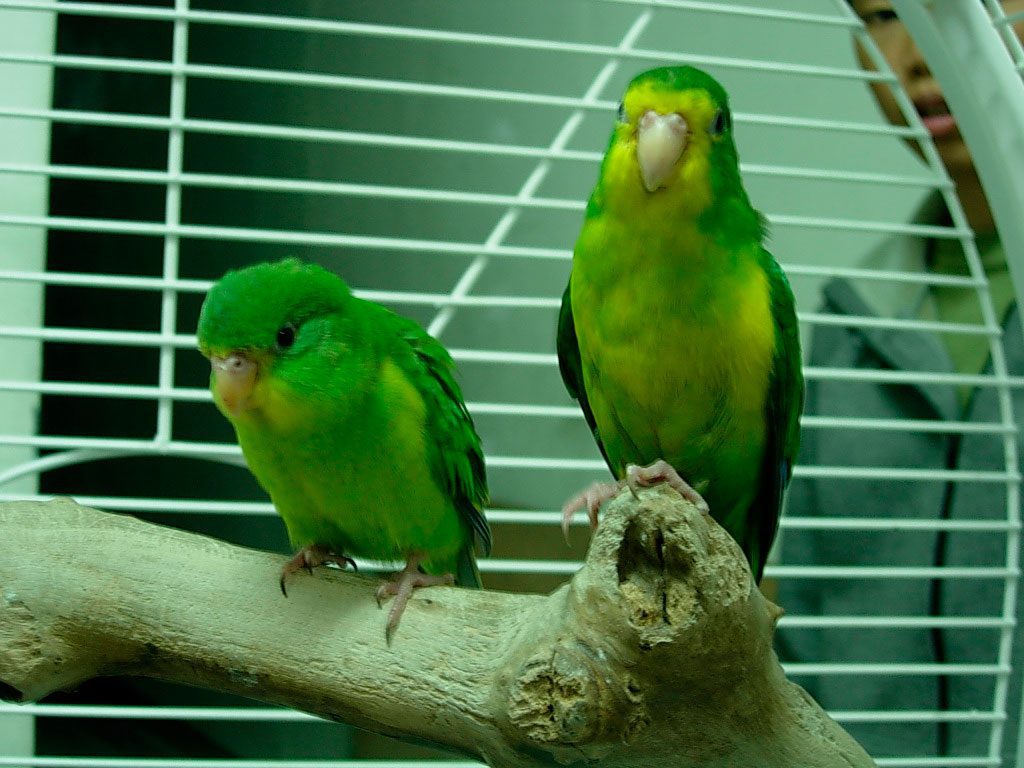
The Mountain Parakeet (Psilopsiagon aurifrons) is distinguishable by the face yellow and the belly yellow with dye-Green, bill pale, wing with extreme blue (notorious is when closed), tail long. Bill and legs color clear. Iris black.
The female with face green and belly yellow-green.
Treated above as Bolborhynchus aurifrons.

Subspecies description:

  • Psilopsiagon aurifrons aurifrons

    (Lesson, 1830) – The nominal,

  • Psilopsiagon aurifrons margaritae

    (Berlioz & Dorst, 1956) – With very little or nothing of yellow and very little dimorphic sexual, they resemble females of the subspecies nominal and robertsi. The females sometimes have the bill grey;

  • Psilopsiagon aurifrons robertsi

    (Carriker, 1933) – It has yellow only in the forecrown, sides bill, throat with green dye, and belly green with yellow line on the sides.

  • Psilopsiagon aurifrons rubrirostris

    (Burmeister, 1860) – With mask facial blue sky and no sexual dimorphism

Habitat:

Video – "Mountain Parakeet" (Psilopsiagon aurifrons)

Serrano catita girl (Psilopsiagon aurifrons): VOICE

It is found in variety of ecosystems, forest in gallery, Puna and crops, from 1000 to 2900 m (sometimes from sea level up to 4500 m). It is possible to carry out local migration after reproduction. gregarious.

Reproduction:

Sometimes They nest colonially, in cracks or holes in inaccessible Rocky escarpments.
breeding station: From October to December, North of Chile, February/March, Argentina.

Food:

It feeds on shoots, seeds, vegetables and fruits.

Distribution:

Size of the distribution (reproduction / resident): 820.000 km2

Can be found in the Centre and South of the Andes, from Peru until Argentina and Chile.

Subspecies distribution:

  • Psilopsiagon aurifrons aurifrons

    (Lesson, 1830) – The nominal,

  • Psilopsiagon aurifrons margaritae

    (Berlioz & Dorst, 1956) – The Andean slopes in the South of Peru, Bolivia, North of Chile and Northwest of Argentina.

  • Psilopsiagon aurifrons robertsi

    (Carriker, 1933) – The Valley of the Maranon River in the Center-North of Peru.

  • Psilopsiagon aurifrons rubrirostris

    (Burmeister, 1860) – The sheds Andean of the Northwest Argentine, between Catamarca and Cรณrdoba, and South of Chile

Conservation:

State of conservation โ“˜


minor concern Minor Concern โ“˜ (UICN)โ“˜

โ€ข Current category of the Red List of the UICN: Least concern.

โ€ข Population trend: Stable.

This species has a very large range, and therefore not it approaches the threshold of Vulnerable on the criterion of size of the area.

The trend of the population seems to be stable, and therefore, the species is not approaching thresholds for vulnerable under the trend of criterion.

For these reasons, the species is evaluated as Least concern.

"Mountain Parakeet" in captivity:

Itร‚ยดs rare in captivity. They are very susceptible to stress and disease, so many die during the process of acclimatization. It is good to acclimatize it in a large aviary with other birds. Prone to deficiency of vitamin D3.

Need of hiding places so that they may disappear from view.

Alternative names:

– Mountain Parakeet, Golden-fronted Parakeet (English).
– Toui ร  bandeau jaune, Perruche ร  bandeau jaune (French).
– Zitronensittich, Zitronen-Sittich (German).
– Periquito-da-cordilheira (Portuguese).
– Catita de Frente Dorada, Catita Frentidorada, Catita serrana chica, Perico cordillerano (espaรฑol).
– Catita serrana chica (Argentina).
– Perico cordillerano (Chile).
– Perico Cordillerano (Peru).
– Cialla (Aymara).

scientific classification:

Renรฉ Primevรจre Lesson

– Order: Psittaciformes
– Family: Psittacidae
– Genus: Psilopsiagon
– Scientific name: Psilopsiagon aurifrons
– Citation: (Lesson, 1831)
– Protonimo: Psittacus (Lathamus) aurifrons

Images "Mountain Parakeet"

Mountain Parakeet

Two Mountain Parakeet views between Uquia and Yavi, Salta, Argentina


Species of the genus Psilopsiagon

Sources:

– Avibase
– Parrots of the World โ€“ Forshaw Joseph M
– Parrots A Guide to the Parrots of the World – Tony Juniper & Mike Parr
– Birdlife
– Parrot Book, Parrots and macaws Neotropical

– Photos:

(1) – Mountain Parakeet; two in a cage By TJ Lin (originally posted to Flickr as mountain oarakeet) [CC BY-SA 2.0], via Wikimedia Commons
(2) – Two Mountain Parakeets seen between Uquia to Yavi, Salta, Argentina By Ron Knight from Seaford, East Sussex, United Kingdom (Mountain ParakeetUploaded by snowmanradio) [CC BY 2.0], via Wikimedia Commons

– Sounds: (Xeno-canto)

โ–ท The world of Pets: Dogs, cats, birds, reptiles, amphibians

Lilac-tailed Parrotlet
Touit batavicus

Lilac-tailed Parrotlet

Content

Description:

Lilac-tailed Parrotlet

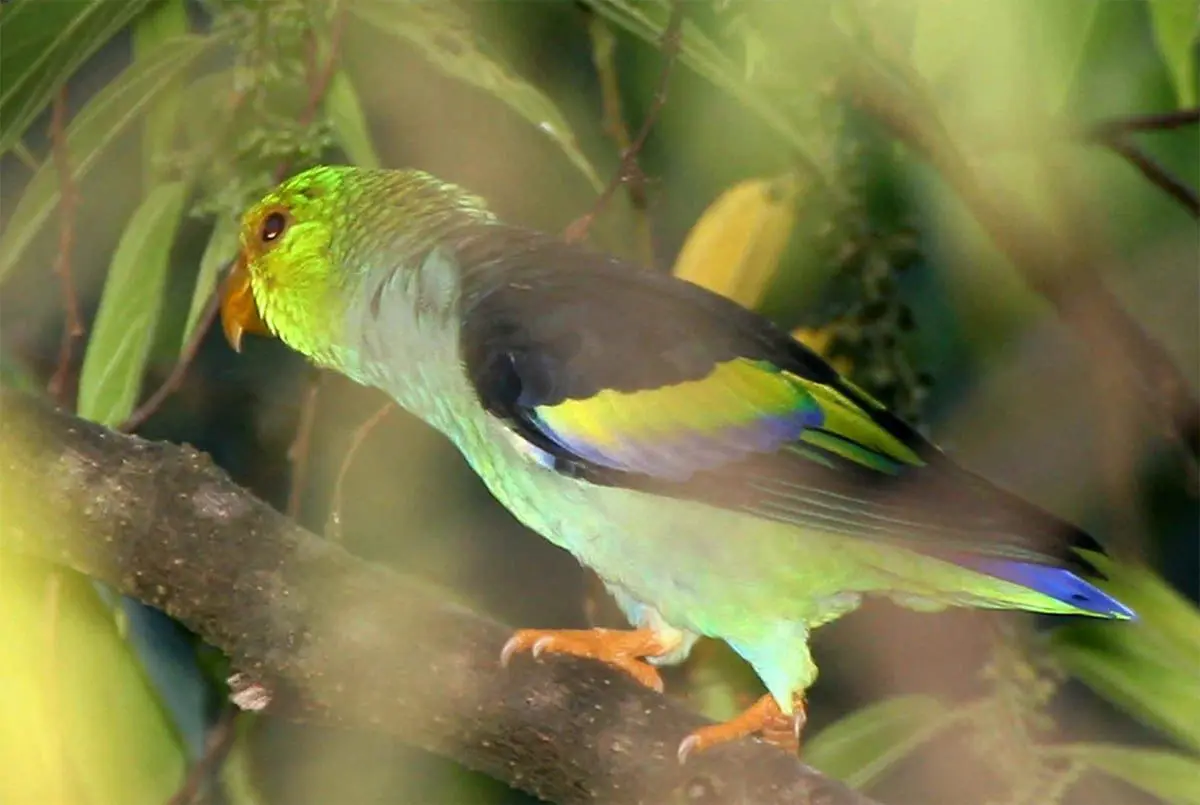
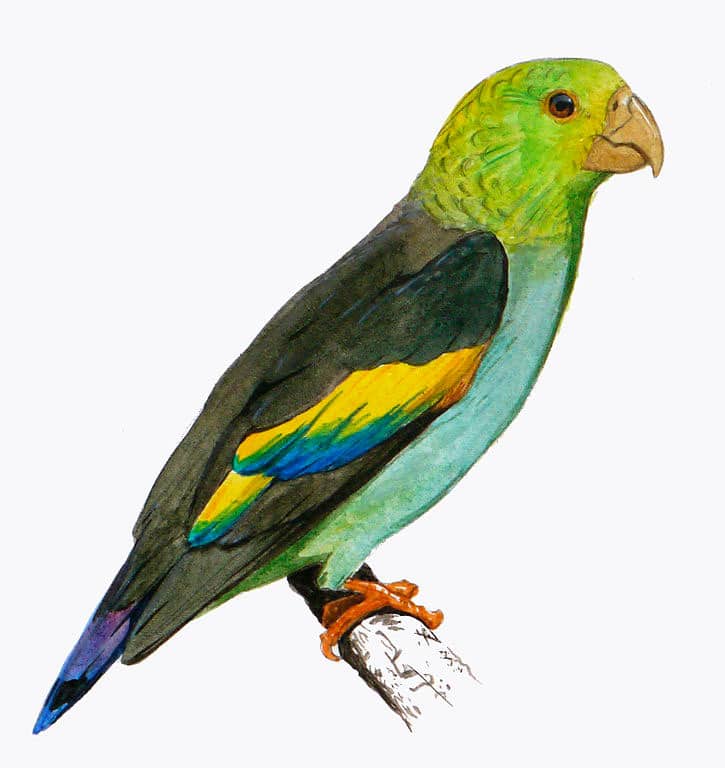
The Lilac-tailed Parrotlet (Touit batavicus) has 14 cm.. height. Usually black in it upperparts (back and wings) and green in it lower. With the crown and nape yellowish-green with black border (What gives a suspiciously aspect). The forecrown, cheeks and chin Yellow Gold, chest Azure Blue, Yellow patch in the wing , tail ends reddish purple and black subterminal edge.

Habitat:

It inhabits in forest dry and jungles cloudy between 400 and 1700 m (in Colombia).
Considered powerful flying, the sharp profile of its wings, They quickly fly over the forest canopy, in groups of 10 to 50 and they are gregarious except in the time reproductive.

It is of a forest Ave, but it can be seen near the shore of the sea in the areas where the edge of the forest close to the coast.

The calls during the flight they are soft and nasal, reaching a high tone, Buzz.

Reproduction:

It nests in hollows in trees or in arboreal termite holes, between the months of February and March. It is thought that it has migratory movements.

Food:

Its diet is composed of flowers, nectar, fruit, outbreaks, berries and seeds.

Distribution:

Size of the area of distribution (reproduction / resident): 330.000 km2

Can be found from the North of Venezuela According to the East up to Guyana, Suriname, French Guiana and in Trinidad and Tobago.

Conservation:

State of conservation โ“˜


minor concern Minor Concern โ“˜ (UICN)โ“˜

โ€ข Current category of the Red List of the UICN: Least concern.
โ€ข Population trend: Decreasing.

Justification of the population

The size of the world population It has not been quantified, but this species is described as ยซquite commonยป (Stotz et to the., 1996).

Justification of trend

They suspect that this species has lost a 8,2-8,4% of habitat suitable within their distribution during three generations (15 years) based on a model of Amazon deforestation (Soares-Filho et to the., 2006, Bird et to the., 2011). Given the susceptibility of the species to the hunting or the capture, It is suspected that will decrease in <25% during three generations.

"Lilac-tailed Parrotlet " in captivity:

It's hard to keep alive captivity, refuses food during the acclimatization period. Deaths occur for this reason and the unbalanced diet.

Images of the "Lilac-tailed Parrotlet "

Videos:

Alternative names:

– Lilac-tailed Parrotlet, Black-winged Parrot, Lilac tailed Parrotlet, Scopoli’s Parrot, Seven-colored Parrot, Seven-colored Parrotlet, Seven-coloured Parrot, Seven-coloured Parrotlet (English).
– Toui ร  sept couleurs (French).
– Siebenfarbenpapagei, Siebenfarben-Papagei (German).
– Lilac-tailed Parrotlet (Portuguese).
– Cotorrita Sietecolores, Lorito de Siete Colores (espaรฑol).


scientific classification:

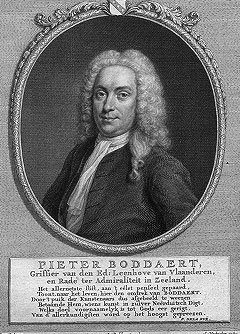
Pieter Boddaert
Pieter Boddaert

– Order: Psittaciformes
– Family: Psittacidae
– Genus: Touit
– Scientific name: Touit batavicus
– Citation: (Boddaert, 1783)
– Protonimo: Psittaca Batavica


Lilac-tailed Parrotlet (Touit batavicus)


Species of the genus Touit


Sources:

  • Avibase
  • Parrots of the World โ€“ Forshaw Joseph M
  • Parrots A Guide to the Parrots of the World – Tony Juniper & Mike Parr
  • Parrot Book, Parrots and macaws Neotropical

Photos:

(1) – birdsoftt
(2) – Lilac-tailed Parrotlet. Watercolor, Romain Risso By Gossipguy (Own work) [CC BY-SA 3.0], via Wikimedia Commons

โ–ท The world of Pets: Dogs, cats, birds, reptiles, amphibians

Dusky Parrot
Pionus fuscus

Dusky Parrot

Content


Anatomy-parrots

Description:

24 to 26 cm.. height and between 179 and 222g. weight.

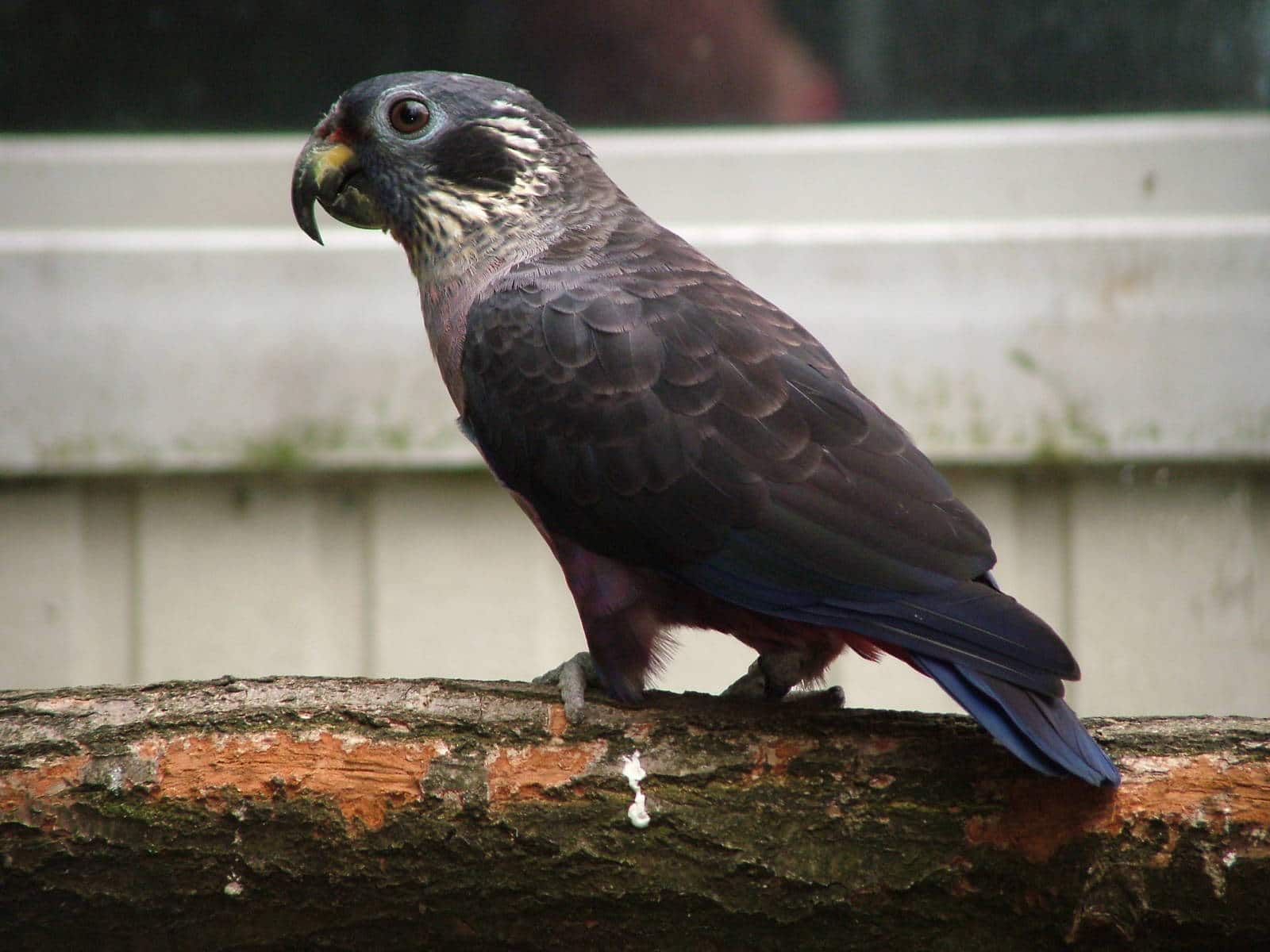
The coloration general of the Dusky Parrot (Pionus fuscus) is blue violet dark. Small patch of feathers on the front of the lores; on the basis of the cere, Pink; for the rest, lores, cheeks, forecrown and crown, lavender blue pale with white feather bases in the crown, What gives a faint mottled appearance in some birds; ear-coverts more dark and more grey, forming a distinctive patch; feathers in the throat and the sides of the neck narrow Brown in the Center and tips of pale blue white stripe, forming the joint a collar incomplete.

feathers in the the mantle and back, of color Brown leaden with those margins pale, giving the scalloped effect; Scapulars, rump and uppertail-coverts, darker grey brown, with very weak pale margins (or absent).

Coverts smaller and medium-sized, of color Brown leaden with margins pale; coverts primary and higher, as well as the flight feather, cobalt blue; undertail, the wings deep blue. Feathers on the top of the chest, pale pinkish with pale Lavender color tips; area more low in the chest with less dye Lavender, becoming darker and more color came in the belly, reaching, Some birds, the center of the belly of a rich colour came; undertail-coverts crimson.

Tail of color blue with red at the base. upper jaw Blackish at the tip with patch of color Horn in the base, lower jaw Blackish with the base more clear and more pale visible in some birds; Iris dark brown; Legs grey.

Both sexes similar.

In the immature staining is equal to the adult, but with some roofs on the upper wings with green edge; secondary feathers dyed in green and the eye ring naked and white.

Habitat:

Dusky Parrot

They inhabit mainly in lowland rainforests and moist forests in the foothills, in where the birds spend the greater part of the time in the canopy; Mainly in the forest land, occasionally in forests and marshes and less frequently in igapรณ (permanently flooded forests), Although there have been reports of birds in Savannah (Suriname), coastal gallery forest (French Guiana) and cultivated areas (Although avoiding habitats more open and less seen in clearings or edges of forest to some close relatives, such as the Blue-headed Parrot (Pionus menstruus).

rare species, flying alone or in small groups on the forest canopy,

Are you can see in Venezuela from the level of the sea to close them 1.000 m, and in close 1.200-1.800 meters on the side Colombian of the Sierra de Perija.

gregarious, especially outside the breeding season.

Reproduction:

It nests in hollows of old trees, probably during the second quarter of the year, although a nest was observed in the month of November in For, Brazil. The laying is of 3-4 eggs.

Food:

It feeds mainly in the canopy but also on the branches of fruiting trees in light areas..

The diet includes seeds of the gender Eschweilera and Micropholis.

Distribution:

Size distribution (reproduction / resident): 1.870.000 km2

Its population is discontinuous. There is an isolated population in the Sierra de Perija (border between Colombia and Venezuela); regardless of population, The species is found in Venezuela, to the South of the Orinoco in Bolรญvar, from the Caura River, in the Northwest, up to the Nuria upland, the upper area of the cuyuni river and Sierra de Lema in the areas border with Guyana, in the East, extending through the forested parts of Guyana, Suriname and presumably it French Guiana (There are no known records) until Amapรก, the North-East of Brazil, and spreading more broadly to the East of the Brazilian Amazon, from Black river in the North and South, from the Madeira river to the East of For and Maranhรฃo.

Movements regular seasonal occur in Suriname, with the birds present in the coastal region in the months of July and August.

In general quite common, Although distributed locally; reports of a moderate and widespread presence in Guyana (although rare in Mountains Kanuku in the Southwest); Common in coastal forests, the savanna and forests inside of Suriname.

The deforestation severe and rapid in parts of its range (for example, For and Maranhรฃo, Brazil) is, presumably, causing a decline in the population of the Dusky Parrot.

Very tight in bondage.

Conservation:


minor concern


โ€ข Not considered low No category of threat.

โ€ข Not known as a cage bird, but the loss of habitat may be affecting their populations.

Justification of the population:

The size of the world population Dusky Parrot It has not been quantified, but this species is described as ยซRareยป (Stotz et to the., 1996).

Justification of trend:

It is suspected that this species has lost the 1,1% of habitat within its distribution over three generations (20 years) on the basis of a model of Amazon deforestation (Soares-Filho et to the., 2006, Bird et to the., 2011).

Given the susceptibility of the species to hunt or capture, It is suspected that it will fall in <25% durante tres generaciones.

"Dusky Parrot" in captivity:

Intelligent, curious, a bit noisy, playful when acclimatizes to the owner.
Rare in captivity until the Decade of 1970 When in small quantities were imported from Guyana.

Its longevity is of some 25 years.

Alternative names:

– Dusky Parrot, Little Dusky Parrot, Violaceous Parrot, Violet Parrot (English).
– Pione violette, Pionus violet (French).
– Veilchenpapagei, Veilchen-Papagei (German).
– maitaca-roxa, curica, papagainho-roxo, paranรก-i (Portuguese).
– Cotorra de Perijรก, Loro Morado (espaรฑol).
– Cotorra de Perijรก (Colombia).
– Cotorra Morada (Venezuela).

scientific classification:

– Order: Psittaciformes
– Family: Psittacidae
– Genus: Pionus
– Scientific name: Pionus fuscus
– Citation: (Statius Mรผller, 1776)
– Protonimo: Psittacus fuscus

Images "Dusky Parrot"

Videos "Dusky Parrot"

———————————————————————————————–

ยซPurple Parrotยป (Pionus fuscus)


Sources:

– Avibase
– Parrots of the World โ€“ Forshaw Joseph M
– Parrots A Guide to the Parrots of the World – Tony Juniper & Mike Parr
– Birdlife

– Photos:

(1) – Veldhoven
(2) – Dusky Parrot (Pionus fuscus) or Dusky Pionus by Jacques Barraband [Public domain], via Wikimedia Commons

โ–ท The world of Pets: Dogs, cats, birds, reptiles, amphibians

Gang-gang cockatoo
Callocephalon fimbriatum


Gang-gang cockatoo

Content

Description

Of approximately 35 cm.. height and an average weight of 257 g.
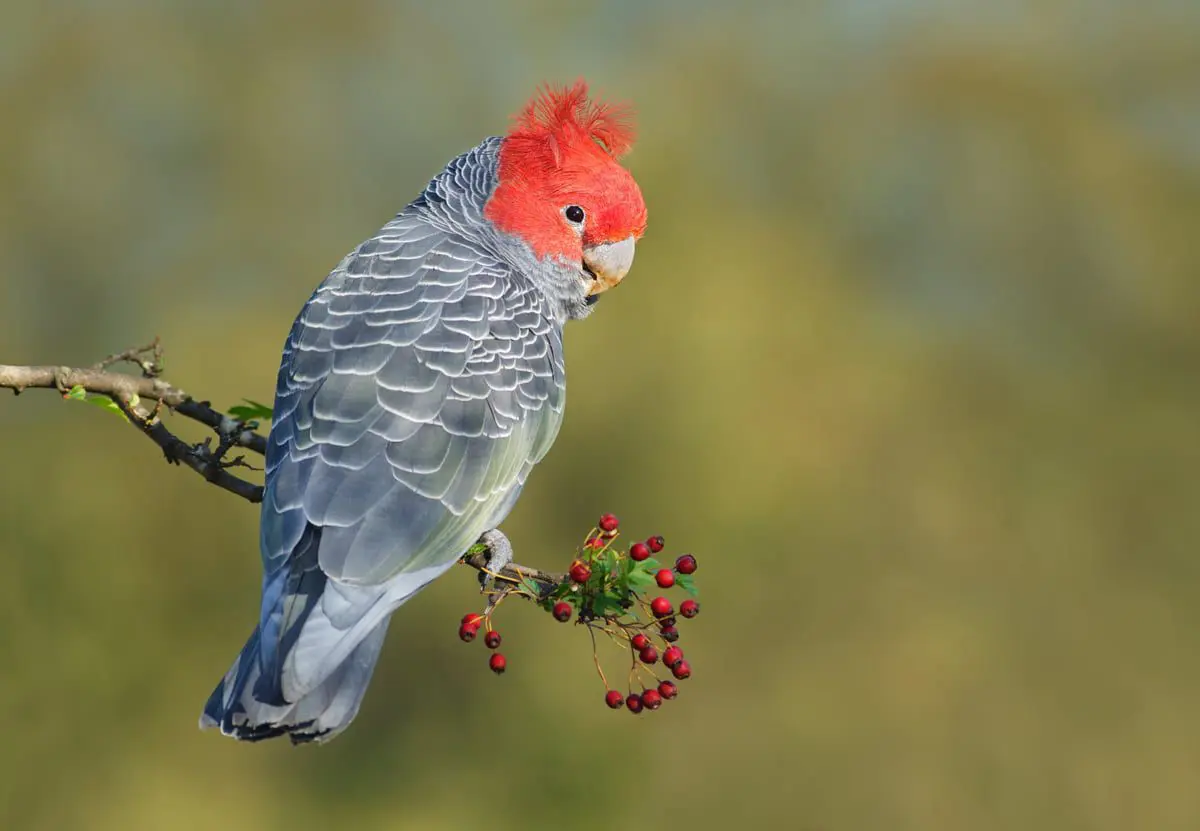
The Gang-gang cockatoo (Callocephalon fimbriatum) it's a little cockatoo, robust, with one crest Dim, large wings wide, and tail short. Son gregarious but relatively calm.
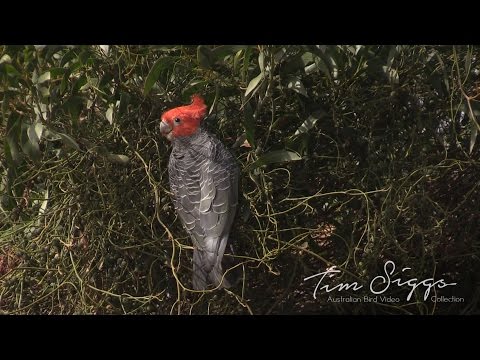
The males of the Gang-gang cockatoo they are immediately recognizable by their head and crest scarlet. The remaining plumage is slate grey.
The females they have the head and crest grey. The feathers of the part inferior of the body are lined with green Orange and yellow, giving a scaly appearance. The tail also has stripes horizontal white. Otherwise, is identical to the male.

The juveniles they are similar to the females, they differ in their top, the head Red and one crest shorter and less twisted.
The Gang-gang cockatoo not can confuse it with other species of parrots. In flight, However, sometimes their shape resembles to the cacatรบa Galah.

Habitat:

Video – "Gang-gang cockatoo" (Callocephalon fimbriatum)

Gang- gang Cockatoo (Callocephalon fimbriatum)

During the summer are found in the forests of mountain and areas with understory of shrubs dense. In Winter they will move to more dry and low altitudes, more open forests. They can often be seen along the roads and in parks and gardens in urban areas. They require high hollow trees for nest.

Reproduction:

Forman couples monogamous. The female chooses a hole in the right tree and both sexes prepare the nest for egg-laying. They line the sides of the hole with sawdust and chewing dust. Both sexes incubate the eggs and care for the young. Parents feed their young for four to six weeks after hatching. Feather.

Family groups are commonly seen feeding together during the breeding season.. In some cases, nurseries will be formed’ where have several couples nested together, their young perch together in the same tree, While their parents seek for food.

Food:

With feed mainly seeds trees and shrubs, native and introduced, with a preference for the eucalyptus, beards and thorns. They also eat berries, fruit, dried fruits, insects and their larvae.

They are mainly arboreal, they perch on the ground only to drink and forage among the fallen fruits or cones.

They feed in flocks of up 60 birds out of breeding season. Feed in pairs or small family groups during the breeding season.

They are able to use exotic plants as food in the urban areas.

Distribution:

Size distribution (reproduction / resident): 333.000 km2

They are endemic to the South-East of Australia. They are widespread in the East of New South Wales, from the Central slopes and plateaus to the South Coast, along the northeastern regions of Victoria to Seymour, with some records in the East of Melbourne, mornington peninsula and Southwest Gippsland.
Have also been introduced in the Kangaroo Island to the South of Australia.

Conservation:

State of conservation โ“˜


minor concern Minor Concern โ“˜ (UICN)โ“˜

โ€ข Current category of the Red List of the UICN: Least concern.

โ€ข Population trend: In increased.

Is come affected negatively by deforestation and the removal of mature trees (potential breeding sites). A population is classified as threatened: in the Valley Cove Lane, New South Wales.

The the rest of the population It is suspected that it may be increasing and now will spend the winter in the suburbs of Canberra.

The world population are estimated at more of 20,000 individuals.

"Gang-gang cockatoo" in captivity:

Itร‚ยดs very rare in poultry and hard to find as a pet.

Son Smart and playful, but they have a great tendency to suffer from software. They are very destructive for what need of abundant toys to not attack against the furniture of the House.

When you get bored, they are often automutilan as a way to fight against boredom.

Its life expectancy You can overcome the 60 years.

Alternative names:

– Gang-gang Cockatoo, Cockatoo Corella, Helmeted Cockatoo, Red-crowned Cockatoo, Red-headed Parrot (English).
– Cacatoรจs ร  tรชte rouge, Cacatoรจs gang-gang (French).
– Helmkakadu, Helm-Kakadu (German).
– Cacatua-gang-gang (Portuguese).
– Cacatรบa Gang Gang, Cacatรบa Gang-gang (espaรฑol).

scientific classification:

– Order: Psittaciformes
– Family: Cacatuidae
– Scientific name: Callocephalon fimbriatum
– Genus: Callocephalon
– Citation: (Grant,JB, 1803)
– Protonimo: Psittacus fimbriatus

Images Gang-gang Cockatoo:


Sources:
– Avibase
– infoexoticos
– Birdlife

– Photos: Jan Wegener, Marbiz (Panoramio), papouch.webzdarma.cz, Benjamint444 (commons.wikimedia.org)

– Sounds: (Xeno-canto)

โ–ท The world of Pets: Dogs, cats, birds, reptiles, amphibians

Brown Lory
Chalcopsitta duivenbodei


Lori Pardo

Content

Description

31 cm.. length and a weight between 200 and 230 gr.

The bottom of the wings of the Brown Lory (Chalcopsitta duivenbodei) are bright yellow narcissus.

Two other features of its plumage that powerfully attract attention are, seen head-on , the yellow that completely surrounds the bill and forecrown and also the contrast of color violet or blue deep in it low back, the thighs and feathers of the tail.

The feathers of the chest have pointed yellow, giving a scaly appearance to the area.

The bill is black, as the eye ring and the skin bare at the base of the bill. The irises are orange-red, the legs are grey.

There is no sexual dimorphism, females are identical to males.

The youth they have more muted colors, with less yellow.

To the Brown Lory may be mistaken for it is a very similar species, the Dusky lory (Pseudeos fuscata). The latter, However, can be distinguished by their underparts predominantly orange or yellow, rump white, their bill Orange and its smaller size.

It is a bird of extraordinary beauty.

Subspecies description

  • Chalcopsitta Duivenbodei Syringanuchalis

    (Neumann, 1915) – 31 cm approx.. Brown is more dark by the area of the head and back. Many specimens with dark violet hue.


  • Chalcopsitta Duivenbodei Duivenbodei

    (Dubois, 1884) – The nominal

Habitat:

They frequent the primary and secondary forests with large mature trees.
They seem to especially appreciate the edges of wooded areas. They are also found in the partially open forests. They seem to be able to adapt to areas that have suffered more or less significant damage.

The Brown Lory It is a bird of lowland, It is usually present below the 200 m.

There is little information about the habits of this species. Often live in pairs or in small groups in that often is associated with other species of parrots dining rooms of nectar or near those trees in flower.

They usually seek food the canopy of the forest and vegetation at ground level. Their activity seems to have no end. At night they retire to dormitories in the branches.

When moving, they have a very characteristic flight made with very accentuated flapping at the tips of the wings.
Their flight is much slower than the Coconut Lorikeet (Trichoglossus hamatodus). Yellow-orange color under the wings are very obvious.

Reproduction:

The breeding season is produced in April. In captivity, the females usually lay two eggs, which hatch in approximately 24 days. The total duration of the nesting is very long. 11 weeks from the construction of the nest to the full autonomy of the young. We don't have more information.

Food:

We don't have many details about their menu. One thing is certain, their diet is almost exclusively vegetarian. It feeds on fruits, seeds and sprouts. Given the fact that spends most of its time in shrubs or flowering trees, pollen and nectar should be an essential resource in your diet.

Distribution:

This species has a patchy distribution along the lowlands of the North coast of New Guinea, since the Cenderawasih Bay between papua and West Papua (Indonesian) to the Astrolabe Bay in Papua New Guinea. In general they are rare (Coates 1985, Beehler et to the., 1986), but it is quite common locally in locations such as the southern zone of Vanimo Puwani River and in the area of the wapoga river (A. Mack in lit. . 1999, KD Bishop in litt. 1999, B. Beehler in litt., 2000).

Subspecies distribution

  • Chalcopsitta Duivenbodei Syringanuchalis

    (Neumann, 1915) – Cenderawasih Bay between Papua and West Papua and Astrolabe Bay, in Papua New Guinea.


  • Chalcopsitta Duivenbodei Duivenbodei

    (Dubois, 1884) – The nominal

Conservation:


minor concern


โ€ข Current IUCN Red List category: Least concern.

โ€ข Population trend: Stable.

The species has a population global estimated at more of 50.000 individuals.
Forests throughout its area of distribution is threatened by commercial logging, but the abundance of the species in secondary forest suggests that it is not threatened.

The fact that are able to adapt to them areas forest exploited or degraded, It is an encouraging sign and the mark of the relative health of the species.

"Brown Lory" in captivity:

It is of a bird rare in captivity, but its breeding is easy.

Information in BeautyofBirds

Alternative names:

– Brown Lory, Duyvenbode’s Lory (ingles).
– Lori de Duyvenbode (French).
– Braunlori (German).
– Lรณris-castanho (Portuguese).
– (espaรฑol).

scientific classification:

– Order: Psittaciformes
– Family: Psittaculidae
– Genus: Chalcopsitta
– Scientific name: Chalcopsitta duivenbodei
– Citation: (Dubois, 1884)
– Protonimo: Chalcopsittacus Duivenbodei

ยซLori Pardoยป images:

Videos "Brown Lory"

—————————————————————————————————

ยซLori Pardoยป (Chalcopsitta duivenbodei)


Sources:
– Avibase, Birdlife International, Oiseaux.NET

– Photos: bob|P-&-S (Flickr), Wikimedia, J. Brubaker (IBC.lynxeds.com), iggino (IBC.lynxeds.com), animalphotos.me

– Sounds: BAS van Balen (Xeno-canto)

โ–ท The world of Pets: Dogs, cats, birds, reptiles, amphibians

Yellow-and-green Lorikeet
Trichoglossus flavoviridis

Yellow-and-green Lorikeet

Content

Yellow-and-green Lorikeet

Description

20 cm.. length and a weight between 80 and 95 gr.

Very similar to the Scaly breasted Lorikeet by appearance scaly on underparts, but differs from it by color low wing and brands that adorn their head.

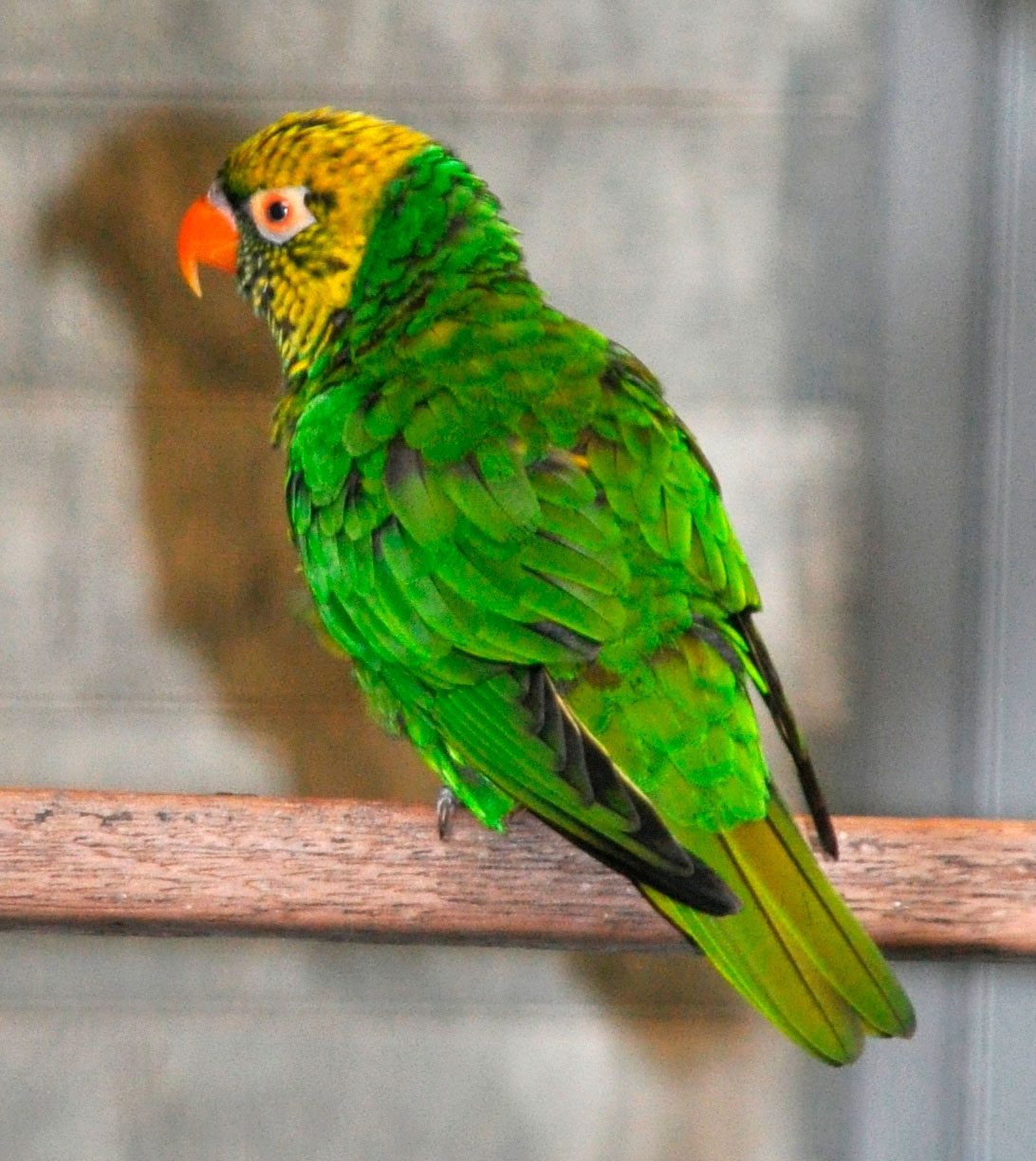
The adults of the Yellow-and-green Lorikeet (Trichoglossus flavoviridis) they have the upperparts plumage of a beautiful green.

The forecrown and top They are are greenish brown. The throat and the chest to abdomen It is yellow with dark green flakes. Area of sides up to the coverts and the bottom of the wings It shows a beautiful yellow-green.

The bill is orange. The irises is orange-yellow, the legs grey.

It has no sexual dimorphism.

In the youth, all the yellow markings are derived more green. The bill is brown, while the bare parts of the face are white. The irises is brown.

Description 2 subspecies

  • Trichoglossus flavoviridis flavoviridis

    (Wallace, 1863) – Nominal. Overall plumage It is olive green. The forecrown and crown yellow. The back of the neck brown. the yellow throat and the chest to abdomen, with the scalloped dark green.


  • Trichoglossus flavoviridis meyeri

    (Walden, 1871) – Shown in upperparts a darker shade of green; the underparts They are less scaly. The back of the top, the occiput and nape are greenish-Brown. The cheeks and throat They are yellow with dark green stripes. This subspecies is much smaller, between 40 and 50 gr.

Habitat:

The Yellow-and-green Lorikeet they are distributed with greater diligence between primary forest and mature secondary forest than their close relatives, the Ornate Lory. But, This does not prevent them from entering the open lands to feed from the ceibos in flower (coral trees).

Throughout its area, these birds are considered fairly common. In Celebes, are common in the mountainous areas where have been supplanted to a large extent to the Ornate Lory. In the Sula Islands, they are common in almost all altitudes.

They live in small flocks of noisy and sometimes mingle with the Ornate Lory When looking for food in the trees in flower at the edge of forests.

These birds are relatively Shy and they tend to stay inside the dense forest foliage, where their cryptic plumage makes them virtually invisible. When they feel threatened, leave the foliage uttering cries penetrating and powerful. They are easier to fly above the treetops on quick flights or the circulating a flight above the trees, just before landing in the branches more high.

Reproduction:

There is little information reproduction in the natural environment. The only one nest we have discovered so far was in a mossy forest, about 2.400 meters above the sea level. It was located high above the ground in a dead tree.

In captivity, the implementation is, usually, two white eggs that incubate for a few parents will be 23 days. As with all the Lori, the reproductive cycle It is particularly long and hard about 65 days.

Food:

The Yellow-and-green Lorikeet is above all vegetarian. Their language is particularly suitable for crop pollen and the nectar from the flowers. It is equipped with long buds that allows you to easily reach their favorite food. They have a predilection for the trees of the genus Euphorbia and Erythrina.

Distribution:

Size of its range (reproduction / resident): 6.300 km2

The Yellow-and-green Lorikeet They are endemic to the islands east of Indonesian. They are exclusively on the Sula Islands (Taliabu, Mangole, Sanana) and especially in the area of Celebes island.

Description 2 subspecies

Conservation:


minor concern


โ€ข IUCN Classification: Least concern.

โ€ข No threats at present.

The species is not threatened. In Taliabu, is very common in altitude zones, but it is also quite common in degraded areas bordering the coast. It is estimated one world population above the 100.000 specimens.

Justification of trend

They suspected that the population is stable in absence of evidence of any decline or threatens substantial.

"Yellow-and-green Lorikeet" in captivity:

Pretty common in captivity.

Take it easy, Nice trill. Sensitive to cold temperatures and somewhat susceptible to disease. He will join his caregiver over time although initially shy.

Alternative names:

– Yellow-and-green Lorikeet, Citrine Lorikeet, Yellow & Green Lorikeet, Yellow and Green Lorikeet, Yellow&green lorikeet, Yellow-and- Green Lorikeet, Yellow-green Lorikeet (ingles).
– Loriquet jaune et vert (French).
– Celebeslori (German).
– Lori flavoviridis (Portuguese).
– Lori Verdigualdo, Tricogloso Verde y Amarillo (espaรฑol).

Alfred Russel Wallace

scientific classification:


– Order: Psittaciformes
– Family: Psittaculidae
– Genus: Trichoglossus
– Scientific name: Trichoglossus flavoviridis
– Citation: Wallace, 1863
– Protonimo: Trichoglossus flavoviridis


Images ยซLori Verdigualdoยป:

Videos "Yellow-and-green Lorikeet"

————————————————————————————————

"Lori Verdigualaldo" " (Trichoglossus flavoviridis)


Sources:

– Avibase
– Parrots of the World – Joseph Forshaw M
– Parrots-A Guide to the Parrots of the World by Tony Juniper & Mike Parr
– Birdlife

– Photos:

(1) – Yellow and Green Lorikeet (Trichoglossus flavoviridis) in the Walsrode Bird Park, Germany By Quartl (Own work) [CC BY-SA 3.0], via Wikimedia Commons
(2) – Trichoglossus flavoviridis Proceedings of the Zoological Society of London 1862 by Joseph Wolf [Public domain], via Wikimedia Commons

– Sounds: Frank Lambert (Xeno-canto)