Content |
|---|
Characteristics "Tonkinese cat"
Coexistence is important that you have with your new friend. Before considering the acquisition of a cat of the breed "Tonkinese cat" you know certain factors. You must take into account their character, their need for exercise, their interaction with other pets, their care and if you have small children, their level of tolerance towards them.
Joy4,0 of 5 stars (based on 1 review)
|
Activity level5,0 of 5 stars (based on 1 review)
|
Friendliness to other pets4,0 of 5 stars (based on 1 review)
|
|---|---|---|
Friendliness to children4,0 of 5 stars (based on 1 review)
|
Grooming requirements1,0 of 5 stars (based on 1 review)
|
Vocality4,0 of 5 stars (based on 1 review)
|
Need for attention4,0 of 5 stars (based on 1 review)
|
Affection towards its owners4,0 of 5 stars (based on 1 review)
|
Docility3,0 of 5 stars (based on 1 review)
|
Intelligence4,0 of 5 stars (based on 1 review)
|
Independence2,0 of 5 stars (based on 1 review)
|
Hardiness3,0 of 5 stars (based on 1 review)
|
History
The Tonkinese cat (also know as "Tonk«) is a hybrid between Siamese and the Birman. His ancestors came from Southeast Asia, more specifically from Siam (ancient name of thailand) and Burma. In other words, his name is confusing, Since, contrary to what one might think, does not come from Tonkin, the northern part of present-day Vietnam. This breed has the peculiarity of having appeared naturally, since their "ancestors" Siamese and burmese shared the same territory, and it happened that they mated with each other, without human planning, with the intention of creating a new breed. These random interracial matings are likely to have been going on for a long time.
The first "Tonkinese cat"
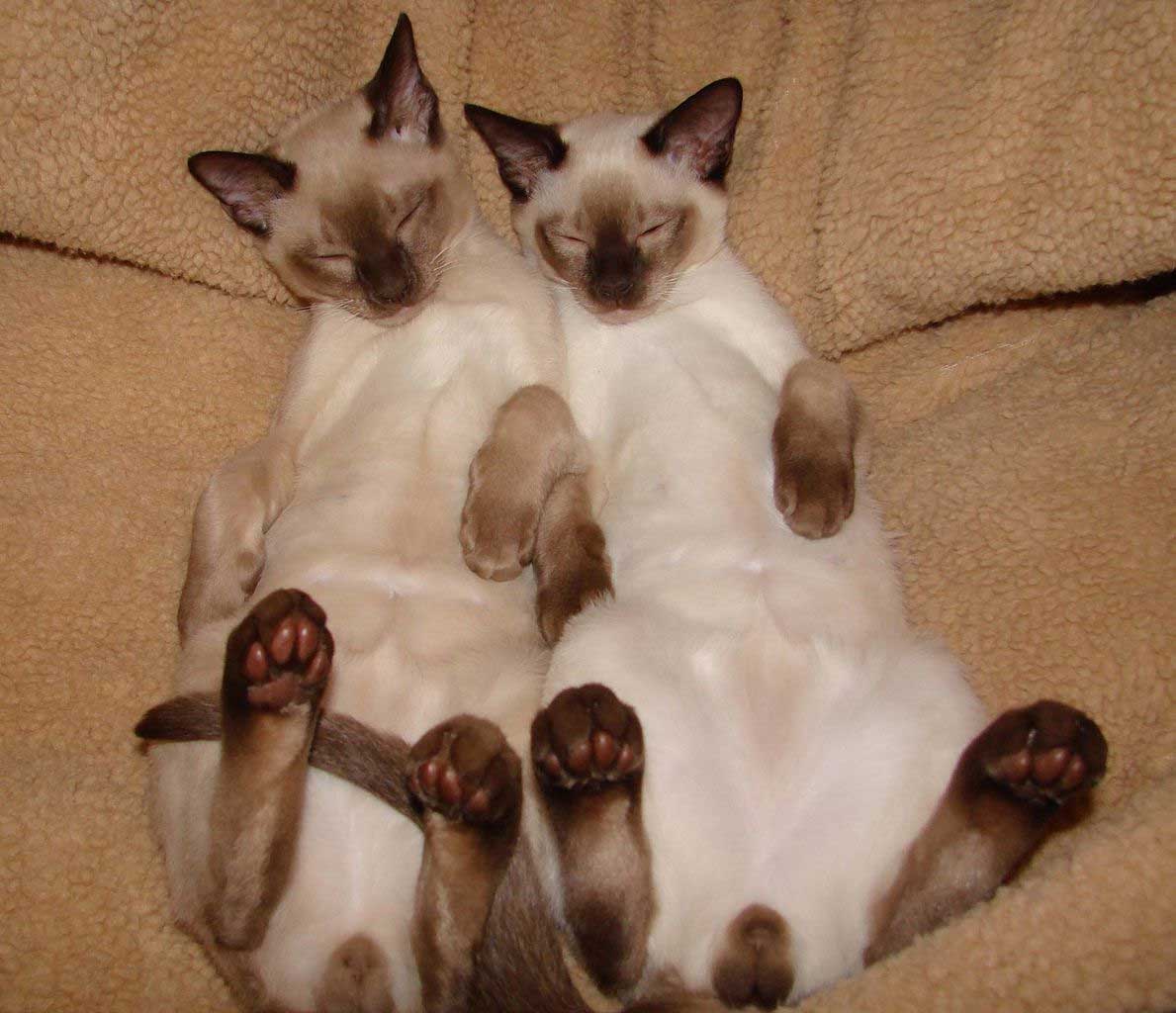
In the Decade of the 50, Milan Greer, a pet cat enthusiast who lived in New York, decided to breed Siamese seal point with burmese to produce what he called Golden Siamese. He had learned that when this type of hybridization occurred accidentally, kittens were considered defective and discarded, mainly because it was thought that they could not reproduce with each other. Greer set out to show that this belief was wrong. He claimed to have managed to cross his cats Golden Siamese over five generations and considered that he had achieved his goal. He abandoned his project at the beginning of the following decade, although his cats had already become very popular in New York.
In the Decade of 1960, the canadian breeder Margaret Conroy She was forced, for a series of circumstances, to mate your cat Khosoom, a burmese cat sable, with a Siamese colourpoint (o «seal point«) dark brown. The original plan was to send Khosoom to New York, where he had found a male Burmese who he thought would be interesting to mate with. But, given the rather shy nature of Khosoom, abandoned this plan and decided instead to mate her with a Siamese seal point, following the advice of a judge of the Canadian Cat Association (CCA).
at about the same time, in United States, a breeder of Siamese from New Jersey, Jane Barletta, and another breeder from California, Mary Swanson, started two breeding programs for Siamese and burmese. Later, an advertisement for Jane Barletta to the Cat Fanciers’ Association (CFA) allowed the two Americans and the Canadian to get in touch and collaborate on the first new breed standard. They also worked together to obtain official recognition from the CFA.
Kittens born to Khosoom they were beige with turquoise eyes, but the three pioneers soon developed individuals with different shades of fur and eyes introducing various varieties of burmese or Siamese in their breeding programs. These may include, Jane Barletta used a Siamese blue point, While Margaret Conroy raised a Burmese blue with a Siamese of blue point, and Siamese red point with a Burmese sable. Other breeders, mostly on the west coast of the United States, they also entered the fray and began to develop the Tonkinese cat with various color variations. The work of all these enthusiasts has resulted in the great variety of coat and eye appearances for which the tonkinese today.
In 1971 a meeting of many of them was organized in Boston. On this occasion the first club of the breed was founded, the Club de la Raza tonkines.
A new breed… not really?
"Tonkinese cat" |
||
|---|---|---|
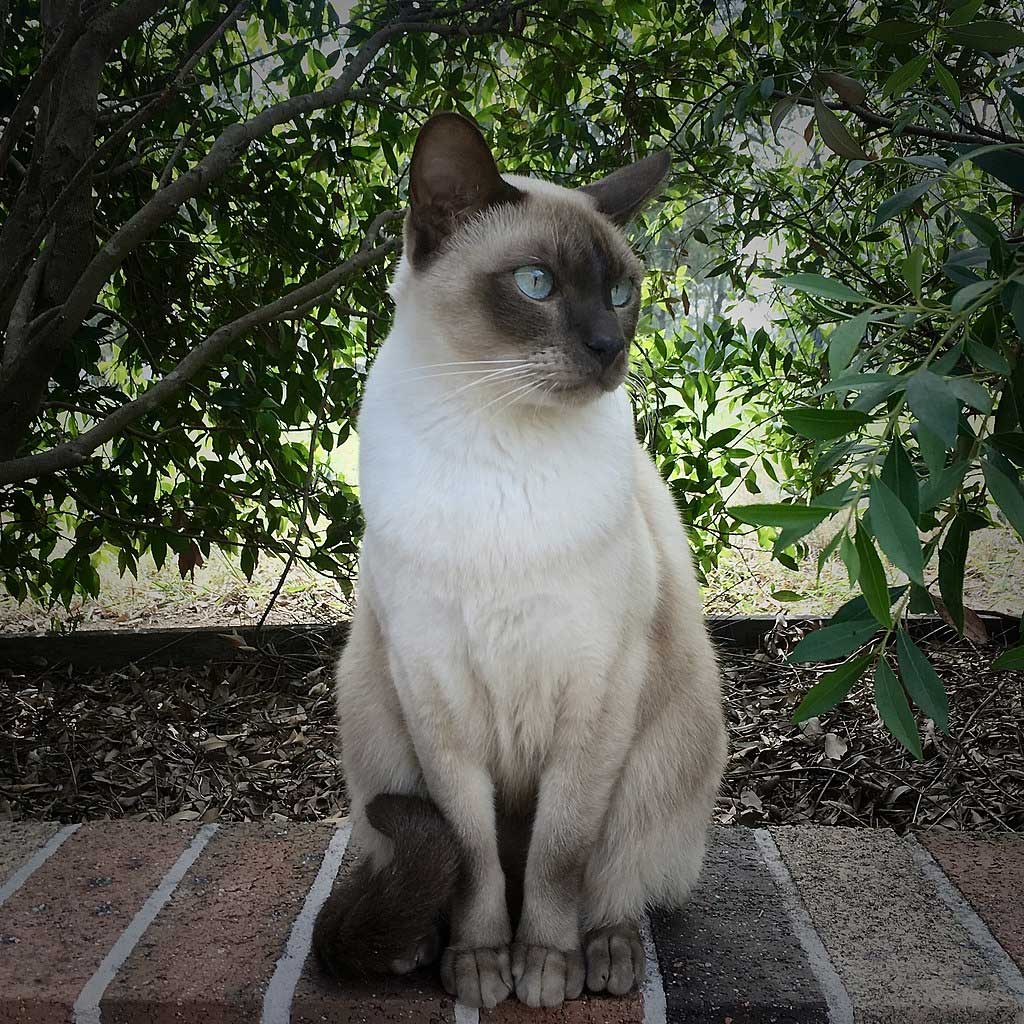 | ||
The Canadian Cat Association (CCA) affirms that the Tonkinese cat was the first recognized breed of domestic cat in Canada. It is true that the CCA was the first feline organization to accept the registration of this breed. (then called «Tonkanese«) in 1967, and then, in 1971, allowed them to participate in feline exhibitions organized under its auspices, with a new name («Tonkinese«). Thus, the breed is considered to be native to Canada.
But, more than the birth of a new race, it would be more accurate to speak of a rebirth, since the hybrids between burmese and Siamese have existed for many years, and some had even reached the West, mostly to the United States and the United Kingdom.
In fact, this little hybrid cat has been present in the Kingdom of Siam for a long time, and was described as early as the fourteenth century in the Tamra Maew, a collection of poems about domestic cats written by the monks of a Buddhist temple.
Due to the natural occurrence of hybrids Burmese-Siamese, some of them were brought to the West as early as the early 19th century. In the UK they are known as "chocolate siamese«.
More recently, in 1930, the Dr. Joseph Cheesman Thompson, retired US Navy neurosurgeon with an interest in entomology, herpetology and fauna in general, took San Francisco to Wong Mau, a cat considered then as Siamese. But, it was far from the breed standard: she was small, compact, too fine boned, short-tailed, her eyes were too round and too far apart, and the tips of her fur were chocolate brown, and therefore too dark. In fact, it is now generally accepted that Wong Mau was actually a hybrid Burmese-Siamese, and that this hybridization occurred naturally in Burma.
With Wong Mau as original parent, the Dr. Thompson It was proposed to develop a new breed of cats which was given the name "Birman«. Was a Tonkinese cat the one that gave rise to the latter, long before his true race was known and recognized, the tonkinese. For a just return of things, the Burmese cat contributed in turn to the official creation of the Tonkinese cat about thirty years later.
The recognition of the "Tonkinese" by feline associations
Following in the footsteps of the Canadian Cat Association from 1967, the Cat Fanciers’ Association (CFA) recognized the Tonkinese cat in 1974. But, was not up 1984 when the CFA allowed its representatives to participate in beauty pageants organized under its auspices.
For its part, the TICA (International Cat Association) granted full recognition to the breed in 1979, thus giving him access to both the registry and the feline exhibitions.
In Europe, the Governing Council of the Cat Fancy (GCCF), the leading British feline association, also recognizes the tonkinese, similar to the Livre Officiel des Origines Félines (LOOF) French.
In the rest of the world, the breed is recognized by the Australian Cat Federation (ACF), la New Zealand Cat Fancy (NZCF) y el South Africa Cat Council (SACC).
Last, the only exception among the major feline organizations - and it's a big- is the Fédération Internationale Féline (FIFé), who still doesn't recognize her.
But, of all the others, few accept the so-called "long-haired" variety (but whose fur is actually rather semi-long), generally content to consider the tonkinese like a race of shorthair cat.
In fact, among the main institutions, only the Livre Officiel des Origines Félines (LOOF) French recognizes the tonkinese long-haired and accepts the registration of kittens of this variety. So, opposes the position of his counterparts, that no longer allow interbreeding with other breeds.
In effect, to obtain semi-long haired kittens, it is necessary to hybridize the Shorthair Tonkinese with an individual of another race with said coat. This is exactly what the LOOF authorizes, who accepts marriages with longhair asian, but they must be sepia and not spiky. This provisional authorization was to end on 1 in January of 2020, but it has been extended until 1 in January of 2025, due to low numbers of the breed. Until the same date and with the same objective, that is to say, diversify the genetic heritage of the breed to avoid health problems linked to excessive inbreeding, authorizes marriages of shorthair tonkinese with the European Burmes cat.
Popularity of "Tonkinese cat"
The tonkinese it is more popular in America and the Anglo-Saxon world in general than in continental Europe.
In France, the Livre Officiel des Origines Félines (LOOF) has separate stats for varieties of shorthair and Longhair. Since the beginning of the decade 2000, has registered around 30 to 50 births of shorthair tonkinese a year, but this figure, which was previously relatively stable, has suddenly descended to 15 in 2018 now only 6 in 2019. The complexity of breeding tonkinese could be a factor in this decline. In fact, how breeders have tried to exclude from breeding lines with genetic problems, the breed's gene pool has been considerably reduced, what has made your job difficult.
It is clear that the longhair tonkinese will not be able to take over. In fact, the number of annual registrations, that no longer exceeded ten, also collapsed in 2018 and 2019 until reaching zero. In total, there was only 48 births between 2010 and 2019.
On the other hand, in United States, the tonkinese ranks 20 (of 45) in the ranking established by the Cat Fanciers’ Association (CFA) according to the number of annual registrations in the organization. Although it is not one of the most popular breeds in the country, continues to enjoy some popularity. But, this popularity is eroding, since at the beginning of the decade of 2010 ranked 15th.
The same phenomenon is observed in the United Kingdom, where each year around 200 kittens tonkinese in the Governing Council of the Cat Fancy (GCCF), which places it around the 15th position in the ranking of the most popular feline breeds in the country. This is far from the average of 500 births per year that there were around the year 2000.
Physical characteristics
"Tonkinese cat" |
||
|---|---|---|
 | ||
The morphology of "Tonkinese"
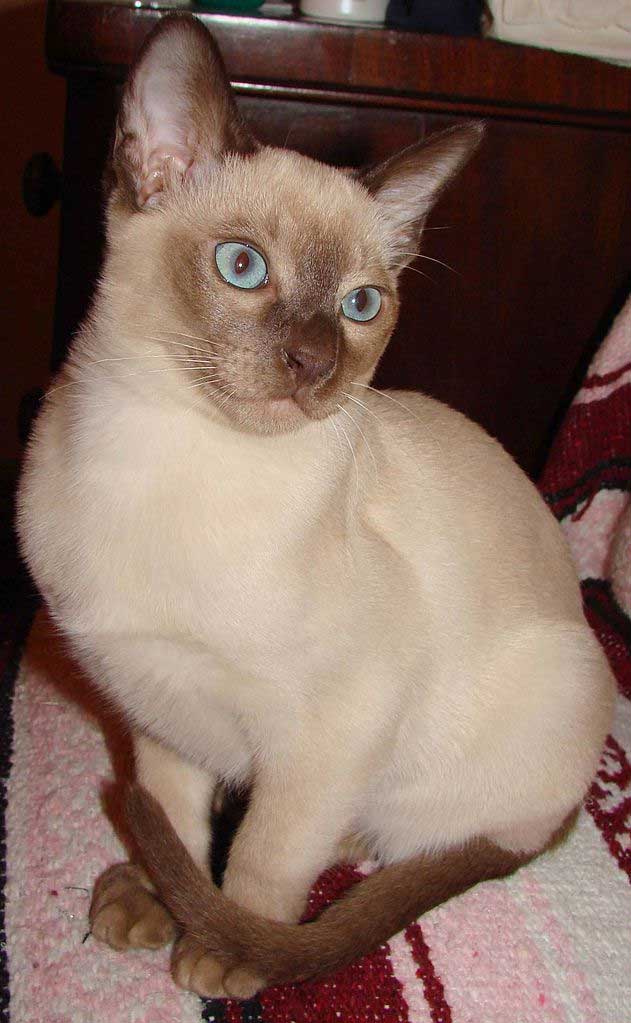
The morphology of Tonkinese cat It is intermediate between the long and thin type (Eastern) of the Siamese and the long and mighty kind of Birman. It is medium in size, with a complexion between that of his two ancestors, and your body should not be slim and slim like the first, nor solid, compact and strong boned like the second. Yes indeed, has powerful muscles, especially the male: this explains his unusually high weight for a cat of his size. Especially when they are neutered, since they usually weigh between 5 and 6 kg. Females have a much more standard weight, between 2,5 and 3,5 kg.
Although they can differ greatly in weight, the two sexes are quite similar in size, of about 25 to 30 cm..
Whatever the sex, the legs of the Tonkinese cat they are thin and of proportional length to the body. They end in oval legs, with five fingers in front and four in the back. The tail also has a proportional length, that is to say, approximately equal to the distance from the rump to the end of the shoulder blades, and tapers to a point.
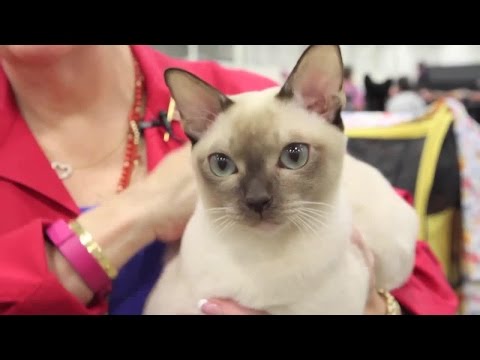
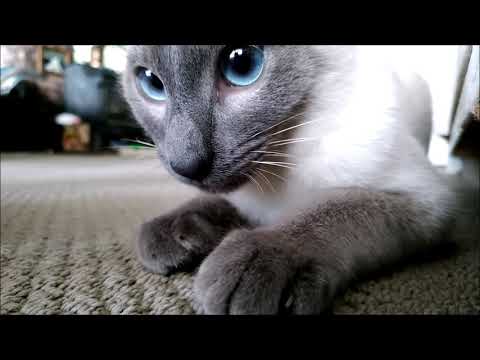
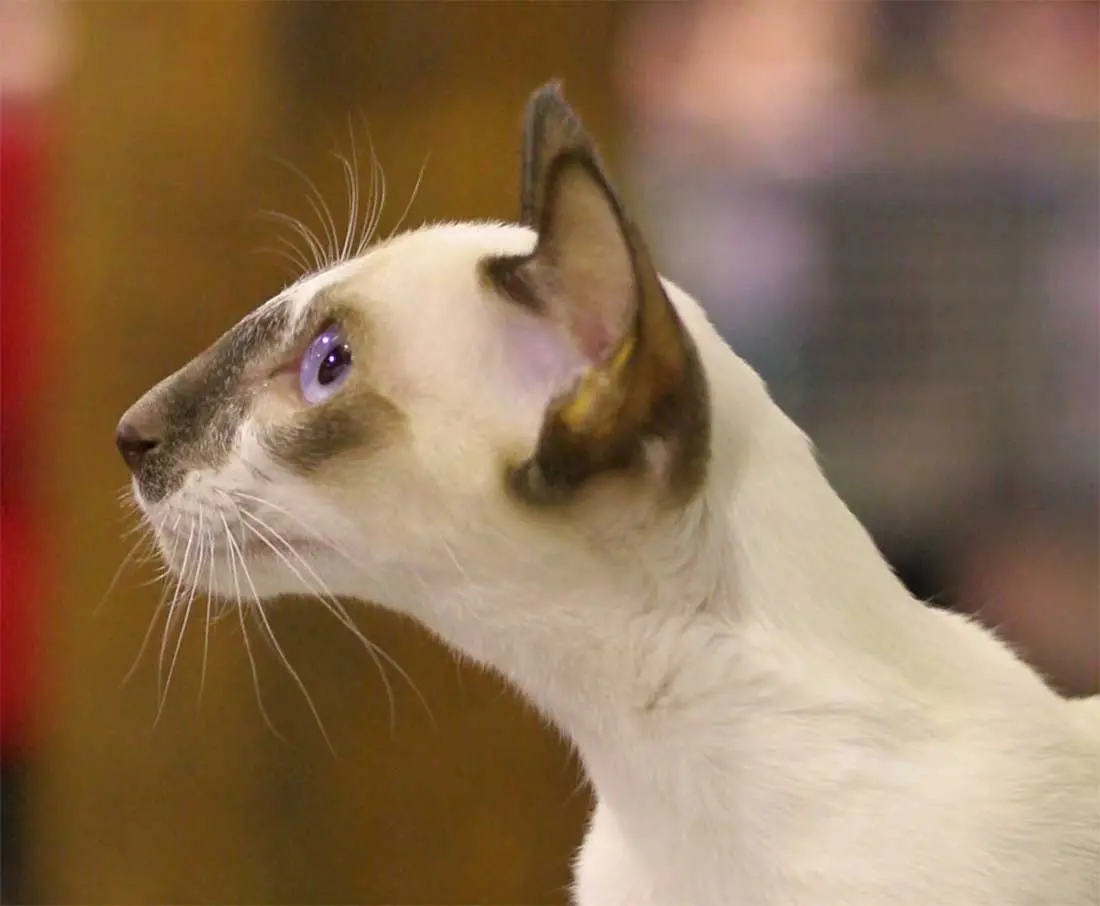
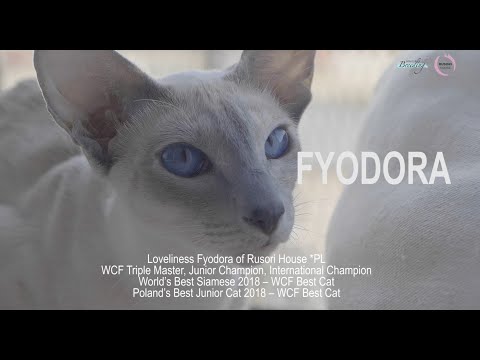
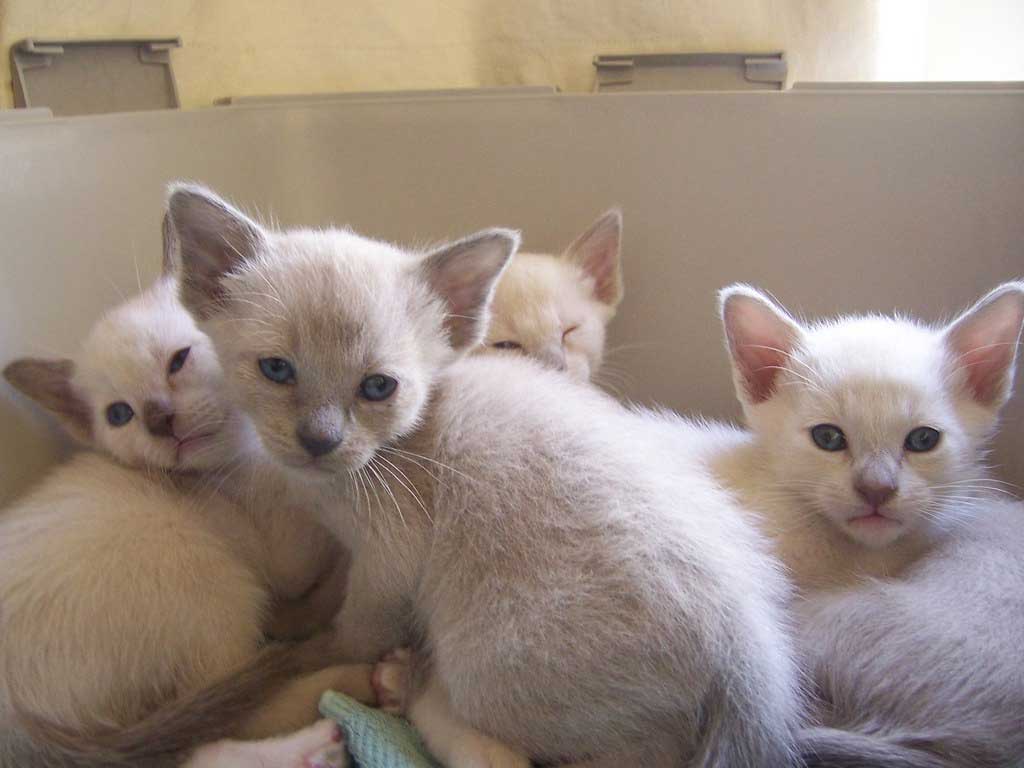
The snout is rounded and the eyes are almond-shaped rather than round. The eyes are generally aquamarine blue, but they can also be green or yellow-green, the latter being the most common color of the individuals shown. The ears are size medium, are widely spaced and have a broad base that tapers to the rounded tip.
A great diversity of appearances
The Tonkinese cat It is distinguished by the great variety of appearances that its coat can show, both in terms of color, as in pattern and even in length.
But, not all colors are recognized by all feline associations, being some more restrictive than others in this sense. These may include, the American Cat Fanciers’ Association (CFA) only recognizes four basic colors: natural (medium brown), champagne (buff), blue and platinum. At the other end of the spectrum, the TICA (International Cat Association) recognizes all known colors, that is to say, nothing less than thirteen. Among them, the CCA (Canadian Cat Association) accepts six colors: natural, champagne, honey, blue, platinum and fawn.
It also, the fur of the Tonkinese cat can have three different types of patterns:
A pattern similar to the classic Siamese: in most of the body, the hair ends in "dots" darker than the base color, which can be white or cream. Cats with this pattern have blue eyes..
Similar to the pattern of Burma: hair color is uniform over most of the body or has faint ends. This pattern is associated with green or green-gold eyes..
Intermediate pattern between the first two. The tips are more striking than the pattern points, but more contrasted than those of the solid drawing. The eyes are a pale greenish blue, called aquamarine, which can vary in shades of blue and green.
The thirteen recognized hues can be combined into three patterns each, which also exist in a tabby version in the tonkinese with spikes and mink patterns. This means that the number of possible combinations is very large., which makes the tonkinese in one of the most diverse races in this sense.
Its appearance is even more varied, since its color changes over time. Kittens can take up to 16 months to show its adult color, which then tends to darken with age.
The Tonkinese cat has a fur short and dense. The coat has a fine texture, silky smooth and a lustrous shine. The extremities (that is to say, the mask, the ears, legs and tail) are dark and the intensity of their coloring gradually decreases, merging with that of the body.
But, but the tonkinese usually has the shorthair, there is also a lesser known -and recognized variety- of semi-long-hair, which is a cross with him Asian Semi-longhair cat (Tiffanie).
Size and weight
- Size: 30 cm.
- Weight: Of 2,5 to 5,5 kg
Breed standard
The breed standards are documents prepared by official bodies in which the conditions that a dog must meet are listed. tonkinese to be fully recognized as belonging to the race:
Health
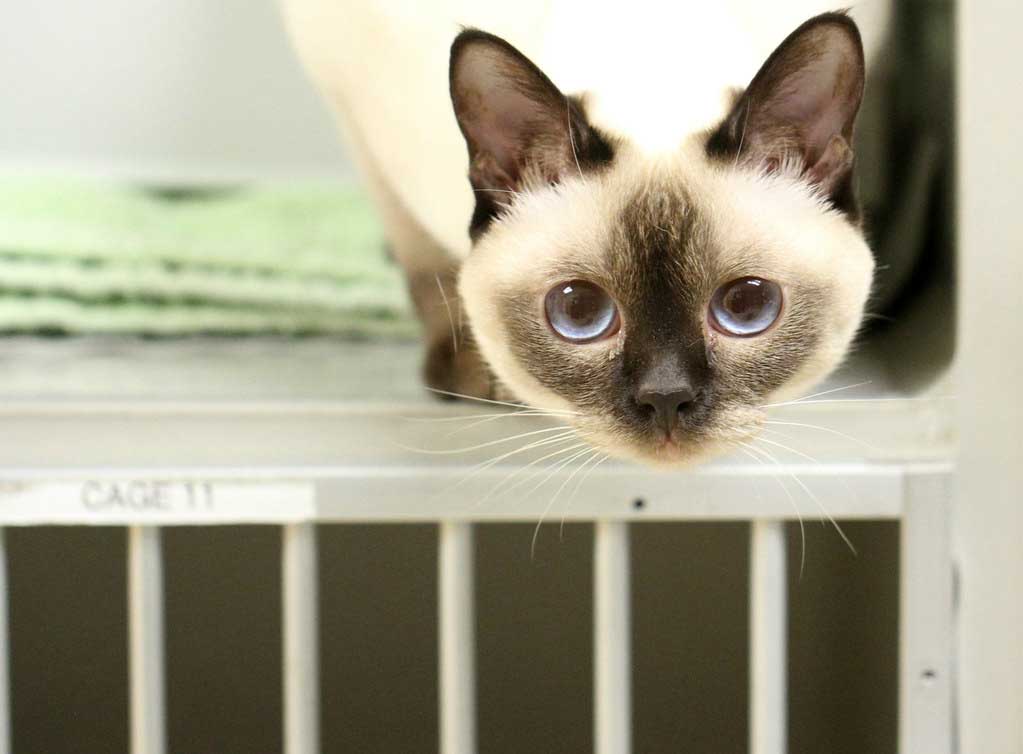
Like his ancestors the Siamese and the Sacred Cat of Burma (Birman), the Tonkinese cat enjoys good longevity: It is not uncommon for him to reach the venerable age of 18, 19 or even 20 years, thus often exceeding the average age of 15 years that domestic cats reach.
But, just like their ancestors, may be subject to certain genetic diseases:
- The amyloidosis, a disease that occurs when a protein, amyloid substance, is deposited in the organs (starting with the liver) and prevents its proper functioning. The kidneys are usually one of the affected organs, therefore, kidney failure may occur. Amyloidosis can also cause bad breath and gingivitis.;
- Aortic stenosis, that is to say, a narrowing of the aorta: this congenital disease can cause growth retardation;
- Convergent strabismus (narrowed eyes) caused by congenital malformations of the optic nerve pathways;
- Congenital pyloric stenosis, which is a narrowing of the sphincter between the stomach and the duodenum. May cause gastric retention problems, manifested in the form of vomiting, which are often severe and occur long after eating. These vomits consist of undigested or poorly digested food.
- feline hyperesthesia syndrome, a neurological problem that causes heightened sensitivity of the different senses. Causes untimely and impressive behavior in affected individuals;
- Lymphoma, or lymph cancer. All races can be affected, but the eastern ones are the most affected;
- The nystagmus, a neurological disorder that causes rapid, involuntary eye movements;
Progressive retinal atrophy (ARP), an incurable disease of the retina that causes total loss of vision in the cat. There is a genetic test to diagnose it.
A breeder responsible for tonkinese is careful to select stallions that are not affected by congenital diseases, and whose ancestors are not either. Any potential buyer is advised to demand proof that both the parents and the kitten itself have been tested, and that they have been negative.
It is worth mentioning that the tonkinese it is very healthy because, from the beginning of the race, breeders have worked together to reduce the risk of inbreeding. Through effective communication between them, they have managed to eliminate the lines with genetic problems.
Various feline associations - including the CFA- they no longer allow interbreeding with other breeds and, therefore, They consider the breed to be a "closed breed". Consequently, the breeders of tonkinese, like those of other closed breeds, are concerned about the possible depletion of the gene pool of the tonkinese. This could lead to a breed with poorer health, shorter life and fewer litters. It is probably for this reason that, in France, the LOOF authorizes crossings with the European Burmes cat and the Asian longhair cat (only the "sharp cuttlefish" type).
Grooming
"Tonkinese cat" |
||
|---|---|---|
 | ||
The short coat of the Tonkinese cat does not require particularly extensive care. Brushing the cat's coat weekly is enough. Of course, the coat of the long-haired variety may require more frequent brushing.
During the weekly maintenance session, the ears should also be examined and, if required, clean them with a cotton ball or soft cloth soaked in a mixture of cider vinegar and warm water in equal parts.
Although the Tonkinese cat you do not have any particular eye problems, the eyes should also be checked regularly. If scabs and dirt have built up in the corner of your eyes, should be cleaned with a clean cotton pad soaked in warm water or saline solution.
It also, as with other races, regular brushing is recommended to prevent periodontal disease.
Depending on your level of activity, It may also be necessary to trim your cat's nails if their tips have become too long and sharp. This is especially important for indoor cats., since natural wear is usually insufficient, although having a scratching post can greatly reduce this need.
Food
Feeding a tonkinese does not present any special difficulties. You just have to make sure that the food you give is balanced and of good quality., seeking advice if necessary from a breeder or veterinarian.
It also, as in the case of any other race, It must also be taken into account that the cat's food needs change throughout its life, and make the necessary adjustments accordingly.
In any case, as the tonkinese he is a curious and active cat, not very prone to obesity problems, especially if you spend part of your time abroad.
This is especially true because they are normally capable of self-regulation and, therefore, they can have food available at all times without causing problems.
For sale "Tonkinese cat"
In Europe - and especially in France- the price of a kitten tonkinese earmarked for the company ranges from 800 and 1000 EUR. But, in the case of an individual intended for breeding and/or cat beauty contests, the amount may well exceed these figures. In any case, may differ depending on the lineage and breeding the kitten comes from, but it doesn't really depend on the sex: the prices of males and females are more or less the same.
In United States, the price ranges between 600 and 1.200 $. Once again, a breeding or show animal can be significantly more expensive.
Videos "Tonkinese cat"
|
|
|
|---|